Alaska Route 5
I woke in the UAF parking lot near the Museum of the North. There was one other truck camper on the far side of the lot, and it had been quiet all night. A few days earlier, I had watched freshmen moving into the dorms. Parents patiently waited, hugged their students and waved goodbye while students in black Staff T-shirts helped haul piles of “stuff” toward the dorms.
I mention this because the atmosphere around campus had changed noticeably since I had stayed here a few nights earlier. There was more activity well into the evening, sometimes until 11 p.m., when it is now finally getting close to dark. The evenings were beginning to cool, and I assumed everyone knew they needed to enjoy the nice weather while they still could, before seven months of cold temperatures and overcast skies settled over Fairbanks.
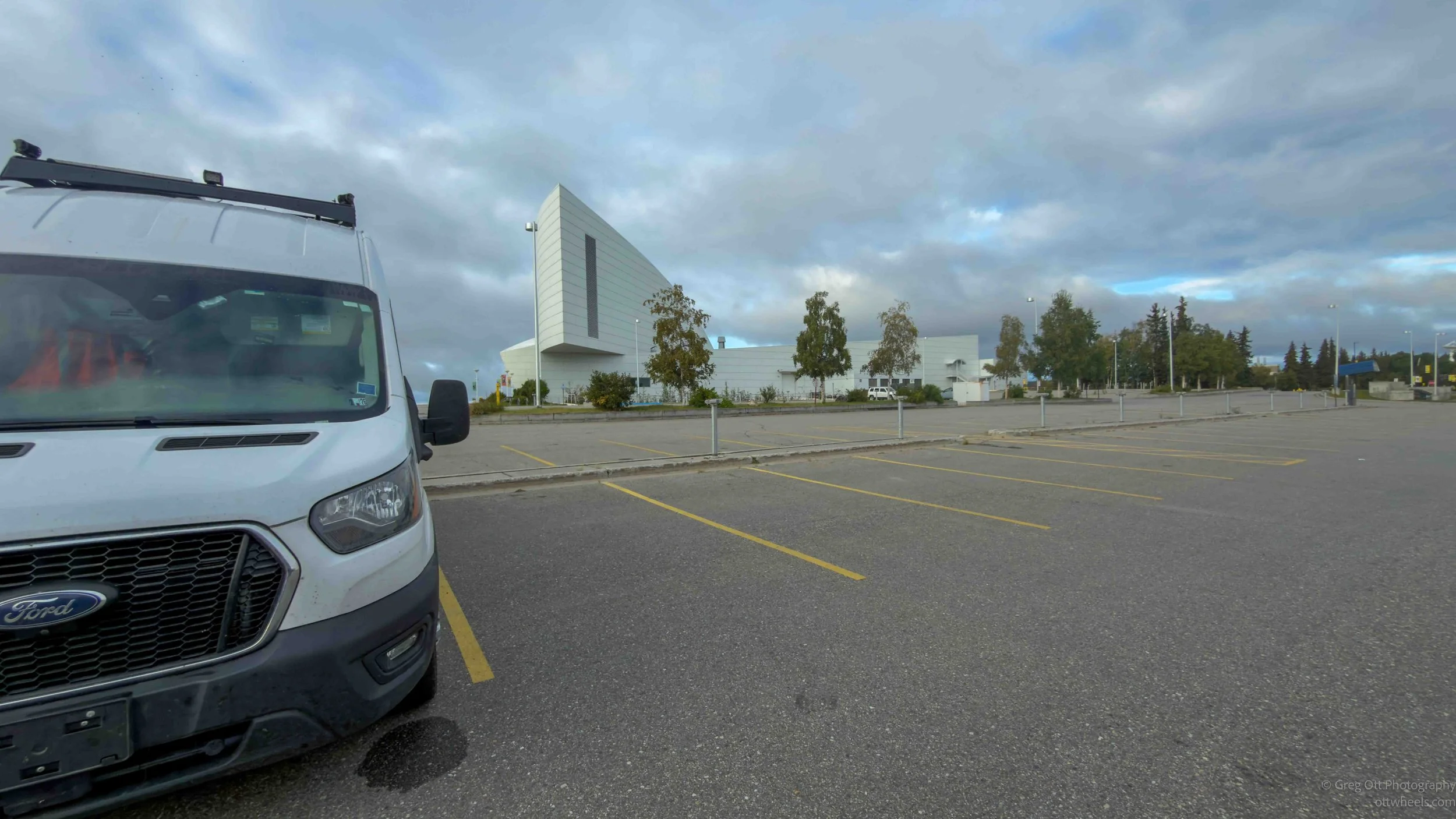
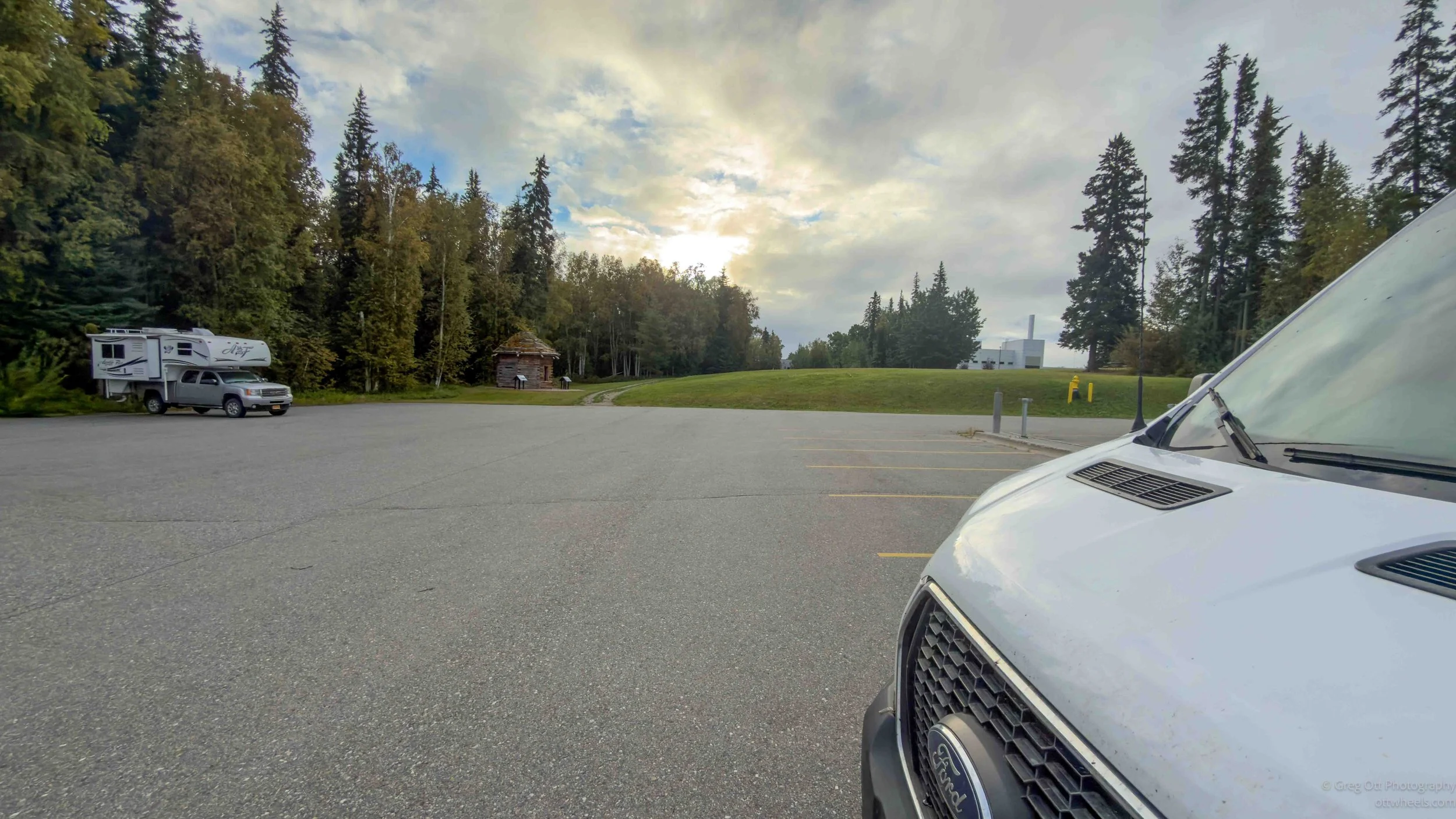
I had been wondering what the electrical outlets at every parking spot were for. I finally realized they were there for engine heaters, keeping vehicles warm enough to start when temperatures drop to -30°F and below. As I drove around campus, I saw them in every parking lot. It would have been an added bonus if they had been turned on during my stay so I could have charged my batteries, but I was grateful to have such a quiet and free place to stay while I was in Fairbanks.
Starbucks Fairbanks
I drove to a Starbucks less than two miles away. It opens at 4:30 a.m., but at 7 there were no customers. I made breakfast in the van, then went inside for coffee and to get some writing done.
I had been to this Starbucks probably four times, and each visit seemed to provide some new insight into how loosely the concept of a Starbucks could be interpreted. A week earlier, a large stack of boxes had been piled near one entrance, conveniently blocking the trash, napkin and dish-return station. Apparently, that seemed like a reasonable place to put them.
The delivery drivers provided most of the entertainment. DoorDash and other drivers would arrive to find an empty pickup bag sitting on the counter while the drinks and food that were supposed to be inside it sat nearby with their tags attached. Everything was ready. It simply hadn't made that difficult final journey into the bag. One frustrated driver finally asked who the manager was. The woman behind the counter thought about it and said, “I’m not sure. Maybe Max.” That seemed to explain quite a bit.
Orders were also more of a general suggestion. During a normal visit, several drinks would be wrong, including mine at times. For the past 18 months, I’ve routinely ordered my bagel and coffee “for here,” which normally means a plate and a mug. Here, it was roughly a 50-50 proposition. Sometimes I got the plate and mug; sometimes a bag and paper cup. The tag always said “for here,” but apparently nobody wanted to let a little thing like the printed instructions interfere with the creative process.
Given how much Alaskans seem to like their coffee, and how many good independent coffee shops and drive-through stands there are around Fairbanks, I’m a little surprised Starbucks survives here at all.
From there, I headed to Walmart to pick up some neoprene gloves, a wall organizer for the papers I collect along the way and a few groceries I had forgotten earlier. It wasn’t very crowded, and I was in and out quickly.
Fire in Tok
I was headed toward Dawson City, Yukon, via Tok (pronounced toke), 388 miles away. Google estimated 8 hours and 22 minutes if I drove the speed limit. I already knew it would take longer. Between the roads, photo stops and the occasional power nap when I get tired, Google and I rarely agree on arrival times.
When I entered the route, Google displayed a wildfire warning near Tok. I turned off the engine and started researching. Immediately, I had images in my head of those fires where people suddenly find themselves driving through thick smoke and flames, surrounded by burning trees with nowhere to go. Was that what I was heading toward?
The warning was for the Mukluk Fire, which had started near Tok and spread rapidly through the area. It had already burned thousands of acres, destroyed dozens of homes and, at one point, forced evacuations in parts of the community. That certainly got my attention.
The more I read, though, the less it appeared that I would be driving directly into an active wildfire. Cooler weather and rain had slowed the fire considerably, firefighters were making progress, and some evacuation areas had already been reduced. More importantly for me, Route 2 from Fairbanks remained open, as did the Alaska Highway through Tok.
I checked multiple sources. This wasn't something I wanted to base on a single website when being wrong could mean driving toward a wildfire. I couldn't find any indication that either highway was about to close or that traffic was being prevented from passing through Tok.
I sat there for a while weighing everything. The fire was real and had caused considerable damage, but the roads I needed were open and conditions appeared to be improving rather than deteriorating. Eventually, I decided to continue. If things changed along the way, I could turn around. I had also calculated my fuel and knew I could make it to Tok and back to Fairbanks if necessary. Besides, this was the only road I could take to get to Dawson City.
The drive to Tok was uneventful and took a little over four hours. Tok pretty much exists to service people passing through on their way into or out of Alaska, although this time I wouldn't be continuing south on the Alaska Highway.
I filled up at the Shell station, which has an Ace Hardware and convenience store attached. I couldn't see any signs of the fire, but I could smell smoke in the air. Two guys outside were talking about someone who had been evacuated. It was the first tangible reminder that although the road was open and everything around me looked normal, the fire wasn't very far away.
I pulled over and entered the next leg into Google: Dawson City, 185 miles and 5 hours, 15 minutes away, following Route 5 to the Canadian border and then Canadian Route 9.
I had read that sections of the road were dirt. That description turned out to be somewhat optimistic. It would have been more accurate to say there were sections that were paved. Most of the 185 miles to Dawson City was dirt.
At some point, I started getting tired and pulled over for a 15-minute break. I figured I could continue until around 9 p.m., an hour before sunset, which would still give me plenty of time to find somewhere to stop for the night. There were lots of places along the road where I knew I could pull over.
Walker Fork Campground
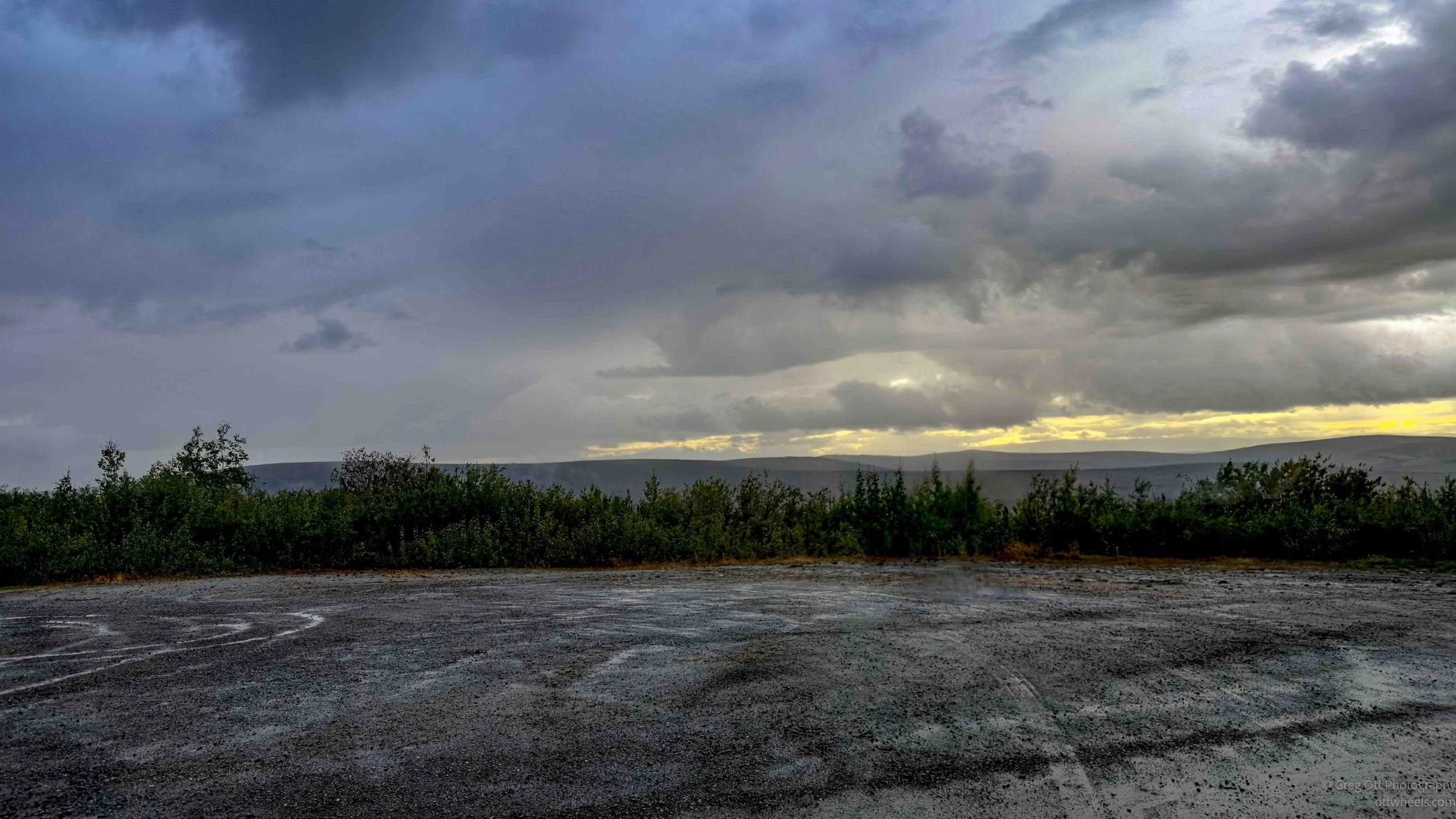
I drove another 15 minutes and passed the BLM Walker Fork Campground. I stopped. Then I backed up. Six dollars for the night with my National Parks Access Pass suddenly sounded like an excellent alternative to several more hours of dirt road. I drove down to the fee station, wrote a check and found an empty campsite. I was enormously relieved that I didn't have to drive anymore.
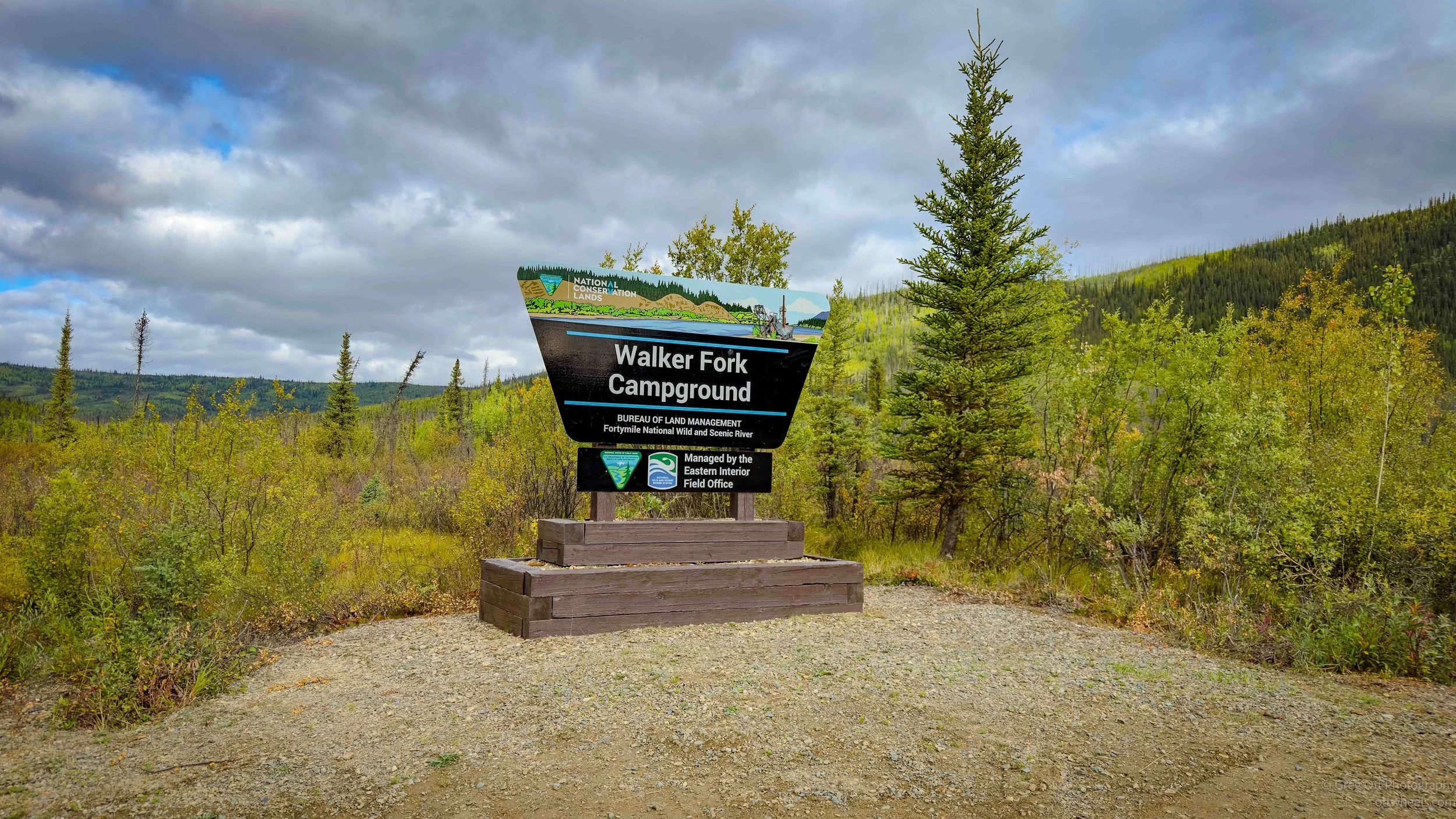
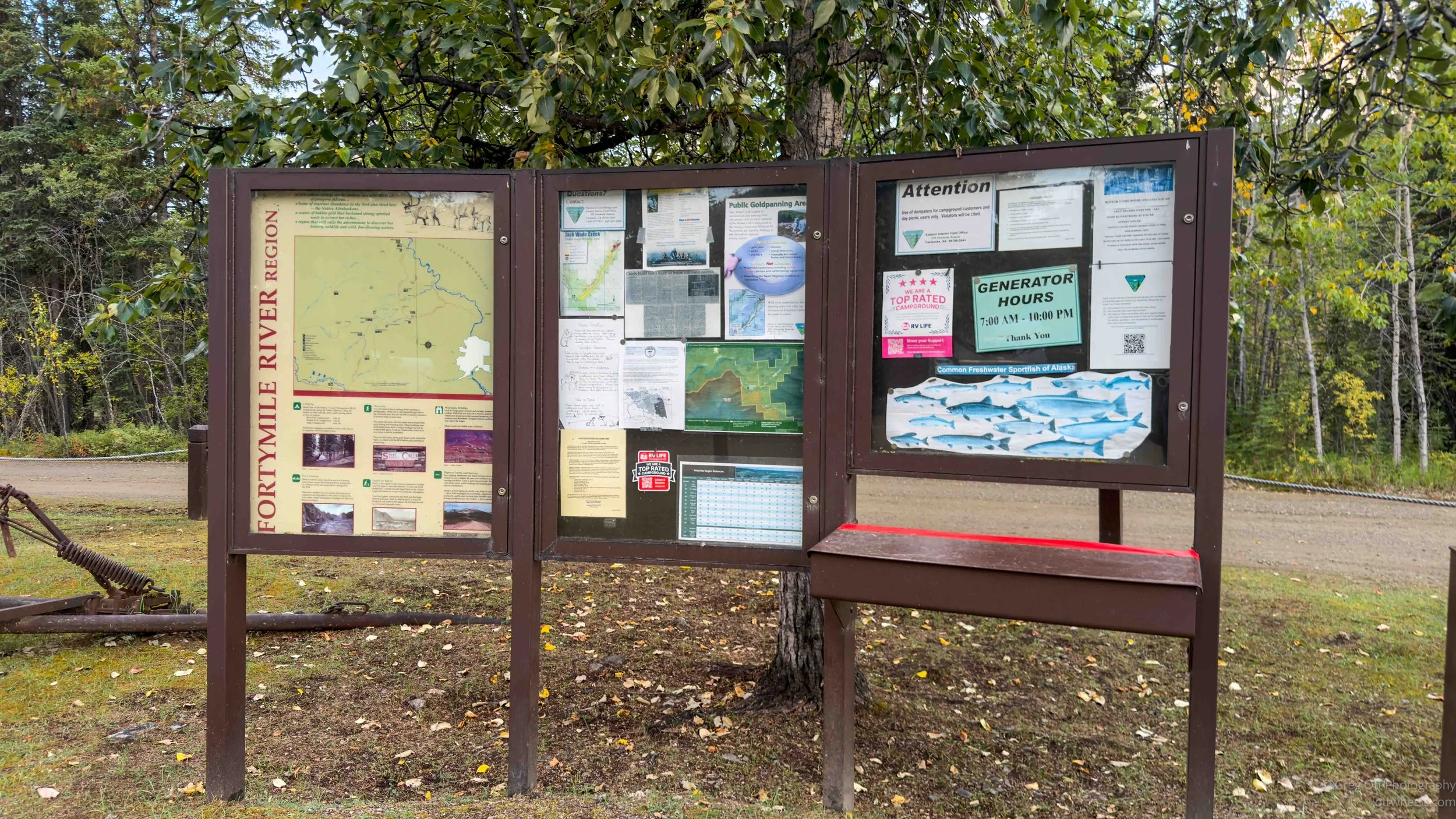
I got out to stretch my legs, and a guy walked by drinking an IPA and said hello. We started talking and didn't stop for about 30 minutes. He and his family were camped beside me. His wife and their two toddlers were sitting at the picnic table with their two dogs, which seconds later got into a fight over a scrap of food. She had to pull them apart.
They had a camper mounted on top of their pickup truck and a huge Jeep in tow. We talked about how bad the roads were, and he started giving me advice about things I should carry for tire repairs and other problems that can happen when you're this far out. He was a mechanic, so I was happy to listen to his suggestions about being “out here.”
They were going subsistence hunting for moose the next day. He and his wife planned to head out in the Jeep, track and shoot a moose, skin it and bring everything back with them. I'd heard similar stories from other people in Alaska, including one guy who told me that once you kill a moose, you also need to start thinking about bears showing up. I decided not to bring that up.
Then the camper door opened and an older woman stepped outside. I said hello. She looked at me without saying anything. She was definitely not happy about something. That seemed like a good time to resume the short walk I had originally set out to take.
I walked to the end of the campground, took a photo of the stream and then headed back to the van for the evening. It had been a long day, with the wildfire near Tok and hours of driving on dirt roads, and I was more than ready to relax. Sitting there that evening, I found myself thinking about the nearly three months I had spent traveling through Alaska. What an adventure, what a privilege and what an experience it had been. I had seen places I had wanted to see for years, but I had also ended up in places I knew almost nothing about, met people I never would have met otherwise and had experiences I could never have planned.
More than anything, I felt grateful that I had been able to do it. I still had the health to hike the trails, climb in and out of boats and airplanes, spend long days behind the wheel, and keep going when the days became difficult. I had traveled from one end of Alaska to the other, from the Aleutian Islands to the Arctic Ocean, through mountains, glaciers, small towns and stretches of wilderness that seemed to go on forever. There had been bears, whales, caribou, cranes, glaciers, rough roads, breakdowns, unexpected conversations and more than a few changes of plan along the way. As I prepared to leave Alaska behind, I knew I was leaving with far more than photographs. I was leaving with three months of memories and experiences that I felt genuinely fortunate to have had.
While loading the photos onto my computer, I did something I had never done before: I deleted them from the camera before copying them. I guess I was more tired than I thought.