Chena Hot Springs
My time in Alaska is drawing to an end, and I sat planning my trip back to the Lower 48 and eventually Idaho. As I went through my Alaska itinerary, I realized there was still one place on my Fairbanks list that I hadn’t visited: Chena Hot Springs. It was already close to noon when I decided to make the roughly 60-mile drive northeast of Fairbanks.
The name Chena appears everywhere around Fairbanks. The Chena River runs for about 100 miles through the Interior, right through the center of Fairbanks before joining the Tanana River. Heading east out of town on Chena Hot Springs Road, I was essentially following the Chena River valley toward the White Mountains. There was even once a town called Chena near the confluence of the Chena and Tanana rivers. During the early 1900s gold rush, Chena and Fairbanks were competing settlements, but Fairbanks eventually became the dominant town and Chena faded away. Today, little remains of it.
I read that the name itself comes from an Athabascan word generally translated as “river of something,” with historical sources differing on exactly what that “something” was. Over time, Chena became attached to the river, the valley, the old town, the recreation area and, of course, Chena Hot Springs.
The drive to the hot springs was mostly along a two-lane road through the Chena River valley. In places, the pavement rose and fell in a series of ripples, the result of Alaska’s freeze-thaw cycles and shifting ground beneath the road. In a heavy van, some of those dips could make the whole vehicle unstable, so I had to slow down considerably. The speed limit was 55 mph for much of the drive, but there was no way I was going to maintain that speed over some sections.
Not everyone agreed. Some cars flew past me well above the speed limit, although I certainly wasn’t the only vehicle traveling considerably slower. One driver was particularly unhappy about being stuck behind me and made that very clear when he finally passed. The numerous scrape marks gouged into the pavement told their own story—vehicles had bottomed out hard enough for their suspensions or undercarriages to dig into the road. I wasn’t interested in adding my van to that list. What should have been a relatively straightforward drive ended up taking me about 2½ hours.
It was Friday afternoon, the sun was shining and there was only a slight breeze. Every so often I could see fishermen along the streams, and there were trailheads along the way, but only a smattering of vehicles in the parking areas. I passed an older man with an equally old red pickup stopped on the opposite side of the road. He was pouring gas into the truck from a five-gallon red can, the same kind I carry in the back of the van. A friend waited behind him in a white pickup that had about as much rust as paint. From the fishing rods sticking out of the trucks, it looked like they had been out fishing earlier.
Seeing the gas can suddenly made me check my own fuel. I started doing something you do a lot in Alaska: calculating the miles to a destination (chena) today. I wasn’t even sure if there was a gas station out here. There isn’t. I had also calculated the miles back to Fairbanks and how much fuel I had left. I had enough to make the round trip with about 60 miles to spare, plus the gas in the cans in the back of the van. I would make it.
When I pulled into Chena Hot Springs, it wasn’t at all what I expected. For some reason, I had pictured a small town built around the springs. Instead, it was a resort at the end of the road, with buildings scattered around the property. It felt like something that had evolved over time rather than a resort designed all at once from some grand plan with deep pockets. It was rustic and a little quirky—very Alaskan.
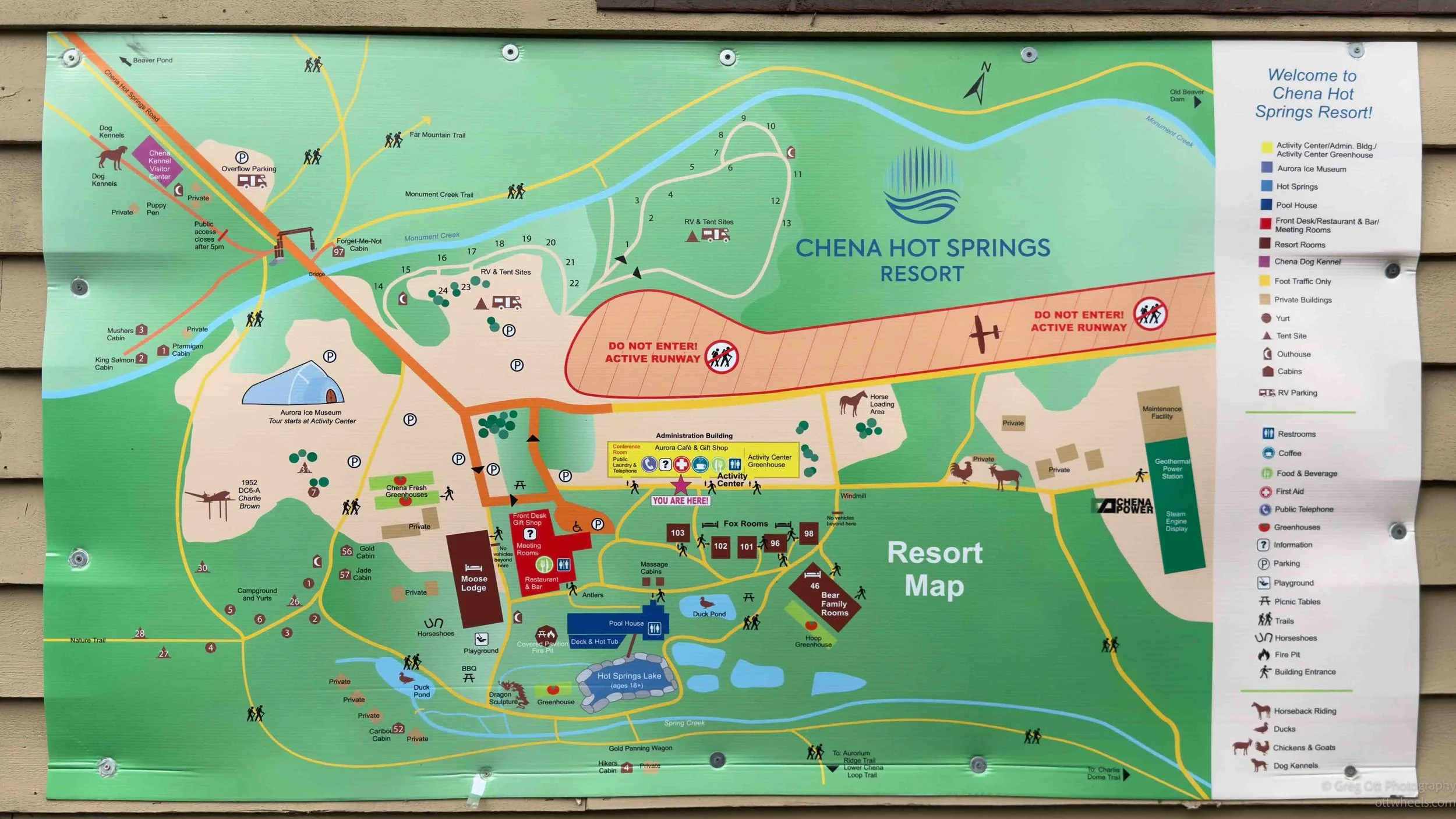
I also quickly realized that Chena required more research before arriving than I had done. I expected some kind of visitor center where I could get oriented, but there really wasn’t one obvious place to start. Instead, I walked around and asked questions. I started at the hotel, where I learned there was a restaurant and that I could camp for $30 a night without hookups. There was potable water and a dump station, which was really all I needed.
I asked about the hot springs and what else there was to do, and they directed me to the Activities Center. There was considerably more going on than I had realized. Besides soaking in the hot springs, there was the Aurora Ice Museum, kennel tours, and the free greenhouse and geothermal power plant tour. In winter, they add dog sledding, electric snowmobiles, ice fishing and trips up Charlie Dome to watch the aurora.
They were pushing the Northern Lights Tour while I was there and told me it was $150. I knew there wasn’t a great chance of seeing the northern lights that night, so $150 seemed pretty steep for the gamble. I decided to keep my $150 and take my chances looking at the sky on my own. It was mostly cloudy that night, and I save $150.
While I was standing at the Activities Center trying to figure all this out, someone announced that the 4 p.m. greenhouse and geothermal tour was about to start. The woman leading it said the tour was free and asked everyone to provide the state they were visiting from. She explained that keeping track of where visitors came from helped with funding connected with the projects. I had arrived at exactly the right time, so I joined the group.
The Greenhouse
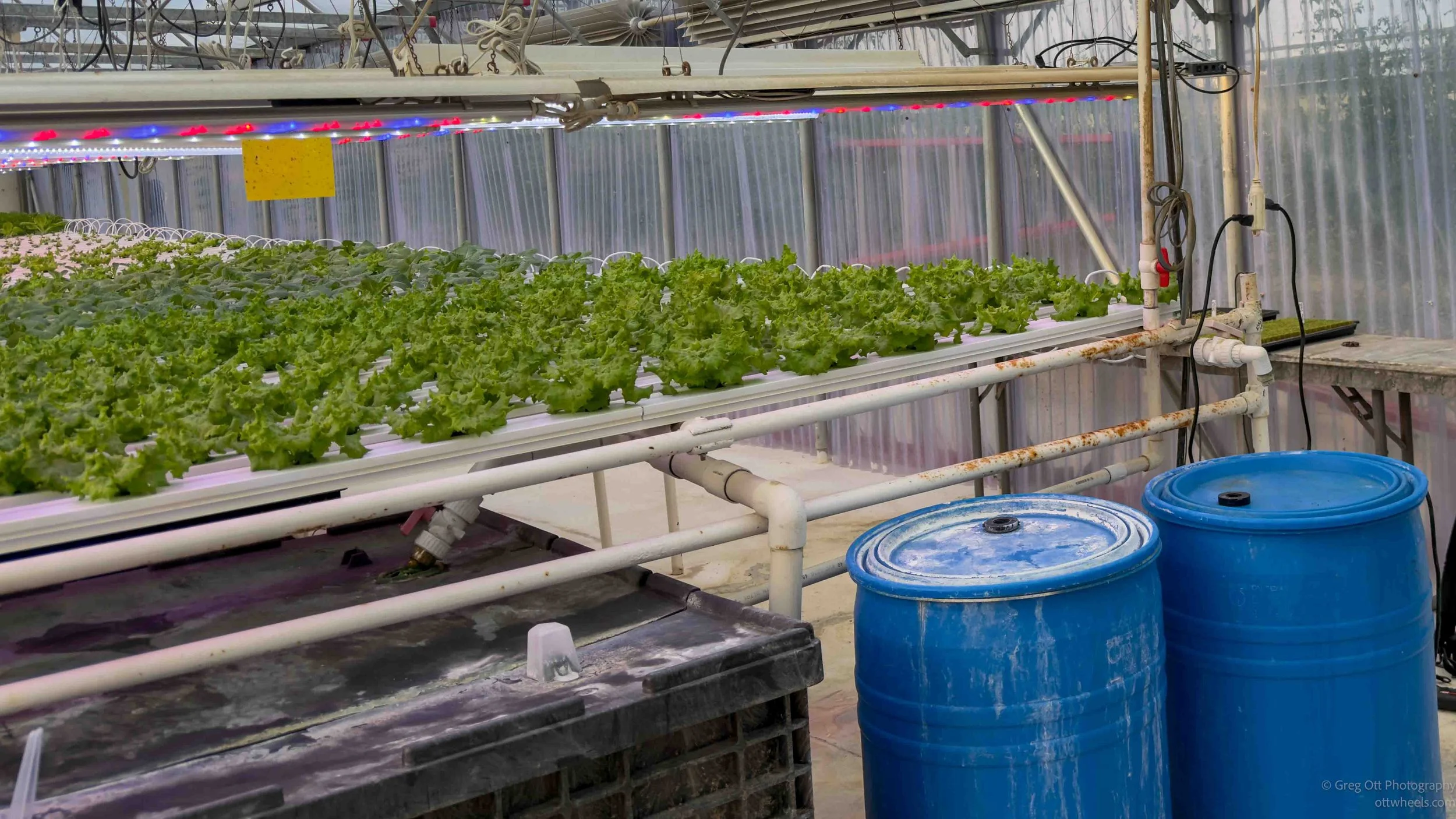
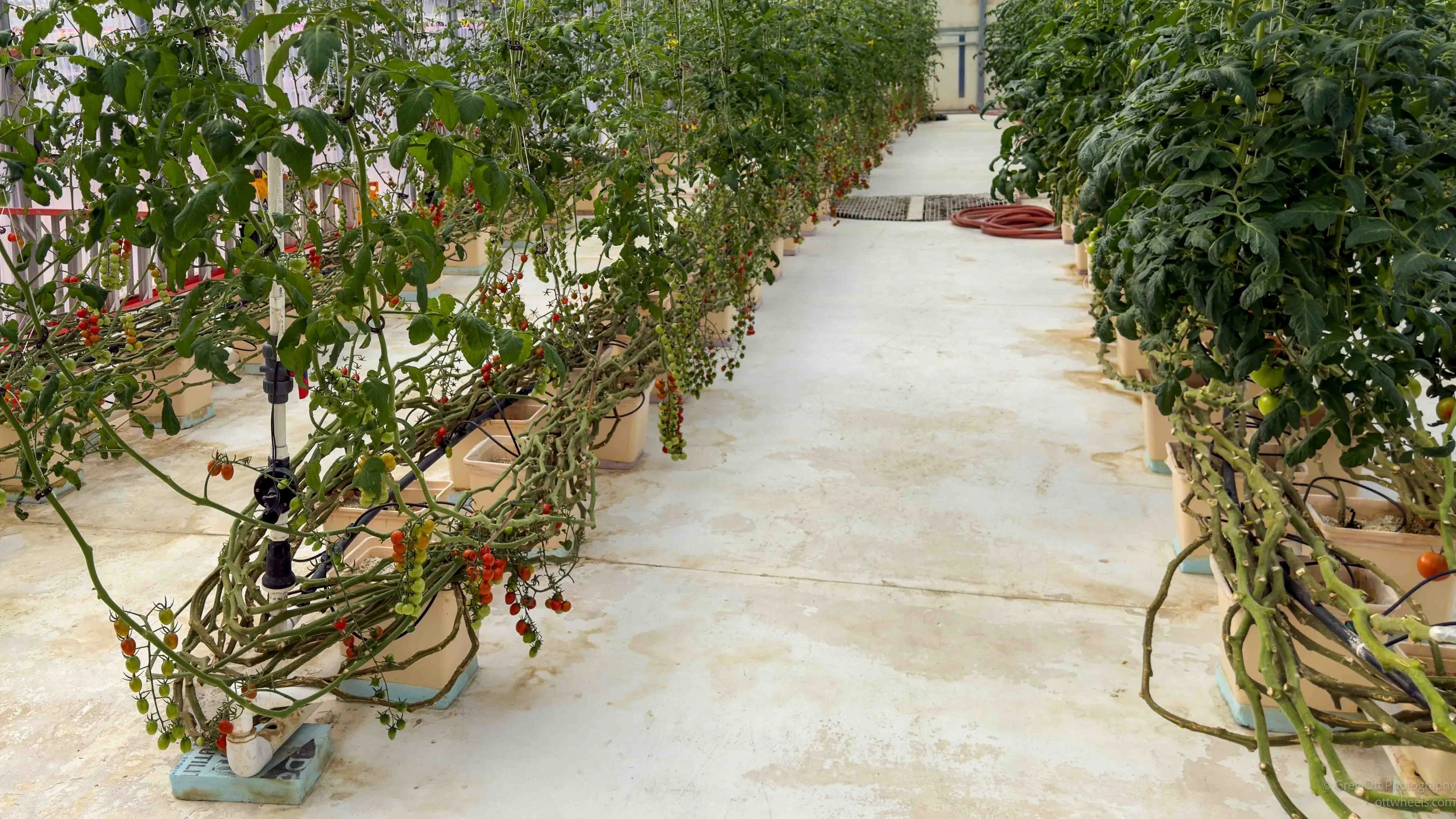
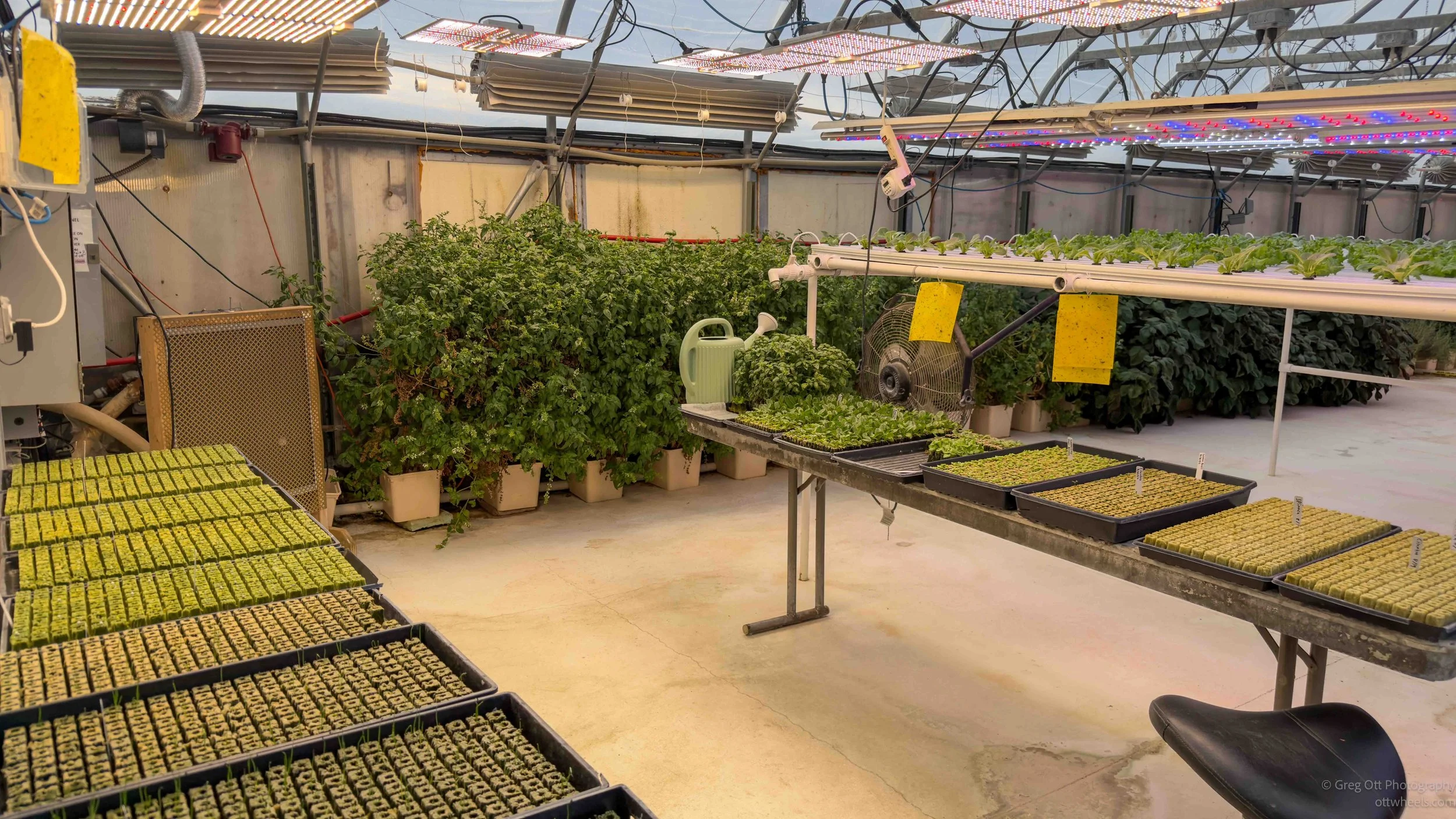
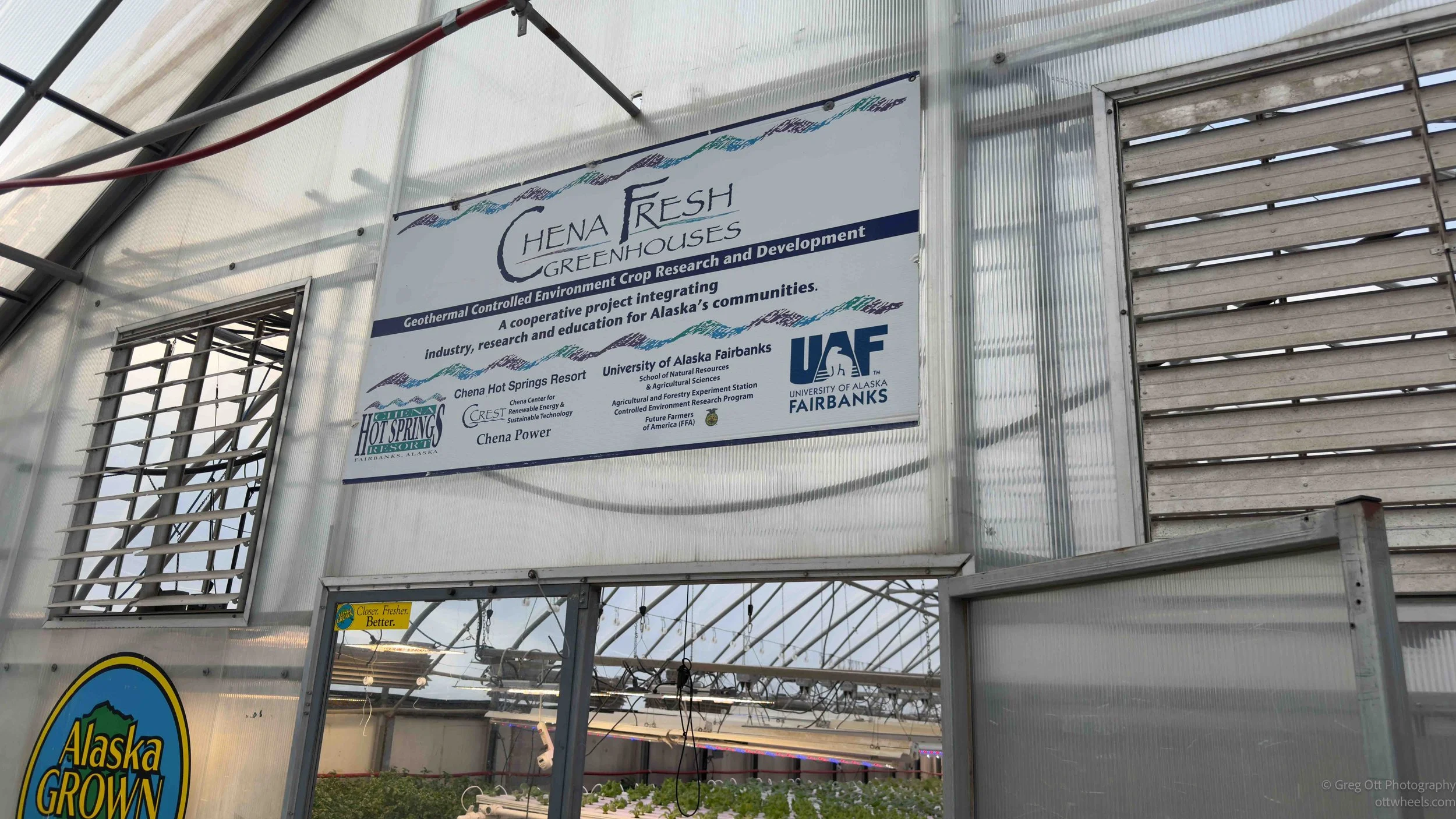
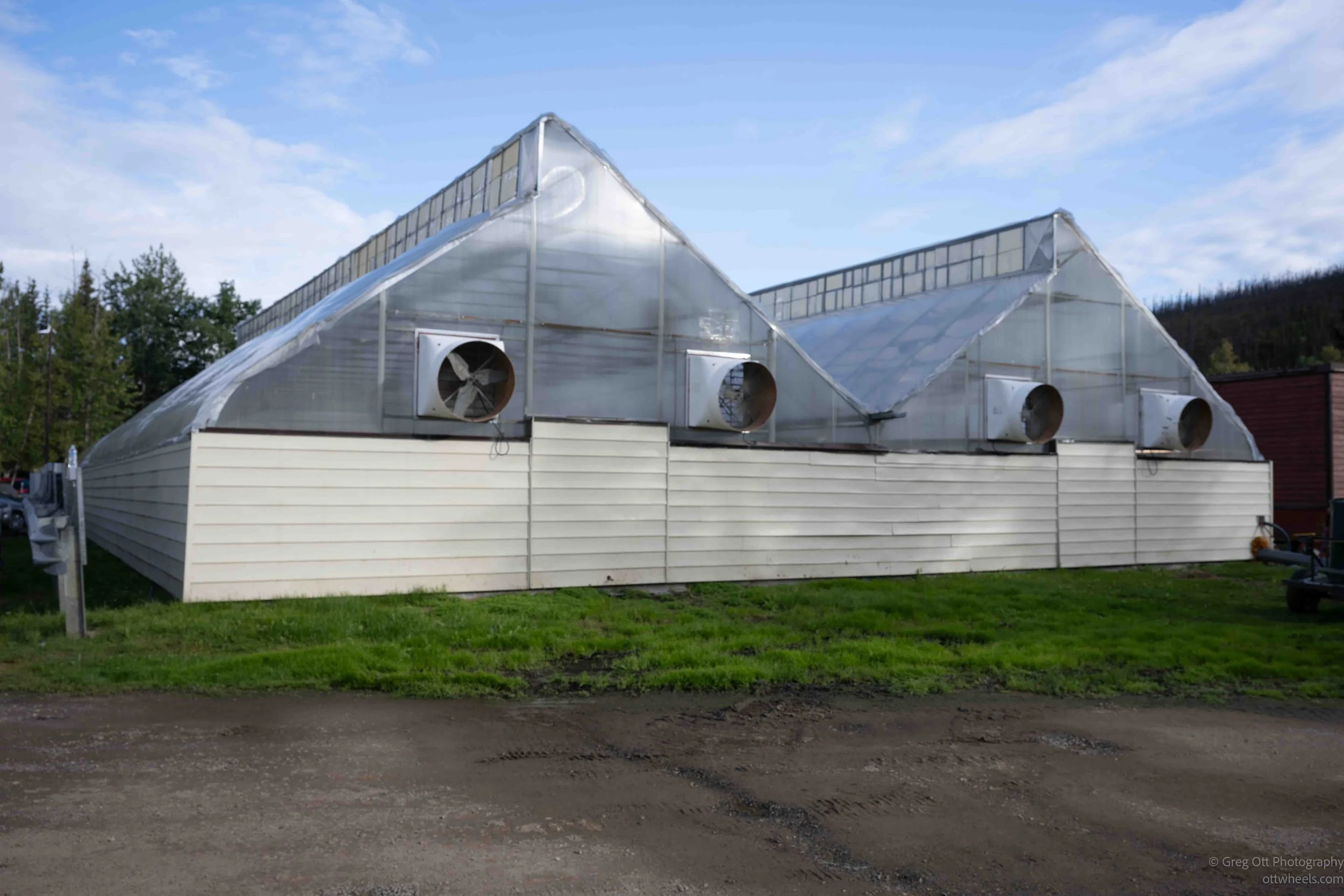
Our first stop was the greenhouse, and this ended up being much more interesting than I expected. This wasn't just a resort growing a few tomatoes so it could put "locally grown" on the restaurant menu. The greenhouse was part of a much larger experiment in figuring out how to grow food year-round in Interior Alaska, where winter temperatures can fall below -50°F and much of the food has to travel thousands of miles before reaching a grocery store.
The project began with a small experimental greenhouse in 2004 and eventually expanded to three greenhouses. There has also been a long relationship with researchers at the University of Alaska Fairbanks, particularly around figuring out which plants and growing methods actually work in Alaska's extreme conditions. In 2014, UAF reported that Chena was producing enough lettuce, tomatoes and herbs for about 150,000 meals a year for resort guests and employees, with occasional excess going to institutions in Fairbanks. The larger idea was to demonstrate that more food could be grown in Alaska rather than shipped north.
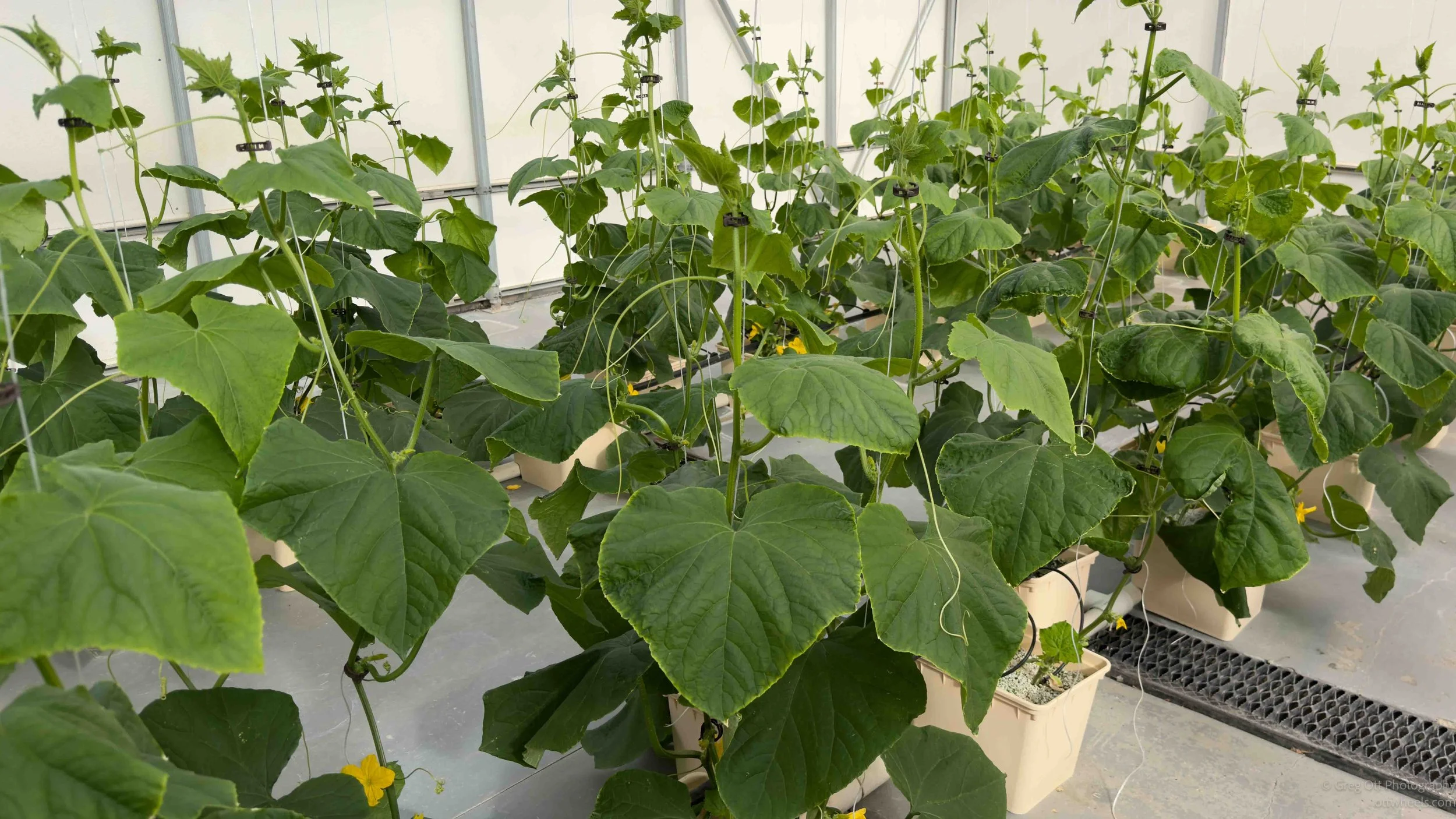
Most of what I saw was being grown hydroponically rather than in soil. The lettuce and herbs were growing in water carrying the nutrients the plants needed, while the tomatoes were supported in containers filled with perlite, the little white material I recognized from potting soil. Perlite is actually volcanic rock that has been heated until it expands into a lightweight, porous material that can hold both water and air around the roots. The resort says the main greenhouse can have as many as 1,920 heads of lettuce growing at once, while about 360 tomato plants produce roughly 9,000 pounds of tomatoes a year.
There was another material that looked almost like cotton candy. This was rockwool, also made from rock that is melted and spun into fibers. Small plants can be started in it because it holds moisture while still allowing oxygen to reach the roots. It was interesting to see how little actual dirt was involved. Between the rockwool, perlite, water and carefully controlled nutrients, they had essentially taken the soil out of farming.
Of course, growing vegetables year-round this far north requires more than hydroponics. The real advantage Chena has is directly beneath it. Geothermal water provides the heat needed to keep the greenhouses warm through the winter. During one cold spell in 2005, the temperature outside dropped to -56°F while the original greenhouse remained at 78°F—a difference of 134 degrees. Standing there on a pleasant August afternoon, it was difficult to imagine keeping tomatoes and lettuce alive here when it was 50 below zero outside.
That was what I found most interesting about the greenhouse. Chena wasn't going to feed all of Alaska from these few buildings, but that wasn't really the point. It was showing that with geothermal heat, hydroponics and some experimentation, fresh vegetables could be grown year-round in a place where conventional farming would seem almost impossible. They were also experimenting with compact grow towers designed with rural Alaska in mind. One tower occupies only about a four-by-four-foot area and can produce roughly 14 heads of lettuce a week. It was a small demonstration, but in an isolated village where fresh produce is expensive and difficult to get, I could see why the idea mattered.
The Geothermal Plant
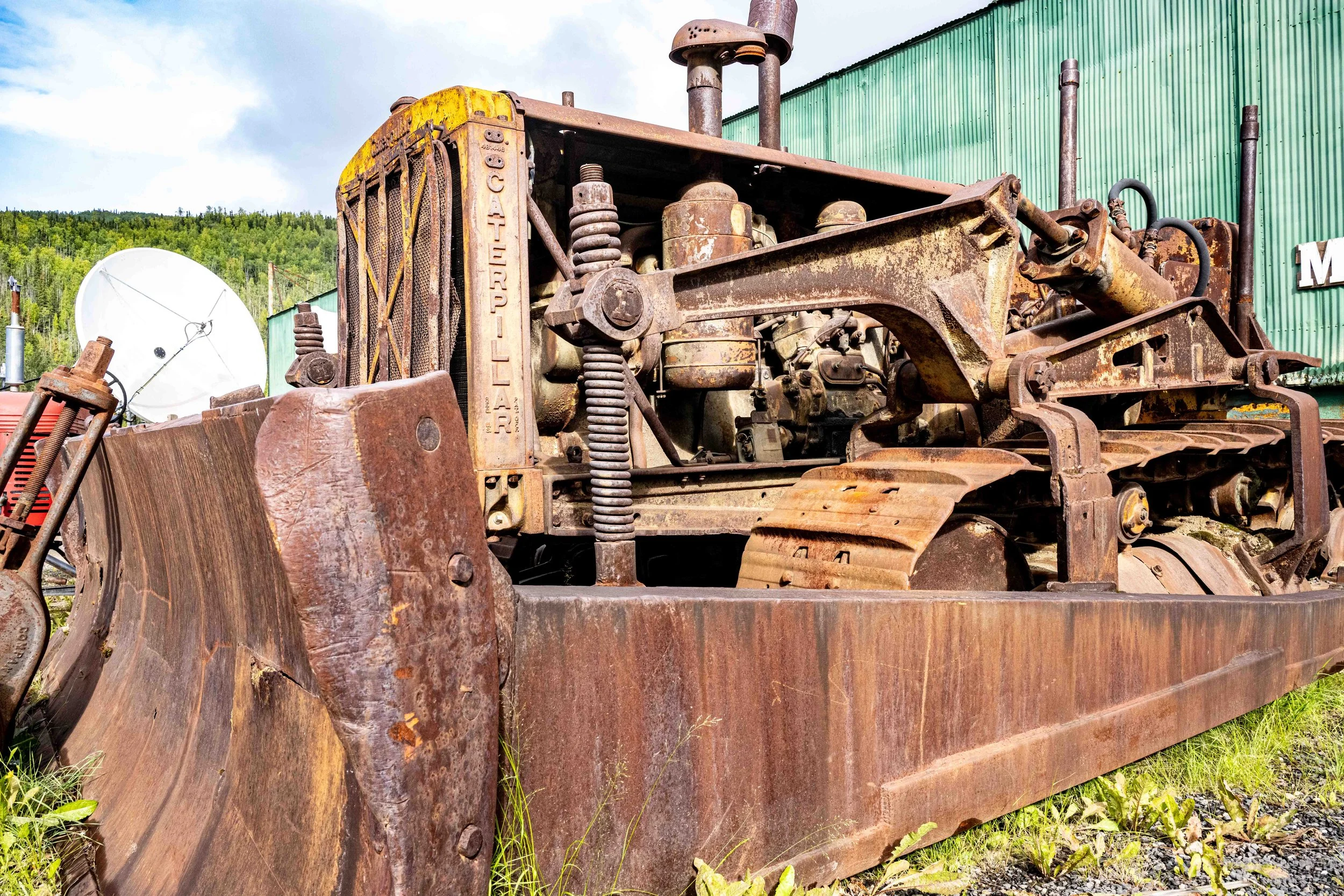
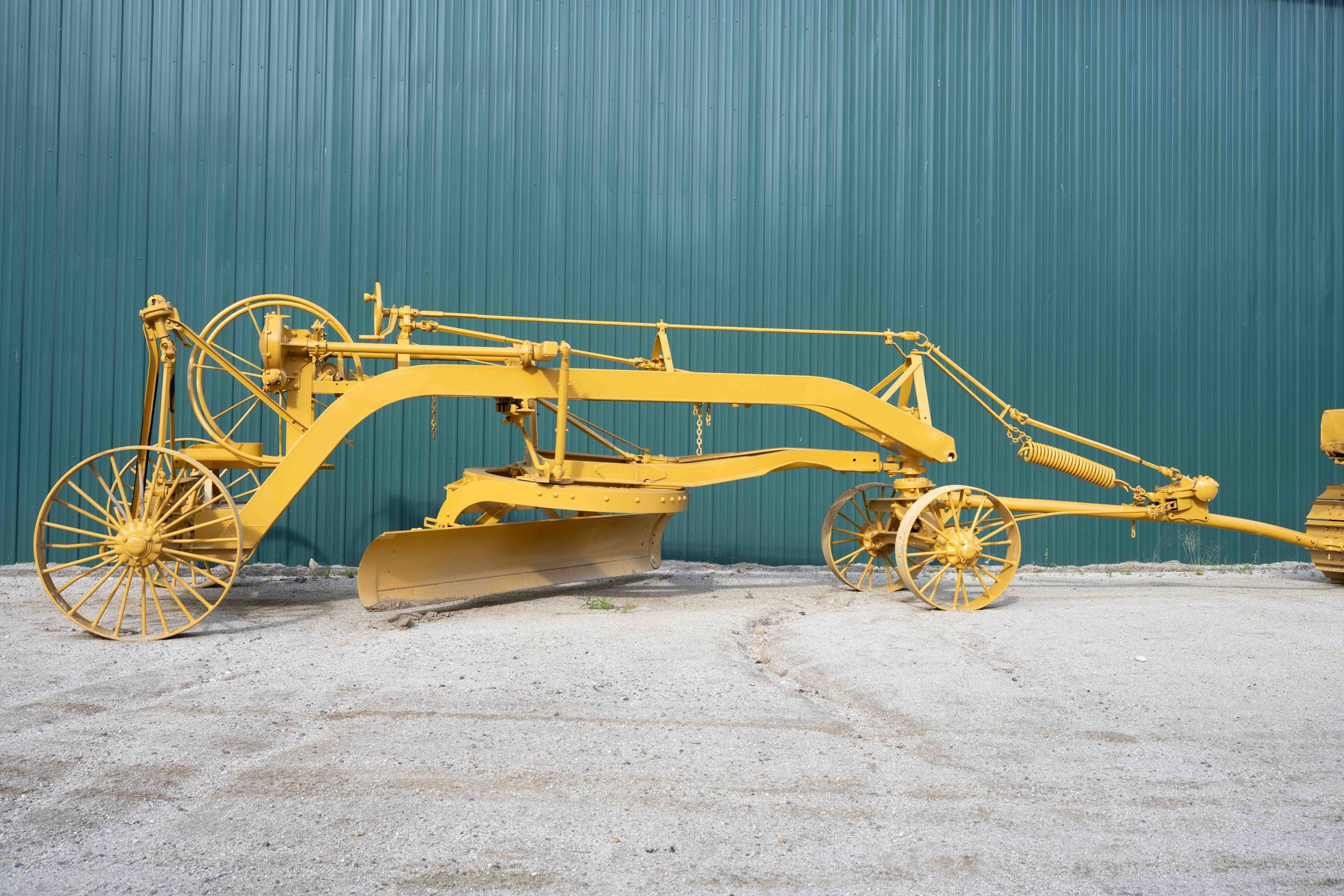
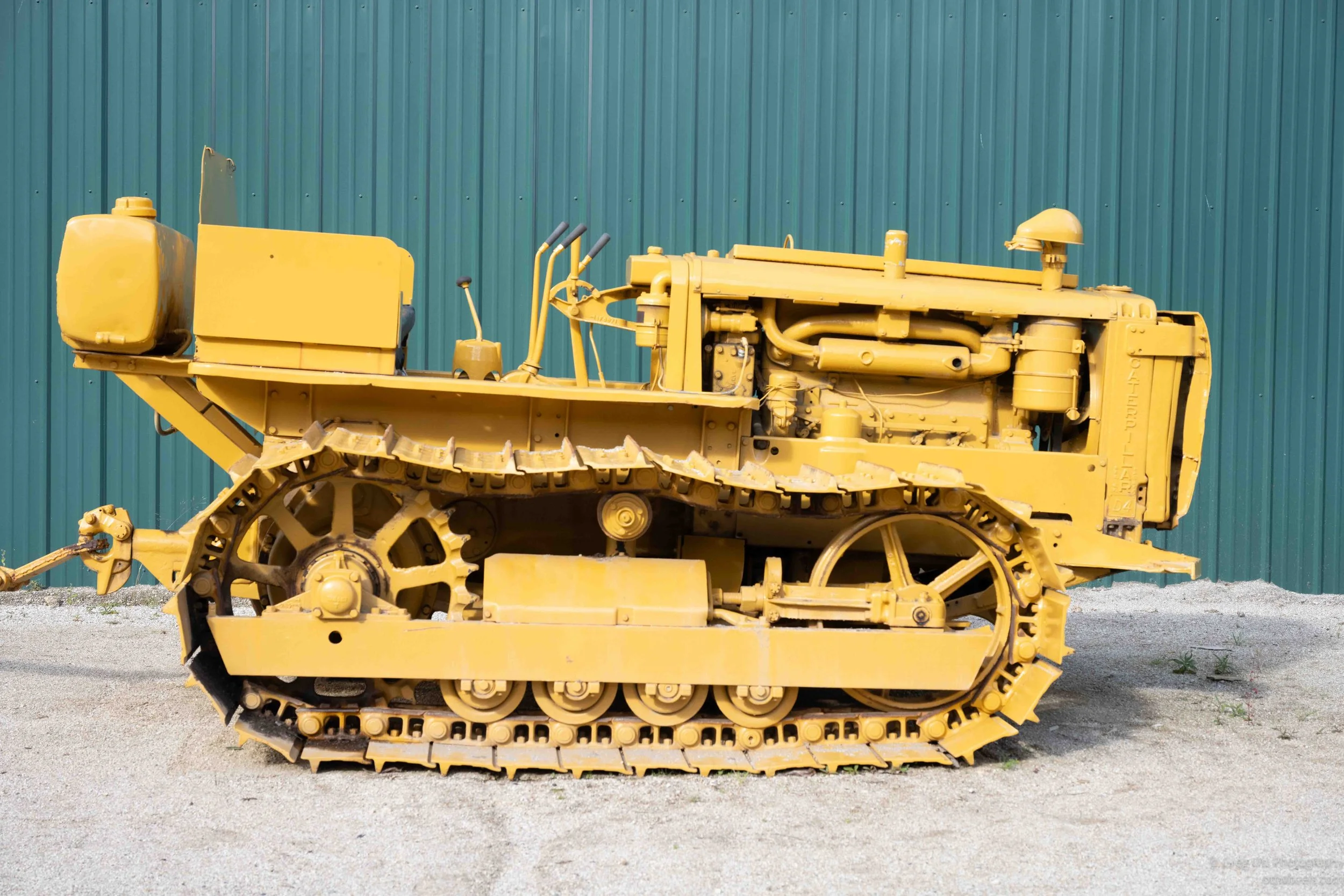
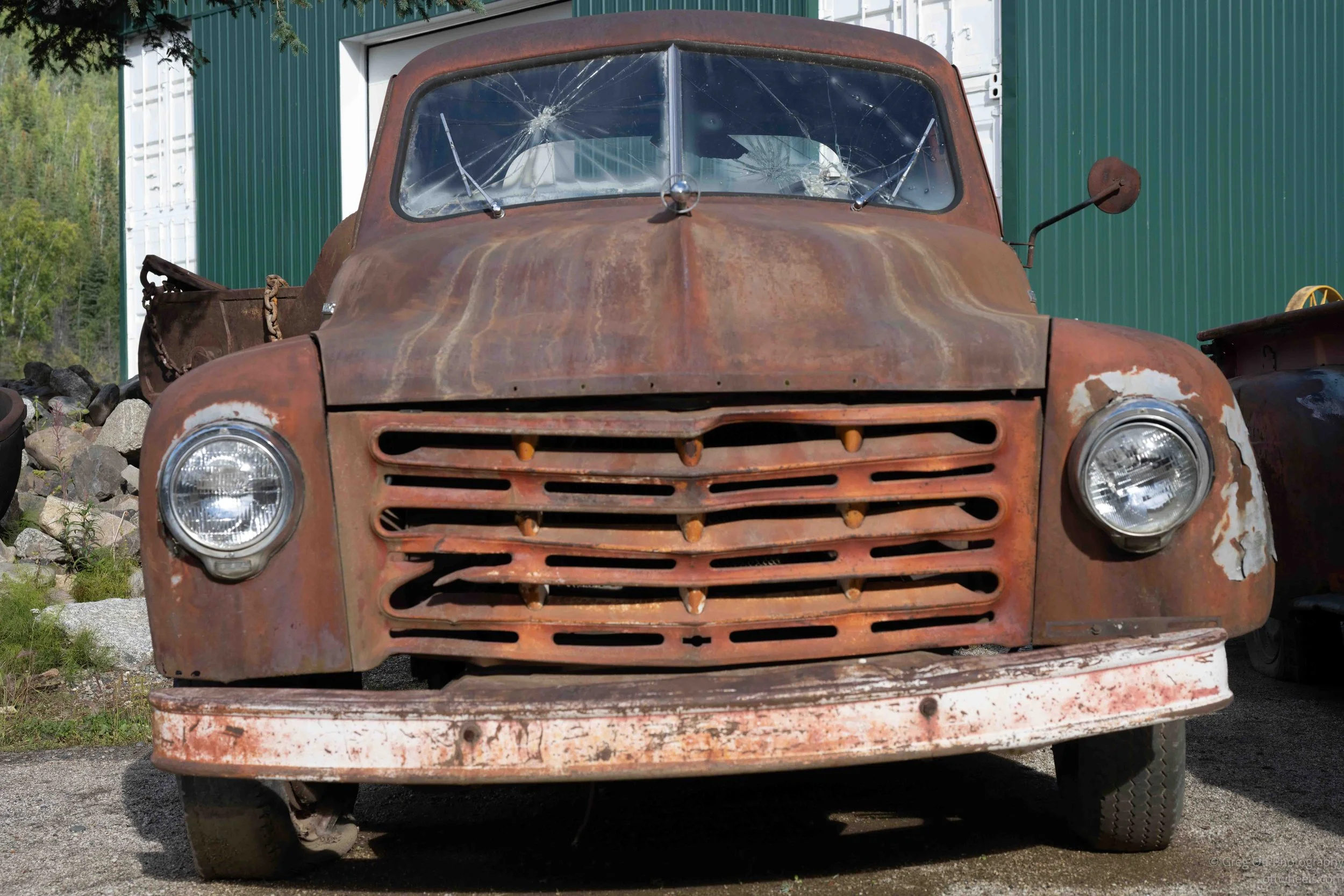
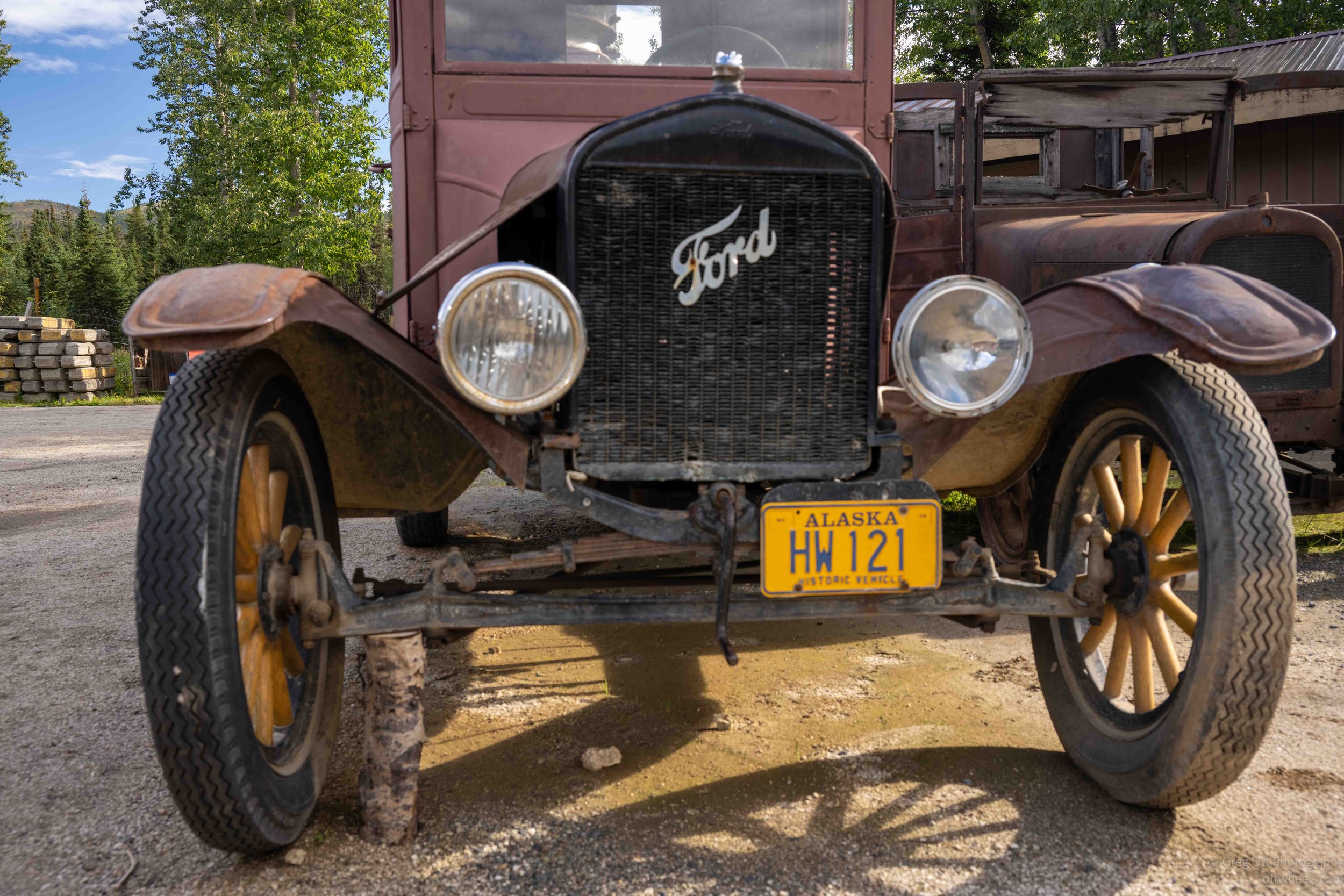
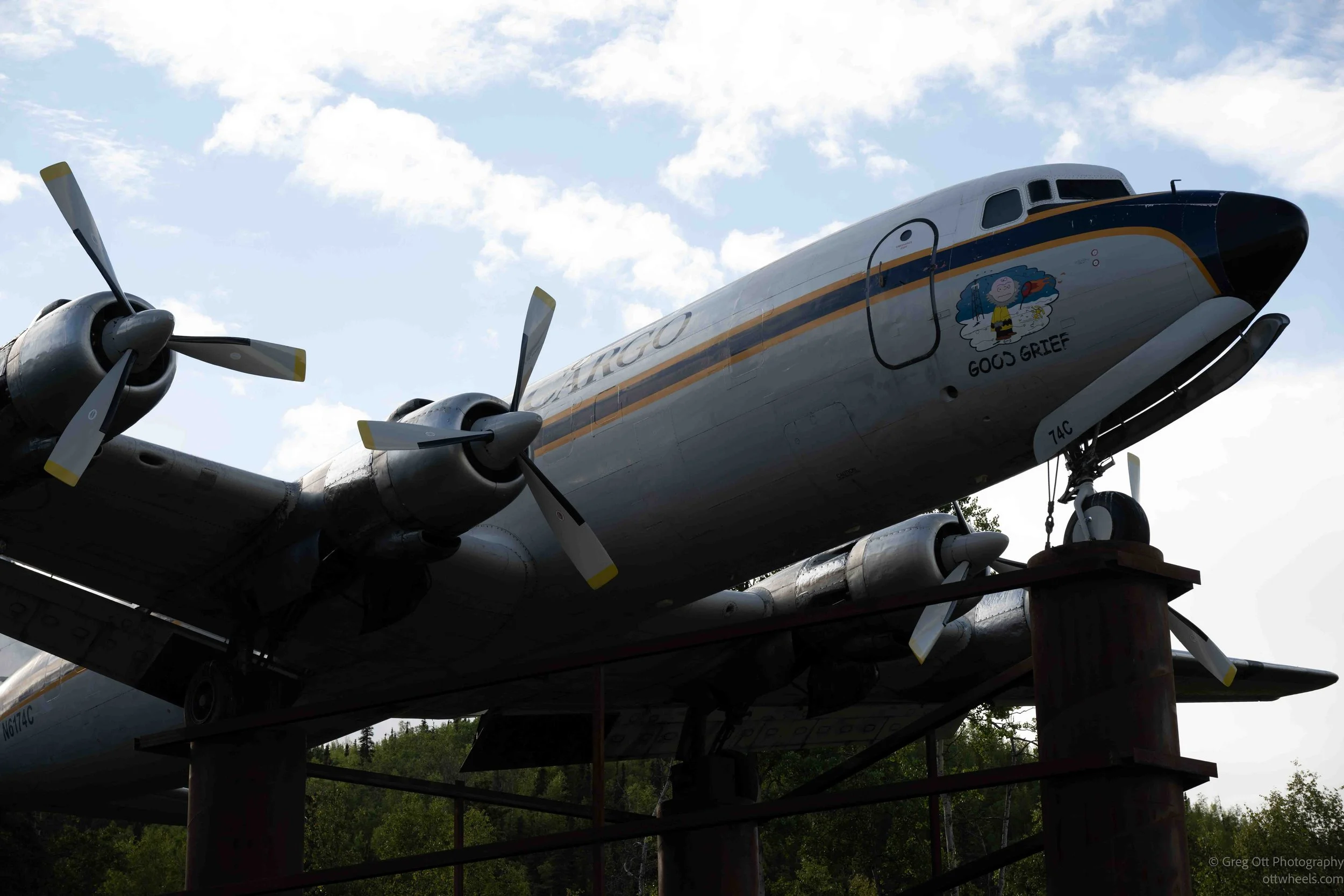
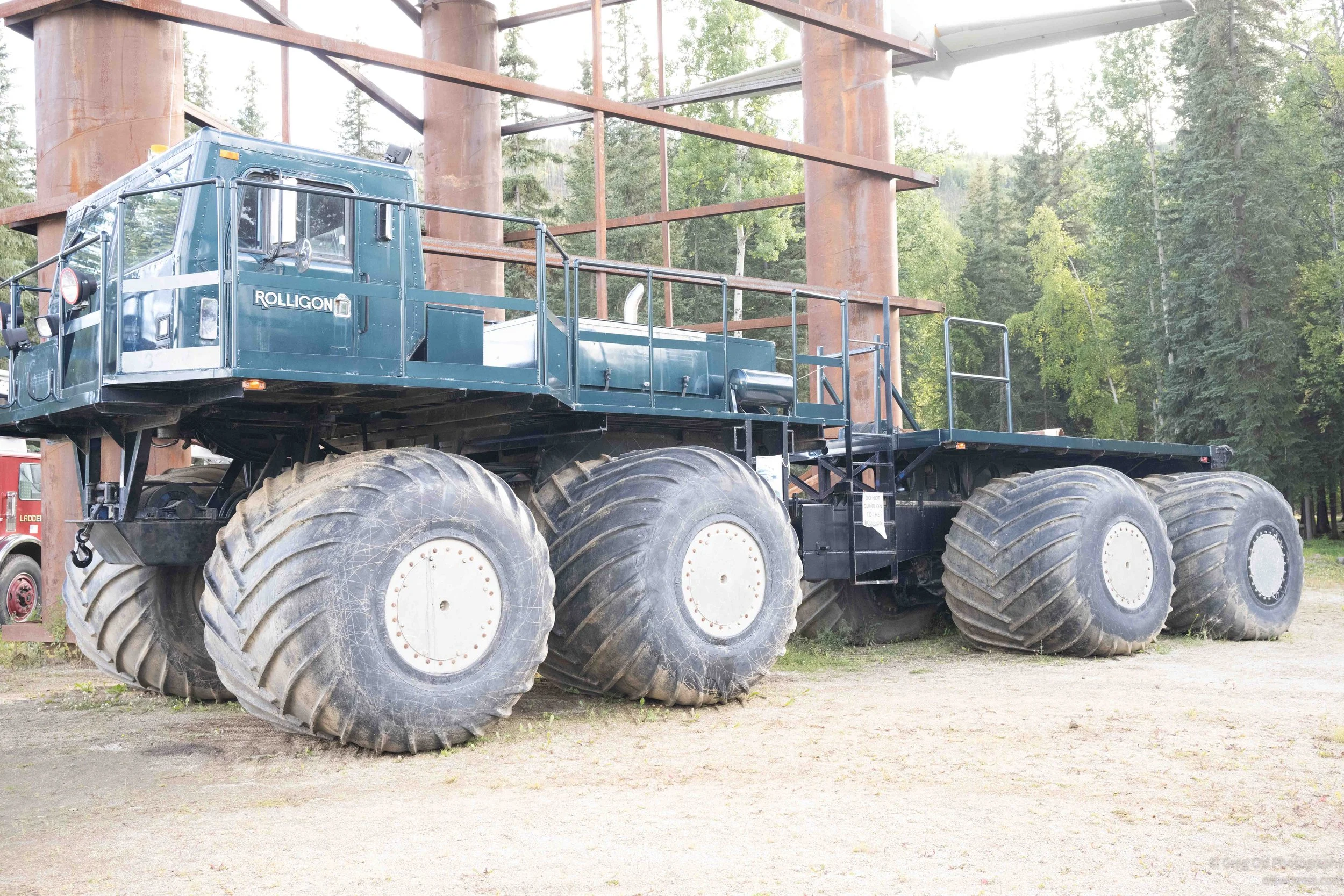
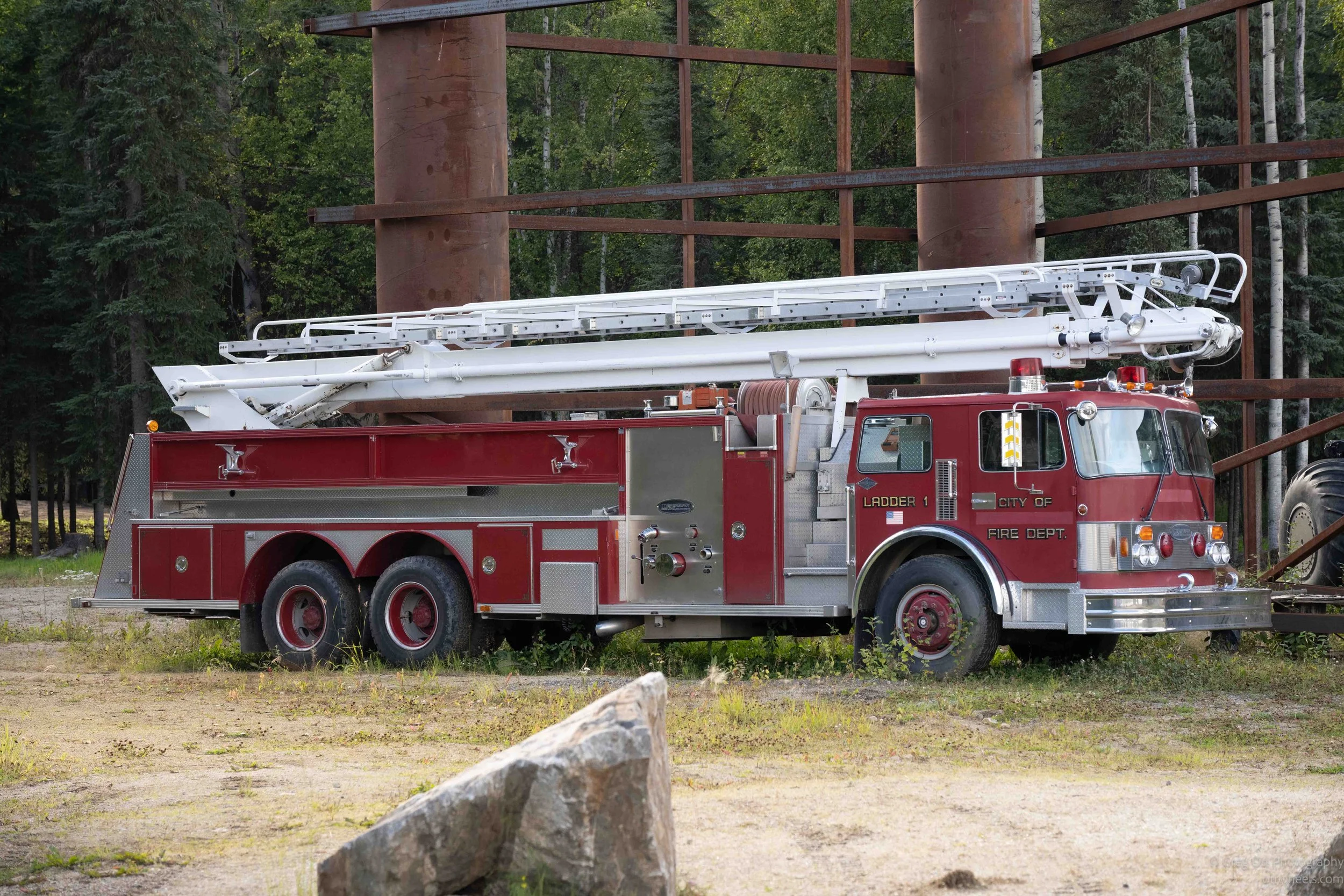
As we walked from the greenhouse toward the geothermal plant, I noticed old equipment sitting everywhere. Our guide told me the owner had worked on the Trans-Alaska Pipeline and had rescued some of the equipment from those days, then collected other machinery over the years. It helped explain the slightly eccentric feel of the place. Old backhoe buckets had even been repurposed as giant planters, filled with soil and flowers. Nothing seemed to go to waste.
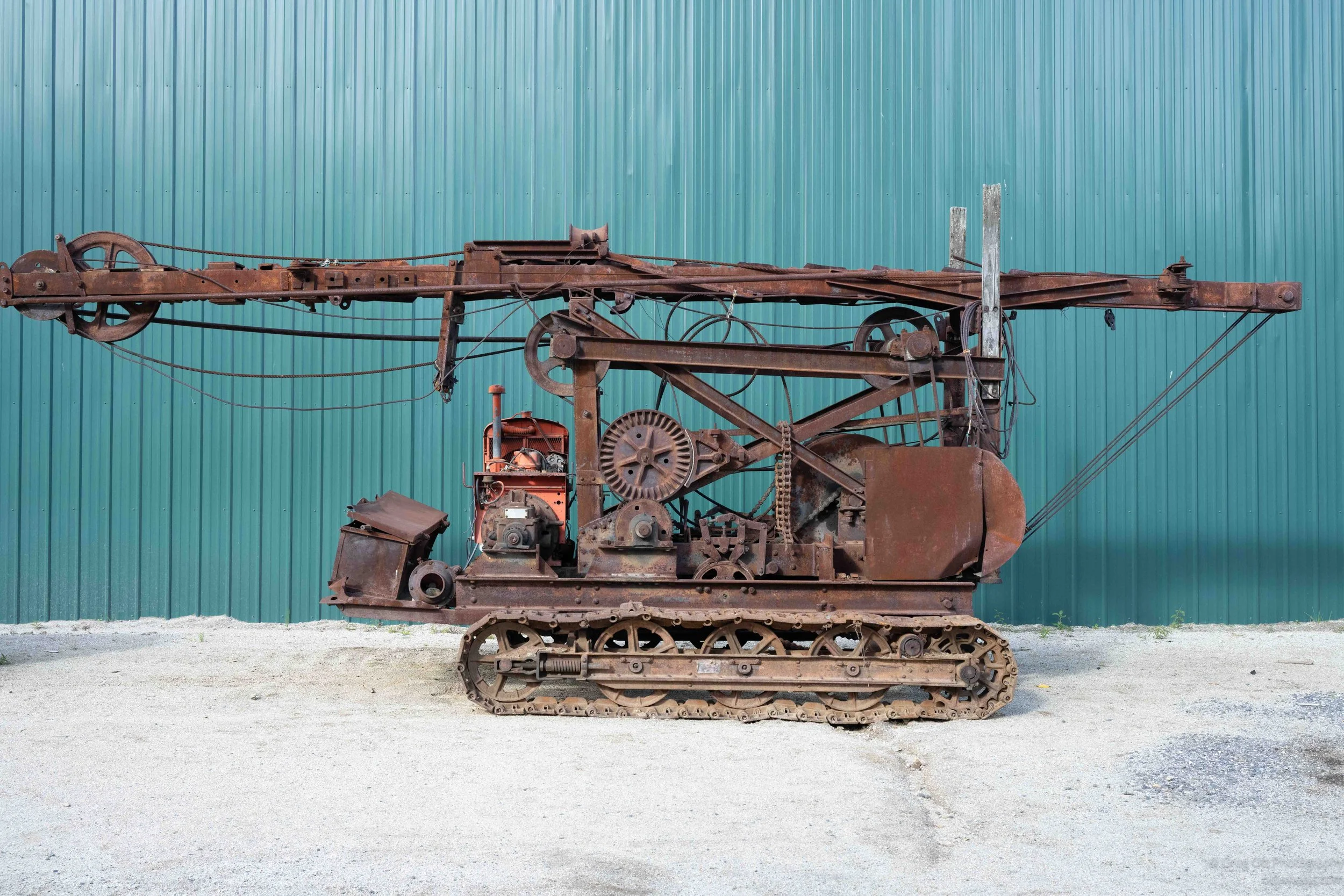
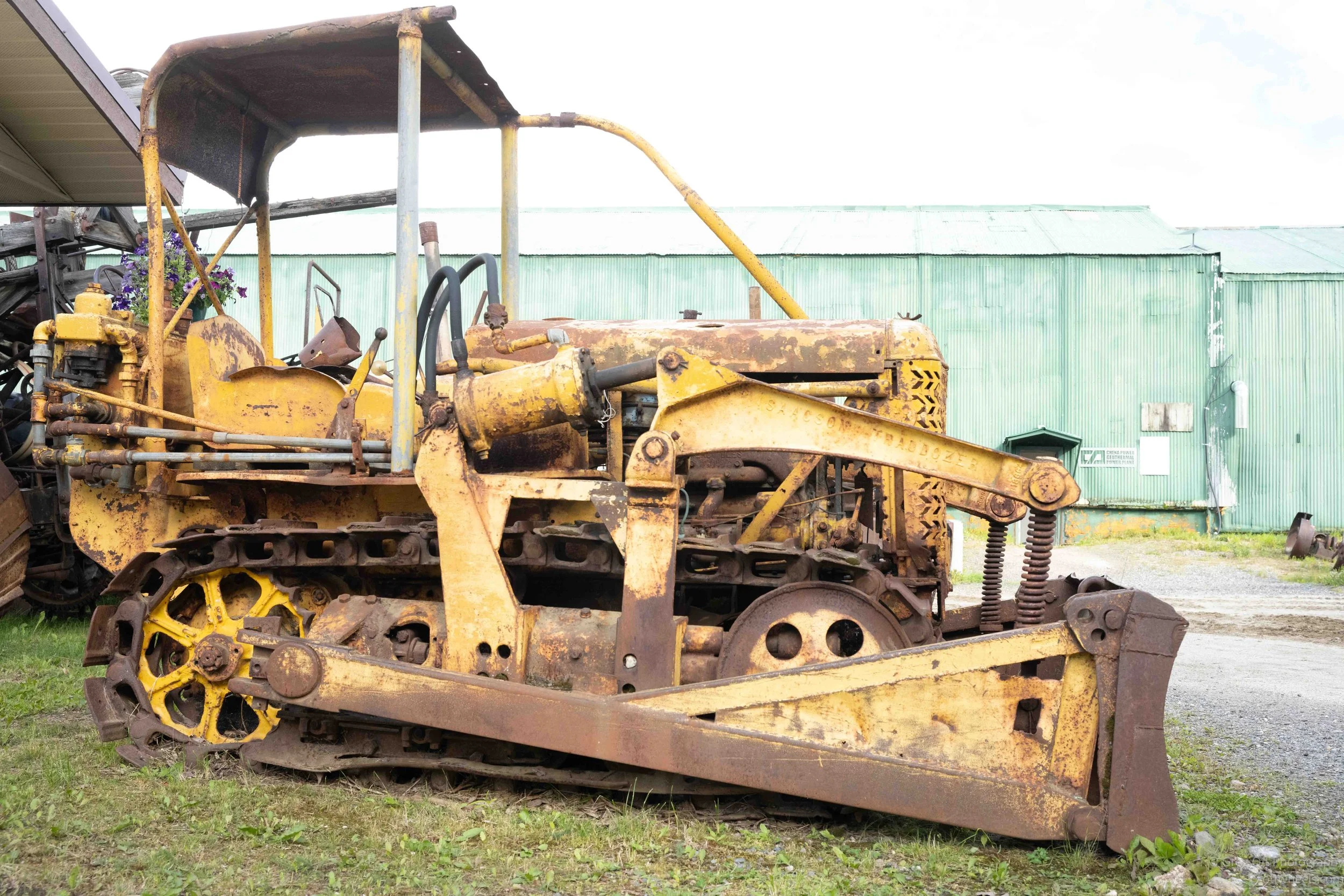
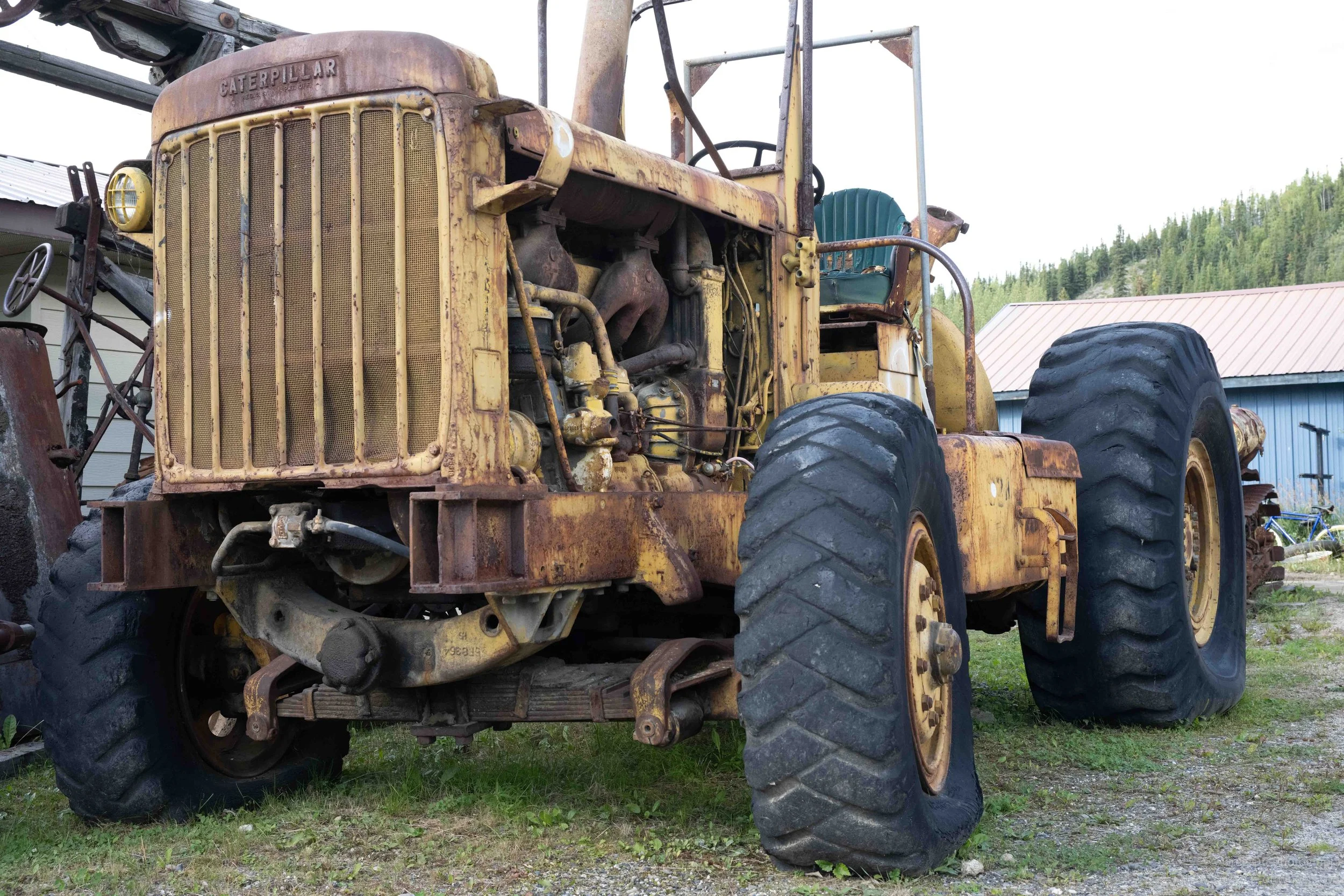
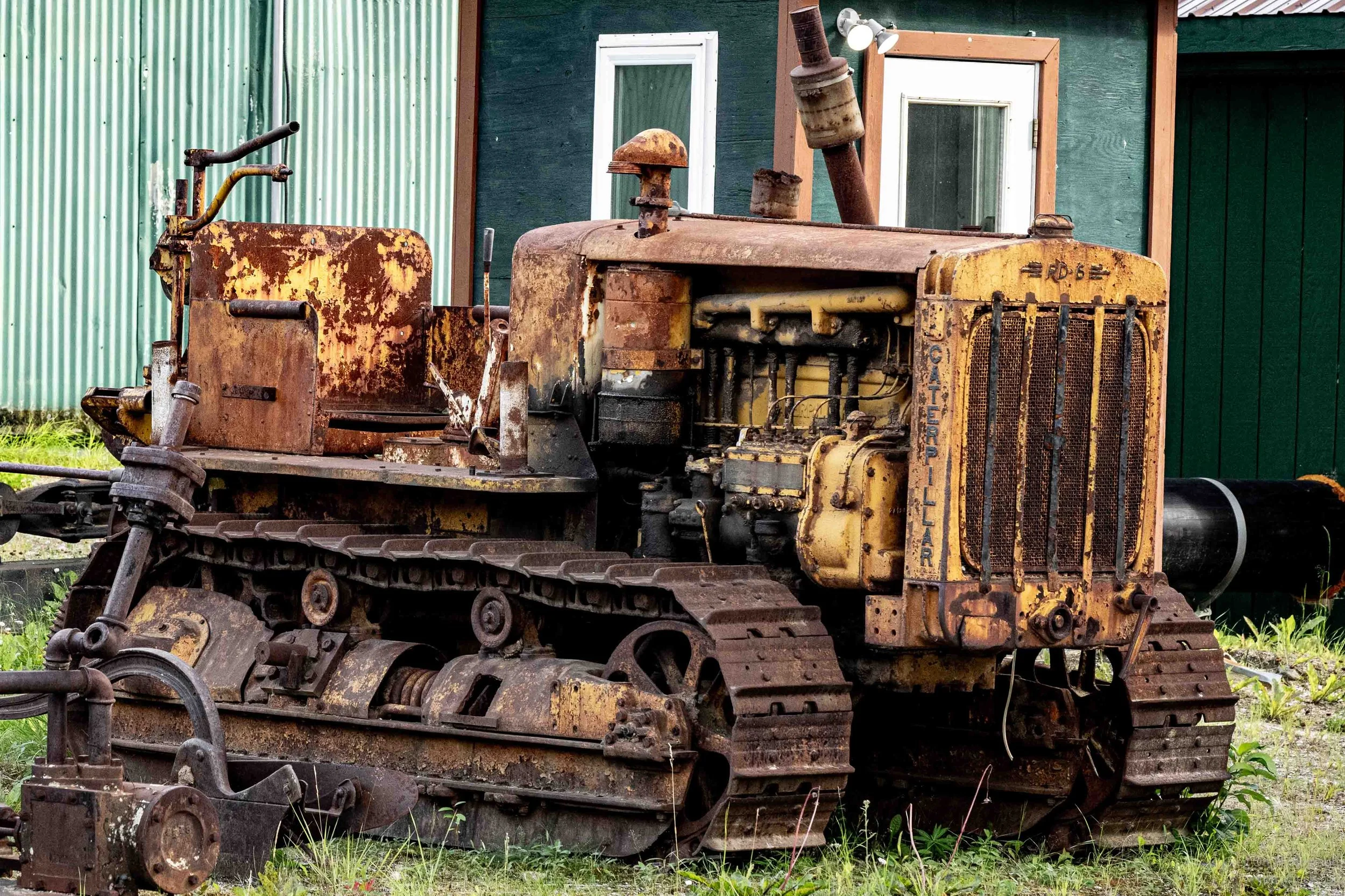
We weren’t allowed inside the geothermal plant to see the equipment, so our guide explained how it worked from outside. One thing she emphasized was that Chena isn’t volcanic. The water comes out of the ground at only about 165°F, which she said is actually quite cool for generating electricity.
Because the water isn’t hot enough to produce steam to drive a turbine directly, its heat is transferred to another liquid with a much lower boiling point. That liquid vaporizes, turns the turbine and is then cooled and reused. The plant can generate about 680 kilowatts, which is used to power much of the resort. The geothermal water also provides heat for buildings and the greenhouses. I liked the idea that they were getting several uses out of the same source of heat. As I looked at the plaques, I realized the equipment came from UTC in Connecticut and I knew someone that had worked on the product.
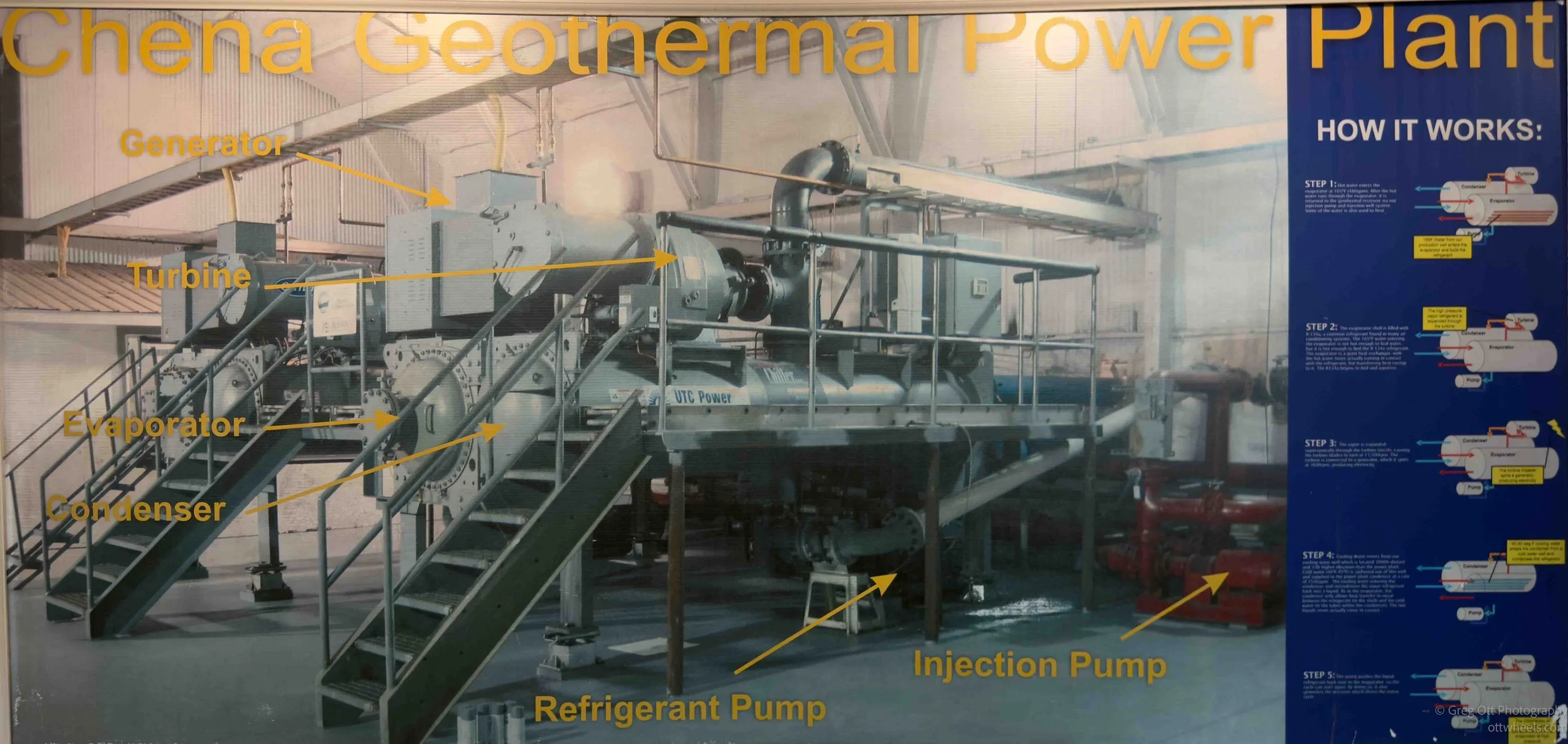
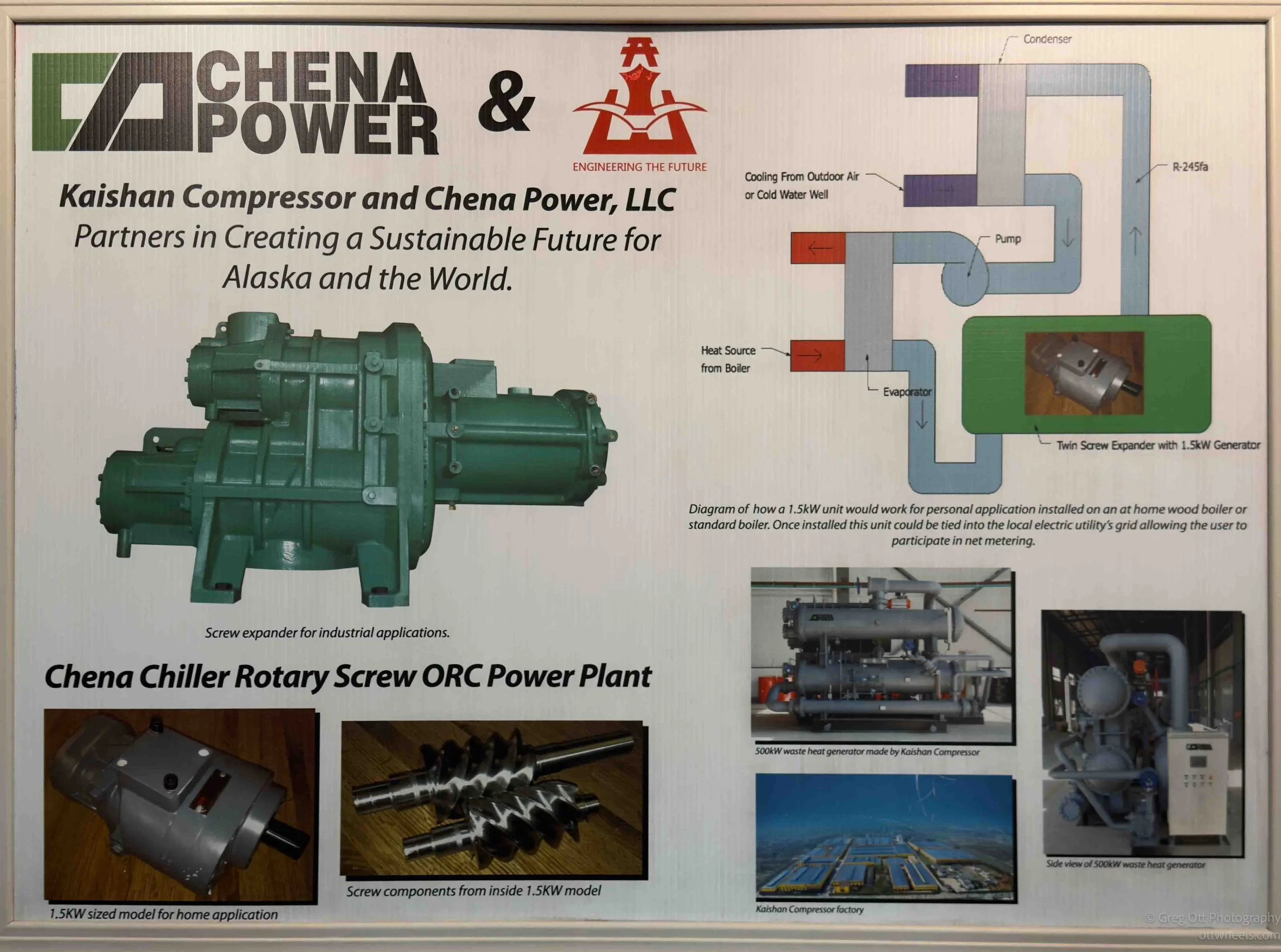
As she talked, I thought about the geothermal project I had learned about near Dutch Harbor. That one is associated with Makushin Volcano and has the potential to generate far more electricity for Unalaska, including the fishing industry. Chena was almost the opposite. There was no volcano and the water wasn’t exceptionally hot (160 F), yet they had figured out how to turn it into a useful source of electricity. After seeing both places during my visit, it was interesting to see two completely different ways Alaska could tap geothermal energy.
Where Do You Live?
I was the last to leave the geothermal area, and the guide was walking beside me when she asked, “Where do you live?” I told her I’m currently living in a van and traveling to all 50 states. “I did the same thing,” she said. “But I still have two left—Alabama and Mississippi.”
That opened up a ten-minute conversation about traveling and the different places she had lived. At one point she worked on a fishing boat off the Aleutian Islands and happened to be at sea when COVID broke out. The captain either didn’t know what was happening or didn’t tell the crew. They were gone for three months, and when she returned, the streets were empty and suddenly there were all these strange new rules. She said she first learned about social distancing when someone in a line told her to stand six feet away. Imagine going to sea and coming back three months later to find the world had changed.
As I walked away, I kept thinking about her original question. “Where are you from?” is mostly a question about the past—where you were born, where you grew up, or the place that shaped you. Often, none of those were choices you made. “Where do you live?” is about the present, and the answer is much more likely to reflect choices you’ve made about how you want to live your life. In my case, the answer wasn’t even a place—it was “a van.” That immediately told her something about my life right now, and because she had made a similar choice, it opened an entirely different conversation. Somehow one simple question took us from Chena Hot Springs to traveling across the country, the Aleutian Islands, a fishing boat and returning to a world transformed by COVID.
Restaurant
I stopped at the restaurant inside the hotel. It was early for me to be eating dinner, but I wasn’t alone. I ordered the salmon with lemon rice and a side of vegetables grown in the greenhouse I had just toured. They also had a local hefeweizen on tap, so I tried that.
While I was waiting for my meal, I walked over to the front desk to figure out camping and the hot springs. Camping was pretty informal. I was told to find an empty site, remember the number and come back to pay. The hot springs worked a little differently. I would pay $20 at the springs, but the admission was only good until midnight. If I wanted to go back the next morning, I would have to pay another $20. She also tried to convince me to do the Northern Lights tour tonight.
Back at the restaurant, a couple sitting at the bar noticed my camera and asked if I was a professional photographer. I explained what I was doing and that I had been traveling around Alaska for the summer. The woman was an interior decorator who also did a lot of photography, so that got the conversation started. There were actually three of them traveling together; one was from Ontario, although I’ve forgotten where the couple was from.
We ended up talking through most of the meal about their trip. The three of them were going fishing the next day, and the husband was staying in Alaska for another week to continue fishing. It was one of those conversations that has happened repeatedly on this trip. Someone notices the camera or asks about the van, and suddenly I'm comparing travel stories with people I hadn't known five minutes earlier.
Camping
I drove into the camping area and claimed site number 1. Before getting too settled, I gave Starlink a quick test and was getting around 50 Mbps, more than enough to get a few things done that evening. I went back to the hotel, paid my $30 and then wandered around the grounds. There seemed to be every imaginable kind of lodging scattered around: the hotel, dorms, cabins, yurts and campsites. It added to my impression that Chena had grown organically over the years. Someone apparently had an idea, built a few yurts or cabins, and they became another part of the place. By around 8 p.m., I was back at the van and settled in for the night.
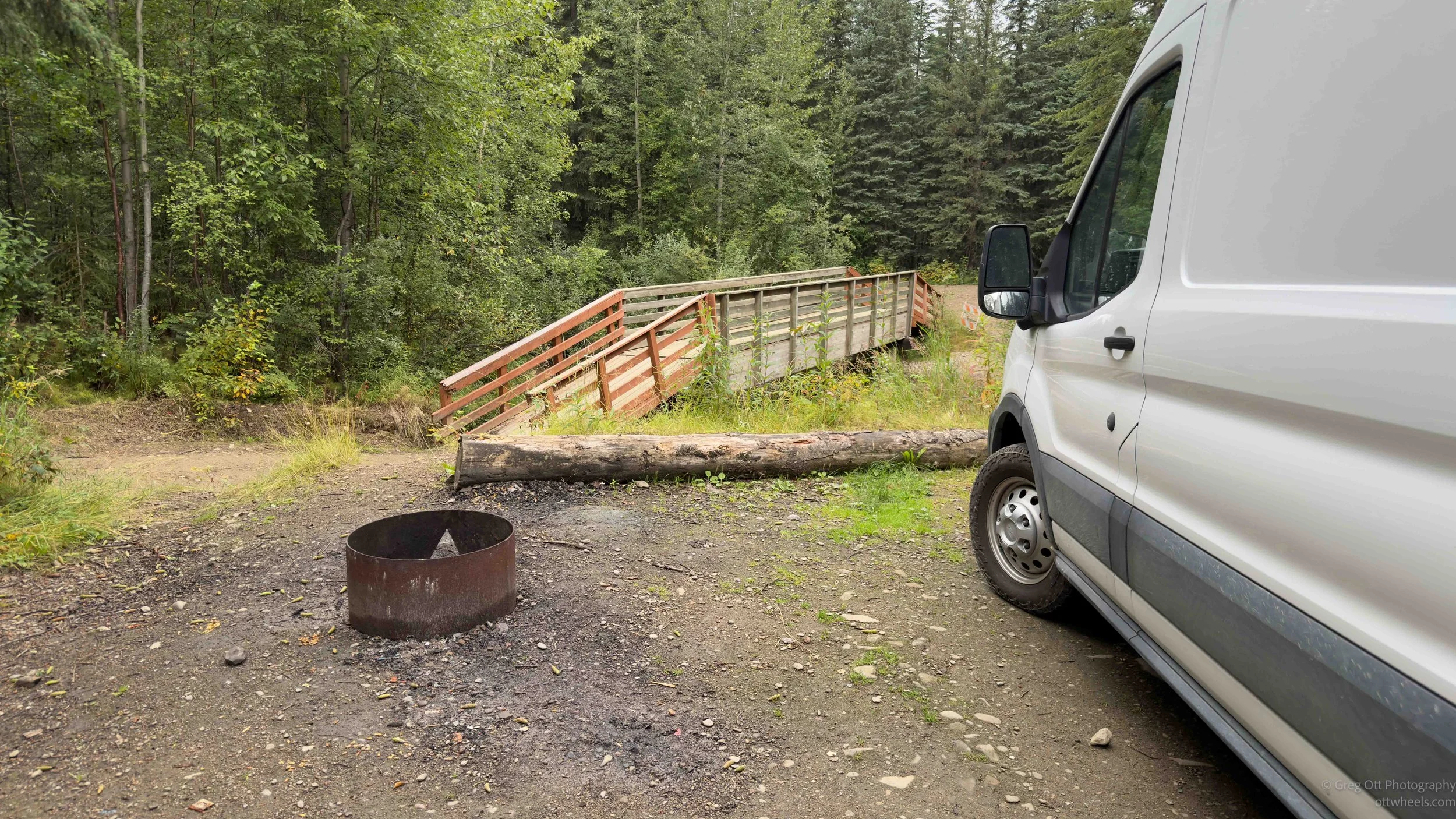
I slept for nearly ten hours before a loud truck climbing the mountain somewhere in the distance finally woke me. Checkout wasn't until 11, so there was no reason to hurry. I stopped at the water station to fill the van and used the opportunity to do a little housekeeping, throwing out accumulated papers and garbage and putting things back where they belonged. Every few weeks on the road, clutter seems to appear from nowhere. By the time I was finished, there was more cleaning to do, but there was noticeably less stuff competing for space.
Hot Springs
By noon, I finally found my swimsuit and walked over to the hot springs to see how everything worked. Then I went back to the van, gathered my things and returned. At the entrance, they asked whether I had filled out a liability waiver and pointed me toward a station with the forms. A group of Europeans was trying to figure out exactly what they were being asked to sign, and I understood their confusion.
I filled mine out and returned to the counter. The guy looked at me, picked up his phone and started typing a very long text message while I stood there waiting. Eventually, he put down the phone, looked up and said, “Yes?” I told him I wanted to use the hot springs. He took my waiver and carefully inserted it somewhere in the middle of a stack of other waivers, which made me wonder why the middle mattered. “Twenty dollars.” I tried to tap my phone to pay, and he pointed to a sign explaining that they didn't accept tap payments or certain credit cards. Since I had to walk back to the van, I asked for my waiver so I wouldn't have to fill out another one. He said he'd find it after helping the people behind me. At that point, I just left.
I returned with my credit cards, but somehow he didn't remember me. I explained that I had already filled out the waiver and that it was somewhere in the stack directly in front of him. By now, the whole process was becoming funny. I paid my $20 and headed for the dressing room, where the comedy continued.
The dressing room was far too small for the number of people trying to change without bumping into each other (think naked men, sorry). A father in front of me was arguing with his teenage son about their locker strategy. He wasn't paying for a second locker when everything could fit into one. The son protested that he had only a shirt and pants and that they were already folded. The father countered that he also had his mother's backpack. This entire negotiation was taking place directly in front of the locker I was trying to use.
When I finally reached my locker, I discovered I needed two quarters to remove the key. I had no cash. Everything at Chena seemed to have its own little cost attached to it, right down to the locker. I went back to the front desk and explained my problem, and they simply handed me two quarters. There had to be a better system.
After the mandatory shower, the experience improved considerably. There was a regular swimming pool filled mostly with kids and their parents, a hot tub and then the actual hot springs. The spring water had a slight sulfur smell, but nothing like some of the other hot springs I've visited. I found a lounge chair, claimed my little corner and finally relaxed.
The hot springs pool is surrounded by enormous boulders, with hot water flowing through holes drilled into some of them. The water comes out of the ground at around 160°F, although obviously it cools considerably before reaching the pool. Some areas were noticeably hotter than others, probably a little over 100°F. For nearly four hours, I fell into a routine: soak, read, eat, then soak some more. I'm still working my way through Coming into the Country by John McPhee, which seemed like an appropriate book to be reading while soaking in a hot spring in Interior Alaska.
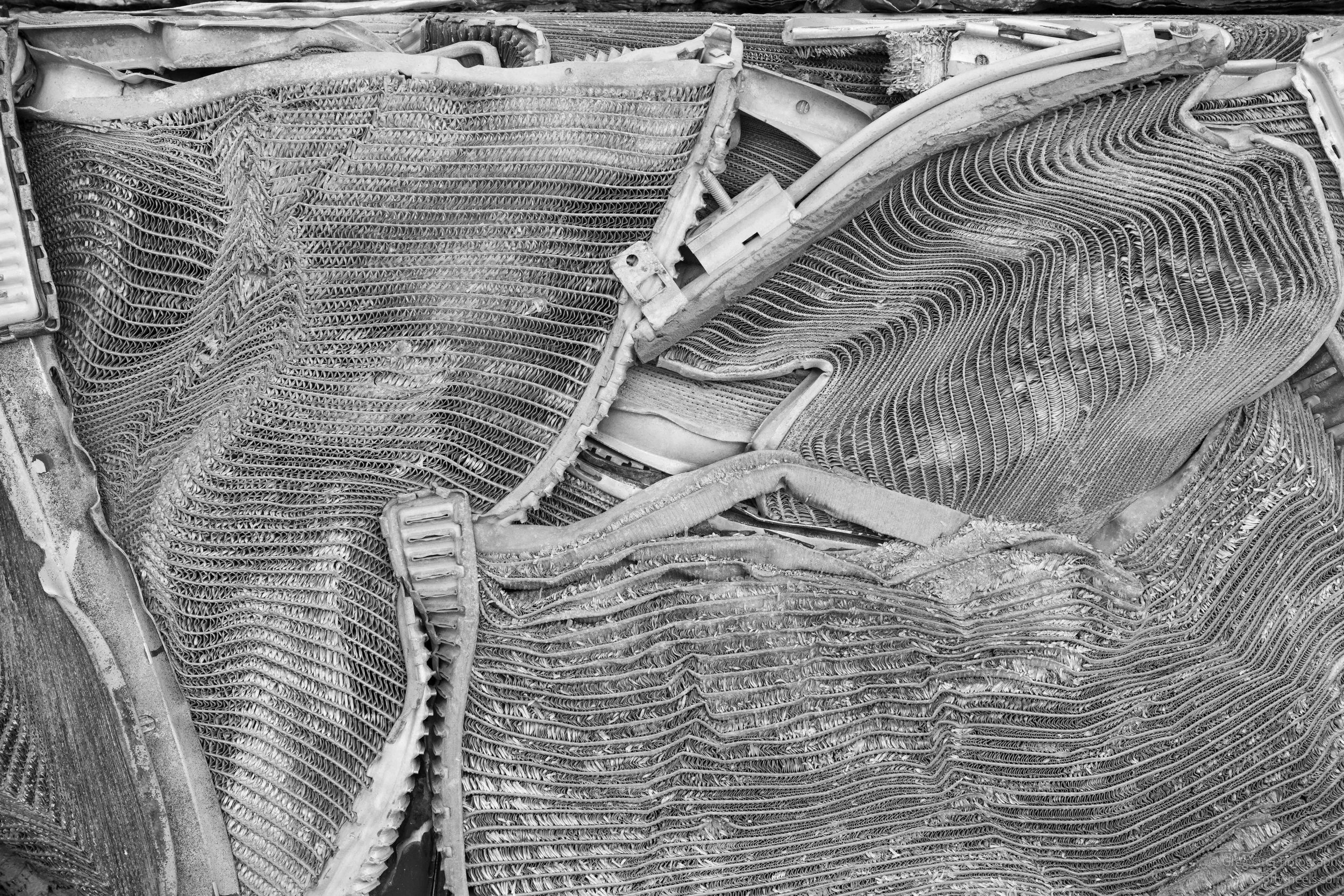
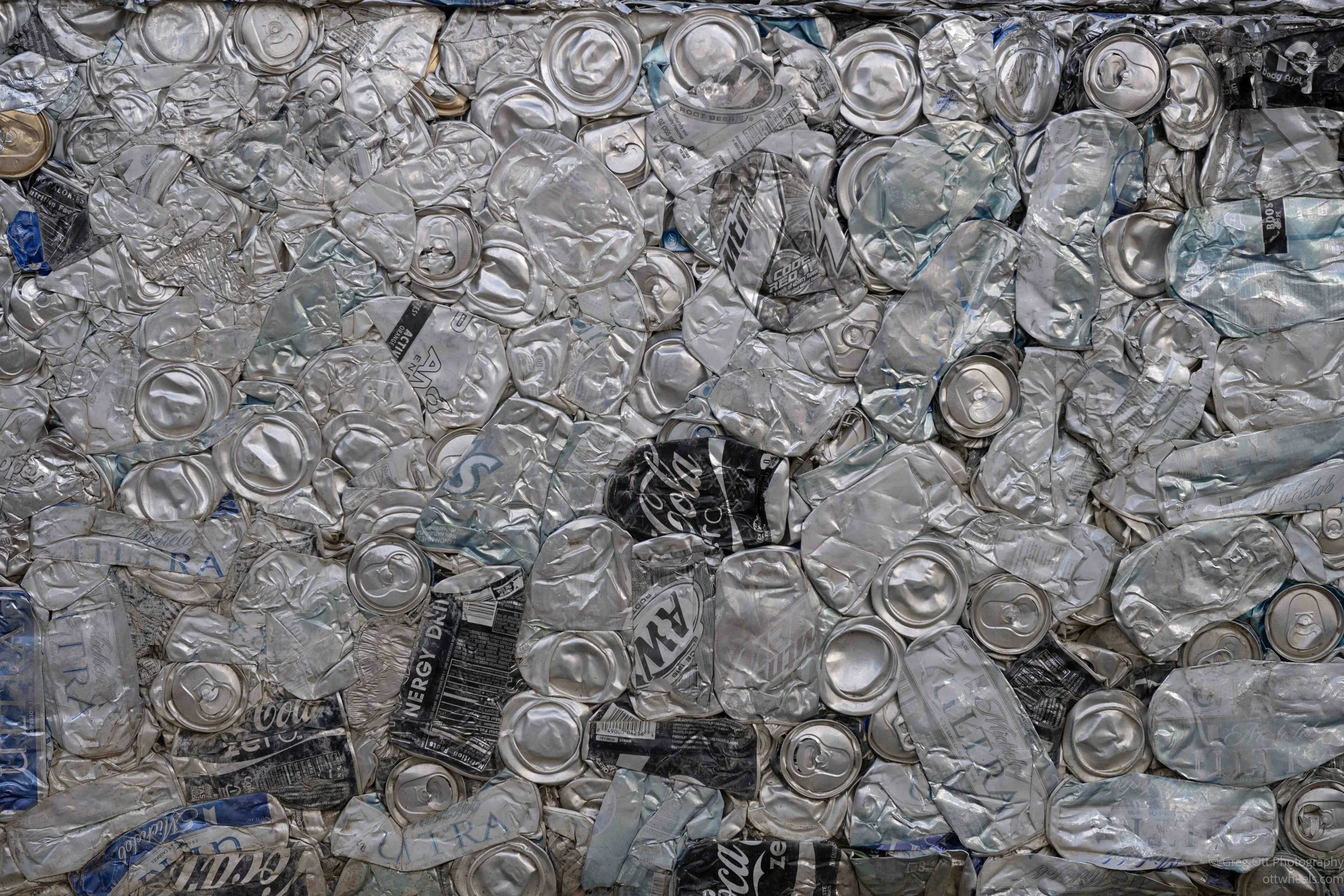
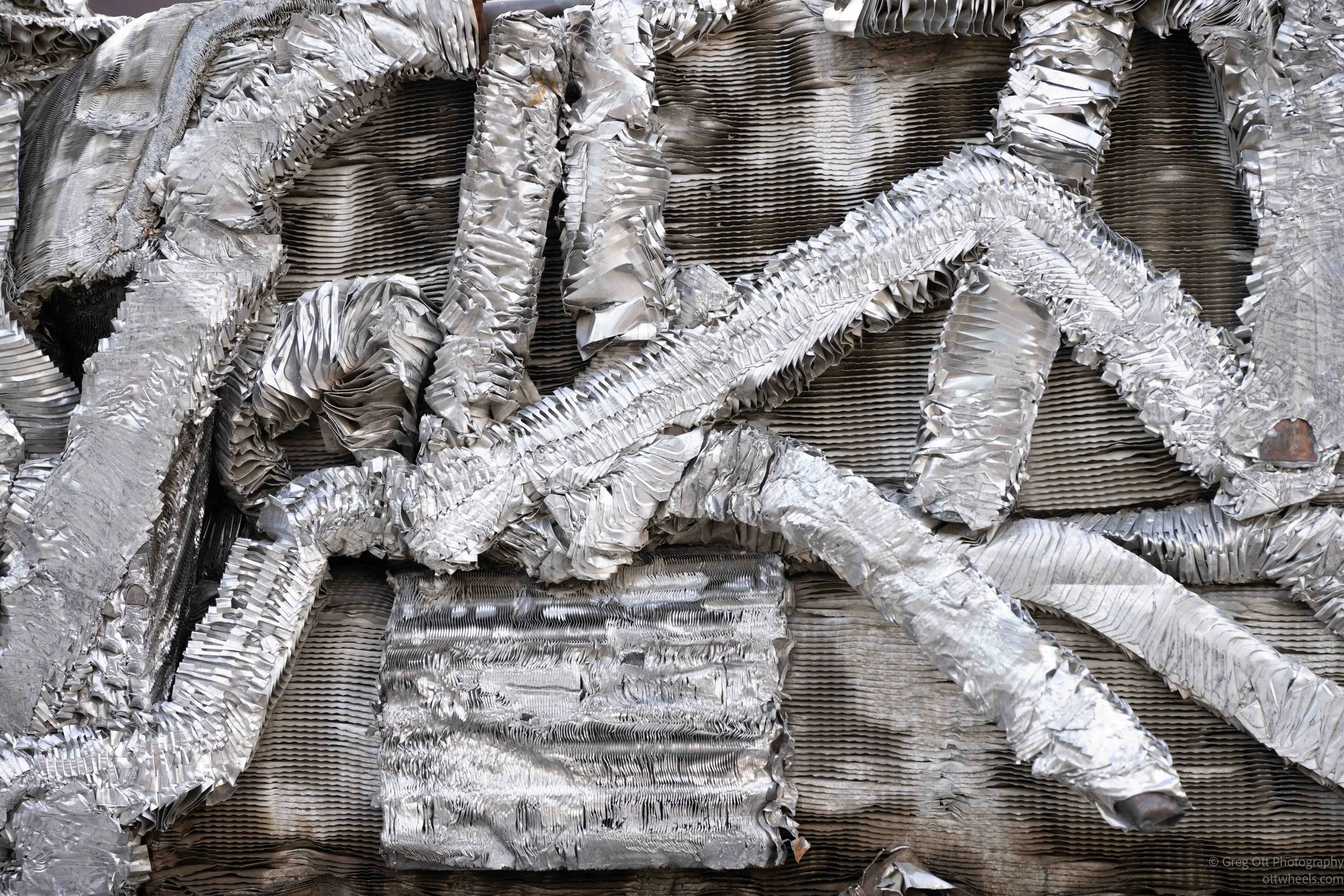
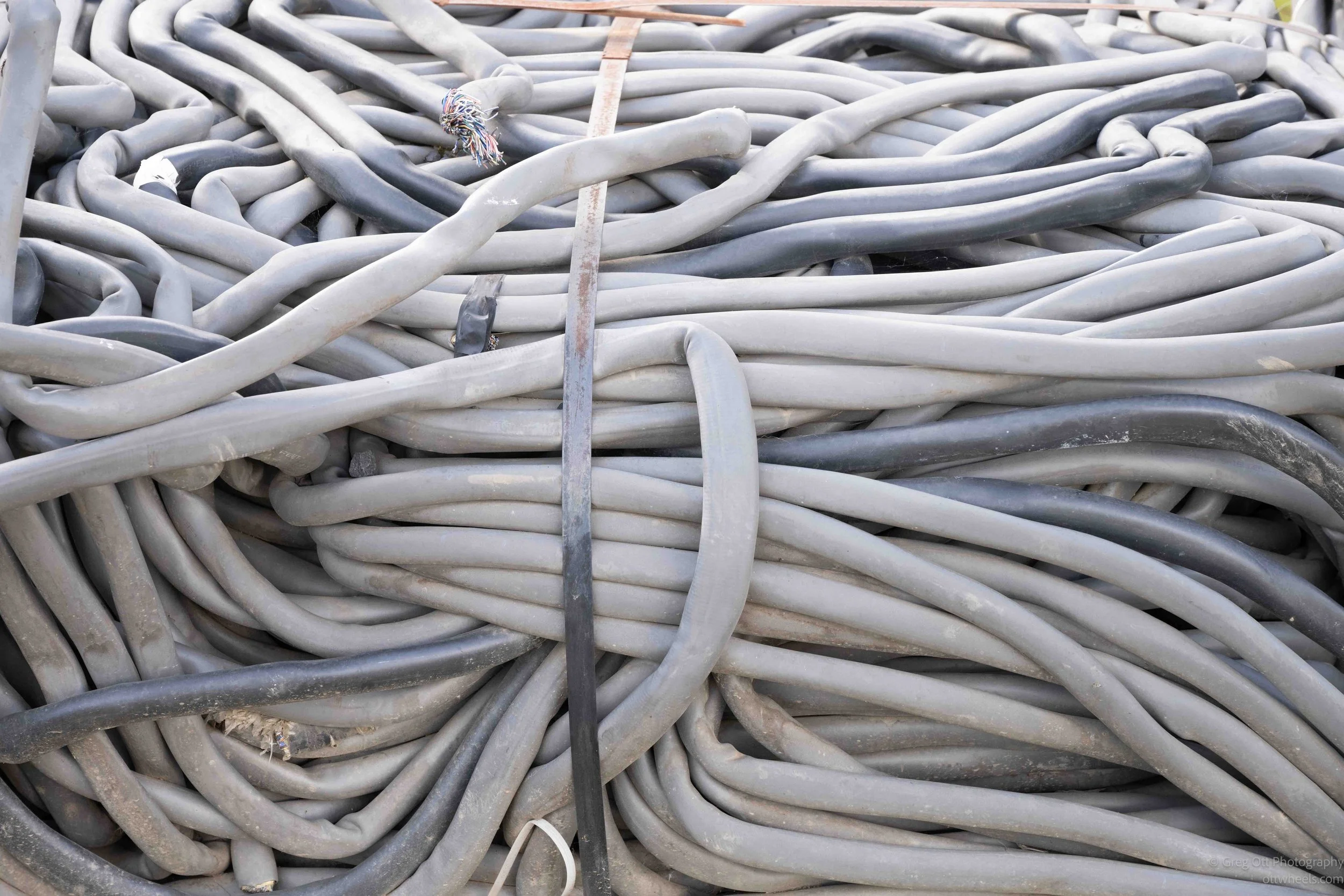
Around 5 p.m., I had a reservation for the Aurora Ice Museum tour. The tour was $20, with another $20 if you wanted an appletini served in a glass made of ice. Since I still had to drive back to Fairbanks, I passed on the appletini. I had some time before the tour and wandered back along the collection of old machinery to take photographs. My favorites weren't even the machines, but cubes of compressed material waiting to be recycled. The layers of crushed metal and other materials made some interesting abstract patterns.
Aurora Ice Museum
Our guide for the Aurora Ice Museum was impossible not to like. He was loud, funny, full of energy and clearly loved what he was doing. He seemed to have something to say about every place people were from. When several people said Wisconsin, he thanked them for butter. “You people know how to make butter.” That immediately made me think of my grandfather and uncle, both of whom would happily cut off a chunk of butter and eat it.
Before we went inside, he gathered everyone around a thermometer outside the building. It read 26.6°F. He explained that we had to move quickly through the doors because if the temperature inside climbed above 28°F, they couldn't bring in the next group until it cooled back down. This wasn't a museum where leaving the door open resulted in a higher electric bill. Here, you could actually melt the museum.
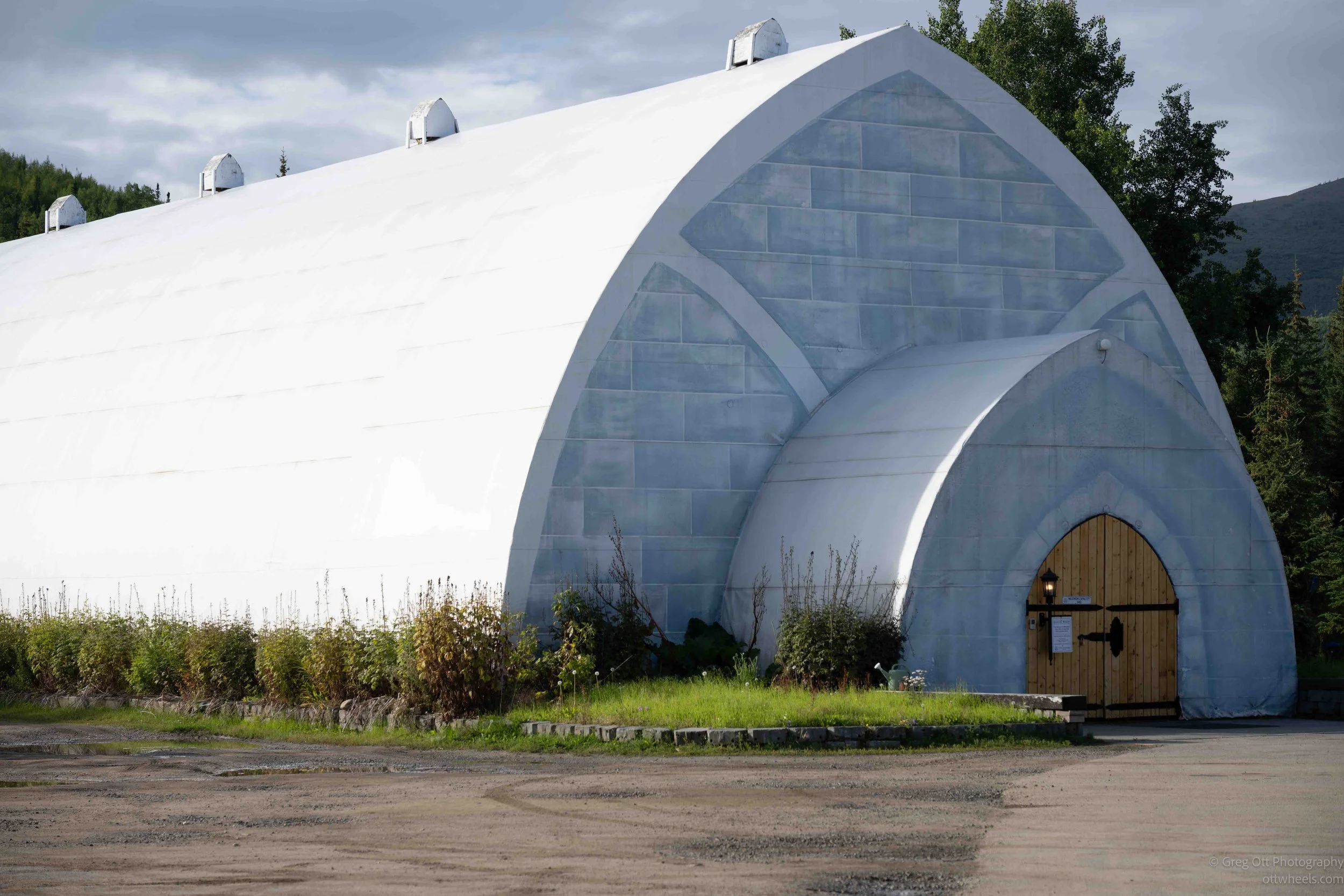
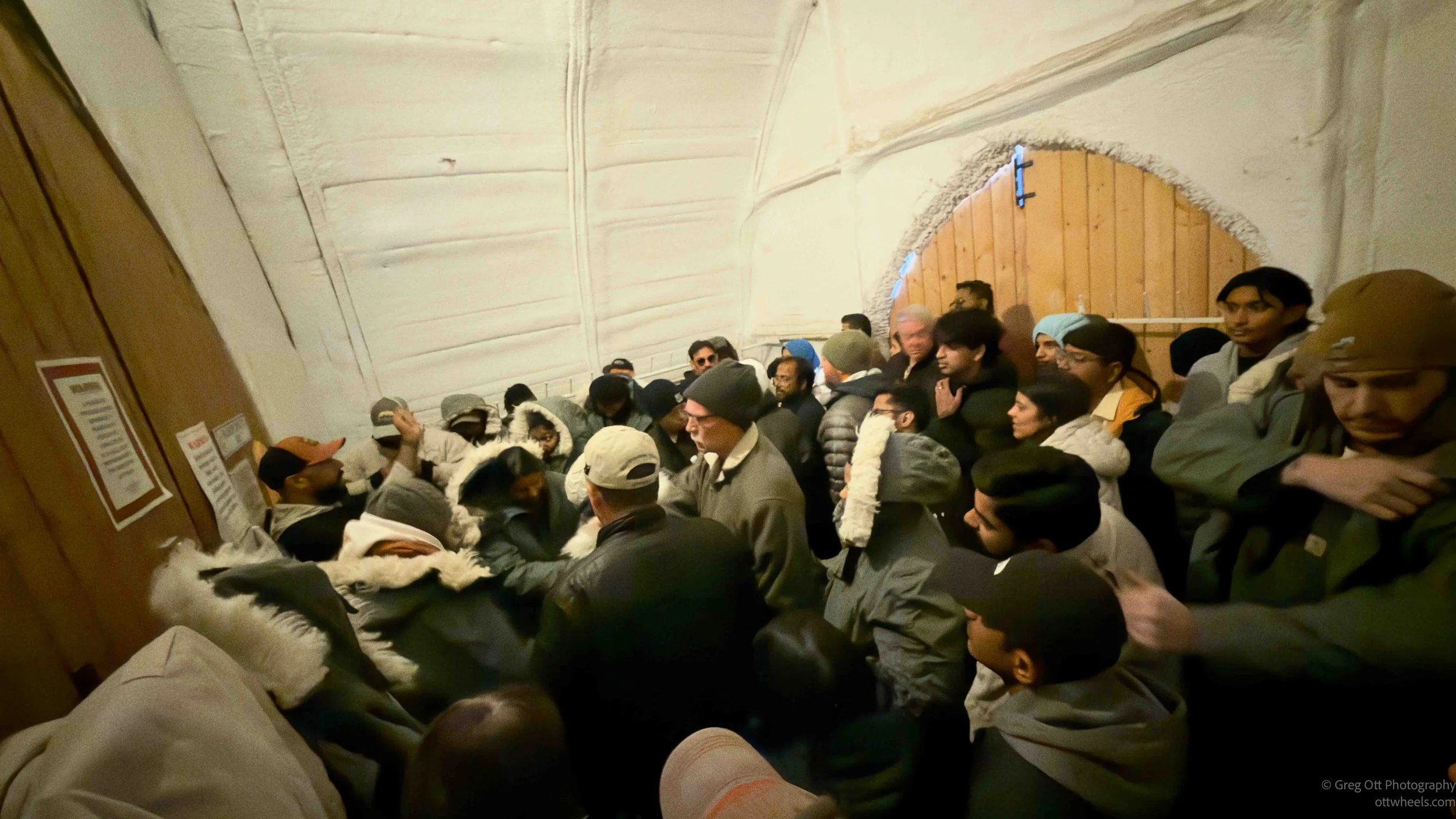
We went through the doors as a group while he kept telling everyone to move farther inside. “Keep going. Further in. Keep moving.” Once the last person was through and the doors were closed, he informed us that we really needed to do that faster next time. Heavy parkas were hanging in the entrance for anyone who wanted one, and most of us took the hint. A few people apparently looked around at a building made entirely of ice, considered the 26-degree temperature and decided a jacket was unnecessary. They would reconsider that decision later.
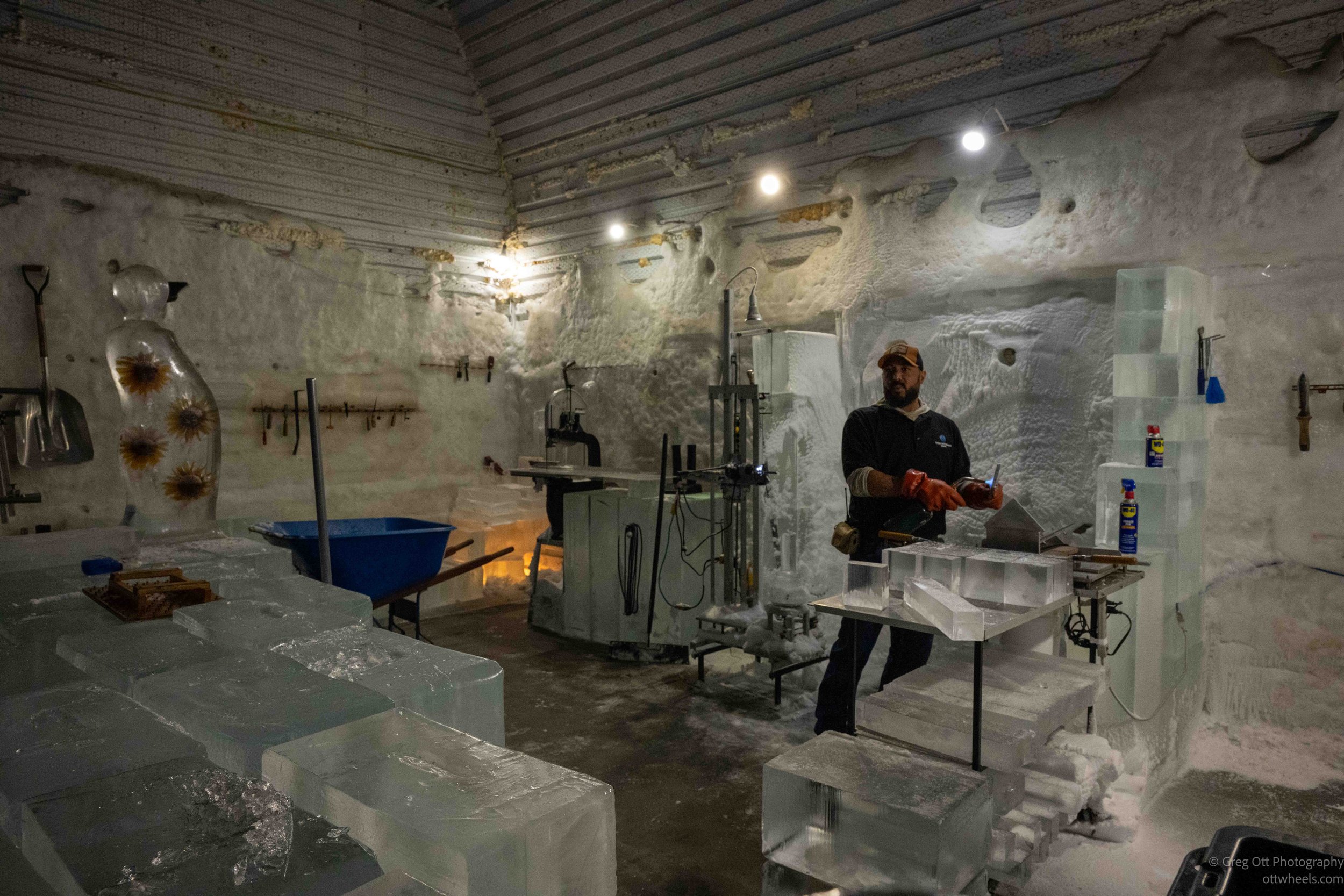
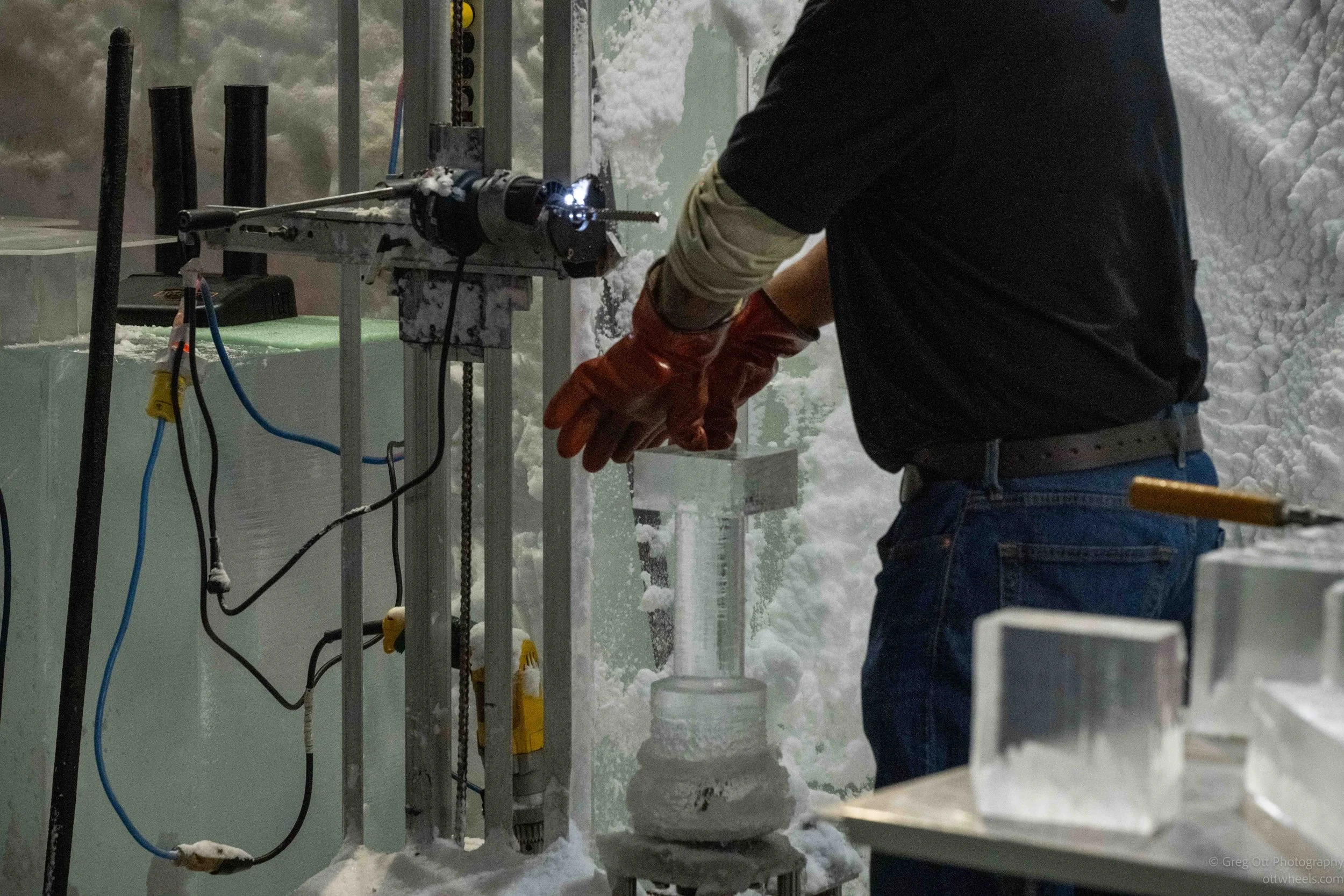
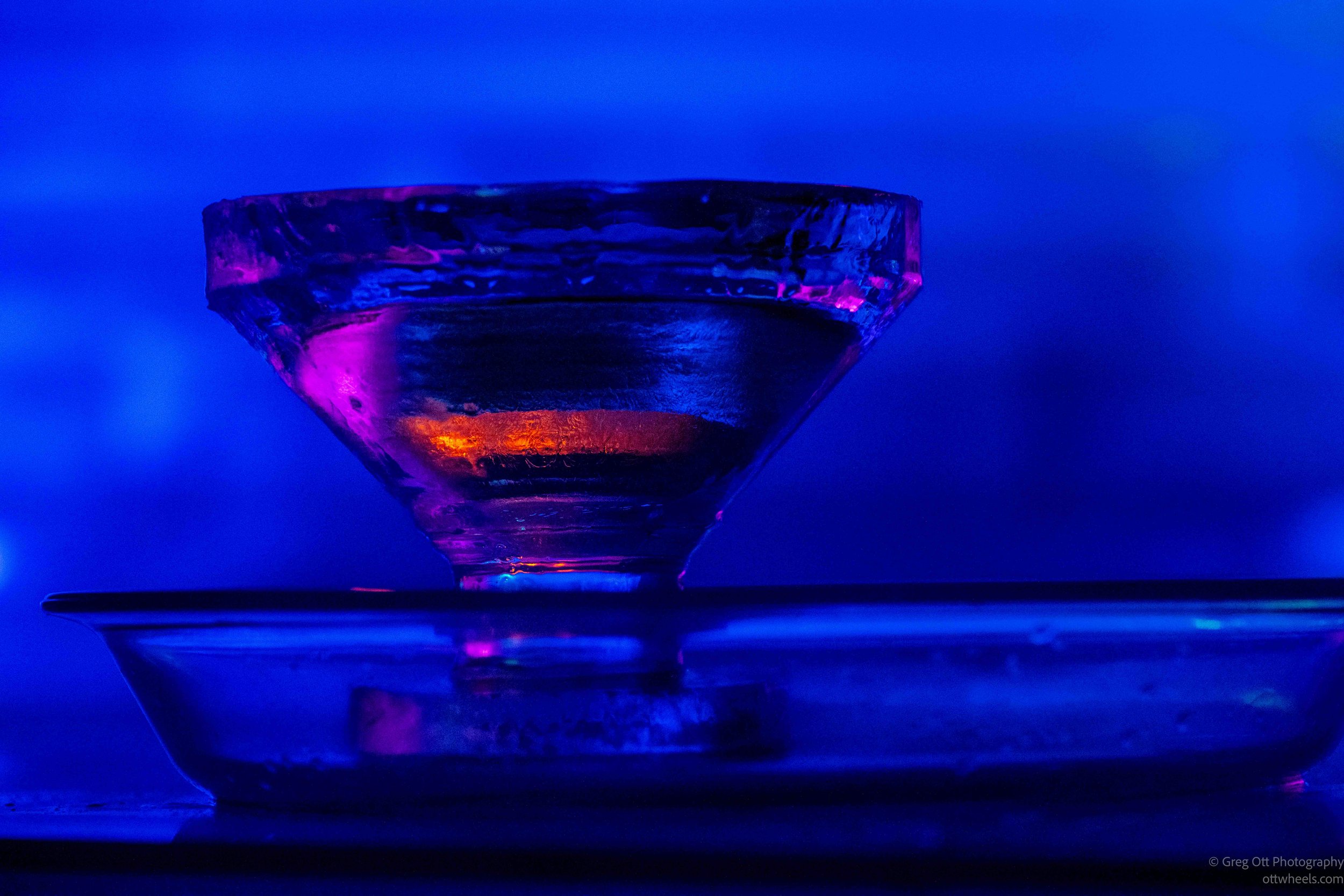
One of our first stops was where they make the ice glasses for the bar. We watched as the guide demonstrated how a glass was formed while explaining that they make something like 30,000 of them a year. Some employees spend ten-hour shifts working inside the building, which sounded brutal to me, although he said these were jobs people actually wanted. He also explained that the ice is made from highly purified water, which is why it can be almost perfectly clear.
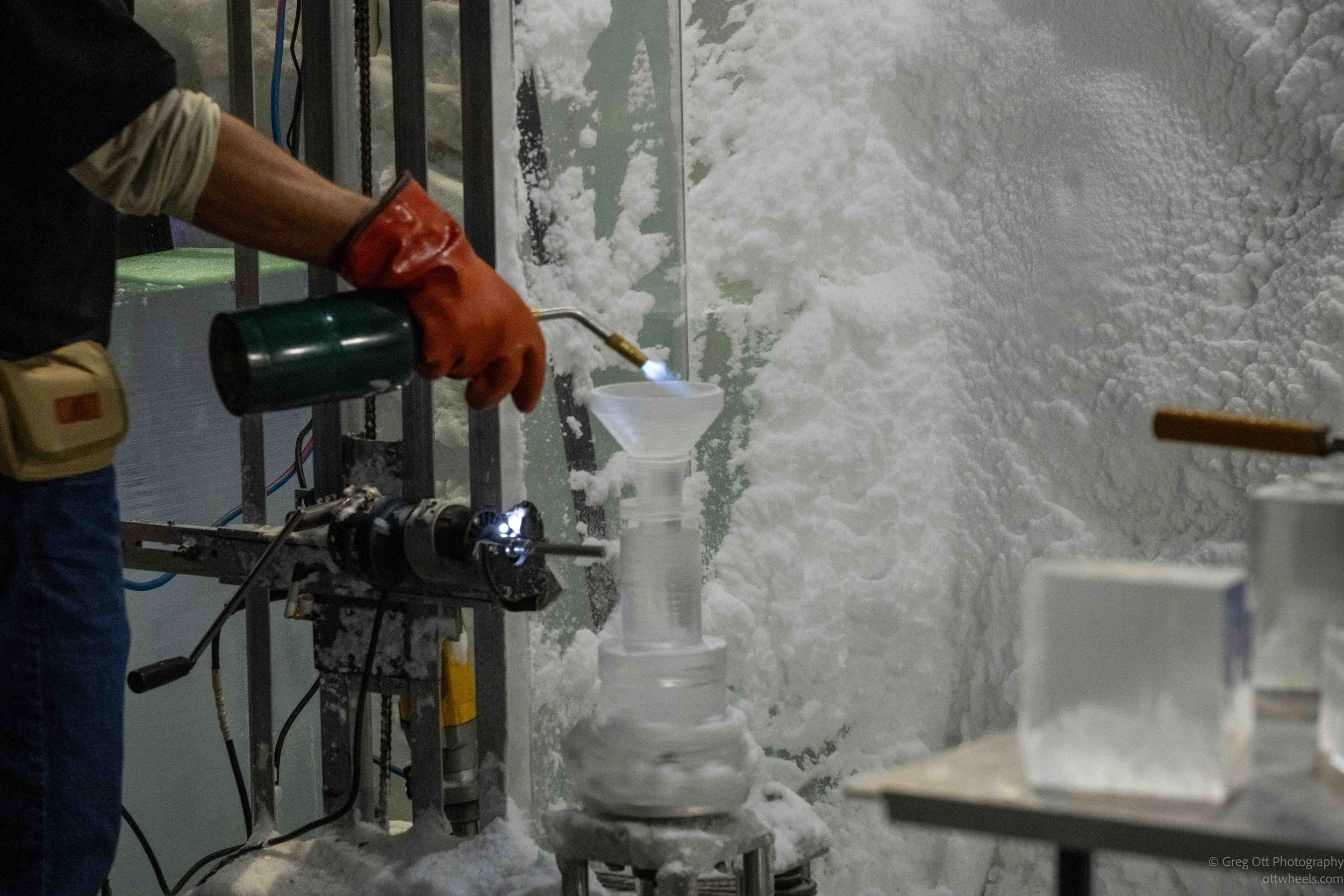
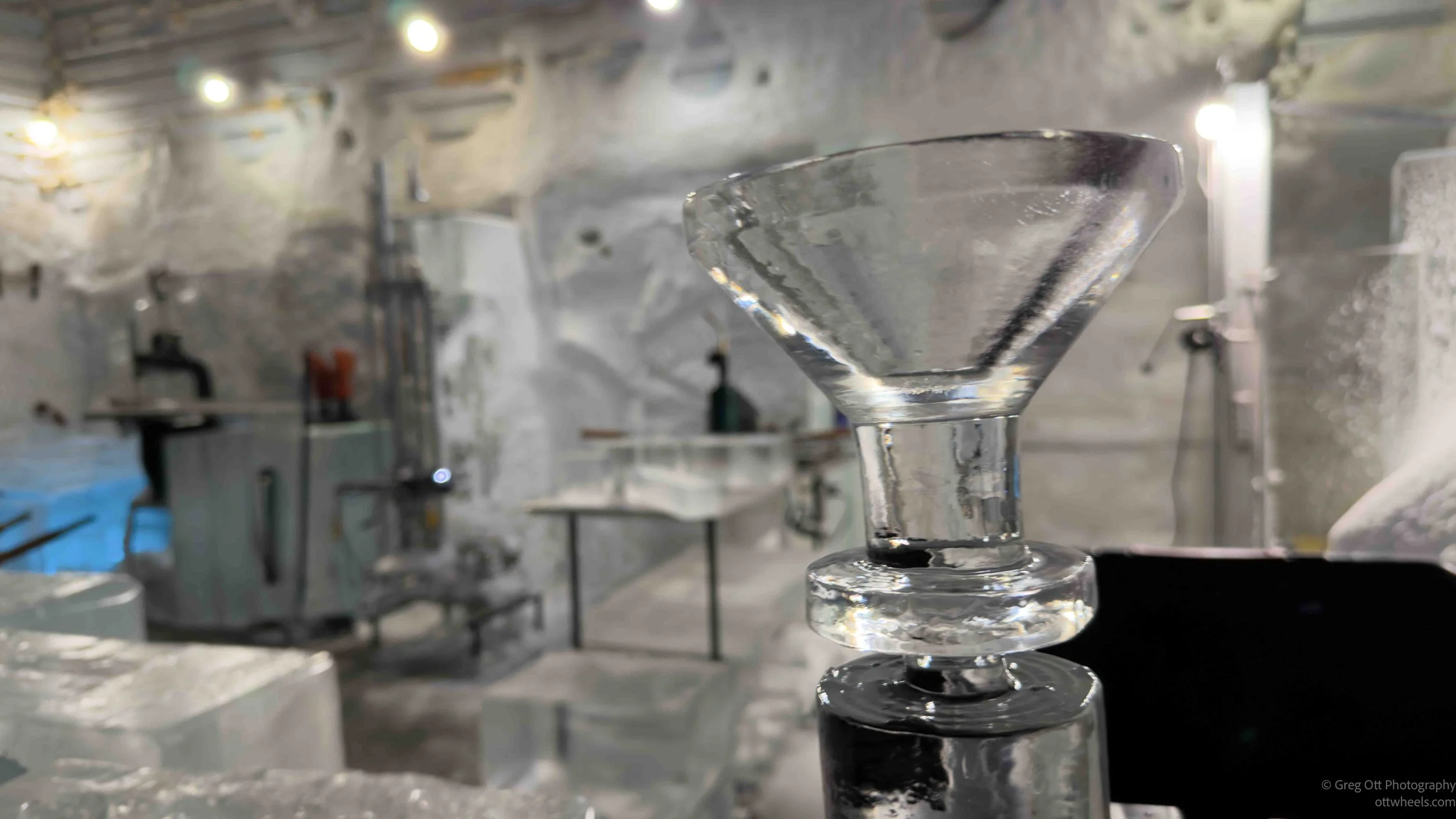
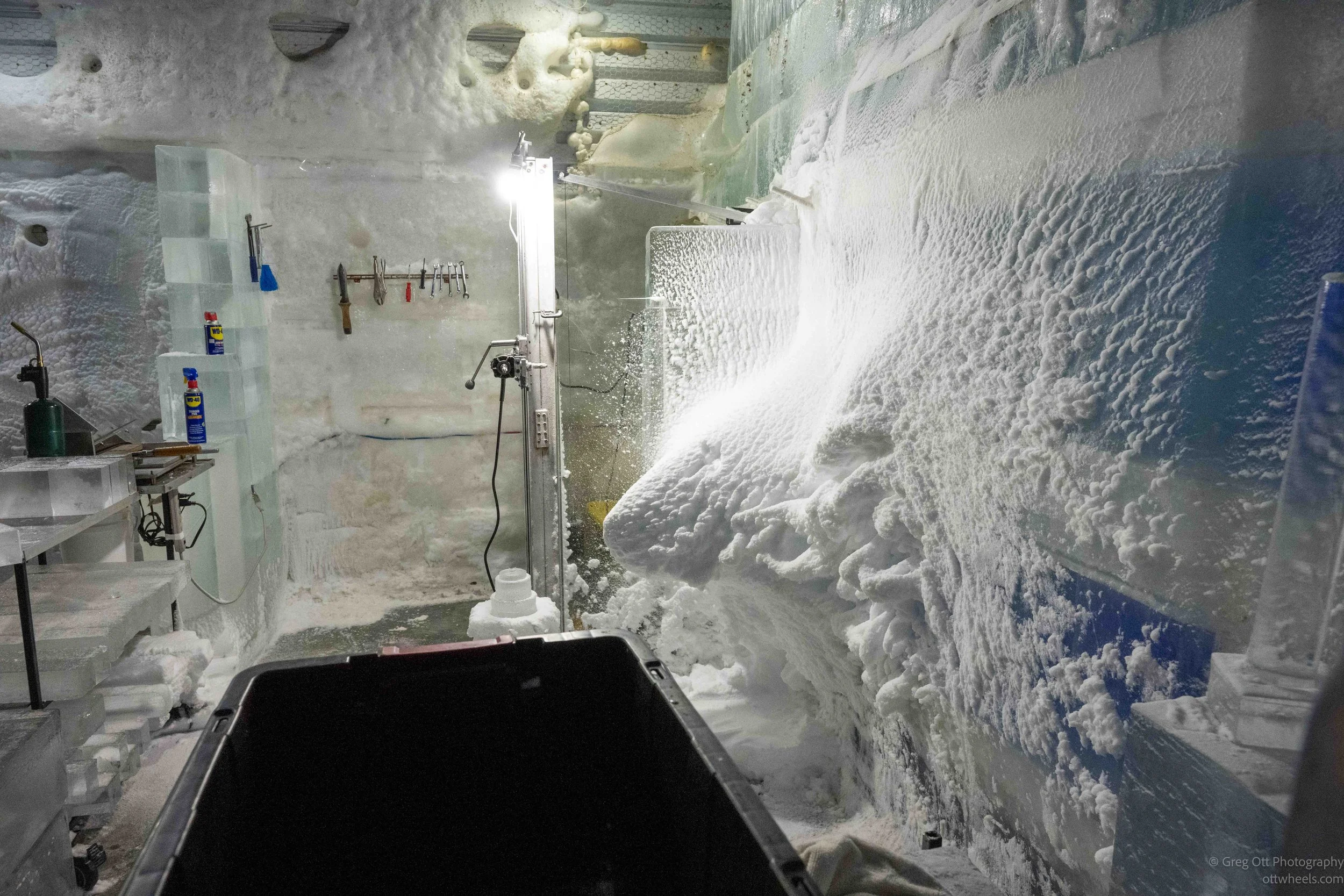
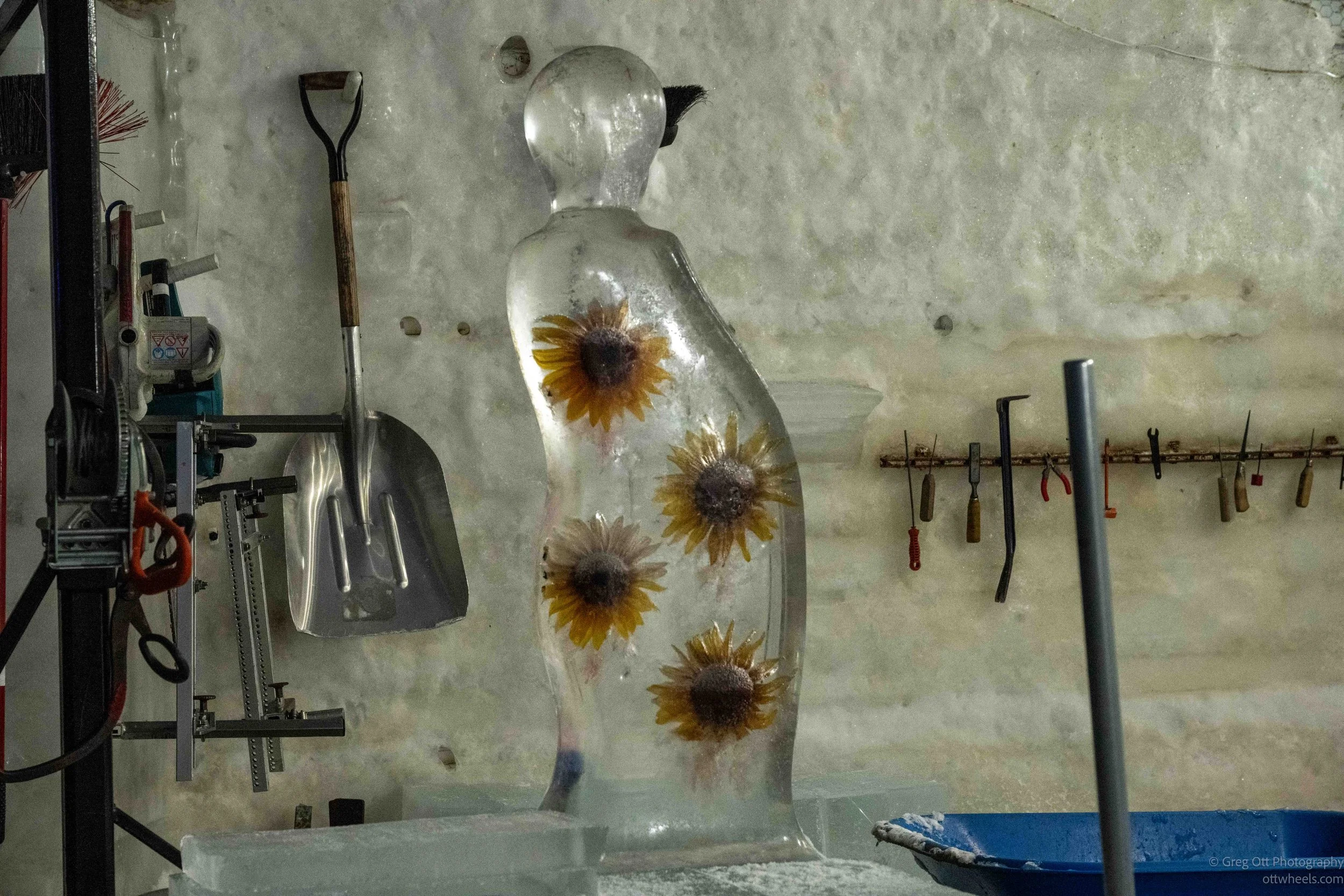
He told us about a couple who apparently didn't understand the importance of keeping the doors closed. They walked around inside for about 40 minutes and then left the doors open when they departed. He pointed above one of the ice walls, where there was now a gap of perhaps a foot between the wall and ceiling. You could clearly see where it had melted. Someone had literally let part of the building disappear.
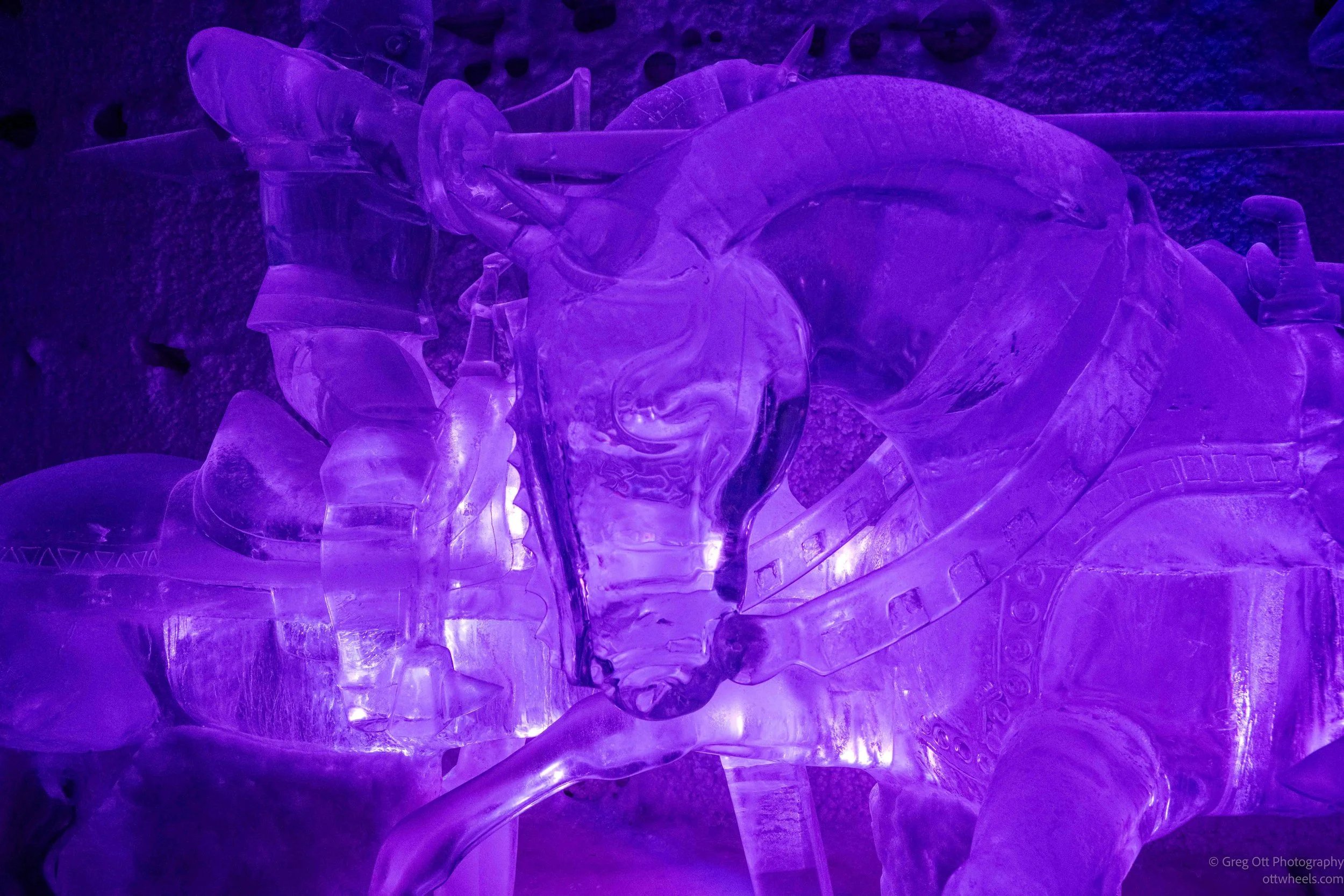
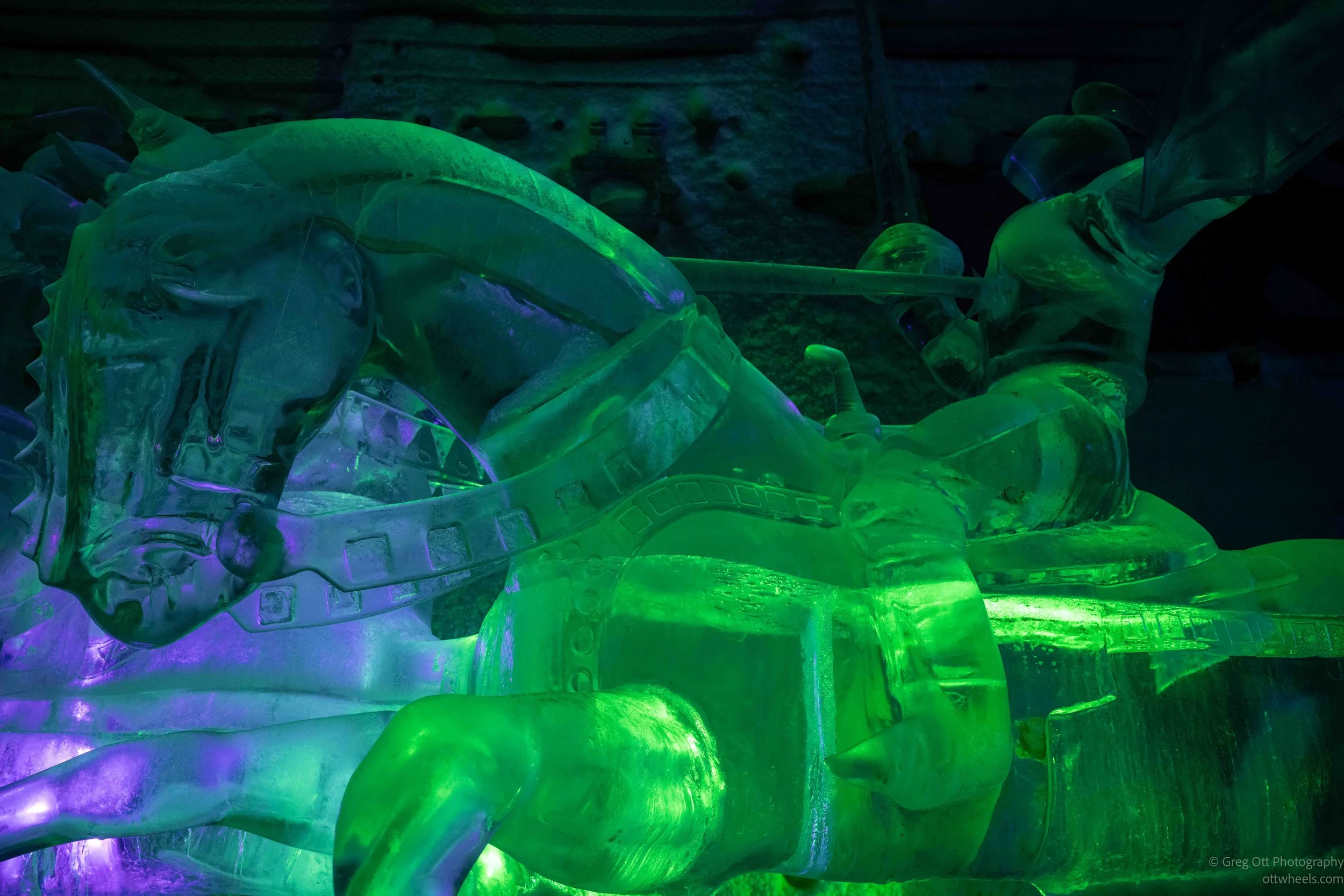
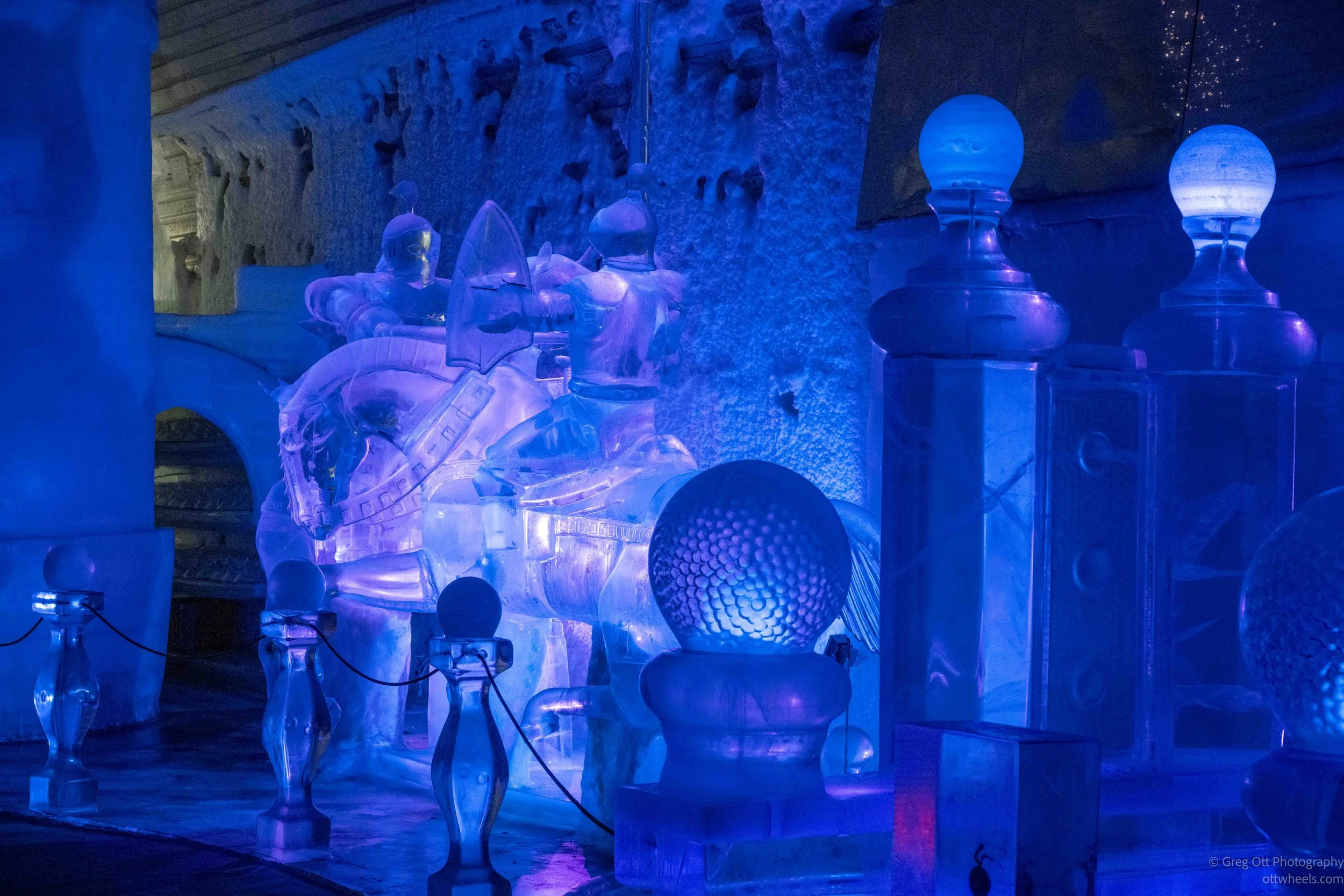
One of my favorite sculptures was of two knights jousting on ice horses, illuminated from behind by slowly changing colors. Our guide explained that it was a recreation by one of Chena's resident ice sculptors of a piece that had won first place at the World Ice Art Championships in Fairbanks. There were sculptures throughout the building, but the changing light made this one particularly interesting to photograph.
Then there was the ice chapel, where you can actually get married. Our guide told us he'd been married four times, which seemed to make him uniquely qualified to discuss the subject. He made several jokes about how cold those marriages had become and suggested that an ice chapel might be the perfect place to start the next one. There were several possible interpretations of that statement.
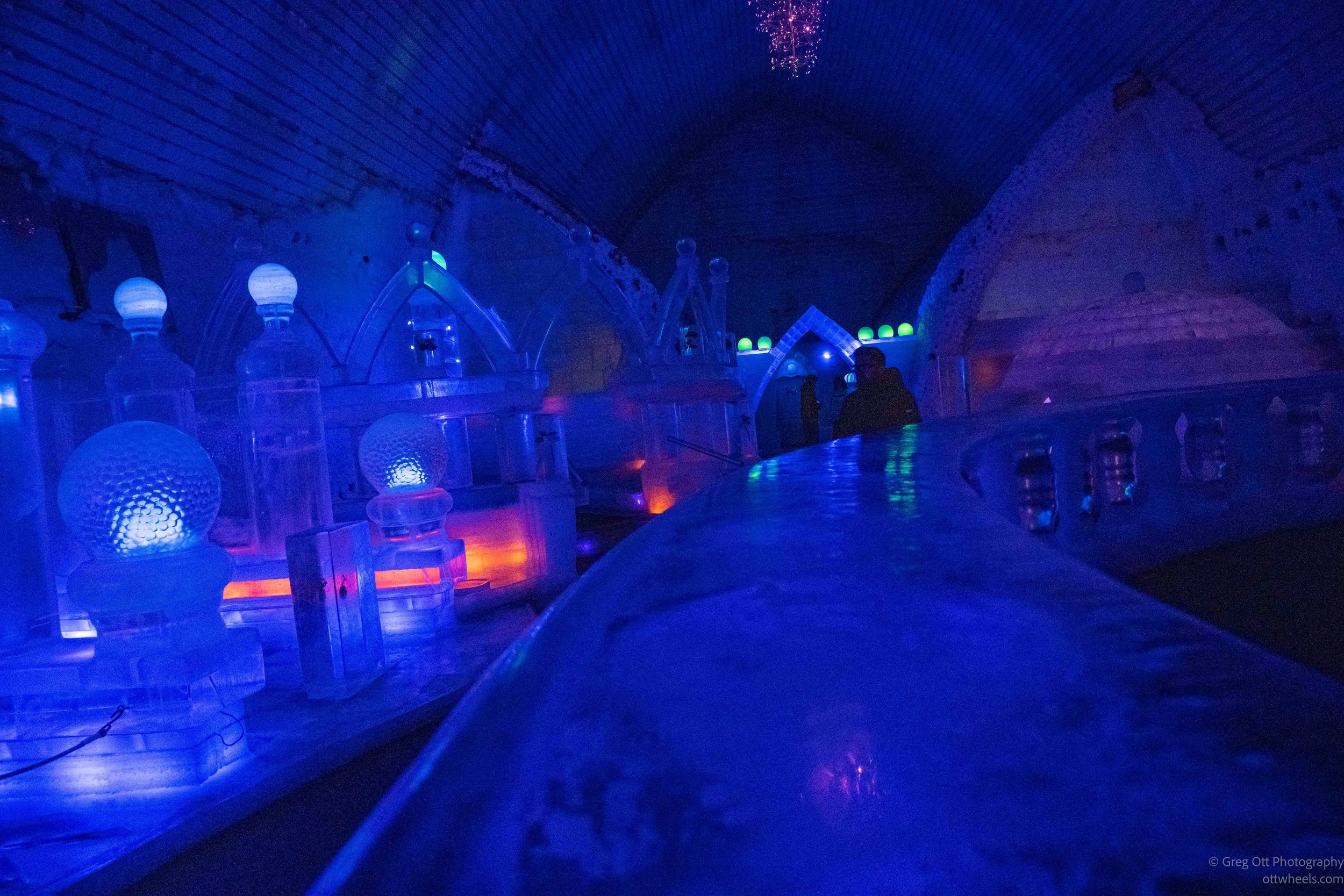
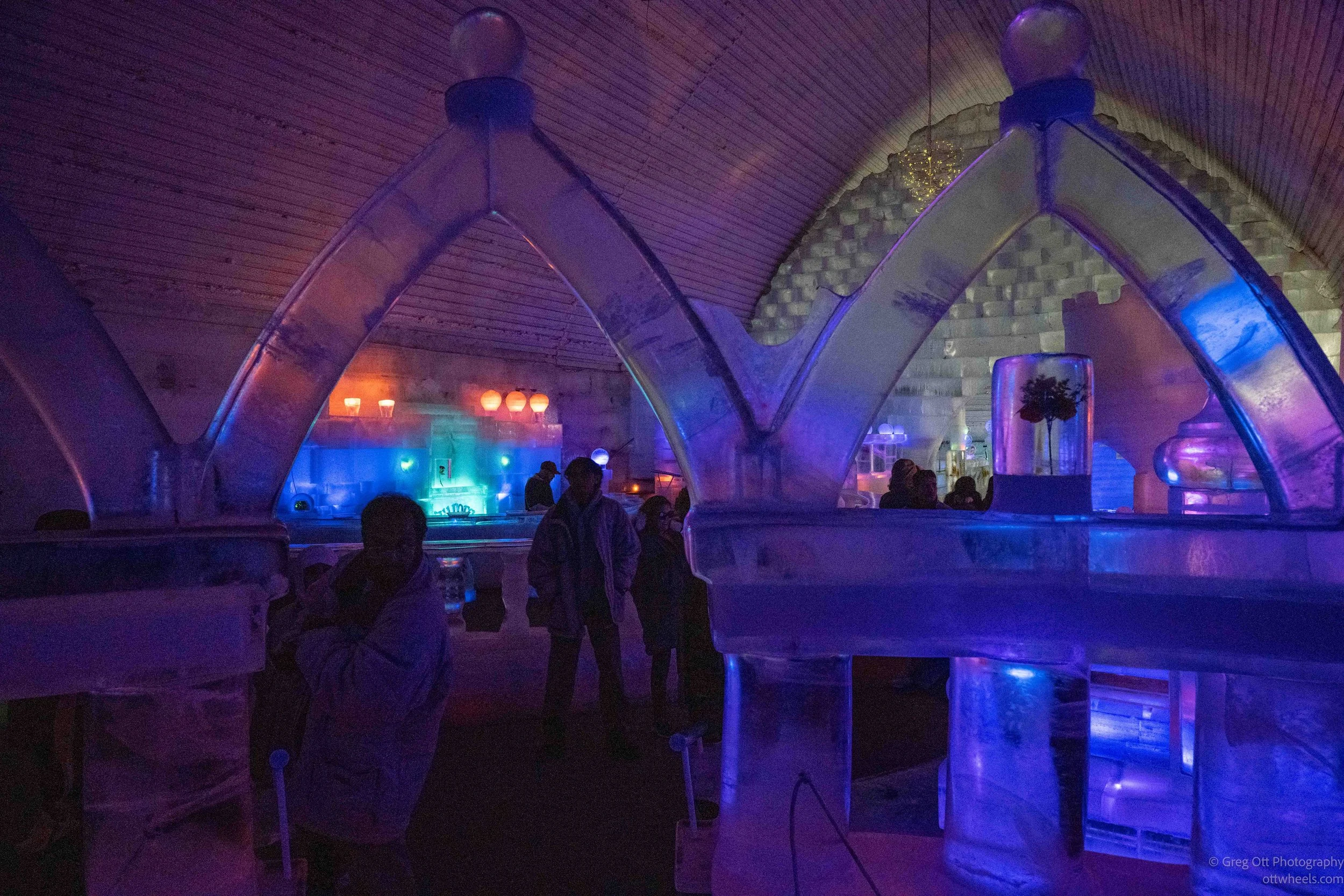
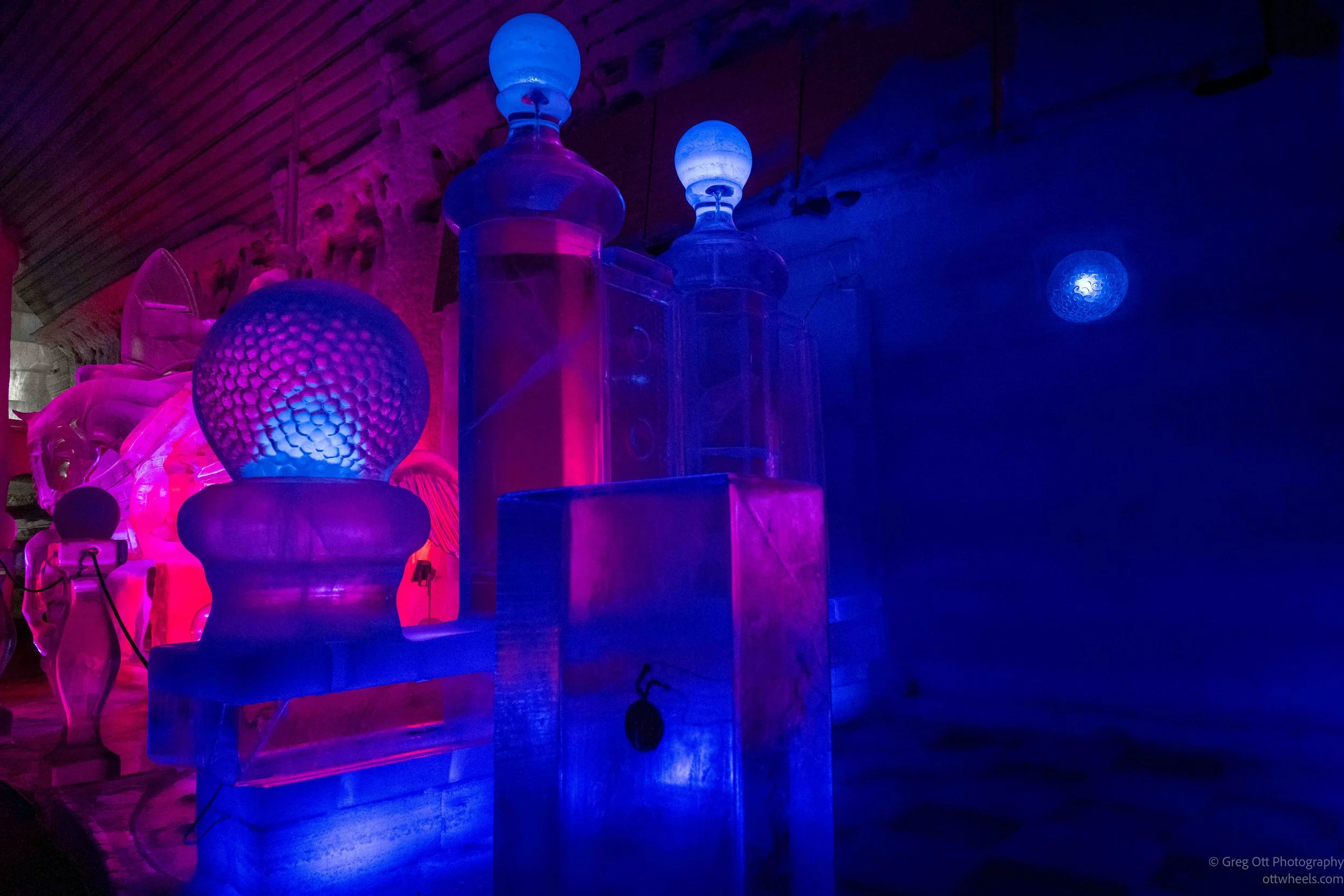
Even more surprising were four actual bedrooms carved into the ice. Three were still available that night for around $600 each. Elk hides and heavy duvets are placed on the beds to keep guests warm, which I could understand for your body, but I kept wondering about your head. You're still spending the night breathing 25-degree air. I've read about ice hotels in Scandinavia, and they always sounded interesting. Standing inside one made the idea seem considerably less romantic.
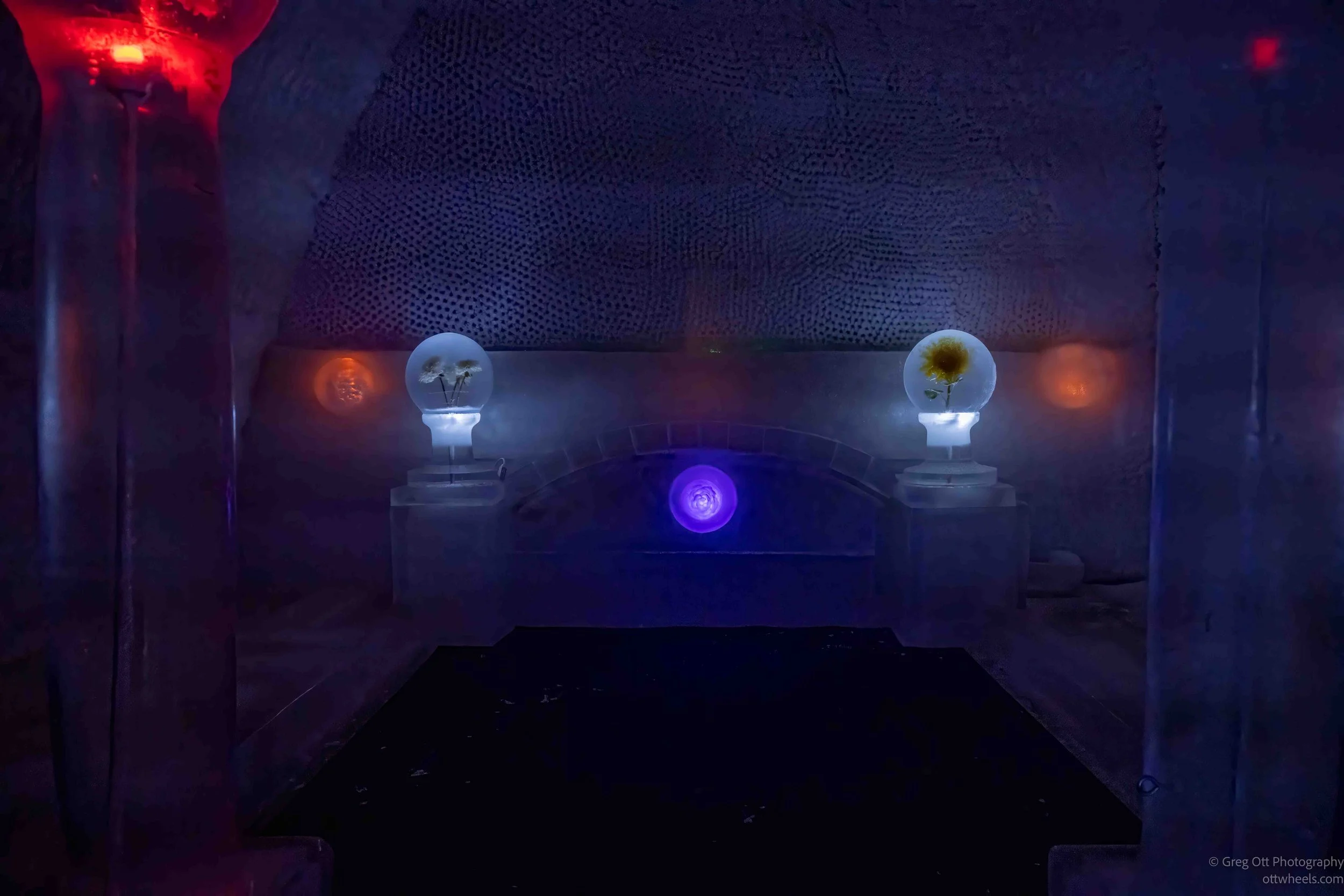
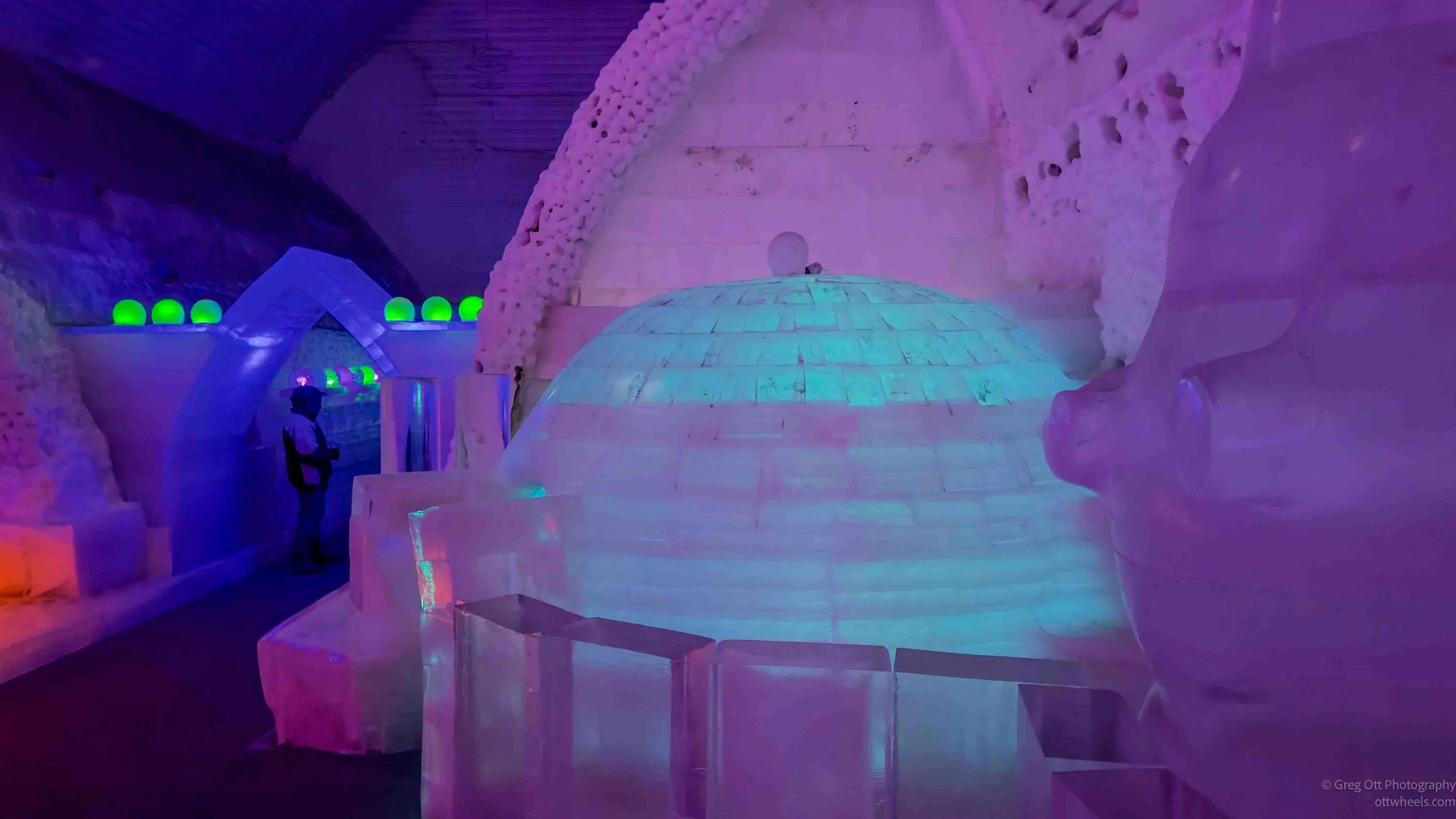
Eventually, we reached the bar, where the people who had paid extra received their green appletinis in ice glasses. With the colored lighting shining through the clear ice and green liquid, they were great to photograph. Someone told me the alcohol also helps keep your lips from freezing to the glass. I wasn't drinking one, so I wasn't going to test the theory, but several people volunteered their glasses for photographs.
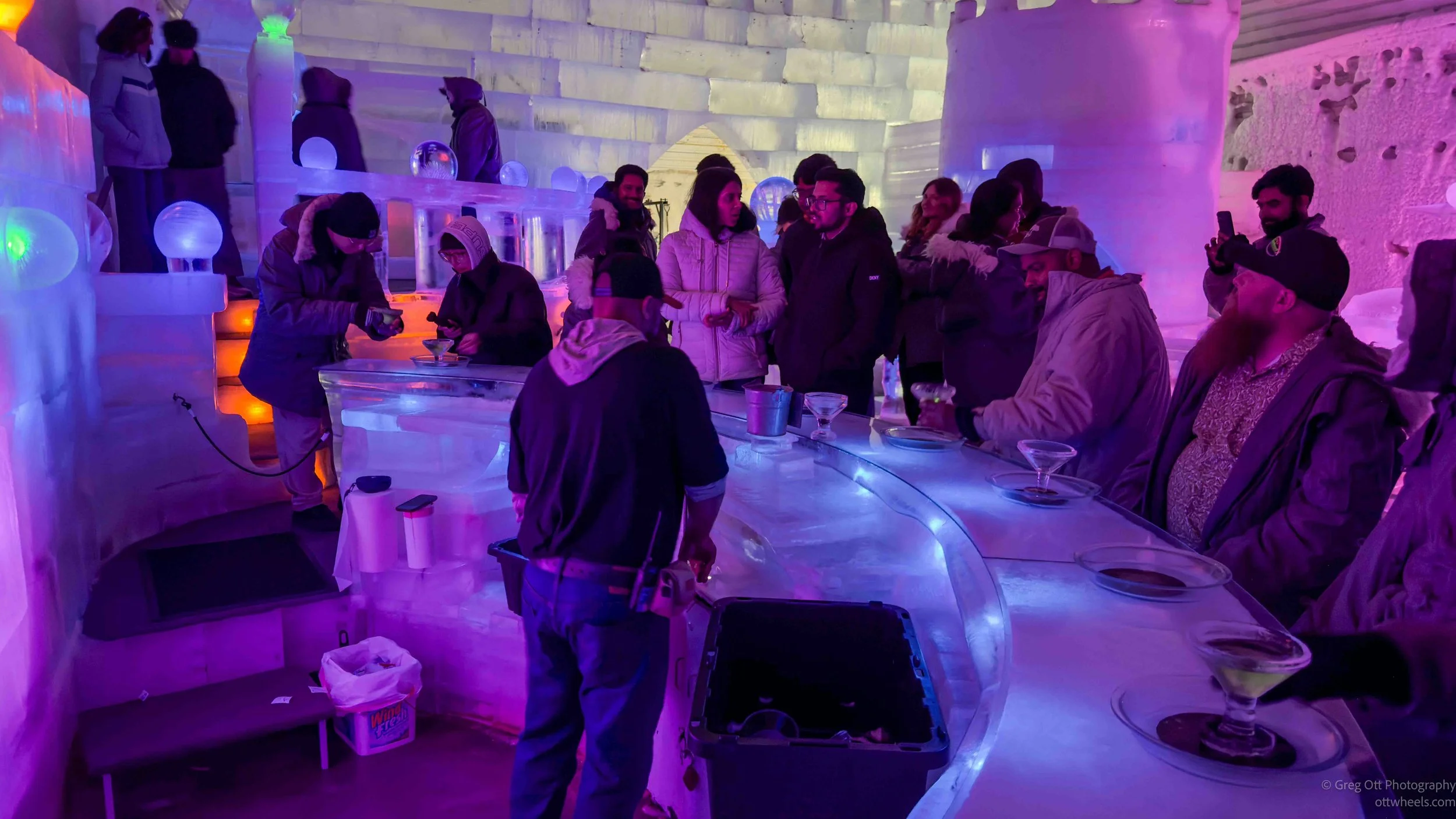
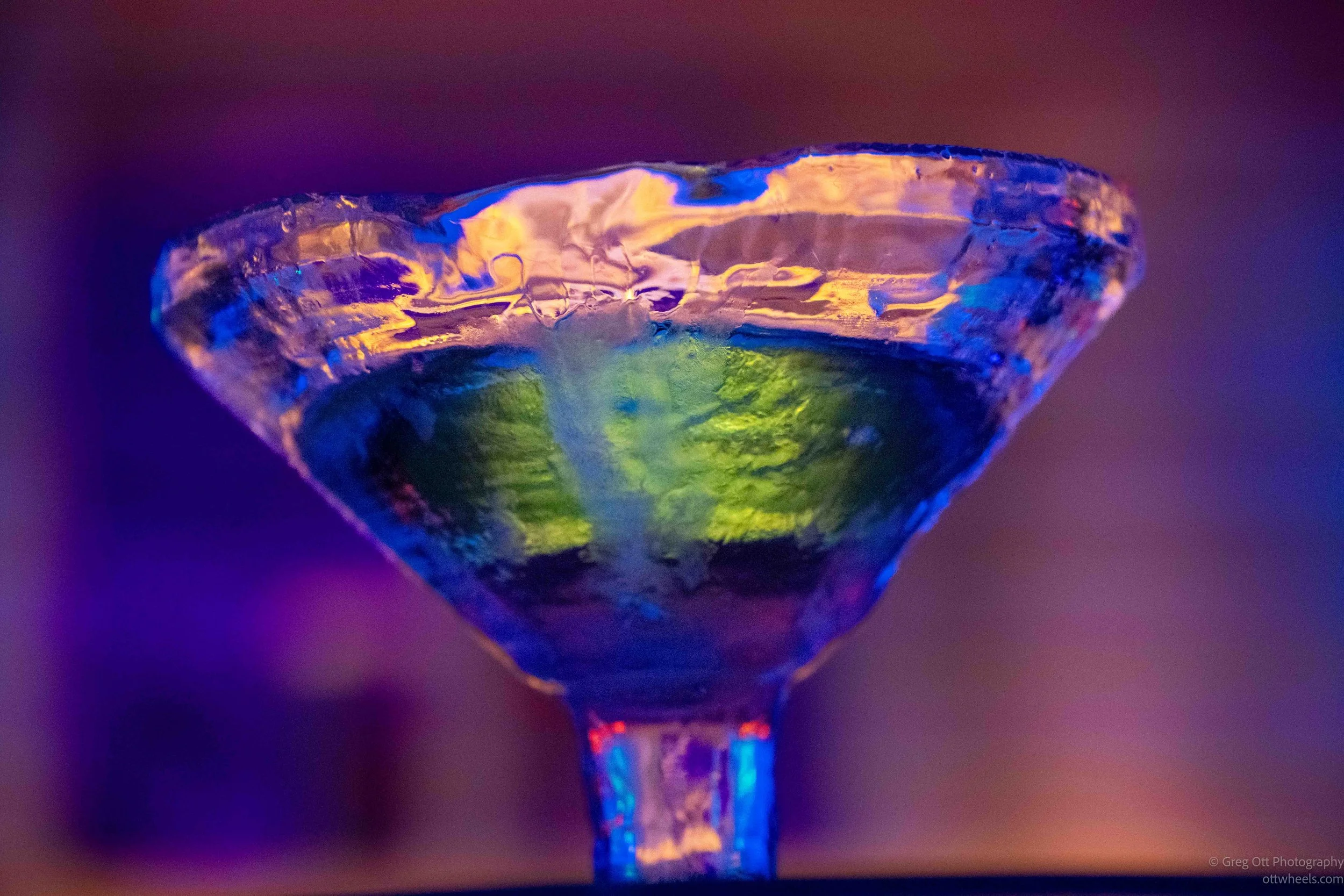
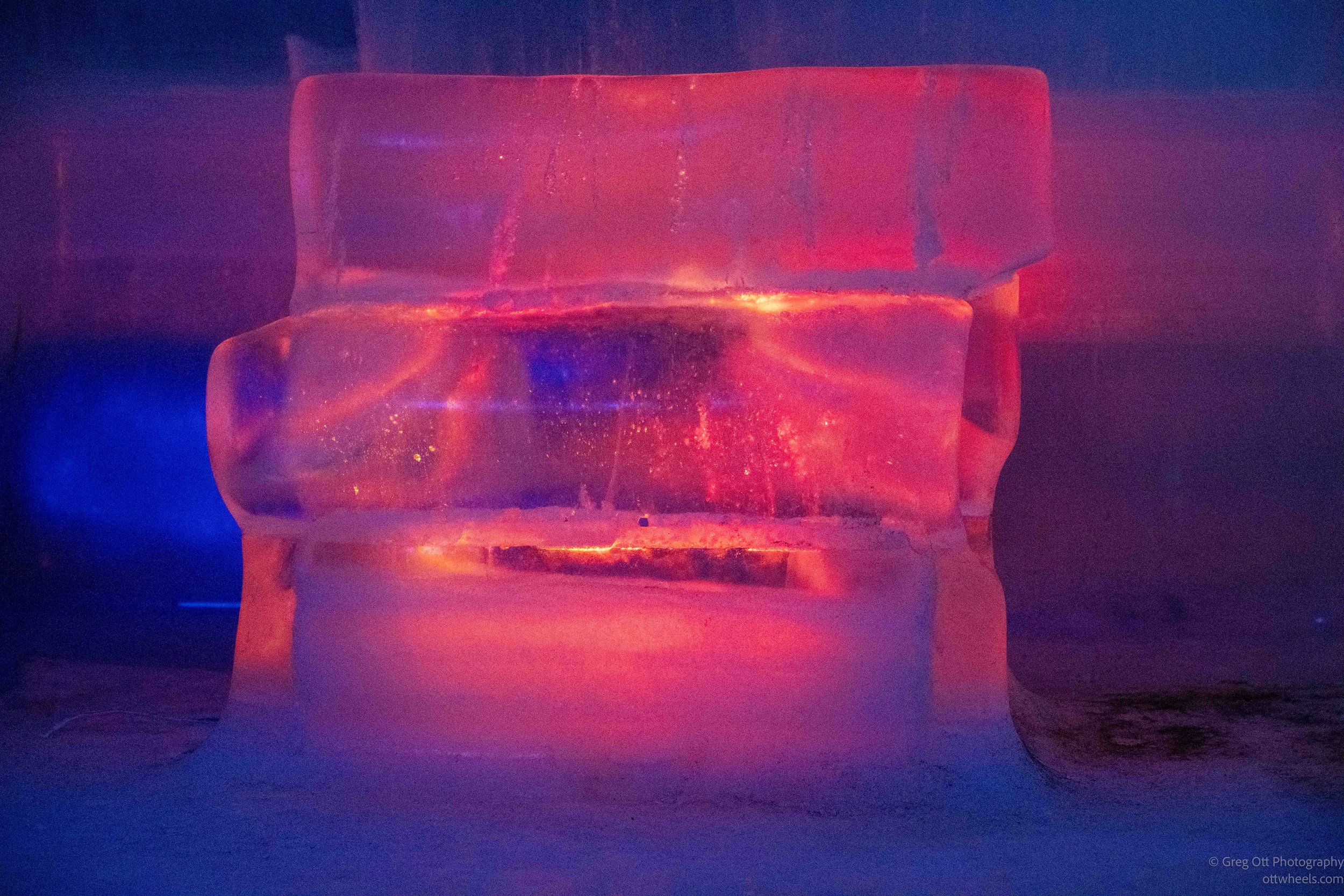
By this point, the people who had declined the parkas were beginning to understand why the parkas were there. One family became particularly entertaining. The teenage kids were cold and wanted to leave, while their parents still had appletinis to finish. The guide finally told the parents, “They're teenagers. They can go outside by themselves. They'll survive.” The parents weren't entirely convinced, so he assured them, “I promise they'll still be there when you come out.” Eventually, the kids escaped while the parents stayed with their drinks.
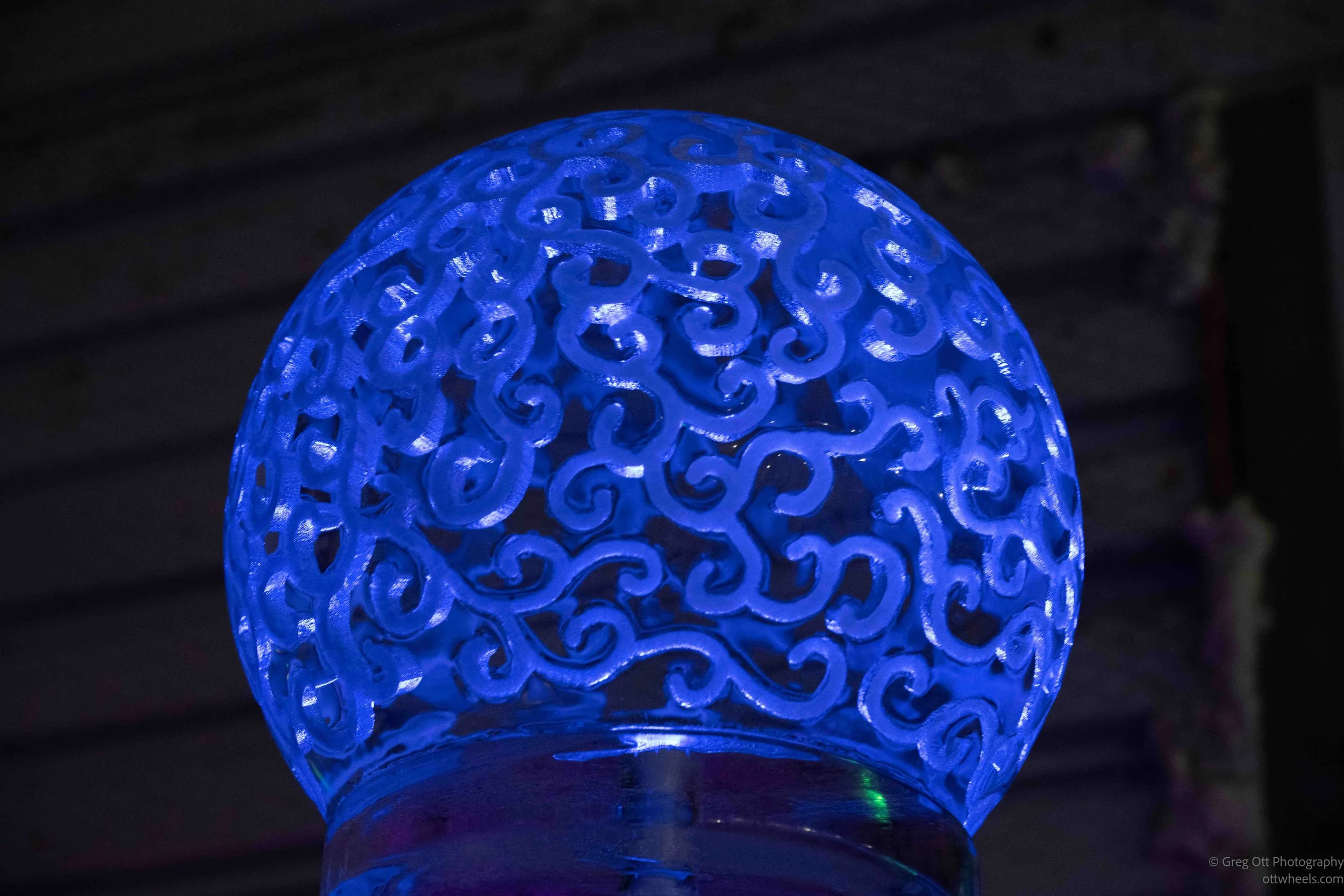
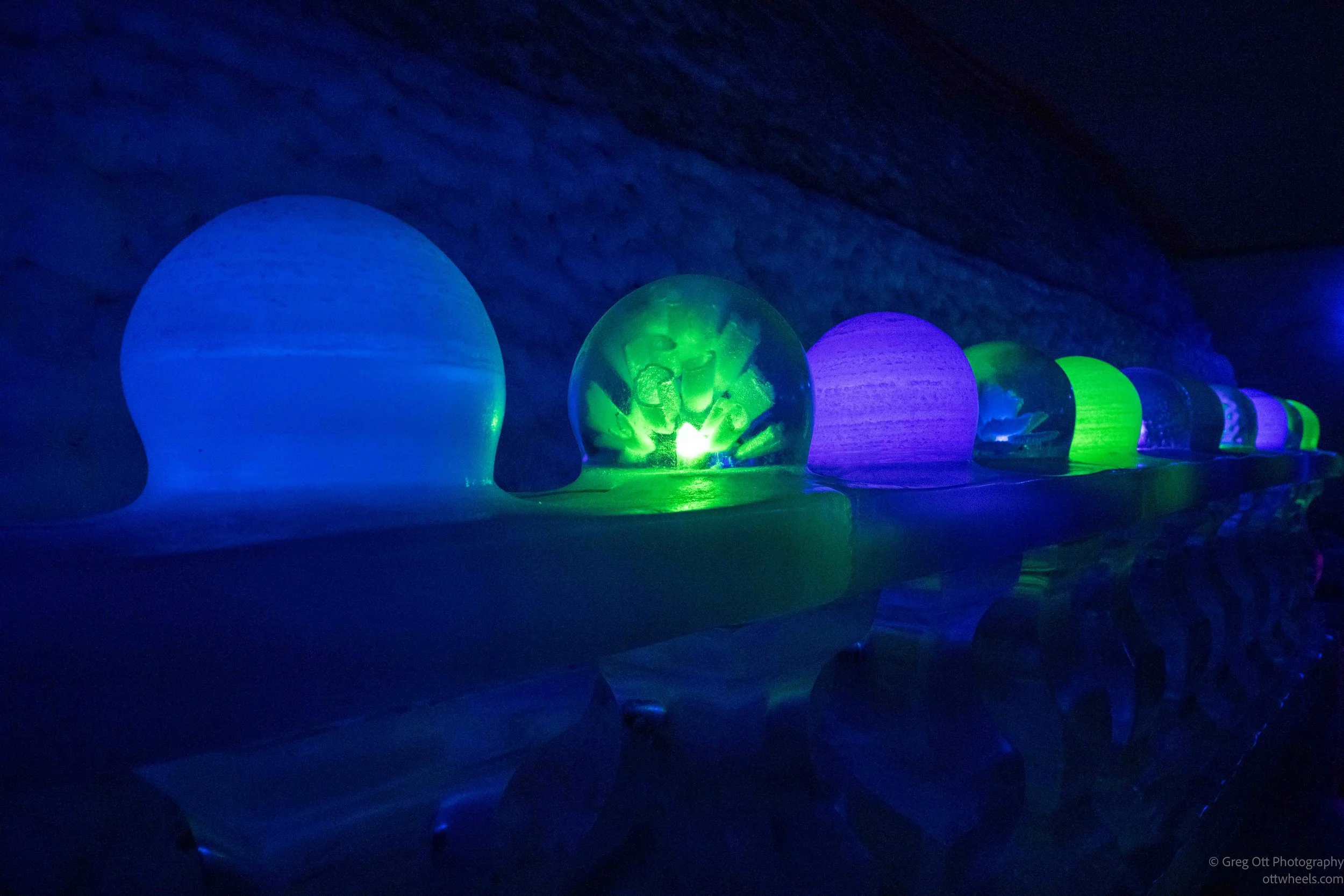
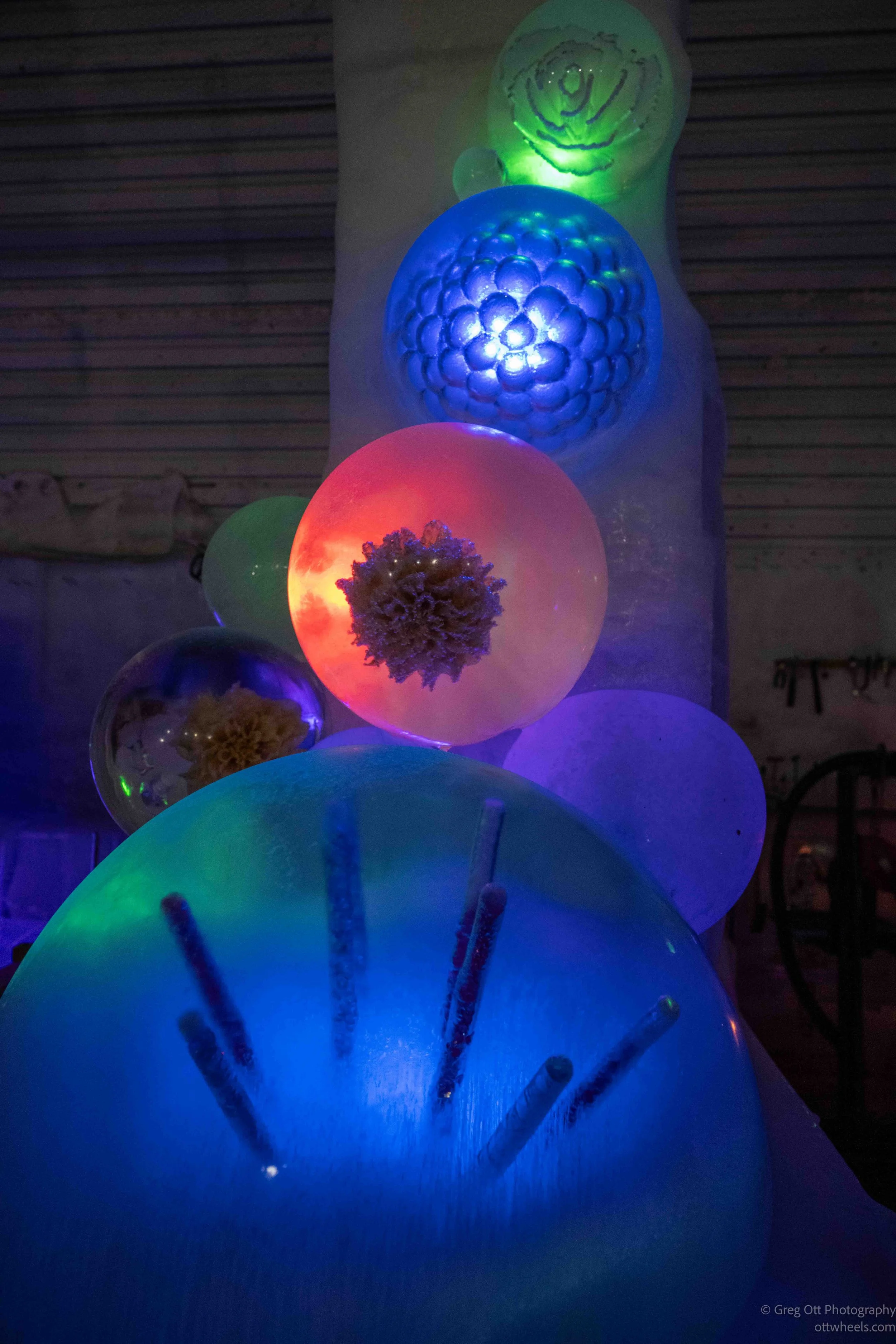
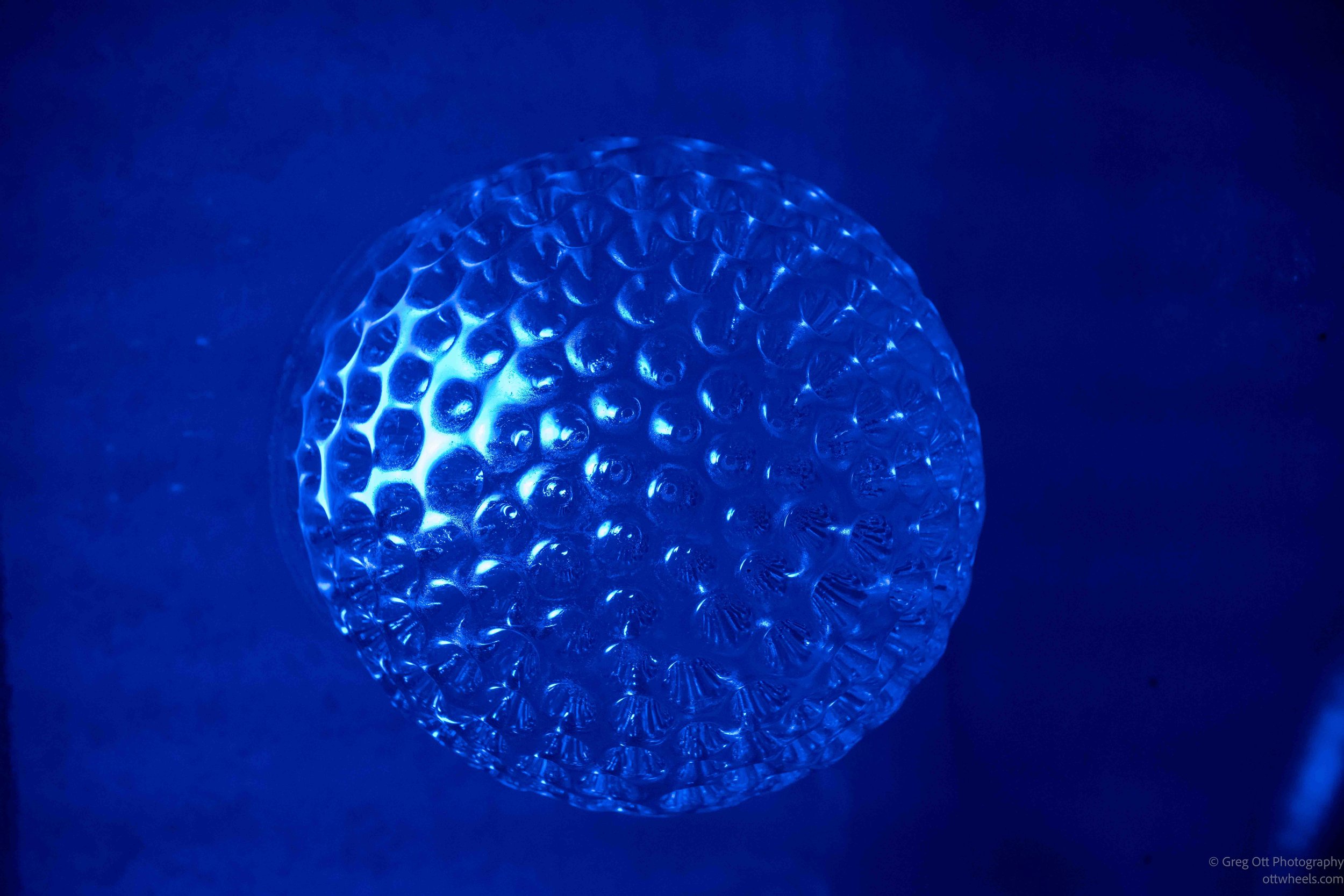
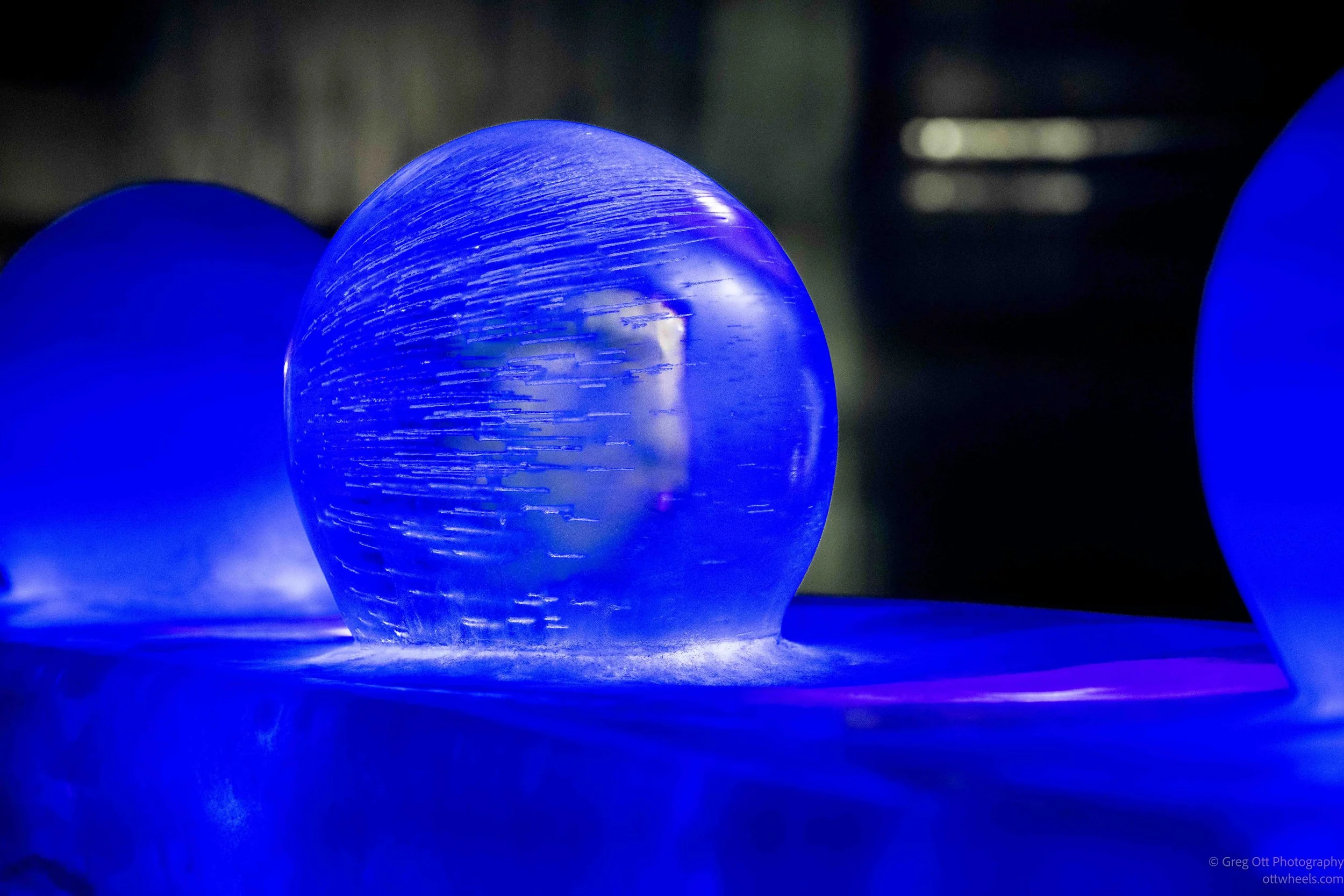
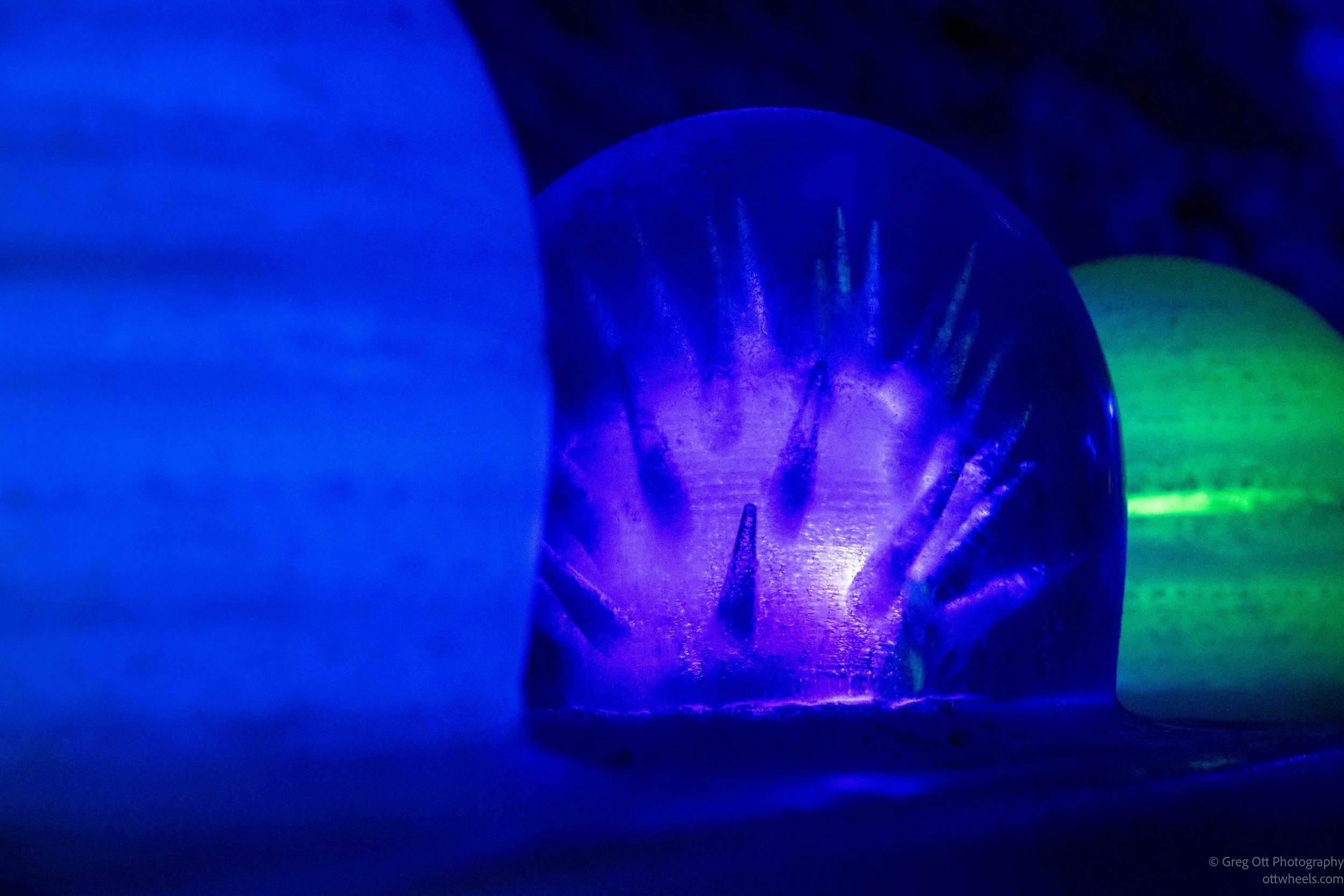
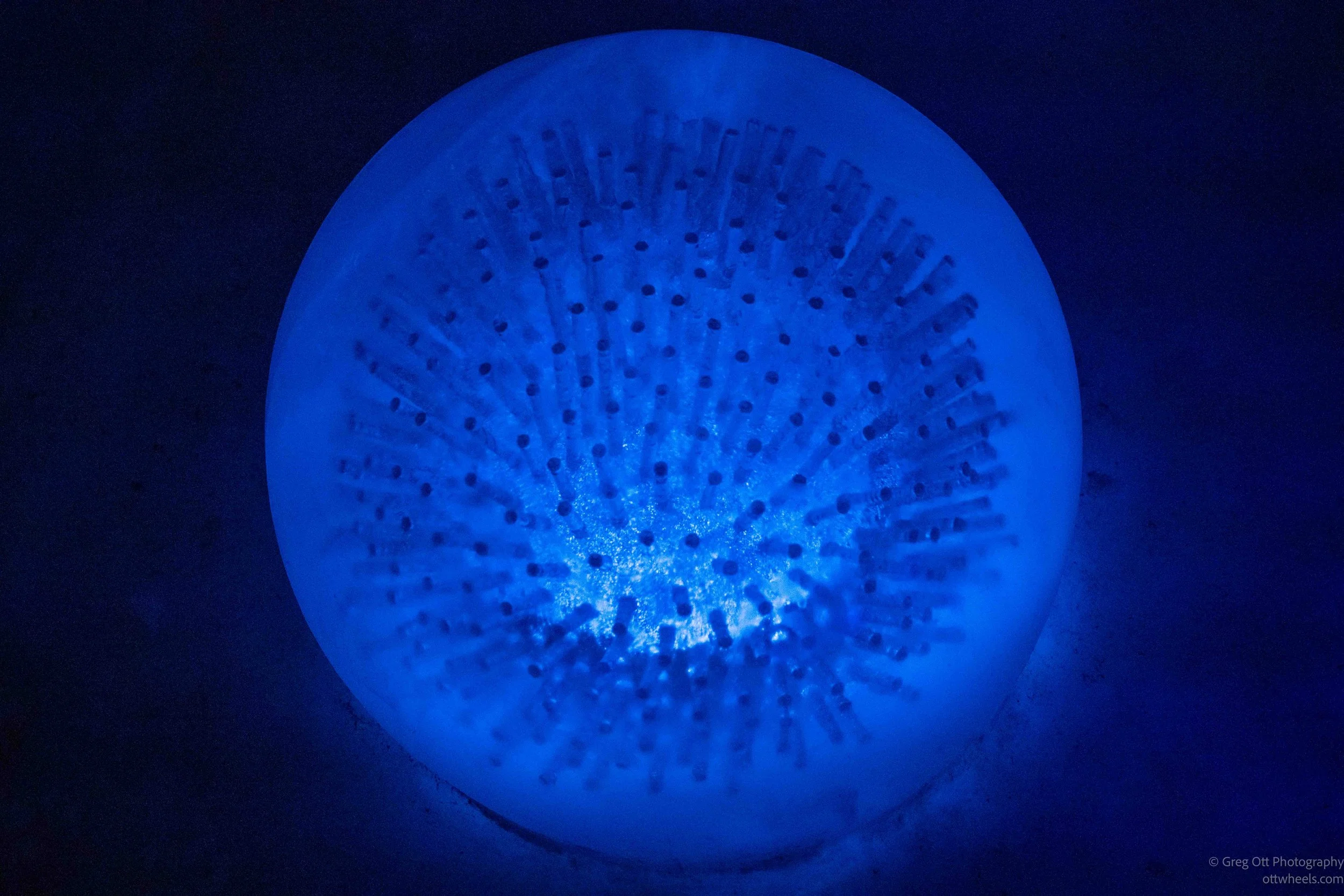
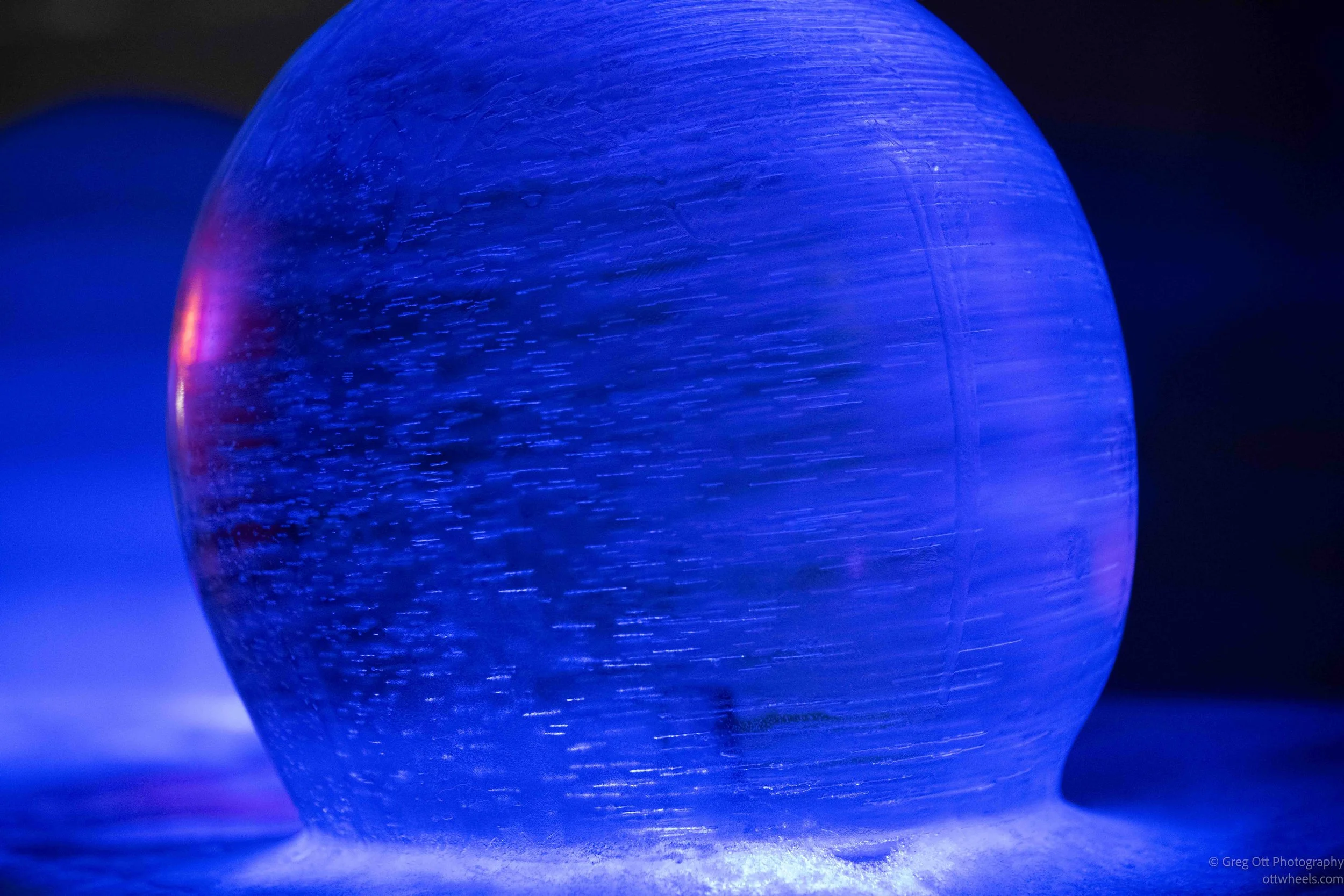
When the tour ended, we returned the parkas—well, most people did—and went outside for the final ritual. Everyone who had bought an appletini got to destroy the glass on the pavement. Some simply dropped theirs. A couple put the glasses on their heads and let them fall off. One woman rubbed the ice against her arm for a while because she liked how it felt. Then two women hurled theirs into the pavement with an enthusiasm that suggested they were working through something much larger than an appletini. I caught the moment with my phone and AirDropped the photos to them.
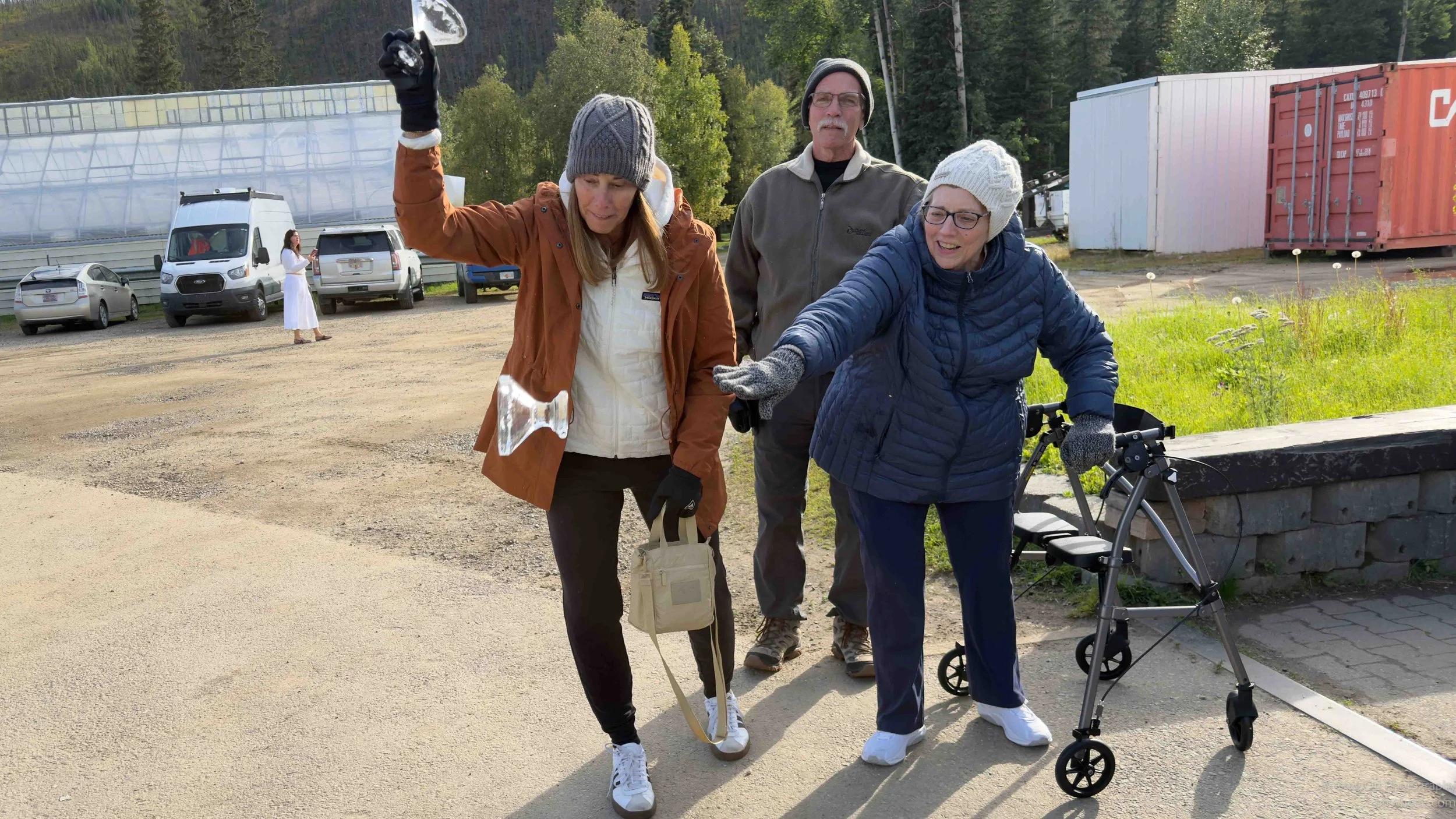
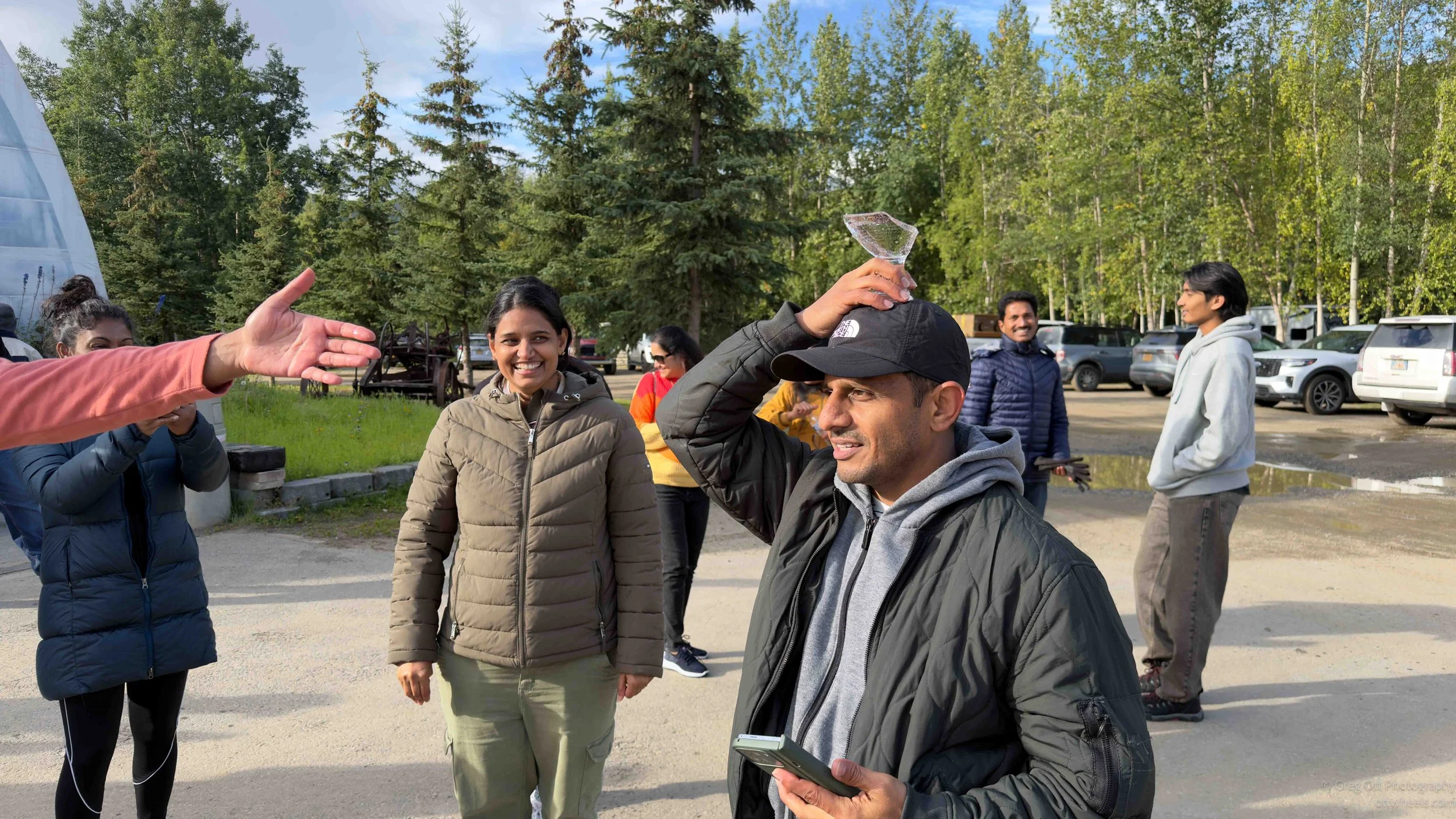
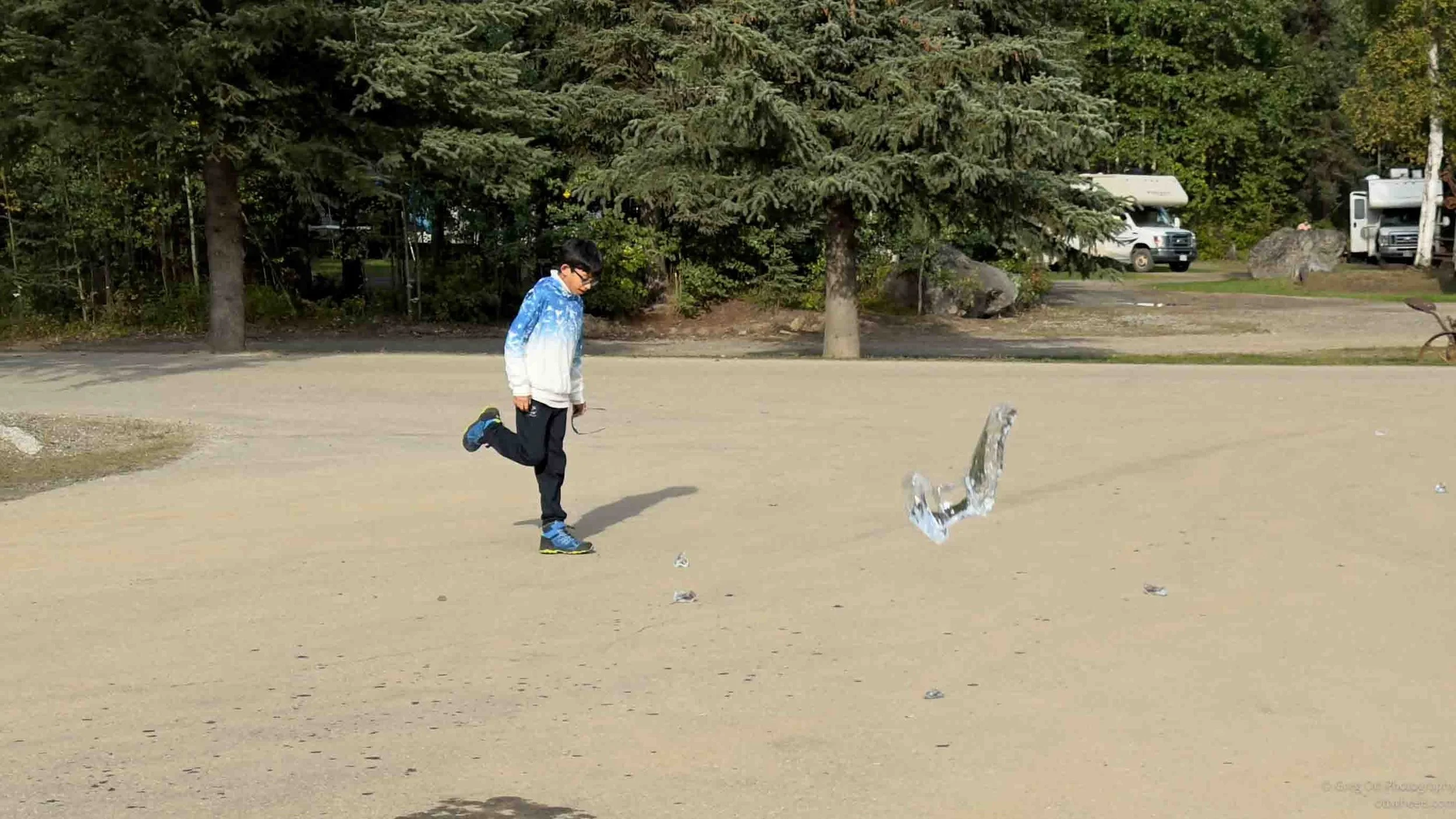
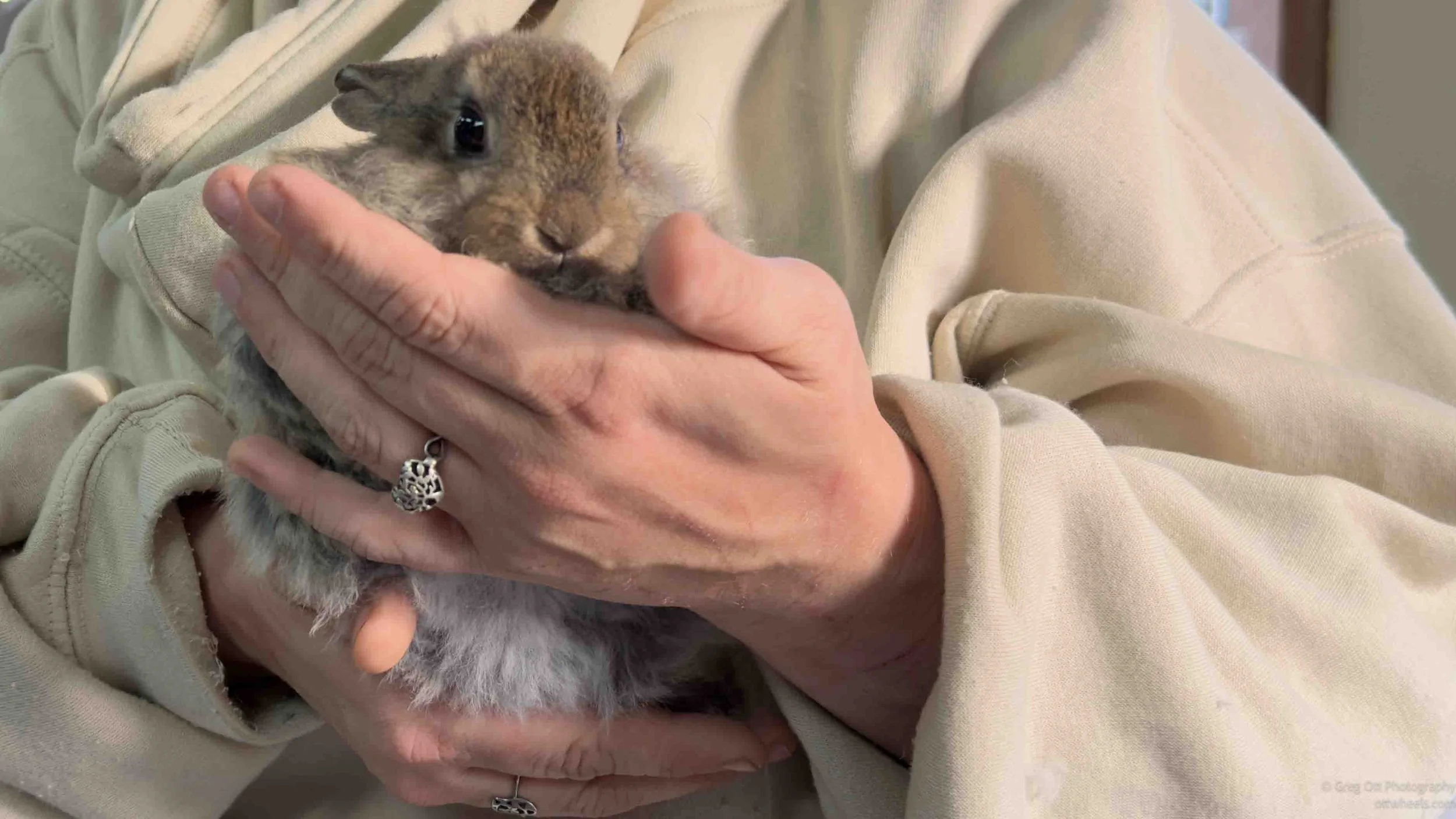
I walked over to the Activities Center and grabbed a latte for the road. After nearly four hours of soaking in the hot springs followed by an hour inside a building made of ice, I was about as relaxed as I could get. I still had the long drive back to Fairbanks. As I was standing there, a woman with a 6 week old rabbit came in. Everyone wanted to hold the rabbit and it didn’t seem to mind.
Before leaving I stopped for a few more photographs of the old airplane, fire truck and enormous rescue vehicle near where I was parked.
It was a little after 6 p.m. when I finally pulled out. Saturday evening traffic was almost nonexistent, which made the drive back much easier. I stopped at the first gas station I came to, filled the tank and continued toward Fairbanks and my familiar overnight spot at UAF.
It had turned out to be a much better trip than I expected. Between the hot springs, the greenhouse, the geothermal plant and the slightly crazy ice museum, it was interesting, quirky and surprisingly relaxing. I was glad I hadn't crossed Chena off the list.