
Creamer’s Waterfowl Refuge
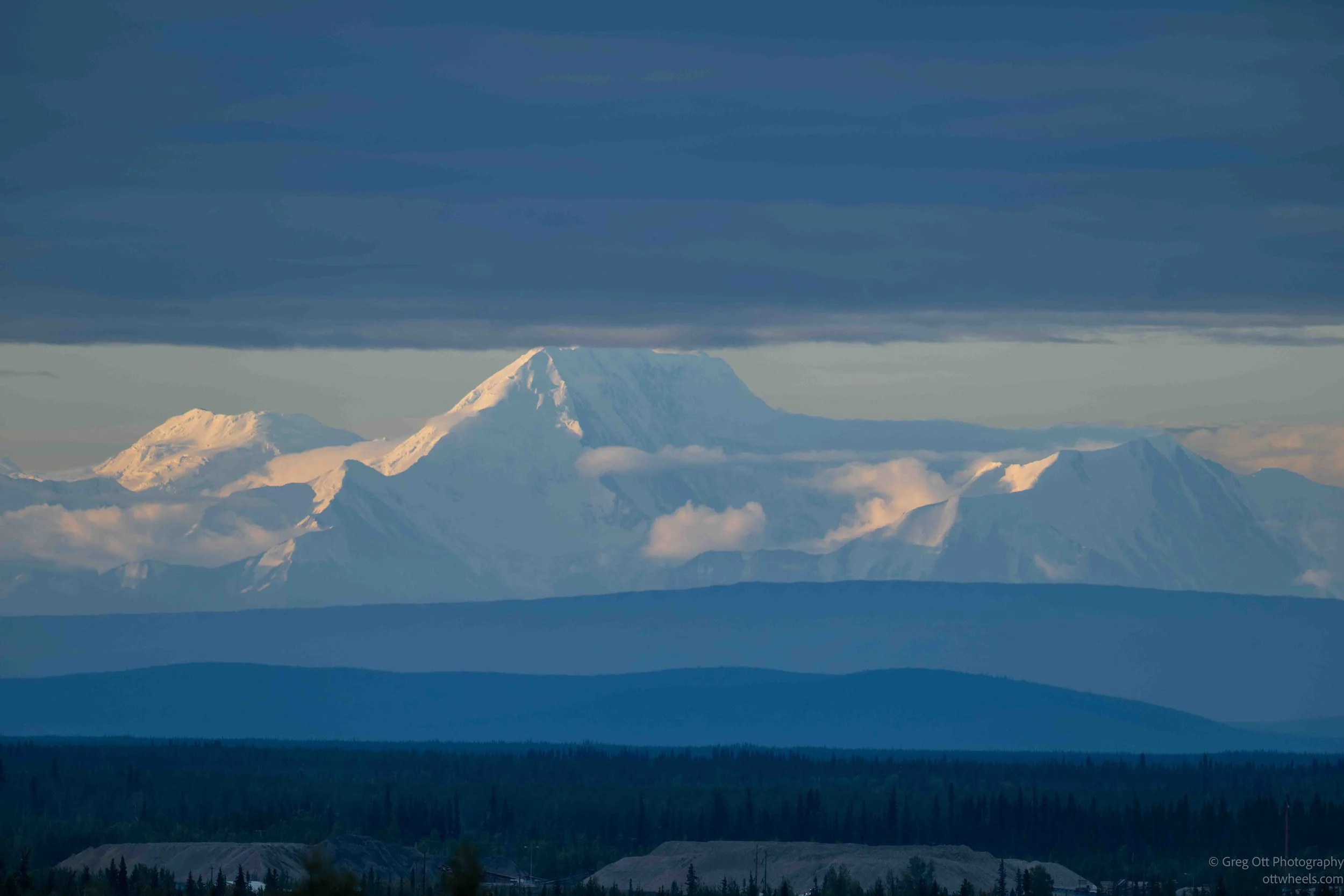
As I left the parking lot at the University of Alaska Museum of the North, there was a fantastic view across the Tanana Valley. Denali and the Alaska Range were visible far in the distance, layered behind the darker hills closer to Fairbanks. High clouds hung over the mountains while lower clouds and fog wrapped around the peaks. A small plane was slowly descending toward Fairbanks International Airport, adding another layer to an already stunning scene. I pulled over, grabbed the camera and waited, hoping another plane would come through. None did, but the mountains were enough. The light breaking through the clouds caught Denali and some of the surrounding peaks while everything else remained in shadow.
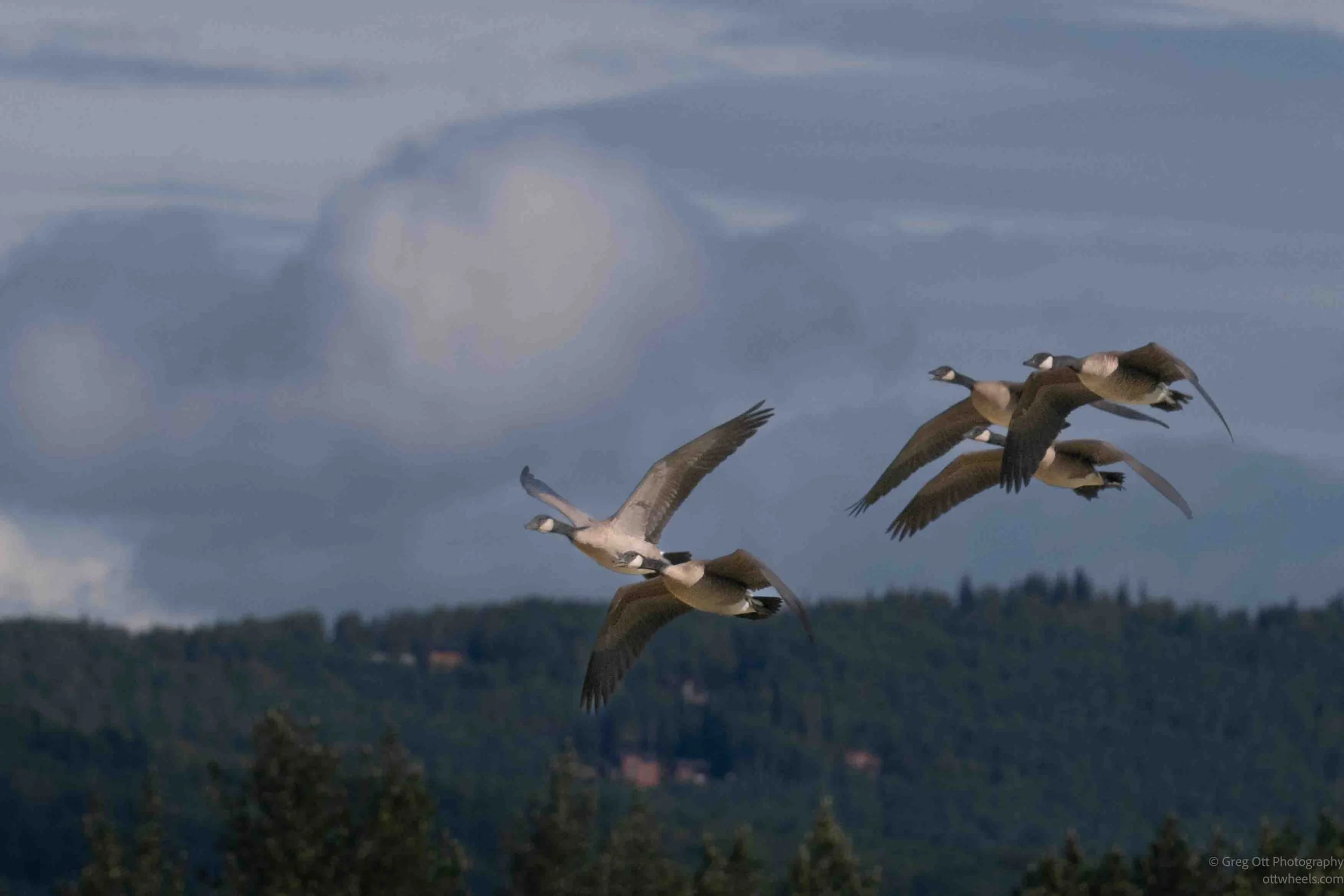
Creamer’s Field
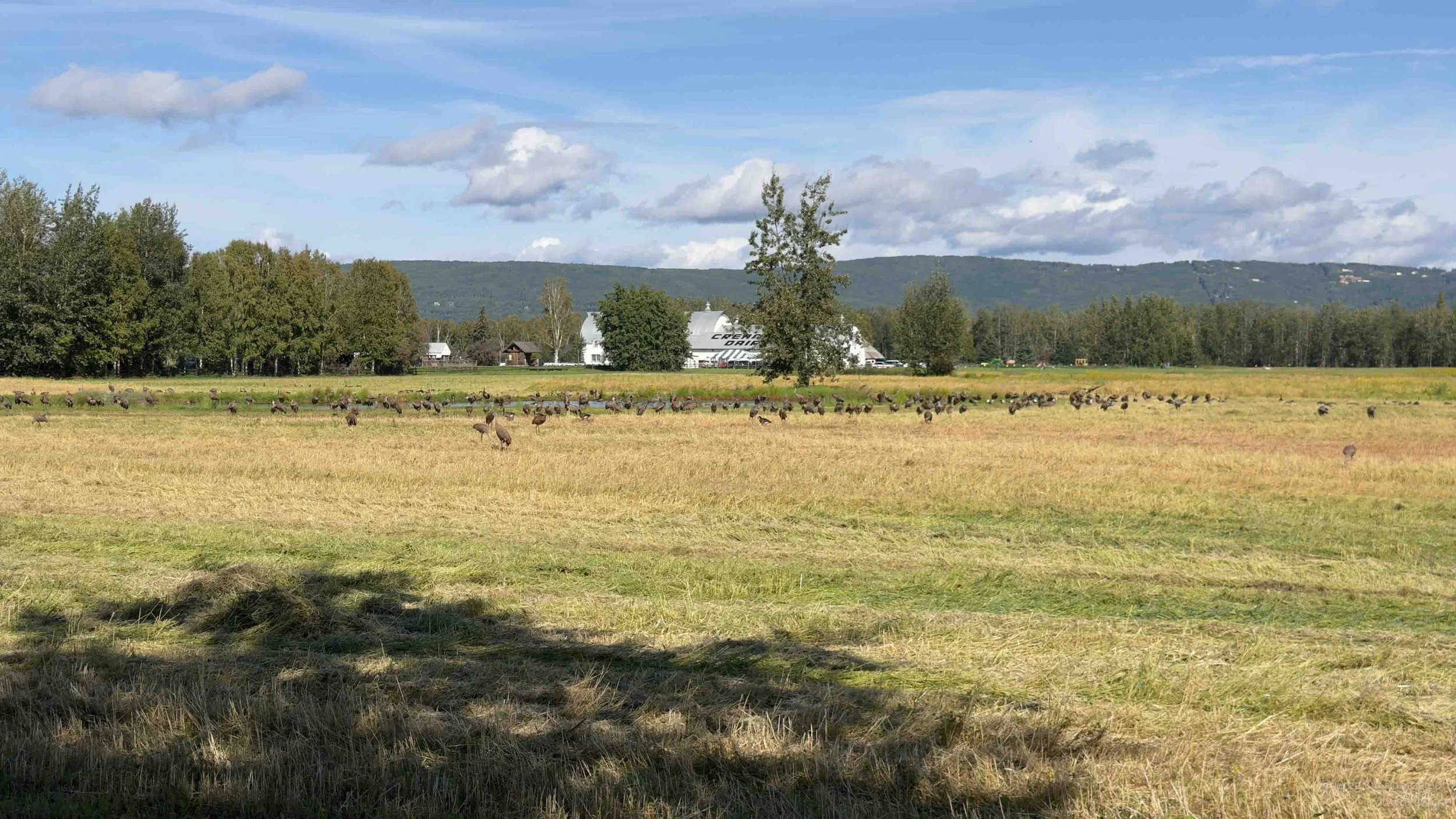
Creamer’s Field was on my itinerary, but I wasn’t really sure what to expect even though I had read about it. On my way to the visitor center, I came across a large pull-off overlooking one of the refuge's open fields. About half of the parking spaces were filled, and I pulled into an area meant for RVs. Spread across the field were hundreds of sandhill cranes and geese, along with a scattering of ducks. The cranes and geese were busy eating grain and seeds from the field, while the ducks occasionally joined them around a small pond before moving on. Next to the cranes, which stand around three feet tall with wingspans approaching six feet, the ducks looked tiny.
Creamer’s Field is almost designed for this scene. The former dairy farm is now part of a nearly 3,000-acre migratory waterfowl refuge, and some of the old agricultural fields are still farmed specifically for the birds. Barley, wheat, oats and field peas are planted so that food and cover are available during migration. The timing of my visit couldn't have been much better. Late August and early September are the peak of the fall staging period, when thousands of sandhill cranes moving south from Alaska and Siberia gather in the Tanana Valley to rest and refuel. Daily counts at Creamer’s regularly exceed 1,000 cranes during this period.
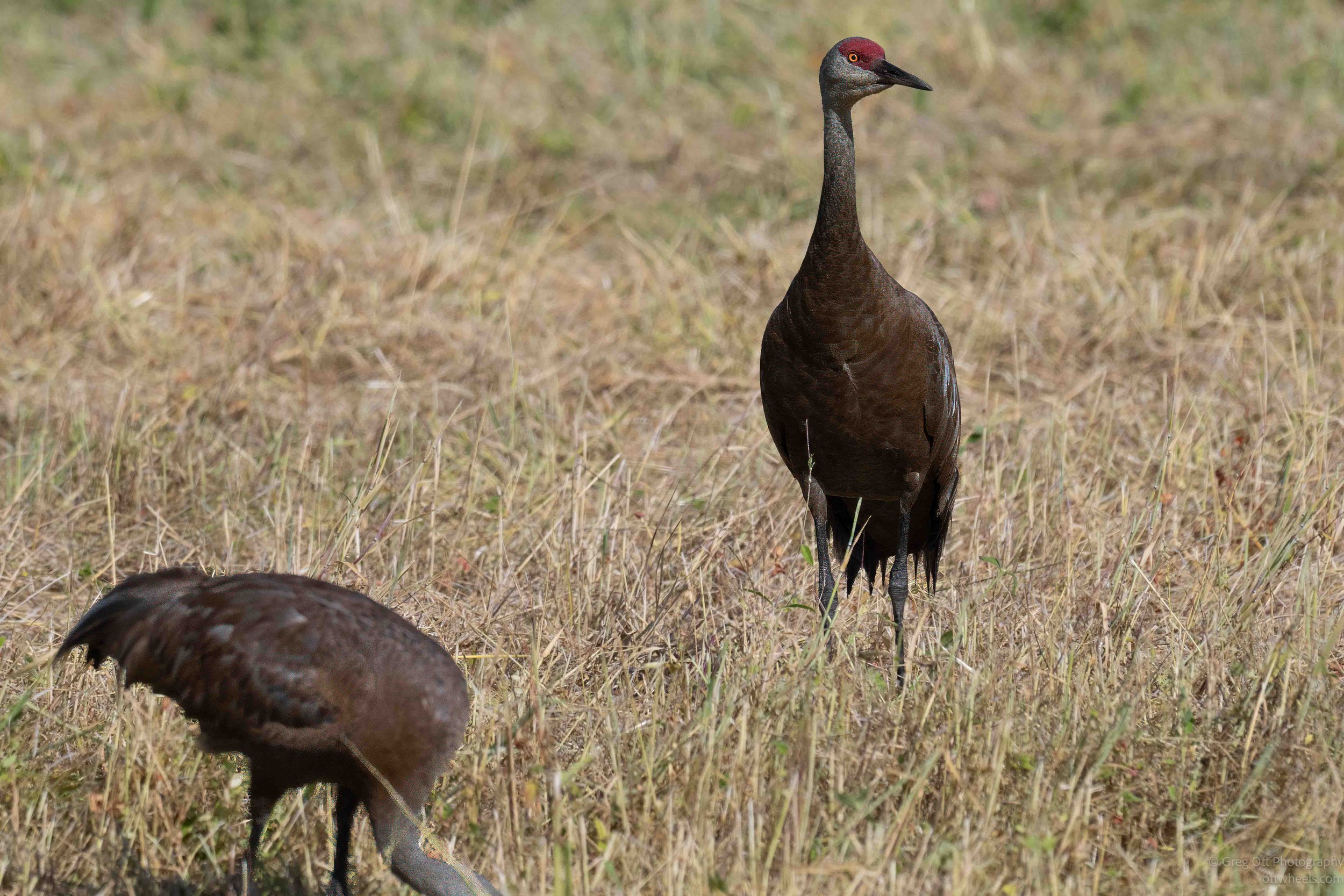
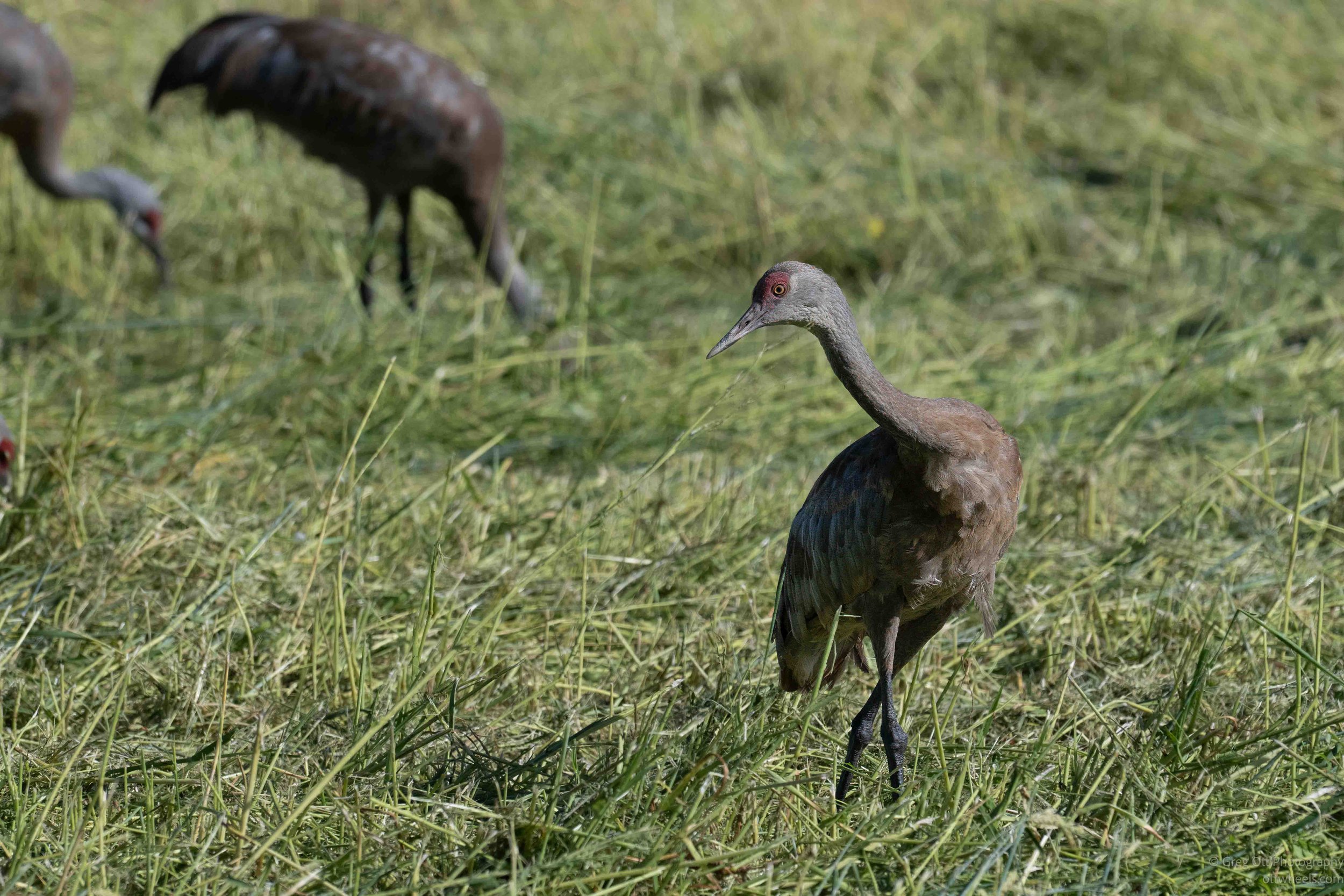
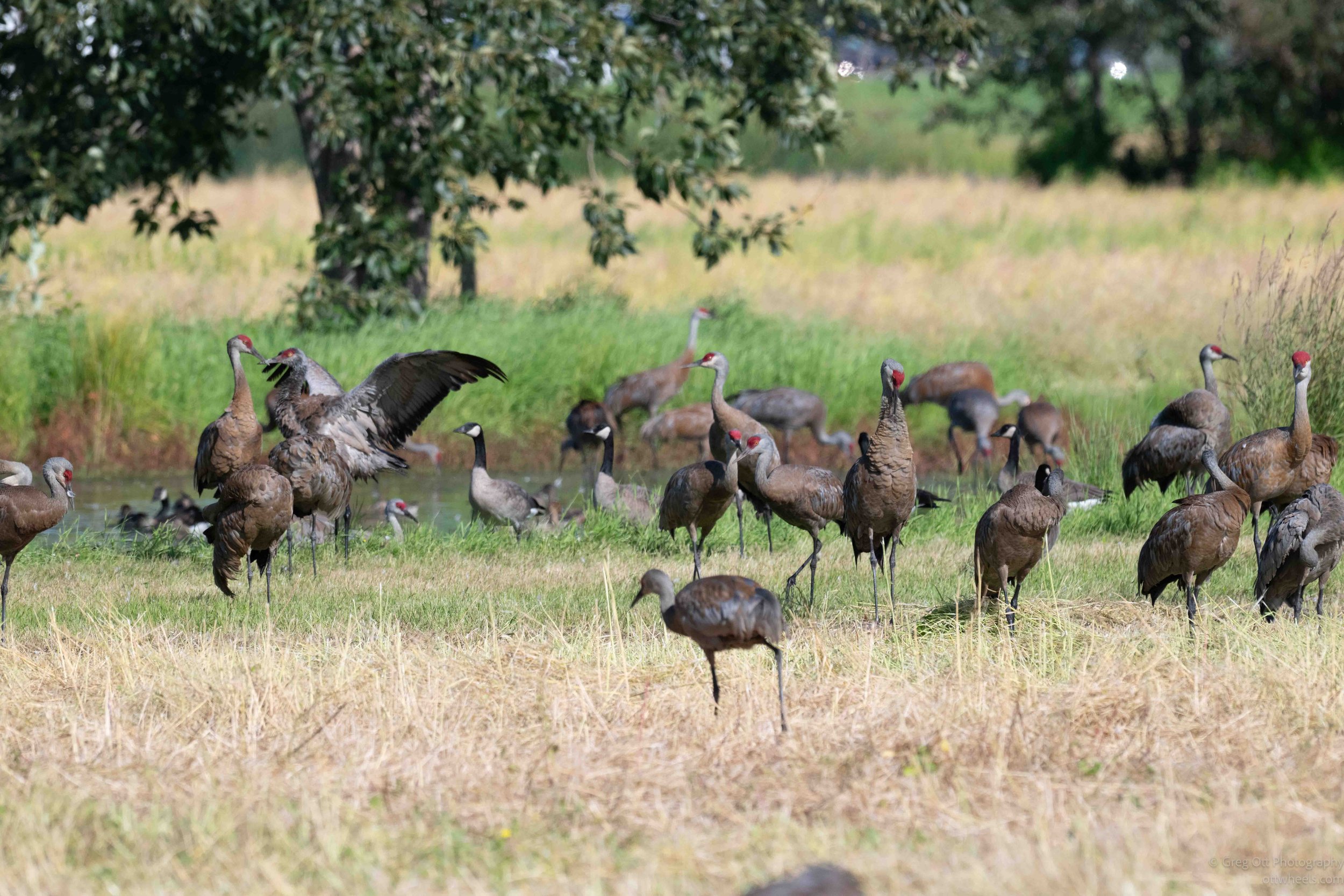
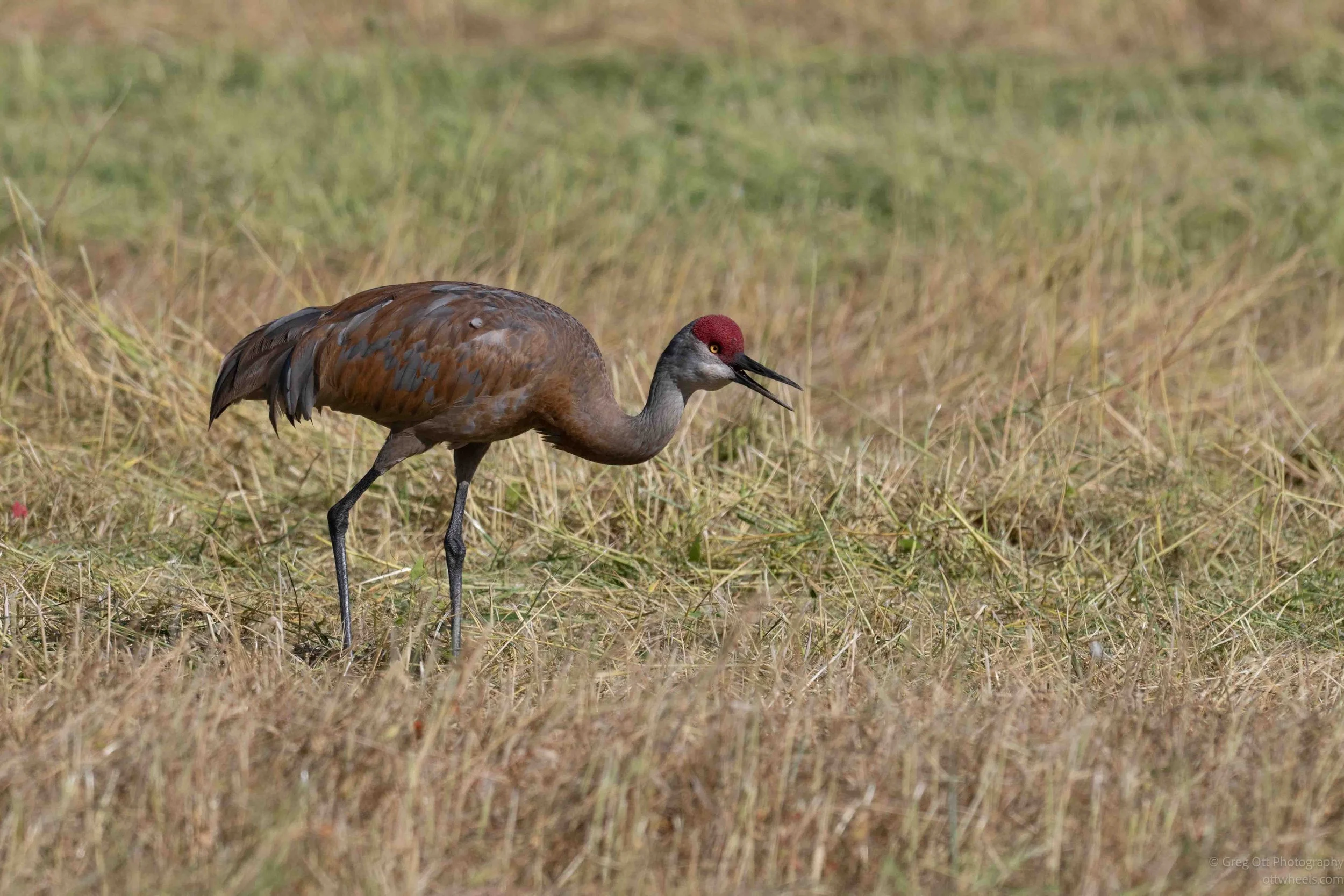
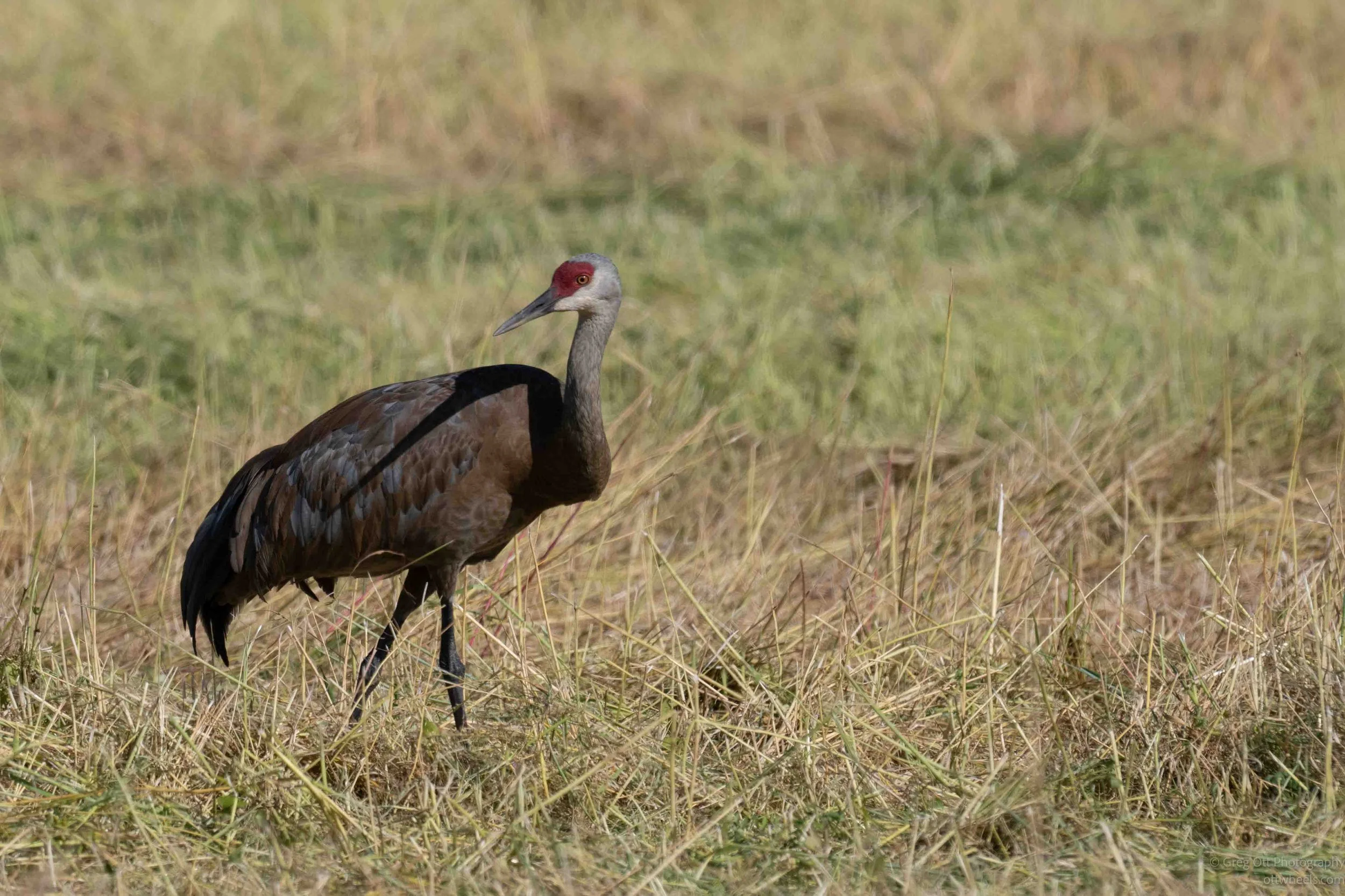
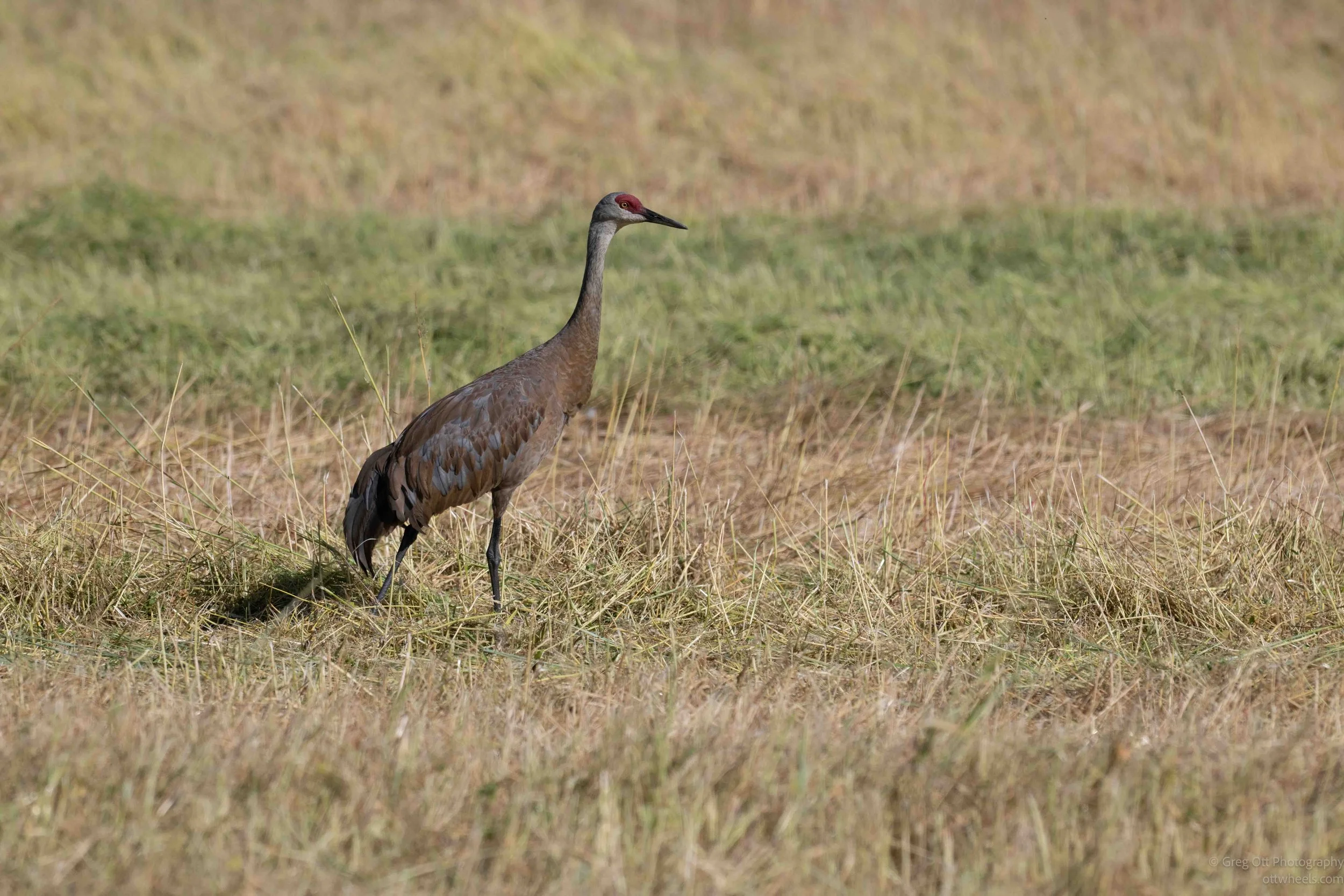
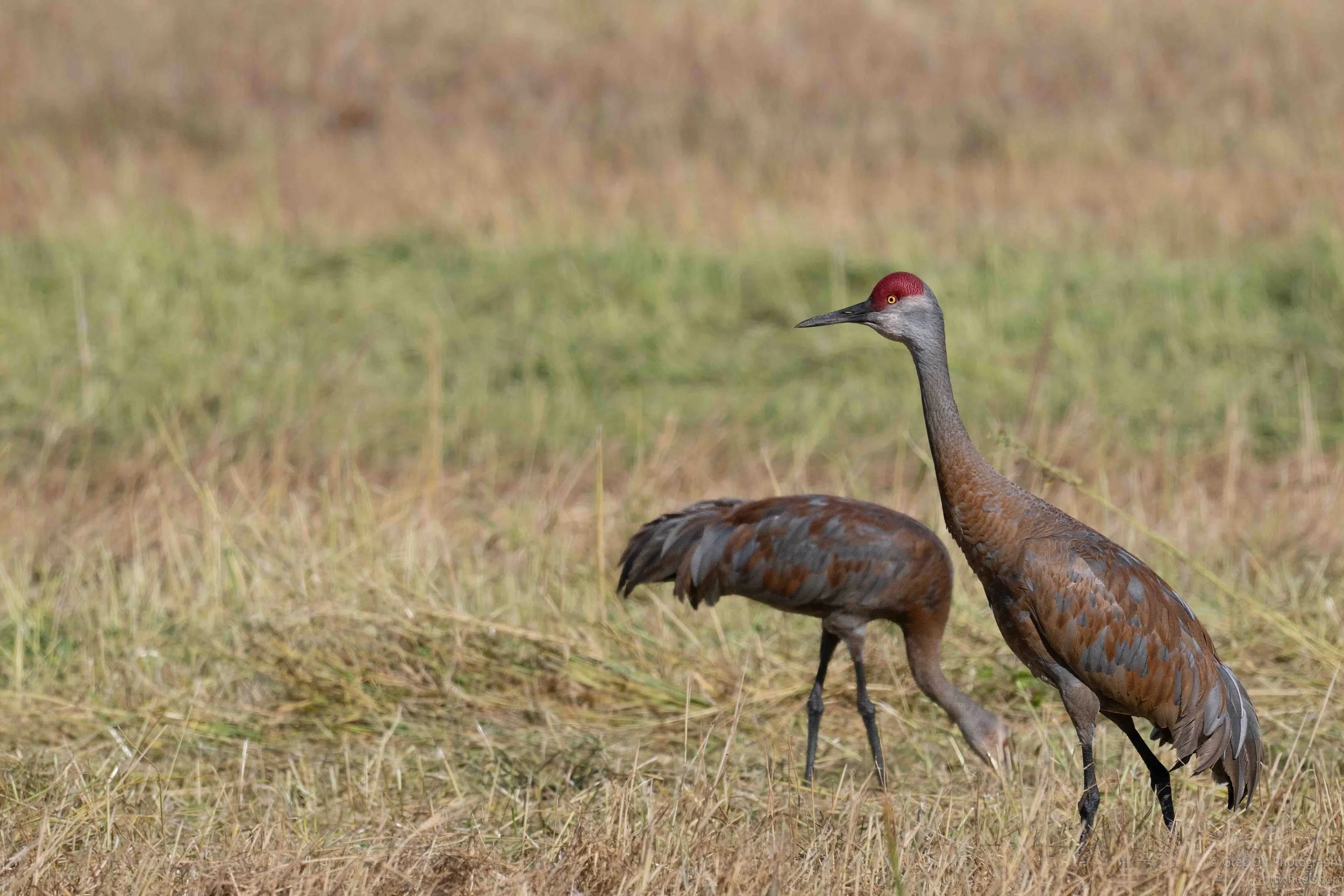
I grabbed the tripod intending to take a few photographs and ended up staying for two hours. The cranes were beautiful, but they weren't the uniform gray birds I had expected. In the changing light their feathers shifted between blue-gray, rusty orange, chocolate brown and almost black, with the adults carrying a brilliant red crown above their eyes. Some of the rusty color isn't actually their natural feather color. Sandhill cranes deliberately rub iron-rich mud into their feathers while preening, staining the normally gray plumage brown and rust. Looking across the field, every bird seemed to have its own combination of colors.
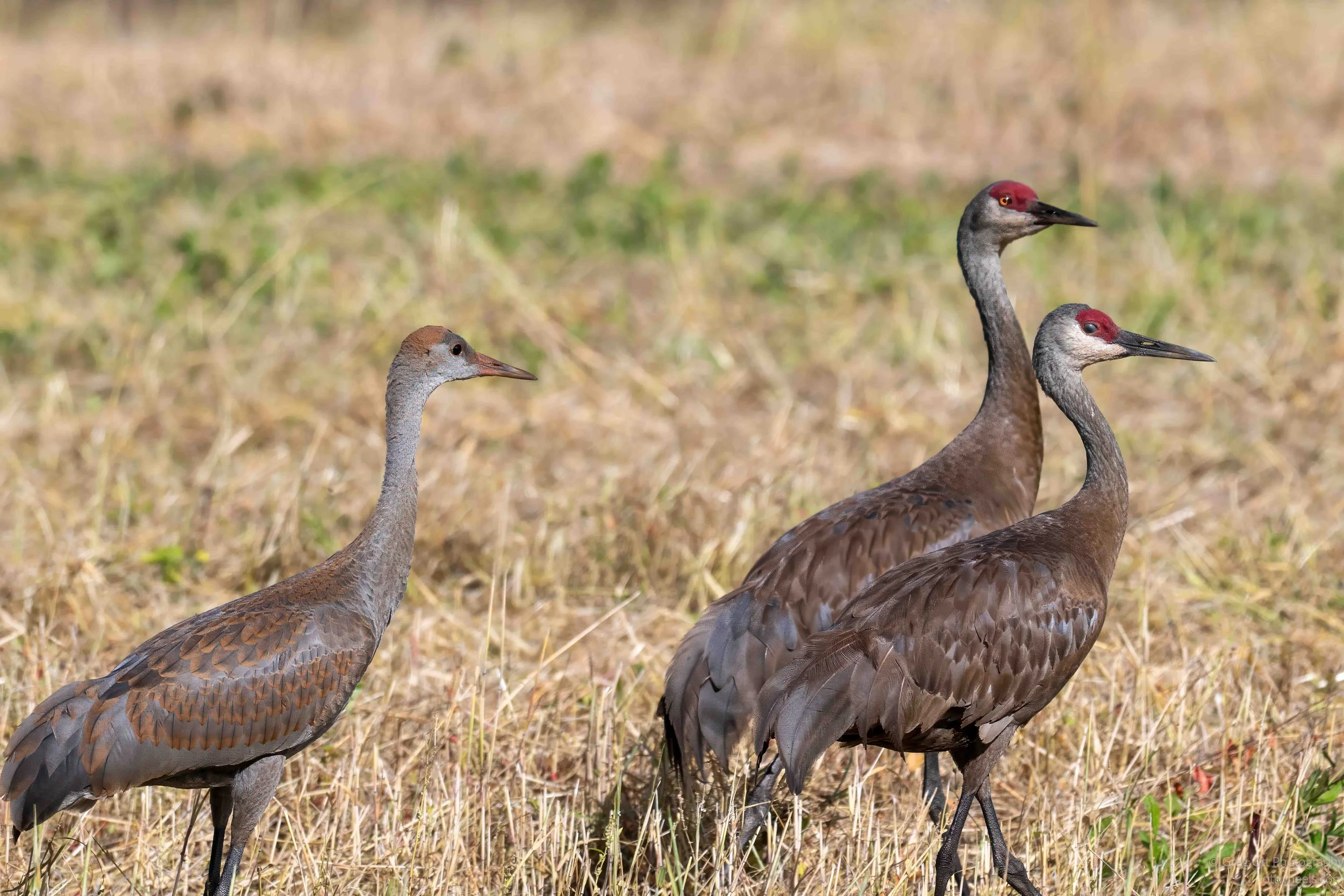
There were also younger cranes mixed in with the adults. They had fledged during the summer and were approaching adult size, but they were fairly easy to pick out once I knew what to look for. Their heads were more brown or cinnamon colored and they lacked the brilliant red crown of the adults. Some still had a softer, almost unfinished appearance to their feathers. These young cranes were only a few months old, yet they were about to make their first migration south, traveling with their parents and learning a route they may follow for the rest of their lives.
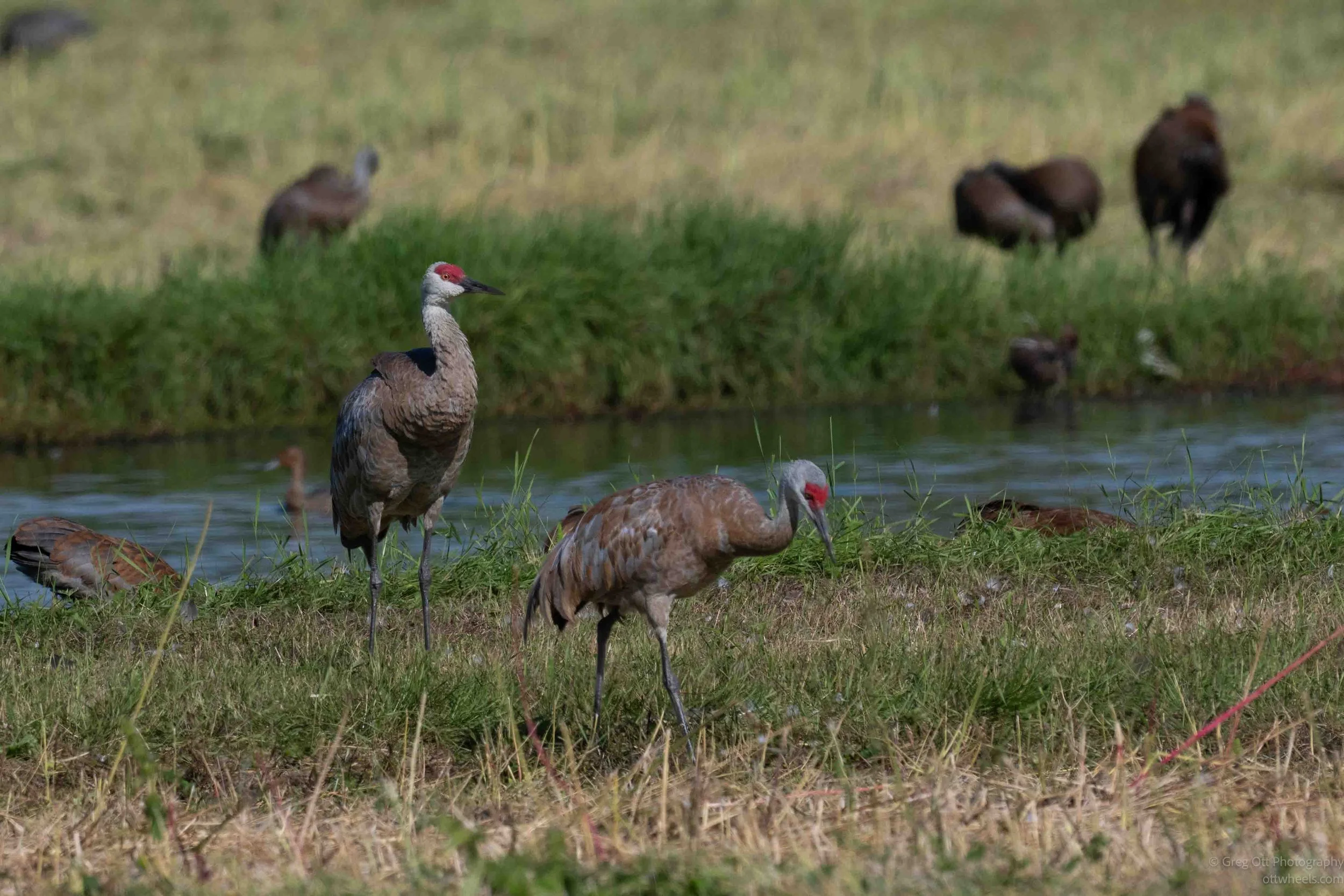
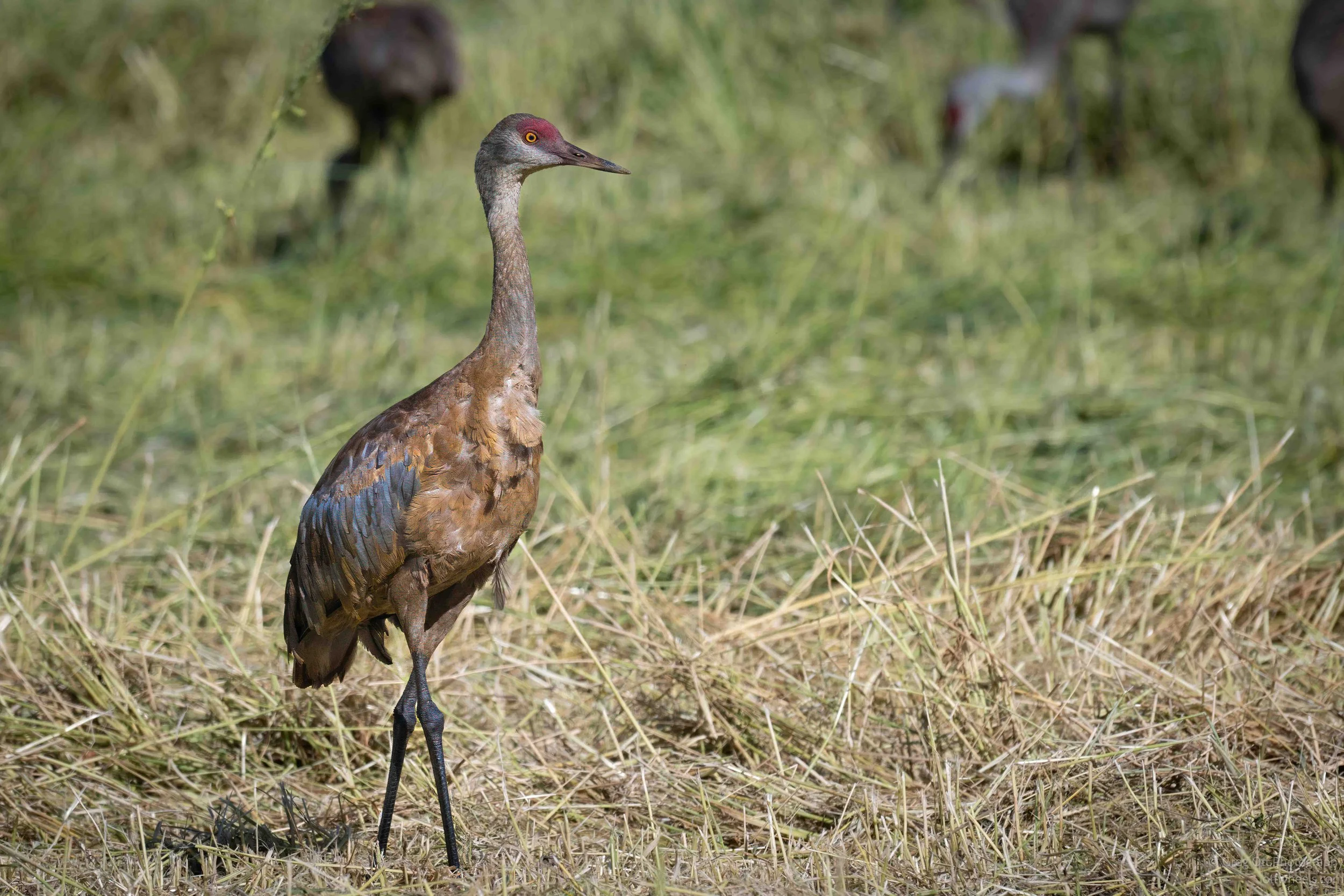
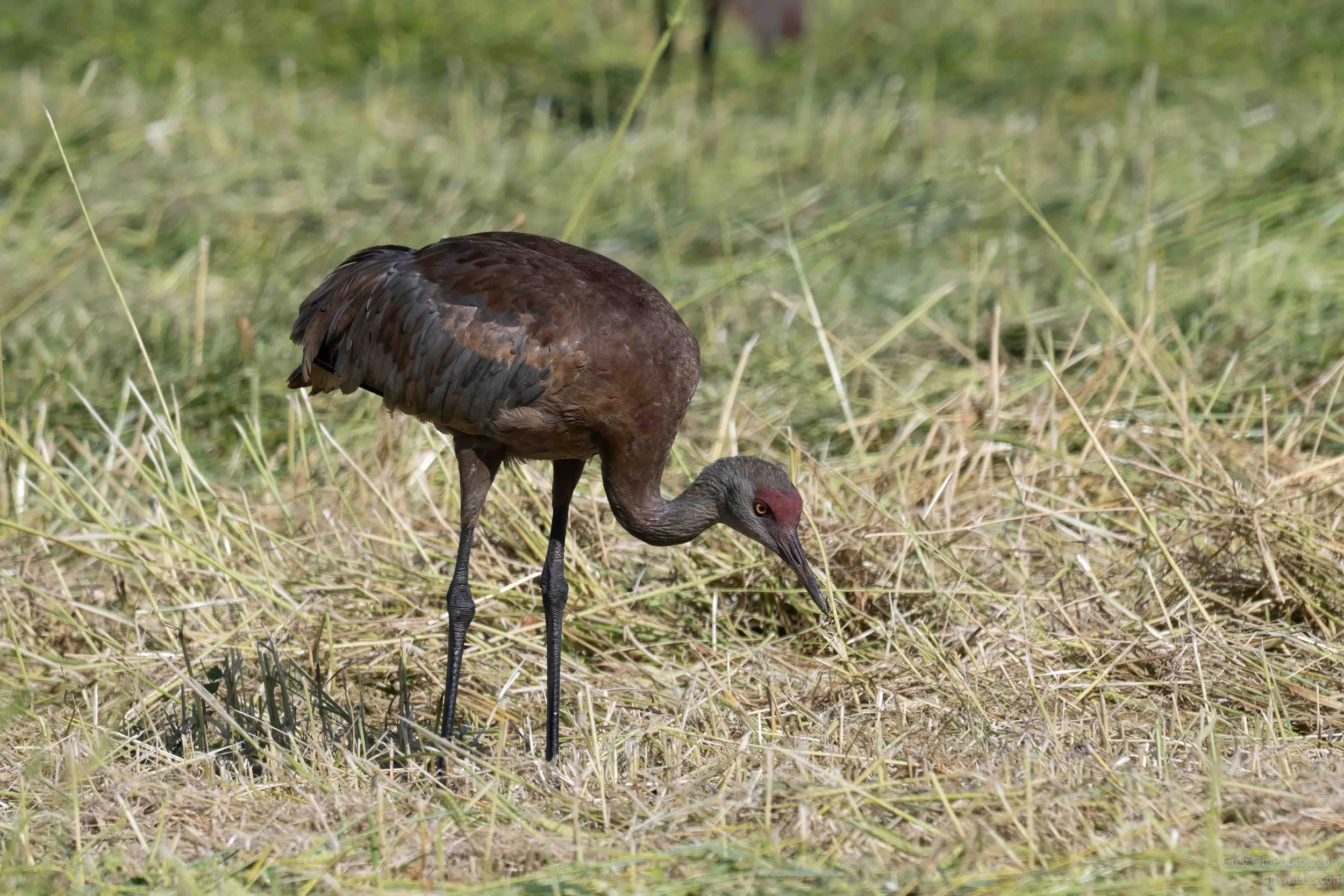
Photographing them was as much about watching their behavior as getting the images. As the light shifted, individual birds would suddenly emerge from the browns and greens of the field. They posed, stood motionless on one leg, stared into space, squabbled with each other and methodically worked their way through the cut vegetation looking for food. Sandhill cranes are omnivores, eating seeds, berries, roots and insects as well as frogs, rodents and other small animals. Here, however, they were taking advantage of the grain planted specifically to help migrating birds build up energy for the long journey ahead.
Every once in a while the relative calm would break. Two cranes would confront each other, one would spread its enormous wings, or a small group would suddenly lift into the air. Their calls carried across the field, a loud rattling sound that seems almost prehistoric. Even when nothing dramatic was happening, there was always something to photograph. With hundreds of cranes spread across the field, I found myself watching one bird until another did something that caught my attention.
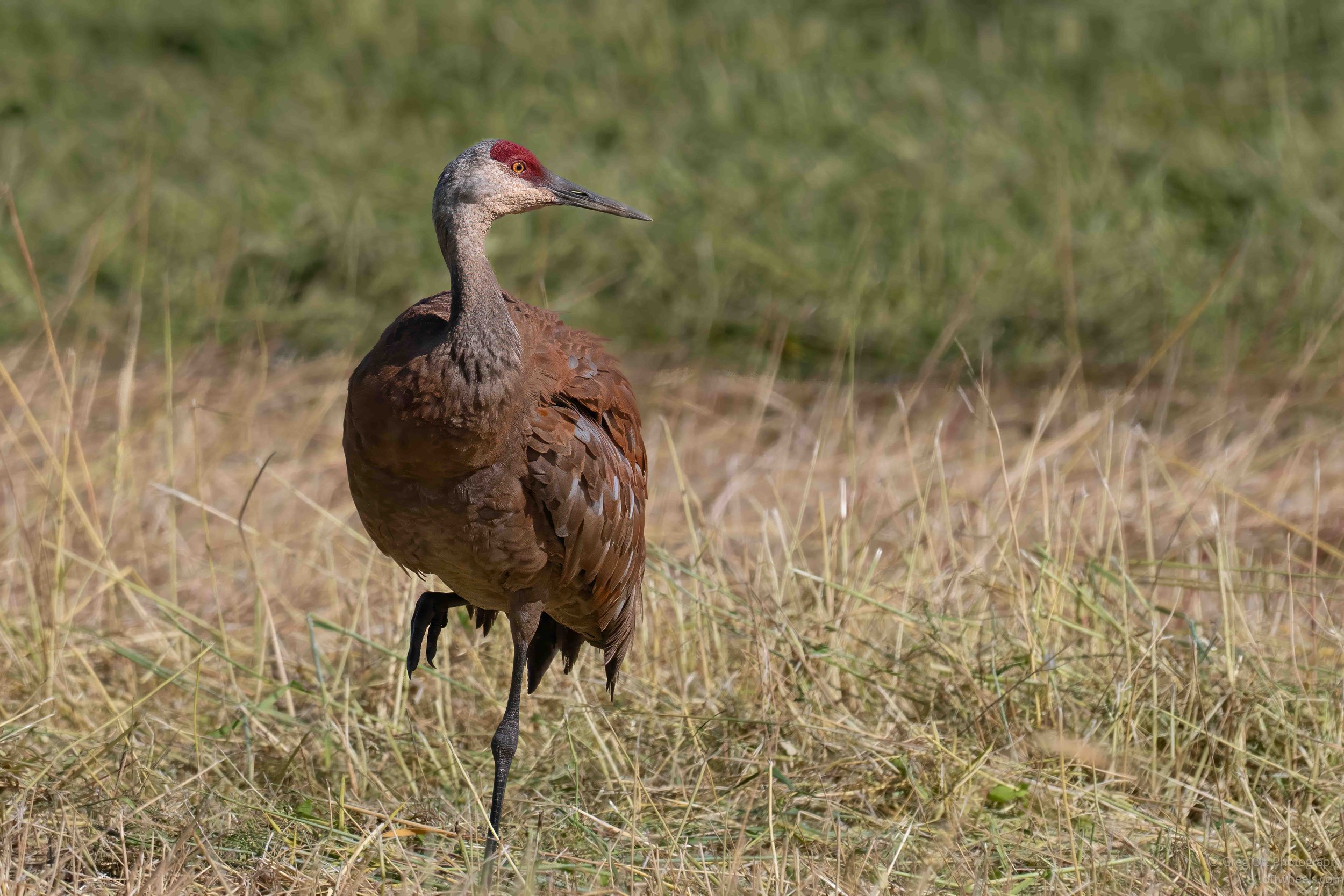
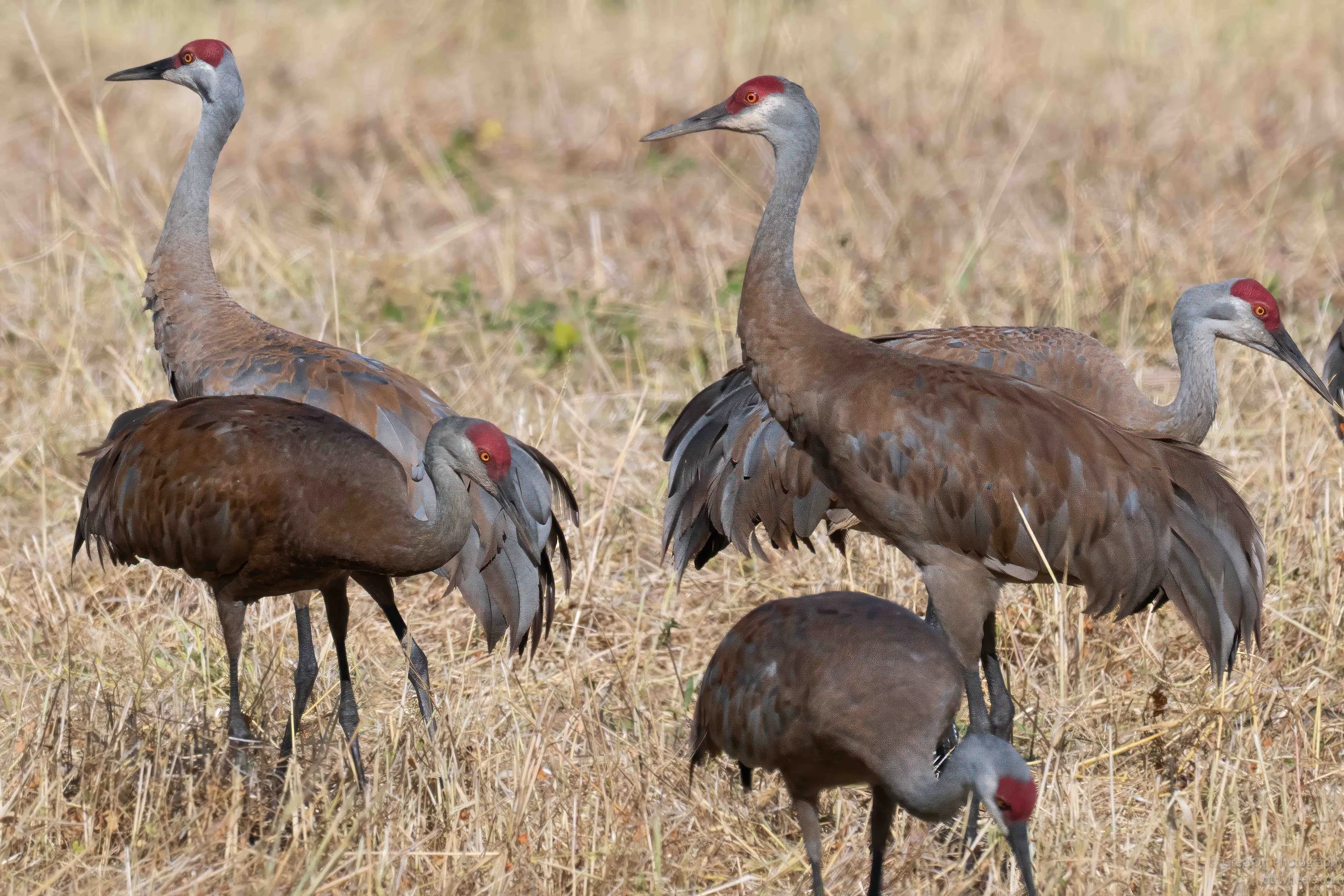
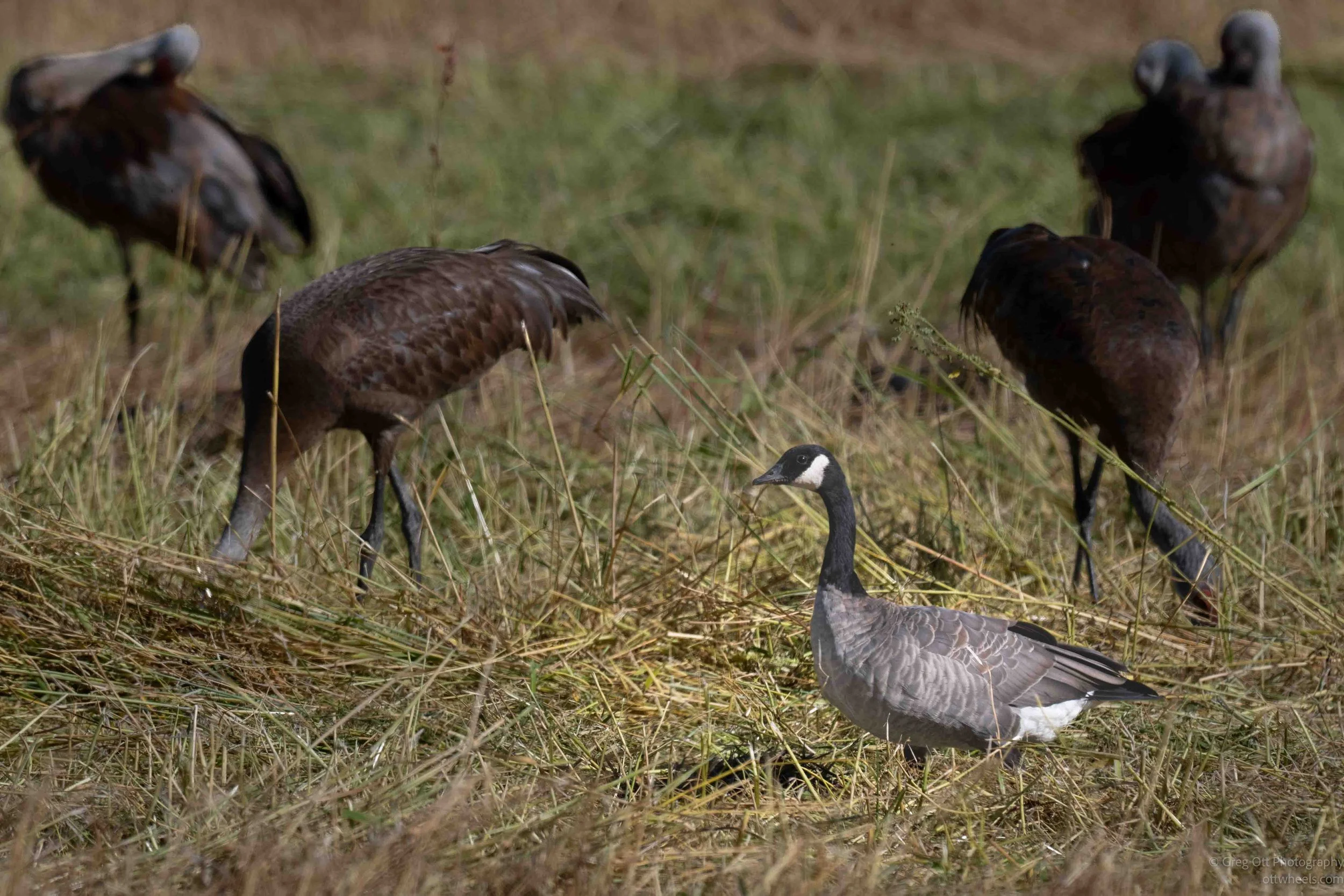
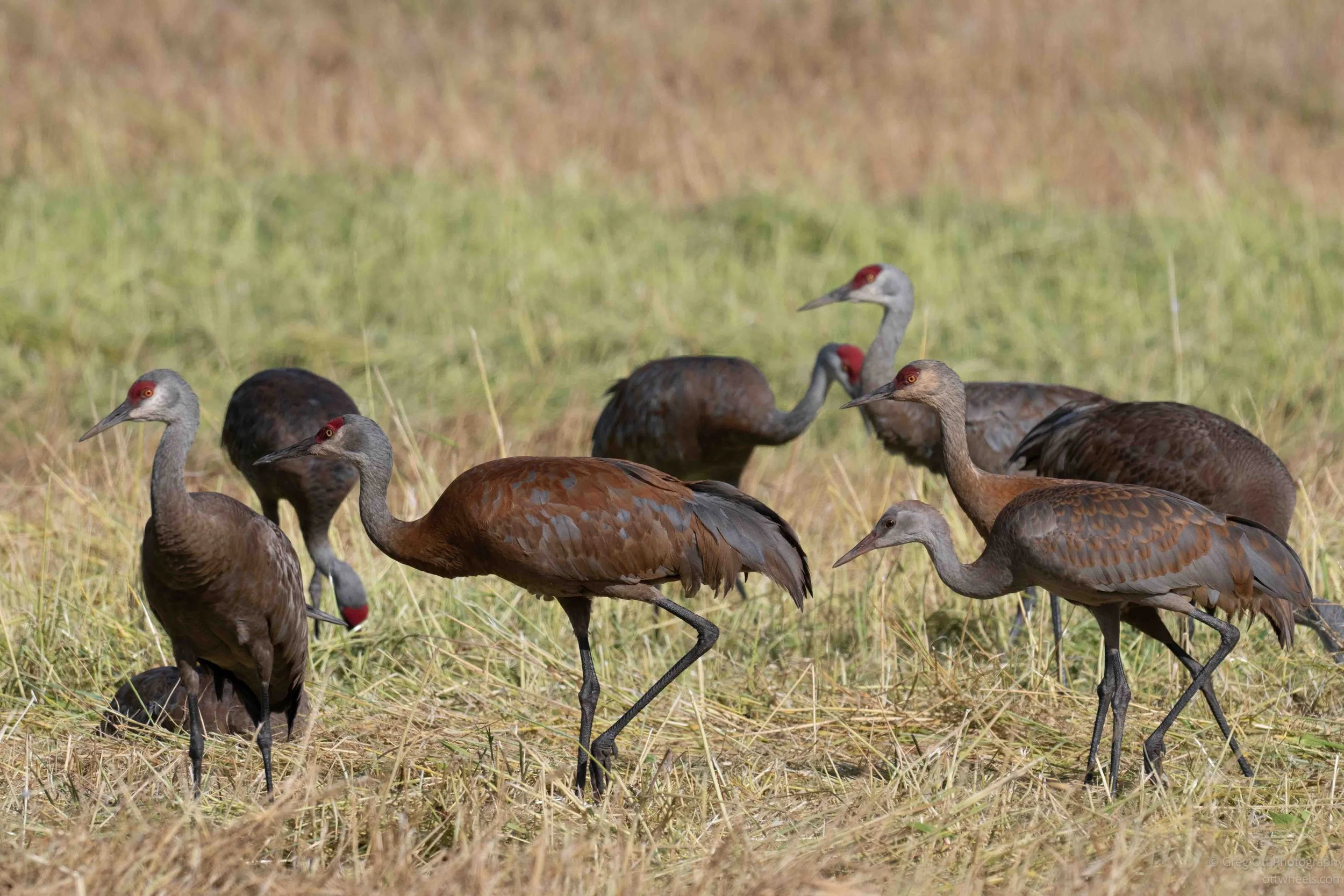
The great migration was just beginning. Some of the cranes gathering in the Tanana Valley had nested in Alaska, while others had come from as far away as northeastern Siberia, crossing the Bering Strait before moving through Interior Alaska. From here they would continue south through Canada and the Great Plains, with many eventually wintering in Texas, New Mexico and Mexico. They can travel hundreds of miles in a day, using rising columns of warm air to gain altitude before forming the familiar V-shaped formations for the journey south.
For the moment, though, none of them seemed particularly concerned about the thousands of miles ahead. They were simply eating, resting, calling, fighting and occasionally standing around doing absolutely nothing. I had stopped expecting to take a few photographs. Two hours later, I was still standing behind the tripod watching them. Eventually, I had to tell myself to move on.
Creamer’s Visitor Center
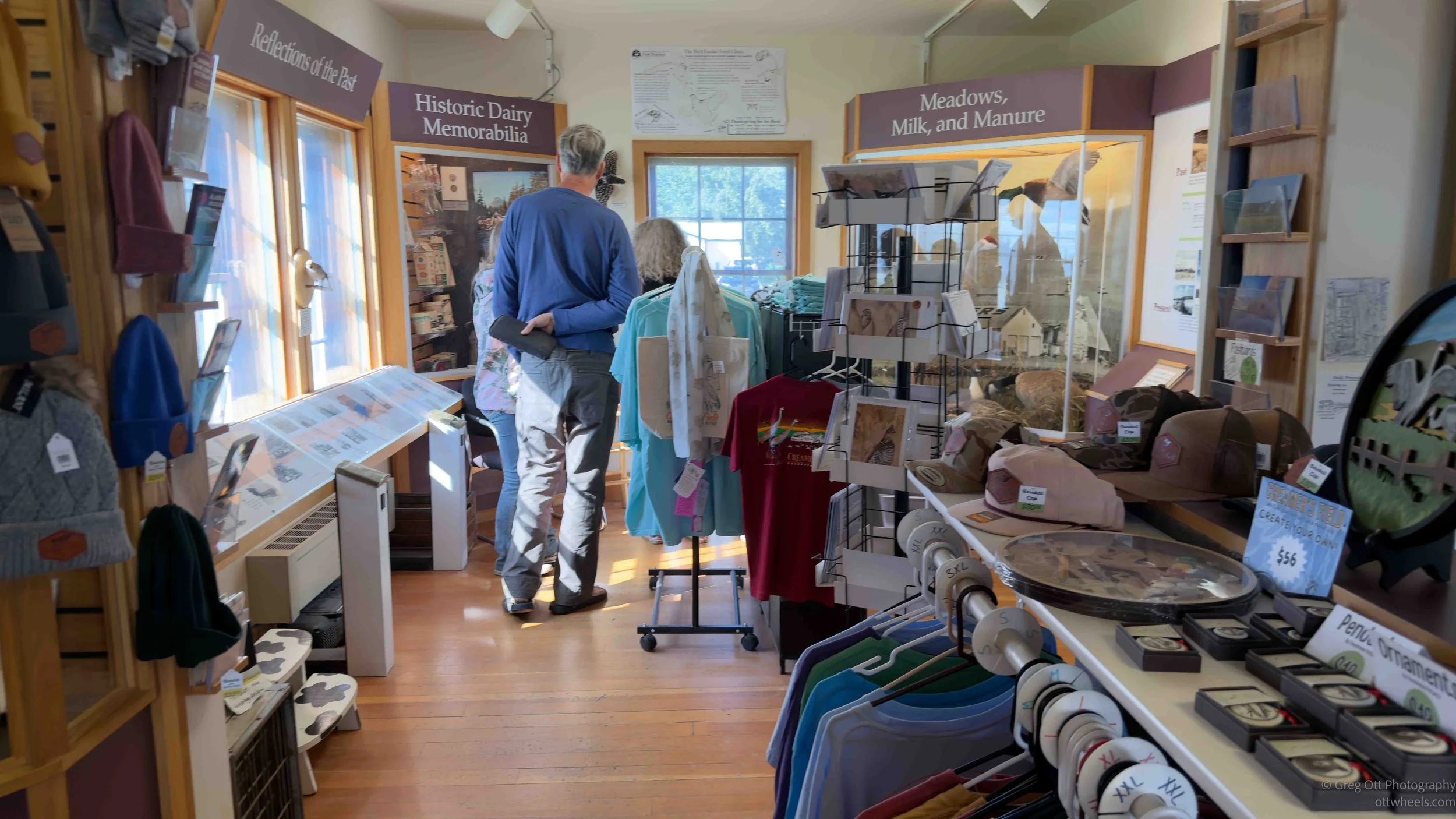
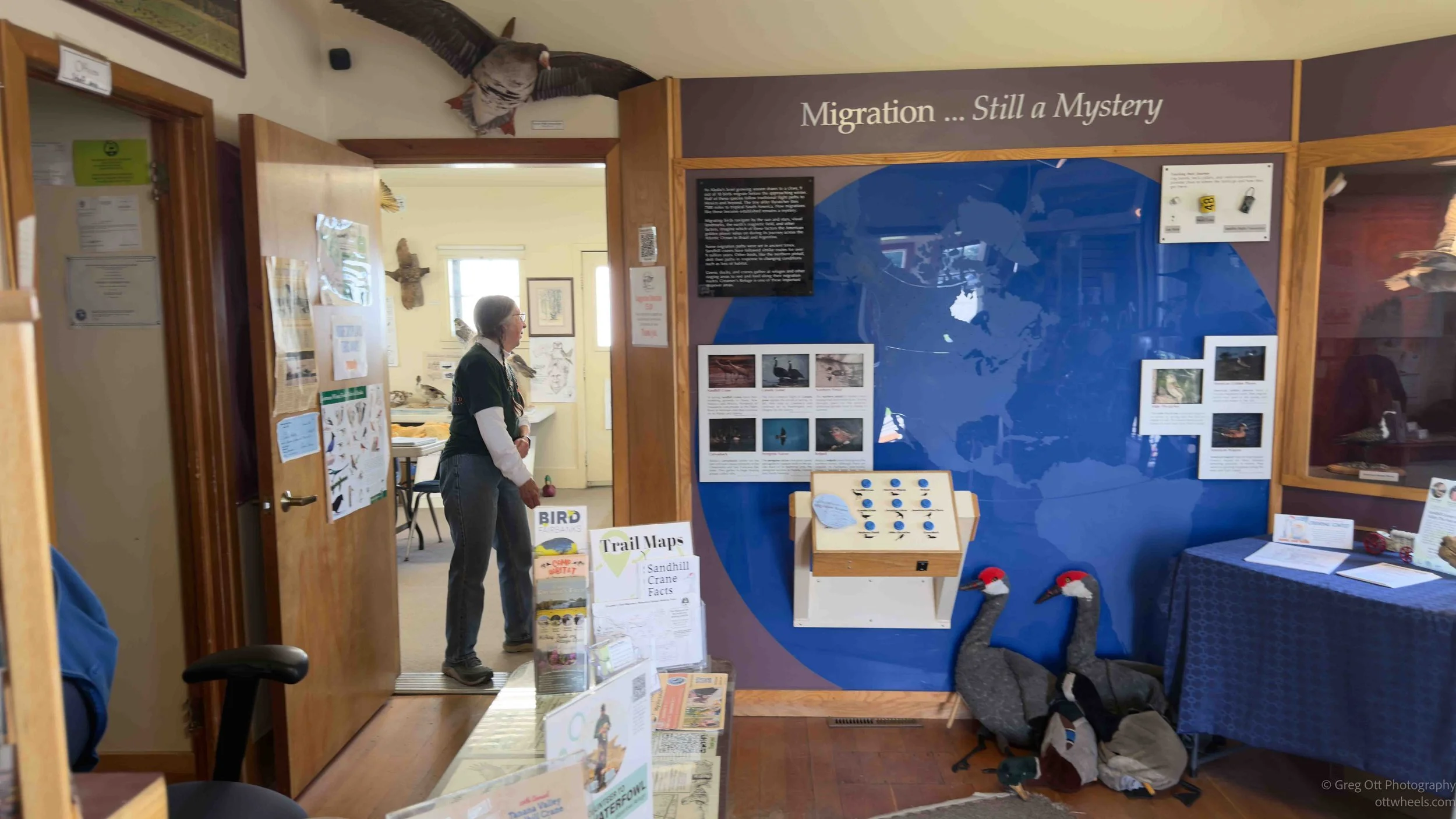
The visitor center is in the old Creamer’s Dairy farmhouse, surrounded by the original farm buildings. It is small, with exhibits on the birds and their migration as well as the history of the dairy. Charlie Creamer first came north with his family during the Klondike Gold Rush in 1897, when he was eight years old. As a young man in Fairbanks he worked for the Hinckley family, harvesting hay and milking their cows. In 1927, Charlie and his wife Anna returned to Fairbanks and borrowed $12,000 to buy the Hinckley dairy. They started with only 14 cows, but Creamer’s Dairy eventually became the largest producing and processing dairy Alaska had known.
The exhibits still contain pieces of that history, mixed in with displays about the wildlife that eventually took over the farm. There are old photographs and dairy memorabilia alongside exhibits about migration and the birds that use the refuge today. There is also a small gift shop. What there was not, inexplicably, was ice cream. It was a warm day, perfect for ice cream. How can you have CREAMER’S DAIRY written in enormous letters across the roof of a barn and not sell ice cream? I digress.
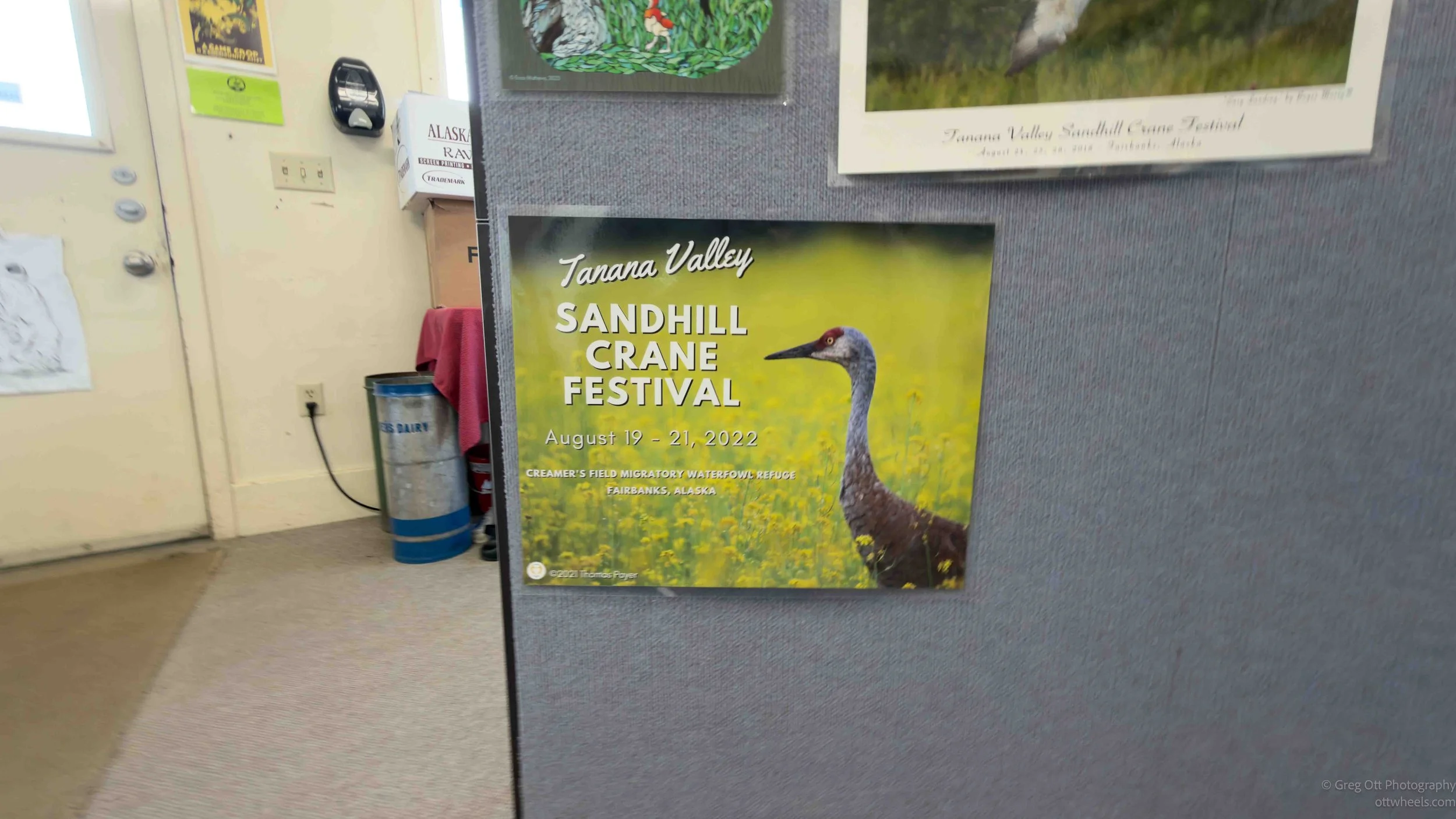
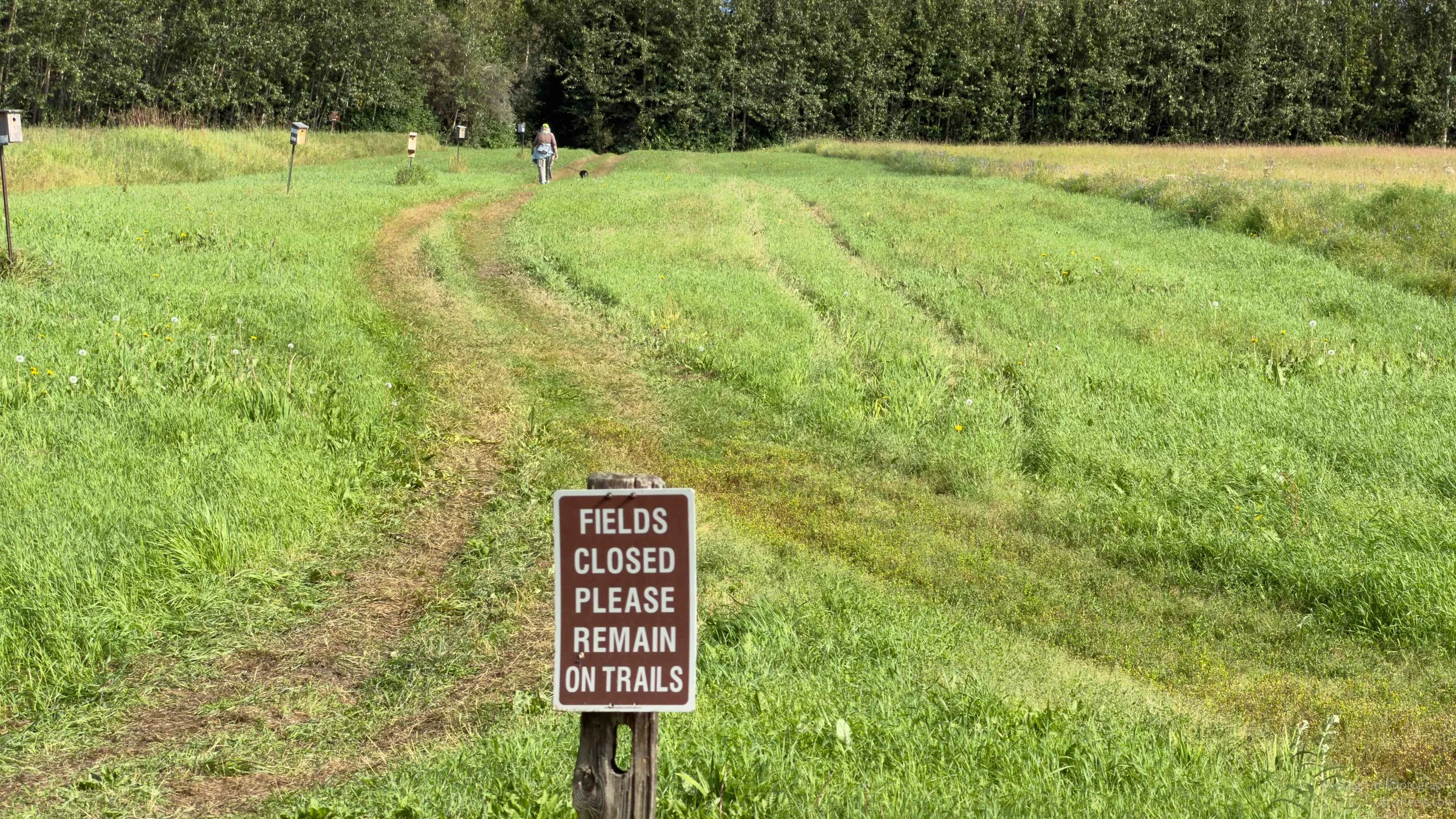
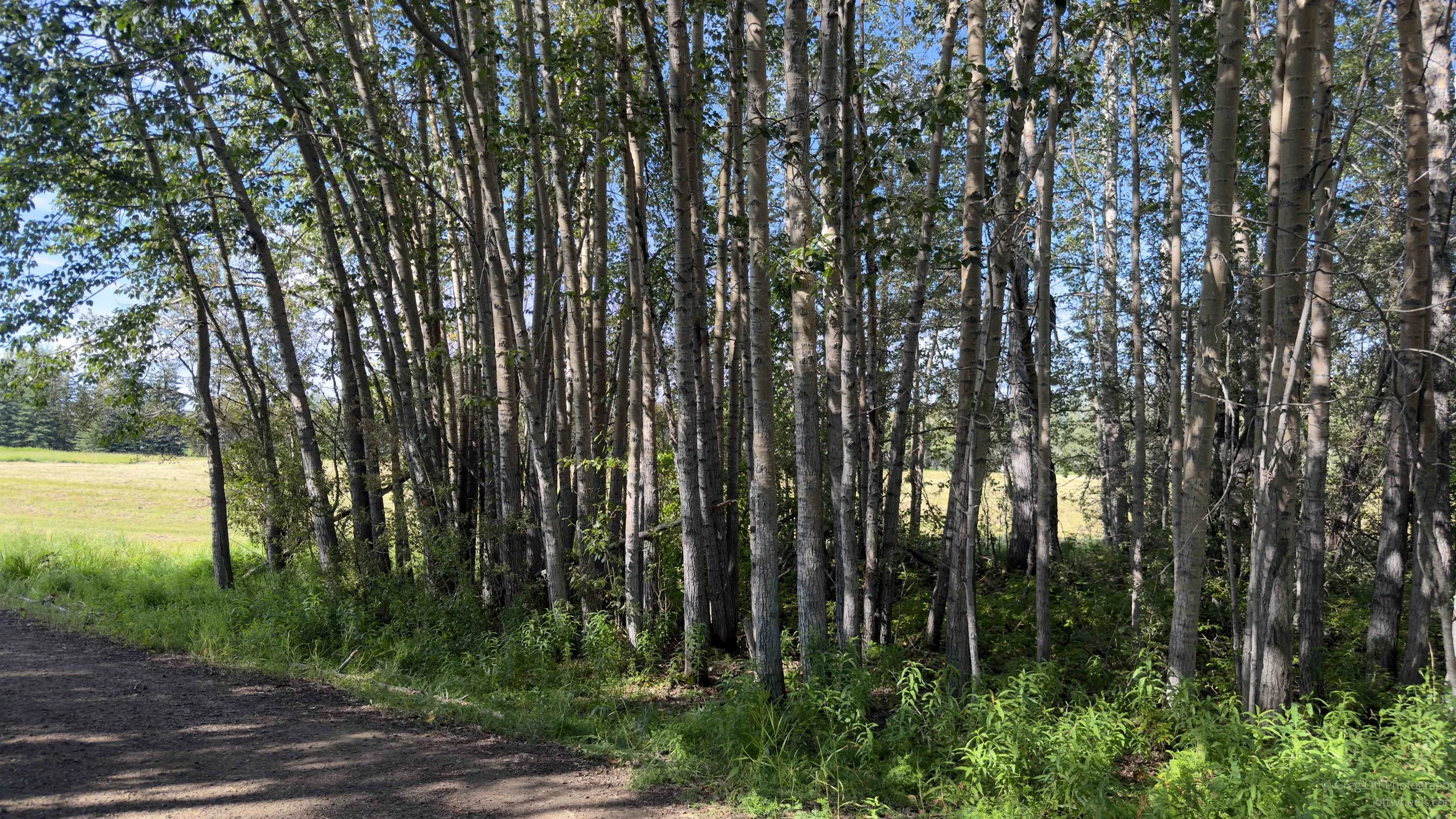
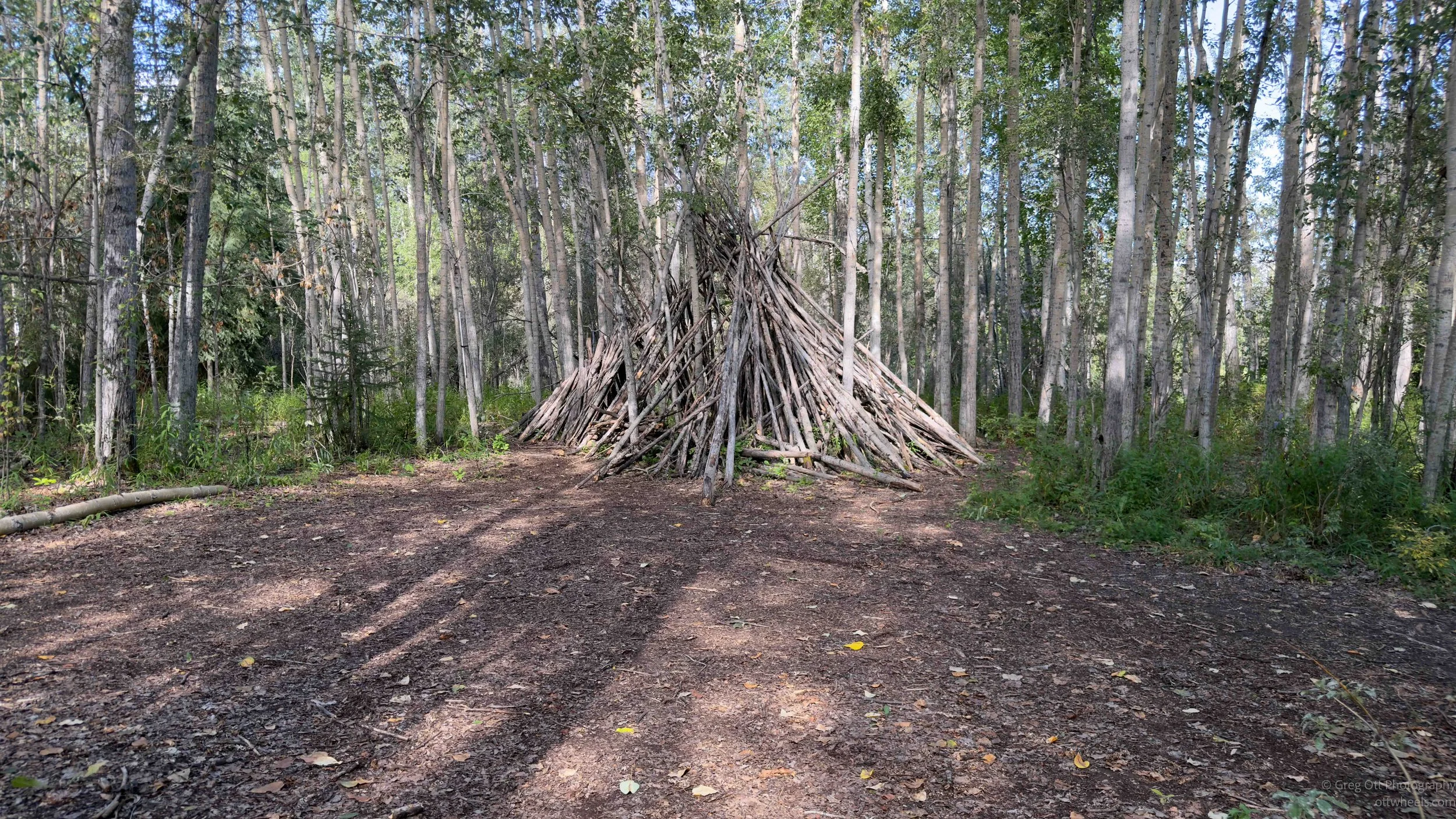
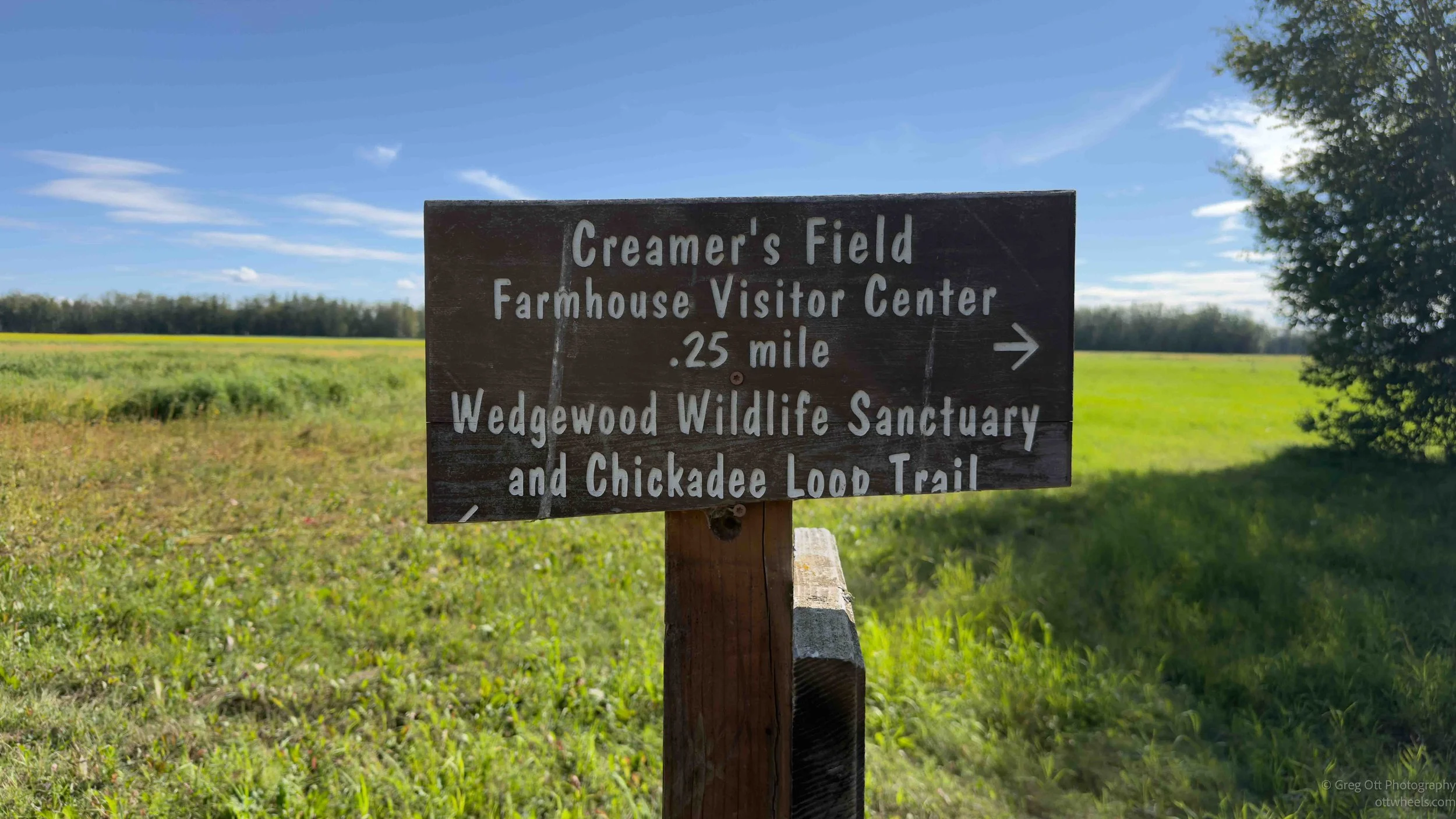
After leaving the visitor center, I headed out on the trails through the refuge. There are about 4.2 miles of trails accessible during the summer, and I basically walked all of them. Some crossed the open fields while others disappeared into stands of birch and aspen. At one point I came across a huge teepee-like structure made from hundreds of long poles and branches leaning against one another. The fields themselves are still actively managed as feeding areas for the migrating birds, and signs repeatedly asked visitors to stay on the trails and out of the fields.
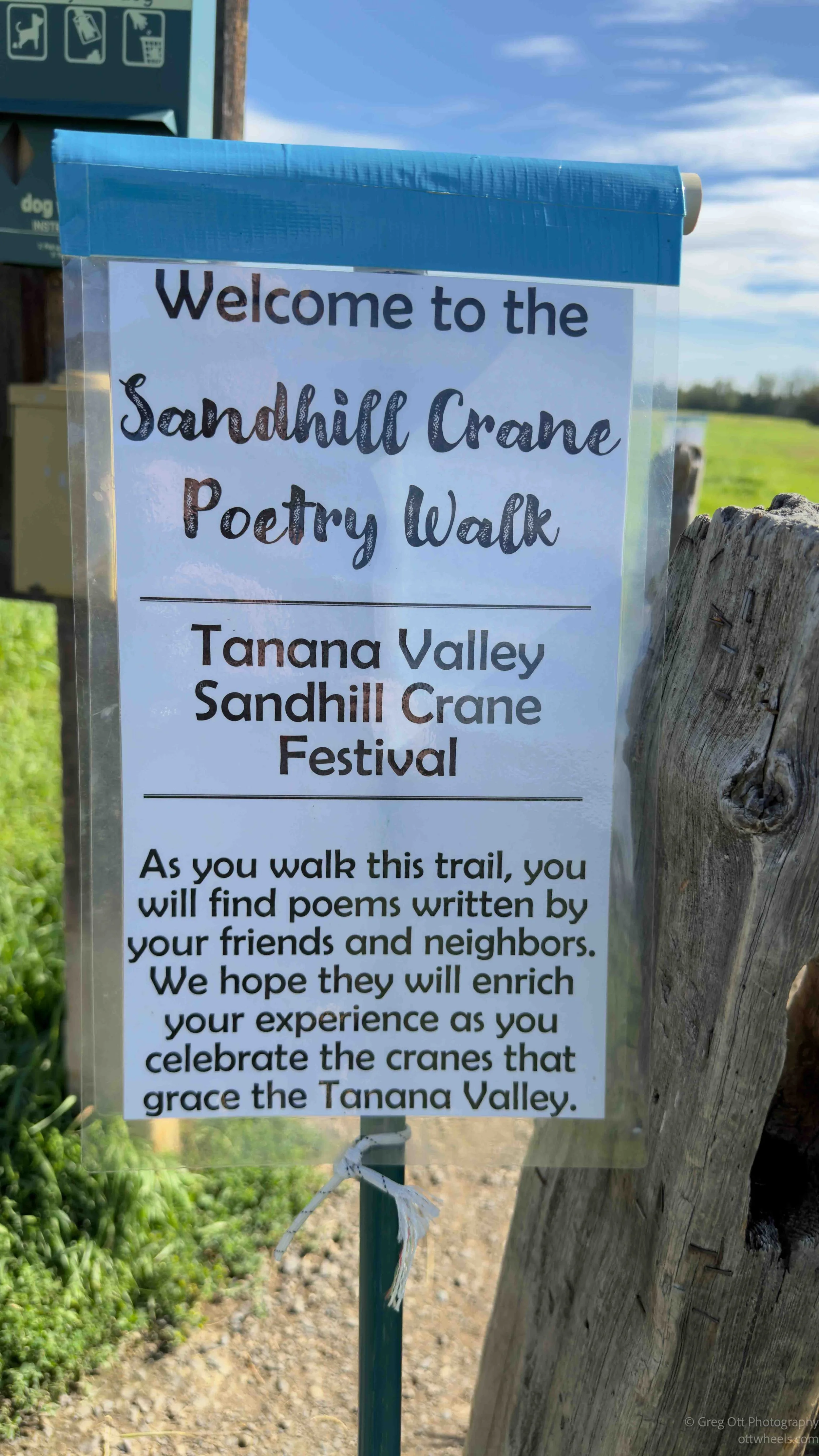
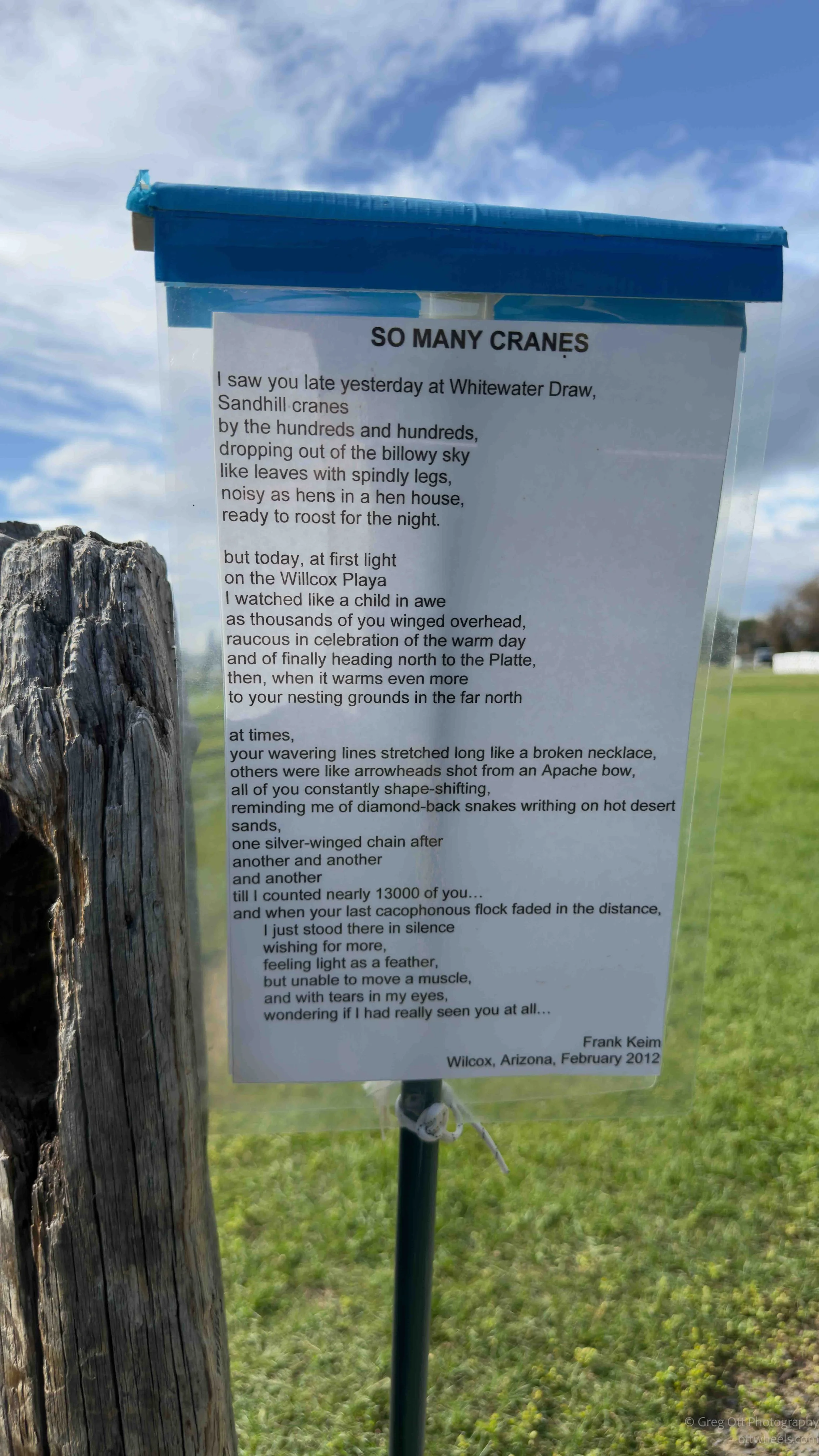
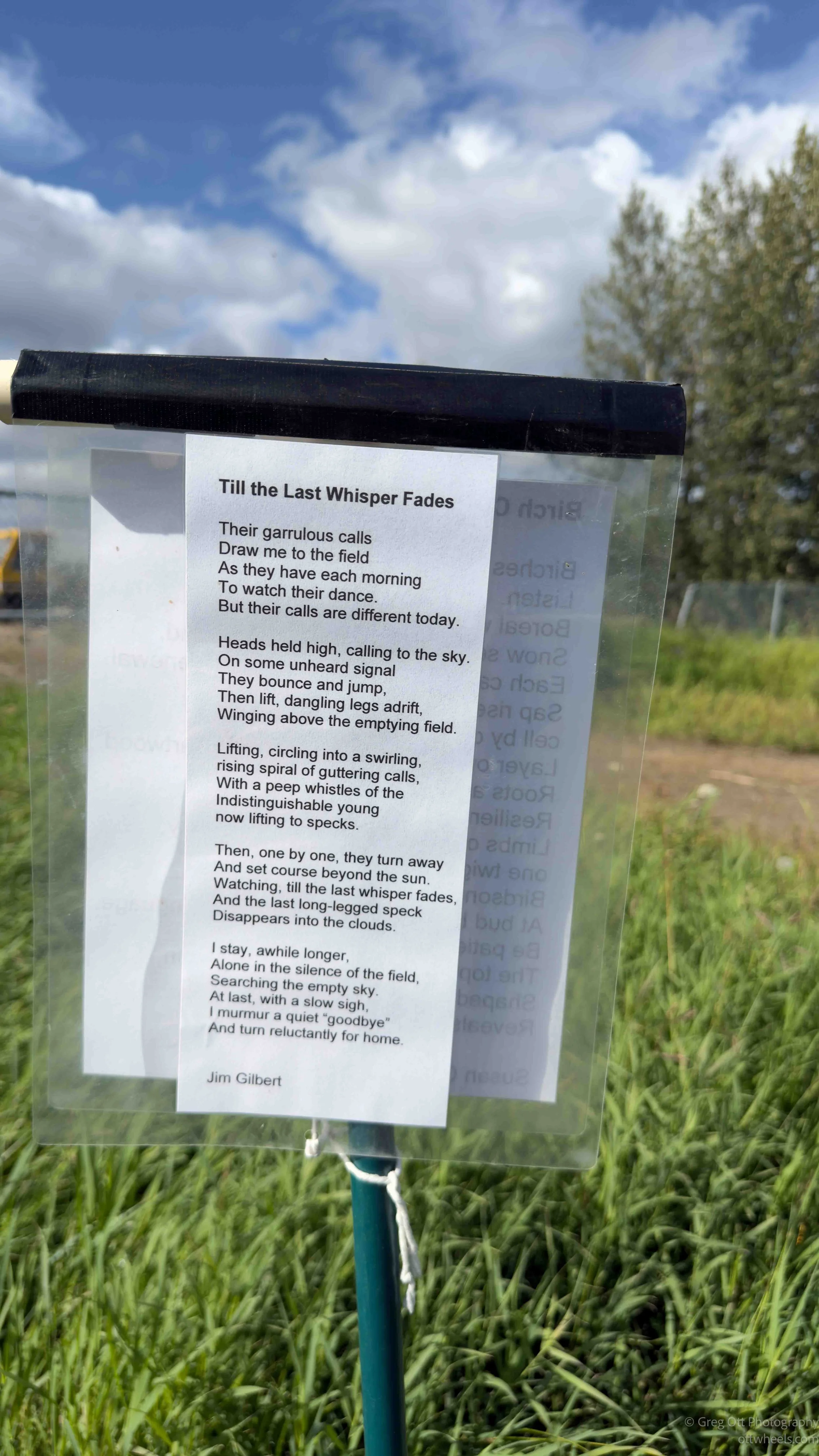
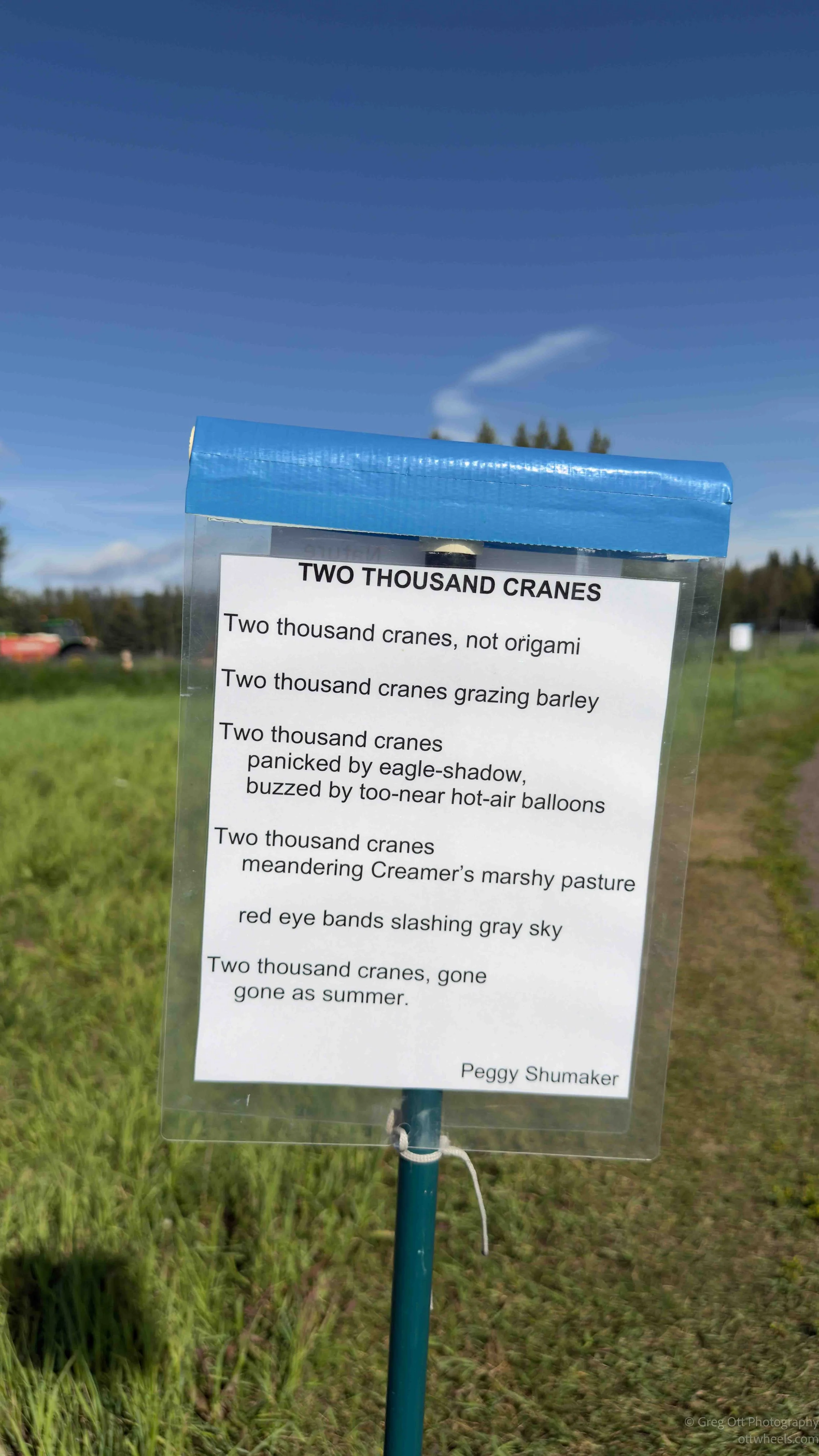
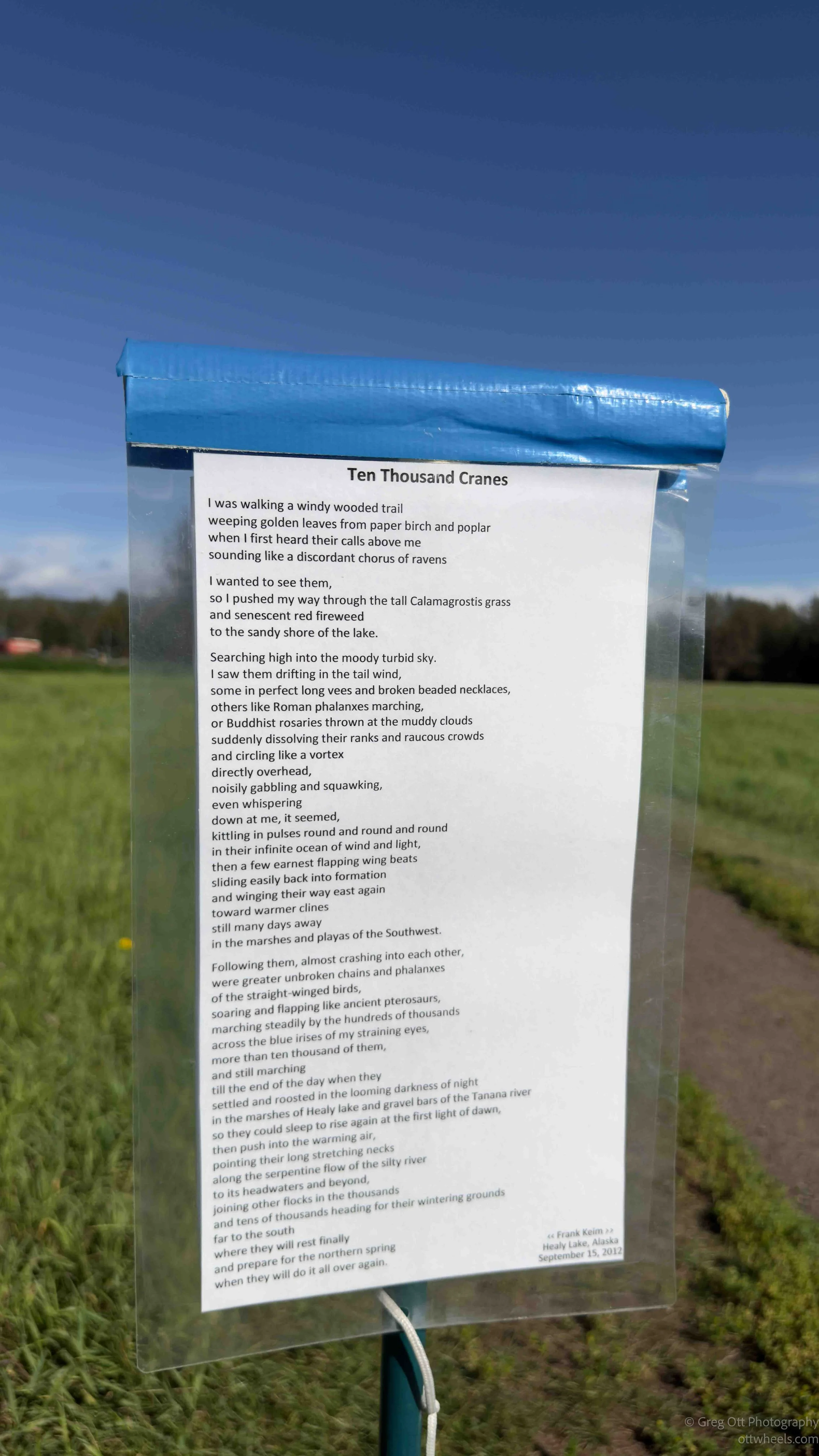
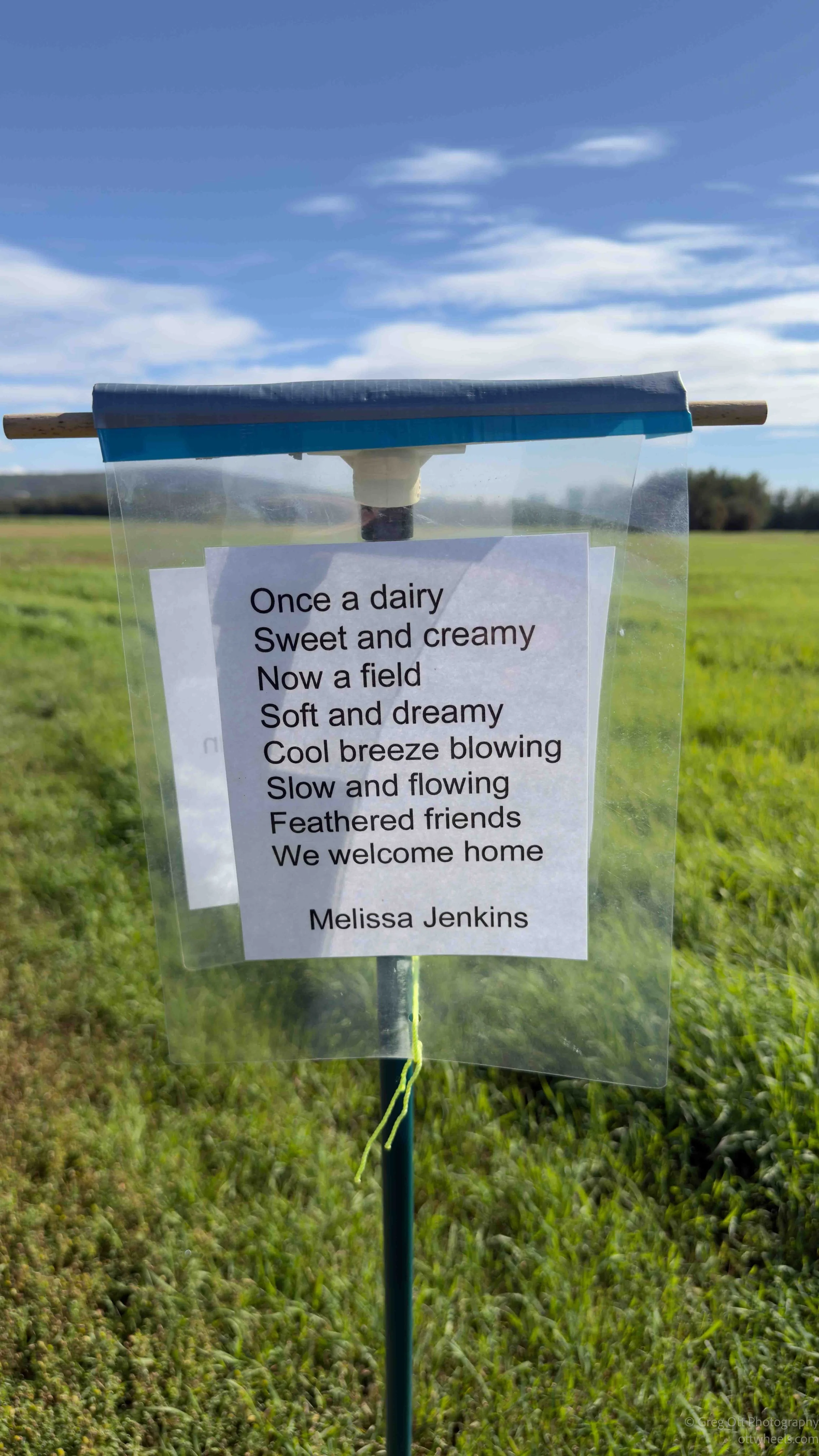
Near the beginning of the trails was a Sandhill Crane Poetry Walk, part of the Tanana Valley Sandhill Crane Festival. People from the community had submitted poems about the cranes and Creamer’s Field, and they were mounted on posts along the trail, sealed inside plastic to protect them from the weather. Some were just a few lines while others filled an entire page. One began with the farm's transformation in a few simple words: “Once a dairy / Sweet and creamy / Now a field / Soft and dreamy.” It seemed particularly appropriate after my unsuccessful search for ice cream.
In one of the larger fields, about ten Sandhill Cranes came flying in. As they descended, they spread their enormous wings and rounded them above their bodies, almost like modern parachutes. They seemed to float toward the ground, their long legs dangling beneath them, already extended and waiting for touchdown. I watched the whole thing before it finally occurred to me: get a photo of this. By the time I started pulling the camera out of the harness, it was over. A stunning photographic opportunity completely missed.
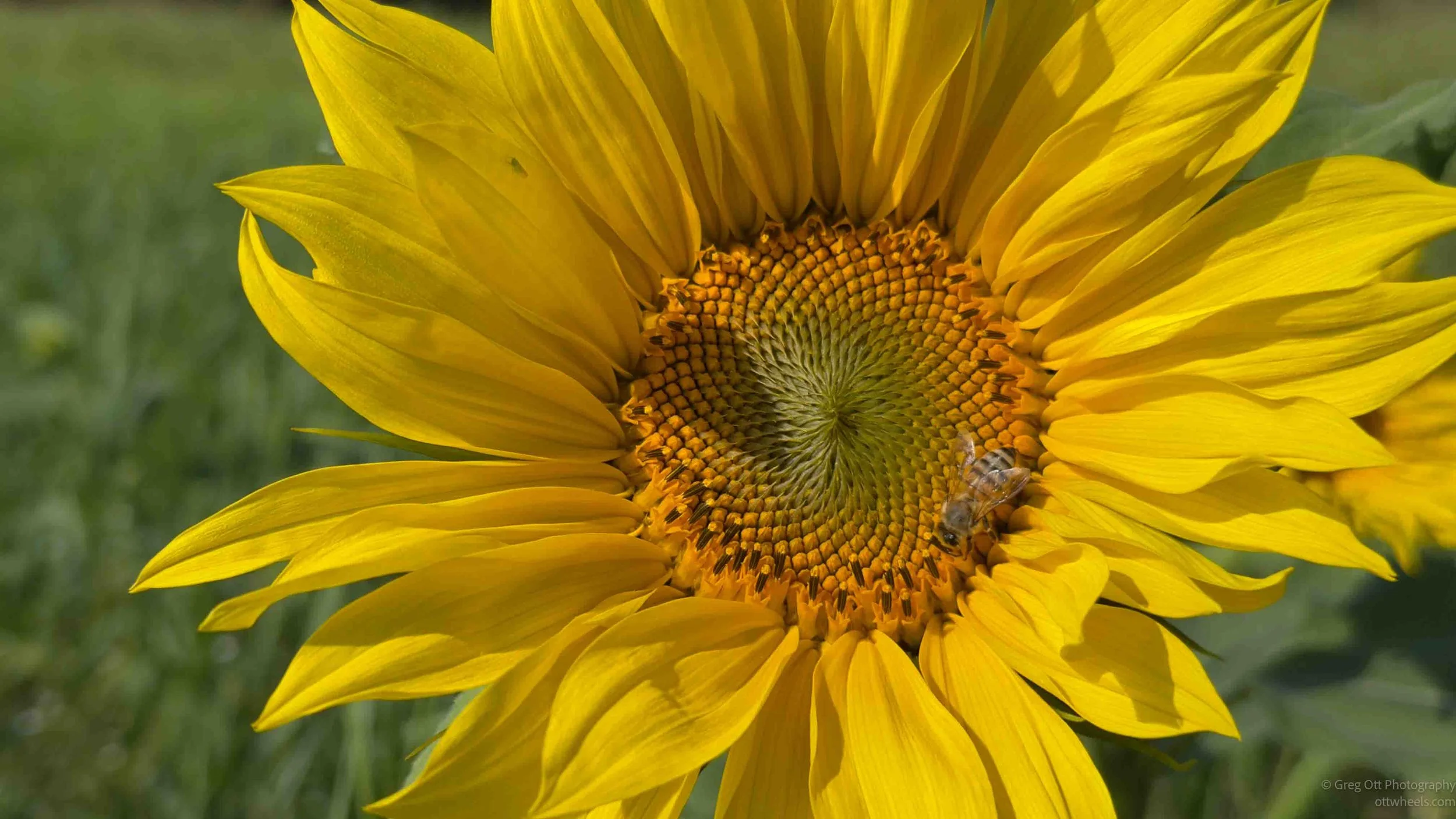
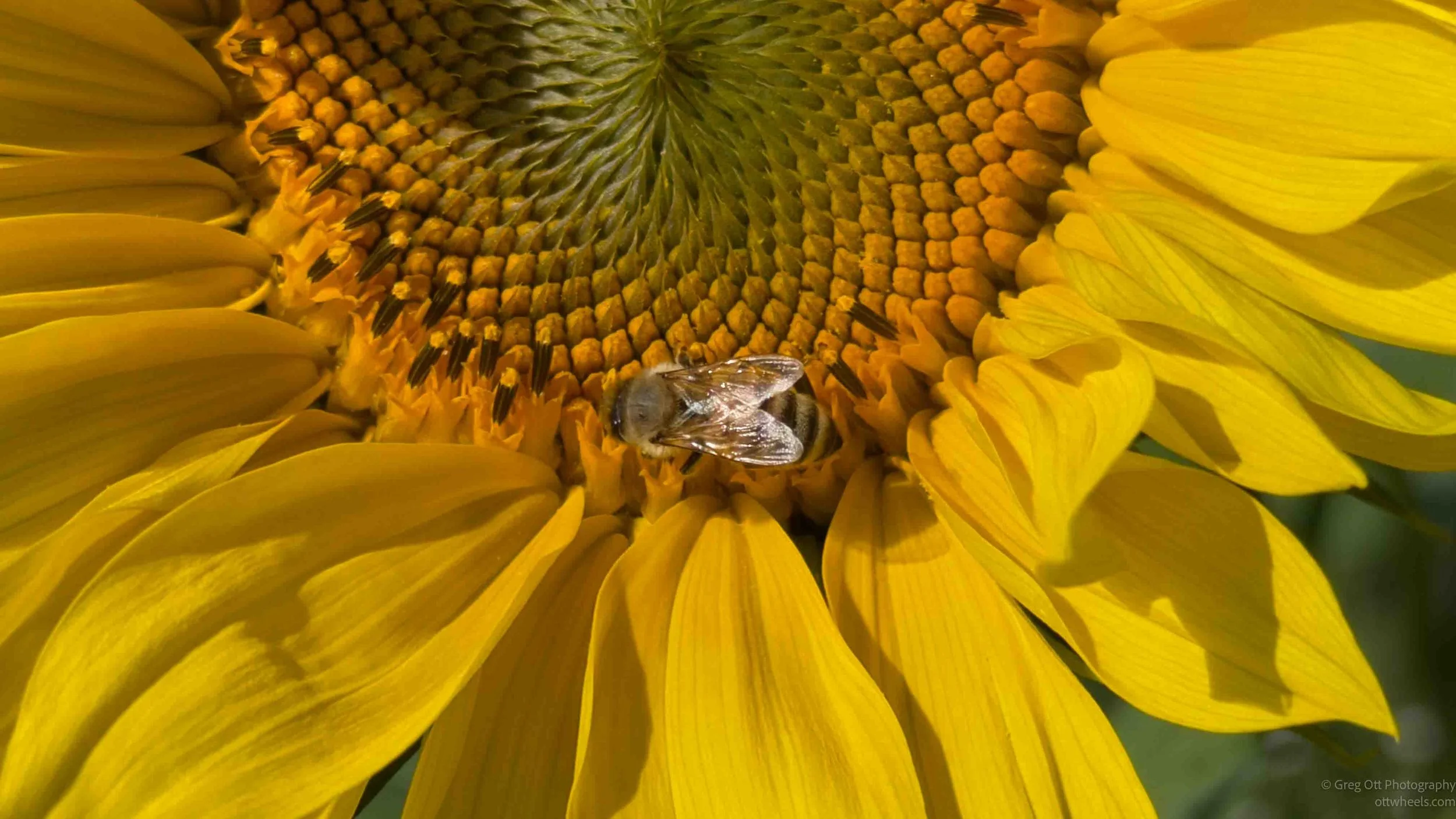
There were other things to photograph along the way. Sunflowers were growing near the fields, covered with bees working their way around the spirals of seeds. The trails alternated between open farmland, wetlands and quiet patches of forest, but the cranes were always somewhere nearby—calling from across the refuge or appearing above the trees. I had come primarily to photograph the hundreds of cranes gathered at Creamer’s Field, but walking the old farm gave me a much better sense of why they were here in the first place.
The Hike Around the Lake
There weren’t a lot of trail markers. You basically just followed the trails and hoped they went where you thought they did. One hiker recommended that I visit Wander Lake, saying birds sometimes gathered there. Just before I entered the forest, a woman stopped to pick up some garbage someone had left in the field. “Why do people just drop all this stuff in the field?” she said. Good question, I told her.
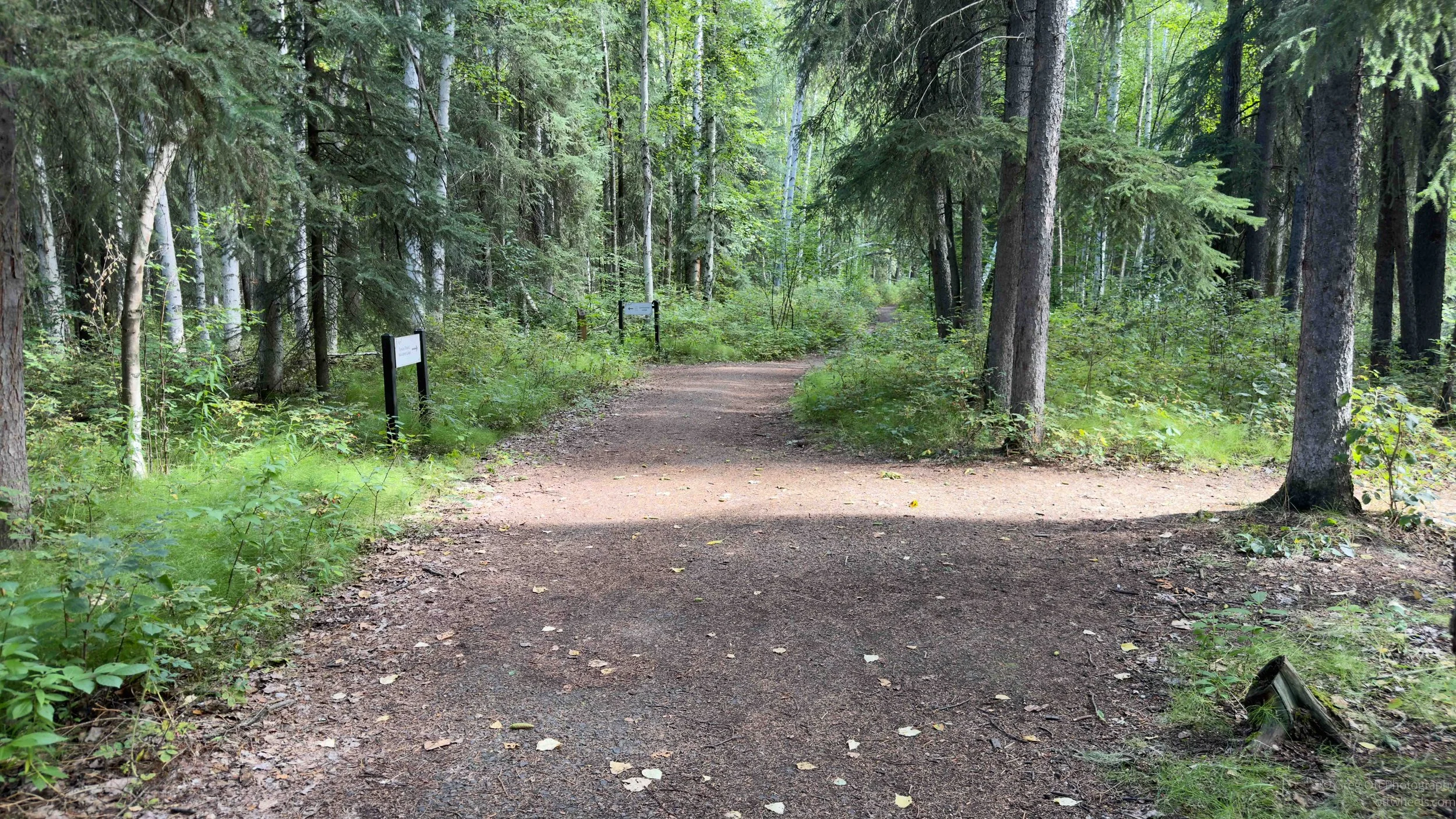
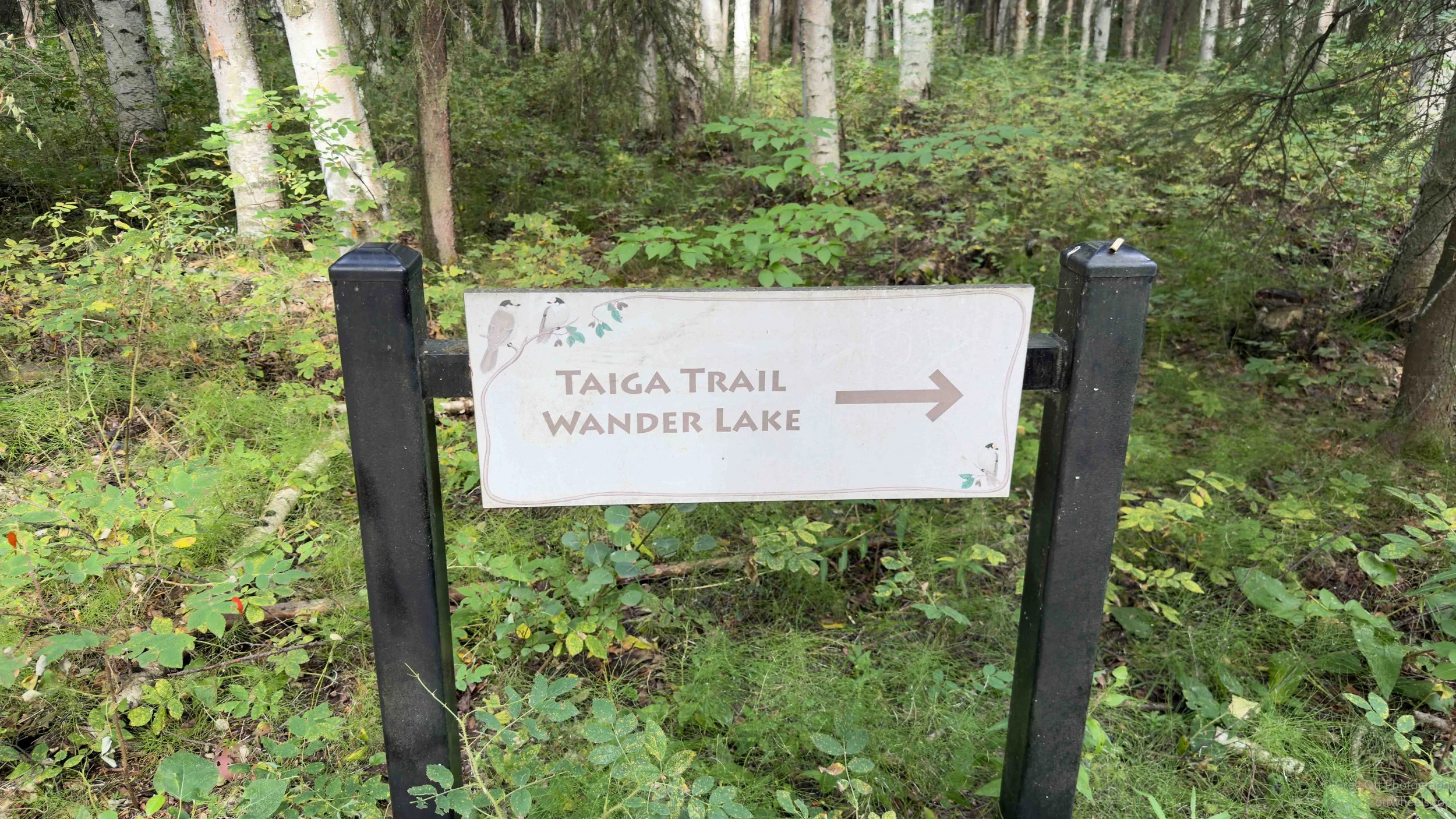
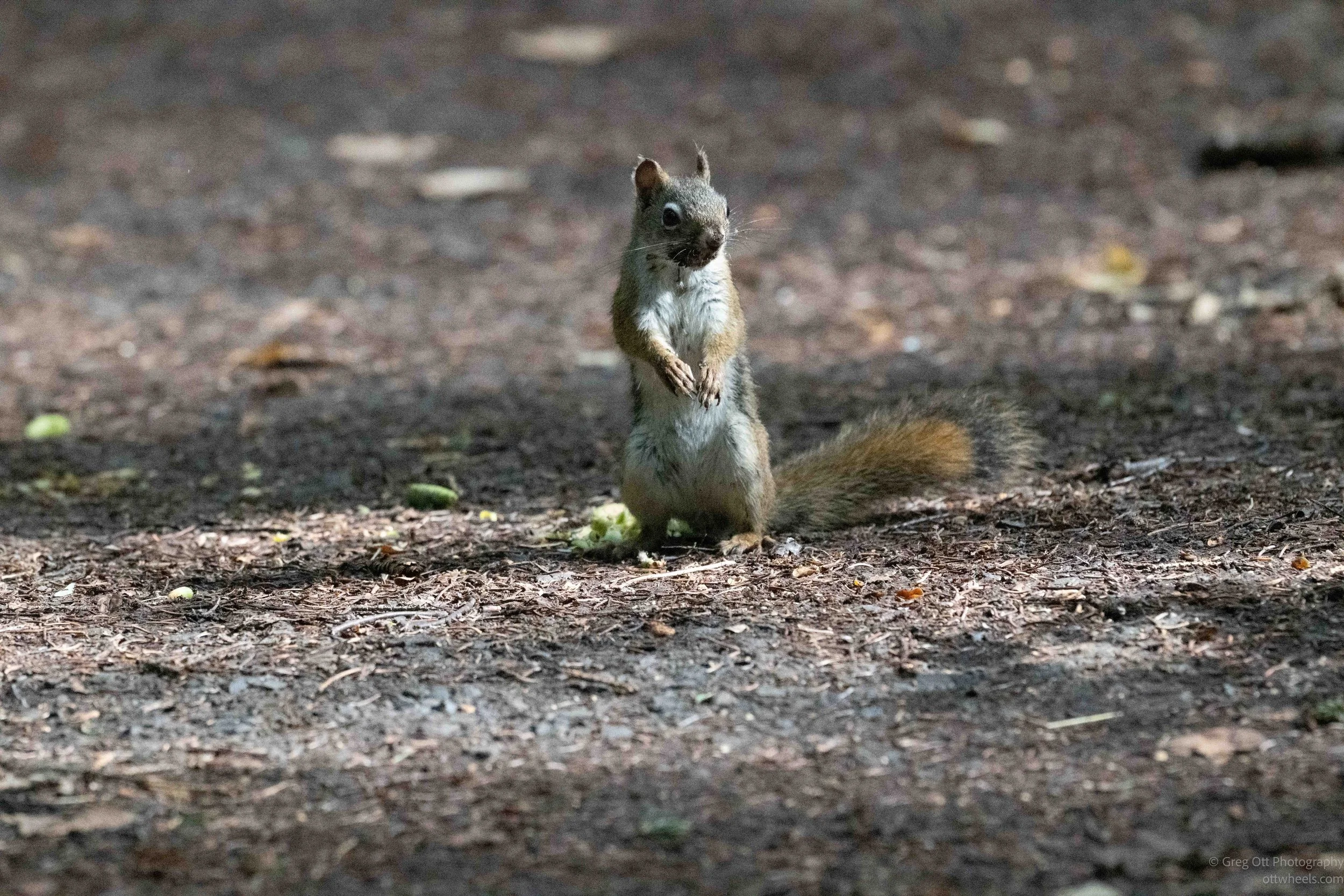
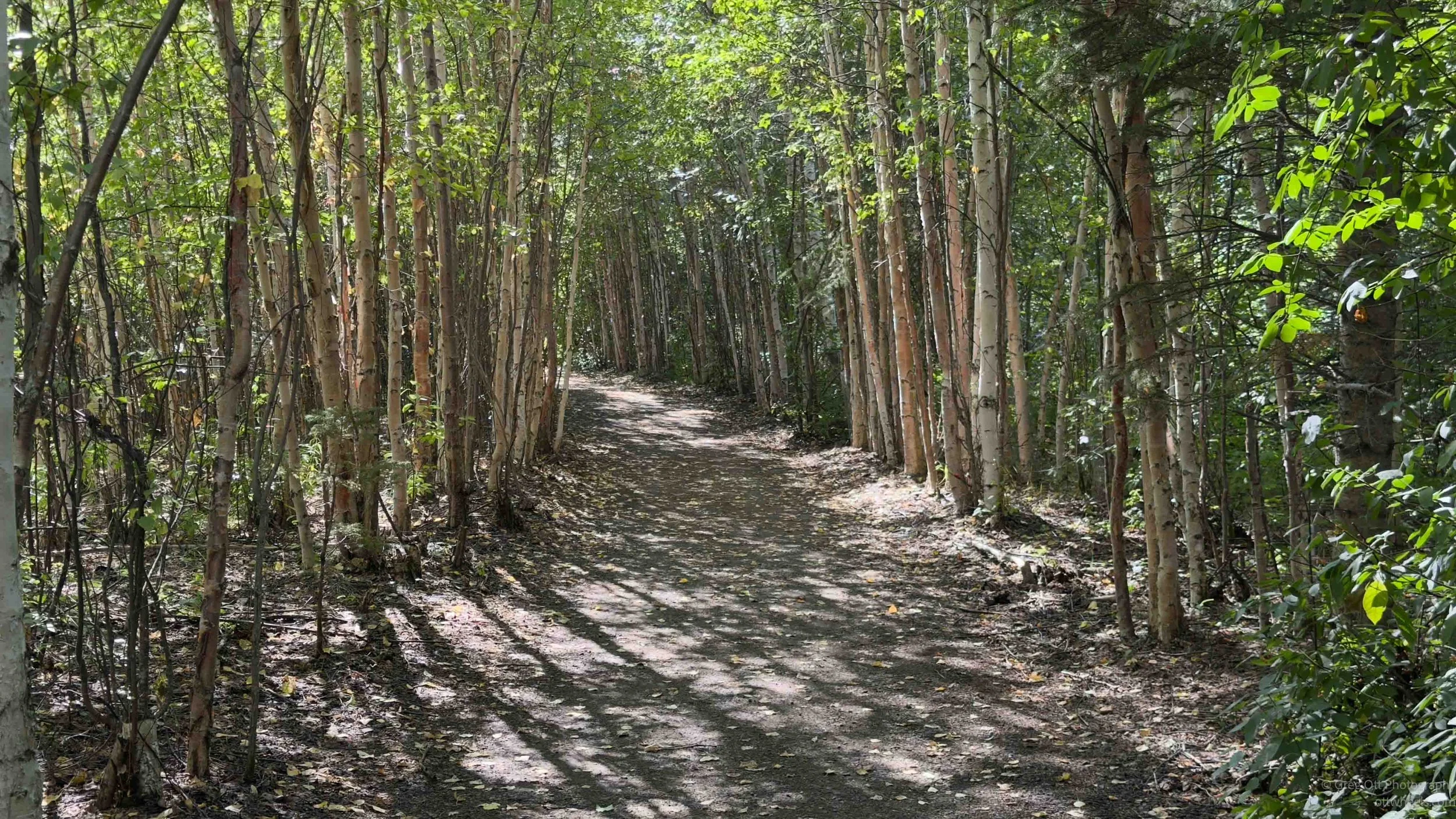
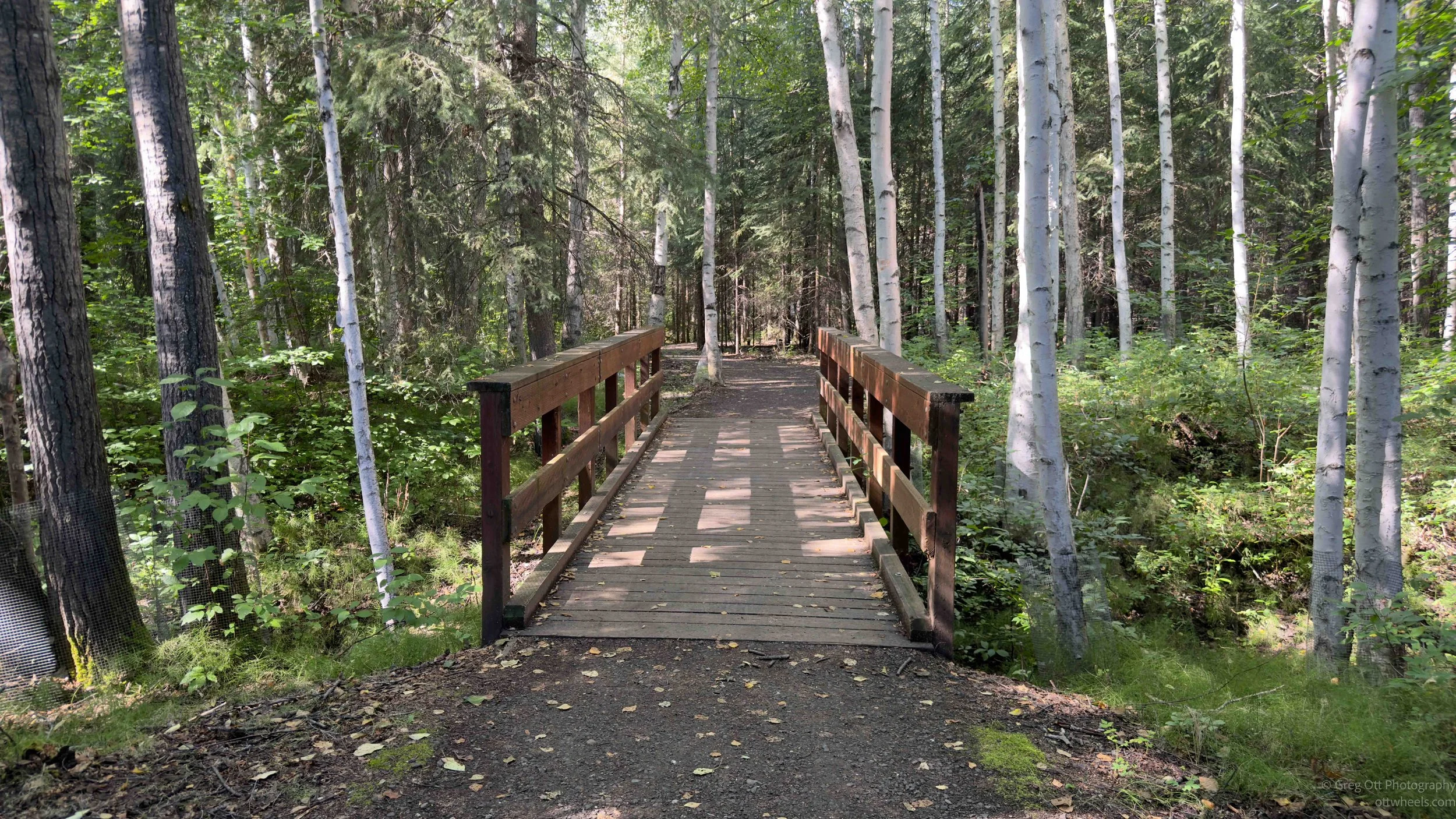
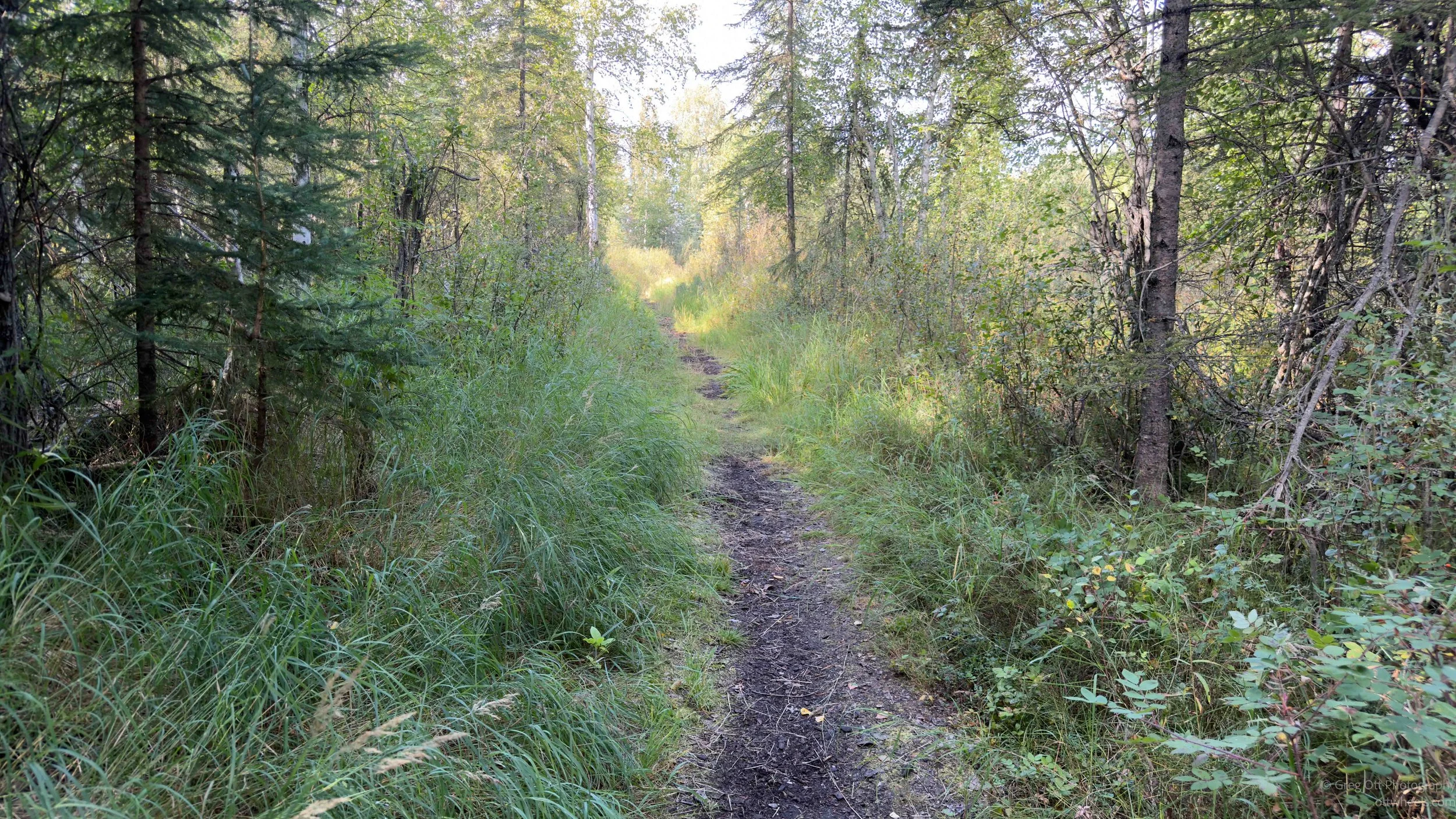
At the edge of the forest, the trail passed through a gate with signs saying no vehicles, no dogs, stay on the trails and don’t approach or feed the wildlife. Beyond that, I entered dense boreal forest, part of the enormous band of northern forest that stretches from Siberia across Alaska and Canada. It reminded me of the woods I had seen in Maine near Katahdin. In places, the trees and undergrowth were so thick it looked almost impossible to push through them. The trail cut a narrow opening through the vegetation, with branches closing in overhead and a soft forest floor built from years of decaying leaves and needles.
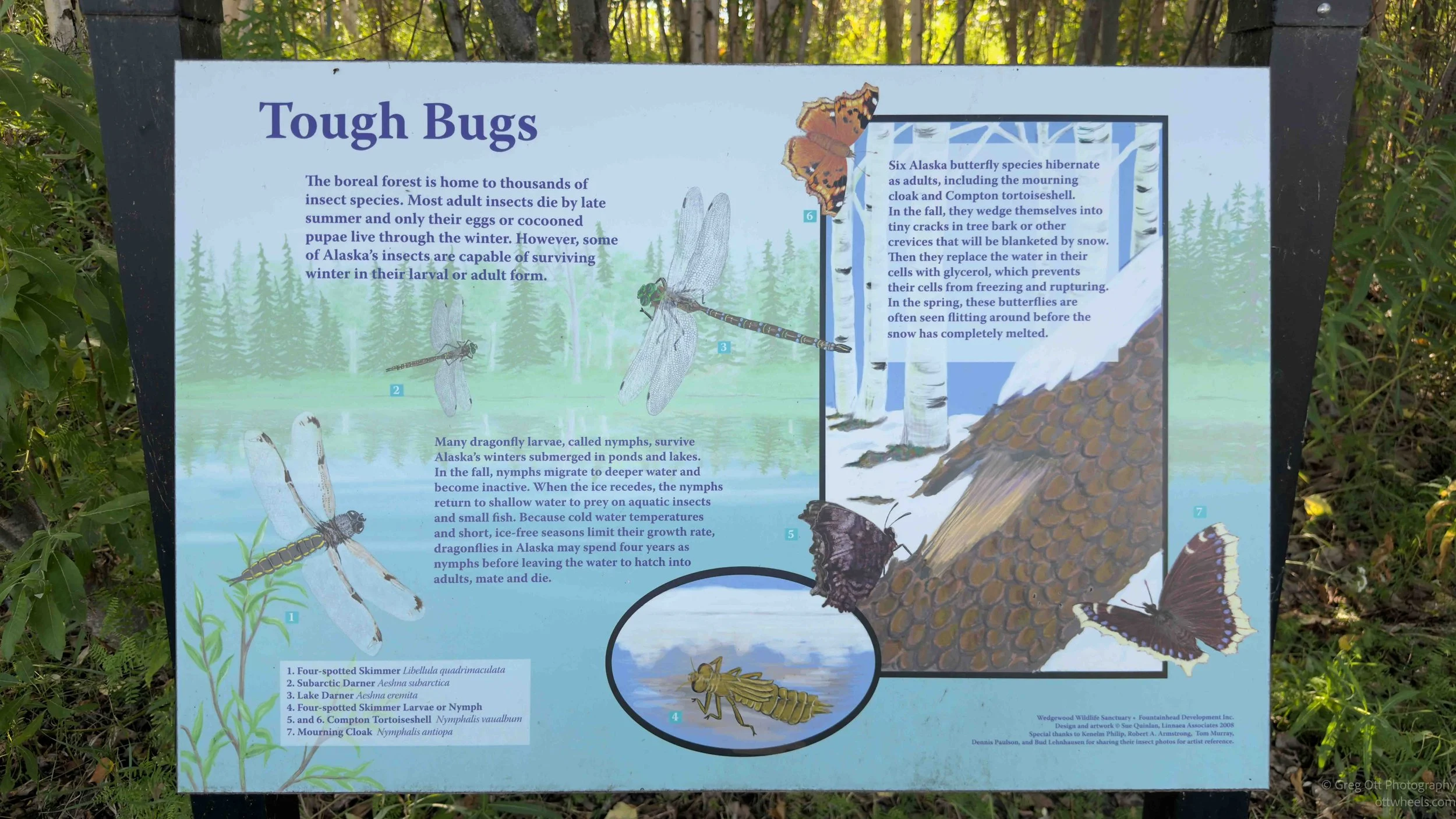
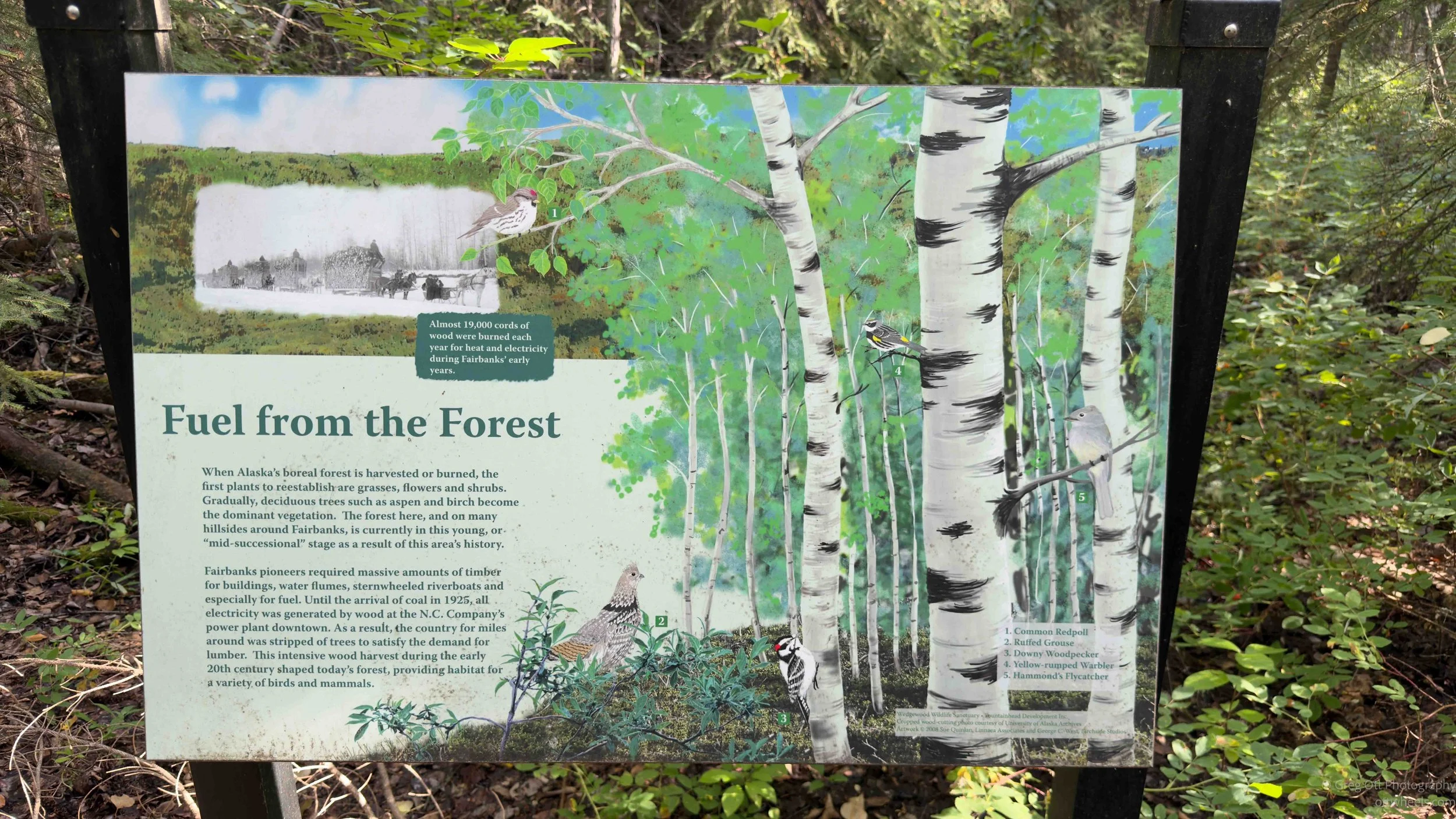
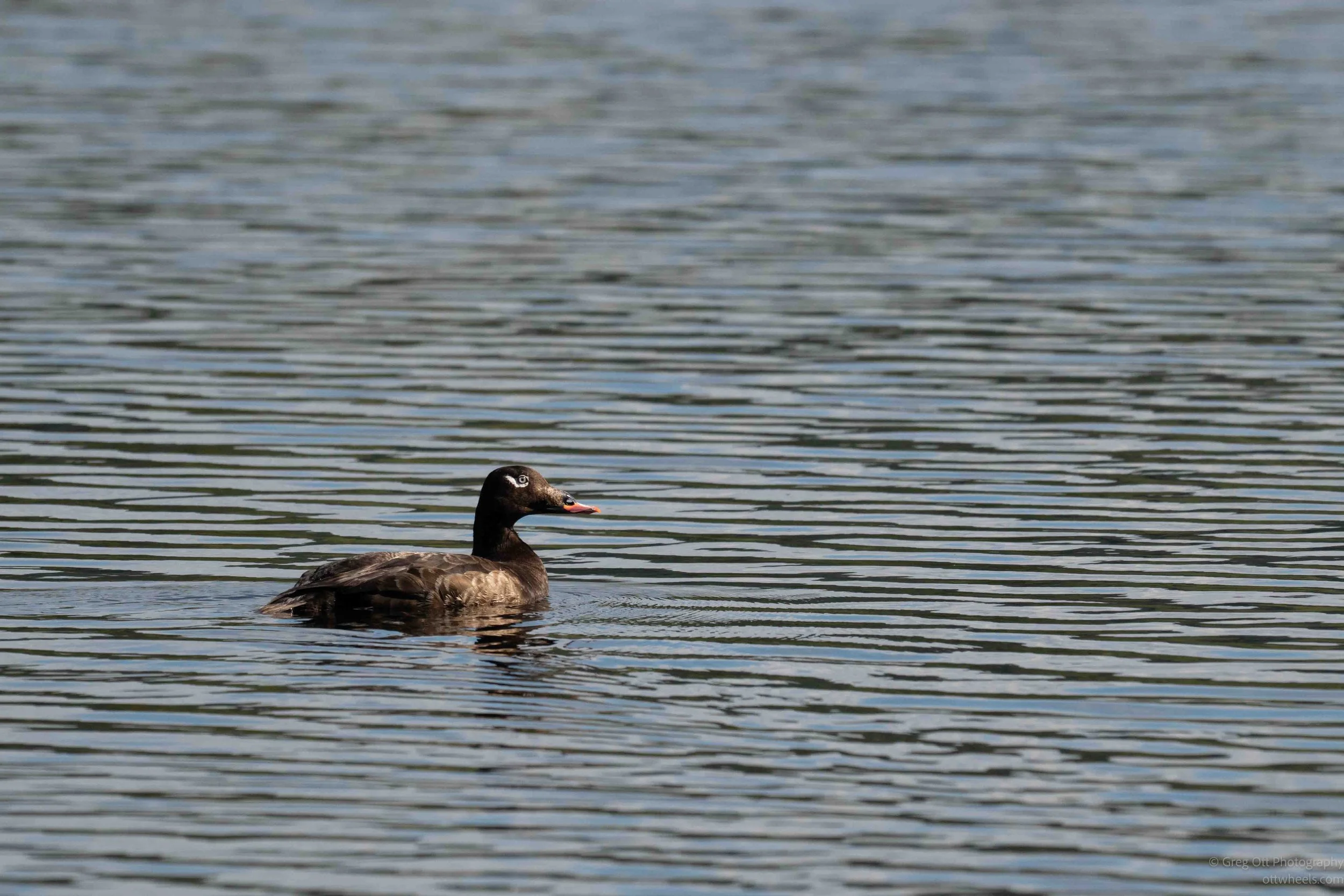
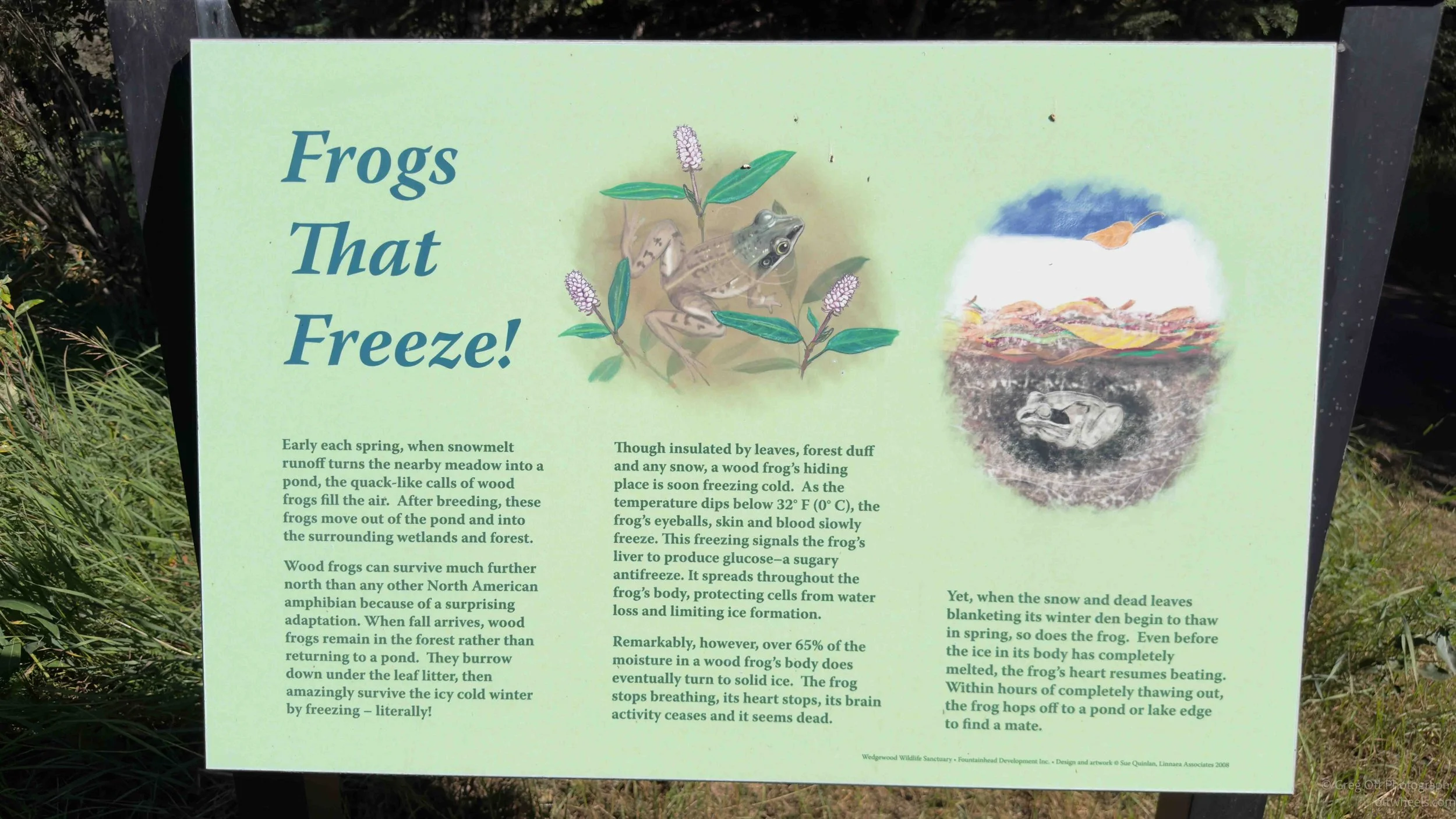
Wander Lake was small and quiet. There was a single duck floating on the water, which I unintentionally scared when I stepped onto the viewing platform. Interpretive signs along the trail explained some of what was happening in the forest, including one titled “Frogs That Freeze!” It described one of the stranger adaptations of the Alaska wood frog. As winter approaches, the frog burrows beneath leaves and forest litter and actually allows much of the water in its body to freeze. Its heart stops beating and brain activity ceases, while glucose produced by its liver acts as a kind of natural antifreeze that protects its cells. In spring it thaws, its heart starts beating again, and within hours it can be hopping toward a pond as though nothing happened.
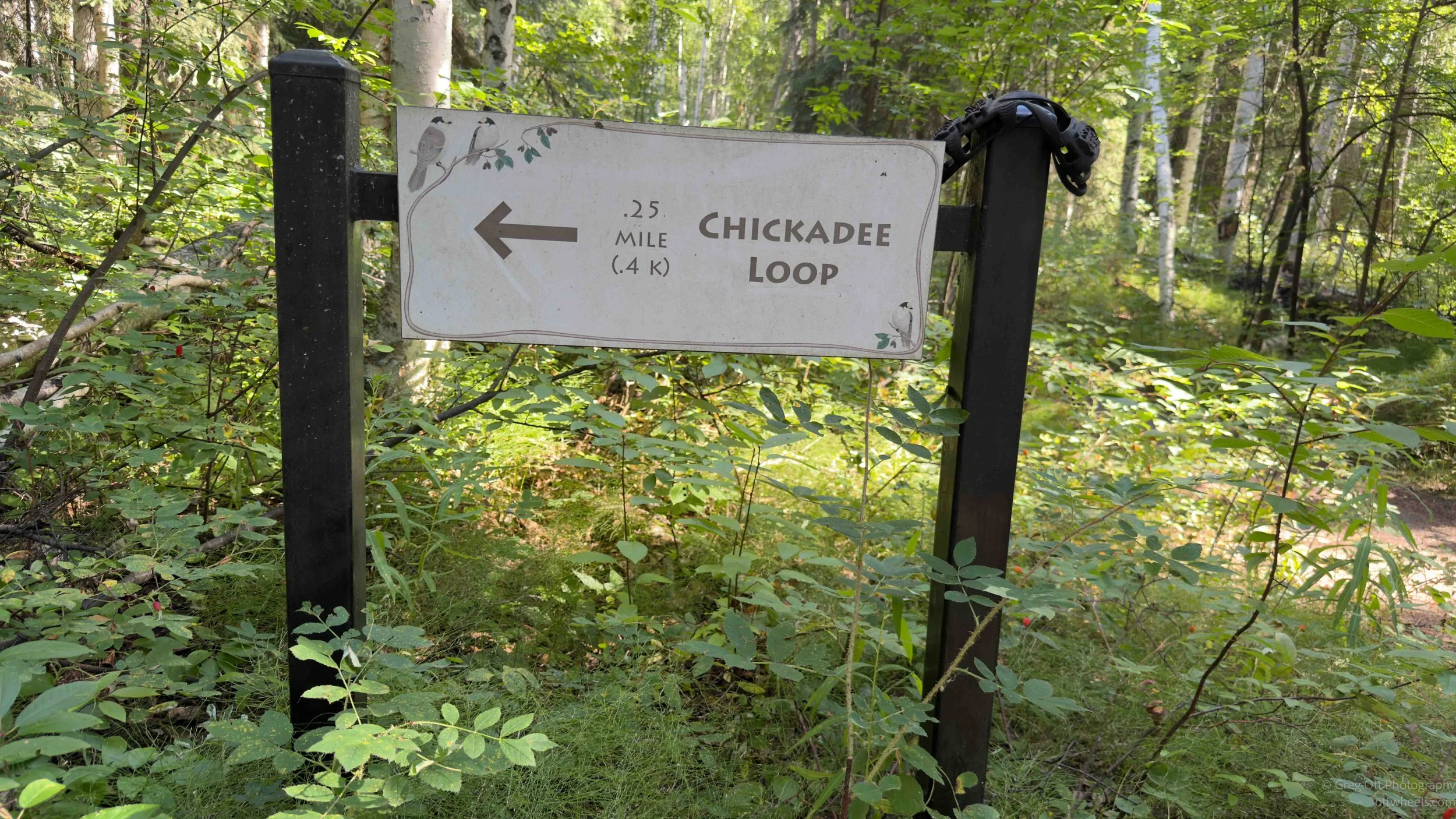
I eventually came to a marker for the Chickadee Loop. Almost as soon as I turned onto it, I could hear chickadees all around me. I started Merlin, which identified them as Black-capped Chickadees, along with a Hairy Woodpecker somewhere in the distance. I stood there for about ten minutes hoping one of the chickadees would cooperate long enough for a photograph. They didn't. I finally accepted that it probably wasn’t going to happen and continued down the trail.
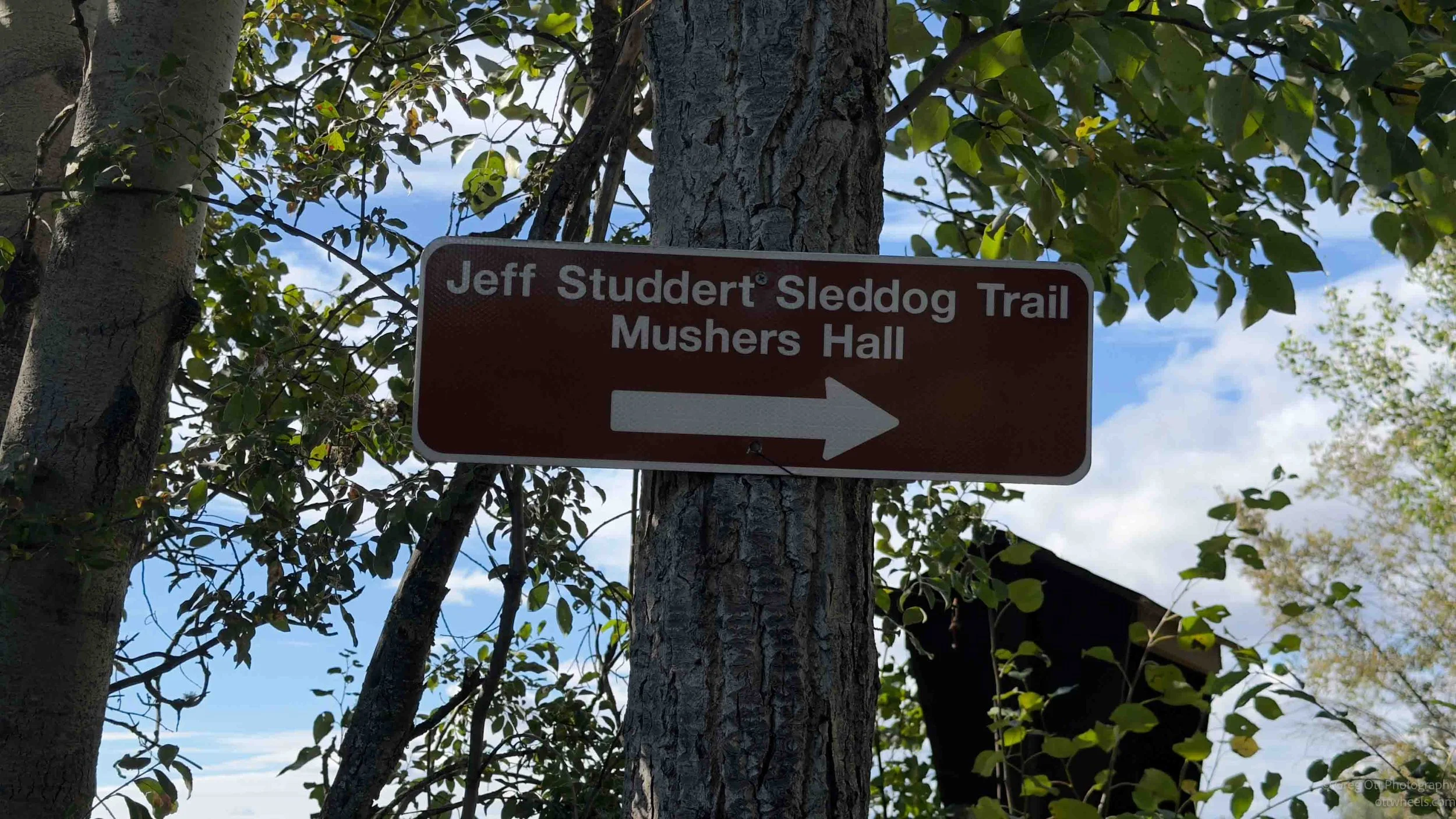
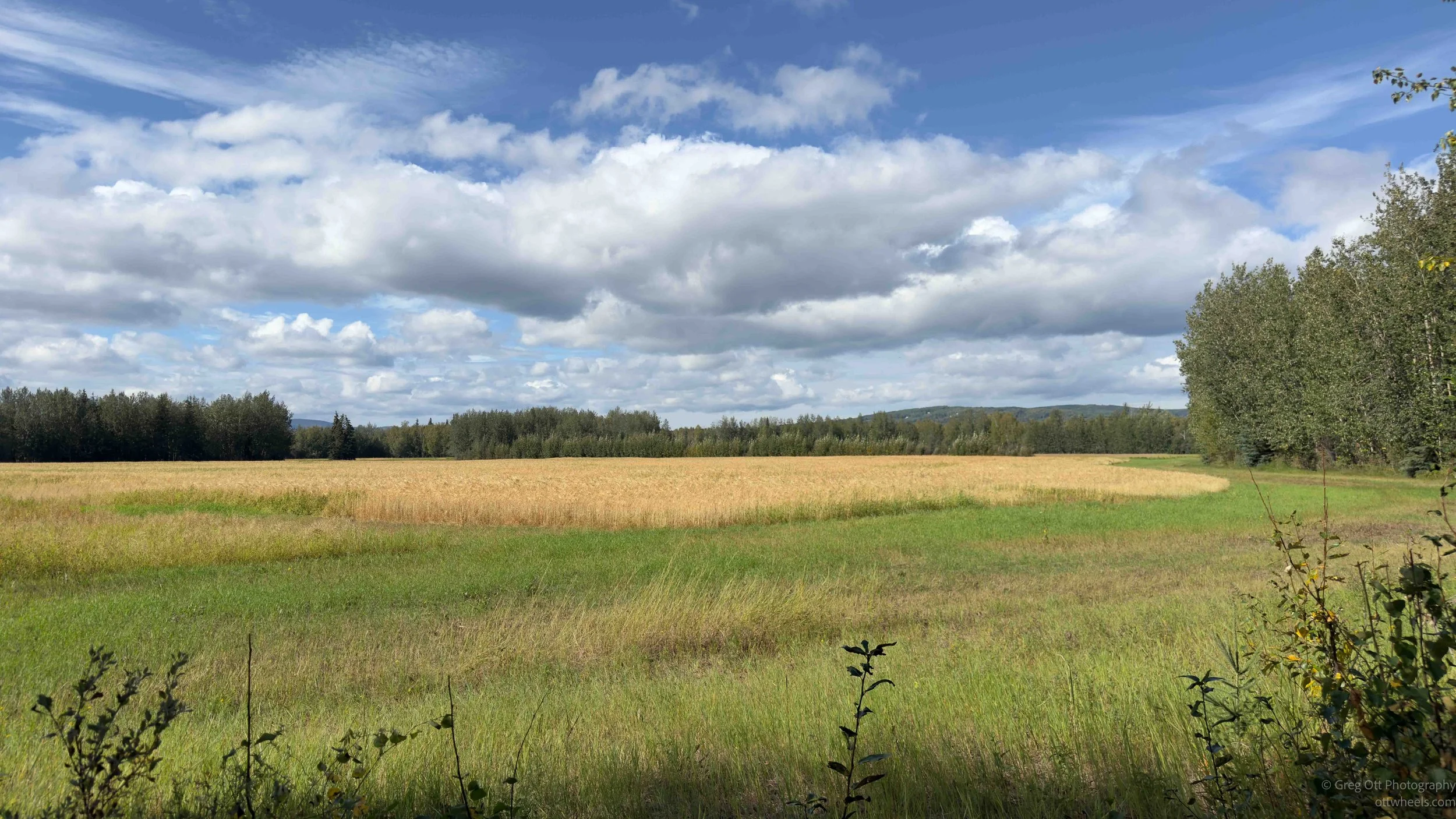
The loop eventually brought me to the opposite side of the large open field. I could see the sandhill cranes off to my left, and there were rows of bird boxes along the edge of the field. I stopped again, hoping something would land near one of them. Nothing did. After all the noise of the chickadees in the forest, this part of the trail was almost completely silent.
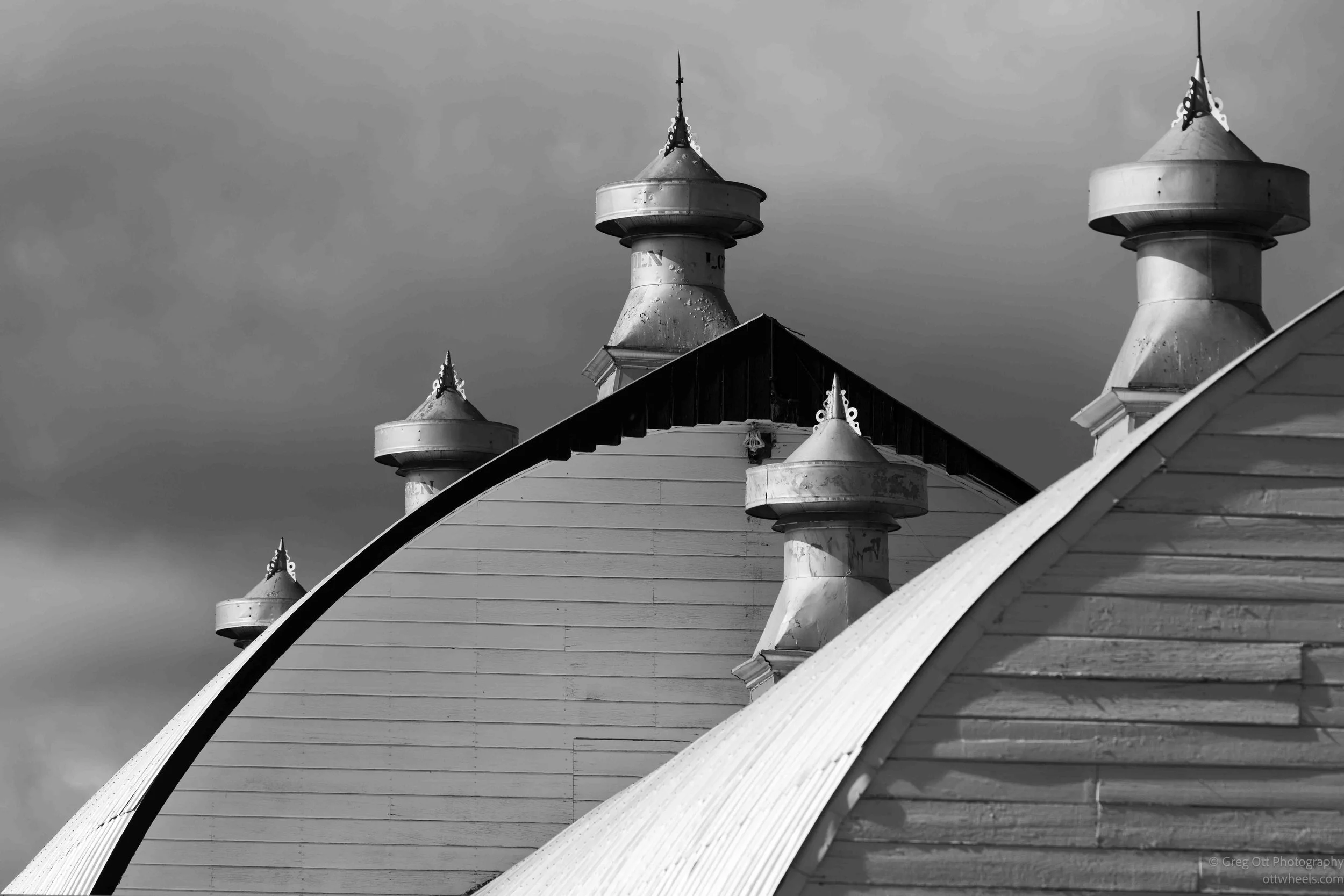
I made my way back toward the large white barns of Creamer’s Field. I had noticed the unusual metal ventilators on their roofs earlier, but now the harsh midday sunlight had softened. Behind them were beautiful gray clouds that made the old silver vents stand out against the sky. I spent some time photographing them, first as part of the barns and then isolating their shapes in black and white. They were ordinary pieces of farm equipment, but in that light they became some of the most interesting things I photographed all afternoon.
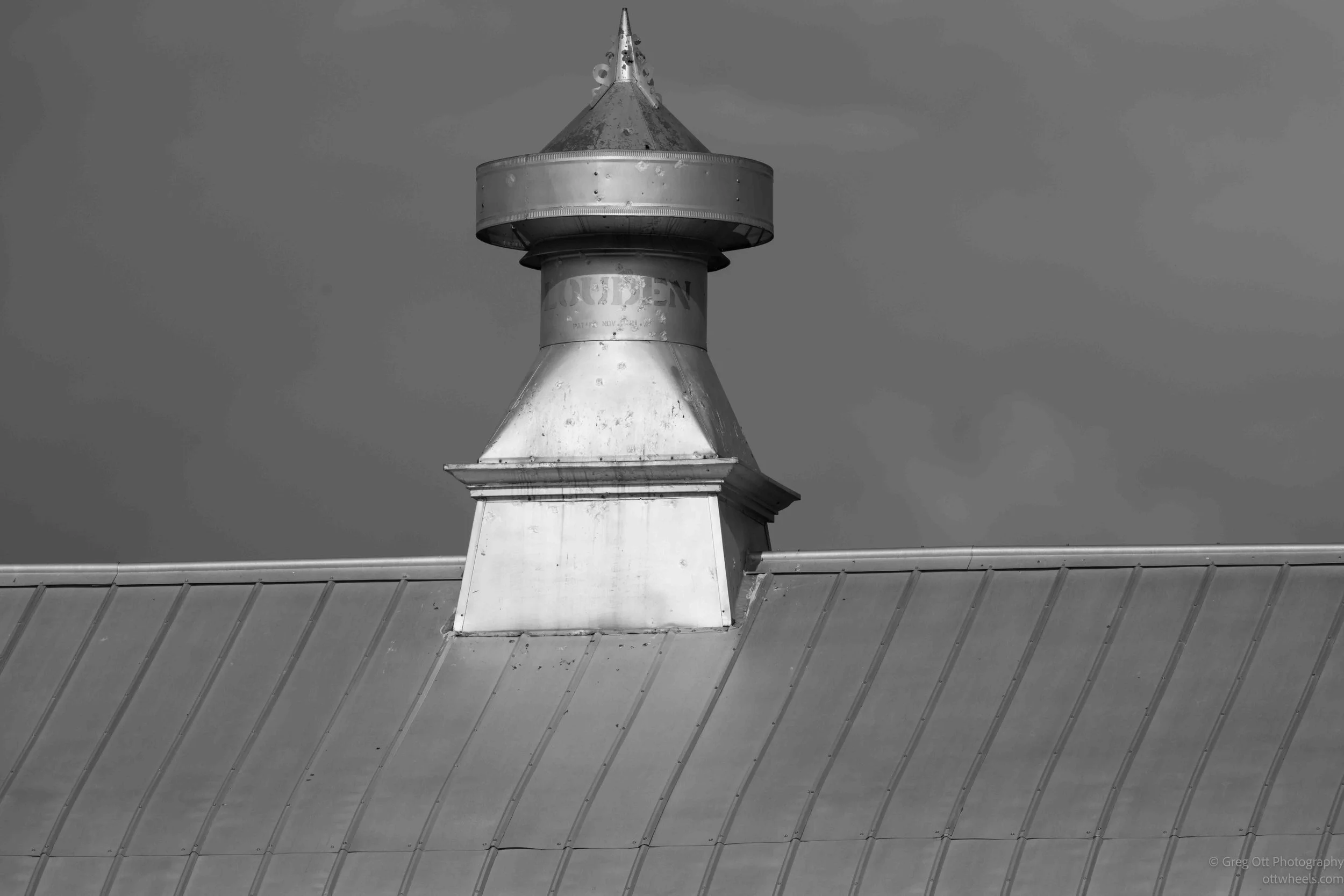
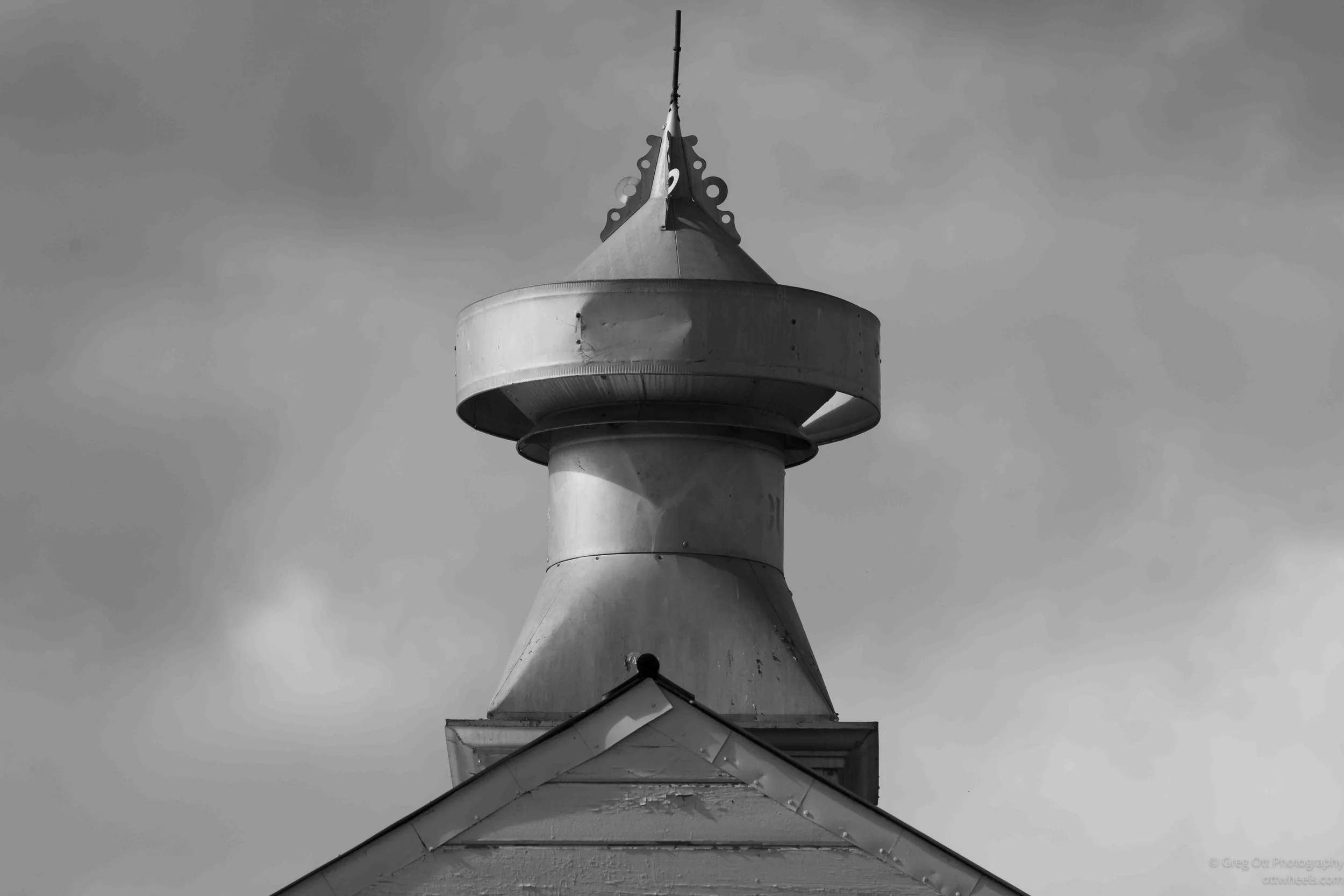
Large Animal Reserch Station
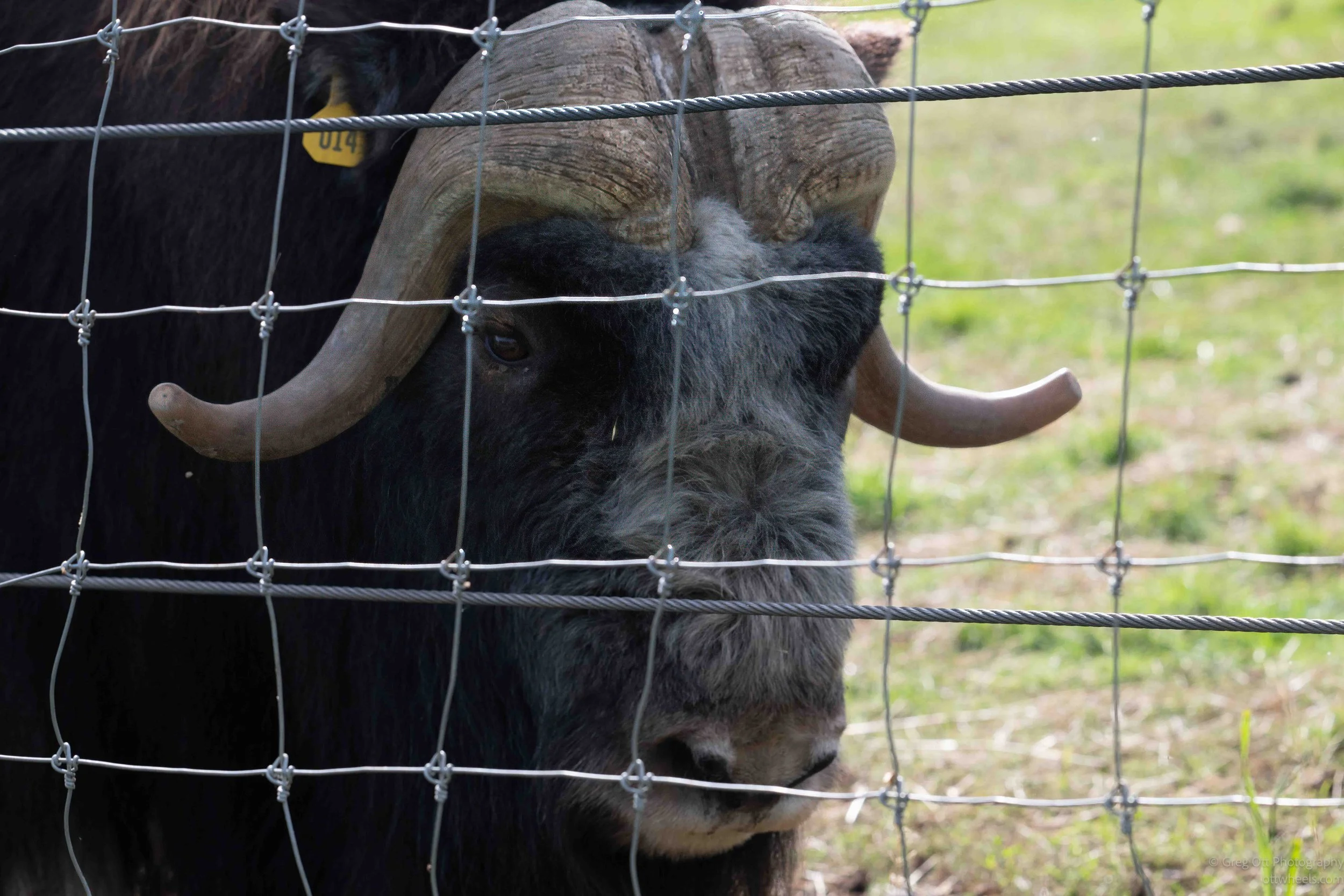
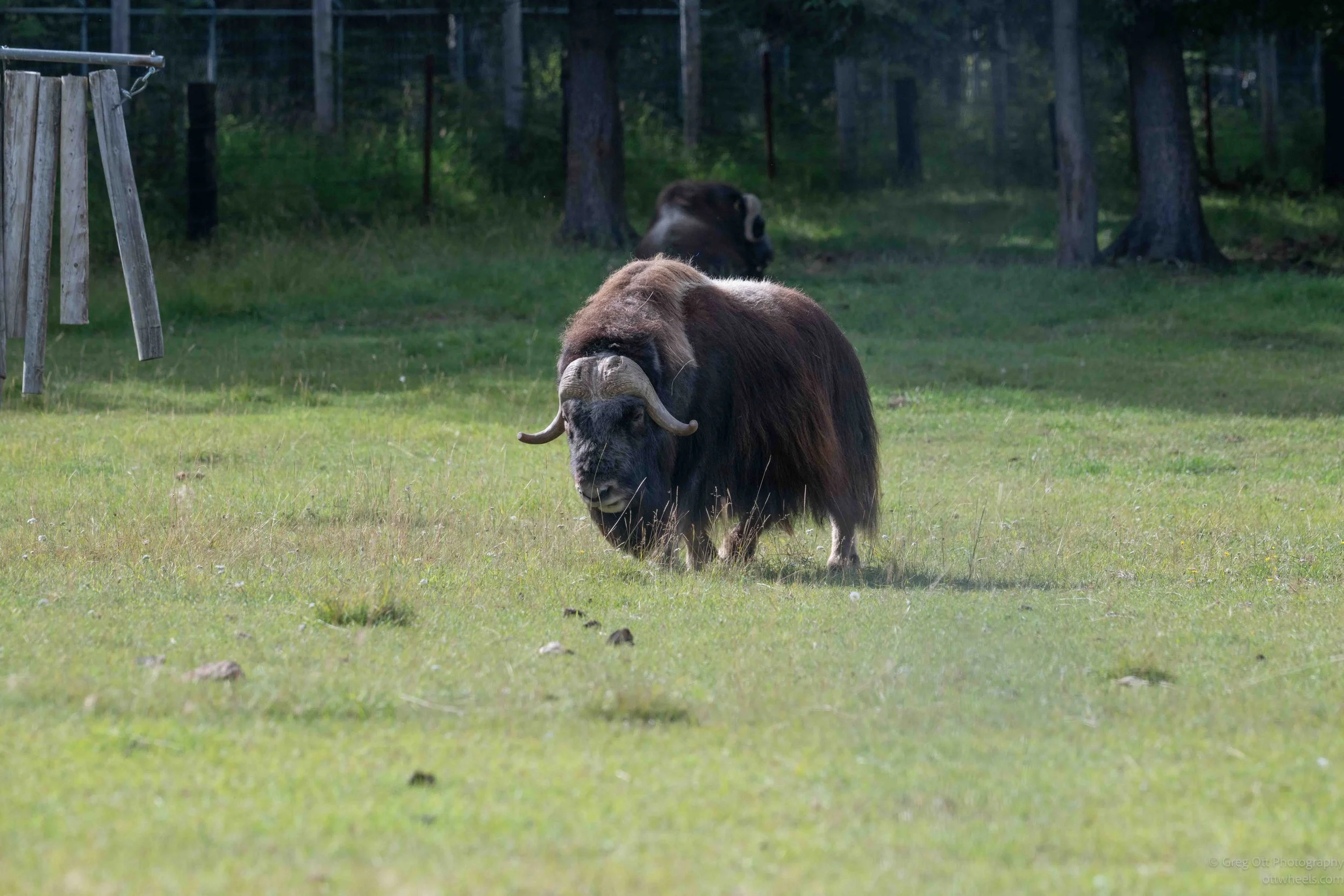
I went to the University’s Large Animal Reserch Station hoping to take a tour. I had over an hour to get there and walk through the area for an hour. Near the entrance is a small shop and they sell guided tour passes. I had missed the last tour of the day. I heard the guy explaining that you could walk in the pen with the female muskox, but that the males could be agressive. He invited me to come back on Thursday and said they would be closed on Friday.
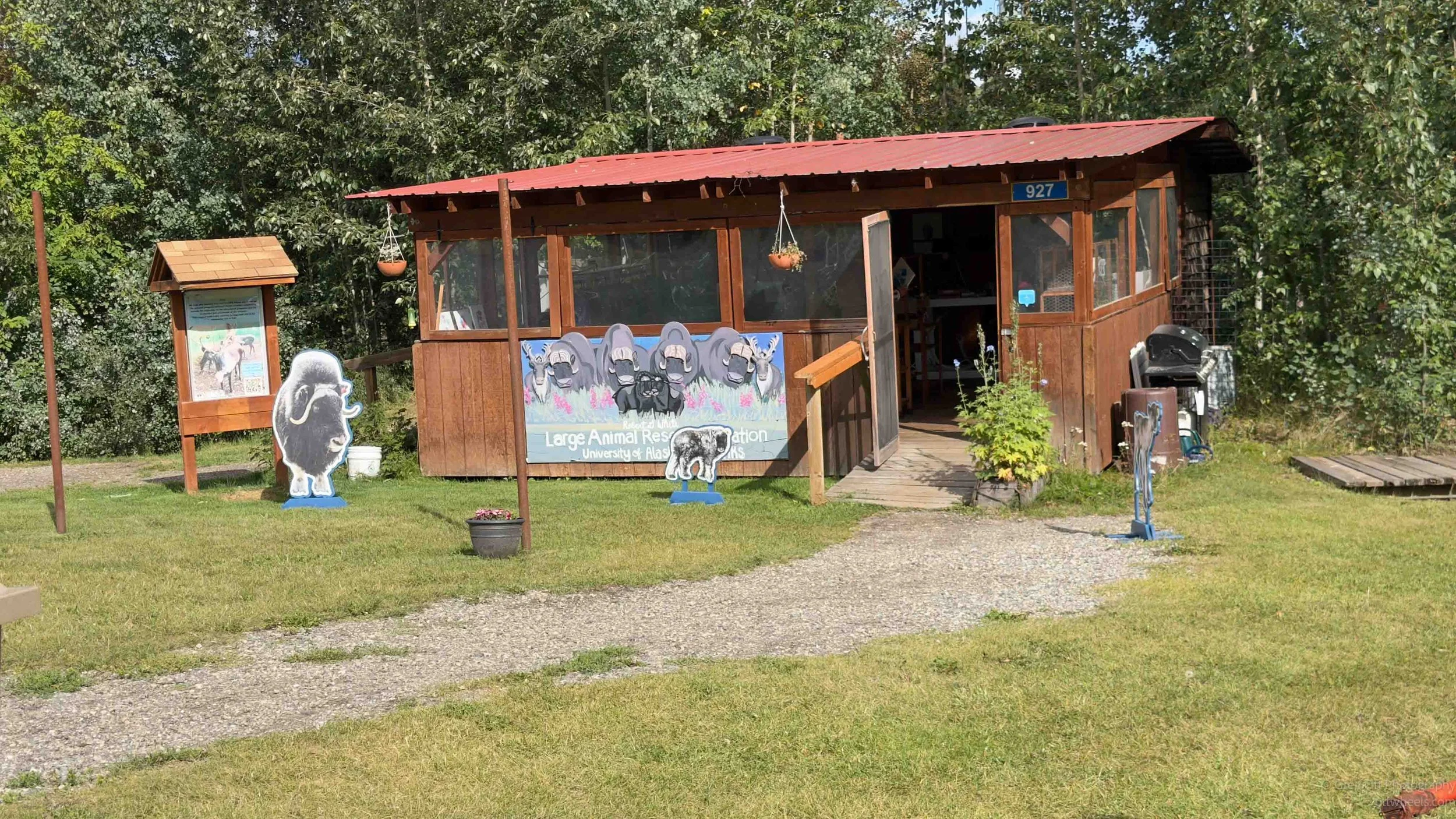
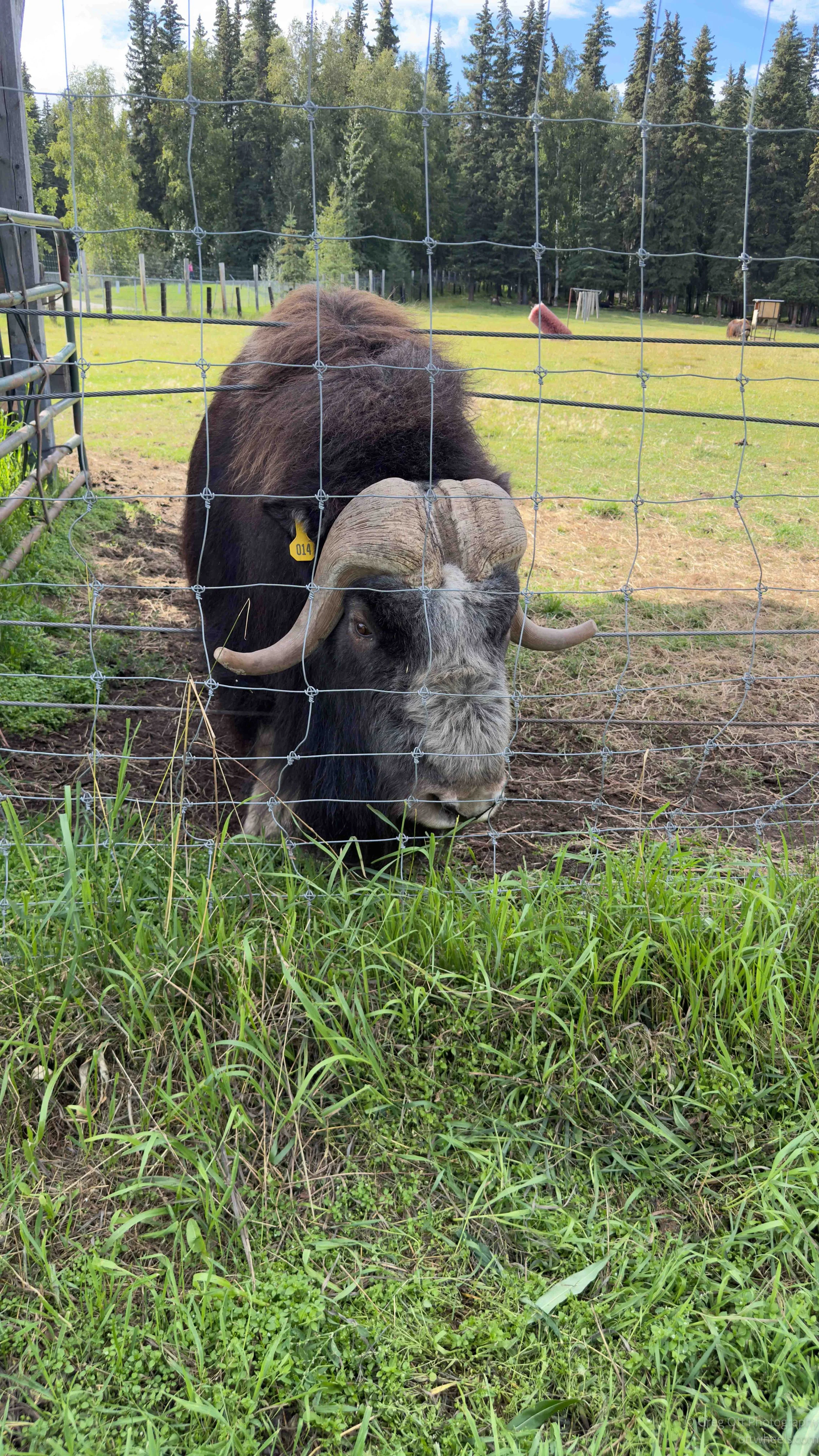
I walked around the outside of the pen nearby and watched a muskox watch me. It followed me as I moved and stopped when I stopped. I assume it hoped I’d feed it something even though there were signs ask us not to feed the animals. In the pen, there were large logs suspended to allow the animals to push these large objects around.
Hot Licks
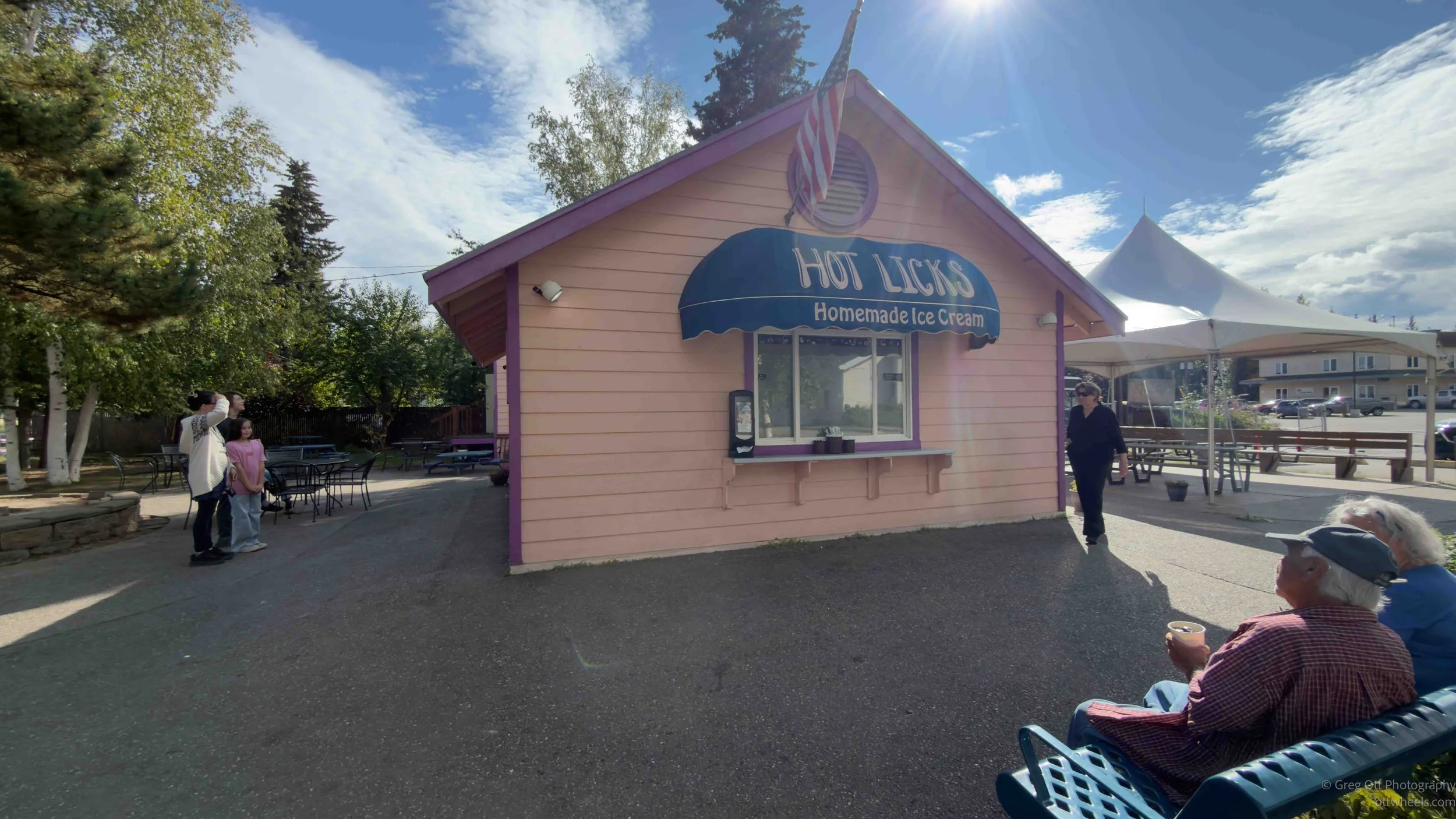
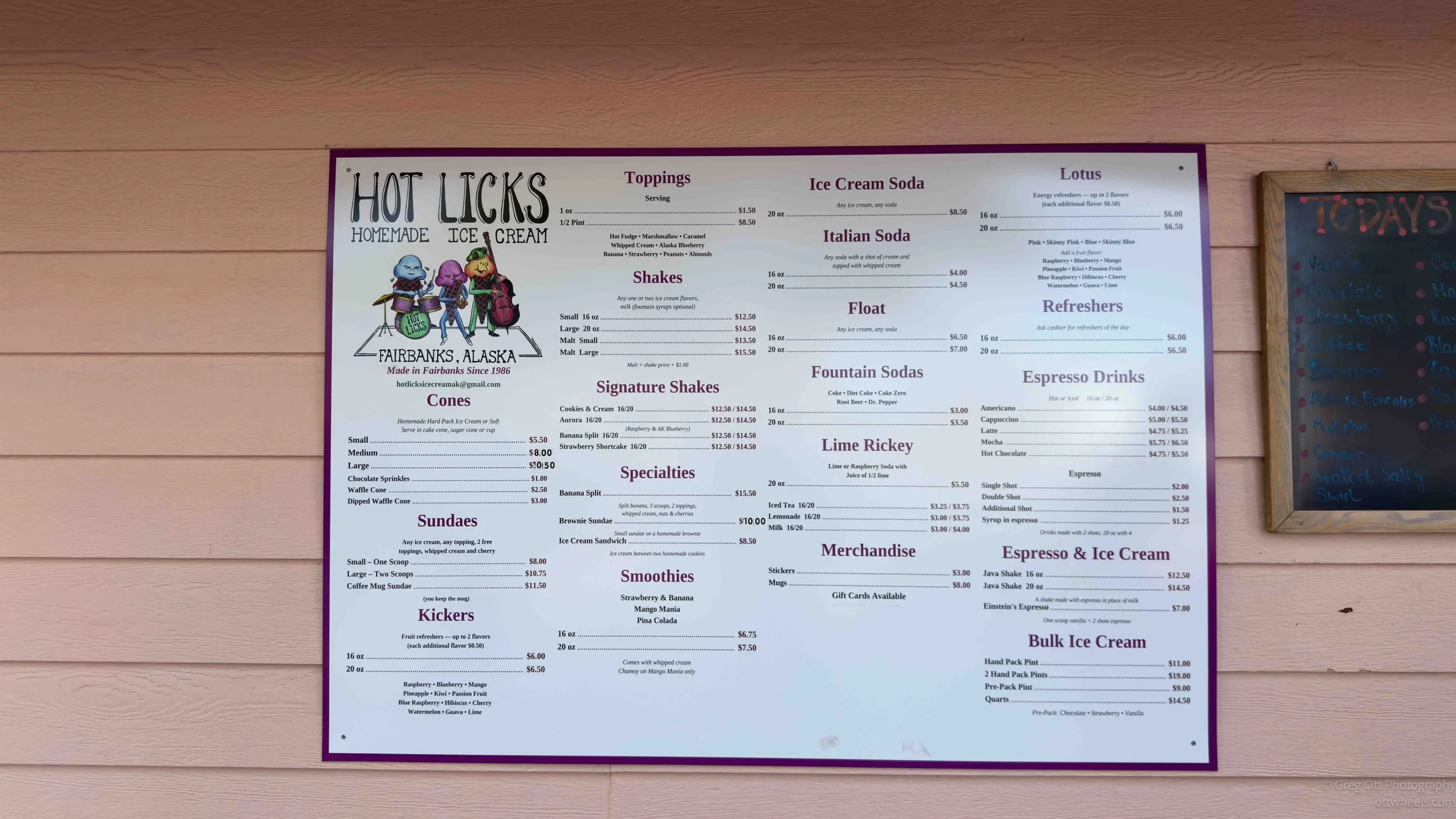
Hot Licks was another recommendation I had for something to try in Fairbanks. I ordered a double scoop of Seaport Salted Caramel and banana, along with a shot of espresso. The salted caramel didn’t taste at all like caramel to me. It was more like chocolate chip. The banana was fine.
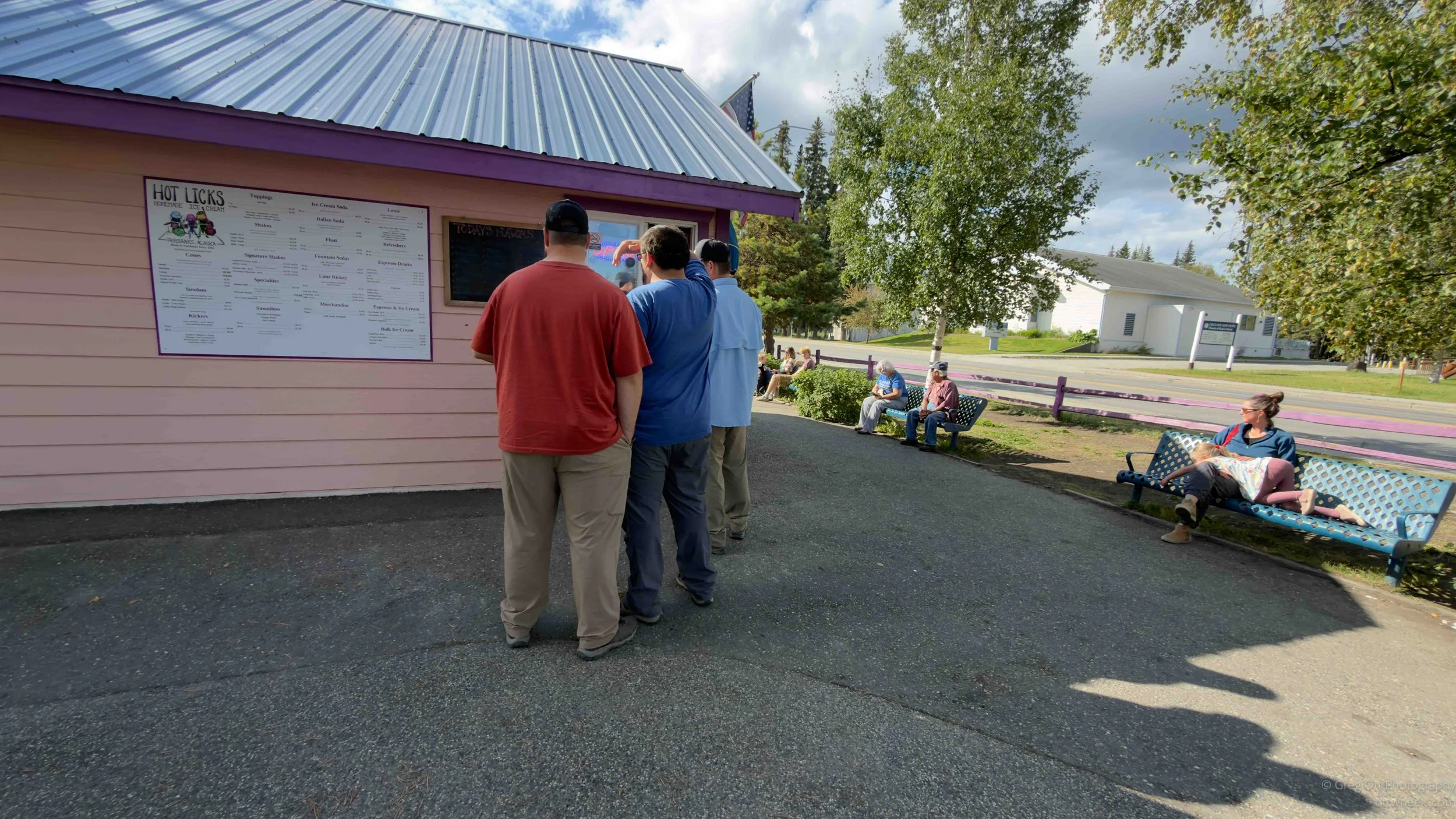
I’d give them one star for service. There were only two people working the stand, a cashier and someone scooping ice cream, and they clearly needed more help. It took 30 minutes after I ordered to get my two scoops. No one else seemed particularly bothered by the wait, so I sat down and watched people.
The ordering system didn’t help. You pretty much had to keep track of who had ordered in front of you so you knew when yours might be ready. They would eventually open a side window and call out your number so softly that you couldn’t hear it unless you were standing right there. Thirty minutes seemed like a long time to wait for two scoops of ice cream.
As I sat eating my ice cream, a girl about five years old jumped off the brick wall near me, threw her arms in the air and shouted, “Blah!” in my direction. Her mother made a puzzled face and said, “I’m not sure what that was about.” Neither of us knew, but it was funny.
I drove around town for an hour to see a new part of town and also charge up my batteries a bit before going back to the parking spot at UAF.