Olympia, WA State Capitol
I woke in Dash Point State Park on the water outside of Seattle. It was a quiet night, but the campground is very rundown. I took the time to empty trash out of the van and clean.
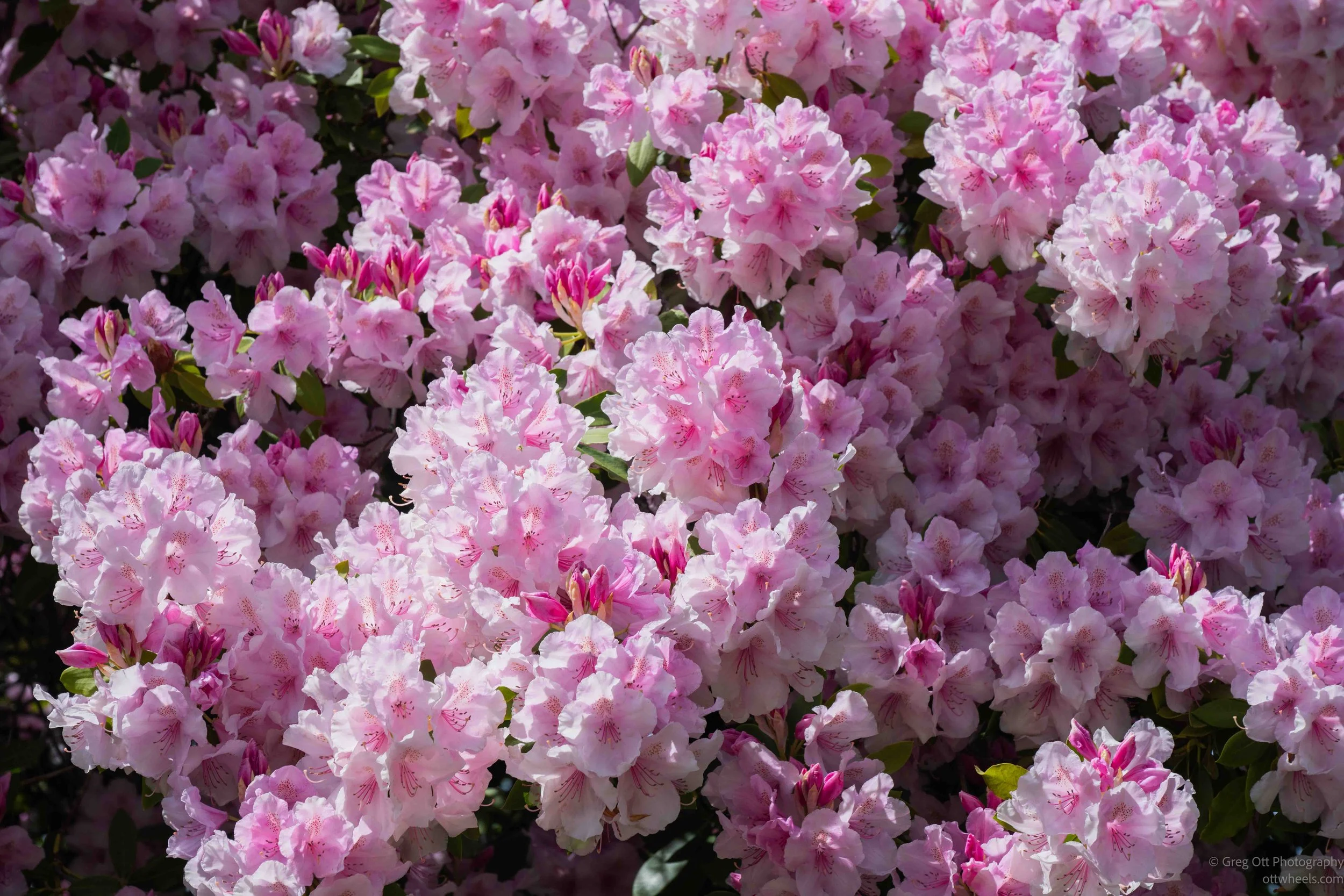
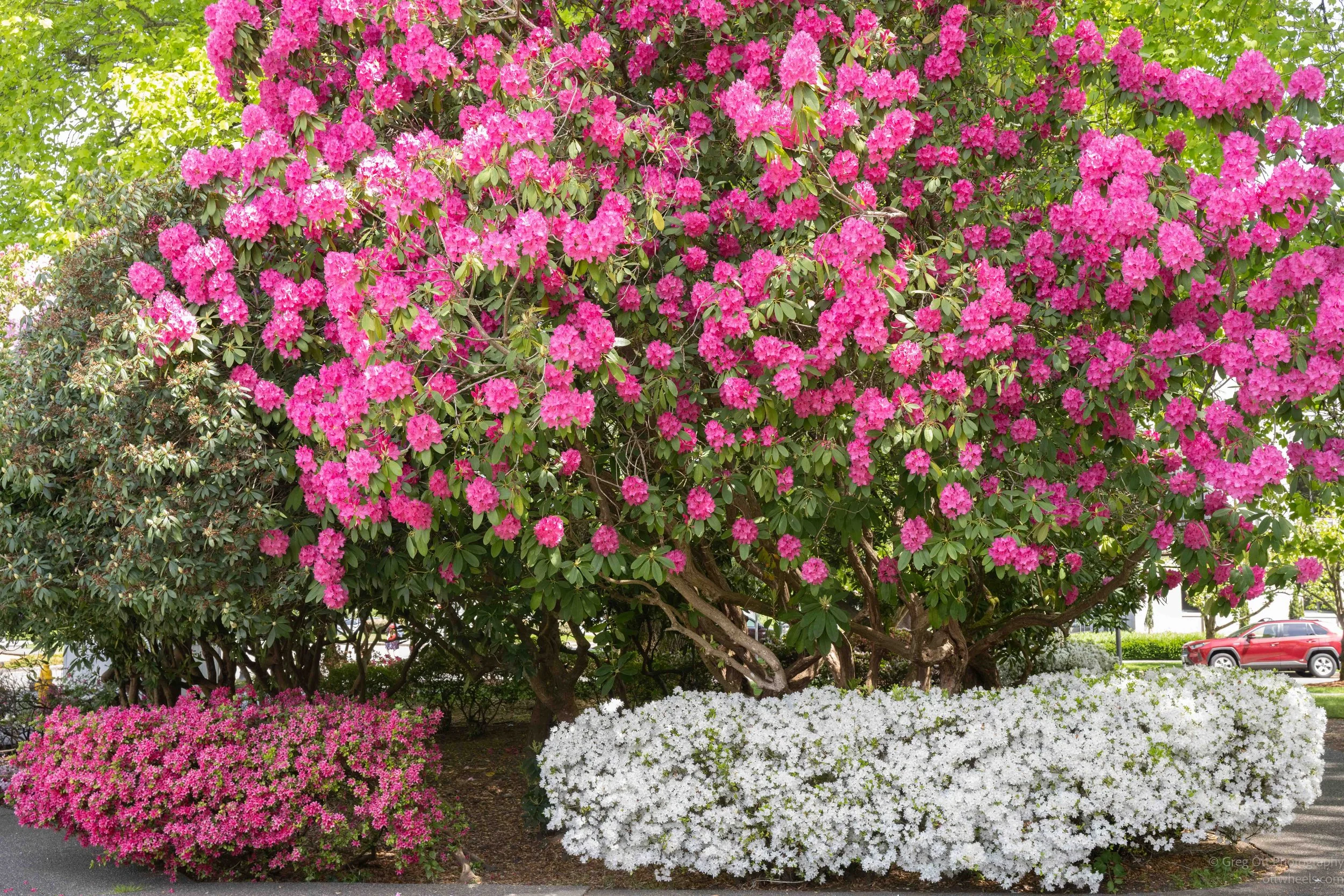
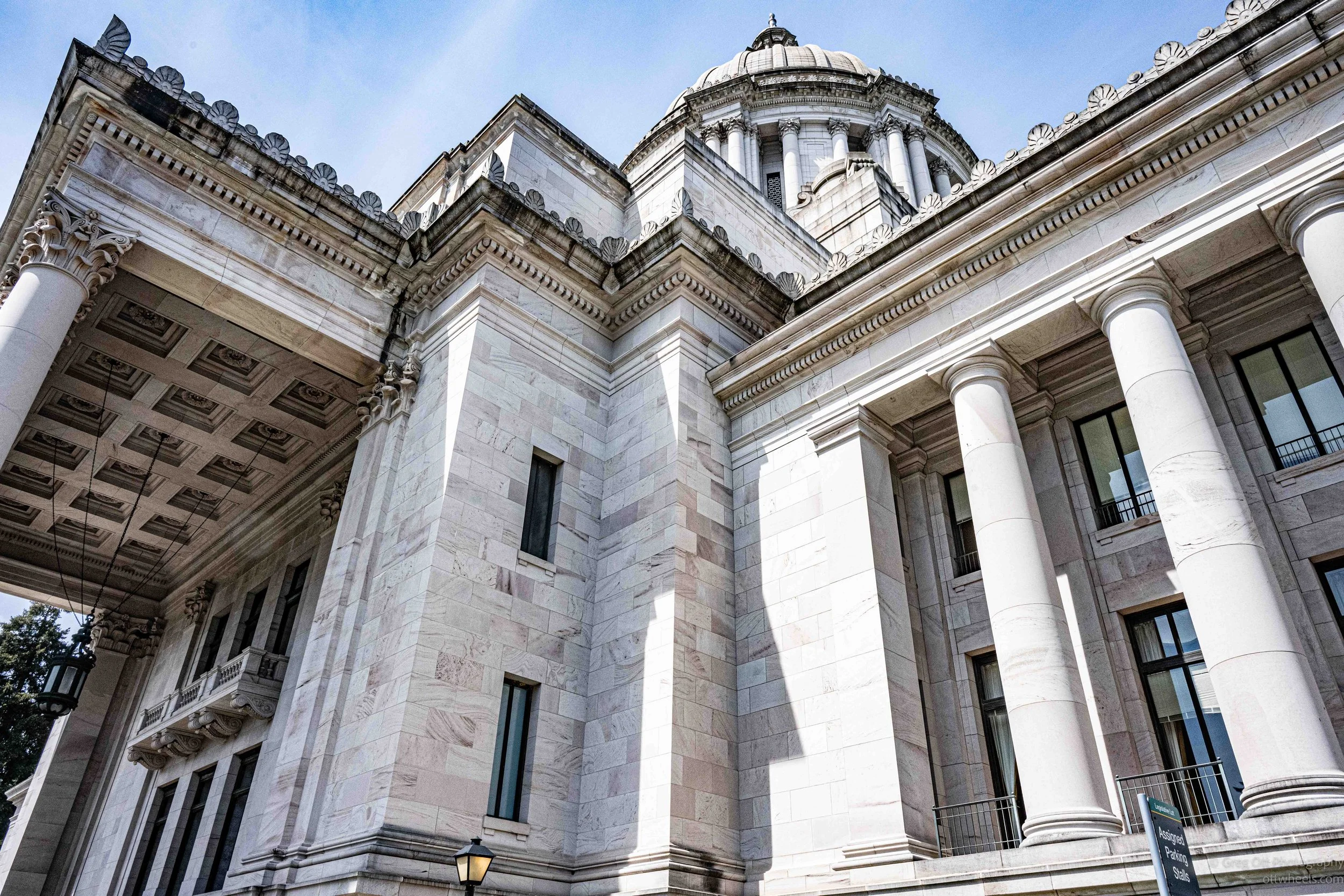
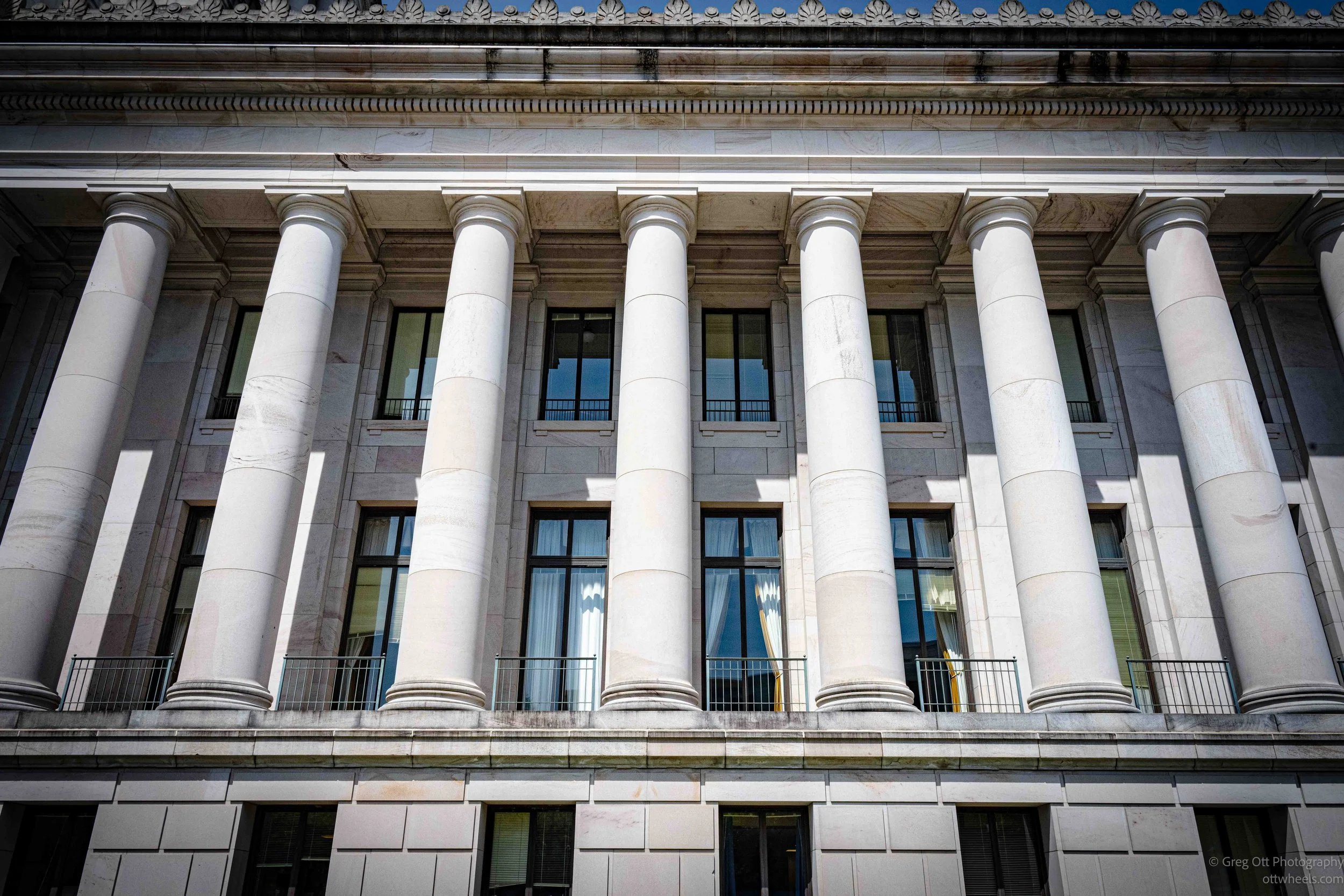
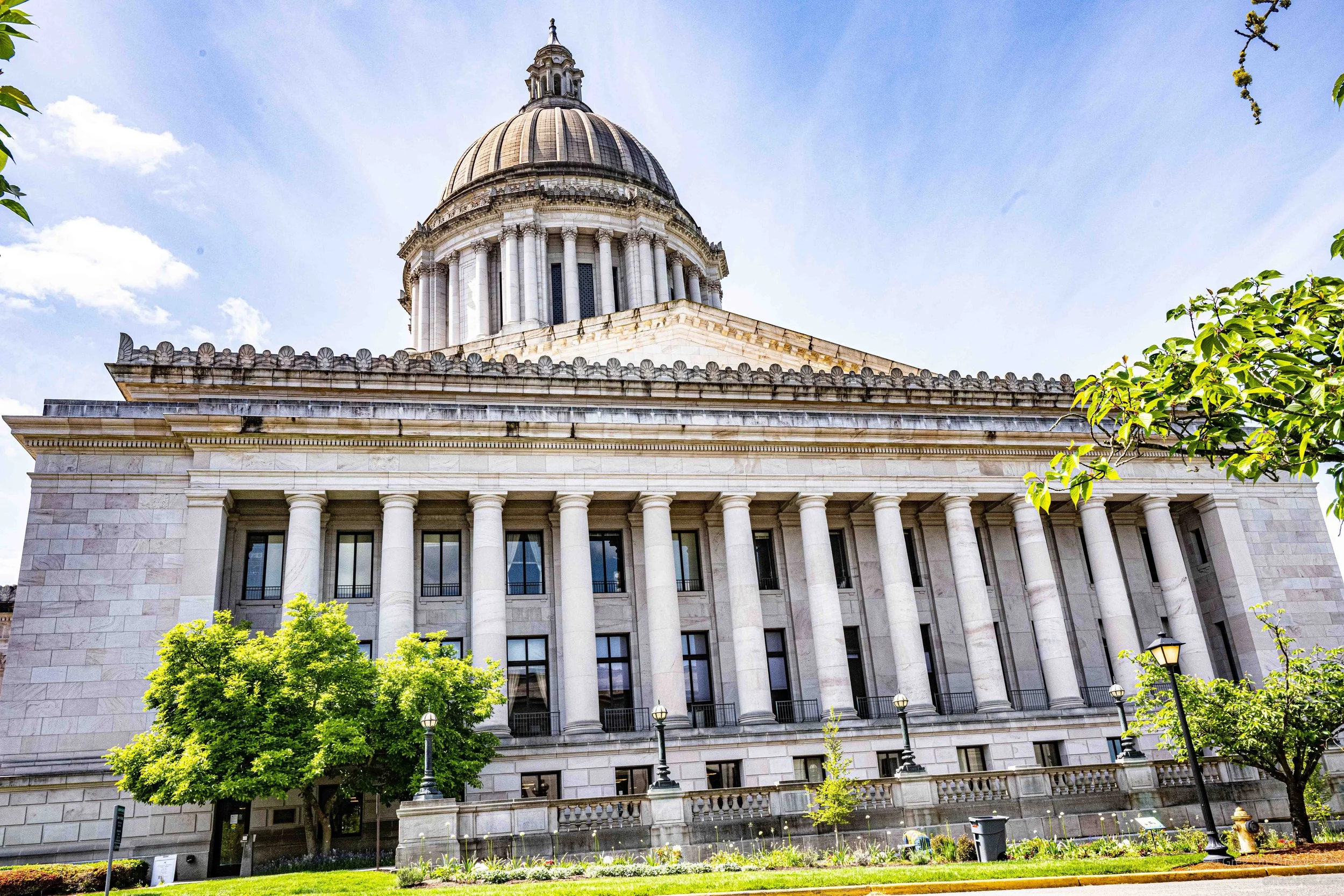
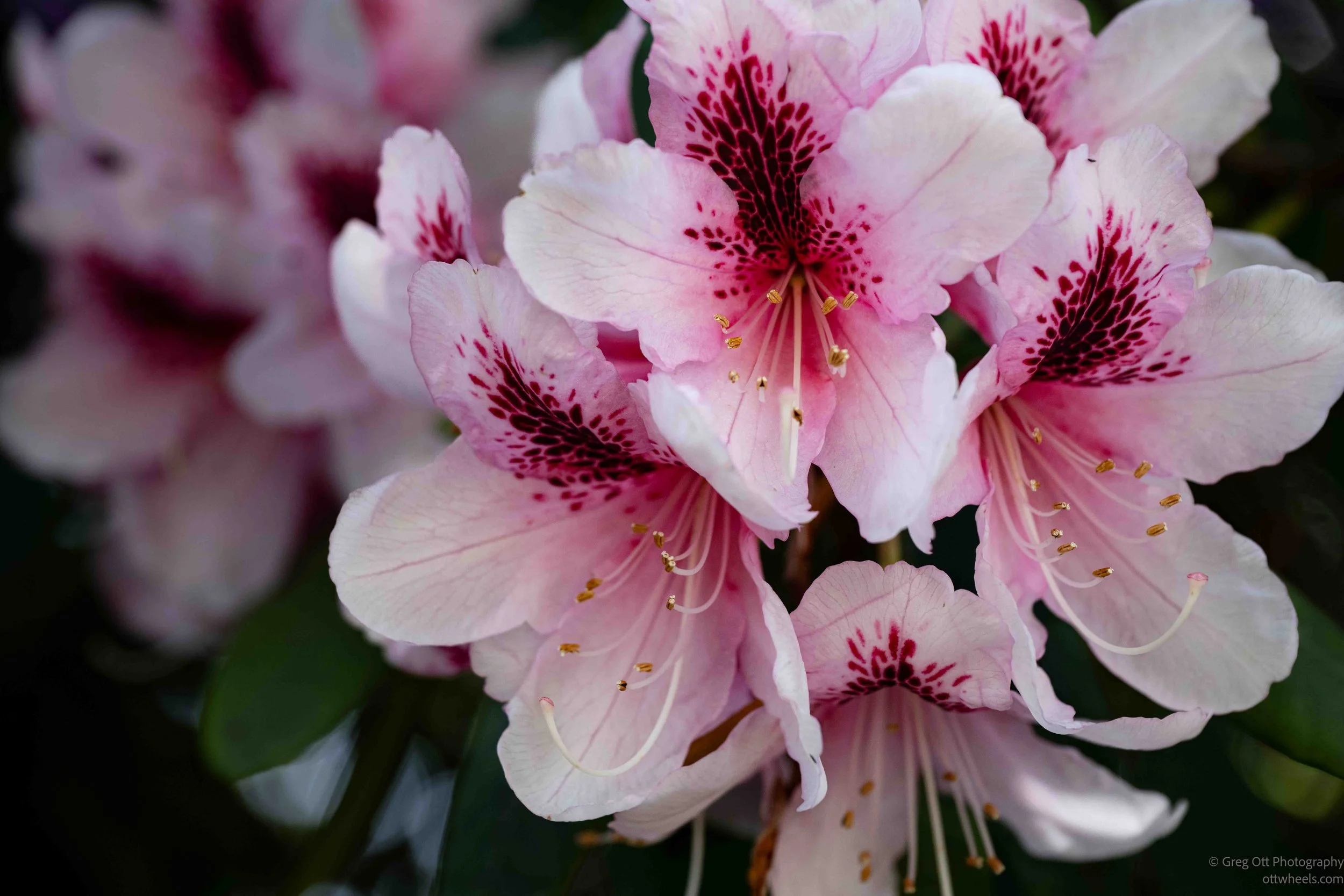
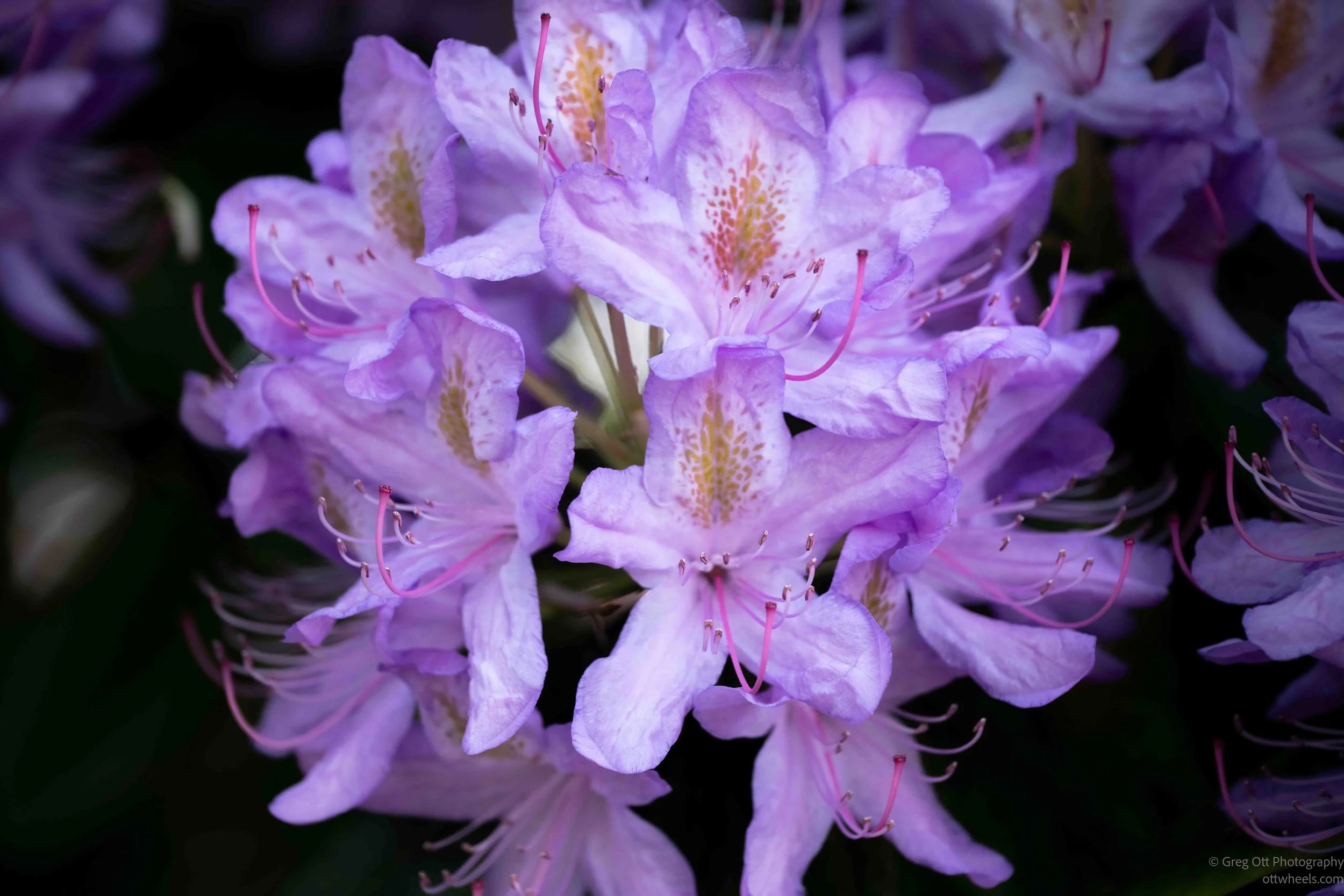
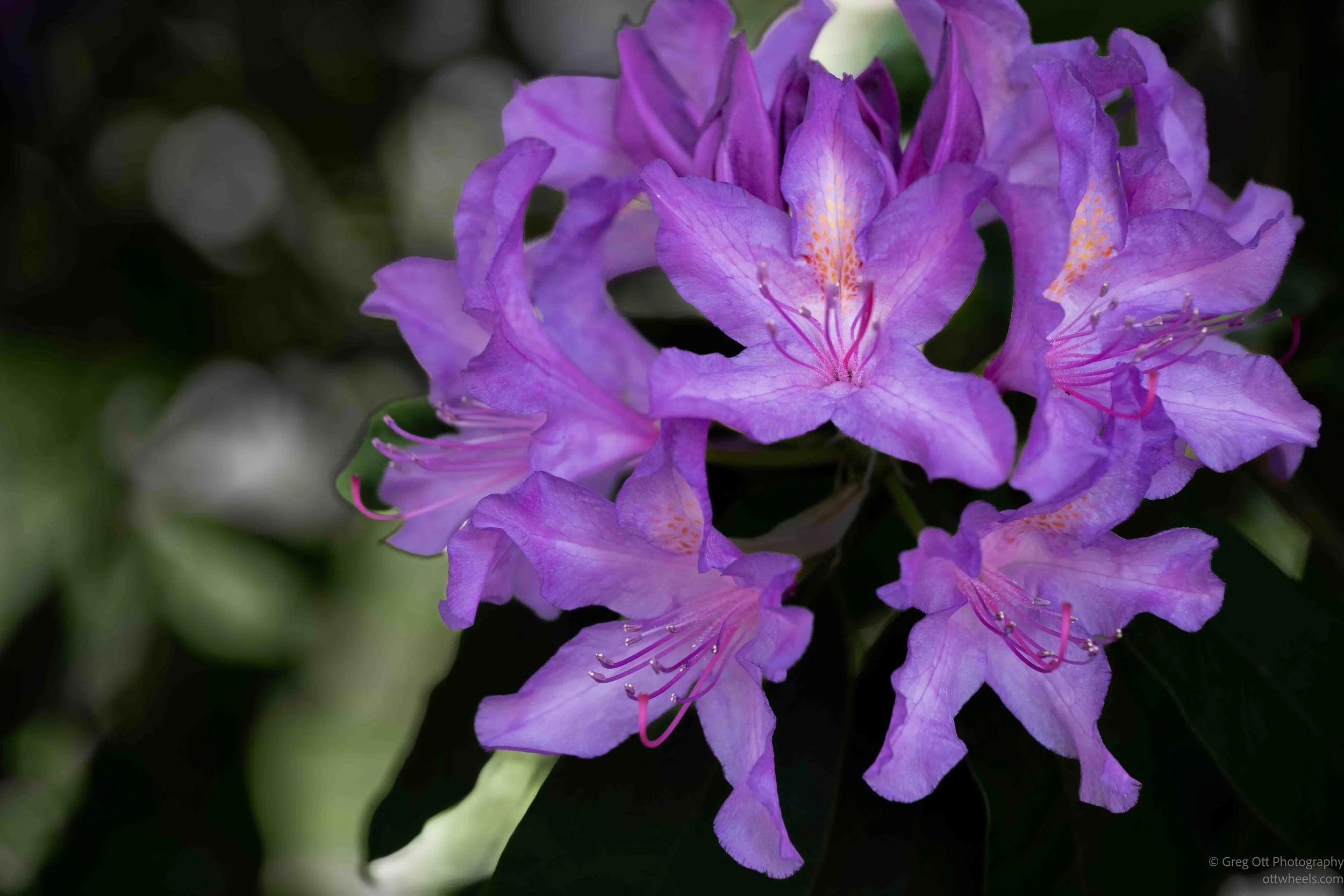
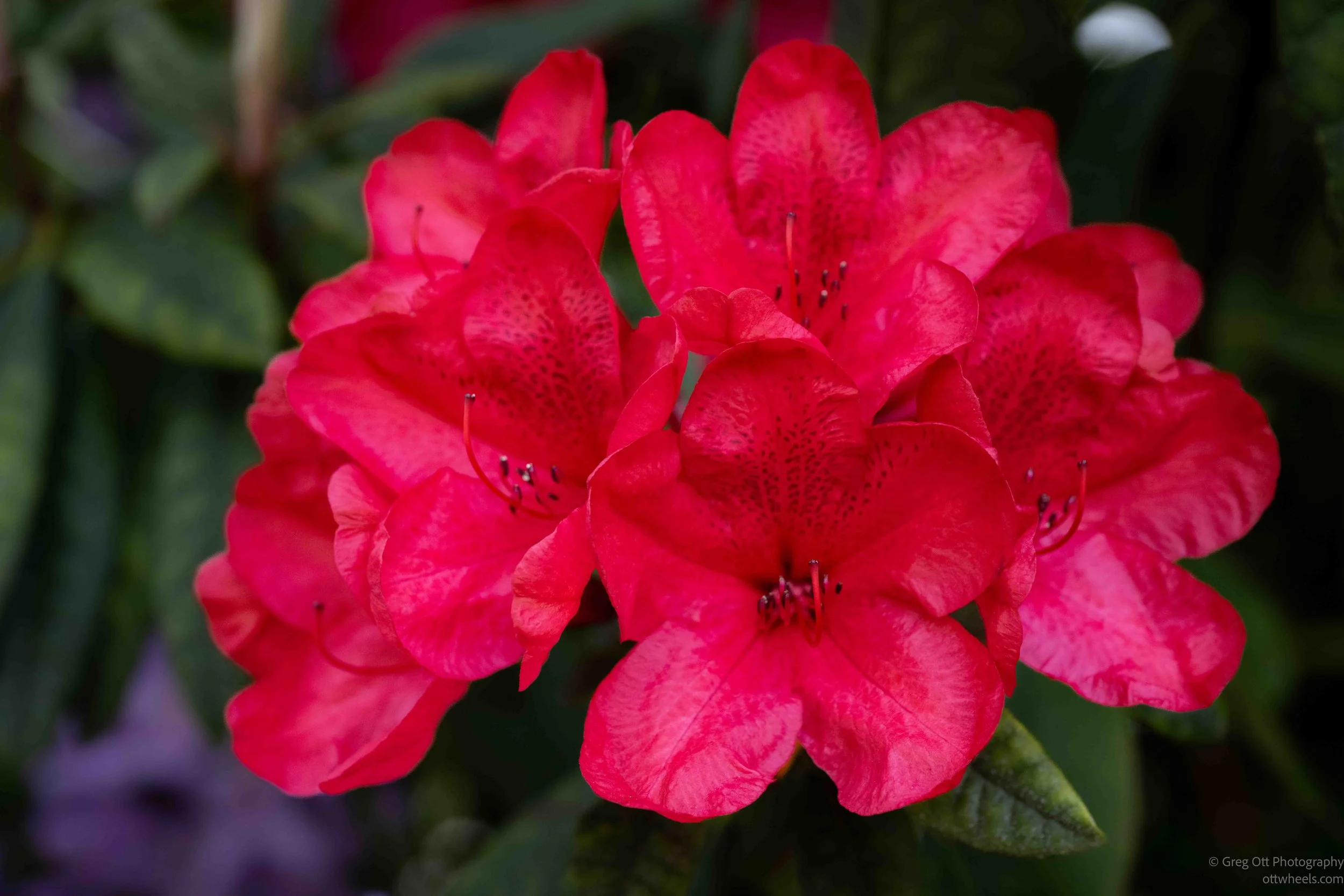
I made my way to the Washington State Capitol in Olympia, Washington. The grounds around the capitol were full of blooming rhododendrons and towering evergreens, and the dome of the legislative building kept appearing through the trees as I walked the paths around the campus. The building itself has an unmistakable presence to it. Massive white columns, marble everywhere, and a dome that dominates the skyline from almost every angle nearby.
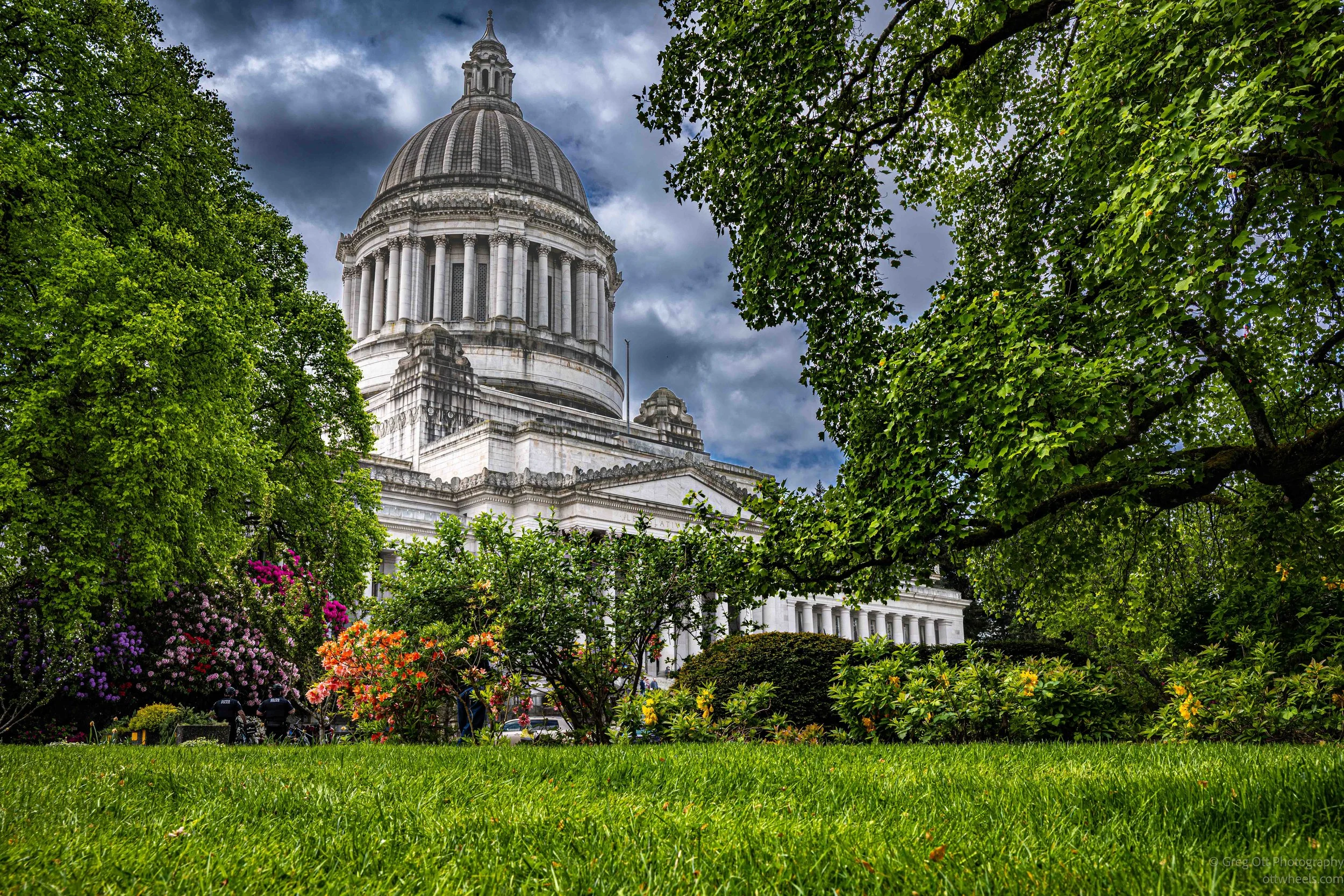
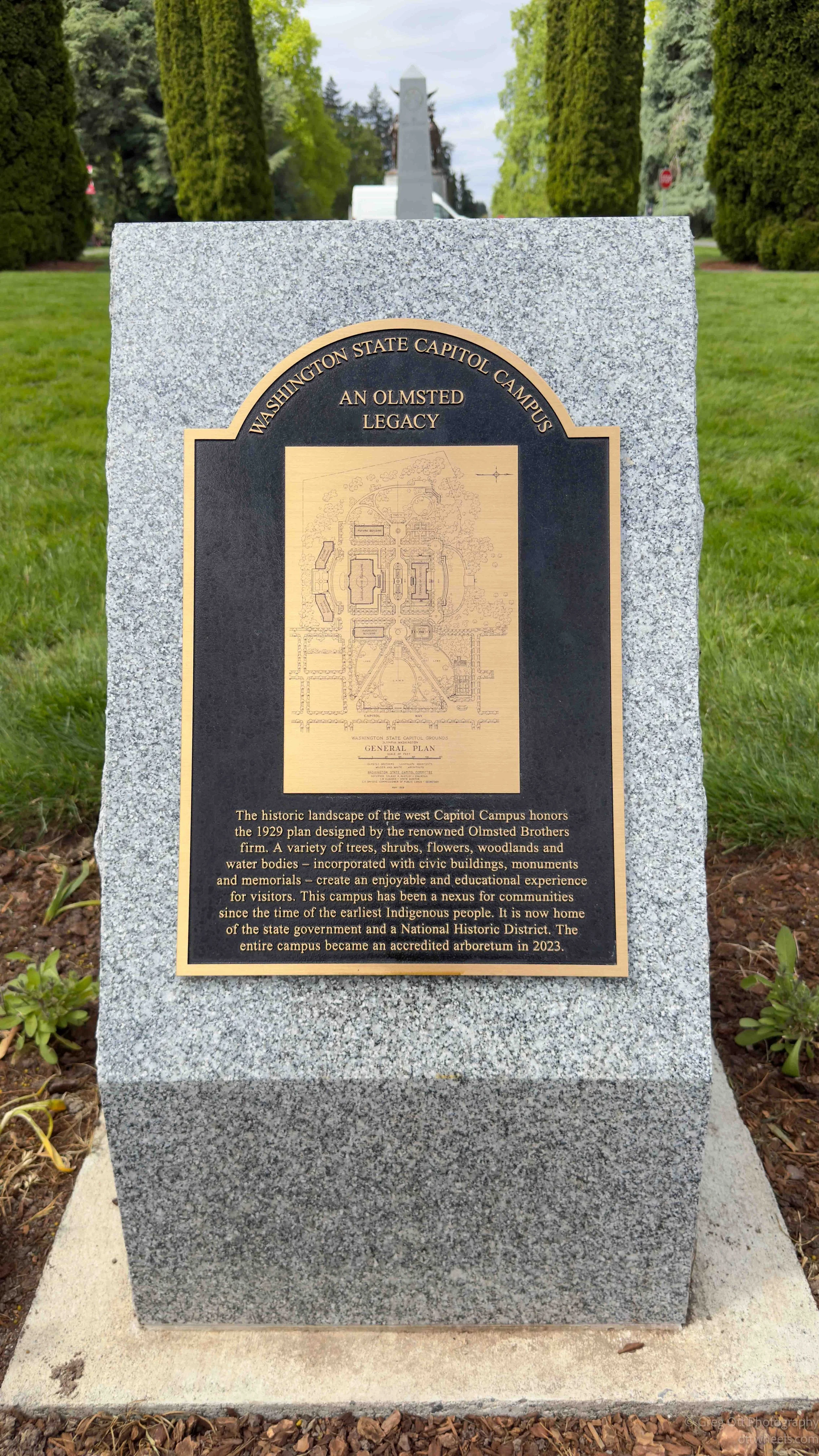
The Washington State Capitol, officially called the Legislative Building, was completed in 1928 and designed by the New York architectural firm Wilder and White. The dome rises 287 feet above the ground and is often said to be one of the tallest masonry domes in the world. Standing beneath it, that claim feels believable. The architecture clearly borrows heavily from classical European and Roman influences, with enormous Corinthian columns, symmetrical wings, vaulted ceilings, and marble imported from different parts of the world. The entire place was designed to project permanence, confidence, and stability during a period when Washington was still defining itself as a growing western state.
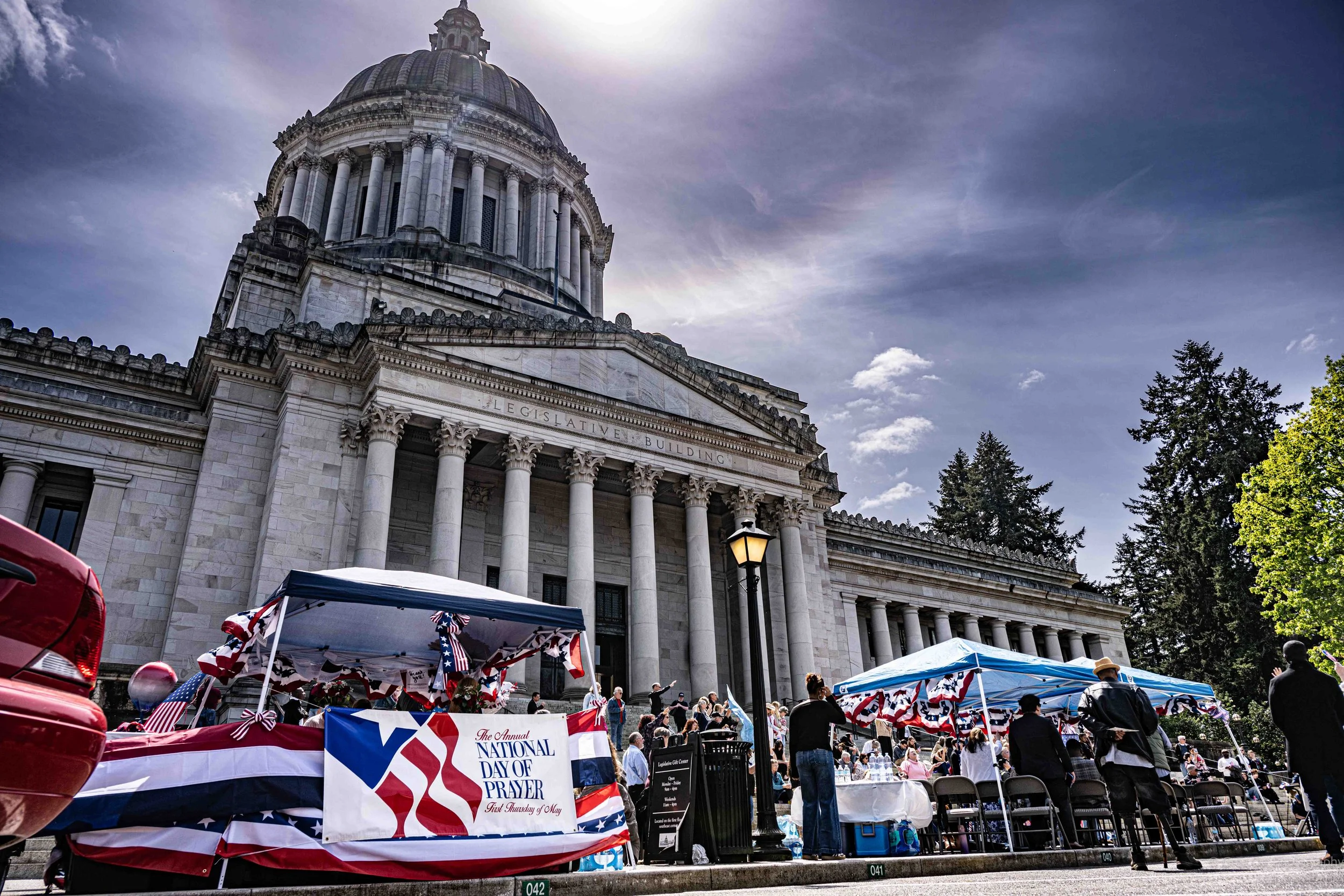
I eventually climbed the long capitol steps and realized something unusual was happening outside. A religious gathering had taken over much of the front entrance area. Tents, flags, speakers, folding chairs, and groups of people lined the steps. At first I thought it might be some kind of rally or church event, but I later learned it was tied to the National Day of Prayer.
I worked my way through the crowd and reached the main entrance where two people with state employee badges were standing near the doors. One of them told me the tour had already started but that I could still join the group upstairs on the second floor. I had missed about the first 15 minutes, but I was glad they let me slip in.
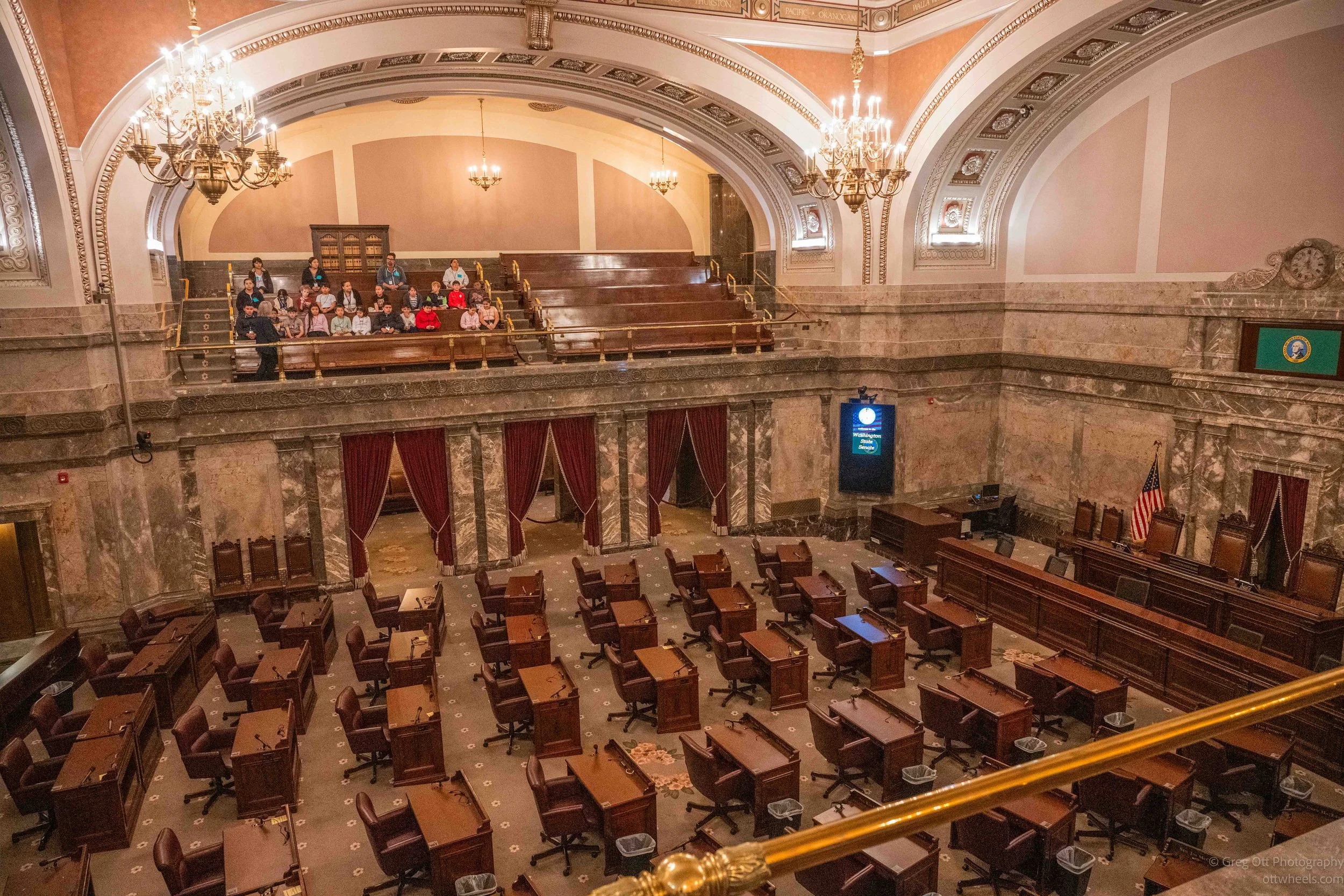
The tour moved through both legislative chambers and much of the rotunda area. The House and Senate chambers felt surprisingly intimate compared to how much influence and debate happens inside them. The House chamber in particular had a warm glow from the lighting and polished wood desks, while the Senate chamber felt slightly darker and more formal. From the public galleries above, you could look down across the rows of desks and imagine the rooms completely full during legislative session.
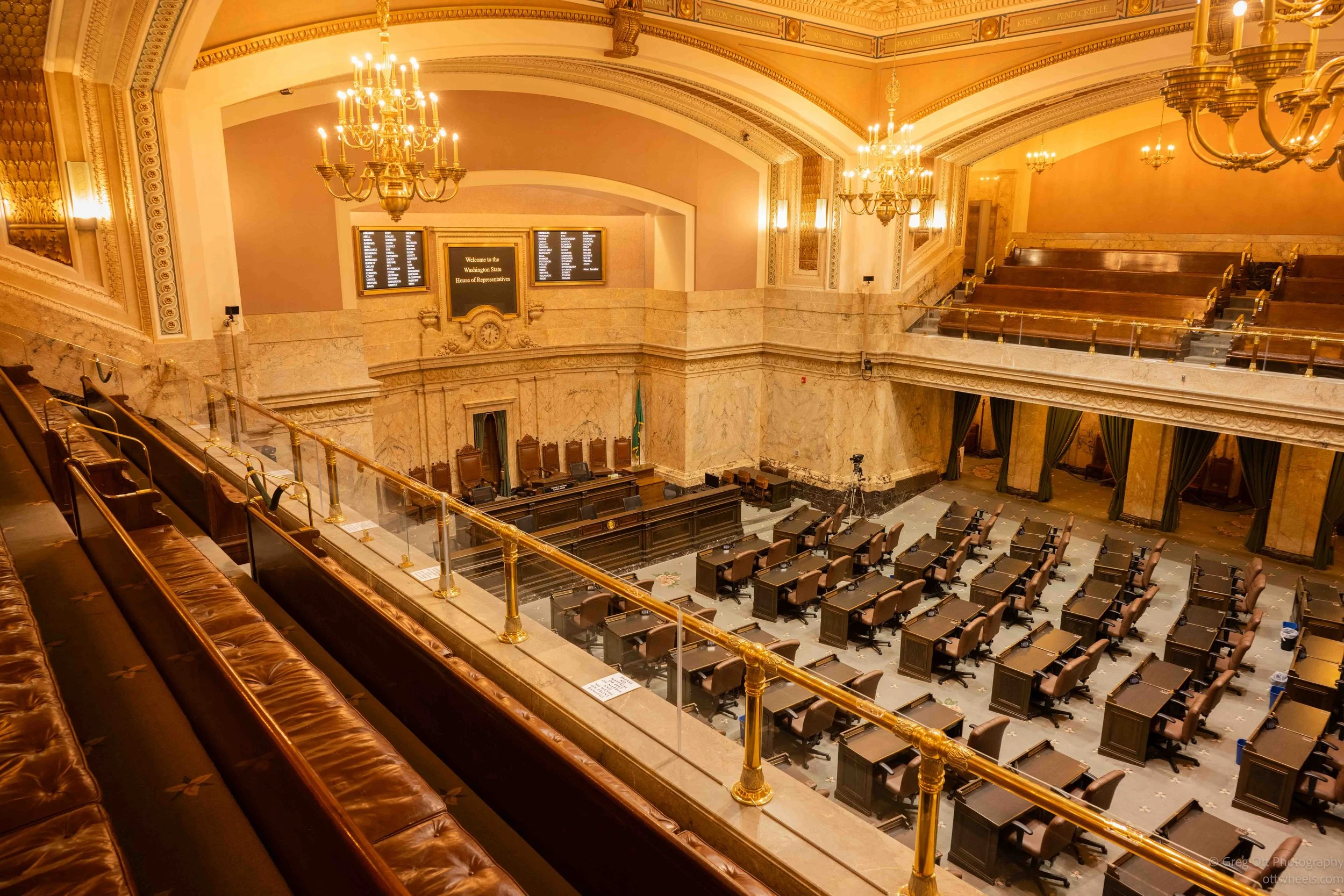
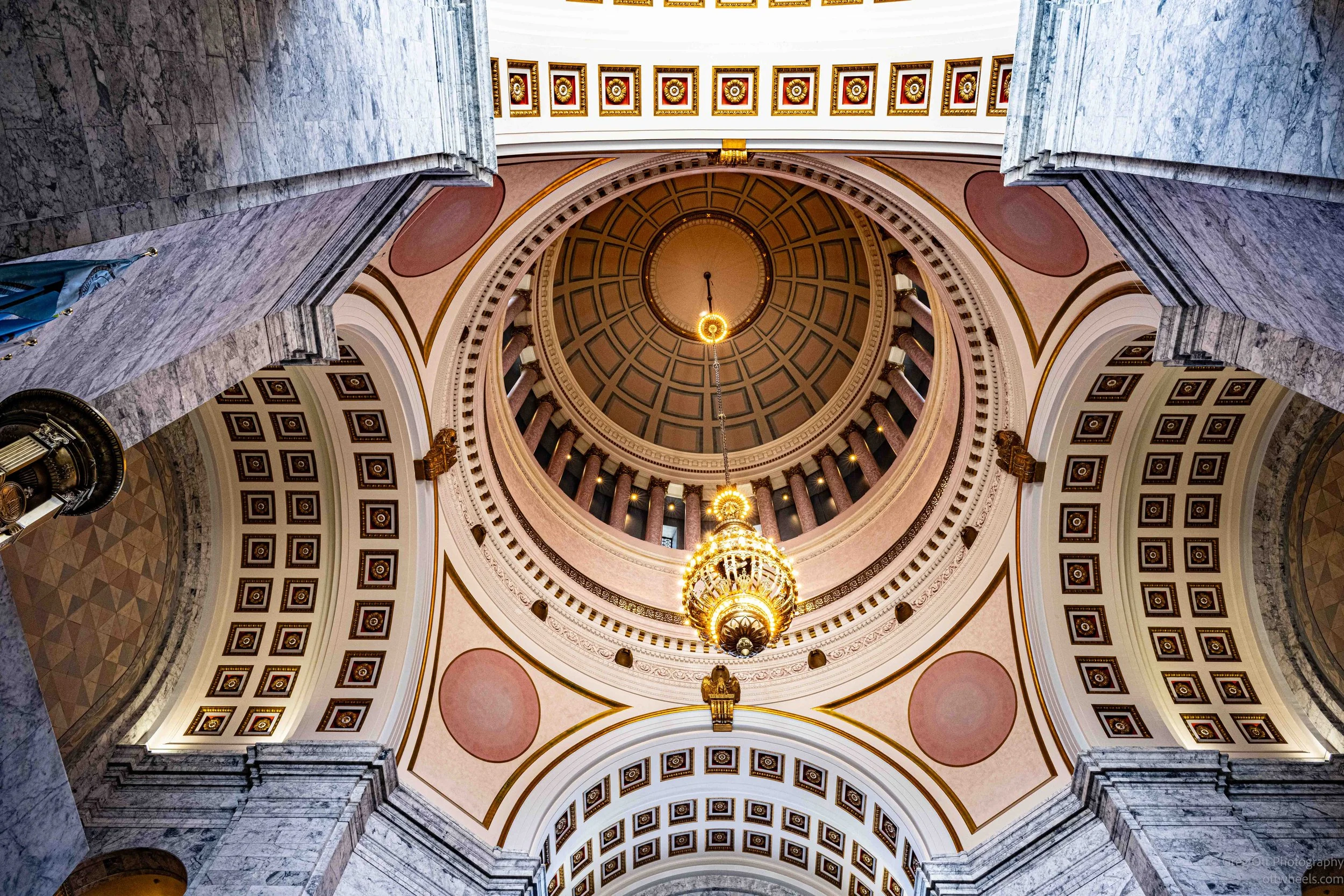
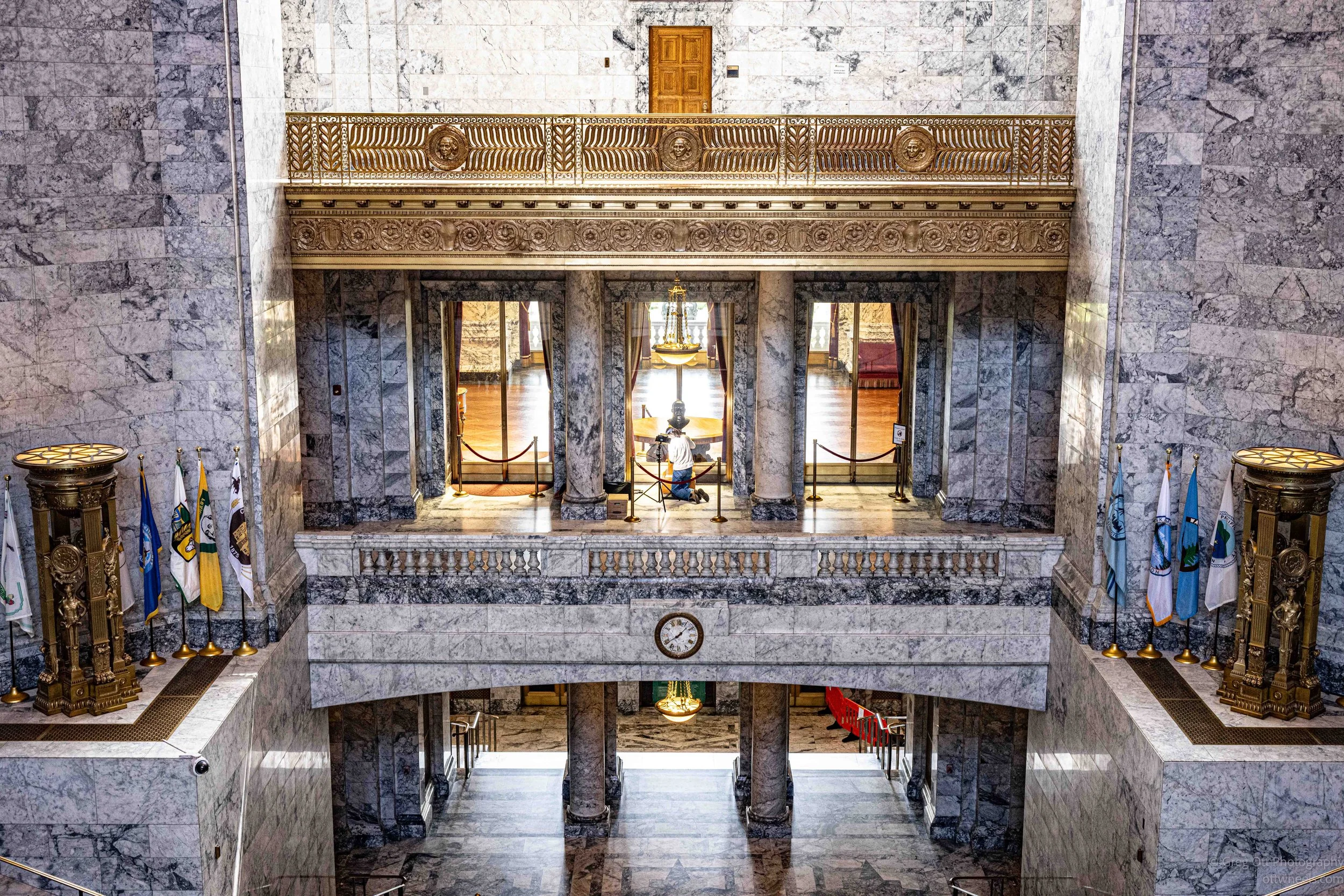
What stood out most throughout the tour were the Tiffany lamps and chandeliers. The guide spent a considerable amount of time talking about them, and once you started looking closely it became obvious why. Nearly every major lighting fixture in the building is ornate beyond belief, with intricate bronze work, decorative glass, and massive scale.
The centerpiece hanging beneath the rotunda is extraordinary. The guide explained that it is considered the largest Tiffany bronze chandelier ever created. The thing is enormous — roughly 25 feet tall, weighing around five tons, suspended beneath the center of the dome like some glowing mechanical cathedral. It contains hundreds of individual light bulbs surrounded by elaborate bronze ornamentation and amber-toned glass. Looking straight up from below, the entire ceiling seems built around it.
One detail from the tour stuck with me. The chandelier’s lights historically were almost never turned off because repeatedly powering the bulbs on and off shortened their lifespan. Changing them is not simple. Workers have to build massive scaffolding reaching high into the rotunda just to access the fixture safely. The guide mentioned the bulbs were last extensively replaced in 2003, and even years later only a handful had burned out. Hearing that while standing beneath it gave the whole thing an almost mythic quality. It is less a light fixture and more a permanent architectural feature hanging in midair.
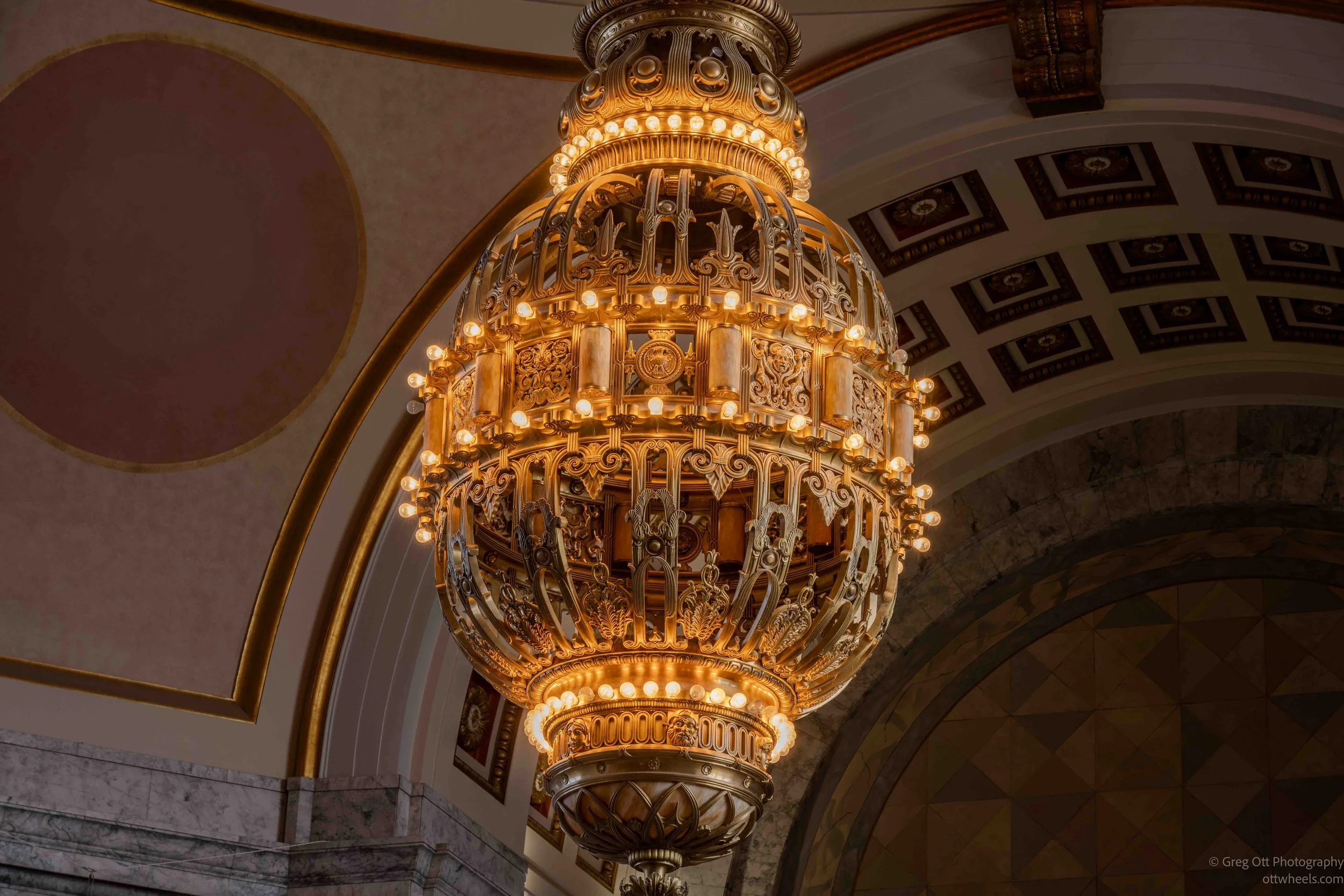
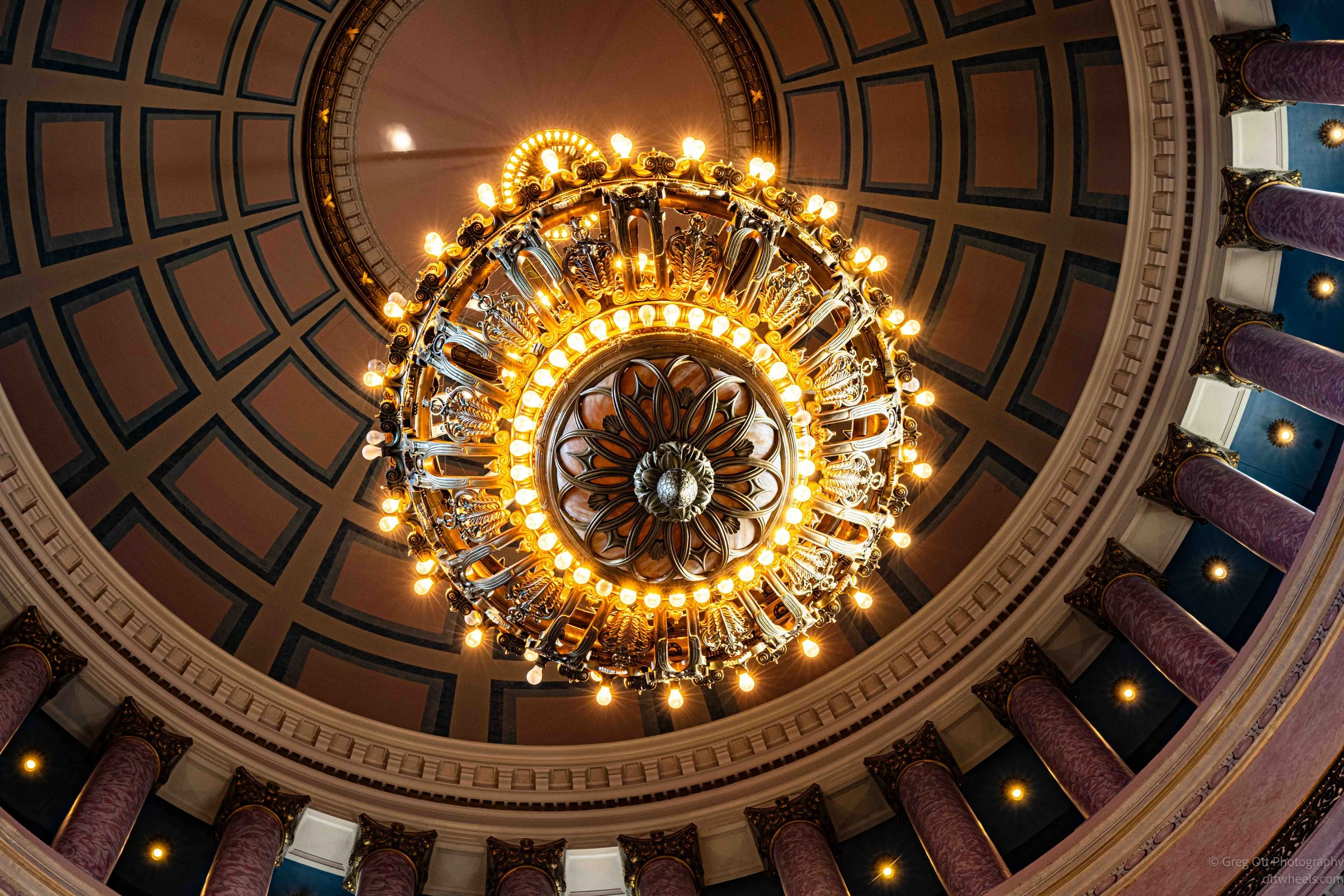
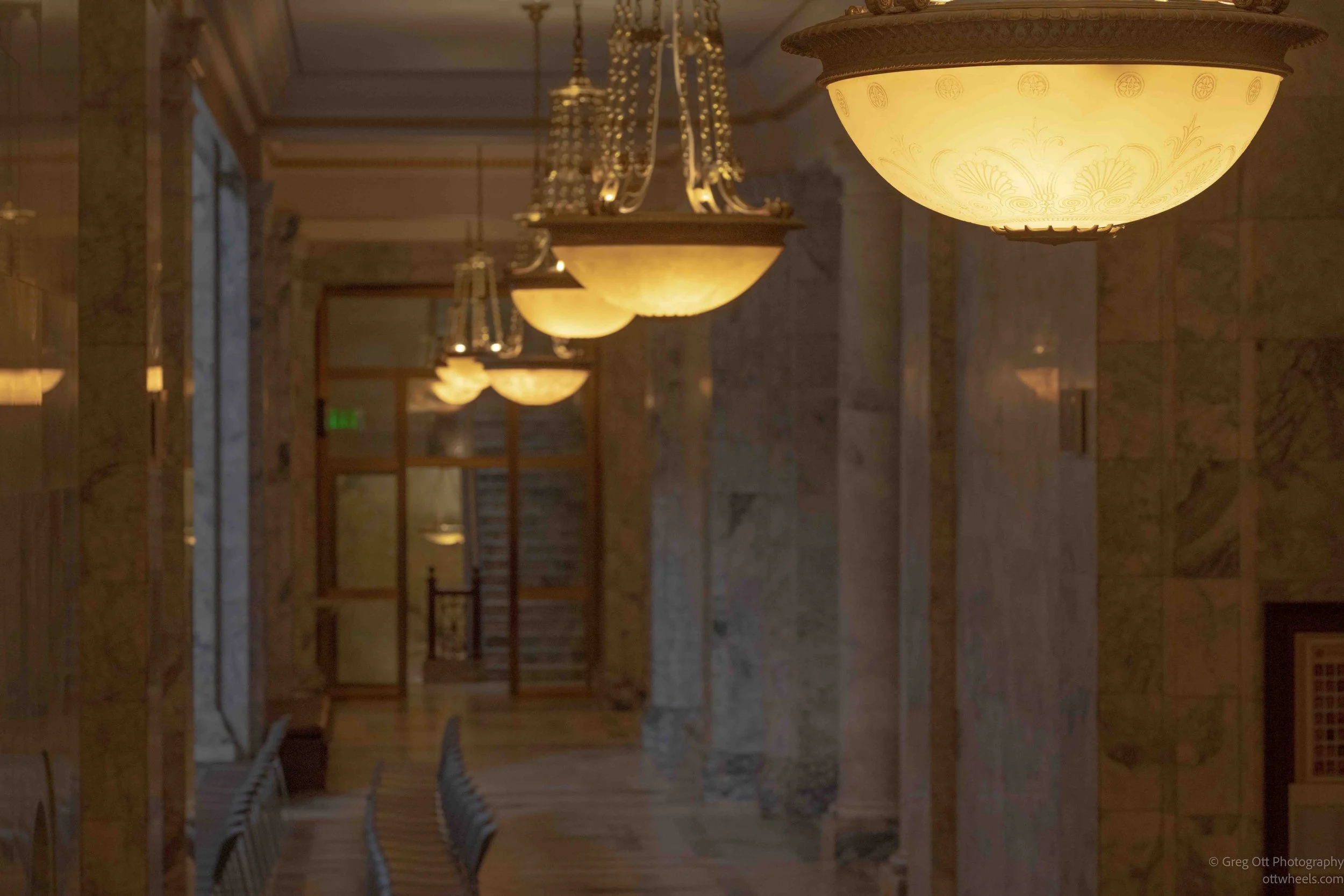
I spent a long time photographing those fixtures. Some of the details almost didn’t look real through the camera viewfinder. Layer after layer of metalwork, repeating geometric patterns, warm light reflecting off marble walls, and deep shadows between the columns. The building itself feels less like a government office and more like an attempt to communicate permanence and power through architecture.
After the tour ended, I continued wandering through the capitol mostly alone. Many of the offices and public areas were already closed down for the day, and the building had become remarkably quiet. The silence actually made the place more interesting. Without crowds moving through it, I could slow down and notice small details: the marble staircases, brass railings worn smooth by decades of hands, reflections in the polished stone floors, and long empty hallways lit by soft yellow lamps.
Eventually I headed back outside to photograph the building again from different angles. By then the gathering on the capitol steps had grown larger. Speakers were addressing the crowd while people shared personal stories about faith and Christianity. American flags lined parts of the entrance, and the event had a distinctly evangelical tone to it.
I realized this was all part of the National Day of Prayer, something that has existed in various forms in the United States since the founding of the country. Early national prayer proclamations date back to the late 1700s under presidents like George Washington and John Adams. The modern observance, however, was formally established by Congress in 1952 during the Cold War when President Harry Truman signed it into law. In 1988, President Ronald Reagan designated the observance as the first Thursday in May, which is still how it is recognized today.
Officially, the National Day of Prayer is intended to be inclusive of all faiths — and even people who simply want a moment of reflection or meditation. In practice though, at least from what I witnessed here, it appeared overwhelmingly Christian. I found myself wondering why other faith traditions never seem equally represented at these events if the stated purpose is truly broader than one religion. It raised an uncomfortable but important question about what “religious freedom” actually looks like in public civic spaces.
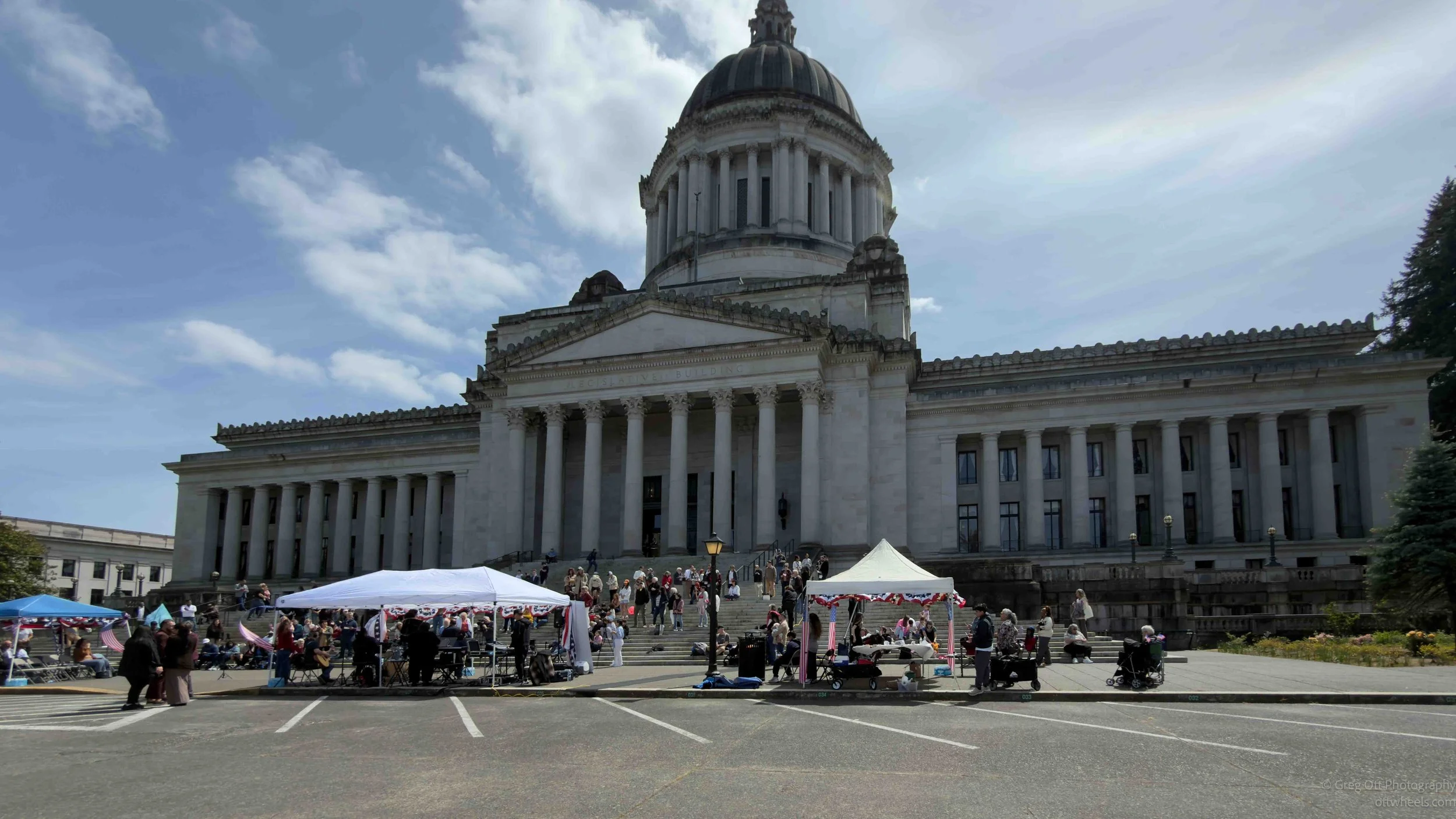
By the time I left the capitol grounds, the late afternoon light had shifted again. The dome glowed against dark clouds moving overhead while the rhododendrons around the campus were still exploding with color. It was one of those places where architecture, politics, history, religion, and symbolism all collided together in the same space, whether intentionally or not.
I drove north in the direction of olympia park and found a starbucks. I’d been having trouble with my Rixens heating system. They suggested that the Hydronic fluid my be low. I did some online work and then tackled the low fluid level. The tank was indeed down about a quart. After letting it run for 30 minutes, I seemed to be heating again. I repacked everything into the back of the van and headed further north.
I used several apps to try to find a place to stay. Somehow, the three rv camps all required cash and didn’t have clear instruction on where to park. I also tried 9 BLM sites in the National Forest which all seemed to be closed (there were gates up). One I drove out several miles on a dirt road to be told by google to turn left over a cliff. I imaged some AI bot of the future, thinking that might be a good idea. I eventually stopped at the National Forest Office / Visitor Center on RT-101. It was 9:30 and I was tired searching and driving around.