Crater Lake
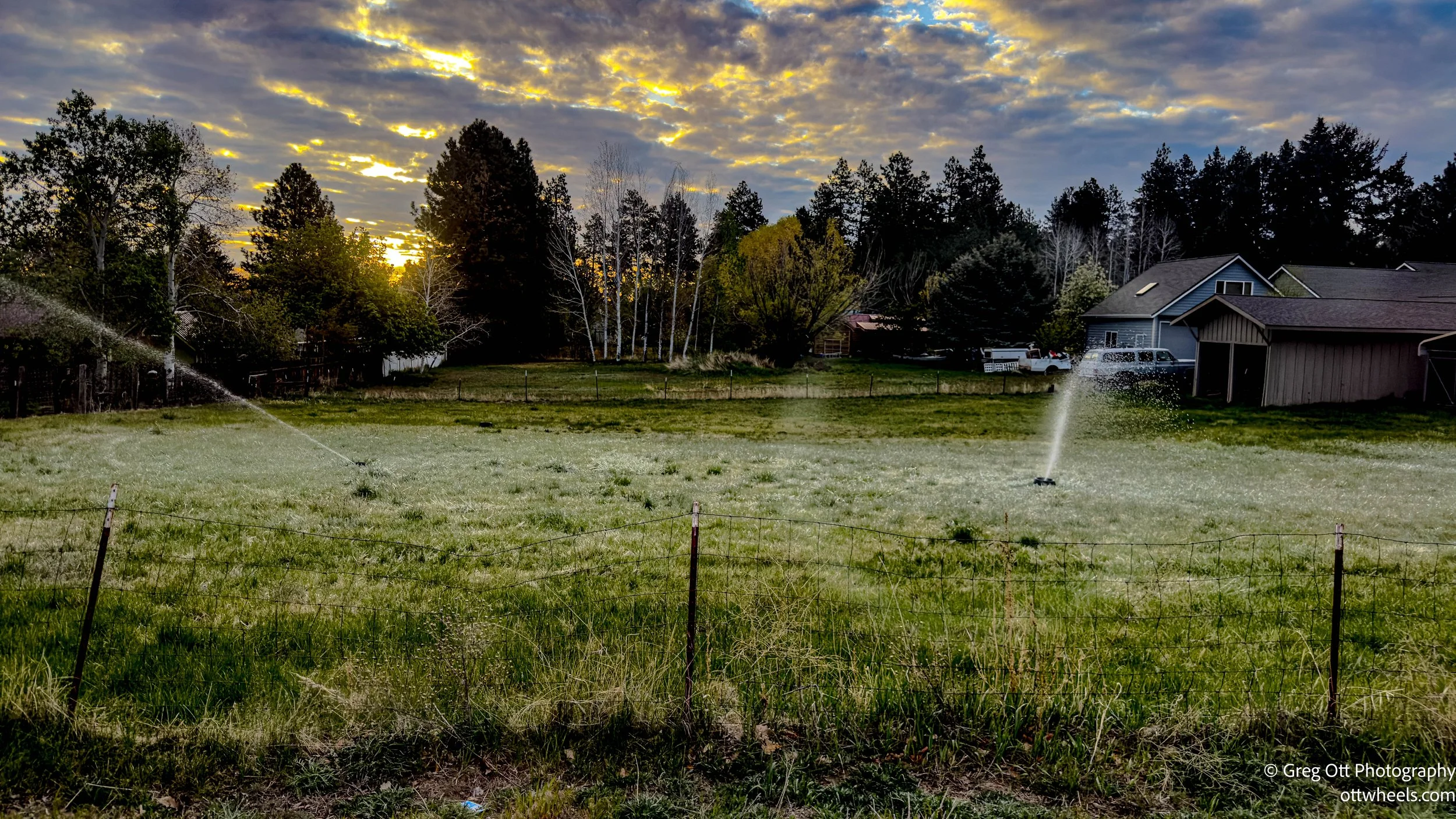
I left my spot beside a field in a quiet neighborhood in Bend, Oregon just before seven. There was a Starbucks about ten minutes away, and that’s where I headed. Bend has no shortage of coffee shops, but I wanted somewhere predictable where I could sit for a bit, get online, and ease into the day before the drive to Crater Lake.
I knew the drive would take at least three hours with a few stops. Not long after leaving Bend, I started seeing large piles of black lava rock scattered across the landscape, along with a broad, low mountain that clearly had a volcanic past. I pulled in to take a look. The visitor center was closed and several of the roads were gated, but even from the parking area it was obvious this wasn’t just a random field of rock. A bicyclist rode past me heading out on one of the trails while I stood there trying to figure out what I was looking at. This is part of Newberry National Volcanic Monument, a massive shield volcano that last erupted about 1,300 years ago—which, in geologic terms, I understandis basically yesterday. The black rock is basalt lava, cooled and broken into sharp, jagged pieces. Not far from here, the Big Obsidian Flow formed when lava cooled so quickly it turned into glass. I thought about hiking out into it, but with everything closed off, I decided to keep moving toward Crater Lake.
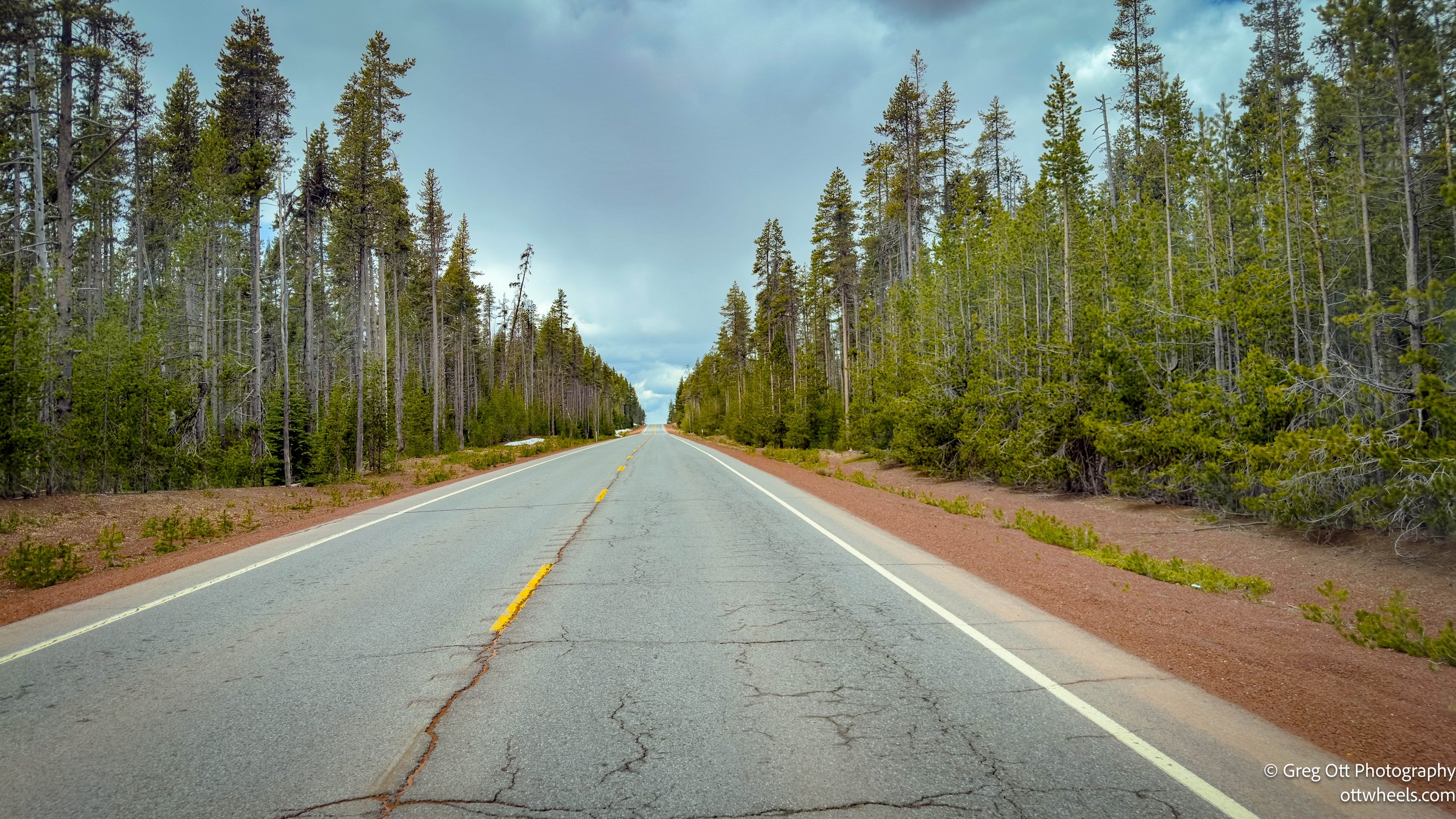
The drive from Bend toward Crater Lake changes gradually, and then all at once. You leave behind the busier edges of town and move into long stretches of open road lined with ponderosa pines. The trees are tall, spaced out, and the forest floor is clean in a way that makes the scale feel even bigger. Small towns come and go without much fanfare. Gas stations are fewer and farther between, and I noticed prices dropping the farther I got from Bend—by quite a bit. The terrain rolls gently at first, then starts to climb almost without you noticing, the air thinning slightly, the temperature cooling. It’s a quiet drive. Long stretches where you don’t see another car, just road, trees, and sky.
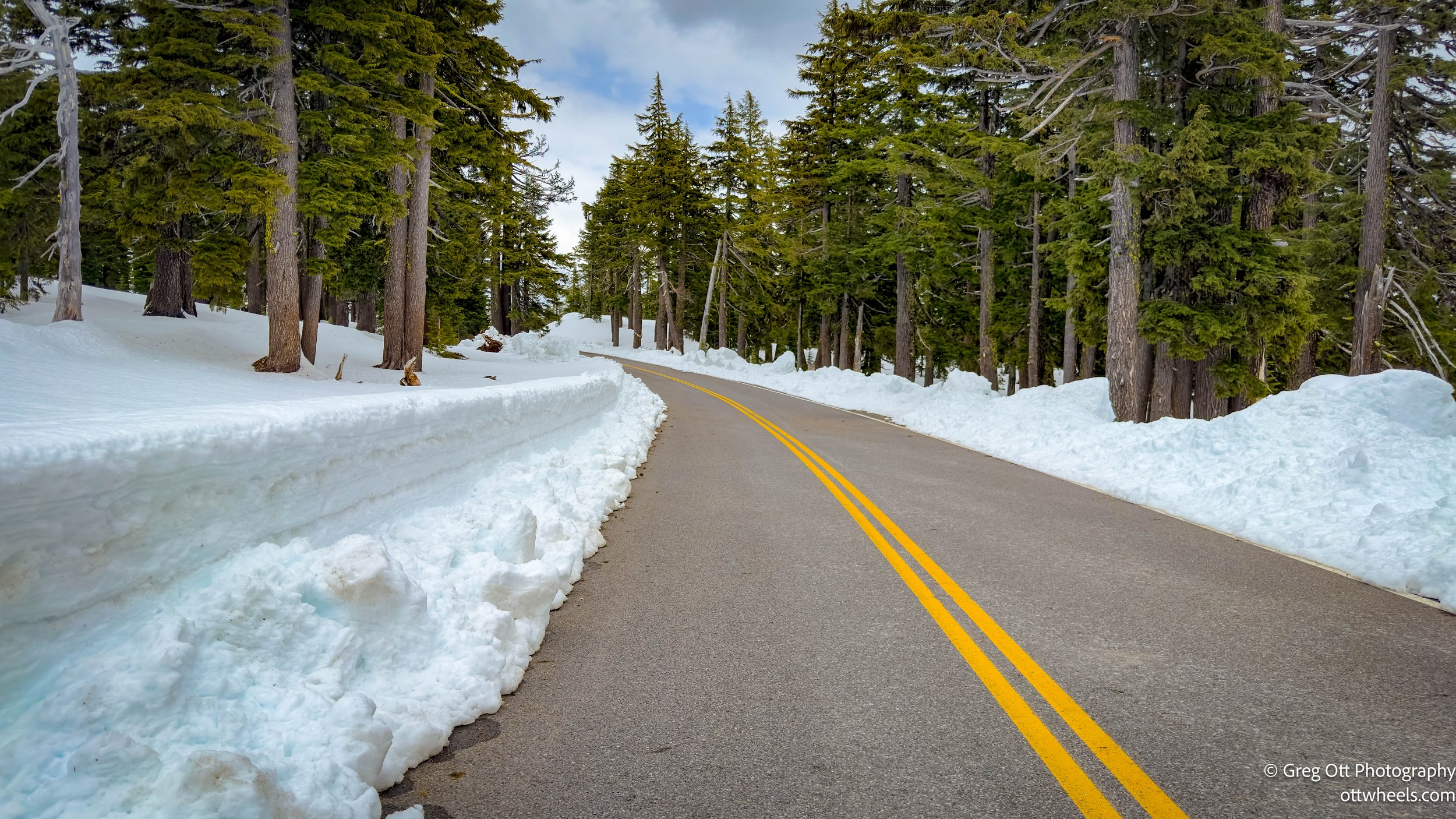
I had entered “Steel Visitor Center” into Google Maps, and it brought me to the North Entrance of the park. The road there was blocked by a gate, with a large bucket lift parked nearby that looked like it had recently been used to clear snow. No matter what I entered, Google kept trying to send me back to that same closed road. I had already checked that the park was open, so I kept driving, hoping it would eventually reroute. It never did. Eventually I saw a simple sign—“Crater Lake” with an arrow pointing left and uphill. I ignored the phone, followed the sign, and not long after found the actual entrance. I handed the ranger my pass and ID, and she confirmed that the Steel Visitor Center was open.
Inside, two rangers were on duty and both were extremely helpful. I mentioned how clean the park stamp was—most of them are so worn you can barely read them—and they told me it was brand new, designed by their supervisor. They walked me through how to get up to the rim, what was open, and what was still closed. The gift shop and restaurant were open, and about a mile of the rim road had been plowed but was still closed to vehicles. I asked about camping, and they told me that for five dollars a night I could stay at one of the Sno-Park lots. There were about a dozen in the area, with a couple within ten miles. That sounded perfect. Hiking options were limited due to snow, but they pointed out a few areas where snowshoeing was possible. I told them I was surprised the park was even open. They told they hadn’t hadmuch snow this year. The park usually doesn’t open until June or July.
Crater Lake itself is the result of a volcanic collapse, not just an eruption. About 7,700 years ago, Mount Mazama erupted violently and then collapsed in on itself, leaving behind the deep caldera that eventually filled with water. The lake is now the deepest in the United States, over 1,900 feet deep, and one of the clearest in the world. The water comes almost entirely from snow, with no rivers flowing in or out. Native American tribes in the region witnessed the eruption, and their oral histories describe a battle between powerful spirits that ended with the mountain collapsing—an interpretation of the same event told in a different language. European Americans didn’t document the lake until the mid-1800s, when it was “rediscovered” and eventually named Crater Lake, even though it’s technically a caldera.
I realized pretty quickly that I had come at exactly the right time of year. There weren’t many people around, but the views were wide open. I drove up to the rim, about three miles from the visitor center, and parked in one of the RV spots. There were four other vans there around one in the afternoon. It was snowing very lightly off and on.
I stopped at the restaurant and ordered a vegetarian chili with onions, jalapeños, and cheese. The portion was small—more like a teacup than a bowl—but it was good. Upstairs there was a large seating area, and I found a rocking chair by the window. I sat there with the chili and the park brochure, looking out toward the snow. I heard a volunteer talking about how this year’s snowfall was well below average. They were already concerned about fire risk, water levels, and wildlife impacts. They mentioned the metal coverings over some of the building windows had just been removed. Apparently they are used to prevent piled up snow from pushing through the windows. Clearly not an issue with 3 feet of snow on the ground.
After eating, I walked over to the rim. It felt a little precarious. There’s a wall along the edge, mostly buried in snow, with just the top exposed. A sign warned that wind can push snow out past the wall, creating overhangs that look solid but aren’t. It clearly said not to cross, and just as clearly, people had ignored it. The footprints told the story.
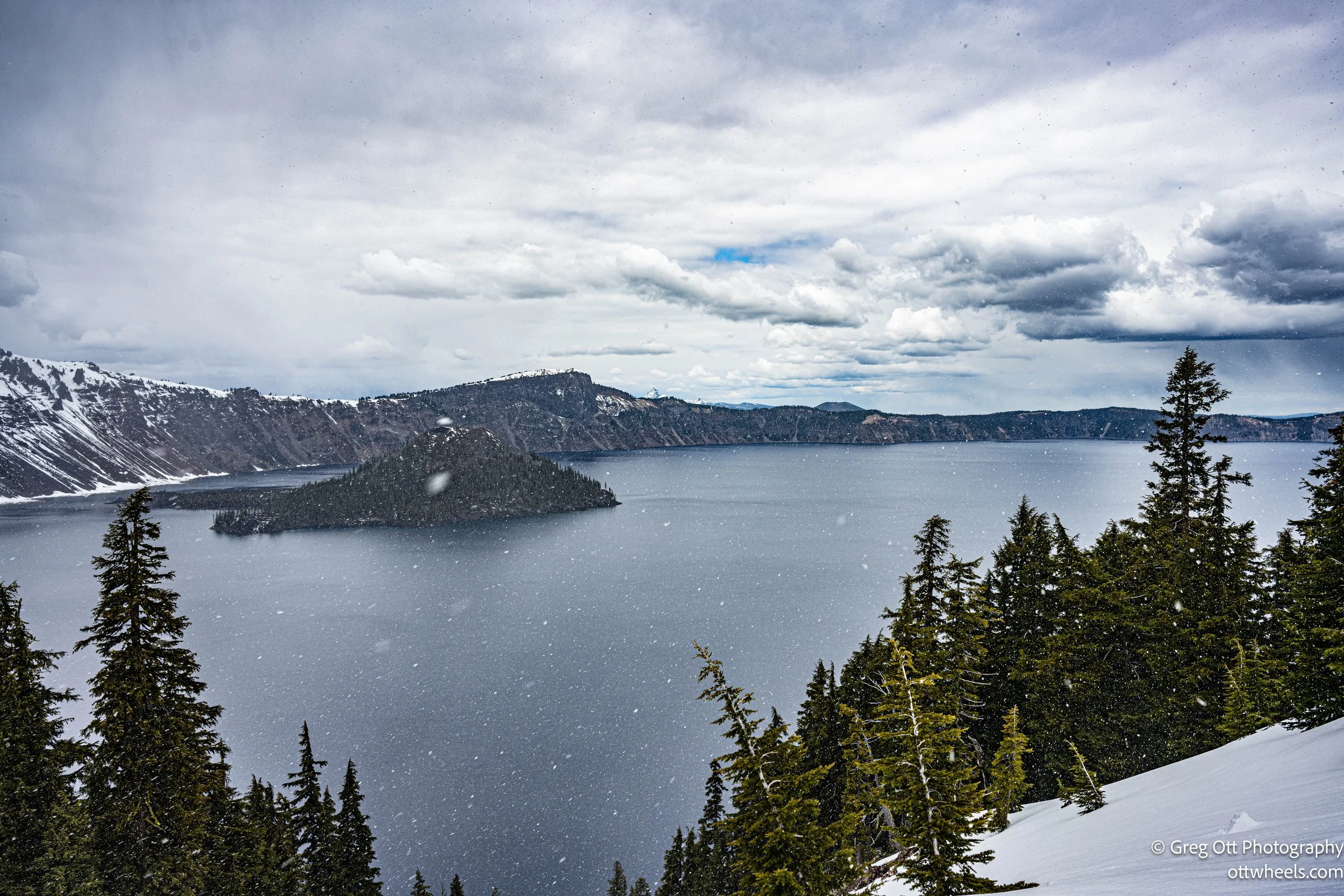
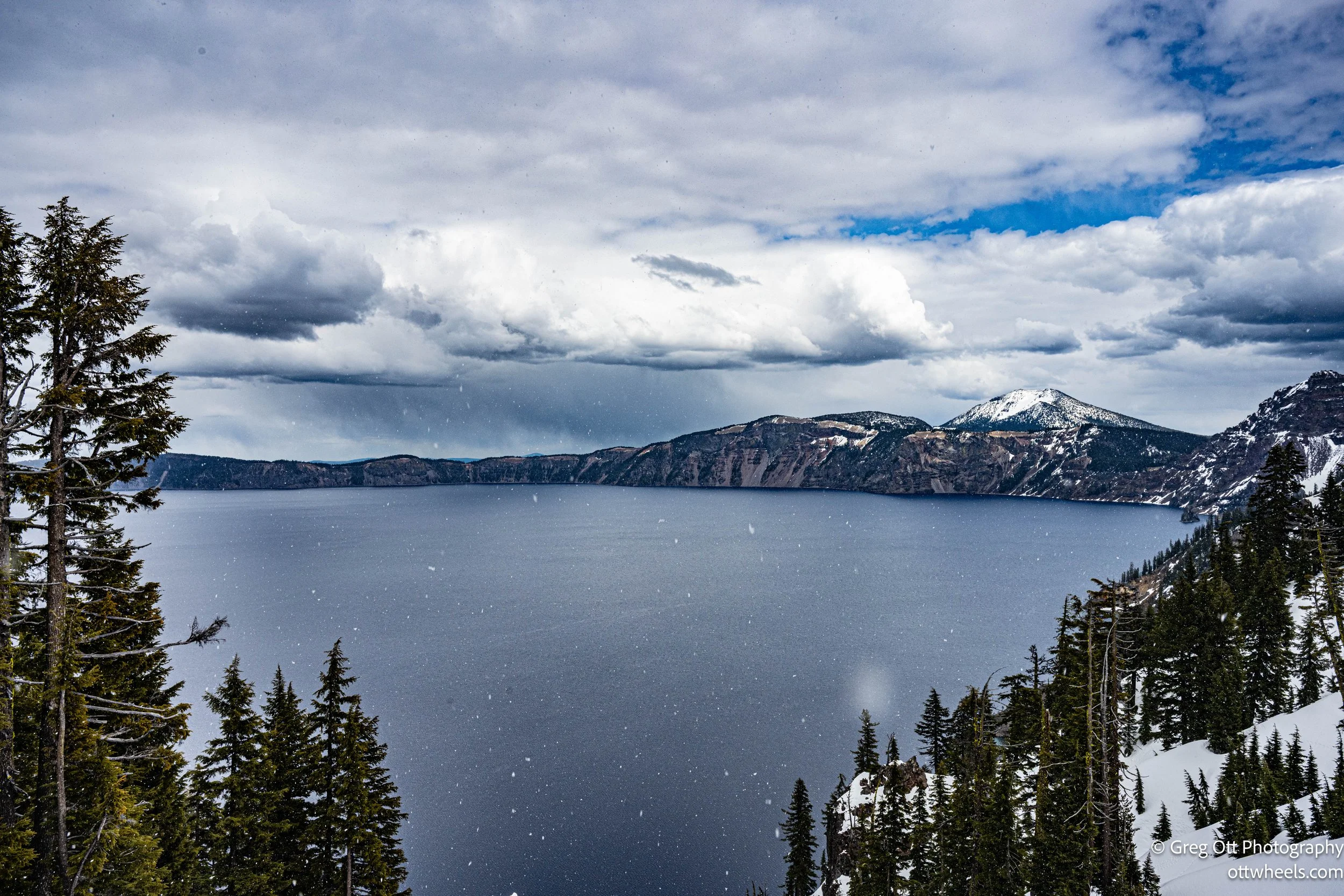
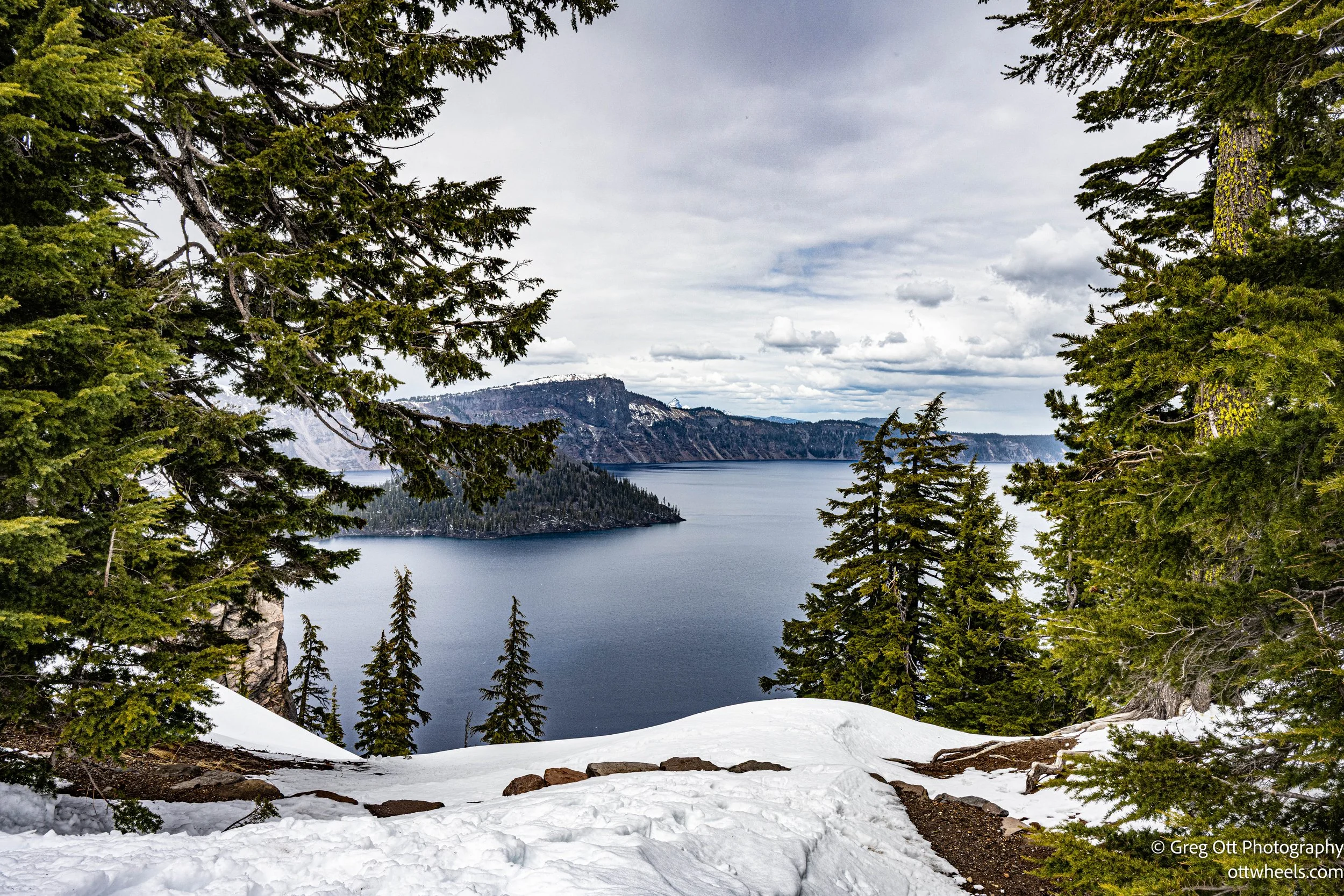
I then walked about a mile along the rim road that had been plowed but was still closed to cars. There were also measuring poles marked up to thirty feet. Average snowfall here is over forty feet a year. Standing there, it was hard to picture that much snow, but the infrastructure made it clear they deal with it regularly.
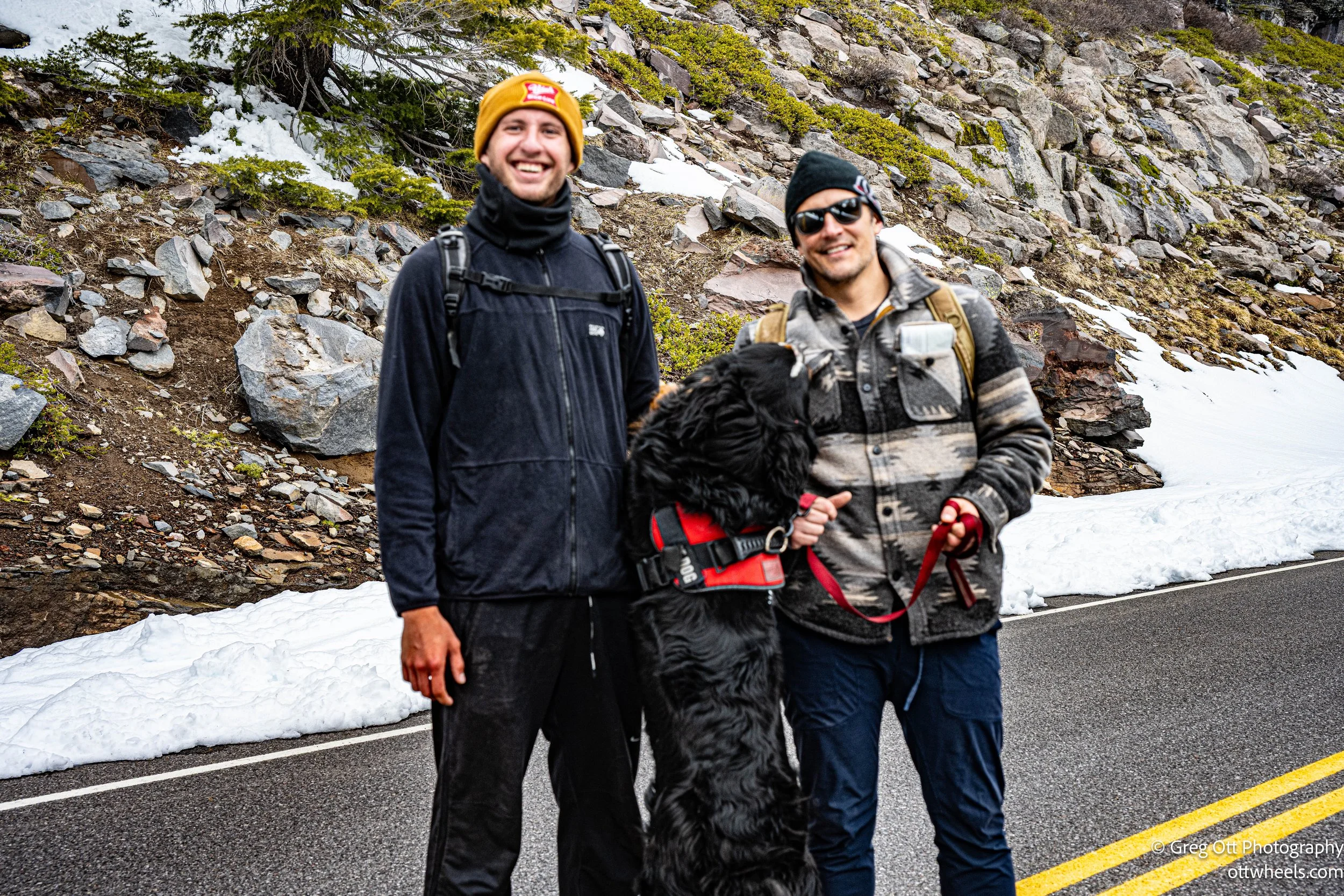
I headed farther out along the road to get different angles for photos. After a few hundred feet, I ran into two guys walking toward me with a Bernese Mountain Dog. Will and Tanner, from Utah. We talked for a bit—about the dog, travel, hiking. The dog didn’t hesitate. Walked right up, leaned into my legs, and waited to be petted. I told them about a friend in Switzerland with the same breed and how I’d seen them all over the Bernese Alps. One of them had a small barrel under its collar carrying kirsch.
After they passed, it got quiet. Really quiet. I didn’t see another person out there; no planes, trains, or loud mufflers. Just the road, the snow, and the lake off in the distance. I took a few photos of snowmen people had built in various places. I never did find the snowshoe trail.
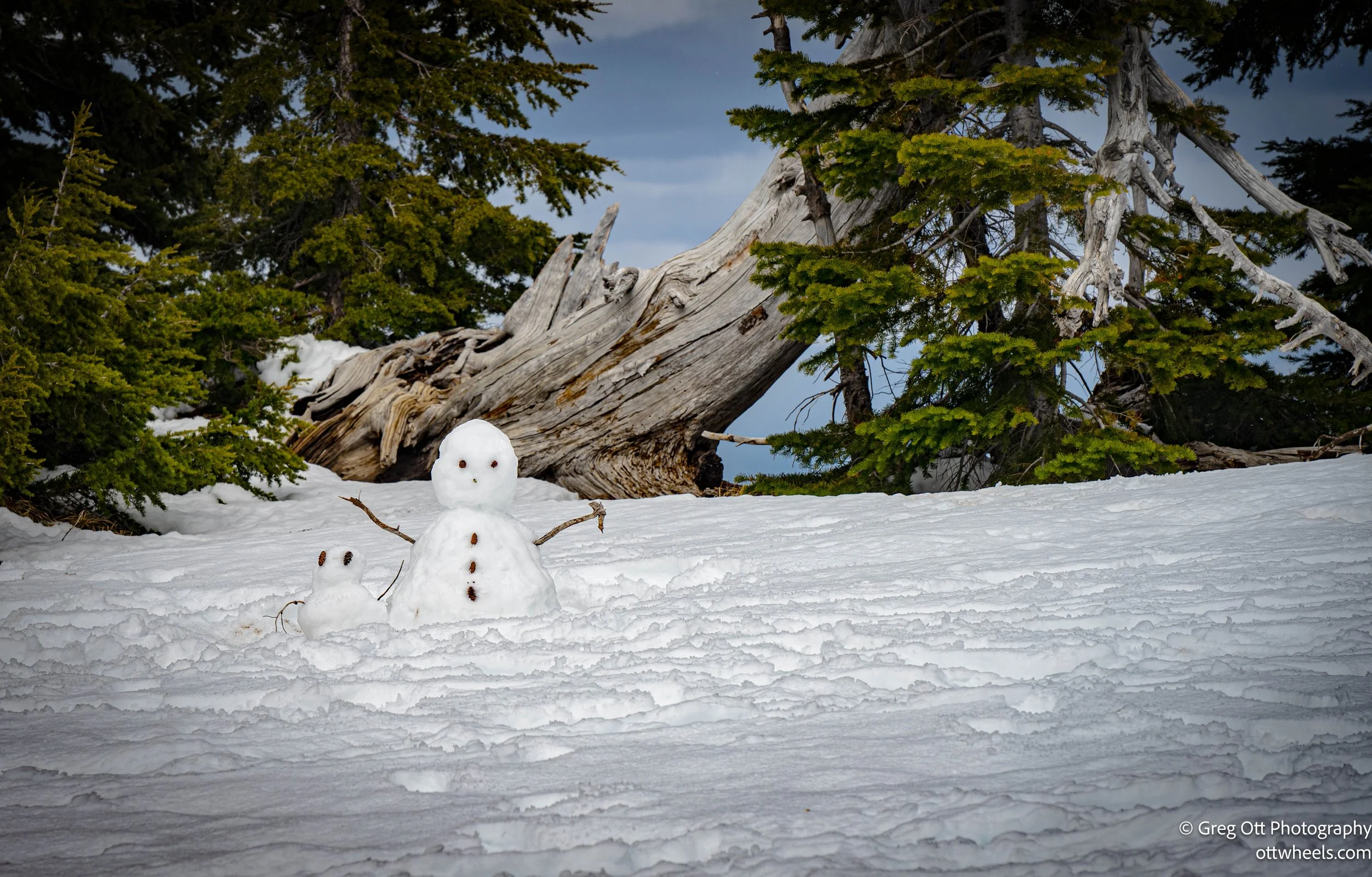
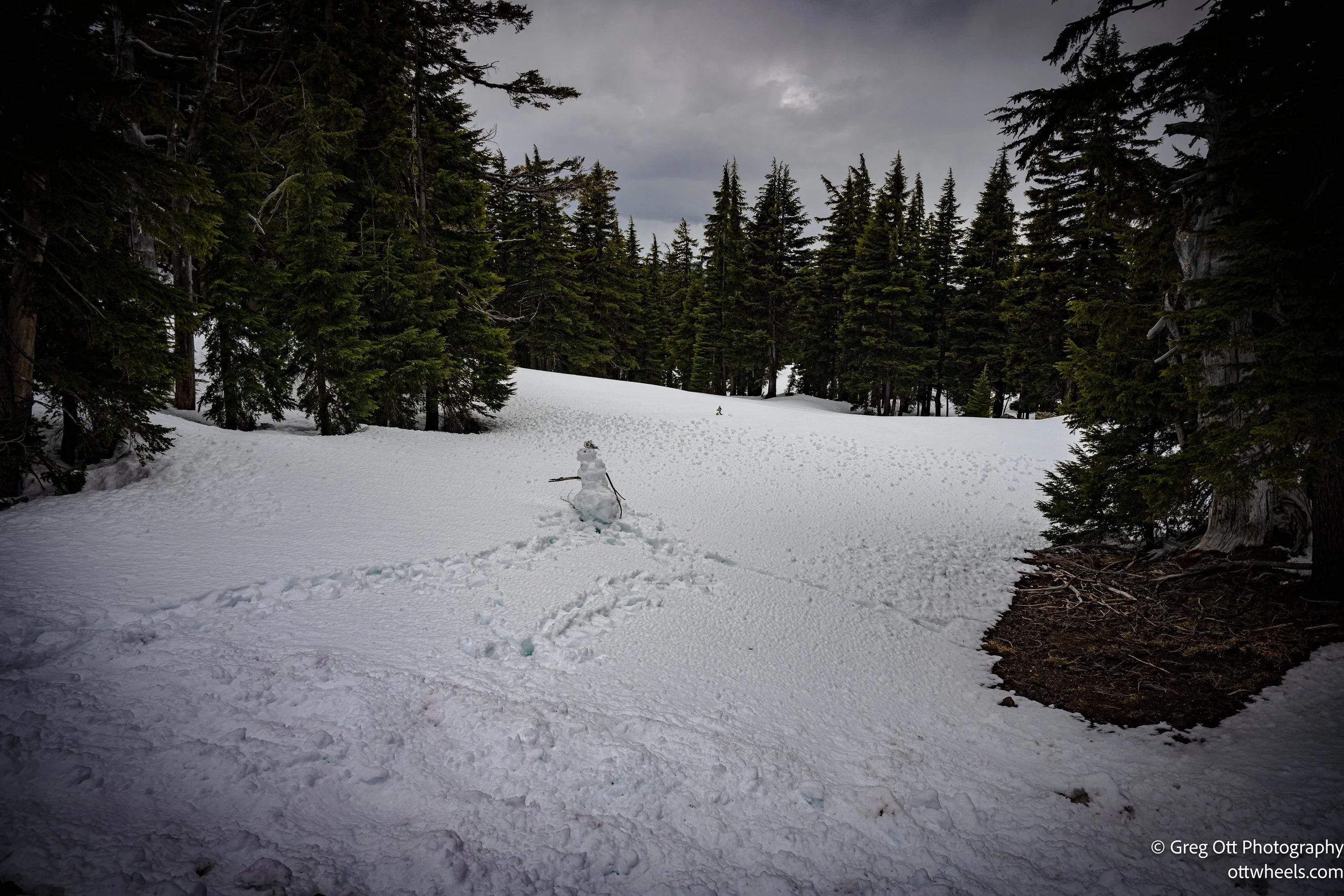
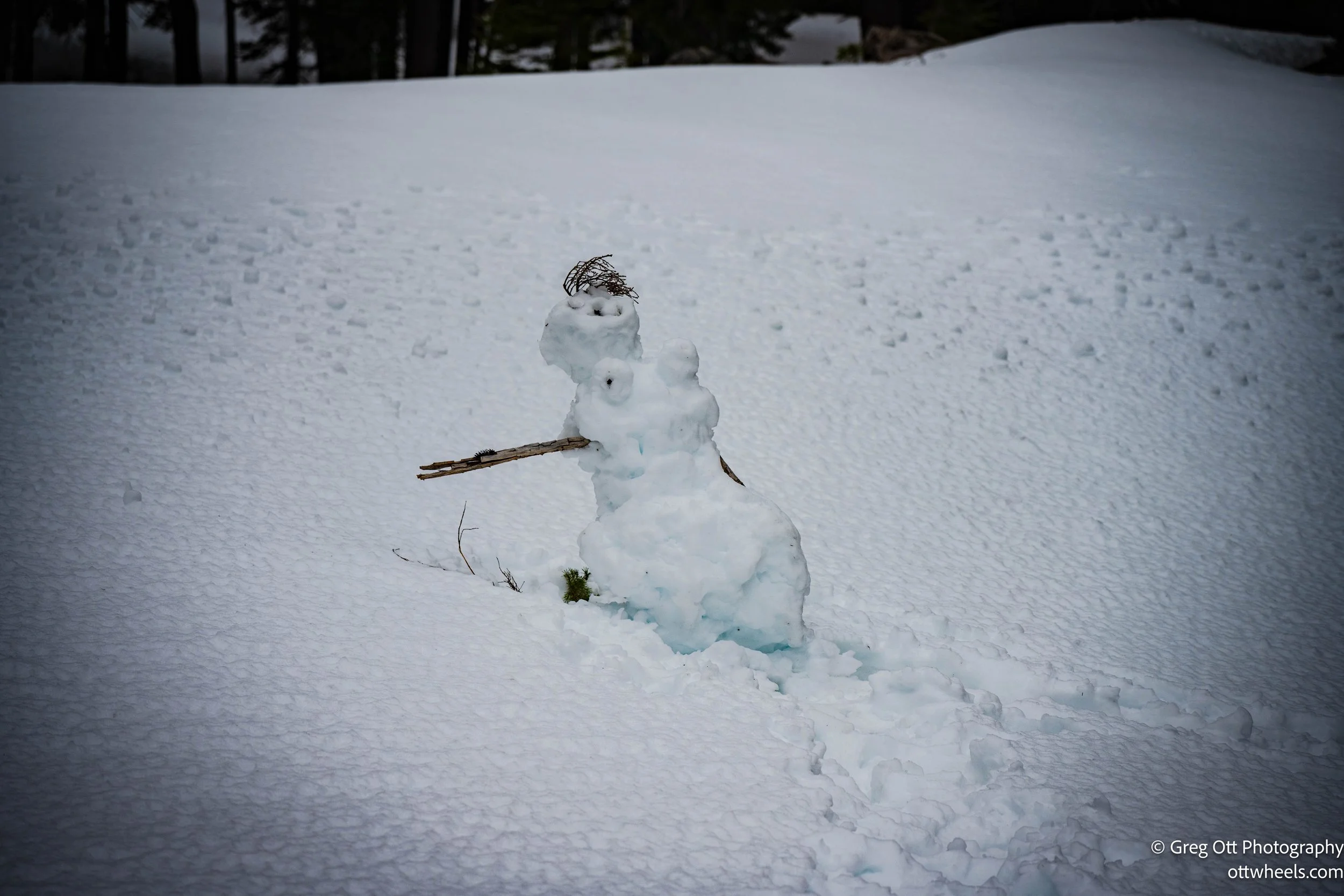
The road wound around the rim and climbed and fell as the rim did. Periodically, I views of the lake, but most of the time I just enjoyed the crips air as the altitude played with my breathing.
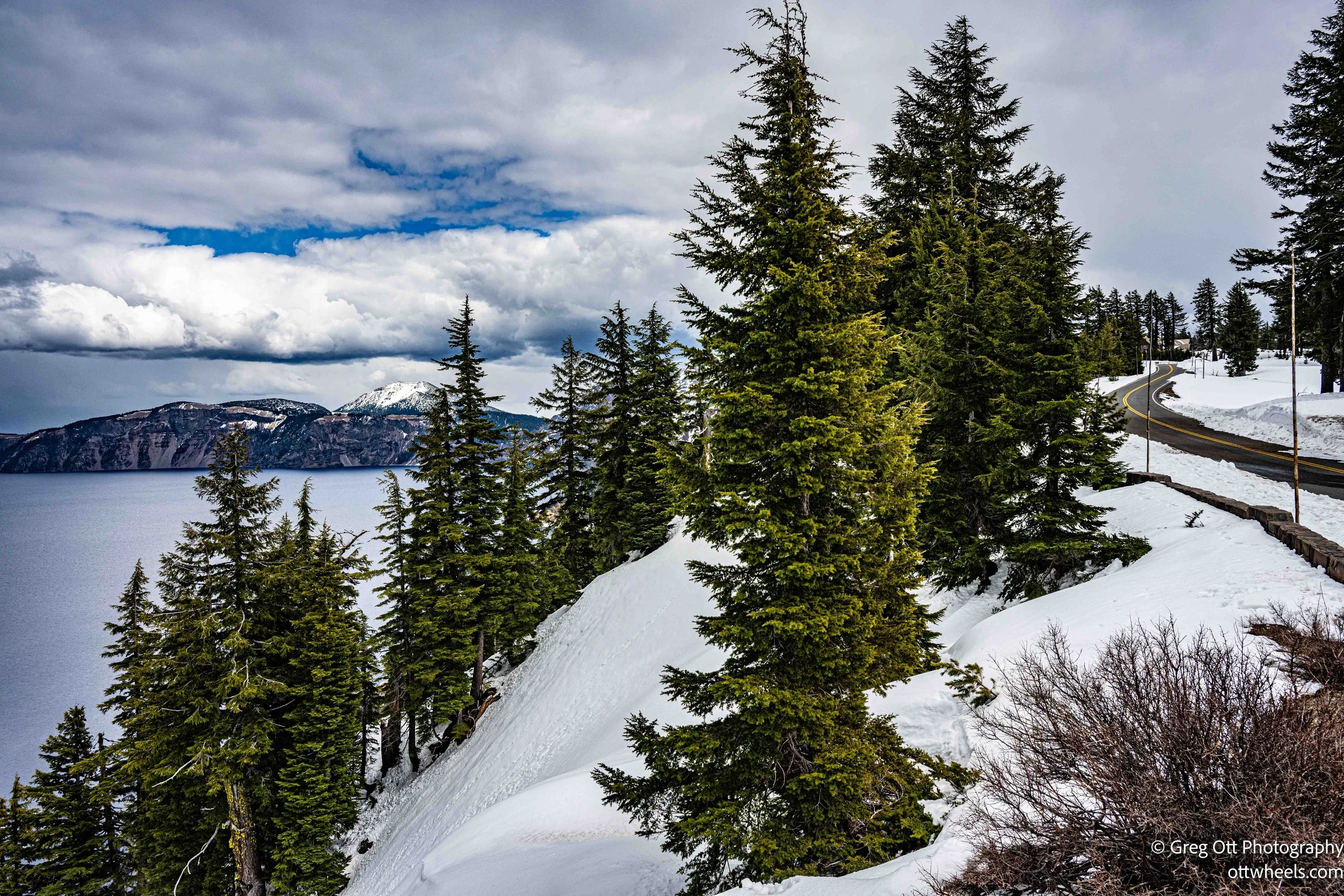
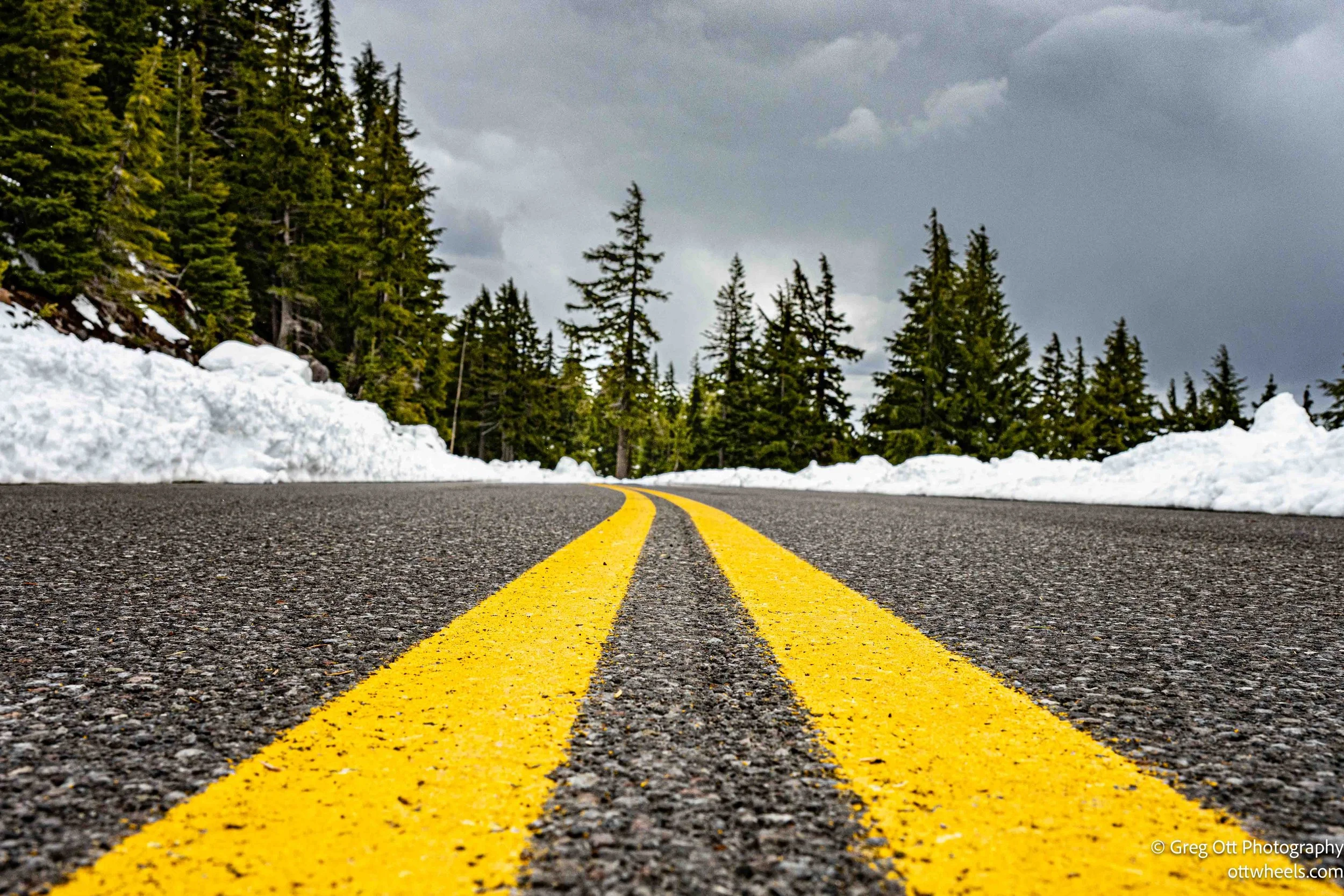
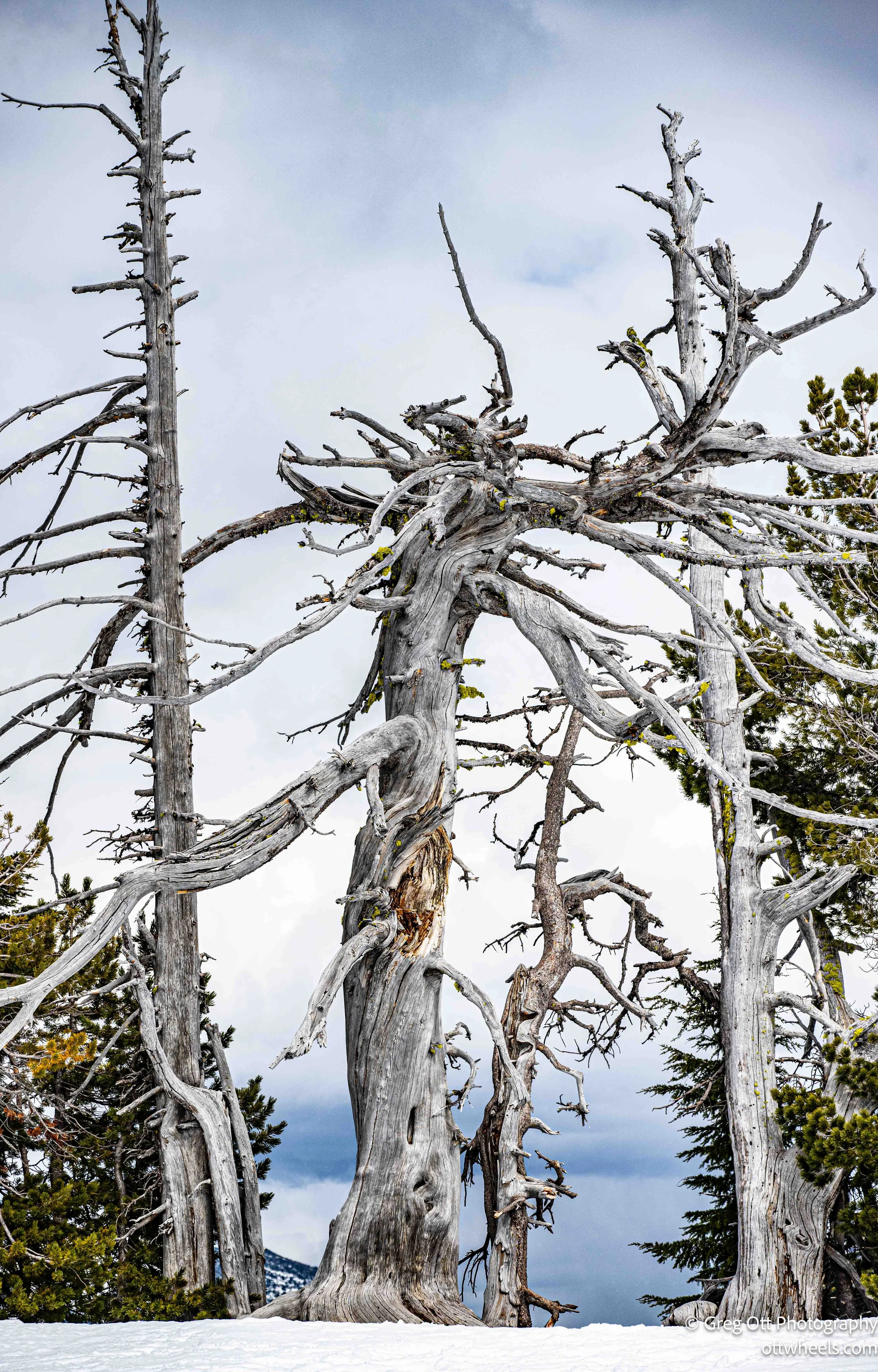
At the end of the road I stopped to take more photos of the lake. It seemed like every 15 minutes the light would totally change. The clouds were thick and it would start to snow. Then the sun would shine through and light up the entire rim.
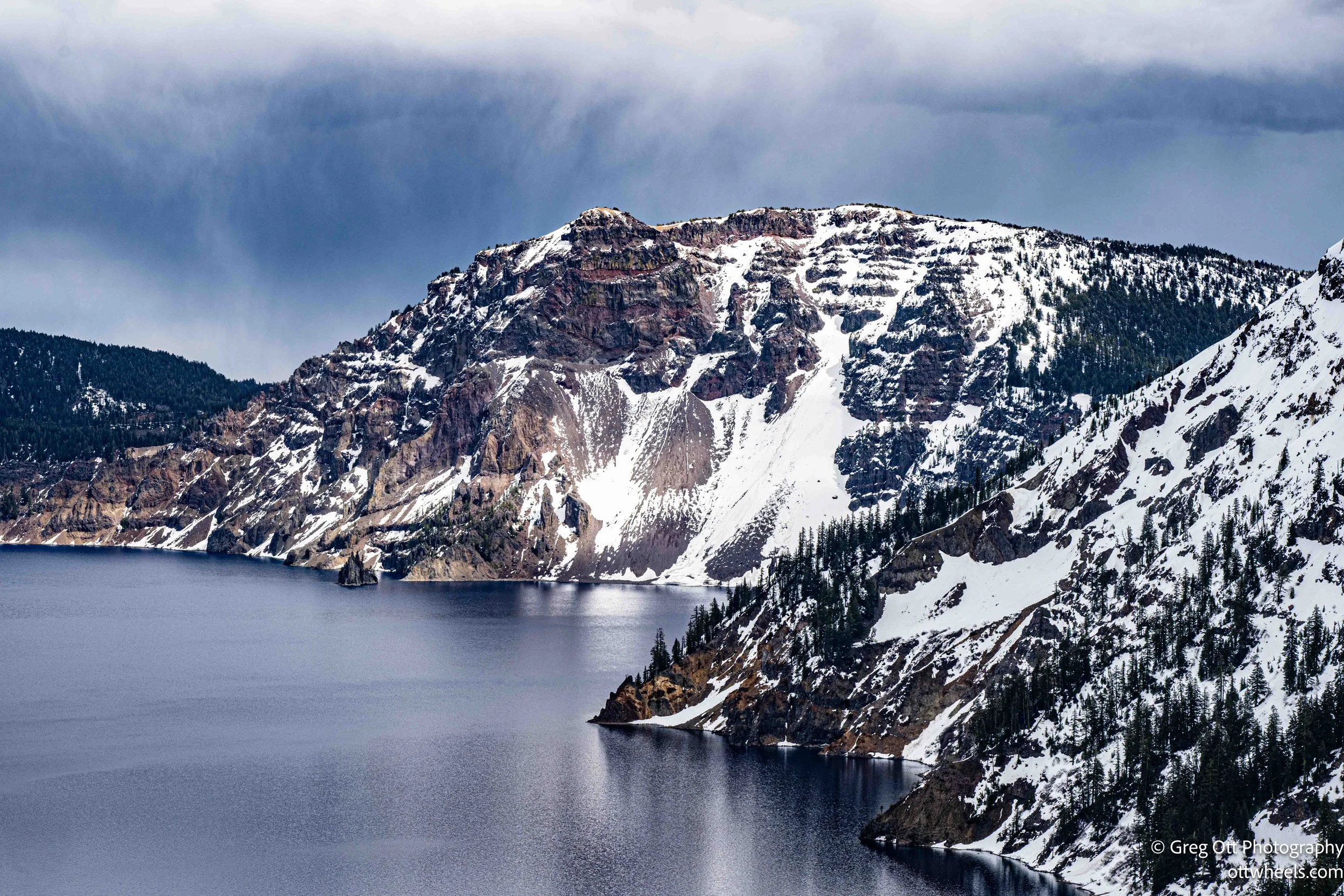
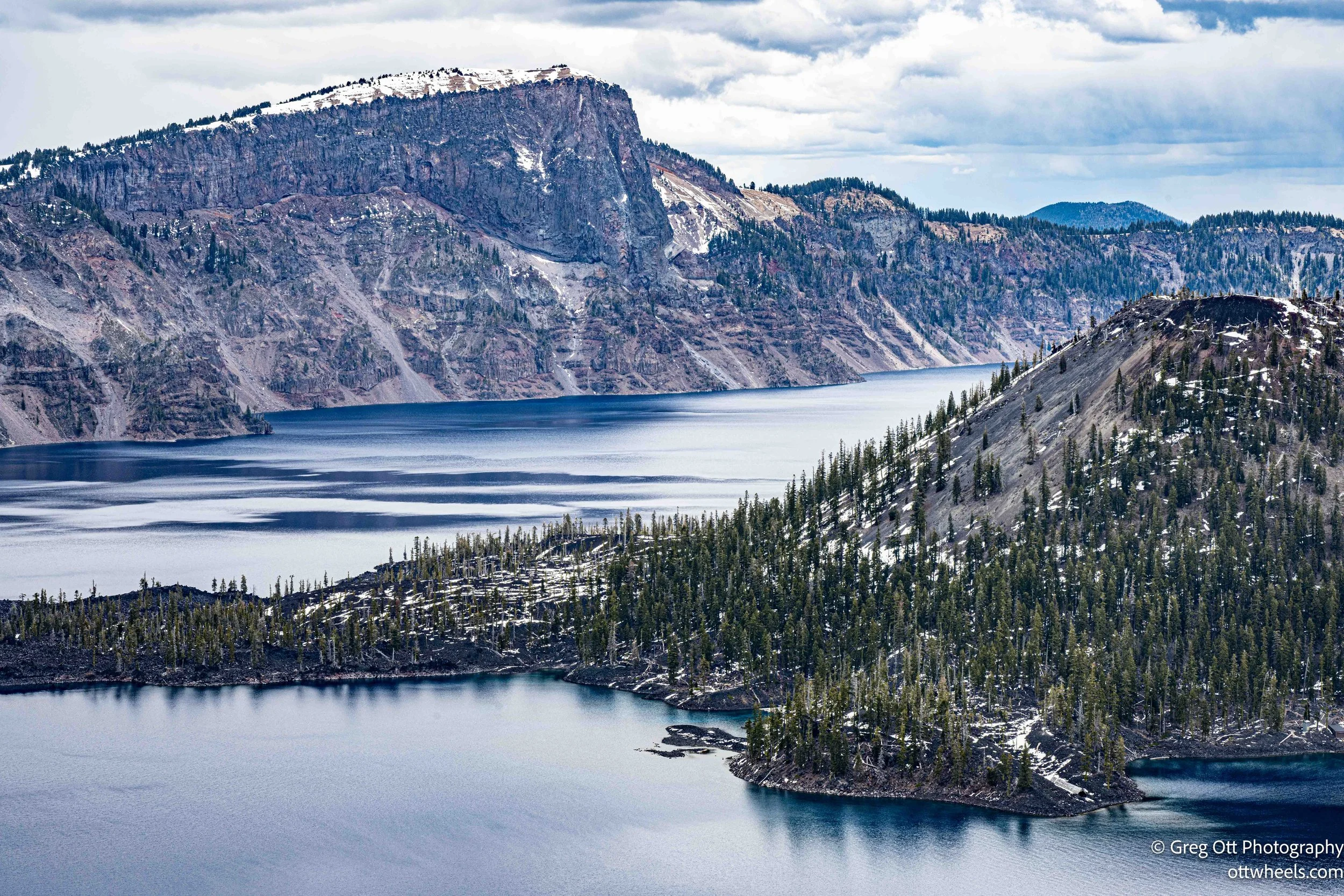
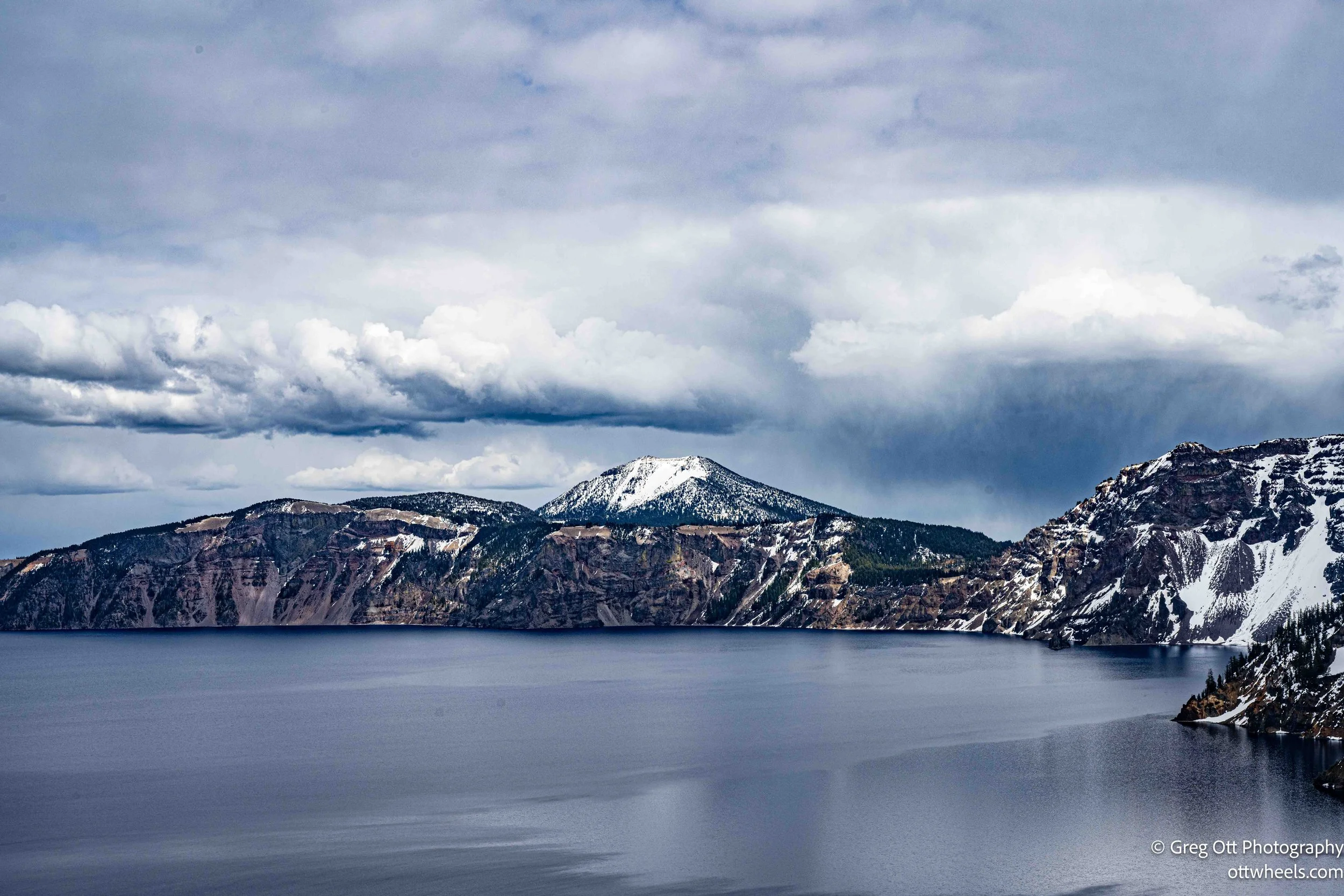
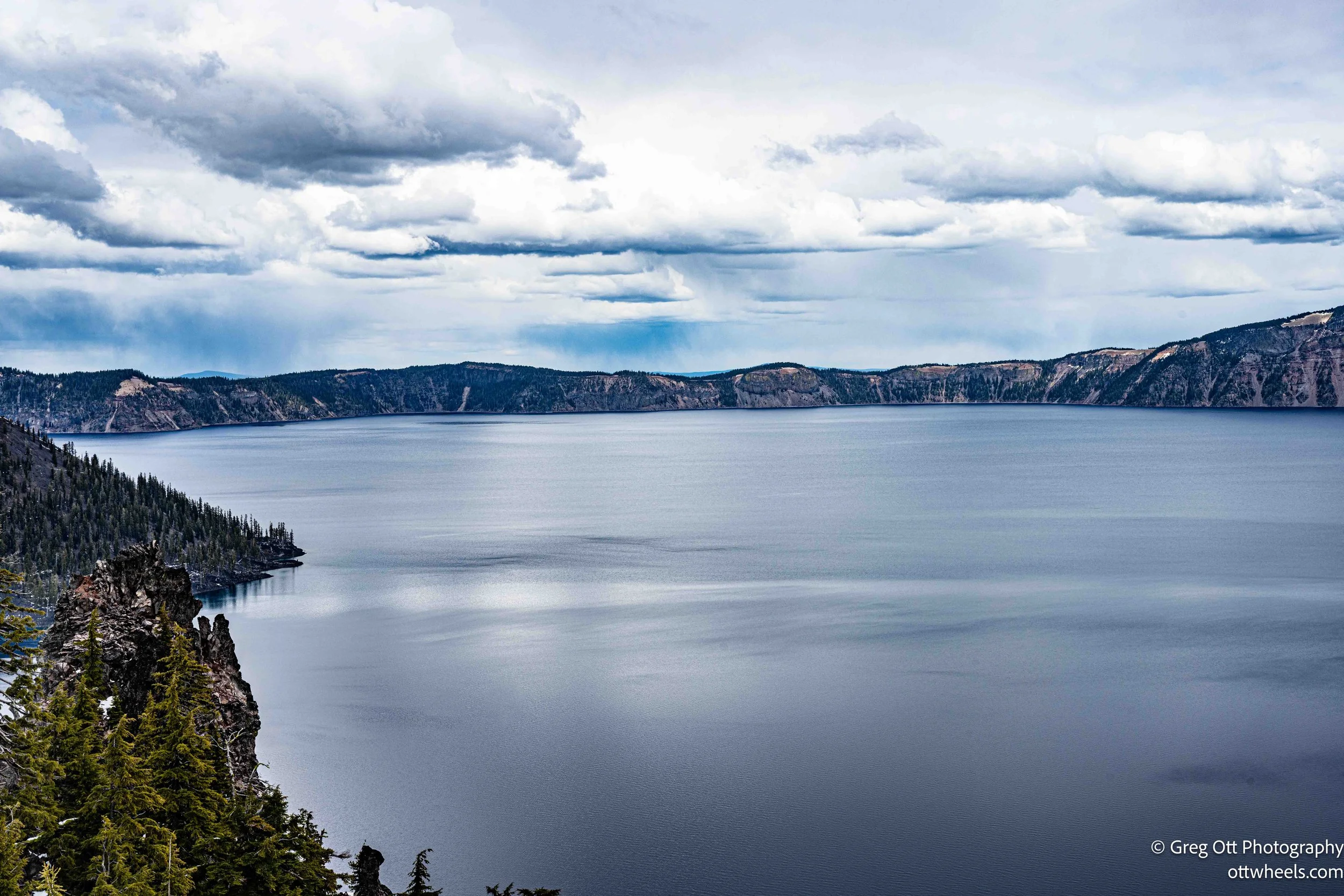
I walked around looking at plaques, snow in the opposite direction, plants and footprints in the snow that I didn’t recognize. When I came back to the rim, there was a stunning black & white photo presenting itself to me. The sun was mostly gone. The clouds were dramatic and the thin sheet of ice on the lake had muted light reflections of the clouds and rim. I fumbled for my camera hoping the sun wouldn’t suddenly reappear.
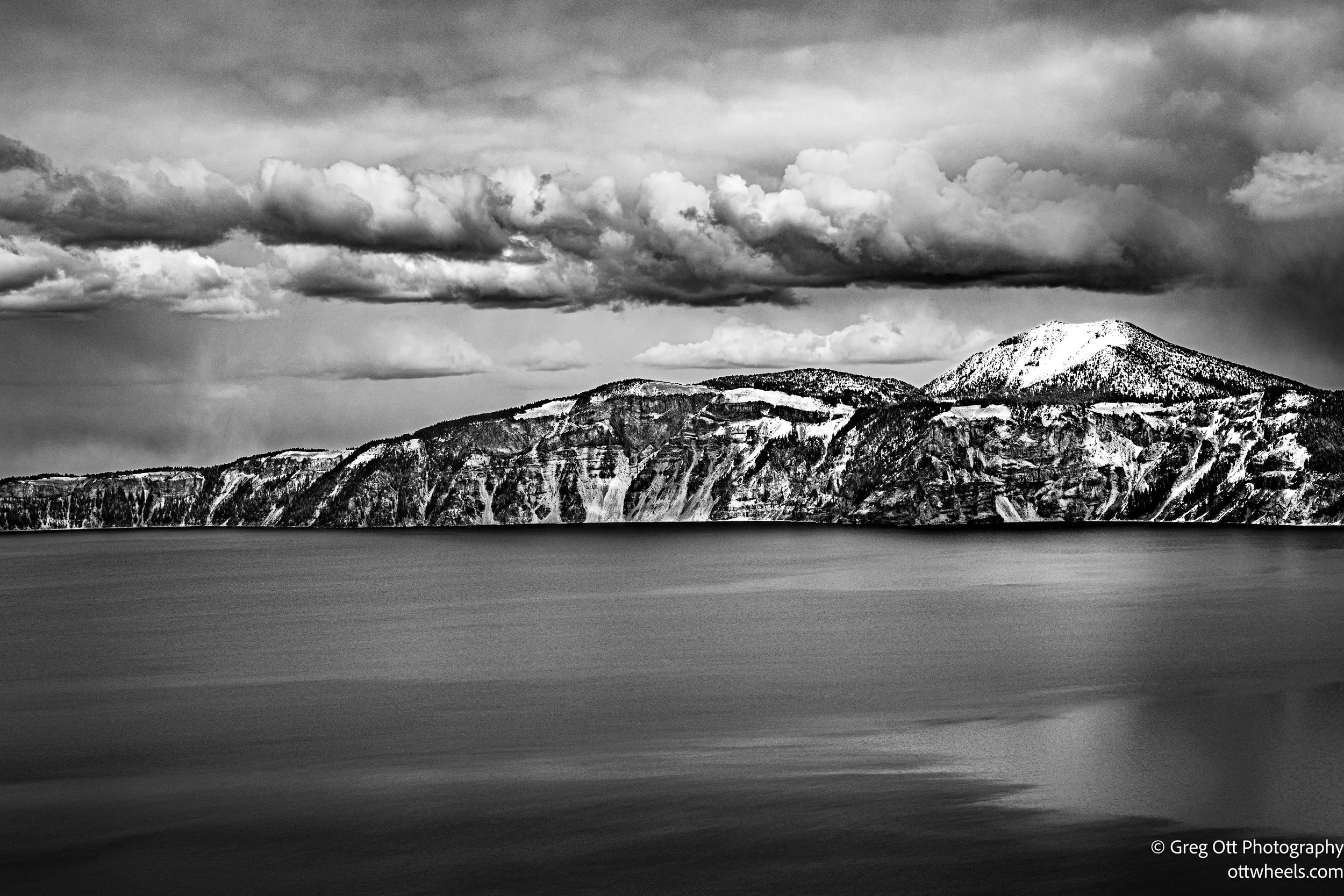
Later in the day, I drove down to one of the Sno-Park lots about 18 miles away. When I got there, I was the only one there. I pulled to the far end of the lot, away from the road. About an hour later, a family showed up and parked right next to me. There was a fire pit nearby, and they were intent on using it. They had three kids, and the whole thing turned into an evening of hot dogs and marshmallows and screaming. Around 9 pm they fired up the generator. That was my que to relocate to the other end of the parking lot.
A different kind of ending to a very quiet day.