Crater Lake to Painted Hills
I woke up in the Annie Creek sno-park about 10 miles outside of Crater Lake National Park. The plan was to head up to the rim after breakfast and snowshoe. After some light van cleaning and a wave to the ranger making sure both camping vehicles had paid the $5 fee, I drove back up to the rim.
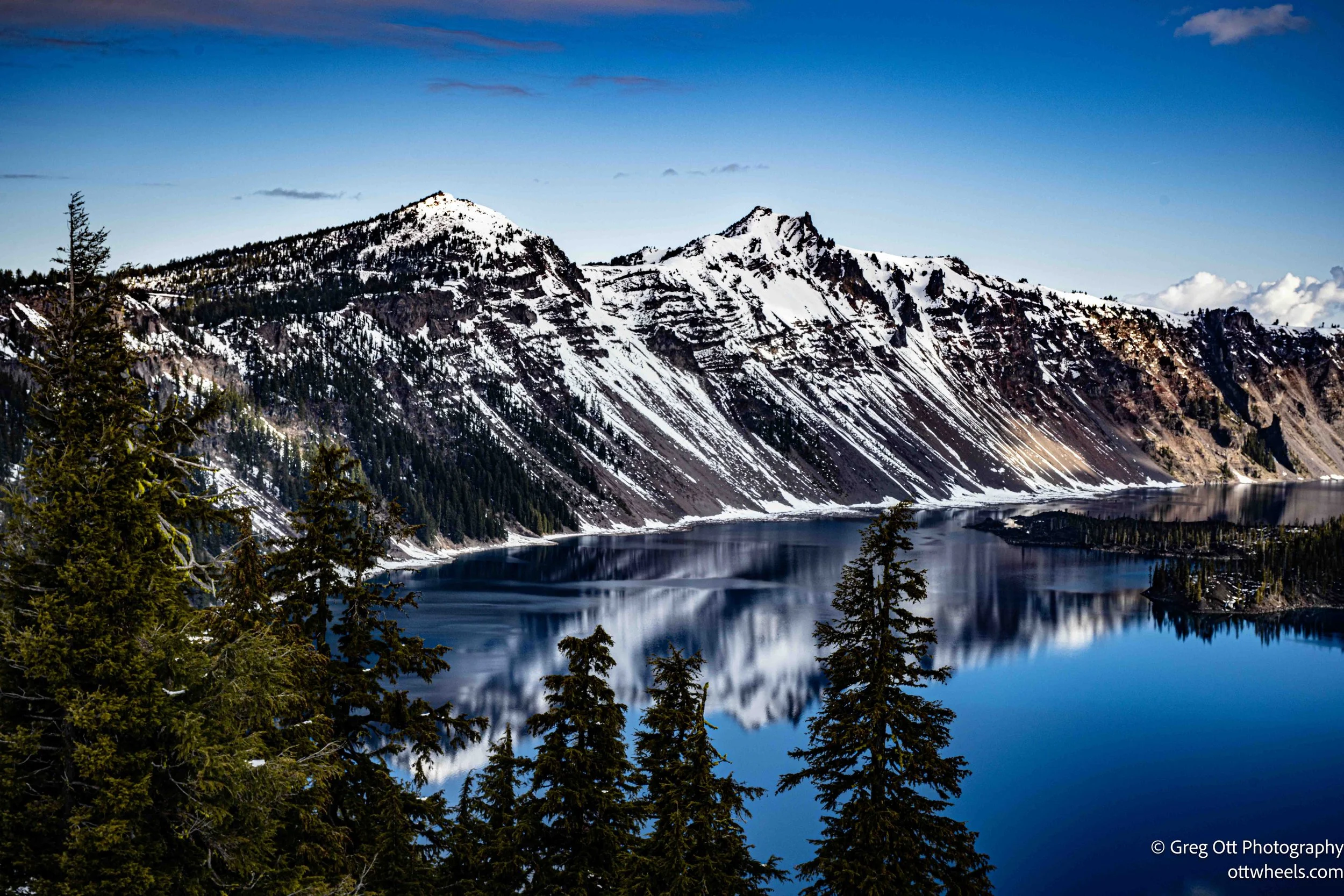
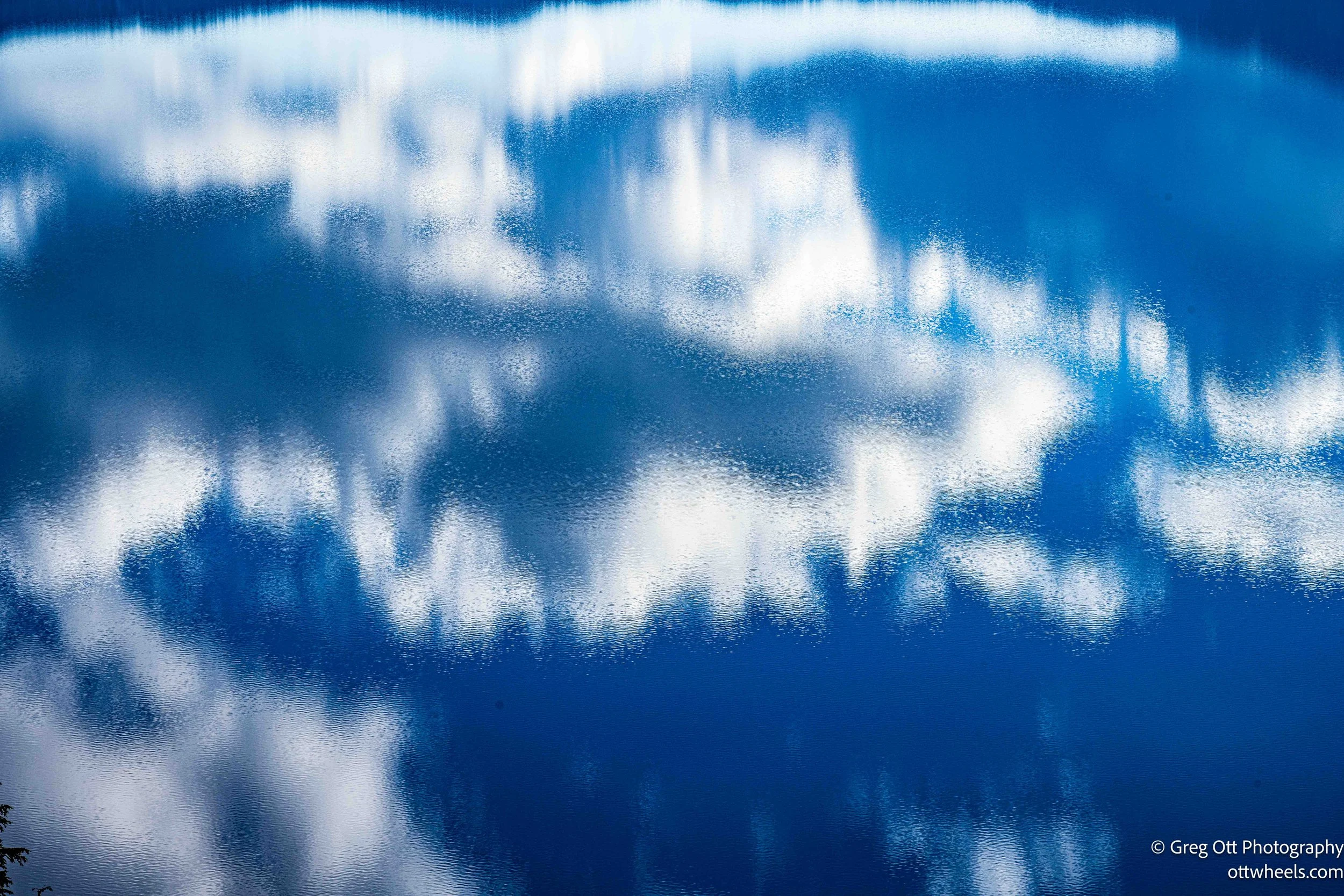
A volunteer had told me the day before that the weather would clear, and she was right. The sky was mostly blue with just enough clouds to add some mood. It looked good, but not perfect—those early morning colors along the rim never quite showed up the way they can when everything lines up just right.
I started talking with a guy named Tim who had just arrived minutes before me. He was from Texas, recently moved to Washington, and was using a few days off to see what the Northwest had to offer. We got into one of those easy conversations that happen when two people are standing somewhere that doesn’t quite feel real. At some point we started talking about the crater itself, and I passed along what I’d pieced together from the plaques and my stop at the High Desert Museum.
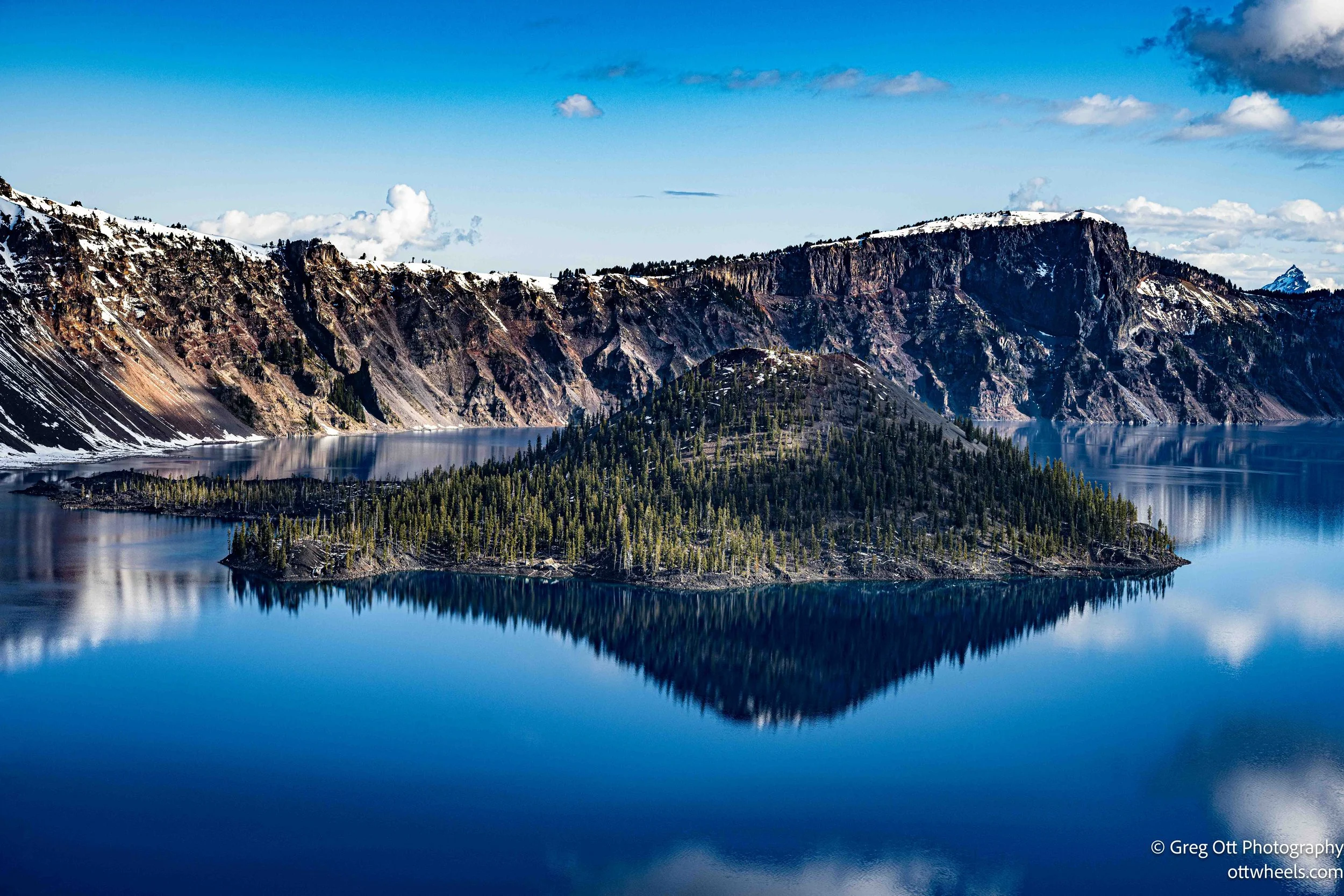
Crater Lake exists because Mount Mazama didn’t just erupt—it collapsed. It was estimated to be 12,000 feet tall at the time. About 7,700 years ago, a massive eruption emptied the magma chamber, and the mountain couldn’t hold itself up anymore. It caved in, leaving behind the caldera that slowly filled with rain and snowmelt. Wizard Island, the cone that rises out of the lake, came later—formed by smaller eruptions after the collapse.
The lake itself is deeper than anything else in the U.S.—nearly 2,000 feet—and it’s known for how clear the water is. There are no rivers feeding it, no sediment constantly flowing in, just precipitation and time. The park monitors the clarity and water levels closely, and from what I could see, it still holds that deep, almost unnatural blue that makes you stop and stare a little longer than you expected.
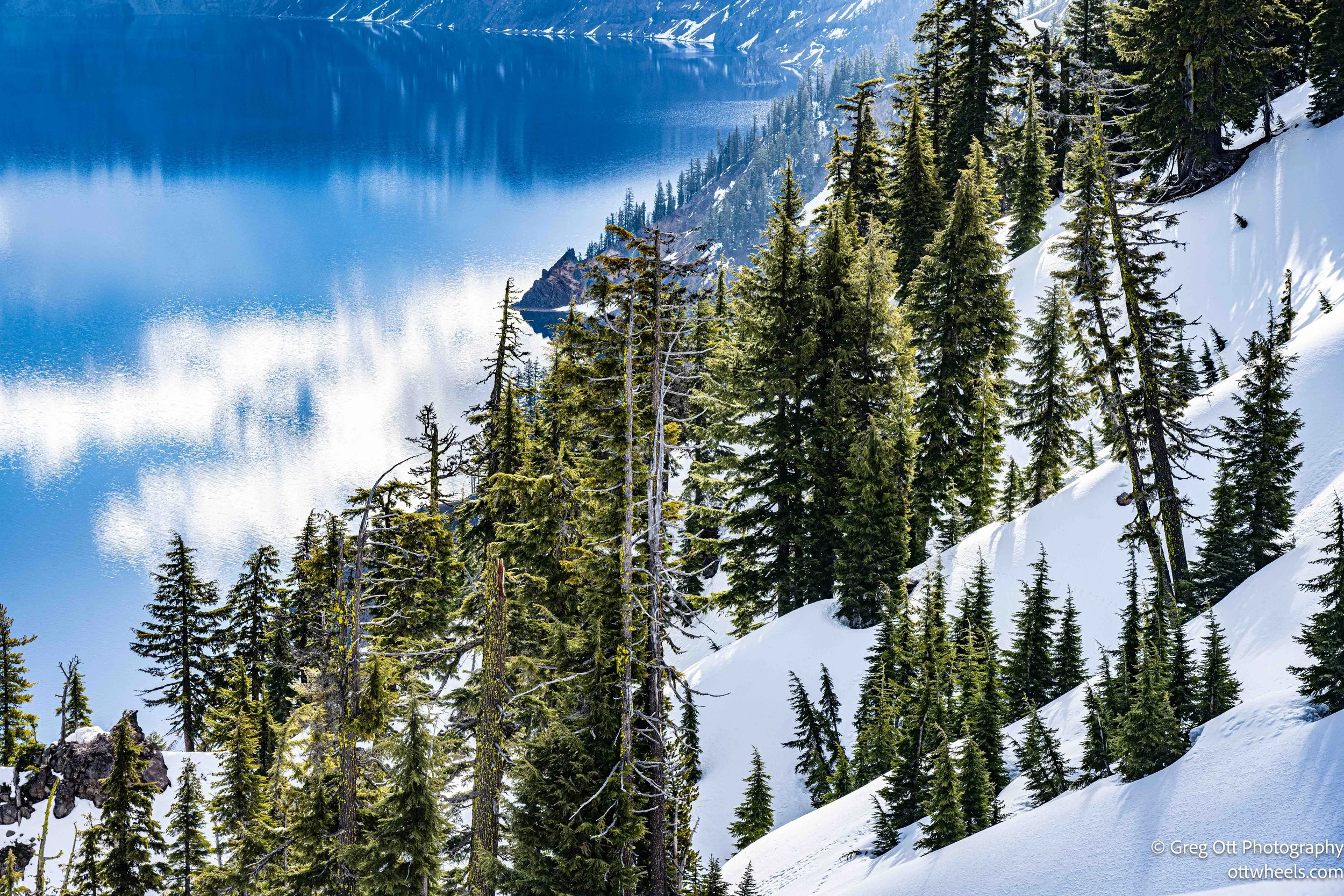
As Tim headed off to walk the road I’d done the day before, a couple in their 40s walked over and said good morning. They were from Montana, spending a few weeks exploring Oregon. While we were talking, the guy stepped right past a sign warning that the snow drift could collapse. I pointed it out—told him he was basically standing on a pile of snow that could give way at any time. He ignored me. His wife gave it a shot next: “Honey, that looks dangerous.” No response. Then she followed it up with, “Okay, you do you. At least the life insurance is paid up.” That seemed to land. I wished them a good trip and headed back to the van.
By then it was pushing 10 am, and I had a long drive ahead to the Painted Hills. I kept going back and forth on whether it was worth drive all the way there. It was out of the way, and nothing I’d read made it sound like something I couldn’t skip.
South of Bend, I pulled into the lava lands area again, but the visitor center was still closed. The drive from Crater Lake had already shifted from dense forest to something more open and dry. The thick evergreens gave way to high desert—long stretches of scrub, low hills, and wide skies that make everything feel farther apart. It’s a quiet kind of landscape. Not dramatic at first glance, but it grows on you as you move through it.
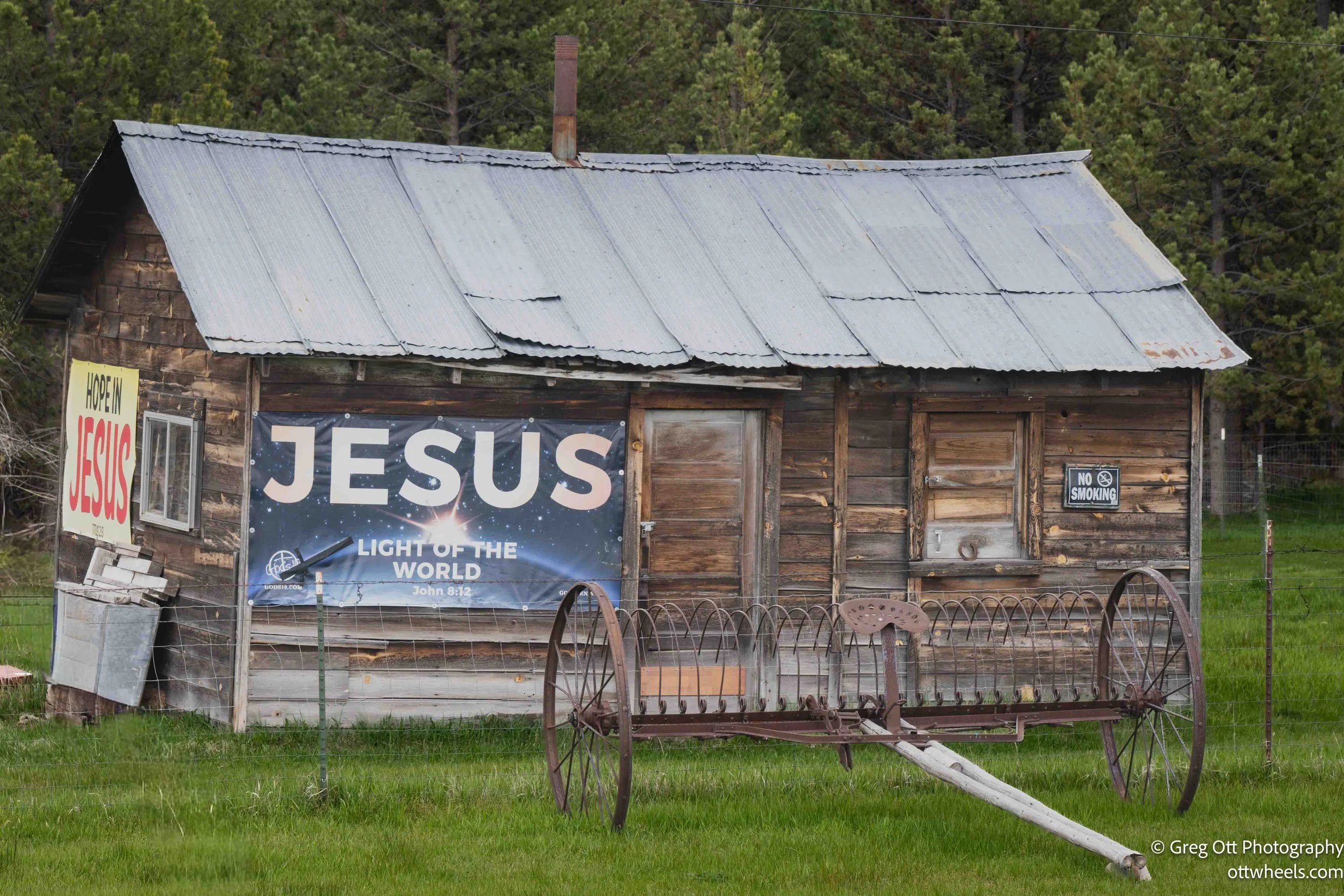
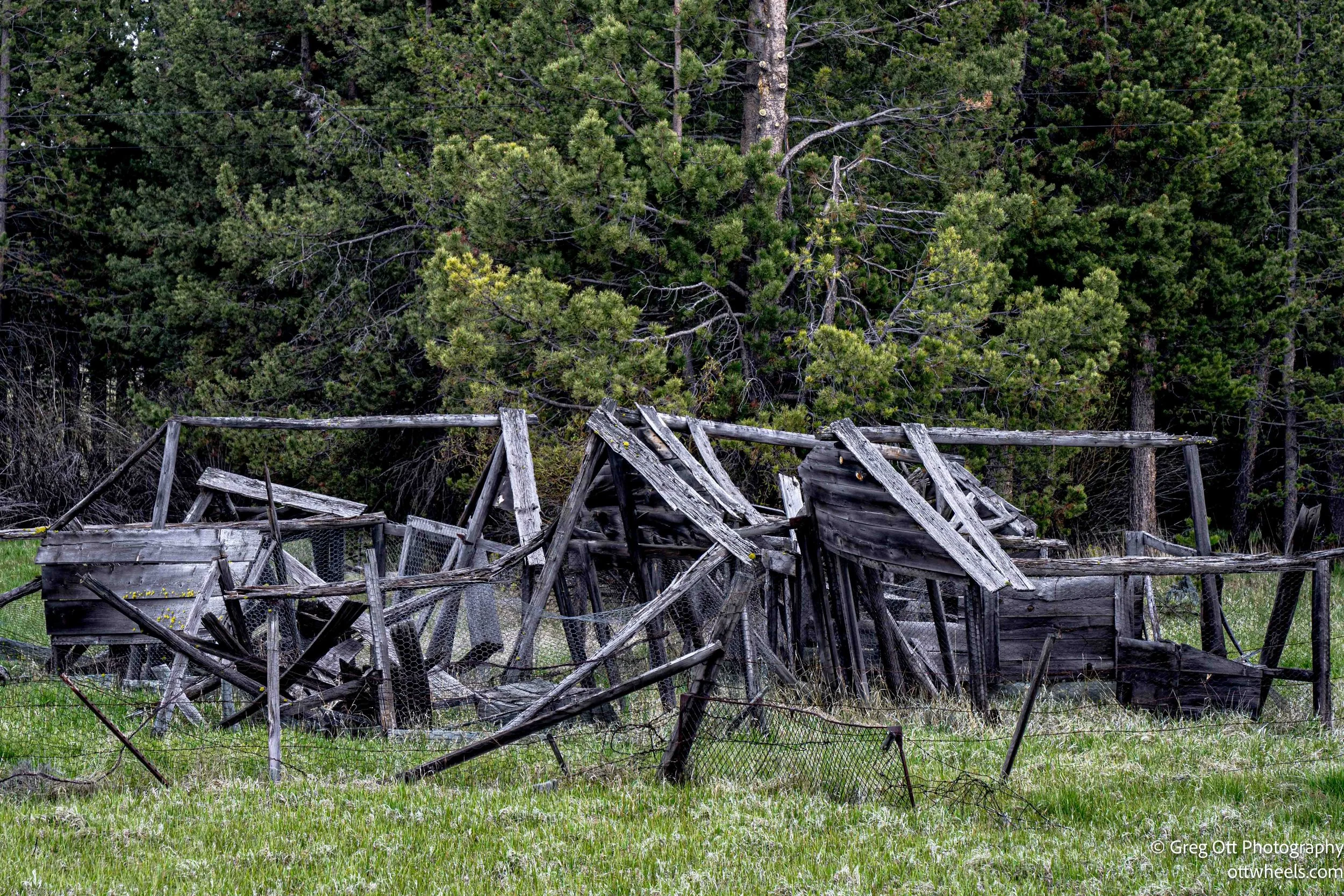
I pulled over at one point to photograph a house surrounded by an excessive number of cars, then another that didn’t look lived in at all but had signs everywhere—“Hope in Jesus,” “Jesus Light of the World.” It made me think about how, no matter where you go, people feel the need to put something out into the world—belief, identity, a message—just in case someone else is listening. There was another that had all but come completely come apart from a hundred years ago.
I worked through a stack of podcasts as the miles went by. The closer I got, the more I wondered if I’d made a mistake. By the time I reached the turnoff around 2:30 pm, the road turned to dirt, which didn’t exactly boost my confidence. I stopped, softened the shocks, and kept going.
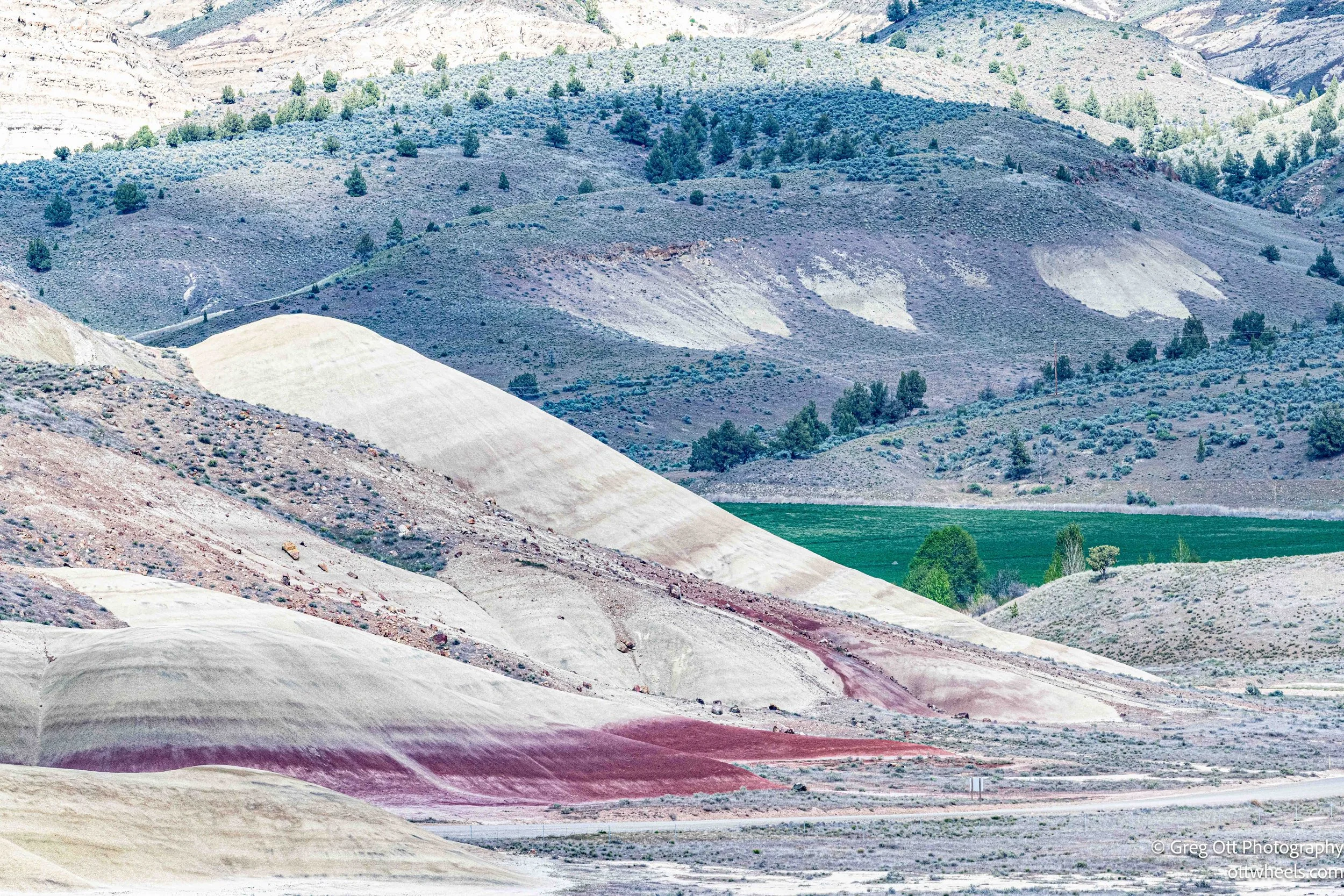
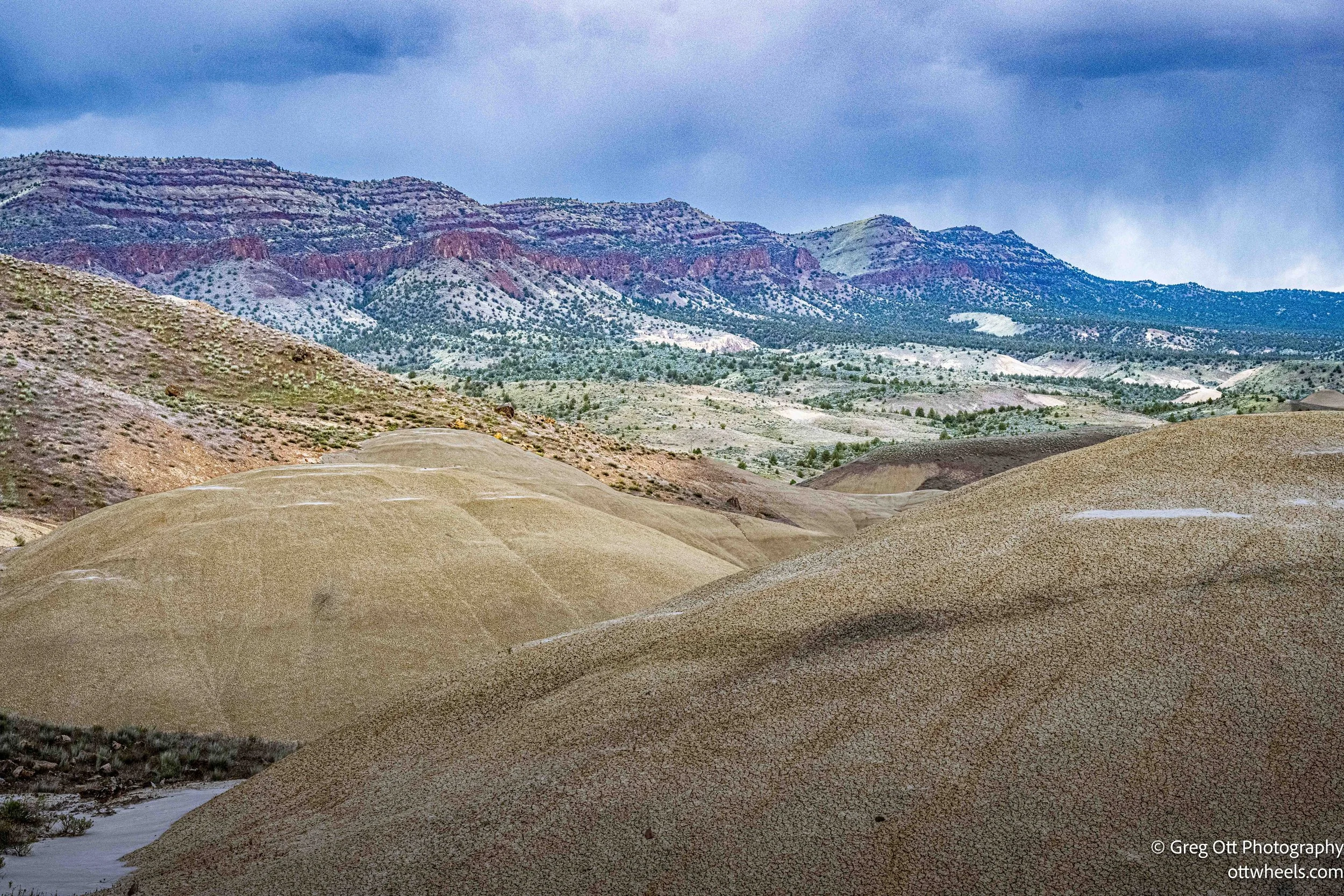
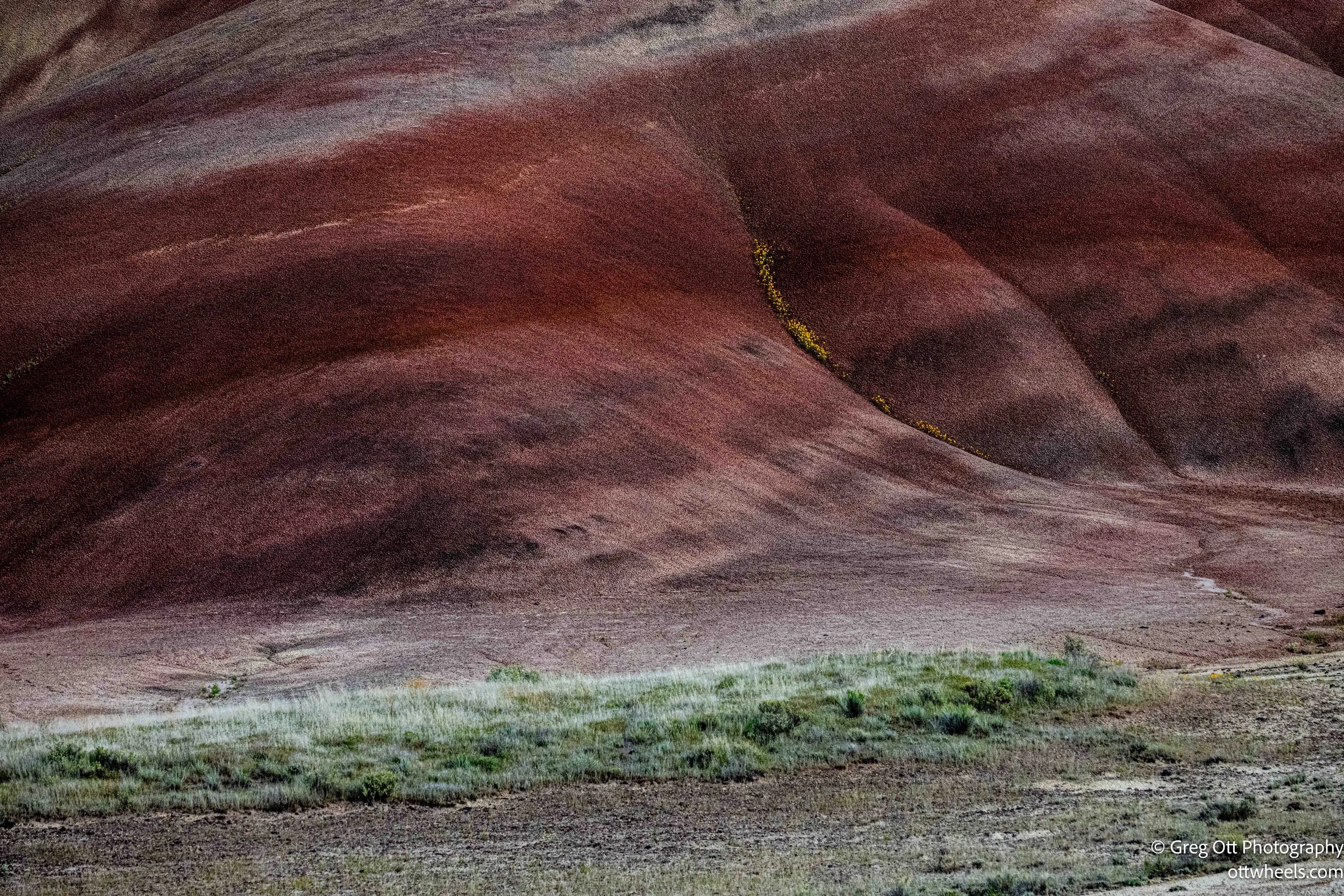
About a mile in, the road started to climb, and then, without much warning, the hills appeared off to the left. They didn’t look real at first—bands of red, gold, black, and orange layered across smooth, rounded shapes.
The Painted Hills are made of ancient volcanic ash and soil that settled in layers millions of years ago when this area was a floodplain. Each color comes from different minerals—iron compounds that oxidized over time, creating reds and yellows, while darker layers formed under different conditions. What surprised me was how intact everything still is. These aren’t rock formations in the traditional sense—they’re soft, almost fragile. The reason they haven’t washed away is that the climate is dry enough to slow erosion, and the surfaces form a kind of crust that protects what’s underneath. Still, you can tell they’re changing, just very slowly.
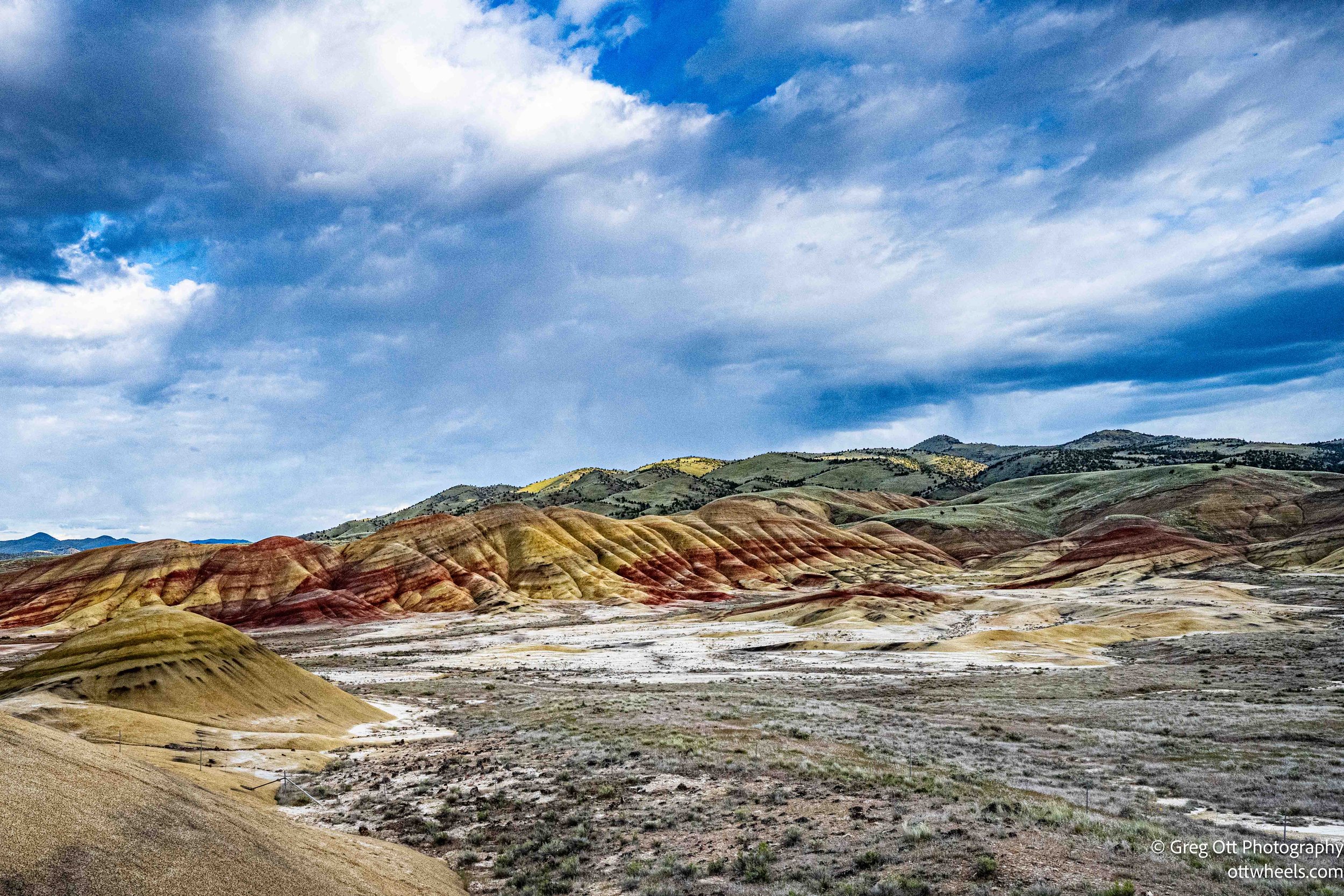
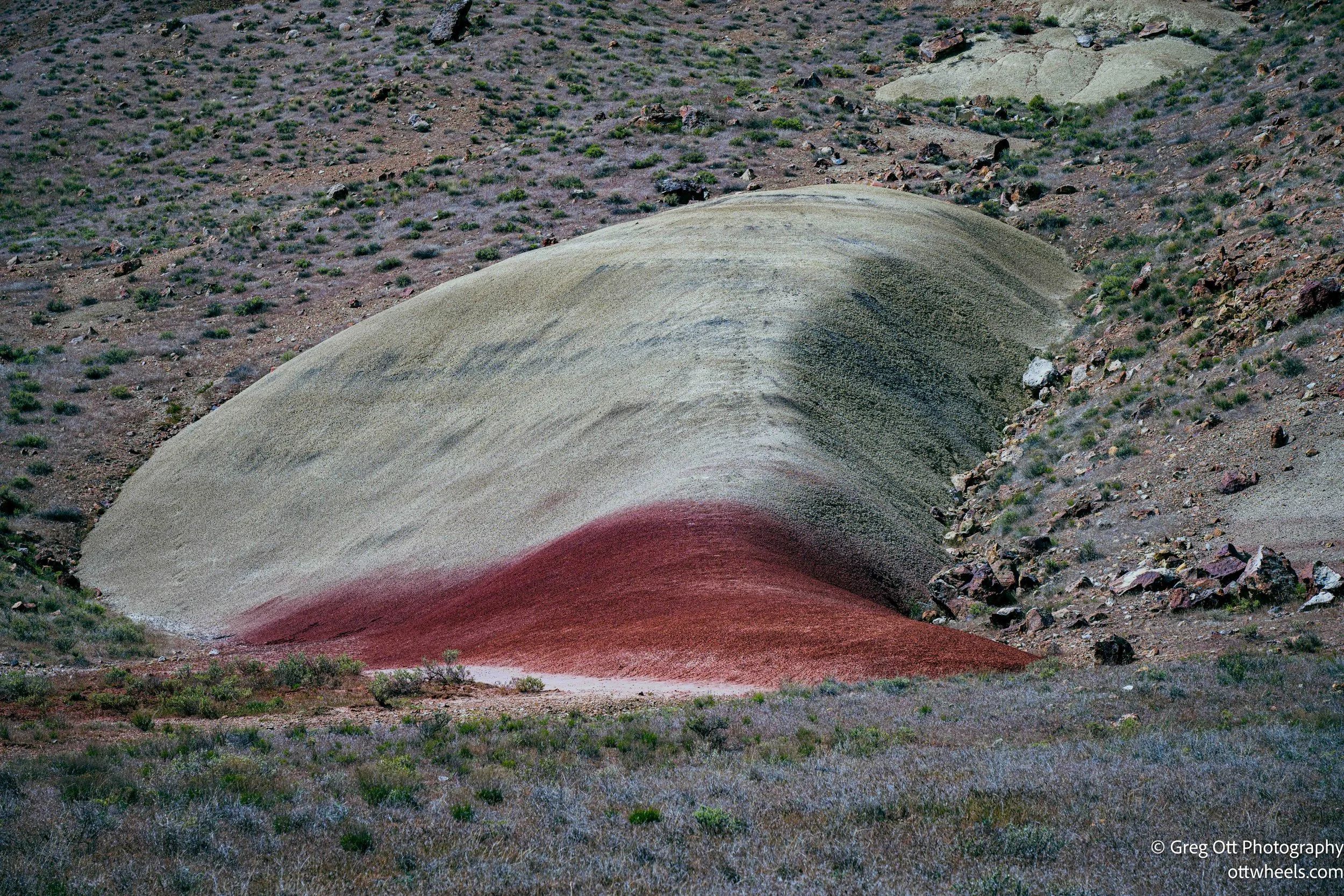
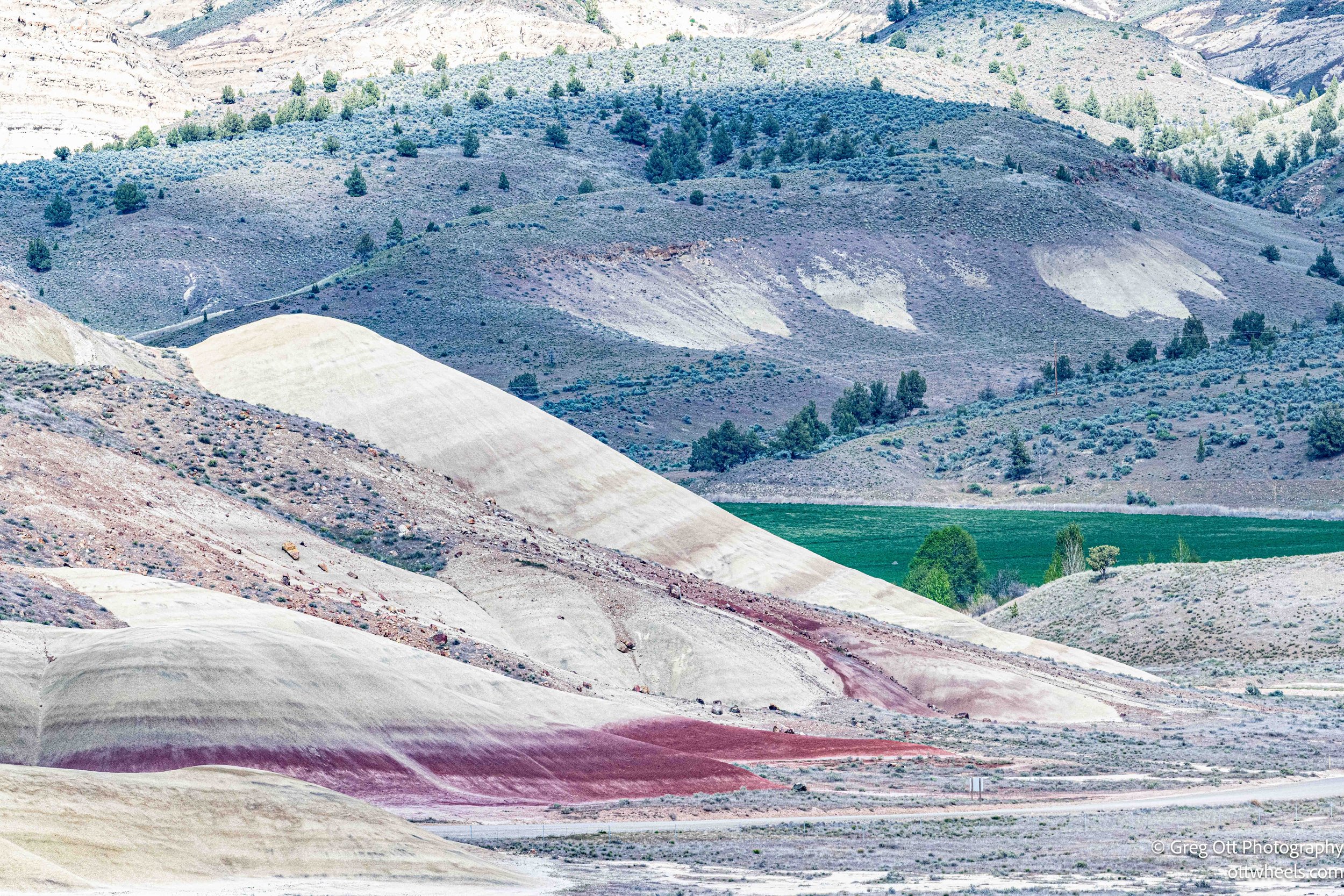
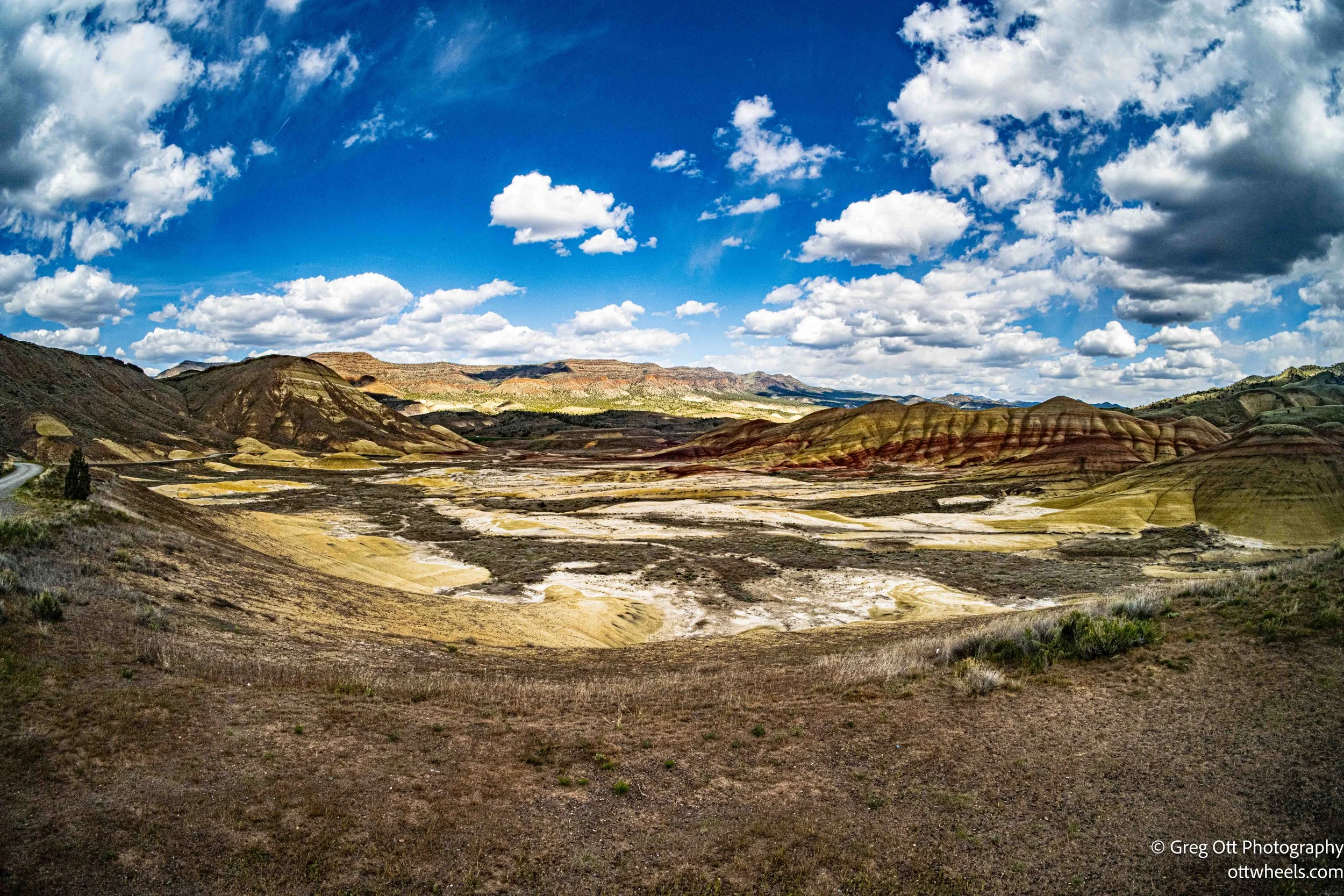
Switching lenses changed everything again. Wide shots gave context, but the longer lenses pulled out patterns and layers that didn’t even register at first. The wind picked up, though, and it made the longer shots tough. Even on a tripod, there was enough vibration to soften things. I bumped the shutter speed up to 1/1000 and even 1/1600 to keep things sharp, which pushed the ISO to 3200. That adds noise, but noise can be cleaned up. Blur can’t. That trade-off is easy once you’ve made the mistake many times.
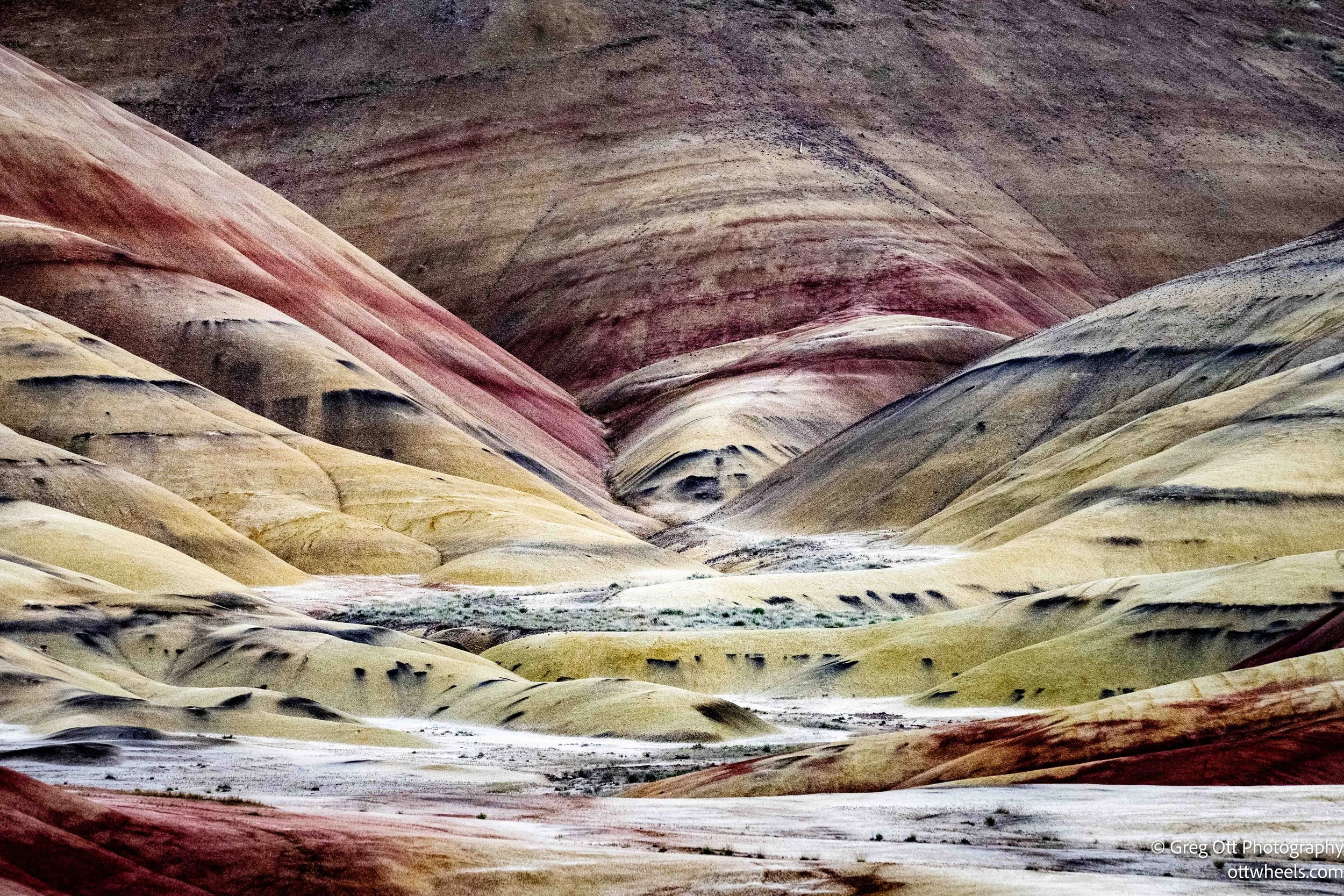
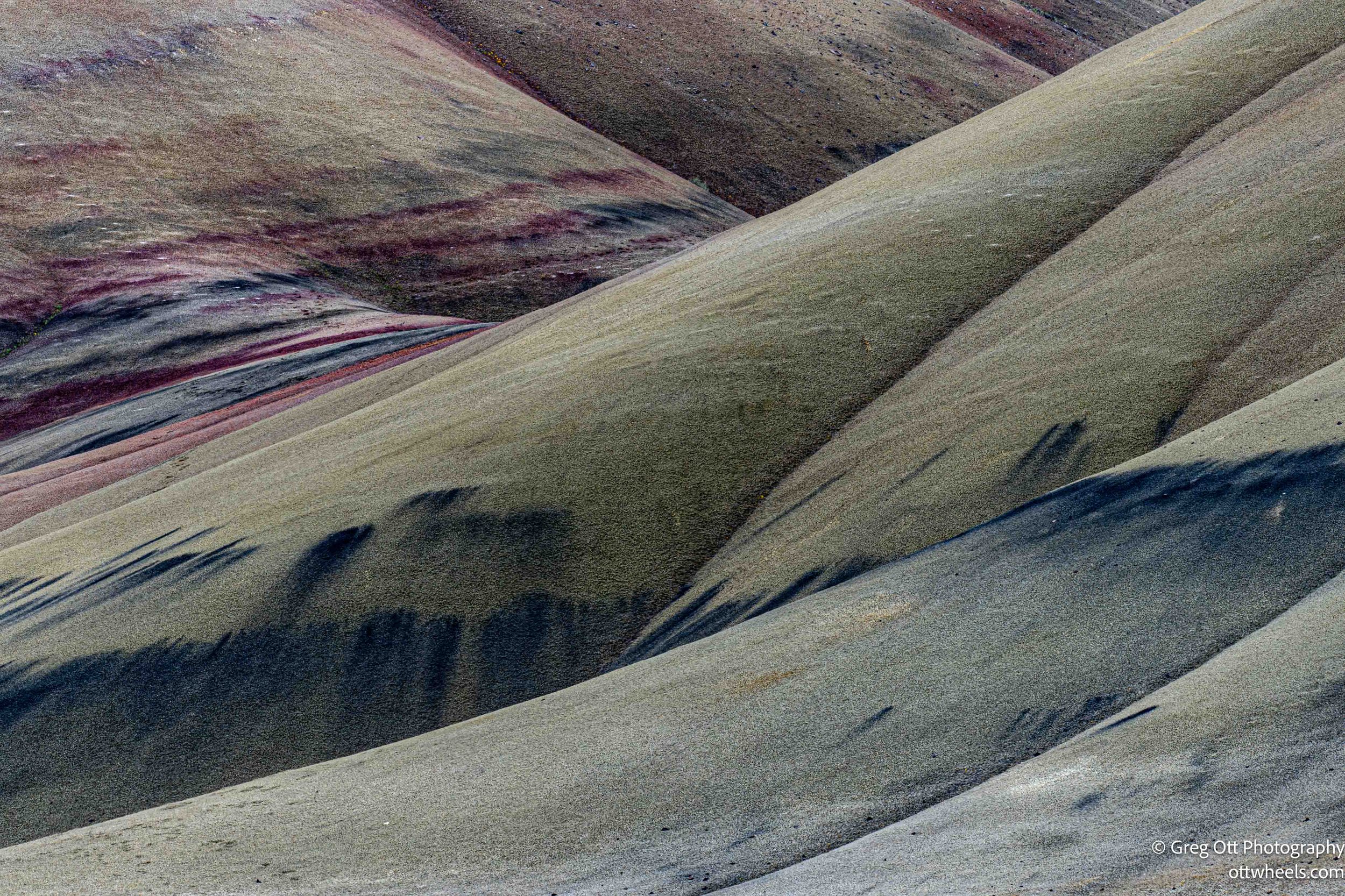
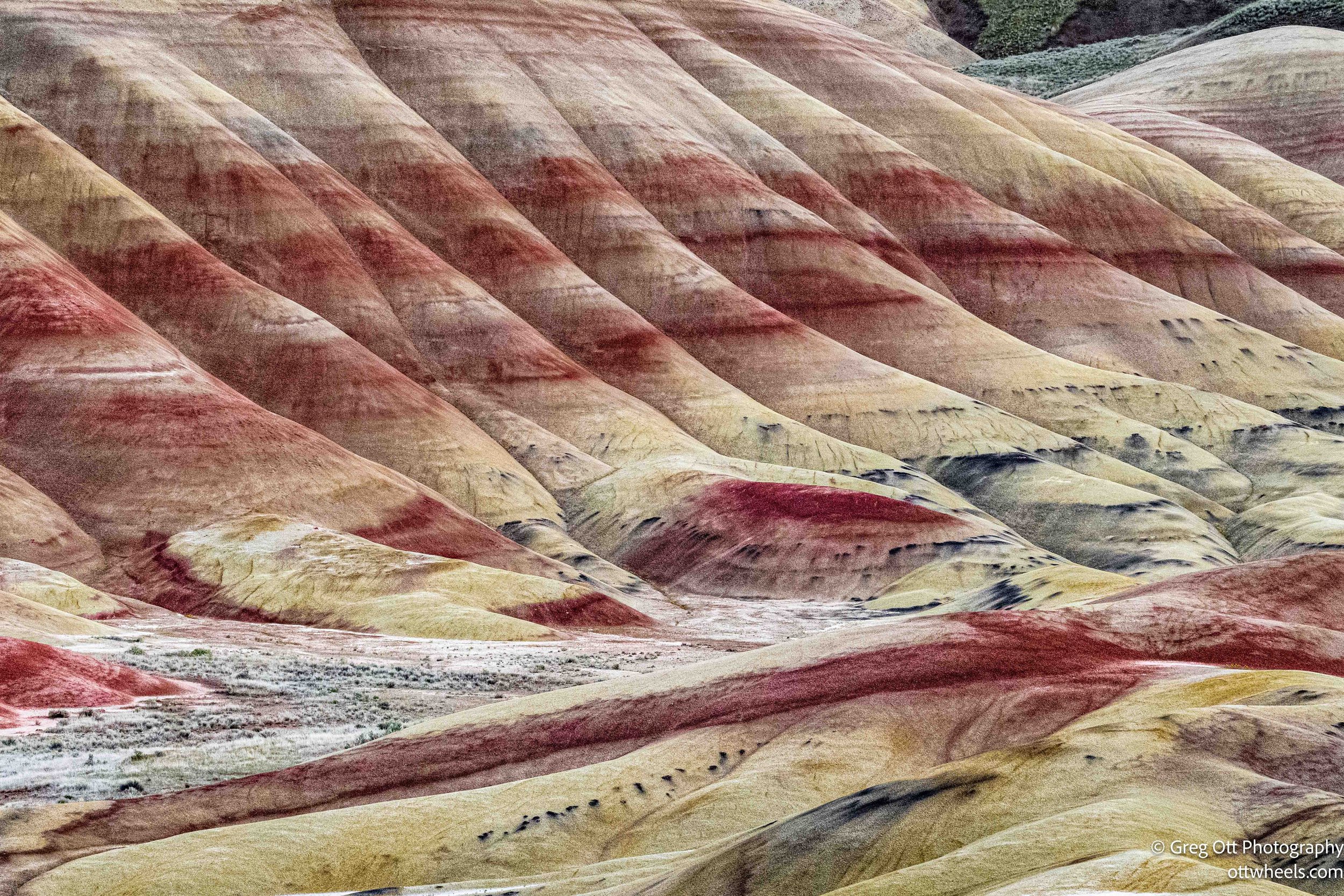
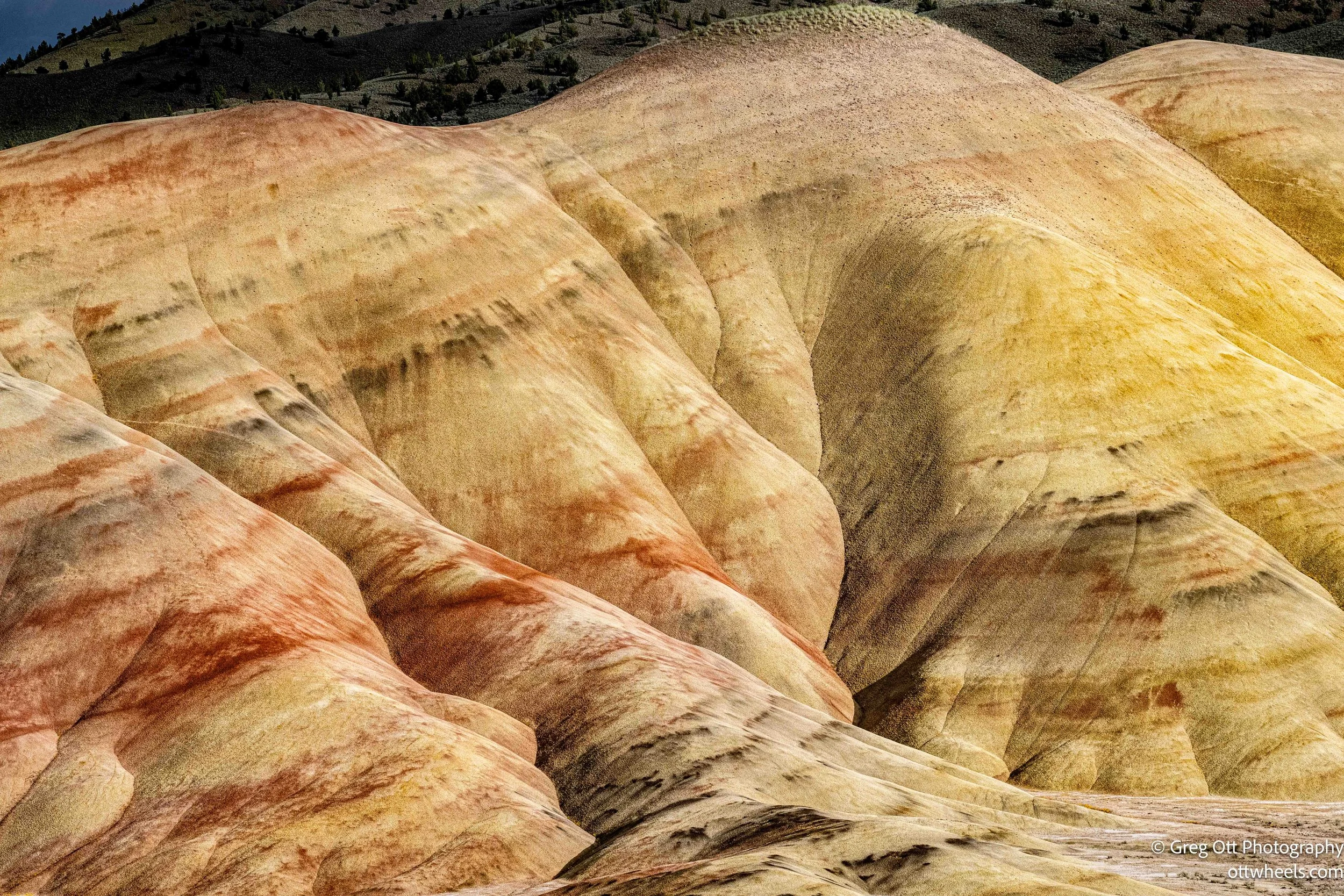
I ended up spending five hours there without really noticing the time. The light kept shifting as clouds moved through—one minute the hills were muted and flat, the next they were lit up in deep, saturated colors. It never stayed the same for long.
By 7:30 pm, I started looking for a place to stay. A couple of apps pointed me toward spots inside the park, but every turnoff led to a trailhead with a “No Camping / No Overnight Parking” sign. After about 30 minutes of dirt roads going nowhere, I gave up and headed back out the way I came.
One of the apps showed a spot about five miles down the road. I missed it the first time, turned around, and found a small National Forest sign marking a designated road. It opened into a flat area, and as I pulled in, I realized I wasn’t alone. There were cows everywhere.
I parked between two trees, leveled the van, and shut the lights off. Within a few minutes, they started moving in. Slowly at first, then all at once—mothers with calves sticking close to them, forming a loose circle around the van.
They just stood there, watching. Quiet, but not really. A few low calls back and forth, like they were checking in with each other. Maybe trying to figure out what this thing was and whether it came with food. I watched them for a few minutes, half expecting one of them to knock on the side door and make a request.
Eventually I went back inside and started sorting through the day’s images. I didn’t get far. Around 10 pm I called it and went to bed.
It was mostly silent out there. Every now and then, just the sound of a single, well-placed moo.