Astoria/Portland
Absolutely awful night of sleep.
I stayed in Astoria at the mouth of the Columbia River. iOverlander said the spot was quiet after ten. It wasn’t. Around 6:30, a crew showed up and started dumping fill along a new curb—backing trucks, metal banging, engines revving. That was it. I made the bed, packed up, and was out before seven.
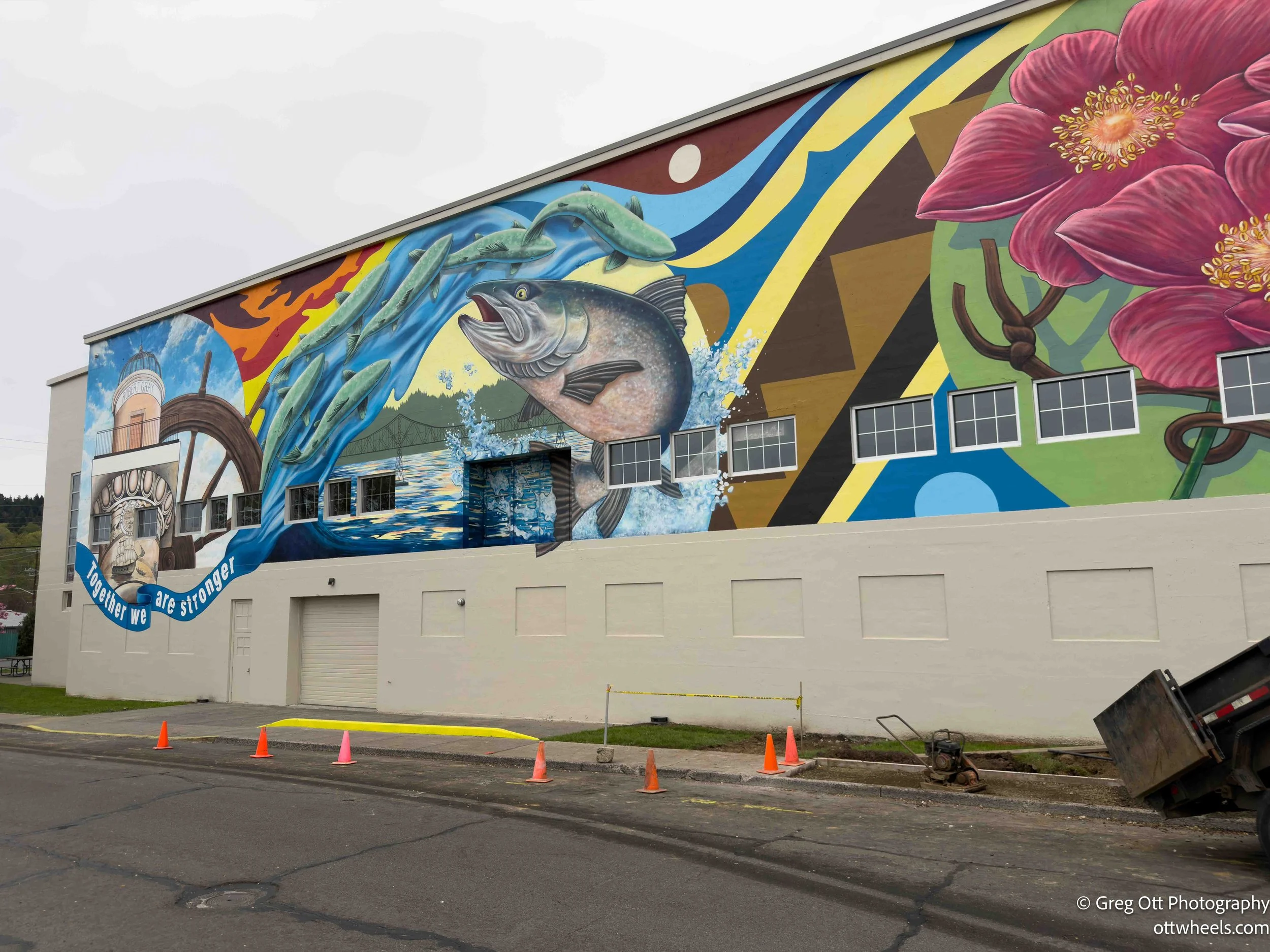
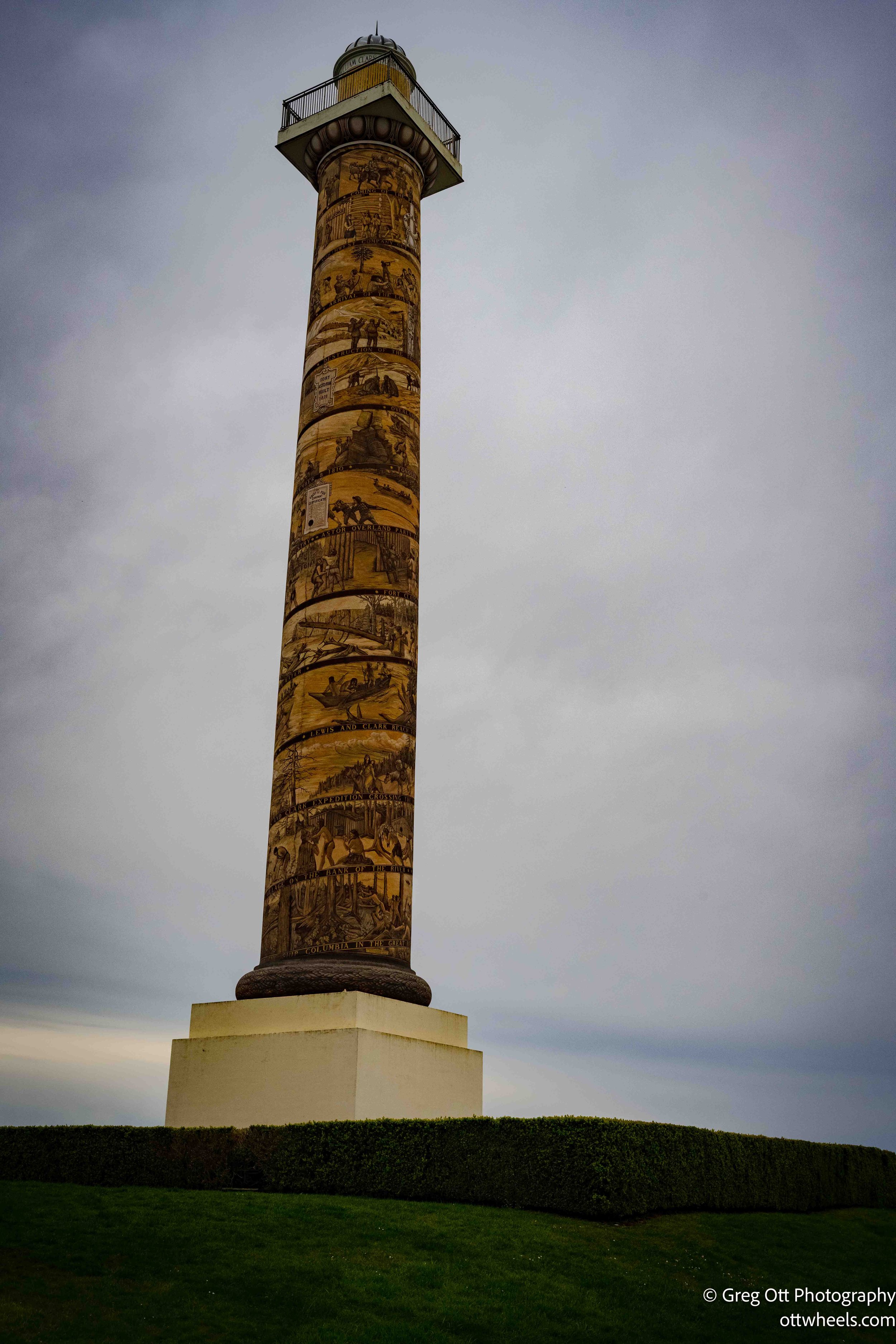
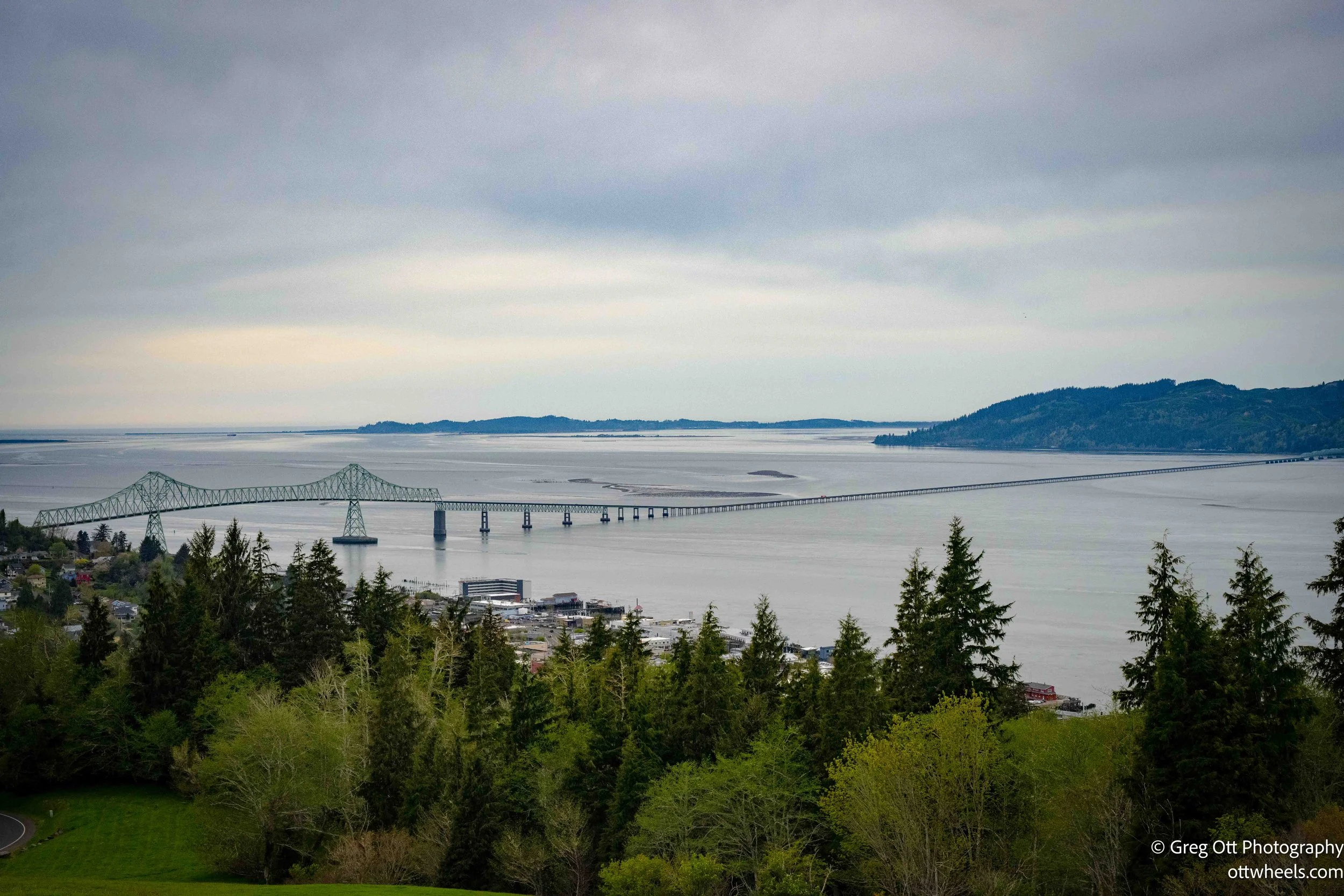
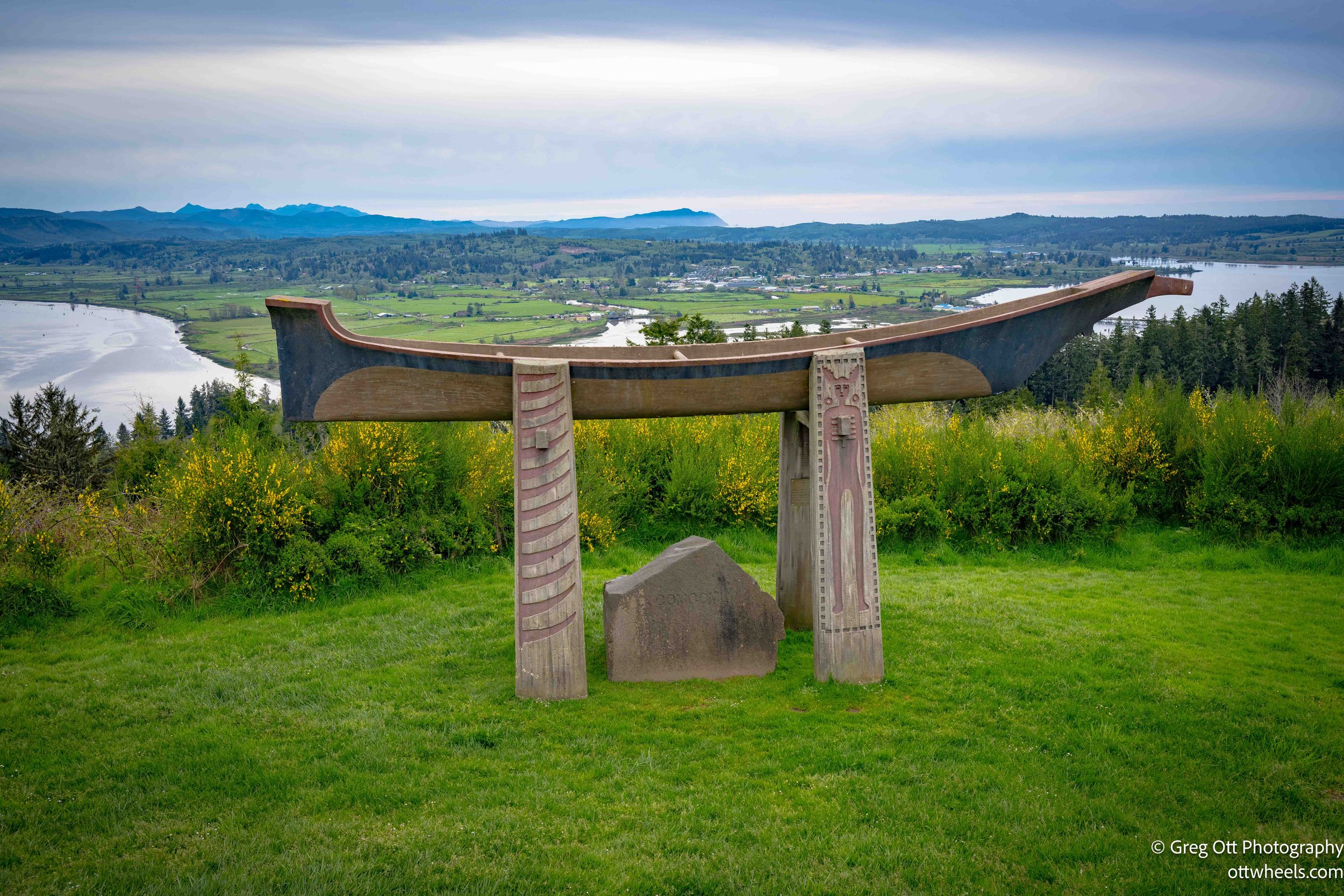
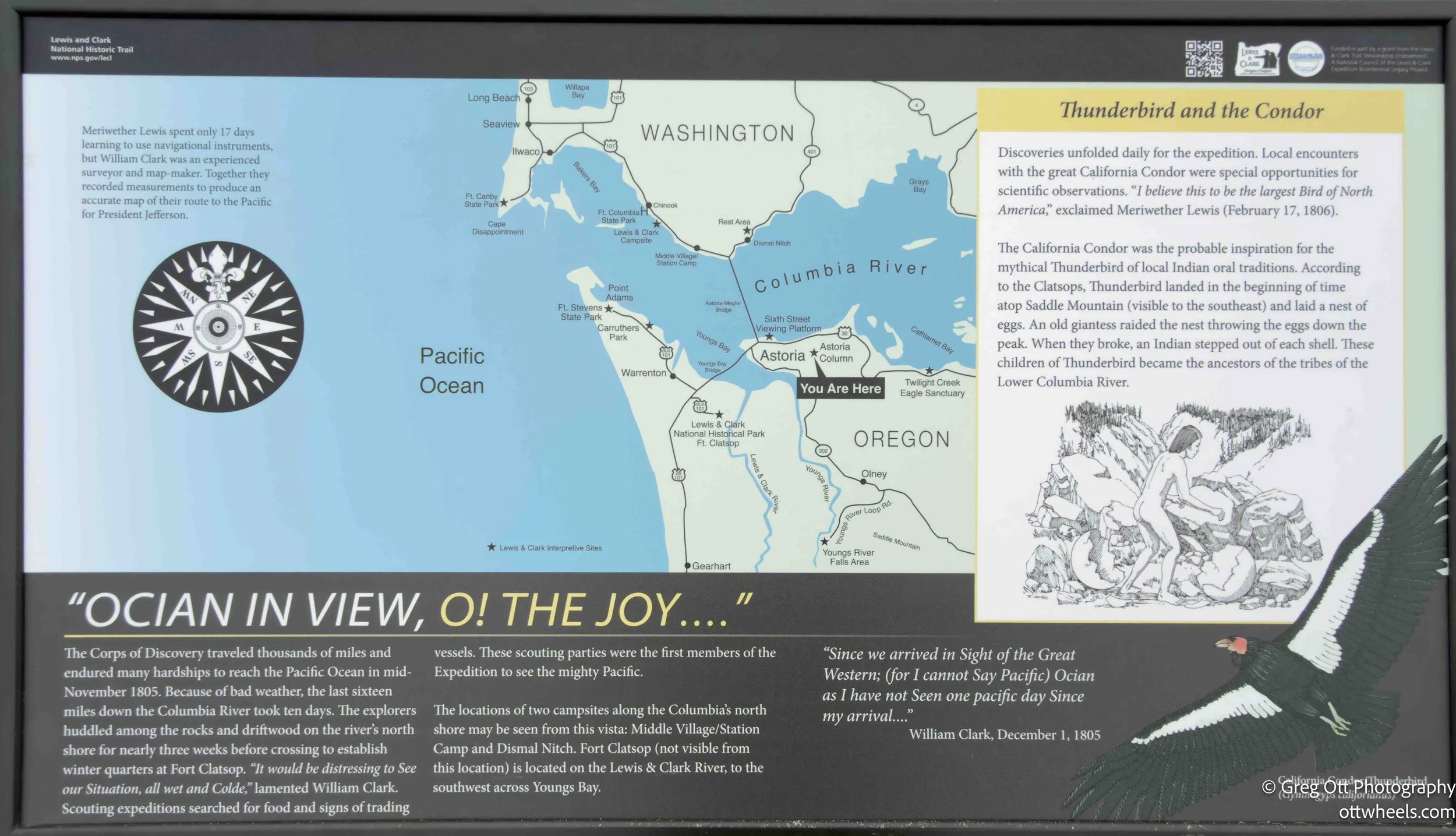
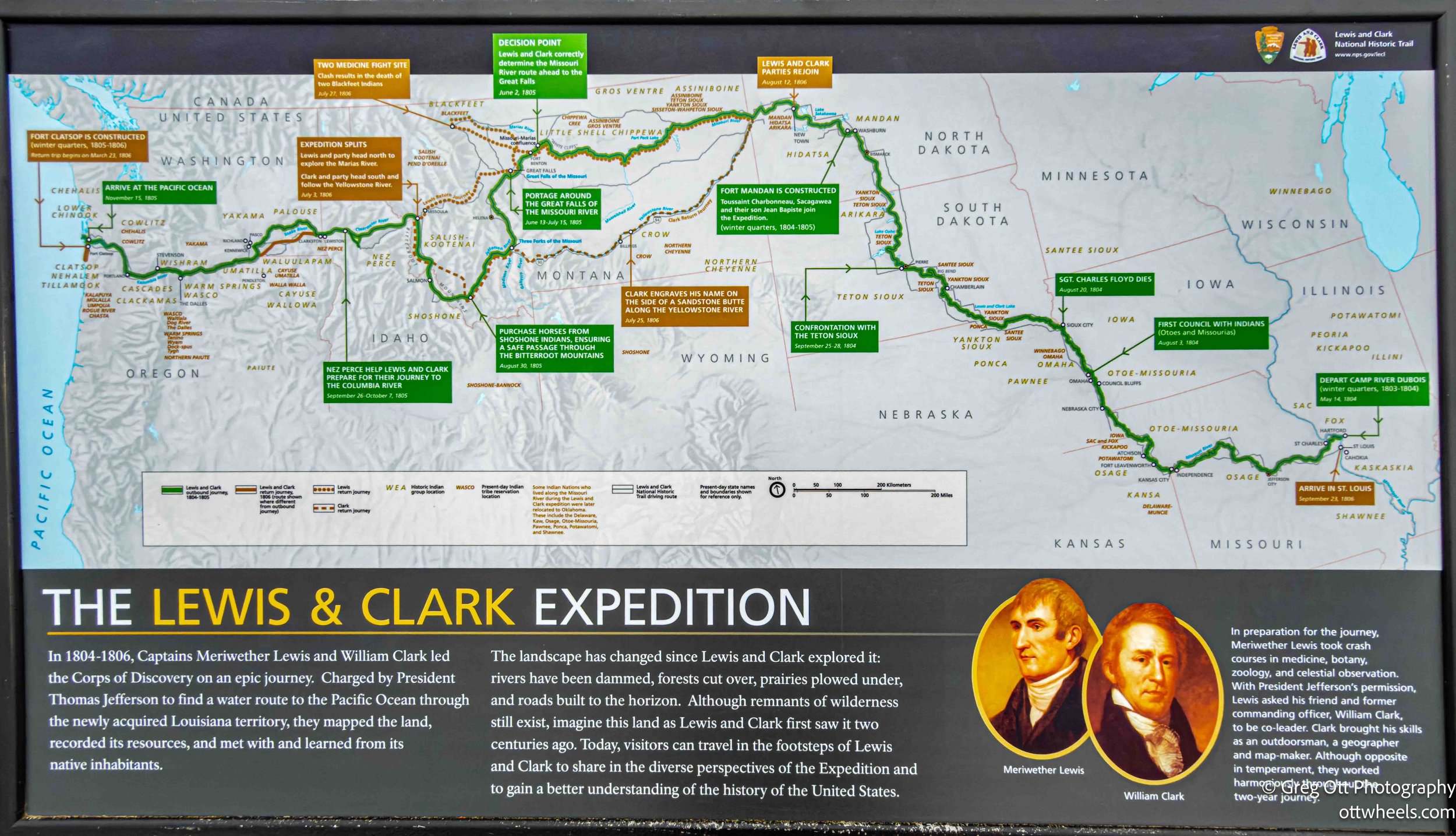
I drove up to the Astoria Column, which sits high above Astoria. There was a sign for $5 parking—pay at the visitor center—which was, of course, closed. On a different morning I might have walked up, but not this one. The clouds were hanging low and heavy over the water, and from up there the Columbia River looked enormous, spreading out as it moved toward the Pacific. It felt like one of those places where the weather does most of the talking. I gave it about fifteen minutes, took a few photos, and that was enough.
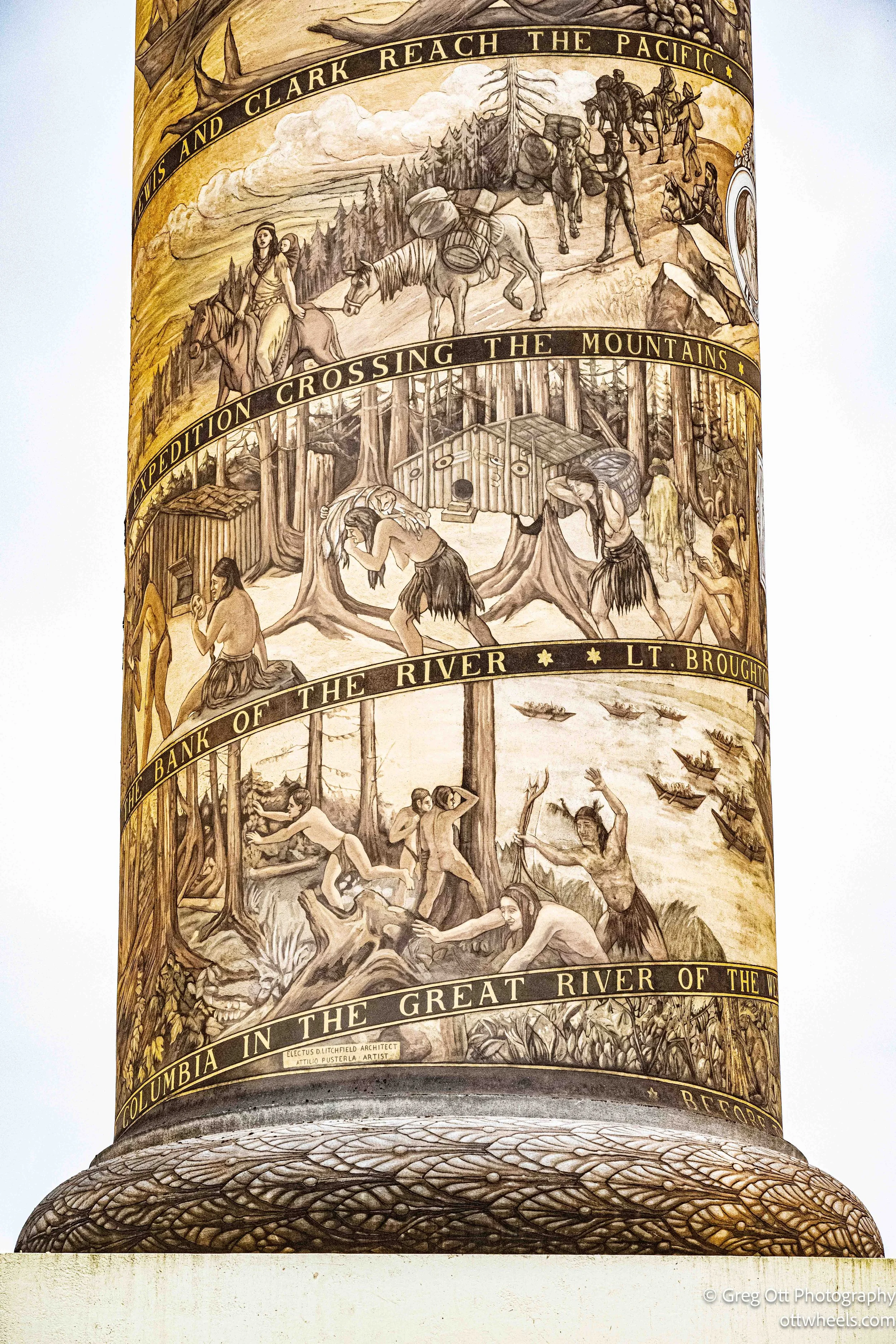
Standing there, though, you can’t really ignore what the column is trying to do. It was built in 1926, and the entire outside is wrapped in a spiral that tells the story of this place—starting with the Indigenous people who have been here for more than 10,000 years, then moving through exploration and eventually the arrival of the Lewis and Clark Expedition. It’s not focused on one moment. It’s more like layers stacked on top of each other, all tied to this one stretch of river.
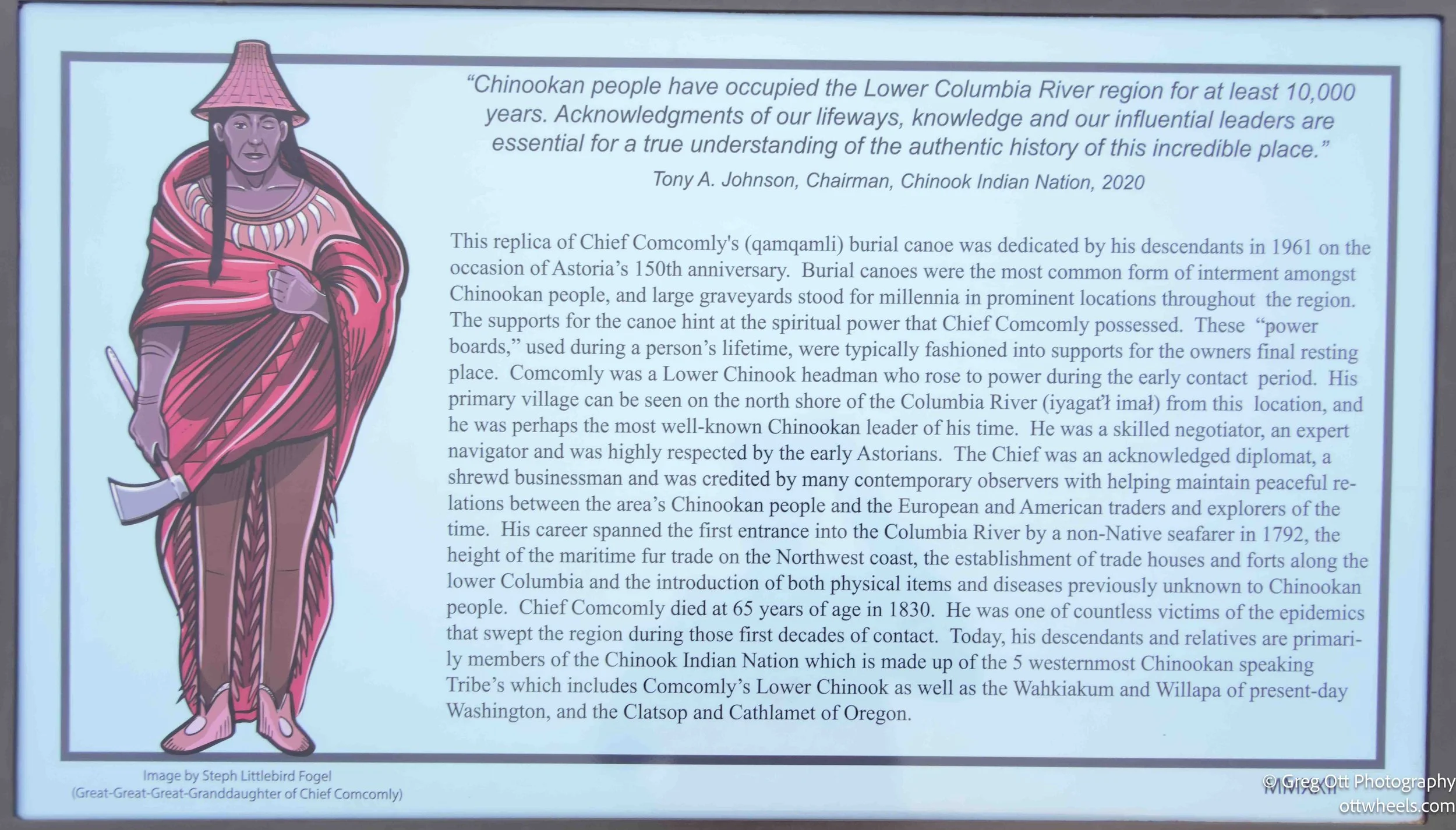
Even the name of the river carries that same kind of layering. The Columbia was named after the ship Columbia Rediviva, captained by Robert Gray, who crossed the bar and entered the river in 1792. He named it after his vessel. And that name—“Columbia”—was already a kind of symbol at the time, a poetic name for the United States, itself tied back to Christopher Columbus. So standing there, looking out over the river pushing toward the ocean, it’s not just a view. It’s a place where a lot of different timelines intersect, whether you’re thinking about them or just there for the photos.
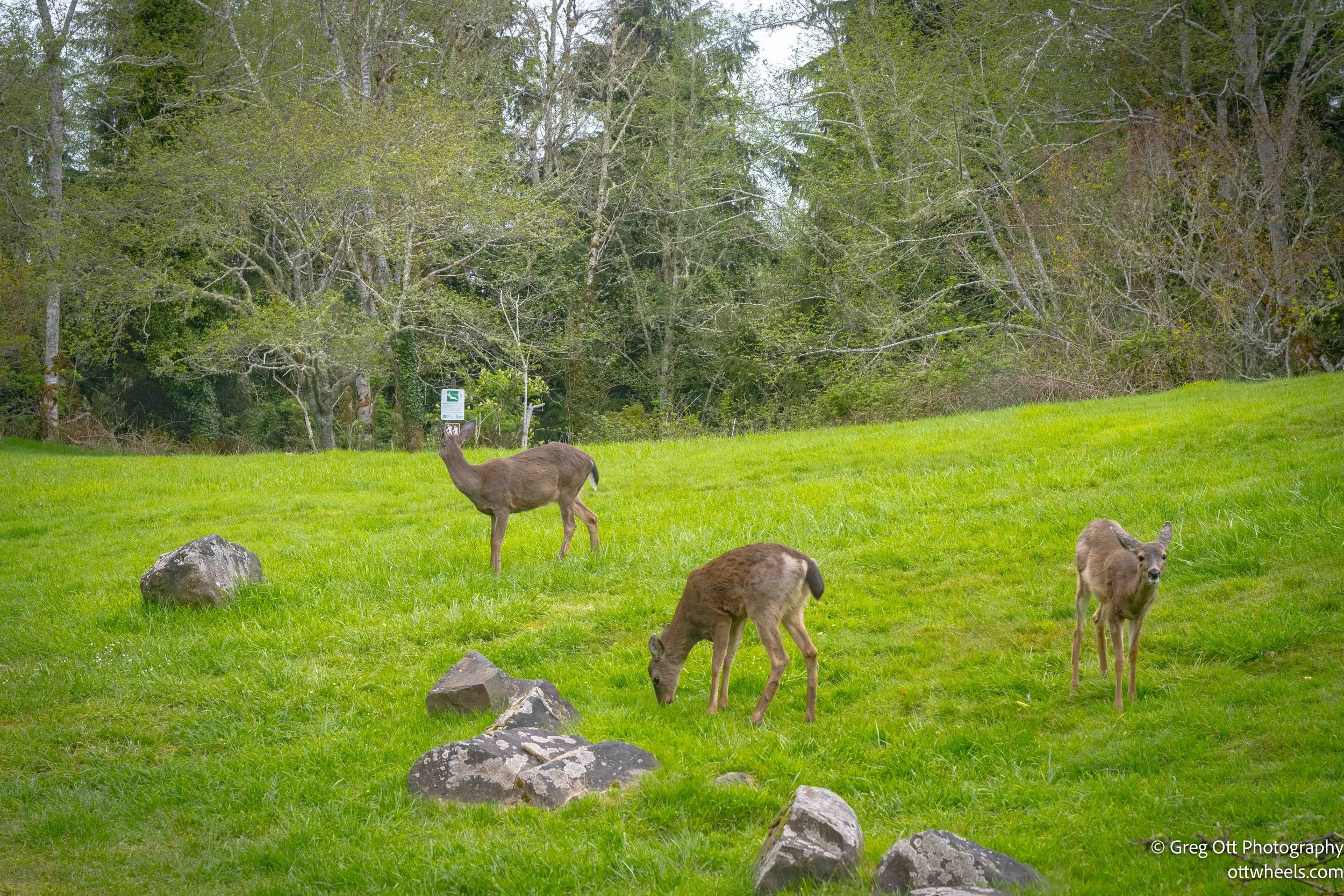
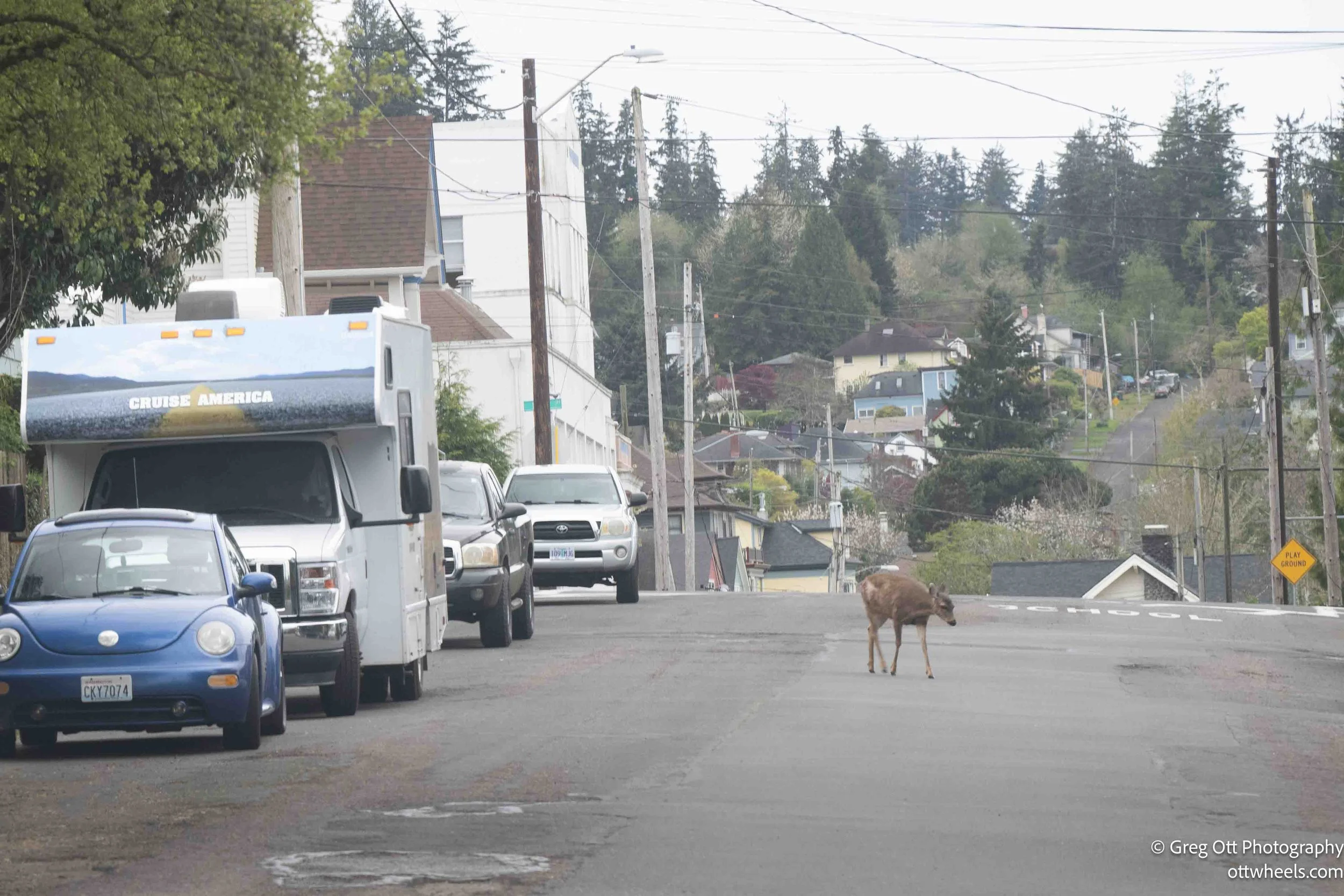
The hills in Astoria are no joke—steep enough that you pay attention on the way down. Partway down I saw six deer in the grass, completely unfazed, heads down eating. I pulled over, and they didn’t even look up. Clearly used to people. I saw more deer in town as well—less a sign of wilderness and more a reminder of how easily they’ve adapted to living right alongside it.
I’d read about the houses here—old places that have been fixed up and painted in bright colors. I spent about 30 minutes just driving around, stopping where I could, grabbing photos. It’s one of those towns where the setting does half the work for you.
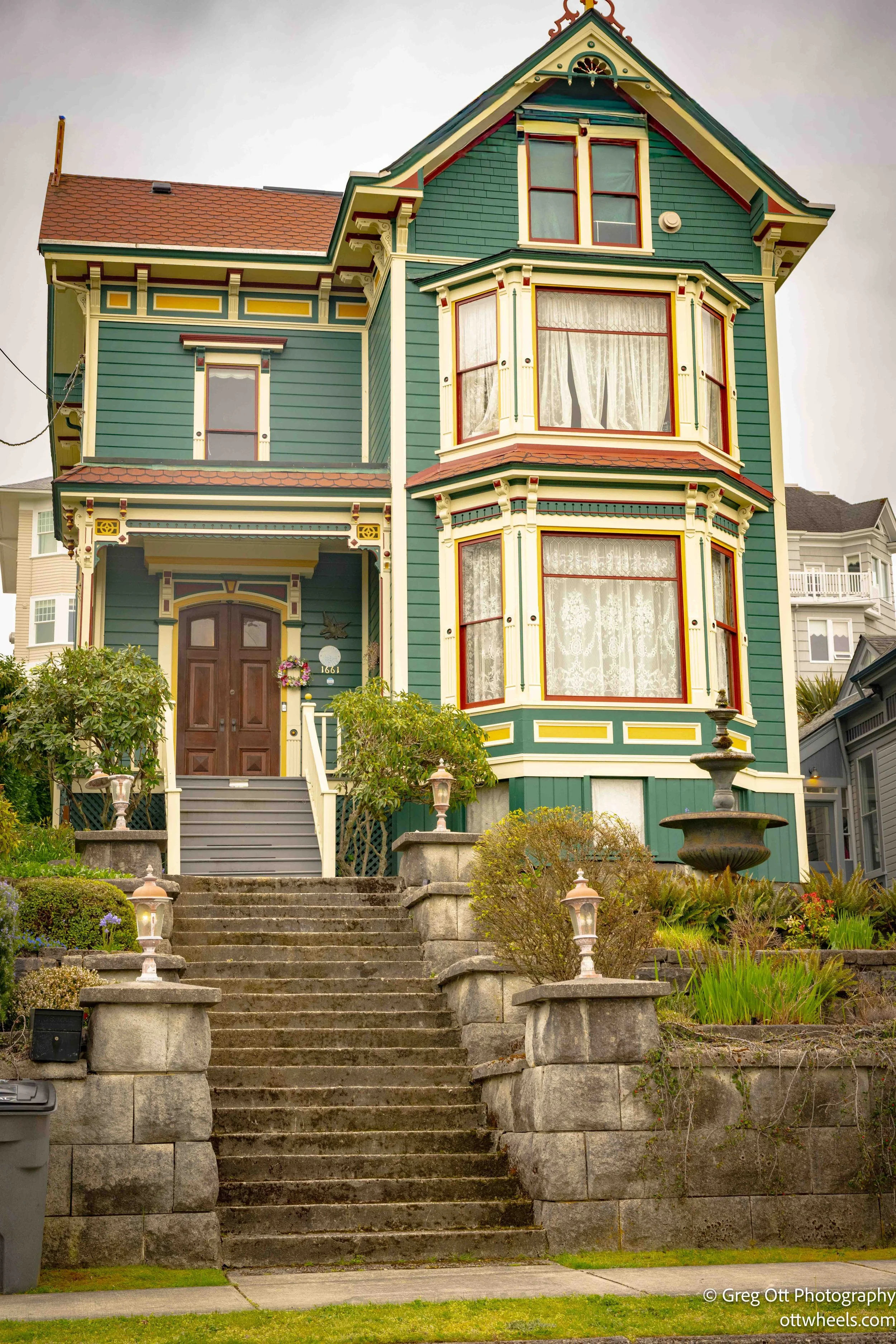
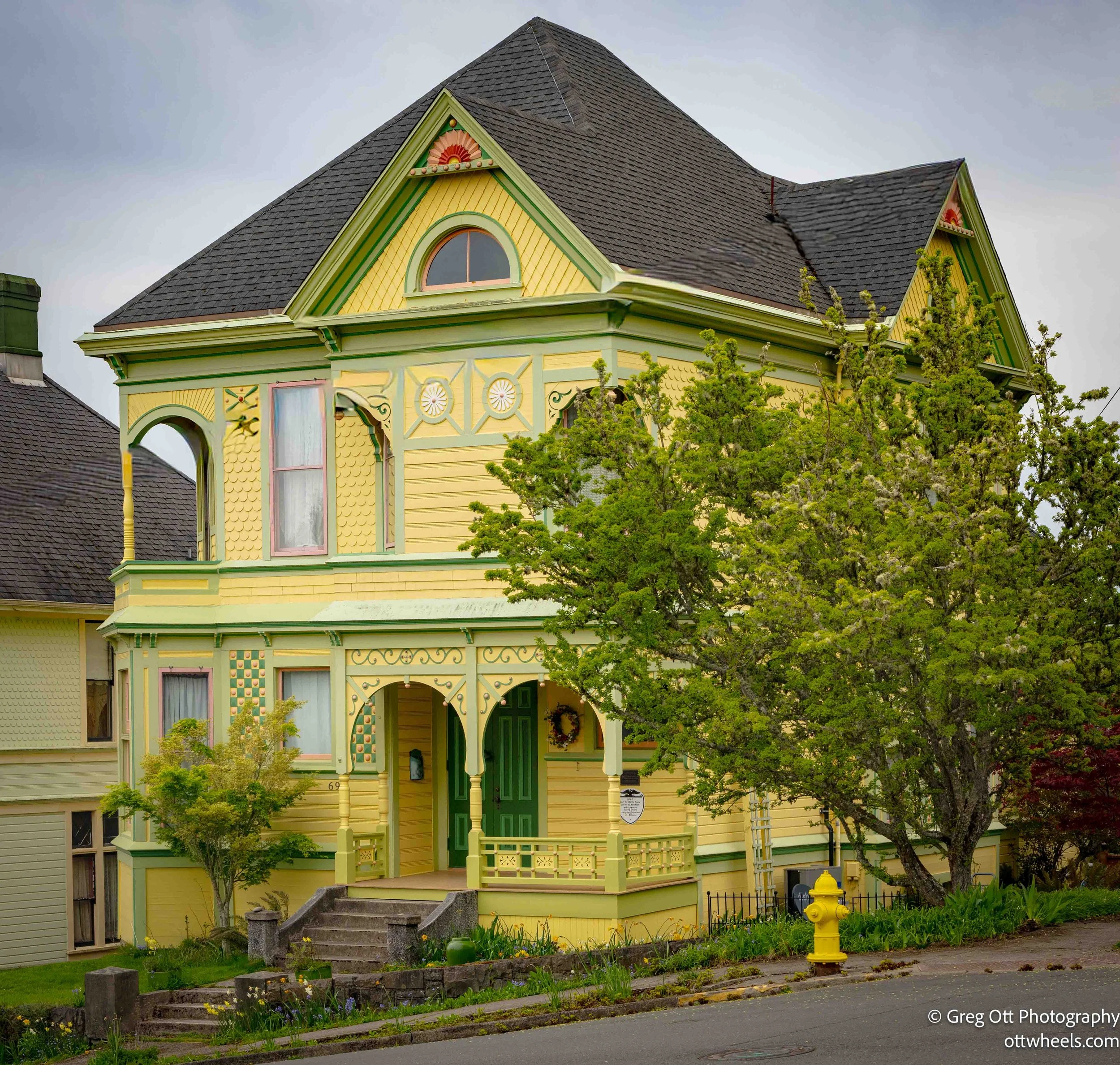
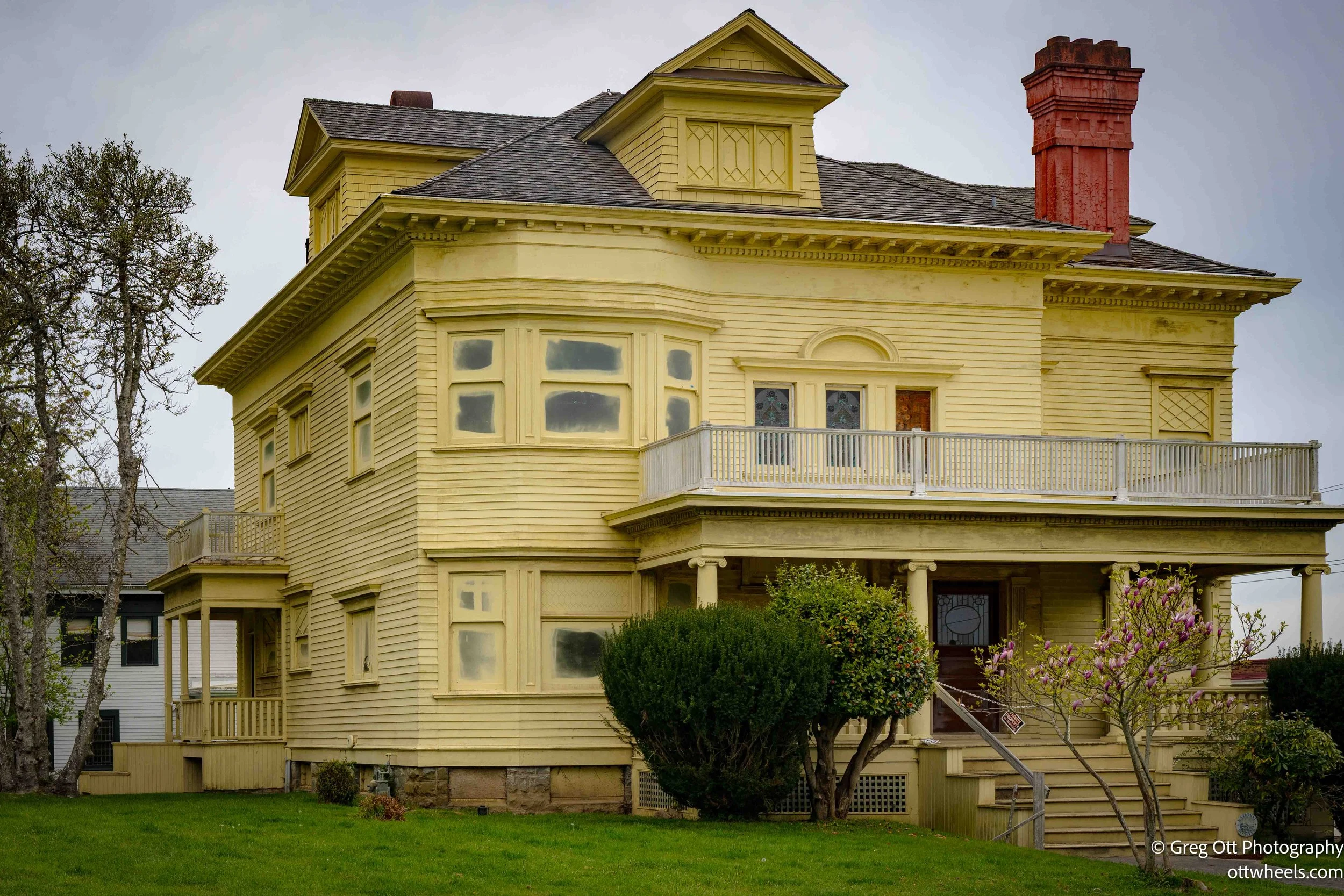
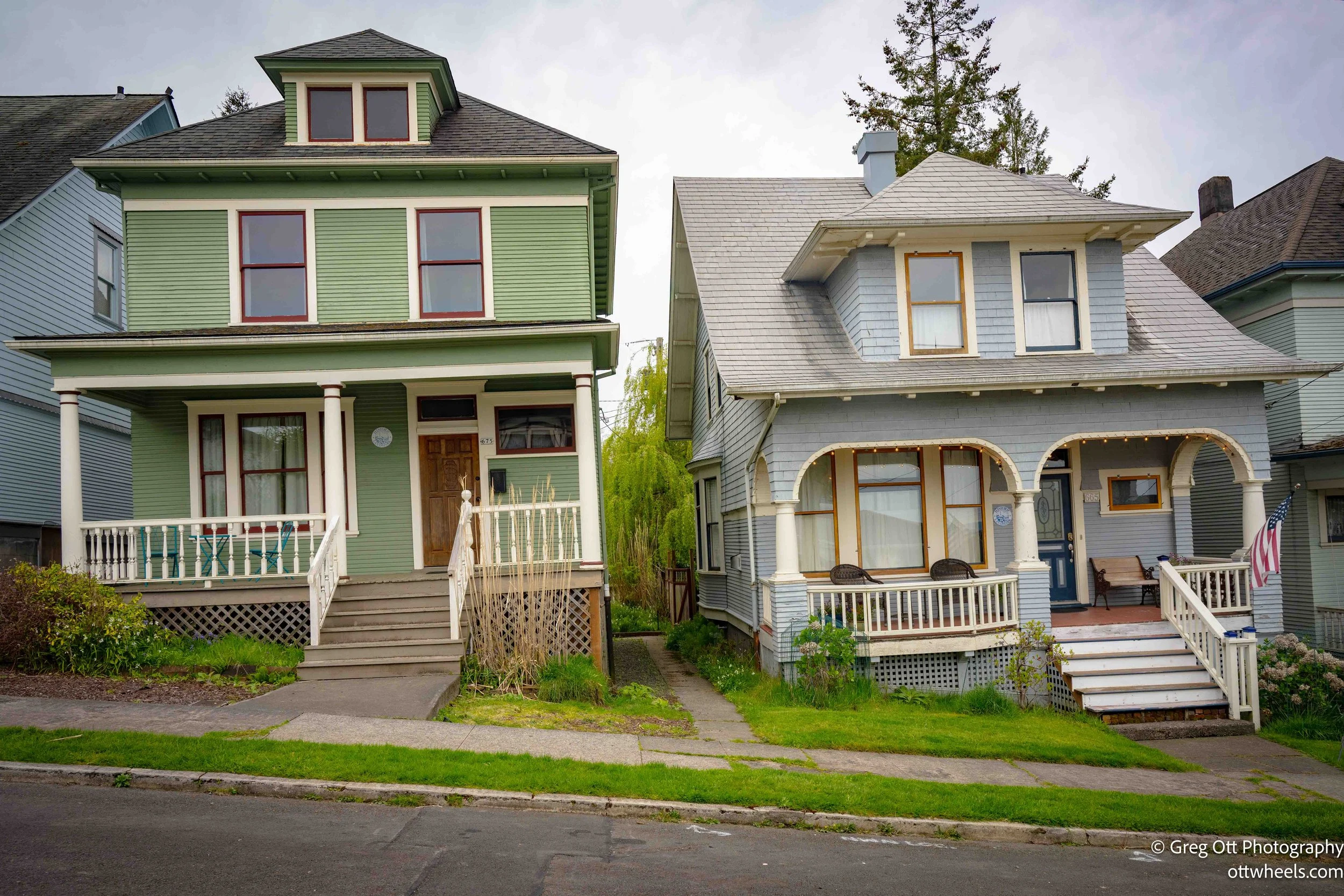
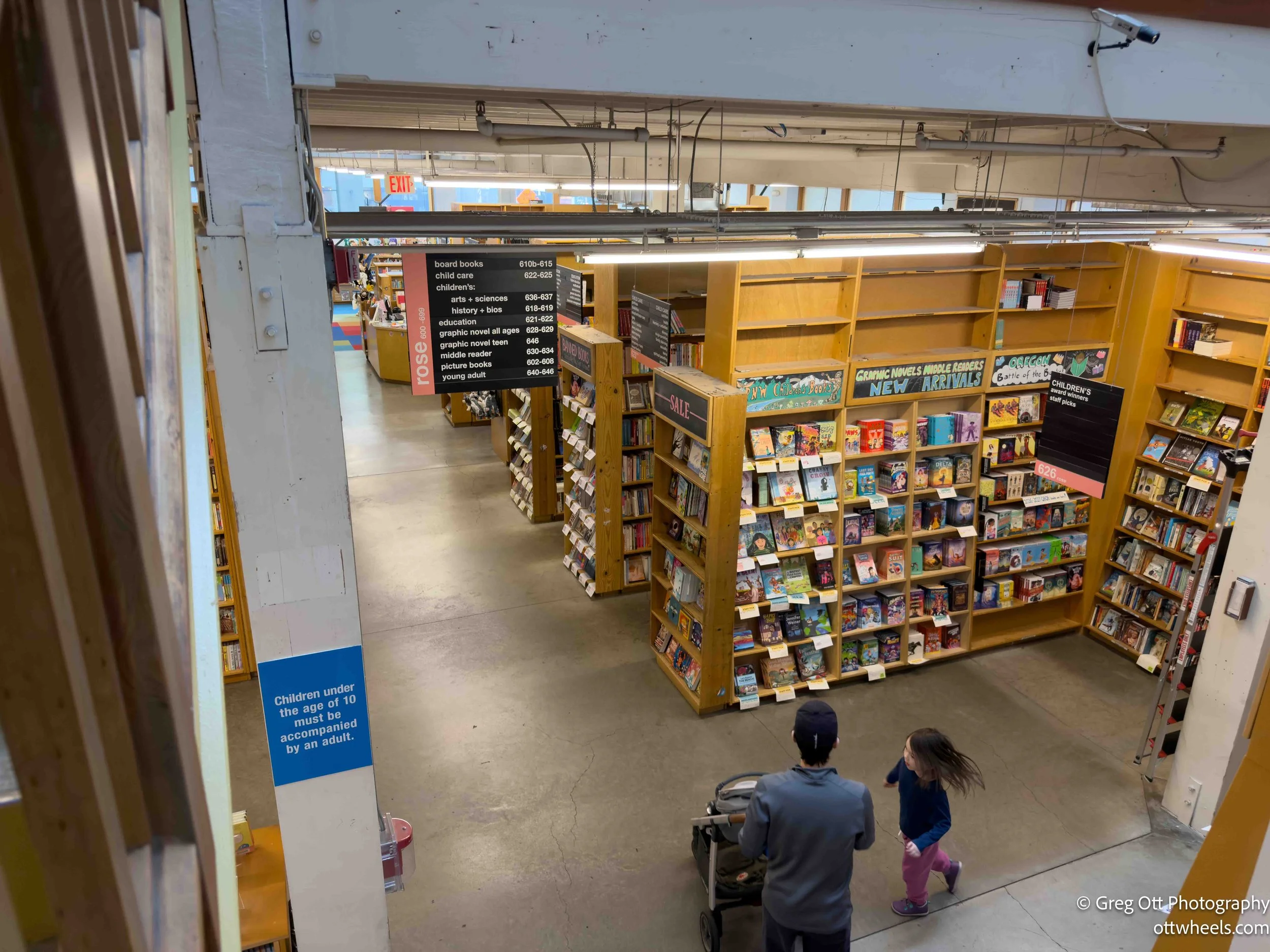
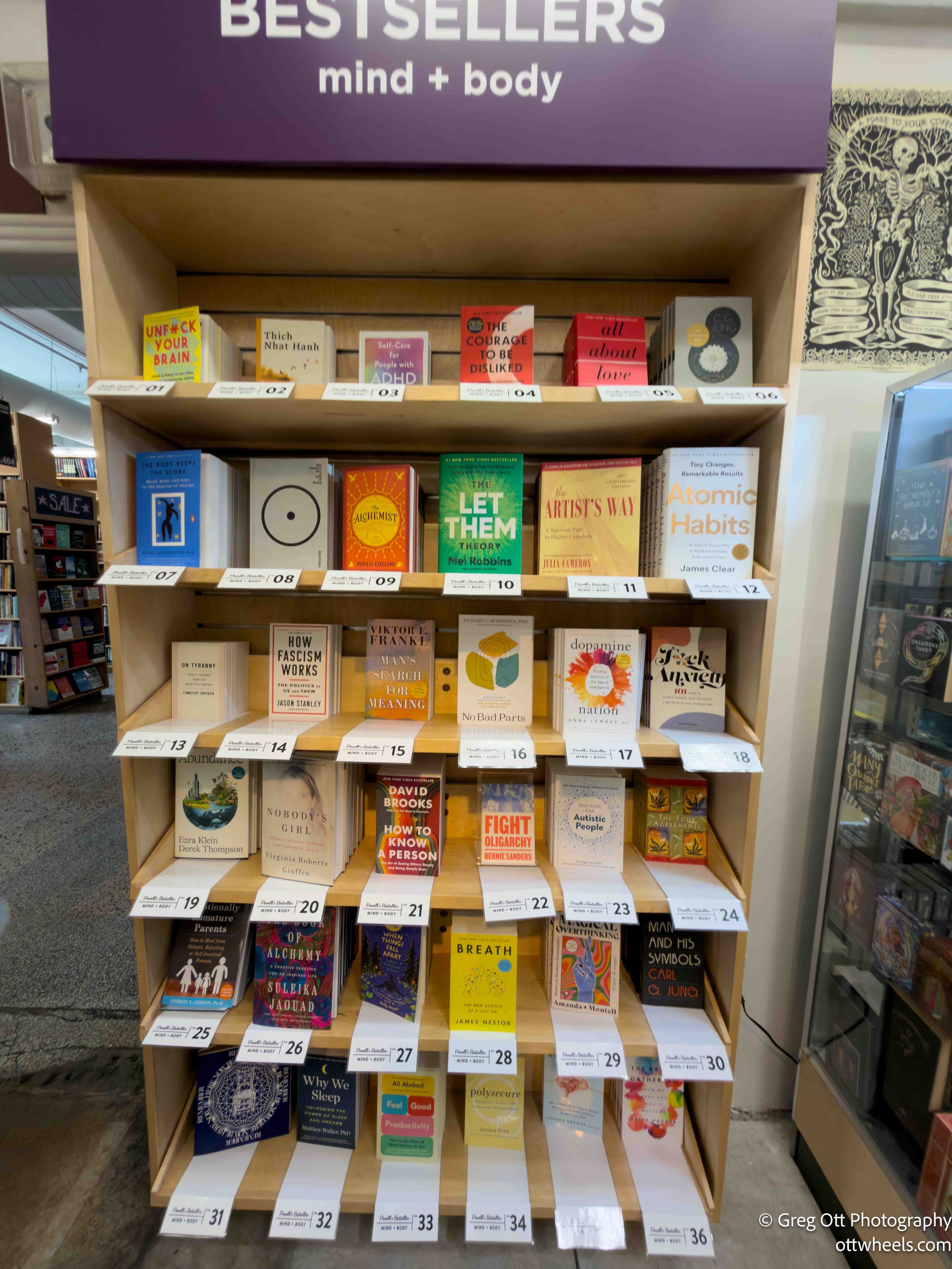
Then it was about a two-hour drive to Powell’s City of Books. This place is not just a bookstore—it’s the largest independent bookstore in the world, taking up an entire city block. What makes it different is that it mixes new and used books on the same shelves, so a brand-new title might sit right next to a 40-year-old copy of the same thing. It feels less like retail and more like wandering through someone’s very well-organized obsession.I was honestly surprised by how many homeless people were in that part of Portland. It was hard to ignore.
I found street parking right next to the store. Portland uses a pay-by-plate system—no ticket on the dash. You enter your license plate at the kiosk, and enforcement vehicles drive around with scanners that check plates automatically. No guesswork about how they enforce it—they’re checking as they go.
I hadn’t eaten, so I went straight to the coffee shop inside. Then I wandered. And wandered. I made it to section 911—photography—and lost an hour without trying. There were books in there 50 years old that still felt relevant. Technique doesn’t age the way gear does. I found a stack I wanted, put most of them back, and left with two. I skipped the rare book room—they require registration—and kept moving.
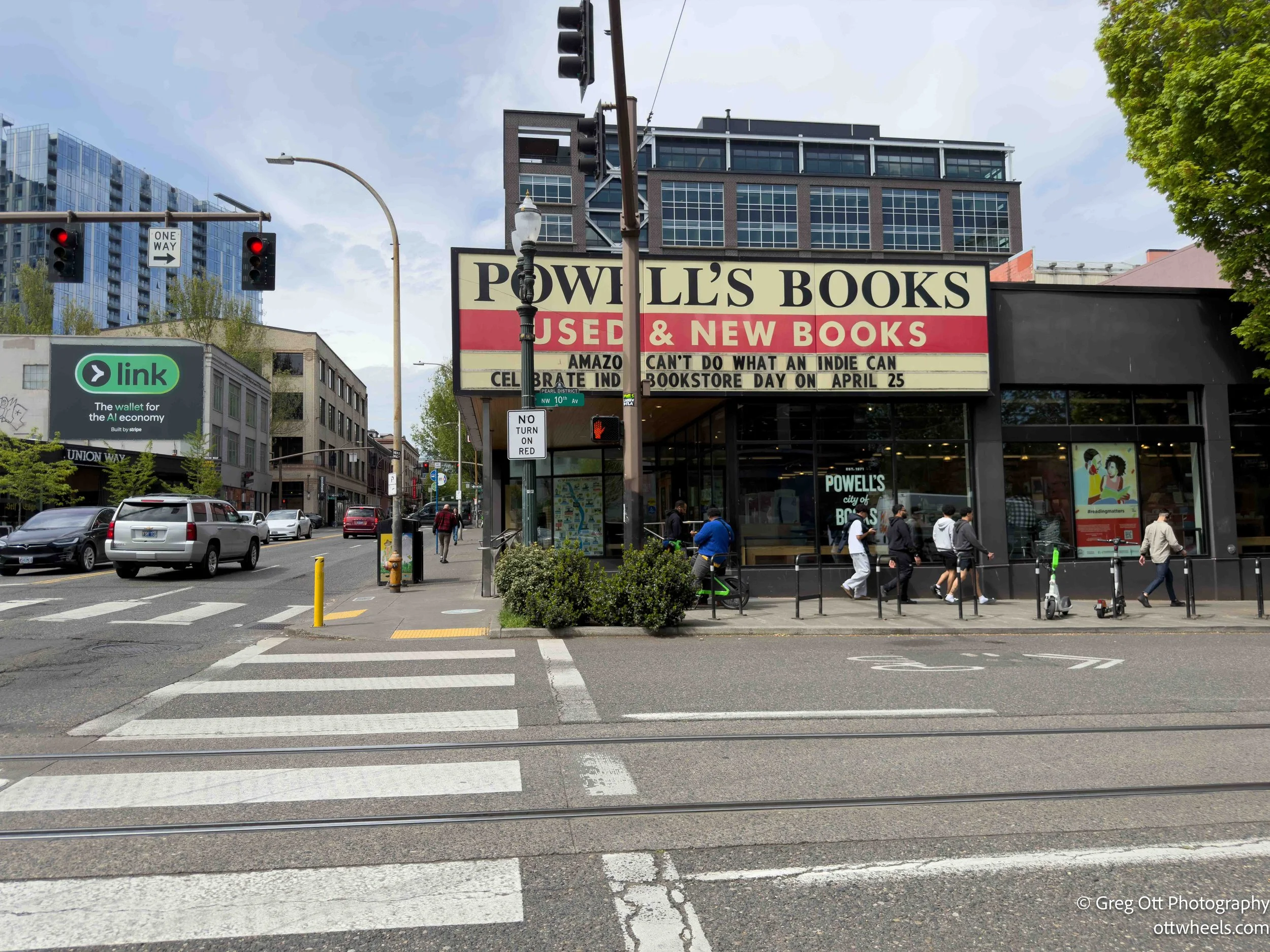
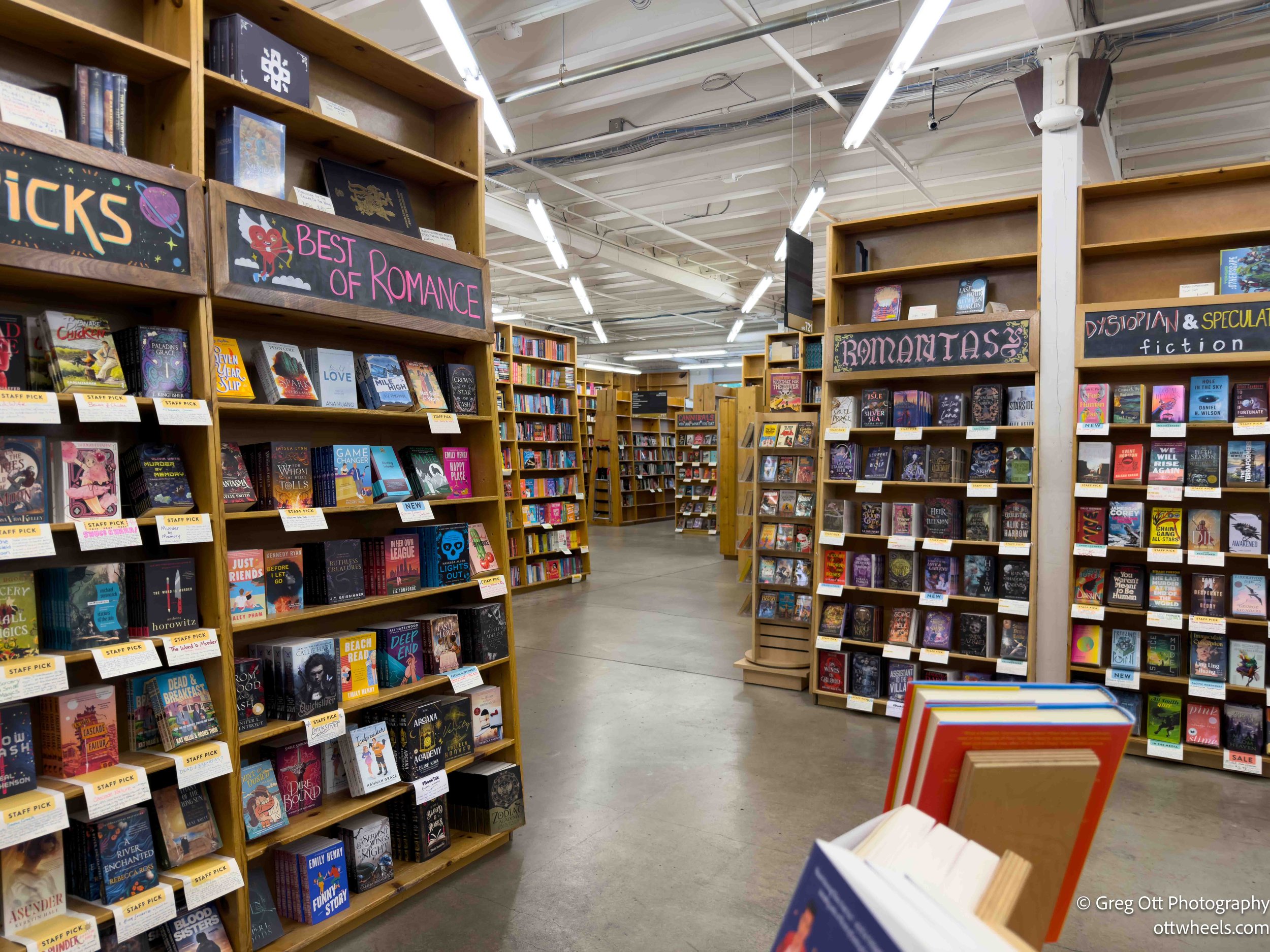
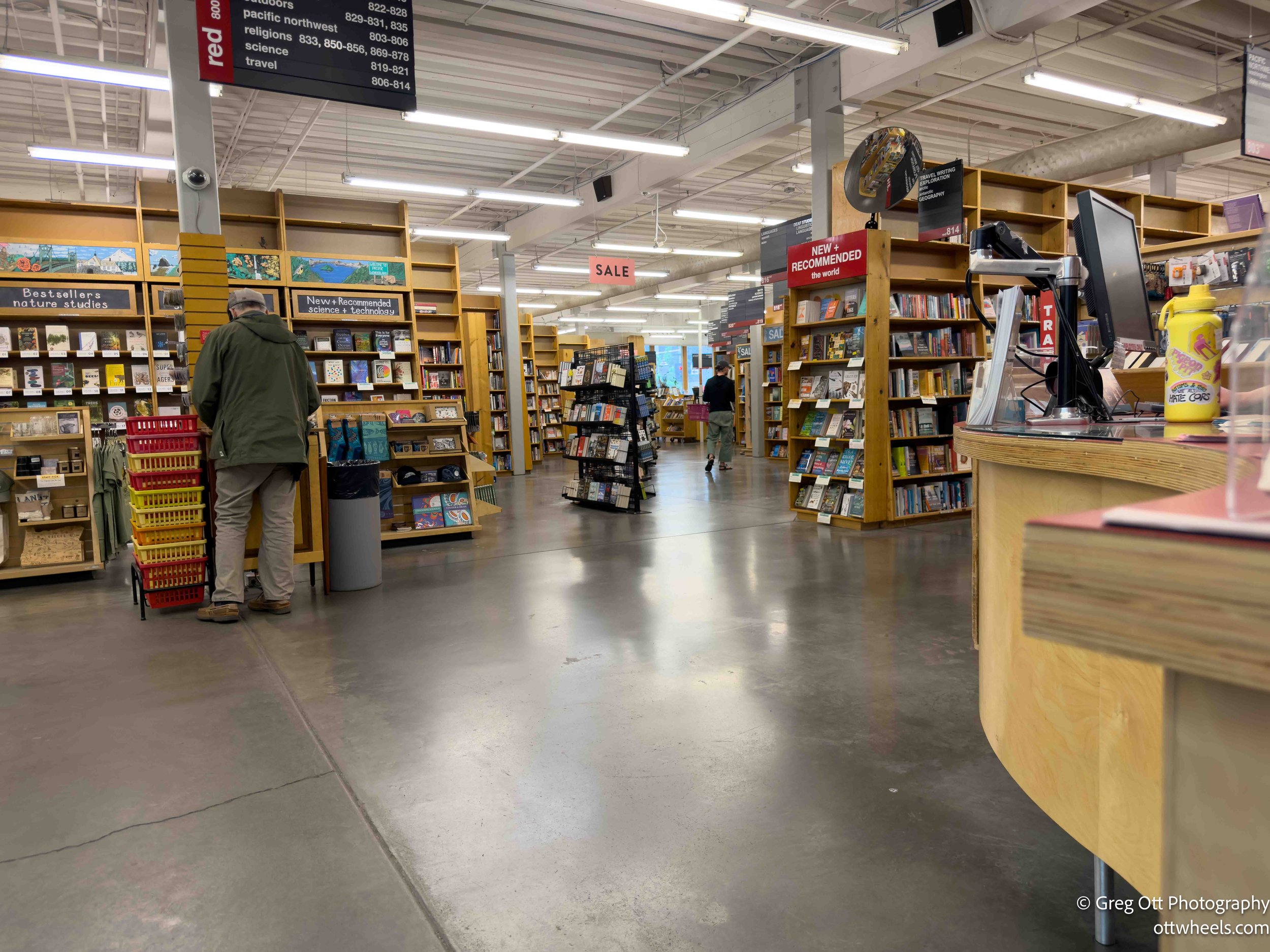
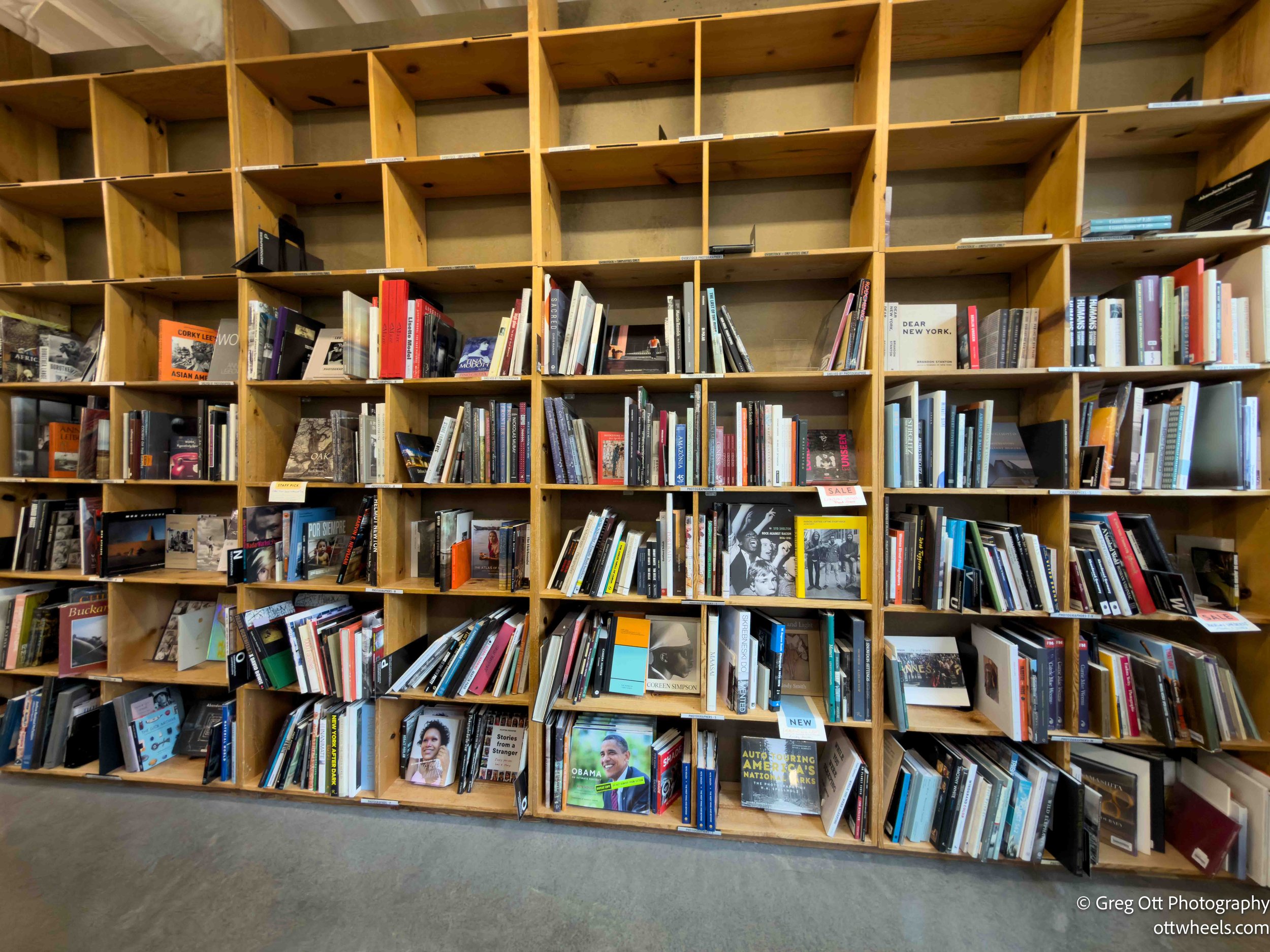
I didn’t stay long. I’ll be back in Portland later in the week to pick up a package.
From there I headed to Salem and the Willamette Heritage Center. It’s about a 90-minute drive. I stopped at Panera Bread on the way—hungry and not thinking clearly. The place was slammed. It took a while to get my food, and it looked like they were filling a massive catering order—boxes everywhere, probably for over 100 people. They apologized when I picked it up. I wasn’t in a rush.
By the time I got to Salem, it was too late to photograph the capitol. So I shifted gears and started looking for a place to stay. Not many good boondocking options around there. I opened Harvest Hosts and found a spot about 15 minutes away. It was late, and they prefer reservations ahead of time, but I sent the request anyway.
About 15 minutes later, I got a message from Bob. He wasn’t sure he could accept—he was leaving at 5:15. That gave me about an hour. I told him I’d be there in 20 minutes.
He met me when I arrived. Friendly guy. Turns out he went to the Lutheran Missouri Synod seminary and knew someone with my name years ago—would have been a strange coincidence if it was actually me. He walked me out to where I could park. Two acres, trees in the back, quiet neighborhood. Really nice setup.
One problem—it wasn’t level. Not even close. I repositioned the van five times trying to find something workable without drifting too far toward the trees. Rain was coming, and I didn’t want to risk getting stuck in soft ground. I also wanted a clear shot for Starlink, which ruled out parking deeper under the trees.
For the past few days, the heat had been trying to start and failing. So I spent over two hours troubleshooting. It would ignite, then shut down before it could actually heat the hydronic system. The behavior—and the error codes—pointed to a fuel issue. Either air in the line or a partial blockage. I kept cycling it: start, fail, cool down 10–15 minutes, try again. Eventually it caught, stayed lit, and began pulling fuel properly. Once it ran, it ran. That felt like progress.
I made dinner, did some writing, and turned in around 9:30.
I’m pretty sure I’m still dealing with some leftover effects from COVID. Energy’s been lower than normal. It’s improving—but slowly.