Haystack Rock & Columbia River Maritime Museum
I drove north to Cannon Beach, a tourist town on the coast with big open beaches and Haystack Rock just off the shoreline. I found free parking in the center of town in the large public parking area, only because I arrived at 7:30 am. There were four large spots reserved for RVs, and a long list of prohibited vehicles was posted (large trucks, vans, cars, motorcycles, etc.). So, I took a very tight spot nearby. I made breakfast and did a little research on the town.
Cannon Beach and Haystack Rock
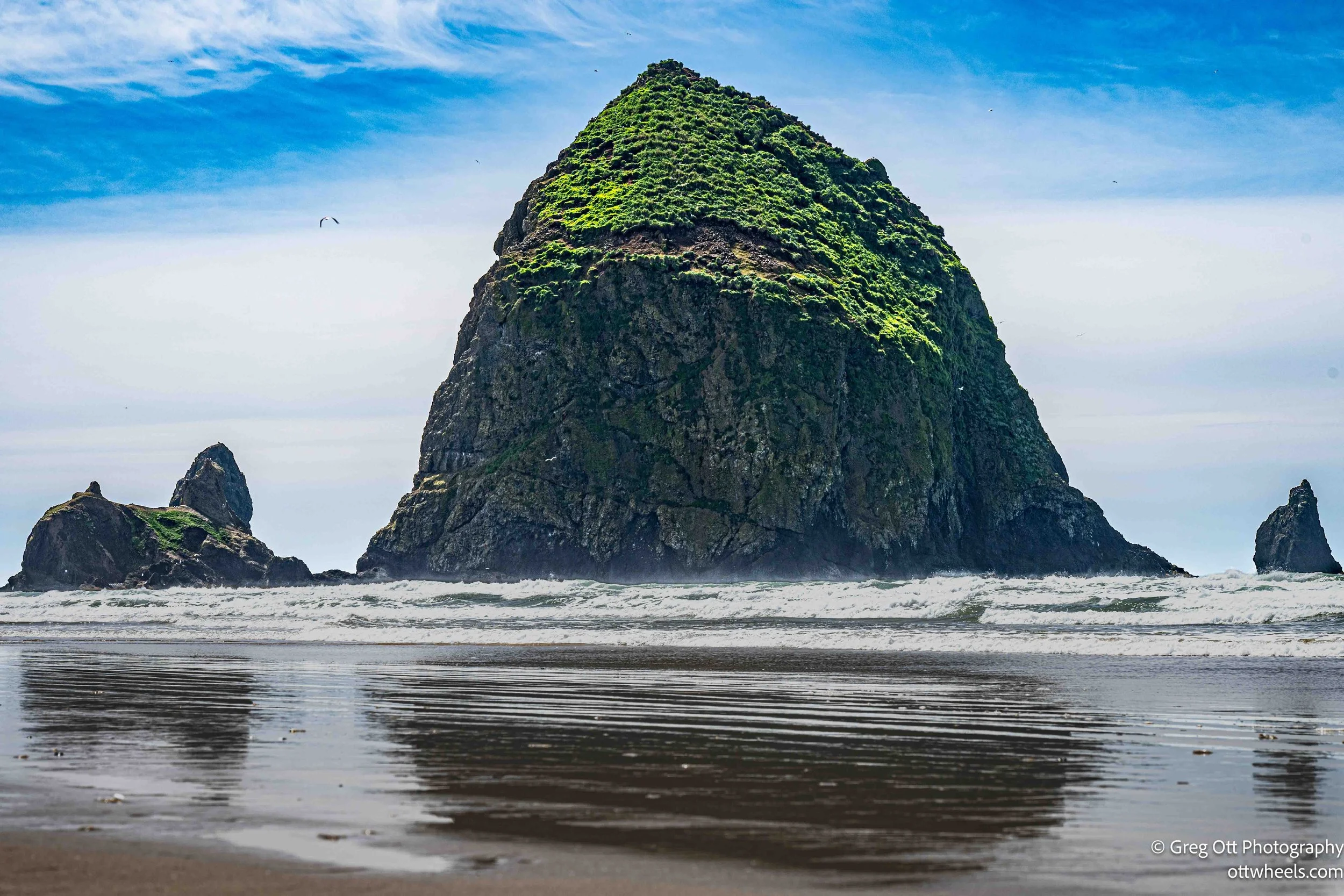
Cannon Beach is one of those places that looks exactly like people imagine when they think “Oregon Coast.” Low buildings, wood siding, a mix of galleries, coffee shops, and small inns, all set against a wide, flat beach that seems to stretch forever. The centerpiece is Haystack Rock, rising 235 feet out of the sand and water. It’s one of several sea stacks along this stretch, including the smaller “Needles” just to the south. These formations were once part of the coastline itself—lava flows from ancient volcanic activity tied to the Columbia River Basalt Group. Over millions of years, the ocean wore away the softer surrounding material, leaving behind these harder basalt cores. What’s left is this massive rock standing alone, constantly reshaped at its base by tides, storms, and wind.
At 9 am, I set out to explore and walked through town along Highway 101 before turning down a side street. This was clearly a tourist town. No one spoke to each other on the street. At the end of the road were several benches carved from logs, set naturally into the landscape. I sat for 15 minutes and just watched the ocean, birds, passersby, and activity down on the beach.
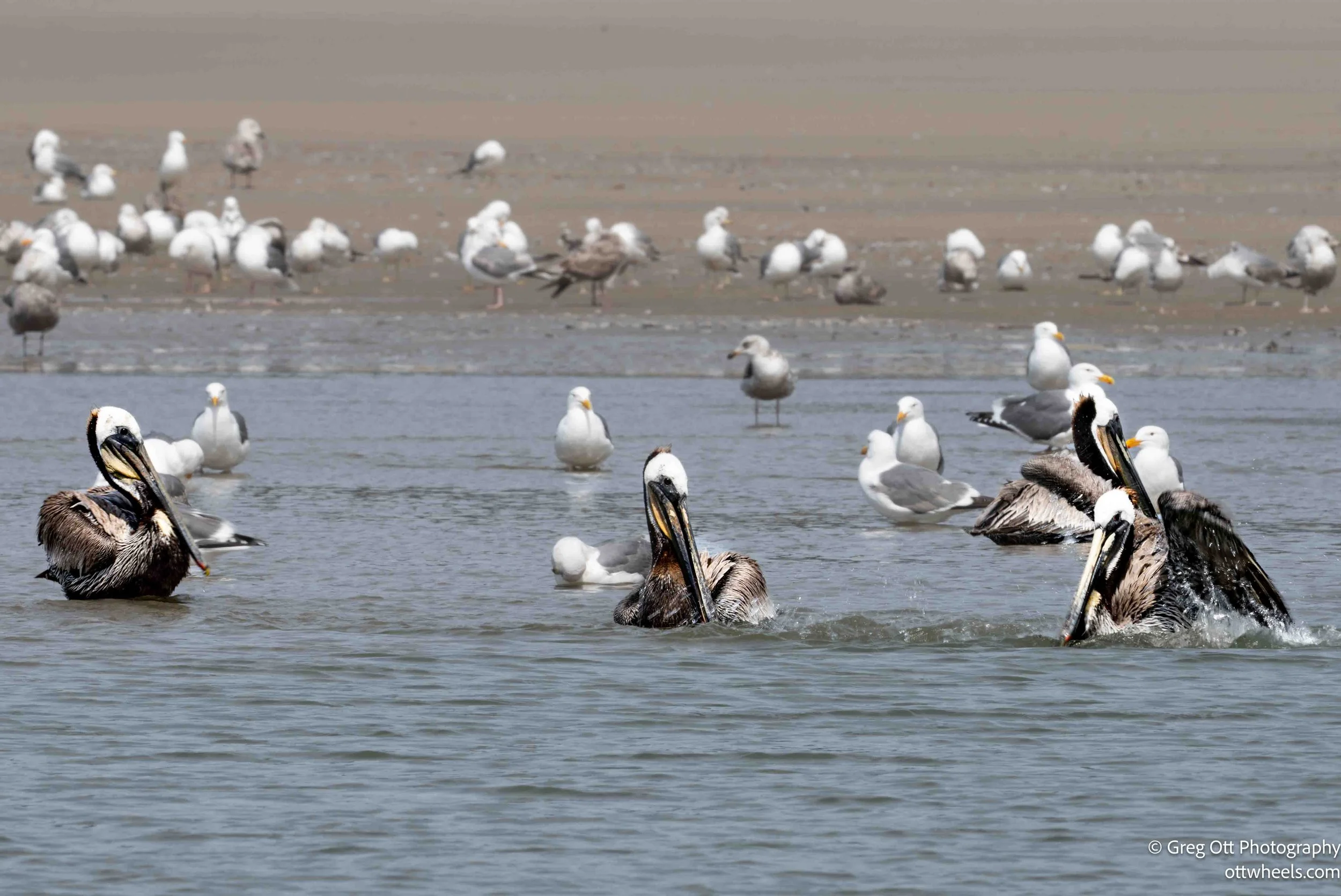
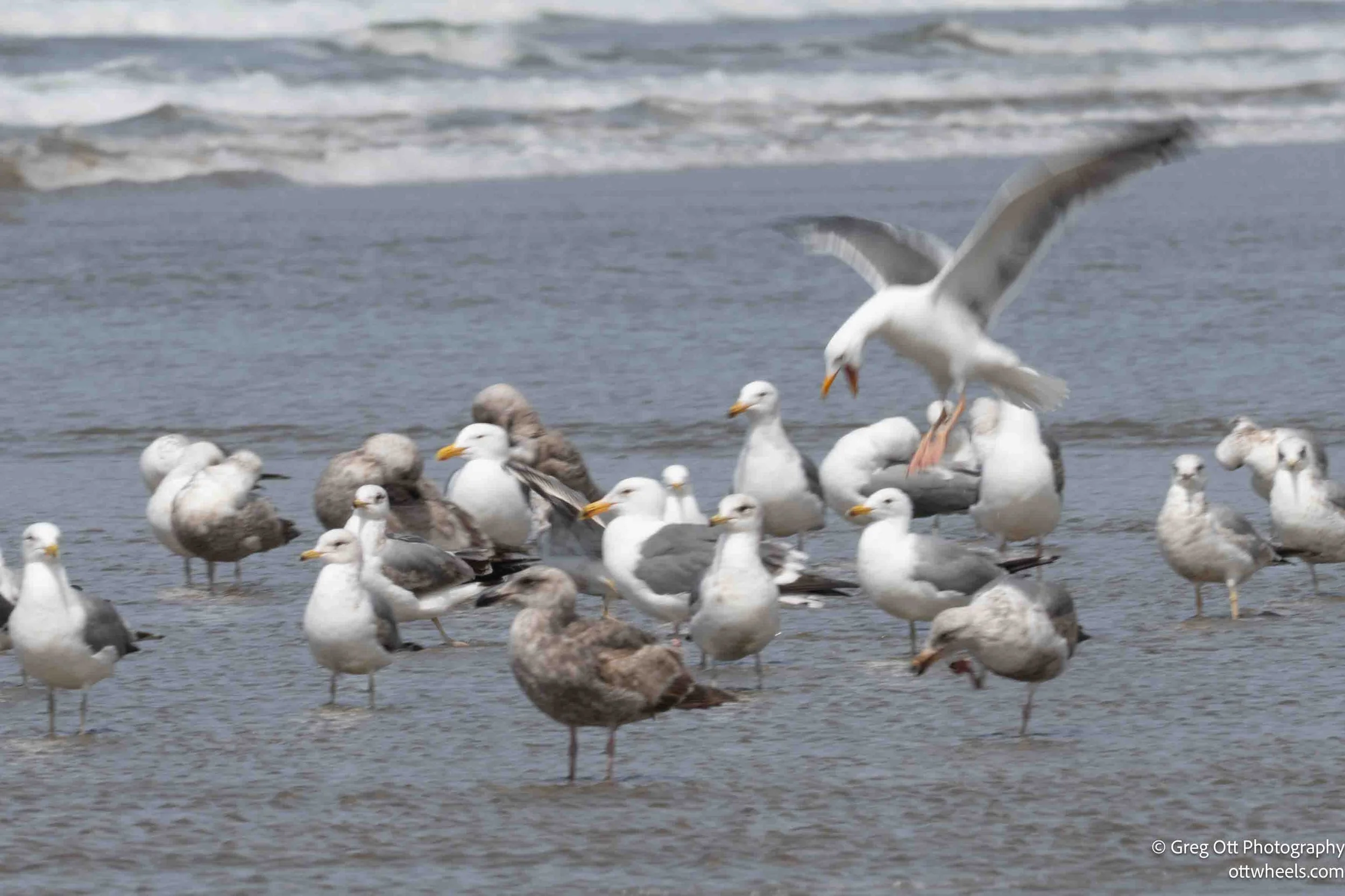
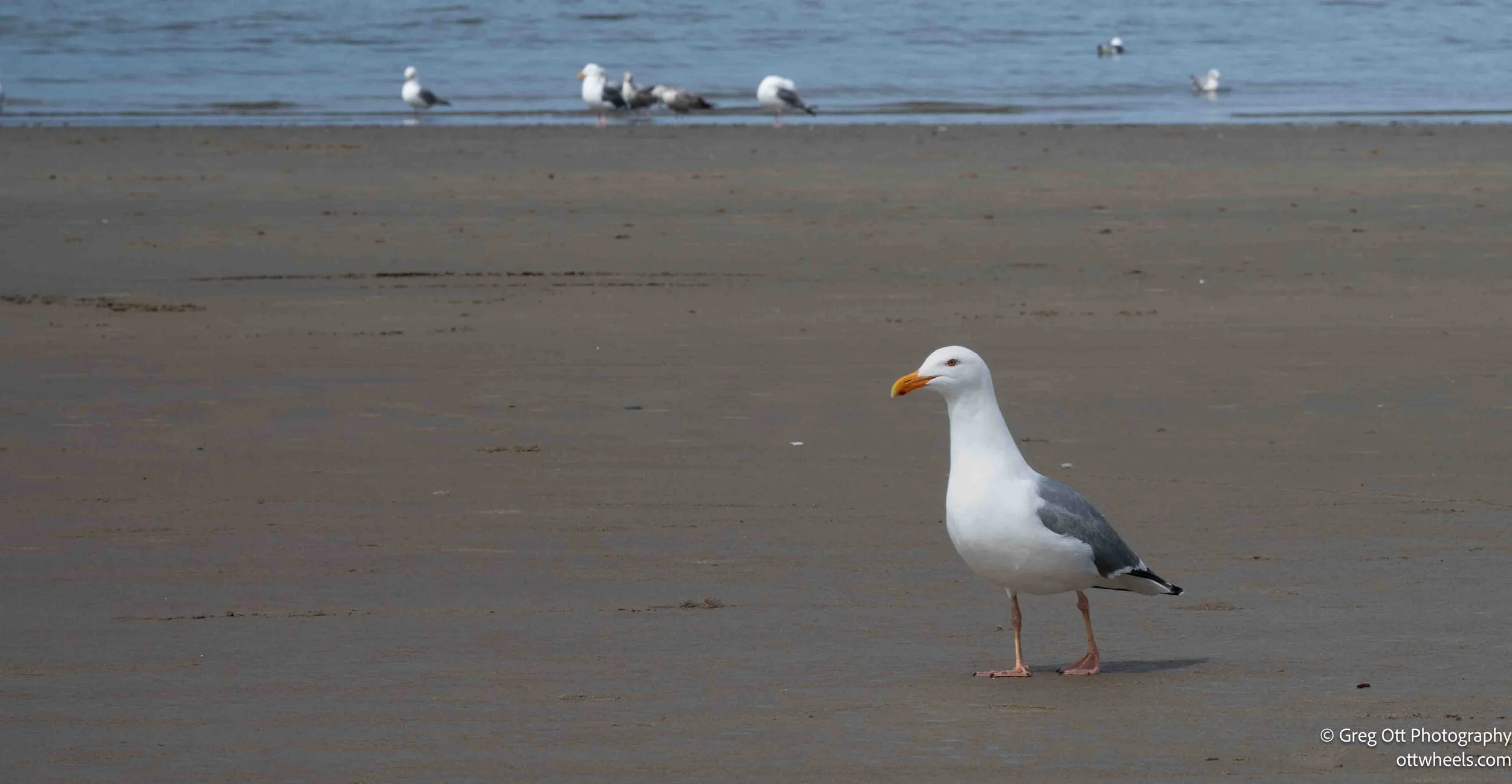
I walked the beach for a while and then headed back to the van. I returned to grab my longer lenses to photograph the birds. It was very hazy—soft light, almost flat, with the horizon blending into the sky. Even with a lot of people out there, it was quiet. It felt like most people were just walking, not talking. Almost like a slow, unspoken agreement to keep things calm. In the distance, at the far end of the beach, I could hear kids yelling, but it barely carried.
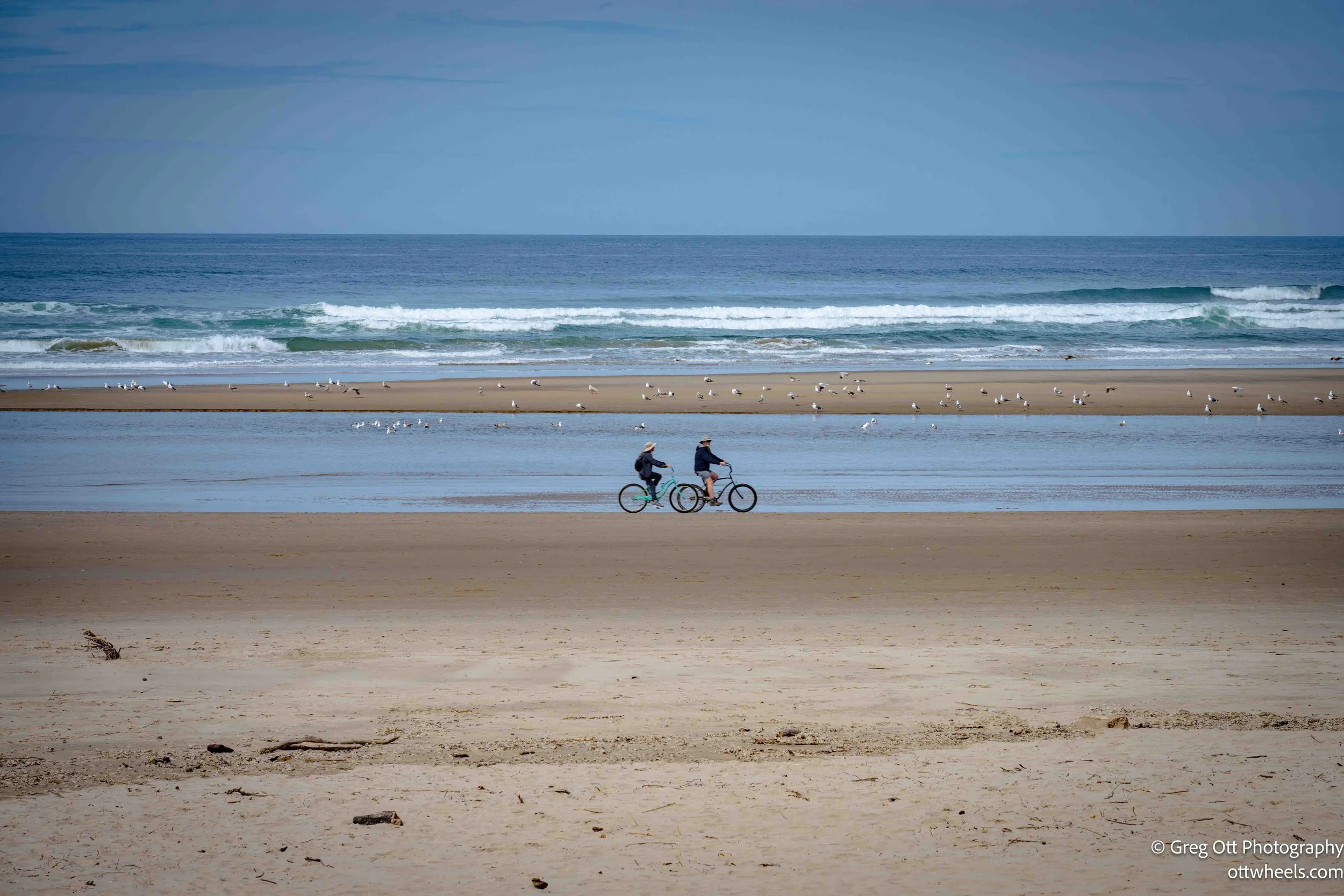
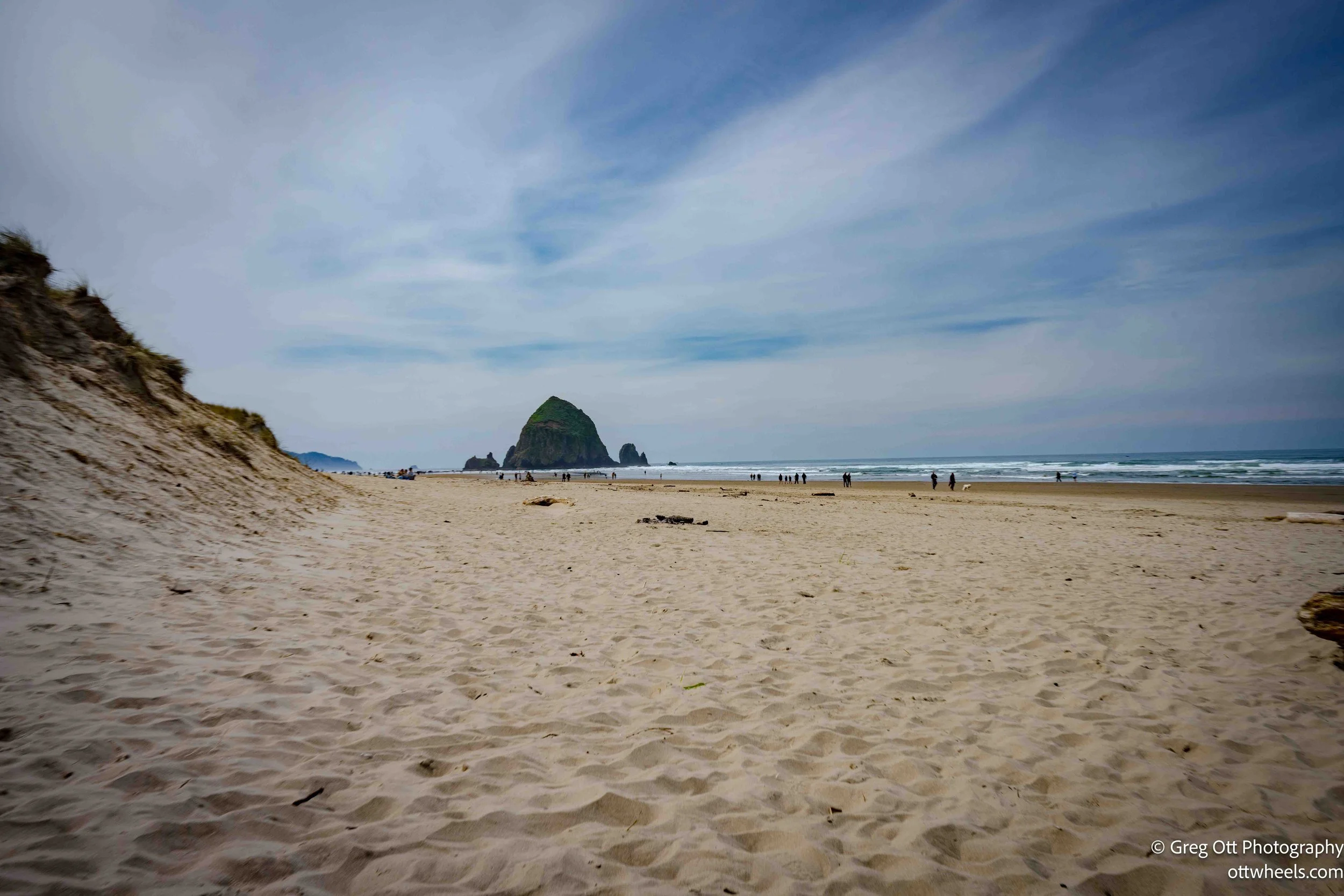
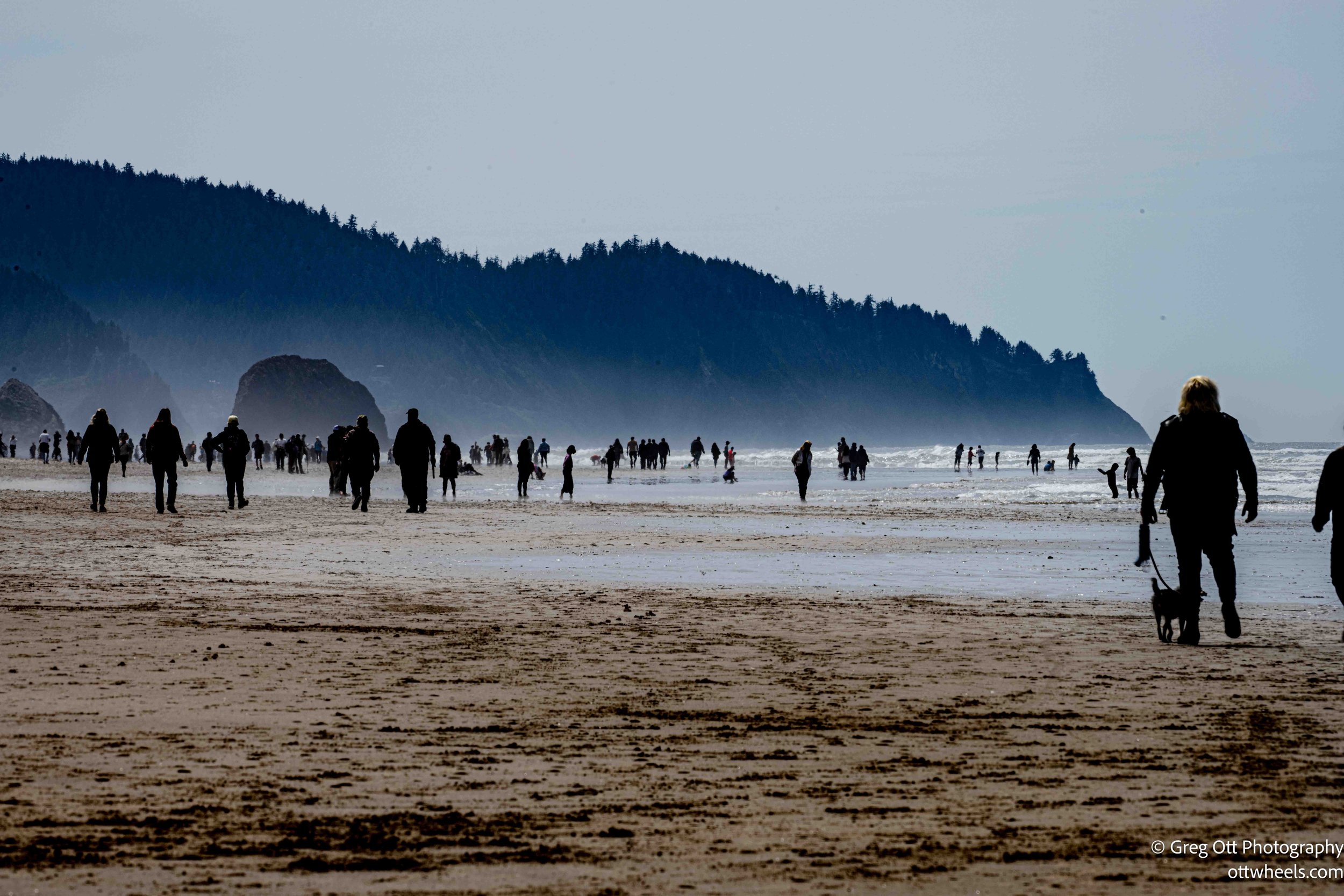
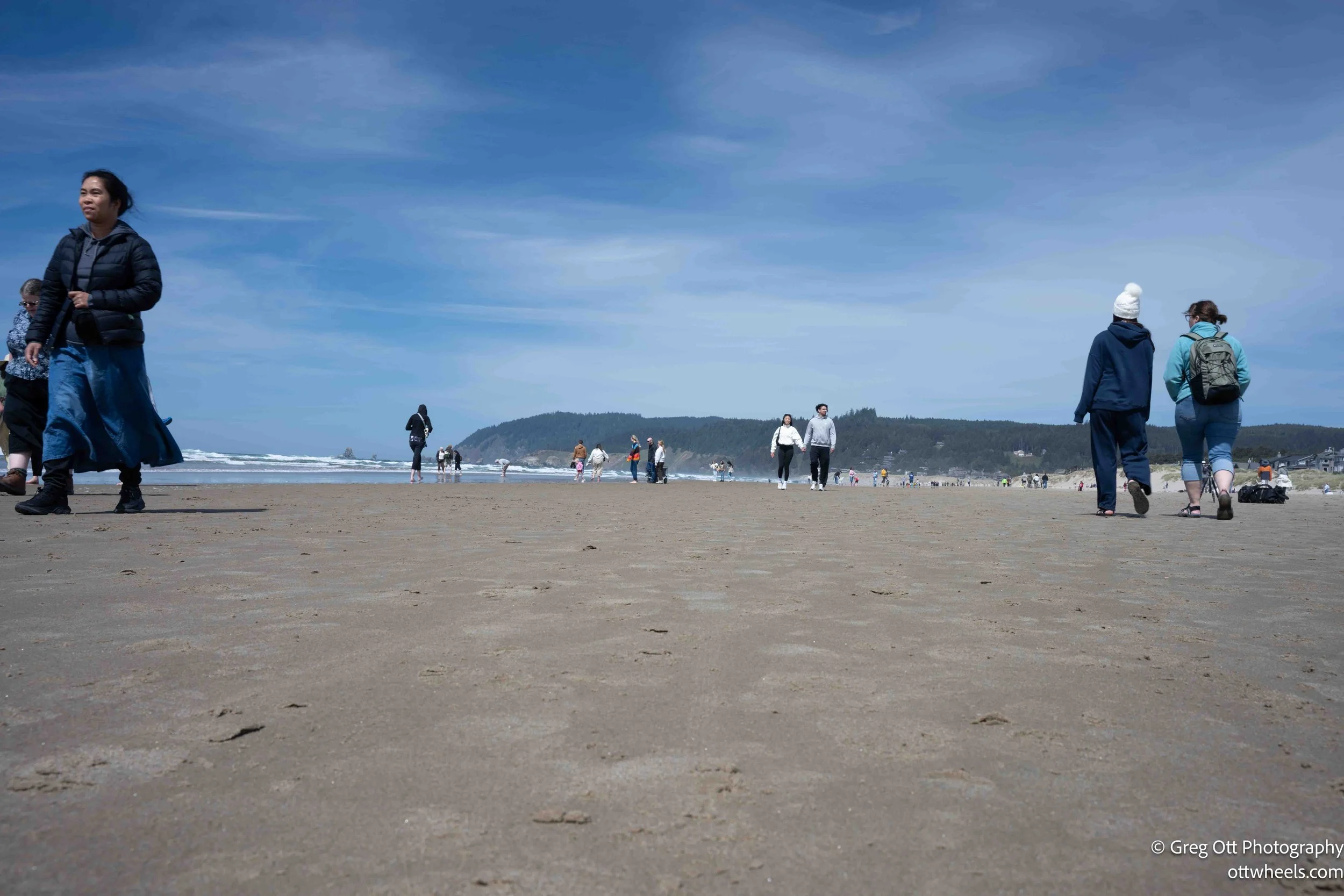
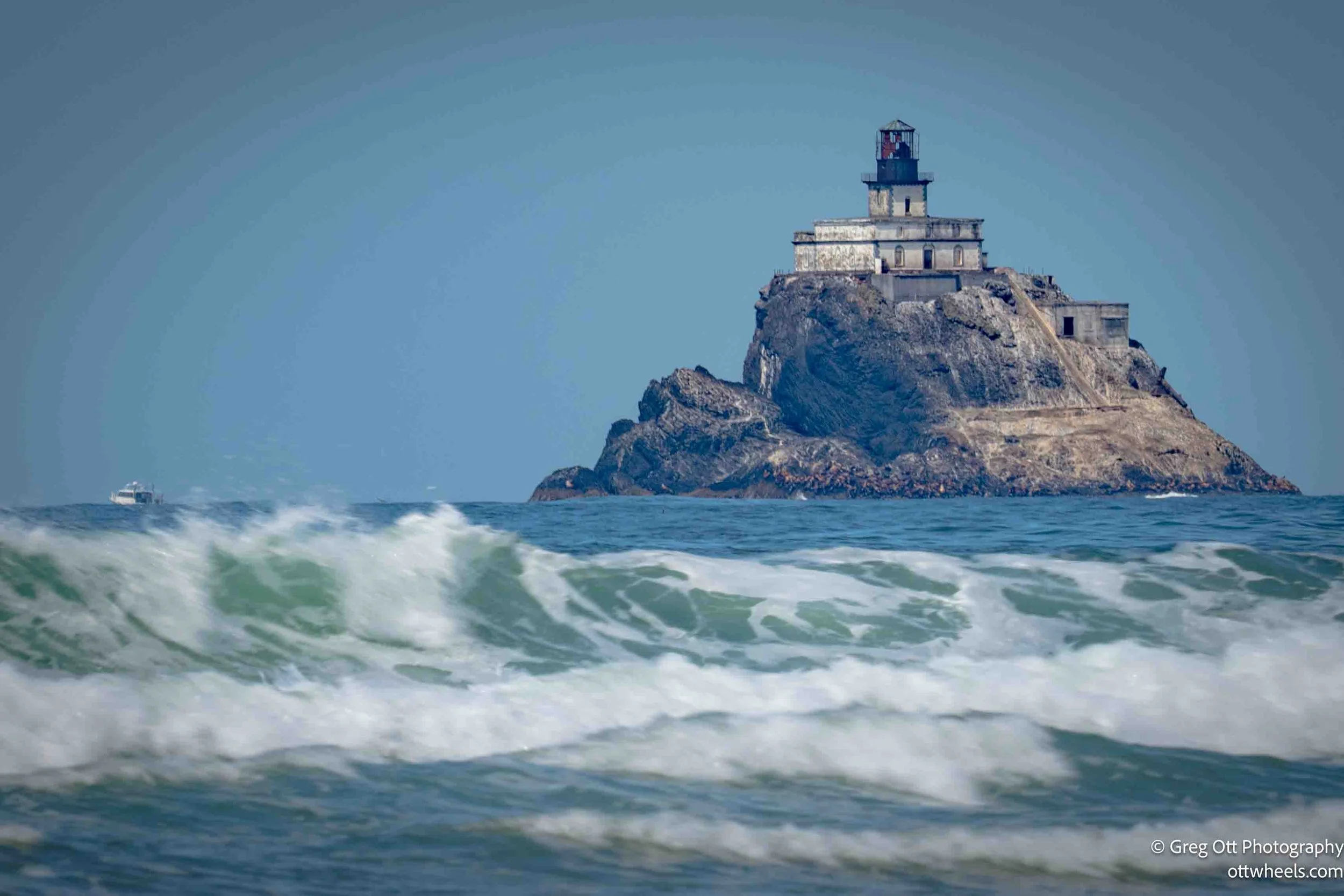
The beach itself is wide enough that you never feel crowded. The sand is firm and easy to walk on, and at low tide, it opens up even more. Around Haystack Rock, tide pools form, and you can see people gathering there, crouched down, looking at whatever they’ve found—sea stars, anemones, small crabs. Offshore, I could see Tillamook Rock Lighthouse faintly through the haze, sitting on its own rock out in the distance. The wind coming off the ocean was steady and strong, enough to make longer lenses difficult to handle. Even on a tripod, you could feel it pushing just enough to soften shots if you weren’t careful. I spent about an hour trying to work around that—timing shots between gusts, bracing where I could.
I eventually walked back into town and dropped into a few shops. Cannon Beach leans hard into its role—art galleries, coastal décor, handmade goods, and plenty of tourist items. Some places had interesting local work—photography, wood carving, glass—but a lot of it was what you’d expect in a destination like this. Clean, curated, and built for visitors moving through. I grabbed a coffee at a small shop right on 101 and watched people come and go. By mid-morning, the town had filled in. The quiet feel from earlier was gone.
Columbia River Maritime Museum
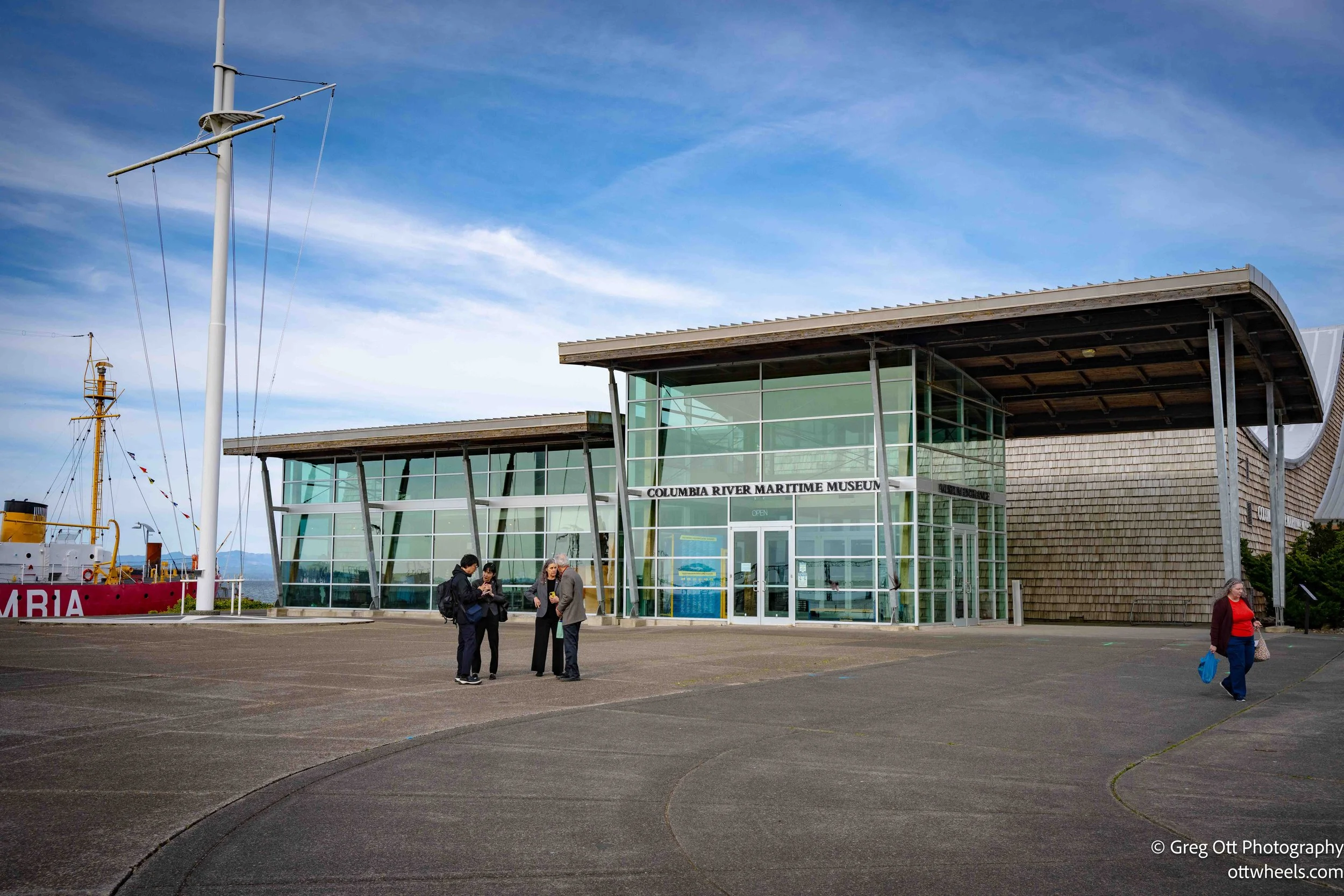
The drive north to Astoria follows the same rhythm as much of the coast along U.S. Route 101—curves, forest, short openings to the ocean, then back into trees again. I wanted to get to the Columbia River Maritime Museum before it closed. I made it in time to get almost two hours inside.
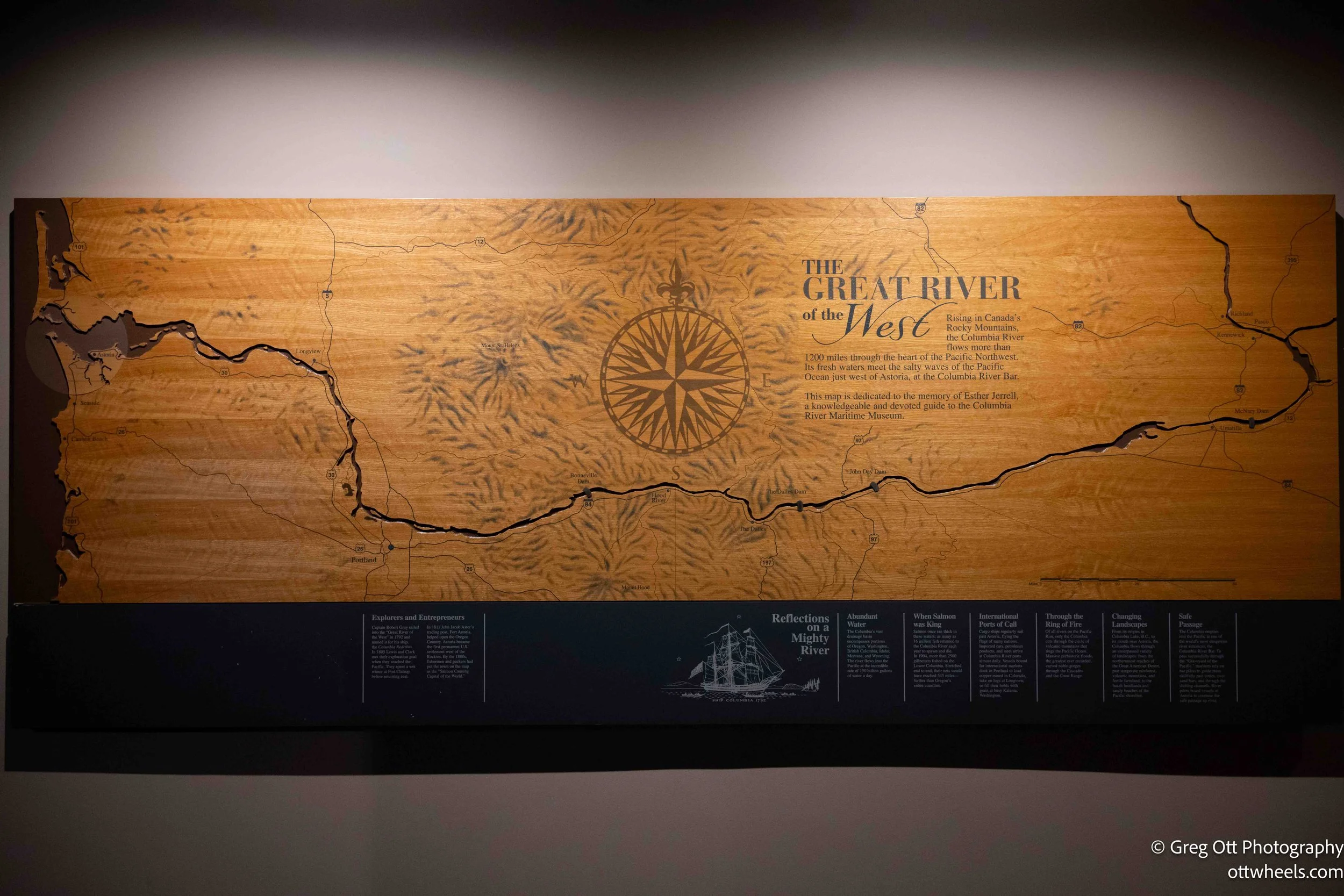
The museum is focused on the Columbia River and the long history of moving ships through one of the most difficult river entrances in the world. Right at the start, you get a sense of scale—full-size boats, large navigation equipment, and detailed exhibits explaining how ships enter and leave the river. There are sections on the Columbia River Bar pilots, the people responsible for guiding vessels through the shifting sandbars at the river’s mouth. The displays show how conditions can change quickly, and how much experience it takes to move a ship safely through that stretch.
The museum is focused on the Columbia River and the long history of moving ships through one of the most difficult river entrances in the world. Right at the start, you get a sense of scale—full-size boats, navigation equipment, and exhibits explaining how ships enter and leave the river. There are sections on Columbia River Bar pilots, responsible for guiding vessels through the shifting sandbars at the river’s mouth. The displays show how quickly conditions can change, and how much experience it takes to move a ship safely through that stretch.
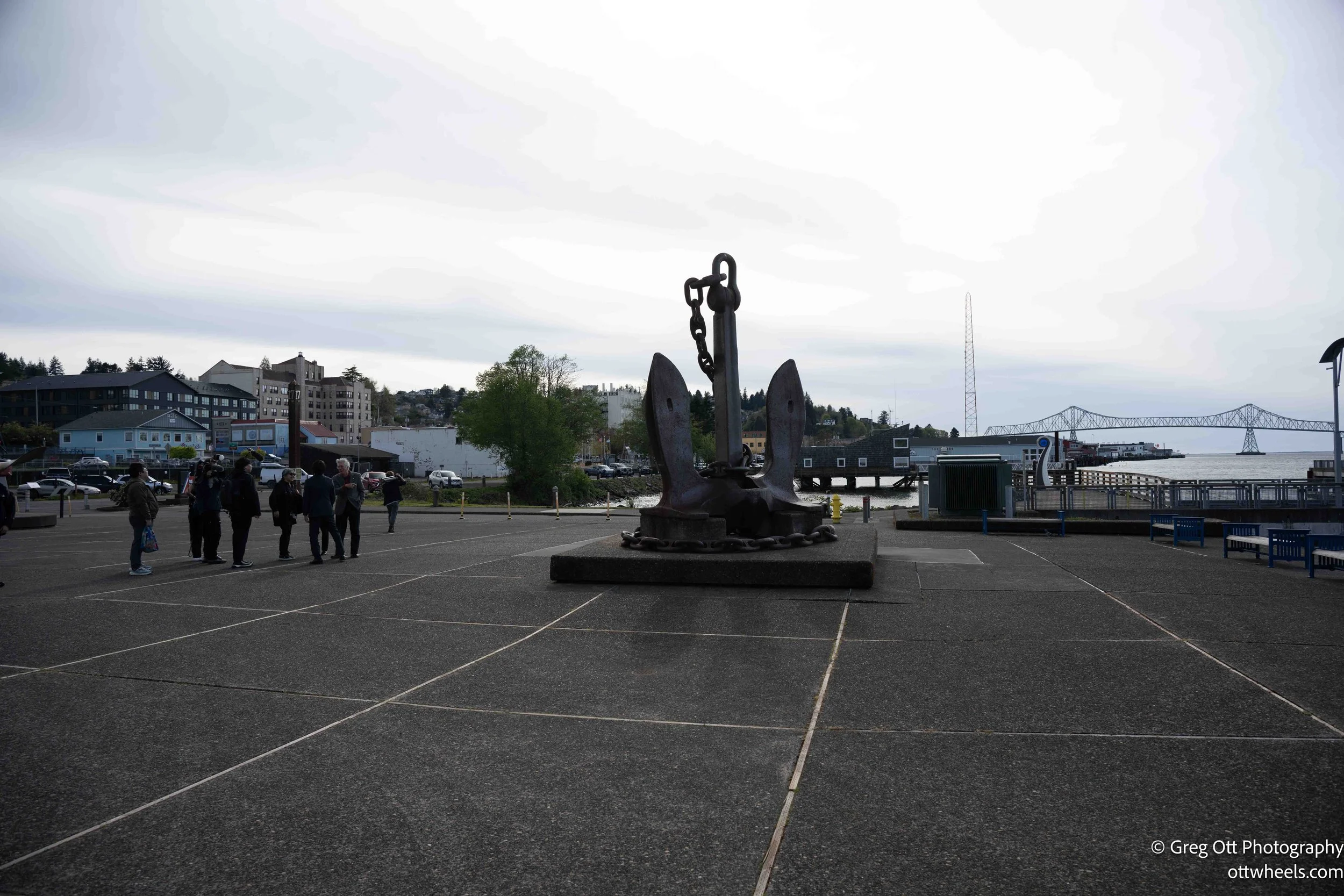
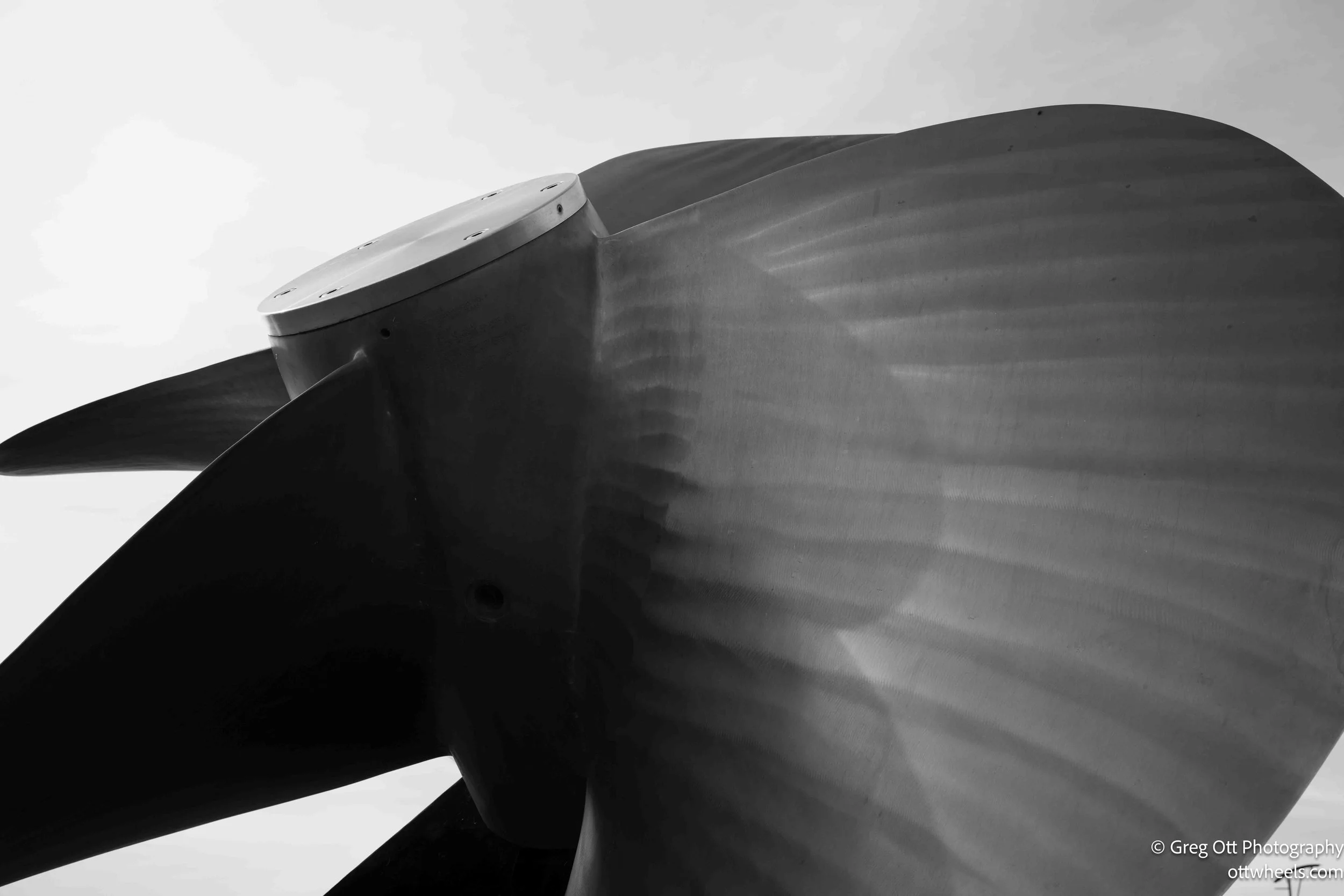
Another section focuses on shipwrecks and rescues. There are models, photographs, and firsthand accounts of vessels that didn’t make it. Storms, poor visibility, mechanical failures—it’s all laid out in a straightforward way. You see how common these incidents were, especially before modern navigation systems. The exhibits don’t dramatize it, but they don’t need to. The stories carry enough weight on their own.
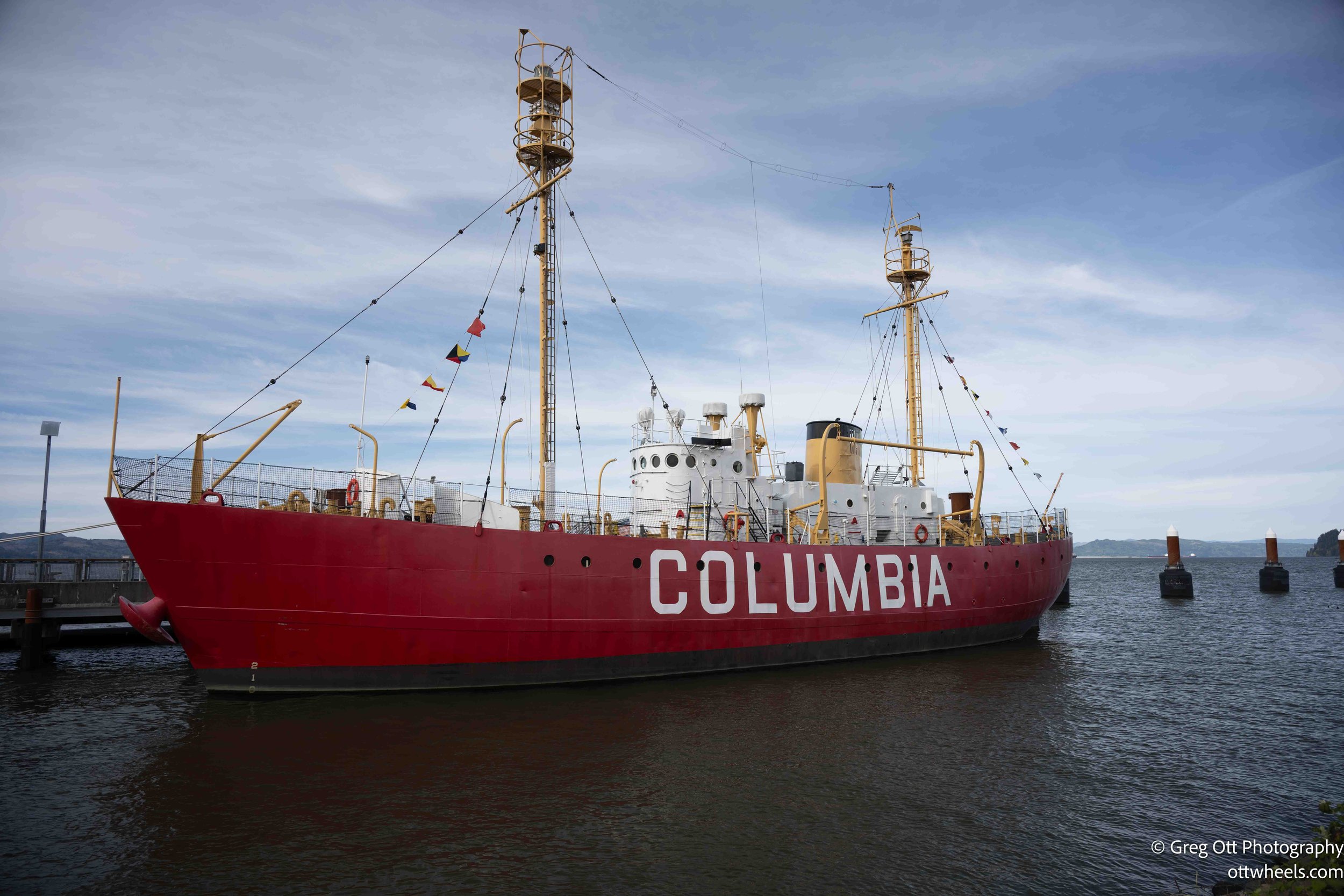
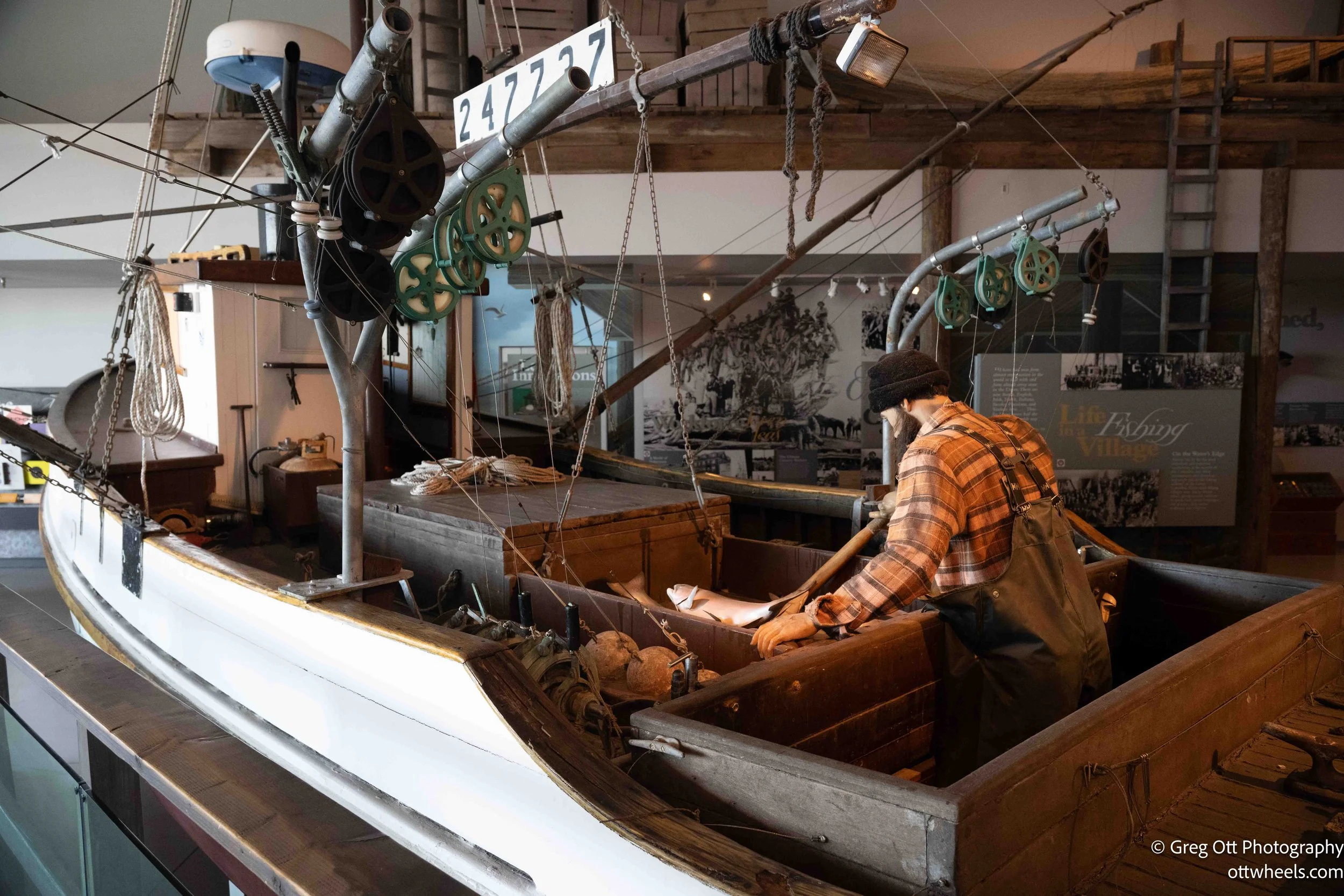
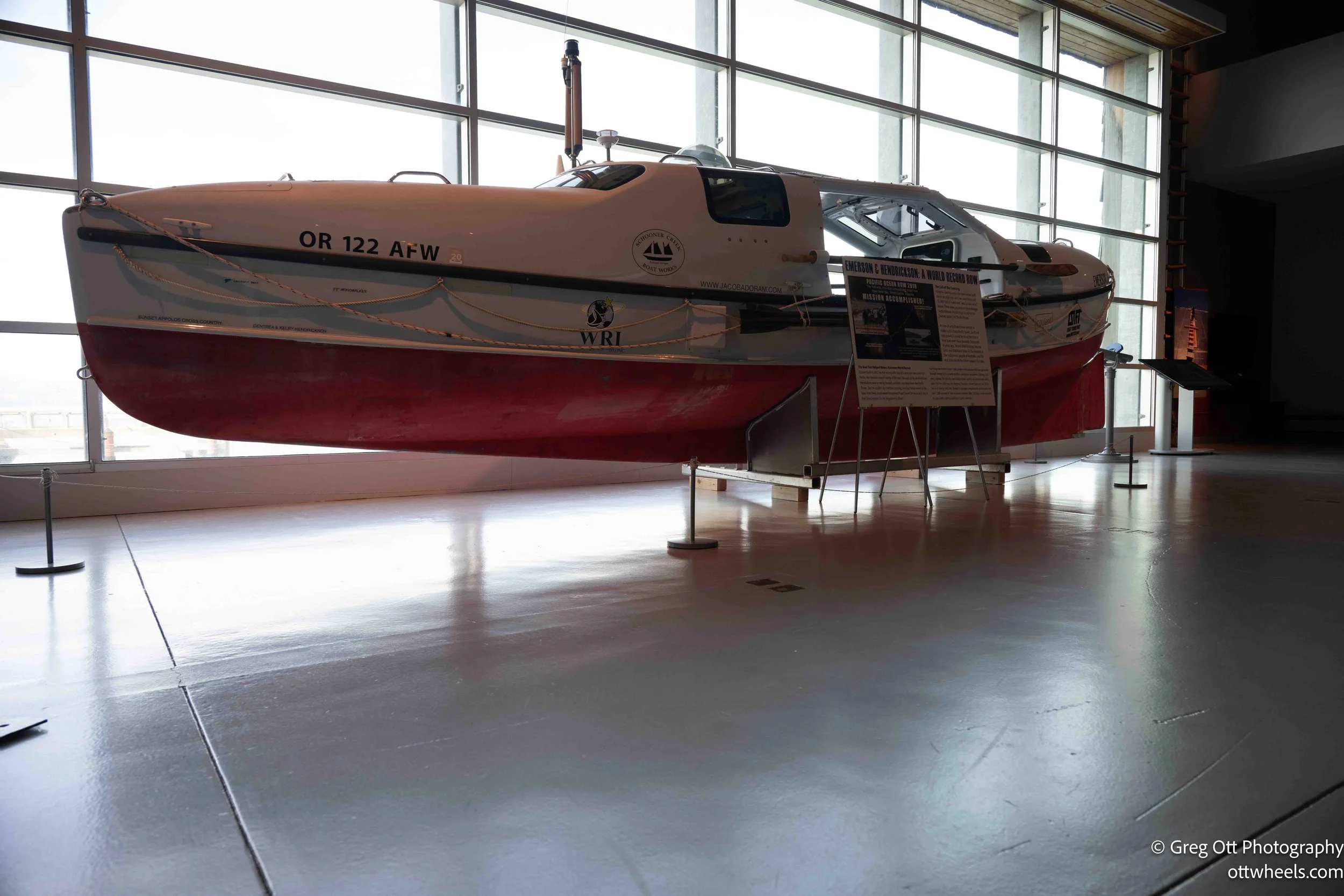
There’s also a strong emphasis on the working side of the river—fishing fleets, cargo ships, Coast Guard operations, and the industries built around them. You can walk through displays on navigation tools, communication systems, and the evolution from manual charts to modern GPS-based systems. Outside, there are larger vessels you can see up close, including a retired Coast Guard ship. It all ties back to how important this river has been—and still is—for moving goods and people.
At the mouth of the Columbia River—often called the “Graveyard of the Pacific”—conditions can turn quickly. The river meets the Pacific Ocean over a shallow bar, where currents, tides, and ocean swells collide. Storm systems moving in from the Pacific can stack waves on top of outgoing river currents, creating steep, breaking seas that are difficult to navigate. Sandbars shift constantly, meaning safe channels can change over time. Before modern navigation, hundreds of ships were lost here. Even today, large vessels rely on experienced bar pilots to guide them through.
Near the end of the tour, I came to a section on World War II, where a Japanese film crew was doing a report. I took a few photos of the reporter speaking. A woman came over, bowed slightly, and apologized if they were impacting my visit. I told her they weren’t. They were clearly speaking Japanese, and I wasn’t sure why they were there. She explained they were reporting on the collection of Japanese flags displayed at the museum.
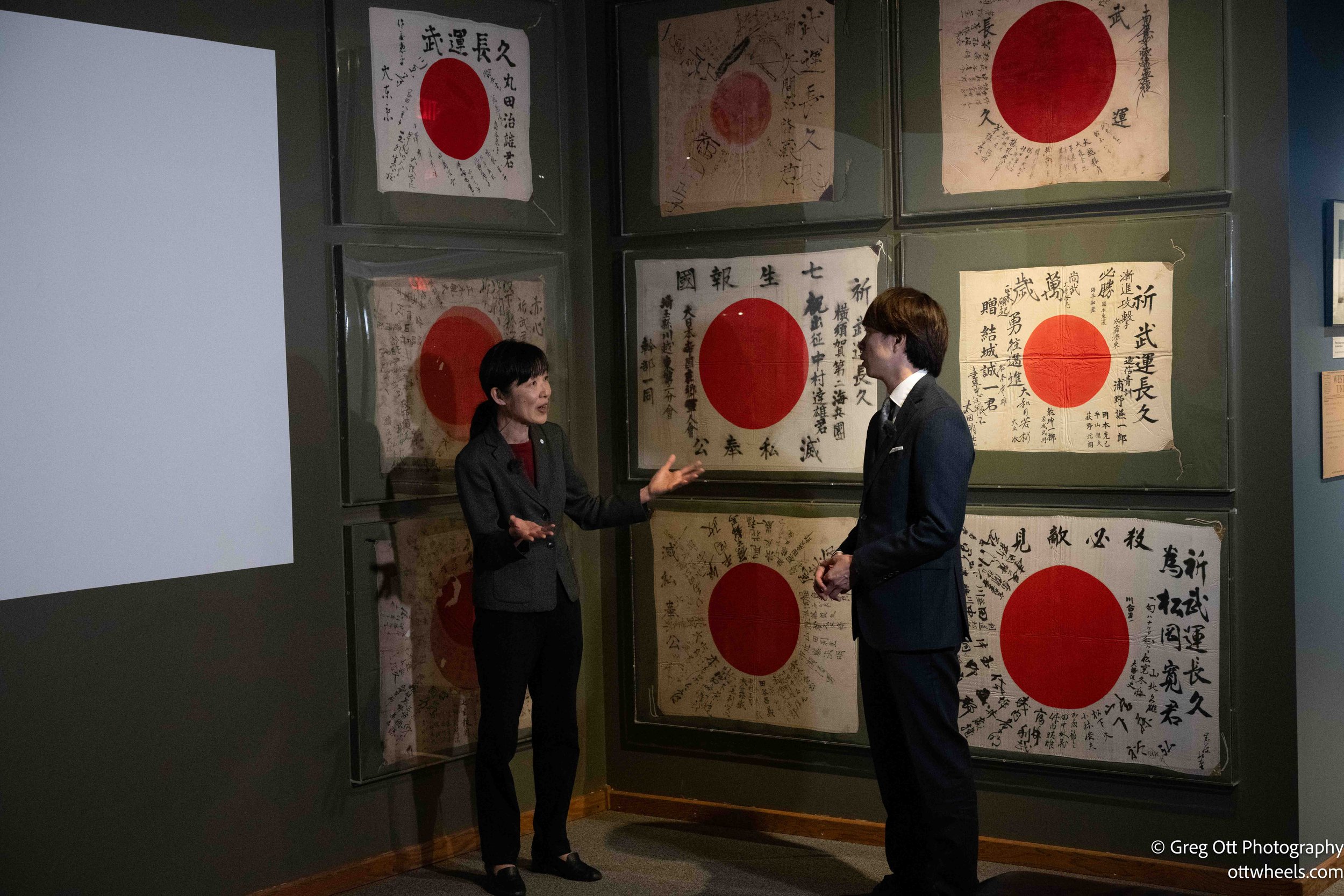
I learned that when Japanese soldiers left home during WWII, families often gave them flags covered in handwritten messages—good wishes, prayers, and names. Many of these were taken by American soldiers from those who were killed, often still folded and unread. In some cases, the official stories told back home didn’t match what actually happened. These flags became one of the few personal links back to the families. The film crew was there to document that collection and help tell those stories more accurately.
After the museum closed around 5, I walked along the shore. Astoria sits right at the mouth of the Columbia River. There were huge tankers sitting in the harbor. I asked someone what they carried. He explained that these ships move bulk cargo—wood, agricultural products, liquids like oil or syrups. The holds are cleaned between loads, but not always perfectly. He mentioned that inspections have been reduced, and that can lead to shortcuts.
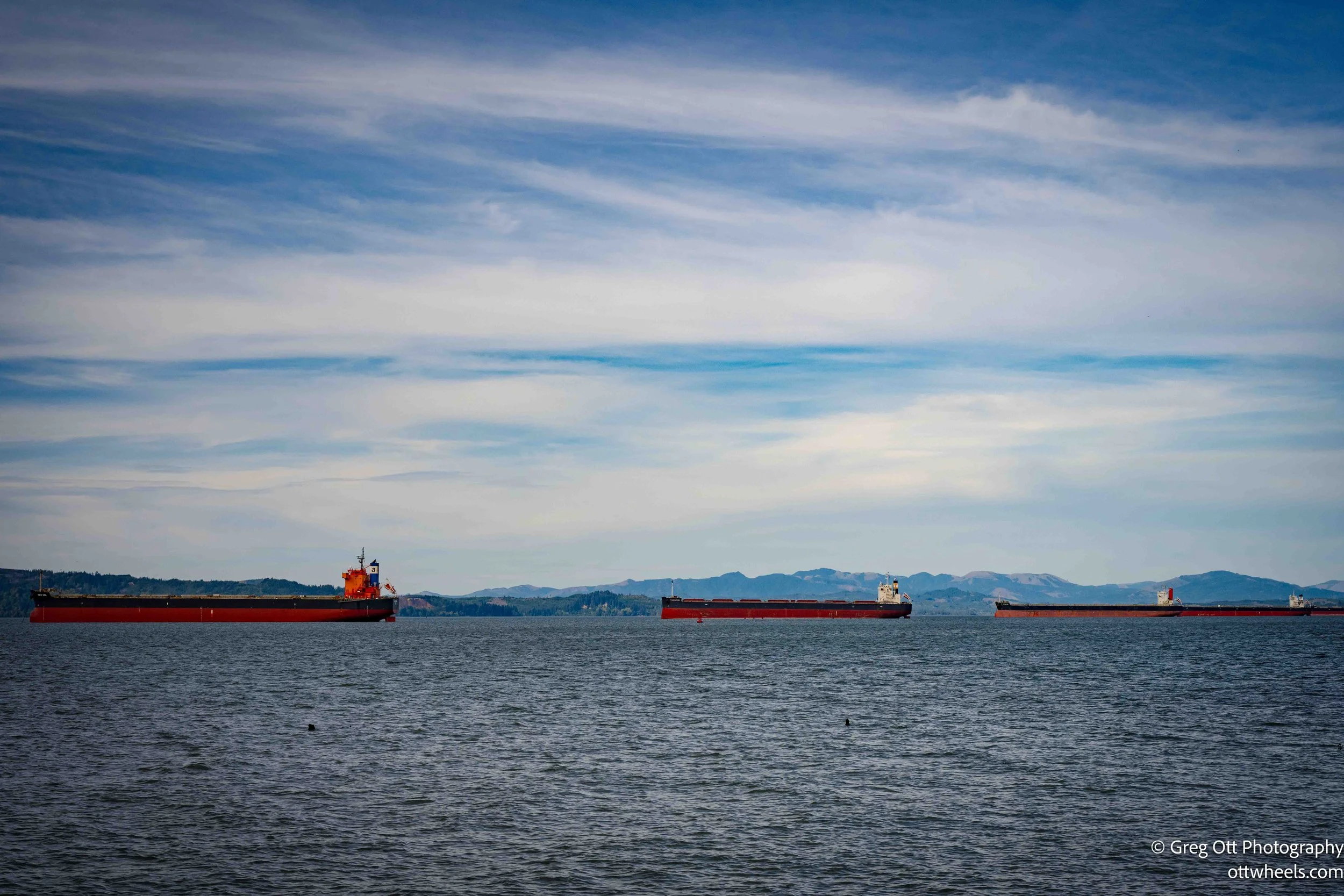
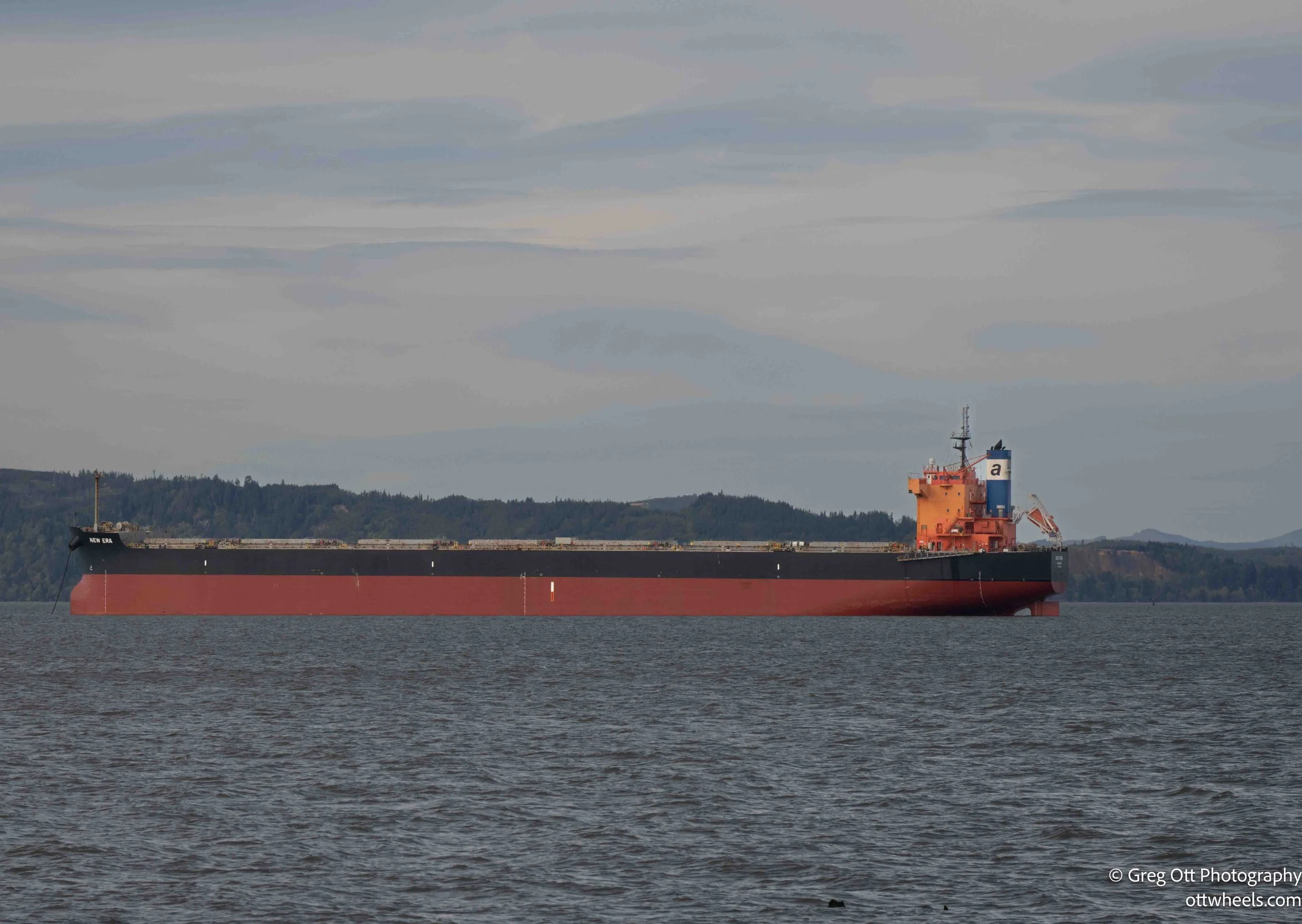
After my walk, I found a Mexican restaurant with a view out toward the river. As I sat there, I watched the tankers slowly turning with the tide. One of them did a full 180-degree turn while I was eating, moving so slowly it almost didn’t register until you looked away and back again.
I walked a bit more after dinner, then around 9:30 pm started looking for a place to park. I was trying to find something that felt like it might be quiet, a couple blocks off 101. It looked good on paper—far enough from the main road, not much foot traffic—but it didn’t turn out that way.
Besides the loud mufflers, truck brakes, and cars pushing through faster than they should, there was a couple arguing about a hundred feet from the van around midnight. It got loud enough that I wondered if I’d have to step in. After about 15 minutes, he drove off. She called someone, and about 10 minutes later another car pulled up and picked her up.
Not exactly the quiet night I was hoping for.