
Idaho's State Capitol
Idaho State Capitol Tour
I arrived at the Idaho State Capitol on Monday morning for the 10:30 guided tour. I searched all over the building trying to figure out where the tour started. There was no obvious visitor center, welcome desk, or security guard to ask for directions. After wandering around for a while, I gave up and decided to explore the building on my own. Around 10:40, I heard someone speaking on the floor below me and realized there was a tour underway. I went downstairs and joined the group. Apparently, I wasn't the only one having trouble finding it. Several others mentioned that they weren't sure where to meet either.
The state also offers tours by reservation, which can be arranged by calling ahead. I have to say, this turned out to be one of the better Capitol tours I've taken. It wasn't necessarily the longest, but our guide was excellent. He was a volunteer, very professional, and remarkably knowledgeable, not just about the Capitol but about American history in general. He had a way of connecting the building's history to events taking place elsewhere in the country, which made the tour especially interesting.
The first thing that struck me about the Idaho Capitol was the enormous amount of white marble, or what appeared to be marble, throughout the building. The massive columns surrounding the rotunda look like polished marble, complete with intricate gray and green veining. Our guide explained that many of them aren't marble at all. They're made using a technique called scagliola, an Italian decorative process developed centuries ago to reproduce the appearance of natural stone. Craftsmen mixed plaster, marble dust, pigments, and glue to create the veining and colors found in marble. The material was then carefully polished to produce a surprisingly convincing finish.
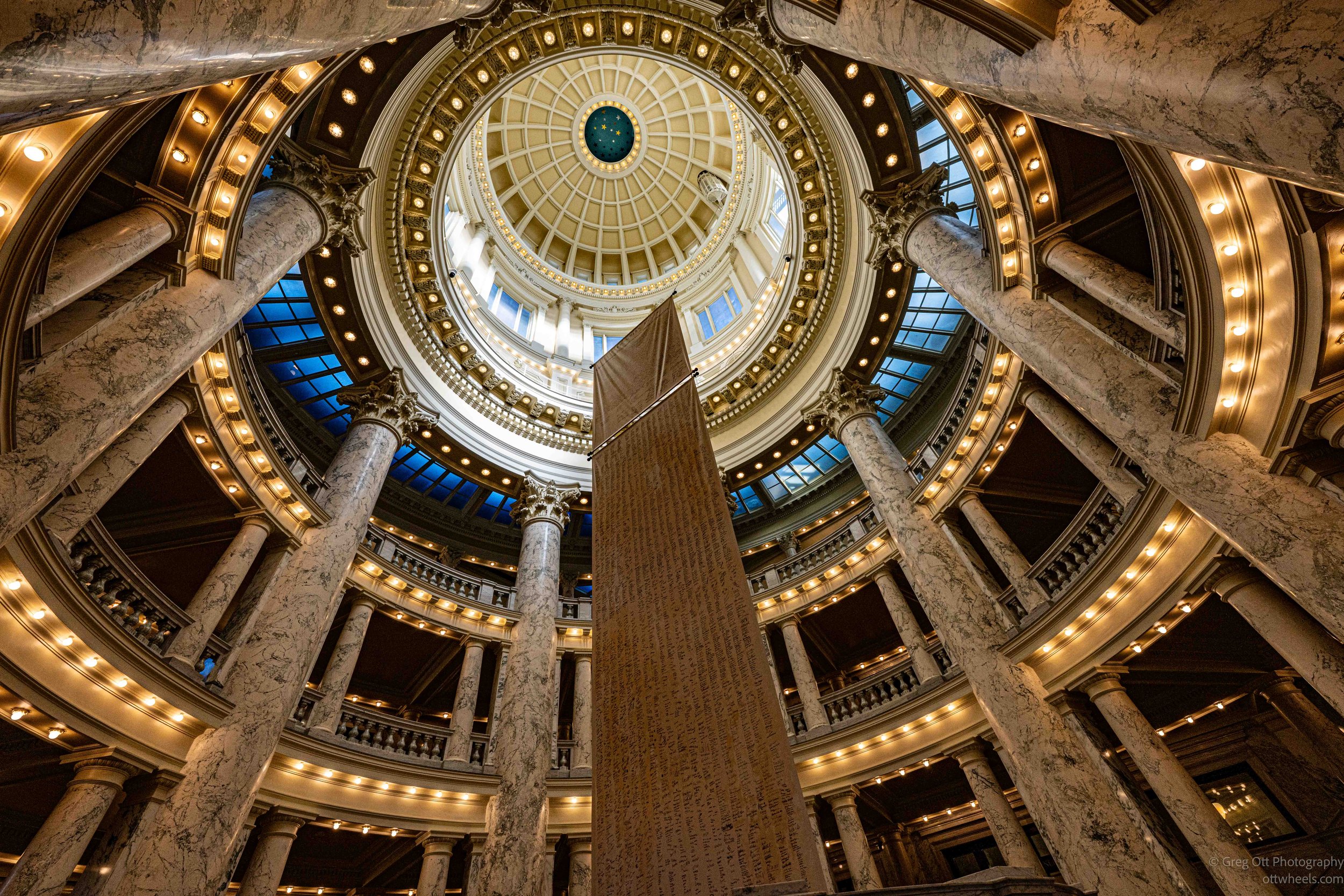
The process required considerable skill and patience. Some of the columns are hollow around their structural supports, making them much lighter than solid marble columns of the same size. What I found interesting was that the building does contain substantial amounts of genuine marble, including stone from Georgia, Alaska, Vermont, and Italy. Unless someone pointed it out, I doubt I would have recognized the difference.
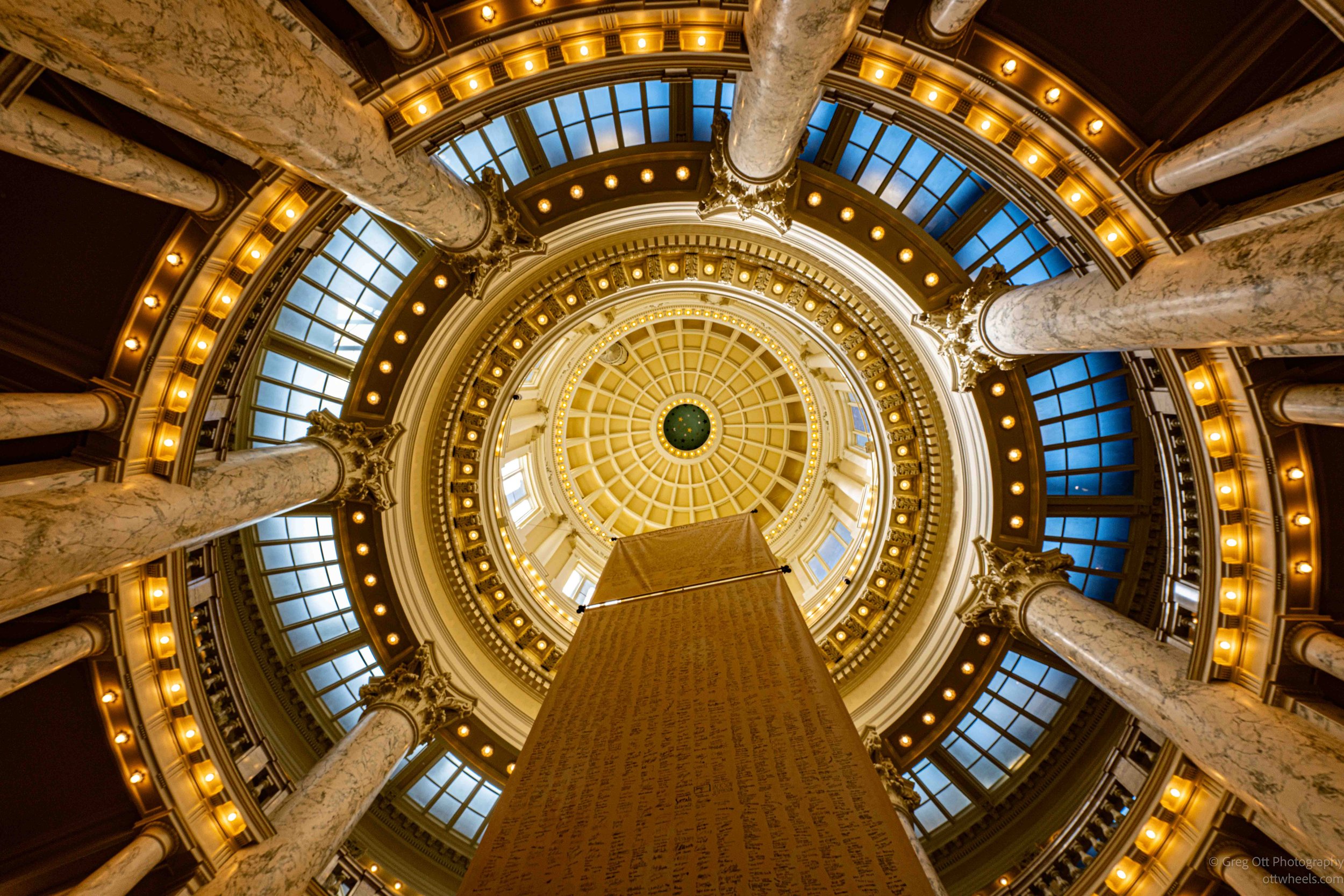
The other thing you notice almost immediately is the natural light streaming into the building. The enormous central rotunda rises through several floors to the dome, with large windows and skylights allowing sunlight to illuminate the interior. The Idaho Capitol is sometimes called the Capitol of Light, and after walking around inside, I could understand why. The white columns and polished stone reflect light throughout the building, creating a surprisingly open feeling for a structure of this size.
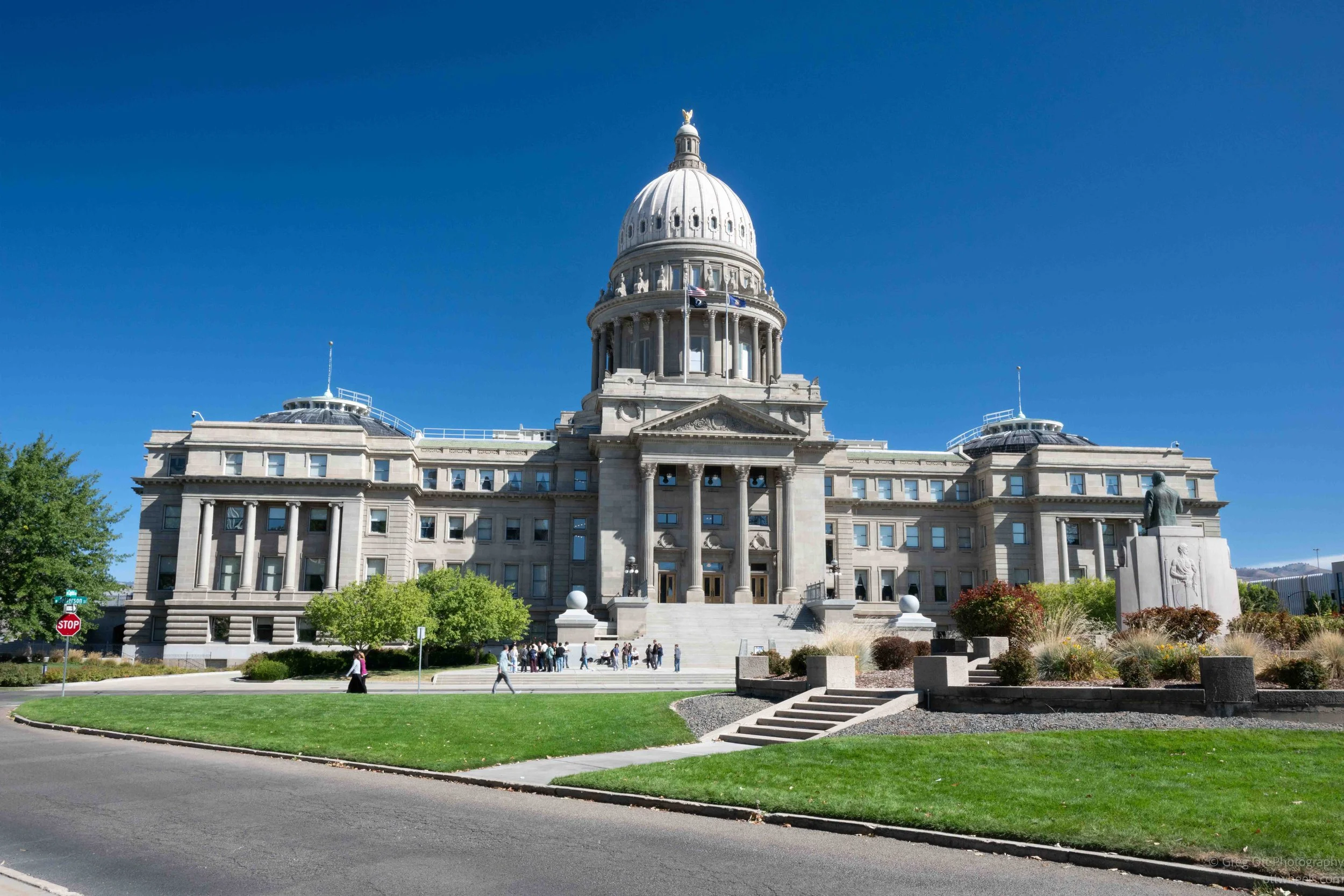
The Capitol was designed by John E. Tourtellotte and Charles Hummel, architects whose firm was based in Boise. Construction began in 1905, with the central portion and dome completed in 1912. The House and Senate wings were added in 1919 and 1920, completing the building after approximately 15 years of construction. Much of the exterior was built using sandstone quarried from nearby Table Rock. Prisoners from the Idaho State Penitentiary helped transport the enormous stone blocks used in construction. The building rises 208 feet to the top of the eagle perched above the dome. One interesting detail I learned was that the Capitol is heated using Boise's natural geothermal water, pumped from deep underground.
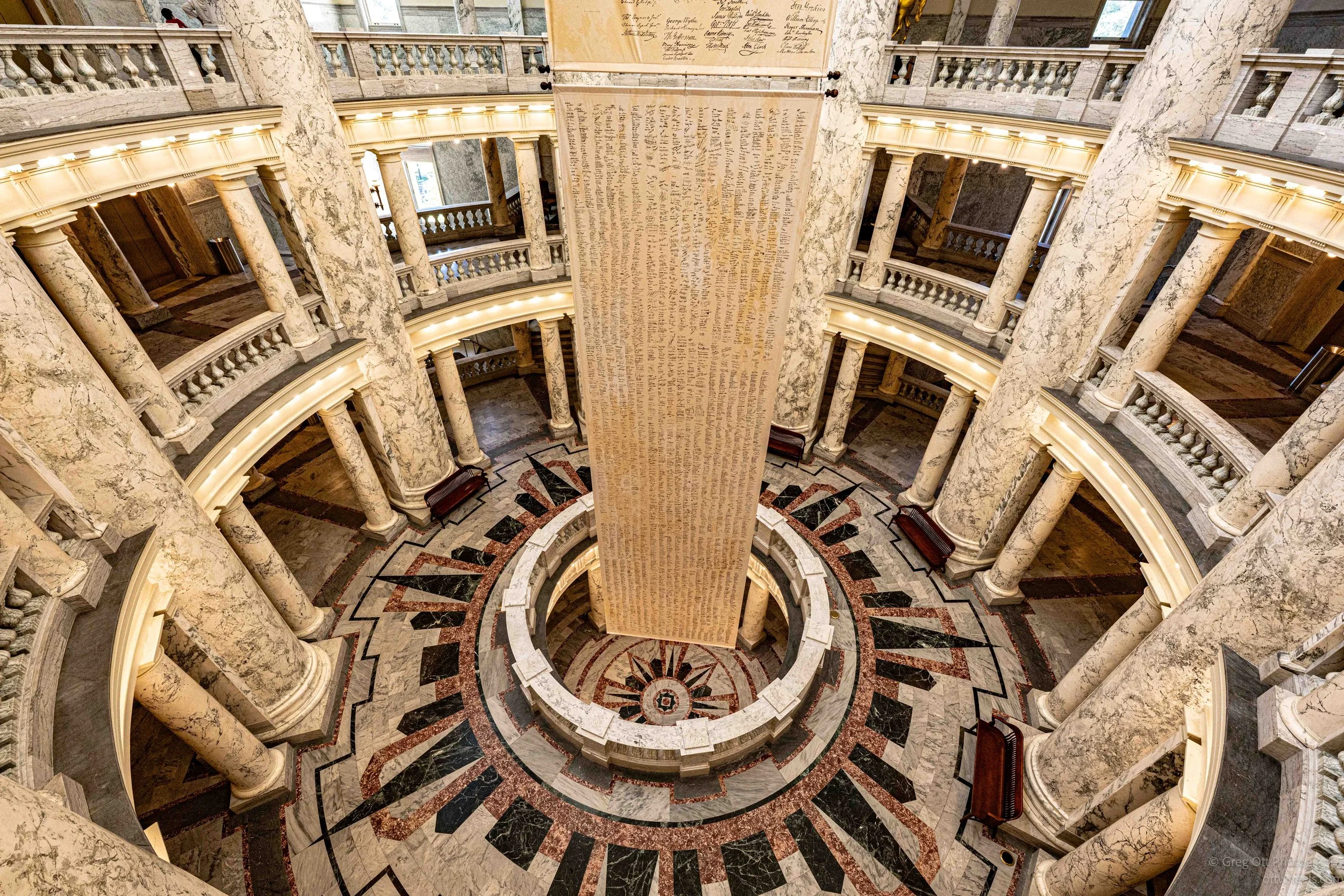
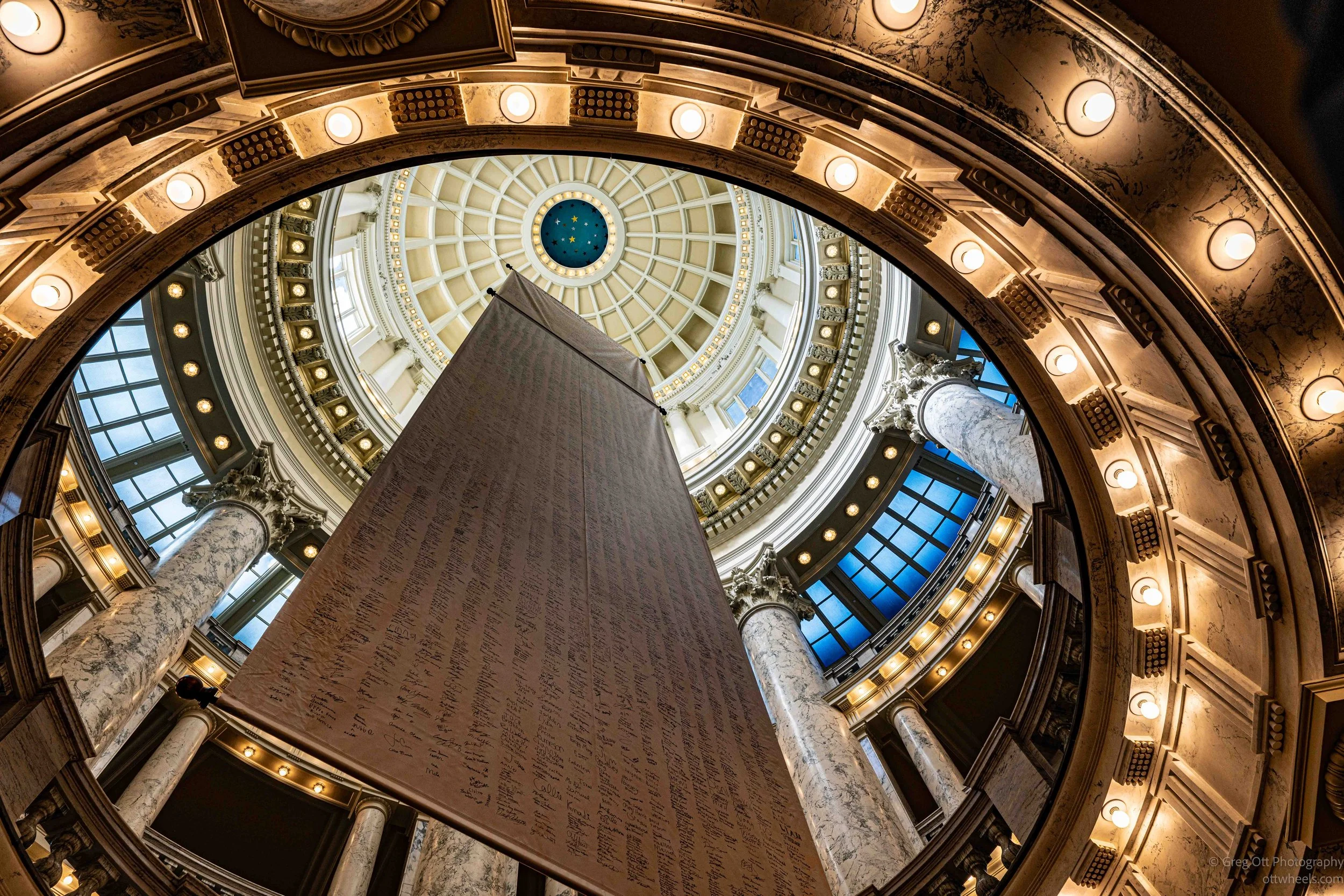
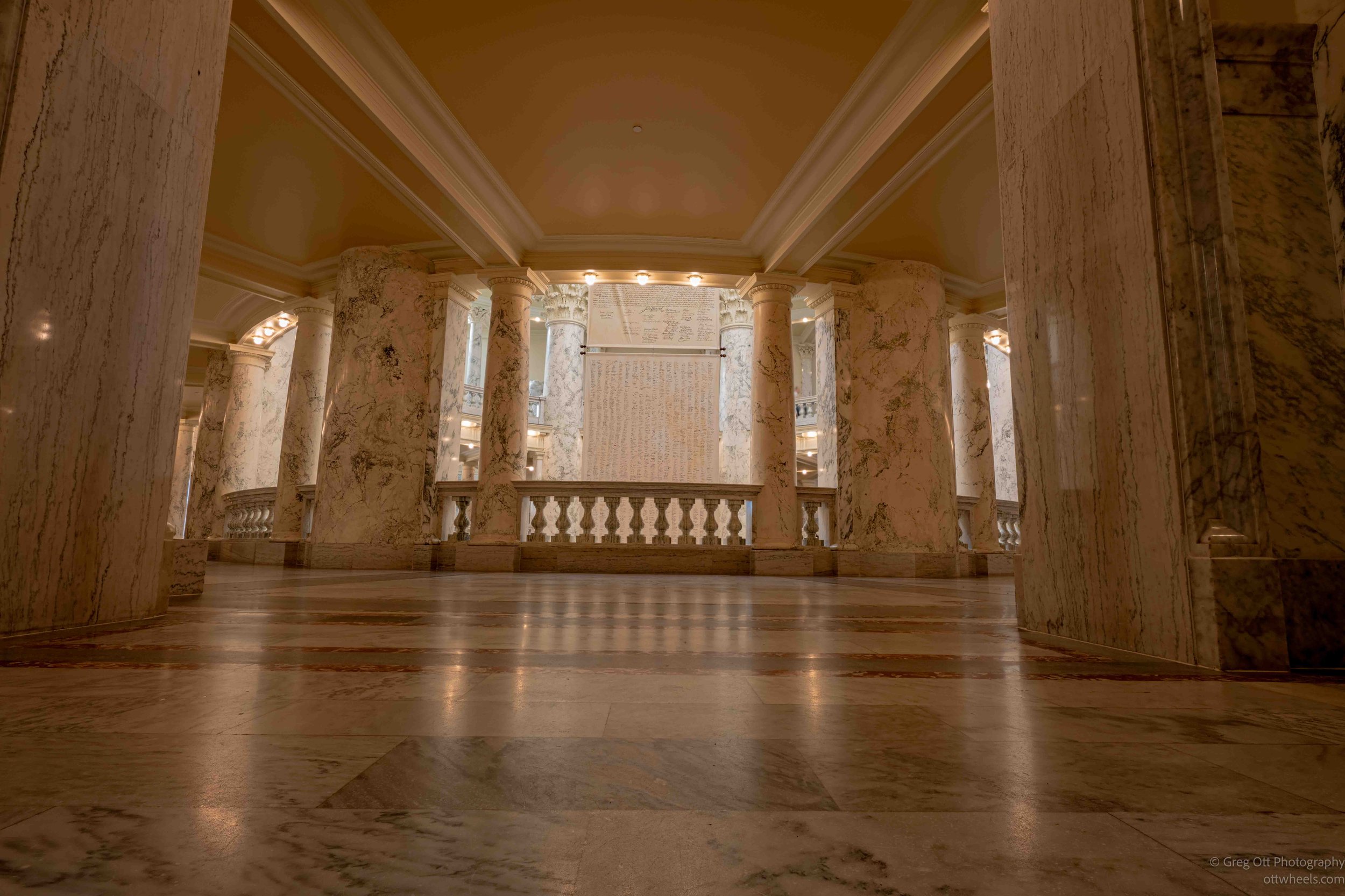
Hanging from the center of the rotunda was an enormous replica of the Declaration of Independence, part of Idaho's celebration of the 250th anniversary of the United States in 2026. Below the document were thousands of signatures collected from Idaho residents, including students who participated in the project. The signatures had been reproduced on long panels suspended through the open center of the building. Looking down from the upper floors, I could see how far the display extended toward the ground level. I took several photographs from different floors, trying to capture both the unusual display and the symmetry of the surrounding architecture.
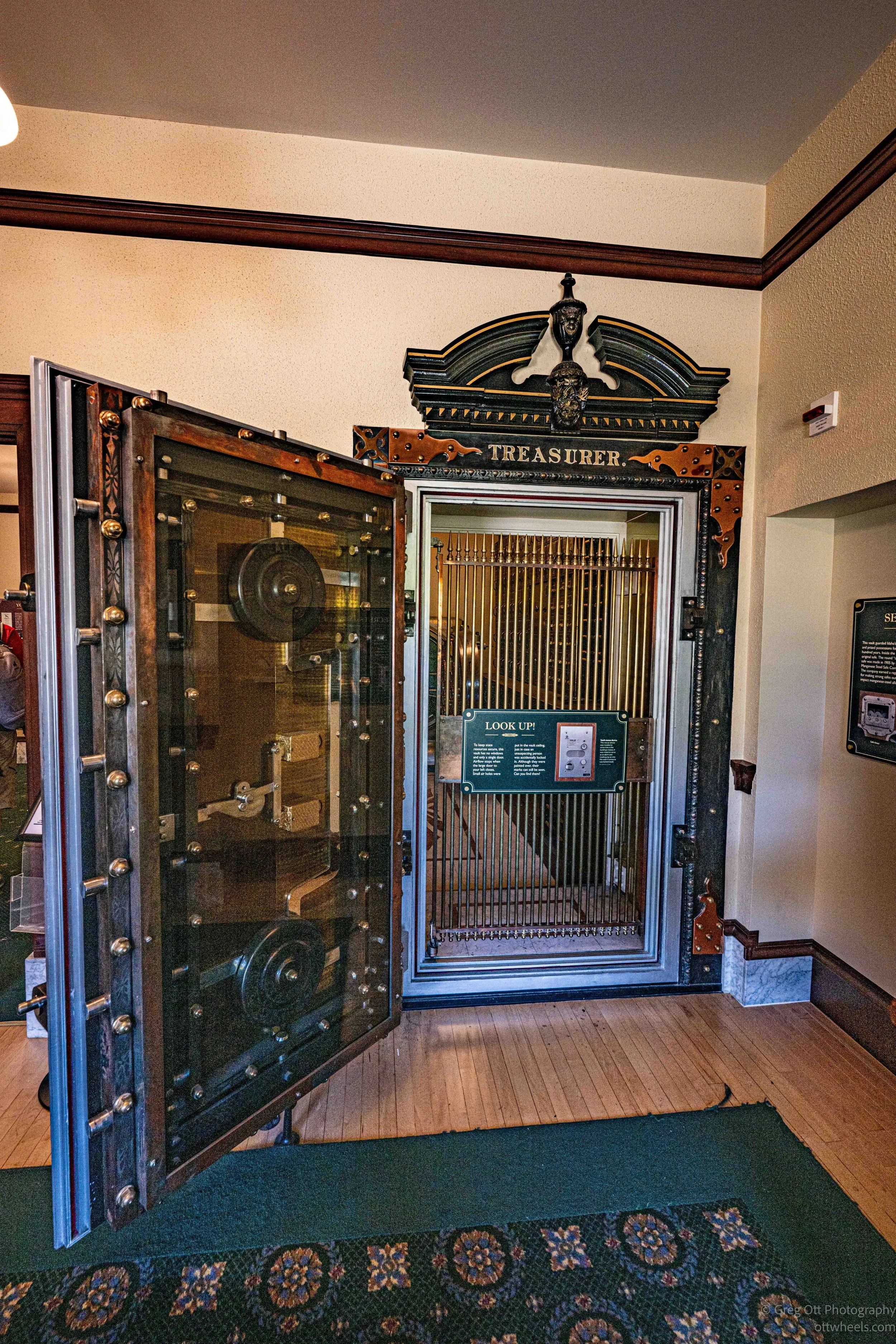
One of our stops was the State Treasurer's former office, where we saw an enormous old safe. The heavy steel doors, elaborate locking mechanisms, and decorative metalwork reflected a time when the state's money and important documents were stored behind massive physical barriers. Our guide pointed out several unusual features, including small ventilation openings designed to provide air if someone accidentally became trapped inside. I had never thought about that possibility, but looking at the thickness of the doors, I certainly wouldn't want to be locked inside one.
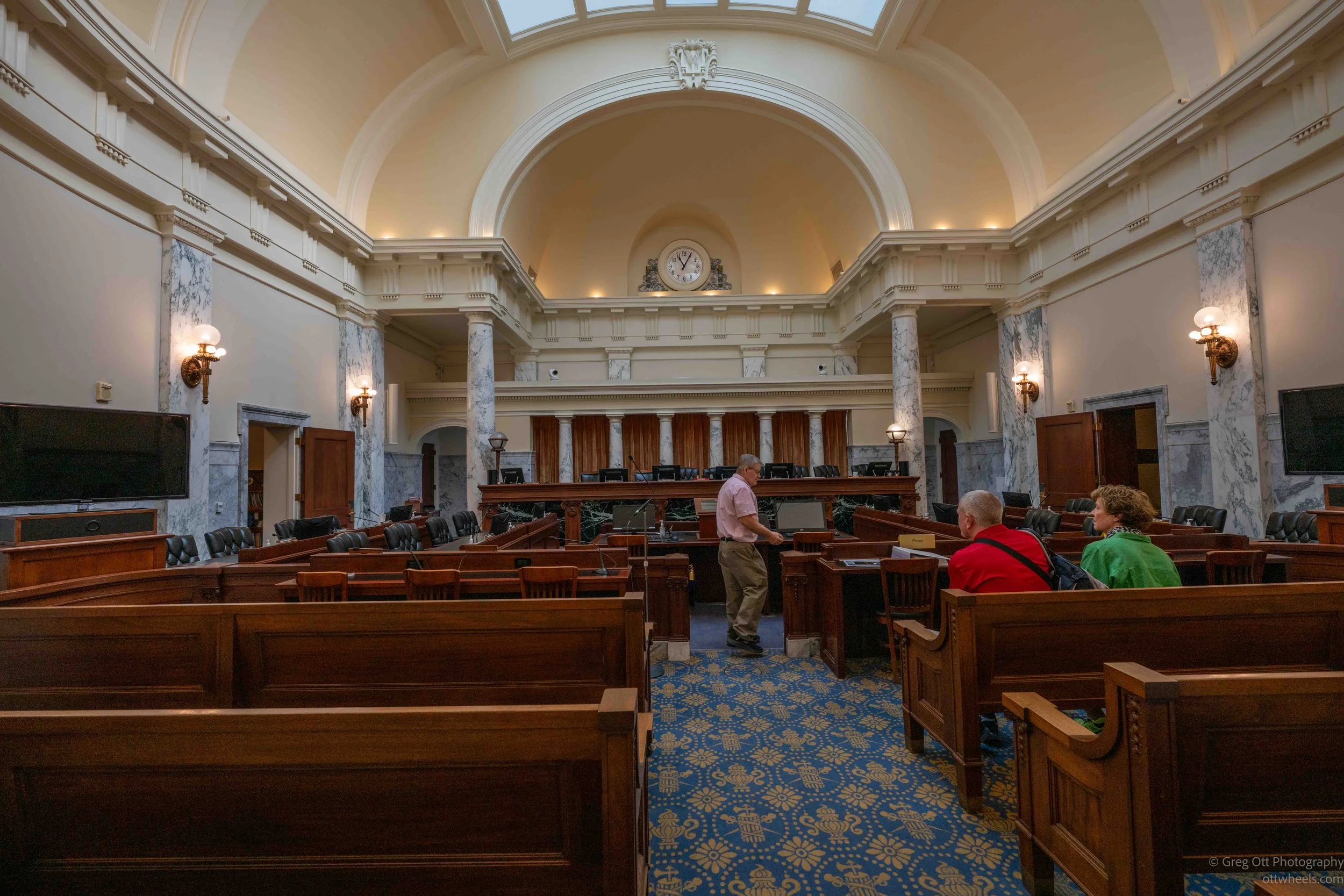
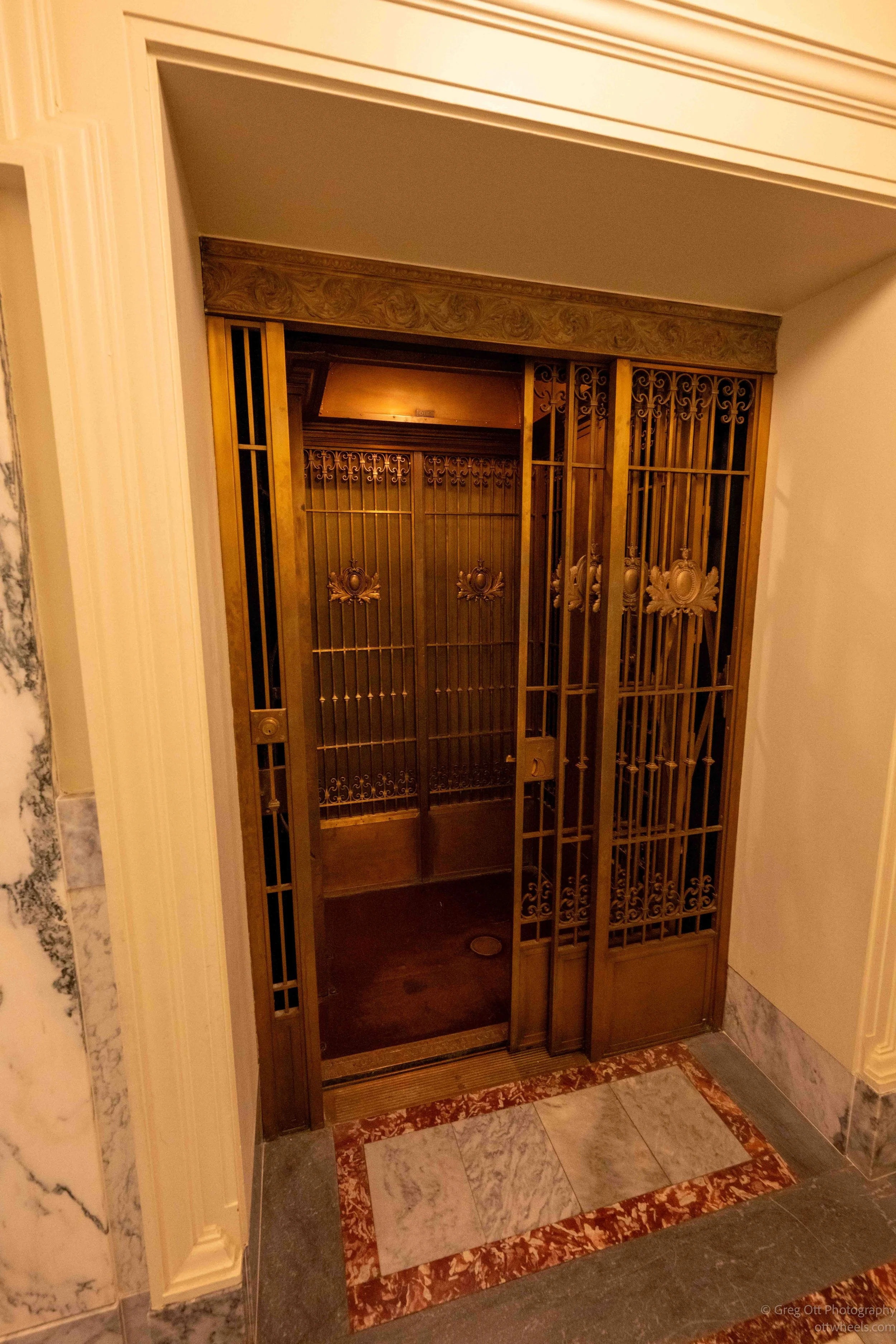
The Idaho Supreme Court originally met in the Capitol before moving to its own building. Our guide showed us the former courtroom and talked about the special elevator that once provided access for the justices. The elevator is no longer operational, but its decorative metalwork and older mechanical design remain interesting pieces of the building's history.
The former Supreme Court chamber also contains an unusual clock with an interesting story. At some point, the clock above the justices' bench had been concealed behind a decorative covering, and its existence was eventually forgotten. Following a fire in the north wing of the Capitol in 1992, restoration workers rediscovered the clock while repairing the damage. It had been hidden for decades. The clock was restored, along with many other original architectural features that had disappeared behind later renovations and alterations.
The fire and subsequent repairs helped bring attention to the building's condition and the importance of preserving its original architecture. A much larger restoration project followed, culminating in the reopening of the renovated Capitol in 2010. Later additions were removed where possible, original finishes were restored, and new spaces were created to accommodate modern government operations without sacrificing the character of the building. I could see how much attention had been given to preserving the original appearance, particularly in the stairways, marble corridors, and public rooms.
The governor wasn't in the office during our visit, so we were allowed to see the governor's meeting room and office area. The meeting room was surprisingly comfortable, with upholstered chairs, dark wood paneling, large windows, and paintings depicting Idaho landscapes. Our guide pointed out several symbols associated with the governor's office and discussed the artwork displayed throughout the rooms, much of it produced by Idaho artists. I particularly liked the large landscape painting hanging above the wood paneling. It brought a little of Idaho's mountain scenery into an otherwise very formal government setting.
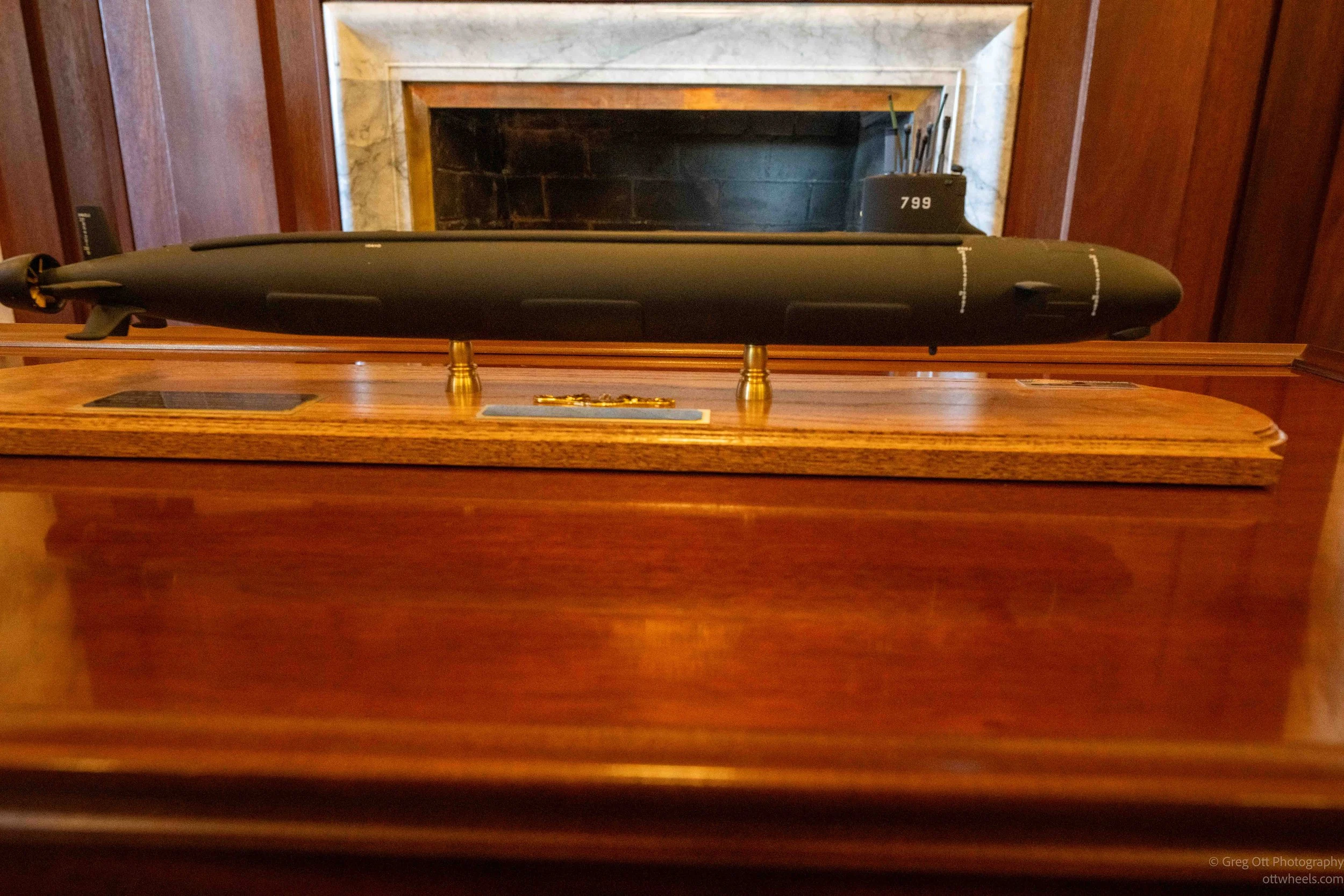
There was also a model of the USS Idaho, SSN 799, a Virginia class nuclear powered fast attack submarine commissioned on April 25, 2026. The submarine was built by General Dynamics Electric Boat in Connecticut and commissioned at Naval Submarine Base New London in Groton. Having lived in Connecticut, I was familiar with the area and had visited the submarine facilities there. It was an unexpected connection between Idaho and a place I knew from many years earlier.
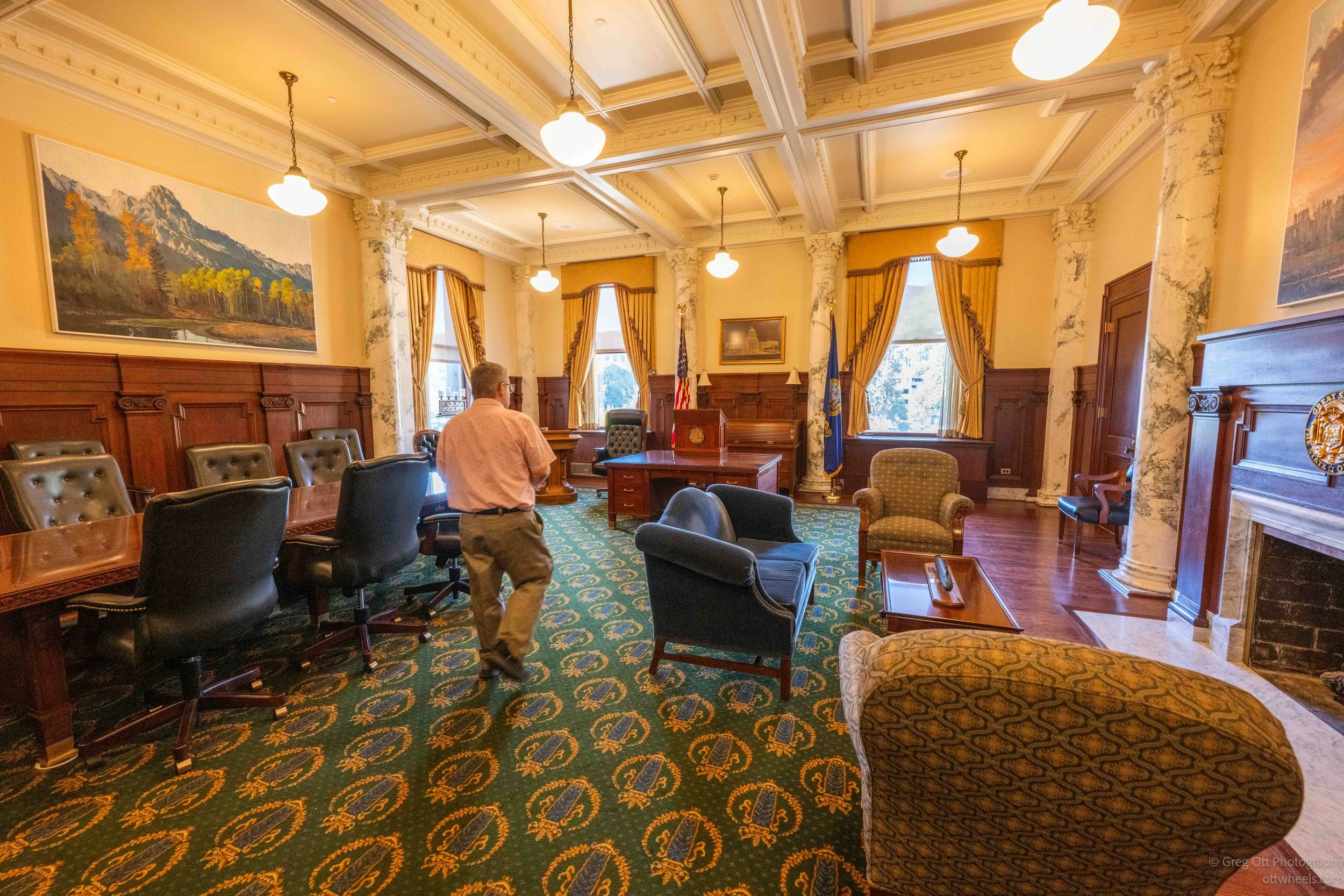
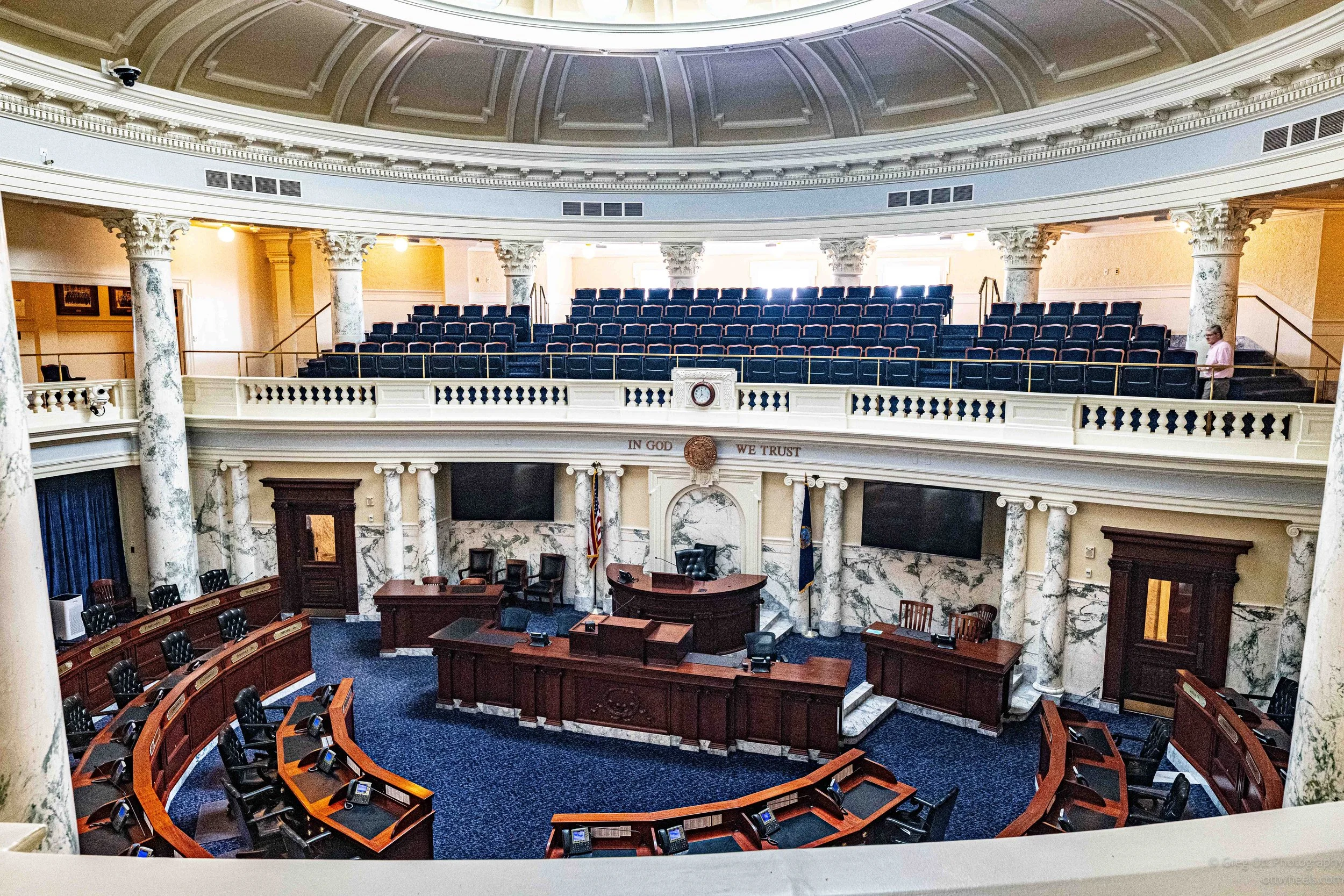
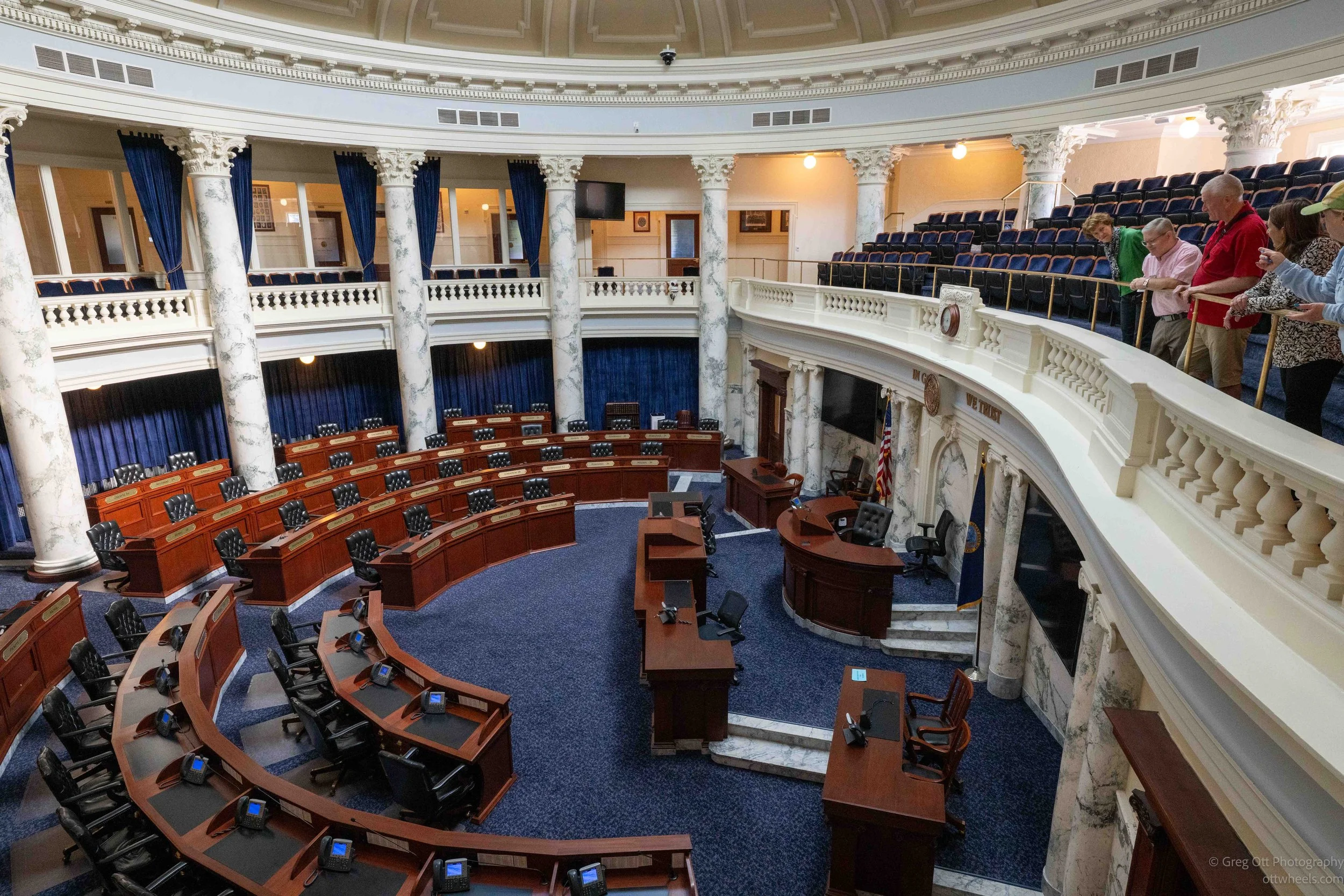
We continued into the legislative chambers. The Senate chamber had an interesting arrangement, with the public gallery located behind the front of the chamber so visitors could look down toward the senators as they faced the public seating. I don't remember seeing quite the same arrangement in the other state capitols I've visited. Our guide also explained how senators are assigned seats, with seniority playing a role in their placement. He described the more senior members sitting toward the back and newer members toward the front. It was another small detail about the way the chamber operates in Idaho and how it is different from other states. I wouldn't have known much of this without the tour.
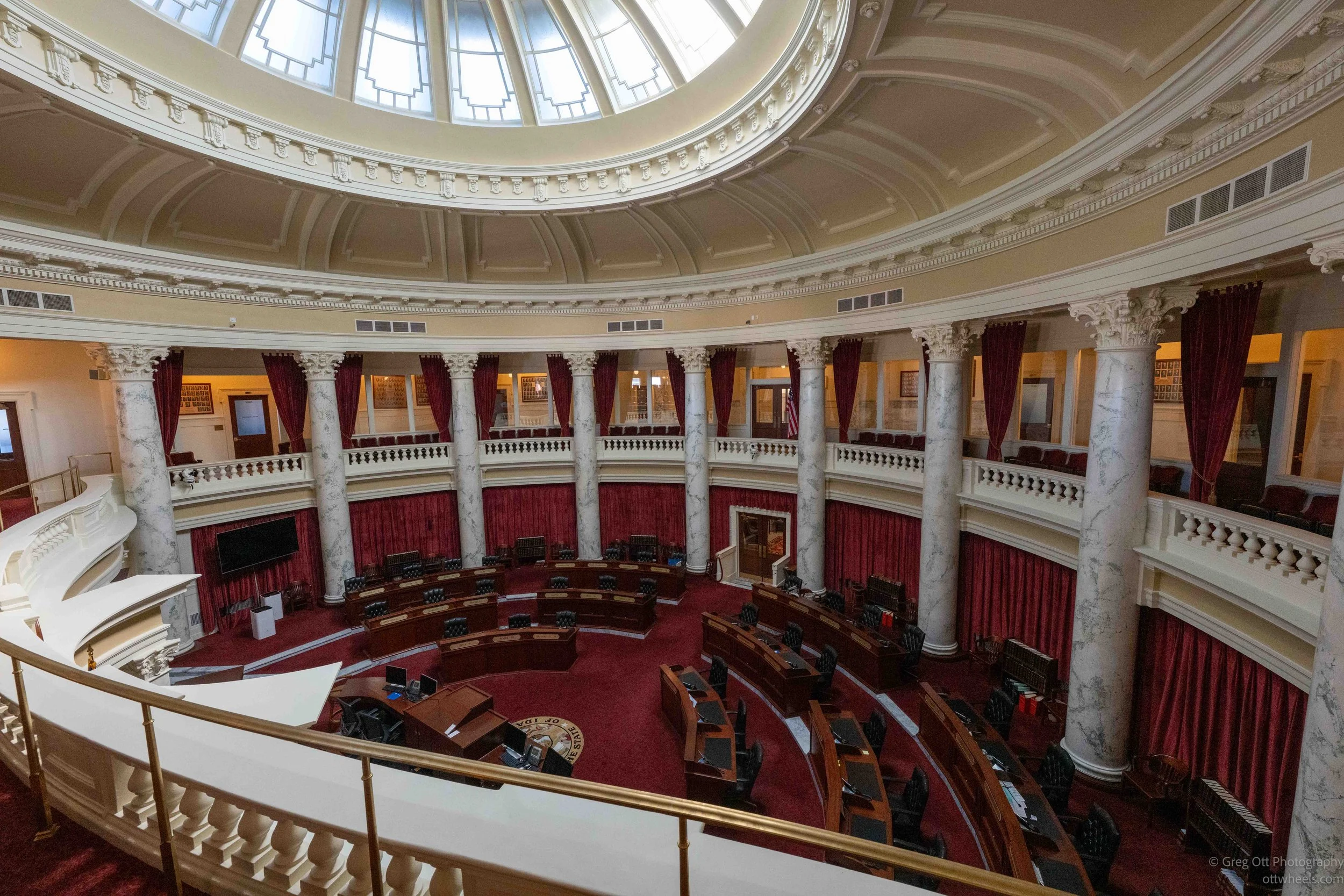
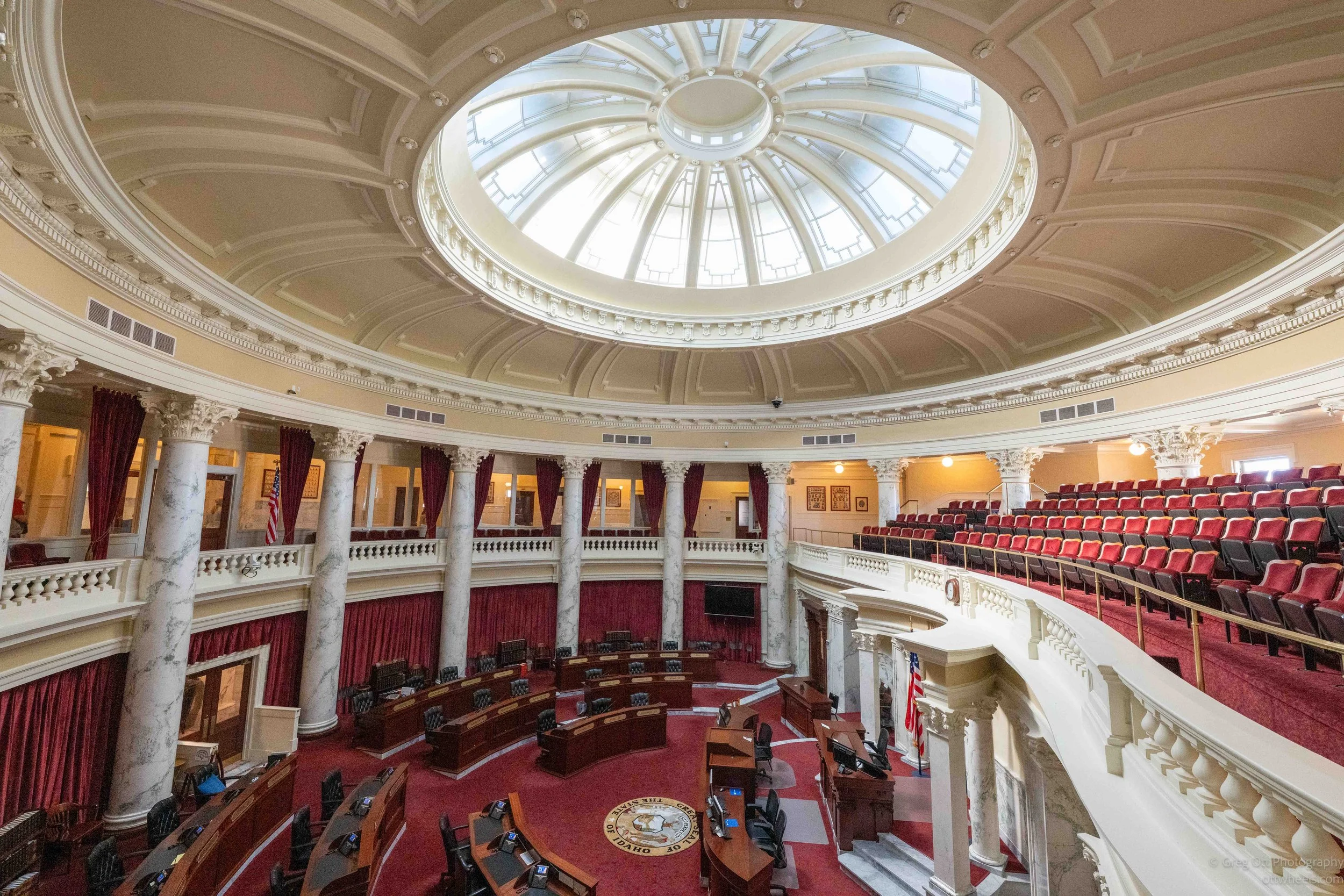
Idaho has 35 state senators and 70 members of the House of Representatives. Each of the state's 35 legislative districts elects one senator and two representatives. Senators and representatives serve two year terms, and the legislature meets annually, beginning in January. Our guide discussed the process of introducing legislation, committee hearings, floor debates, and the movement of bills between the two chambers before they can be sent to the governor.
The House chamber had a similar circular arrangement, although it felt somewhat different from the Senate. Both rooms were exceptionally bright, with large skylights, white columns, and seating galleries above the main floor. The House seemed a little more modern, partly because of the electronic equipment and the arrangement of the desks. What impressed me most was how the architects had incorporated natural light into both rooms. Even though they are enclosed legislative chambers, neither felt dark or confined.
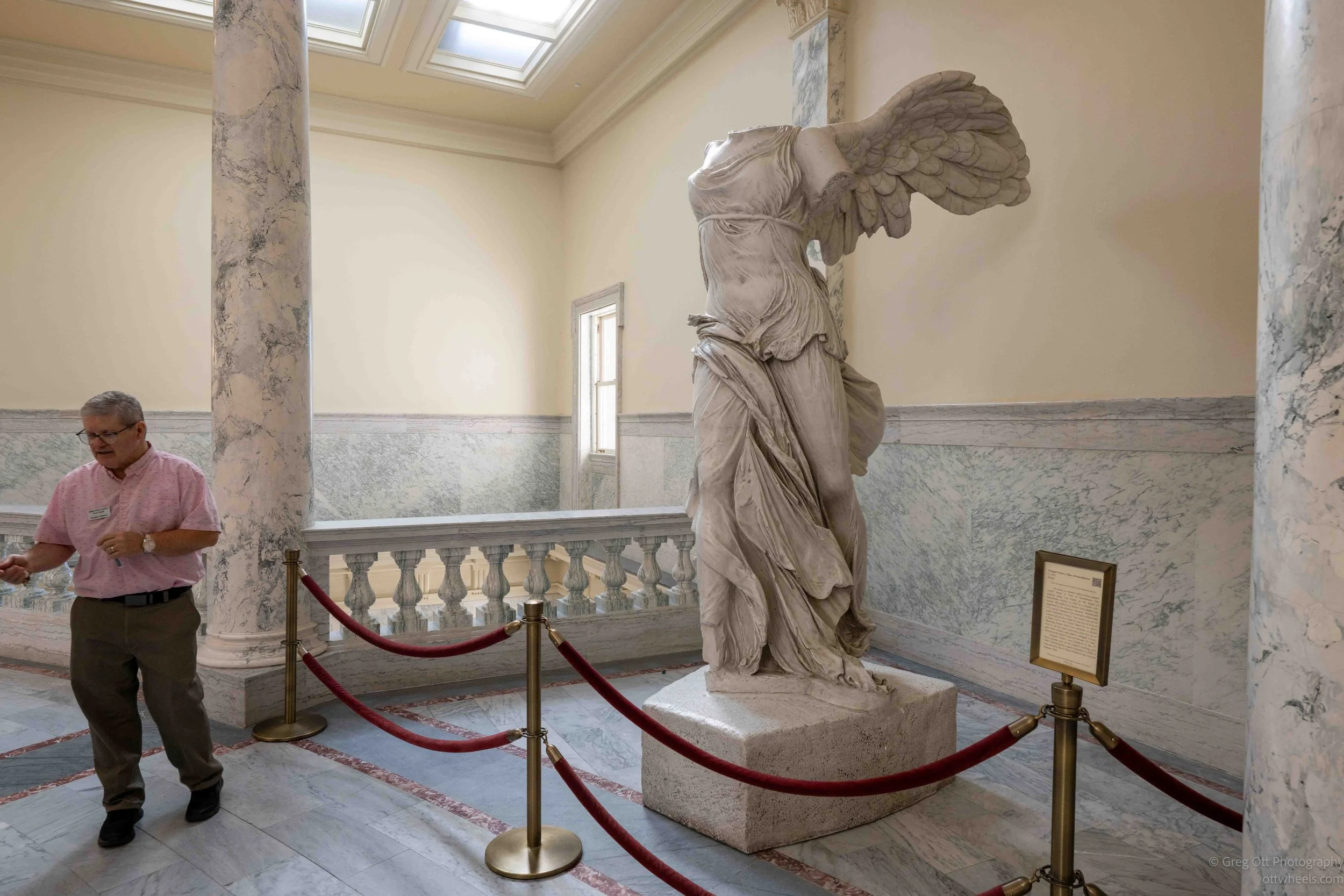
On one of the upper floors, we stopped at a plaster replica of the Winged Victory of Samothrace, the famous ancient Greek sculpture displayed at the Louvre in Paris. I had seen the original many years ago during a visit to the Louvre, so I immediately recognized the figure with its enormous wings and flowing robes. The original dates to approximately the second century BC and represents Nike, the Greek goddess of victory.
What made this particular reproduction interesting was how it came to Idaho. Following World War II, Americans organized a massive relief effort to help people in France and Italy who were struggling with shortages of food, clothing, and other necessities. The American Friendship Train delivered hundreds of railroad cars filled with donated supplies. In 1949, the people of France responded by sending a Merci Train, a collection of 49 railroad boxcars filled with gifts expressing their appreciation for American generosity.
Each state received a boxcar containing a different assortment of gifts from the French people. Idaho's boxcar included this plaster reproduction of the Winged Victory. I thought it was an interesting connection between an ancient Greek sculpture, postwar France, and a state Capitol in Boise. Having seen the original made the story a little more personal.
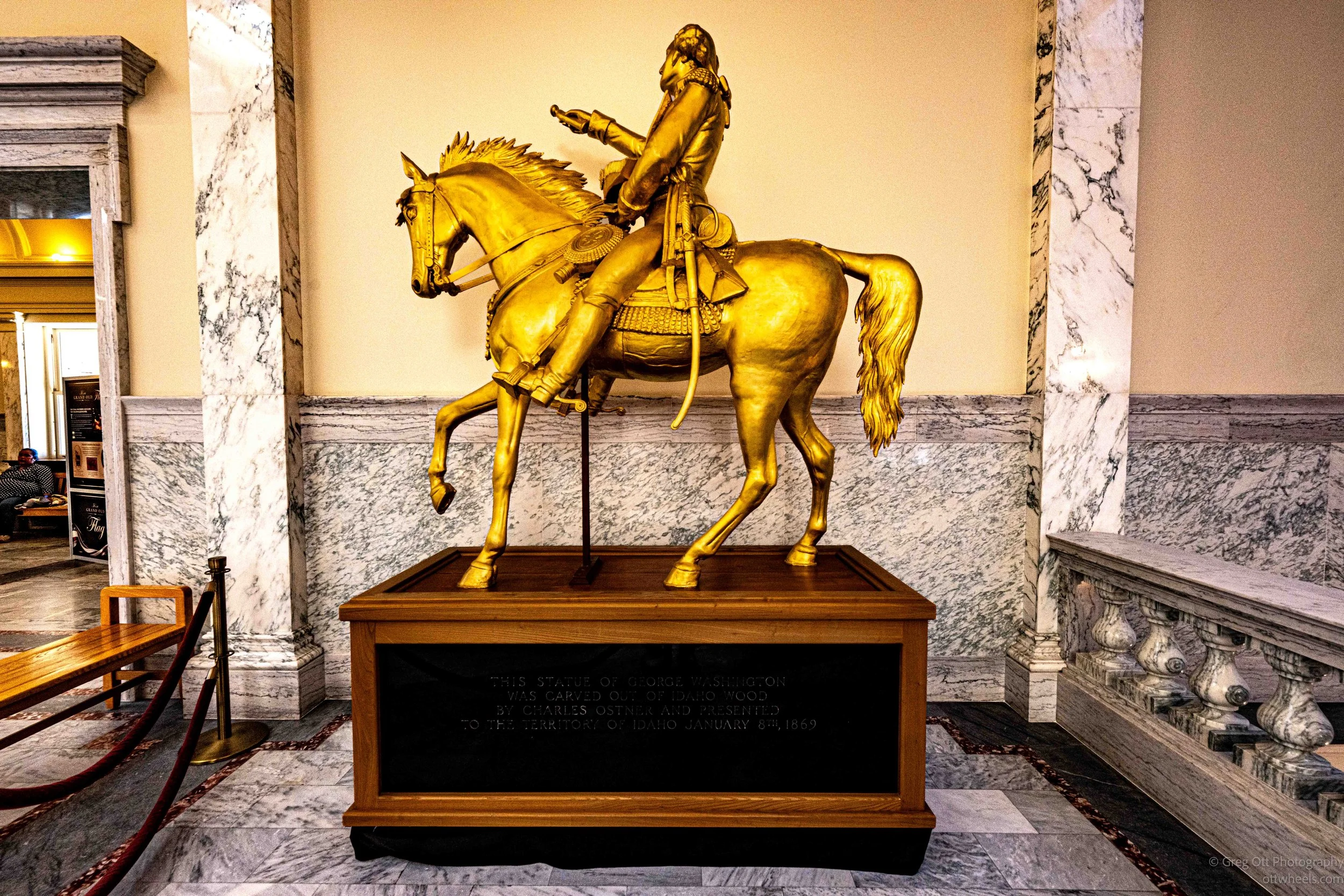
Another unusual piece of artwork was the George Washington Equestrian Statue. At first glance, the gold colored sculpture looks like it might be bronze, but it was actually carved from yellow pine by Charles Ostner, an Austrian immigrant who settled in Idaho during the 1860s. According to the story, Ostner used an image of Washington on a postage stamp as his reference and spent four years carving the horse and rider. His young son reportedly held a candle so he could continue working after dark.
Ostner presented the completed statue to the Idaho Territory in 1869 and received $2,500 in compensation. Originally displayed outdoors at the Territorial Capitol, the wooden sculpture suffered from years of exposure to the weather. It was eventually moved indoors, restored, and covered with gold leaf. Considering its age and the fact that it was carved from wood, I was surprised by the amount of detail in the horse, saddle, clothing, and Washington's facial features.
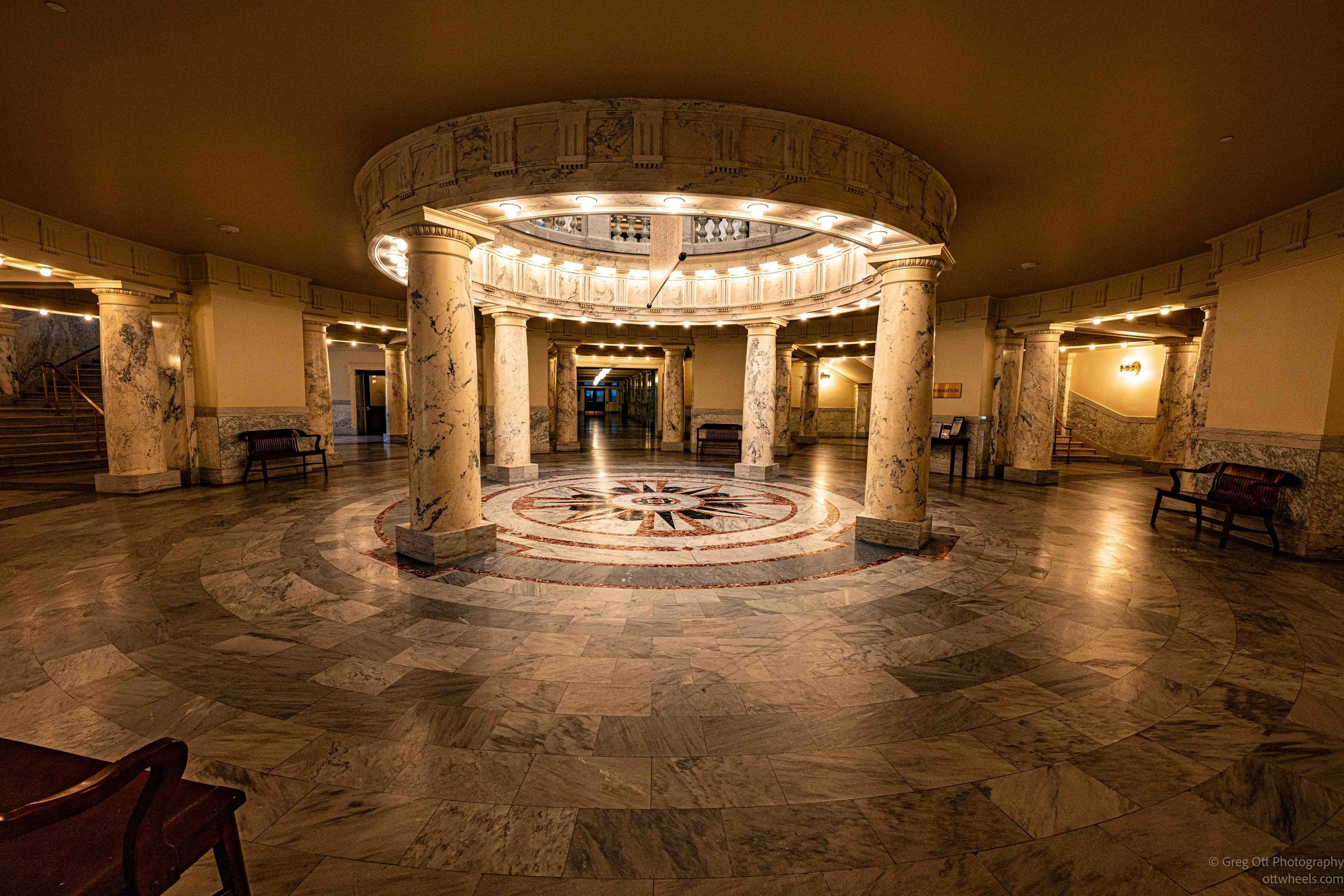
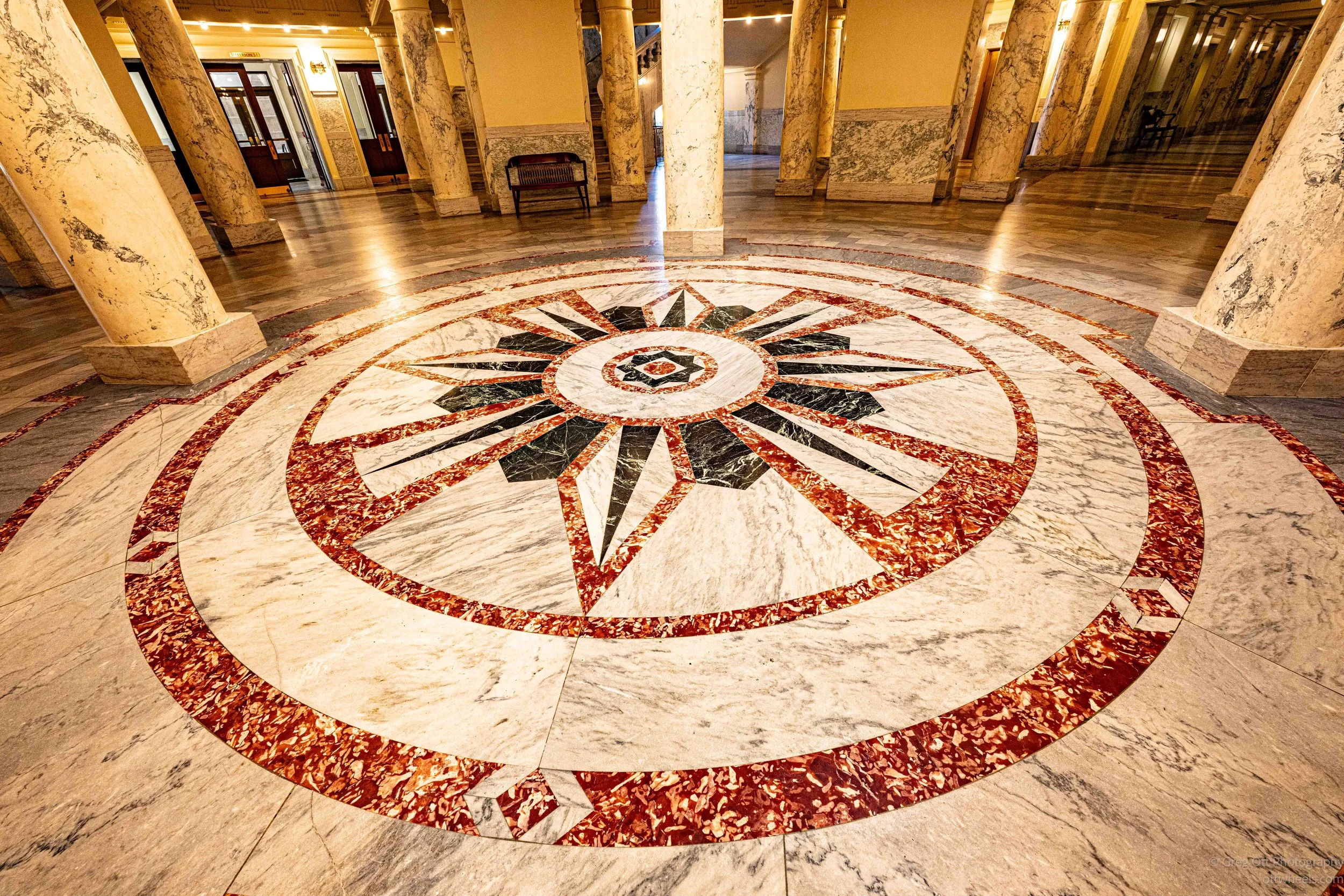
After the tour ended, I spent quite a bit of time wandering through the Capitol with my camera. There was relatively little artwork compared with some of the other capitols I've visited, but that really didn't matter. The building itself was the artwork. The marble floors, massive columns, stairways, balconies, and especially the dome offered endless opportunities for photographs. I tried shooting upward through the rotunda from several different positions, using the columns and circular balconies to frame the dome. I also photographed the patterned stone floor from above, where the geometric design becomes much more apparent.
From the upper floors, I could look directly down through the center of the building and see how all the different levels connected visually. The suspended Declaration of Independence added another element to the composition, although it also made some of the architectural photographs more challenging. I wanted to capture the sense of height, the symmetry, and the light without losing the details in the stonework.
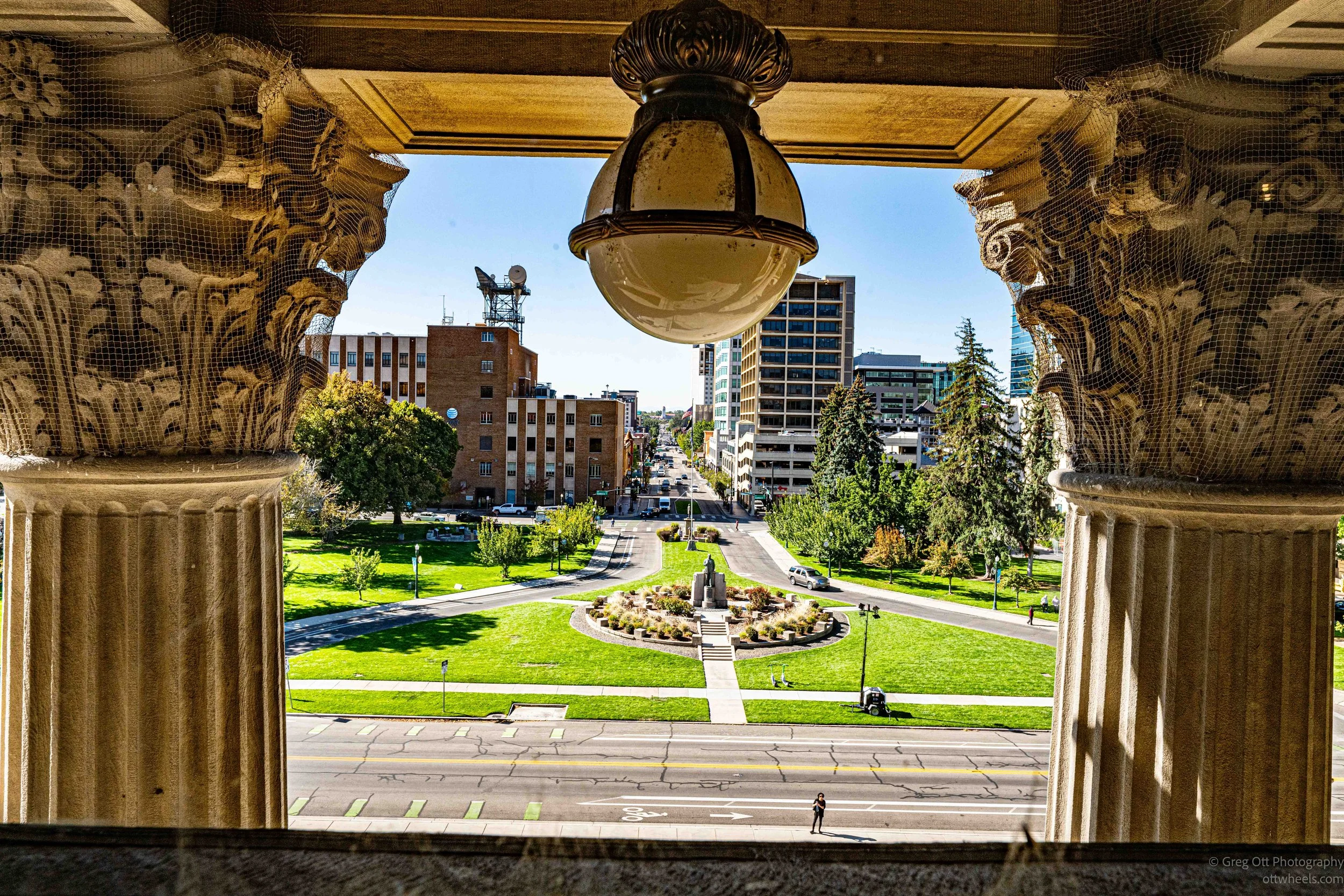
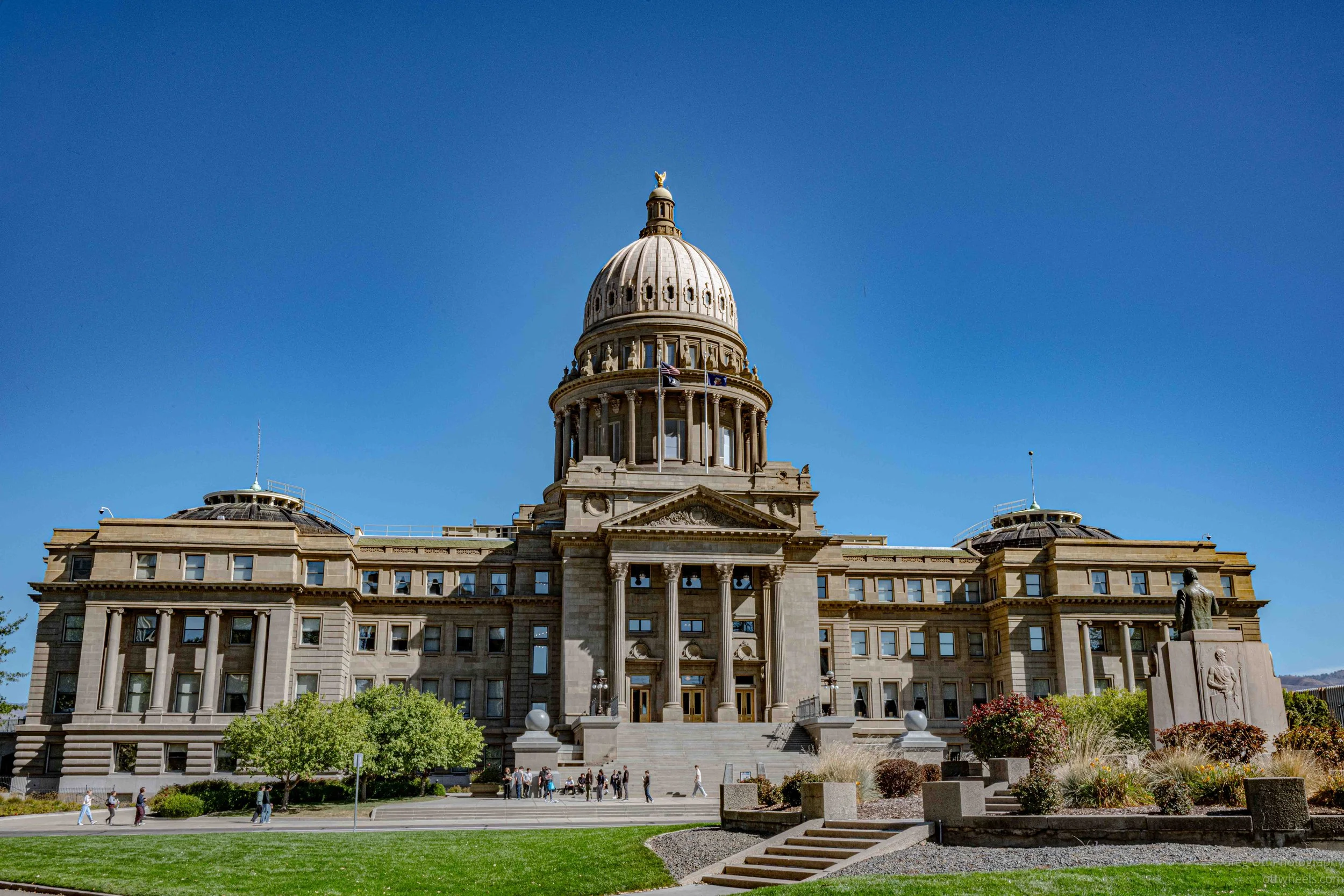
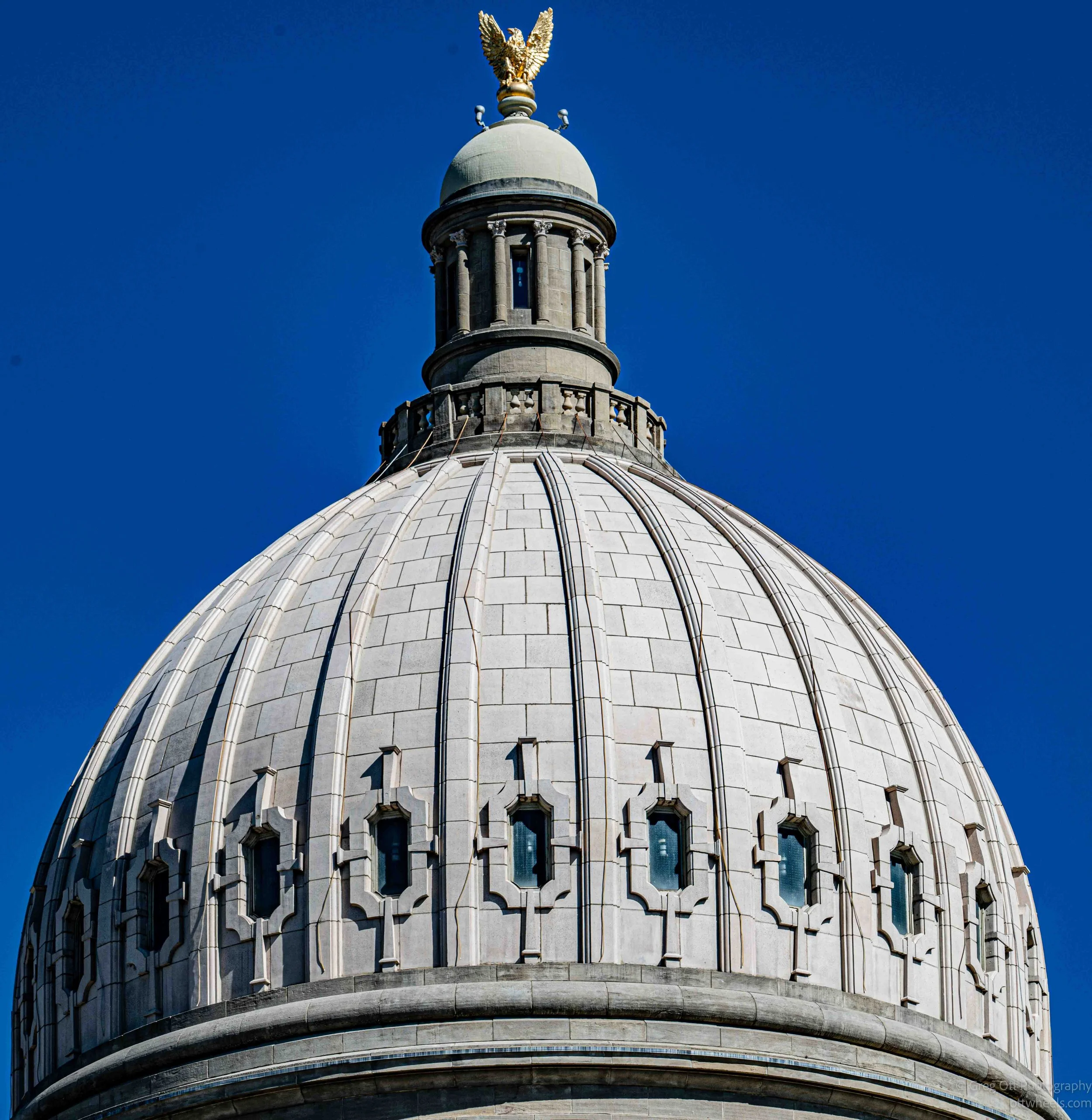
It was a beautiful sunny day when I finally went outside to walk around the Capitol grounds. The building is impressive from the street, particularly with its large dome rising above the two wings. The gold leaf covered eagle at the top stands more than five feet tall, although from the ground it looks much smaller. The clear blue sky provided a nice background for photographing the building and some of the details around the dome.
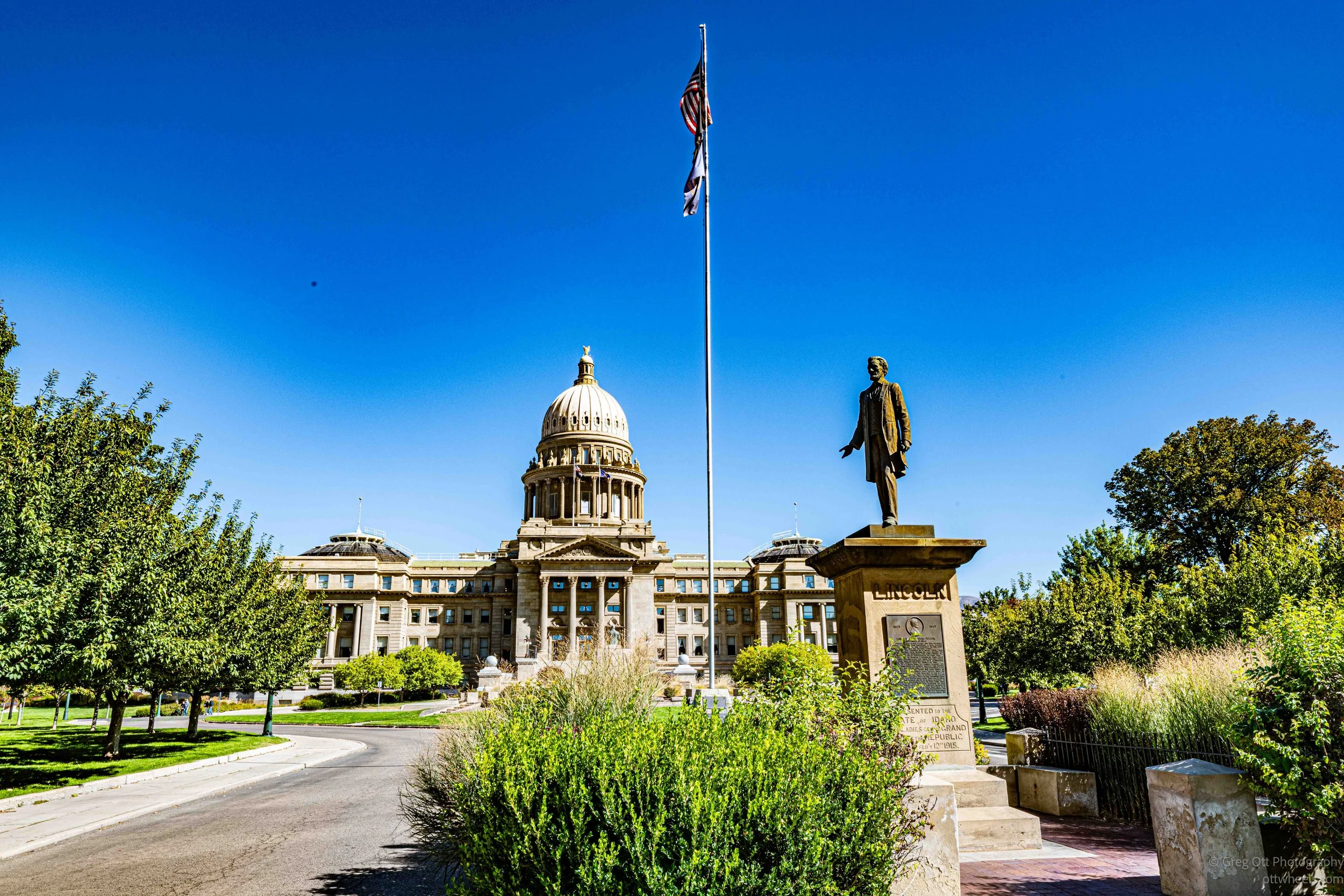
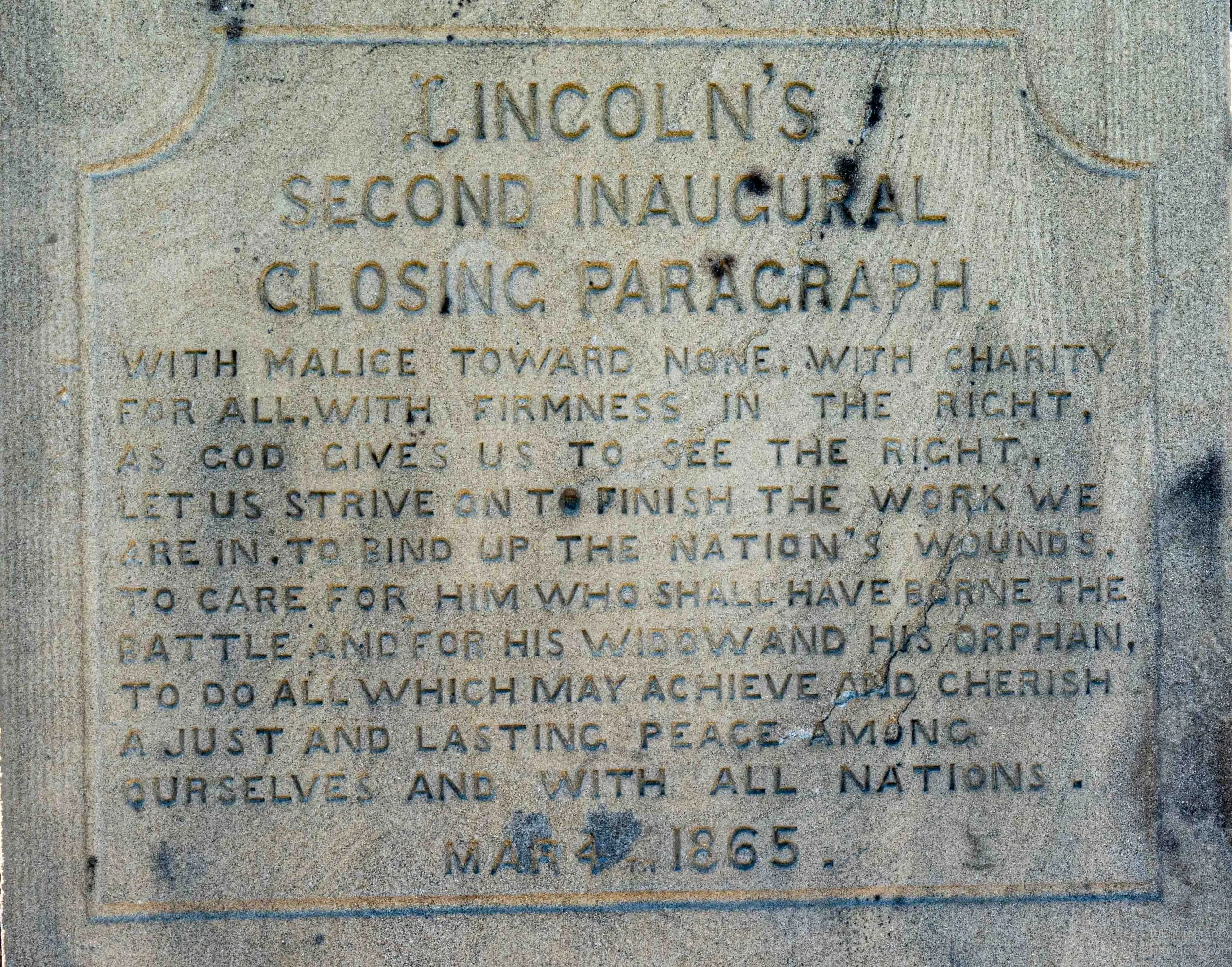
There weren't as many statues or monuments on the grounds as I might have expected. Near the approach to the Capitol is a statue of Abraham Lincoln, who signed the legislation creating Idaho Territory in 1863. Idaho didn't become a state until 1890, long after Lincoln's death. The statue was originally dedicated in 1915 and was moved to its present location in 2009.
Nearby is a monument honoring Frank Steunenberg, Idaho's governor from 1897 to 1900. He became particularly well known for his handling of violent labor disputes in Idaho's mining industry and was assassinated outside his home in Caldwell in 1905. The monument was dedicated in 1927.
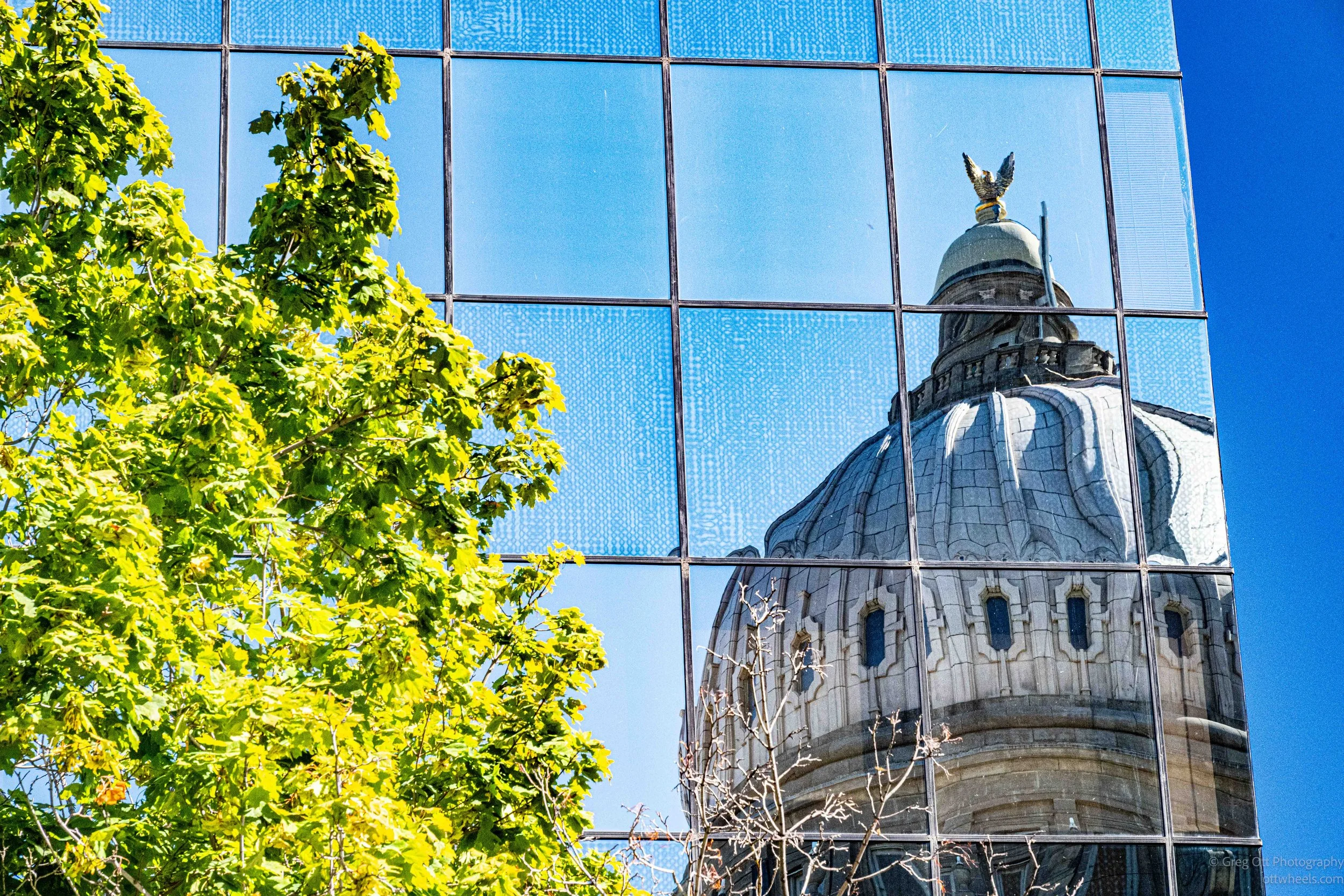
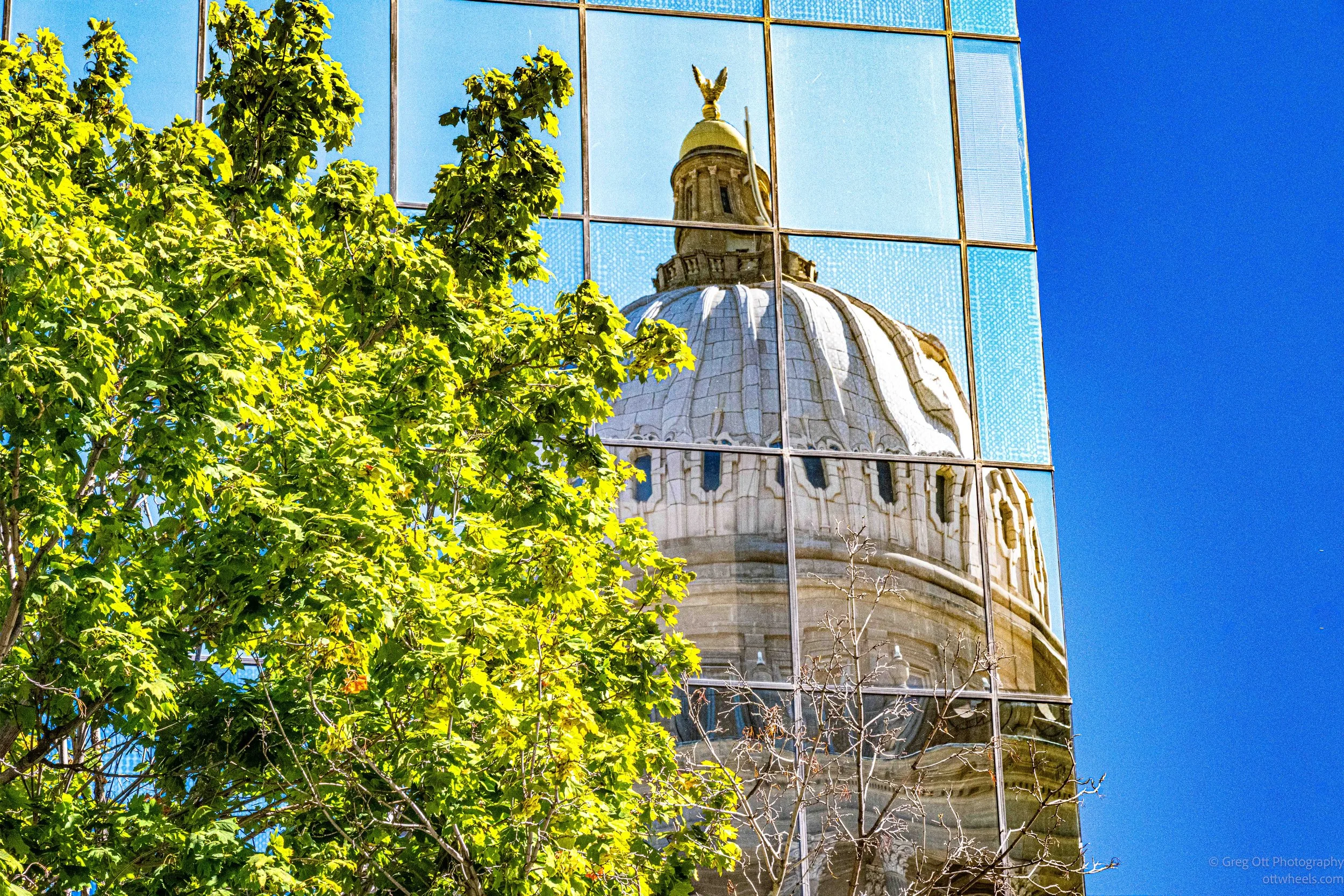
I spent some time trying to capture the feel of the Capitol and its surroundings rather than simply photographing the building from the front. Across the street, I noticed the dome reflected in the windows of a modern glass building. The reflections were distorted slightly by the individual panes of glass, bending the curved shape of the dome into something quite different. I was taking photographs when a woman stopped and said, "I've never noticed that before. That's interesting the way the shape is bent."
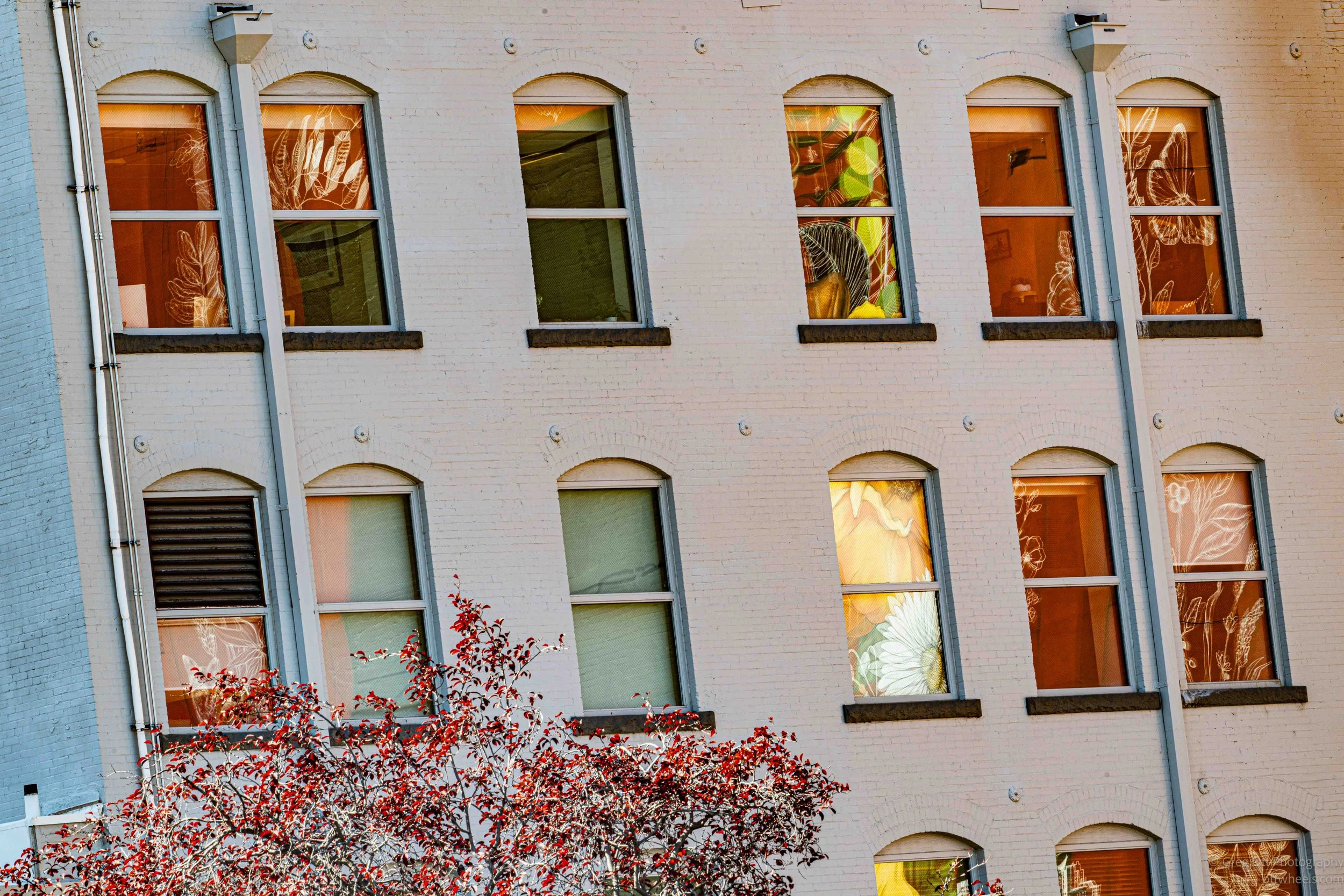
I told her about another building nearby where a large mural was reflected in the windows of the building across from it. The overlapping images created the impression that each window had its own decorative pull down blind. I enjoy finding these kinds of unusual visual relationships, particularly in cities where modern glass buildings reflect older architecture. They're easy to overlook when you're simply walking from one place to another.
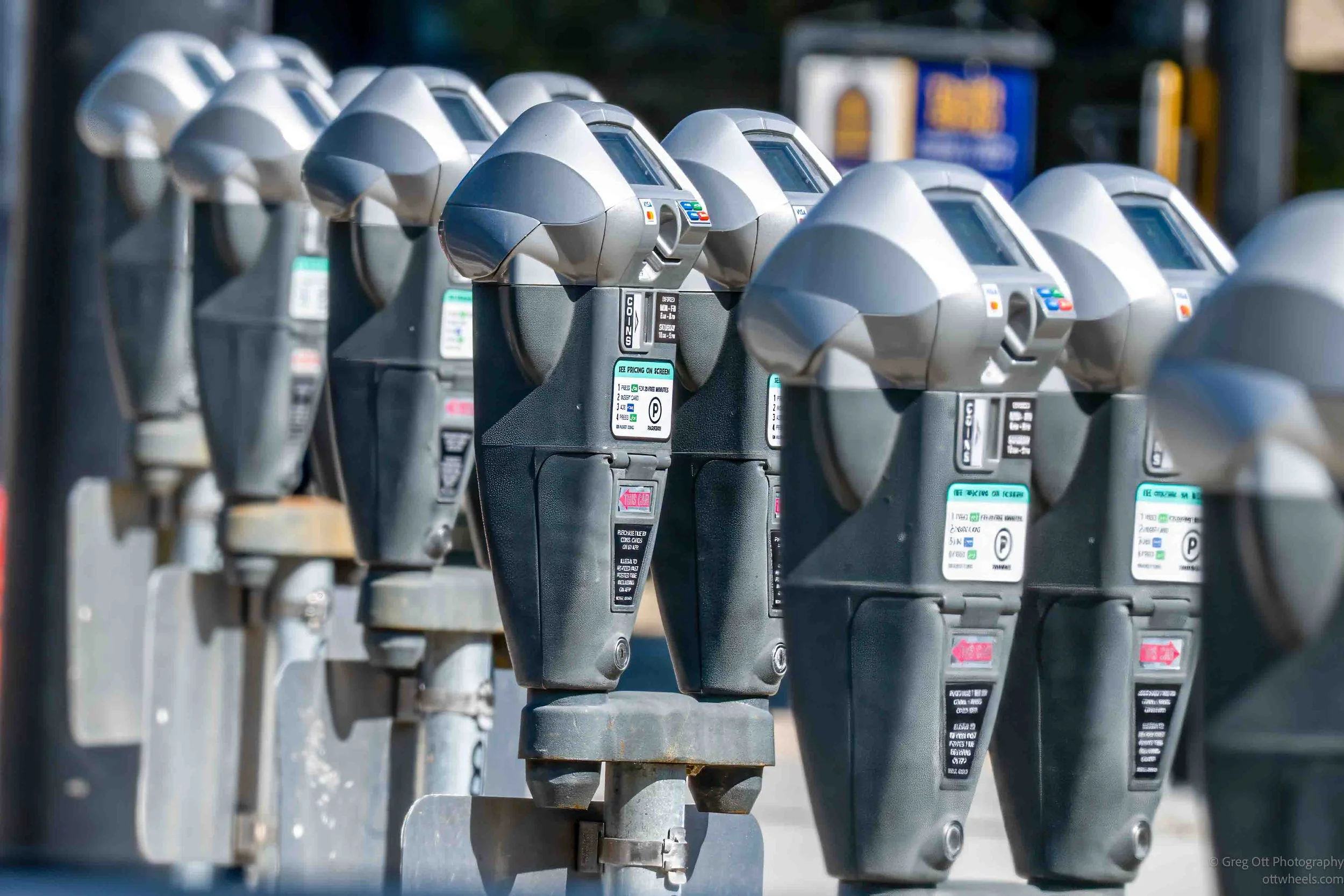
Boise certainly has plenty of parking meters. Unlike some of the smaller cities I've visited, parking around the Capitol isn't free, and the meters seemed to be everywhere. I noticed a long row of them lined up along the street and took a photograph. There was something interesting about the repetition of nearly identical machines, their shapes overlapping as they disappeared into the distance. Not exactly what most people would consider a photograph of Boise, but I liked the pattern.
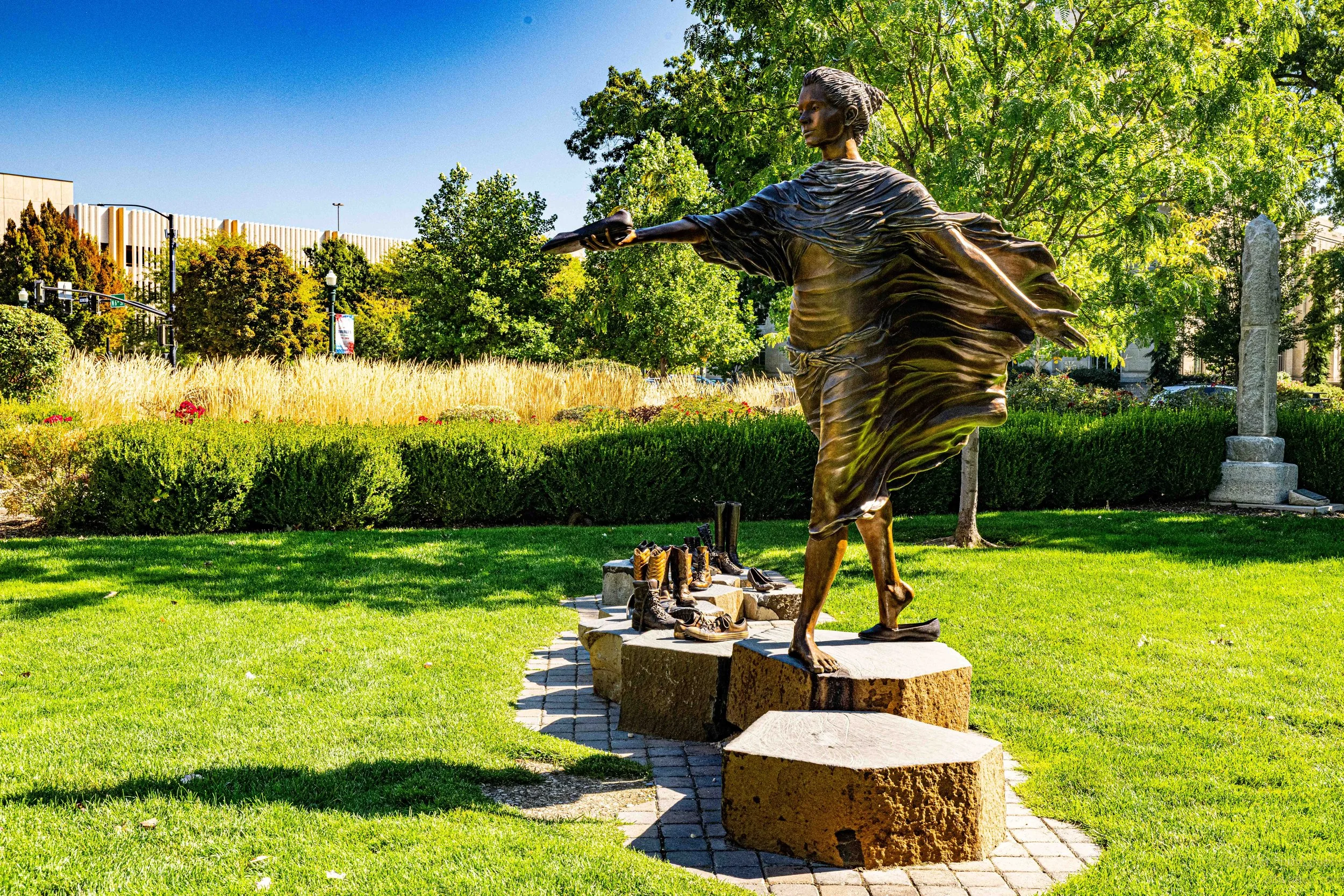
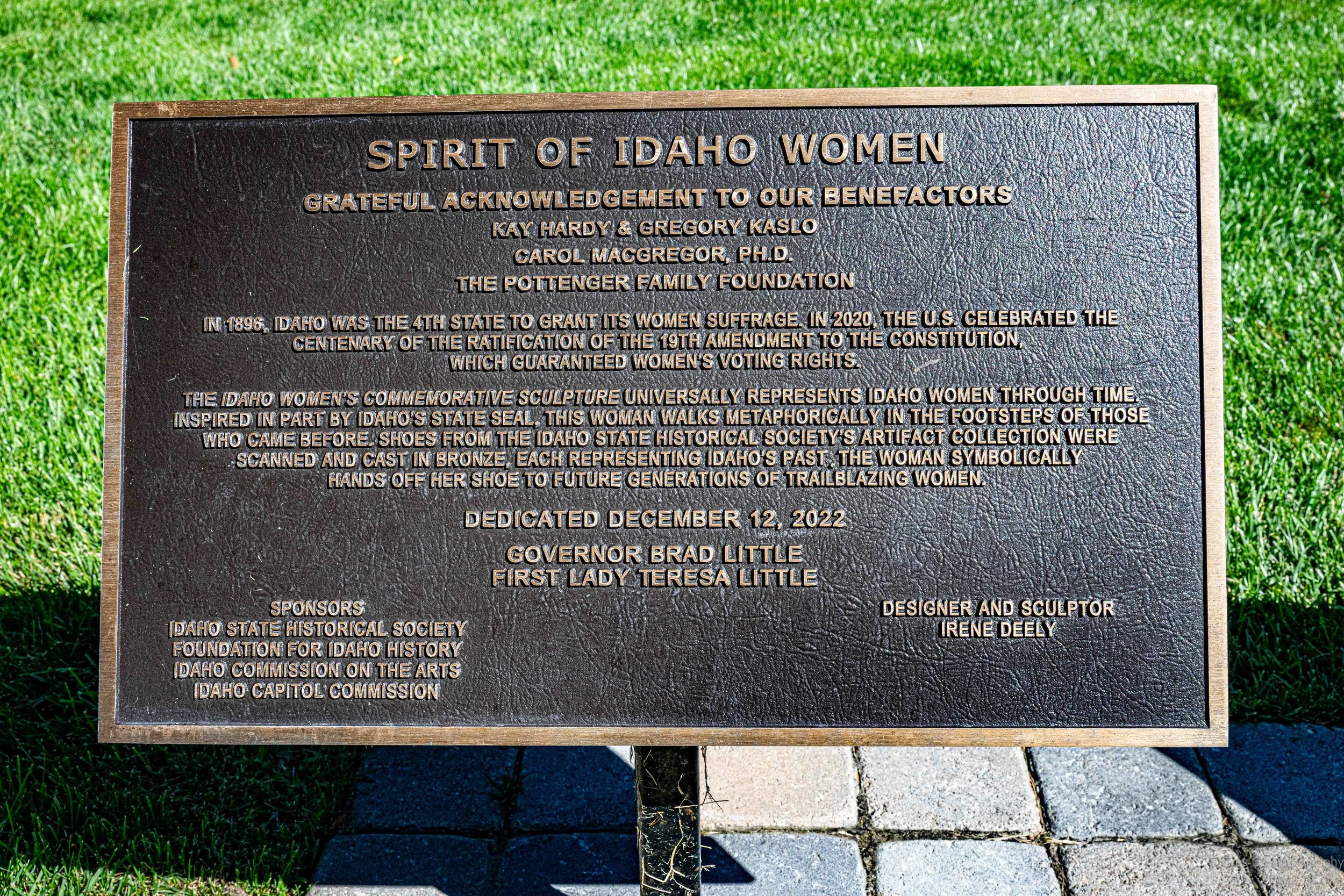
While walking the Capitol grounds, I came across the Idaho Women's Suffrage Commemorative Sculpture, also called Spirit of Idaho Women. The bronze figure represents an unnamed Idaho woman walking forward with her arms extended. Behind her are rows of shoes representing generations of women who came before her. The shoes were reproduced from historical examples in the Idaho State Historical Society's collection, and each pair represents a period in the state's past. The woman holds another shoe out in front of her, symbolically passing it to future generations of women.
Idaho was the fourth state to grant women the right to vote, approving women's suffrage in 1896, 24 years before ratification of the 19th Amendment to the United States Constitution. The sculpture was created by Idaho artist Irene Deely and dedicated on December 12, 2022. I thought the arrangement of the shoes was an interesting way of connecting the past with the present. Rather than depicting one historical individual, the sculpture represents the contributions of many generations of Idaho women.
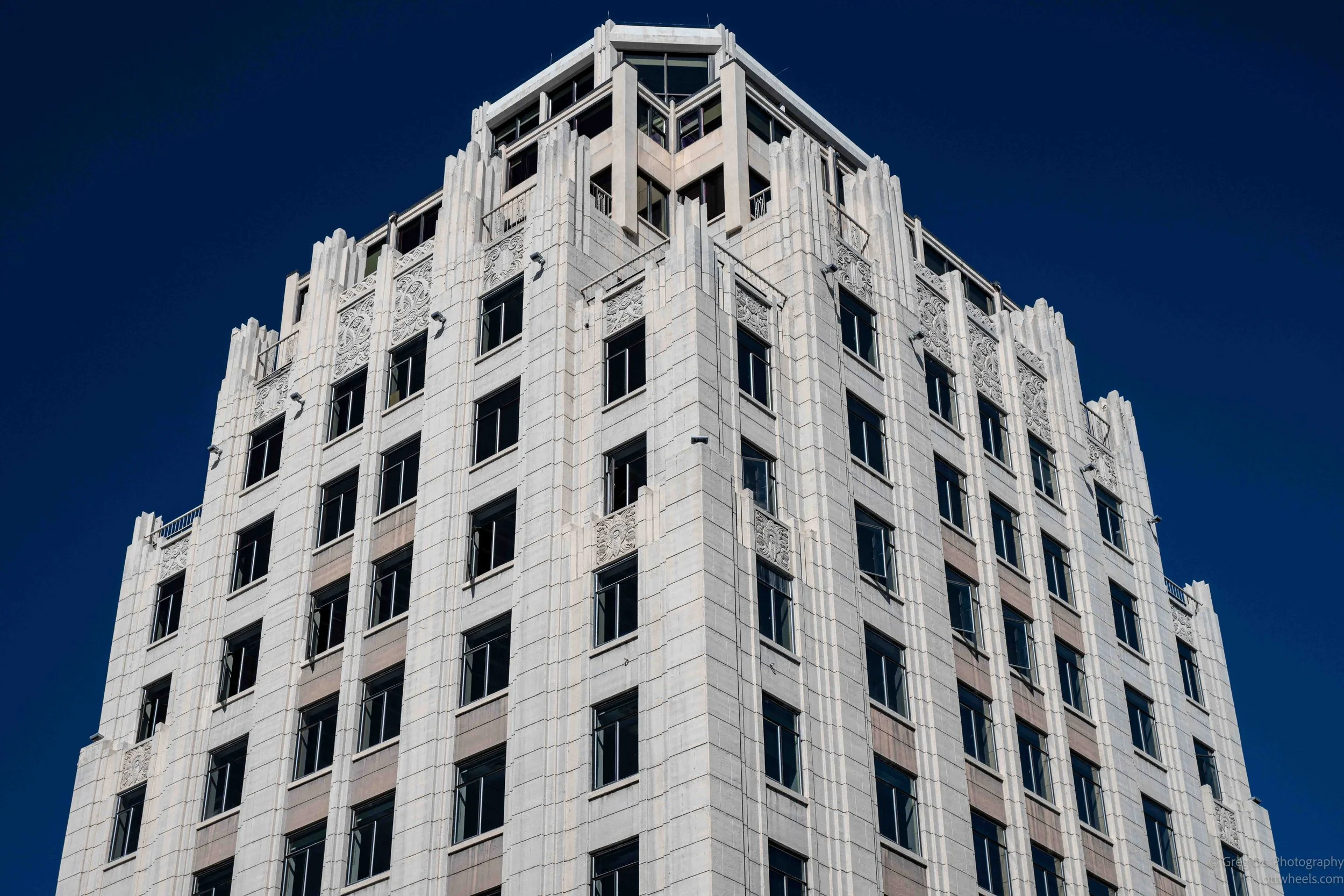
By the time I finished walking around the Capitol, it was already after 1 p.m. and I was getting very hungry. So, I walked a few blocks looking at buildings and statues and stopped at Funky Taco for lunch and ordered two chicken tacos. They were delicious and really hit the spot. I also realized that I hadn't been drinking nearly enough water during the morning and was feeling dehydrated. The large glass of cold water was almost as satisfying as the tacos.
The owners were sitting at a large table beside me, and one of them asked how I enjoyed my meal. There seemed to be a steady stream of people stopping at their table to talk about the restaurant, deliveries, and other business matters. It was apparent that they knew a lot of people in the area. I enjoyed sitting there for a while, eating my lunch, drinking some much needed water, and watching the activity around me. It had been a very interesting morning, and the Capitol tour turned out to be well worth the effort of finding it.
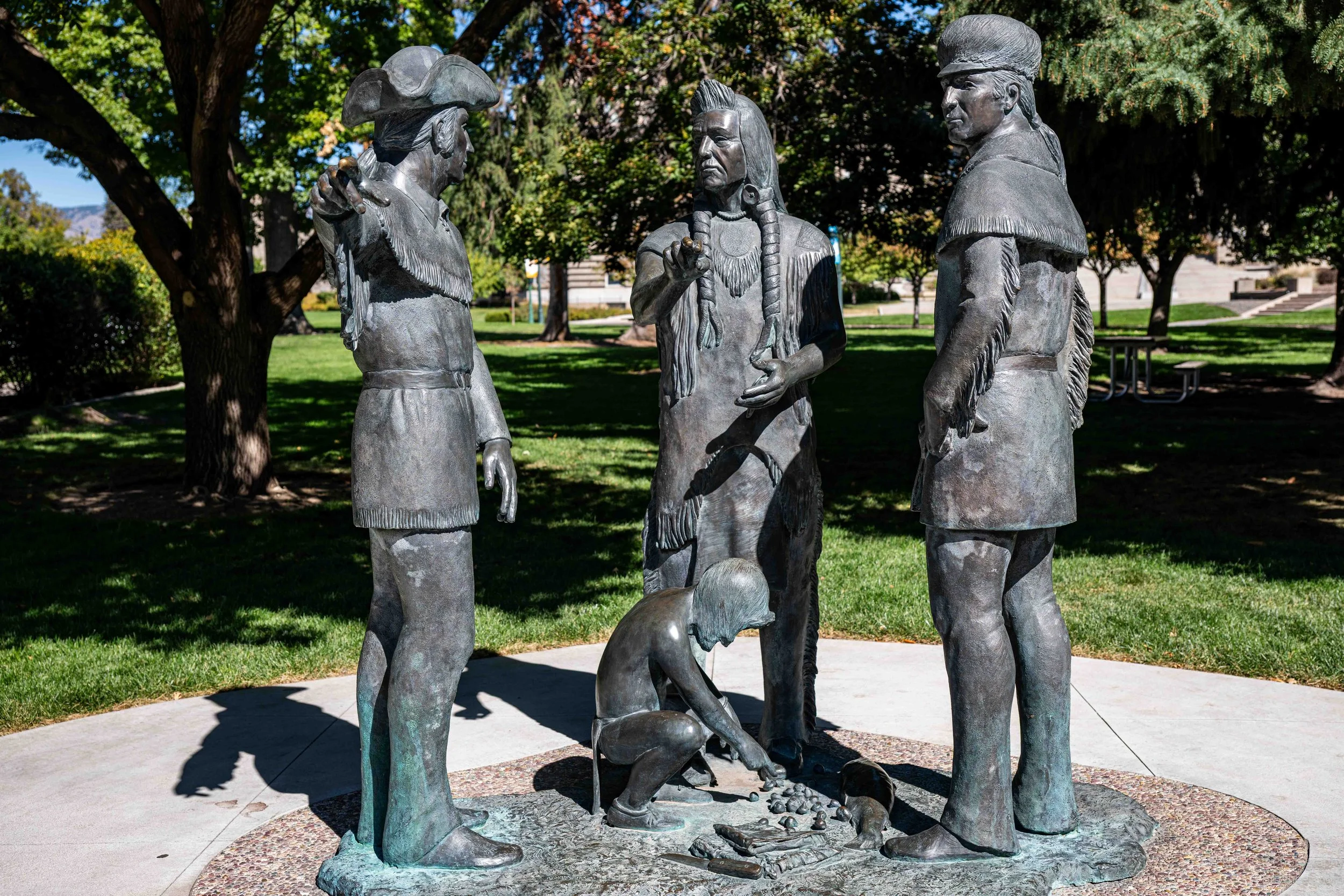
Idaho State Museum
After lunch, I drove to the Idaho State Museum. I had originally planned to walk since I still had quite a bit of time left on the parking meter. My waiter suggested driving instead. He said the walk would take longer than I expected, and there was plenty of parking at the museum. By the time I walked there, visited the museum, and returned, my meter would have expired.
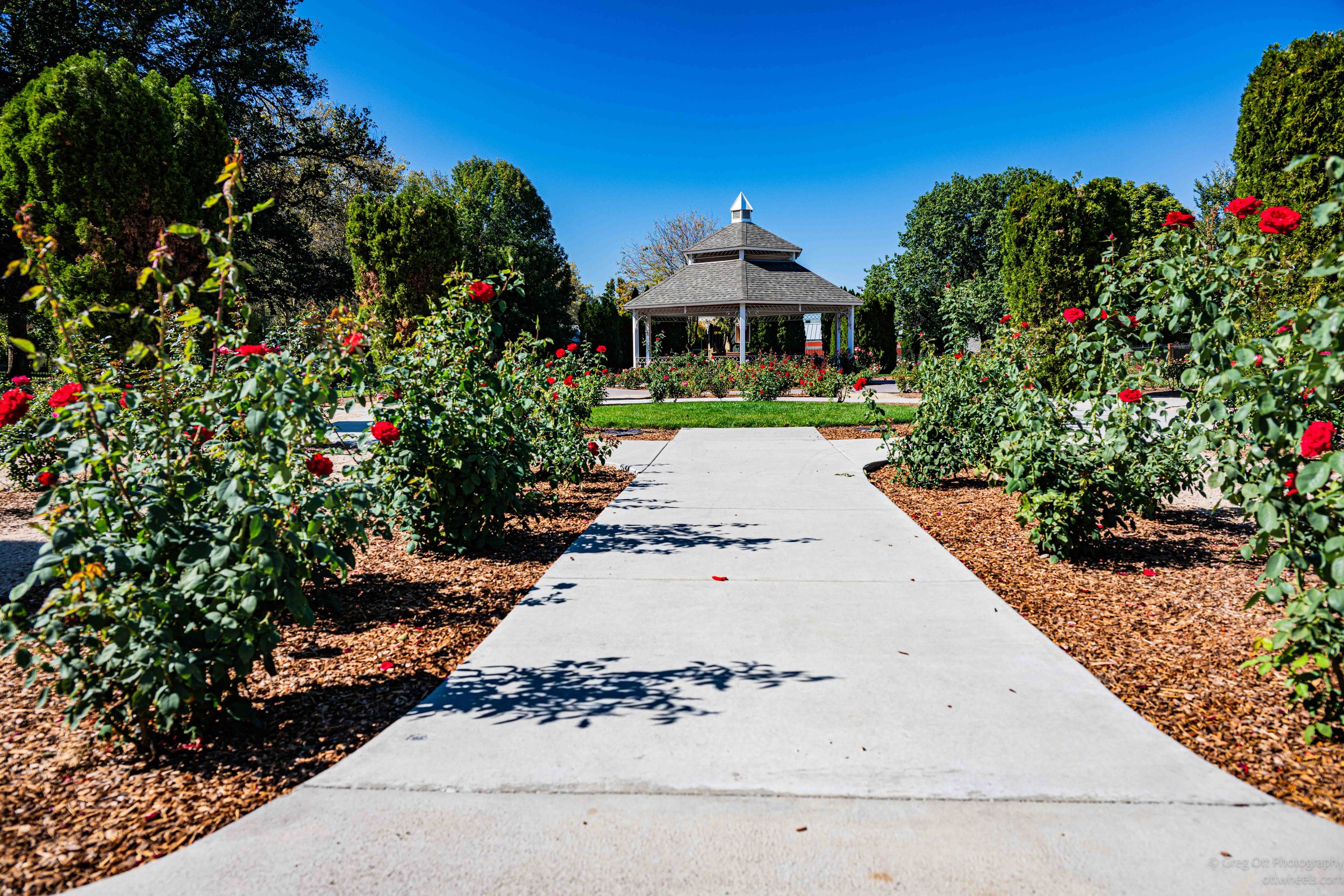
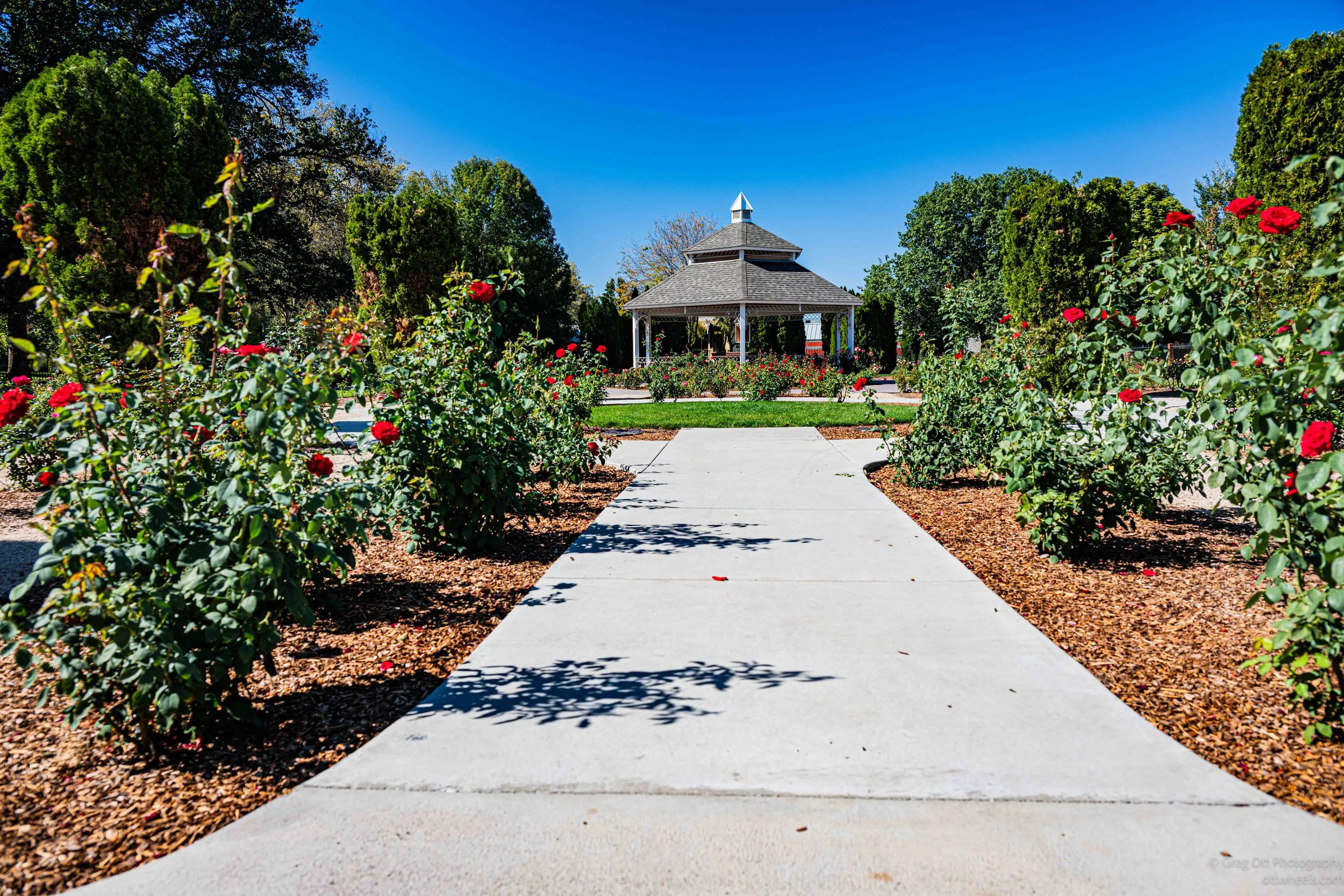
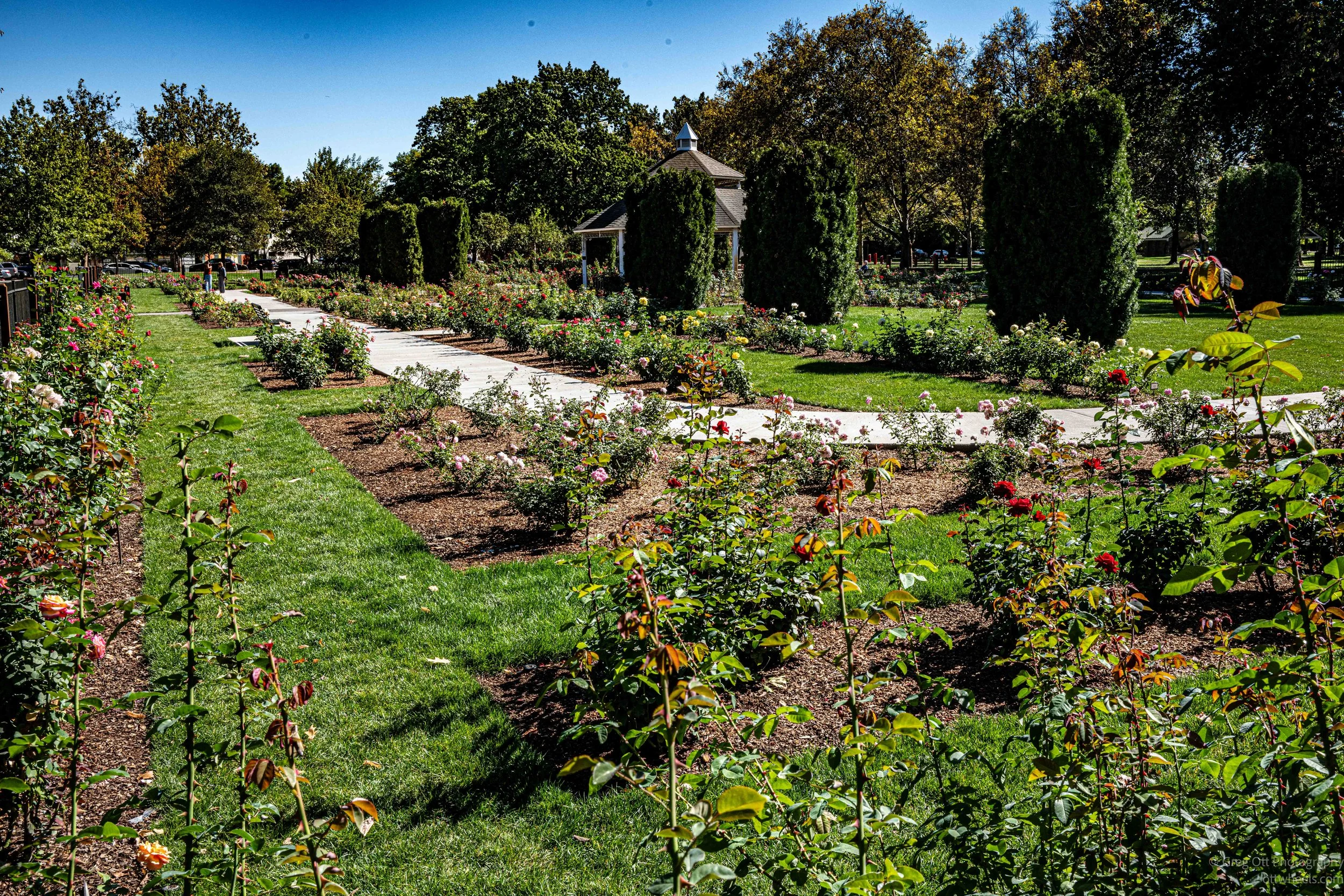
Just outside the museum is a beautiful rose garden, so I decided to explore that first. There weren't many people around, and the garden was peaceful. A gazebo provided a shaded place to sit, although one of the benches was occupied by a man who was stretched out sleeping, with his belongings scattered around him. Every so often, when the breeze shifted, I could smell the fragrance of the roses. I thought about the contrast between the carefully maintained garden, surrounded by beautiful flowers, and the man sleeping on the bench with everything he apparently owned beside him. Two very different images occupying the same space.
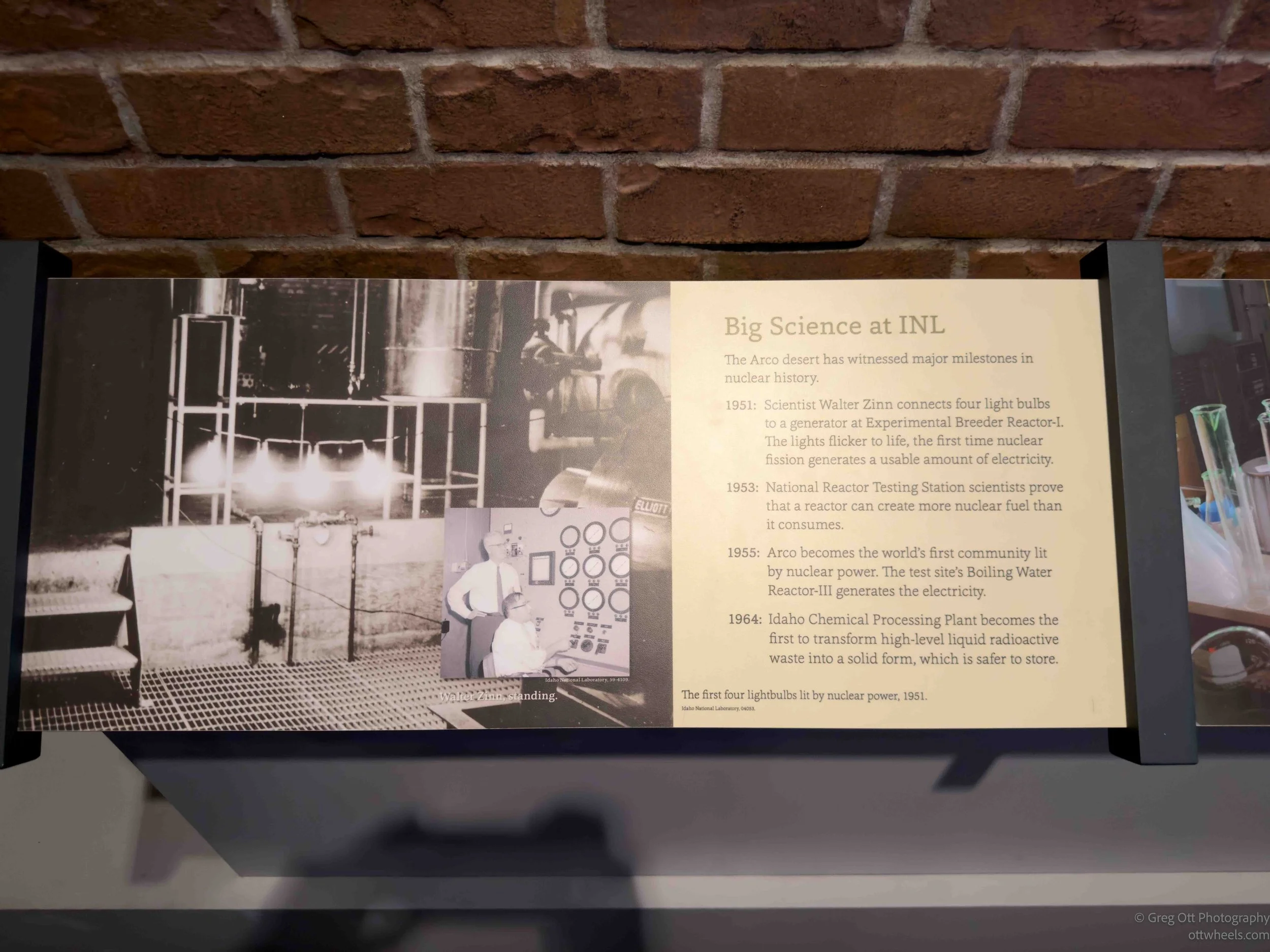
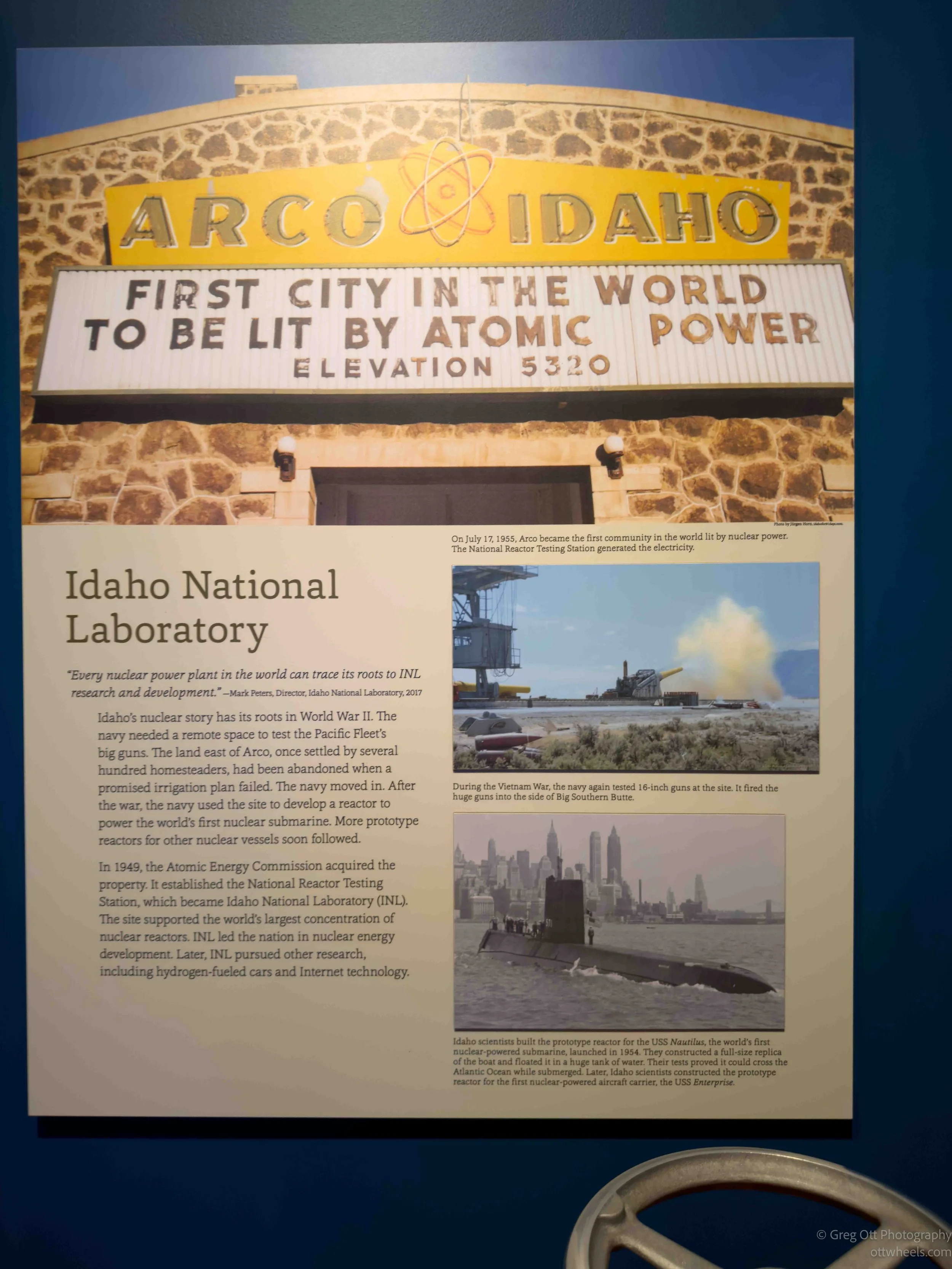
The Idaho State Museum was pretty much what I expected from a state history museum. It covered the important periods in Idaho's history, from its Indigenous peoples and early settlement through mining, agriculture, transportation, and the development of modern industry. There were displays of minerals found throughout the state and an exhibit on Arrowrock Dam, which was the tallest dam in the world when it was completed in 1915. I found the science and engineering exhibits particularly interesting because of my background and the fact that I had already been to some of the sites. One display included the original control panel from the Engineering Test Reactor, built in 1957. Other exhibits covered the development of Boise as a technology center, including Micron Technology, and the important nuclear research conducted at Idaho National Laboratory. In 1951, the Experimental Breeder Reactor No. 1 became the first nuclear reactor to generate usable electricity, and in 1955, Arco became the first community in the world to be powered by nuclear energy.
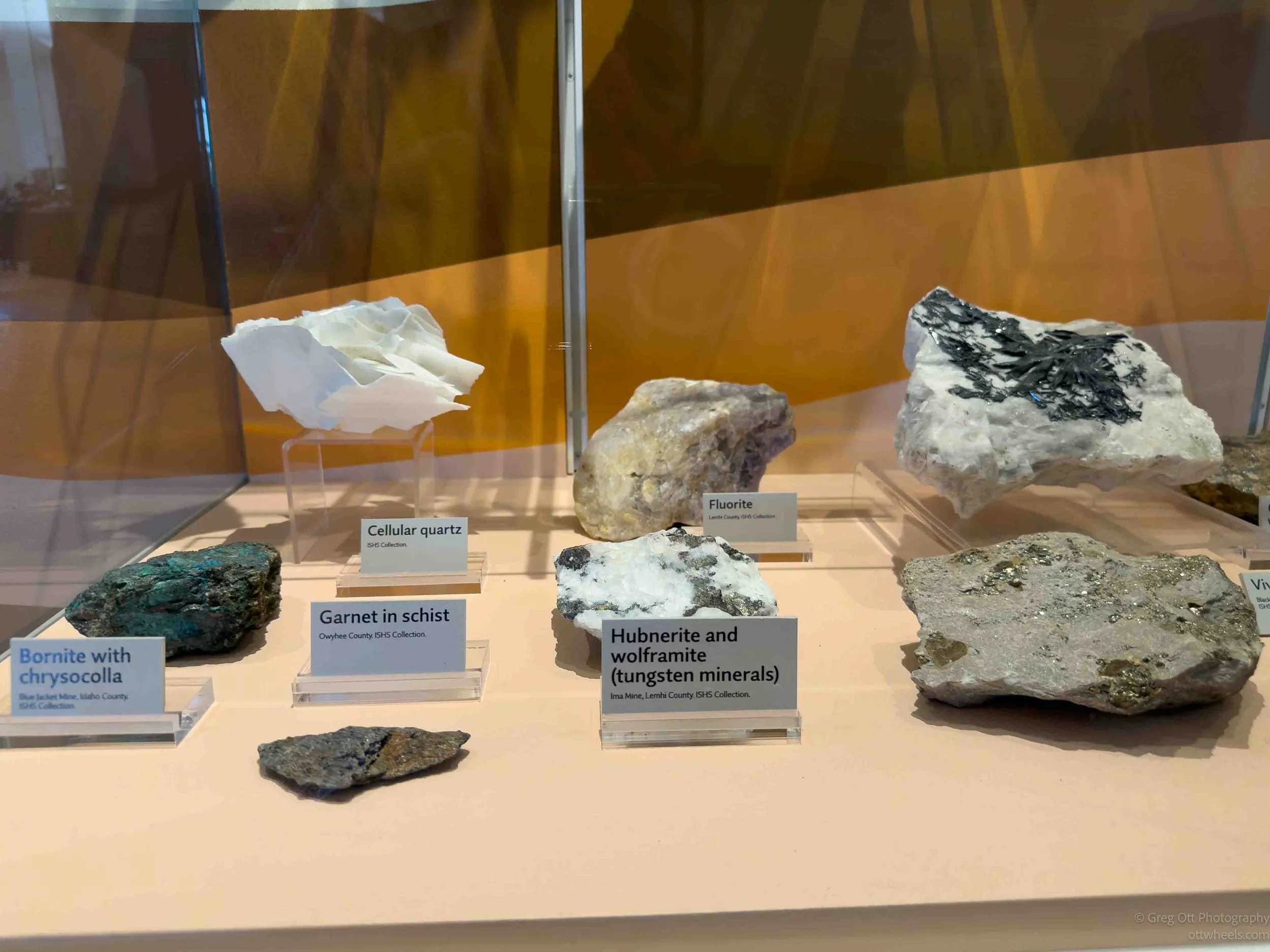
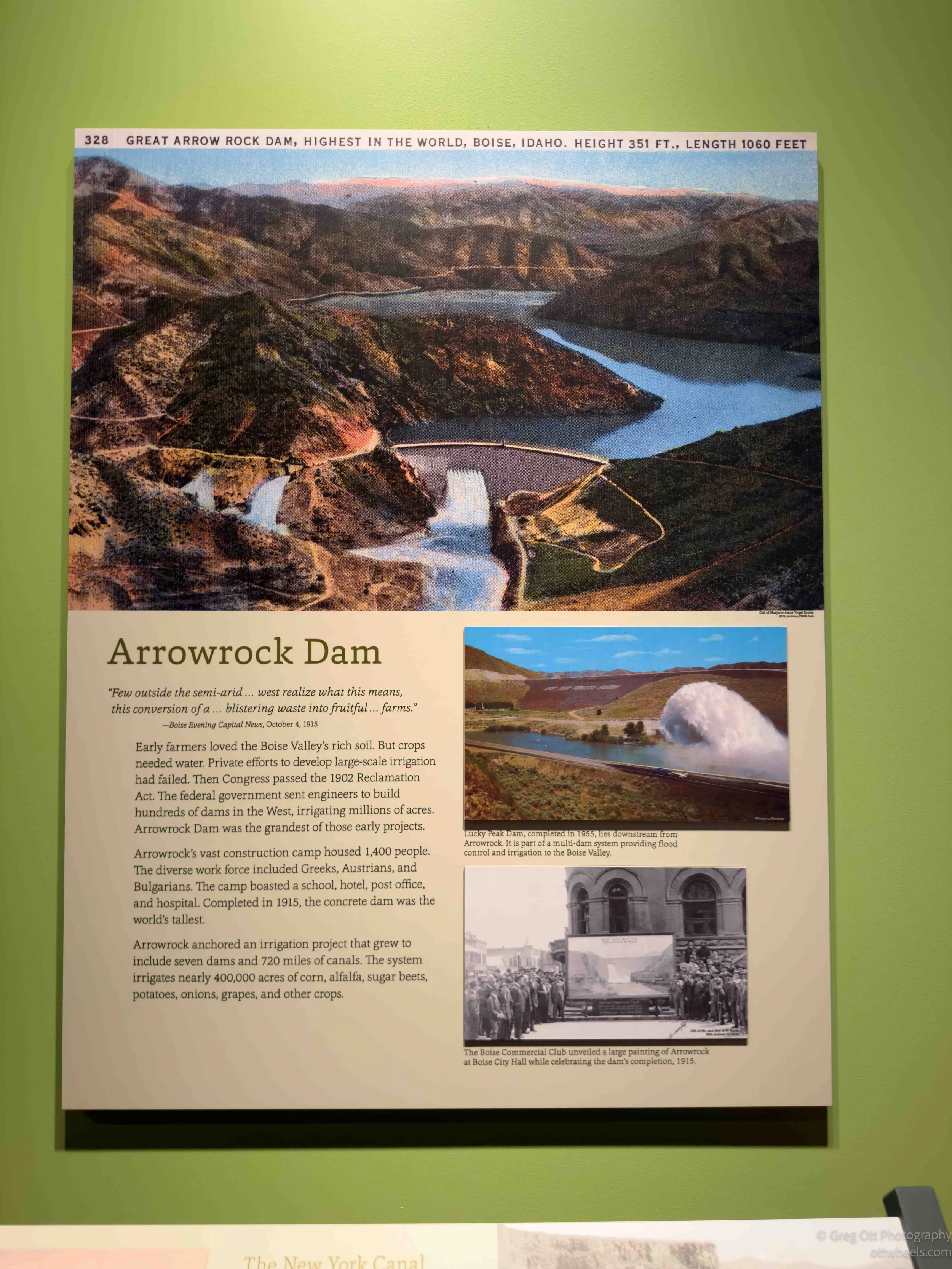
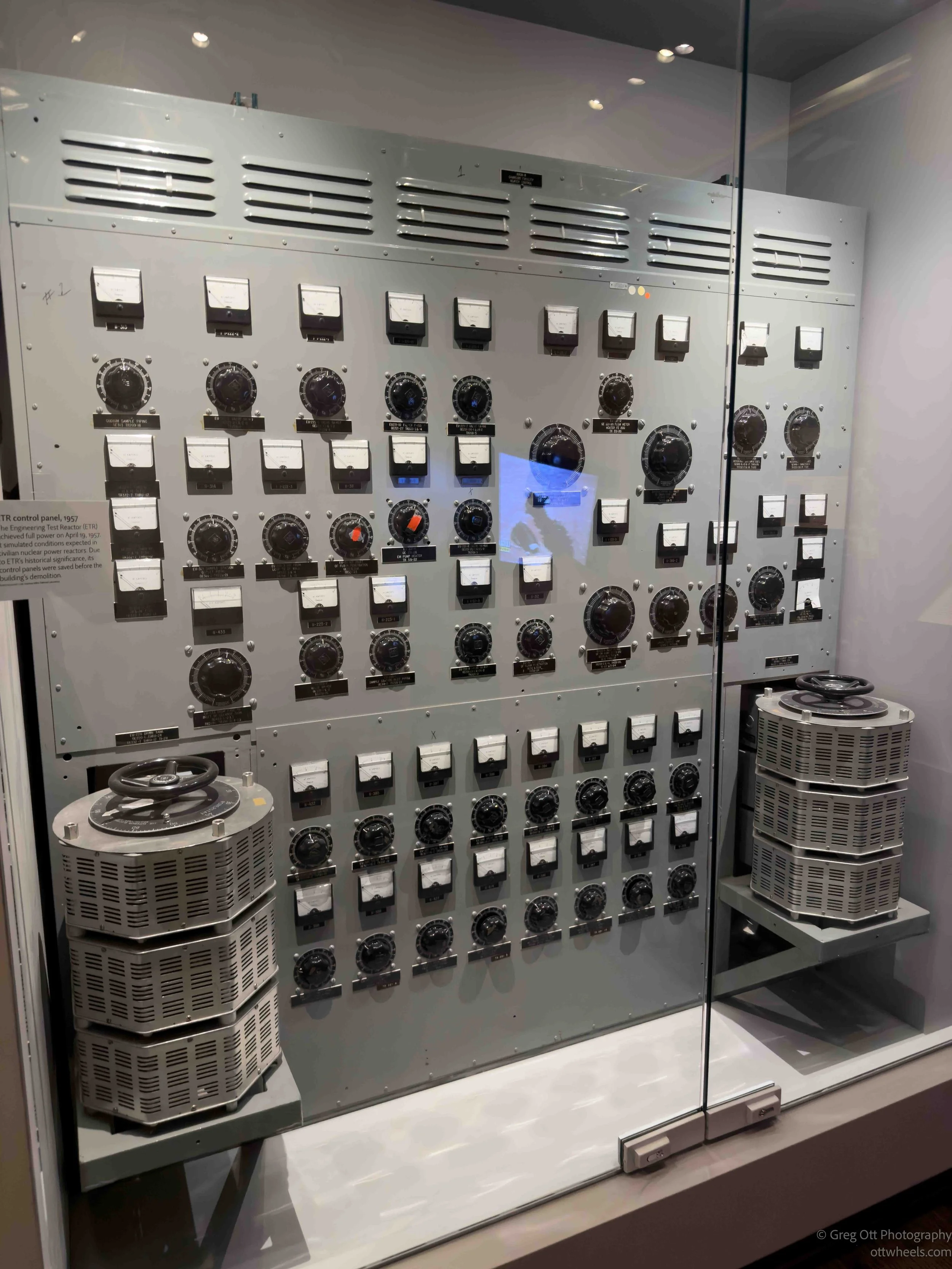
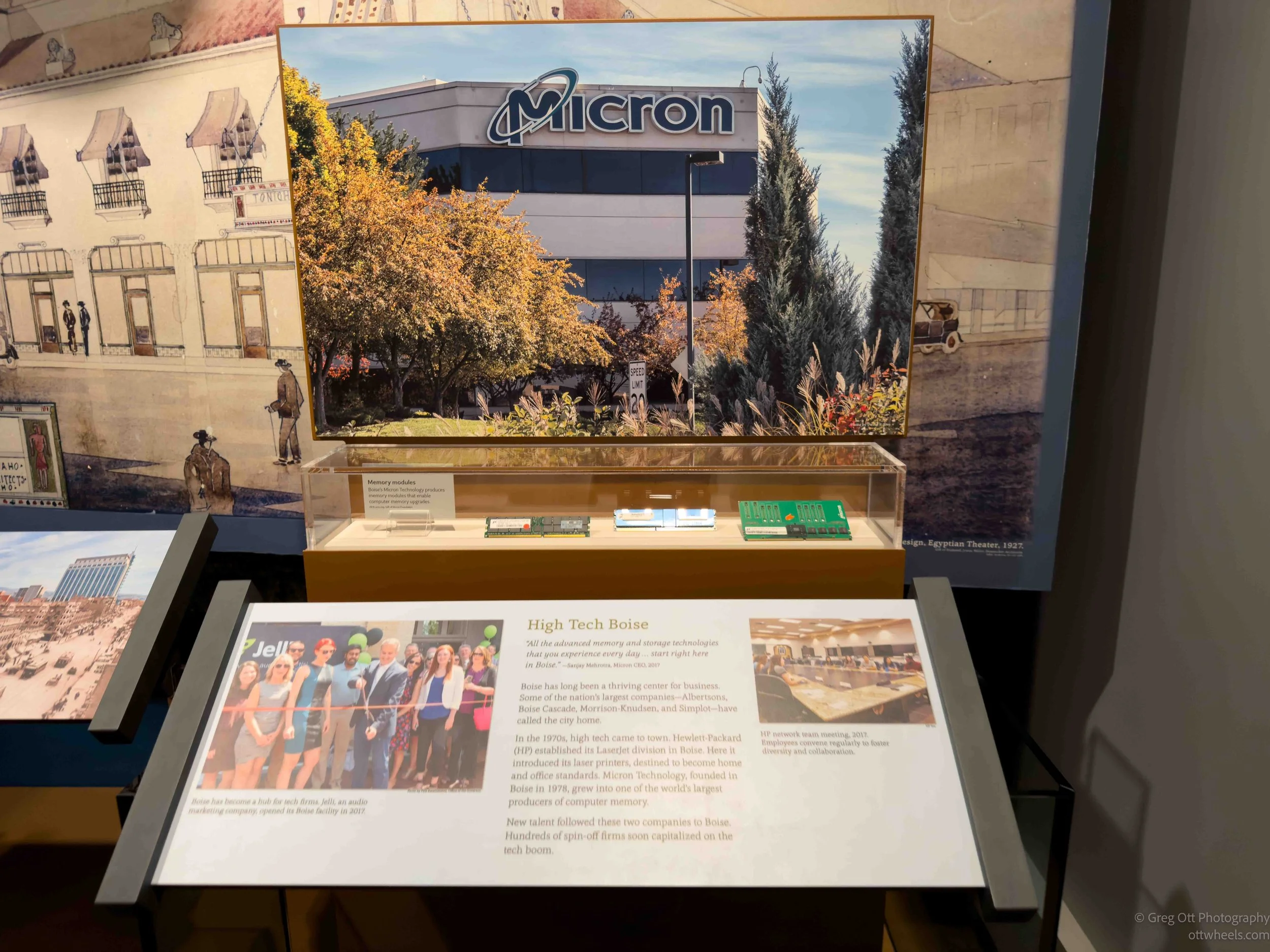
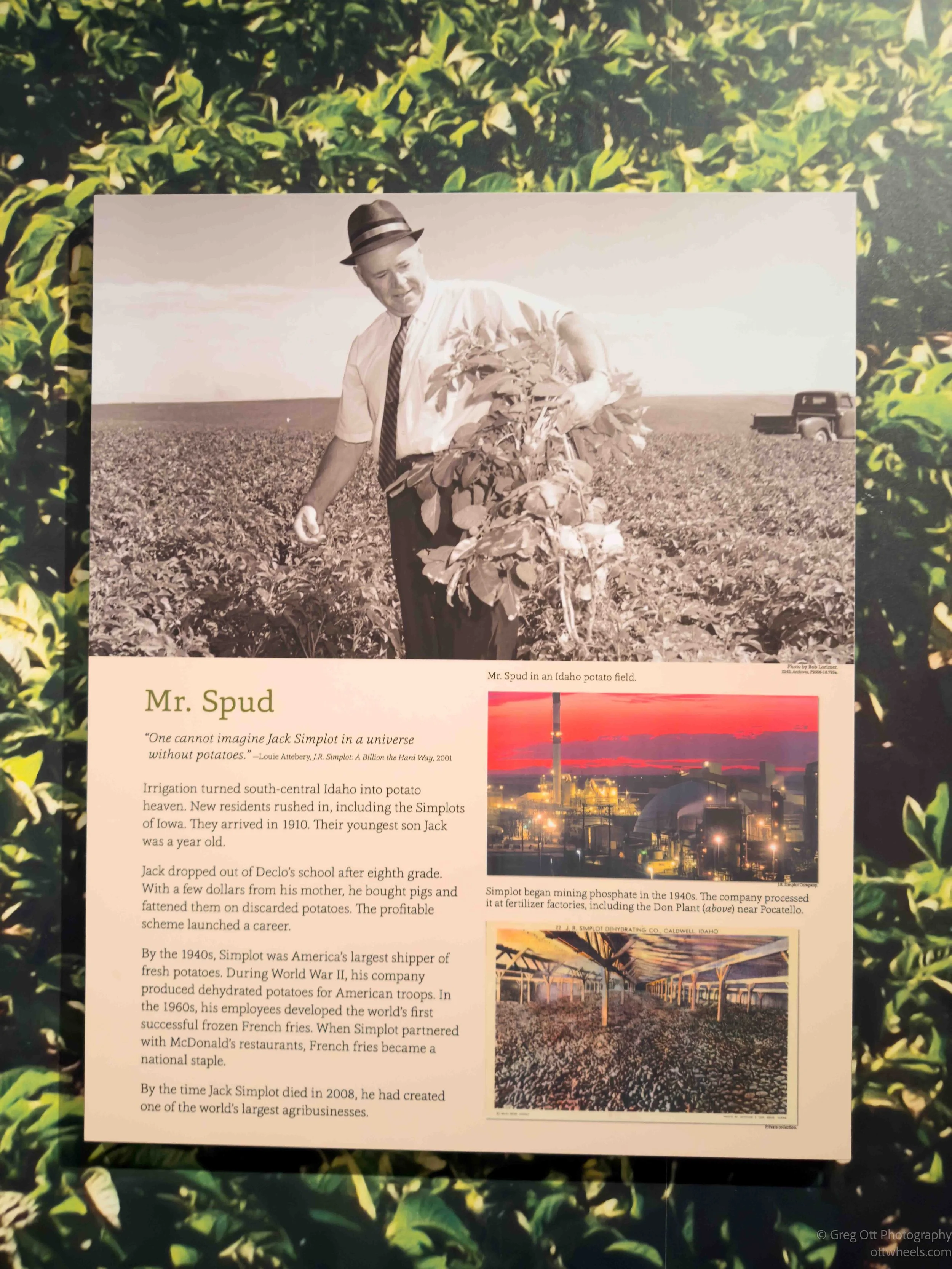
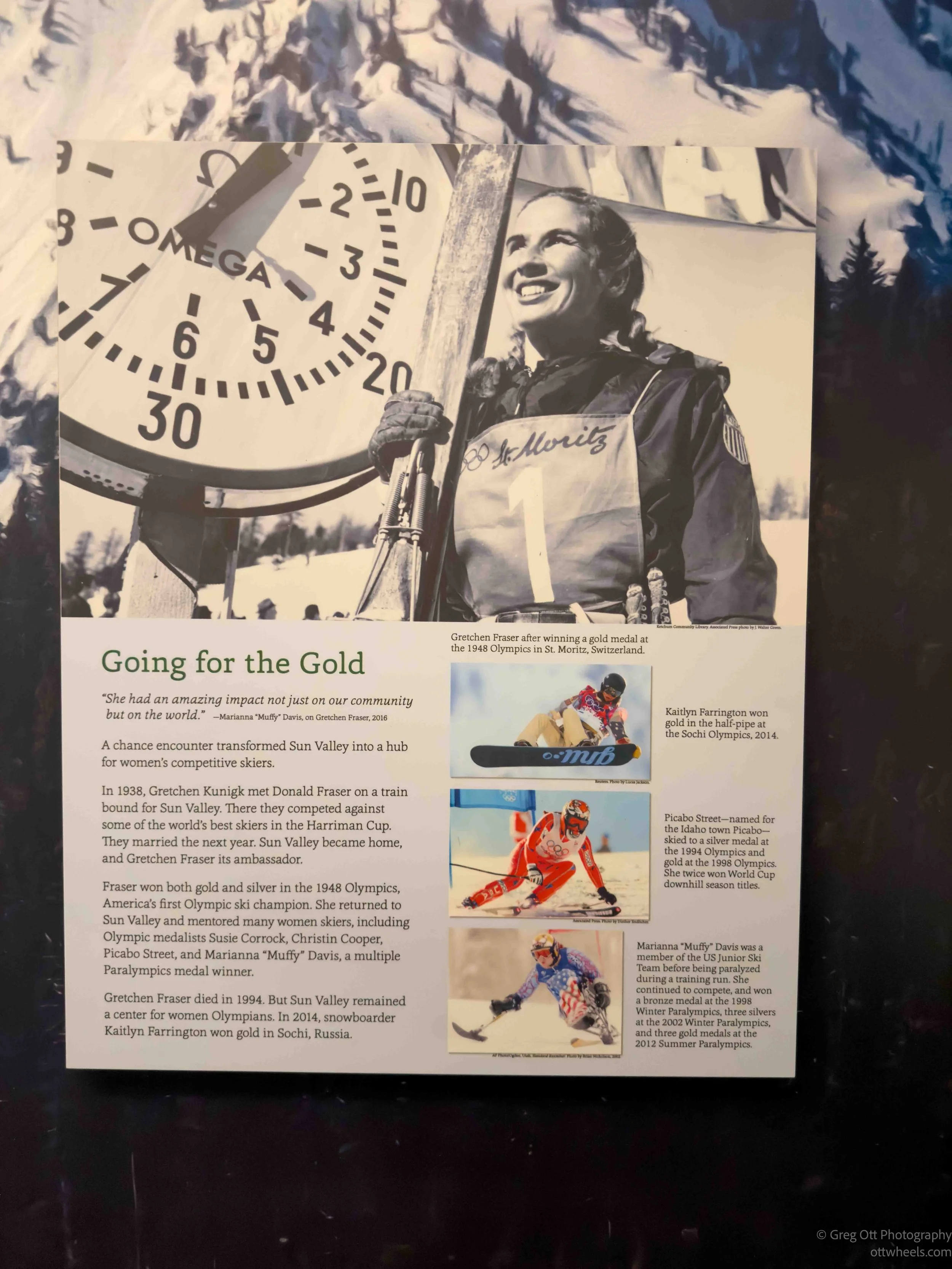
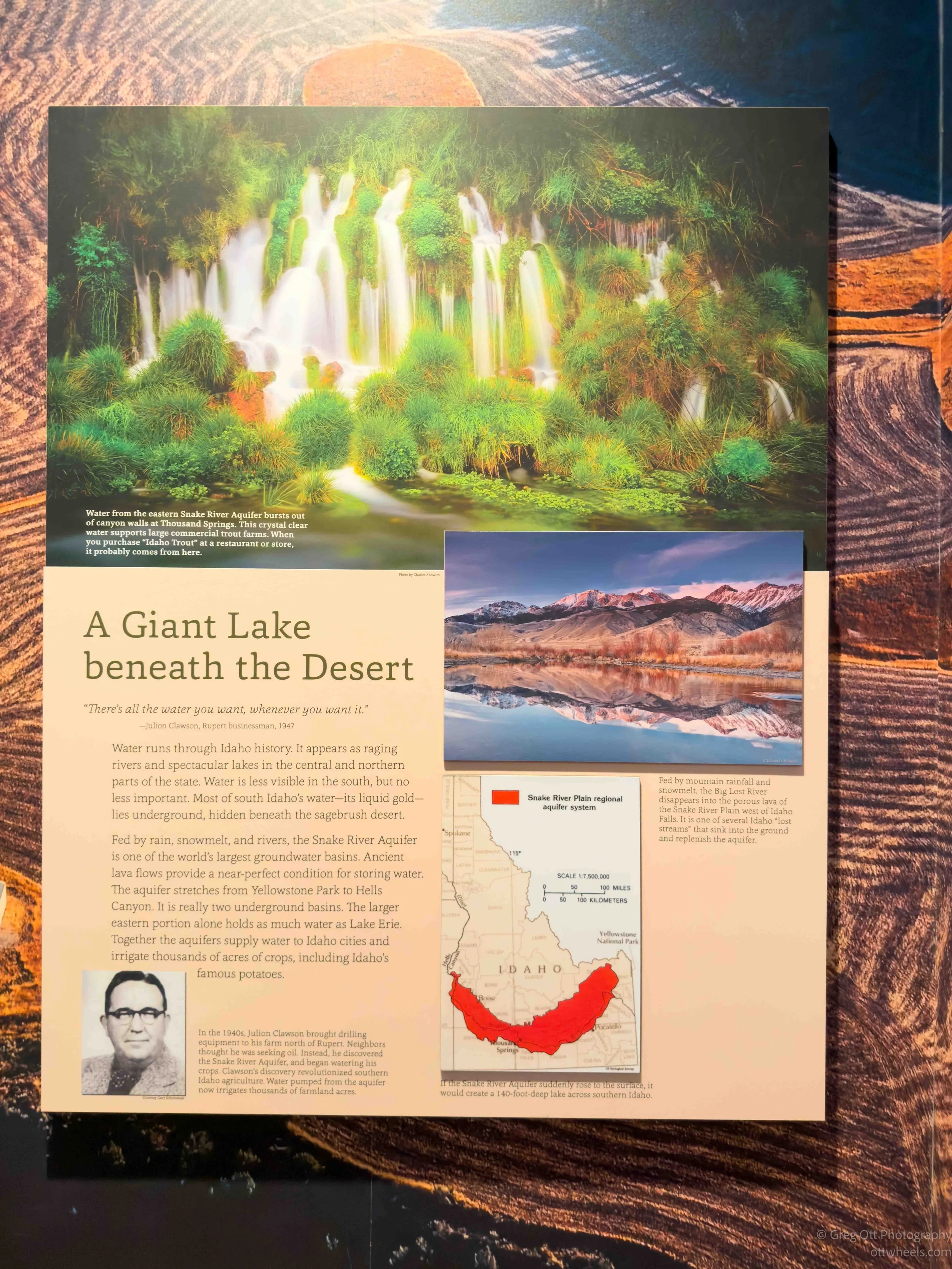
There was an exhibit on Jack Simplot, known as Mr. Spud, who built one of the country's largest agricultural businesses from Idaho potatoes. Another explained the enormous Snake River Aquifer, an underground water system that supplies much of southern Idaho's agricultural irrigation. I was surprised to learn that the eastern portion alone holds approximately as much water as Lake Erie. There were also exhibits about skiing in Sun Valley, including Gretchen Fraser, who became the first American to win an Olympic gold medal in skiing in 1948.
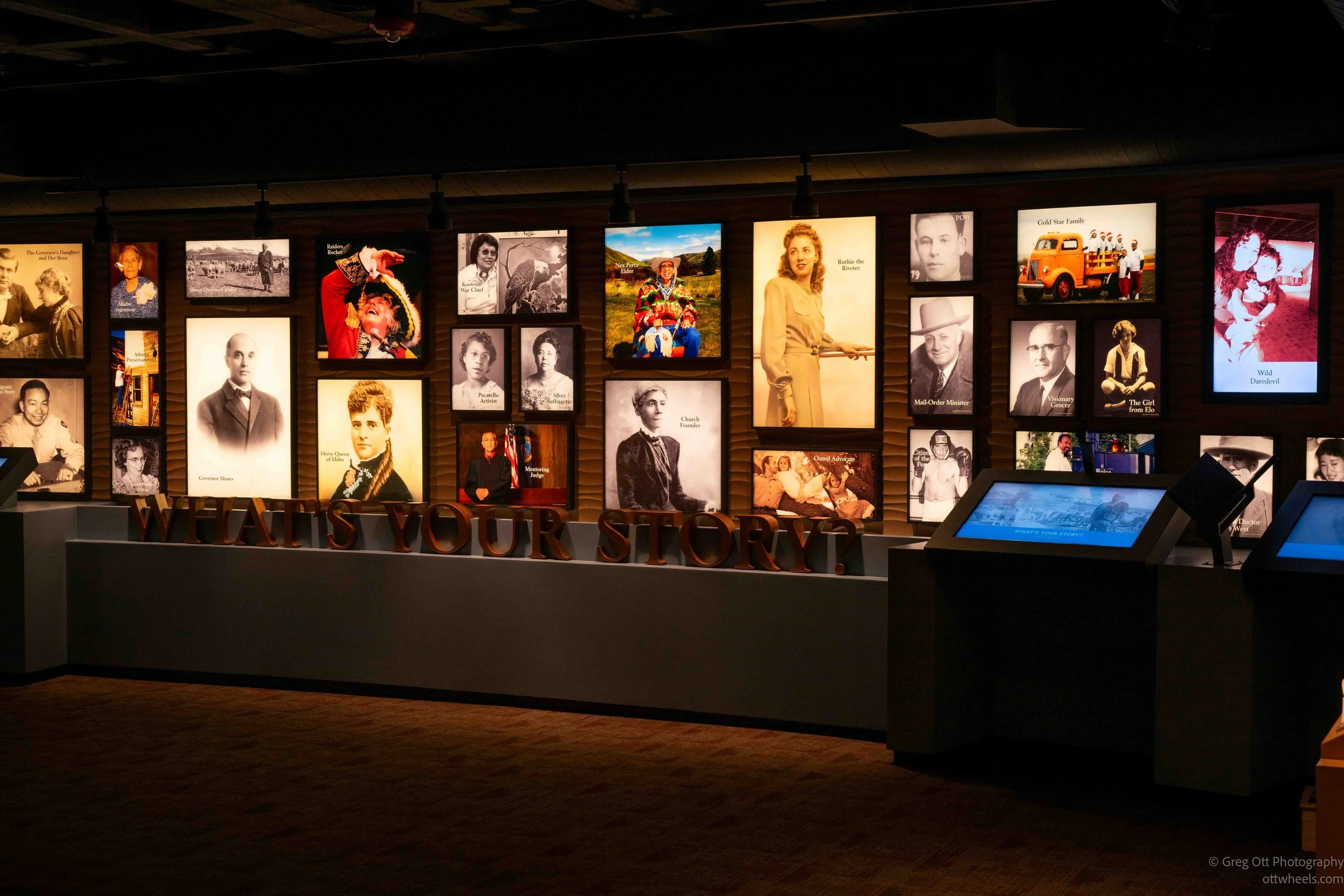
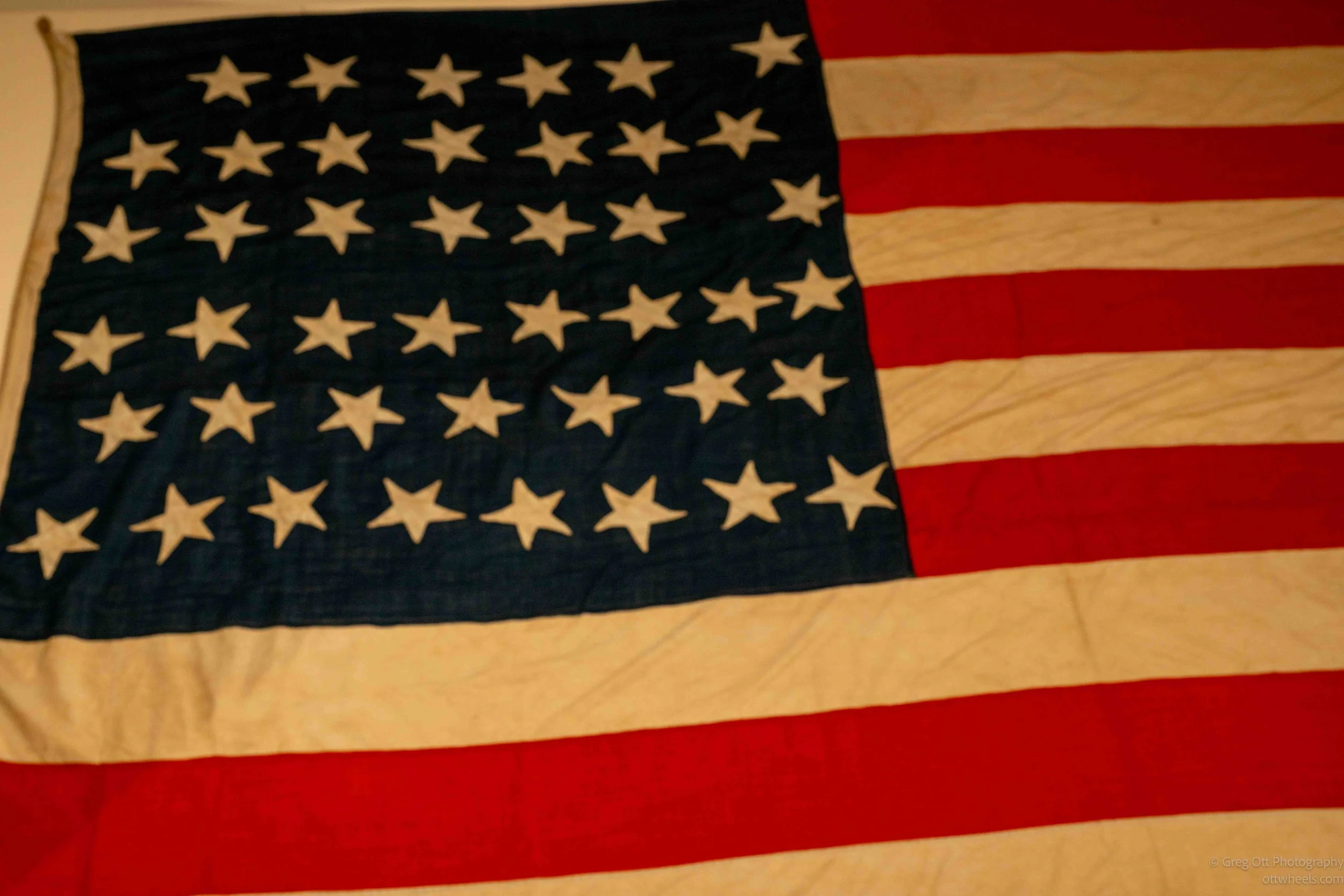
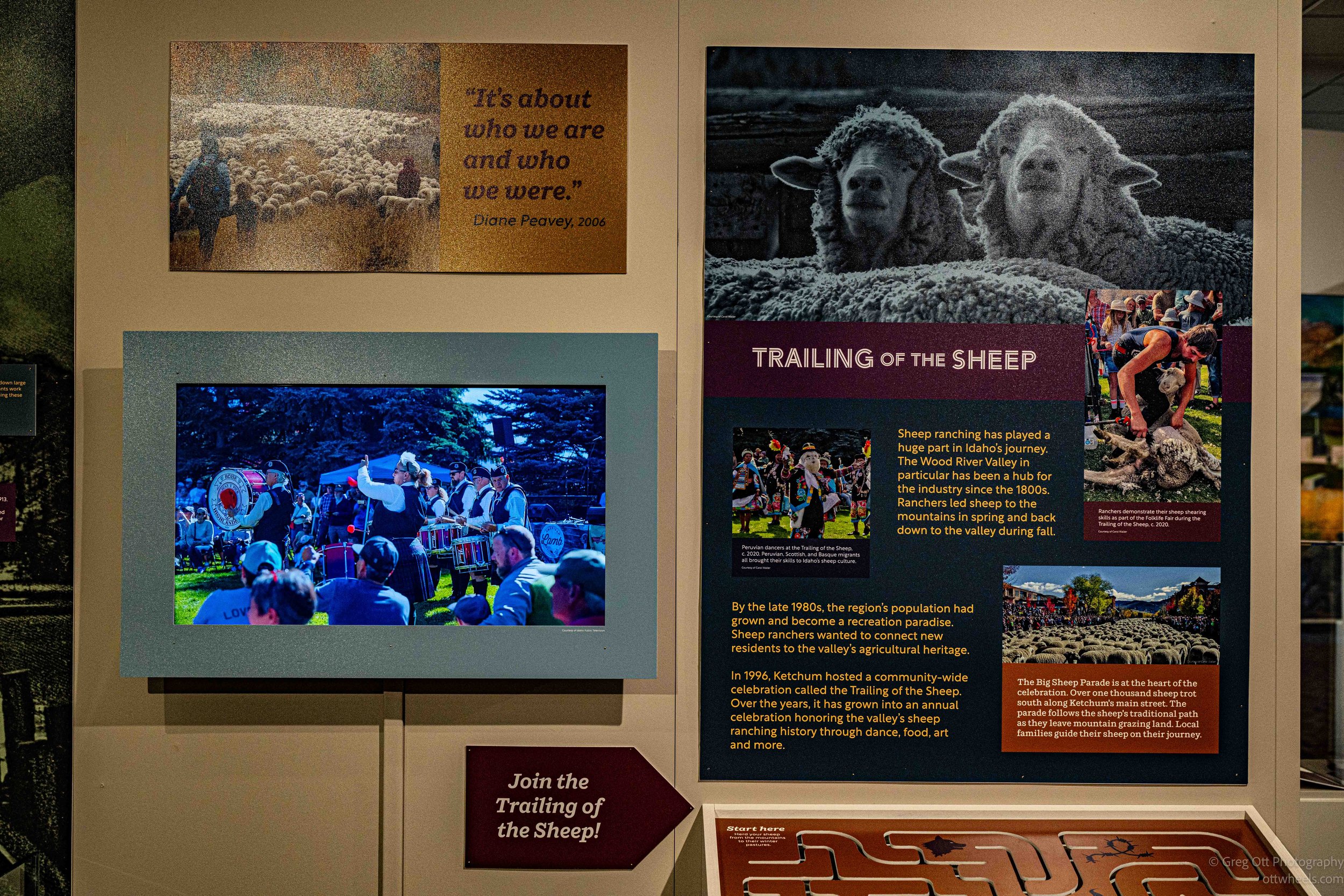
Other exhibits covered the people who helped shape Idaho's history, along with an unusual American flag with 43 stars, representing Idaho's admission to the Union as the 43rd state in 1890. Another exhibit described the Trailing of the Sheep Festival in the Wood River Valley, celebrating the area's sheep ranching history. There was much more to see, and I could easily spend several pages writing about the exhibits, but these were some of the things that caught my attention as I wandered through the museum.
One section of the museum seemed a little out of place, with a collection of exhibits about American history that didn't appear to have much connection to Idaho. I wondered whether they were part of something being prepared for the country's 250th anniversary, although I didn't notice anything identifying them that way.
Among the displays was a print of Paul Revere's famous engraving of the Boston Massacre of 1770. I recognized it immediately, having seen other copies in books, in Boston, and in Washington, D.C. I had also read about Revere's involvement and the engraving in David McCullough's book John Adams. A husband and wife were studying the print and questioning a few details. I joined their conversation and mentioned that Revere was not only a silversmith but also an engraver. His depiction of British soldiers firing into a crowd of colonists became one of the most famous images of the period and helped fuel resentment toward the British. Interestingly, Revere based his engraving on an earlier illustration by Henry Pelham, although his version became much better known.
Our conversation eventually moved from the engraving to history, photography, and travel. The couple was from the Los Angeles area and had traveled extensively throughout the world. We compared places we'd visited and shared some of our experiences. I believe the woman had worked as a curator at the Getty Museum. They were both interesting people, and what started as a brief conversation about an old engraving turned into nearly 30 minutes of talking. I always enjoy these unexpected encounters while traveling.
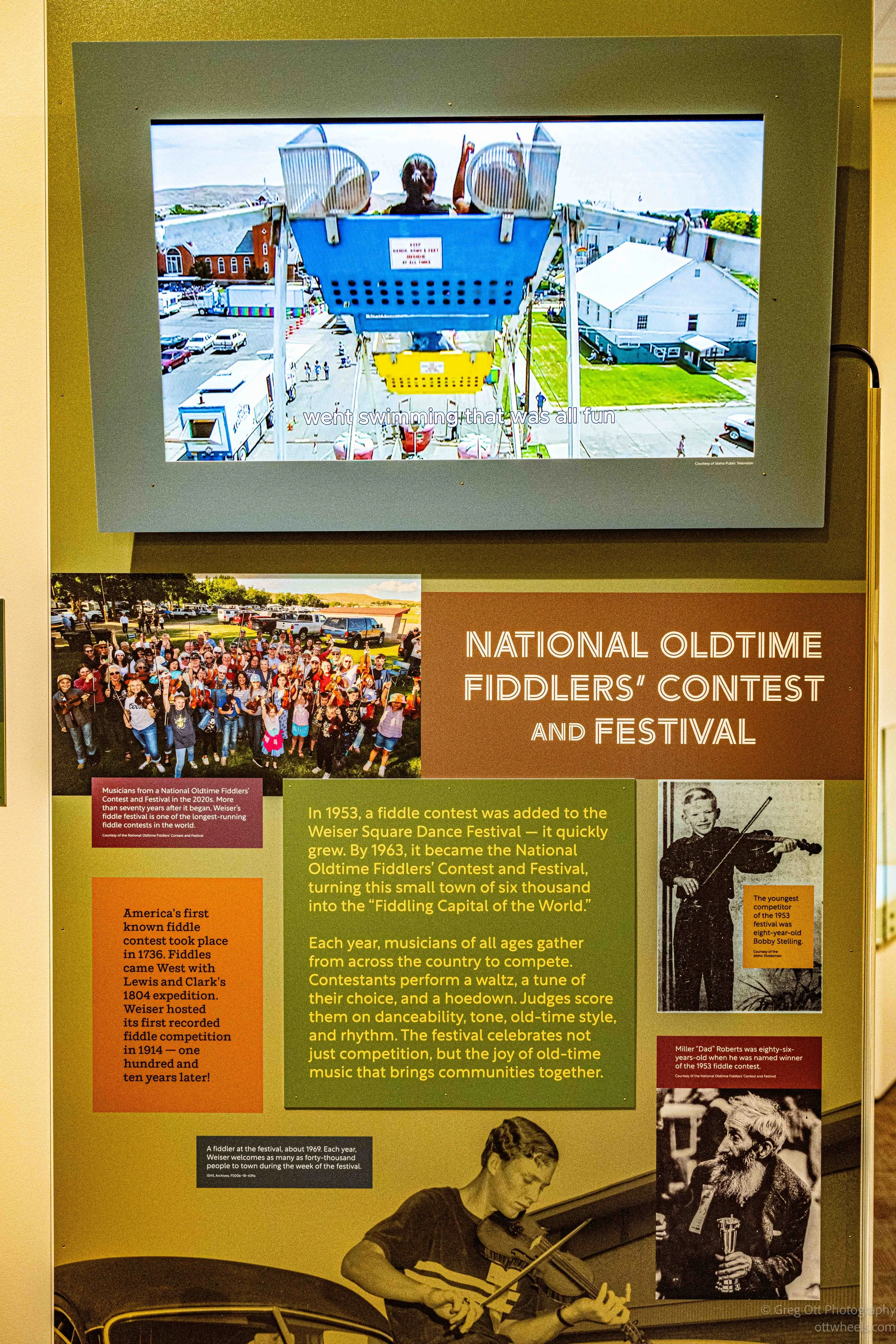
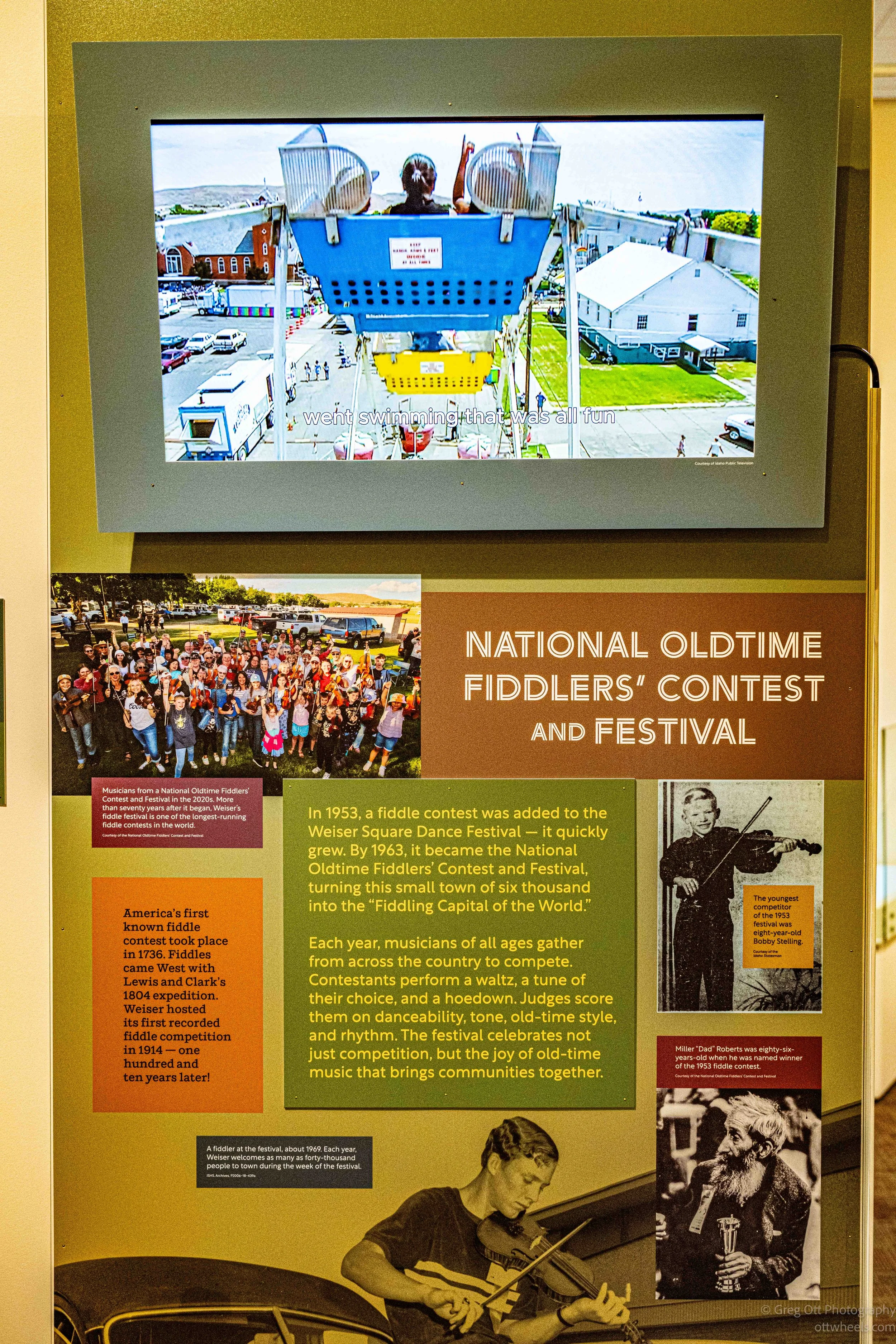
Another exhibit introduced me to something I'd never heard of, the National Oldtime Fiddlers' Contest and Festival, held annually in Weiser, Idaho. The competition began in 1953 as part of the Weiser Square Dance Festival and eventually grew into a national event attracting musicians of all ages. Contestants perform traditional fiddle tunes in different age divisions. I tucked that one away in the back of my mind as something I'd like to attend on a future trip through Idaho.
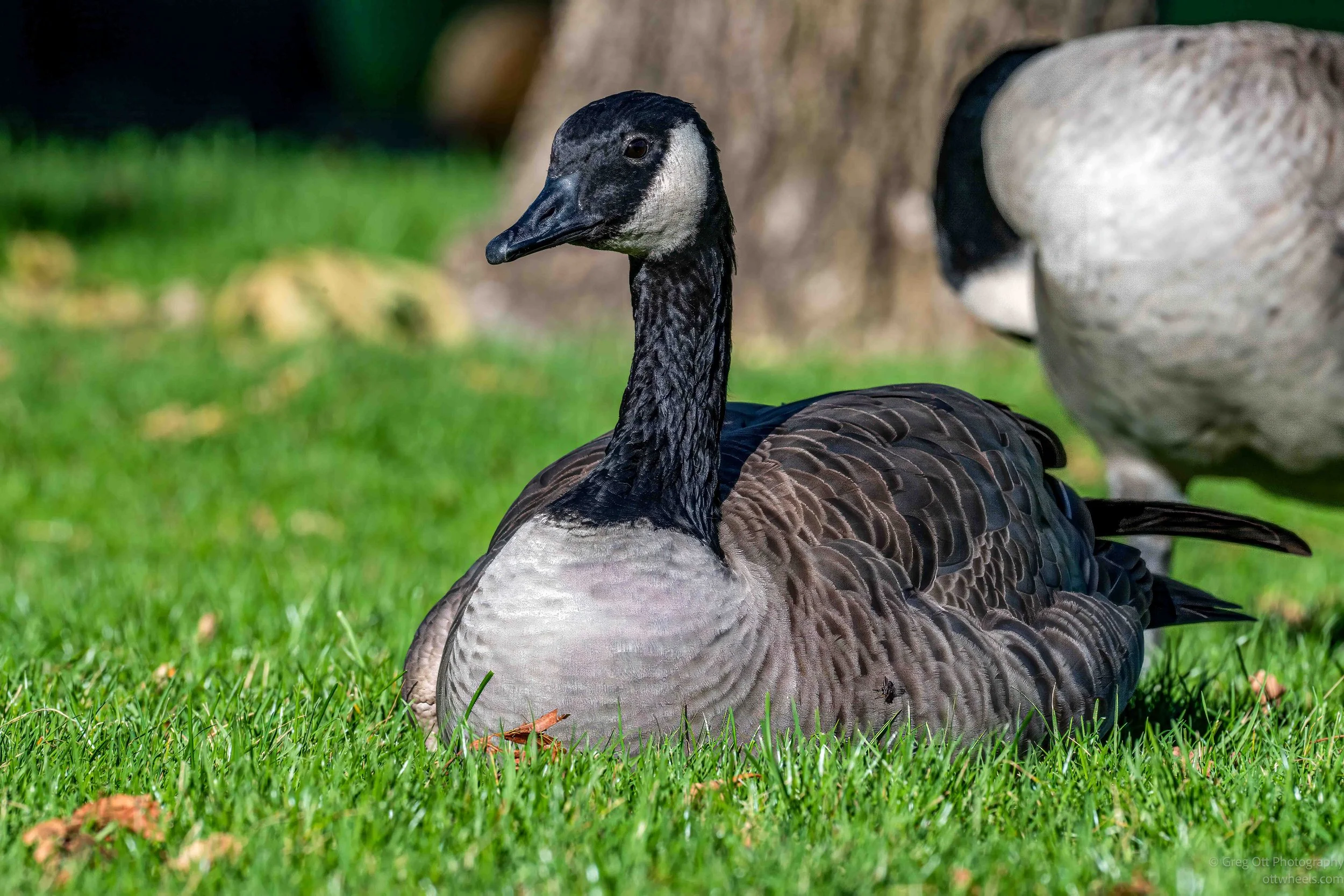
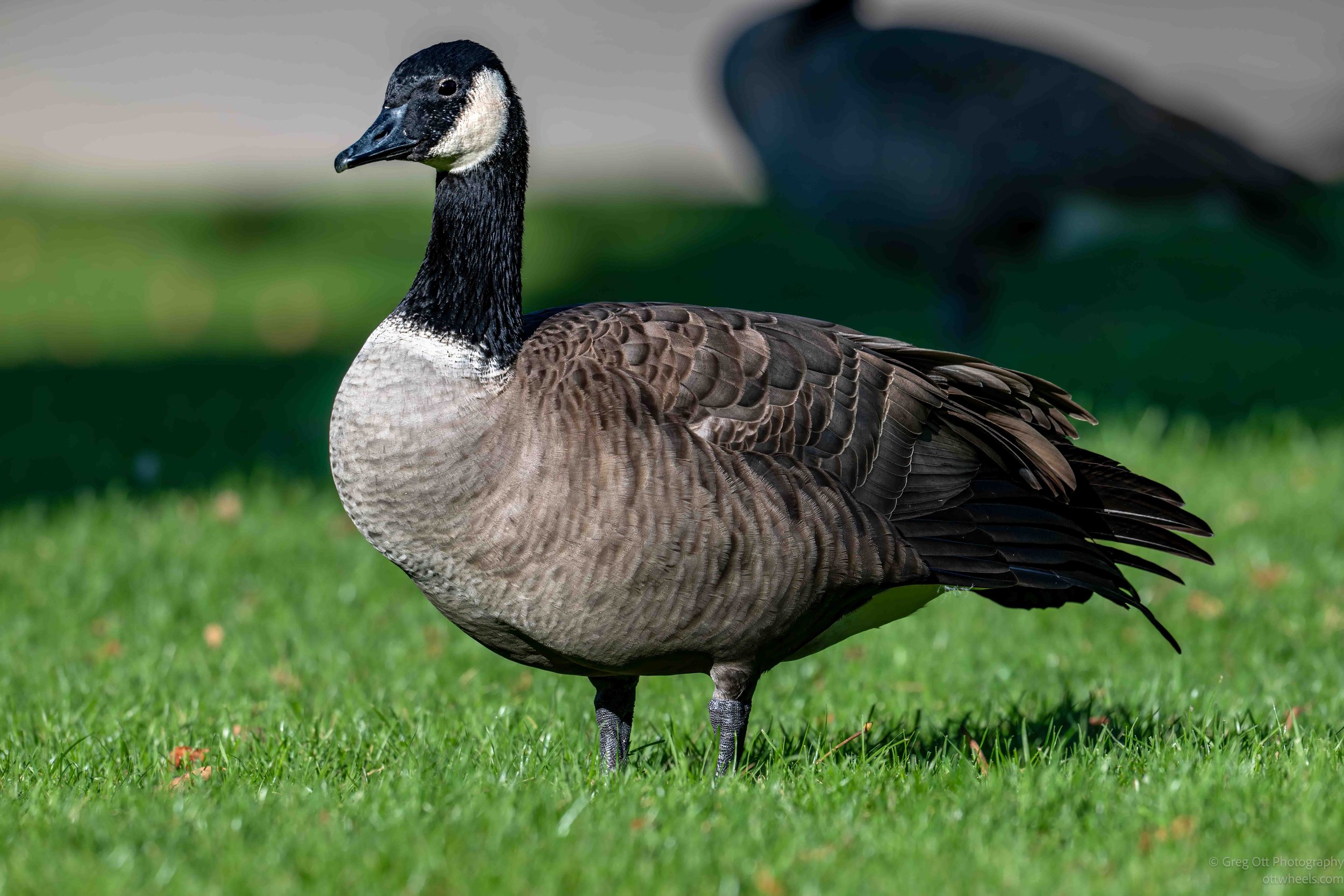
It was nearly five o'clock when I left the museum. A group of geese had taken over the grass near the rose garden, and with the sun getting lower in the sky, the light was finally becoming interesting for photography. I walked back to the van to get my camera and spent the next 45 minutes watching and photographing them. They were obviously accustomed to people and didn't seem bothered by my presence, even when I got within about ten feet. I was particularly interested in the patterns of their feathers, their movements, and the way the late afternoon light brought out the details. Nothing particularly exciting was happening, but I enjoyed the opportunity to slow down and observe them. It was a pleasant way to finish the afternoon.
Kathryn Albertson Park
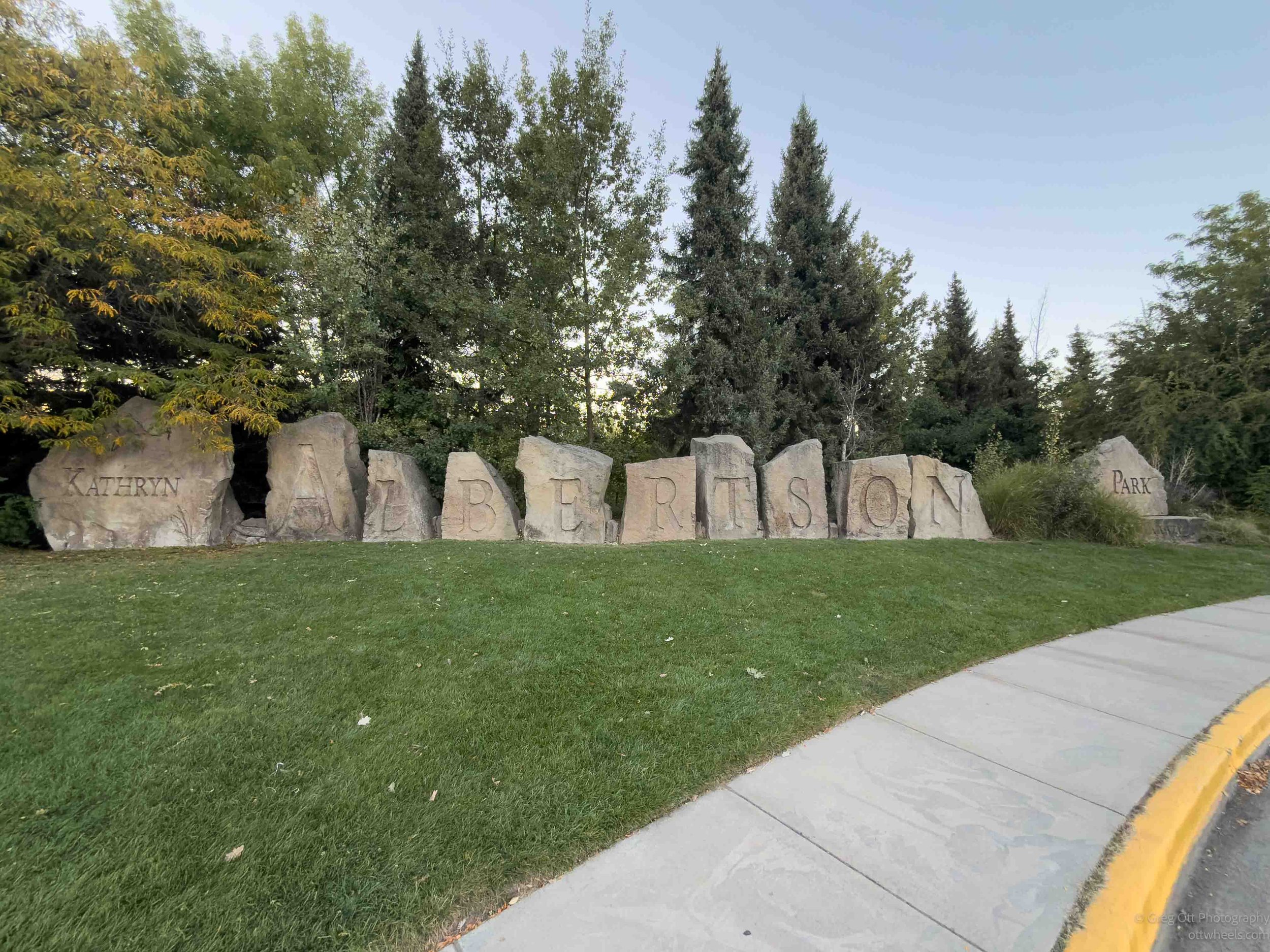
I still had plenty of energy, and Kathryn Albertson Park was on my list of places to visit around Boise. Although it's a city park, it has a very natural feel, with tall grasses, wildflowers, ponds, and wooded areas connected by winding paths. The walkways are paved, but bicycles, skateboards, and motorized vehicles aren't permitted. I didn't notice any traffic noise either, even though the park is close to downtown Boise. It was surprisingly quiet, with plenty of birds, mostly herons and ducks, moving around the ponds.
The 41 acre park was developed in the late 1980s as a wildlife sanctuary and named for Kathryn Albertson, the wife of Albertsons grocery store founder Joe Albertson. The idea was to create a place where people could enjoy nature without disturbing the wildlife. The landscaping was designed to look natural, with ponds, wetlands, meadows, and thousands of trees and shrubs. There are even sections of the Oregon Trail that passed through this area on the way west. I liked the way the park felt somewhat wild rather than carefully manicured, with flowers and grasses growing along the paths and around the water.
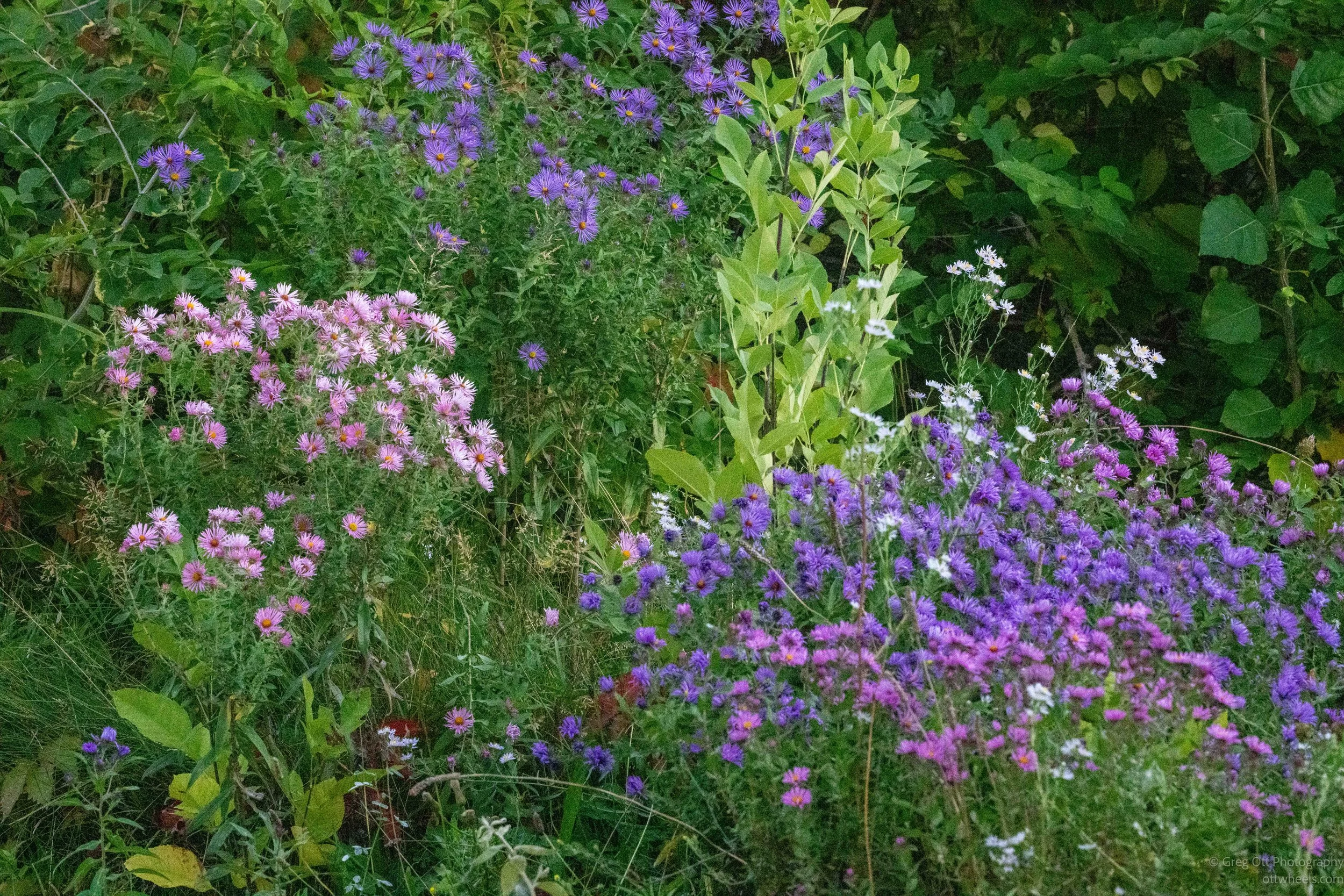
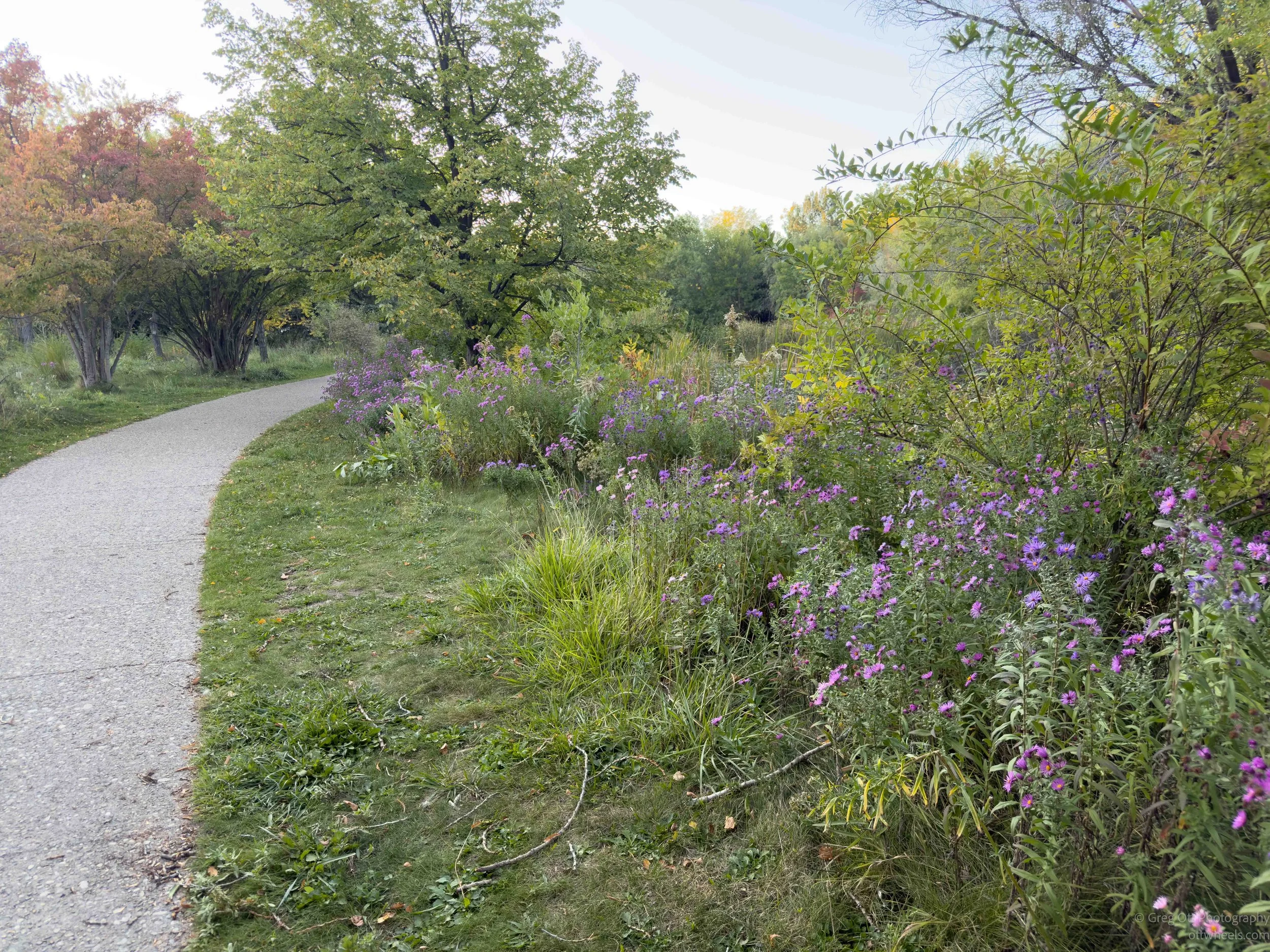
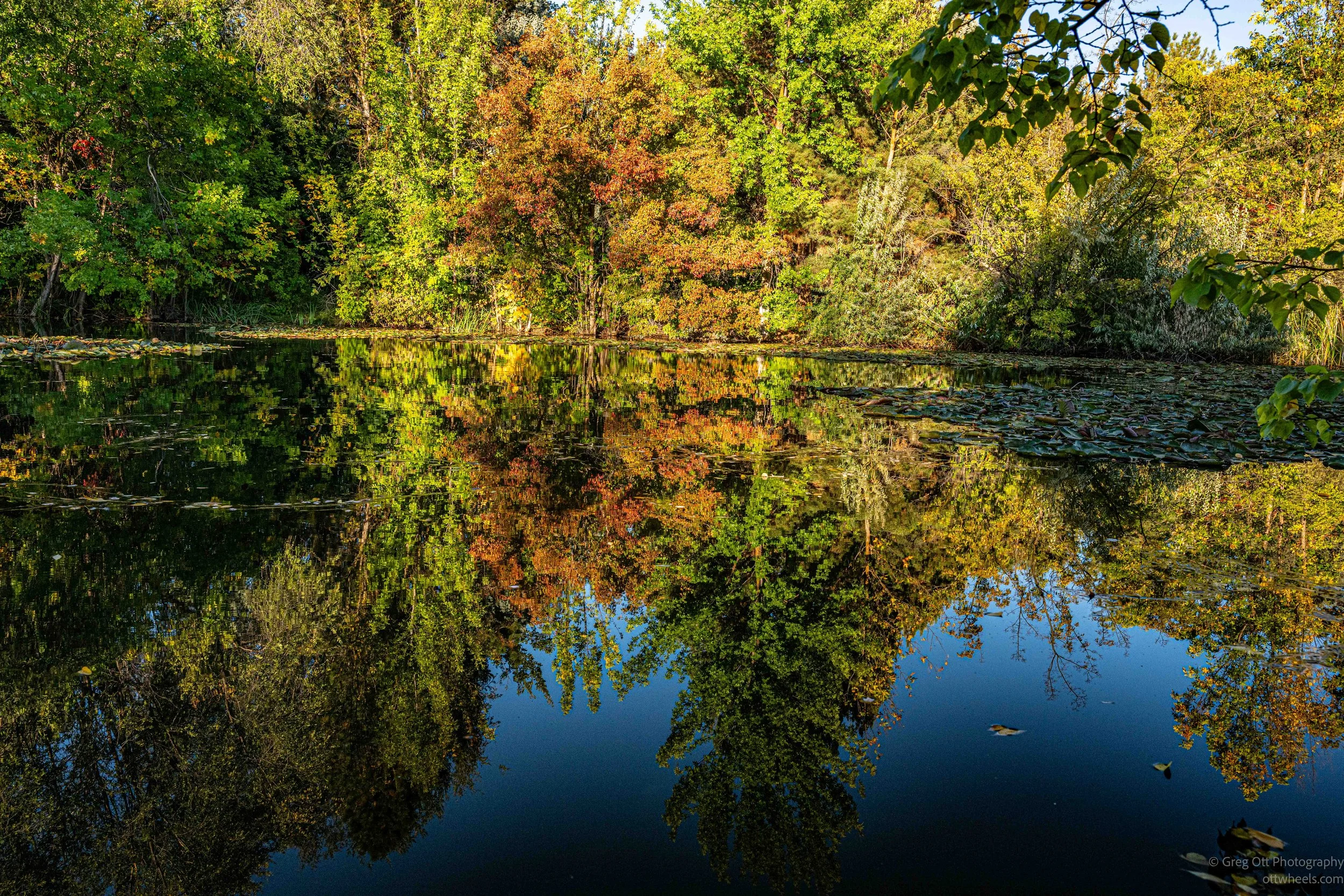
There were quite a few people enjoying the late afternoon, including families having portraits taken, teenagers getting their senior yearbook photographs, couples taking wedding pictures, and even a woman having photographs taken with her dog. Apparently, this is a popular location for photographers. At one point, a young woman noticed my camera and said, "Jealous of your lens!" I smiled. It certainly attracts attention, although carrying it around for several hours is another matter.
I had been walking behind three young men for a while. One of them was wearing a rather frightening looking mask, something that looked like it belonged in a horror movie. I eventually followed them onto a viewing platform overlooking one of the ponds, where I wanted to photograph some ducks. The man wearing the mask looked at my camera and asked, "How much does a setup like that cost?" I laughed and told him, "Too much."
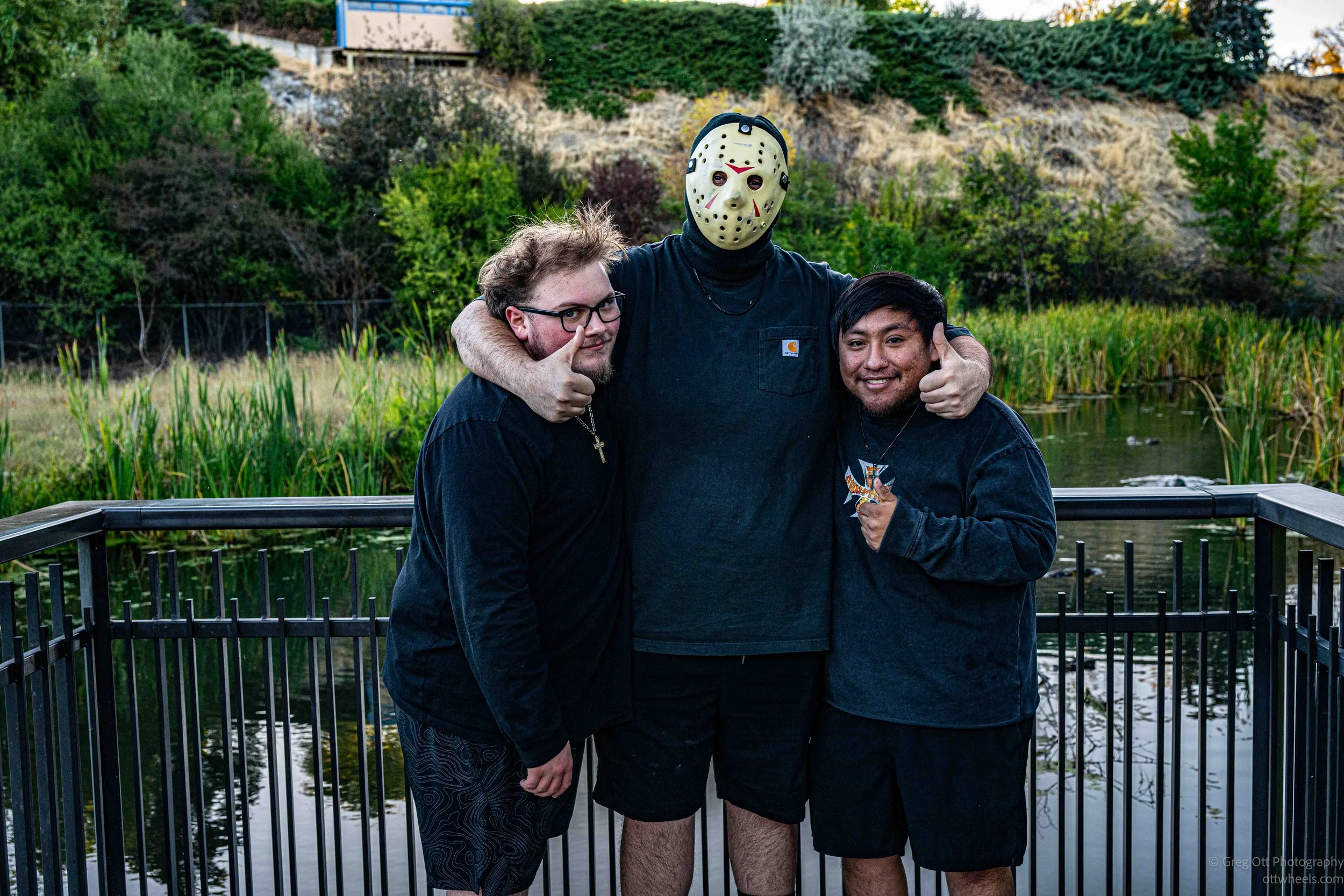
He explained that he was interested in photography and wanted to get a small camera setup so he could learn more about it. We spent the next ten minutes talking about cameras, lenses, and the kinds of photographs he wanted to take. Eventually, I asked him about the mask. He told me it had just arrived in the mail and was going to be part of his Halloween costume. Since it was getting dark, he thought it would be fun to wear it around the park. That certainly explained the rather unusual appearance.
The three of them worked at an Amazon fulfillment center, and our conversation eventually turned to their jobs. They explained how the warehouse operated and talked about the increasing use of automation. Apparently, Amazon has been introducing more automated systems into its fulfillment centers, but they didn't seem particularly concerned about losing their jobs, at least not in the immediate future. It was interesting hearing about the operation from people actually working there.
We continued walking separately but kept running into each other along the paths. At one point, they spotted some deer hidden in the vegetation that I never would have noticed on my own. They pointed them out and were eager to know whether I could get a photograph. I enjoyed talking with them, and by the time we parted, my first impression of the fellow in the frightening mask had completely changed. It was another reminder not to judge a book by its cover.
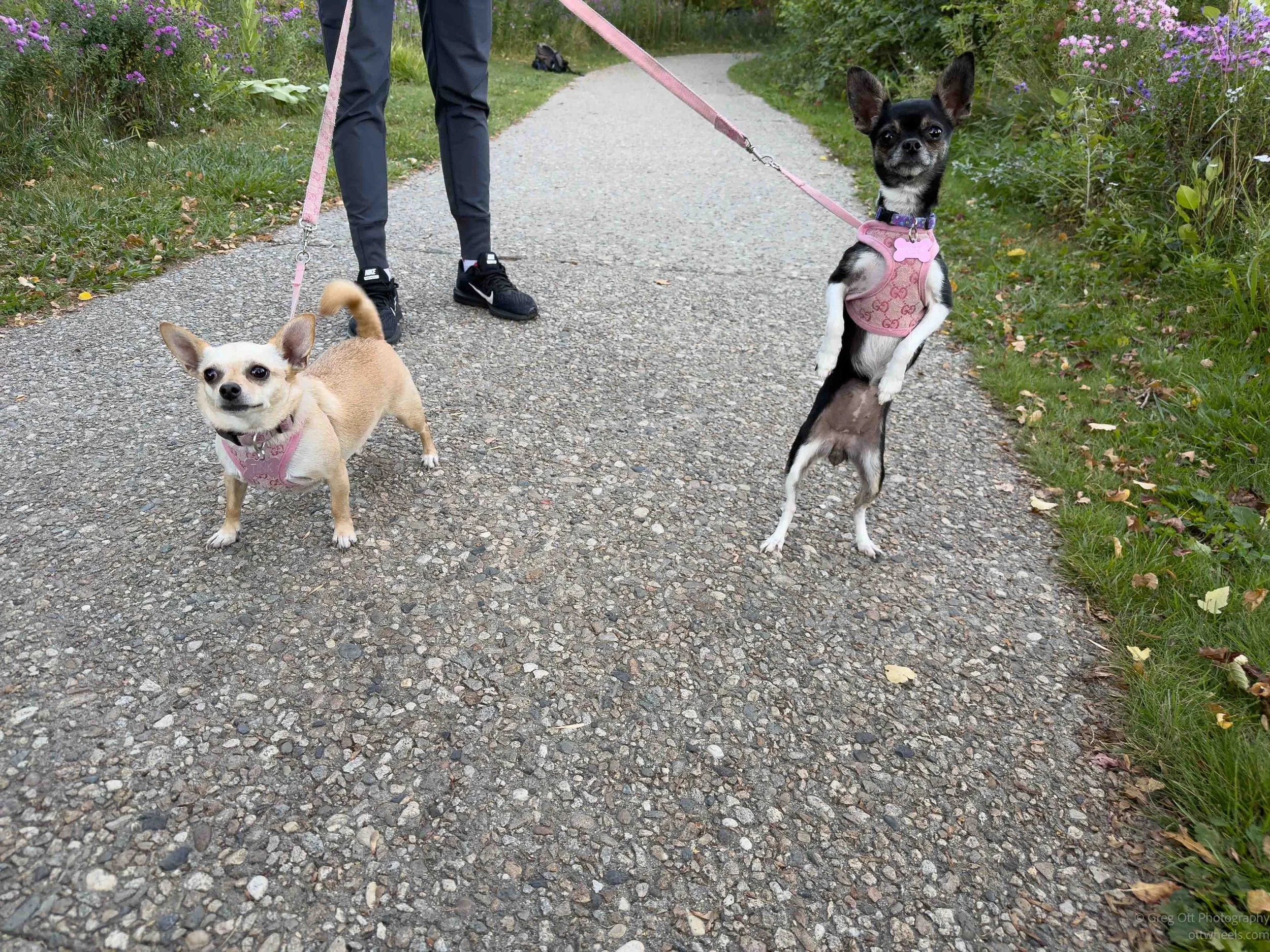
A little later, I encountered a woman walking two very small dogs. Their tails were wagging, and they seemed quite interested in meeting me. I crouched down near the ground, and both immediately came over to say hello. The woman was surprised and said, "The black one has never done that. He's always afraid of men." Another woman standing nearby said, "It's because he got down to his level." The two dogs seemed perfectly content to stay there and be petted. In fact, neither appeared particularly interested in continuing their walk.
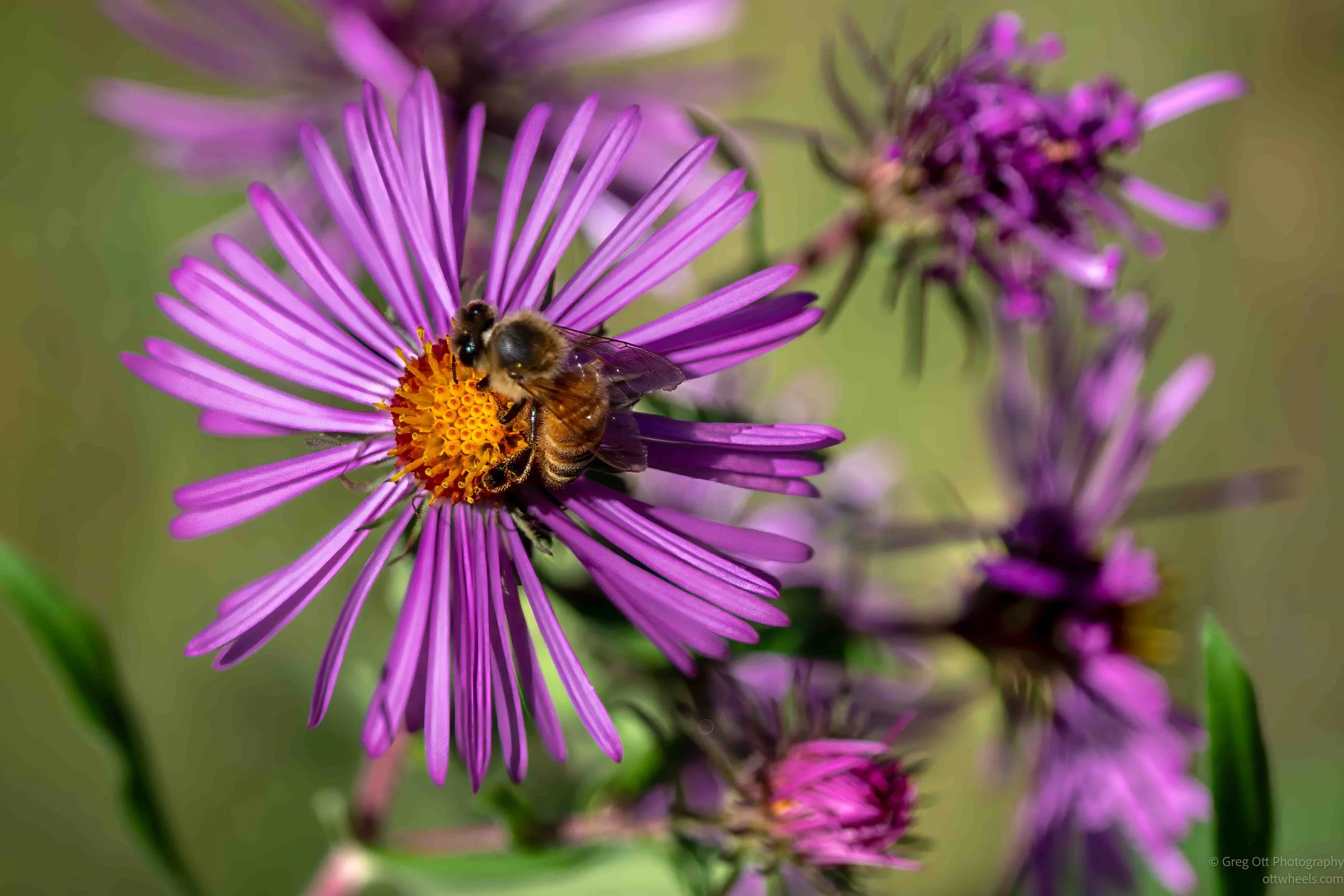
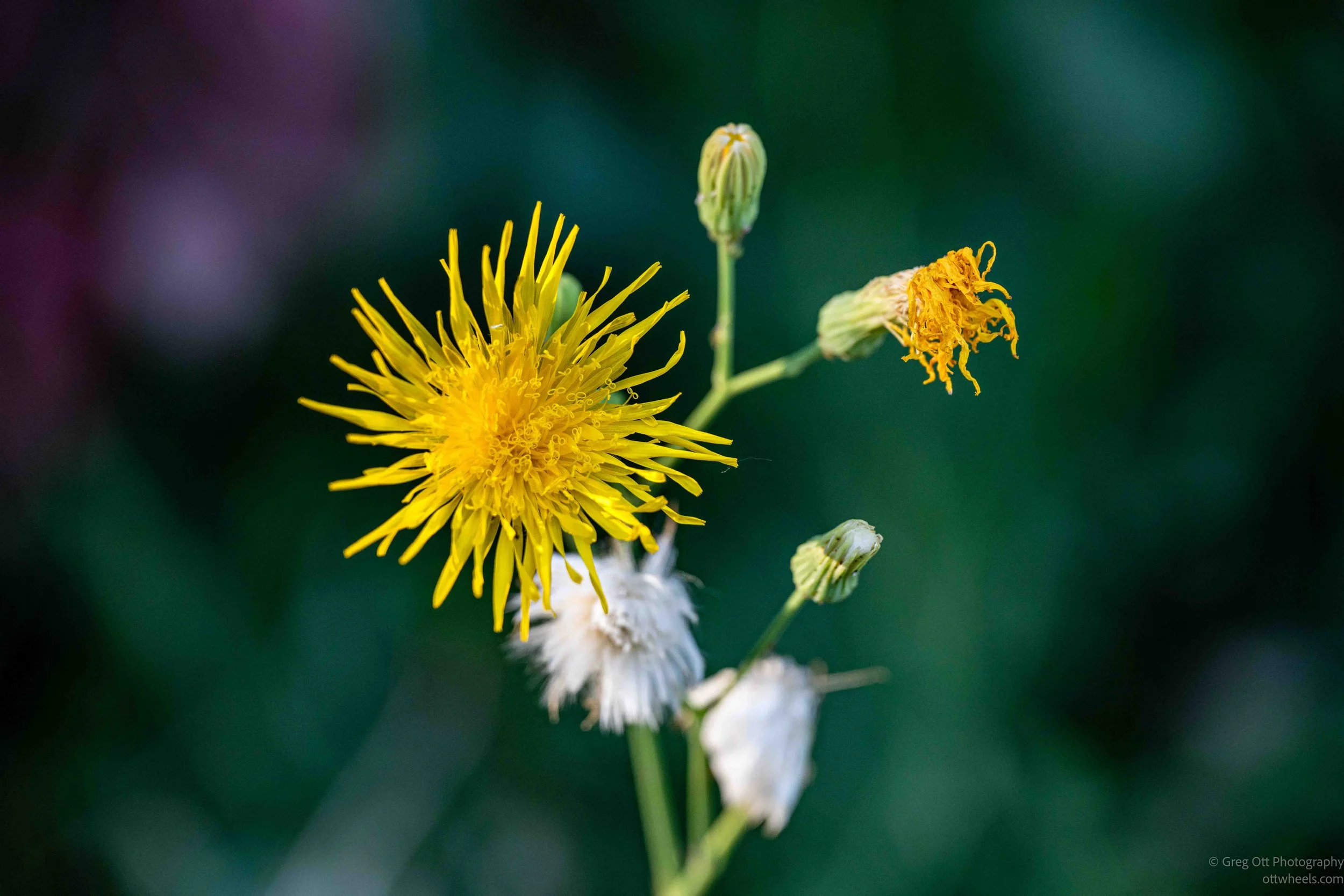
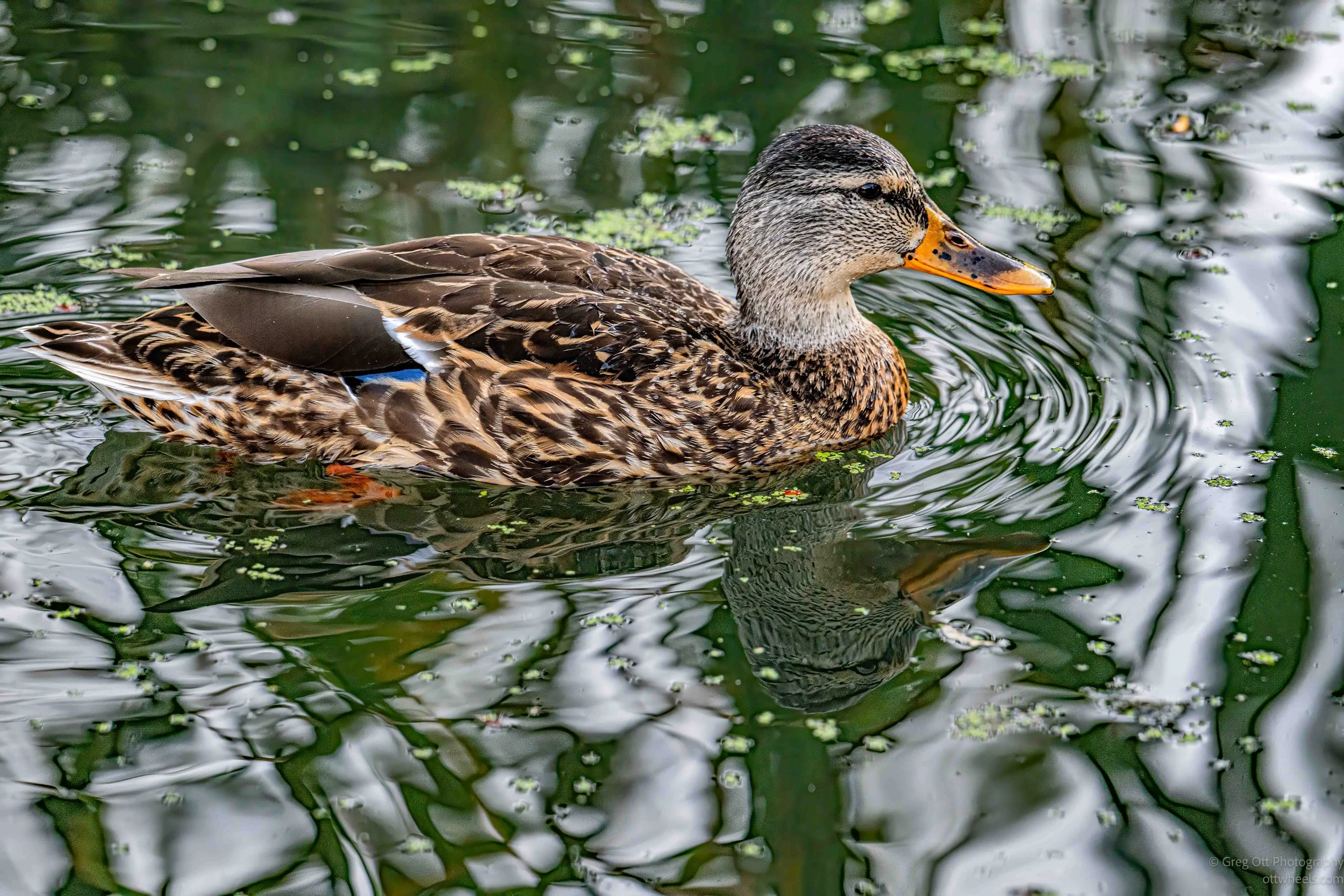
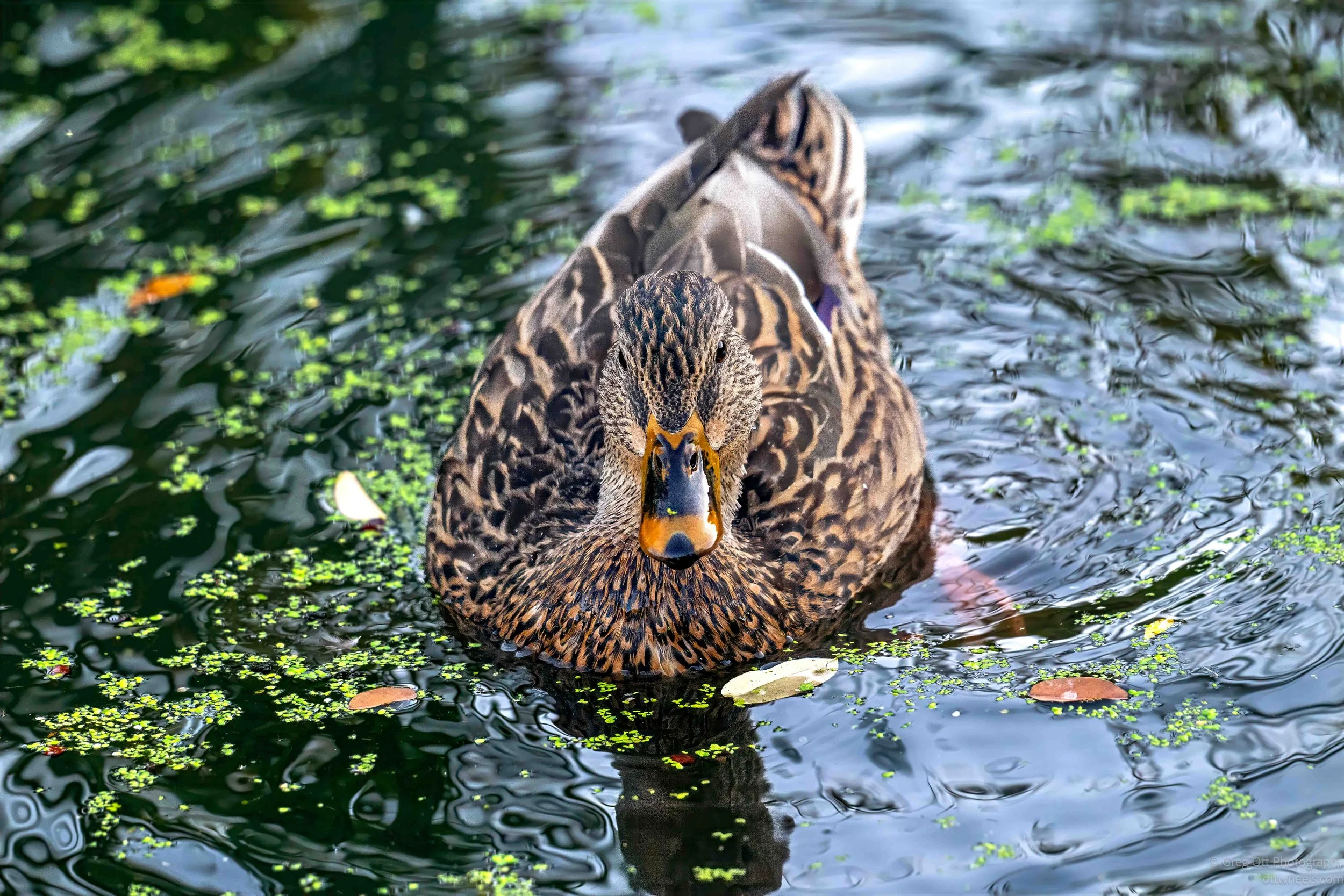
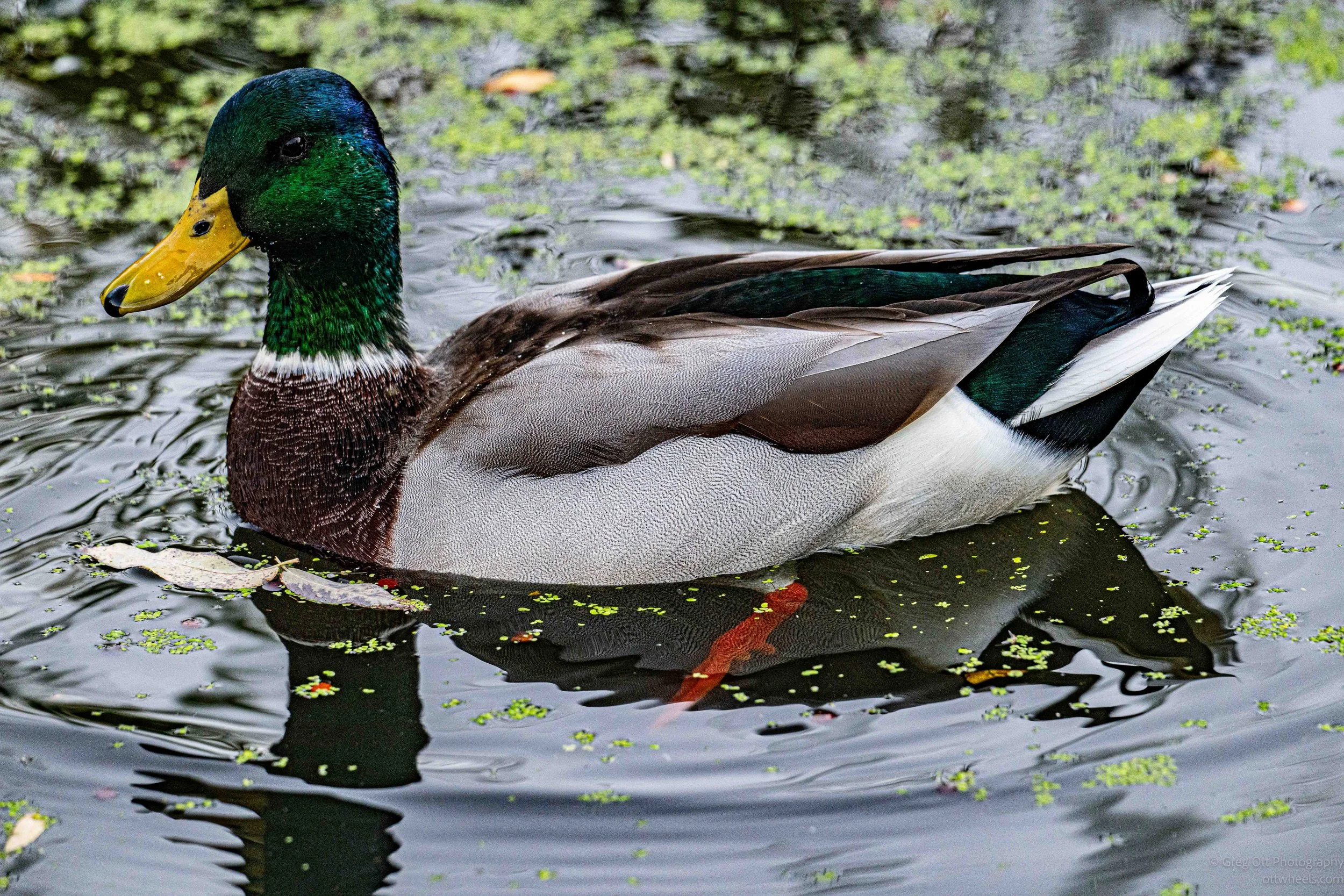
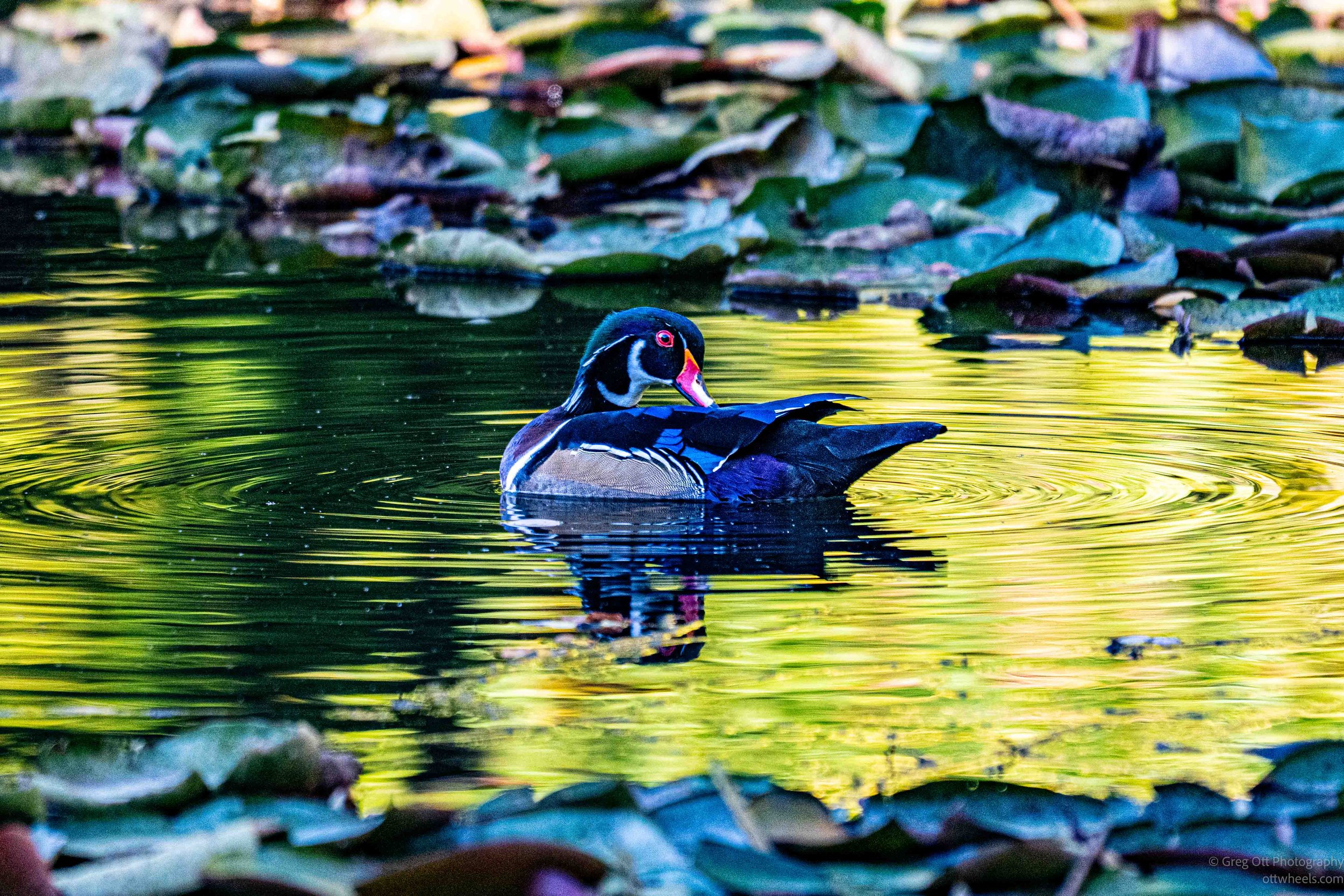
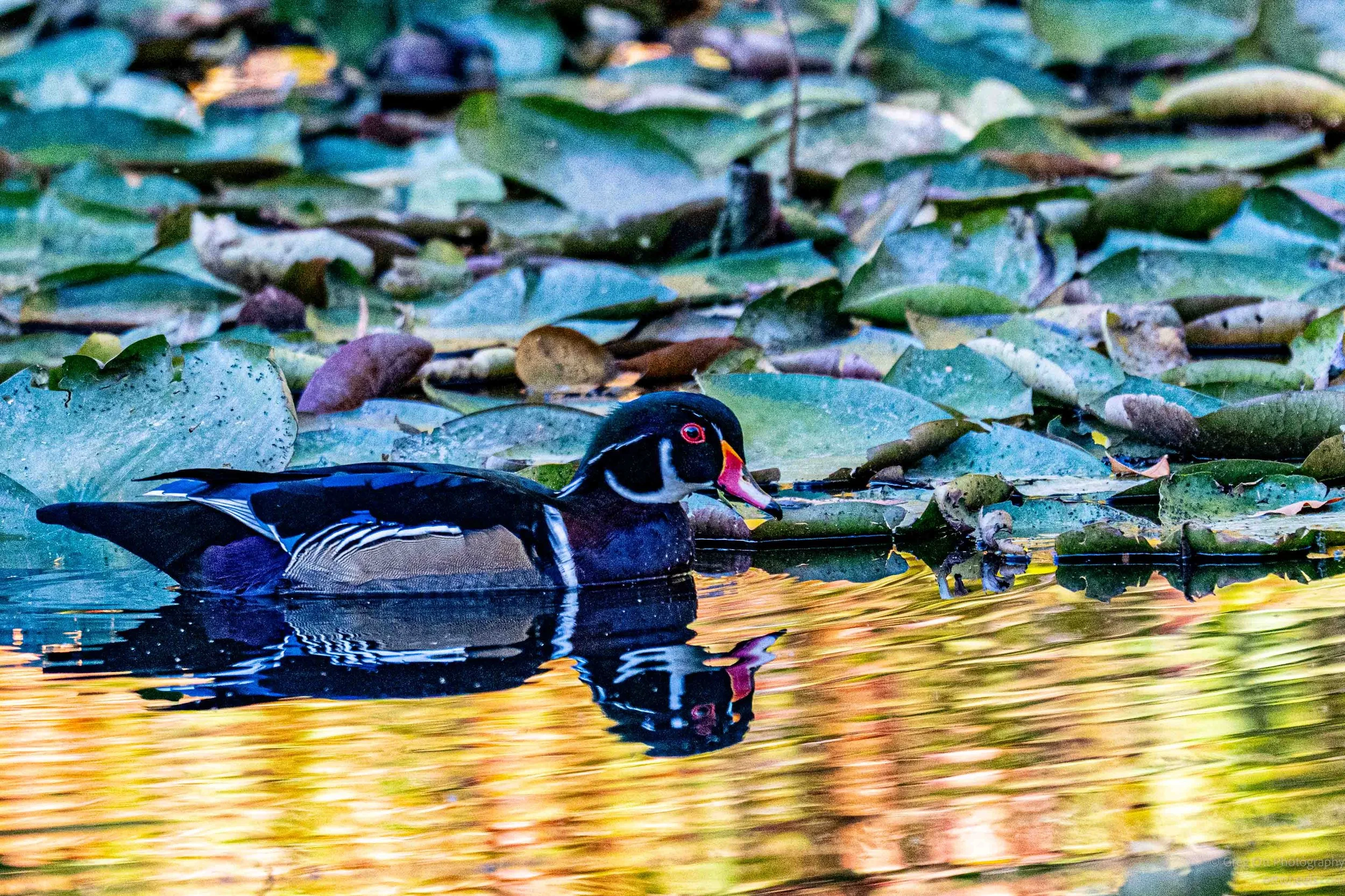
I continued wandering through the park, photographing the flowers, birds, and reflections in the ponds. One of the most colorful birds I spotted was a male wood duck, with its dark iridescent head, red eyes, and distinctive white markings. The water was reflecting the warm colors of the surrounding vegetation, creating some interesting patterns around the ducks. I was more interested in those reflections and the shapes in the water than simply getting another photograph of a duck. There were also mallards swimming through the ponds, and plenty of late season wildflowers, including purple asters and a few yellow flowers that caught the remaining sunlight.
As it began getting dark, I slowly made my way toward the entrance. The park closes after dark, and I figured I had another twenty minutes or so before it would be difficult to see much of anything. I ran into the three Amazon workers one last time. As they walked past, one of them called out, "Have a nice evening." It had been an enjoyable visit, made even more interesting by the people I met along the way.
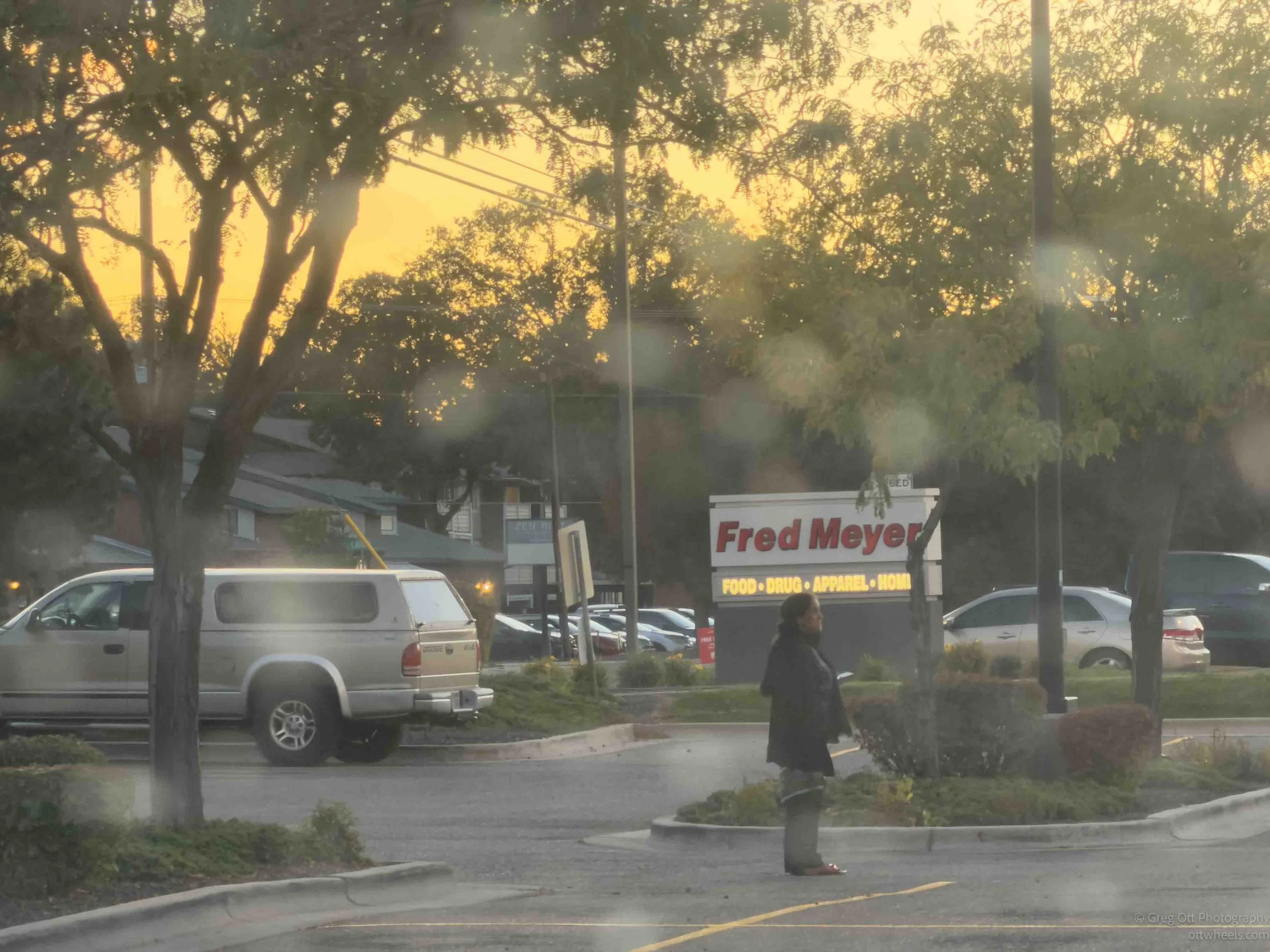
From the park, I drove to Fred Meyer to pick up groceries. I hadn't given much thought to how much room I had left in the refrigerator, and when I returned to the van, I realized I had bought more than would comfortably fit. I spent some time reorganizing everything and found a few things that would be fine outside the refrigerator for a couple of days.
As I was getting back into the van, I noticed an older woman wandering around the parking lot, trying the doors of several cars. She was alone and appeared confused, as though she couldn't remember which vehicle she had arrived in. Eventually, she stopped walking and simply stood there. A younger woman, perhaps her daughter, came out of the store, walked over to her, and gently guided her to the correct car, helping her inside. I watched for a moment, wondering whether the older woman was having some difficulty with her memory. It was a rather sad scene, especially after spending the afternoon watching so many people enjoying themselves at the park.
It was about 9:30 p.m. when I finally arrived back at the secluded parking lot near Lucky 13 Pizza, where I planned to spend another night. It had been a long day, starting with the State Capitol tour, followed by the Idaho State Museum and several hours of photography. I had seen quite a bit of Boise, but what stayed with me most were the unexpected conversations and encounters with people throughout the day.