Drive to Organ Pipe Cactus National Monument
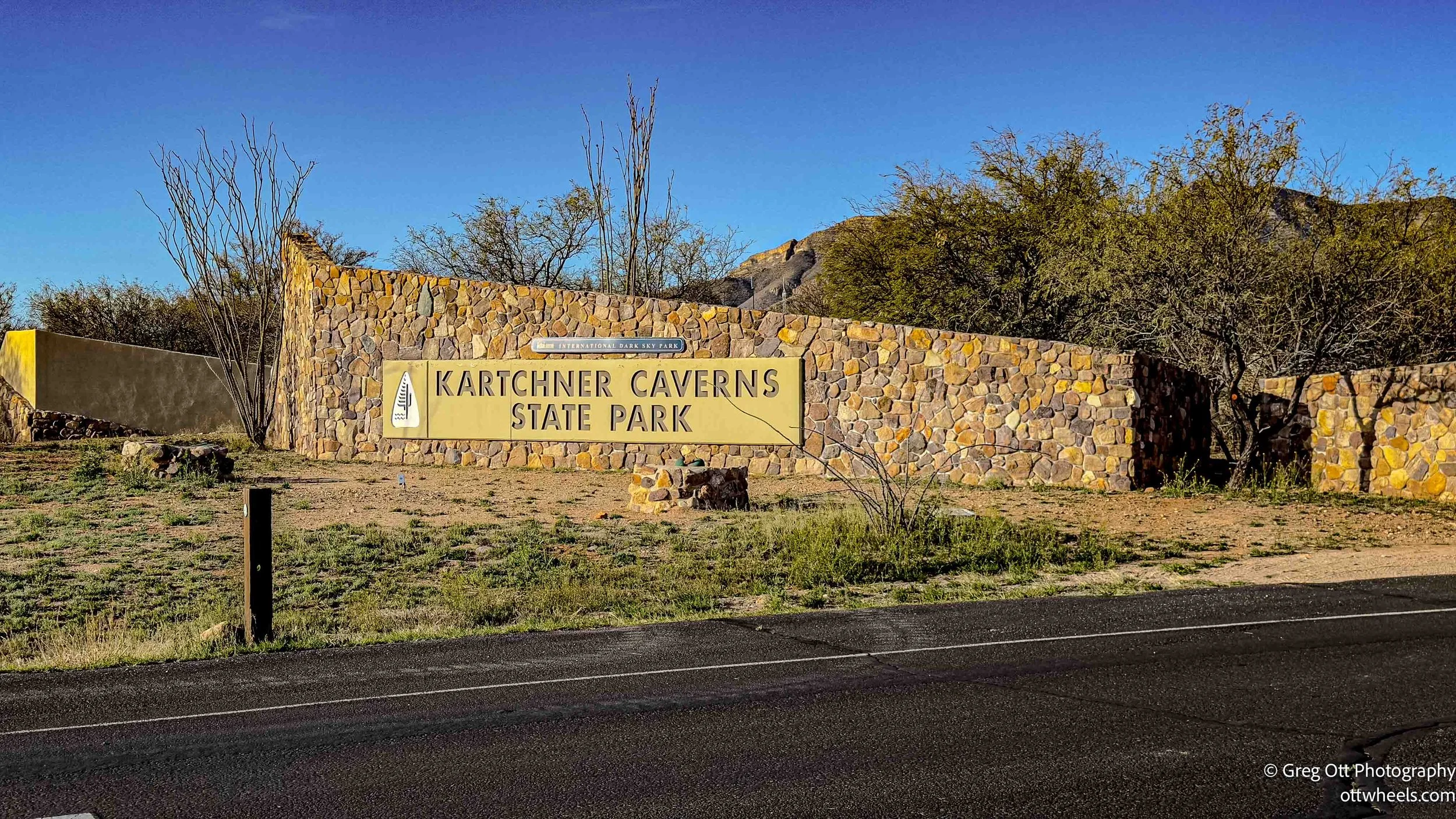
I woke around 7:30 at Walmart in Benson, Arizona. Did a little more shopping, made breakfast, then drove over to Kartchner State Park to check out the caverns. There were a few tour spots open. I wasn’t that excited about going, but I was close, so I figured why not. At the entrance the fees started stacking up — park entry, out-of-state surcharge, then the tour fee. That was enough. I passed.
Then I debated heading to Organ Pipe Cactus National Monument. ChatGPT had given me a list of things to see and reminded me I was only a few hours away. It asked one simple question: when would I get another chance to see the organ pipe cactus? That settled it. I was just being lazy and needed a small push.
The drive south toward Organ Pipe Cactus National Monument was not what I expected. The desert was wide and open, but the roadside told a different story. There were abandoned buildings — sun-bleached shells of homes and businesses that looked as if they had been emptied slowly, not all at once. In one small community, handwritten signs were nailed to posts and fences. They asked for three kidnapped sisters to be returned. Other signs pleaded for missing children to come home. The paper was weathered. The ink had faded. They did not look official. They looked desperate.
The farther I drove, the heavier it felt. Border Patrol vehicles appeared more frequently — SUVs parked along the shoulder, ATVs staged near dirt tracks, unmanned checkpoints set up along the highway. Over a stretch of about ten miles, two yellow buses with blacked-out windows passed in the opposite direction. They looked like school buses stripped of their innocence. Whatever side of the political line someone stands on, the human machinery of it all is impossible to ignore when you see it up close.
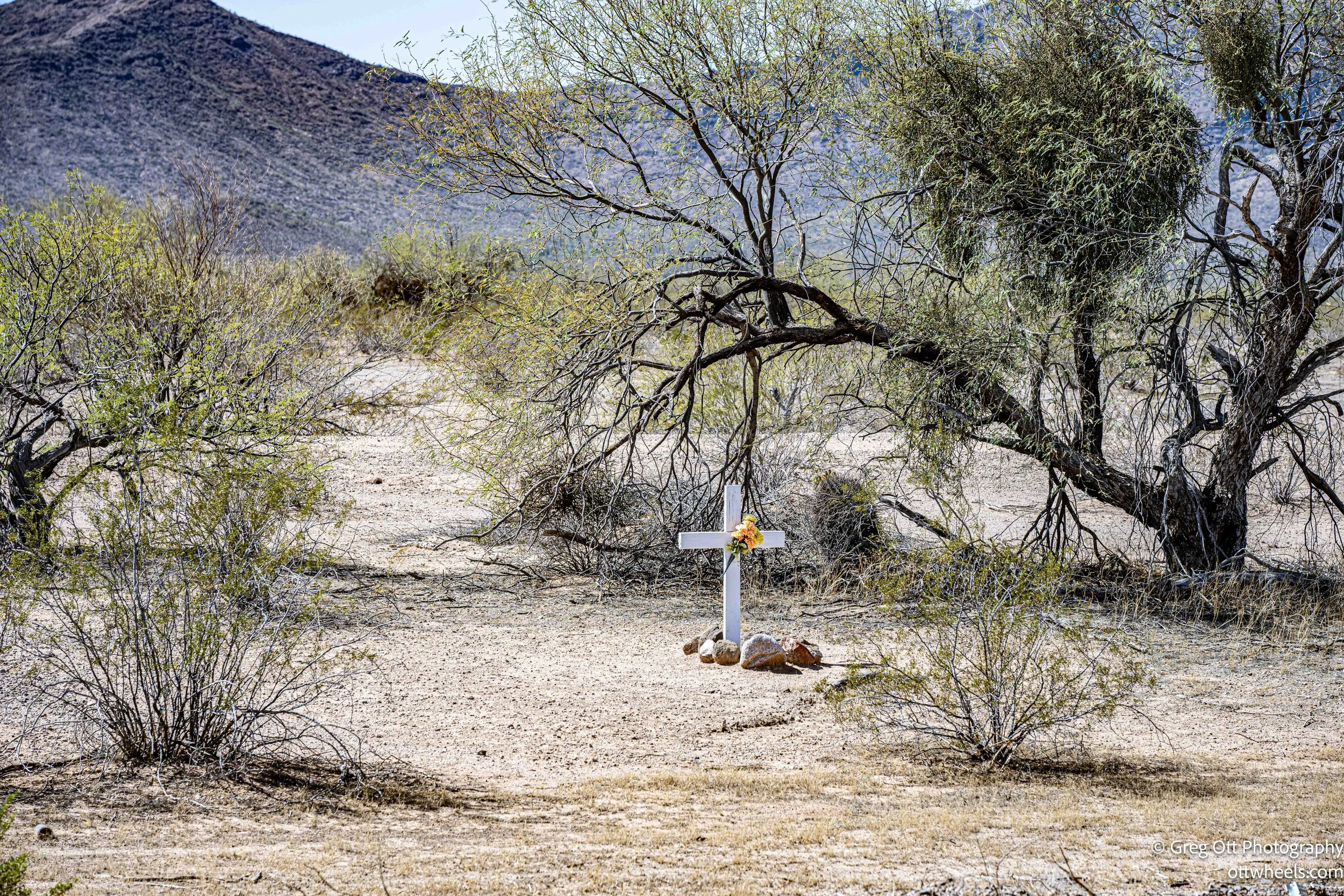
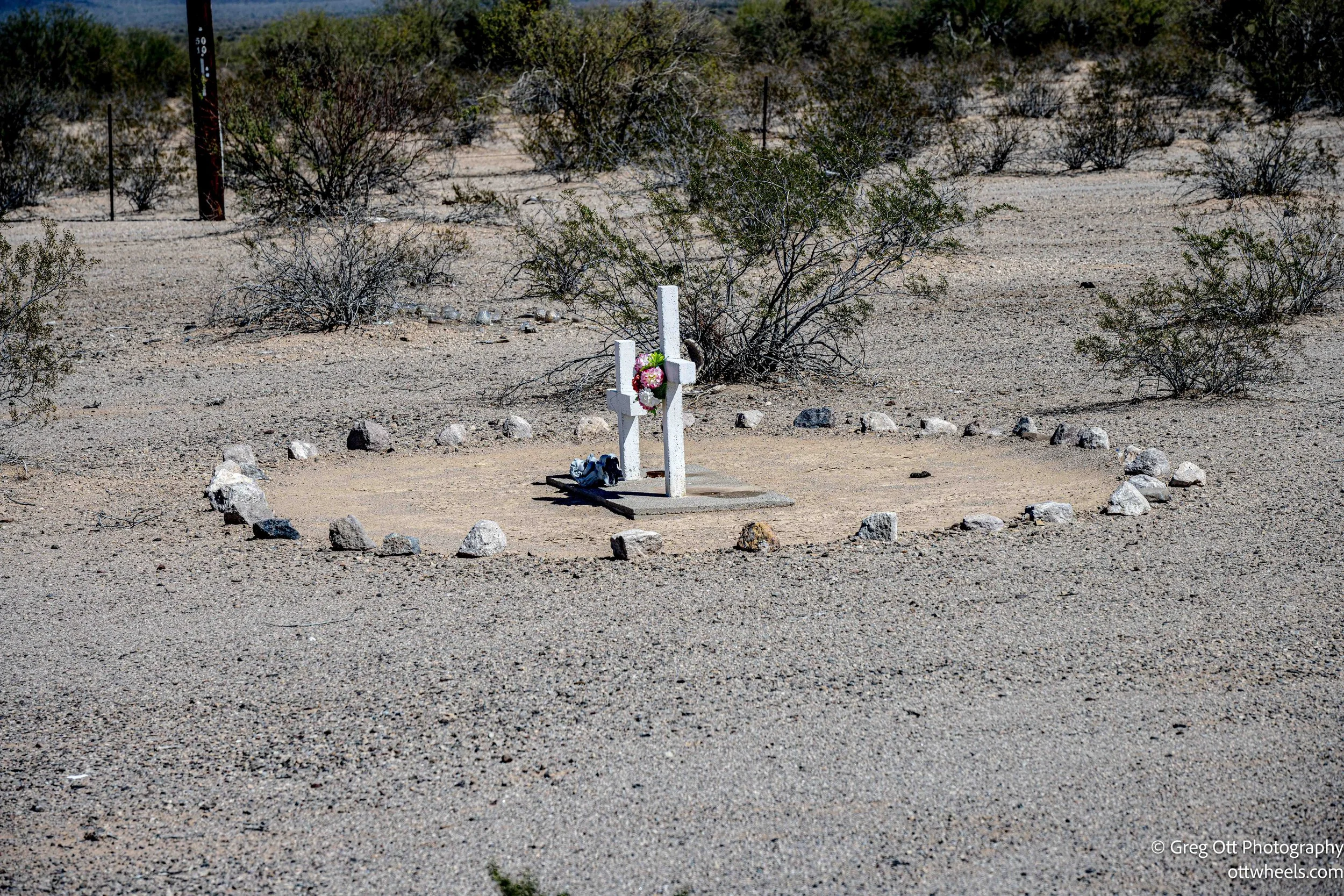
And then there were the graves. For nearly twenty miles, they appeared along the roadside — some marked by white stones and a simple wooden cross, others with small concrete boxes that looked as if they once held candles. Many were decorated with bright plastic flowers, rosaries, bits of ribbon, small toys. They were scattered, not gathered in a cemetery. Each one stood alone in the desert, marking the exact place where someone’s journey ended. People leave their homes for many reasons — violence, poverty, hope, fear, love for their children — and some of them die in the attempt. The desert does not care why you came.
What struck me most was how quiet it all was. The wind moved across the sand as if nothing had happened. It is hard not to feel the sadness of it. Families somewhere are missing a son, a daughter, a mother. It often feels as if we reserve our deepest compassion for our dogs and cats, yet struggle to extend that same care to fellow human beings who crossed a line on a map trying to survive something we may never fully understand. Driving into the monument that day, the saguaros stood tall and steady, but I carried the weight of those roadside markers with me.
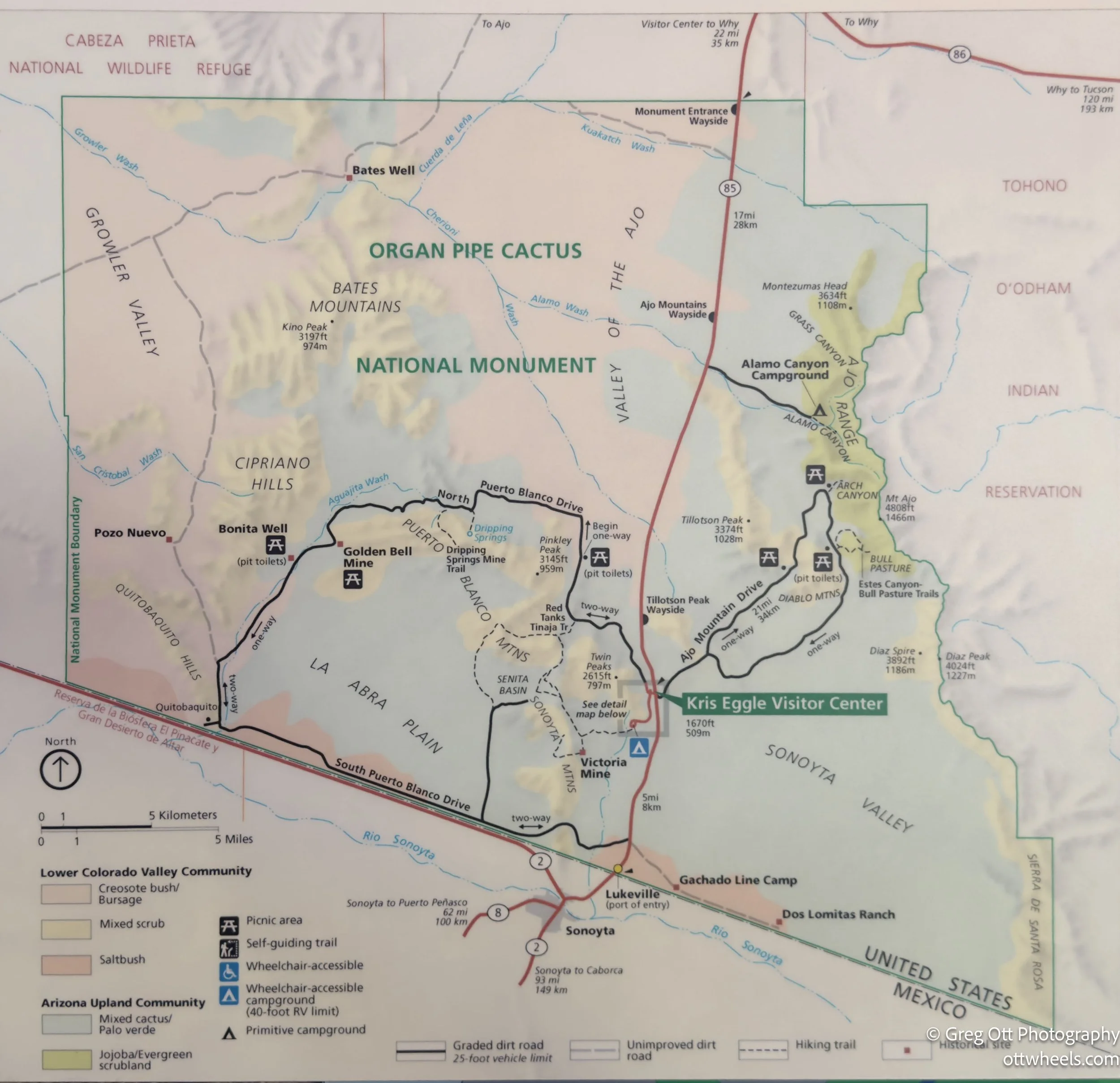
I eventually pulled into the visitor center just before one p.m. The three-hour drive, according to Google Maps, had taken more than four. Desert miles stretch longer than they look on a screen. I went inside, got my National Parks passport book stamped, and noticed a ranger talk happening behind the building. I had missed the first few minutes, but she was just getting into the plants of the park and the Indigenous people who once lived here before they were forced out.
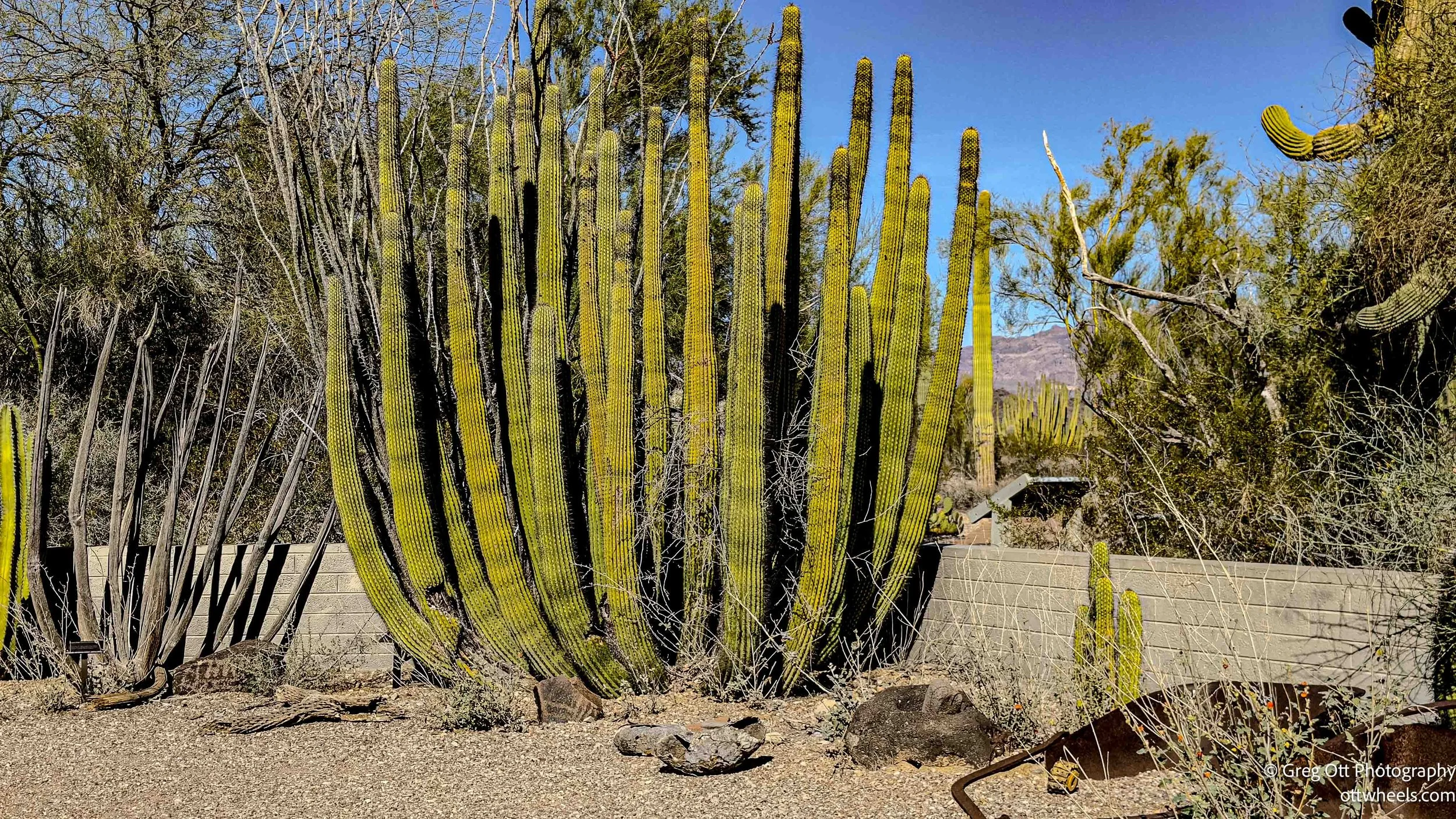
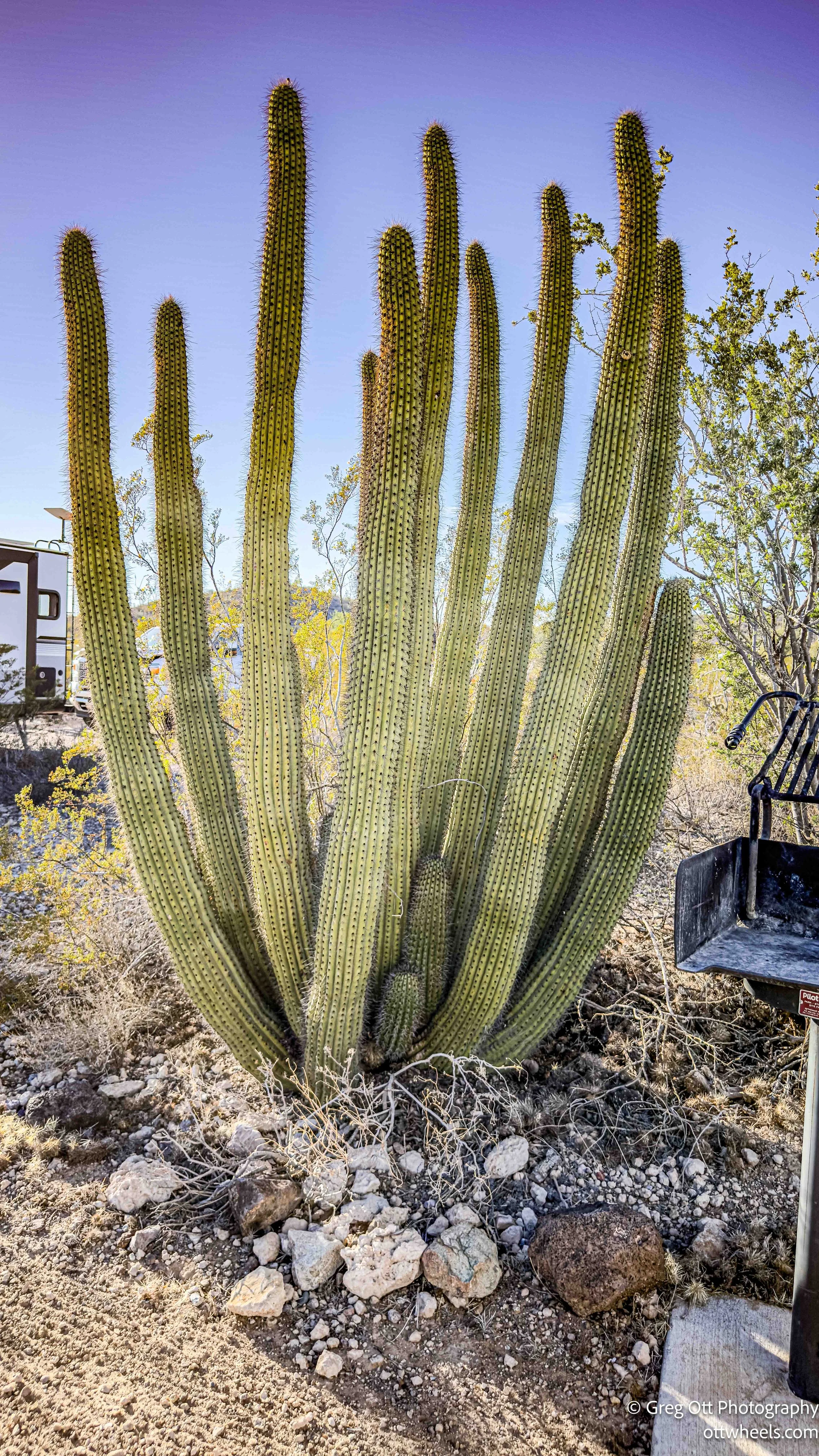
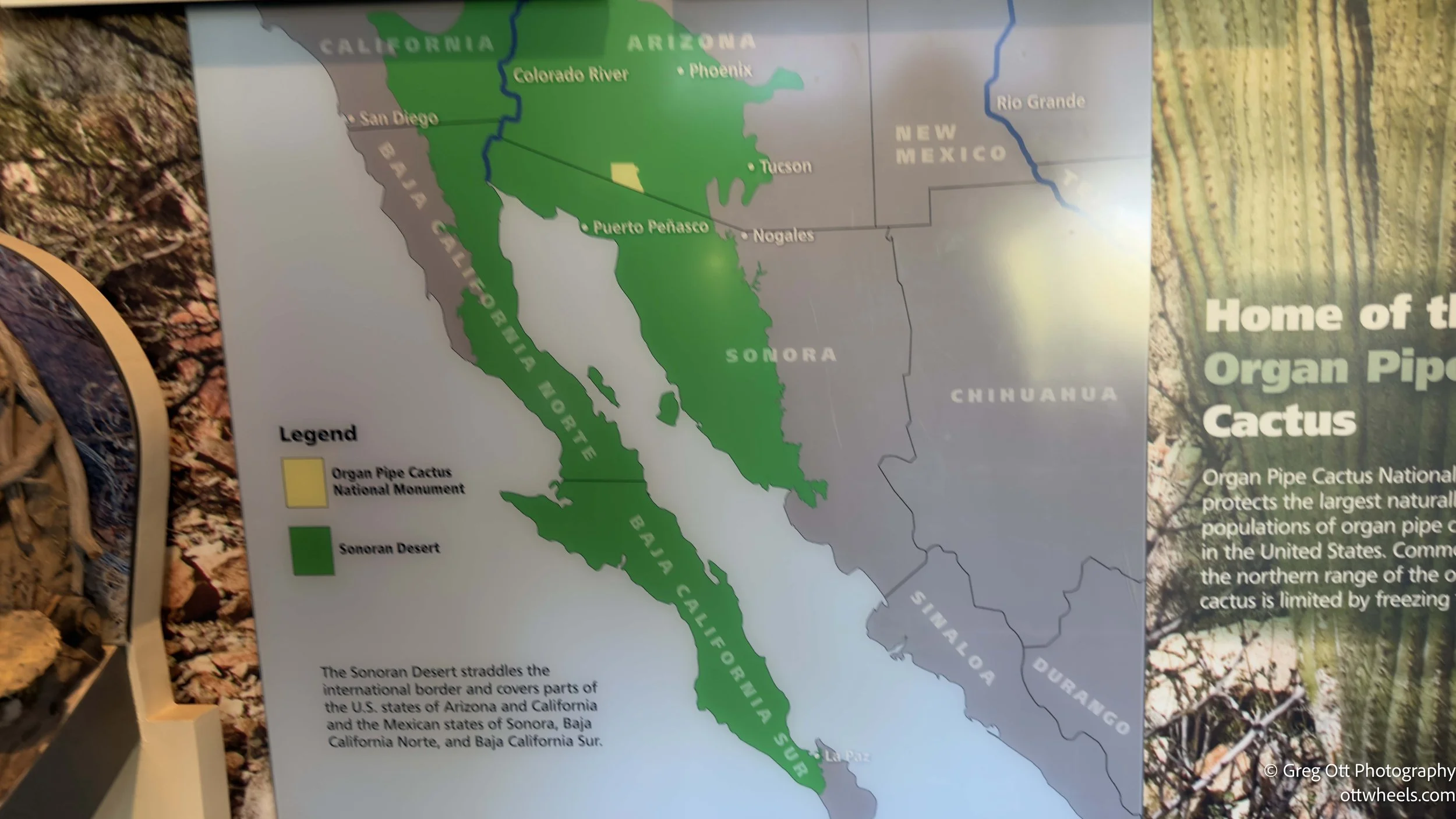
She talked about the organ pipe cactus — the plant that gives the monument its name. Unlike the saguaro, which usually grows a single trunk with arms reaching upward, the organ pipe grows in clusters of tall, narrow columns rising straight from the base. From a distance they look like the pipes of a church organ, which is how they were named. This is the northernmost range for the organ pipe cactus. It thrives here because of the slightly warmer winter temperatures compared to much of Arizona. In the right light, the ribbed columns catch shadows that make them look almost architectural.
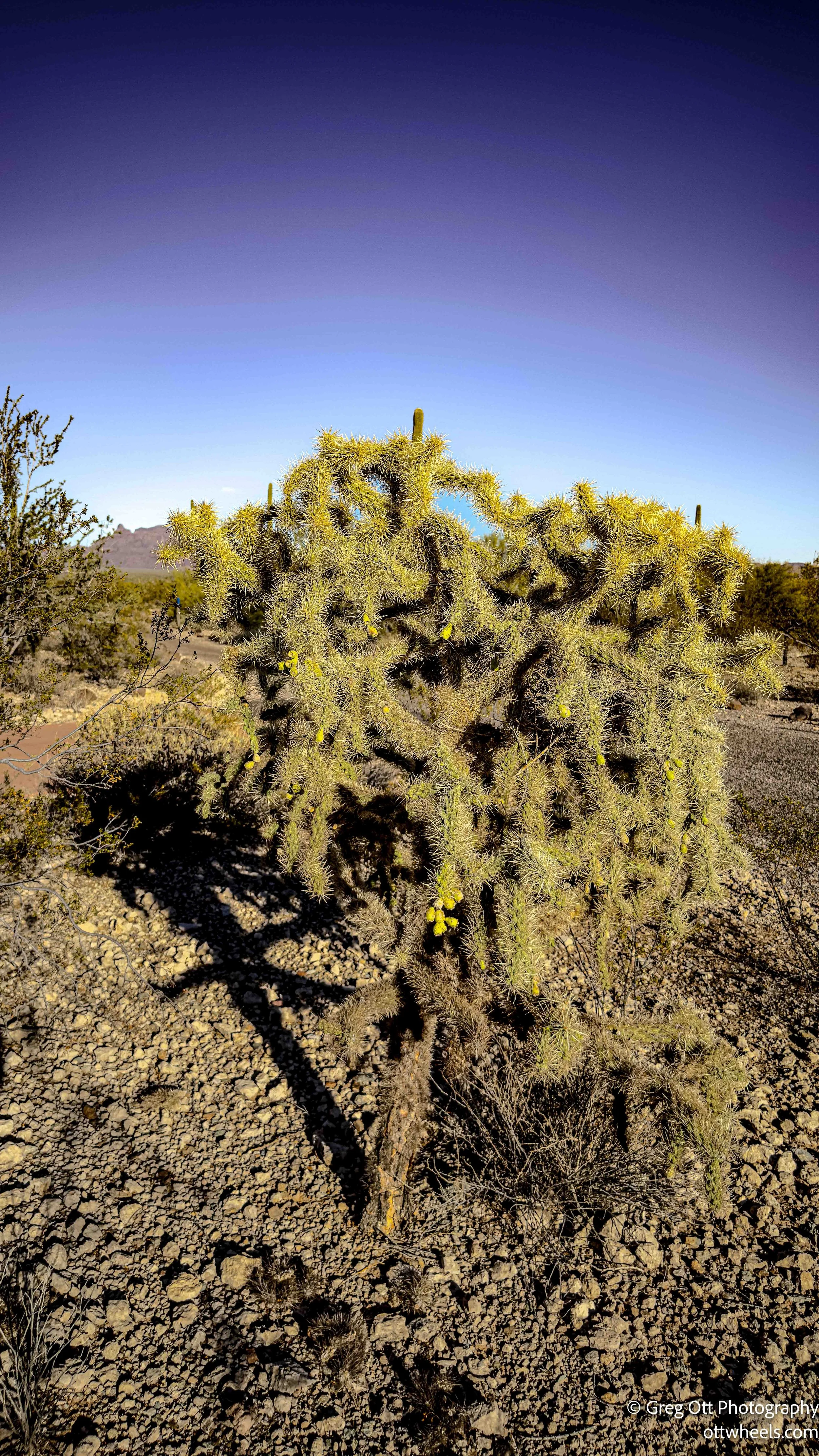
She moved on to the saguaro, the more familiar icon of the Sonoran Desert. Saguaros can live well over a hundred years. Their white blossoms appear in late spring, opening at night and closing by midday. Those flowers are not just beautiful; they are vital. Birds such as Gila woodpeckers and gilded flickers feed on the nectar and later nest in cavities they carve into the cactus. White-winged doves migrate north each year to coincide with the bloom, feeding on nectar and fruit and helping pollinate the plants as they move from cactus to cactus. Even bats play a role, visiting the night-blooming flowers and carrying pollen across the desert.
The fruit of both the saguaro and organ pipe cactus has long been harvested by Indigenous peoples of the region. The ranger described how the Tohono O’odham used long poles made from saguaro ribs to knock down the ripe fruit. The pulp could be eaten fresh, dried, or fermented into ceremonial wine. Seeds were ground into meal. The woody ribs of the cactus were used for construction, fencing, even tools. Nothing was wasted. Listening to her, it became clear that these plants are not just scenery; they are central to the cultural and ecological history of this desert.
Standing there, surrounded by towering cacti, I began to see the landscape differently. What first appears barren is anything but. Every plant has a strategy. Every bloom has a partner. Birds, bats, insects, and humans have all depended on these slow-growing giants. The desert is not empty. It is intricate and interconnected, even if it reveals itself quietly.
On the way in, I had passed signs for the campground and assumed it would be full. It felt like the kind of place that would fill early. So I was surprised when the ranger told me there were still sites available. He said I could book it myself on recreation.gov or he could take care of it right there. Most national parks will not do that for you. A few minutes later I had site 117 and was heading up the road to the campground.
The campground was stark — but that’s the desert. Every site had a large level slab. There were clear divisions: generator and non-generator loops, sites with hookups and those without, tent sites with shade structures. It wasn’t lush, but it was orderly and quiet. The kind of place where the landscape is the feature, not the landscaping. Not many people were moving, most were sitting outside in the shade.
I settled in for the evening. A steady breeze moved through camp, and in the shade it felt surprisingly comfortable. It was 94 degrees Fahrenheit — too hot for a hike — so I made dinner and caught up on some online work. I wanted an early start the next morning before the sun took control of the day again.