
Day Two Sawtooth National Forest
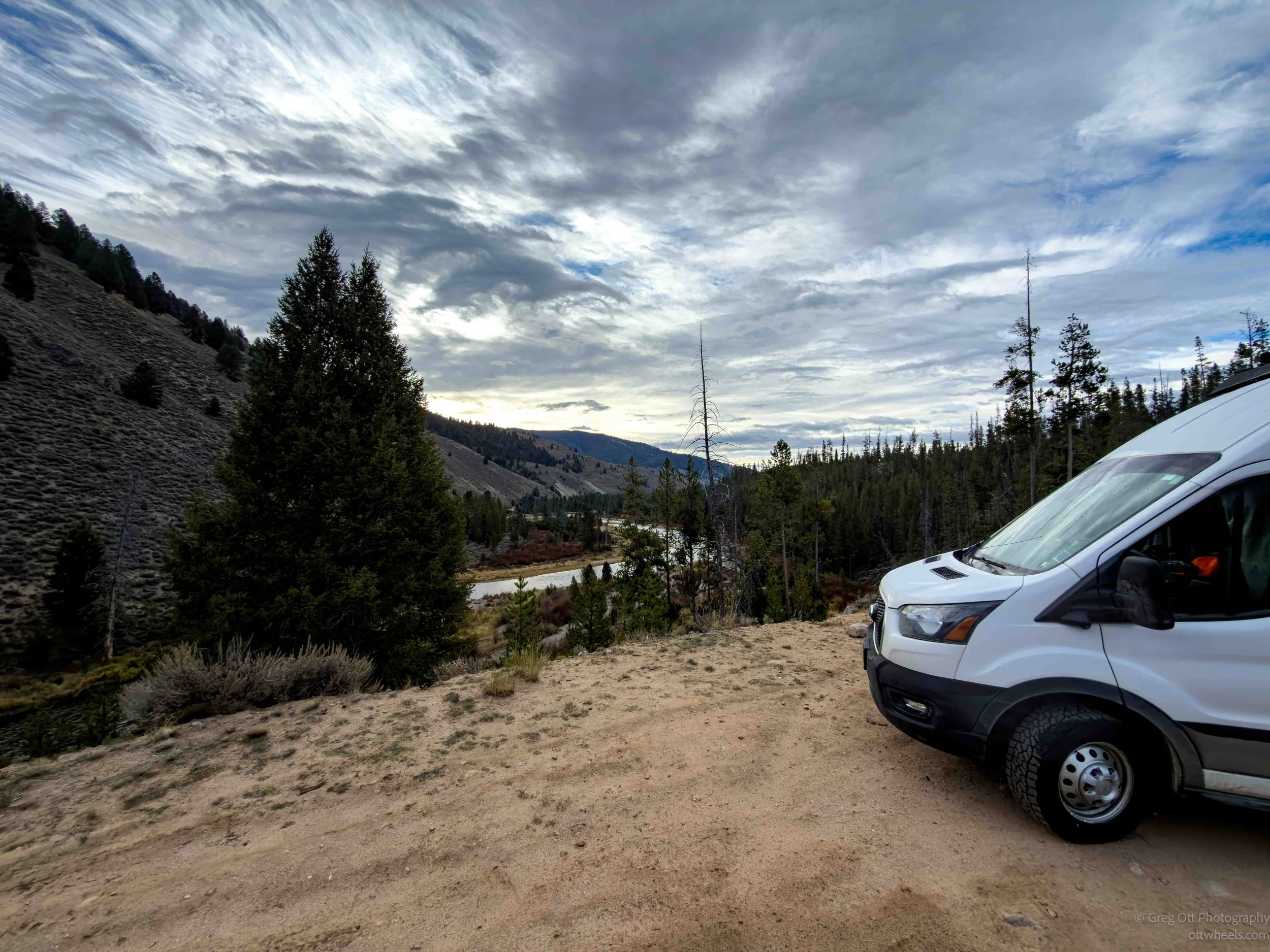
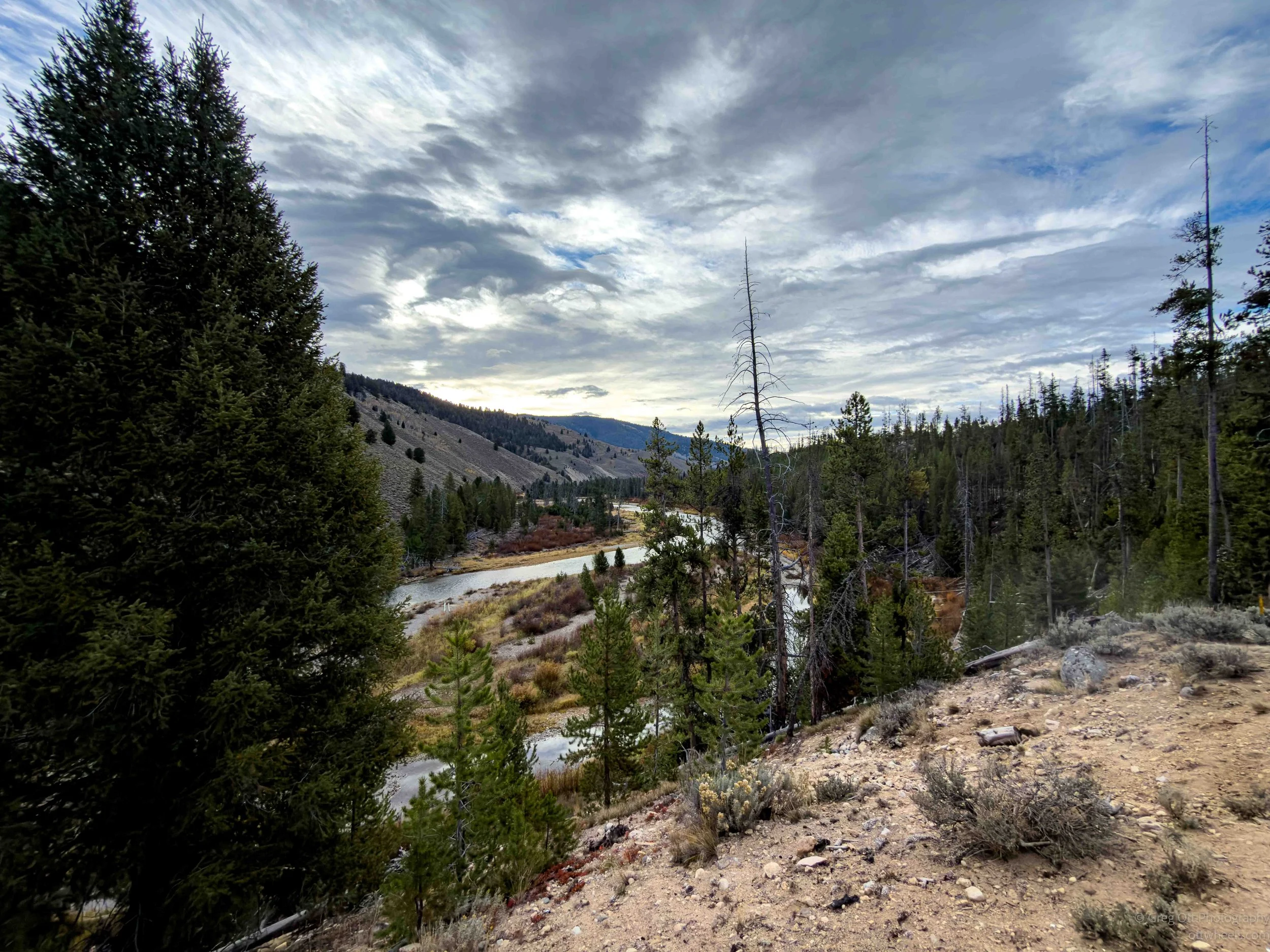
I woke early near a cliff overlooking the Salmon River in Sawtooth National Forest, not far from Stanley, Idaho. I wanted to photograph the lake and catch the early morning light on the mountains. I had spent much of the previous day exploring, so I wasn’t planning to do much today. I wanted to slow down, relax and simply enjoy being here.
The best place I had found for photographing the lake was through one of the campgrounds. There was a sign saying “Campers Only,” which I ignored and drove in anyway. At the far end I found a visitor parking area and a trail leading toward the lake. I followed it for about half a mile until I reached a spot along the shore that was obviously well used. Three beach chairs were sunk into the sand, apparently left there by campers who had every intention of coming back later in the day to sit and take in the view.
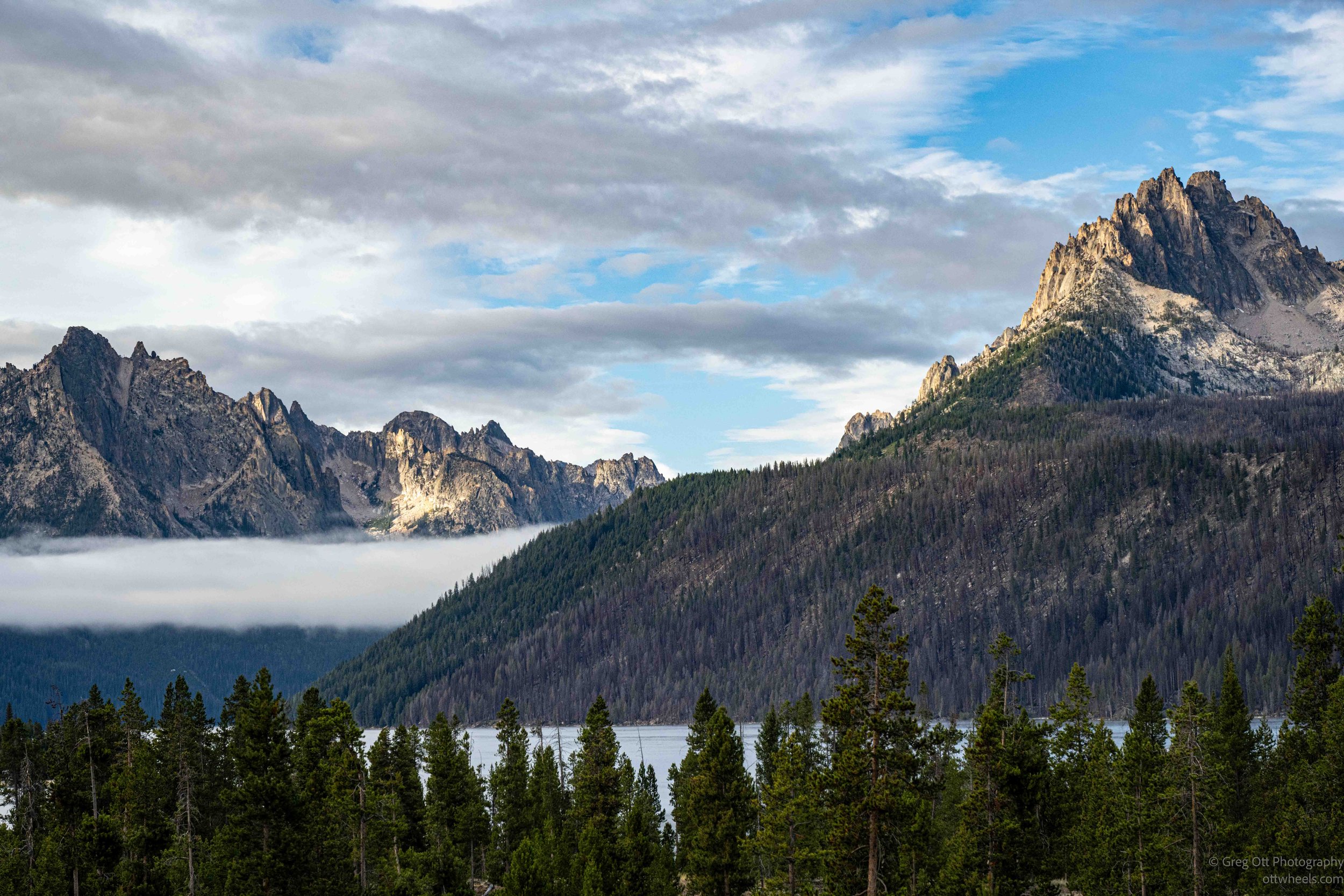
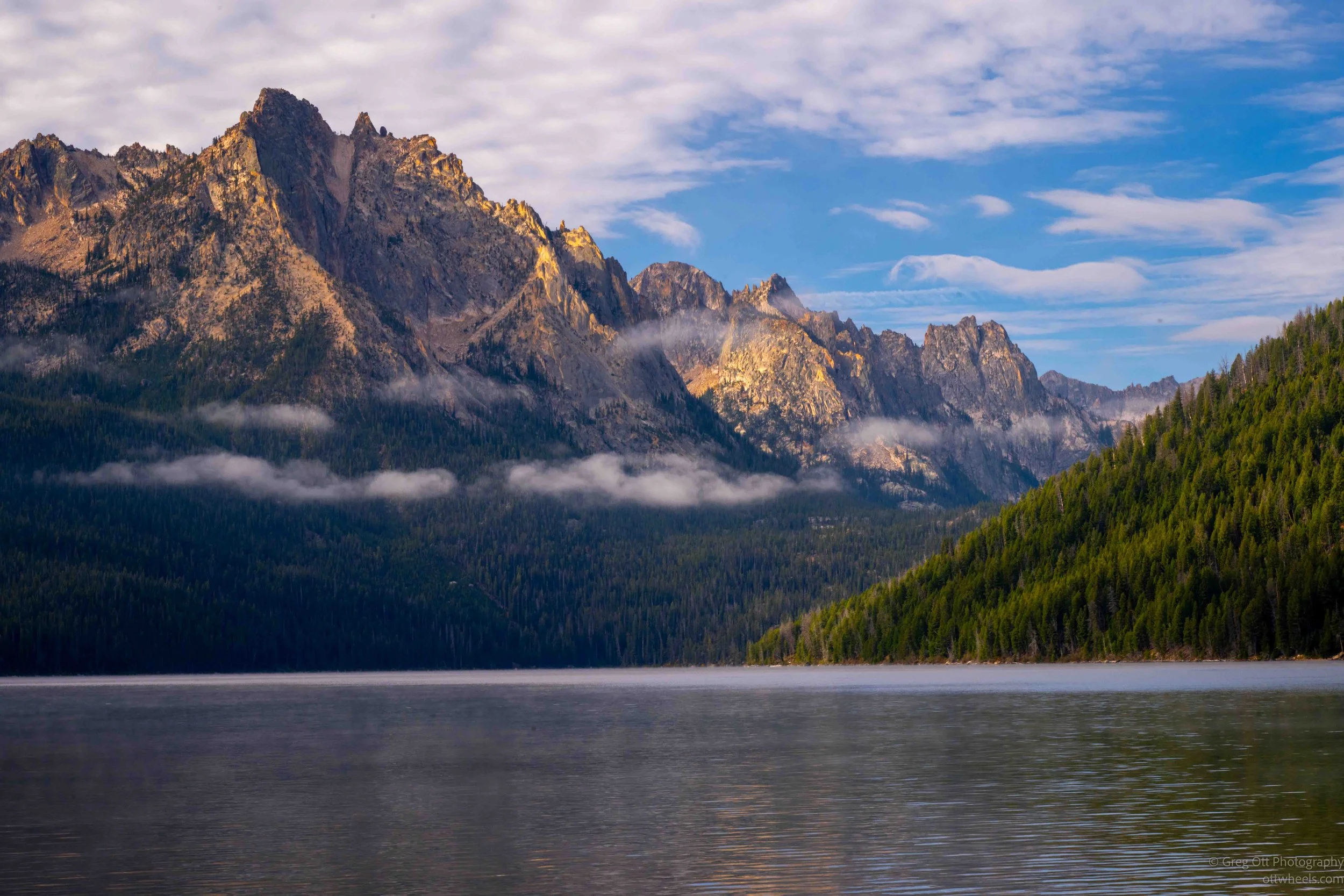
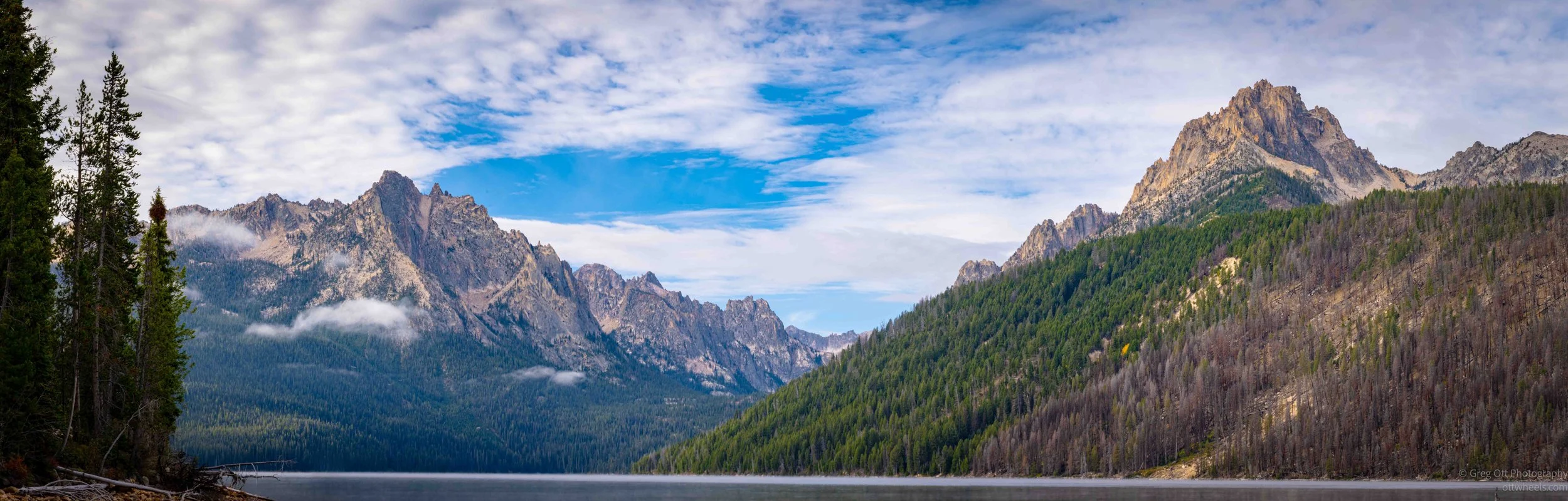
The morning was cool and damp, with a thin layer of fog sitting just above the water. The Sawtooths rose almost straight out of the forest on the other side of the lake. The clouds were beginning to break apart and sunlight was hitting individual peaks while much of the forest below remained in shadow. Every few minutes the light changed and another section of the mountains would suddenly glow.
About thirty minutes after I arrived, a couple came walking toward me with their two children, who looked to be about eight and five. They had been out walking since before sunrise. The woman told me that I had missed all the pink in the sky and reflected in the fog. “It was magical,” she said. Apparently I hadn’t gotten up quite early enough.
She obviously knew something about photography. She noticed my mini tripod and asked about it. I told her I was doing some focus stacking. Her daughter, the eight year old, who was clinging to her father’s leg, immediately asked what focus stacking was. Her mother gave her a remarkably good explanation. She told her that a camera doesn’t see the same way our eyes and brain do. Some things in a photograph might be in focus while others are not, so I was taking several photographs of exactly the same scene, focusing on different areas each time. Later I could combine them with software so everything would be sharp and the photograph would look more like what we were seeing. “Cool,” the little girl said.
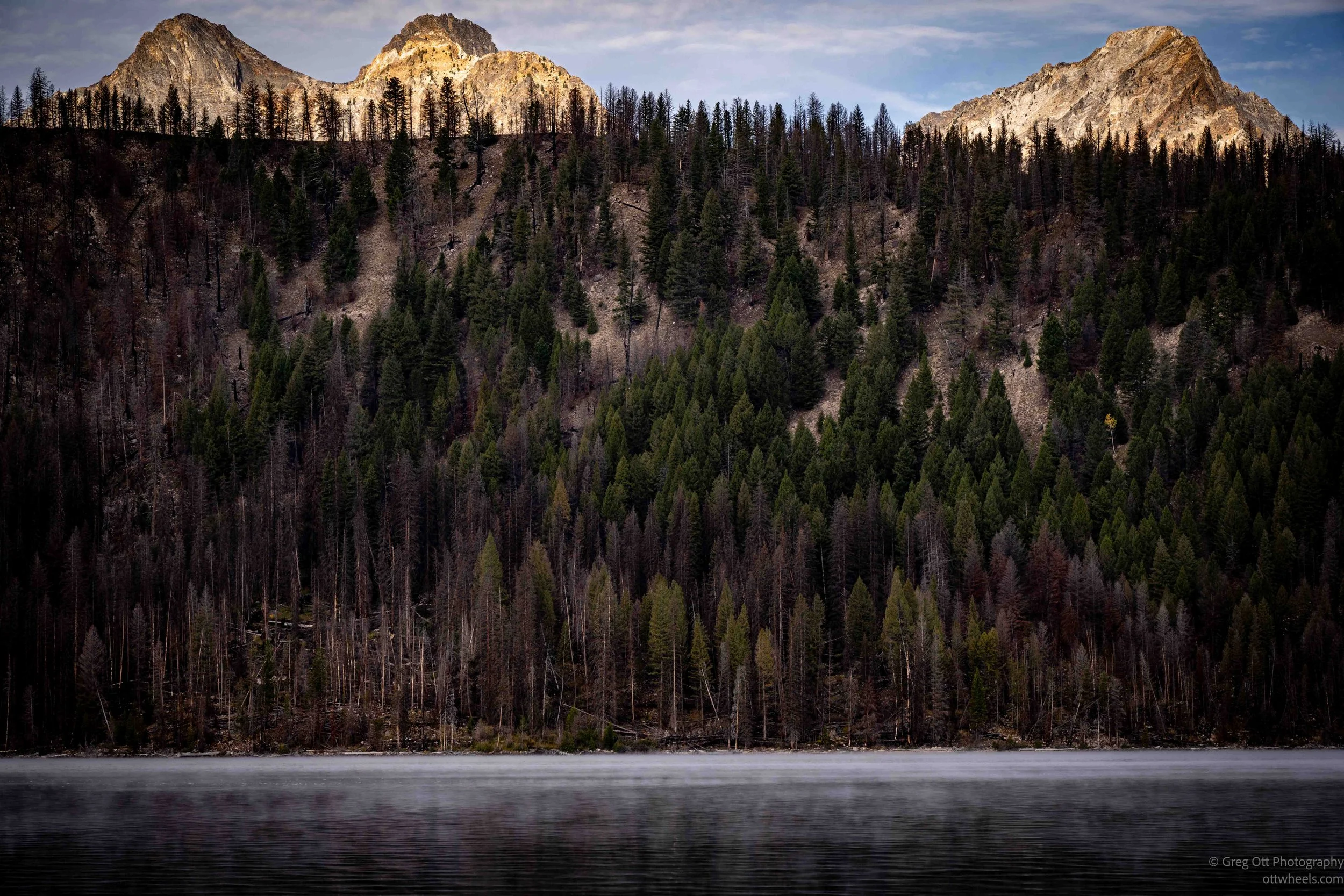
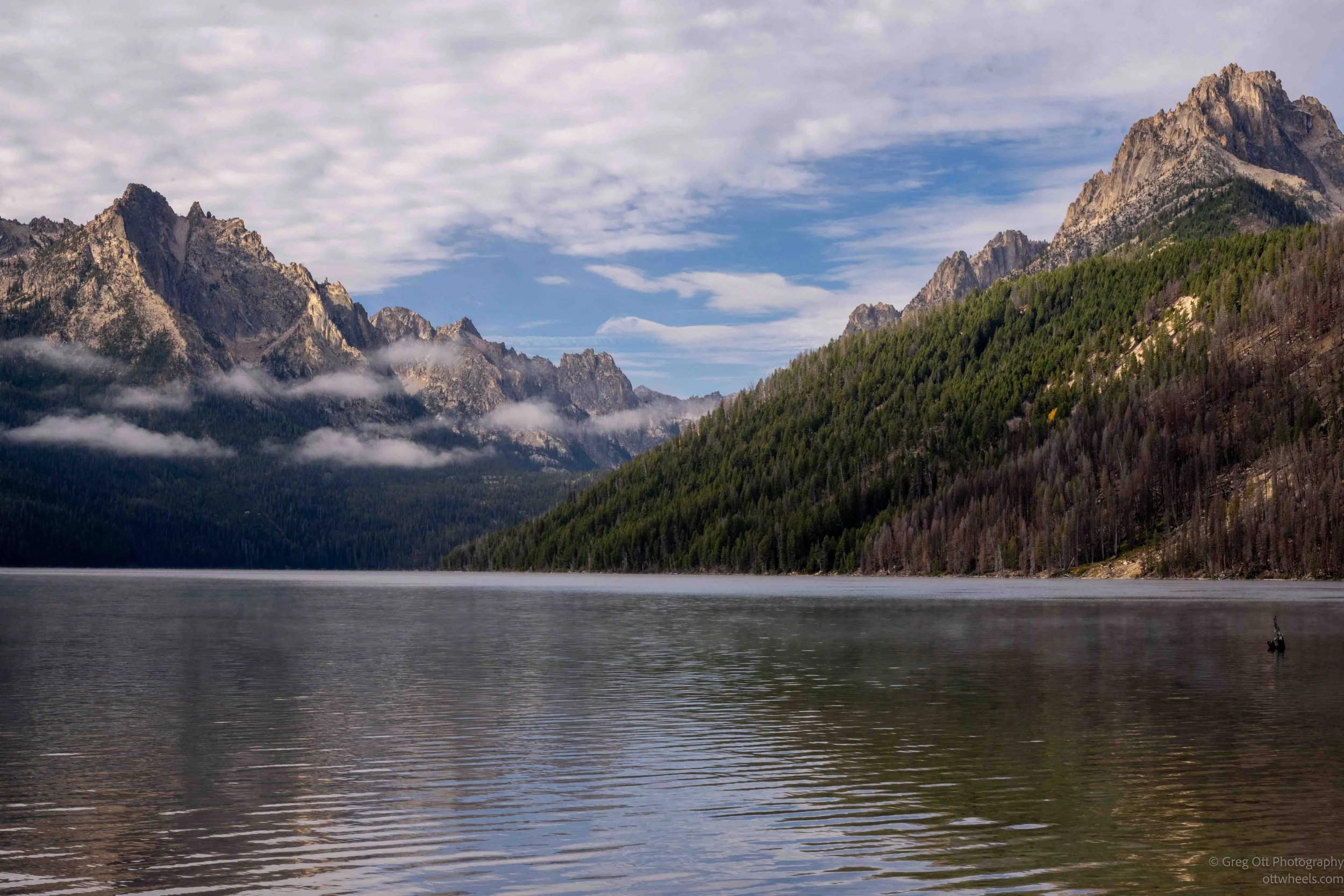
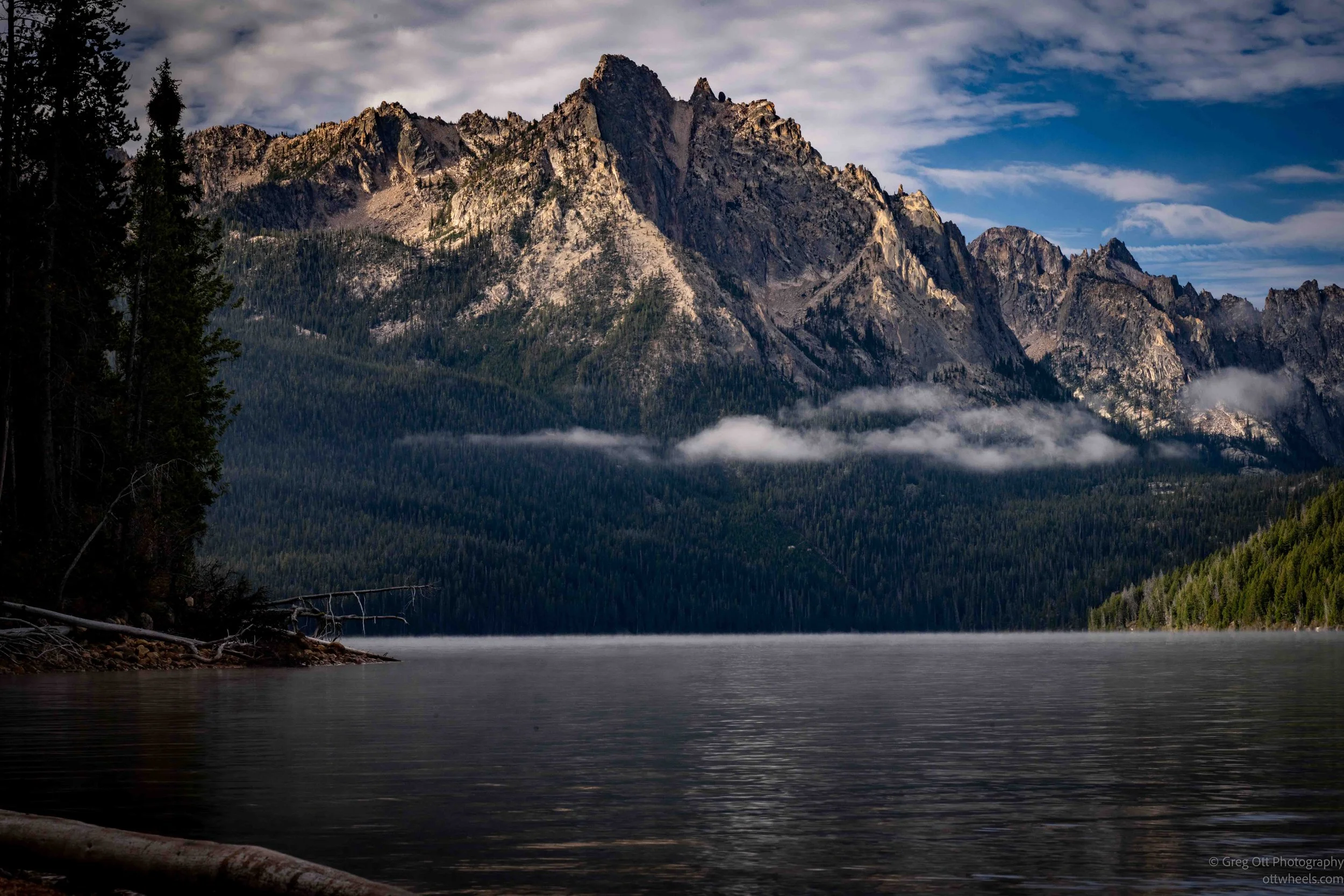
We stood there talking for a while about traveling and camping with children. They had a Mercedes Sprinter and were camping with many friends. They were probably in their thirties, and from the way they talked I had the impression they might be professors or involved in academia somehow. Eventually they headed back toward camp because everyone was ready for breakfast.
I stayed by the lake for about ninety minutes. I took photographs as the light moved across the mountains, but much of the time I simply stood there breathing in the cool, moist morning air. Occasionally I would hear a bird somewhere in the trees behind me, or waterfowl would come flying low across the lake. There were no cars, no generators and almost no voices, just the soft sounds of the wilderness around me.
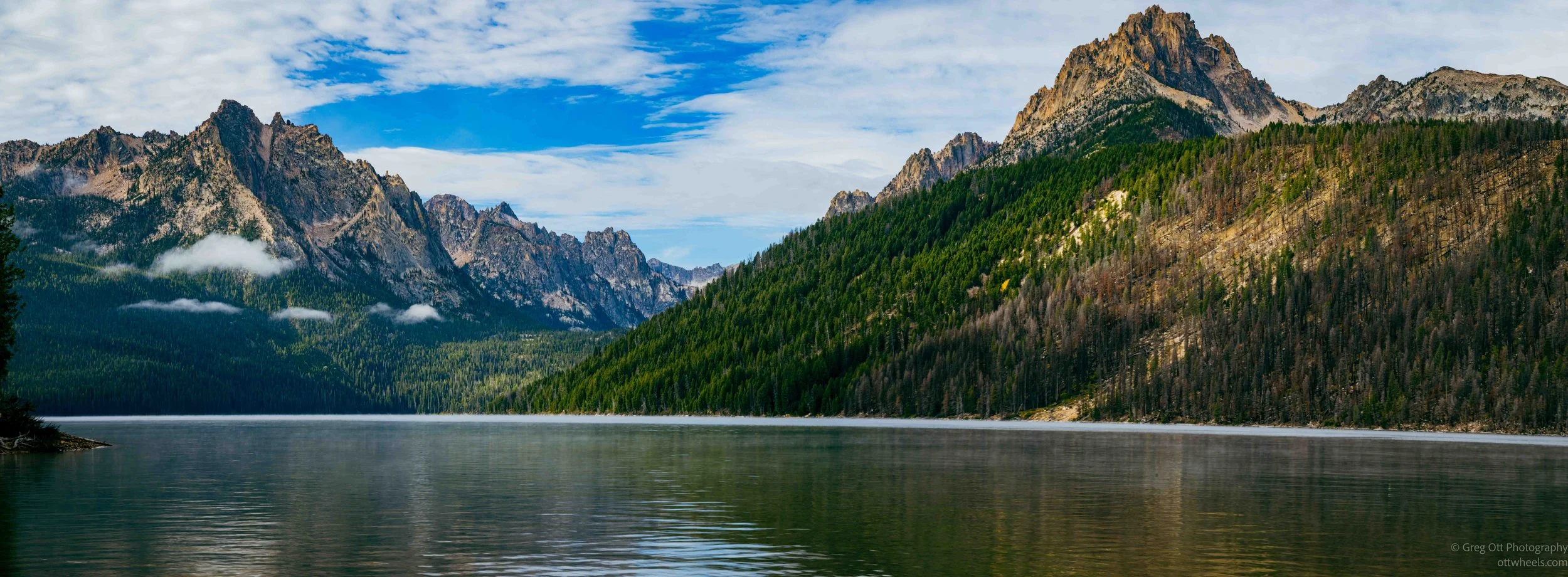
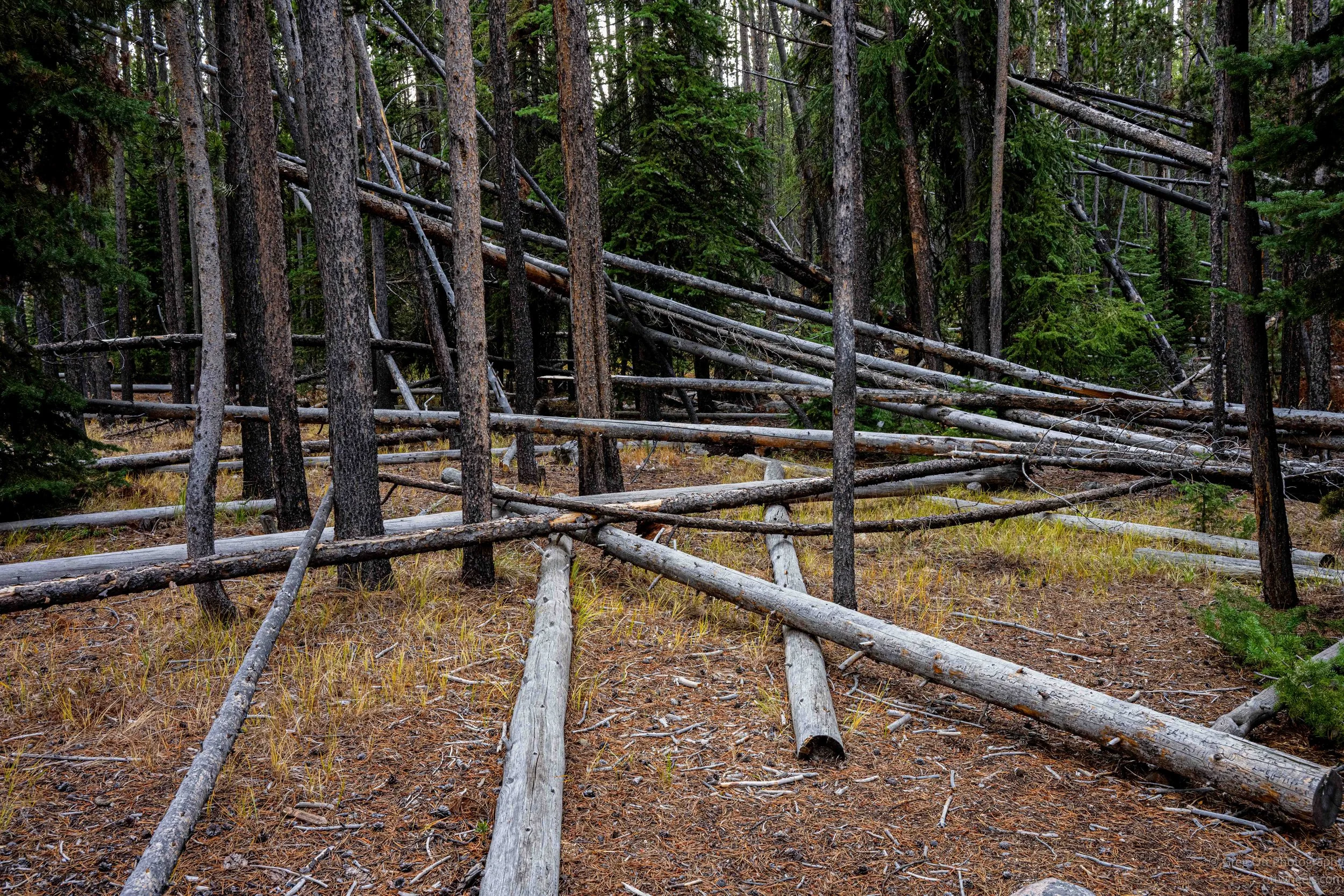
On the walk back through the forest, I started noticing how many trees were down. I had passed a warning sign about falling trees on the way in, and now I understood why. Some areas looked like someone had scattered giant pickup sticks among the standing trees. Trunks crossed one another in every direction.
The pines here are growing in relatively shallow, sandy soil, so it made sense that strong winds could bring them down. I’m sure the weather can get pretty violent in these mountains at times. I’ve seen similar scenes where a tornado hit the side of a mountain and stacked trees twenty feet high. This wasn’t anything like that, but there were enough fallen trees that I could imagine being a little nervous camping among them during a heavy storm.
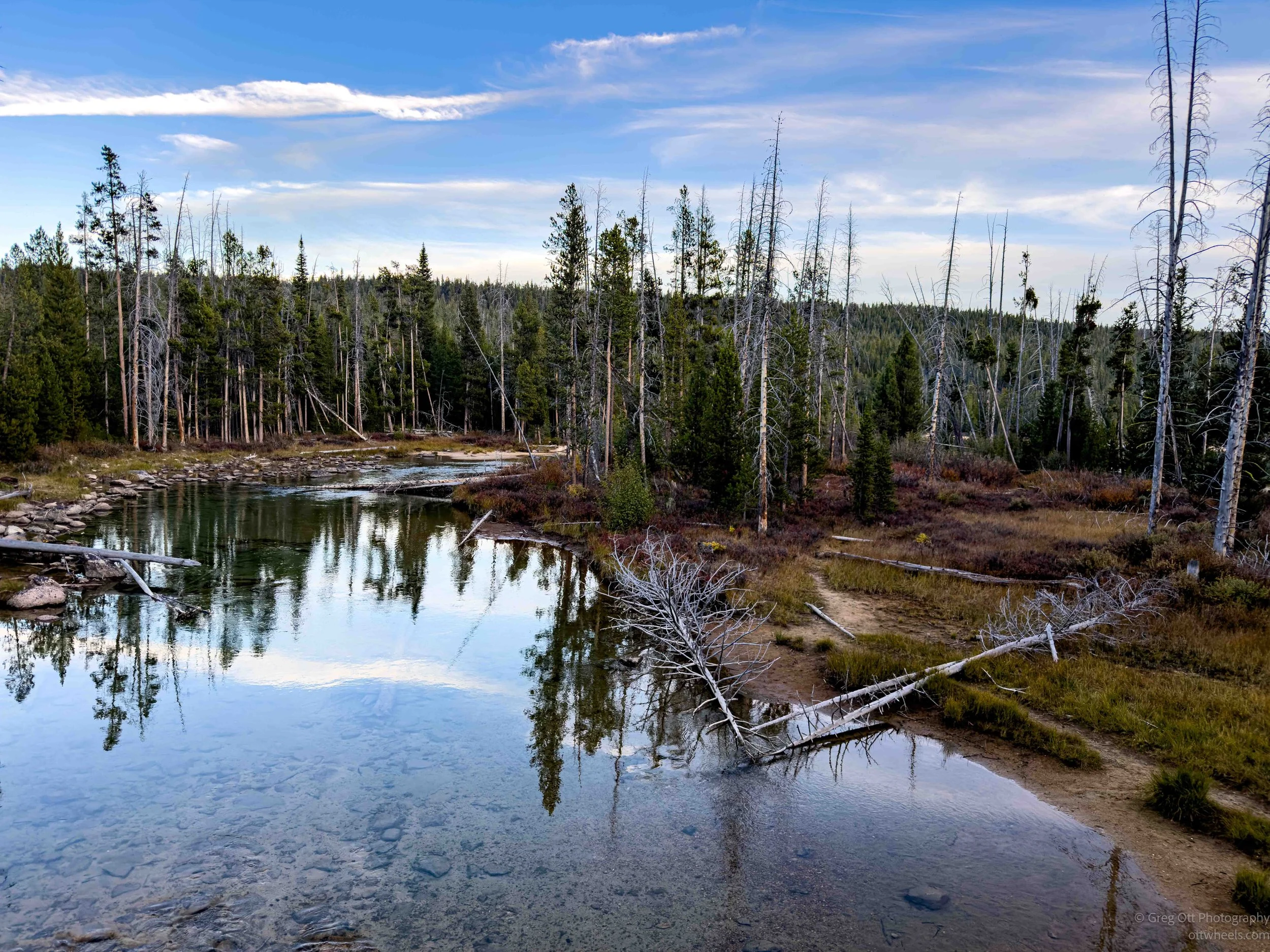
After leaving the campground, I drove to a day use area beside the lake. It was almost completely empty, which was perfect. I parked the van and stayed there for most of the day. I cooked, went for a walk and read another chapter of my book on the geology of Montana. Mostly, I did nothing, which was exactly what I wanted. After weeks of moving from one place to another, it felt good to have a day when there really wasn’t anything I needed to accomplish.
Late in the afternoon, as the sun started dropping behind the mountains, the temperature fell surprisingly quickly. I pulled the bike out of the back of the van and headed out for a ride. I rode about twelve miles, climbing and descending the hills around the lake and wandering through the campground areas.
At one campground I stopped a man driving around in a cart and asked if there were any sites available. Everything was booked, he told me, and the campground was closing for the season the following day. My timing in the Sawtooths was apparently just about as late as it could be.
Near the lake, I passed a couple having their wedding photographs taken. A little farther along, there was a wedding party in a large tent beside the lodge, with live music blasting out across the area. As I rode past, more guests were arriving, dressed considerably less casually than everyone else I had seen around the lake. I had spent the day surrounded by hikers, campers and people in outdoor clothes, so suddenly riding through the middle of a wedding felt a little strange.
By the time I finished the ride, it was well past seven and the temperature was dropping fast. I packed the bike back into the van, put everything away and drove back to the same place where I had spent the previous night. No one else was there, so I pulled into the same spot overlooking the Salmon River and settled in for the night.
I spent a couple of hours writing, with nothing outside but the darkness and the sound of the river somewhere below. Eventually I closed the computer, crawled into bed and fell asleep in the quiet.