Goosenecks to Capitol Reef
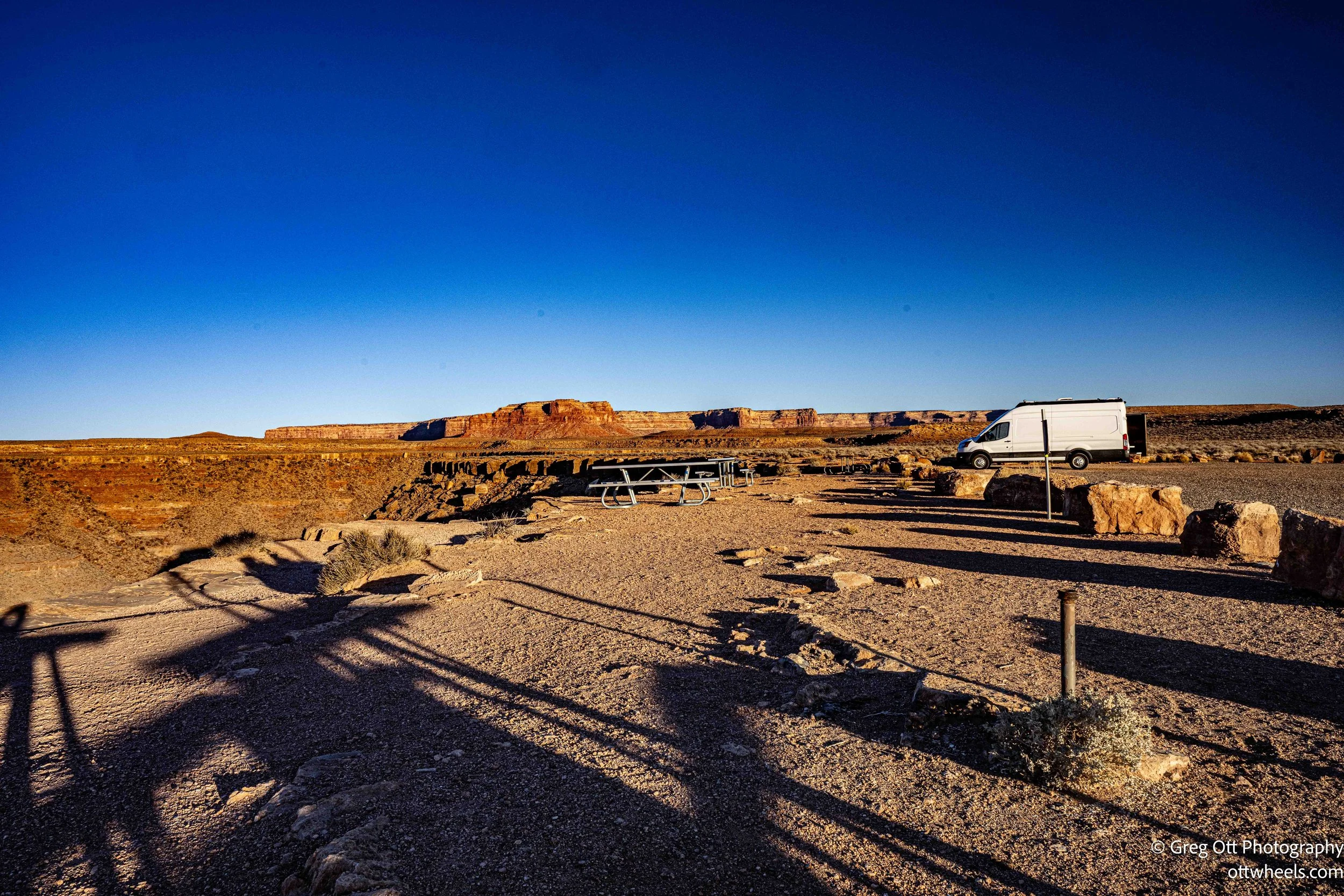
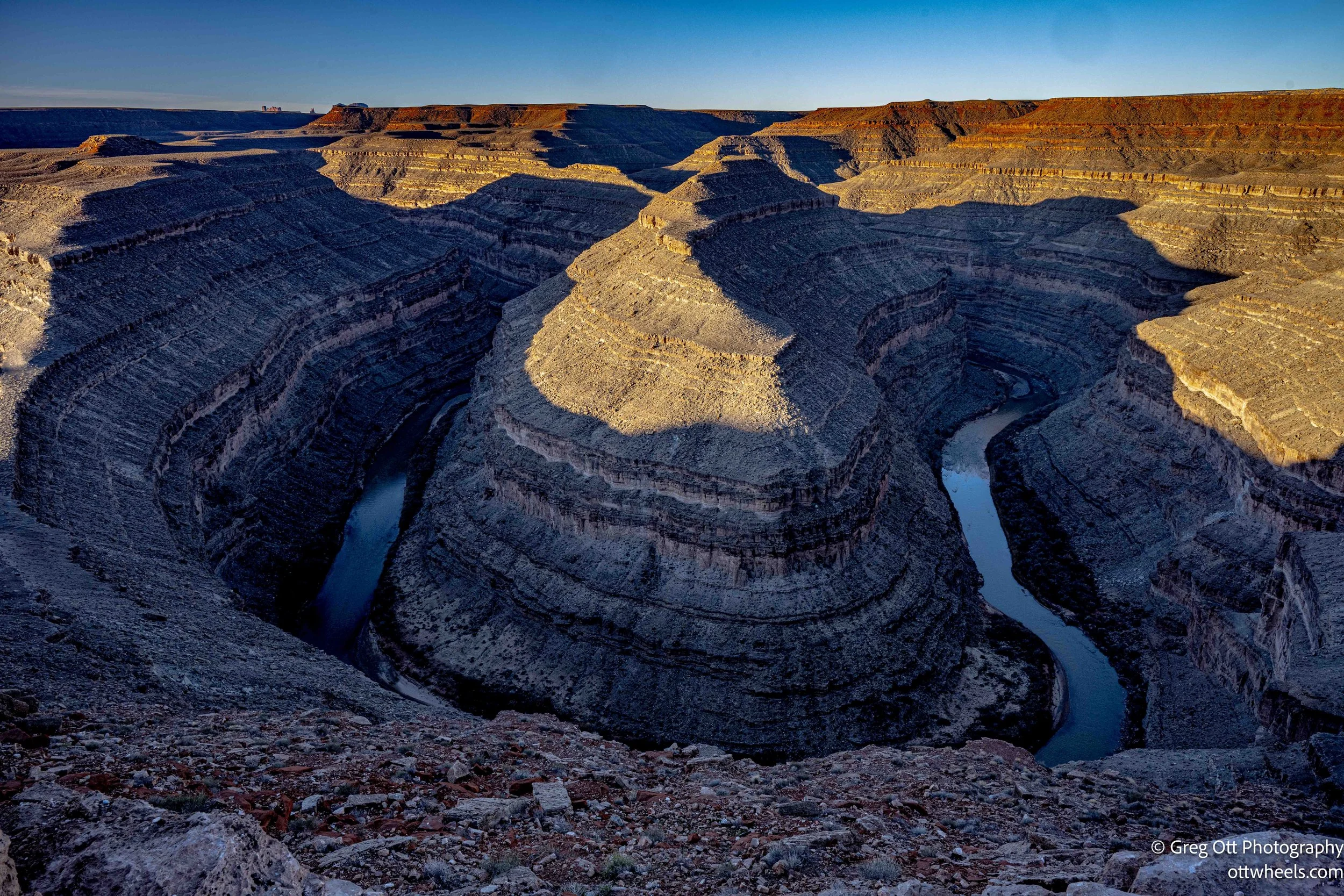
I woke in Goosenecks State Park, parked on the rim of the gorge. The night had been quiet, and I slept deeply. When I stepped out of the van, early light was already catching the distant rock walls, warming them just enough to pull detail out of the shadow. Three other cars were scattered nearby, their occupants having spent the night as well. I wasn’t in any hurry to leave. There was a calm to the place that felt rare, and I felt fortunate to be there. Even in winter, people drifted through during the day. In summer, when the campground is first come, first served, I can only imagine how quickly that stillness disappears.
After breakfast, I planned my route to Capitol Reef National Park, and after reading far too much about the Moki Dugway on Utah Route 261, I initially convinced myself I could make it through the pass in the van. I turned onto 261 just outside the park and drove about eight miles to the base of the mountain, passing an increasing number of warning signs—no trucks, no trailers, no guardrail, ten percent grade, dangerous, unpaved—each one more direct than the last. When I reached the dirt road, it finally sank in that I’d be inches from the edge of a cliff if another vehicle appeared coming the other way. Google kept insisting this was the route, but I ignored it. The Dugway—those steep, unpaved switchbacks carved into Cedar Mesa—is famous for a reason, and none of those reasons made it feel like a smart shortcut in a camper van. Turning around I realized it didn’t add that many miles, and the pavement was predictable and the drive was calm, which felt like the right trade. Sometimes the best decision on the road is to stop listening to the GPS and trust your gut.
What should have been about a four-hour drive to Capitol Reef National Park stretched to nearly seven, and I welcomed every extra mile. This turned into one of the most beautiful days I’ve spent driving the van. I headed back toward Route 163, then up Route 191 through White Mesa, turning just before Blanding. The road eased me away from the urgency of getting somewhere and into the quieter pleasure of simply moving through the landscape.
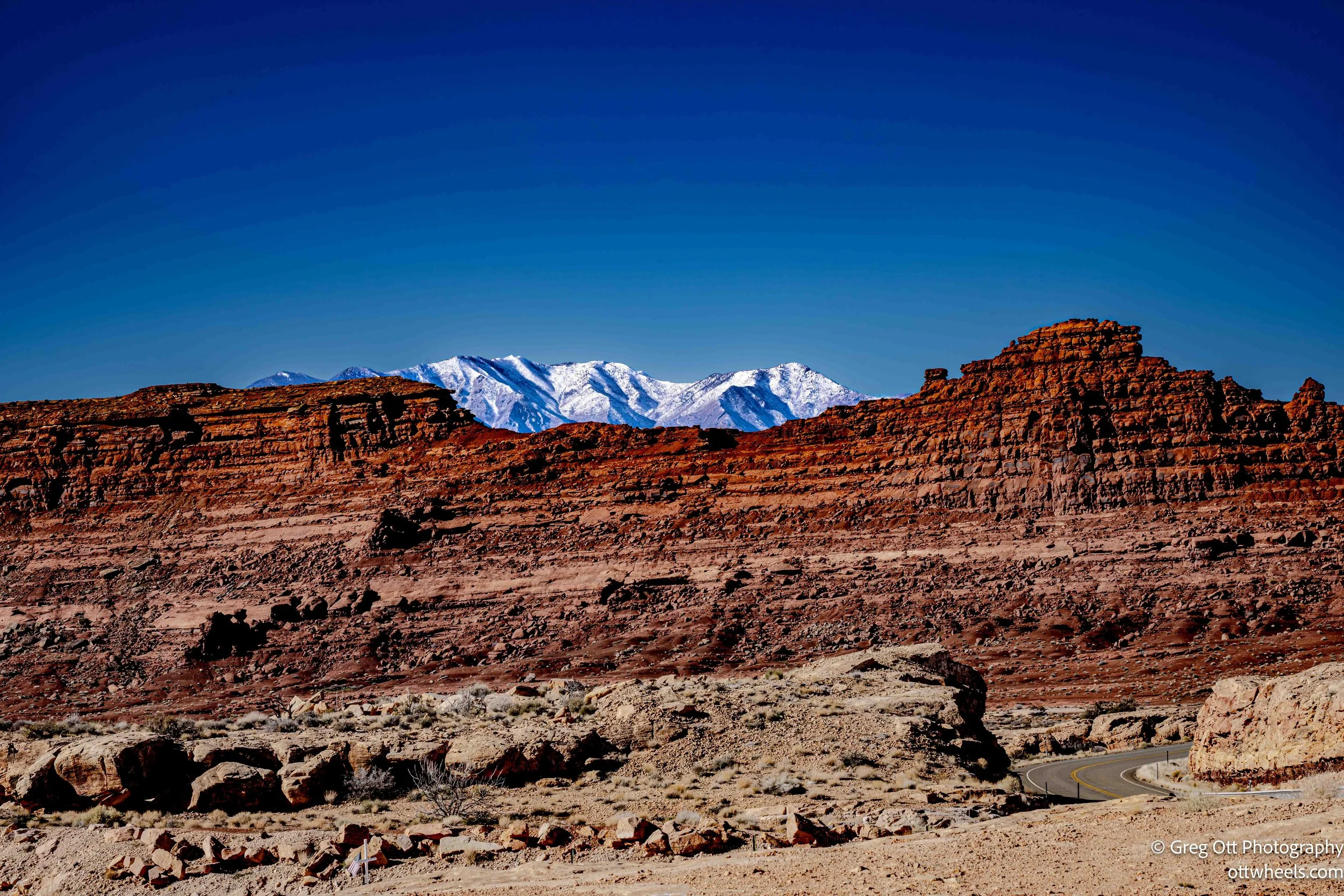
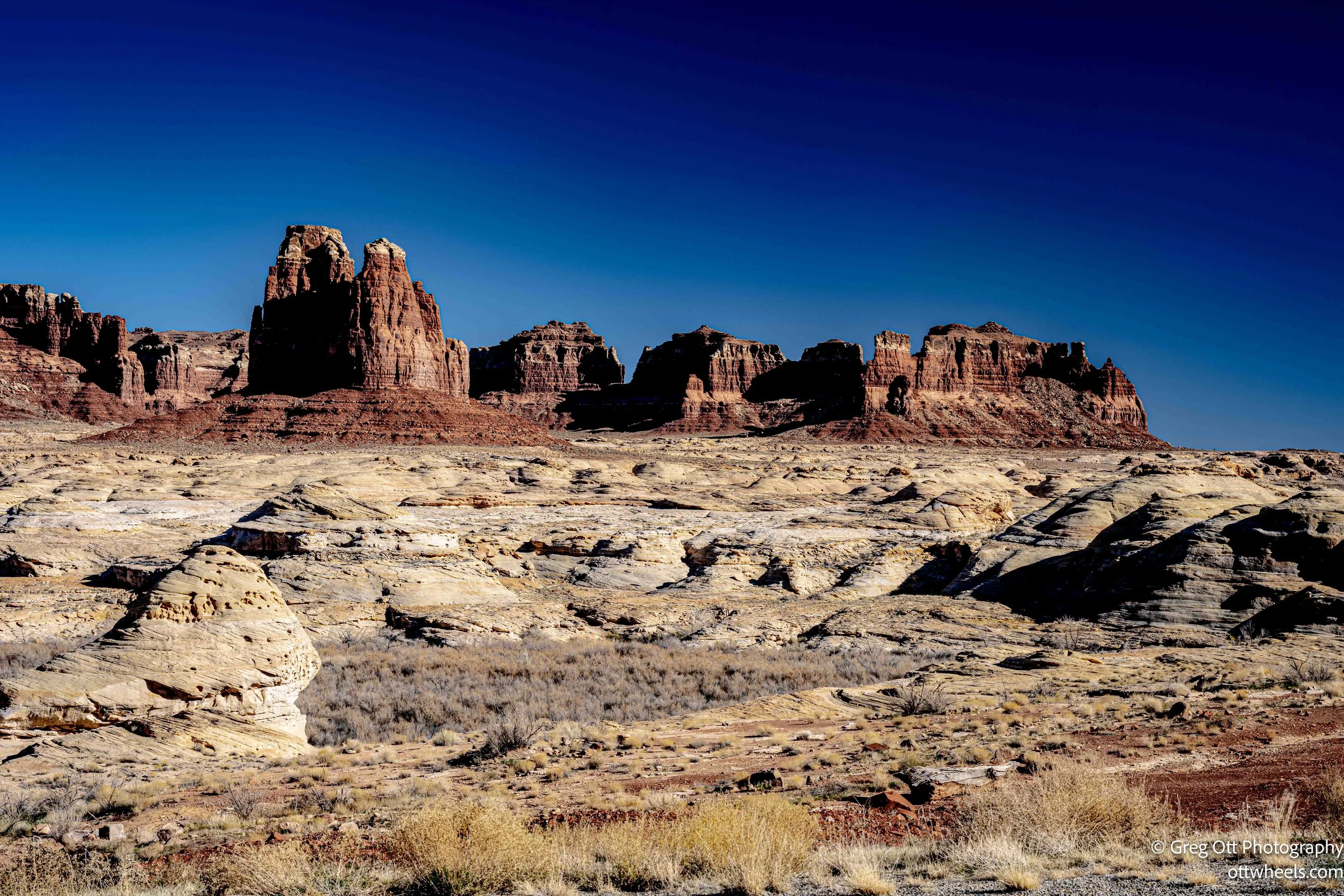
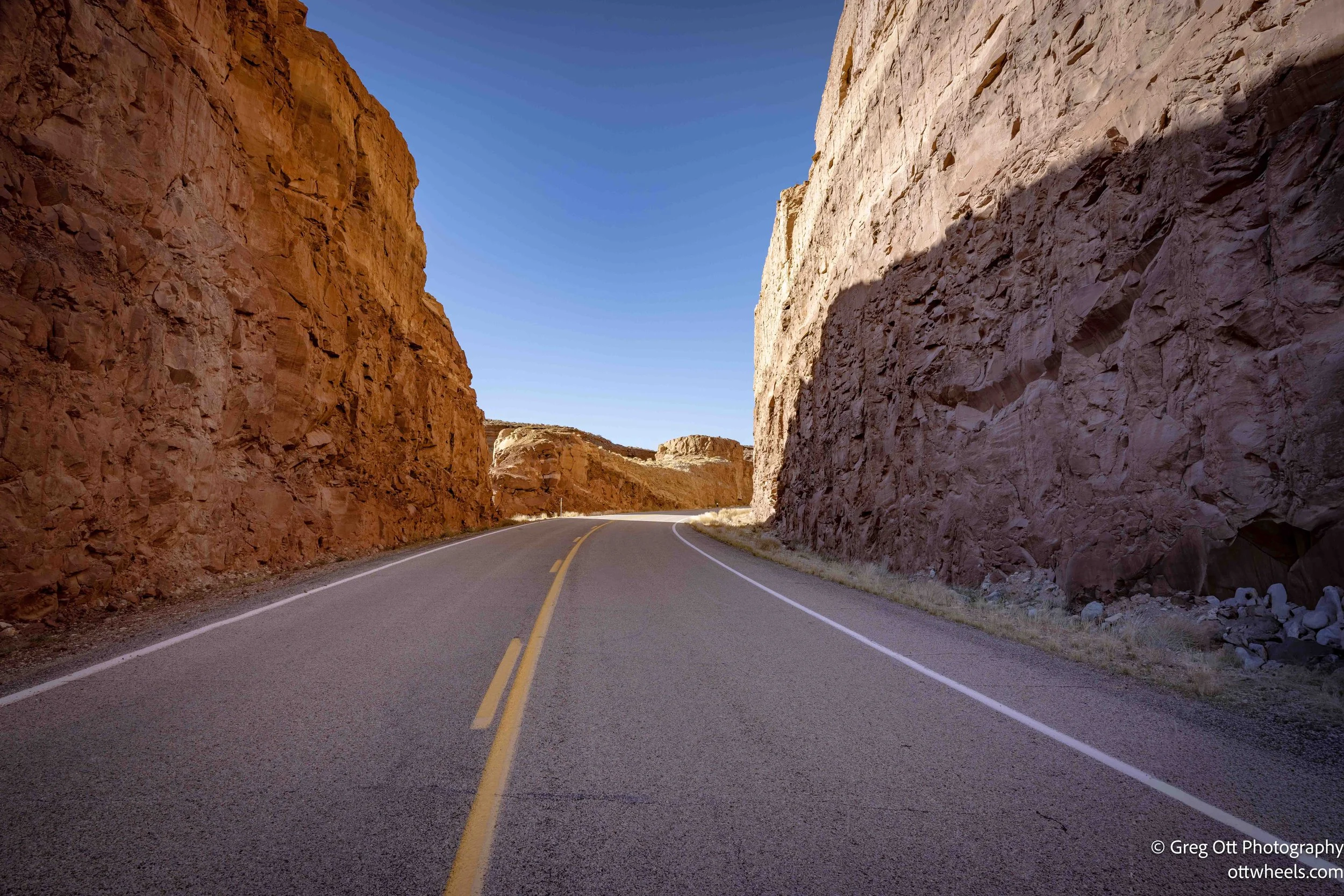
Climbing onto Utah State Route 95, the scenery shifted again. The road rises and falls gently, threading its way through open desert and deep cuts in the rock. Fry Canyon narrowed around me, its walls tall and close, the stone glowing and layered, pulling my attention away from the clock and back to the land itself. It’s the kind of road that makes you slow down without asking.
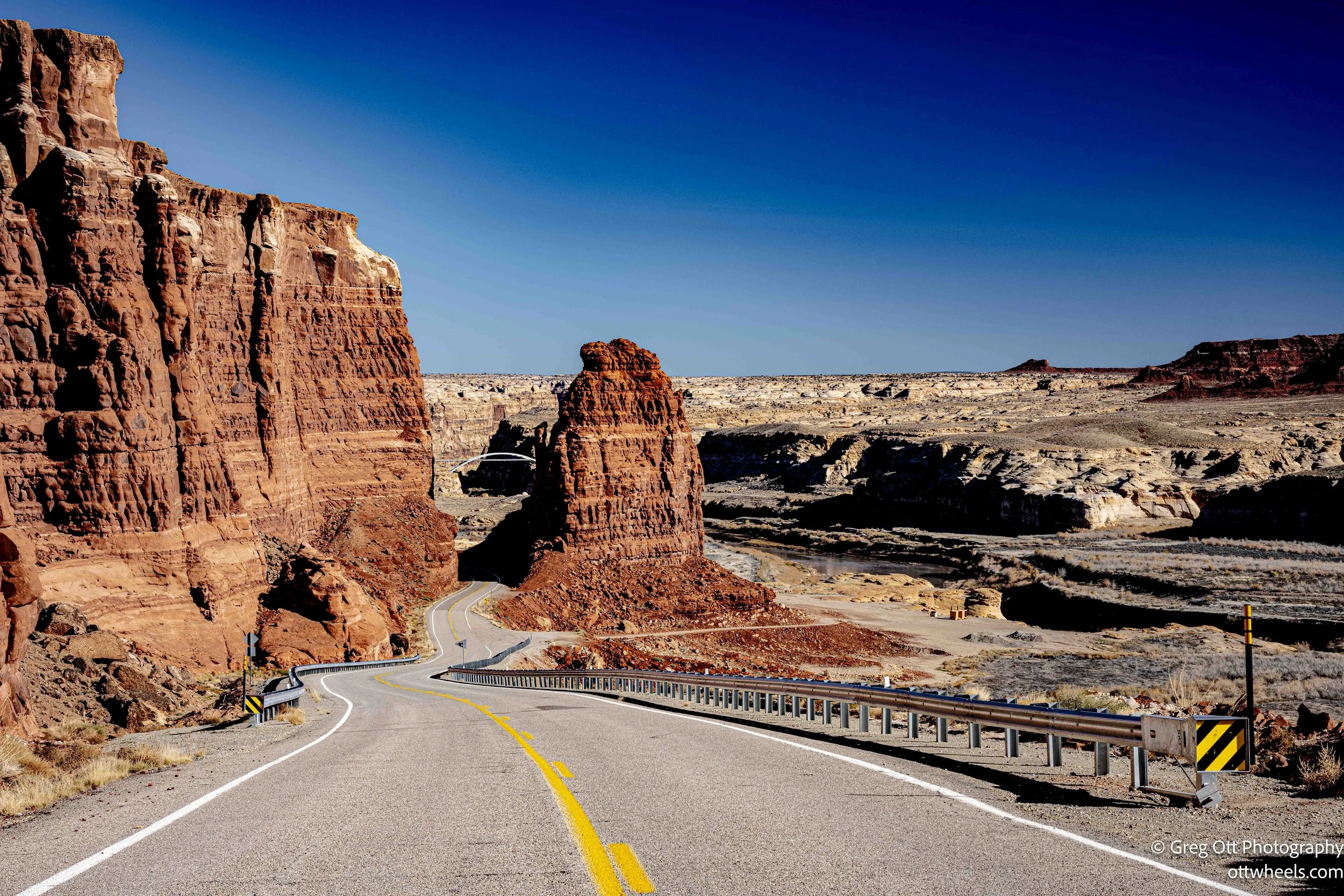
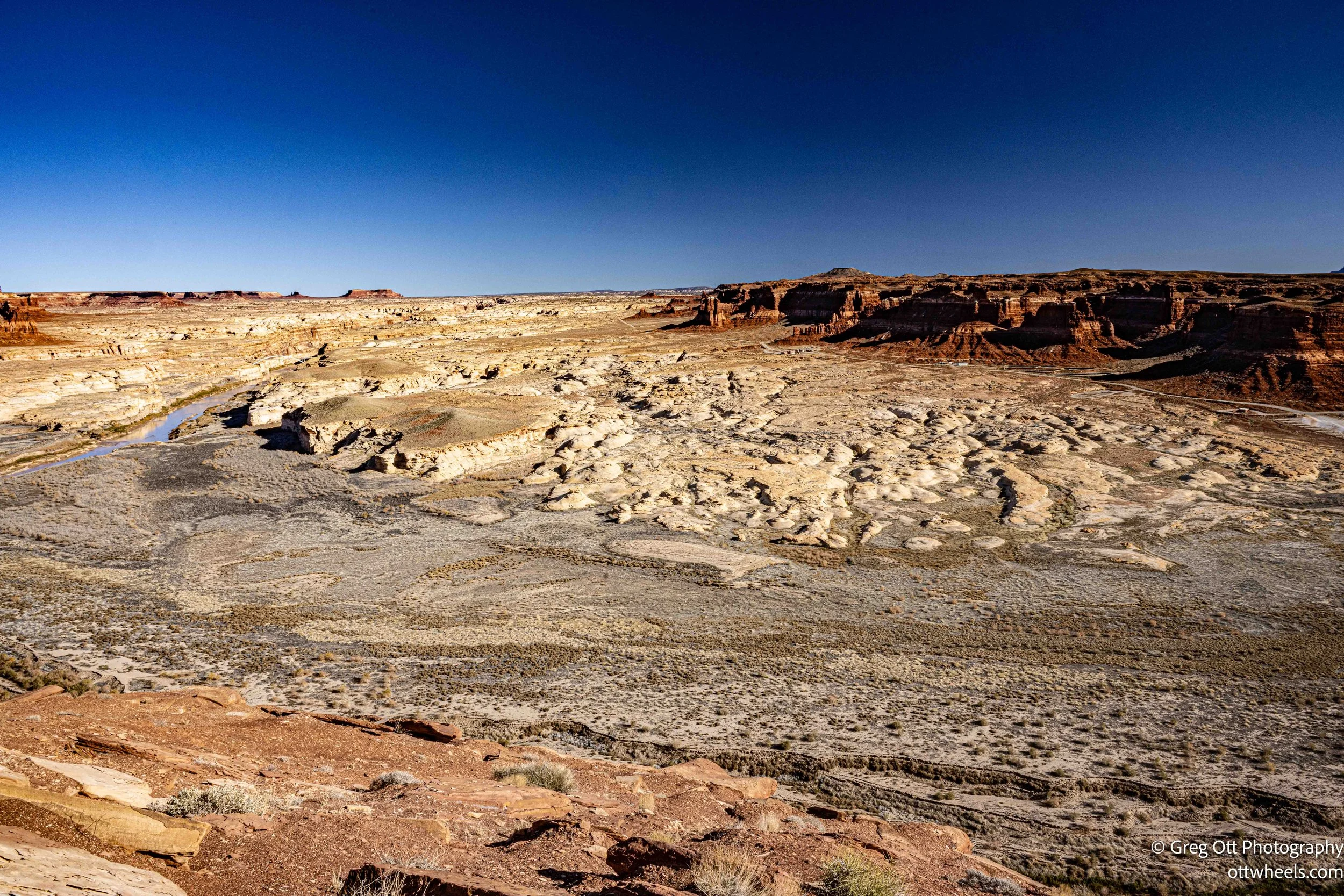
Farther along, the landscape opened near Hite Watchtower Rock, standing apart like a quiet marker on the horizon. Crossing the Hite Crossing Bridge, I caught glimpses of Lake Powell below, distant and calm, the water tracing soft lines against the rock. I pulled over at Hite Overlook and sat for a while, eating, resting, and letting the view do the talking.
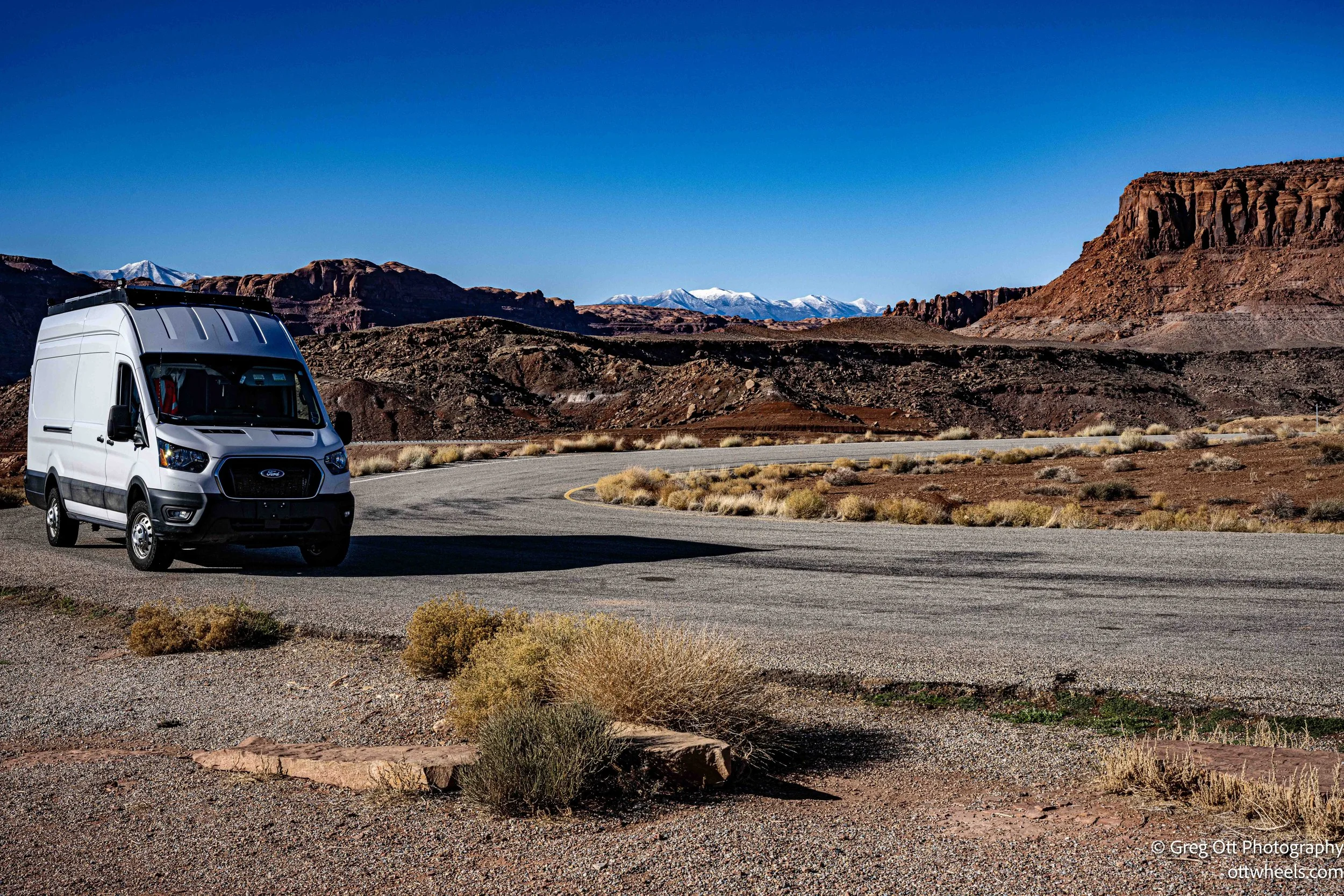
I bypassed Natural Bridges National Monument, saving it for another pass when I swing through Moab, and kept moving east. What stayed with me most was the quiet. Traffic was almost nonexistent, and for long stretches I was the only vehicle on the road, surrounded by towering walls of rock and open sky. It felt less like a drive and more like a long, unbroken moment—one of those rare days when the road gives you everything you didn’t know you needed.
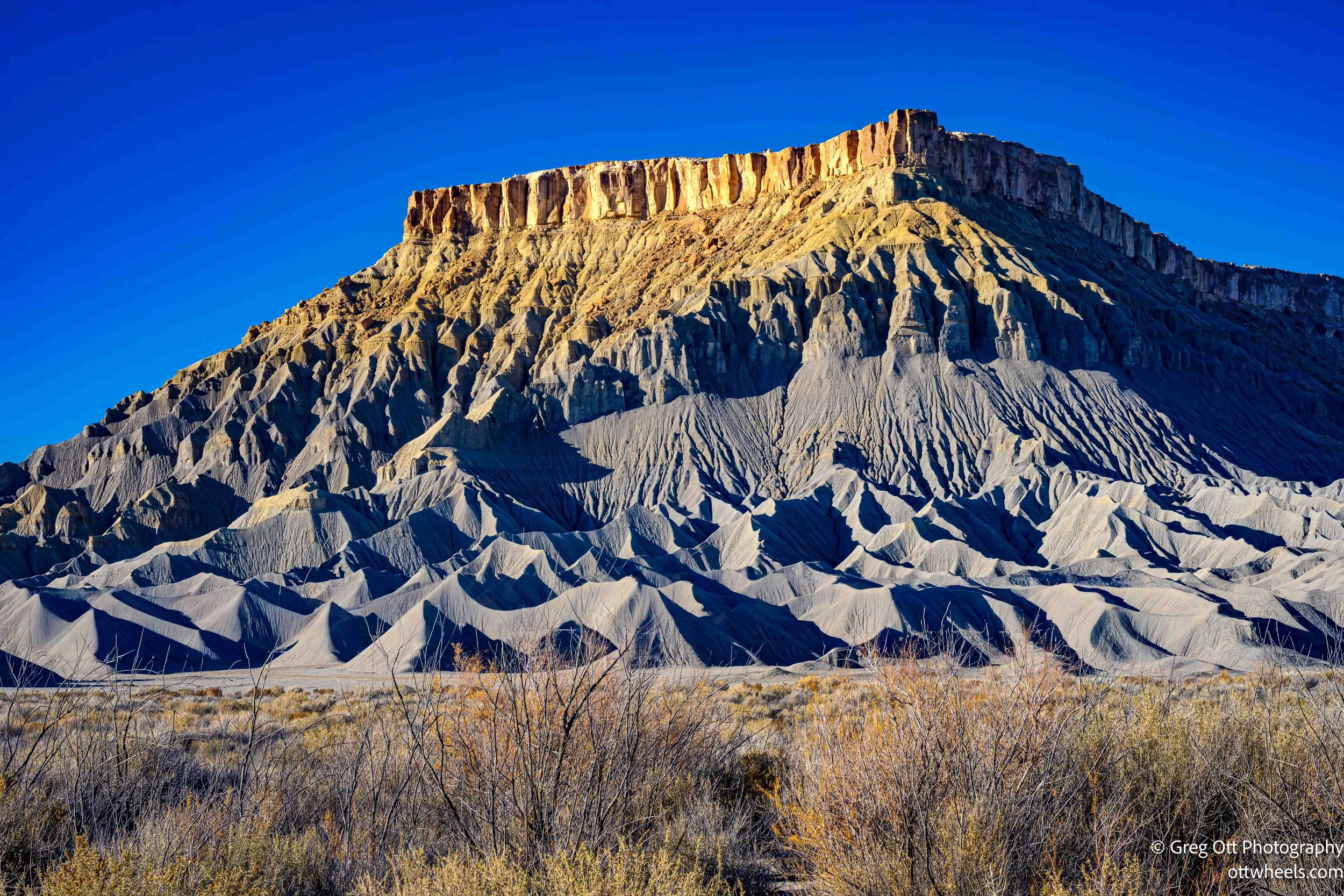
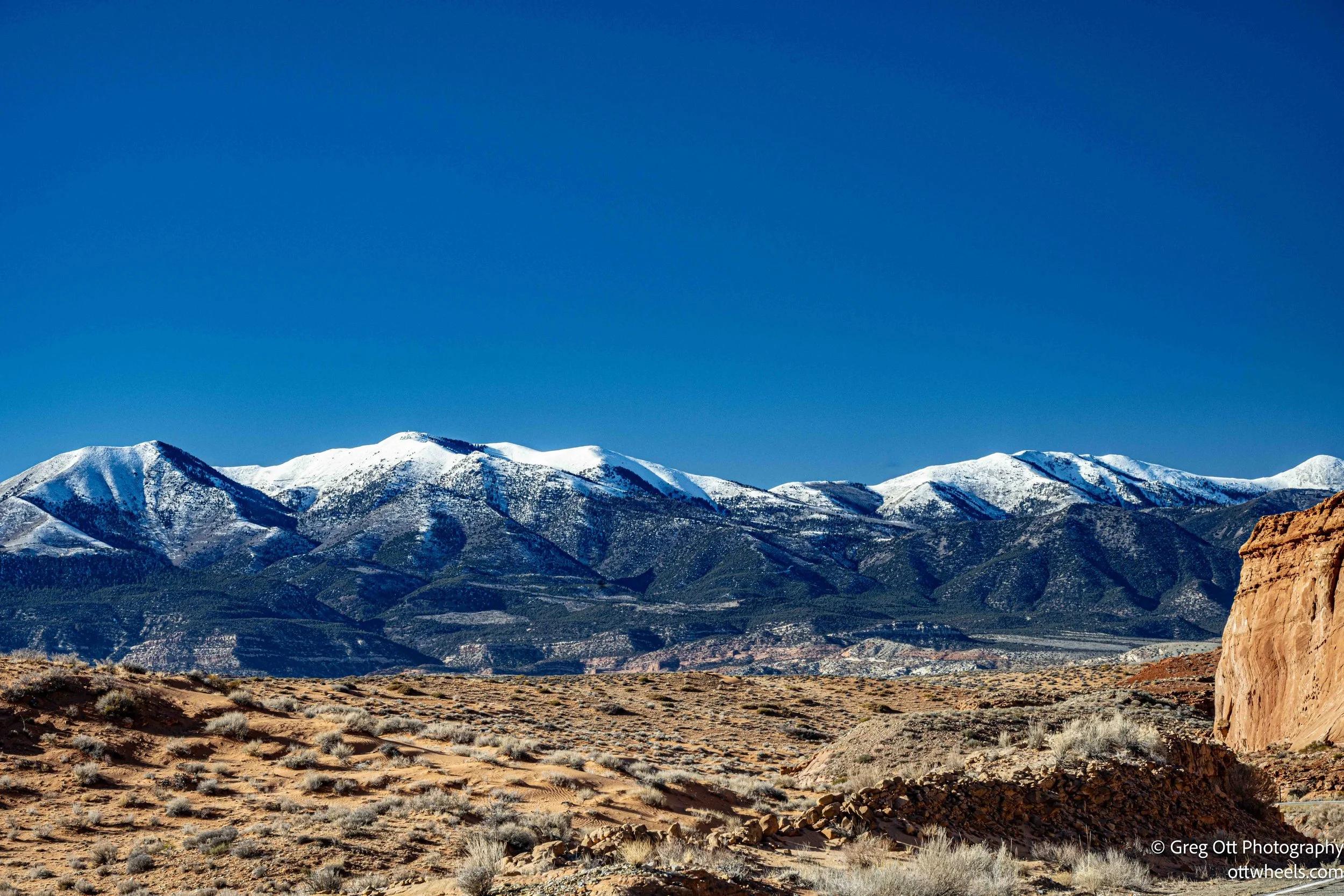
The landscape had been shifting all day, mile by mile, and by late afternoon I finally rolled into Capitol Reef National Park. I stopped at the visitor center, stamped my parks passbook, picked up the map and notes for the park, secured a campsite for the night, and then eased onto the scenic drive. After hours of open road, it felt grounding to arrive somewhere with a sense of order again—signs, pullouts, familiar rituals.
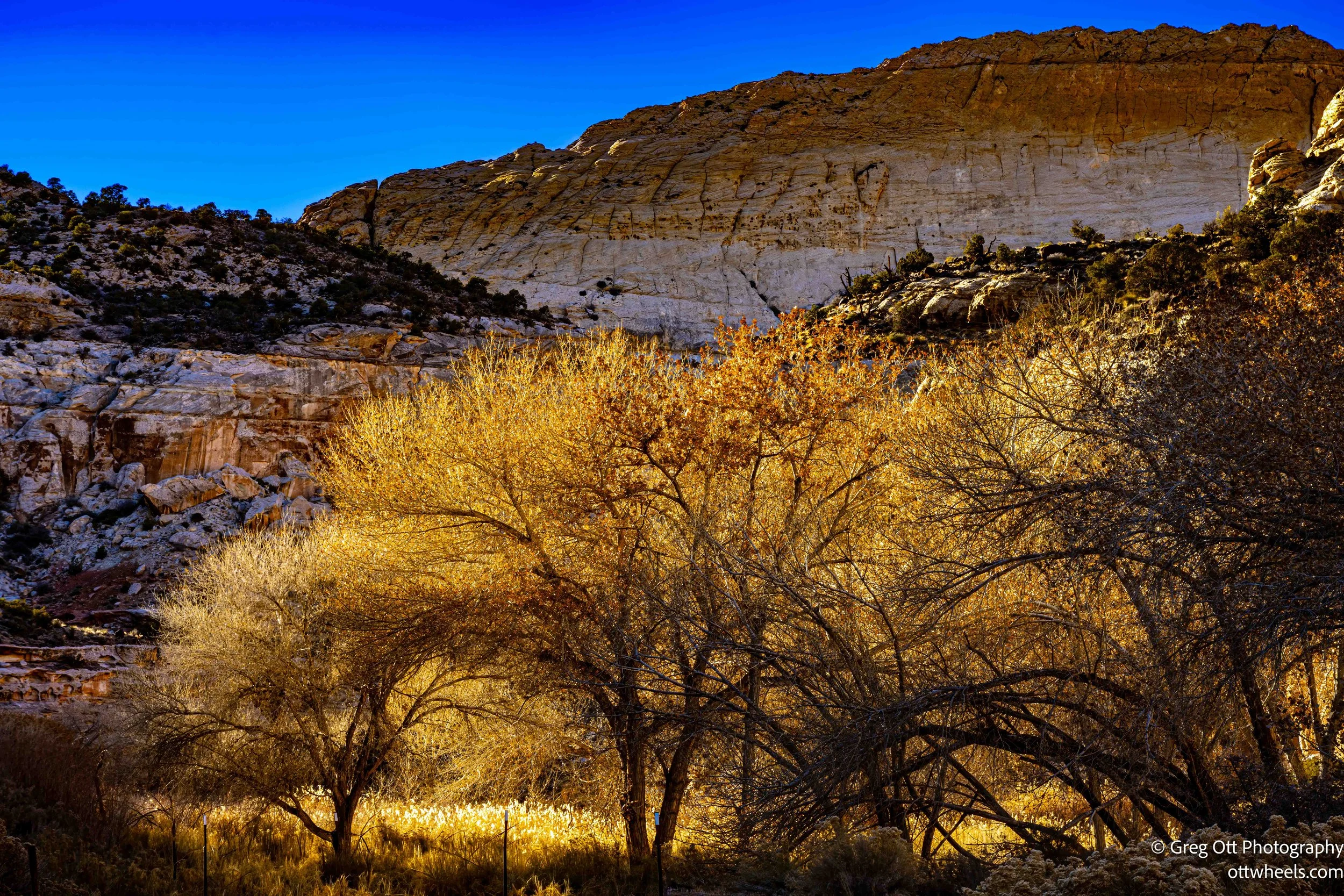
Golden hour settled in quickly. The trees and cliffs took on that warm orange glow that feels almost unreal, as if the light itself is doing the work of memory. Traffic picked up compared to the quiet roads I’d been on all day, but it didn’t feel crowded—just shared. I drove until the sun slipped behind the rock, then turned back toward camp as the temperature fell and the color drained from the landscape.
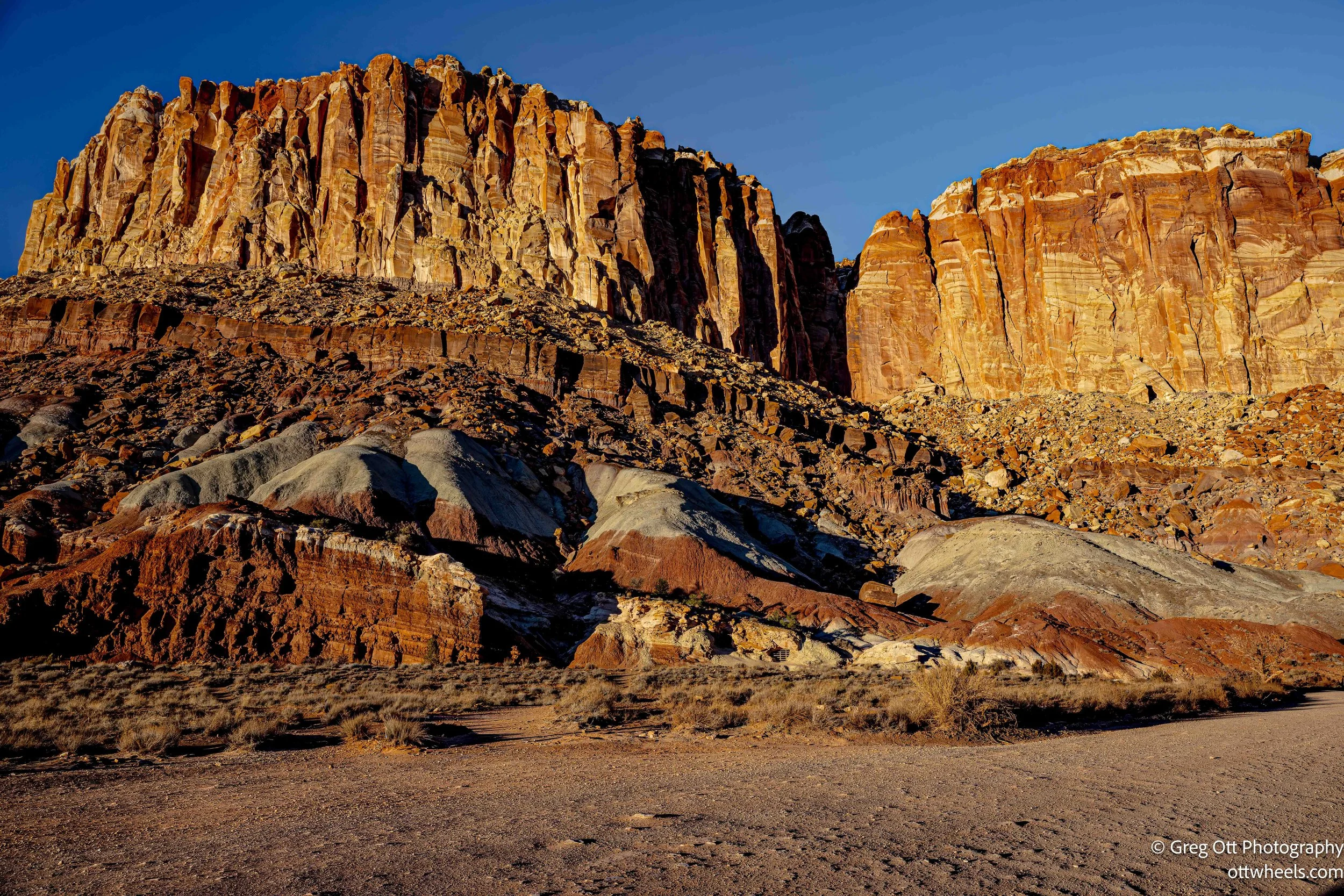
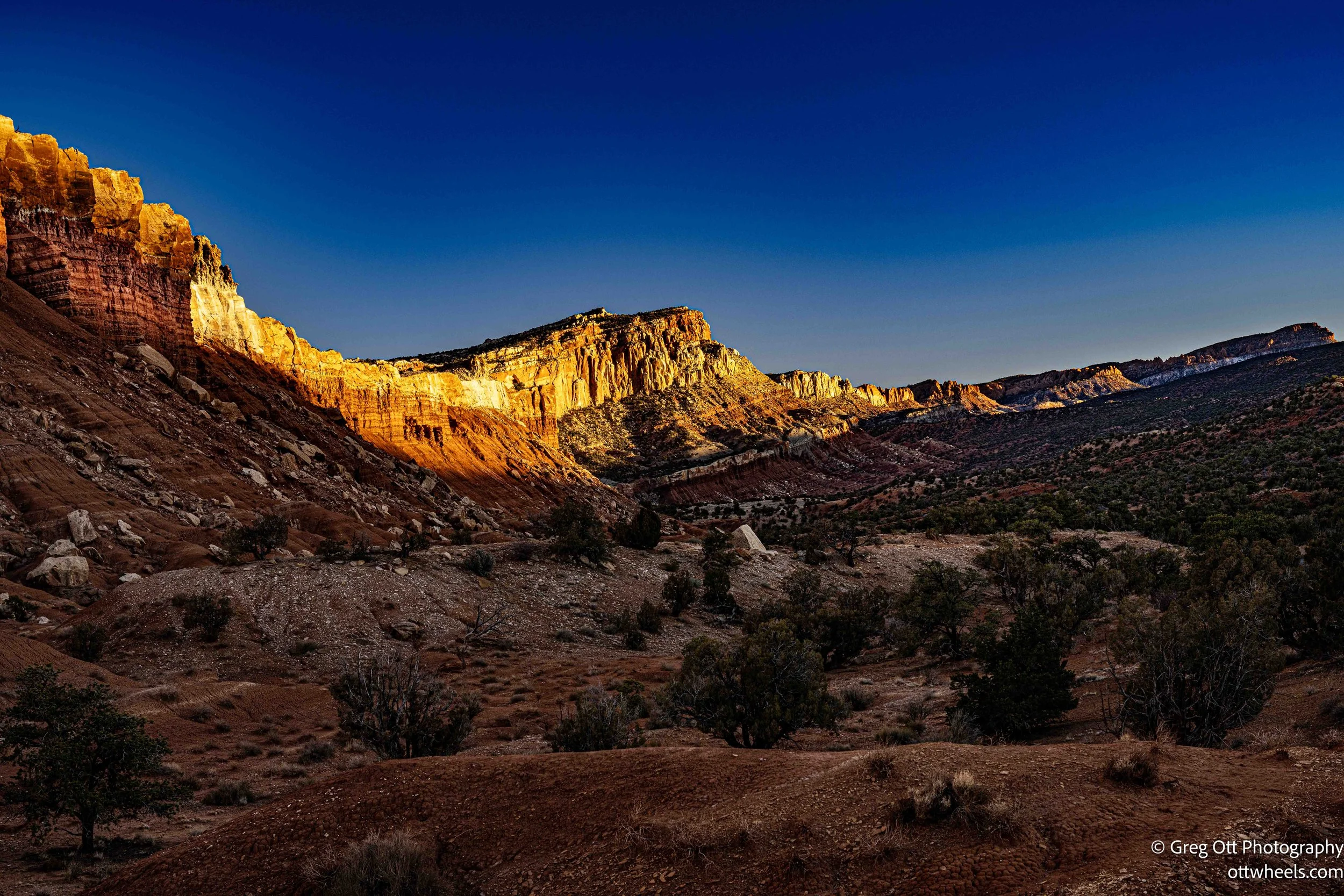
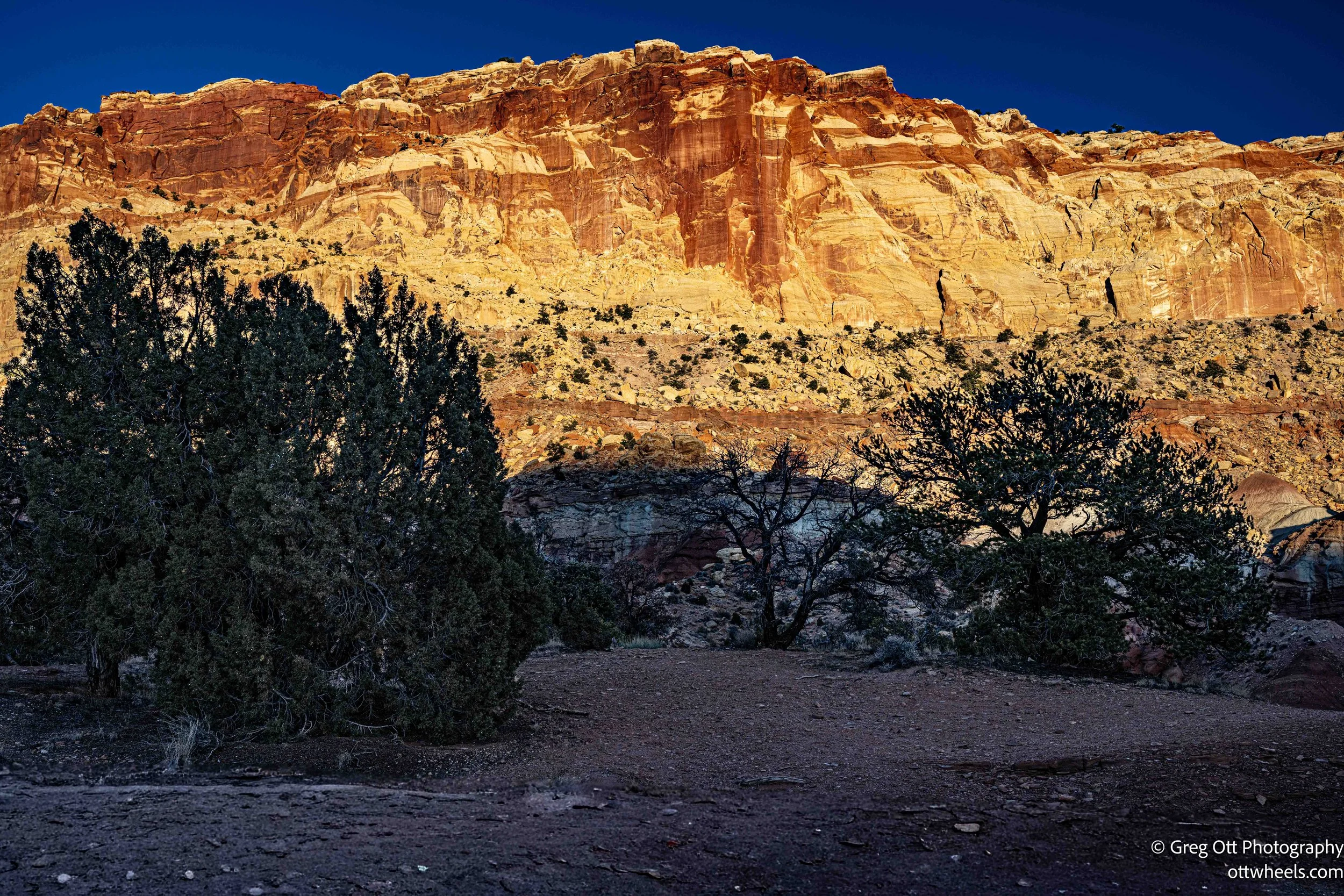
There were three campgrounds side by side, but only Campground A had anyone staying the night. Five other camper vans, about ten cars, and—surprisingly—eight tents. The temperature was dropping toward twenty degrees. I’ve spent nights in a car at that temperature before, layered up in a down sleeping bag, and it’s not something I’d rush to repeat. Seeing tents scattered around the campground made me pause; I couldn’t imagine choosing that kind of cold exposure when the day had already given so much.
As darkness settled in, the park grew quiet again. After hours of movement and changing scenery, the stillness felt earned. The long drive, the detours, the empty roads, and the slow arrival all seemed to come together in that moment. It was the kind of day that doesn’t ask to be summarized—only noticed—one that reminds you why taking the longer way can make all the difference.