Vancouver, BC
Woke in my quiet spot in Fairhaven, Washington, topped up on gas nearby, and stopped across the street at Starbucks. I spent some time there catching up online before finally pulling out around 10 am.
Border Crossing
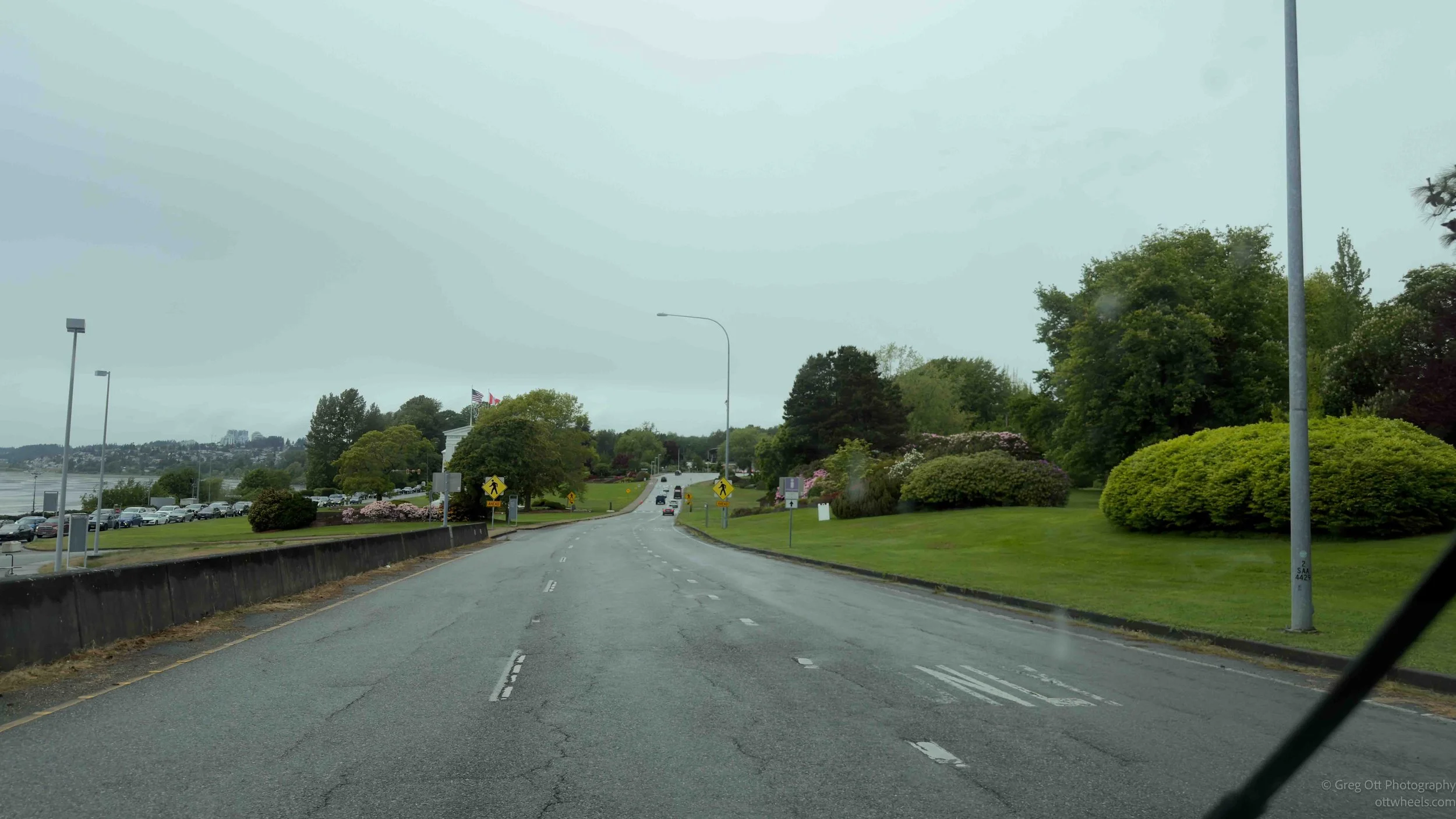
It was about a 45-minute drive to the border. I noticed on the American side there was a long line of people trying to get into the United States. Only two gates were open. On the Canadian side there were five lanes moving steadily and each only had about six vehicles waiting. The last time I crossed into Canada they decided to go through the van in detail, so I was a little apprehensive pulling up to the booth.
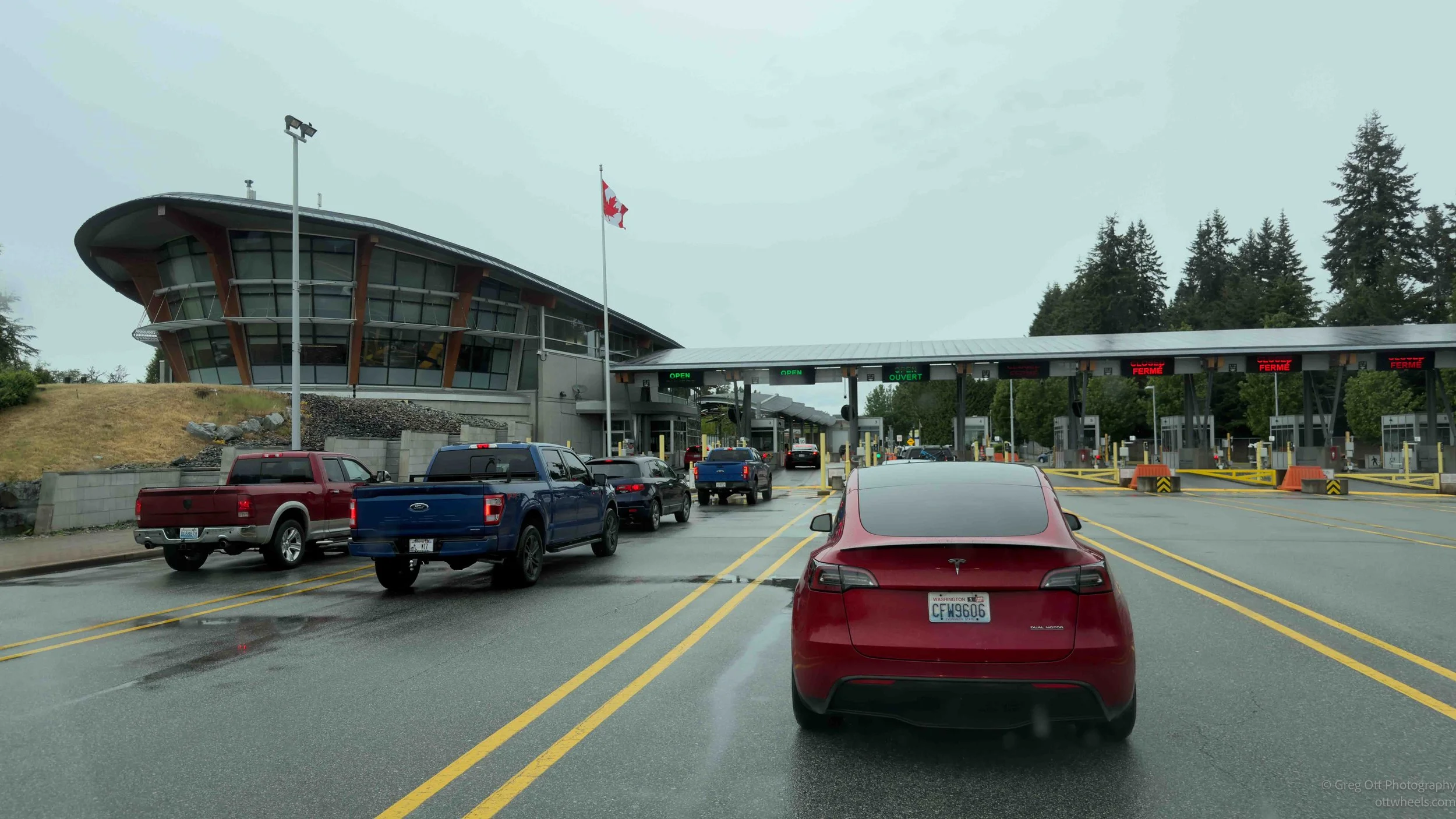
I answered all the usual questions and then the officer asked if he could see inside the van. He looked around for a moment and then asked who had built it. I told him I had done most of the work myself. “Really nice job,” he said. That immediately lowered my stress level. The entire border crossing, including the wait and questions, took about 30 minutes. He handed back my passport and told me to enjoy Canada and Alaska. I was so relieved. No deep inspection of the van. I was officially on my way to Vancouver, British Columbia.
Vancouver, British Columbia
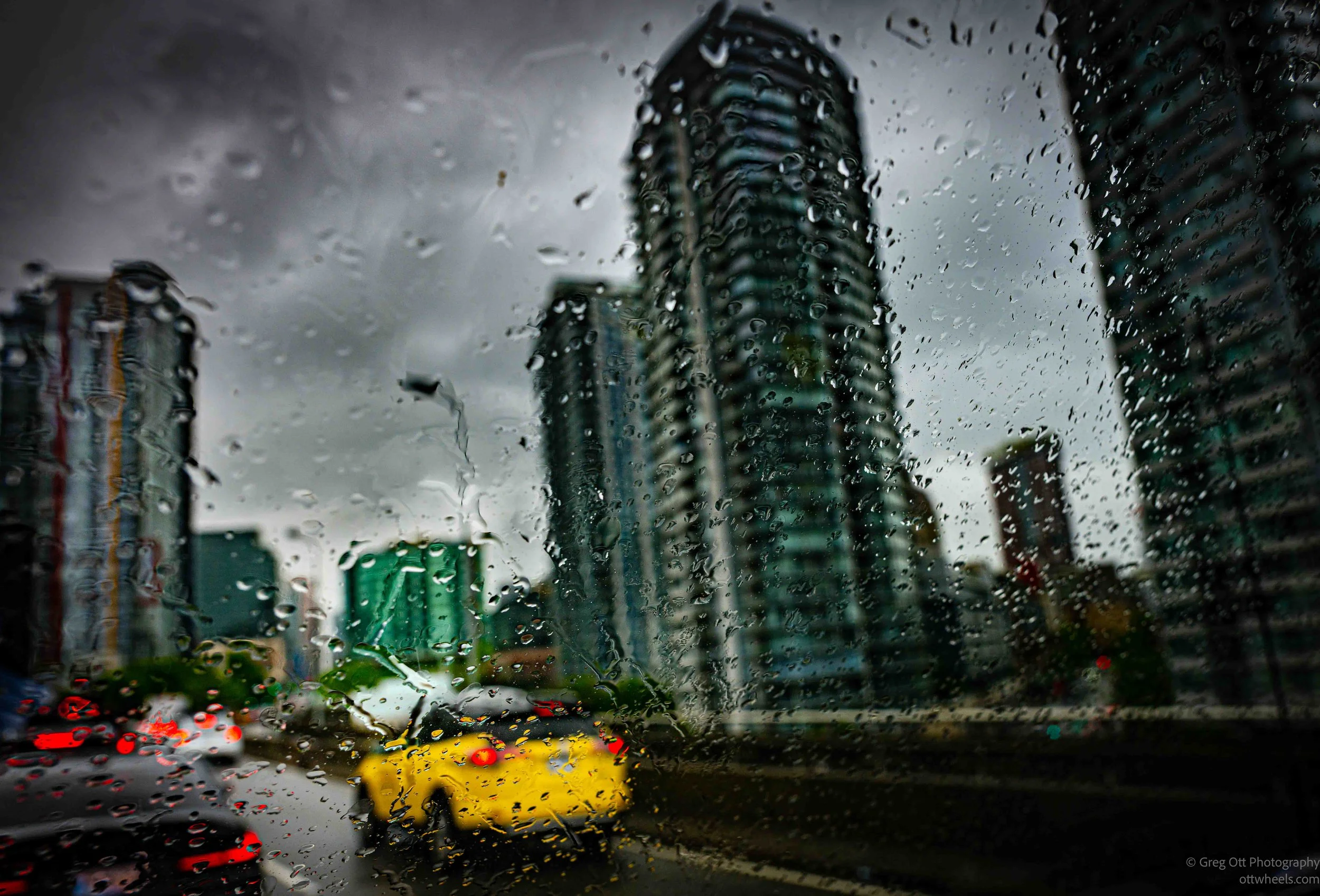
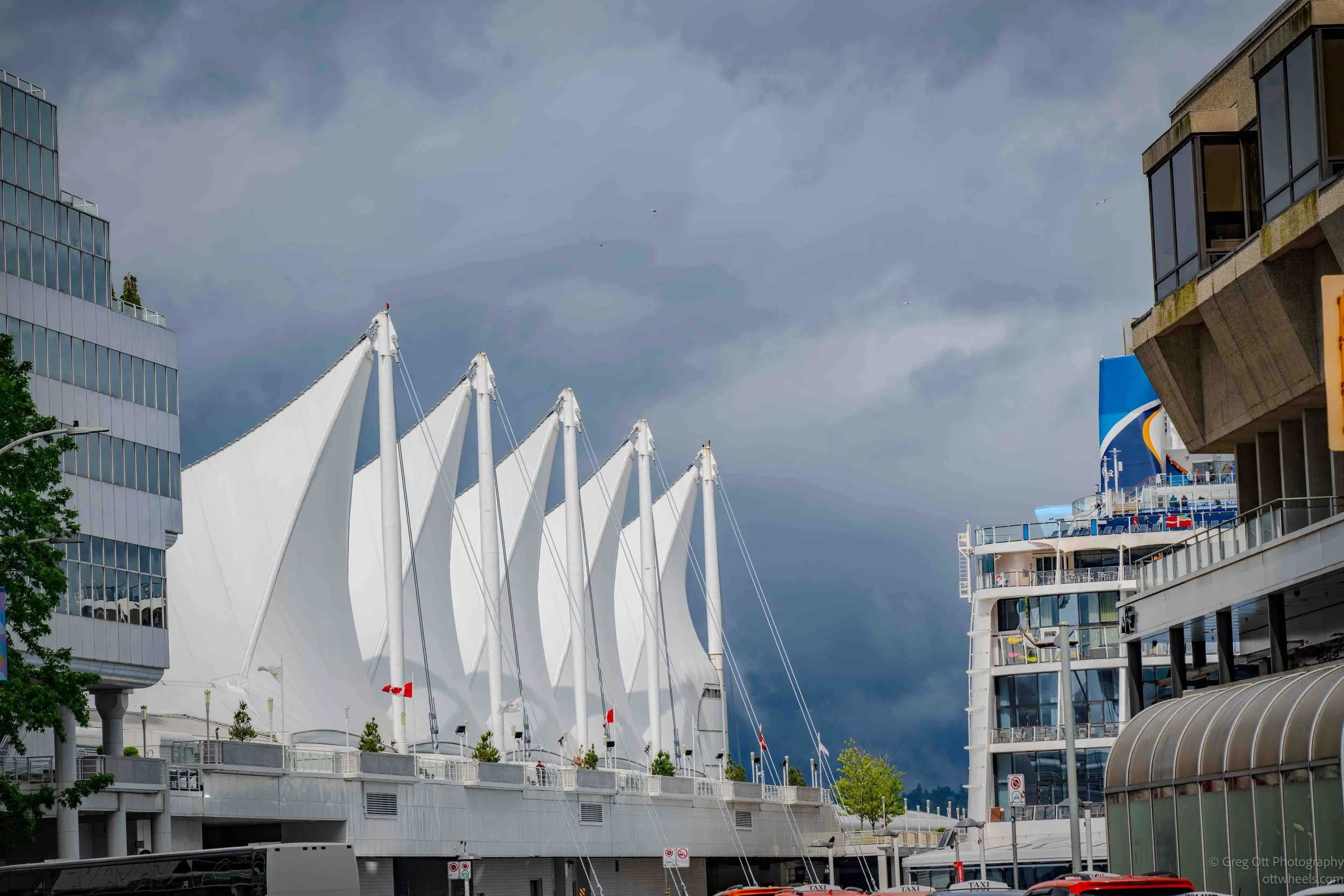
My 45-minute drive into downtown Vancouver turned into almost 90 minutes. Rain moved through constantly. One moment it was pouring hard enough to make the city look gray and blurred through the windshield, and then five minutes later sunlight would break through and light entire buildings against almost black storm clouds. It created some incredible conditions for photography.
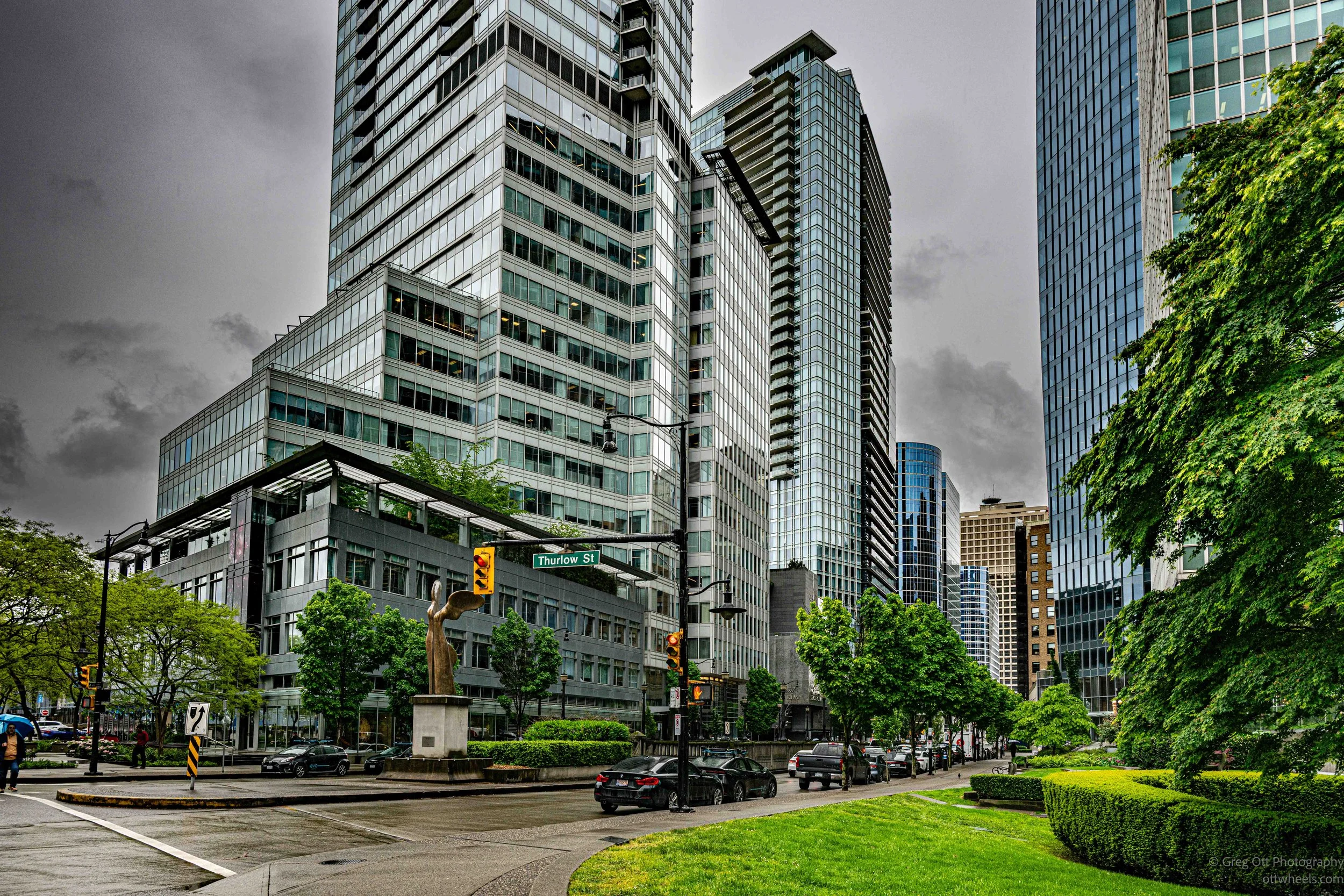
Traffic downtown was heavy and being in a large van certainly didn’t help navigating the tighter streets. Finding parking quickly became its own adventure. Every street spot seemed full and most garages looked too low. Then I noticed a sign for a garage showing 13.25 feet / 4 meters clearance. That sounded promising enough to investigate.
I asked a security guard outside whether oversized vehicles could park underground there and he admitted he didn’t know. A guy farther down the ramp started motioning me forward anyway. I rolled farther inside and met a woman with a clipboard who also admitted she had no idea because it was her first day on the job. She called over her supervisor and it turned out I had accidentally driven into a cruise line parking garage servicing Canada Place. Their advice was basically to drive around downtown and hope for the best. Not exactly comforting.
After more than 30 minutes of circling downtown streets in traffic, I finally gave up and pulled briefly into a bus stop while figuring out how to get out of the city. Then, almost unbelievably, two cars pulled out of nearby street parking spots at almost the exact same moment. I immediately slid the van into one before somebody else could grab it. Finally parked, I started walking with the camera.
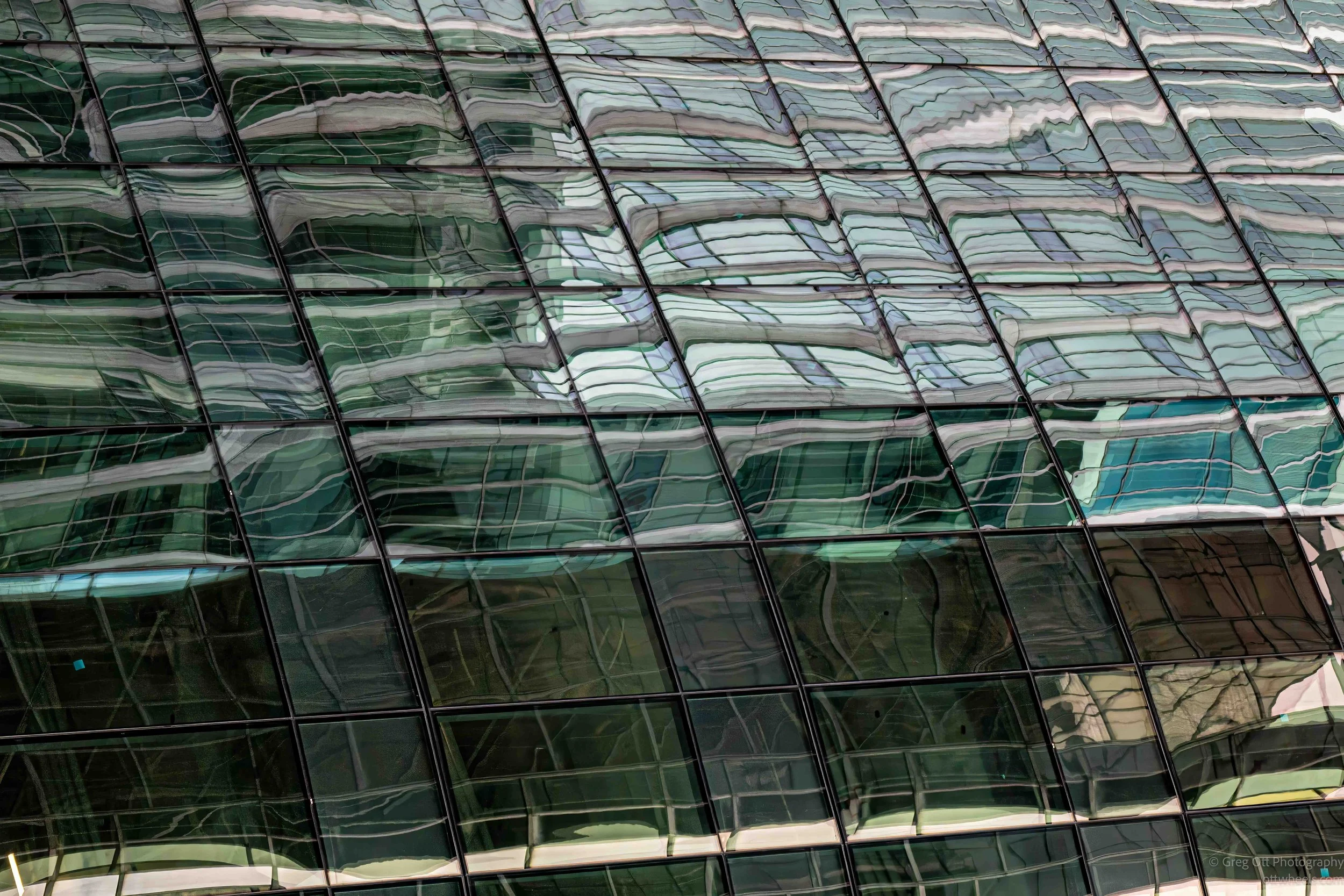
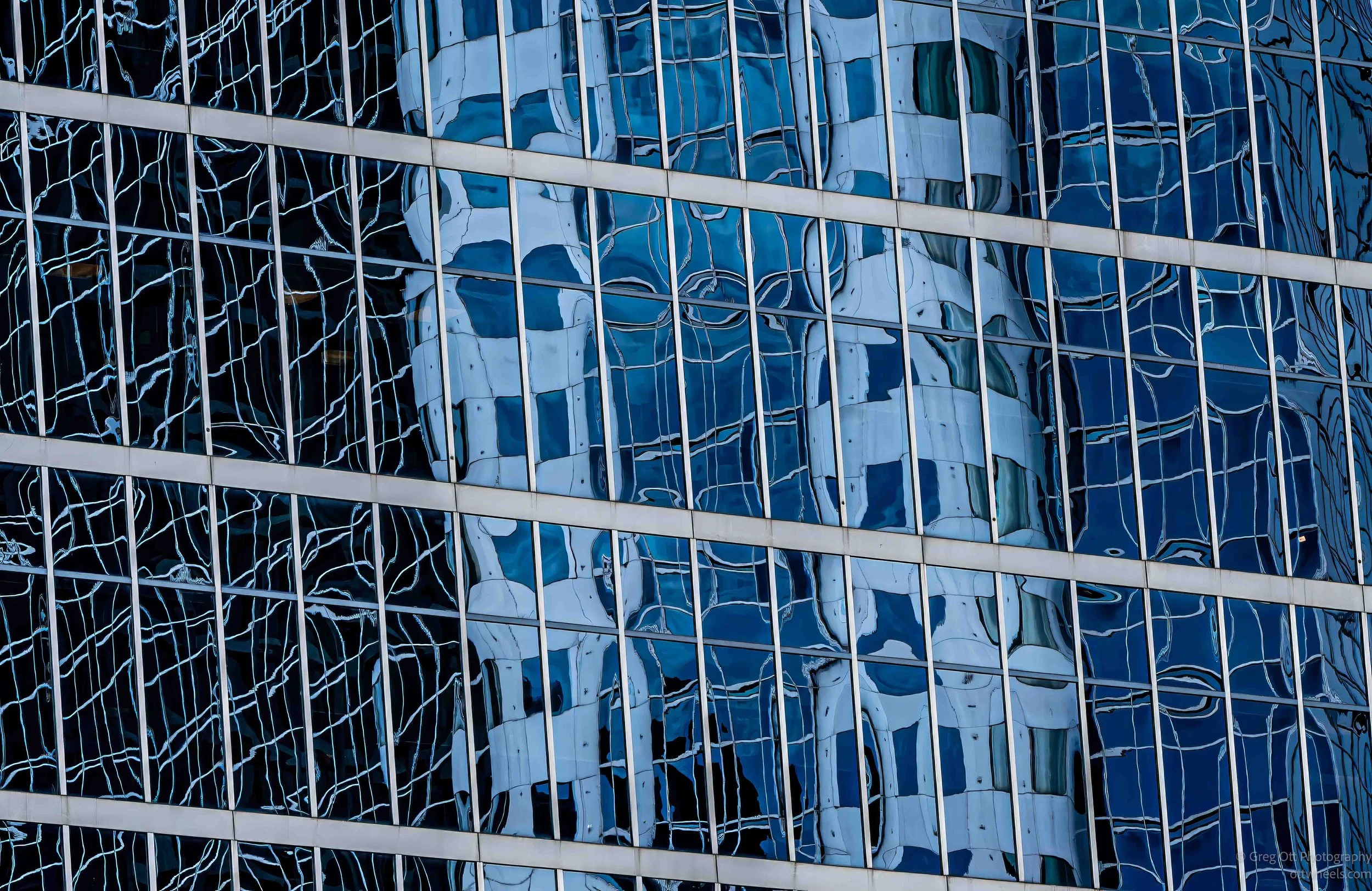
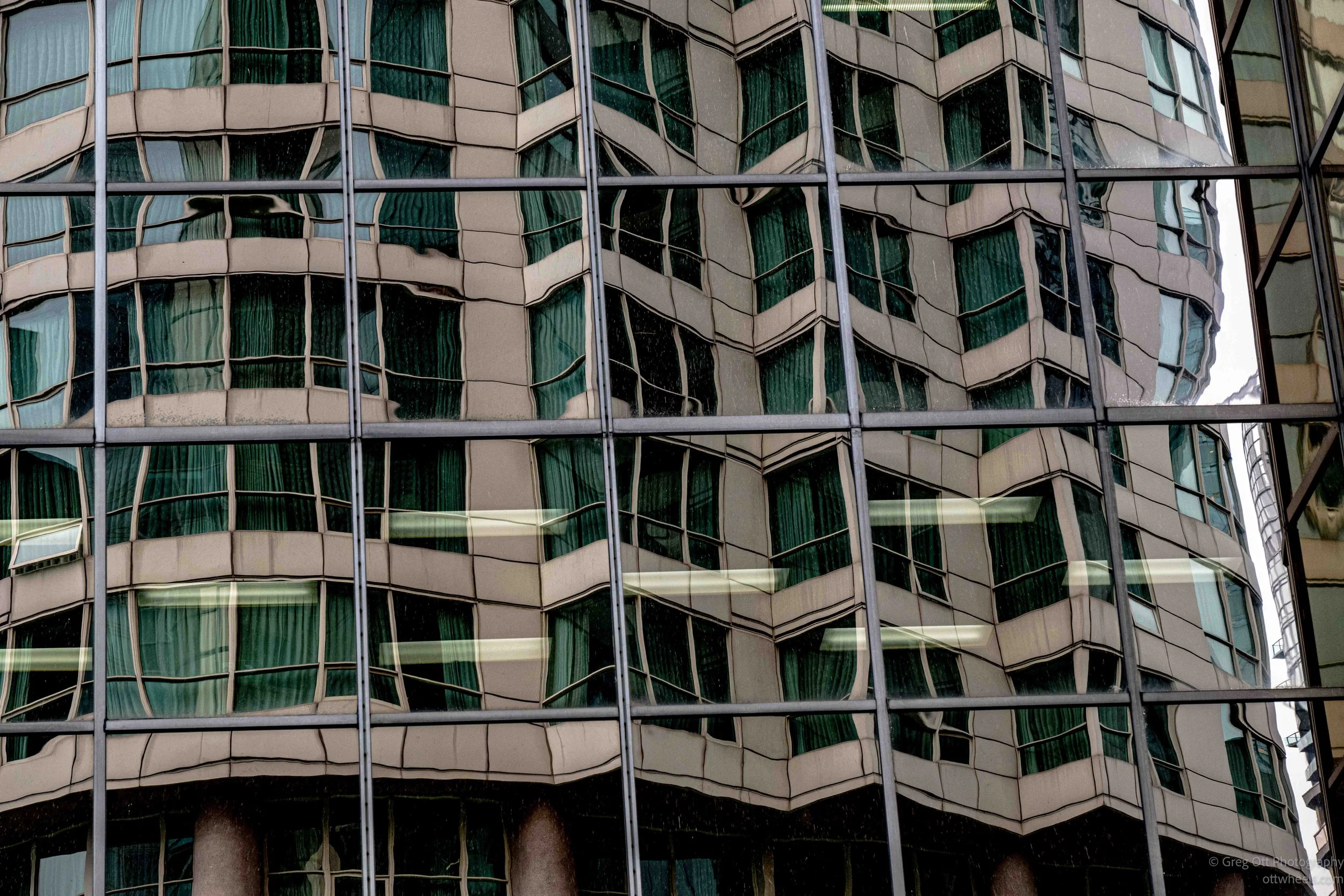
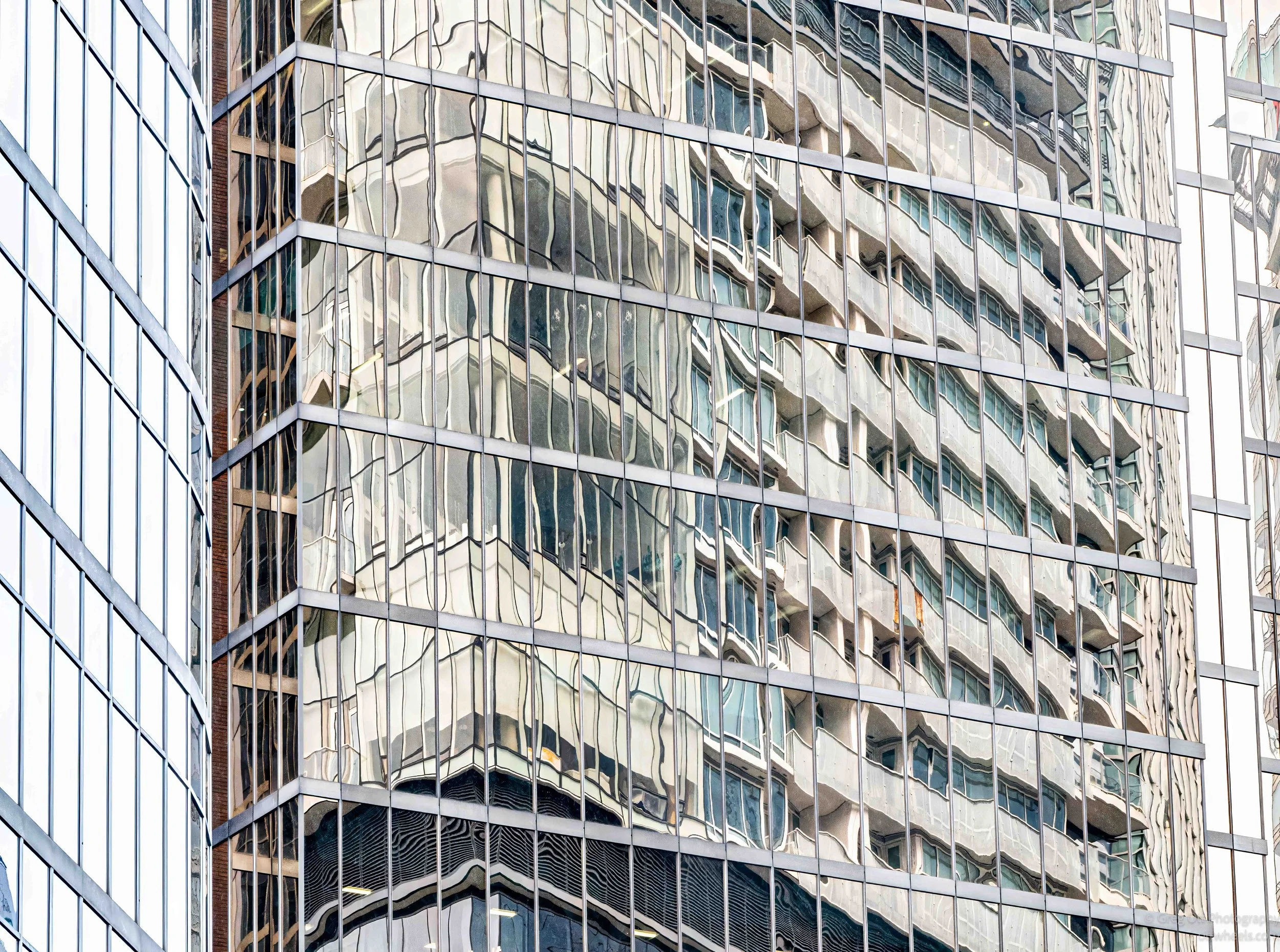
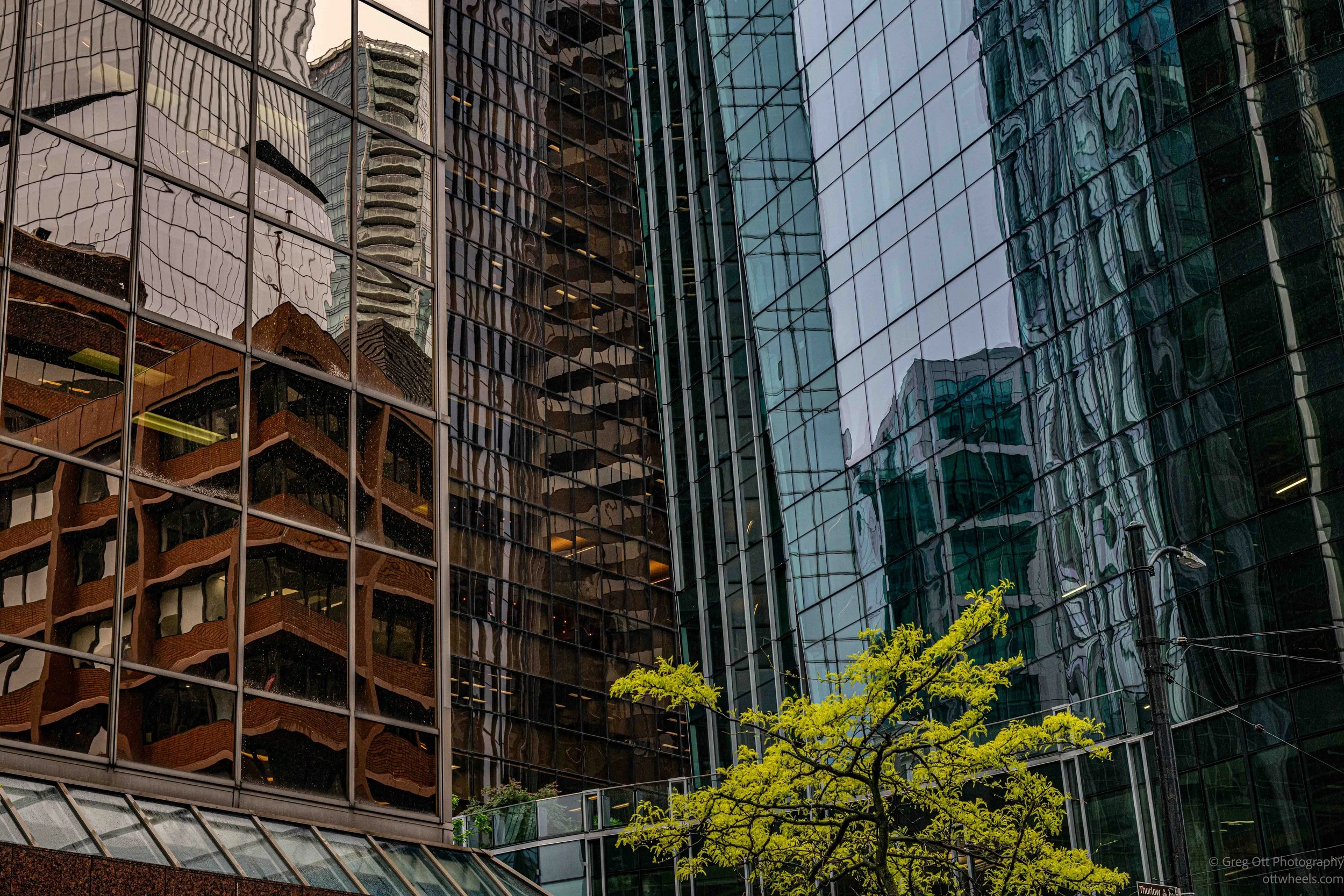
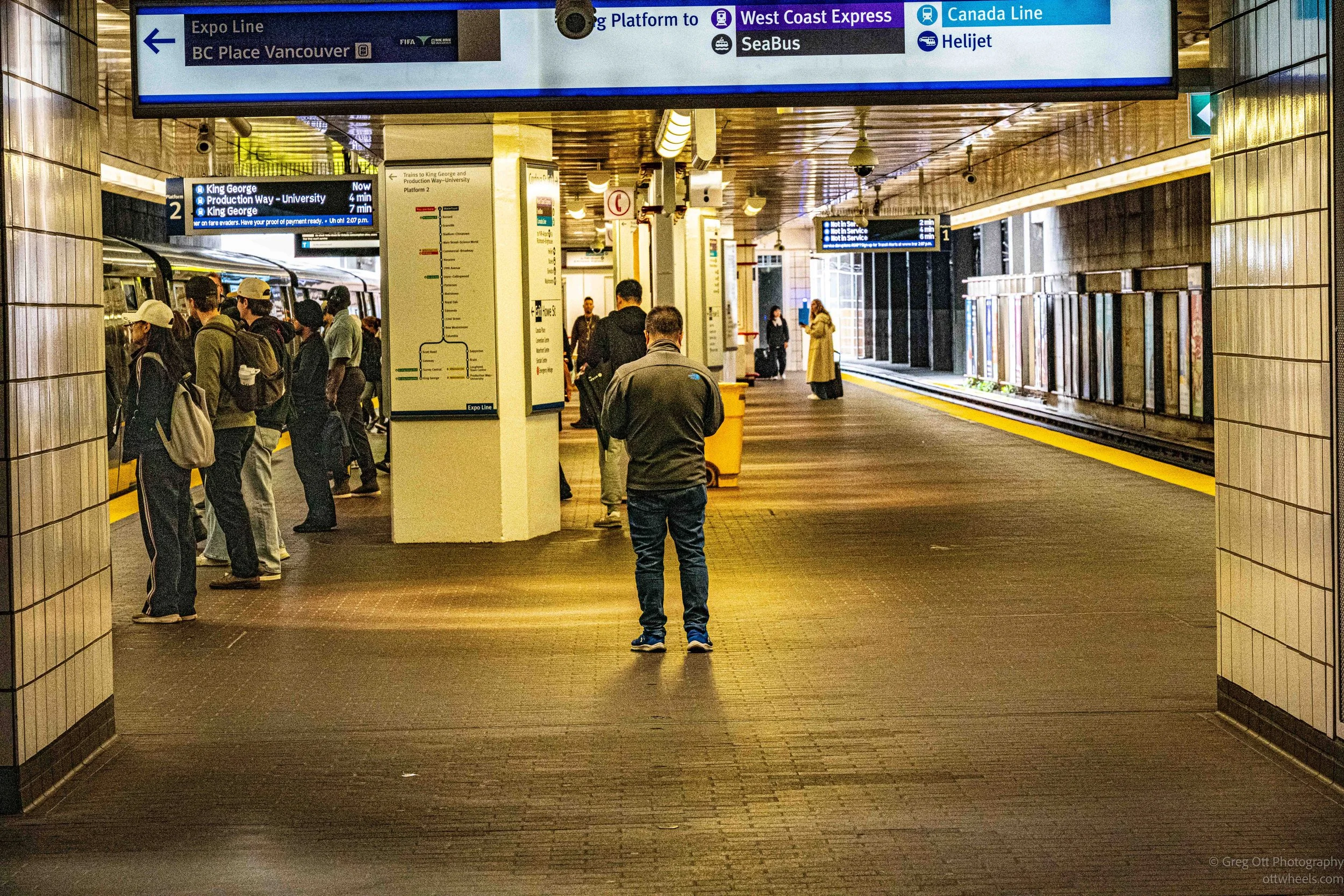
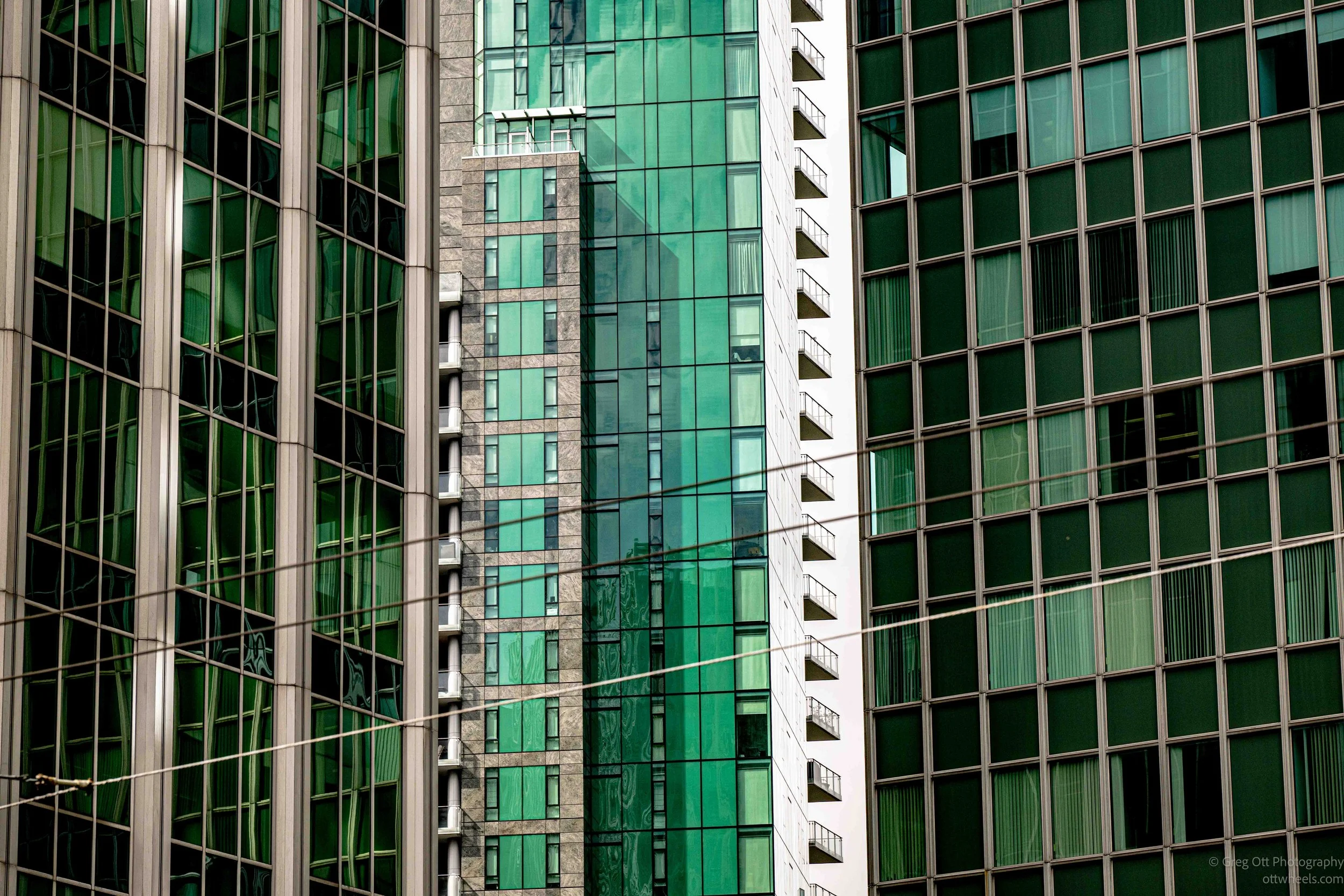
The weather was perfect for photography. Rainwater covered every surface and the glass buildings downtown were acting like giant mirrors. I spent a lot of time photographing reflections where entire skyscrapers bent and warped across windows. Some buildings looked almost liquid. Others looked like abstract paintings with curved lines and repeating patterns. The changing light constantly transformed the scene. Dark storm clouds would move in behind the skyline while sunlight would suddenly illuminate only portions of the buildings, making parts of the city glow while the rest disappeared into shadow.
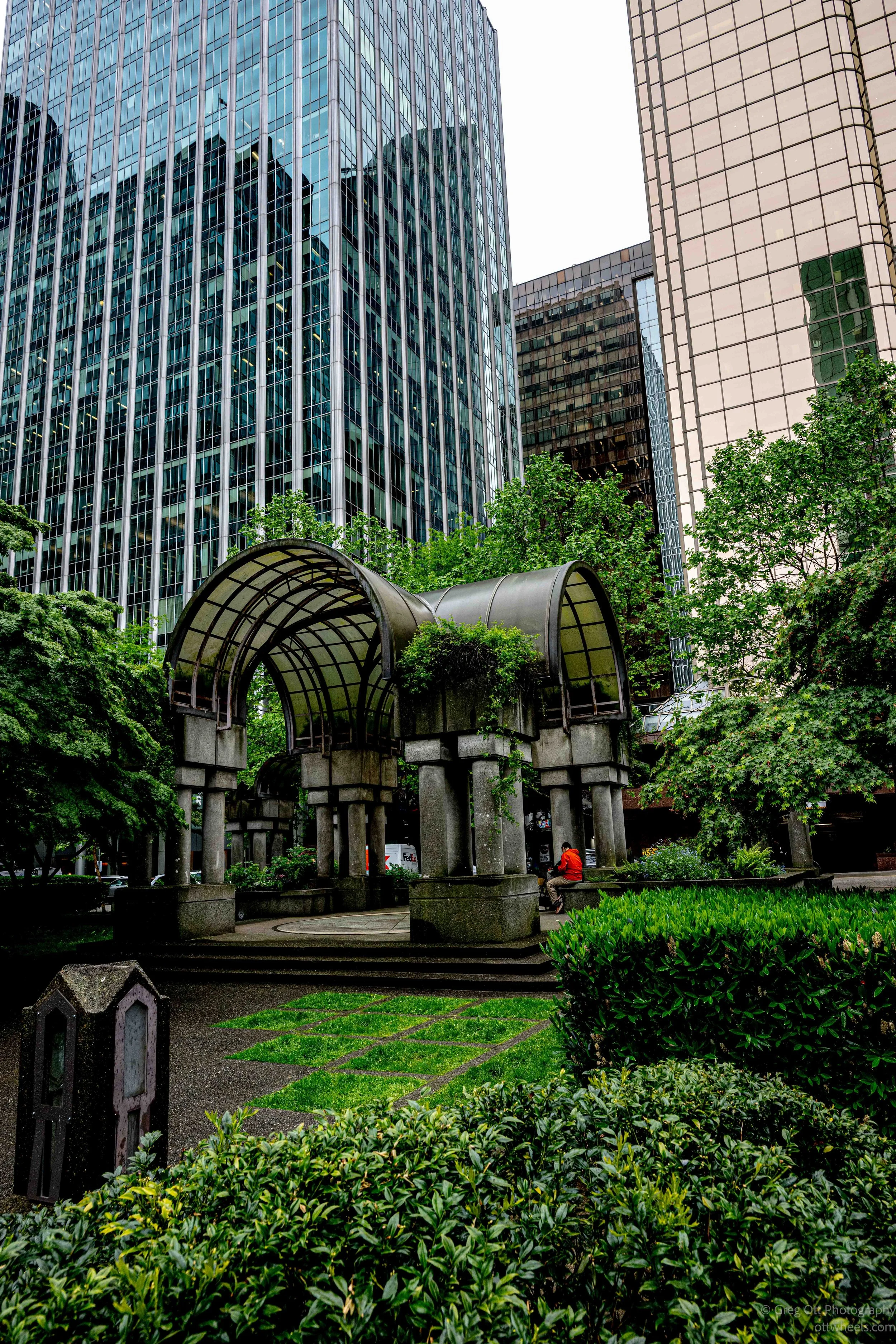
At one small park tucked between the towers, I stopped to photograph a strange concrete and steel canopy structure surrounded by carefully maintained greenery. The contrast between the modern office towers, wet pavement, and small quiet urban garden caught my attention immediately. Downtown Vancouver does this well. Massive modern buildings sit beside little pockets of calm space.
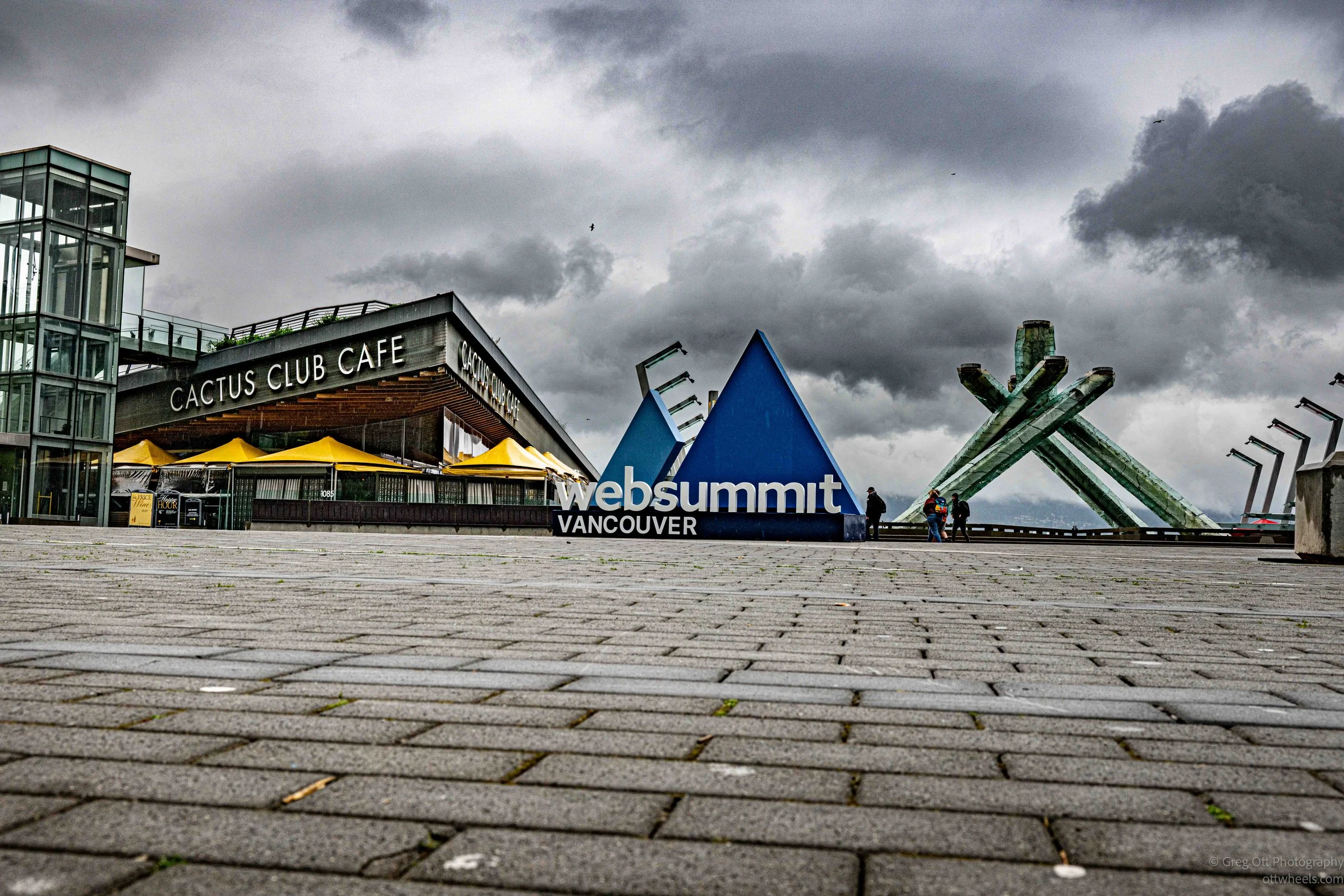
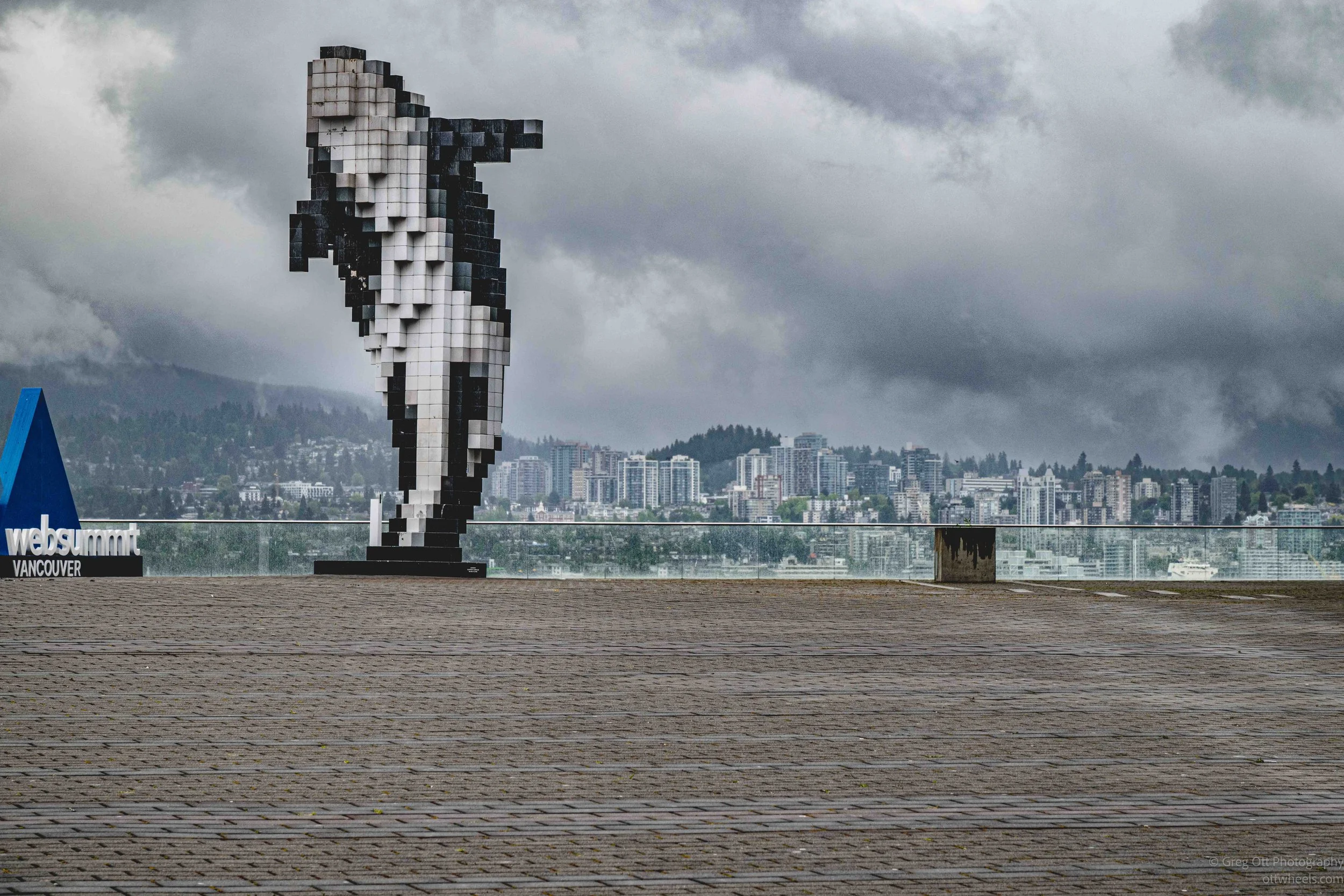
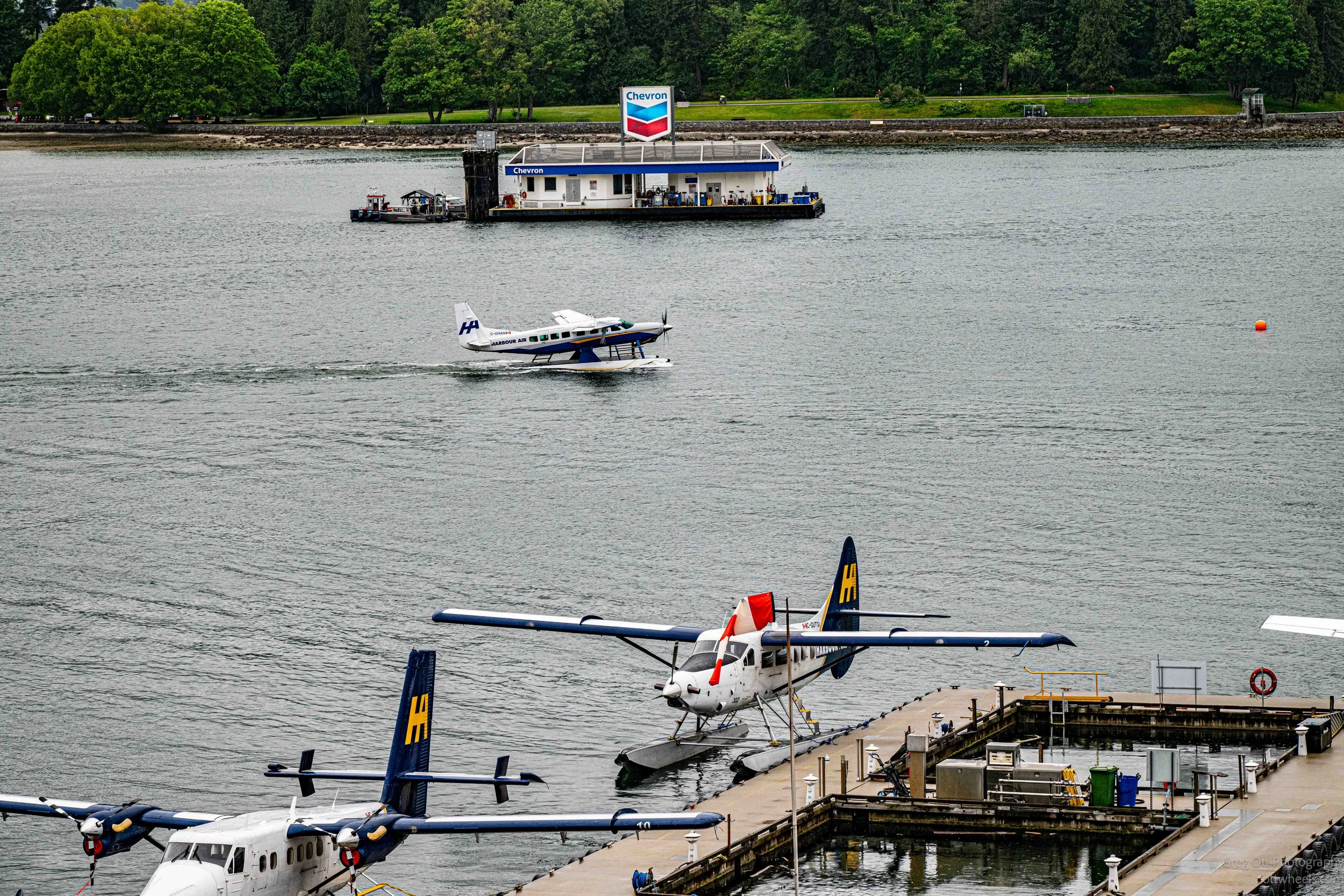
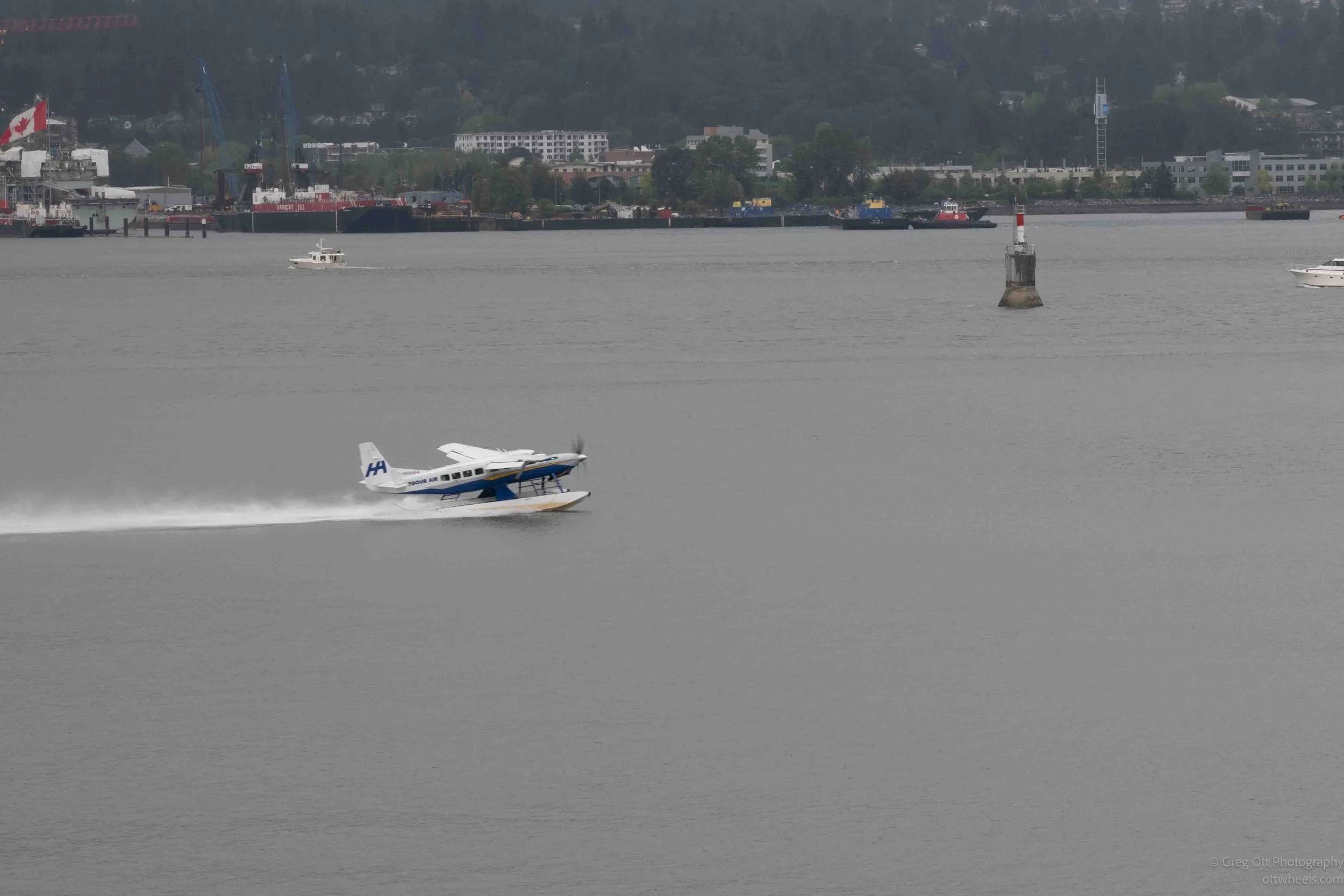
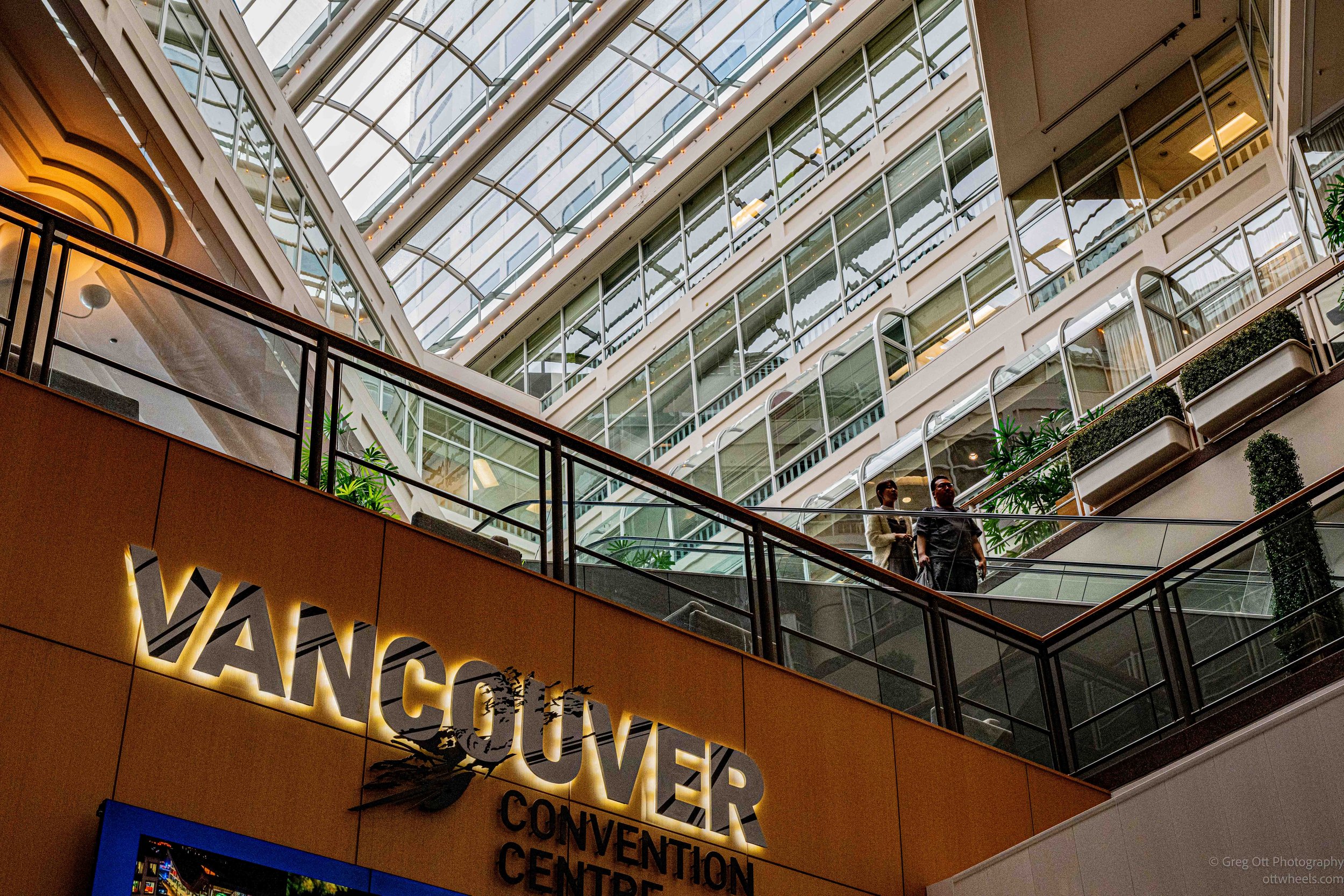
As I moved toward the waterfront, the city kept changing character. The Vancouver Convention Centre stretched out along the harbor with its enormous glass walls reflecting both the water and the storm clouds overhead. Across the water sat the floating Chevron gas station, something I had never seen before, while Harbour Air seaplanes continuously landed and took off from Coal Harbour. One would taxi in across the water while another lifted into the gray sky only minutes later.
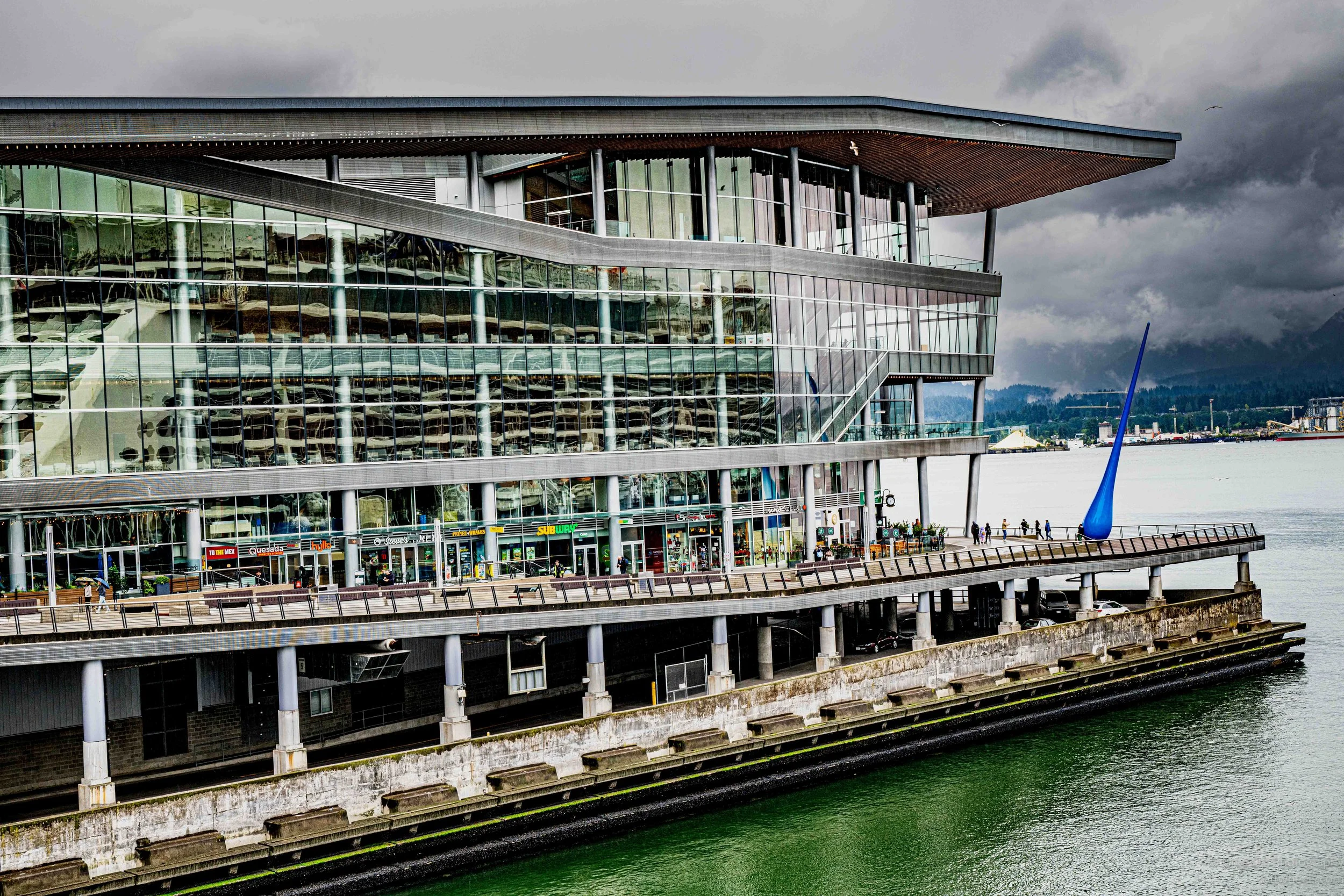
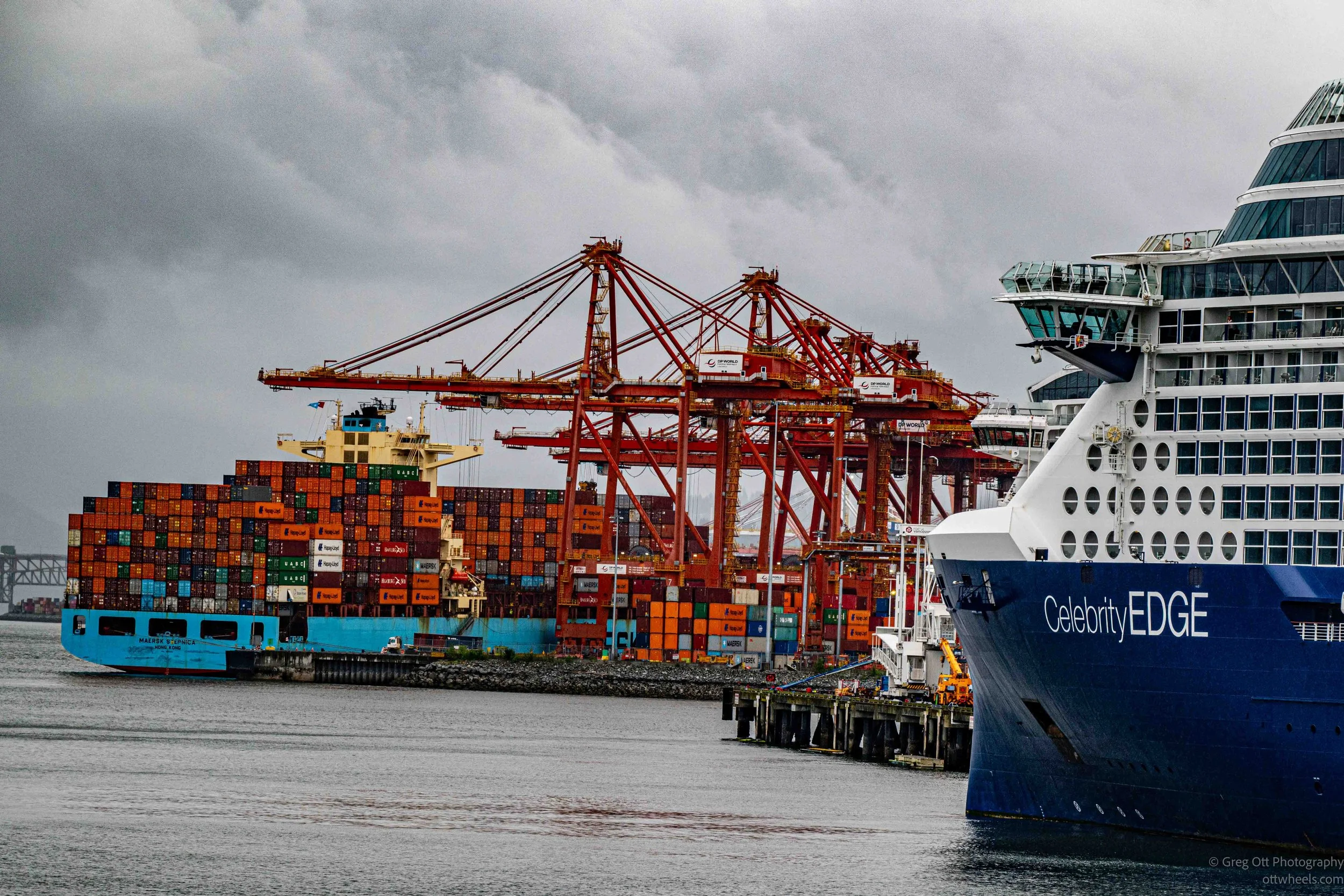
Beyond that, huge container ships were being loaded by giant cranes that looked almost mechanical and prehistoric at the same time. The scale of everything along the waterfront was impressive. Massive cargo operations were happening only a short distance from tourists walking the promenade and taking selfies in front of cruise ships.
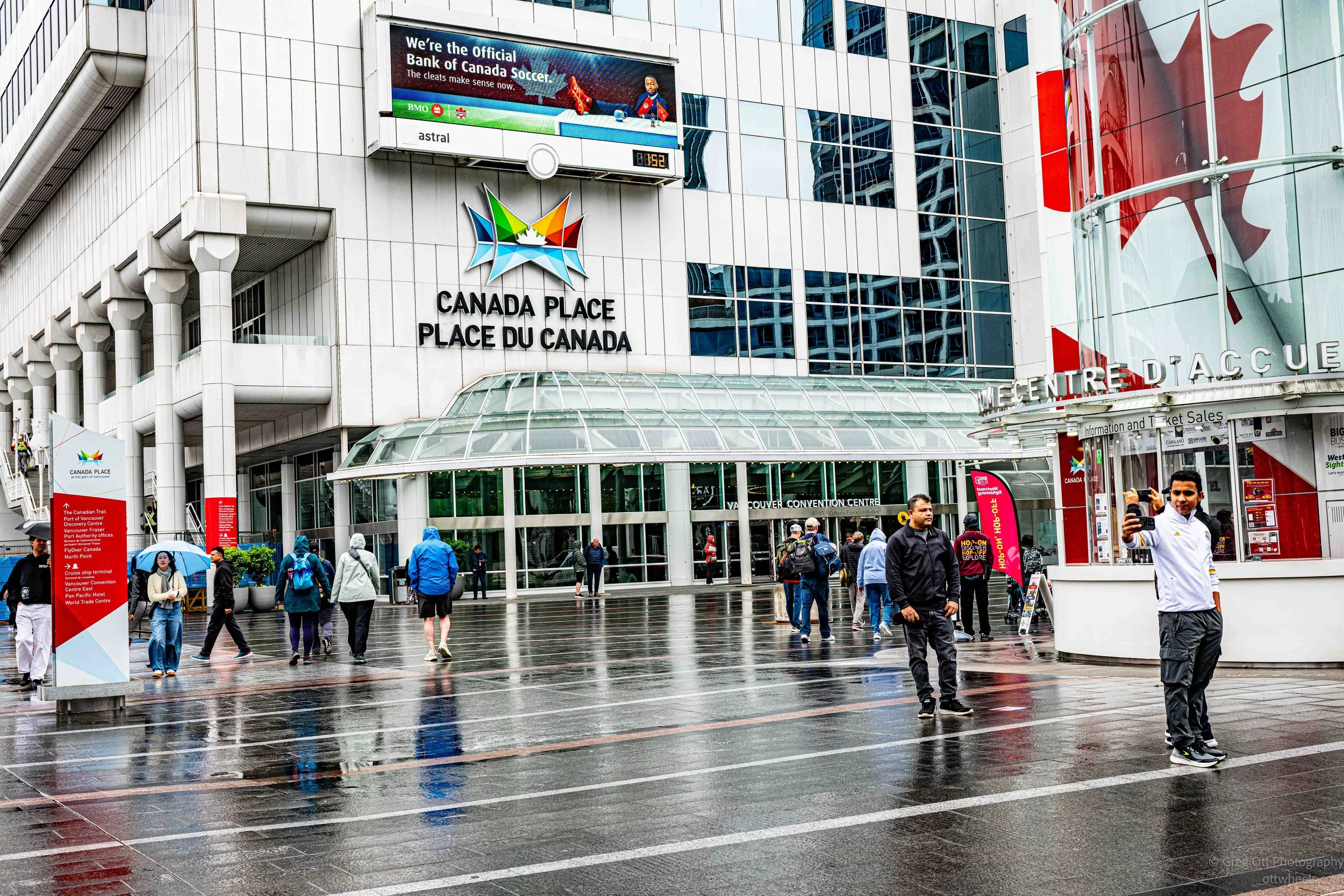
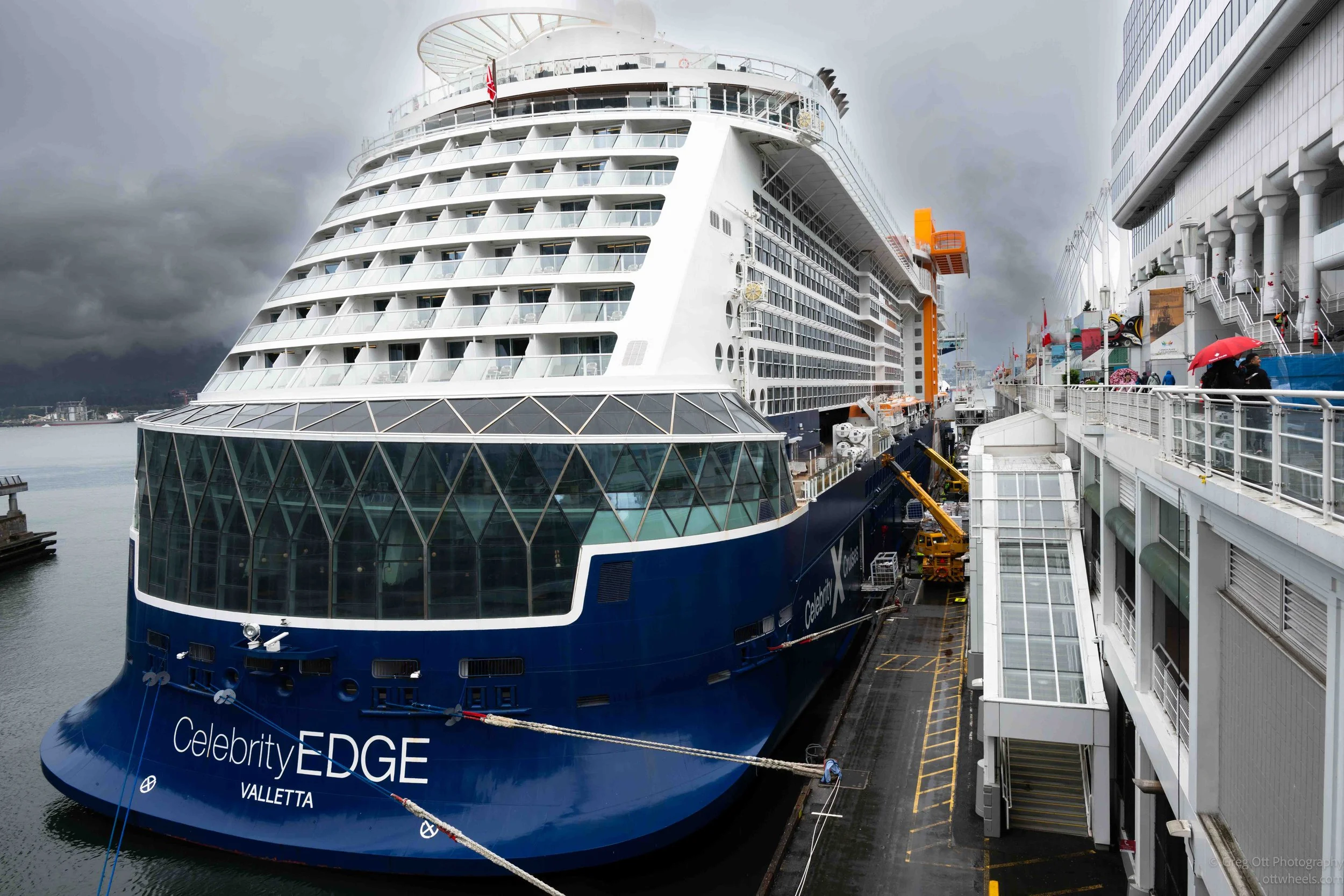
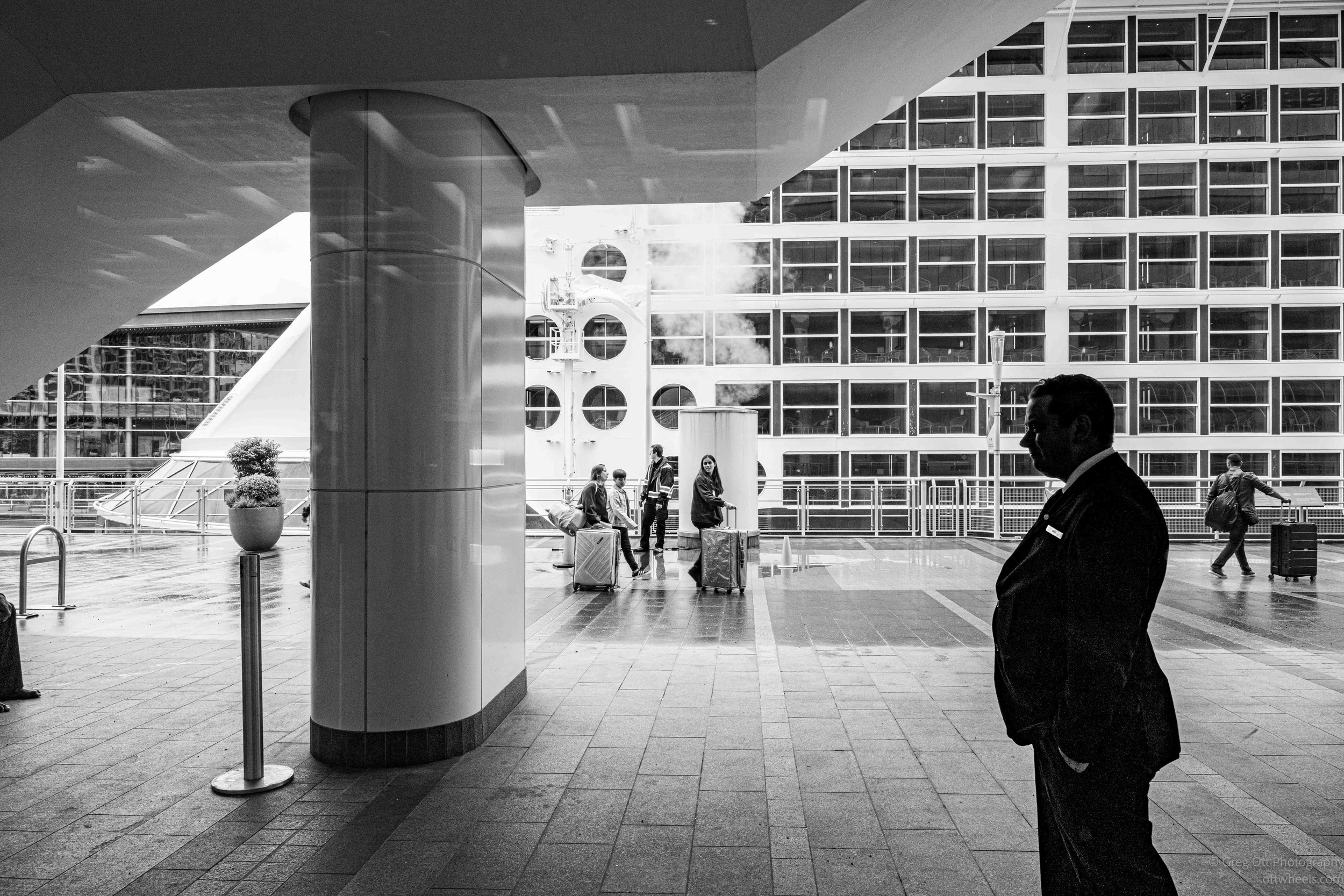
The Celebrity Edge cruise ship was docked at Canada Place loading passengers. The ship absolutely dwarfed everything around it. Standing beside it made the terminal building itself seem small. Rain clouds hung low over the mountains in the distance while patches of sunlight occasionally broke through and lit portions of the ship bright white against the dark sky. It was one of those days where the weather itself became part of the subject.
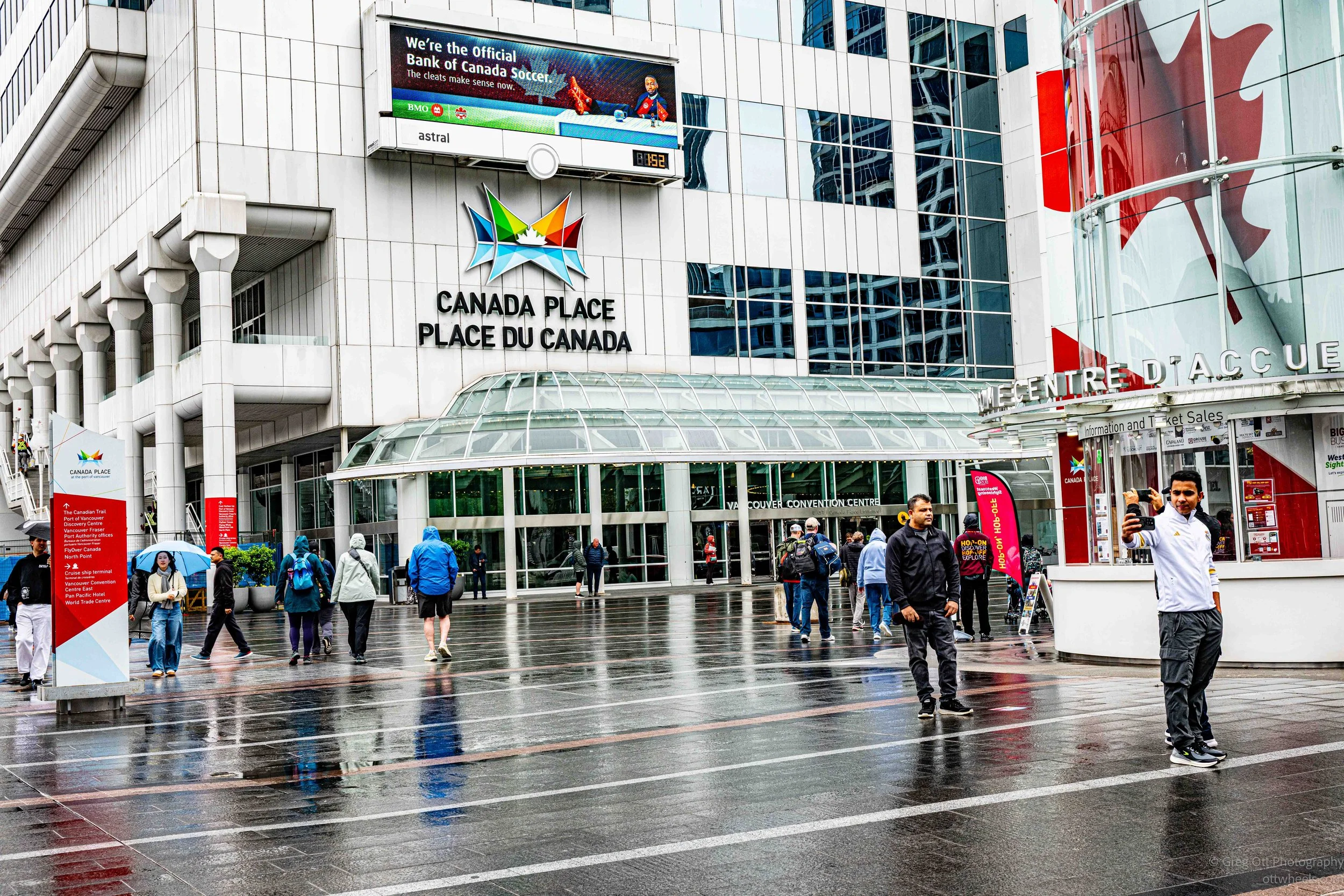
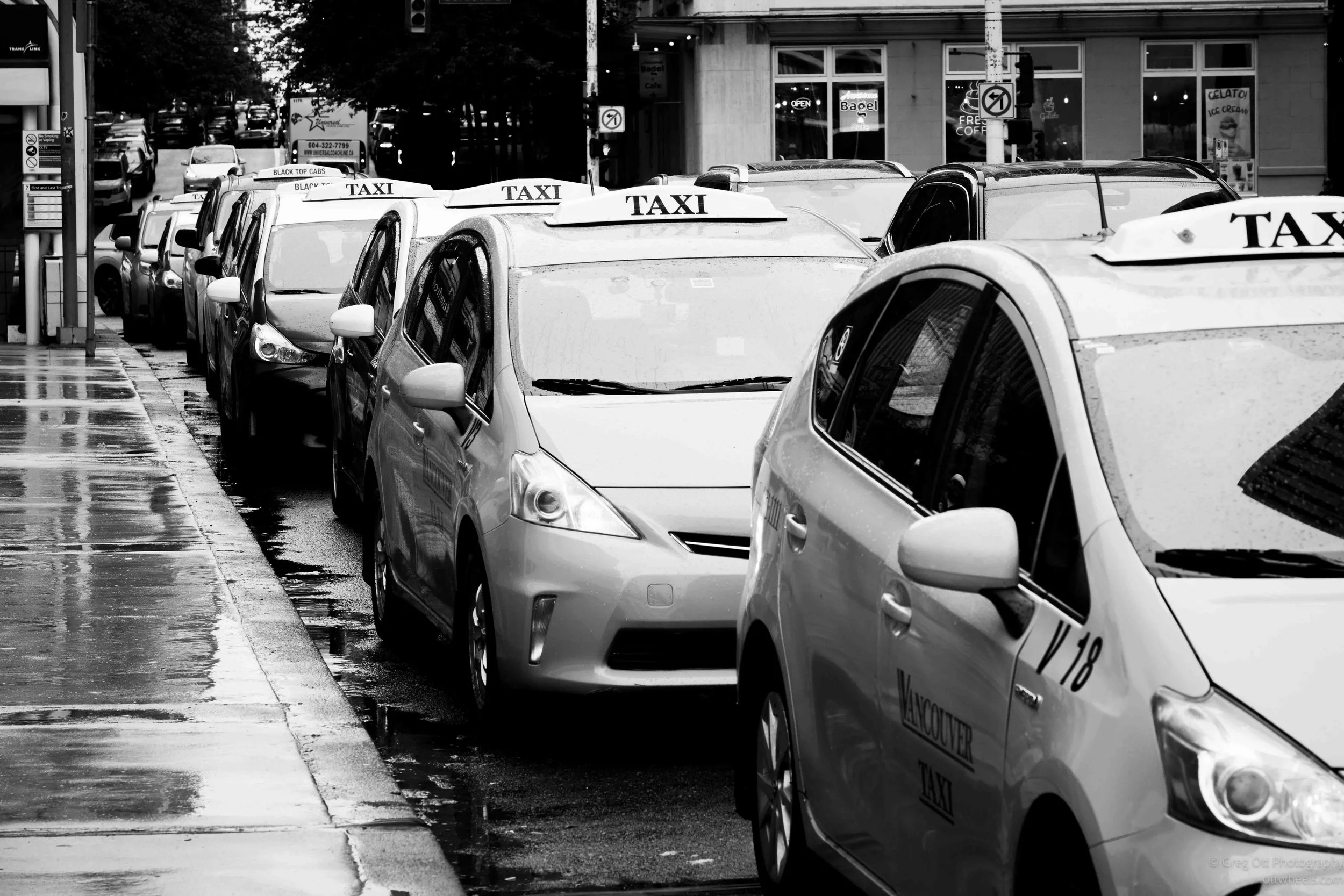
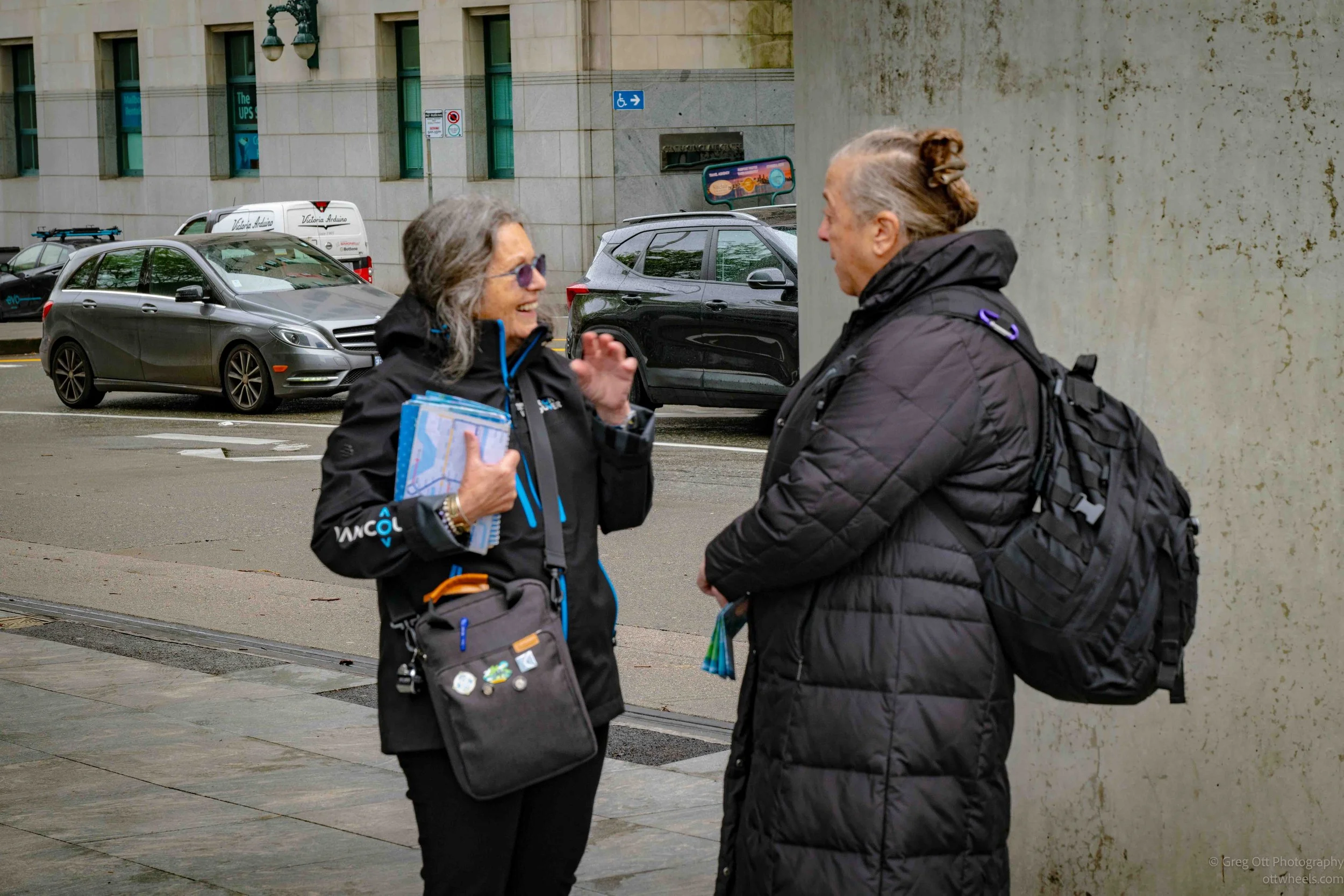
The taxi stands nearby were busy with drivers waiting for cruise passengers while city staff helped confused visitors trying to figure out where they were going. I stopped for a while watching one woman working for the city patiently helping tourists with directions while people rolled luggage past her in every direction. Downtown Vancouver felt very international. Every few minutes I heard a different language.
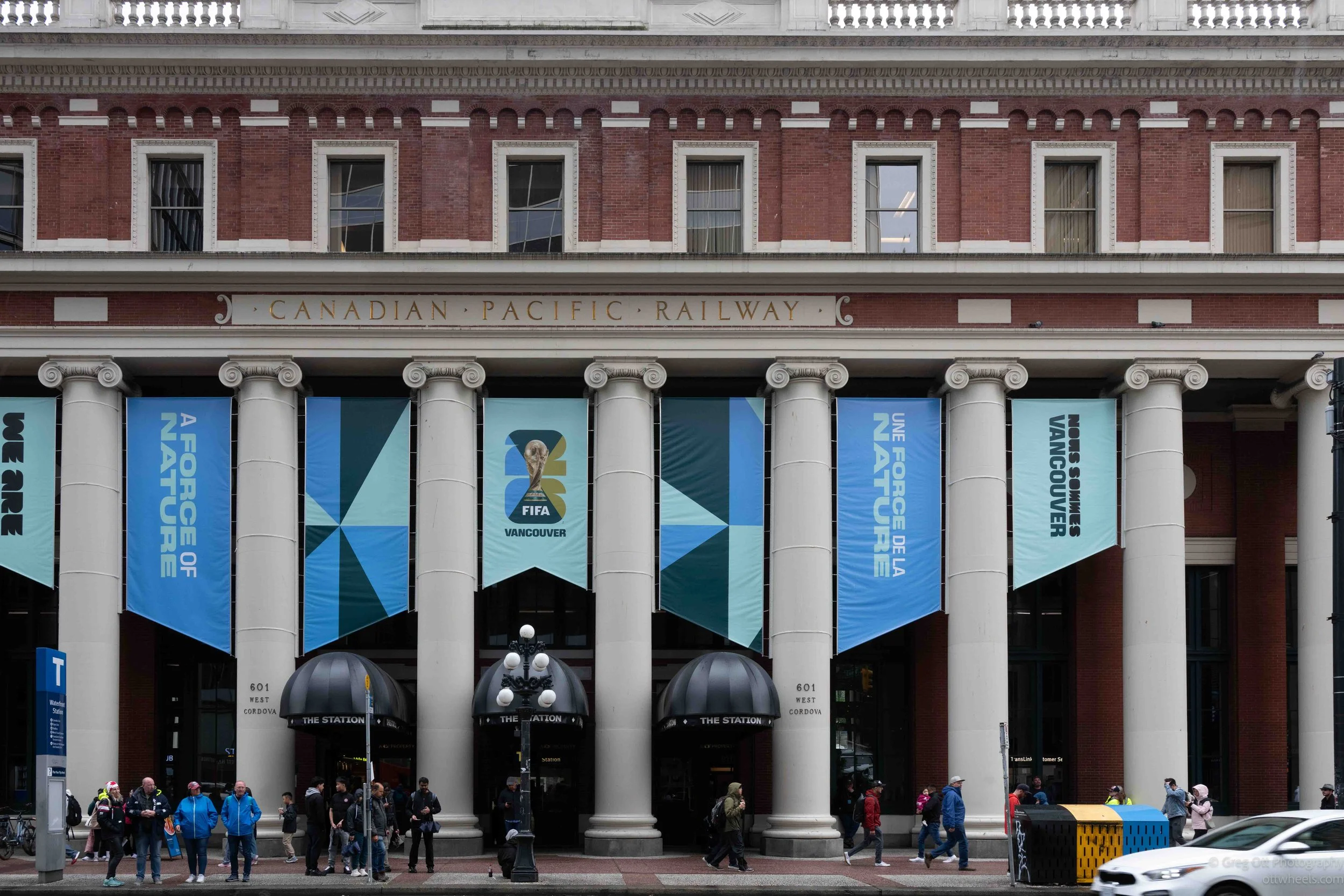
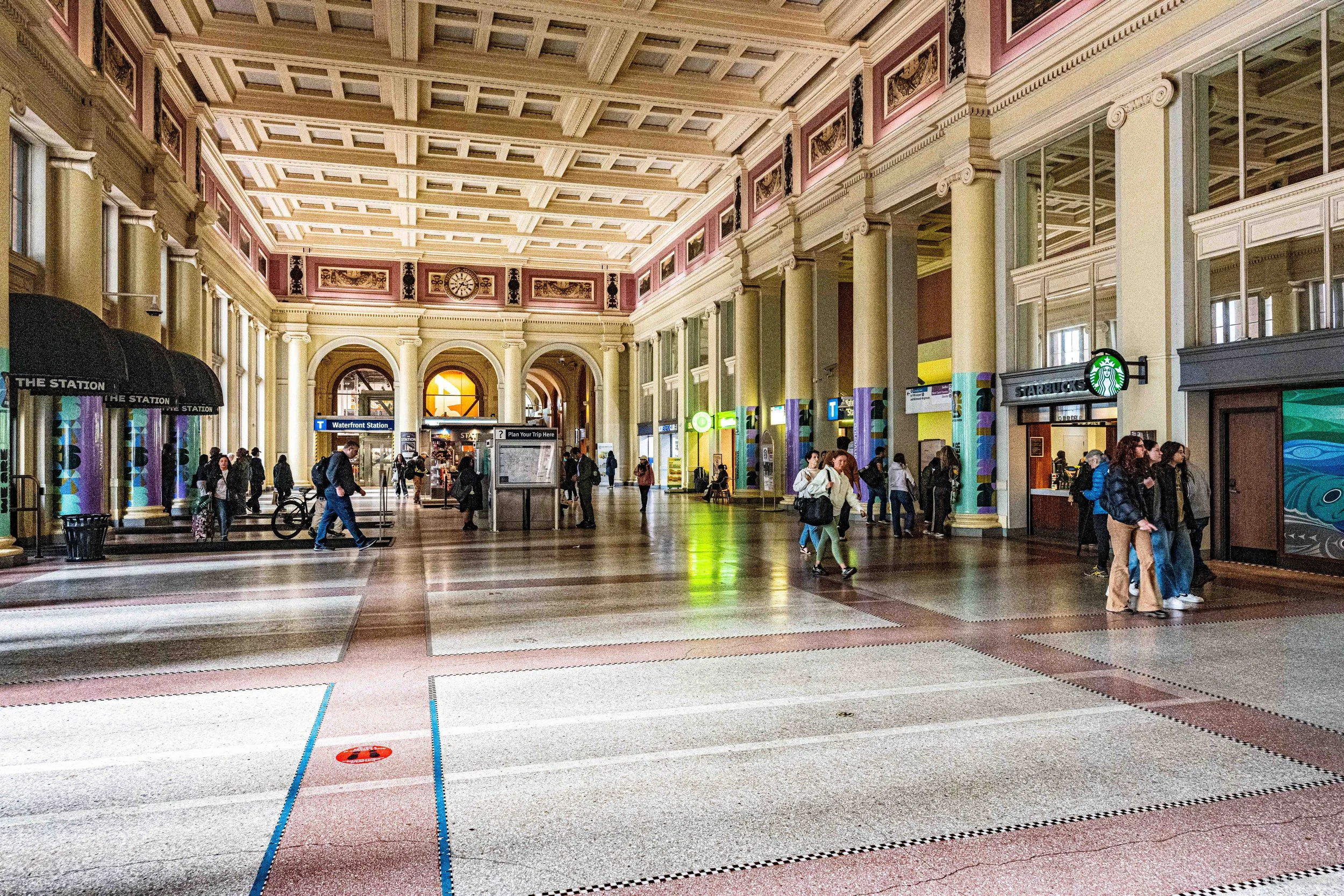
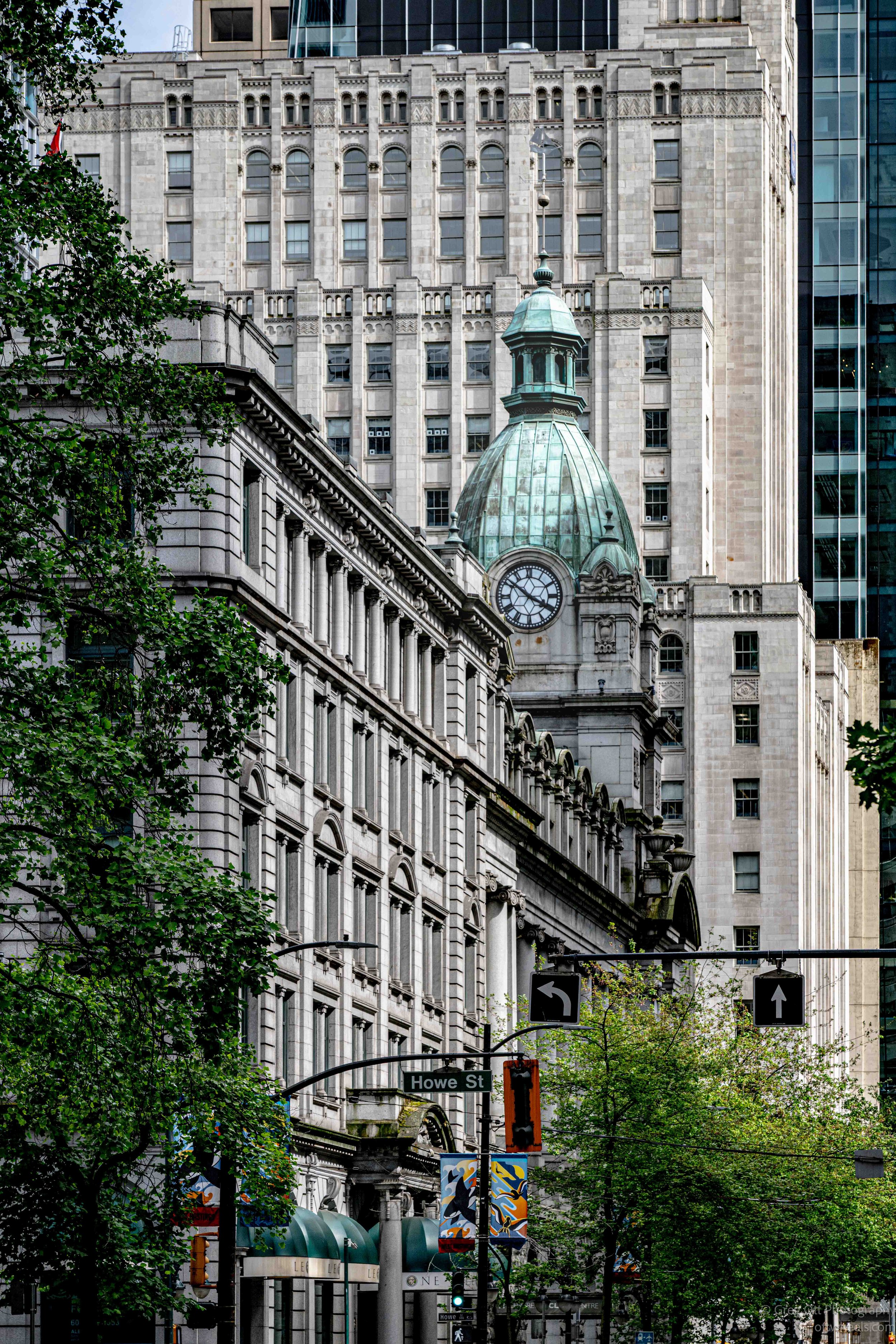
I wandered over to the old Canadian Pacific Railway Station and immediately understood why so many people were photographing it. The building feels completely different from the surrounding glass towers. Built in 1914, the station has massive columns, brickwork, and the kind of architecture that makes modern office buildings feel temporary by comparison. Inside, the tall ceilings and long hallways still carry that old railway grandeur. Outside, people continuously stopped to photograph themselves in front of the entrance.
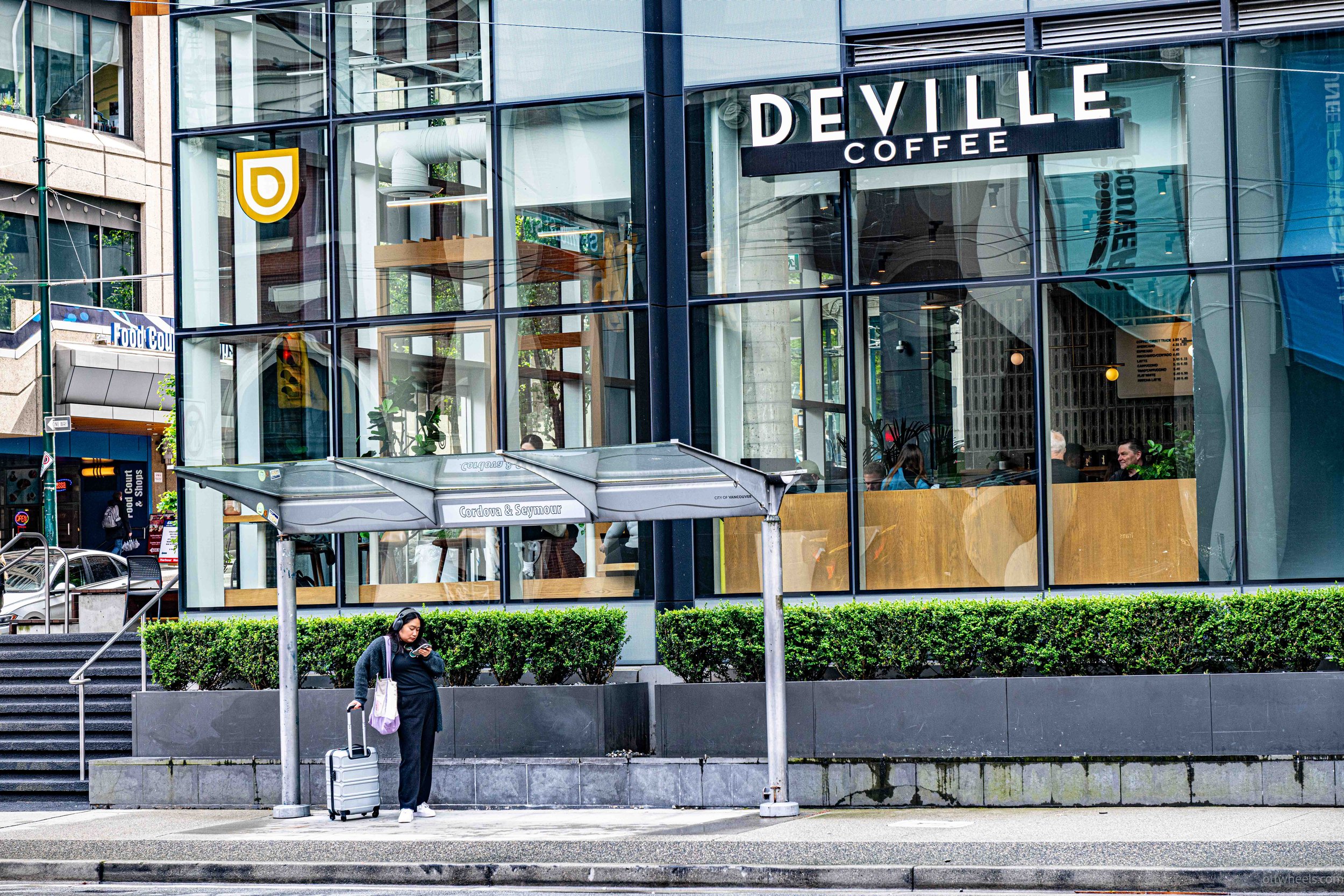
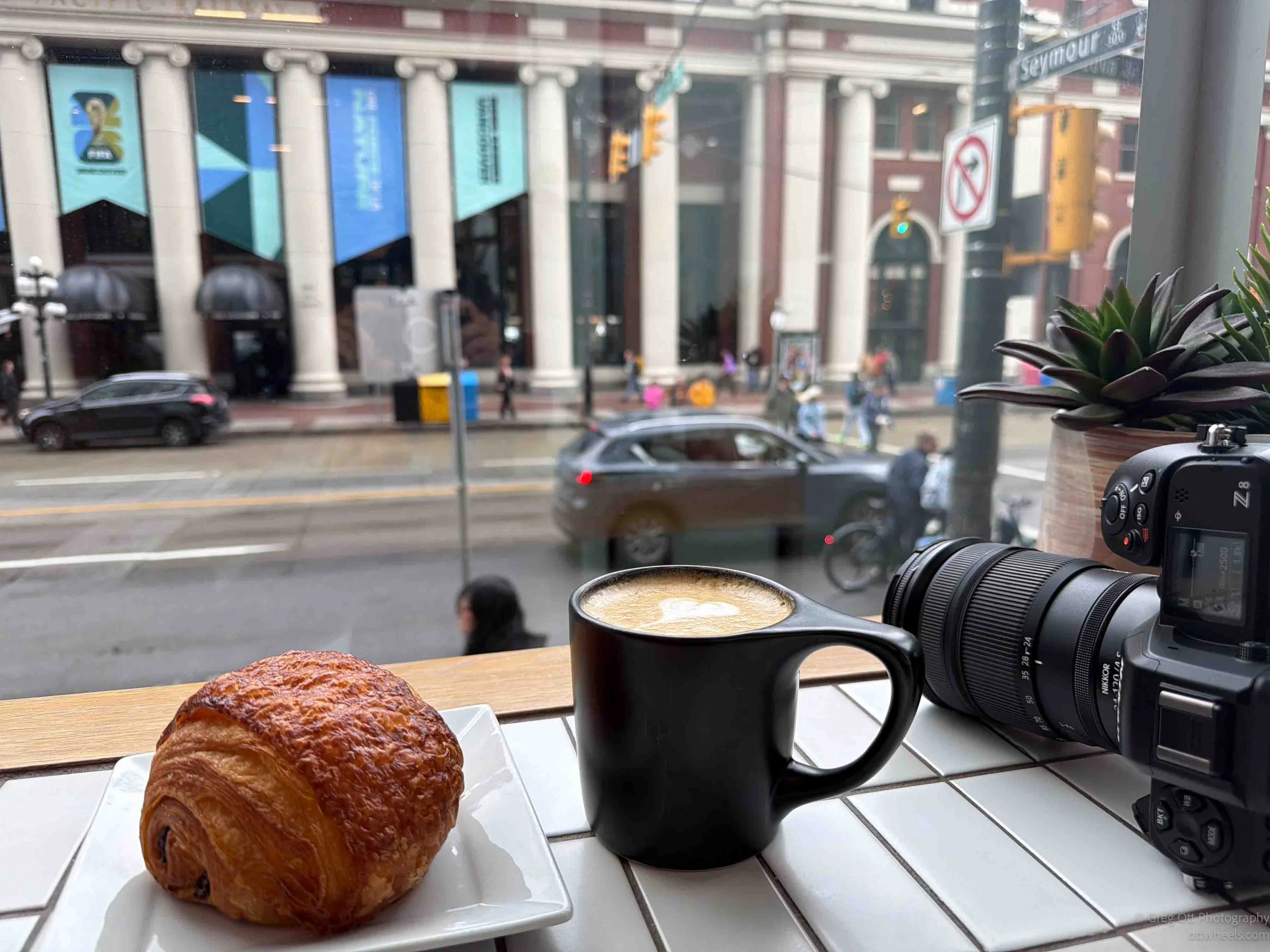
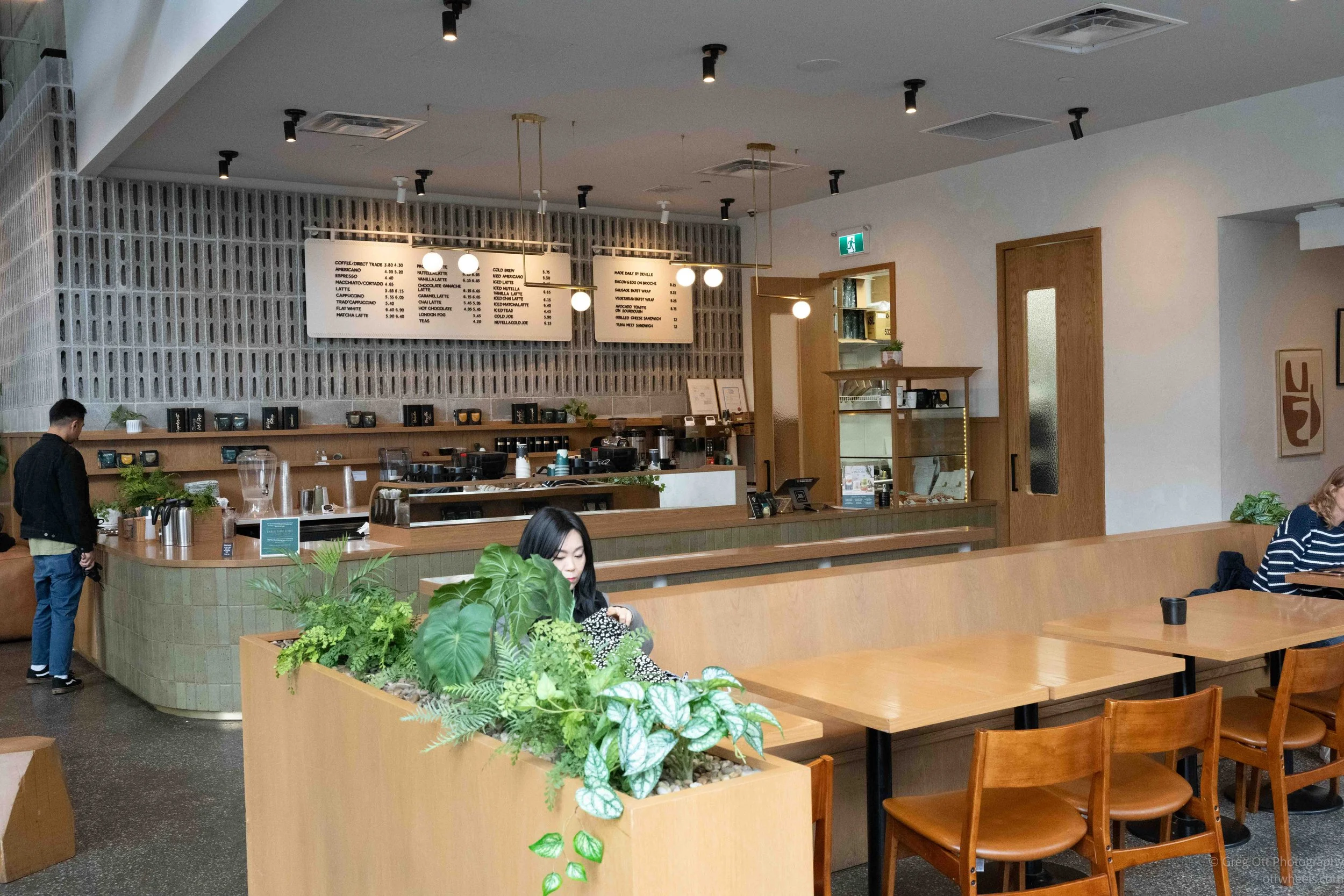
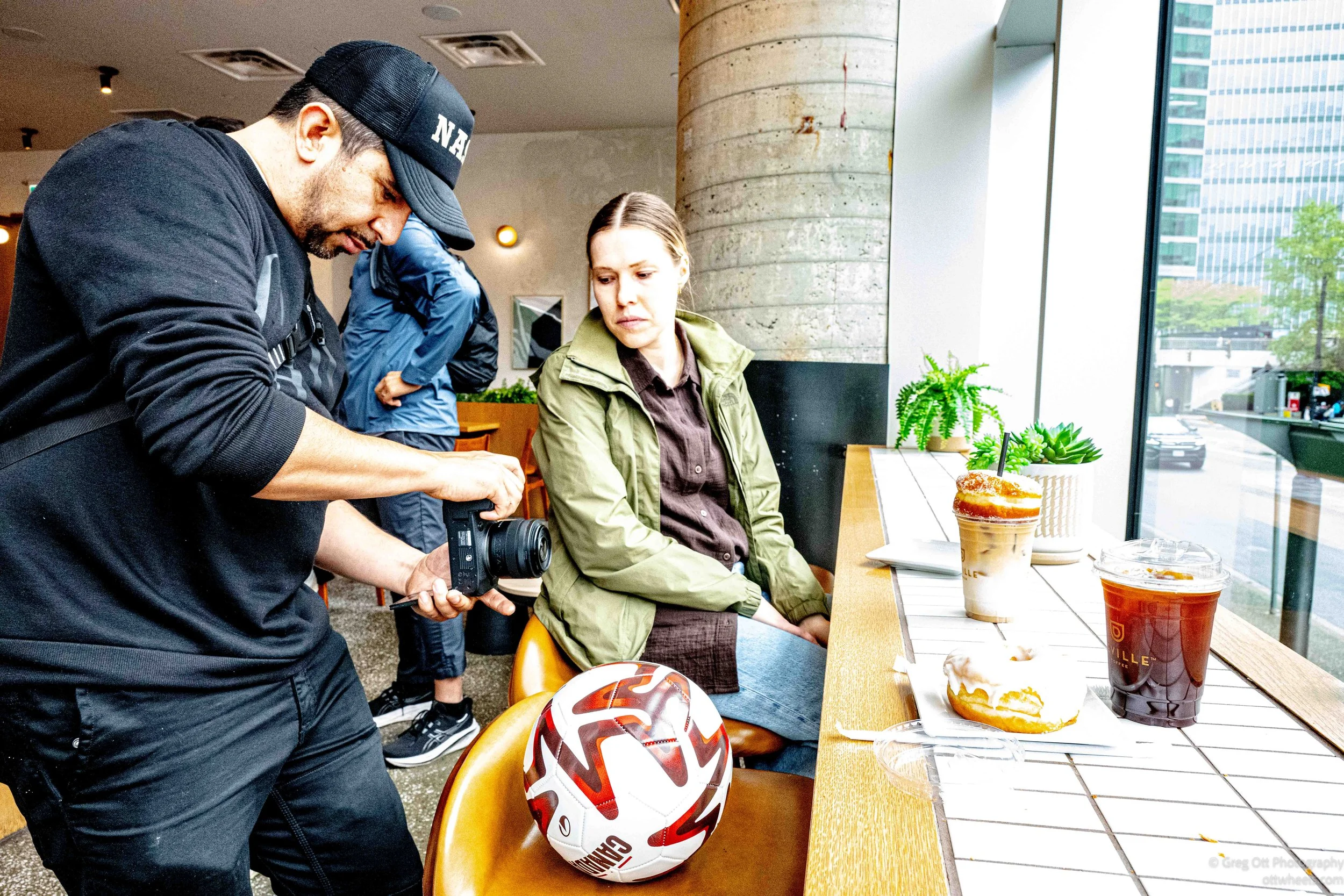
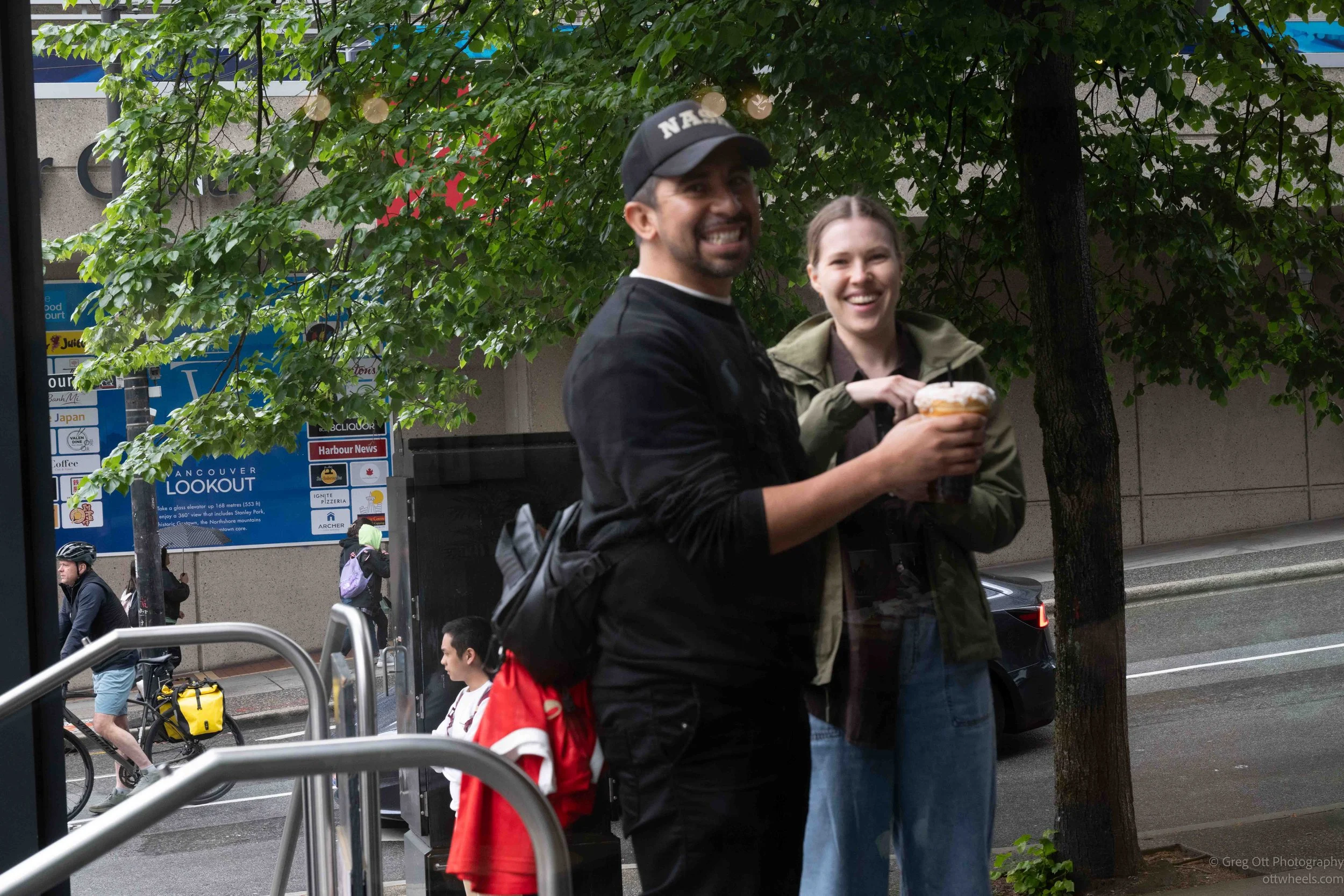
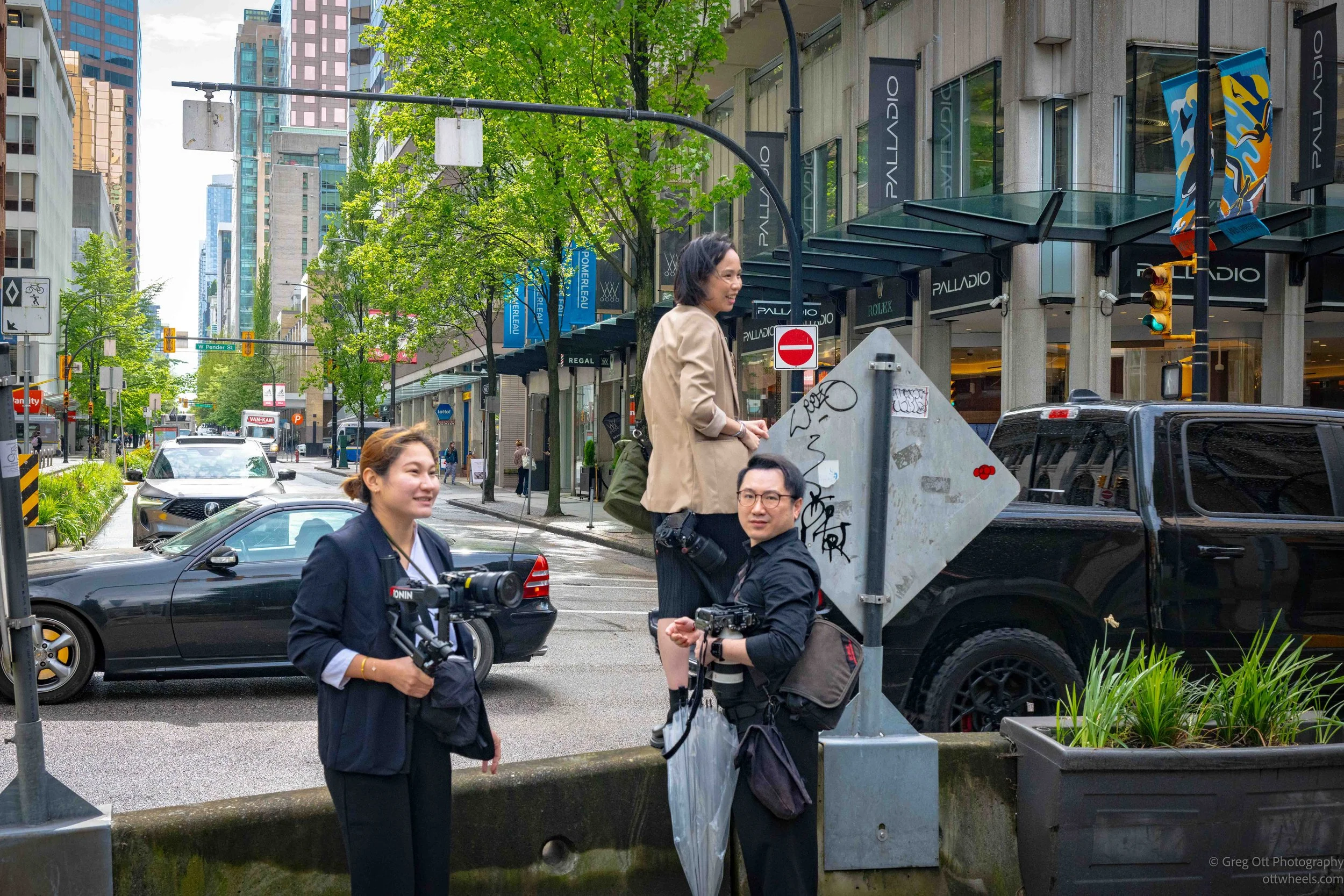
Directly across the street I stopped at Deville Coffee. A couple sat beside me and commented on the camera. We started talking and they explained they had been hired by Deville to create social media content for the company. They were carefully photographing drinks and pastries while discussing lighting angles and presentation. I ordered a latte and a chocolate croissant and stayed for a while watching them work. Really nice atmosphere inside.
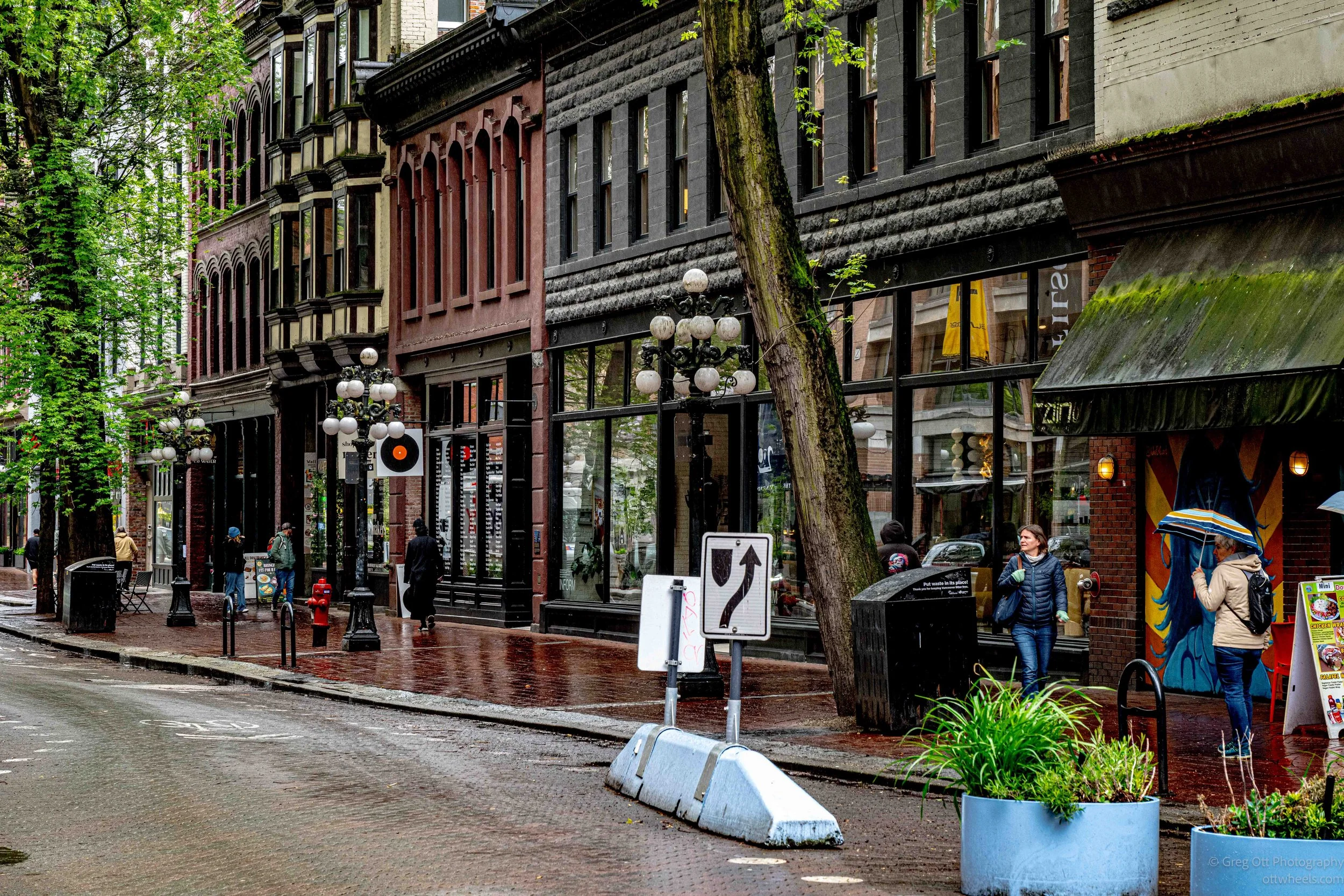
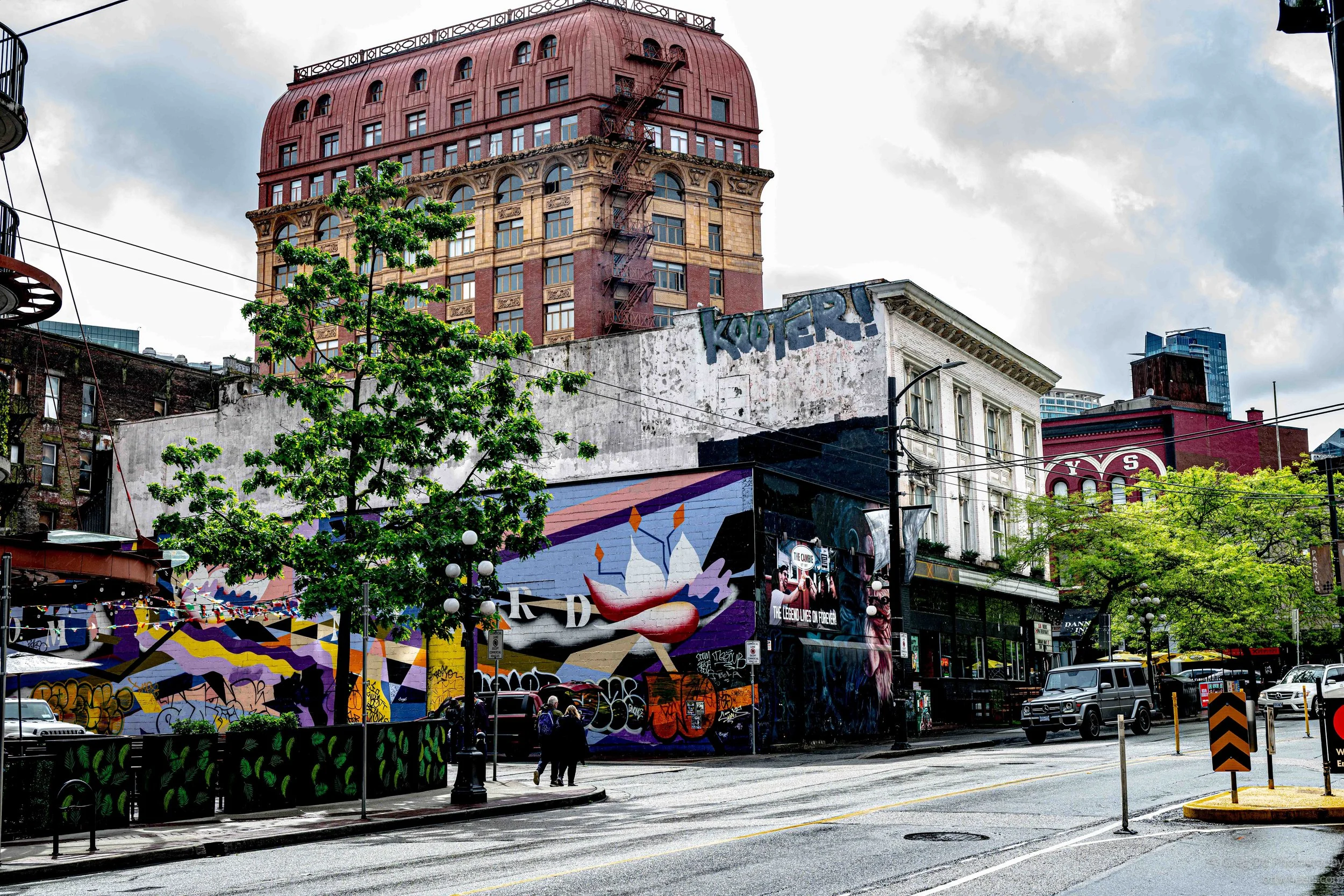
As I continued farther into Gastown, the city changed again. The modern glass towers disappeared and suddenly the streets felt older, narrower, and more historic. Brick buildings, old lamps, and wet cobblestone streets gave the area a completely different character.
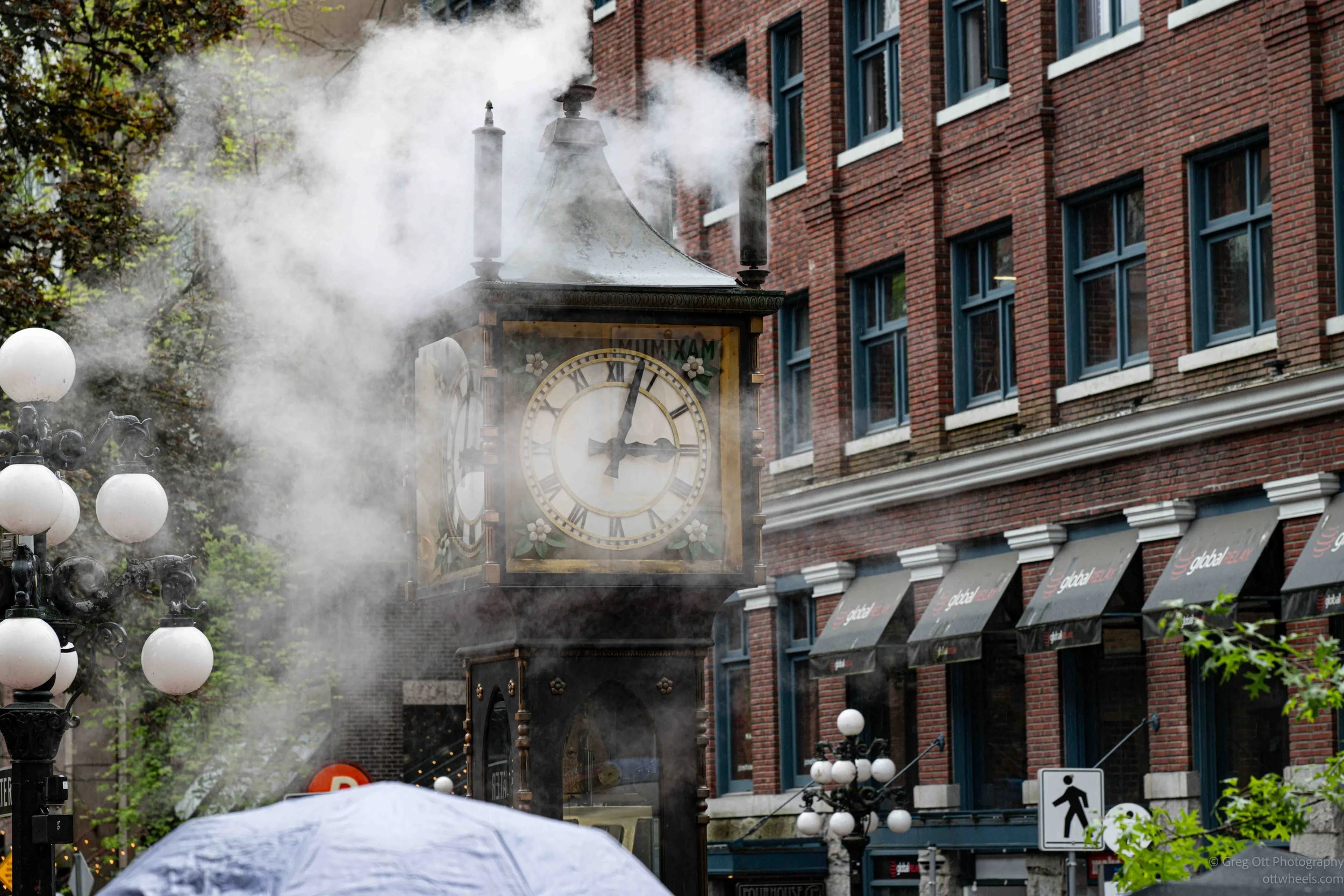
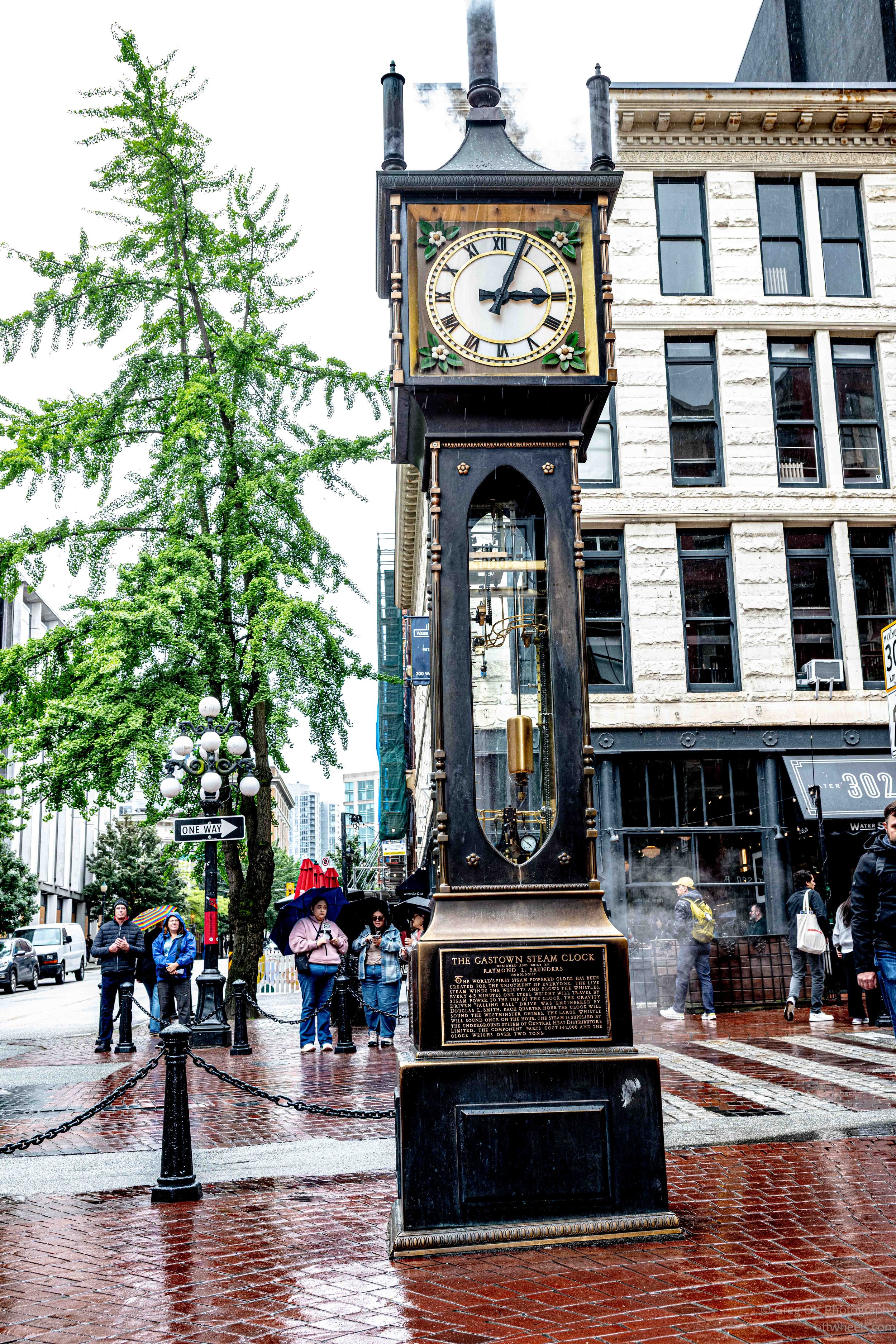
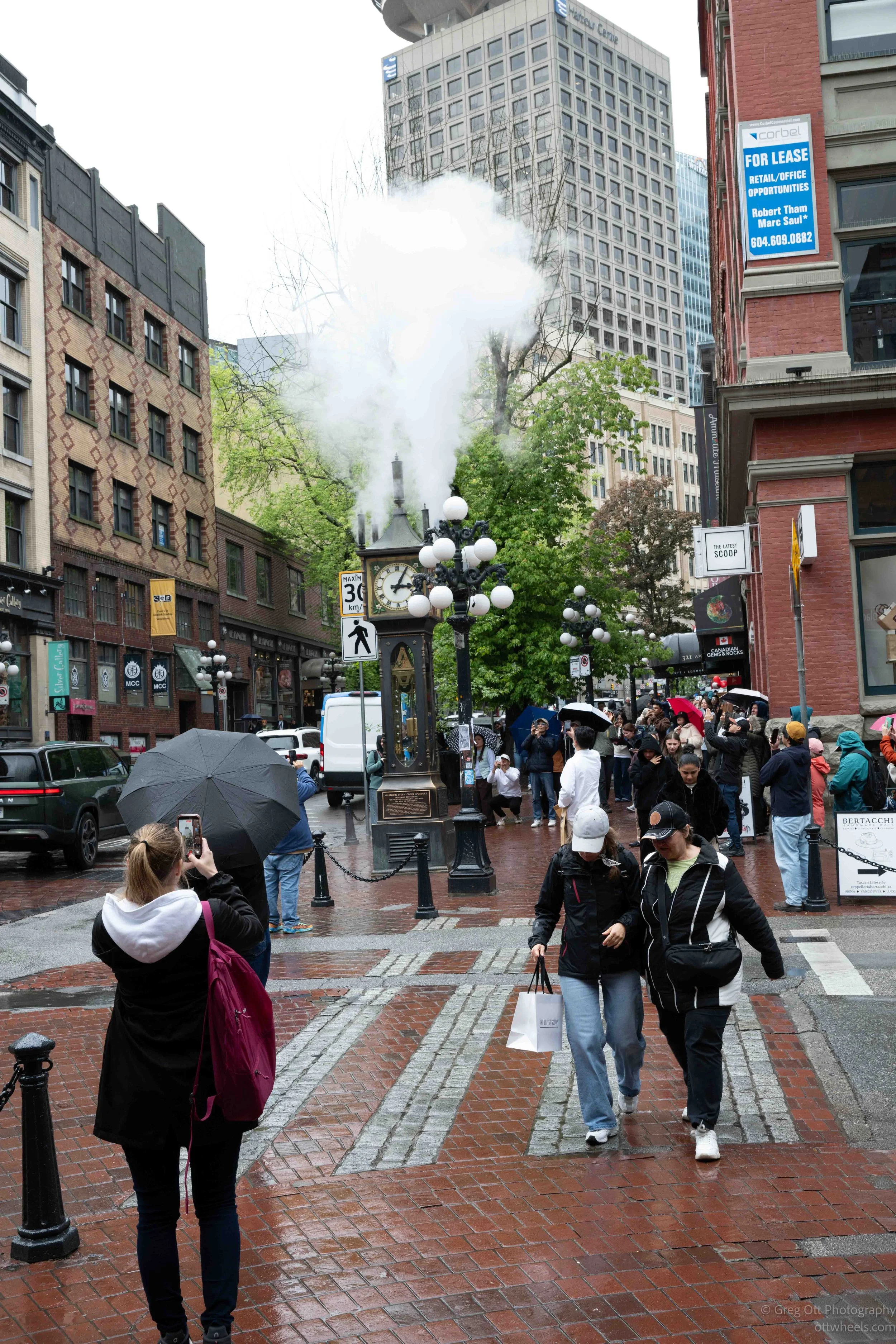
At one intersection people were gathered on all four corners staring toward the center of the street. I soon realized they were waiting for the Gastown Steam Clock.
The clock was built in 1977 and is powered partly by steam from Vancouver’s underground steam heating system. Every quarter hour it releases steam and whistles, while on the hour it plays a small steam-powered tune using whistles similar to a miniature steam locomotive. Whether it is truly “steam powered” or partly electric seems to be debated depending on who you ask, but honestly, that almost adds to the charm of it. The reactions from the crowd were as entertaining as the clock itself. Phones came out, umbrellas shifted around, people laughed, and everyone stood there in the rain waiting for steam to erupt from the top of the clock again.
I spent as much time photographing the people photographing the clock as I did the clock itself.
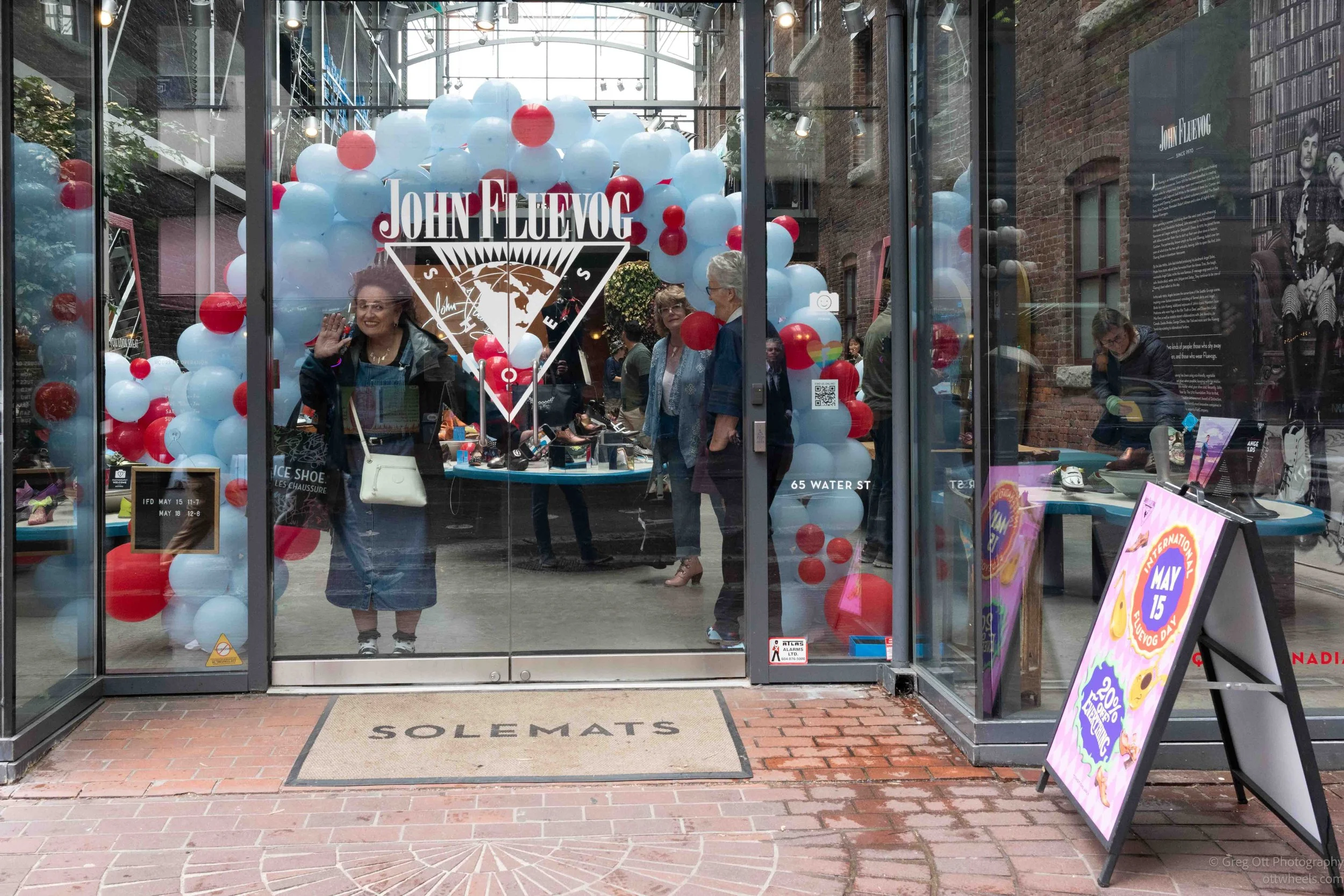
A little farther down the street I stopped outside the John Fluevog shoe store. I initially thought it was some kind of home furnishings place because of the elaborate display and decorations. I was photographing the entrance from different angles when suddenly a woman appeared behind the balloons inside the store, leaned into the glass, waved directly at me, and clearly wanted her photo taken. Those little unplanned moments are always more interesting than the photographs you originally intended to make.
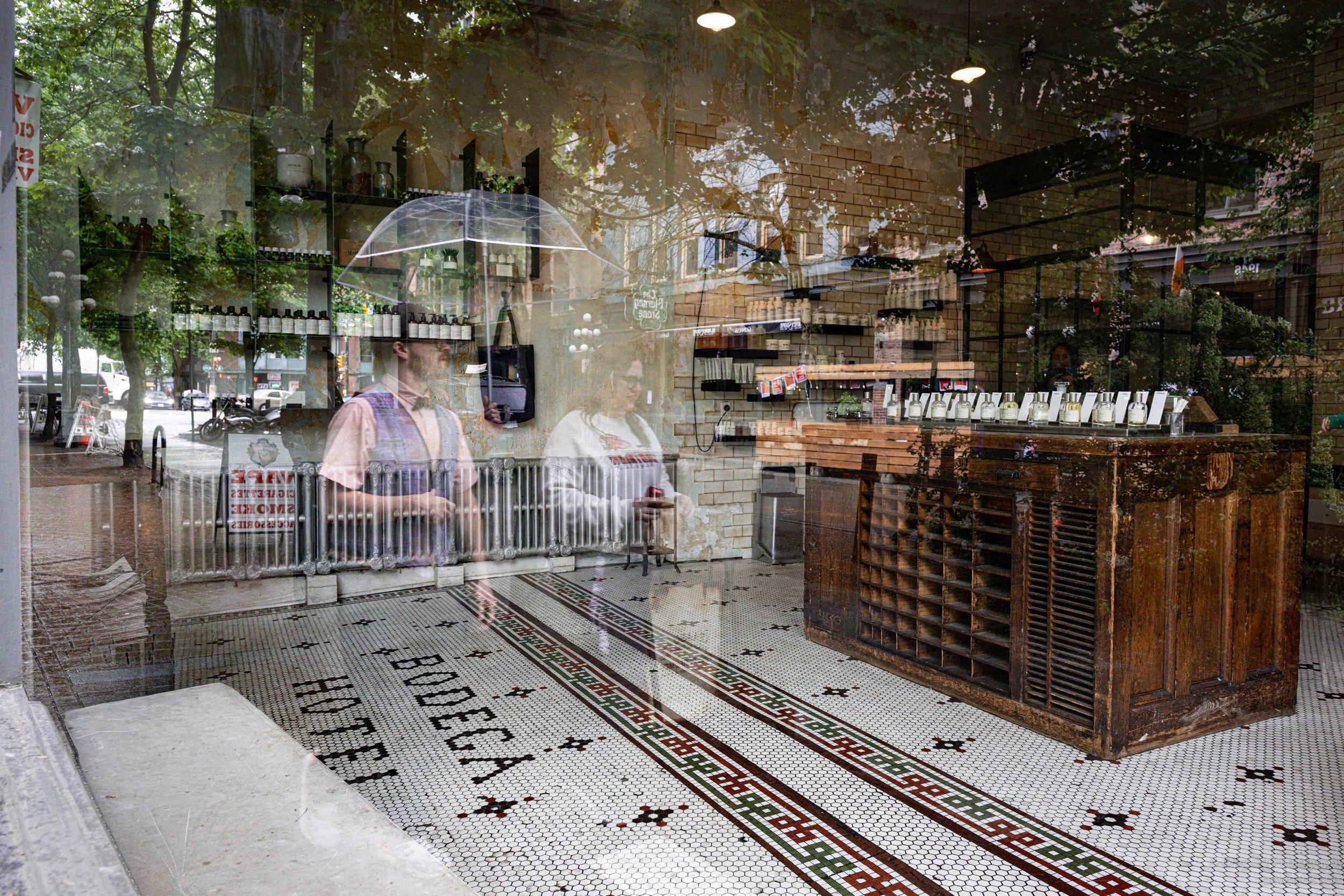
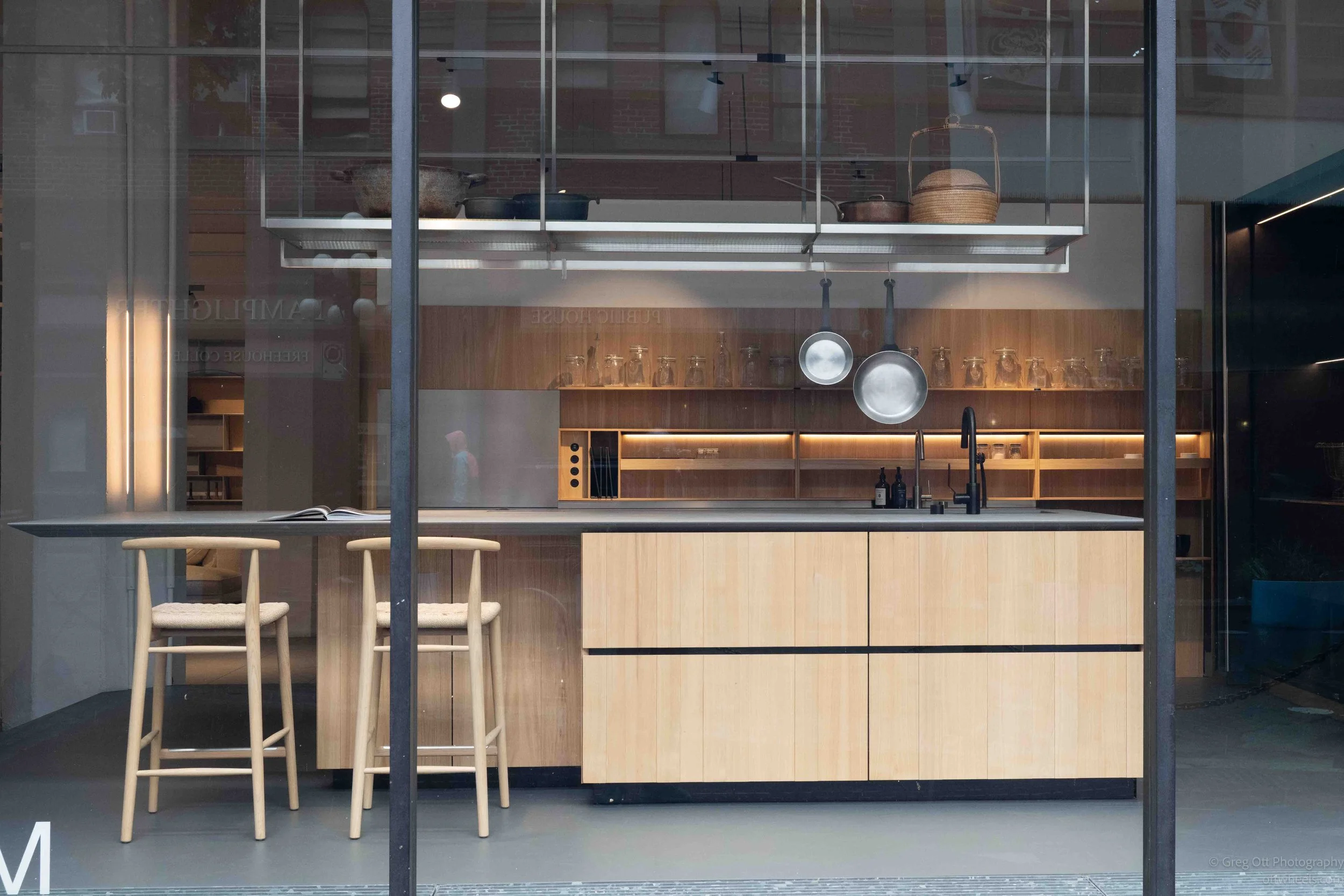
I kept wandering through the streets taking photos of reflections, layered scenes, storefronts, and people moving through the rain.
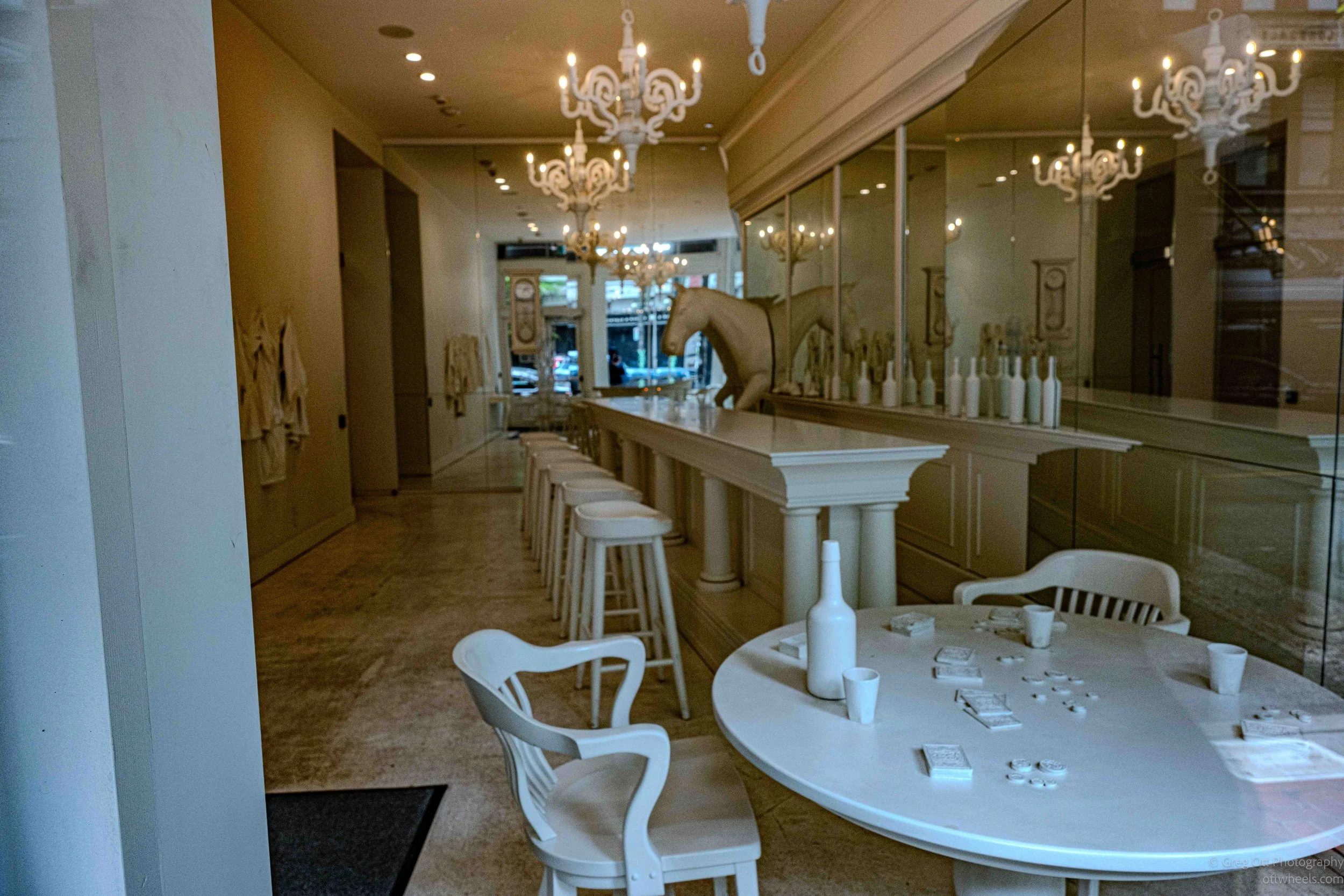
One storefront completely stopped me. Everything inside was white. White tables, white bar, white chandeliers, white fixtures, white horse bust mounted on the wall. Absolutely everything. The door was locked and there was nobody inside. No sign explaining what the place even was. It almost looked like a movie set waiting for actors to arrive.
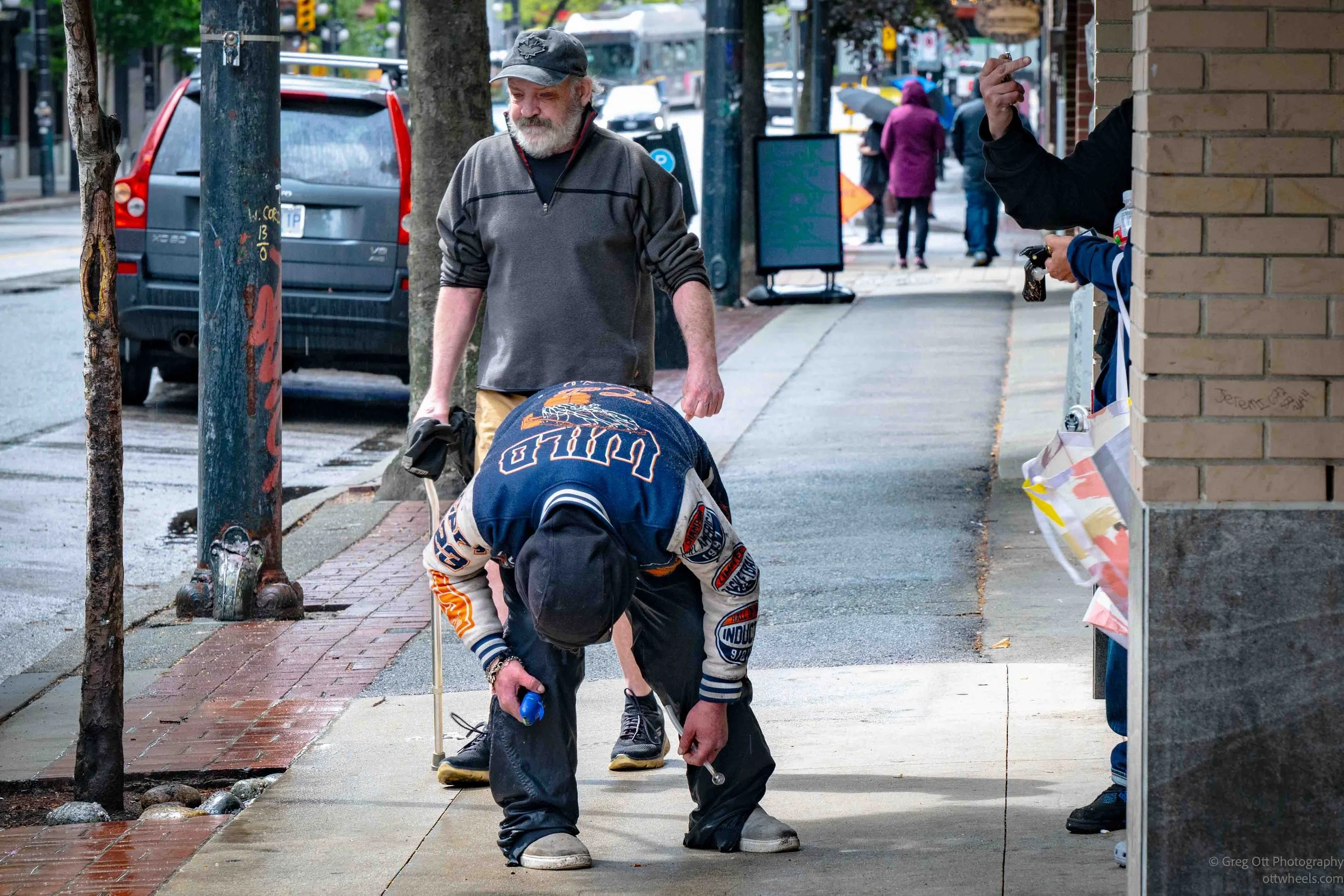
At the same time, only a few feet away, parts of the street were lined with homeless people struggling openly with addiction and mental illness. One man was bent forward motionless for so long I initially thought he was some kind of street performer. Another guy nearby clearly didn’t appreciate me lifting the camera and gave me the finger immediately. Downtown Vancouver, like many cities, constantly shifted between wealth, tourism, beauty, and visible human struggle sometimes all within the same block.
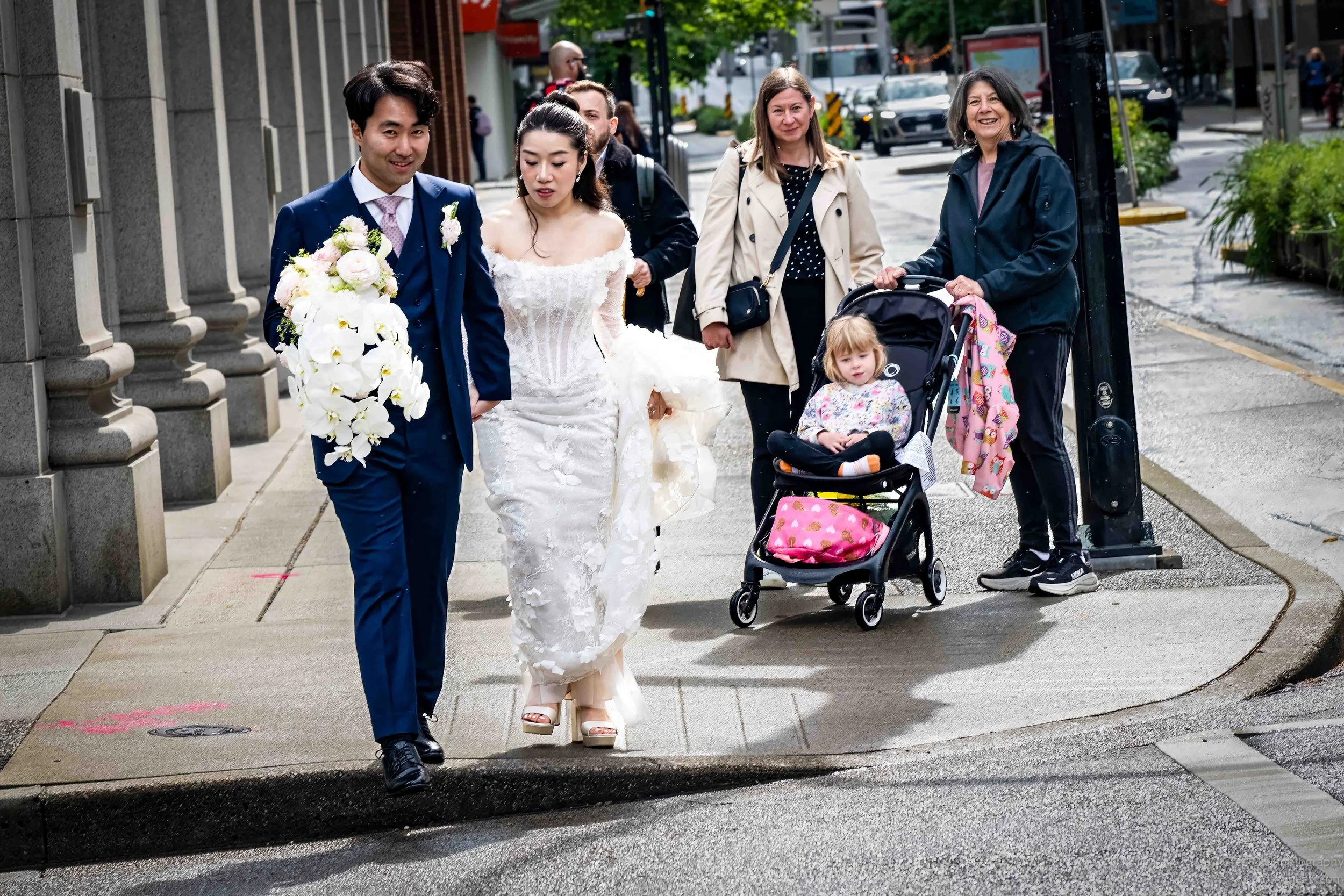
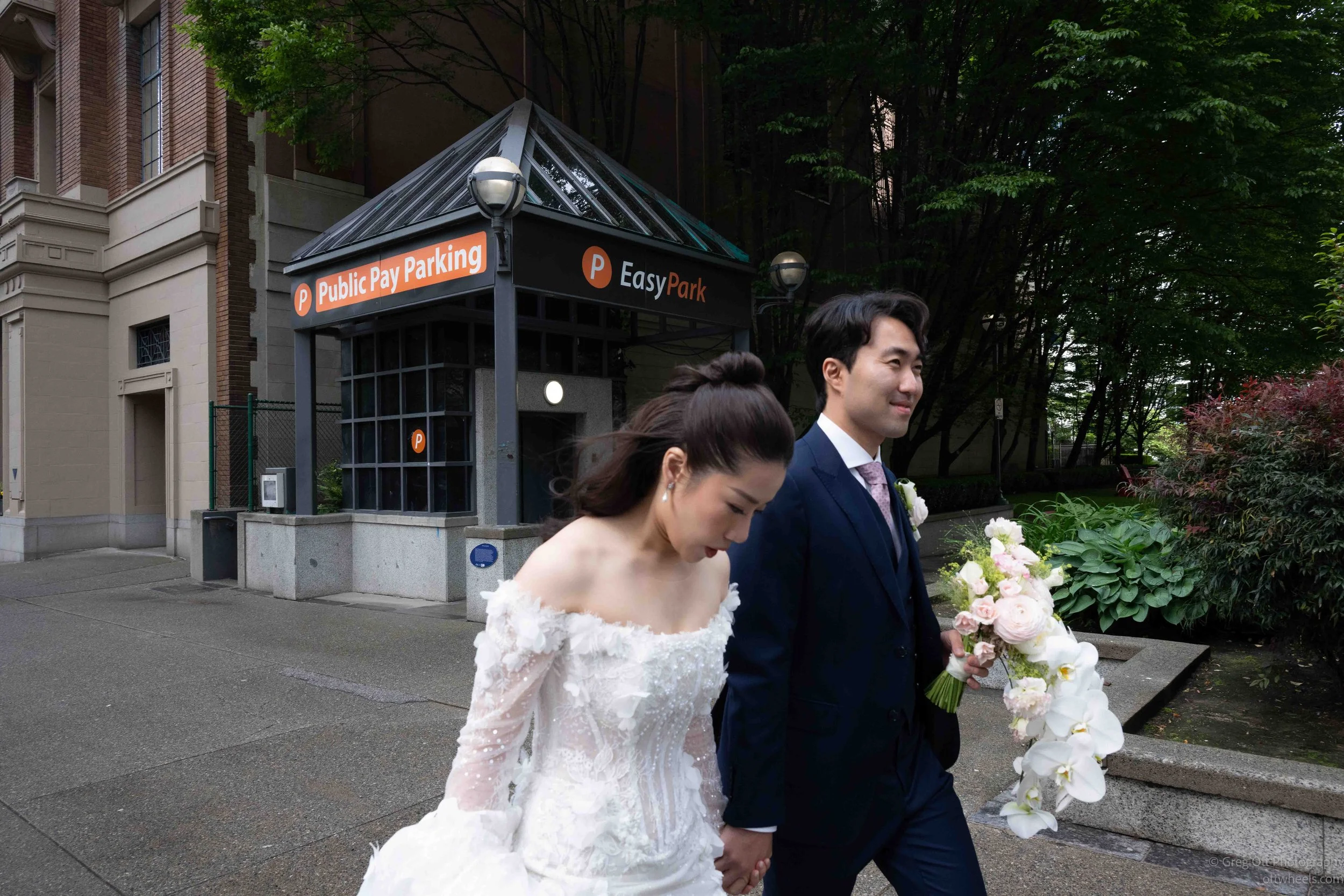
A few blocks later I came across a Japanese-Canadian wedding couple doing photographs in the middle of downtown. There was a full photography crew surrounding them and then there was me standing off to the side taking my own candid shots. The groom kept glancing toward me while the bride absolutely refused to acknowledge the camera. I ended up with one frame where literally everybody in the scene is looking directly at me except the bride. Oh well.
By the time I finally made my way back toward the van, I realized my parking had expired an hour earlier. I had misunderstood the sign and thought parking was free between 3 pm and 6 pm. Instead, it turned into a rush-hour tow-away corridor. The meter wouldn’t even allow additional payment past 3 pm because vehicles weren’t supposed to be there at all.
Luckily there was no ticket on the windshield and the van hadn’t been towed. I got very lucky twice that day.
As frustrating as downtown parking had been, I absolutely loved Vancouver. The constantly changing weather, reflections, waterfront activity, older historic sections, and mix of people made it one of the most visually interesting downtowns I’ve photographed in a long time.
I could easily spend several more days there just walking with the camera.
Whistler Village
I had a 90 minute drive to Whistler Village, but I made two wrong turns which added another 30 minutes. It was a little after 6 pm and still very much daylight. I stopped at the visitor center just to orient myself and understand where the RV parking lot was. I couldn’t get the parking meter to do anything and there were other RVs already in the lot. I was hoping my parking luck would continue as I headed into the village.
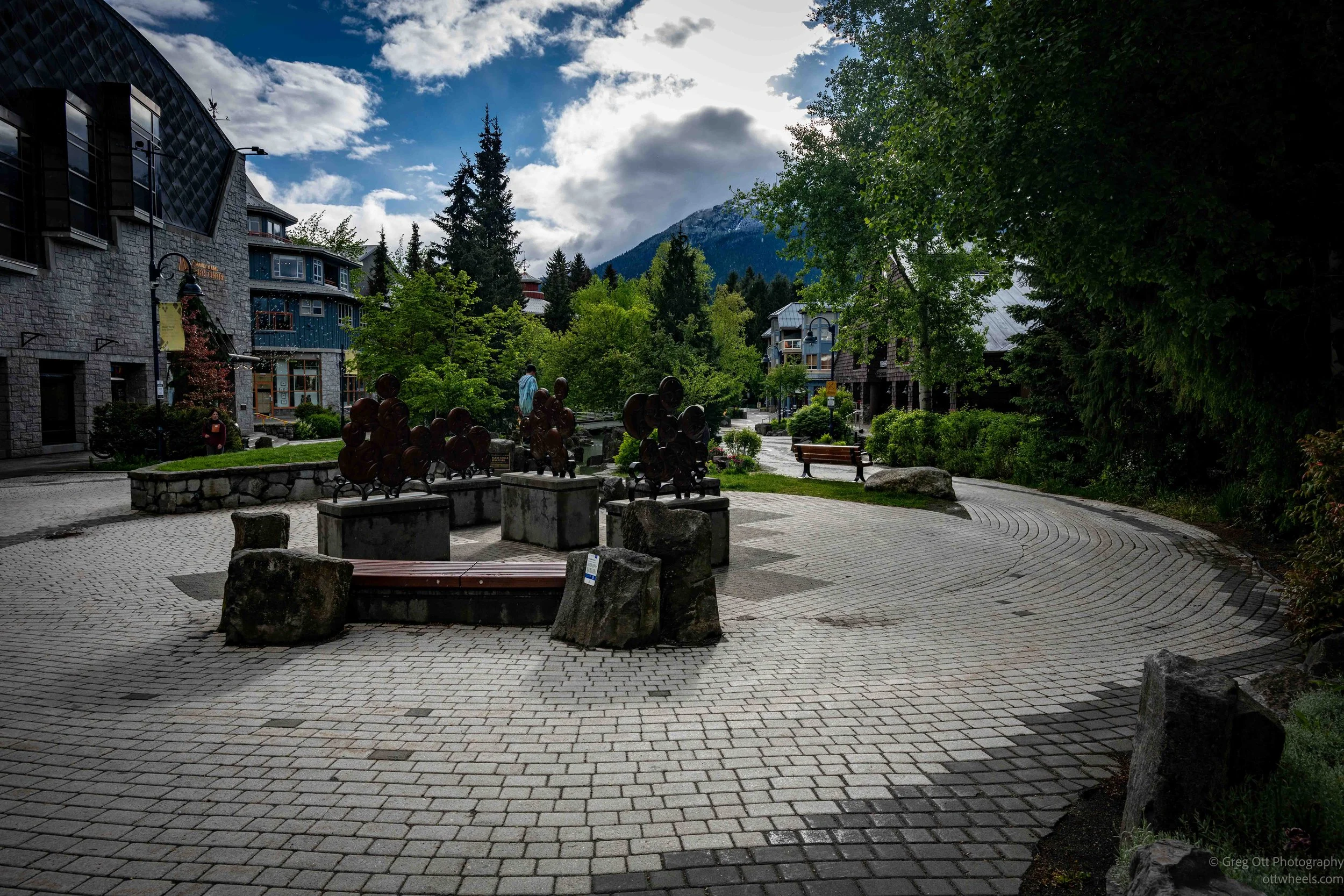
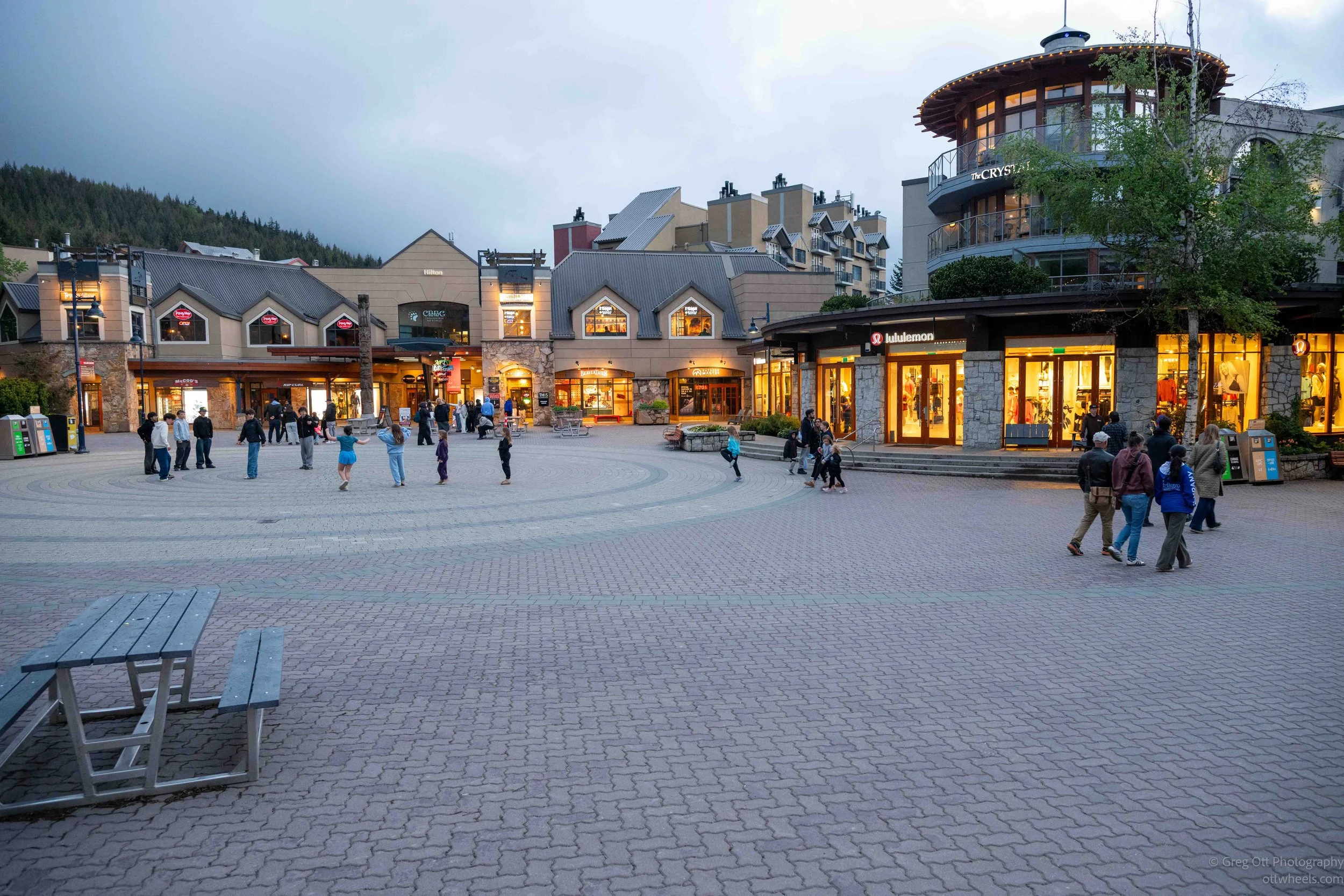
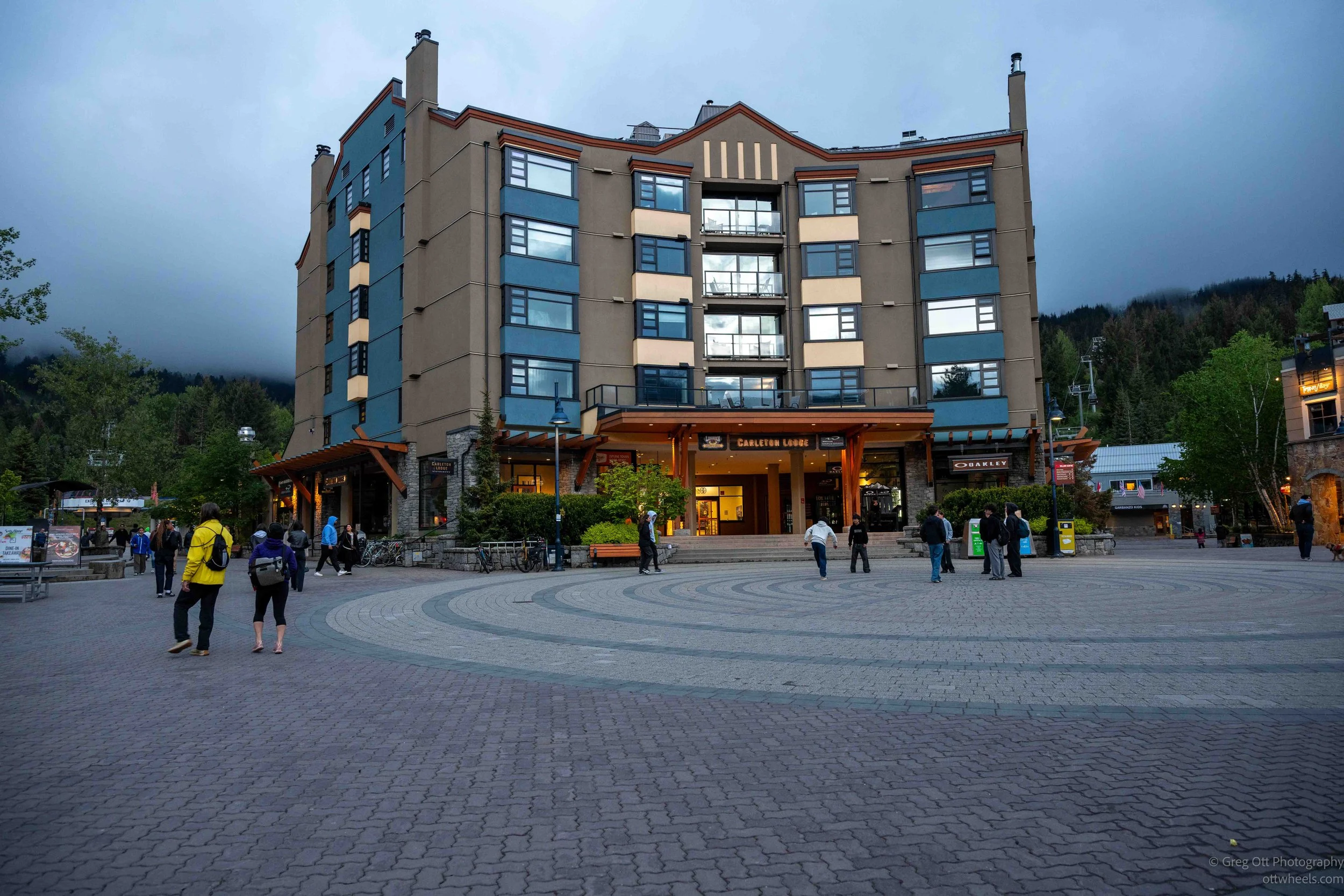
The first thing I noticed was how much Whistler felt like a European ski town dropped into the mountains of British Columbia. Stone walkways curved between buildings with steep rooflines, outdoor patios were full, bikes rolled past constantly, and everywhere you looked there were people just wandering with no particular destination. It had an energy to it without feeling frantic. Even though it’s heavily commercialized, it somehow still works.
A bubble machine mounted high on one of the buildings was sending bubbles drifting across the square. Kids and adults alike were chasing them and trying to catch them. I attempted a few photos before realizing the bubbles were everywhere and the last thing I wanted was bubble oil landing on the front element of the lens.
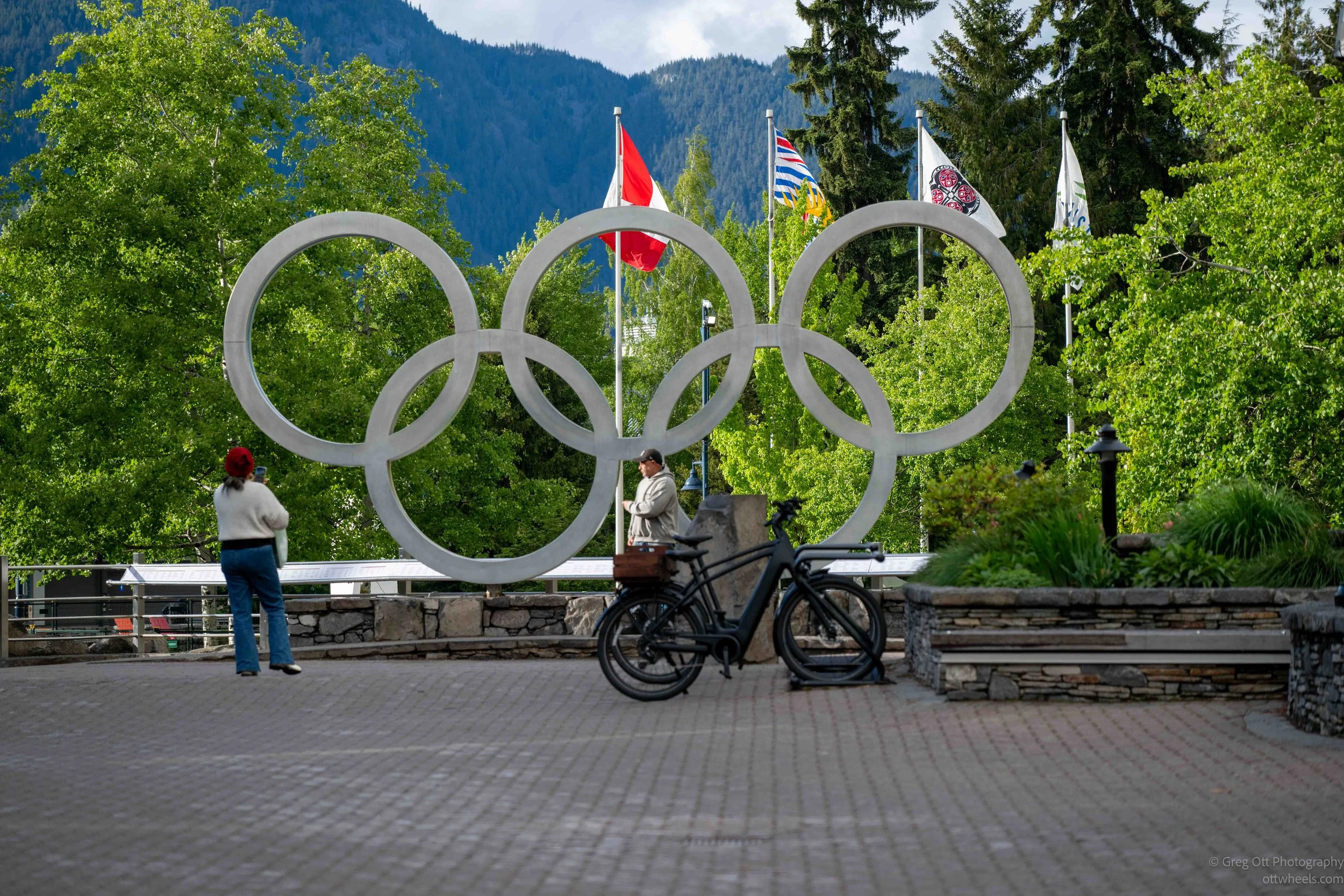
I eventually wandered over to the Olympic rings and grabbed a few photographs. Whistler and Vancouver hosted the 2010 Winter Olympics, an event that transformed the region permanently. The alpine skiing events, sliding events, Nordic competitions, and mountain venues were centered around Whistler, while Vancouver handled the major arena sports and ceremonies. Prior to the Olympics, Whistler was already internationally known in skiing circles, but the Games pushed it onto another level entirely. Roads were improved, public infrastructure expanded, pedestrian areas upgraded, transit systems modernized, and the entire Sea-to-Sky Highway corridor saw enormous investment.
The Olympics also changed the economy and identity of the valley. Tourism exploded afterward and Whistler evolved from being primarily a ski destination into a true four-season resort community. Mountain biking, hiking, festivals, luxury tourism, and international visitors became just as important as winter skiing. You can still feel remnants of that Olympic investment everywhere in the village. The plazas, pathways, landscaping, signage, gondola infrastructure, and public gathering spaces all have that polished “built for the world stage” feeling.
One of the more remarkable things about the 2010 Games was how compact and scenic the venues were compared to many Olympic sites. Athletes were competing in world-class facilities surrounded by mountains, forests, and snow-covered peaks rather than sprawling urban stadium complexes. Even now, years later, the Olympic rings remain one of the most photographed spots in the village.
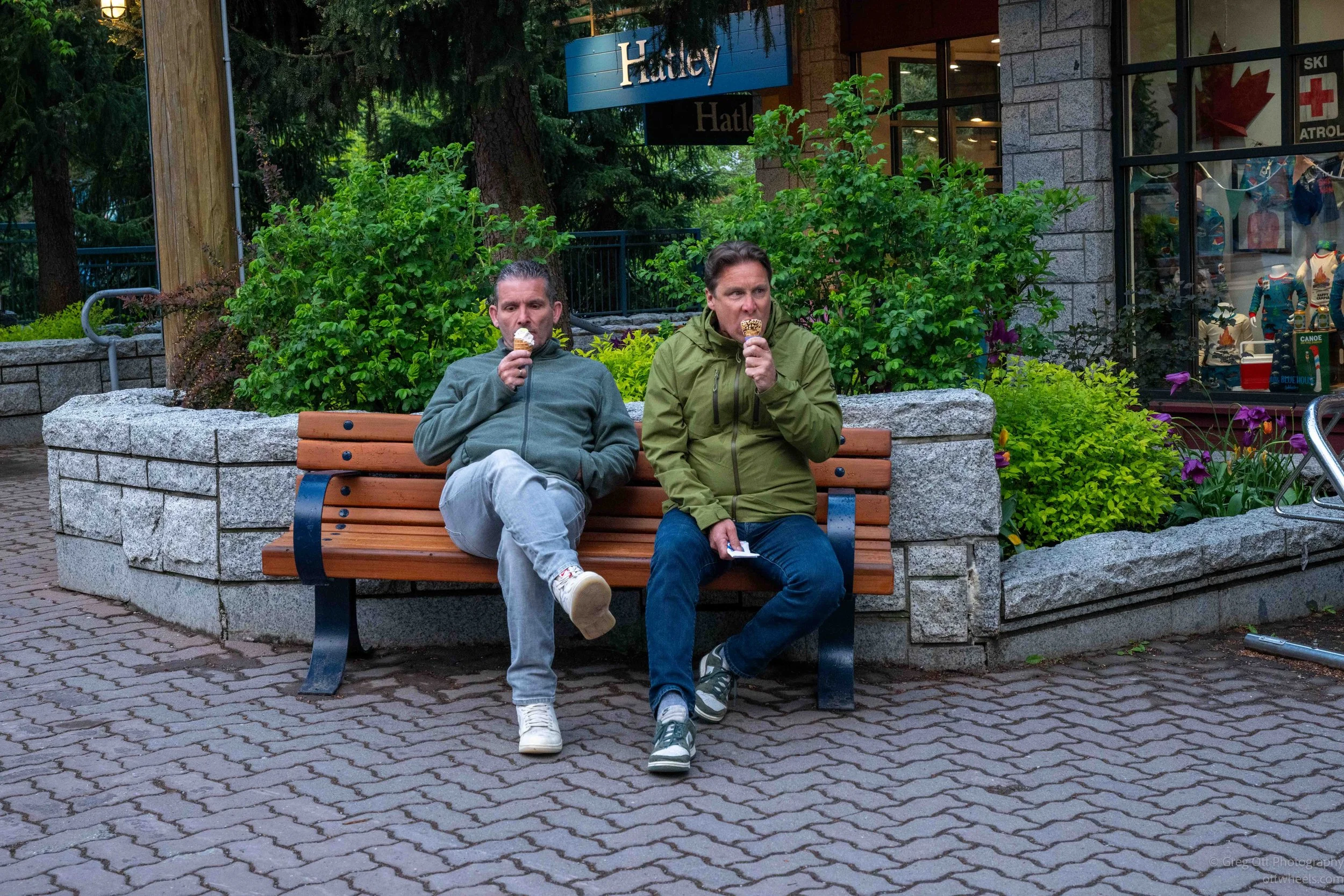
As I continued through the streets, I noticed two guys sitting on a bench eating ice cream cones. One looked over at me and joked, “That’ll be $5.” We all laughed and started talking. They were Dutch and traveling through the area for two weeks. Eventually their spouses joined us and we stood there for probably 15 minutes exchanging travel stories. I joked with them about always seeing Dutch caravans lined up at ski resorts in Switzerland and all the potatoes they seemed to bring with them. They laughed immediately, which told me they’d heard variations of that joke before.
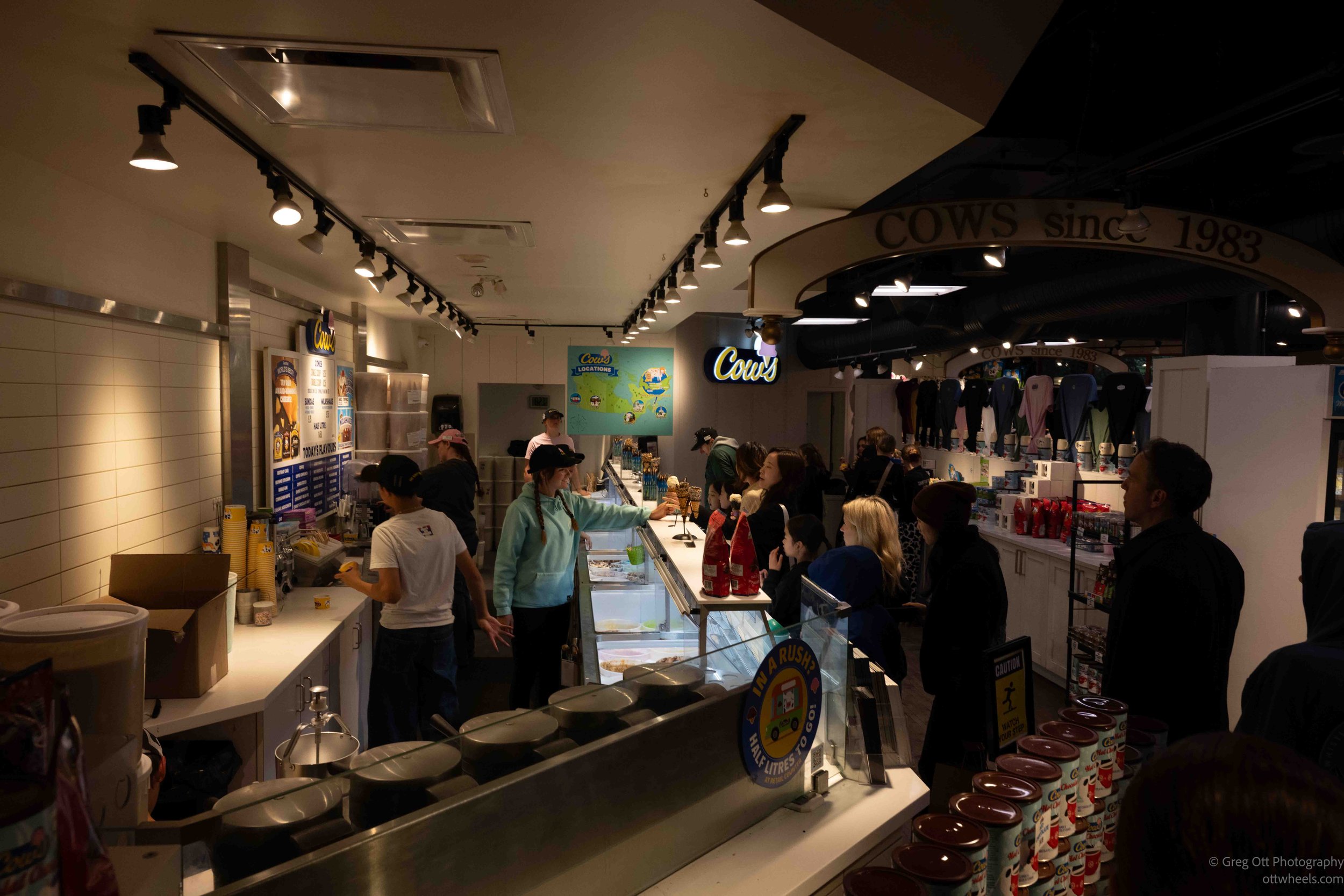
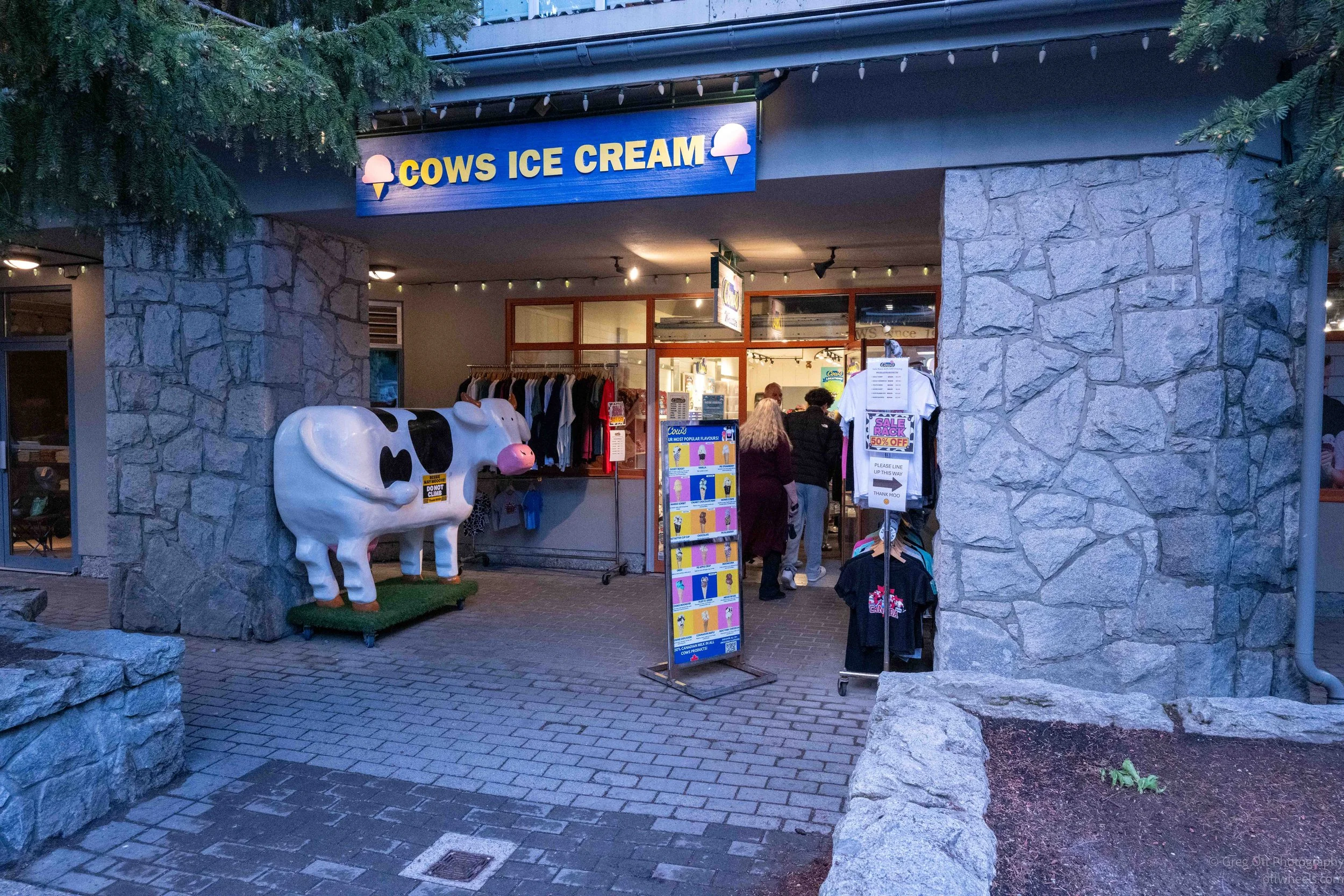
They had bought their ice cream from Cows across the street. I considered getting some myself, but the line was already stretching well out the door and I wasn’t interested in waiting that long for ice cream no matter how good people claimed it was.
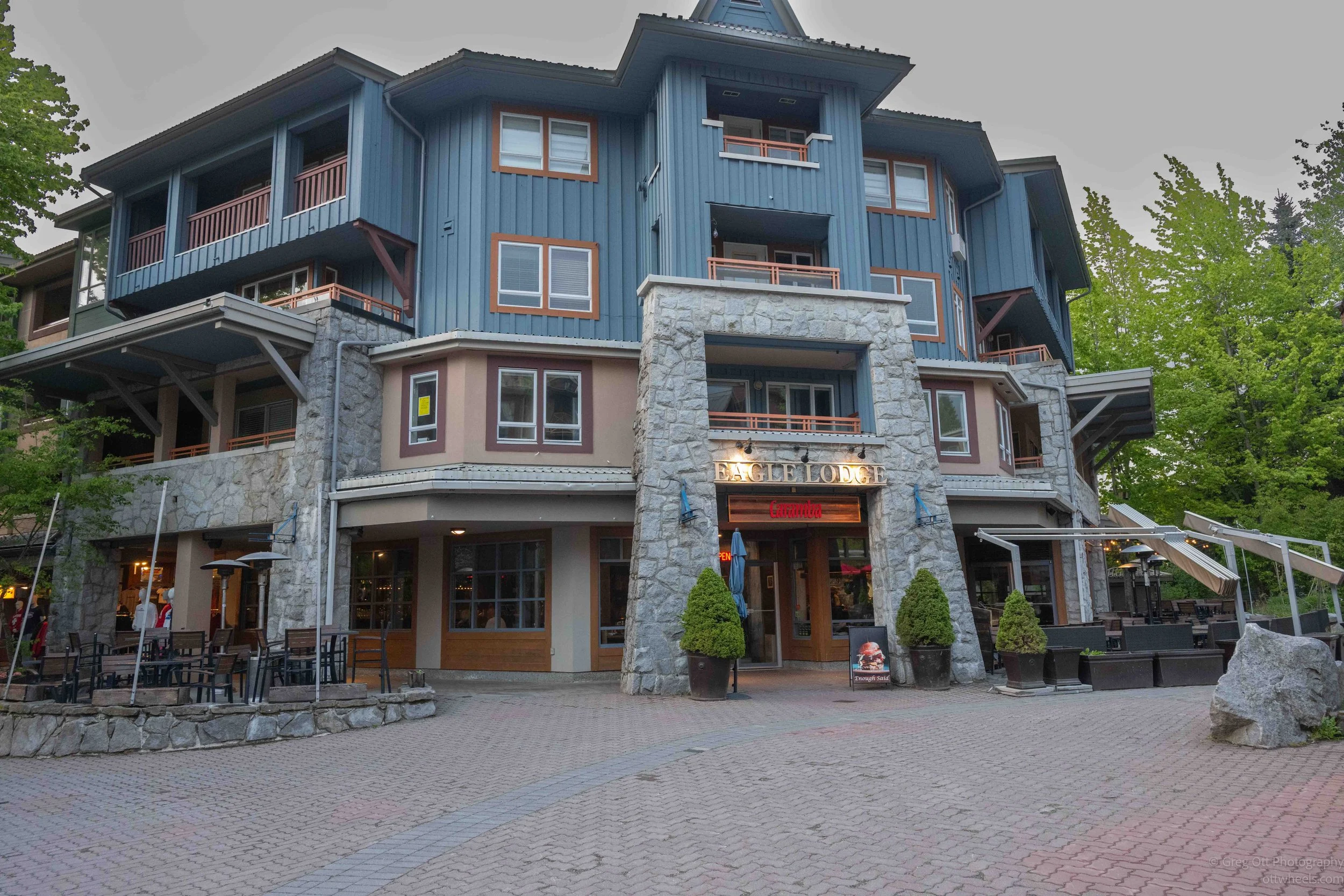
Instead, I ended up at Caramba for pizza and a glass of merlot. The reviews were good and the place had a relaxed atmosphere. I ordered a margherita pizza and within the first couple bites understood why the restaurant had such a strong reputation. The crust had that thin, slightly blistered texture you get in Italy where the dough somehow stays both crisp and soft at the same time.
I was the only person sitting at the bar, so the bartenders kept wandering over to talk. More travel stories. More discussions about where people were from and where they were headed. As I was leaving, I mentioned to the owner how much the pizza reminded me of Italy. He smiled and said, “Well, we hired two Italian pasta chefs.” Suddenly everything made complete sense.
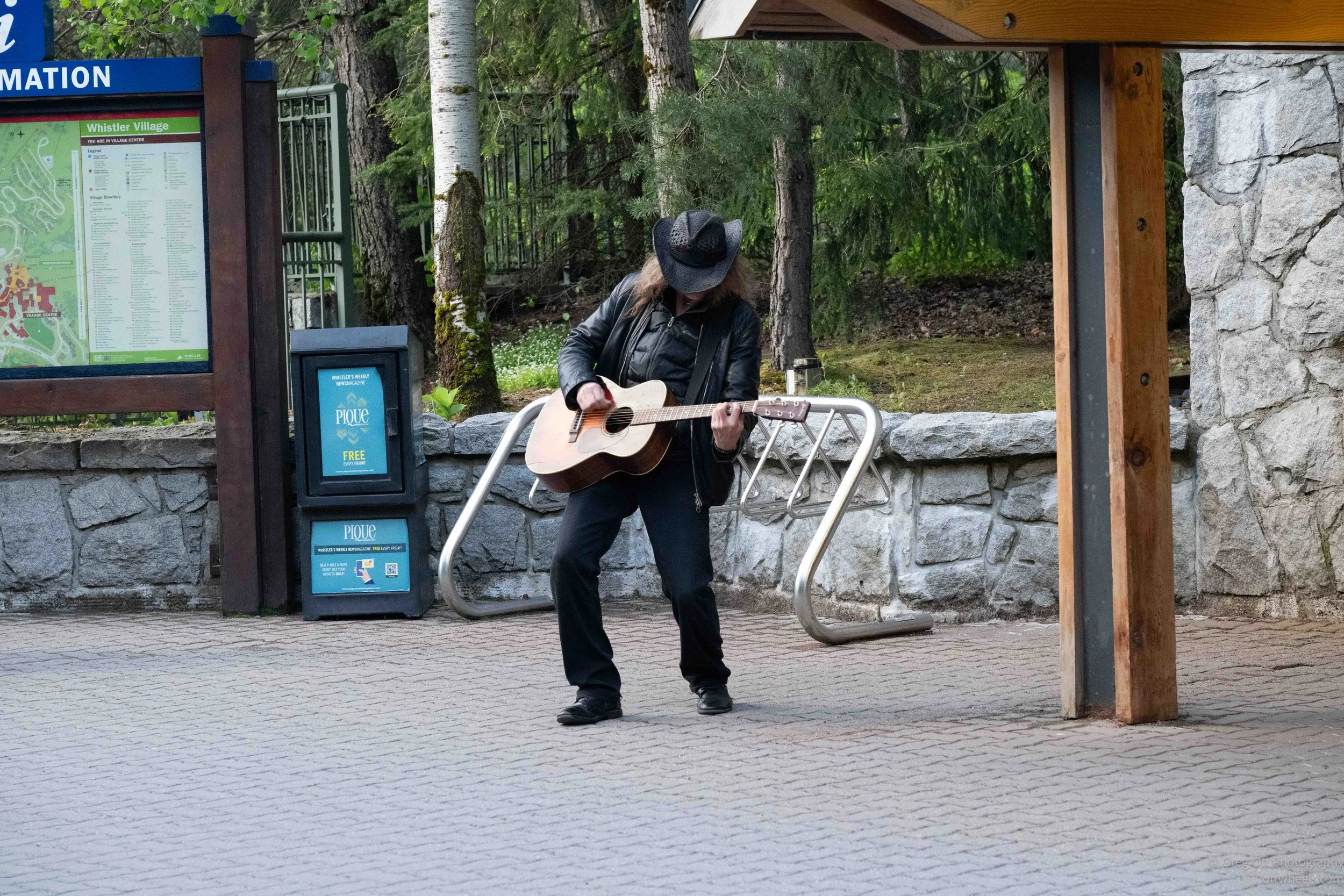
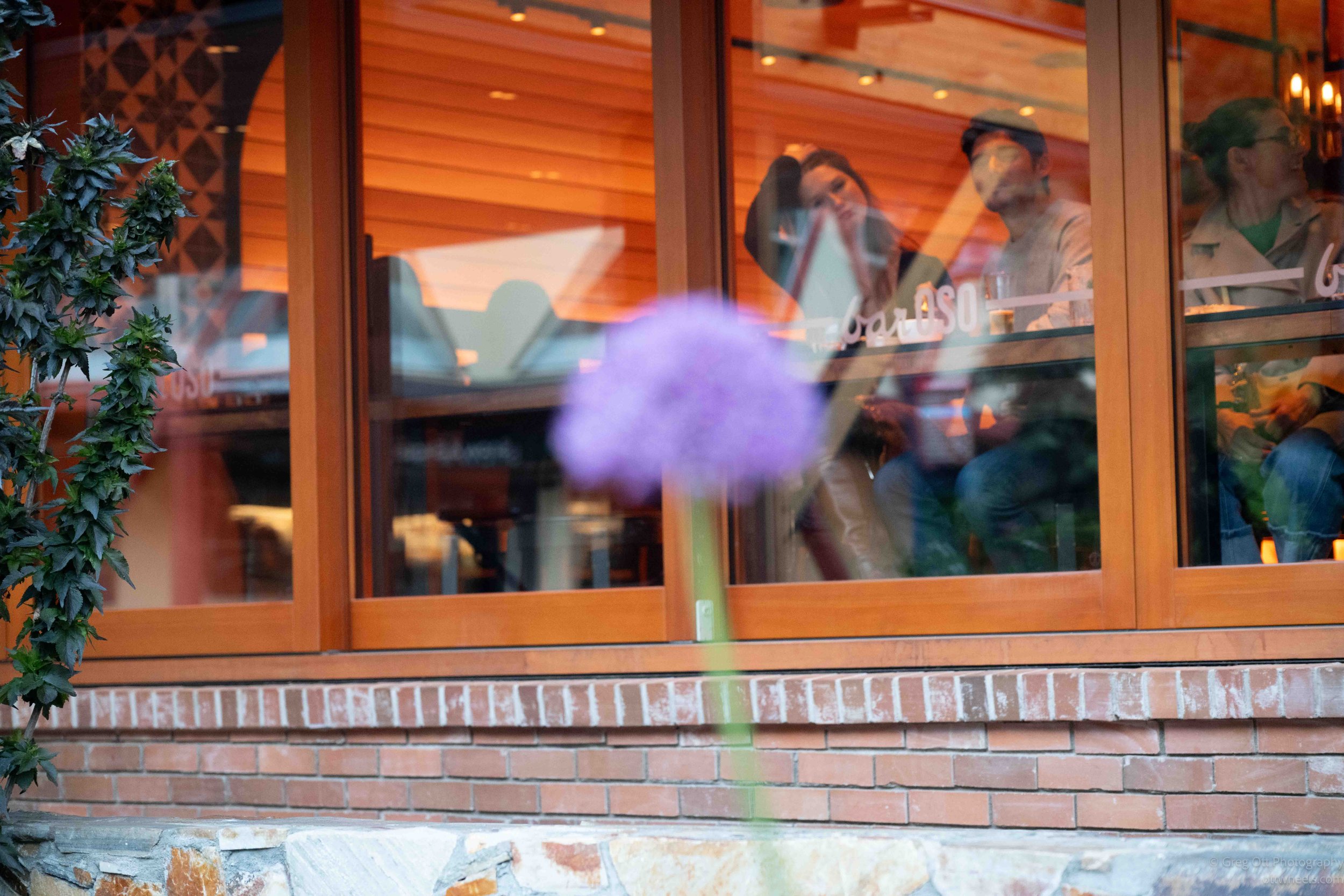
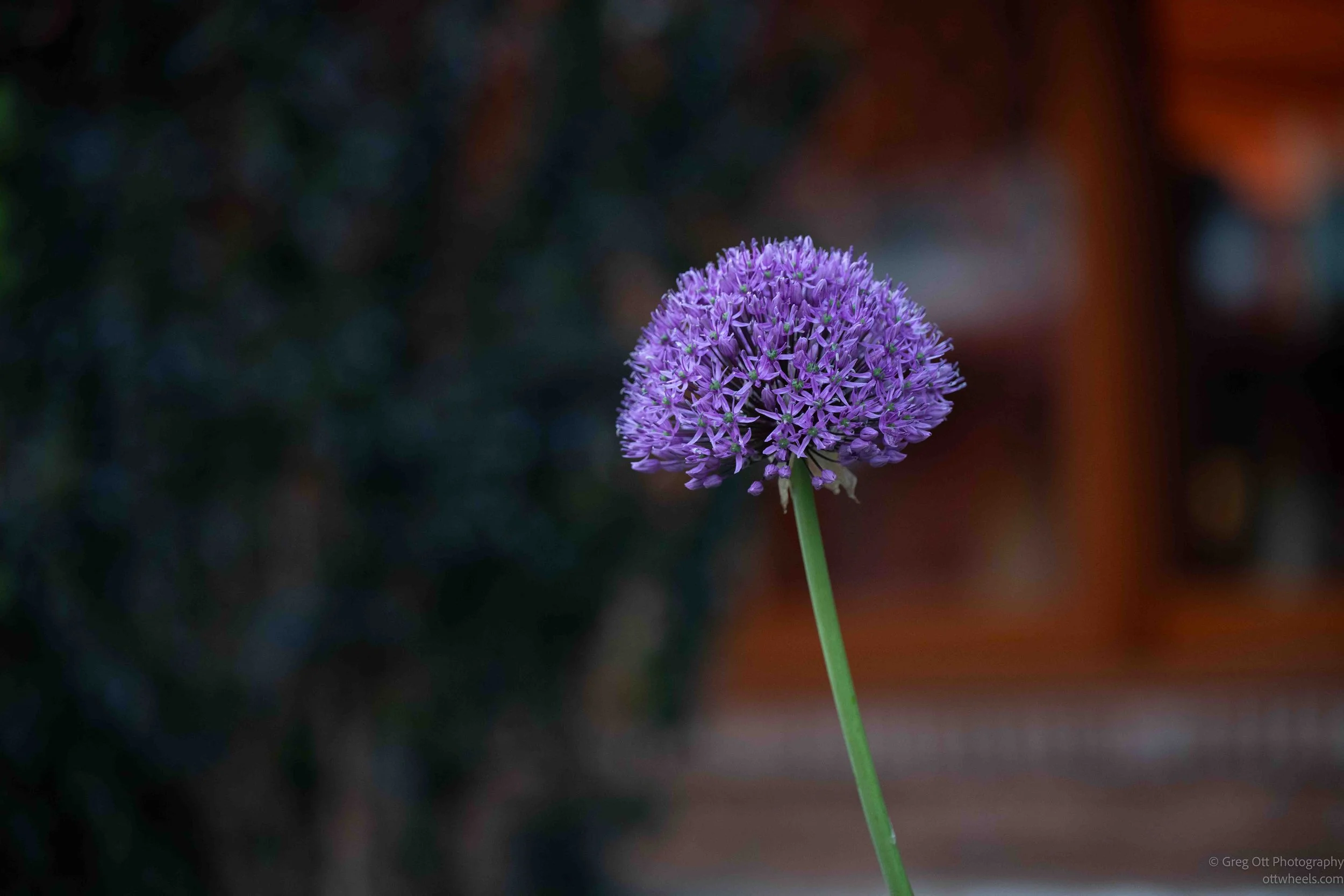
I continued wandering through the village taking photographs as the evening light softened. At one point I stopped to photograph a flower near one of the restaurants. A couple sitting in the distance assumed I was photographing them instead. She dramatically flipped her hair while he gave me a thumbs-up and smiled directly into the camera. I missed the actual shot I wanted, but honestly the misunderstanding was probably more memorable than the flower itself.
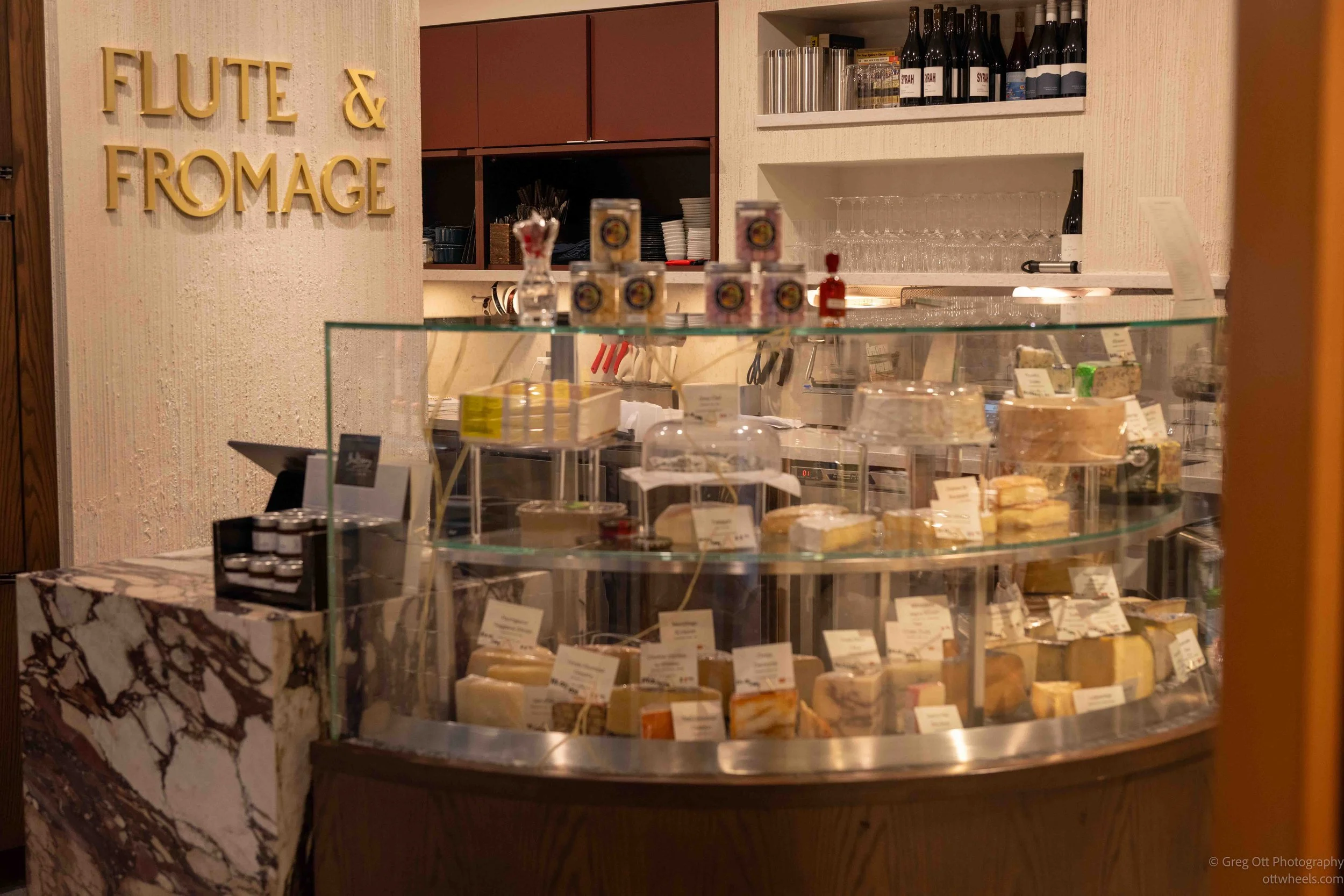
Eventually I wandered into Flute & Fromage. I started talking with the woman working there about the cheese selection. She was originally from southern England and had been living in Whistler for two years, hoping her work visa would be extended for another two. While we were talking, a customer walked in and asked if they still had Château de Bourgogne in perfect French-accented English. She checked the cooler and confirmed they did. He smiled, clearly relieved, and said he’d return to pickup four later on.
After he left, I asked her what made that cheese so special. She seemed genuinely surprised I hadn’t heard of it before. Apparently Château de Bourgogne is considered one of the great soft Brie-style cheeses. At that point I pretty much had no choice but to buy a small round, even at $25 Canadian. Two nights later I ate it in the van with fresh pear, fig jam, and Carr’s wafer crackers. All I can really say is that the cheese absolutely lived up to the hype. Rich, creamy, buttery, and almost impossible to stop eating once you started.
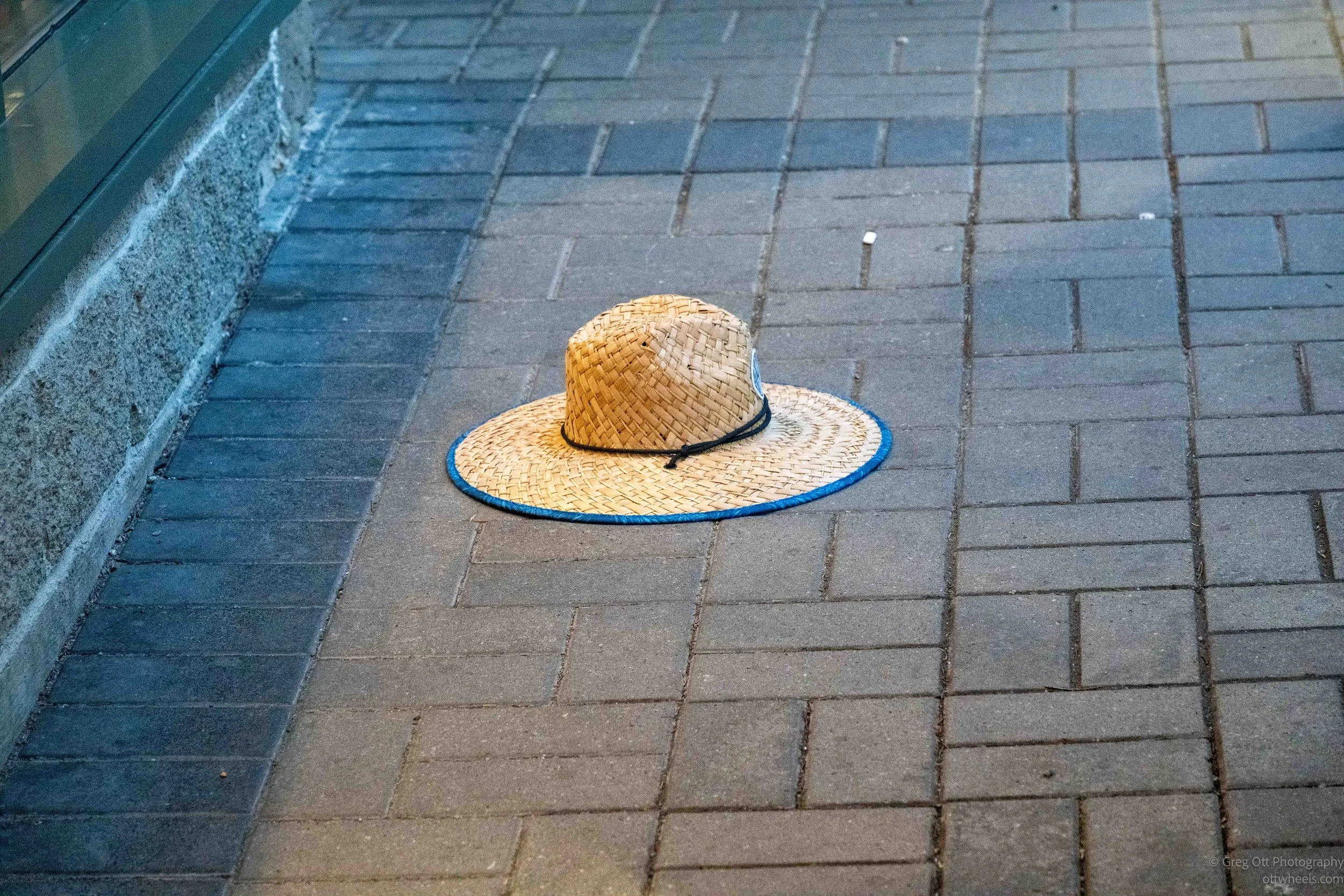
Right outside the shop door a hat had blown in from somewhere. No one was running to claim it, and people just side stepped it.
I kept walking until around 9 pm. There was still light in the sky, but the temperature had dropped quickly. My hands were getting cold and I could tell everyone else was starting to feel it too. People who had been casually wandering around in T-shirts earlier were now pulling jackets tight and moving a little faster through the plazas.
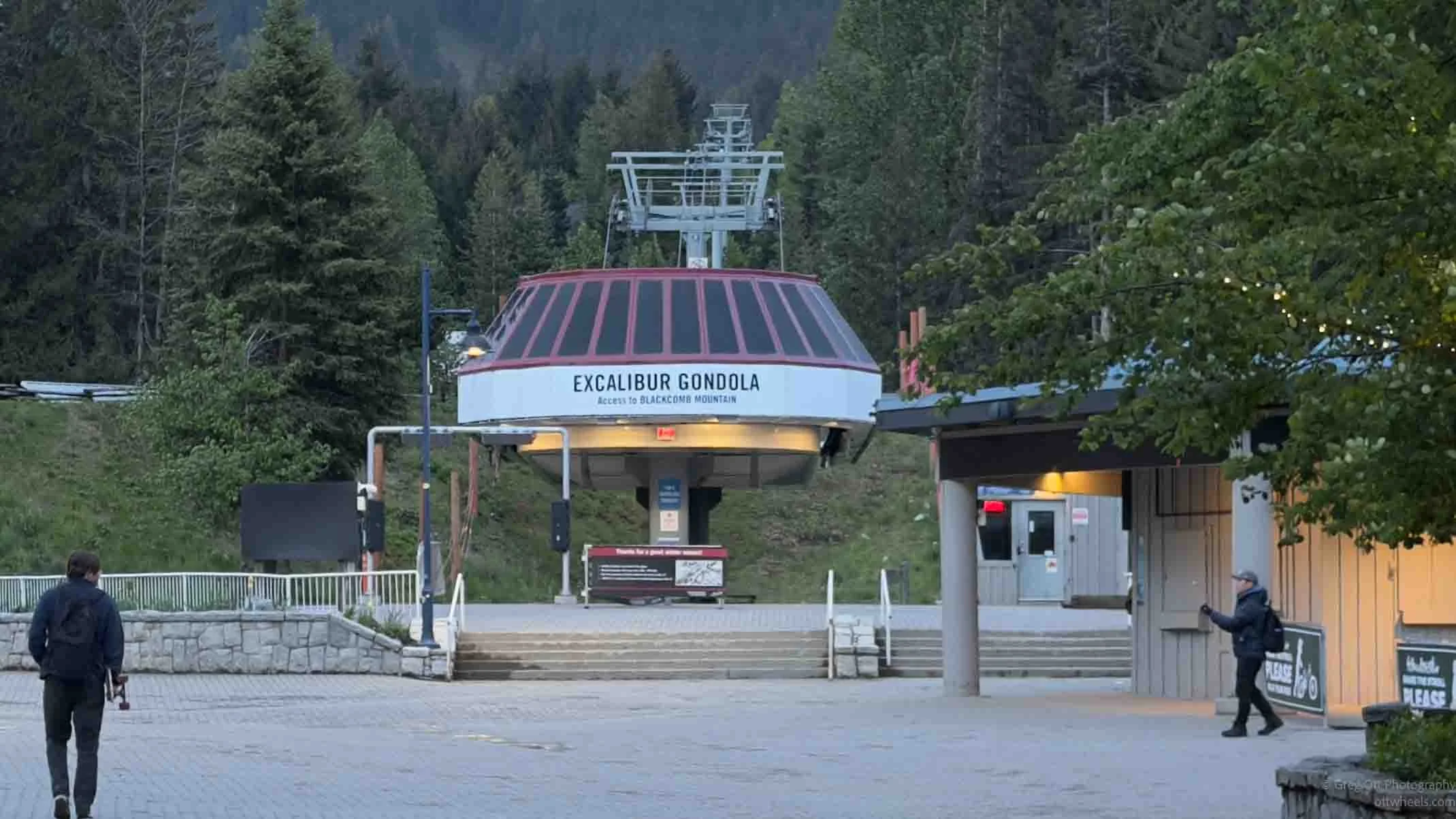
Eventually I made my way back to the van and drove north out of town toward an area known simply as “Gravel Road.” There were already six campers parked near the entrance and they looked established, like they had been there for months. I crossed a very narrow concrete bridge with a 20 ton weight limit and continued farther in toward the area where I had originally planned to stay. Unfortunately it was packed with weekend campers. About 10 vehicles had spread themselves out strategically enough that nobody else was fitting in.
I kept climbing farther up the road hoping something would open up. Eventually I found a tiny pull-off tucked against the trees that somehow was perfectly level. That almost never happens. I pulled in, shut the van down, and listened to the silence settle around me.
It had been a long day. It was approaching 10 pm and I was more than ready to relax.