Hoh Rainforest
Woke in Port Angeles on a Sunday morning. The street had been quiet all night and was still silent when I pulled out at 7 am. I did my Starbucks run and made oatmeal before getting coffee. I ordered another coffee and worked for a couple of hours. It was busier than I expected for that early on a Sunday morning. A lot of people were already in hiking and cycling gear, spread around the tables with maps, backpacks, and laptops. Olympic National Park pulls in a different crowd than most places. People seemed to actually be heading somewhere instead of just killing time.
The trip to the Hoh Rain Forest in Olympic National Park was several hours each way. I knew before leaving that this was going to be a full-day commitment with probably six hours of driving round trip. The drive itself is beautiful. The road winds through small towns, dense evergreen forest, rivers, and stretches where the mountains seem to appear out of nowhere between the trees. I wanted to stop a dozen times for photographs, but I kept reminding myself that every stop was time I’d lose in the rainforest itself. Some places are worth slowing down for. Others are worth actually arriving at.
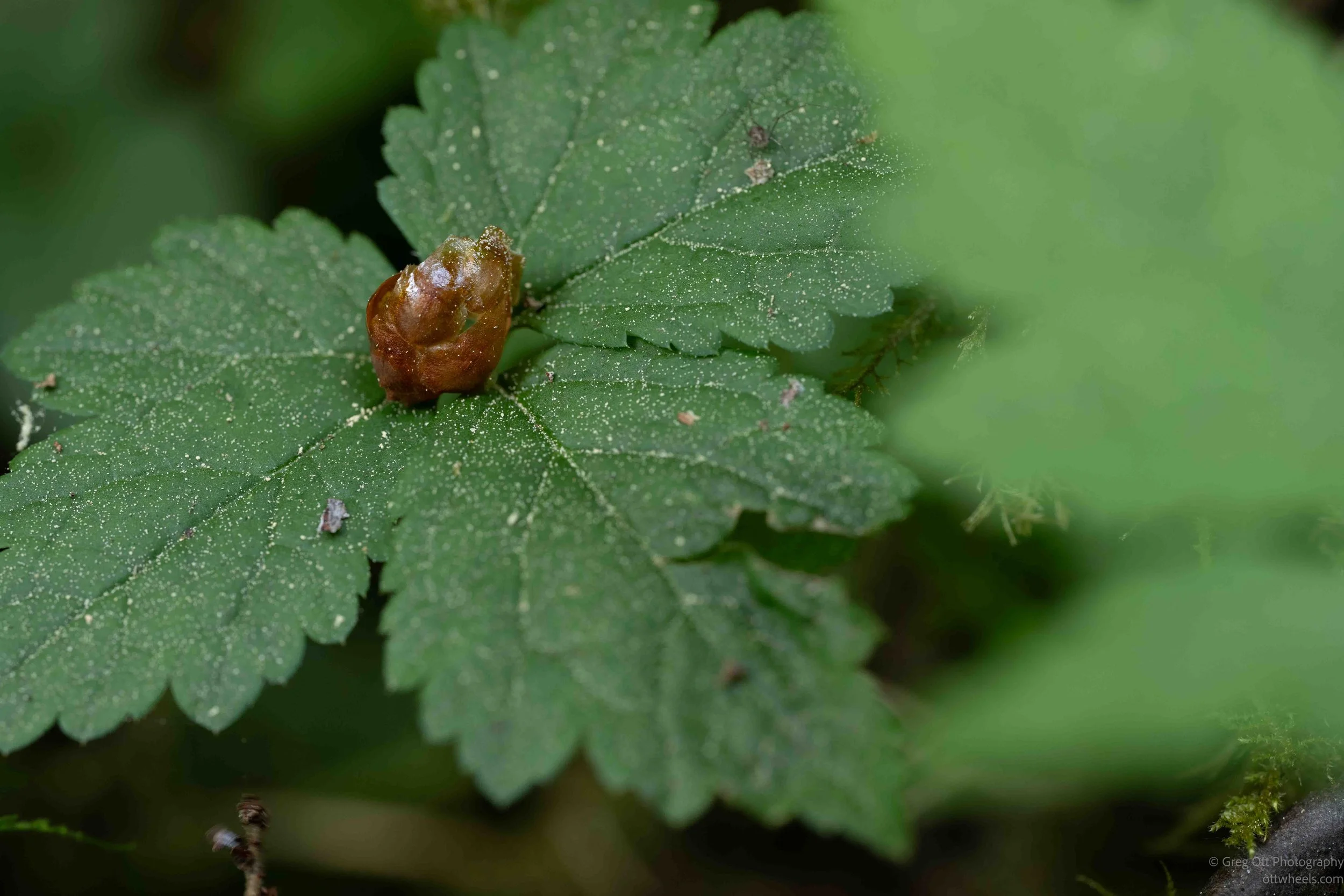
By the time I reached the Hoh Rain Forest area, the parking lot was completely full except for two spaces in the RV and oversize vehicle section. For once, the van worked in my favor. Cars were constantly circling while people came and went in waves. There’s a small visitor center near the trailhead, and I stopped to talk with one of the rangers. I was interested in photographing mushrooms, but he told me that I’d only find a few because of the lack of rain and many weren’t in season yet.
We got into a conversation about the rainfall patterns that make this forest possible. The Hoh Rain Forest sits on the western side of the Olympic Mountains where moist air coming off the Pacific is forced upward. As the air rises, it cools and drops enormous amounts of rain. In some years, this area can receive well over 140 inches annually, making it one of the wettest places in the continental United States.
What surprised me was when the ranger said rainfall levels had been significantly below historical averages. He pointed toward areas where streams were running lower than normal for this time of year. I told him about what I had seen at Crater Lake in Oregon where people were already worried about wildfire season months before summer even began. Standing in a rainforest while talking about drought felt strange, but you could see what he meant. Some of the ground that should have been saturated felt dry beneath my boots.
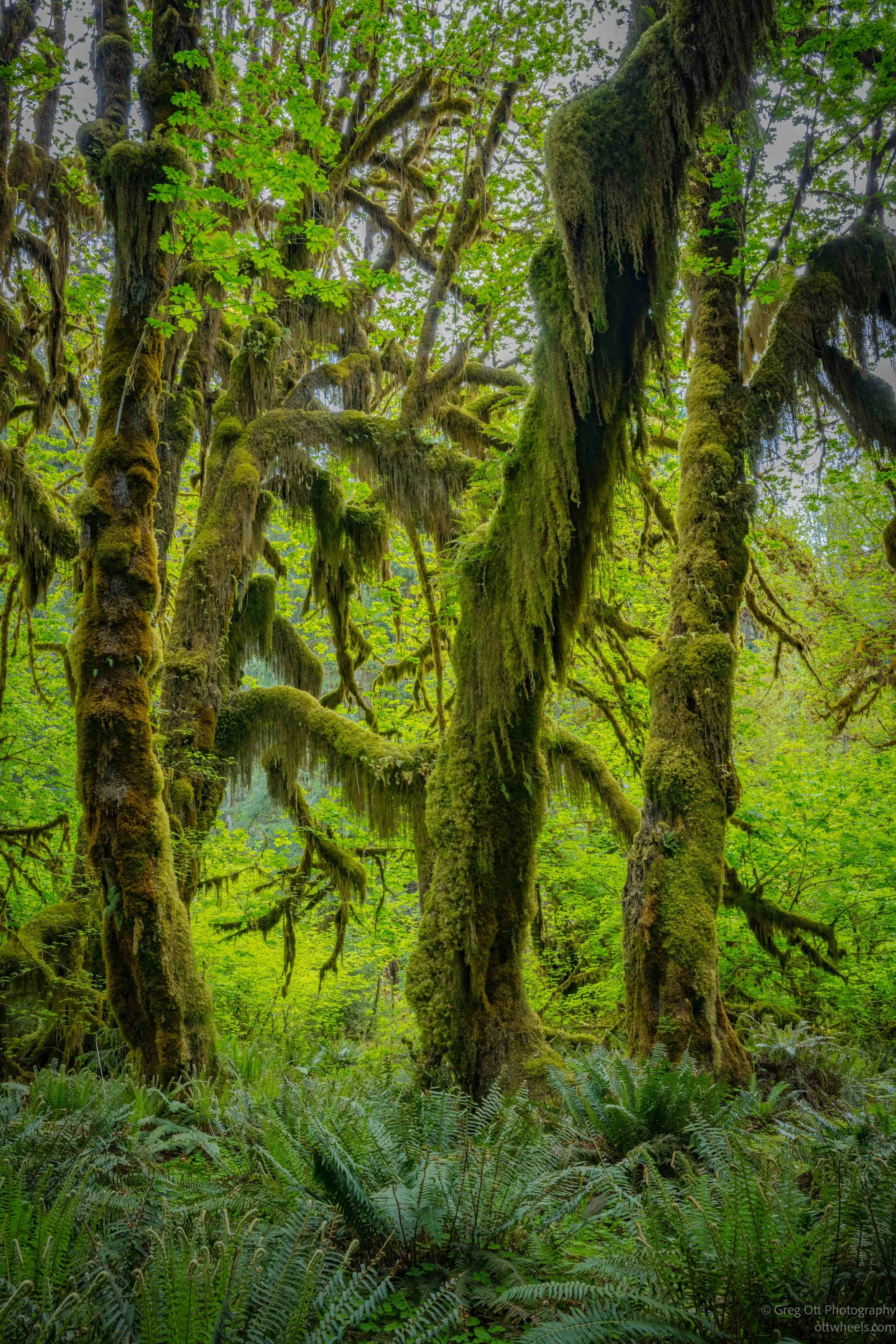
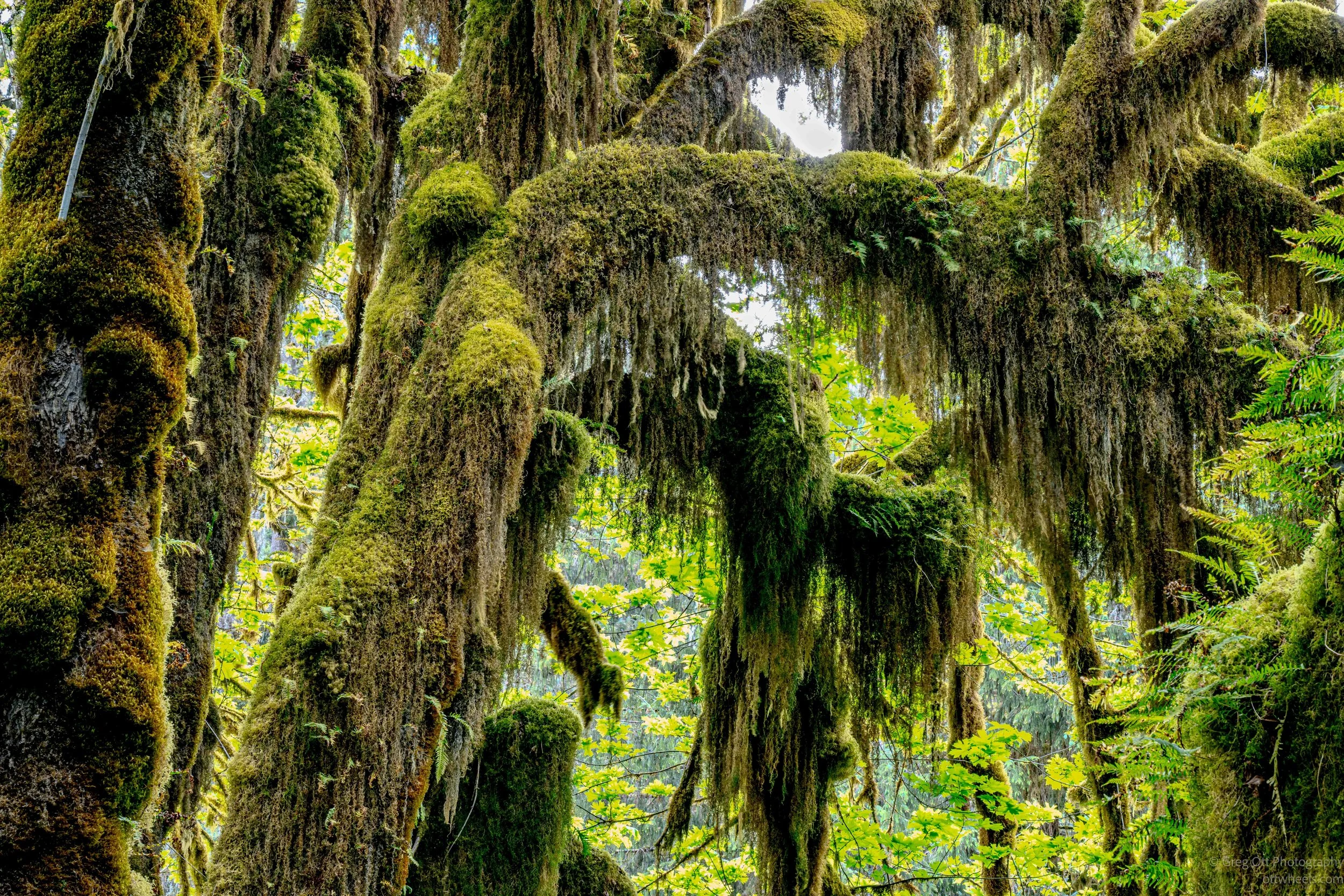
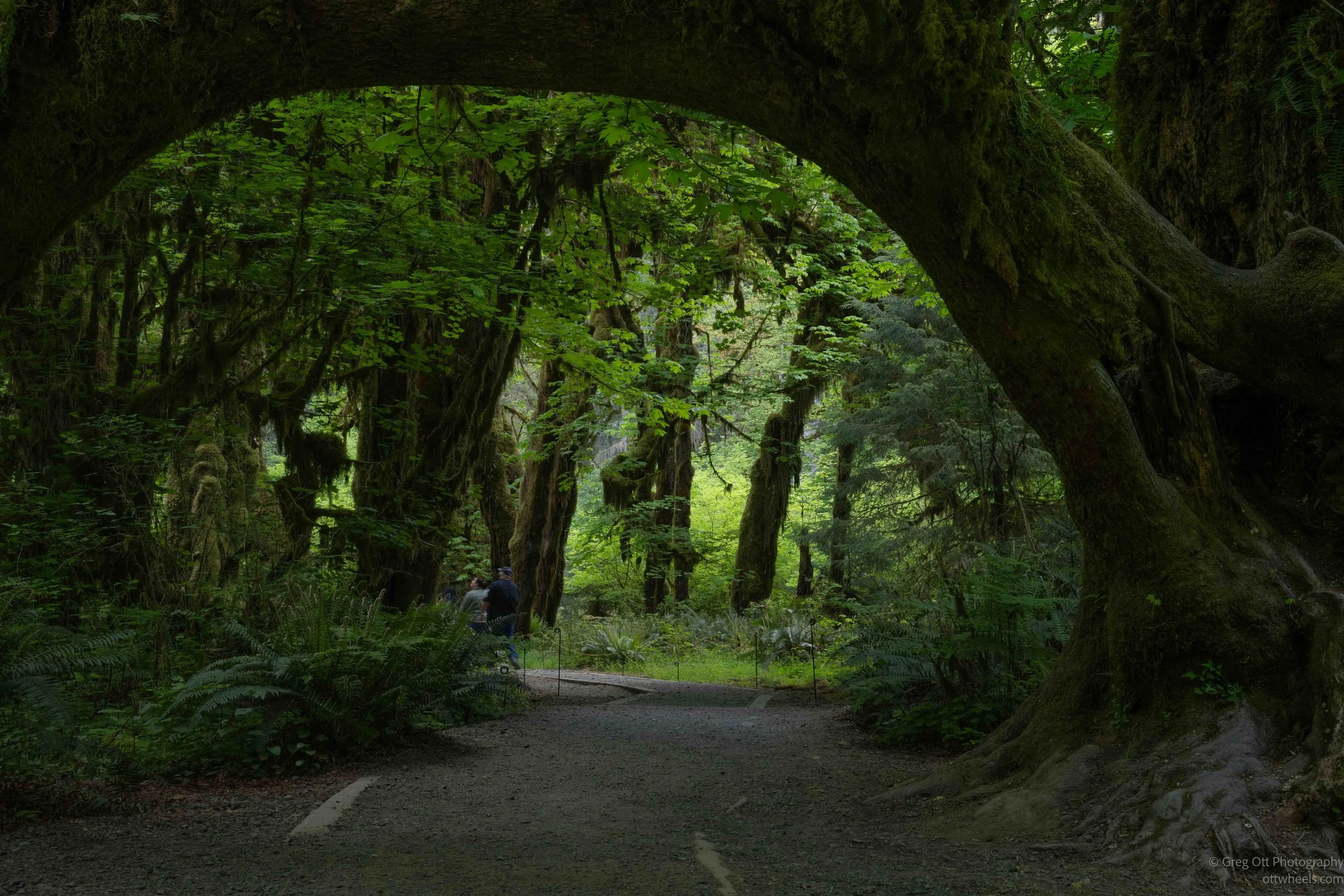
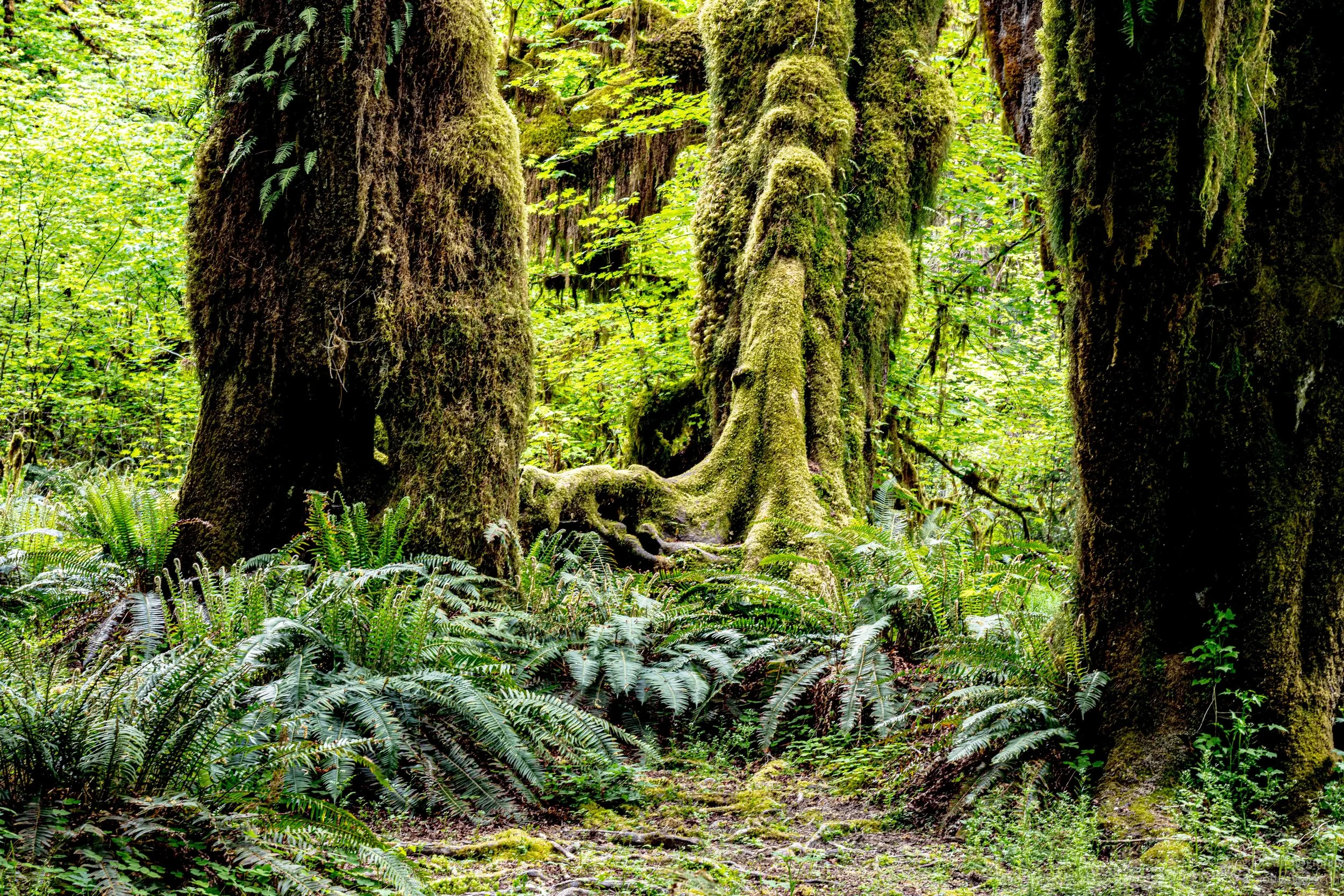
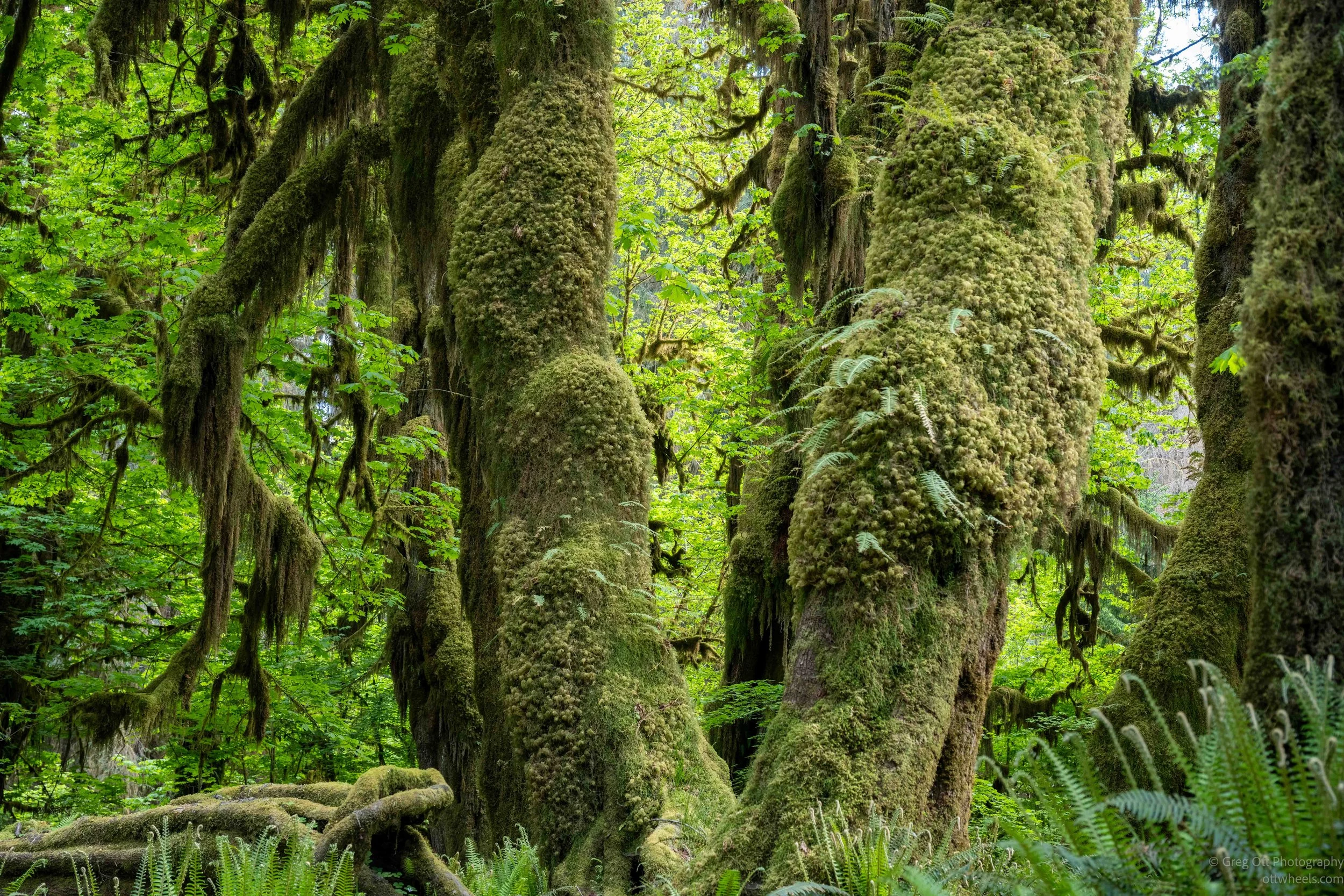
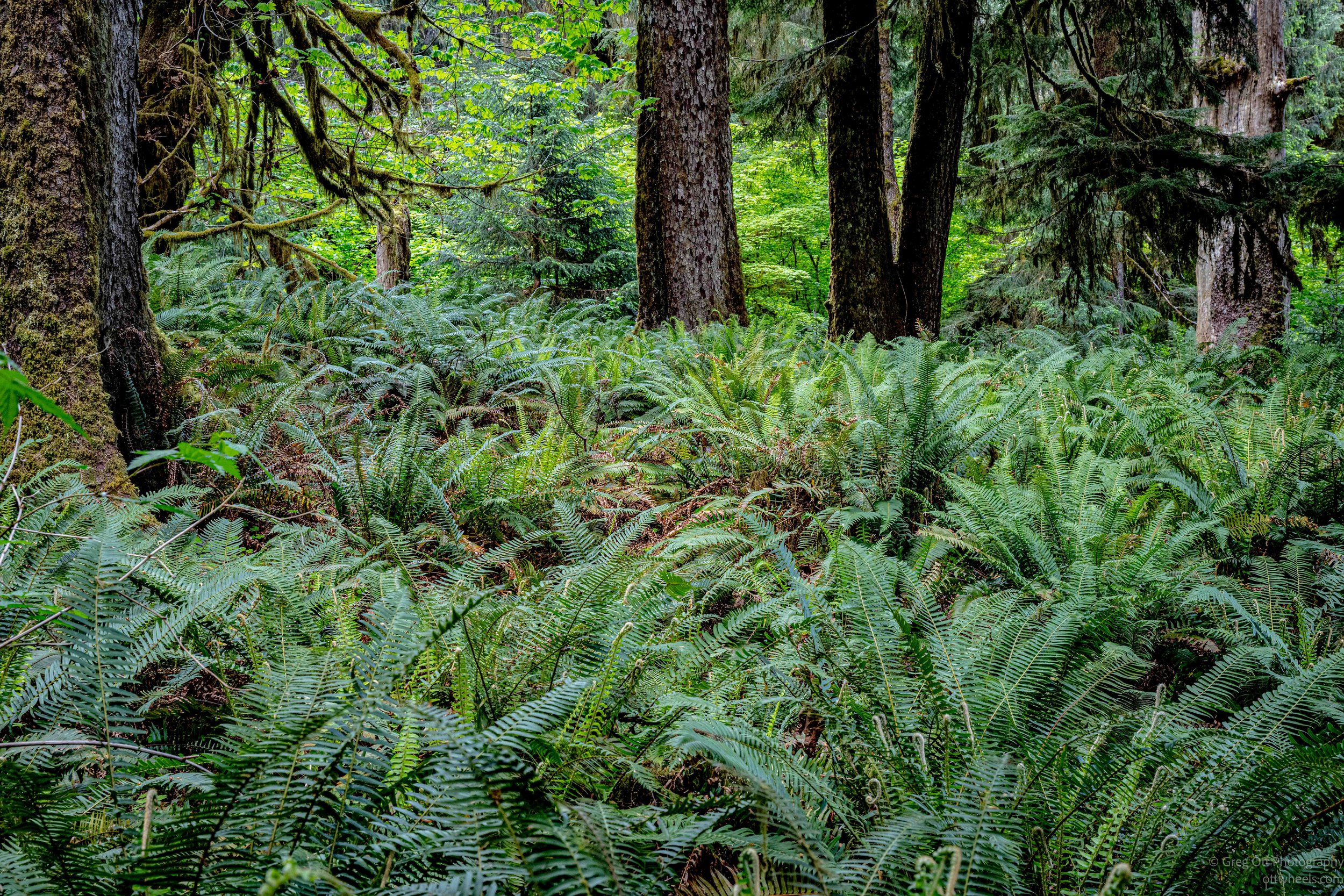
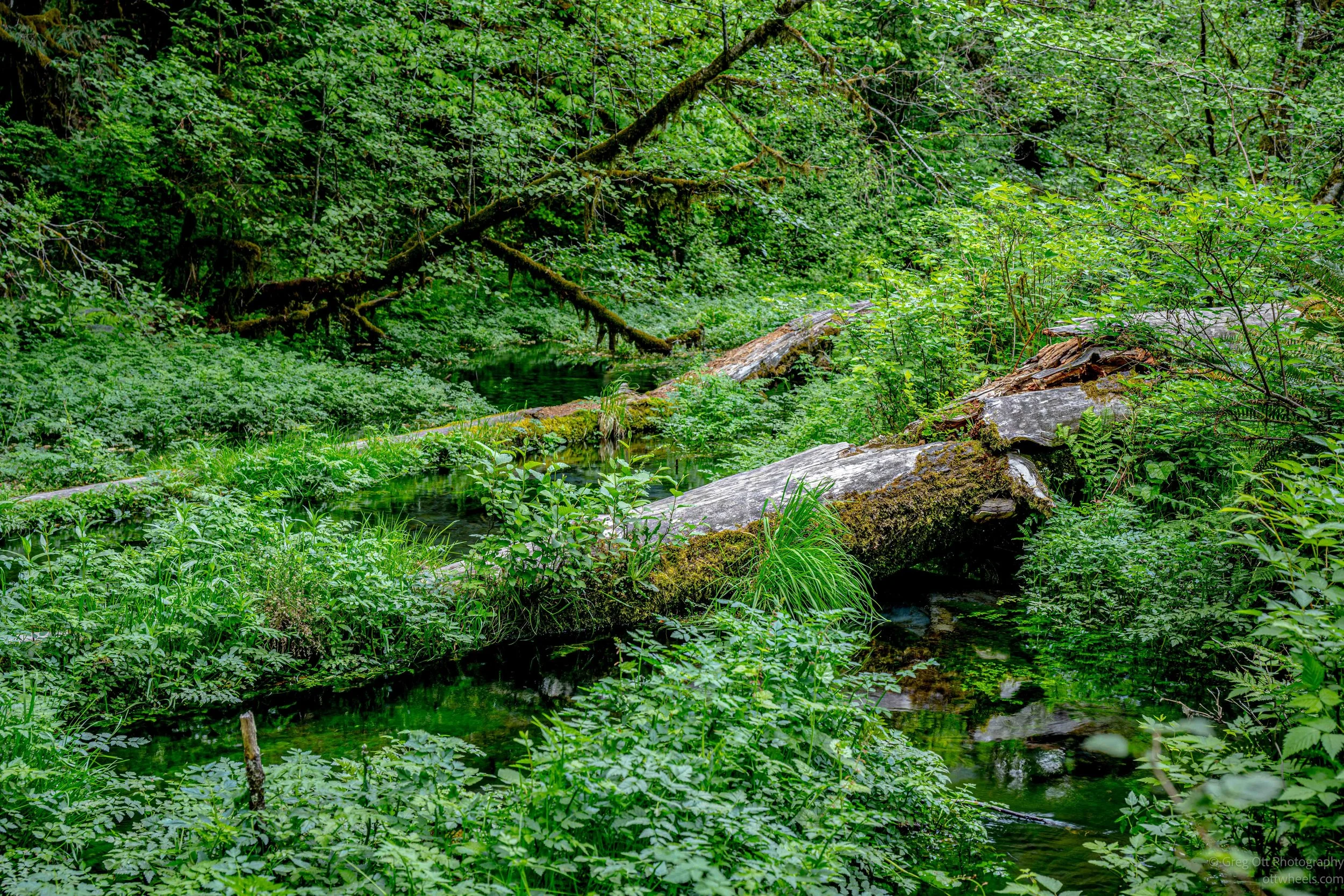
The main trail near the visitor center is only about 1.1 miles, but distance really has nothing to do with the experience. Nobody moves quickly through this forest. The entire walk feels almost unreal at first. Everything is green. Not just the trees, but the branches, the fallen logs, the rocks, and even the air itself somehow feels green. Massive Sitka spruce and western hemlock tower overhead while thick curtains of moss hang from limbs in every direction. Some of the moss strands looked several feet long, swaying slightly whenever a breeze found its way through the canopy.
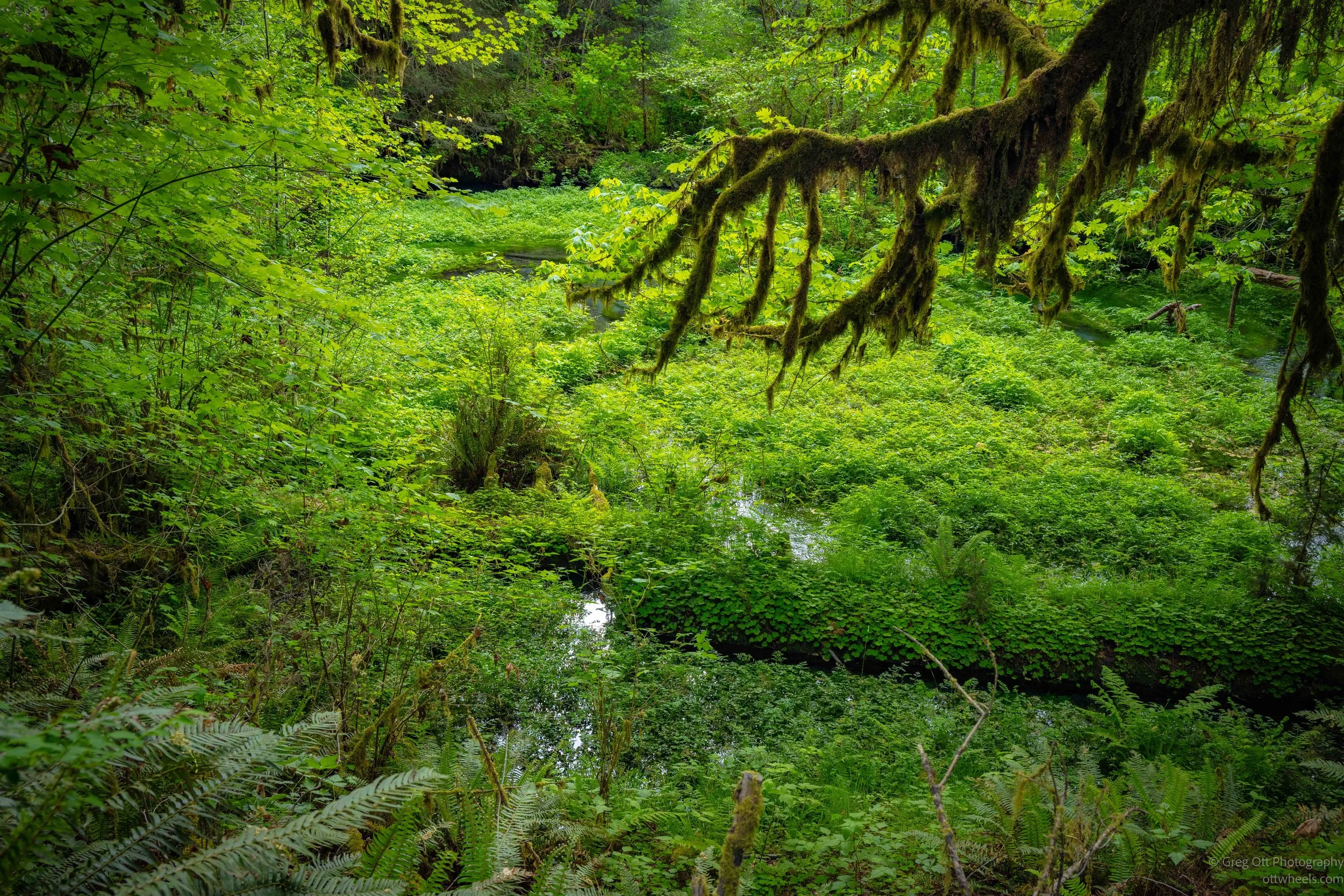
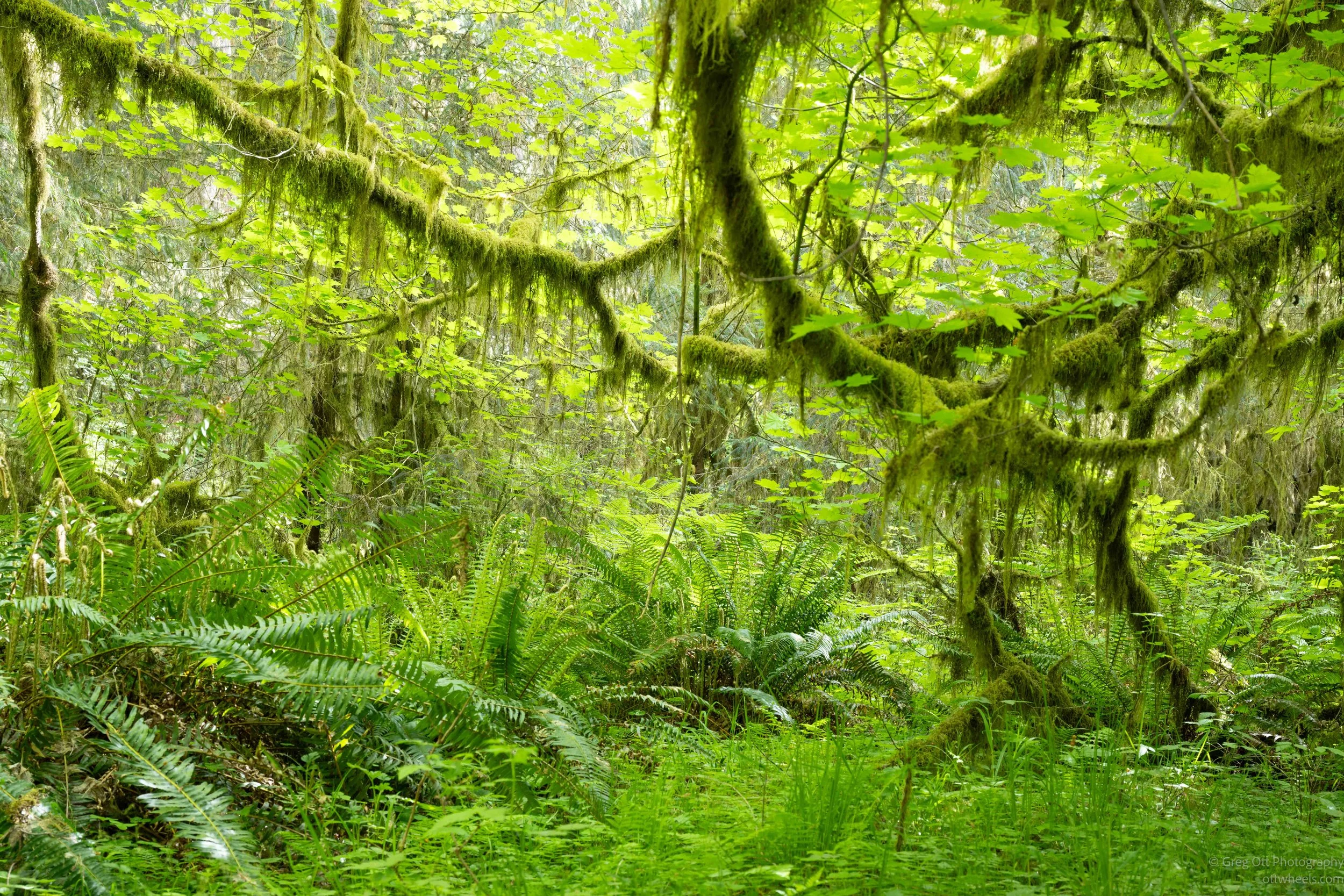
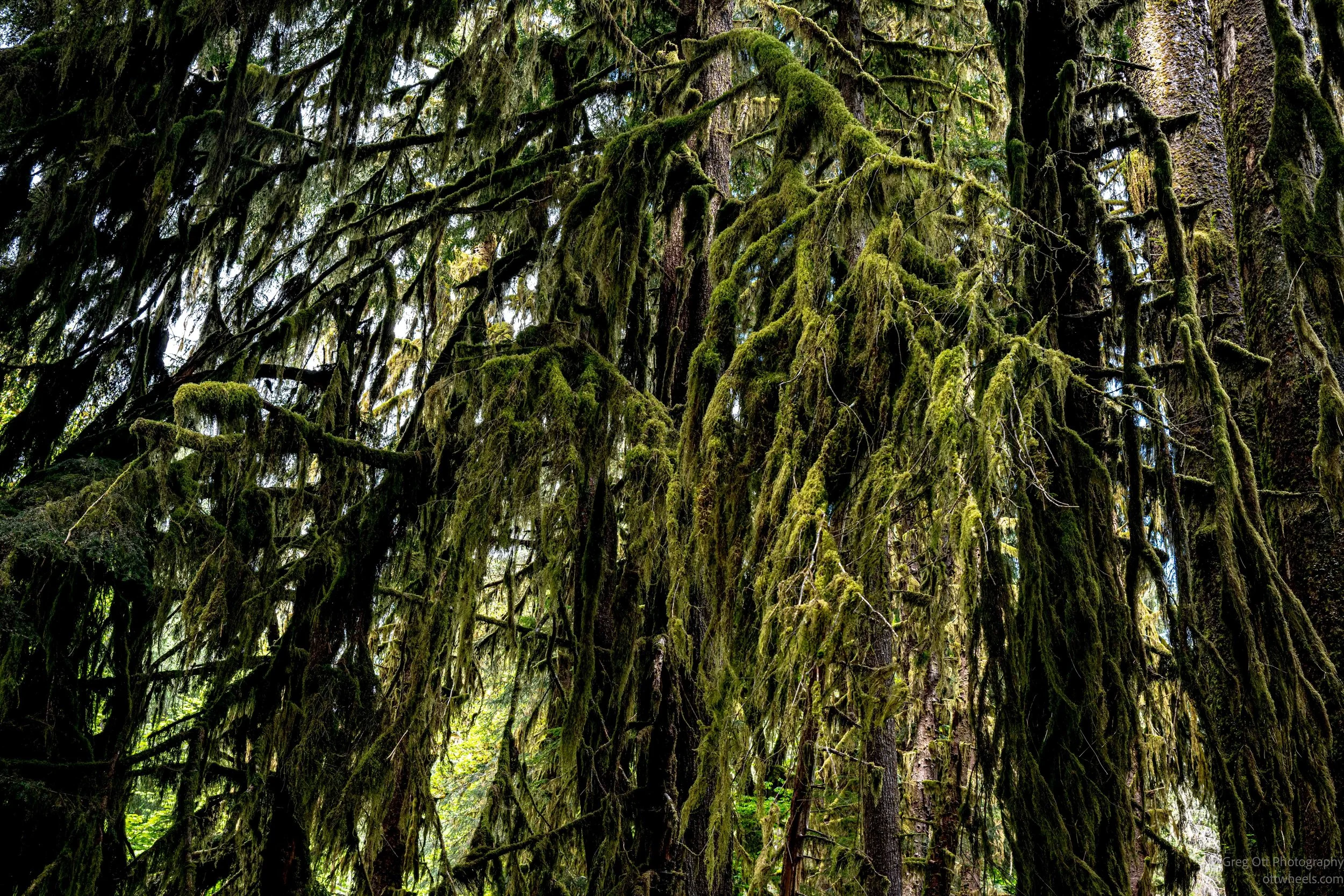
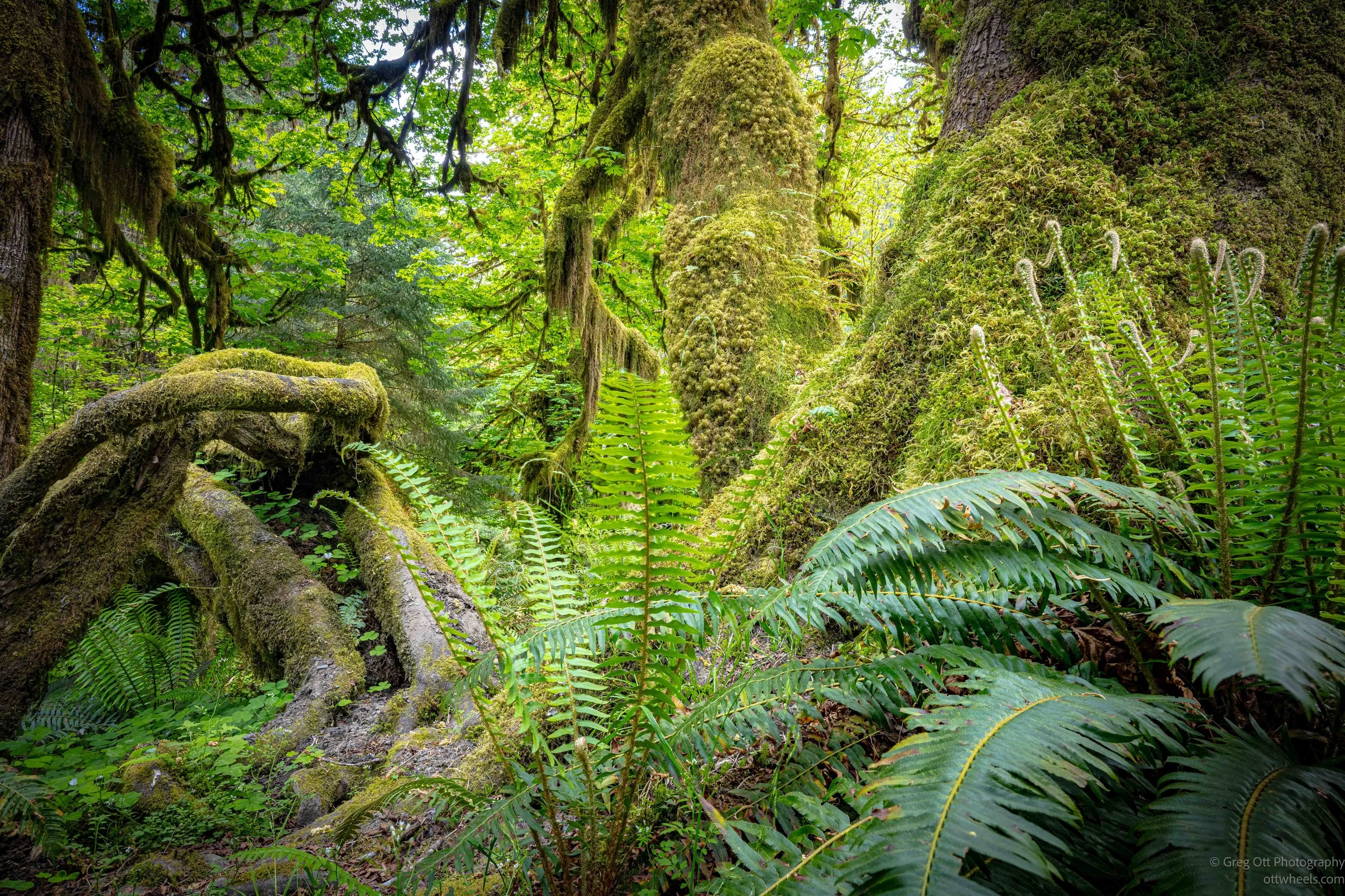
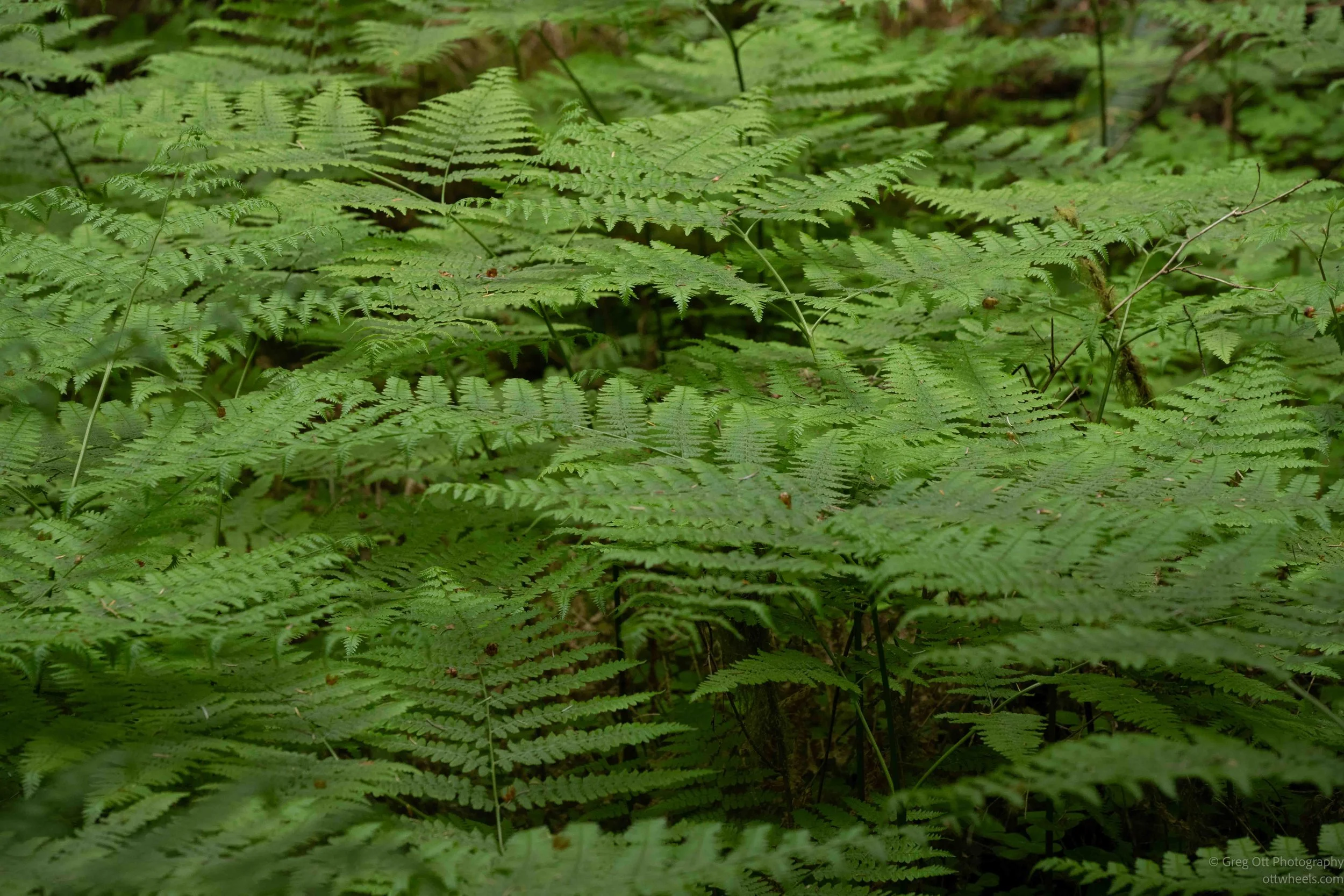
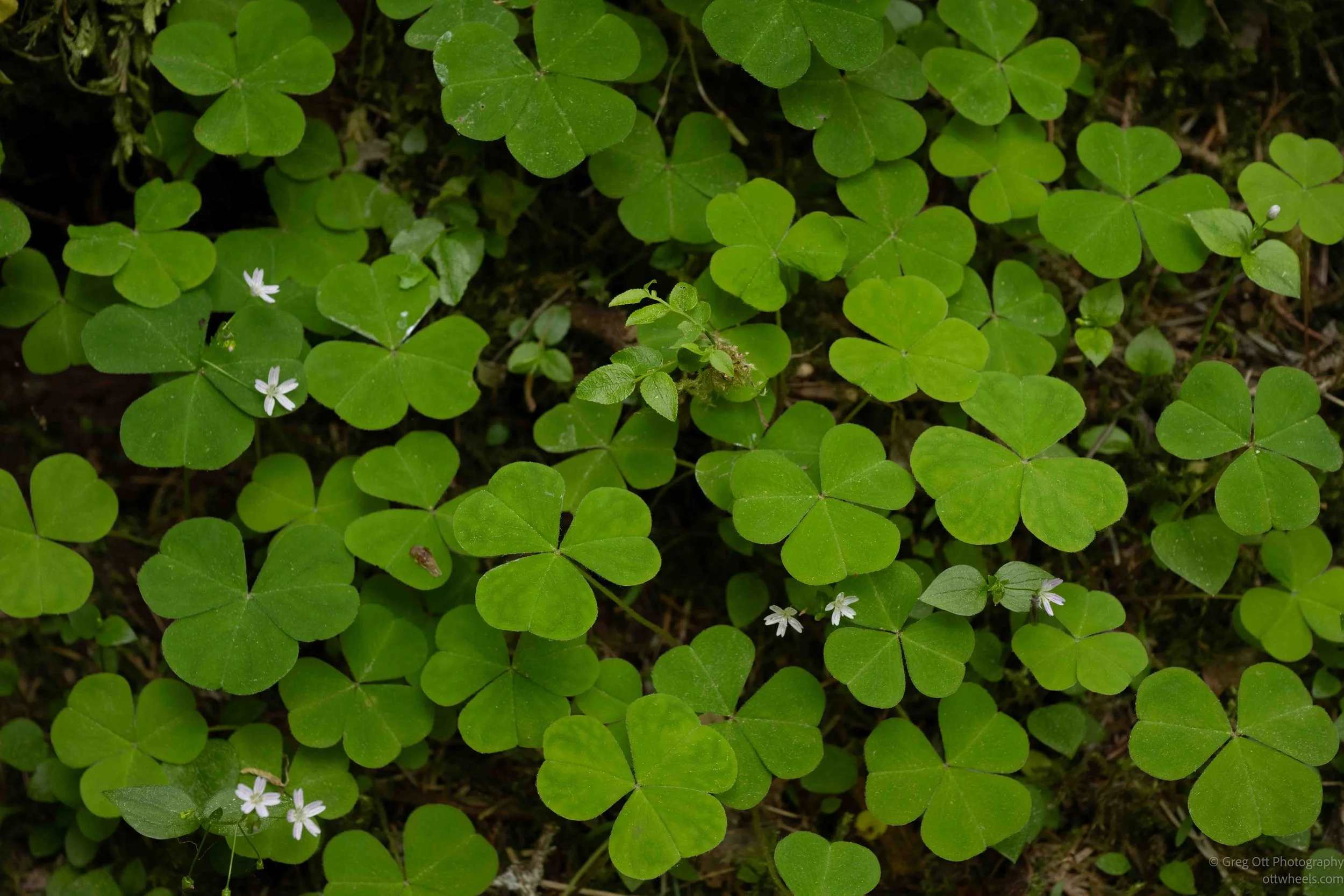
The forest floor is covered in ferns so thick in places that it barely looks walkable beyond the trail. Fallen trees slowly disappear beneath layers of moss and new growth until they become part of the forest again. Nothing here seems separate from anything else. Dead trees become nurse logs for new trees. Branches collect moss. Moss traps moisture. Moisture feeds everything.
There’s one enormous moss-covered maple near the trail that almost everyone stops to photograph. You can see why immediately. The trunk twists outward beneath layers of moss so thick it looks padded. Every branch is coated in green, and the entire tree seems to spread horizontally instead of vertically, almost like it melted into the forest around it. It’s probably one of the most photographed trees in the park, but standing in front of it in person still feels different than seeing it online. The scale of it doesn’t translate well in photographs unless somebody is standing nearby.
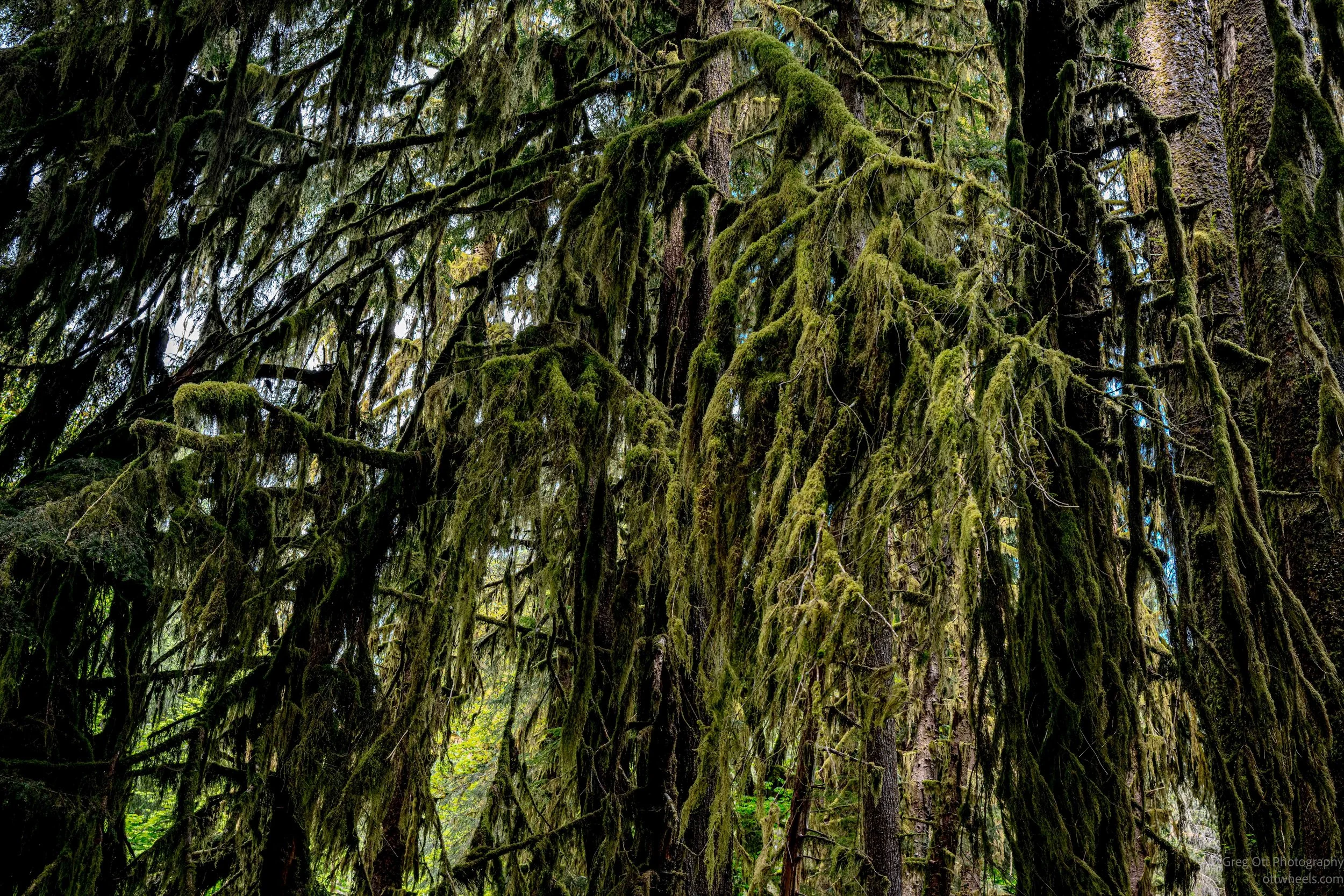
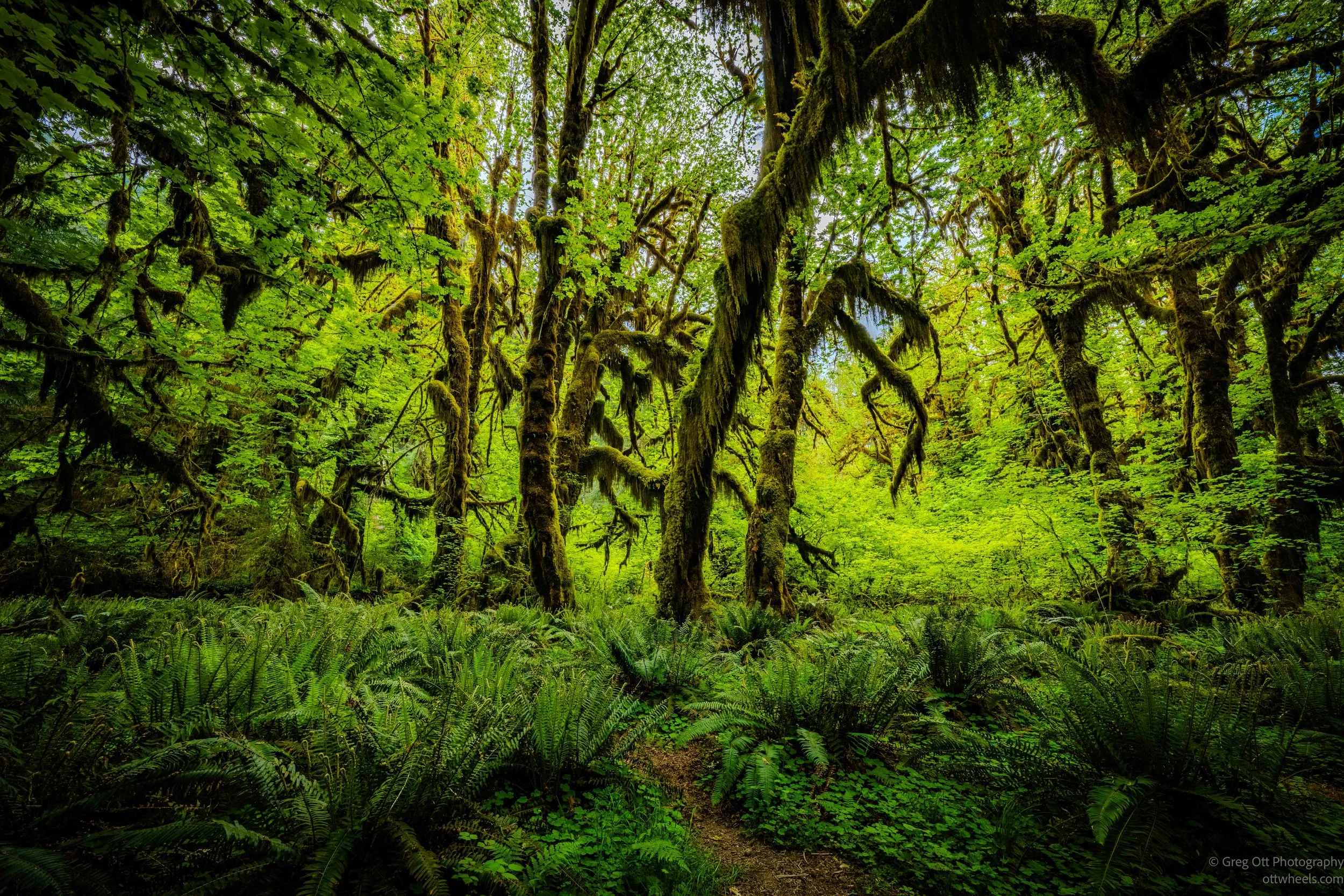
At one point I met another photographer on the trail, and we ended up crossing paths repeatedly throughout the afternoon. We would separate for a while, then run into each other again farther down the trail photographing completely different things. She specialized in wildlife photography and made a living selling her images through Instagram. It was fun listening to somebody talk about photography with that level of passion and focus. Wildlife photography seems to require a level of patience I’m not sure I possess. She talked about spending entire days waiting for a single moment or expression from an animal.
Later on, a young couple walking with what looked like a five-month-old baby stopped beside me while I was taking photographs. The husband looked around at all the cameras and tripods scattered along the trail and asked, “Is there something special happening? I’ve seen several professional photographers out here. What are you photographing?”
I explained that I was just an amateur working on my 50 states and capitols project. They asked to see some of the photographs, so I scrolled through a few on the back of the camera while we talked. Eventually the conversation shifted, and they told me they were living on and off in a van while working remotely. They still had a house in Oregon they returned to periodically, but they were spending more and more time traveling. It’s funny how often conversations like that happen on the road. Complete strangers somehow end up talking like you’ve known each other for years simply because you recognize pieces of your own life in theirs.
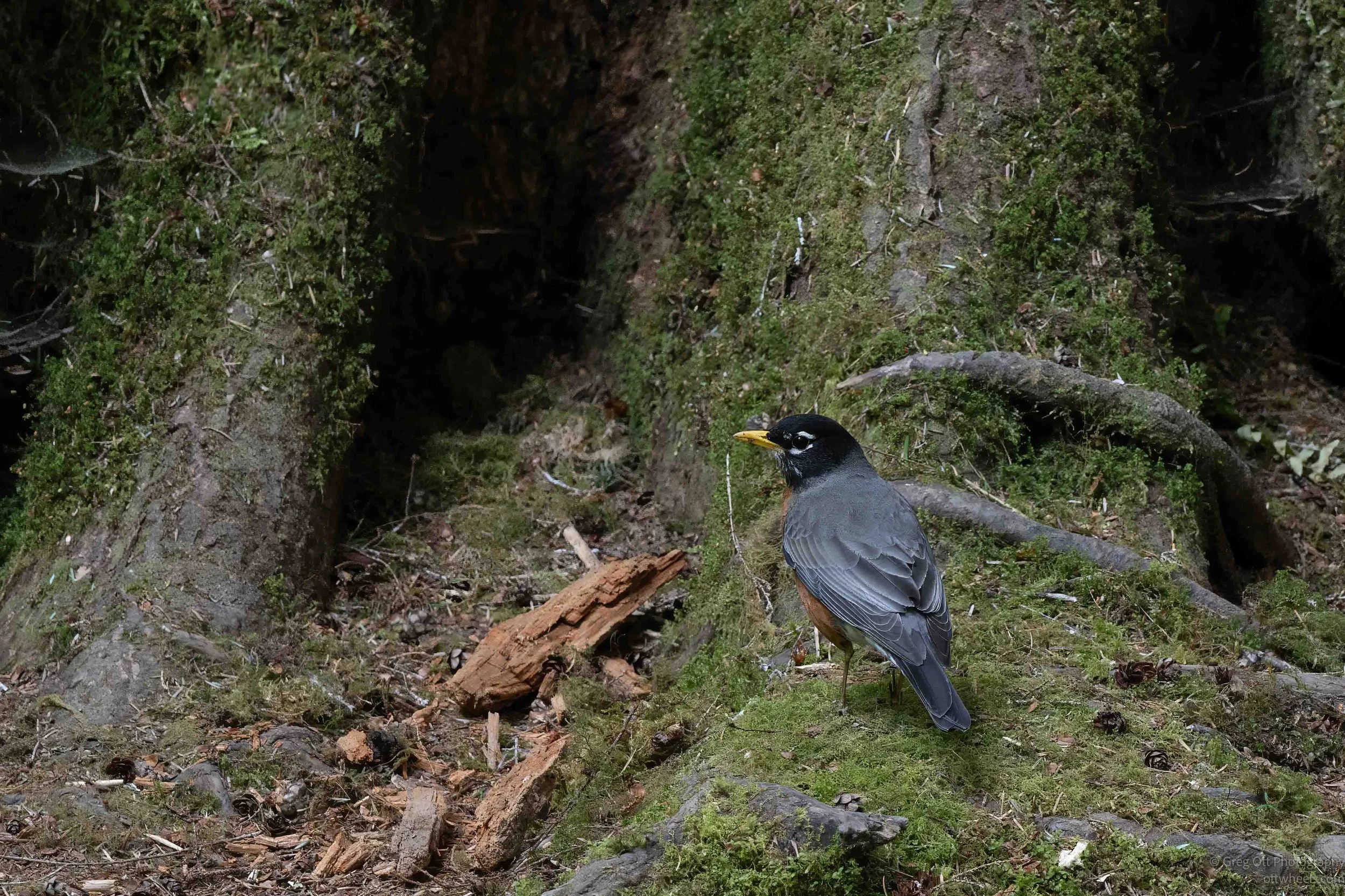
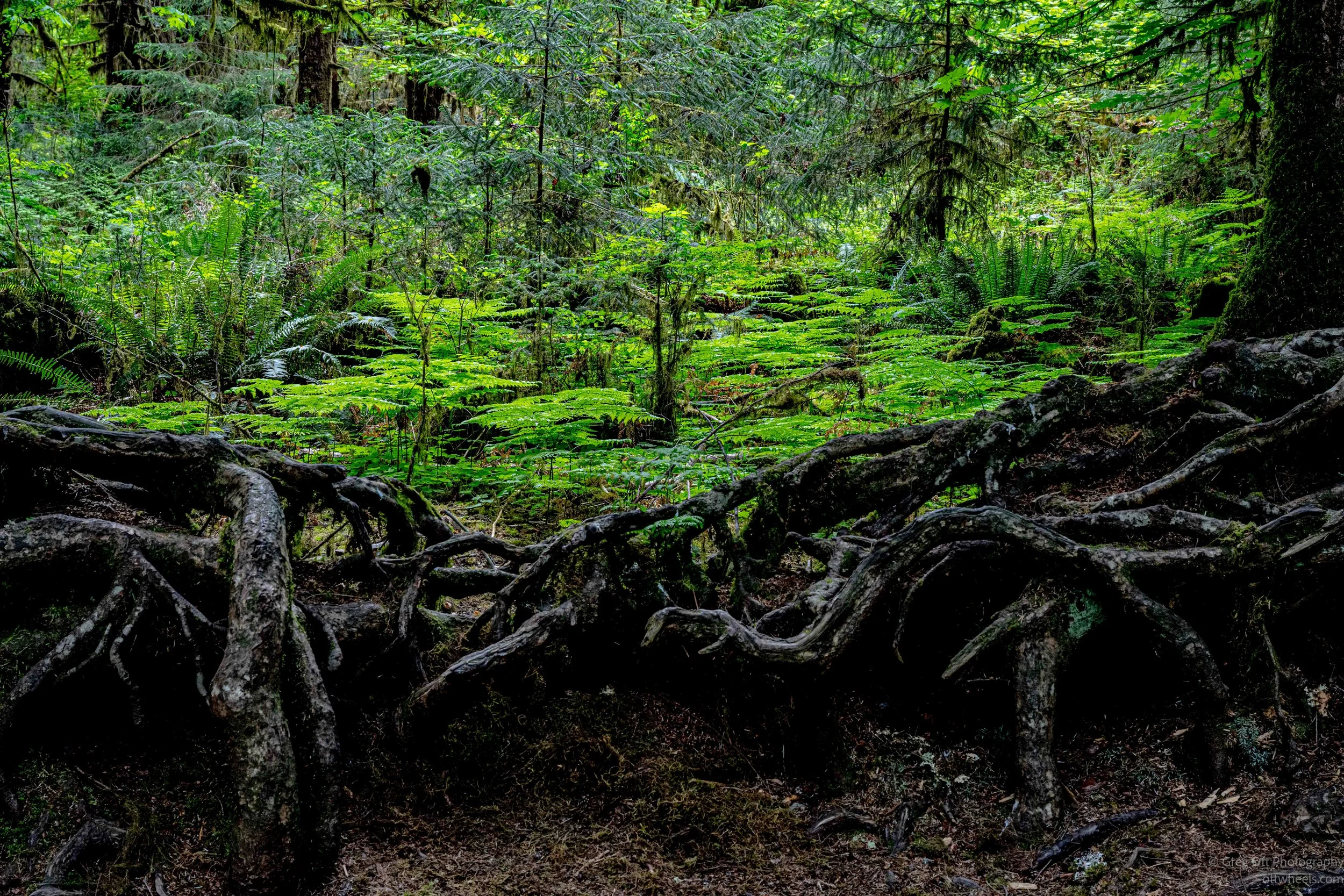
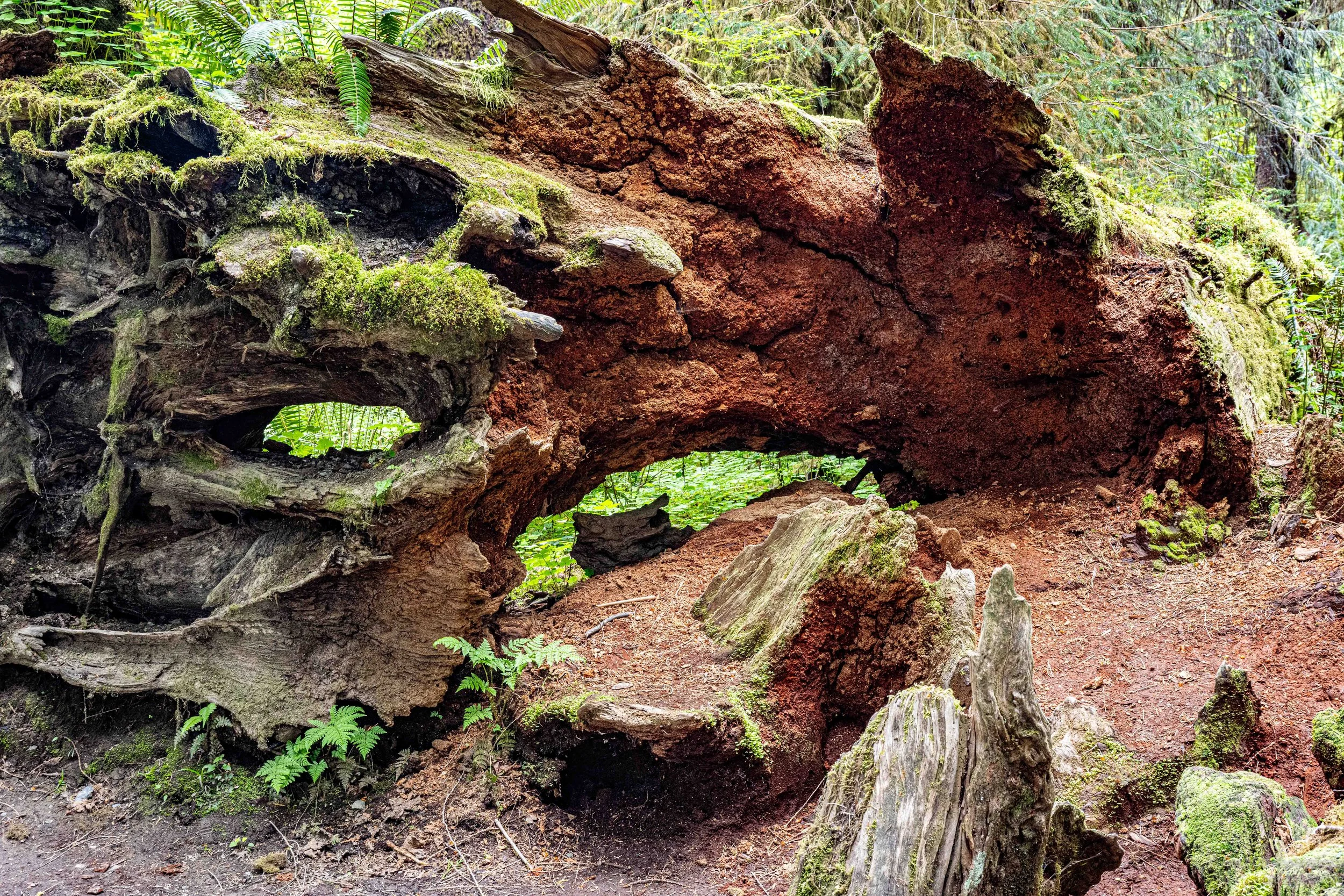
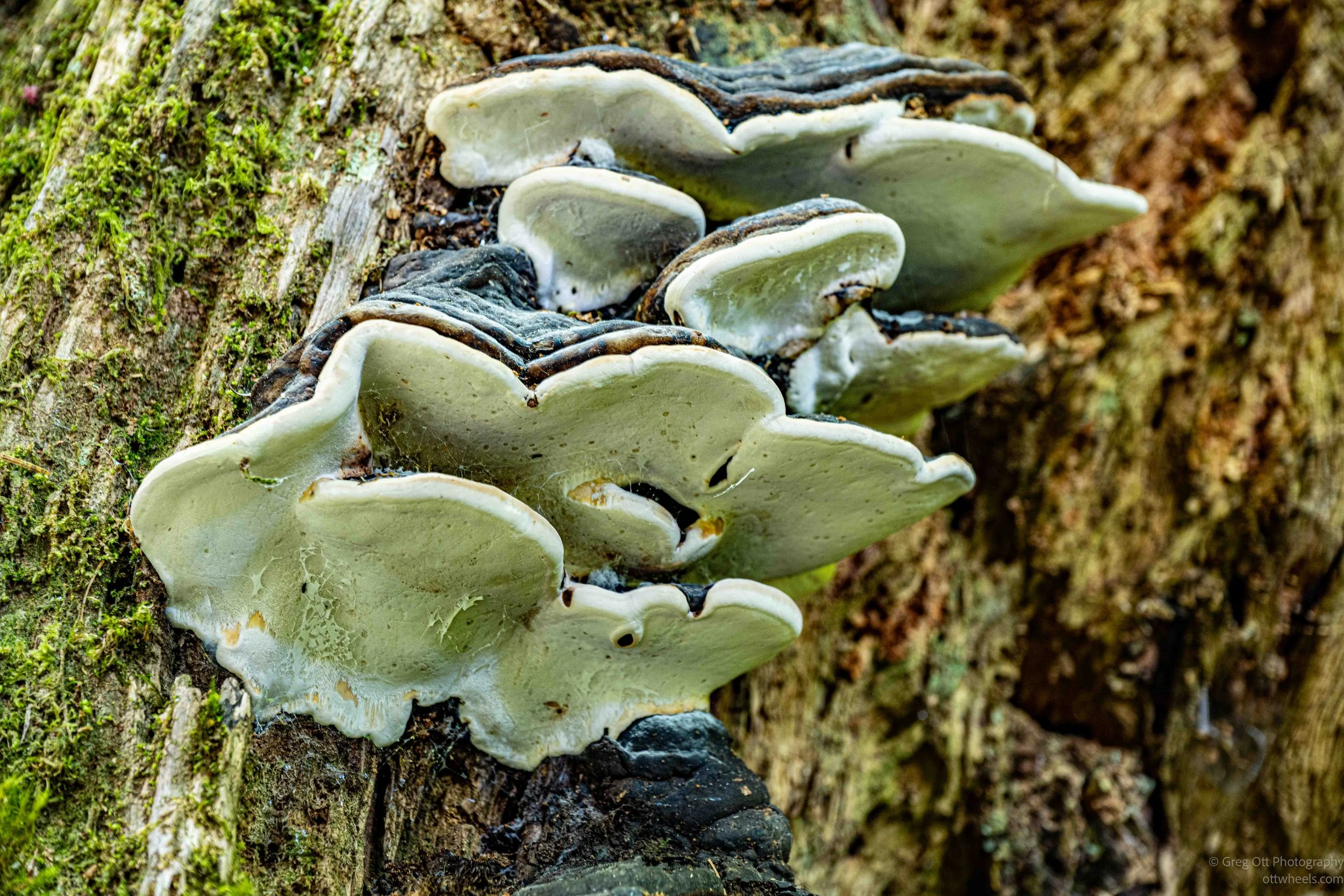
By the time I made it back toward the visitor center, it was getting close to six o’clock and I still had several hours of driving ahead of me. I walked back to the van with the photographer I had met earlier. We exchanged Instagram accounts and website information before heading our separate ways.
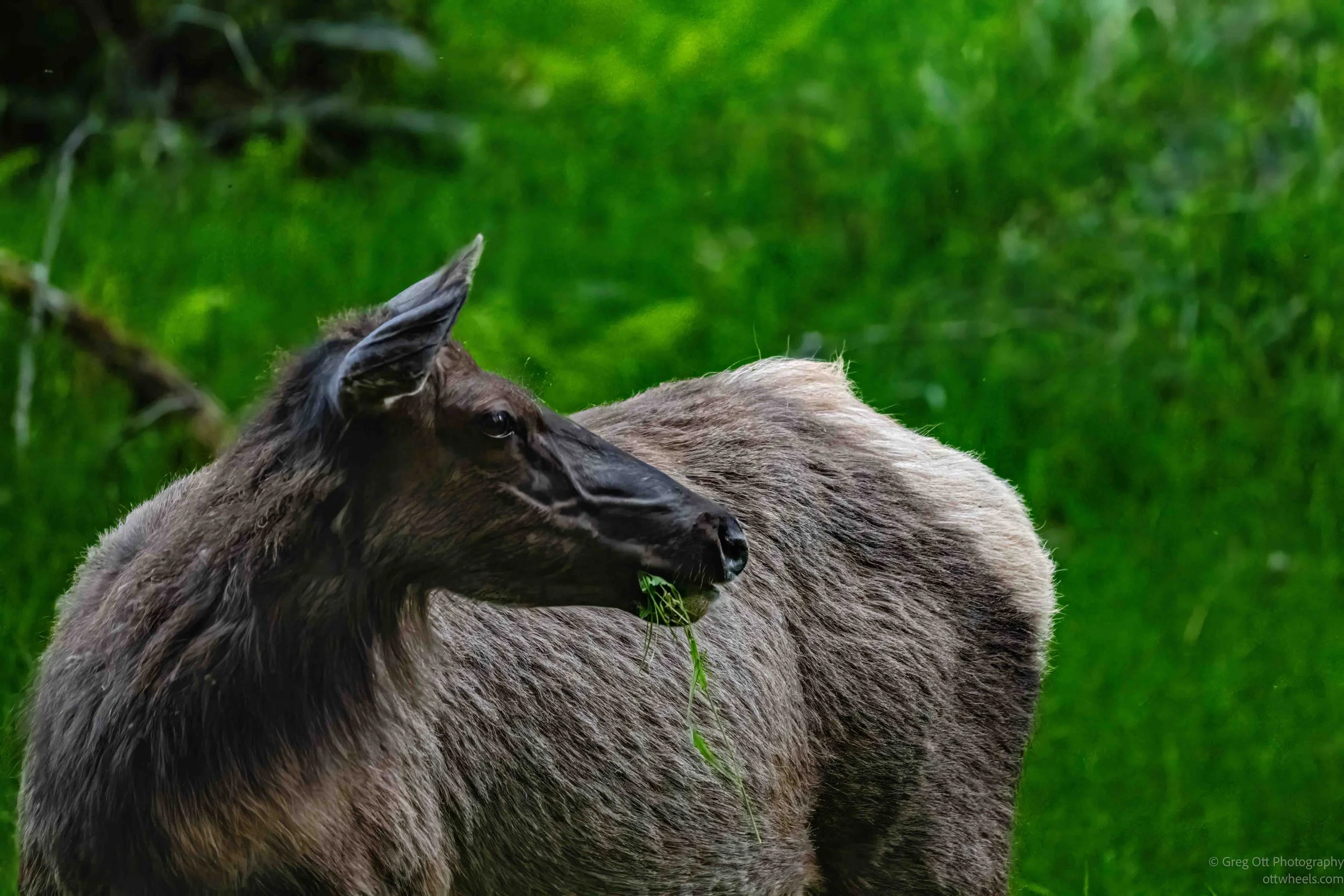
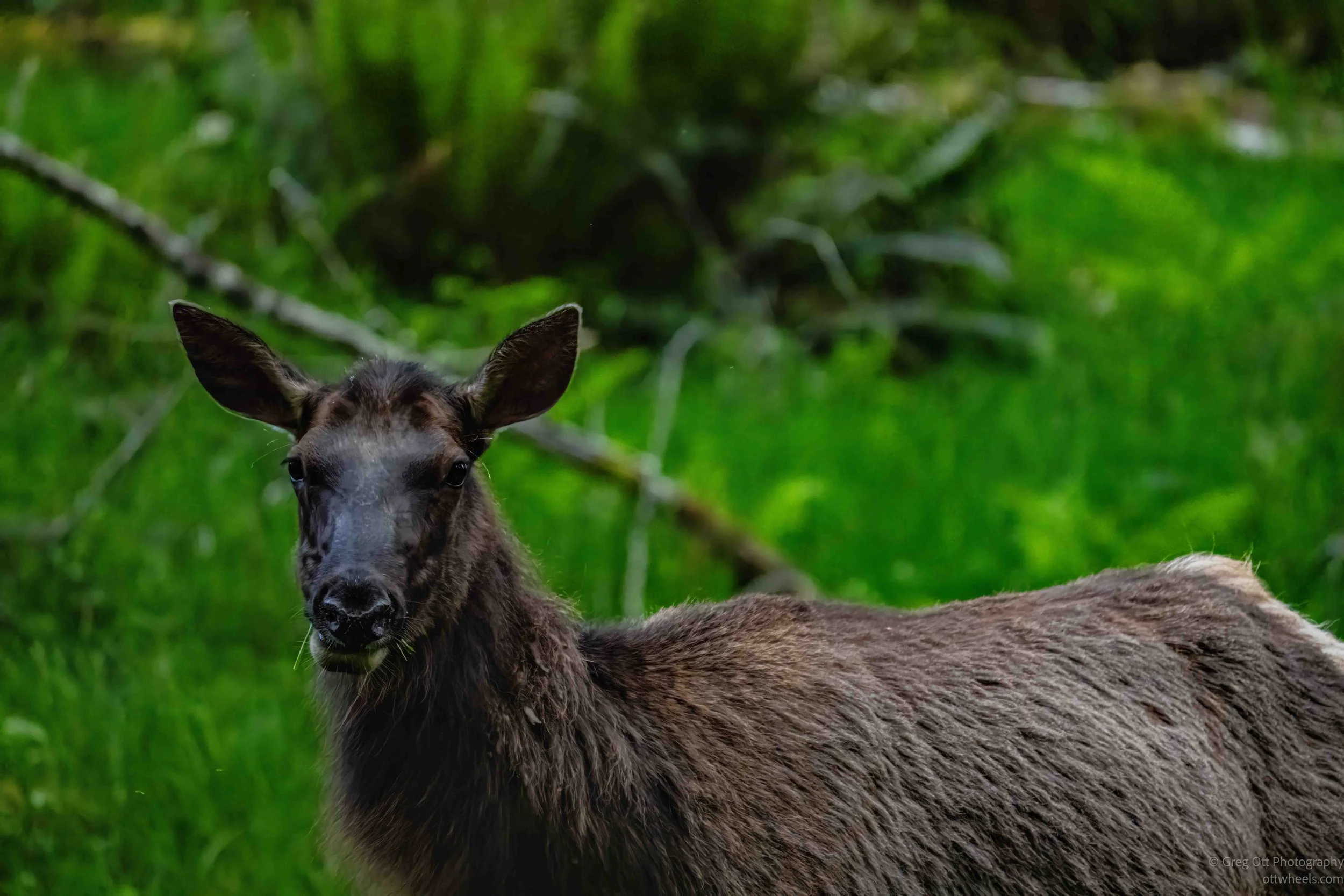
Then, on the drive out of the forest, there she was again sitting on the side of the road with her camera pointed into the trees. About a dozen elk were feeding just inside the forest line. I pulled over and joined the four other people slowly following them along the roadside. The light inside the forest was extremely dark by that point. I had my camera capped at ISO 3500 because I was trying to keep noise under control, but even that wasn’t enough to maintain the shutter speeds I wanted. The wildlife photographer beside me was shooting well above ISO 6000 without hesitation. Wildlife photographers live in an entirely different world when it comes to acceptable noise levels.
About 40 minutes outside the park is the town of Forks. I stopped at a restaurant thinking I’d finally get dinner, but I quickly changed my mind after standing there for several minutes watching the staff focus more on talking with friends at tables than seating customers walking through the door. I decided I didn’t have the patience for it. I ordered a scoop of ice cream to go instead and got back on the road.
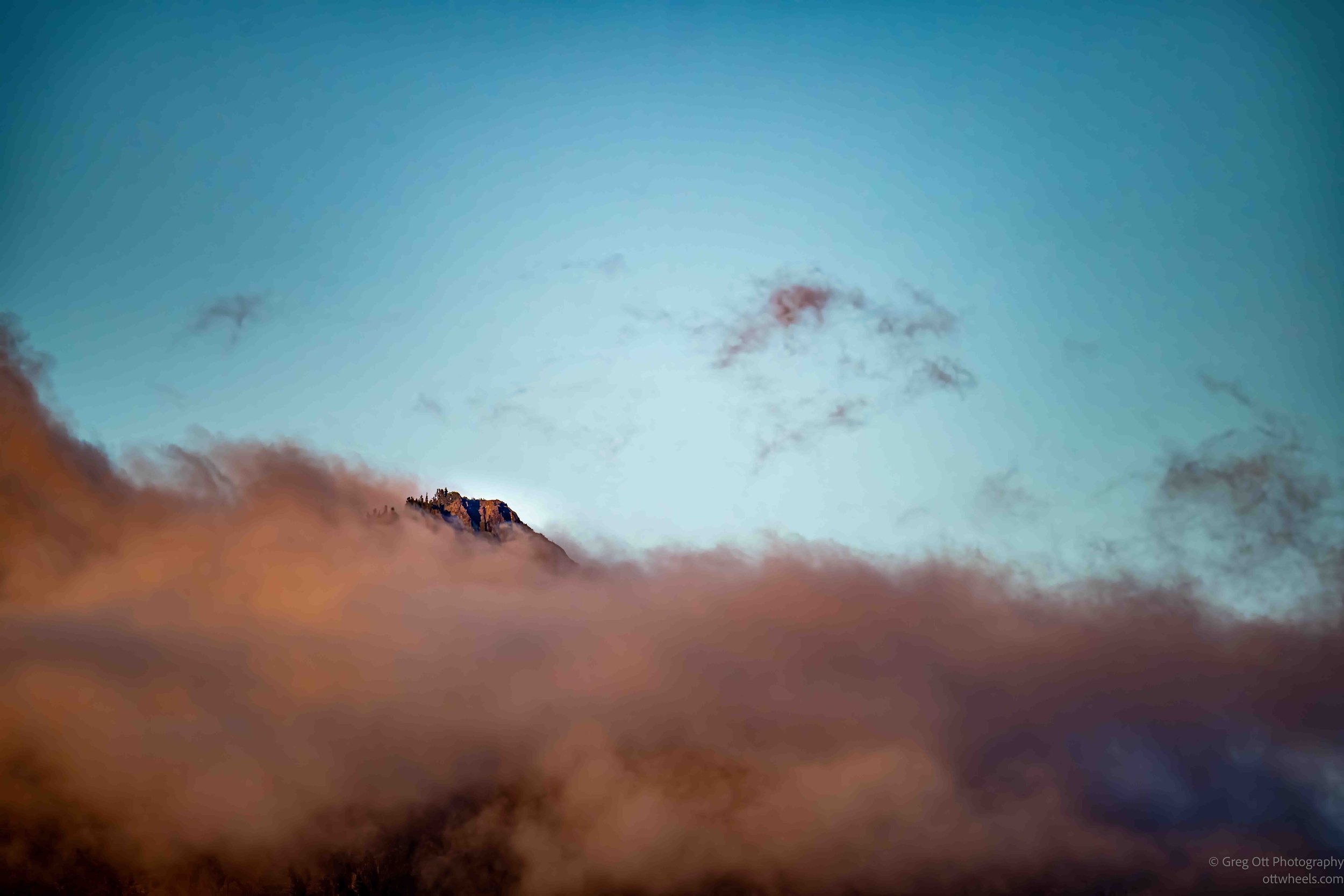
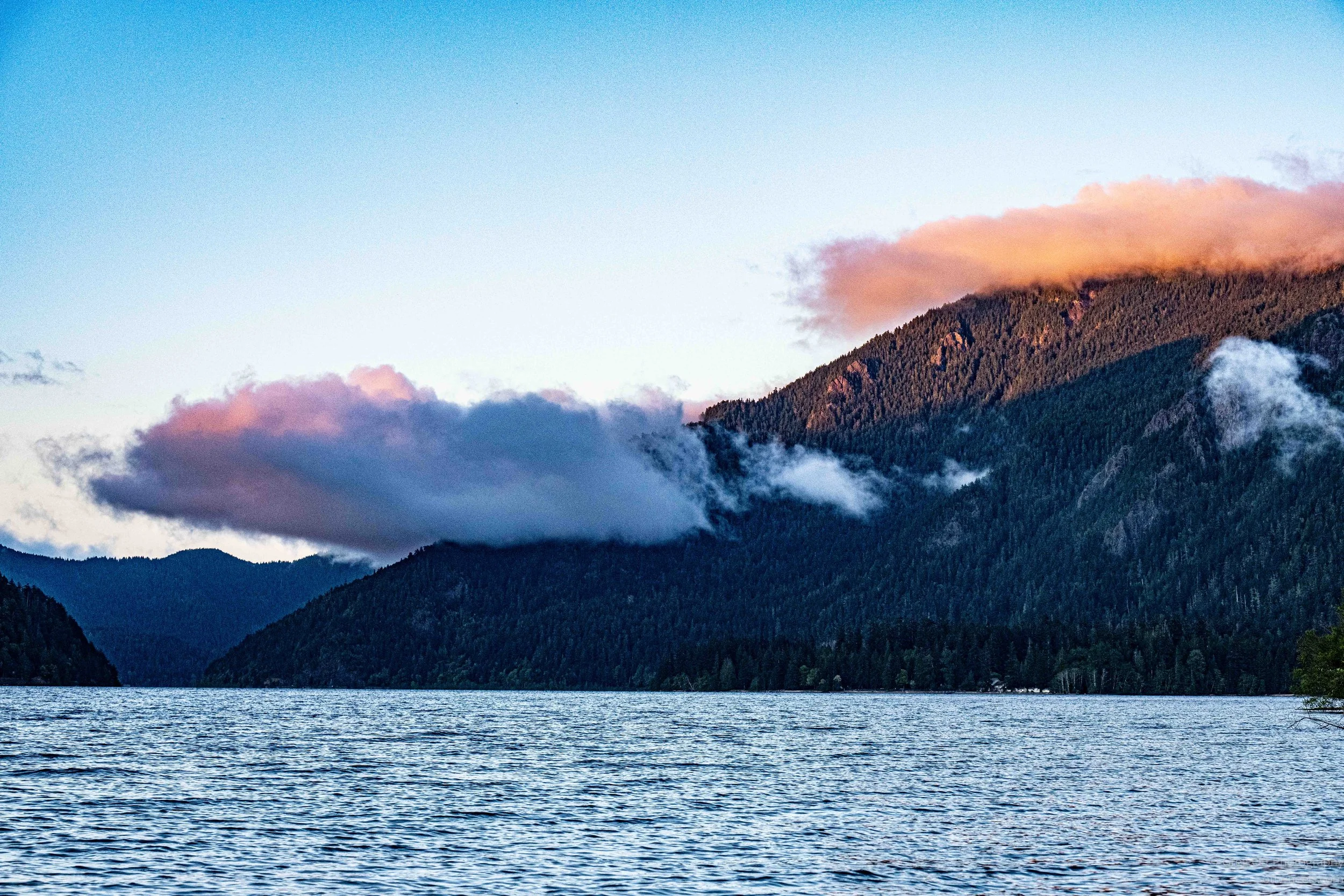
I stopped several times along Lake Crescent just to watch the sun paint the sky, mountains and lake. I kept missing some shots that I could see through the trees, but there was nowhere to pull over.
It was Sunday night by the time I returned to Port Angeles around 9:30 pm. I filled up the van again before heading back toward the church where I had stayed two nights earlier. Gas has become my single biggest expense on this trip by far. Distances out west look manageable on a map until you start driving them every day.
The parking lot was completely empty this time. I pulled in, shut everything down, climbed into bed, and was asleep pretty quickly.