VA City, Bozeman, Livingston
9/15: Livingston, Montana
Before leaving Bannack, I made breakfast in the van—oatmeal with a banana, blueberries, nuts, seeds, almond milk and a little maple syrup—followed by a double espresso. It was warmer than the previous morning, and there were now six campers in Vigilante Campground. A dog on a long leash wandered over looking for attention and pushed himself against my leg, so I got down and started petting him. About ten minutes later, his owners, Dave and Jen, came outside to take him for a walk. They told me they had rescued him from a shelter in Washington State after he had been abused in a drug house. He put his head in my lap while I rubbed his ears and neck and seemed far more interested in staying with me than going for a walk.
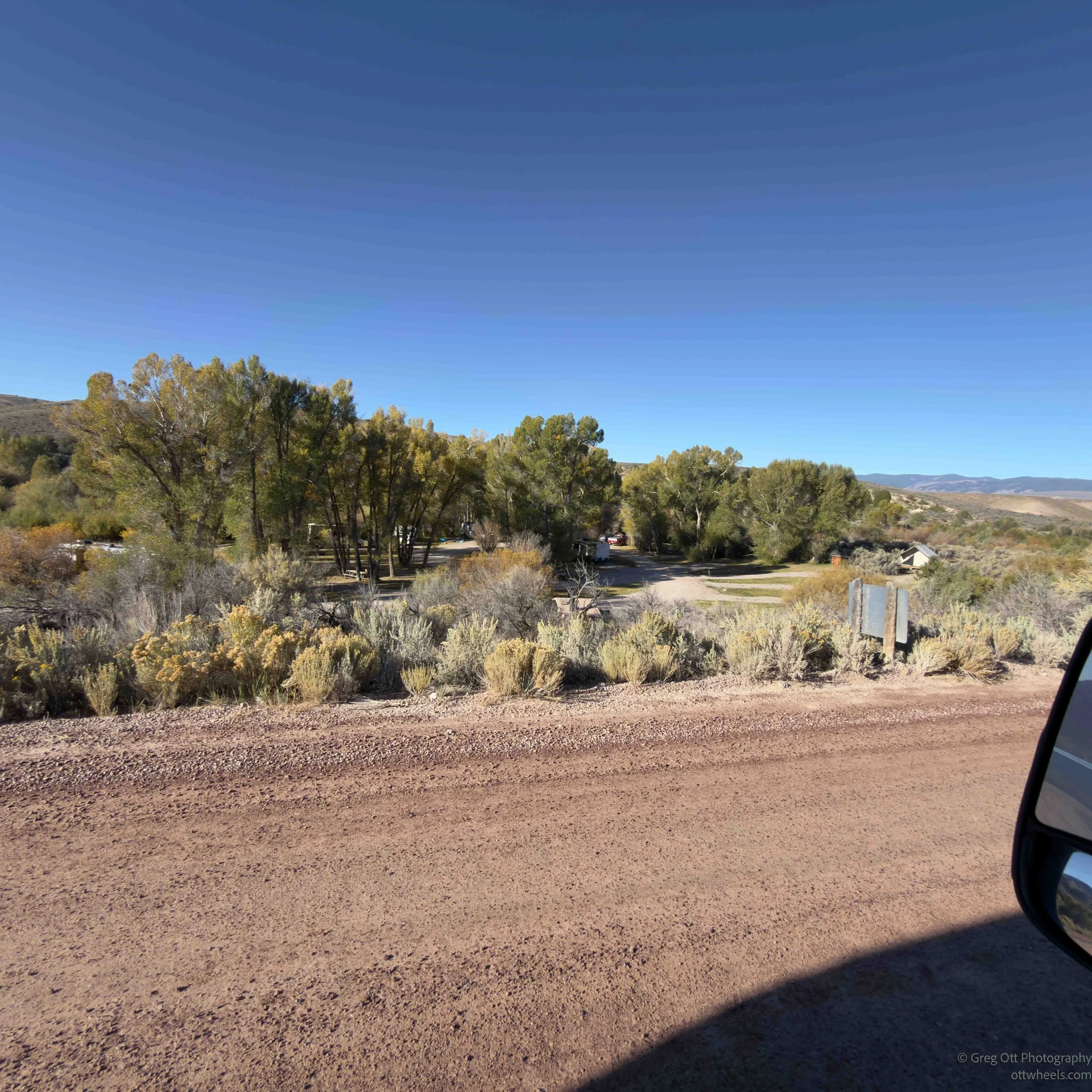
Since I was actually staying in a campground for once, I took advantage of it. I grabbed the garbage out of the van, emptied the toilet and filled the water. My fresh-water tank was down to three percent, and there was a well at the campground, so I filled it before leaving. The water tasted really good.
Virginia City, Montana
Virginia City was about two hours away. There was plenty of parking when I arrived, both along Wallace Street and in the main visitor lot, but I had managed to show up one day after the official summer season ended. The visitor center was closed along with quite a few of the businesses, although some apparently reopen on Fridays and Saturdays into October. I had planned to spend three or four hours wandering through town, stopping for coffee and maybe a pastry, but that part of the plan wasn’t going to work.
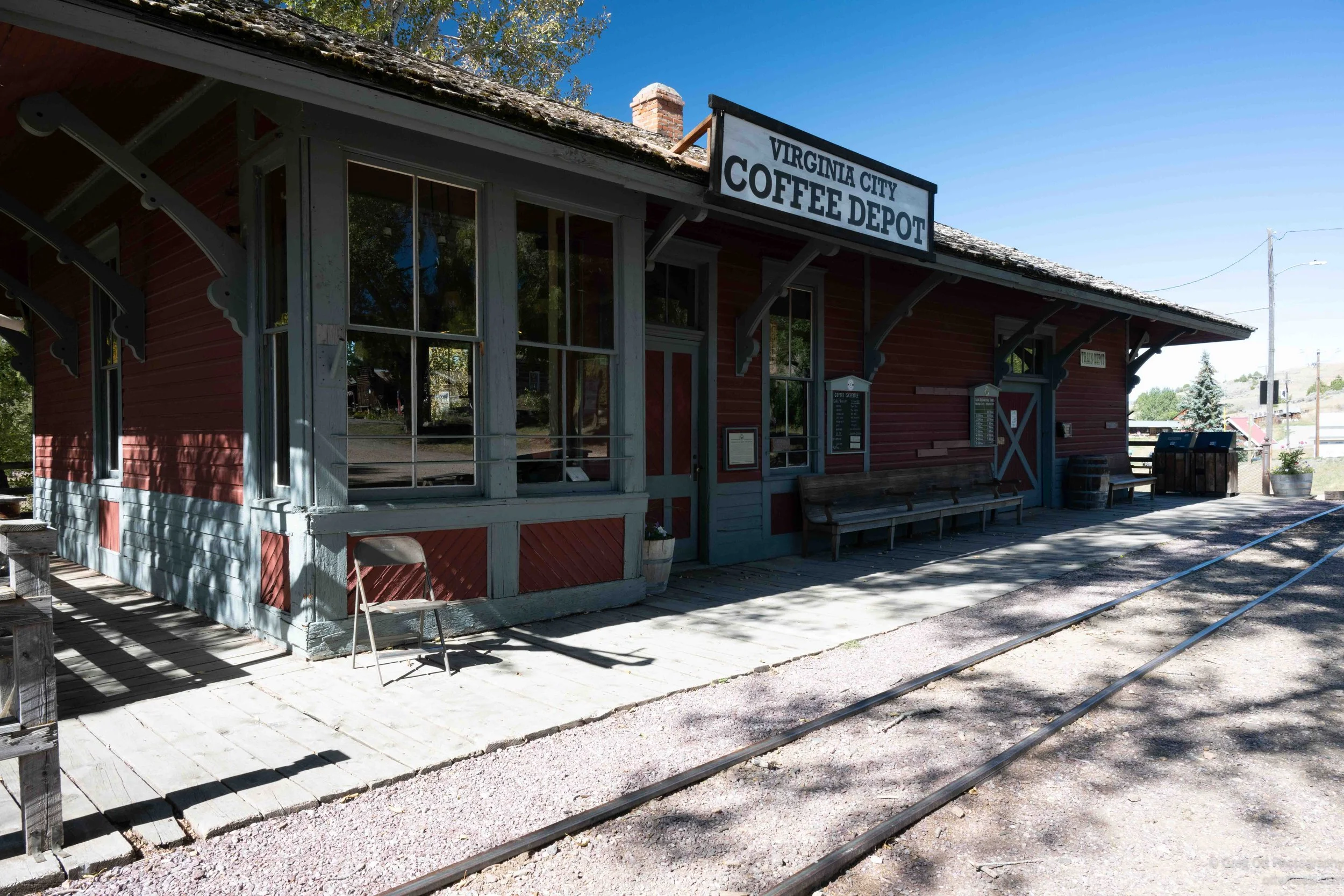
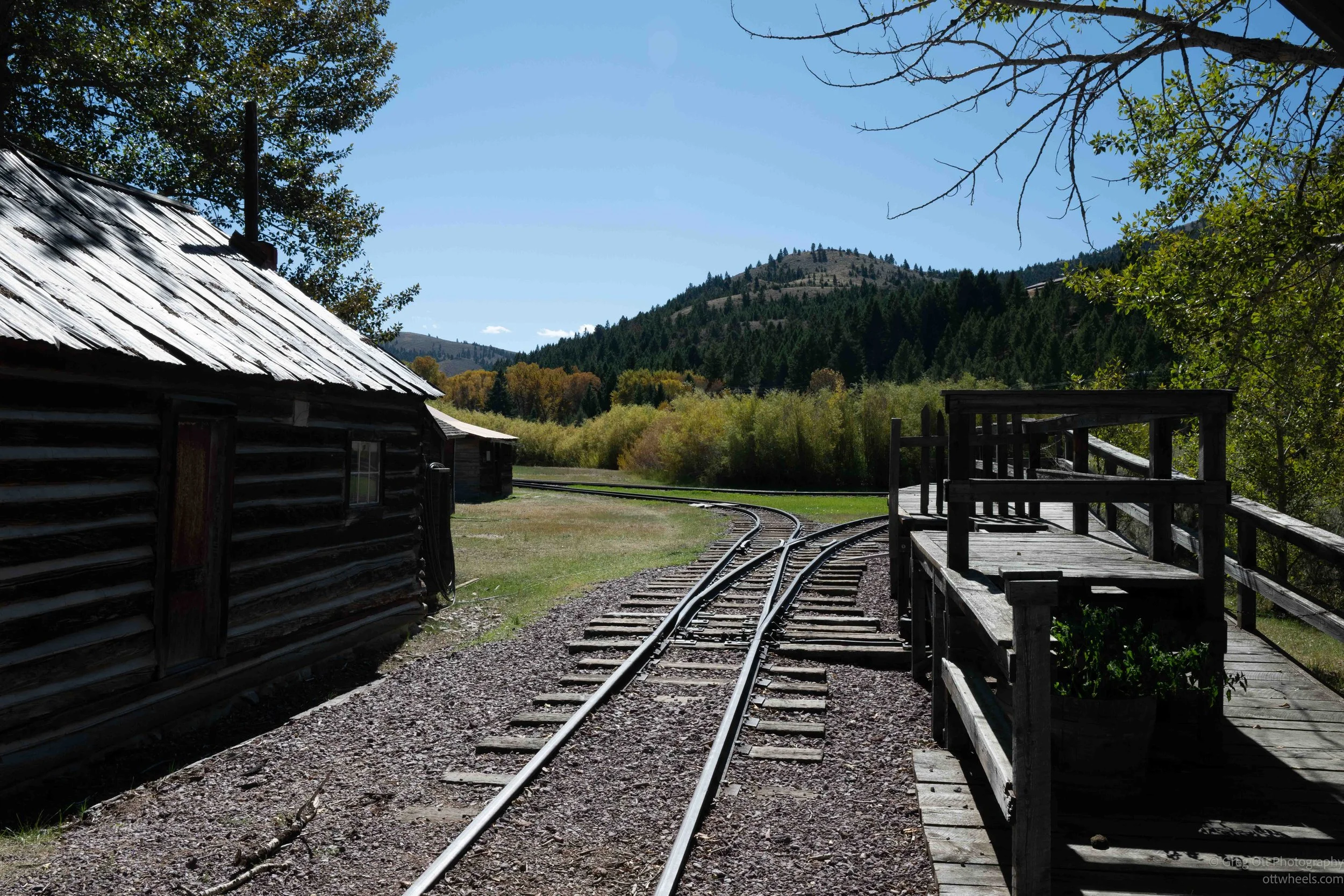
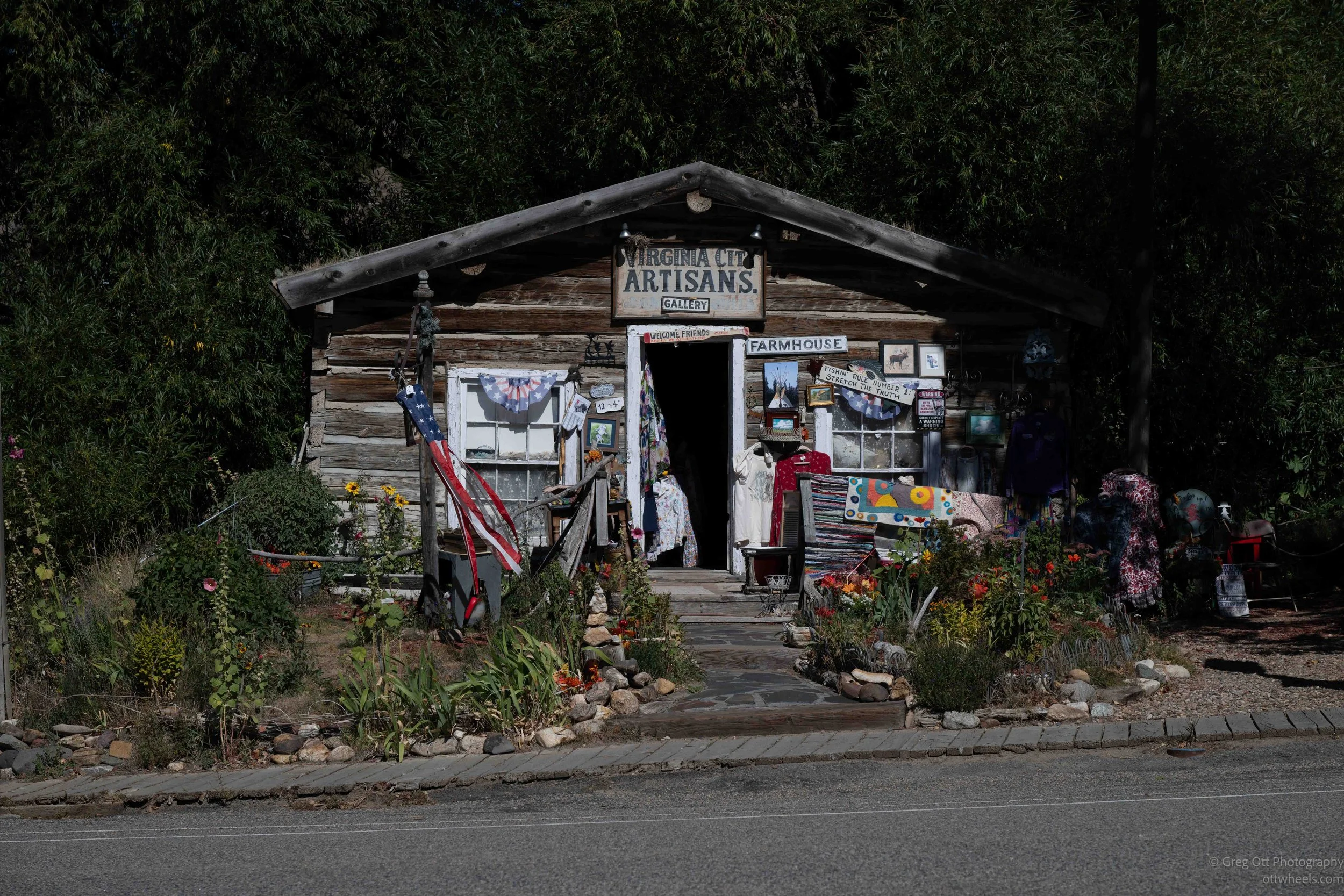
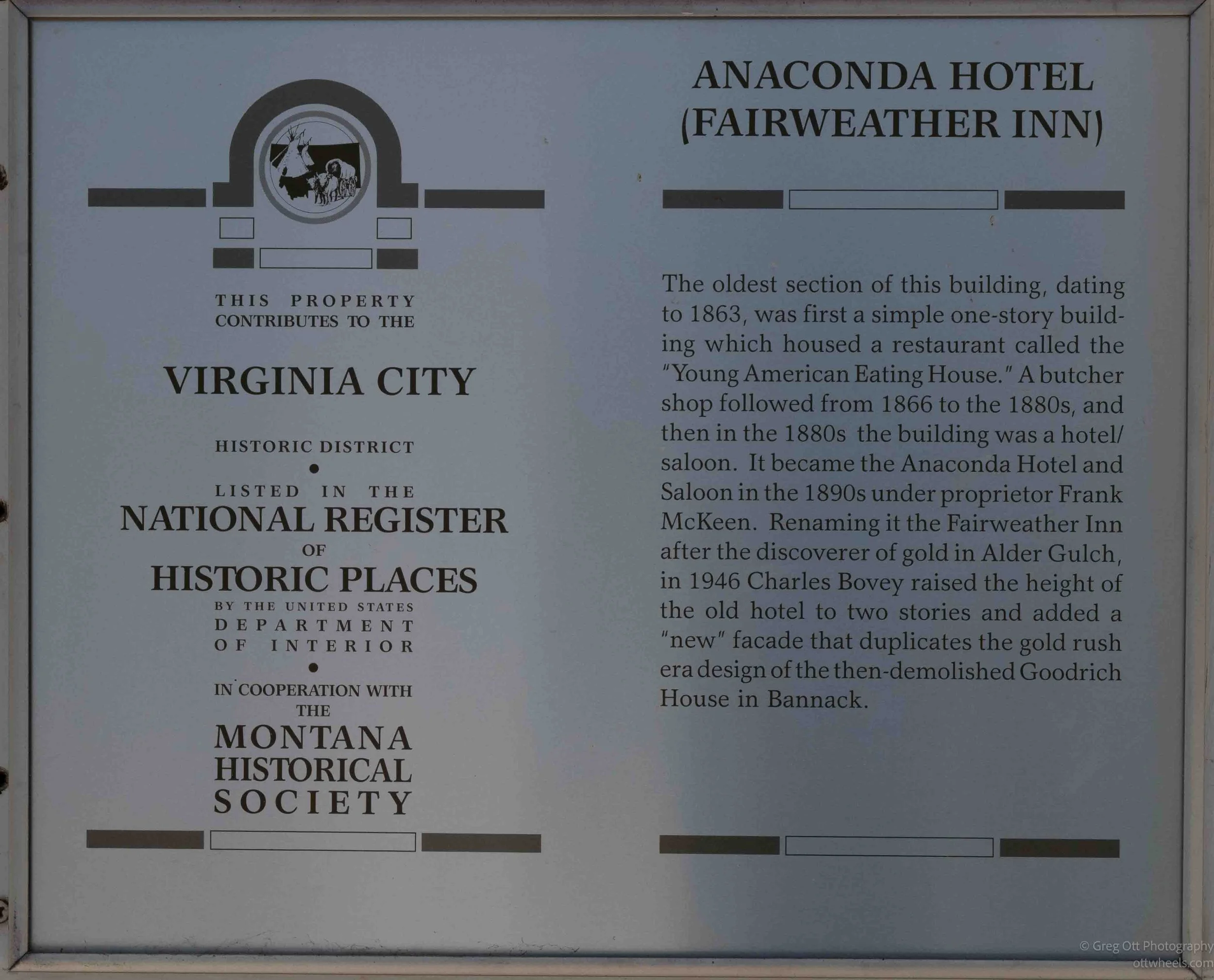
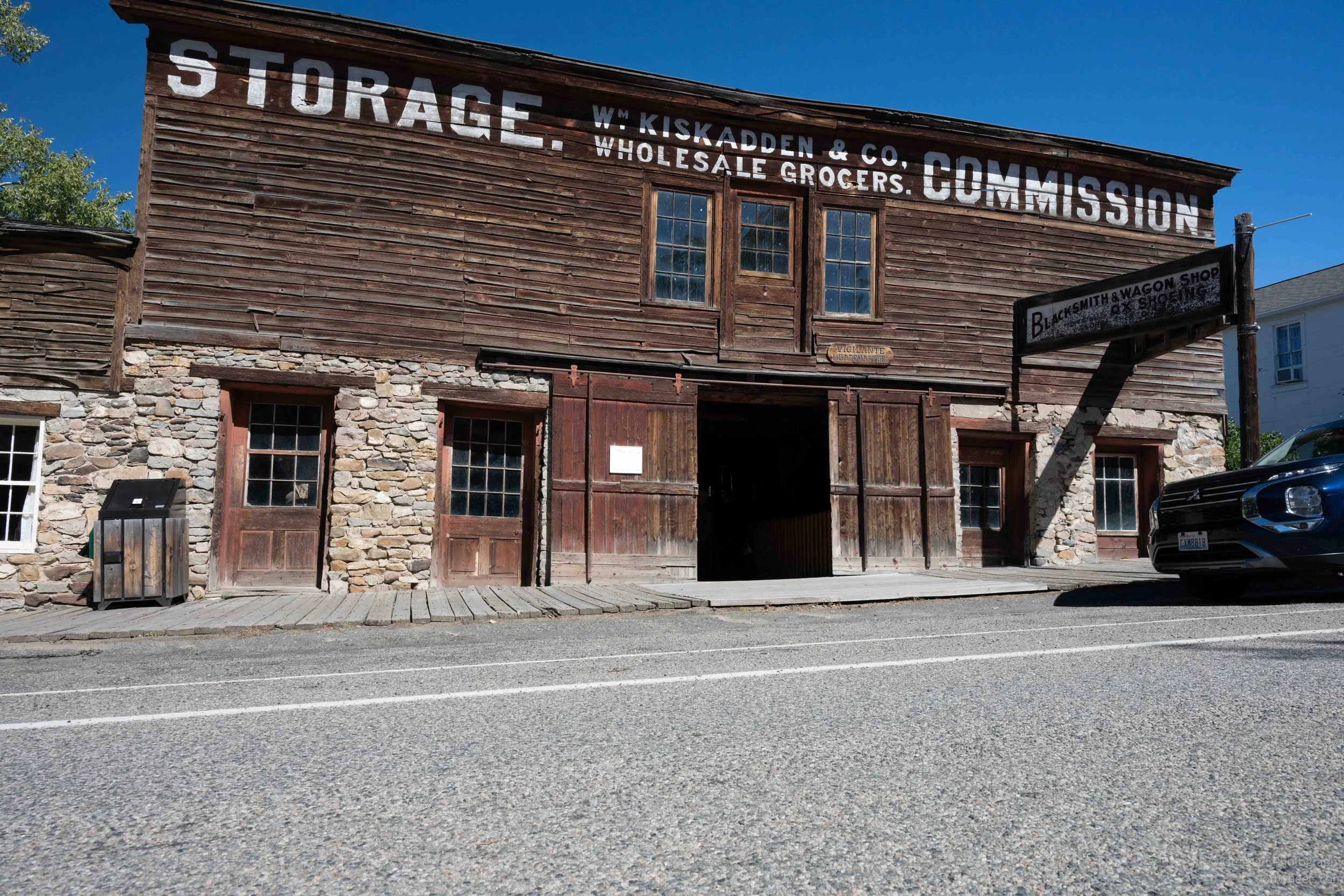
Instead, I started walking and reading. Plaques were mounted on many of the buildings, and I spent a lot of time working my way down the street reading them. Photography was harder than it had been in Bannack because cars were parked directly in front of many of the buildings, and the morning sun was bright and often hitting the storefronts directly. Deep shadows under the boardwalk roofs sat right beside hard sunlight, which didn’t make things any easier.
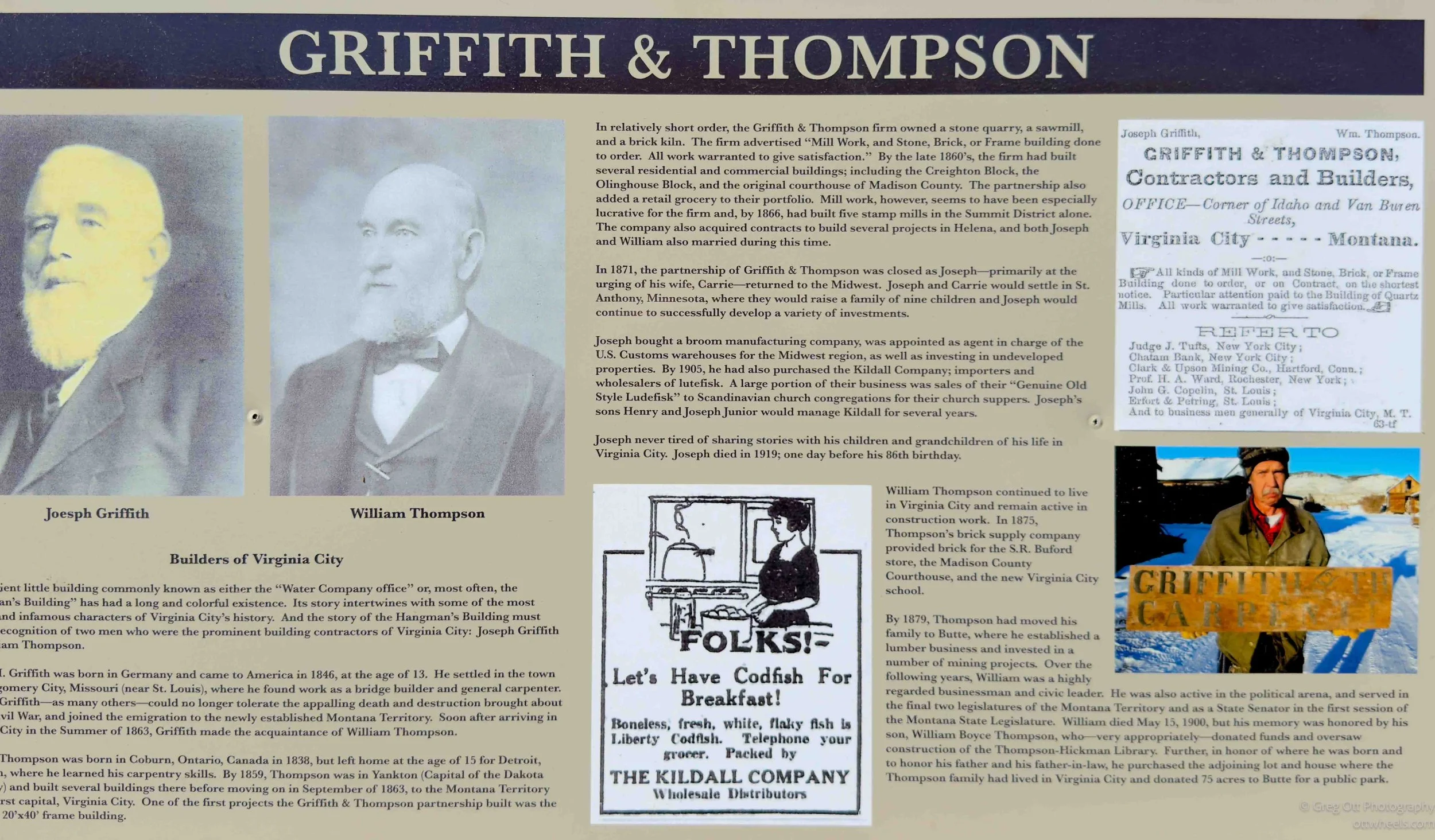
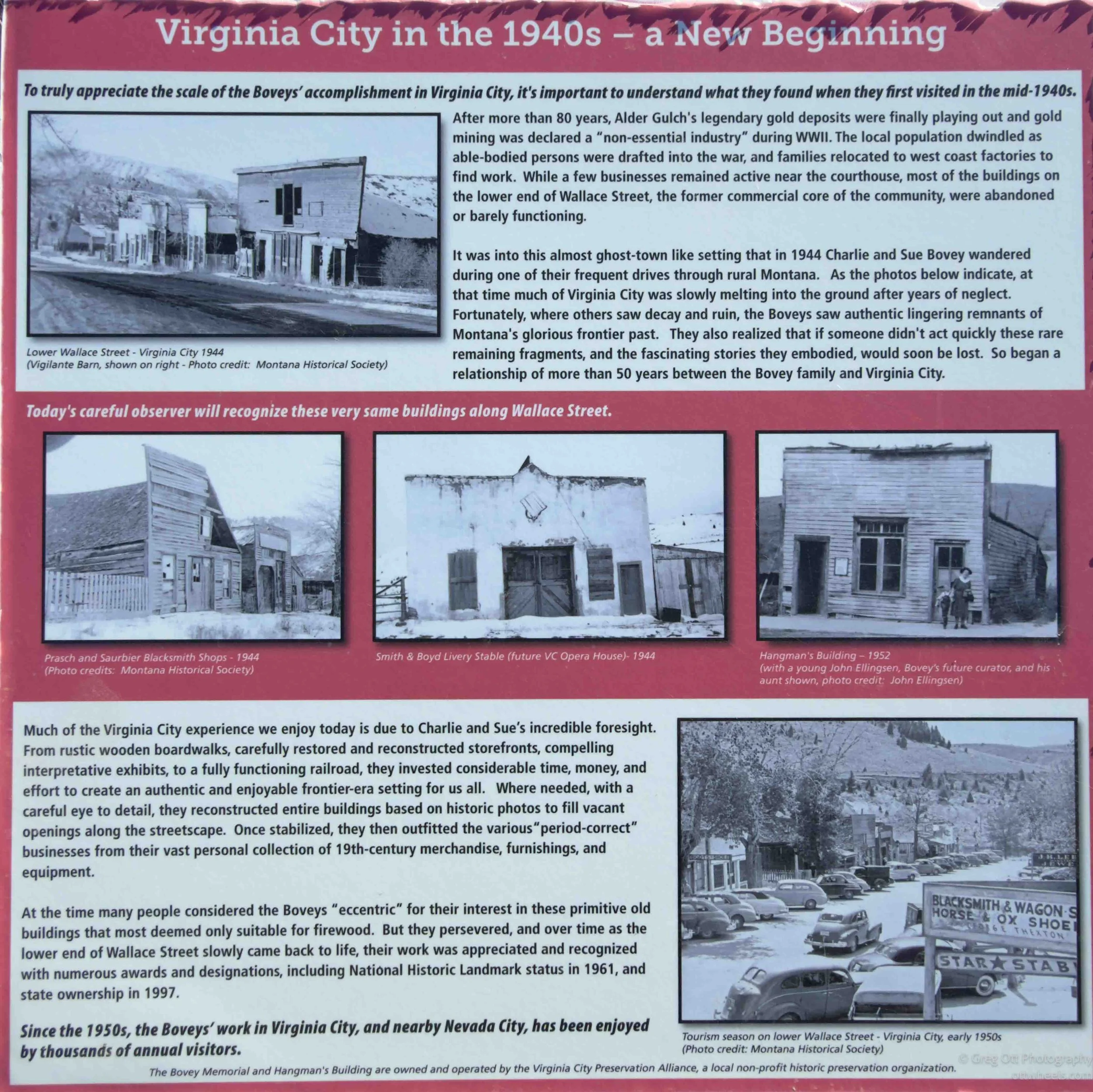
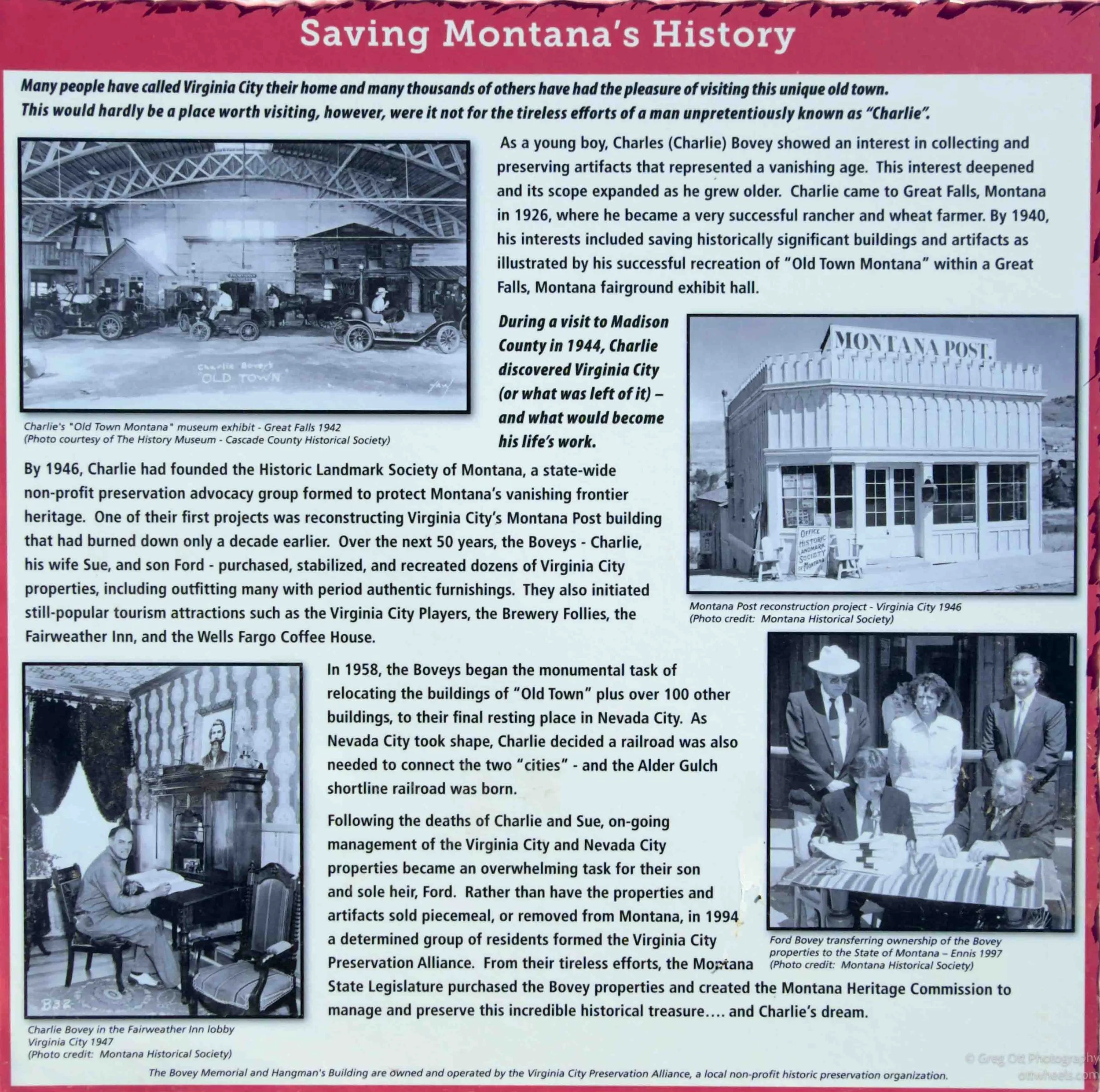
Virginia City grew for essentially the same reason as Bannack: gold. Gold was discovered in Alder Gulch in 1863, and miners poured into the area almost immediately. Virginia City quickly grew into the most important settlement in the gulch and eventually replaced Bannack as the territorial capital. What struck me walking through town was how much more developed it became. This wasn’t simply a rough mining camp. There were stores, contractors, telegraph connections, freight businesses, blacksmiths, hotels and substantial commercial buildings.
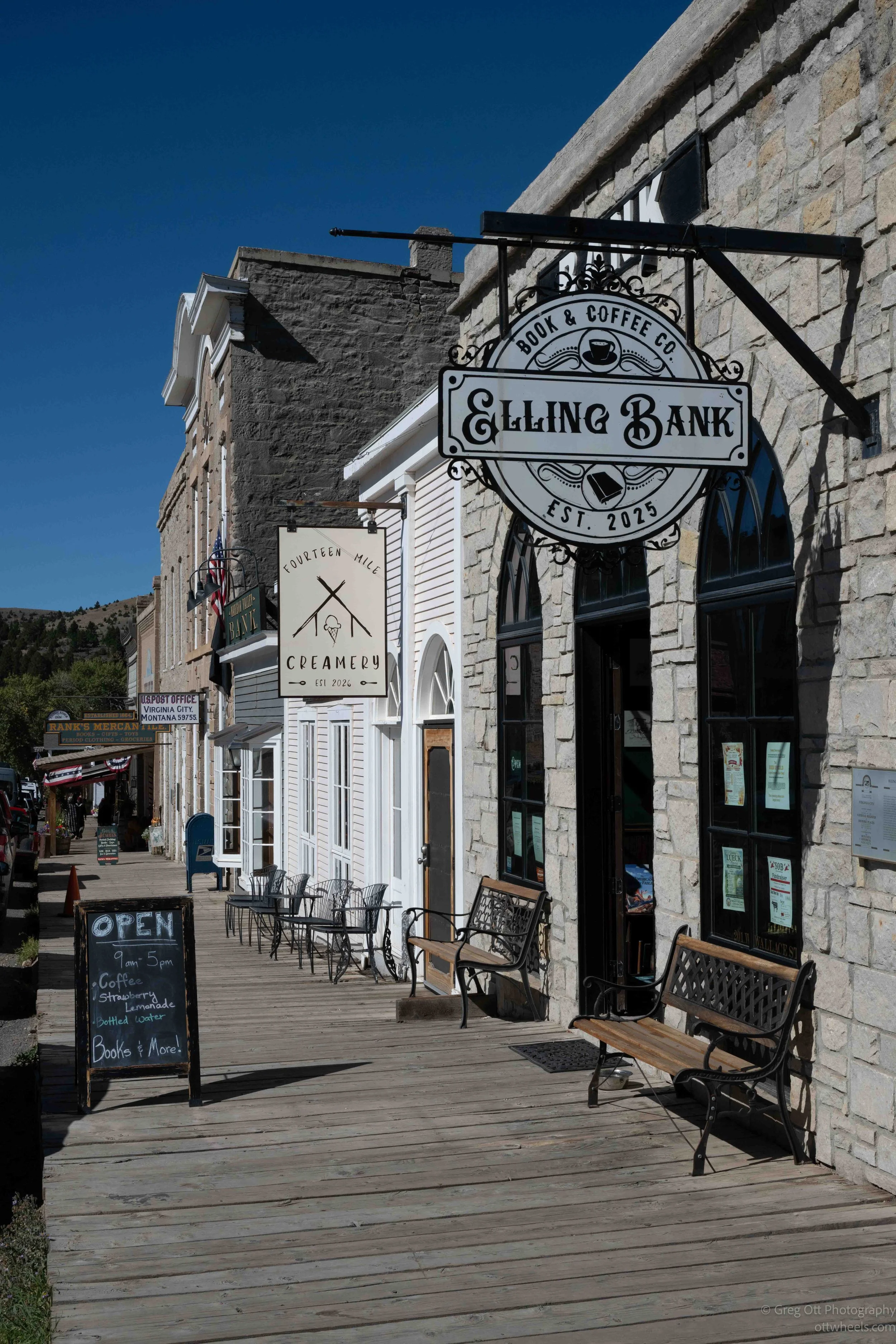
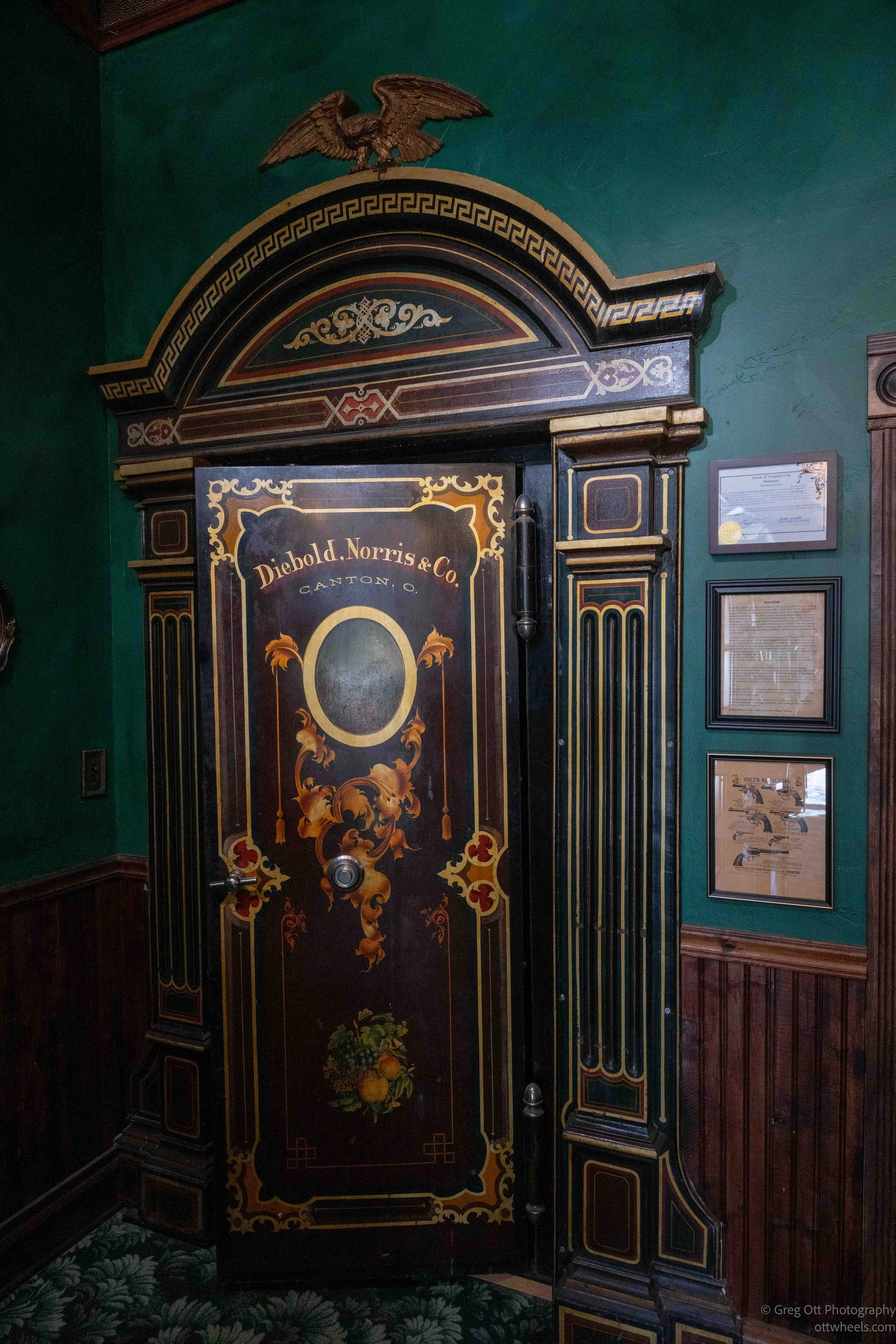
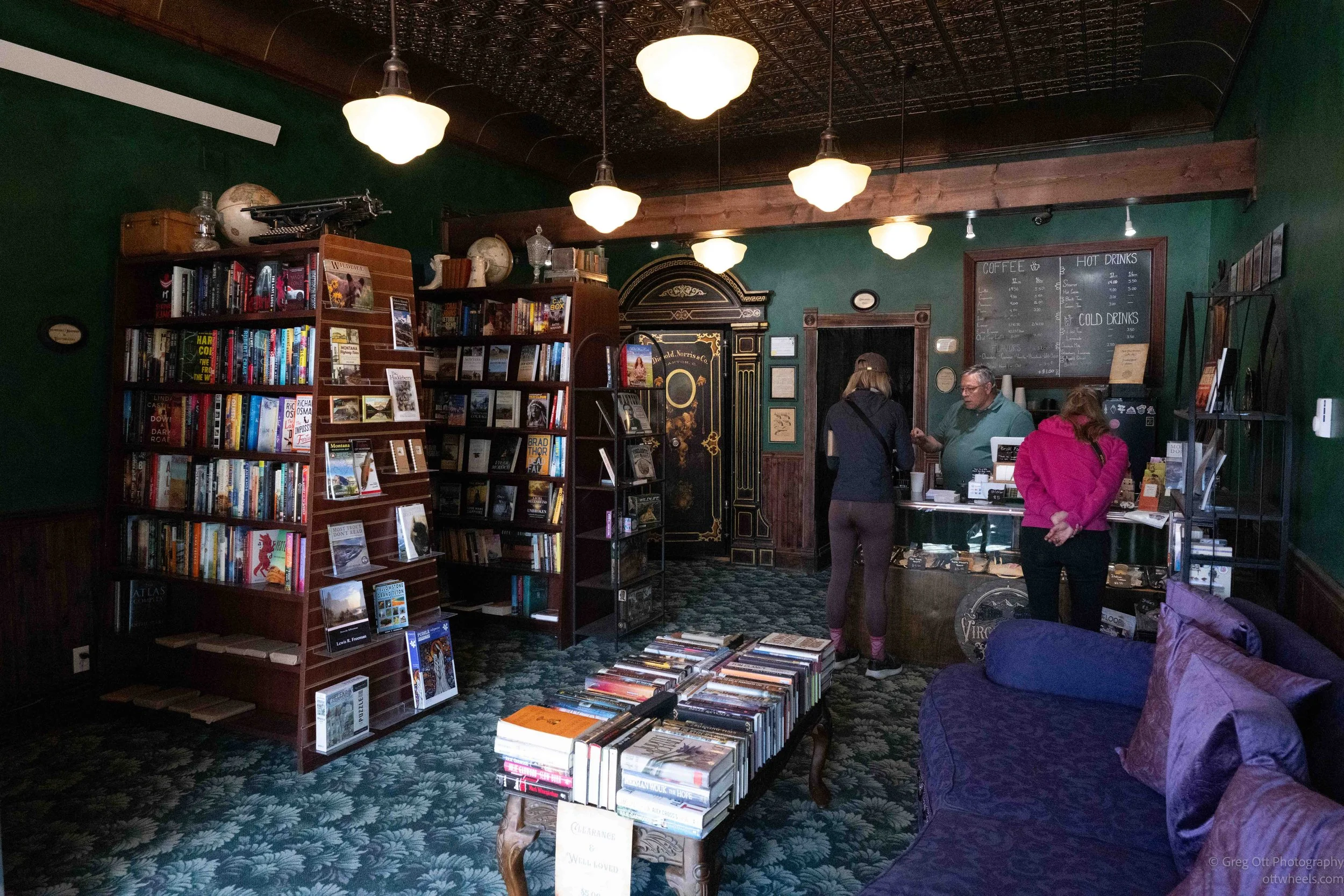
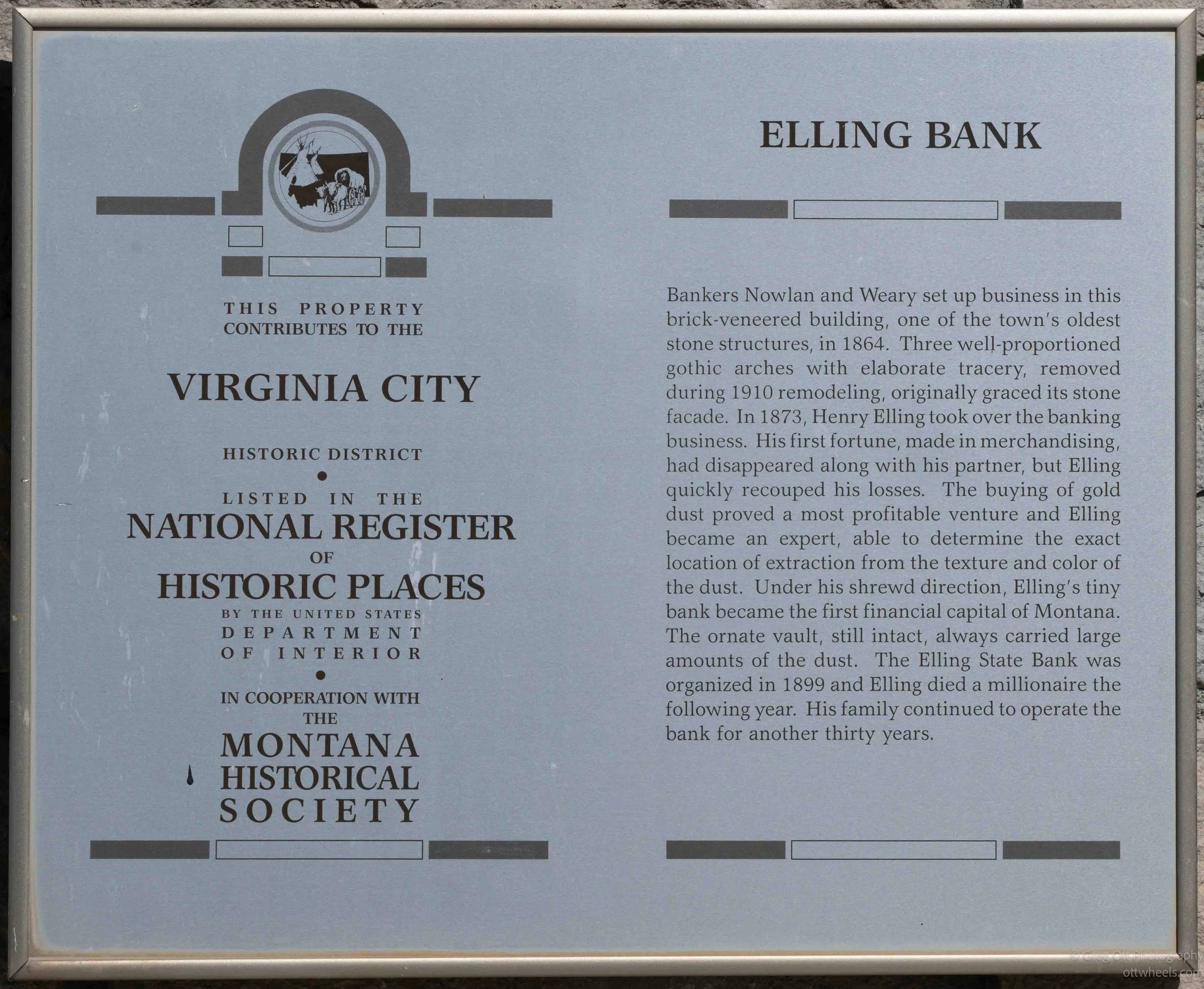
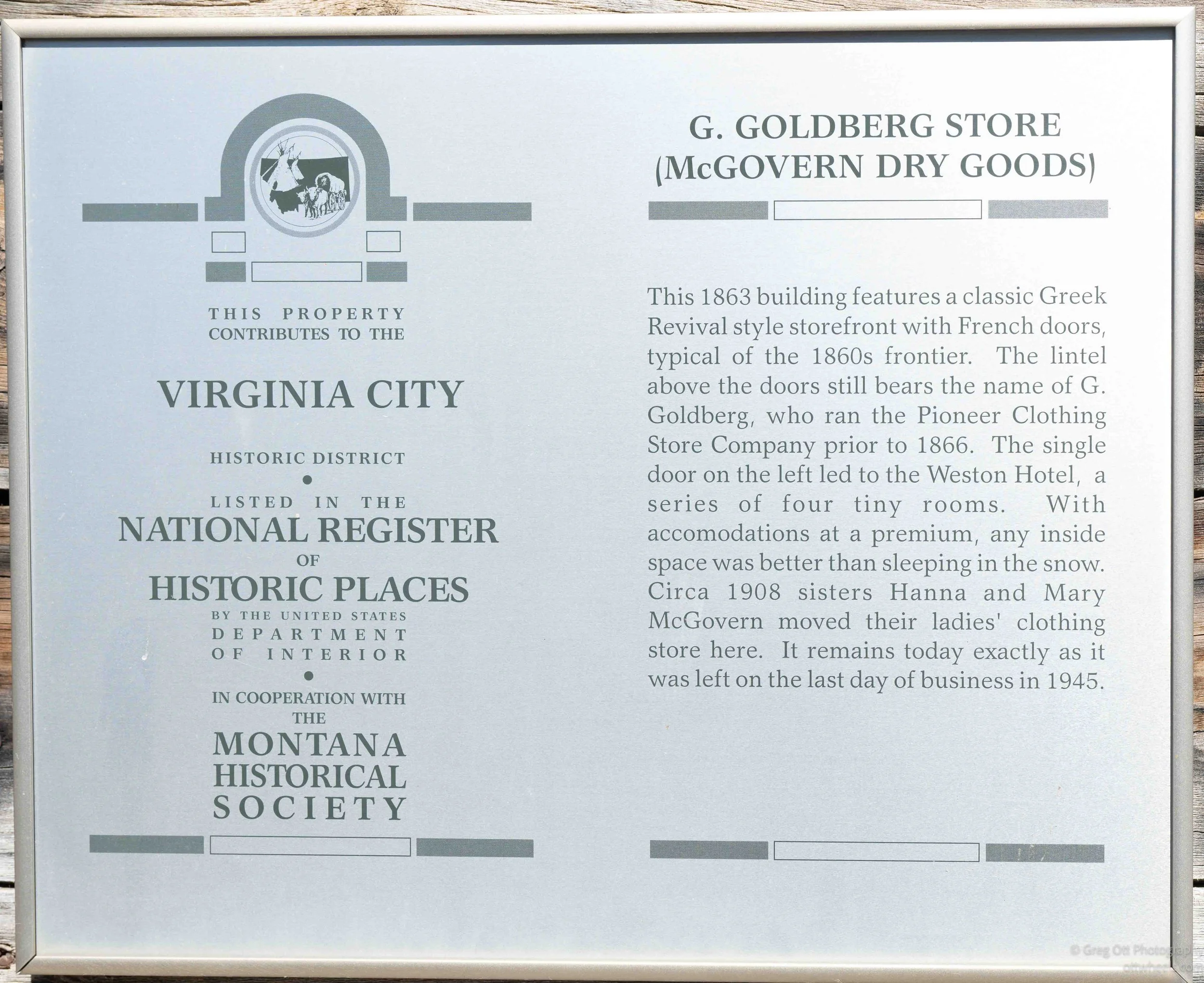
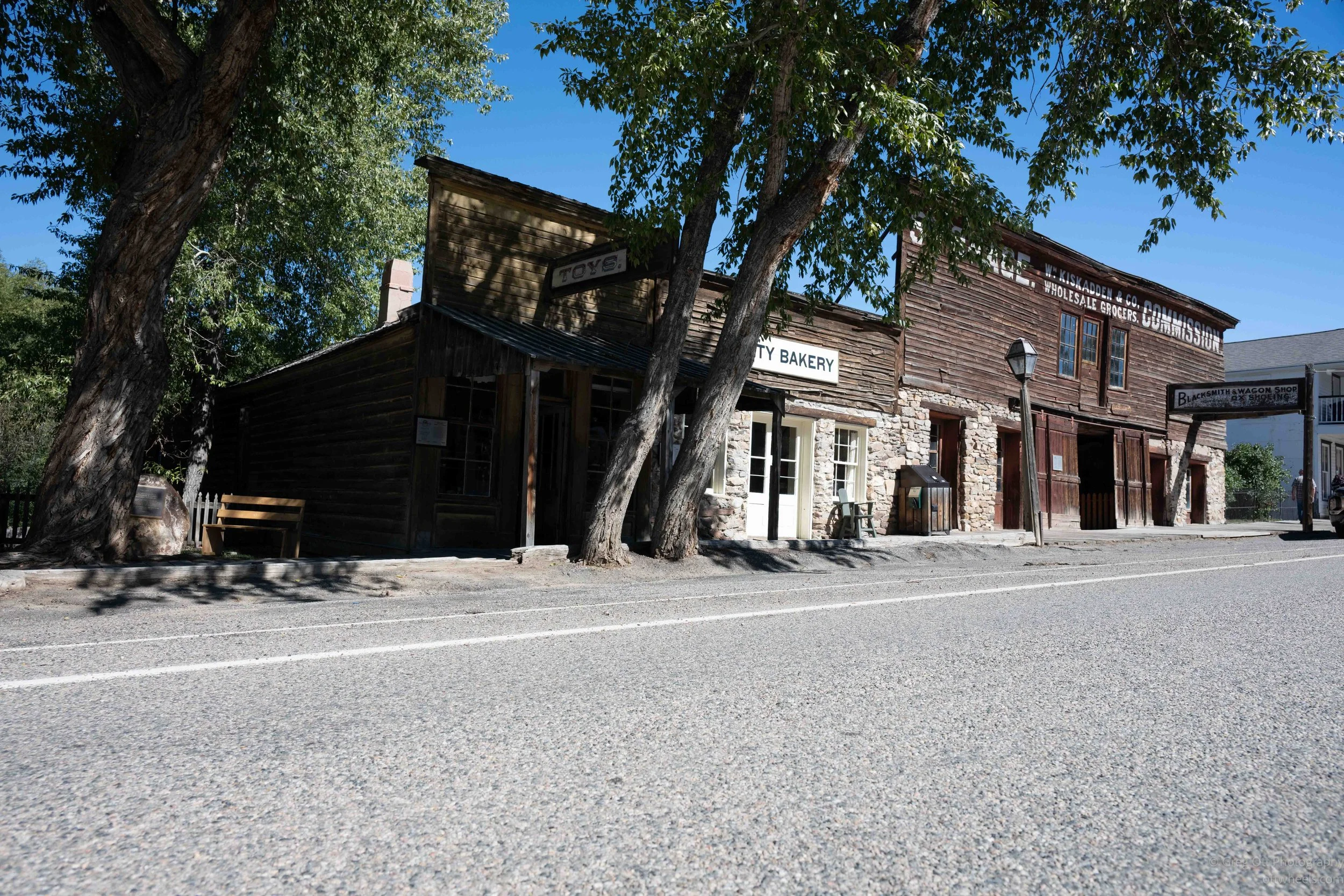
The plaques brought that history to life. One building began as a dance hall in 1863 before becoming the Sauerbier Blacksmith Shop in the 1870s. Charles Sauerbier and later his son Karl operated the business into the 1940s, repairing stagecoaches and shoeing the ox teams pulling freight wagons through town. Another building, Strasburger’s Colorado Store, also dated to 1863 and had an unusually elaborate storefront for such an early frontier settlement. Nearby, the Creighton Stone Block was built for John and Edward Creighton, who had come west while surveying the first transcontinental telegraph route. The more I read, the more Virginia City felt like a real functioning town rather than the simplified gold-rush image I had in my head.
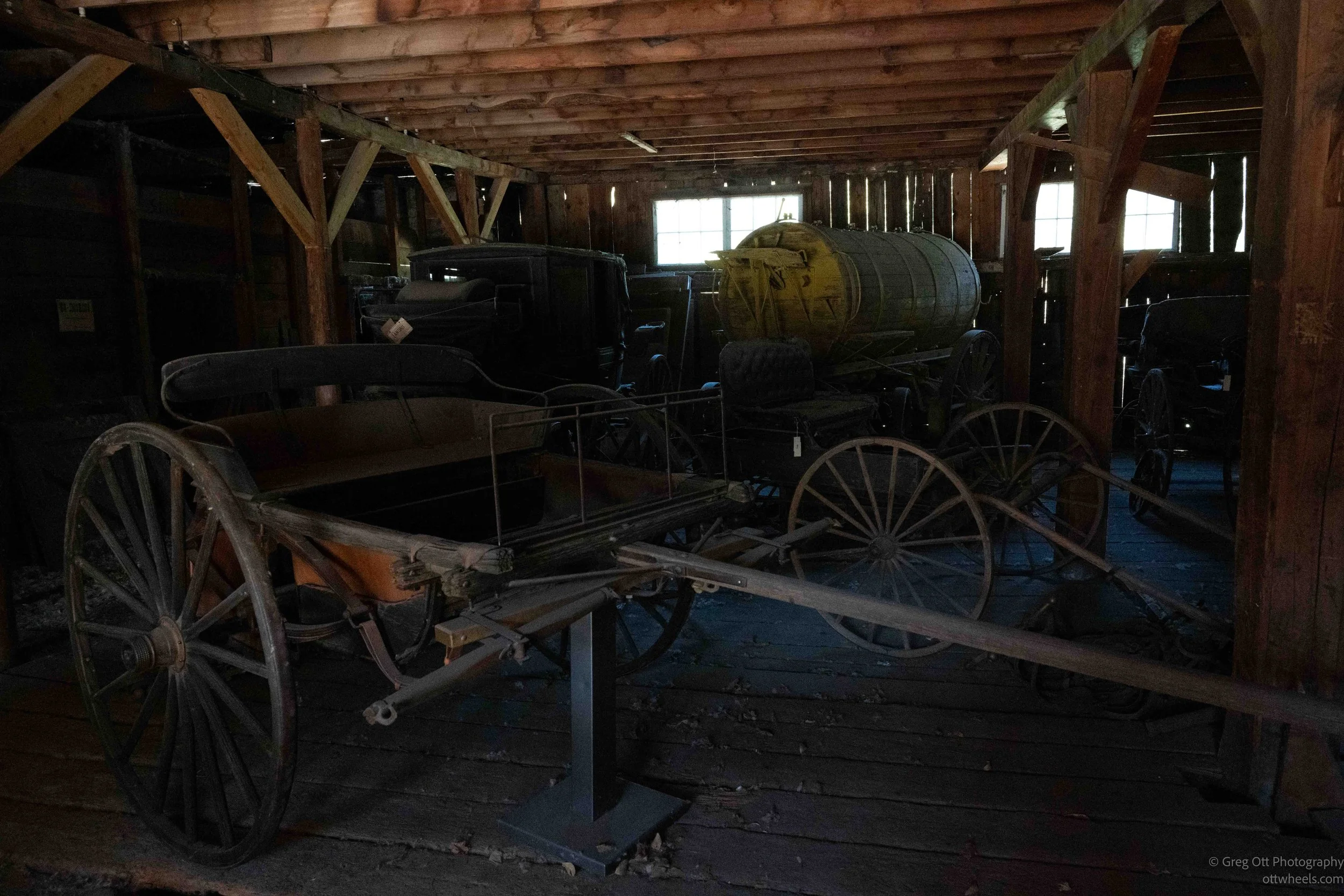
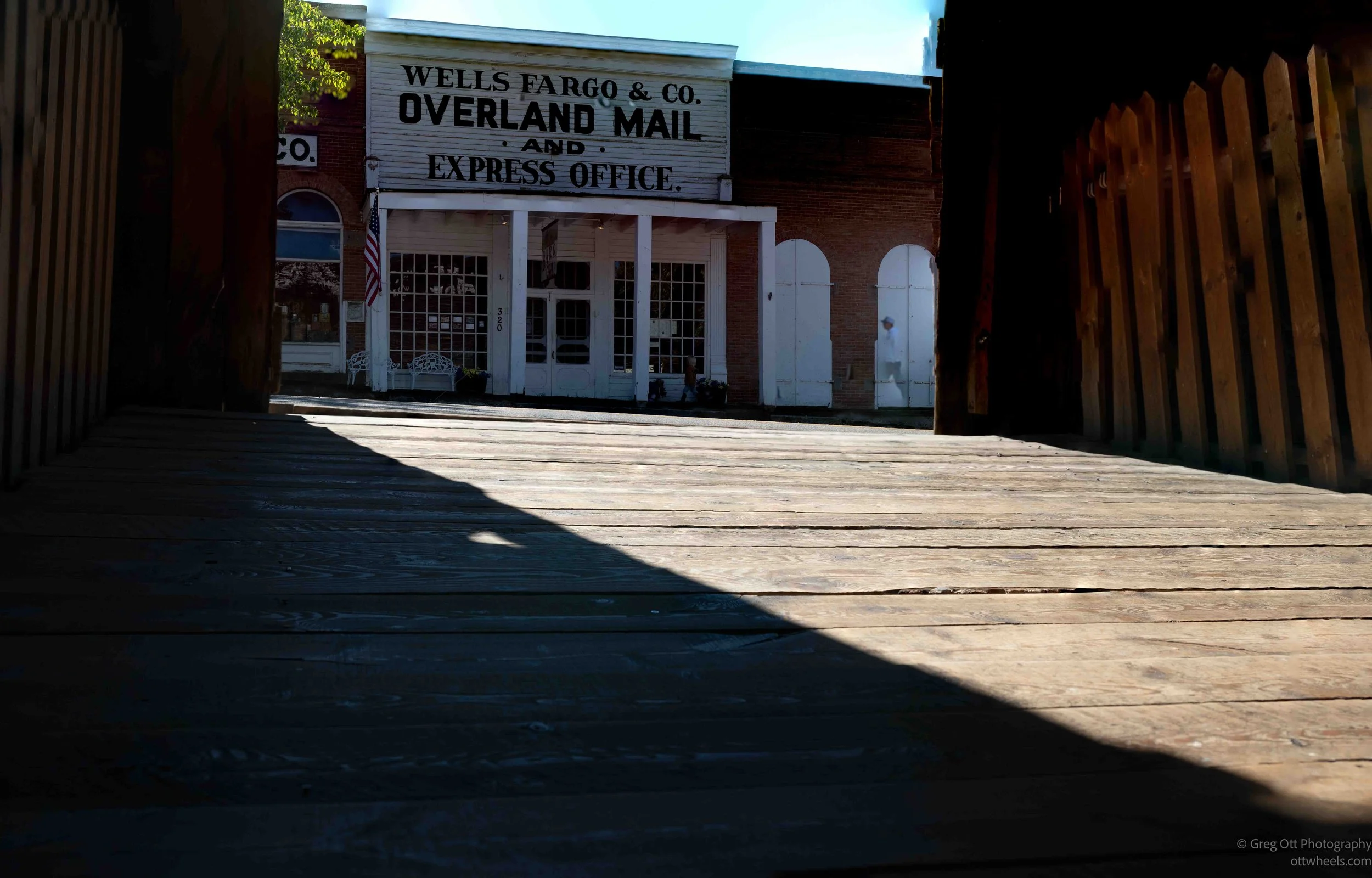
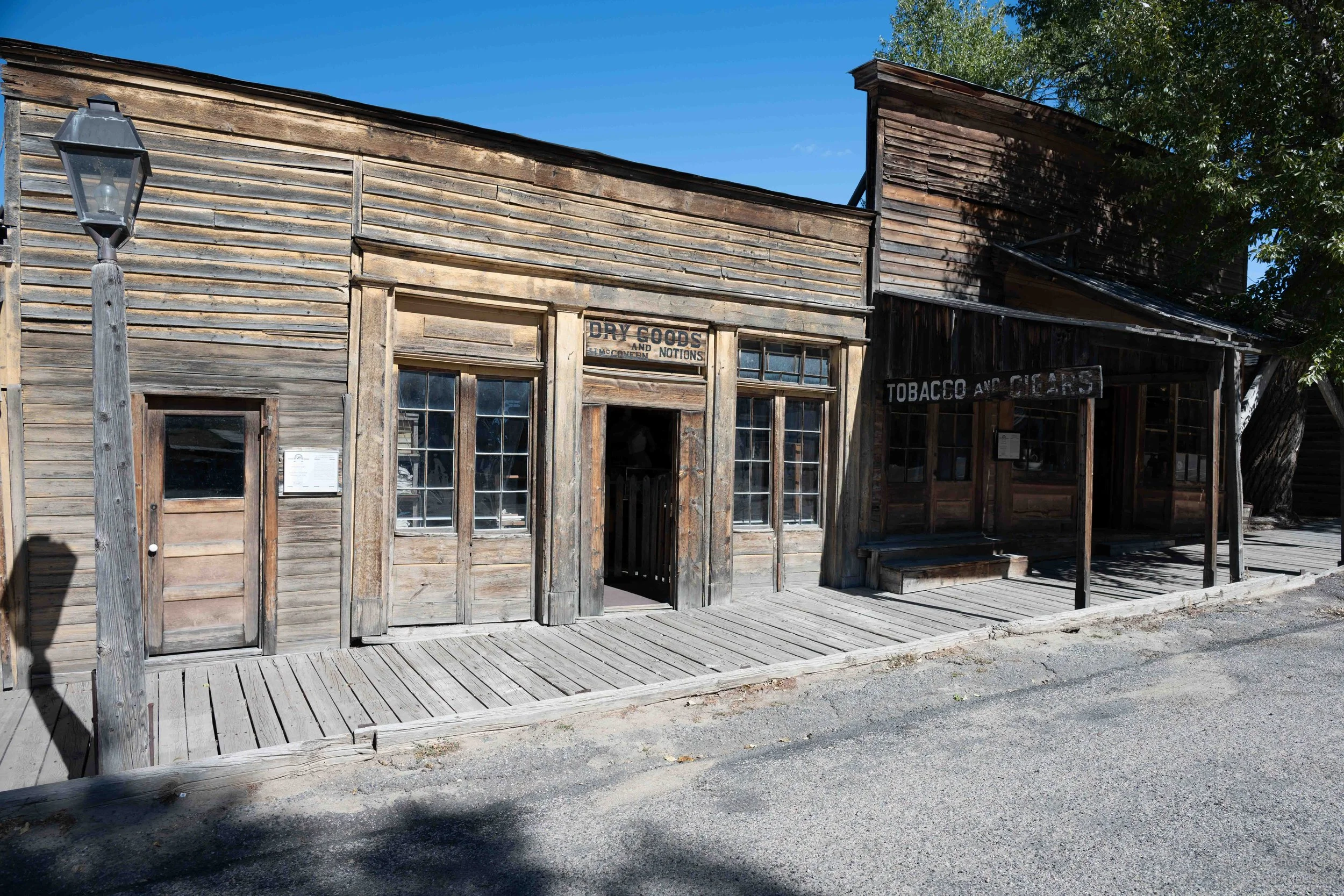
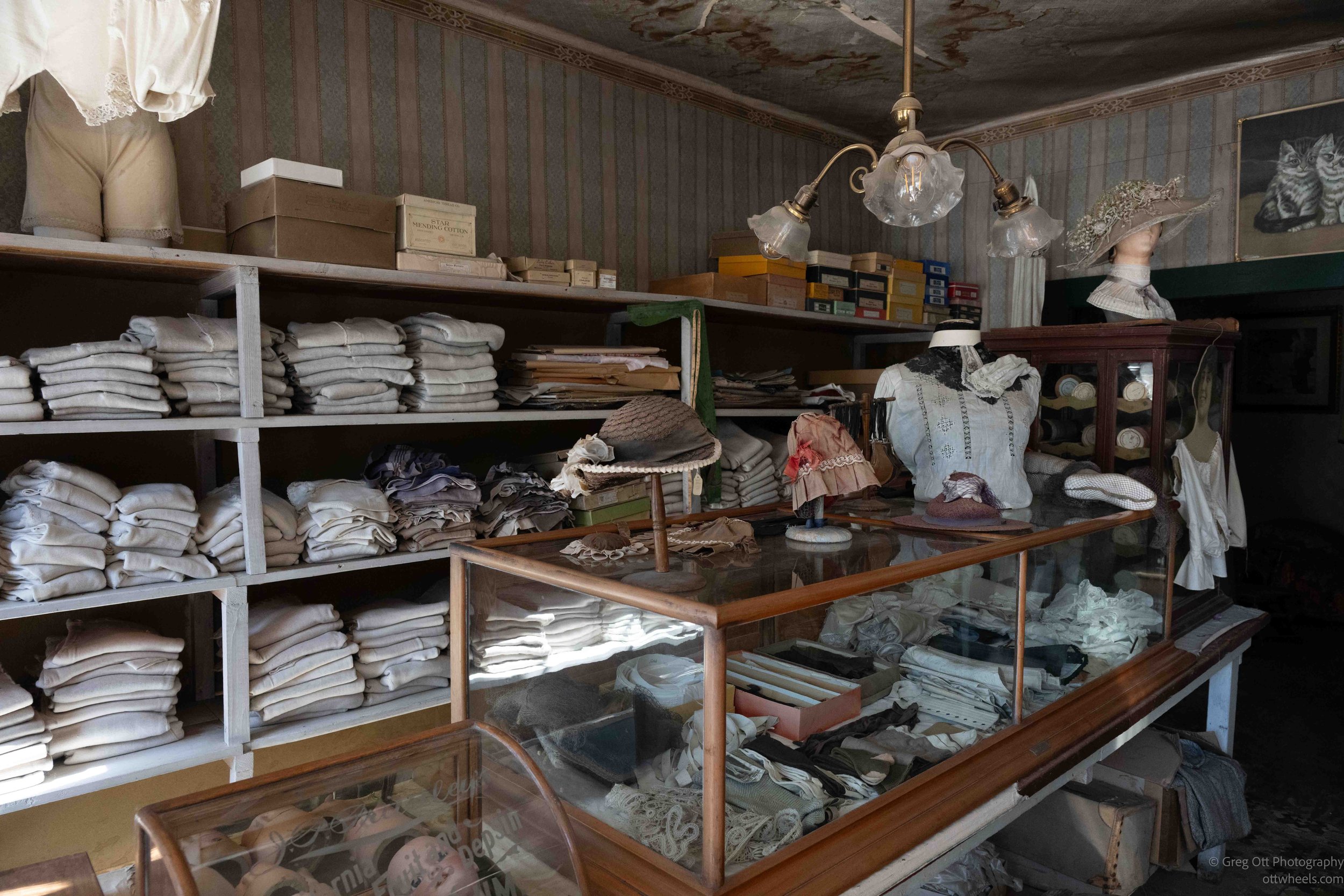
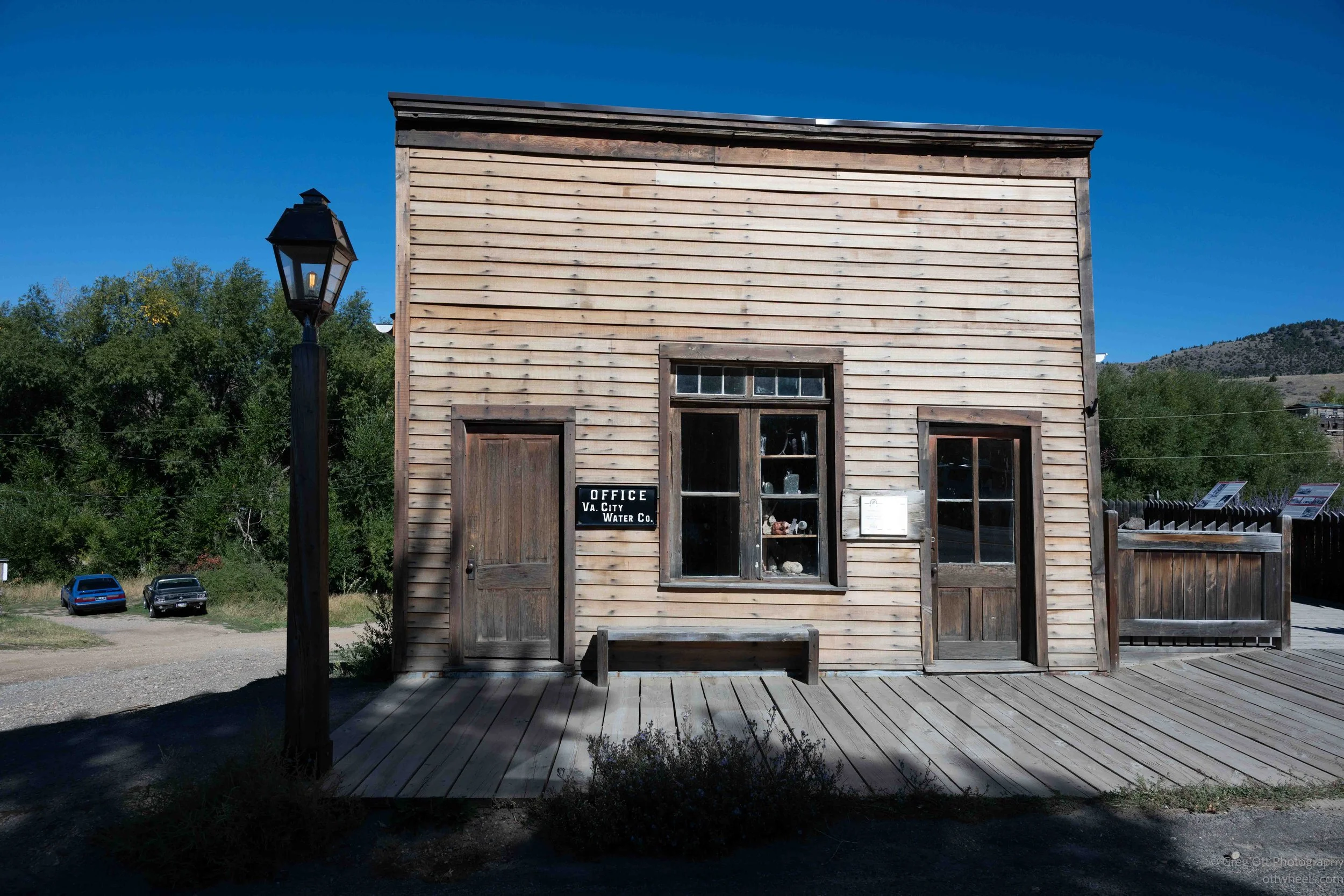
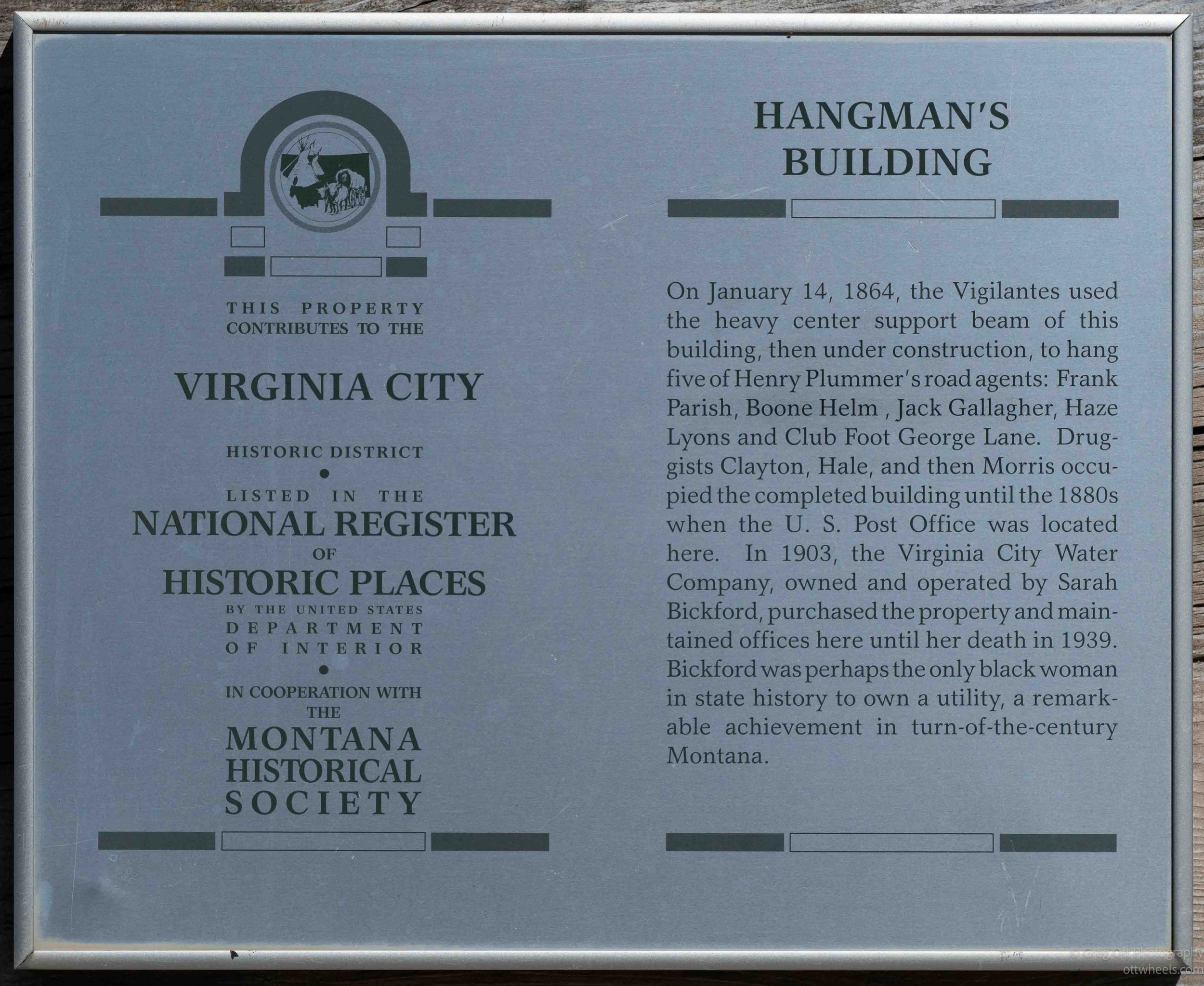
Then there was the Hangman’s Building. On January 14, 1864, while the building was still under construction, vigilantes used one of its heavy beams to hang five men accused of belonging to Henry Plummer’s road-agent gang: Frank Parish, Boone Helm, Jack Gallagher, Haze Lyons and George Lane. What interested me almost as much was what happened afterward. The same building later became a drugstore, then a post office, and eventually the office of the Virginia City Water Company. Sarah Bickford purchased the property in 1903 and ran the water company from there until her death in 1939. One small wooden building had somehow gone from mass hanging site to utility office.
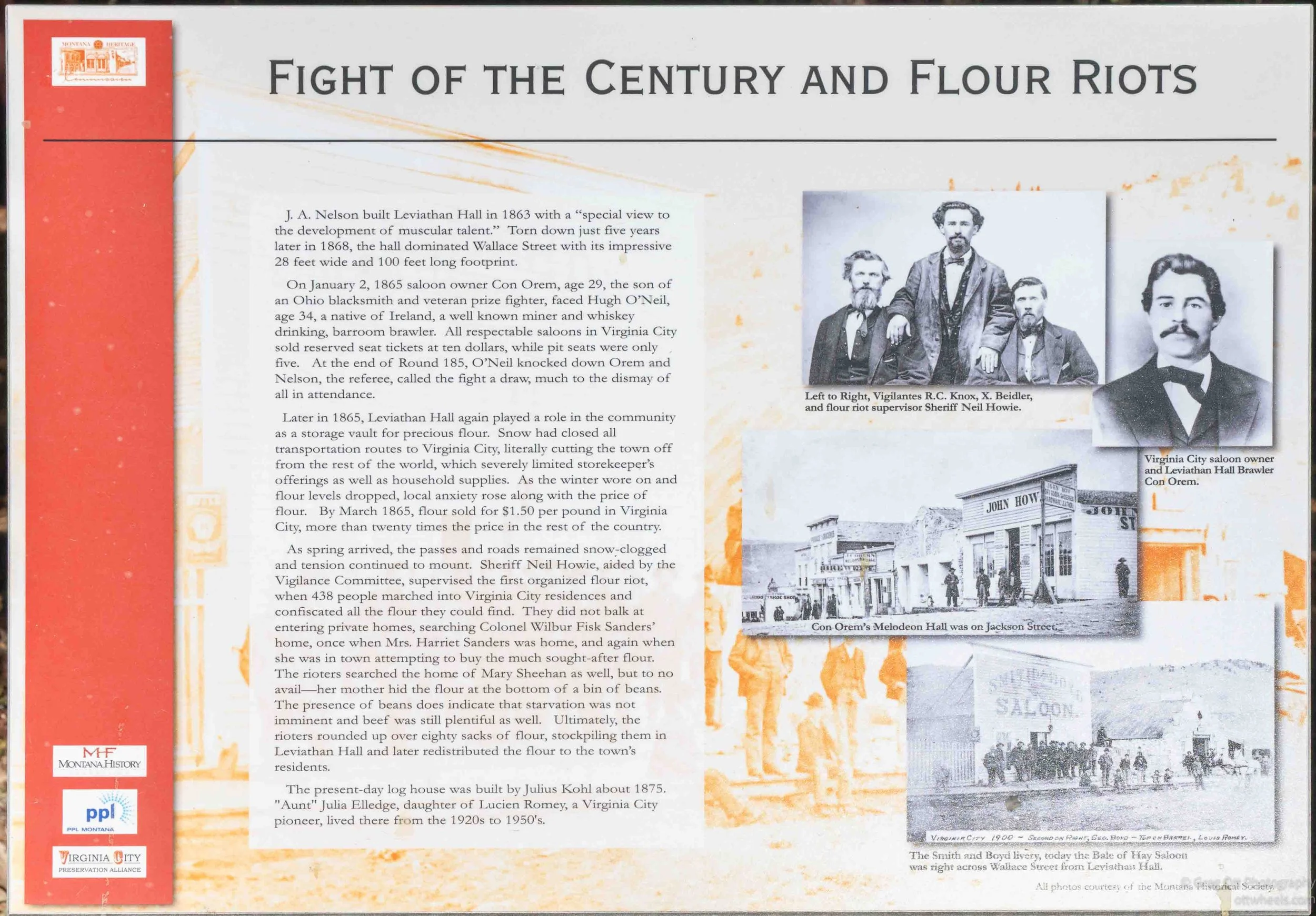
Another sign told the story of the “Fight of the Century and Flour Riots.” A large saloon built in 1863 hosted prizefights at a time when boxing was still considered disreputable, and later became associated with a flour riot when shortages drove prices sharply upward. These stories made the town much more interesting to me than simply looking at old storefronts. People worked here, fought here, ran businesses, made fortunes, lost them and occasionally ended up hanging from a ceiling beam.
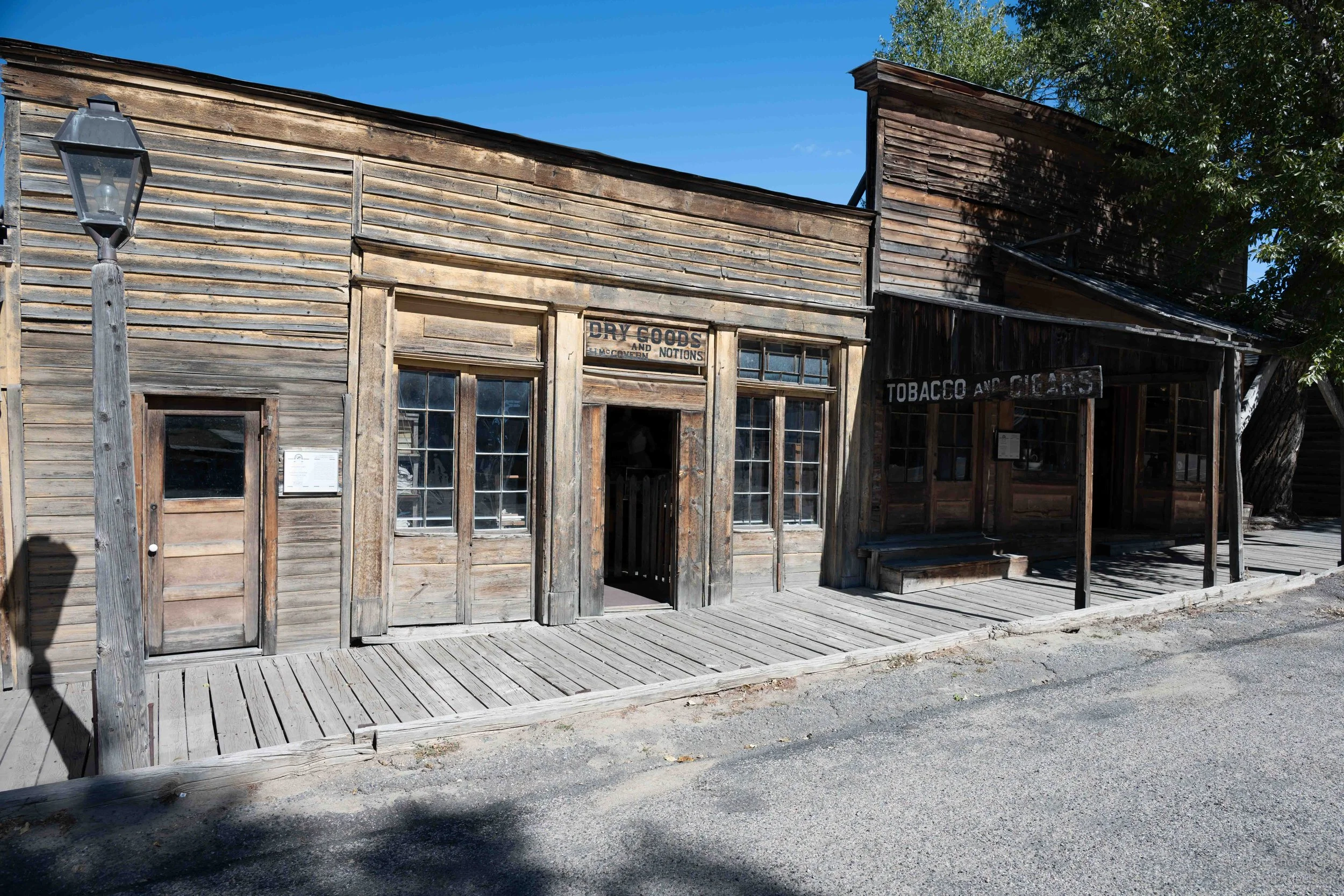
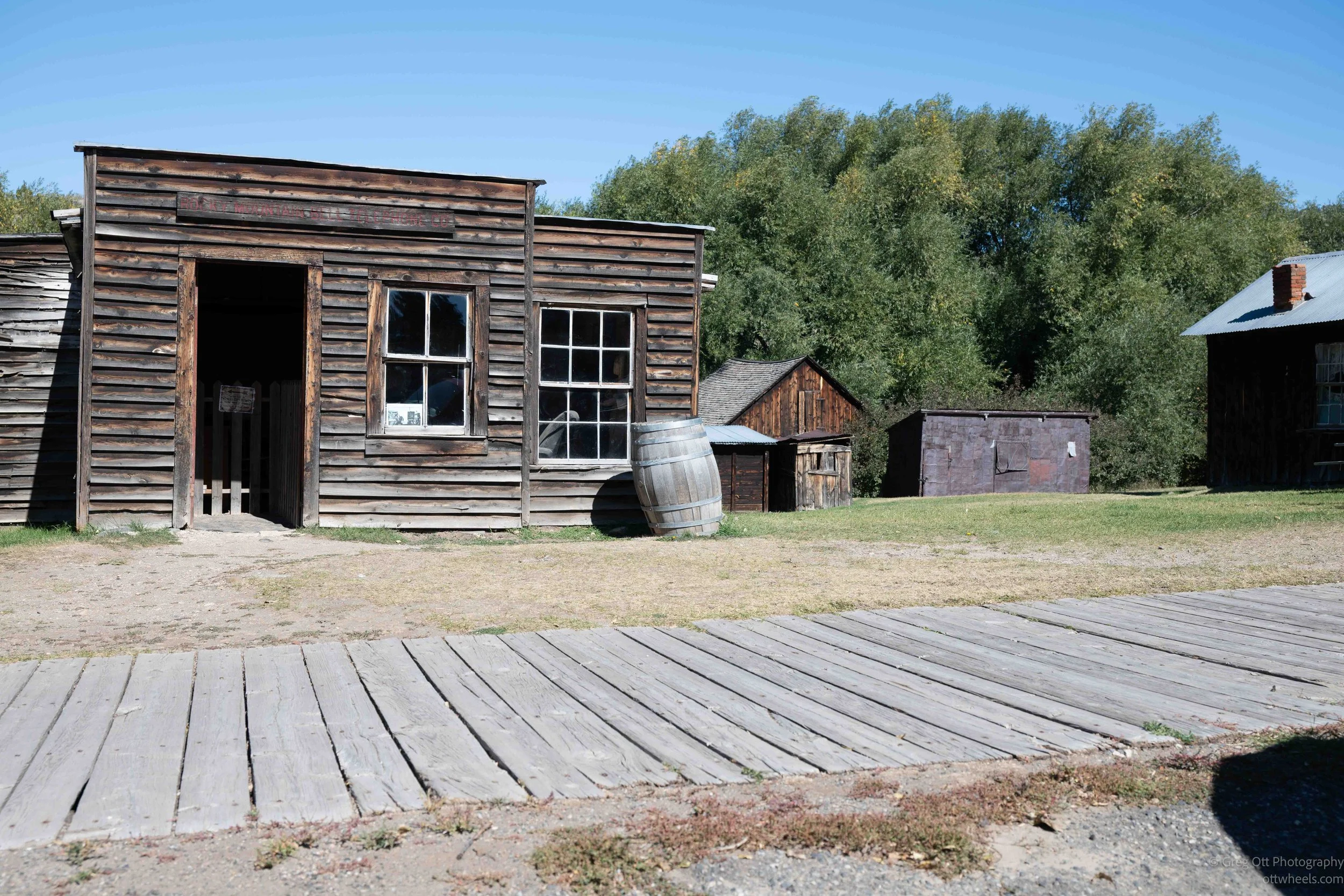
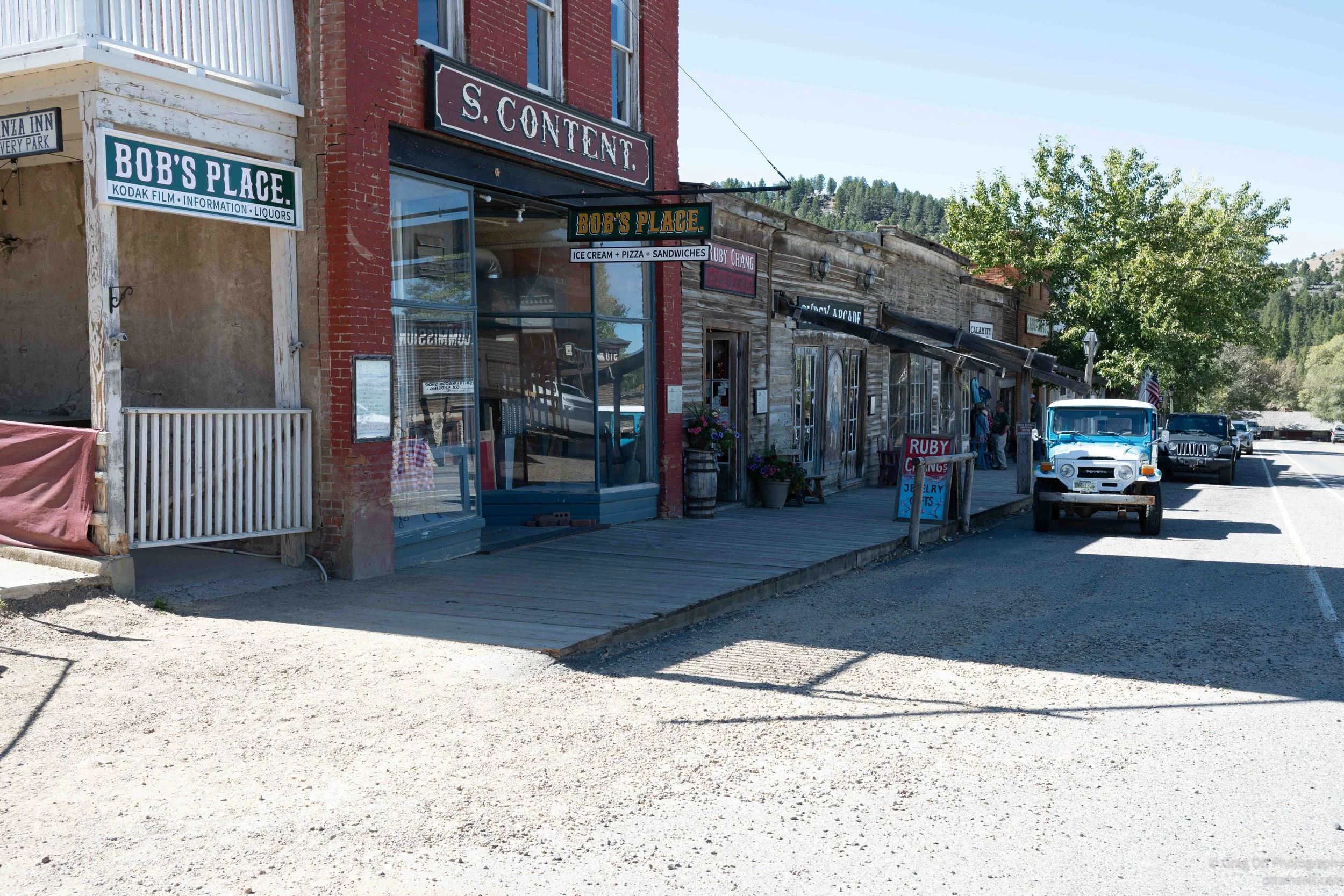
What I hadn’t realized before arriving was how close Virginia City came to disappearing. By the 1940s, mining had largely faded and many of the buildings were deteriorating or abandoned. Charlie and Sue Bovey began buying and restoring properties after visiting the town in 1944. Charlie had already spent years collecting historic artifacts and old buildings, and the Boveys eventually reconstructed storefronts, stabilized buildings and filled many of them with period furnishings and merchandise. Looking at the photographs on the plaques from the 1940s, it became obvious that much of what I was walking through existed because somebody decided it was worth saving before it was too late.
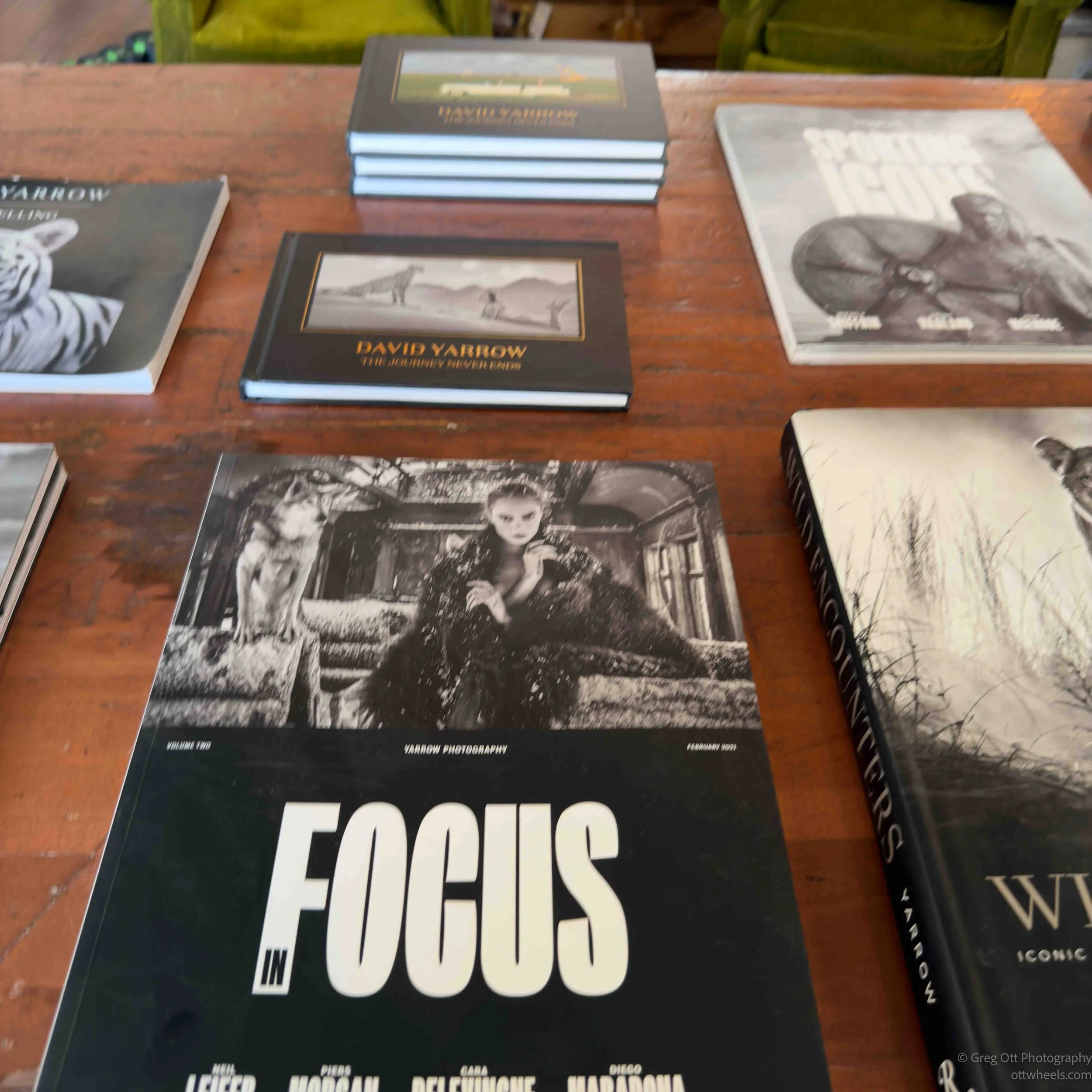
There was also one stop I hadn’t expected at all: a gallery devoted to the photography of David Yarrow. I knew his work, but I certainly wasn’t expecting to find a substantial collection of it in Virginia City. I went inside thinking I would take a quick look and ended up spending about 45 minutes there. Many of his photographs are enormous black-and-white prints, heavily staged and constructed almost like movie scenes. Wildlife appears impossibly close, bars are filled with cowboys, models and animals, and every part of the frame seems deliberate. His books were for sale along with many prints of various sizes, and staff were there representing the work. I kept moving close to the photographs to study the details and then backing away to see the entire composition. Whatever you think of that style of photography, there is an extraordinary amount of planning behind it, and finding it here was one of the unexpected highlights of the day. I think he is one of the most successful photographers financially.
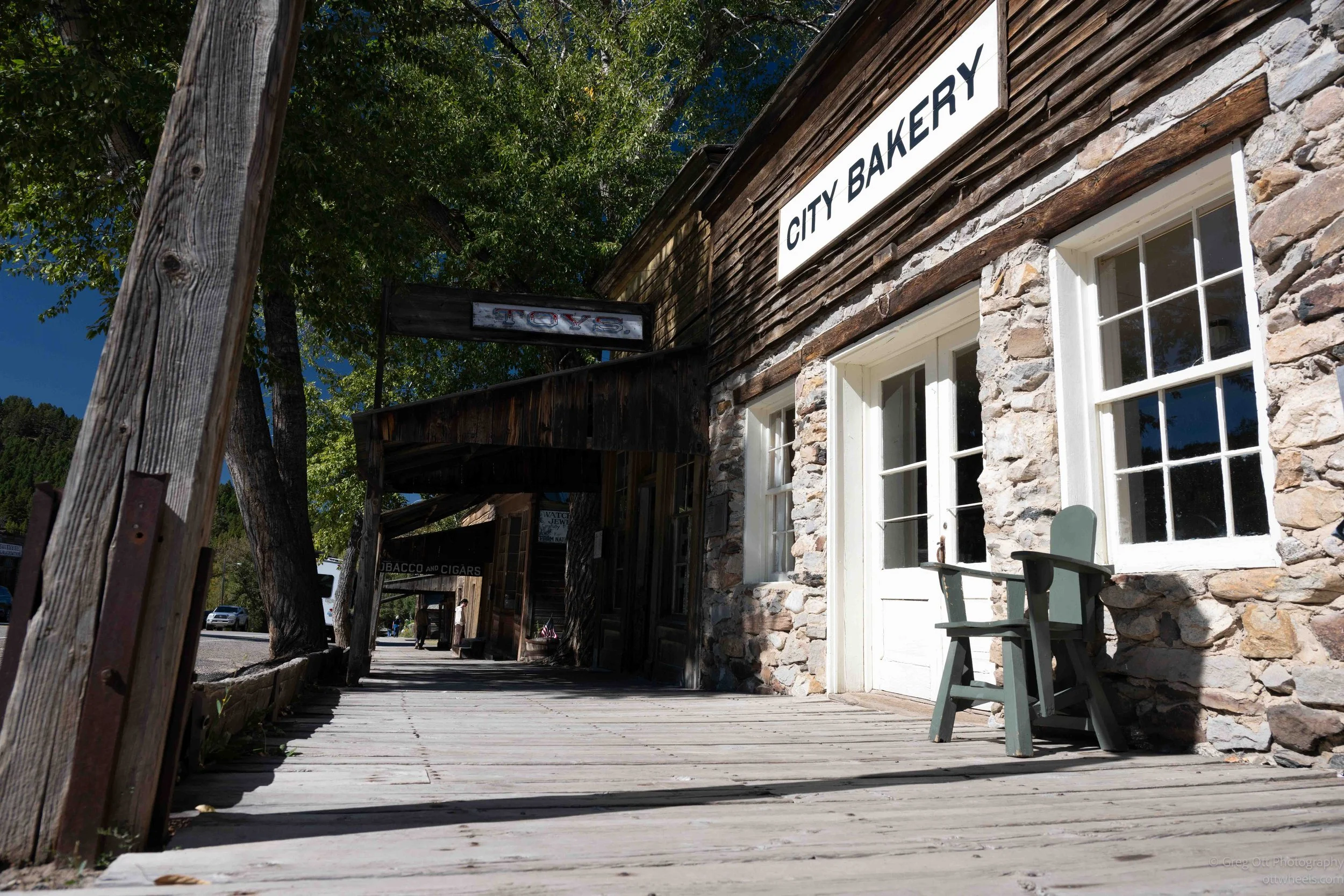
The contrast of Virginia City with Bannack became stronger the longer I walked around. Virginia City has businesses, more restored storefronts and much more commercial activity. There are restaurants, ice cream shops, jewelry, souvenirs, art and coffee mixed into the historic buildings. That activity has clearly helped keep the town alive, but it also changes the experience. Cars line the street, modern signs hang from historic buildings and you are constantly reminded that this is both a preserved town and a tourist destination.
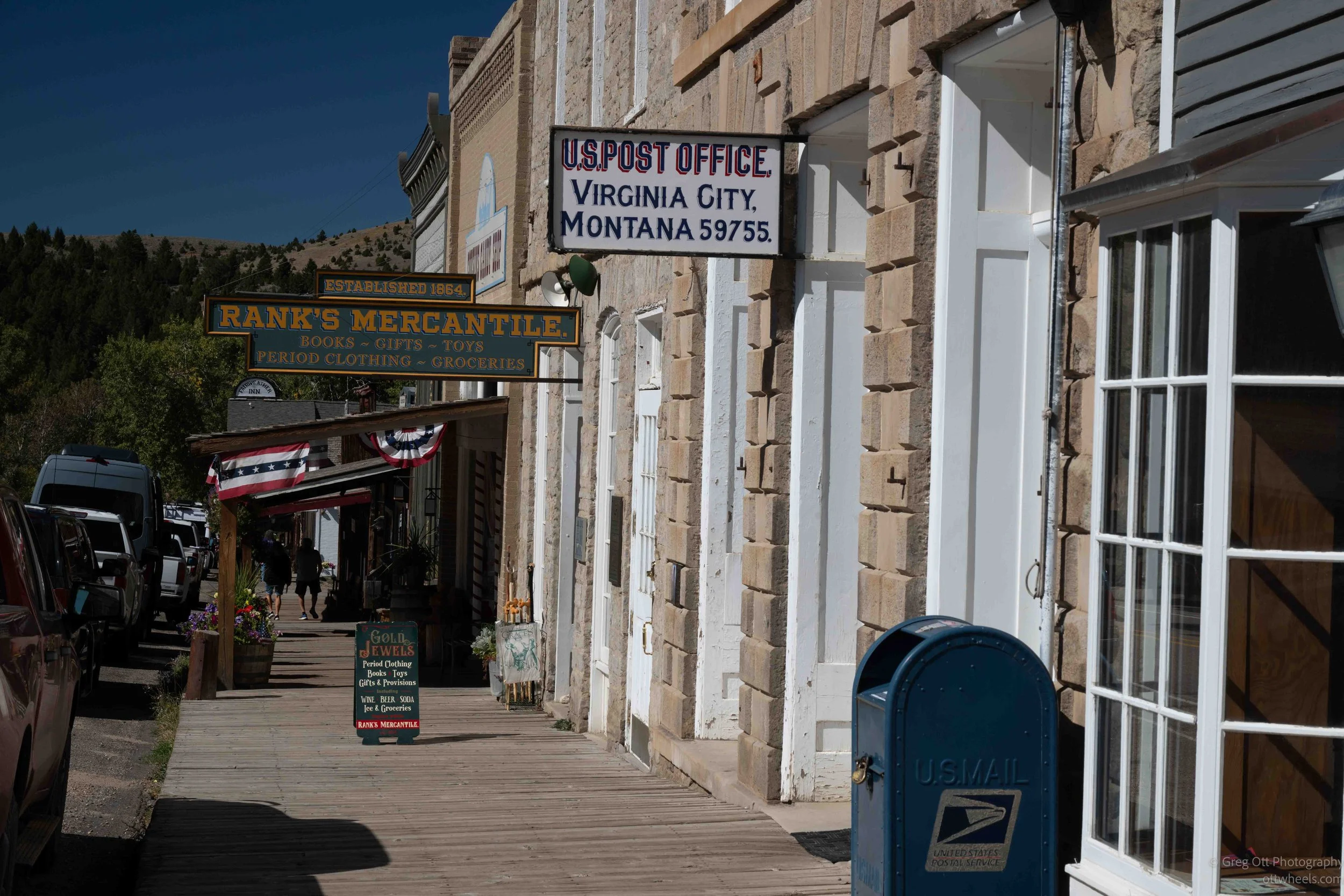
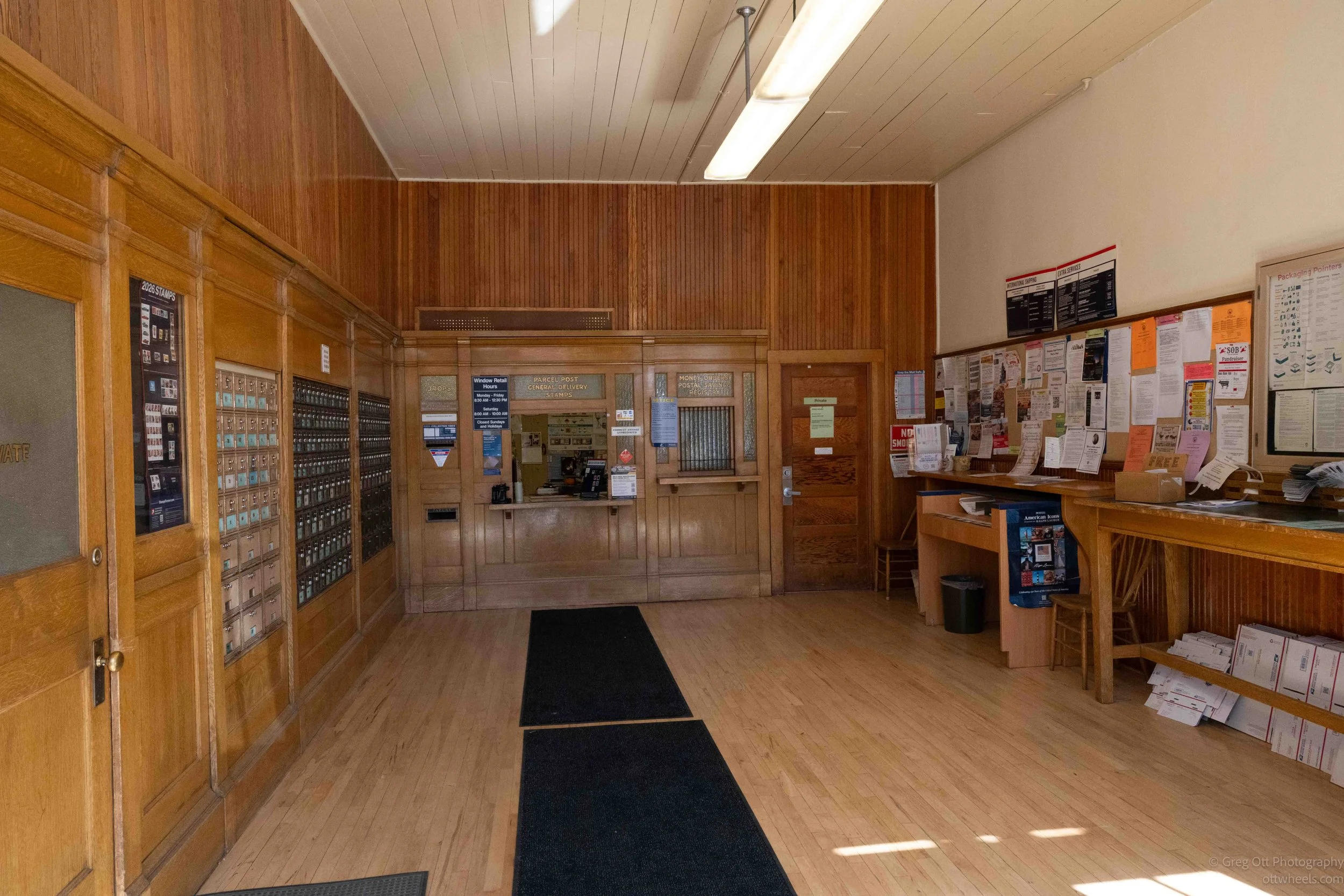
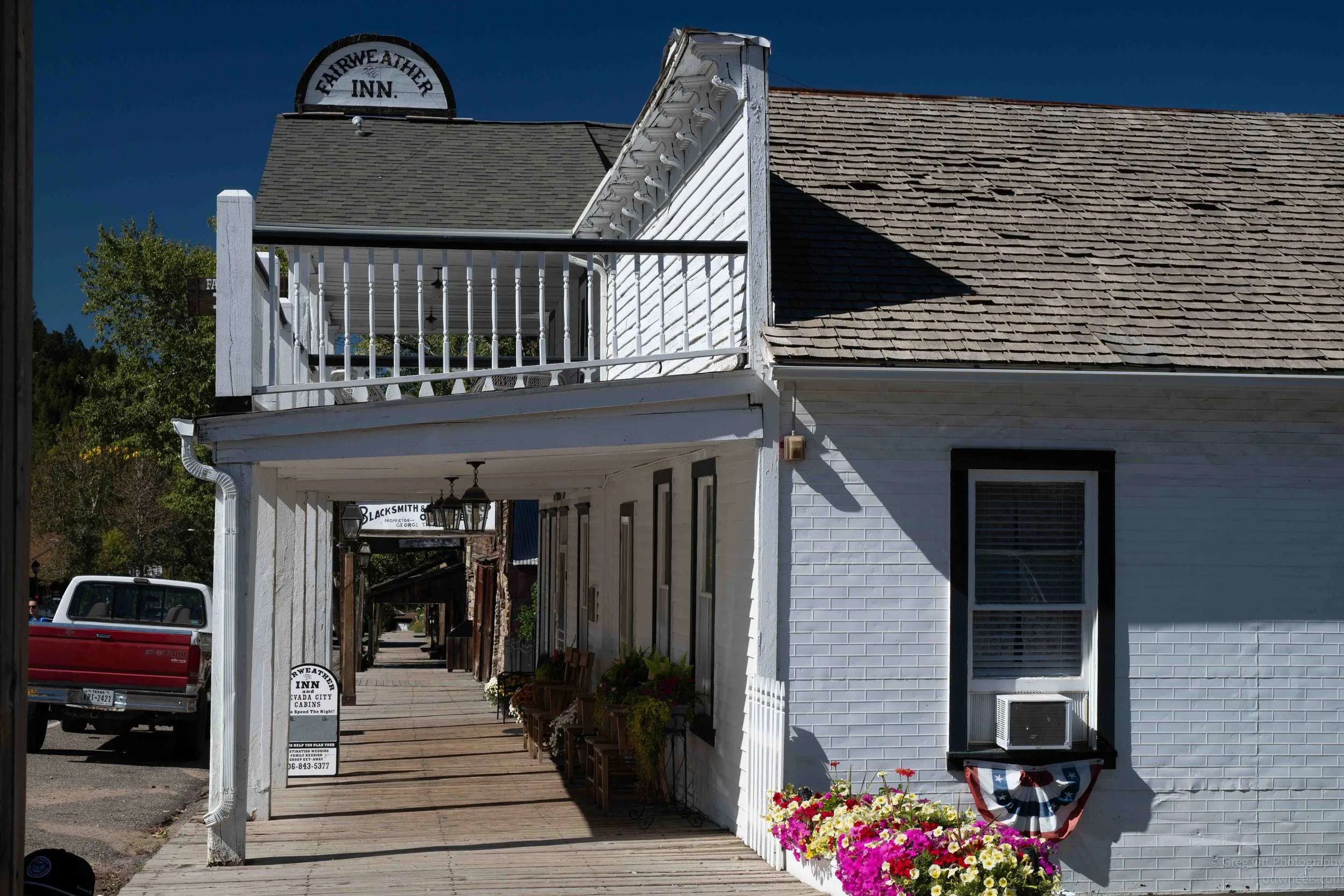
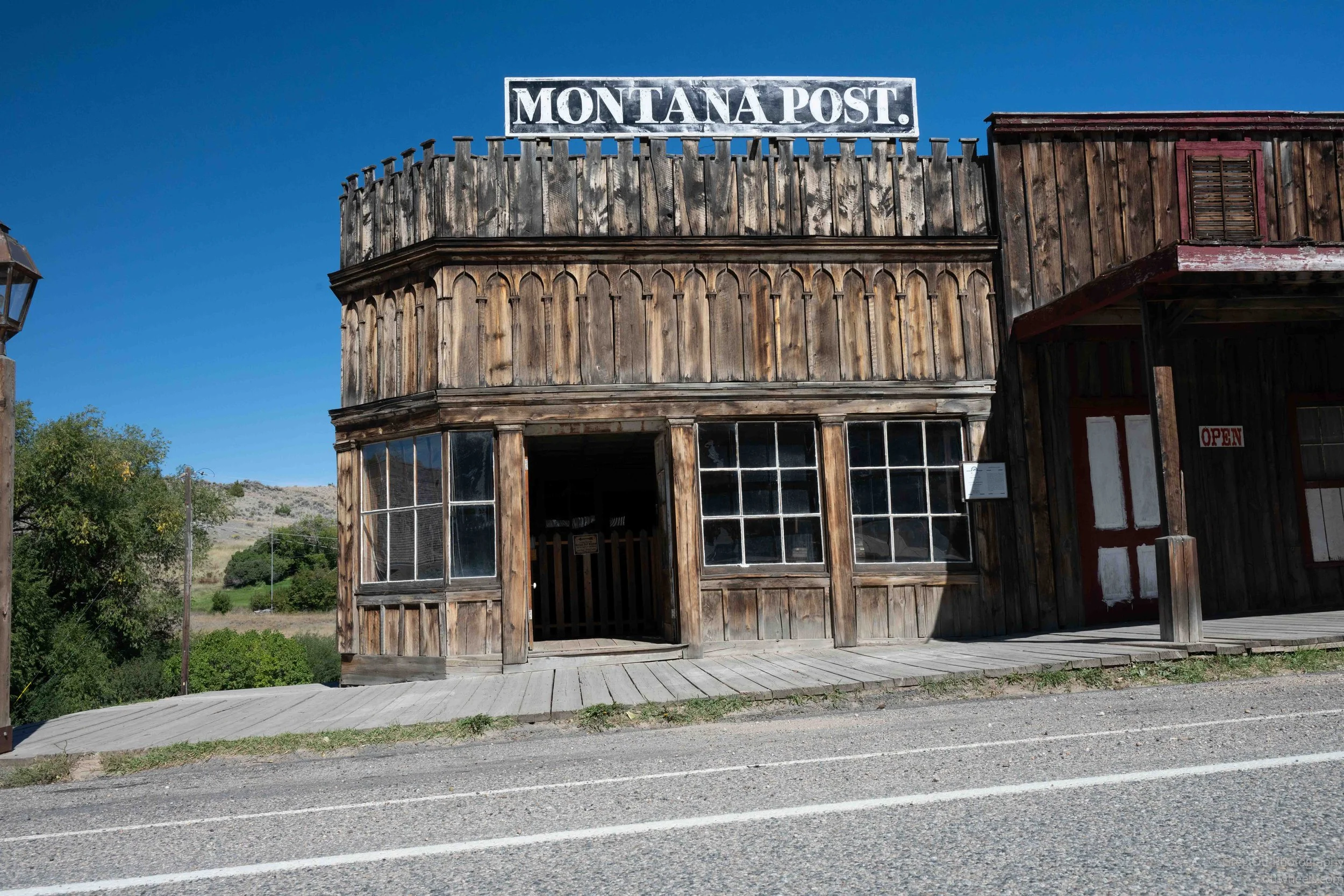
I think that is why I preferred Bannack. Bannack felt abandoned in a way Virginia City never could. I could walk into an empty building, stand in a silent room and imagine the people who had once lived or worked there without much of the modern world getting in the way. Virginia City tells a different story. It didn’t simply die and become a ghost town. It nearly died, was deliberately rescued and then found a way to survive by turning its history into part of its economy. I’m glad both exist, but after spending the previous day in Bannack, I found myself missing the silence.
Bozeman, Montana
I left Virginia City in the early afternoon. I tried to get lunch but that was difficult given that the tourist season had ended. There were a few restaurants open, but I wasn’t interested in the menu.
The drive to bozeman was beautiful in a few spots. I pulled over a few times to take in the big open views.
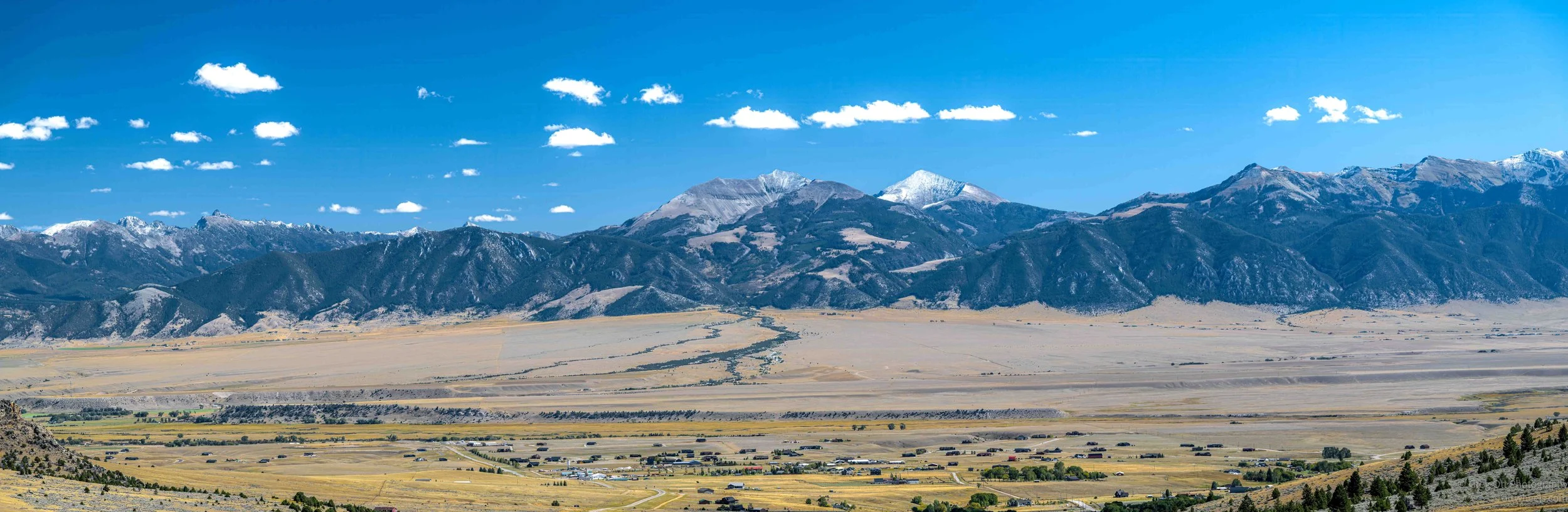
I stopped in another cute town, I’m not sure of the name. There was one restaurant that advertized homemade pies, sandwiches, etc. There was a line of 5 people and half the seats in the restaurant were empty. After standing for 10 minutes in line and no one coming to seat anyone, I left. I walked the length of the town looking for another restaurant. Three were permanently closed, yes three. There were two more closed for the end of the season and there were three bars which wasn’t what I was going for. I went back in to the first restaurant and four of the people had been seated. I decided I’d work on my diet today and moved on.
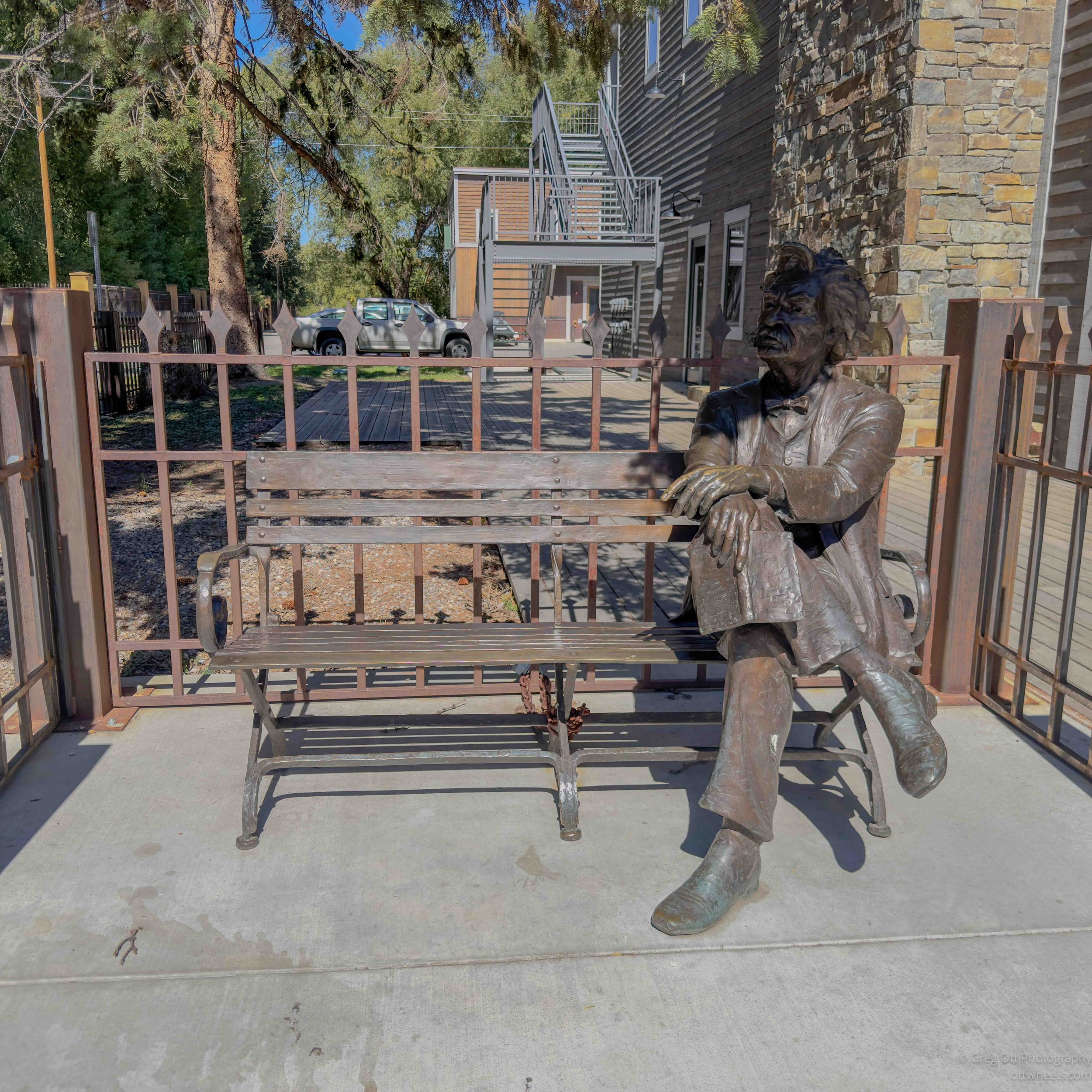
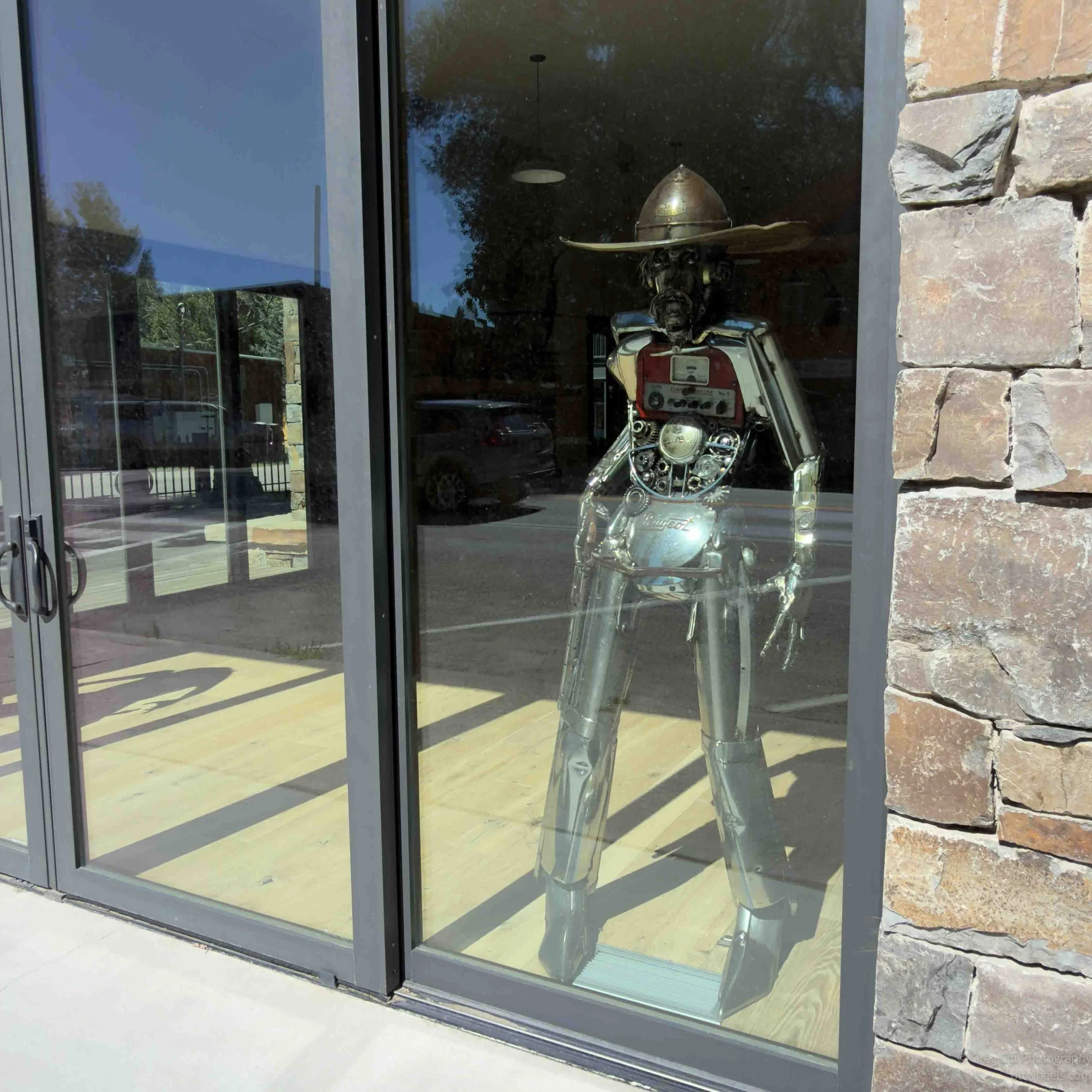
I knew Bozeman was where there is a lot of new money and thought maybe they have a Whole Foods. It was a ½ mile from where I was. I went to the salad bar and had lunch. There cafe was shutdown, so no coffee. Then I went shopping for things I can’t get in most other stores. I was shocked at the bill as I have been more and more recently. My gas billS haVE been extremely high for months now, and that seems to be adding to food prices for the transport of goods, packaging with plastic, and pesticides. All related to higher oil prices and no end insight.
I spent time driving around downtown and realized it was toO touristy for me and decided to move on to Livingston. I had already been driving more than I wanted to today, but Bozeman had that “I want to be seen vibe”.
Livingston, Montana
It was another 90 minutes to Livingston, and while I drove I kept thinking that I should get in a bike ride before the day was over. When I arrived, I spent about 15 minutes driving around to get a feel for downtown. It was much more low-key than Bozeman, but there was still a lively little business district, and it was just approaching 5 p.m.
There was plenty of parking on the side streets, and I found a spot on D Street. The neighborhood was lined with mature trees, so I looked for an opening in the canopy where Starlink would still have a clear enough view of the sky. Once I was parked, I changed into riding clothes, checked that everything was charged, and pulled up AllTrails to see what was nearby.
I found the Highway 89 Trail, which starts downtown and heads south out of town. I was only about eight blocks from the beginning, so I rode back through the main business district and picked it up there. At first the route follows the sidewalk and runs parallel to the railroad, then crosses the tracks and winds through the industrial side of town. For about half a mile, the pavement was absolutely awful.
Eventually the trail crossed back over the railroad and continued south on a sidewalk and paved path beside Highway 89. Around the five-mile mark, the paved section ended near a rest area where the route intersected with the highway. From there I jumped onto the Old Yellowstone Trail, a dirt road running behind the rest stop and connecting farms with a scattering of very expensive-looking homes. During the entire stretch, only one vehicle passed me.
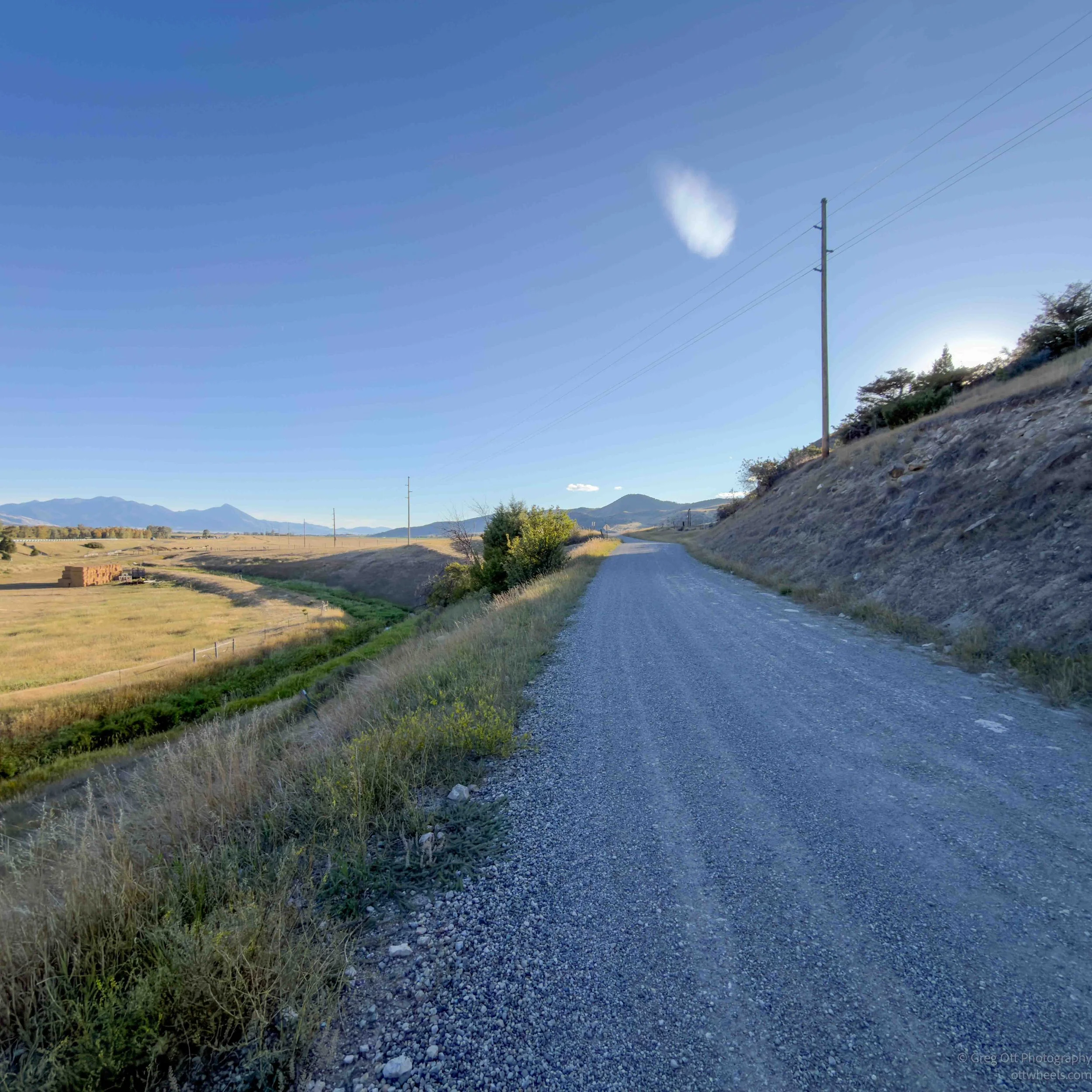
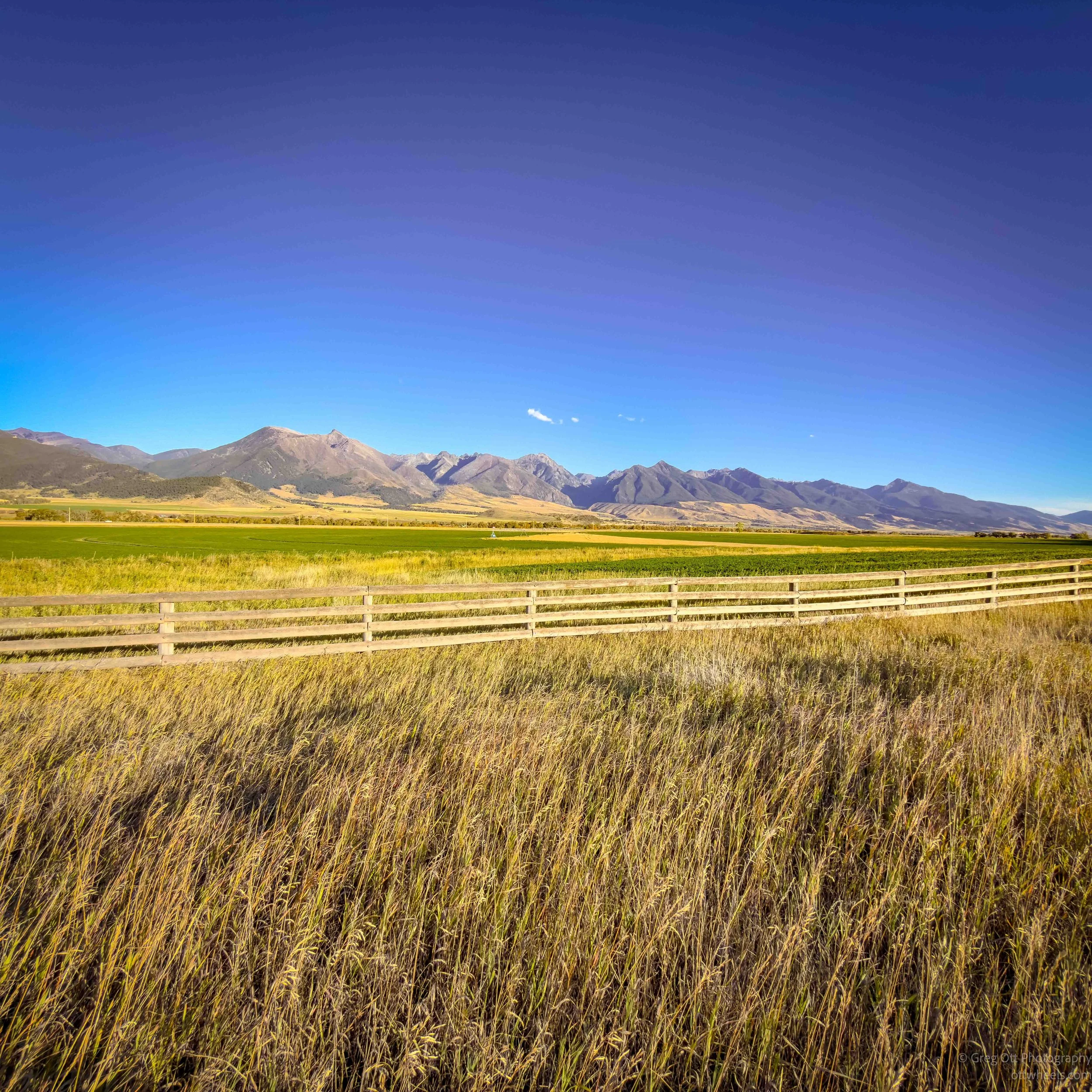
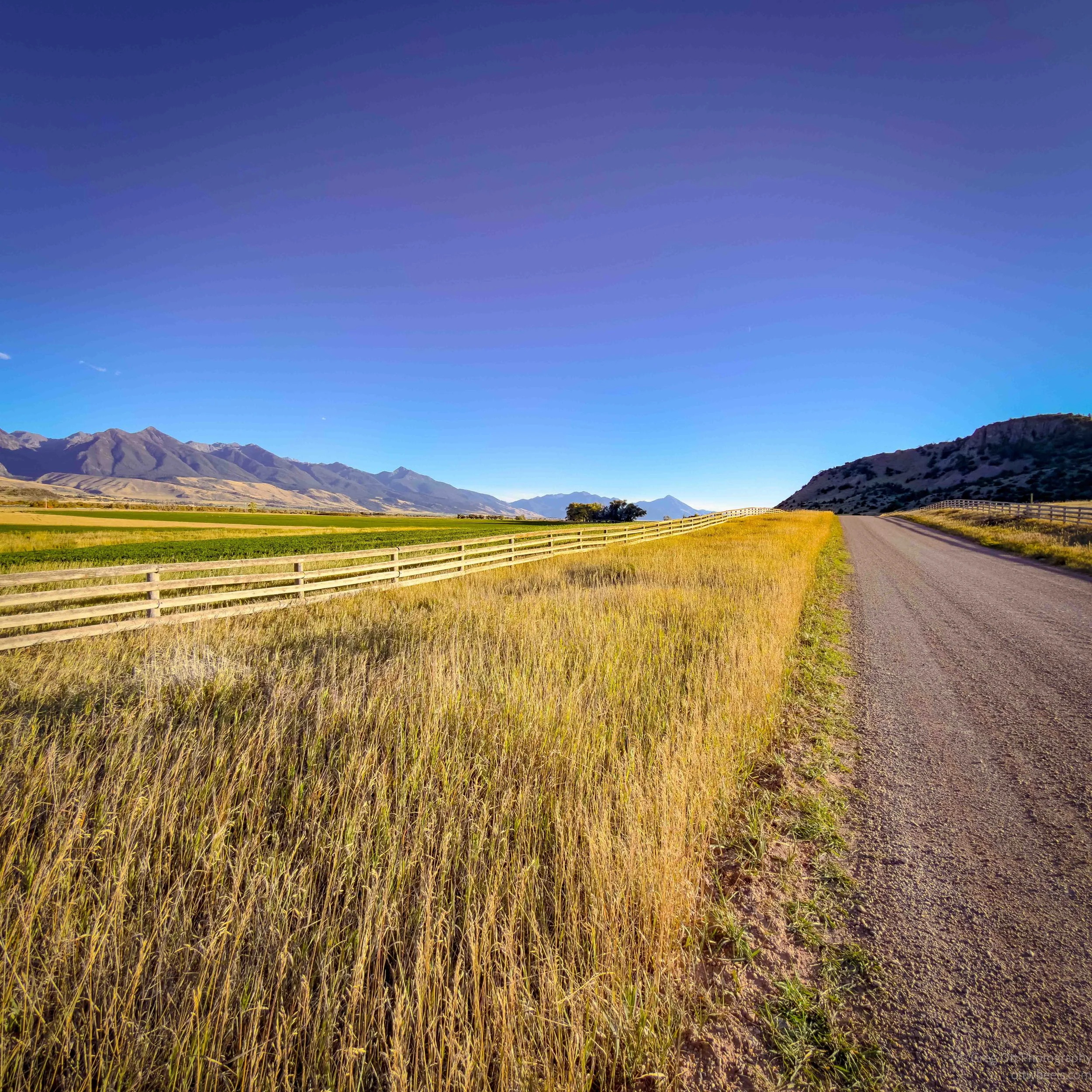
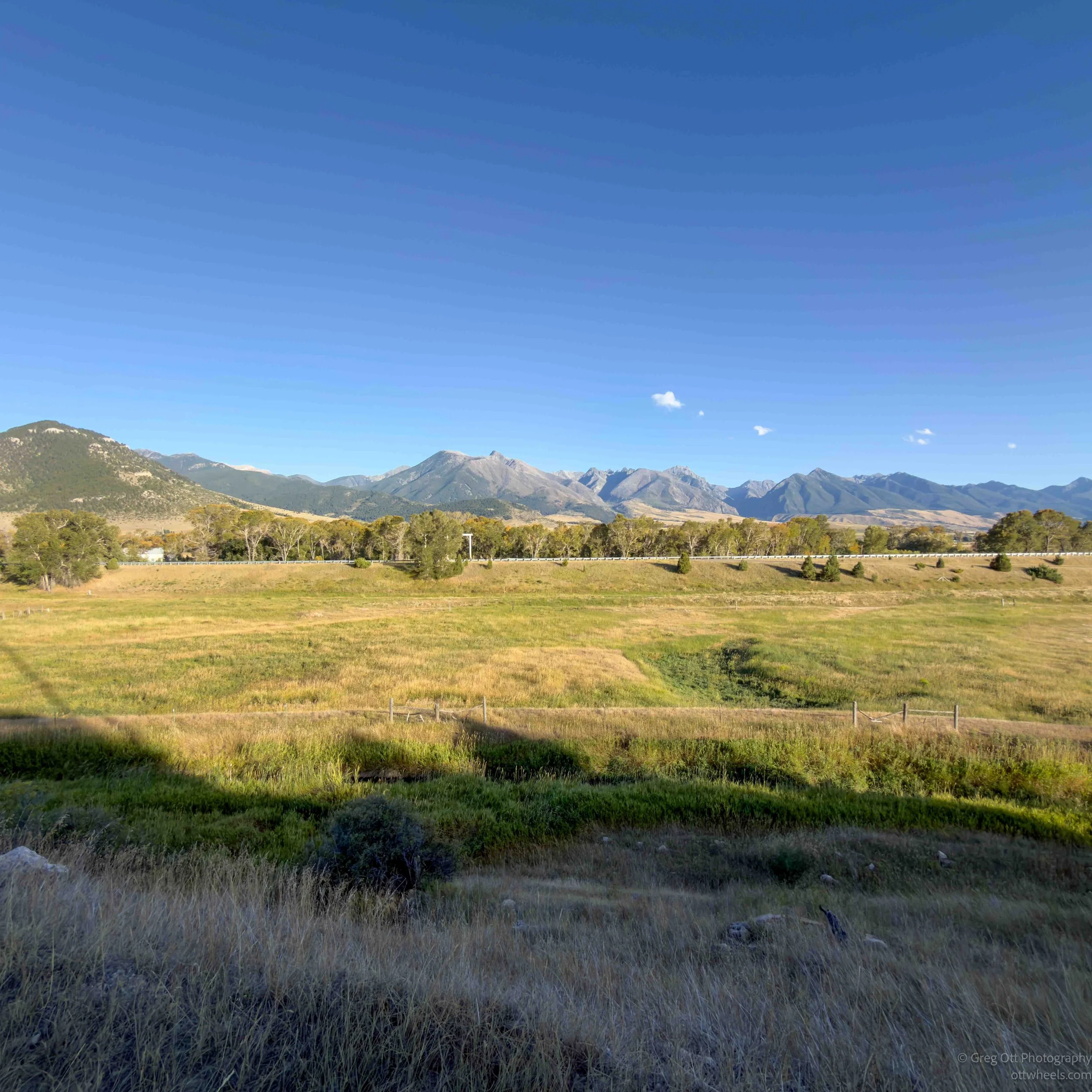
The sun was dropping in the west, and as the road wound south there were sections where I was riding almost directly into it. At times it was difficult to see much of anything ahead. The dirt road also varied from reasonably smooth to badly rutted and washboarded, but the light hitting the fields and mountains to the east was beautiful. The colors were some of the best I had seen all day, although I knew the iPhone wasn’t going to come close to capturing what I was seeing.
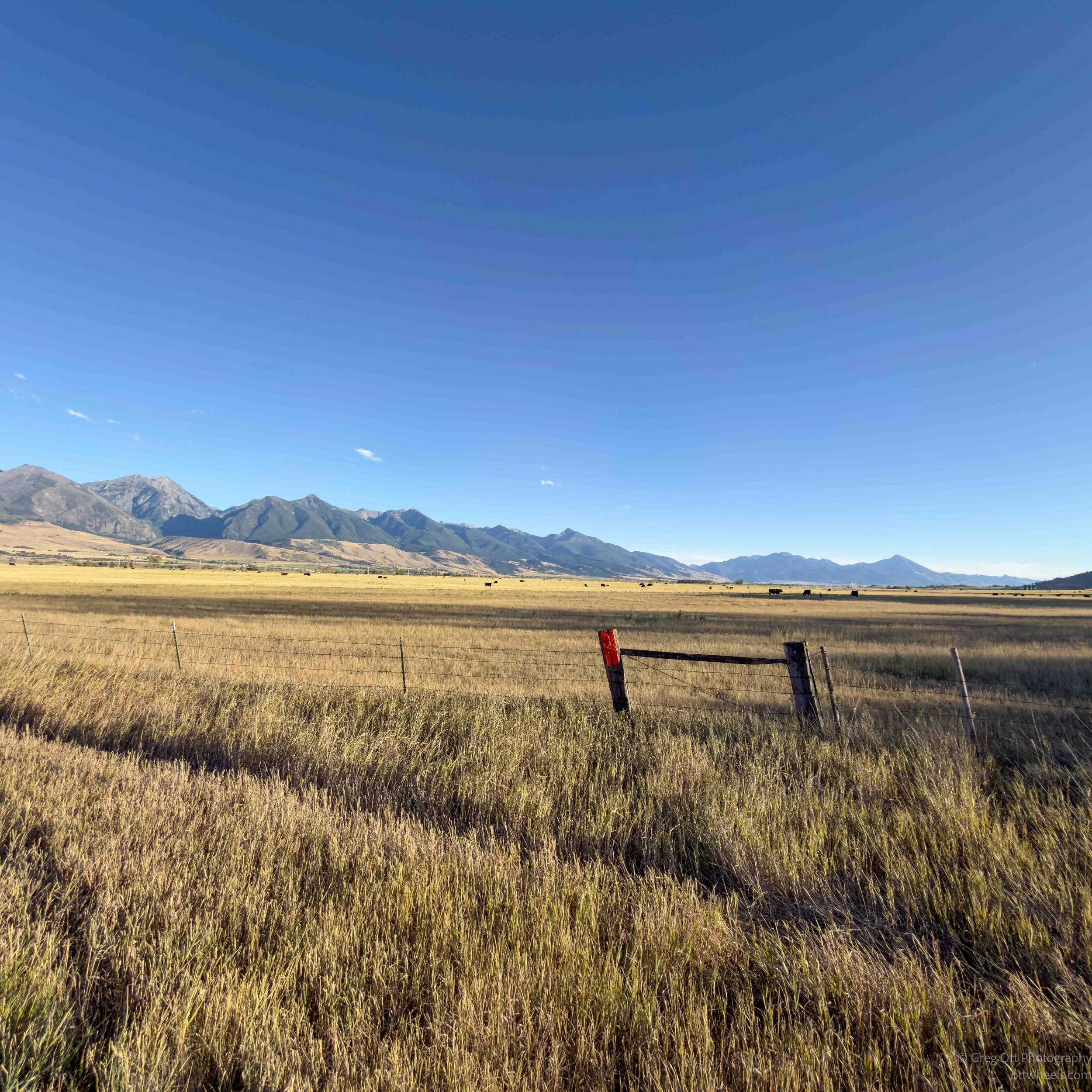
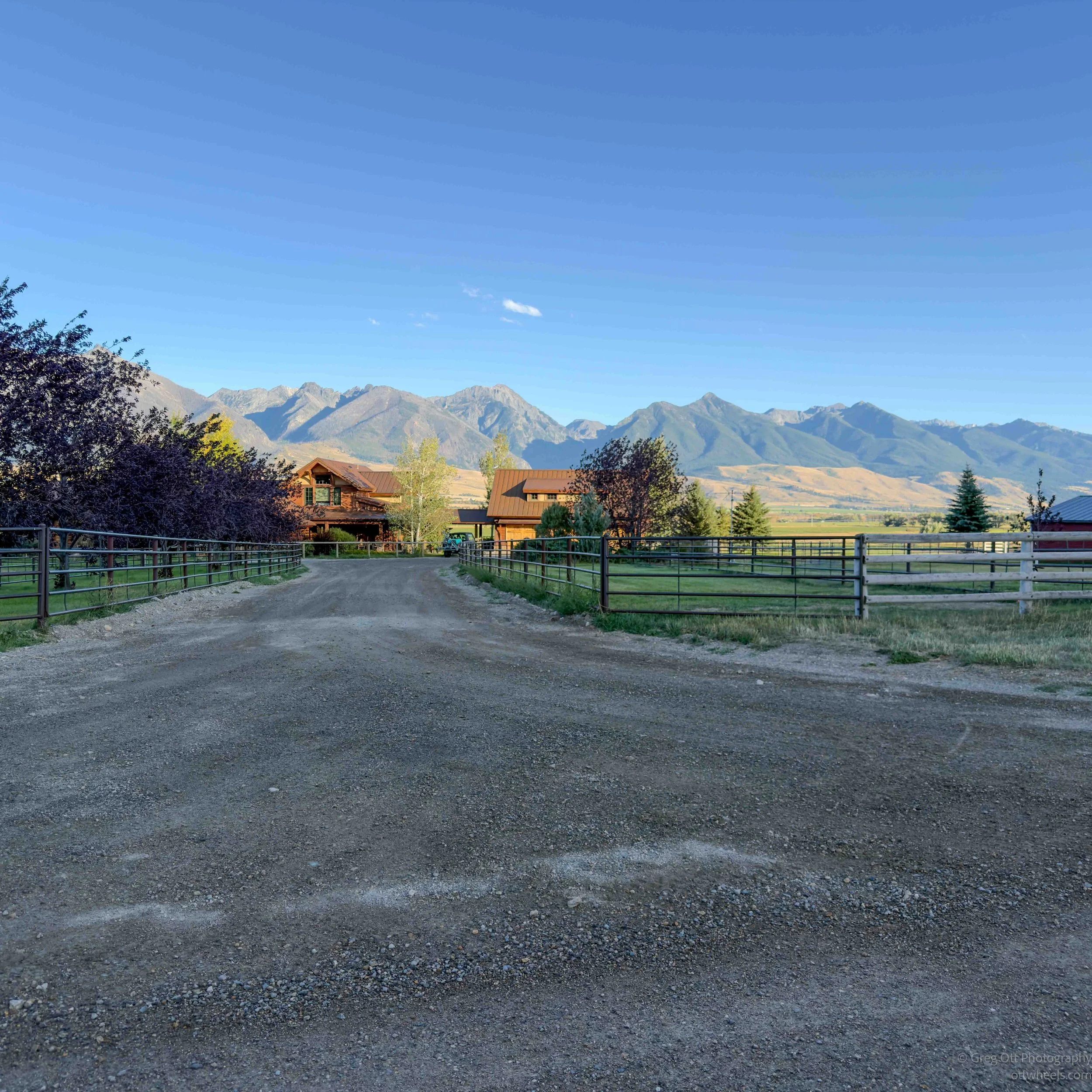
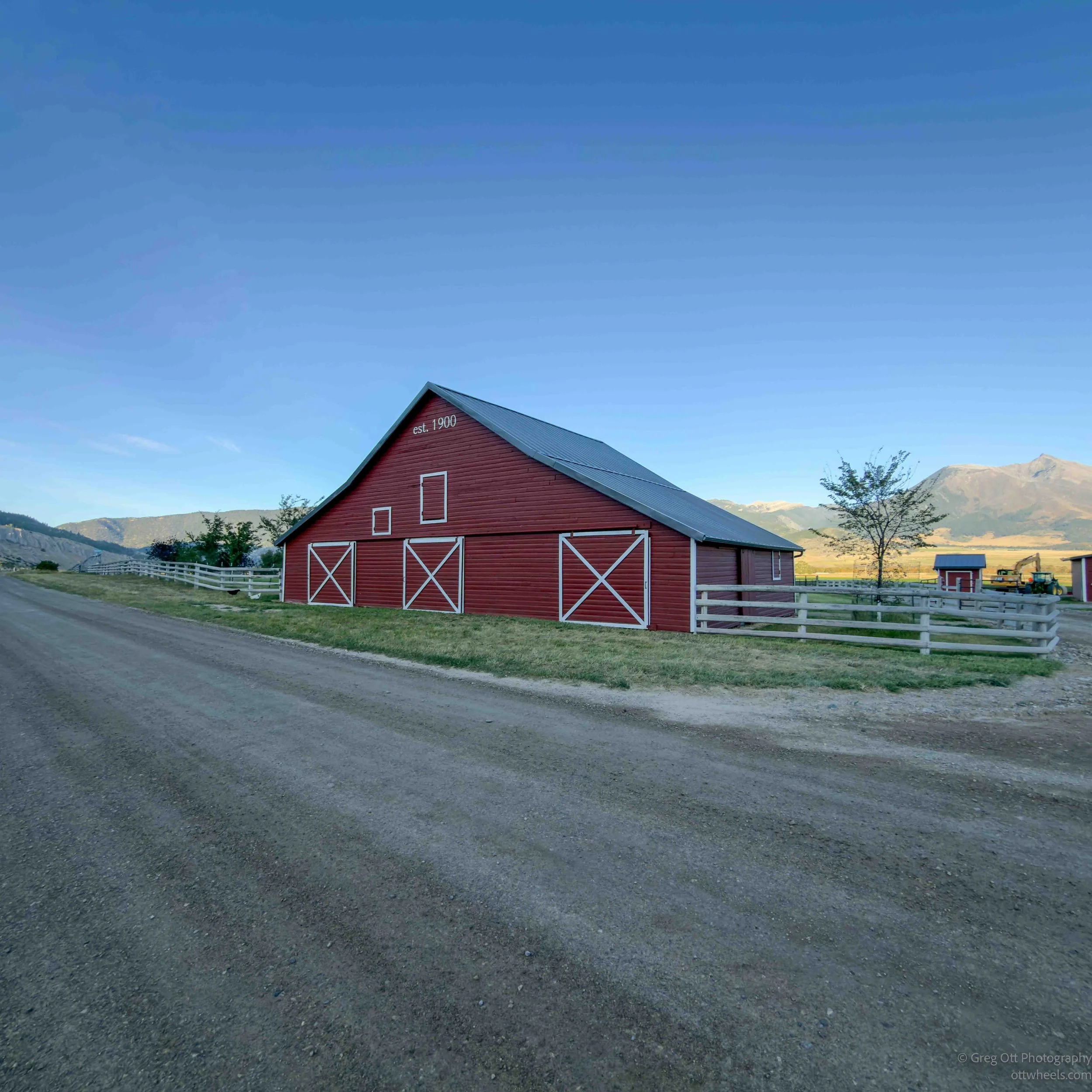
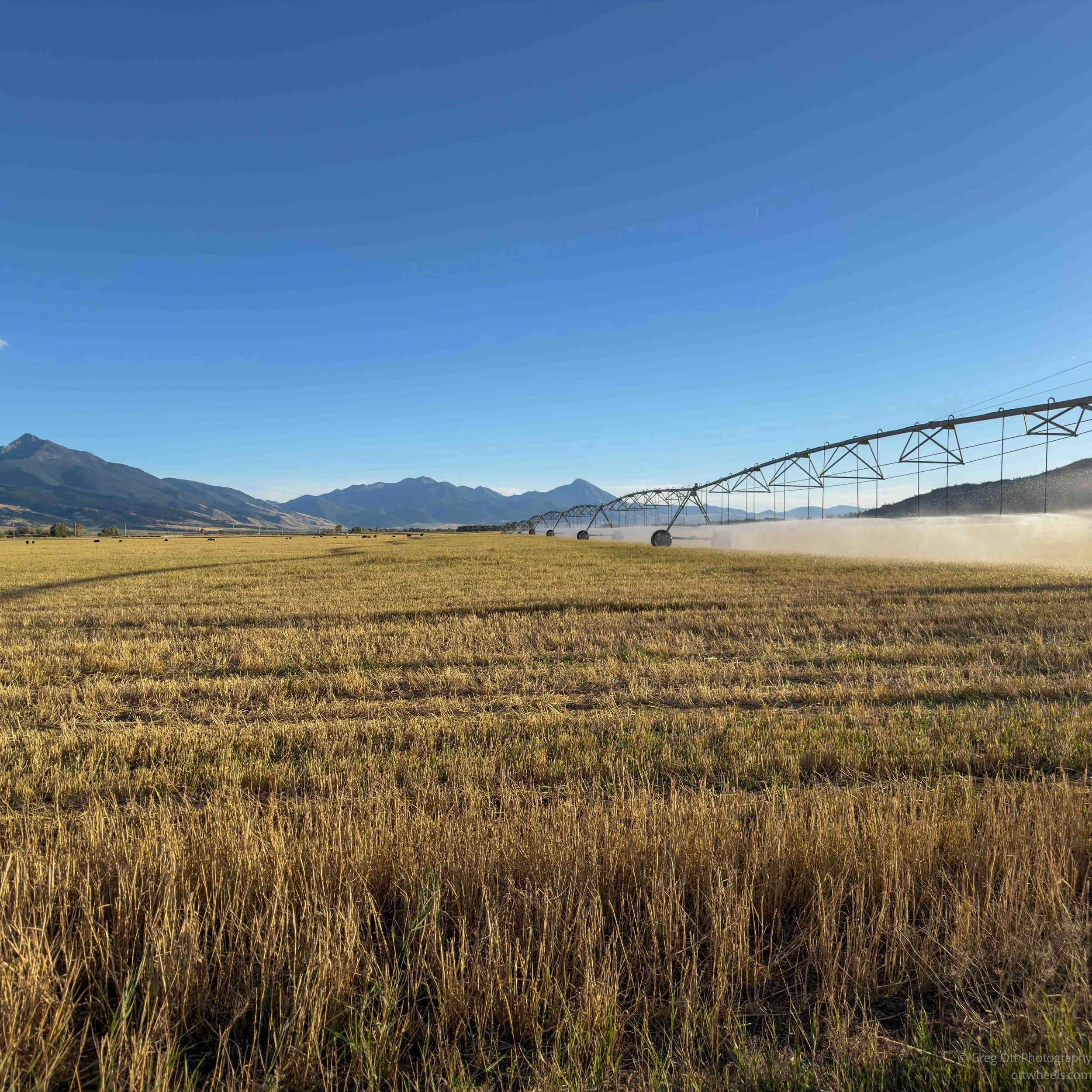
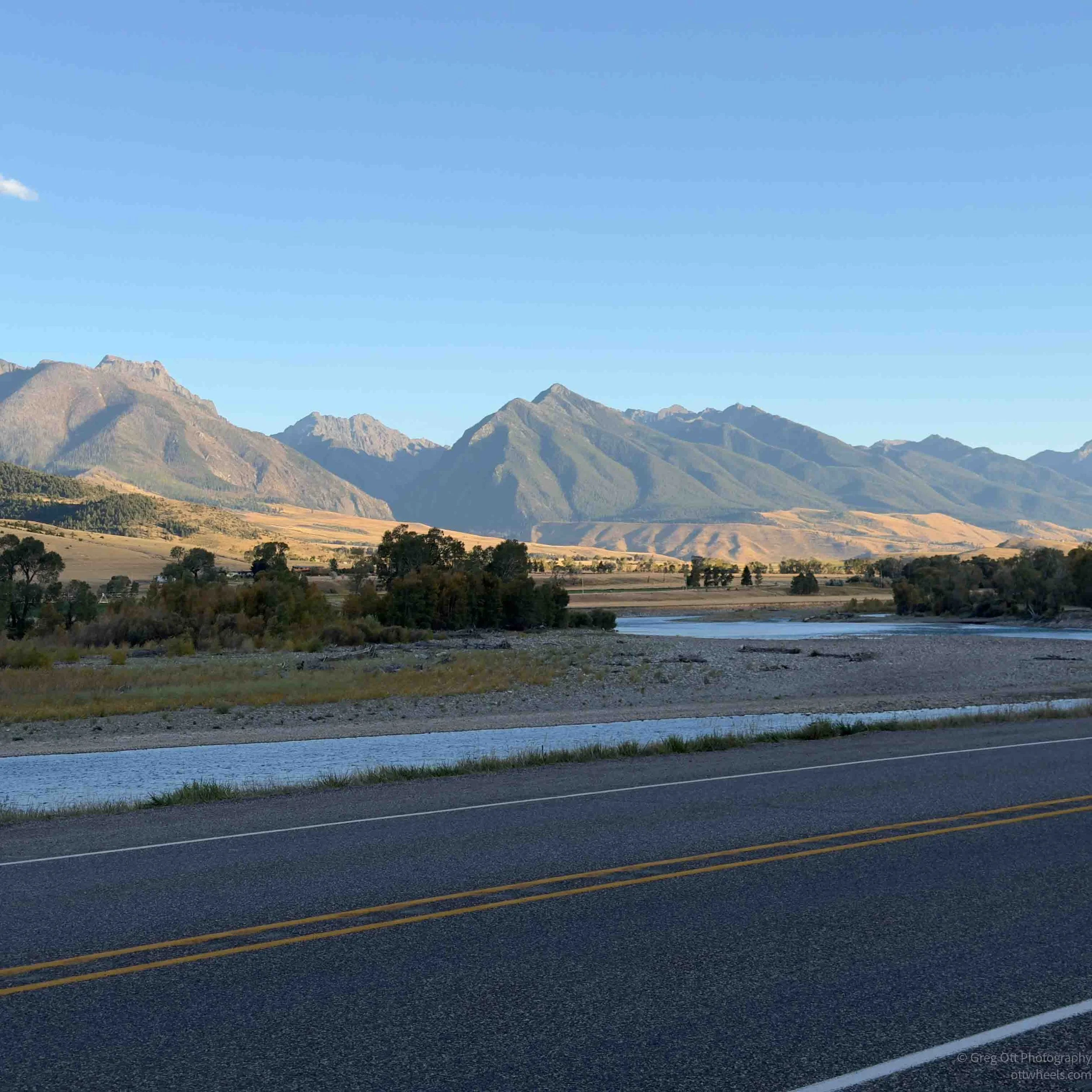
I was hoping to get in about 20 miles before dark. This time of year, darkness comes quickly around 8 p.m. in this part of Montana, so I kept an eye on the time and eventually turned back toward town. By the time I reached the van, it was just getting dark and the street had gone quiet.
There was still plenty of parking around me, no activity on the block and no signs restricting overnight parking. I checked online and couldn’t find a Livingston ordinance specifically prohibiting sleeping in an RV parked on the street. Since I was already settled in a quiet spot and wanted to explore the town the next morning, I decided to stay where I was.
I fell asleep around 10 p.m., relaxed from the ride and glad I had managed to squeeze it in before dark.
9/16: Livingston, Montana
The streets in Livingston were quiet compared with most towns of any size. I didn’t hear the constant loud mufflers and squealing tires that seem to be everywhere now. The quiet was broken between 4 and 4:30 a.m., when three trains came through town blowing their horns. I’m still not sure why they need to sound them for so long when approaching crossings, especially when the intersection seemed to be half a mile away, but that appears to be standard almost everywhere.
I was feeling lazy that morning and decided to go out for a Danish and coffee at Rx Coffee, less than a mile away. I highly recommend the coffee. There were three cars lined up at the drive-through when I arrived, so I went inside and took a seat near the door at a long counter facing the street. They had Wi-Fi, and the speed was excellent at around 530 Mbps, so I settled in for a while.
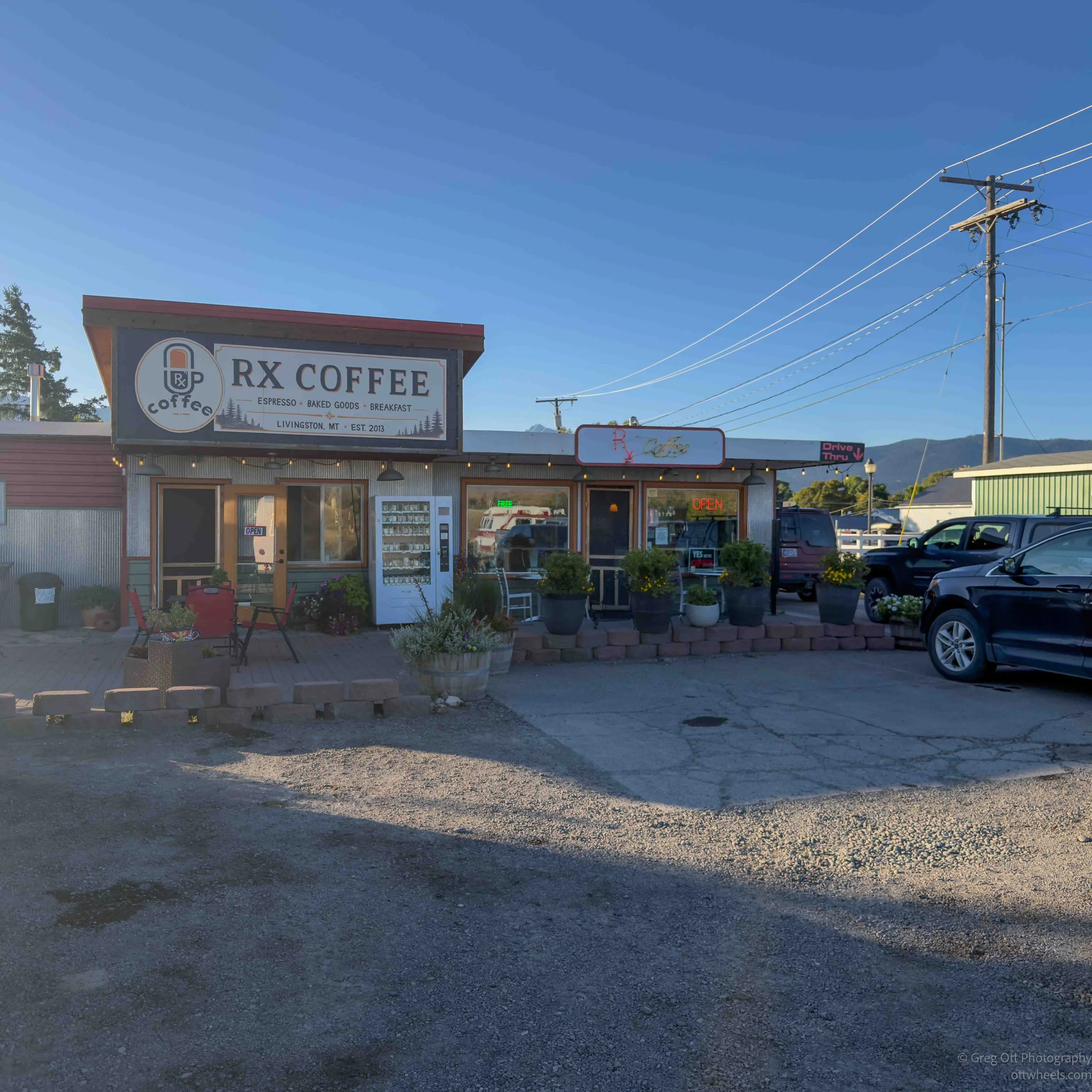
What made the place interesting wasn’t just the coffee. I sat there listening to the staff and customers talk, and it was obvious that many of them had known each other for years. One woman came in, noticed one of the employees, and said, “Oh, you’re working here now? I wondered where you went.” He told her that he enjoyed working at Rx because “the people are so nice here,” and then added that he had gotten tired of being yelled at at his previous job. She knew exactly what he meant and said she had quit the same restaurant for similar reasons.
There were also regular customers whose orders didn’t even need to be taken. The staff seemed to know what they wanted as soon as they walked in. When the drive-through line backed up, someone would go outside and take orders from the cars waiting in line so they could start preparing them before they reached the window. It was a relaxed place and an easy environment to sit and get things done.
Then there was Chancellor, an older service dog who wandered around greeting people and quietly hoping that something might fall off a plate. Everyone seemed to know him, and people greeted him as naturally as they greeted the staff.
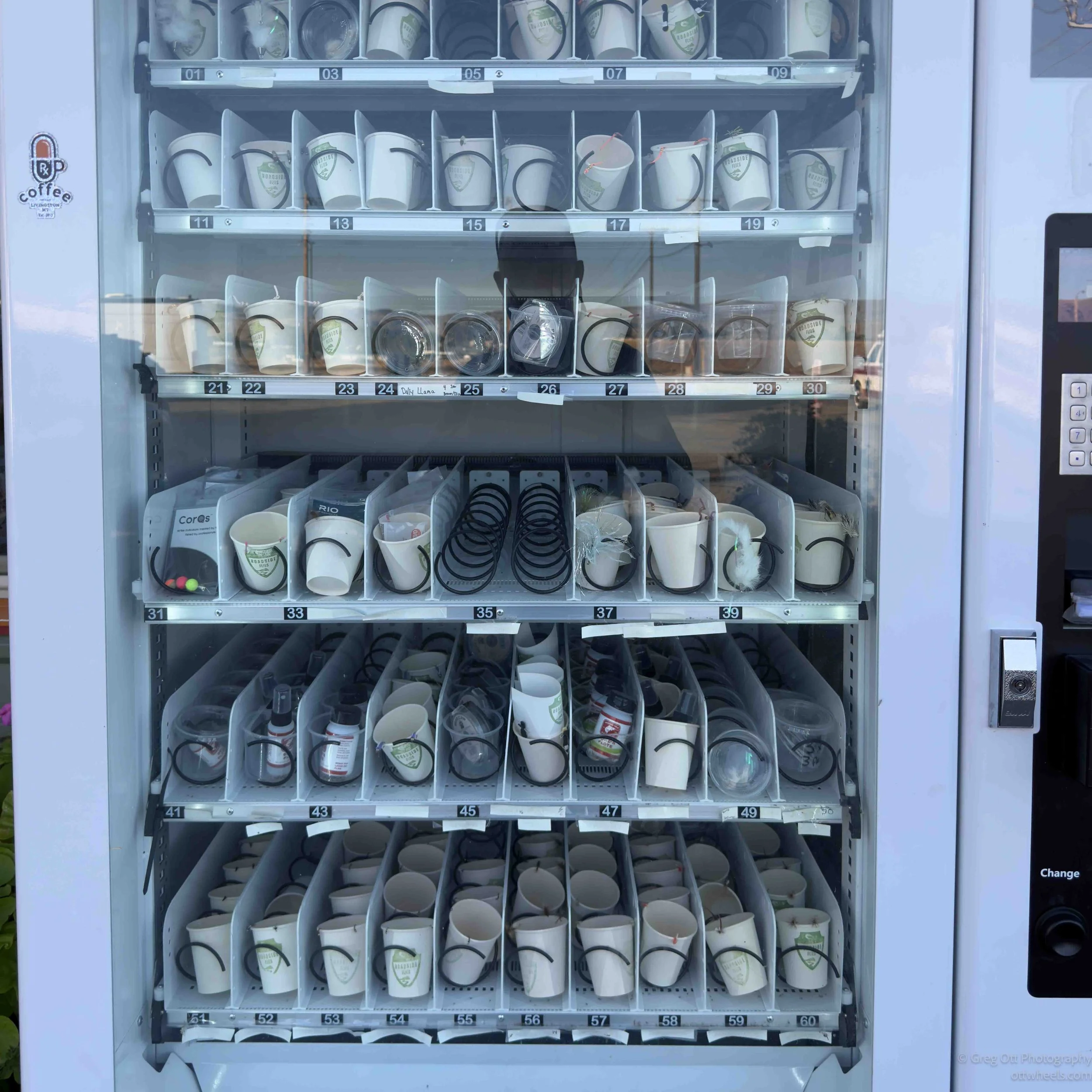
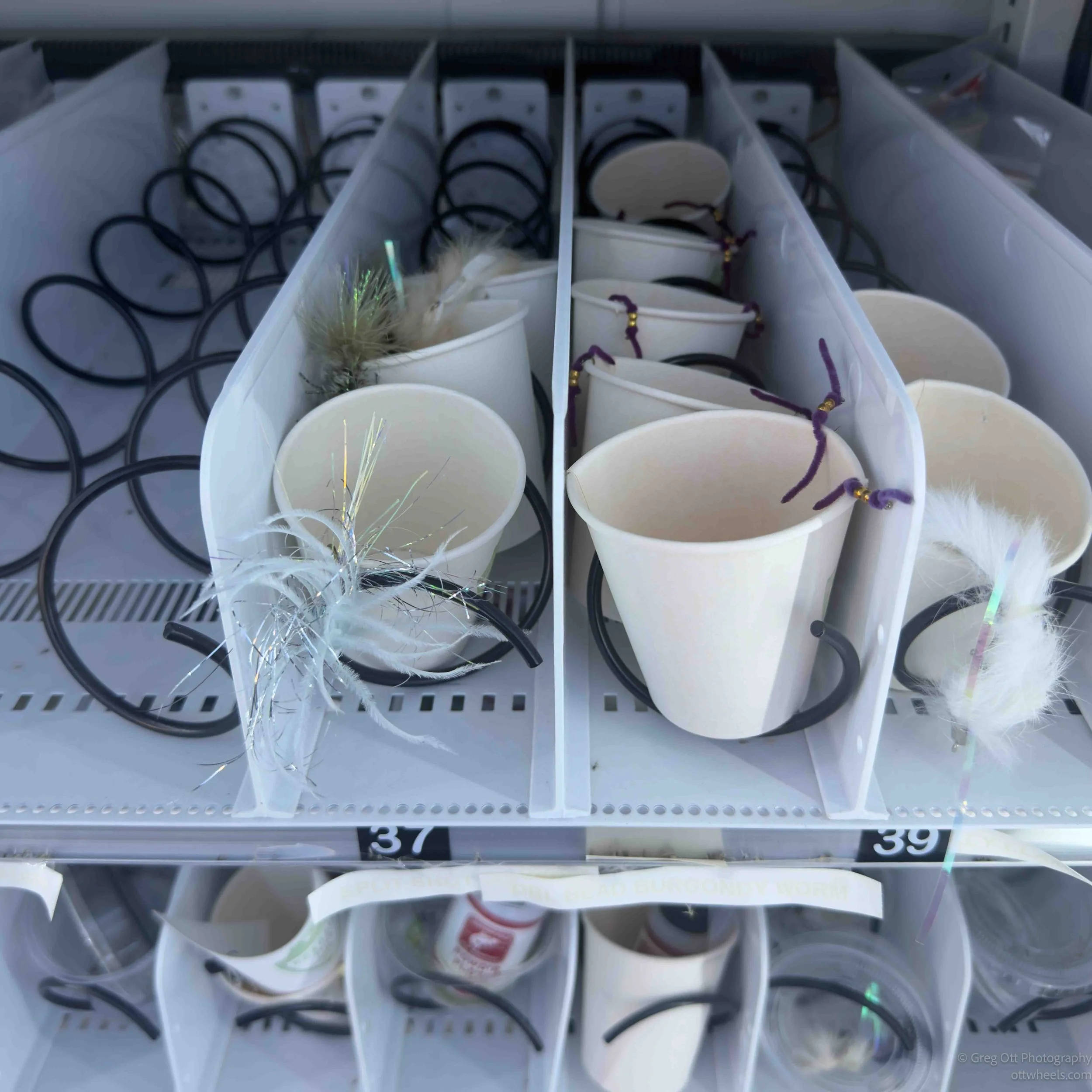
Outside was something I had never seen before: a vending machine for fishing flies. Instead of candy bars and soda, the rows were filled with paper cups holding flies, leaders, and other small fishing supplies. It seemed perfectly suited to a place where someone might discover at the last minute that they needed one more fly before heading out onto the river.
After about two hours, I packed up and headed to the Livingston library, which opened at 10. I ended up spending about nine hours there, which was surprisingly easy to do. It is another one of the Carnegie libraries I keep running across as I travel, and I always enjoy seeing how these older buildings have been adapted wit hout completely losing their original character. I settled in with my laptop and spent most of the day catching up on blog posts, organizing photographs and getting other online work done. I also took a break from the computer and read part of a book on photographic composition. The library had a decent photography section, although much of it was dated.
By 6 p.m., most of the people had left, so I asked the librarian when they closed and found out I still had another two hours. A few students came in later, grabbing books, taking notes and working quietly at the tables. By the time I finally packed everything up, I had spent most of the day there, but it felt productive rather than wasted.
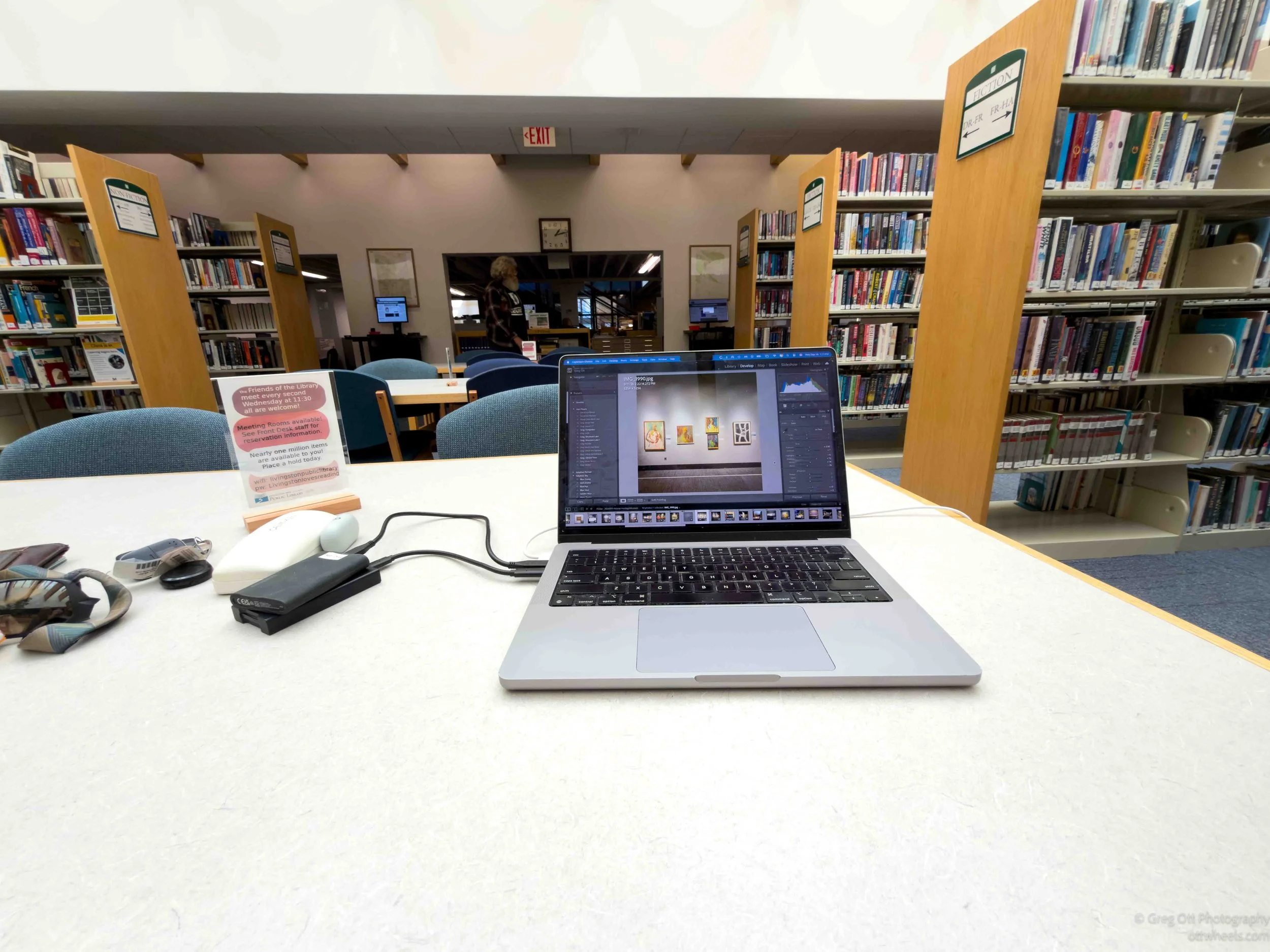
There was one man I noticed throughout the afternoon. He was tall, older, and appeared to have some type of spinal condition that prevented him from lifting his head. He stood for nearly six hours reading at a table about three rows in front of me. He would open a book, find what he was looking for, place it on the table and read 20 or 30 pages very quickly. Sometimes he would pull another book with maps or other information, check something, and then return to where he had left off.
By the end of the day, there were probably 20 books stacked on the table around him. His name was John, and before he left, the librarian came over to gather the books he had finished with. Watching the two of them, it seemed like this was a daily ritual they had gone through many times before.
Before leaving, I asked the librarian for a few restaurant recommendations. Her favorites were Campione Roman Kitchen for Italian, Gil’s Goods for pizza and burgers, and the Engine Room for pizza. She laughed and said that for such a small town, Livingston had a surprising number of good restaurants.
I ended up at Gil’s Goods because the van was parked nearby. One thing I liked about downtown Livingston was that street parking was free. Some spaces had a two-hour limit, but there were no meters or parking fees. At Gil’s, I ordered the daily special: a double-double smash burger with guacamole, tomato, lettuce and onion on a brioche bun, with unsalted fries and water. I hadn’t eaten much all day, so by then I was extremely hungry. It was a fun, relaxed place, and the burger disappeared quickly.
It was around 9:30 when I made it back to the van. I drove down South Yellowstone Street, turned onto Geyser Street and found plenty of open parking. The neighborhood was quiet, so I parked across from St. Paul’s Evangelical Lutheran Church. A little after 10 p.m., a group of people came out of the church and drove away, and after that I didn’t hear any more traffic until the next morning.