
San Xavier del Bac Mission
I spent the night on a very quiet side street in Tempe, AZ. There was a gated aparment building on the right side, and plenty of parking. iOverlander2 suggested it was extremely quiet. I had gone to three places in Phoenix and it was clear none of them were going to work. I slept well, the stree was level and there was almost no noise. For a city, that is pretty amazing.
I received a parking ticket in Phoenix last night after what had been a really good dinner with old friends. I had paid for six hours of parking. I had the receipt. I had the confirmation email. None of that stopped the ticket from appearing on my windshield. So instead of easing into the morning, I found myself looking for a Starbucks where I could sit down and compose a calm, measured complaint.
Three Starbucks later, and not a single open seat. I finally gave up and drove about 18 minutes out of town to a newer neighborhood in Mesa. The place was big, but the inside was packed. It was in the 70s, so I grabbed a table outside and settled in for an hour to plan my day and draft the email. While I was there, a steady stream of people walked past in Chicago Cubs t-shirts, jerseys, hats — even dogs in Cubs gear. I finally asked a couple what was going on. They smiled and told me spring training had just started up the street. I hadn’t planned on baseball that morning, but there I was — sitting in Mesa, a few blocks from the Chicago Cubs’ spring training facility, writing a parking ticket appeal while the season quietly kicked off around me.
Caffeinated and pointed south, I headed toward Mission San Xavier del Bac, a little more than two hours away. It took longer than I expected. Desert driving has a way of stretching time. I pulled in around 1:30 p.m. with the temperature sitting in the high 80s. Before walking over, I took a short lunch break in the van, letting the engine tick cool and the day settle.
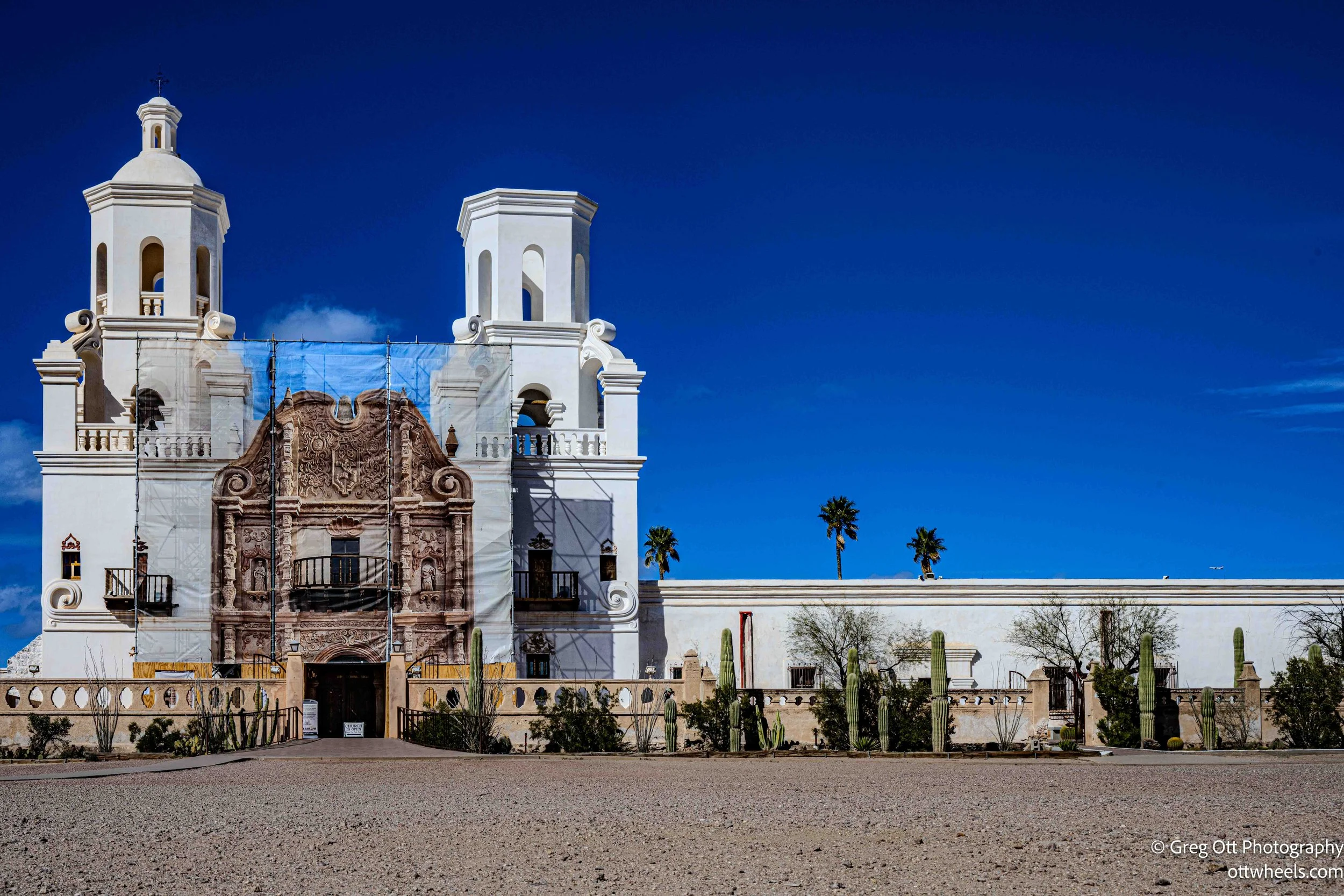
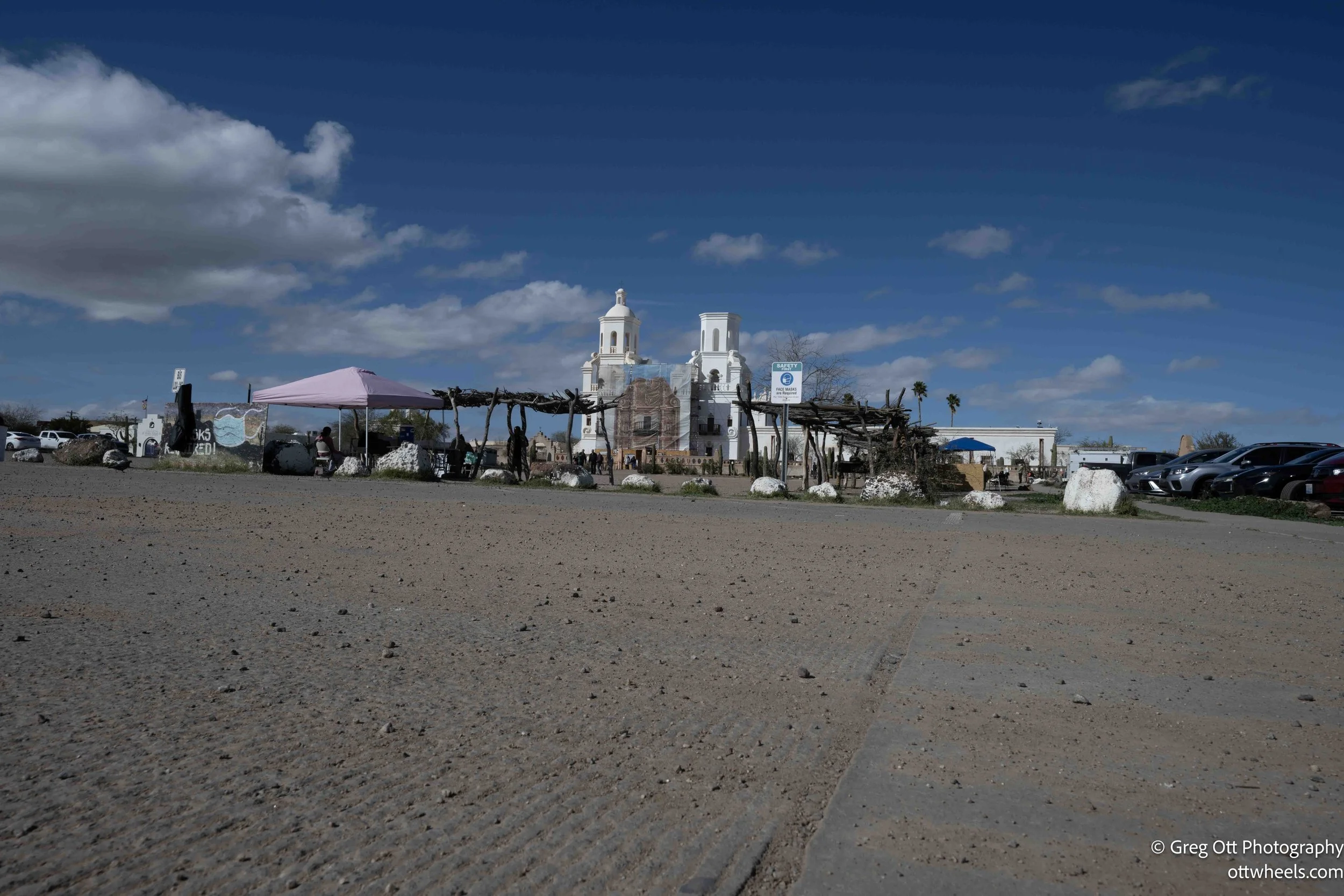
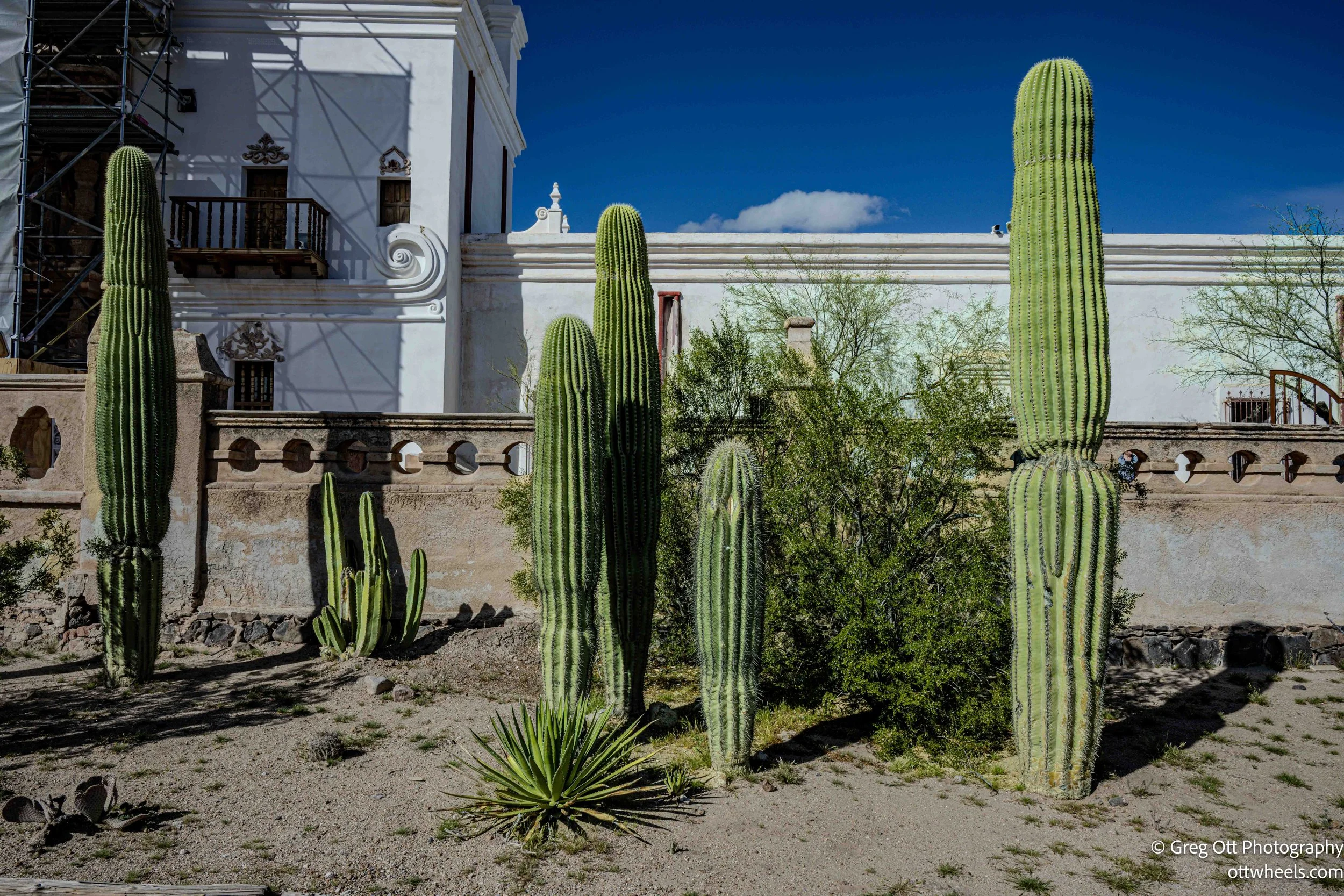
The first thing I saw was scaffolding. The exterior was partially wrapped as crews worked on restoring the plaster. Sections of the white façade were covered, the surface being repaired and preserved. Even so, the mission still dominated the landscape. It rises out of the Sonoran Desert in bright white, set against brown earth and blue sky, looking almost improbable — like it was placed there from another continent and another century.
I stepped inside and the temperature dropped instantly. The desert heat vanished. The air was cool and still. Light filtered in softly, and I took a seat near the front without thinking much about it. There’s something about that first moment inside — the scale of the altar, the silence, the coolness — that forces you to slow down whether you intend to or not.
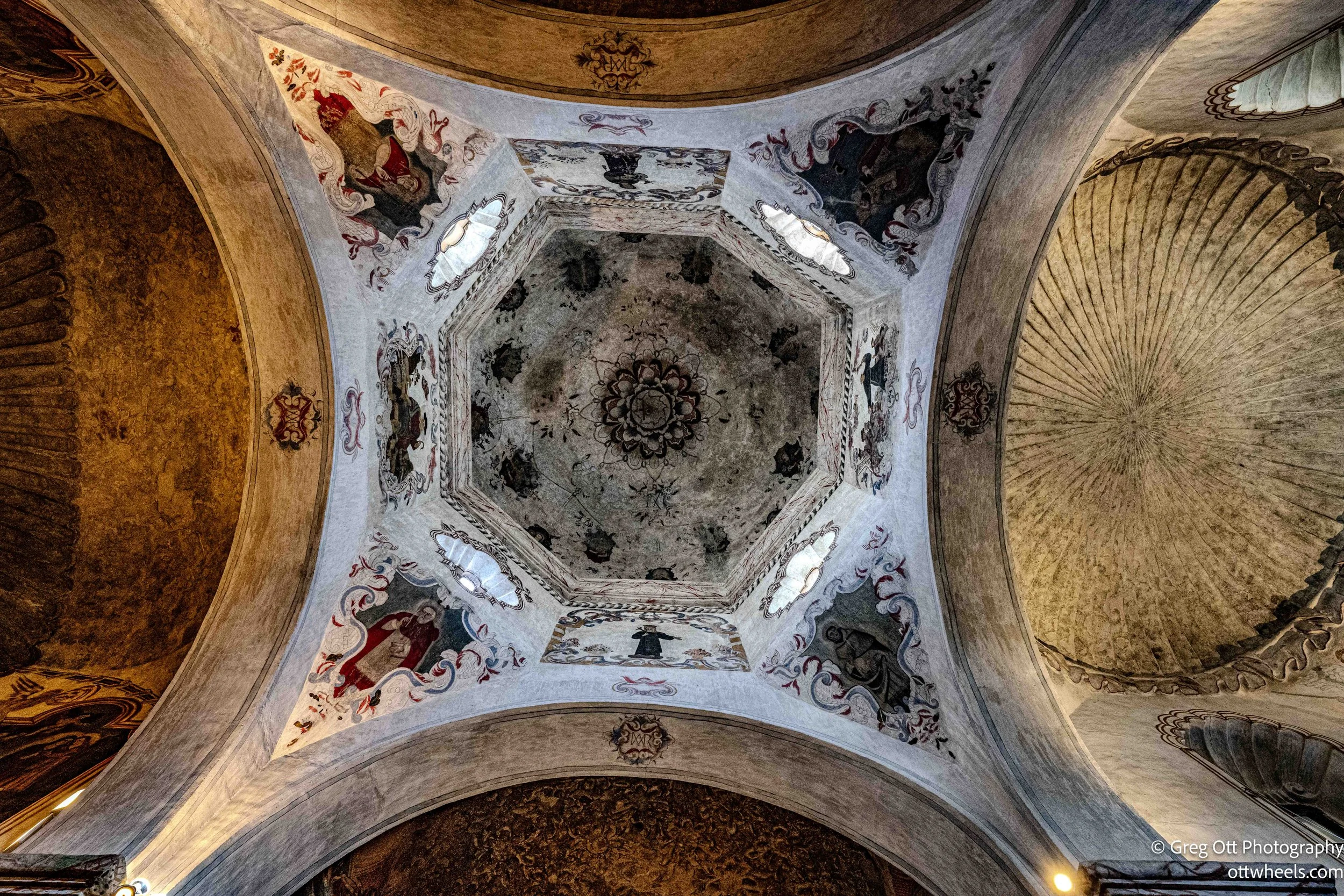
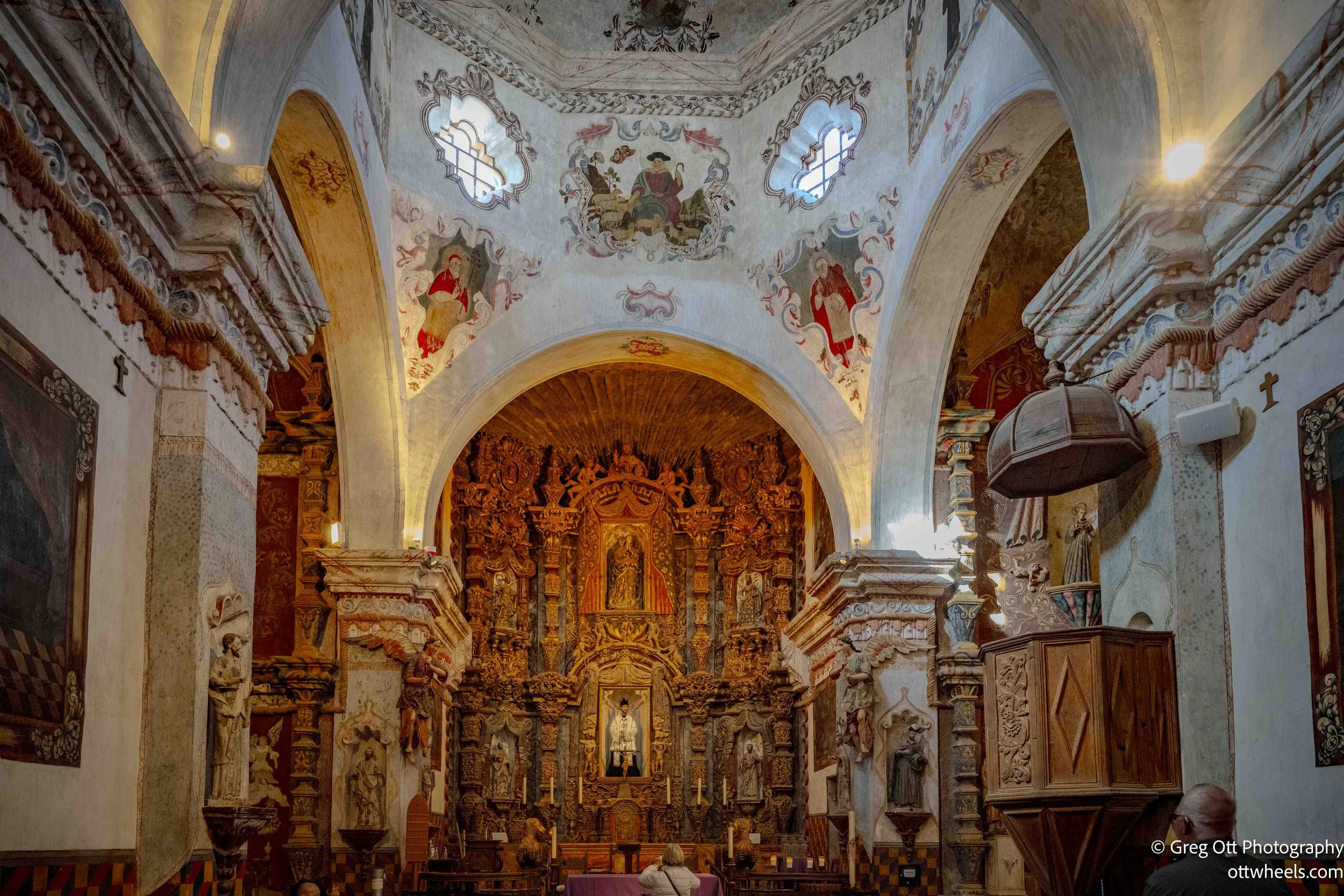
The mission was originally founded in 1692 by Jesuit missionary Father Eusebio Francisco Kino. The structure that stands today was built between 1783 and 1797 by Franciscan missionaries working with the local O’odham community. This isn’t a reproduction or a carefully themed attraction. It is one of the oldest intact European structures in Arizona, still functioning as an active parish church.
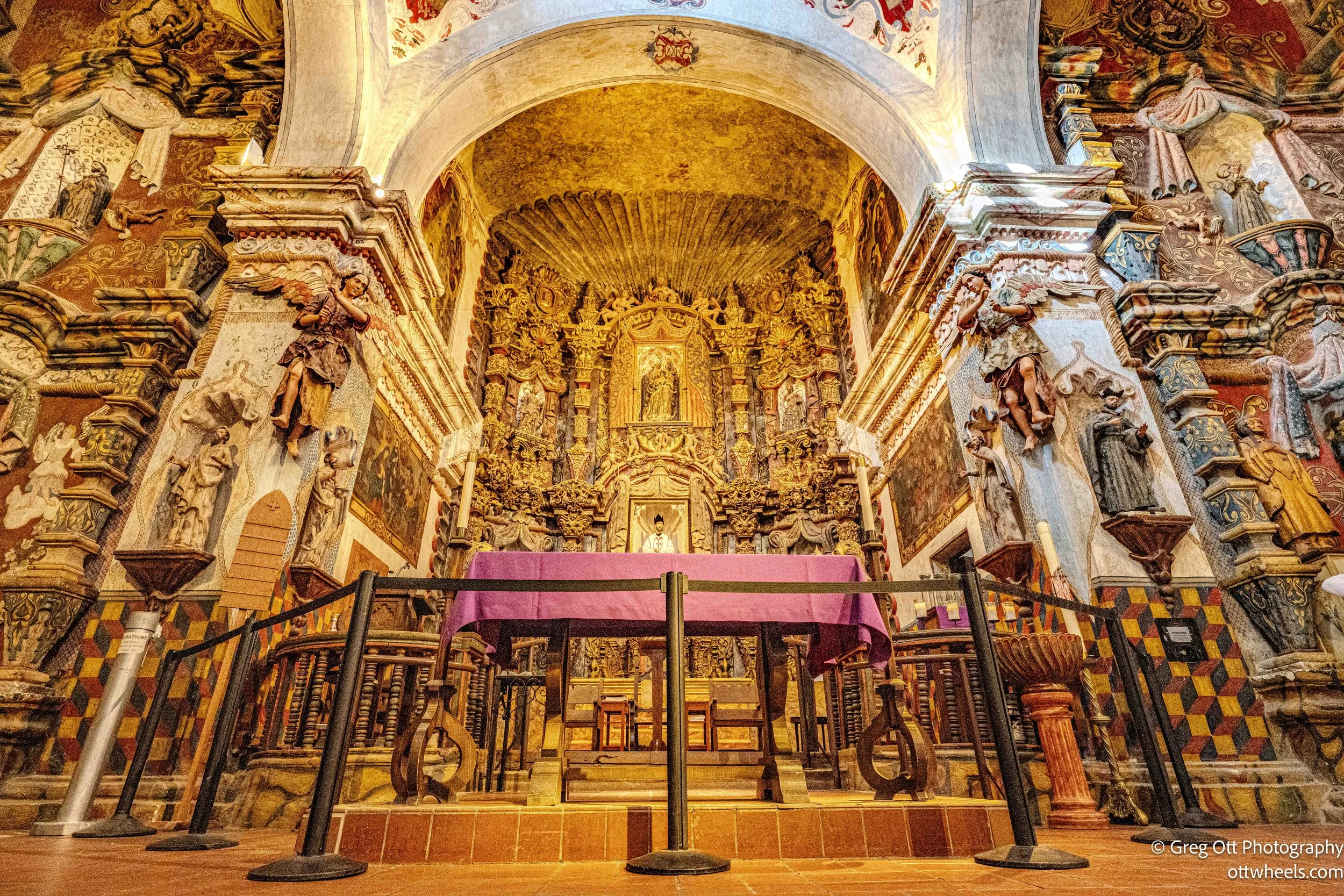
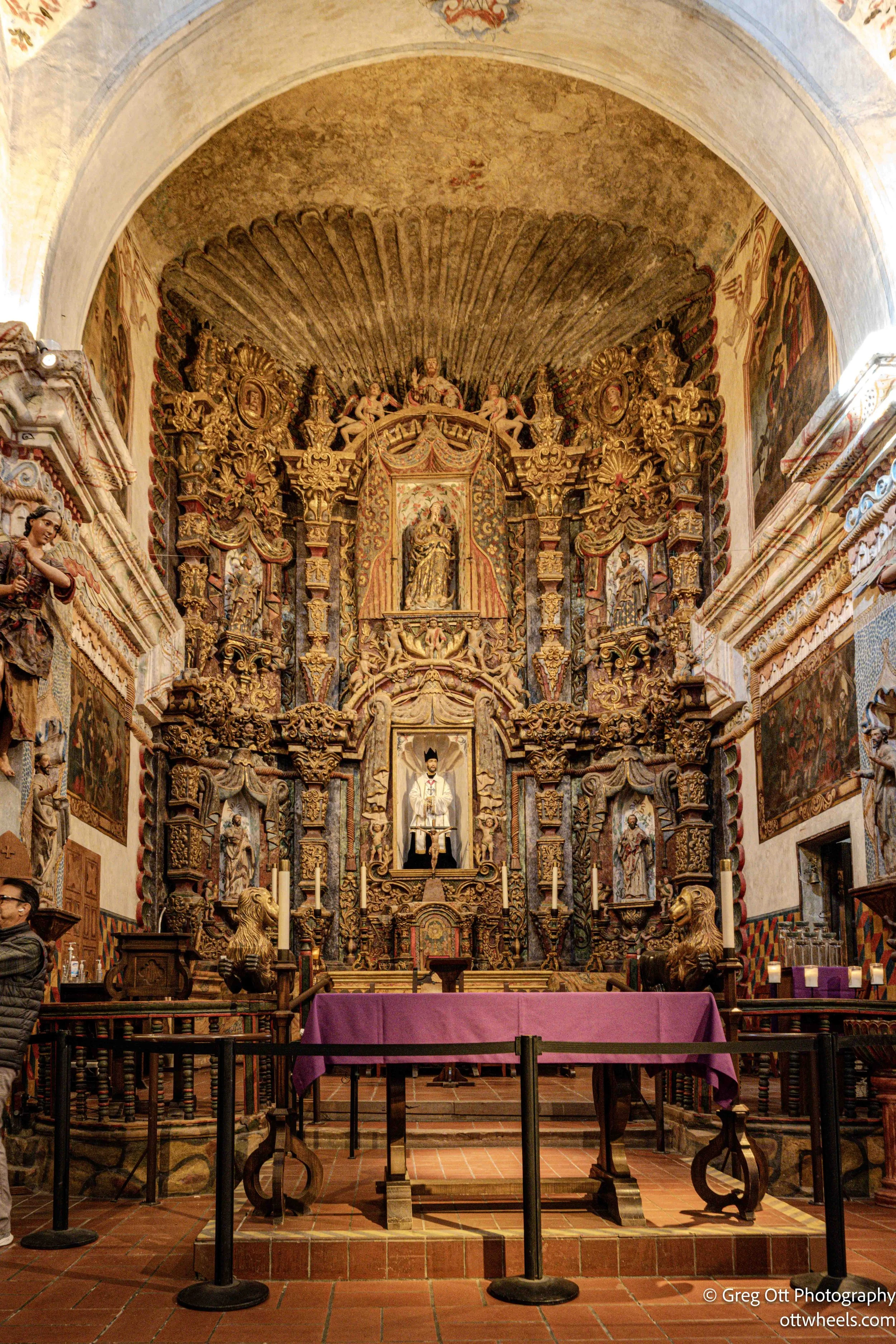
The interior is what truly stops you. Baroque altars climb toward the ceiling, covered in carved wood and painted plaster. Saints look down from niches. Murals and decorative details from more than two centuries ago still cover the walls. Spanish religious design, Indigenous craftsmanship, and desert isolation all meet in one room. It’s often called the “White Dove of the Desert,” and sitting there, you understand why the name stuck.

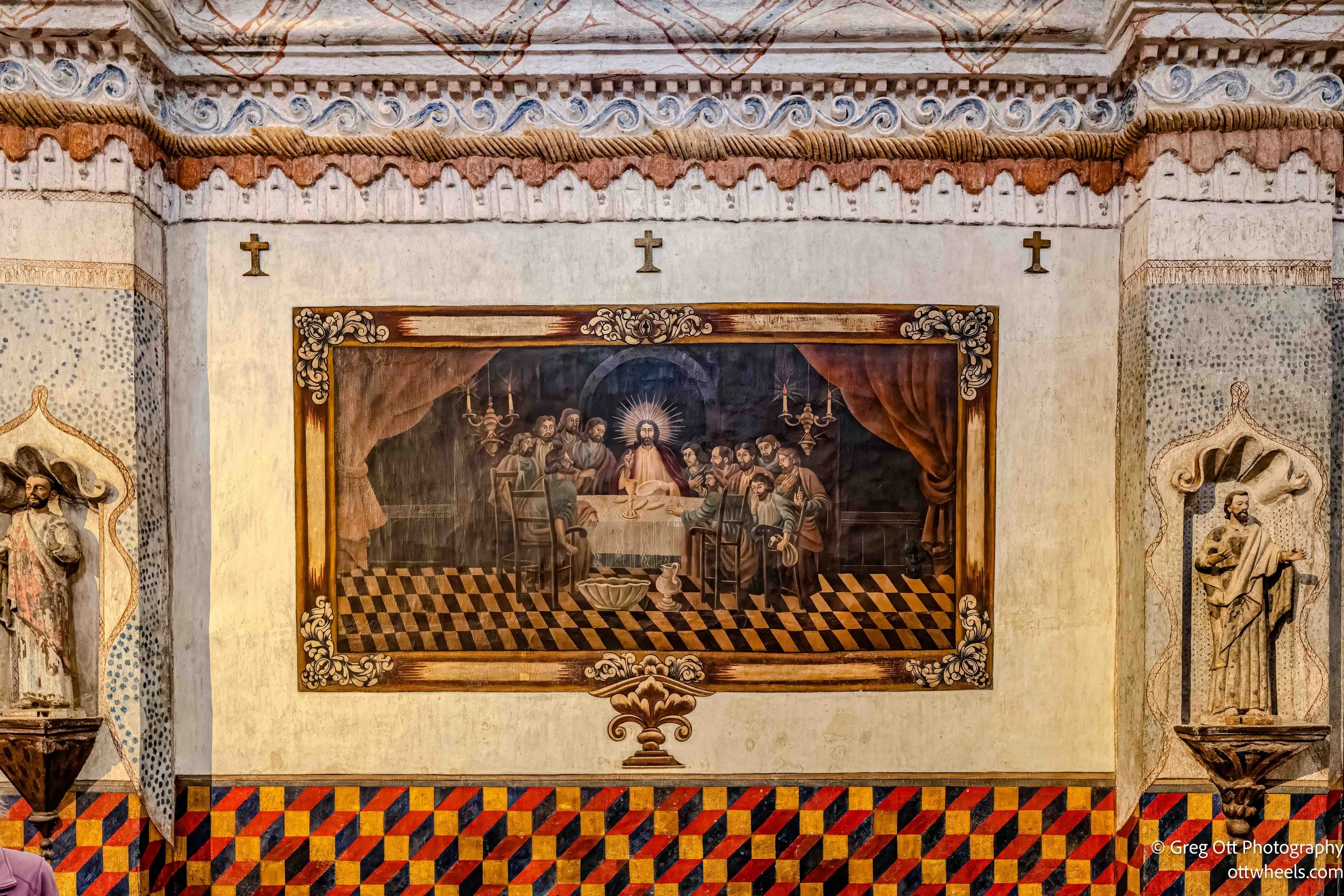
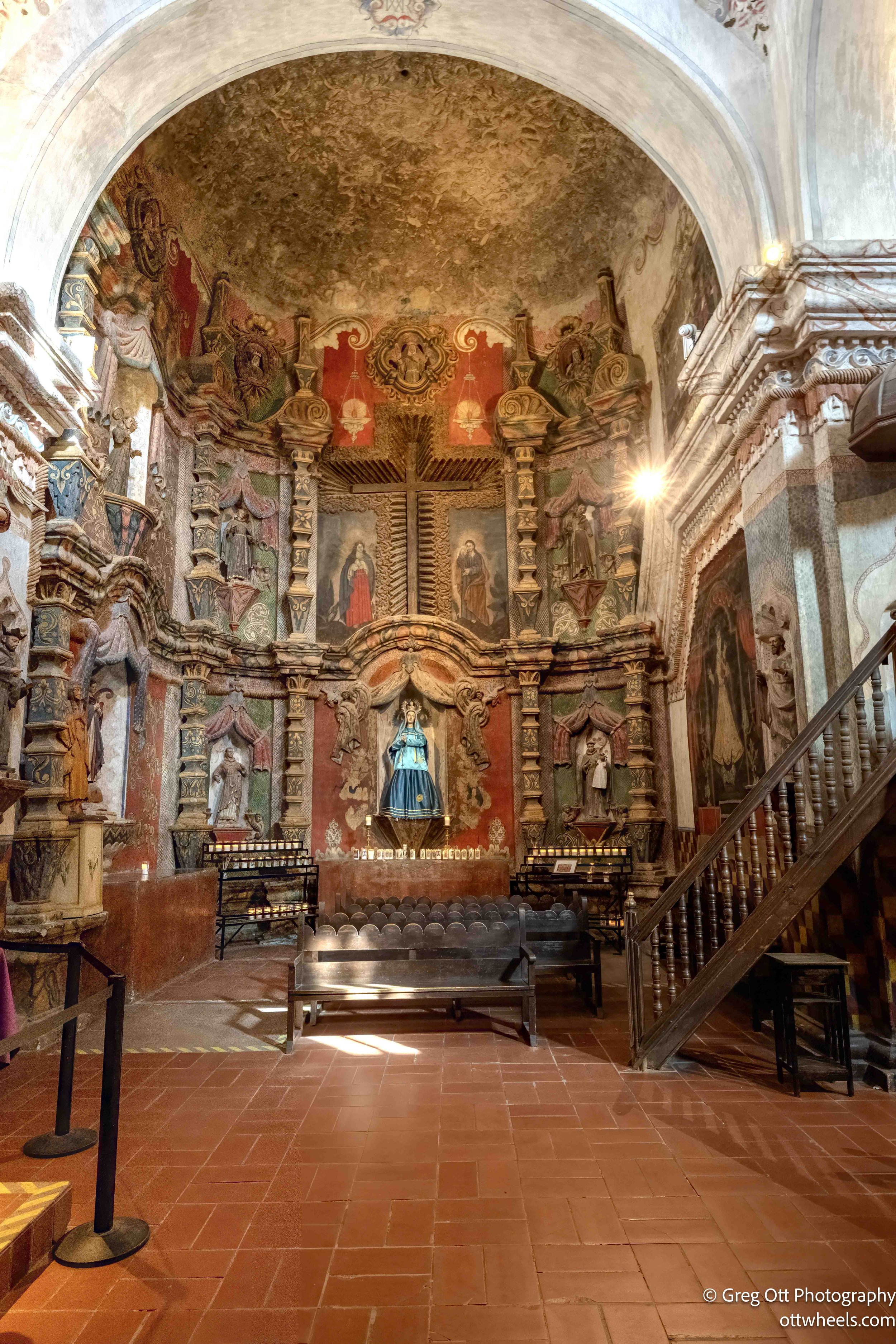
I eventually began taking photos, but even that felt secondary. I would shoot a few frames, lower the camera, and sit again. Some places are about capturing images. Others are about absorbing them.
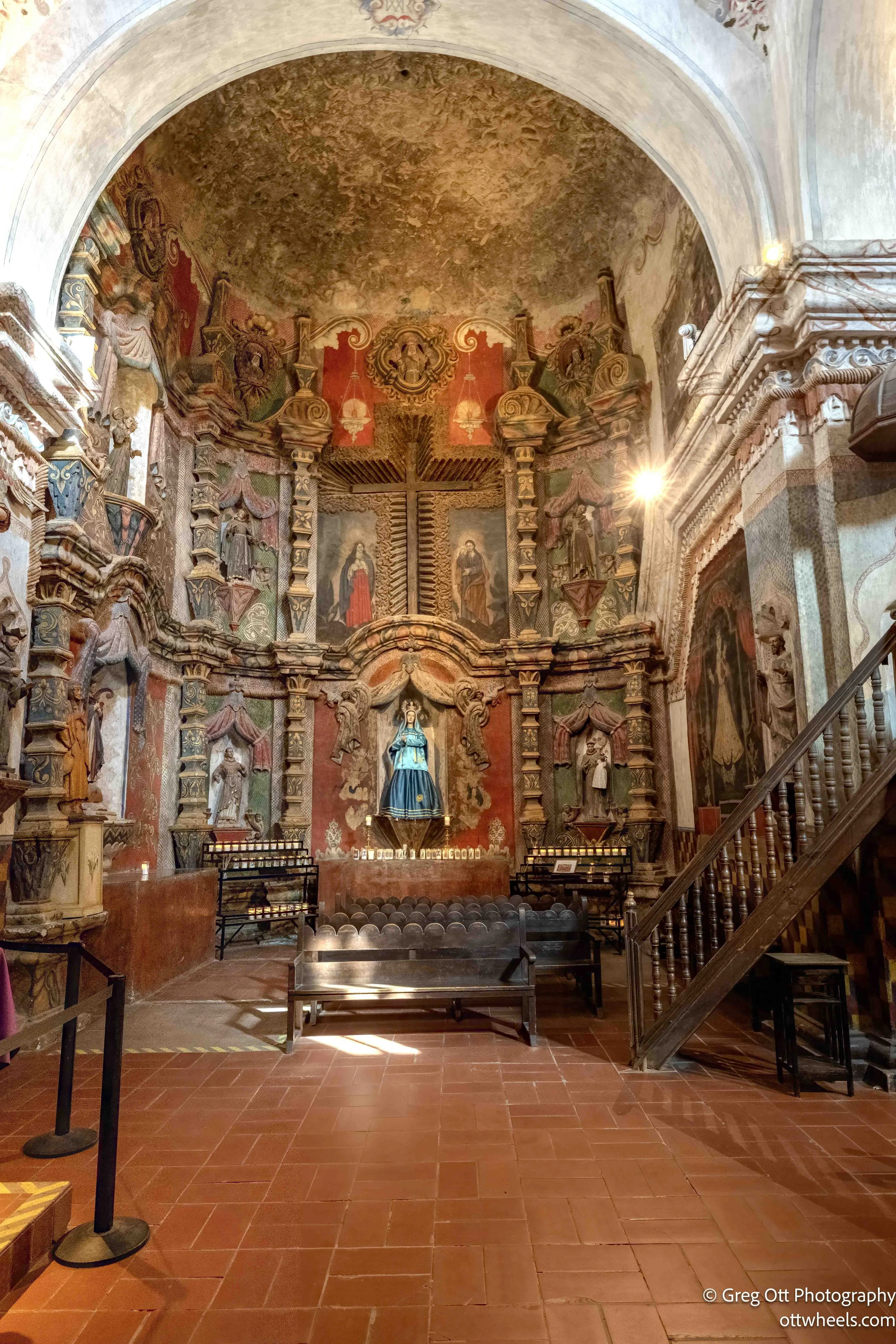
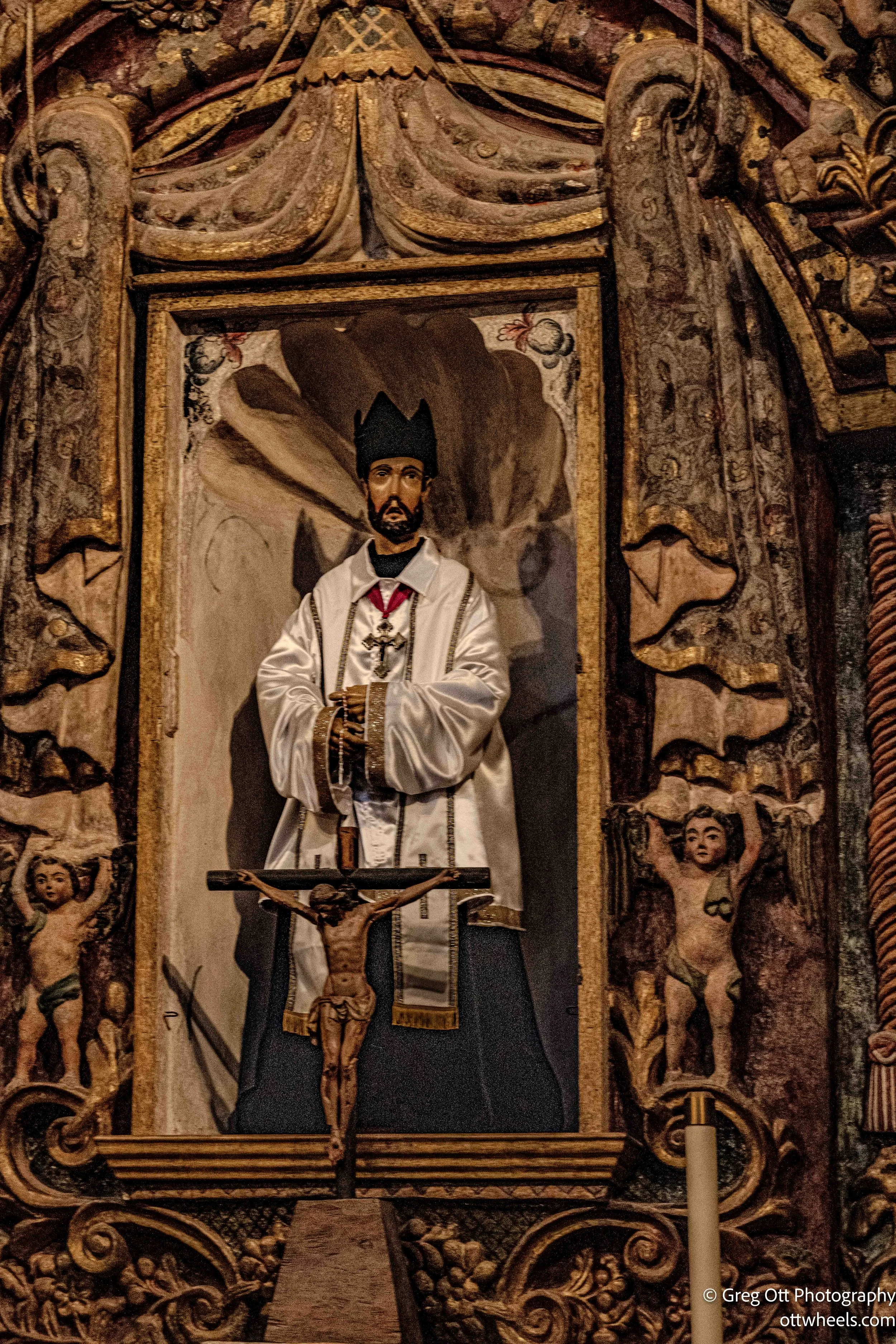
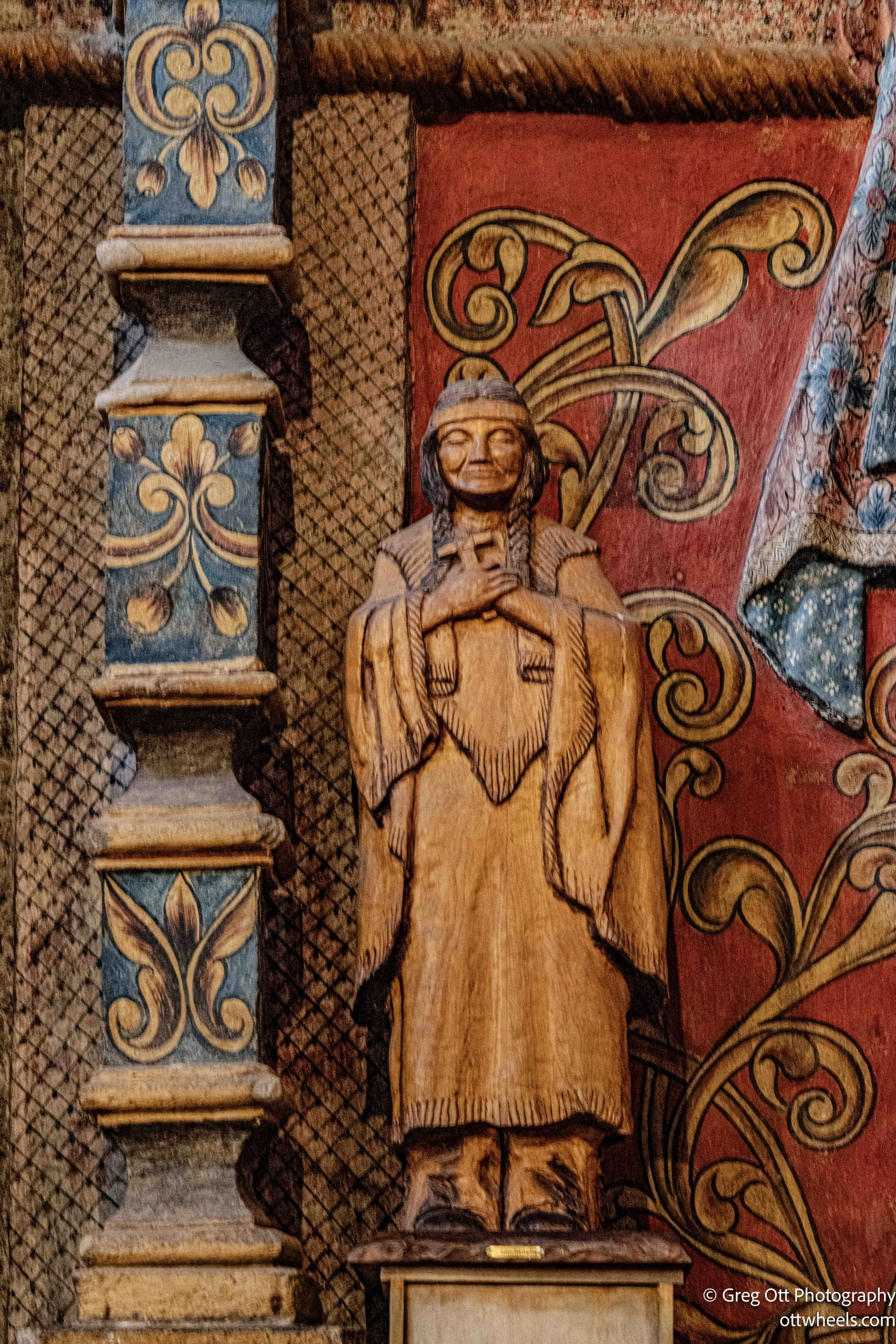
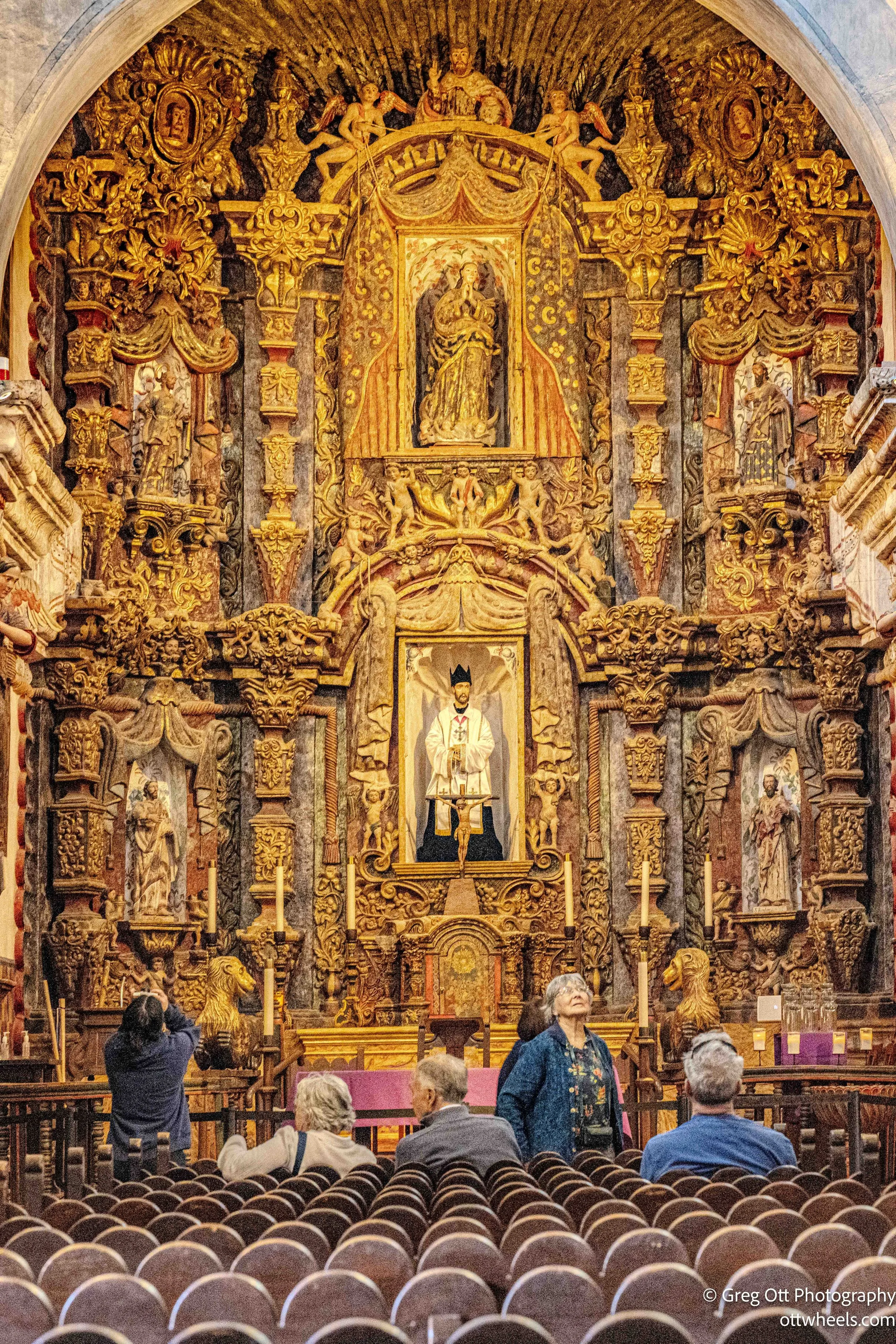
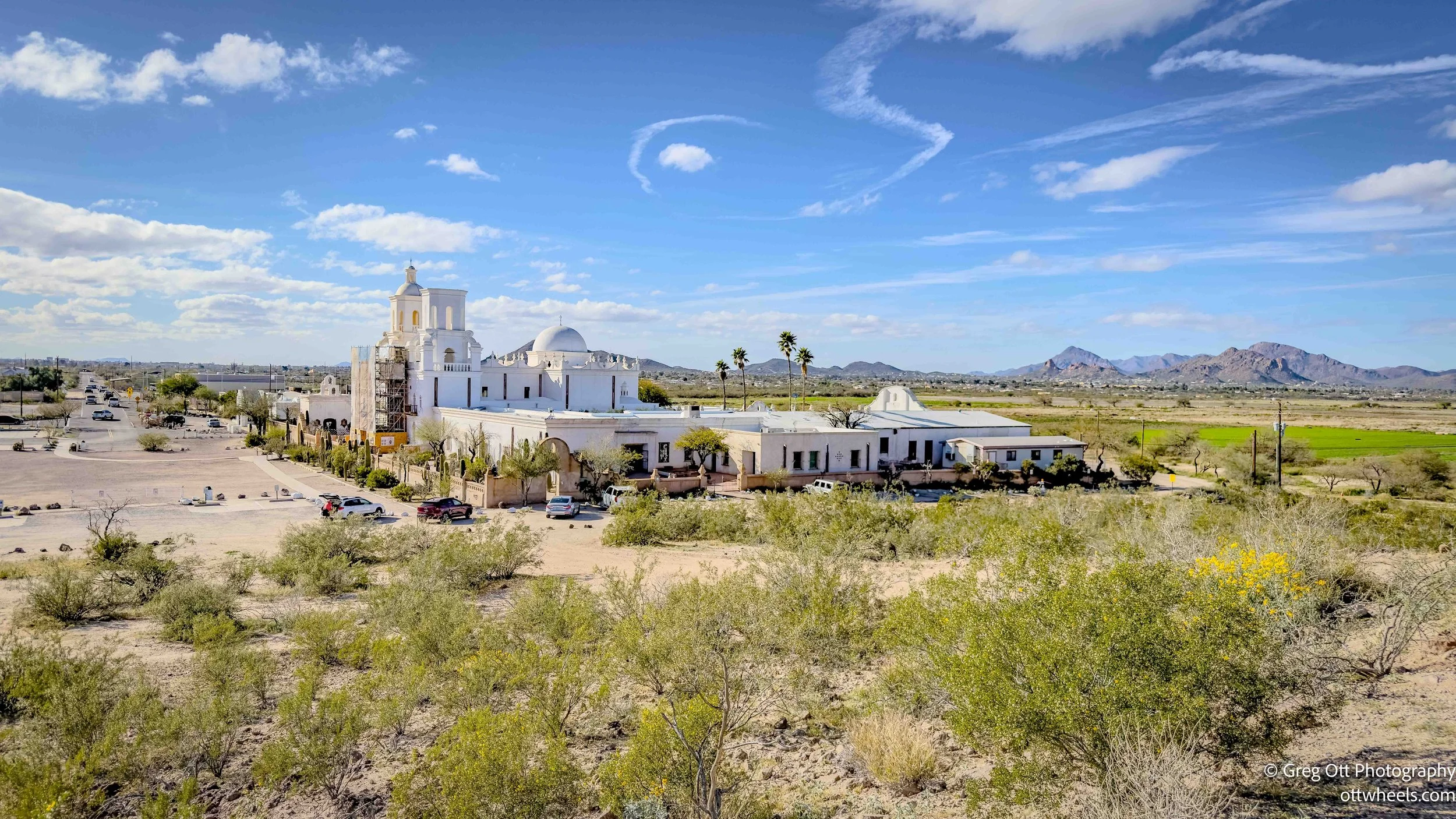
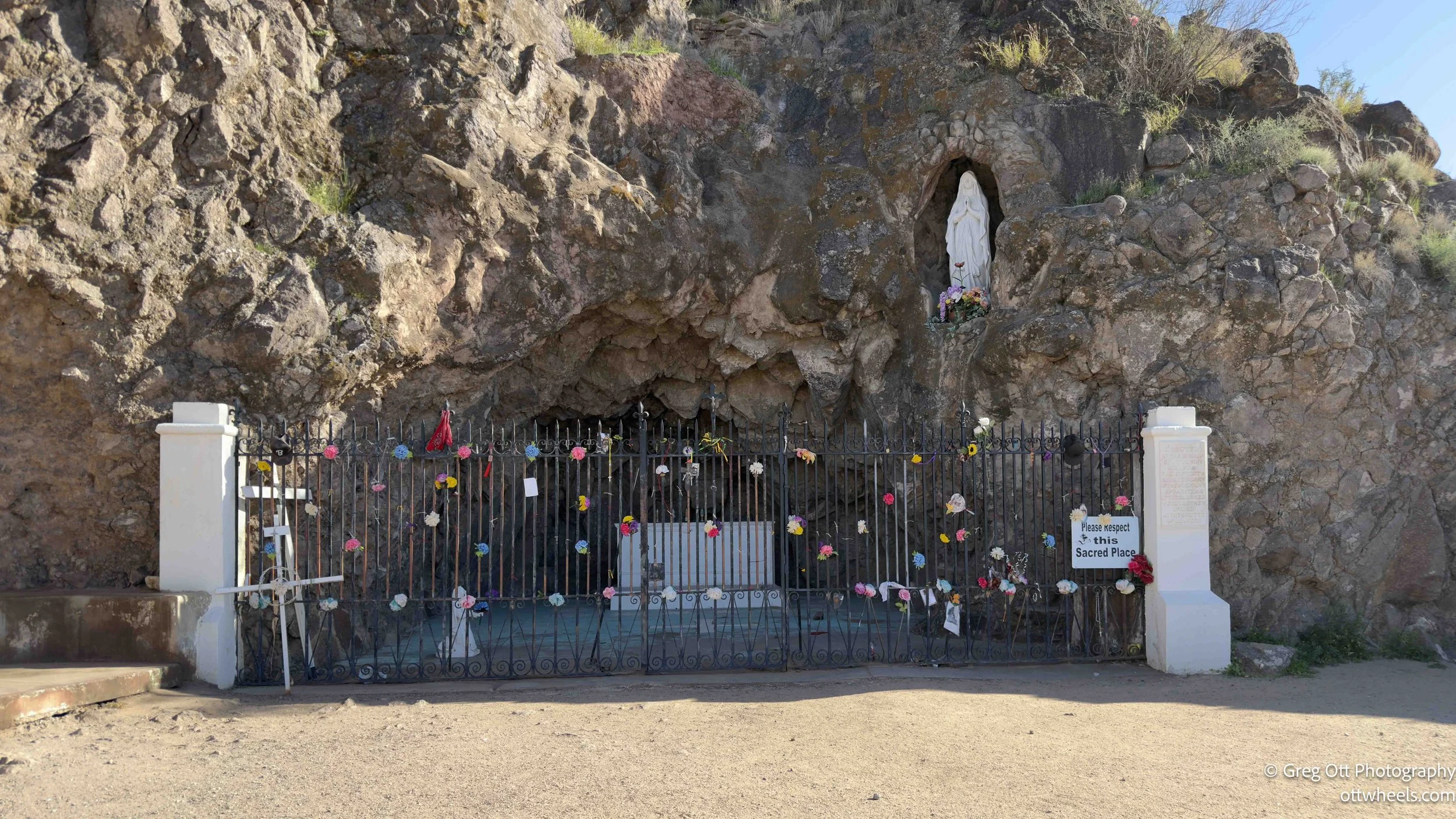
Outside, I walked the perimeter of the grounds. The landscaping is simple and carefully maintained — desert plants, gravel paths, open space that lets the church remain the focal point. To the east, a small hill rises beside the mission, topped with a large white cross. I climbed the short, rocky path. From the top, the view opens up: twin towers, white façade, scaffolding, and beyond that the flat stretch of the Tohono O’odham Nation with mountains on the horizon. A small shrine and devotional markers sit near the cross, quiet reminders that this is not just a historic structure. It’s still alive in its purpose.
Standing up there, looking down at a centuries-old church planted in the middle of the desert, it’s hard not to think about endurance — plaster cracking and being repaired, paint fading and restored, generations passing through.
As I drove away, the road curved and a large cemetery appeared on my right. It sits close to the mission, separated by little more than open ground and a low fence. Signs requested that no photos be taken. That alone changed my posture. The white grave markers stood in rows, bright against the soil. Many were decorated with flowers, ribbons, small statues, splashes of color that caught the late afternoon light. It didn’t feel curated. It felt personal.
I pulled over but stayed in the van. A woman arrived shortly after, parked, and walked with purpose to a site farther out. She carried flowers and a small bag. No hesitation. No performance. She knelt, arranged the flowers, adjusted a few ornaments, and remained there quietly. I didn’t touch the camera. I just sat. Thirty minutes passed. The desert has a way of amplifying stillness. Grief and memory don’t need volume out there.
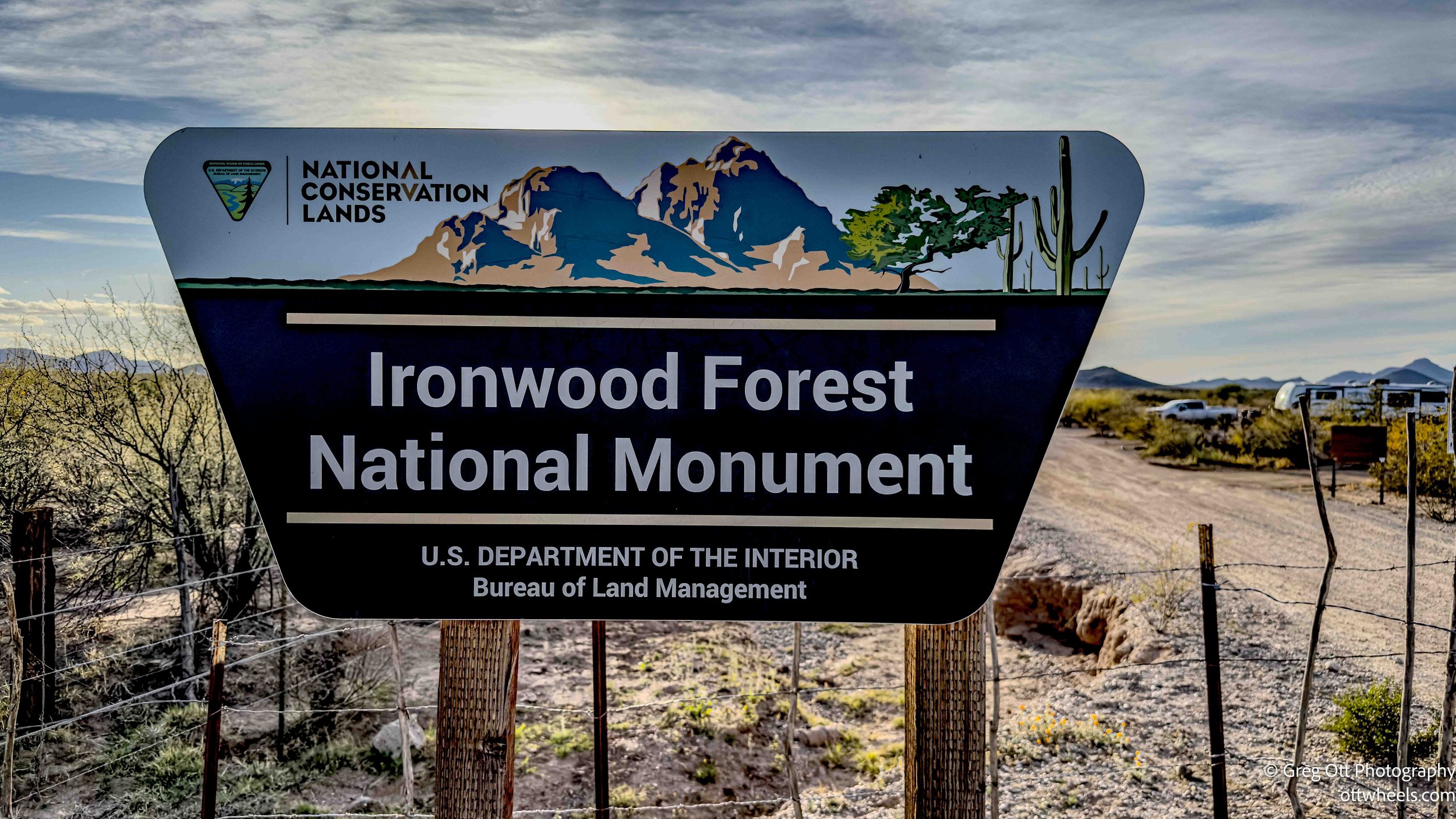
By the time I left, it was nearing five. I needed a place to land for the night and headed toward Ironwood Forest National Monument. A section of BLM land there is set aside for dispersed camping. No facilities. No toilets. Just open ground where you can park legally and quietly. Five RVs were already spaced across the area when I arrived, each one keeping a respectful distance from the others.
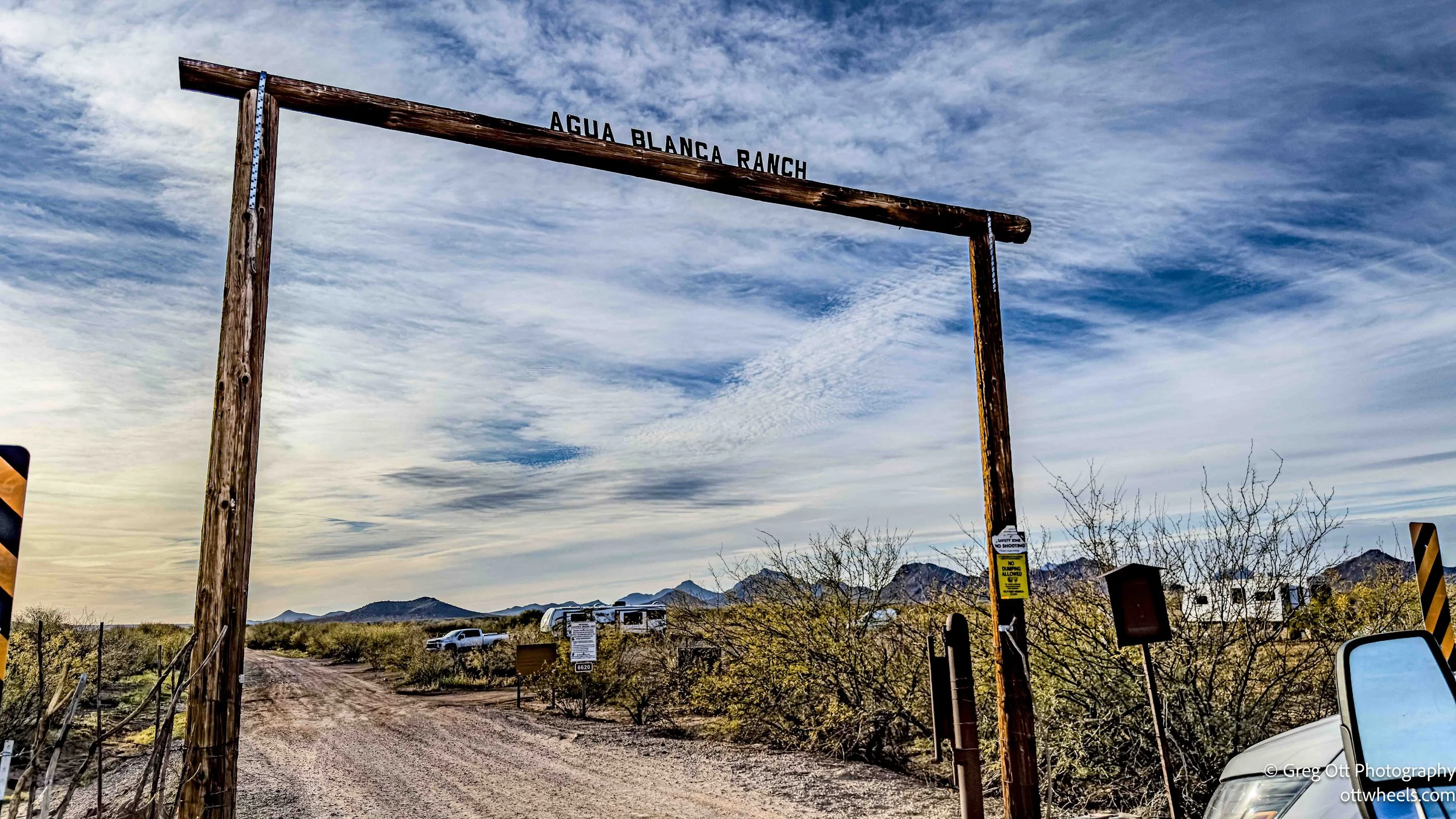
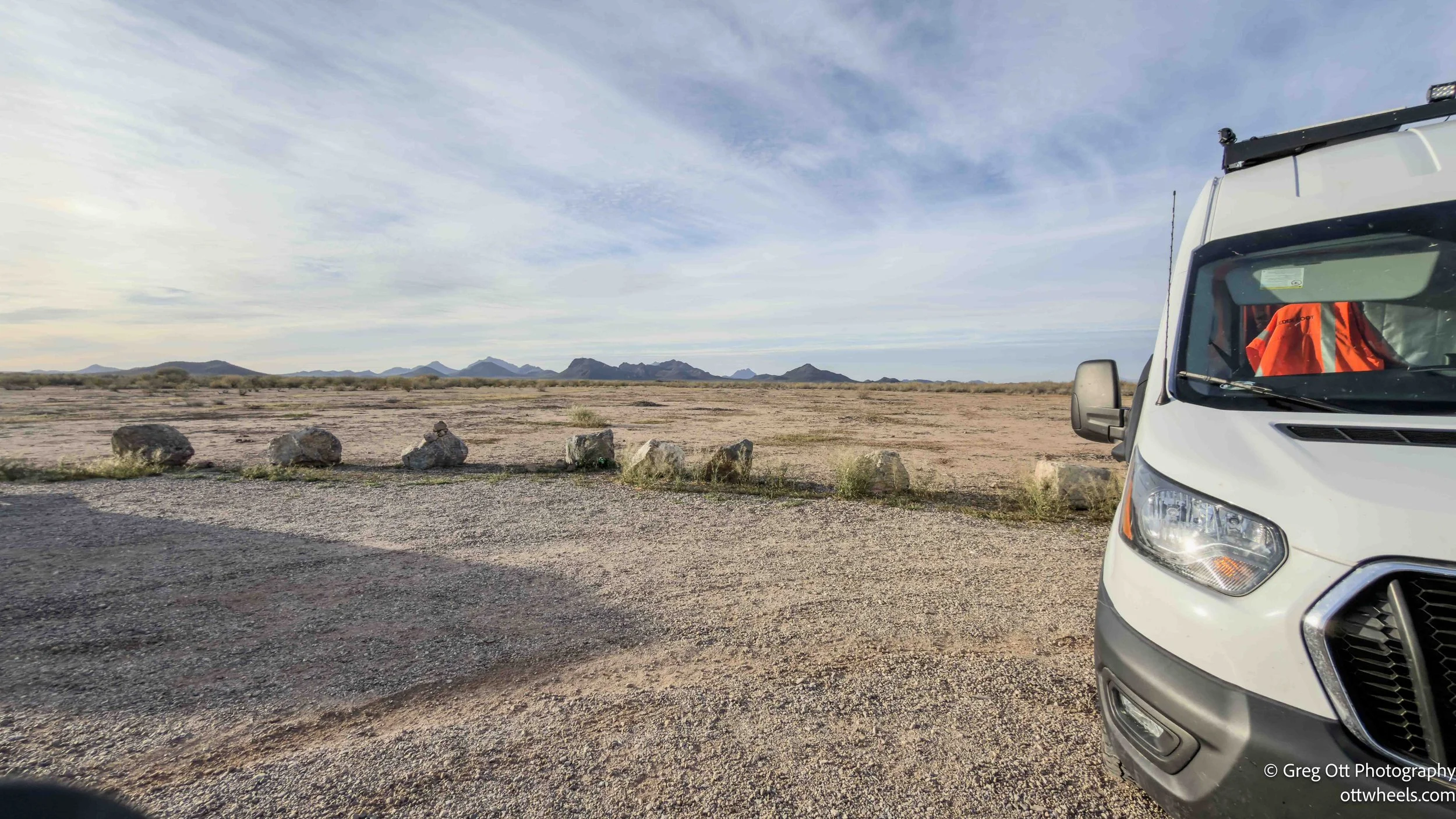
I found a level patch with the sun angled toward the side of the van and opened the sliding door. The late light poured in. It was absolutely quiet — the kind of quiet that isn’t dramatic, just natural. Occasionally a vehicle passed on the dirt road, the sound rising and fading. Birds called in the distance.
I made dinner without rushing. Read for a while. Did some writing. No generators humming. No campground chatter. Just open desert and space to think. By ten p.m., I was in bed.
Mission walls that have stood for more than two centuries. A cemetery still active with memory. And a patch of desert ground where I could park for the night. That was the day. And that was enough.