Bisbee, AZ
I woke up in a pull-off on BLM land around 7:30 a.m. The desert had been quiet most of the night, except for one strange interruption around 10 p.m. when someone pulled in on the dirt road leading into the open desert. He stepped out of his Jeep, left both doors open with music blaring, and just stood there staring into the darkness for about 15 minutes. I couldn’t tell what he was looking at. Maybe nothing. Eventually he climbed back in, turned around, and drove away. There was one other camper nearby — a trailer without a tow vehicle — and sometime during the night an old red Pontiac must have rolled in. I never heard it arrive. By morning, everything felt still again, like nothing unusual had happened.
I noticed there was a Starbucks just south of Bisbee and headed in that direction. The drive took me through Tombstone. On a Sunday morning in February, it felt almost staged in its quiet. Boardwalks empty. Hardly any cars. Most places closed. Tombstone was founded in 1879 after silver was discovered and quickly became one of the richest mining towns in the West. It’s forever tied to the 1881 gunfight involving Wyatt Earp and Doc Holliday — what everyone calls the “Gunfight at the O.K. Corral,” even though it actually took place in a narrow lot nearby and lasted less than a minute. Boot Hill Cemetery is still there. The Bird Cage Theatre still stands. Allen Street still looks like it could host a reenactment at any moment. But that morning there were no crowds, no staged shootouts, just quiet buildings that have outlived the boom that created them.
The Starbucks turned out to be inside a Safeway. I’ve been in grocery-store Starbucks before, but this was the smallest one I’ve ever seen, maybe 15 by 10 feet. No seating to speak of. My skepticism about there being a real Starbucks in Bisbee was warranted.
With caffeine handled, I made my way toward the Lavender Pit before driving fully into town.
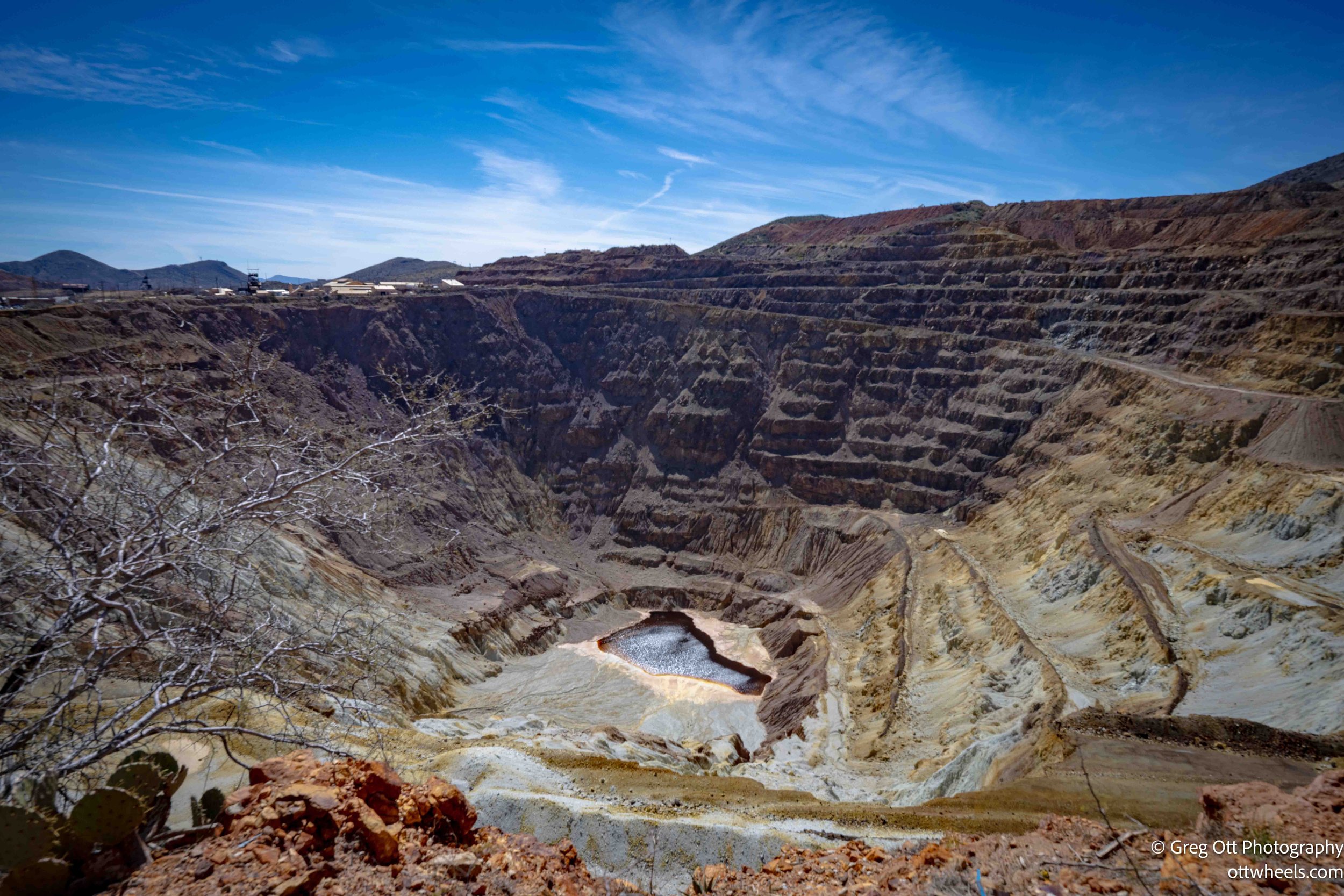
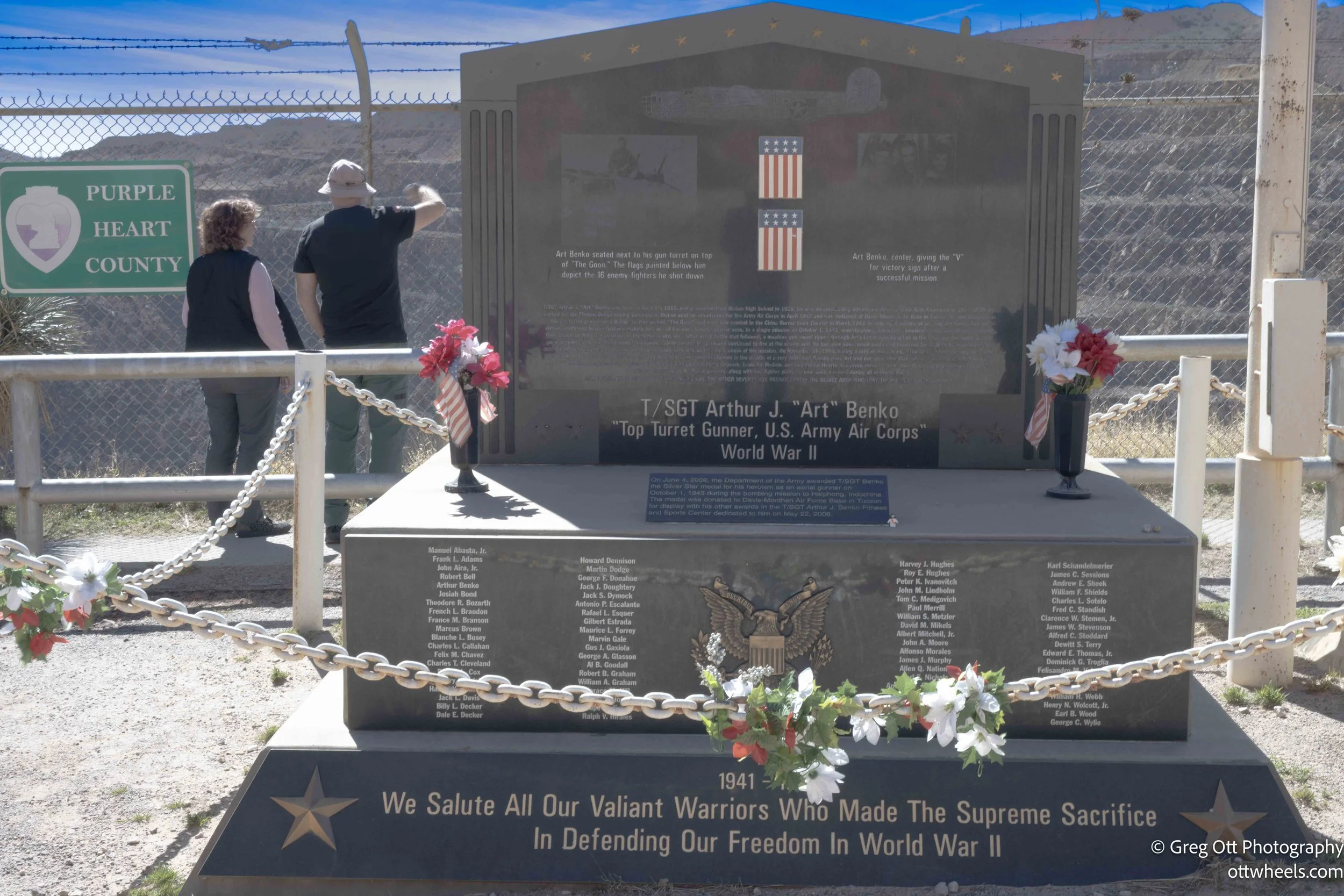
The Lavender Pit doesn’t ease into view. It just opens up in front of you — an enormous terraced excavation carved into the hillside. Mining in Bisbee began underground in the 1880s, but in 1950 Phelps Dodge shifted to open-pit mining here. The pit was named after Harrison M. Lavender, a mining executive, not the flower. At its height, this operation produced copper along with gold, silver, lead, and zinc. The pit eventually stretched roughly 4,000 feet across and more than 800 feet deep. Entire sections of mountain were removed. Bisbee exists because of what came out of that earth. When the economics changed in the mid-1970s, operations shut down. Standing at the edge looking down, you can feel the scale of what was taken — the geometry of industry cut into natural rock.
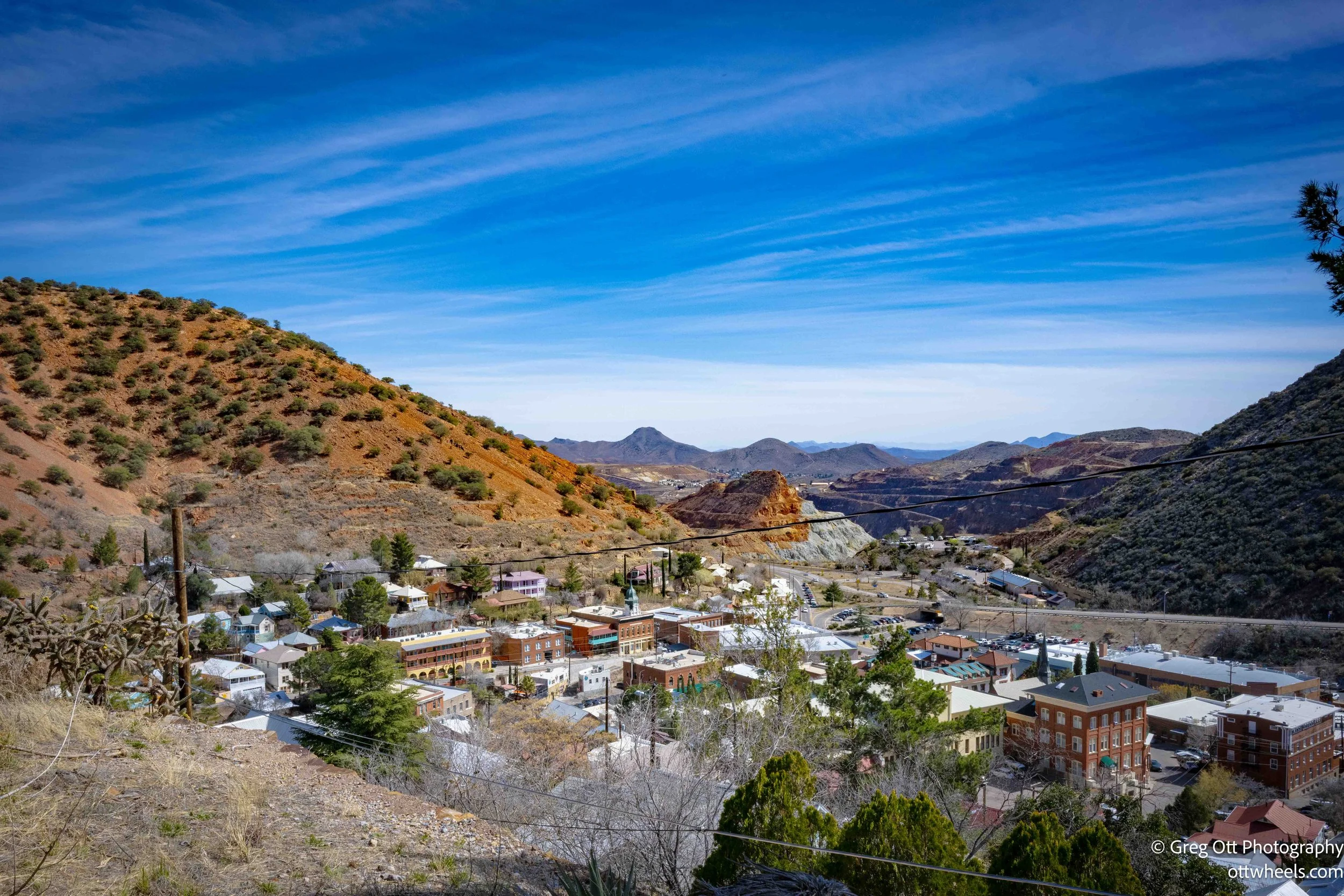
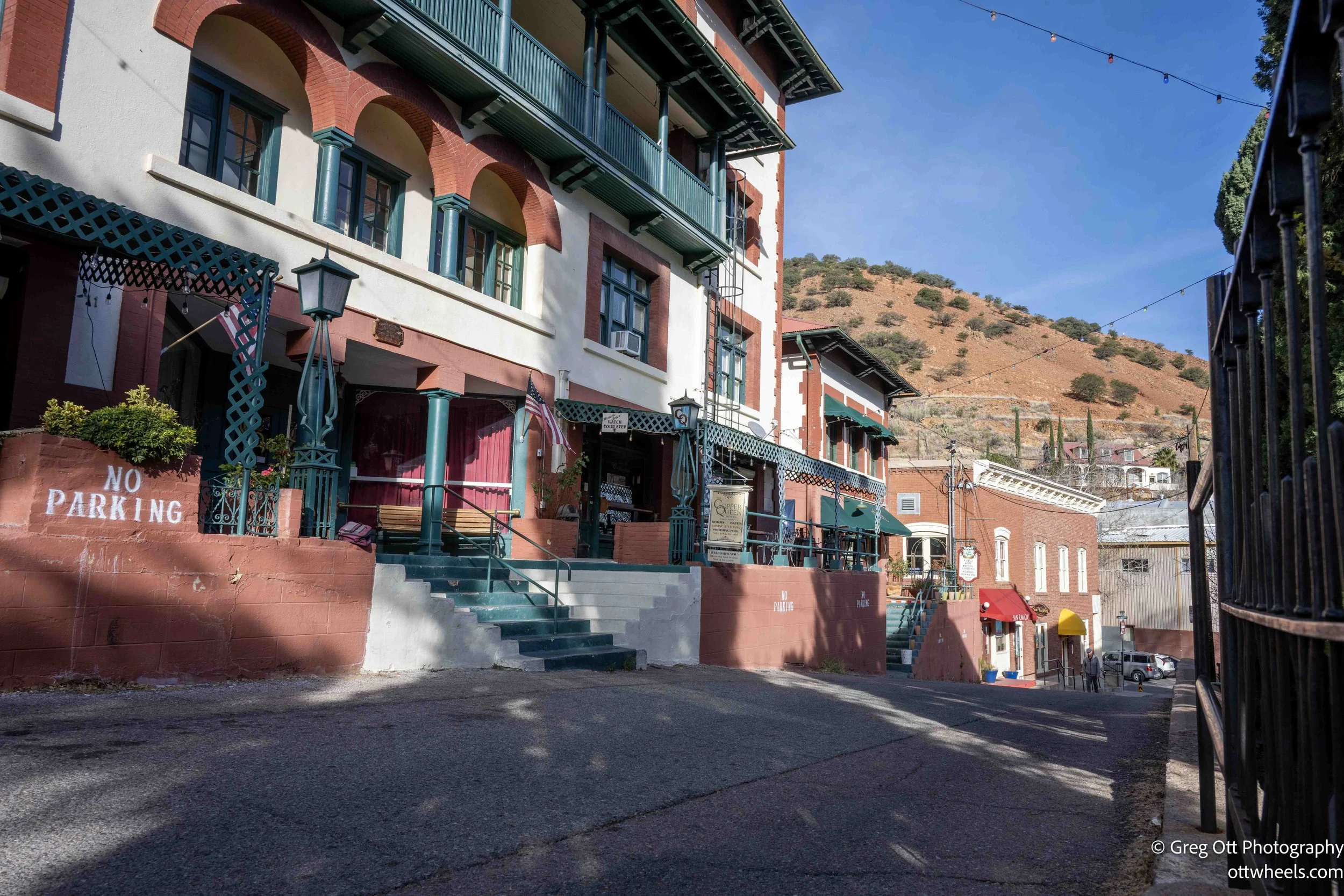
From there I drove into Bisbee itself. The streets narrow quickly and begin winding upward. The town is built into the side of the Mule Mountains, houses stacked and layered as if they were added whenever someone found a ledge wide enough to build on. It doesn’t feel planned so much as accumulated.
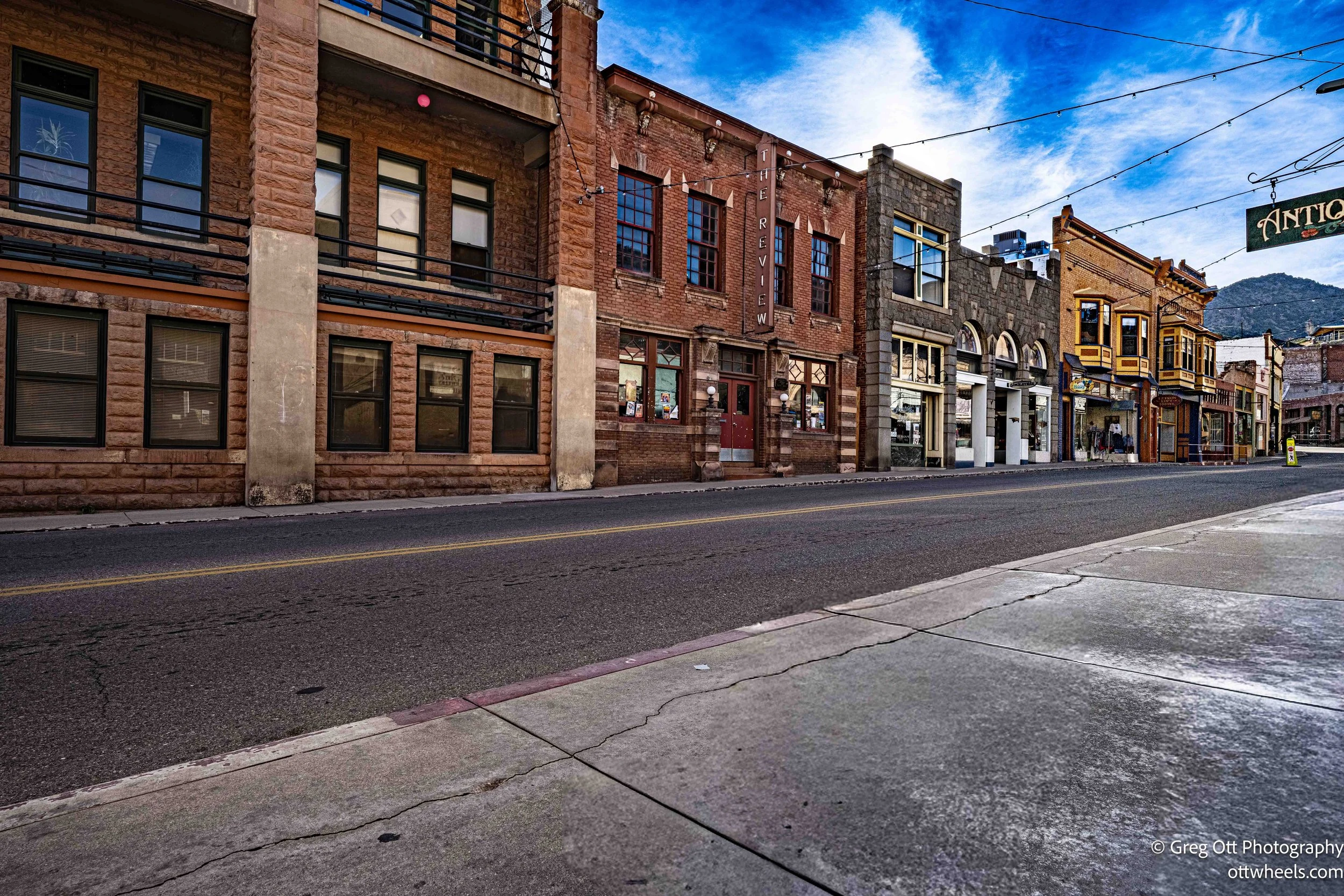
Bisbee began in 1877 when mineral-rich rock was discovered in these hills, and the Copper Queen Mine was established soon after. The town was named after Judge DeWitt Bisbee, a financier who backed the operation. What started as a rough mining camp quickly became one of the richest copper districts in the world. By the early 1900s, Bisbee had grown to more than 20,000 people. It had electric streetcars, banks, theaters, saloons, and immigrants arriving from Mexico and Europe to work underground. The canyon floor filled with industry, so homes climbed the hillsides wherever there was room. Fires destroyed parts of town more than once, and many of the rebuilt structures went up in brick, some of which still stand today.
There’s a harder chapter woven into that growth. In 1917, during a labor strike, more than 1,000 miners — many of them immigrants — were rounded up at gunpoint and deported to New Mexico in what became known as the Bisbee Deportation. Mining continued for decades after that, eventually shifting from underground shafts to large-scale open-pit operations like the Lavender Pit. When copper prices fell and the economics changed in the mid-1970s, the mines shut down and the population dropped sharply.
What remained were the buildings, the staircases, and a town built vertically out of necessity. Over time, artists, musicians, and people looking for something different moved in. Old storefronts became galleries and cafés. The infrastructure of a boomtown slowly turned into something more eclectic. Driving in now, you can feel all of it layered together — industrial ambition, labor conflict, collapse, and reinvention — stacked on the mountainside just like the houses themselves.
I found parking near Tombstone Canyon Road in the central part of town. I had passed a paid lot at the entrance that was about half full, but the street parking looked free, so I took a spot there and ended up leaving the van for about 10 hours without any issue. From there I just started wandering — up narrow streets, along staircases, turning corners without much of a plan, trying to get a feel for the place rather than checking things off a list. By noon I had worked my way to Le Cornucopia Café and ordered half a turkey and avocado sandwich with a cup of artichoke soup that had spinach, carrots, chicken, and mozzarella in it. The food was fresh and simple, exactly what I needed after climbing around town. They only had brewed coffee, so I passed on that and headed back out into the streets.
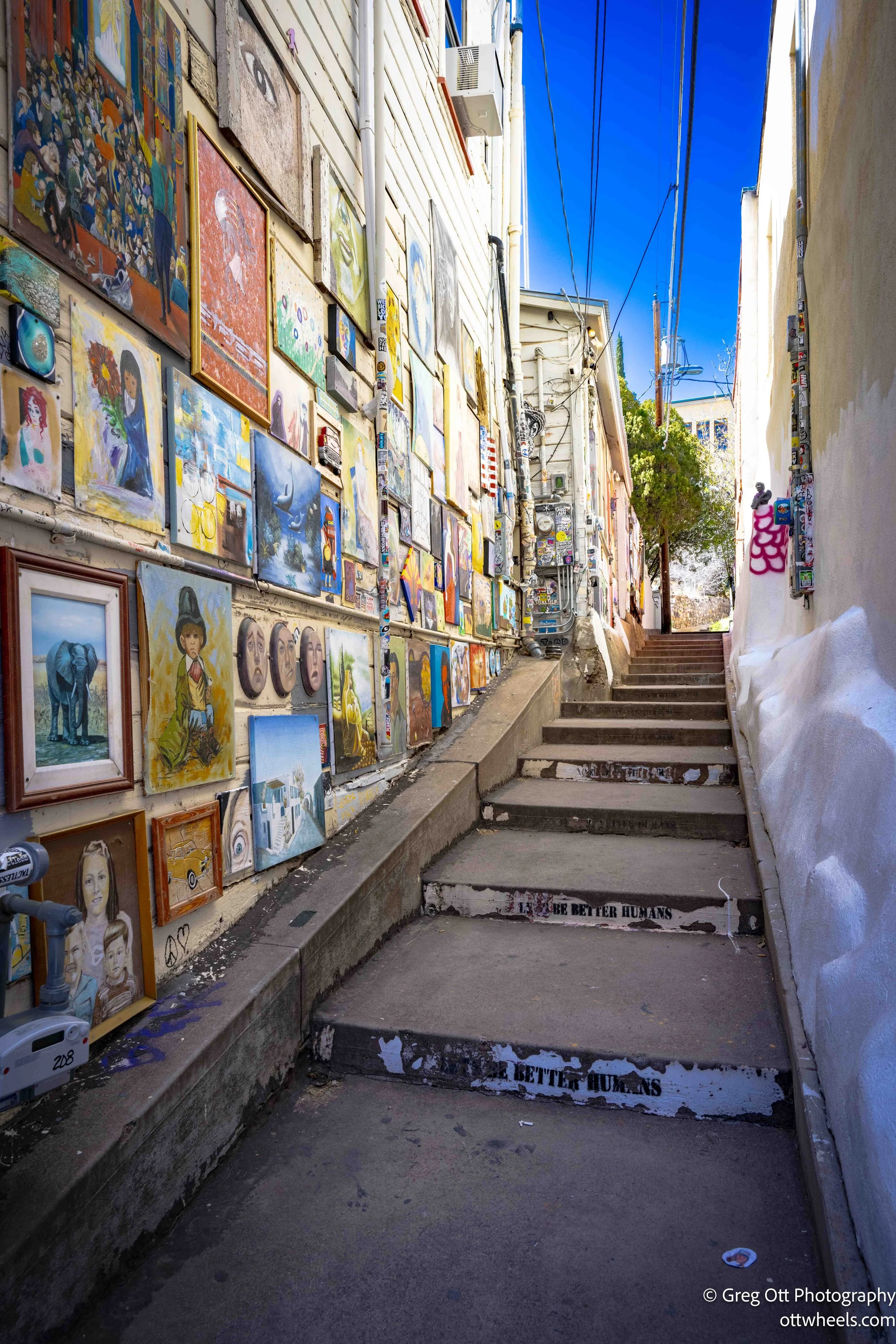

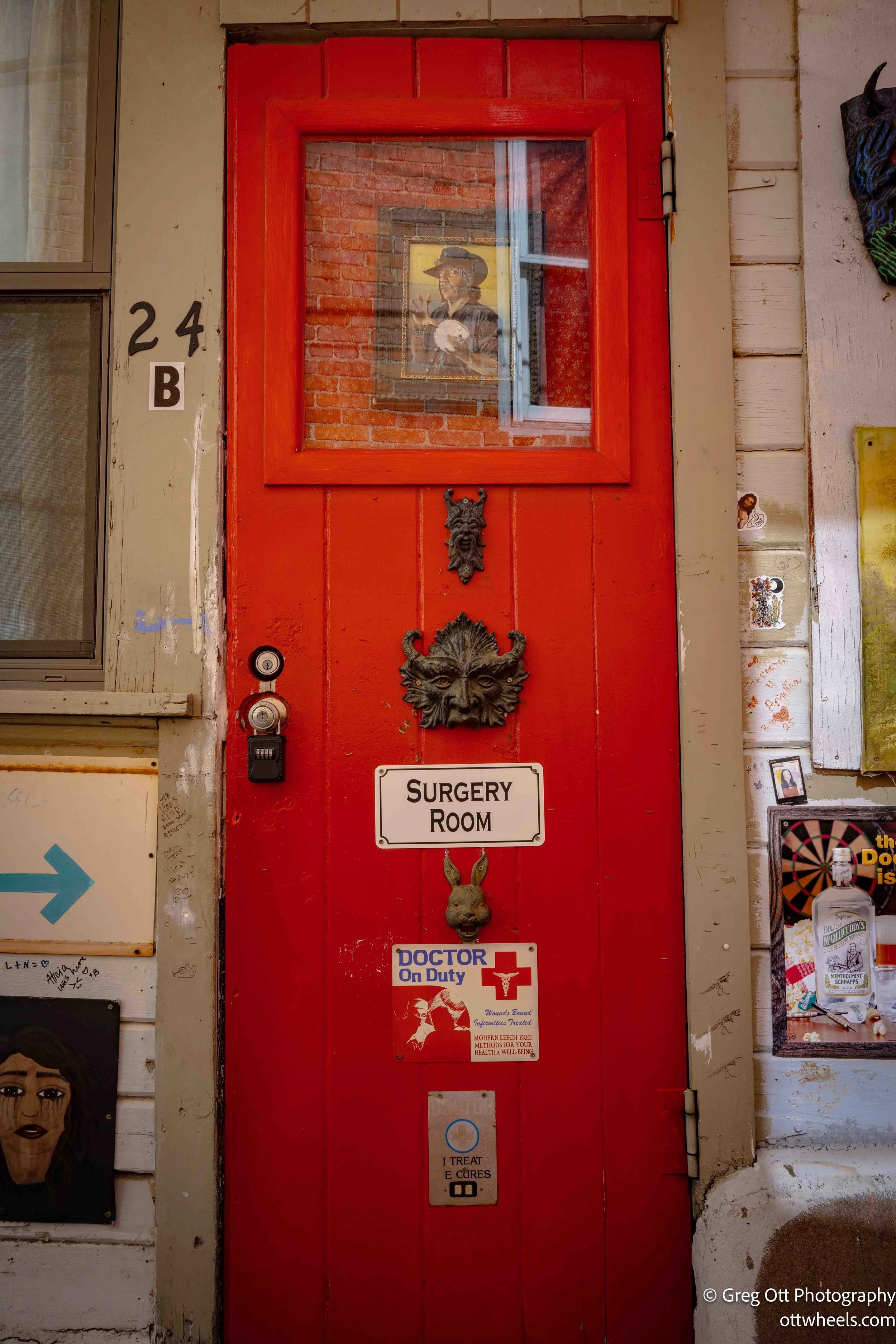
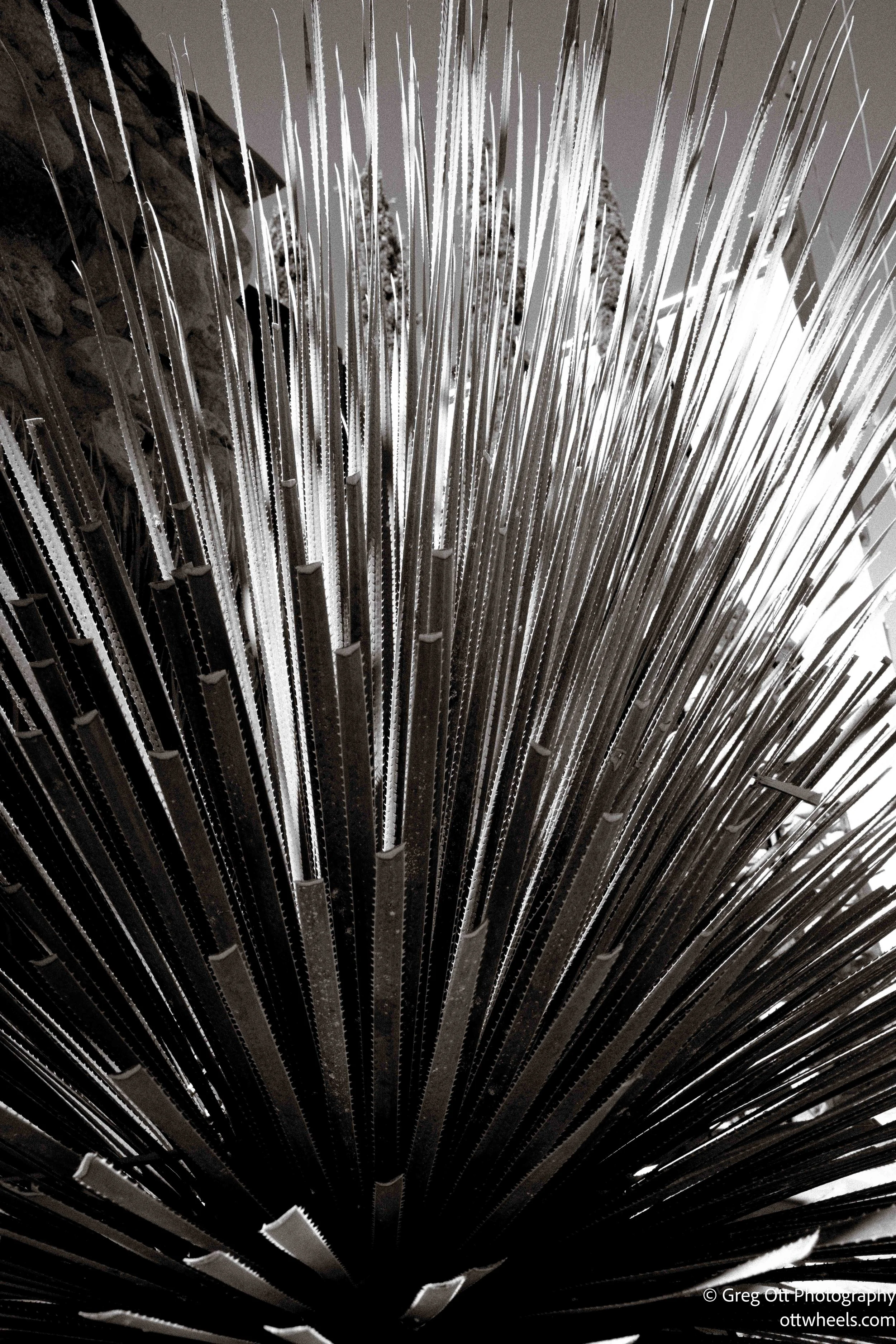
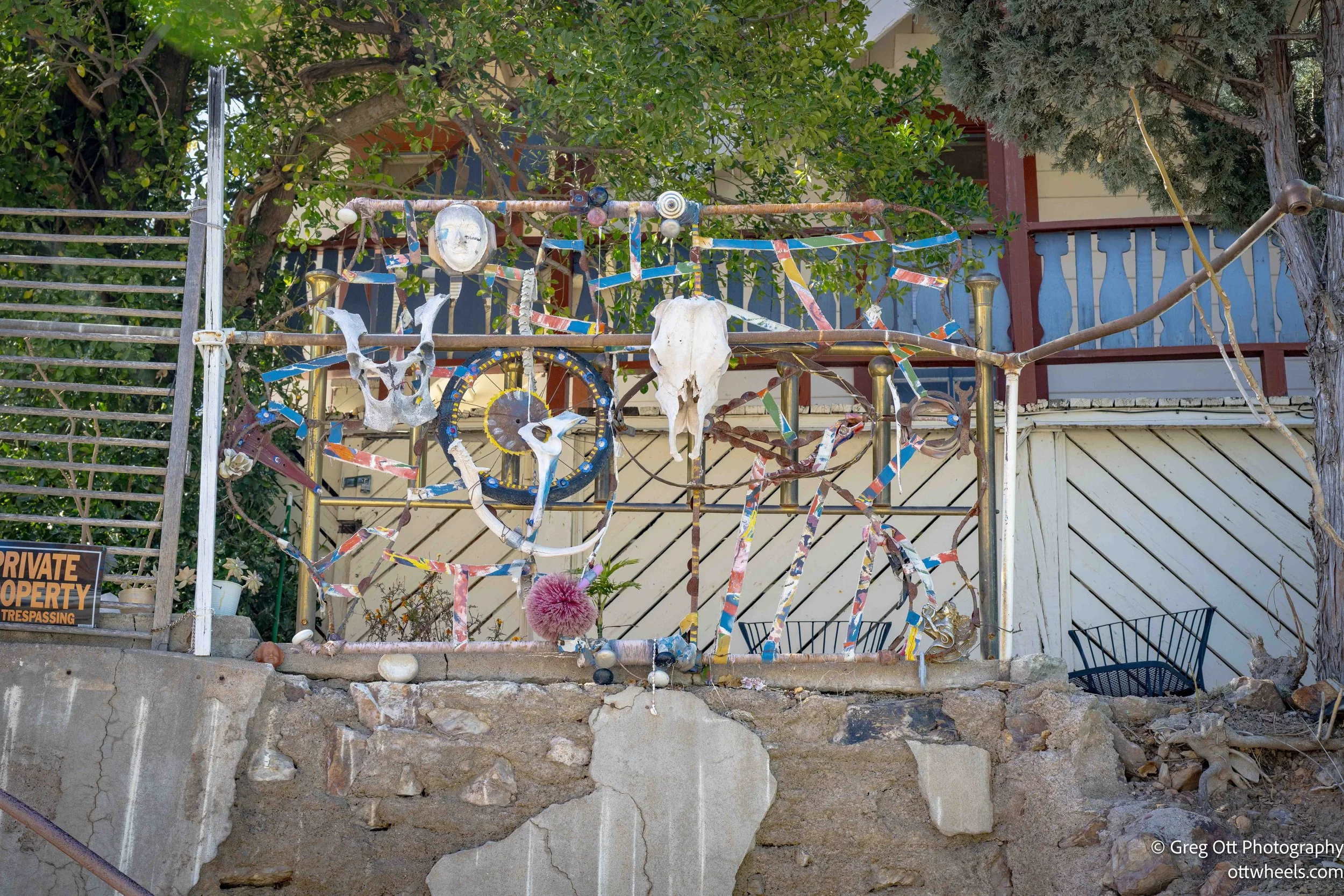
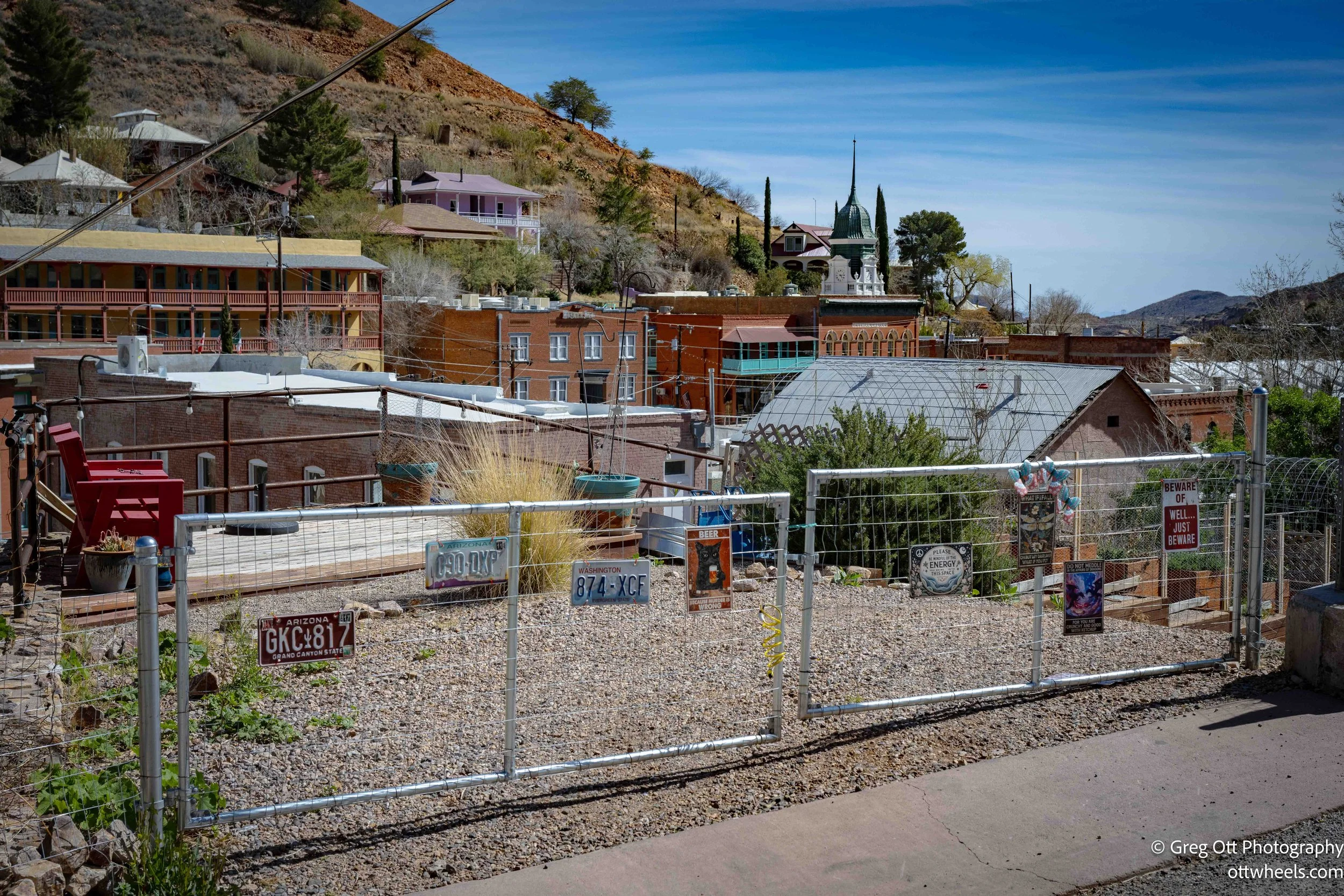
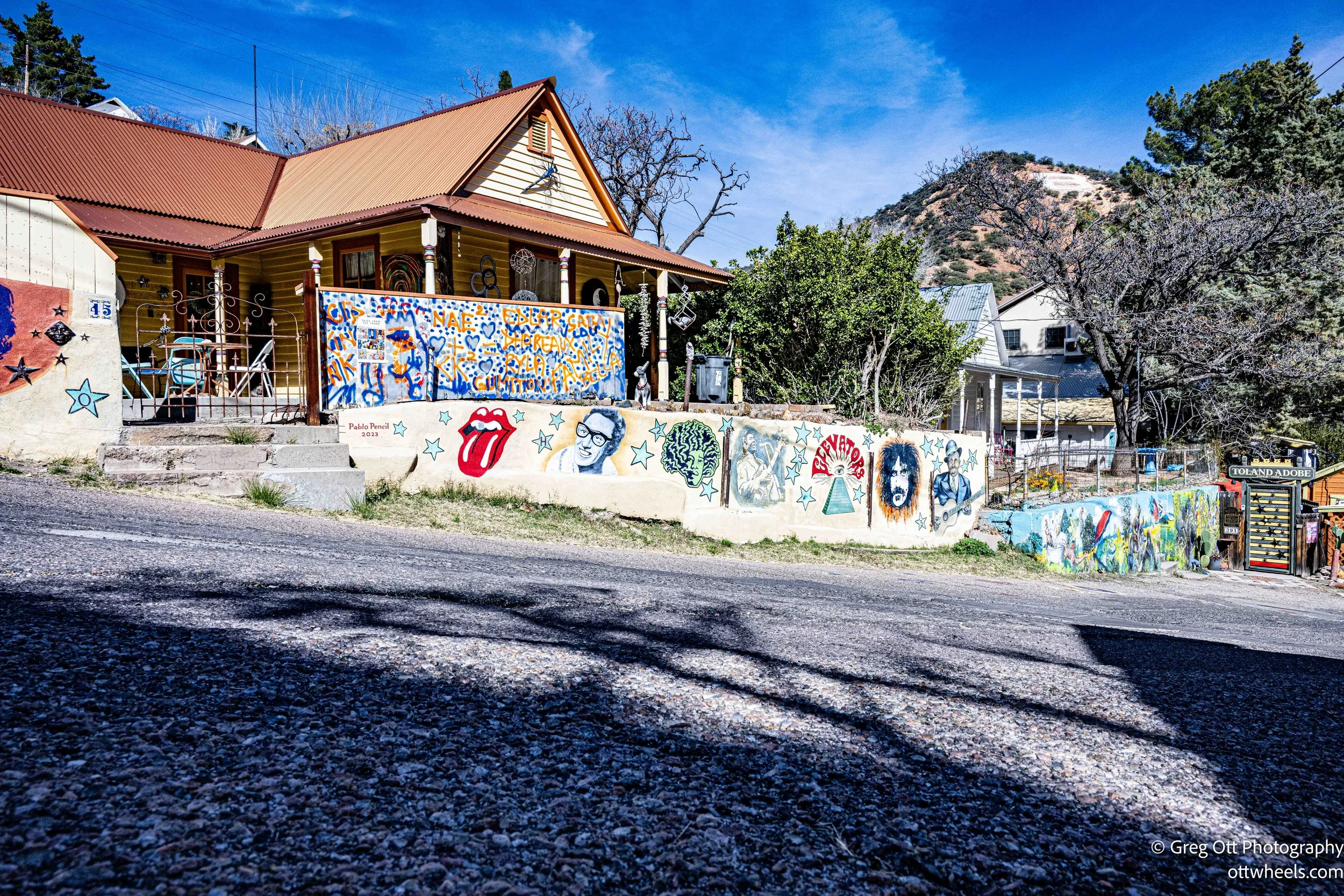
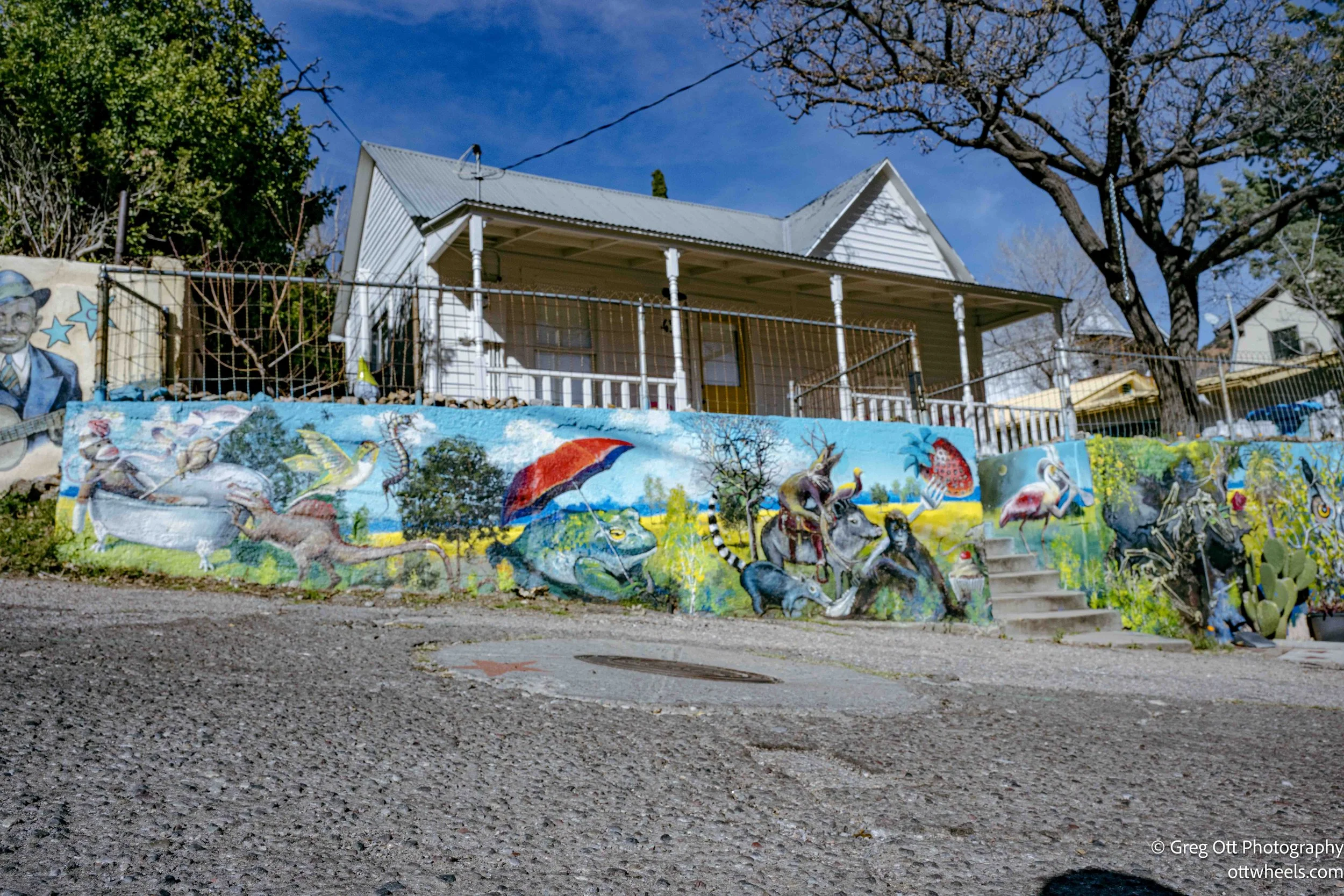
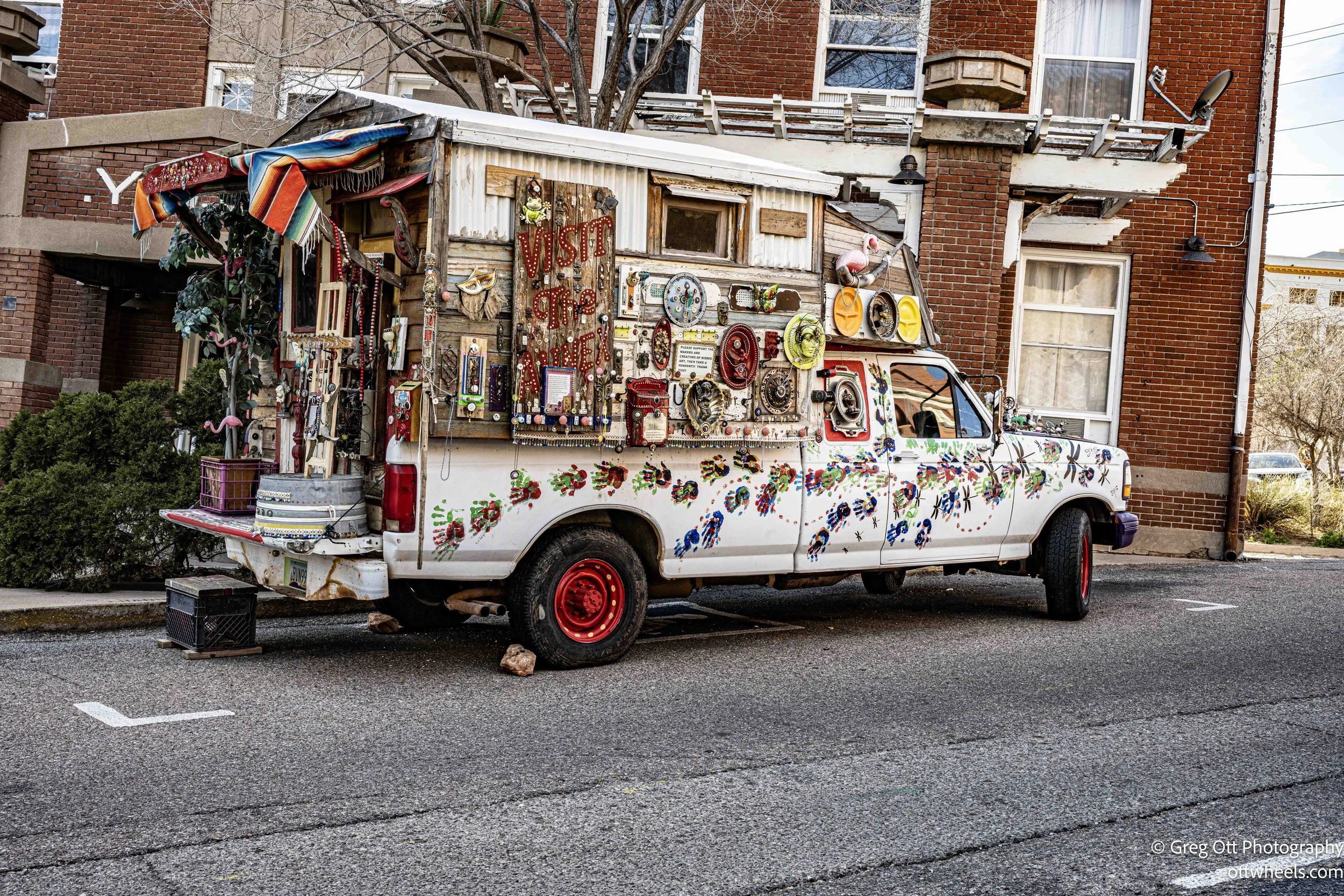
I had read about the steps — Bisbee has more than 1,000 public stairs connecting neighborhoods — but I wasn’t sure exactly where they began. There’s even an annual Bisbee 1000 Stair Climb that uses nine separate staircases as a kind of race through town. I searched Google Maps and started walking toward the first section. I never make it very far in a straight line in places like this. The brightly colored buildings, painted doors, murals, welded metal sculptures on fences — they kept pulling me off course. Every few steps there was something worth stopping for.
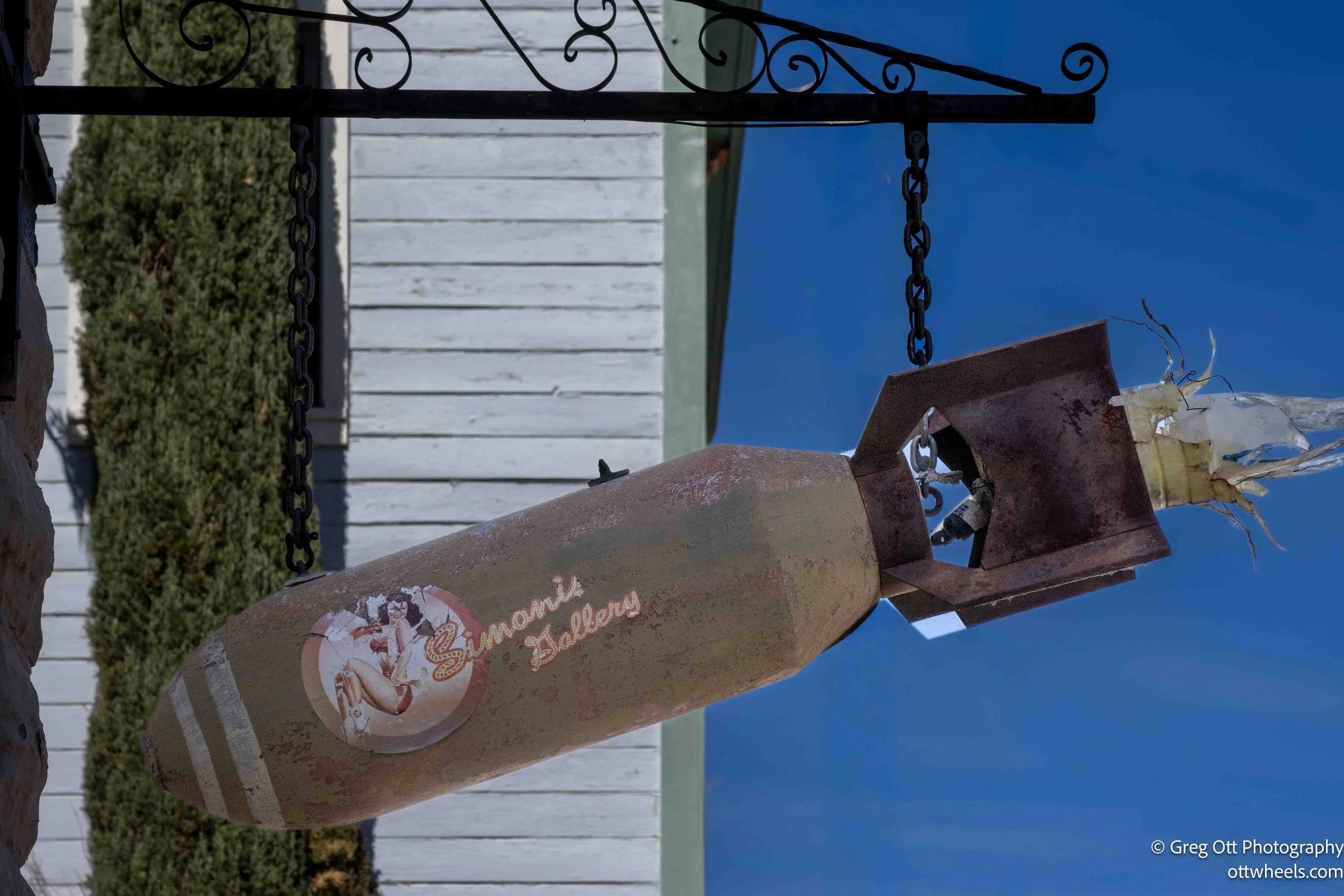
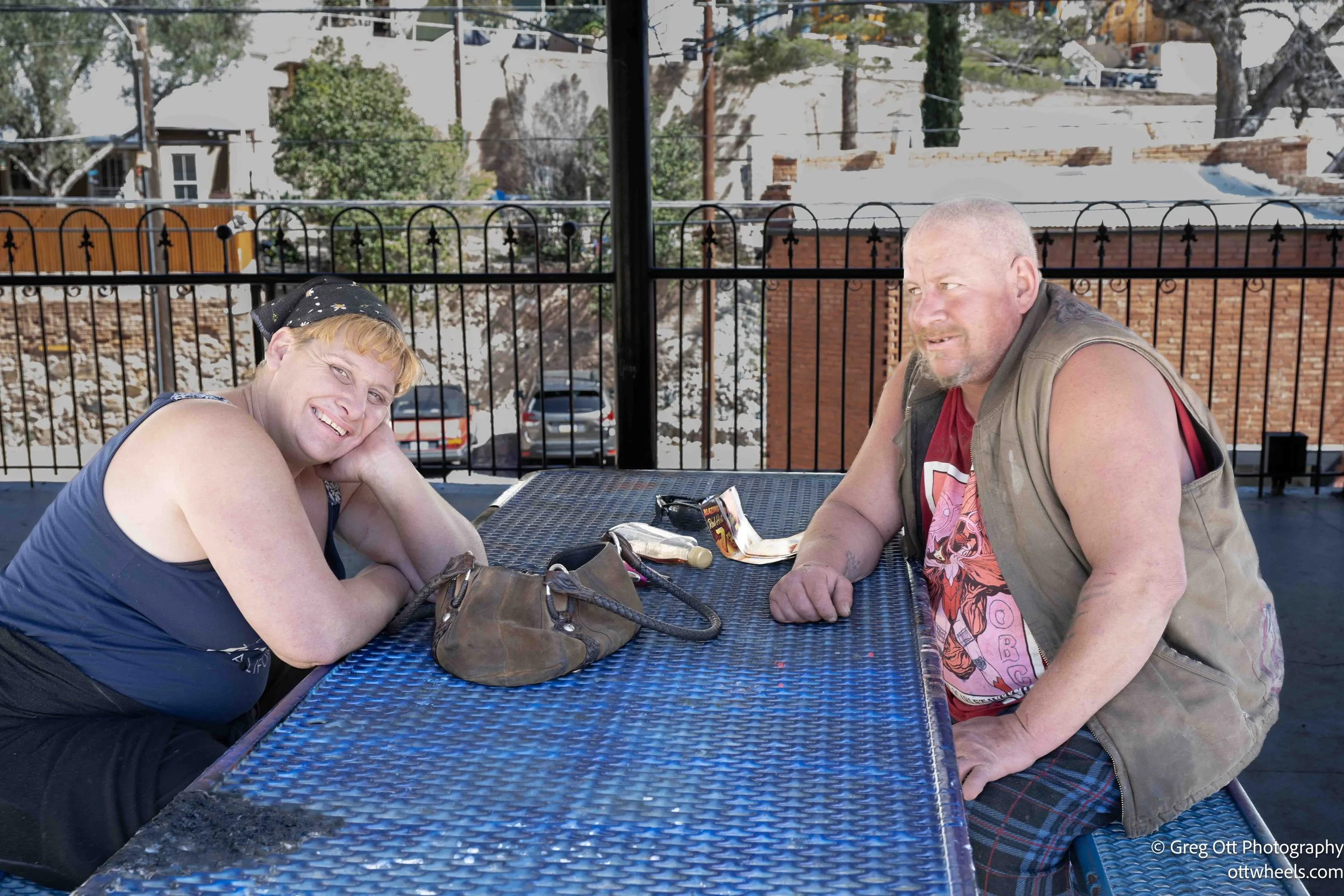
I worked my way toward City Park, stopping to look at creative marquees along the way. One art center uses an aerial bomb shape as signage, which feels oddly appropriate given the town’s mining and industrial past. At the small bandstand in the park, I met Jesus and Kay. They were friendly and talkative. I asked what it was like living in Bisbee. They told me it has changed a lot. They said there is corruption. That families who built the town have been pushed out. Kay said it’s been gentrified and that only people with money can afford to live there now. As they talked, they would occasionally take a swig of ginger brandy from a bottle that was slowly being emptied. I didn’t have to say much. They had a lot to say.
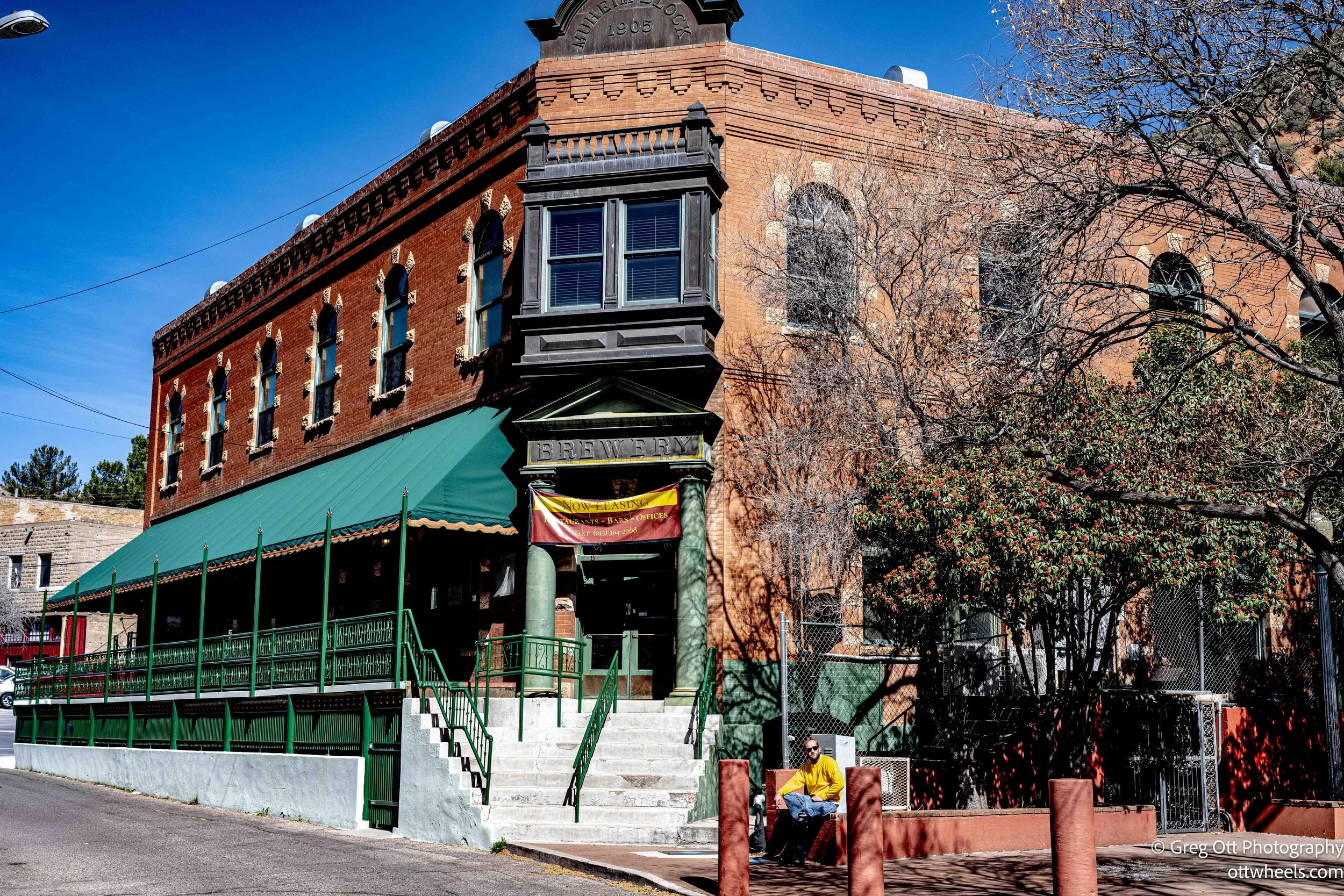
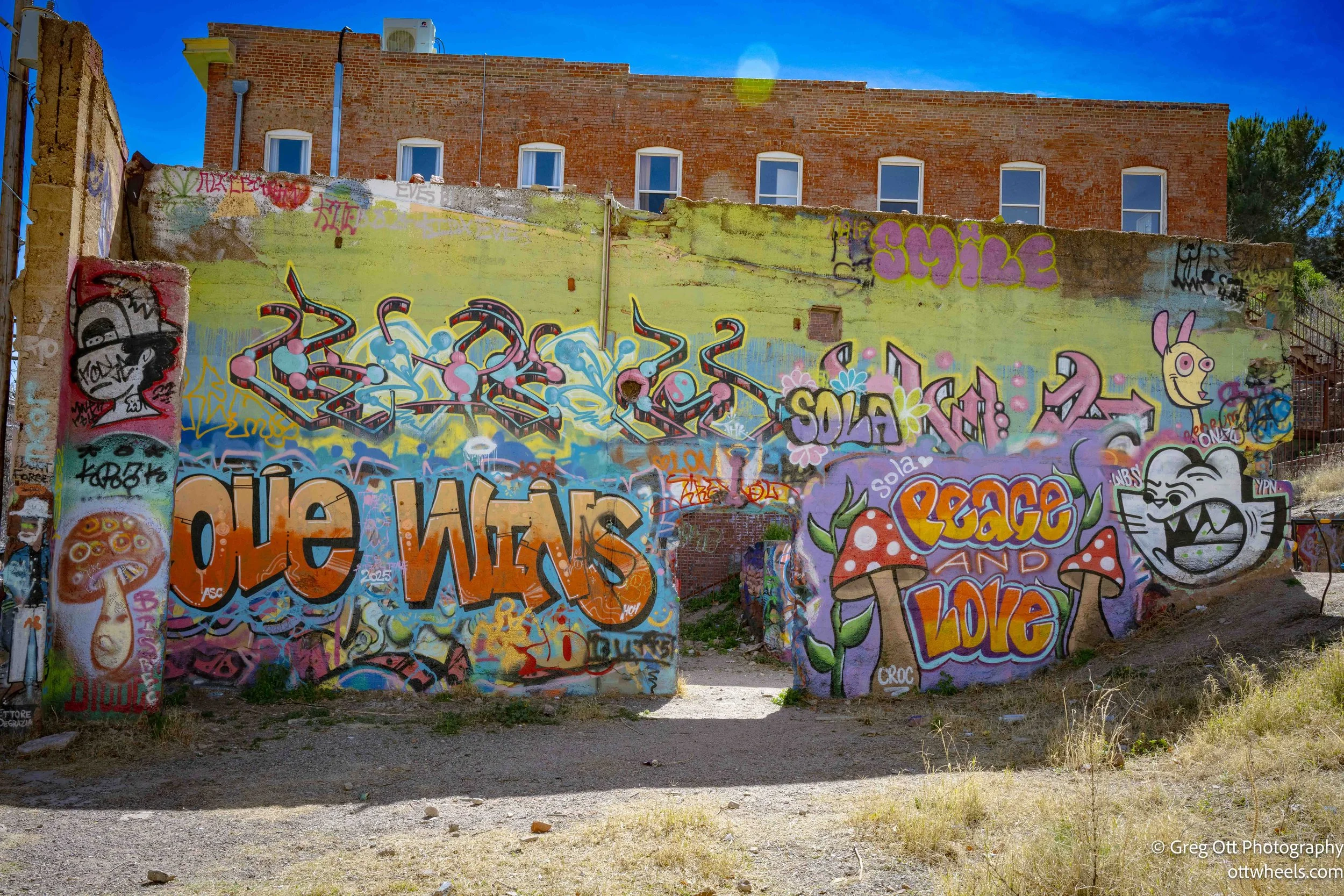
Eventually I found the first set of real steps. The initial 100 were manageable, though I was still a little tired from my eight-mile hike the day before. I moved steadily, stopping often for photos of colorful homes and small details in yards and along fences.
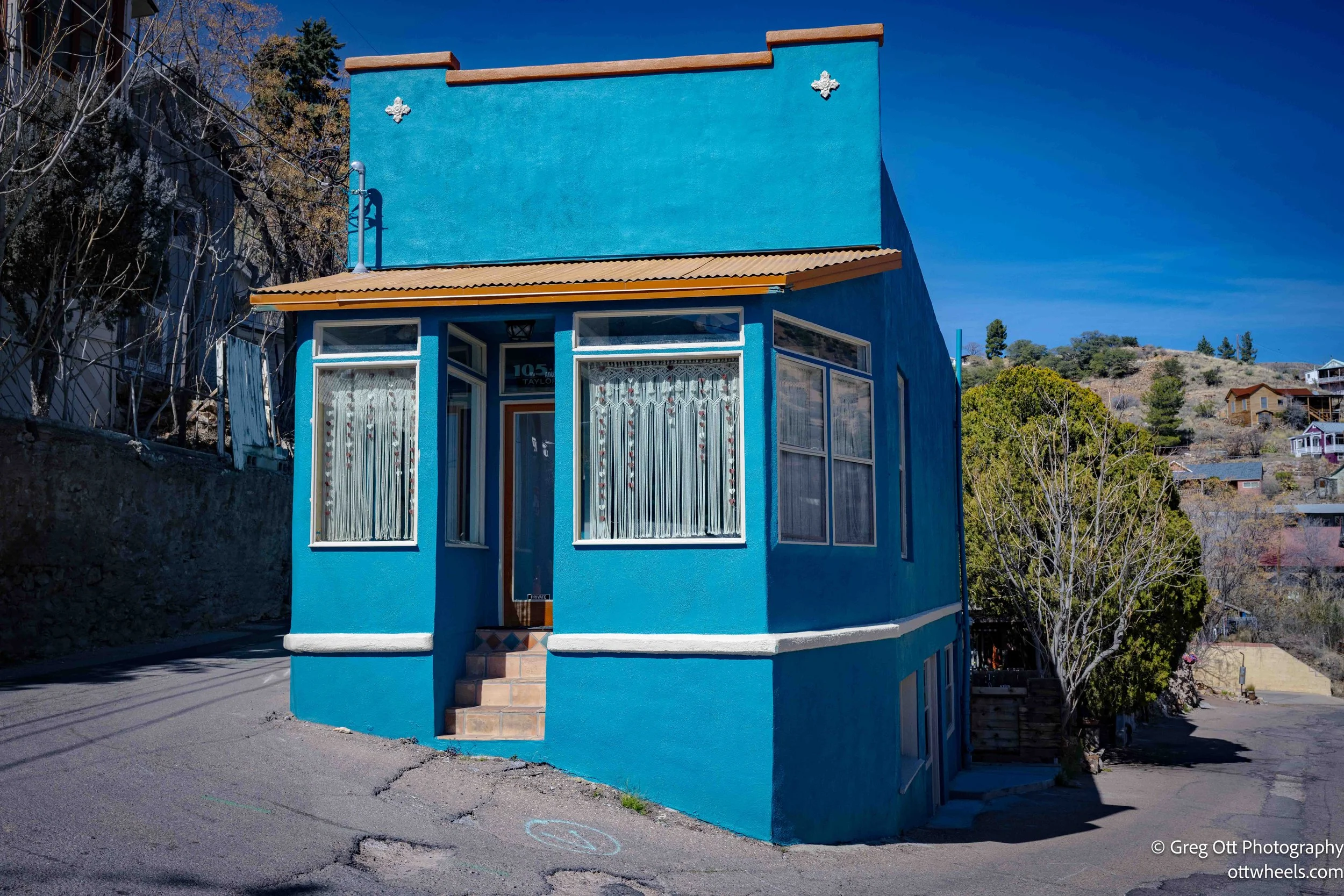
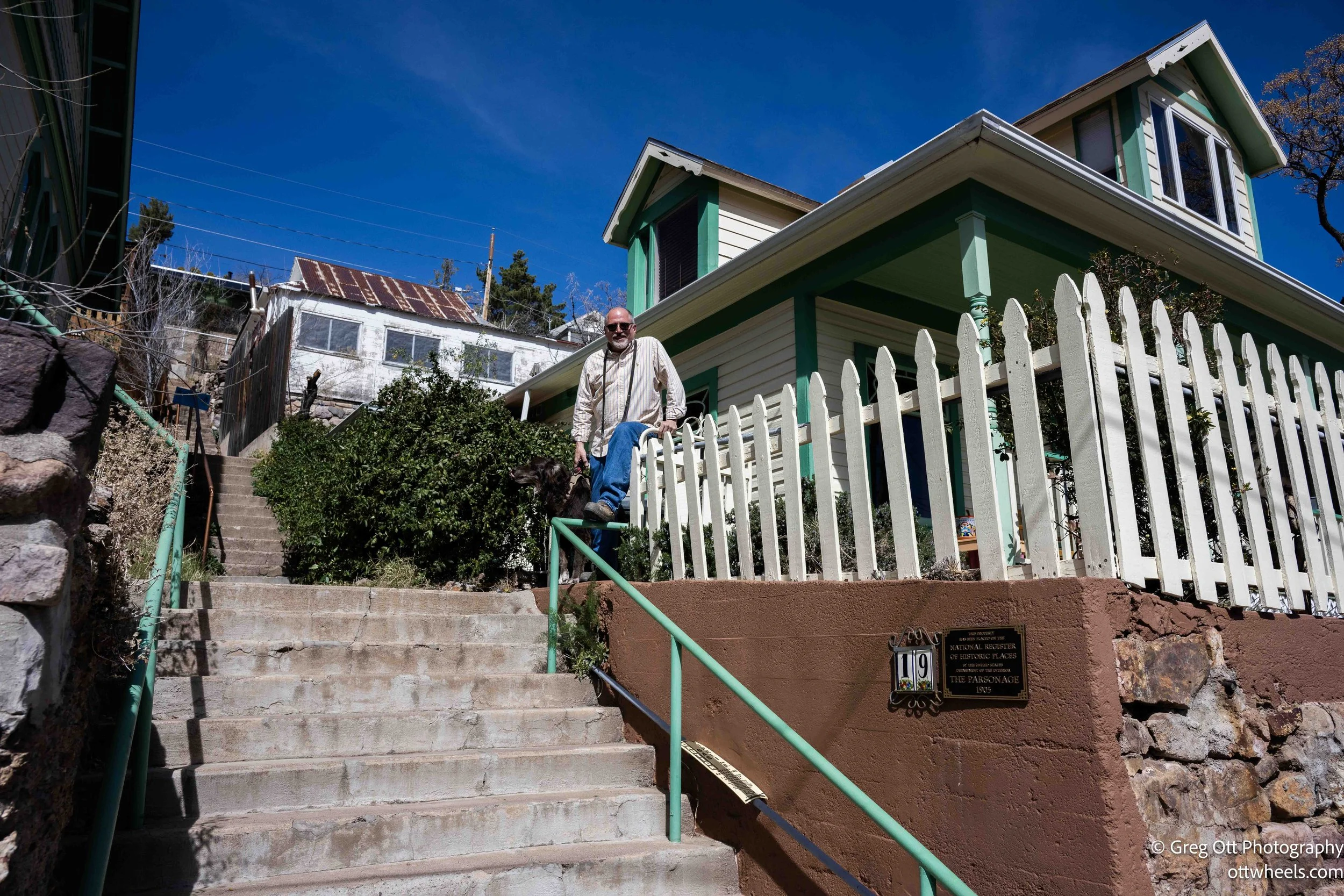
As I climbed, a man with a sheepdog approached from above. I guess I must have looked hesitant.
“He won’t bite,” he said.
“I’m not worried about the dog,” I told him. “I’m just moving slowly.”
He laughed. “That’s why you won’t find a gym in Bisbee. Walking home is the workout.”
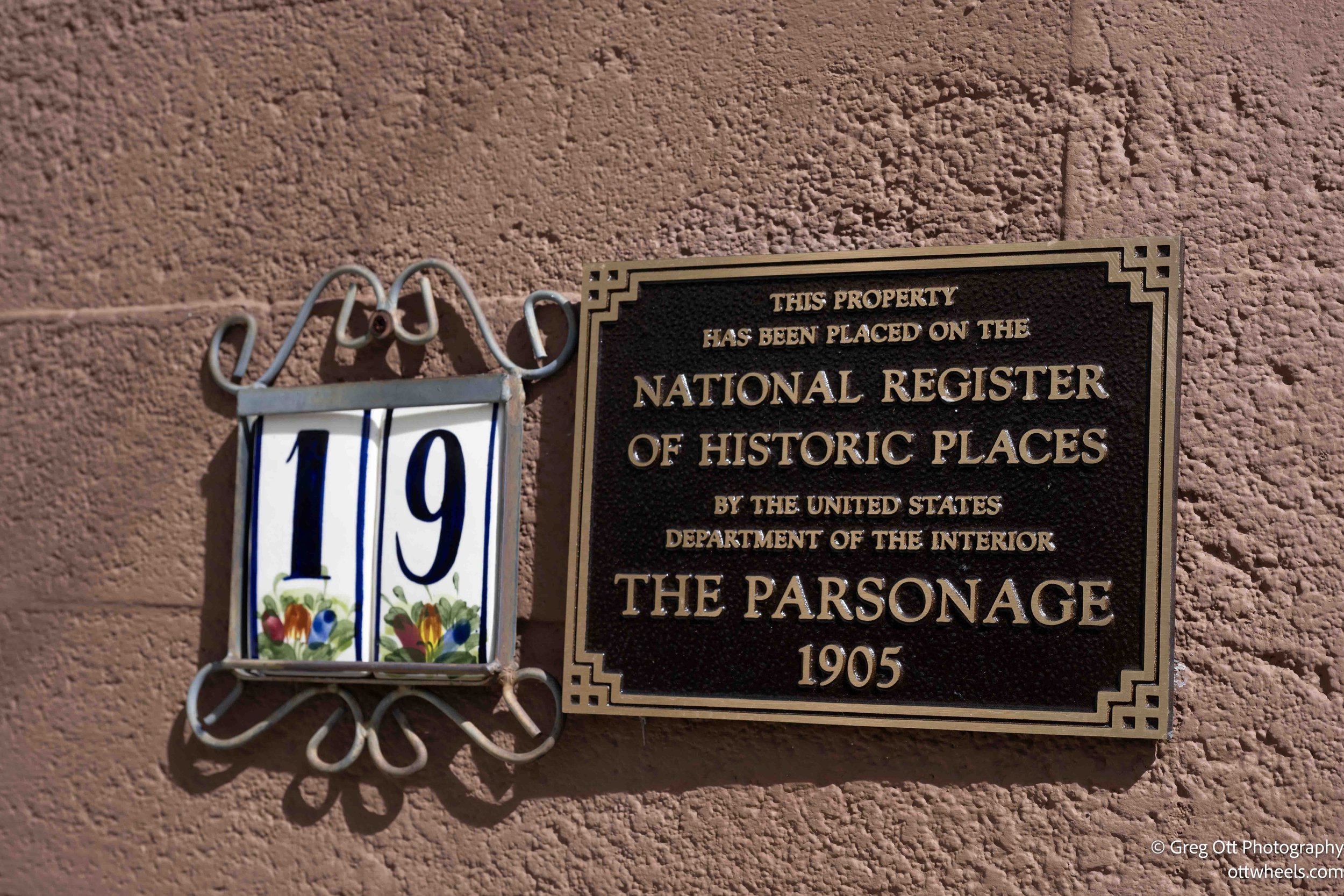
His name was Brian. He was visiting his parents from near New York City. His flight home had been canceled, so he unexpectedly had a few extra days in town. We ended up walking together for about 30 minutes, stopping occasionally as the dog sniffed around and came back for attention. Eventually we reached his parents’ house — the old Methodist church parsonage, painted bright green and white. We said our goodbyes and I continued upward.
I found a set of stairs that continued up and didn’t have a private property sign at the bottom, so I started climbing. The handrail turned out to be a gas line carrying natural gas up the hill, painted and wrapped with warning tape every 10 feet or so. It was oddly reassuring and slightly absurd at the same time. Halfway up, a dog began barking from a porch that overlooked the stairs, and a woman kept shooing it as I made my way past. At the very top, I was greeted by a sign that read “The Tree House – Private Property,” and just below it, written directly on the steps, “Public Steps End Here.” That was it. There was nowhere else to go.
I headed back down and the dog was still barking. About a block away, a couple in their 80s were walking toward me, so I asked where the steps were to get up the hill. I had just passed them — a U-Haul was parked directly in front of the staircase. Someone was moving into the first house up the steps, and about 20 people were gathered for what looked more like a party than an actual move. The climb ahead looked like a few hundred steep steps. The couple told me to go ahead since it would take them a while to get up there. They said it was their main form of exercise — and it looked like a good one.
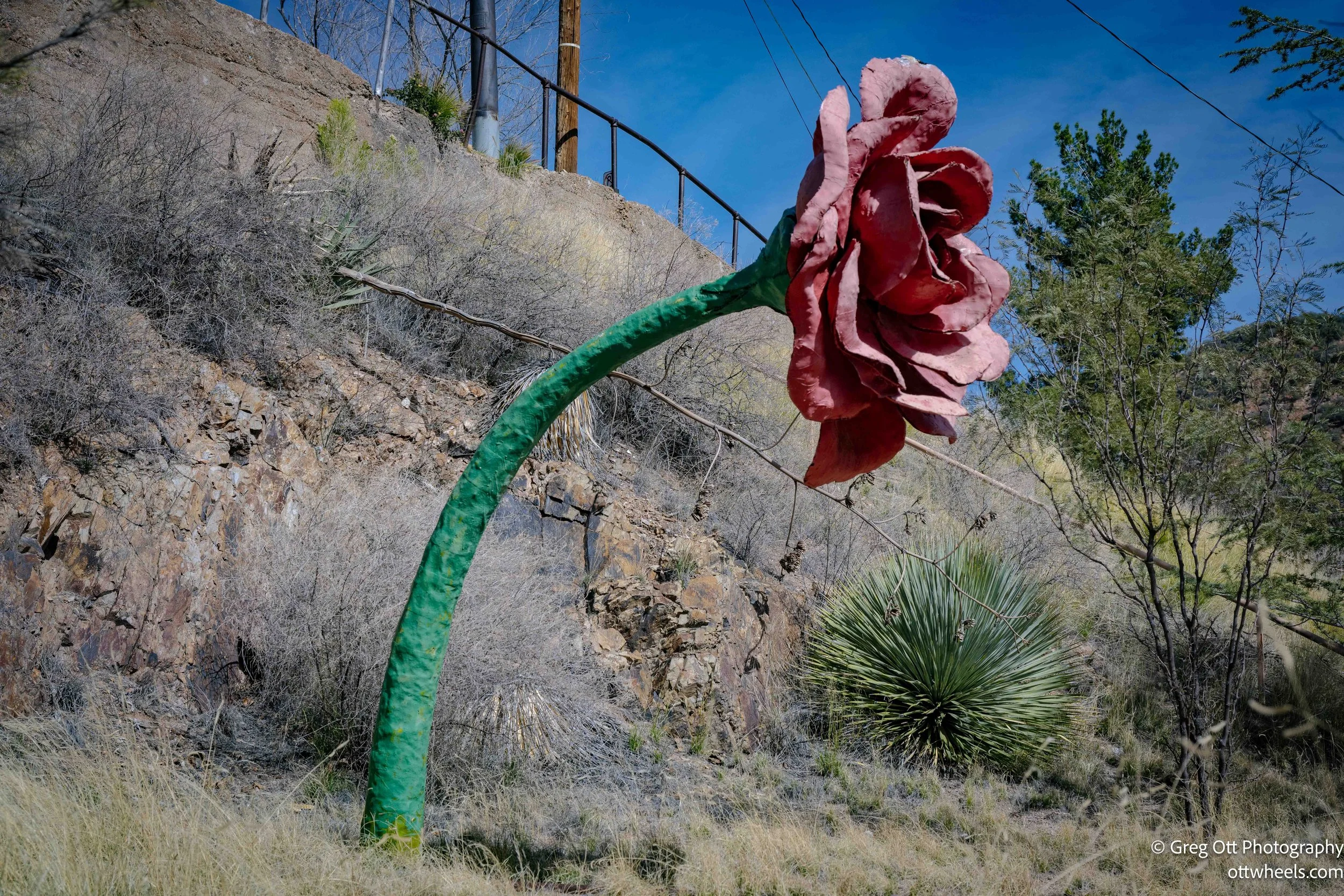
The staircase was long and steep. I kept my breathing steady and made my way up. At the top, I stopped to photograph a large rose art piece and took in the view over town. The couple eventually made it up, both bent over the railing catching their breath. We waved, and they continued around the corner to their place.
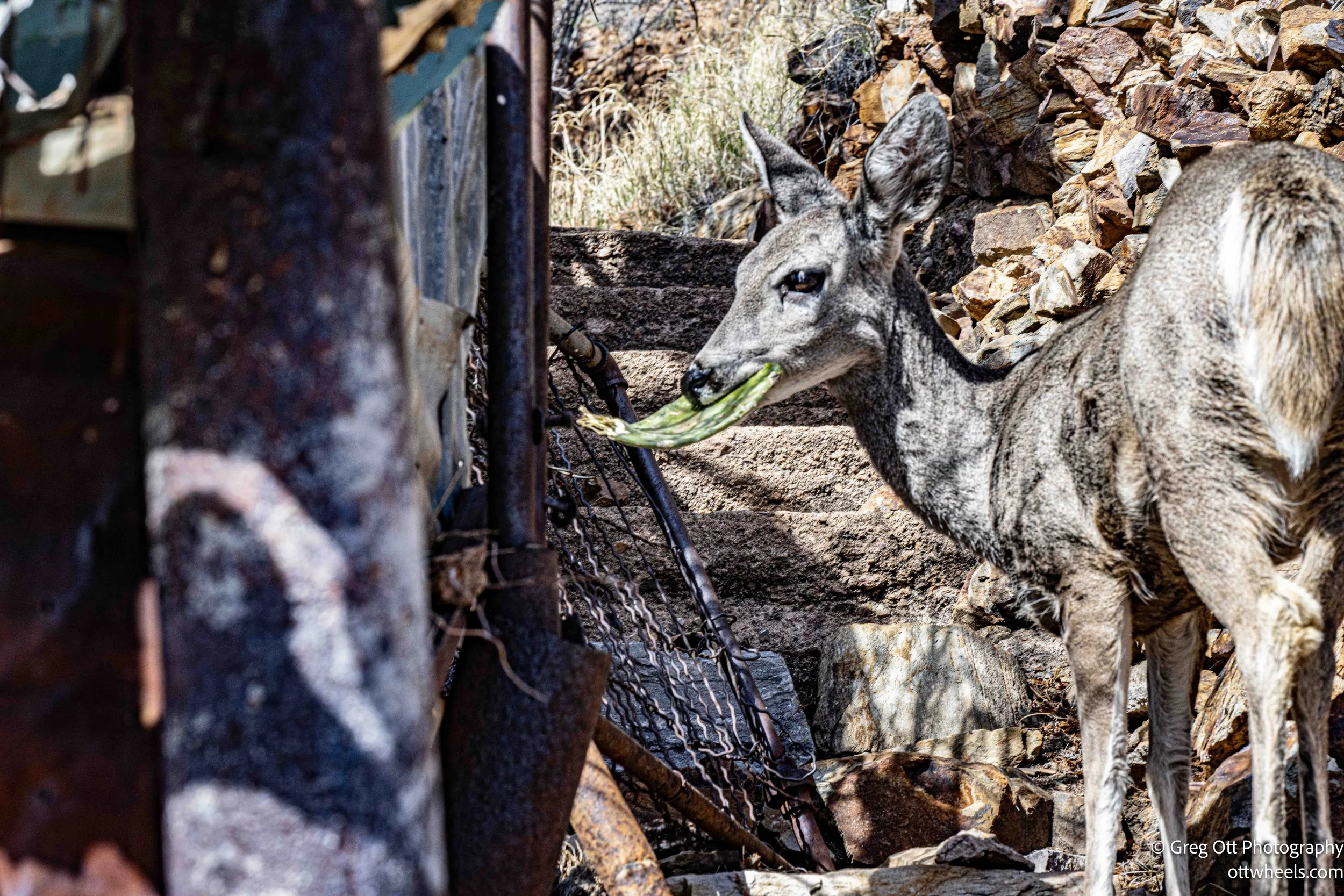
On the way down I stopped to watch mule deer eating prickly pear cactus in someone’s yard. They carefully worked around the thorns. One of them spooked when I shifted and bounded across rocks and cacti with ease. Another didn’t seem to care I was there. I stood about 15 feet away as it chewed cactus pieces off the ground.
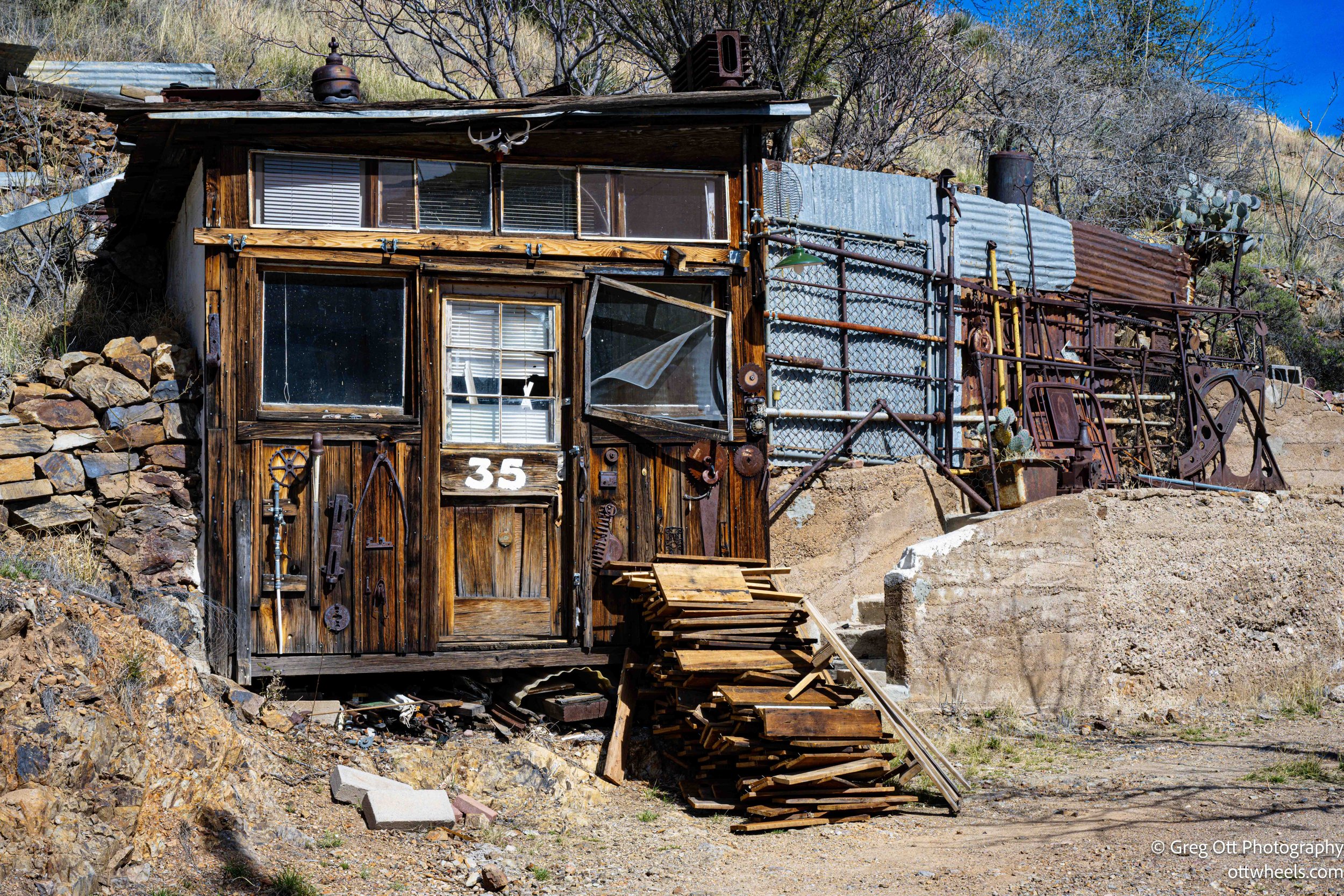
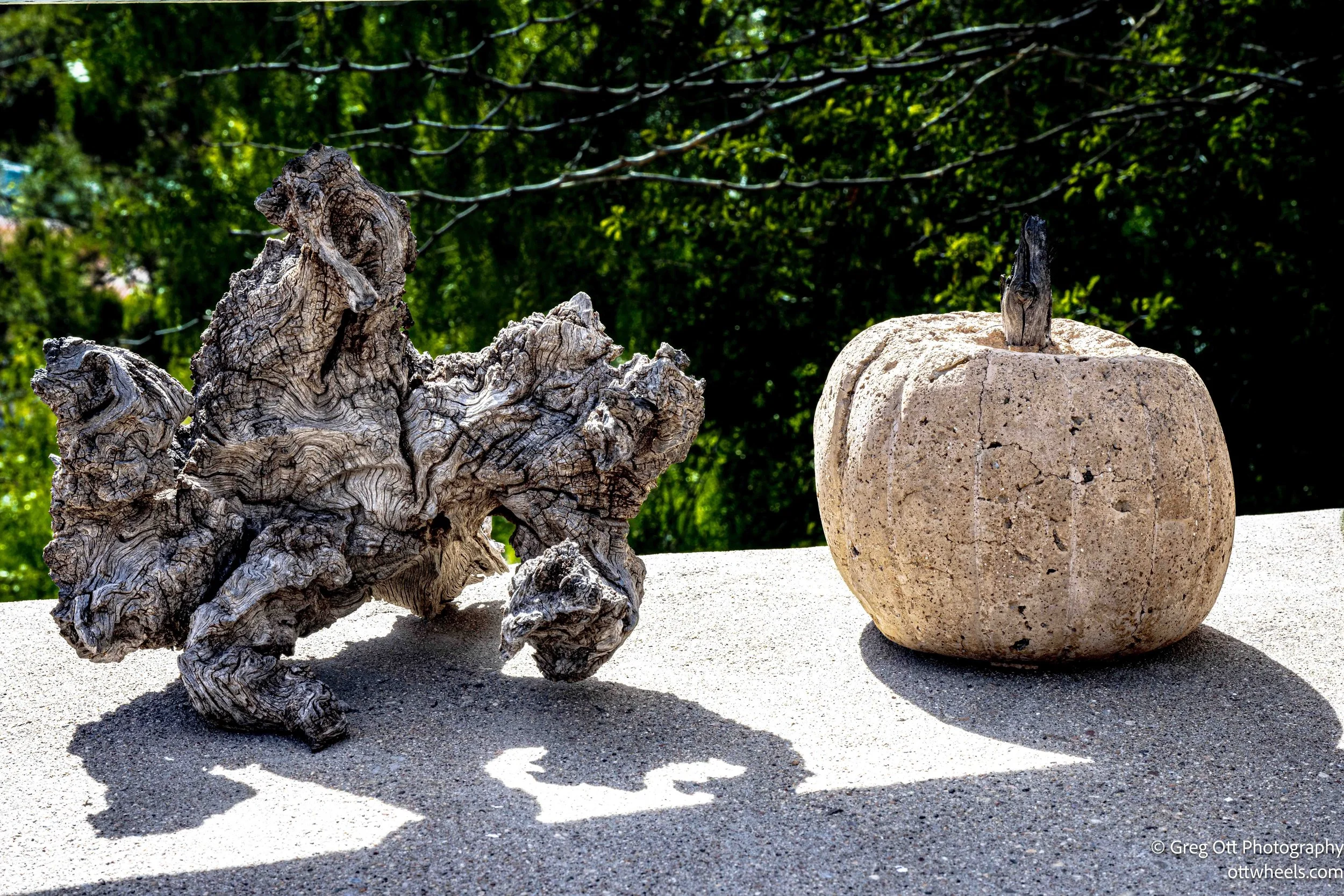
Everything in Bisbee feels like art. People decorate their fences, set out sculptures — some pretty bad, others fitting perfectly into the town’s eclectic vibe. I couldn’t quite capture the layered, stacked look of the colorful homes from a distance, but I did focus on individual houses along the way. Some gardens felt like little hobbit hideouts tucked into the hillside. A few of the newer homes even had plaques listing the architect, designer, owners, decorator, and garden designer, as if the entire hillside were a curated project. At one spot, an old car sat enclosed within roofless concrete walls, weeds growing up around it as the structure slowly fell apart. The lighting made it difficult to photograph, so I took nine exposures and later blended them to get it right.
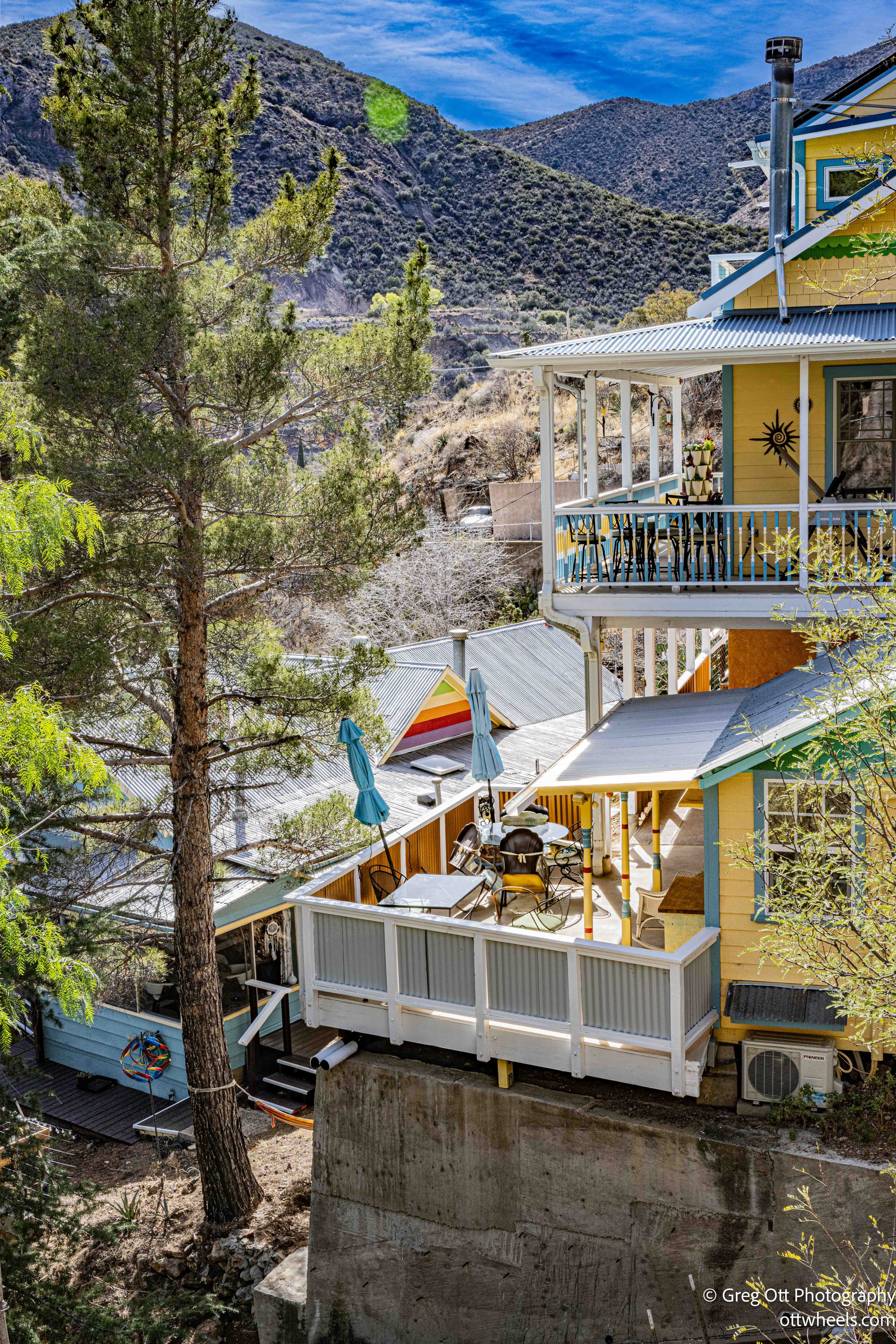
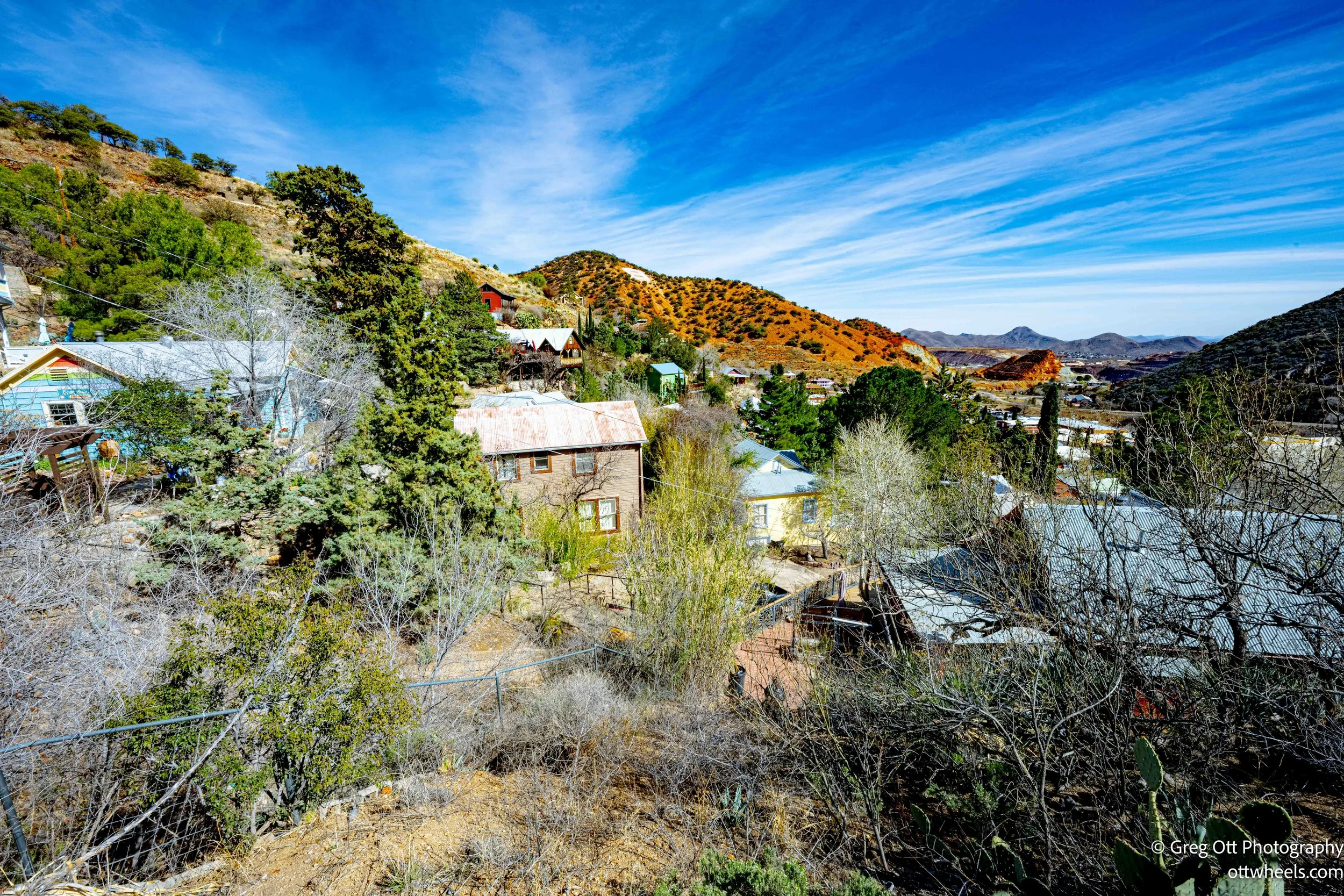
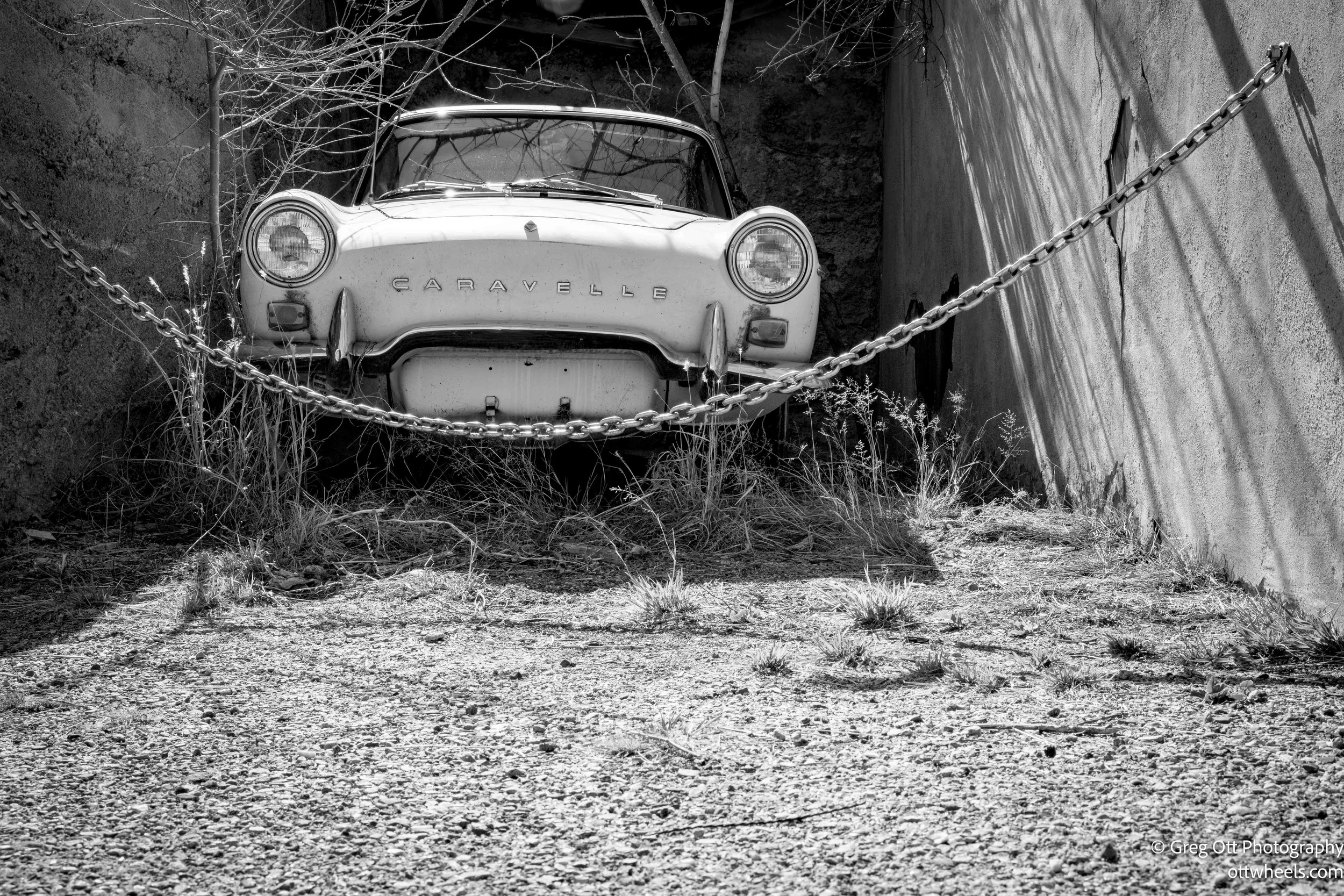
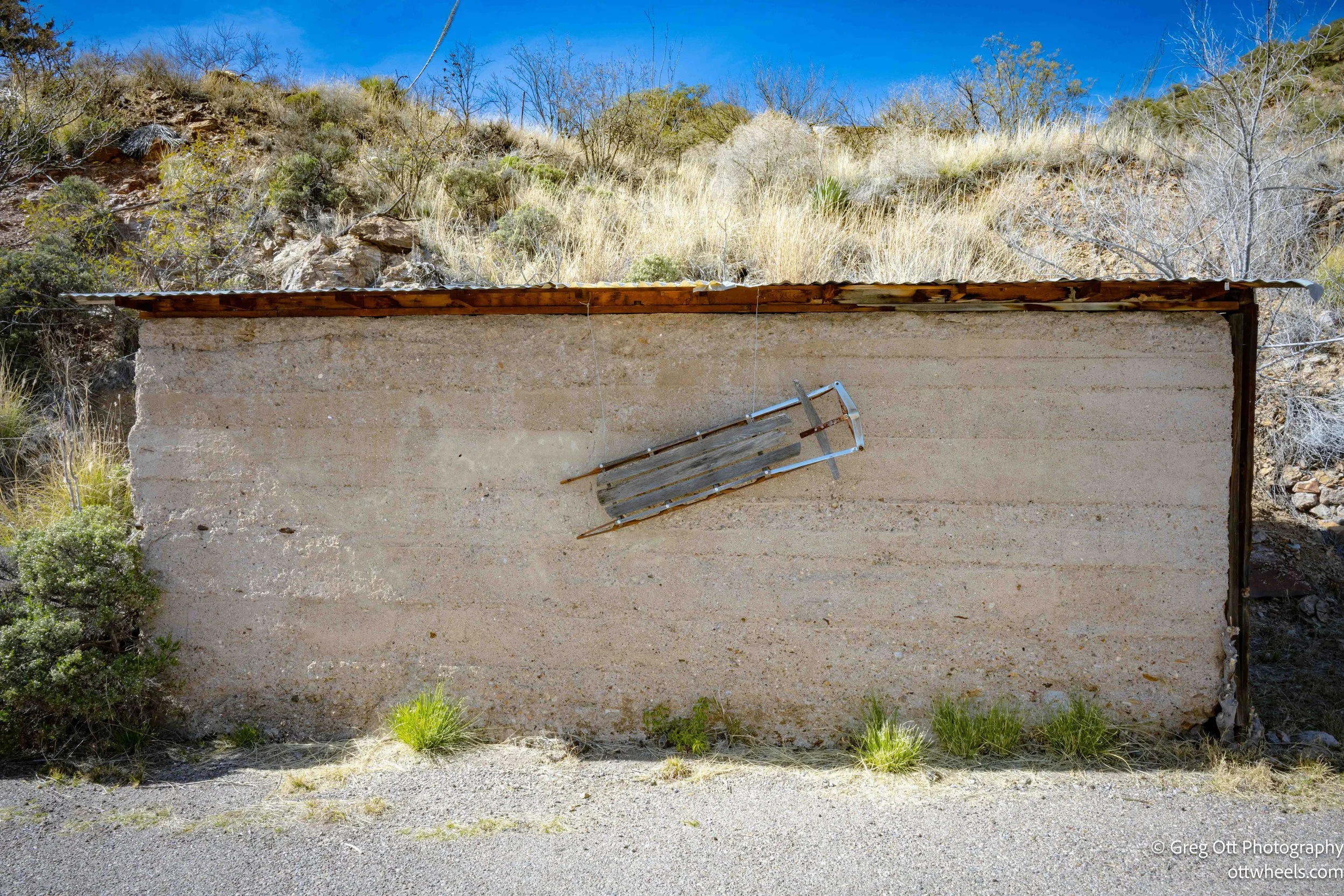
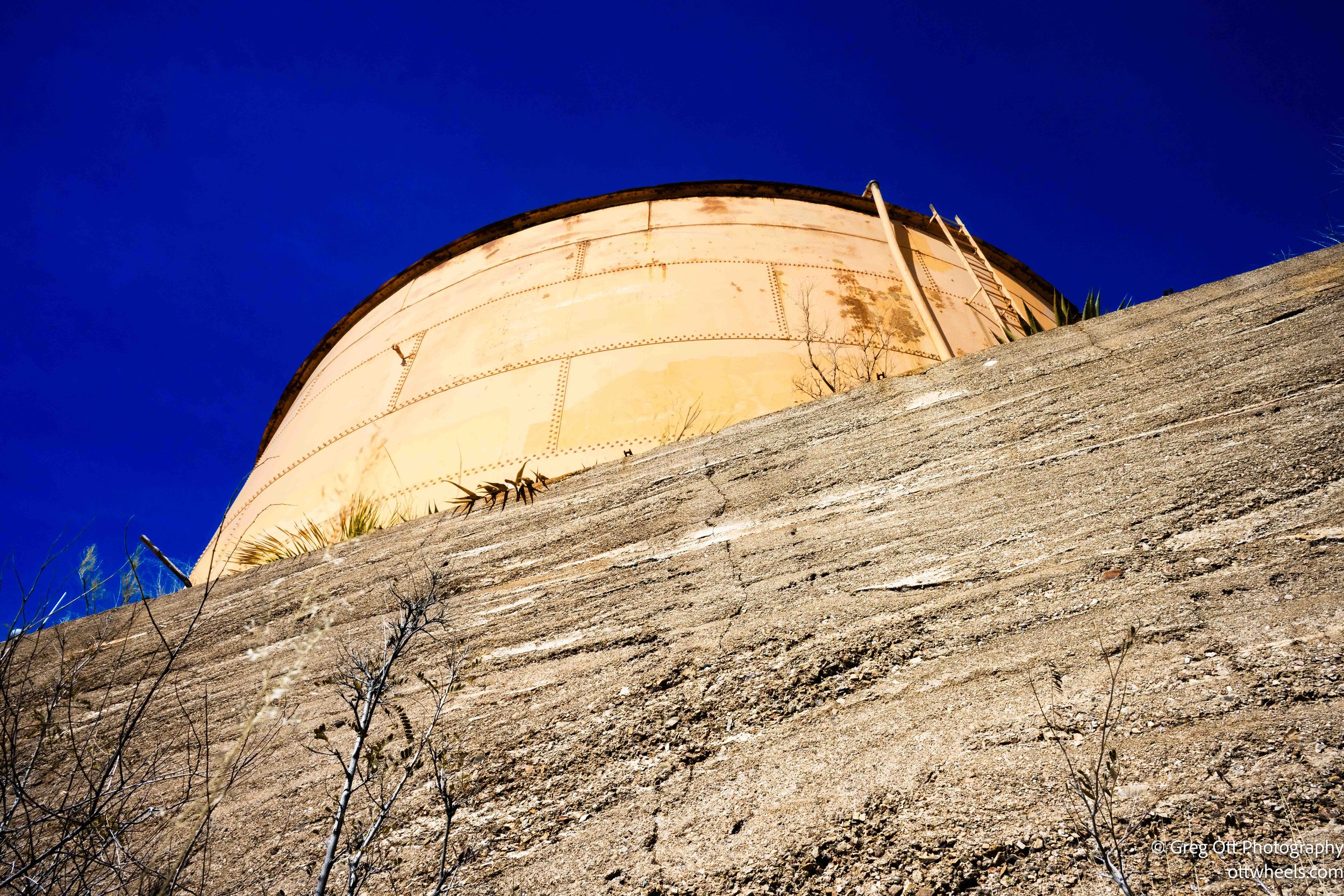
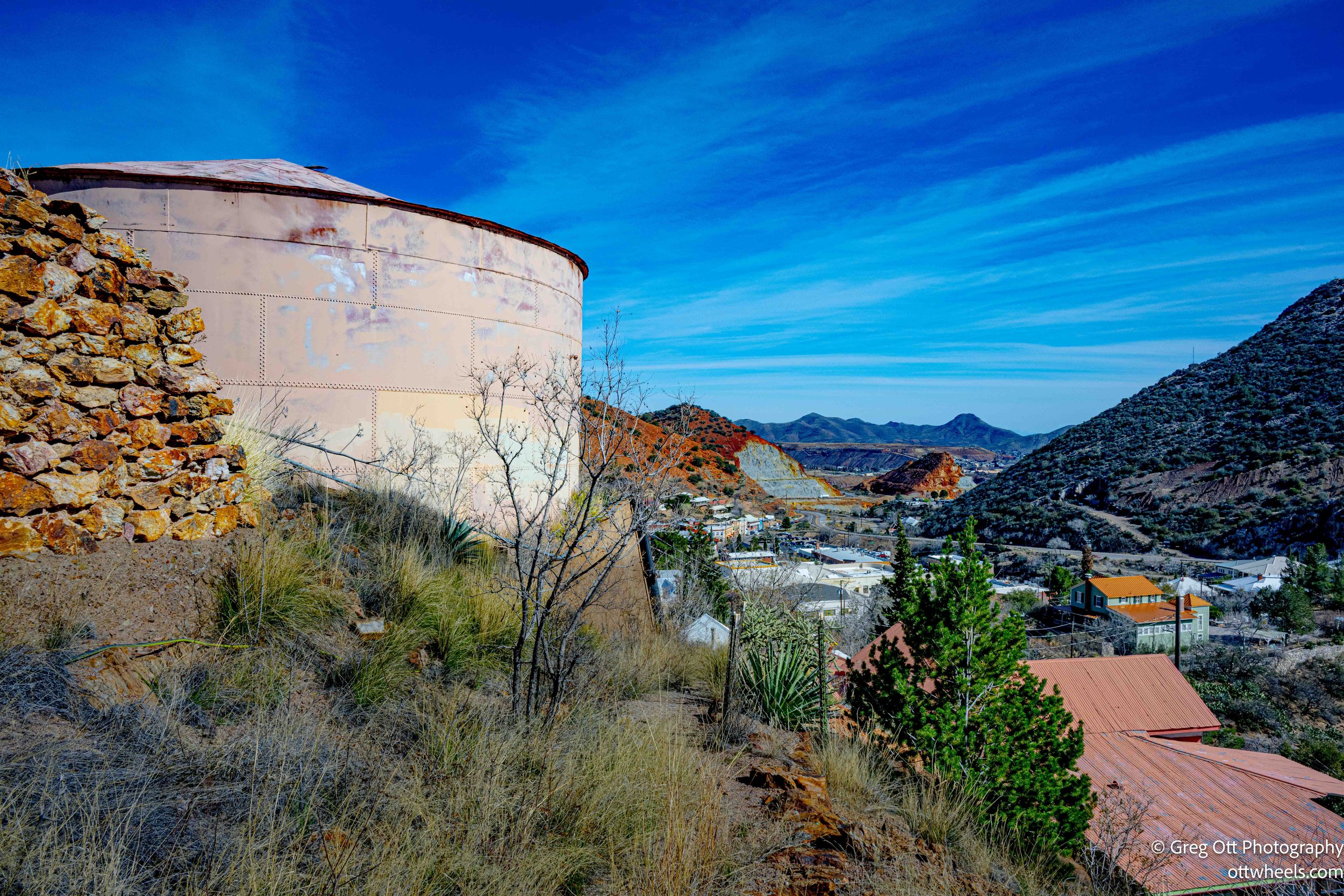
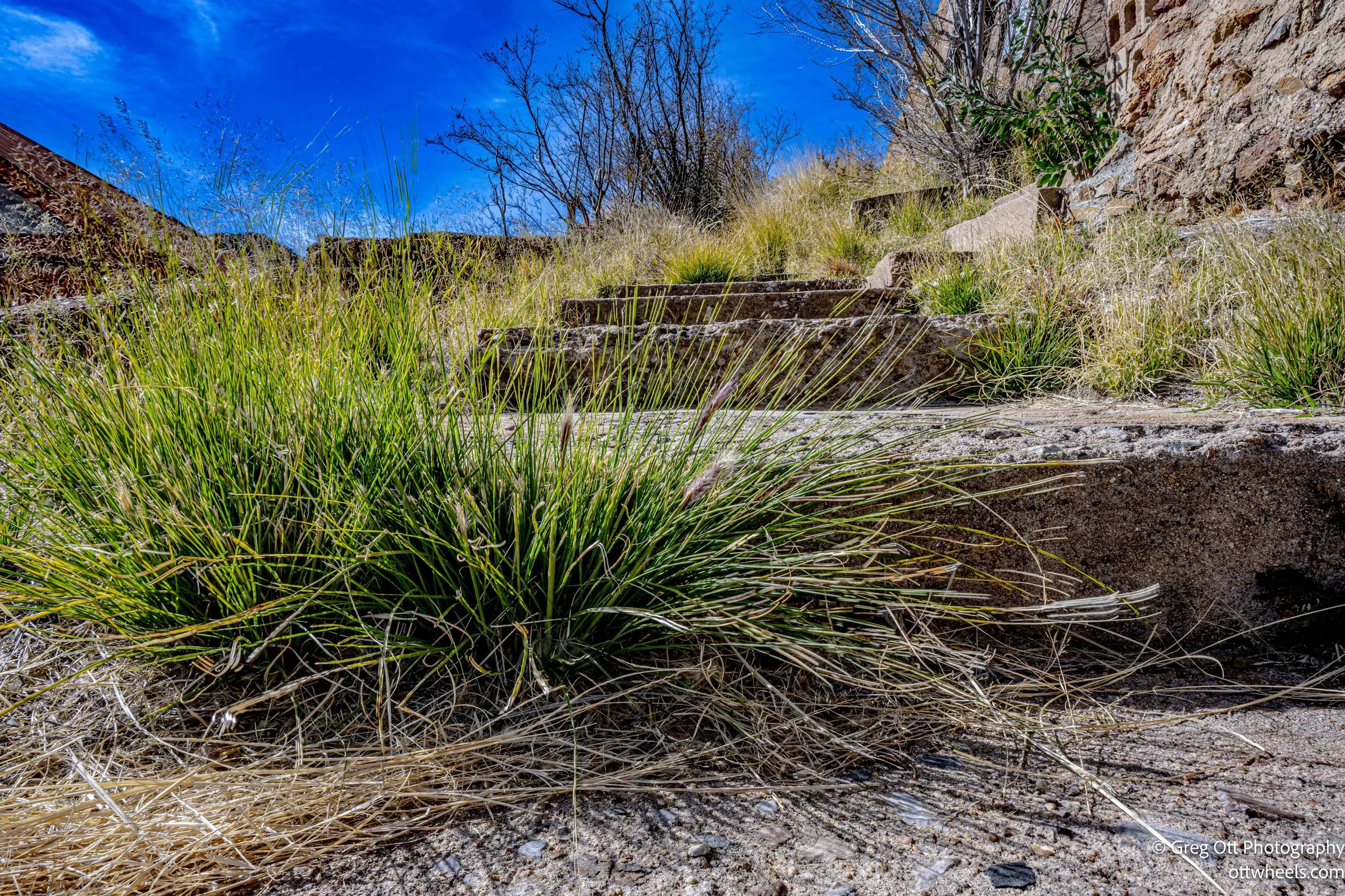
Later I climbed toward an old water tank perched above town. The steps leading up were crumbling, grass growing through cracks. From that vantage point I could see a newer section of town stretching toward the northwest. The tank itself had a quiet, utilitarian presence against the sky.
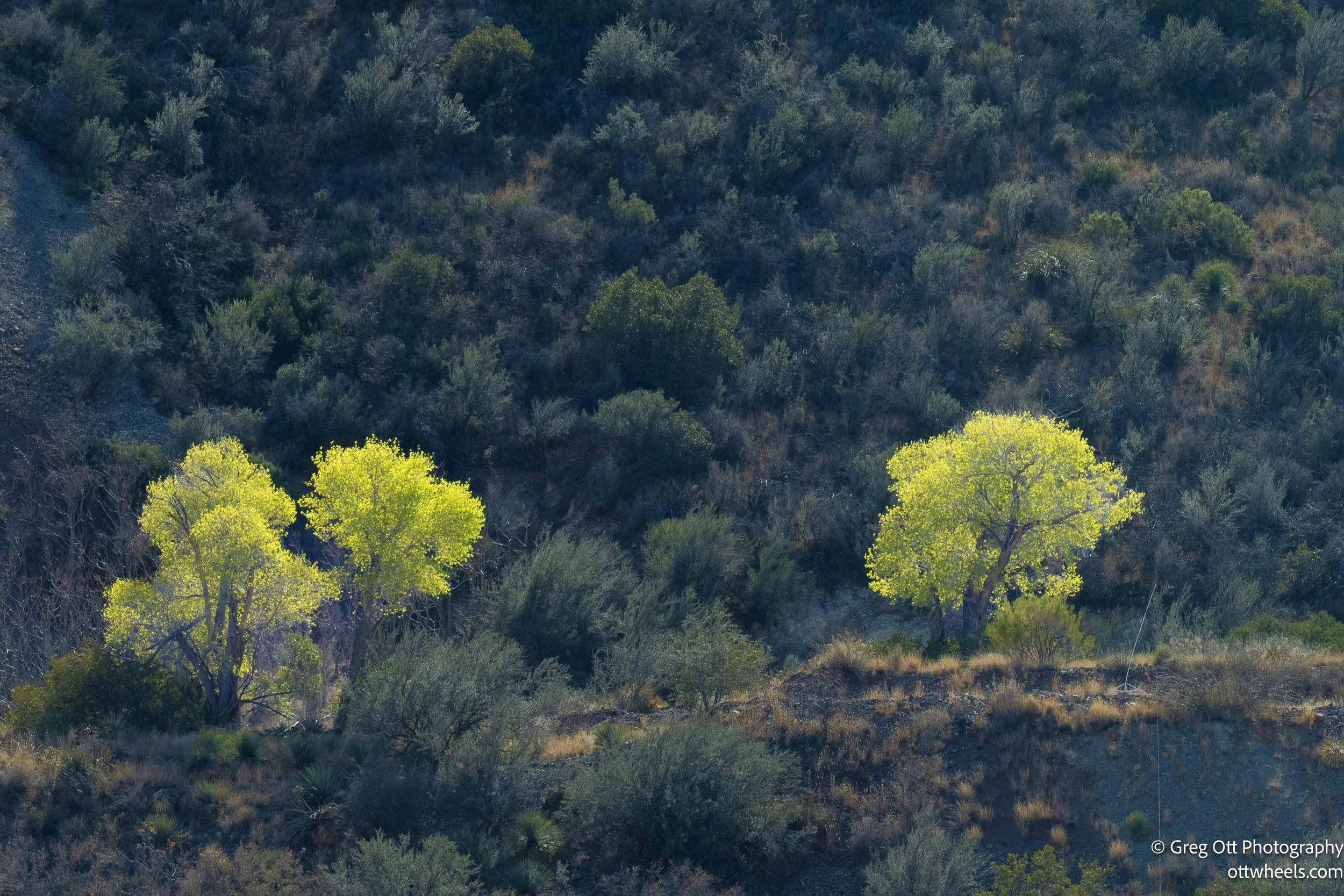
By mid-afternoon I felt sluggish. I hadn’t brought water and my mouth was dry. Across the valley, two bright green trees were glowing in backlight. I switched lenses and tried to capture them. I later learned they were palo verde trees — Spanish for “green stick.” Native to the Sonoran Desert, their bark is vivid green and capable of photosynthesis. When the light hits them from behind, they almost appear illuminated from within.
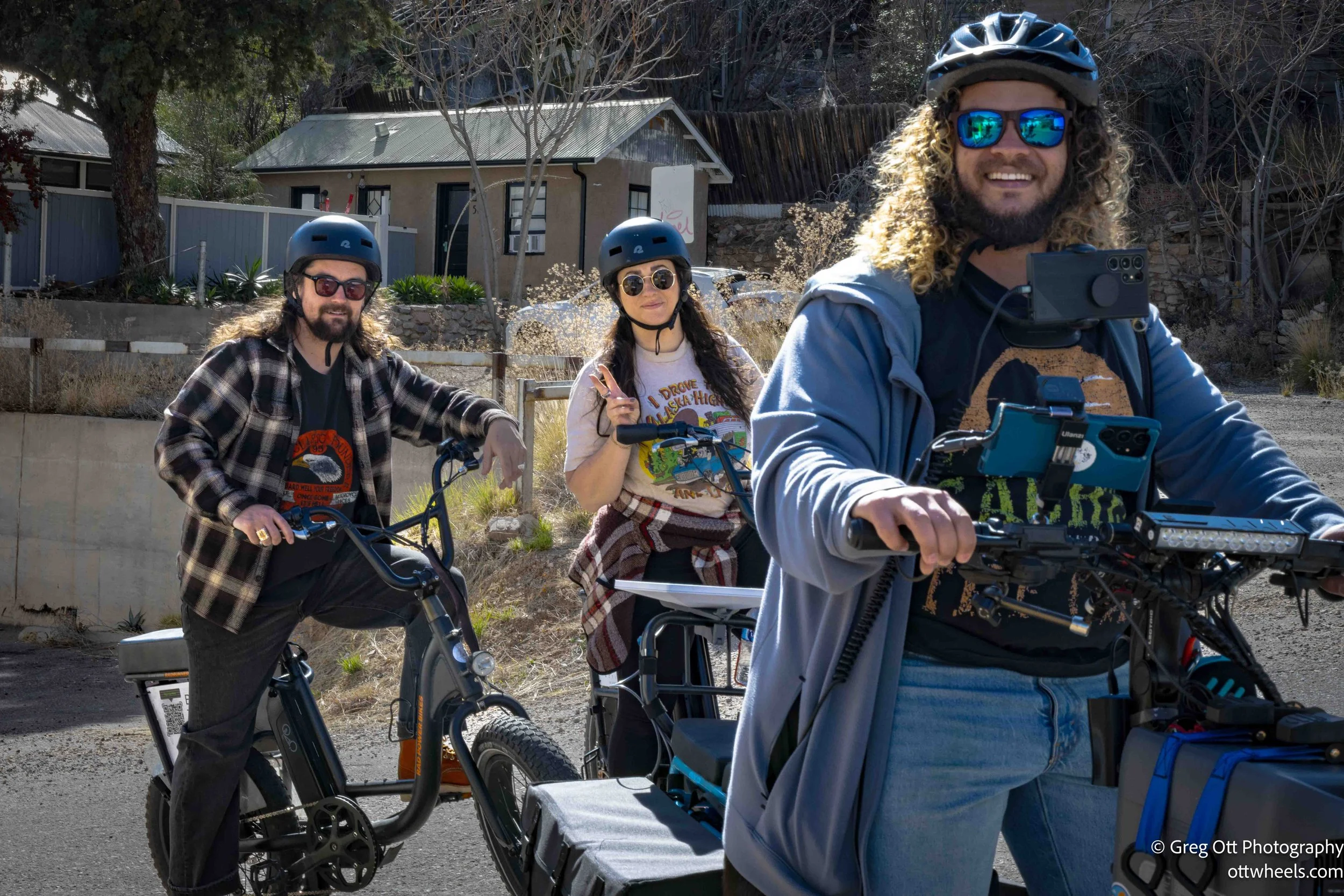
Near the high school I stopped to photograph a mural depicting a miner and a child — a reminder of what built this place. As I stood at the corner, three people on e-bikes stopped. Joey did all the talking.
Joey: “You shootin’ the Bee?”
Me: “Yes.”
Joey: “What’s your rig? Full frame?”
Me: “Yes.”
Joey: “Sweet.”
Before they left, I asked for a photo. Joey said, “Sure man!!” and turned to his two friends to see if they were OK with it. They just shrugged. Neither one said a word. Joey handled everything. I took the photo. When I was done he said, “Peace bro,” and they rolled off.
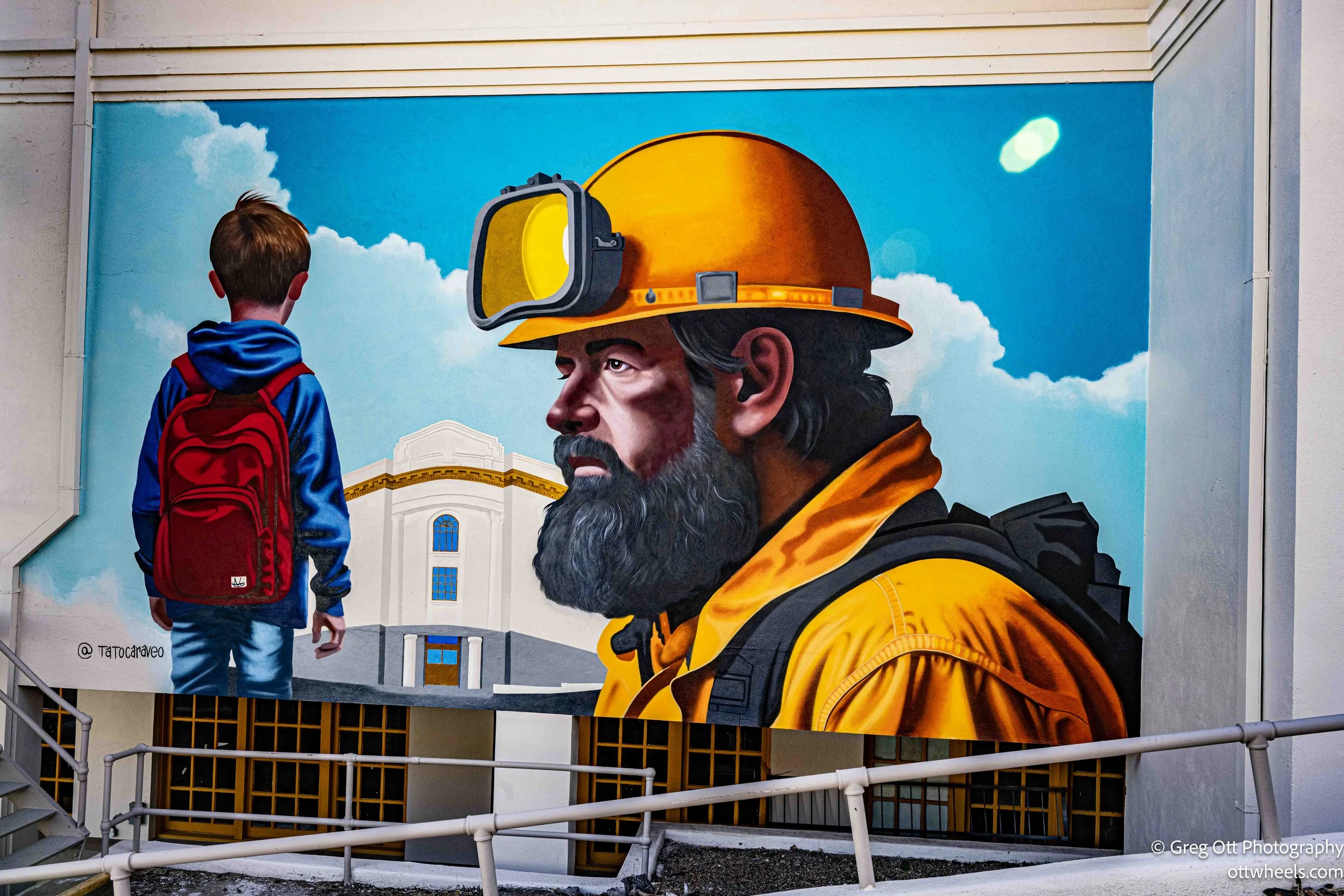
It took me another 30 minutes to reach the coffee shop, stopping repeatedly for murals and signage.
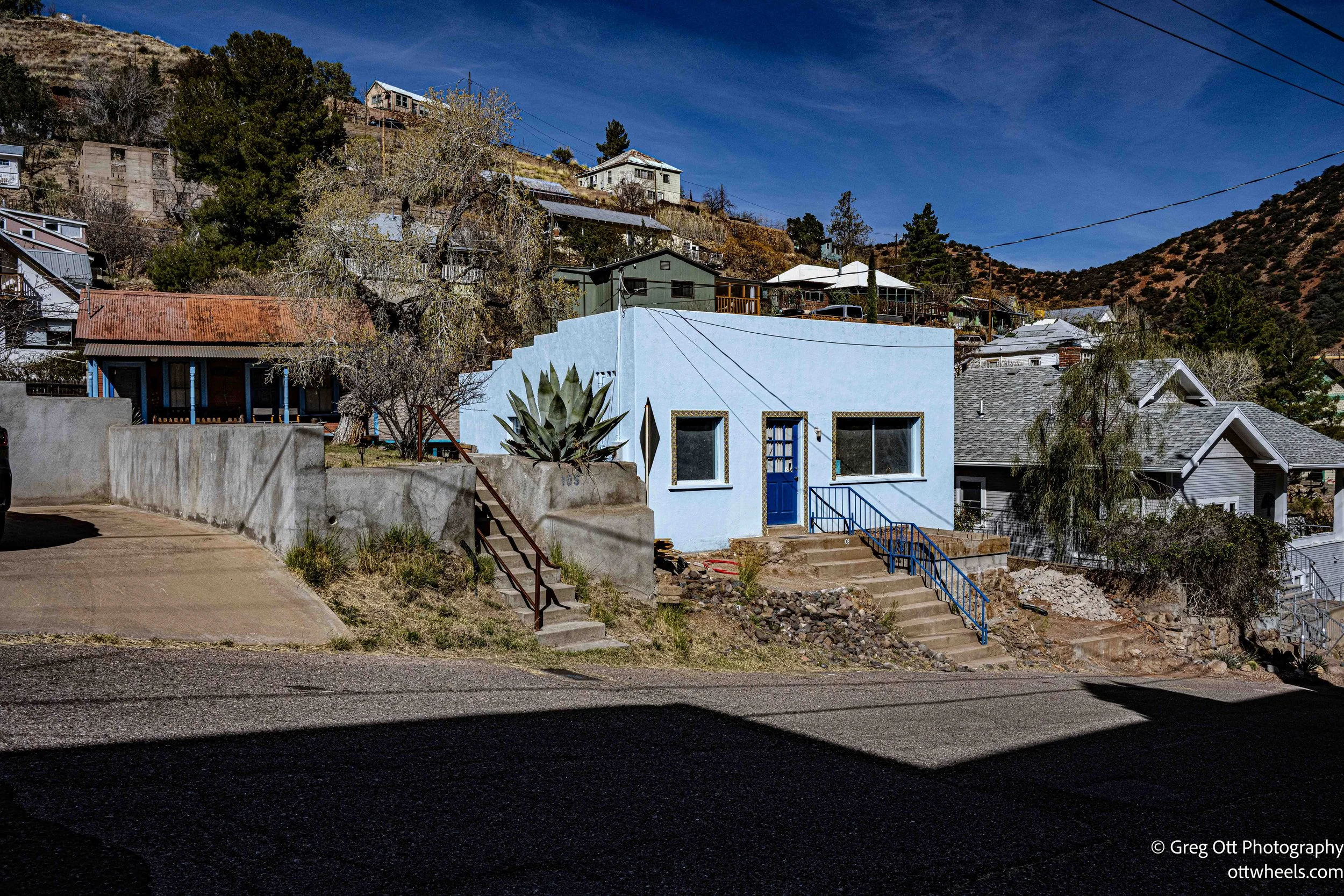
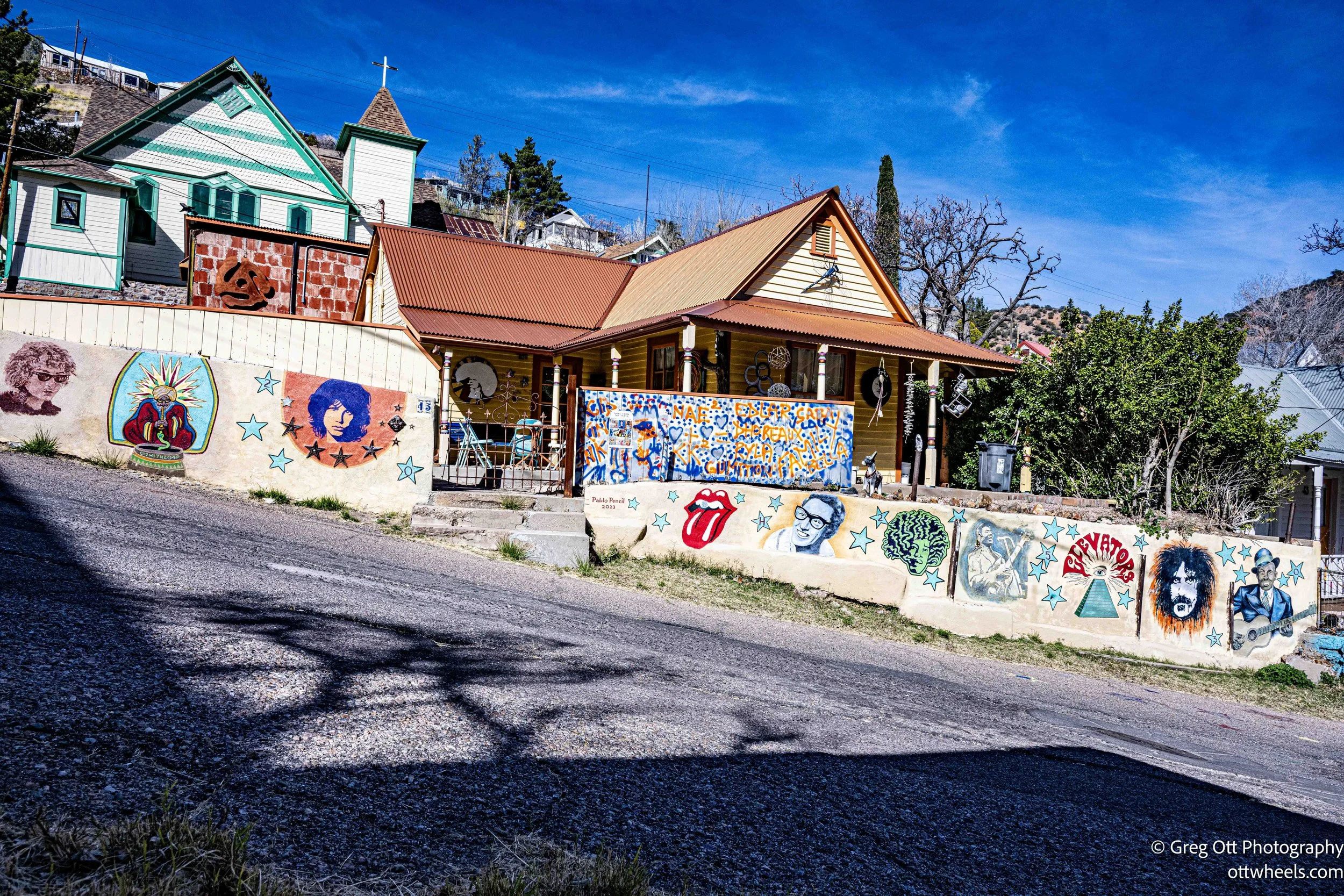
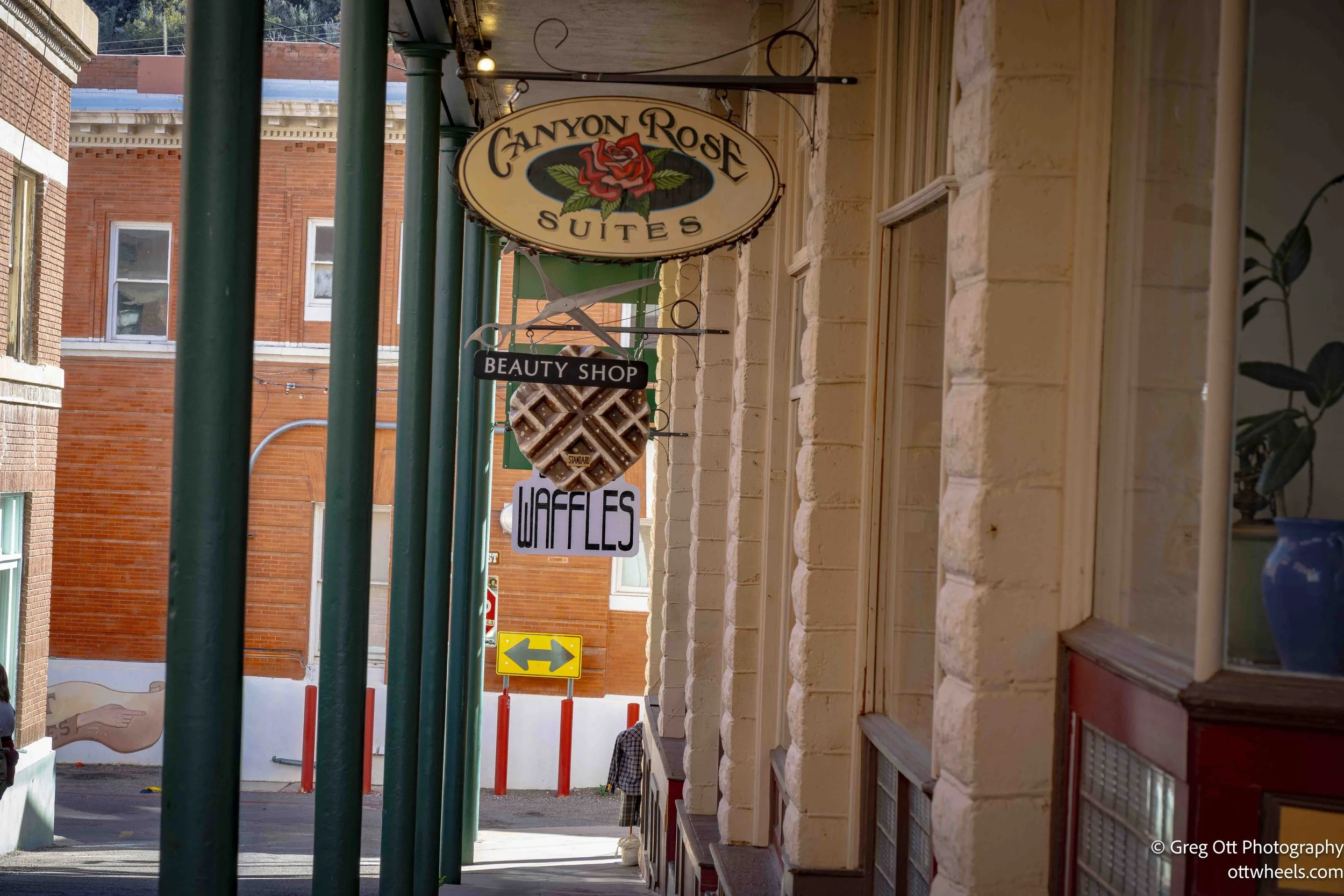
At the Bisbee Coffee Company I ordered a latte, a chocolate croissant, and a large water. I sat by the window for about 45 minutes watching people. Two older men with a small dog talked nonstop to each other and to anyone who walked by. A couple with a four-year-old daughter sat nearby. The girl kept looking at the dog until one of the men offered her a piece of bread to feed it. She did, then returned to her father’s lap and continued talking to the man with the dog until they left.
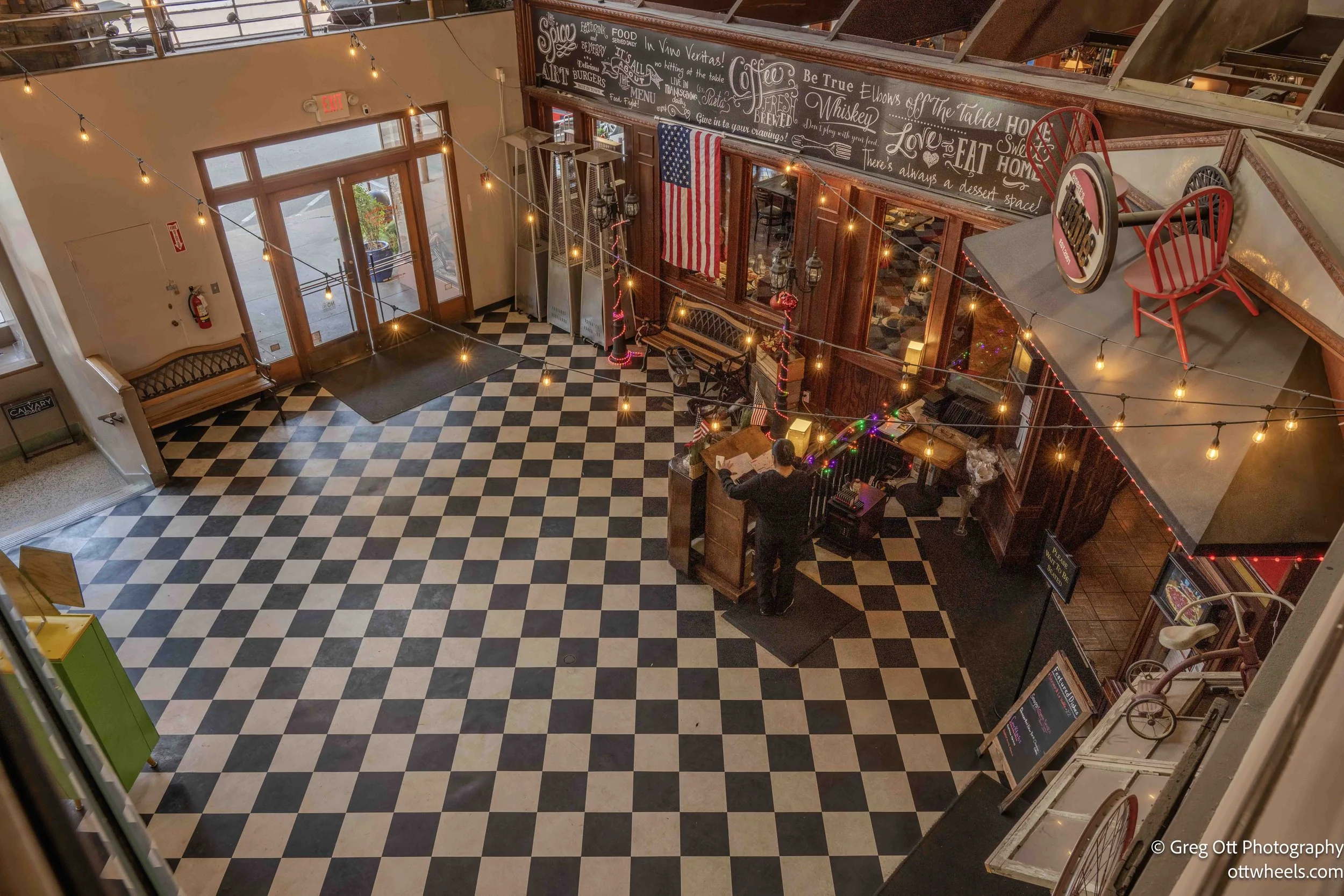
Later I found Pussycat Gelato and ordered half Belgian chocolate and half caramel swirl. Three goth women came in — loud, tattooed, funny, completely at ease. It felt like a small performance unfolding in real time, and no one seemed out of place.
I eventually stopped at the bar inside the Bisbee Grand Hotel where a local band, Locomundi, was playing. I ordered a root beer for $2.50 and listened for about 45 minutes. Photographing bands is challenging — low light, constant movement, changing colors. I set the Nikon Z7II to manual at 1/200, f/2.8, Auto ISO capped at 12,800, AF-C wide-area people. Much of the lighting was red, which I rarely find flattering. During a break, Neil Young played over the speakers and the bassist joked that whenever he tries to sing like him, he sounds like Kermit the Frog.
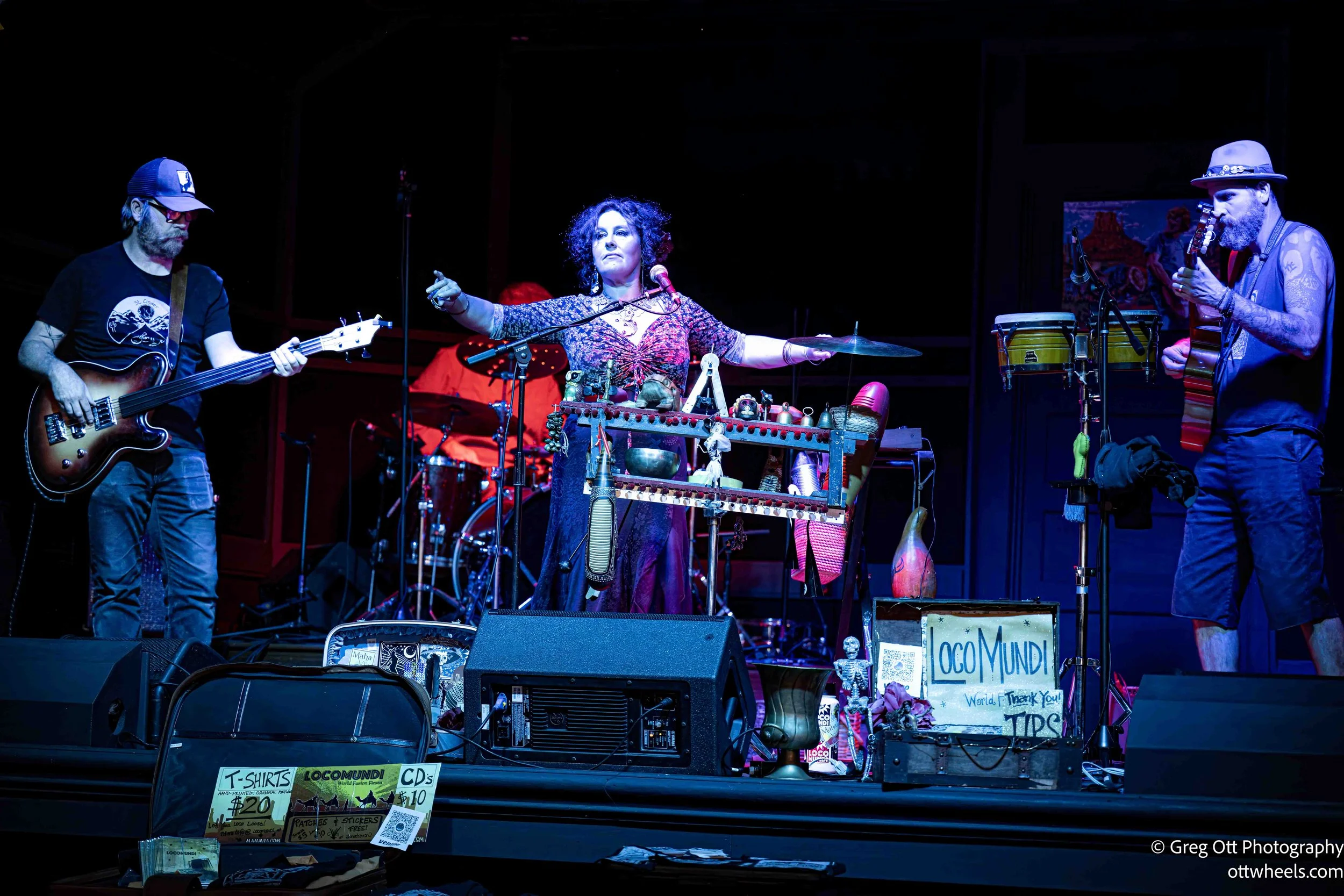
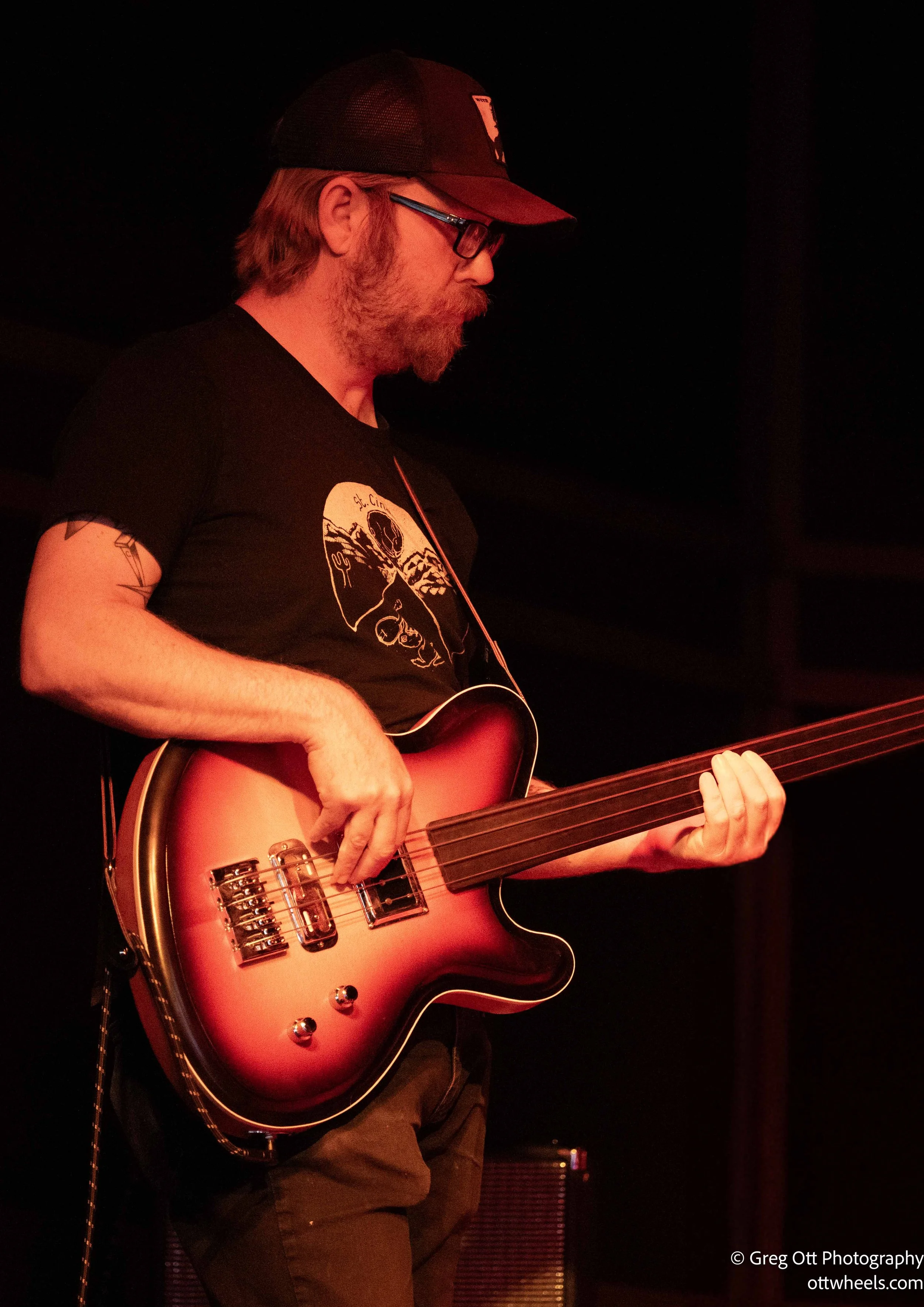
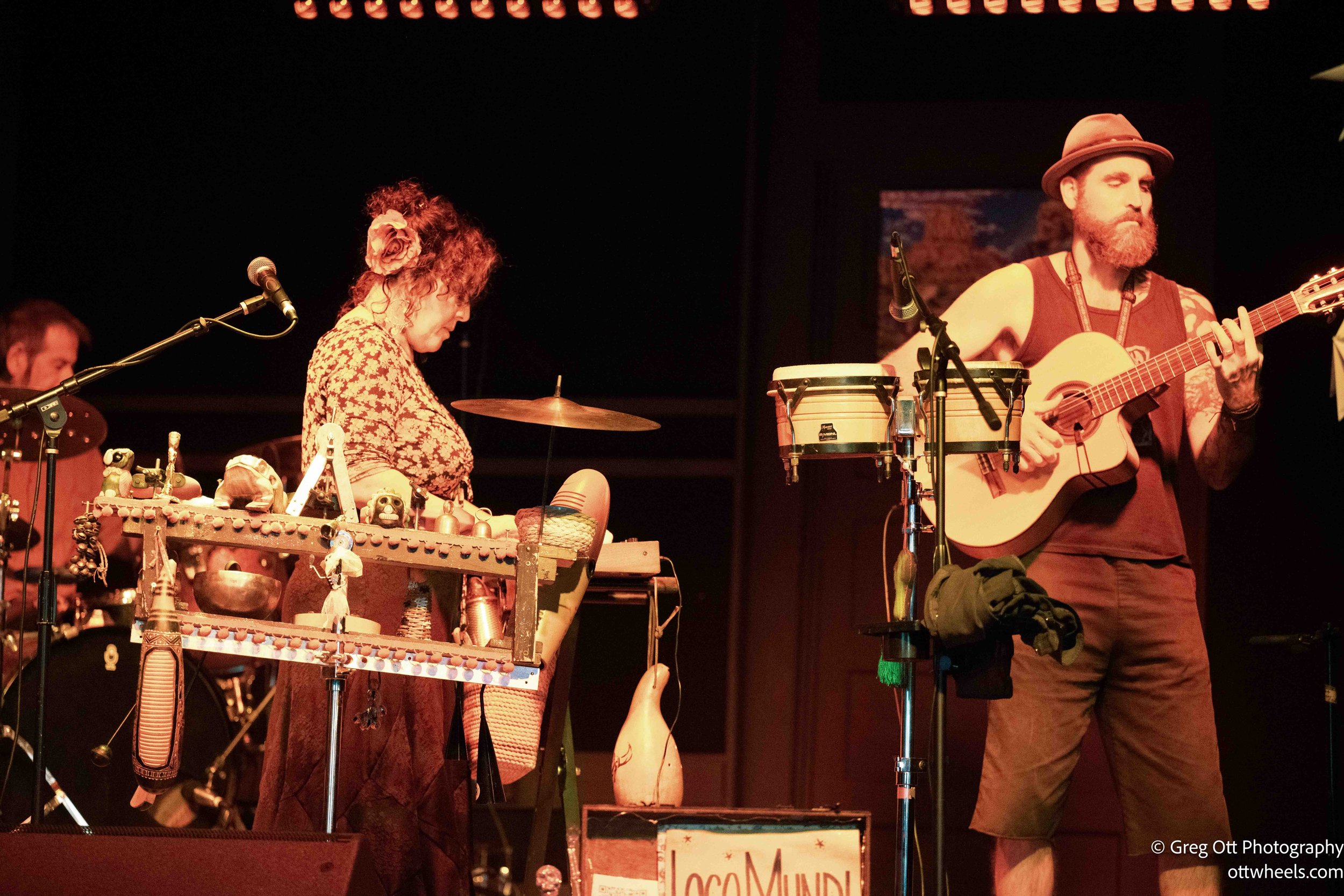
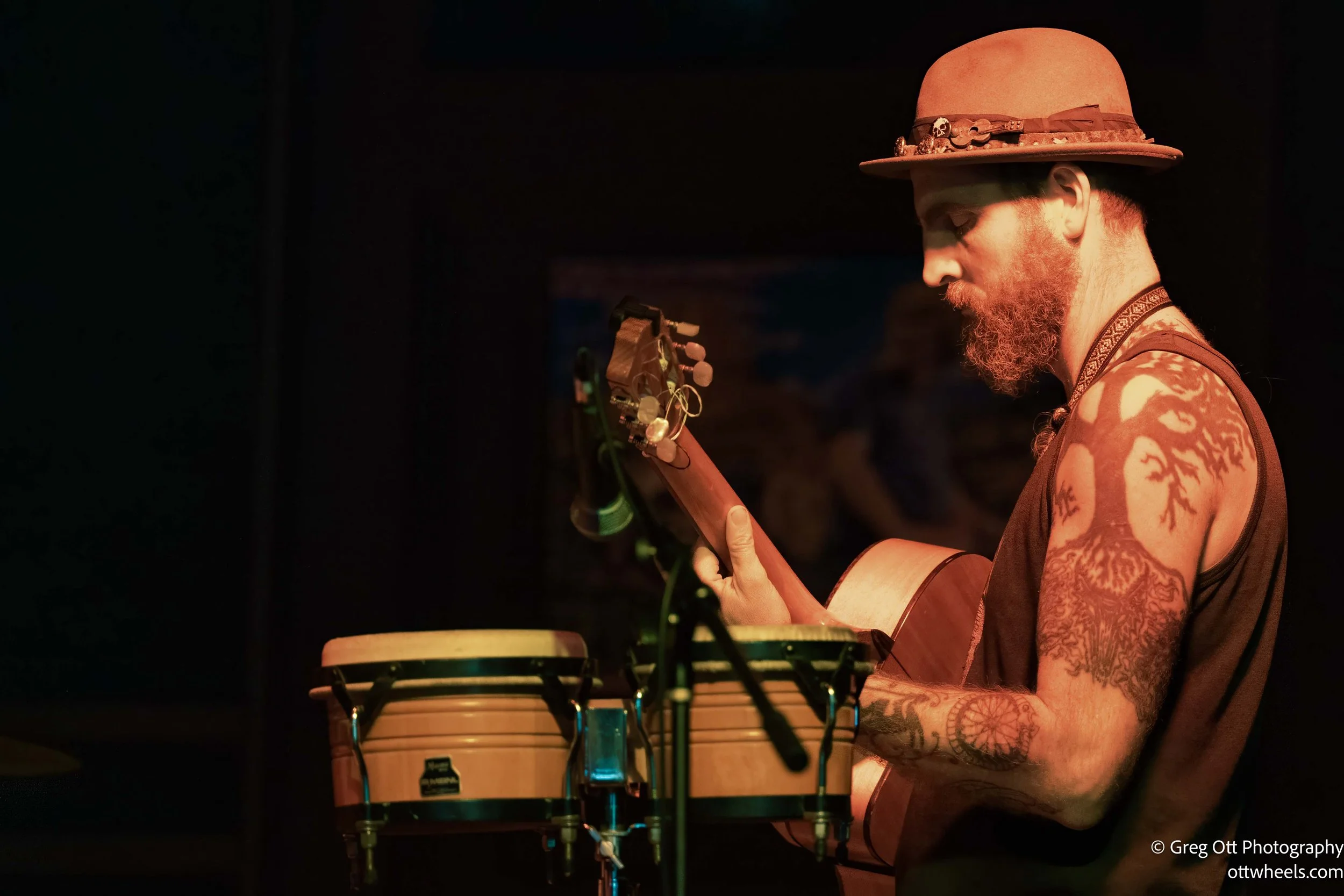
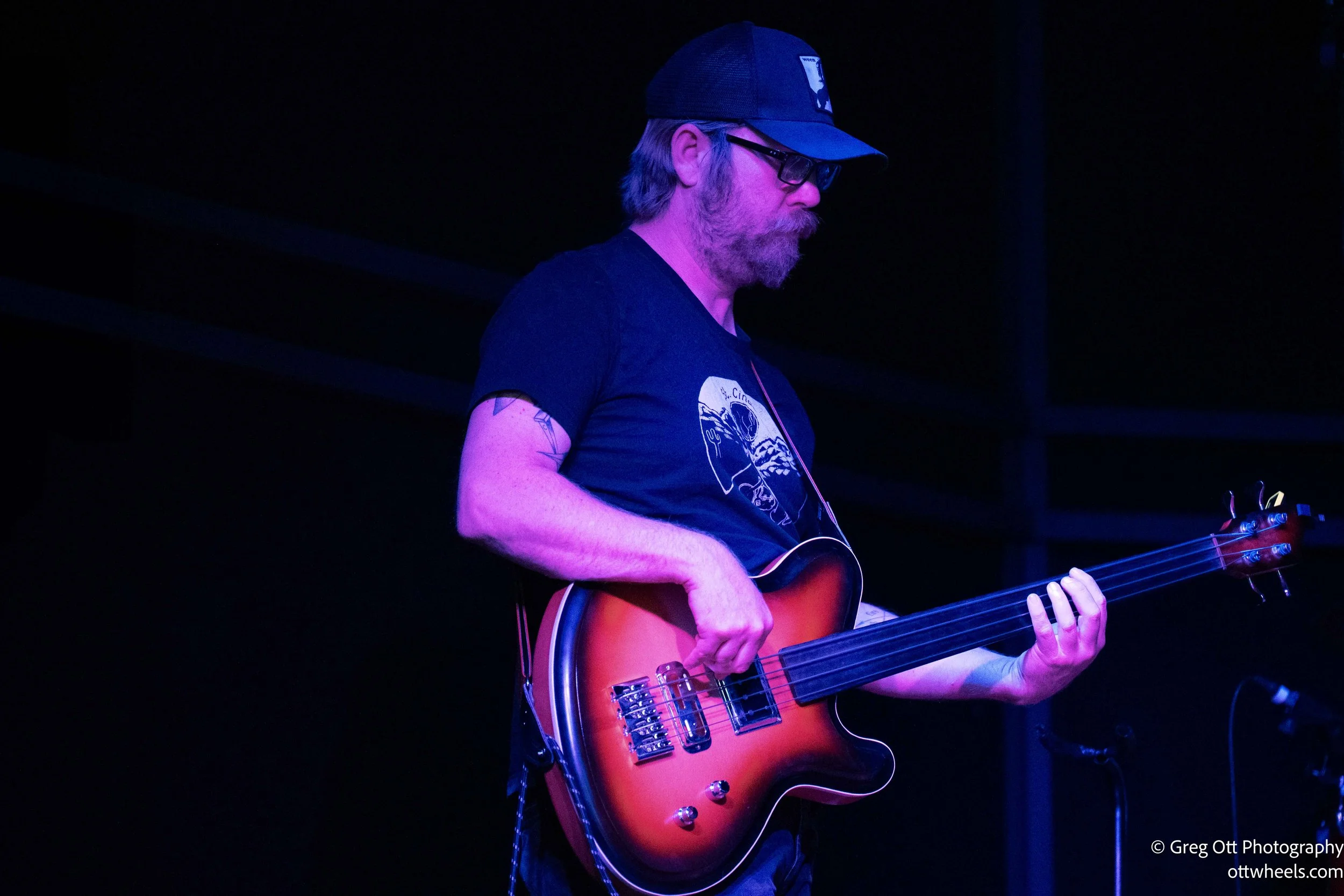
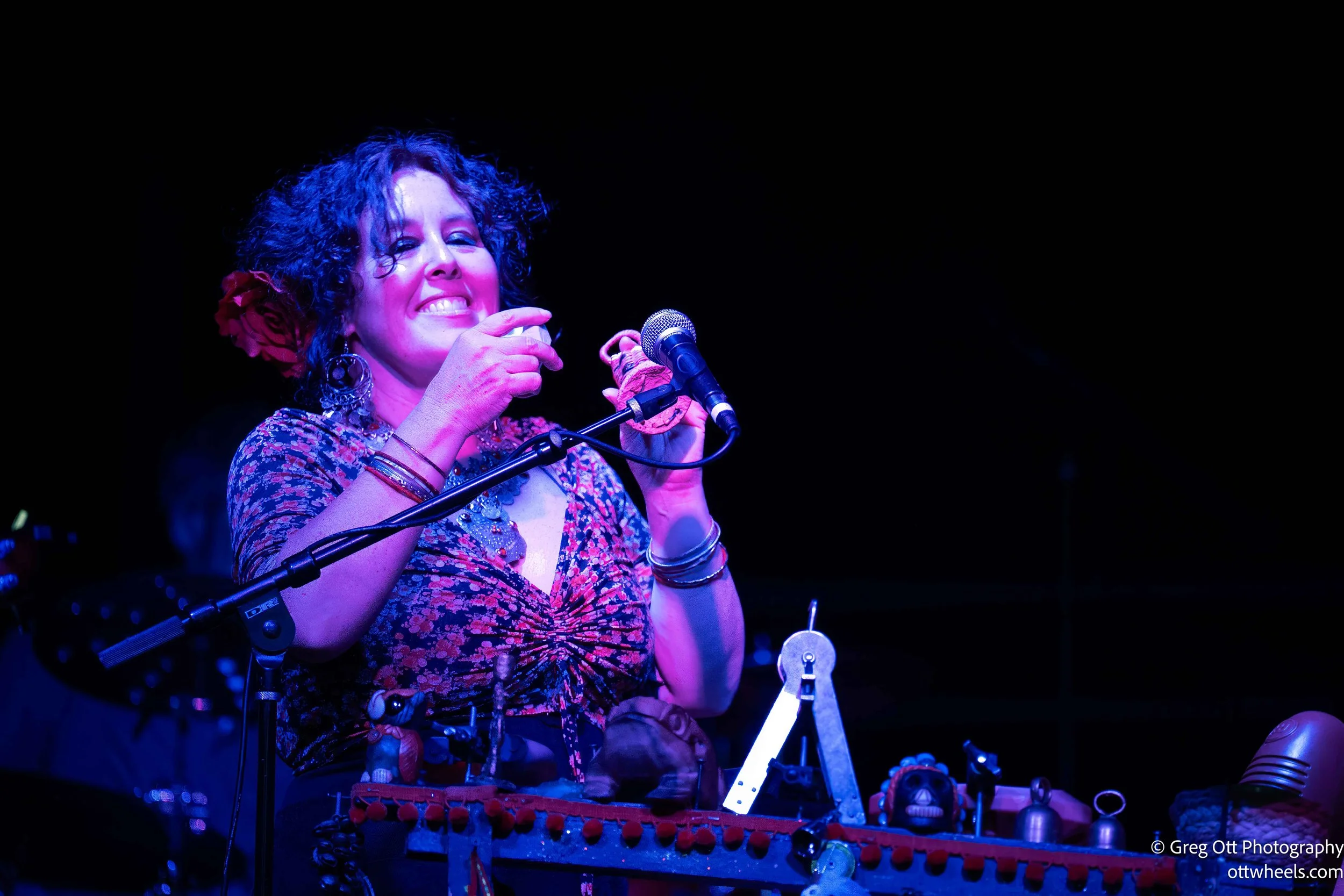
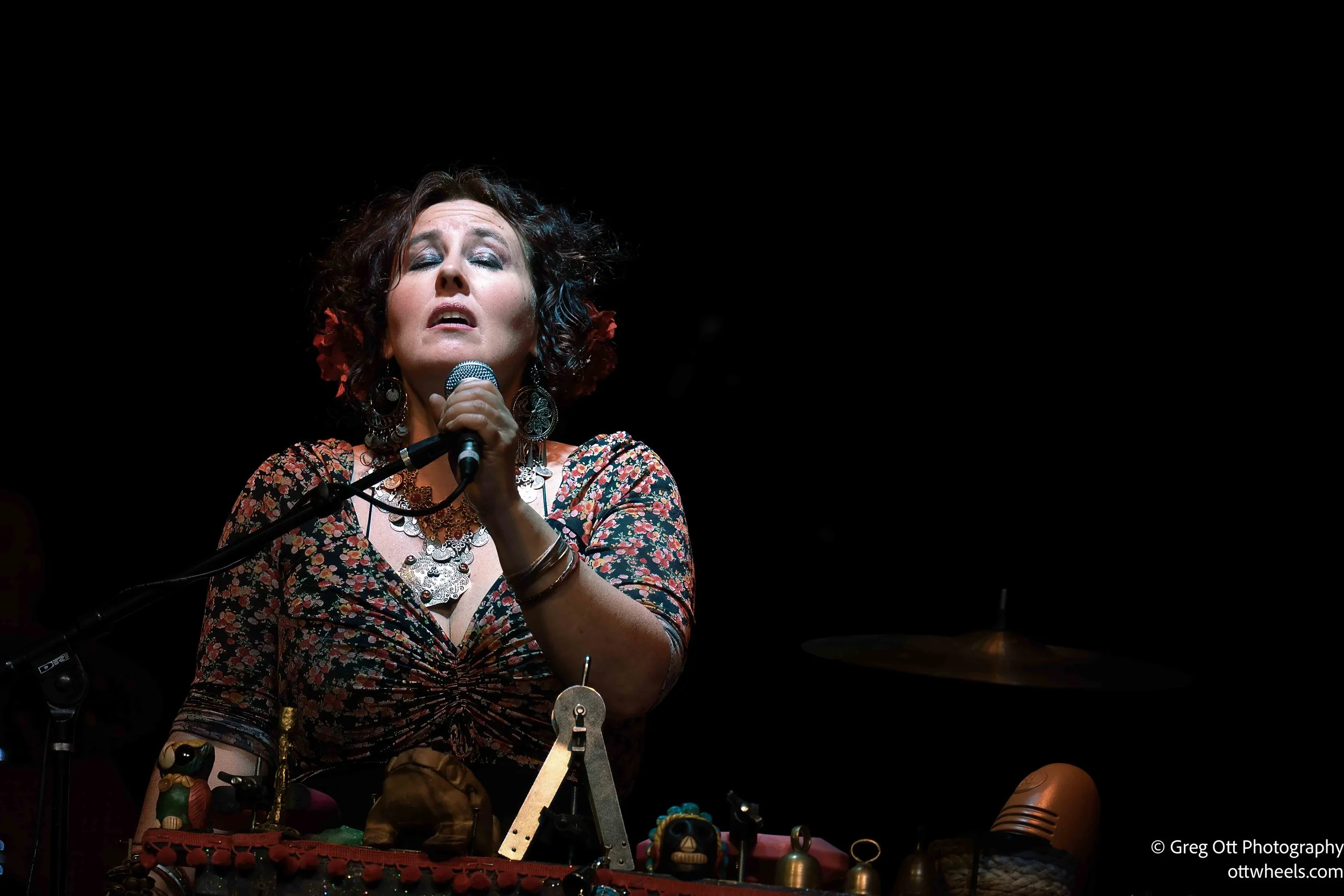
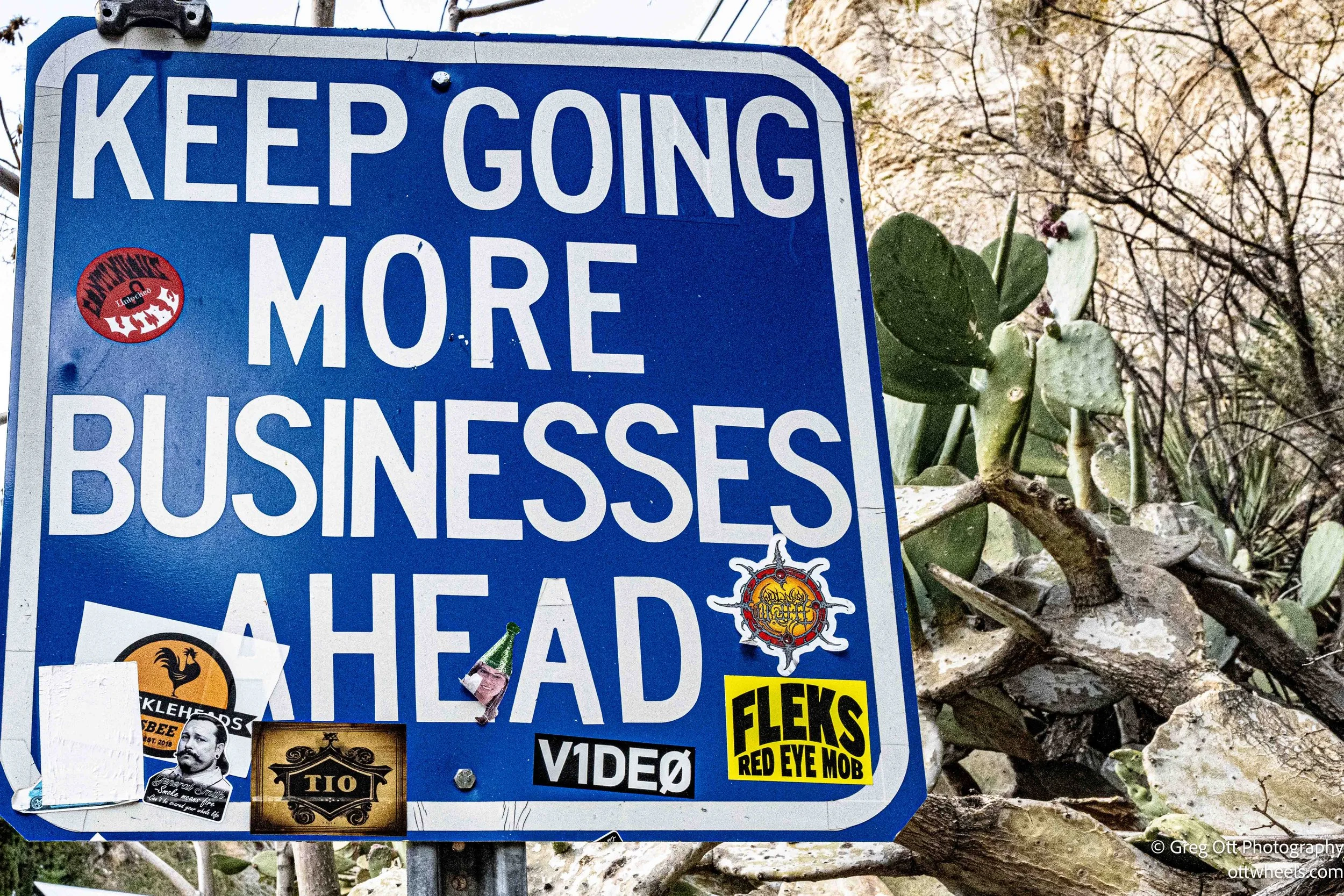
By 5:30 the light began to soften and a cool breeze moved through Main Street. A sign read, “Keep Going, More Businesses Ahead,” but it felt like the right moment to turn back.
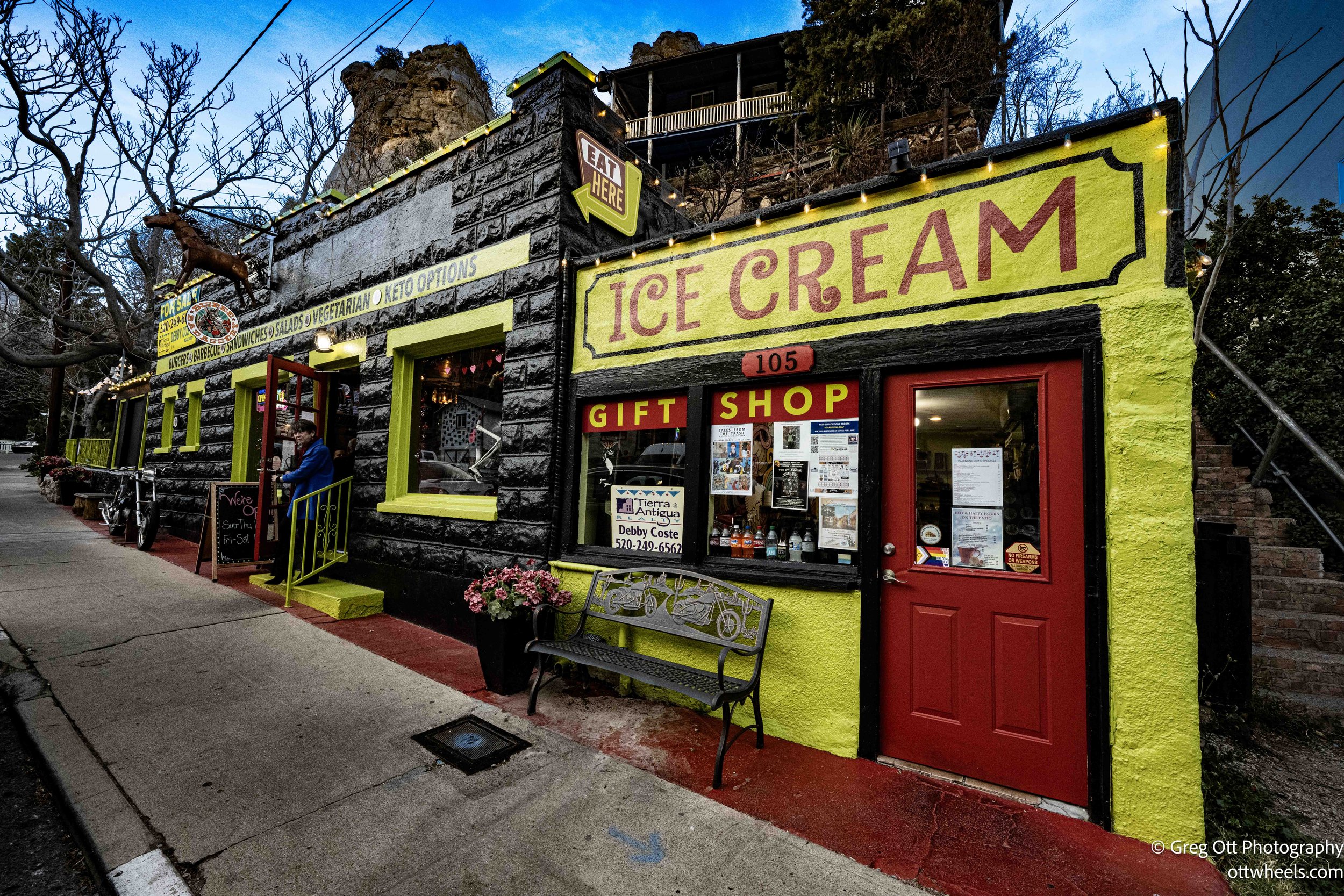
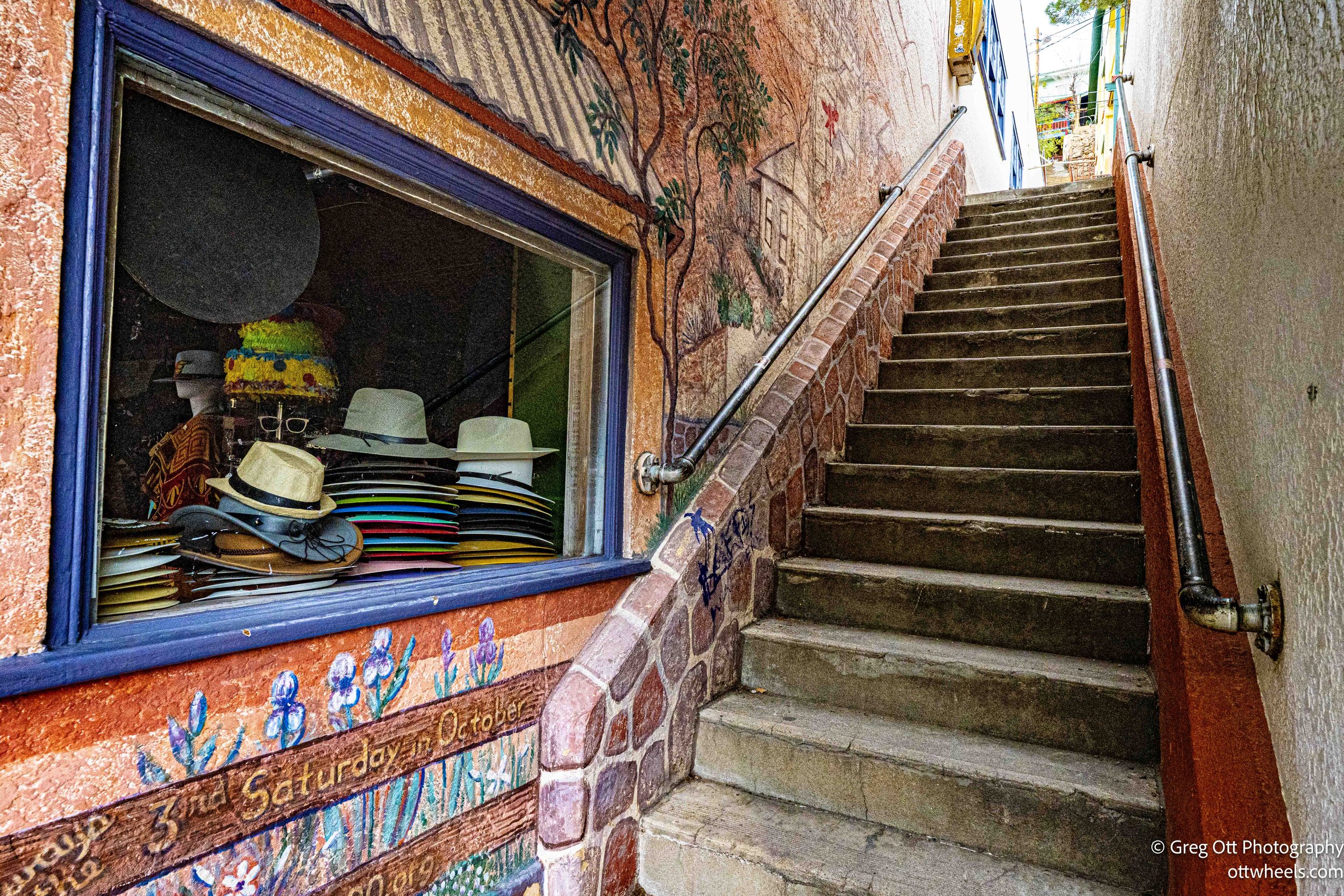
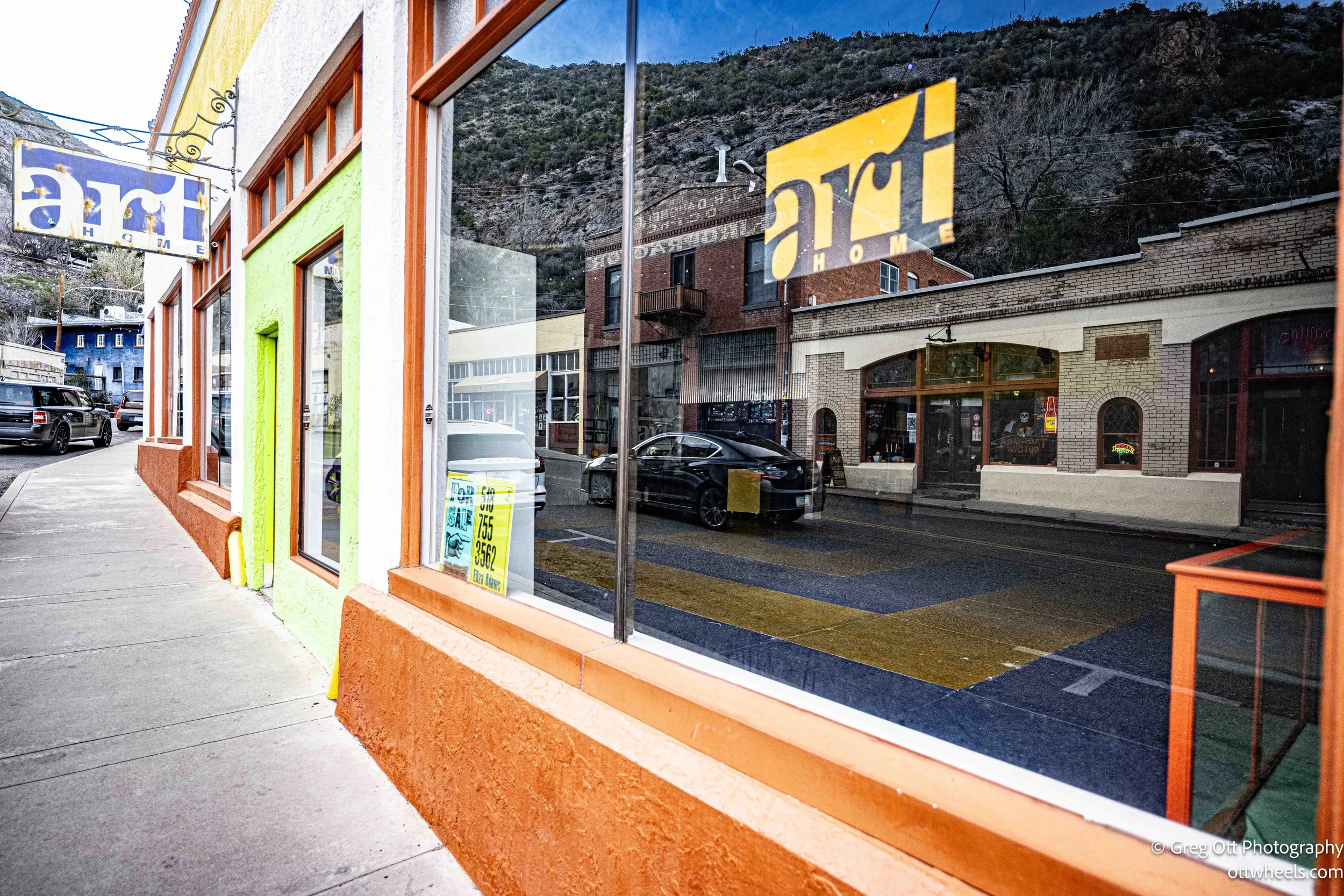
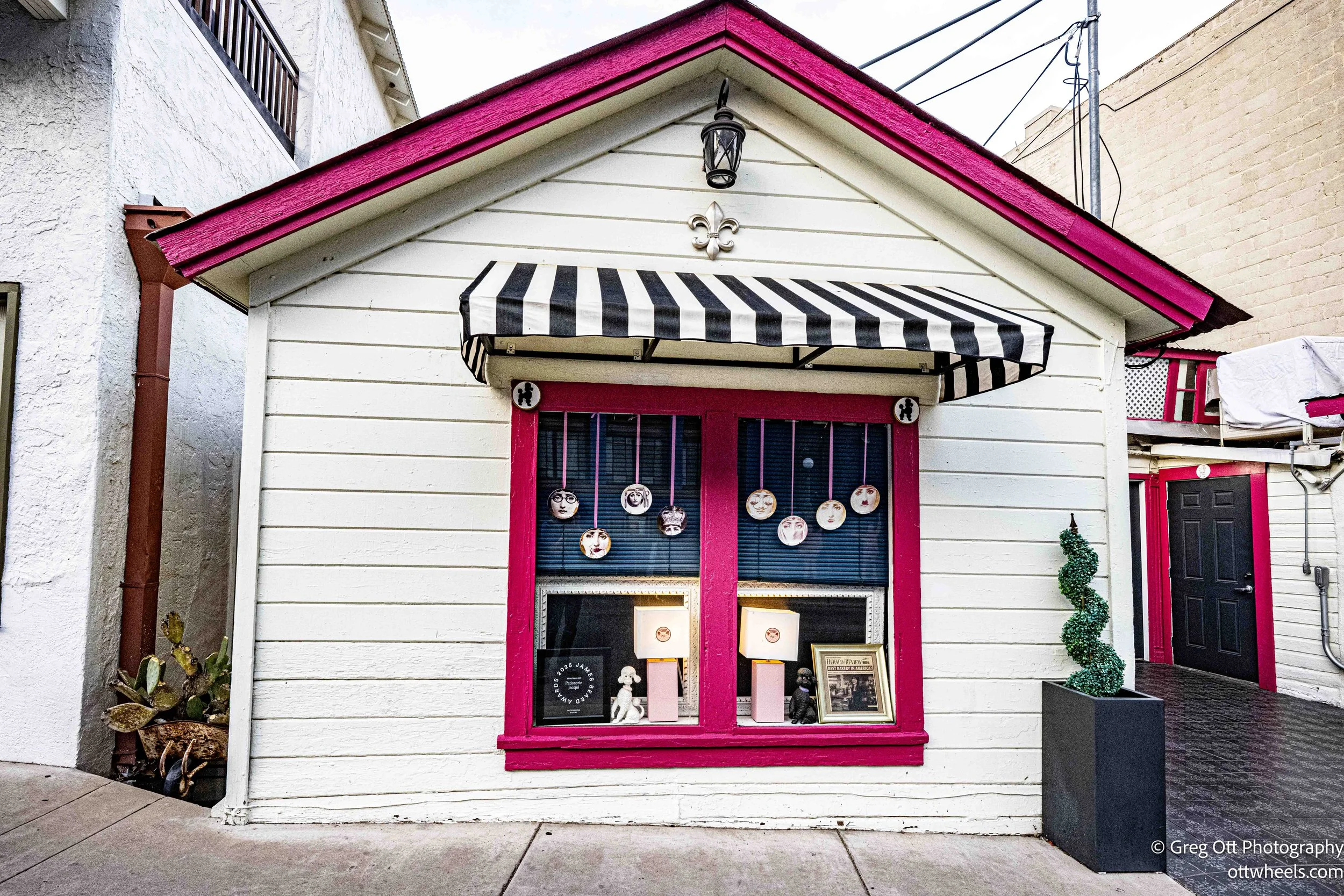
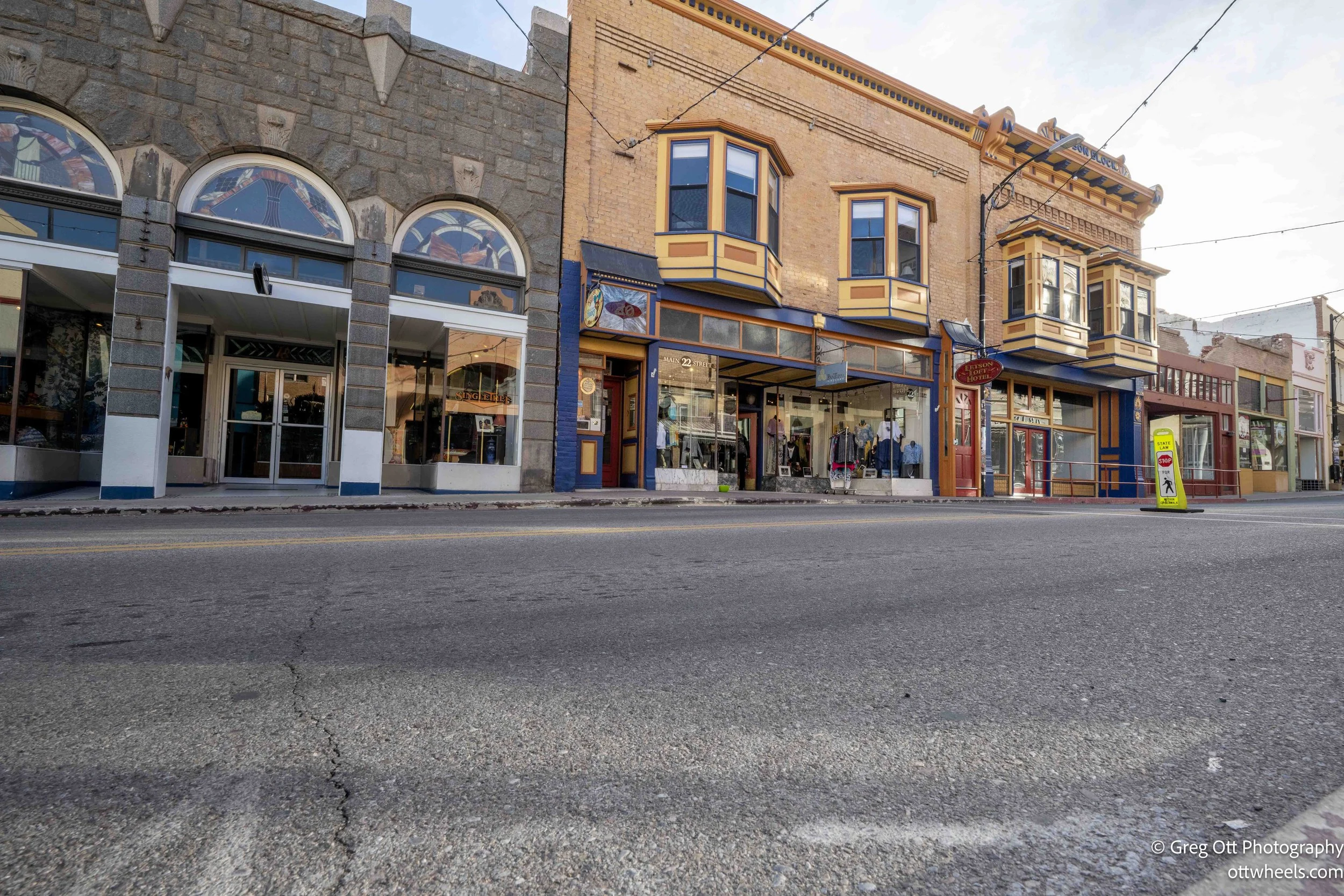
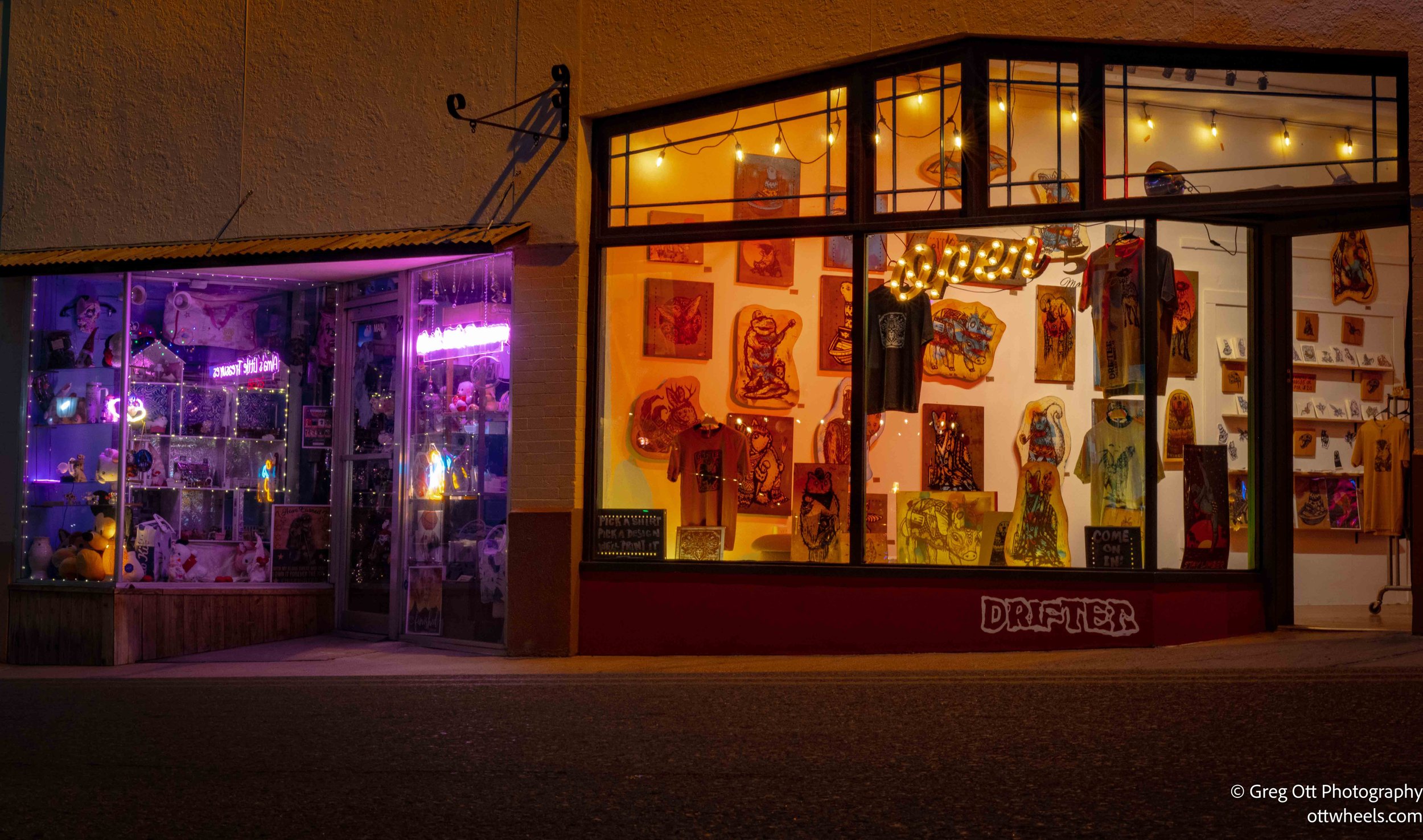
I stopped to capture a few shop windows, and that turned into its own little project. The first one I photographed had a deep purple cast spilling out into the street, almost like stage lighting. It lit the sidewalk and the building across from it with this soft violet glow, changing the entire feel of that section of Main Street. A few doors down, another window was filled with stuffed characters arranged in a way that felt slightly surreal — not quite playful, not quite unsettling, just unexpected. Other windows were layered and eclectic, packed with vintage clothing, odd antiques, handmade jewelry, old signage, and objects that didn’t necessarily belong together but somehow worked. Each storefront felt like a small curated scene, and with the street nearly empty, I could take my time composing each one without someone stepping into the frame.
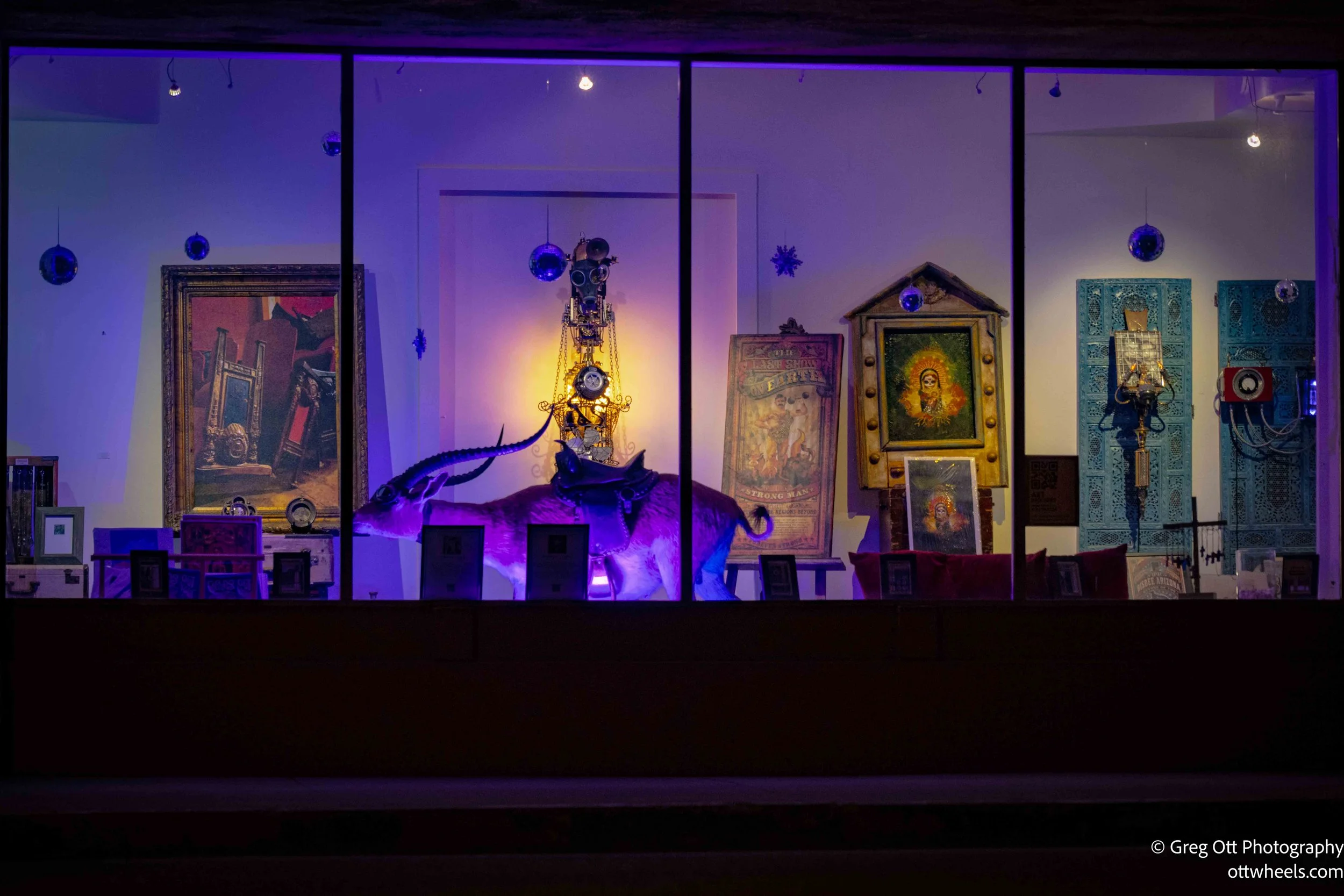
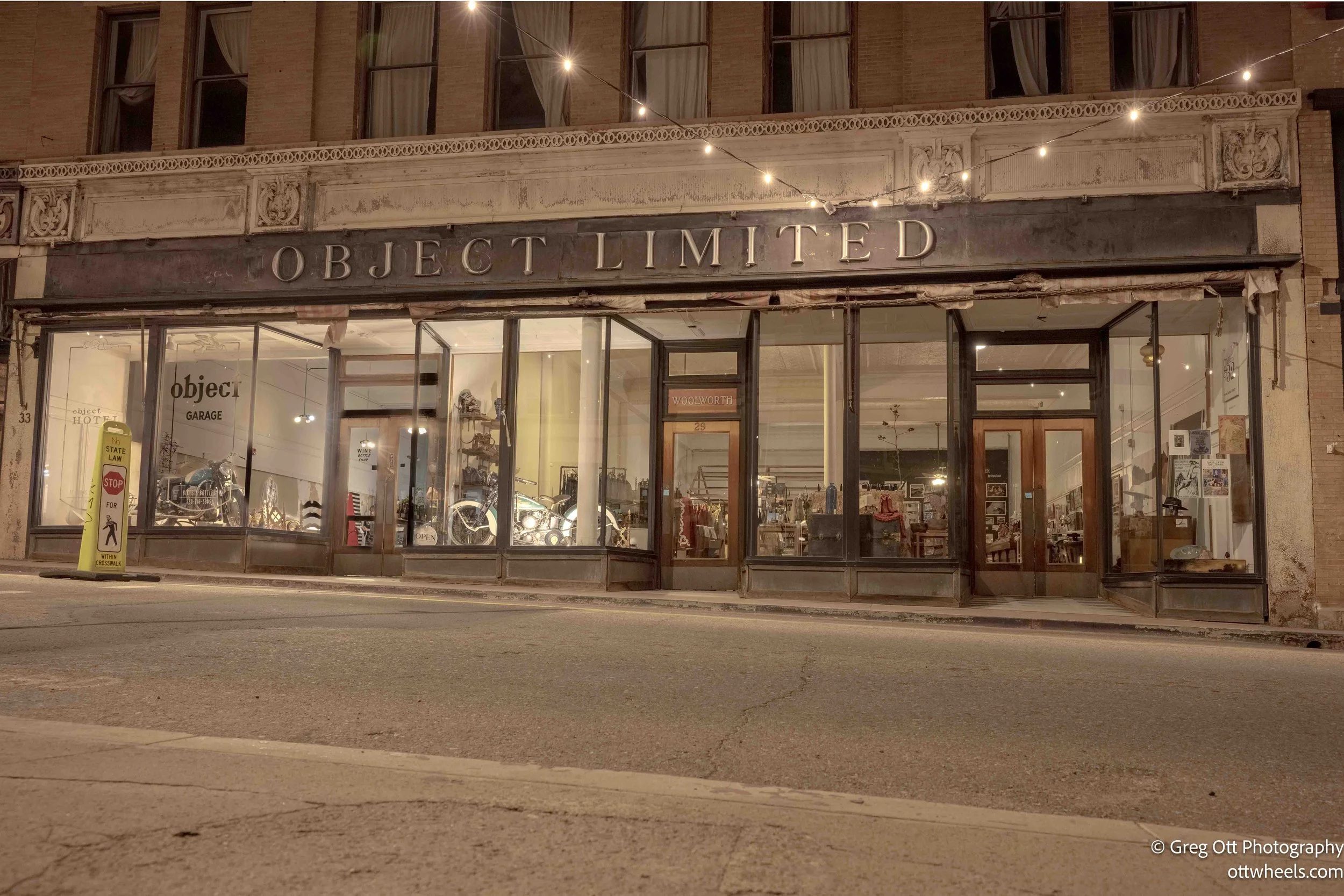
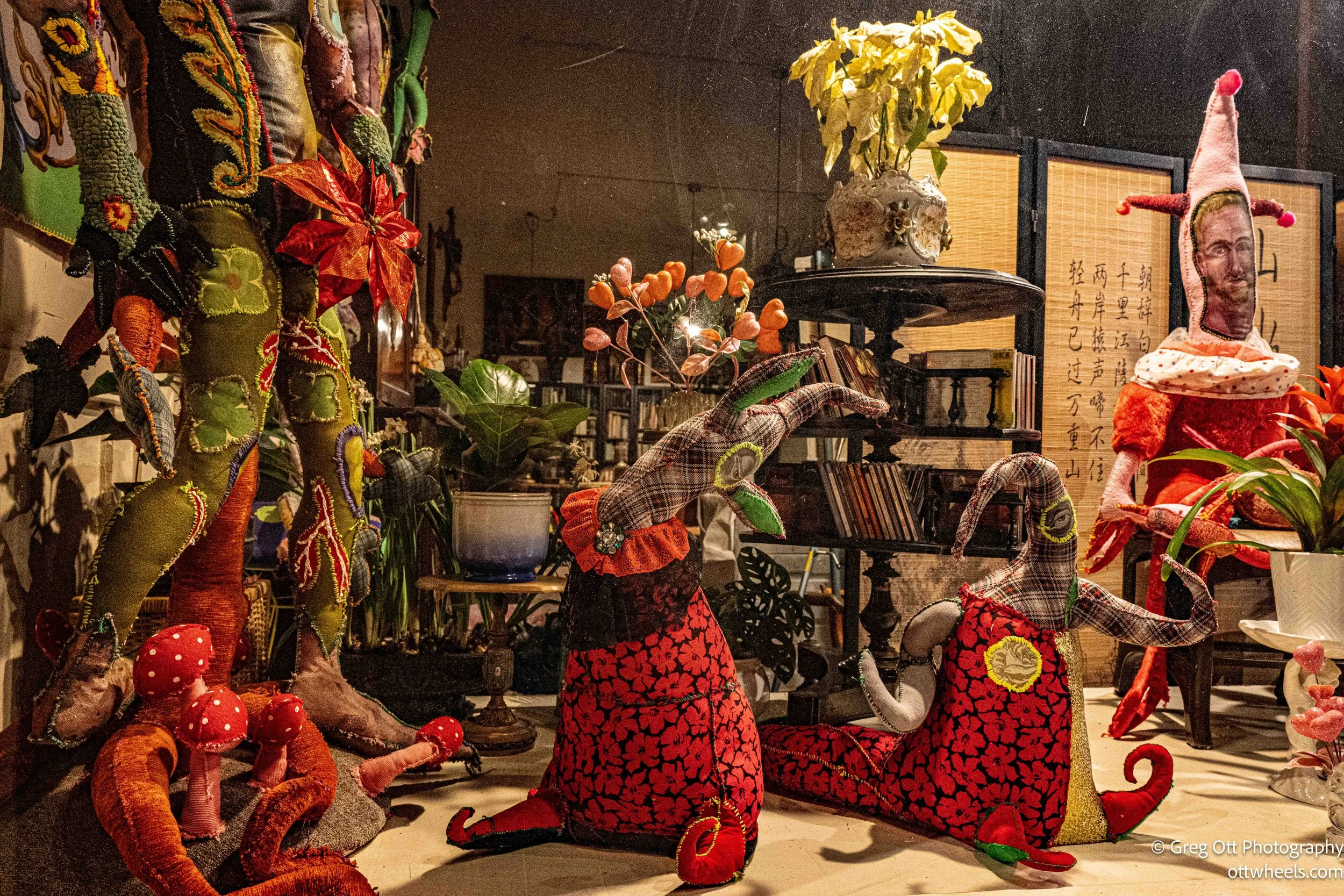
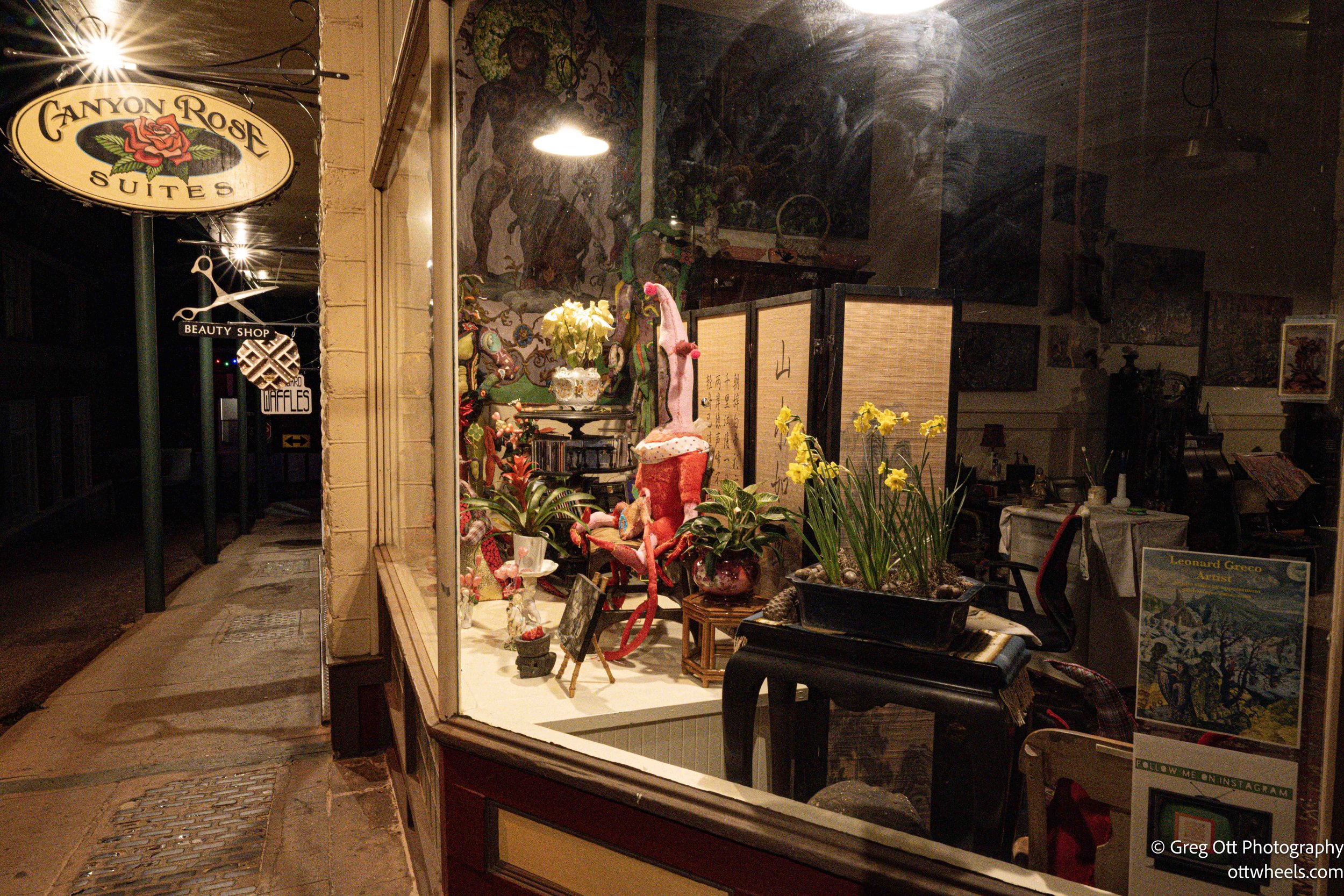
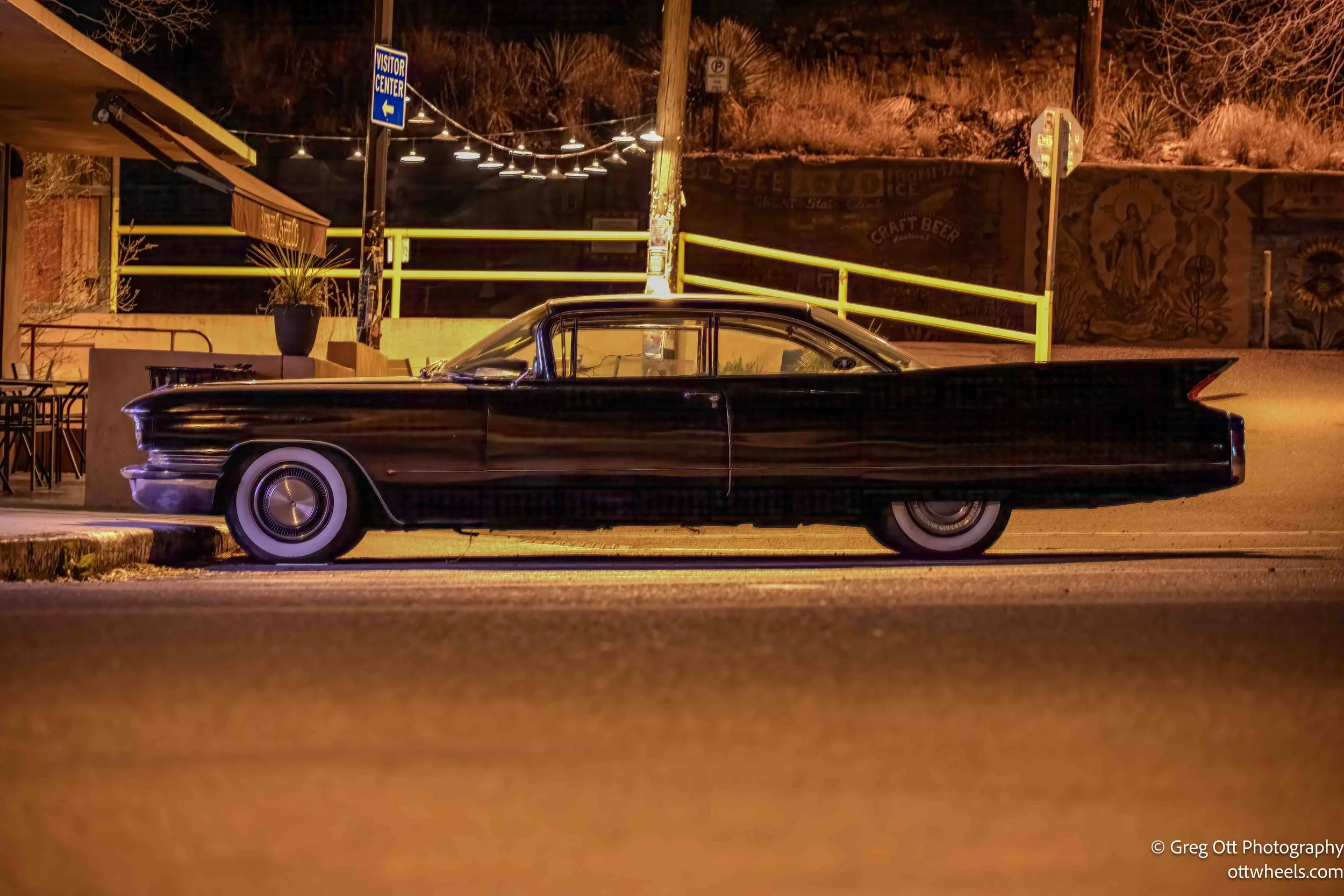
The antique car with the big fins had been sitting in front of the Bisbee Coffee Company all day, but now the cars that had been blocking shots earlier were gone, and so were most of the people. The street felt open in a way it hadn’t all afternoon.
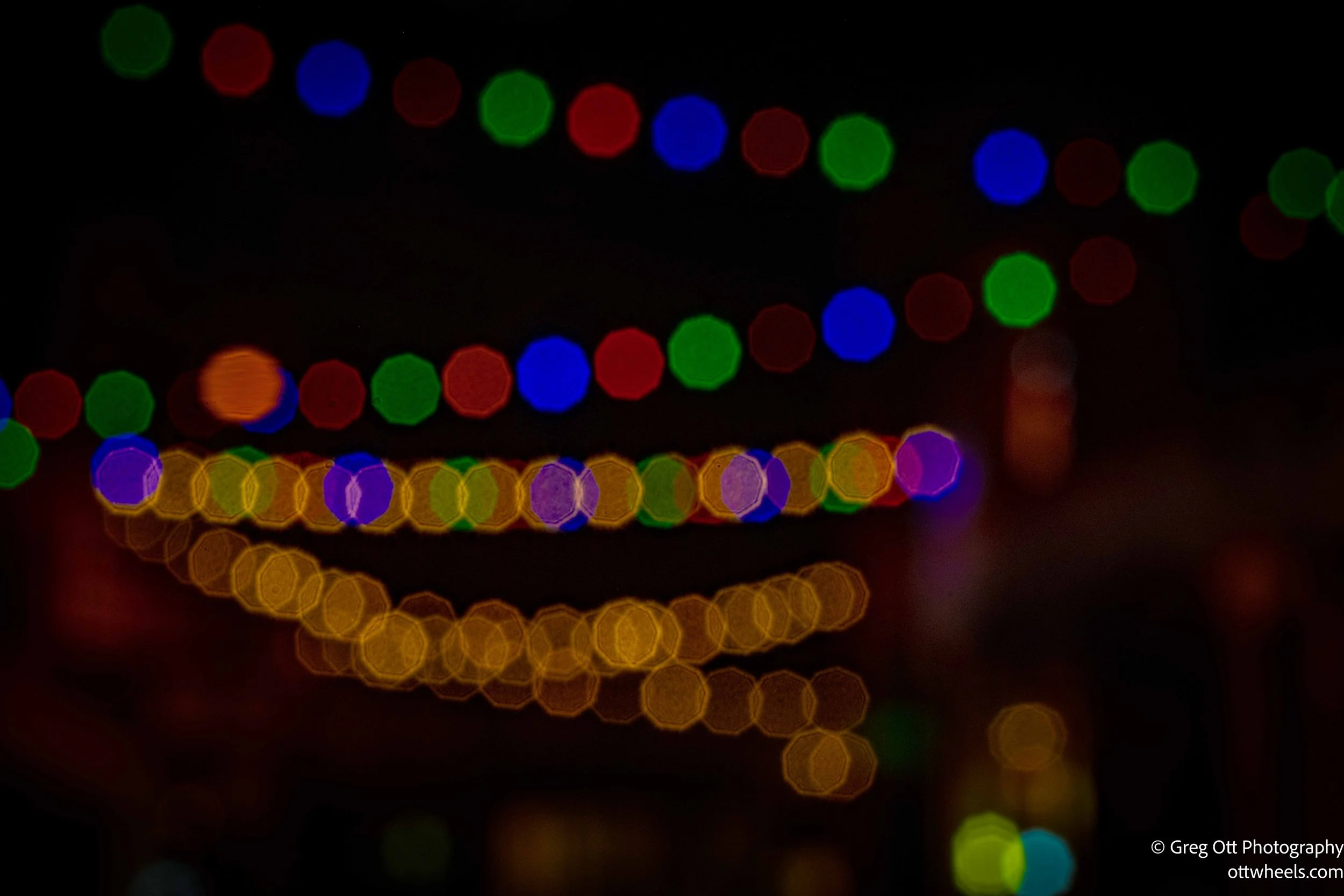
With the sidewalks nearly empty, I was able to set up for long exposures without anyone walking through the frame. I used the tail lights of passing cars to add a little movement and played around with out-of-focus shots of the street lights, which seems to be the popular thing to do these days. It felt different photographing the same street at night — quieter, slower, less distracted.
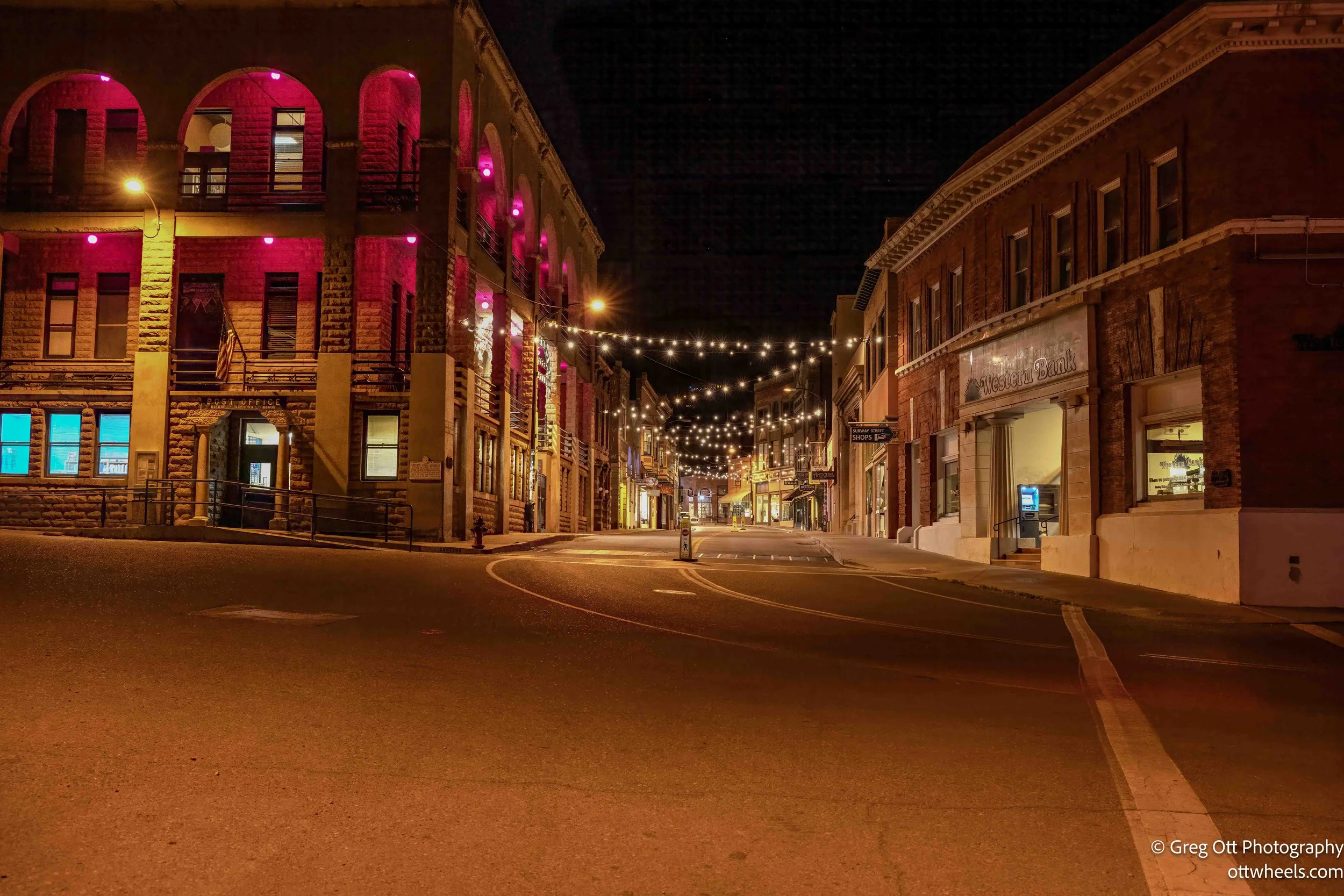
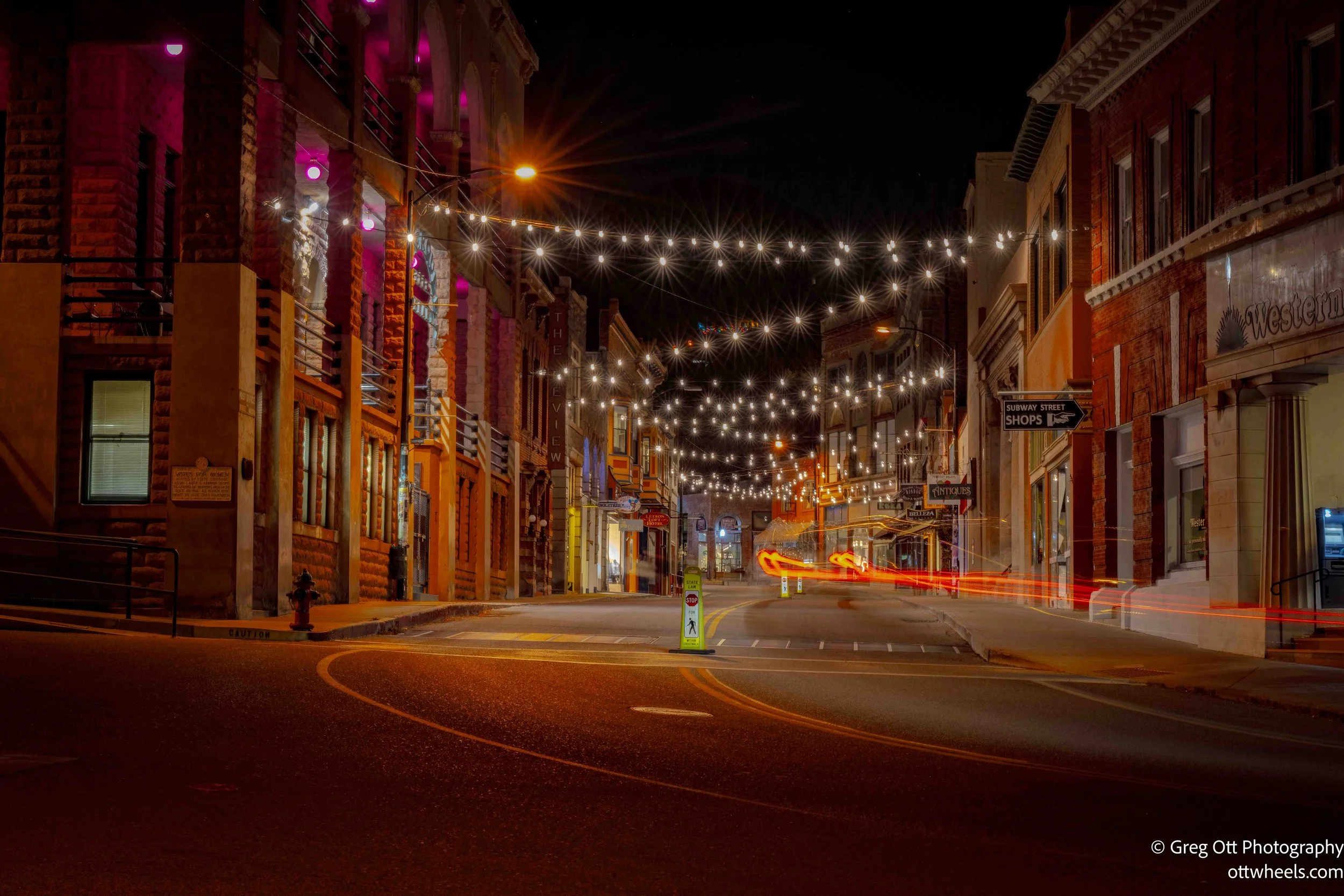
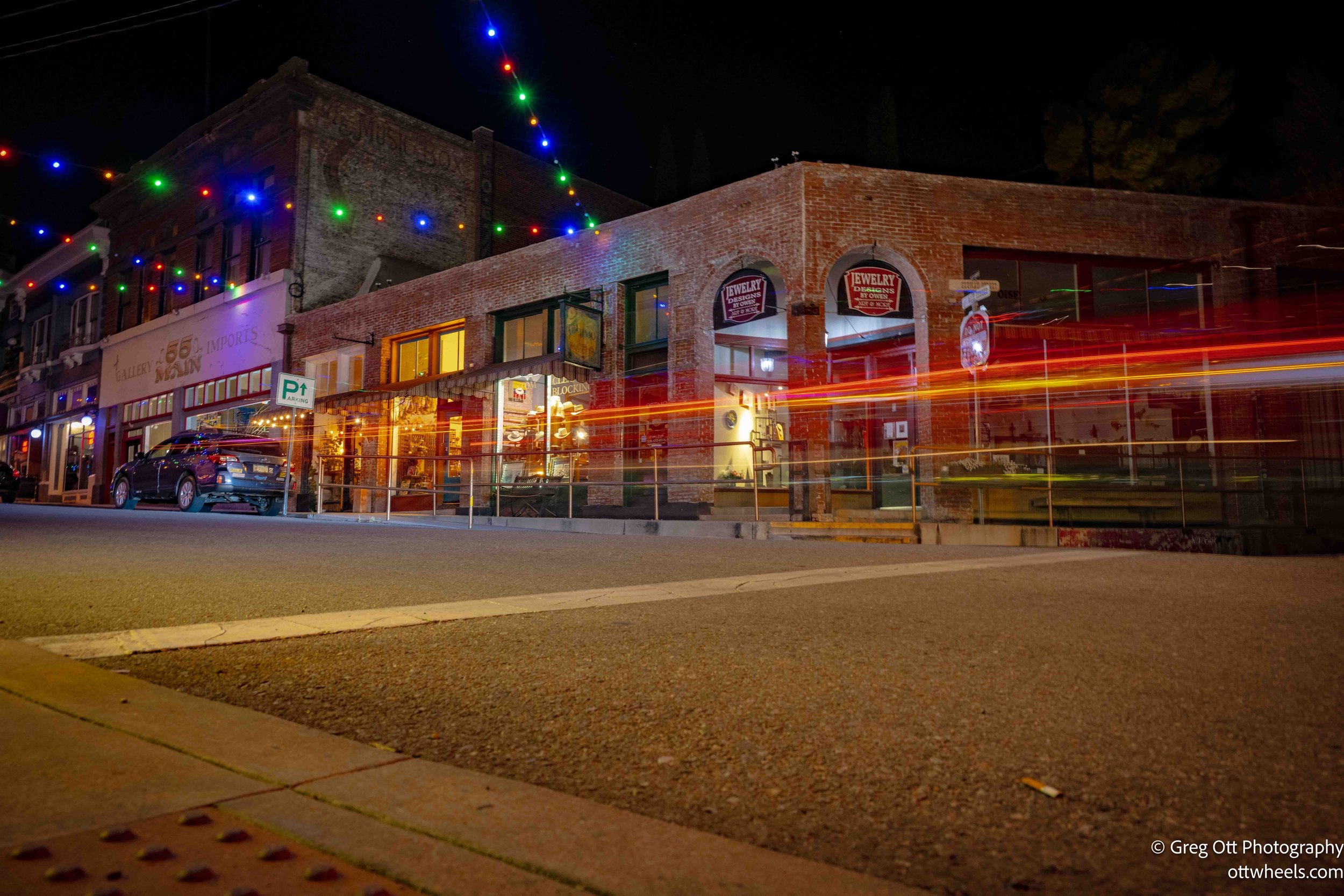
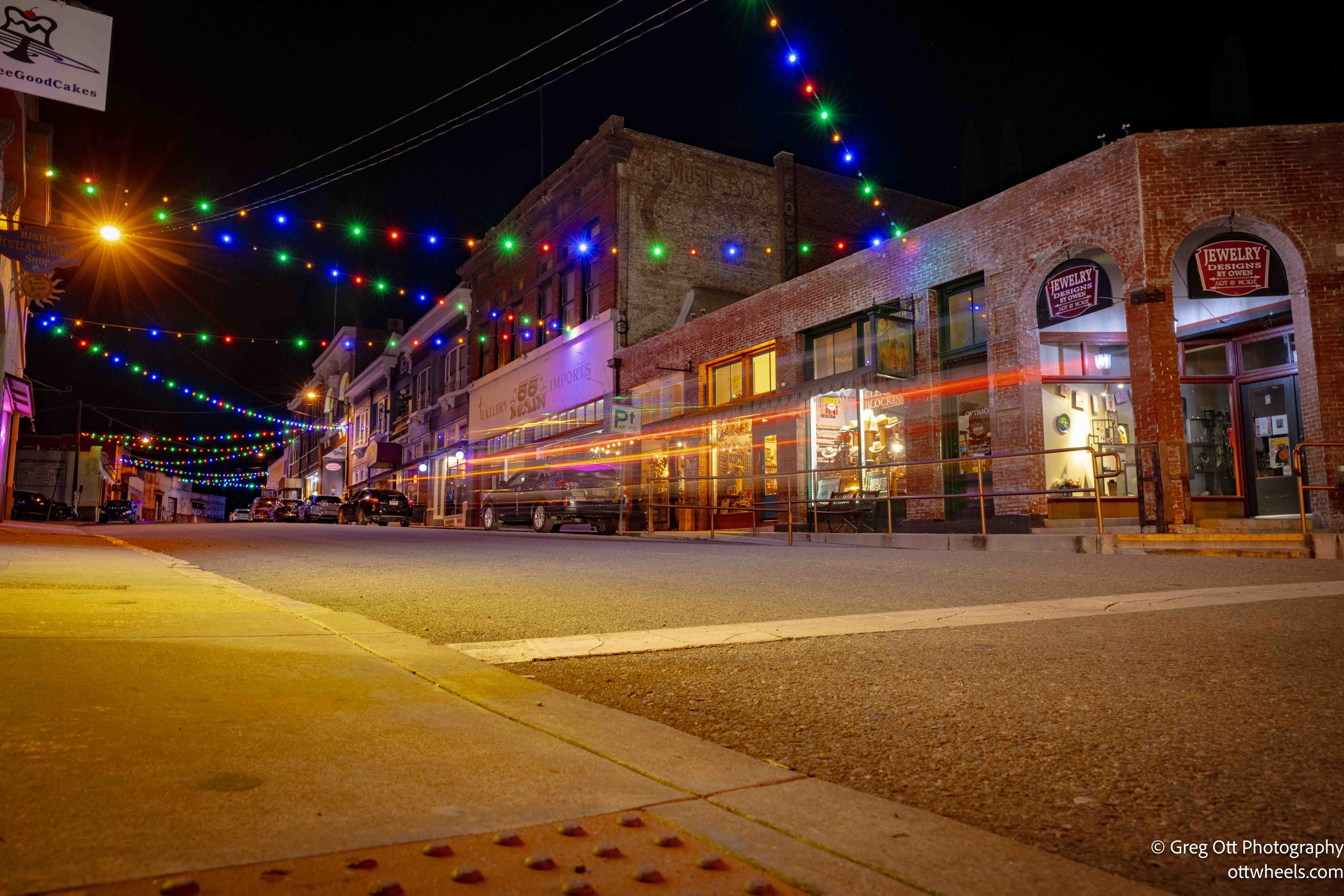
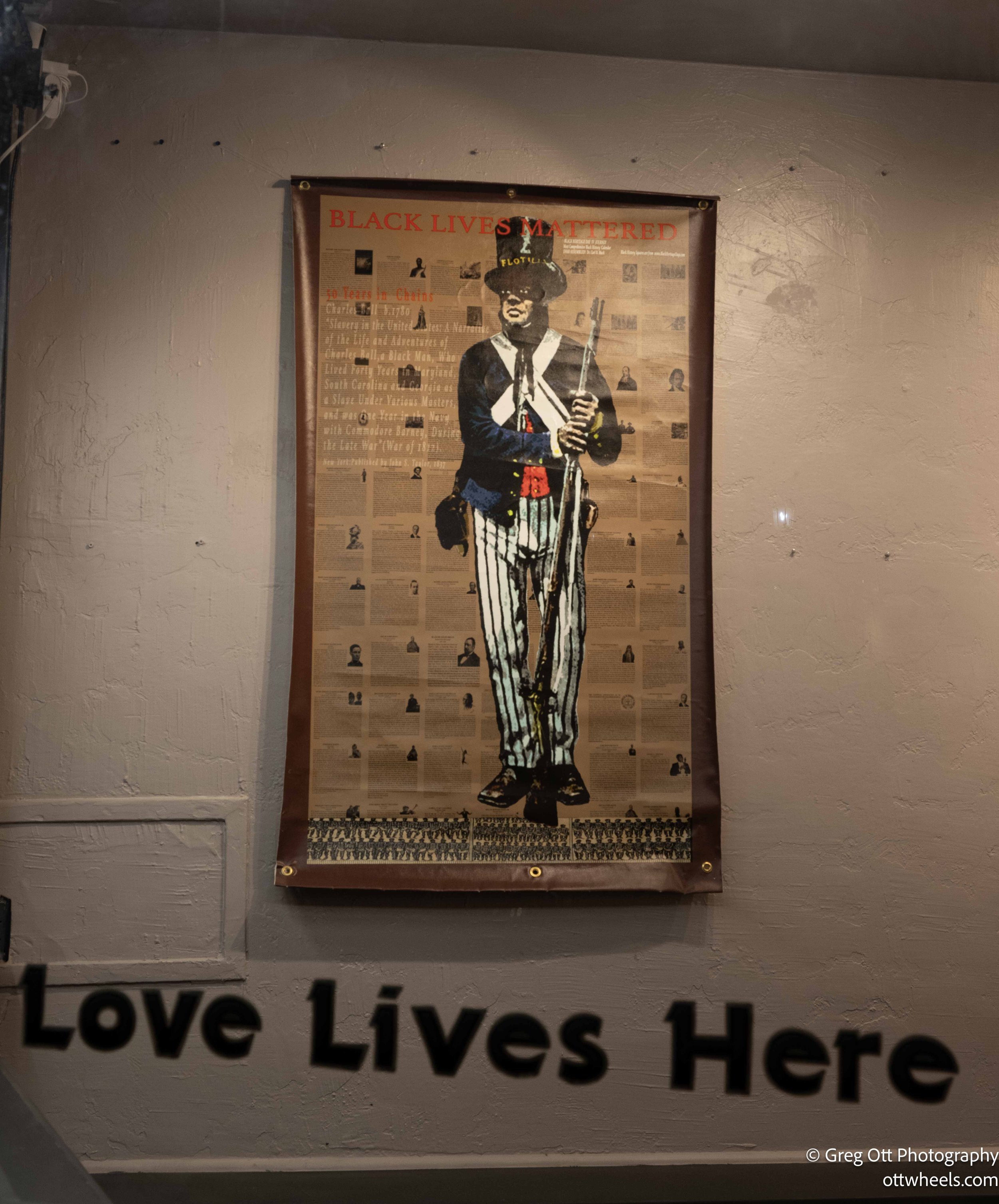
As I headed back, I passed a building with a single art piece inside and the words “Love Lives Here” painted on the window. The rest of the shop was empty. I’m not sure why, but I liked the feel of it as I turned around and made my way back toward the van. The whole town had settled into a calm rhythm. The streets were nearly empty except for a man wrapped in a large white Indian blanket who kept talking to himself. Clearly troubled, but his voice had a tone to it — almost like Gil Scott-Heron — and even the nonsense he was saying sounded strangely poetic in the quiet.
Back at the van, I considered staying right there. It was quiet. A couple of other vans were parked nearby. Plenty of out-of-state plates. But the van wasn’t level. I drove five minutes to a flat street near a park in a quiet neighborhood, filled up at a nearby gas station, and settled in for the night.
Bisbee doesn’t try to impress you. It just layers itself — mining history, staircases, murals, music, opinionated locals, deer eating cactus in someone’s yard. It’s visually dense without feeling forced. And by the end of the day, I realized I had only seen a fraction of it.