Denali National Park
The night before, I met Mike and Andrea from Idaho at the gravel pit outside Talkeetna. They were traveling with their 12-year-old dog, who didn't seem thrilled when I pulled in. I walked over to introduce myself anyway, and within about 30 seconds the dog decided I wasn't a threat, settled back onto its blanket, and ignored me for the rest of the evening.
Mike and Andrea were fascinating people. Andrea was / is a veterinarian, Mike sold pet food, and both are small-airplane pilots who post videos on YouTube. They have traveled extensively, and Andrea was full of stories about Hawaii and the South Pacific. She grew up in Hawaii, lived in Samoa, and has visited Tahiti, Bora Bora, and several other islands. They were traveling in a Ford F-150, sleeping in the bed of the truck with a collection of storage boxes that they unpacked each evening. They preferred keeping things simple and had no interest in owning a camper. It was one of those conversations that could have easily lasted another few hours, and I only hoped I hadn't talked their ears off.
Back at the van, I cooked a salmon burger with wild rice and asparagus. It was an easy dinner, and after spending so much time talking, I wasn't in the mood to do any writing. Around 11 p.m., I called it a night.
August 2nd - Heading to Denali
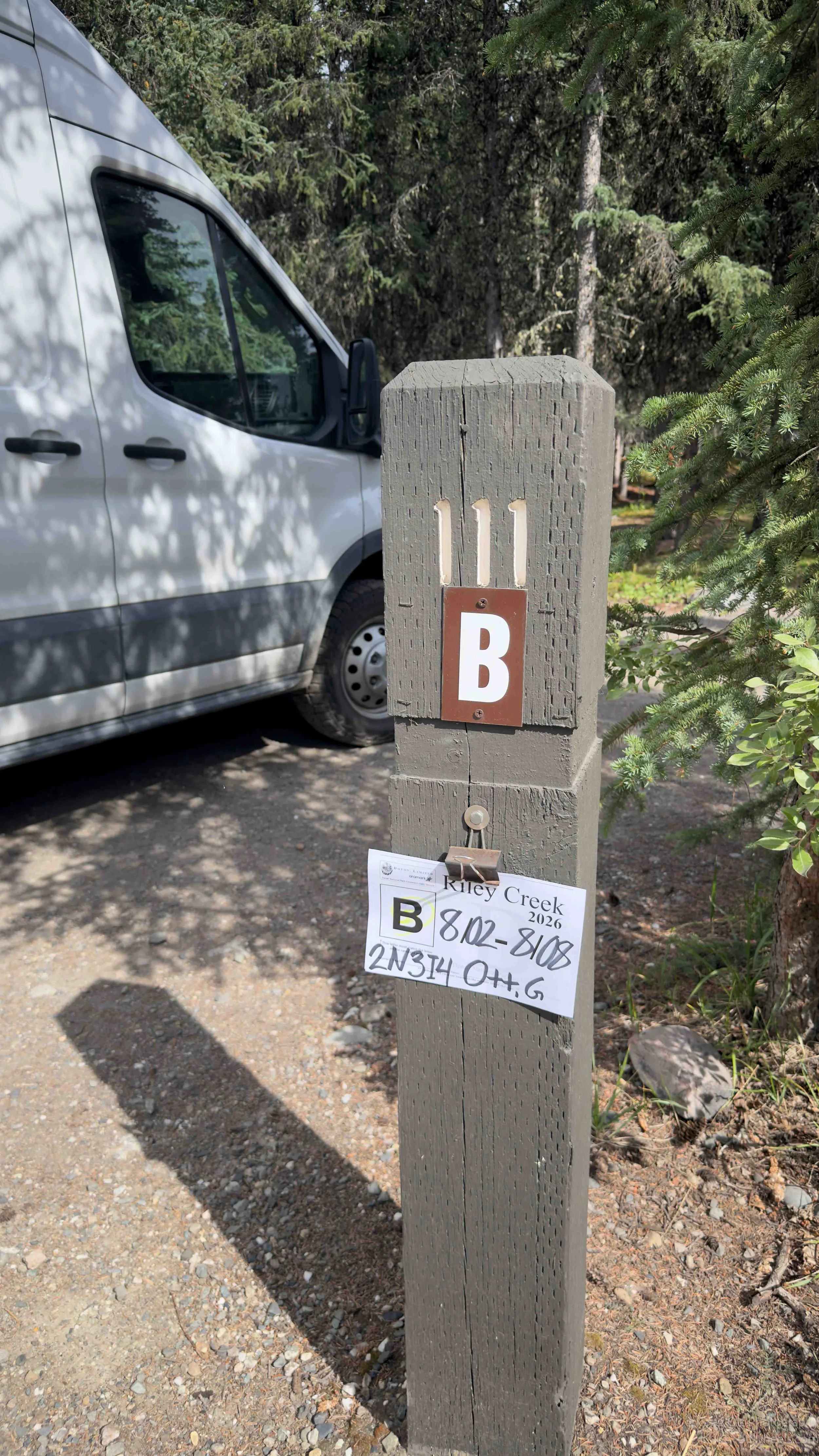
I had reservations at Denali National Park and Preserve (Riley Campground) from August 2 through August 8 (I extended it another day to the 9th), so it was time to leave one of my favorite gravel pit campsites. It had been remarkably quiet, and over the past several days I had met so many interesting, like-minded travelers. As I drove out of the Talkeetna area, I looked one last time for the neighborhood moose that had become something of a local celebrity, but he wasn't around. I left with a lot of good memories from this stop.
Before turning north onto the Parks Highway, I stopped for coffee at KBC Brothers and then filled up the van across the street at Shell. I also tried calling my brother to check in, but he didn't answer, so I continued north toward Denali National Park and Preserve.
The drive is about 152 miles, just under three hours, although it took a little longer because I encountered five separate road construction zones. I was surprised to see so many crews working on a Sunday. One thing I've noticed throughout Alaska is that many of the people handling the stop-and-slow traffic signs are women. On this sunny afternoon, with temperatures in the 60s, everyone seemed to be in a good mood. Nearly every flagger waved, smiled, or gave a thumbs-up as traffic passed by. They genuinely looked like they enjoyed being there, and that positive attitude was contagious.
About thirty minutes into the drive, my brother returned my call. We spent the next couple of hours catching up while I continued north. He was surprised to learn that I didn't have cellular coverage and that the call was actually running through Starlink over Wi-Fi. During my years in telecommunications, I learned that one-way latency above about 150 milliseconds starts becoming noticeable in a conversation, and by around 500 milliseconds (1/2 second), people begin talking over each other. Despite driving through some very remote country, I never noticed any delay at all. It's still amazing to me that I can have a crystal-clear conversation from almost anywhere in the world.
I arrived at the Riley Mercantile to check into the campground. We continued talking for a bit while I watched people come and go, most of them walking back out carrying campsite tags and, more often than not, an ice cream cone. I immediately knew I was in the right place. I was fascinated with all the different types of campers people had.
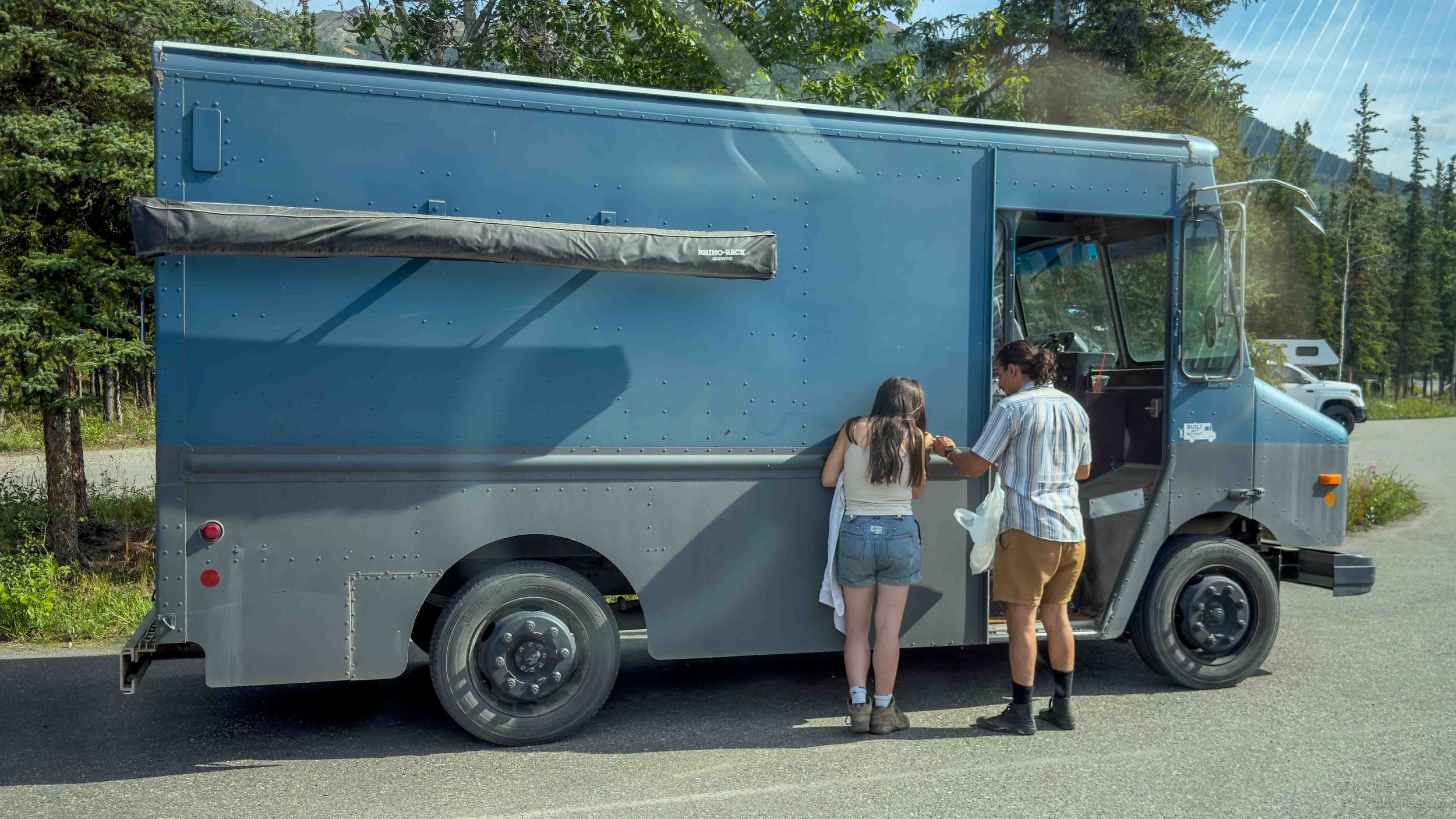
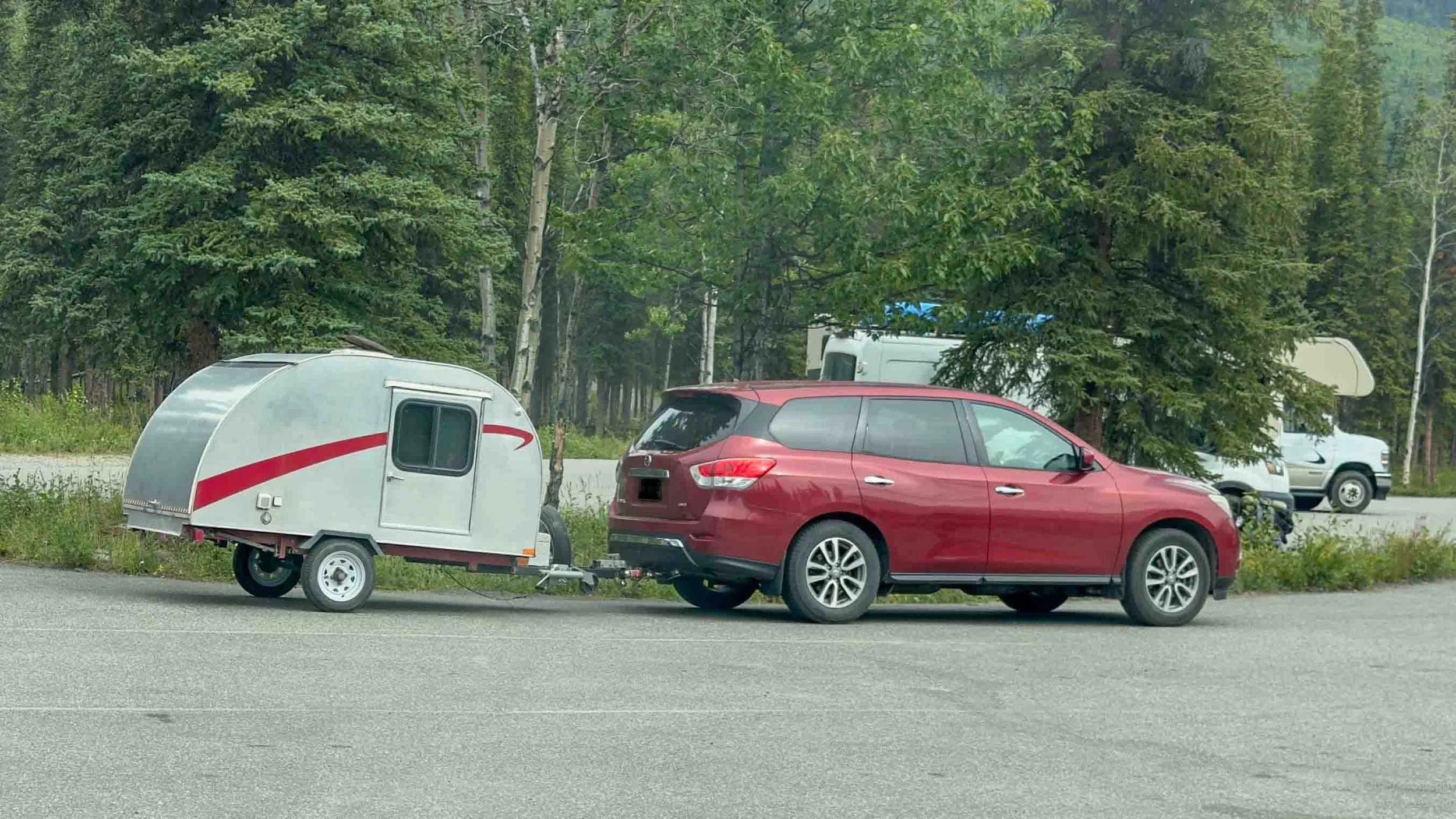
Inside, the Riley Mercantile serves as the main concessions area, with a small campground check-in desk tucked into one corner. The operation is run by an outside concession company rather than the National Park Service. As soon as I walked in, I recognized an accent I had heard many times already during my travels in Alaska. I looked at one of the employees and asked, "Bulgarian?" He smiled and laughed. "Yeah... how did you know?" I told him I'd met quite a few Bulgarians during my travels, and after hearing the accent a few times, it had become pretty recognizable.
While checking me in, one of the employees noticed that when I made my reservation I hadn't entered my America the Beautiful Pass information. She processed a couple of refunds that totaled more than $130. I smiled and said, "Well... I guess that means I can buy more ice cream."
The rest of the afternoon was spent settling into the campground. I found my campsite, filled the fresh water tank, emptied the toilet, and finally enjoyed a much-needed shower. The showers require tokens purchased at the mercantile, but when I turned on the water before inserting my token, hot water was already flowing. I figured I'd get cleaned up before anyone noticed. About seven minutes later I was finished, and I suspect the on-off valve had simply stopped working.
Later, I drove over to the visitor center, picked up several brochures, and found a sunny spot outside to read. Earlier in Talkeetna I had picked up a copy of the Denali Summer Times. It's not a National Park Service publication, but it was packed with useful information and turned out to be well worth grabbing. The National Park Service Brochures are a wealth of information and I enjoy reading everyone of them.
After about forty-five minutes of reading and enjoying the sunshine, I stopped at the information desk and met Ranger Kate. As we talked, I learned she had studied biology, geology, and physics, making her a wealth of knowledge about the park. By the time our conversation ended, I had a much better idea of how I wanted to spend the next several days. She recommended the East Fork guided hike, a ranger-led trip limited to twelve hikers that cost $33.50. I signed up for the following morning, and it ended up being one of the highlights of my all time favorite hikes. I'll save that story for my next post.
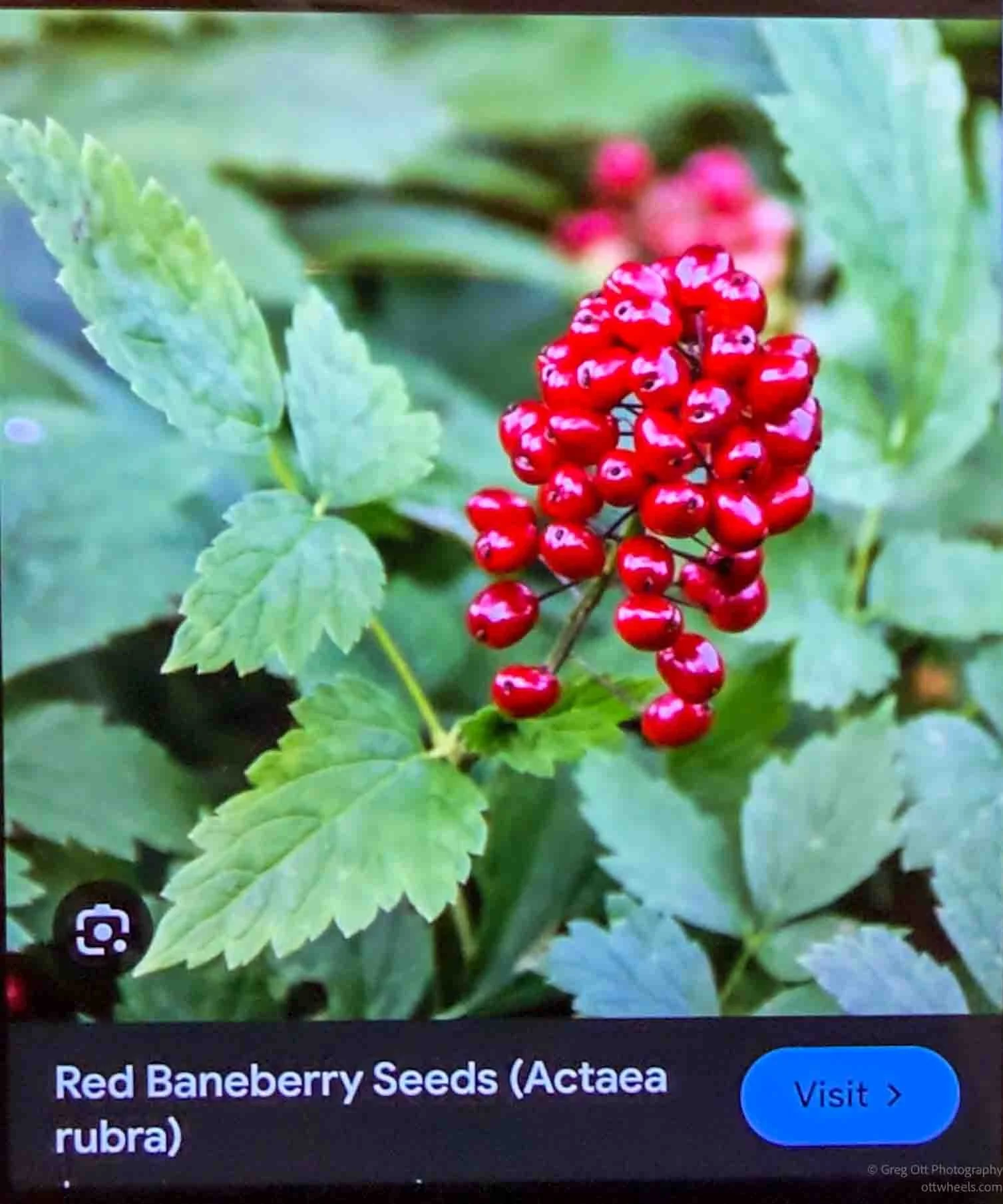
Before I left, Kate gave me a few tips about hiking in the park. She explained there are no snakes, no poison ivy, and no poisonous berries except for red baneberry (as few as two berries can be fatal to a child), showing me a photo so I would recognize it. She laughed and told me I could eat as many berries as I wanted, "just don't waste them." That was reassuring, since I had been wondering how much I needed to worry about wandering off trail.
She also explained that Denali is managed very differently from most national parks. The goal is to preserve its wilderness character, so there are very few maintained trails beyond the entrance area. Once you get off the park bus, you're encouraged to explore cross-country rather than follow established paths. It's true wilderness hiking—you pick your own route, leave nothing behind, and take nothing with you except the experience.
Like most national parks, Denali also has two excellent orientation films that explain how the park was formed, why it was protected, what wildlife lives here, and the many ways visitors can experience it. The theater looked like it could seat nearly 300 people, yet there were fewer than 40 in attendance. I always enjoy these presentations because they provide context that makes everything else I see over the next few days much more meaningful.
Outside the park entrance is a small collection of hotels, restaurants, and gift shops that serves as the unofficial gateway community. Ranger Kate suggested I stop by Denali Mountain Works because they might carry a bear spray holster for my bike. They had plenty of bear spray, but not the holder I was looking for.
While I was there, I met Arn from Sweden. She had studied ecology at the University of Montana and now lives in the Denali area year-round. We talked about what it's like living here, and she explained that although winters are certainly cold, temperatures below -40°F usually don't last more than a few days. She's an avid cross-country skier and spends as much time outdoors as possible. She said something that really resonated with me: she enjoys the cold, but she doesn't enjoy being cold. With the right clothing, winter becomes something to appreciate rather than endure. It was a simple observation, but one I embrace.
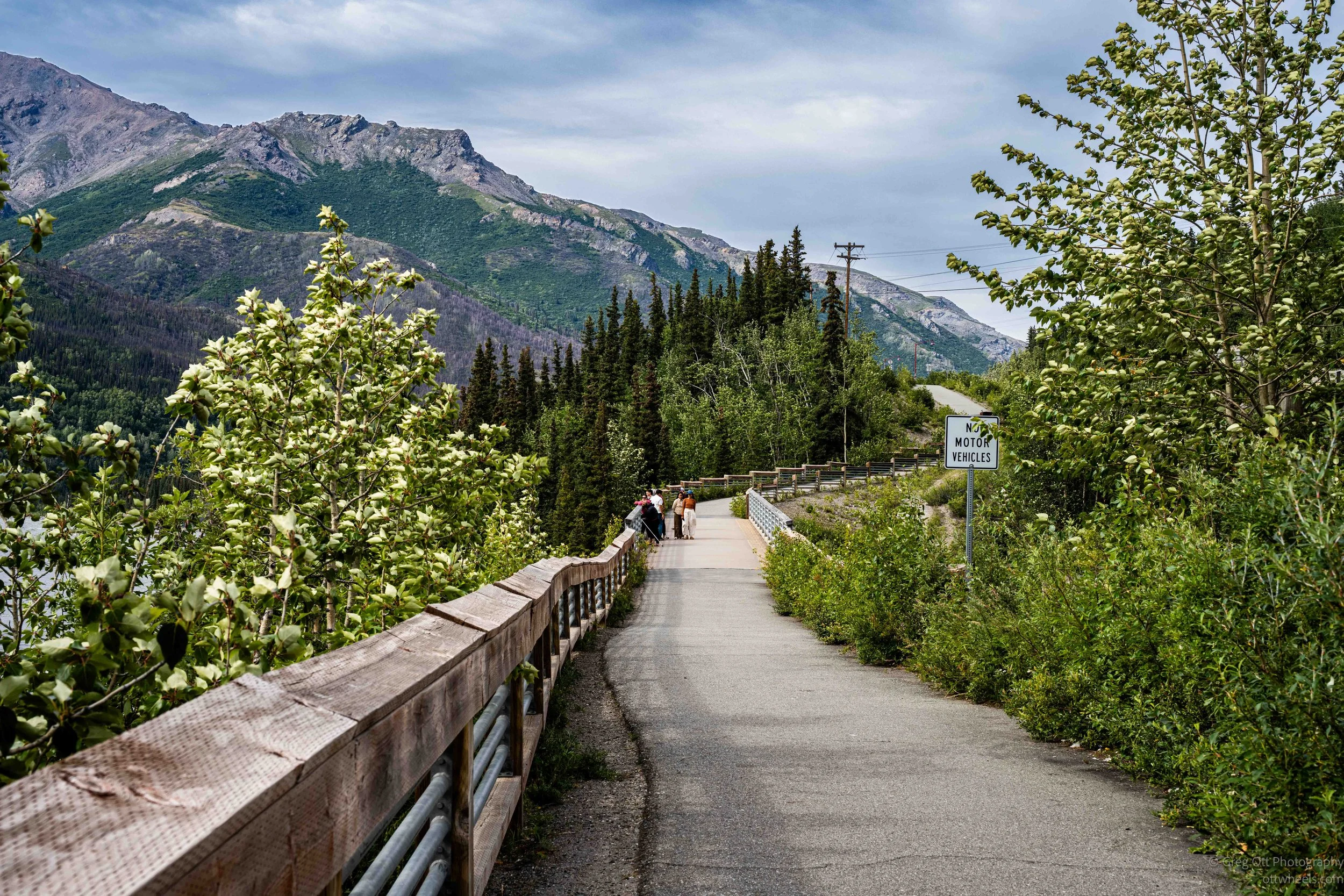
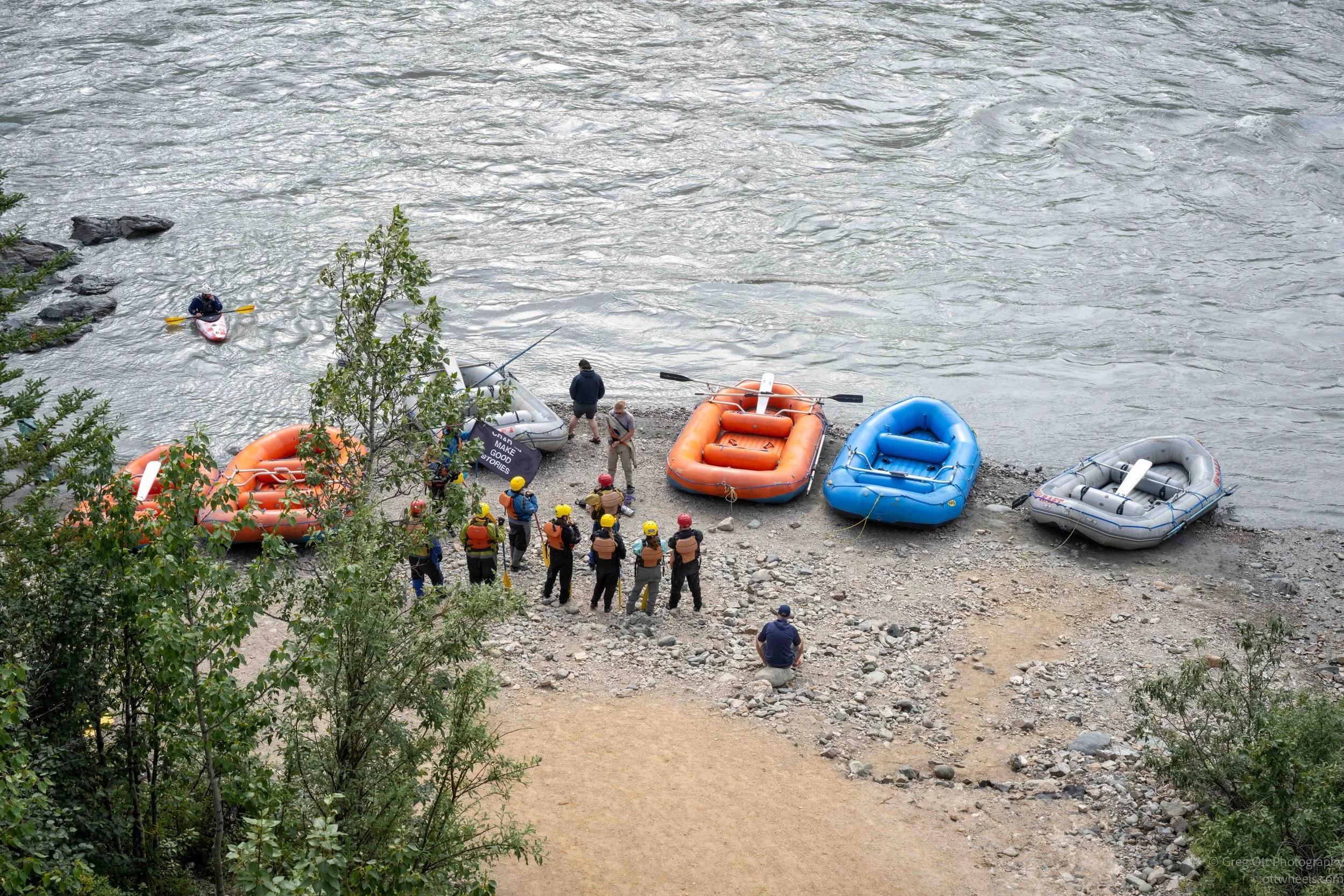
On my way back, I stopped at a trail leading into the park and took a short walk. A steep embankment dropped down to a nearby river where a rafting guide was giving a safety briefing before launching a group onto the water. I watched for a few minutes, took several photographs along the trail
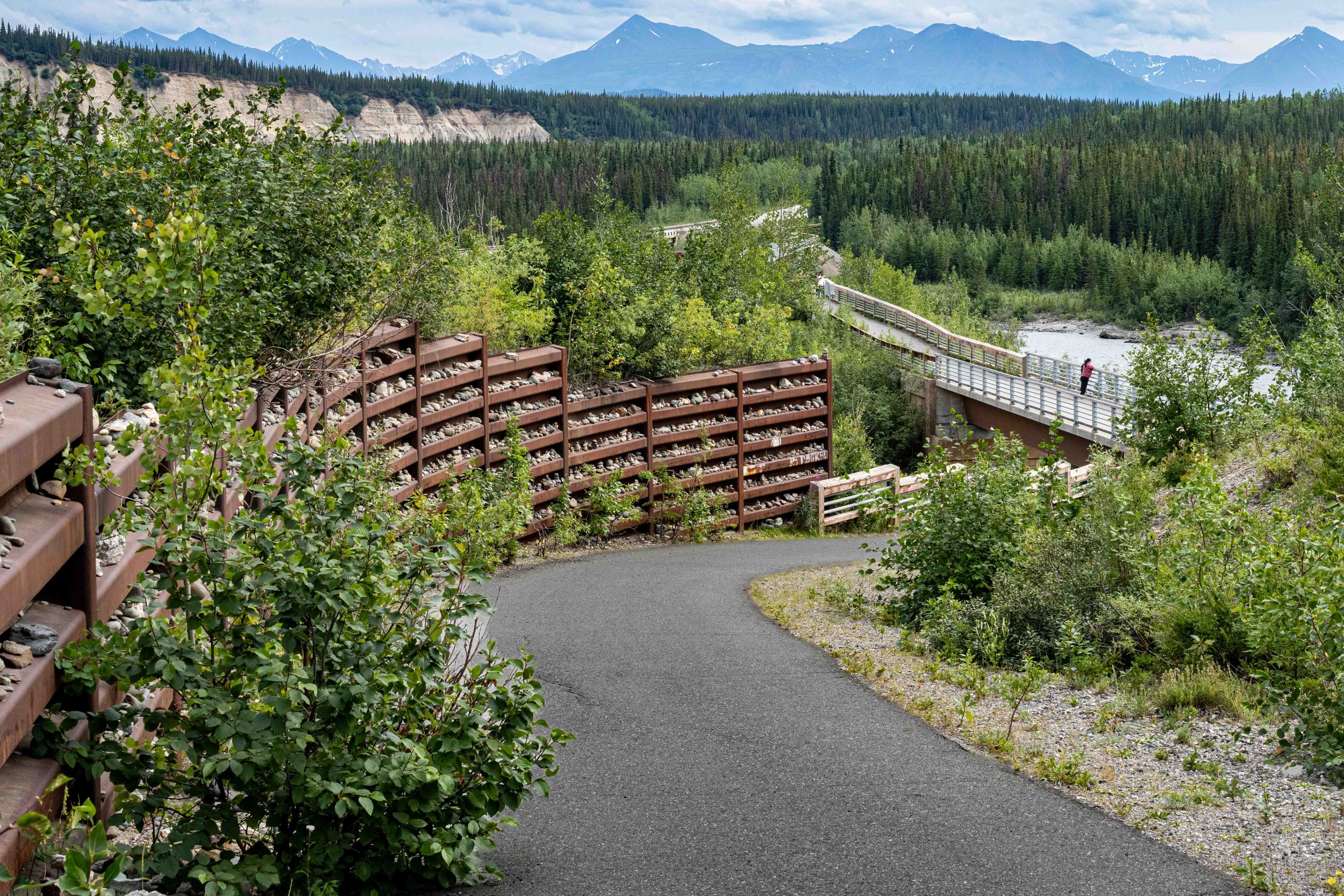
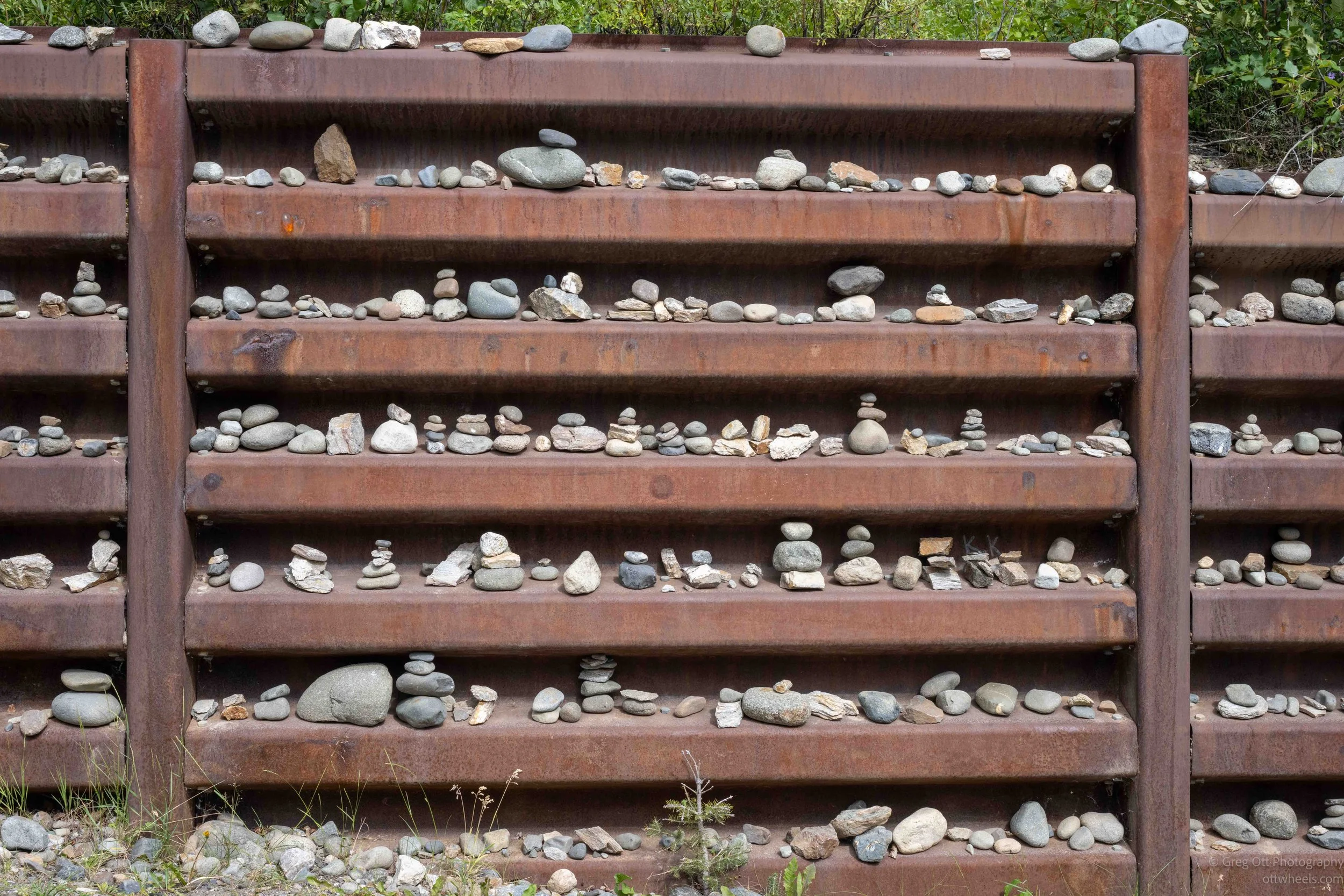
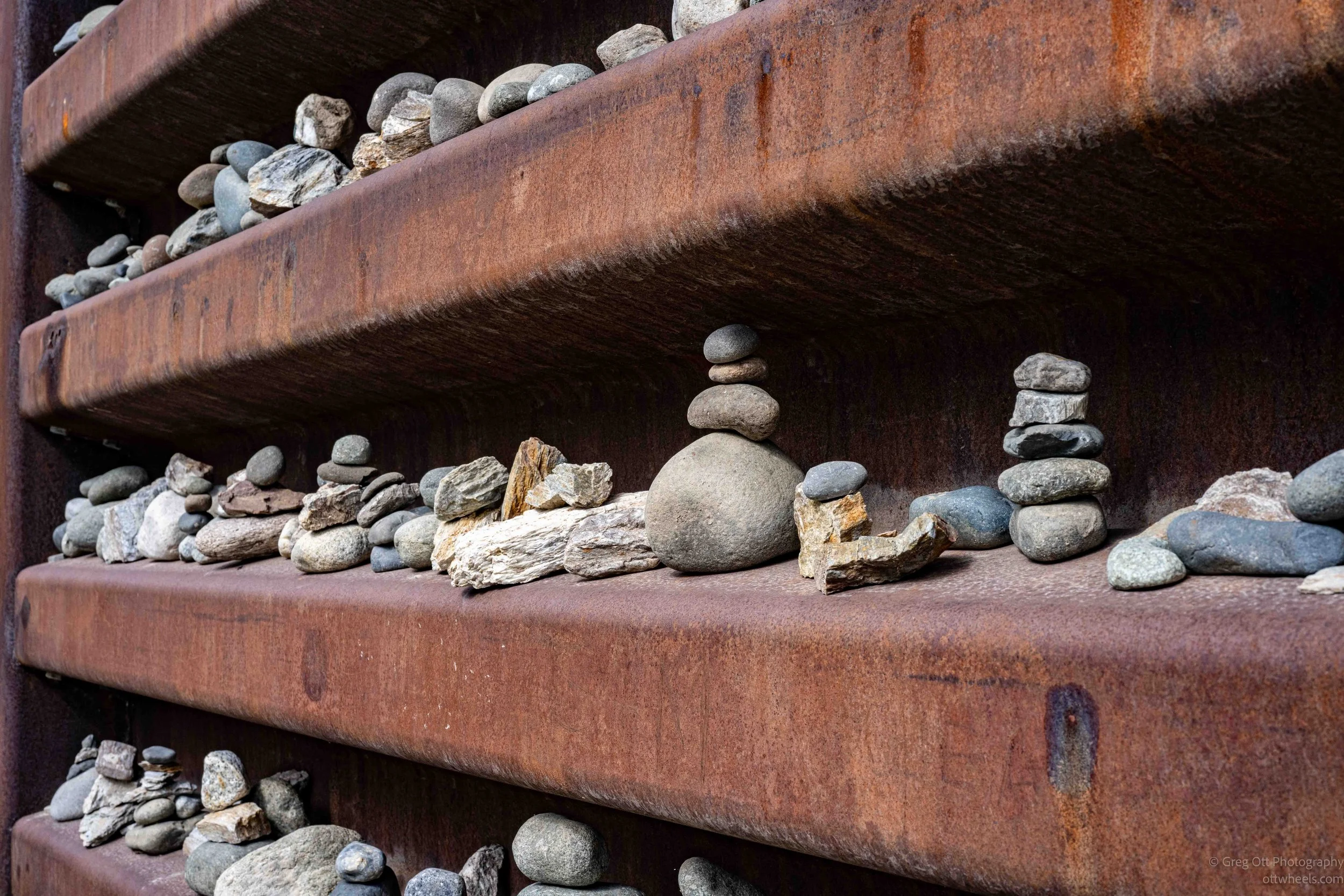
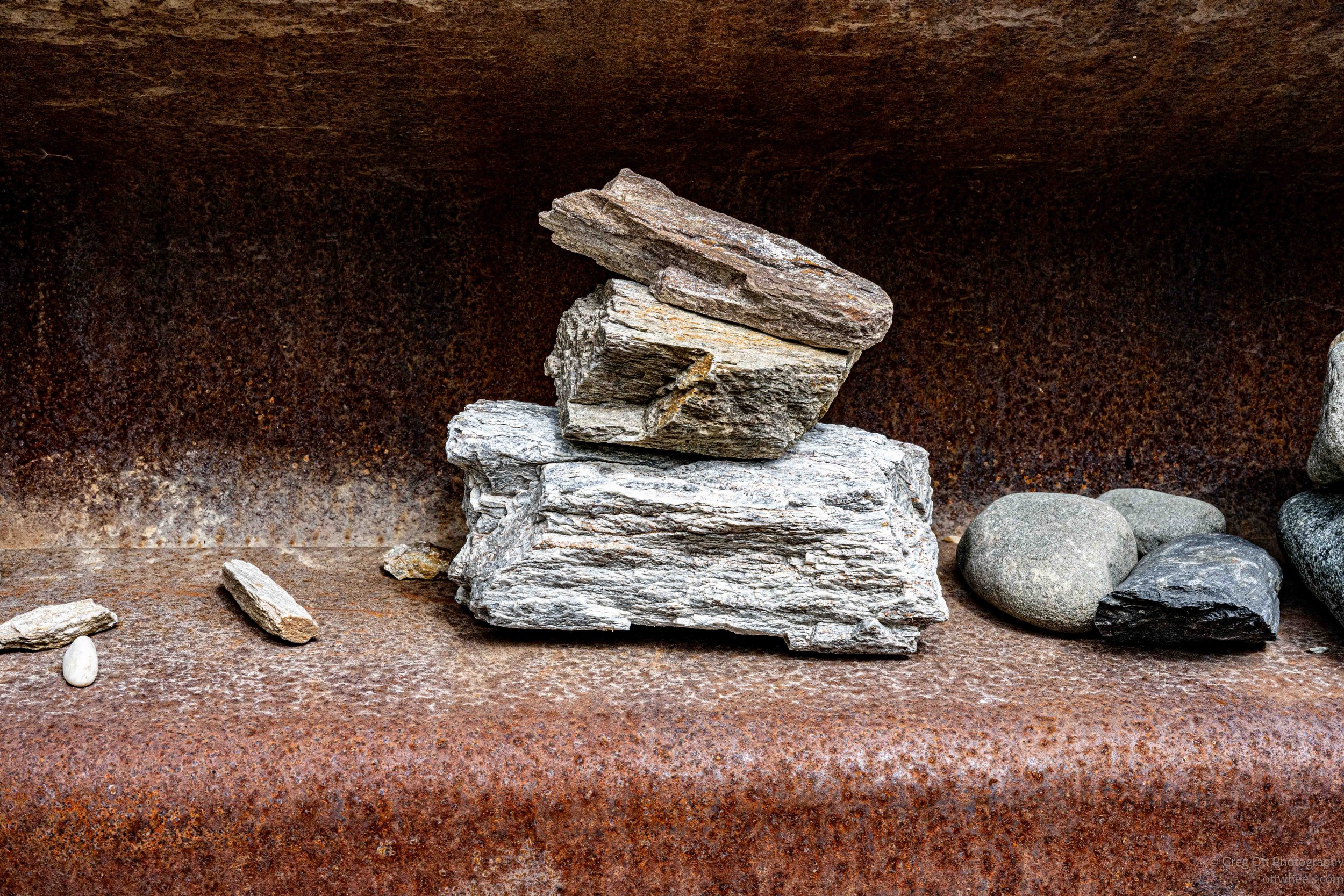
As I walked back toward the van, I noticed an unusual retaining wall made from massive rusted steel beams. Every horizontal ledge had become a shelf for small stacks of stones. Hundreds of visitors had carefully balanced rocks into tiny cairns, some only two or three stones high, others surprisingly elaborate. Together they formed an ever-changing display of patience, creativity, and quiet participation.
I stood there for several minutes looking at all the different designs. Some people had clearly spent a lot of time finding just the right balance, while others simply left a single stone behind. Against the weathered steel and the backdrop of spruce forest and distant mountains, it was unexpectedly artful. It wasn't an official attraction, just something that had evolved over time as thousands of people each added a small reminder that they had passed through.
I returned to my campsite around 6:30 p.m. There was a ranger program scheduled for 7:30, and I planned to attend, but I made one critical mistake—I decided to lie down "just for a few minutes." The next thing I knew it was 7:45, and I had completely slept through Ranger Kate's presentation. Instead, I made dinner and turned my attention to getting ready for the guided hike the following morning.
The forecast called for a 98% chance of rain, and the equipment list recommended rain gear from head to toe. Bear spray surprisingly wasn't on the official list. I debated whether to carry my first aid kit and Garmin satellite communicator before finally deciding they were worth the extra weight. We had also been warned that we could end up hiking through one to two feet of water, so waterproof boots weren't going to keep anyone dry. Following the ranger's advice, I packed an extra pair of wool socks for the hike back.
An hour and a half later, everything was finally organized. I still wasn't completely confident that I had packed the right gear, but there wasn't much else I could do. I stopped second-guessing myself, set the alarm, and went to bed wondering what the next day in Denali would bring.