The temperature dropped into the high 20s last night at Moraine Park Campground in Rocky Mountain National Park. It was cold outside, but I was cozy under my duvet, and the heated floor kept the van warm throughout the night. One of the pleasures of having radiant floor heating is getting out of bed on a cold morning and putting your bare feet on a warm floor. I was up at 6:30 a.m. and headed into Estes Park for my morning coffee at Starbucks. I arrived well before the morning rush and spent some time writing before heading toward Boulder.
Returning to Boulder
I lived in Boulder for three years in the mid-1980s and have returned several times since, most recently in 2023. Even in those three years, the changes along the Front Range were remarkable. The area between Fort Collins and Boulder seemed to have grown enormously. New roads had opened, housing developments had sprung up, and areas I remembered as open prairie were now covered with streets, bicycle paths, and artificial lakes. I found myself trying to reconcile what I remembered with what I was seeing.
I had a long list of errands to take care of, including groceries, prescriptions, and other shopping, so it was several hours before I finally reached Boulder. One of my stops was REI, which turned out to be extremely useful. I bought a new pair of Lowa hiking shoes, made in Germany. They were easily the most comfortable shoes I tried on, and I was confident they would last. My last two pairs of Merrells hadn't made it through a year of hiking, while a pair of Lowa boots I owned in Europe lasted more than twenty years. I figured it was worth spending a little more for something that might hold up.
I decided to look for the house where I had lived in the 1980s. It took a while to find it. There were new streets leading into the neighborhood, and what had once been a relatively open area was now completely built up. I eventually found the house, then spent some time driving and walking around Boulder. The amount of traffic was astonishing. The University of Colorado had grown, neighborhoods had expanded, and entire sections of town were almost unrecognizable. When I lived there, Boulder had strict controls on growth, including the Danish Plan, adopted in 1976, which limited residential growth to approximately 2% annually. It seems those restrictions have changed, but looking around, I wondered how much difference they had ultimately made.
Around 6 p.m., I looked for parking on Pearl Street. I initially tried to squeeze the van into a paid parking space, but there wasn't enough room. Across the street, the spaces were considerably larger, and after circling the block, I found one that worked. Oddly, there were no signs indicating that I needed to pay. I asked a woman walking by whether parking was permitted. She checked an app on her phone and told me I could apparently park there for free for up to 24 hours. "That's not uncommon here," she added. That worked for me, although I couldn't understand why the city charged for parking on one side of the street and not the other.
My destination was Pizzeria Alberico, about half a block up Pearl Street. I ordered a mushroom pizza and a local beer and settled in at the bar. The restaurant had a strange atmosphere. It felt like a place where people came as much to be seen as to eat. The bartenders weren't particularly interested in talking to anyone, and I seemed to be the only person sitting alone.
Two men came in, both around forty, tall and thin. One was American and the other German, apparently visiting. The American seemed to know Becky, one of the bartenders, and spoke loudly enough that everyone in the bar could follow their conversation. "I know you like beer, but maybe we should start with something lighter. We just ran a marathon," he said. "As you wish," the German replied. Becky brought them two cans of beer and two glasses. The American opened the cans, overflowed both glasses while pouring, and cleaned up the mess. "Cheers," he announced as they raised their glasses.
They were standing directly behind me, so I couldn't help overhearing the conversation. The American began explaining that they were involved in a unique space program, doing things that nobody else in the world was doing. He seemed determined to make sure everyone in the bar knew about it. I could almost feel the eyes rolling around me. This continued for about ten minutes until a table opened in the back and they moved away.
Not long afterward, Tom sat down beside me. He immediately pulled out his phone and spent the next fifteen minutes texting. Eventually, he said something to me, and we struck up a conversation. He was a lawyer who worked upstairs and was having a particularly frustrating evening with a loaner car that wouldn't start. It was parked across the street, and he was waiting for a tow truck to take it back to the dealership.
That led to a lengthy explanation of his $120,000 car, which had been recalled. According to Tom, the dealer had charged him for a repair that should have been covered by the recall. He threatened legal action, and the dispute eventually reached the owner of the dealership. Now his car was back in the shop for another problem, and the loaner had broken down as well. Throughout the story, his phone kept ringing and messages kept arriving.
Suddenly, he stood up and rushed outside to deal with the tow truck driver. The bartender apparently assumed he had left and removed his unfinished drink. My pizza arrived just as Tom returned. "Did they take my drink?" he asked. "They did," I replied. He seemed genuinely baffled that anyone would remove his drink while he was gone. Then, almost without missing a beat, he told me that he owned the building and was also involved in real estate.
His phone rang again. I could hear him explaining the situation with the car and asking someone to come pick him up. "That was my girlfriend. I mean, my fiancée," he said after hanging up. "She's coming to get me. She's gorgeous. I'll introduce you when she gets here."
A little later, she arrived. I don't remember her name, but she was a tall blonde woman who looked to be in her mid-thirties. He is in his 50s. They stood beside me kissing for a minute before Tom introduced us. "I told you she was gorgeous," he said. She shook my hand but didn't say anything. Instead, she asked Tom to order her a gin and tonic. Apparently, she had also had a stressful day.
She then began telling him about a $17 million real estate deal she had just closed. The buyer was paying mostly cash for a building, and she was planning to use the proceeds to buy a house somewhere in the mountains. It was quite a conversation to overhear while eating a mushroom pizza. Once she arrived, neither of them spoke to me again. They finished their drinks and left.
I was glad to see them go. Between the loud conversation about the space program, the $120,000 car, the building ownership, and the $17 million real estate deal, I felt as though I had wandered into a competition to see who could impress whom the most. Everyone seemed remarkably caught up in their own importance.
This wasn't the Boulder I remembered from 1986. Of course, forty years is a long time, and I've changed as well. But I remembered Boulder as a place with a more relaxed atmosphere, where people were interested in the outdoors, ideas, and the people around them. Perhaps I had simply encountered an unusual collection of people that evening, but it left me wondering how much of the Boulder I once knew was still there.
I found a quiet side street near Walnut Street and pulled over for the night. The street was dark, and as I was falling asleep, I heard a young couple talking just outside the van. They sounded like students. One of them commented on my license plate, and then they started talking about wanting to travel in a van someday. They must have been standing right beside me because I could hear every word. Eventually, he said he needed to get some reading done, and she replied, "I'll see you for coffee." With that, they went their separate ways, and I drifted off to sleep.
I remember hearing a story when I lived in Boulder about Chief Niwot, an Arapaho leader, who supposedly placed a curse on the Boulder Valley. According to the legend, anyone who experienced the beauty of the valley would eventually return, no matter how far away they moved. I've returned several times over the years, so perhaps there is something to the story. After my evening at the pizzeria, I wasn't so sure. But listening to those two young people talking about books, coffee, and dreams of traveling, I wondered whether some of the Boulder I remembered was still there after all.
Denver Capitol (Oct. 28)
I started the morning with coffee at Starbucks before driving north to the Boulder County Fairgrounds to empty the van's holding tanks. What should have been a quick stop took far longer than expected. I don't even remember the fairgrounds being there when I lived in Boulder in the 1980s. The entire surrounding area had been developed, and once again I found myself driving through neighborhoods and along roads that were completely unfamiliar.
With that chore finally behind me, I headed south toward Denver. I took roads I didn't remember from my years in Colorado and eventually made my way downtown. I was surprised to find parking directly beside the Colorado State Capitol. For $4, I had two hours, which I figured would be enough time to see the building and take some photographs.
I had visited the Capitol grounds before but, for some reason, had never gone inside. After passing through security, where my camera equipment was scanned, I asked about taking a tour. I was directed straight ahead to a desk where two people were sitting. The next tour would begin in about thirty minutes, which gave me time to look around. Behind the desk was a small gift shop selling postcards, books, and the usual tourist items.
The Colorado State Capitol was designed by Elijah E. Myers, who also designed the state capitols in Michigan and Texas. Construction began in 1886, with the cornerstone laid in 1890, and the building was first occupied in 1894. Work continued for several more years, with the final major addition being the gold covering on the dome in 1908. The building was designed to resemble the United States Capitol in Washington, although on a somewhat smaller scale.
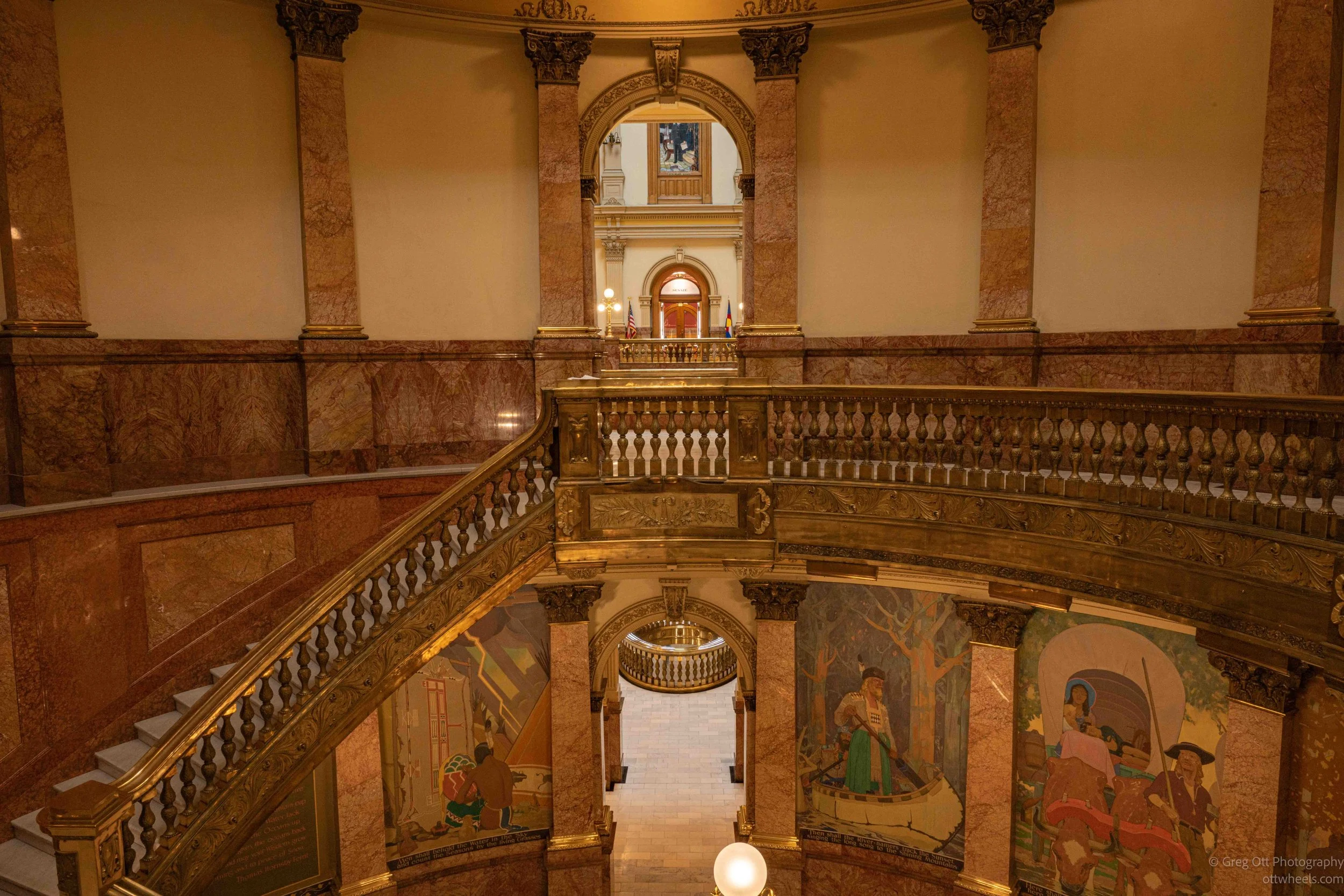
One of the interesting aspects of its construction is how much of the material came from Colorado. The exterior is made of granite quarried in Gunnison County, the floors contain Colorado marble, and the pink stone covering the lower portions of the interior walls and columns is rose onyx from a quarry near Beulah, Colorado. The onyx is particularly beautiful, with variations in color and patterns that give the interior a warmth I hadn't expected from the rather formal exterior.
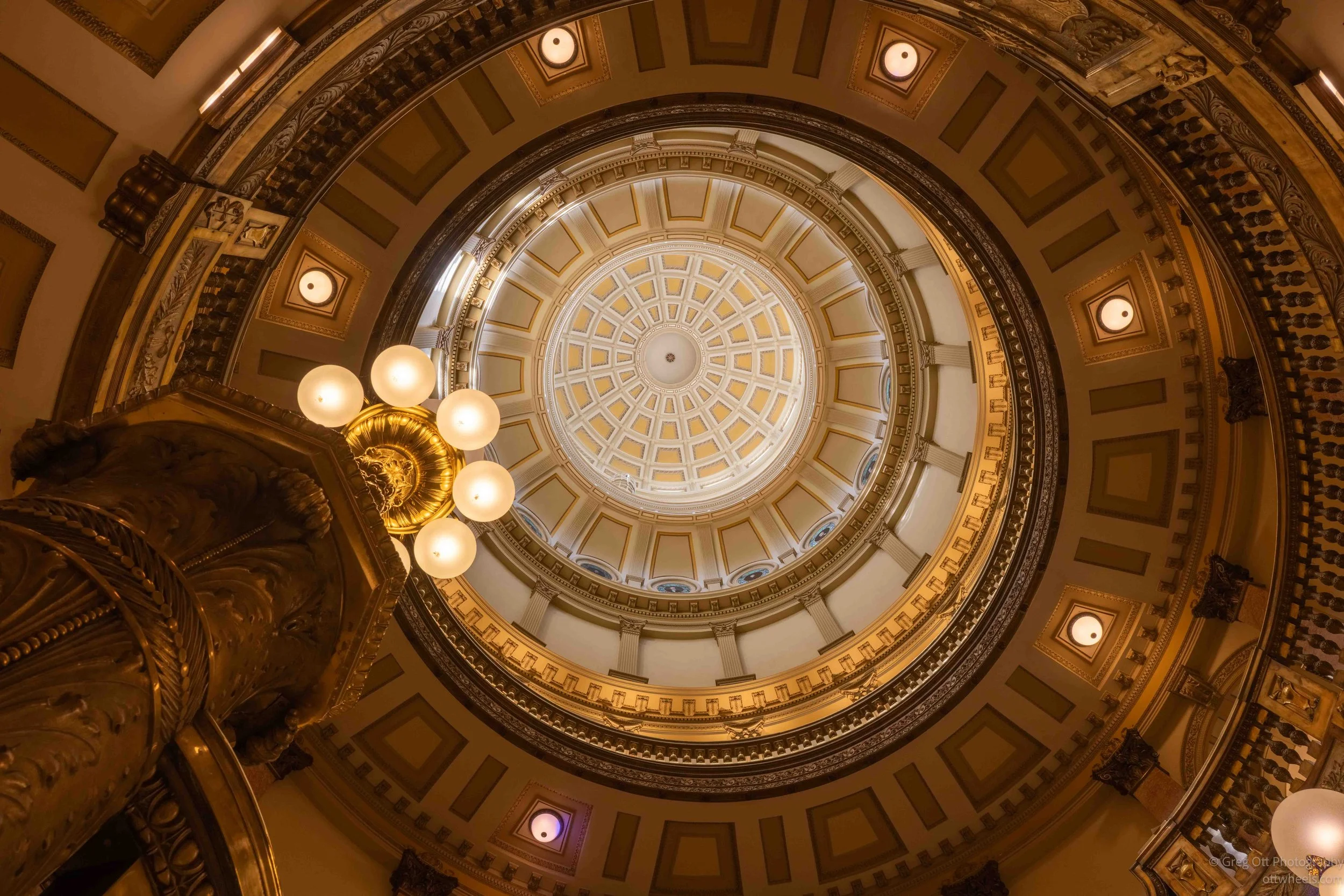
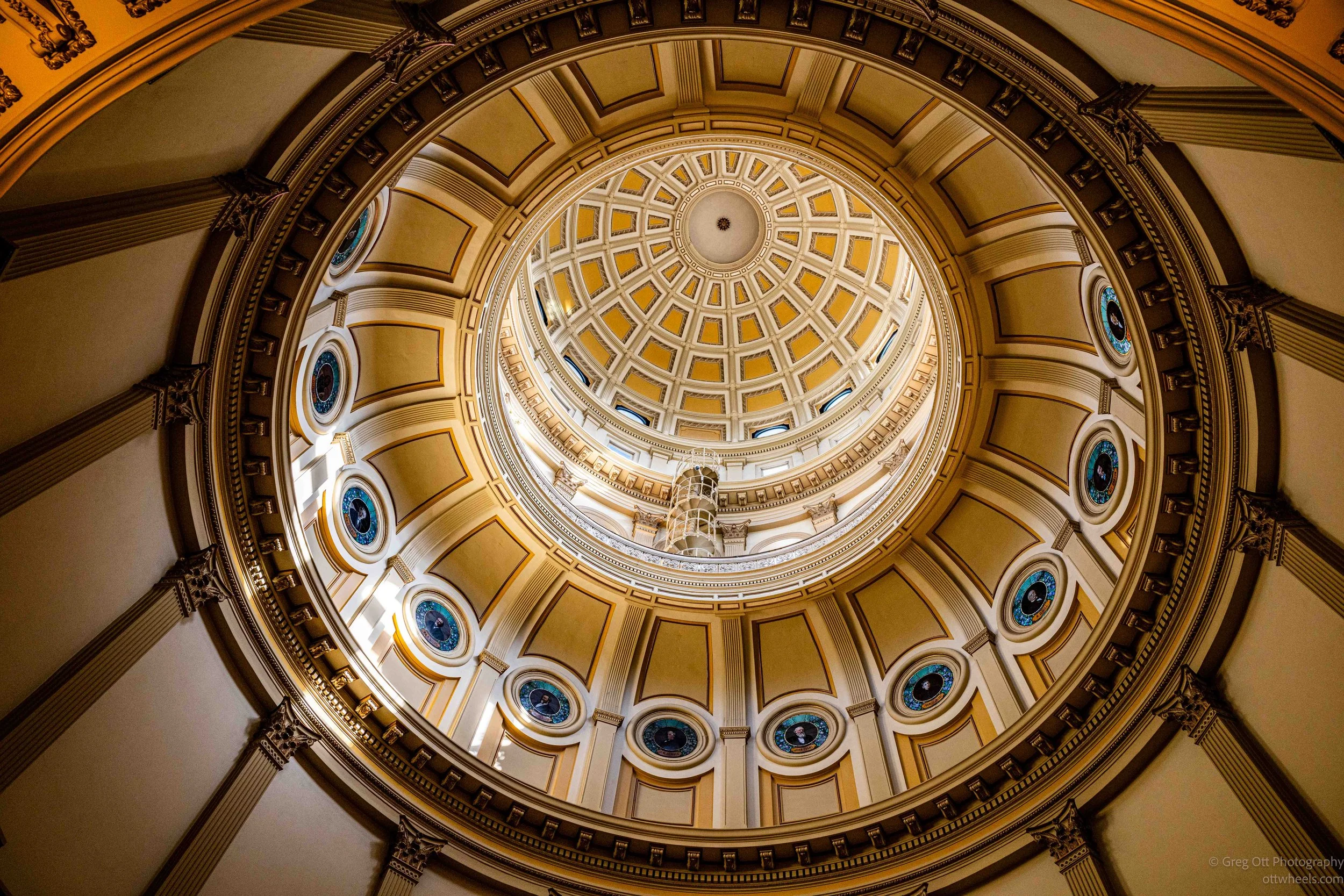
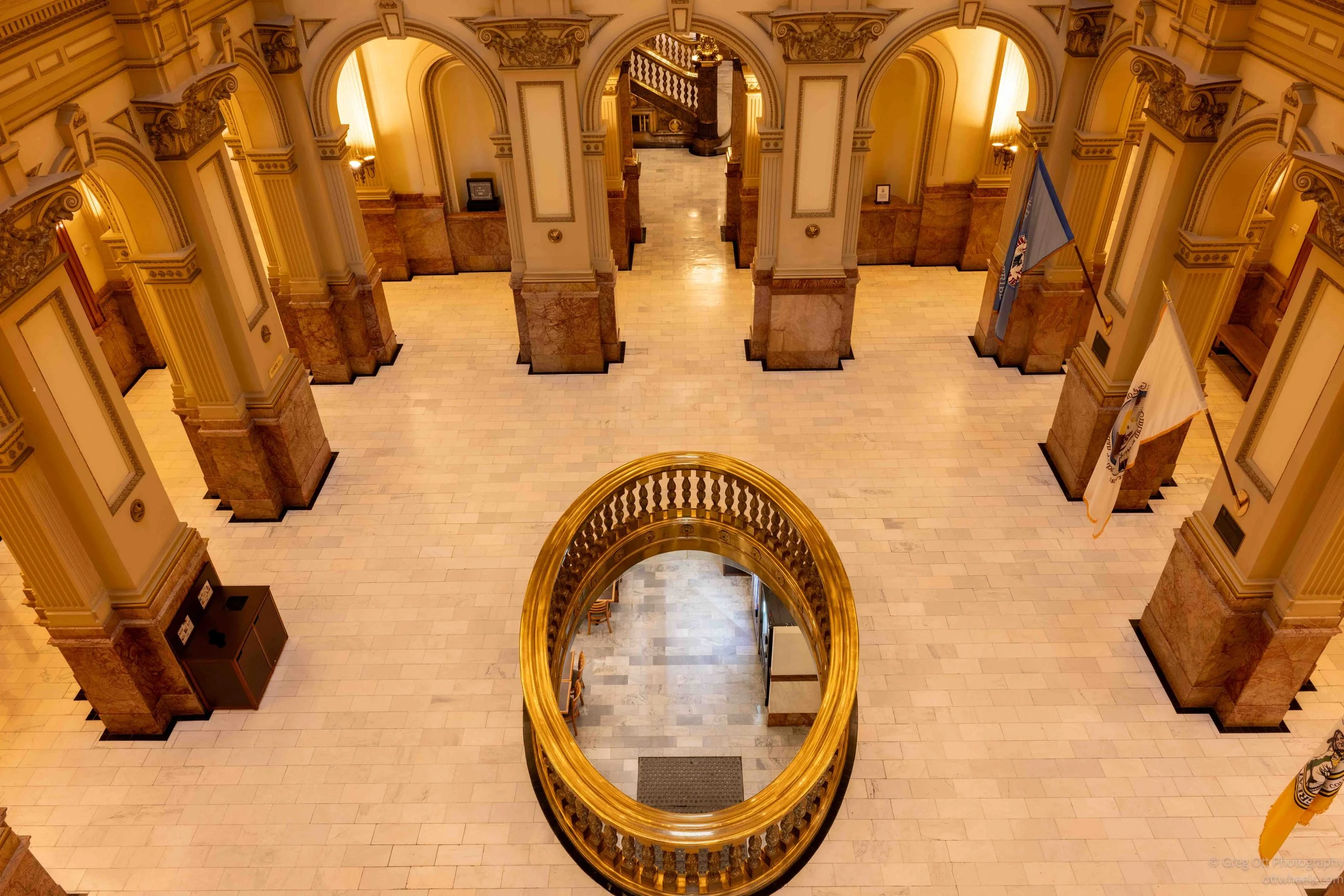
The central rotunda is the most impressive part of the building. Multiple levels of balconies surround the open space, supported by enormous columns and decorated with carved stonework, ornamental railings, and elaborate moldings. Looking upward, the layers of architecture eventually give way to the dome, with its geometric patterns and circular arrangement of windows. I spent quite a bit of time looking at the details and photographing the building from different levels.
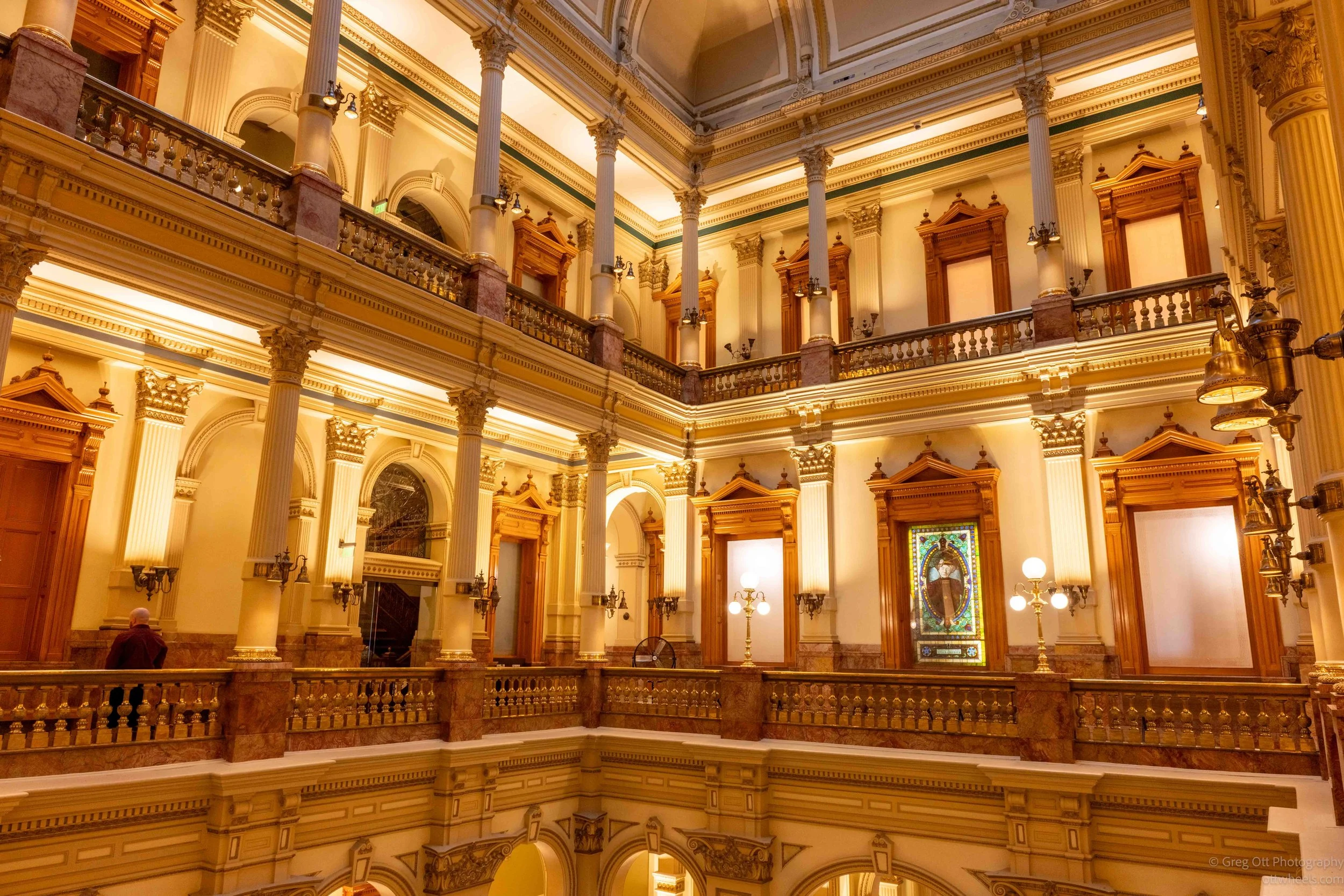
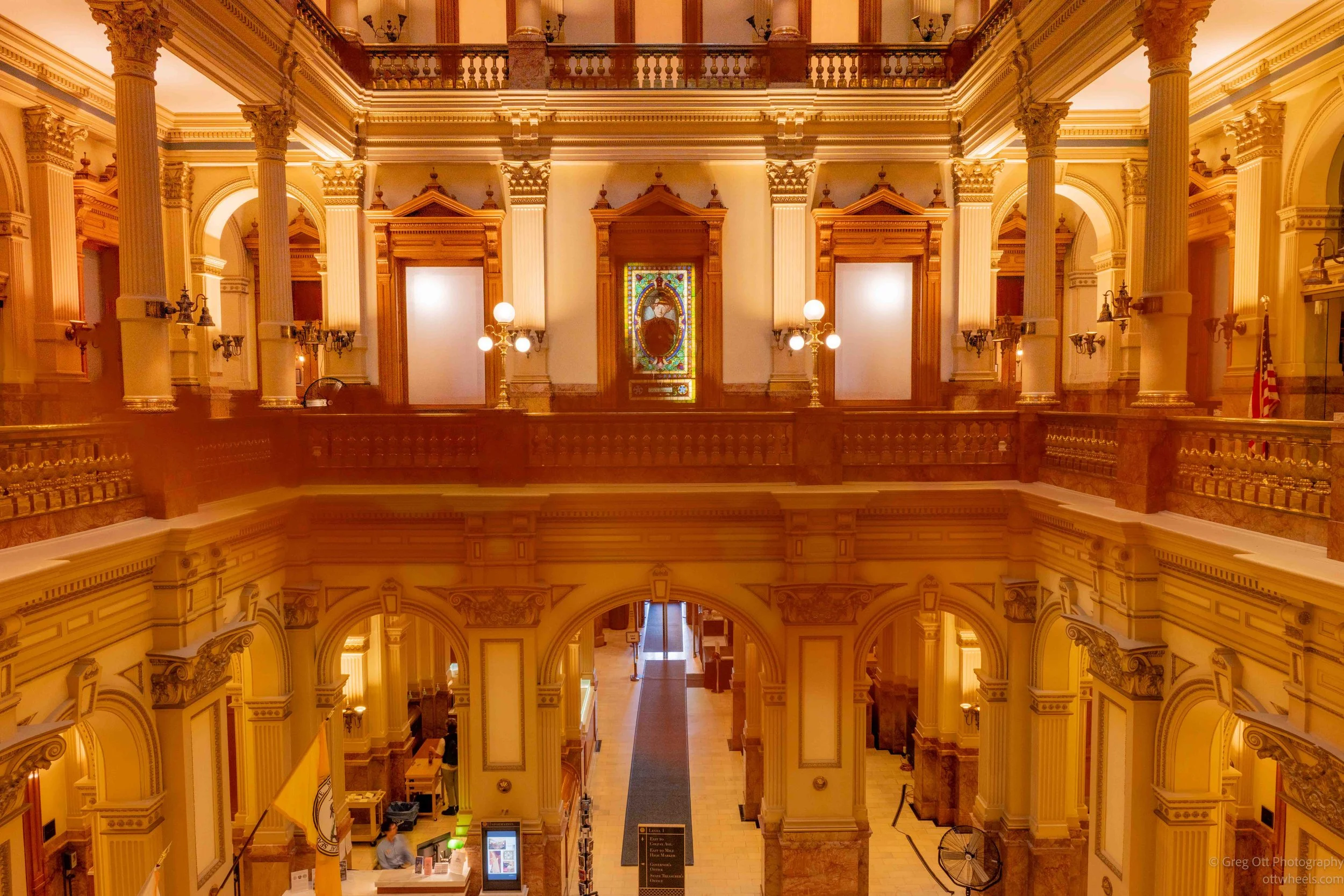
There is something about these nineteenth-century capitol buildings that I find fascinating. They were built when craftsmanship and materials seemed to matter as much as the practical requirements of housing a government. The elaborate stonework, brass fixtures, stained glass, and monumental staircases must have required an enormous amount of labor. Much of that work would be prohibitively expensive to reproduce today.
The tour included the legislative areas, where the Colorado House of Representatives and Senate meet. The two chambers are quite different in appearance, although both retain much of their original nineteenth-century character. There are large chandeliers, carved wooden desks, ornate ceilings, and stained-glass windows depicting historical figures associated with Colorado.
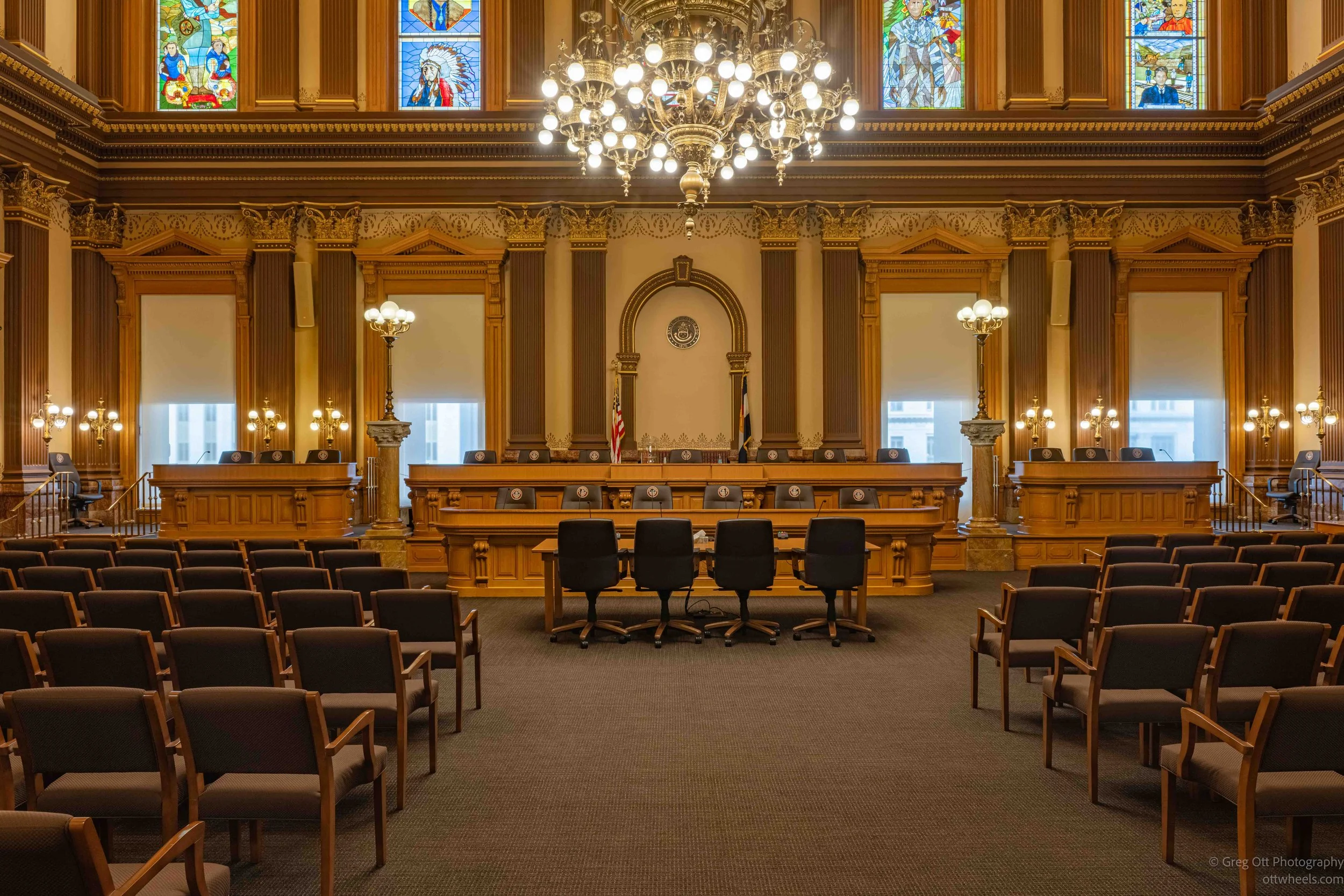
The House chamber is decorated primarily in shades of green, while the Senate uses a deep red. These colors follow a tradition associated with the British Parliament, where the House of Commons is green and the House of Lords is red. Both Colorado chambers underwent extensive restoration in recent years. During that work, decorative painting and elaborate patterns that had been hidden behind acoustic tiles for decades were uncovered and restored.
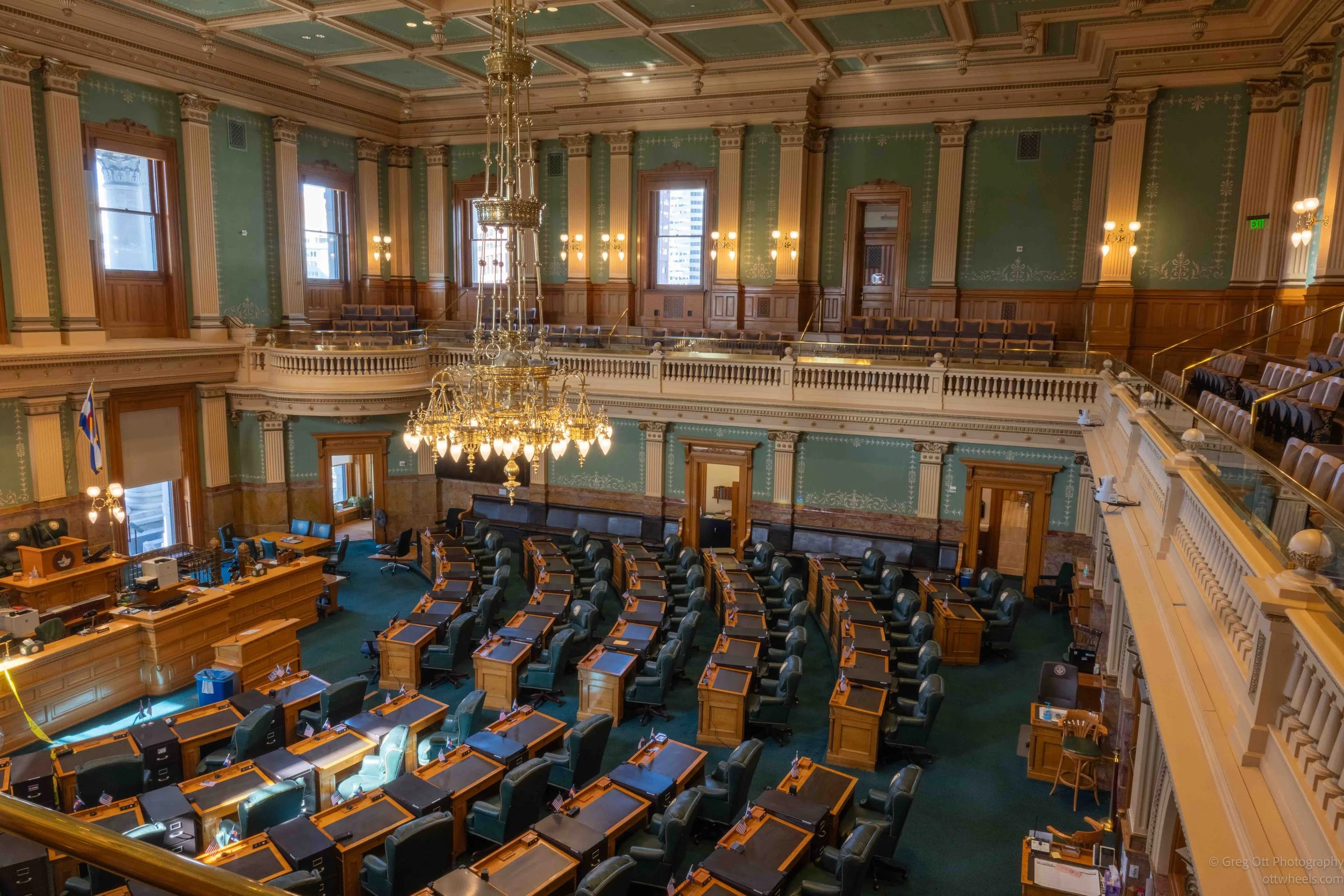
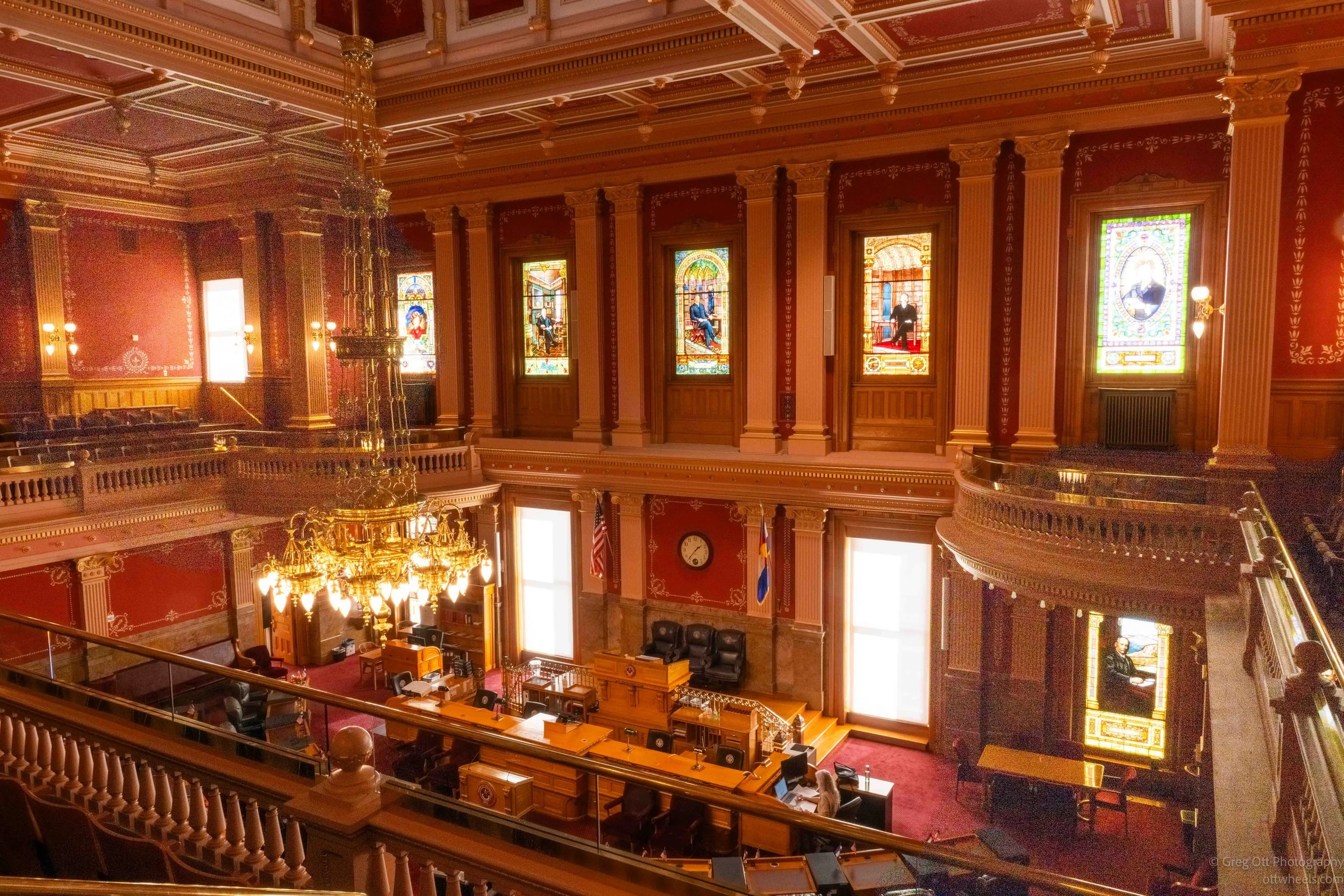
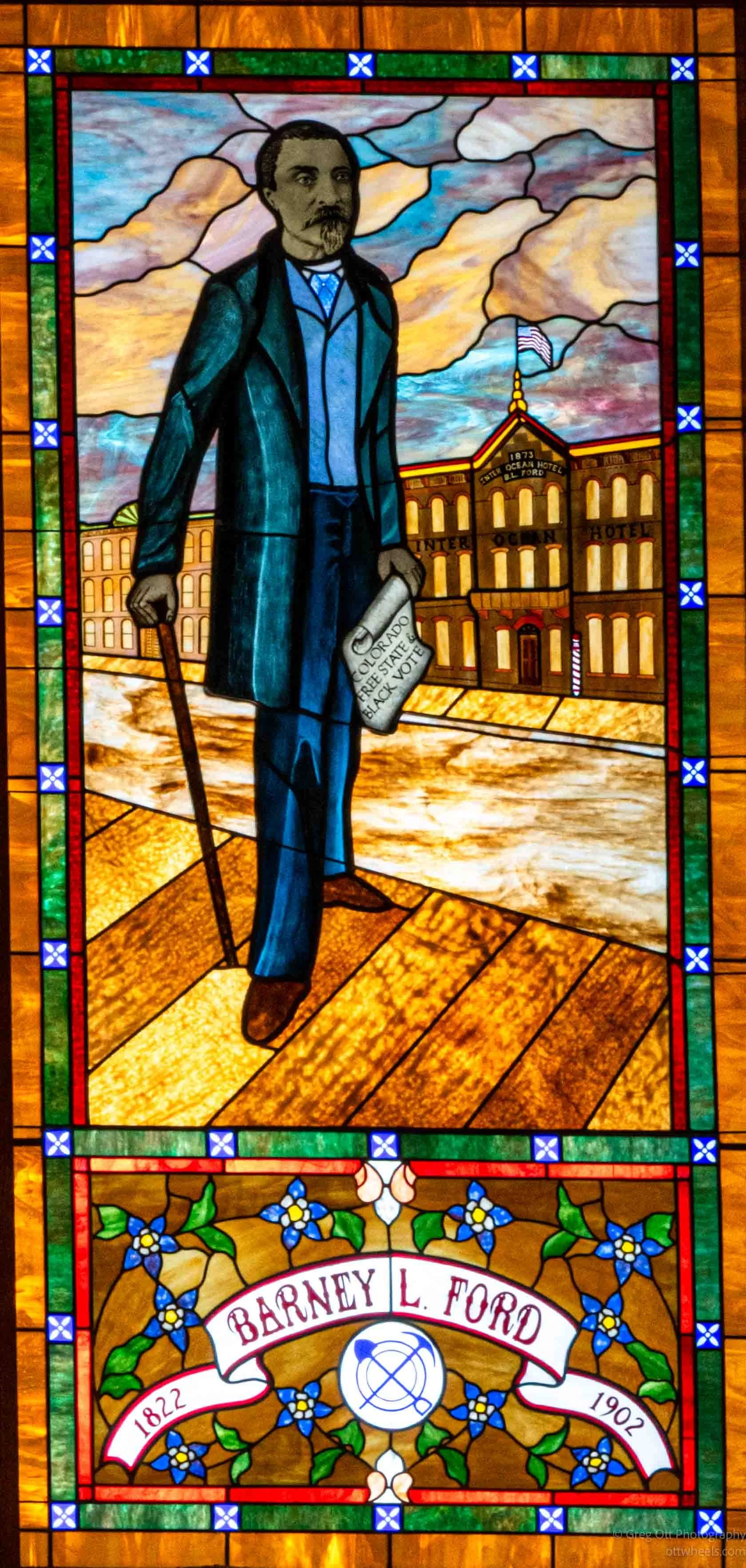
The stained-glass windows were another interesting feature. Rather than being purely decorative, many depict people and events important to Colorado's history. The rooms themselves were empty during my visit, which made it easier to appreciate the architecture without the distractions of a legislative session. I particularly liked being able to view the chambers from the upper galleries, where I could see the arrangement of desks, the chandeliers, and the elaborate decoration around the ceilings.
My favorite part of the tour was the climb into the Capitol dome. The observation level is reached by climbing 99 steps from the upper part of the building. Along the way, there is an area known as Mr. Brown's Attic, which contains exhibits about Colorado history, the construction of the Capitol, and the state's legislative process.
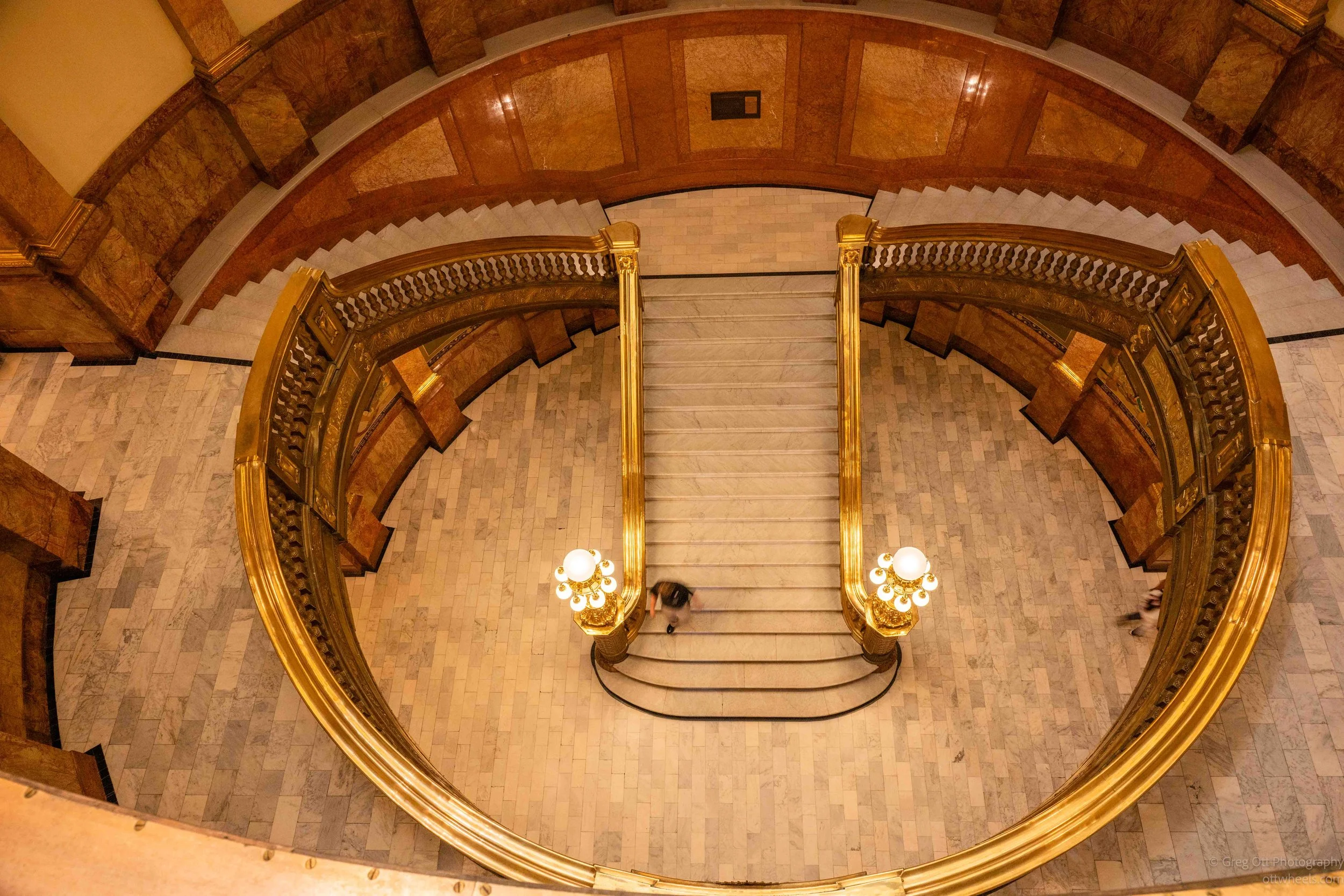
From the upper levels, the architecture of the rotunda takes on an entirely different appearance. Instead of looking upward into the dome, I could look down through the center of the building, past the circular balconies and staircases to the marble floor far below. It was a wonderful photographic opportunity, although getting a good photograph proved more difficult than I expected. Protective barriers prevented visitors from leaning out over the railings, which made it difficult to position the camera for a straight downward view. Above this area was a staircase which was off limits to the tour. I wanted to see what was up there.
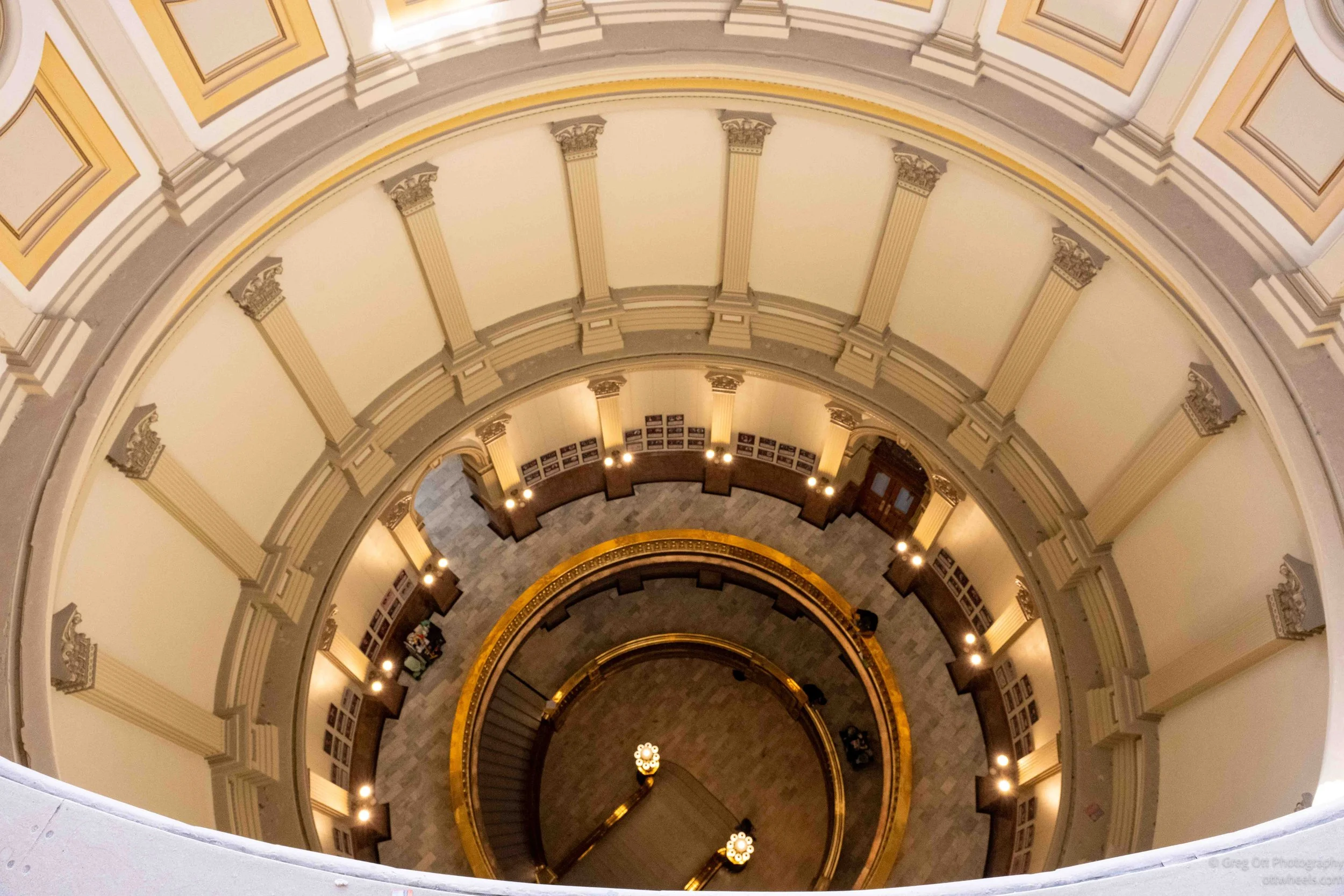
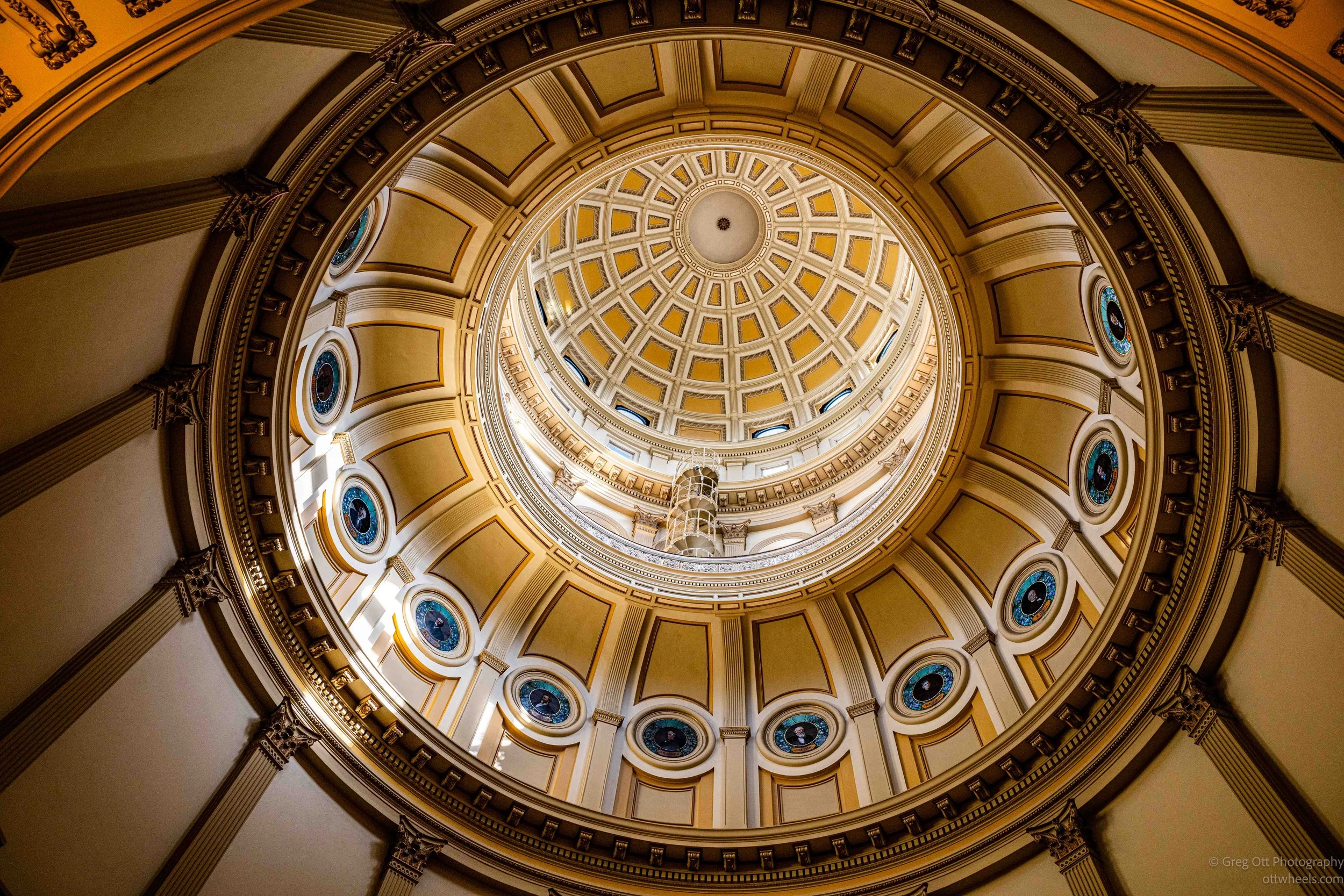
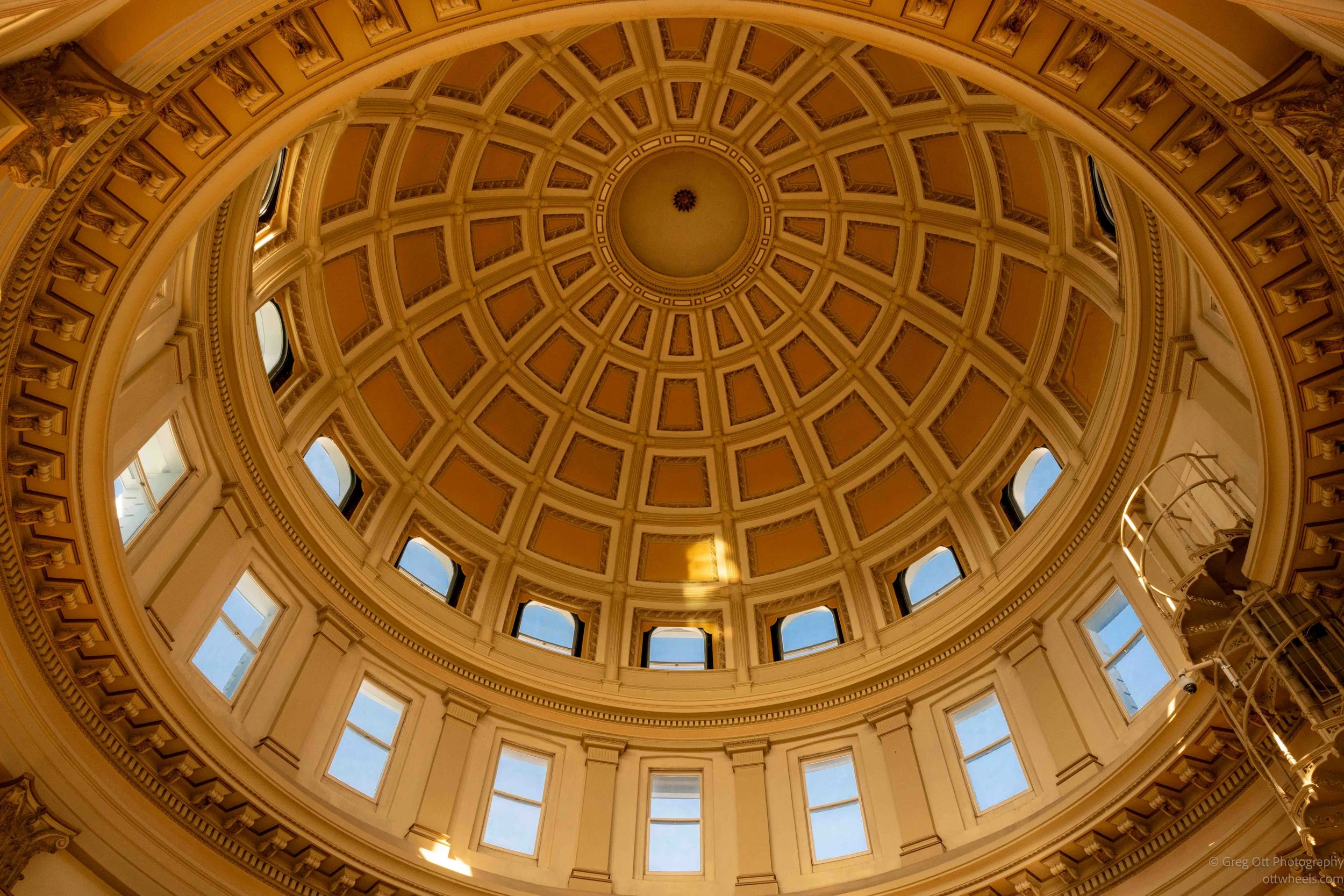
The dome observation area also offered views over Denver. From up there, I could see how much the city had grown, particularly the concentration of buildings downtown and the development extending in every direction. On a clear day, the Rocky Mountains provide an impressive backdrop to the city. I enjoyed walking around the observation area almost as much as photographing the interior.
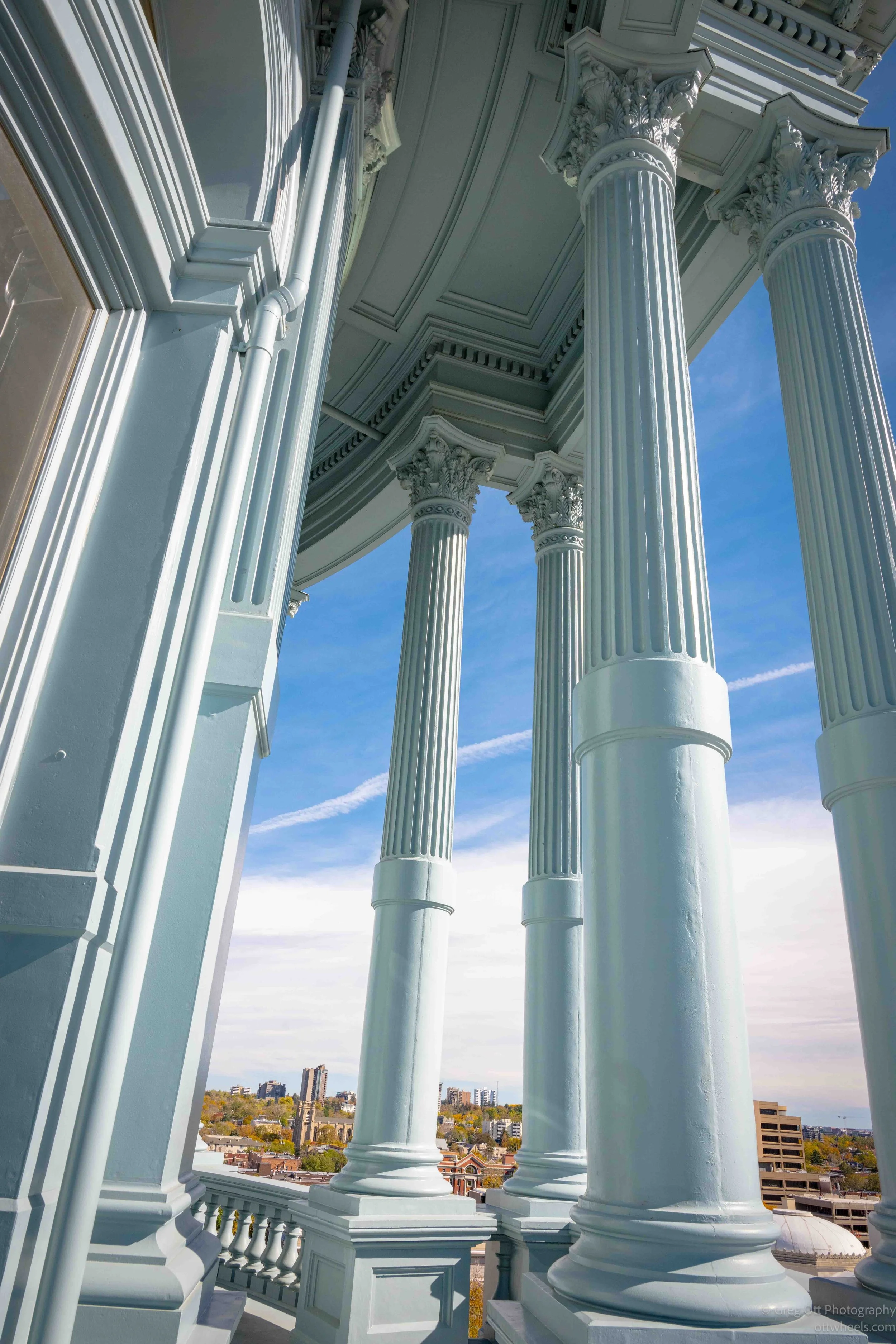
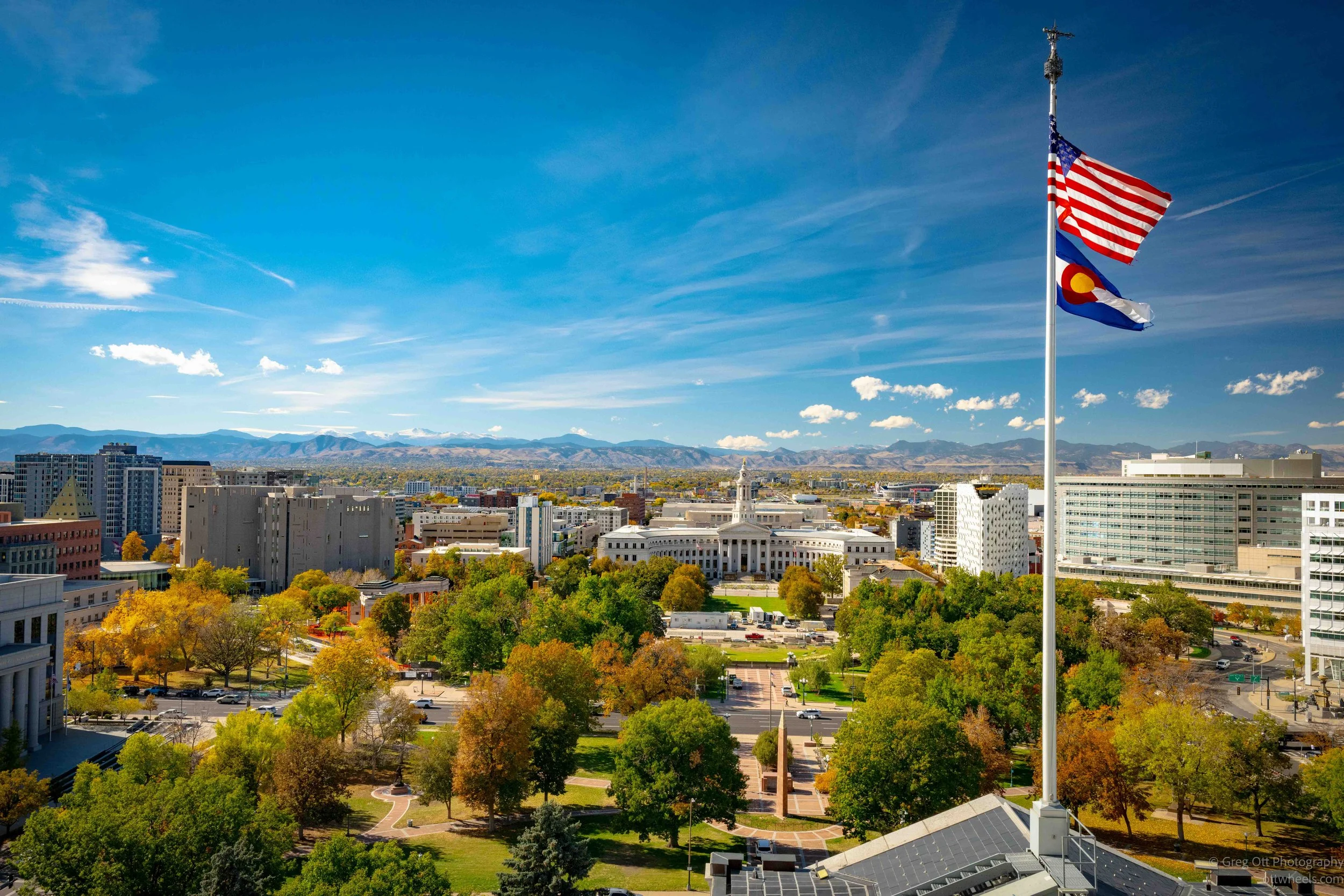
The Capitol's gold dome is probably its most recognizable feature. The dome was originally covered in copper, but in 1908, Colorado gold miners donated 200 ounces of gold to cover it with gold leaf. It was intended to commemorate the Colorado Gold Rush and the role mining had played in the state's development. The dome has been restored and regilded several times since then, most recently during a major restoration completed in 2014.
By the time I finished exploring the upper levels, I had taken quite a few photographs. The symmetry of the dome, the circular arrangement of windows, and the changing perspective from one floor to another were particularly interesting. It was one of those buildings where every time I changed position, I found something else worth photographing.
After the tour, I made a quick walk around the outside of the Capitol. The building stands on a raised site overlooking Civic Center Park, and its white granite exterior and gold dome make it one of Denver's most recognizable landmarks. The famous mile-high marker is on the west steps, indicating an elevation of 5,280 feet above sea level. Over the years, different measurements have resulted in several markers being placed on the steps, which is an interesting bit of Denver history.
There were quite a few things around the grounds that I wanted to photograph, but I avoided some areas because of the number of homeless people gathered there. I didn't feel comfortable walking through those sections with my camera equipment, so I concentrated on the building itself. I managed a few exterior photographs before returning to the van.
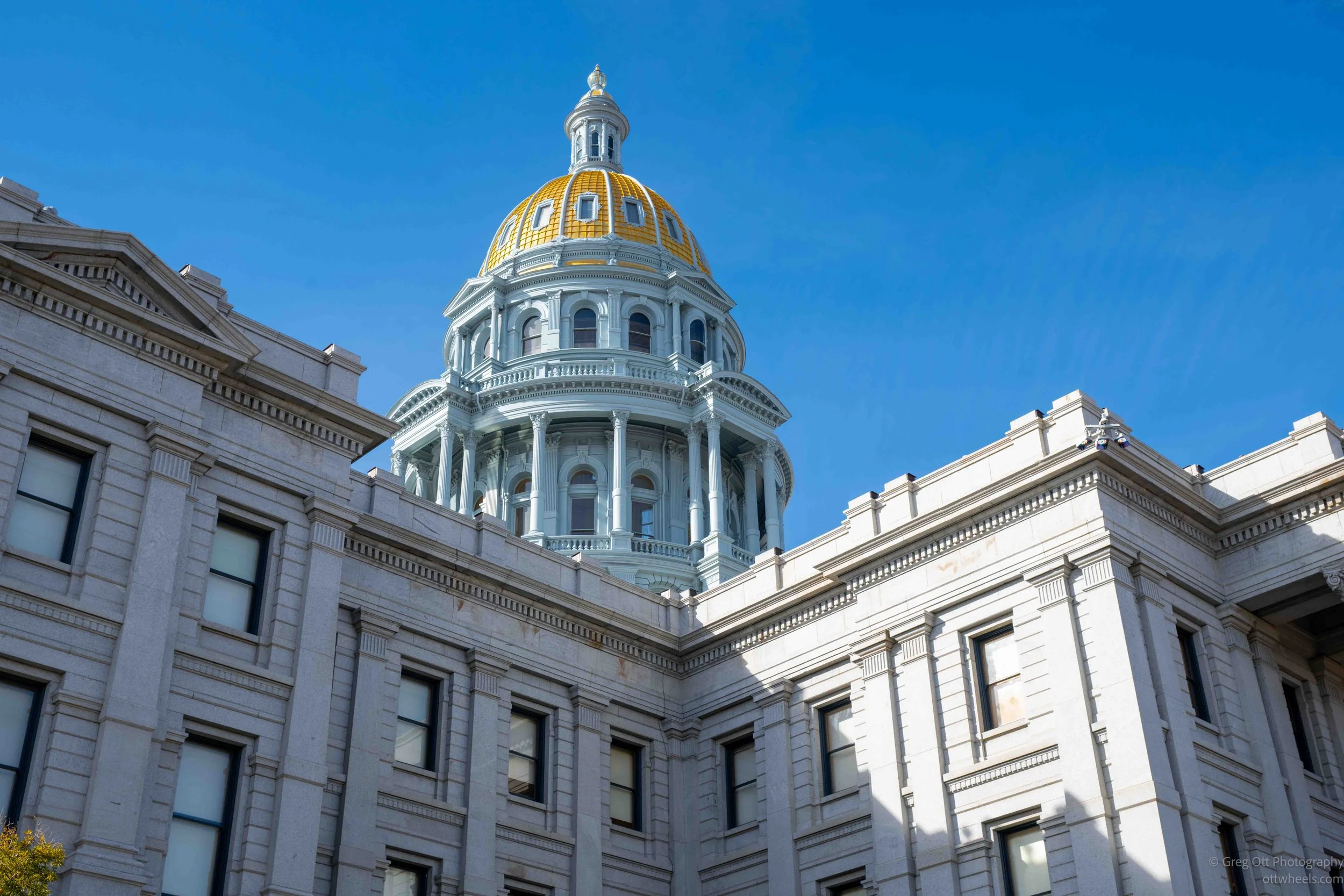
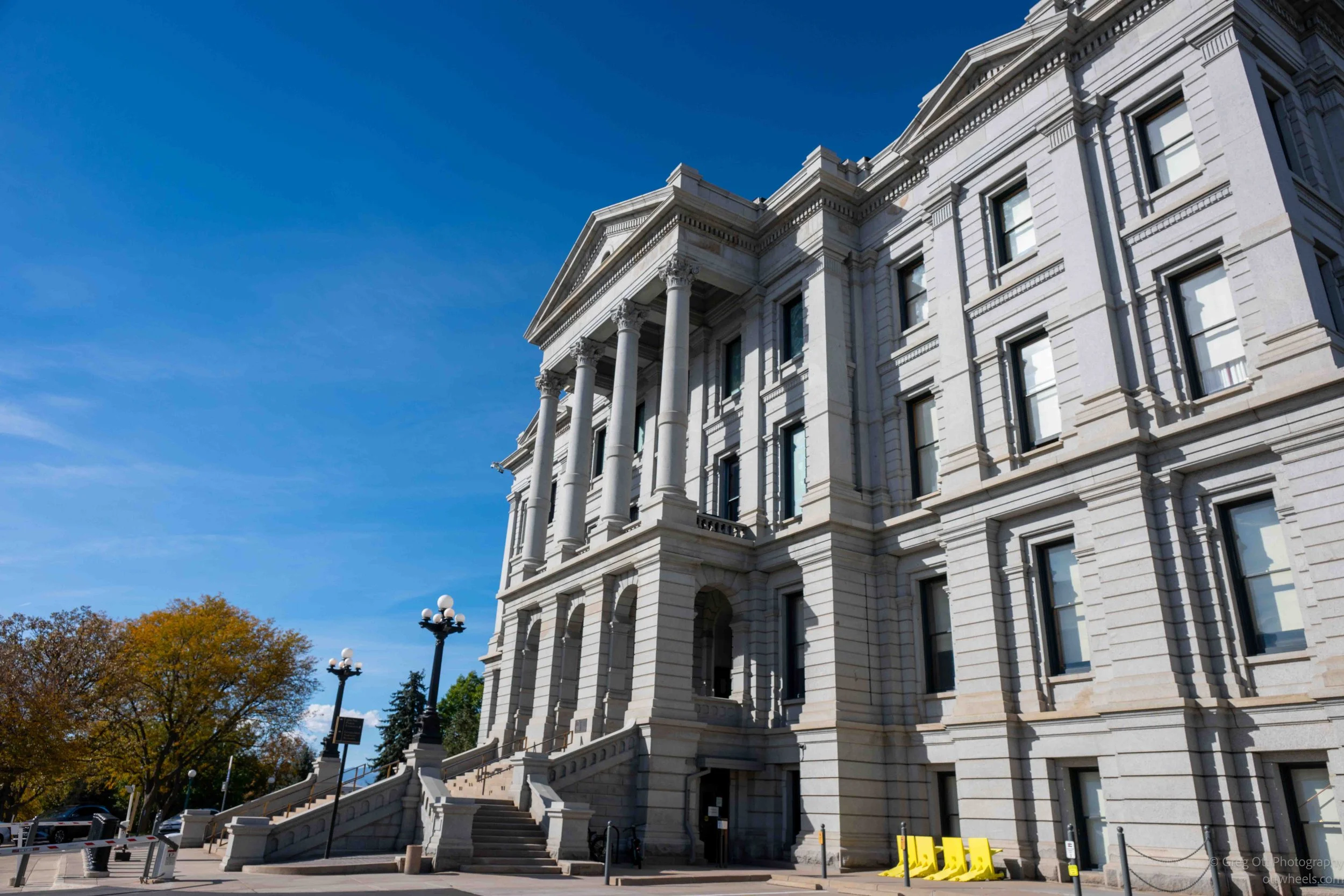
I enjoyed the visit, particularly the opportunity to walk around the upper levels of the dome. I've visited quite a few state capitols during my travels, and each has something different to offer. Colorado's is especially interesting because of its architecture, the extensive use of local materials, and the unusual opportunity to climb into the dome and look down through the building. I was glad I finally took the time to go inside after all these years.
Relaxing With Friends
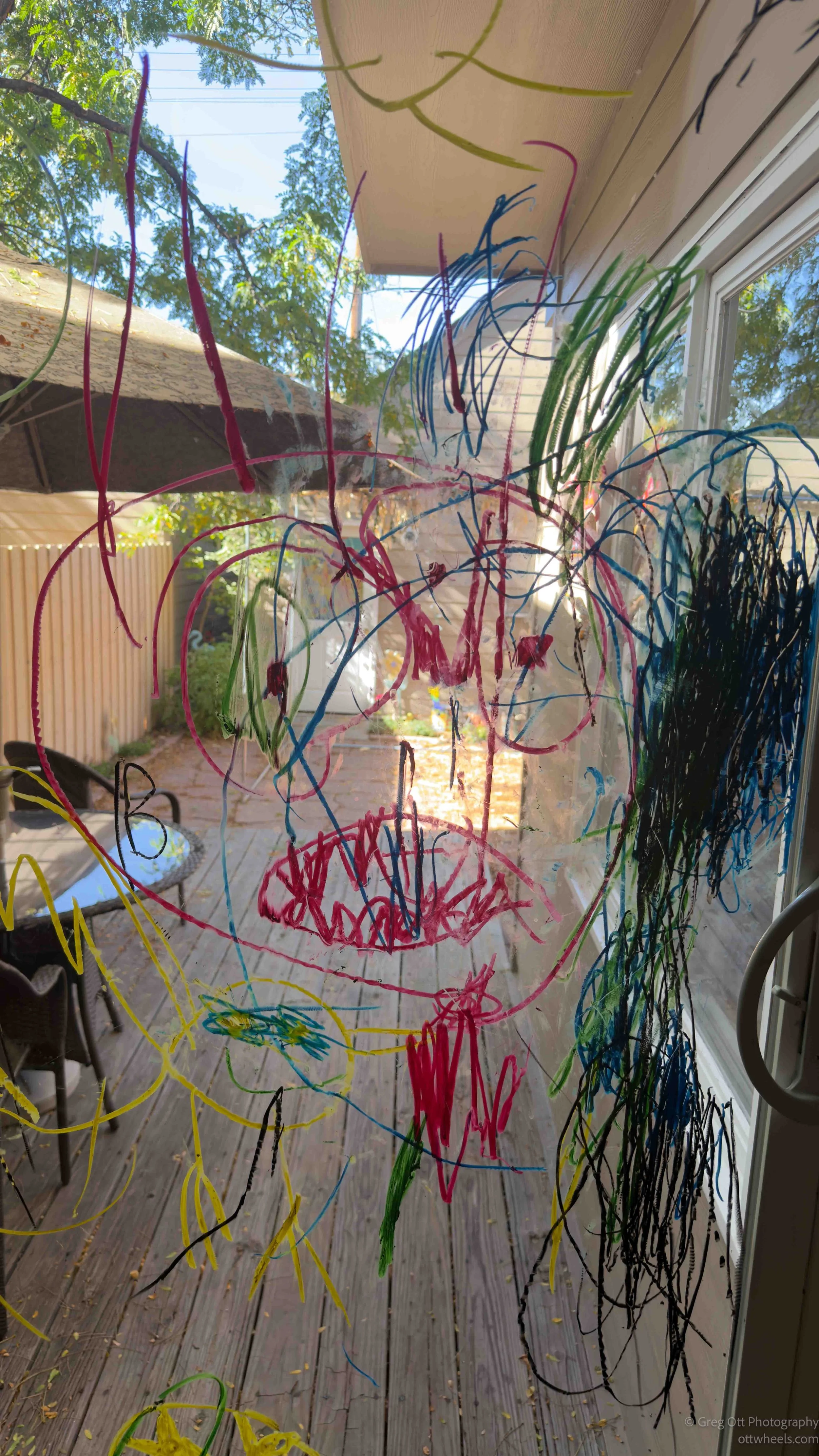
After spending time in Boulder and Denver, I drove over to visit my friends Susan and Brett for a couple of days. It was a nice change of pace after so much traveling and sightseeing. We enjoyed dinners with family and friends, and I had a wonderful time with the grandchildren, reading books, building things, and playing at the playground. It was fun to spend time with the kids and enjoy a few days without much of an agenda.
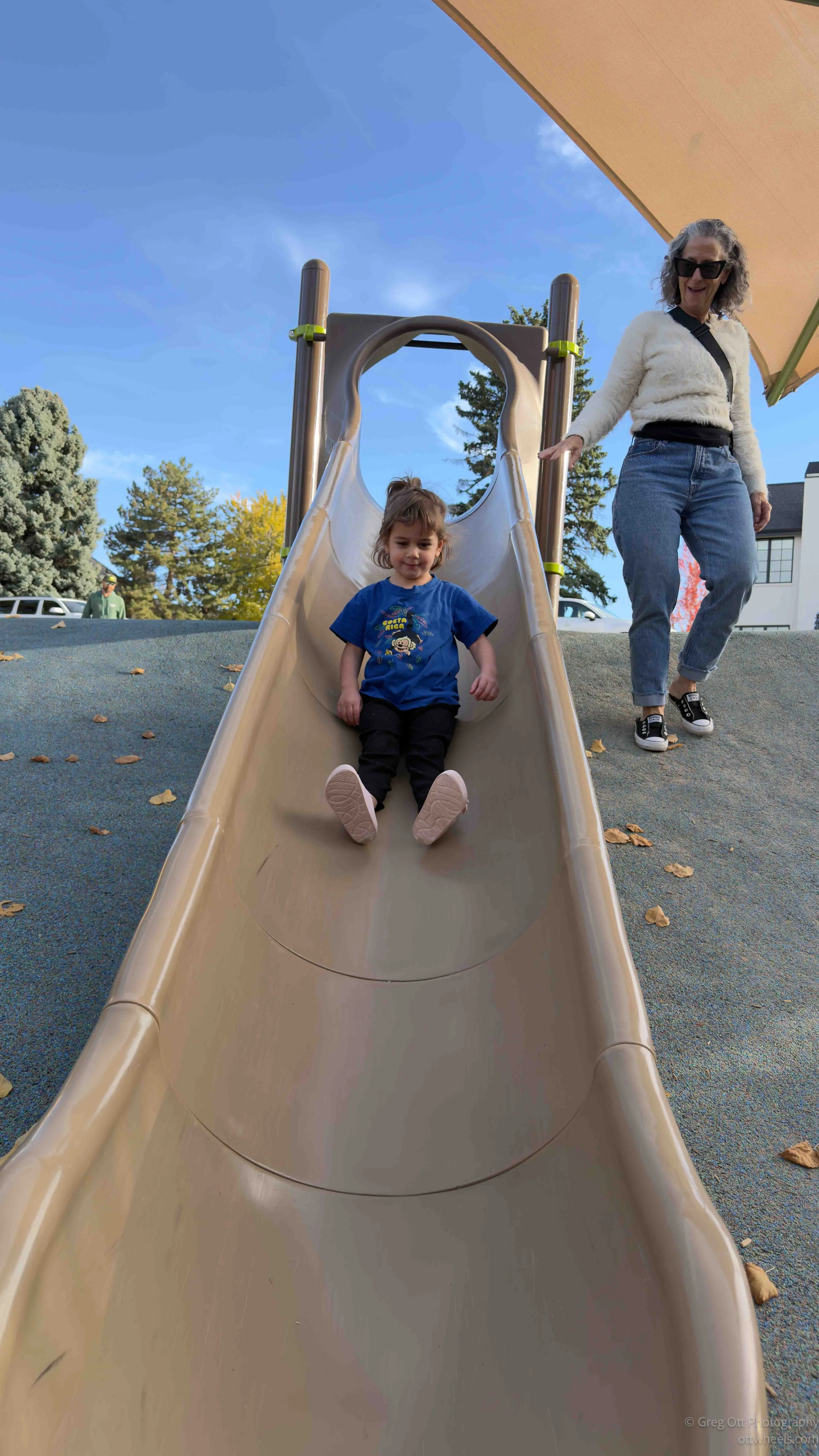
Susan and Brett live in a nice neighborhood where almost everything they need is within walking distance. Less than a block away is a good bagel shop with excellent coffee, along with an ice cream and sandwich shop, a hardware store, and a grocery store. It's the kind of neighborhood where you can leave the car at home and walk to most places, something I've always appreciated.
I also spent another day visiting my friend Sandy in South Denver. It was good to catch up with old friends and spend a little time enjoying their company before continuing my travels.