Exploring Historic Talkeetna After a Denali Flight
Back at the van after a stunning tour of the Denali mountains with K2 Aviation, the day felt completely different. The sun had warmed things enough that I changed into shorts, repacked my camera gear, and made the quarter-mile walk into Talkeetna to spend the rest of the afternoon exploring the town.
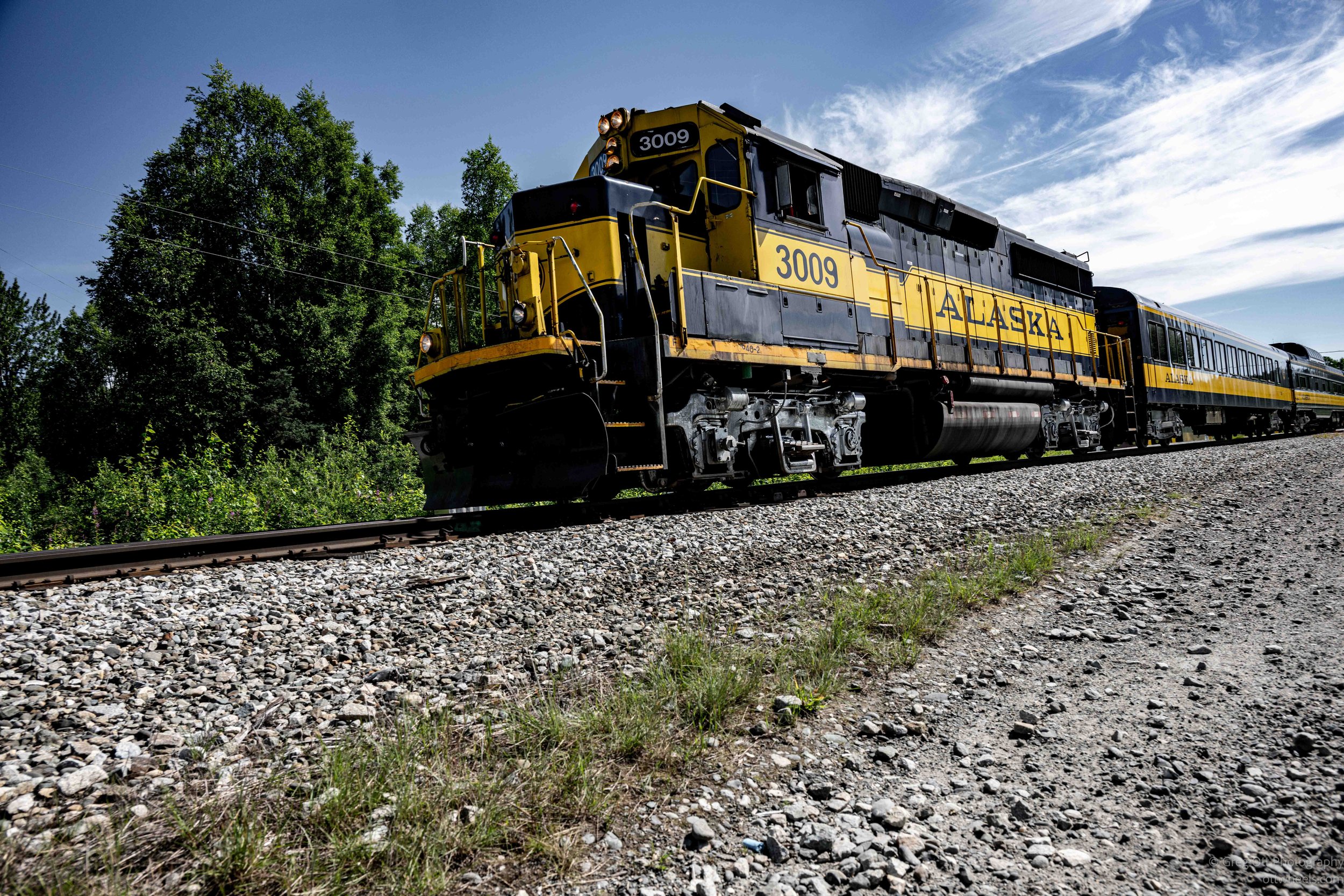
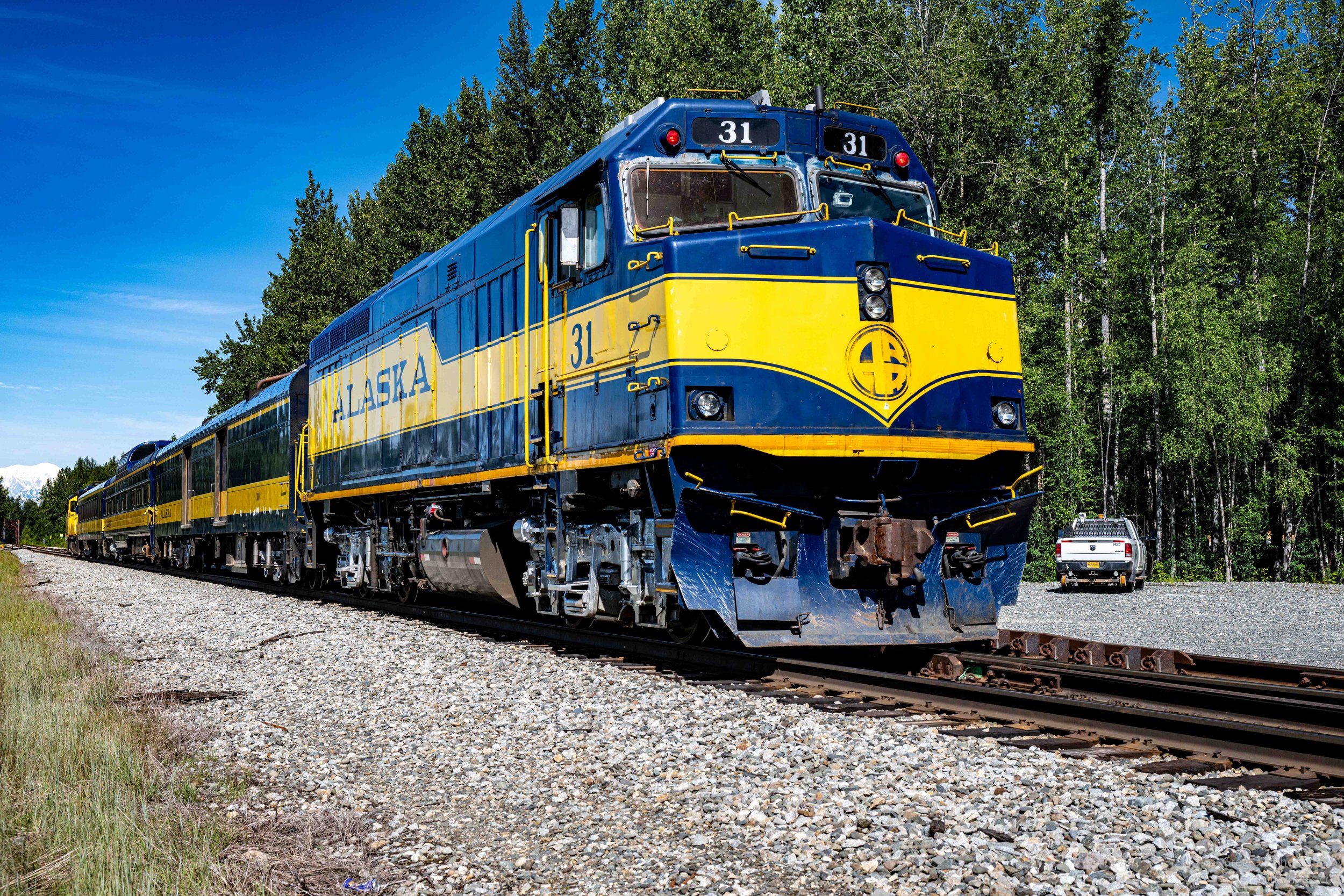
As I crossed the railroad tracks, I heard the horn of a diesel locomotive. I turned just in time to see the Alaska Railroad passenger train approaching the station. It pulled in, took on passengers, and continued north. I made a mental note that riding the Alaska Railroad looked like something I'd enjoy someday.
Walking Through Historic Talkeetna
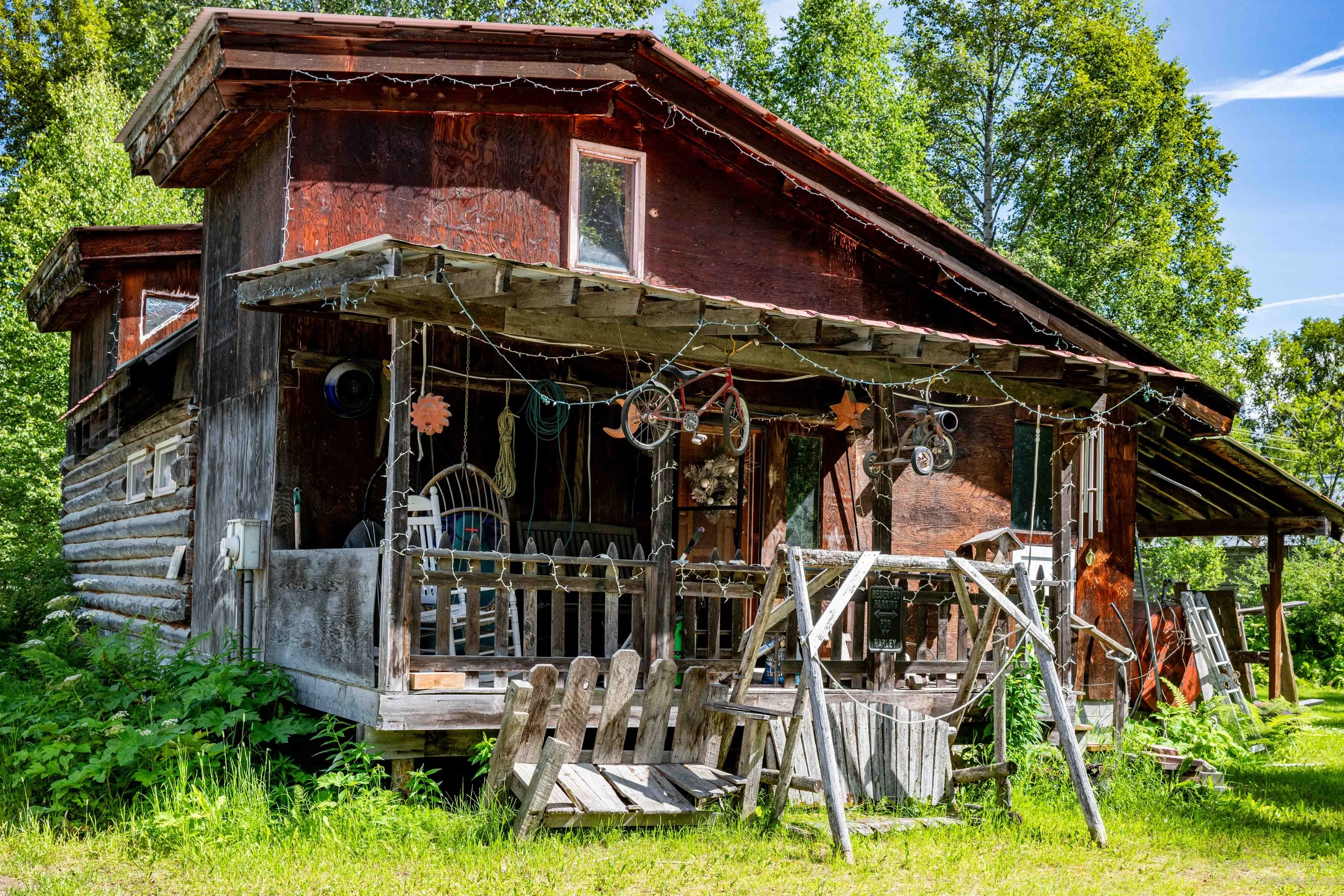
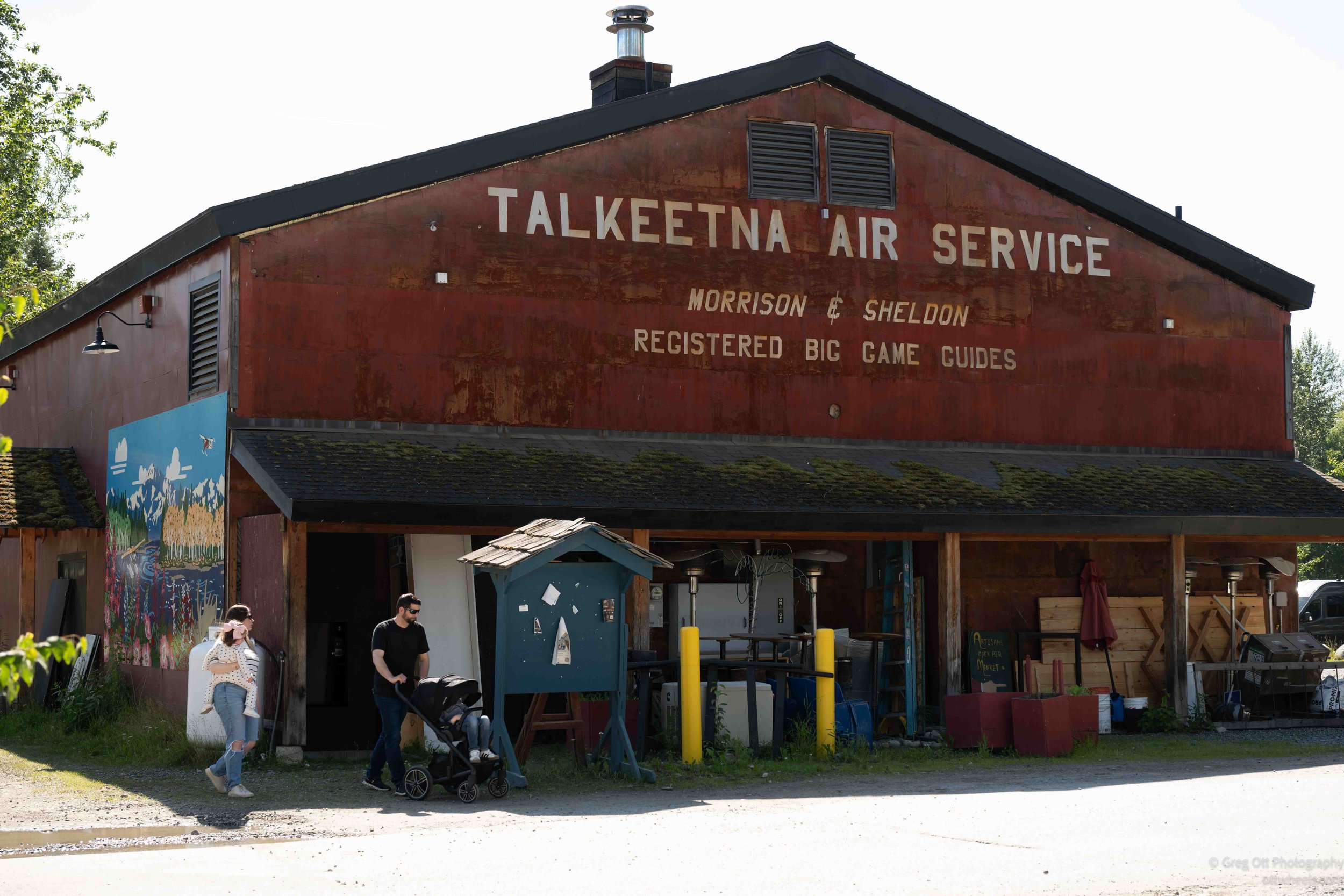
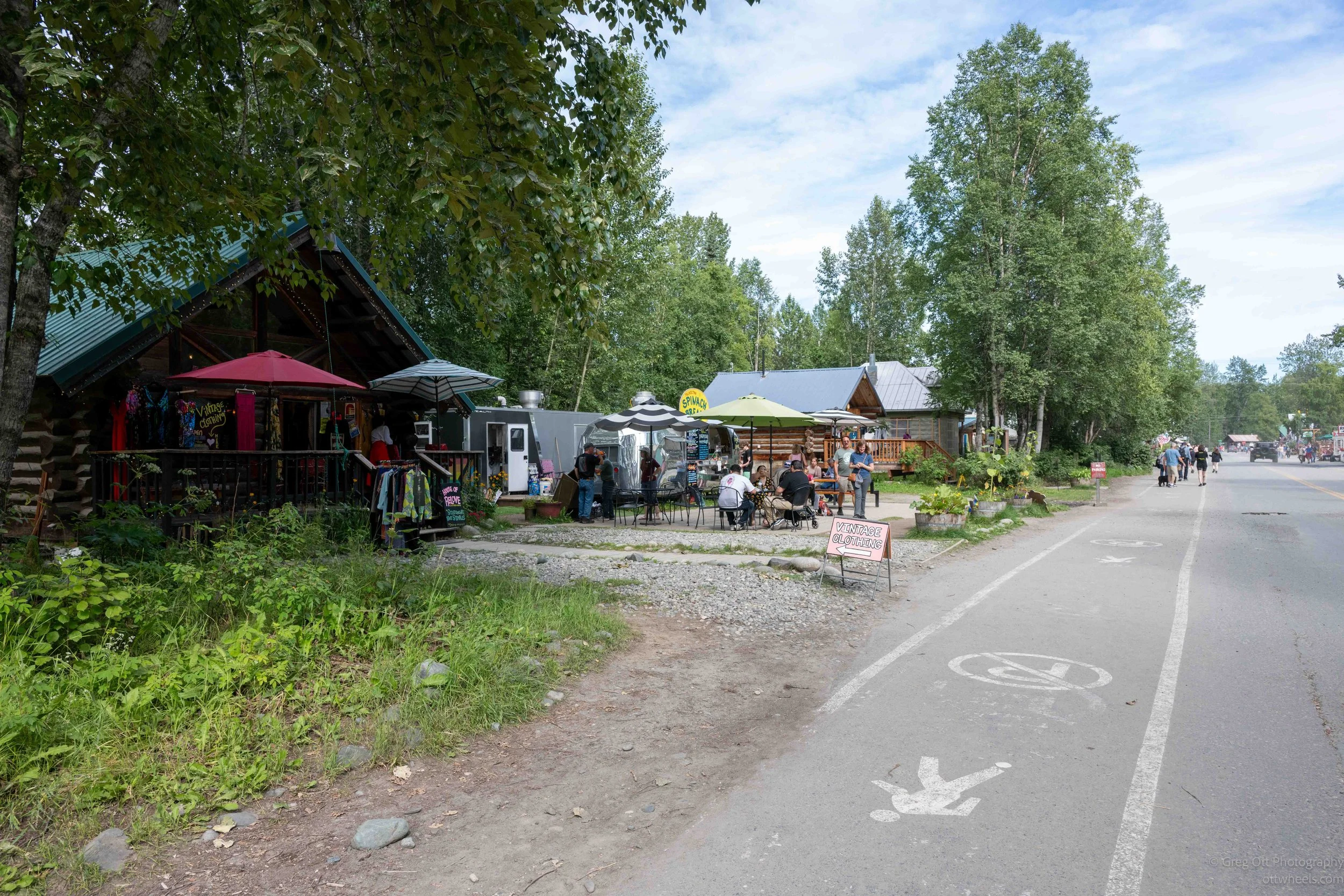
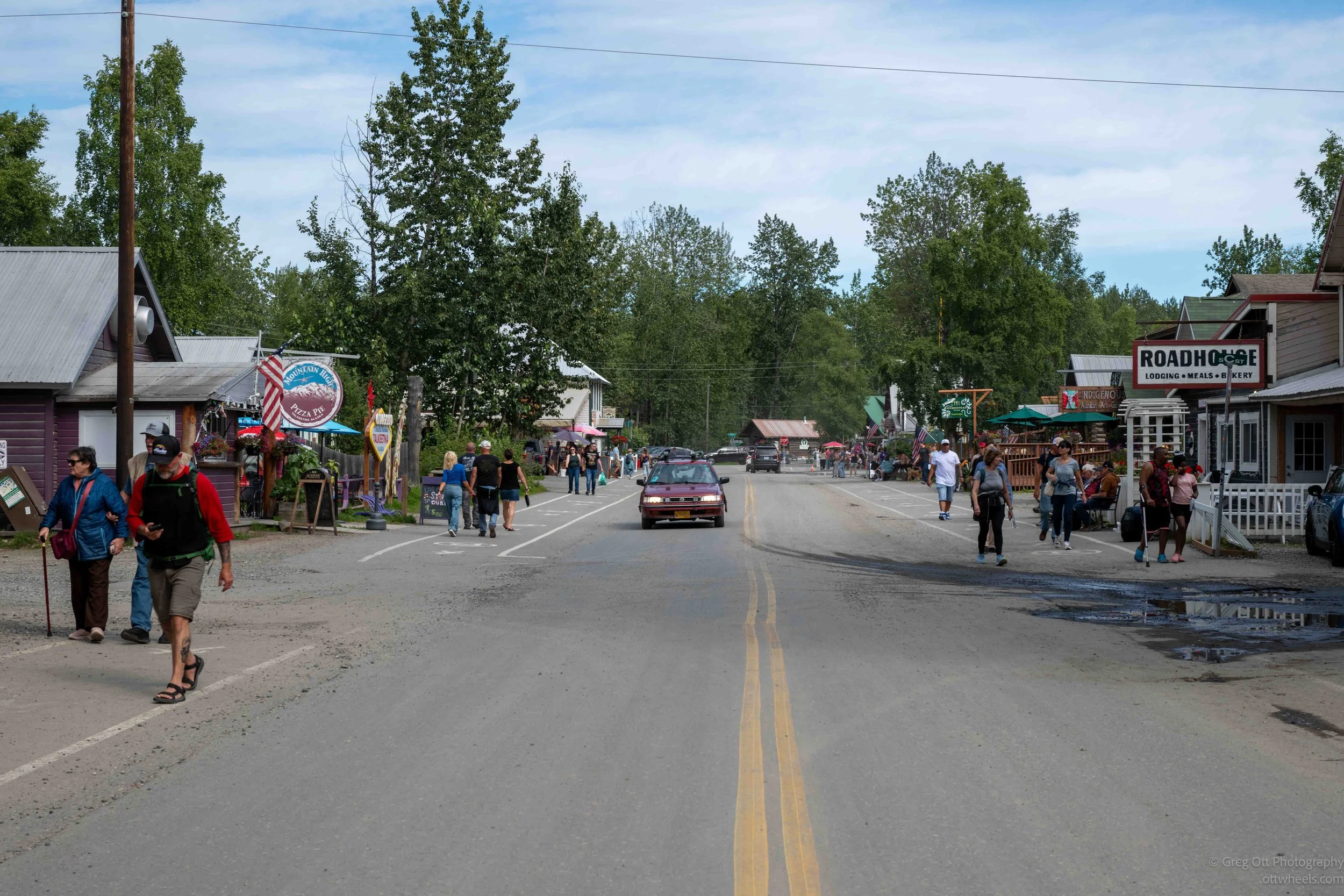
I spent the afternoon walking through Talkeetna's historic district. Downtown is only a few blocks long, but nearly every original building has a plaque explaining its history. What first looks like a collection of old log buildings quickly turns into the story of a town that has reinvented itself more than once.
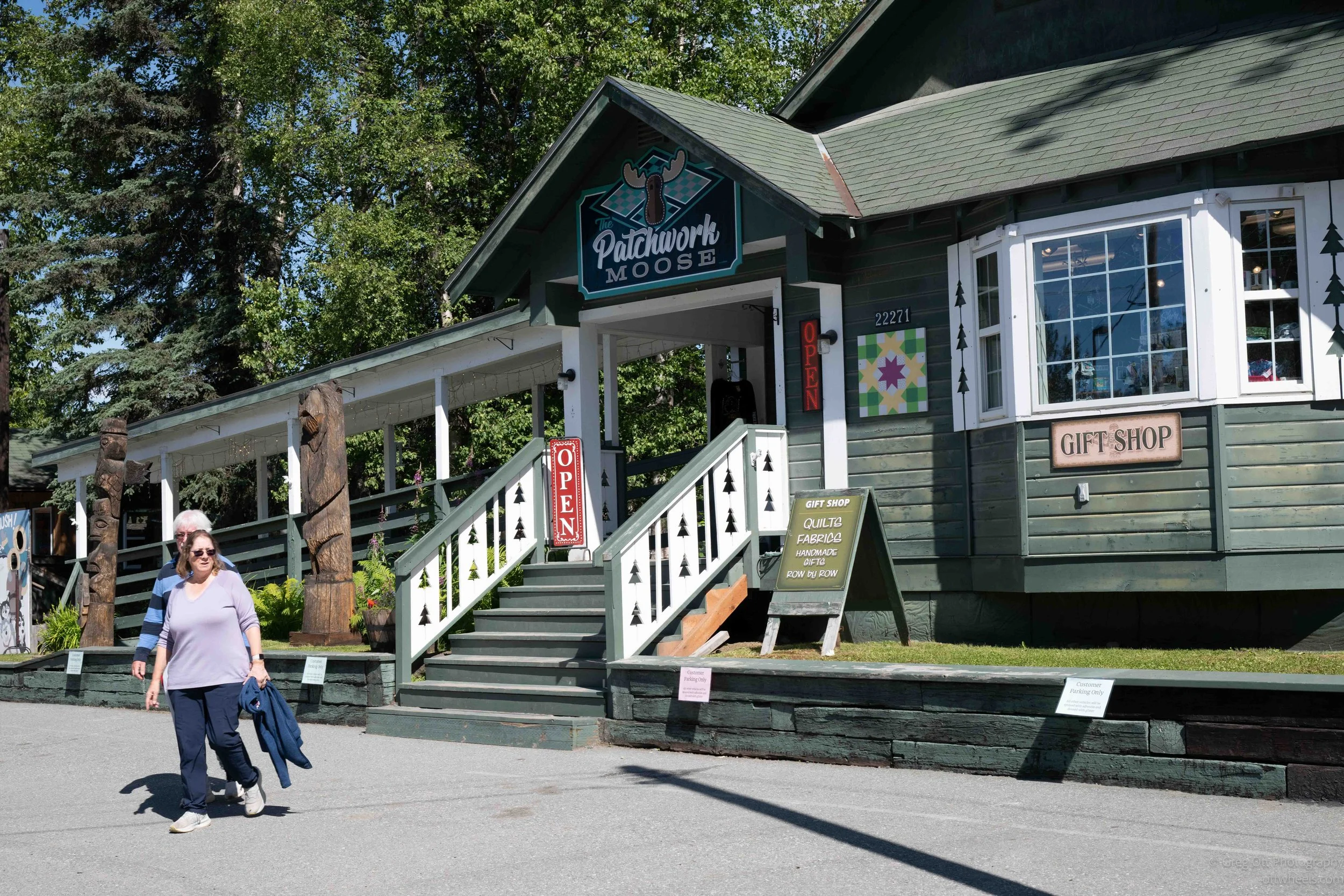
Long before settlers arrived, the Dena'ina people used this area where the Talkeetna, Susitna, and Chulitna Rivers meet. The location made it an ideal place to store food and supplies, and the name Talkeetna comes from a Dena'ina word referring to that purpose. Gold discoveries in the early 1900s brought the first wave of prospectors, but it was the Alaska Railroad that transformed Talkeetna into a permanent town.
In 1916, Talkeetna became a district headquarters during construction of the Alaska Railroad. The population quickly grew to around 1,000 people as railroad workers, miners, merchants, and trappers poured into town. The boom didn't last. Once construction moved north, most of the workers followed, and within a year the population had dropped to only about seventy residents.
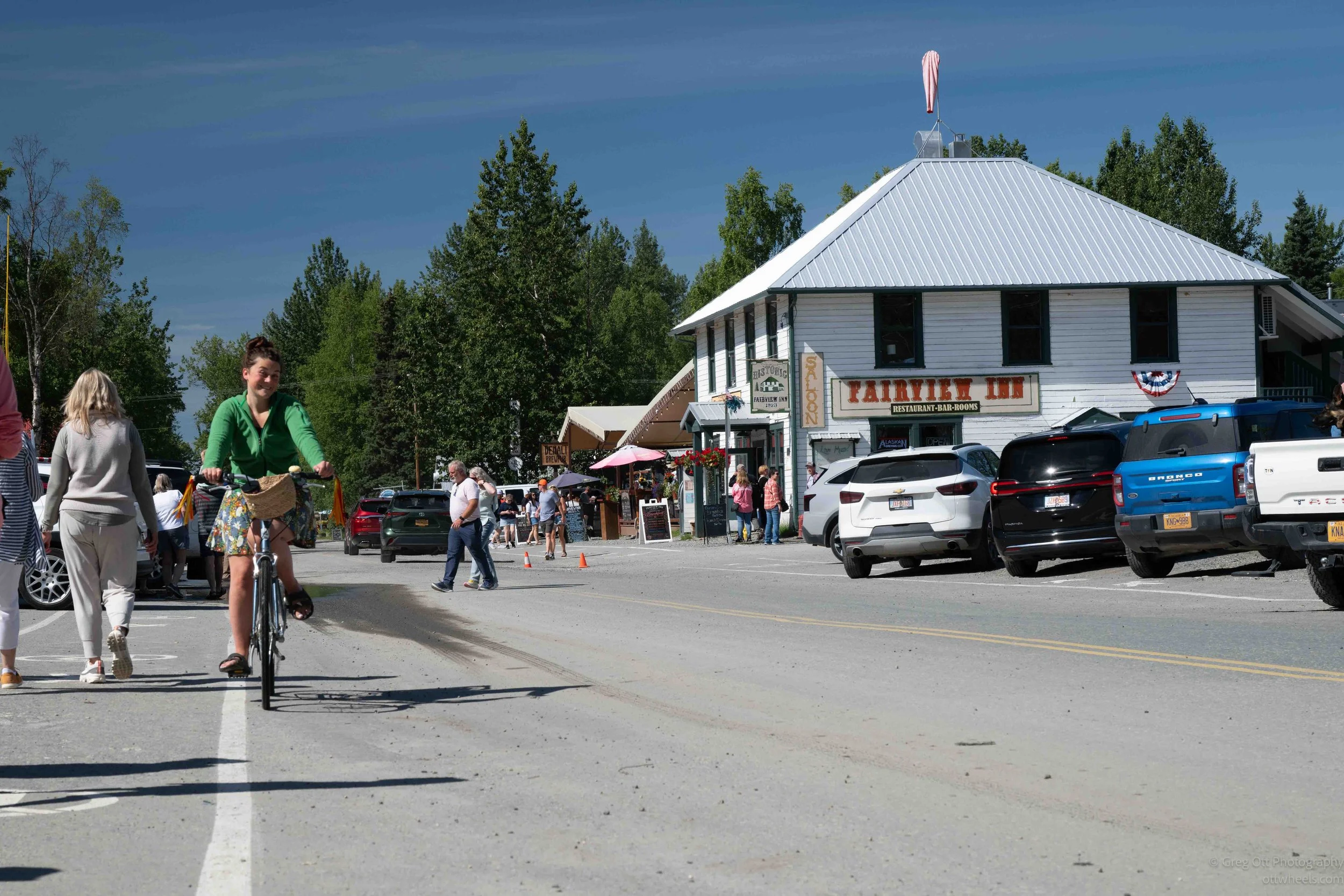
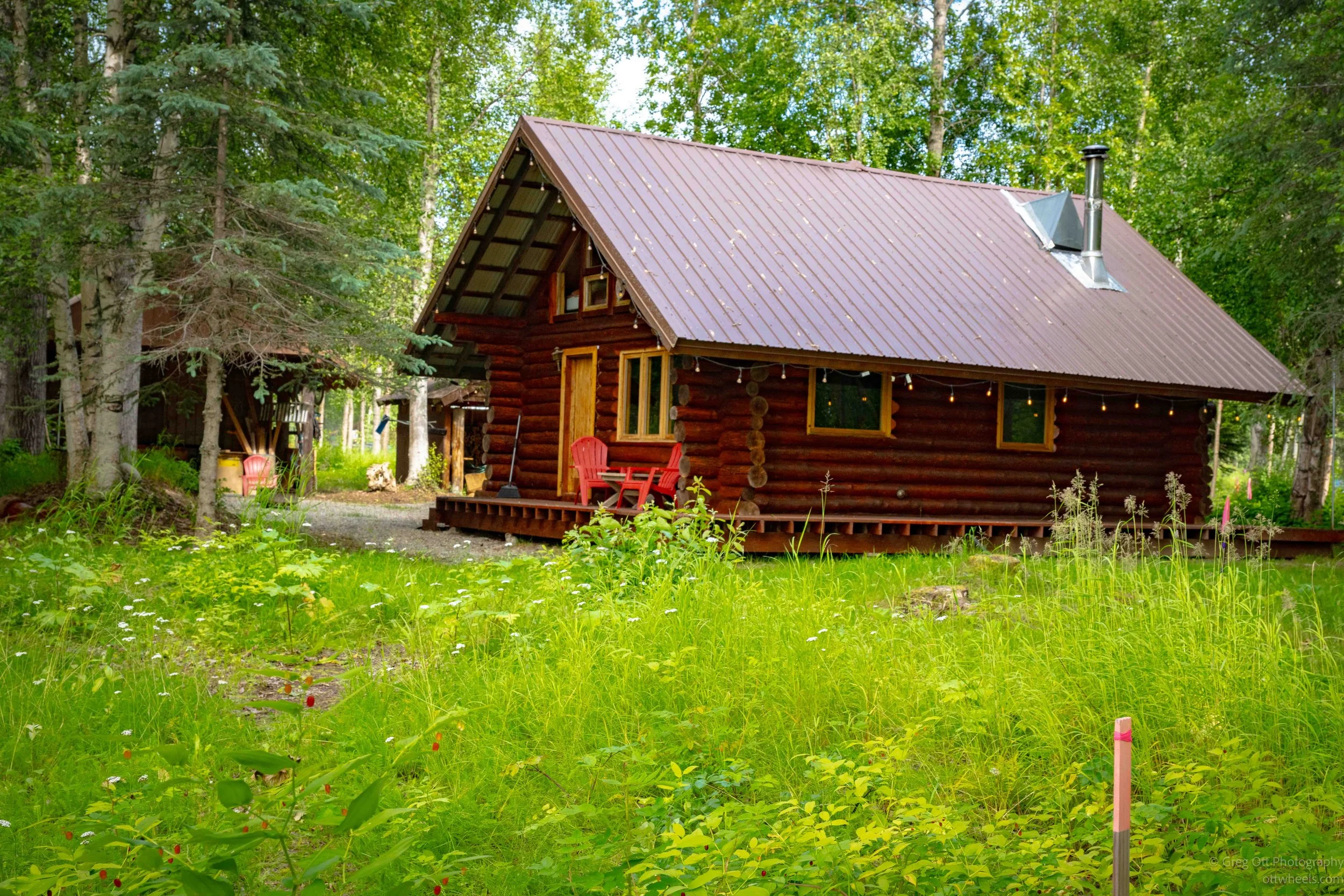
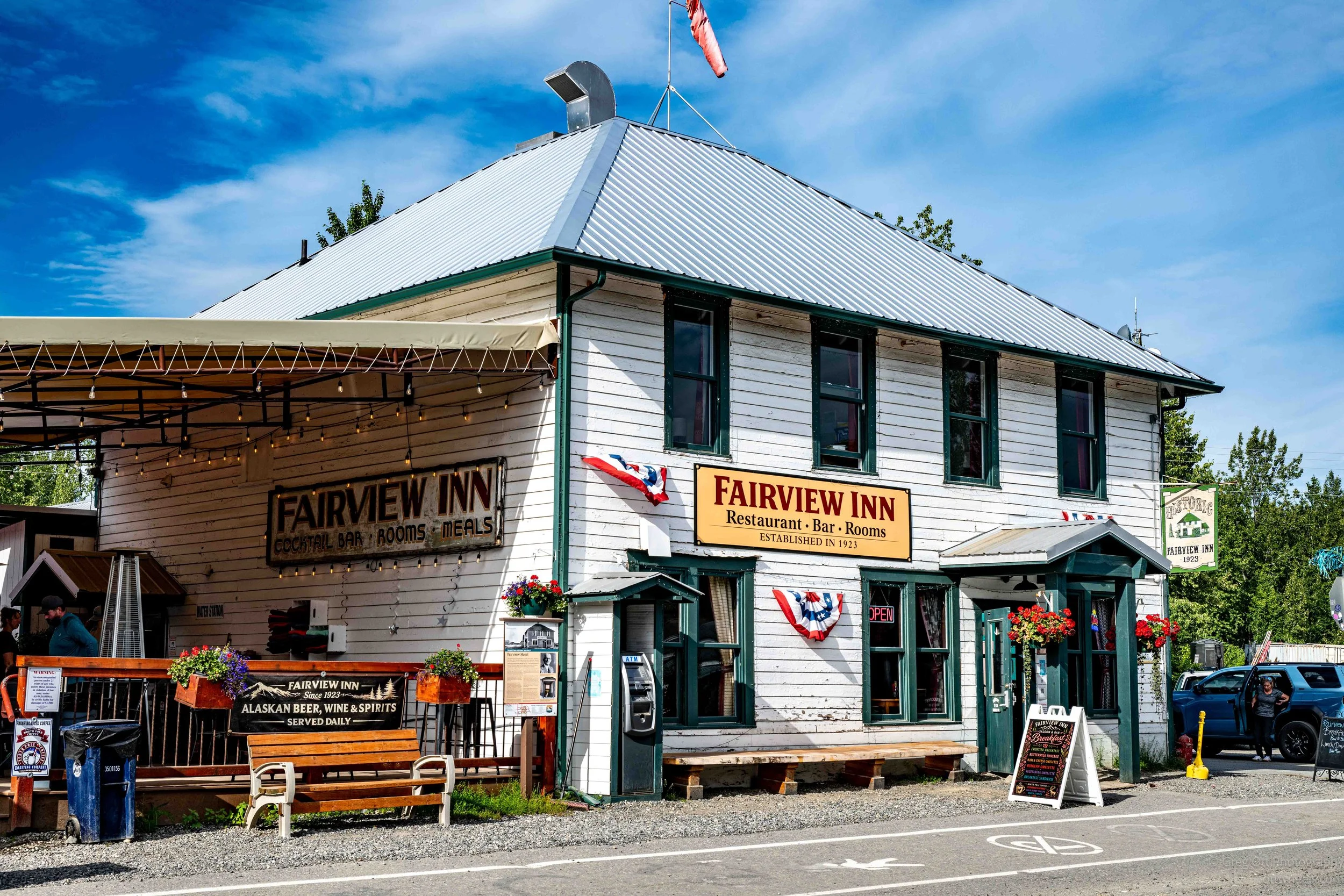
Many of the buildings from that era still stand today. Small log cabins built by trappers, miners, and railroad workers line the streets alongside the Fairview Inn, which has been welcoming visitors for more than a century. Most of the cabins are surprisingly small, built with whatever materials were available and designed simply to survive Alaska's long winters rather than provide comfort.
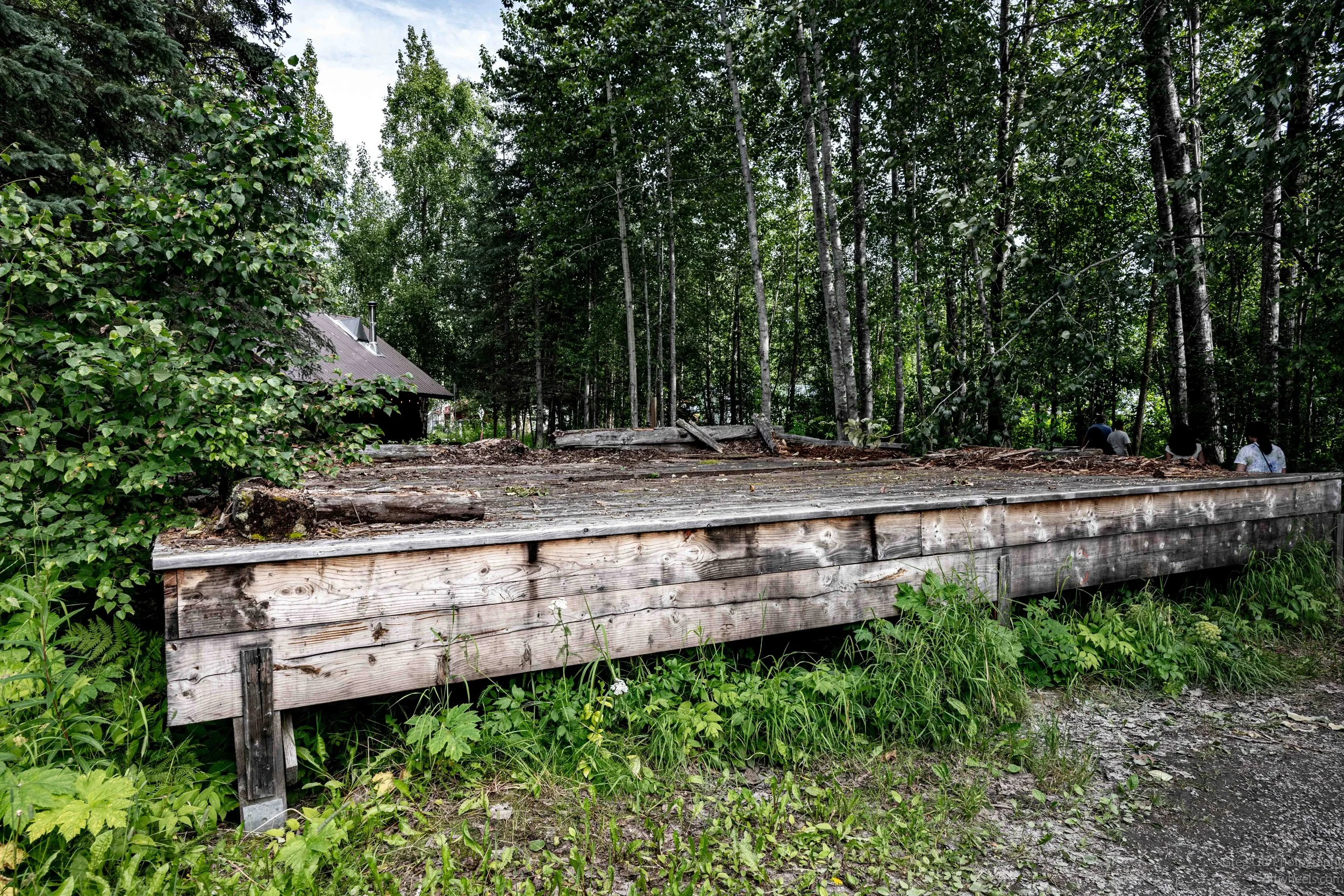
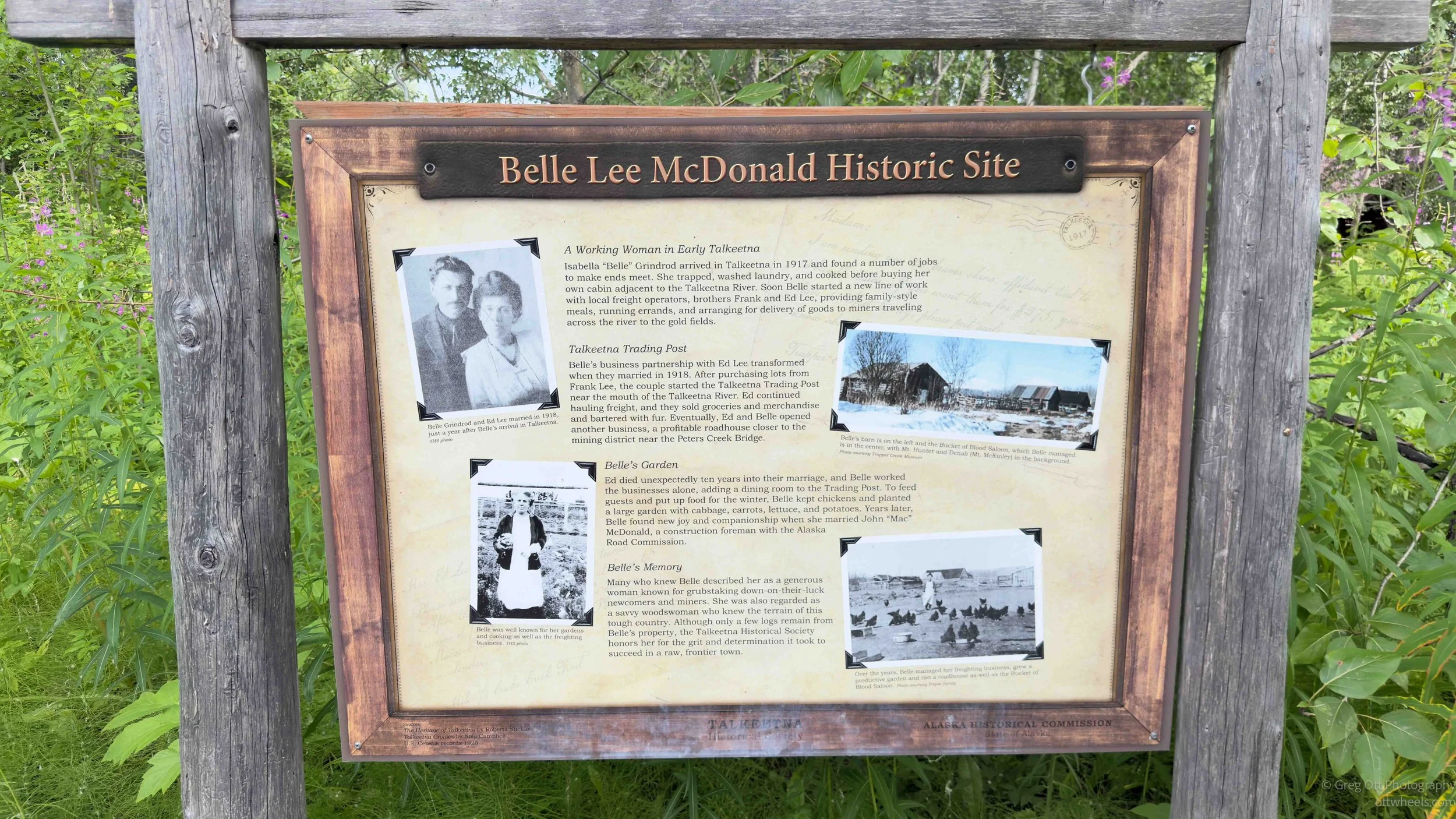
One of the stories I found most interesting was Belle MacDonald (See Belle’s Park below). She supplied miners with food and equipment, often accepting mining claims as payment when they couldn't repay their debts. Over time she became one of the area's largest landowners while operating a trading post and roadhouse. When she finally left Alaska in her eighties, she reportedly said, "I didn't come here to die. I came here to live." It seemed like a fitting description of the people who built this town.
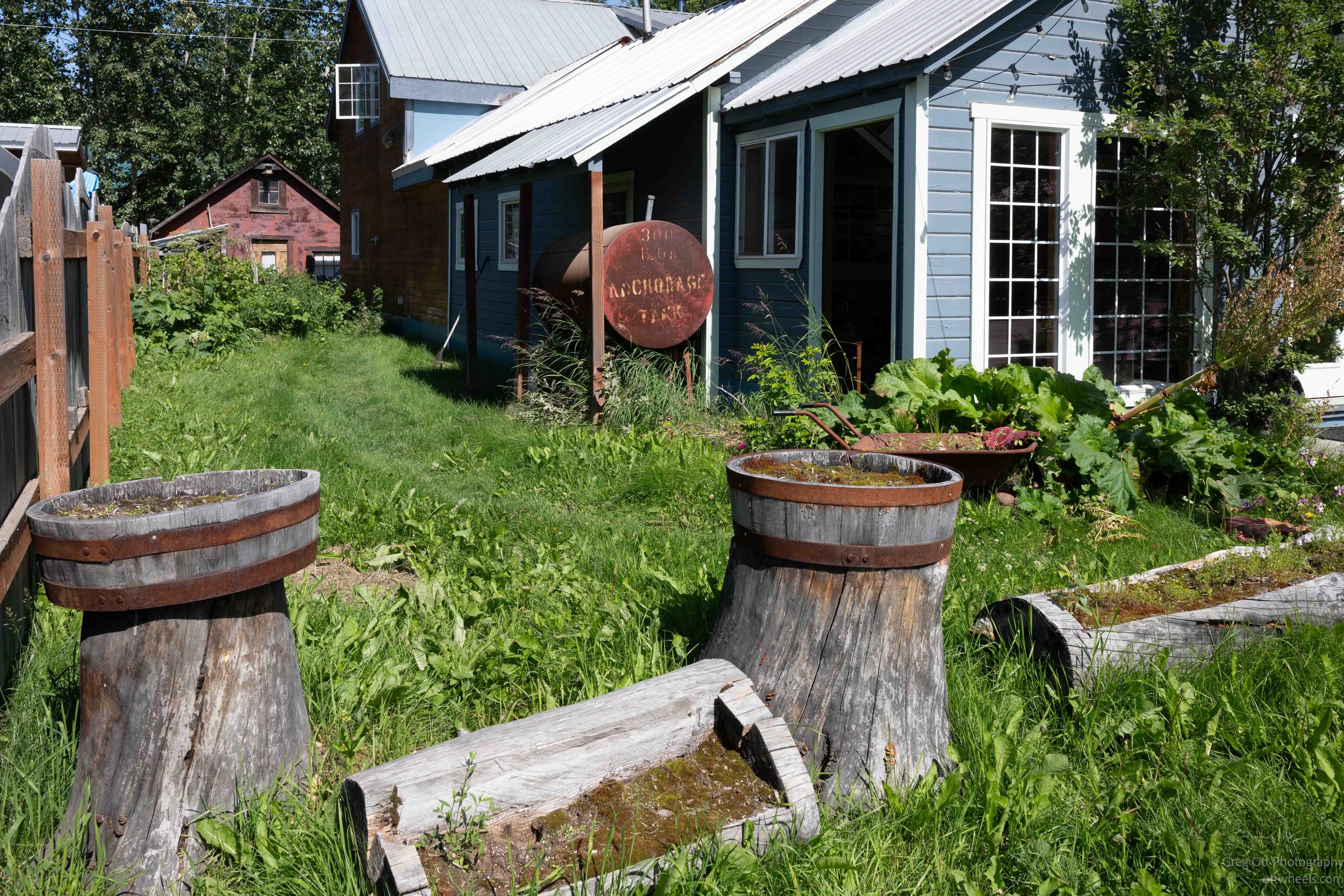
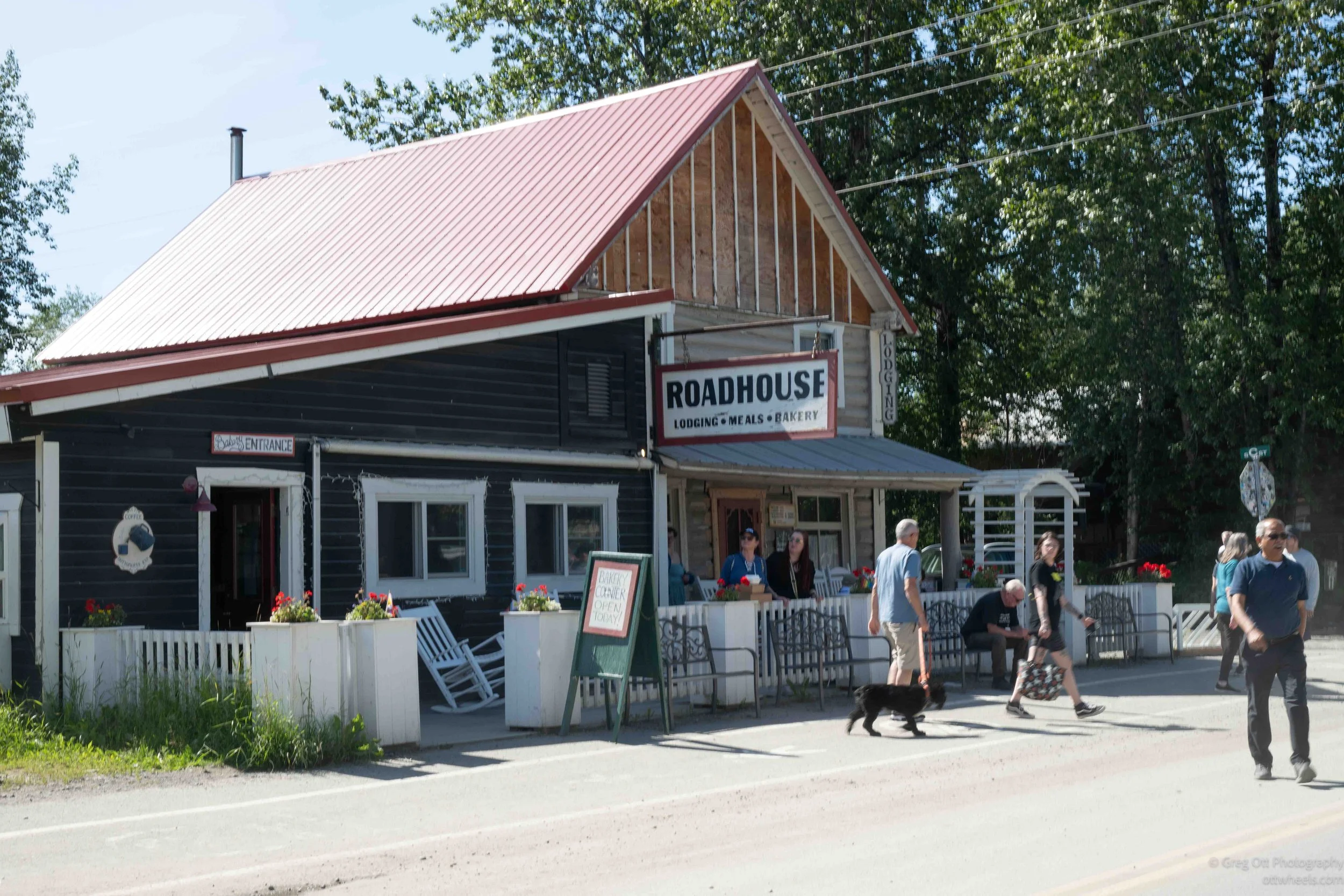
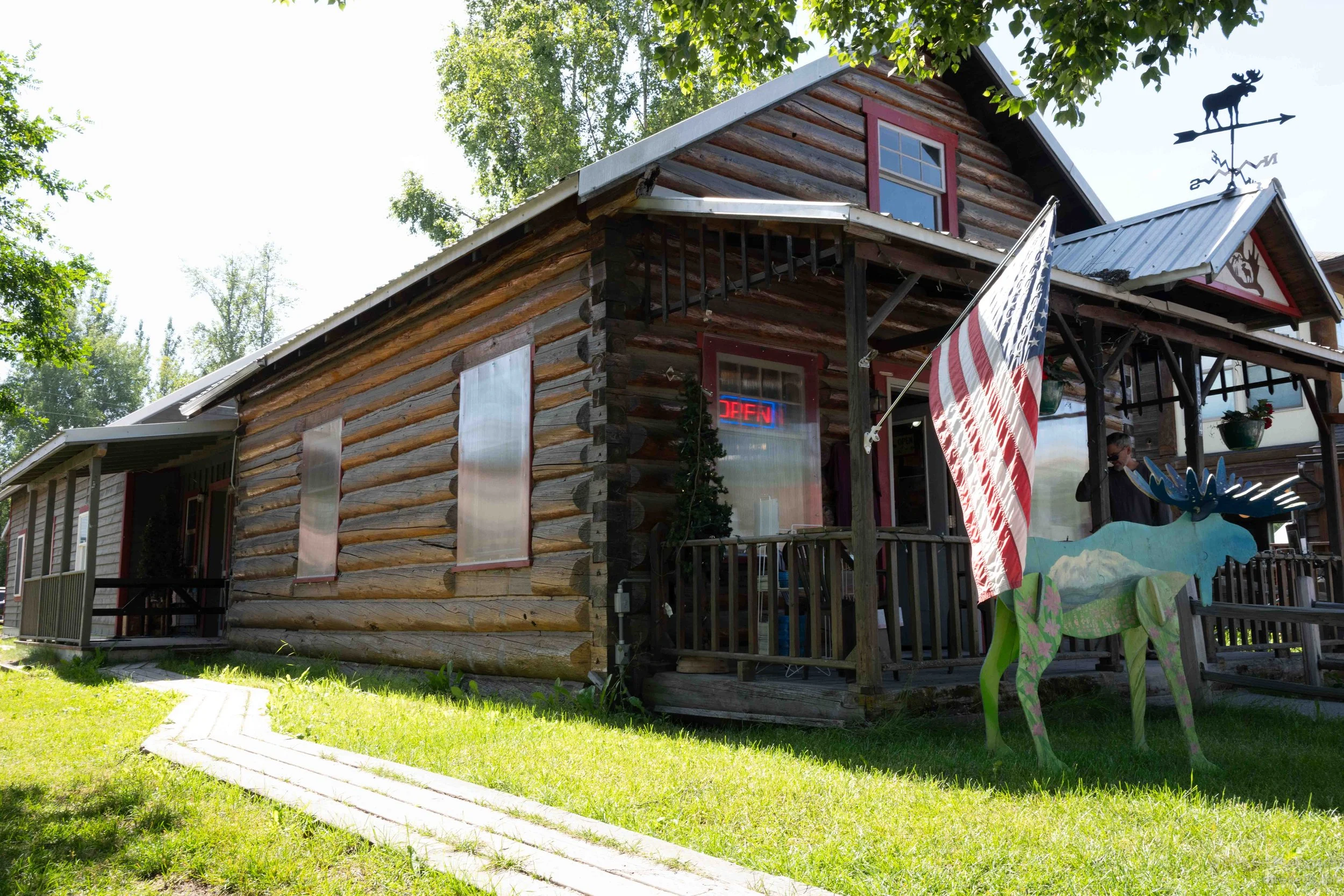
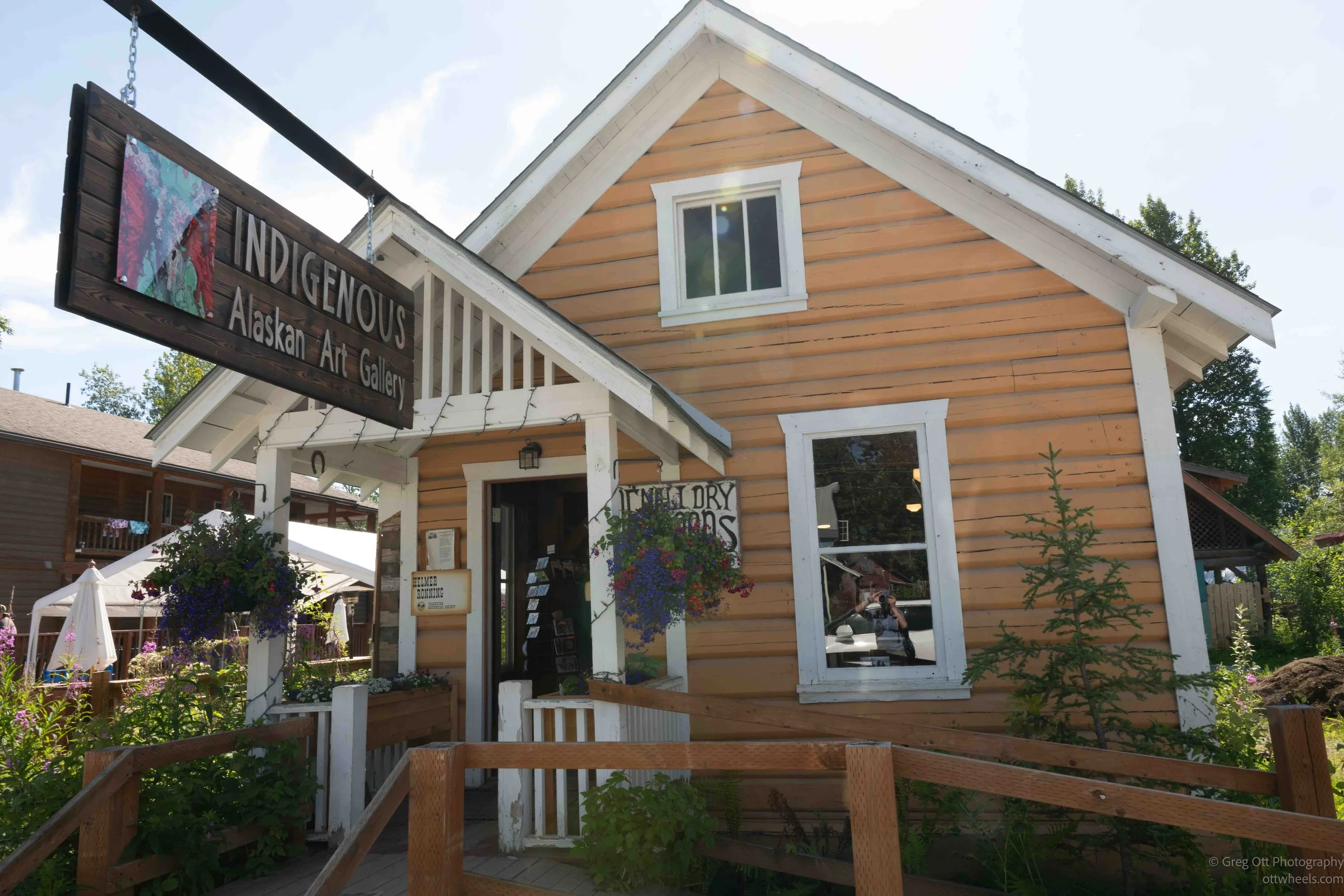
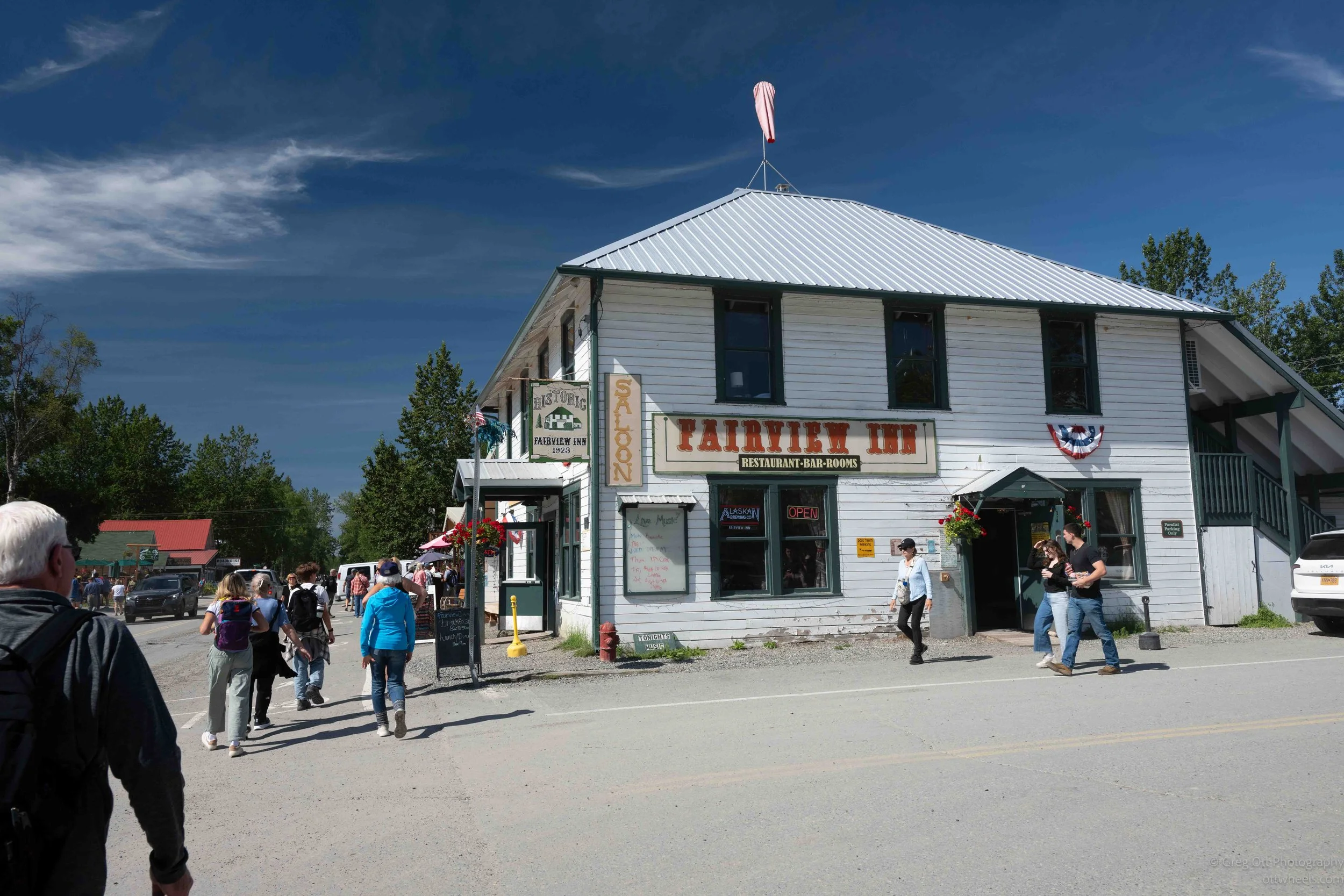
Talkeetna easily could have disappeared after the railroad boom ended, but aviation gave it a second life. Pilots began flying climbers into the Alaska Range, and today the town is best known as the gateway for Denali flightseeing tours. Tourism has replaced mining and railroad construction, but the historic district still preserves a glimpse of what life was like during those early years.
It doesn't take long to walk through downtown Talkeetna, but slowing down to read the plaques made me appreciate the town much more than simply wandering past the gift shops. Knowing the stories behind the buildings turned what could have been a quick stroll into an enjoyable afternoon.
Lunch in Talkeetna
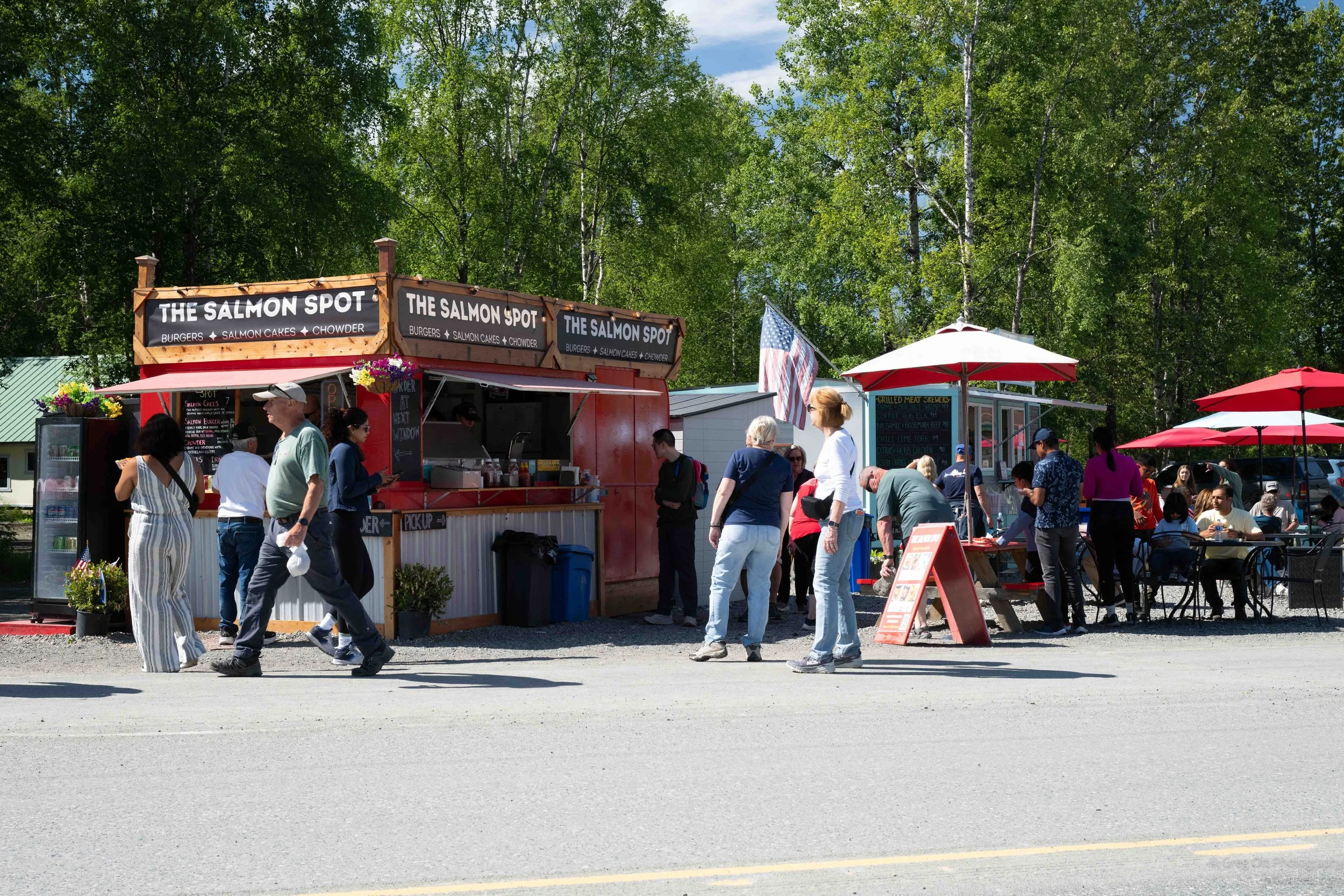
Talkeetna is a major tourist town on the edge of Denali National Park, and very few of the people I met were actually from the area. By now it was lunchtime, so I started looking for something light. I looked over several menus, stopped in at the bakery, which looked tempting, and eventually settled on Conscious Coffee. I ordered a mango smoothie, but it was a little too tangy for my taste with the combination of orange juice and Greek yogurt. Still, it was relaxing sitting outside, watching people wander through town.
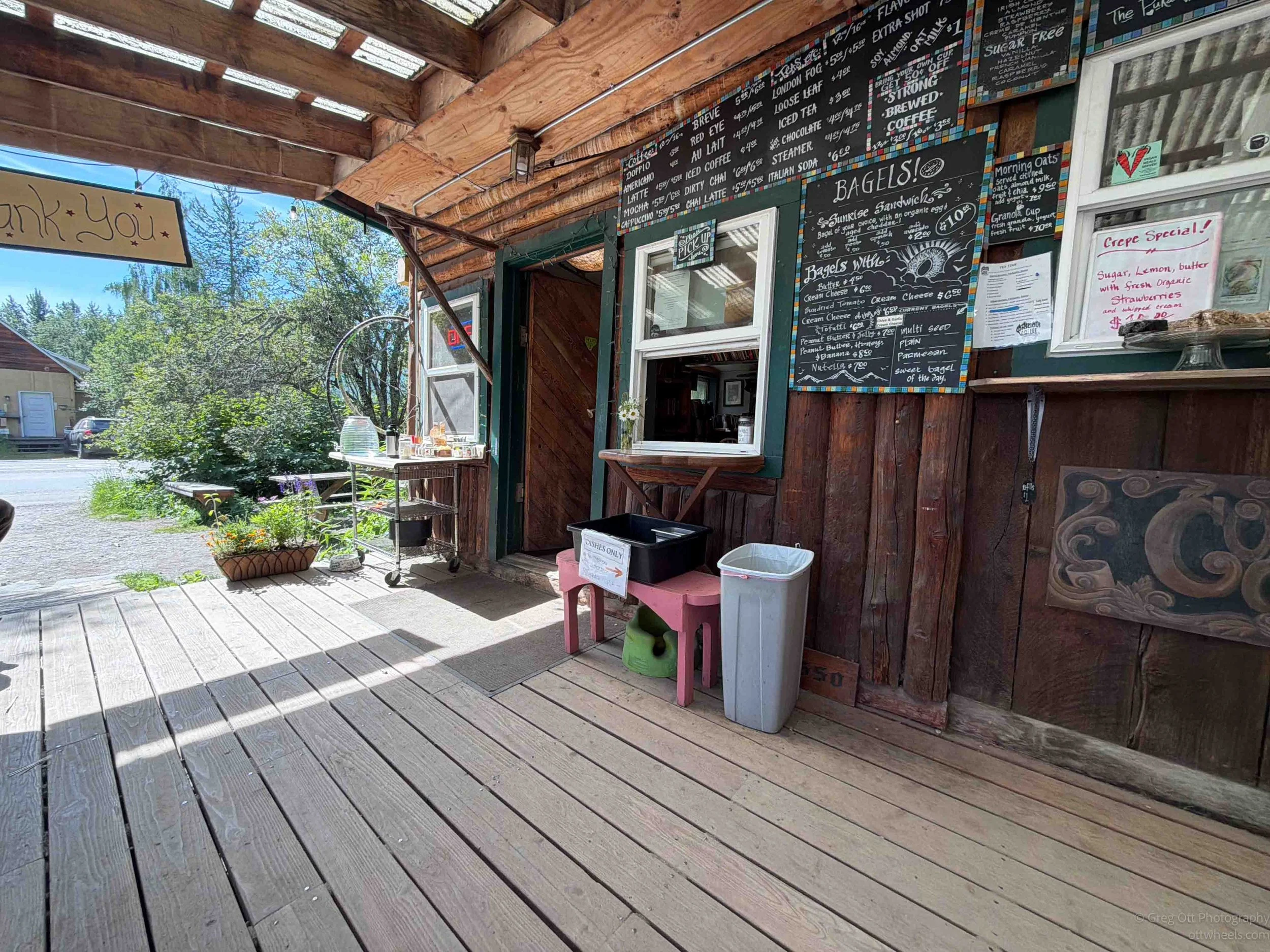
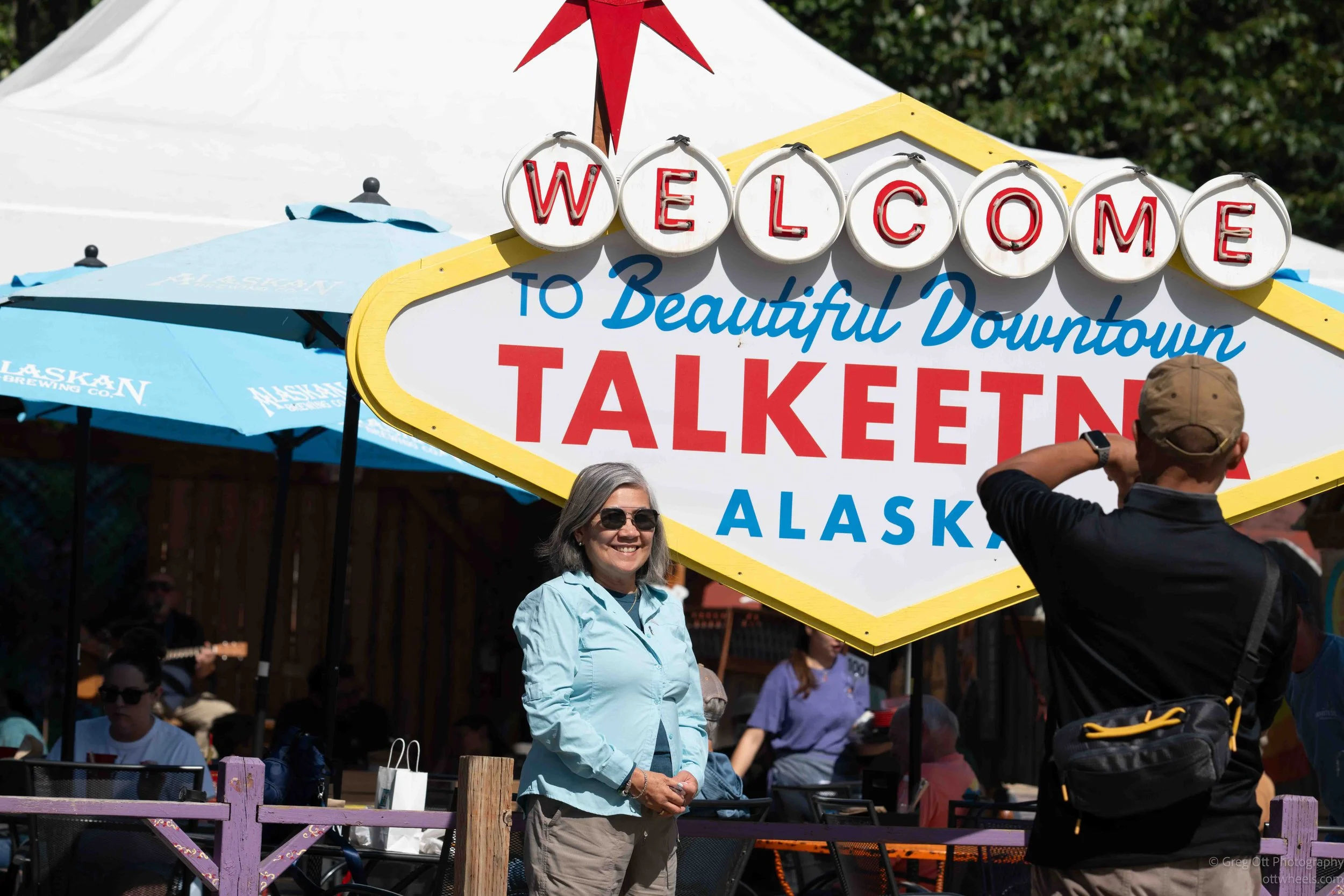
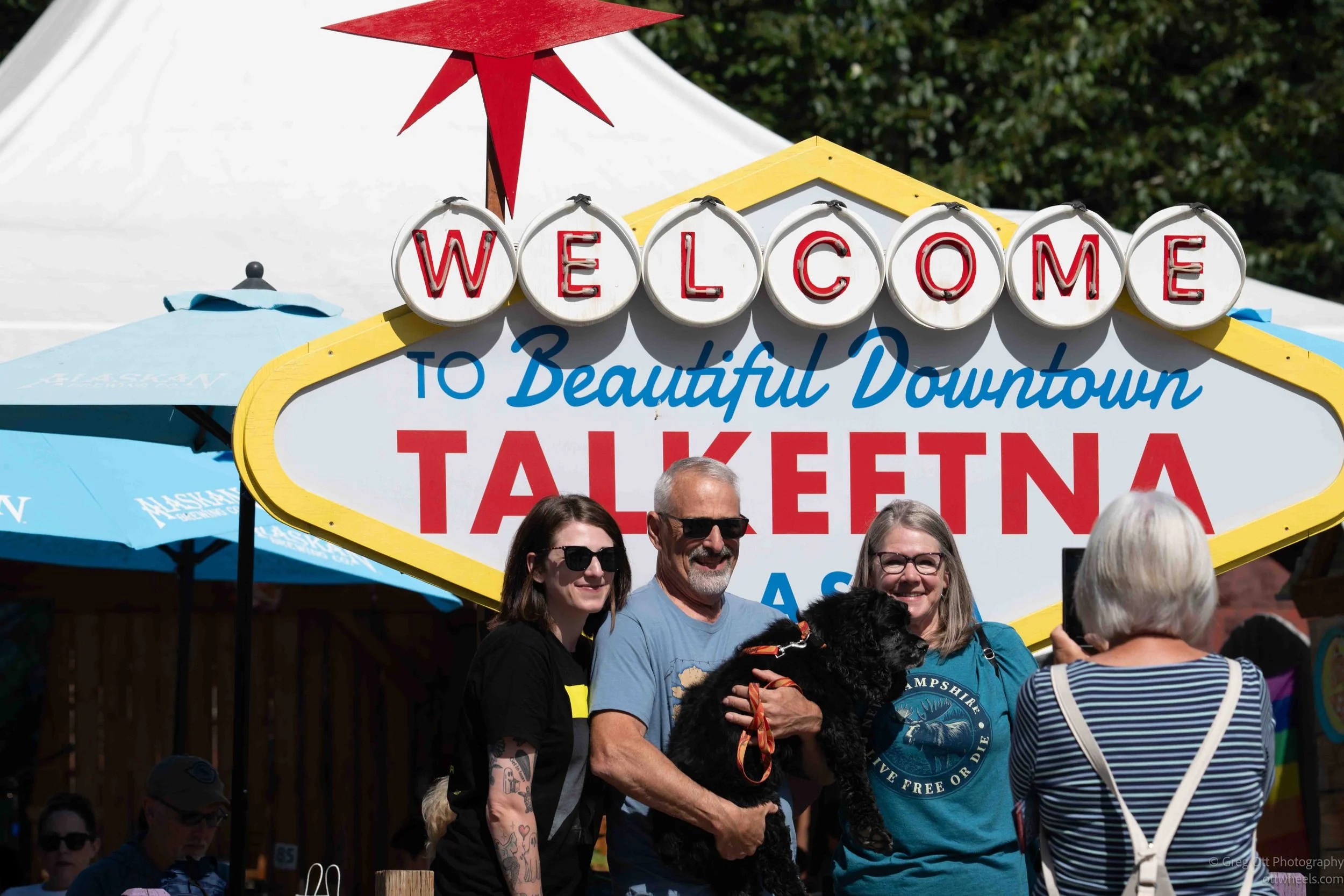
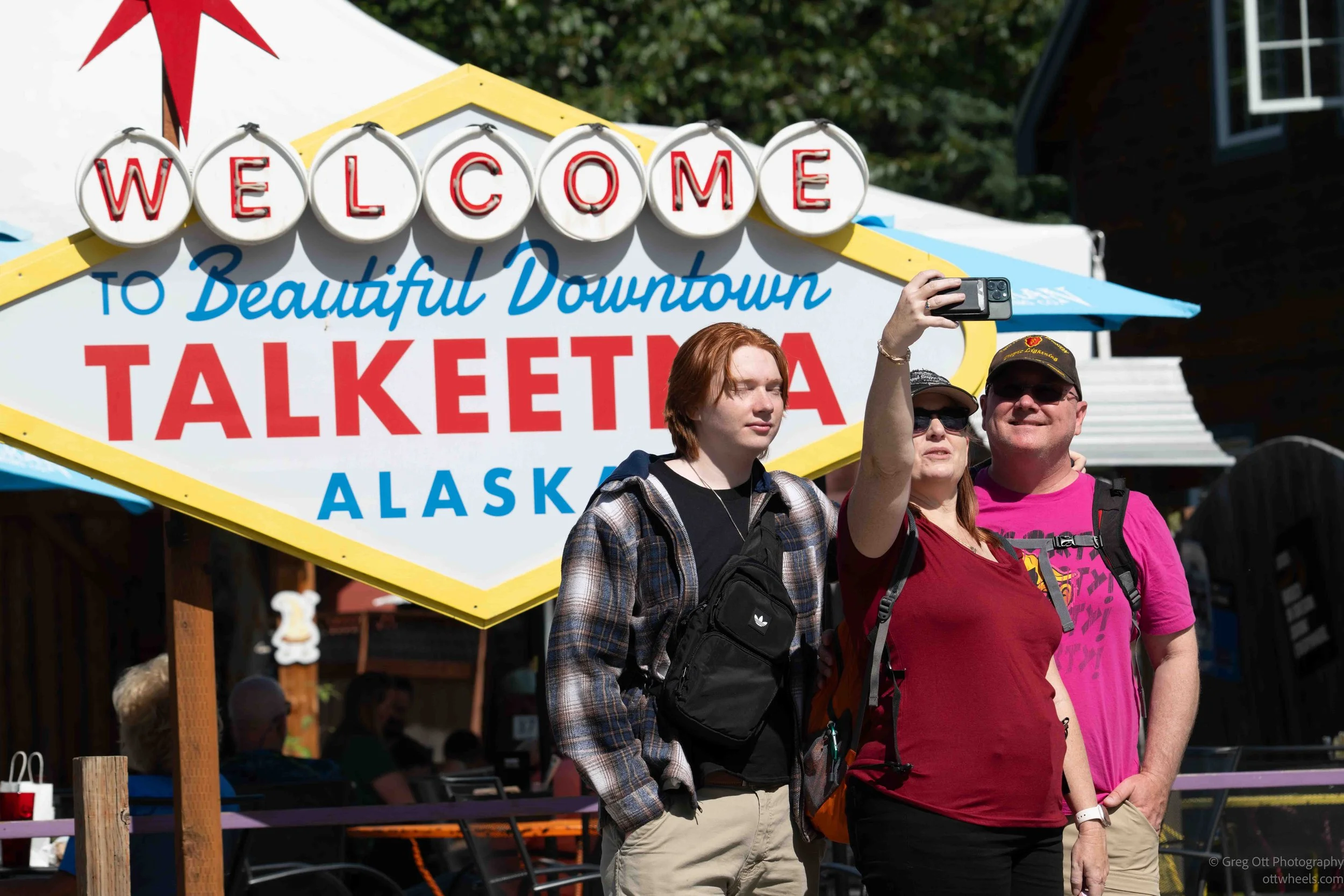
After finishing my drink, I crossed the street to the Talkeetna Roadhouse. The bakery case was doing a brisk business, so I picked up an apple turnover that certainly didn't skimp on apples. With my coffee still in hand, I found another seat outside and watched people line up to pose in front of the "Welcome to Beautiful Downtown Talkeetna, Alaska" sign. It almost felt like someone should have posted a sign underneath it that read, "Selfies Required."
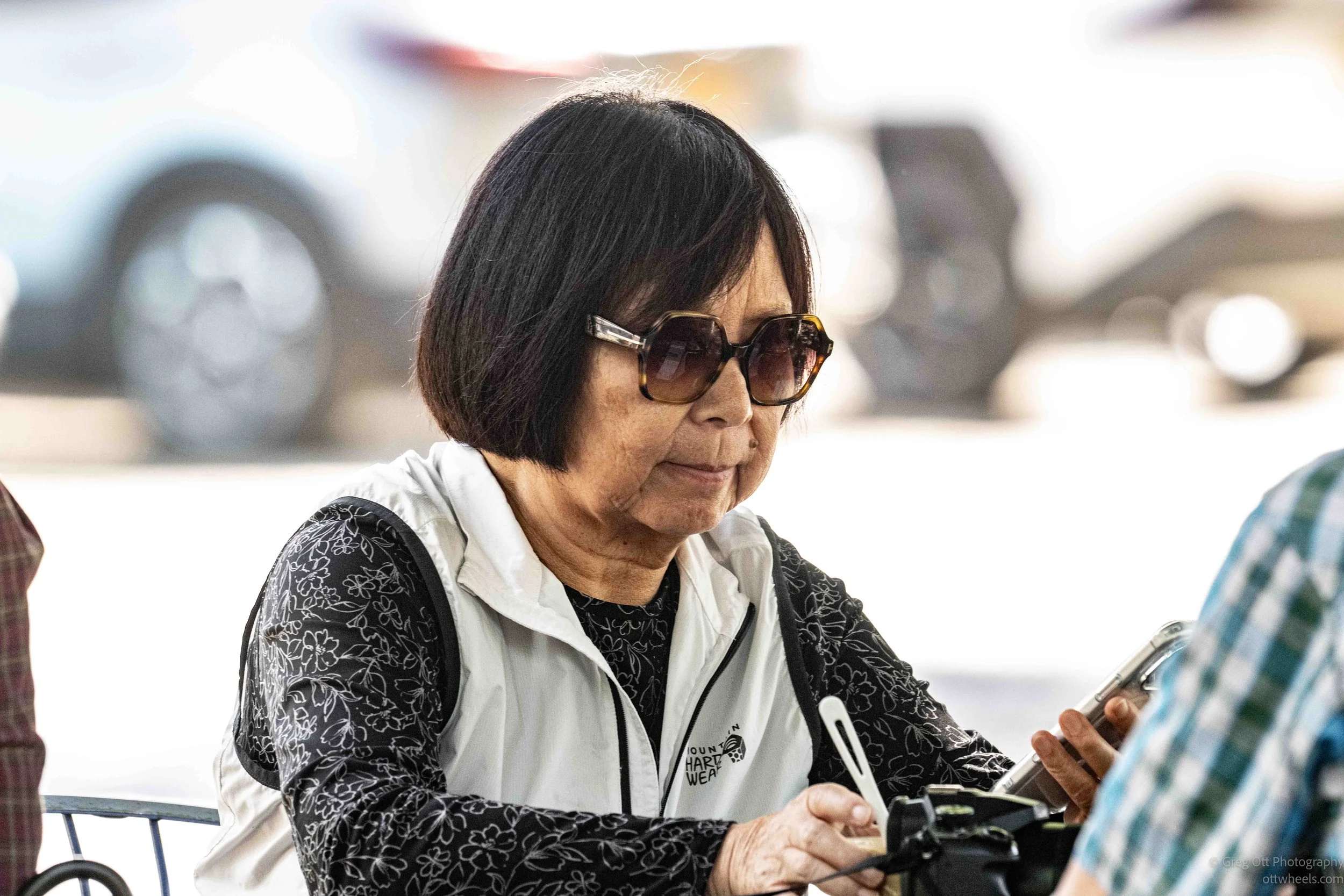
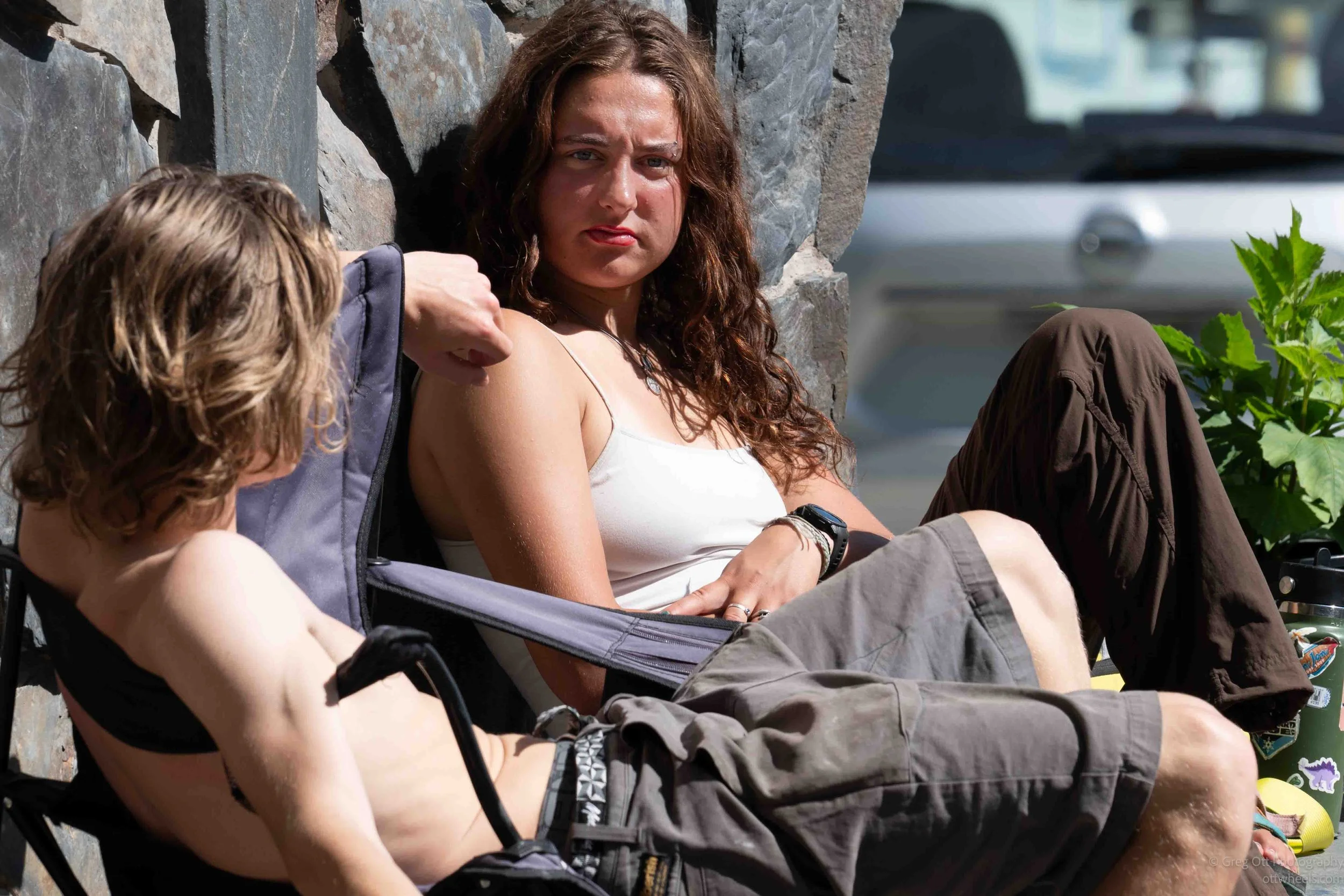
Walking Talkeetna
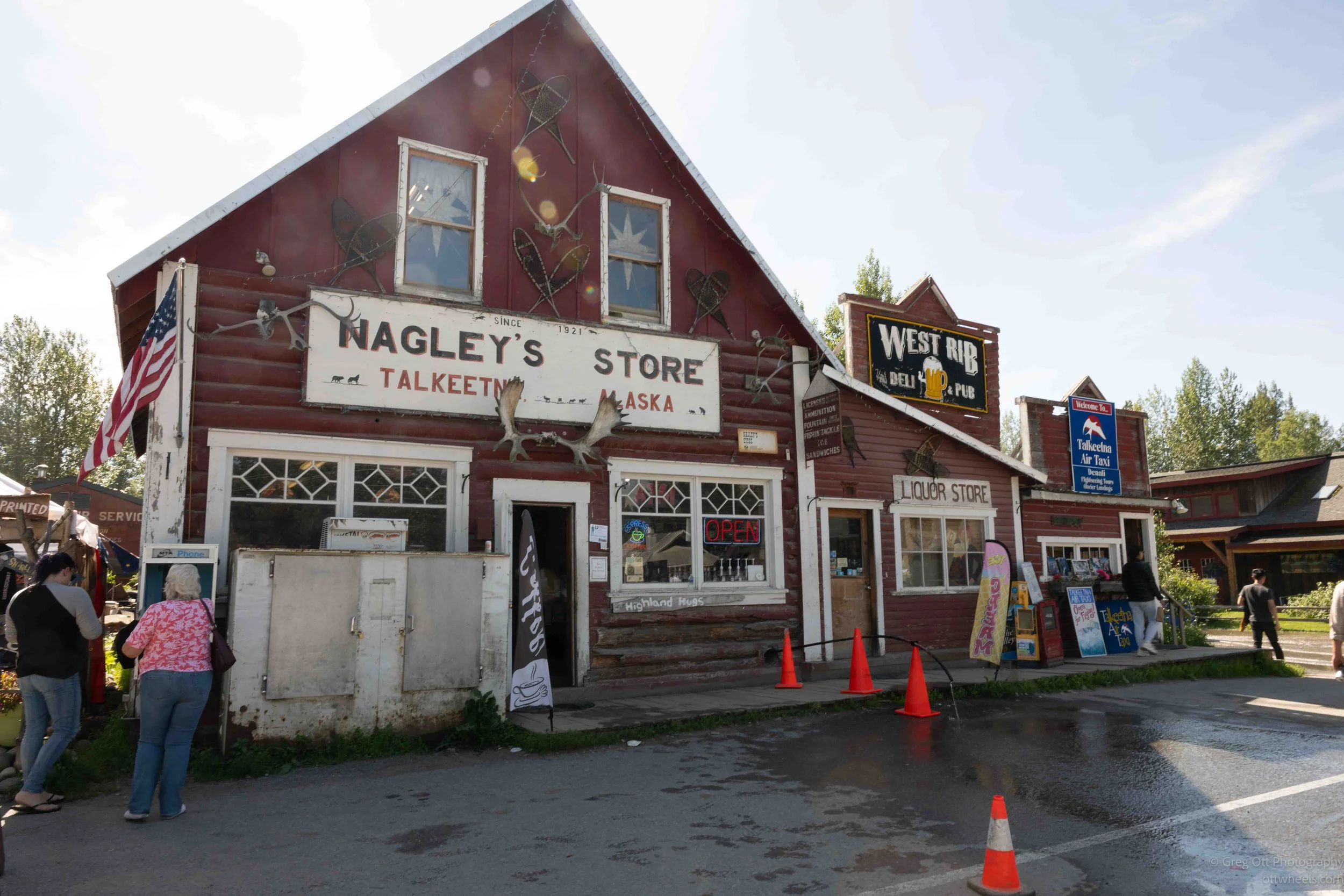
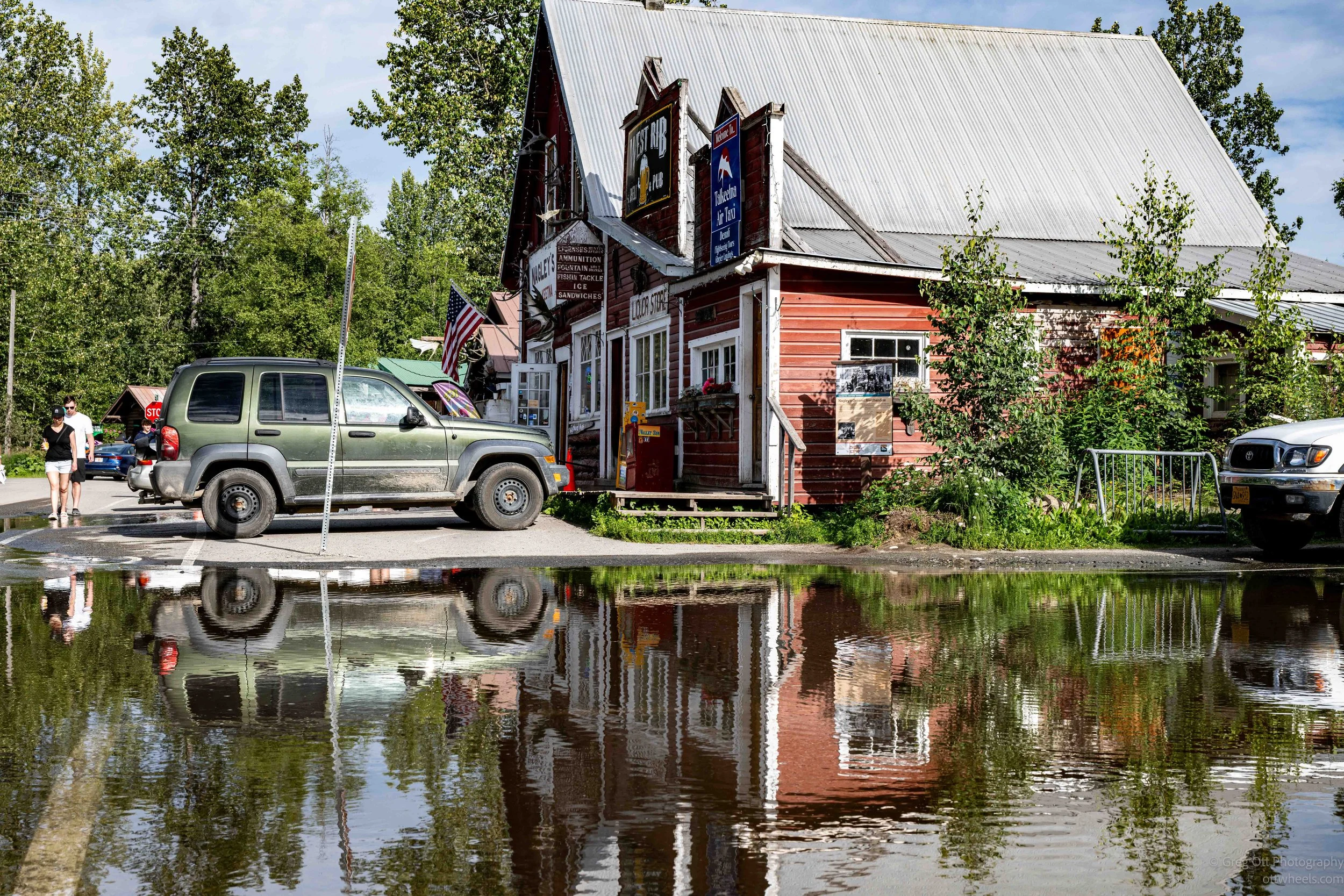
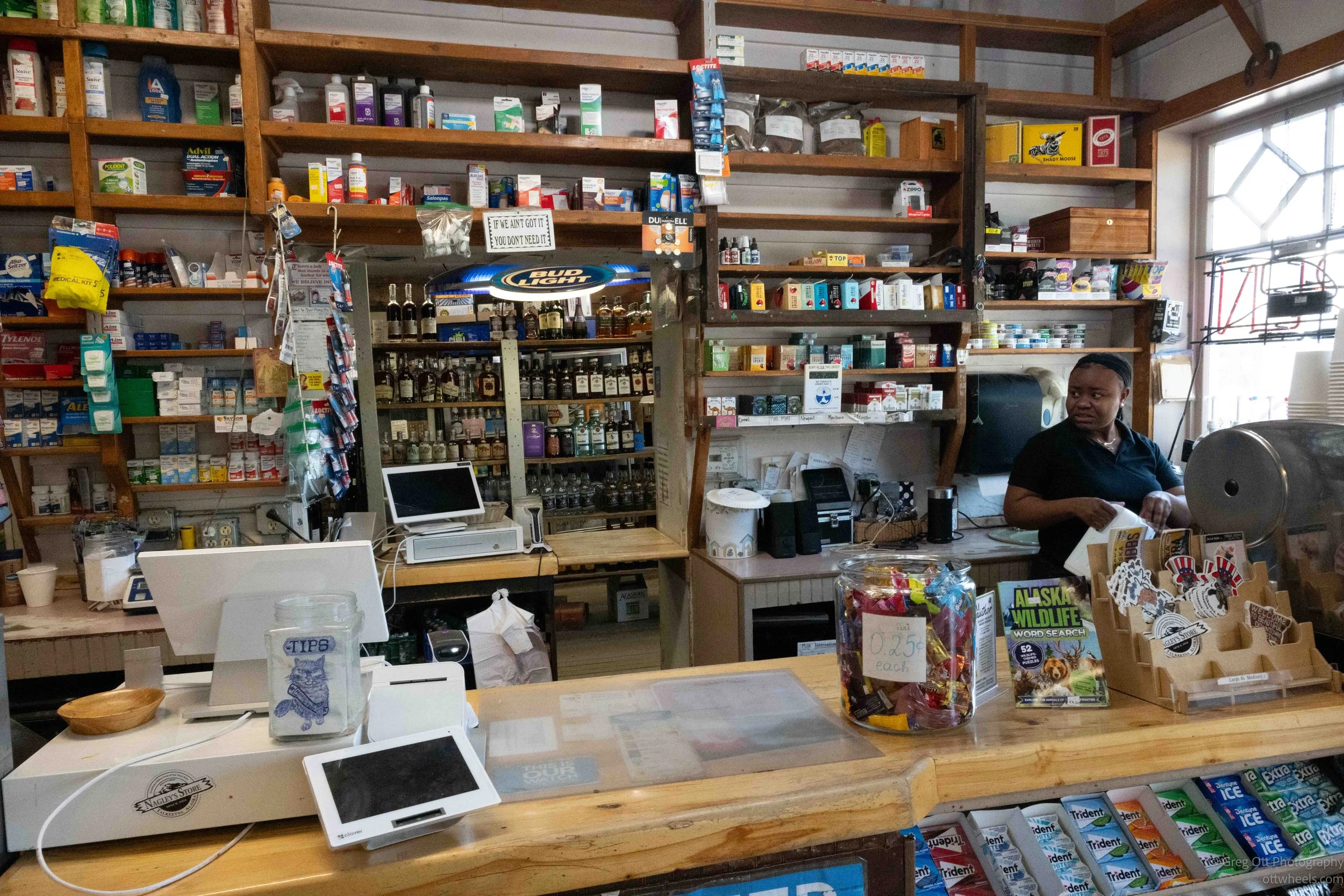
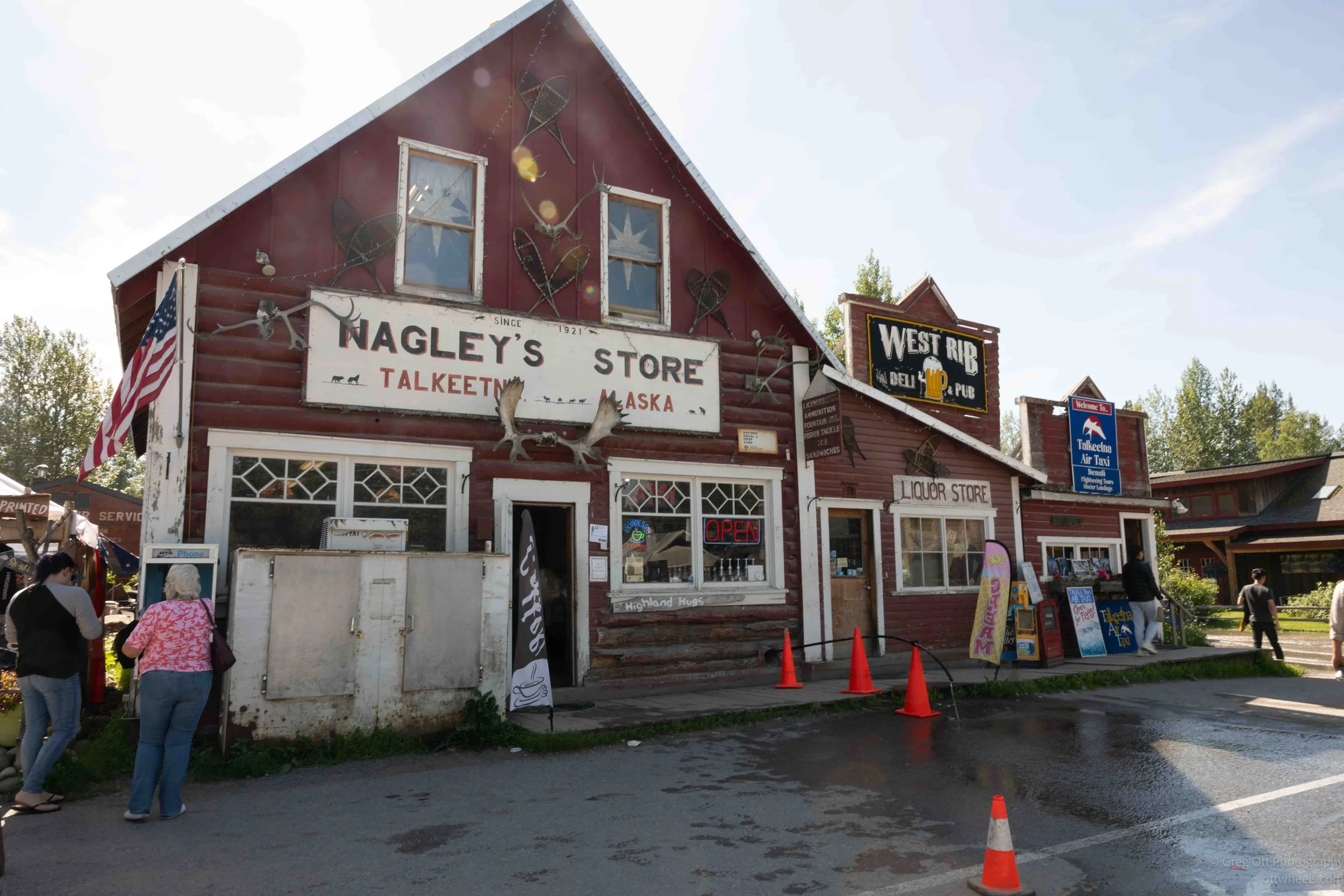
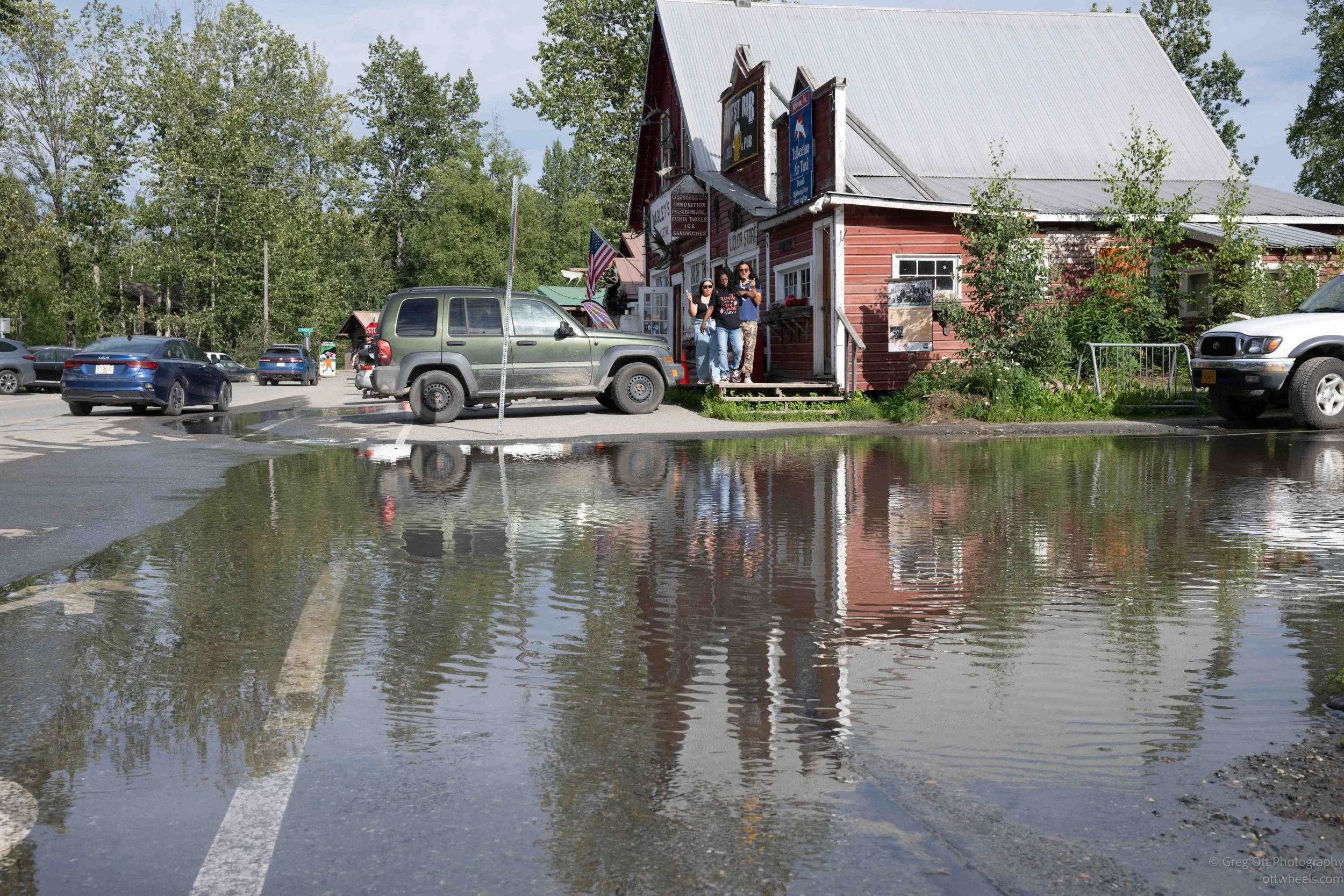
I continued down Main Street, stopping at some of the better-known buildings to take photographs, including Nagley's Store. It's a fun place to visit, although I wouldn't recommend the coffee.
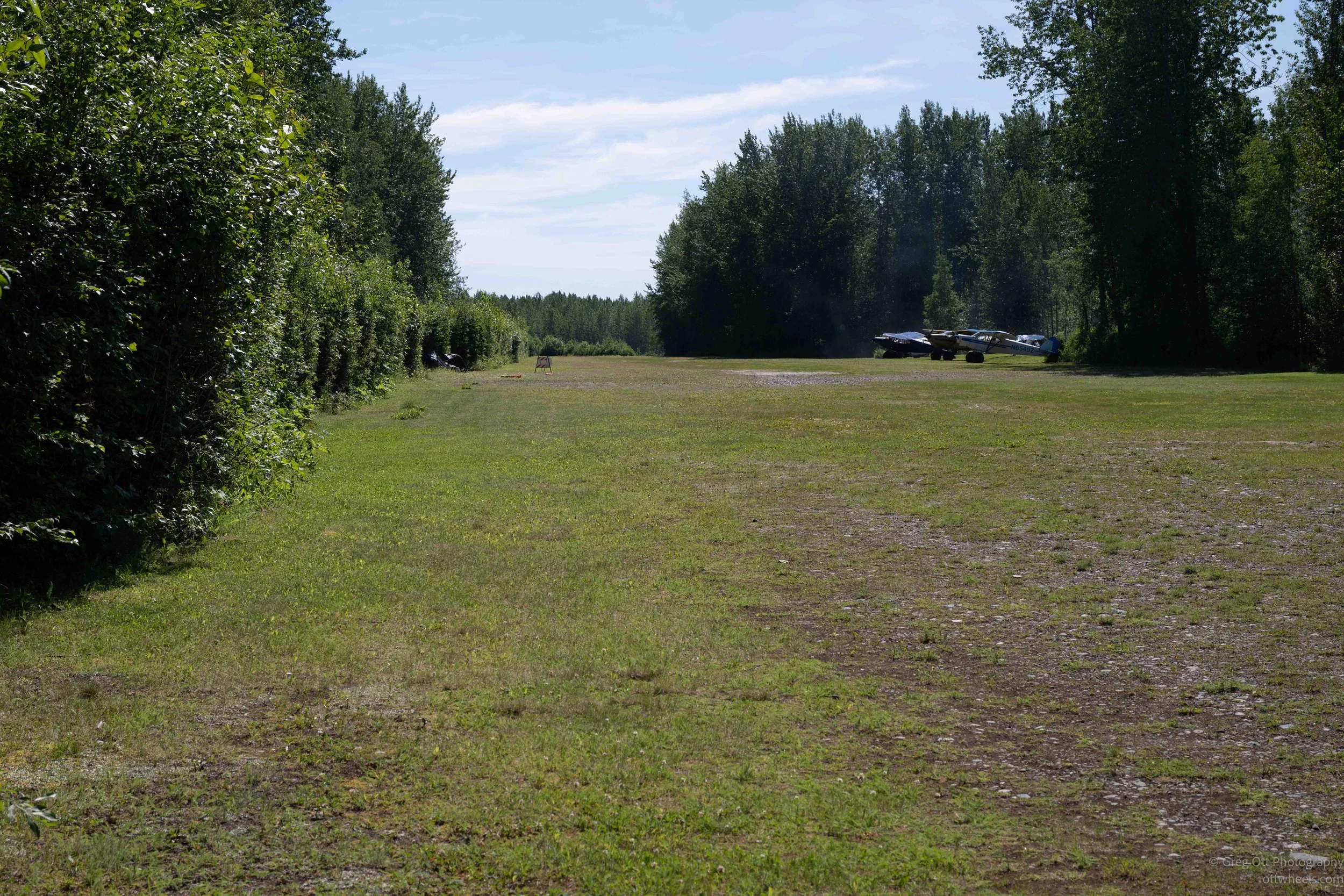
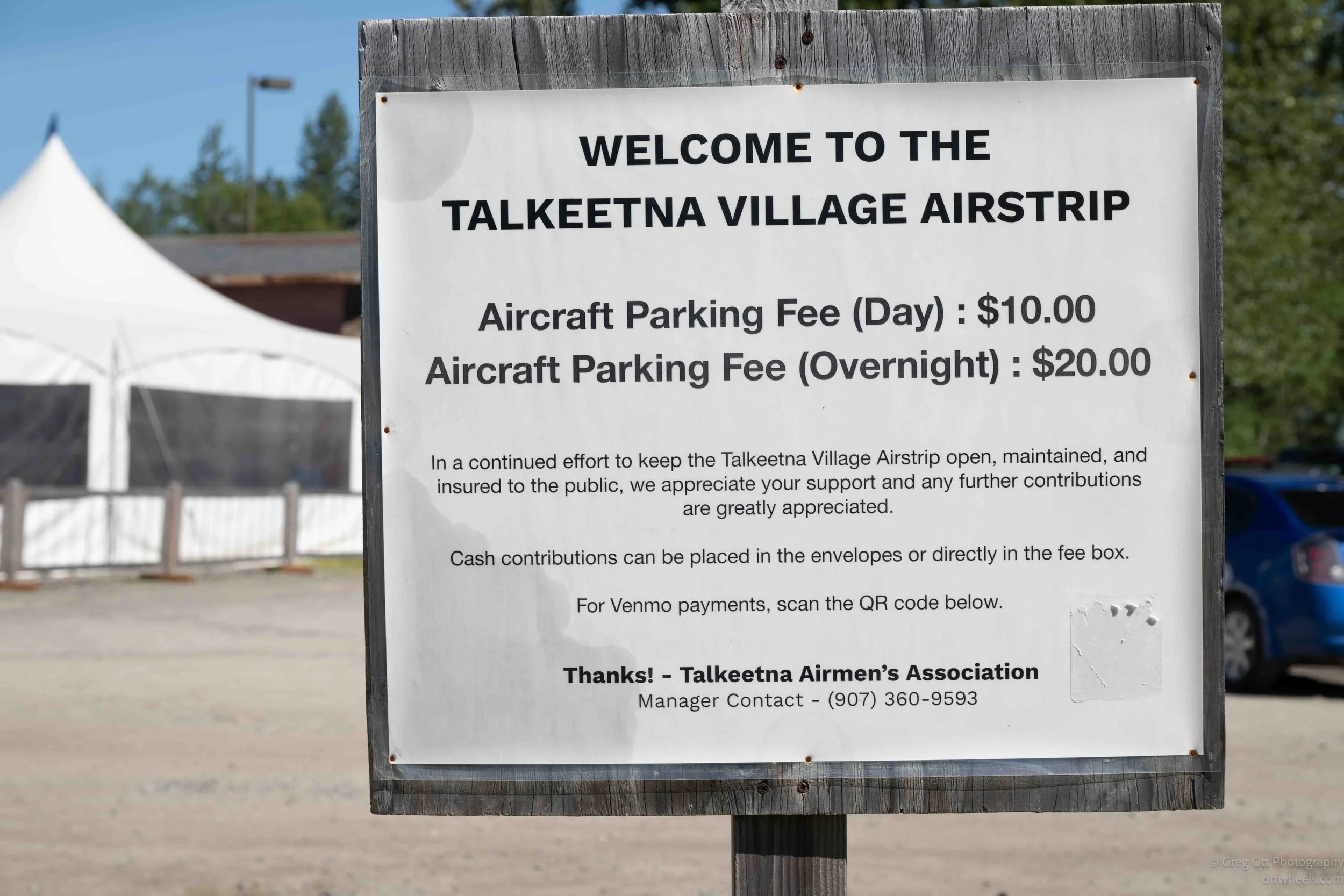
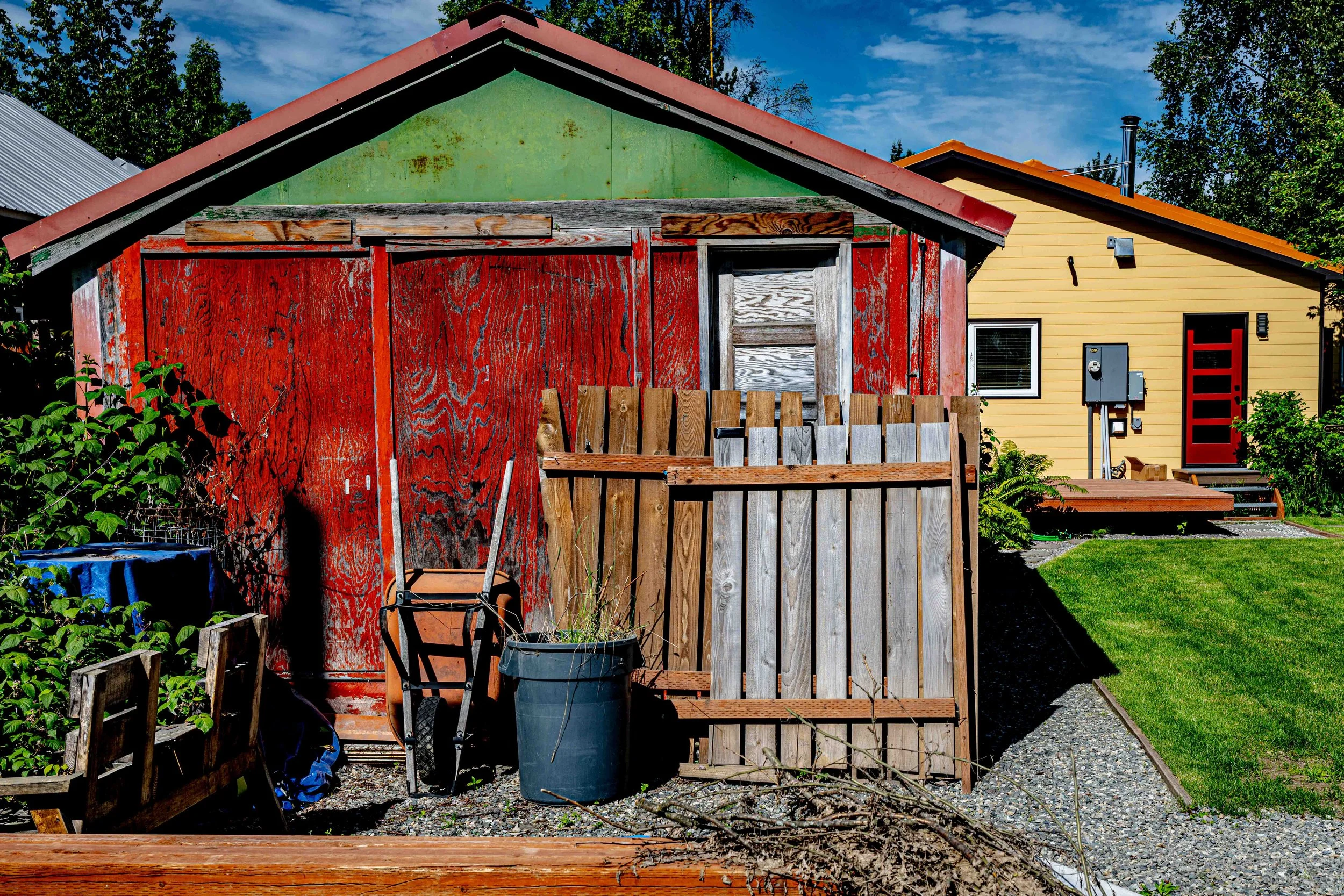
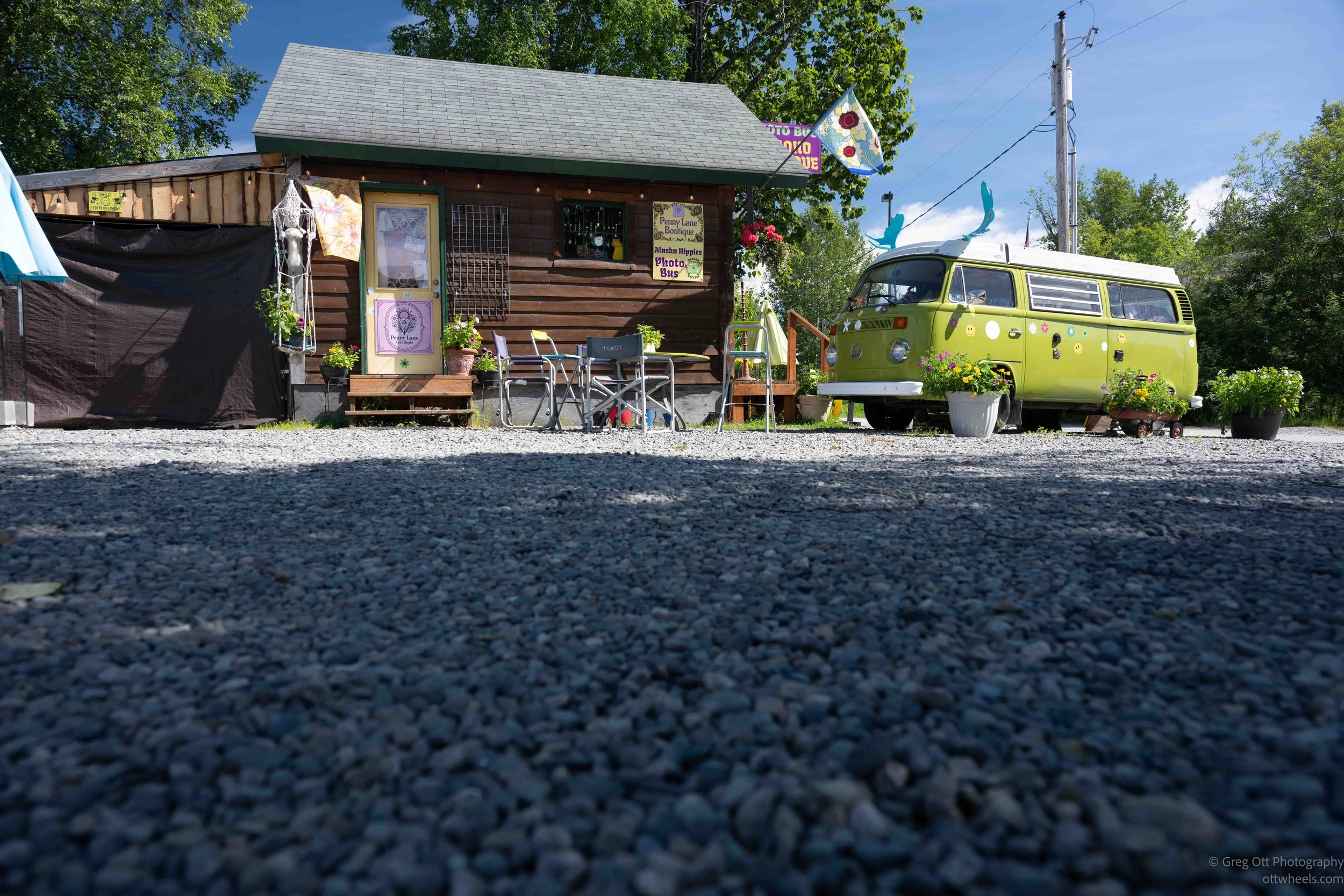
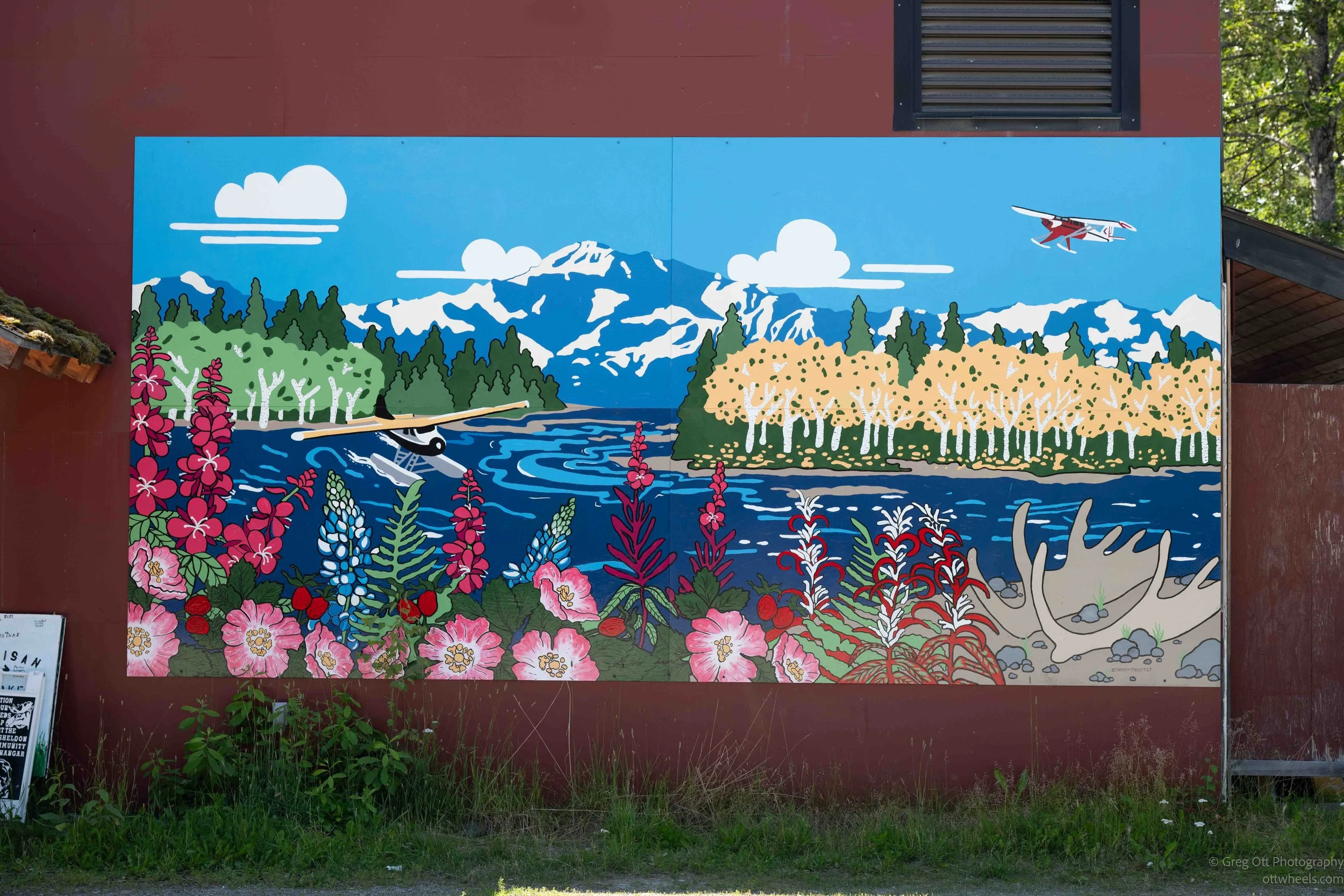
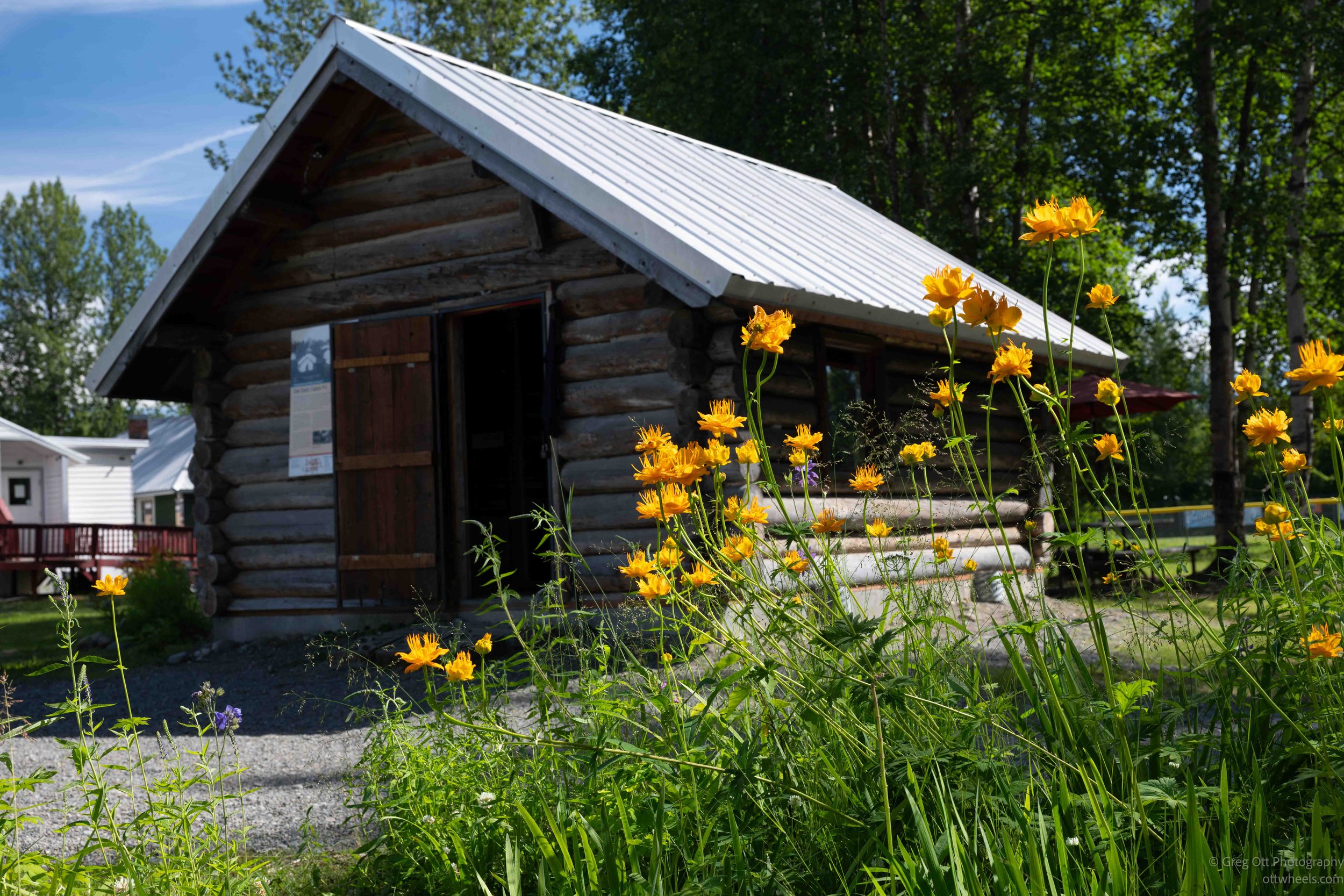
The quieter side streets turned out to be just as interesting. I was surprised to find a grass landing strip right in the middle of town, complete with a sign advertising $10-a-day airplane parking. A few minutes later, I heard a small plane take off and fly low up the river. Along this street were several colorful buildings, the restored Ole Dahl Cabin, and the National Park Service office at the far end.
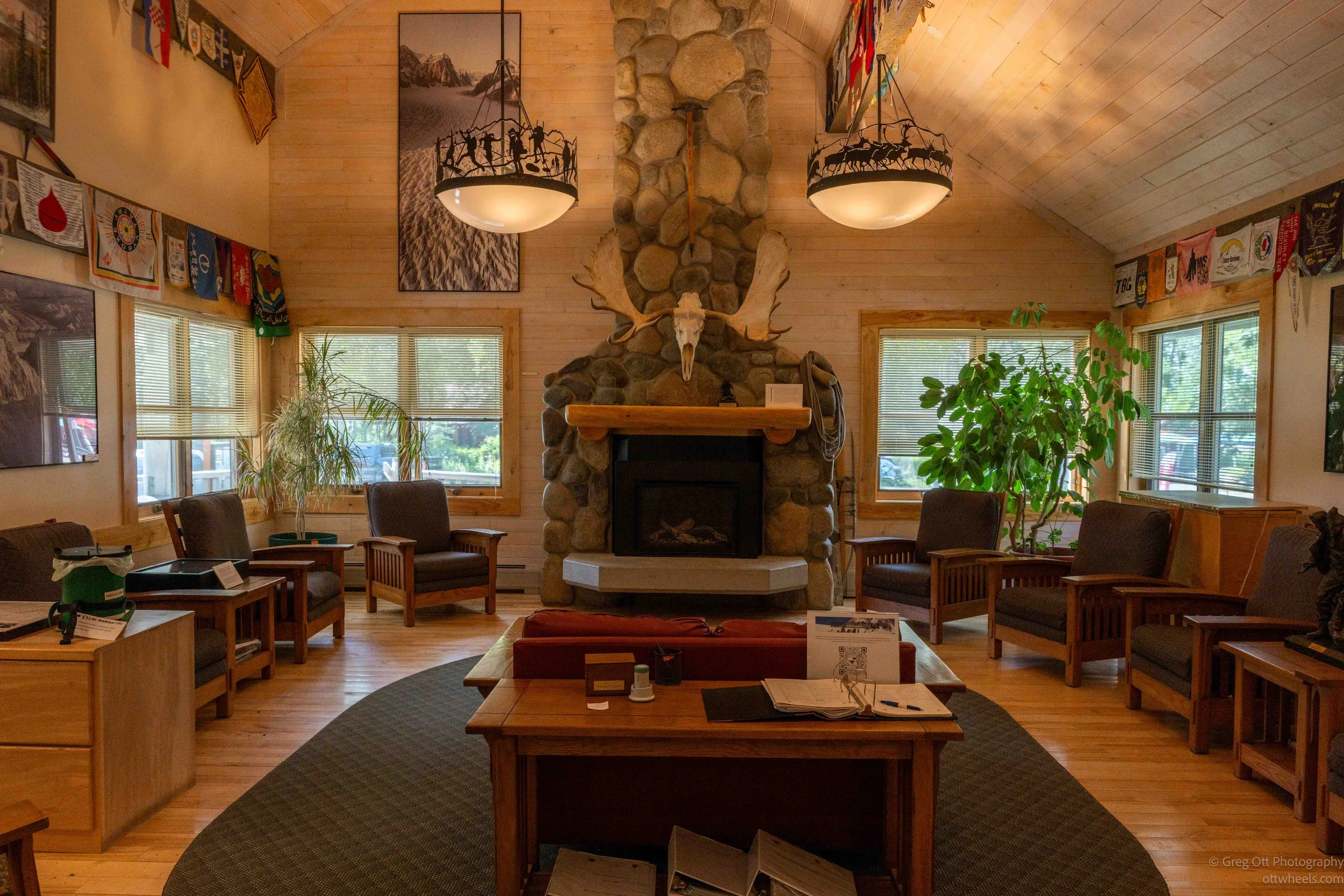
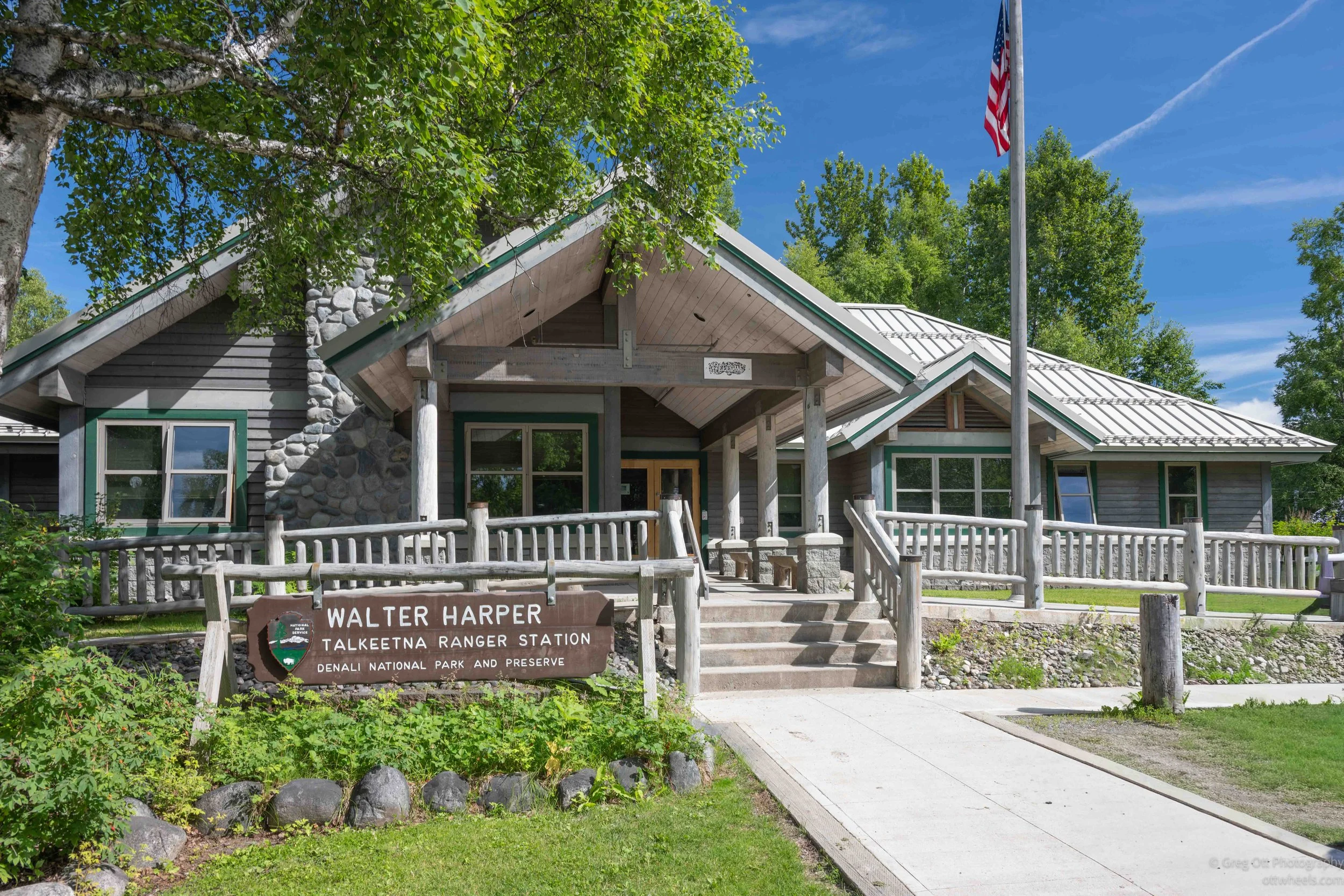
The Walter Harper Talkeetna Ranger Station is a beautiful building that immediately stood out from everything around it. I was especially drawn to the intricate metal roof and the stone retaining walls designed to keep snow from sliding off the building. Inside, a ranger was helping a woman who, along with her husband, was preparing for a climbing trip on Denali later that week.
While I waited, I admired the sitting area and imagined how cozy it must feel during the winter. There was also an excellent selection of books covering Denali National Park, wilderness survival, Alaska plants, and other National Park topics. Once the ranger was free, I picked up a few park brochures and asked about hiking and photography in the park. She had several great suggestions, explained the road closures caused by last year's major mudslide, recommended the narrated bus tour that I already had tickets for, and reminded me that the free shuttle buses could also drop hikers off at many of the trailheads.
The View of Denali
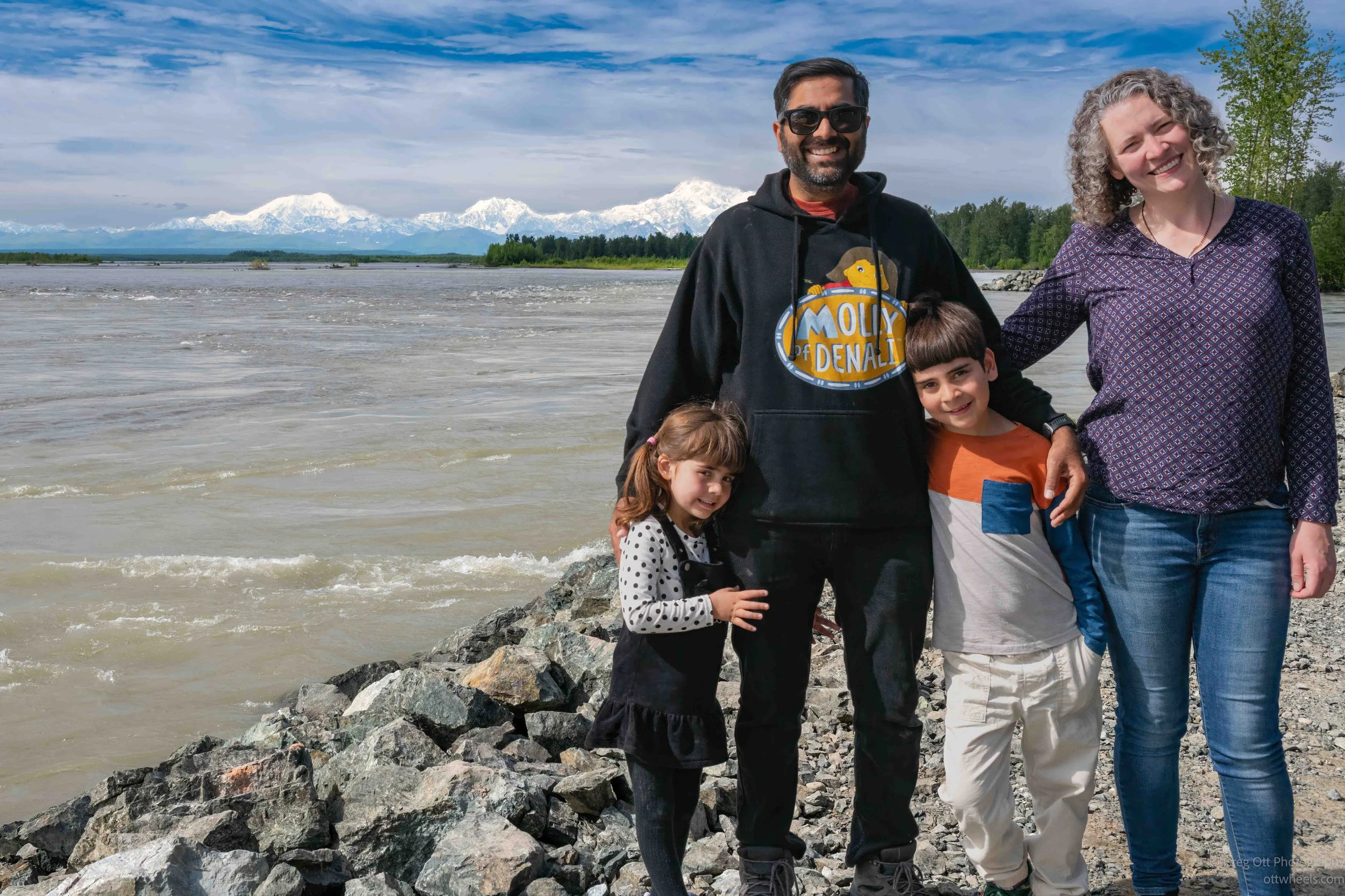
A few blocks away, I made my way to Talkeetna Riverfront Park, where the Alaska Range filled the horizon. I spent nearly an hour photographing the mountains, watching the activity along the river, and talking with a few other visitors.
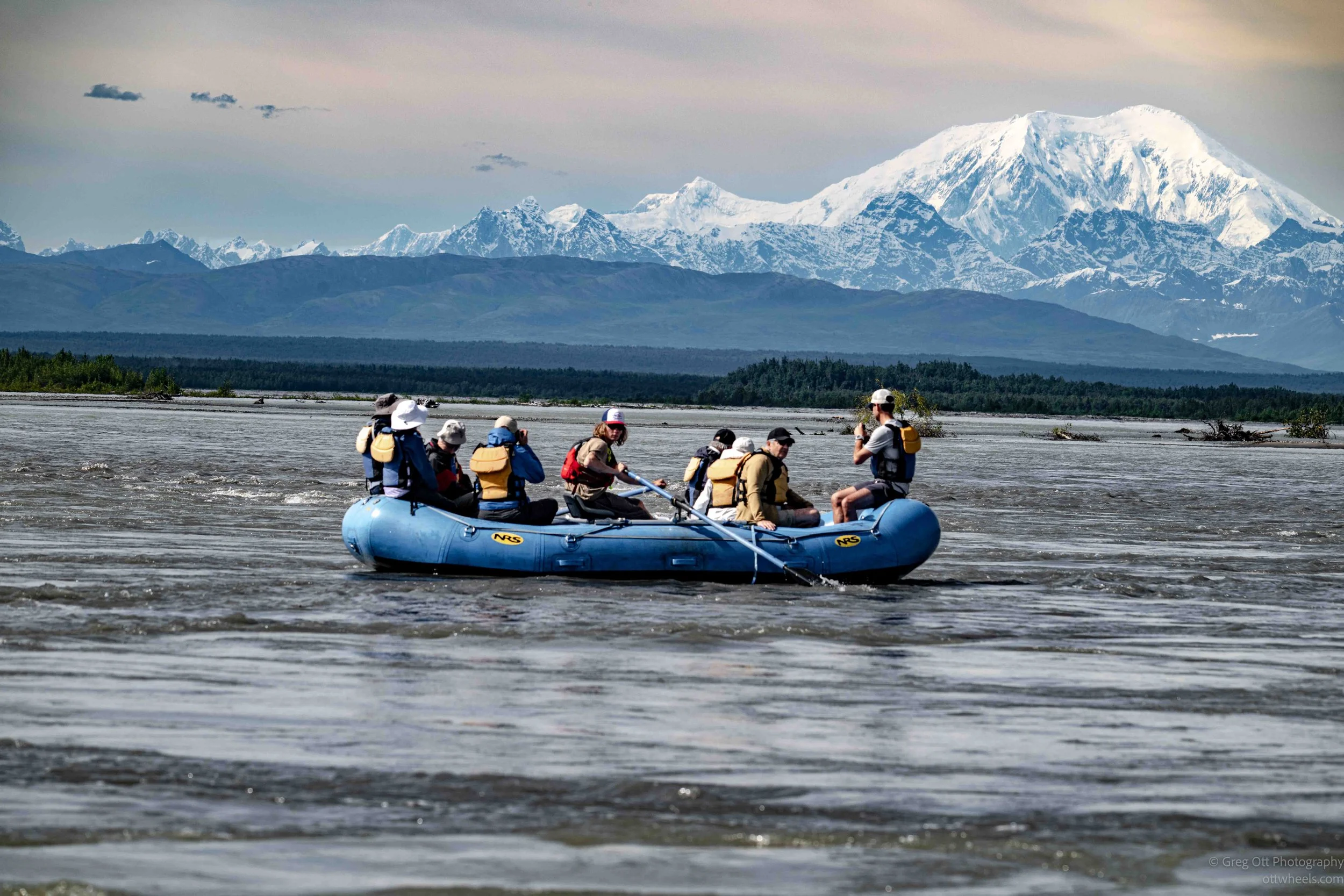
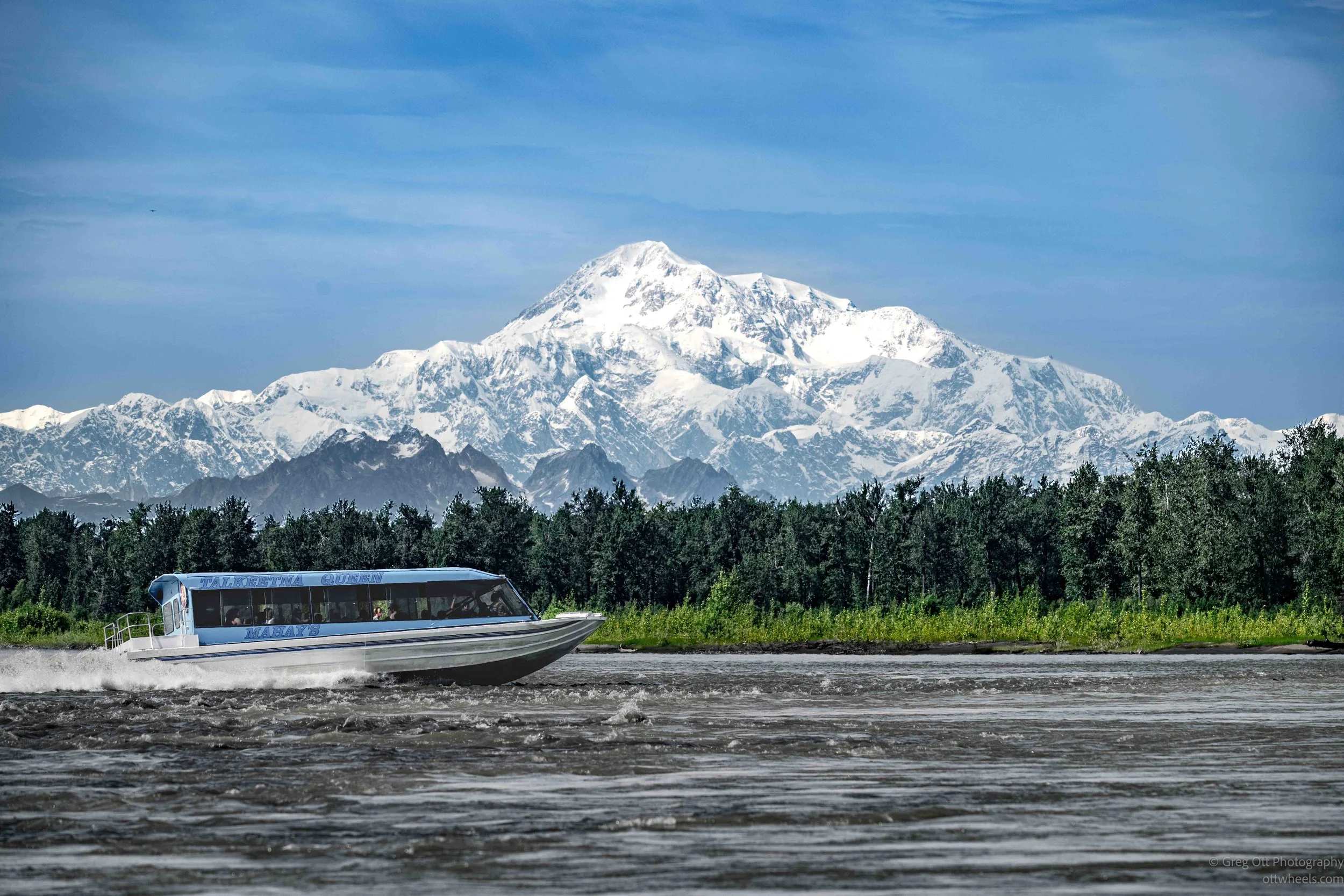
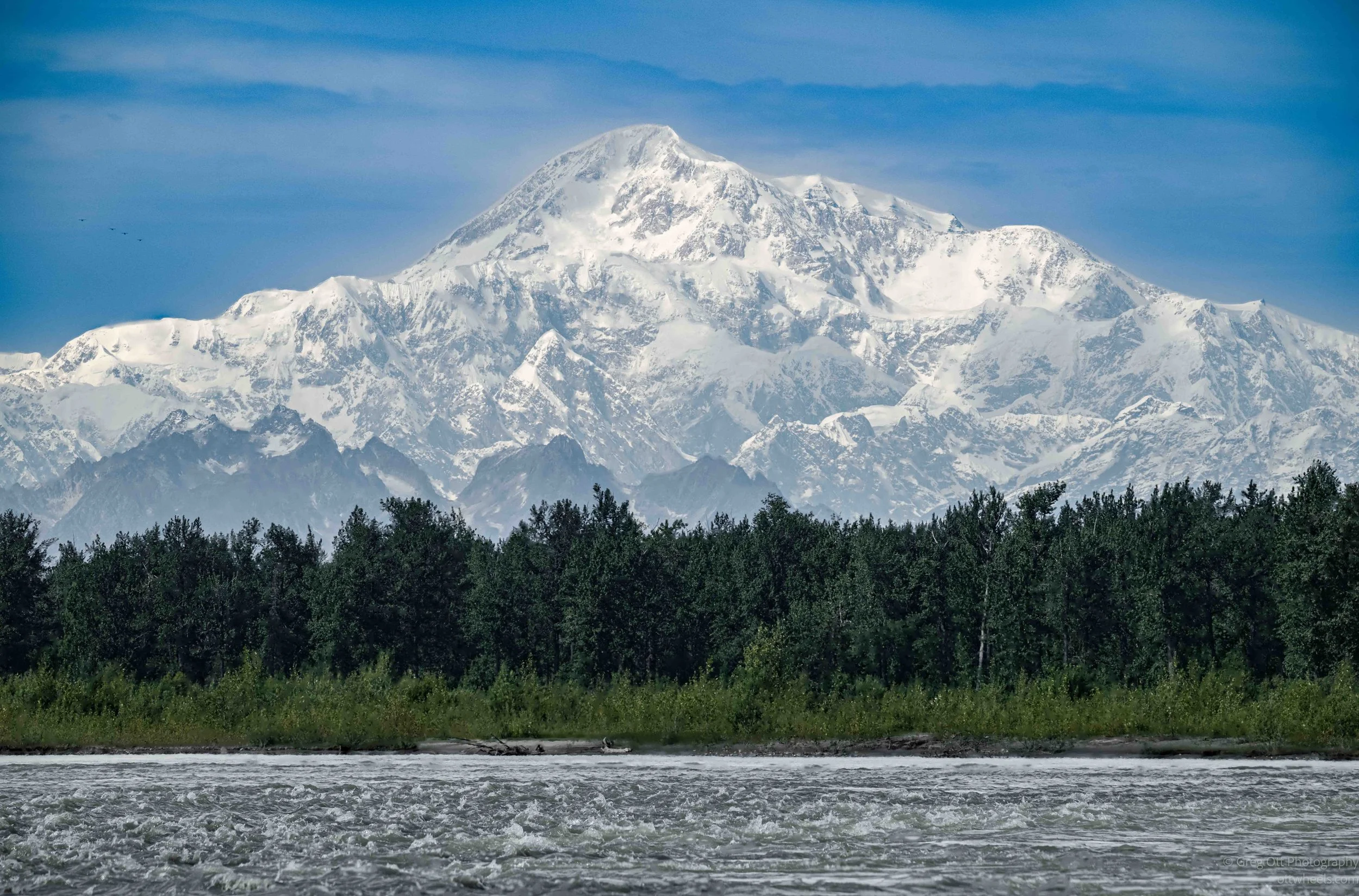
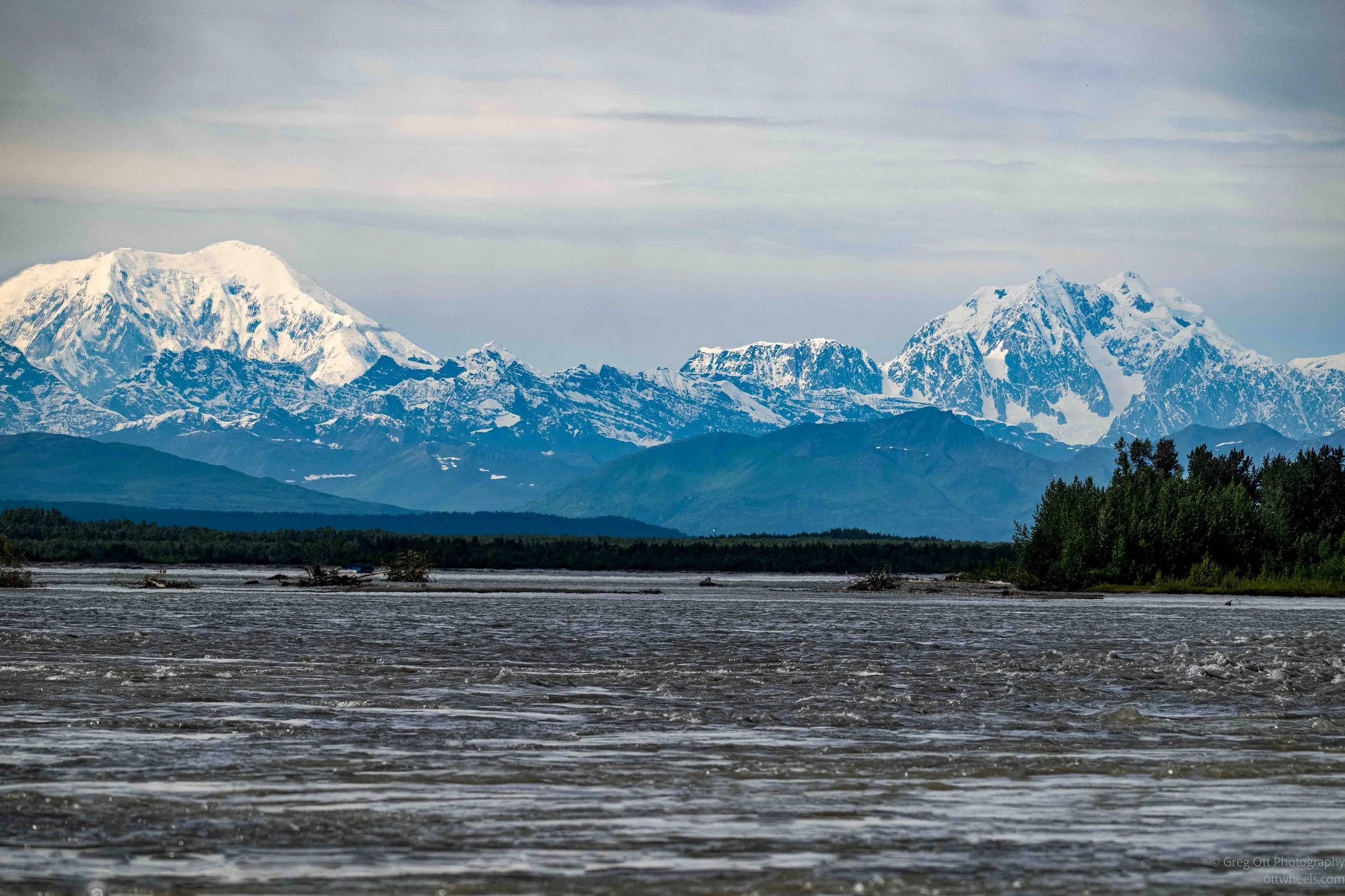
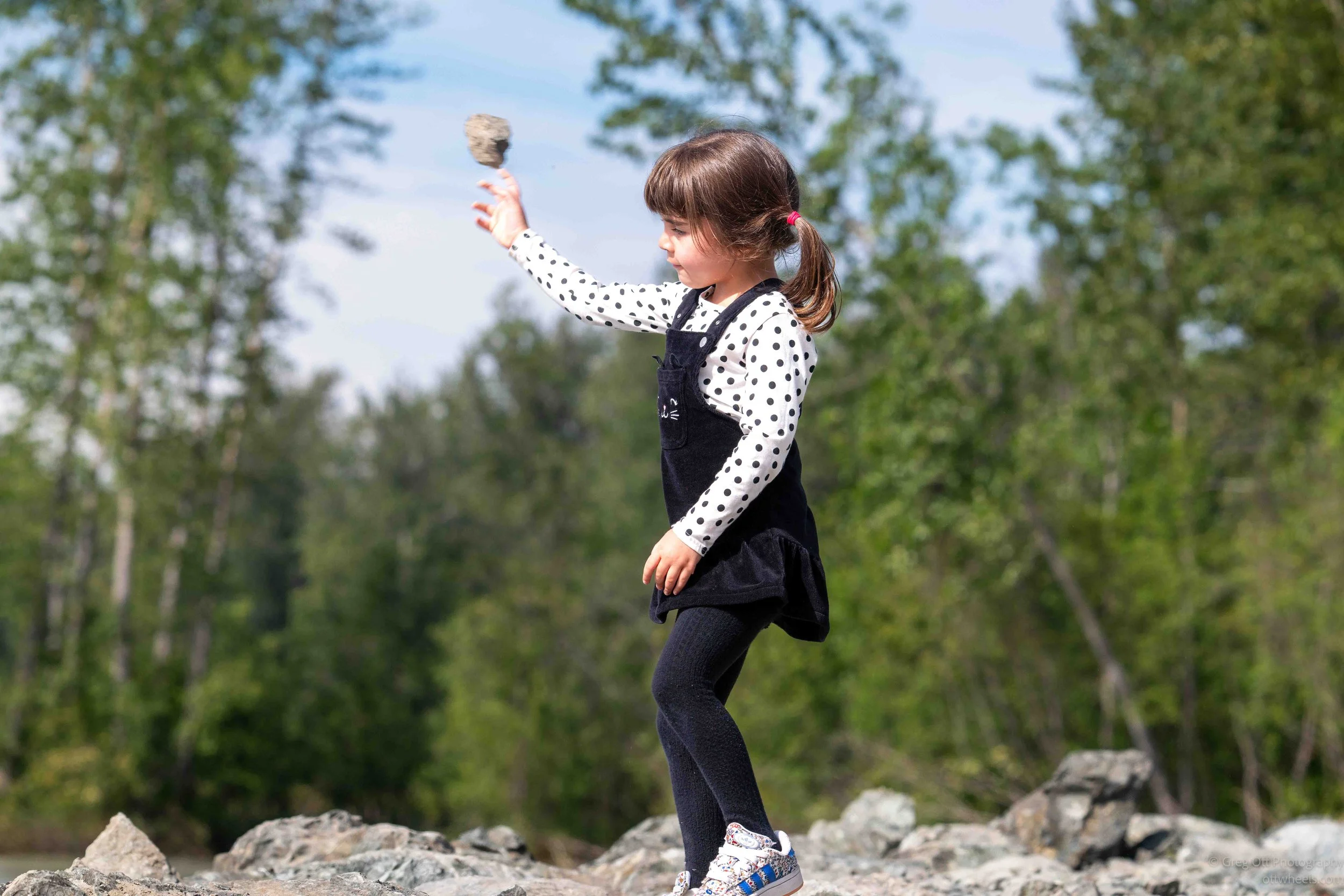
A couple of young kids were throwing rocks into the river while I was photographing the mountains. I struck up a conversation with their father, Hitesh, who had a nice Canon camera and tripod. He and his wife, Jen, were trying to figure out how to get a family photo with the mountains in the background, but they didn't have a wide enough lens. I offered to take one with my camera and email it to them. As we talked, we discovered they had once lived in State College, Pennsylvania, not far from where I grew up. It's a small world.
Belle’s Park
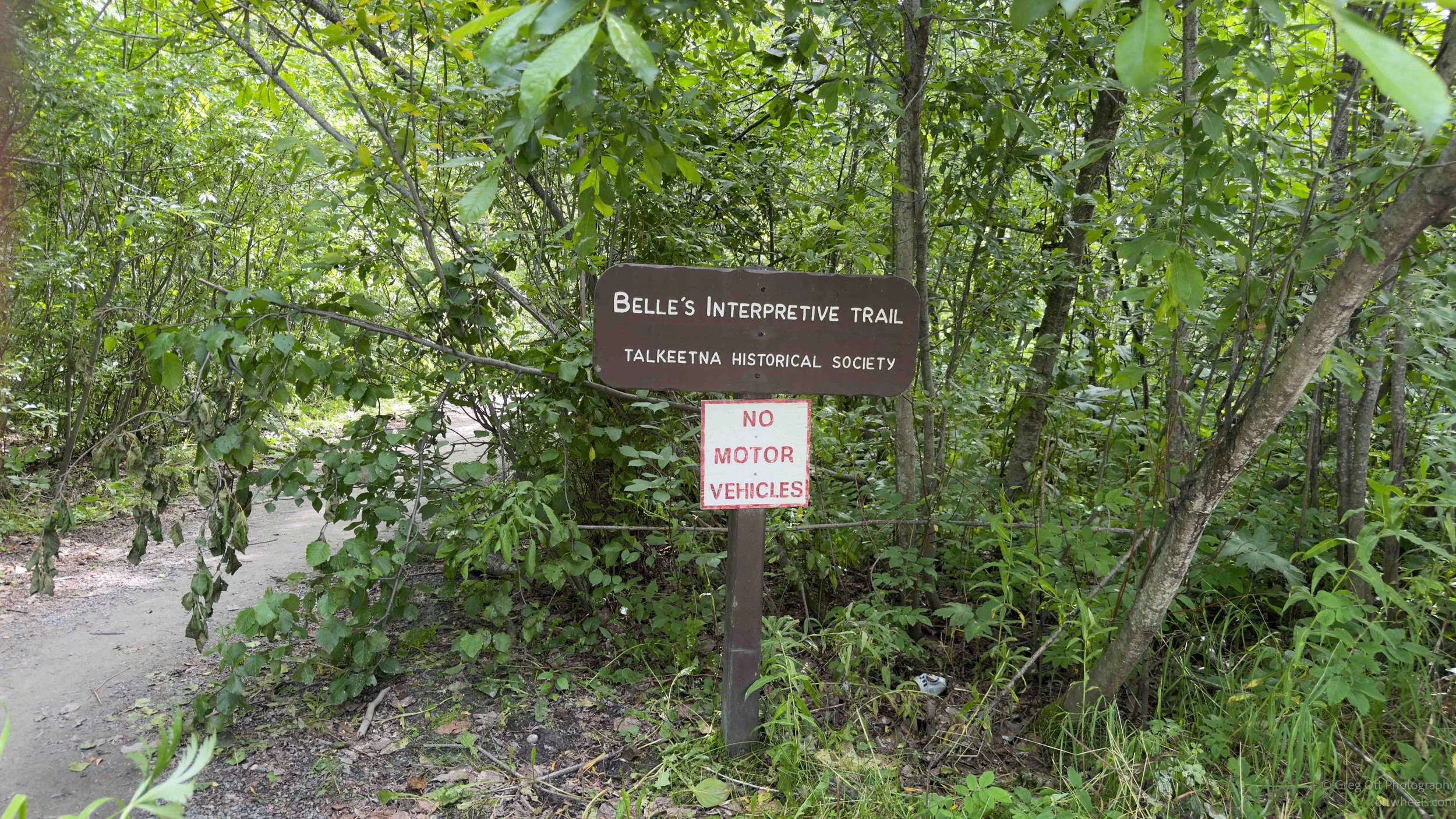
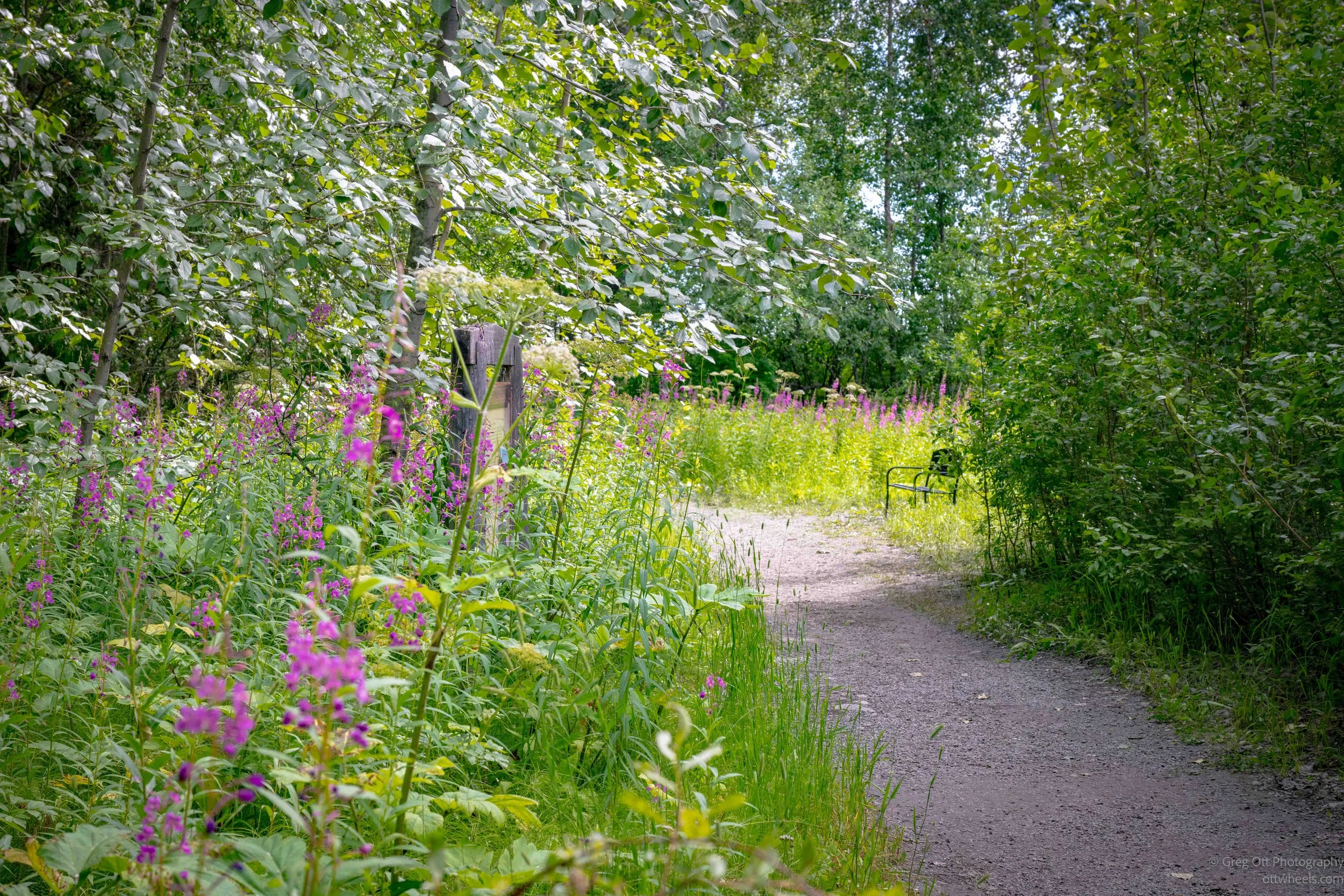
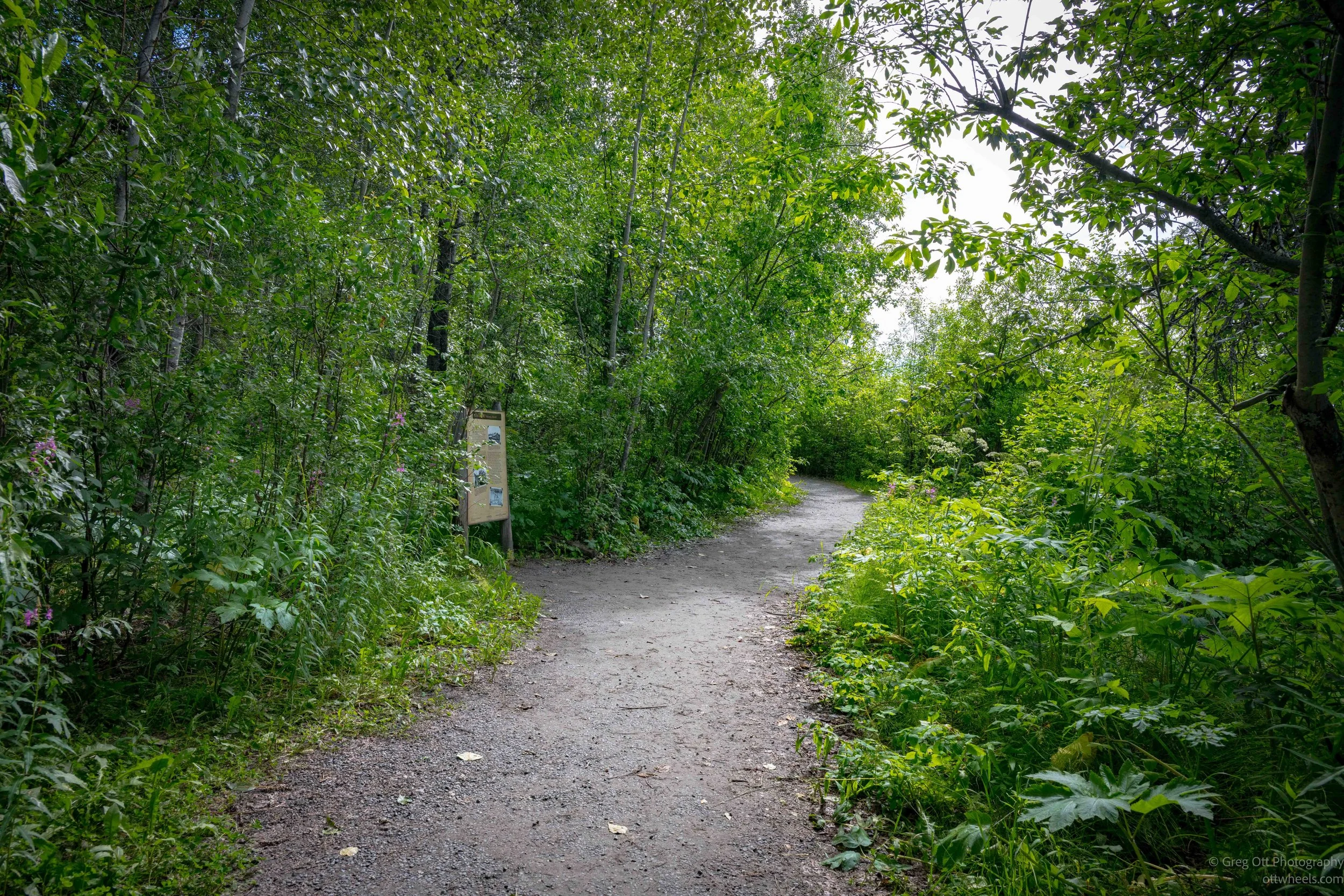
As I left the riverfront, I noticed a sign for Bell's Interpretive Trail. I wasn't expecting much, but since I had some time, I decided to take the short walk. The trail winds through a spruce forest with a series of numbered signs describing the plants, wildlife, and natural history of the area. It's an easy walk, and while there aren't any dramatic viewpoints, it was a nice change of pace after spending the afternoon in town. I found myself slowing down, reading the signs, and paying a little more attention to the forest around me. It isn't a destination that most people come to Talkeetna to see, but if you have an extra half hour, it's a pleasant walk before heading back into town.
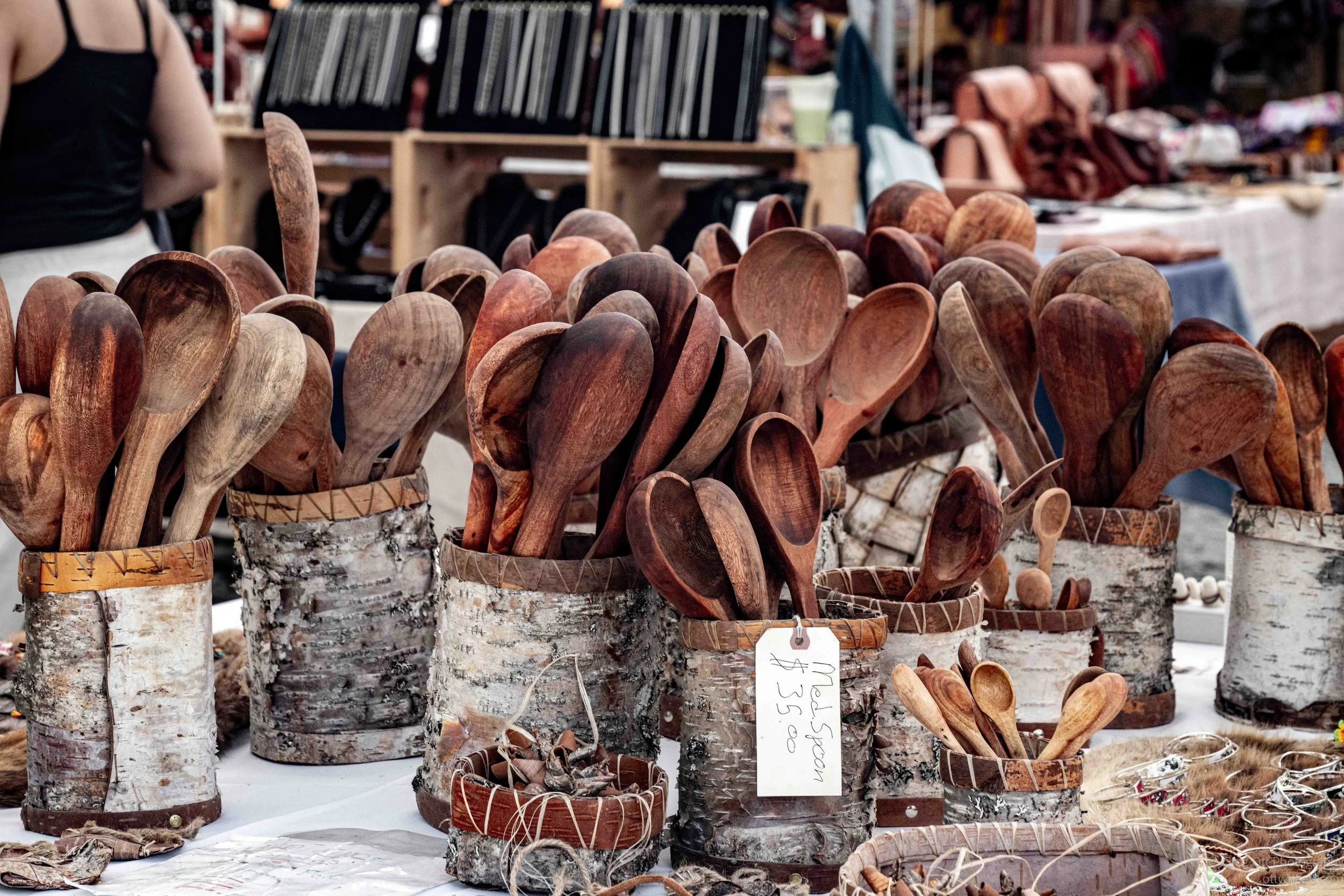
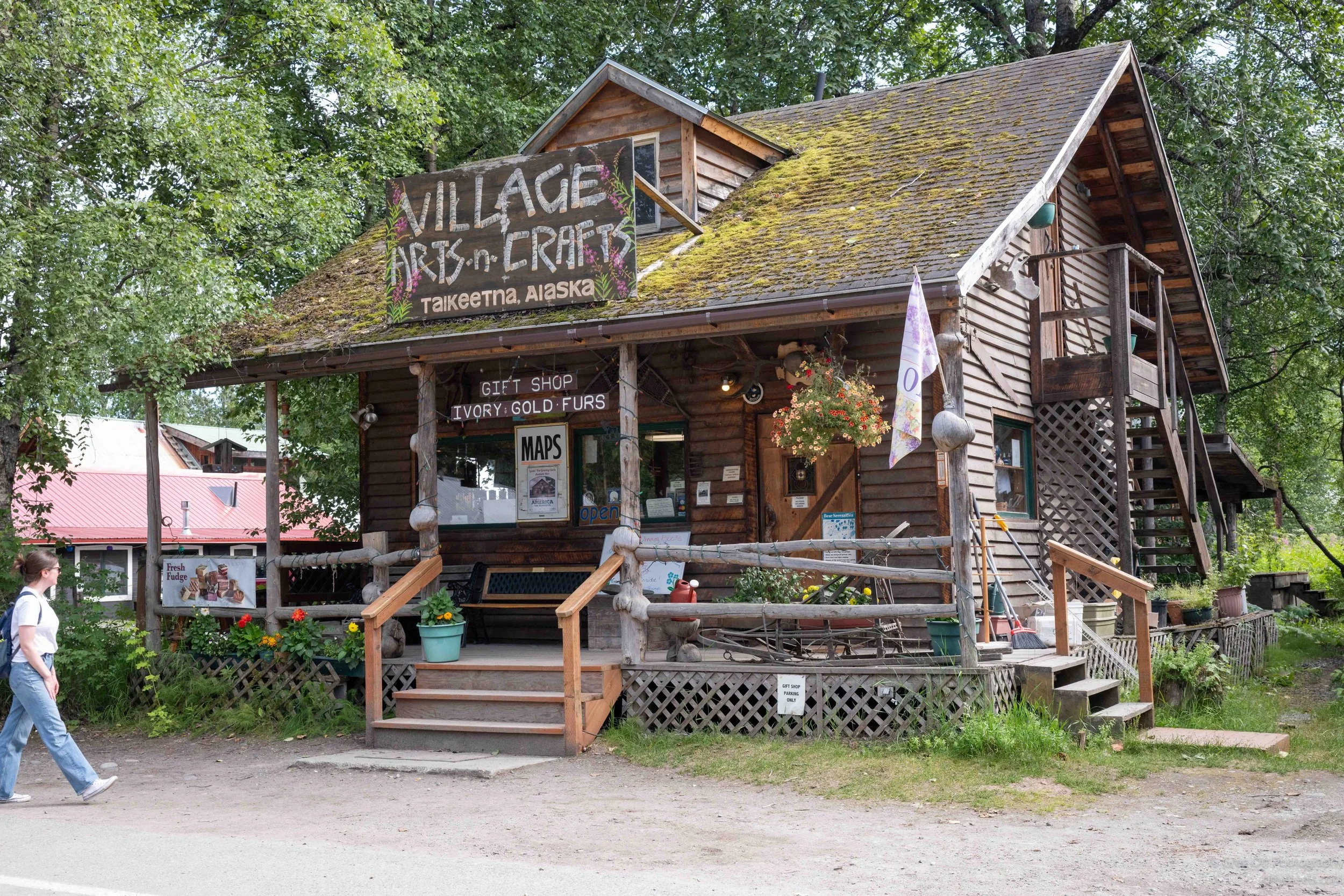
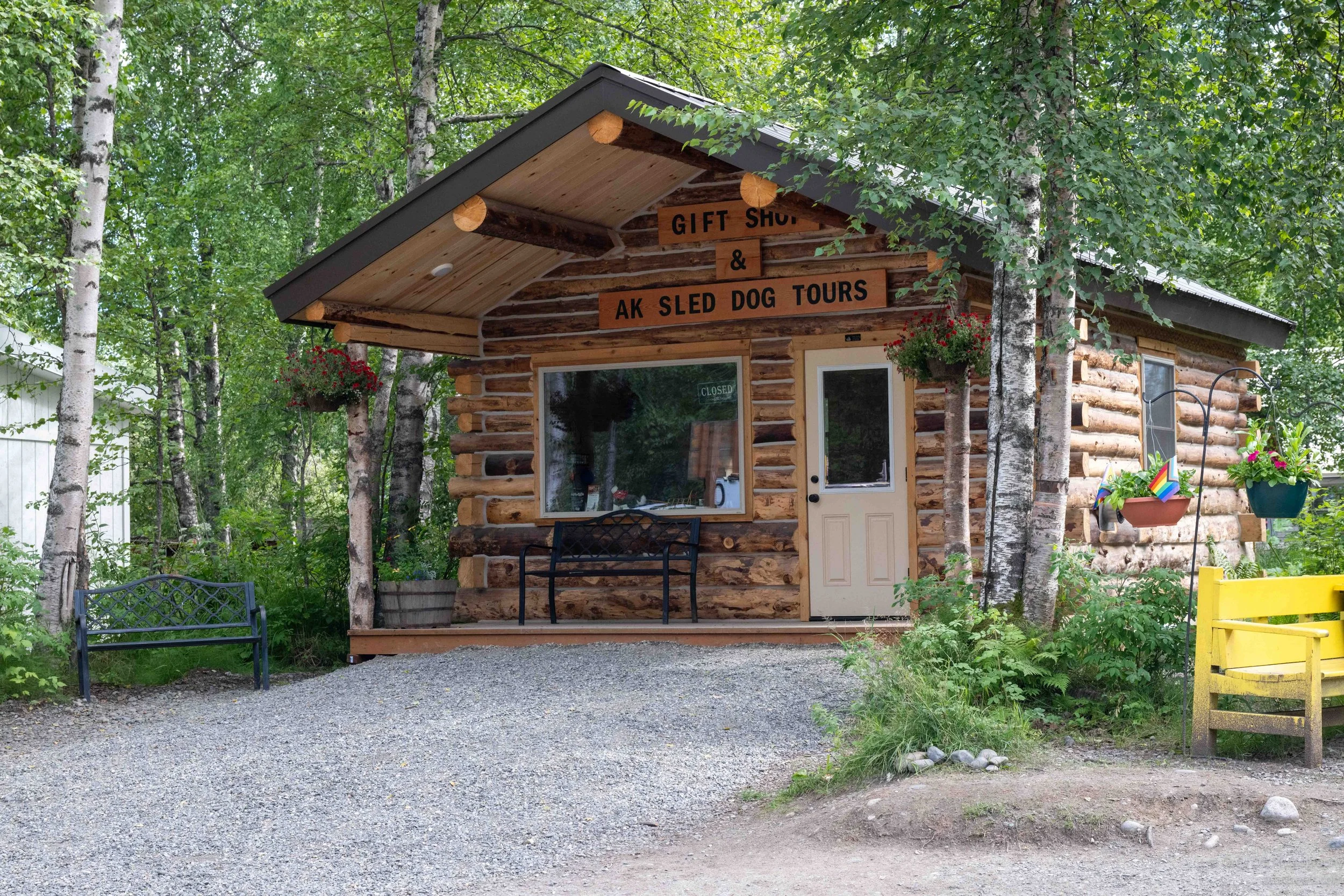
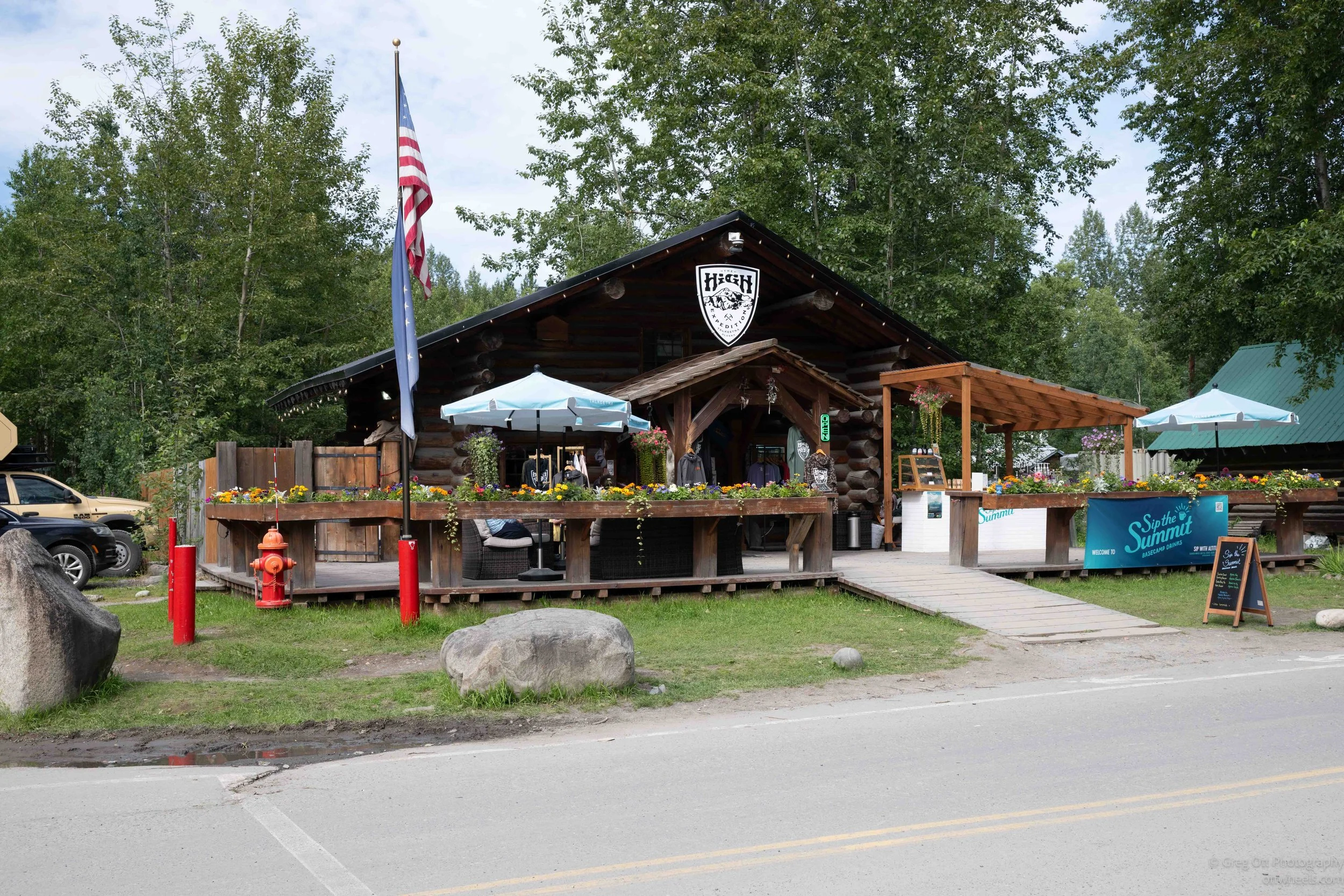
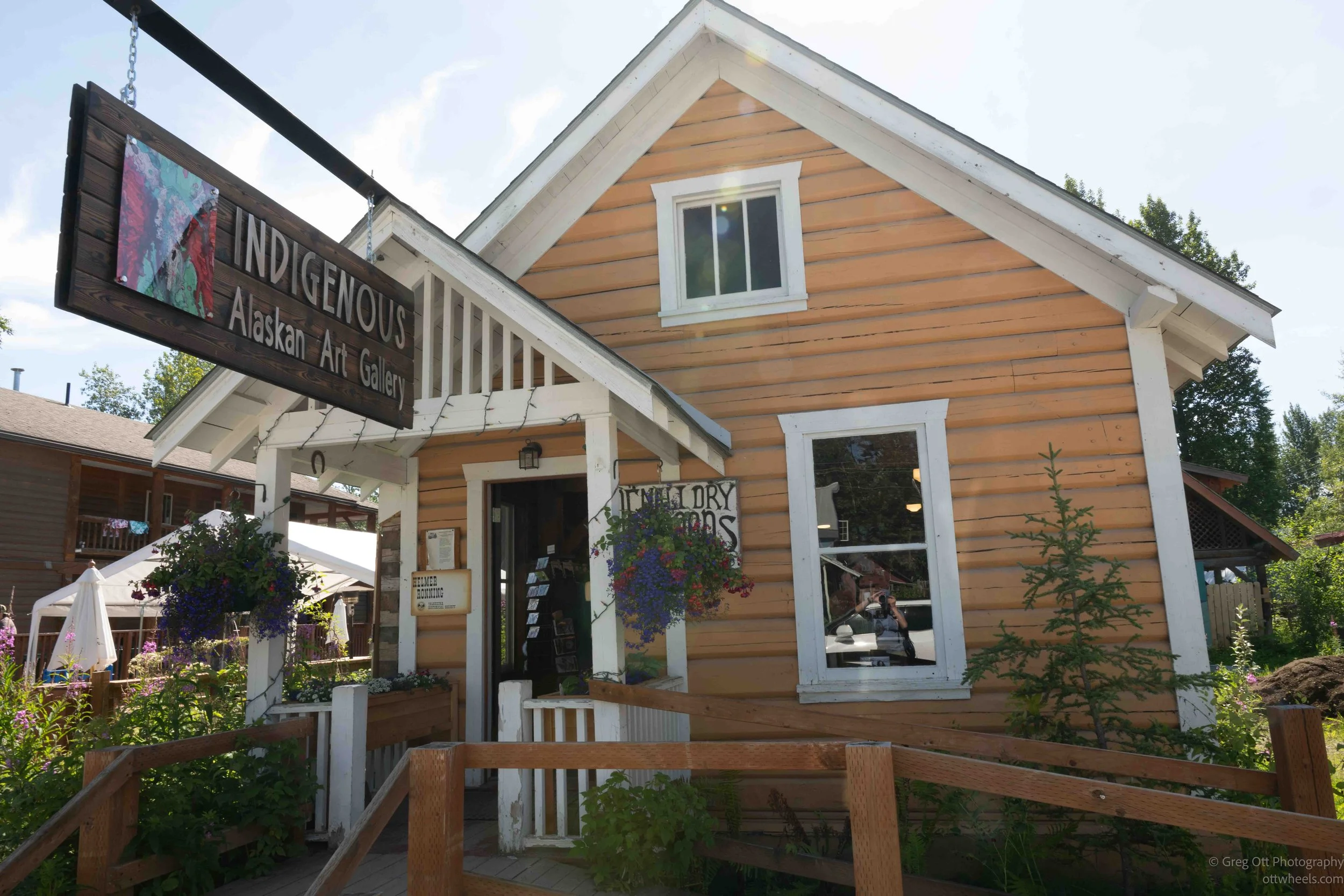
I stopped in several of the shops as I made my way back down Main Street. Most featured local artists selling carvings, paintings, jewelry, photographs, pelts, and other handcrafted items. I rarely buy any of it, no matter how well it's made. I simply don't have the room in the van. I've even stopped buying books until I finish the ones I've already accumulated.
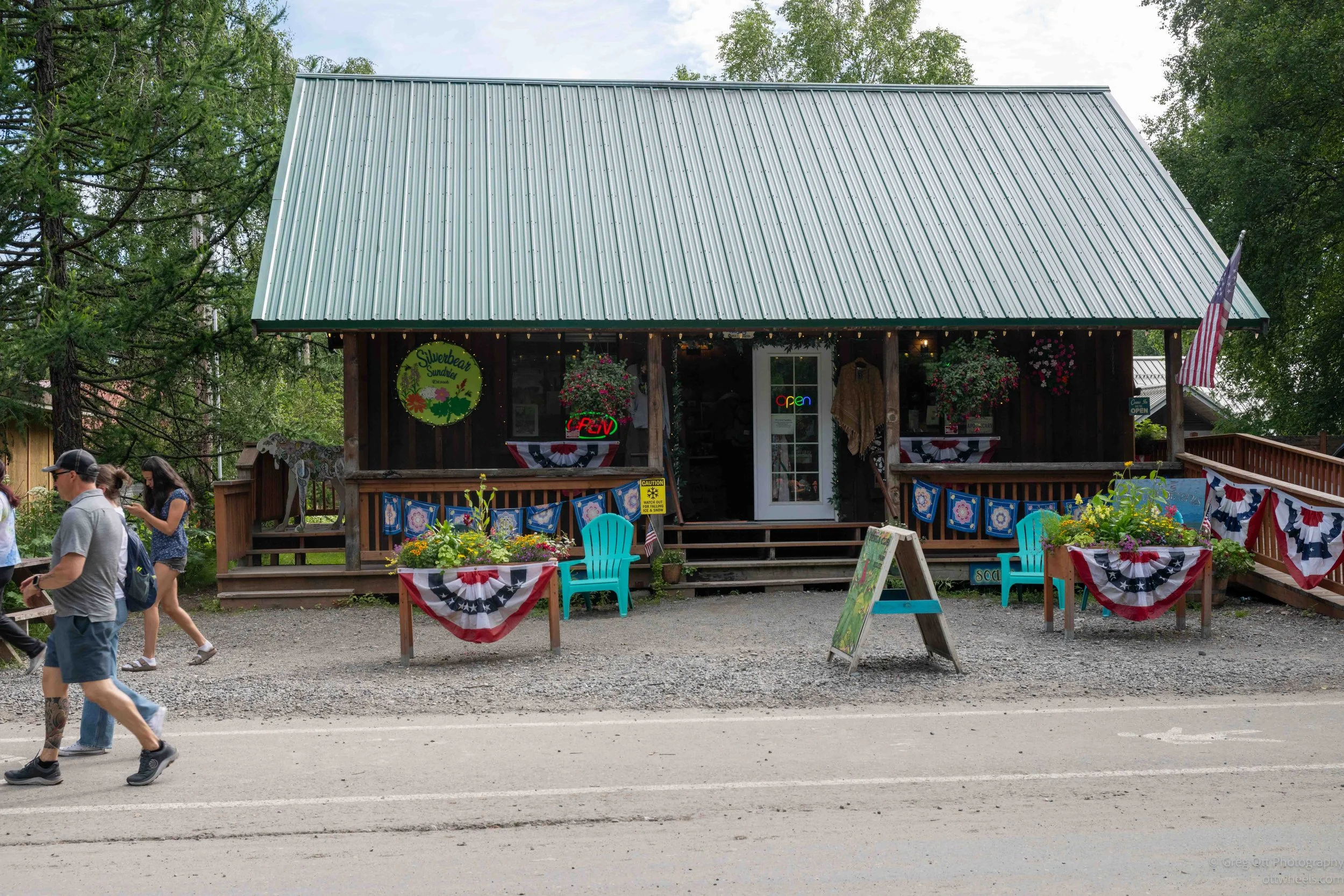
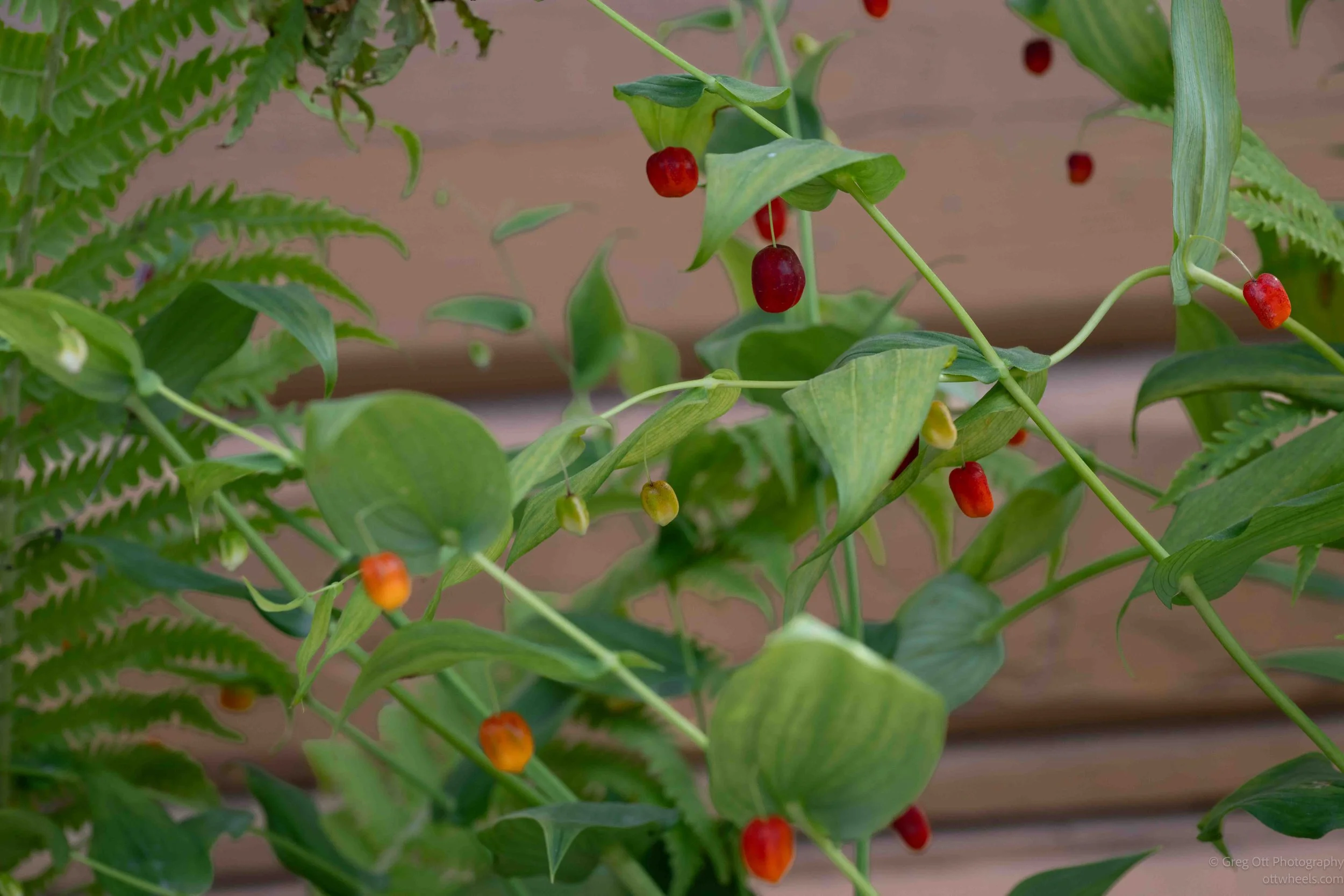
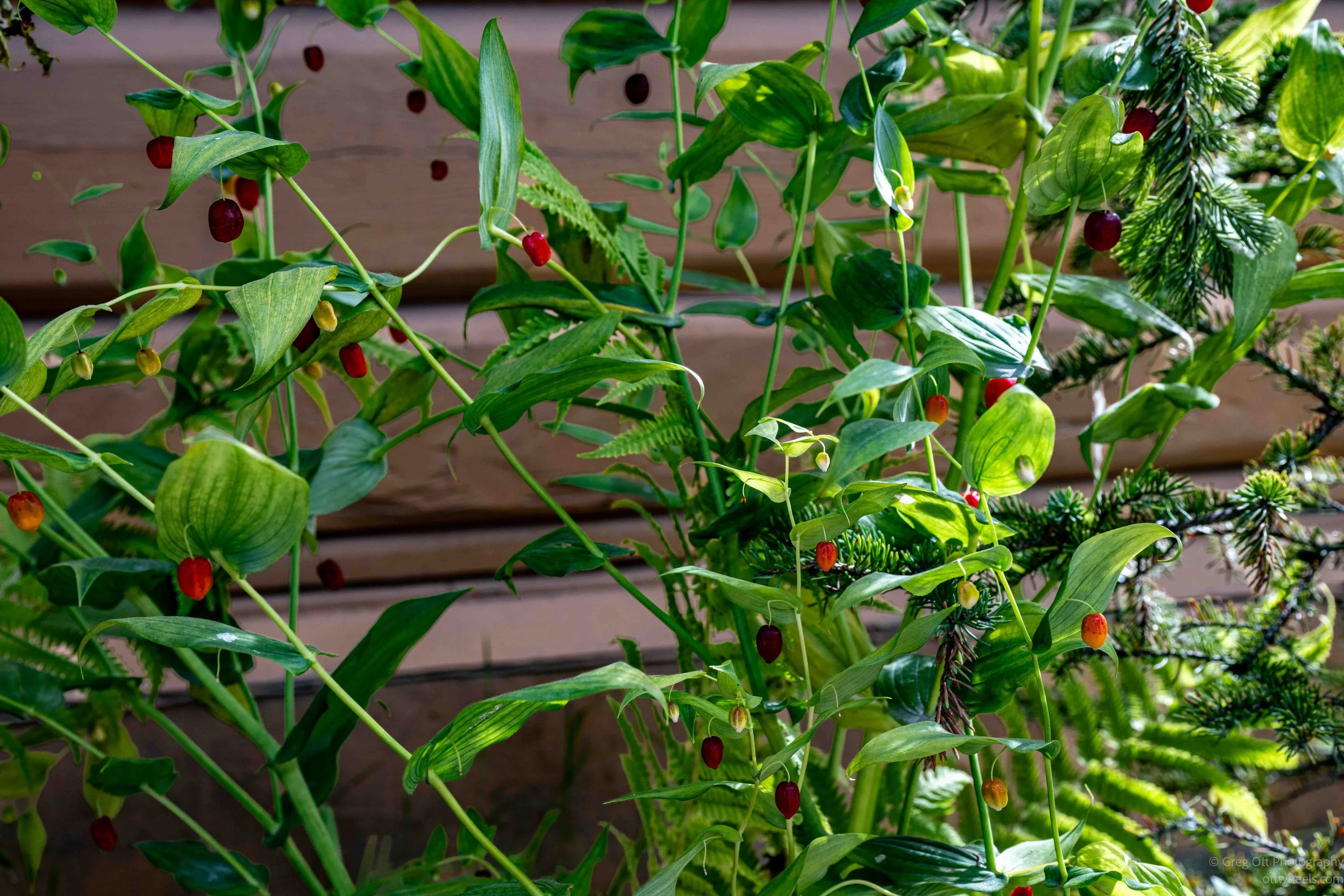
At one shop, I stepped aside while a line of people was leaving. Along the entrance ramp were several plants growing naturally. A little girl asked her mother what they were, and her mom replied, "Those are watermelon berries," before picking one and eating it. The girl asked if she could try one too. Well, I couldn't resist, so I picked one as well. It tasted a little like cucumber with just a hint of watermelon and was full of tiny seeds.
Curious, I asked the woman working inside the shop what the plant actually was. She told me it was twisted stalk. She hadn't heard the name watermelon berry before, but after checking her plant identification app, she said both names referred to the same plant. She explained that the young shoots are eaten in the spring, the leaves can be added to salads, and the berries are eaten fresh or made into jams and syrups.
Dinner in Talkeetna
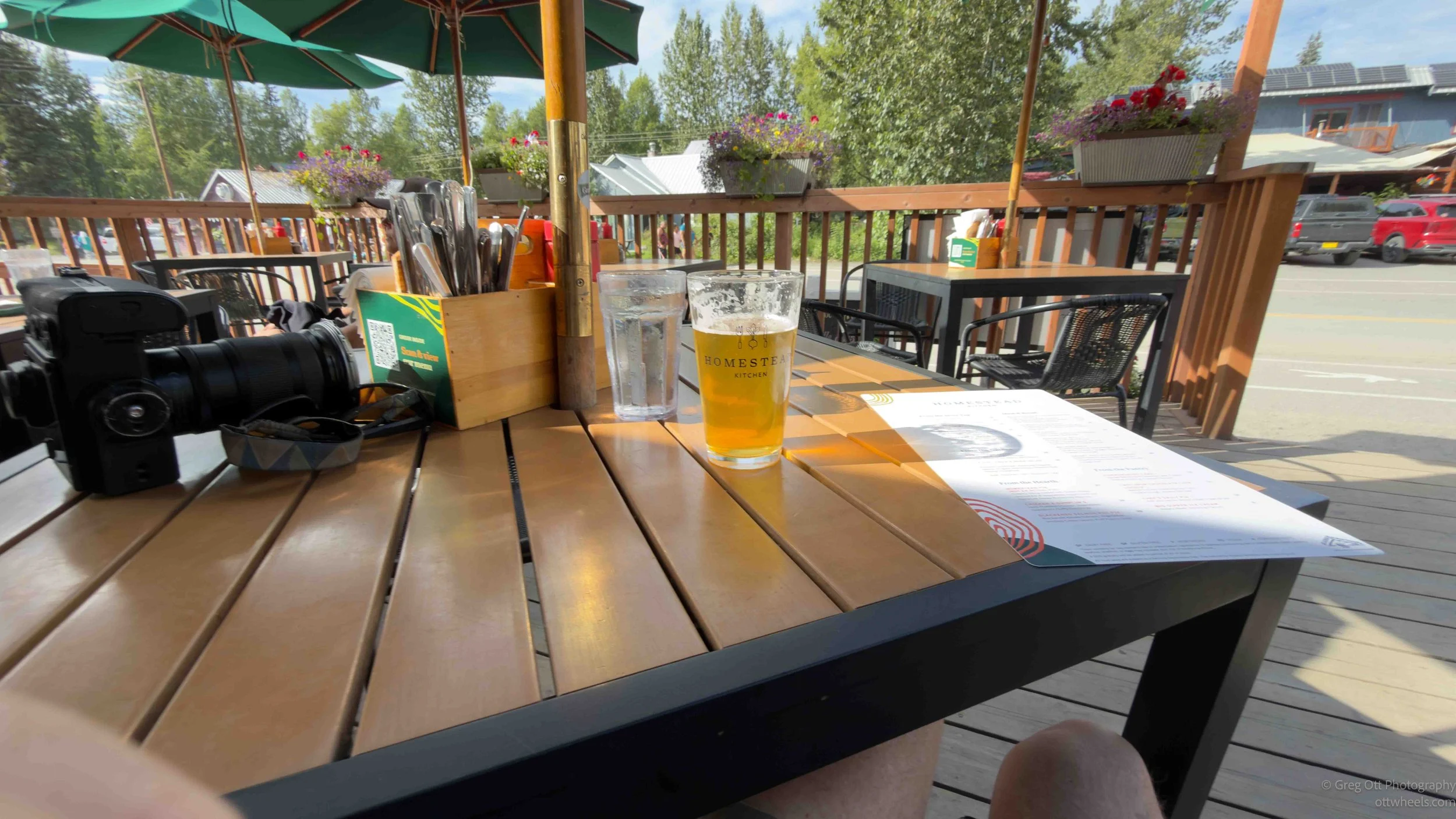
By 6:30, I was getting hungry and stopped at Homestead Kitchen for dinner. As I walked in, the greeter noticed my camera, complimented it, and we ended up talking photography for a few minutes before he showed me to my table.
My server, Plame, was from Bulgaria. Since he had lived in Germany for a while, we switched back and forth between English and German. He was spending his second summer working in Alaska and had studied design, but photography was also one of his interests. We ended up talking for nearly twenty minutes about Europe, photography, travel, and, somehow, beer.
He mentioned that he really liked Czech pilsners, which reminded me of a trip I took to Pilsen in 1990, just after the collapse of the Soviet Union. I told him I still remembered walking into a grocery store where the shelves were almost empty except for an entire wall of beer. He laughed and pointed out that all of this had happened before he was born. We both got a good laugh out of that.
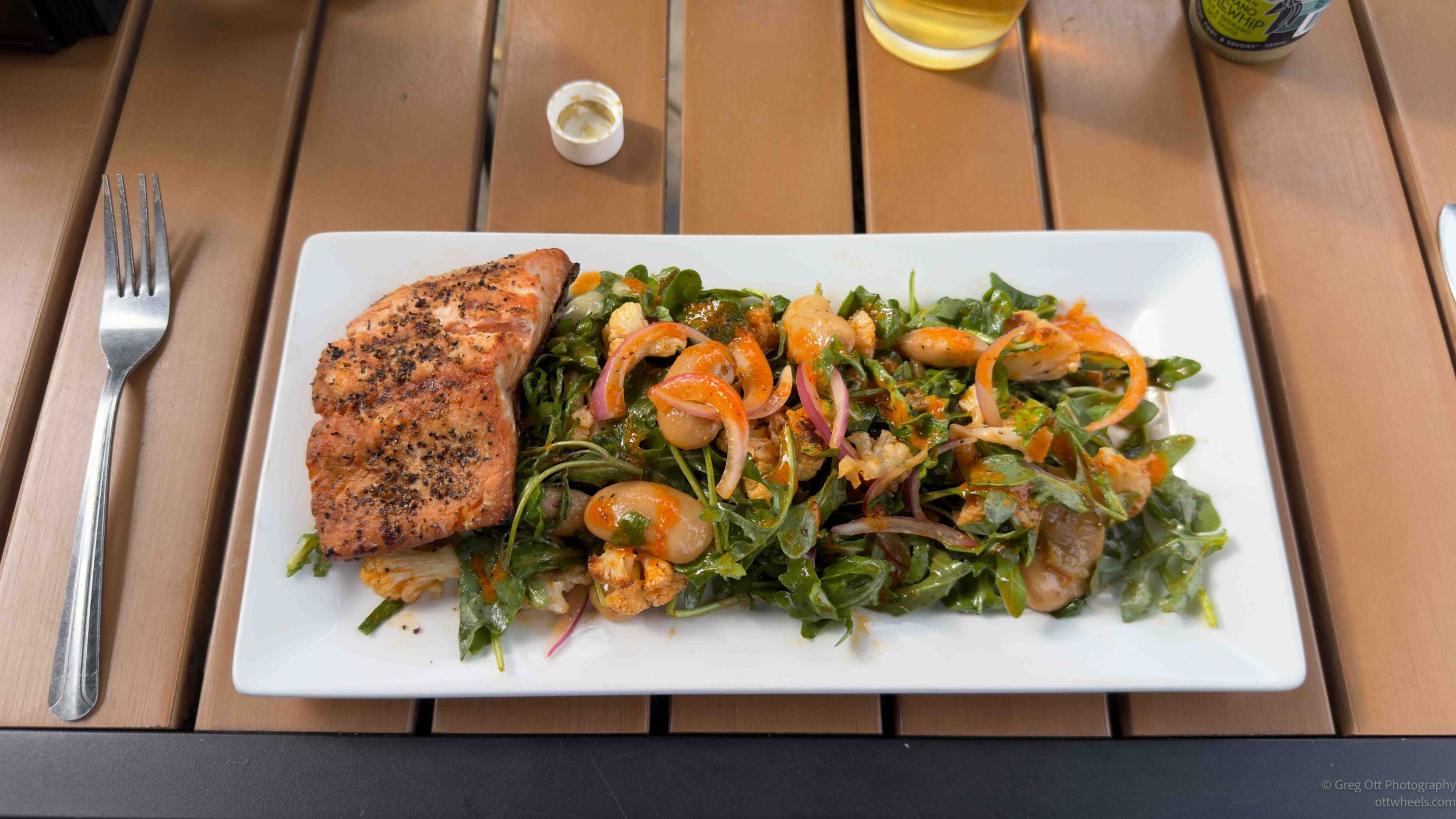
For dinner, I ordered a fresh salad topped with Alaska salmon. They had a house hot sauce that I ended up putting on both the salad and the salmon. It was absolutely delicious. Naturally, I ordered a beer to go with it, which is how our conversation had drifted to Czech beer in the first place.
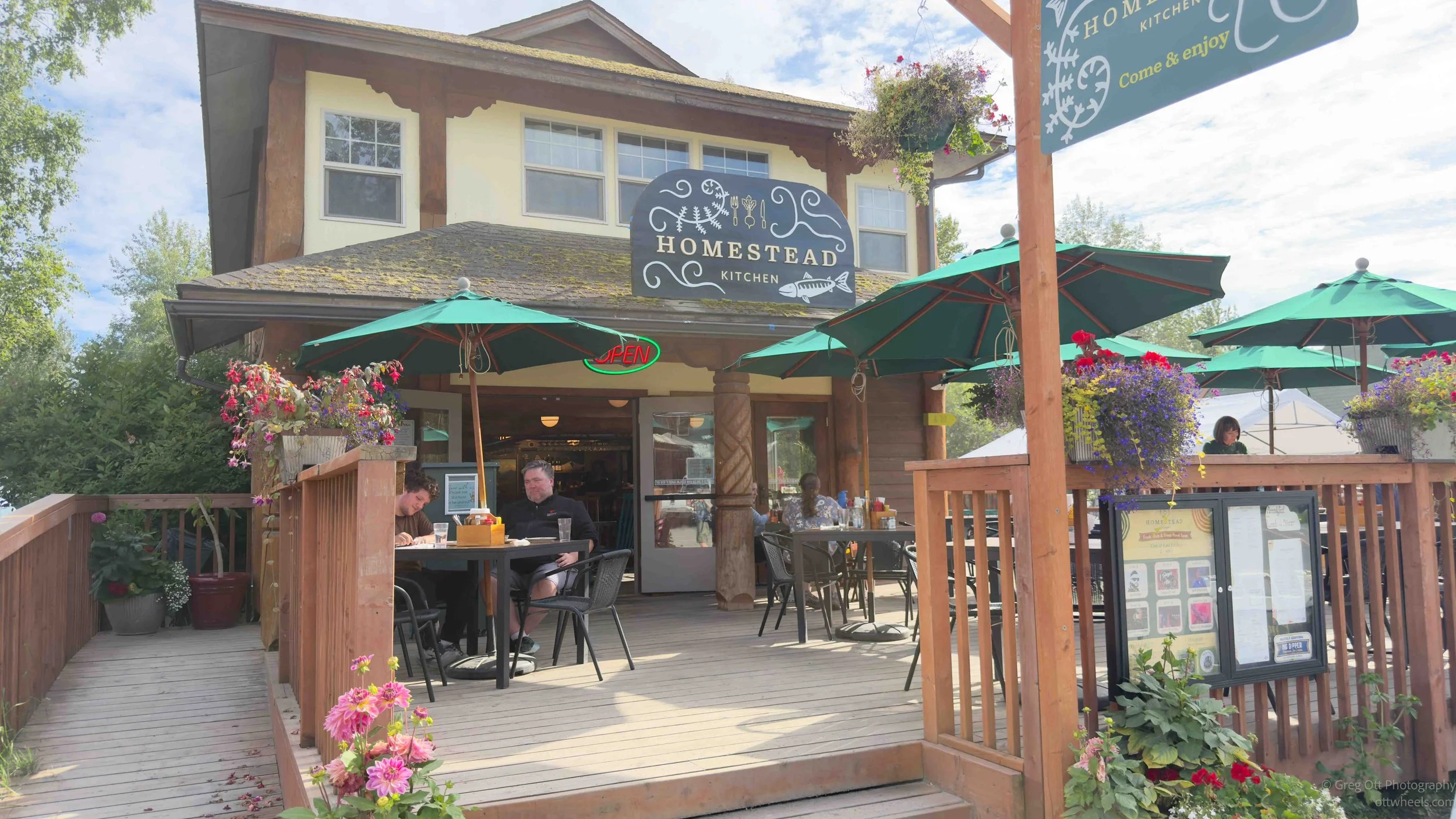
After I finished eating, the greeter stopped back at my table to ask about buying a camera. He was planning a birding trip to South America and was trying to decide between Sony and Nikon. We talked about how much modern autofocus systems have improved, especially eye detection for birds. Birds are some of the most difficult subjects to photograph. They're small, they rarely sit still, and they seem to take off just as you think you've got everything ready.
After dinner, I slowly made my way back toward the K2 parking lot. It was after 8:00 p.m., and the streets were noticeably quieter, although there were still plenty of cars in the parking lot waiting for the last flightseeing tours to return.
I drove back to the same boondocking site outside of town where I had spent the previous night. This time I had the entire place to myself. A few drops of rain began to fall as I settled in for the evening. After being on the go since 6:30 that morning, I was more than ready to call it a day.