
Dutch Harbor WWII History Museum
I was trying to fly back to Anchorage from Dutch Harbor, but before I left I was determined to visit the Aleutian World War II Visitor Center. Naturally, everything seemed to conspire against that plan. My morning strategy was simple: get up early, grab a coffee and a light breakfast, then head to the museum. Except the front desk and restaurant didn't open until 7, so I had to wait for someone to show up before I could even get a cup of coffee.
Fifteen minutes later, I walked the two blocks to the post office, only to discover it didn't open until 9. I mentioned my museum plans to the woman at the front desk, and she suggested taking a taxi. Another guest needed one too—the hotel shuttle didn't start until 10—so we agreed to split the fare. Between us we each called four of the eight taxi companies on the hotel's list. No one answered. Apparently, "calling a cab" is more of a suggestion than a guarantee in Dutch Harbor. And no, there isn't an Uber.
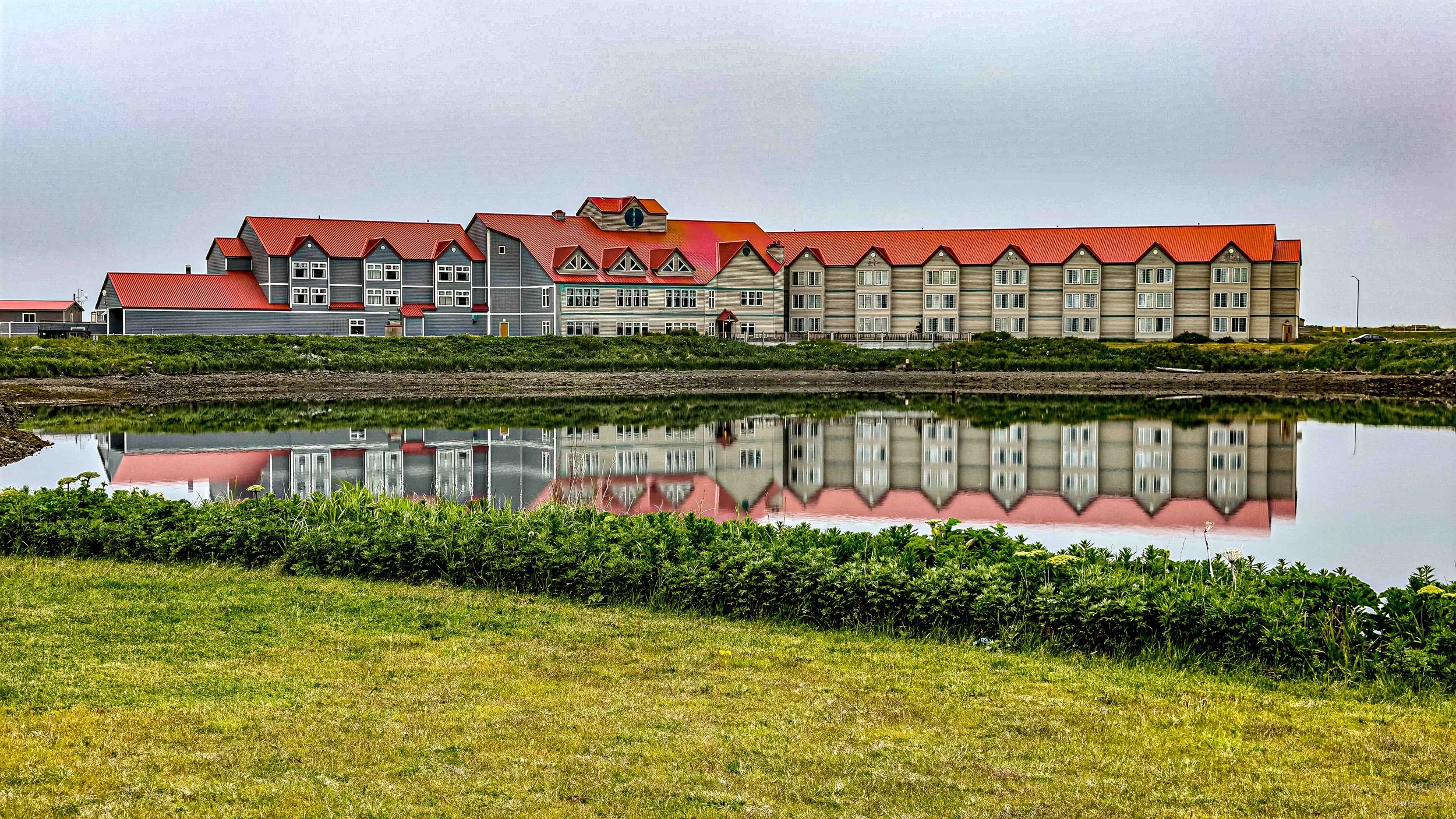
View of the Grand Hotel Dutch Harbor
it was close to 9 by now. I gave up on the taxi and headed to the post office instead. As I walked up, one of the drivers I'd been trying to reach was parked a block away, completely absorbed in whatever soccer match he was watching on his phone. He didn't notice me until I was standing beside the van. The roar of the crowd was blasting through the speakers as he rolled down the window and finally looked up. I told him I needed a ride to the museum, but first I had three postcards to mail. He said, “I’ll wait.” as he continued watching the match.
Inside the post office, the clerk informed me they had already sold out of postcard stamps. Apparently they only receive a small supply each month, so I bought regular first-class stamps instead. Since he obviously was from the area, I asked him the WWII museum. He told me there were actually two museums worth visiting. The Museum of the Aleutians focuses on the islands' people, culture, and history, while the Aleutian World War II Visitor Center explains why the war came to these remote islands. If he only had time for one, he'd choose the Museum of the Aleutians.
When I stepped back outside, the taxi had disappeared.
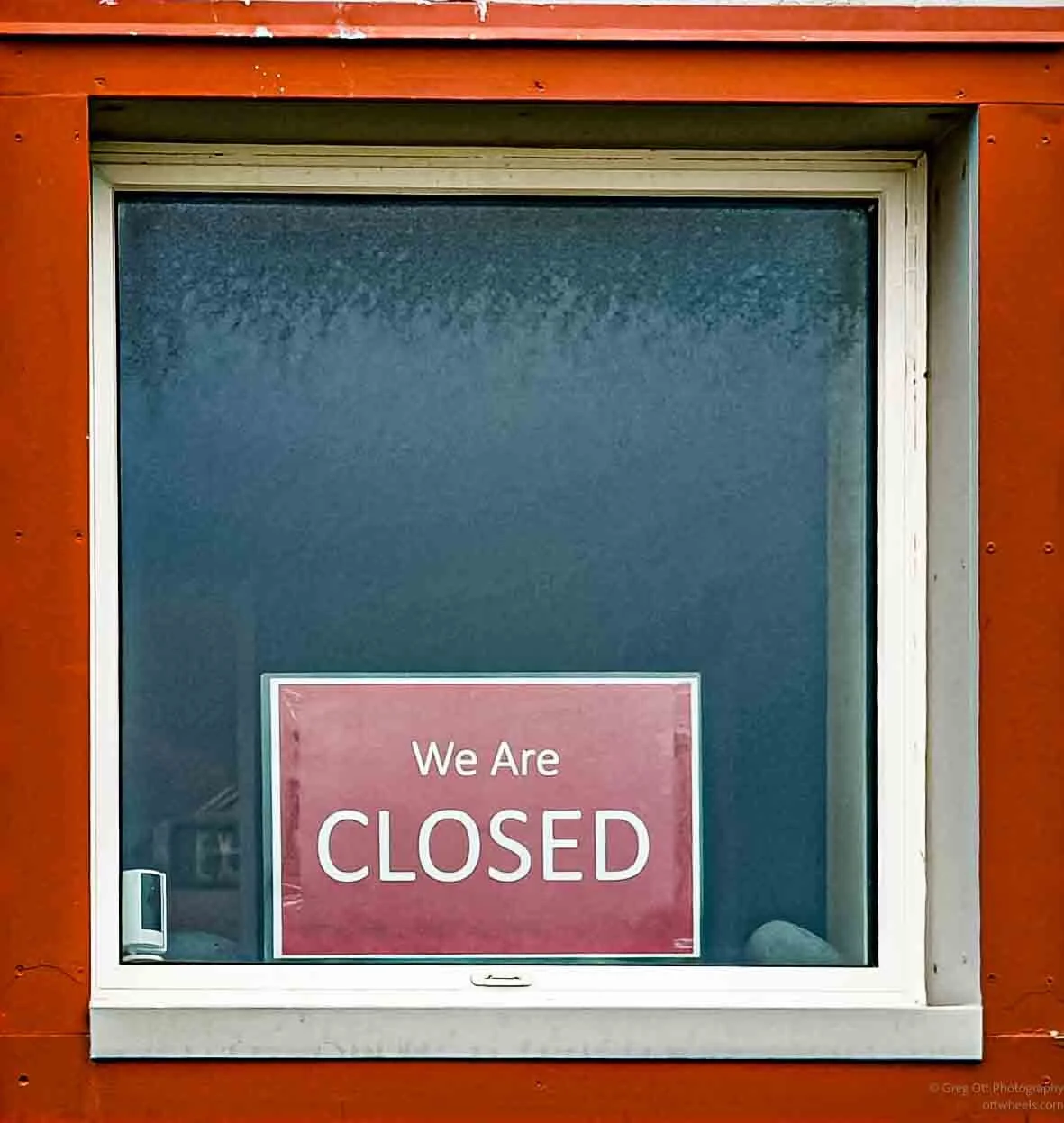
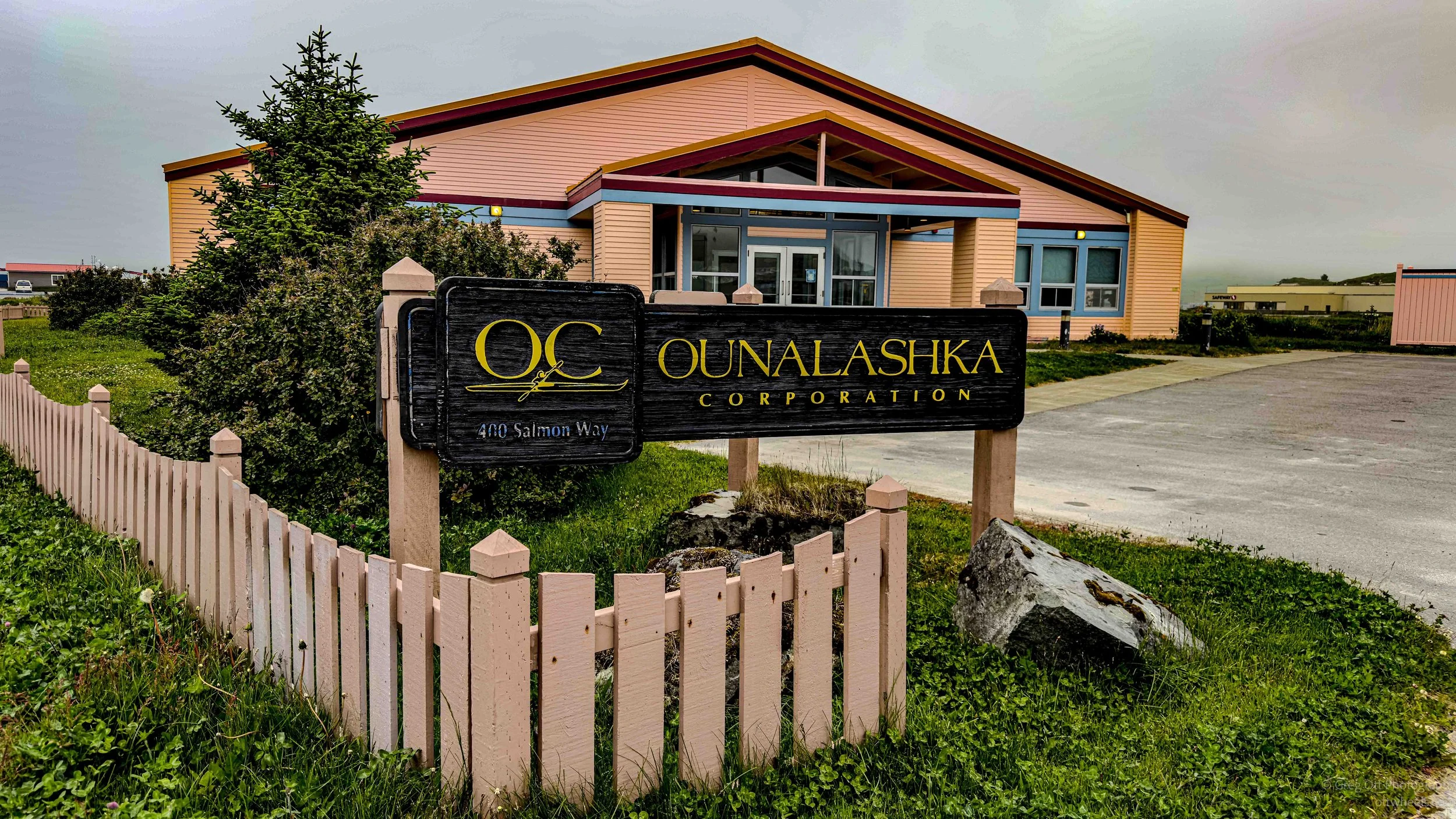
No problem, I thought. The Museum of the Aleutians was only a few blocks away. I was ready to change my plans. I accidentally entered the Ounalashka Corporation building first because I could see artwork hanging inside and assumed it was the museum. A young man smiled, pointed next door, and said, "They're over there." Unfortunately, there was closed sign in the window. The museum is only open Friday through Tuesday. Another dead end.
Back at the hotel, the taxi driver had returned and waved me into the front seat. The cab/van was an old Ford Econoline that had clearly seen better decades. The upholstery had split open, exposing the foam—and in a few places, the springs—so I eased myself into the seat. The soccer match was still playing, although at a more reasonable volume this time. Then I noticed a handwritten sign taped securely to the dashboard: CASH ONLY! Naturally, I didn't have any. I told him I didn’t have cash and that I’d be back.
The driver wasn't thrilled that I'd just cost him a few minutes, so I hurried inside to use the ATM. I inserted my card, entered my PIN, and immediately received a rejection message along with a unhelpful list of reasons why my card might no longer work. After a call to the bank and enough security questions to convince them I was actually me, we discovered the problem. I hadn't updated my address in more than a year, and when the post office flagged my old address as invalid, the bank locked the account. That tells you how often I use cash. Once everything was updated, the ATM finally cooperated.
While we waited for the system to refresh, the woman at the bank asked where I was calling from. When I told her Dutch Harbor, she laughed and said, "That must be beautiful." She and her husband were hoping to visit Alaska sometime in the next year. I told her it absolutely was, although the area I was in was very remote.
By the time I walked back outside, twenty minutes had passed and, once again, the taxi had vanished. Fortunately, it was after 10, so the hotel shuttle was finally running. The new person at the front desk was much more helpful and explained that the Aleutian World War II Visitor Center was right beside the airport terminal. I stored my bags and camera in the hotel's secure room and caught the shuttle, still wondering whether my flight would leave at all that day.
While I waited, a local woman was on her phone explaining to someone what traveling through Dutch Harbor was really like. "Don't plan to fly in, take a four-hour tour, and fly back out the same day," she said. "You'll probably miss your ship." I smiled. That was probably the best travel advice I'd heard all week. Alaska operates on its own schedule, and Dutch Harbor seems to have created one of its own.
The trip to the airport was quick and I went inside to quickly check status. The inbound airplane still hadn't left Anchorage. The checkin desk couldn’t give me any useful information. One flight had already been canceled, the fog was still hanging over the airport, and it was looking more and more like I'd be spending another night in Dutch Harbor. Just then, the woman who had been trying to share the taxi found me. "I was looking for you," she said. "One of the taxi companies finally answered." It didn’t really matter, be both had found our way to the airport.
Aleutian World War II Visitor Center
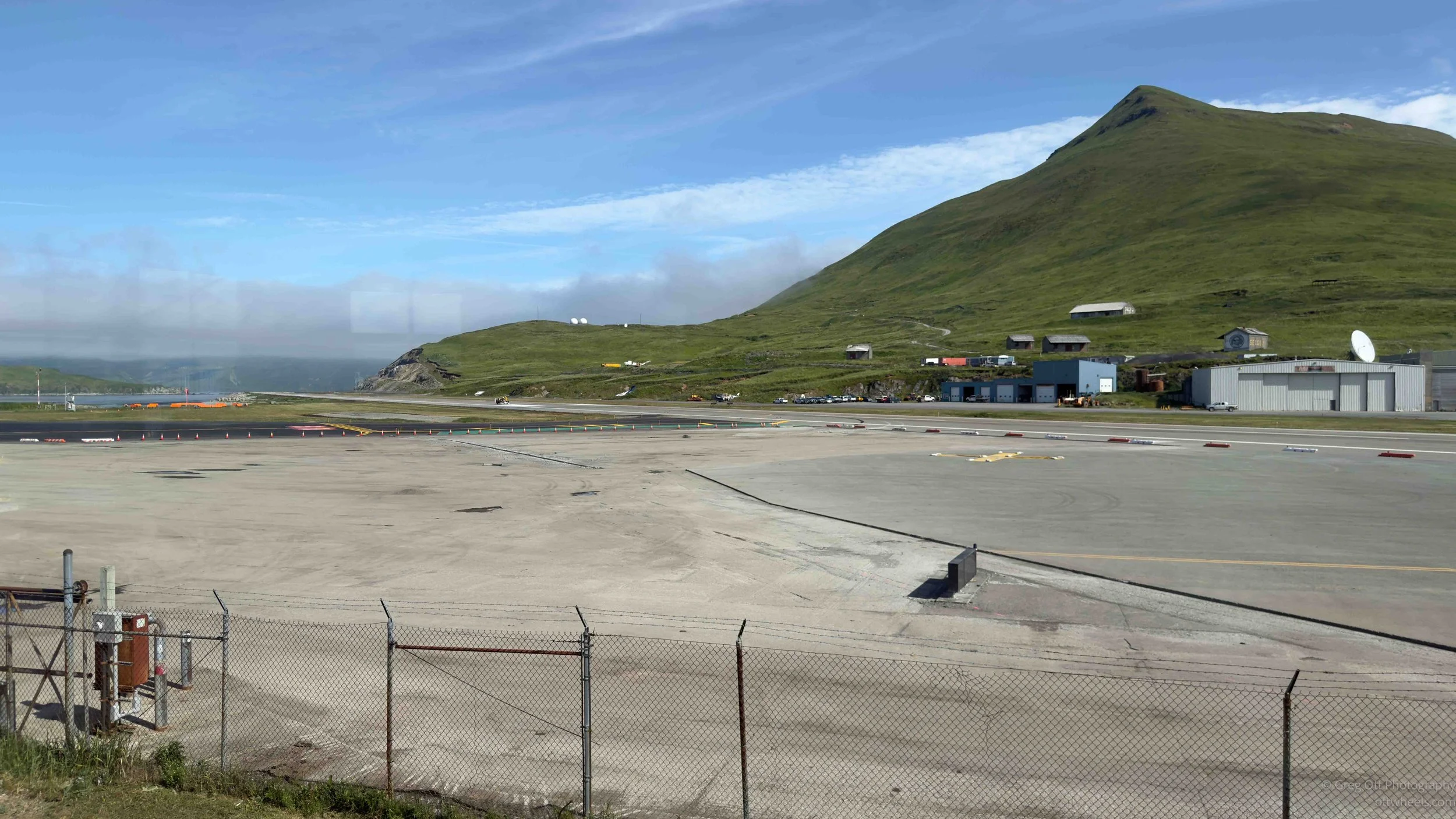
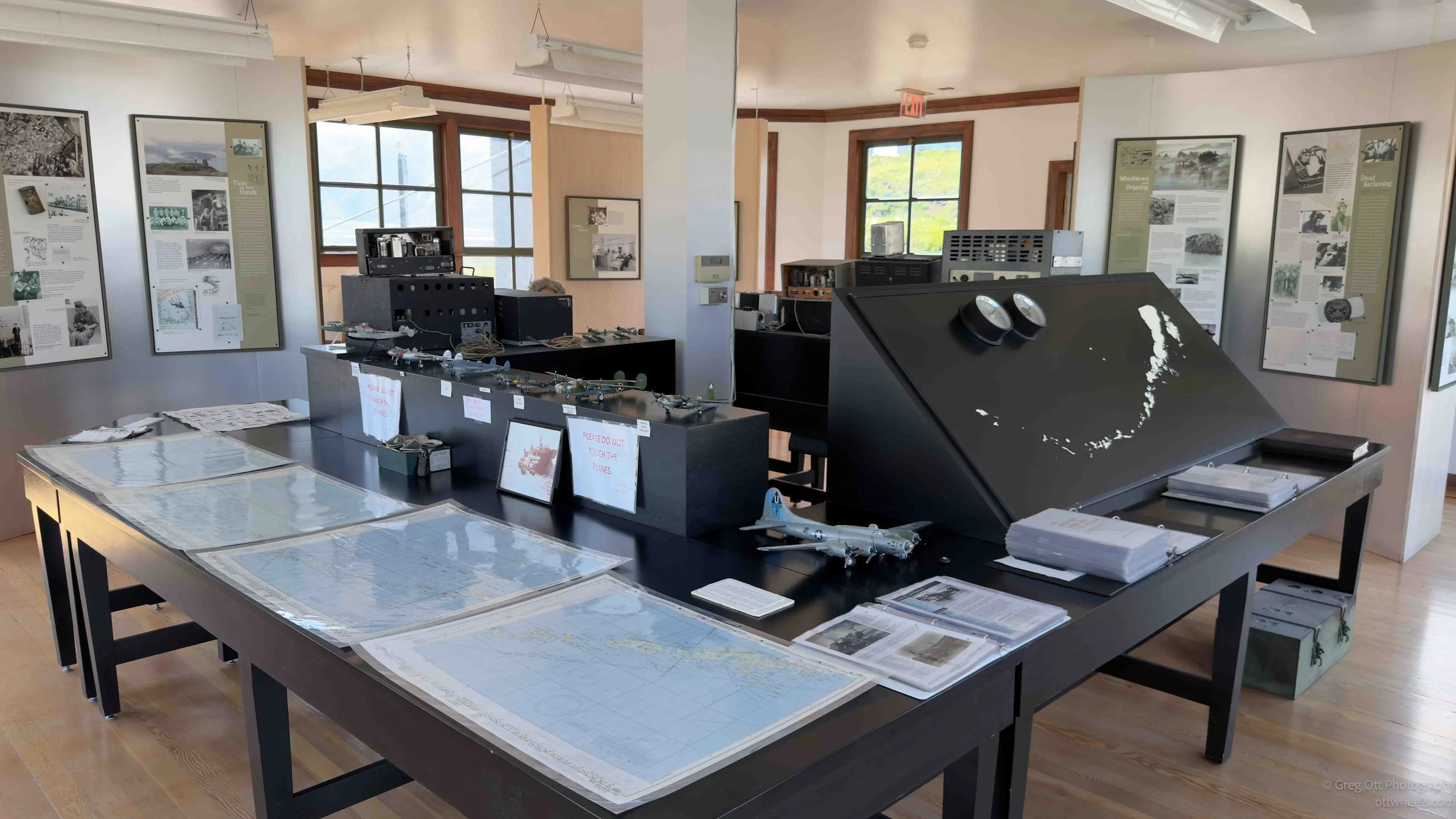
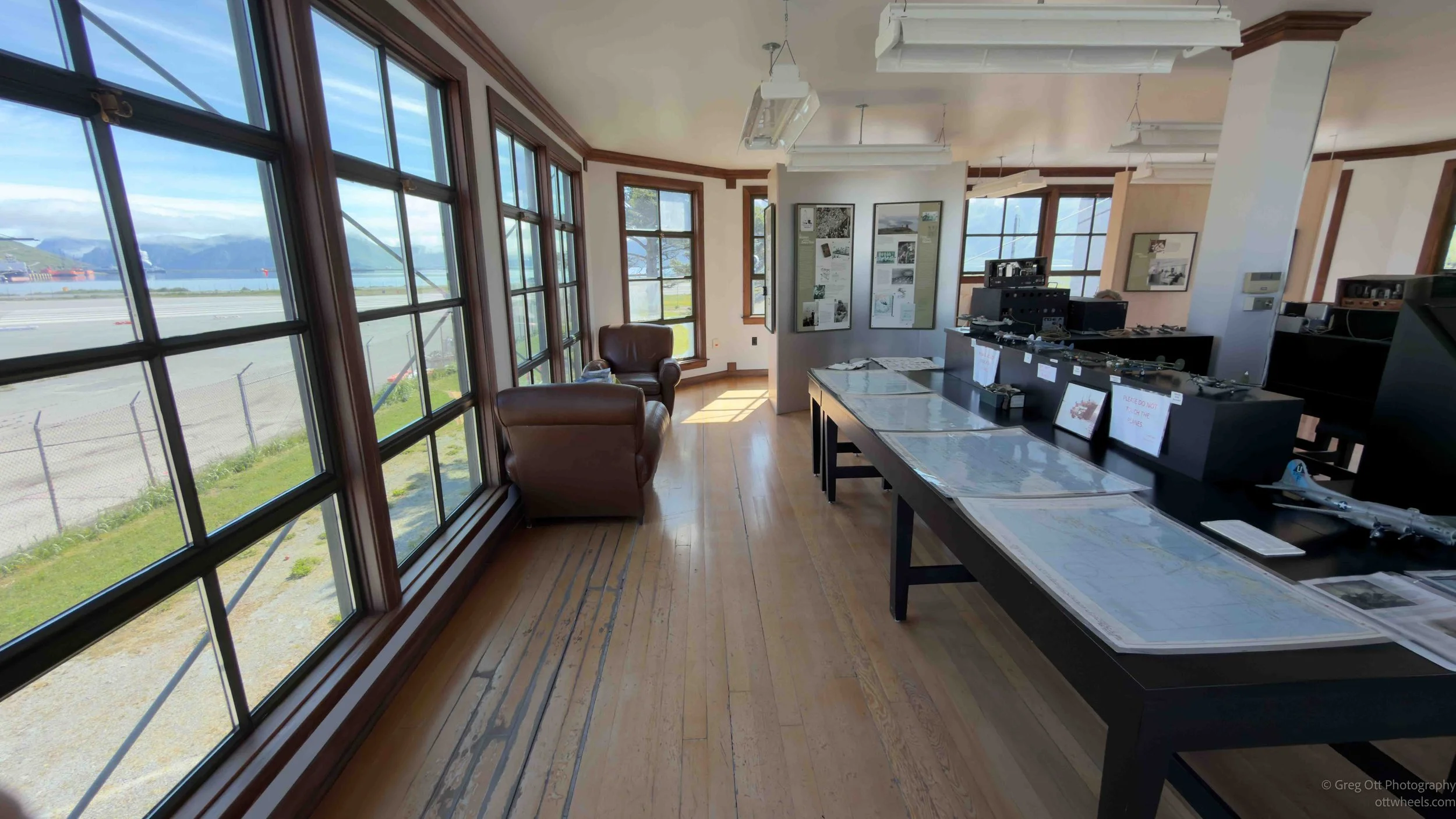
The Aleutian World War II Visitor Center (Aleutian Islands campaign) sits next to the airport in the original U.S. Navy aerology building (what the Navy called meteorology). I had assumed it was the old communications building, but it was actually where Navy weathermen tracked conditions for pilots and ships operating throughout the Aleutians. The Visitor Center is part of the Aleutian World War II National Historic Area, so naturally I wanted another stamp in my National Parks Passport book. The problem was I didn’t have my Passport book with me. The ranger had a simple solution: stamp a small piece of paper and tape or glue it into the book later. Problem solved.
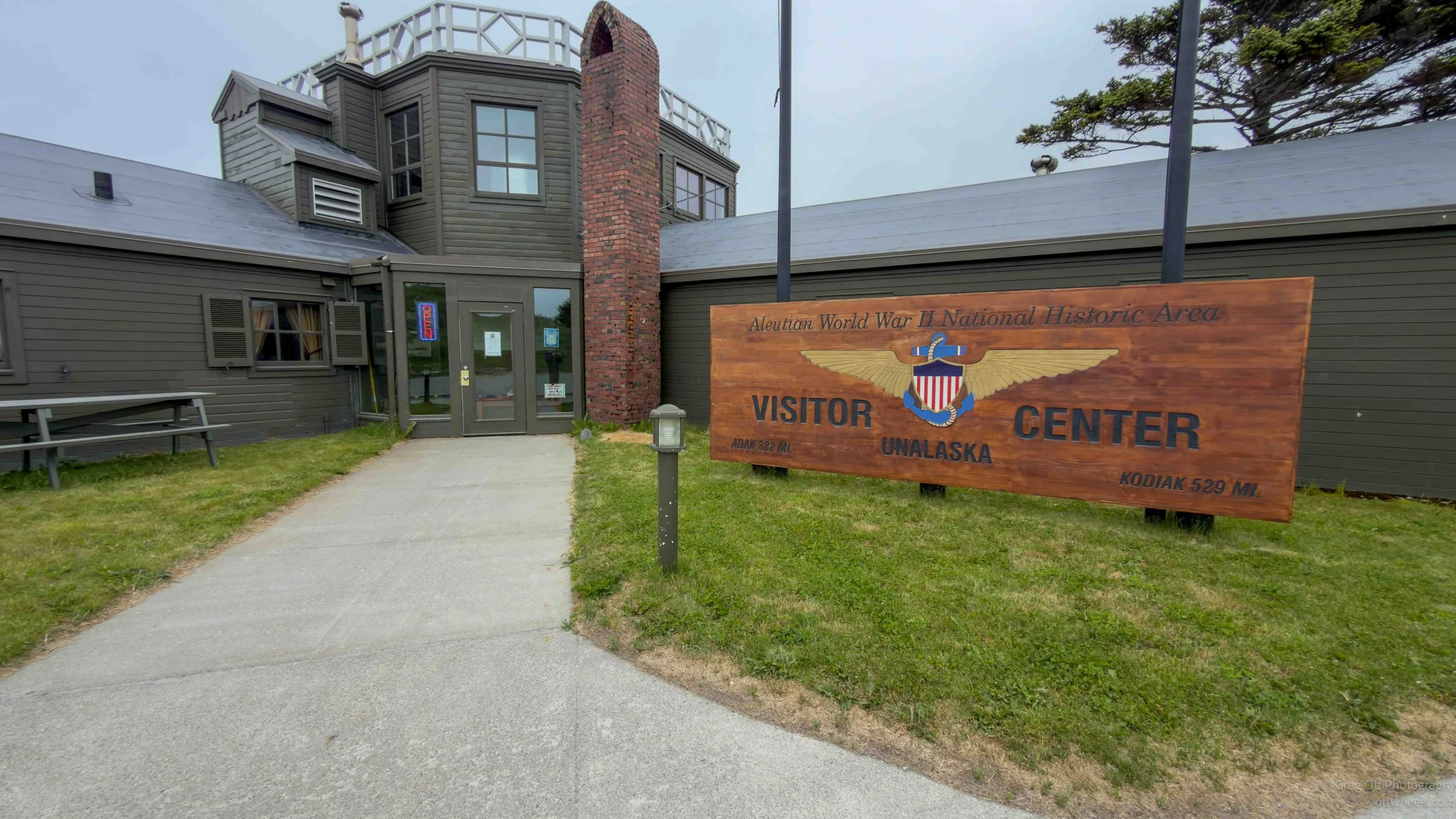
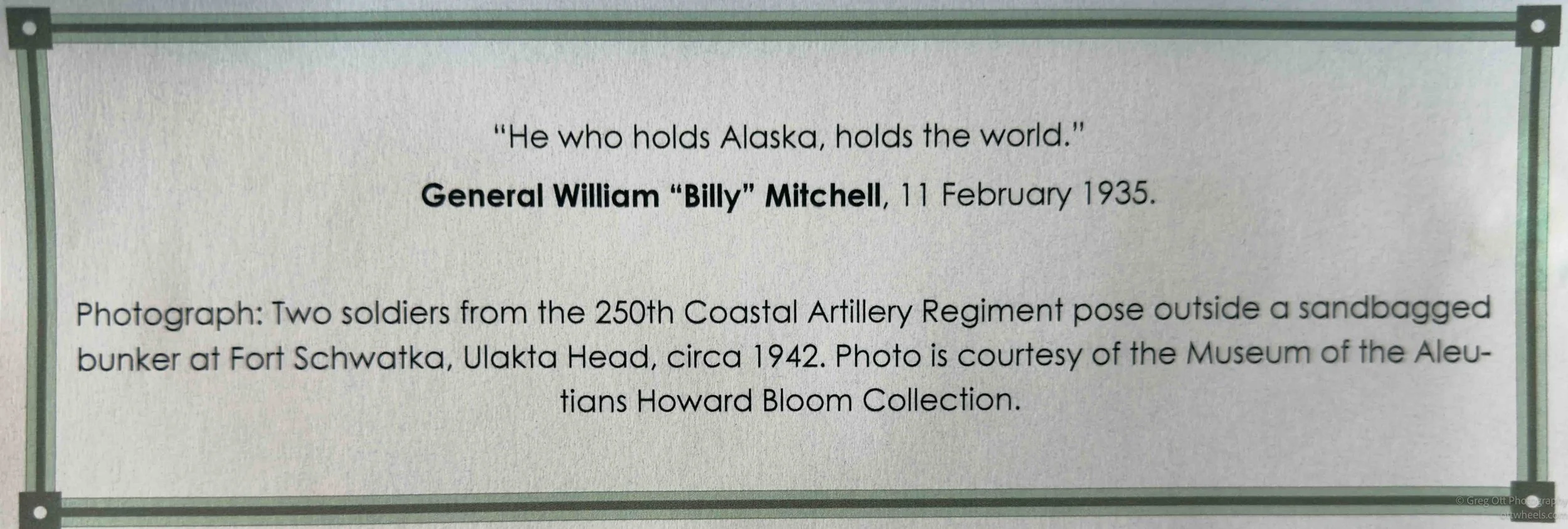
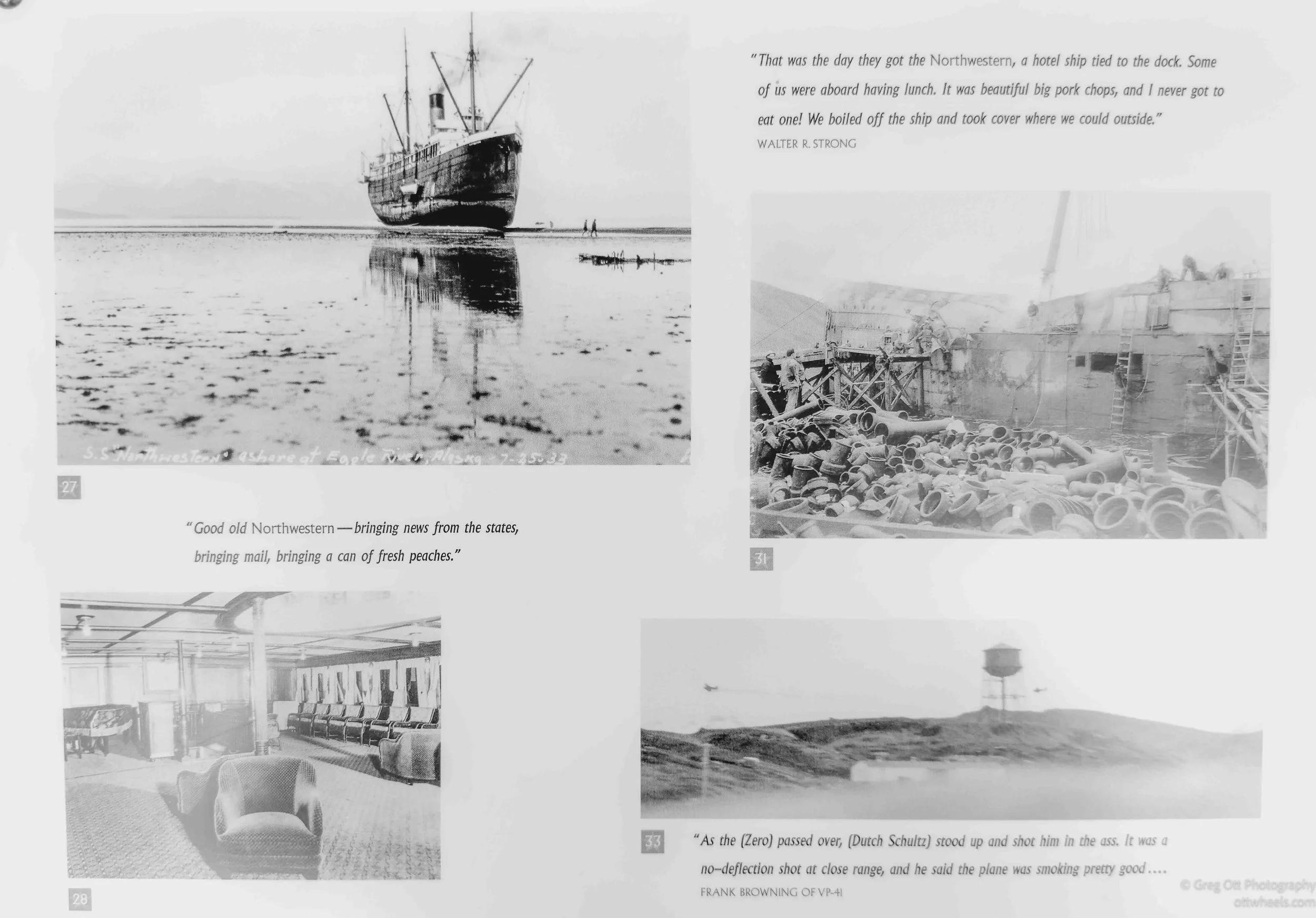
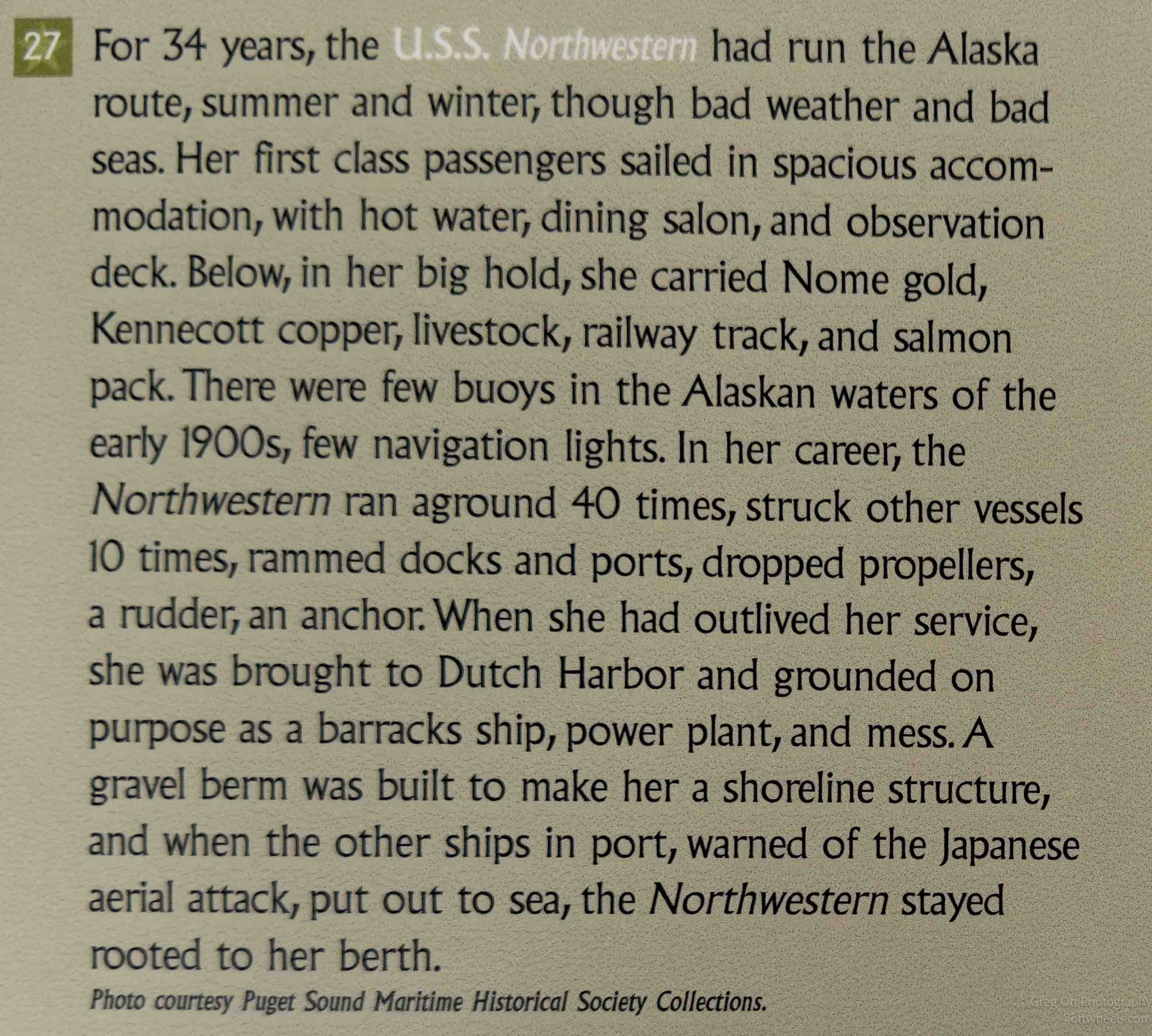
One exhibit that caught my attention told the story of the SS Northwestern, a passenger and cargo steamship that had served Alaska for decades before World War II. During the Japanese bombing of Dutch Harbor on June 3, 1942, the ship was hit by bombs, caught fire, and settled at its berth. The museum explains its role in the attack, but it became even more real after what Dennis, yesterday had shown me the day before. Across the bay, part of the ship's bow still rises above the water, a quiet reminder that the battle isn't confined to photographs and display cases—it's still part of the landscape.
The museum's 28-minute film, The Aleut Story, covered much of what Dennis had explained during my tour the day before, but it added another perspective. After Japanese aircraft bombed Dutch Harbor on June 3 and 4, 1942, the U.S. military evacuated Unangax̂ villages throughout the Aleutians, fearing additional attacks. People on Attu had been detain and taken to Japan, many would die the. The evacuation itself wasn't the real tragedy. Families were sent to abandoned canneries, mining camps, and other makeshift facilities in Southeast Alaska that had little heat, poor sanitation, overcrowded living conditions, and limited medical care. Disease spread quickly through the camps, and many people died far from their homes.
When the war ended, many expected to return. Instead, the government decided it wasn't worth rebuilding several of the smaller villages, including Biorka, Kashega, Makushin, and Attu. Families were relocated to larger communities such as Unalaska, Akutan, and Atka. Today, almost nothing remains of those original villages. Wind, rain, and time have reclaimed them, leaving behind little more than foundations, cemetery crosses, and scattered artifacts. The National Park Service refers to them simply as the Lost Villages.
That's why the film spends far more time on the evacuation than on the bombing itself. The air raids lasted only two days, but their consequences lasted generations. It also connected something Dennis had told me the day before that I hadn't fully appreciated at the time. His story of "Four Villages, One Community" (Amaknak Island) wasn't separate from the war—it was the continuation of it. The museum explains why those villages disappeared. Dennis explained how the people who survived built a new community together in Unalaska. Standing there in the museum, the two stories finally came together. The film also brought some of the survivors back to the location of their original homes and collected stories.
The museum had a lot of plaques the explained the bombing of Dutch Harbor and the invasion. There were many artifacts, both US and Japanese presented in the museum. There was a photo of the Japanese Zero that had been shot down and landed on Akutan Island nearby. It was recovered, repaired and flew to California.
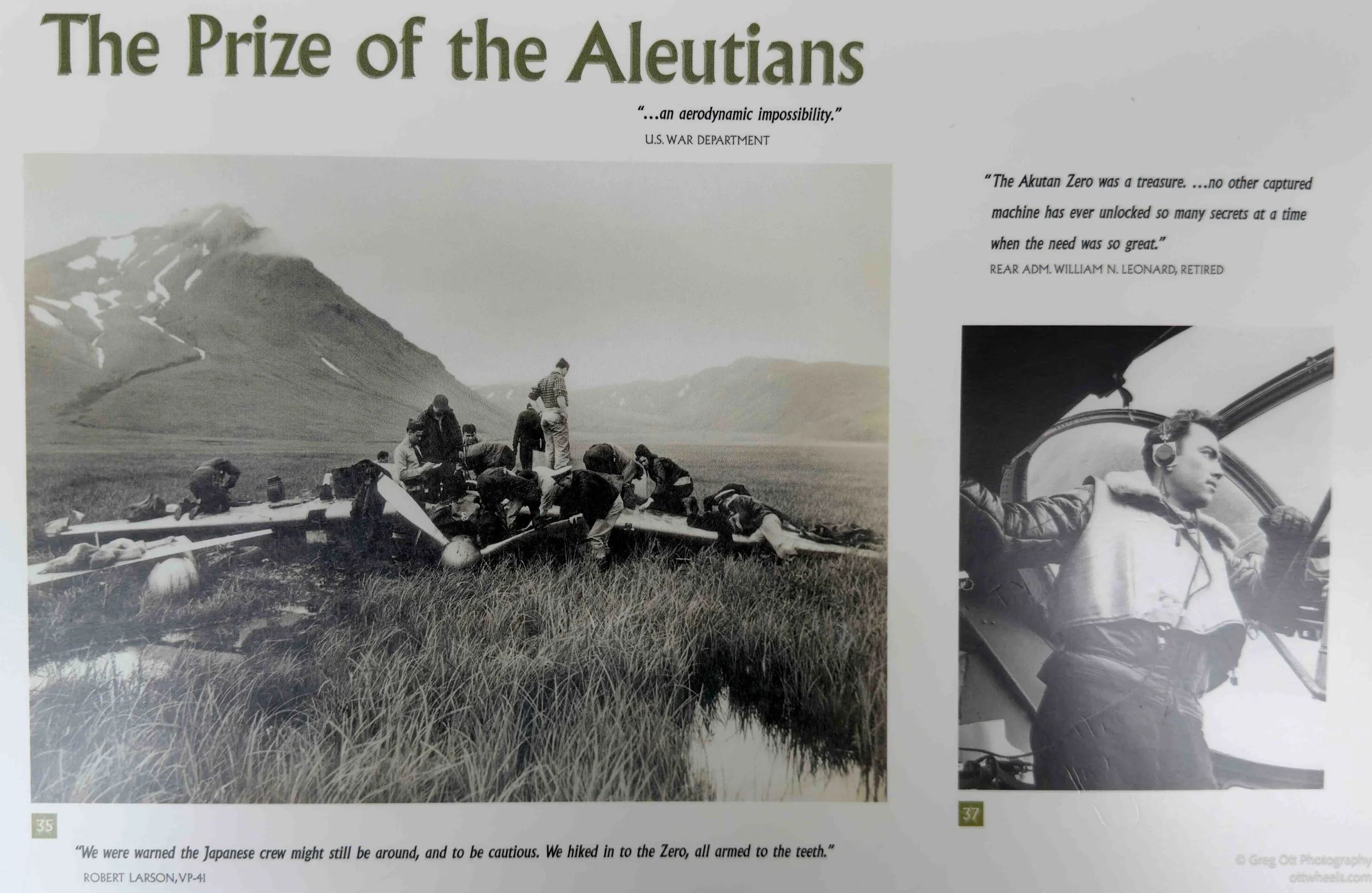
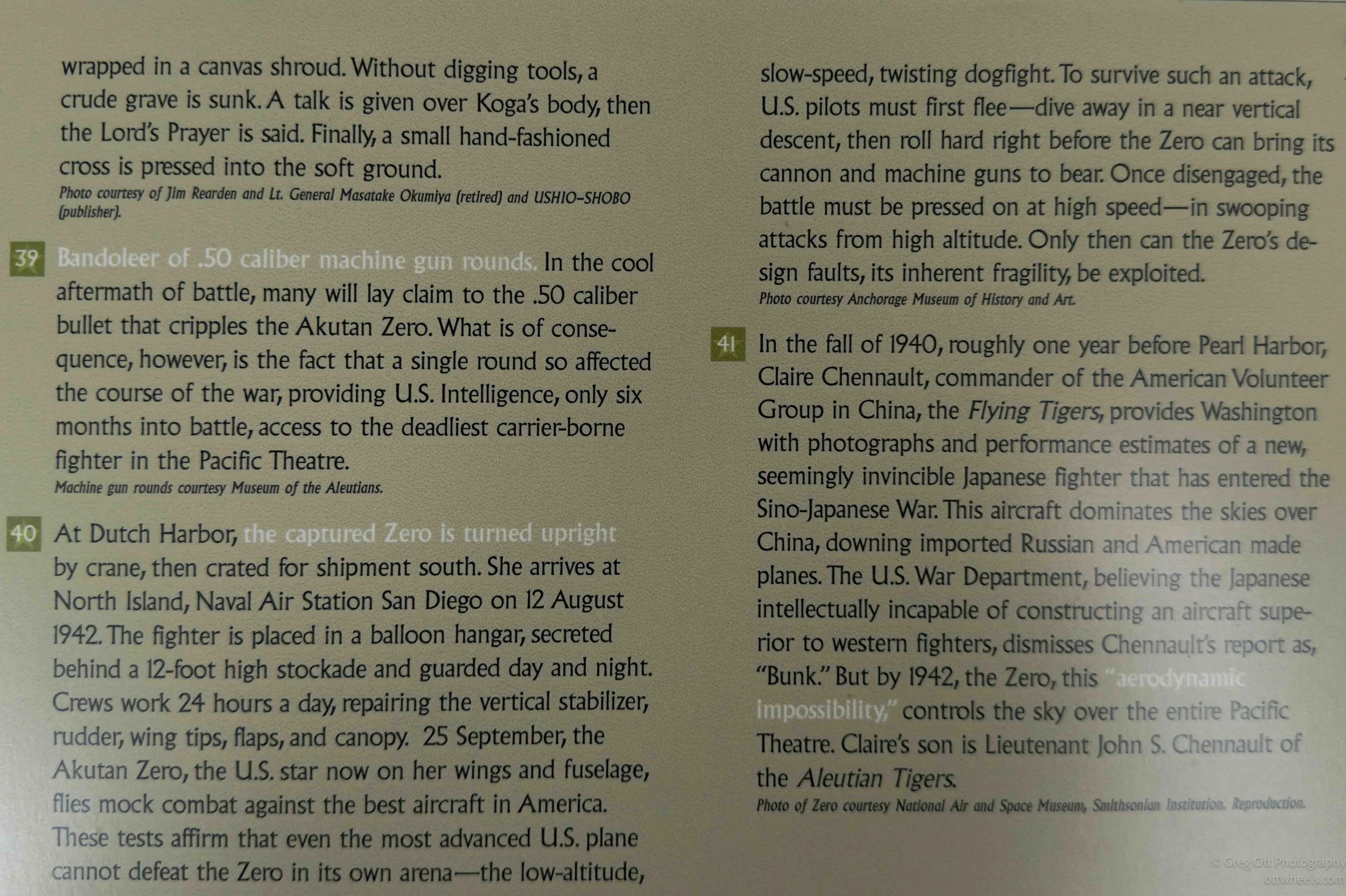
I took my time to read the brochures and and examine photographs that had an amazing texture to them.
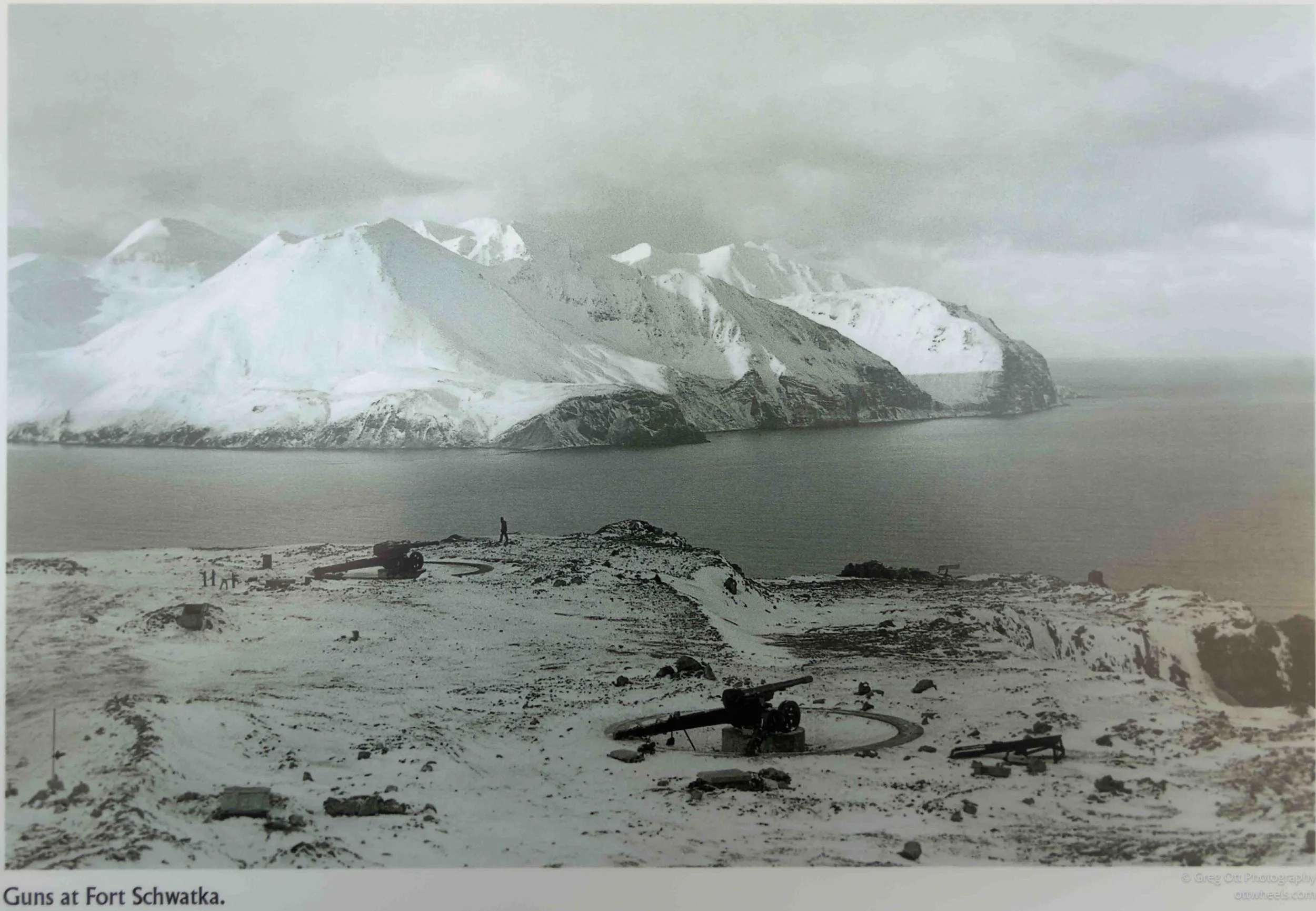
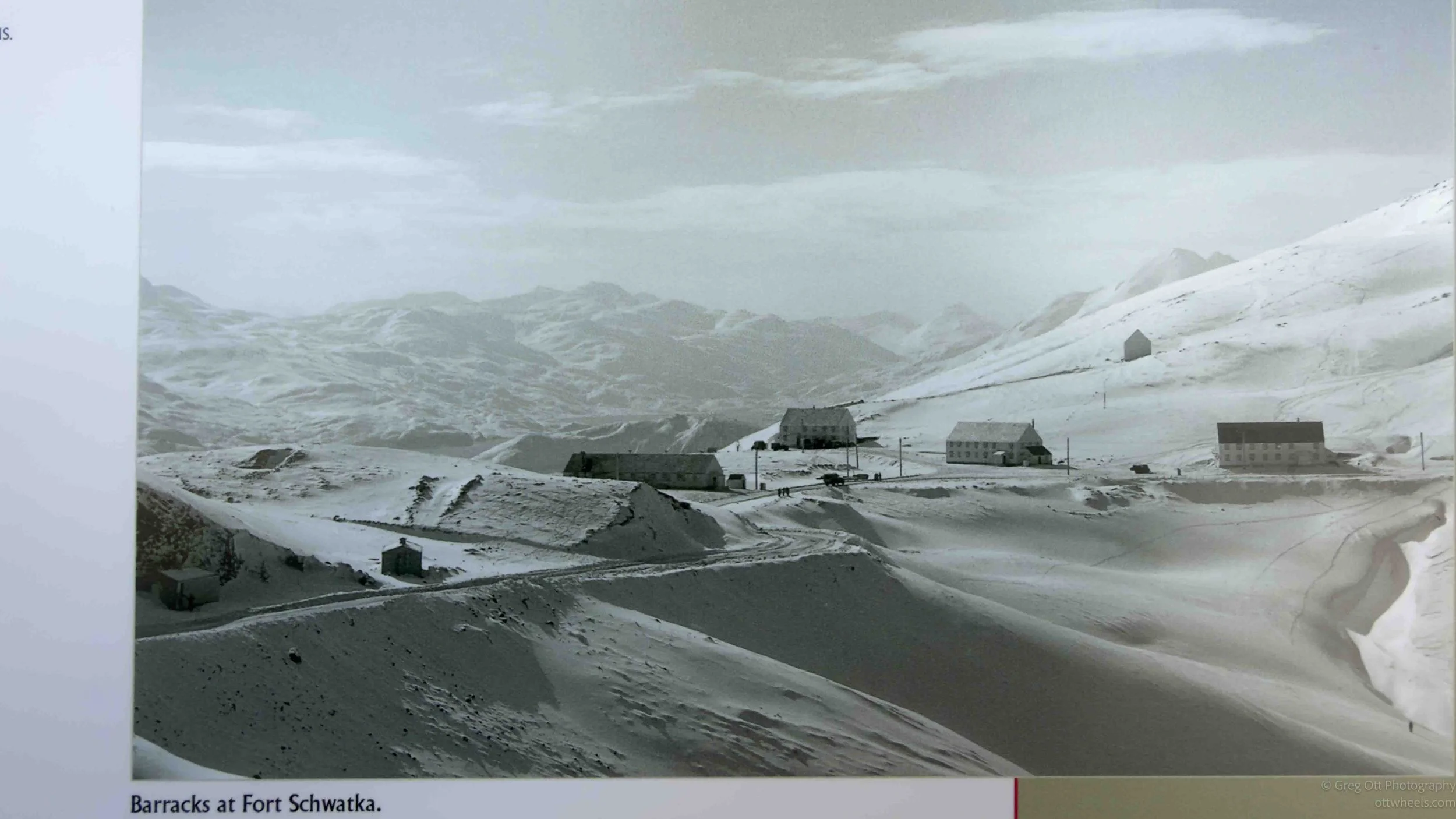
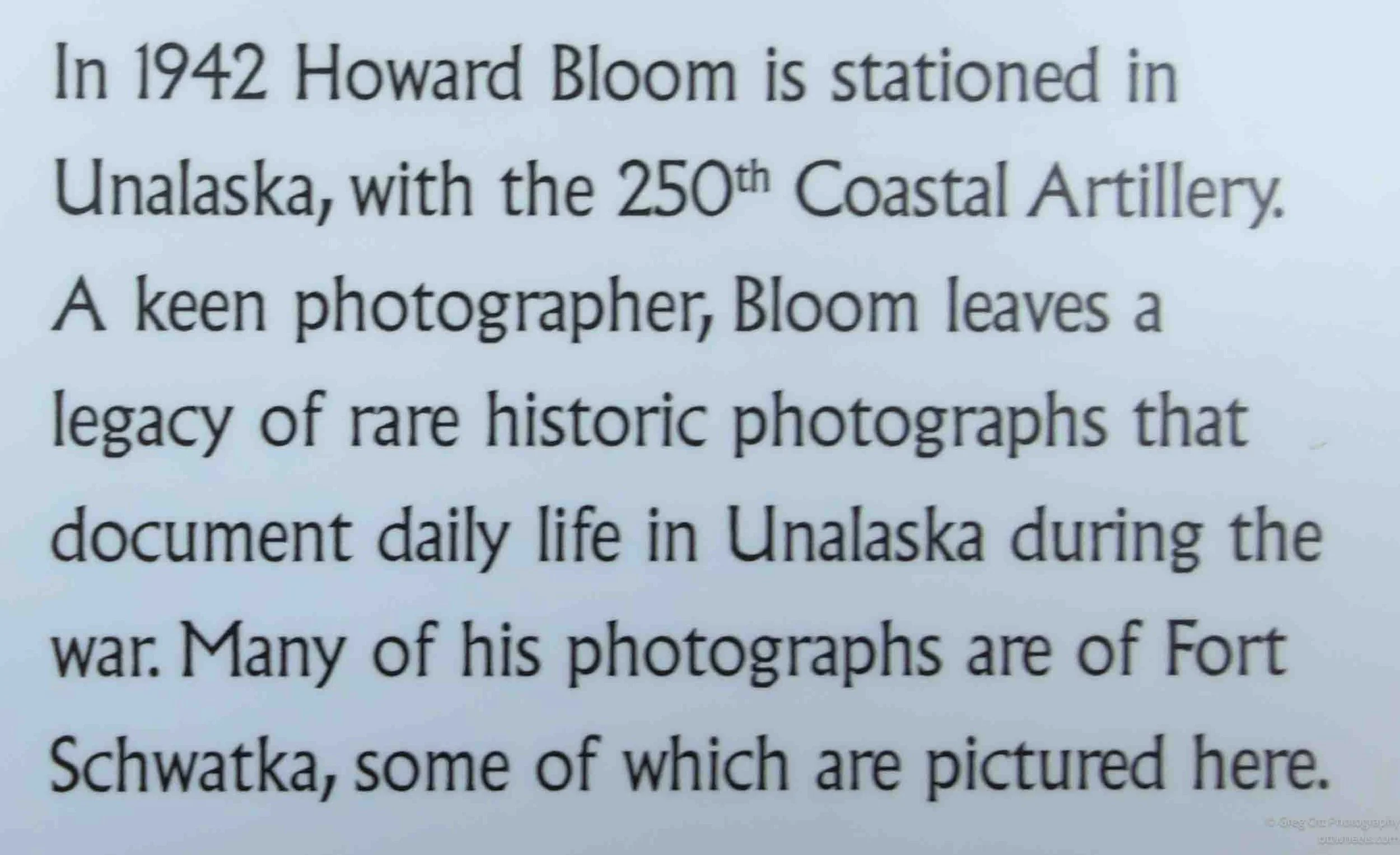
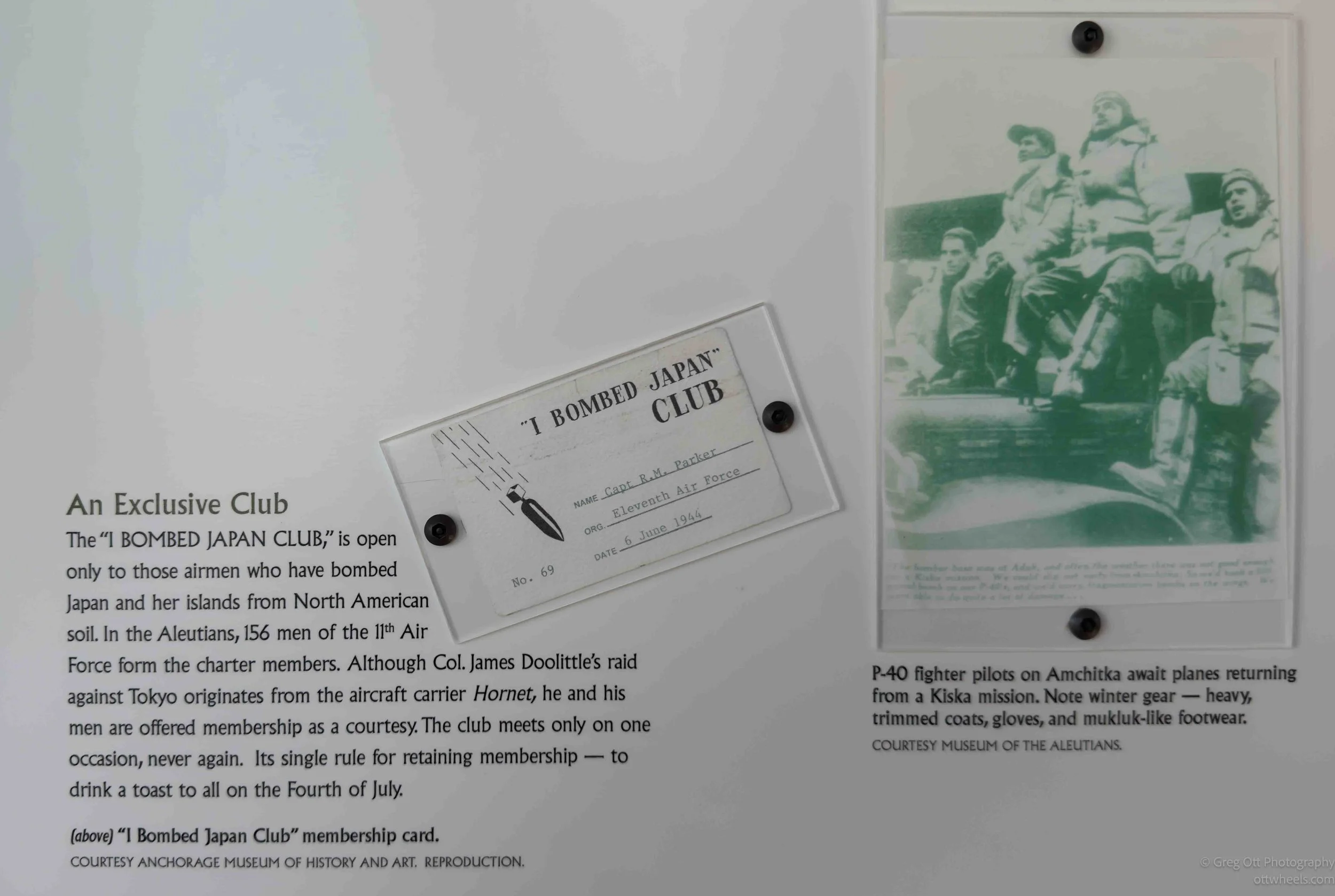
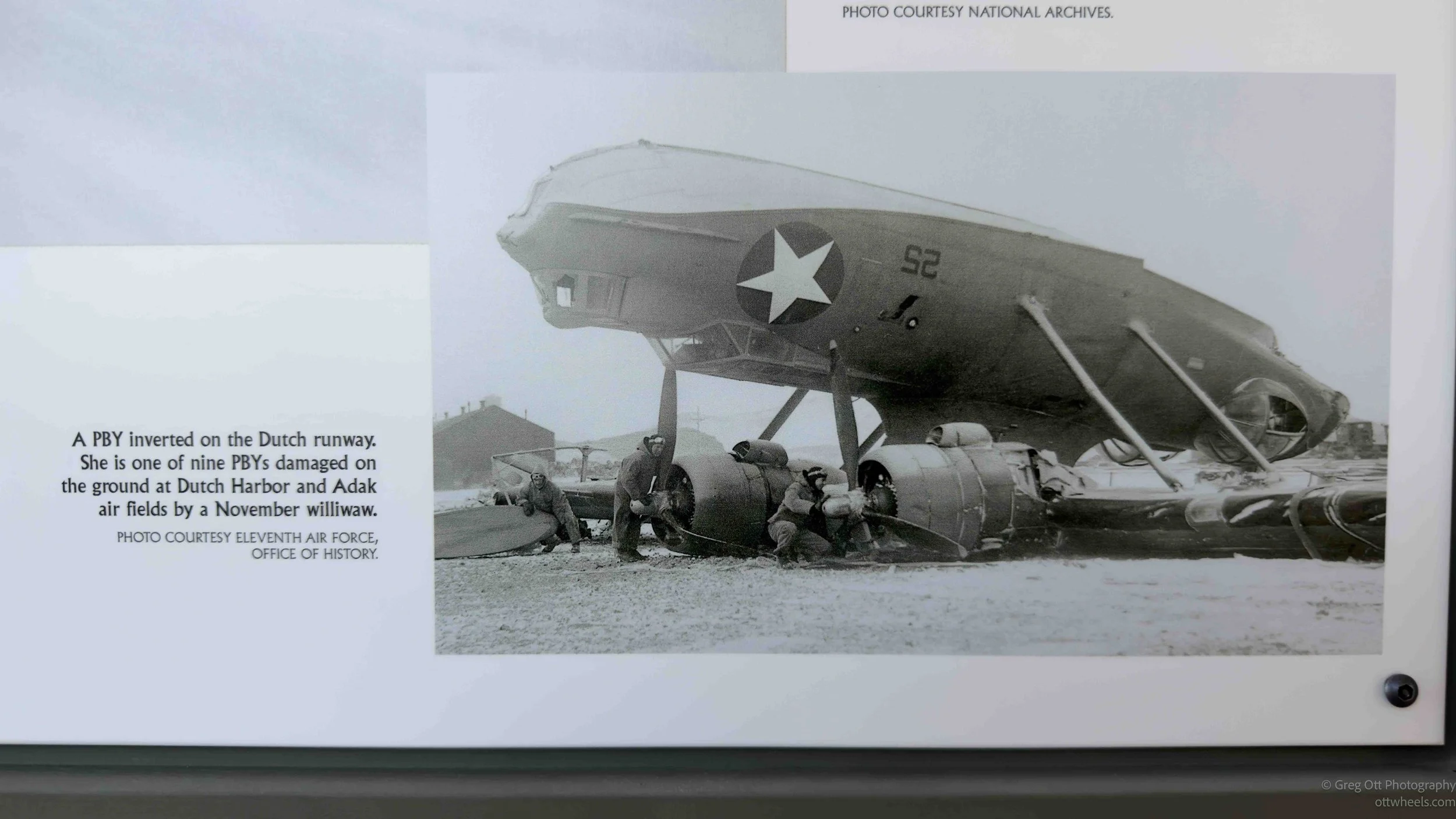
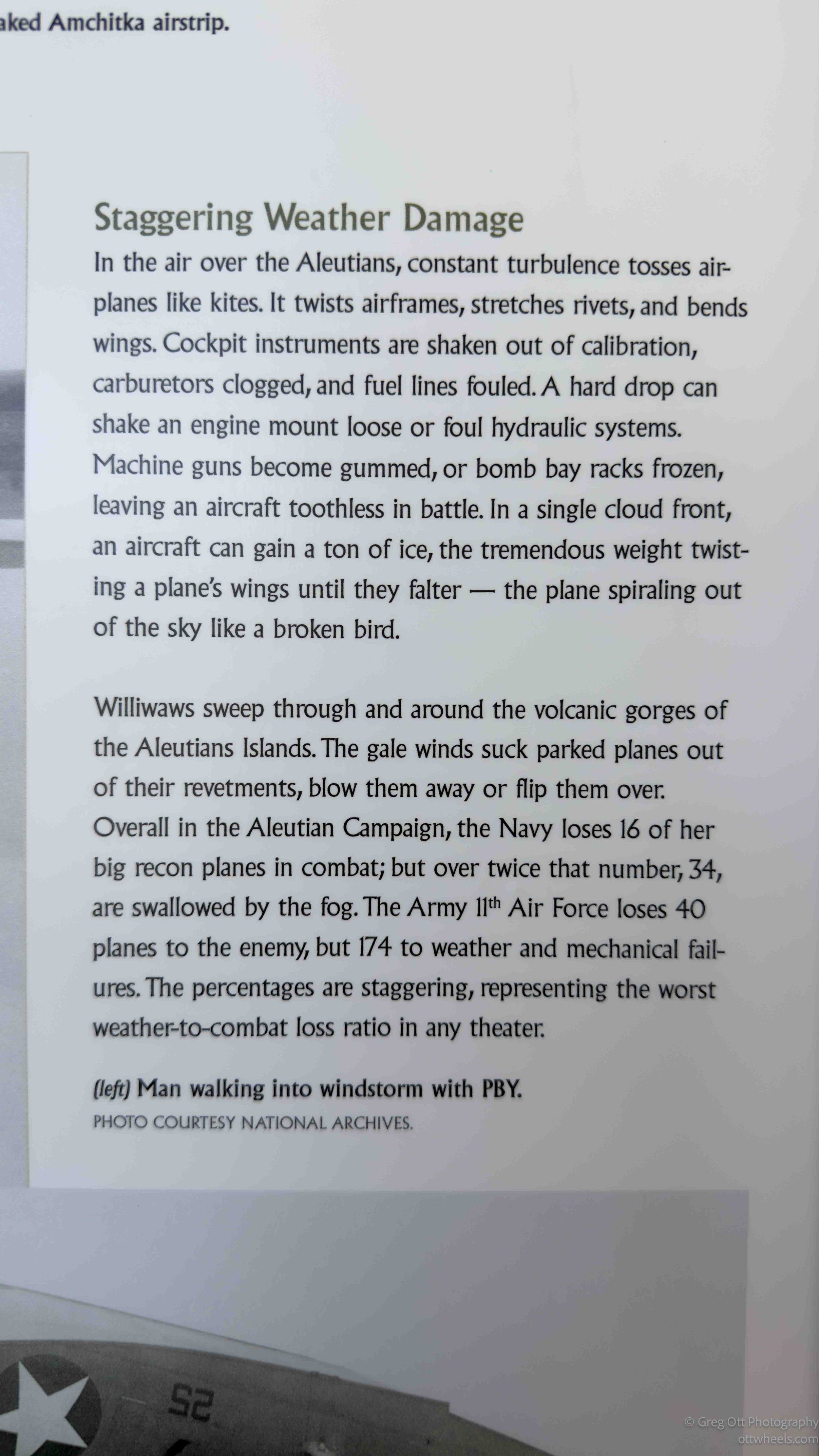
As I looked out the second-floor windows, I noticed a patch of blue sky to the west. Maybe the weather was finally improving.
I called the hotel and asked them to come pick me up so I could retrieve my bags. The shuttle driver was originally from Las Vegas. He and his wife had lived in Dutch Harbor for five years. She missed Las Vegas, he admitted, but the job paid well and he received an entire month off every six months. Sometimes he flew home to visit; otherwise they talked often on the phone. Their kids were grown and on their own, and he told me he enjoyed the slower pace of life here. It doesn't get as cold here as many parts of Alaska, he said, and the solitude gave him time to read and enjoy life.
I still had several hours before the next scheduled flight, so I settled for a salad while my stomach continued protesting whatever I'd eaten the day before. After getting a little work done online, I caught the shuttle back to the airport at 3:45. By four o'clock the terminal was filling with people exchanging canceled-flight stories that sounded remarkably similar to my own. The line moved quickly, and I received a boarding pass for the 6:00 flight, although it was already delayed because the flight crew hadn't even made it to Anchorage. "Check back at five," they said. Five came and went. Around seven we finally heard the news we'd been waiting for: the airplane had left Anchorage and was on its way.
A man near me spent an hour on the phone with his manager. He worked as a cook and general hand on a fishing boat and was having ongoing problems with another crewmember. His manager documented the conversation while he explained, in great detail and at full volume, exactly what had been happening. I tried moving farther away, but he was mobile too. By the time the conversation ended, I felt like I'd received an unfiltered introduction to life aboard a commercial fishing boat.
He eventually joined several other men who also worked the boats, and before long they were swapping similar stories about difficult crewmates. Listening to them, I thought about Bruce Tuckman's stages of group development: forming, storming, norming, performing, and adjourning. At least one member of that crew was still firmly in the storming stage.
We finally boarded around 8:30 p.m. for the two-hour, five-minute flight back to Anchorage.
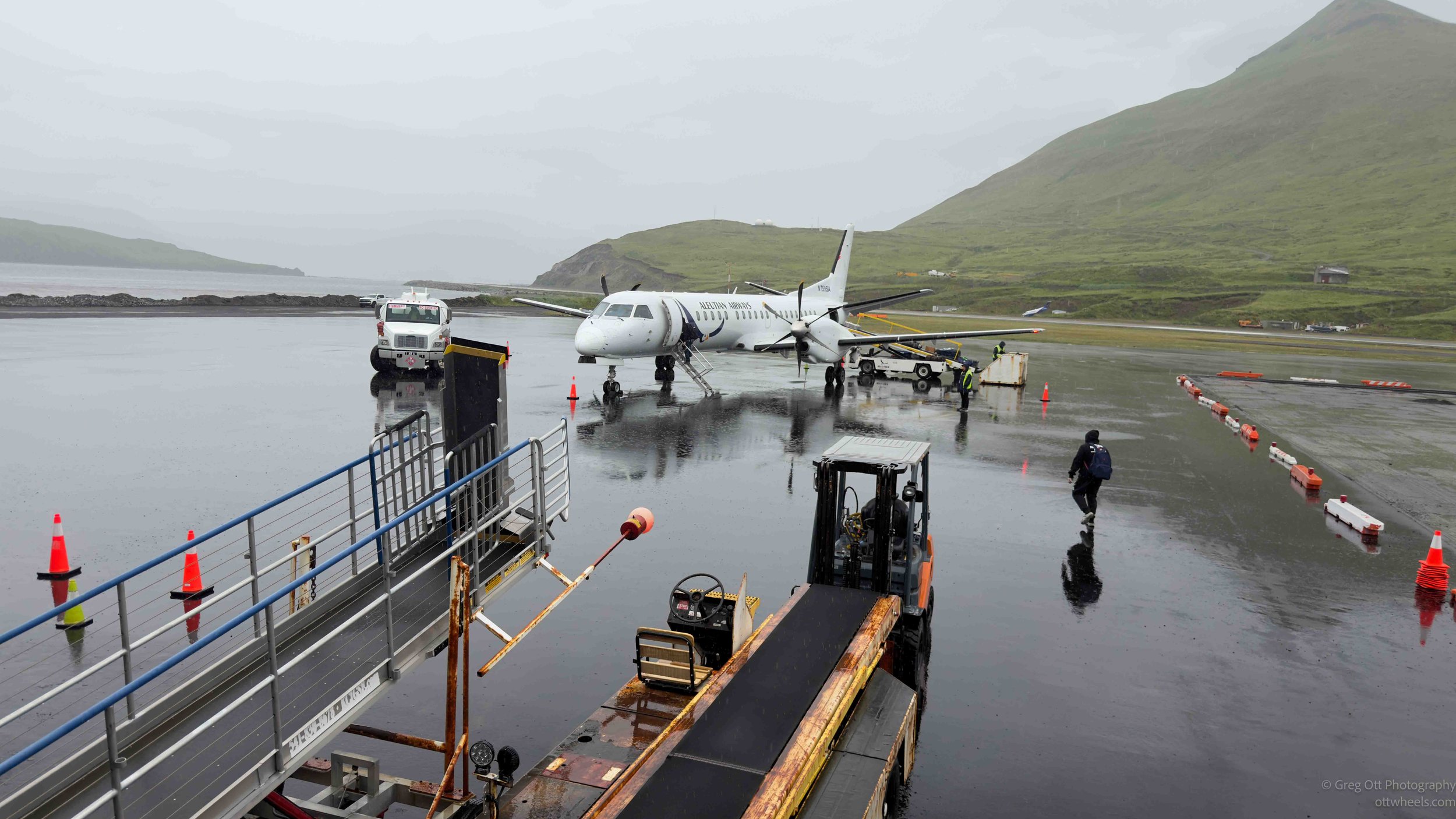
Takeoff was a little more exciting than usual because of the strong crosswinds. As the airplane bounced through the initial turbulence, a young man a few rows ahead of me suddenly shouted, "I thought we were crashing!" One of the flight attendants was beside him almost immediately, calmly explaining that it was just turbulence and asking if he was going to be okay. Whatever rough air we hit was short-lived. Once we climbed above the weather, the rest of the flight back to Anchorage was surprisingly smooth.
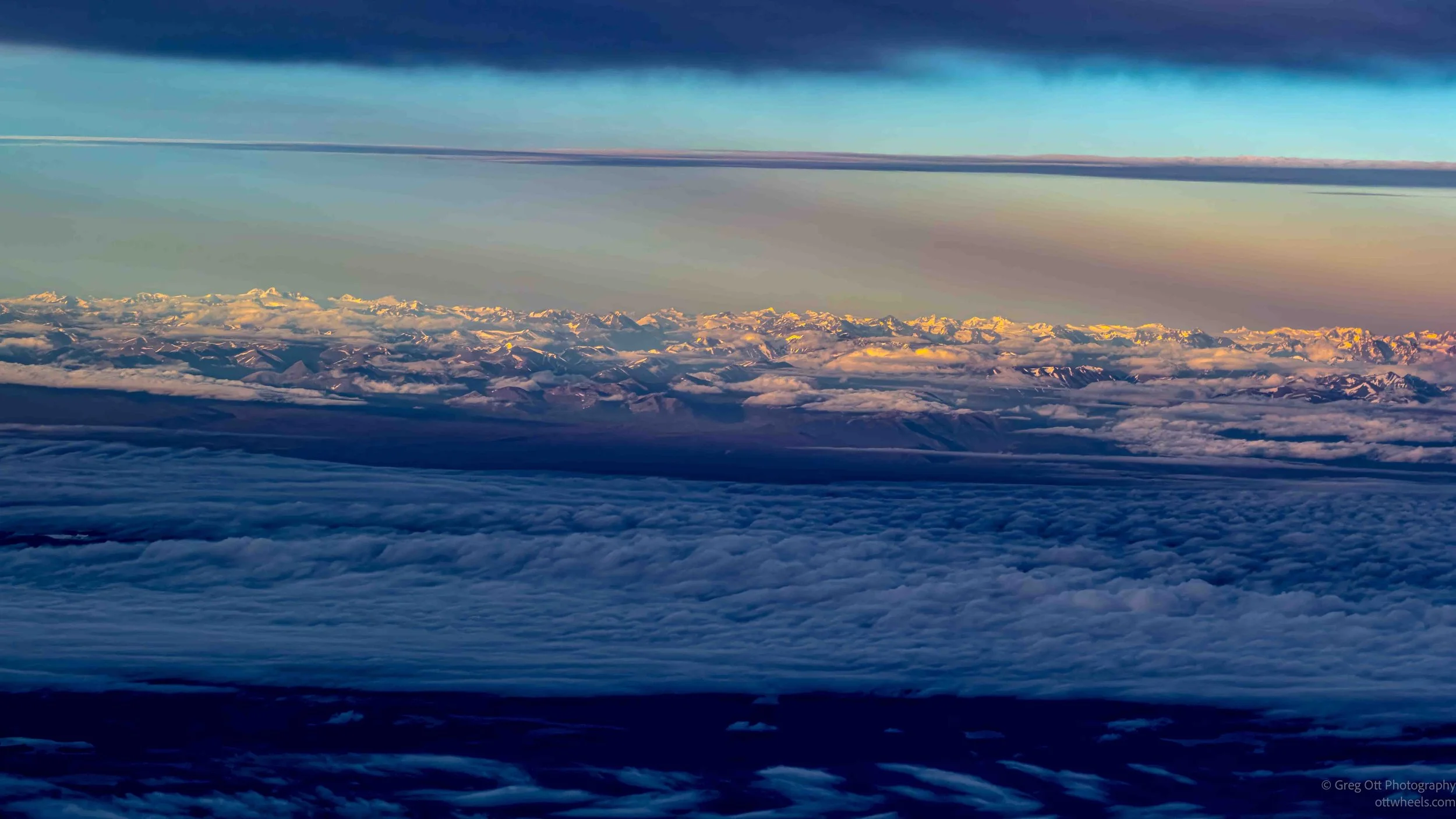
We landed, I grabbed my carry on and headed to baggage claim. I grabbed my bag and found the shuttle to long-term parking. It took a solid two minutes to figure out whether the driver was actually headed to long-term parking; he never would just say yes. He was Italian, with an accent thick enough that half the conversation was guesswork.
When he asked where I'd flown in from and I answered, "Dutch Harbor," his face lit up. He had worked there himself for twenty years. The ride to the parking lot became another conversation about fishing boats, local bars, and just how hard the work could be. Since I was the only passenger left, he drove me to within about fifty feet of my van.
It had been a long, strange day. The battery was still alive in the van, I'd remembered to turn off Starlink before leaving, and everything inside the van was exactly as I'd left it. I dropped my bags, made the bed, and was asleep within minutes, still thinking about Dutch Harbor.