
Seward: Alaska SeaLife Center
I stopped at Nature's Nectars for my morning coffee again, although today I skipped the pastry. The two baristas recognized me immediately and suggested I spend the afternoon at the Alaska SeaLife Center. Before I left, they added one more recommendation: stop afterward at the old train depot for a charcuterie board. According to them, the food, wine, and service were all excellent. It sounded like a pretty good rainy-day plan.
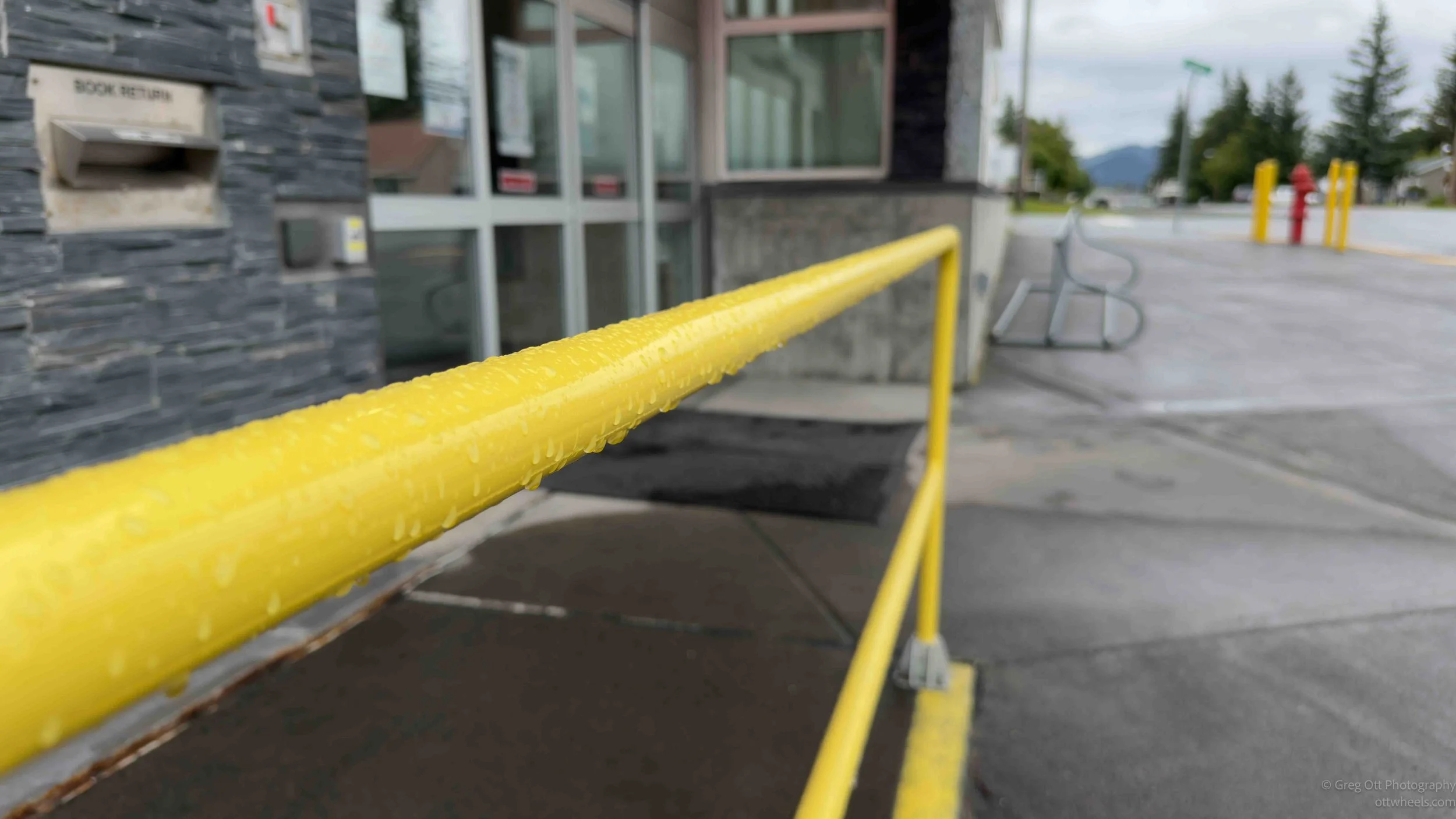
I walked down to the harbor anyway, hoping the weather might improve. Instead, the wind continued to build and the rain became even heavier. After spending an hour at the library waiting it out, I finally admitted defeat. As I was about to leave, a father called to his older son, "Go tell Blakely it's time to come inside." Blakely, however, had other priorities. She was standing at the yellow handrail outside, slowly running her finger along the underside of it, completely absorbed in watching beads of rainwater form, merge, and fall to the ground. She ignored every call to come inside. While the rest of us were trying to escape the weather, she was conducting what an engineer might describe as an in-depth study of the surface tension of water.
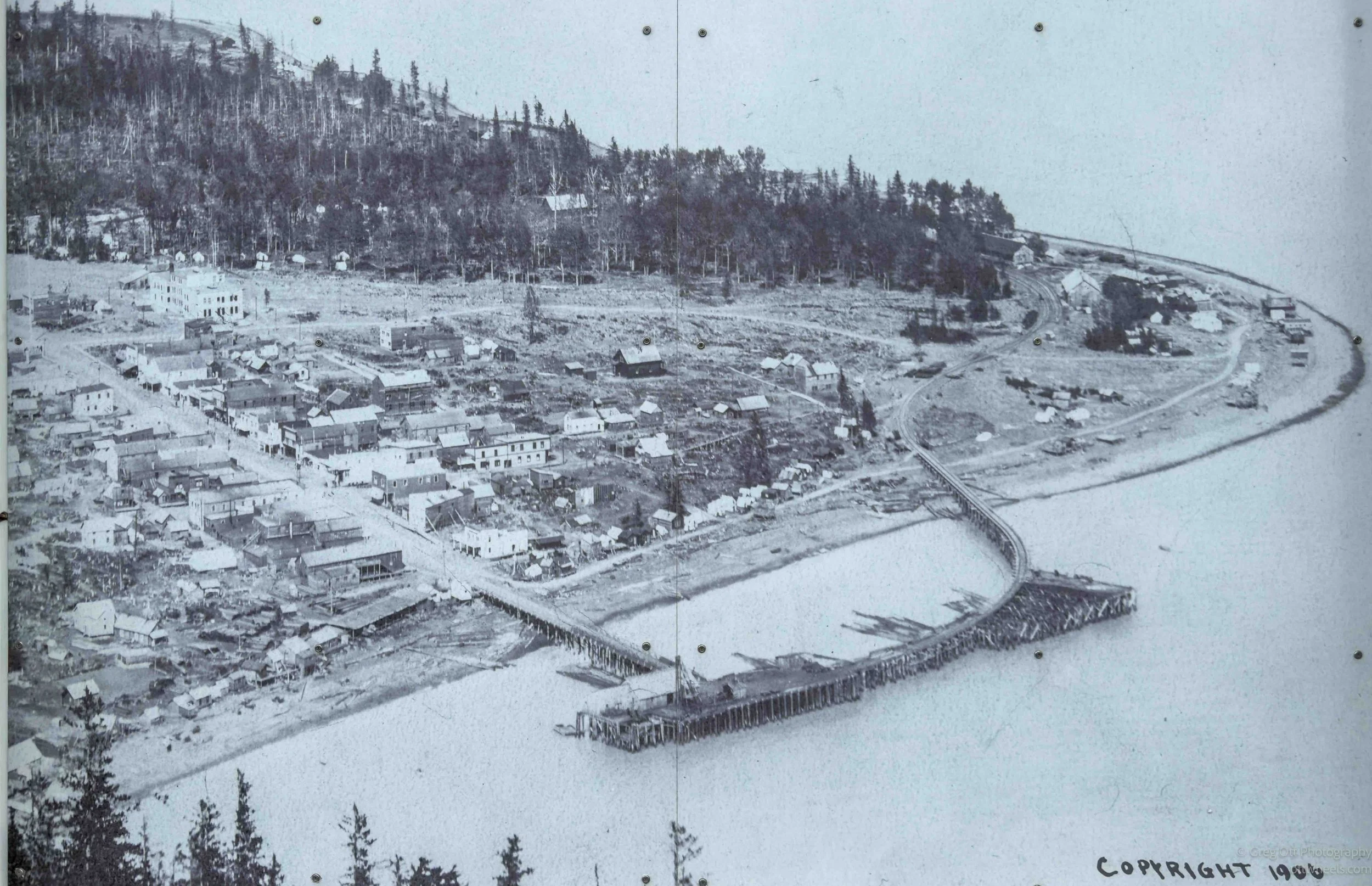
There was also an old photo of Seward in 1906 on the wall of the library. I stopped to orient myself and saw building that are still standing today, over 100 years later.
Alaska SealLife Center
I drove the short distance to the Alaska SeaLife Center, parked in the RV section, grabbed my umbrella, and headed for the entrance. The wind was so strong I had to point the umbrella almost horizontally. Several people in front of me weren't as lucky—their umbrellas folded inside out before they even reached the door.
The lobby was surprisingly busy. A shuttle bus had just unloaded passengers from a Viking cruise ship, but despite the crowd the ticket line moved quickly. Once inside, I climbed the stairs where the exhibits begin and immediately realized this was Seward's rainy-day destination.
One thing I appreciated throughout the museum was the use of QR codes. Nearly every exhibit included additional photos, narrated explanations, and background information. Instead of simply walking from tank to tank, I found myself listening to the stories behind the animals and the research taking place around Alaska.
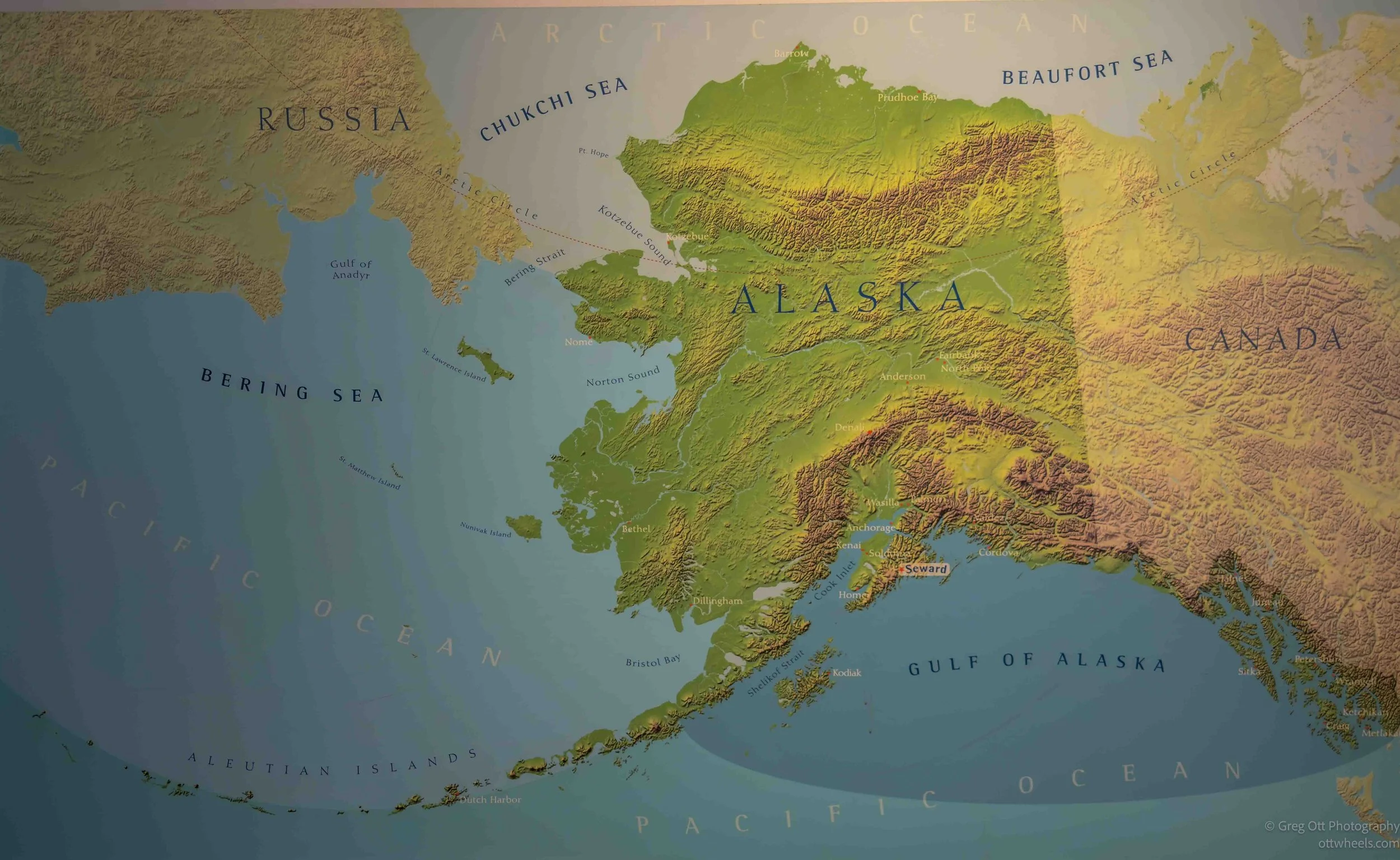
The visit begins with an overview of Alaska's marine environment. Standing in front of the large relief map, I was reminded just how enormous this state really is. Alaska stretches from the Pacific Ocean to the Arctic Ocean and is bordered by the Gulf of Alaska, the Bering Sea, the Chukchi Sea, and the Beaufort Sea. Looking at the Aleutian Islands reaching almost to Russia put into perspective just how much coastline scientists are trying to understand and protect.
The SeaLife Center is far more than an aquarium. It serves as Alaska's primary marine wildlife rehabilitation and research center, caring for injured seabirds, seals, sea lions, and other marine animals while scientists study everything from ocean temperatures to plankton populations. That research theme carried through almost every exhibit.
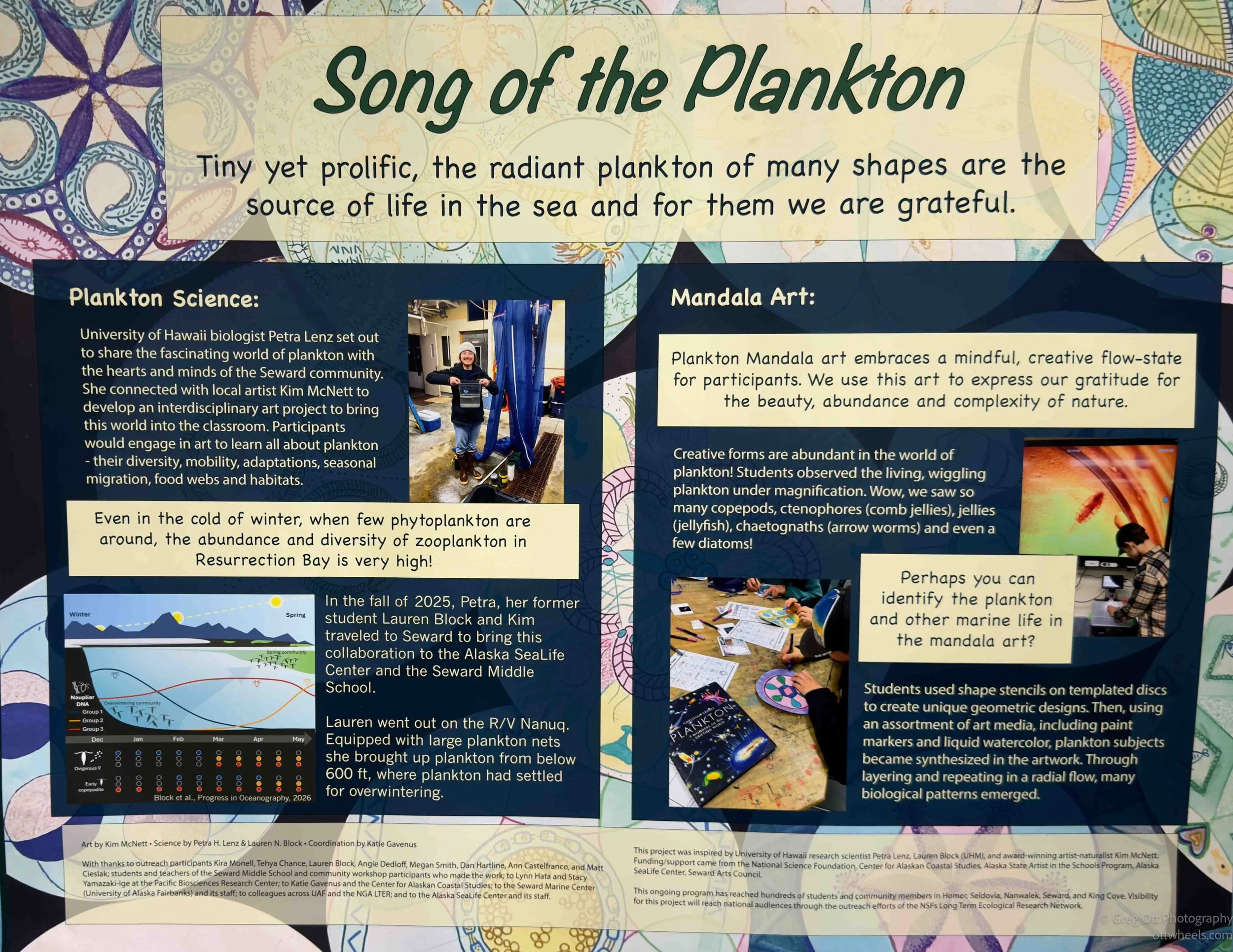
One display called Song of the Plankton blended science with artwork. I have to admit, the artistic side didn't quite connect with me, but the science certainly did. Tiny plankton form the foundation of nearly every marine food web. Even during Alaska's long winters, these microscopic organisms continue supporting an ecosystem that eventually feeds fish, seabirds, seals, and whales.
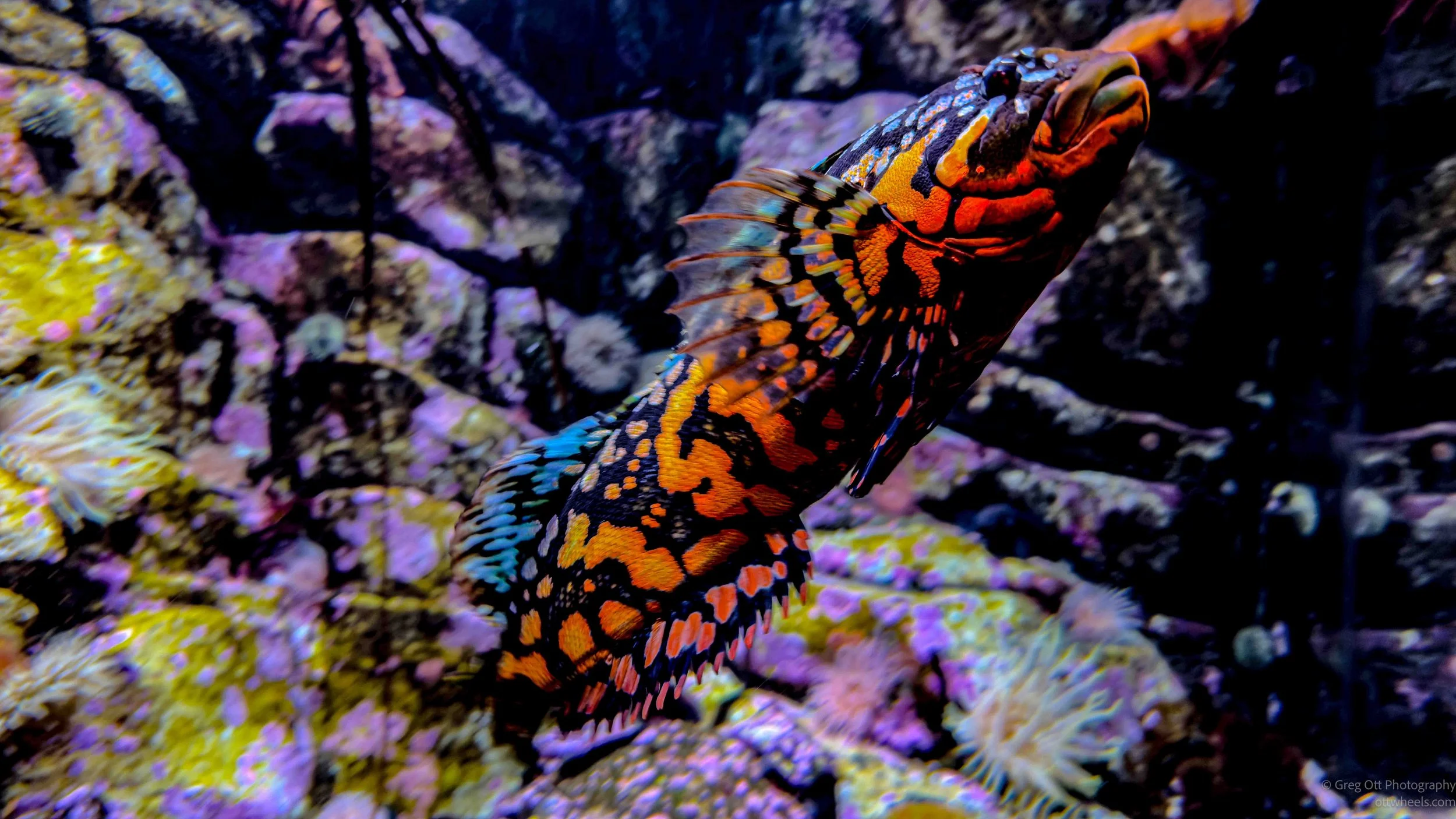
The aquariums themselves quickly became my favorite part of the museum. Brightly colored Rock Greenling looked like they belonged on a tropical reef rather than in Alaska. Purple sea urchins covered the rocks while large sea anemones slowly waved their tentacles in the current. I found myself lingering far longer than I expected, watching animals that most of us never see beneath the ocean's surface.
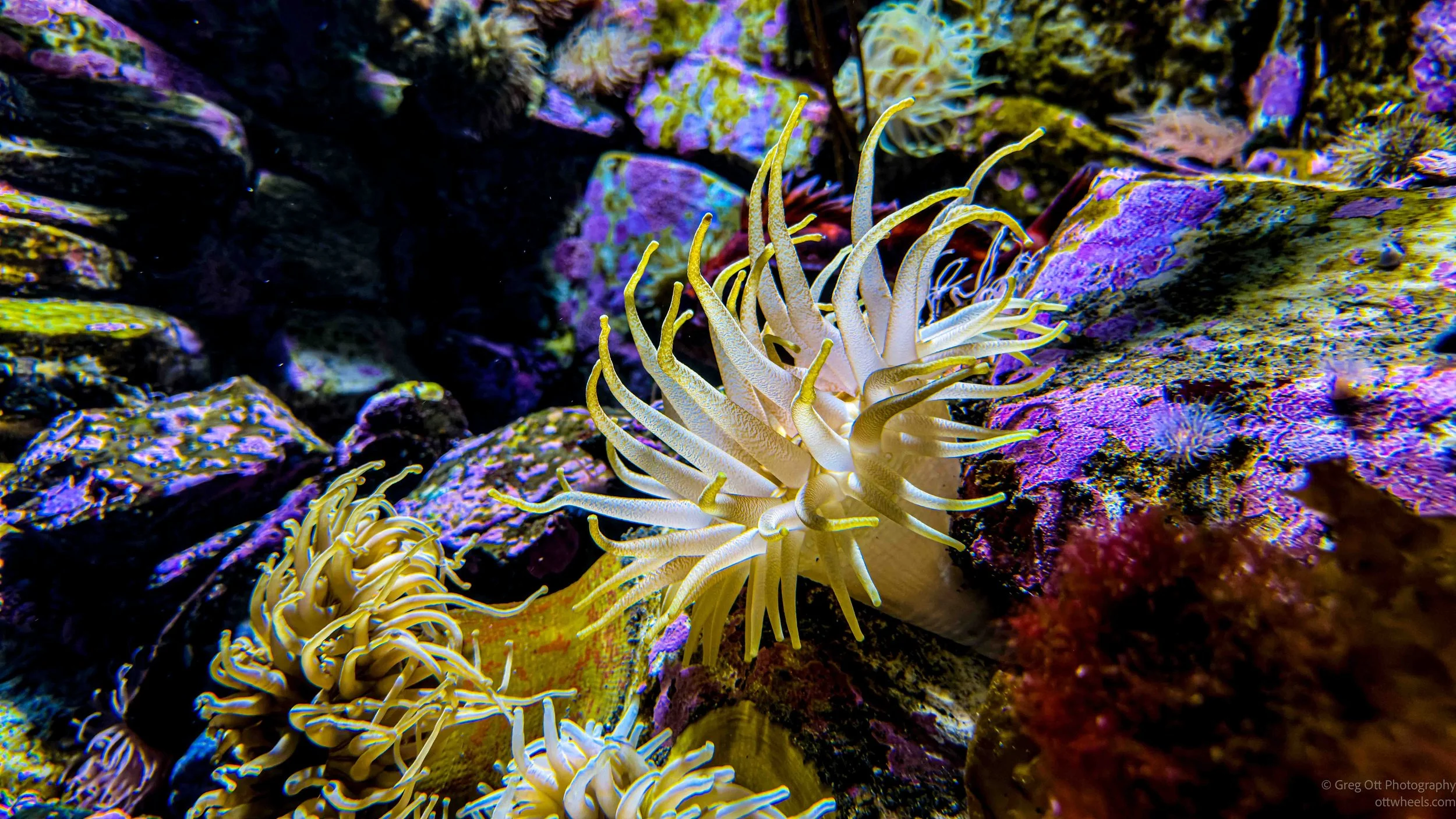
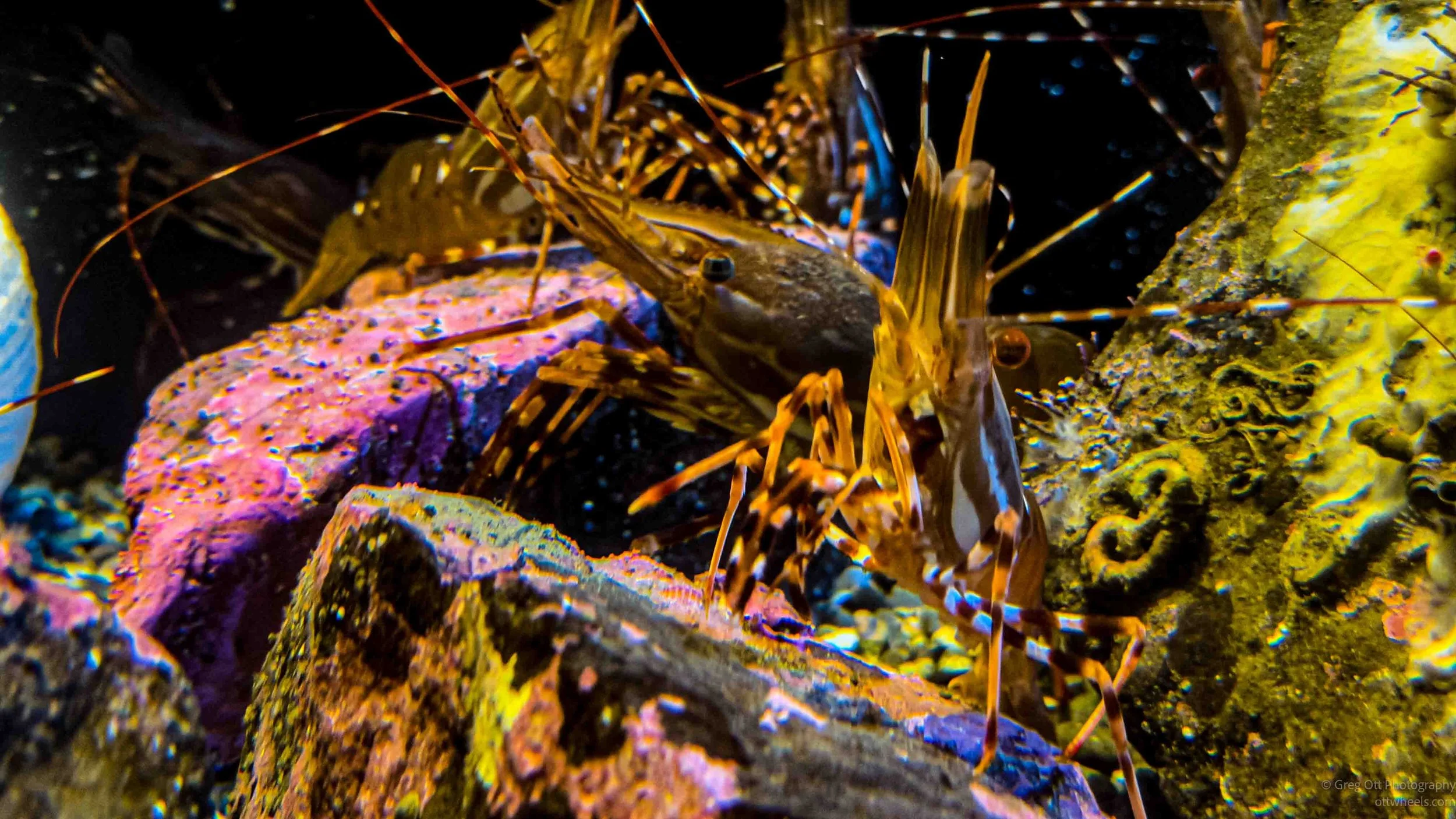
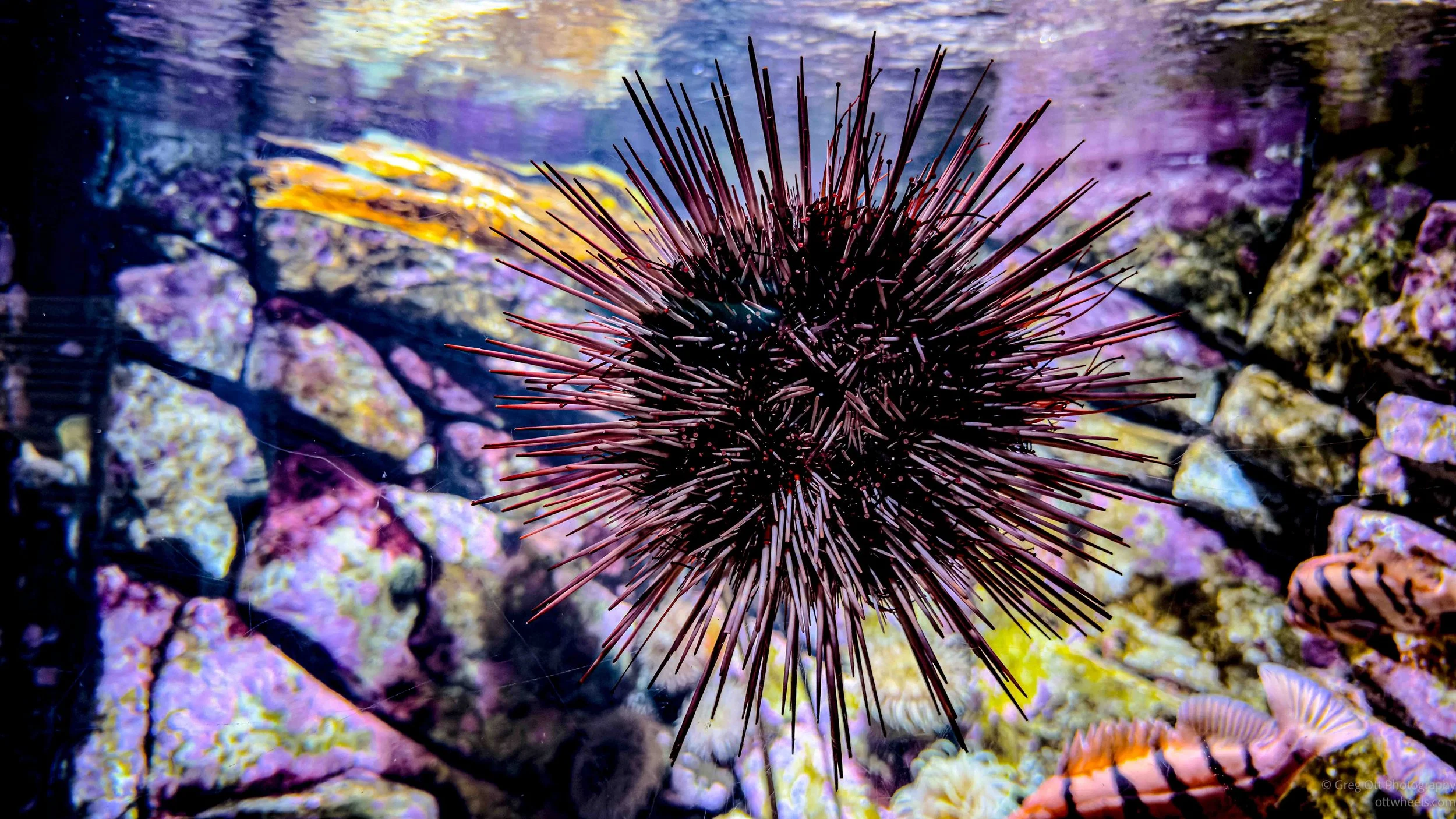
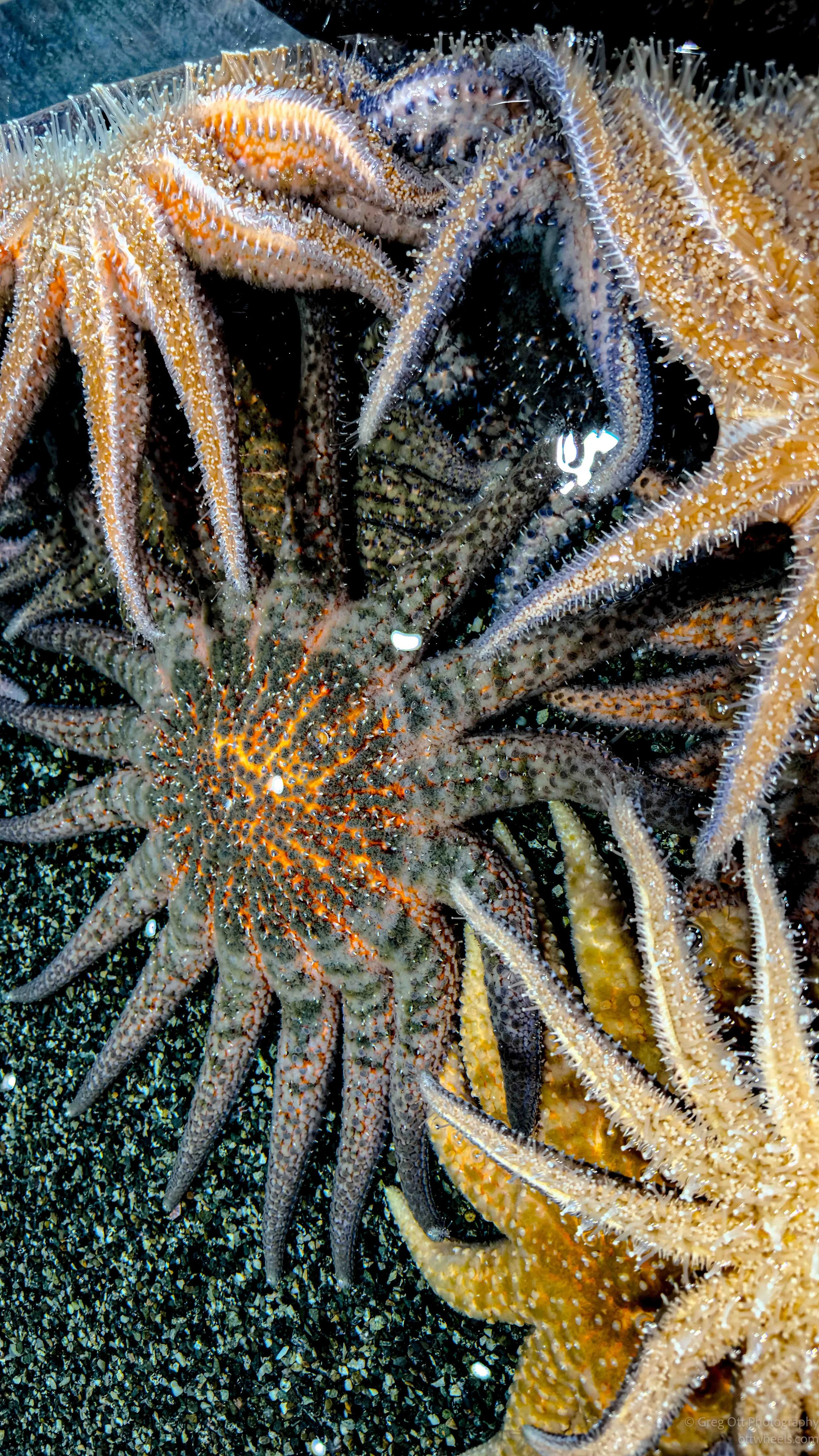
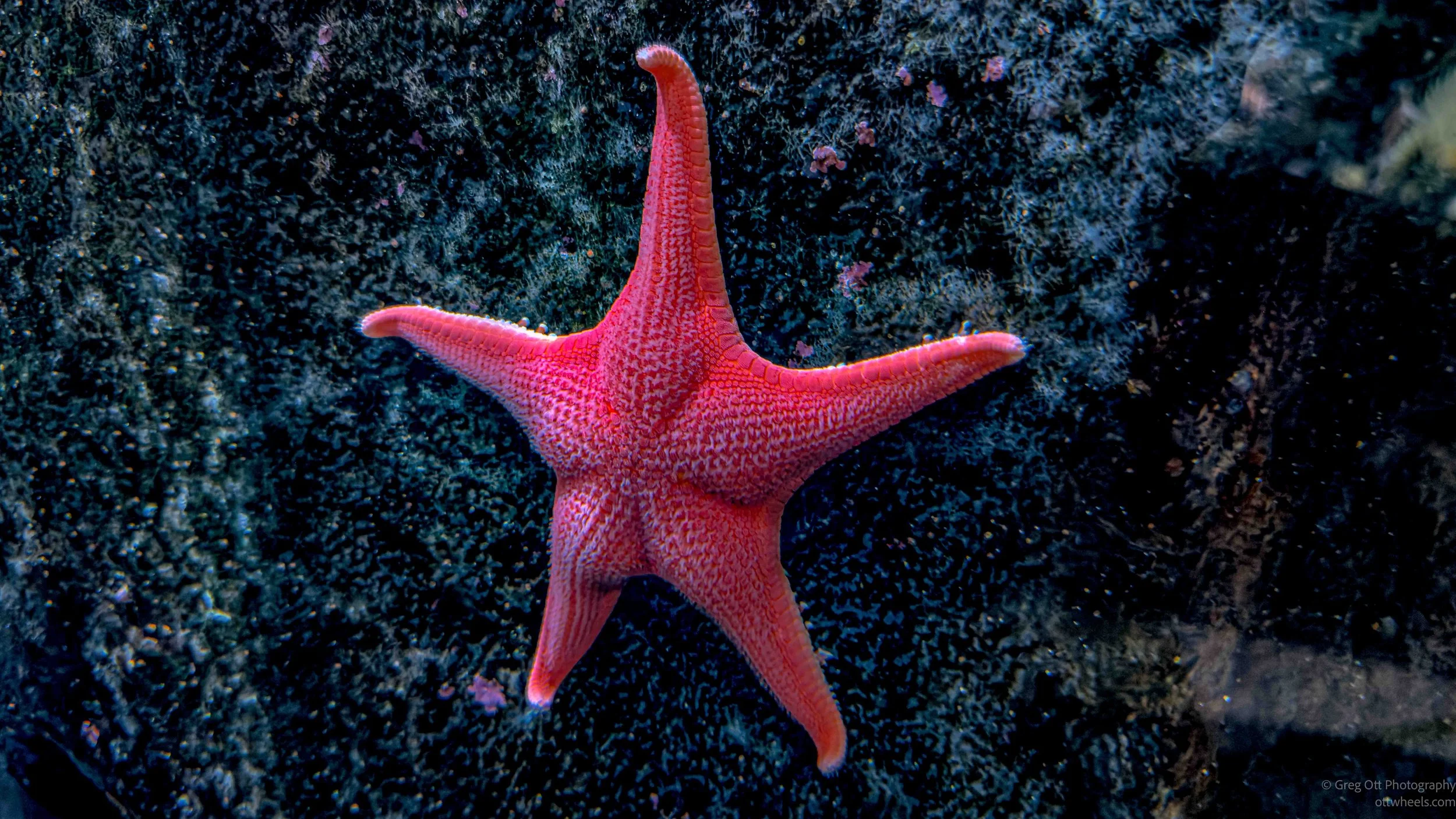
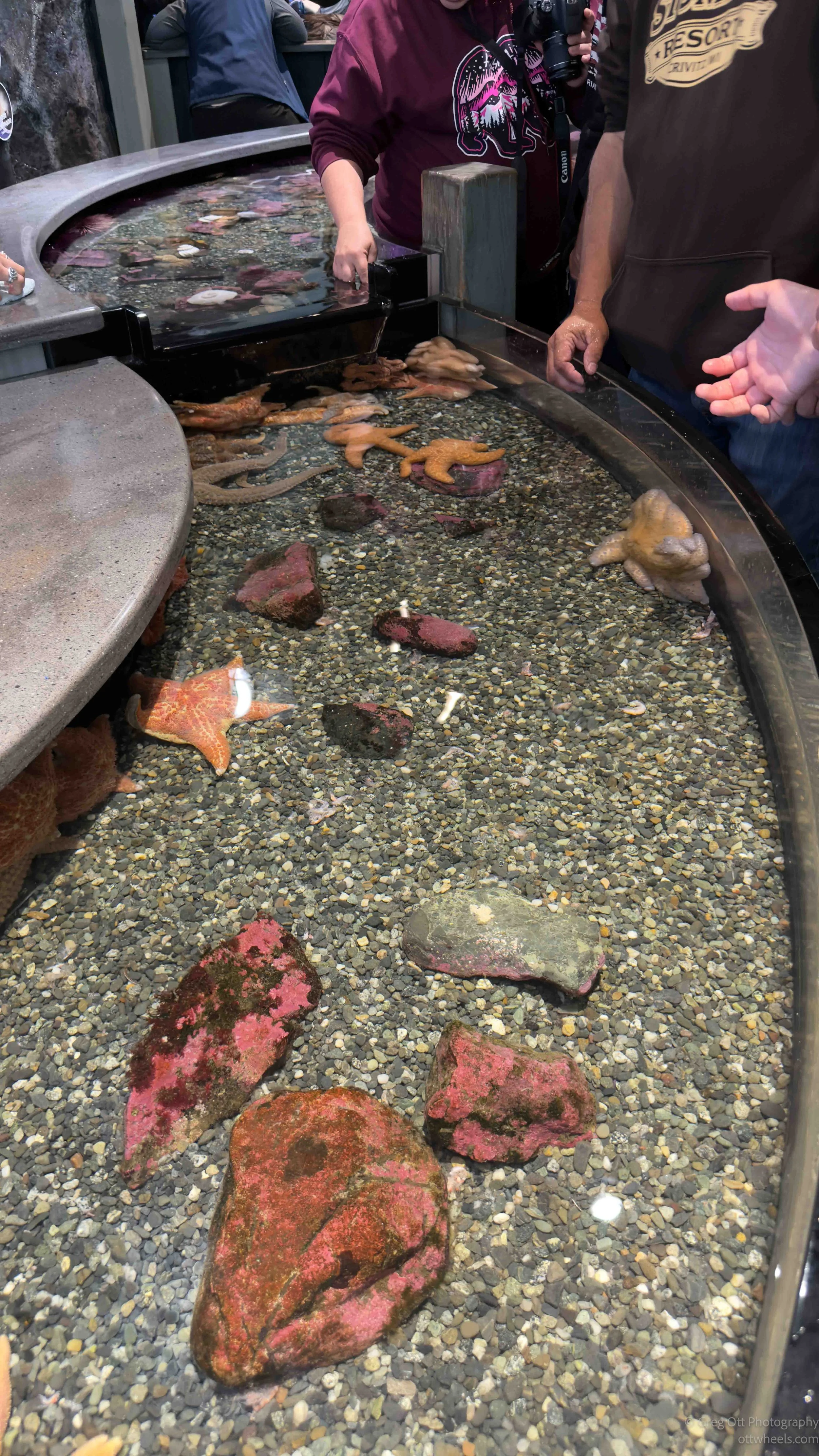
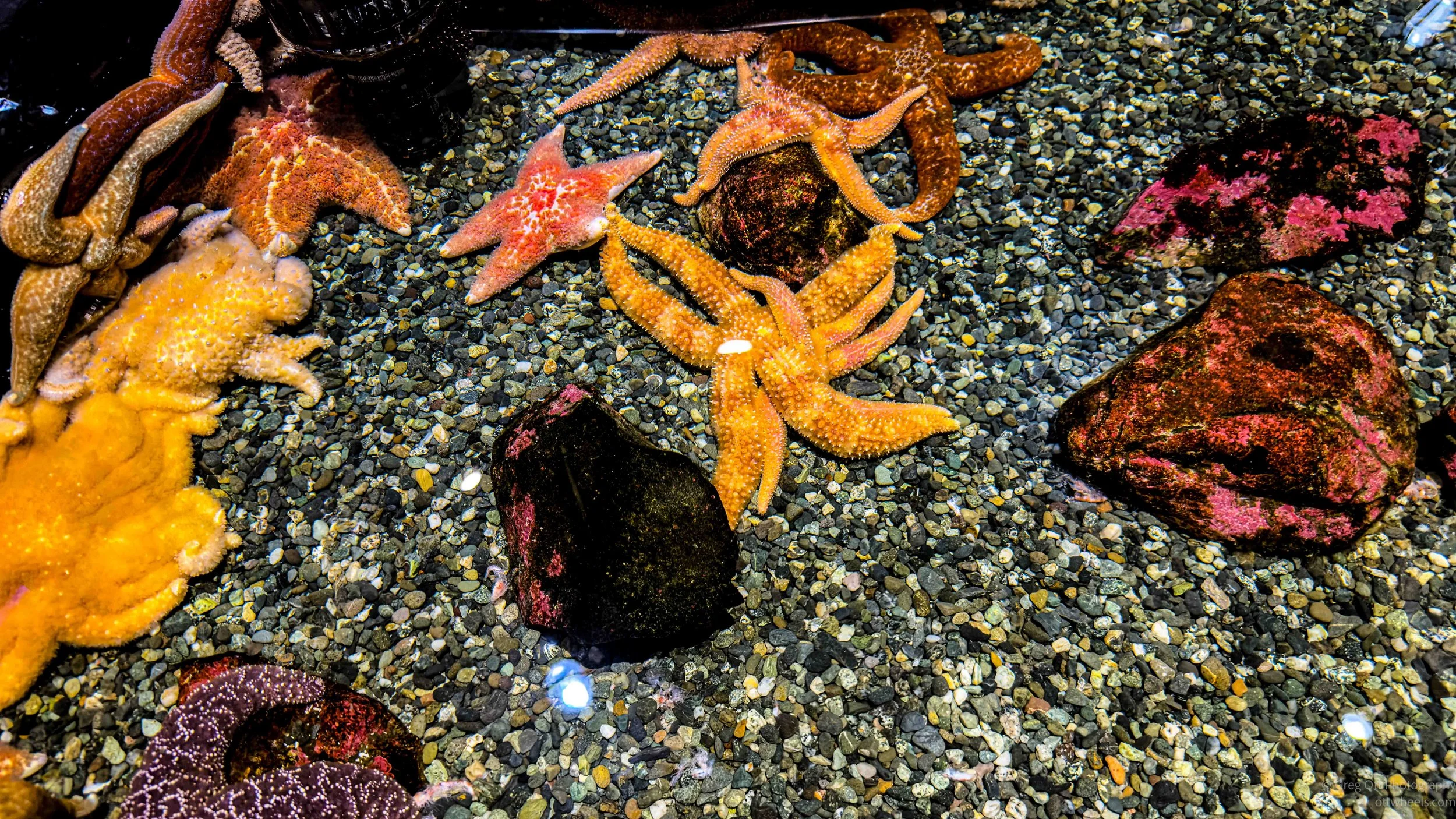
There was also a supervised touch tank. Almost every child eagerly reached into the water while most adults—including me—stood back and watched. Somewhere between childhood and adulthood, many of us seem to lose the simple curiosity of wanting to touch and explore.
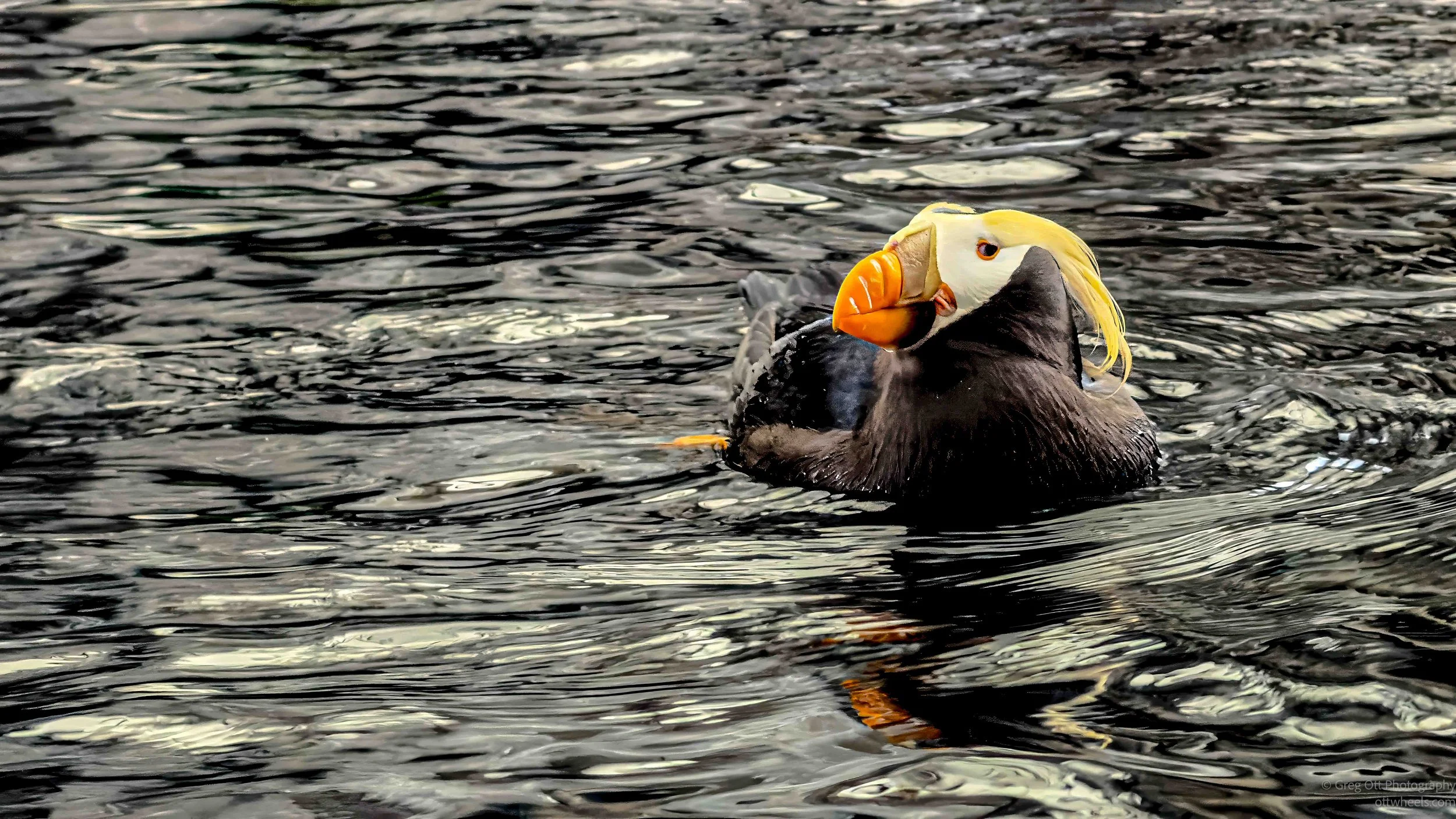
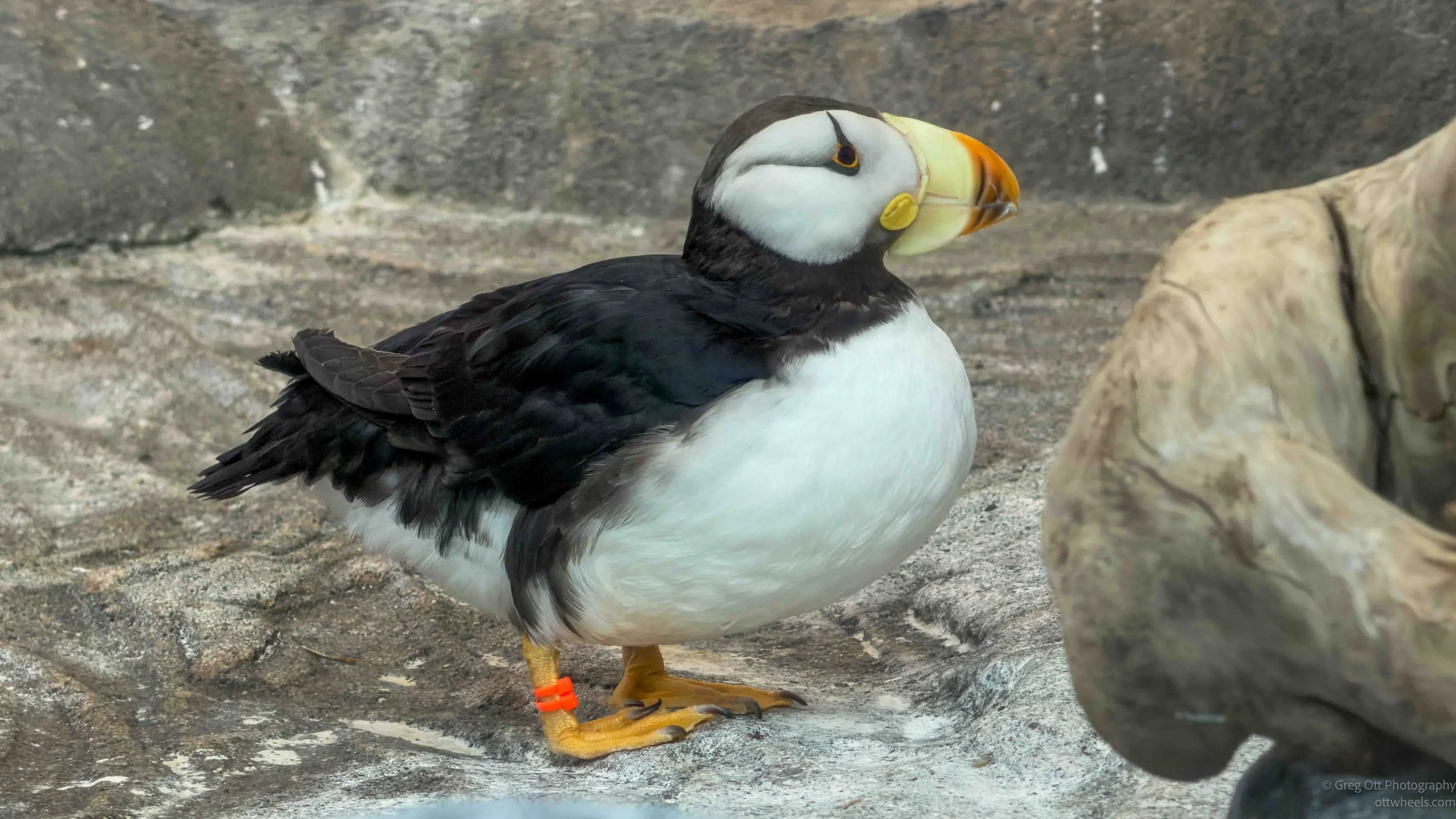
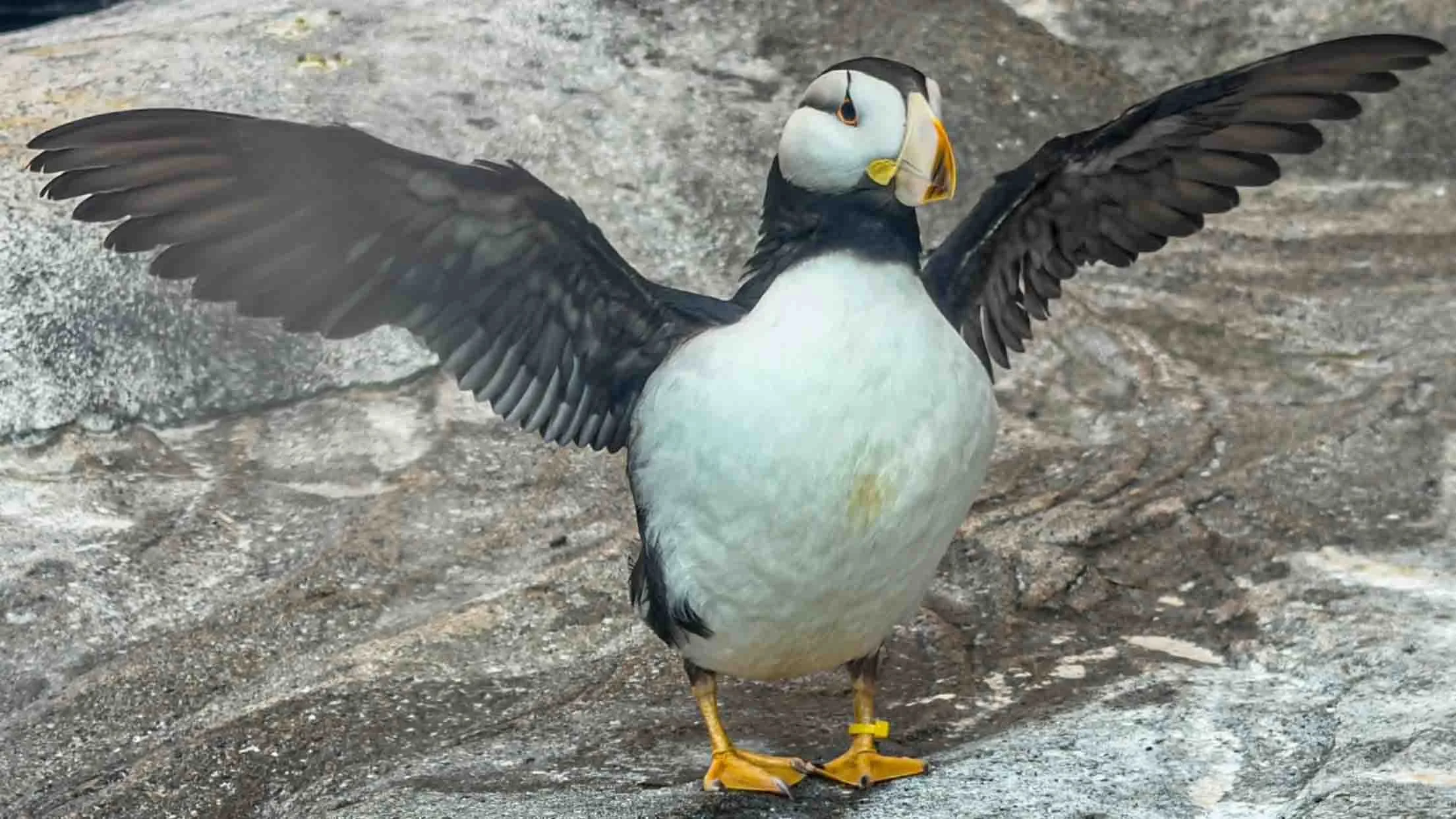
The aviary with puffin’s was packed shoulder-to-shoulder, so I slipped around to a quieter viewing window on the outside. It turned out to be the better choice. Several horned puffins walked over to the window investigate me through the glass, tilting their colorful beaks as if we were both trying to figure each other out. I’m sure they were thinking, nobody comes over here.
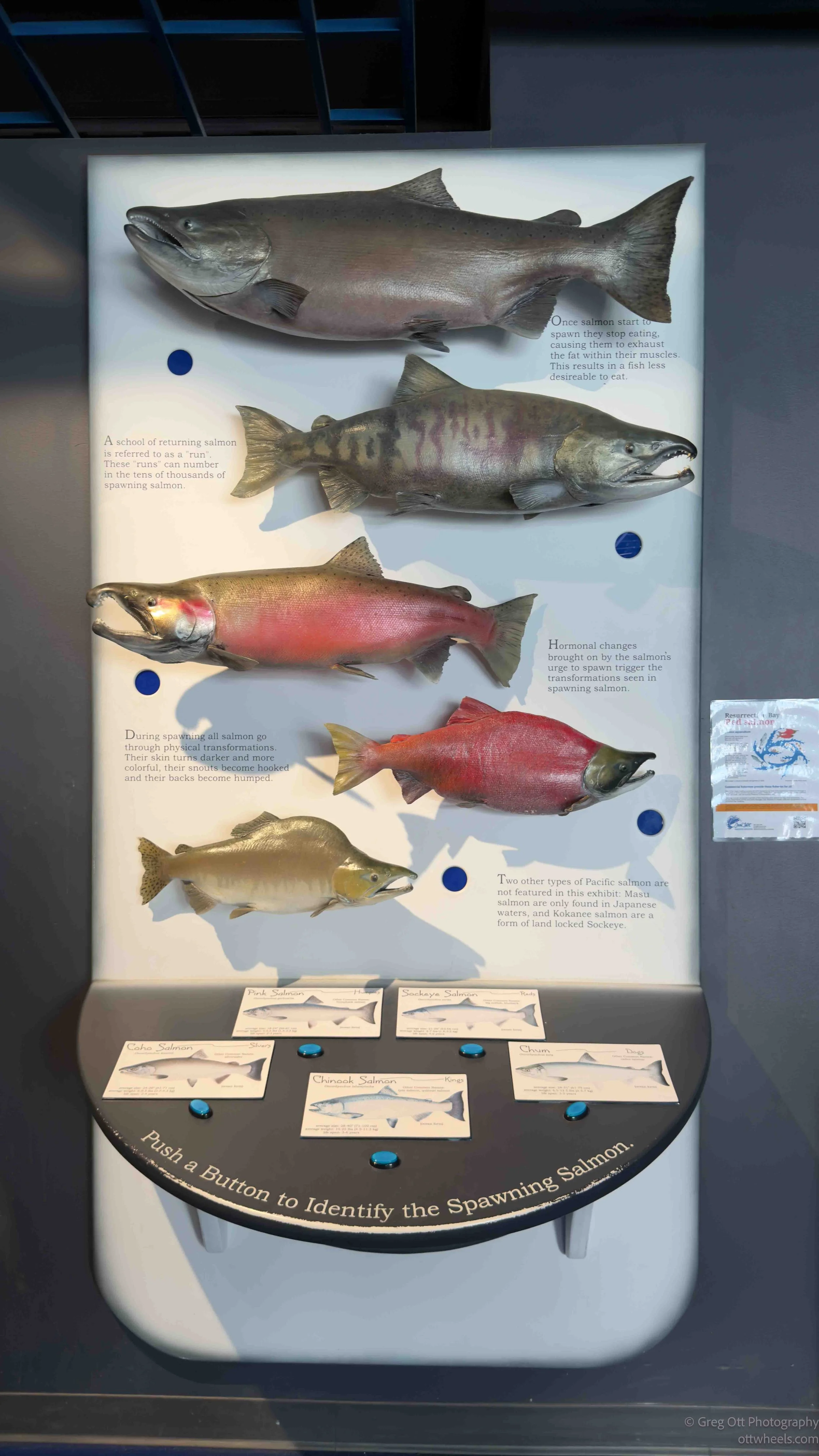
The salmon exhibits were another surprise. Large tanks held fish at different stages of their lives while nearby displays explained their incredible journey from freshwater streams to the Pacific Ocean and back again. Life-sized models showed how dramatically the five Pacific salmon species change during spawning, transforming from bright silver fish into brilliantly colored adults with hooked jaws and humped backs. I also noticed that nearly every mature salmon in one tank faced the same direction. The explanation was simple—they naturally orient themselves into the current, allowing oxygen-rich water to pass over their gills while conserving energy.
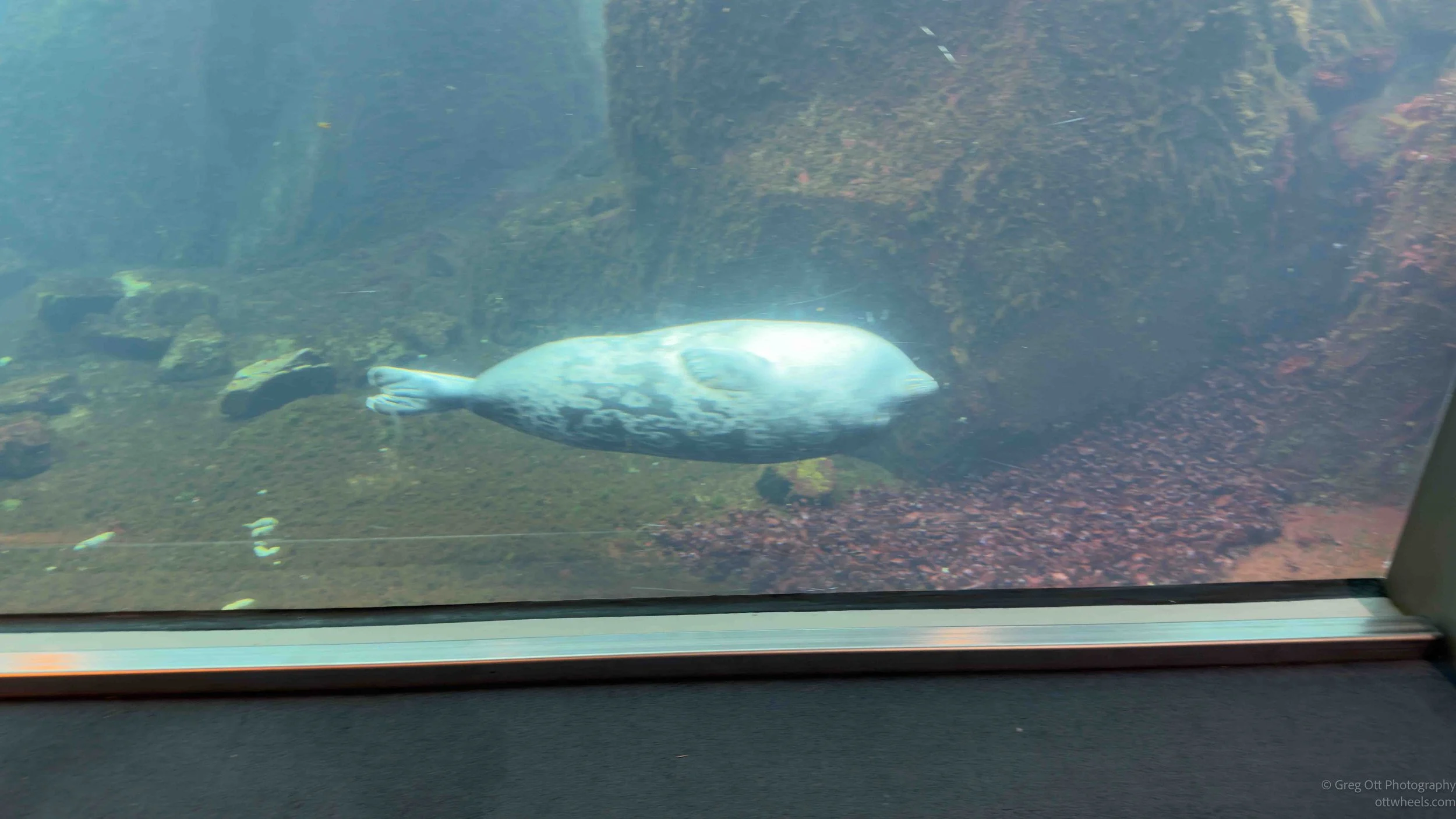
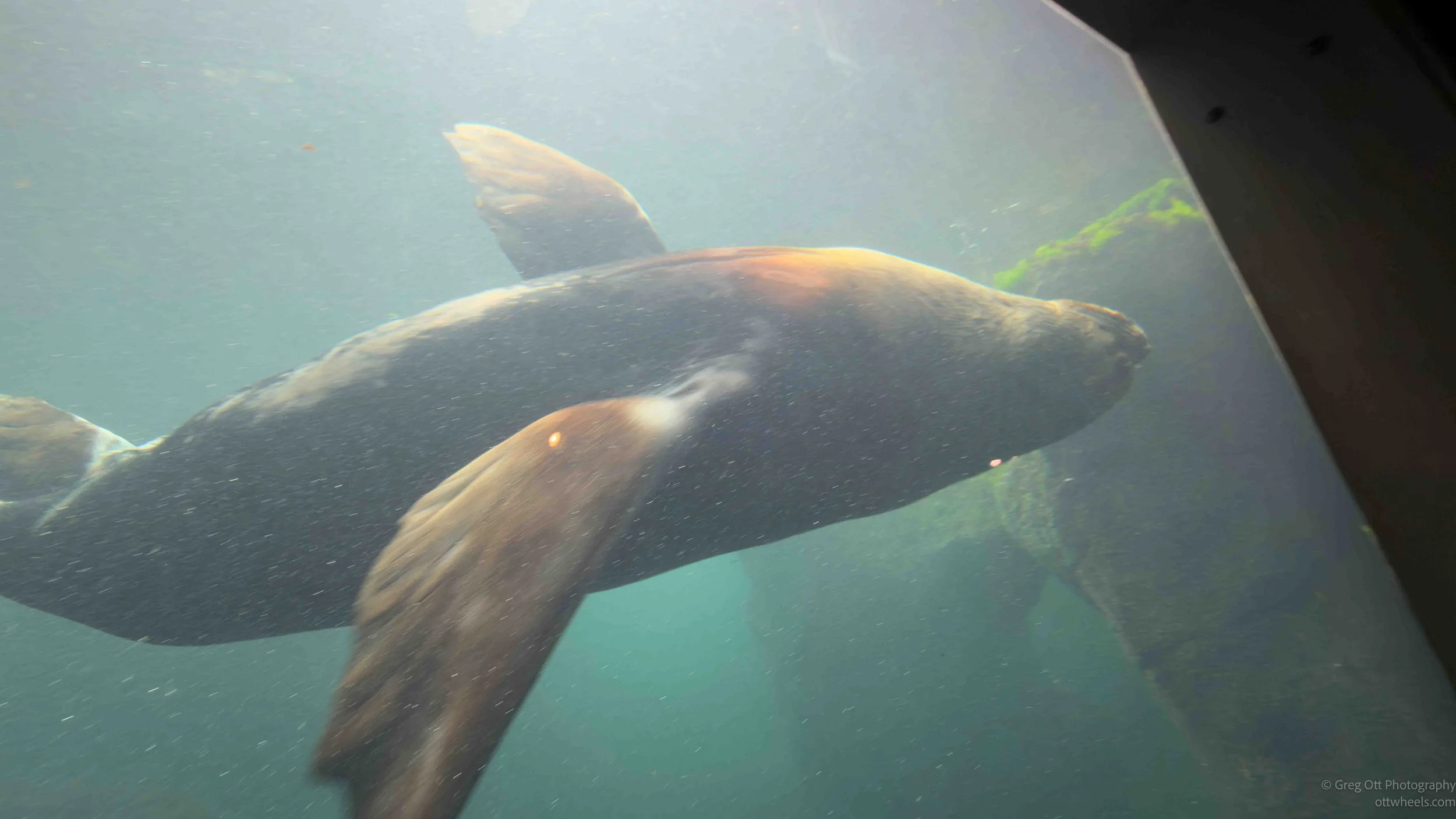
The exhibit I found most mesmerizing featured the harbor seals. Watching them underwater was completely different from seeing them resting on rocks. They glided effortlessly through the tank, barely moving their flippers, then disappeared into the darker water before silently returning a few moments later. It looked almost effortless. Nearby, another exhibit demonstrated how researchers use thermal imaging cameras to monitor injured marine mammals, measure blubber thickness, detect infections, and even help predict when pregnant sea lions are close to giving birth. It was fascinating to see how much modern technology has become part of wildlife conservation.
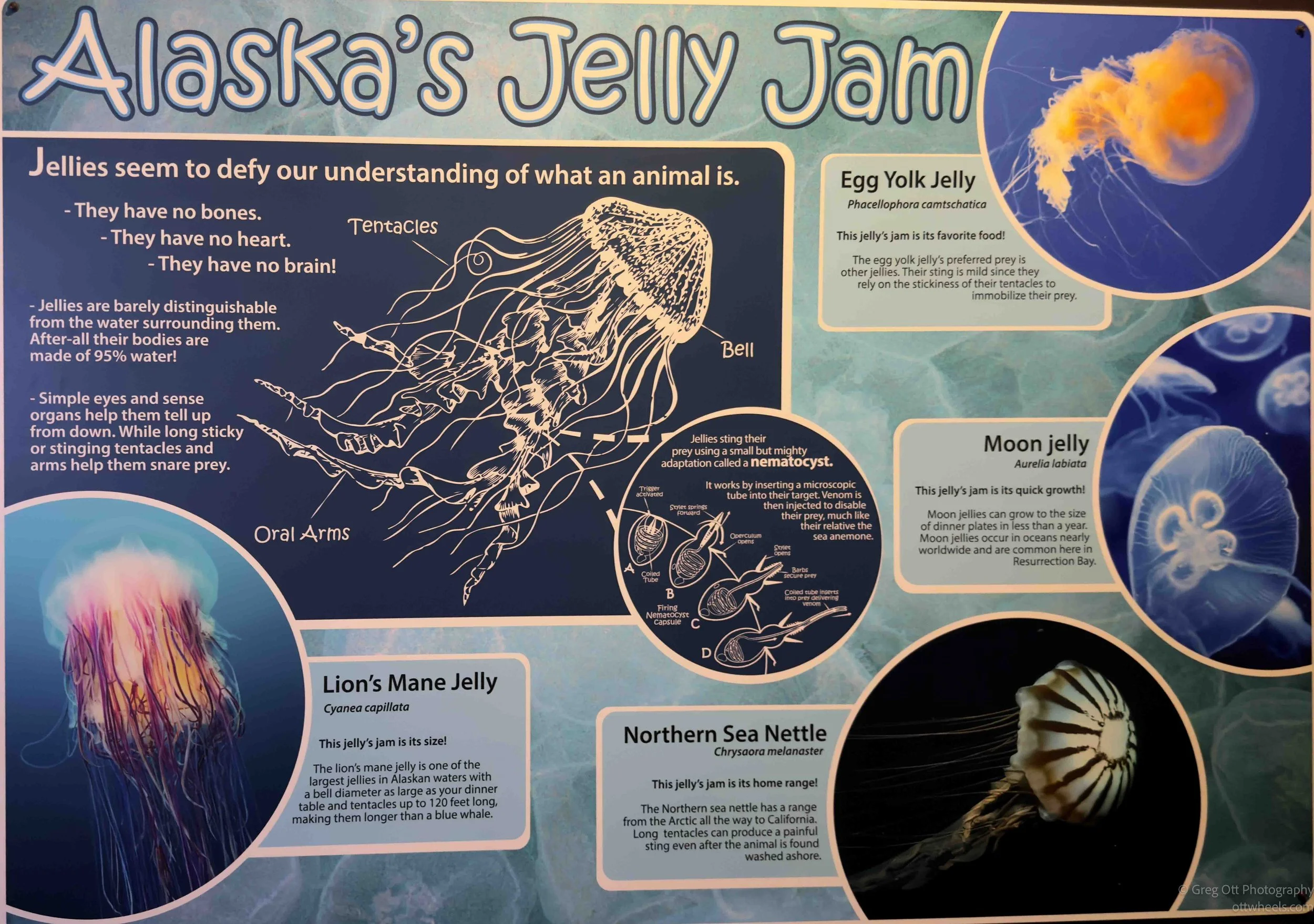
I also discovered something I never expected. I had always associated jellyfish with warm tropical waters, but Alaska is home to an amazing variety. Moon jellies drift through Resurrection Bay, while lion's mane jellyfish can grow to enormous sizes with tentacles stretching well over one hundred feet. Watching them pulse through the softly lit tanks was almost hypnotic. They looked less like animals and more like living works of art.
When I stepped back outside a few hours later, the weather had changed. The high wind was gone and the level of rain across Resurrection Bay had subsided. It no longer felt like a lost day. The SeaLife Center had turned what could have been an afternoon hiding from the weather into one of discovering how everything in Alaska's marine ecosystem is connected—from microscopic plankton to salmon, puffins, harbor seals, and ultimately the humpback whales I had watched bubble-net feeding the day before in Kenai Fjords National Park.
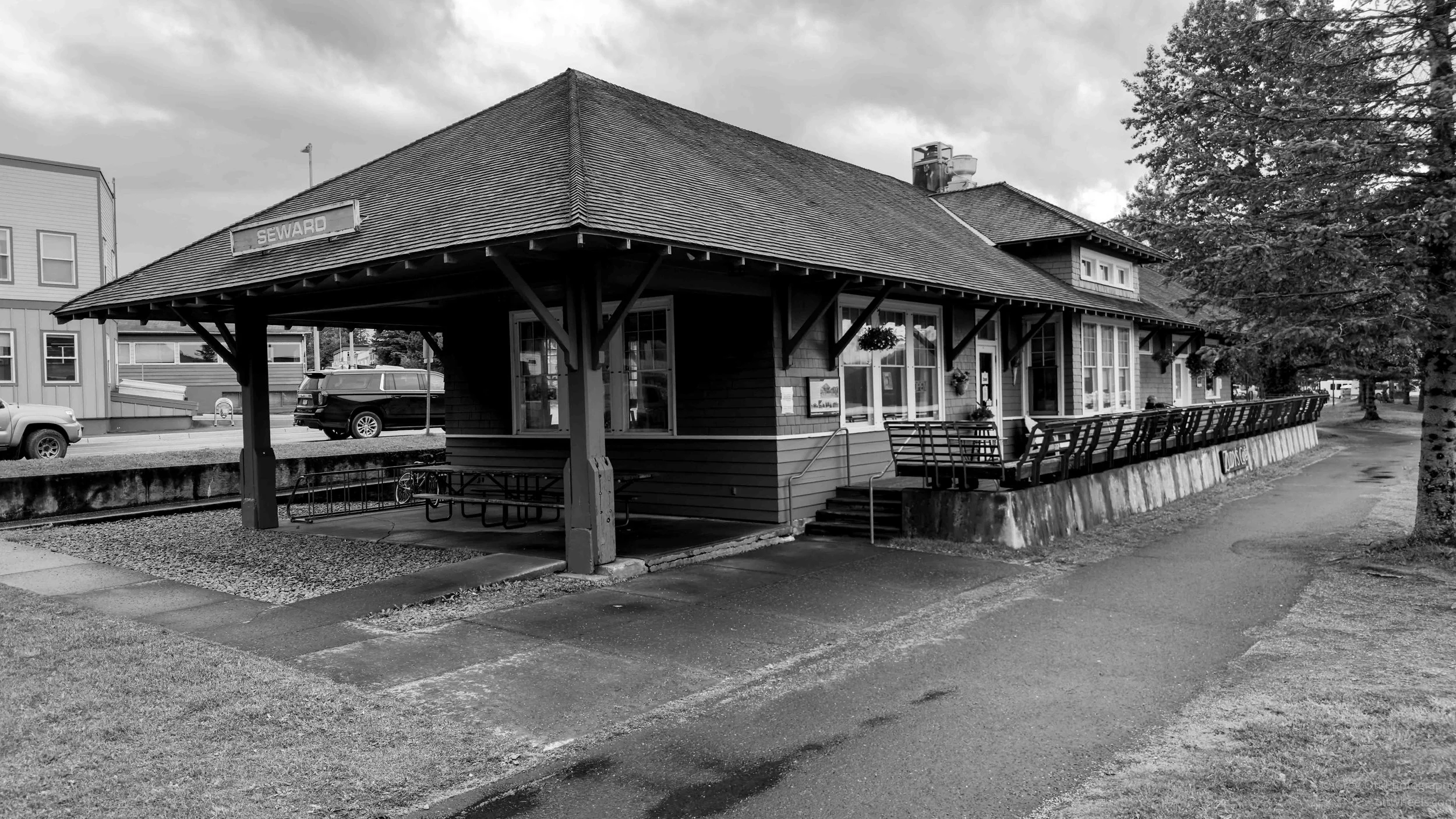
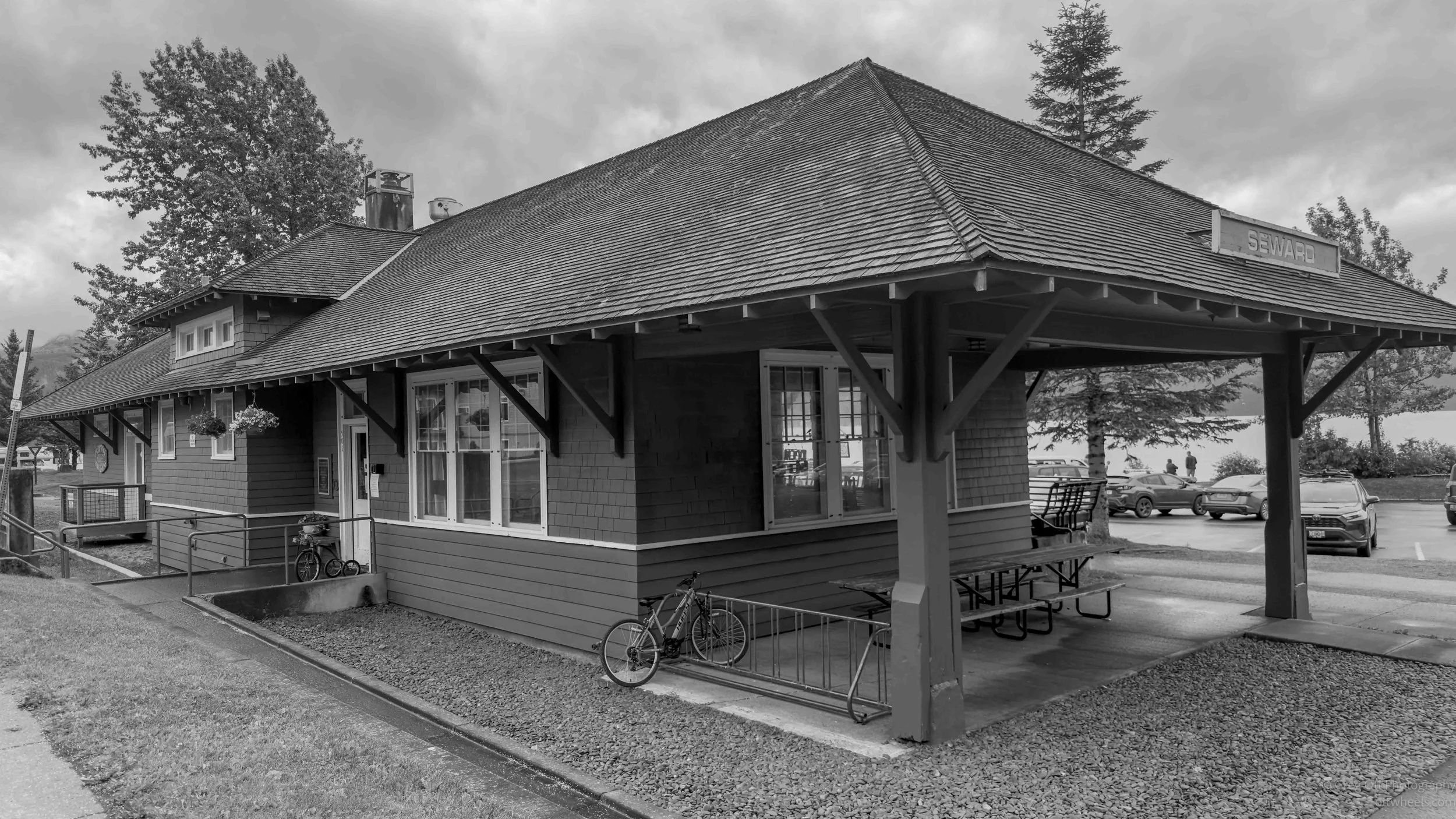
Just a short walk away sat Seward's historic Alaska Railroad depot. The baristas at Nature's Nectars had recommended stopping at Primrose Provisions for a charcuterie board and a glass of wine, and it sounded like the perfect way to finish the afternoon. Unfortunately, I wasn't the only one with that idea. The dining area was packed, every table was full, and there was a waiting list. The food looked excellent, but rather than stand around waiting, I decided to keep exploring town.
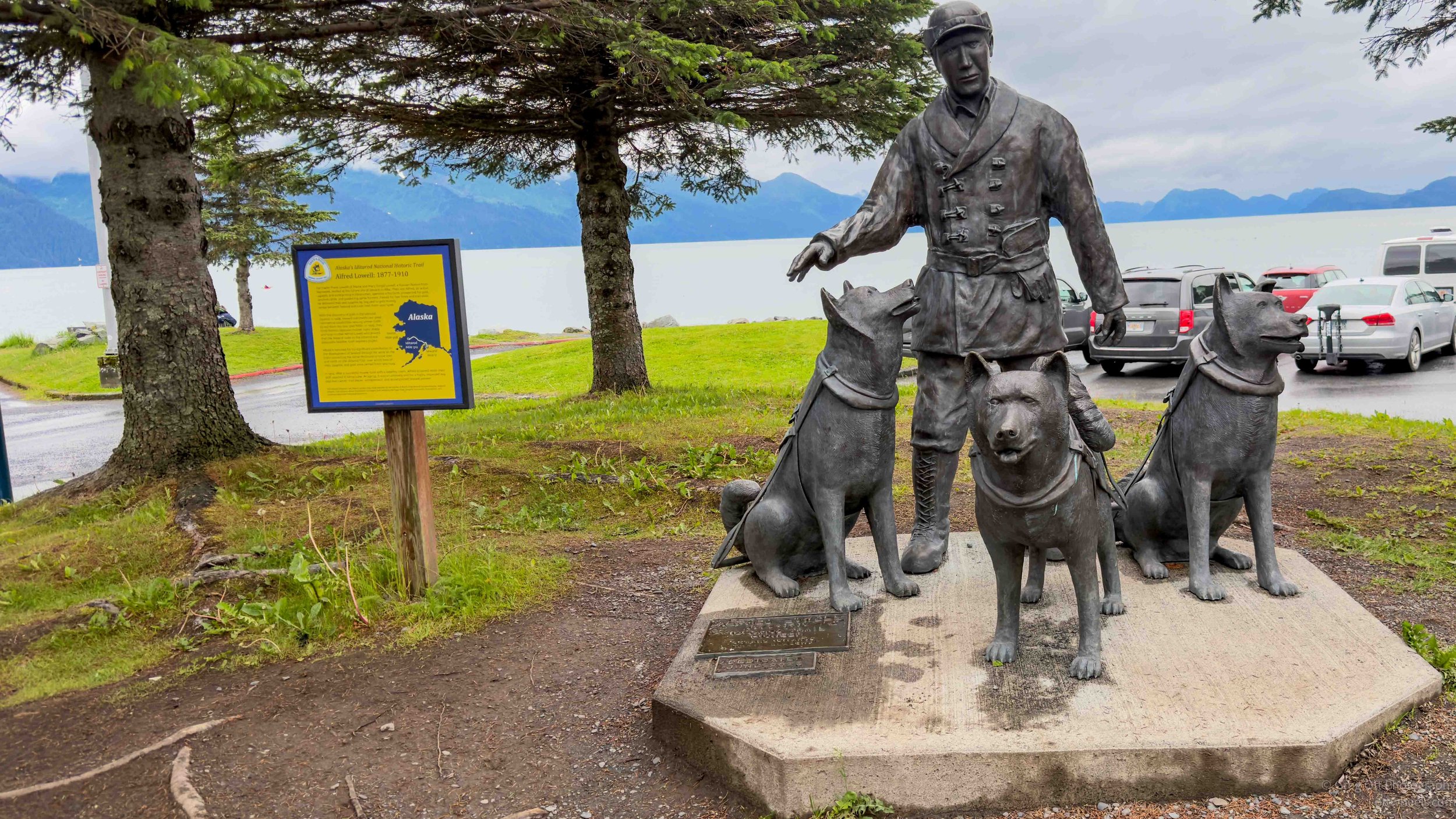
Alfred Lowell
As I walked back toward the van, I stopped at the statue of Alfred Lowell, one of Seward's early pioneers. Born in 1877, Lowell became legendary for delivering mail and supplies by dog sled between Seward and remote mining camps before the famous Iditarod Trail was established. When gold was discovered in the Iditarod region, he helped prove that Seward could serve as the southern gateway to the interior, hauling mail, freight, and eventually gold over hundreds of miles of wilderness. Tragically, his life ended at just thirty-three years old after a boating accident on Kenai Lake, but his work helped establish Seward as an important transportation hub long before highways connected Alaska.
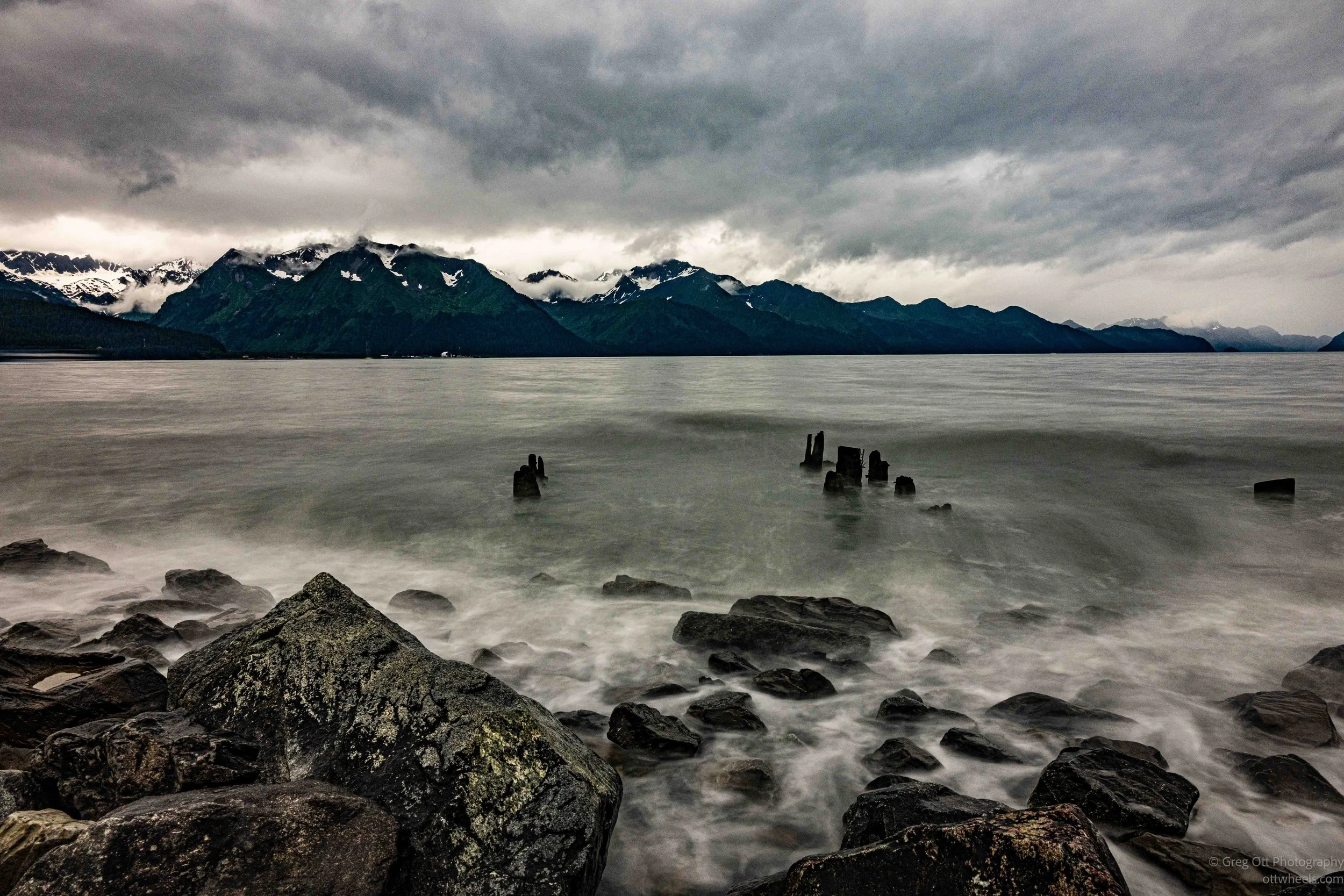
Resurrection Bay
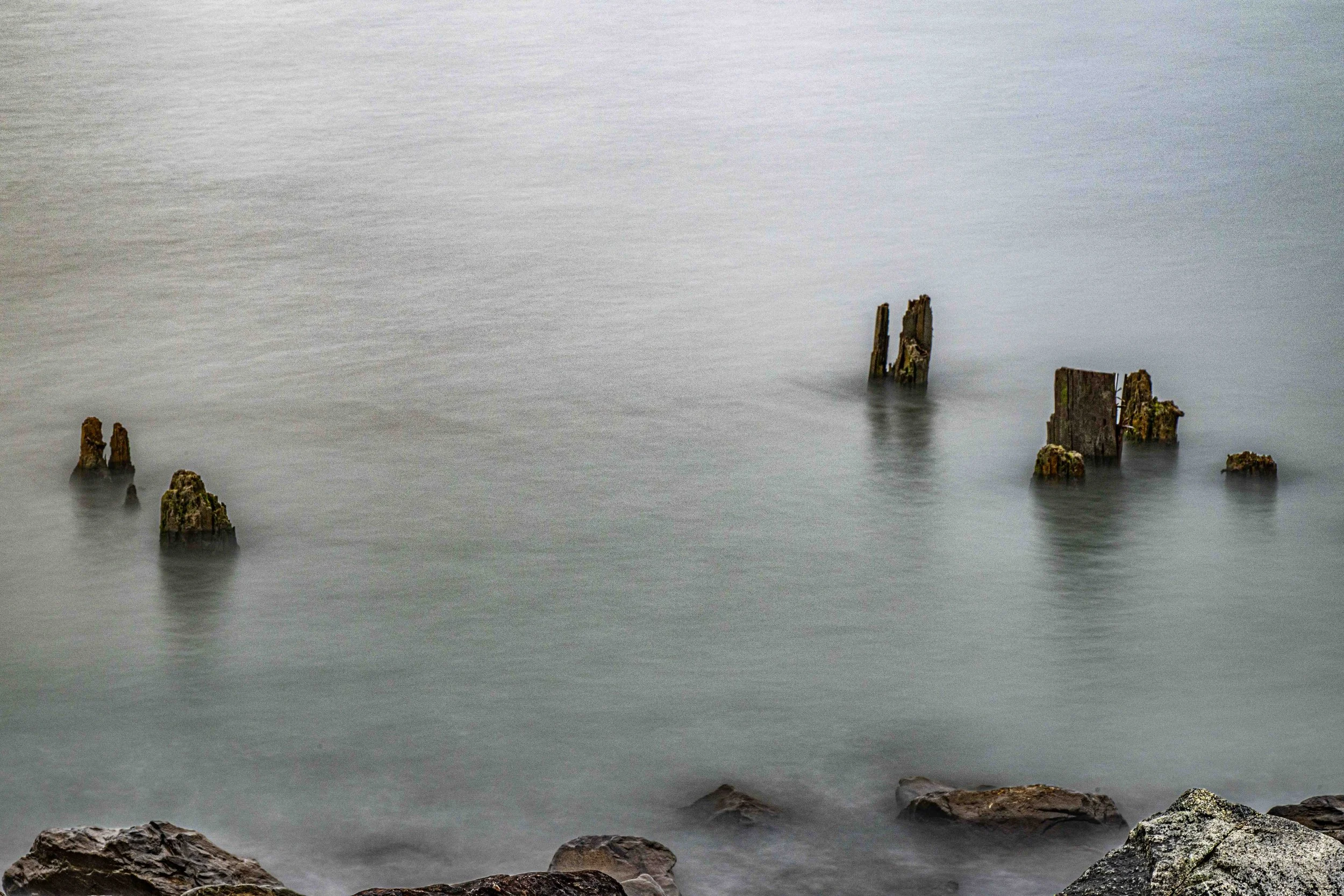
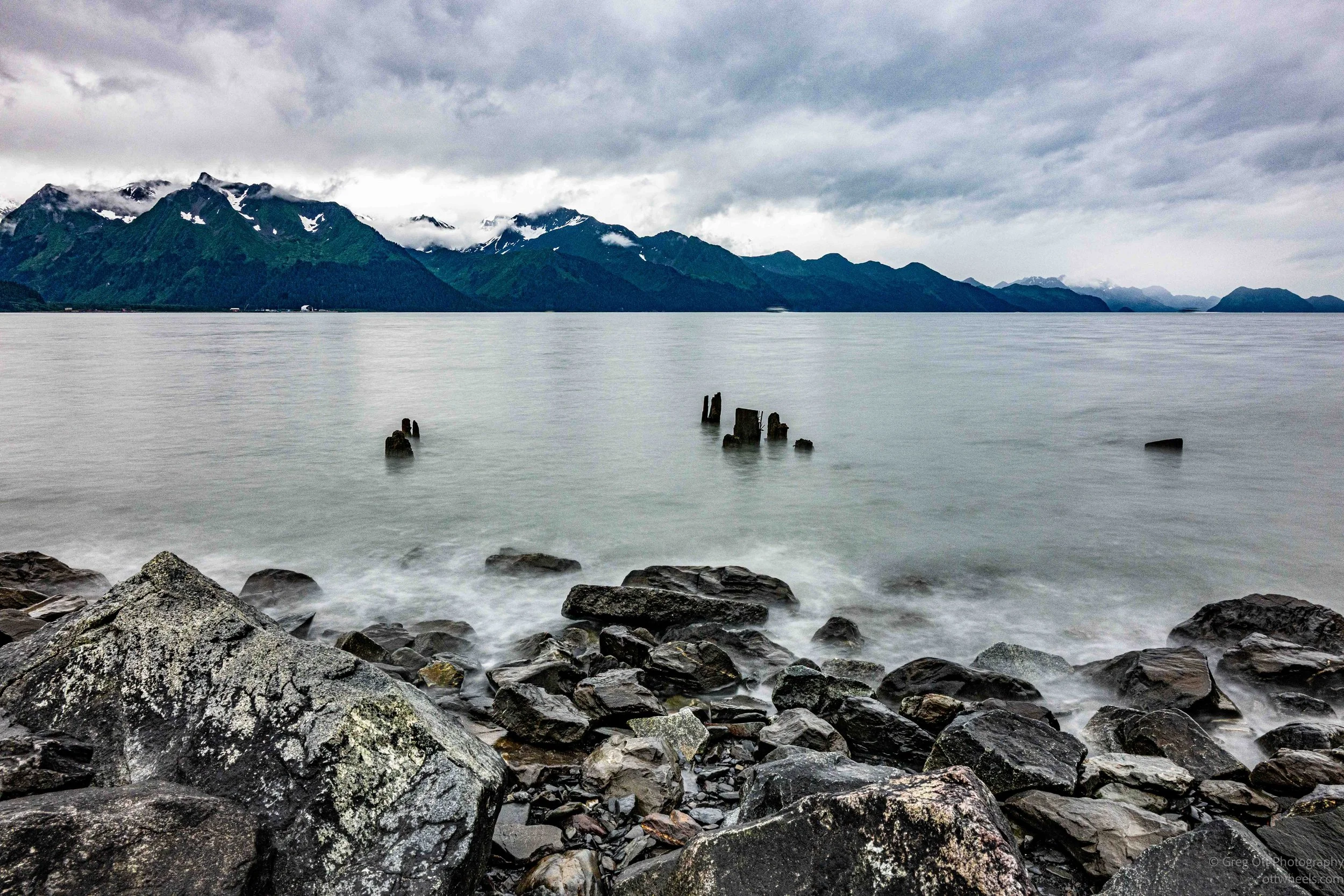
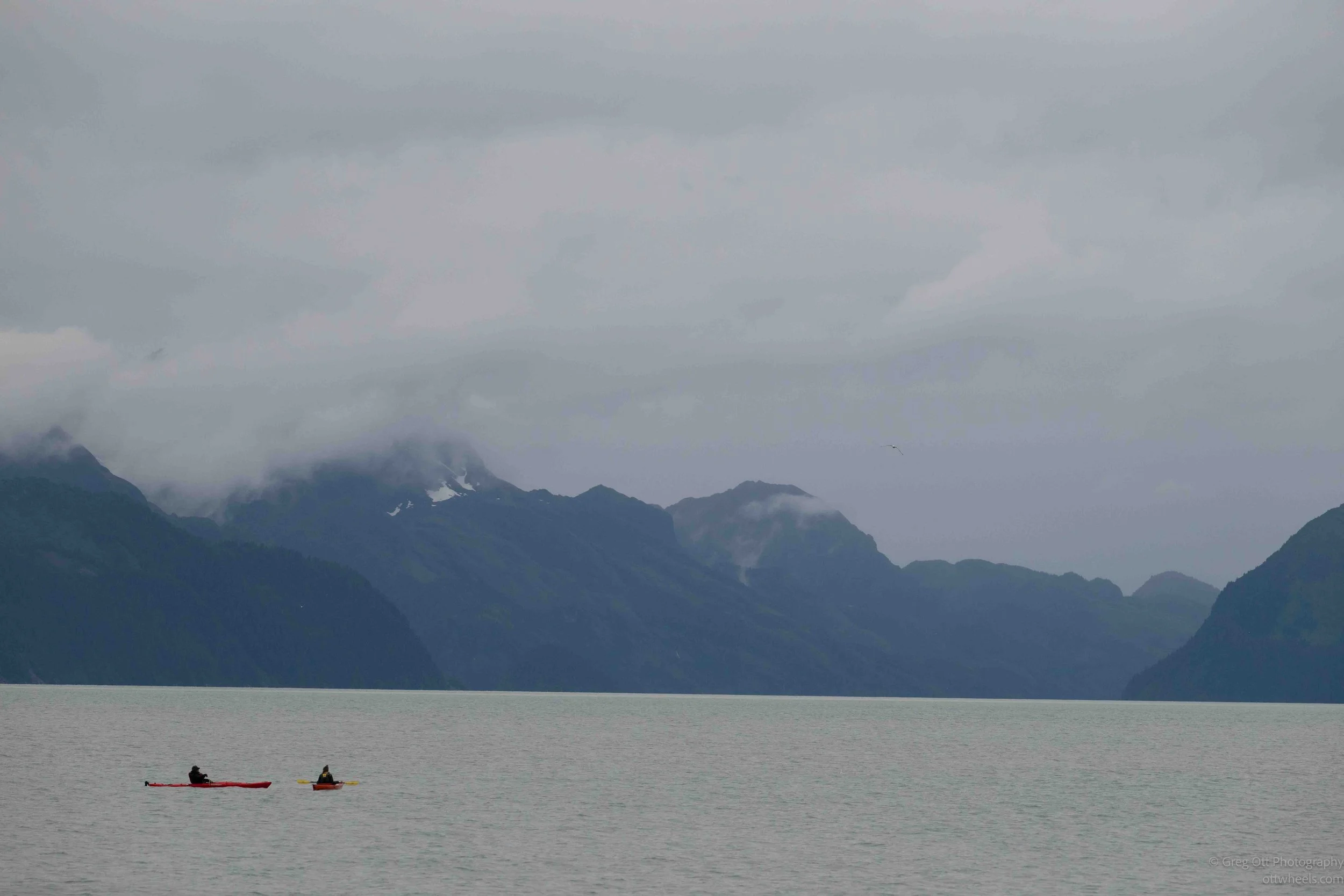
Before getting back in the van, the wind and rain eased just long enough to tempt me back to the shoreline. The mountains across Resurrection Bay were still wrapped in low clouds, but every few minutes the sun tried to push through, changing the mood of the landscape. I set up the tripod and experimented with a few long exposures, letting the waves blur into a soft mist around the remains of the old dock pilings. A pair of kayakers quietly crossed the bay beneath the towering peaks, almost disappearing against the scale of the landscape. It only lasted a few minutes before the clouds closed in again, but it was a fitting way to end the day—one last reminder that in Alaska, even a brief break in the weather can be enough to create something worth stopping for.
Mural Capital of Alaska
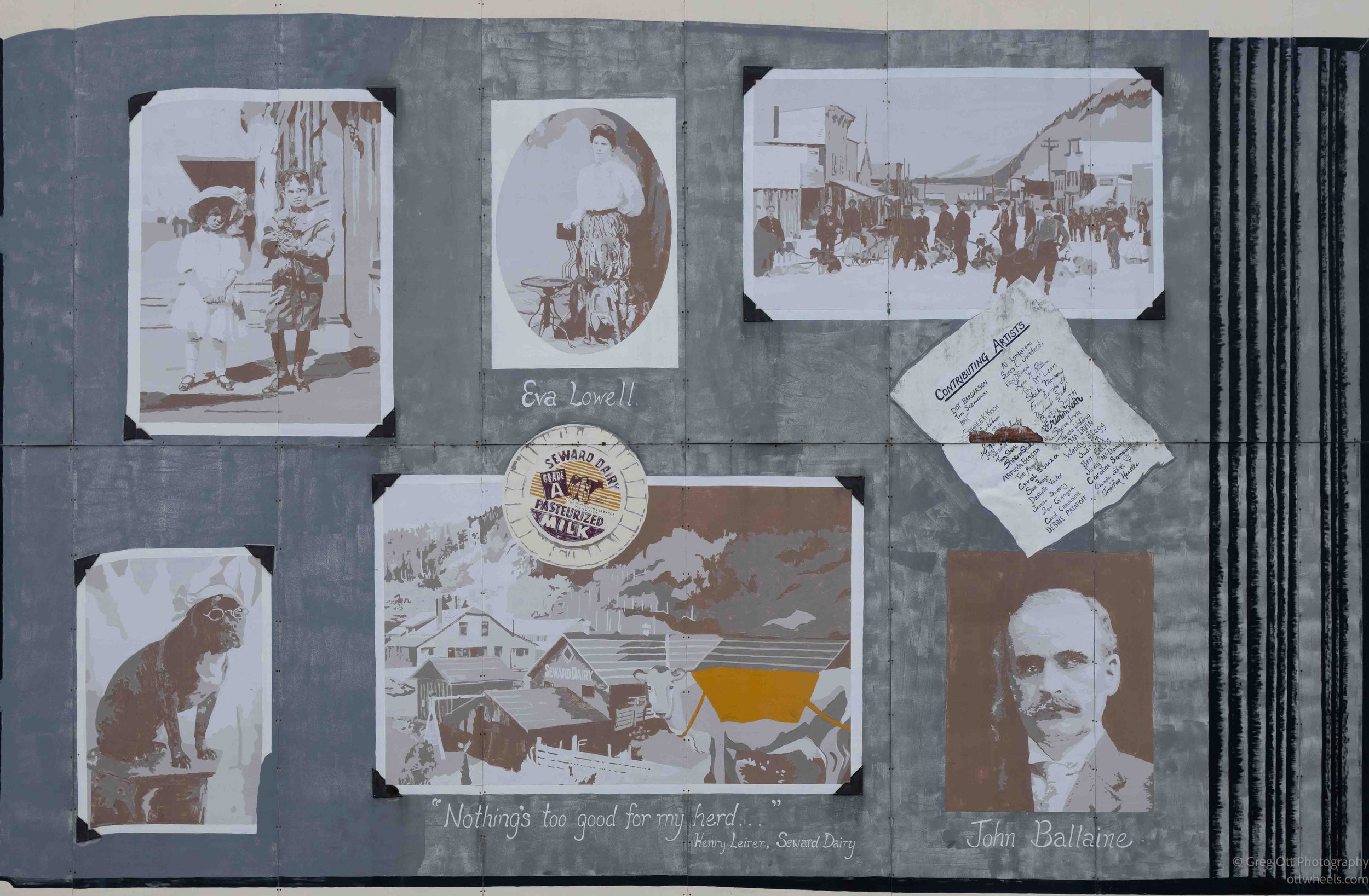
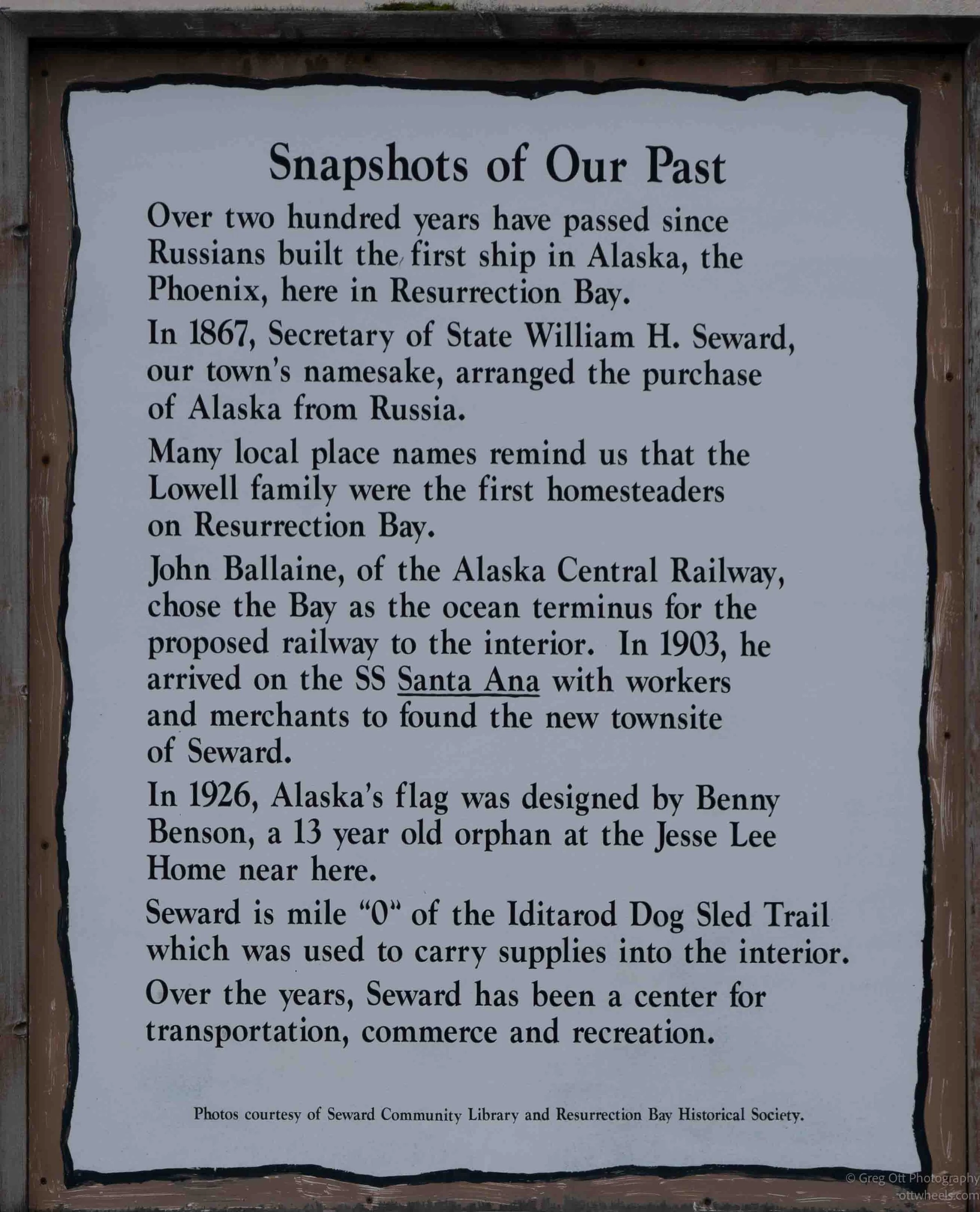
Downtown Seward turned out to be an unexpected outdoor gallery. In 2008, then-Governor Sarah Palin officially recognized Seward as the Mural Capital of Alaska, and dozens of murals now tell the story of the town's history, people, and culture. Some celebrate the railroad, early settlers, and the purchase of Alaska, while others honor the fishing industry and the community that grew around Resurrection Bay.
The murals that held my attention the longest, however, were the ones inspired by Alaska Native traditions. Several depicted the Raven—not simply as a bird, but as the creator and trickster from Indigenous oral tradition. One mural tells the story of Raven creating the land by dropping sand from the ocean floor so Salmon Woman could come ashore. Another shows Raven releasing the sun, moon, and stars into a world that had been hidden in darkness. Nearby, the story of Fog Woman reminds us that abundance comes with responsibility and respect for the natural world. Standing in front of these murals and reading the accompanying plaques, I realized they weren't just works of art—they were a way of preserving stories that had been passed down for countless generations before they were ever painted on a wall.
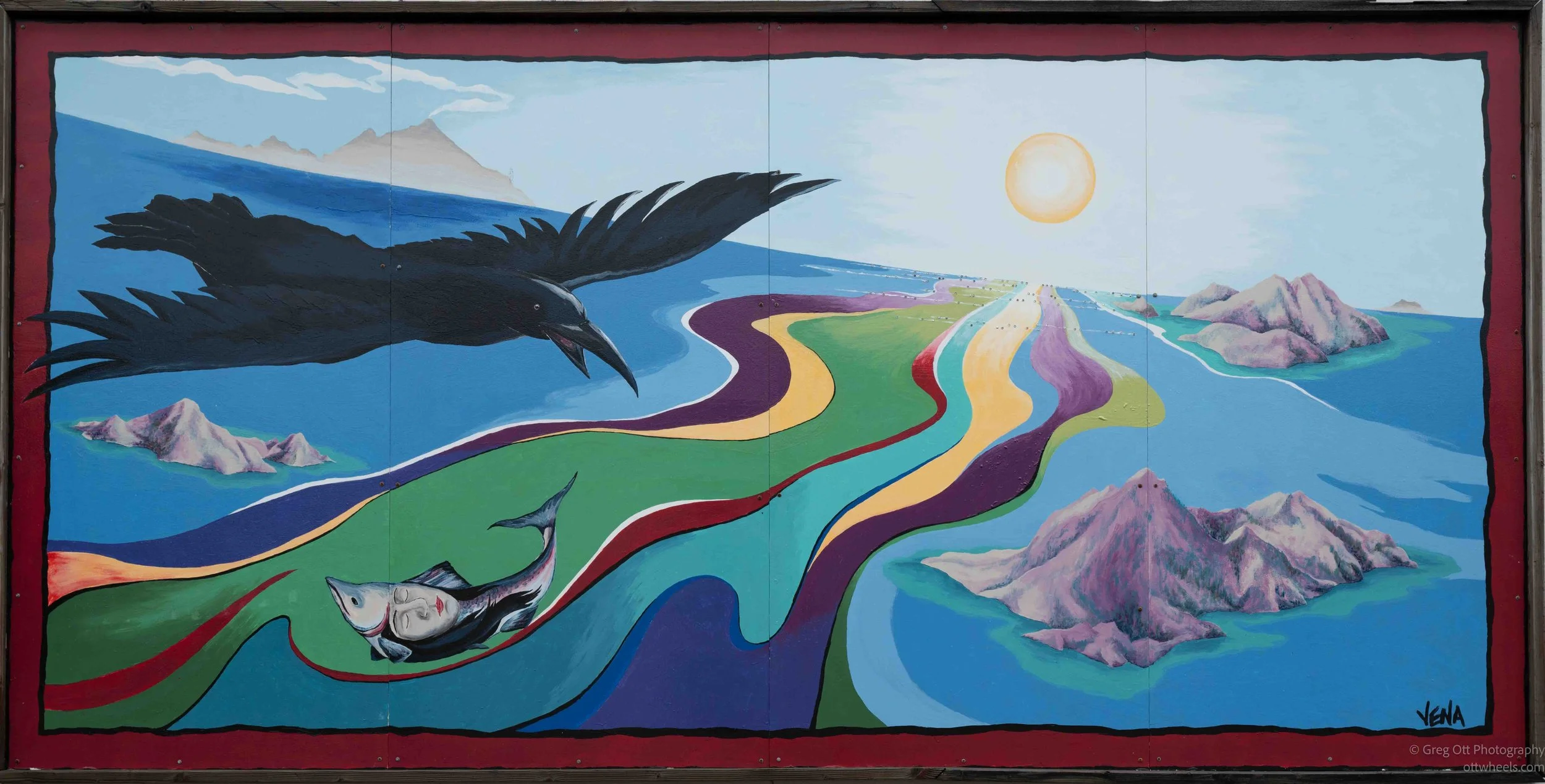
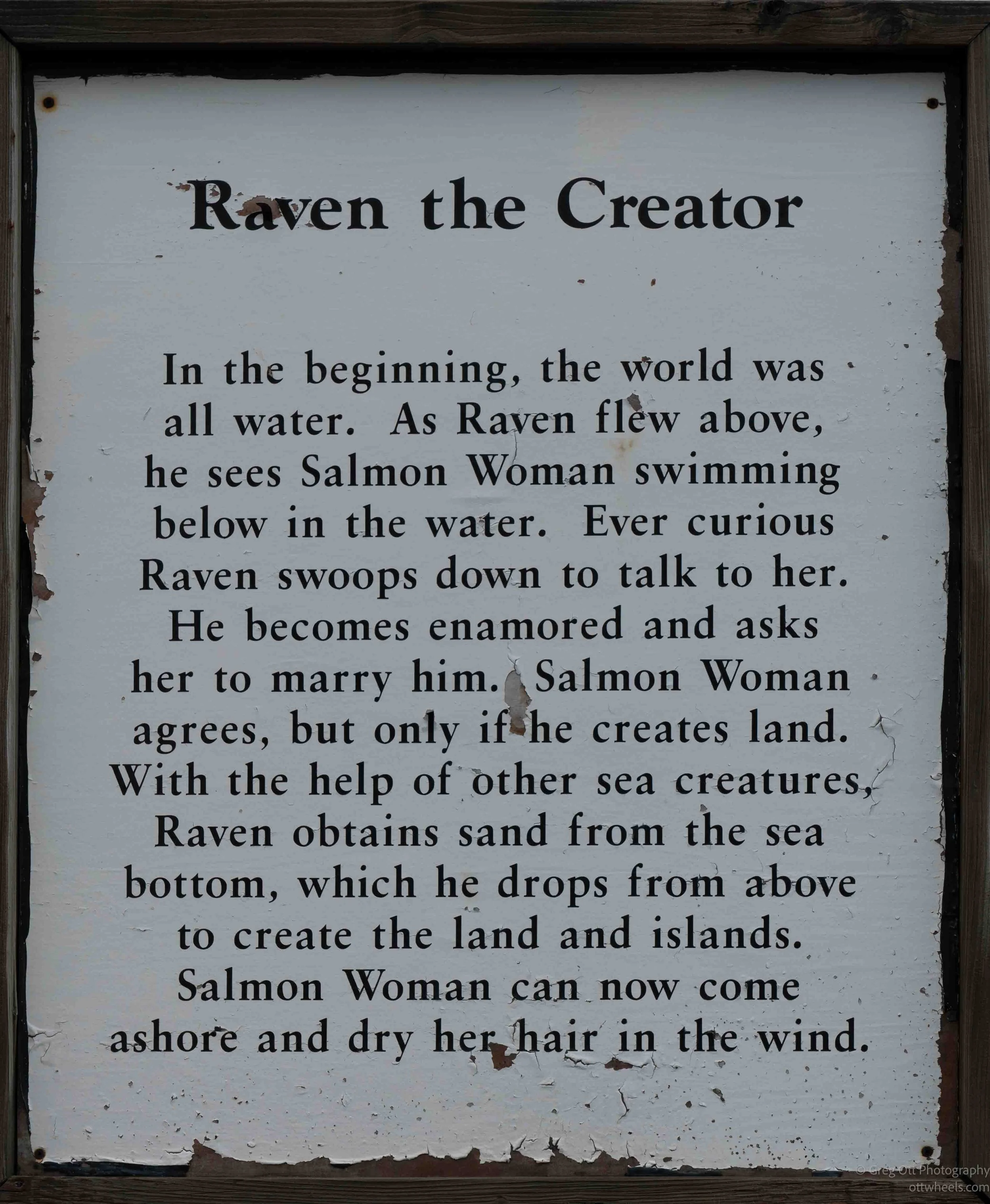
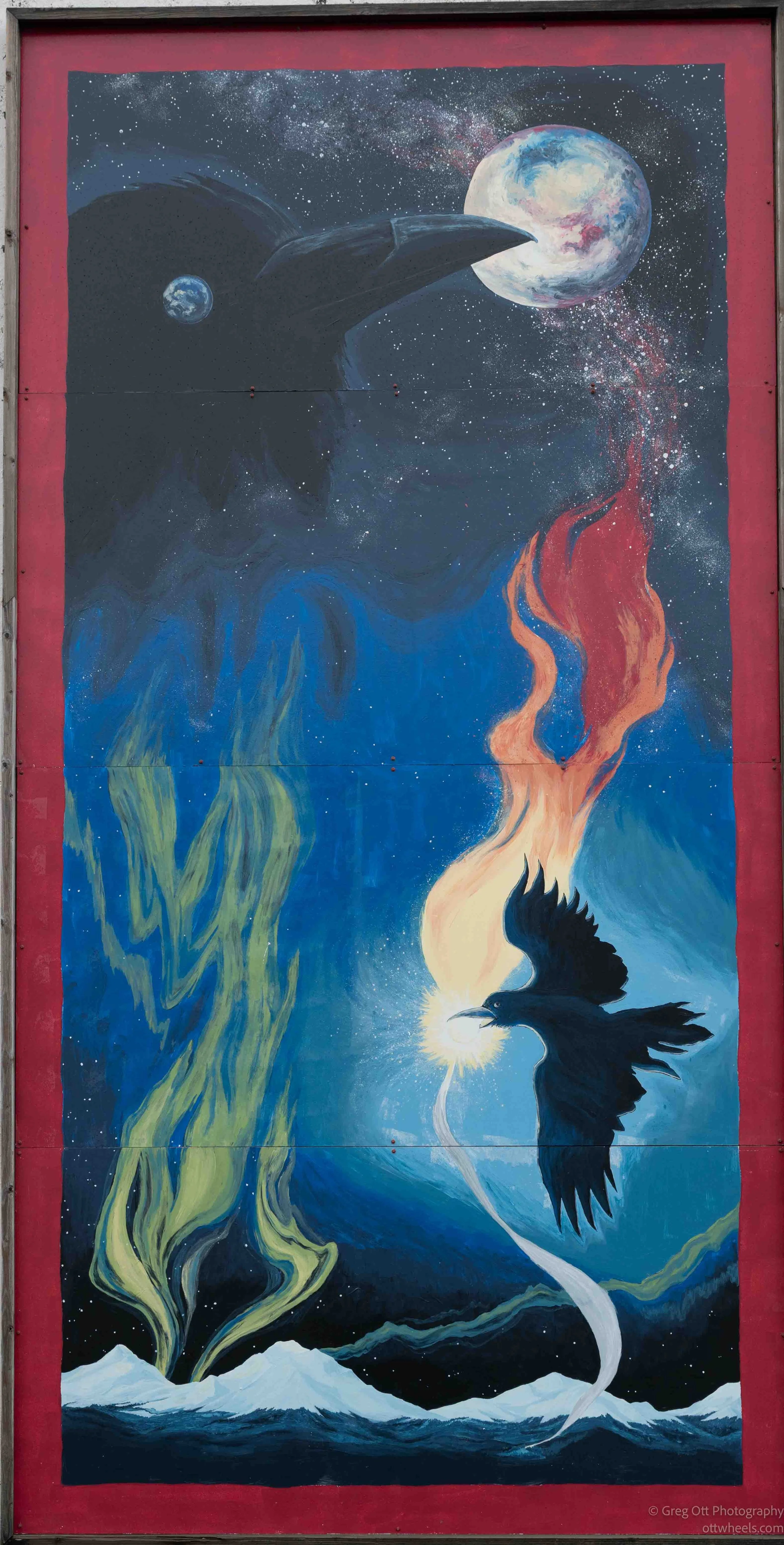
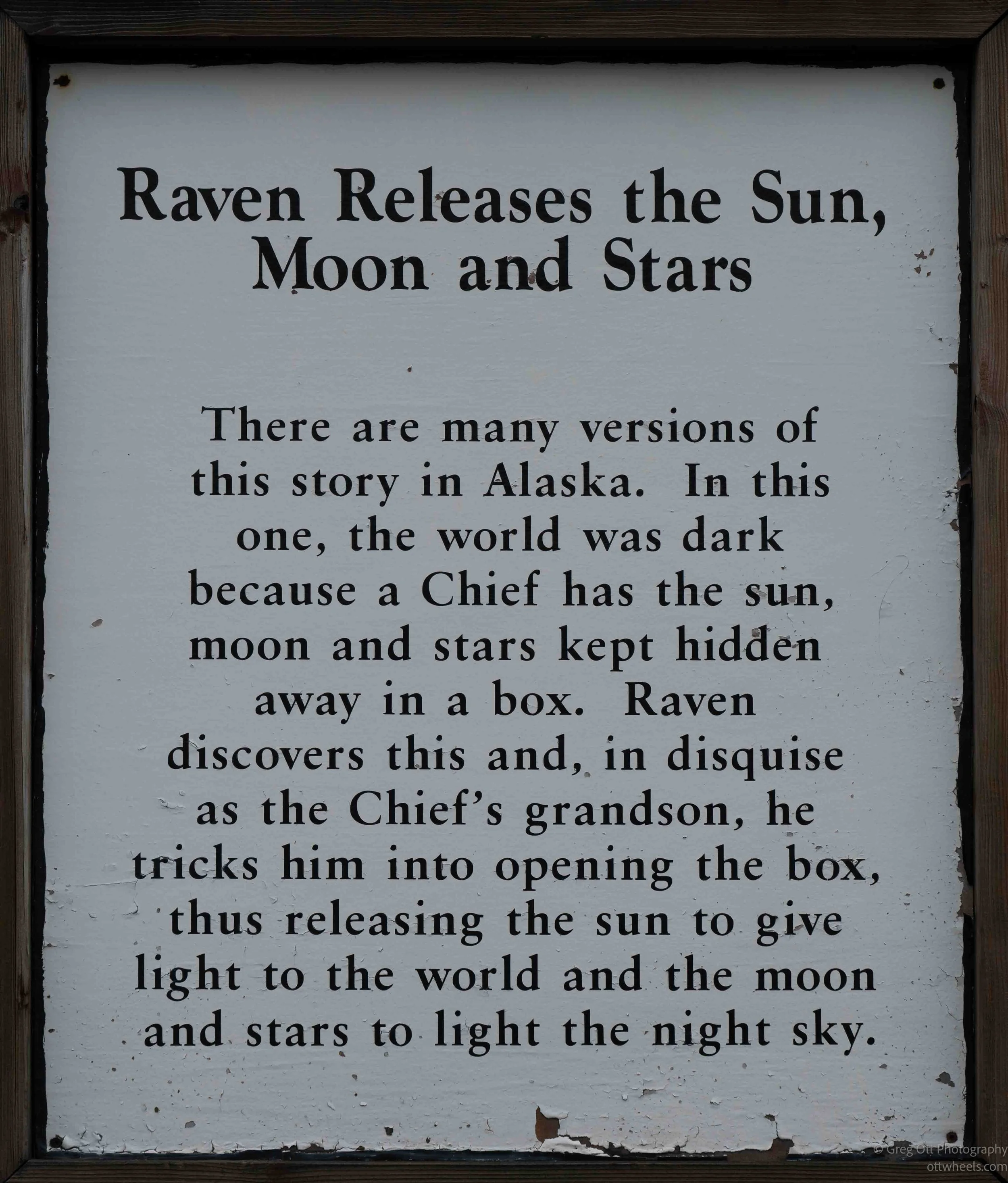
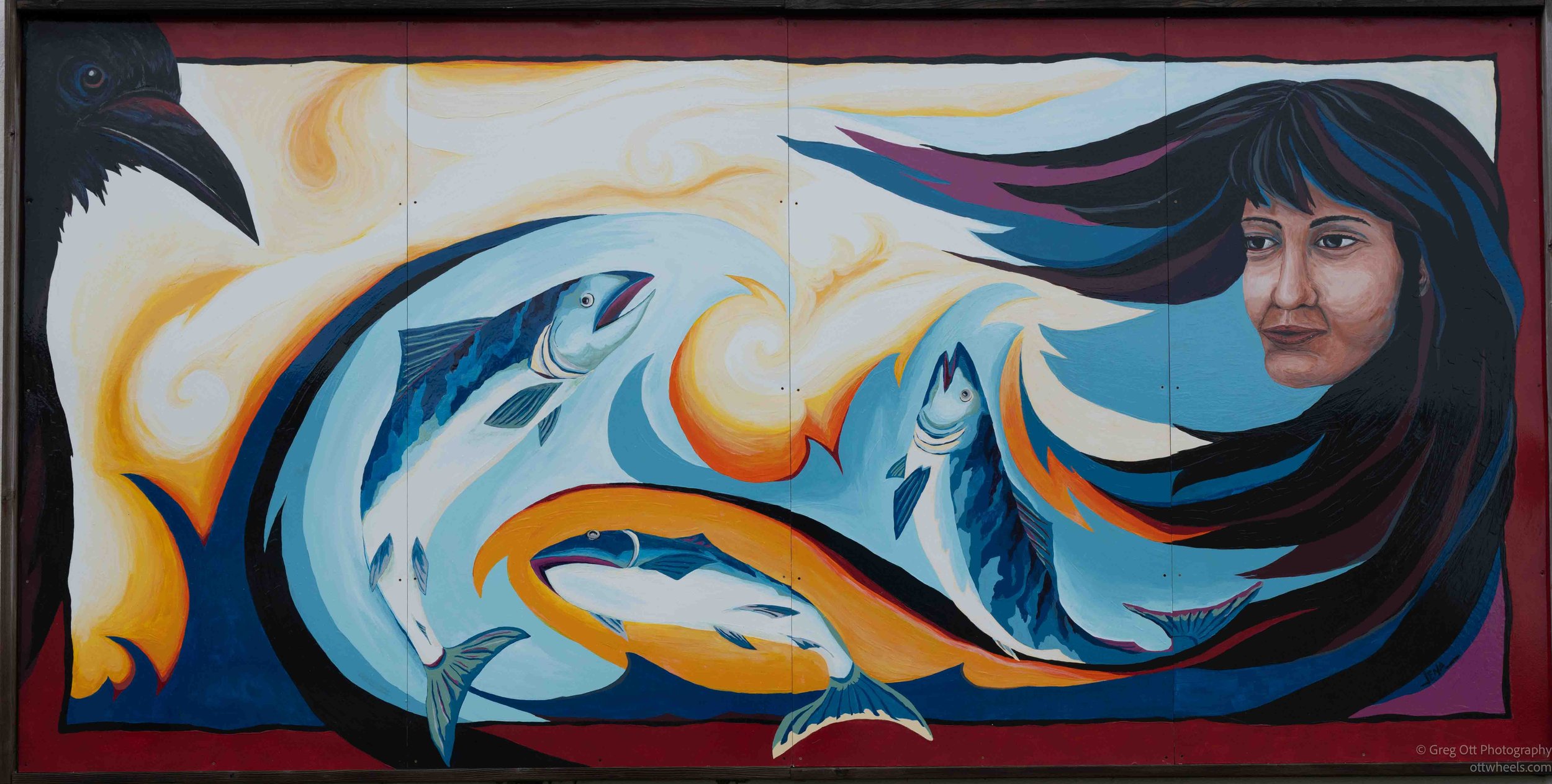

I found myself lingering far longer than I expected. The murals weren't just colorful backdrops for tourists; they invited you to stop, read, and think. They connected the salmon, ravens, mountains, and sea into a single story that echoed much of what I had been learning over the past week. After visiting Dutch Harbor, the Alaska SeaLife Center, and Kenai Fjords National Park, I was beginning to understand that in Alaska, nature isn't simply scenery. It's woven into history, culture, and identity in ways that are difficult to appreciate until you spend time here.
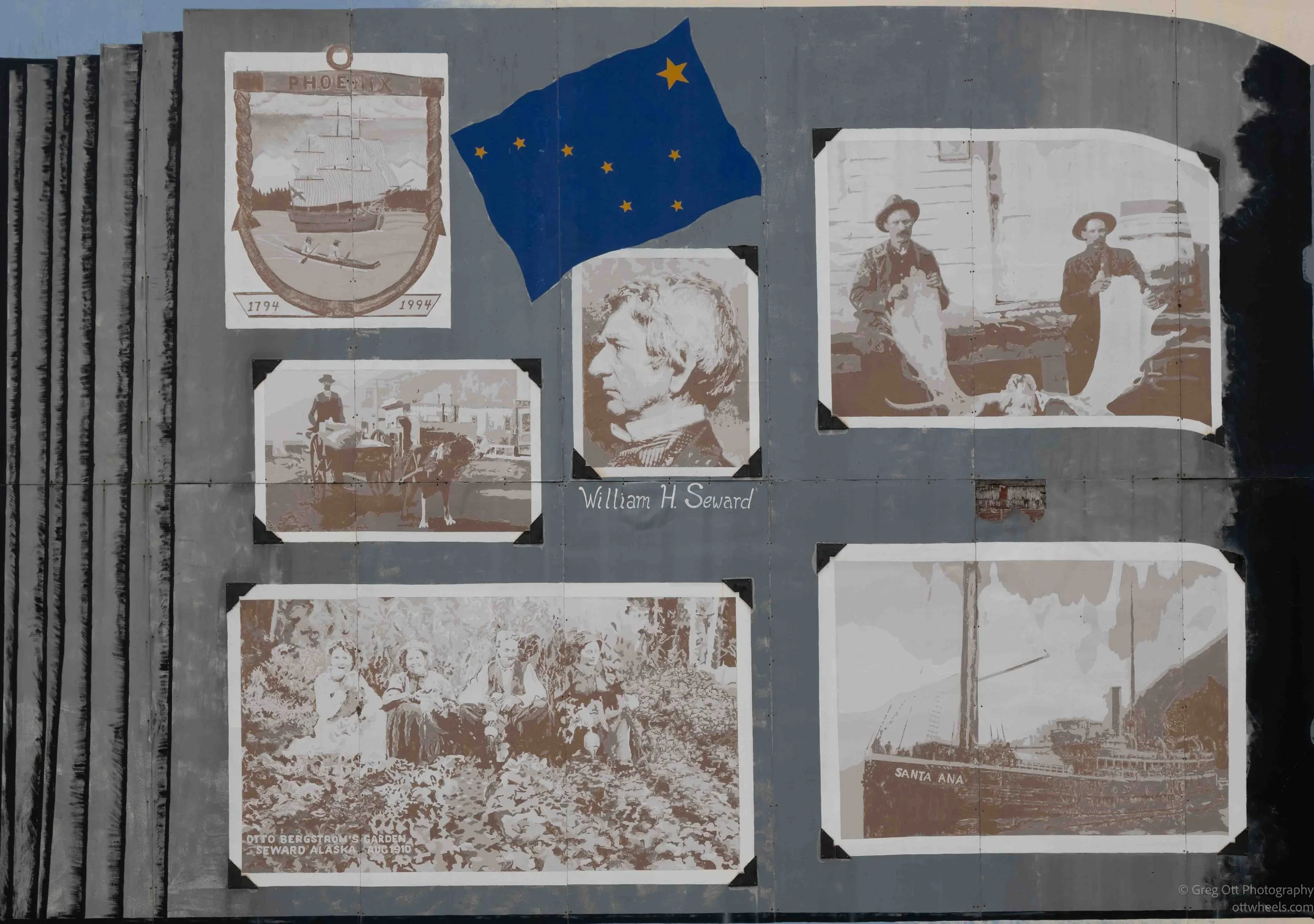

Downtown Shop
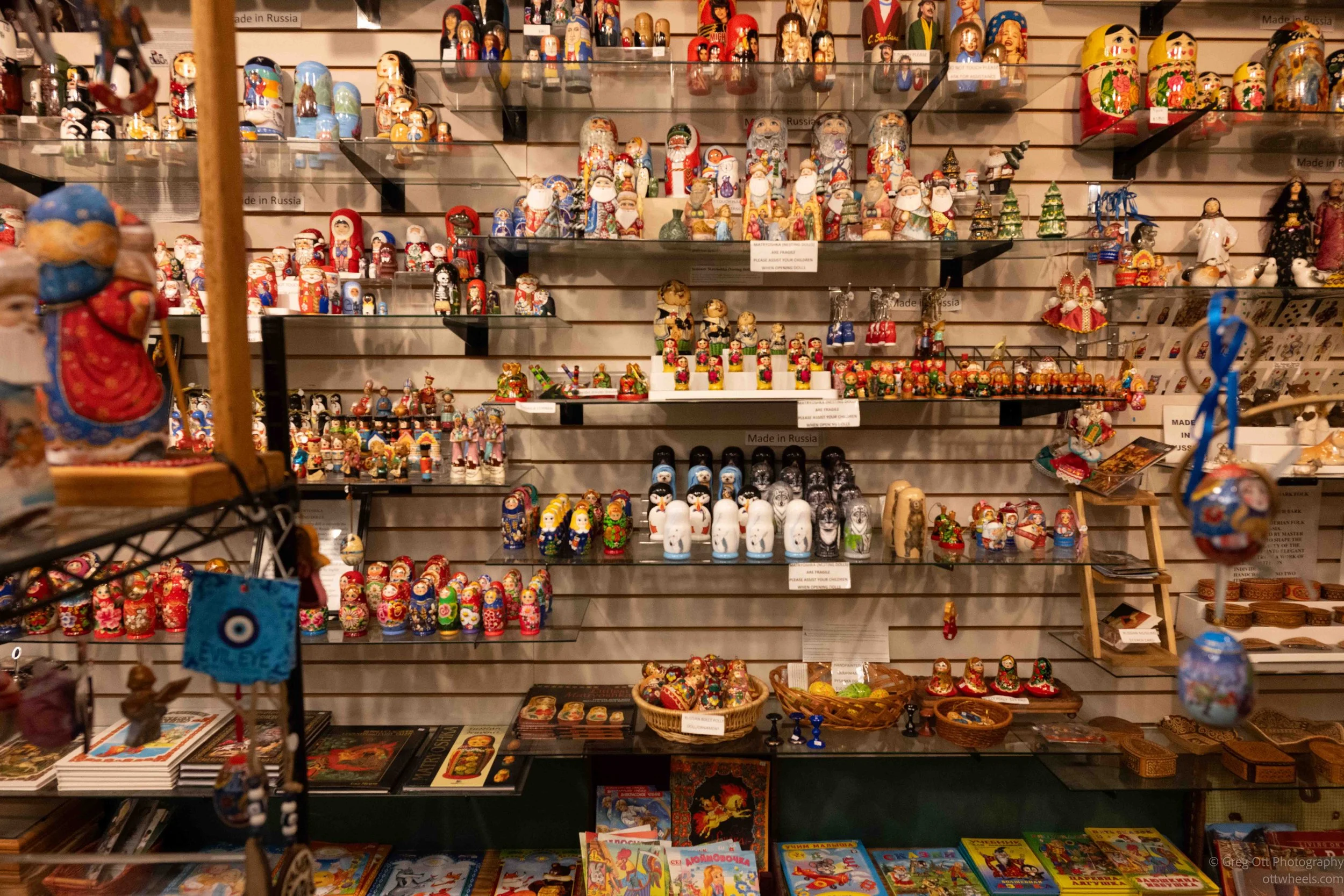
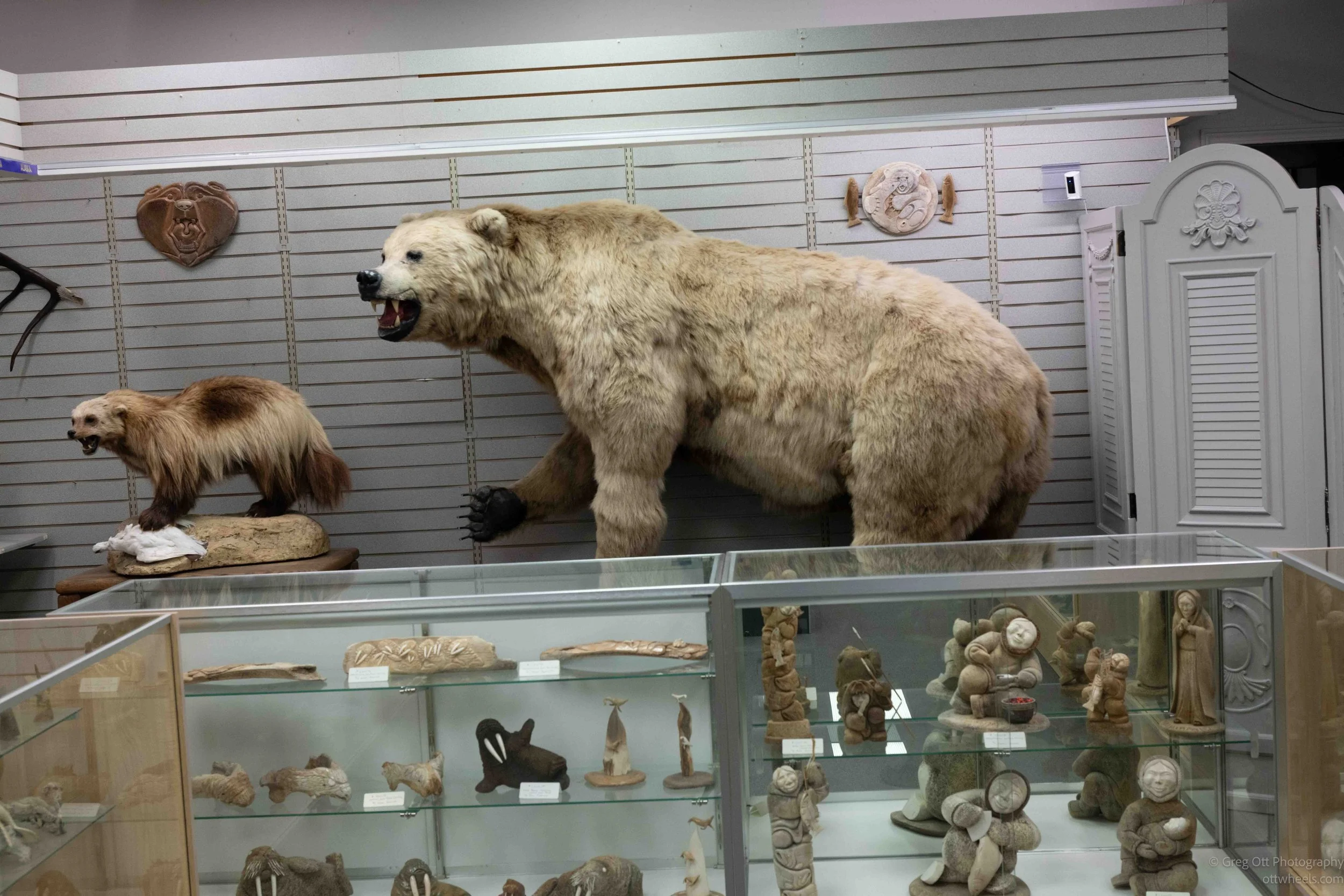
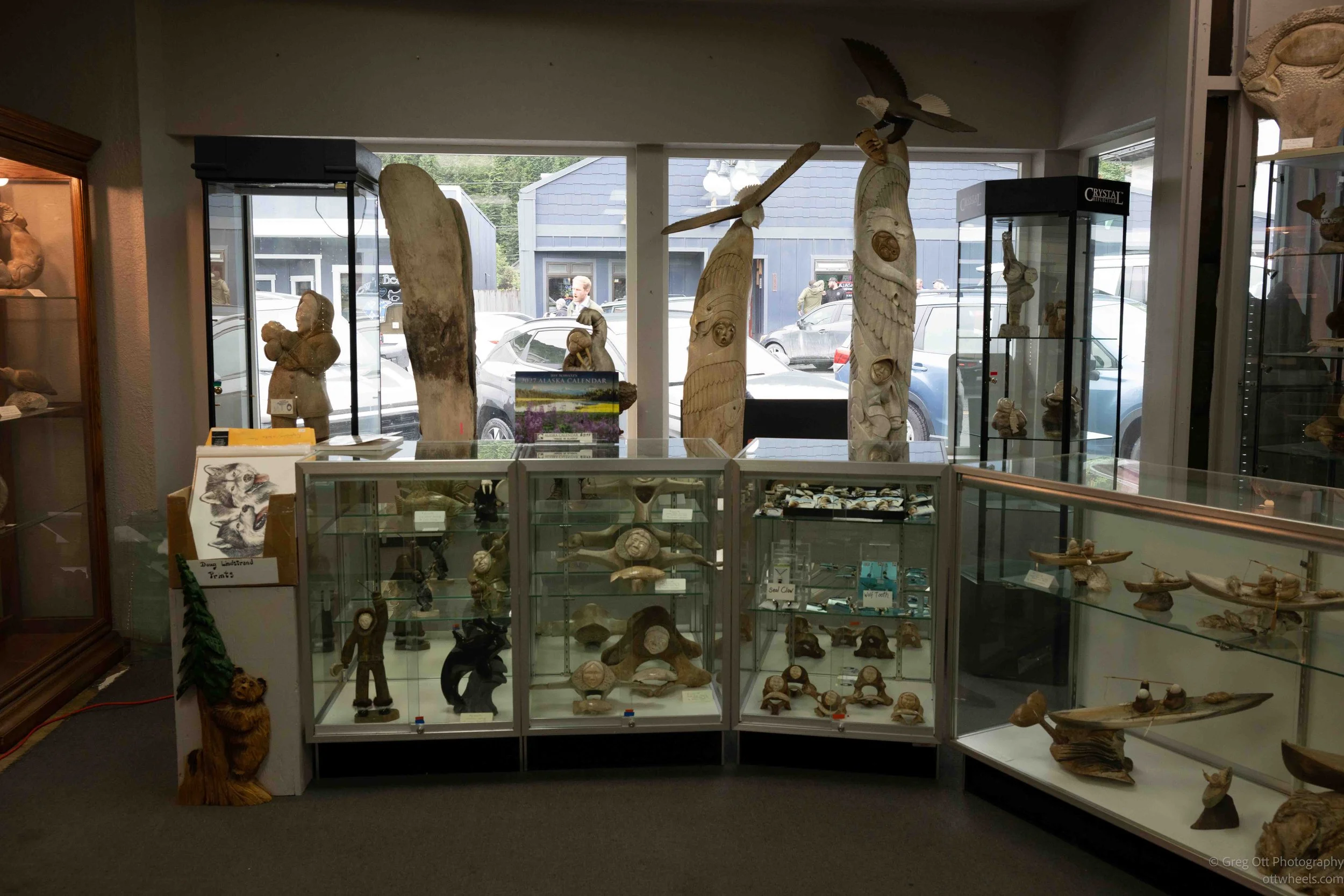
I wandered in and out of the shops that line Seward's downtown streets. Beyond the expected T-shirt and candy stores, I found one filled with Russian nesting dolls and folk art, while another showcased beautiful Alaska Native carvings in stone, bone, and ivory. An enormous polar bear greeted visitors from the back of the store. Seward's downtown reflects the town itself—a blend of Russian heritage, Indigenous culture, and modern Alaska, all within a few blocks.

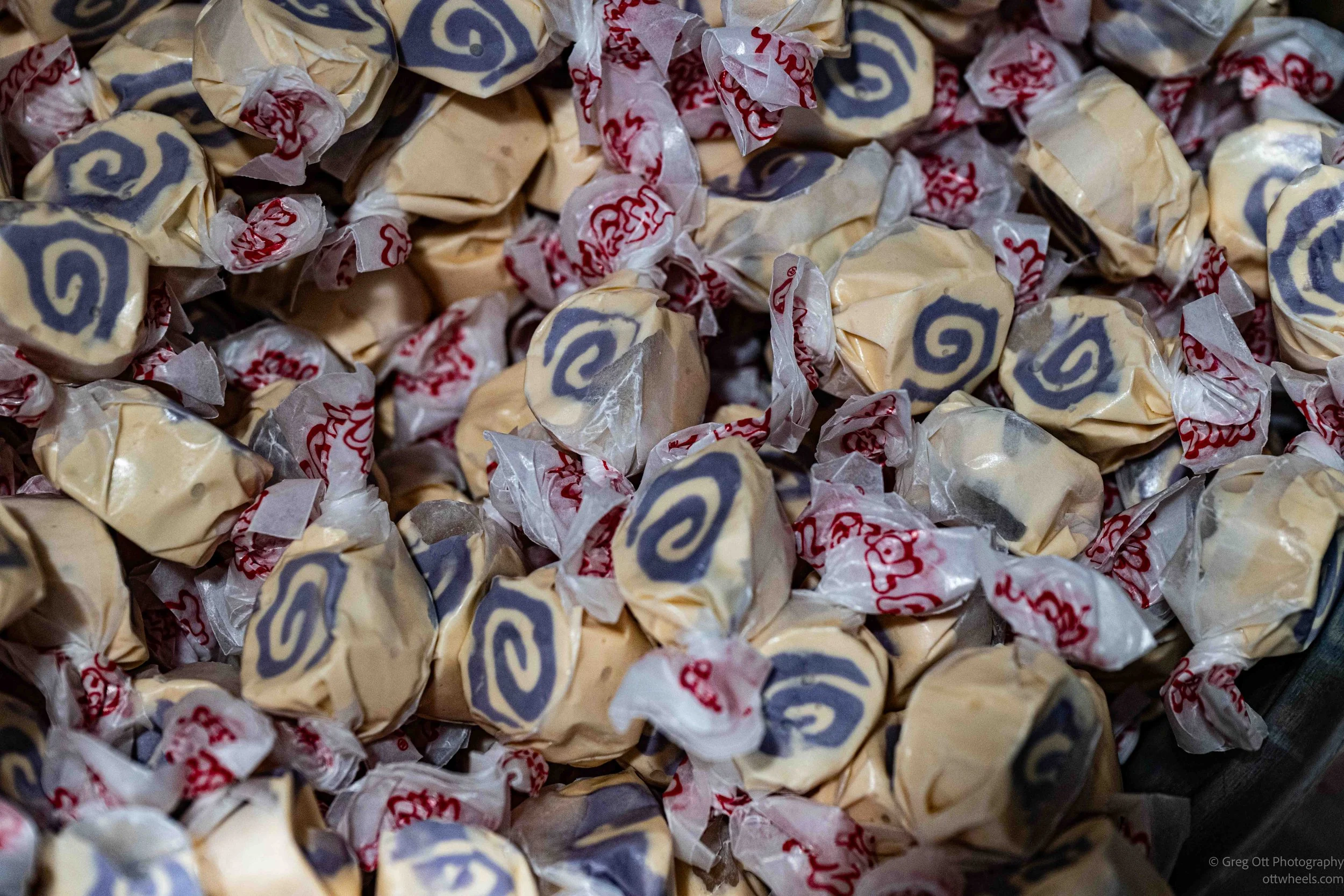
Sweet Darlings Gelato
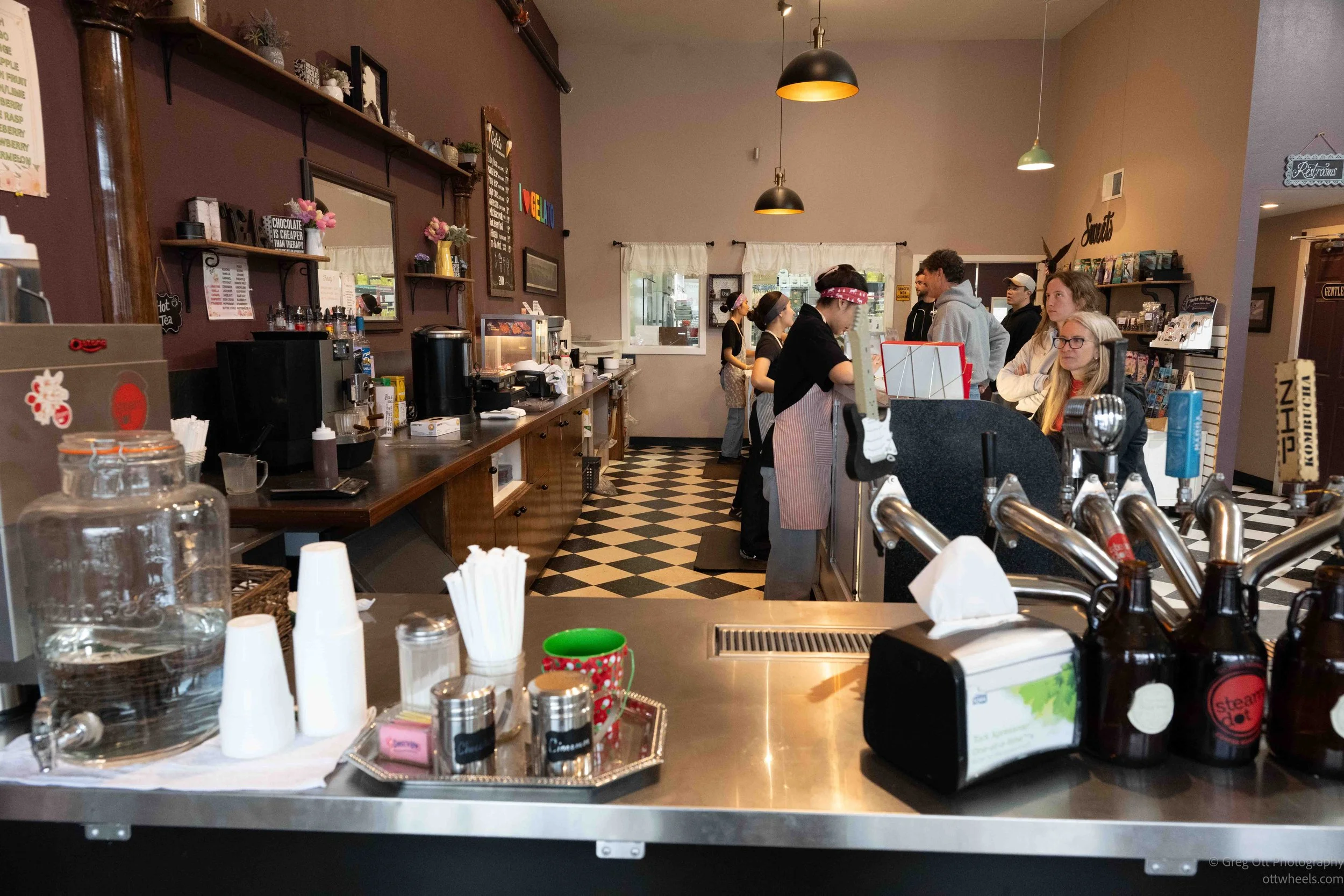
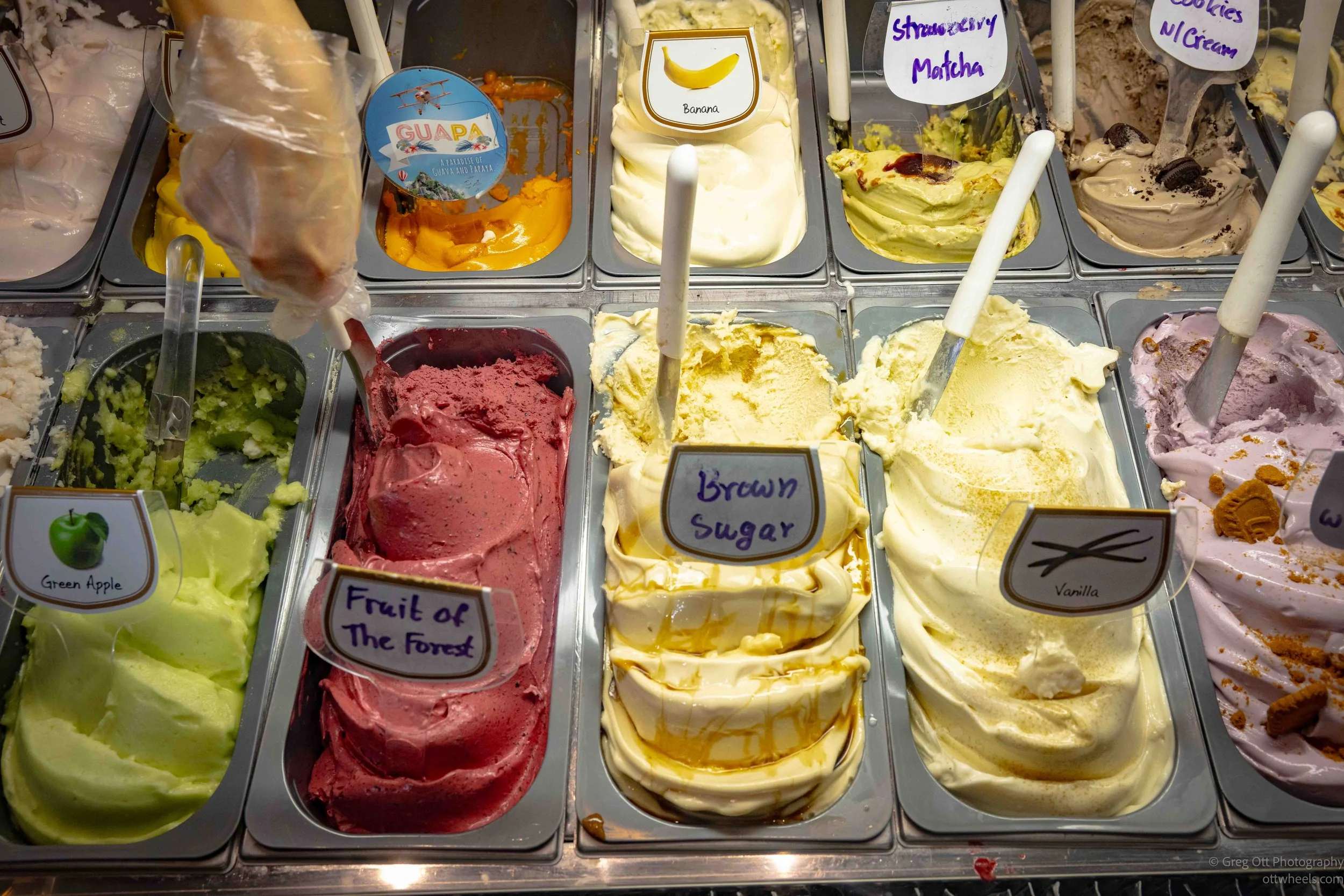
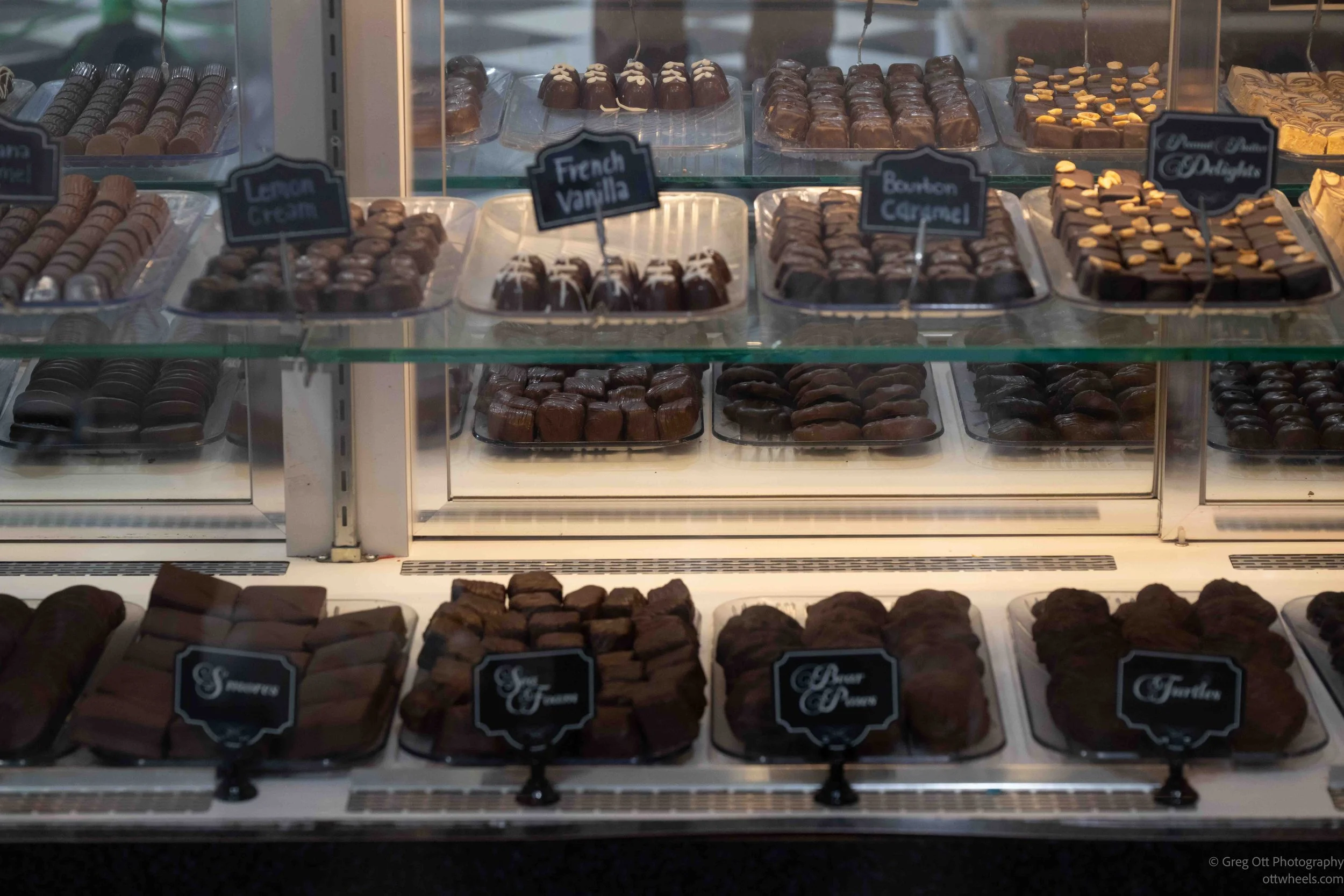
Before heading back to the van, I couldn't resist one more stop at Sweet Darlings. The display cases were filled with handcrafted chocolates and homemade caramels, but it was the gelato that caught my eye. I ordered a small "bear-sized" cup with half Guapa—a tropical blend of guava and papaya—and half banana. The flavors were incredibly rich and vibrant, tasting like real fruit instead of artificial flavoring. It was some of the best gelato I've had anywhere in the United States. I found a place to sit, slowed down for a few minutes, and simply enjoyed it while watching people drift through downtown Seward. It turned out to be a perfect substitute for the charcuterie board I had been hoping for.
Historical Downtown
By the time I left Sweet Darlings, the rain had stopped. The weather changes quickly in Seward. One moment I was ducking into shops to stay dry; the next I was strolling comfortably through town with the mountains beginning to emerge from the clouds.
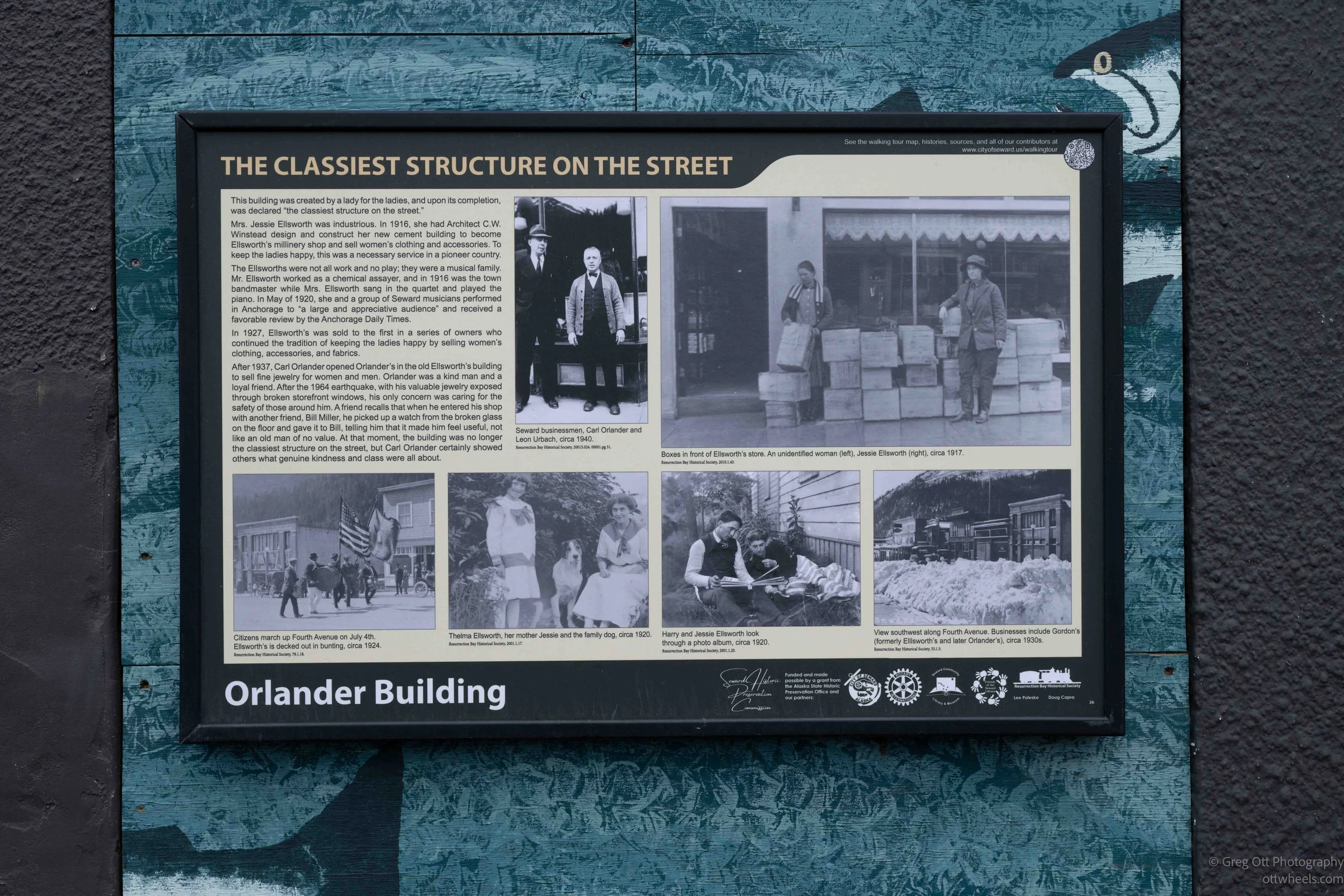
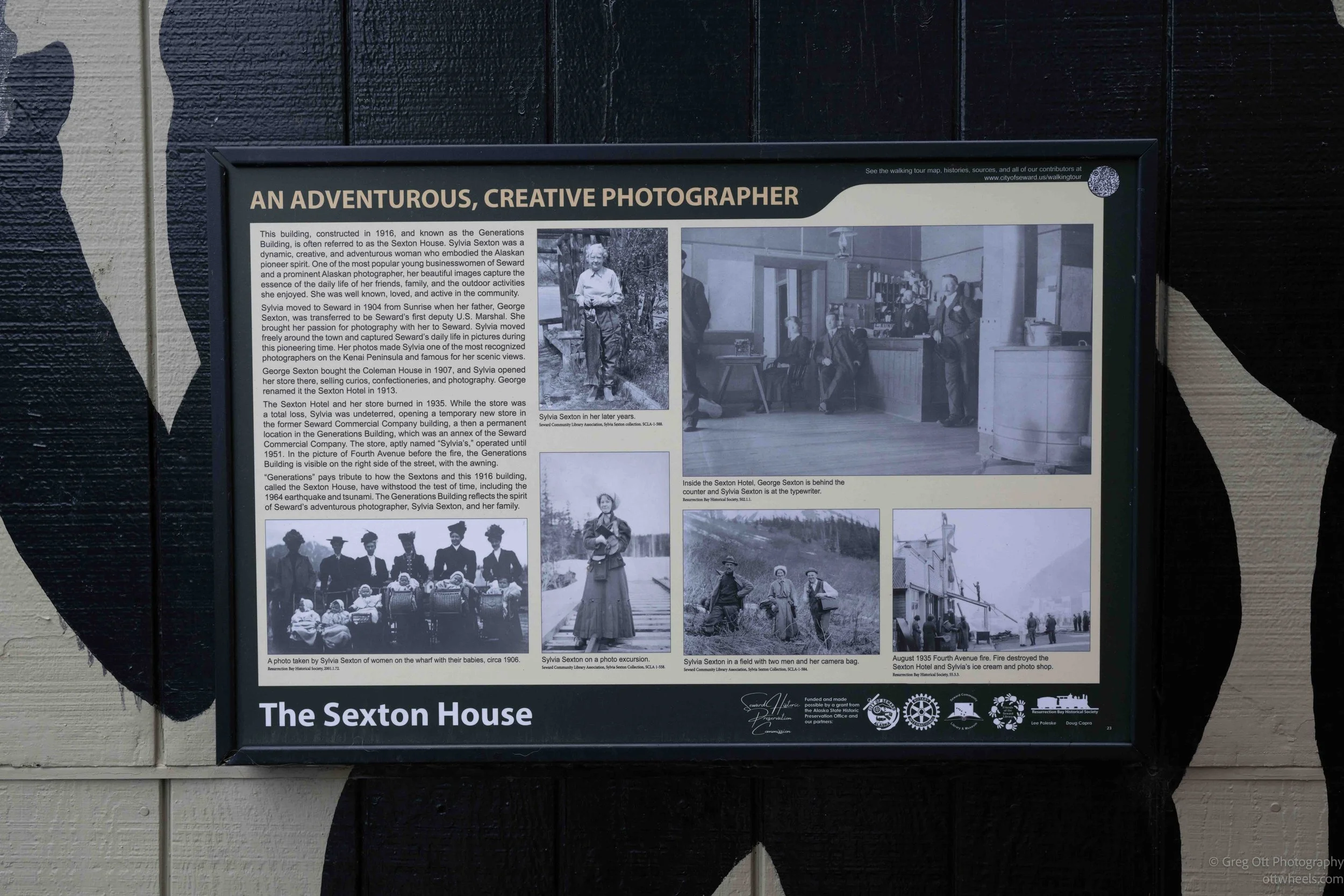
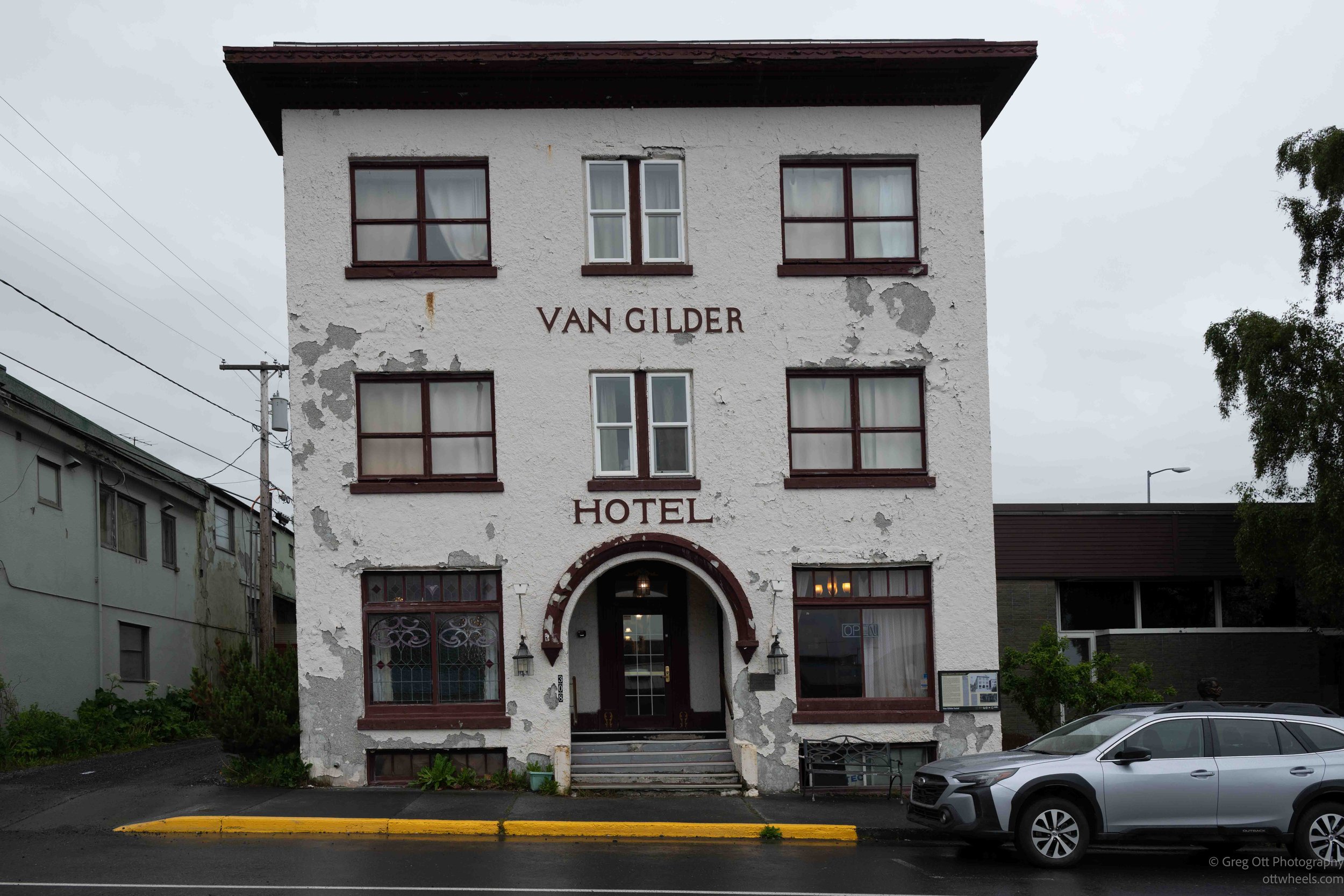
Instead of heading straight back to the van, I wandered a little longer. Seward has placed historical plaques throughout downtown (The Walking Tour), and I found myself stopping every few blocks to read another story. The plaques brought the town's early years to life—merchants, photographers, hotels, devastating fires, and the hardy people who built a community at the edge of the wilderness. I was especially intrigued by Sylvia Sexton, whose photographs documented Seward's early days, and by the stories surrounding the century-old Van Gilder Hotel, a building that has survived fires, earthquakes, and even acquired a reputation for being haunted.
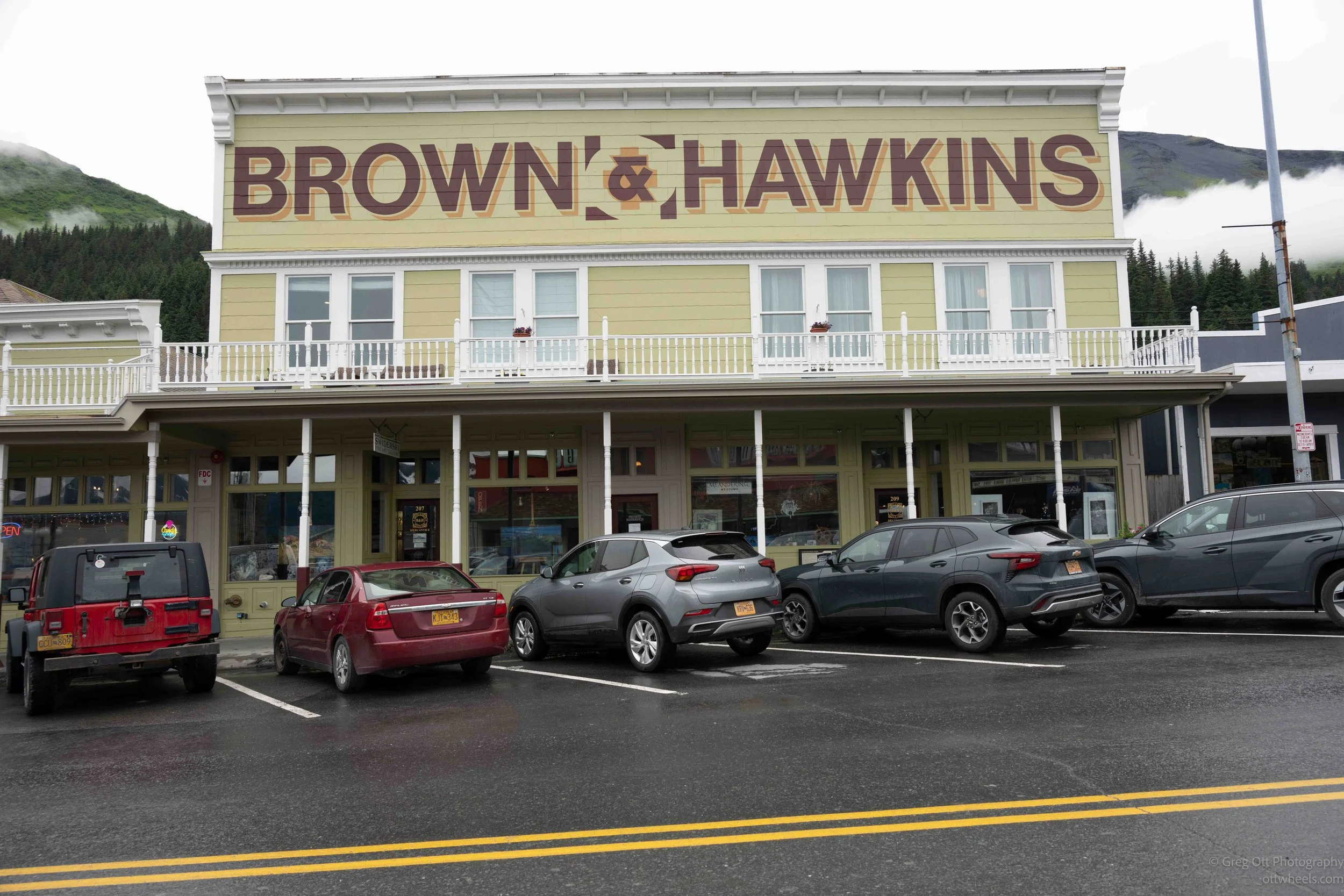
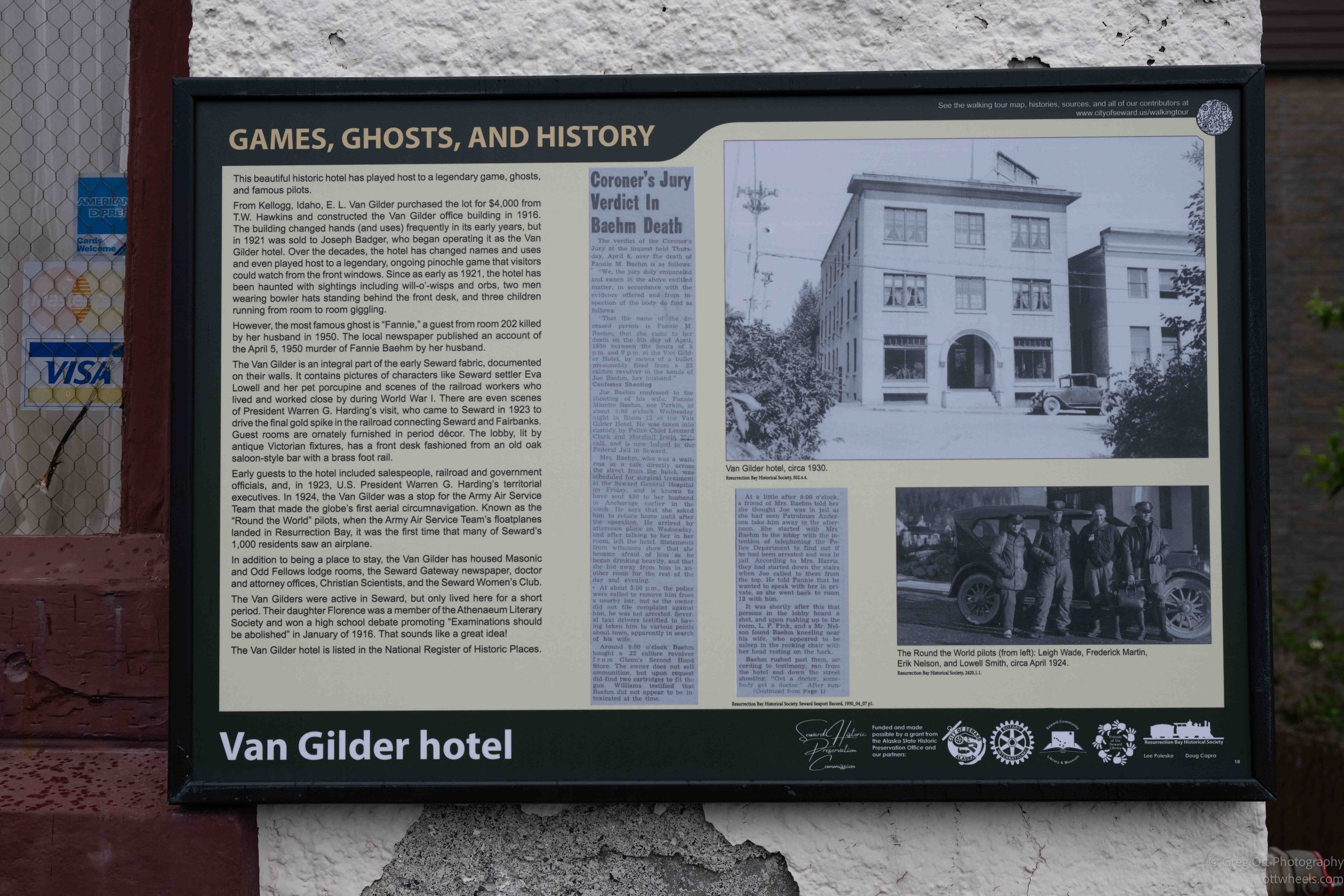
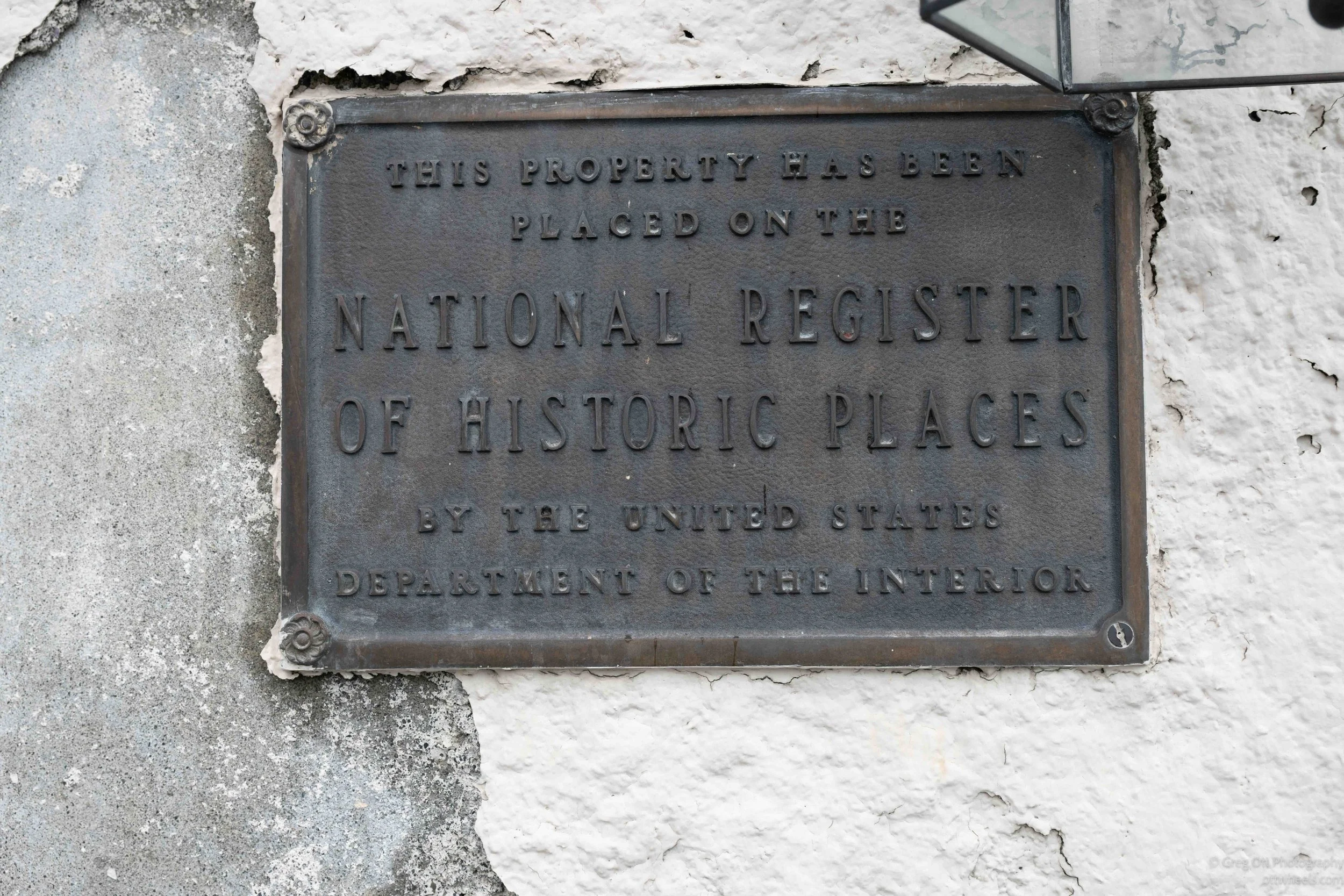
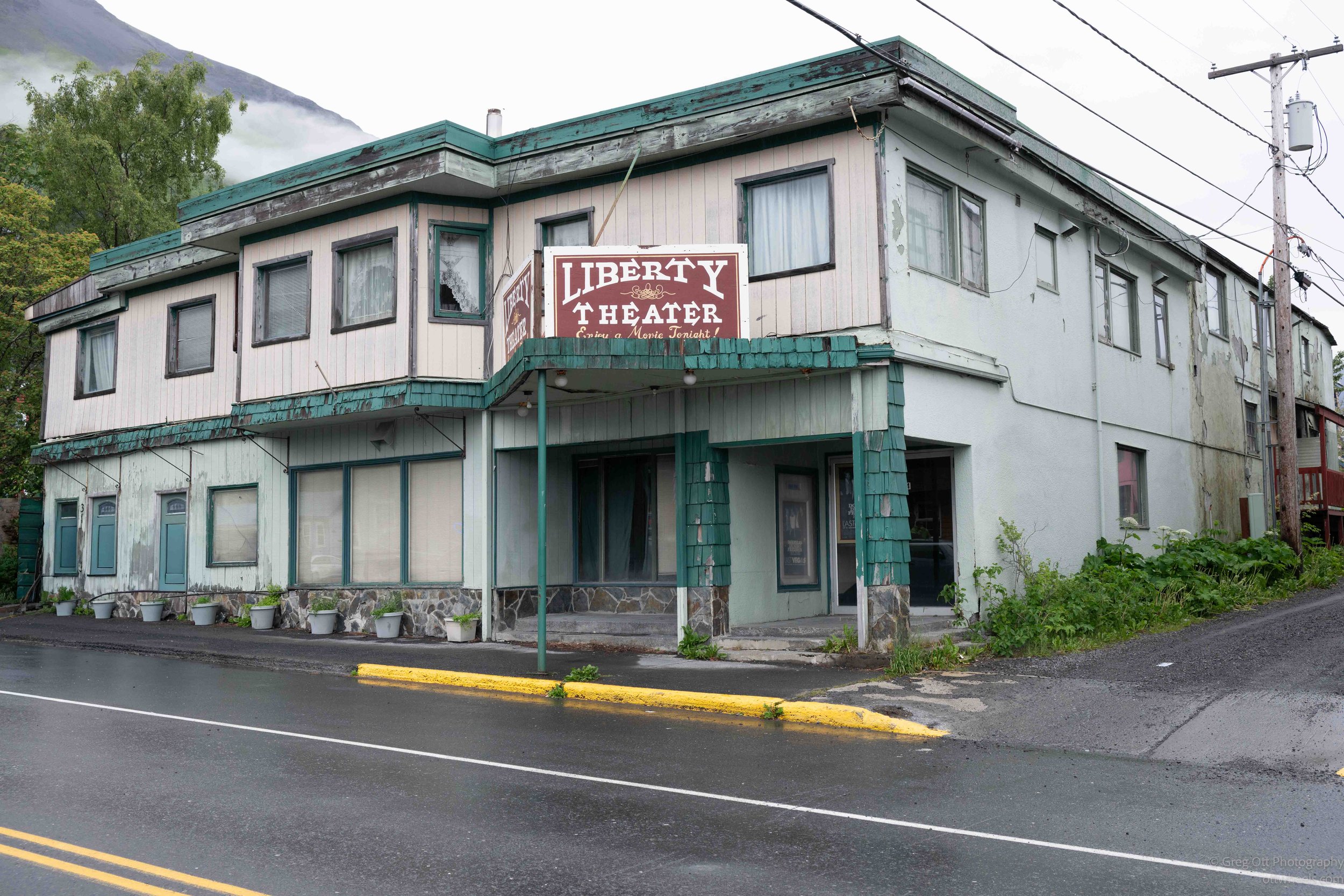
The buildings themselves tell another chapter of Seward's history. Some have been beautifully restored, like the old Brown & Hawkins mercantile with its massive painted sign overlooking Fourth Avenue. Others proudly display their National Register of Historic Places plaques, while a few seem to be losing a slow battle against Alaska's relentless weather. Even the faded Liberty Theater, with its peeling paint and weathered façade, hints at a busier era when it was the center of evening entertainment. Walking these streets felt less like visiting a tourist town and more like paging through a living history book, where every weathered storefront has another story waiting to be discovered.
Exit Glacier Drive
Somehow, I still had plenty of energy, and this was summer in Alaska, so at 6:30 p.m. there were still hours of daylight ahead. Rather than return to the van for the evening, I decided to drive out toward Exit Glacier and take a short hike.
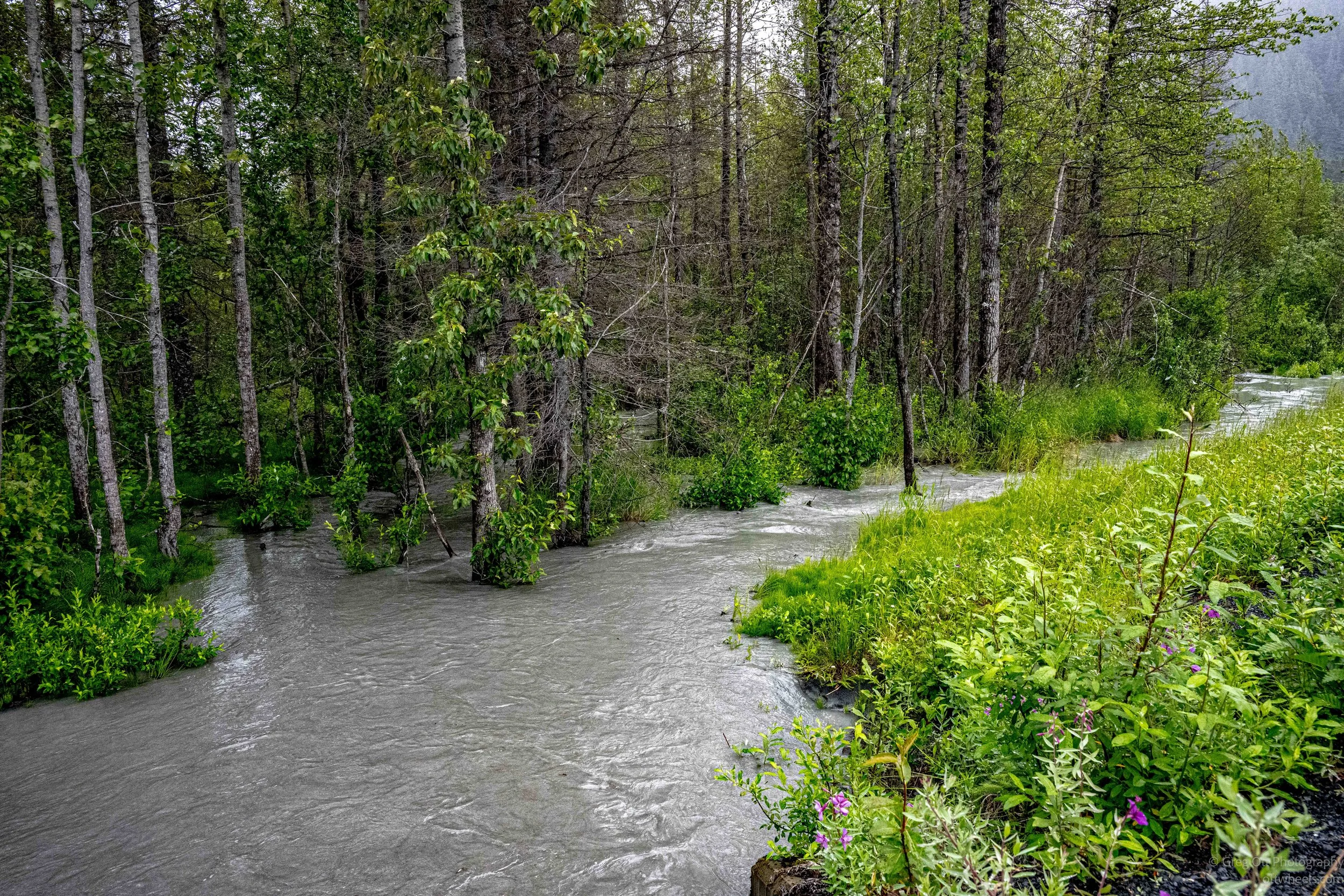
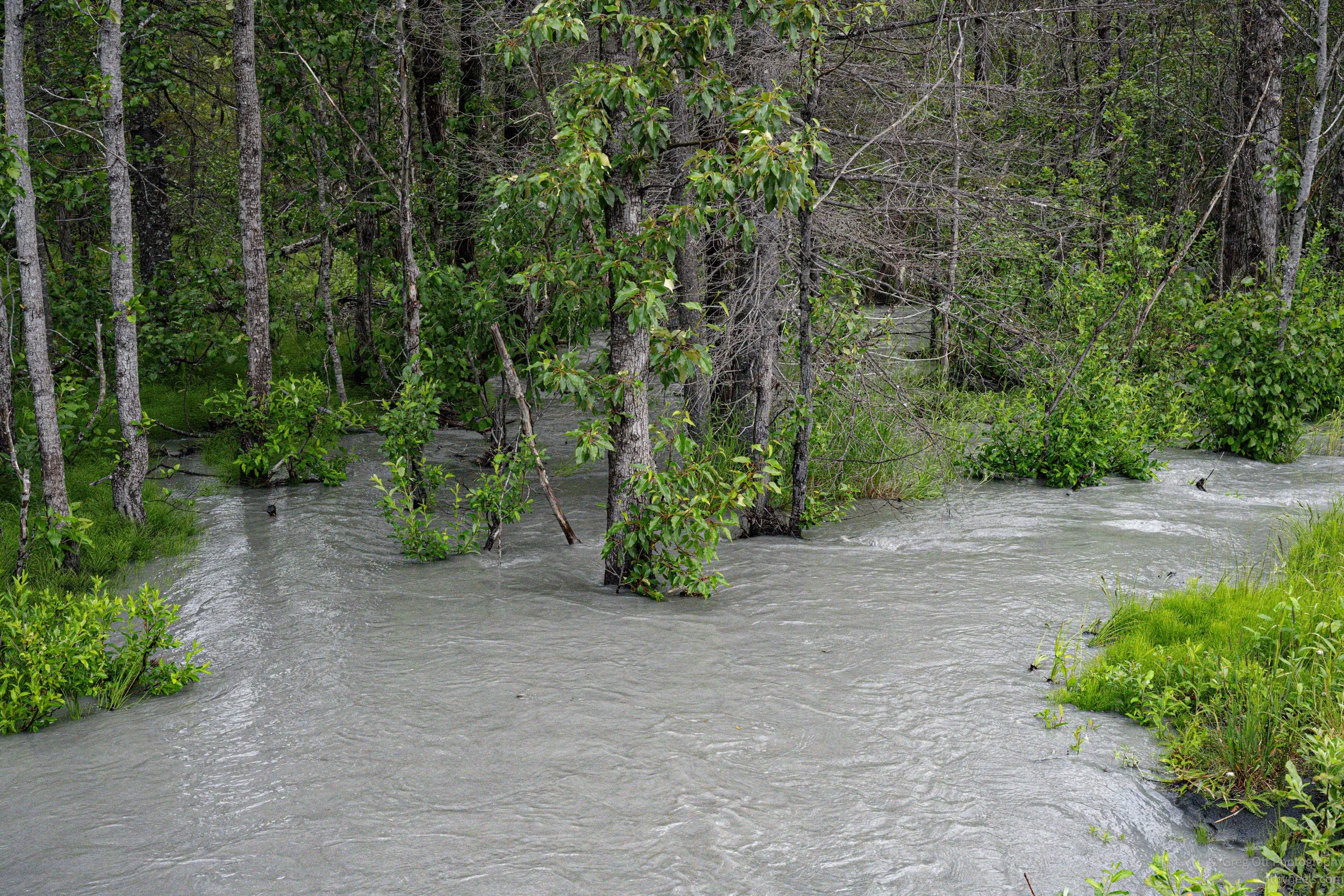
Exit Glacier Road was mostly in good condition, although a few rough sections required slowing almost to a crawl unless I wanted to leave part of the van’s suspension behind. Soon after passing the national forest sign, I began seeing RVs pulled into roadside clearings for the night. The informal boondocking spots were already filling, but I found an open turnout beside the river and stopped to take a few photographs.
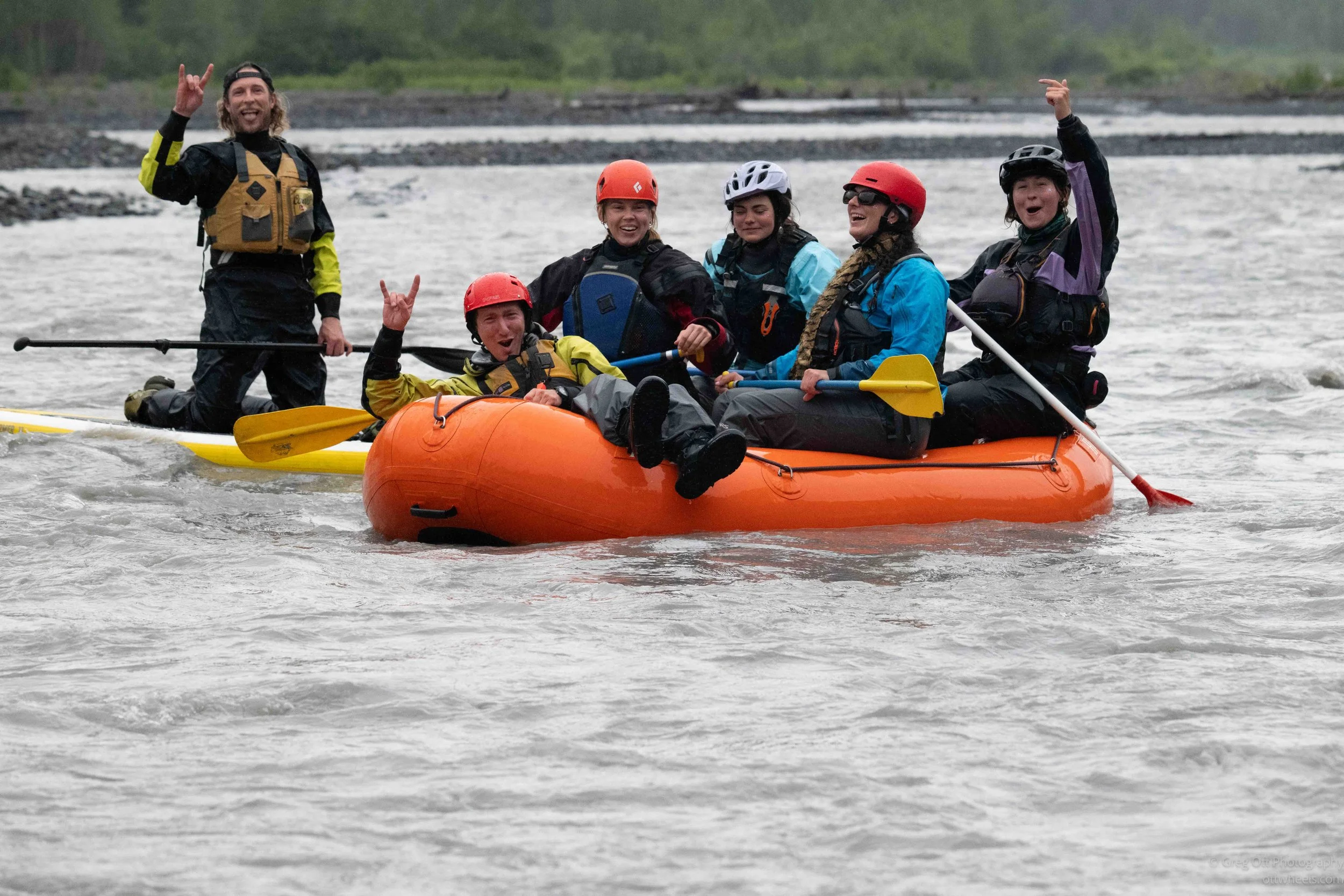
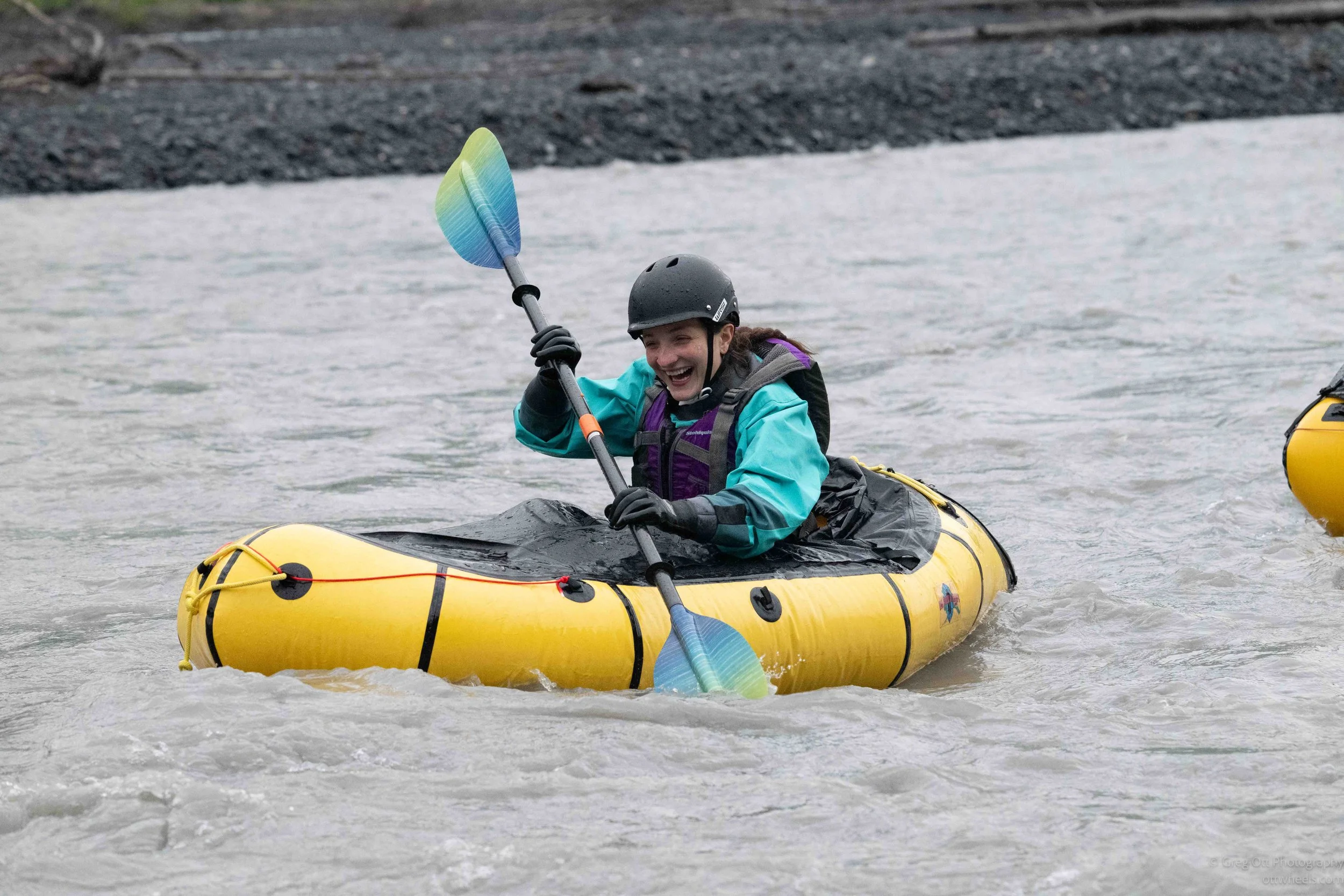
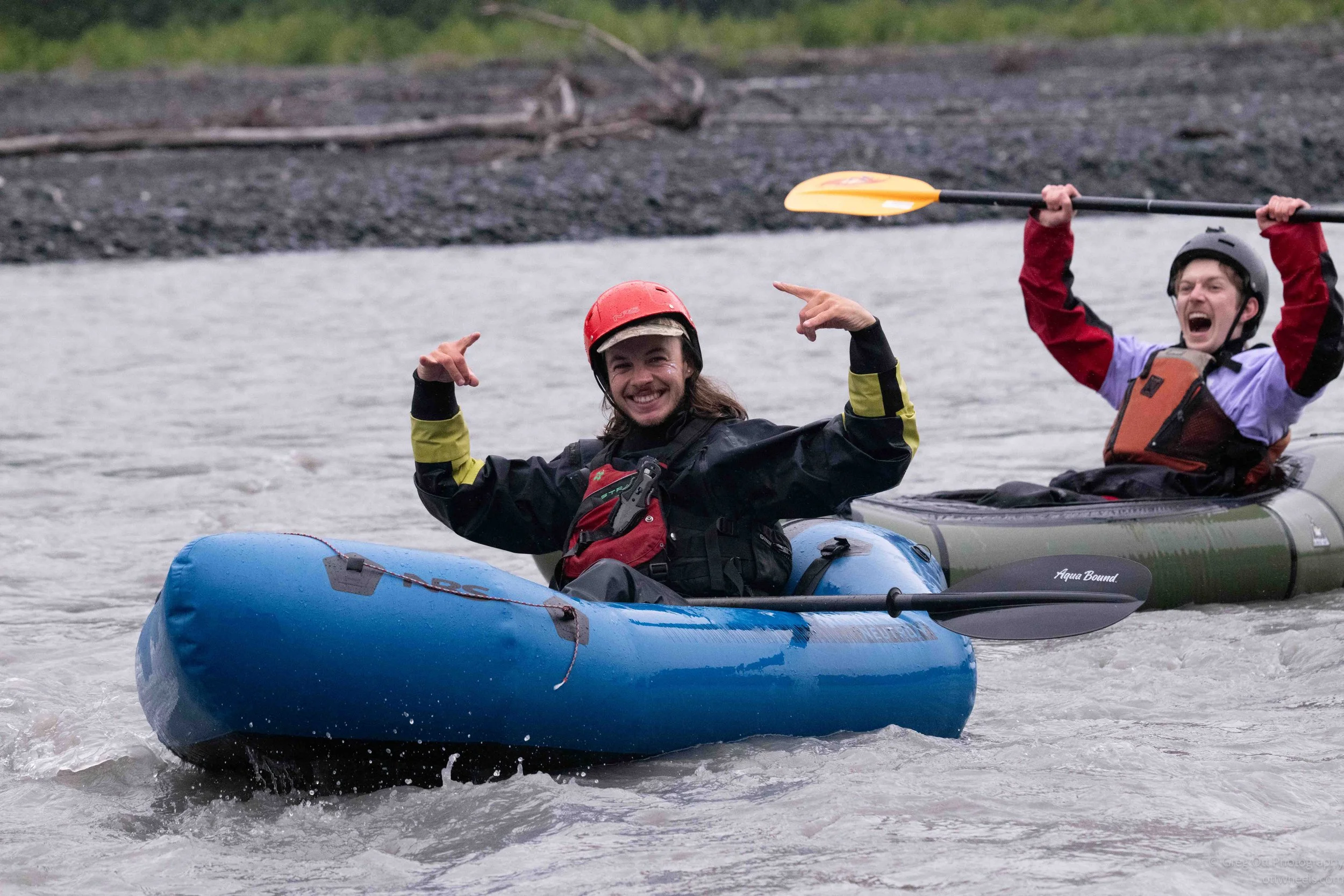
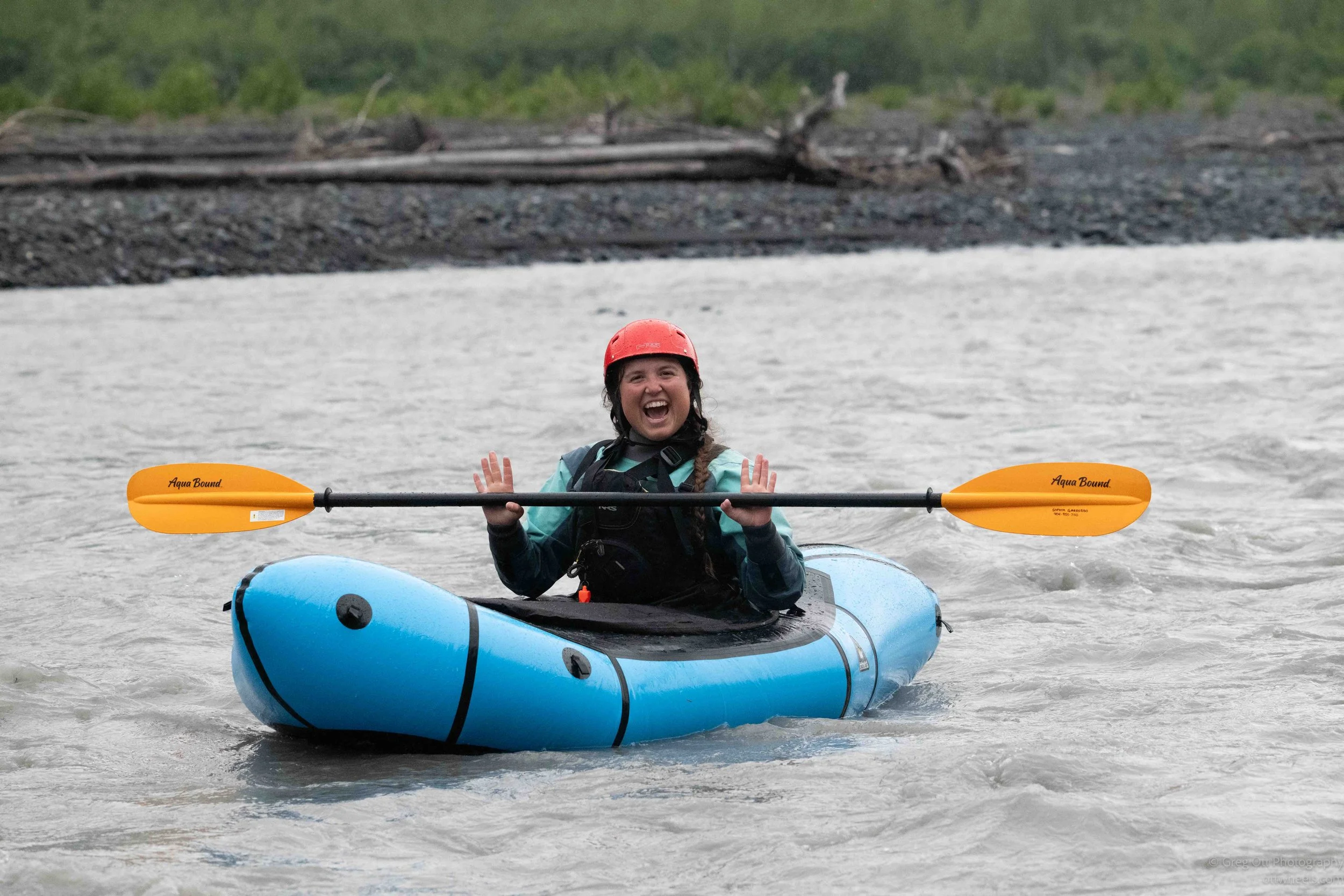
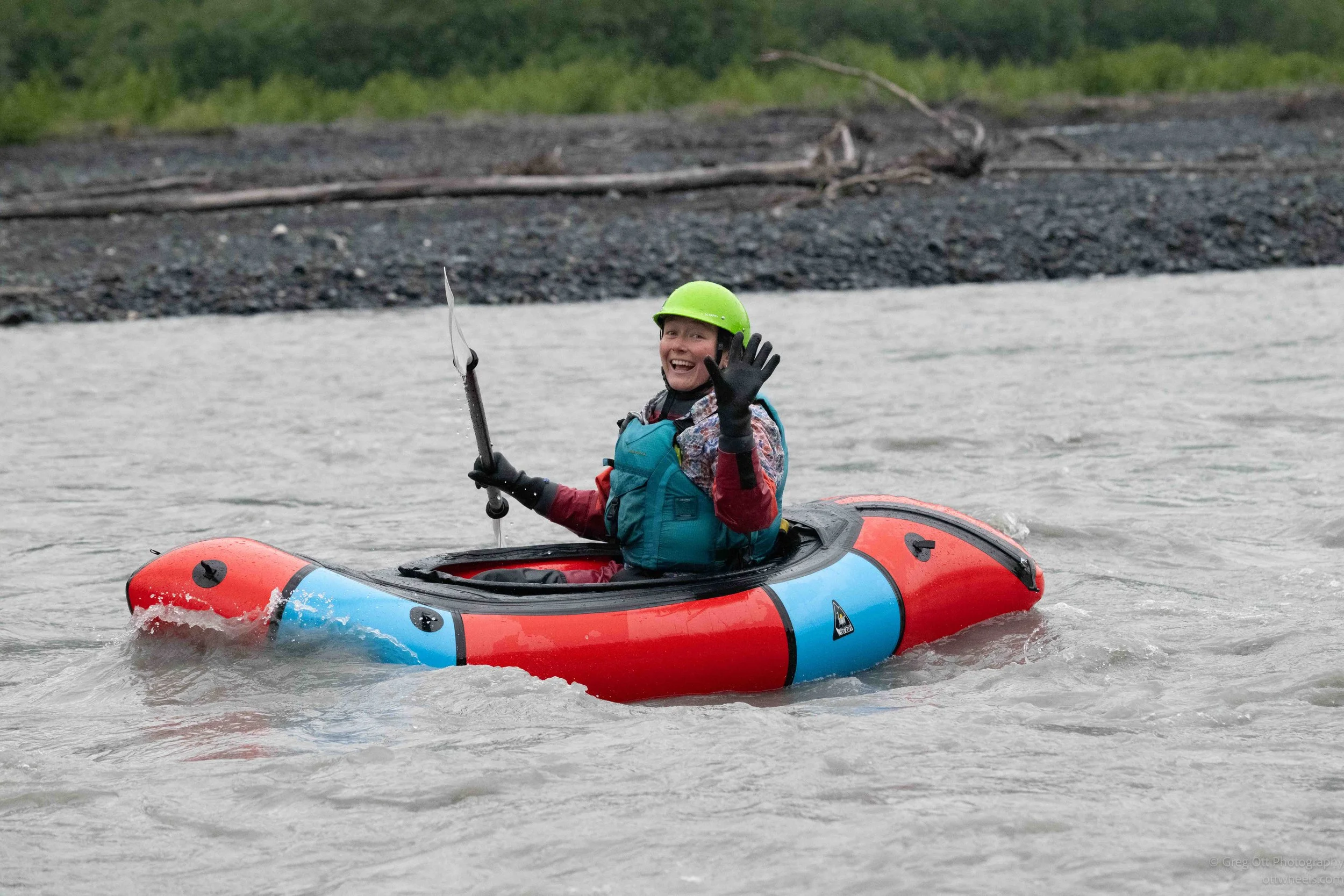
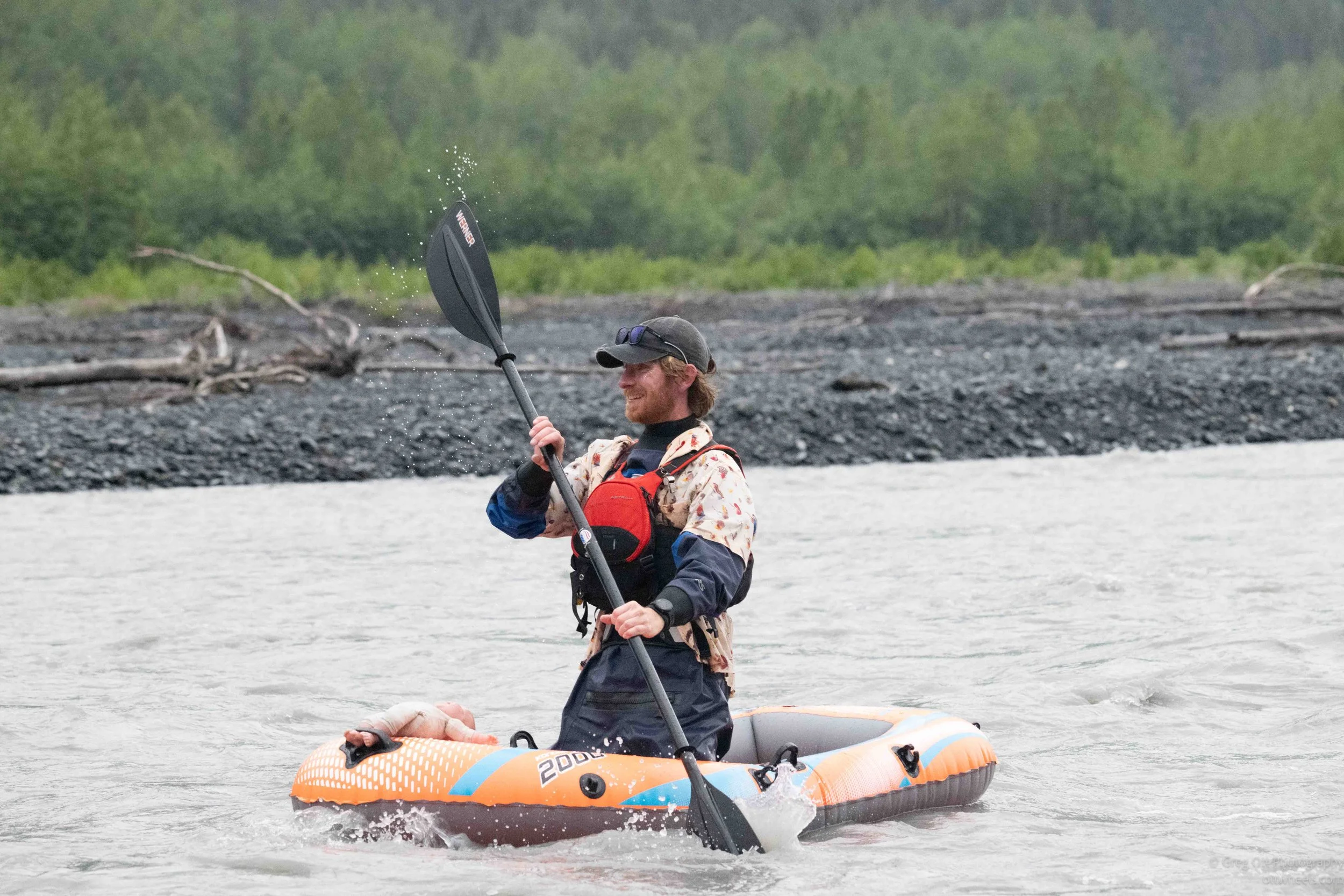
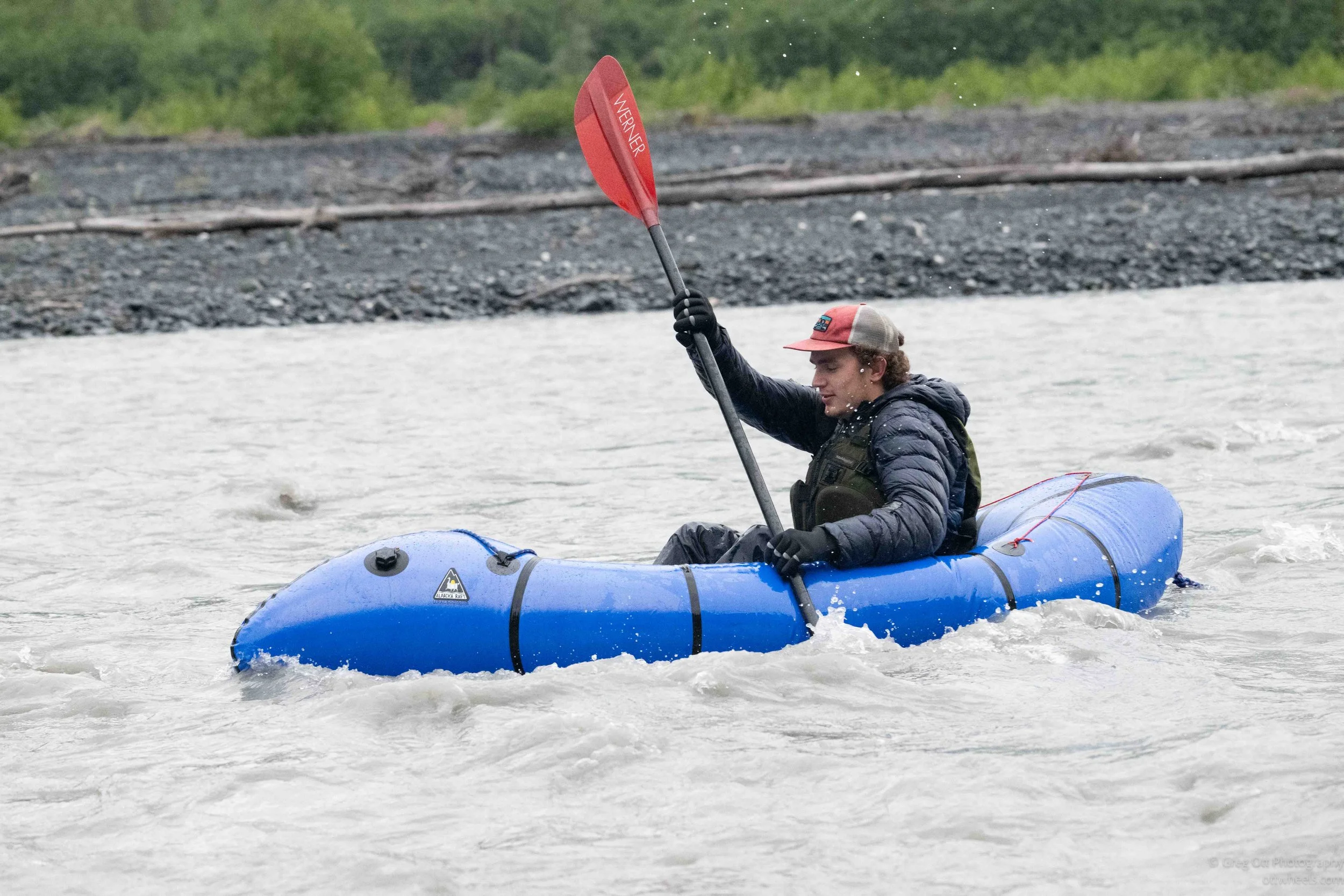
A rafting group was approaching in the distance, so I carried my camera closer to the water. The first few paddlers smiled and waved as they passed. When a larger raft came into view, someone called out that two of the people aboard had just gotten married. After that, everyone wanted a photograph. They waved, posed, raised their paddles, and laughed their way past me, clearly having a much better time in the cold, silty water than I would have been.
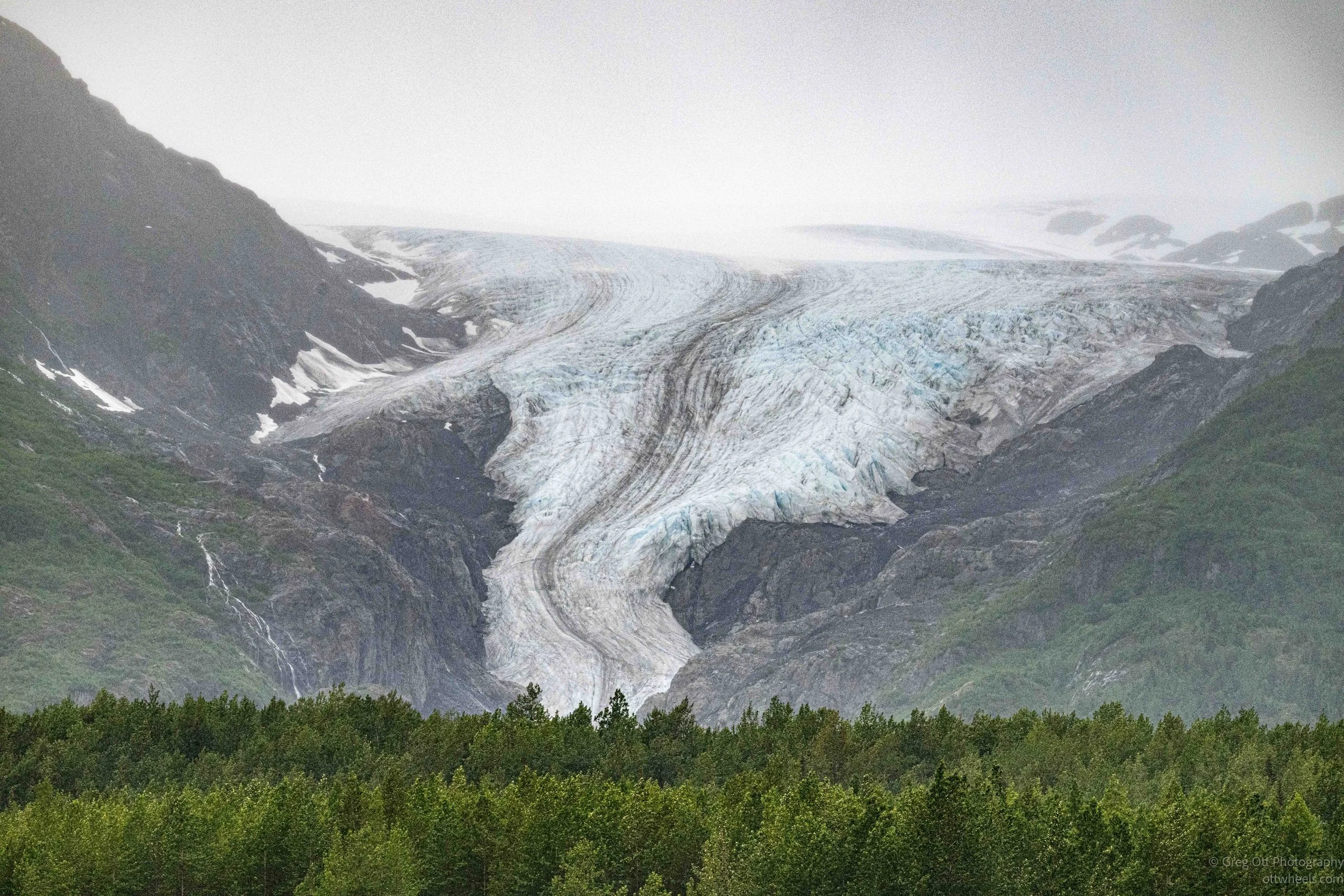
Farther along the road, I stopped at an overlook where a plaque described Exit Glacier. The glacier was visible directly across the valley, flowing down from the Harding Icefield between dark mountain slopes. Cars continually pulled in behind me, and people stepped out for a quick photograph before continuing toward the trailhead.
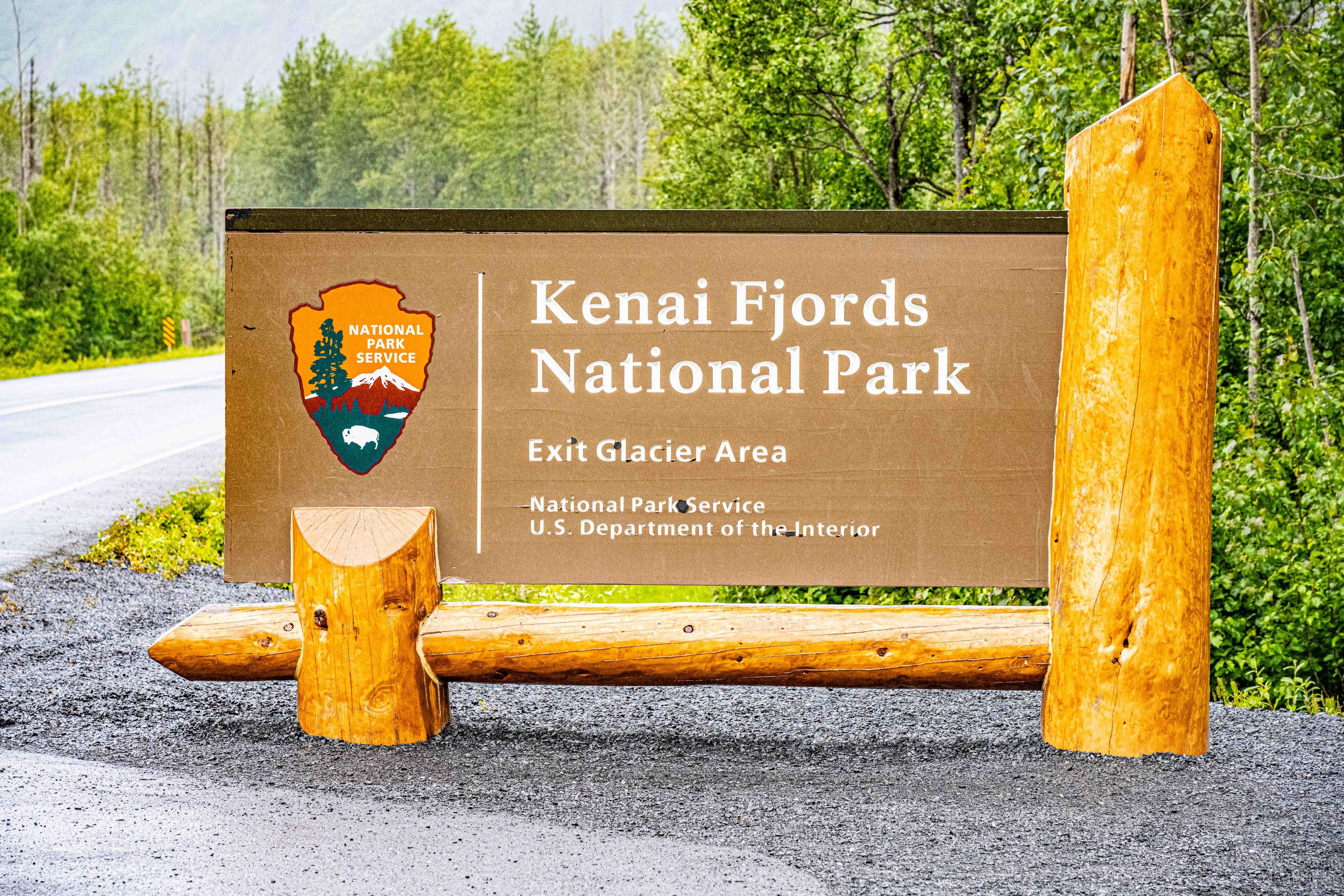
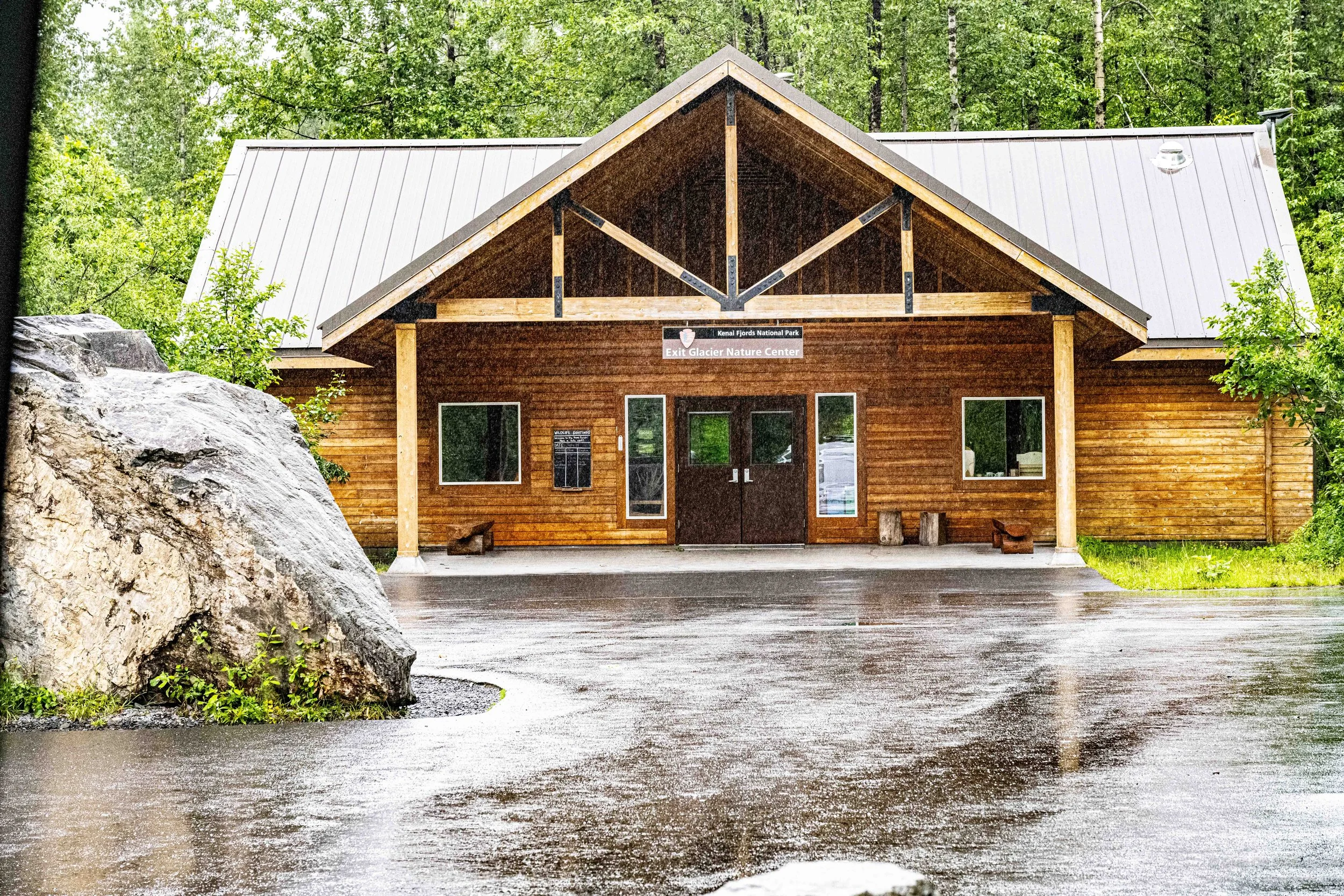
I eventually reached the Exit Glacier area of Kenai Fjords National Park. I wasn’t sure exactly where the boundary between the national forest and the park occurred, but the rules changed quickly—roadside camping was no longer permitted. At the Nature Center, I was surprised by how many people were still arriving and setting off toward the glacier. It was already past 7:30 p.m., but there was still plenty of light. Unfortunately, a light drizzle had started again. After spending much of the day avoiding the rain, I decided I didn’t need to end it hiking in wet clothes. I turned around and headed back to Seward.
I found my way back to the parking lot in Seward just after 10 p.m. It had been one of those days that never quite went according to plan. The weather kept changing, I traded a charcuterie board for a SeaLife Center, postponed a hike to Exit Glacier, and somehow still managed to pack the day with interesting conversations, unexpected discoveries, and plenty of photographs. Travel doesn't always reward you with perfect conditions. Sometimes it simply reminds you to stay curious and see where the day leads.