Hurricane Ridge to Mount Angeles
I woke in the National Forest Service office parking lot in Quilcene, Washington. It had been a relatively quiet night, at least until the logging trucks started rolling through around 4 a.m. Nothing says “good morning” quite like diesel engines echoing through a mountain valley before sunrise. I had hoped to get information on where I could stay in the Olympic National Forest, but the office was only open Wednesday and Thursday. Timing, once again, was impeccable.
Olympic National Park
I made it to the Olympic National Park Visitor Center around 10 a.m. I wandered through the exhibits and looked for a park film but never found one. Near the entrance, a ranger and volunteer were answering questions from visitors. I tried to listen in on the couple ahead of me, but the room was too loud, and honestly, I was mostly trying to figure out how much driving this place actually involved. Olympic National Park looks compact on a map. It is not.
I eventually left with a loose three-day plan:
Hike Hurricane Ridge to Mount Angeles
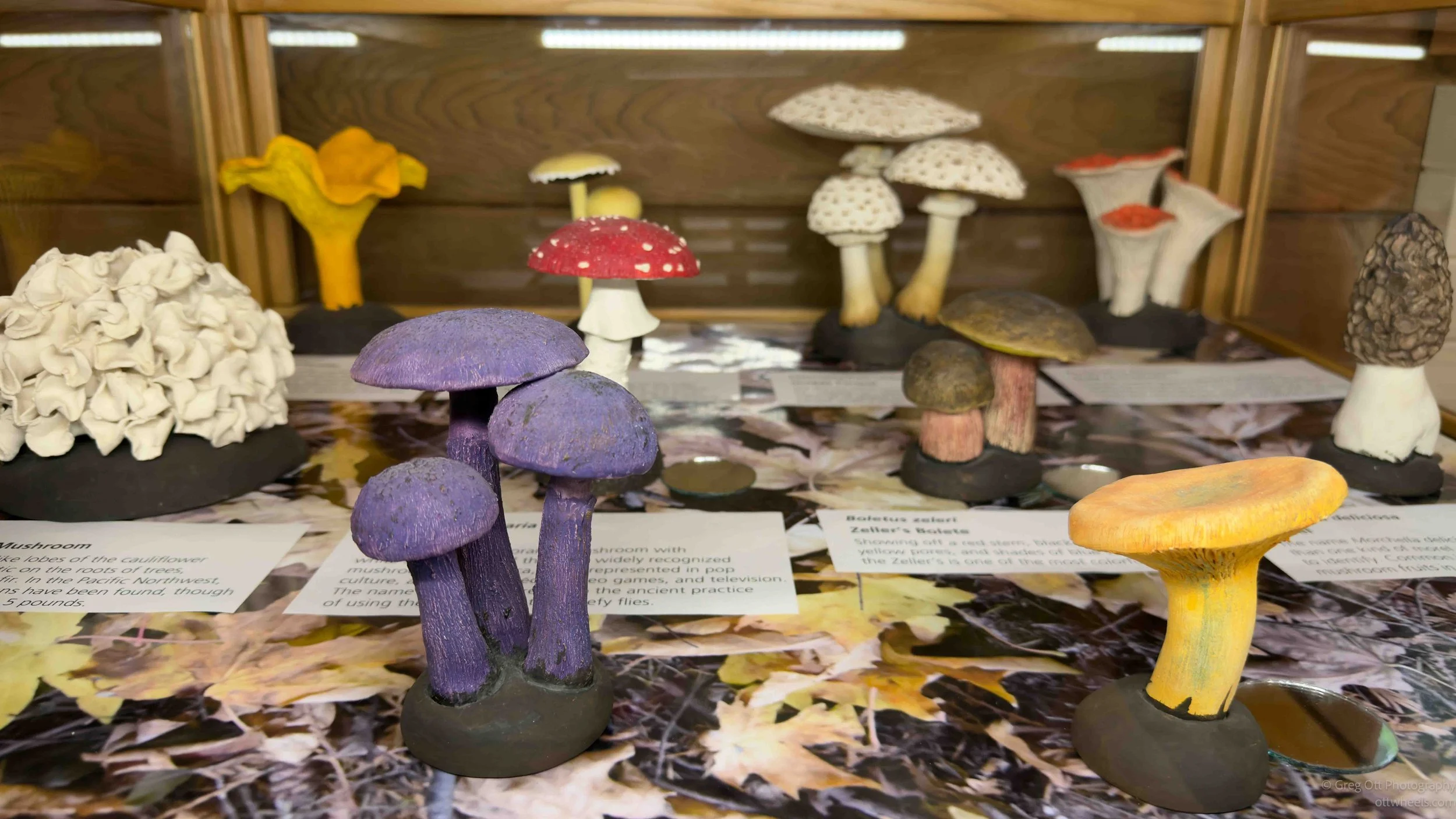
Visit the Hoh Rain Forest and photograph mushrooms
Hike around Lake Crescent
Back at the van, I made breakfast and started looking for campsites inside the park. Friday and Saturday were completely booked, but suddenly the world became available again Sunday through Thursday. Apparently everyone wants wilderness on weekends but has jobs by Monday.
The drive to Hurricane Ridge was complicated by heavy fog. At the entrance station I handed the ranger my park pass and asked about conditions at the top.
“Will I be able to see anything?”
Without hesitation, and in the tone of someone explaining gravity to a toddler, he replied, “This is just marine fog.” Then he closed the window. Apparently you get one question per customer, and I had already used my allotment for the day.
The speed limit was 35 mph, though many people clearly considered that more of a philosophical suggestion. I ended up leading a convoy of five vehicles through dense fog while barely being able to see 100 feet ahead. Following in fog is easy. Being the lead vehicle is a completely different experience. The road narrows as it climbs, and three tunnels back-to-back add a little extra entertainment. Clearance wasn’t really an issue for the van, though I still instinctively checked every tunnel like I was trying to land an aircraft carrier.
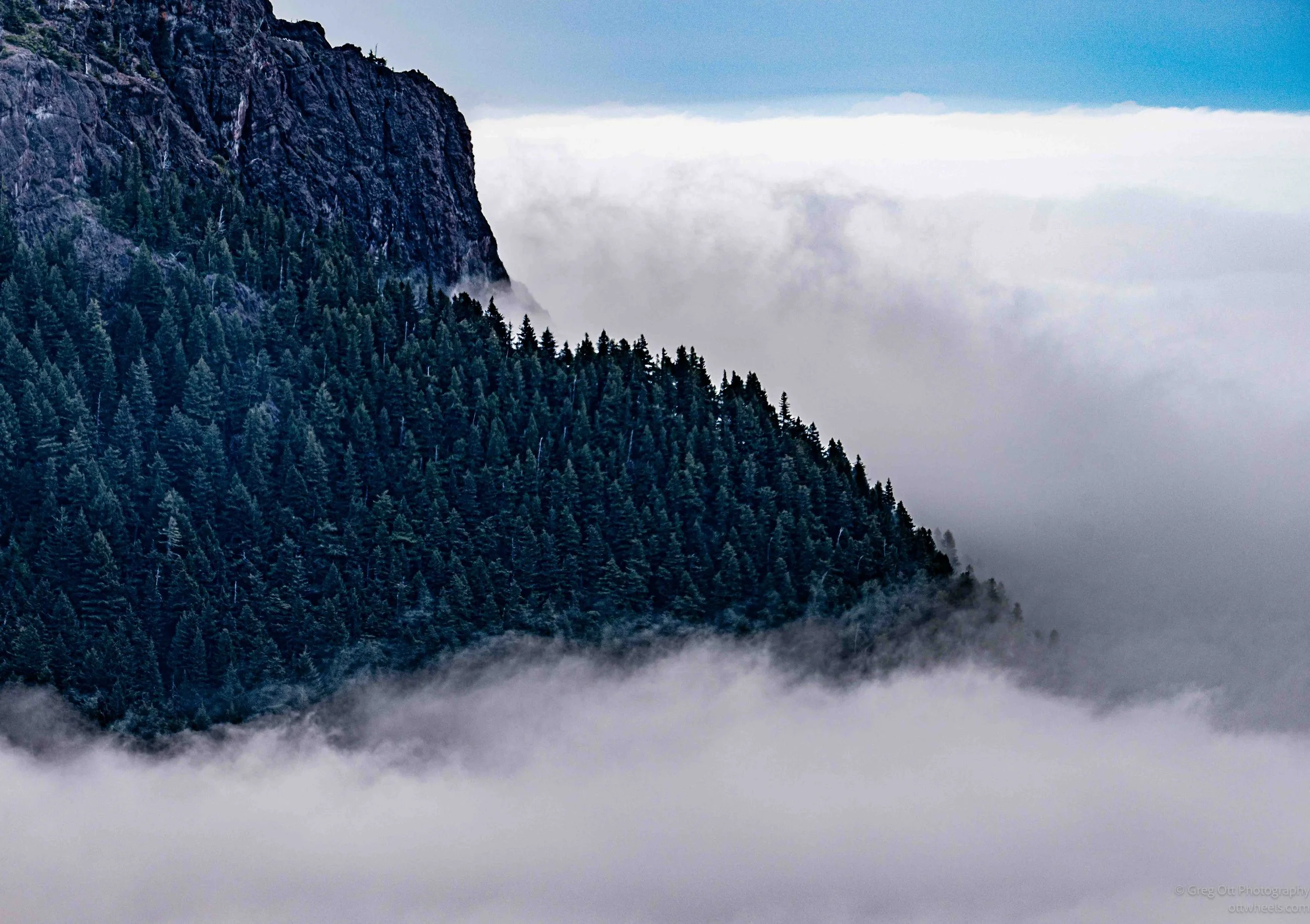
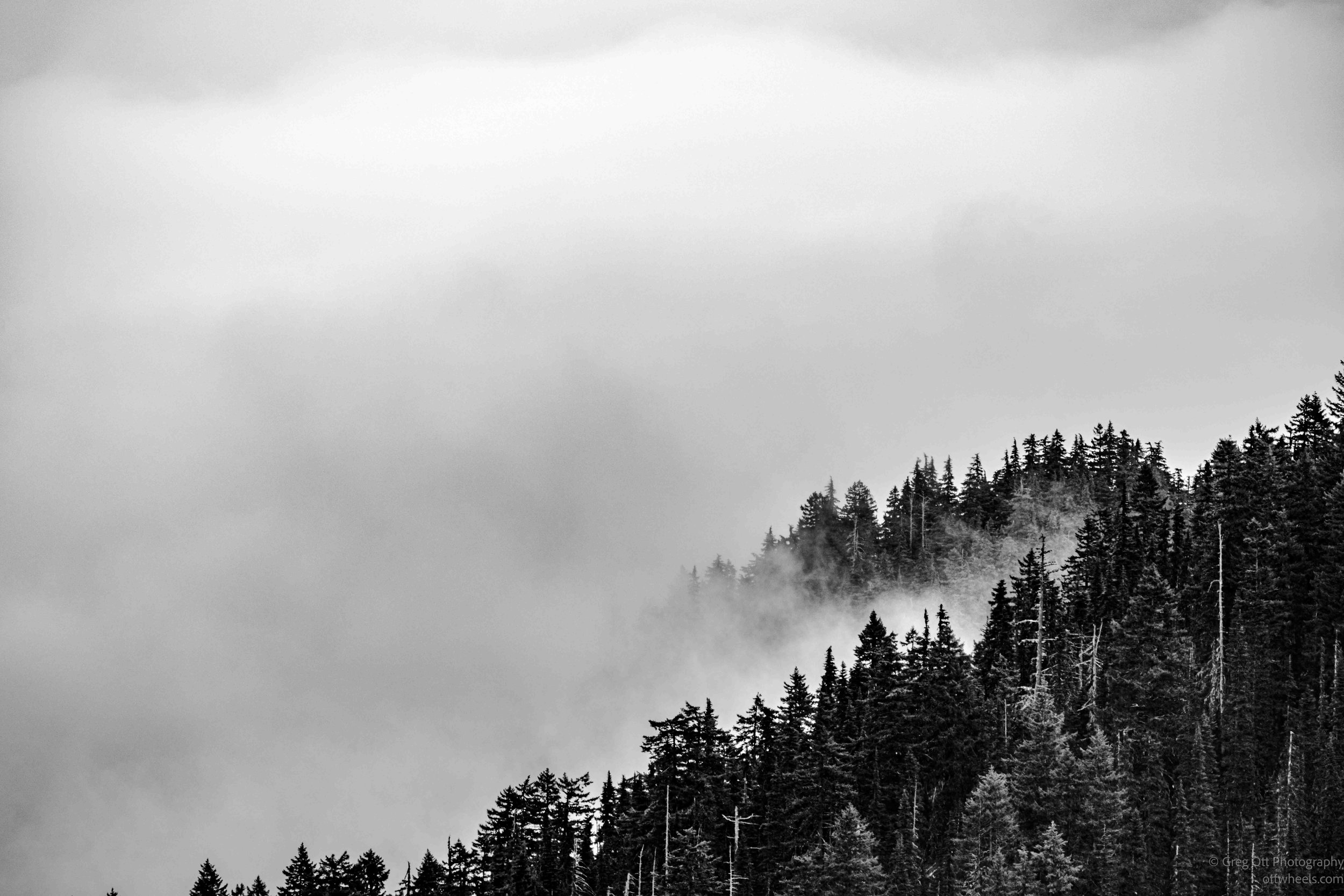
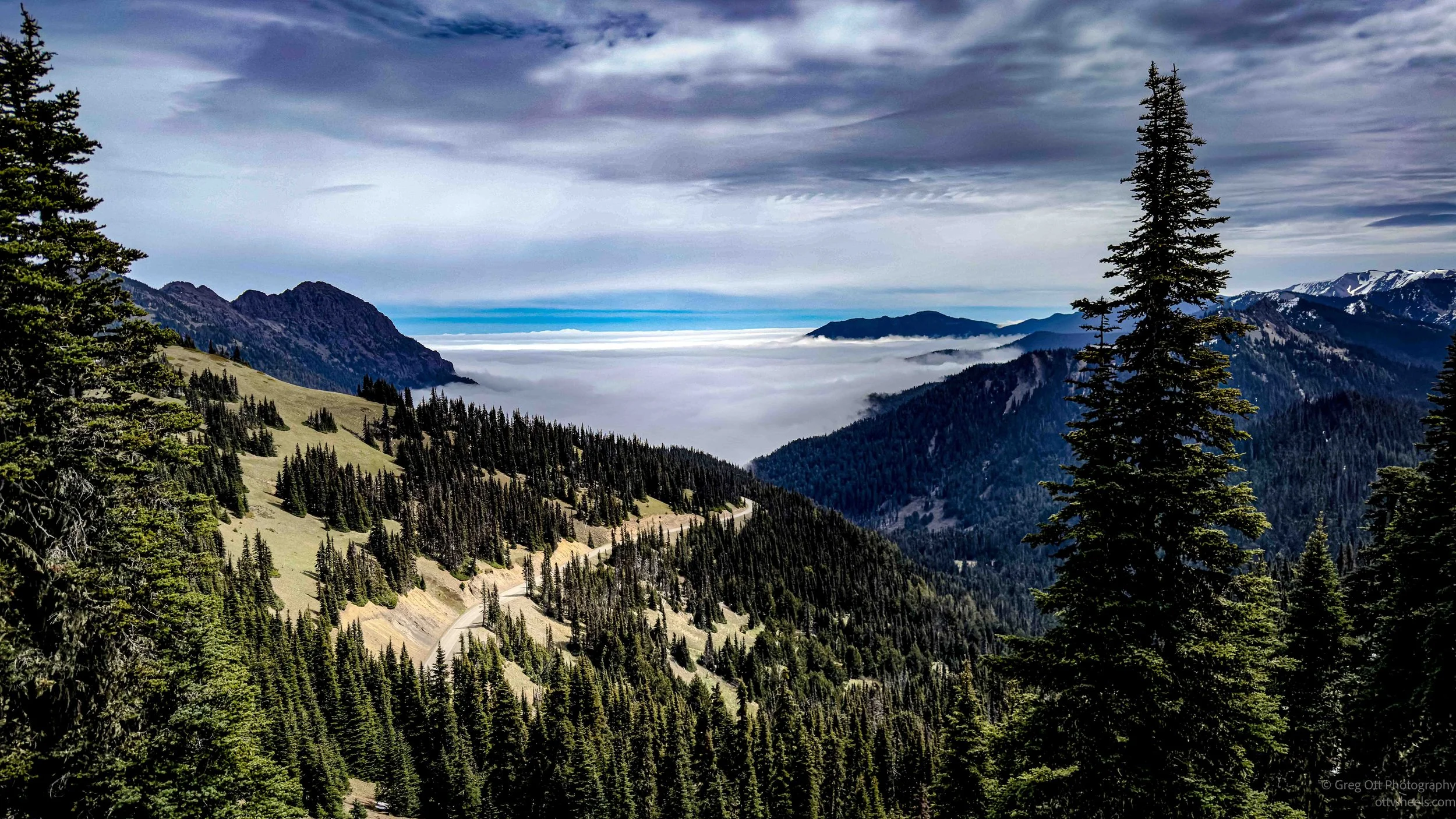
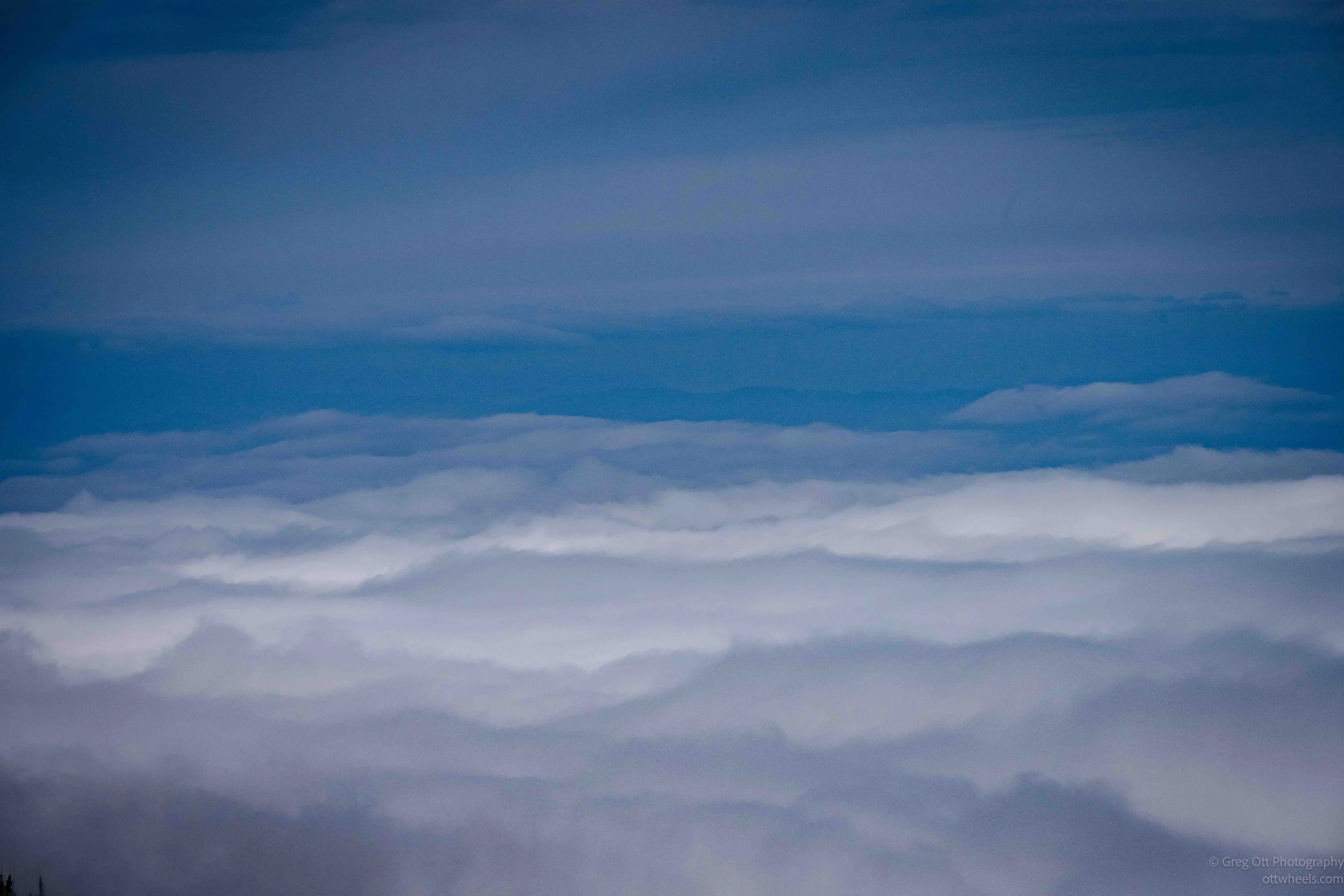
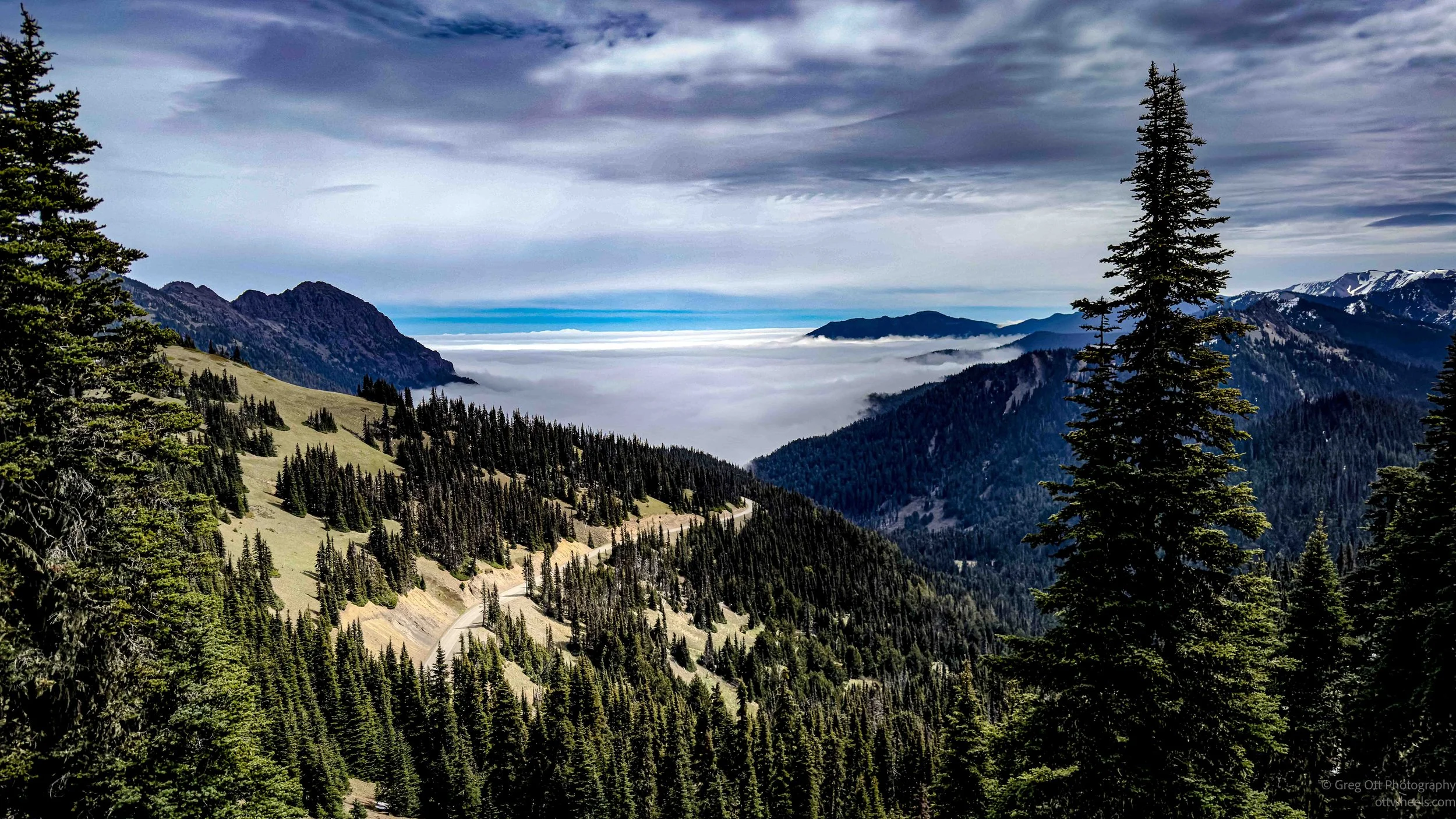
Then, about 45 minutes later, we burst out above the fog into sunlight. The valleys below were filled with clouds pinned between the mountains like white rivers. I pulled into a scenic turnout, and the truck two vehicles behind me immediately floored it and passed everyone. Clearly he had suffered enough behind my “survive the fog” pace.
Hurricane Ridge to Mount Angeles (Almost)
At the top there was plenty of parking, at least in early May. I can only imagine this place during peak summer season. There was a temporary park office, restrooms, and several closed roads blocked by lingering snow.
I spent some time researching trails with AllTrails and a few online sources. Several hikes were still impassable because of snow. I eventually settled on the Mount Angeles via Hurricane Ridge Trail, a six-mile out-and-back rated “difficult.” I figured it would be a good test of my conditioning. Two months after COVID, I’m still feeling the effects, especially with breathing. That would become very relevant shortly.
After packing up my gear, I headed toward the trailhead and immediately noticed a warning sign:
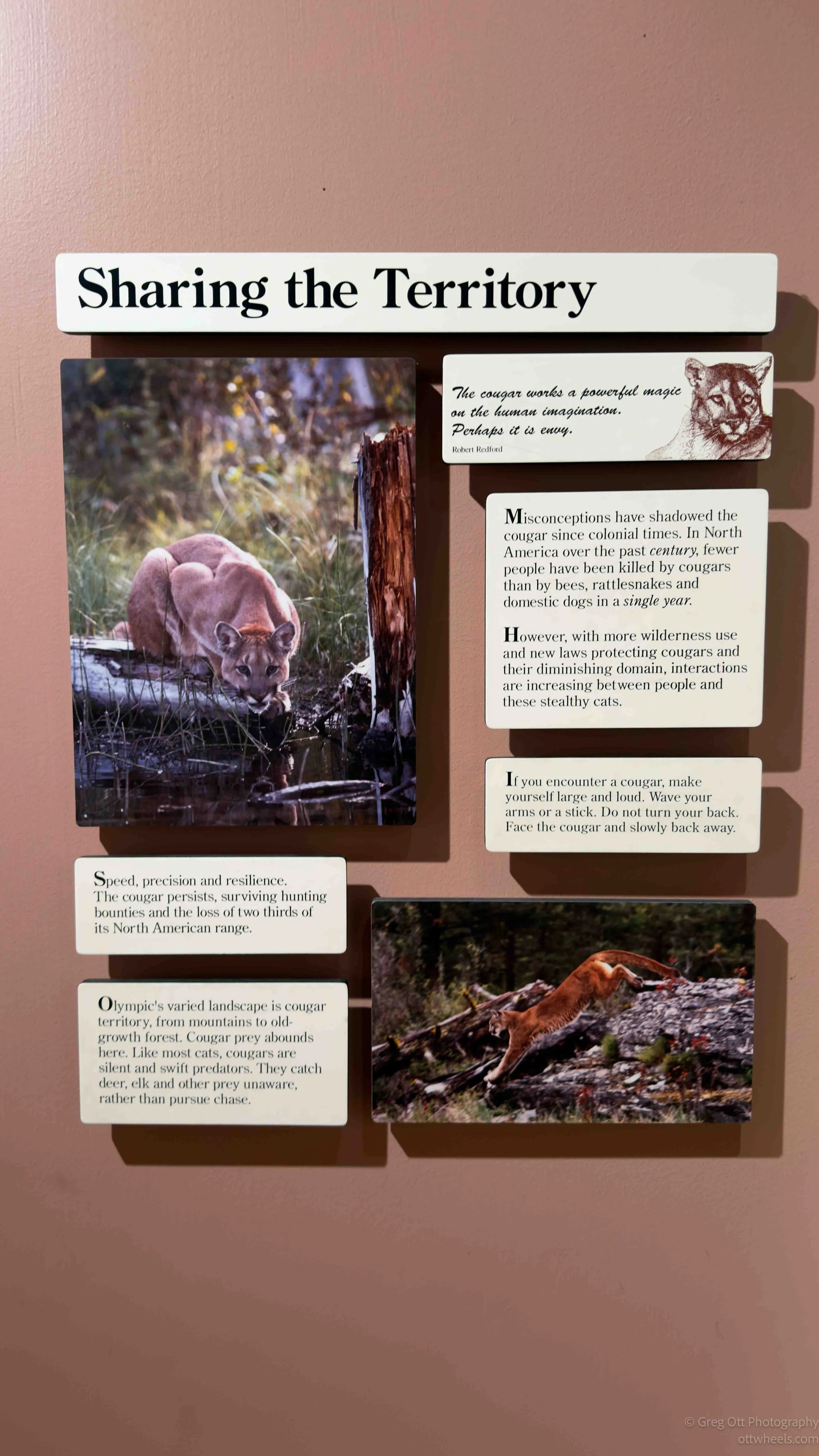
“Cougars Spotted. Do Not Hike Alone.”
That stopped me cold. I stood there thinking about how I had somehow become the exact example the sign was written for. So I turned around, went back to the van, grabbed my bear spray and knife, and tried to convince myself I had now become slightly less edible.
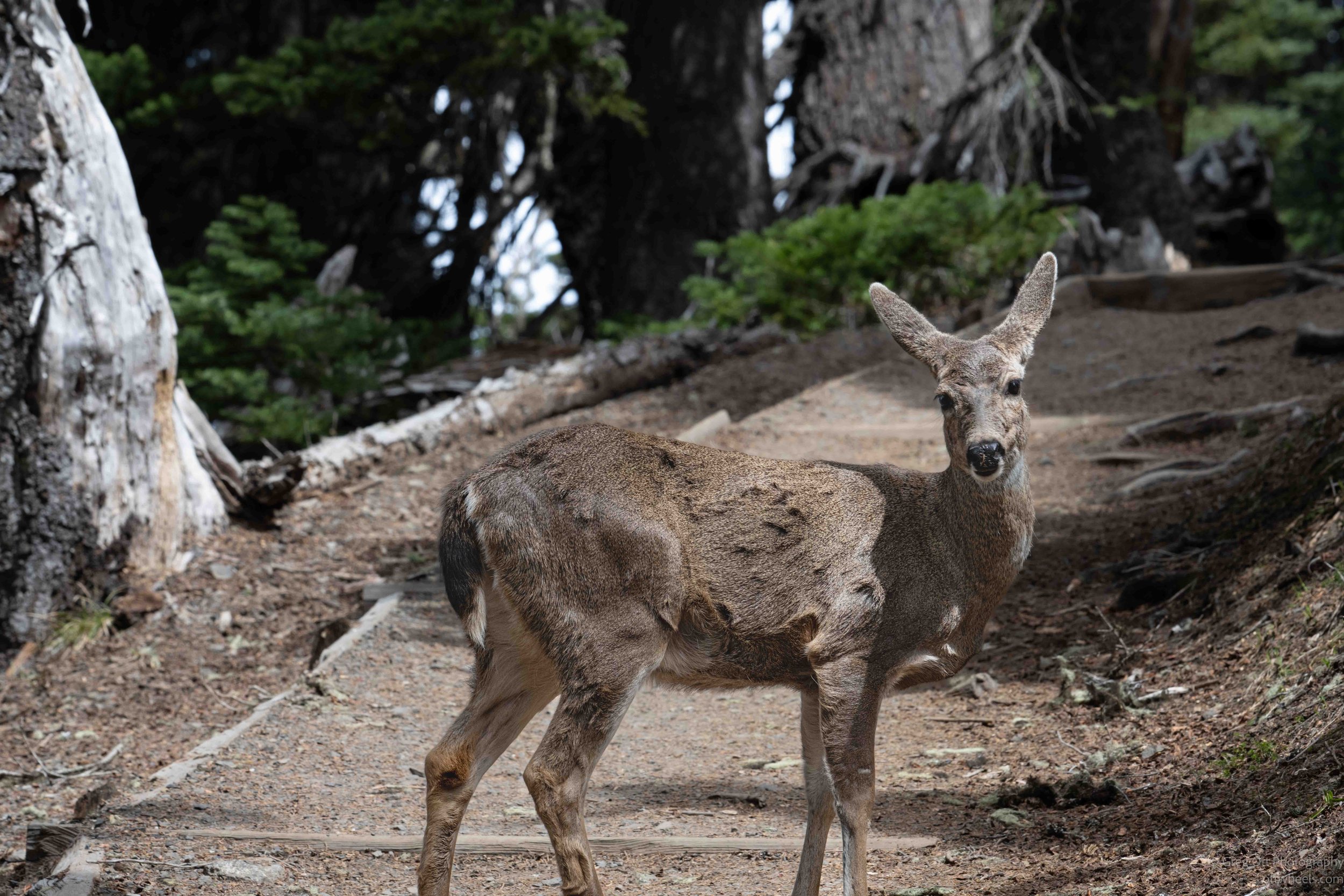
Around noon I finally started hiking. Almost immediately I rounded a corner and found a deer standing about 100 feet ahead of me on the trail. It looked up briefly, blinked at me, then calmly went back to eating grass like I was the least interesting thing it had seen all week. I raised the camera and started taking photos. Soon a small line of hikers formed behind me, all of us quietly admiring how completely unbothered the deer was by human existence. Eventually it wandered off into the trees to join a few others nearby.
At the top of the first hill, several of us were still chatting when another couple crossed paths with us. The guy noticed my camera and asked about it. He was also shooting Nikon. His partner clearly recognized what was about to happen because she immediately sat down while we launched into the universal photographer conversation: lenses, future purchases, Z6III vs. Z8, and gear we probably didn’t need but absolutely wanted.
Another hiker named Jon joined the conversation. He was heading the same direction I was, and eventually we continued together. That turned out to be incredibly fortunate.
For me, this trail felt far beyond “difficult.” At least in current conditions, I would absolutely call it strenuous. Jon, meanwhile, seemed built specifically for mountain climbing. He had just moved to Washington the previous week from Alaska and was in the Army training recruits. I’m fairly certain I accidentally became one of his trainees.
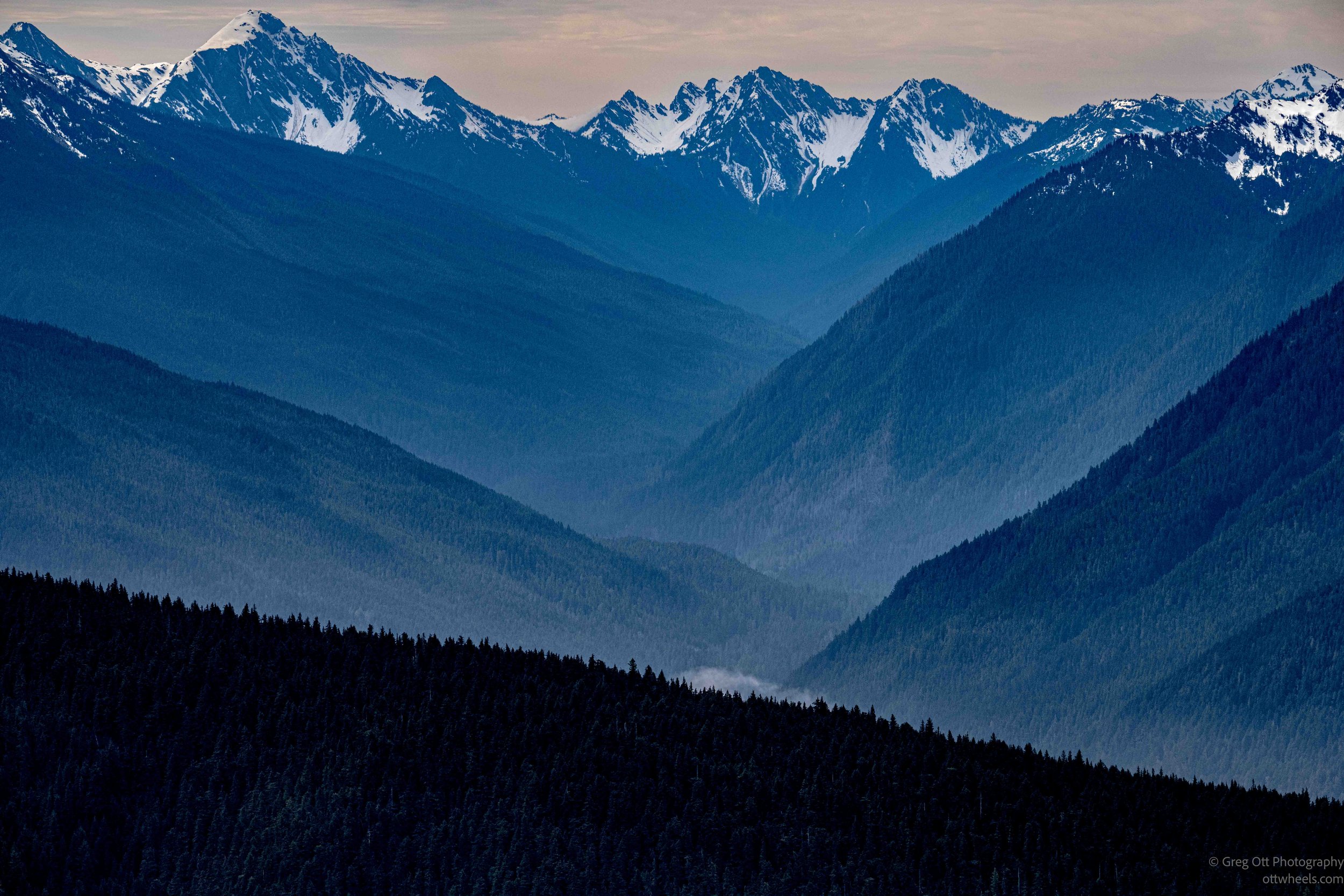
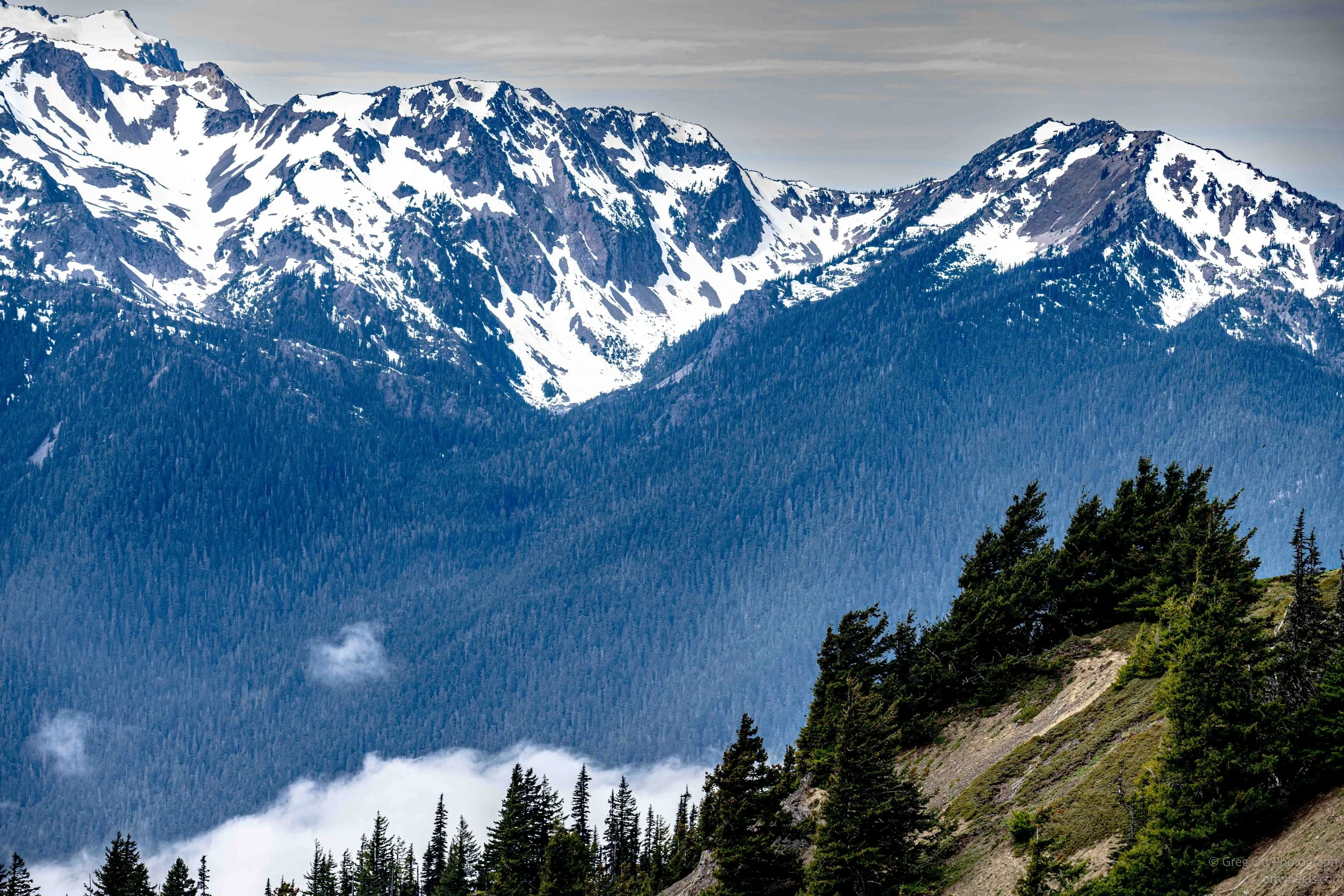
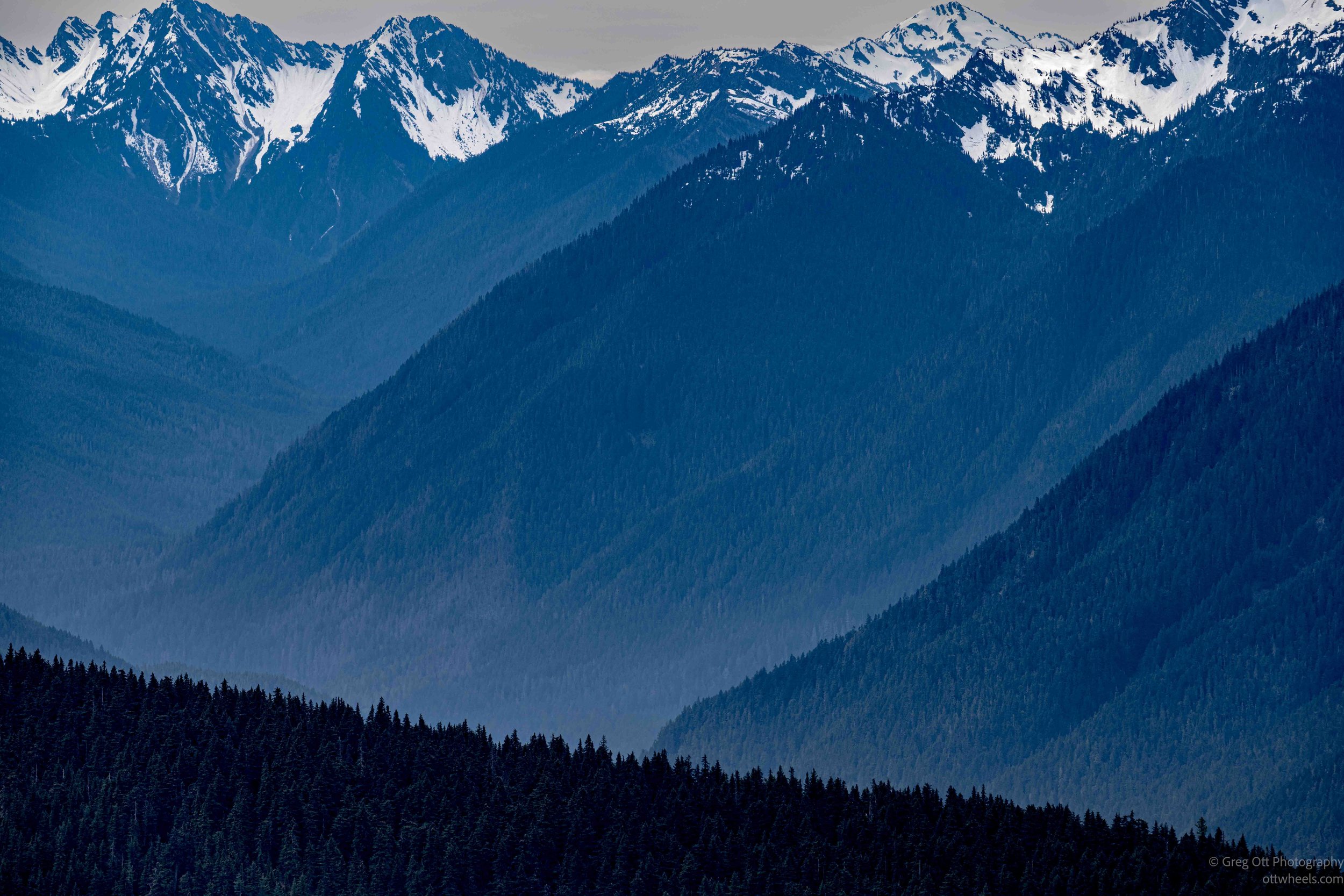
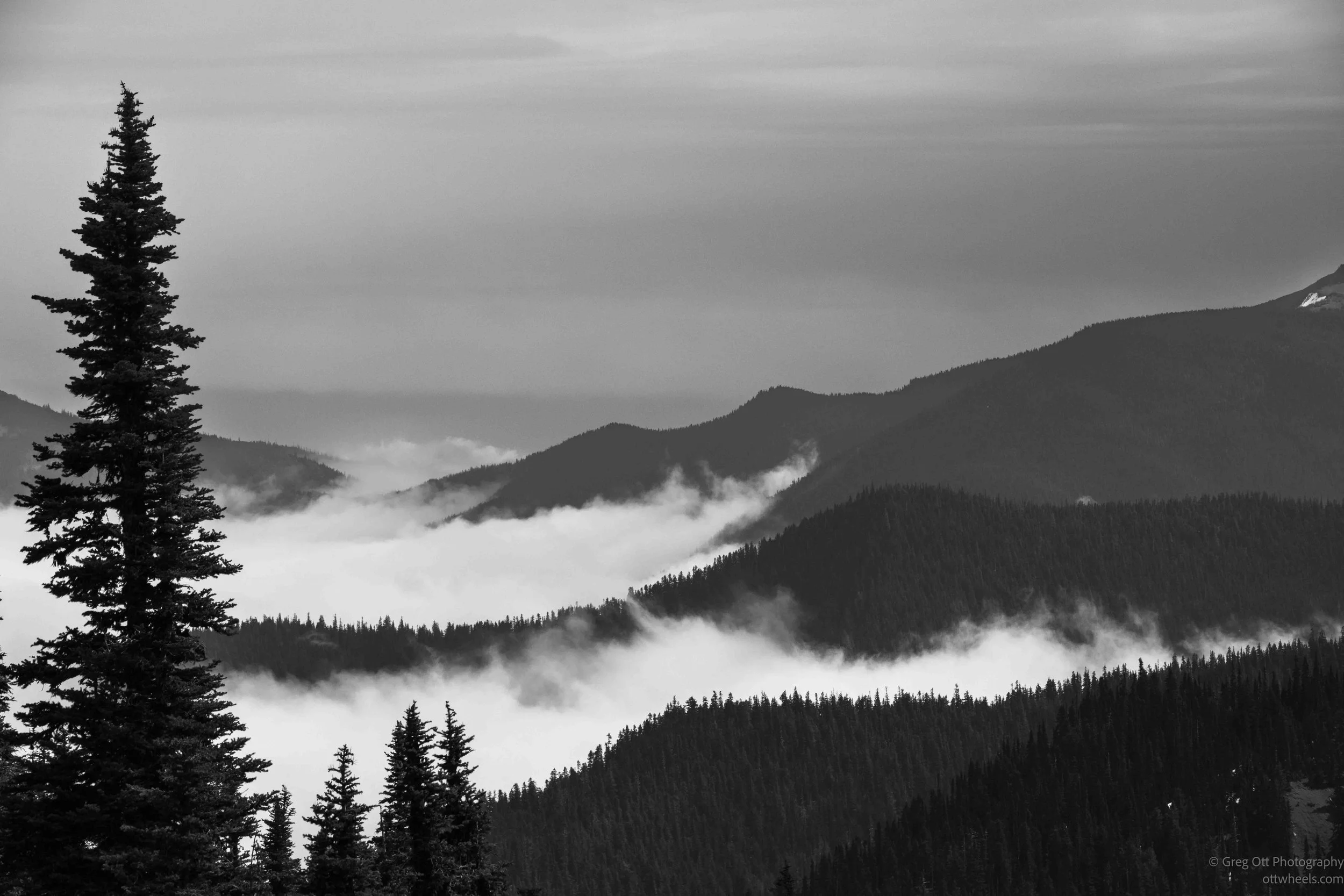
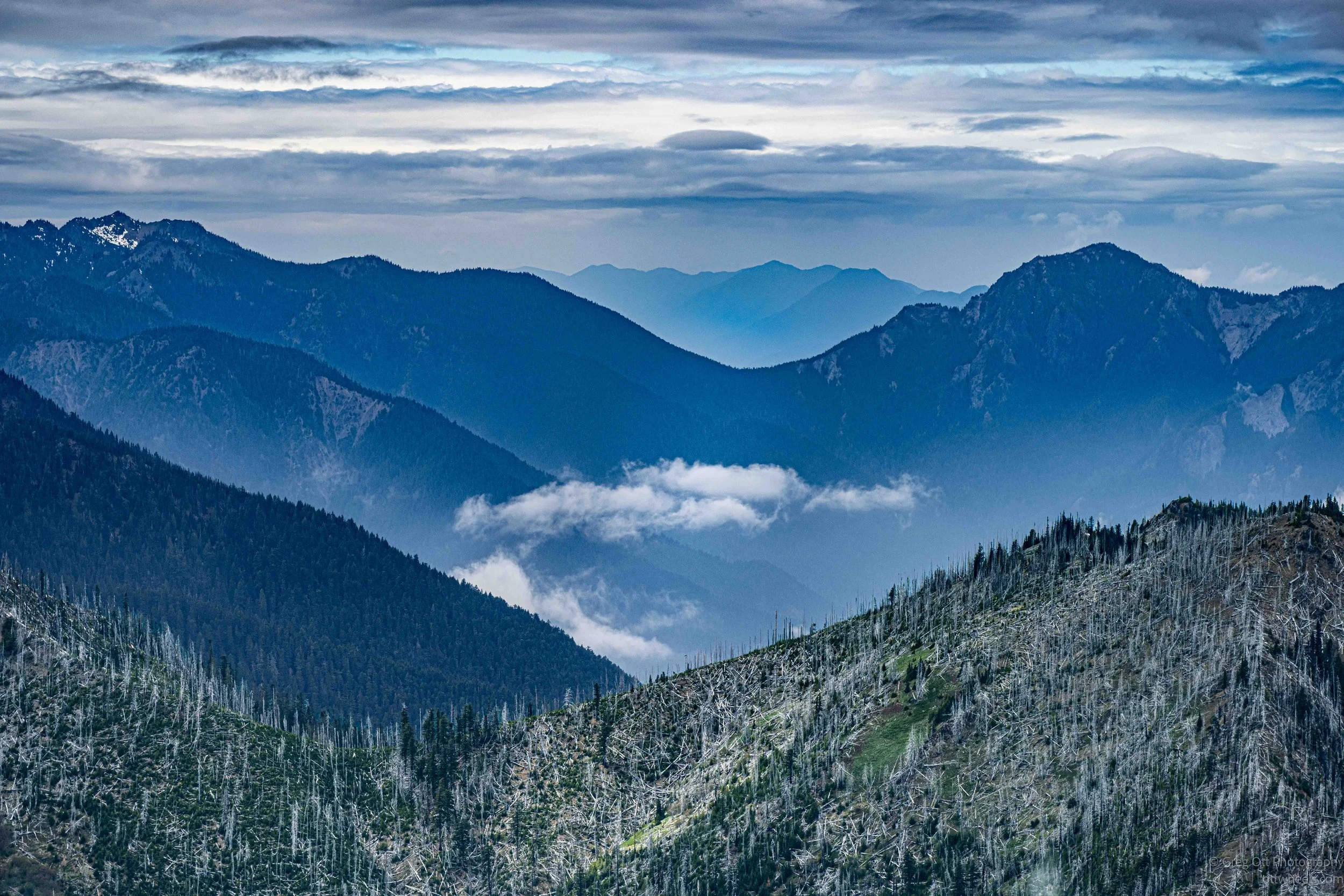
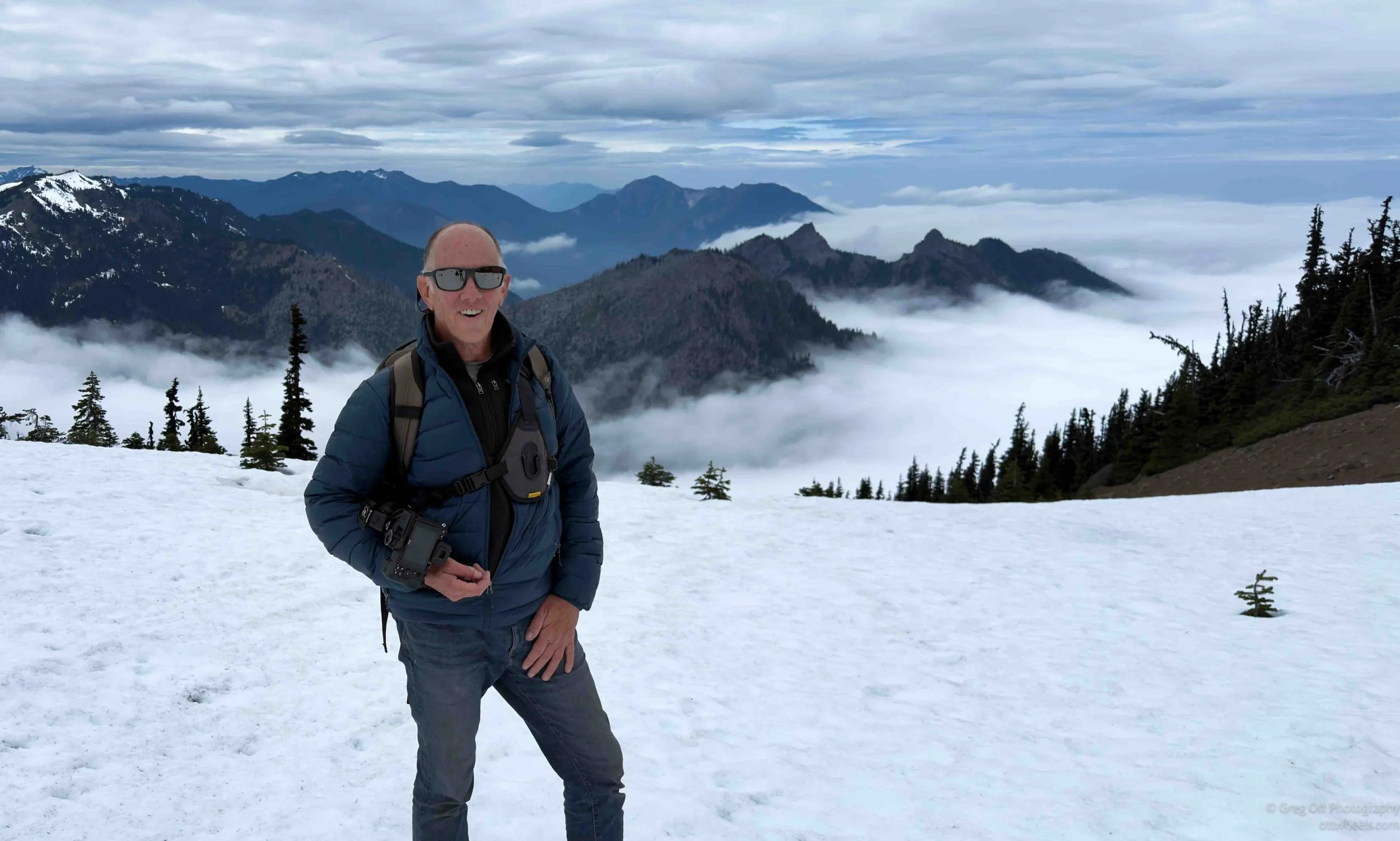
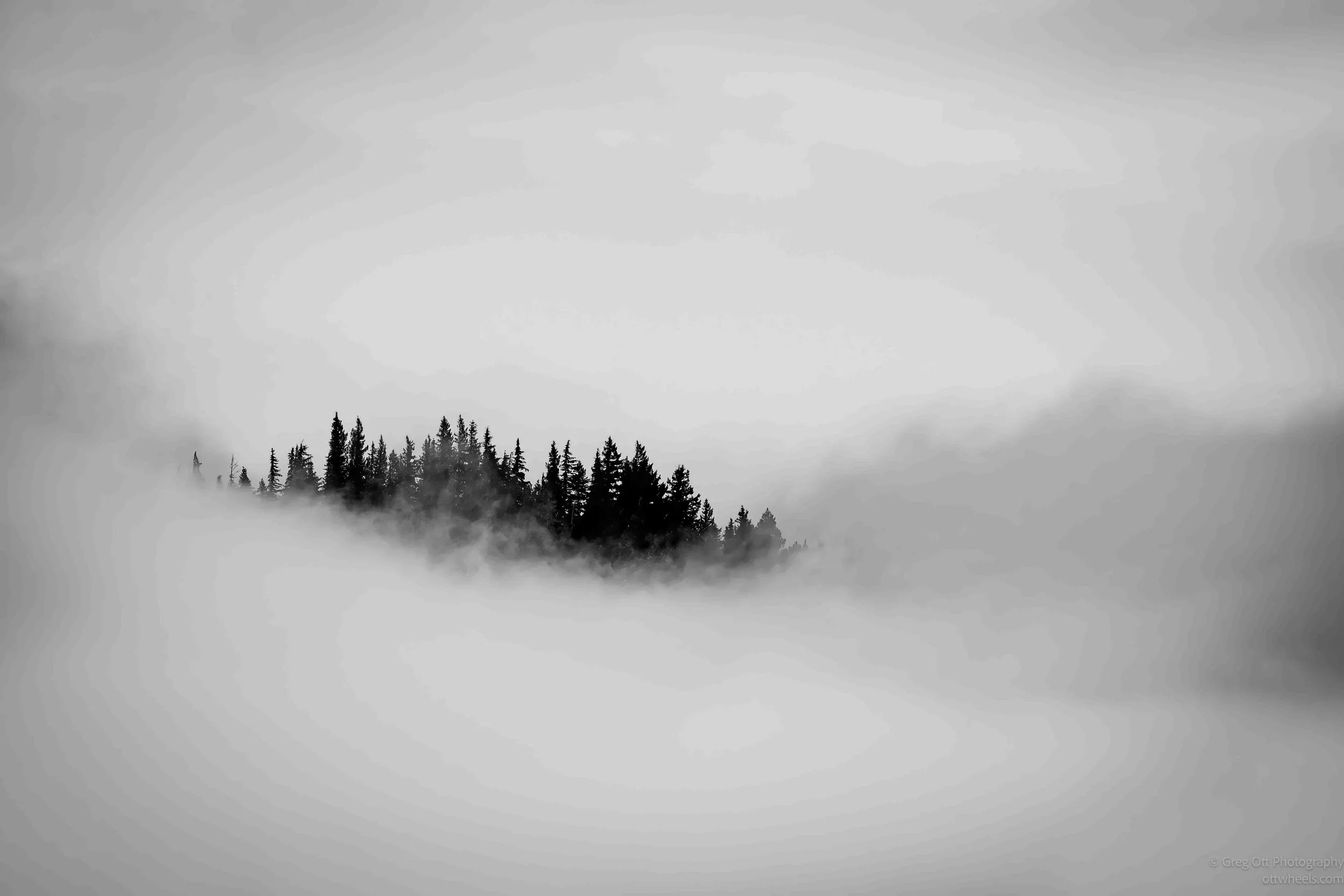
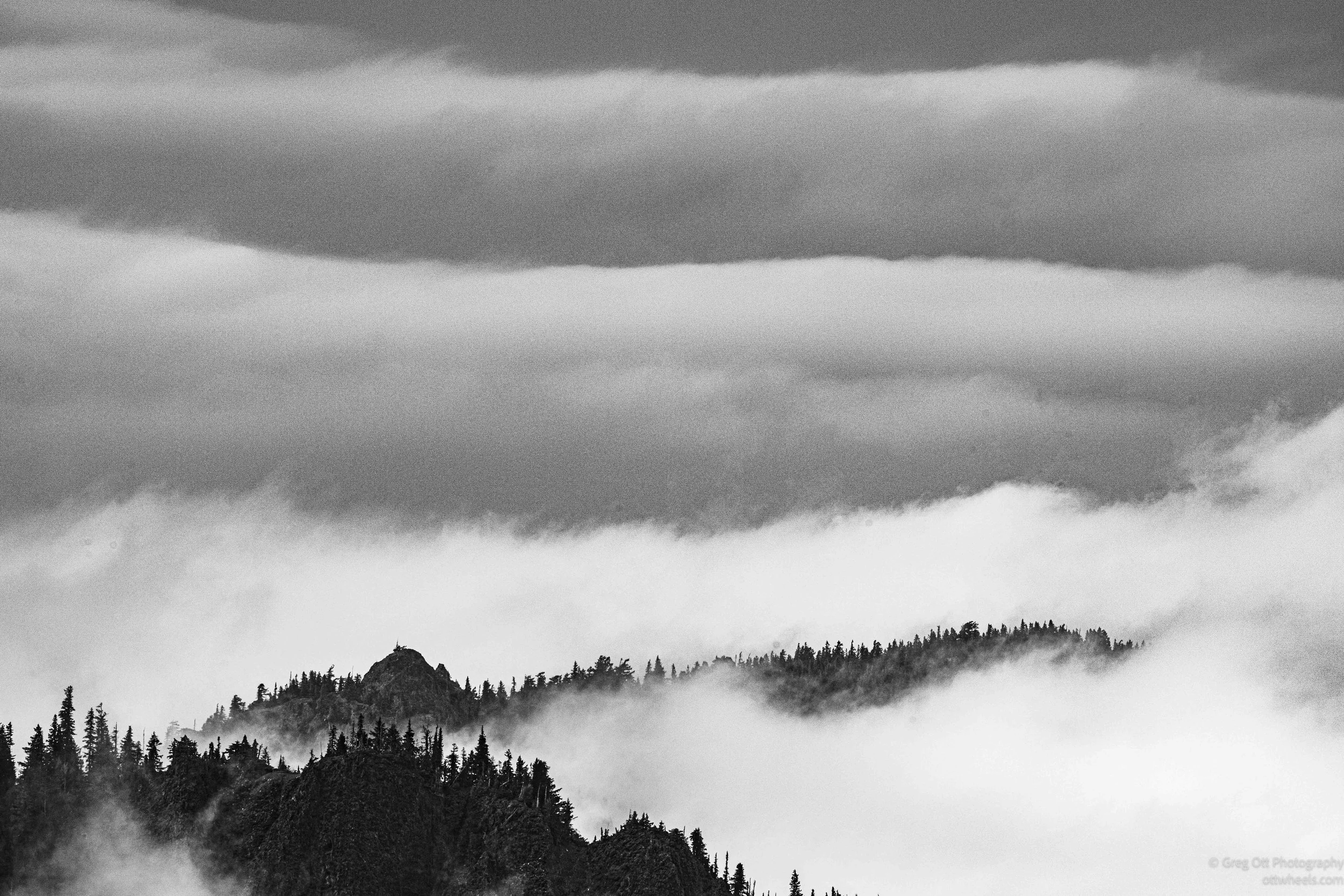
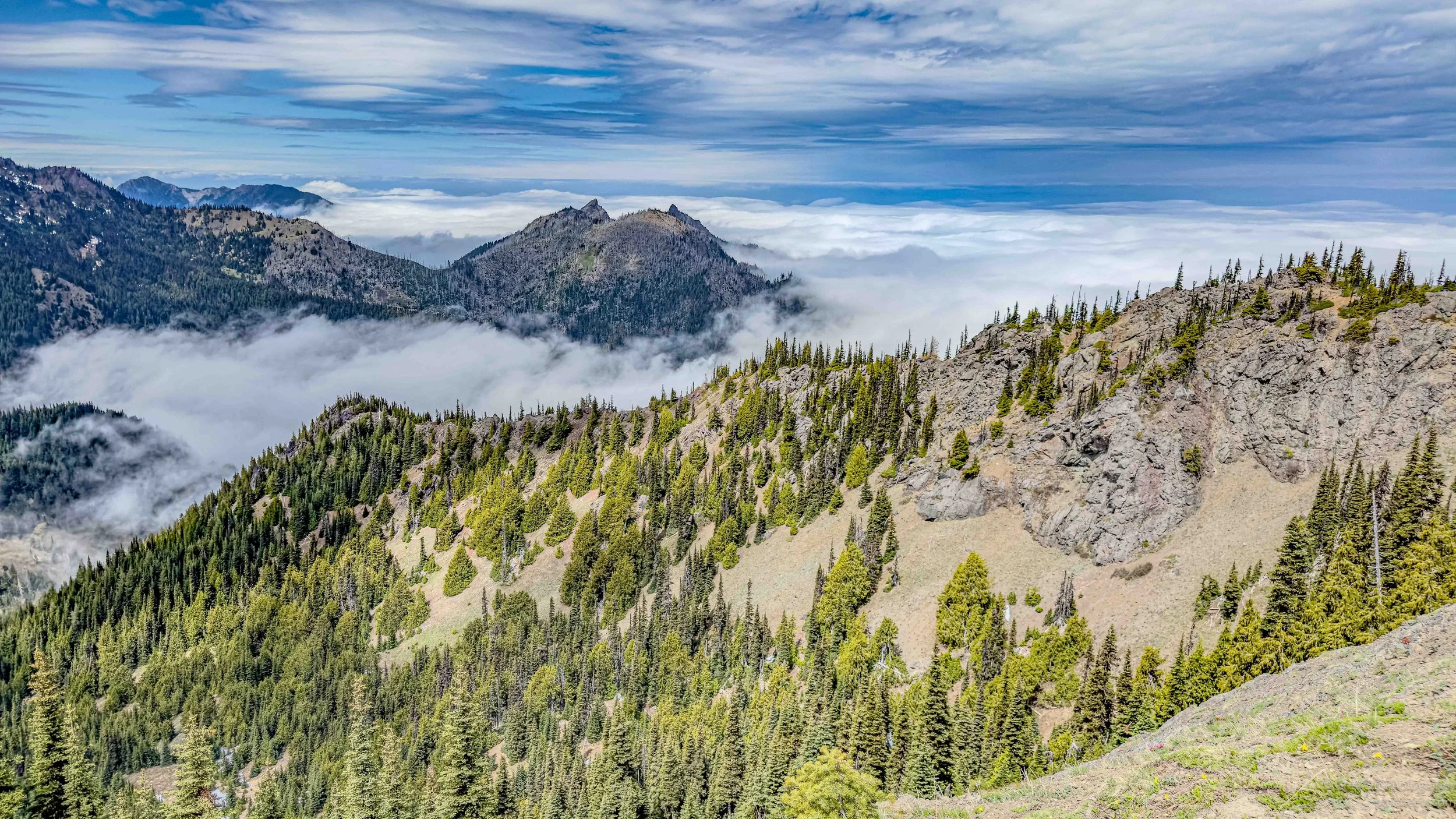
As we climbed, the views became spectacular. Mountains rose above valleys filled with marine fog, creating layers of dark ridges floating over glowing white clouds below. We stopped often for photos and conversation. Jon also gave me a lot of insight into Alaska. Every time I meet someone who has actually spent serious time there, my understanding of the place becomes a little more grounded and a little less romanticized.
The hike remained manageable for a while, though I became increasingly aware that I had packed far too much camera equipment. Every uphill step seemed to add another five pounds to my backpack.
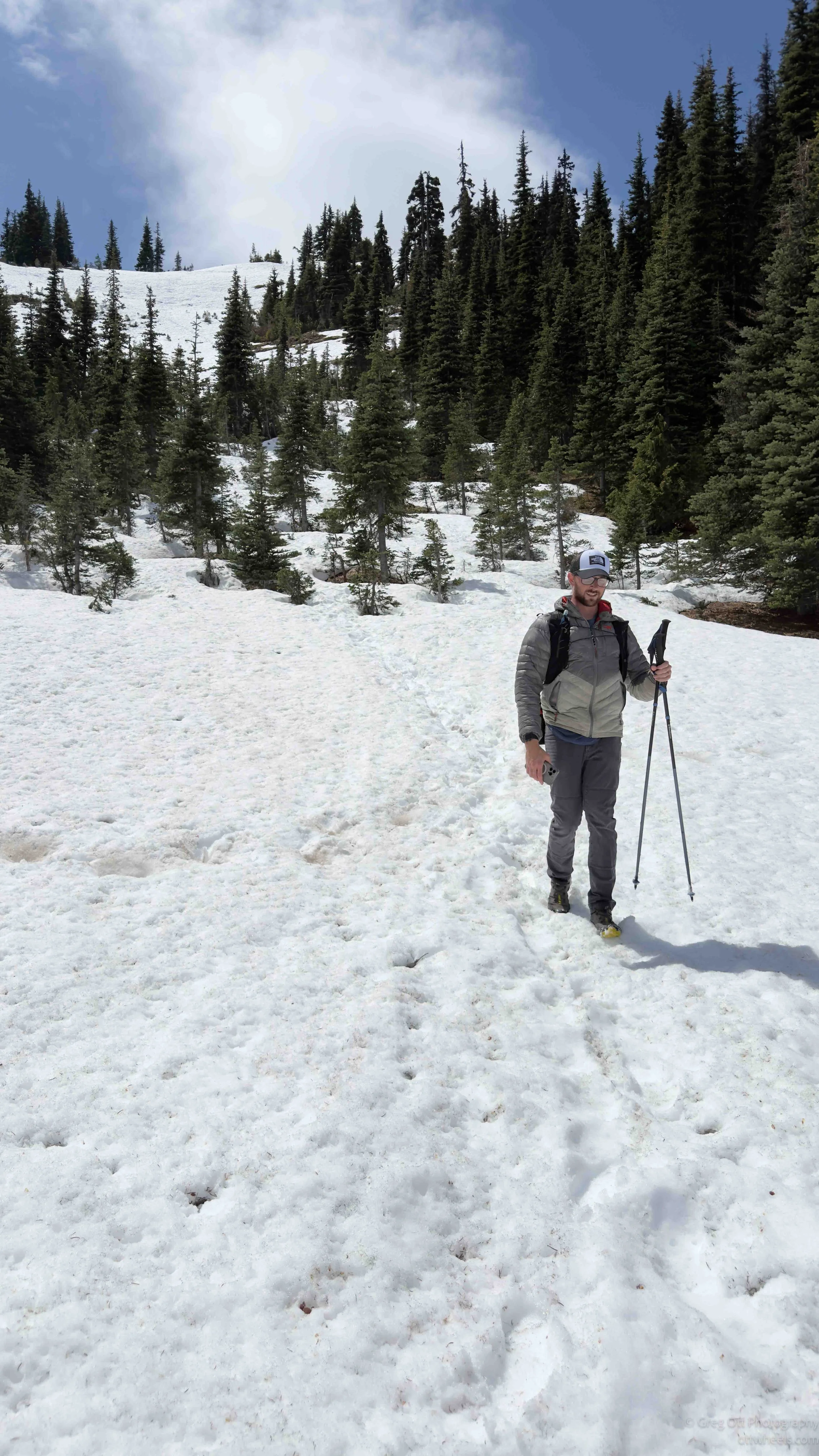
Along the trail we talked with other hikers. One couple warned us about a major snowfield farther ahead and said they had turned back because they lacked crampons. Another couple said they had crossed it without them. I hadn’t even thought about bringing mine.
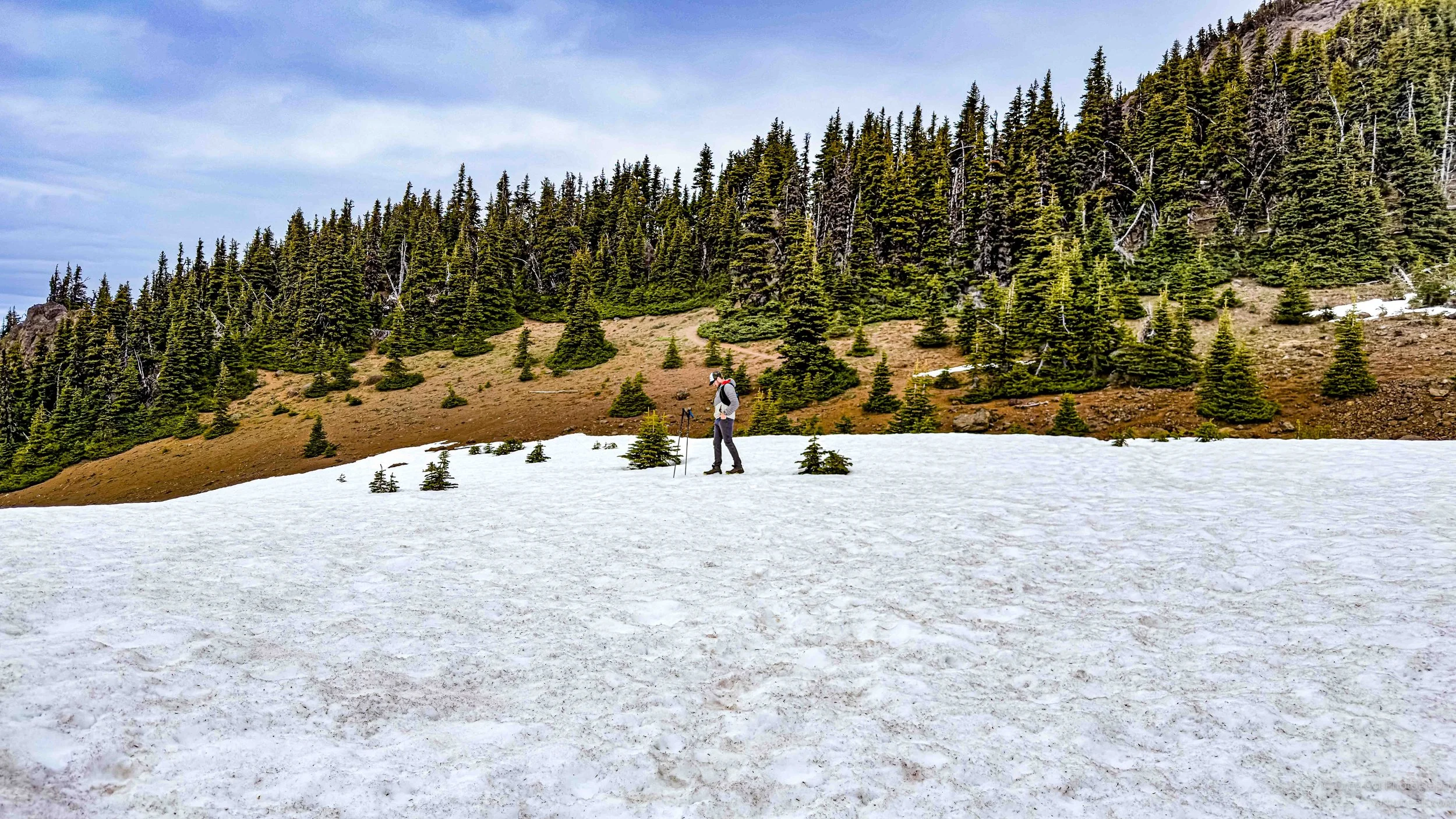
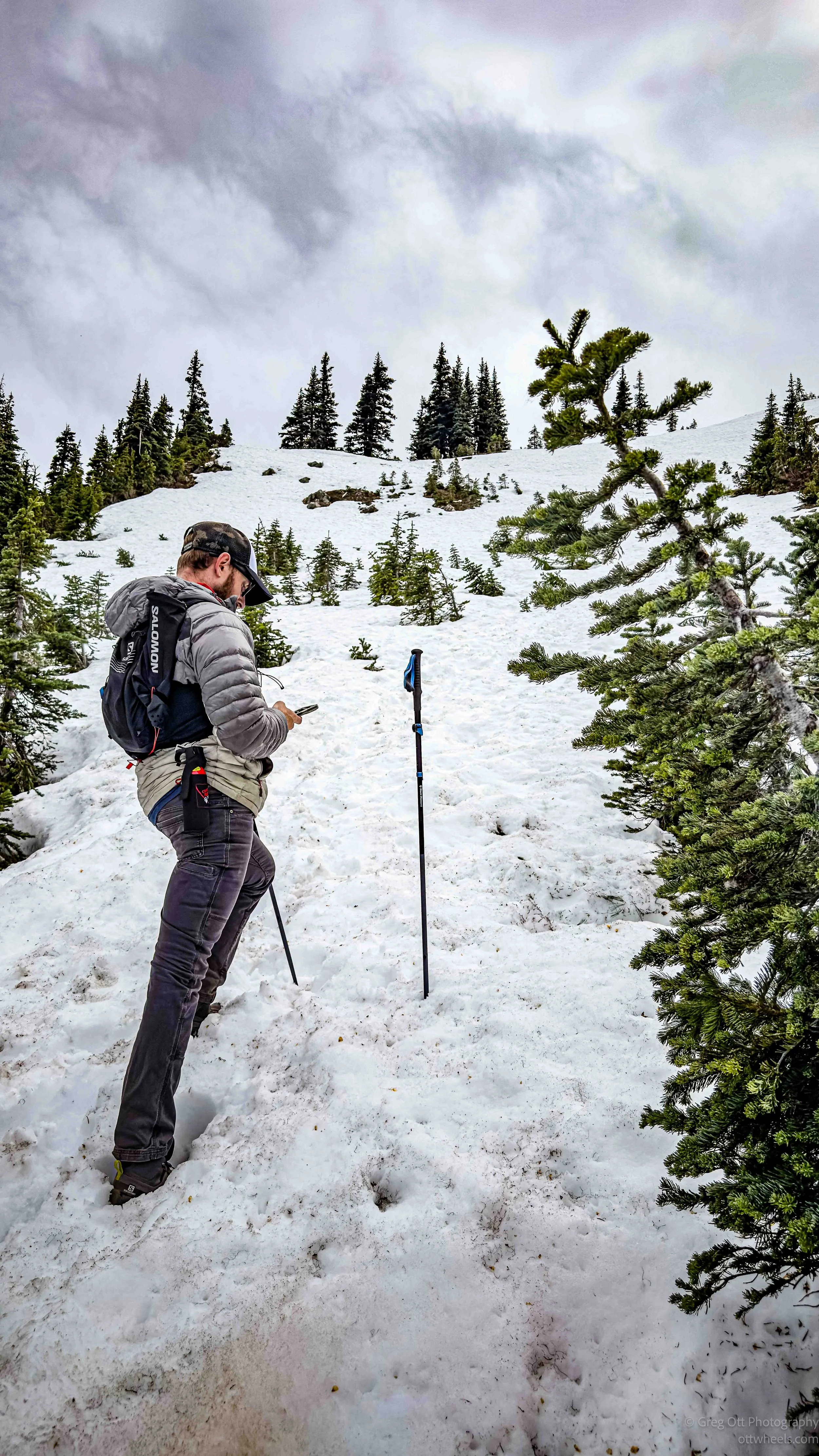
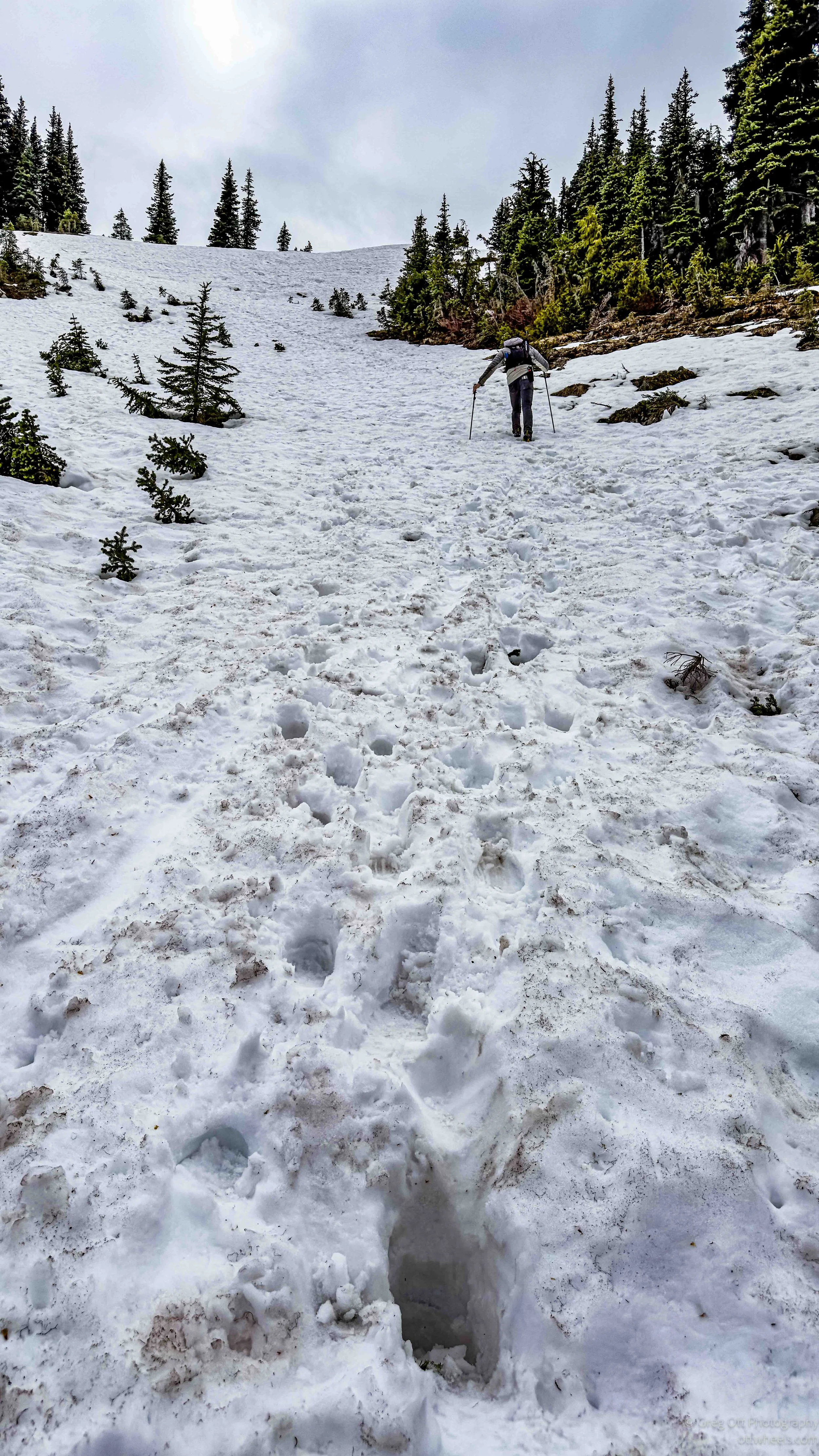
Eventually we reached the snowfield. Calling it a “trail” at that point felt generous. It looked more like a ski slope angled sideways across the mountain. We decided to continue. I carefully followed footprints from previous hikers while trying not to slide backward off the mountain. Even then I slipped several times. Crampons would have made life significantly more civilized.
Beyond the snowfield, the trail toward Mount Angeles started gradually enough before suddenly becoming absurdly steep. At one point I later checked the grade. A .6-mile section averages roughly 22 percent, with short stretches approaching 30 percent. Because the trail cuts across the mountain, you’re also leaning sideways while climbing loose dirt. It was brutal.
Eventually we reached a snowy ridge with about .3 miles remaining to the summit. My body was done. Completely done. I dropped my pack and told Jon I was staying there to photograph while he continued on. He headed upward while I sat quietly taking photos of layered mountains and glowing fog below. There was very little color in the landscape. Most of the images will probably end up as black-and-white conversions: dark mountain silhouettes against bright white clouds.
I could hear voices above me and assumed other hikers were nearby. After about 15 minutes I was getting ready to head back down when Jon suddenly reappeared out of the trees. He had reached an area with cell coverage and FaceTimed his wife back in Alaska. I was genuinely relieved to see him because the entire time he’d been gone, my brain had been running an endless series of cougar-related scenarios involving me alone on a mountain trail with expensive camera gear and questionable cardio.
The descent was challenging. The steep dirt sections were loose and slippery, and footing required constant attention. At one point I told Jon about a friend in Switzerland whose mother slipped during a hike, hit her head on a rock, and died instantly. Not long after telling that story, I slipped hard myself. Somehow both the camera and lens survived the fall. Nikon engineering continues to impress me.
Then came the return crossing of the snowfield. It became very clear at this point that Jon was in exceptional shape. I would count 50 steps uphill before stopping bent over trying to catch my breath. Meanwhile, I don’t think he ever appeared winded once. I slipped multiple times climbing through the snow while carefully kicking footholds into the slope. By the top I was leaning over gasping for air.
I finally asked him whether Army recruits often arrive as out of shape as I currently felt. He smiled and said many come in after spending years mostly sitting in front of video games. That somehow made me feel slightly better.
We still had two more hills left before returning to the trailhead. At one point Jon encouraged me by saying, “You’re killing it.”
“I think it’s killing me,” I replied.
Somewhere along the way we spotted a large deer resting beneath a tree below us. We had hoped to see a bear or cougar at a safe distance, though in retrospect perhaps not seeing either was preferable.
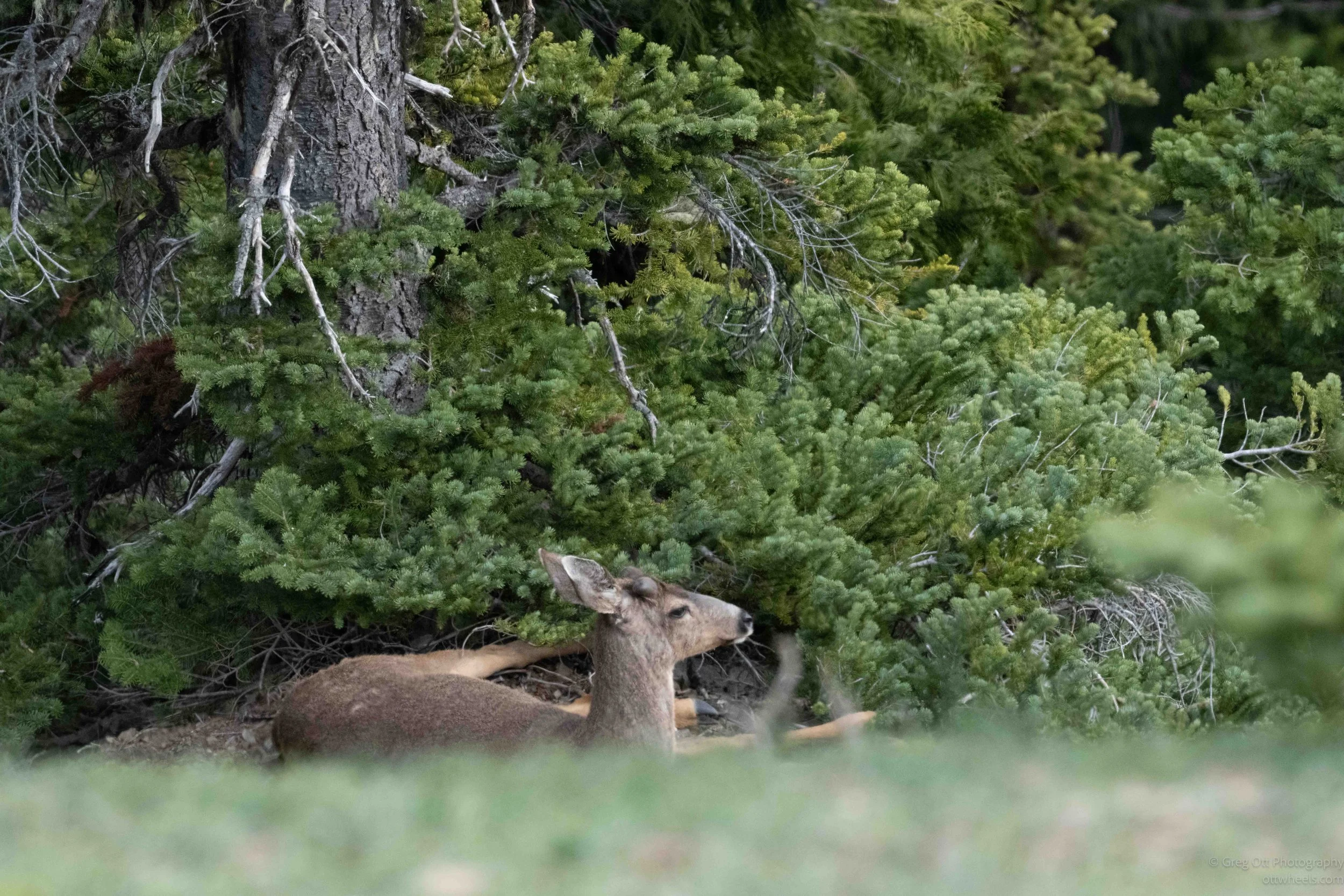
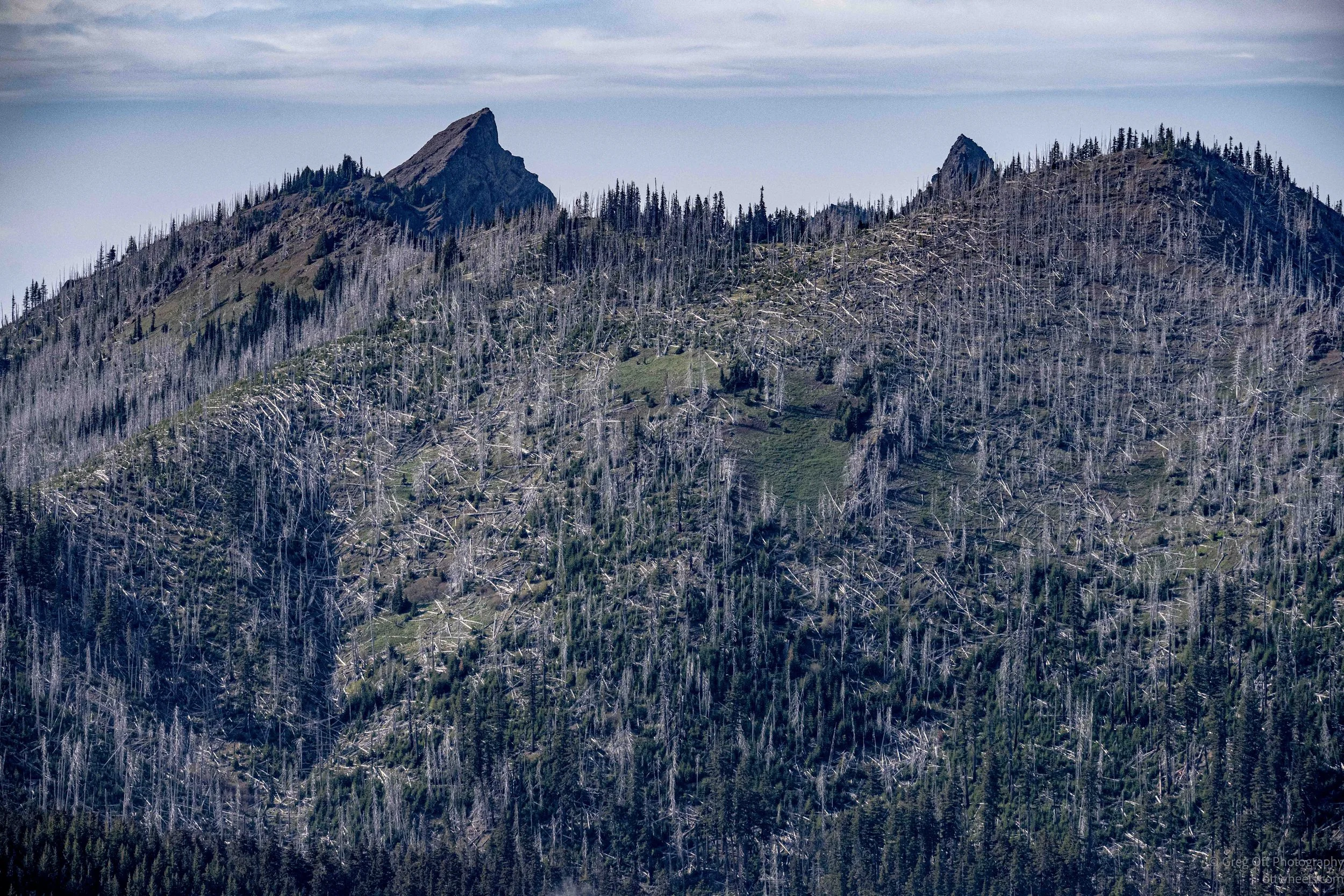
In total we covered roughly 5.5 miles, climbed around 2,400 feet, and spent much of the hike above 5,000 feet elevation. Back at the parking lot I gave Jon my contact information before he started the two-and-a-half-hour drive home. I thanked him sincerely for the company and encouragement. The Army is fortunate to have someone like him training recruits. Spending several hours hiking with him felt like one of those chance travel encounters you remember long afterward.
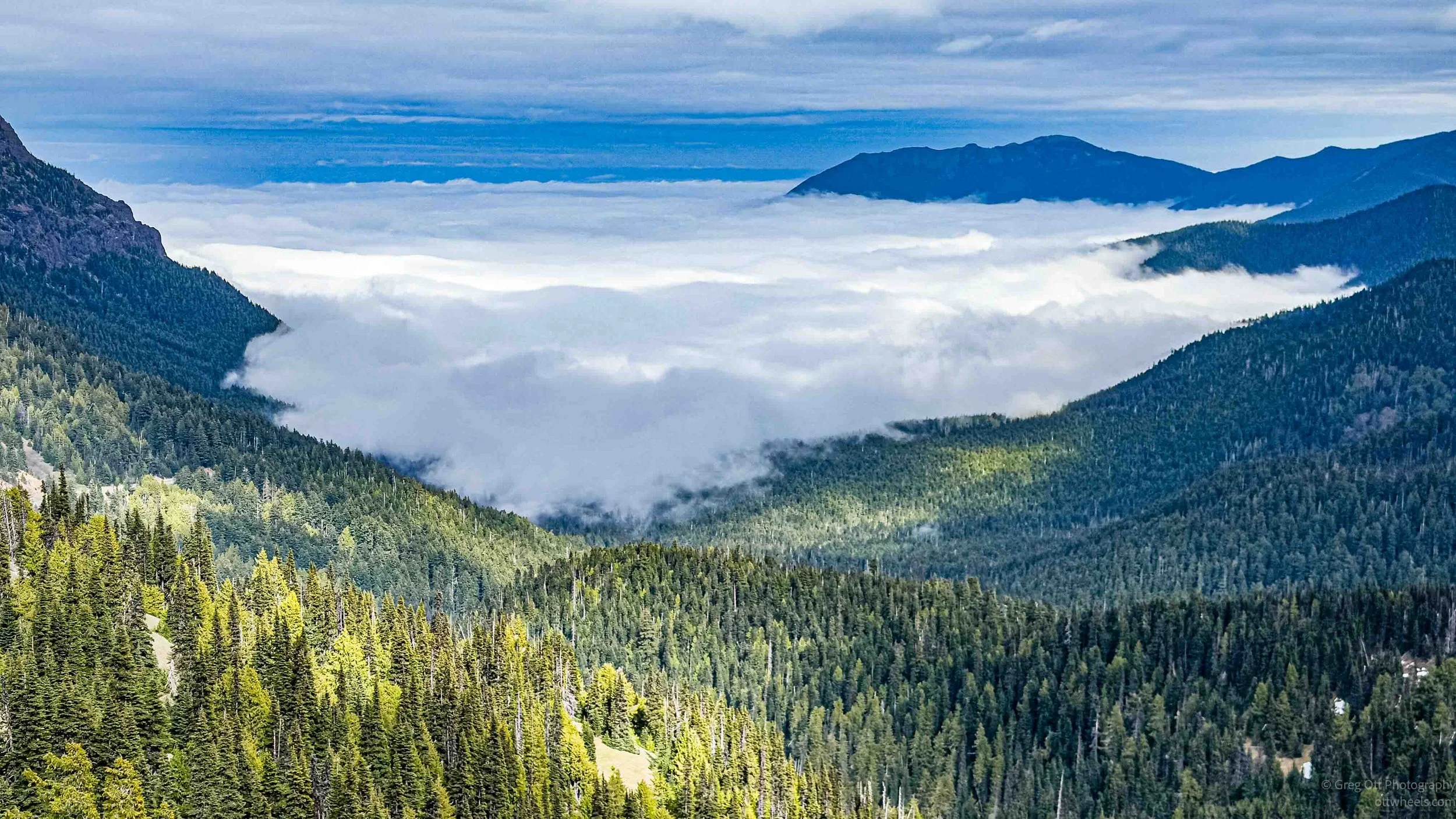
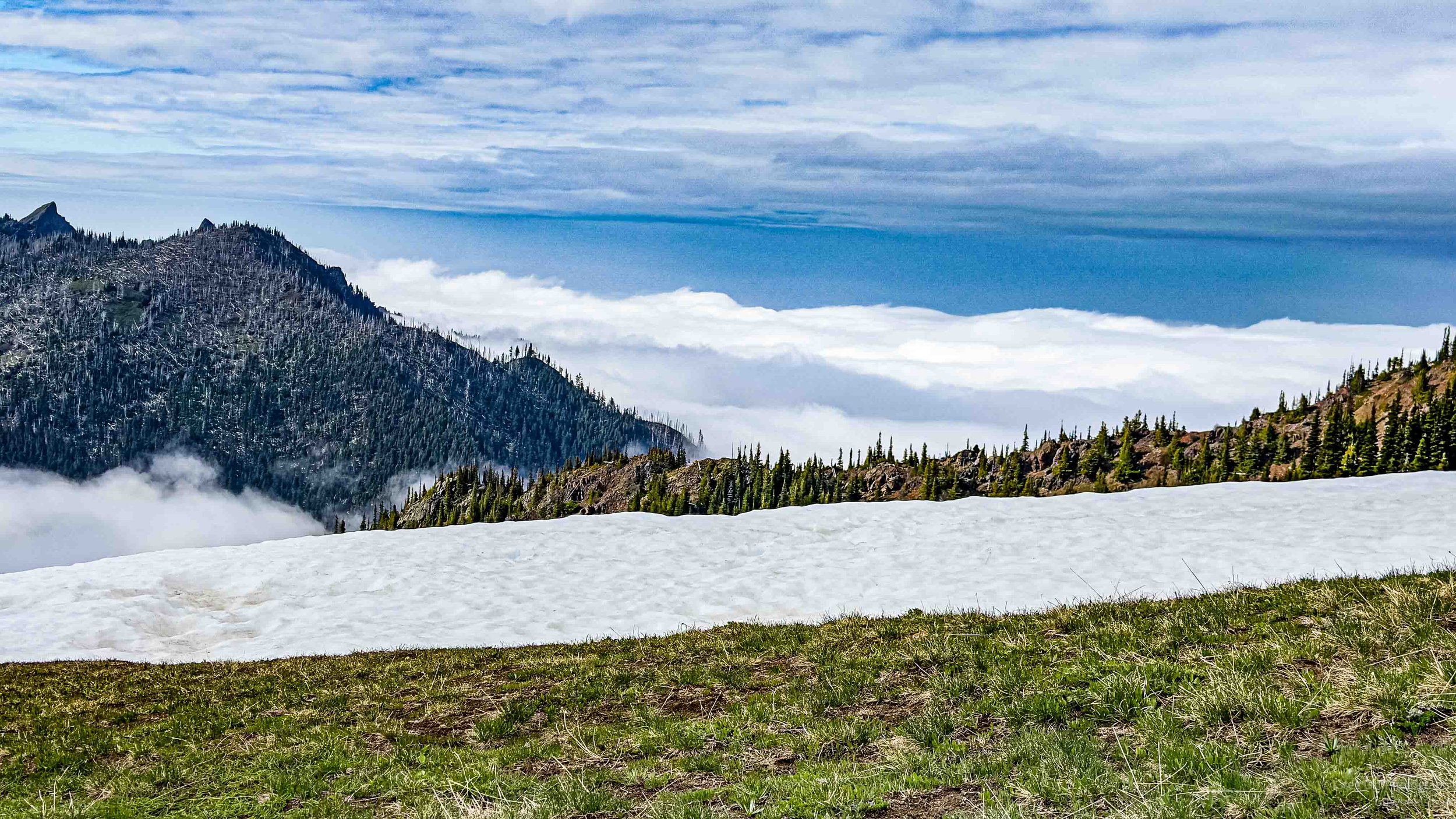
On the drive down I spotted what I initially thought was a small turkey standing beside the road. Later research revealed it was actually a Sooty Grouse displaying its colorful air sacs. There was nowhere to safely pull over on the narrow mountain road, so I didn’t even attempt a photo. Sometimes you just accept the missed shot.
Eventually I made it to Port Angeles, took an hour-long nap in the van, and around 7 p.m. headed over to Gordy's Pizza & Pasta.
The staff were incredibly friendly. One employee took a break, sat nearby, and recommended the calzone. We ended up talking about travel, geology, anthropology, Utah, Oregon, and Washington landscapes.
At one point he laughed and said, “There aren’t many pizza delivery people into anthropology and geology.” Probably true.
I ordered a Bedford’s Root Beer which tasted surprisingly authentic, without the overly artificial sweetness most root beers have now. When I commented on it, they told me it was made locally and that the owner occasionally came in for dinner.
By the end of the evening I found a church in town that allowed overnight parking for vans. It was quiet, peaceful, and exactly what I needed after a day of mountains, fog, snowfields, and attempted self-destruction by hiking trail.