
Willamette Heritage Museum
I was planning to visit the Willamette Heritage Center after my capitol tour, but it closed at 4 pm. So I stayed another night. This time I stayed at the True Life Church of the Nazarene, a Harvest Host. I drove over the next morning about an hour after it opened.
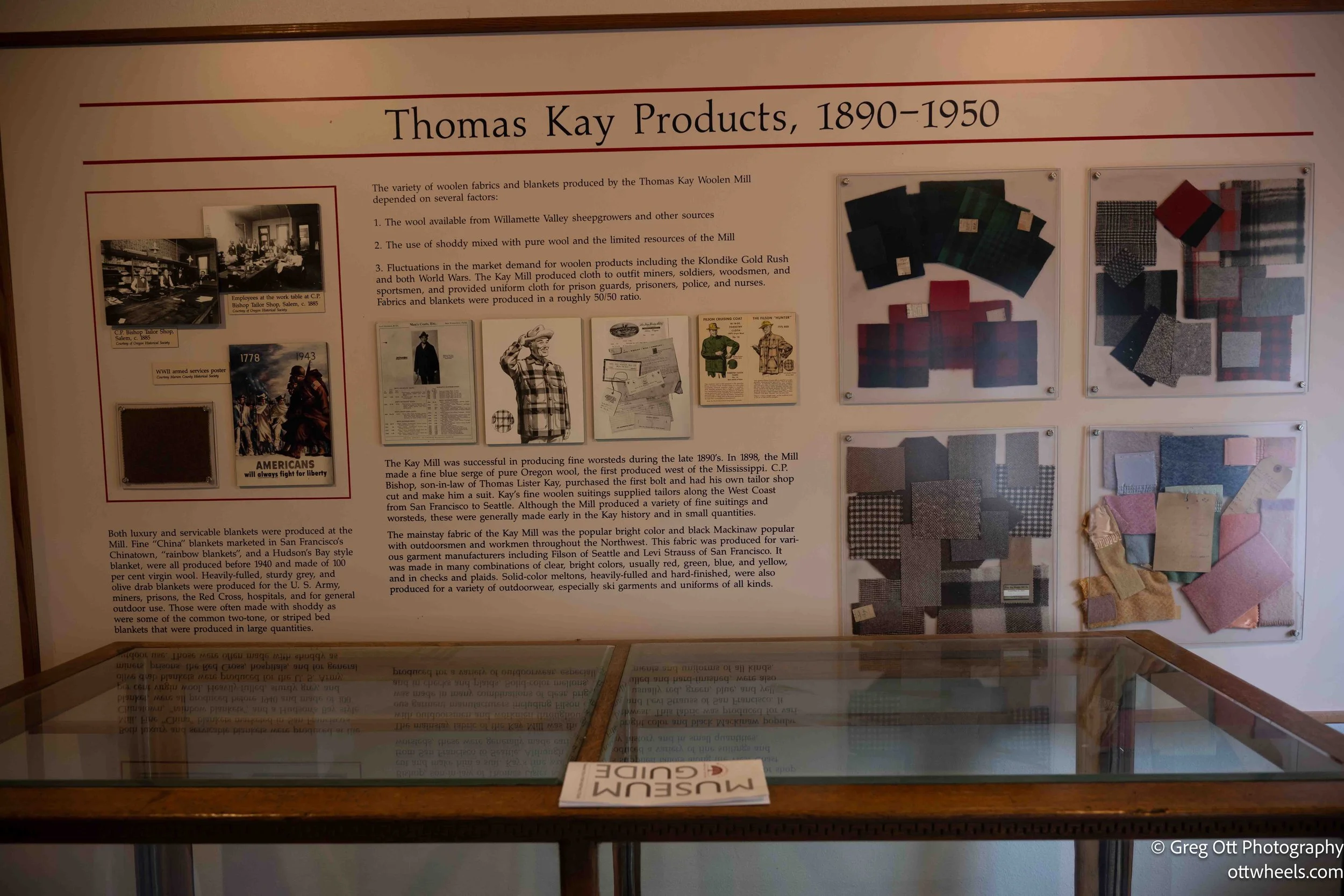
I wasn’t sure what to expect. I paid the $19 fee and the woman handed me a key I’d need to get into a few of the buildings, then pointed me toward a short video. It walks through the Thomas Kay Woolen Mill—from sheep to finished fabric—cleaning, spinning, dyeing, weaving. It also gets into how Thomas Lister Kay built the mill in the late 1800s and helped turn Salem into more than just a government town. It touches on the workers too—many immigrants—and what life looked like inside a place like this. It’s short, maybe ten or fifteen minutes, but it does exactly what it needs to do. Without it, the mill would just be machines. With it, everything has a purpose.
What surprised me more was the sense that this wasn’t just a factory—it was a community. The owners weren’t distant figures. They were involved. Workers stayed for years, even decades. There were company baseball teams, events, and a built-in social life around the mill. It didn’t feel like a modern employer/employee relationship. It felt tighter than that.
The museum spreads out across the old mill site, with a few other historic buildings brought in from around the area. The weather didn’t help—cold and wet most of the day—so I stayed layered up. A lot of this is walking between buildings, and some of them aren’t heated, so you feel it.
The Warehouse is where it starts, and it throws you off a bit. It’s the entrance, with the gift shop and restaurant. It feels more like a welcome center than anything industrial. You ease into it—tickets, a quick look around—and then head out to the real part of the visit.
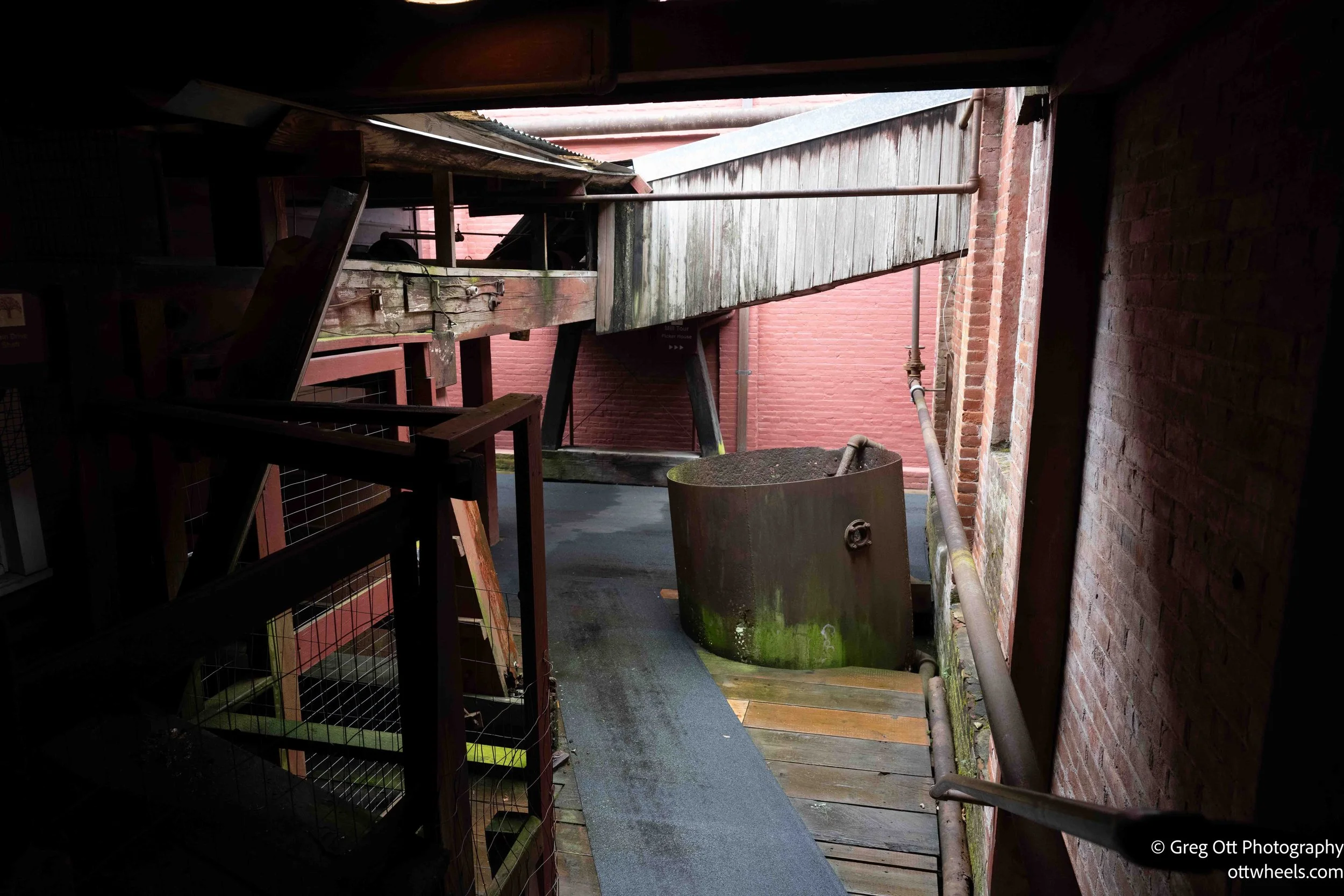
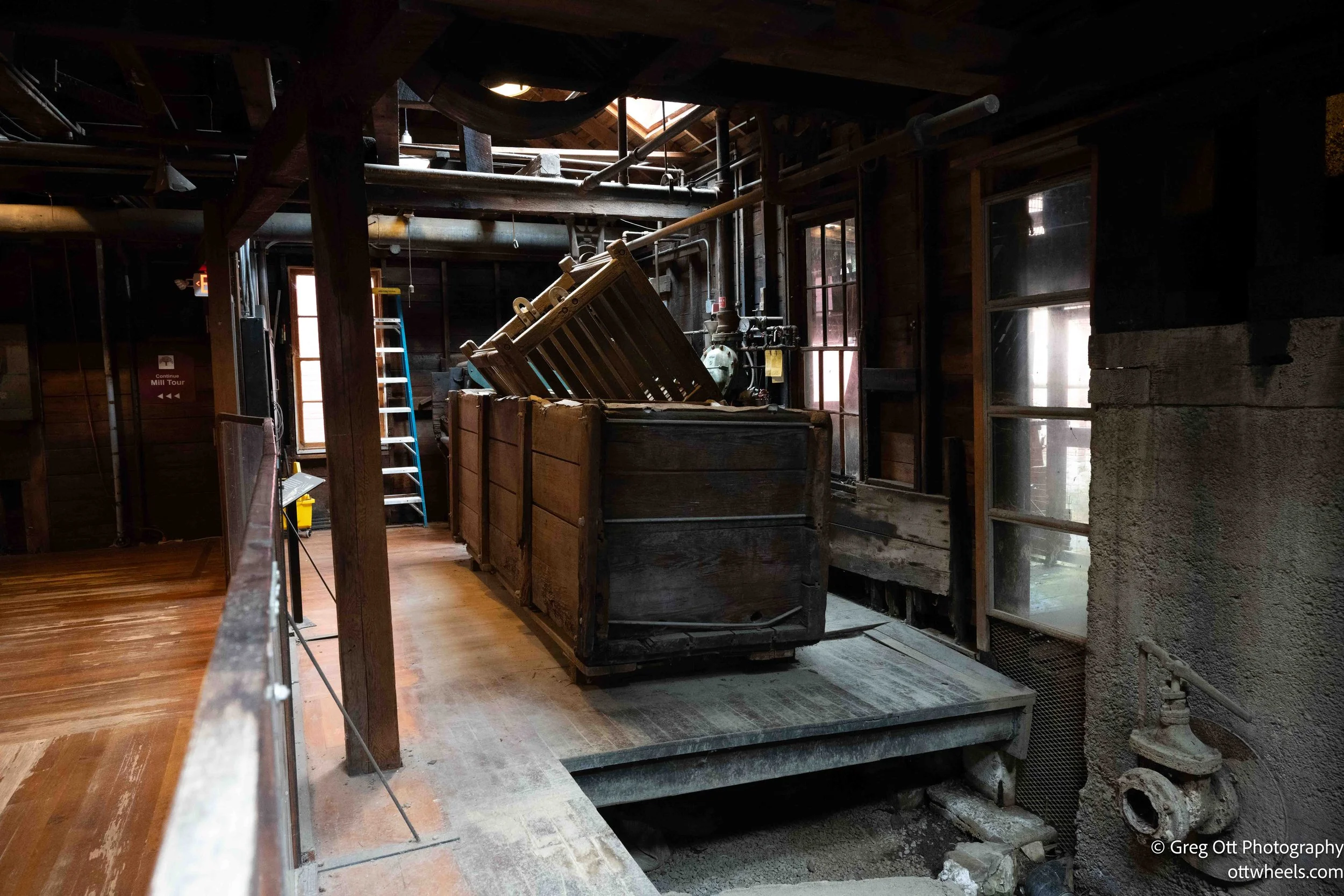
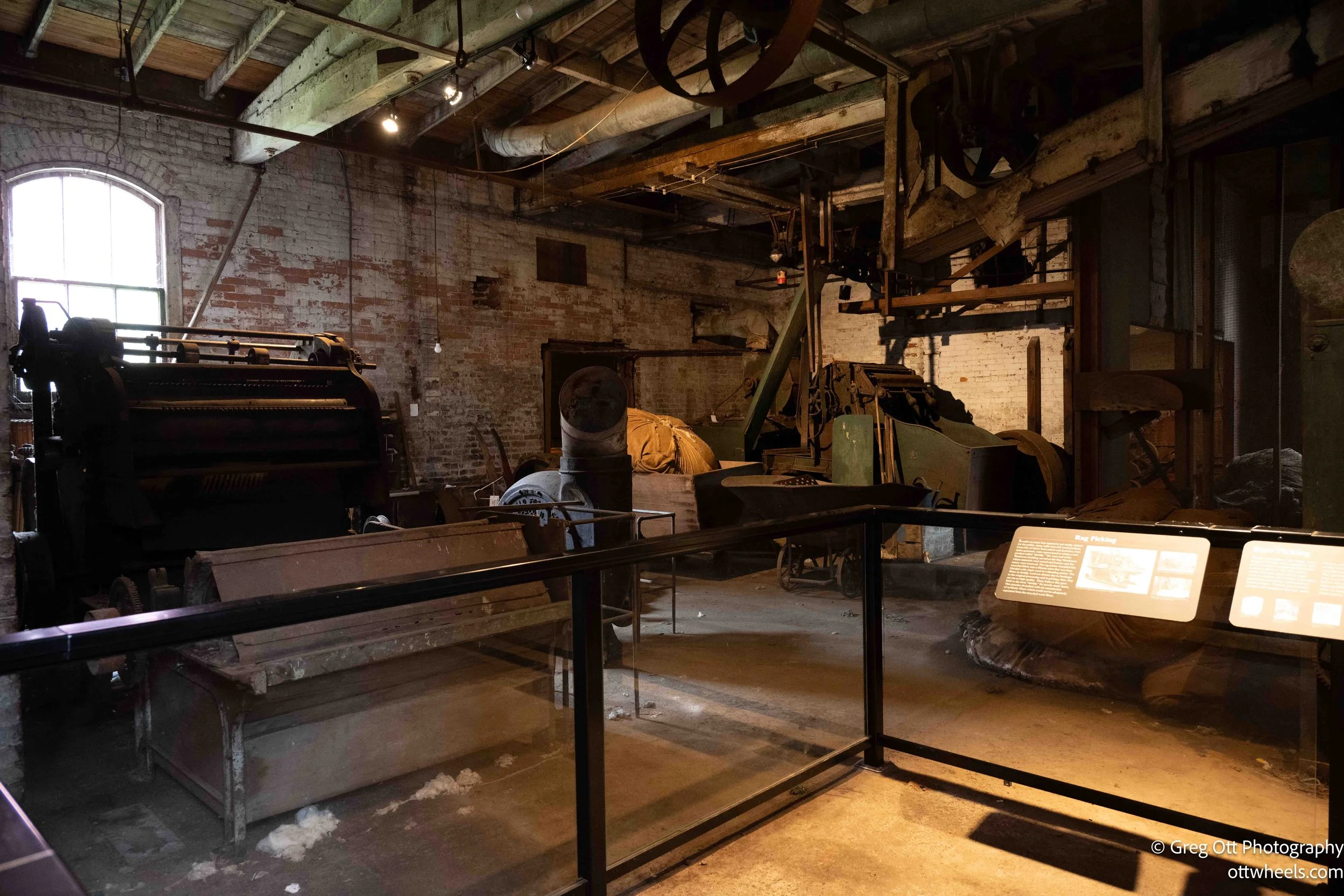
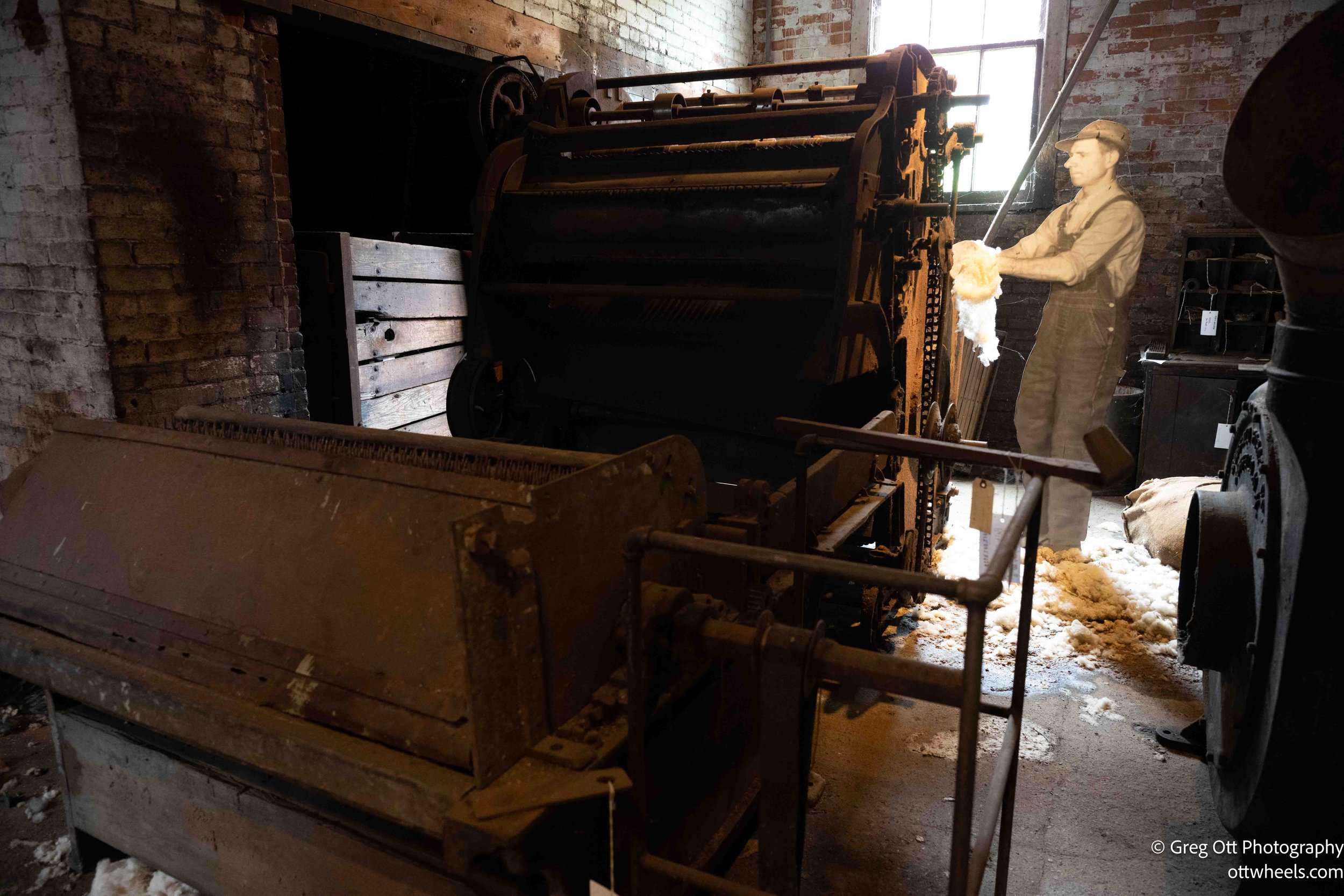
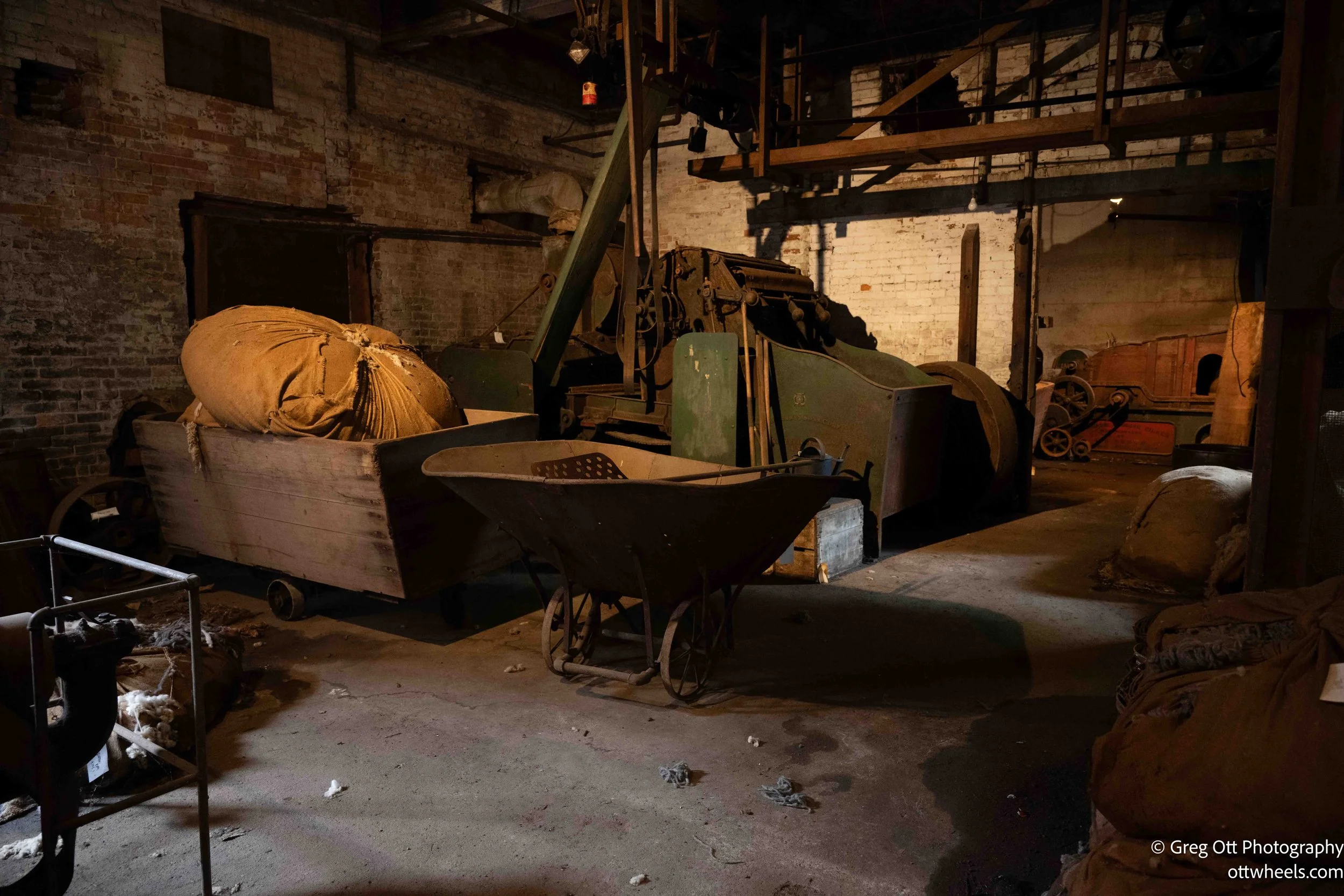
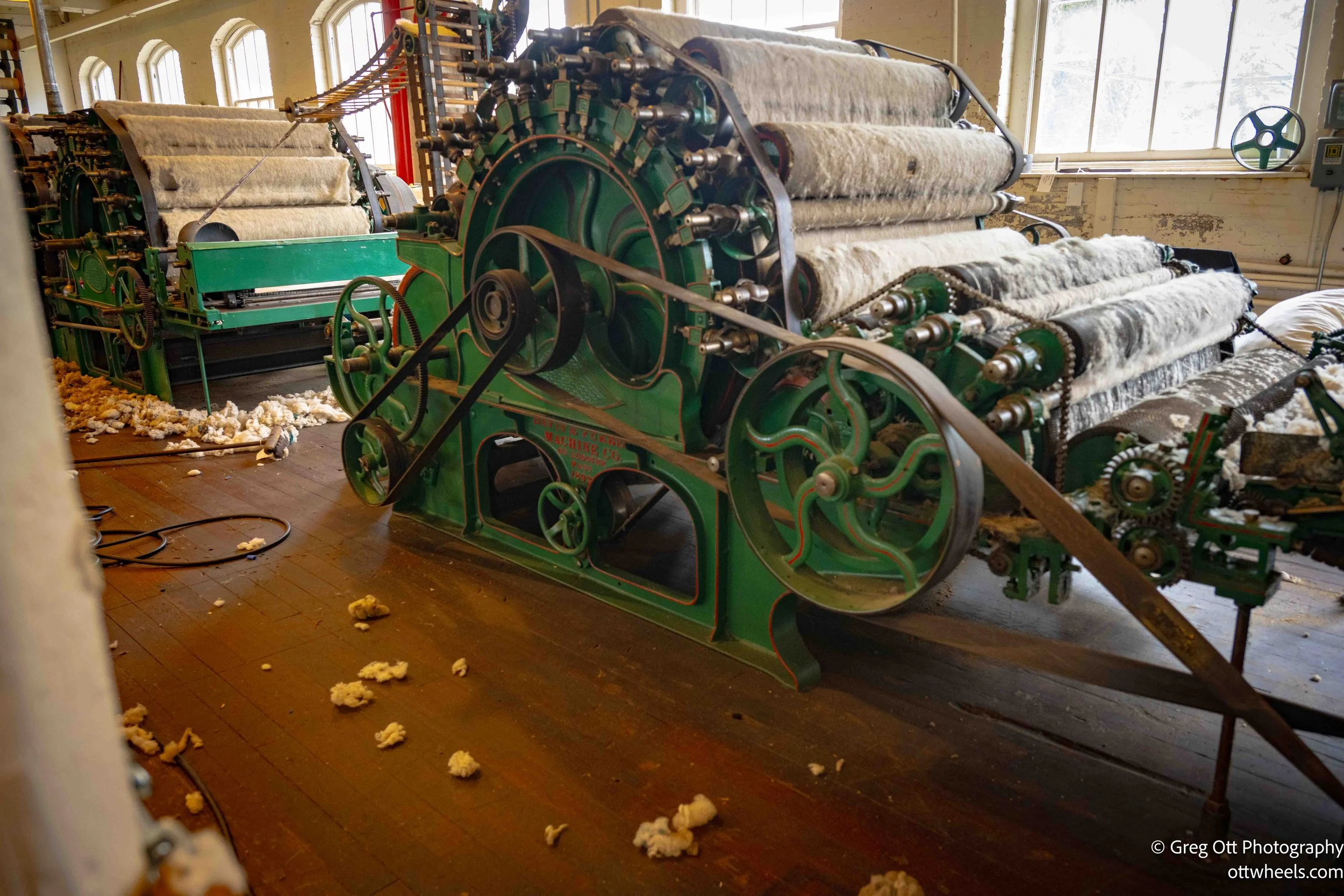
The Picker House is where things get real. It’s cold, damp, and uncomfortable, and that’s the point. This is where raw wool came in and got torn apart—literally. Machines with metal teeth pulled out burrs, dirt, and everything else that came with it. They also fed old wool clothing through here, breaking it down into a cheaper, tougher fabric called “shoddy.” It’s dark enough that you notice it right away, and you can imagine what it was like working in there all day—layered up, straining to see, doing repetitive work in rough conditions.
The Dye House and Scouring Room fills in a piece I hadn’t really thought about. This is where the wool was cleaned and dyed before it ever reached the mill. One detail stuck with me—they used sulfuric acid to break down debris in the wool, basically turning it into dust without damaging the fibers. It’s one of those details that makes you realize how much process went into something as simple as fabric.
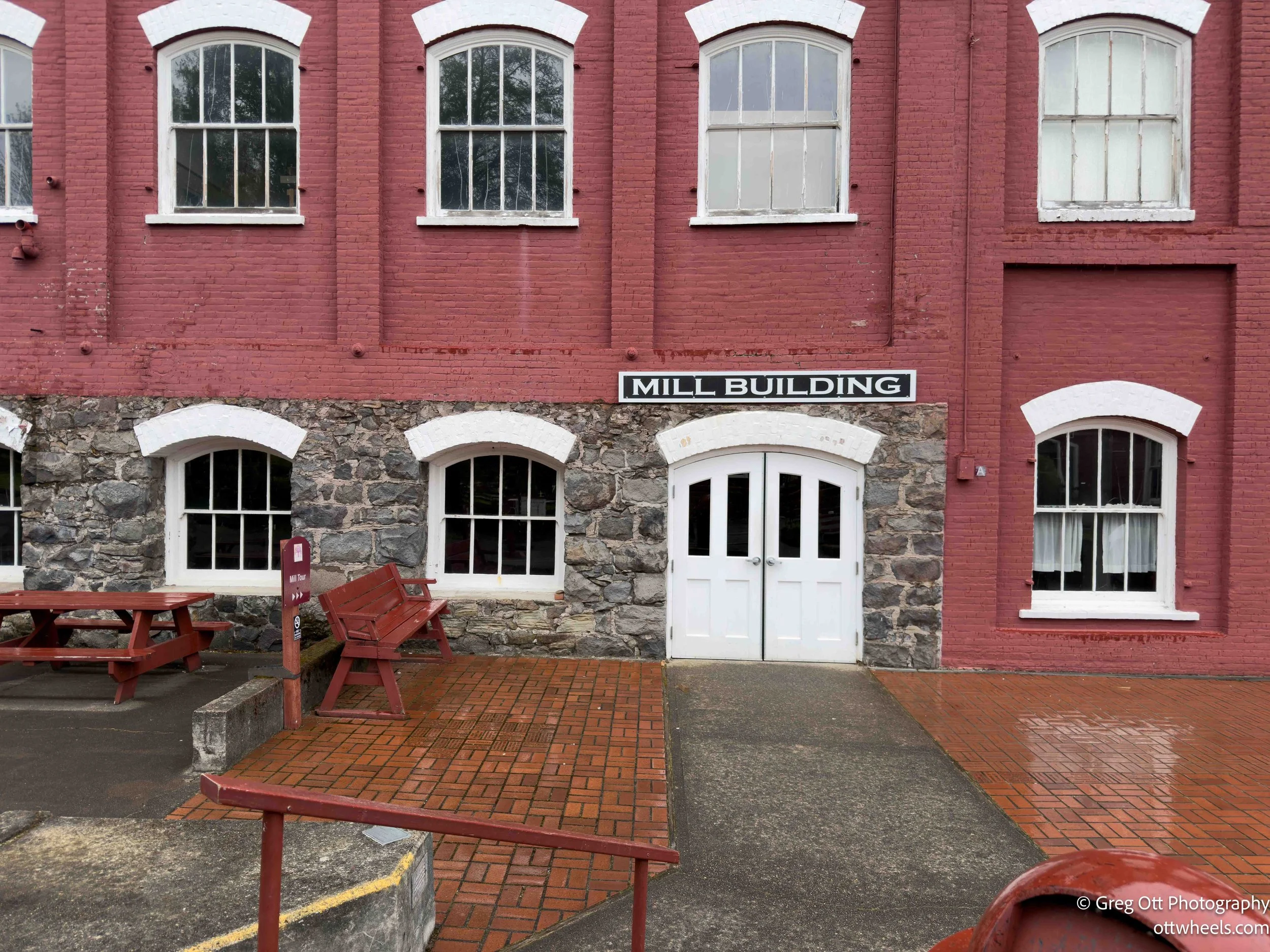
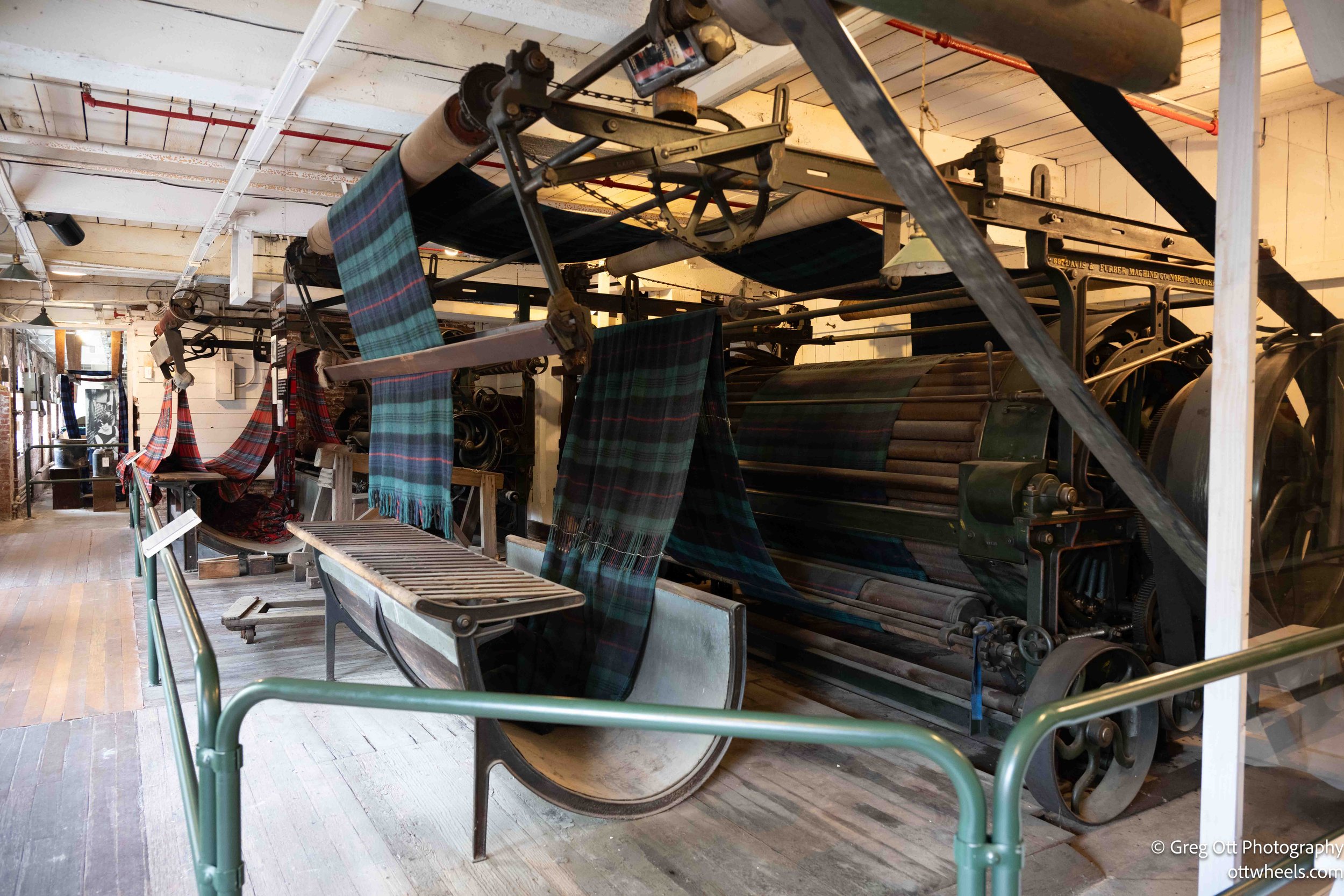
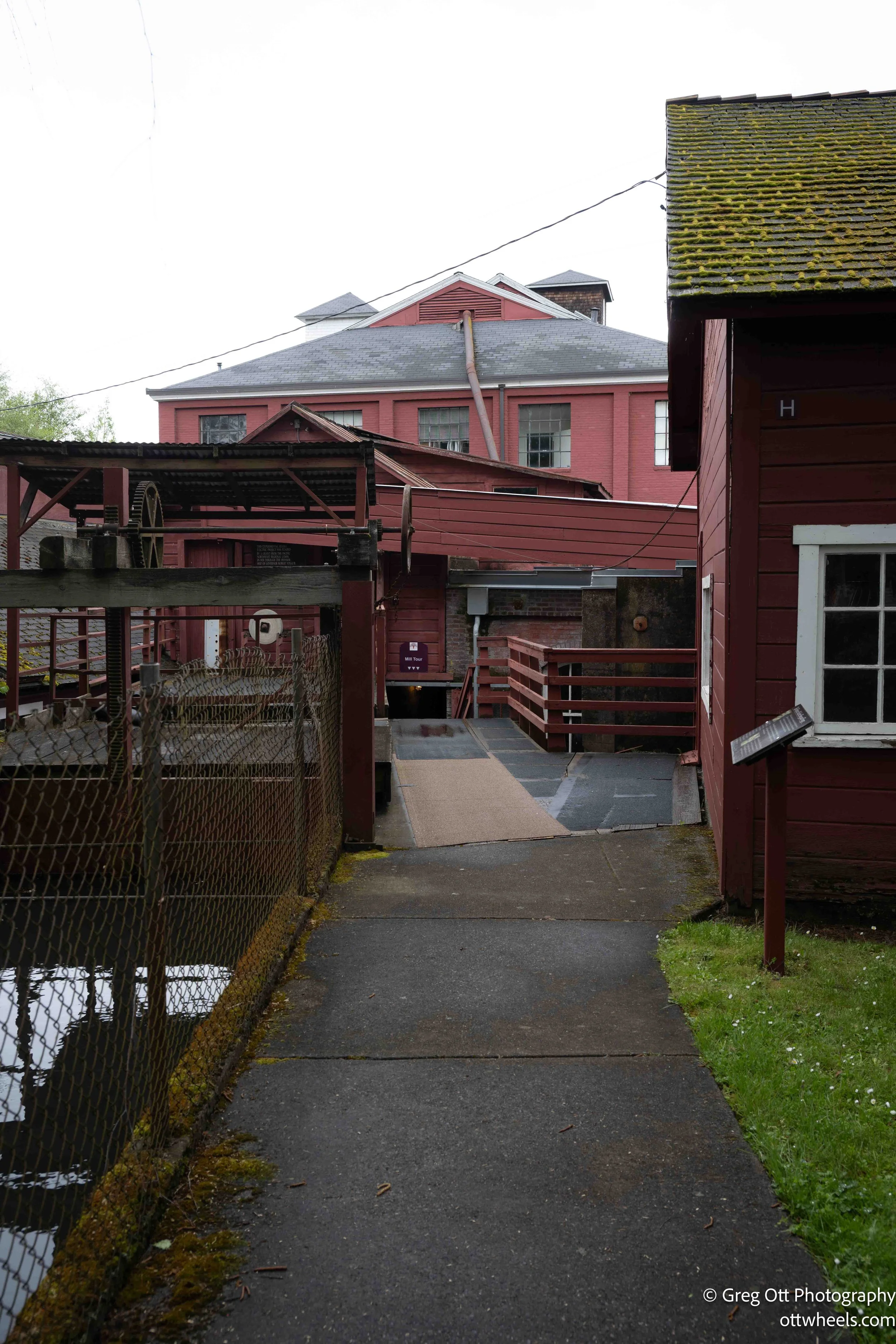
The Mill Building is where everything finally connects. You enter at the bottom and work your way up to a large room on the third floor where the wool becomes thread. The steps are laid out—carding, spinning, dressing, weaving—and even with the machines sitting still, you can follow the path.
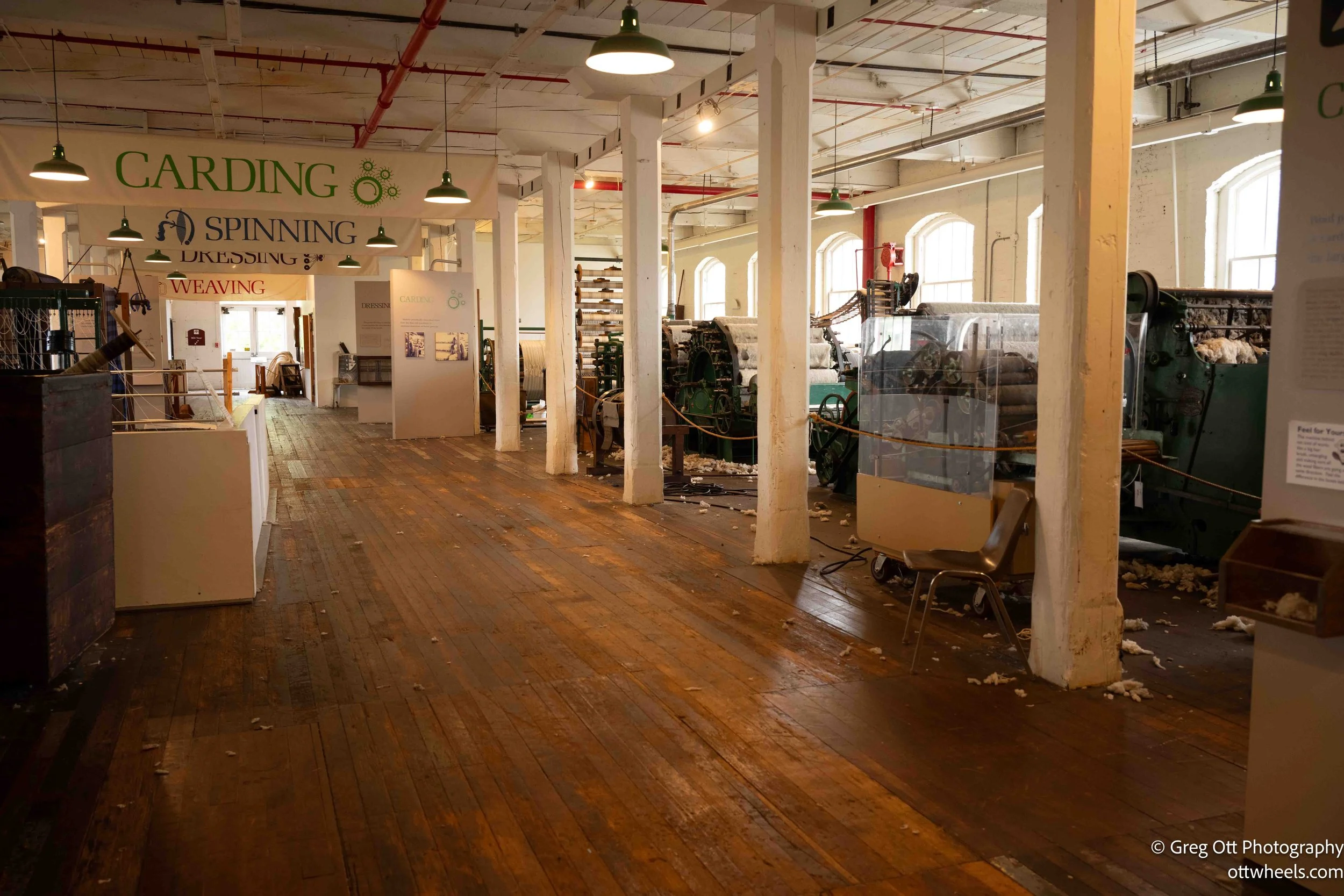
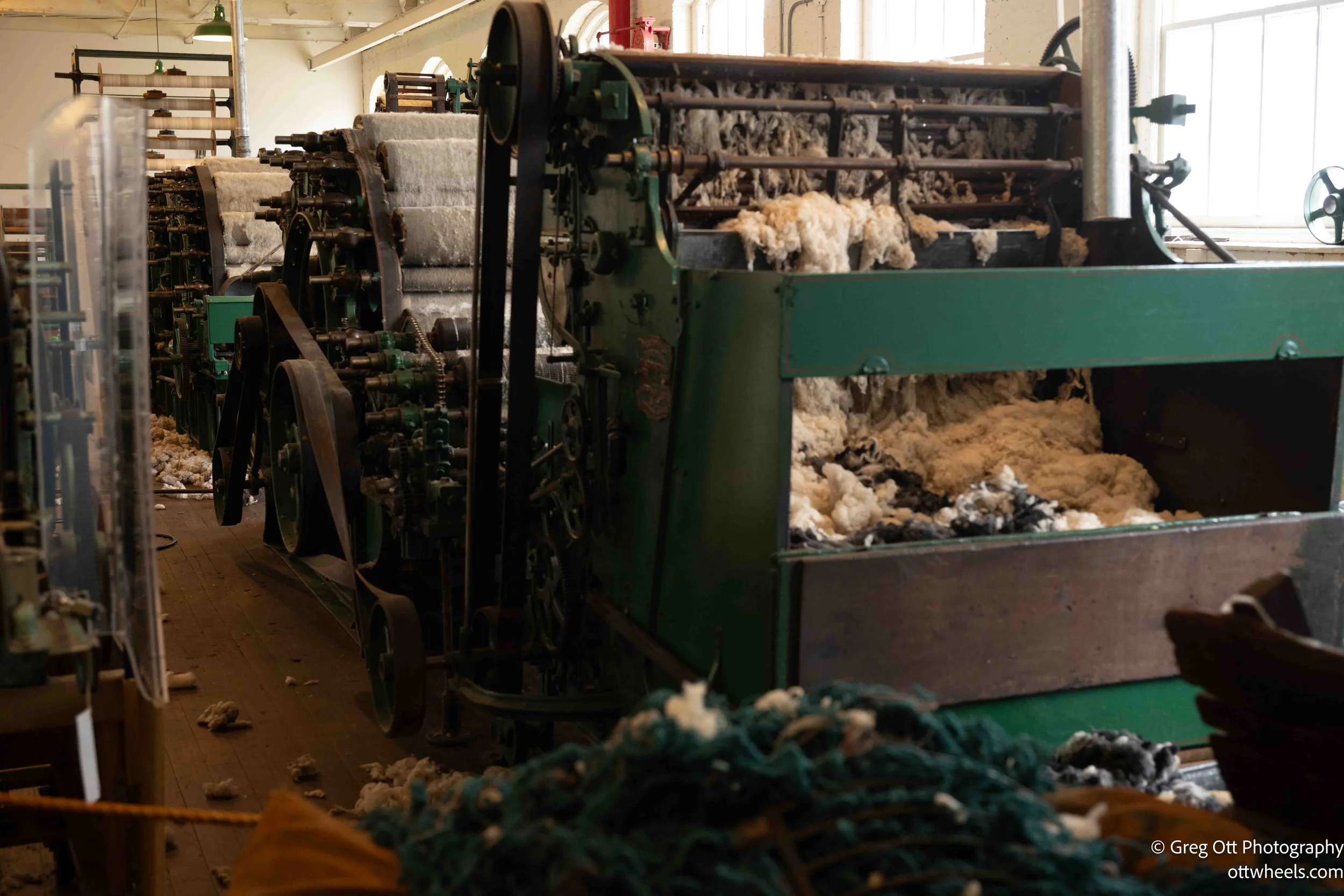
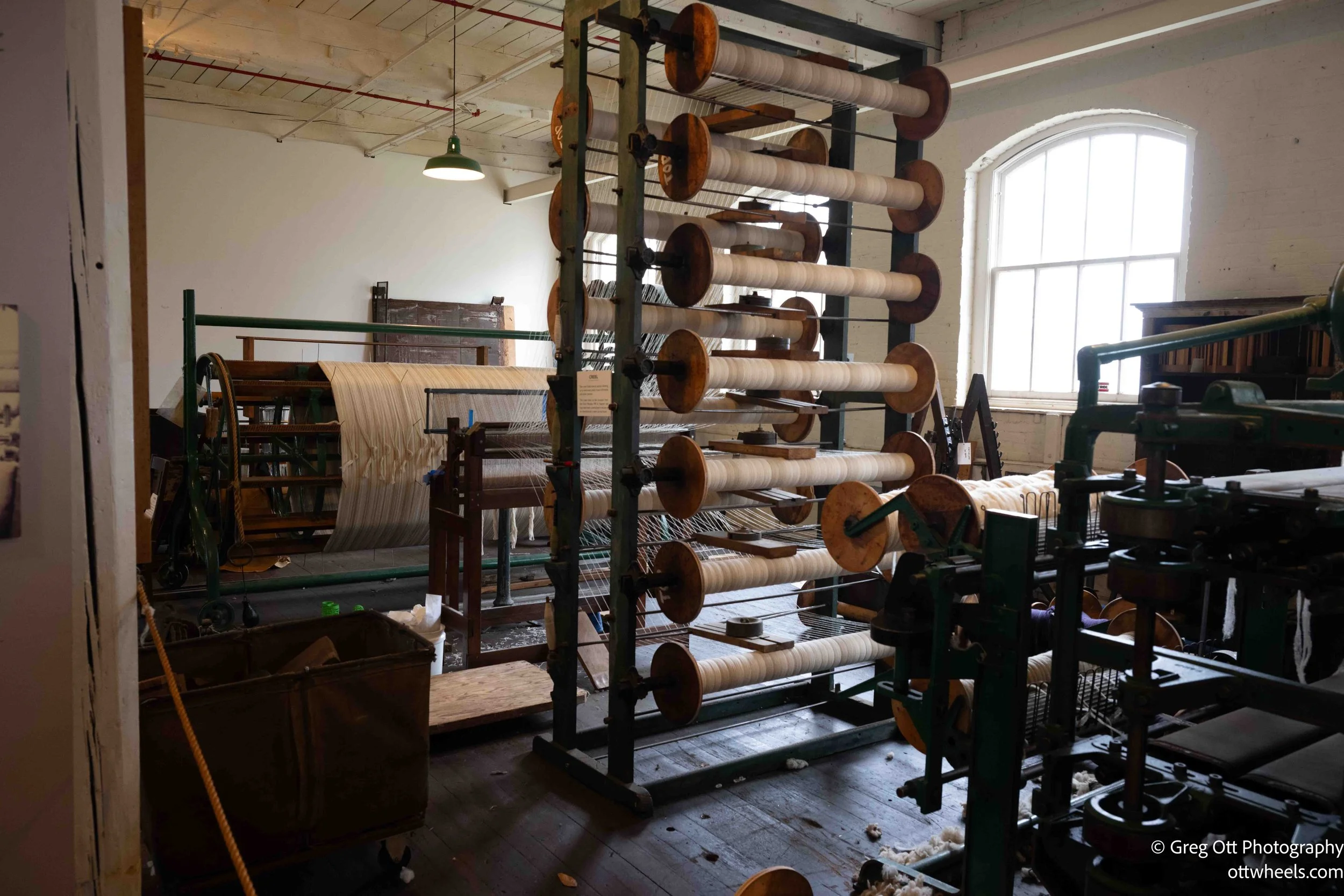
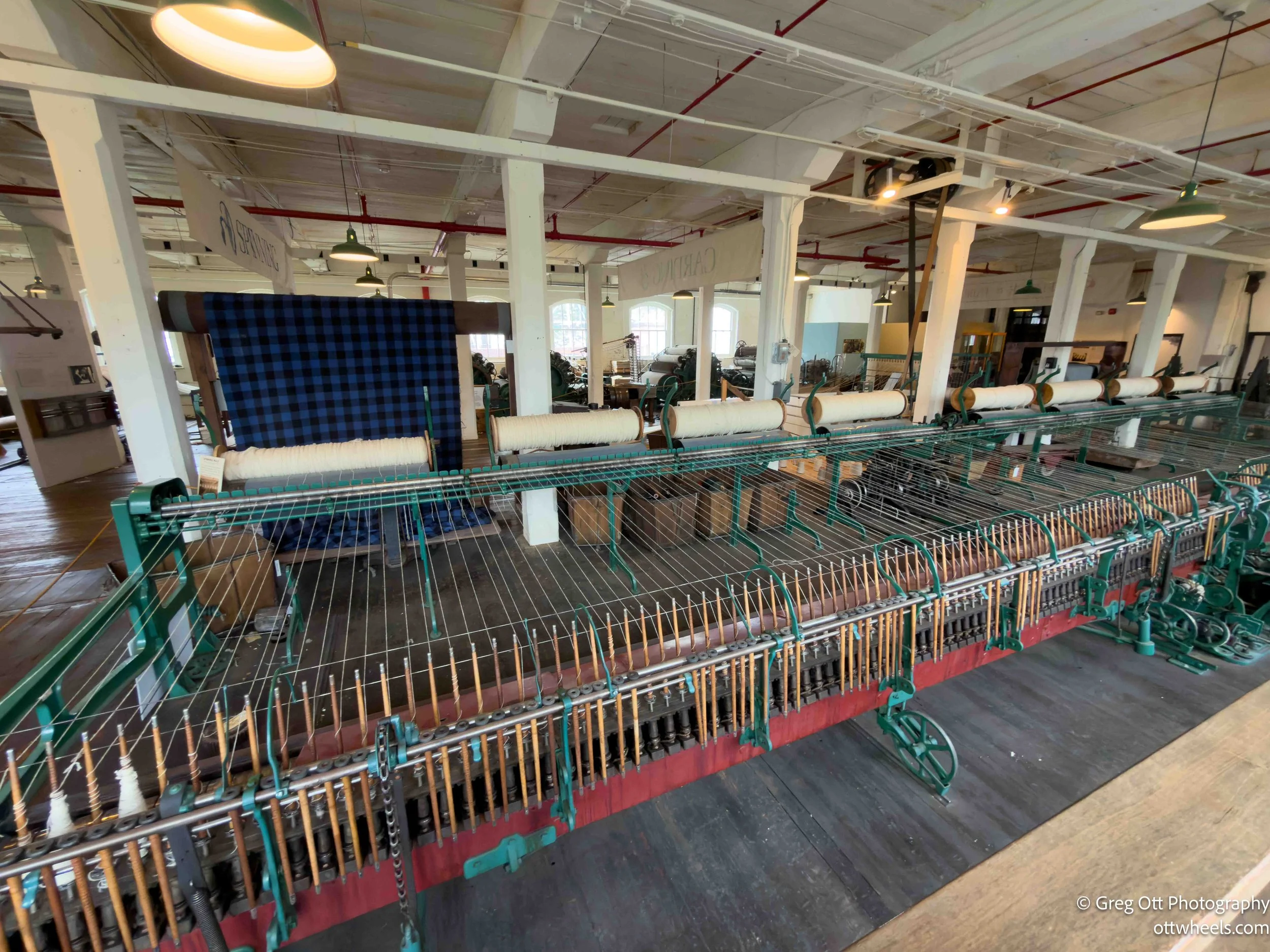
The light is what got me. It comes in from the north side, soft and even, and it completely changes the feel of the space. For a building packed with heavy machinery, it feels calm. You can trace the wool as it moves through each stage until it’s wound onto spools, and there were clusters of those spools sitting together that immediately felt like photographs waiting to happen.
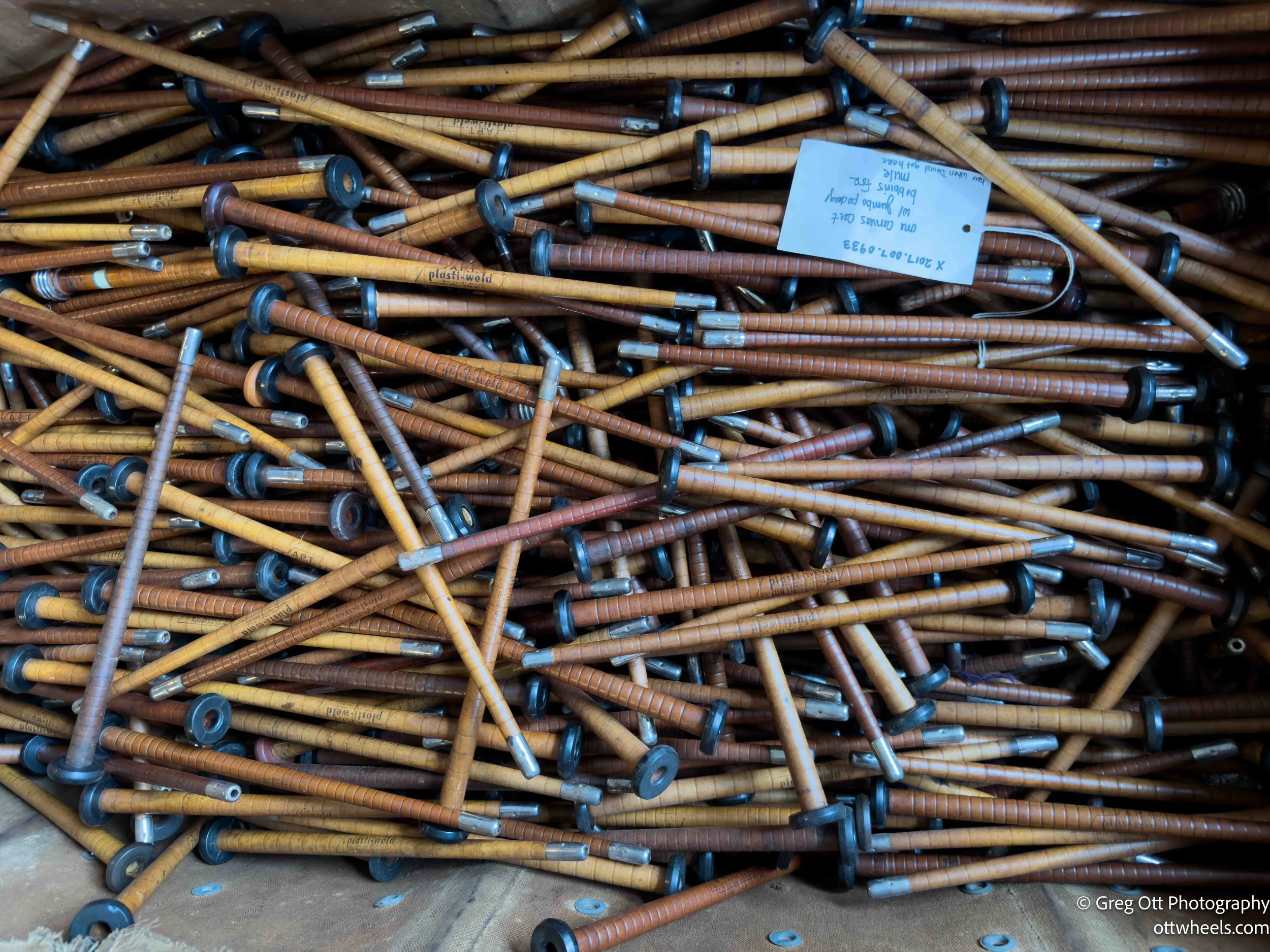
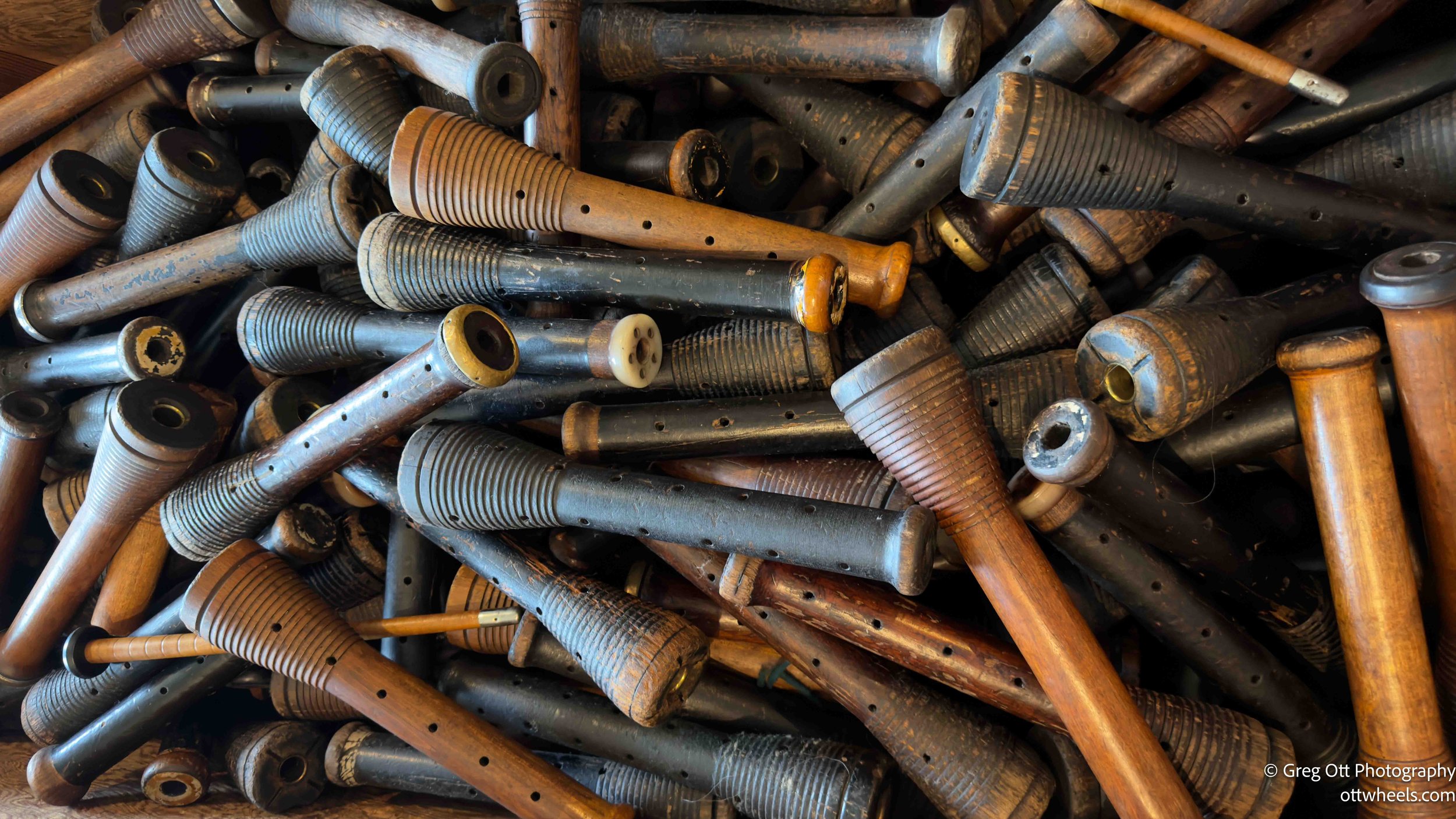
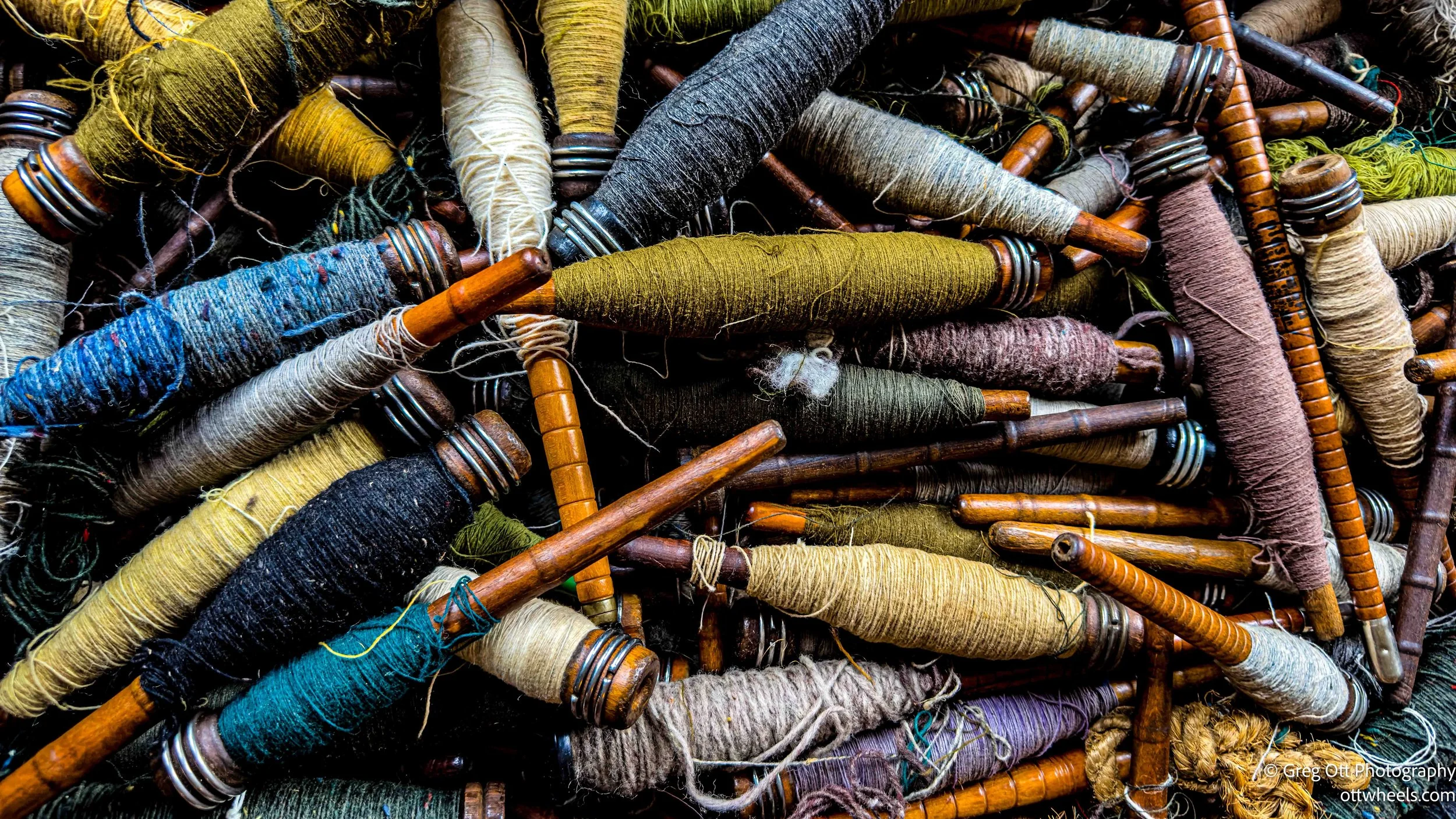
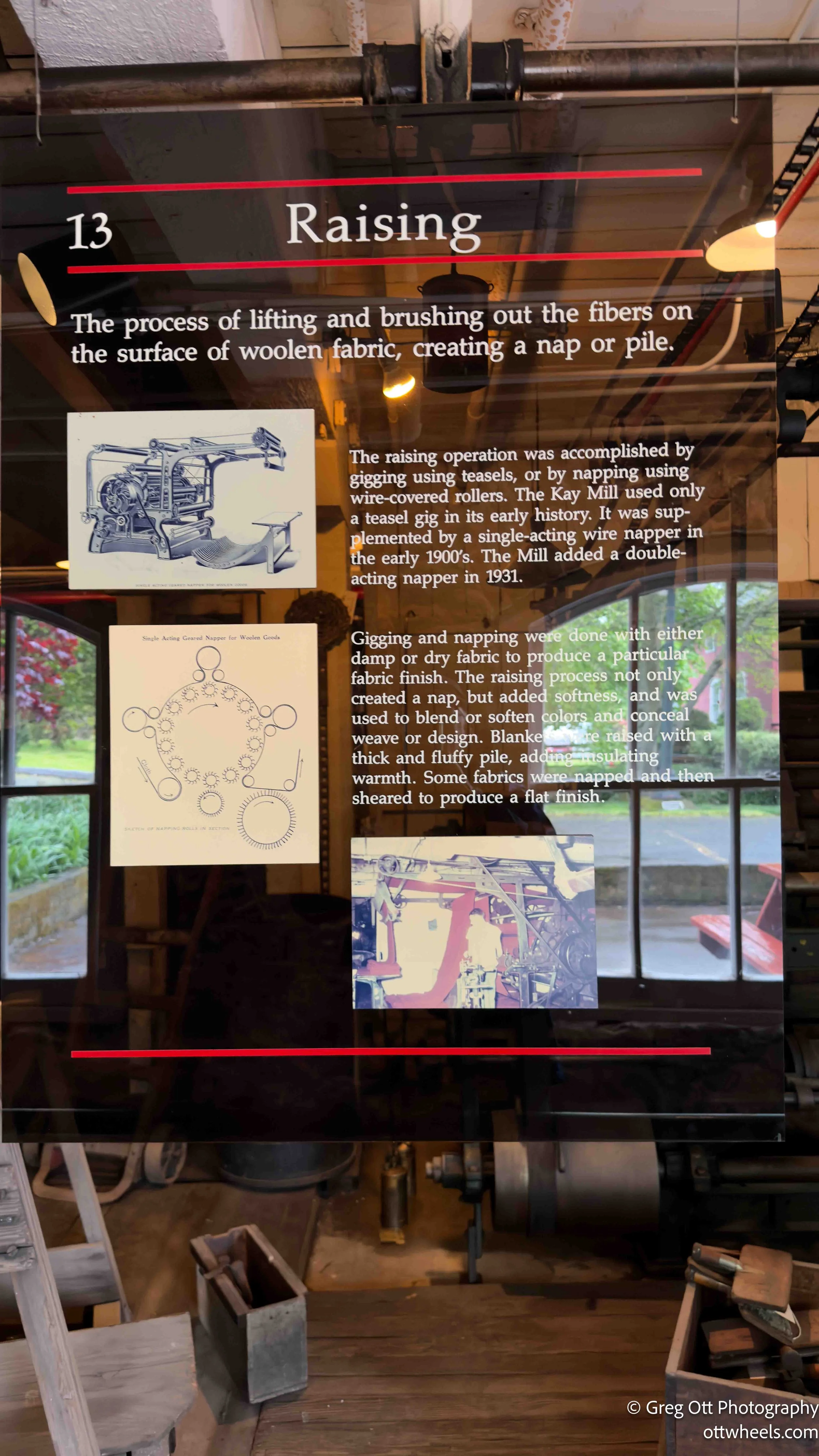
One floor down, that thread turns into material. It’s worked further—tightened, washed, and processed into something usable. It’s less about individual machines and more about watching that transition from thread to fabric.
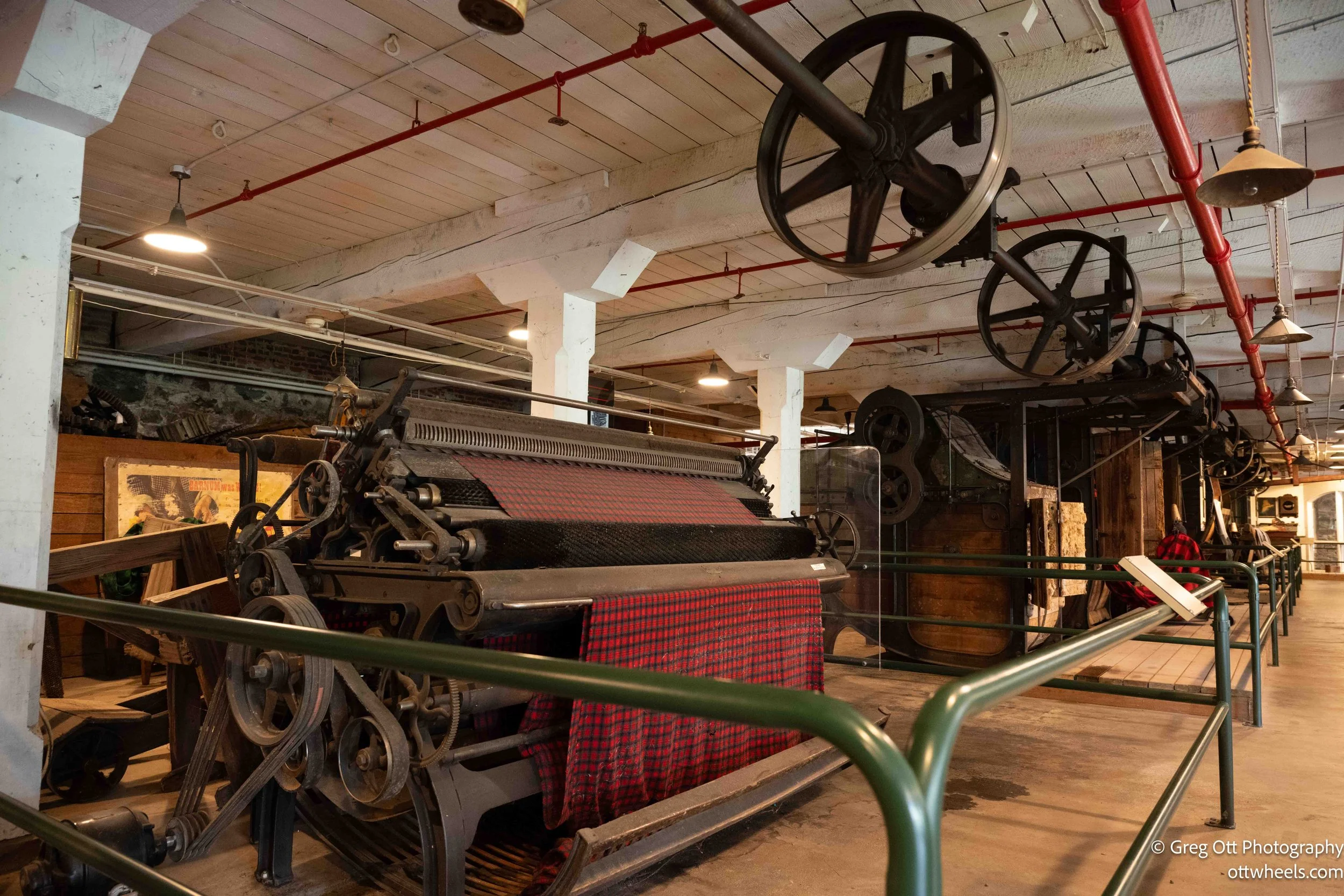
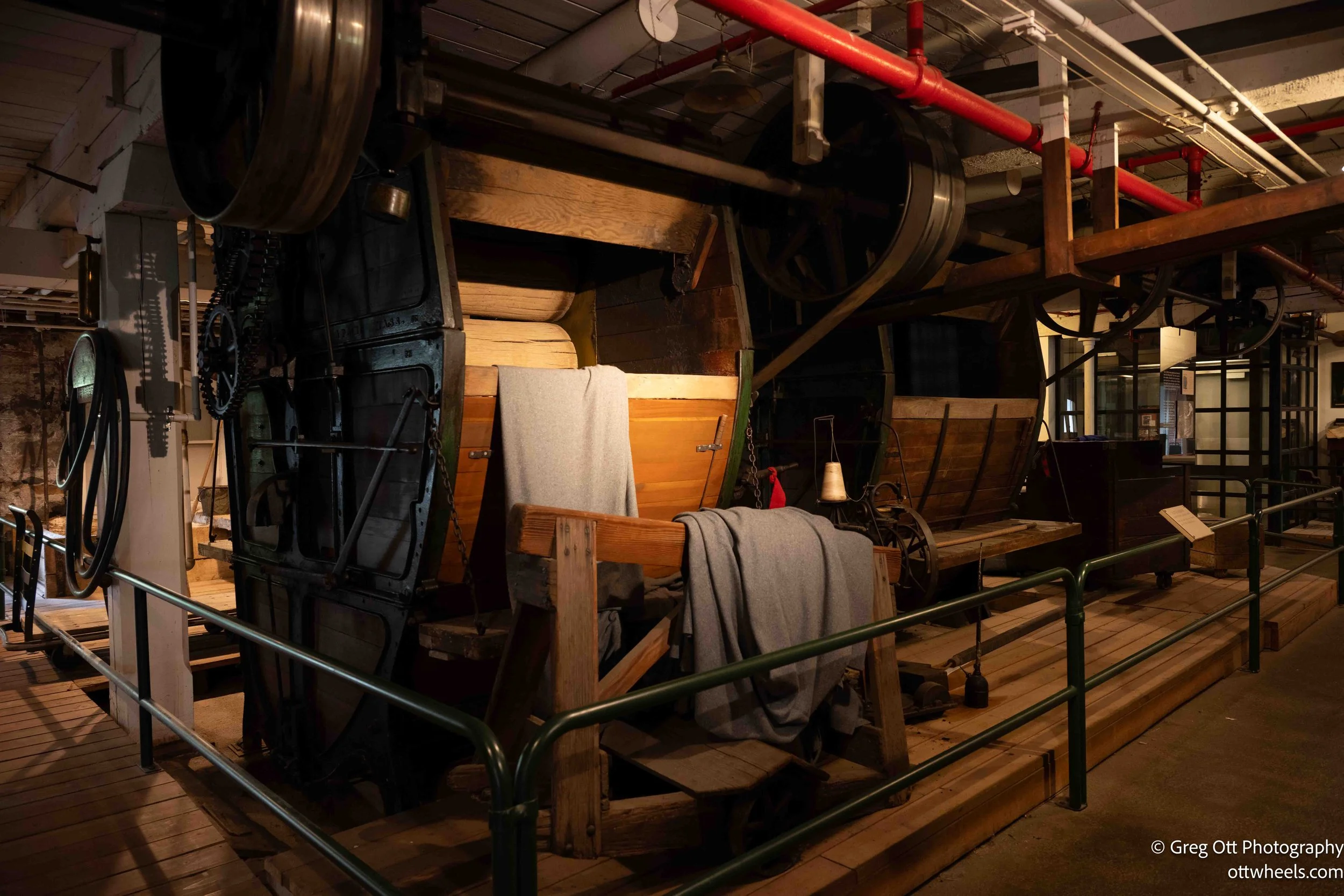
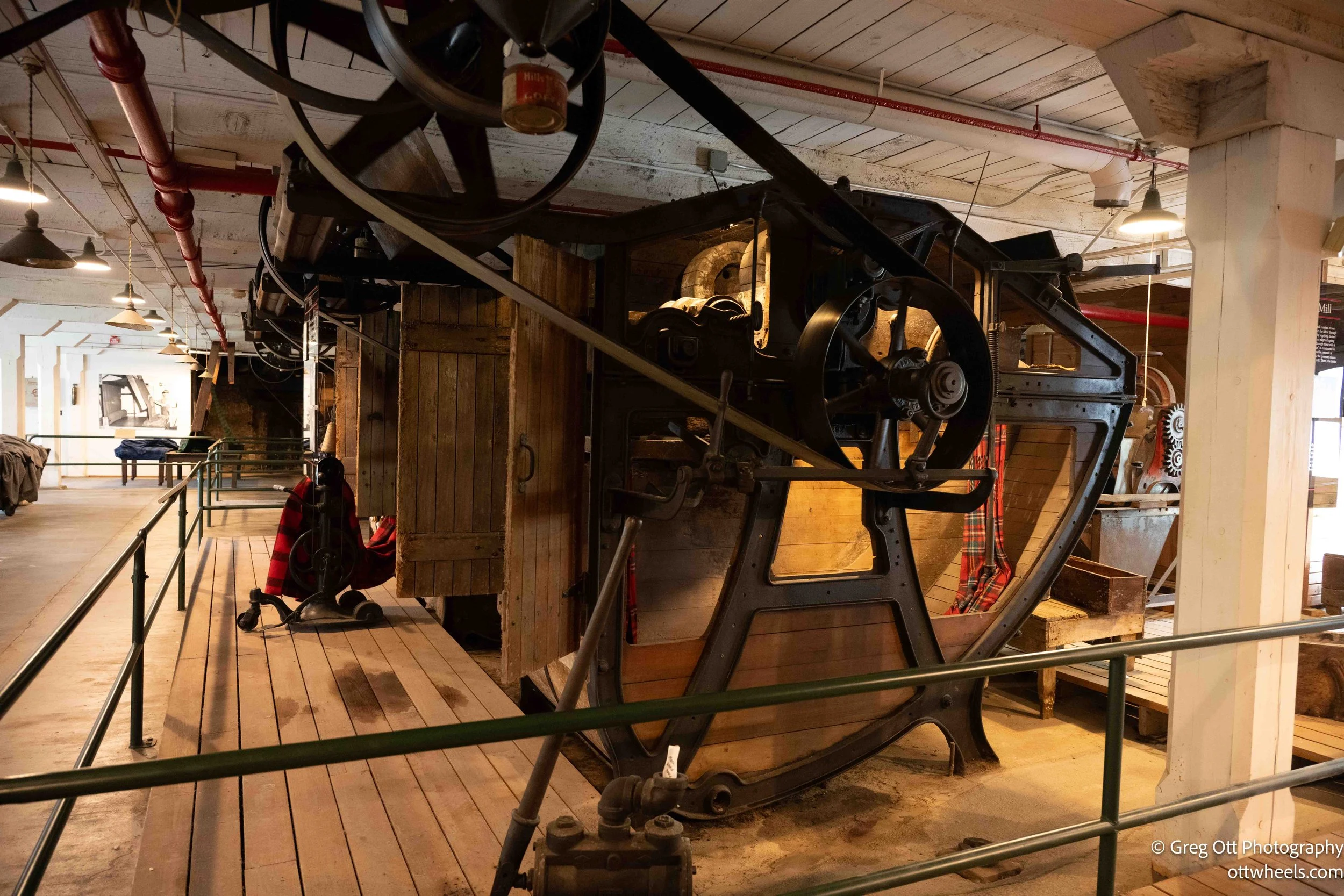
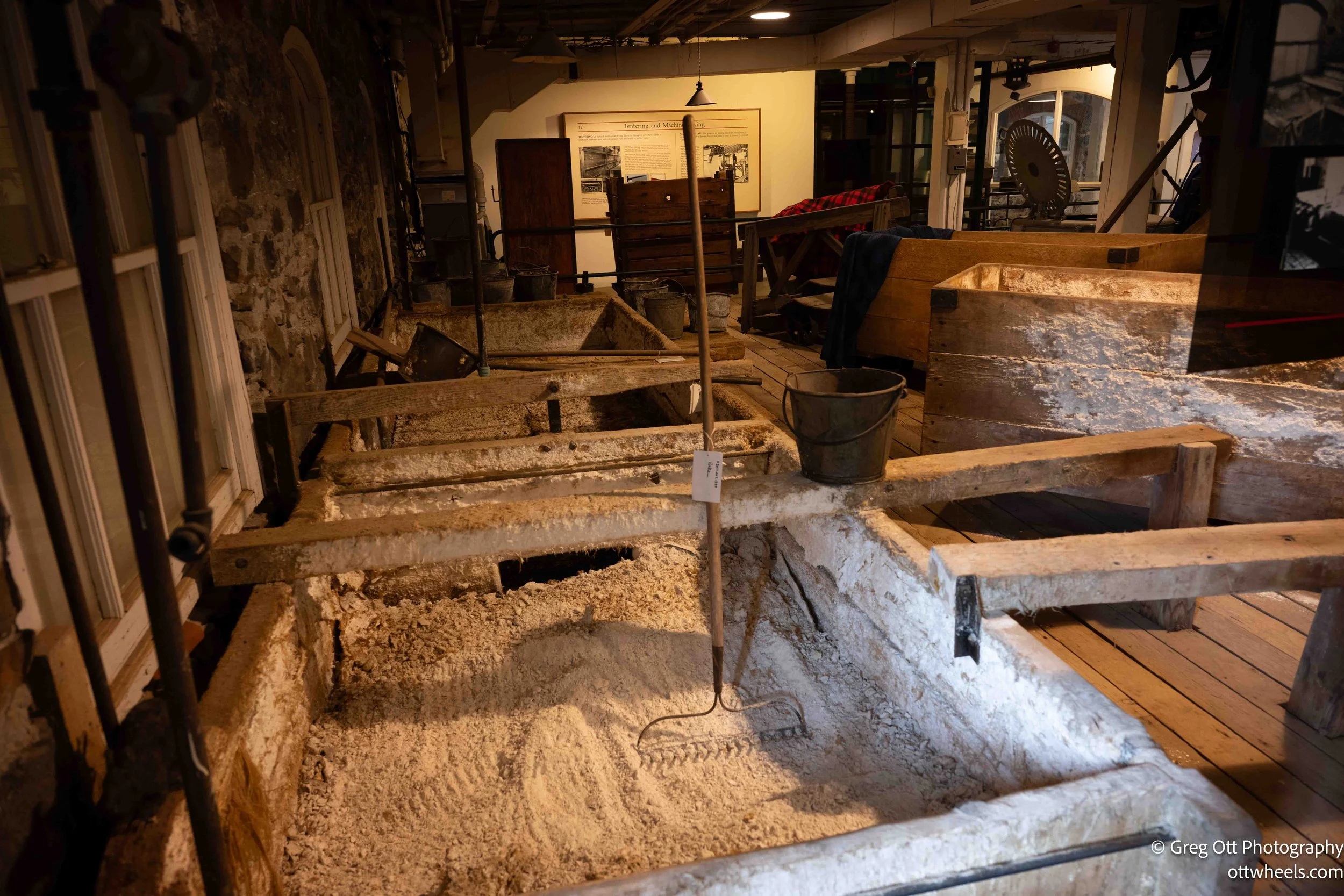
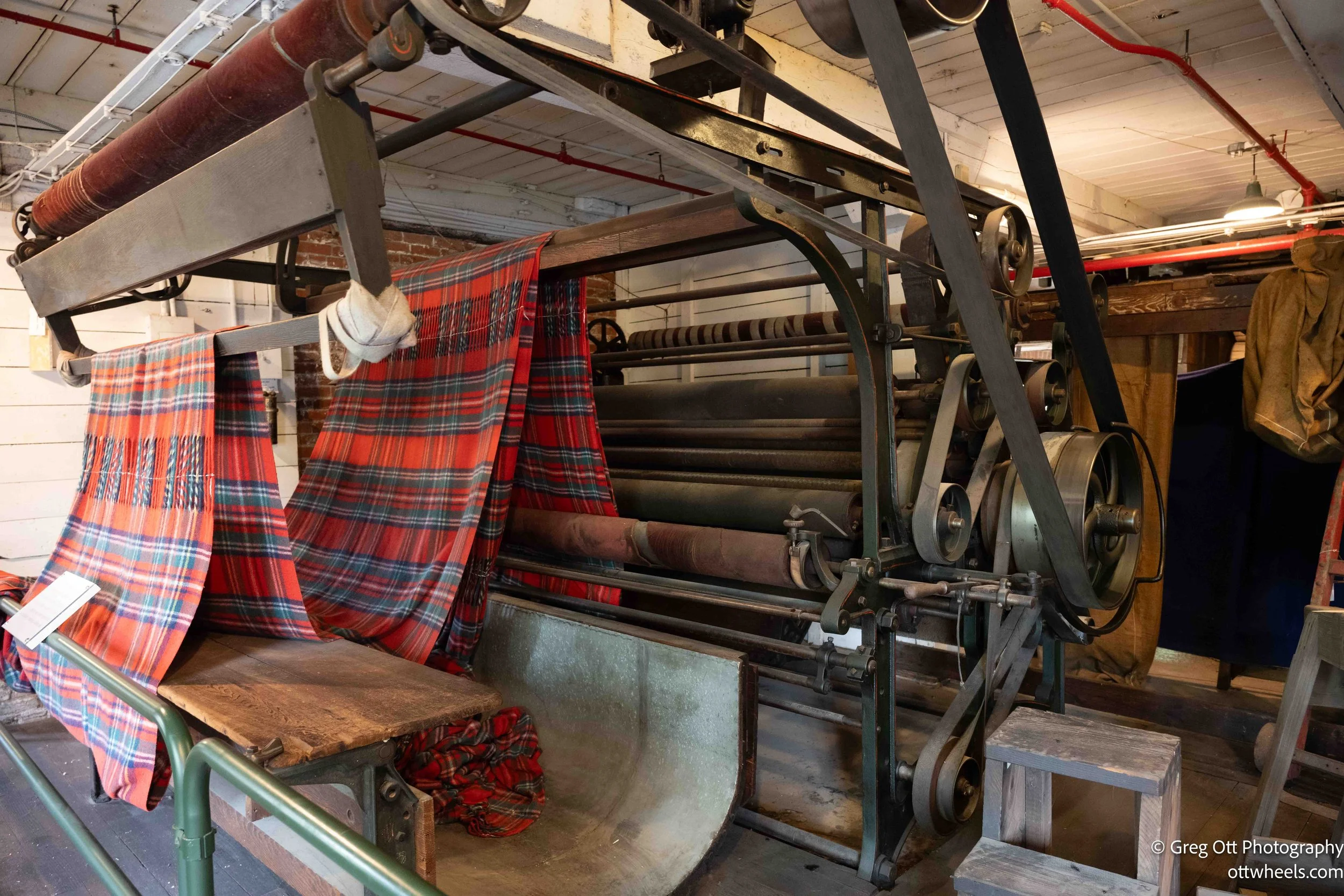
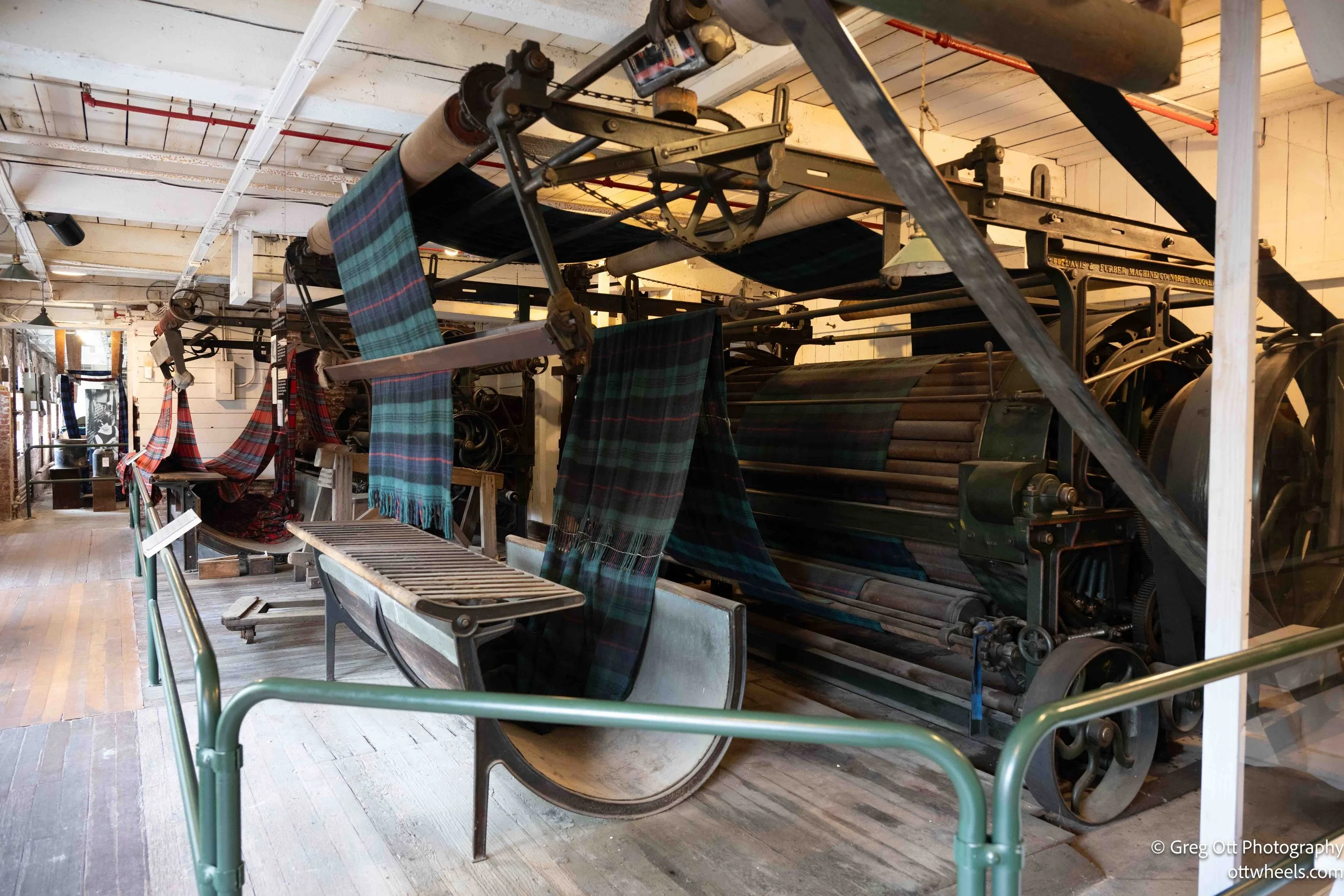
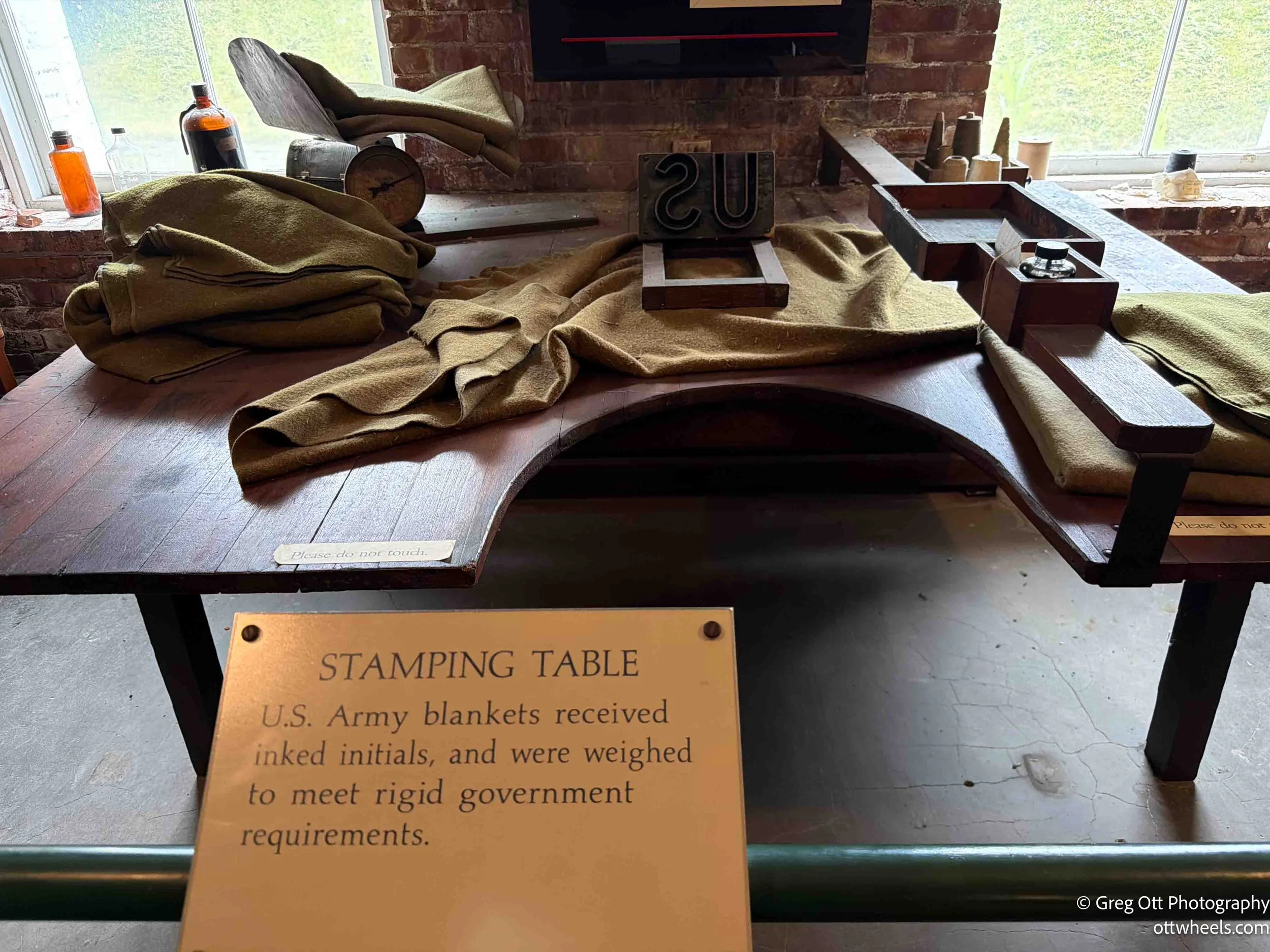
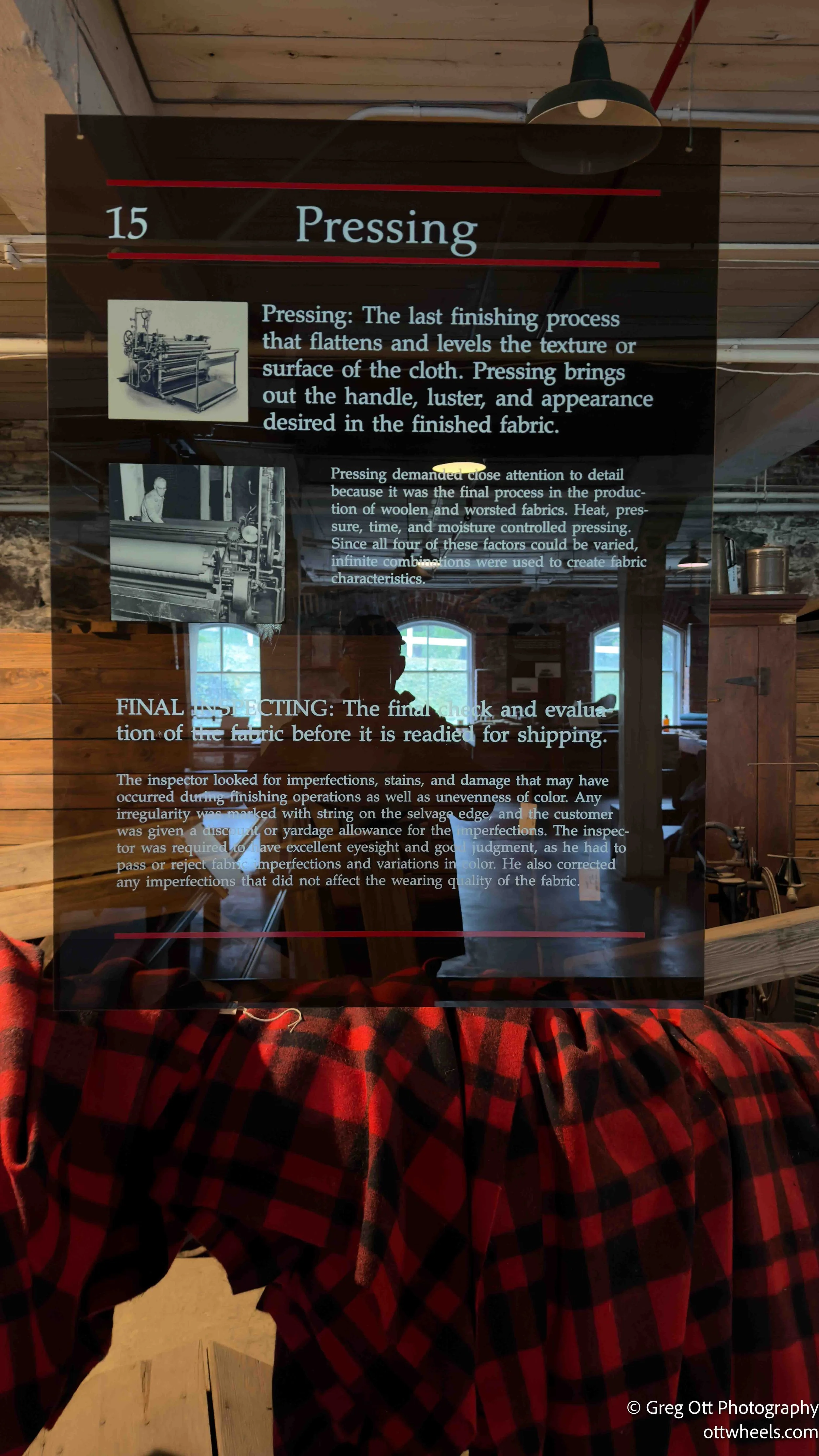
Down in the basement, the process wraps up. This is where the material was finished, washed, and prepared to go out. Wool blankets—especially for military use—were produced here, cleaned, and packaged. It’s easy to overlook compared to the upper floors, but this is where the product actually became something ready to leave the building.
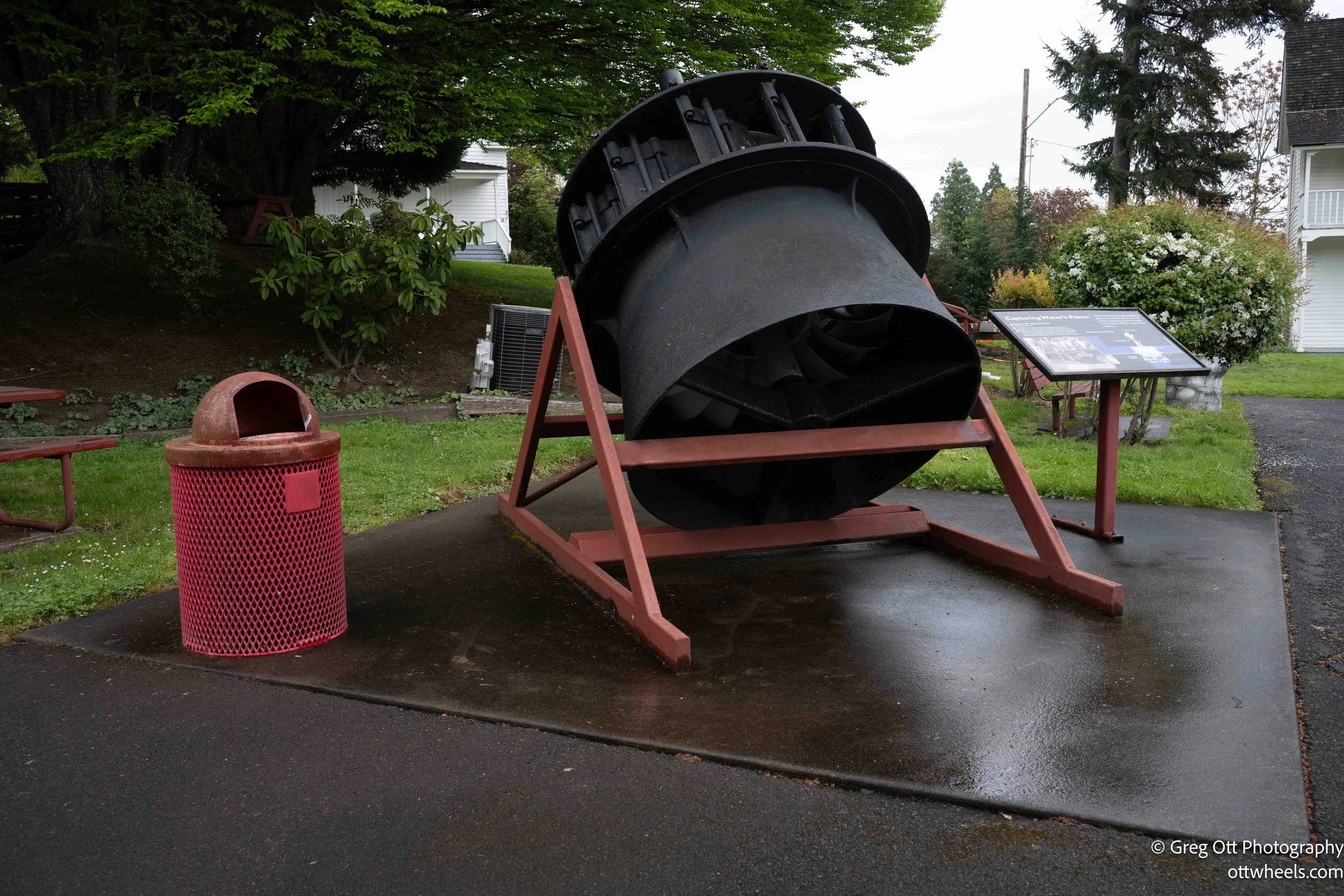
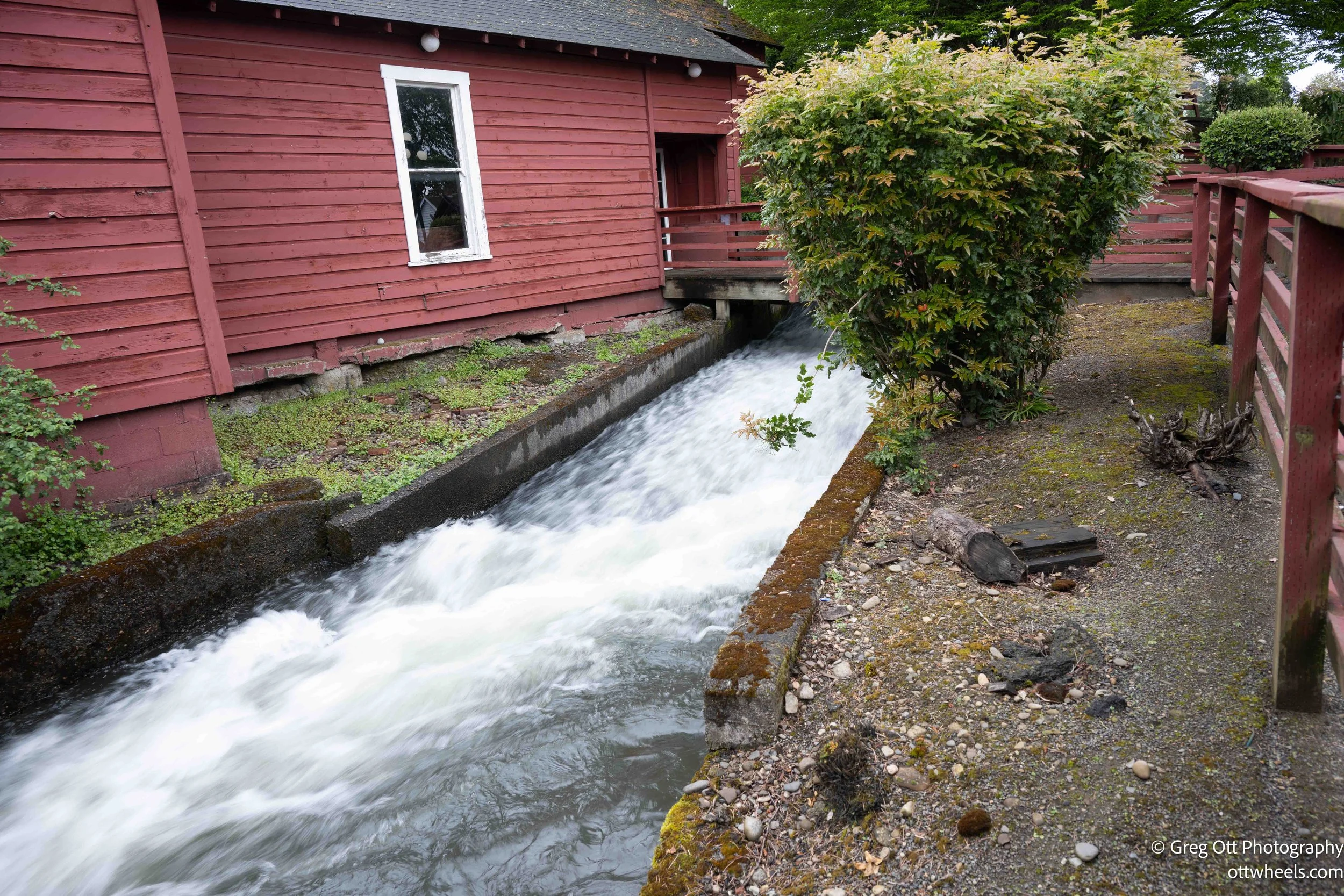
The Wheel House and Turbines area ties everything back to Salem in a way that’s easy to miss if you’re not paying attention. The power didn’t just come from a nearby river. Water was diverted from Mill Creek into a man-made millrace that runs right past the site. That controlled flow turned the turbines, and from there the energy moved through the entire mill by shafts and belts.
This system ran the mill from the late 1800s well into the early 1900s before electricity took over as the primary source. But the layout never changed. You can still see how everything was built around that original water power. It’s not just “old mills used water”—it’s seeing exactly how this one did it.
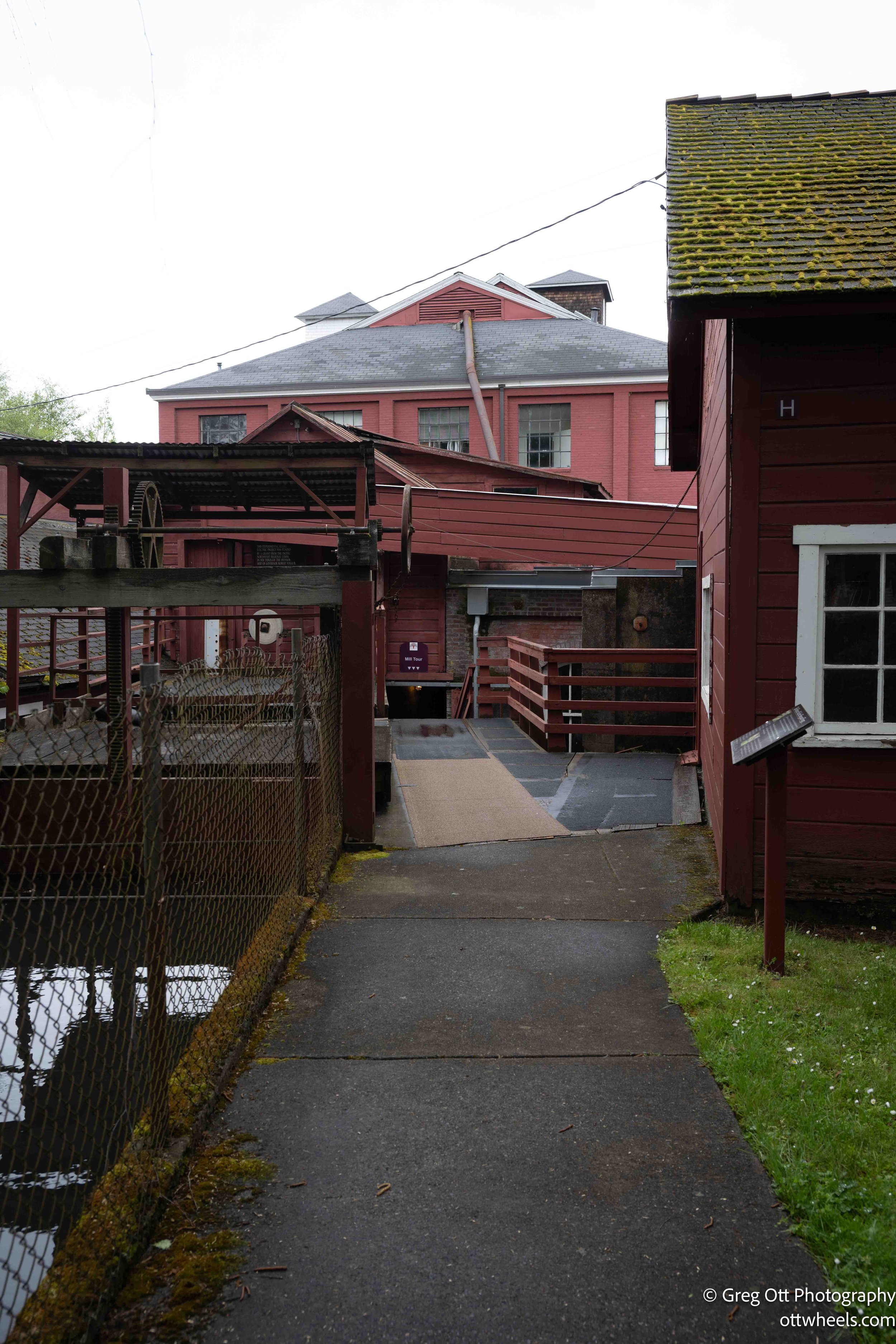
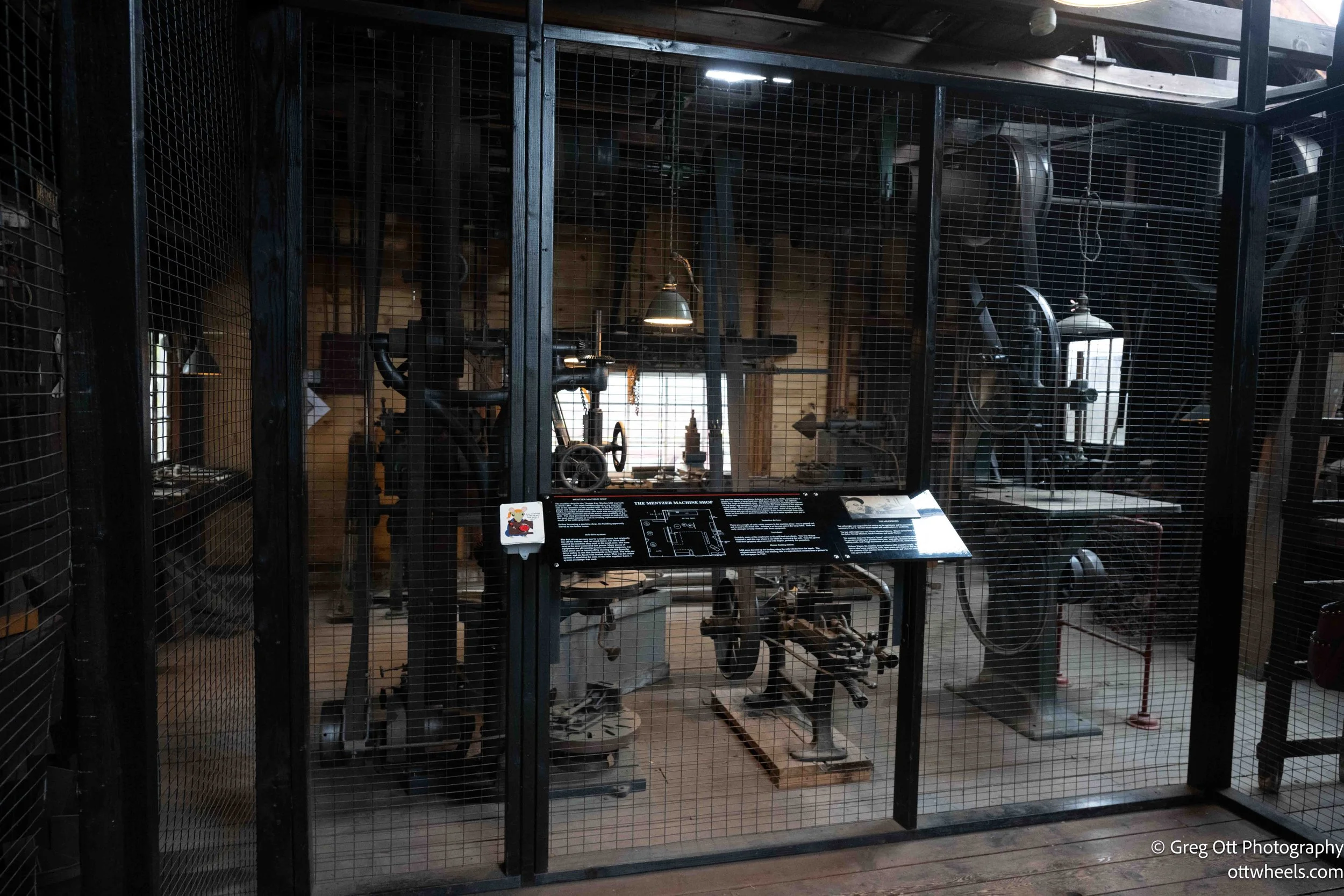
The Mentzer Machine Shop & Forge is where the whole thing stayed running. Built in 1889, it handled repairs and fabrication for the mill. What stood out is that even here, the machines are tied into the same power system. The hack saw, drill press, band saw—they all run off the line shafts coming from the wheel house. Nothing is standalone. When something broke, it came here, got fixed, and went right back into operation.
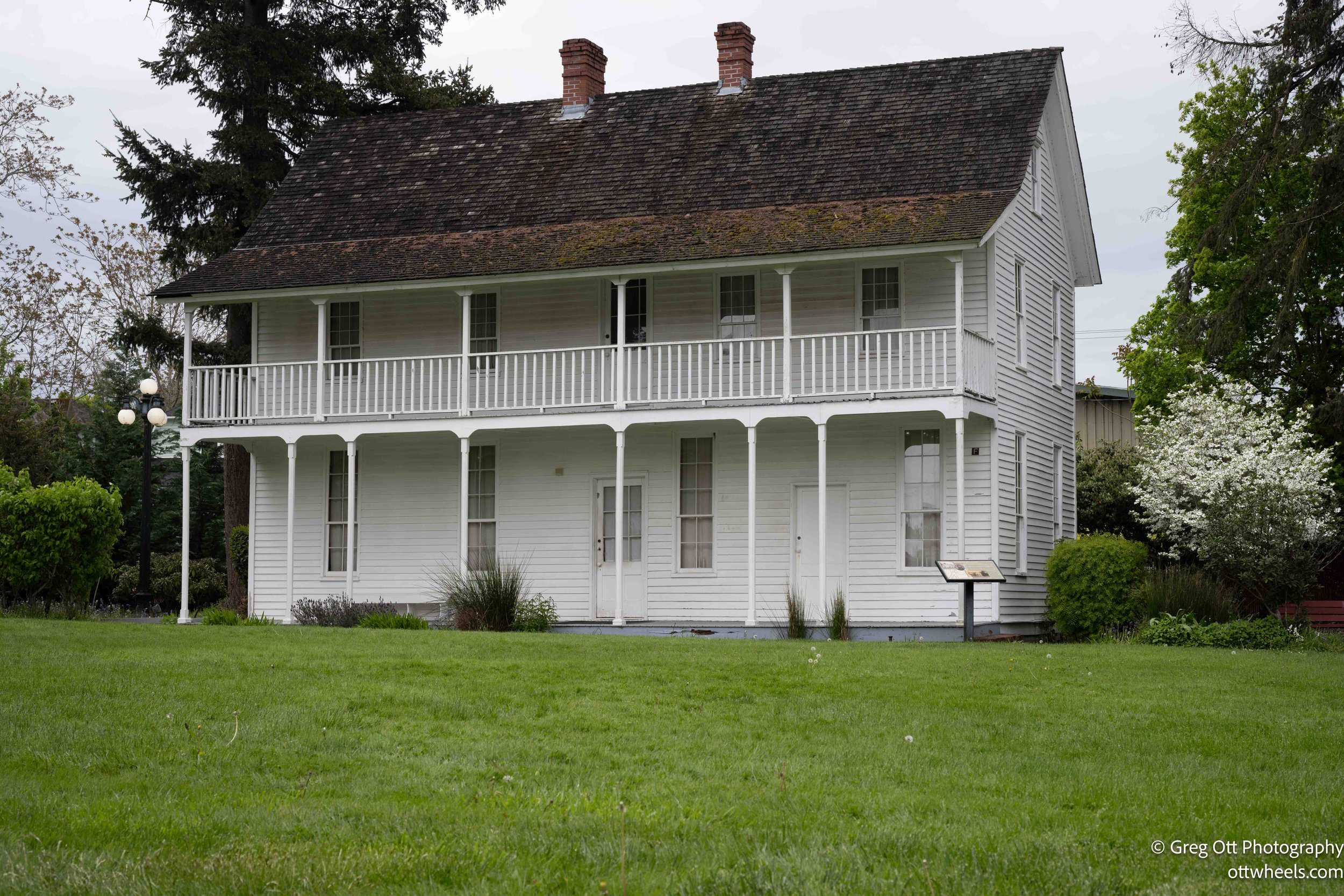
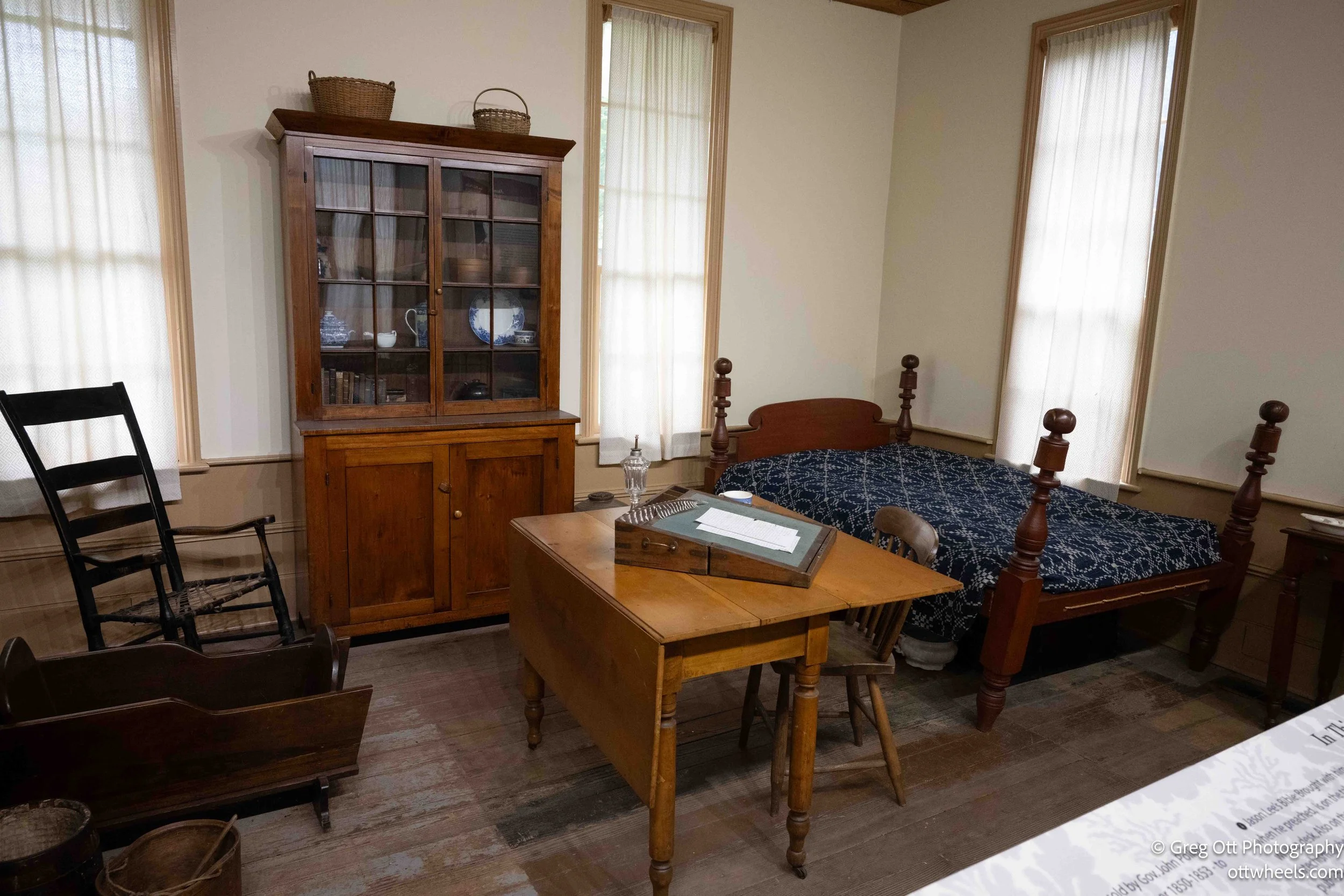
The Lee House and the Boon House sit just off the mill, and they feel like a completely different world. Both are furnished as they might have been, and both are packed with information—almost too much. Every room has panels, documents, timelines. Someone doing serious research on these two guys would be in heaven. Walking through, you pick up pieces and keep moving.
The Lee House goes back to Jason Lee, one of the early figures tied to the founding of Salem. The house dates to the early 1840s and was originally shared by multiple missionary families. It’s less about the furniture and more about what was happening there—early settlement, religion, education, and the beginnings of organized government.
The Boon House shifts forward a few years and feels more grounded in everyday life. John D. Boon came west on the Oregon Trail and ended up right in the middle of Salem’s early business and government. His house, built in the late 1840s, is the oldest single-family home still standing in the city. He ran a general store that doubled as the state treasury—literally keeping different piles of money for each. That tells you a lot about how things worked back then.
Both houses are interesting, but they require a different kind of attention than the mill. The mill you can walk through and see how things worked. The houses, you have to read, piece things together, and decide how deep you want to go. I found myself skimming more than studying, but even then, you get the sense that these weren’t just random buildings—they’re tied directly into how Salem got started.
By the time I finished, it was close to 1 pm. There’s a restaurant back in the Warehouse, and I gave it a try. It was surprisingly good. I sat down with a bowl of bean, kale, cheddar vegetable soup and a stacked turkey sandwich, and ordered a latte to warm up. It felt like the right way to end a cold, damp, but really interesting visit.
After leaving, I drove out toward Portland to pick up a FedEx delivery. It took over two hours in rush hour—something I always try to avoid and somehow forget about until I’m in the middle of it. I got there just before 6 pm, picked up a recovered drive from Ace Data Recovery in Dallas, and headed out to find a place to stop.
I ended up in a large, mostly empty lot—looked like it used to be a McDonald’s from the old signage. Plenty of RV-sized spots, and I had the place to myself. I plugged in the drive, saw the power light come on…nothing. After a few minutes of trying different things, I found the actual power button. Connected.
I let it run and copy files for the next couple of hours and ended up taking a long nap.
Later, I stopped at a Panera, started another round of copying, then headed to a rest stop north of Portland. There were designated spots—one hour, four hour, eight hour—but it didn’t matter. The upper lot was packed with trucks, all idling. Loud. Constant. I tried putting on rain sounds to drown it out, which somehow made it worse. Doors slamming, engines revving, the occasional horn—there was no chance I was sleeping there.
So I left.
I drove about 30 minutes north to Longview, Washington, where I found a quiet street spot on iOverlander. Completely silent. I slept for seven hours while the files kept copying. I had 2.8 TB of data to move, and it would run well into the night and into the next morning.