Potter Marsh
Breakfast was in the van again. I'm still not used to the trains that rumble past the campground well into the night. Last night they kept coming until nearly midnight. My neighbors, a young couple camping in a tent beside me, were having an even better time. Every few minutes I'd hear the guy talking about something I couldn't quite make out, followed by his girlfriend enthusiastically shouting, "No way!" She didn't seem to say much else. Every five minutes or so there it was again: "No way!" It became the evening's entertainment.
Potter Marsh
I spent the morning writing, editing photographs, and catching up on a few things before heading south to Potter Marsh. It was one of those classic Alaska summer days. The temperature felt more like a pleasant spring afternoon back home, the sun drifted in and out behind scattered clouds, and the mountains were crystal clear. The drive took about twenty-five minutes, although I managed to miss the entrance the first time and had to circle back. The parking lot was busy, but there were still plenty of spaces.
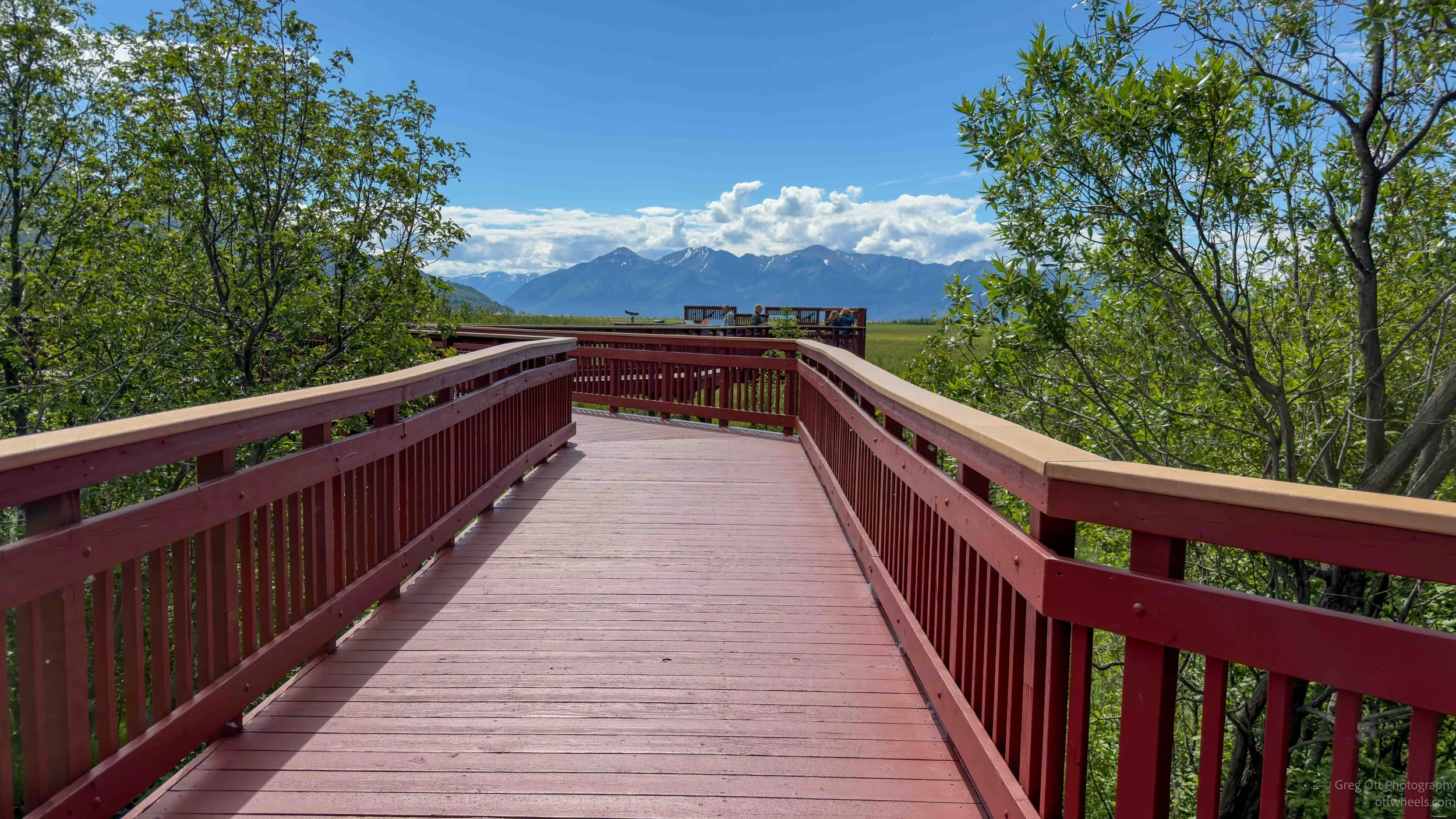
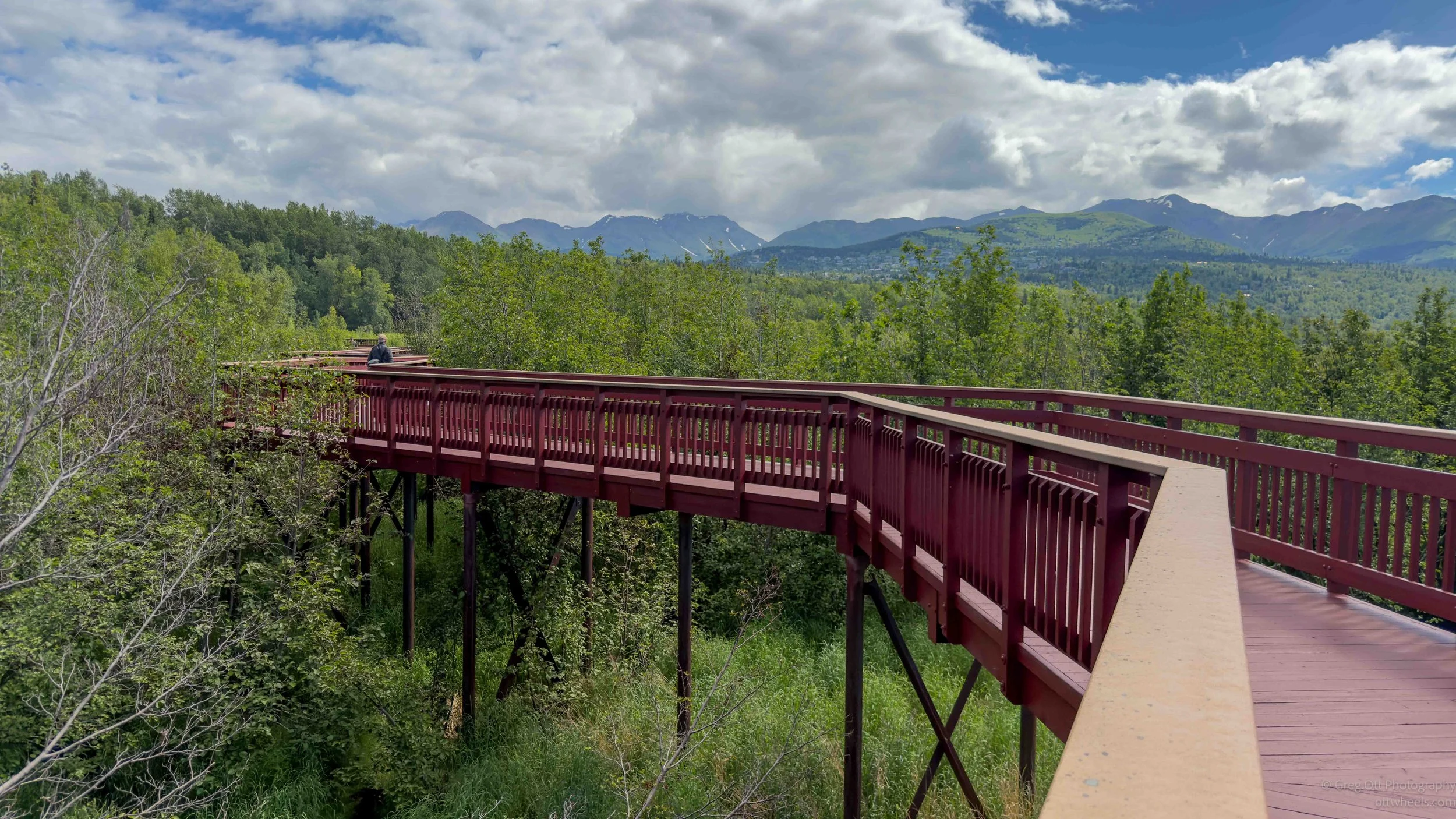
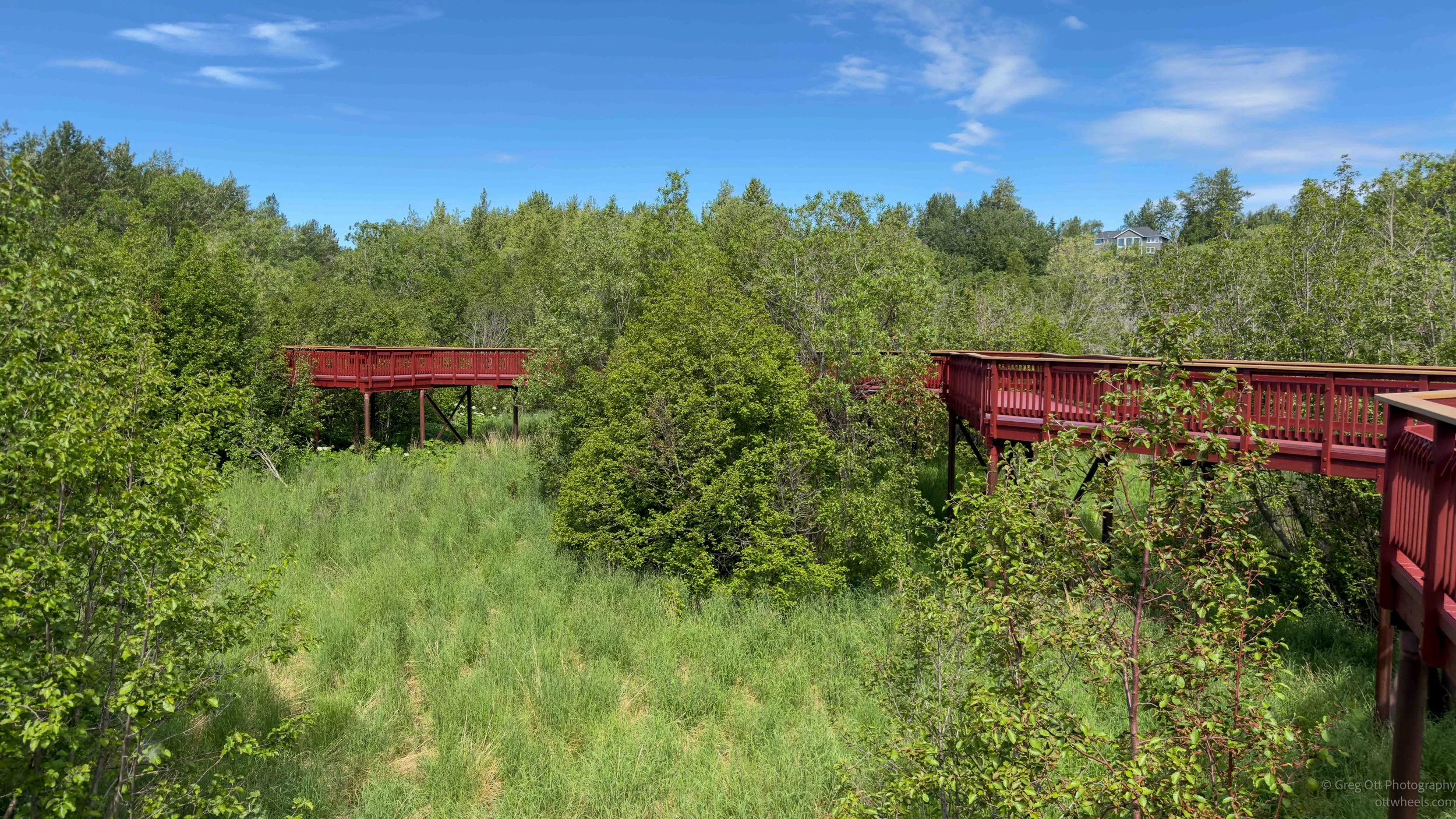
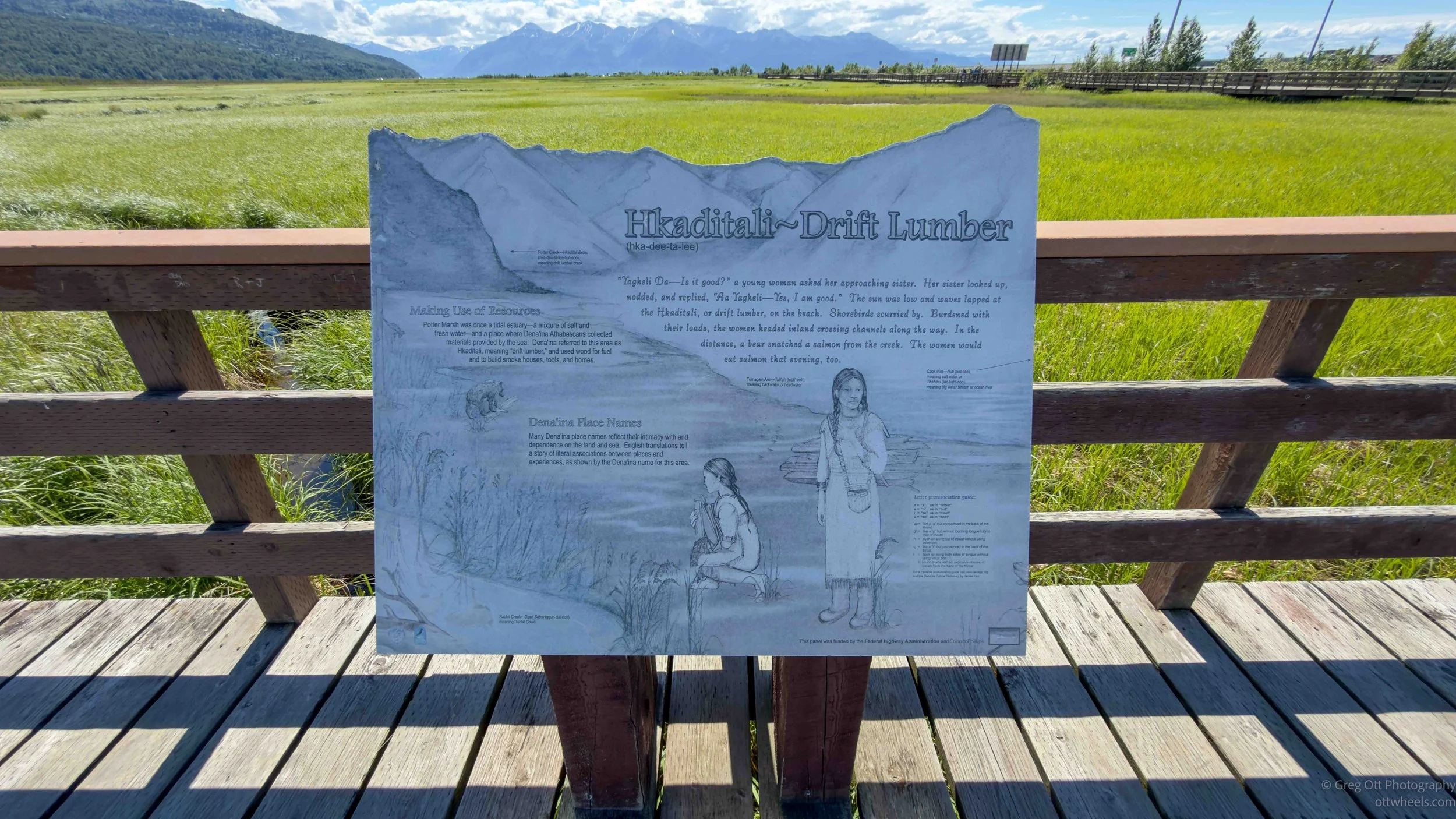
Potter Marsh is one of Anchorage's best wildlife viewing areas I was told. The elevated wooden boardwalk winds for nearly a mile through more than 500 acres of freshwater wetlands at the southern edge of the city. Long before Anchorage existed, this was part of the tidal estuary of Turnagain Arm. Construction of the railroad in the early 1900s blocked the saltwater channel and by chance gradually transformed the area into the freshwater marsh that exists today. It now attracts hundreds of species of birds, along with muskrats, beavers, and the occasional moose, all within sight of one of Alaska's busiest highways.
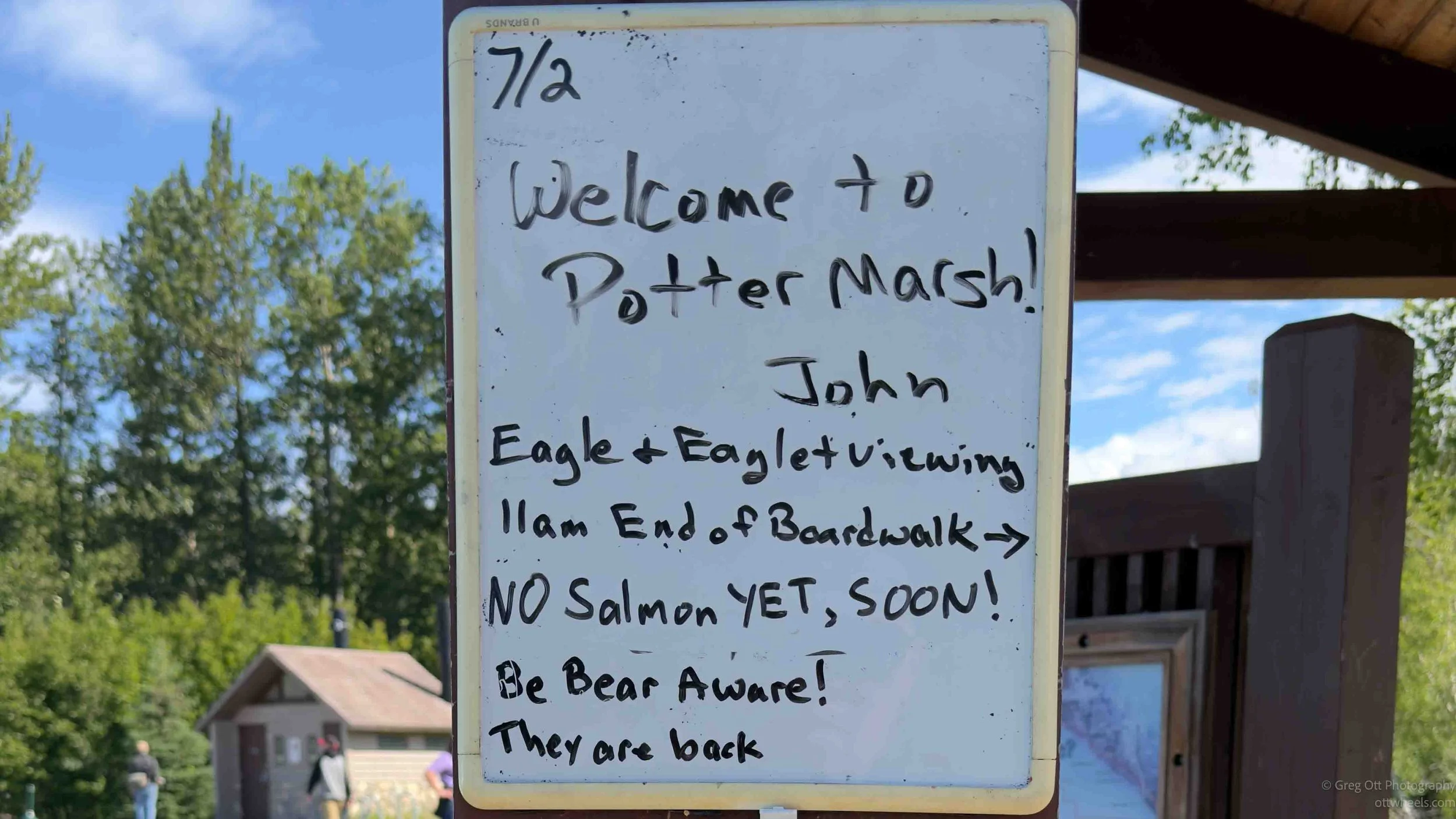
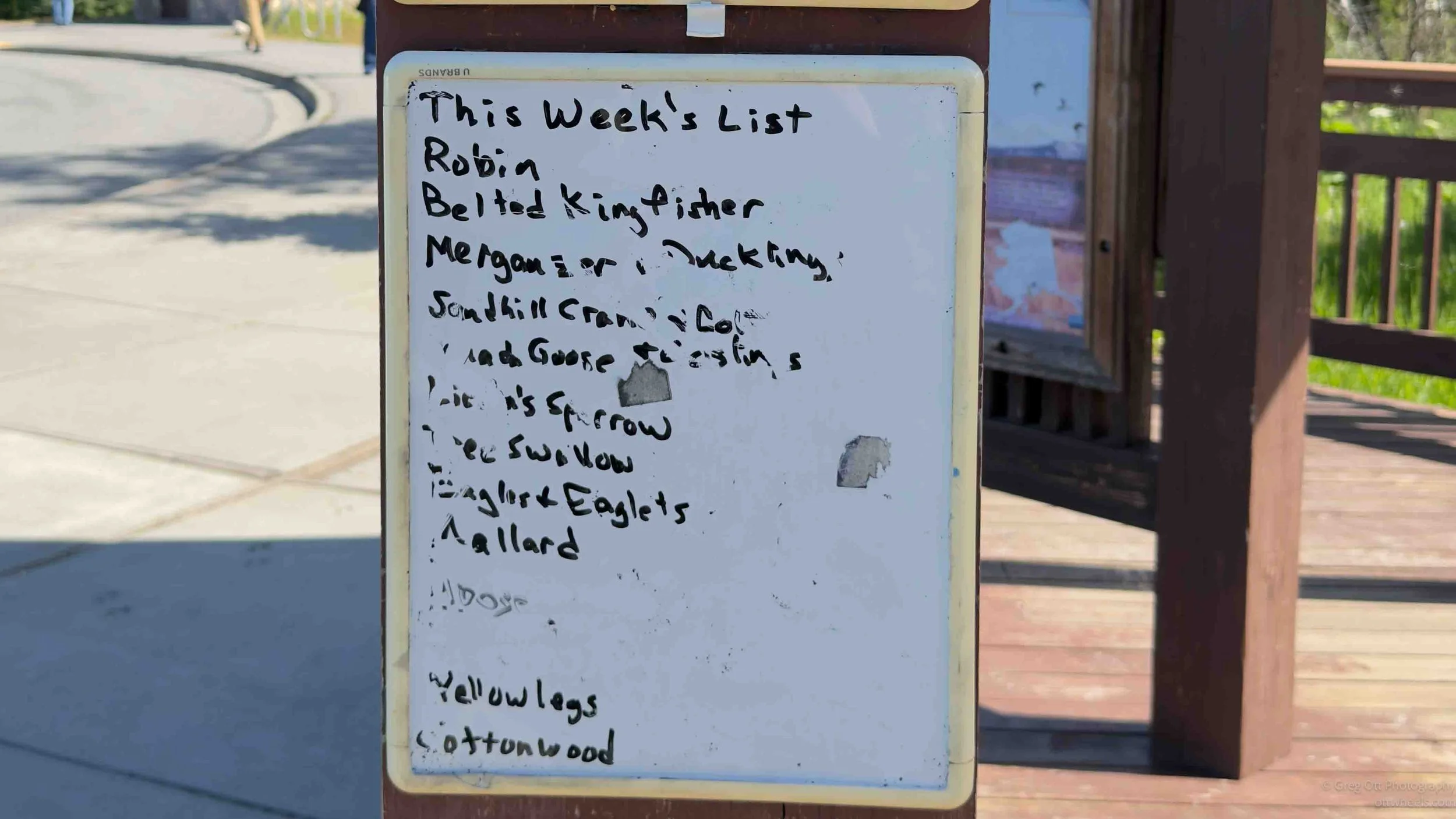
At the entrance, a whiteboard listed birds that had recently been spotted, including an active Bald Eagle nest with young. I had planned to spend about ninety minutes walking the boardwalk, figuring that would be enough if I kept moving. That plan lasted about five minutes.
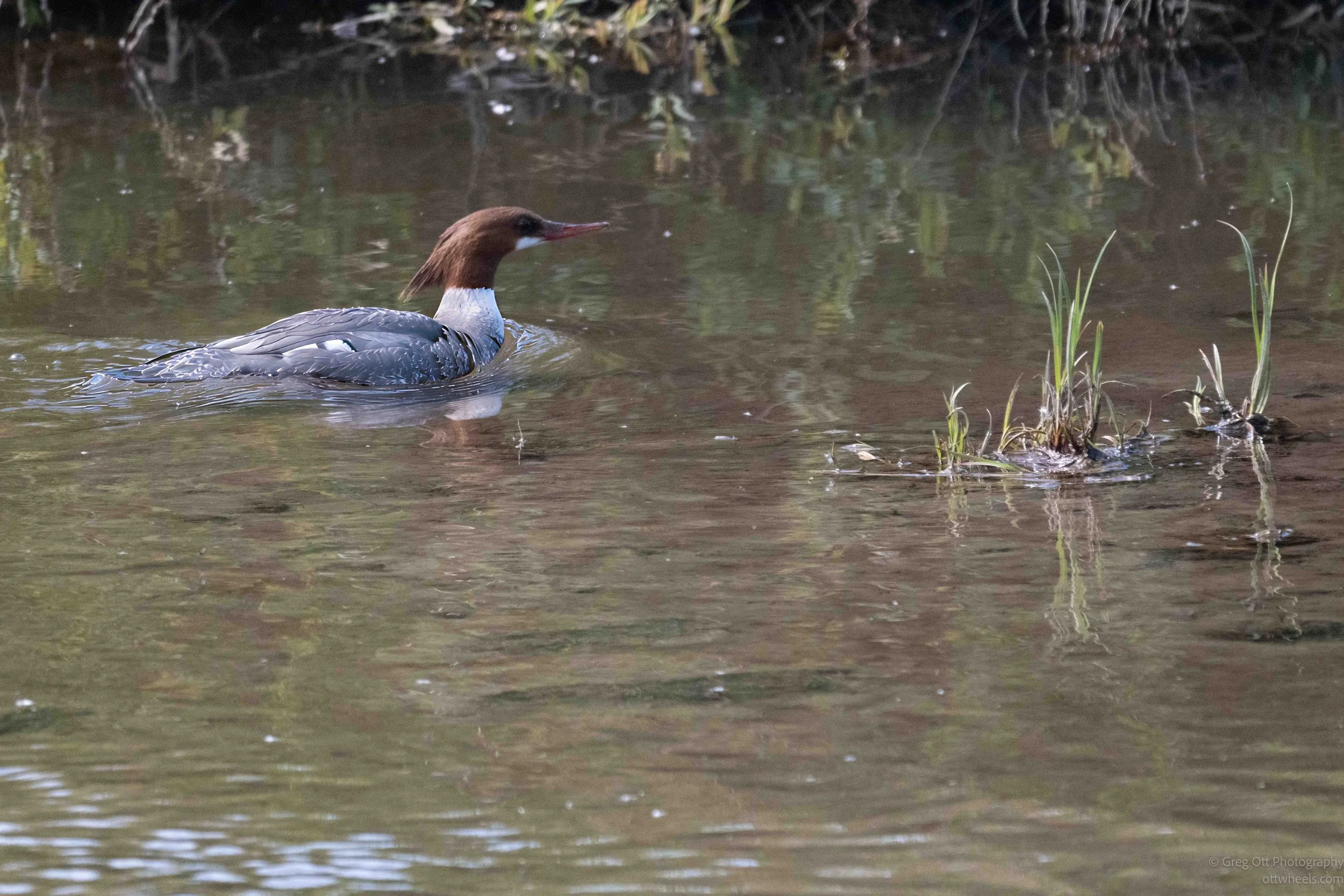
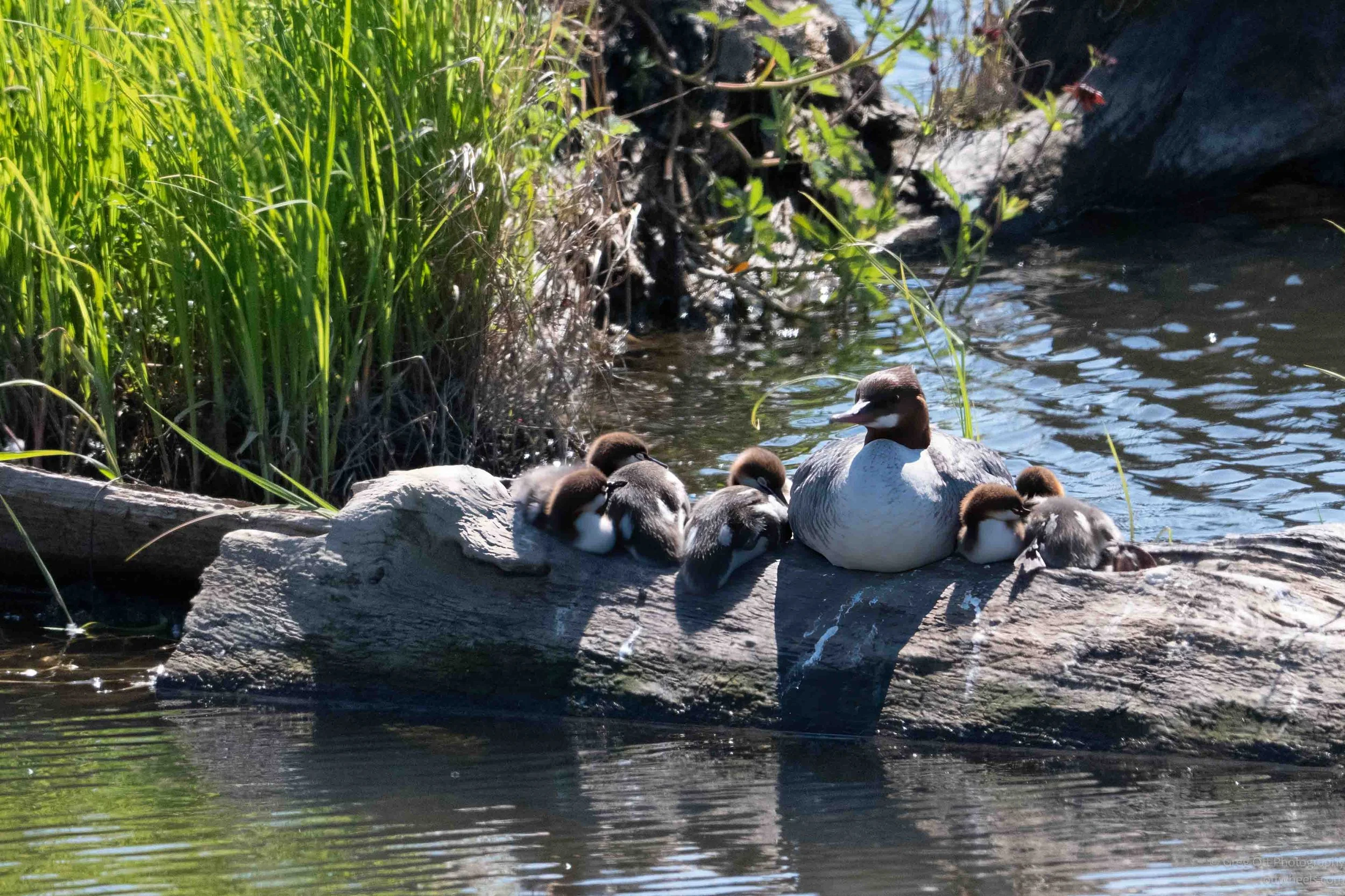
The first viewing platform overlooked a family of Hooded Mergansers. I don't remember ever seeing them before. The female floated quietly with her brood of tiny ducklings clustered around her, and every so often a couple of them would climb onto her back for a free ride. It was surprisingly entertaining to watch. Hooded Mergansers nest in tree cavities rather than on the ground, and the ducklings leap from the nest only a day after hatching, sometimes falling thirty or forty feet before following their mother to the nearest water. Within hours they're already swimming and feeding themselves, although they stay close to her protection for nearly two months before they can fly.
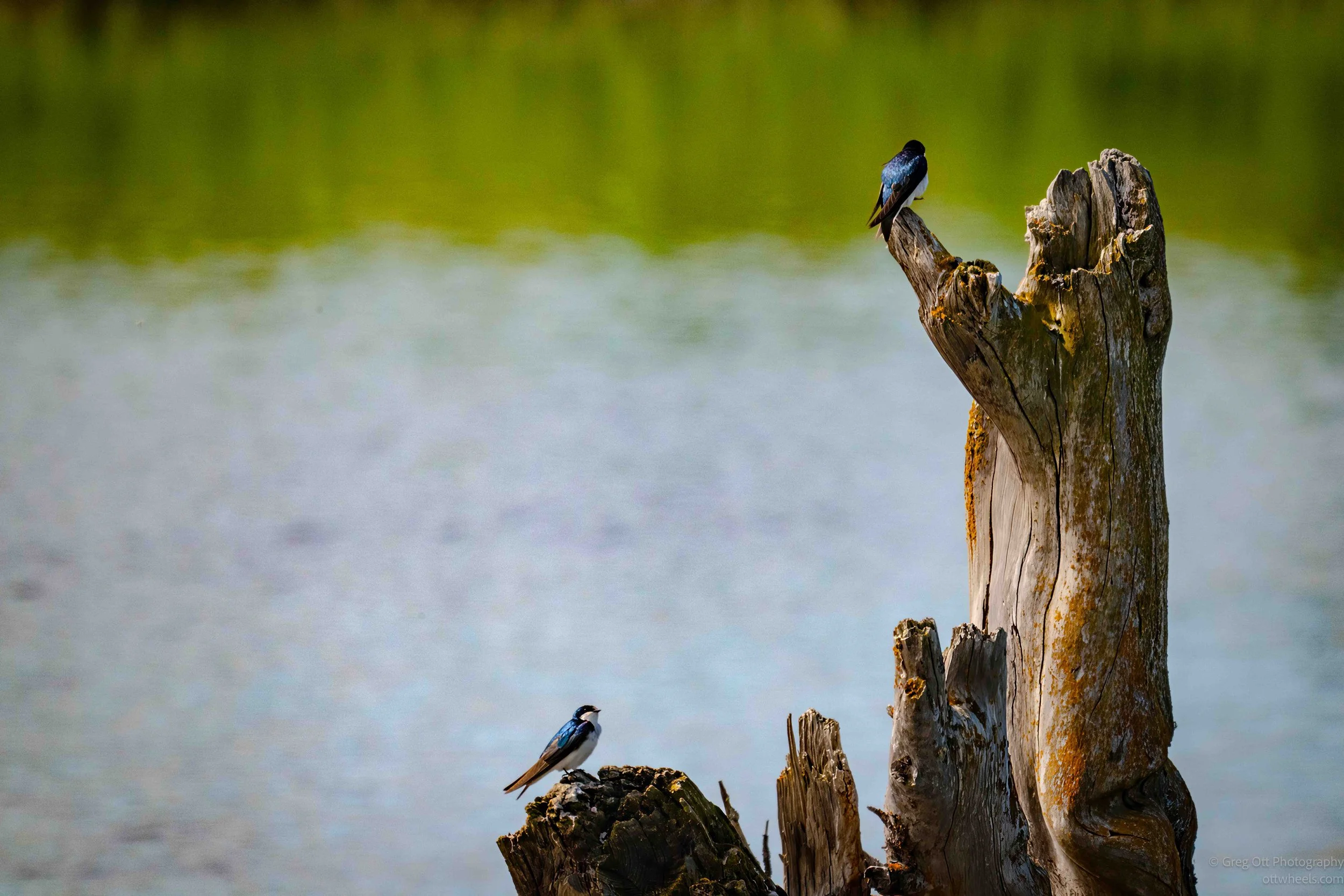
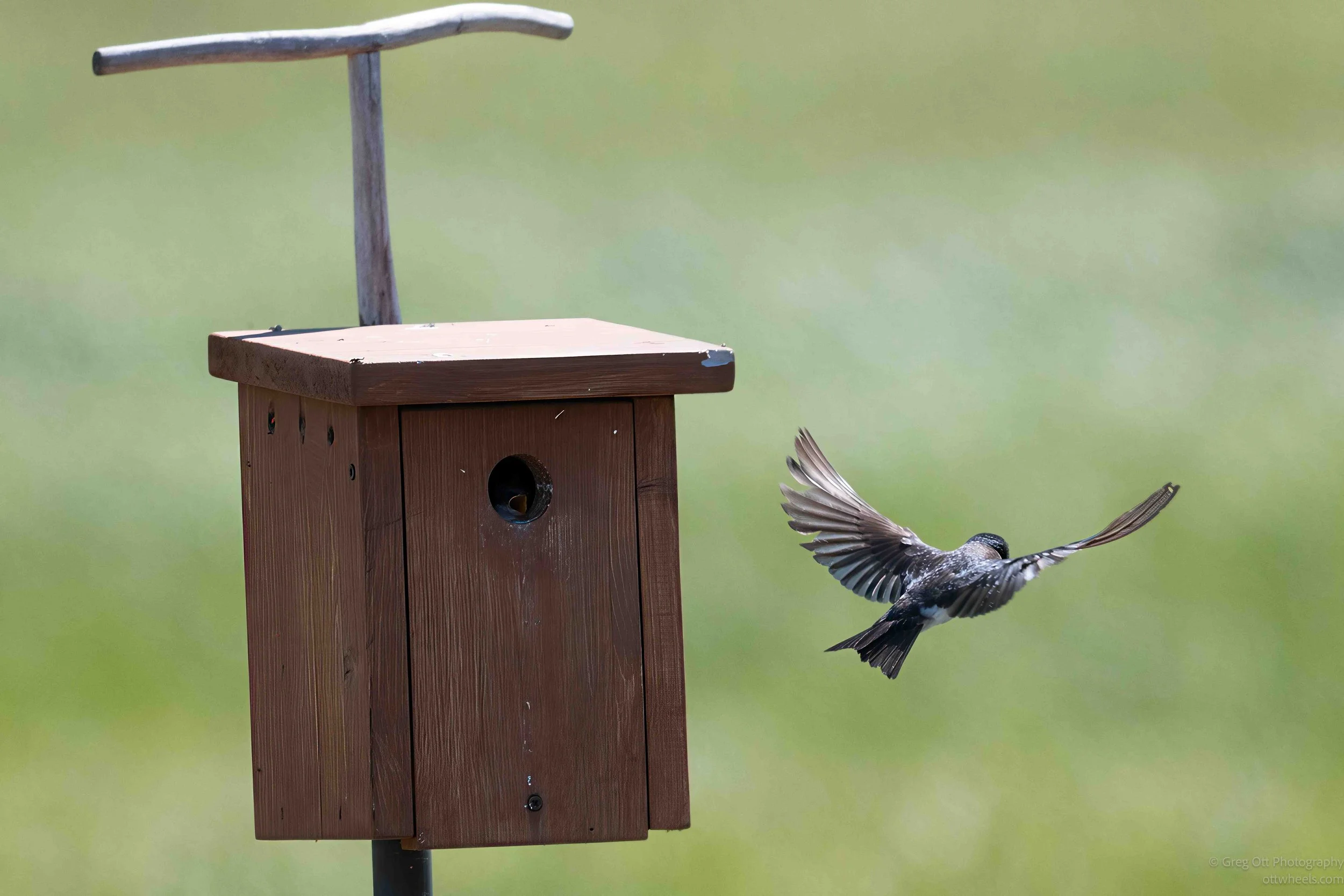
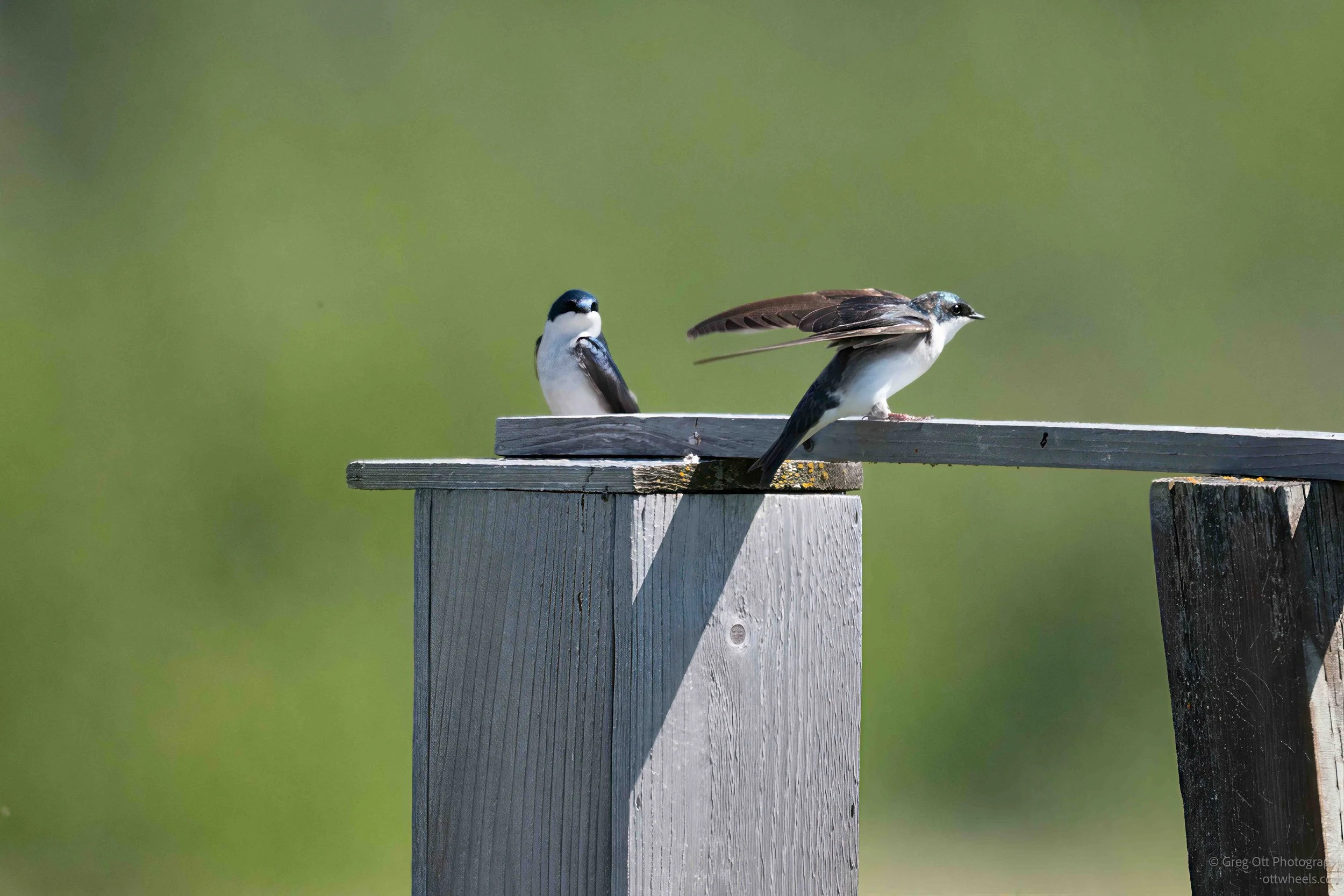
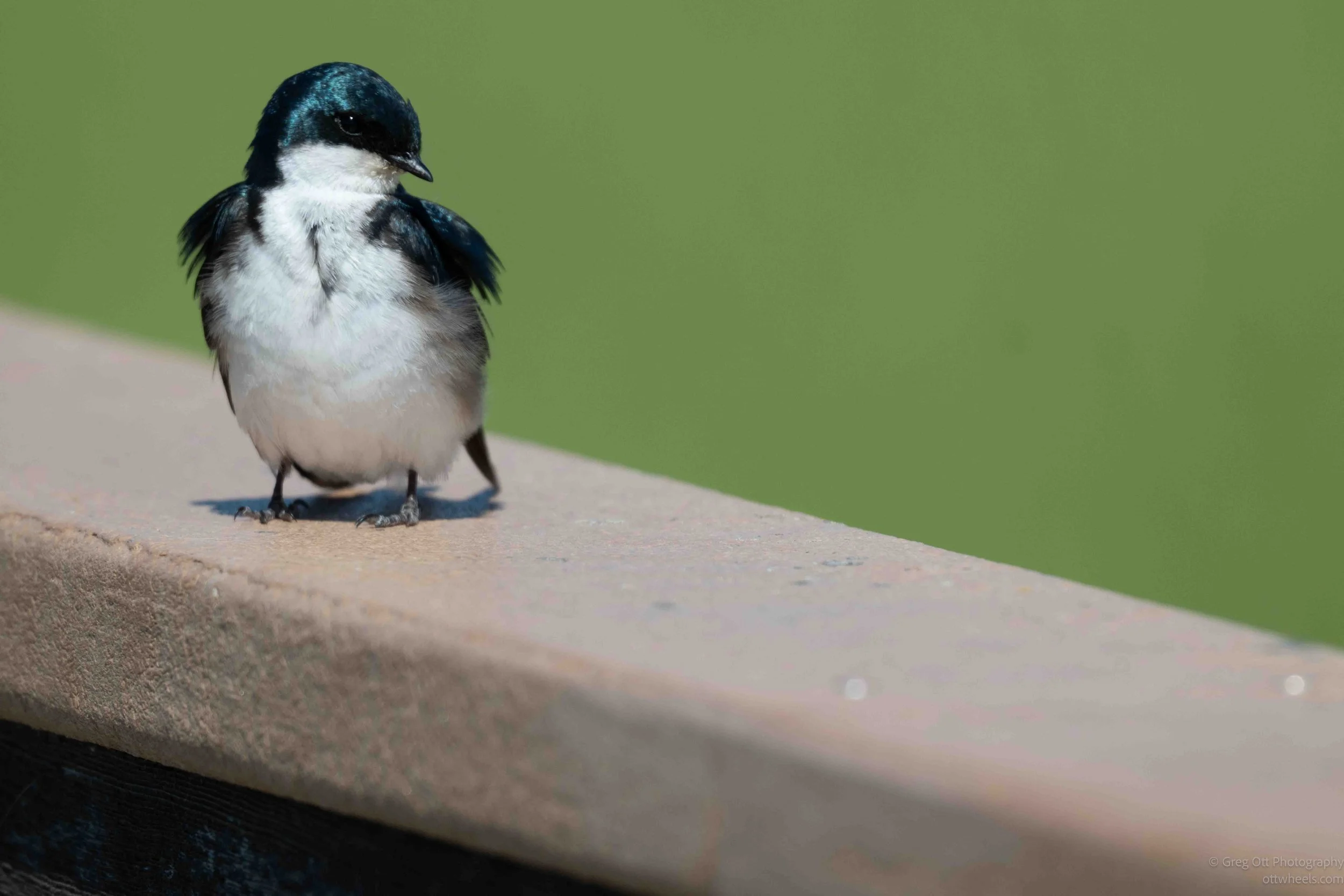
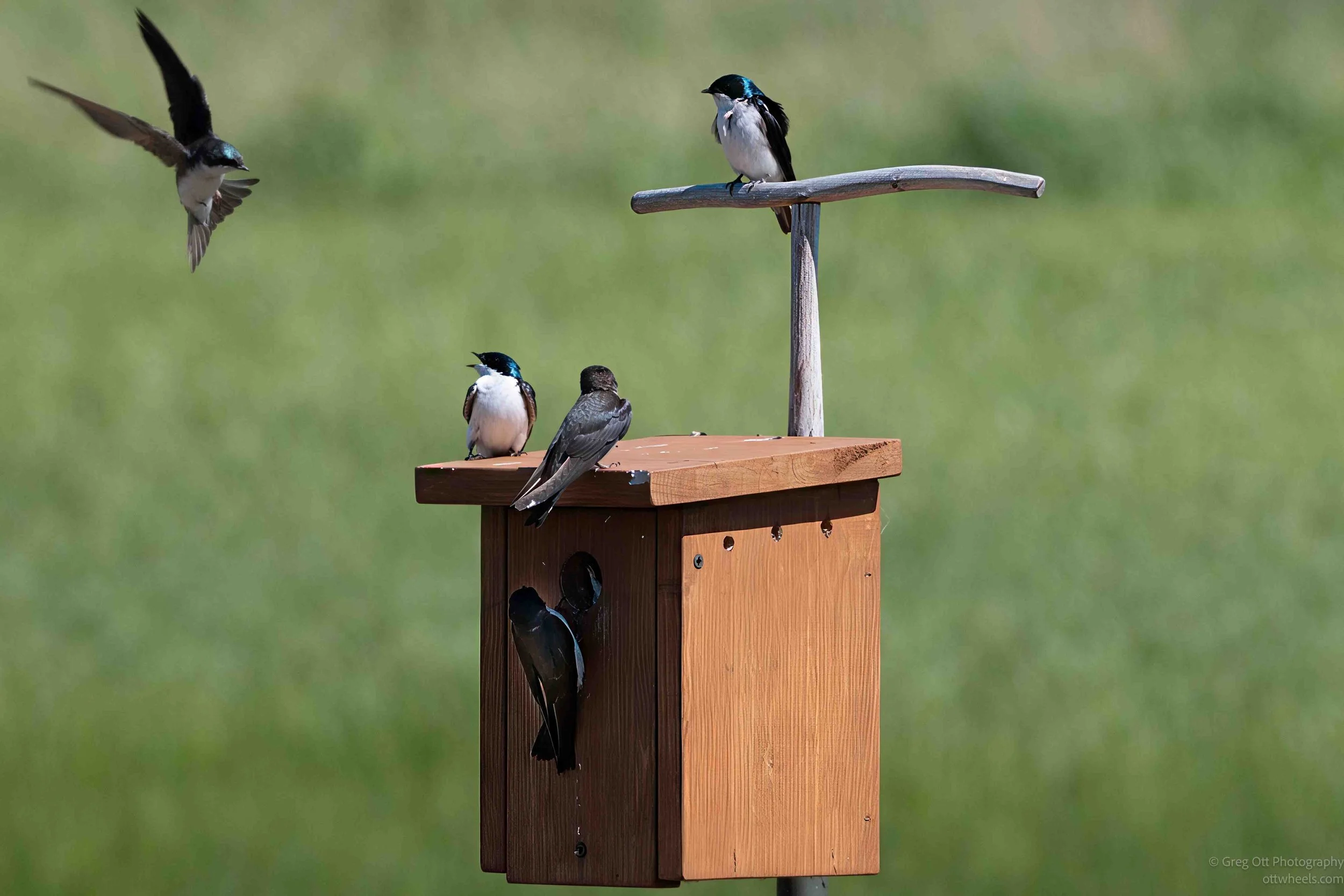
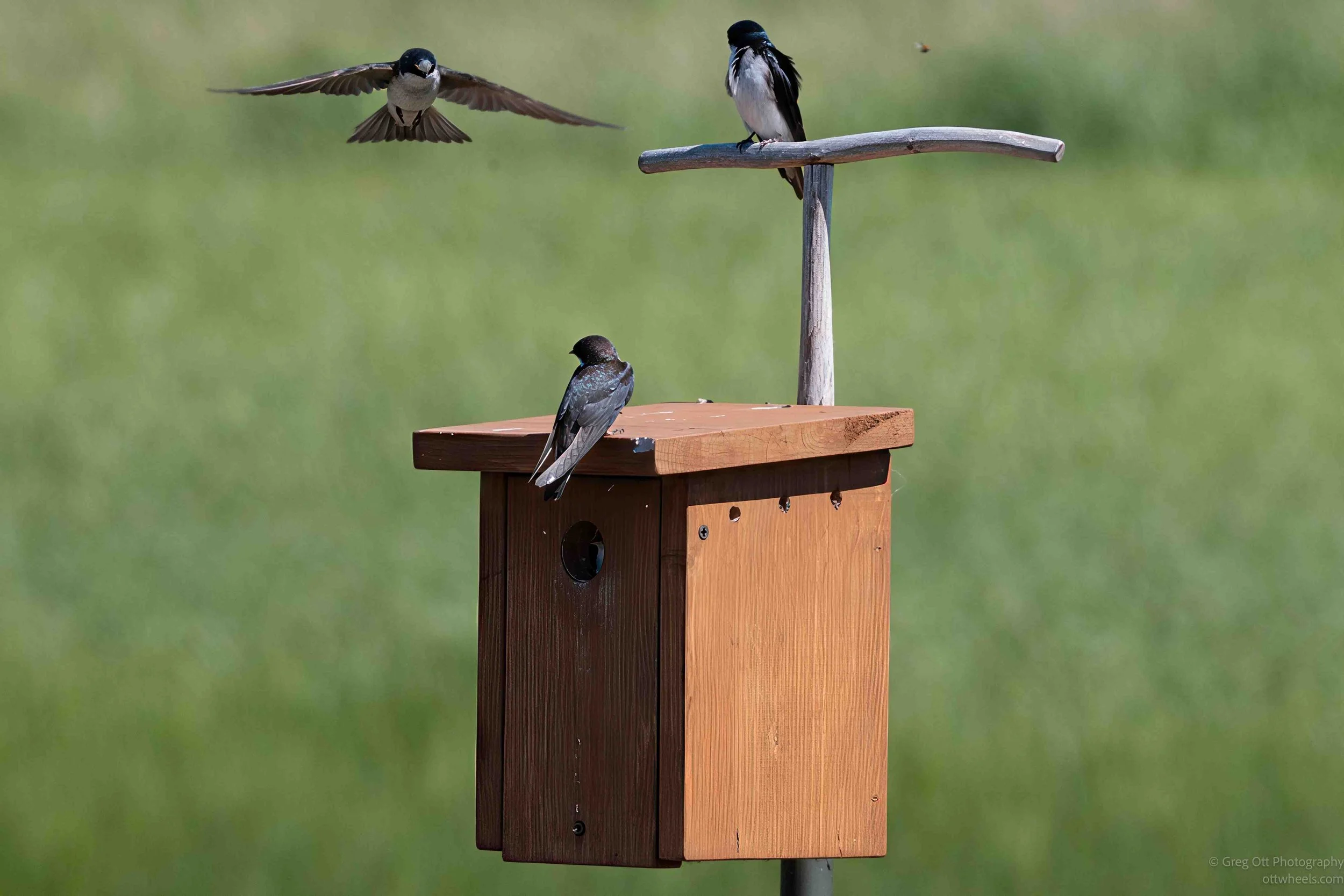
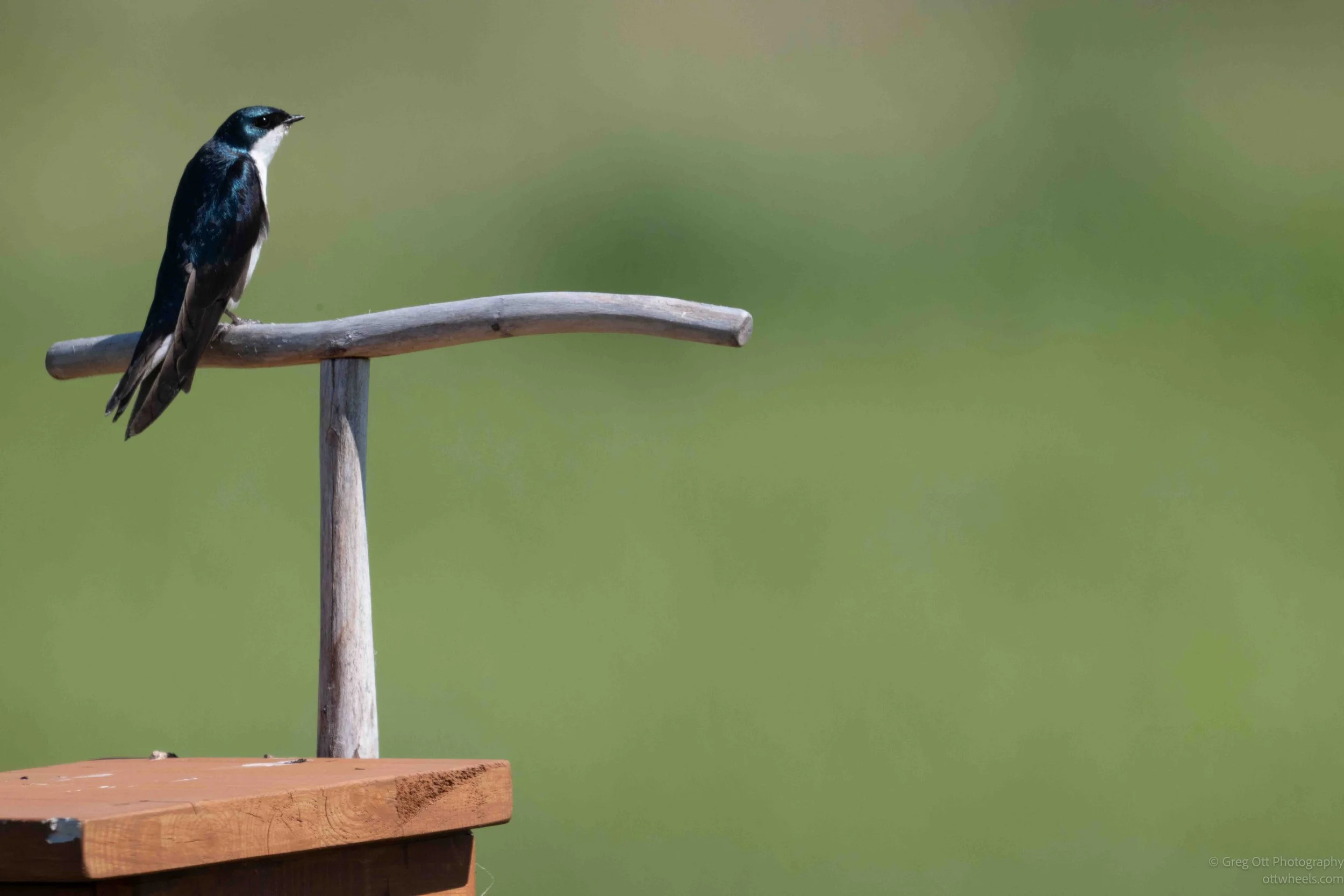
Not far away, Tree Swallows seemed to be everywhere. They darted through the air with incredible speed, catching insects just inches above the water. Many of them were using the nest boxes mounted along the boardwalk, disappearing inside for a few seconds before shooting back into the sky. Occasionally one would pause long enough to perch on a branch or railing, its iridescent blue back flashing in the sunlight before it launched itself after another insect. It quickly became obvious why these birds are considered some of North America's best aerial insect hunters.
As I continued farther from the parking lot, the highway noise gradually faded into the background. Small observation platforms overlooked different sections of the marsh, each one offering a slightly different perspective. At the far end of the boardwalk, a volunteer had set up a spotting scope trained on an active Bald Eagle nest across the marsh.
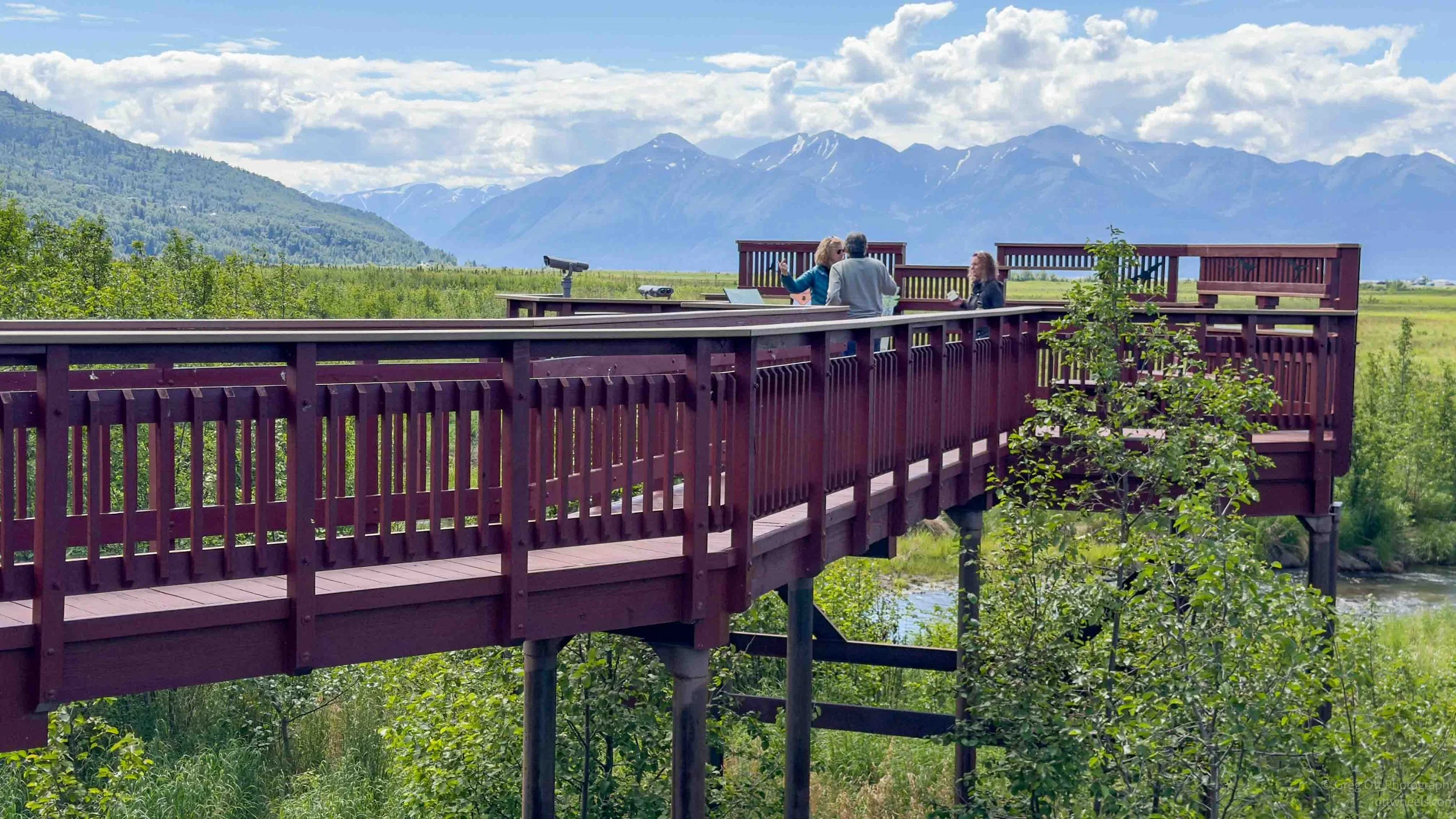
Watching people use the scope was almost as entertaining as watching the eagles themselves. Most couldn't find the nest because someone before them had bumped the tripod or nudged the scope off target. One man managed to trip over a tripod leg, and the volunteer made a diving catch worthy of a baseball highlight reel before the entire setup hit the boardwalk.
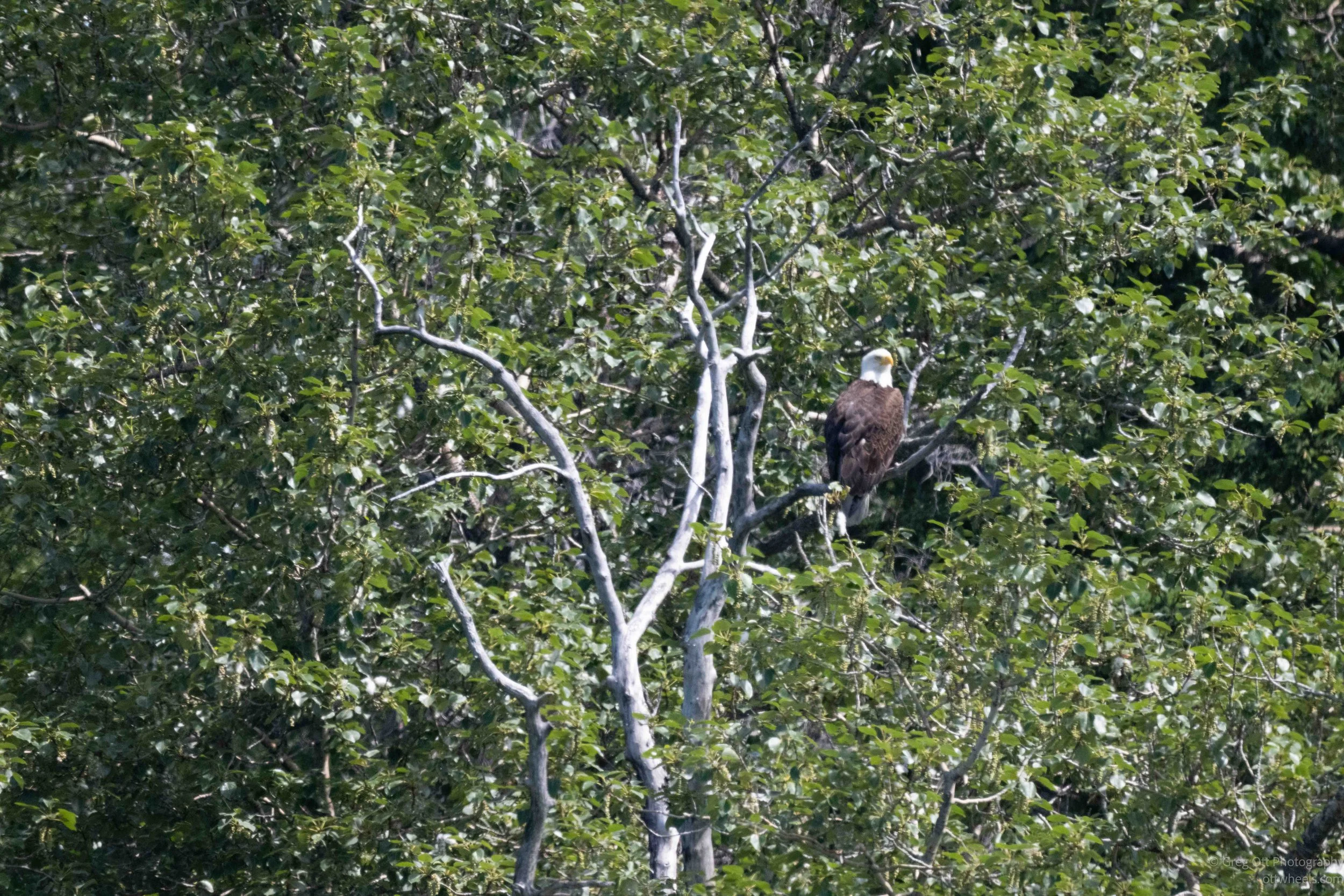
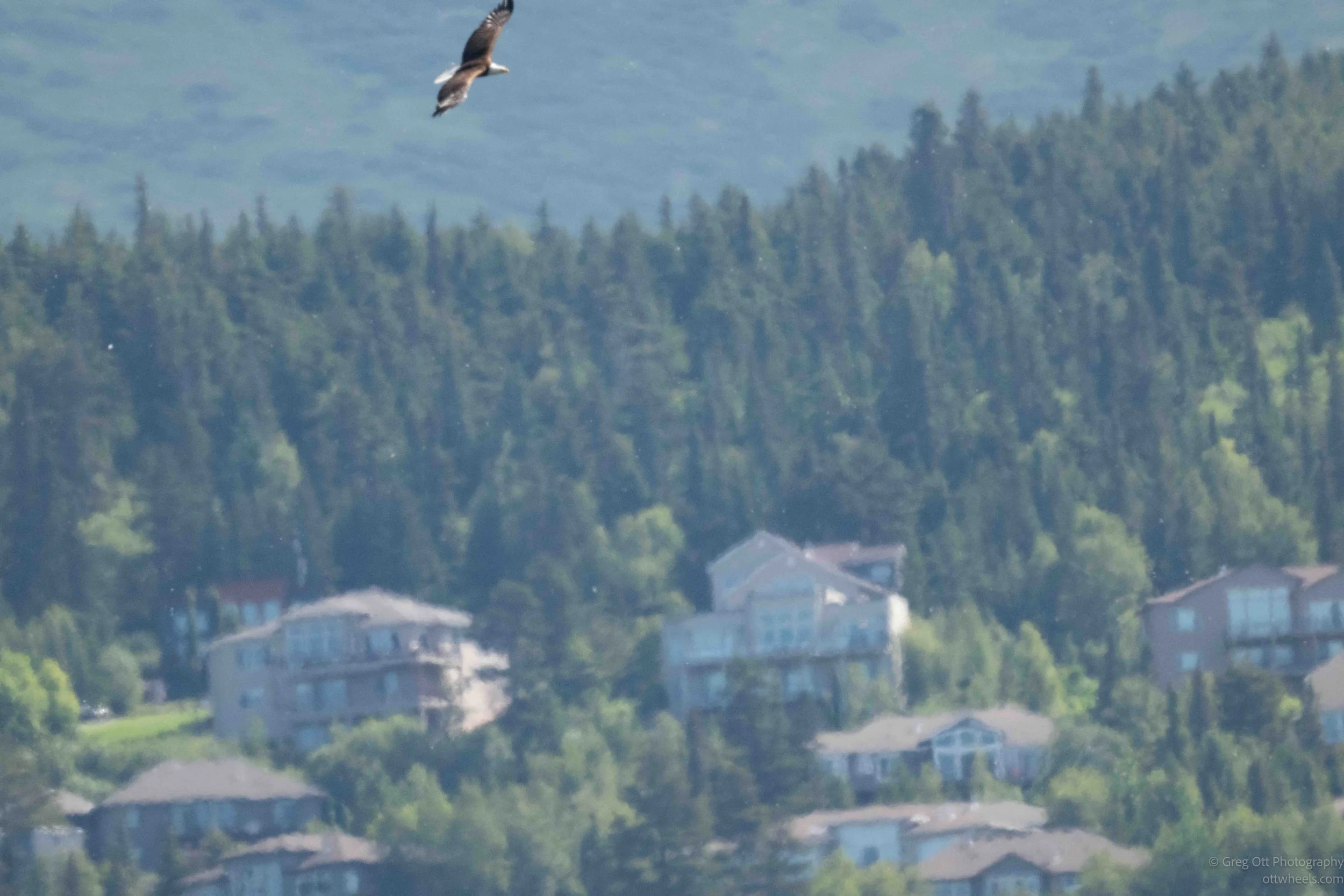
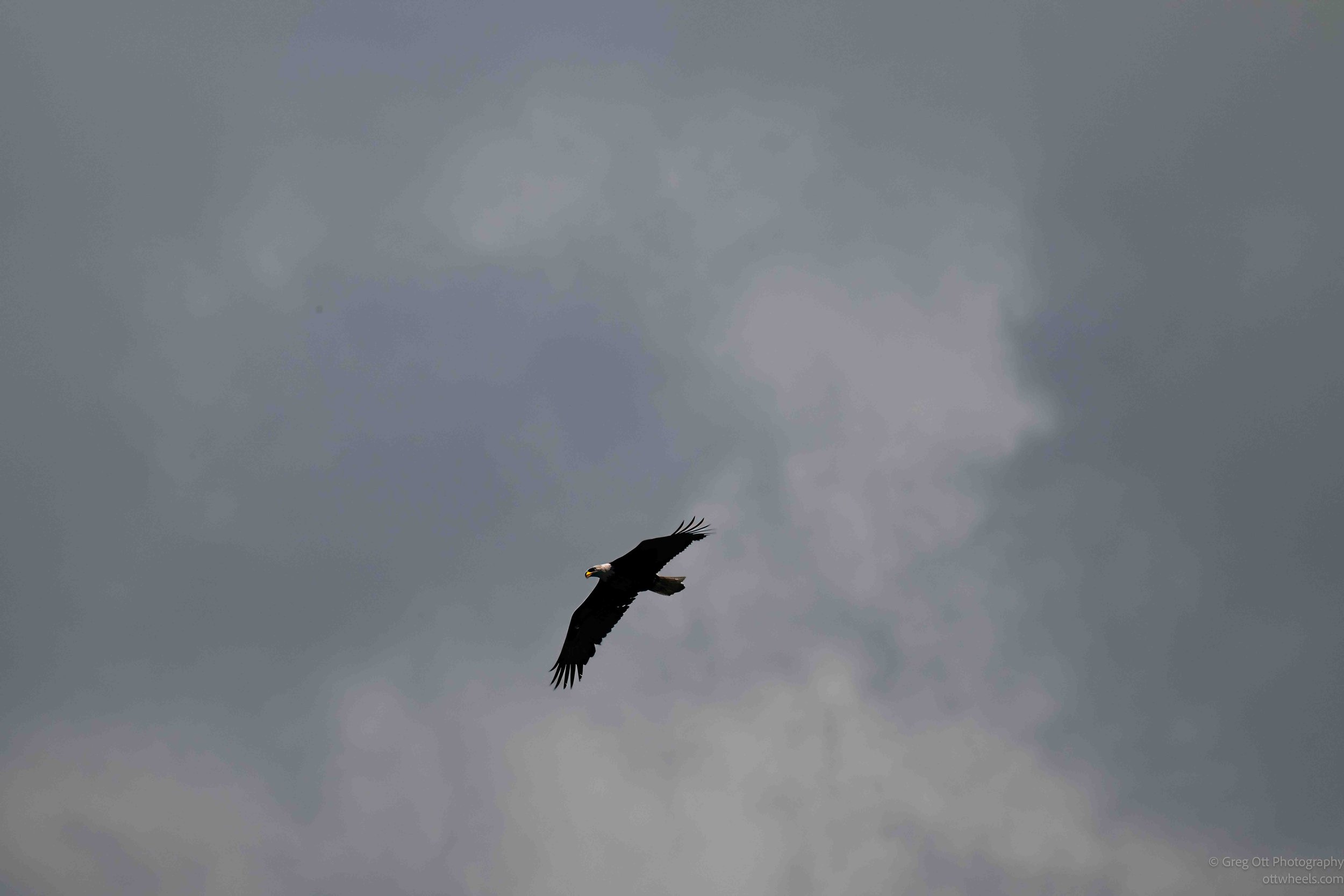
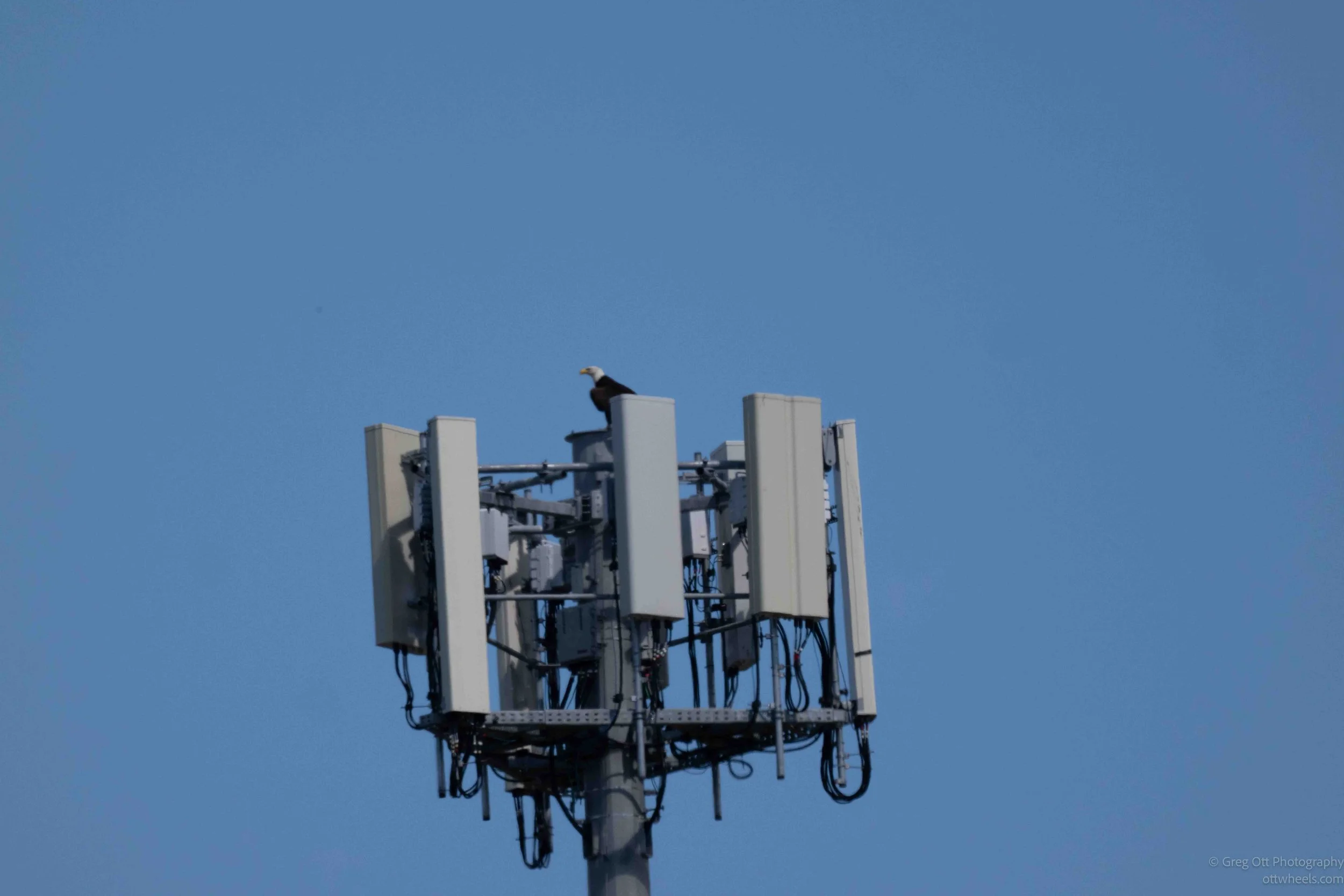
With my camera I could make out one of the adult eagles, its brilliant white head standing out against the dark trees. I could also see the eaglets waiting patiently in the nest, occasionally lifting their heads in anticipation whenever one of the adults returned. Eventually both adults flew to a nearby cell tower overlooking the marsh, where they seemed perfectly content to supervise everything from above. They were all to far away for meaningful photographs.
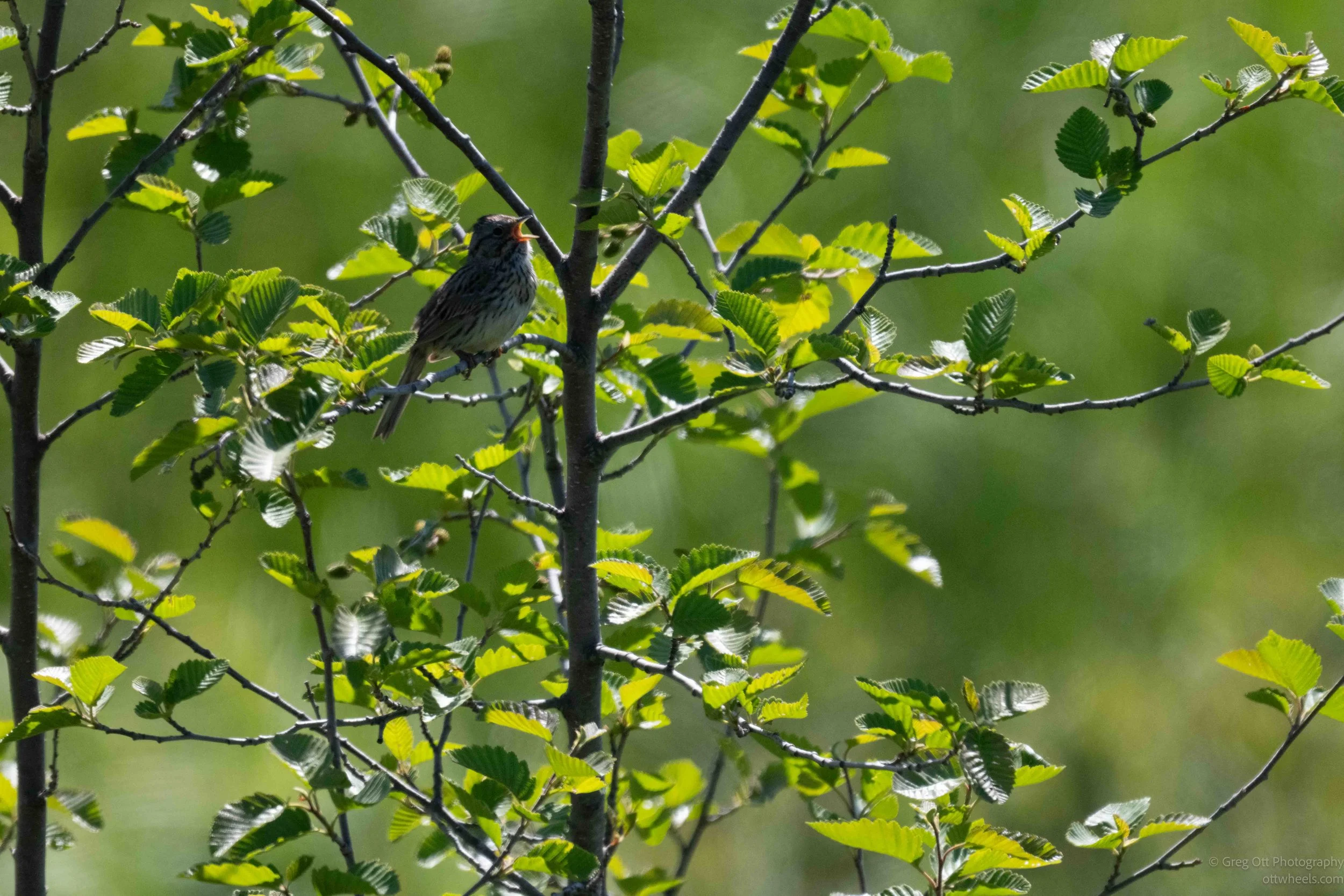
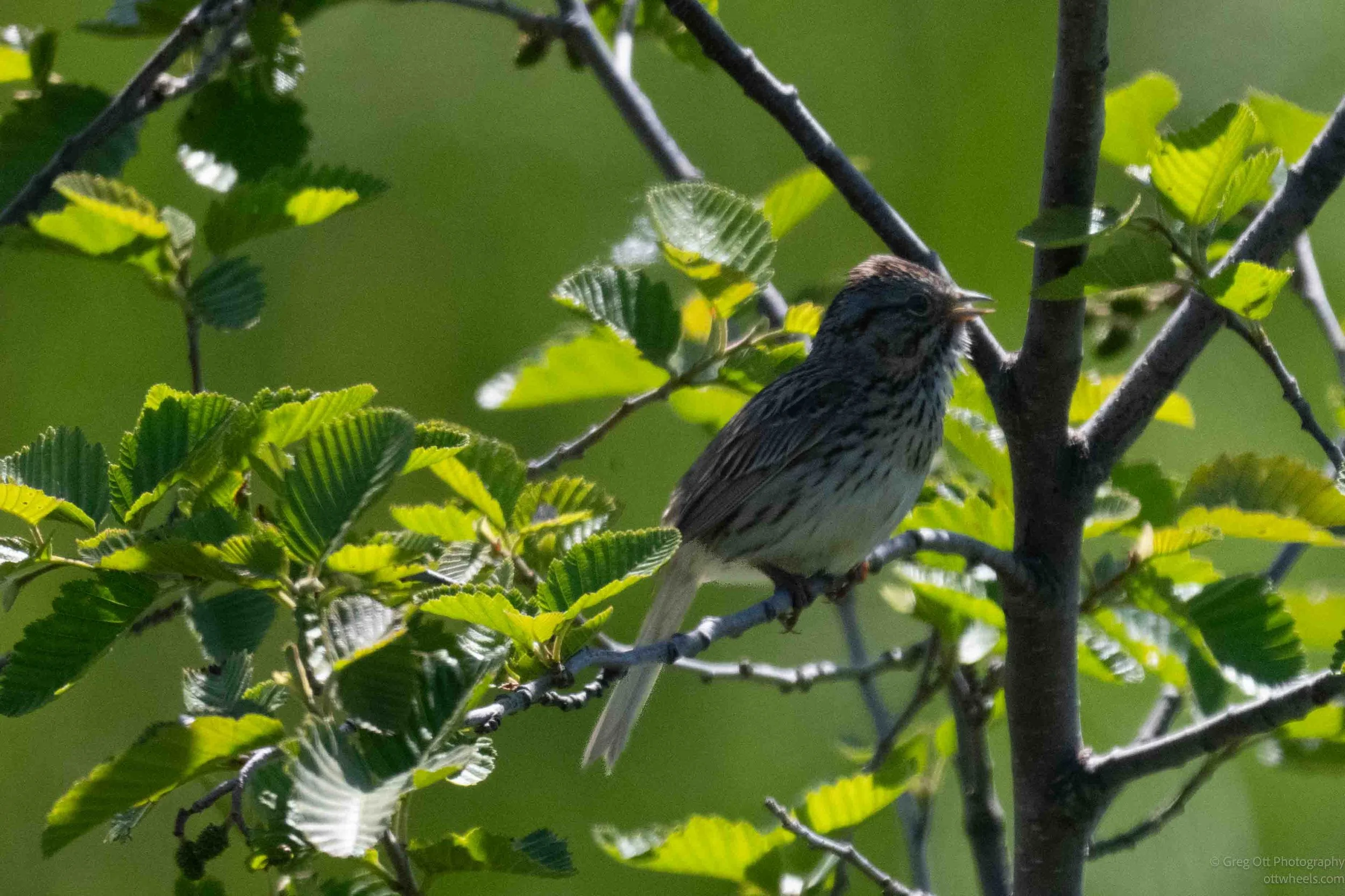
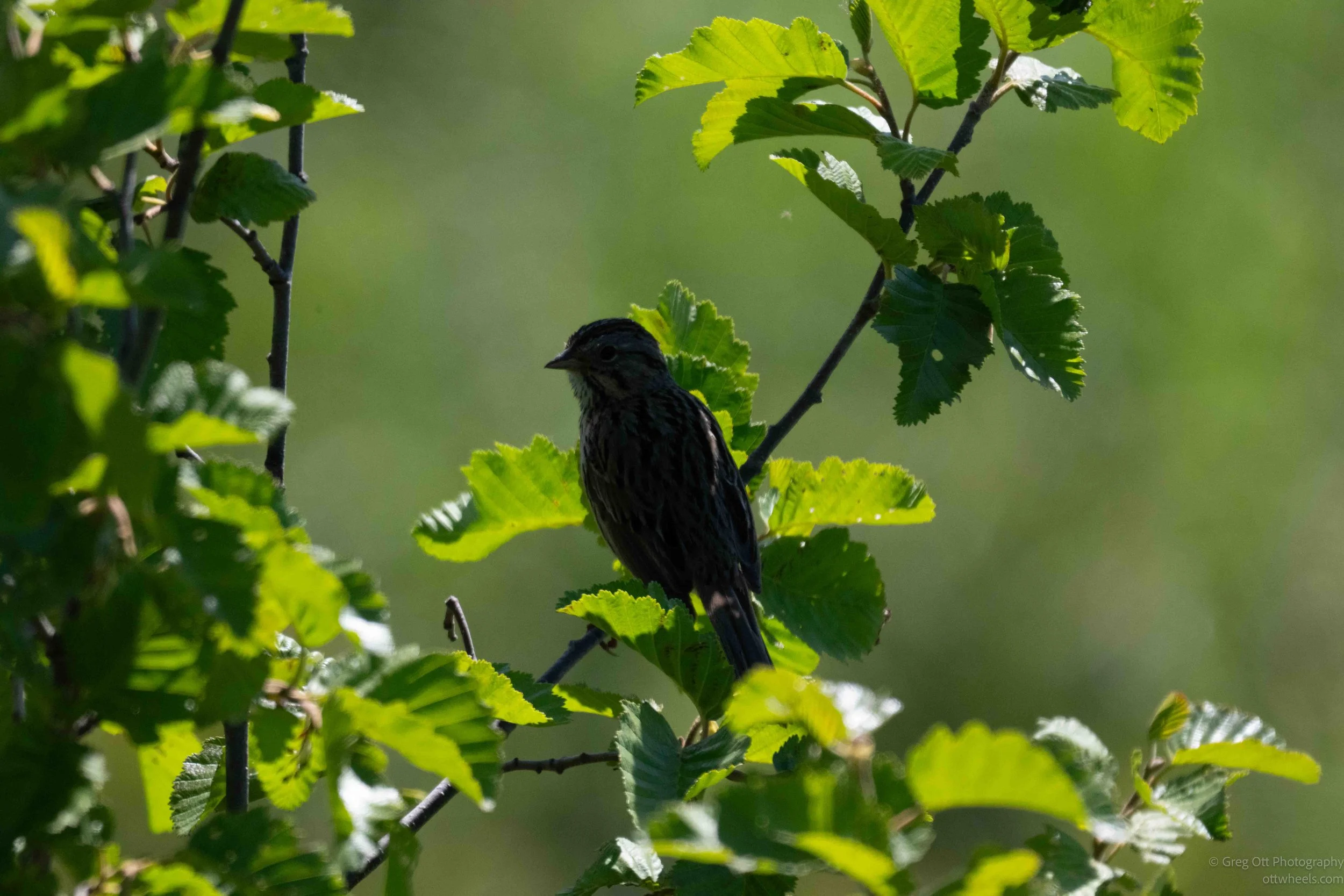
On the far side of the marsh, the crowds disappeared. Most visitors seemed to walk to the nearest viewing platform before turning around, leaving the quieter sections almost empty. I could hear birds singing from deep within the brush but couldn't see any of them. Merlin identified an Alder Flycatcher and a Lincoln's Sparrow from their songs. After standing quietly for ten minutes, I finally caught movement in a nearby shrub. The Lincoln's Sparrow seemed to prefer staying hidden beneath the leaves, singing almost continuously while remaining nearly invisible. If it hadn't kept singing, I probably never would have found it.
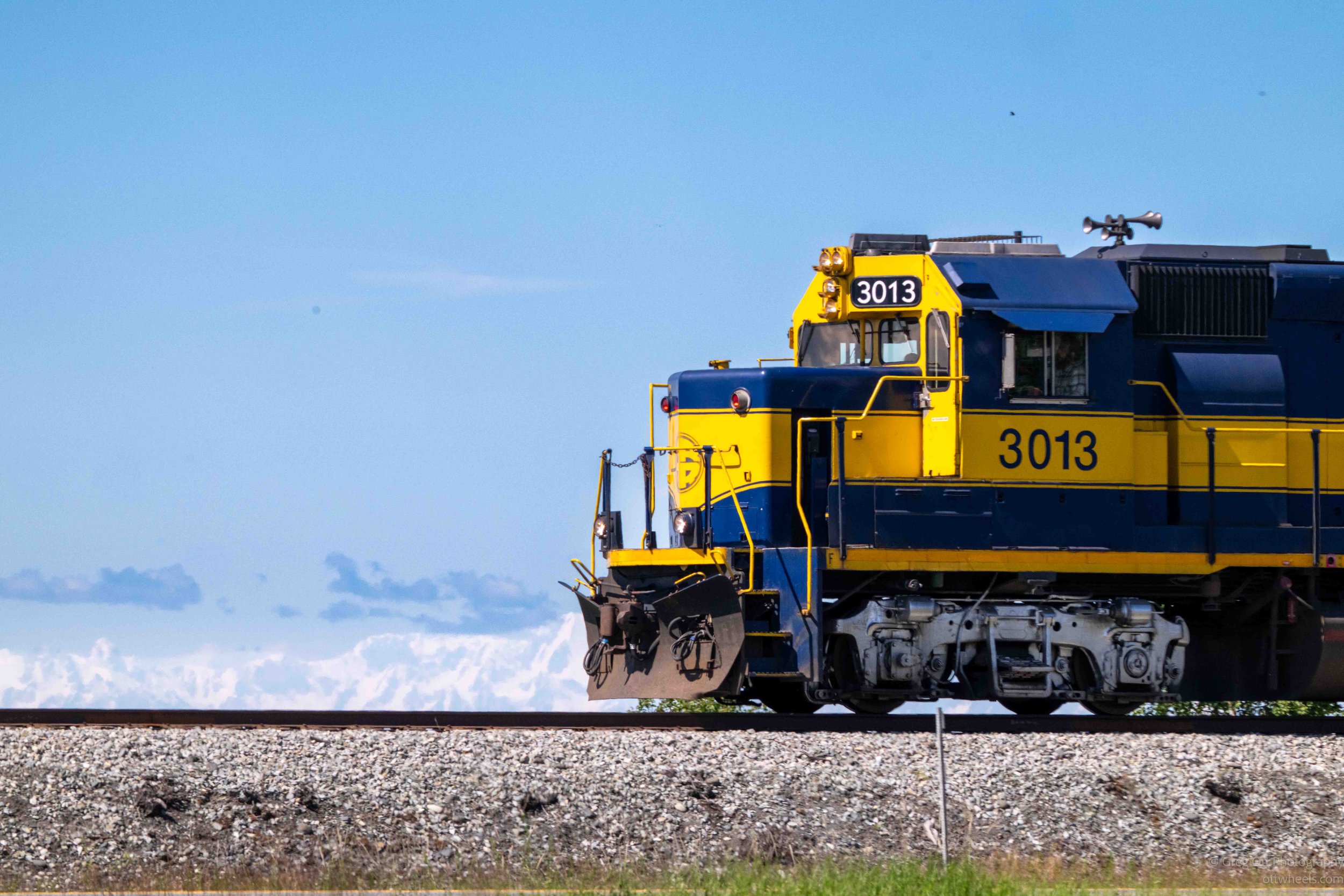
As I passed another group of bird boxes, I heard the unmistakable whistle of a train heading south out of Anchorage. It had probably just rolled past the campground where I'd spent the night. It struck me how unusual this place really is. Here was one of Alaska's finest bird habitats, squeezed between a busy highway, an active railroad, and the ocean just beyond the trees. Somehow the wildlife seemed completely unfazed by any of it.
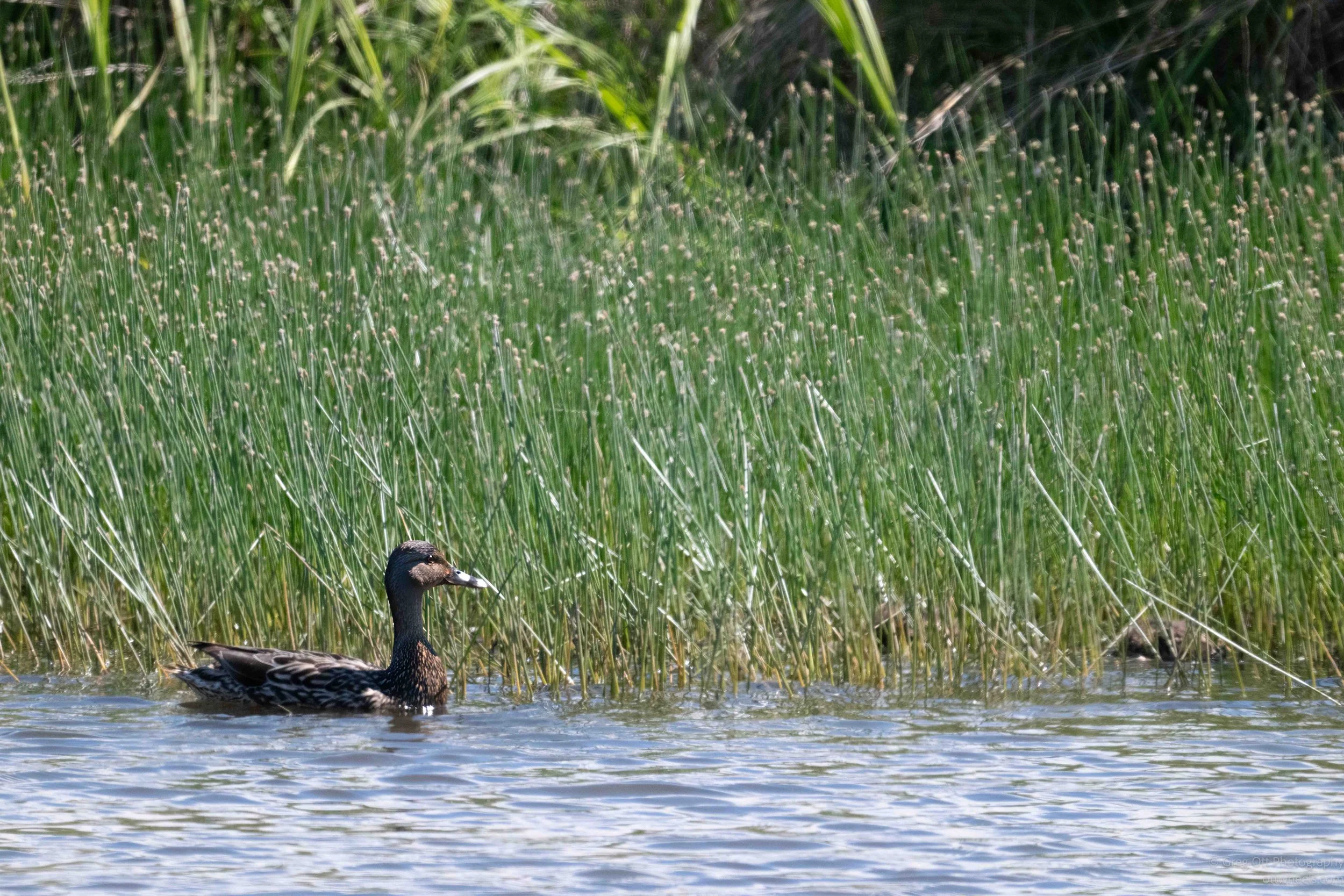
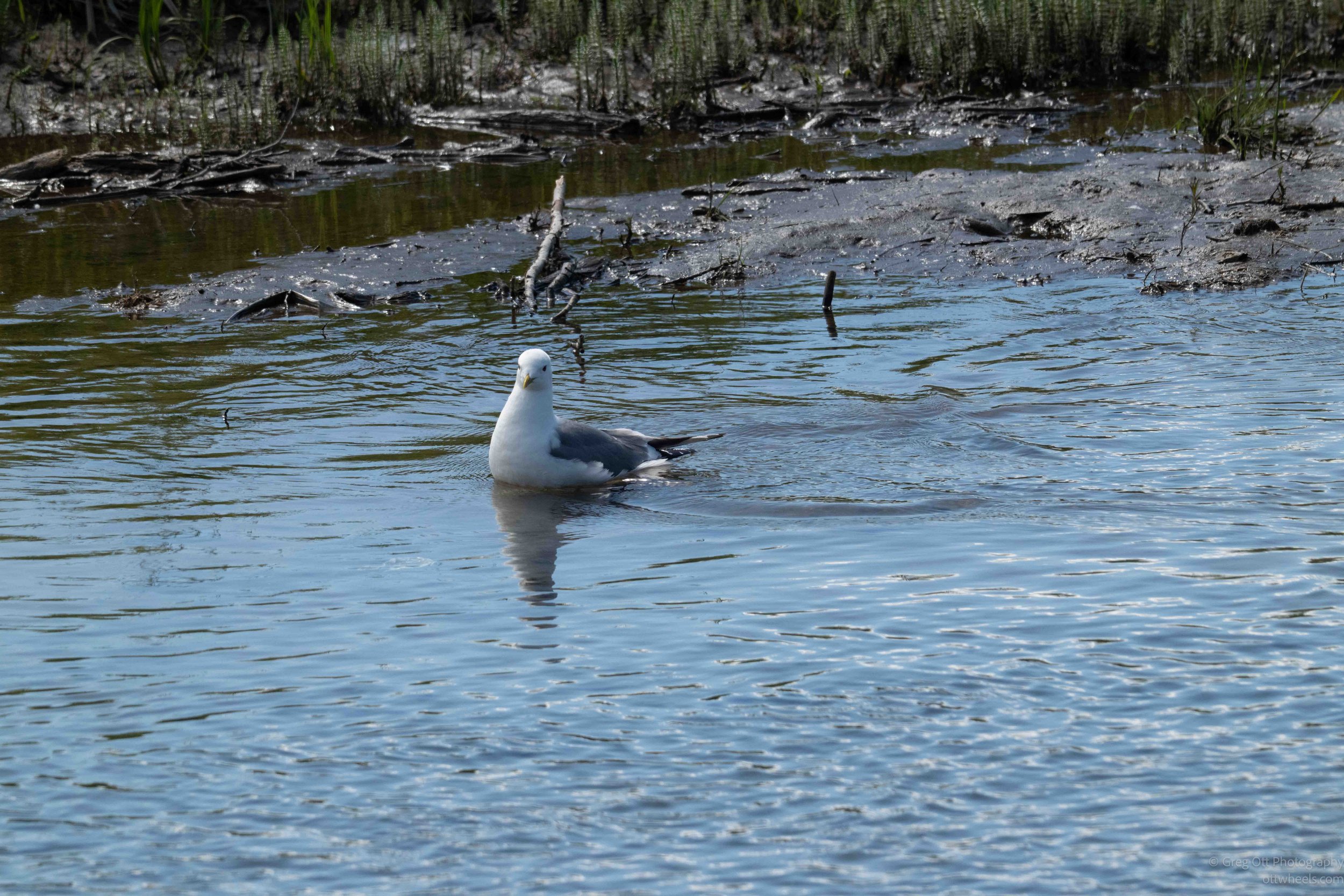
A female Mallard slipped quietly out of the tall grass and drifted into one of the narrow channels. She moved so slowly that she almost blended into the reflections on the water before disappearing back into the reeds. Nearby a gull floated by.
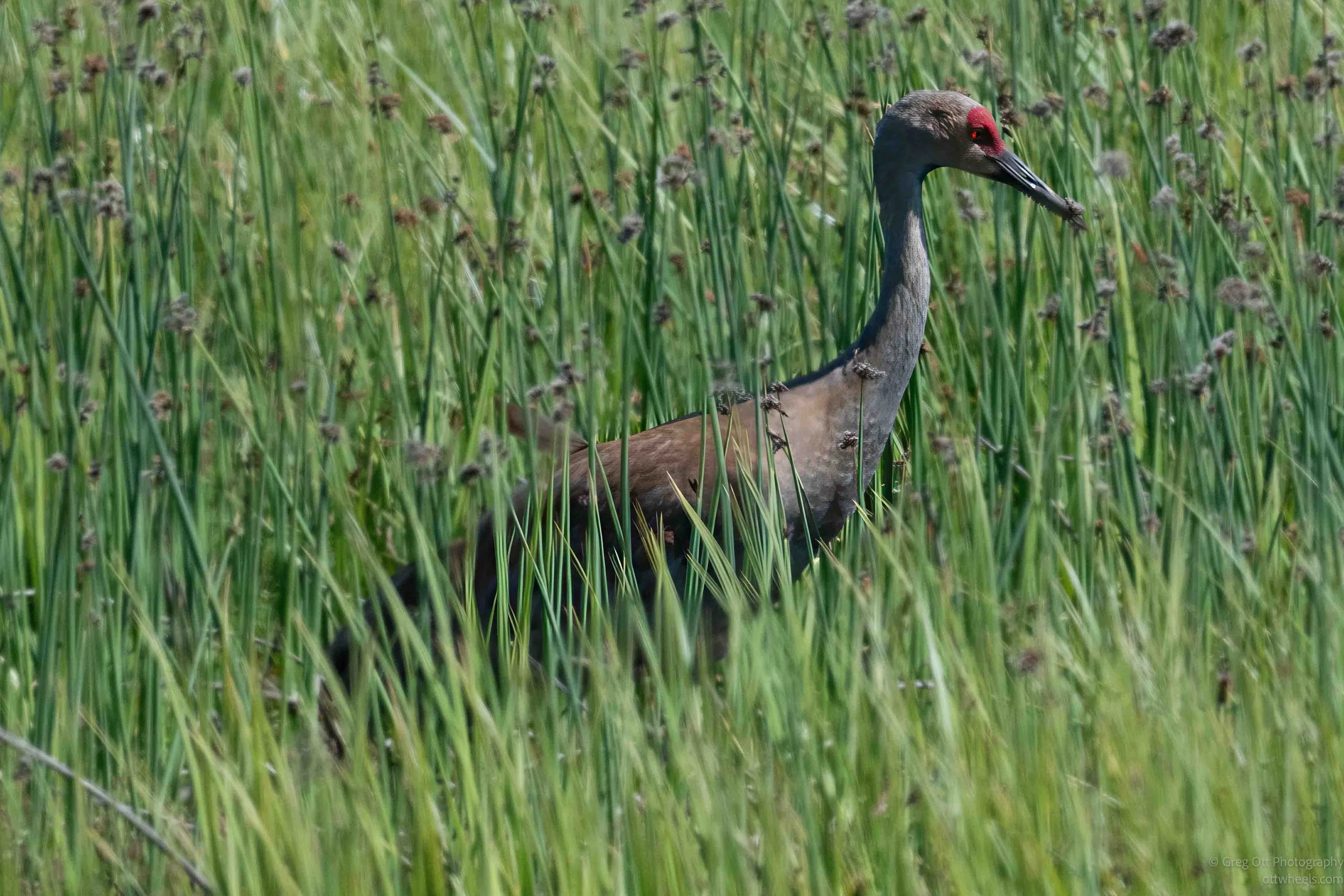
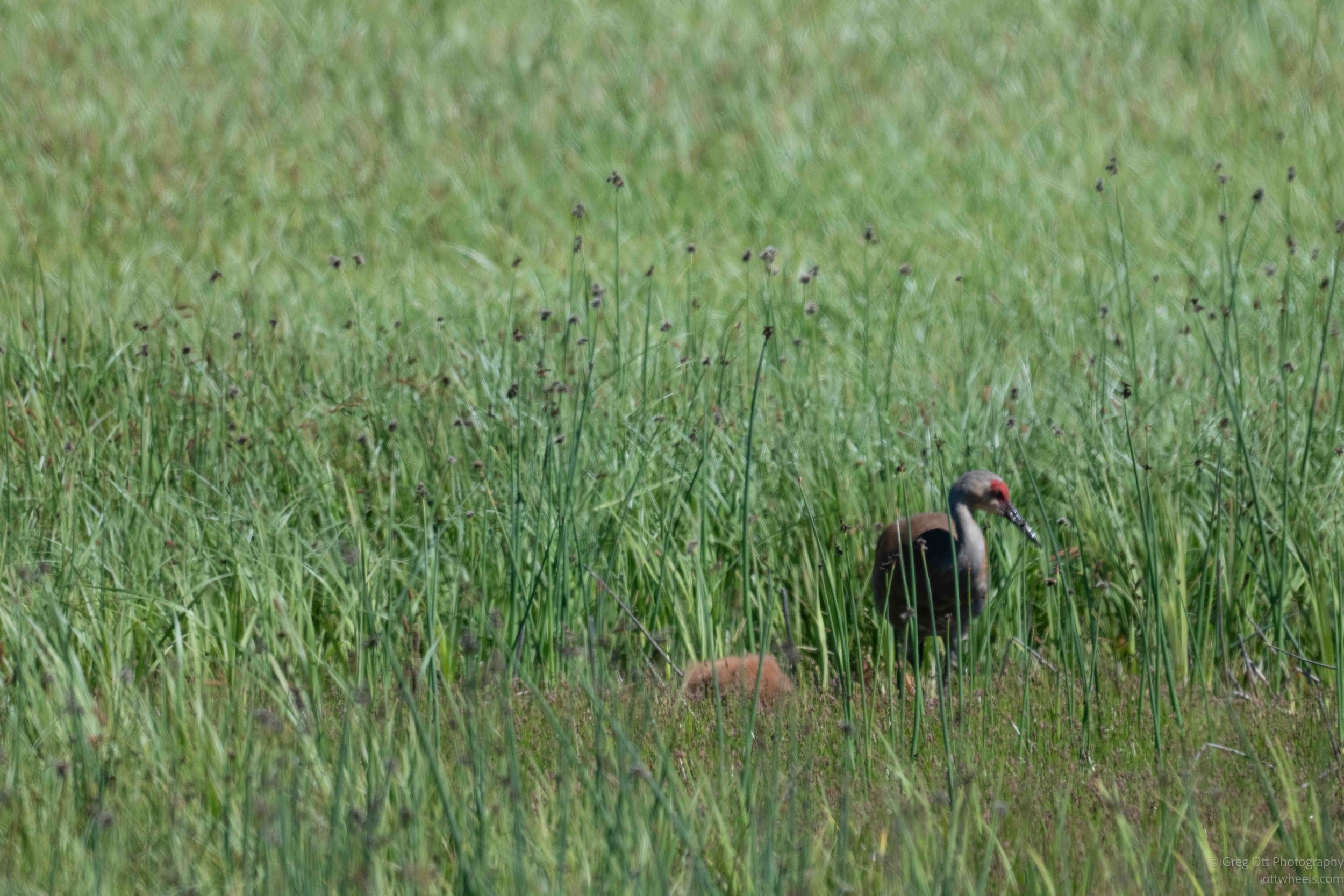
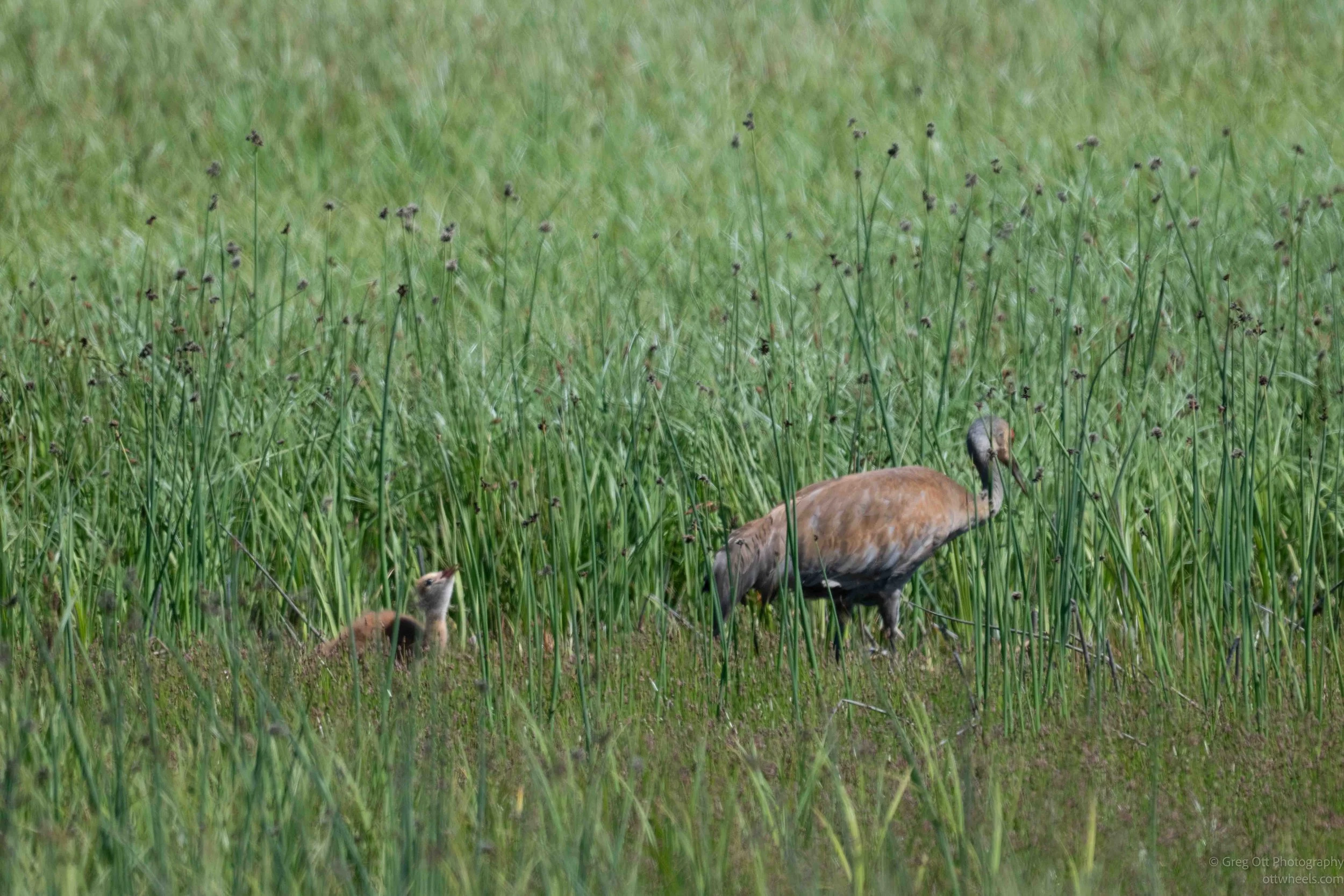
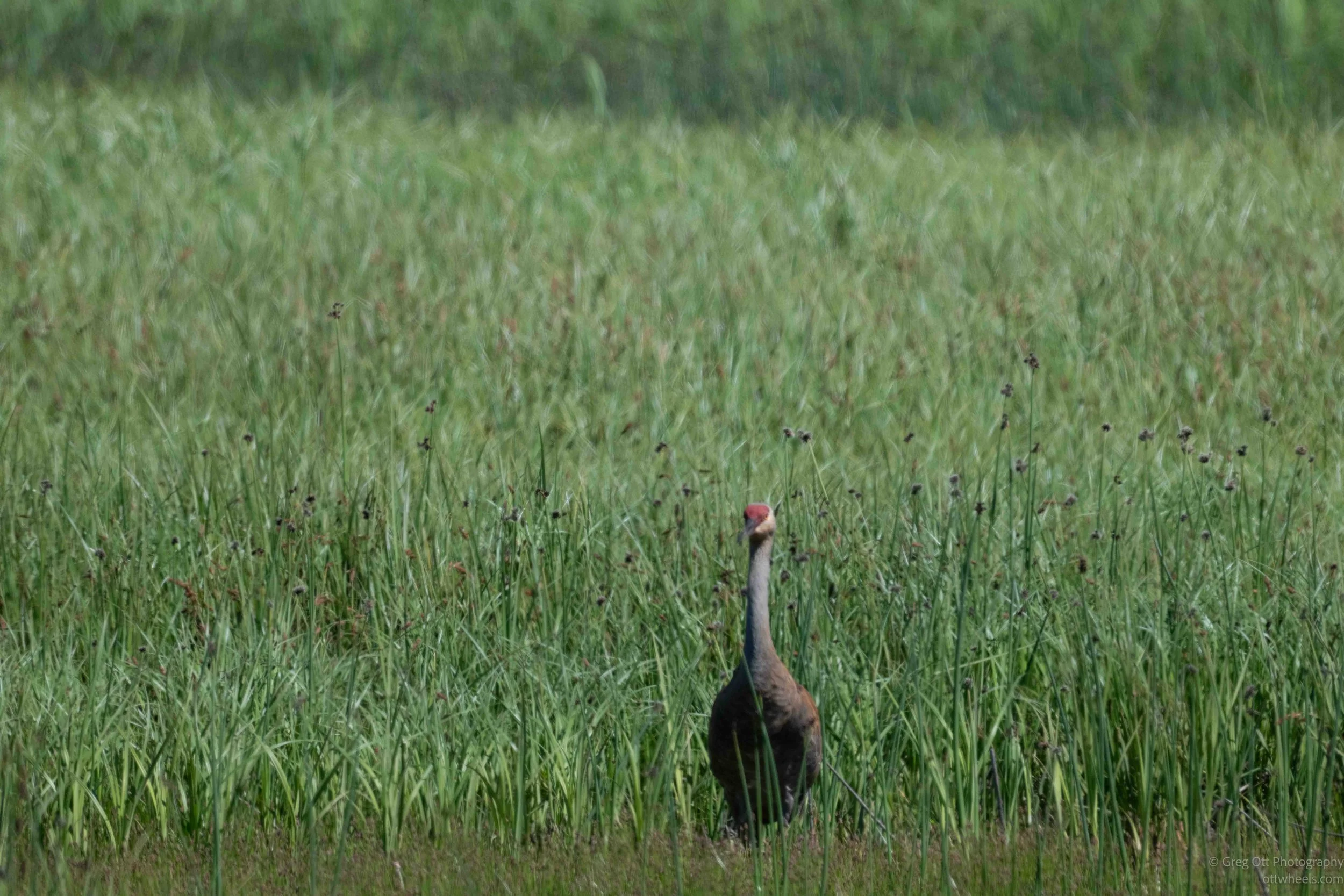
Farther down the boardwalk, I noticed movement in the distance. At first I thought I was looking at a large brown heron. Someone nearby casually mentioned that they were Sandhill Cranes. Then I noticed there were actually two adults. Of course there were two.
With my camera zoomed all the way in, I could see one of the adults pulling what appeared to be a small fish or aquatic creature from the marsh before feeding one of the chicks hidden in the grass. The tall vegetation never allowed a completely clear view, but every few seconds I caught another glimpse of the fuzzy youngster reaching upward for food. It was one of those moments where I wished I had packed the 180-600 mm lens instead of the one I was carrying.
I'm certainly not a bird expert, but watching them is addictive. As I stood photographing the cranes, several people stopped to ask what they were. For a few minutes I got to pretend I knew what I was talking about. "Sandhill Cranes," I answered confidently, pointing them out through the grass.
Tree Swallows remained the stars of the day. One landed on the boardwalk railing and allowed me to approach so closely that my telephoto lens could no longer focus because it was inside the minimum focusing distance. A college student stopped beside me and asked if she could see one of the photographs on the back of the camera.
"They're so cute," she said before pulling out her iPhone to take a few pictures of her own.
A few minutes later another visitor stopped with a pair of Nikon binoculars fitted with an adapter that allowed his iPhone to photograph directly through the eyepiece. Every few moments he'd capture another image and proudly show it to his wife. "Nice one.", "Good one.", "Oh yeah!". She seemed genuinely excited by every photograph he showed her.
I lingered longer than I had planned, wandering slowly back toward the parking lot. By the time I reached the van it was already three o'clock, and I suddenly realized I had skipped lunch entirely.
Beluga Point
From Potter Marsh I continued south along the Seward Highway toward Beluga Point and Bird Point in hopes of spotting Dall sheep. The drive only took about fifteen minutes. Beluga Point was nearly full when I arrived, with only a handful of parking spaces remaining.
One photographer was already there with an enormous Canon lens, using the roof of his vehicle as a support. At first I couldn't figure out what he was photographing. Eventually I spotted it—a tiny white dot moving across the dark cliffs nearly at the top of the mountain. Through my camera I could finally make out a Dall sheep picking its way effortlessly across terrain that looked almost vertical. It covered ground surprisingly quickly. From where we stood, it was little more than a speck, but it was still impressive knowing how comfortable these animals are on cliffs that would terrify most people.
While I was watching, two women from Tennessee walked over and asked if there were any sheep visible. I pointed toward the mountainside, and one immediately spotted it. The other laughed and admitted her eyesight wasn't nearly good enough. They were spending a week in Anchorage with one of their mothers, who was waiting comfortably in the car.
We ended up talking for nearly half an hour about travel. I mentioned that Tennessee is still one of the few states I haven't visited and will probably become my forty-ninth. It felt strange saying that while standing in Alaska, which, of course, was America's forty-ninth state. They enthusiastically filled several pages of my notebook with places I should visit when I finally make the trip. While we talked, the real show was unfolding below us.
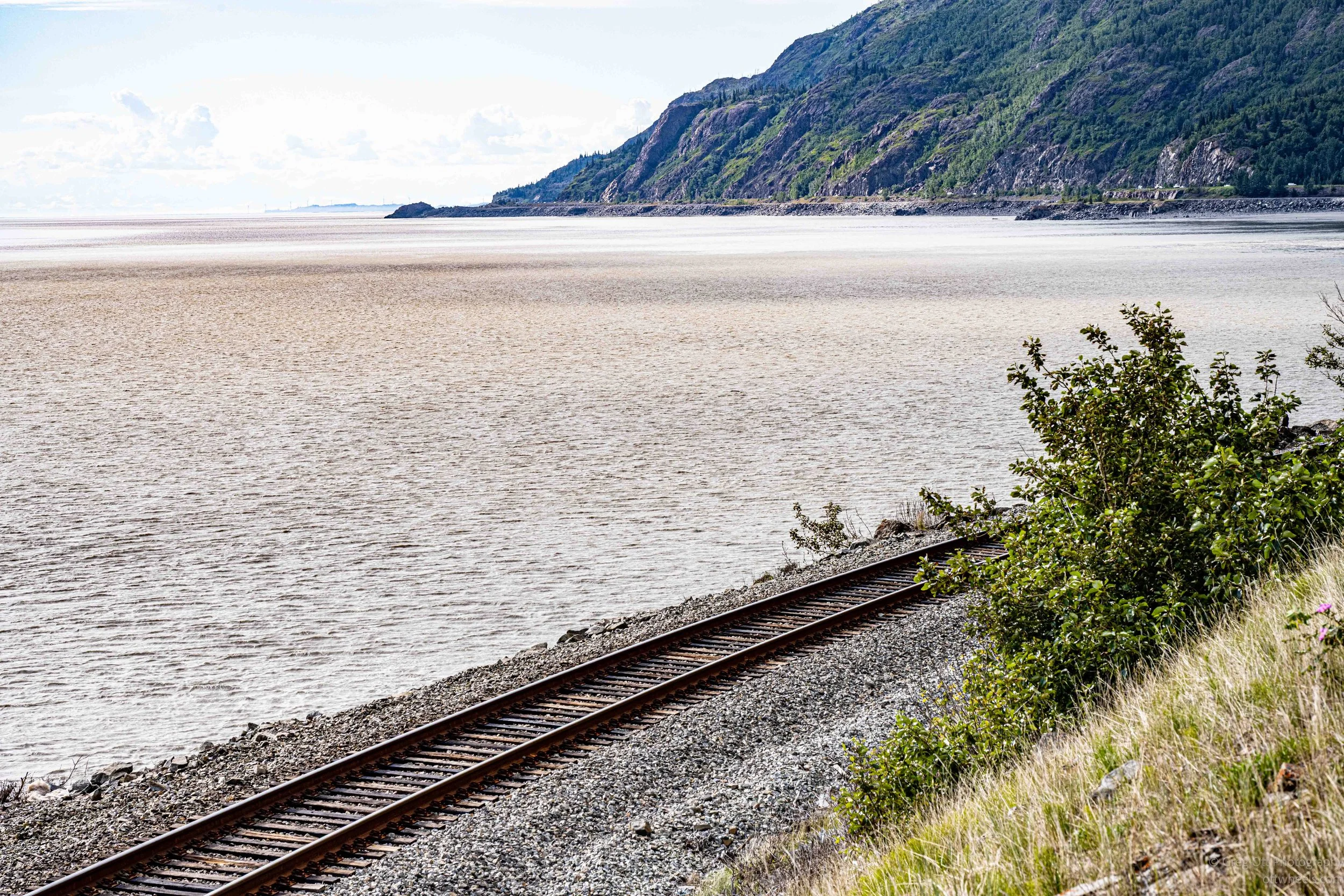
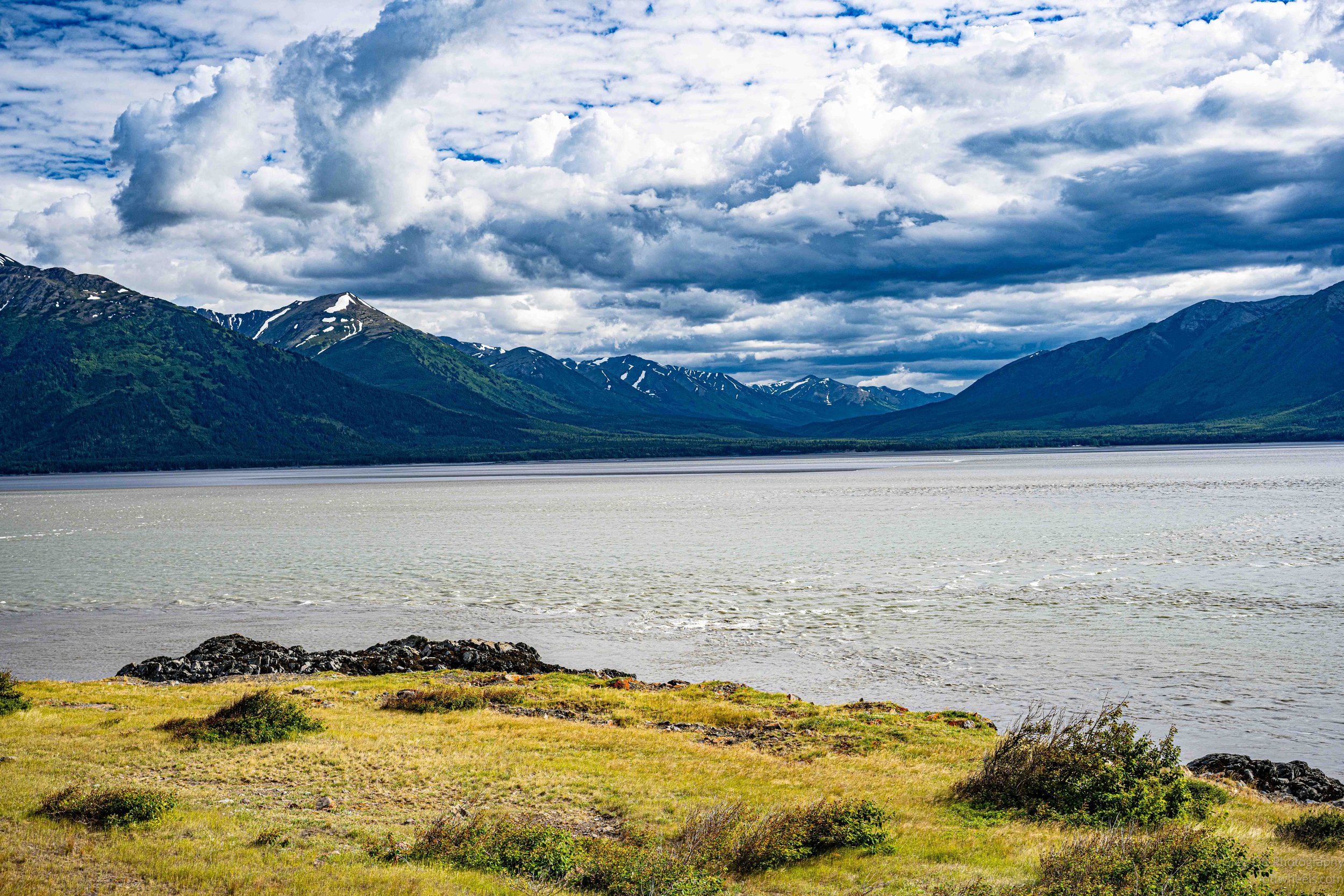
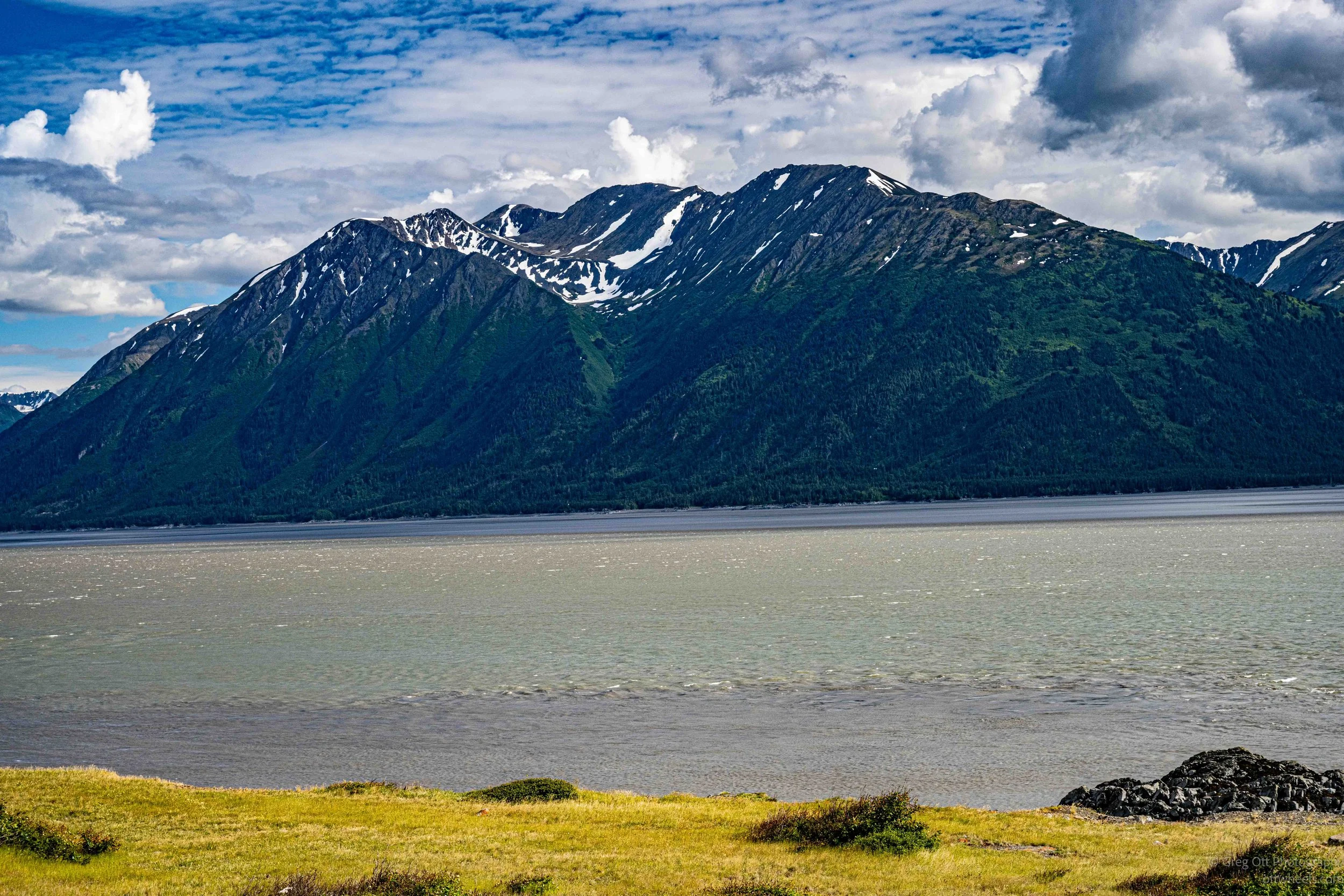
Beluga Point overlooks Turnagain Arm, one of the most dramatic stretches of water in Alaska. Although it looks like an ordinary bay, Turnagain Arm is actually a long, narrow inlet connected to Cook Inlet, where some of the largest tides in North America occur. During low tide, the water drains almost completely away, exposing miles of mudflats and braided channels. Hours later, the ocean returns with astonishing speed, swallowing the exposed flats as though someone were filling a giant bathtub.
On certain tides, the incoming water forms a bore tide—a single wave that can stretch across the entire width of Turnagain Arm and travel inland at speeds approaching 10 to 15 miles per hour. Even when a bore tide doesn't develop, the flooding water races across the mudflats with surprising force. Those seemingly harmless flats are among the most dangerous in Alaska. The fine glacial silt behaves like quicksand, trapping people who wander too far from shore. Every year there are rescues, and not everyone survives. Standing safely on the rocks at Beluga Point, I watched broad expanses of mud disappear beneath the advancing water. It was one of those reminders that Alaska's landscapes are beautiful, but they demand respect.
I drove another fifteen minutes farther south, still hoping to find those ever-elusive Dall sheep before finally turning around. It was getting late by then, and I headed back toward the campground. Along the way, I stopped a couple more times to watch the tide continue its steady advance into Turnagain Arm, fully swallowing the exposed mudflats.