Dedication Point, Bruneau Dunes
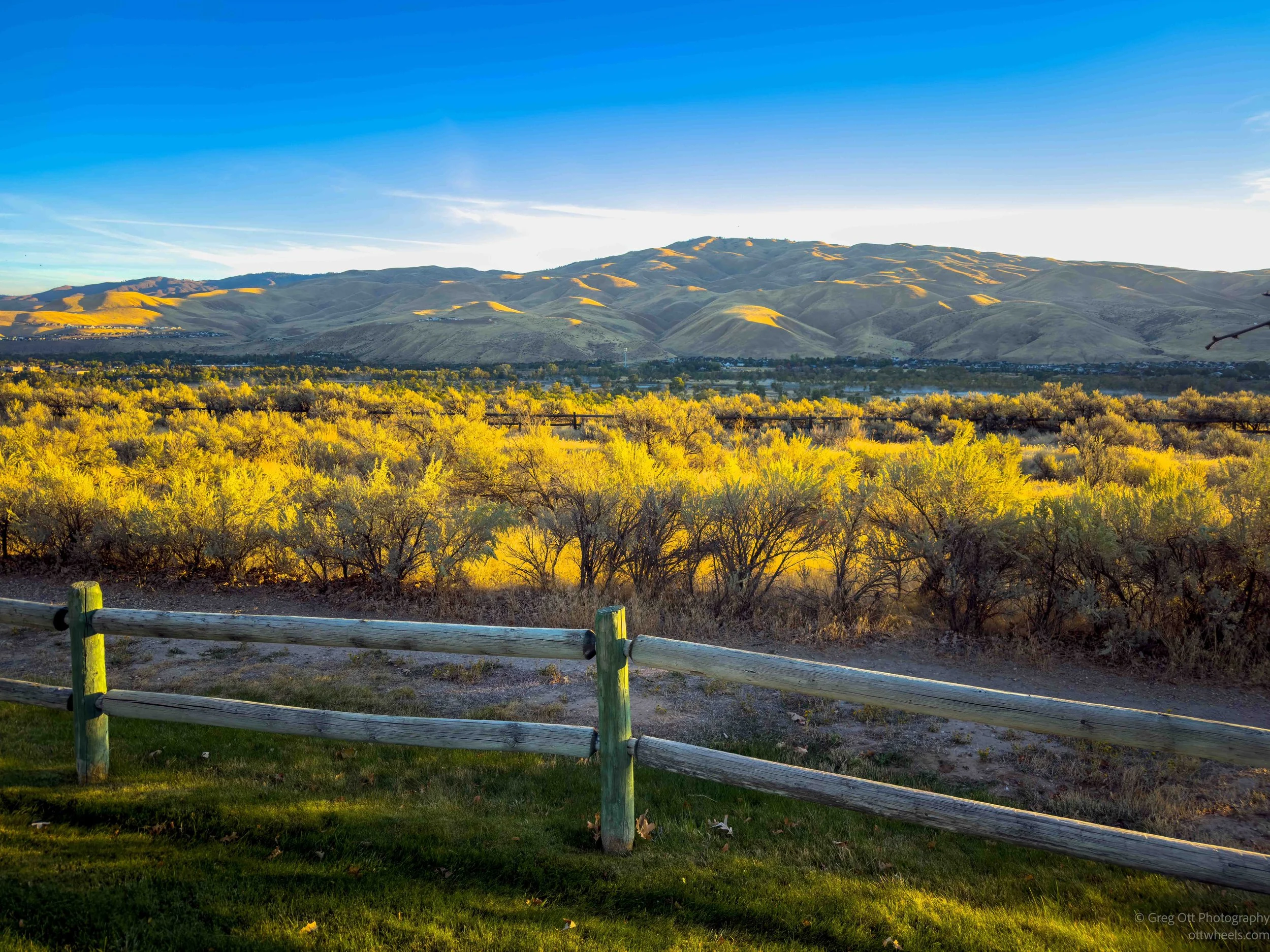
I drove back to the same trailhead as yesterday, mostly because it was so quiet and peaceful. I arrived a little earlier this morning, just as the sun was beginning to paint the hills in front of me with golden light. The shrubs in the foreground were glowing in the morning sun.
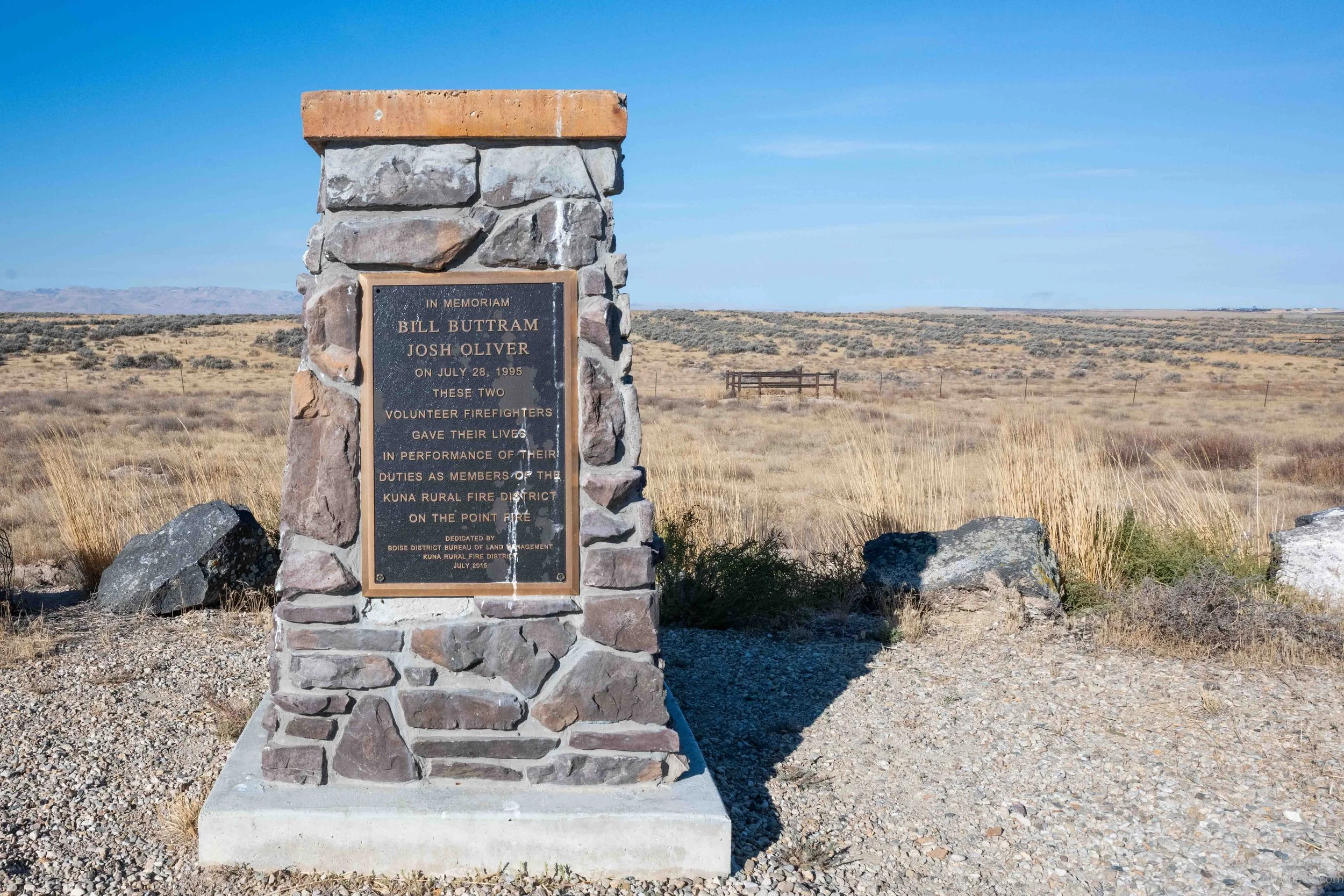
Point Fire Tragedy Memorial
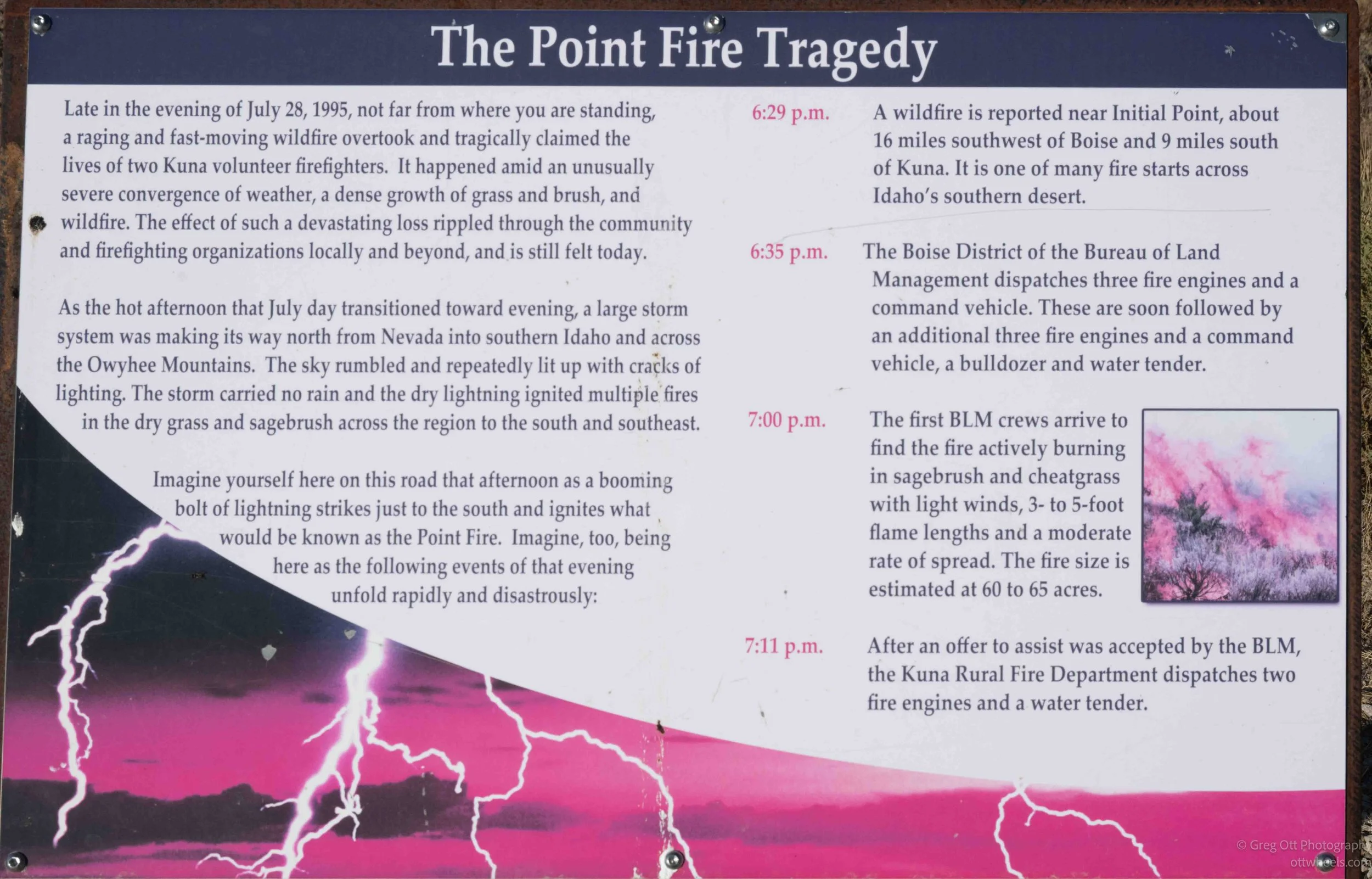
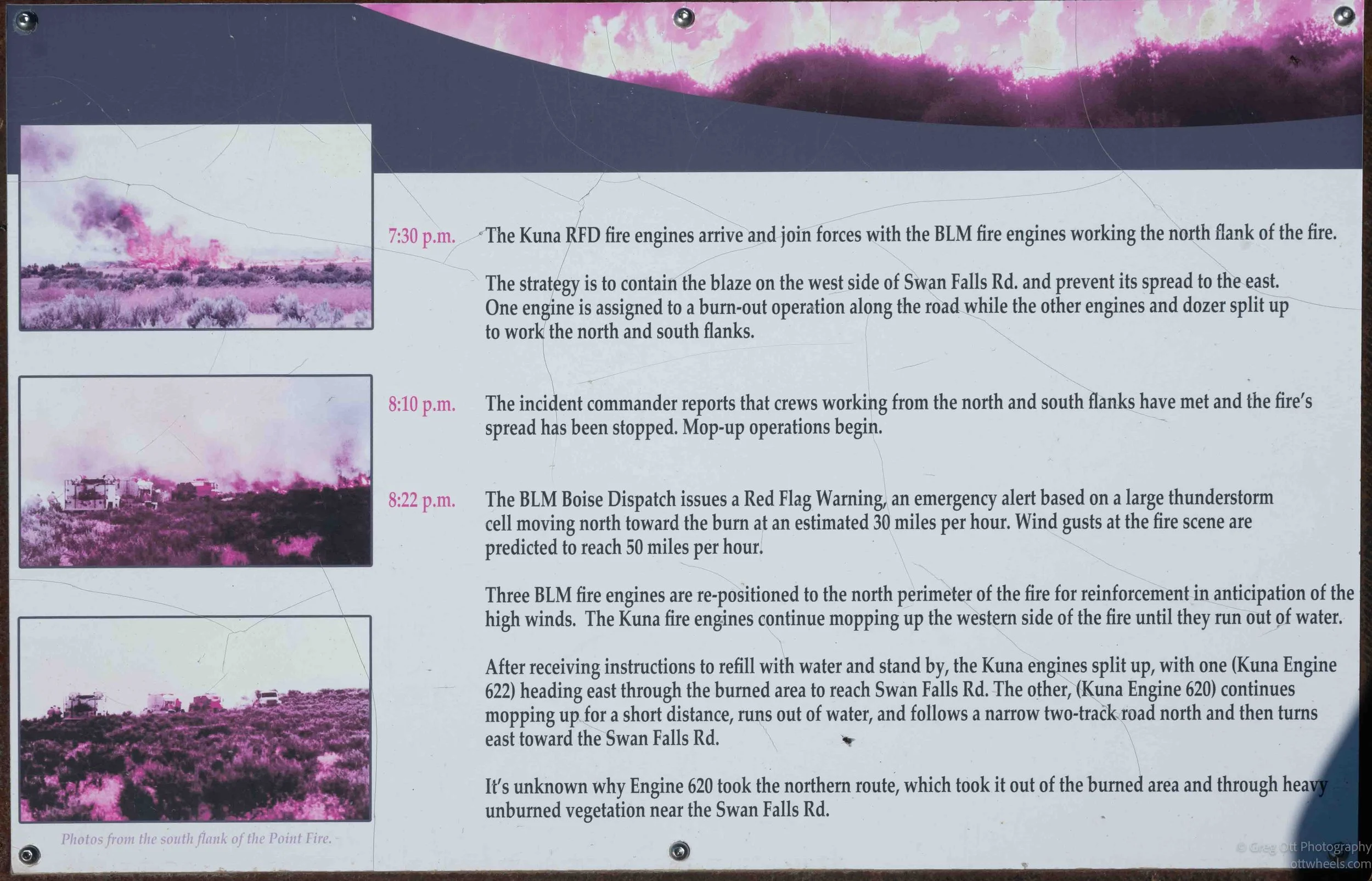
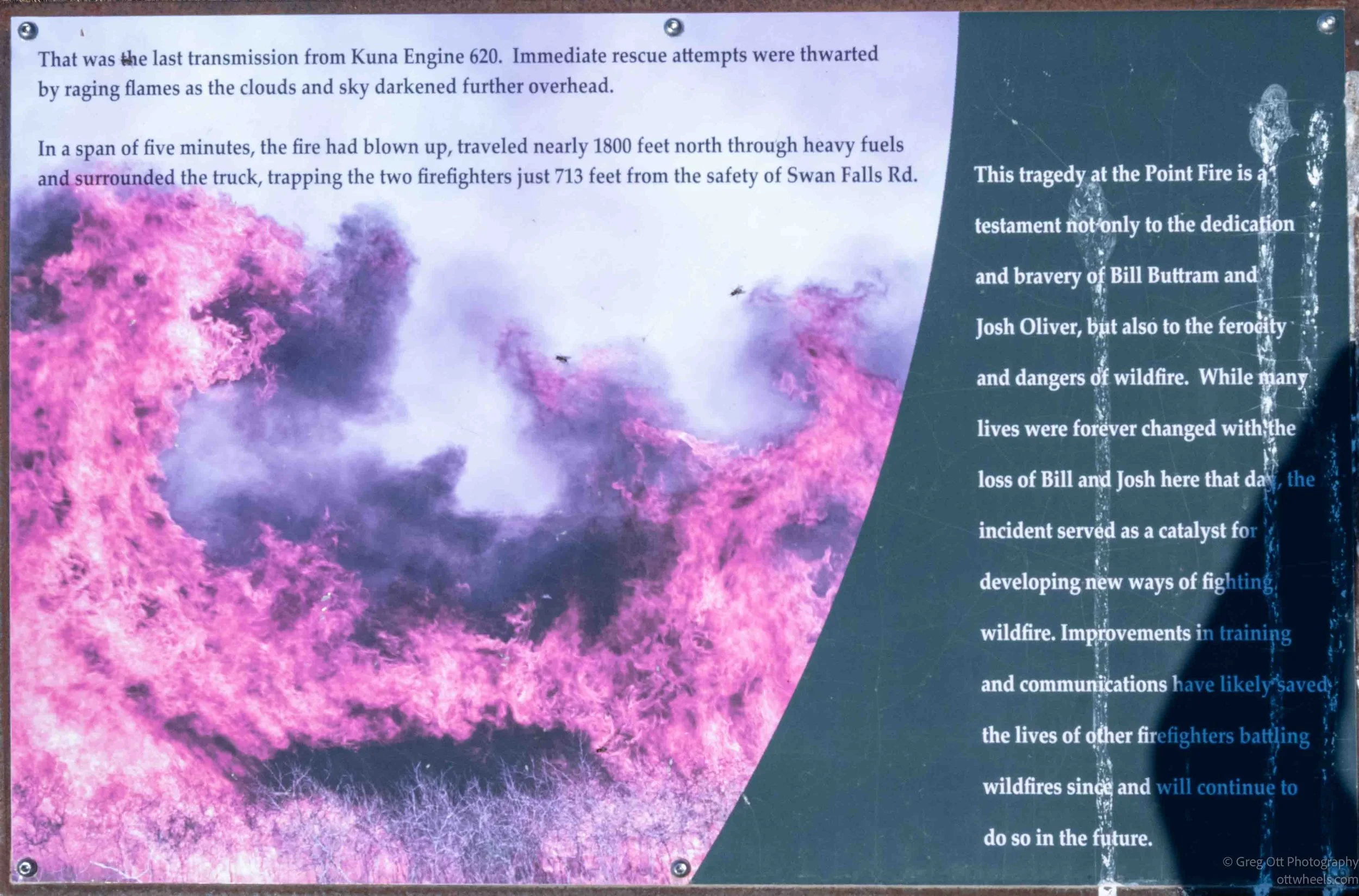
I was driving south from Boise when I noticed a sign for the Point Fire Tragedy Memorial. I stopped to learn what had happened here. On July 28, 1995, a lightning strike started a wildfire in the dry grass and sagebrush southwest of Boise. Fire crews from the Bureau of Land Management and the Kuna Rural Fire District responded and initially appeared to have the fire under control. But a powerful thunderstorm was approaching, bringing winds gusting up to 50 mph. Within minutes, the fire exploded, spreading nearly 1,800 feet and trapping two volunteer firefighters, Bill Buttram and Josh Oliver, in their truck.
The two firefighters were only 713 feet from the safety of Swan Falls Road, but the flames moved too quickly for them to escape. Both lost their lives that evening. The tragedy led to improvements in wildfire training and communication that have likely saved other firefighters' lives. Standing at the memorial, surrounded by miles of dry grass and sagebrush, it wasn't difficult to imagine how quickly a fire could spread across this landscape.
Dedication Point
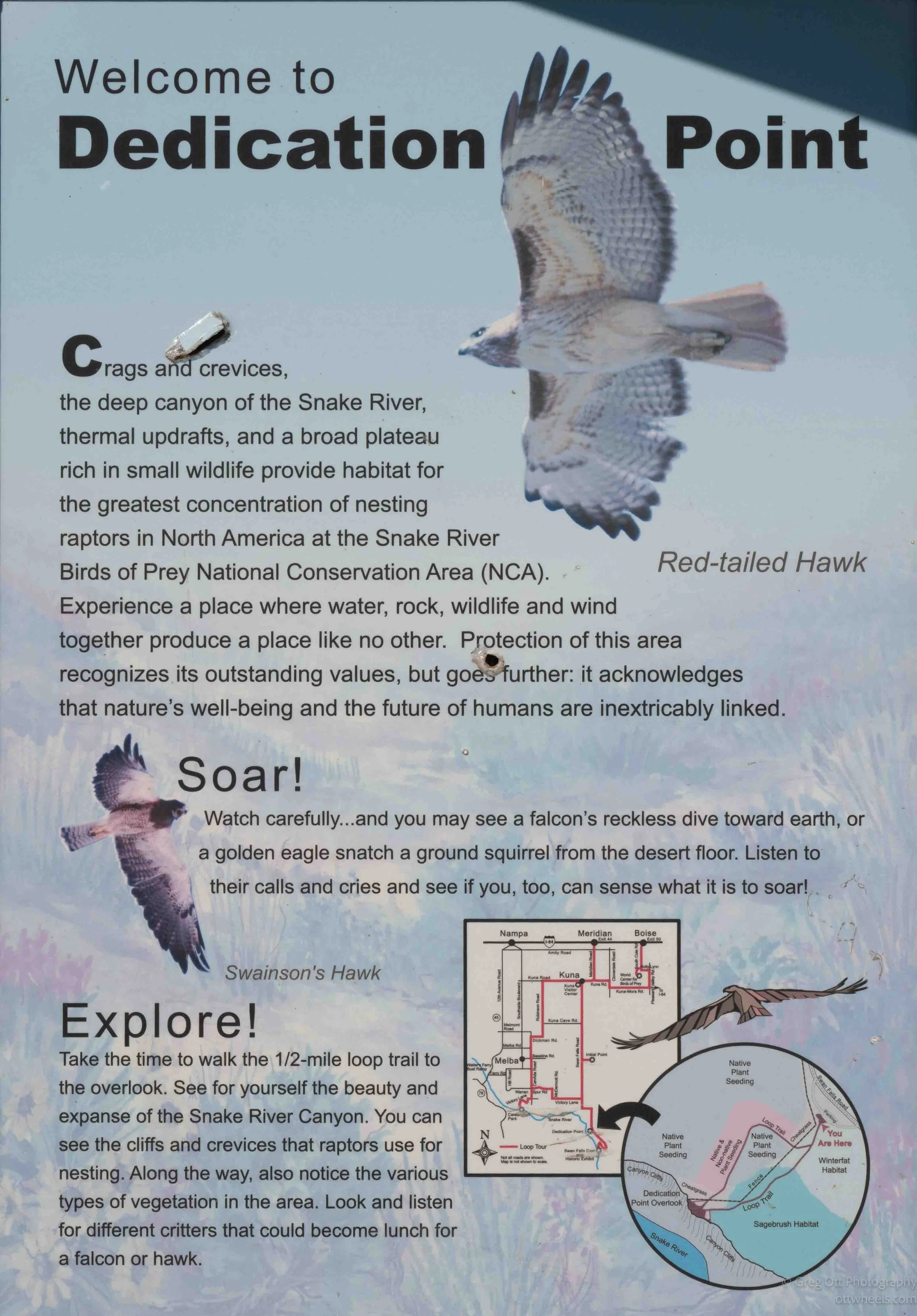
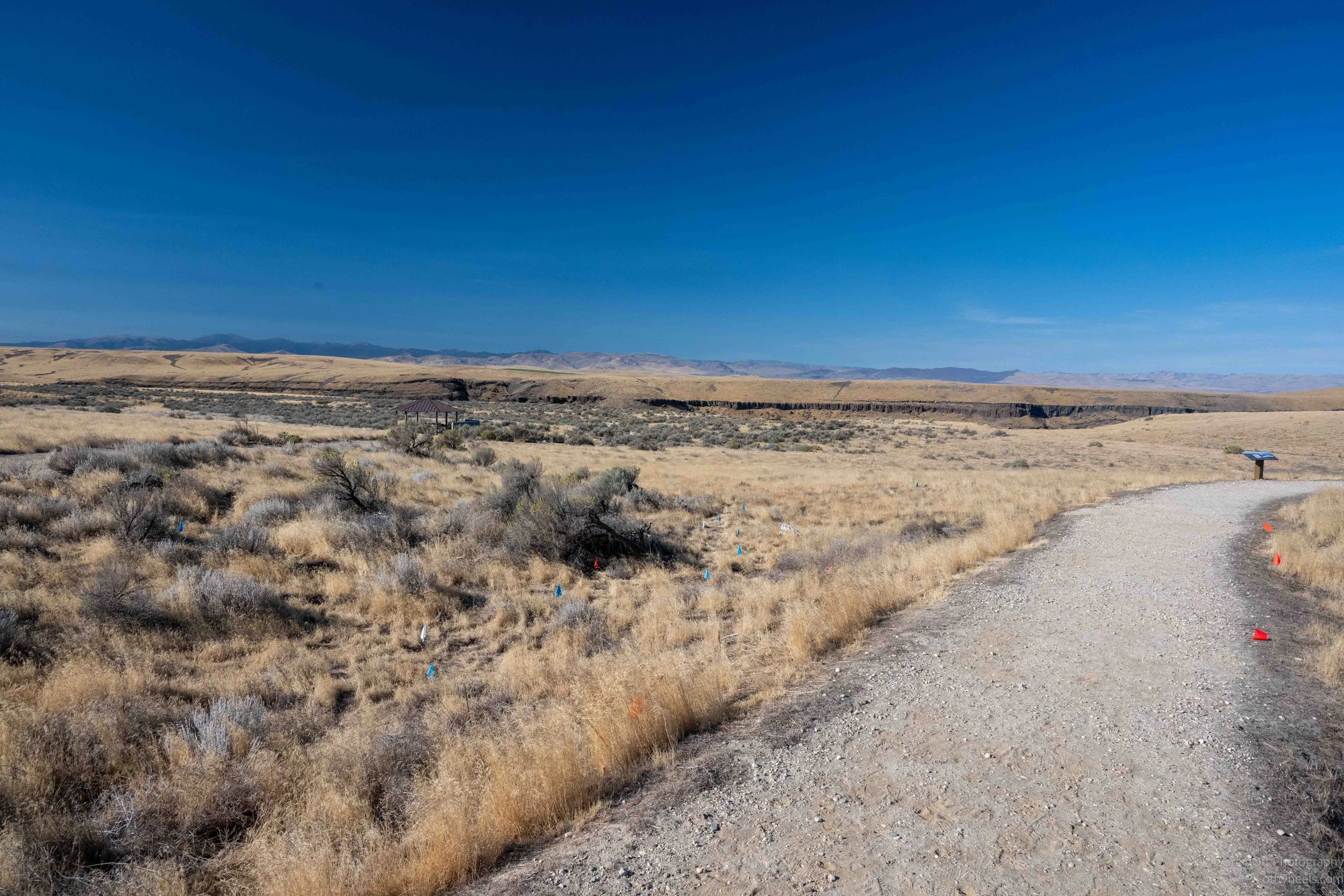
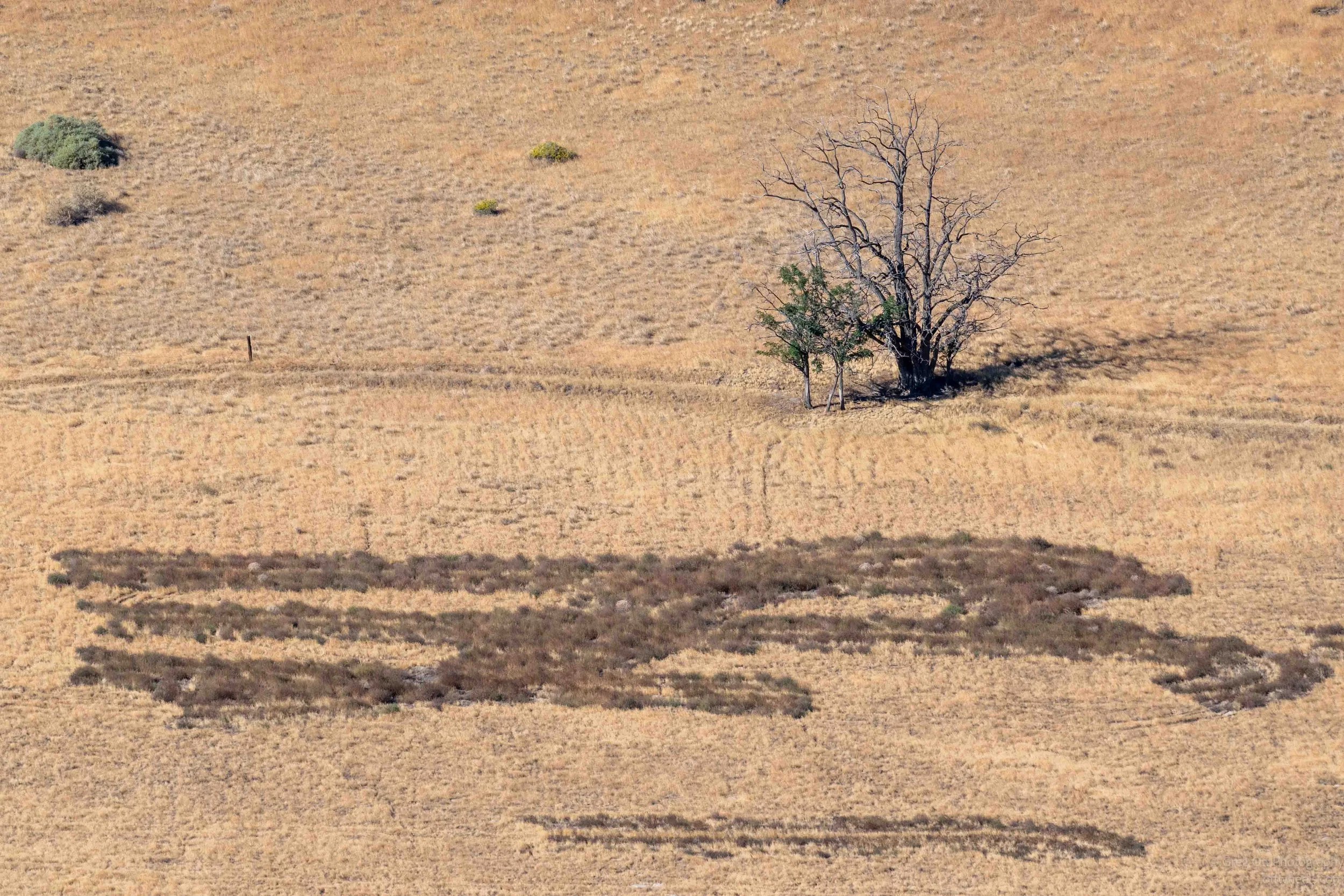
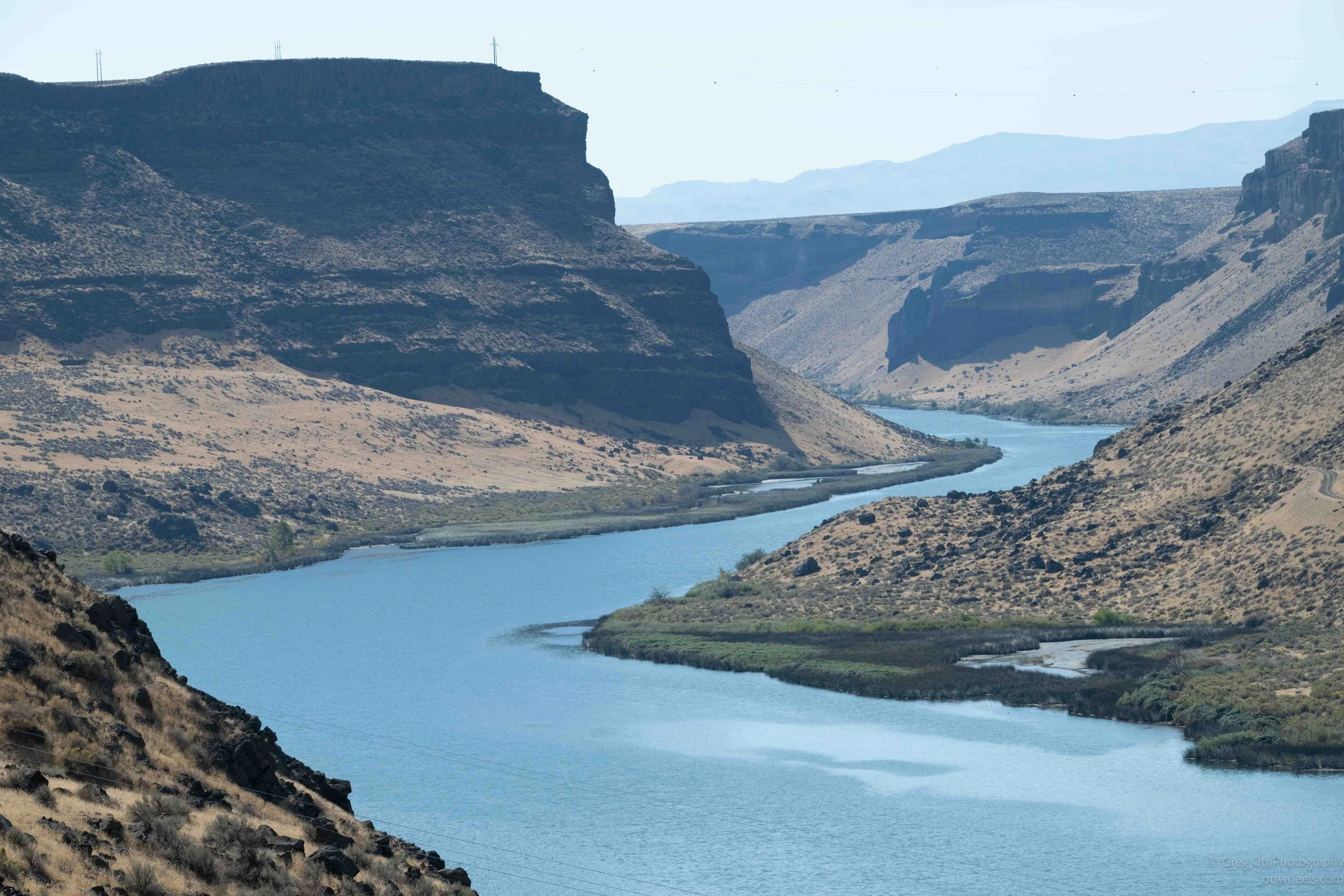
My next stop was Dedication Point, an overlook in the Morley Nelson Snake River Birds of Prey National Conservation Area. The name reflects the effort to protect this remarkable habitat, which supports one of the largest concentrations of nesting birds of prey in North America. A short trail leads to the canyon rim, about 400 feet above the Snake River. The views were impressive, with the river winding through the canyon and dirt roads and recreational areas visible far below. The geology was interesting as well. Over time, the Snake River has carved its way through layers of ancient volcanic basalt, exposing the dark, rugged cliffs that provide nesting places for eagles, hawks, falcons and other birds.
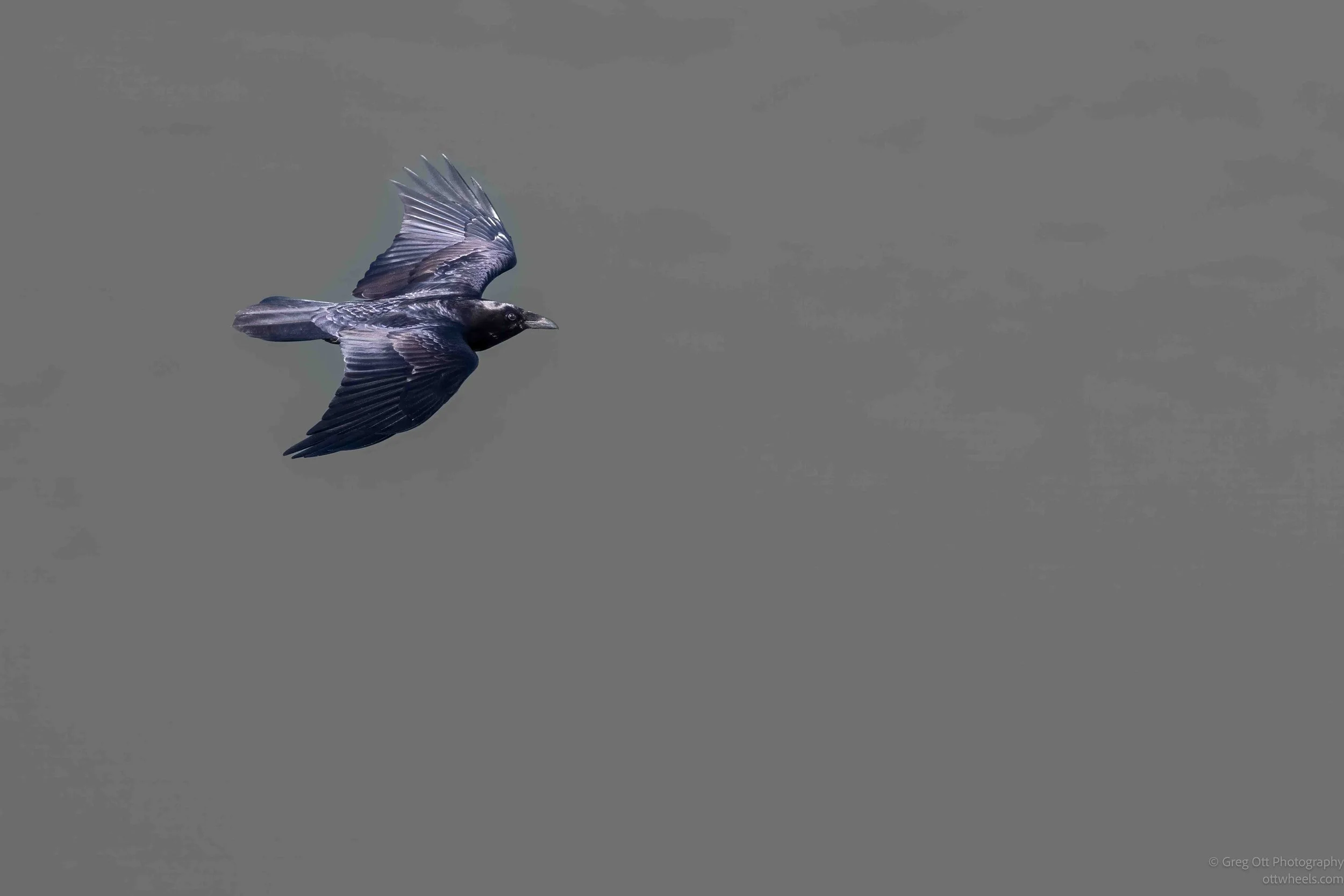
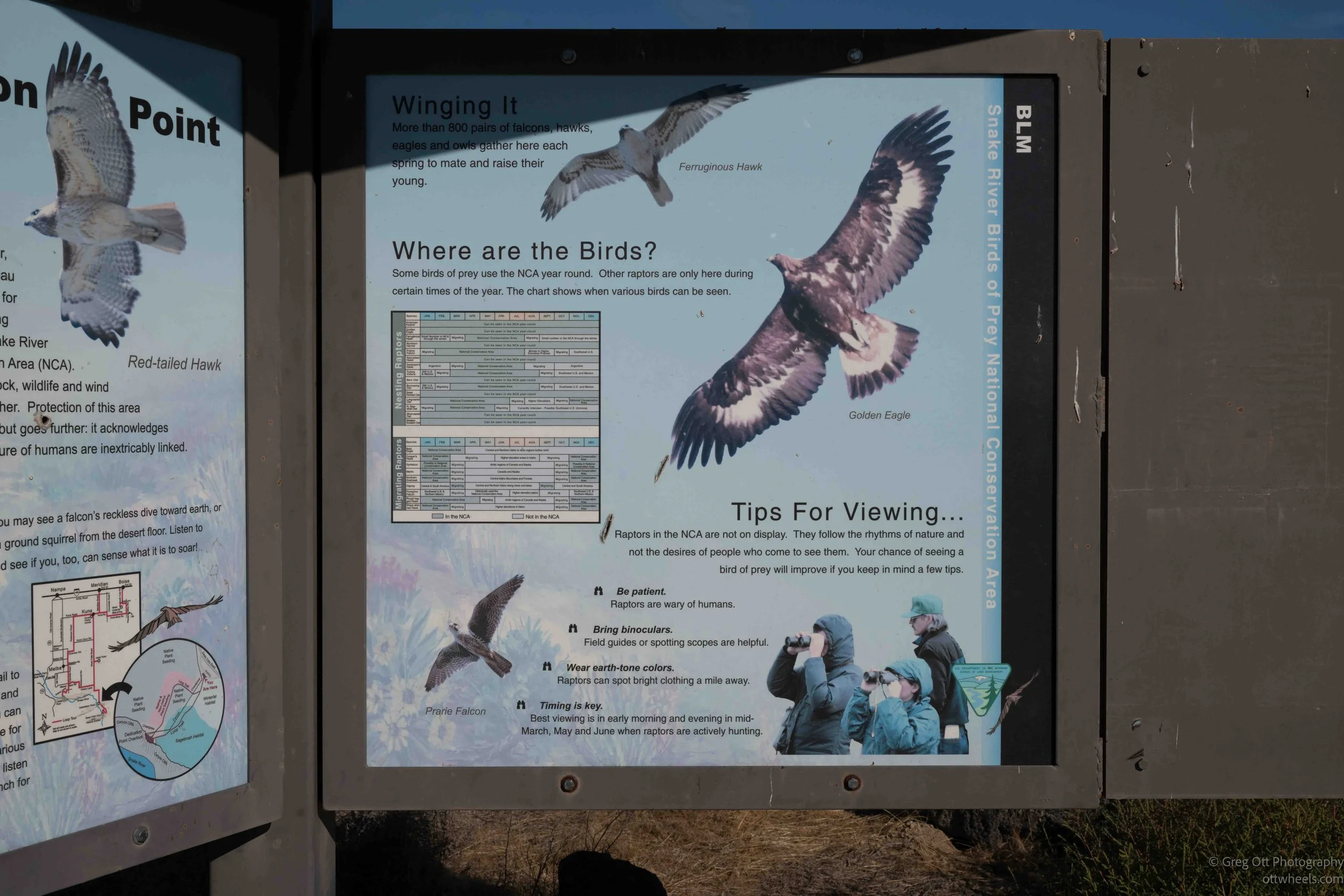
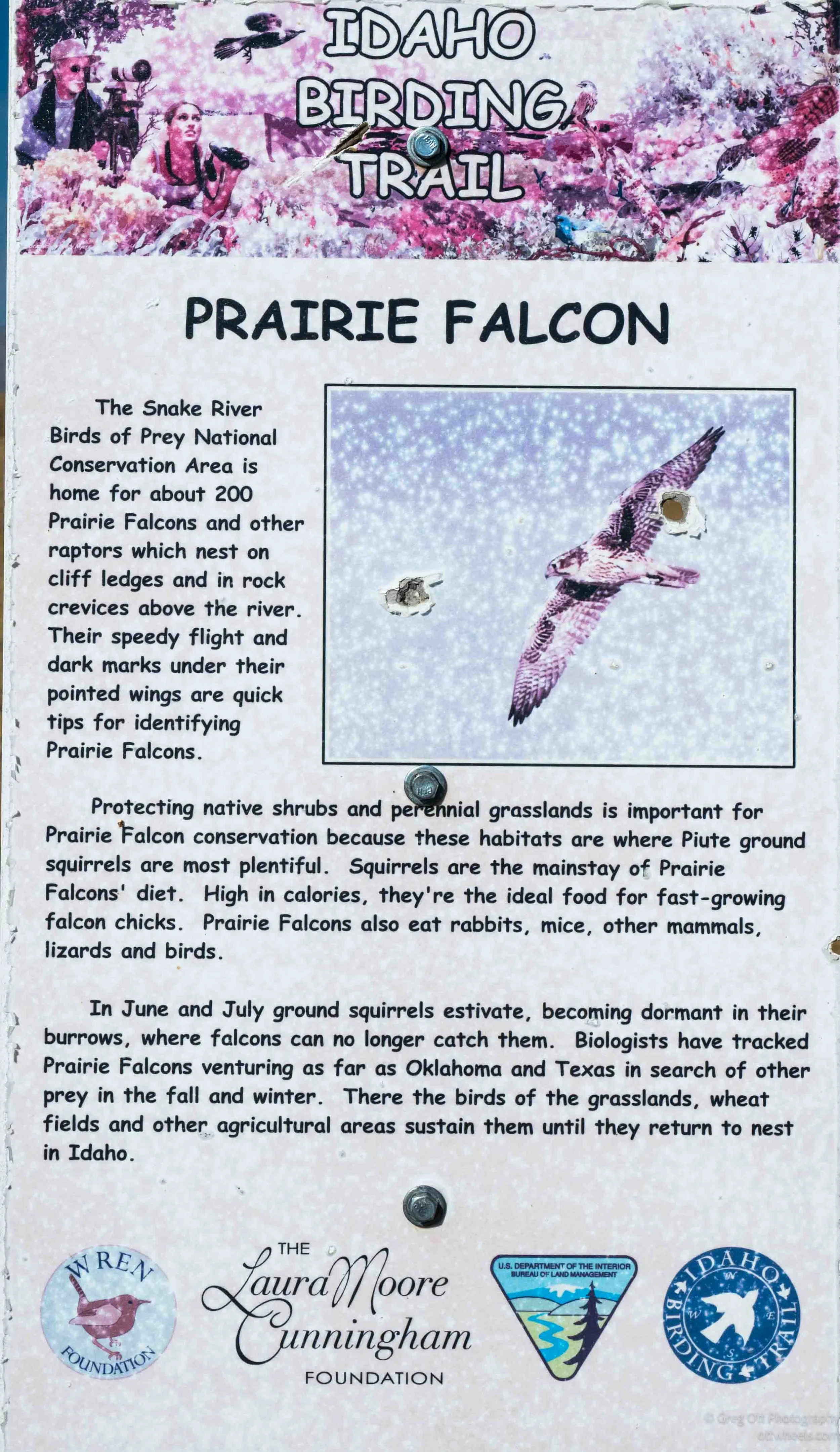
I was hoping to photograph some prairie falcons, which nest along the canyon walls and hunt over the surrounding grasslands. Unfortunately, I didn't see or hear any. I did hear several ravens calling from somewhere in the canyon, and eventually a few came flying past, riding the air currents along the cliffs. I managed to get some photographs as they passed. Even without the falcons, it was an interesting stop, both for the wildlife and the views across the canyon.
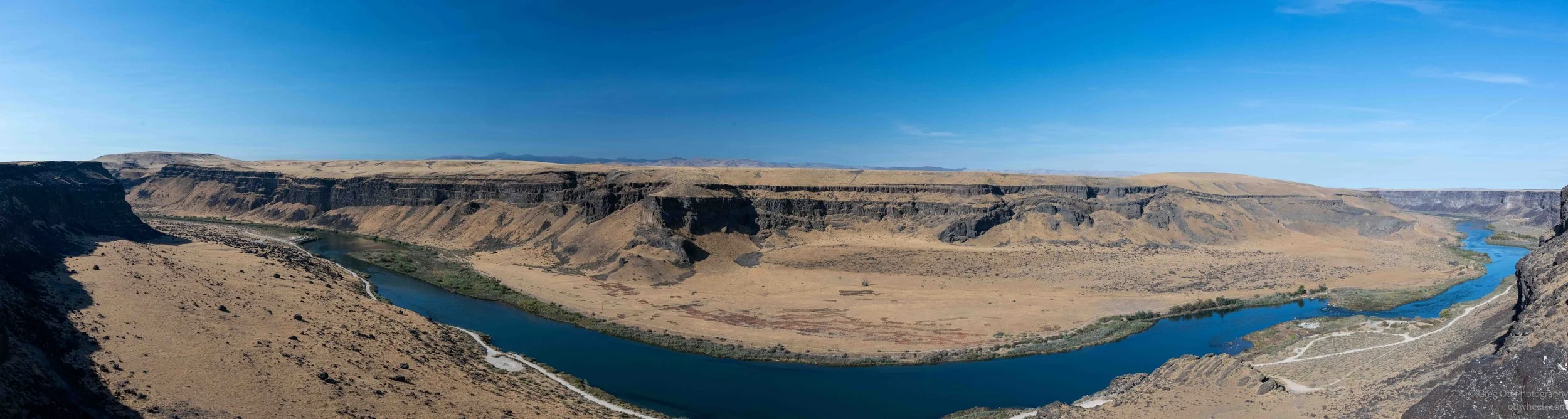
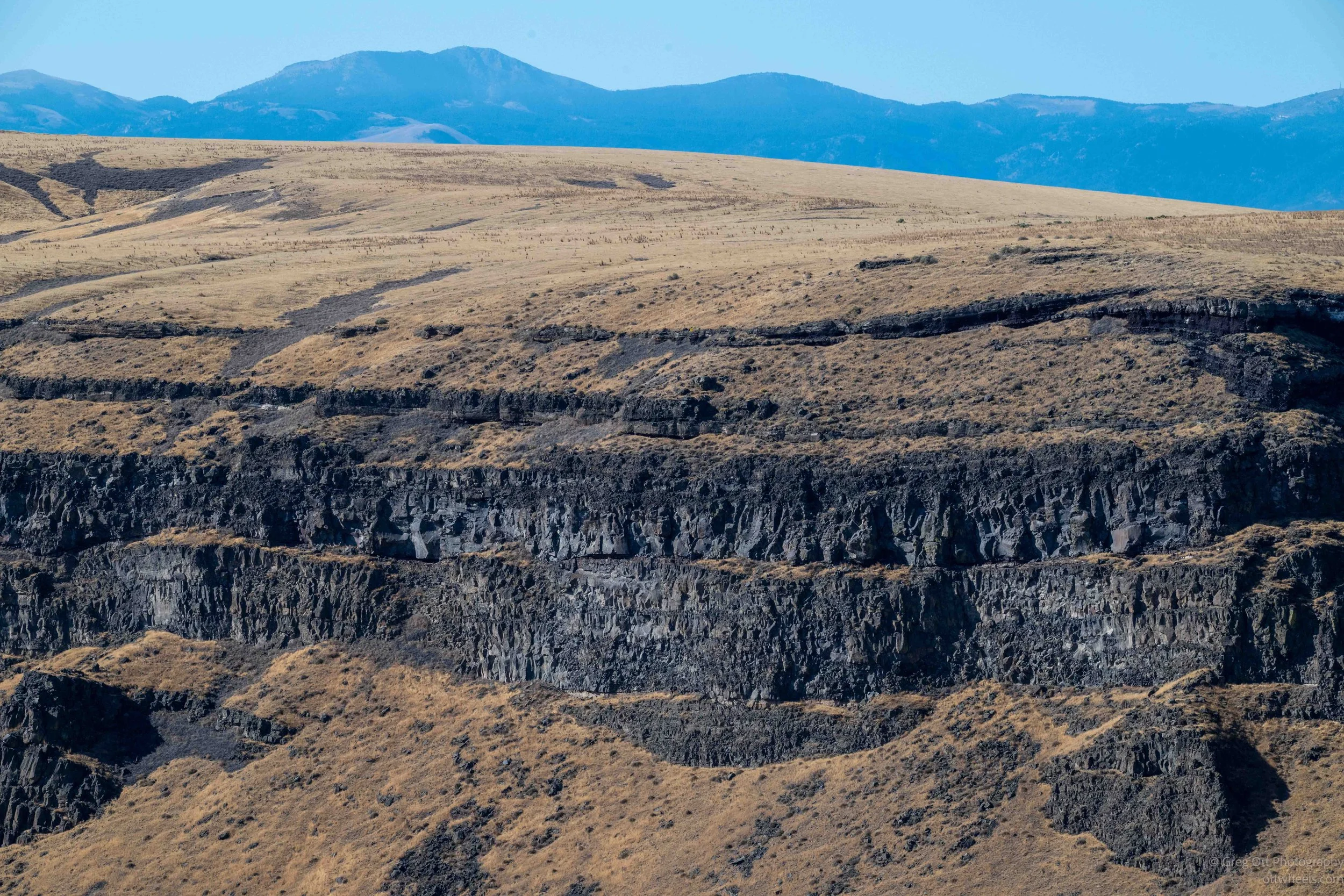
Swan Falls
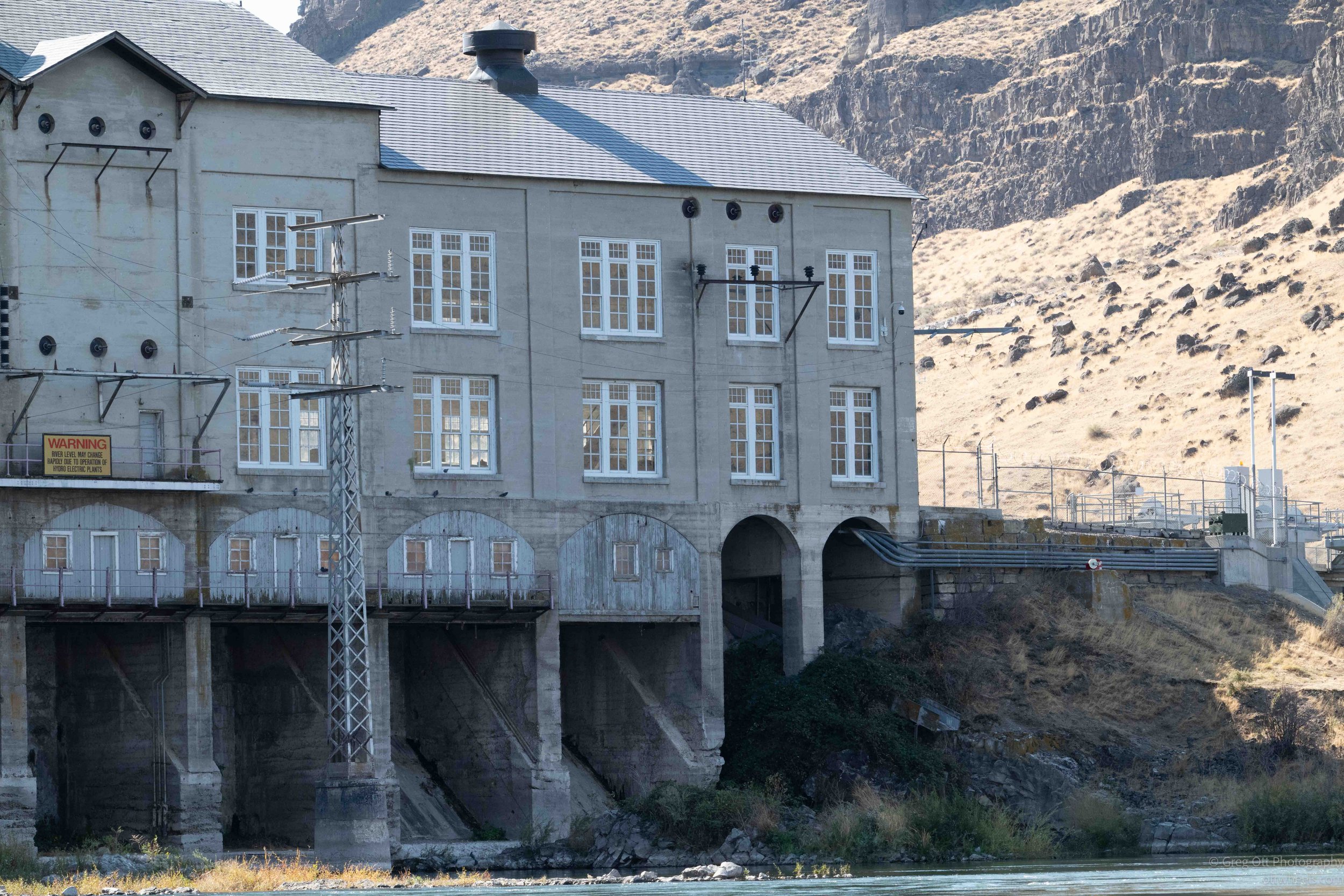
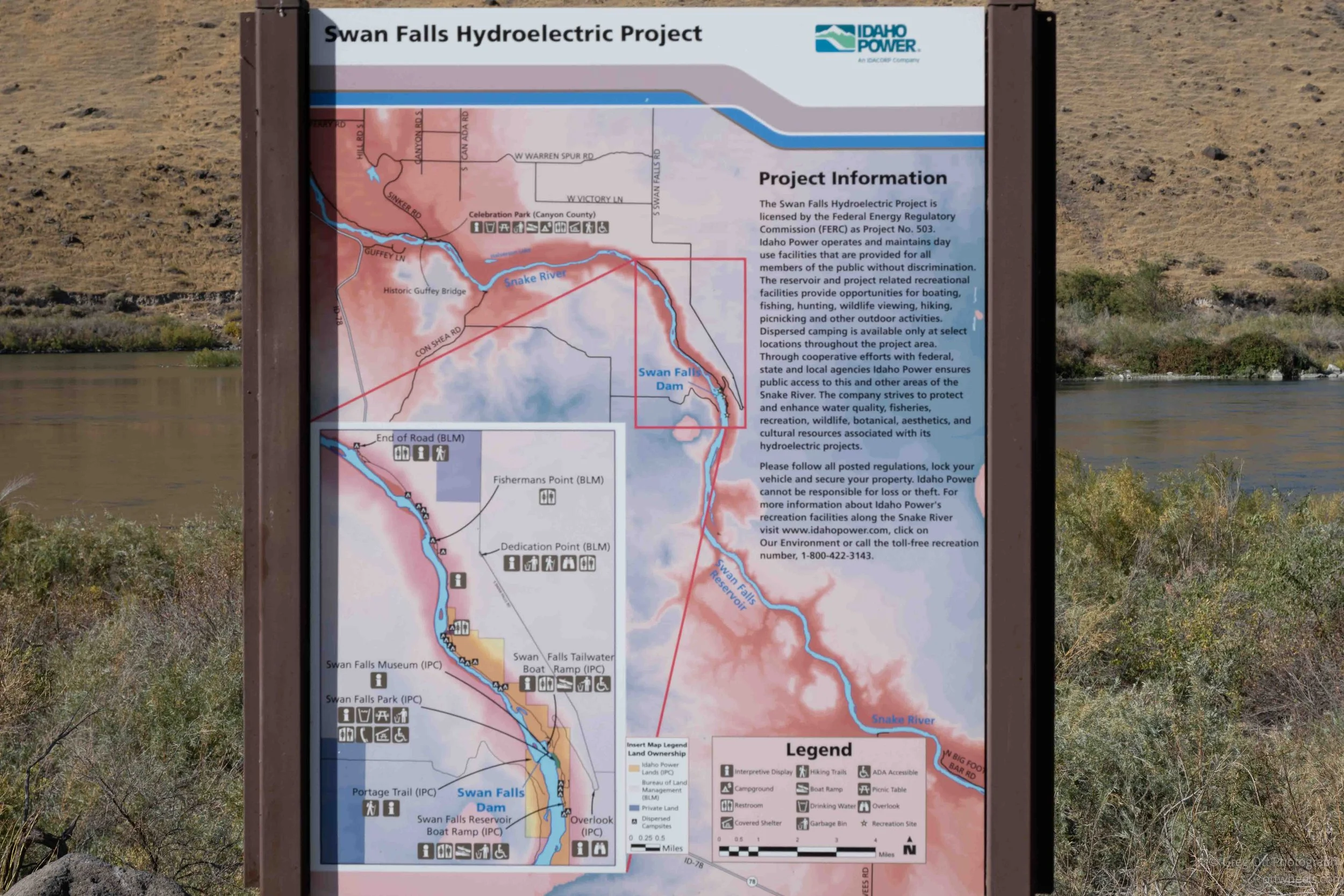
Swan Falls wasn't far from Dedication Point, so I continued down into the Snake River Canyon. The road descended through the dry, rocky hills to a surprisingly green area along the river. Swan Falls is the site of the oldest hydroelectric dam on the Snake River, surrounded by a small park, fishing areas and the historic powerhouse. Despite the name, I didn't really see any waterfalls. The river was relatively calm, held back by the dam. I walked down to the water to photograph the old powerhouse and explore the area.
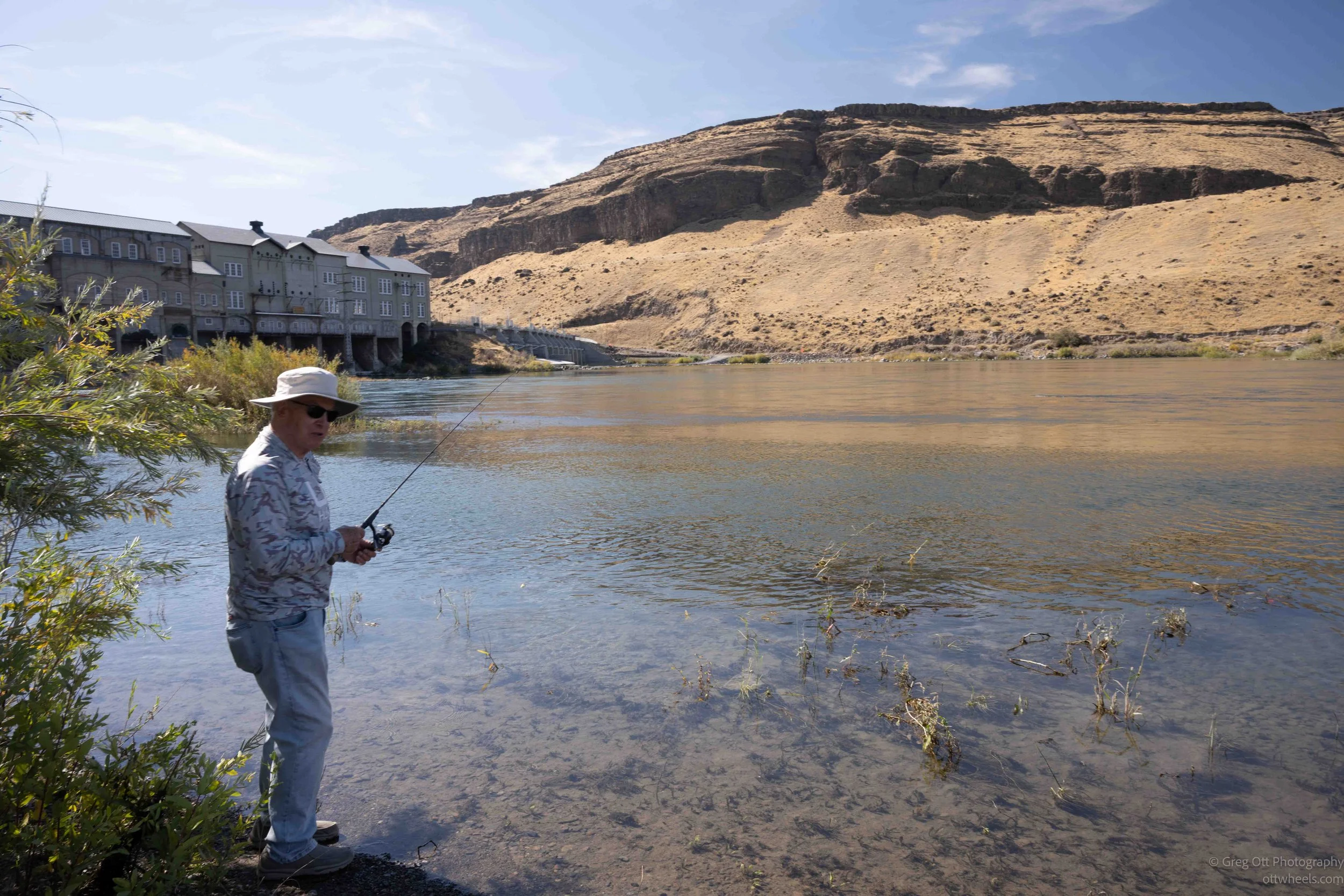
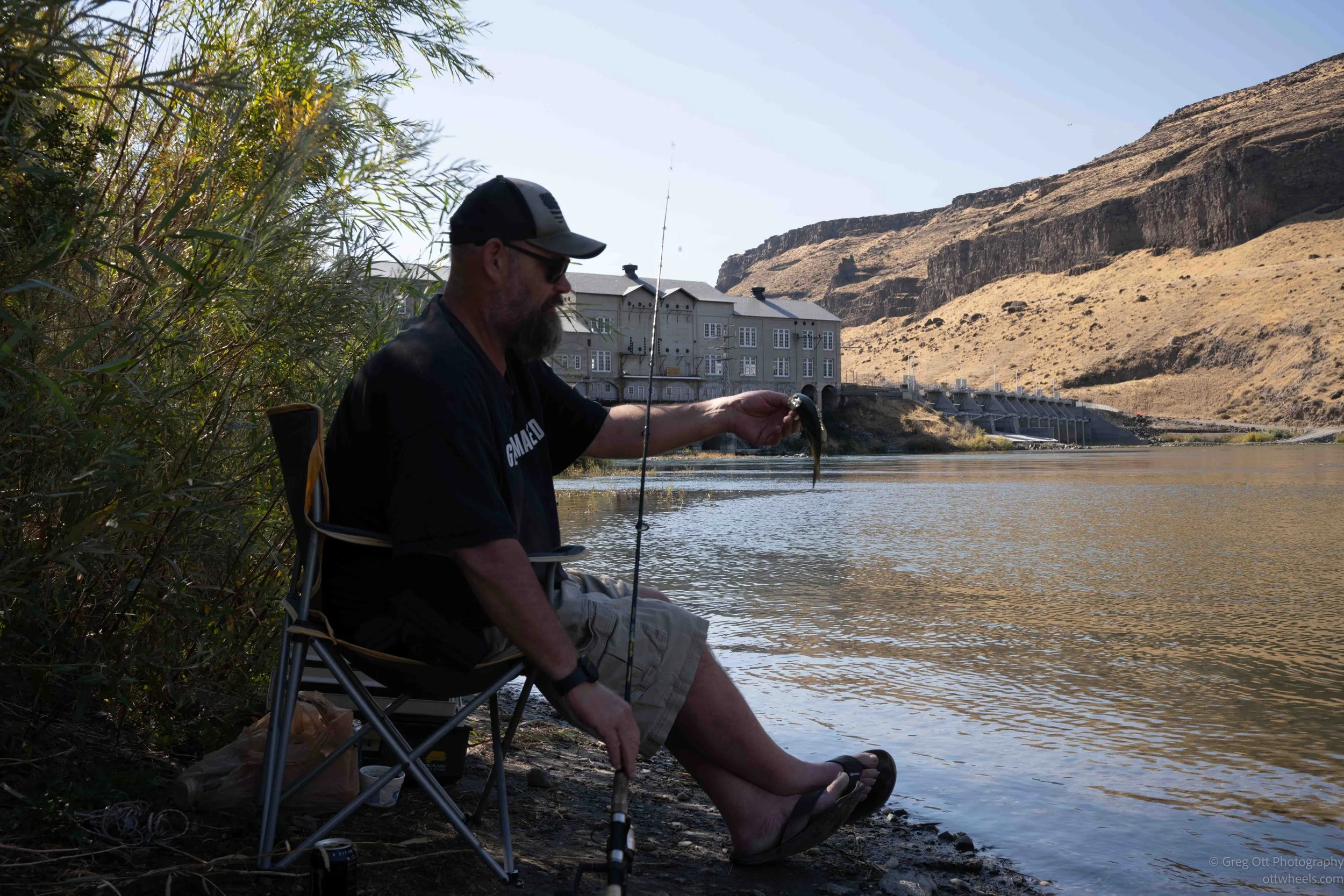
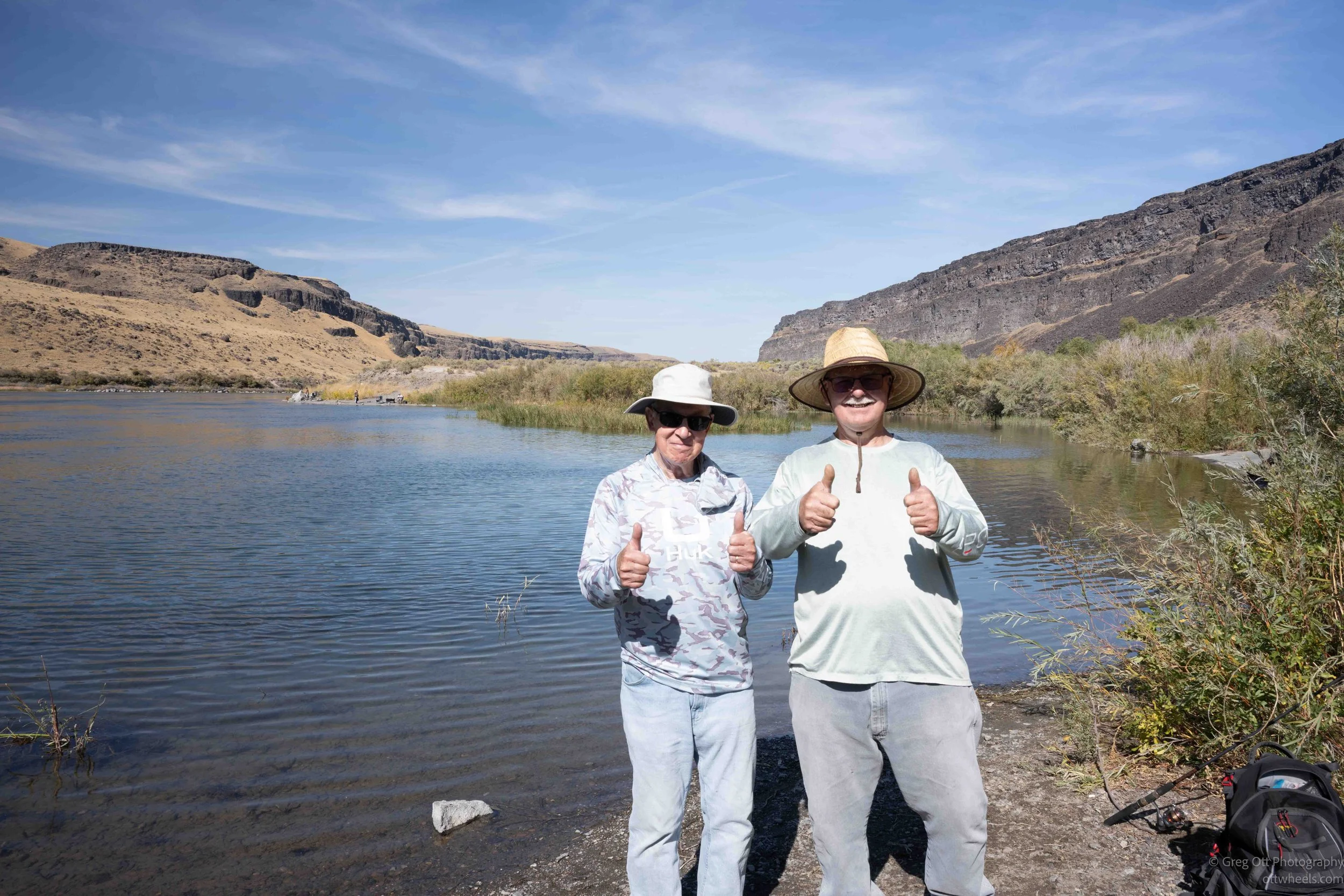
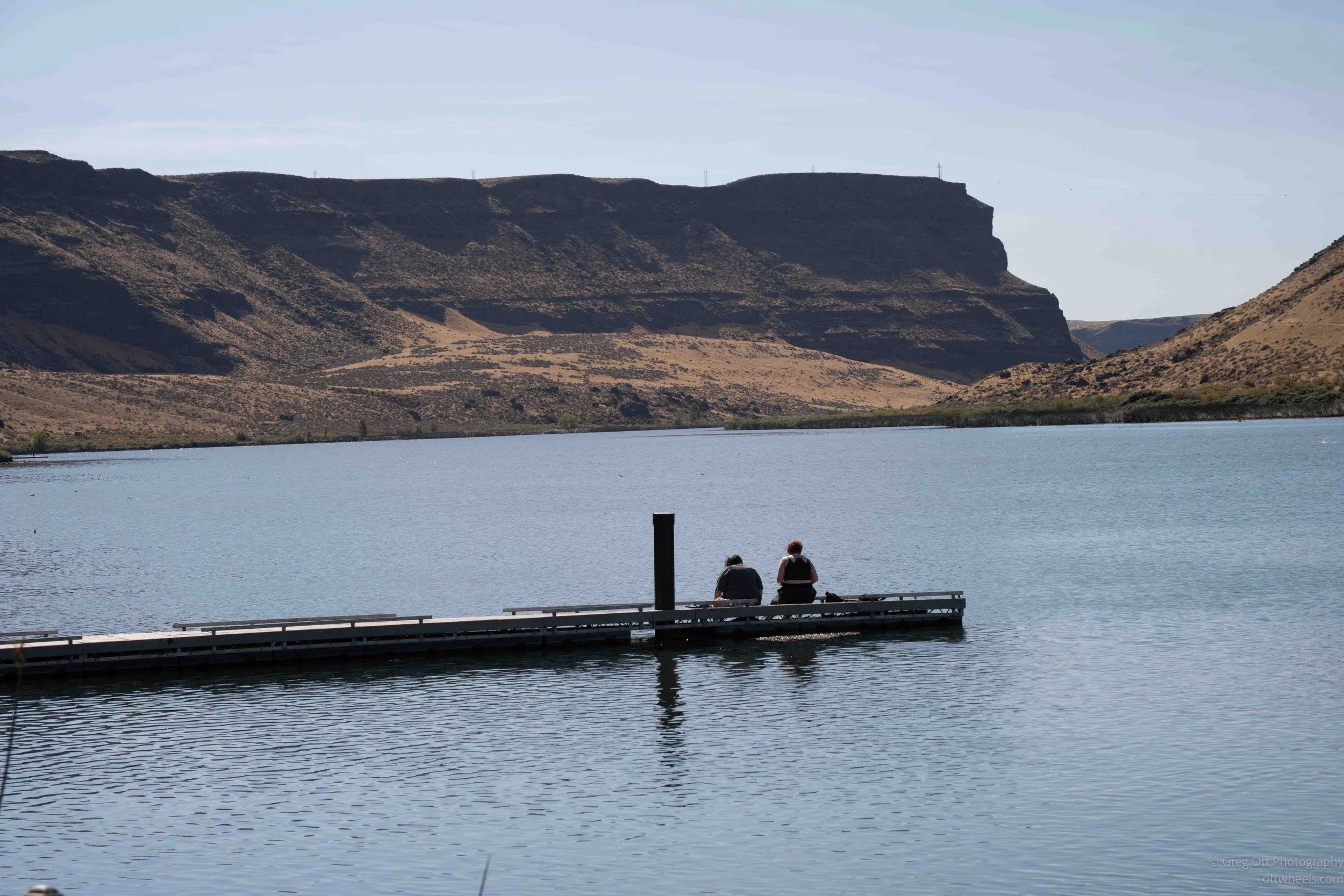
I ended up spending more than an hour talking with two fishermen. One was in his 80s and told me he comes fishing every Thursday with his best friend. He had served in the Navy as a medical technician aboard aircraft carriers and spent several years in Vietnam. The other fellow was a CNC technician and manager who programmed machines used to manufacture metal parts. He was between jobs, and his girlfriend had apparently kicked him out of the house and told him to go fishing. Not a bad way to spend the afternoon.
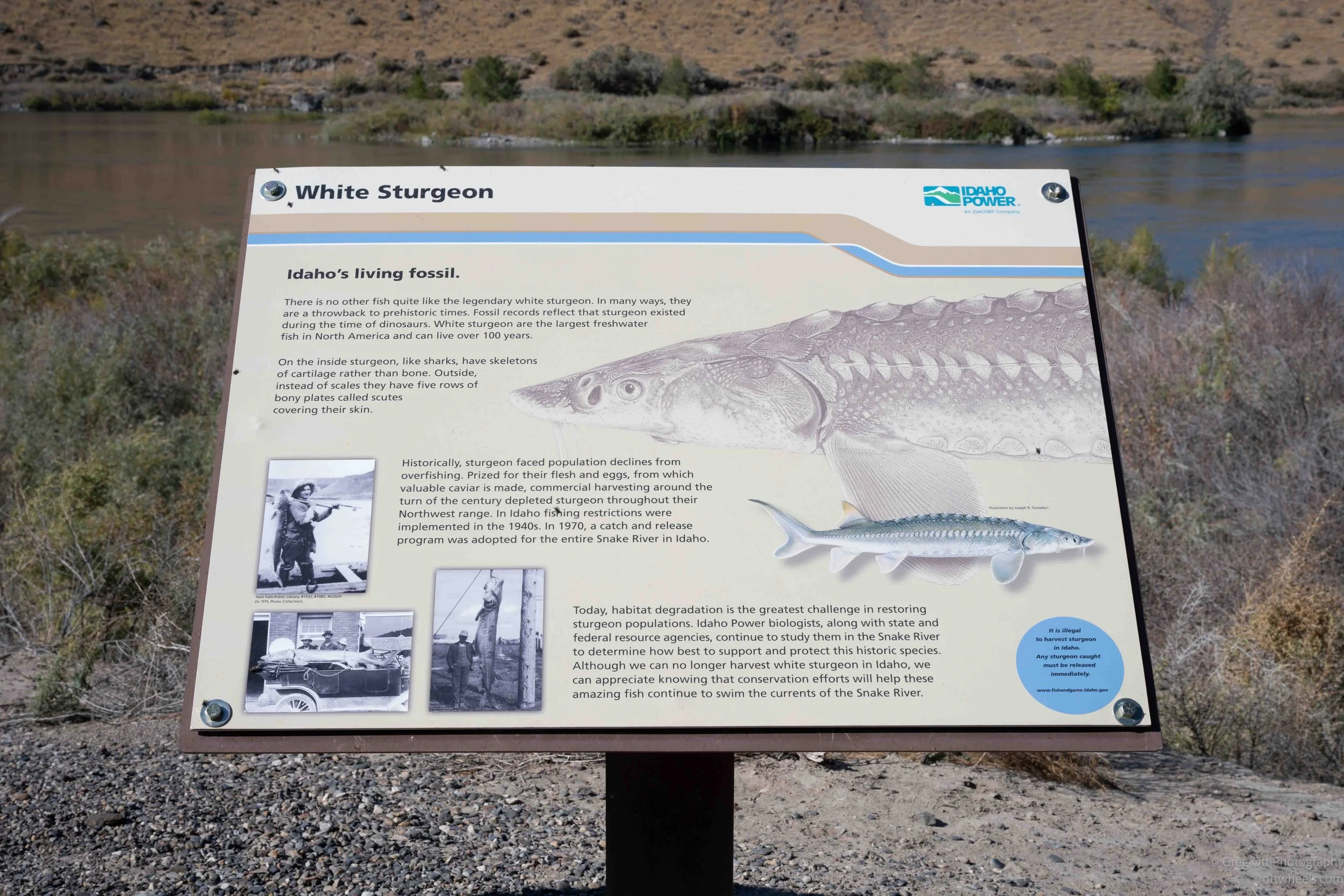
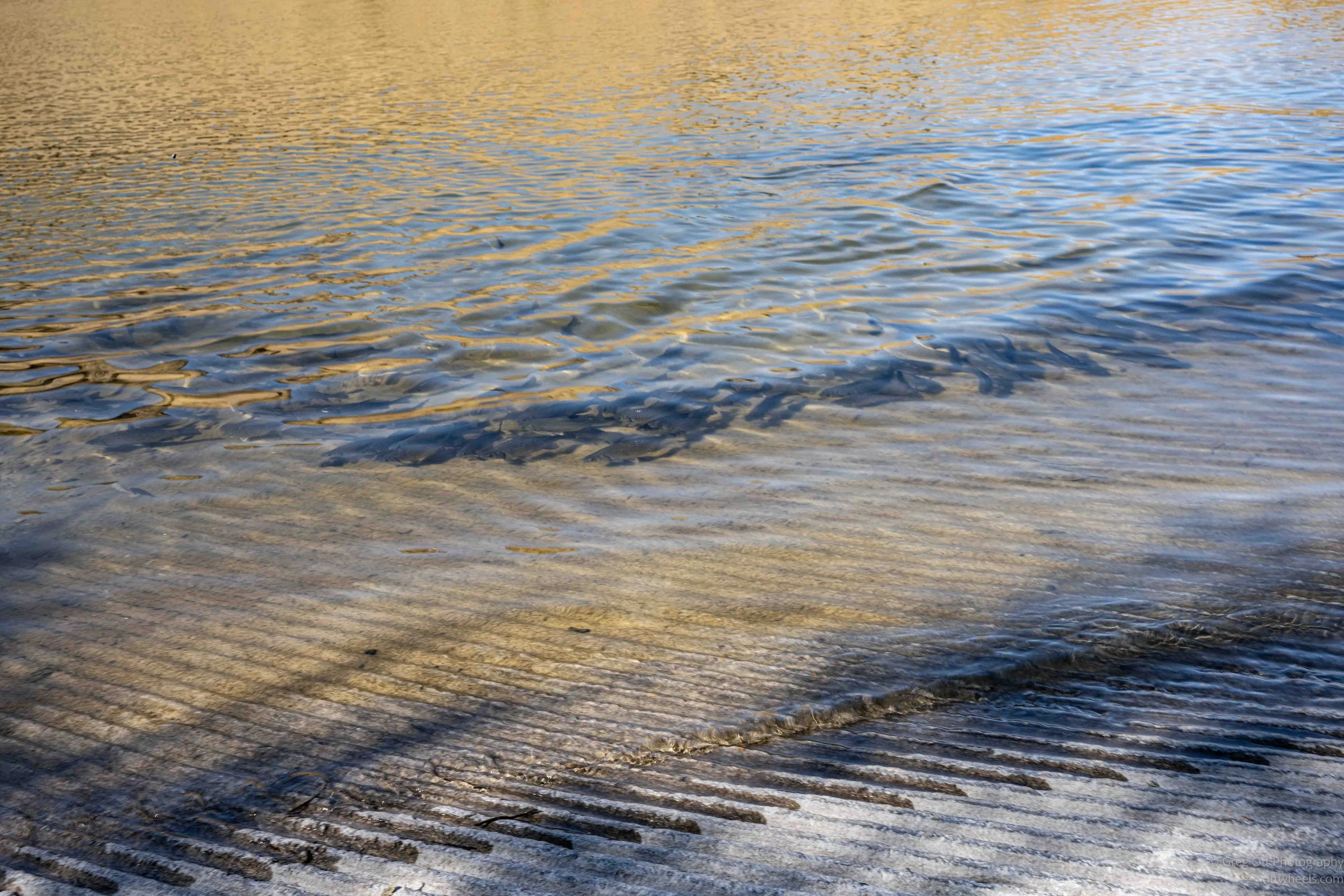
The younger fellow kept telling me, "You never know what you're going to pull out of here." He said he'd once caught a 38-pound sturgeon from the very spot where we were standing. We talked about fishing, work and traveling. At one point he mentioned, "Here everyone talks to each other, not like in Washington." I had noticed much the same thing during my travels through Idaho. People seemed genuinely interested in talking, even with complete strangers. As we were talking, thousands of young catfish came to the shore.
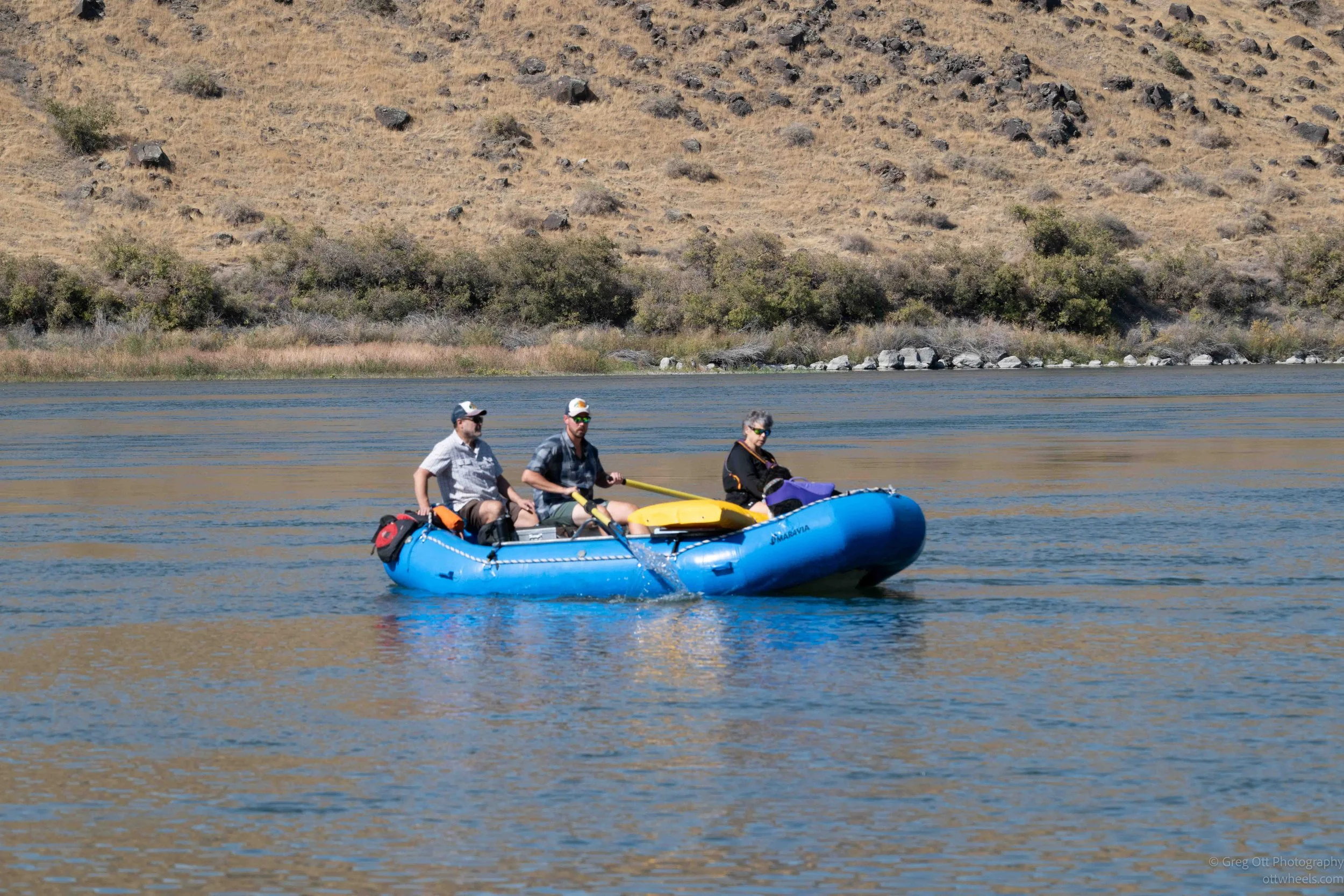
Somehow, the conversation turned to fishing in Alaska. Just then, a fellow in his mid-30s began backing a large inflatable raft down toward the river. His mother and father were with him, and before long we were all talking about Alaska. His parents had fished in Skagway and Valdez, two of my favorite places from my travels through the state. It's funny how often a simple conversation with strangers turns into a discussion about places we've both visited. Between the fishermen and the family launching their raft, I spent considerably more time here than I had planned.
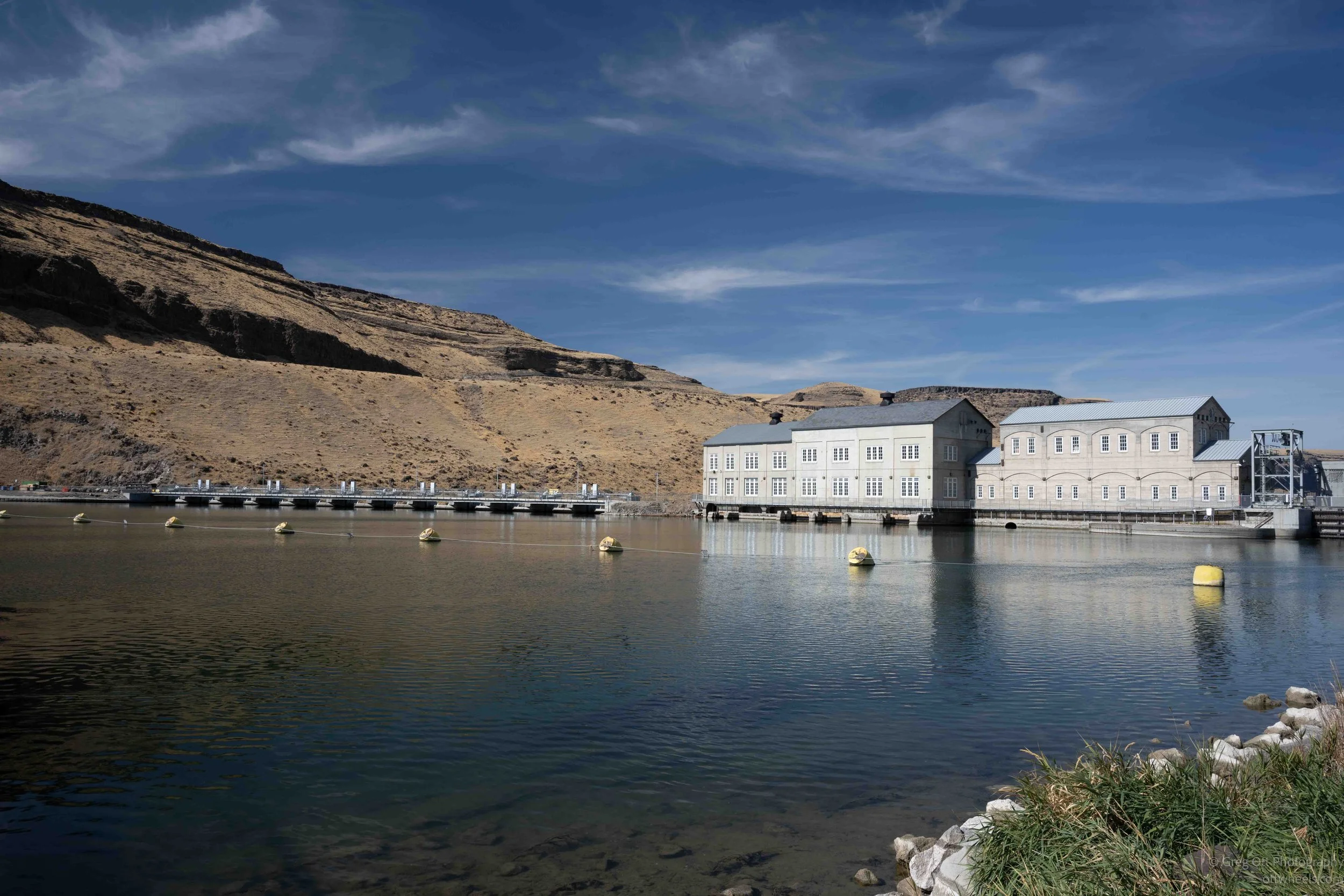
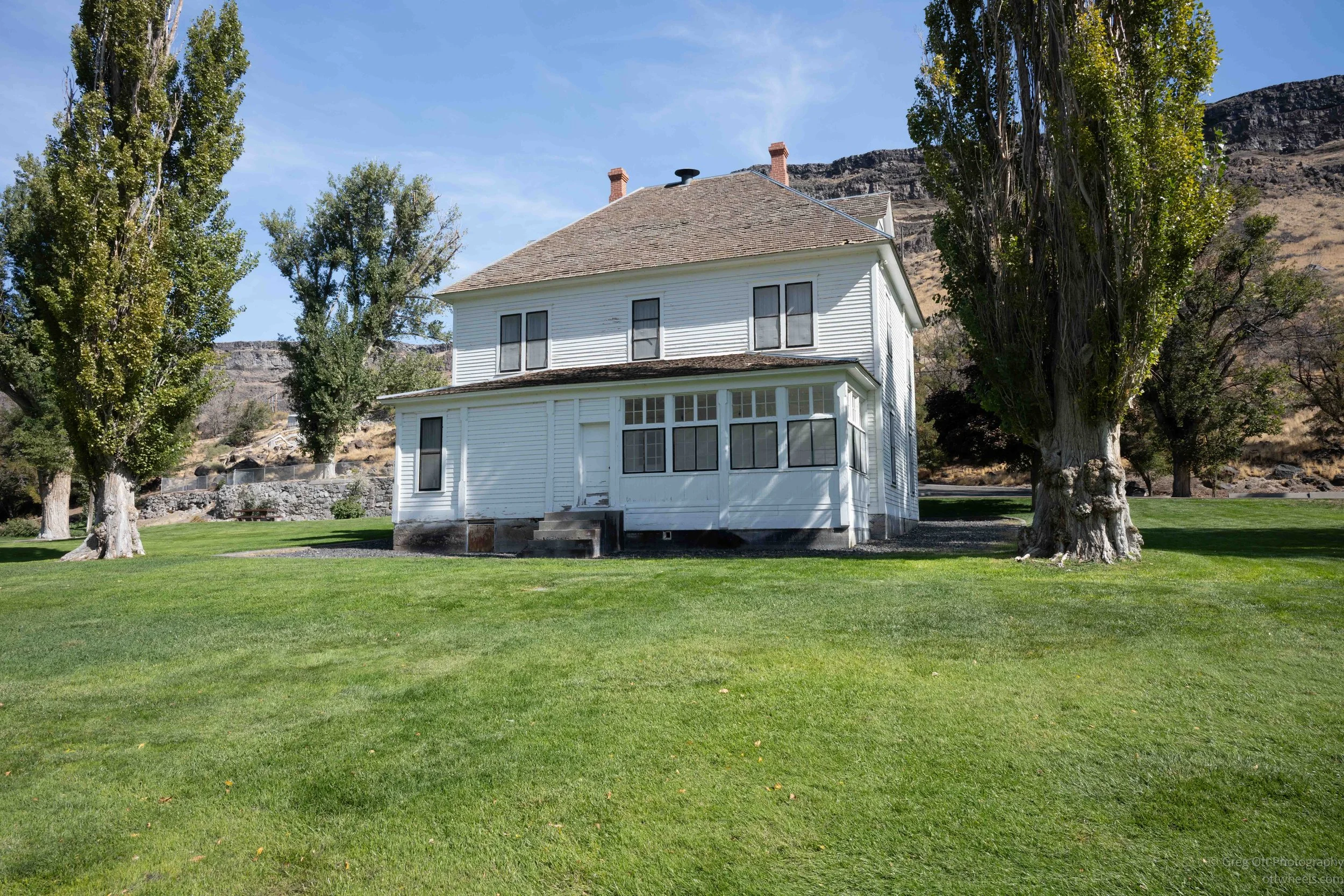
Eventually, I said goodbye and drove over to the other side of the dam for some additional photographs and to learn a little about its history. Swan Falls was built in 1901 to supply electricity to the gold and silver mines around Silver City, Idaho. It was the first hydroelectric dam constructed on the Snake River and one of the earliest in the Pacific Northwest. Idaho Power acquired the facility in 1916 and expanded it over the years. In 1994, a modern powerhouse was built alongside the original structures, which were retired from generating electricity. The old powerhouse has since been converted into a museum, preserving much of the equipment and history of the early hydroelectric industry in Idaho.
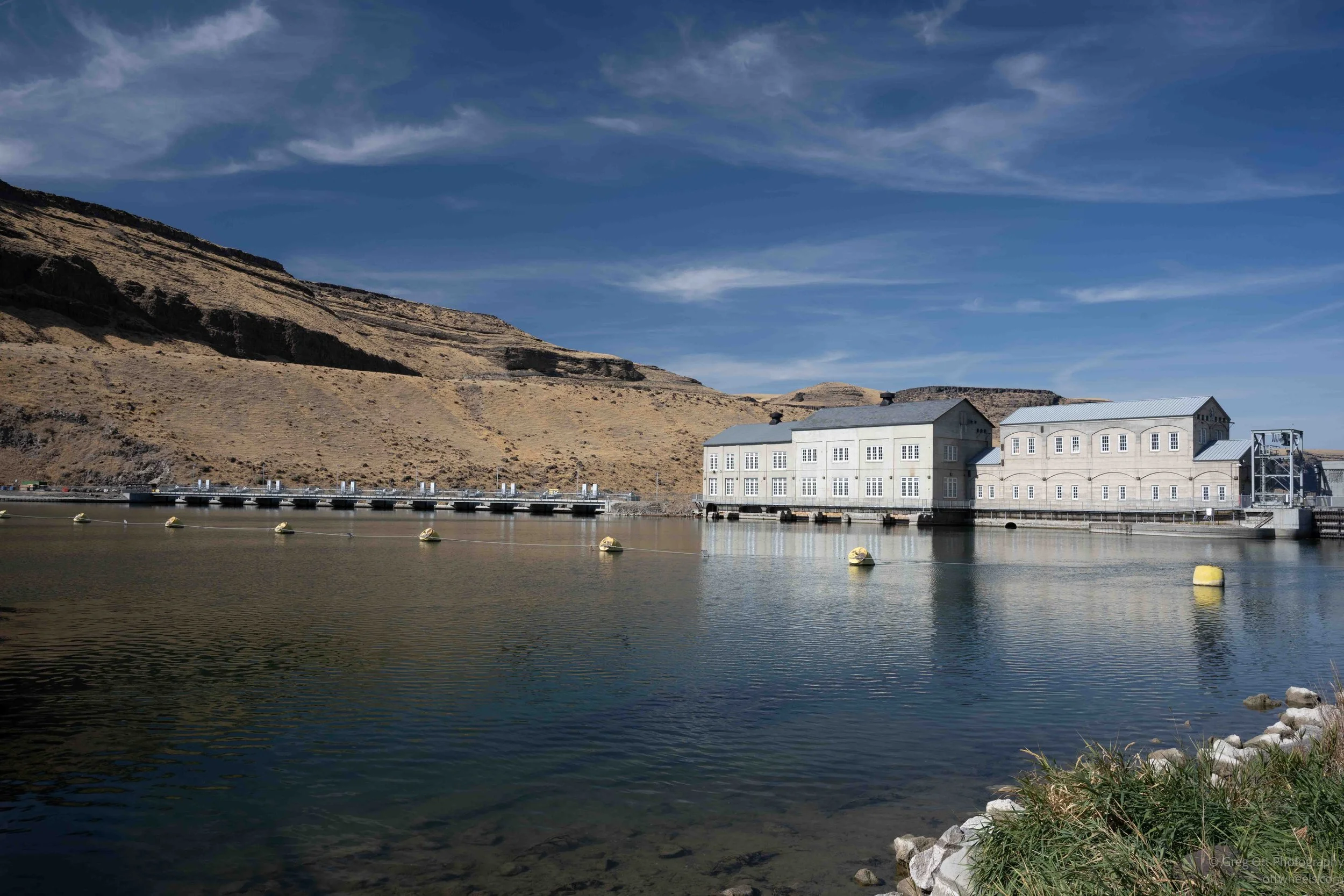
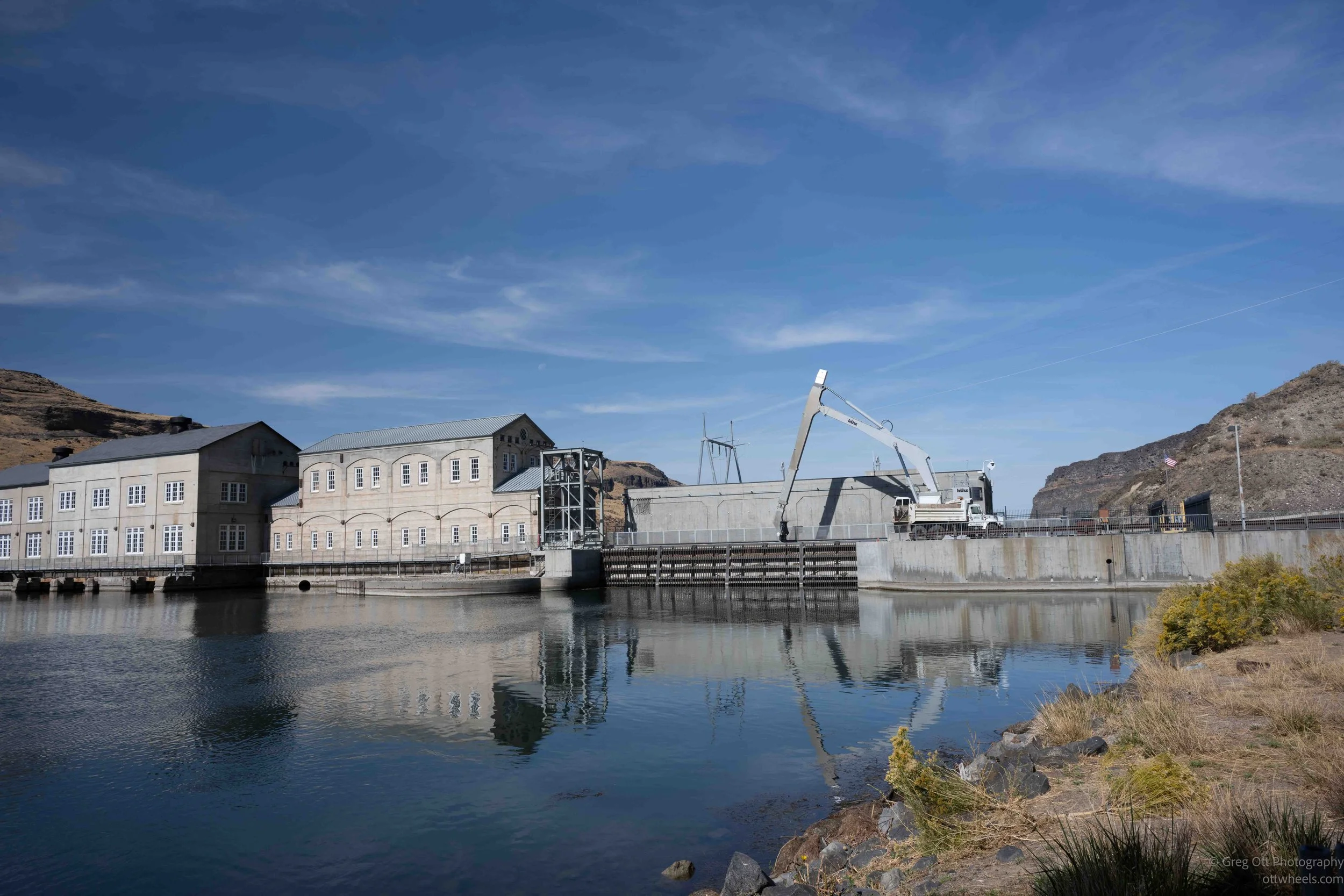
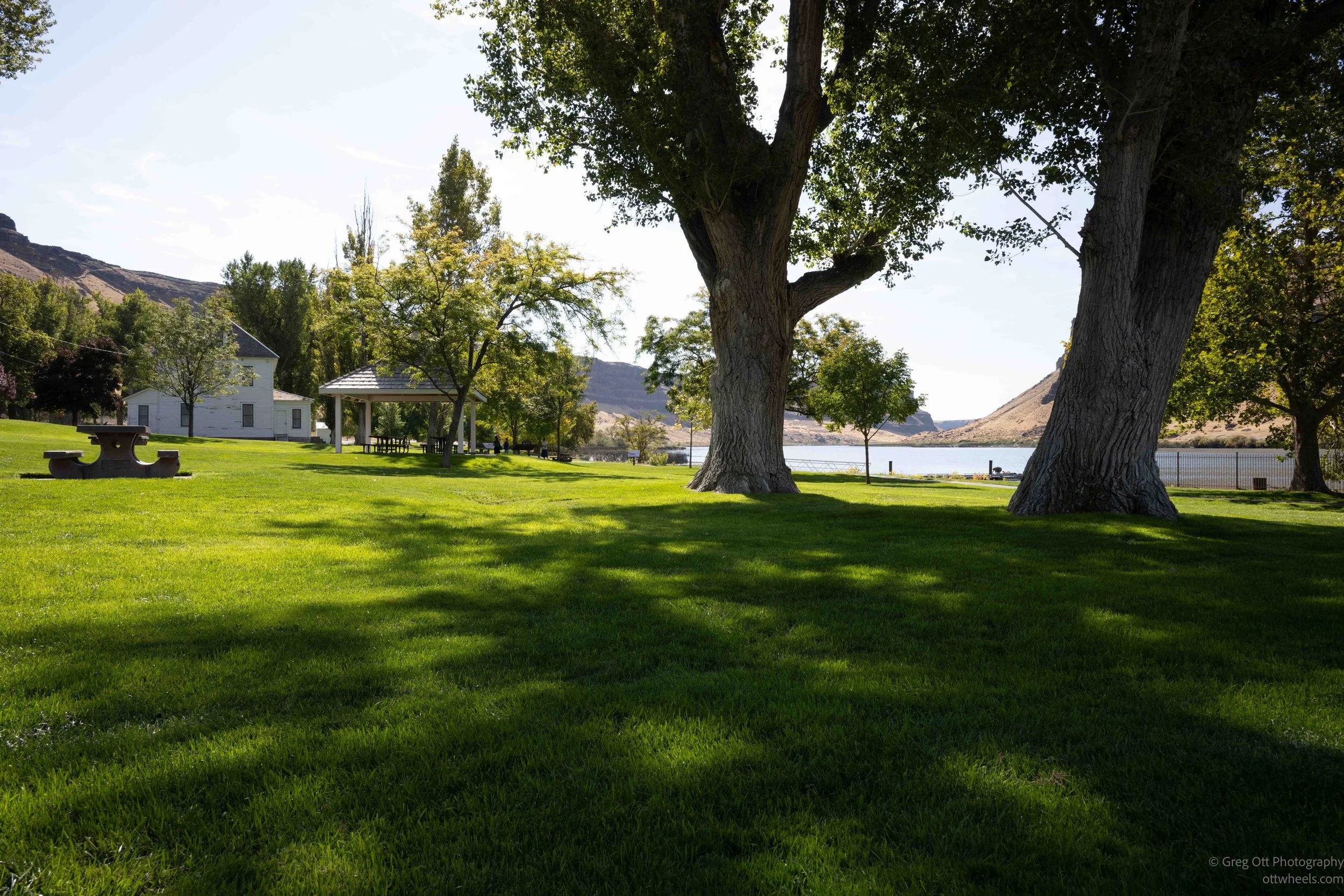
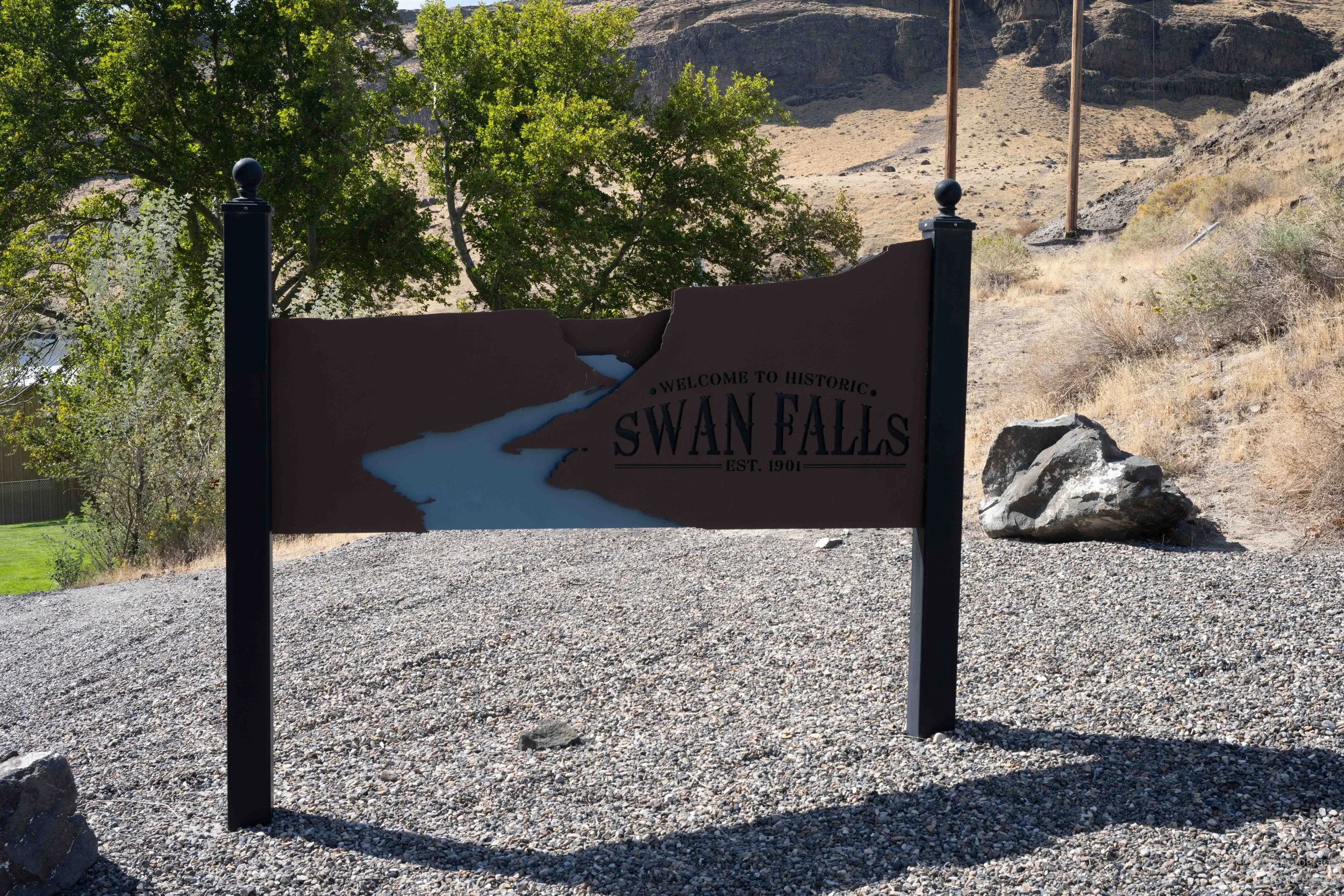
The contrast between the industrial buildings and the surrounding canyon was interesting. The old powerhouse, with its rows of windows and concrete walls, looked almost out of place against the dry basalt cliffs. There was considerably more vegetation along the river, and I noticed more birds moving through the trees and along the water. I spent some time photographing the buildings and looking out over the Snake River before continuing on my way.
Bruneau Dunes
On my way, I began to realize I was driving in the wrong direction but headed towards Bruneau Dunes State park. For some reason I had been driving on a dirt road and when I reentered the destination I realized that it was trying to avoid the highway because i had that setting turned on. Finally I was headed in the right direction and I cut time off the route.
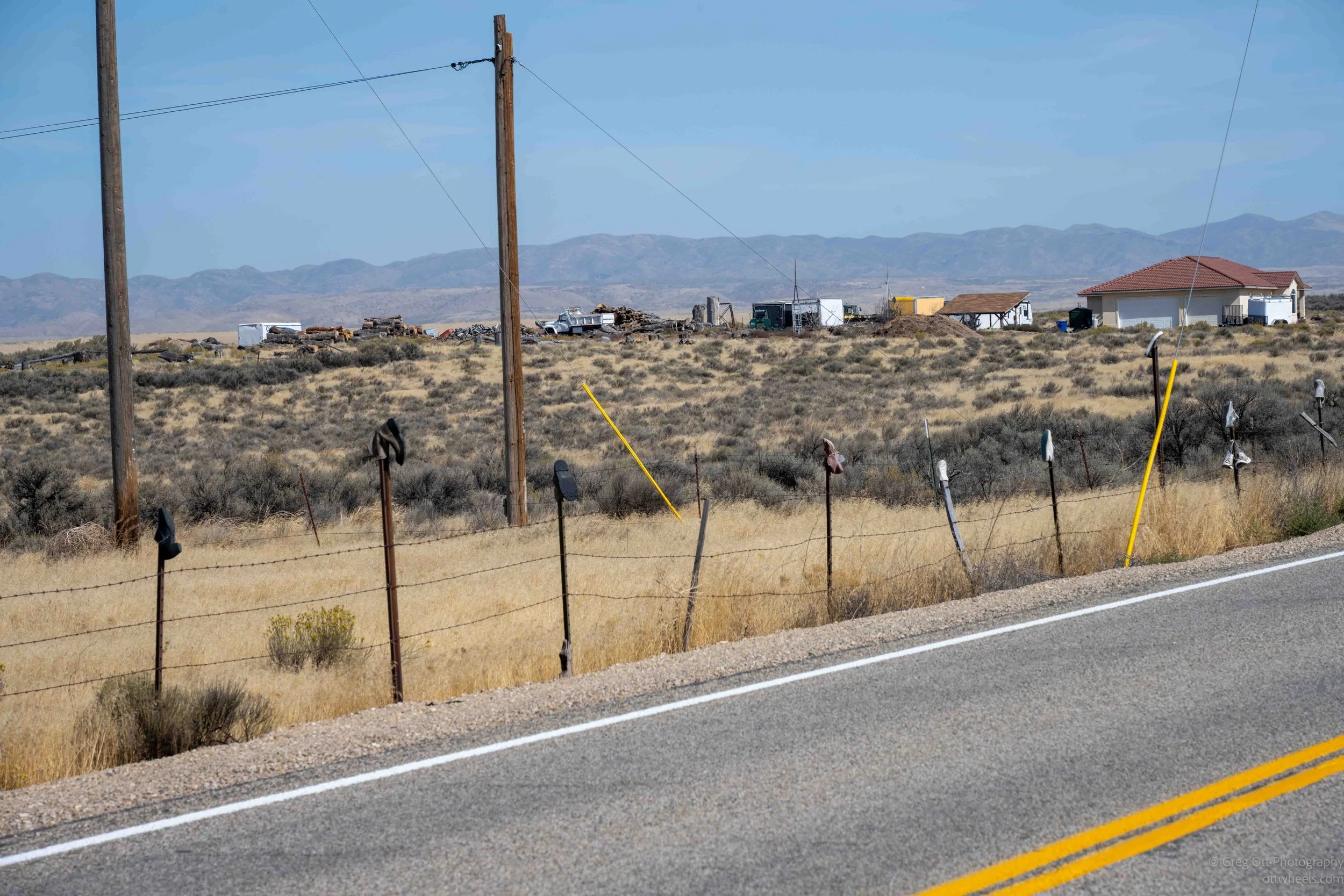
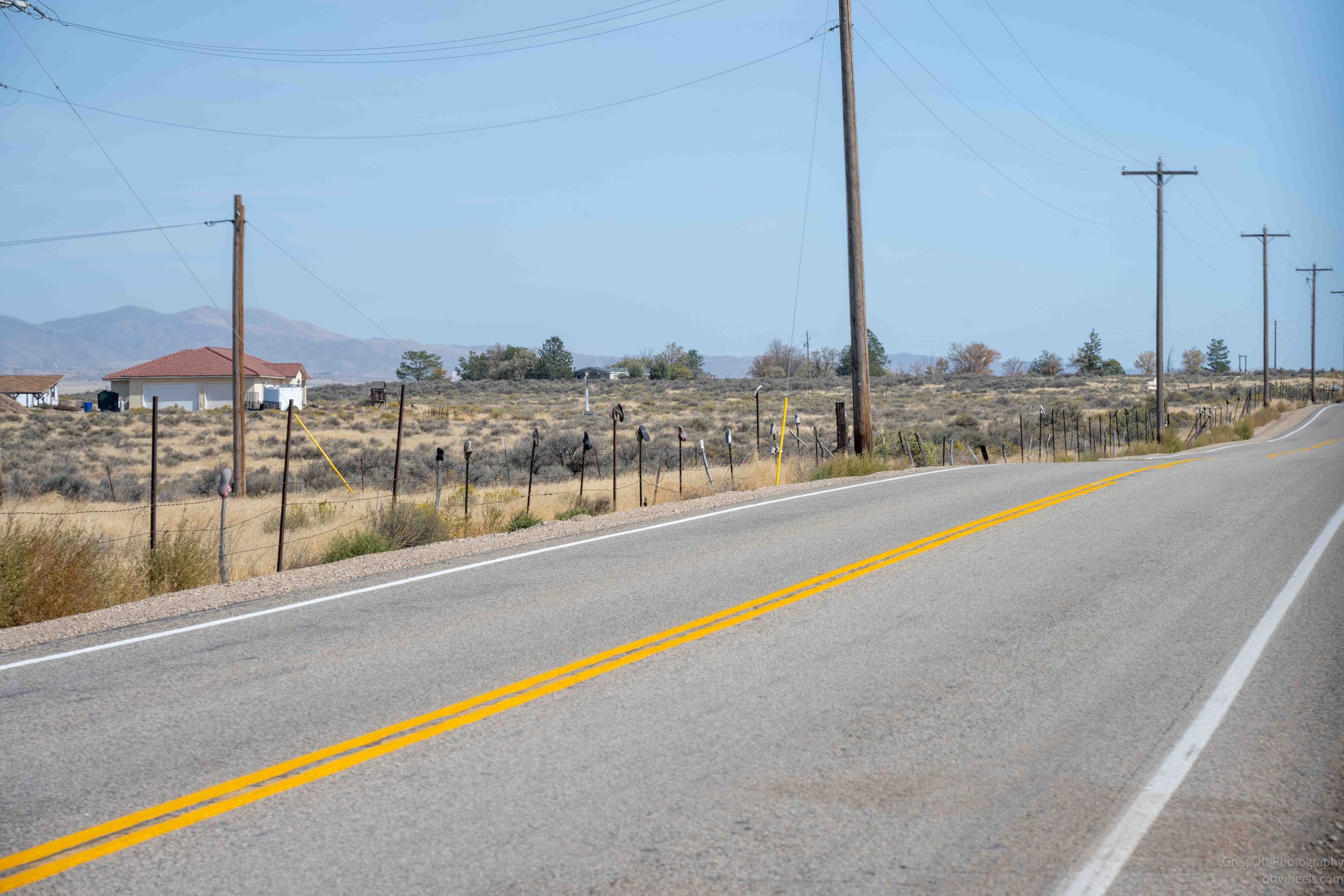
The drive to Bruneau was interesting, particularly because some of the unexpected things I saw along the way. One of the strangest was a long stretch of fence with hundreds of shoes and boots perched on the fence posts. It went on for several miles, and I had no idea what it was about. I had to stop and take a photograph. I later learned that this is known as the Kuna Shoe Fence, along Kuna Mora Road. Apparently, people have been adding shoes to the fence for decades, but nobody seems to know exactly how or why the tradition started. There are all sorts of theories, including that it began as a prank. Whatever the explanation, it's certainly one of the more unusual roadside attractions I've encountered.
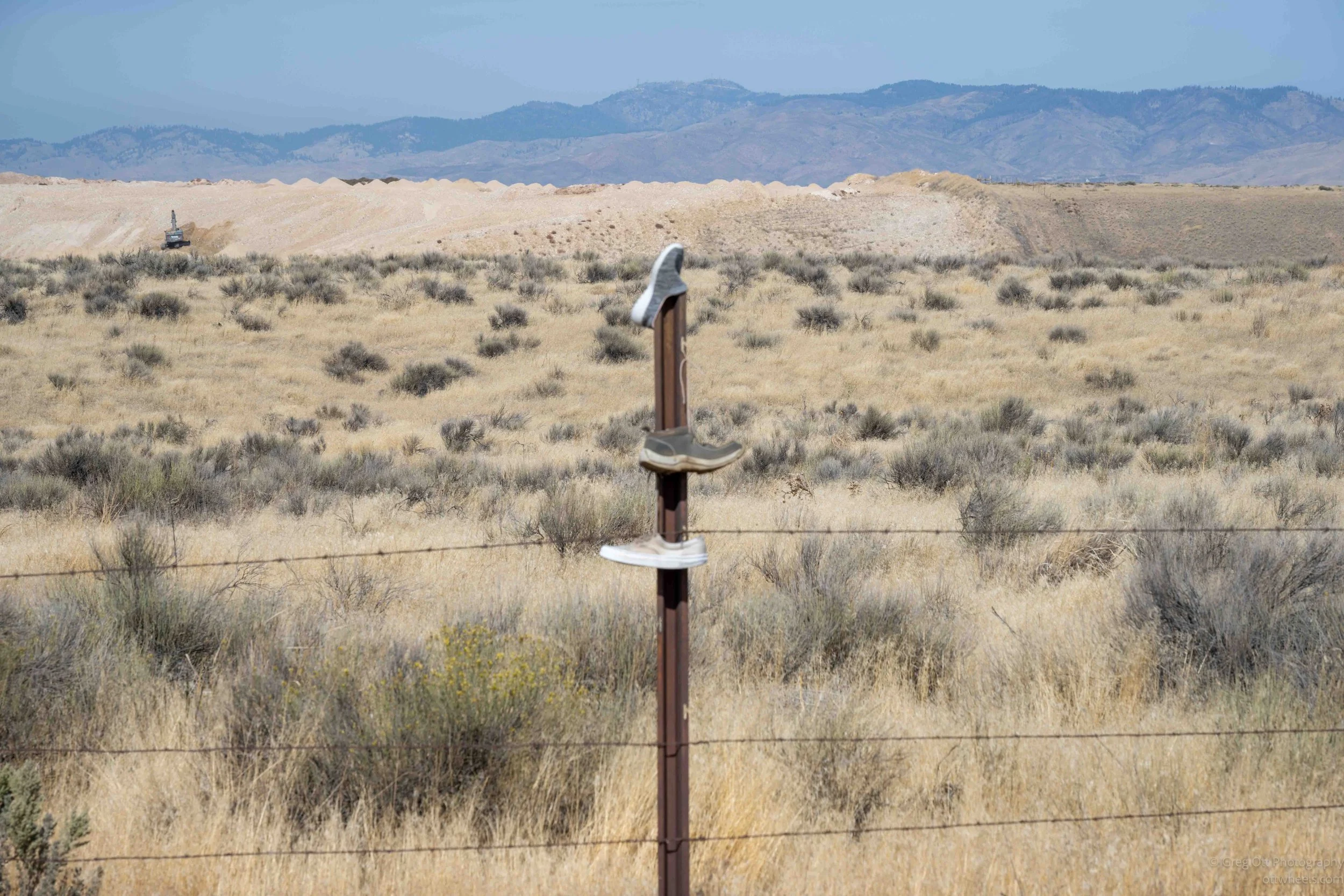
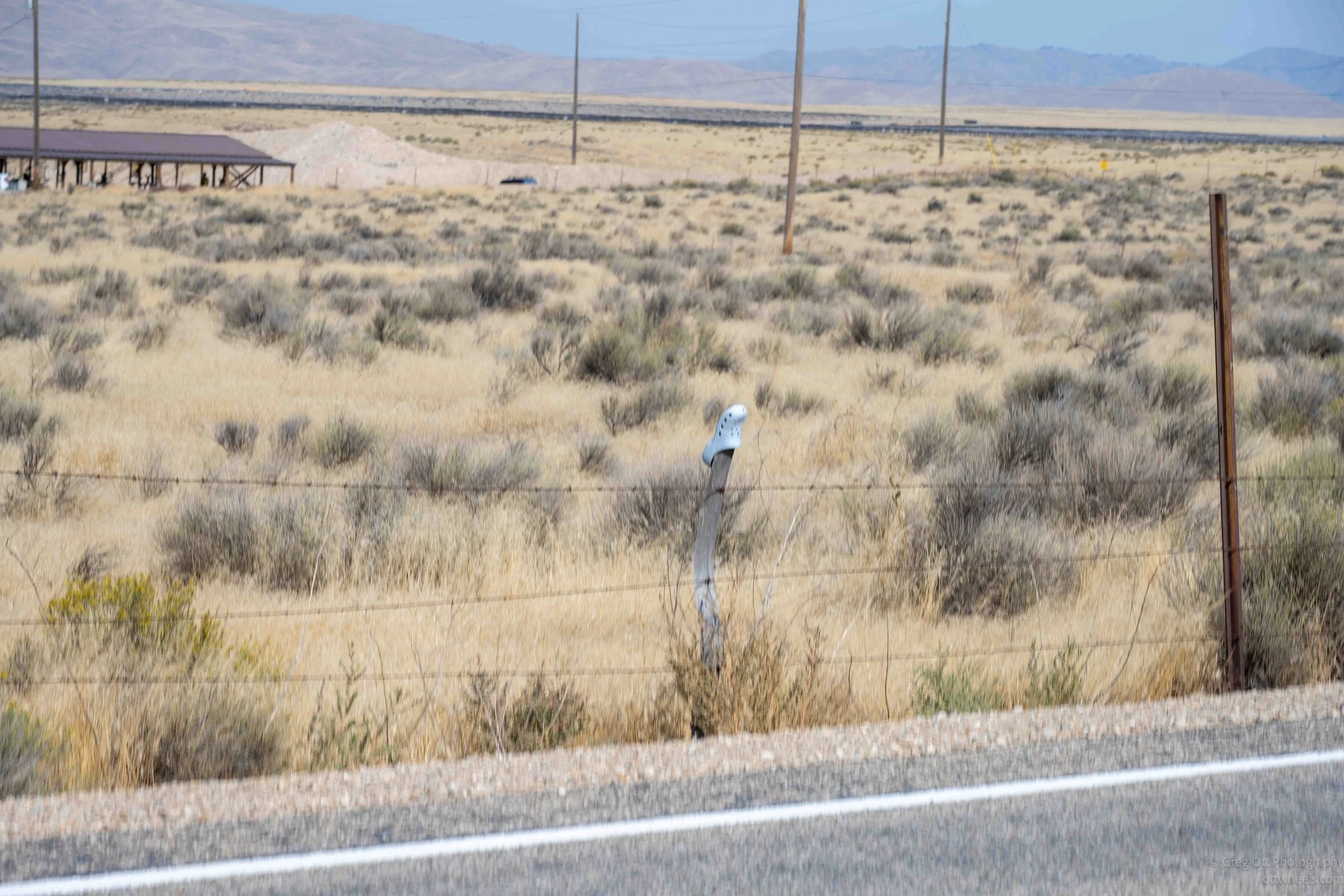
A little farther along, a large coyote crossed the road and trotted off into the foothills. I pulled over and watched as it moved through the sagebrush and gradually disappeared into the distance. Every so often, it would stop, turn around and look back at me before continuing on its way. It was a massive animal, much larger than I expected. Unfortunately, the sagebrush kept getting in the way, and I couldn't get a decent photograph. I watched it for several minutes before it finally disappeared over the hillside.
Just a few minutes later, three pronghorn bounded up toward the edge of the road and stopped. I pulled over again, hoping to get some photographs. They wandered around for about ten minutes, occasionally looking in my direction while I tried to find a clear view without frightening them away. Unlike the coyote, they seemed relatively unconcerned about my presence. It was a nice opportunity to watch them up close rather than seeing them as little specks in the distance, as I had before.
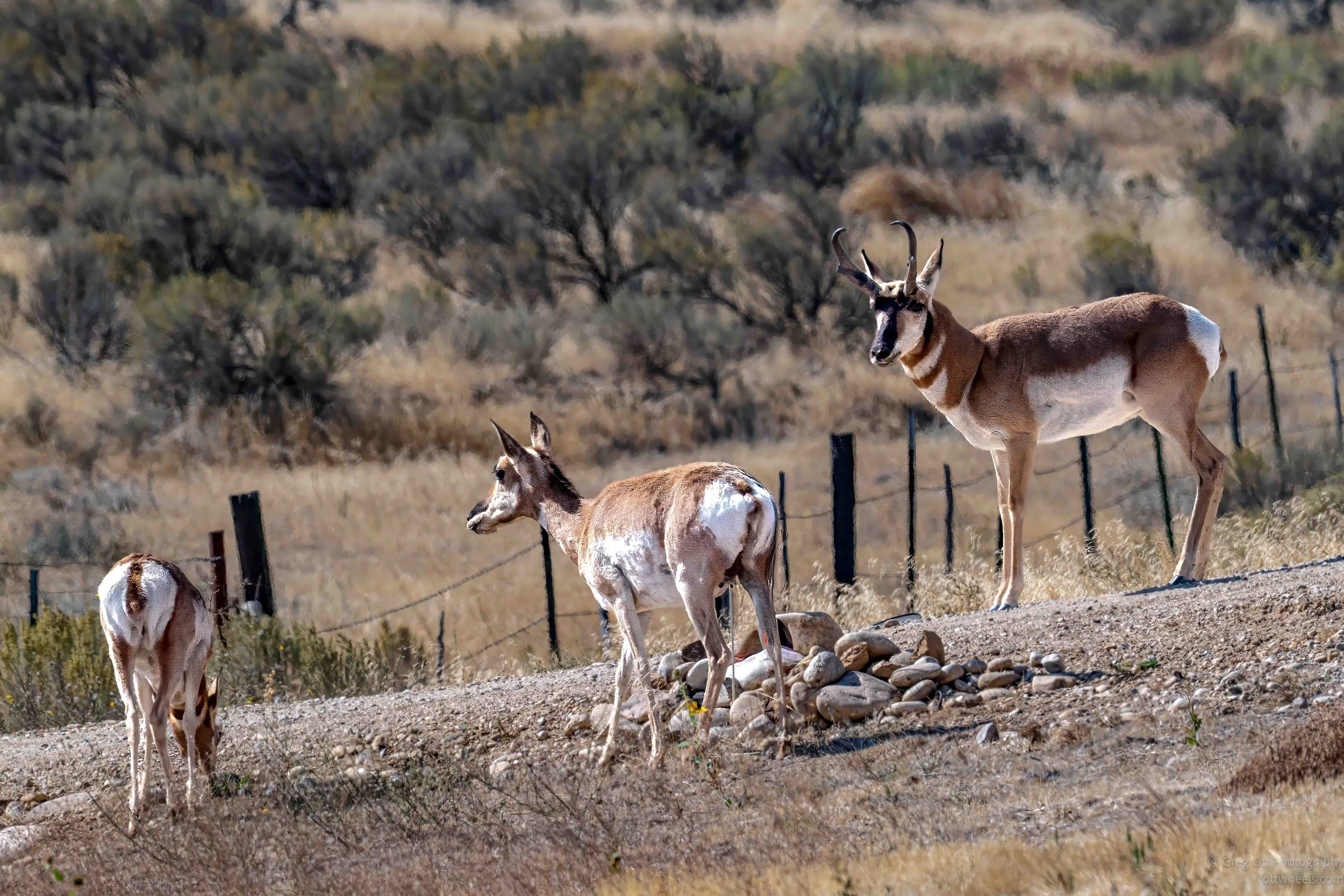
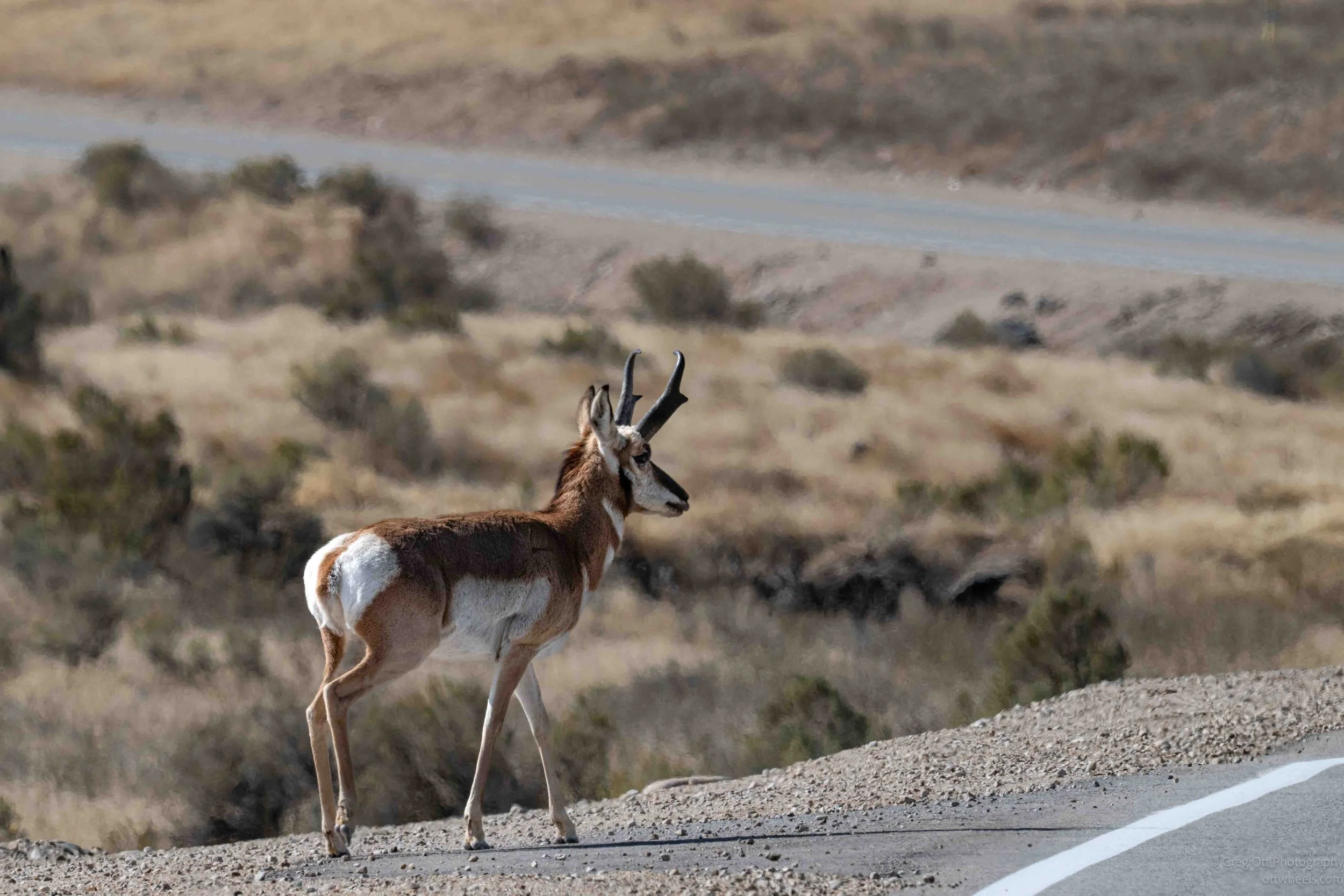
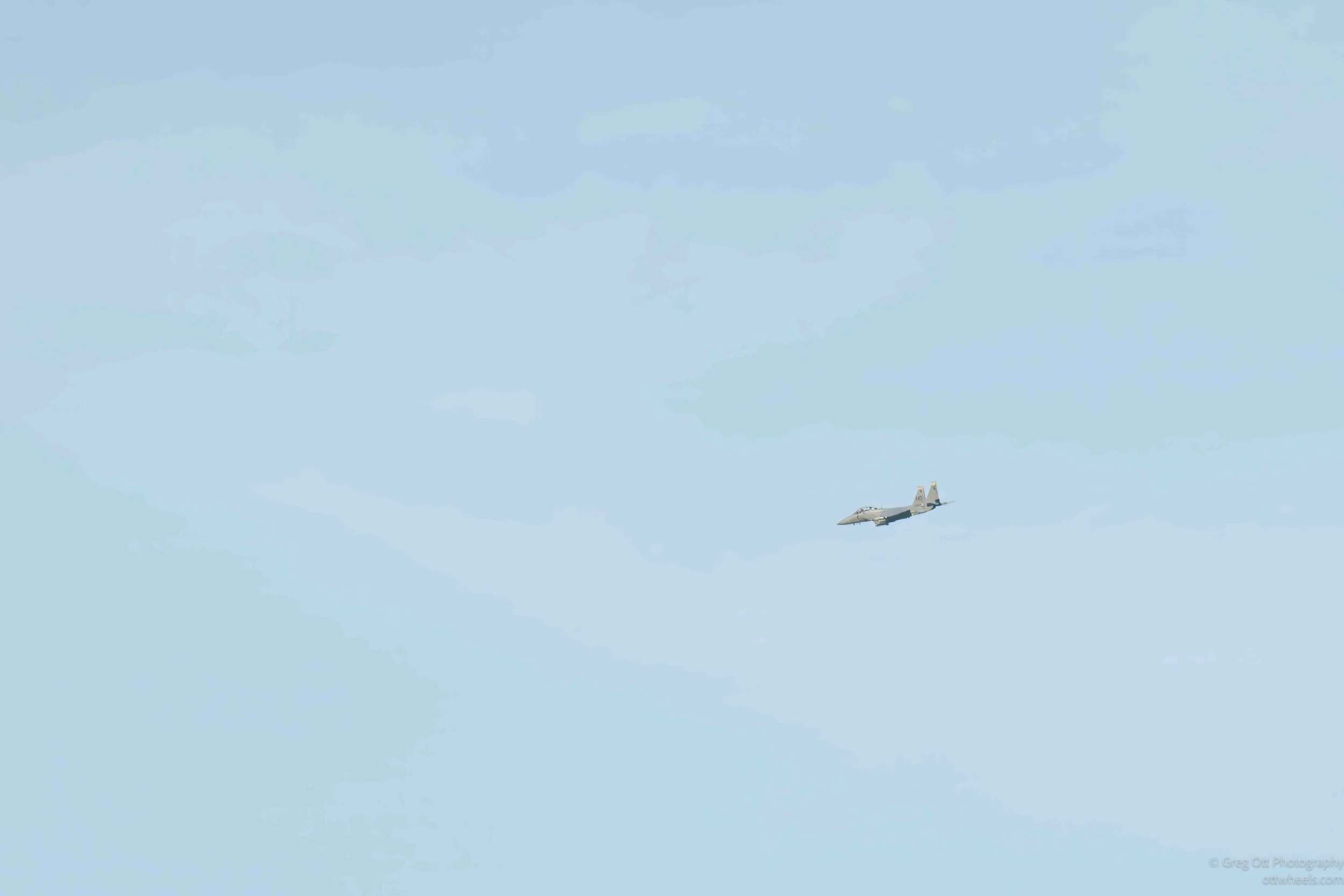
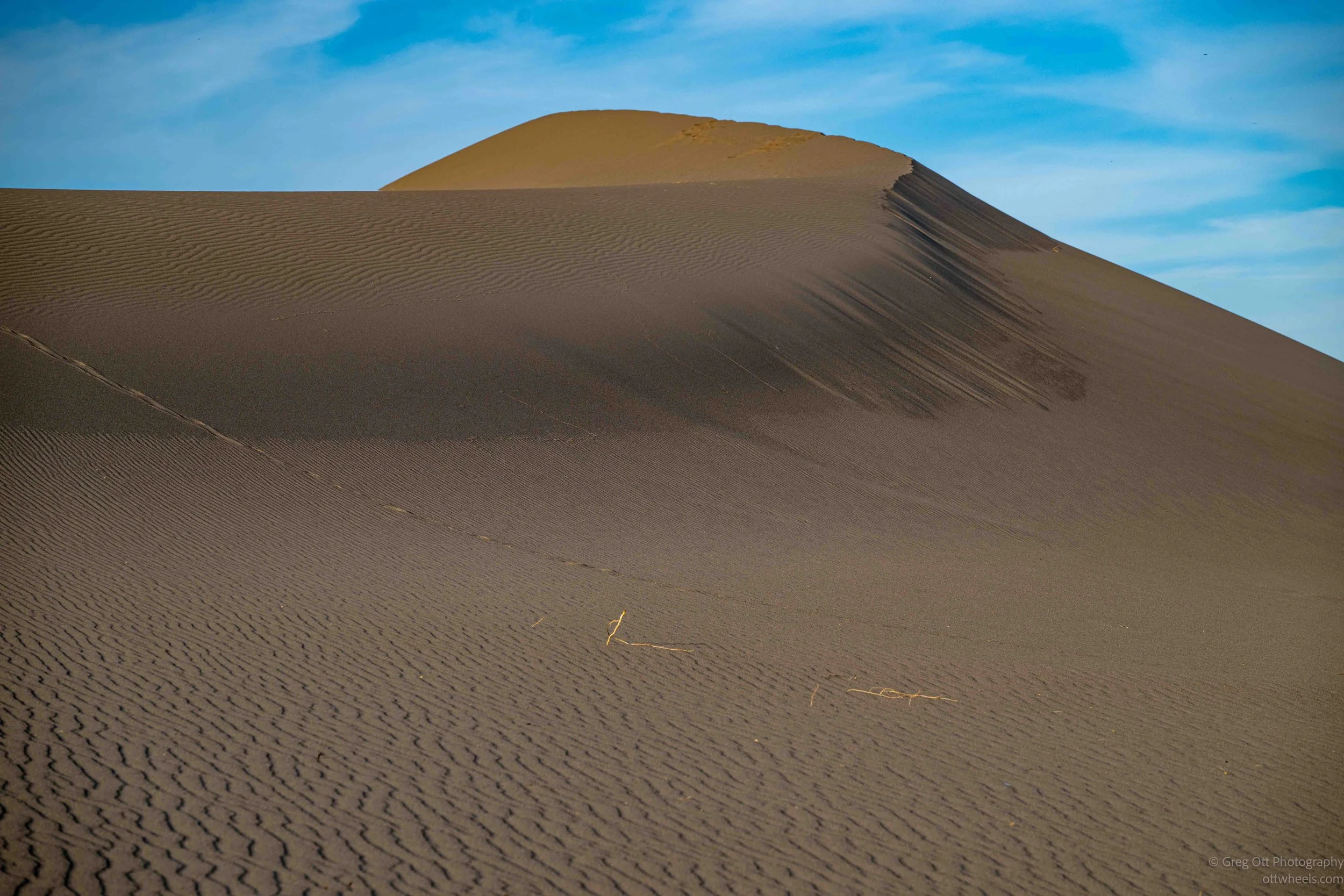
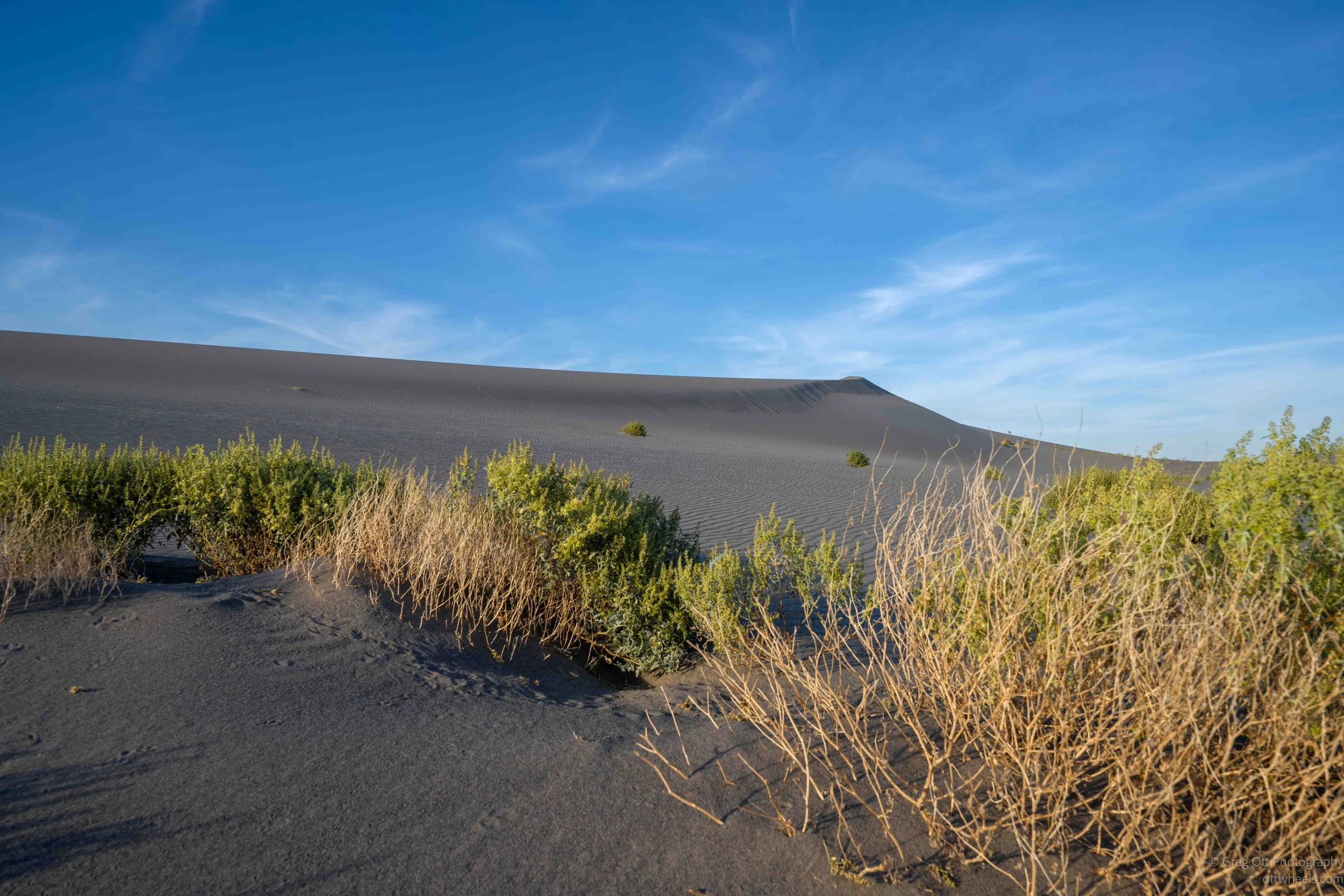
The light was a little too harsh for photographing the dunes when I arrived, so I decided to stay at the campsite and wait for the sun to get lower. Around 6 p.m., the light was beginning to improve, and shadows were forming along the ridges and ripples in the sand. About every 15 minutes, an F-22 fighter jet would fly overhead from a nearby Air Force base. They were interesting to watch, but far too high to get a meaningful photograph.
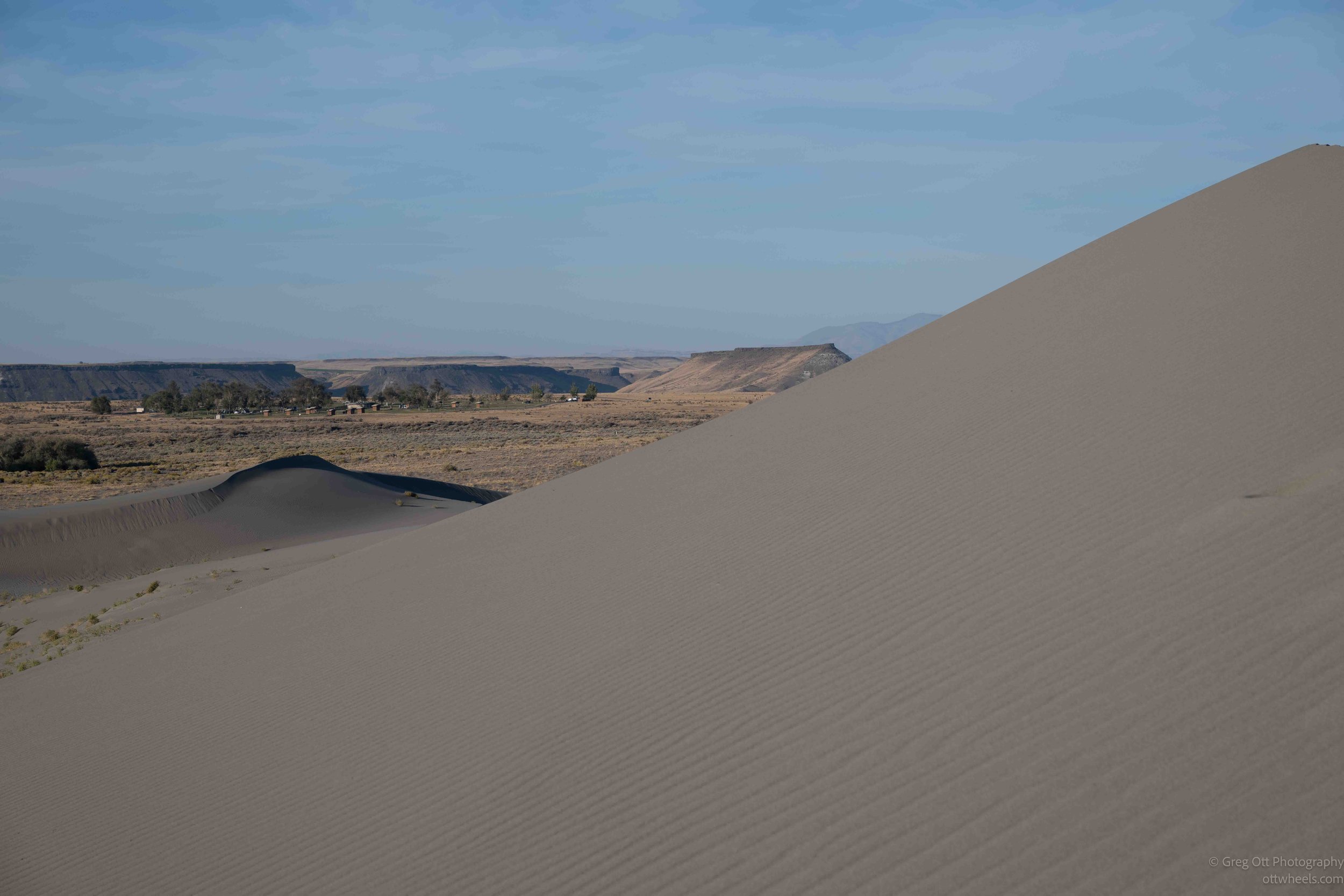
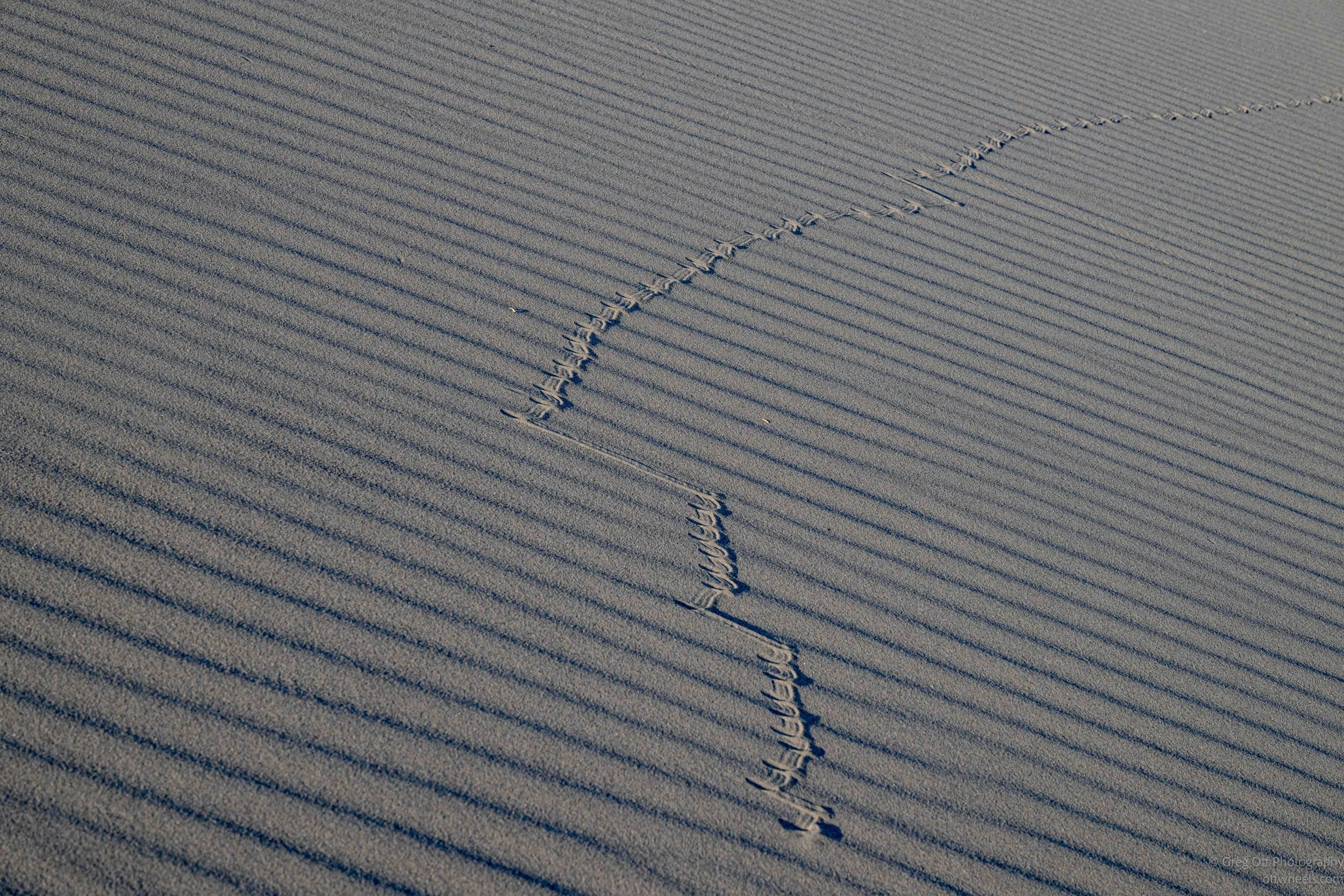
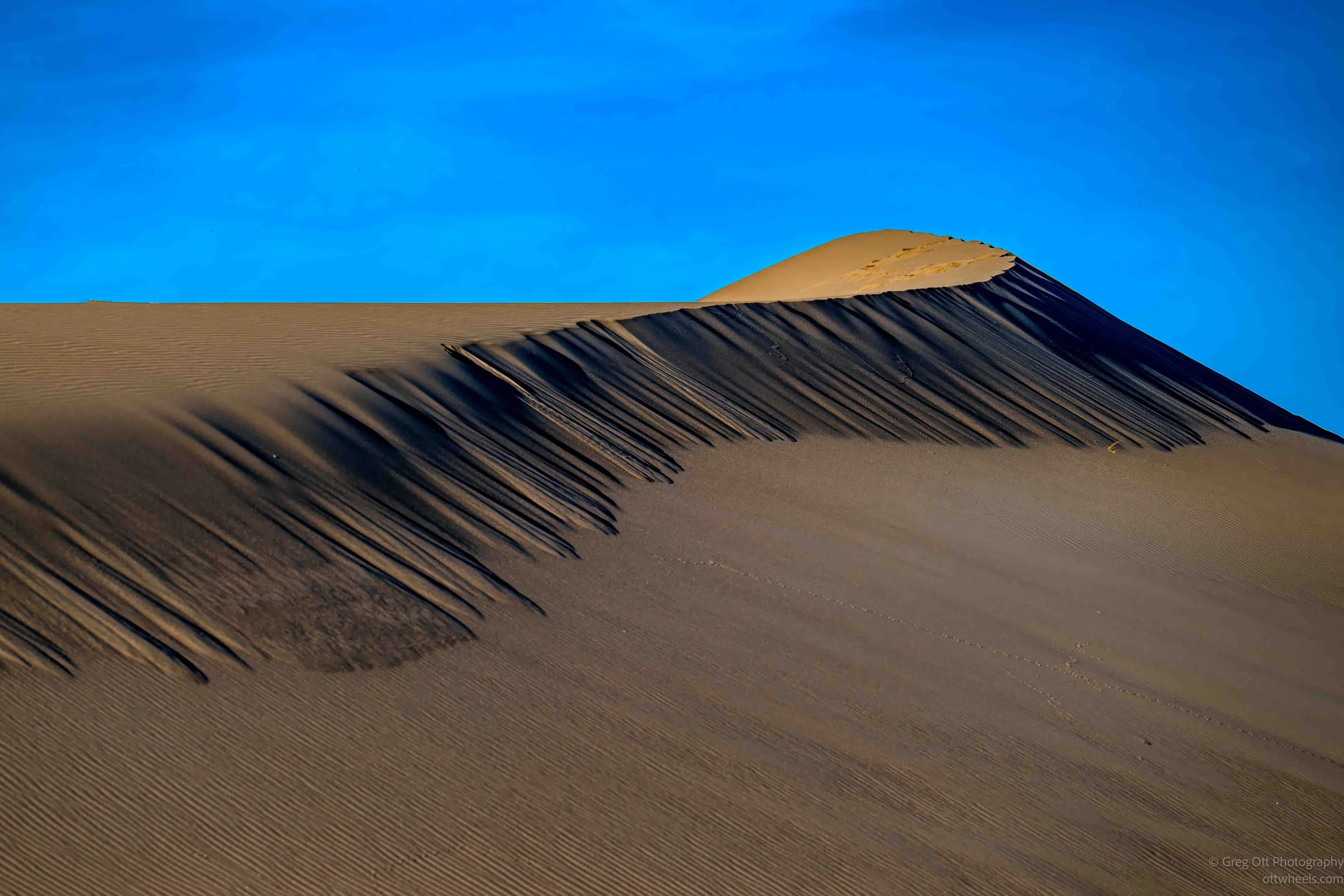
During the day, the dunes have a rather flat, grayish tone, but as the sun gets lower, the sand takes on a warmer, golden color. The shadows also bring out the fine ripples and patterns created by the wind, making the dunes much more interesting to photograph. These dunes are relatively small, so the sweeping curves and dramatic shapes aren't quite as pronounced as some I've photographed elsewhere. A few of my favorites are Coral Pink Sand Dunes in Utah, the Dellenback Dunes in Oregon, and White Sands in New Mexico.
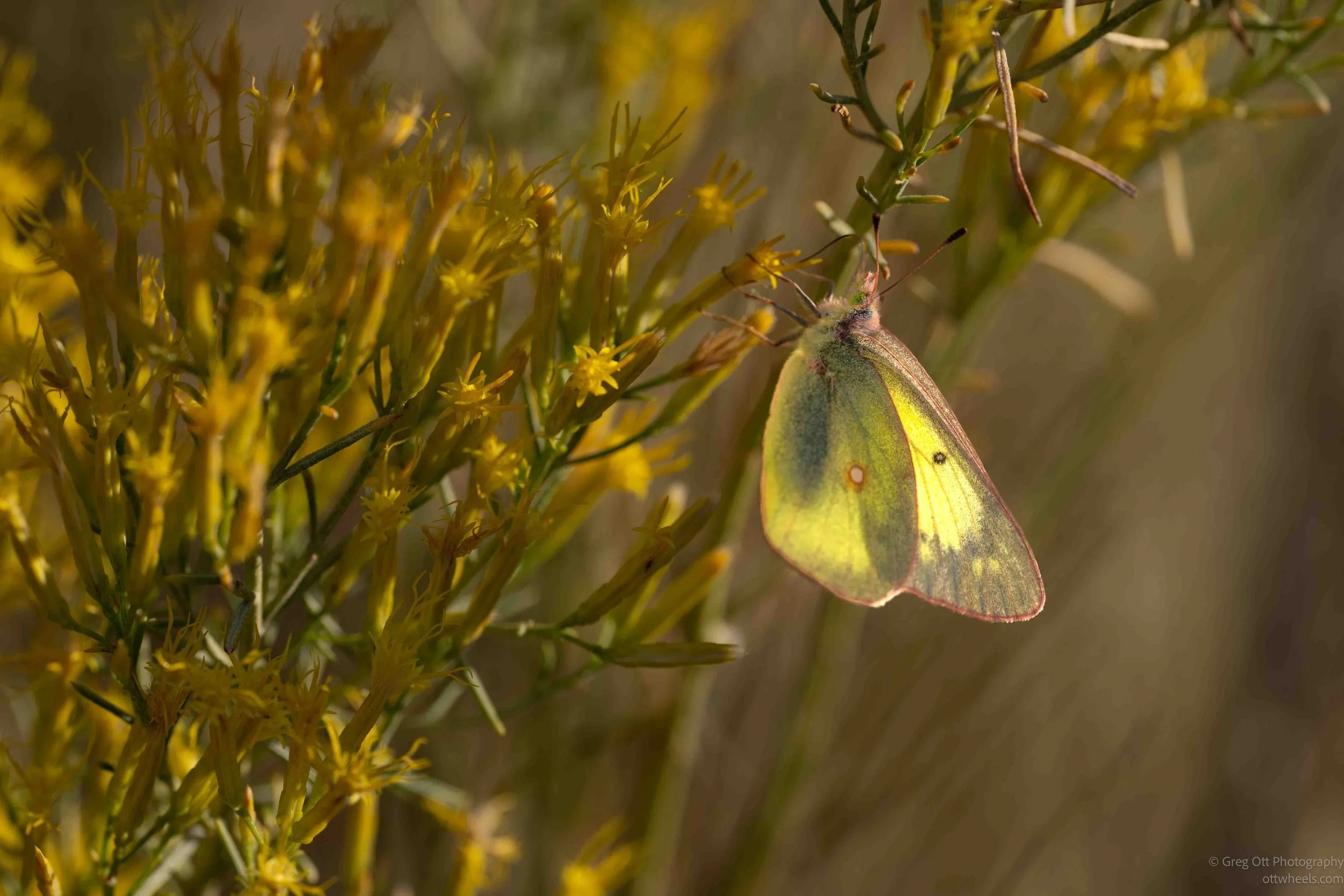
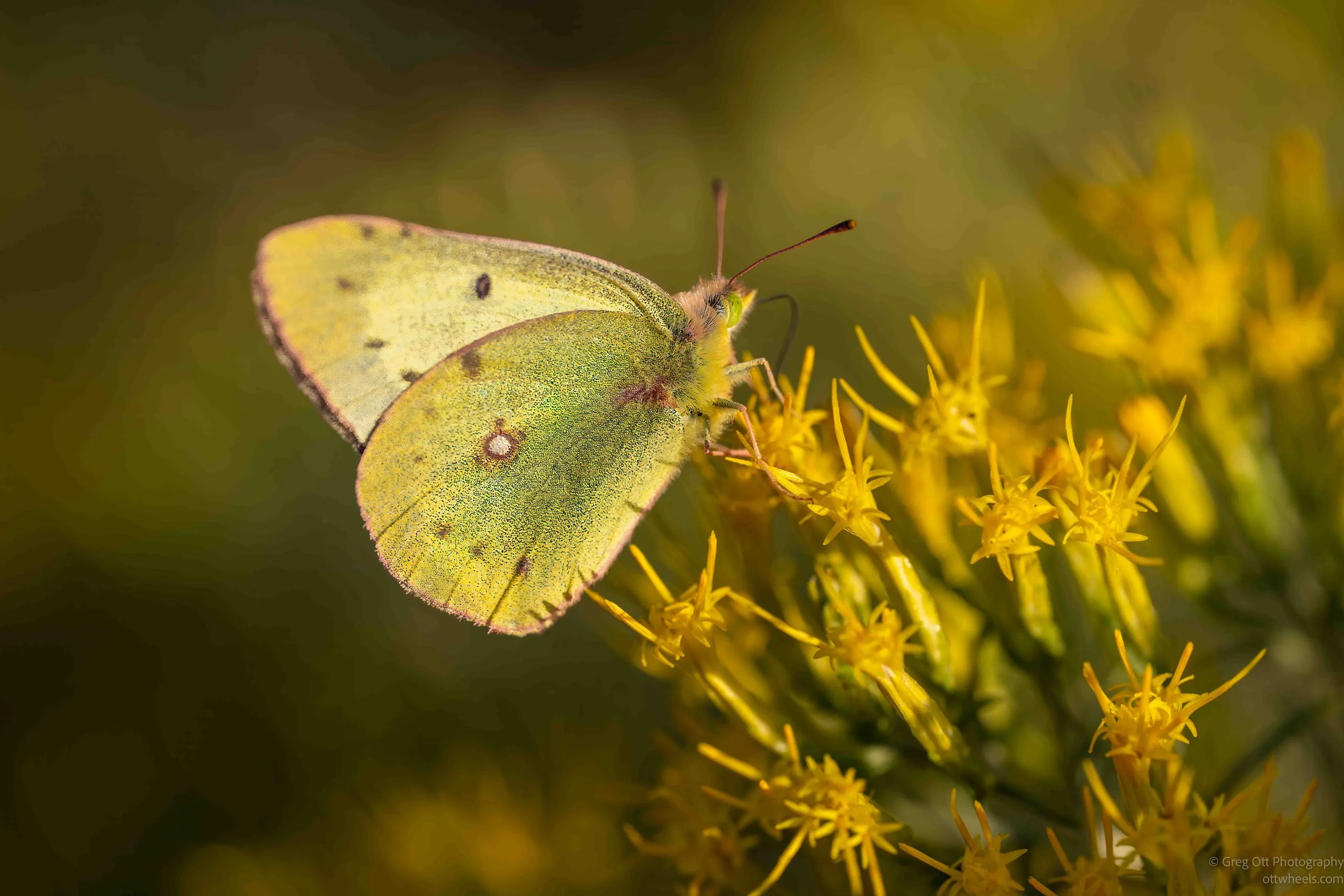
I then spent an hour photographing activity on the rabbitbrush, a yellow bush, covered with bees, flies, butterflies, moths, and something that looked like a black dragonfly / stick. Apparently, my timing was perfect. Rabbitbrush blooms bright yellow from roughly August through October, and it is a major late season nectar source. It attracts bees, butterflies, moths and other insects, which explains why the bushes were filled with activity. I was hoping to get the perfect photos of insects. Still working on that.
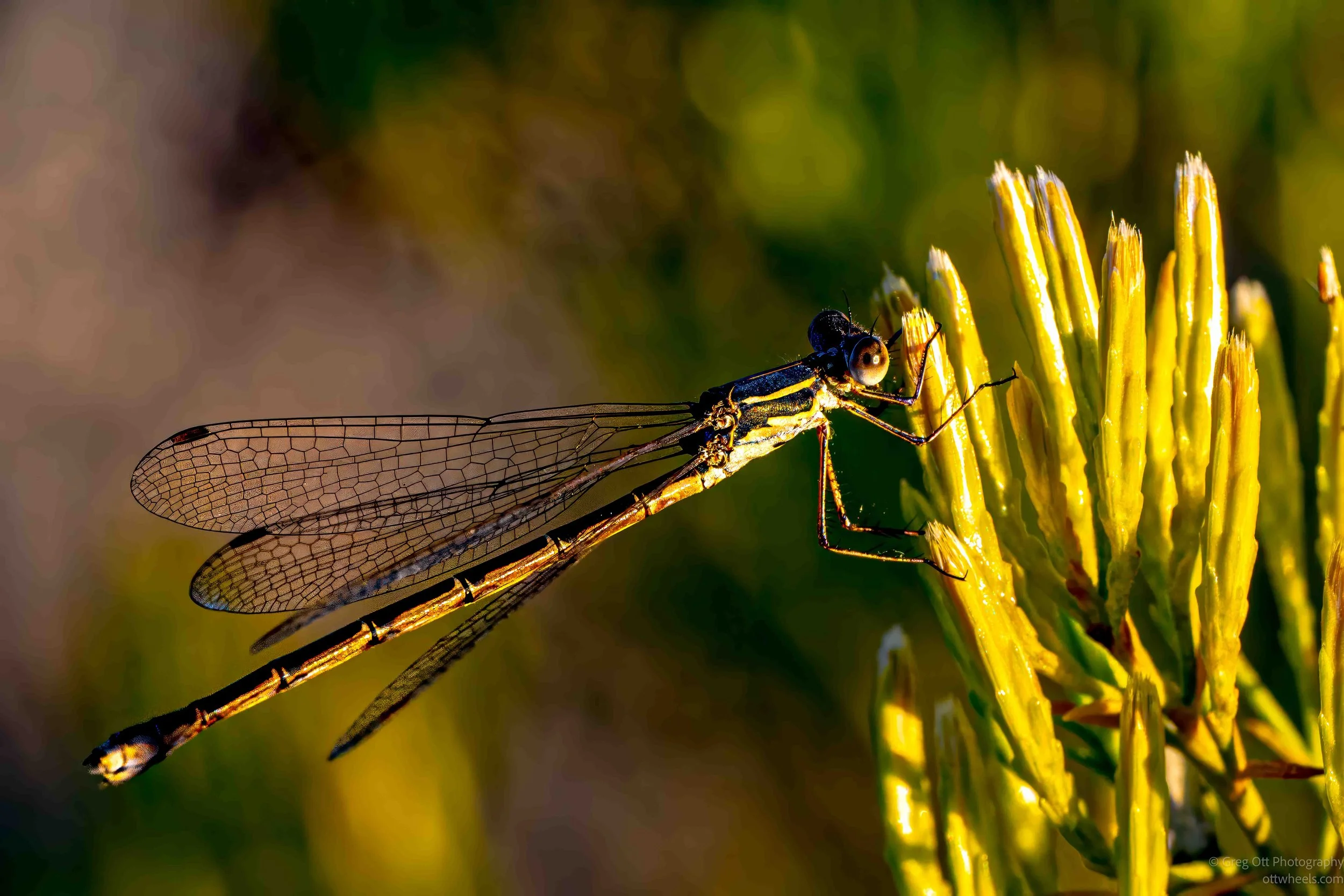
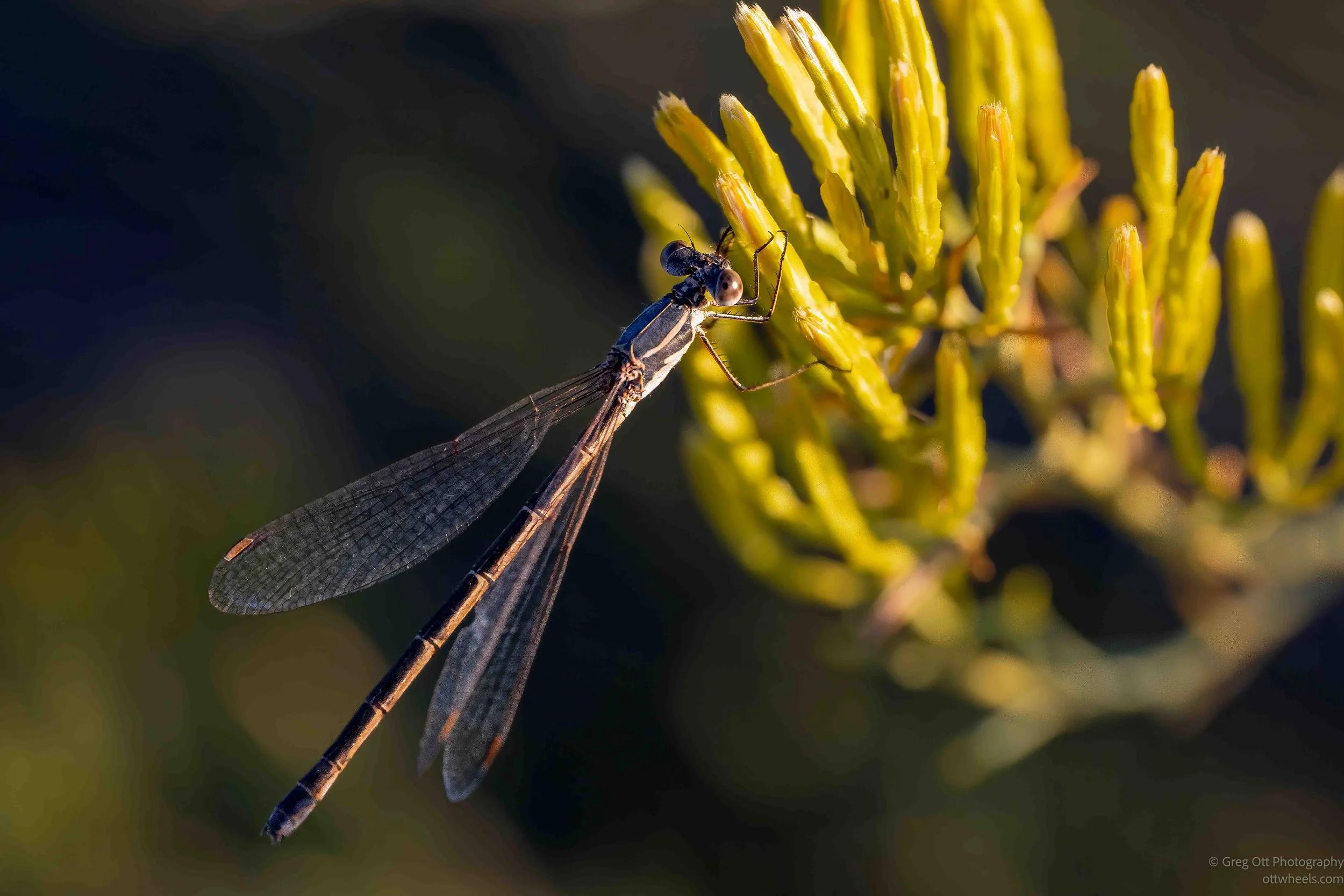
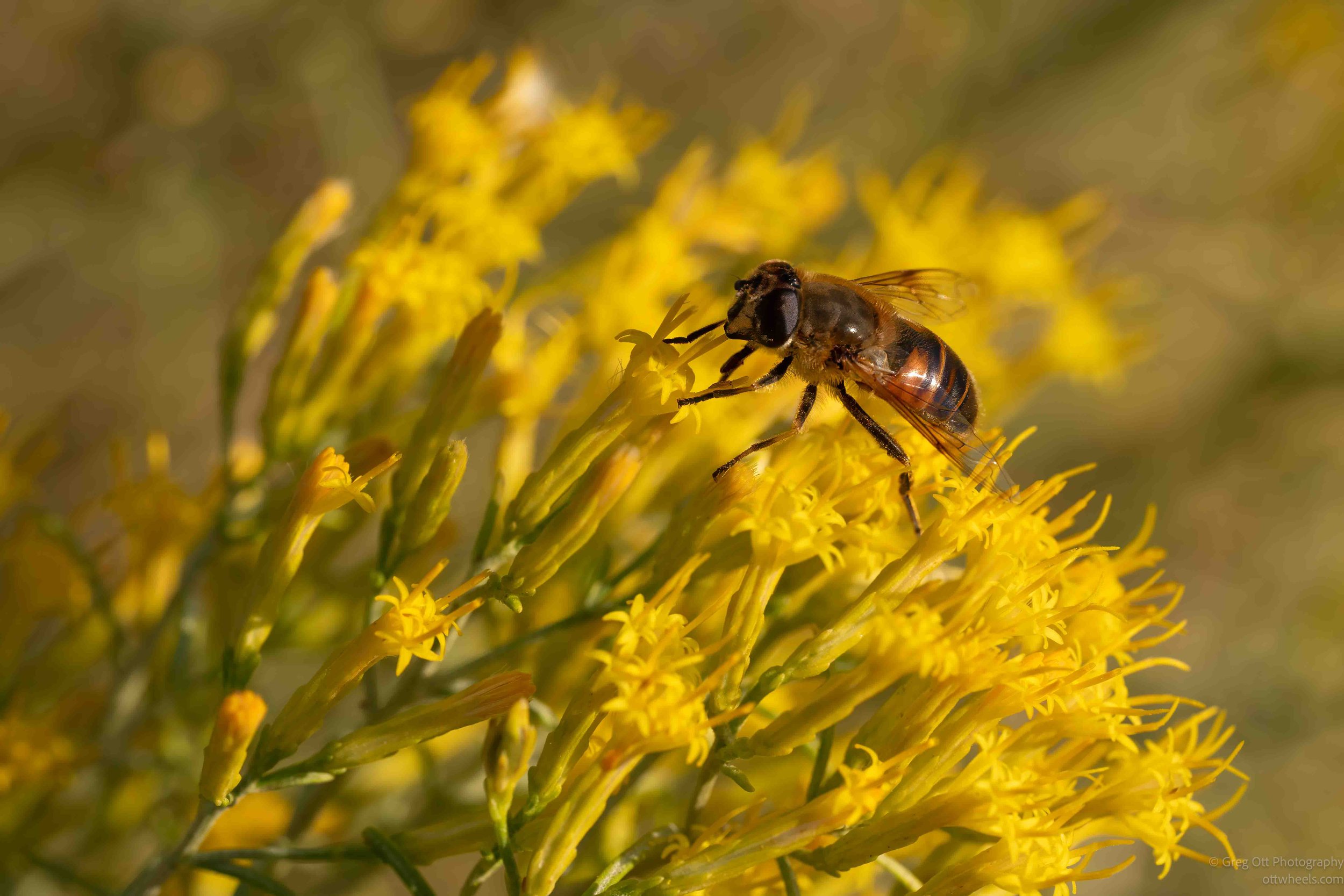
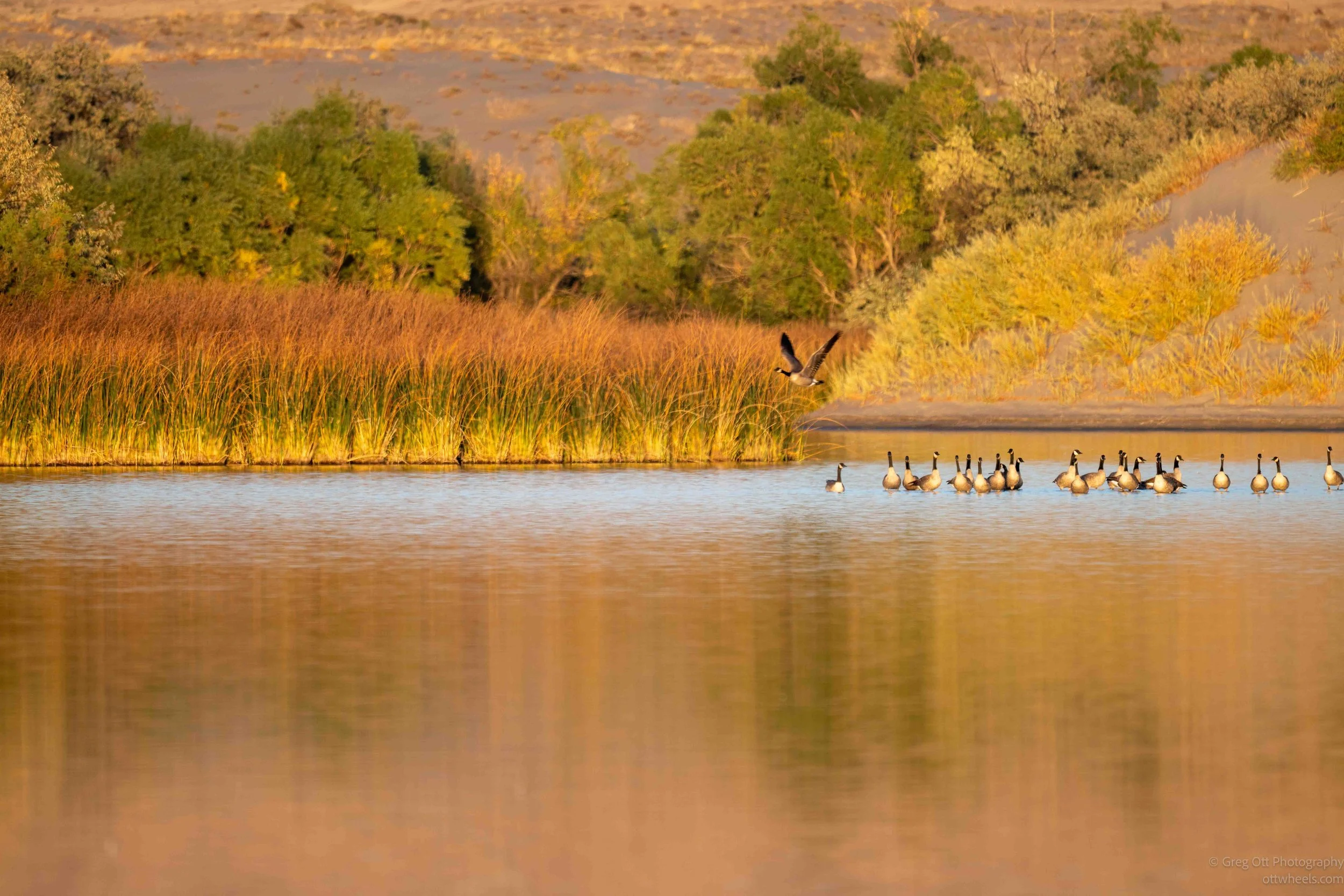
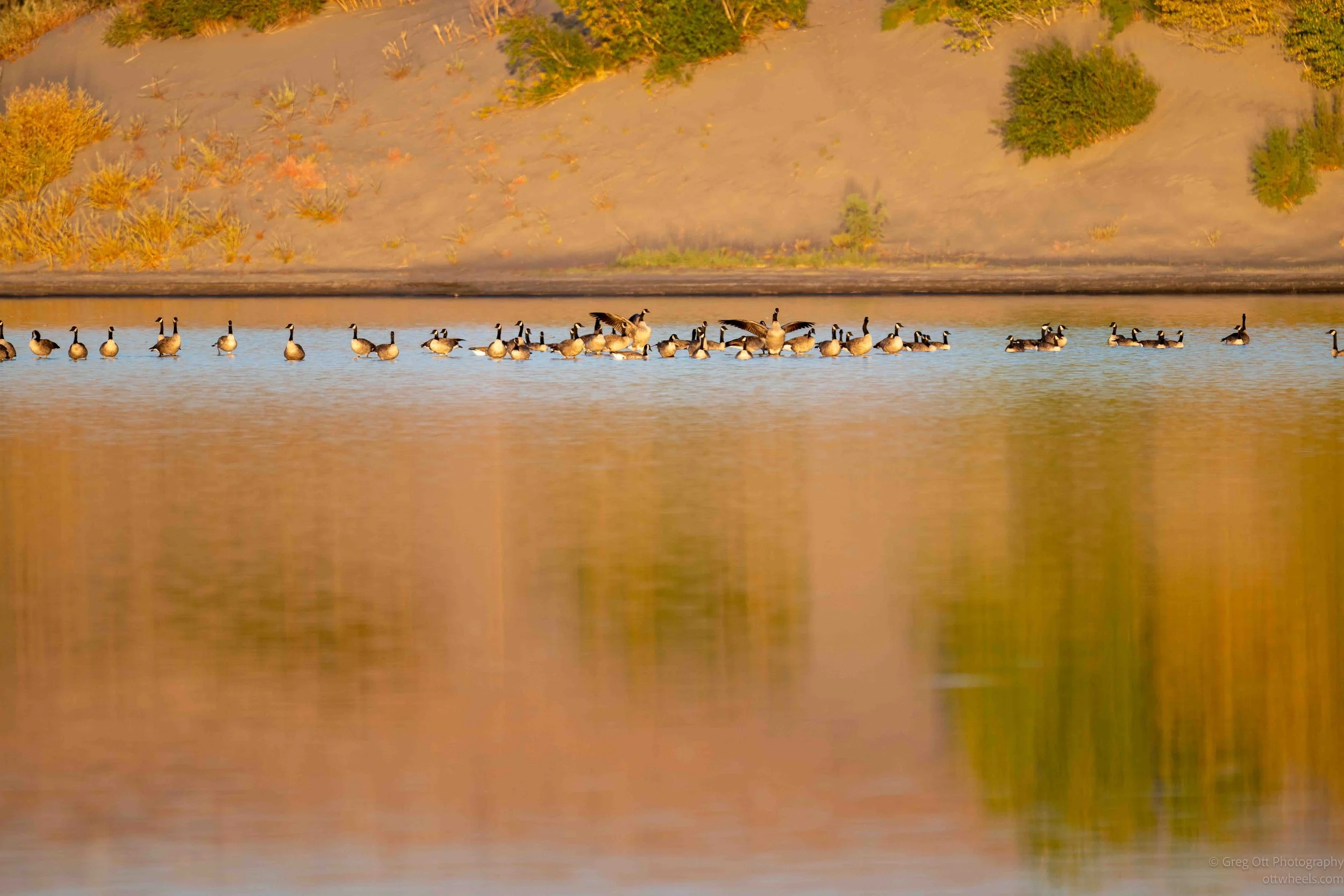
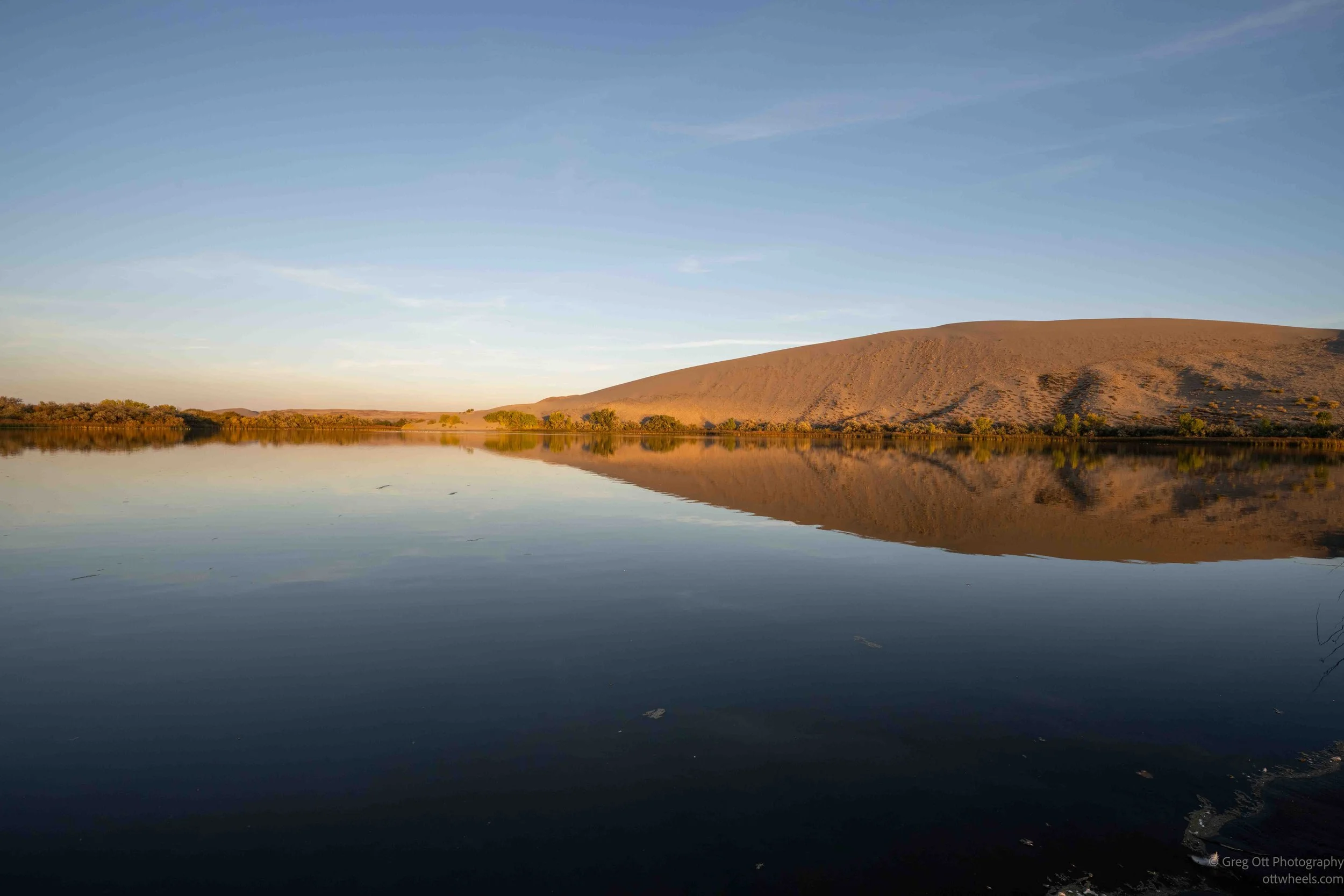
As the sun began to set, I took a hike over to the lake, hoping to capture some photographs of the birds. The low afternoon sun was casting a beautiful golden light across the water, reflecting the warm colors of the dunes and surrounding vegetation. There was no one around, and the lake was perfectly still. The silence was wonderful. A large flock of Canada geese was gathered near the far shore, and every so often a small group would take flight, passing over the dark dunes. I managed to photograph a few of them against the blue sky, with the last of the sunlight catching their wings.
I spent quite a while watching the geese as they moved around the lake, occasionally taking off and landing again. In the distance, I spotted a white heron standing in the shallow water, slowly stalking a fish. It would take a few careful steps, then stand motionless, waiting for an opportunity. Unfortunately, it was too far away for a worthwhile photograph, but it was interesting to watch. With the warm evening light, the reflections on the lake, and the birds moving across the water, it was a peaceful way to end the day.
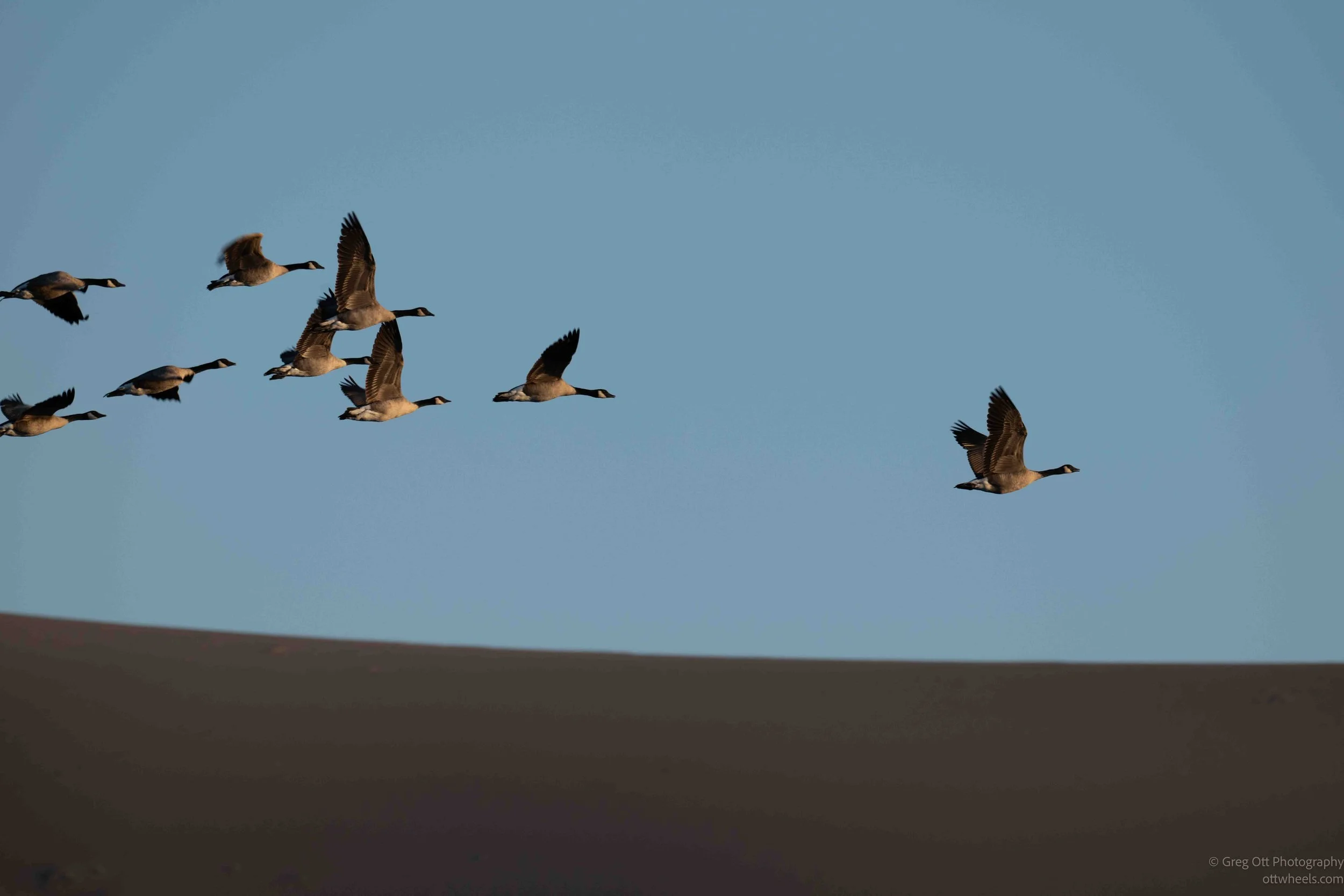
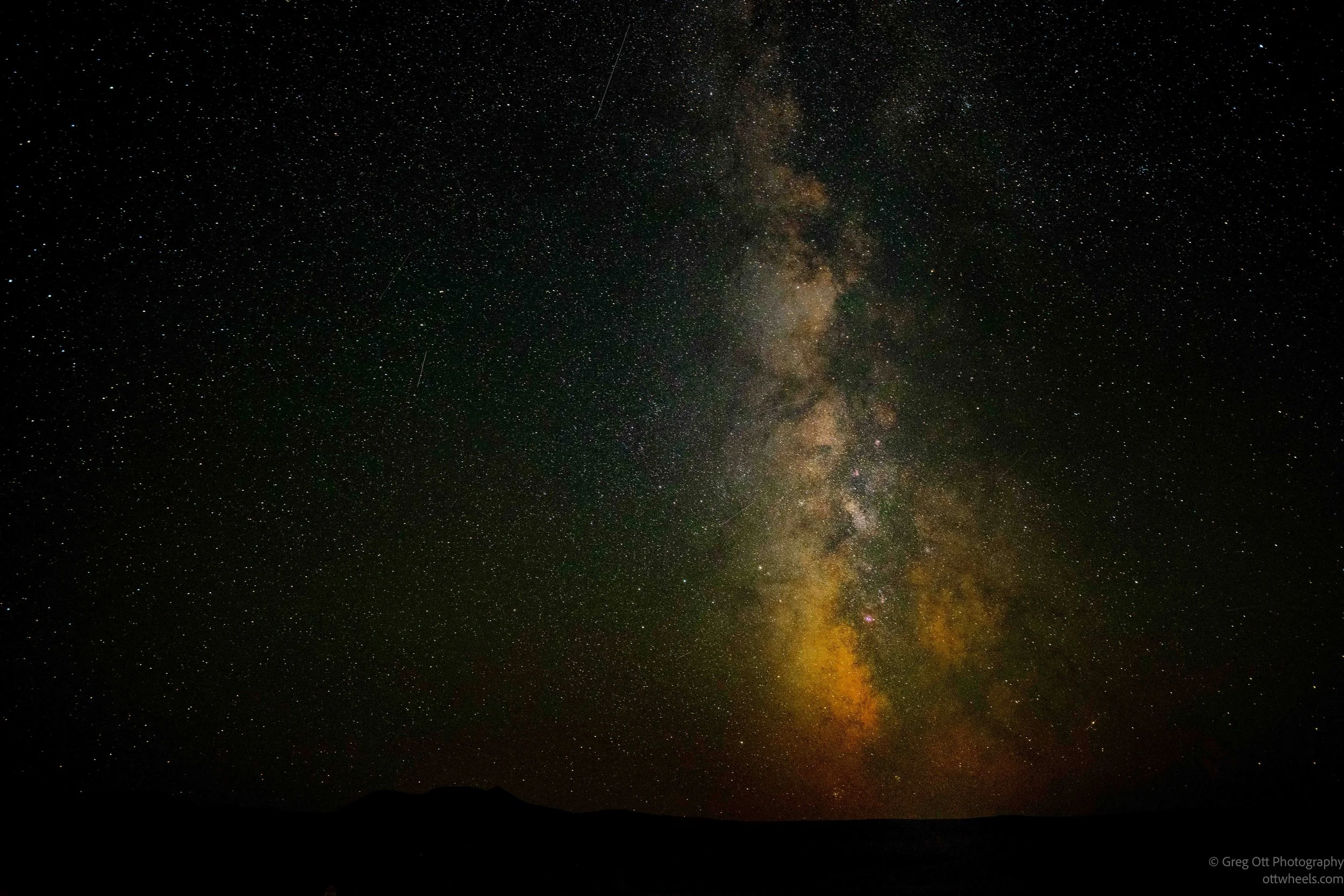
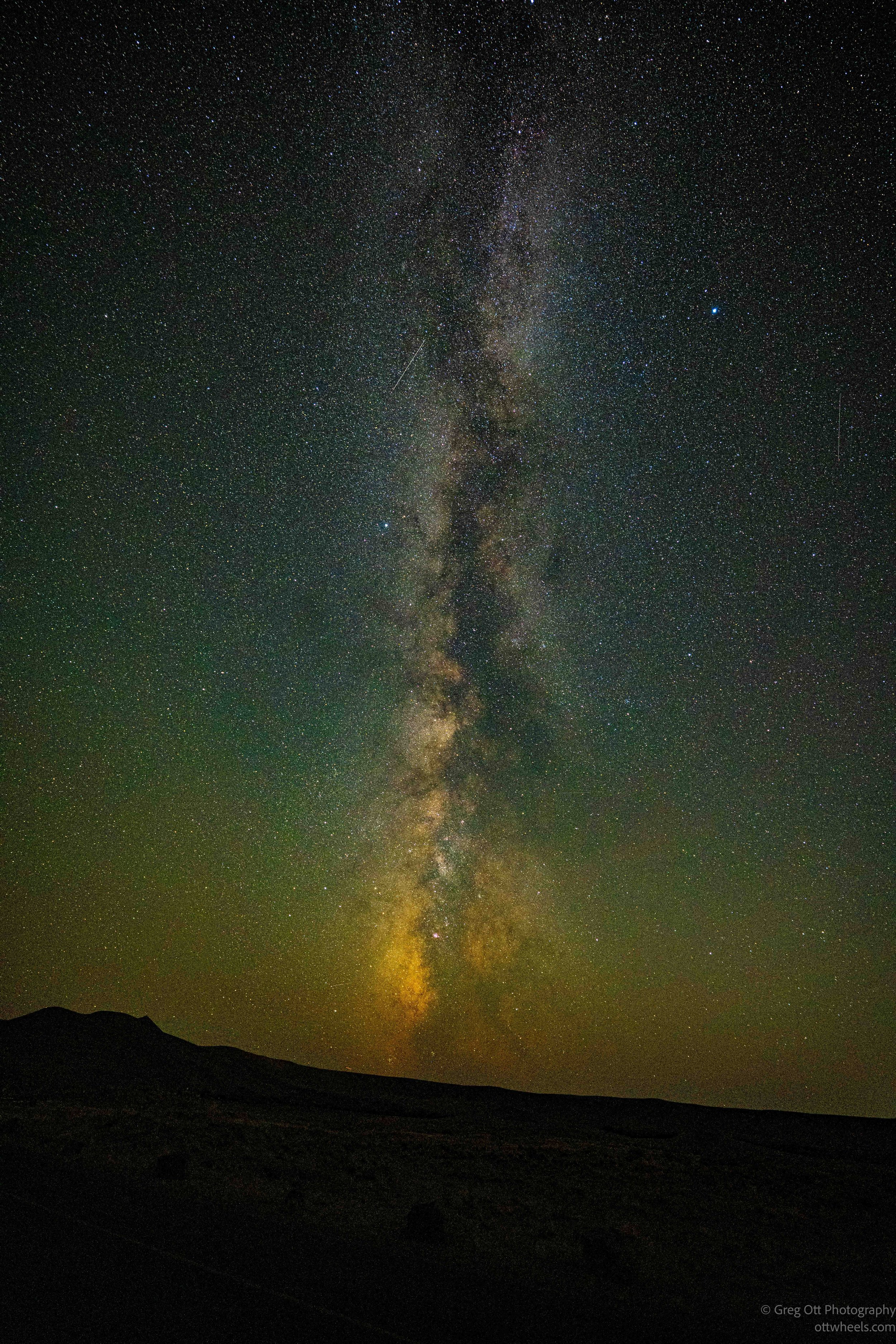
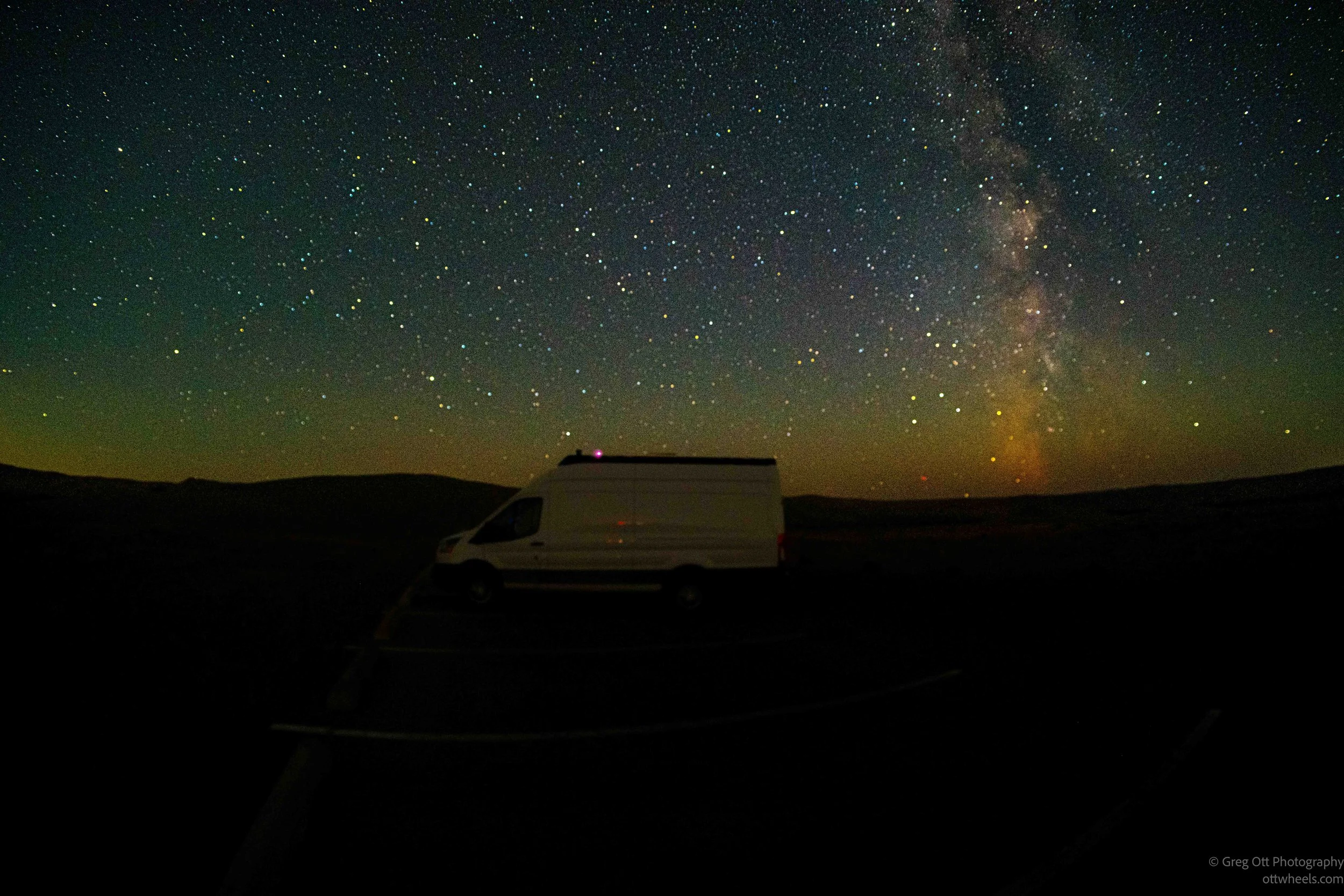
I went back to the campsite, made dinner, and took a nap. Around 9 p.m., I drove back toward the dunes to a parking area where I could photograph the Milky Way. It was a perfectly clear night, and with the moon not scheduled to rise until about 10:30, I figured I had plenty of time for a few photographs. I ended up staying until midnight, experimenting with different compositions and exposures. The Milky Way was clearly visible, stretching almost vertically above the dark silhouette of the dunes.
What surprised me was how much light pollution was visible, even out here in the desert. In the distance, the glow from Boise looked almost like the sun rising in the west. Despite the clear skies, the Milky Way appeared somewhat muted, with a brownish-orange tint near the horizon. I wondered whether dust from the surrounding dunes was contributing to the haze. More likely, it was a combination of distant light pollution and fine particles in the atmosphere scattering that light. Whatever the cause, the sky wasn't nearly as dark as I had expected, although it was still a beautiful night for photography.
I was anxious to see how the night shots turned out, so I spent another hour back at the campsite importing and reviewing the day's photographs. I think I finally fell asleep around 2 a.m. Before going to bed, I made sure all the windows and openings were covered to keep the morning light out. I had no intention of being awake at 6:30 a.m.