Salmon Fishing in the Copper River
I continued my lazy day into a second day today.
I spent the morning working on itineraries, paying bills, sending emails, and updating finances. There is a surprising amount of work required to keep a trip like this moving. Reservations need to be made, routes need to be checked, blogs need to be written, and somehow the normal parts of life still follow you down the road. I wanted to get as much of that behind-the-scenes work out of the way as possible so I could simply enjoy my upcoming visit to Valdez.
You see funny things when you travel.
Beside where I was parked was a very nice pit toilet. Last night there were eight nearly full rolls of toilet paper sitting inside. At some point during the morning, two pickup trucks stopped briefly. Later I walked over to use the facilities and noticed that four of the rolls were completely empty. Not partially used. Completely stripped clean. Apparently someone had decided they were either preparing for a very serious emergency or stocking a bunker somewhere deep in the Alaskan wilderness.
Several hours later, before leaving, I stopped by one last time. The restroom had been cleaned and all four missing rolls had been replaced. Somewhere out there was a maintenance worker fighting a battle against what can only be described as Alaska's Toilet Paper Bandit. Judging by the evidence, the bandit was winning.
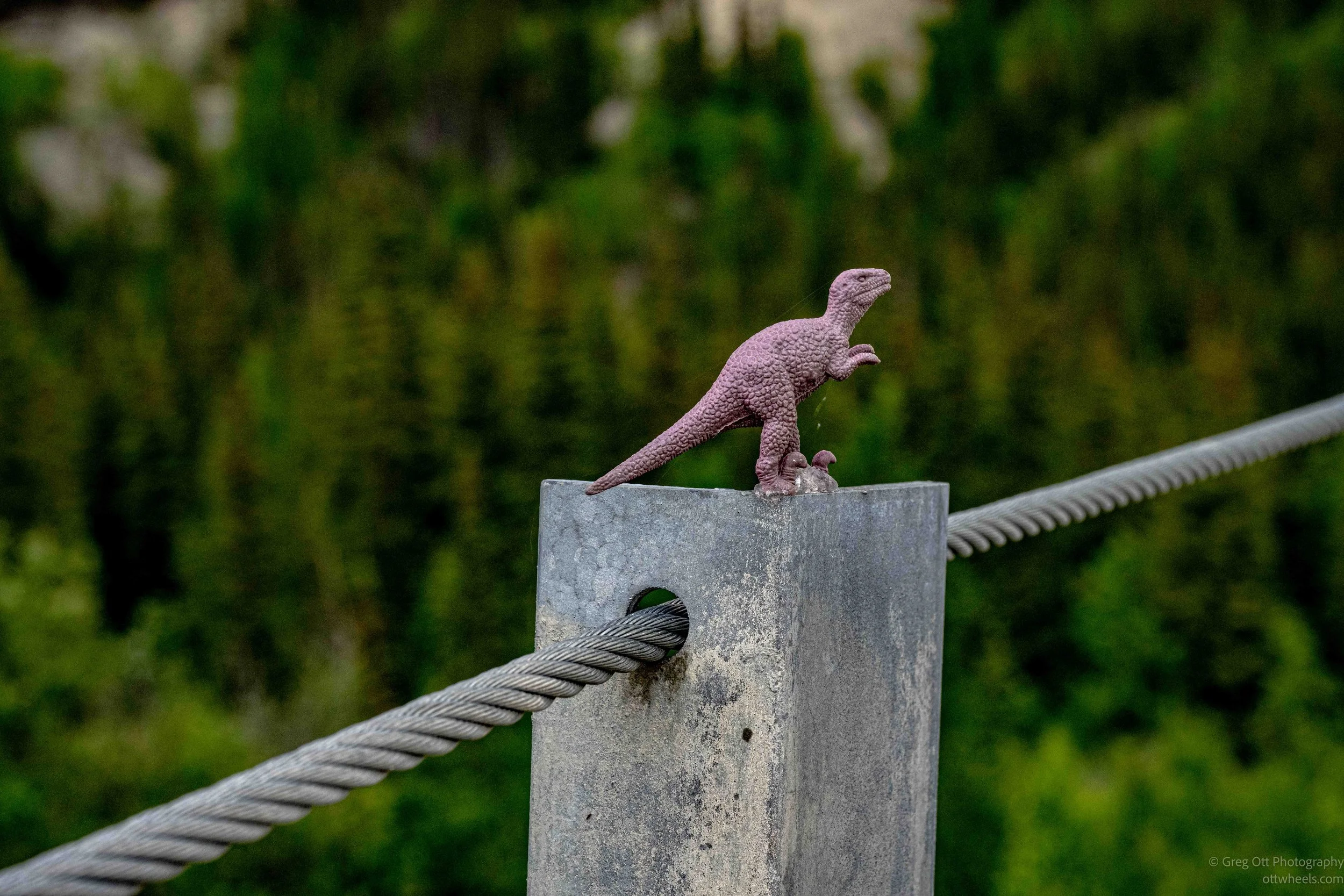
Before leaving my quiet campsite, I walked across the Kuskulana River Bridge. Someone had glued a small plastic dinosaur onto one of the bridge supports. It seemed oddly appropriate. The bridge itself feels like something from another era, and the tiny dinosaur looked as though it had been standing guard there for millions of years.
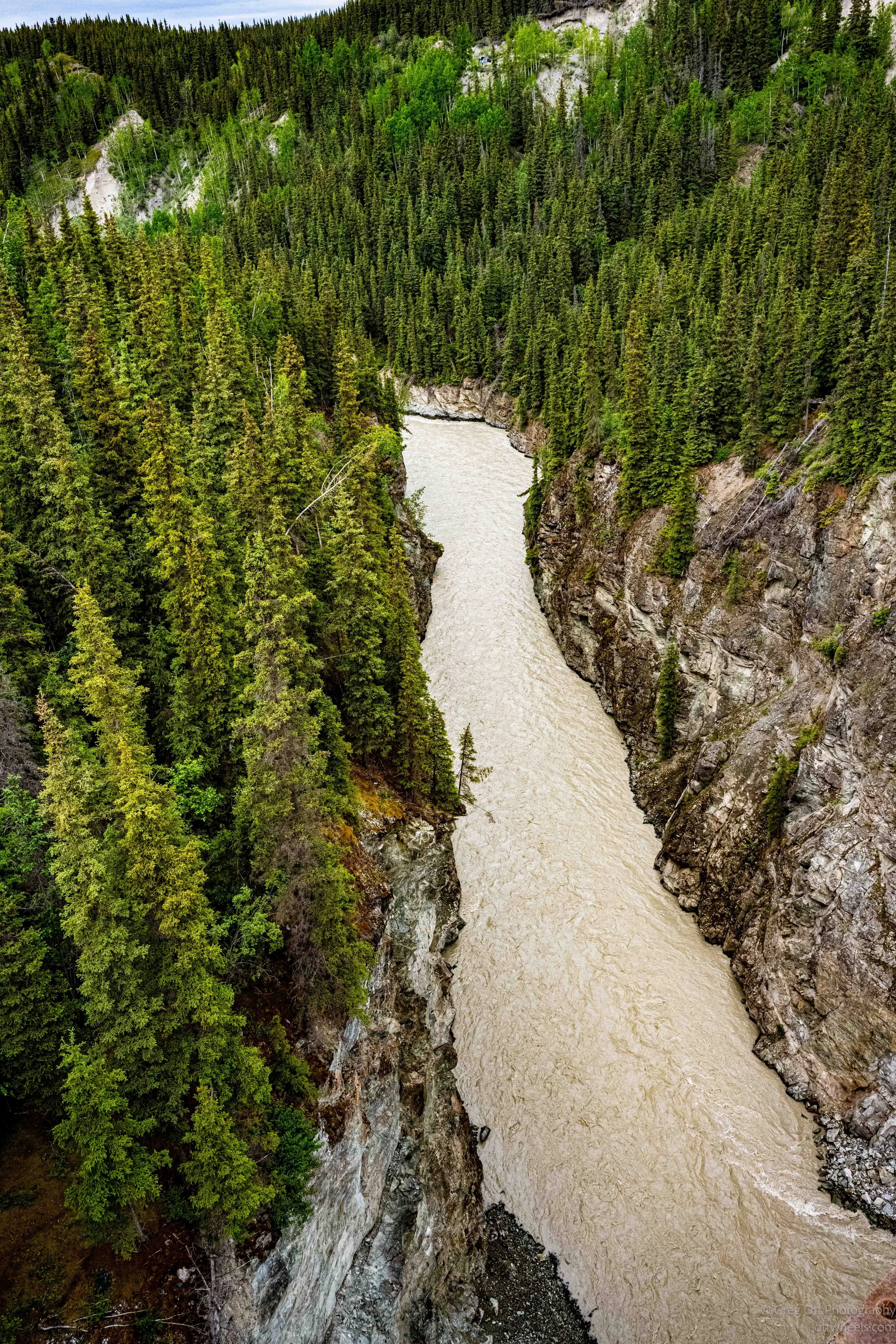
Walking across the bridge didn't feel nearly as extreme as driving across it. From behind the steering wheel, the narrow deck and steel structure make it seem much more intimidating. On foot, I could take my time and appreciate the engineering that went into building it. The bridge stands roughly 240 feet above the Kuskulana River, suspended across a deep canyon carved into the mountains below.
I spent quite a while walking its length, stopping every few steps to look up and down the valley. The river below looked tiny from that height, winding through the rocky canyon floor. The surrounding mountains rose steeply on both sides, and the late-day light brought out the textures in the cliffs and vegetation. Every direction offered a different view. It was one of those places where you find yourself taking a photograph, walking twenty feet, and then taking another because the scene keeps changing.
What still surprises me is that until the 1980s there was essentially no side protection on the bridge. Drivers crossed this same structure with nothing more than a low edge separating them from a very long fall. Looking down from the safety of today's railings was enough for me. I can't imagine driving across it without them.
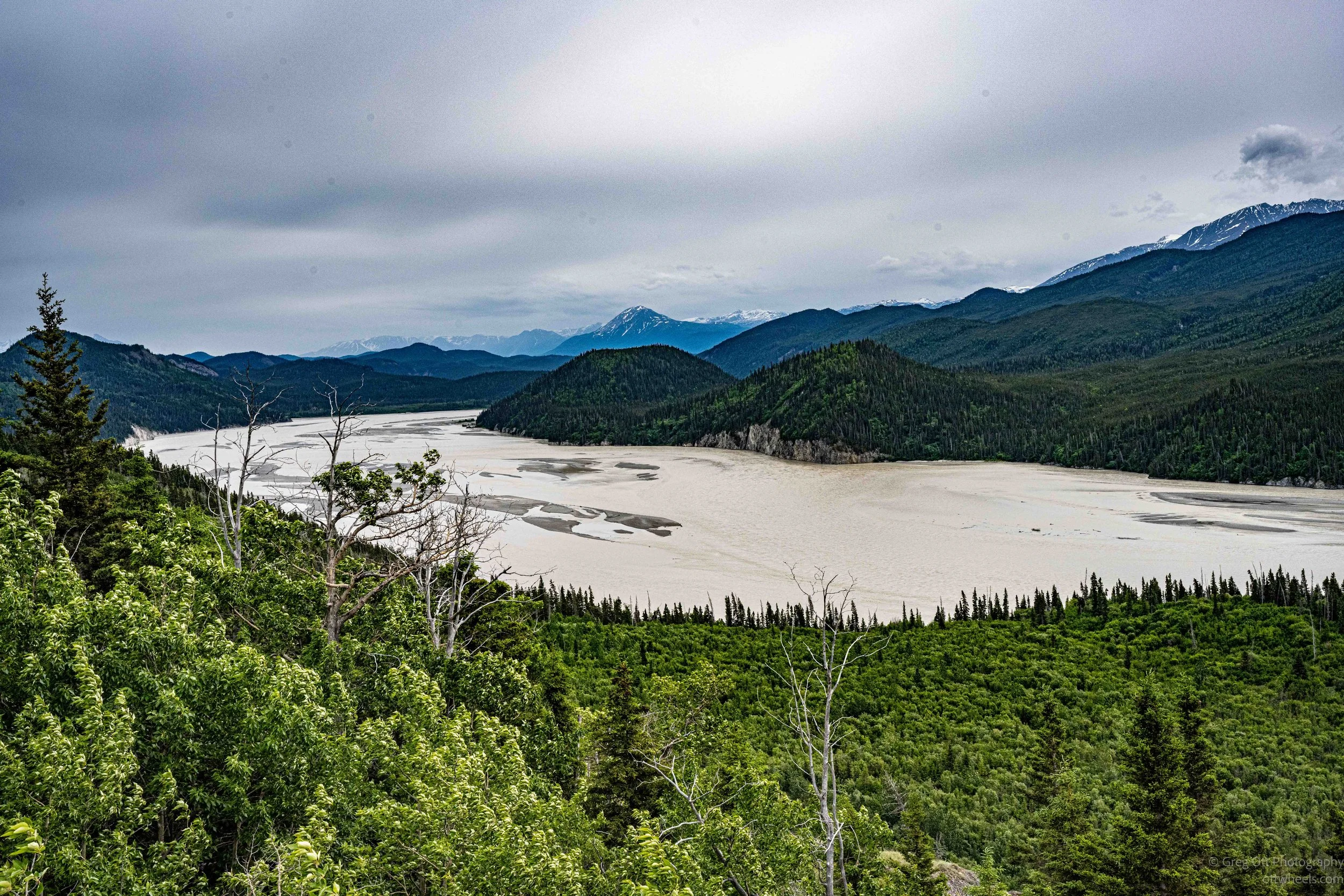
Eventually I started back toward Chitina. The drive should have taken about an hour. It took me almost two. I stopped to look at ponds and and views along the river.
Copper River Salmon Fishing
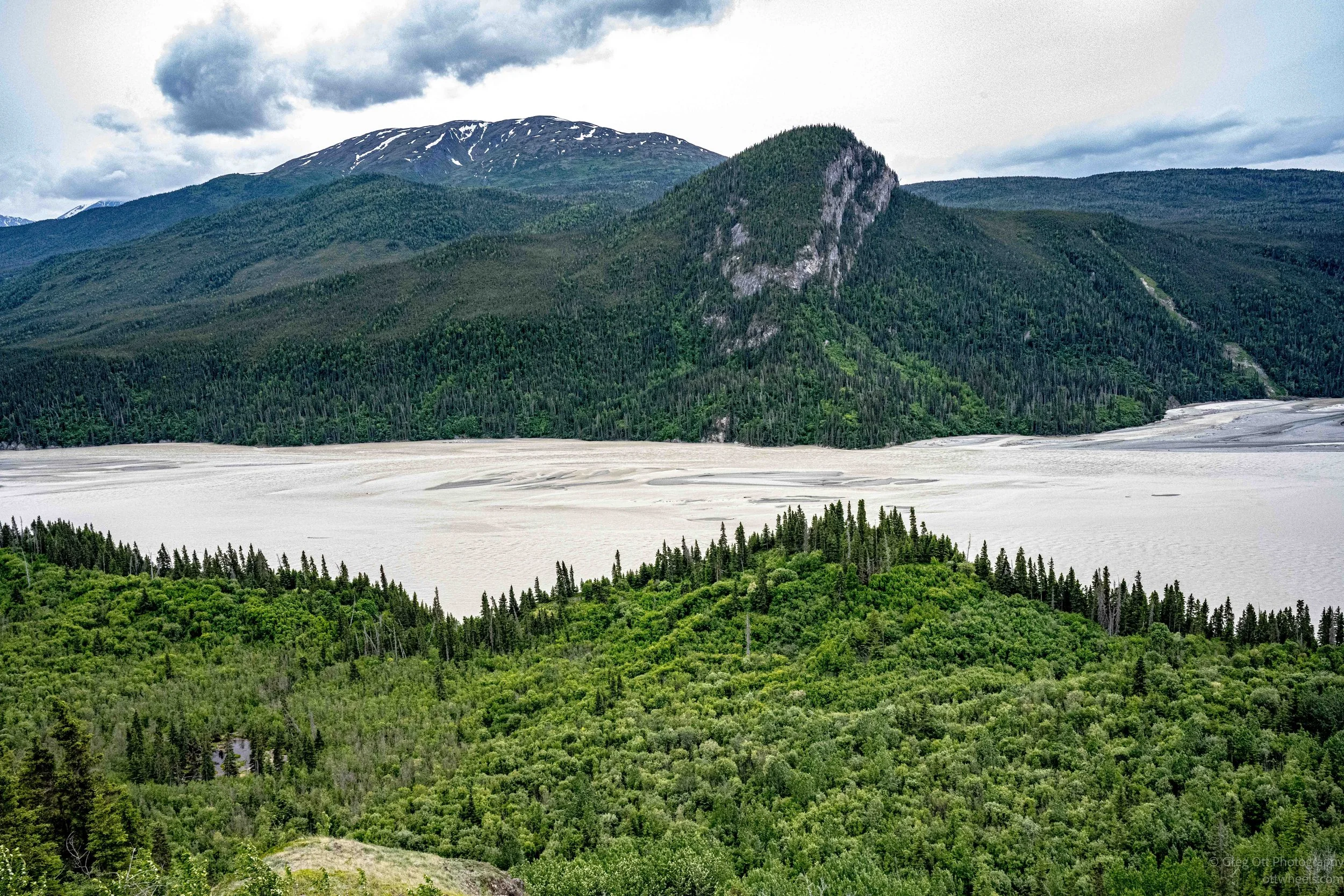
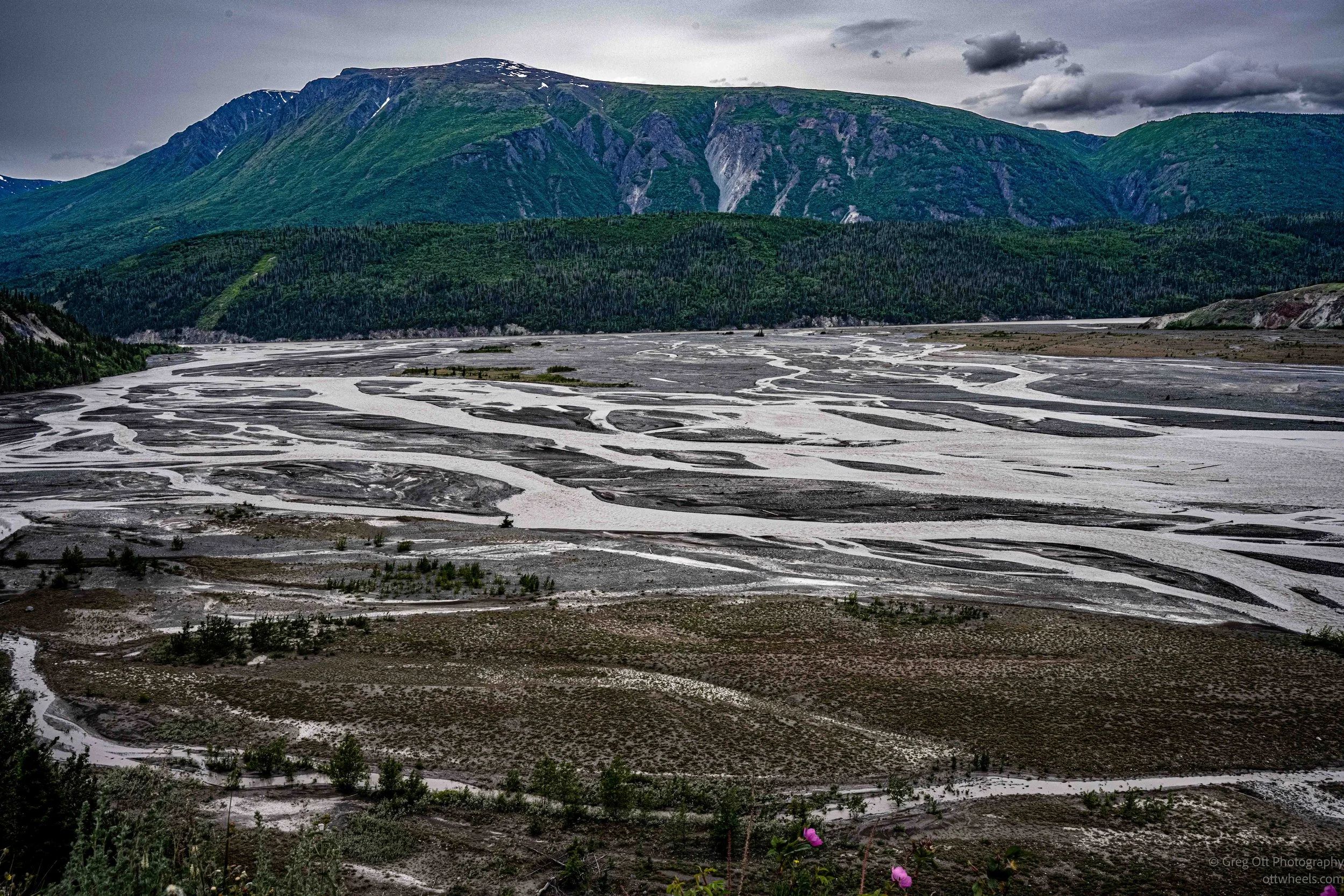
About five miles from the bridge, I pulled over to photograph the Copper River shortly before it passes beneath the Chitina Bridge. As I walked toward the edge of the road, I realized just how steep the slope was. The drop toward the river was almost vertical. There wasn't much room for error. A major rainstorm could easily undermine part of the hillside or wash sections of road away. I got the photograph I wanted and then decided that lingering wasn't one of my better ideas.
One thing I wanted to see was the famous salmon fishing on the Copper River.
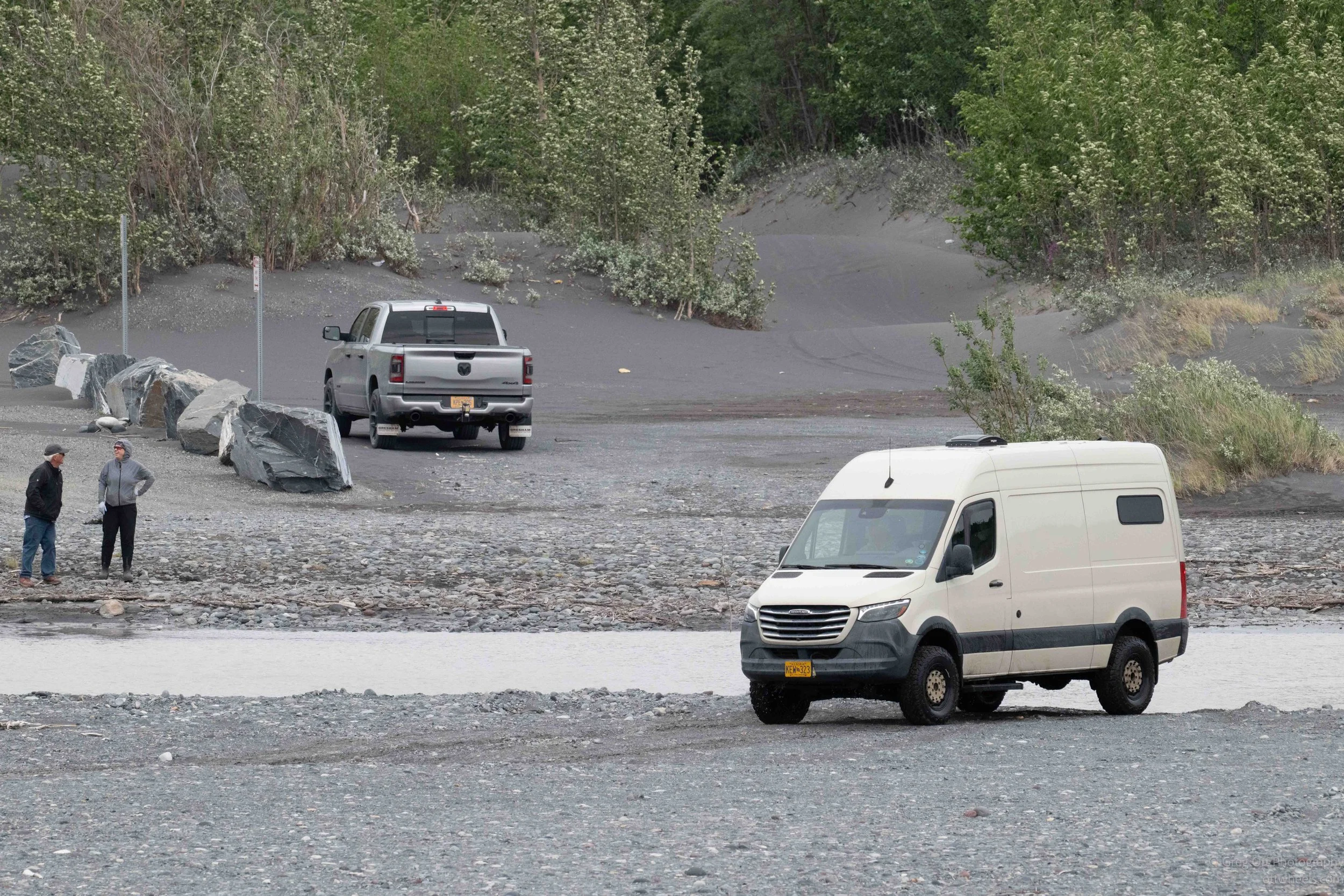
The land around much of the river is controlled by the Chitina Native Corporation and the regional corporation, Ahtna, Incorporated. I stopped and read the various signs explaining access and fishing fees. The day-use fishing permit was $30, but it was obvious there were additional rules and requirements that applied to the area. After looking around, I realized the Chitina Bridge itself sits on federal land, and there is a small public area around the bridge. The challenge is that there isn't an easy way to reach much of the shoreline from there.
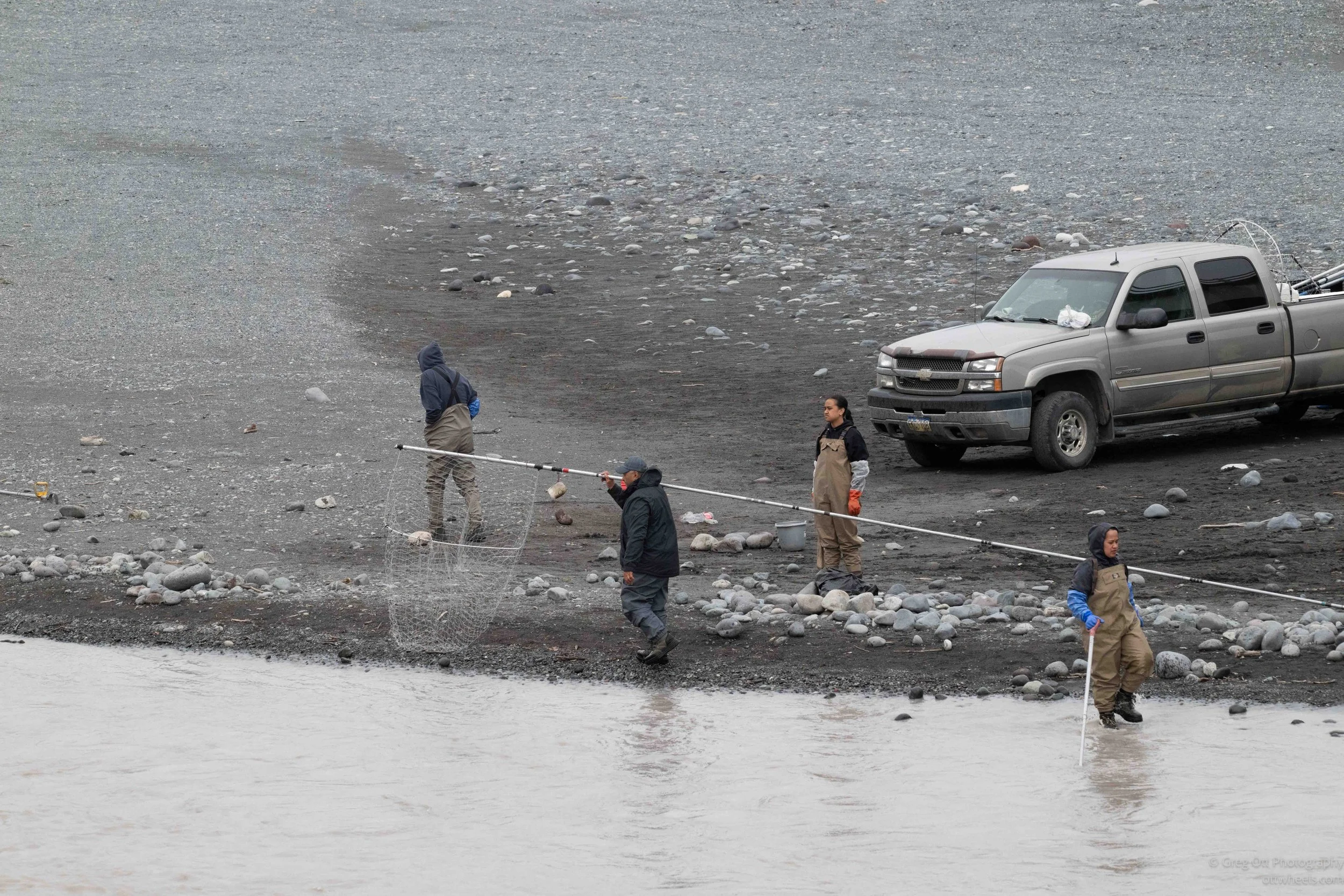
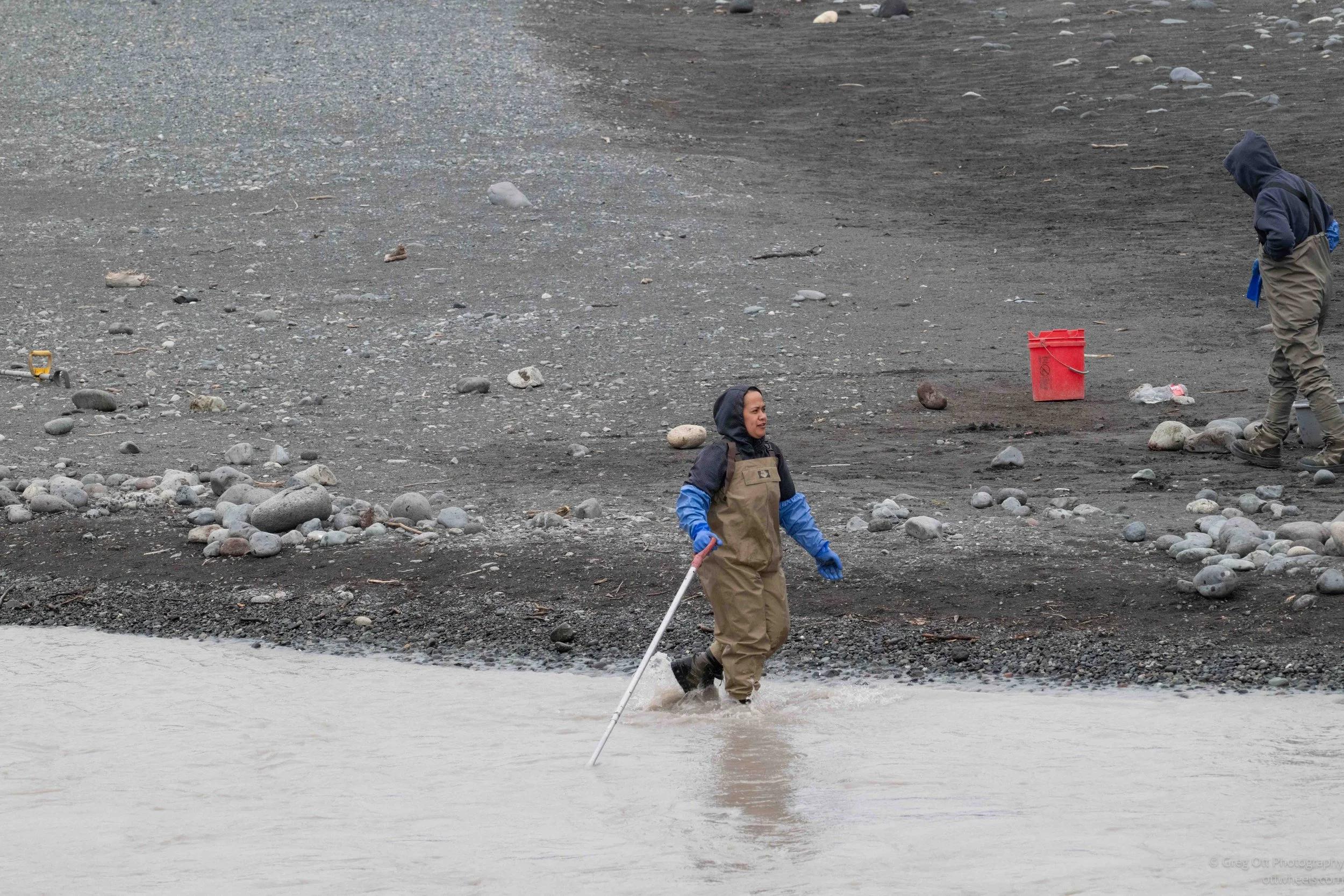
Instead, I crossed the bridge, parked on the far side, and walked back out onto the bridge to watch the fishermen below. The wind was incredible. At times I found myself leaning into it while crossing the bridge. Everyone below on the riverbanks seemed to be dressed in multiple layers despite it being June. I brought a long lens hoping to capture some interesting images of the fishing operation below.
Copper River salmon fishing is unlike anything I have seen before. The river is fast, cold, silty, and incredibly powerful. Rather than casting rods, many fishermen use what are known as dip nets. Imagine a very large hoop net attached to a pole that can be twenty feet long or more. The fishermen lower these giant nets into the rushing water and allow the current to push through them. Every so often they pull the net if there is movement in the net. It looks physically exhausting. The current is relentless, and handling those long poles appears to require equal parts strength, balance, and determination.
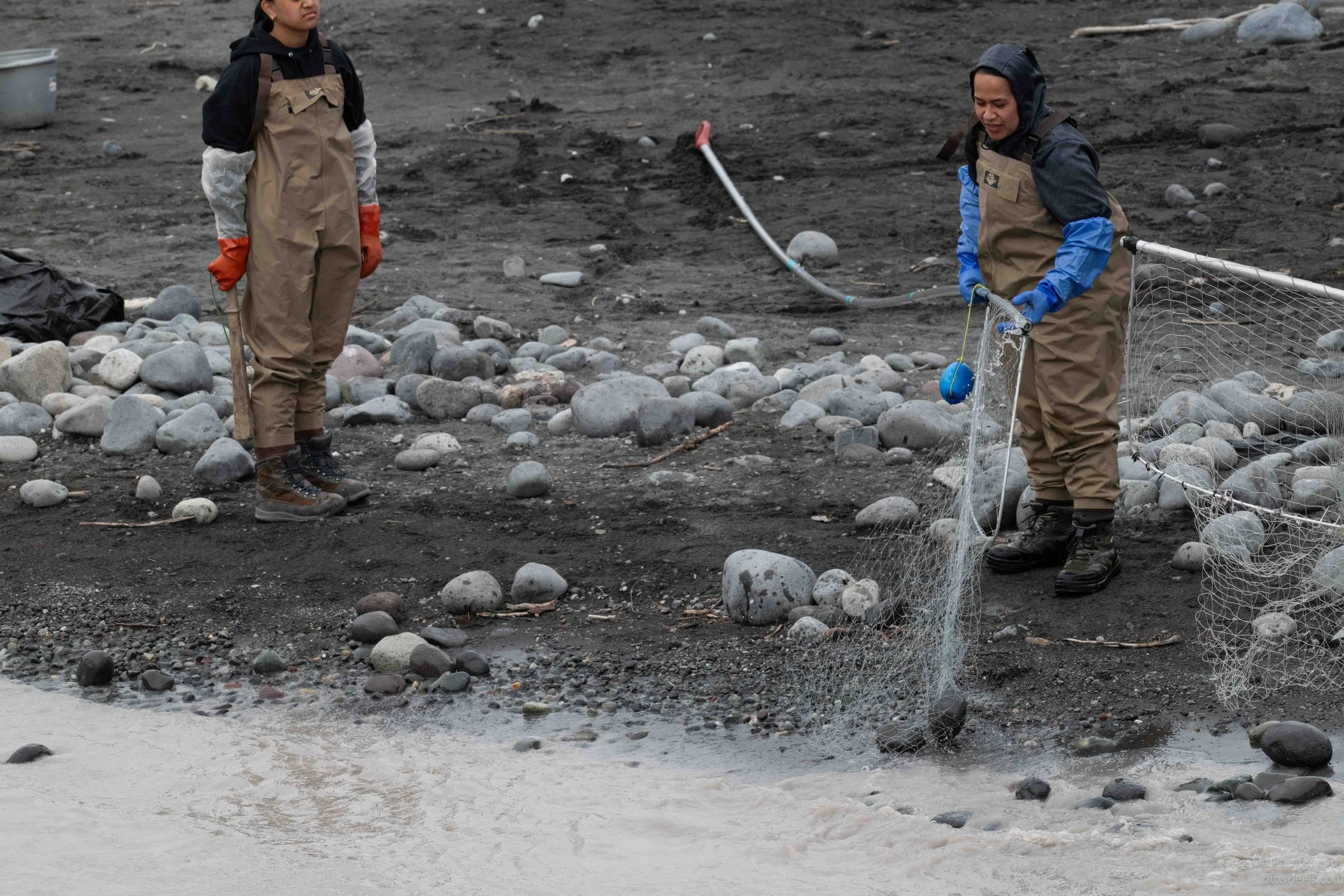
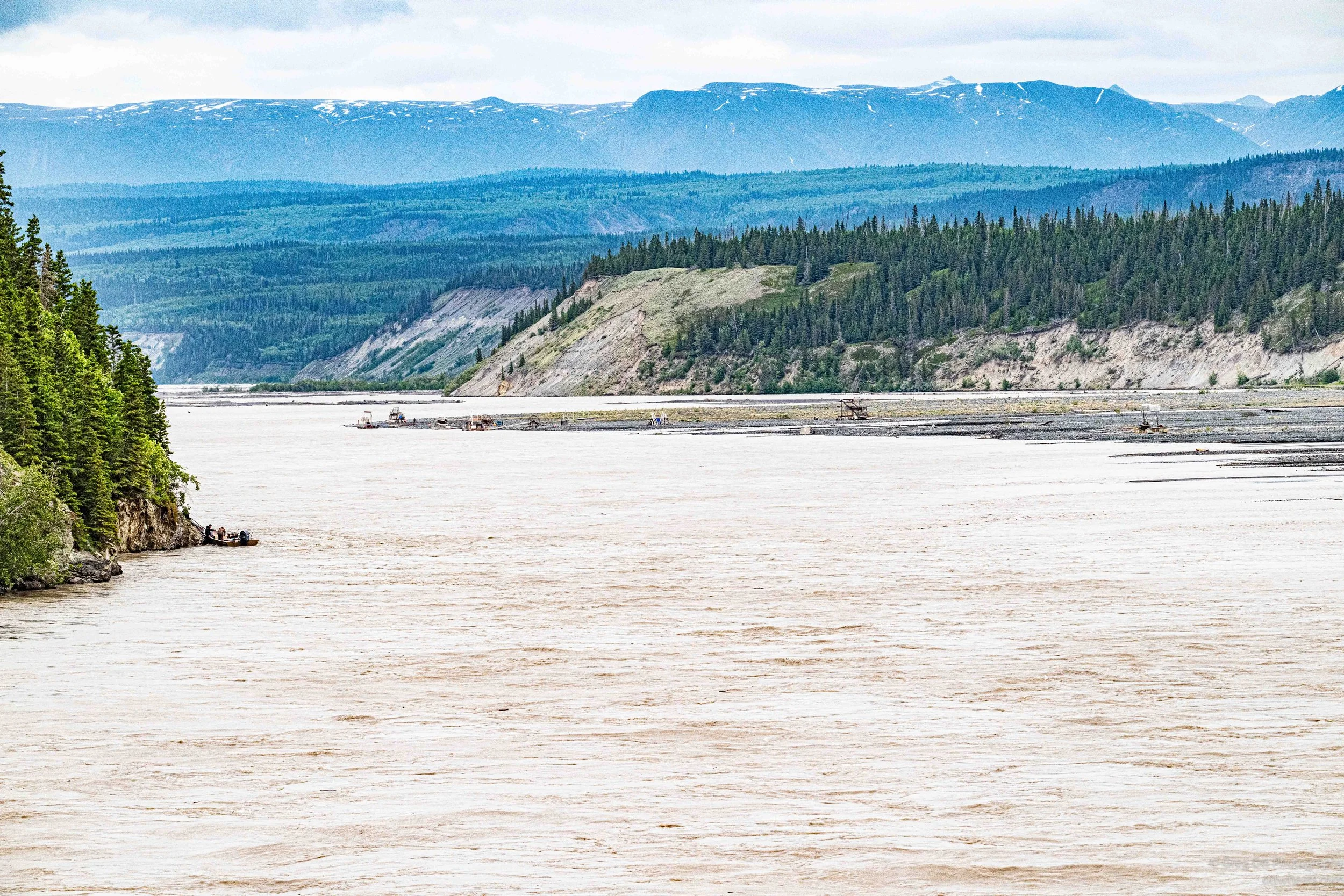
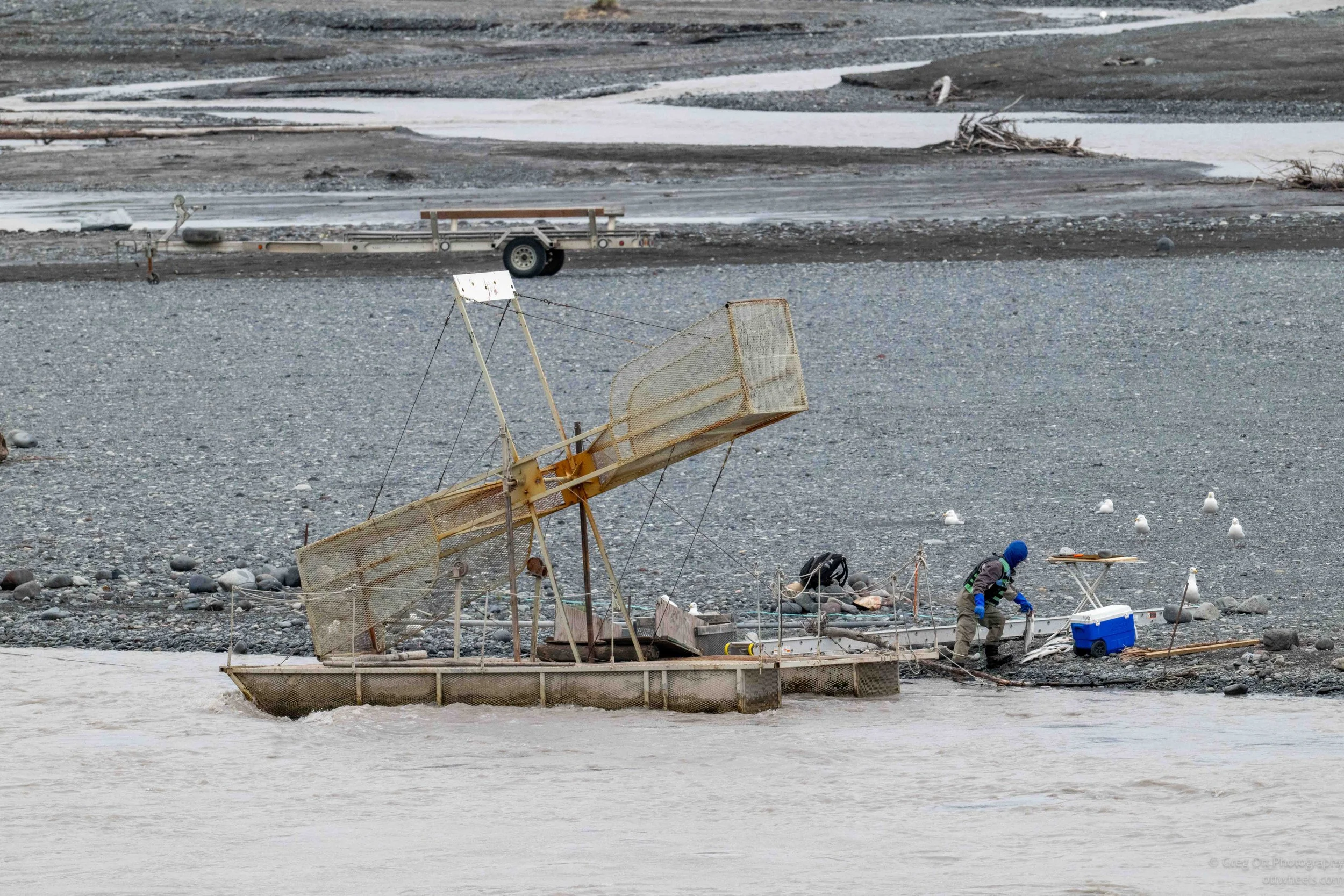
What fascinated me even more were the fish wheels. A fish wheel is a large rotating structure anchored in the river that uses the force of the current as its power source. Large basket-like scoops rotate through the water much like the paddles of an old riverboat. As the wheel turns, salmon swimming upstream are lifted from the river and carried upward. At the top of the rotation, the fish slide down a chute and into a holding box or collection area.
The entire system operates continuously, powered only by the river itself. Every few minutes a flash of silver would appear, followed by a salmon sliding down the chute. It felt like watching a machine from another century that somehow still performs its job perfectly today.
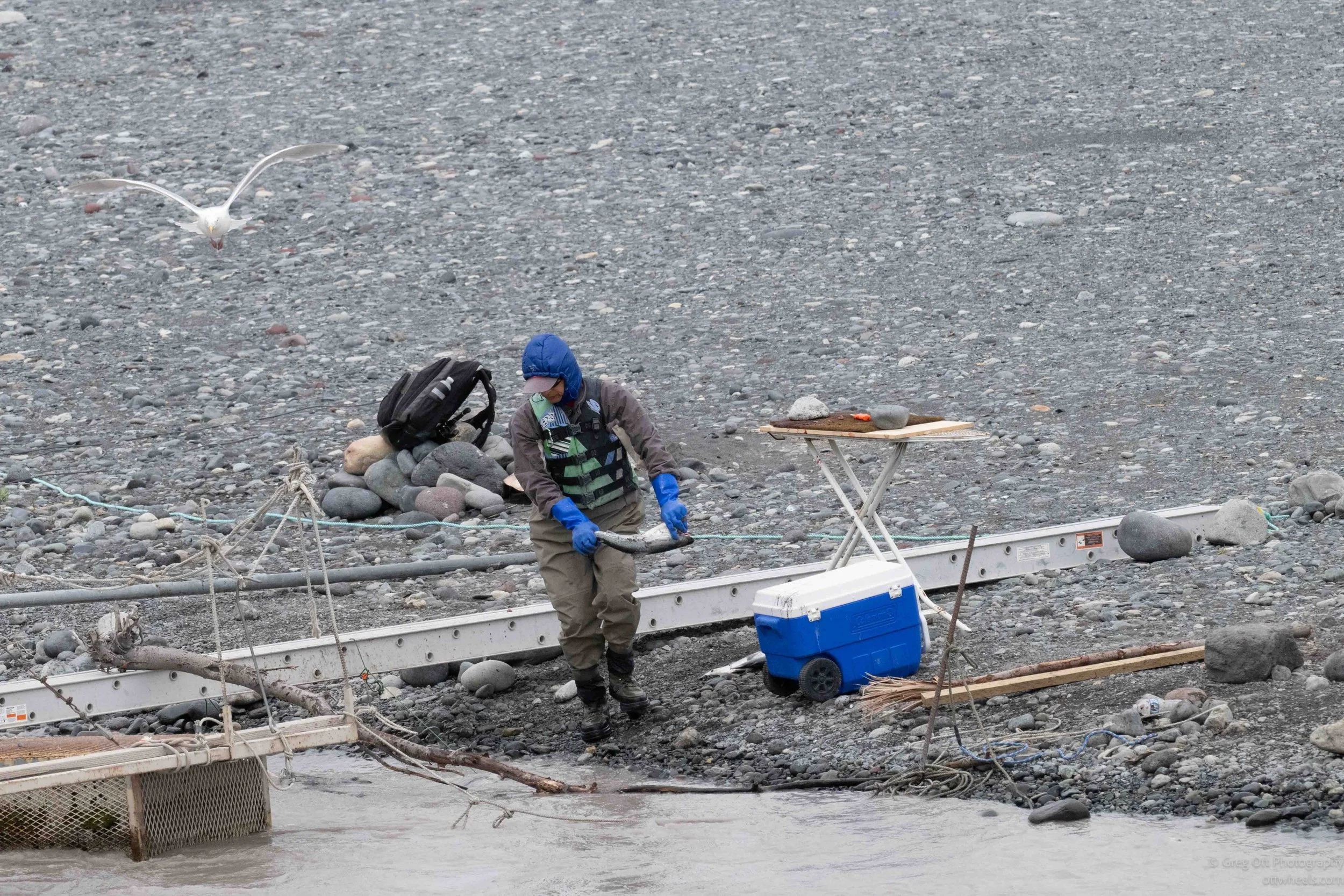
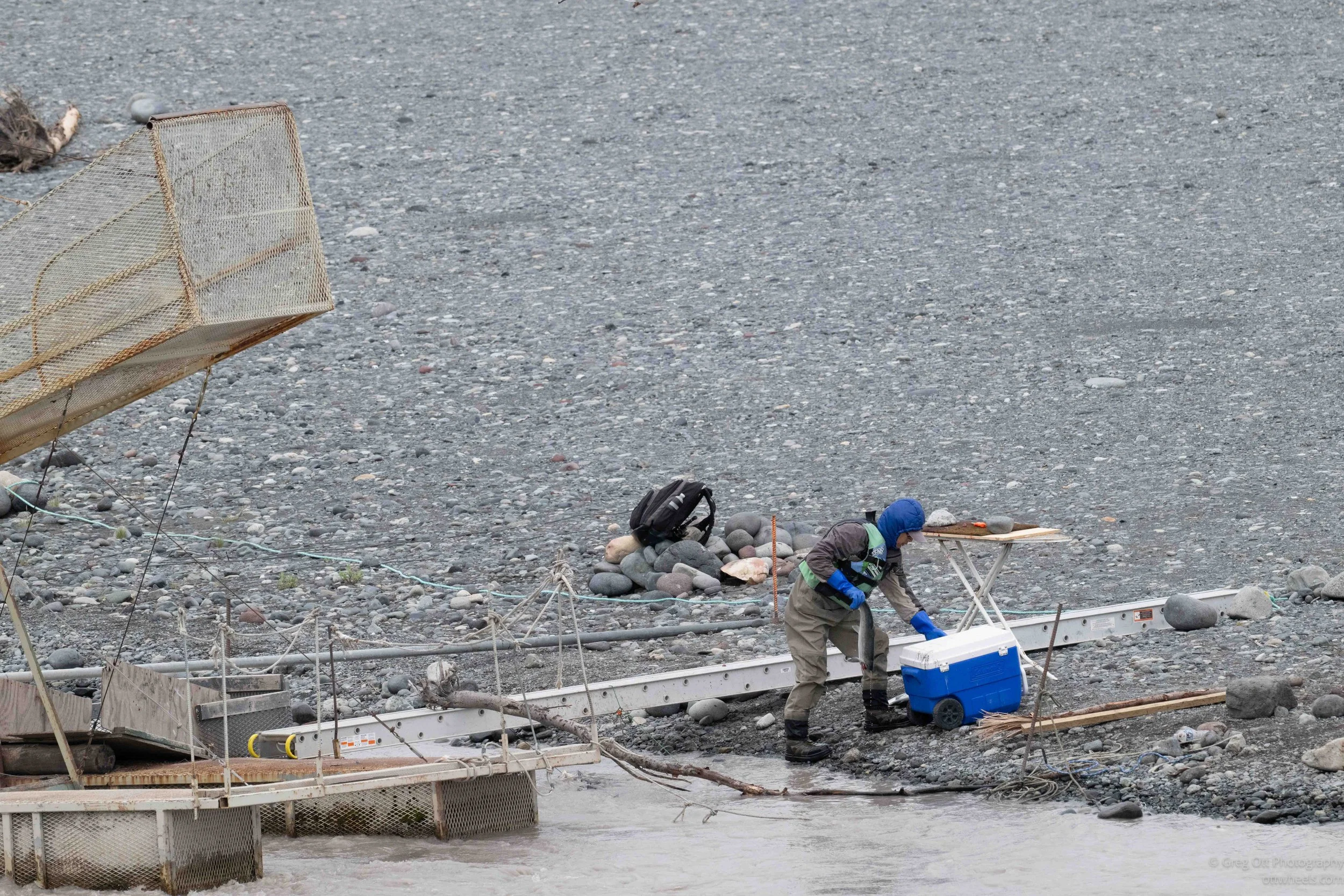
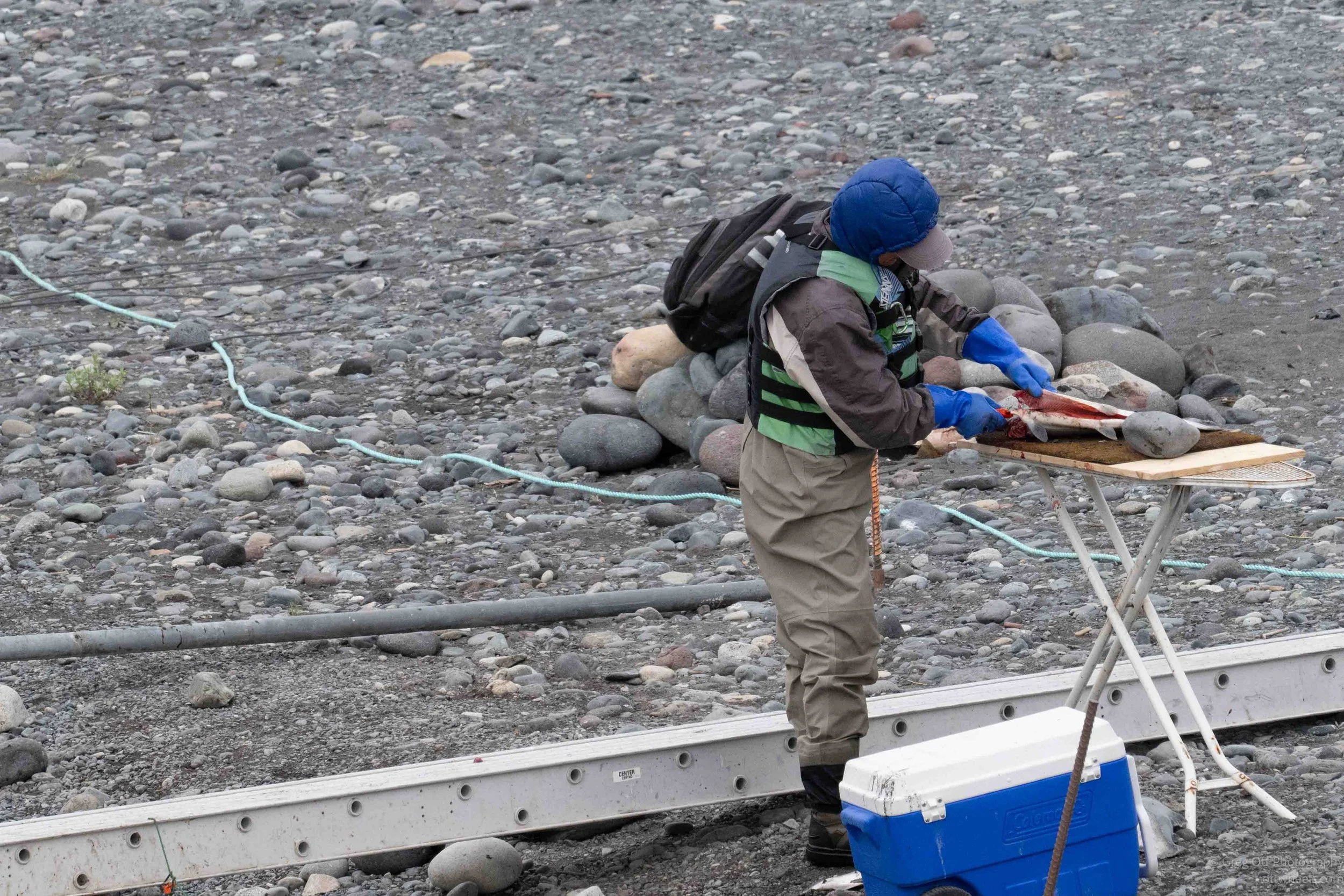
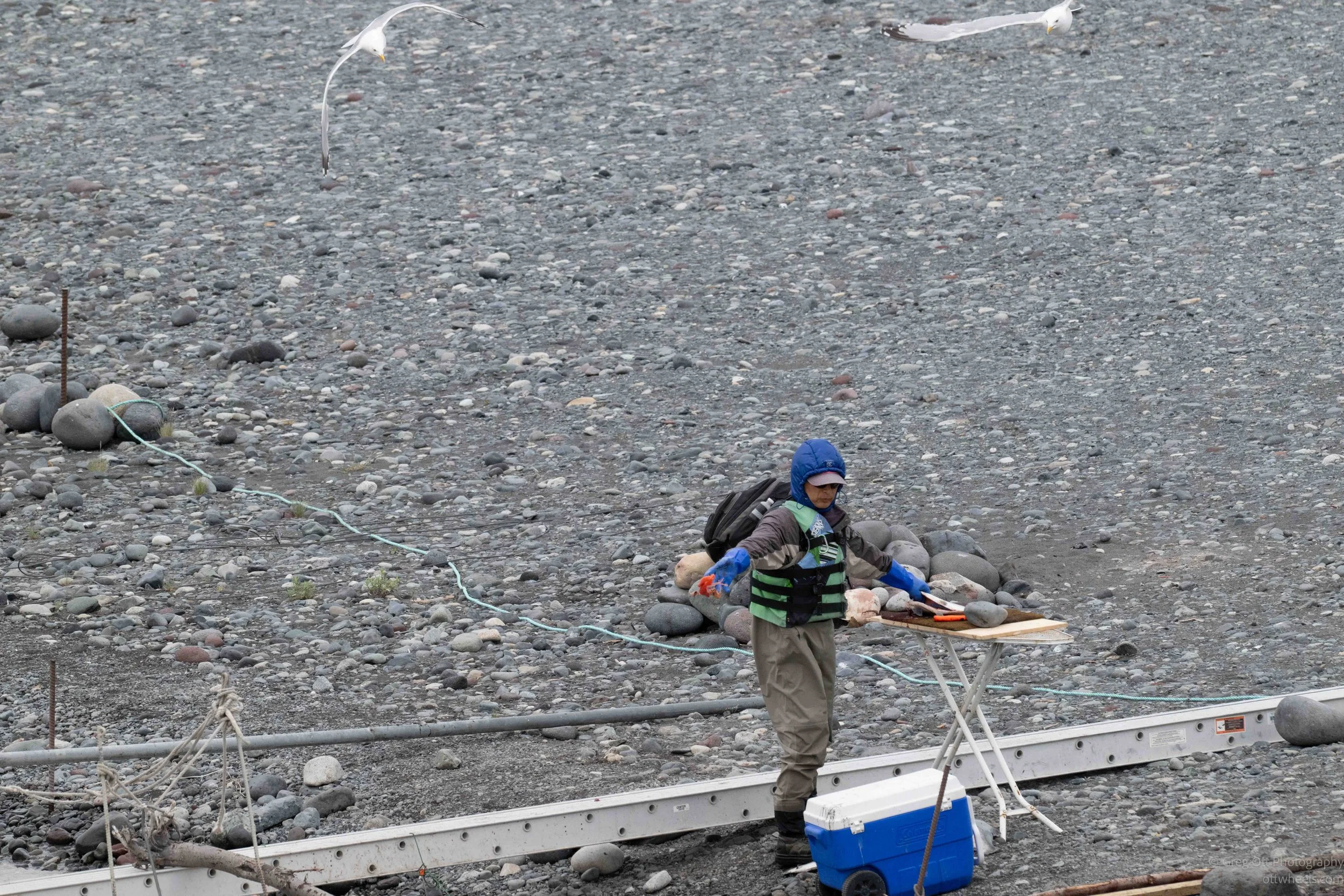
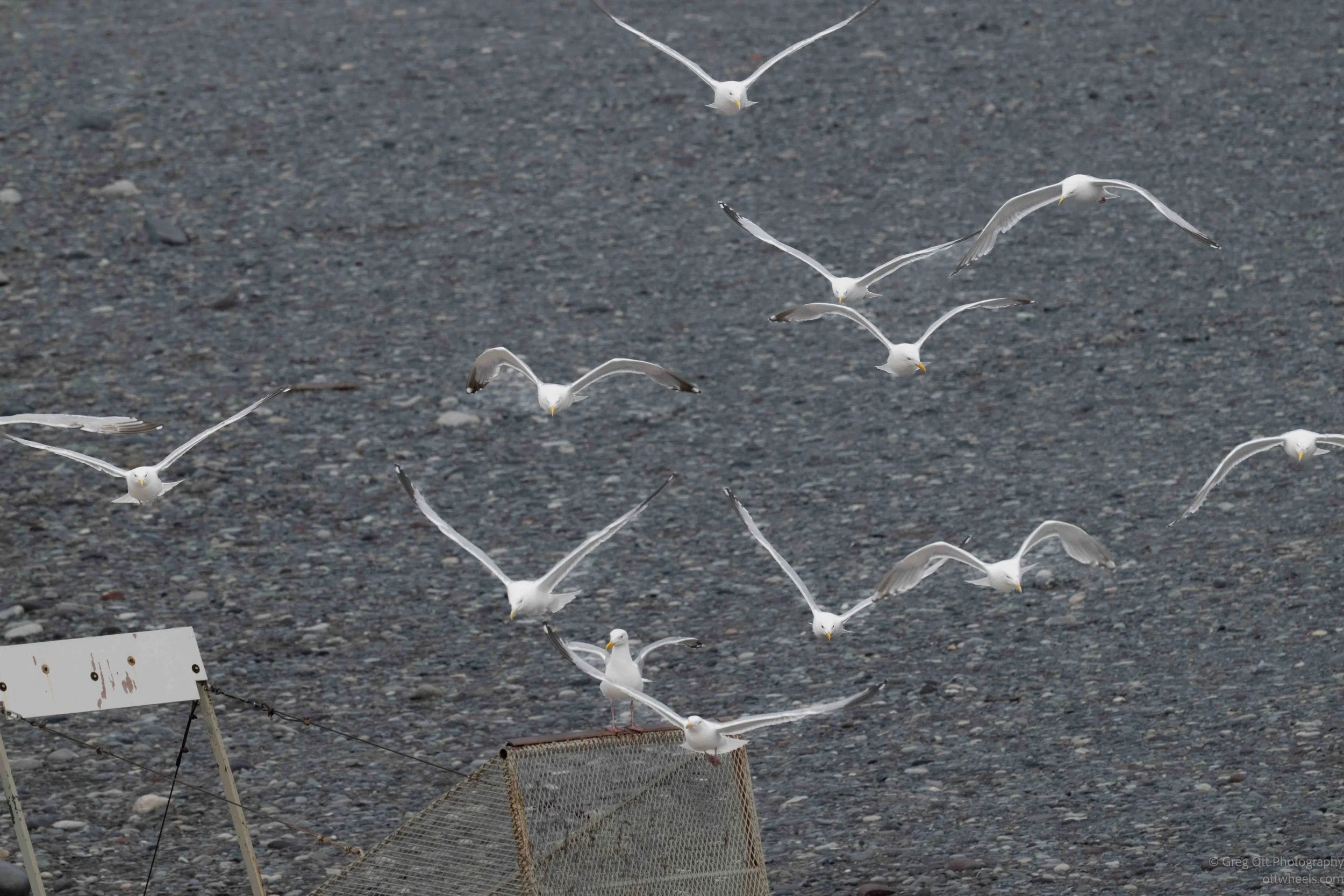
I spent more than ninety minutes on the bridge watching the activity below.
As a photographer, I kept hoping for the perfect moment. A fisherman landing a large salmon. A dramatic interaction between people working the nets. Maybe an eagle swooping through the scene. None of those things happened. Instead, I found myself simply watching the process unfold.
The longer I stayed, the more interesting it became. There was a rhythm to everything. Fishermen checking their nets. Fish wheels slowly turning in the current. The river endlessly pushing downstream while thousands of salmon fought their way upstream. It wasn't particularly dramatic, but it offered a glimpse into a tradition and way of life that has existed here for a very long time. Sometimes the experience itself is more valuable than the photograph.
Back in Chitina, I decided it was finally time for some Copper River salmon. At least that was the plan. I stopped at one of the small stands catering to tourists and ordered a salmon sandwich with fries. The fries were disappointing. The oil clearly wasn't hot enough, leaving them soggy instead of crisp. The salmon sandwich was mediocre at best. The total bill came to $24.
I don't mind paying good money for good food. What bothers me is paying good money for mediocre food. This felt like one of those cases where the location was doing most of the work and the food was just along for the ride.
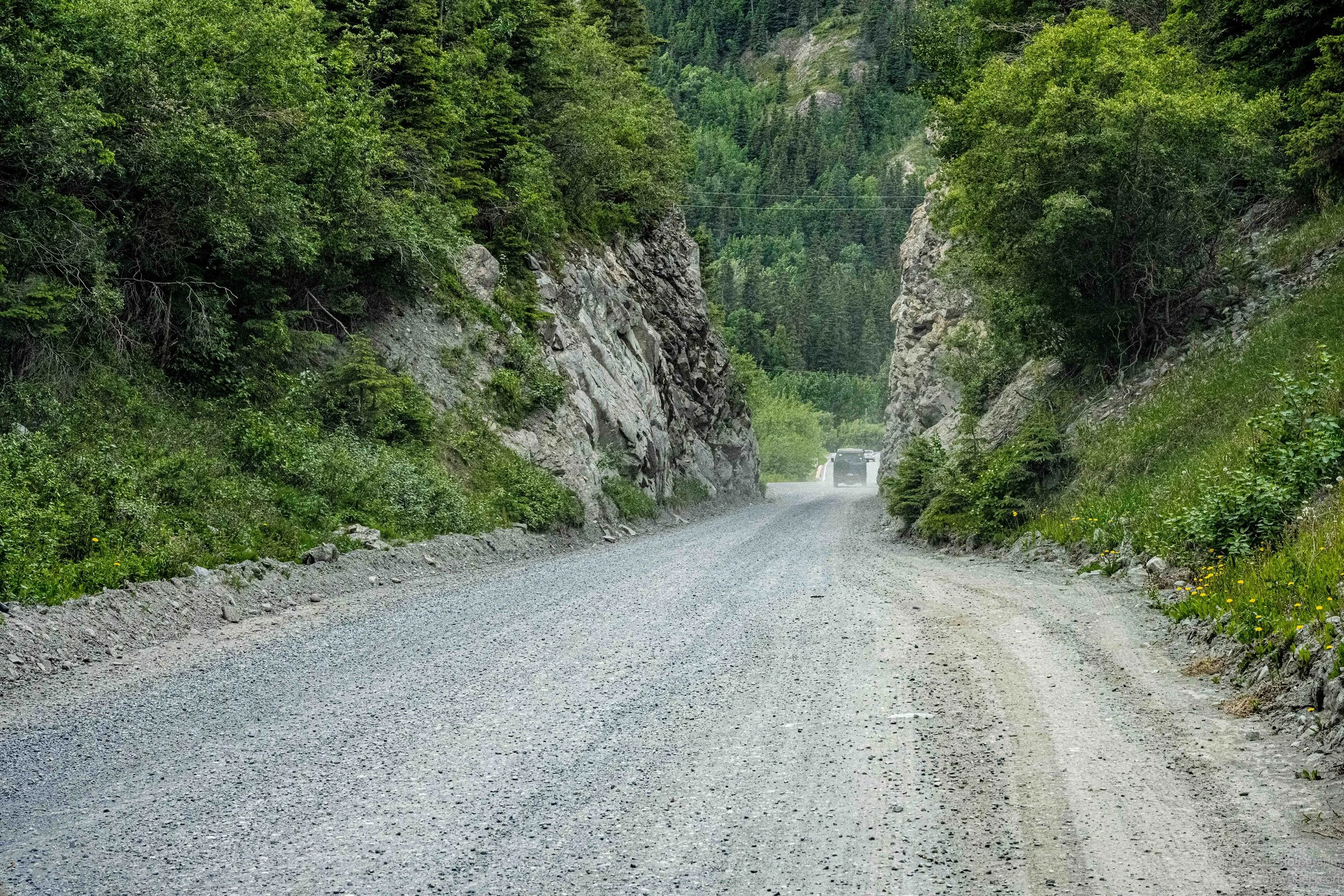
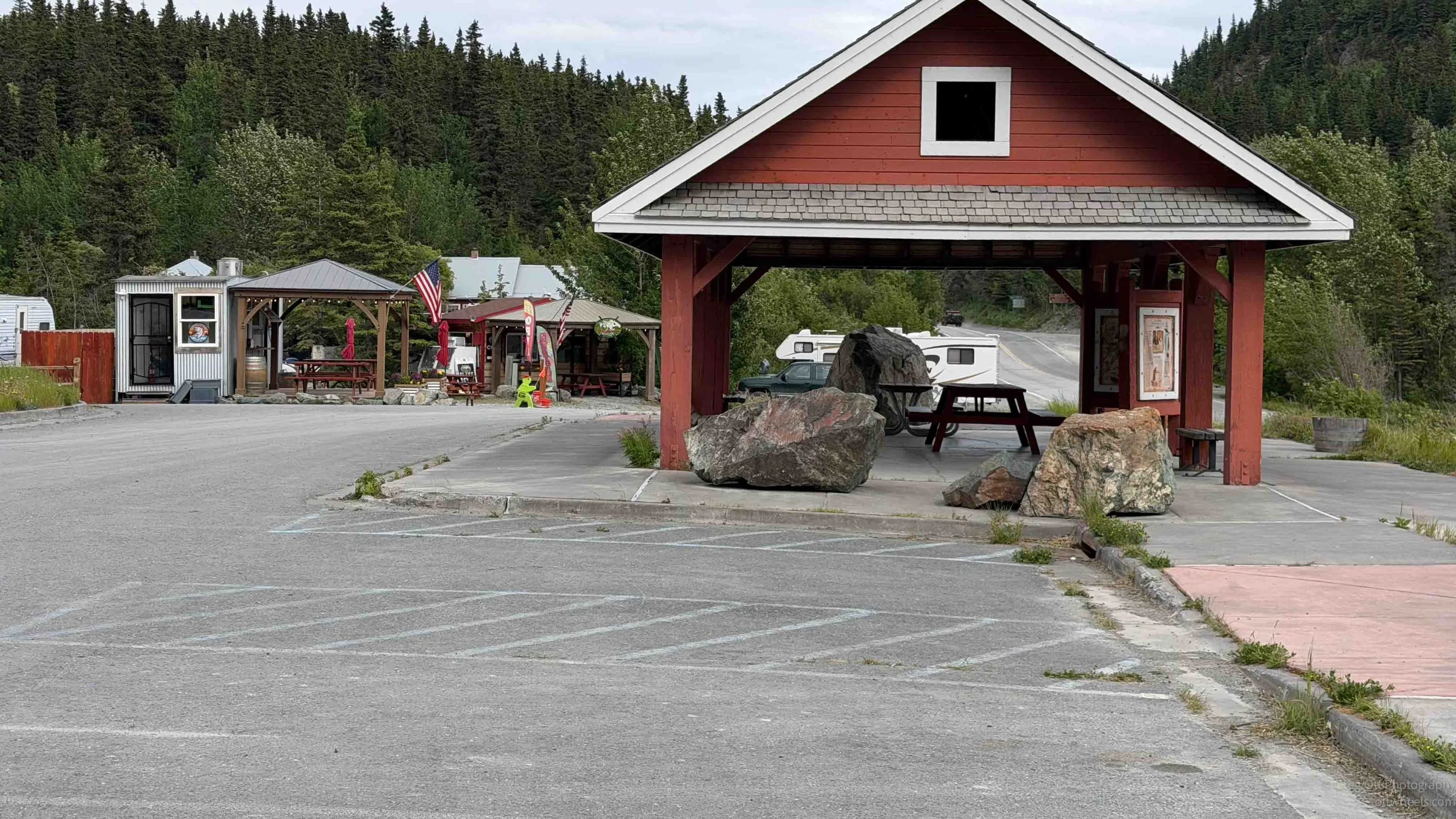
By early evening, I found a spot along Route 10, about twenty miles north of Chitina beside a river. I assume it was the Copper River, although there weren't any signs identifying it.
It was around 6:30 p.m. when I pulled in. The moment I shut off the engine, I could hear the sound of rushing water beside the van. Almost instantly I relaxed. After spending most of the day around roads and people, the river provided a steady background soundtrack that made the entire area feel peaceful.
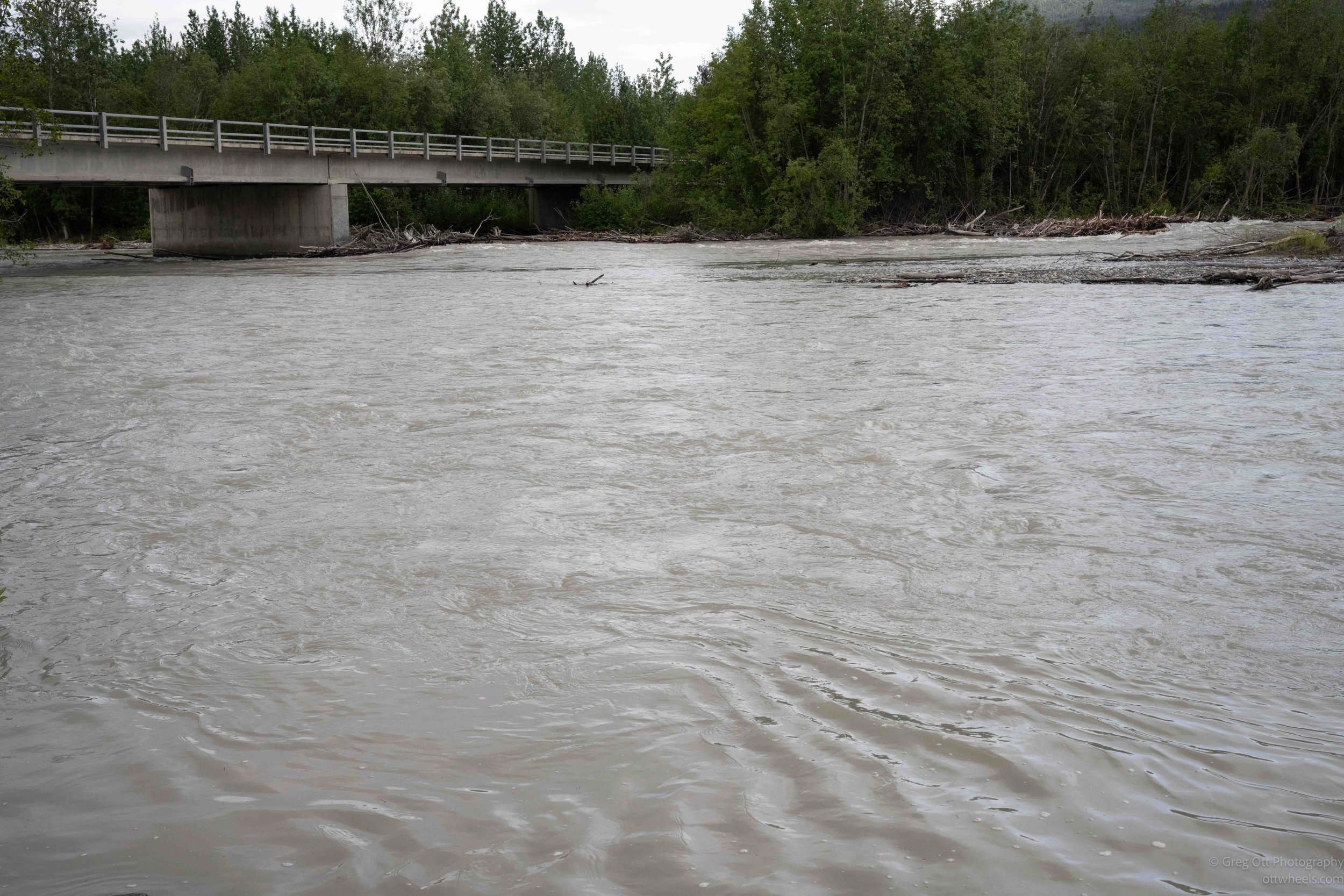
I was parked fairly close to the water, so before settling in for the night I checked the weather forecast upstream. There was some rain expected later in the evening, but nothing that looked particularly significant. Satisfied that I wasn't about to wake up floating downstream, I opened the side door, listened to the river, and settled in for another quiet Alaskan evening.