It was a rather simple day. I started with pancakes I had made a few days earlier, spent some time writing, and reworked my Colorado itinerary. Around noon, I decided to hike to Gem Lake, a small lake in the Lumpy Ridge area of Rocky Mountain National Park, just outside Estes Park.
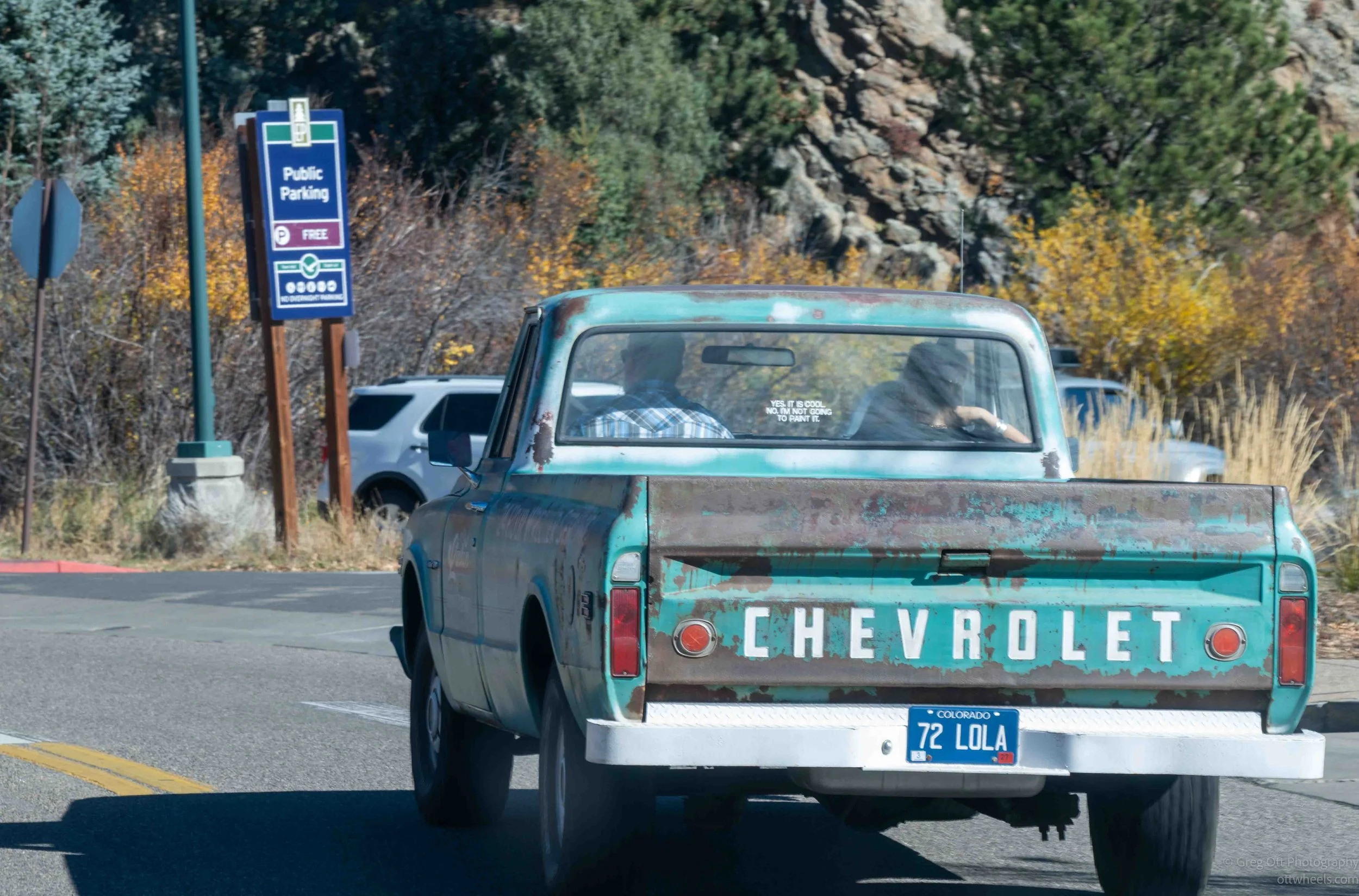
On the drive through town, I found myself sitting behind an old, rusty green Chevrolet pickup at a traffic light. Across the rear window was a message: "Yes, it's cool. No, I'm not going to paint it." I chuckled. The truck had certainly seen better days, but I had to agree with the owner. Painting it would have ruined its character.
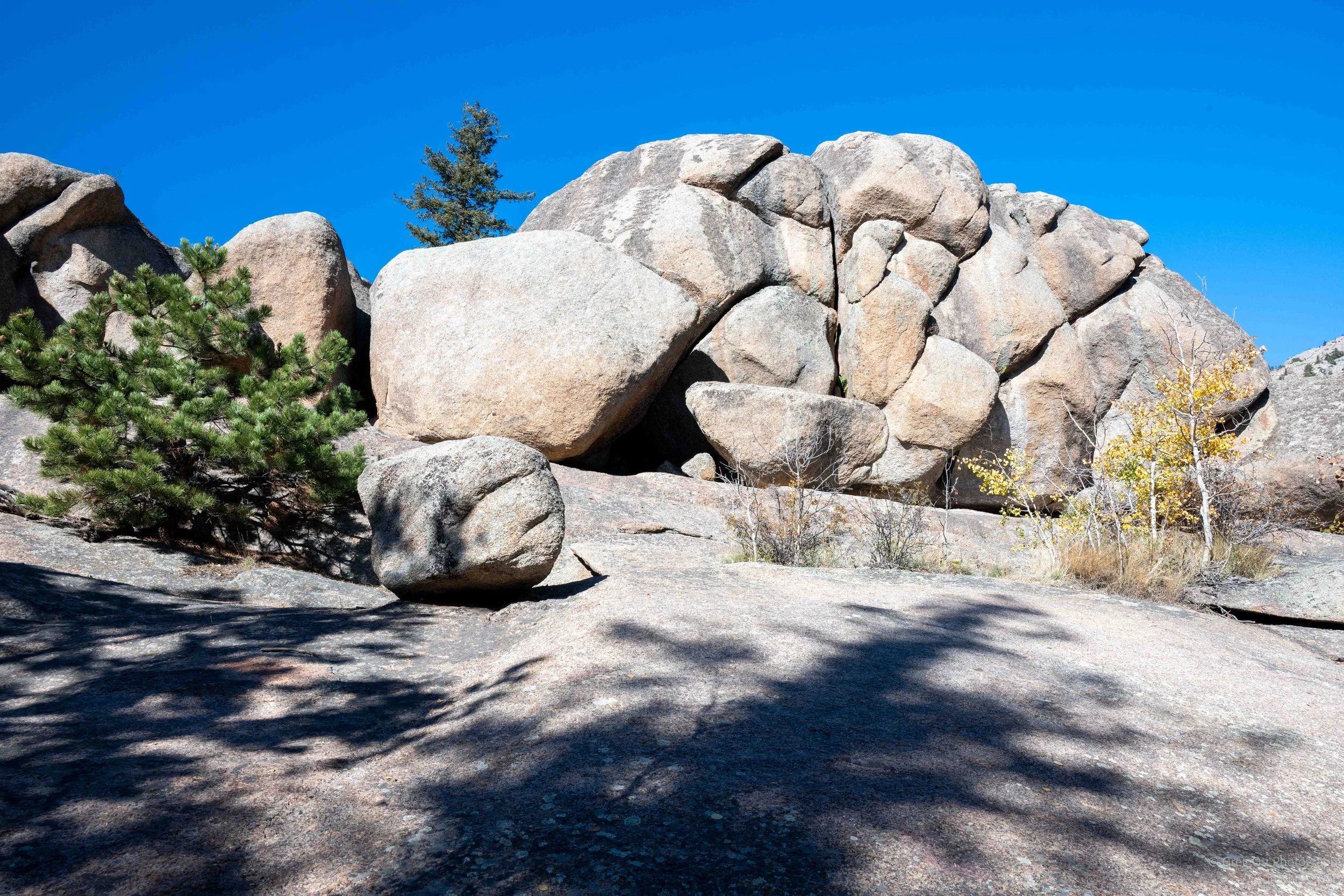
The Gem Lake Trail climbs about 1.7 miles from the trailhead, with most of the elevation gain coming on the way up. I wasn't in any hurry and settled into a steady pace, stopping occasionally to photograph the rocks and enjoy the views.
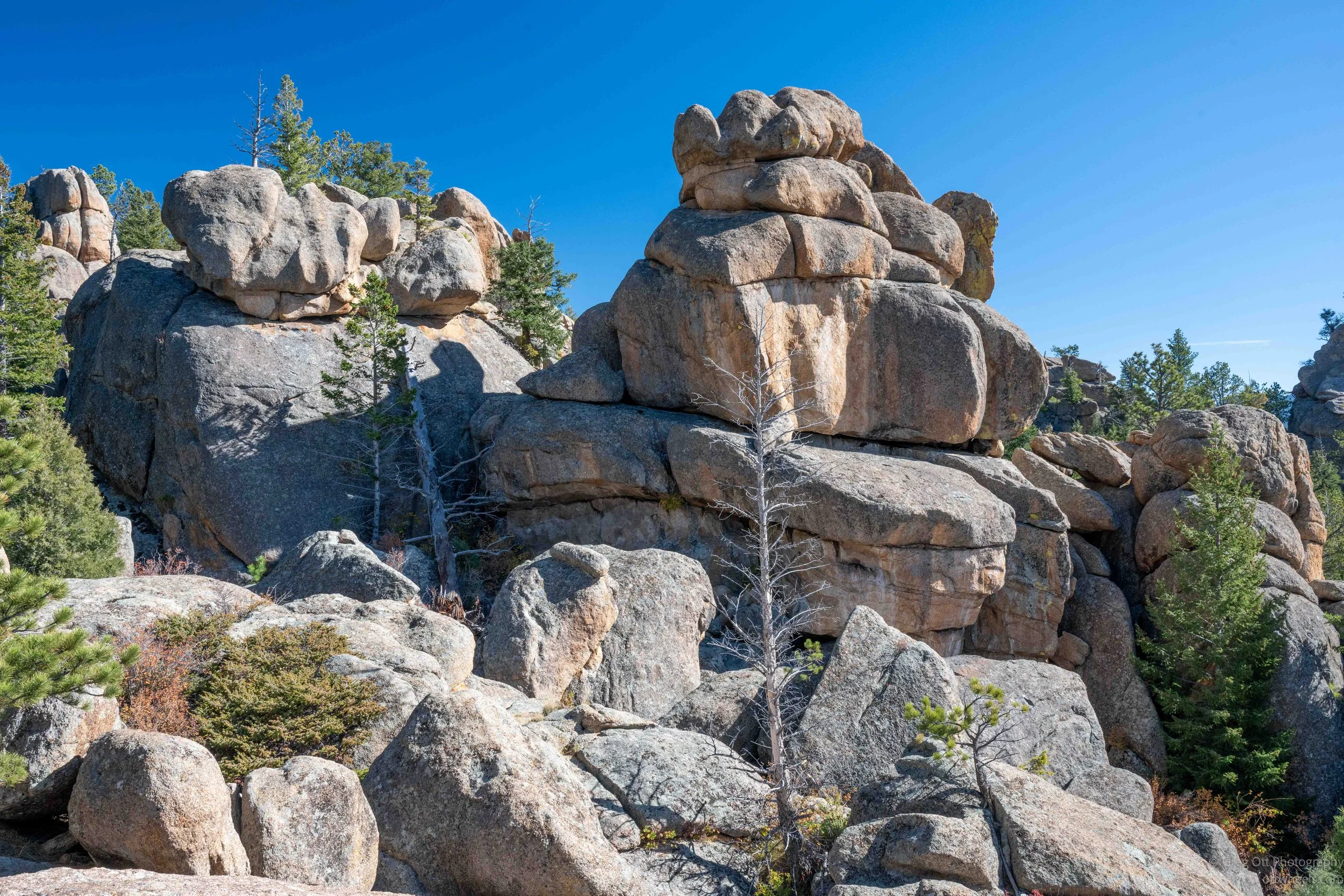
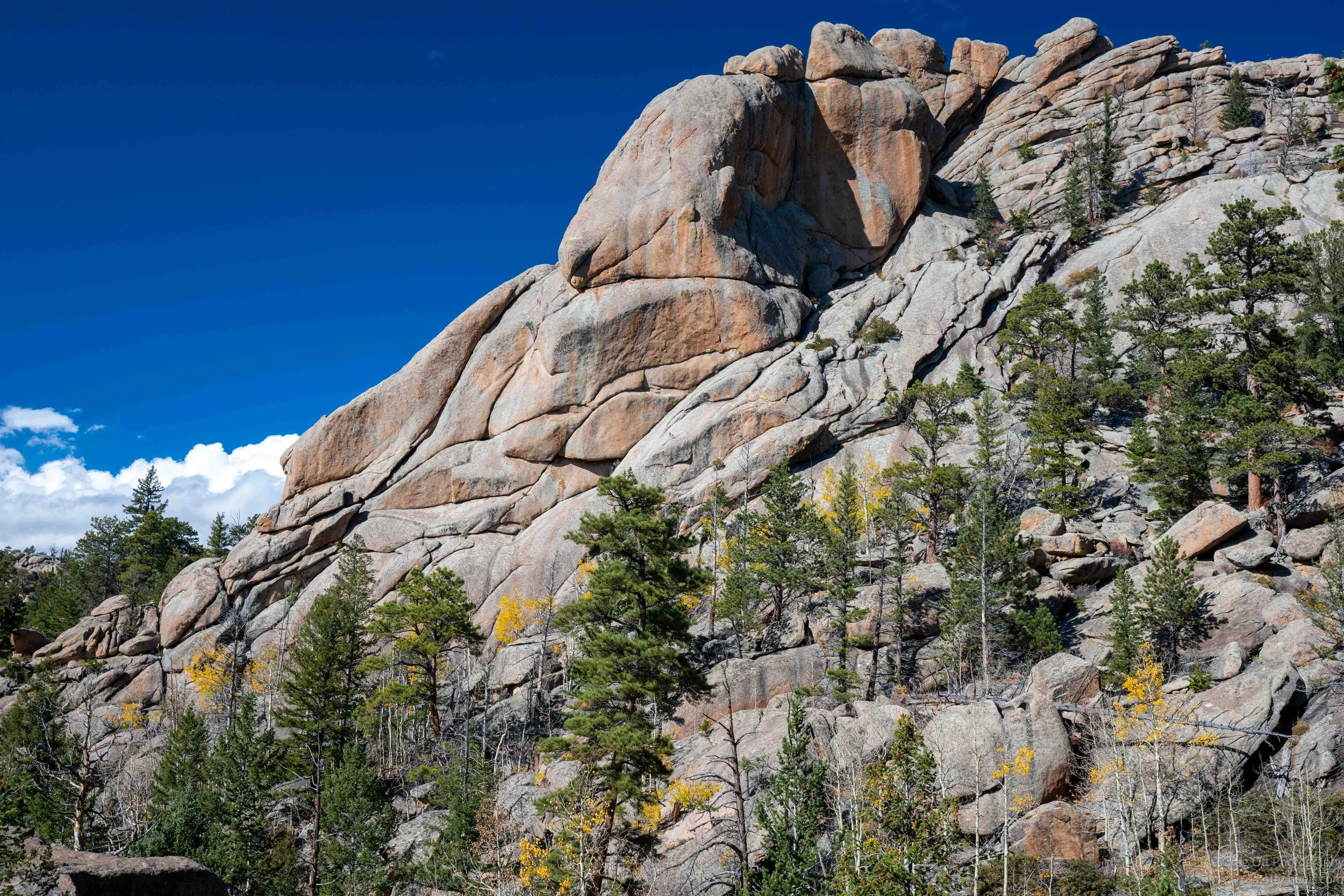
It was a beautiful day, and almost immediately the massive granite formations reminded me of Vedauwoo, Wyoming, where I had been hiking only a few days earlier. Both areas have enormous rounded boulders, balanced rocks, and formations that look as though someone had stacked them. They are not exactly the same geological formation, but both landscapes were shaped by the weathering and erosion of ancient granite. At Lumpy Ridge, millions of years of erosion have produced some remarkable shapes.
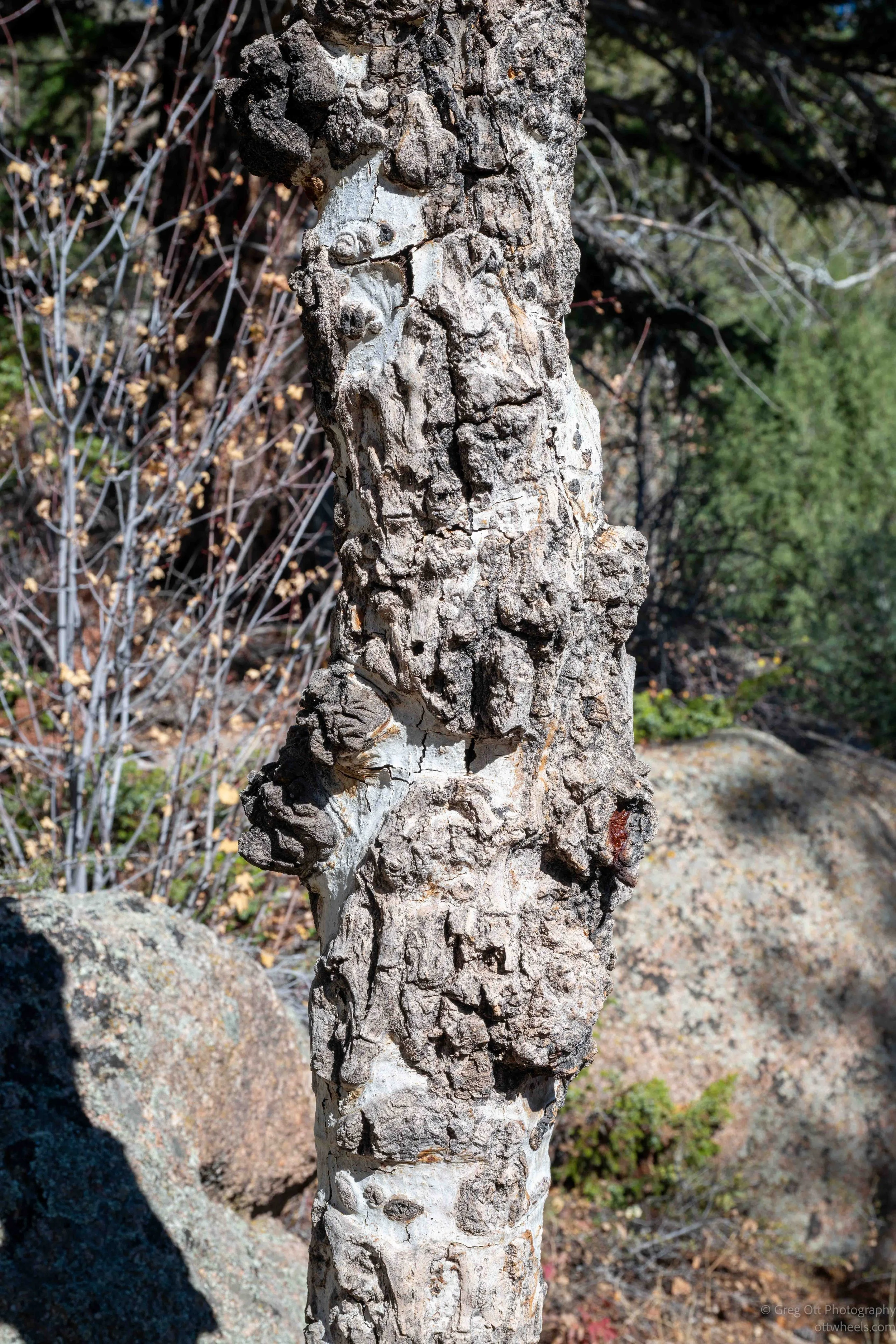
I also noticed several aspen trees with large, unusual growths on their trunks. The bark was badly distorted, with swollen, rough patches that looked almost like tumors. I wondered whether a fungus or some other disease had attacked the trees. Whatever the cause, they certainly looked unhealthy.
Most of the aspens had already lost their bright yellow leaves, which was disappointing from a photography standpoint. There were still a few patches of color, but autumn was clearly coming to an end at this elevation.
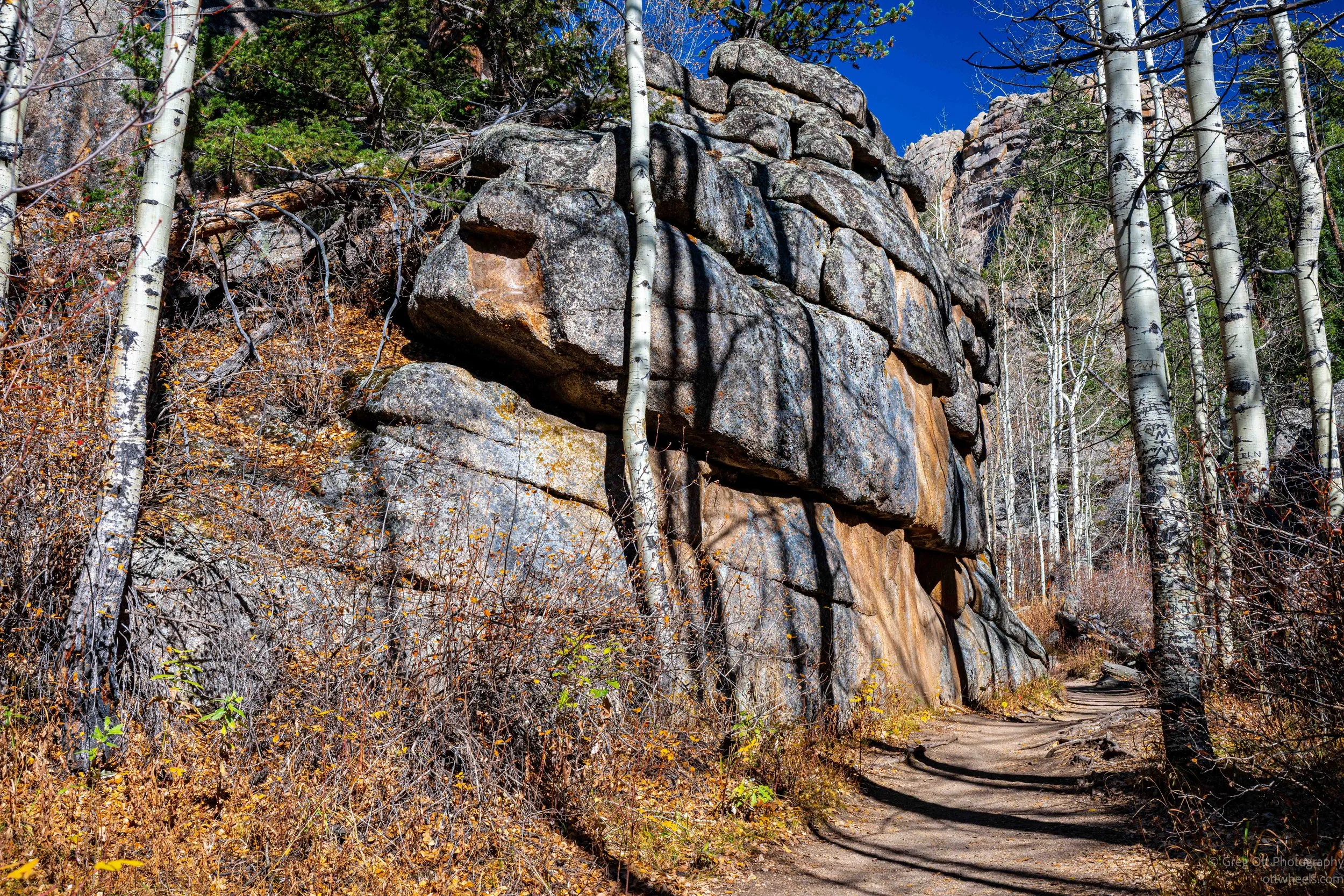
As the trail climbed, the rock formations became increasingly interesting. Some looked like enormous blocks piled on top of one another, while others had deep grooves, rounded edges, and hollowed out areas. I found myself stopping frequently to study them. In places, water had worked its way into cracks and gradually enlarged them through weathering. Some of the cavities were so smooth that they looked as though they had been deliberately carved.
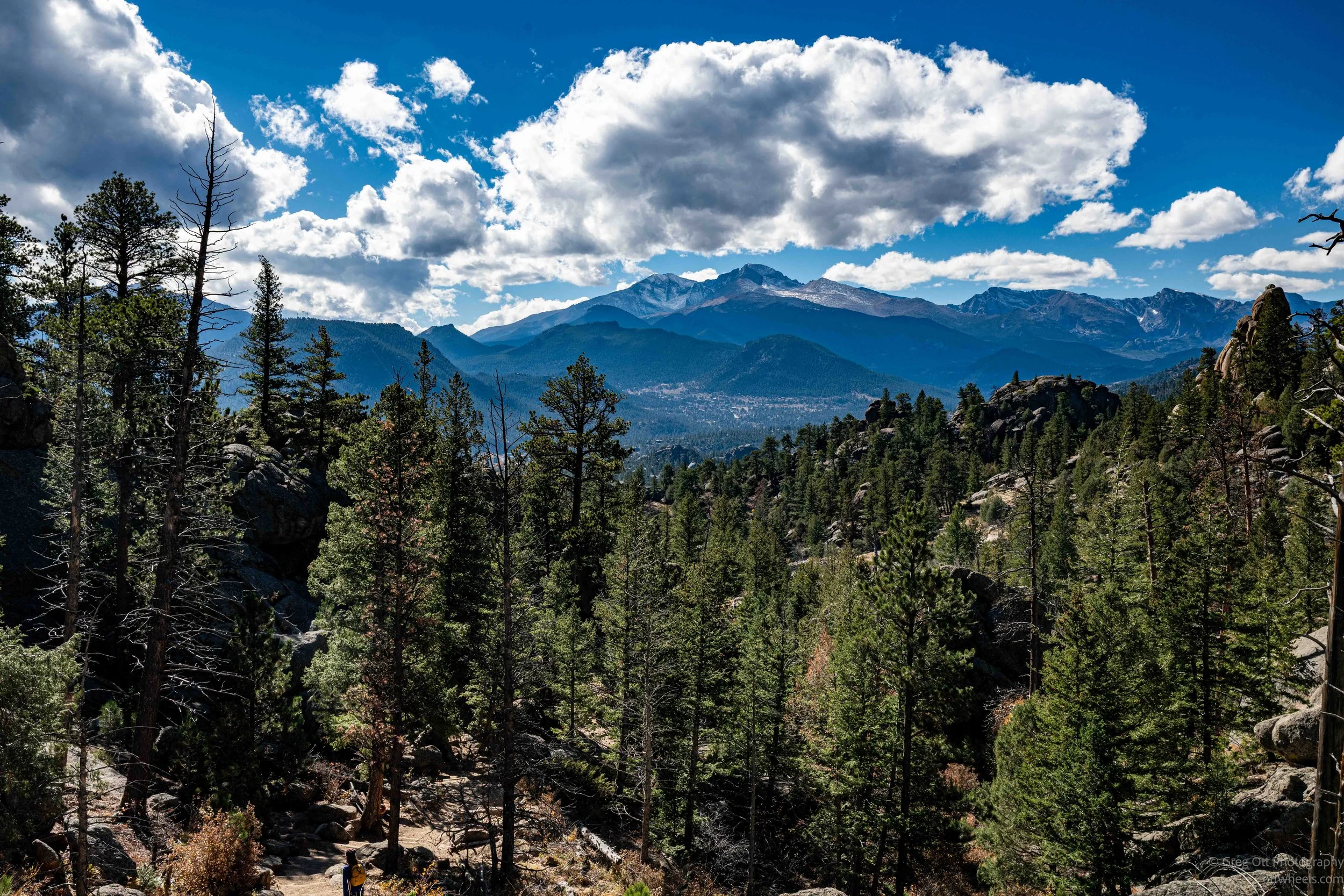
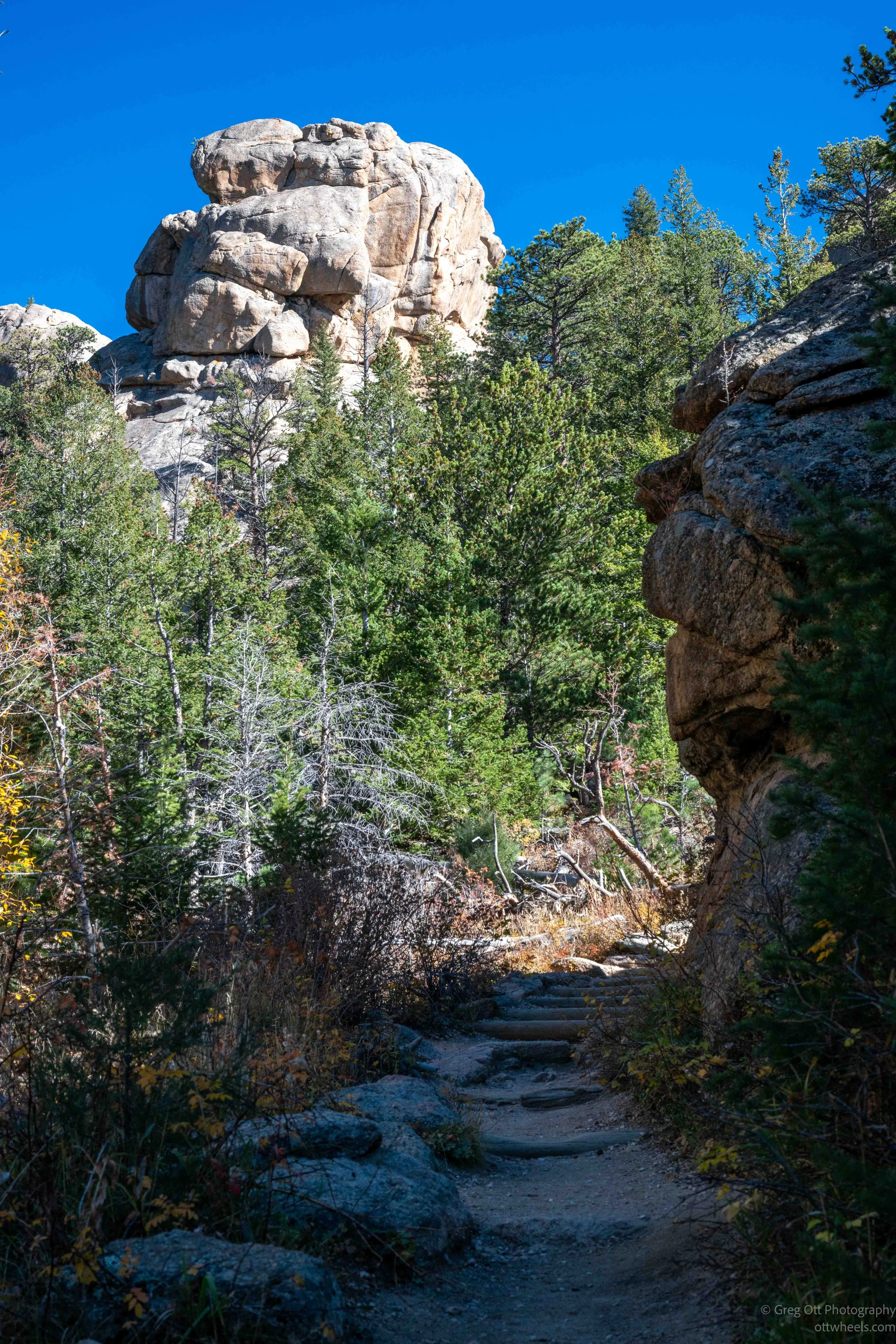
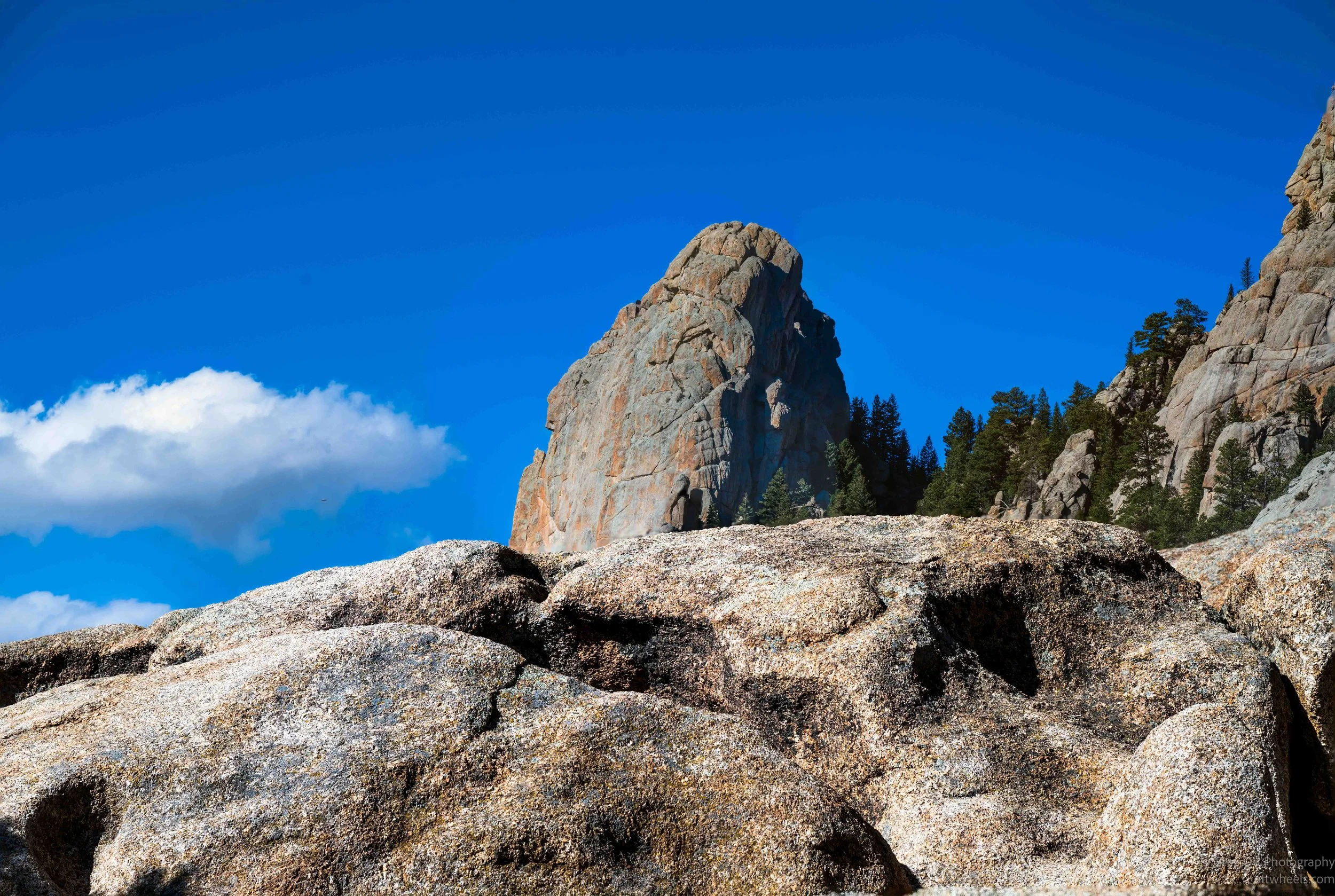
The trail occasionally opened onto viewpoints overlooking Estes Park and the mountains beyond. I stepped off the trail several times to take photographs and enjoy the changing perspective. With the clouds moving across the mountains, some of the distant peaks were in sunlight while others disappeared into shadow.
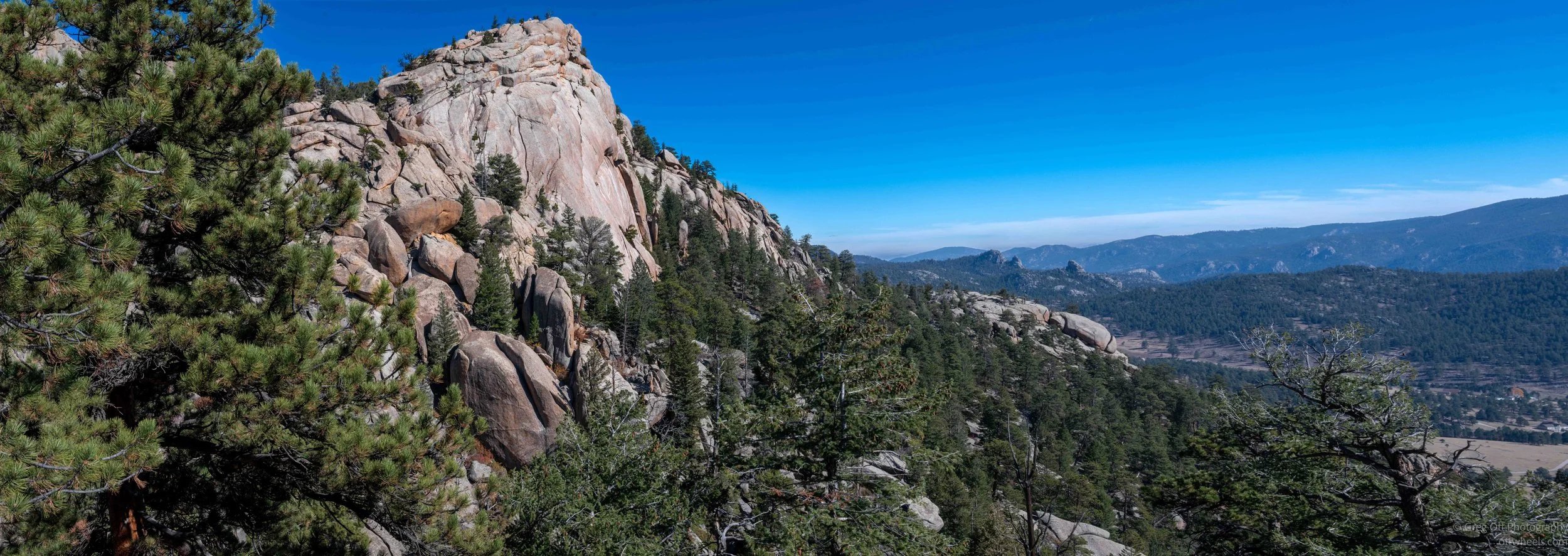
At one point, I came across a particularly interesting rock formation with a large opening that framed the sky. It reminded me of the Sun Tunnels in the Utah desert near the Great Salt Lake, although those were deliberately constructed as an art installation. Here, nature had done the work over millions of years.
The rock formations continued almost to the top of the trail. Some had broad, smooth surfaces, while others were separated into what looked like individual layers. A few were so neatly balanced that it was difficult to imagine how they had remained standing for so long.
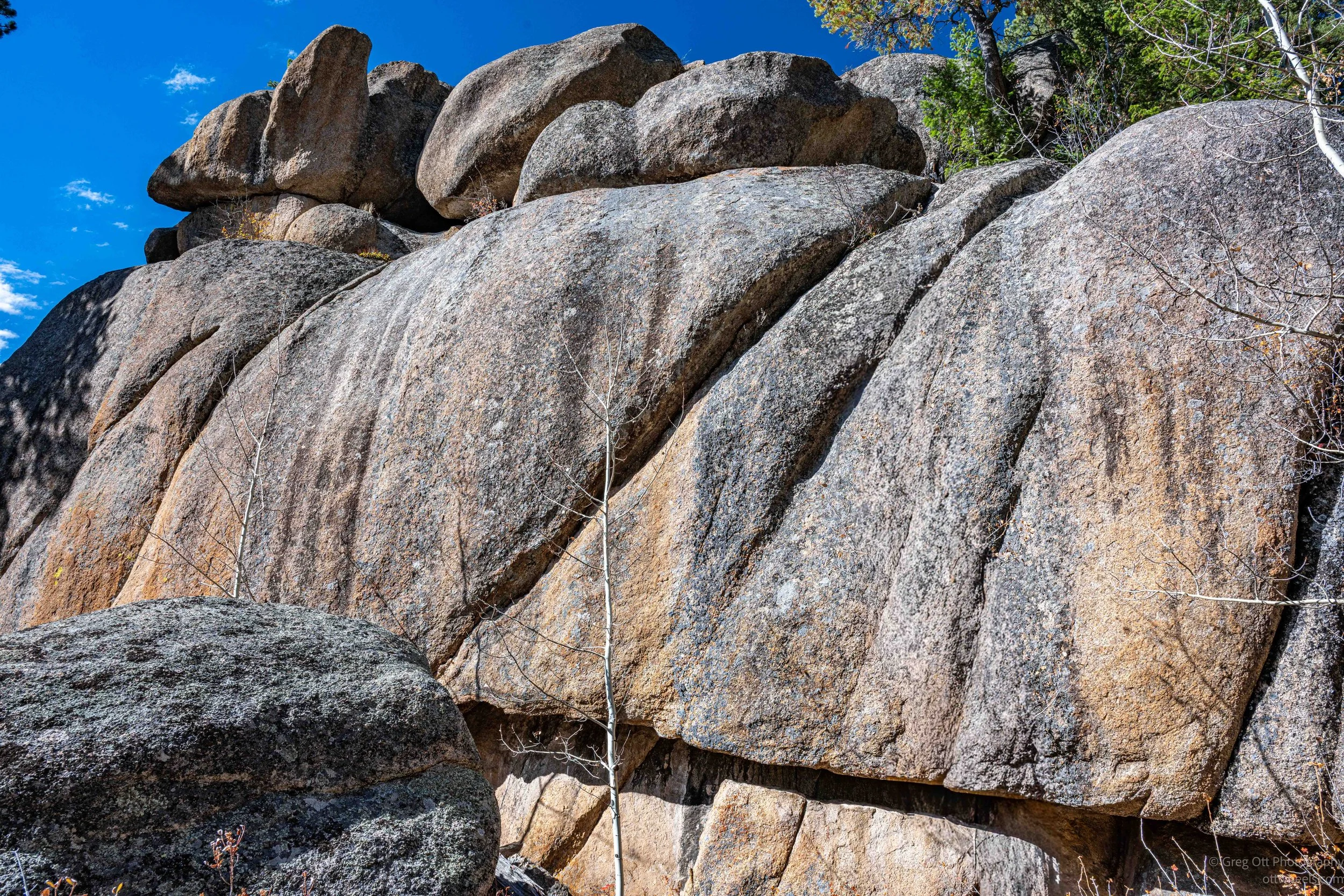
Eventually, I reached Gem Lake. It's a small, shallow lake tucked into a natural basin surrounded by granite walls. Unlike many of the lakes higher in Rocky Mountain National Park, Gem Lake wasn't carved by a glacier. The basin developed through the weathering of the granite, and the lake is filled primarily by rain and snowmelt.
I spent about twenty minutes exploring the shoreline and taking photographs. A large, weathered tree root lying partly in the water immediately caught my attention. Its twisted shape and bleached wood provided an interesting foreground against the rock walls surrounding the lake.
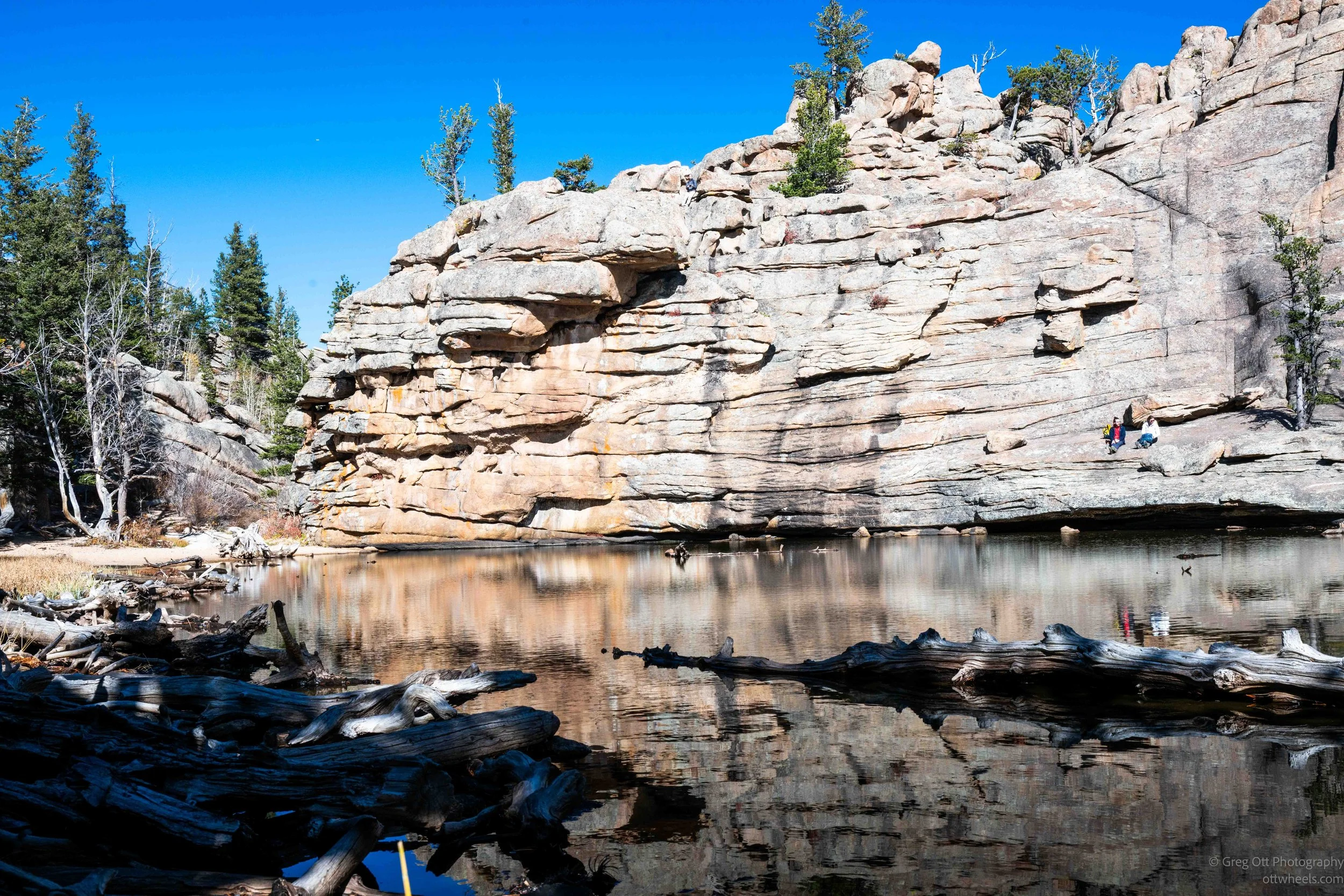
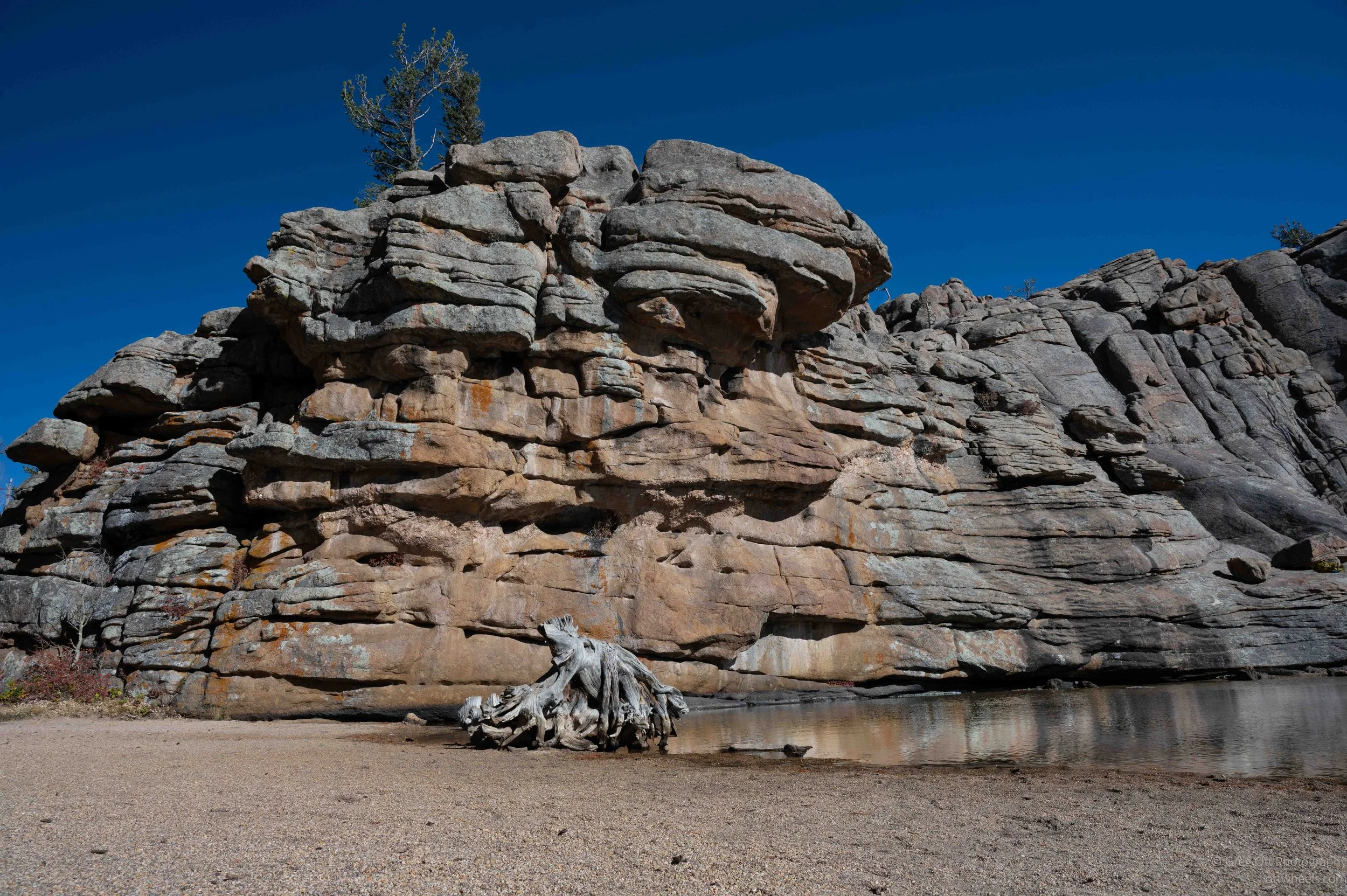
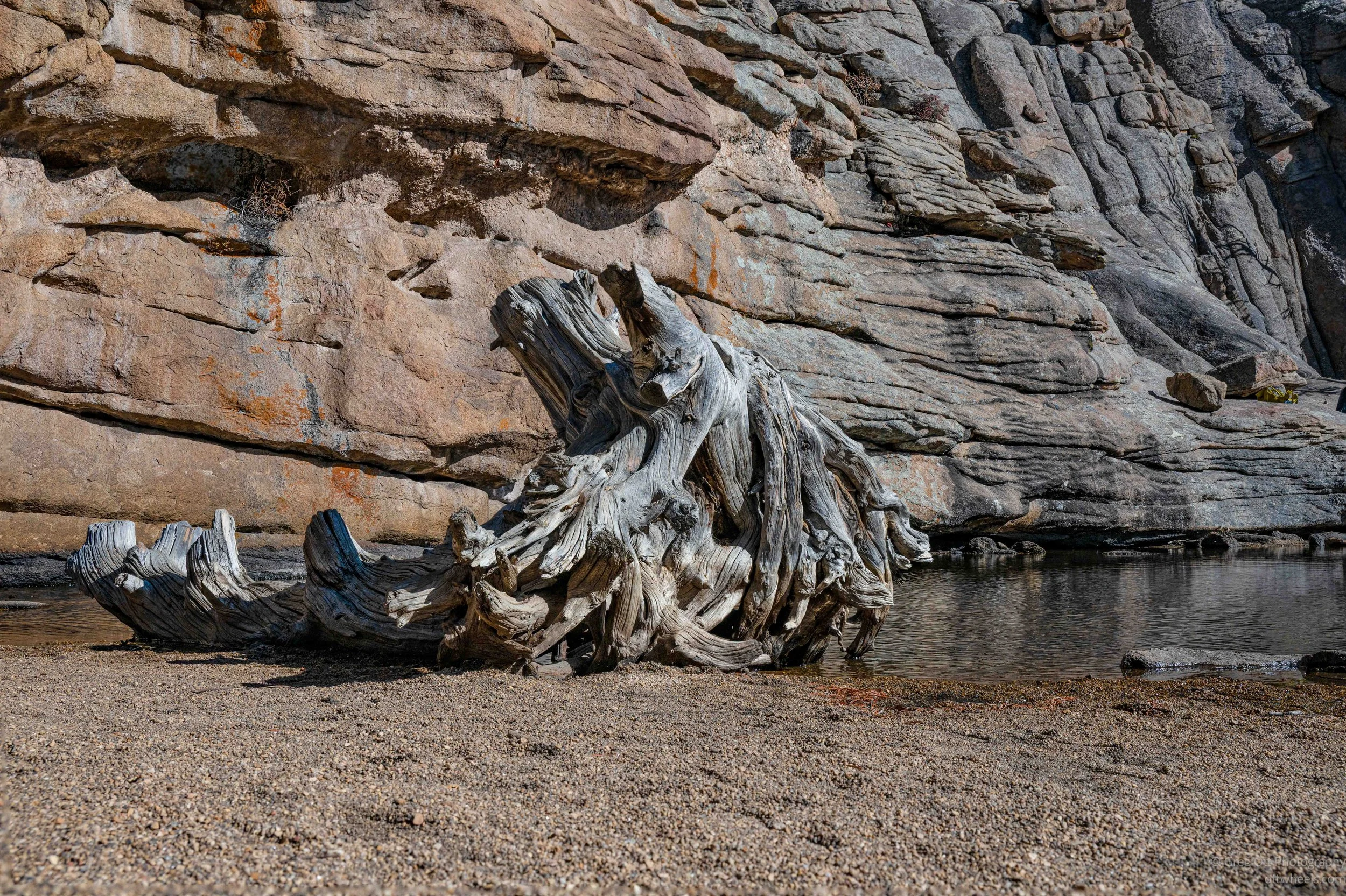
The light was constantly changing as clouds passed overhead and the sun moved lower in the western sky. The water reflected a mixture of greens from the trees, rusty reds from the rocks, and blues from the sky. I moved around the shoreline looking for different compositions, eventually finding one that incorporated the tree root, the lake, and the distant mountains.
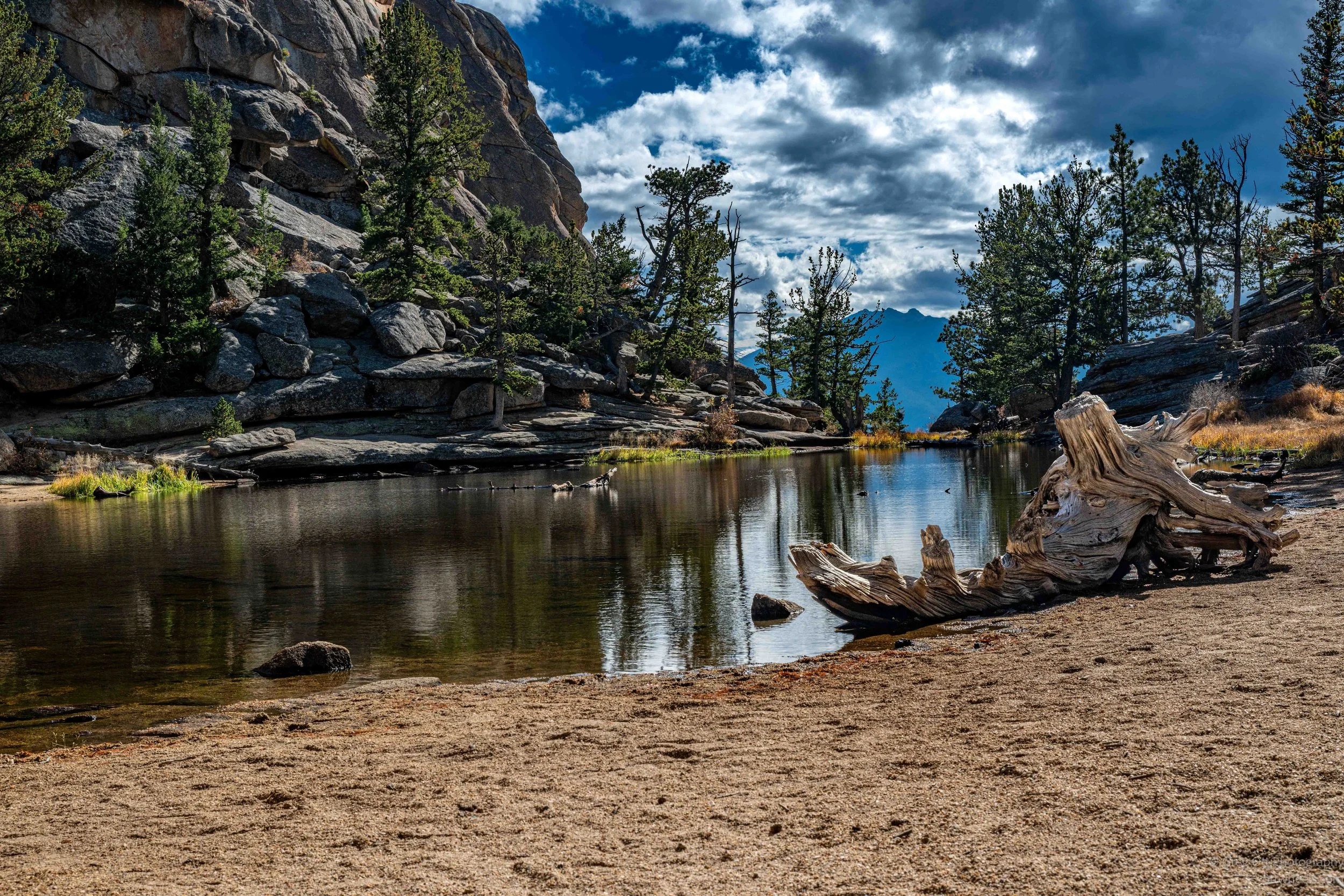
By then, the sky was becoming noticeably darker. Several people around the lake were discussing the possibility of rain. It never reached us, but I could see rain falling in the distance on the other side of the park. I decided it was time to head back.
On the descent, I met Jim and Carol from Bloomingdale, Indiana. We started talking and ended up walking together the entire way down. The conversation made the time pass quickly, and before I knew it, we were back at the trailhead. With all my stops for photographs and the time at the lake, the hike had taken a little over three hours. My total distance was just under four miles.
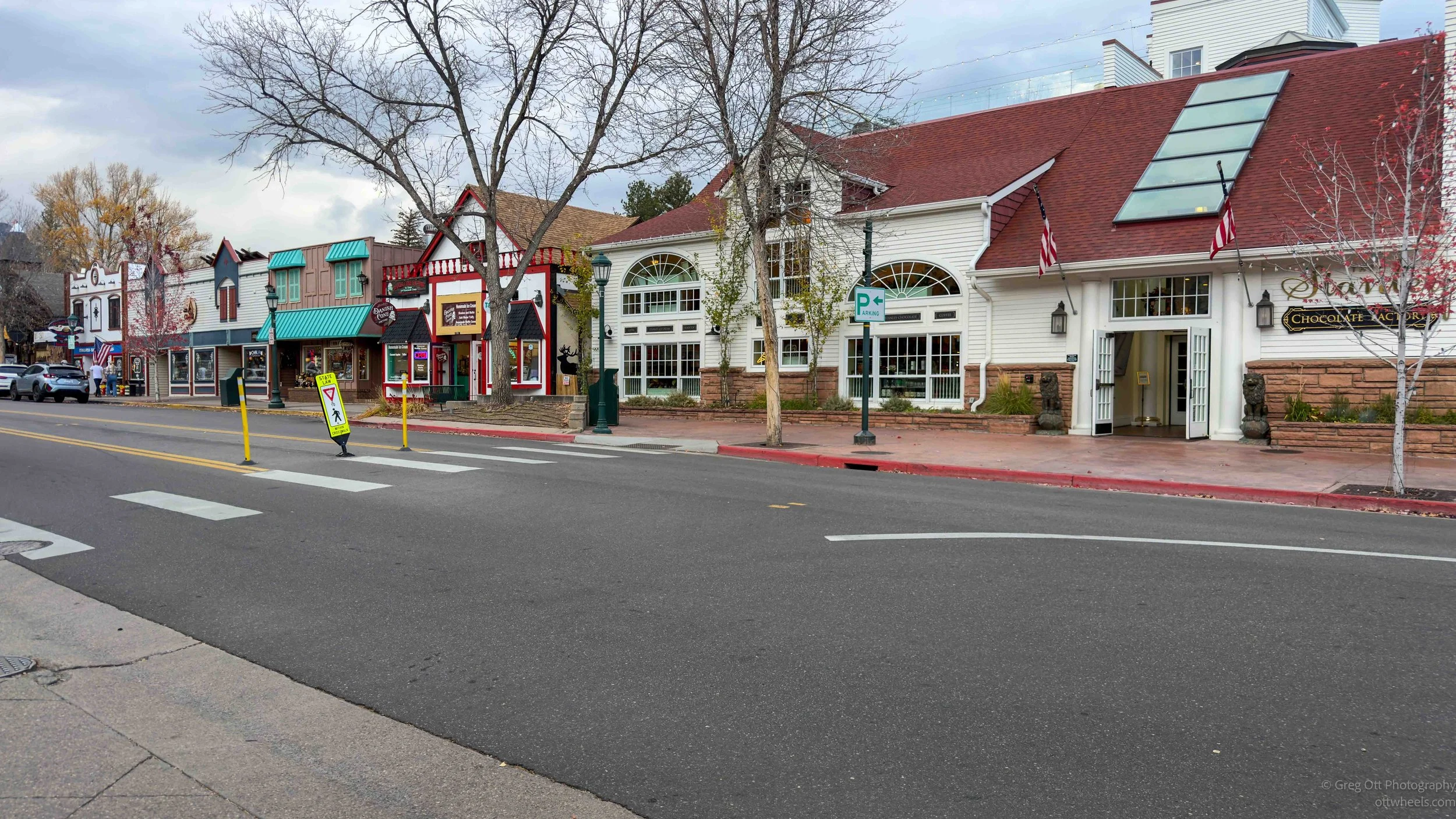
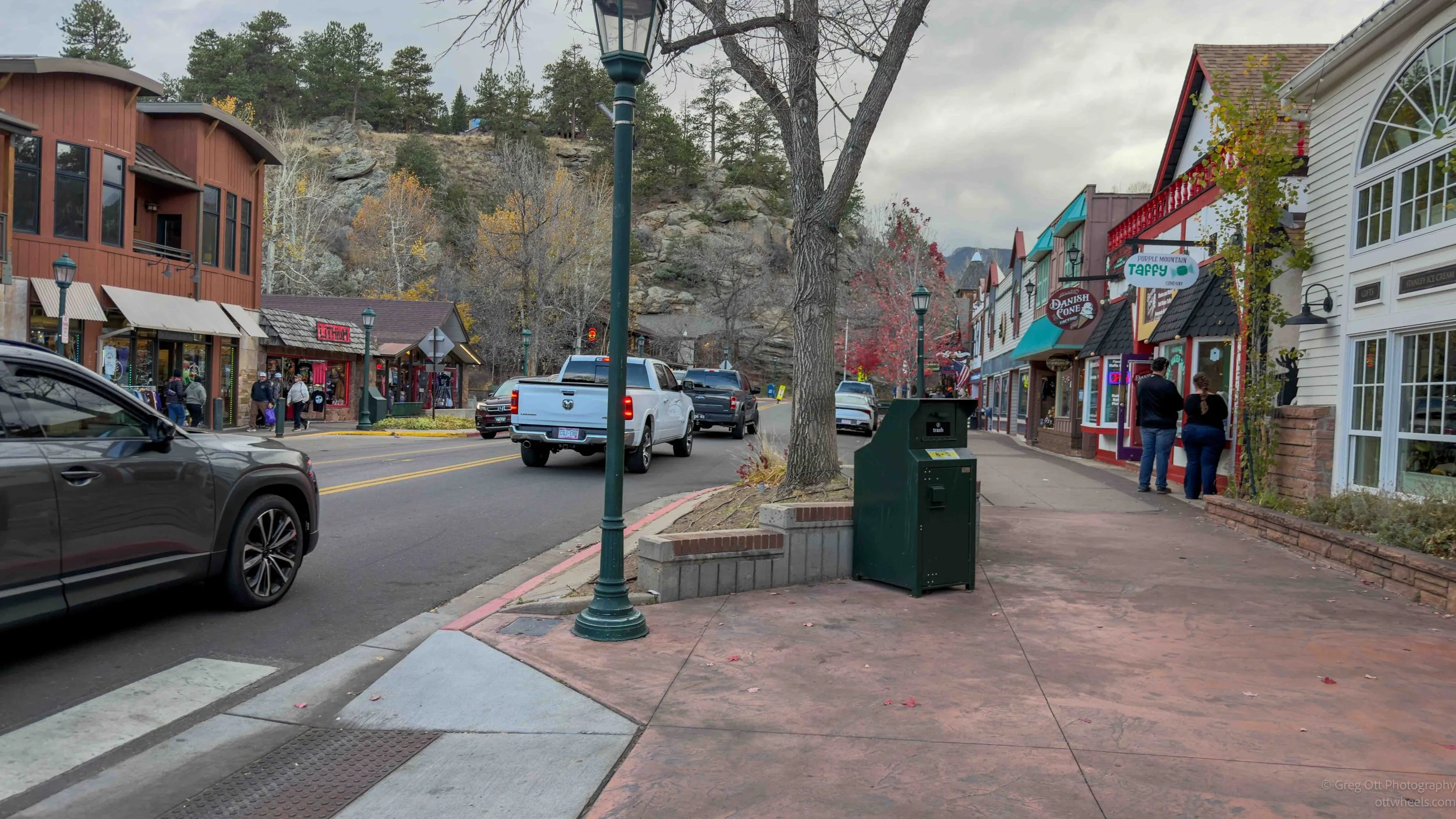
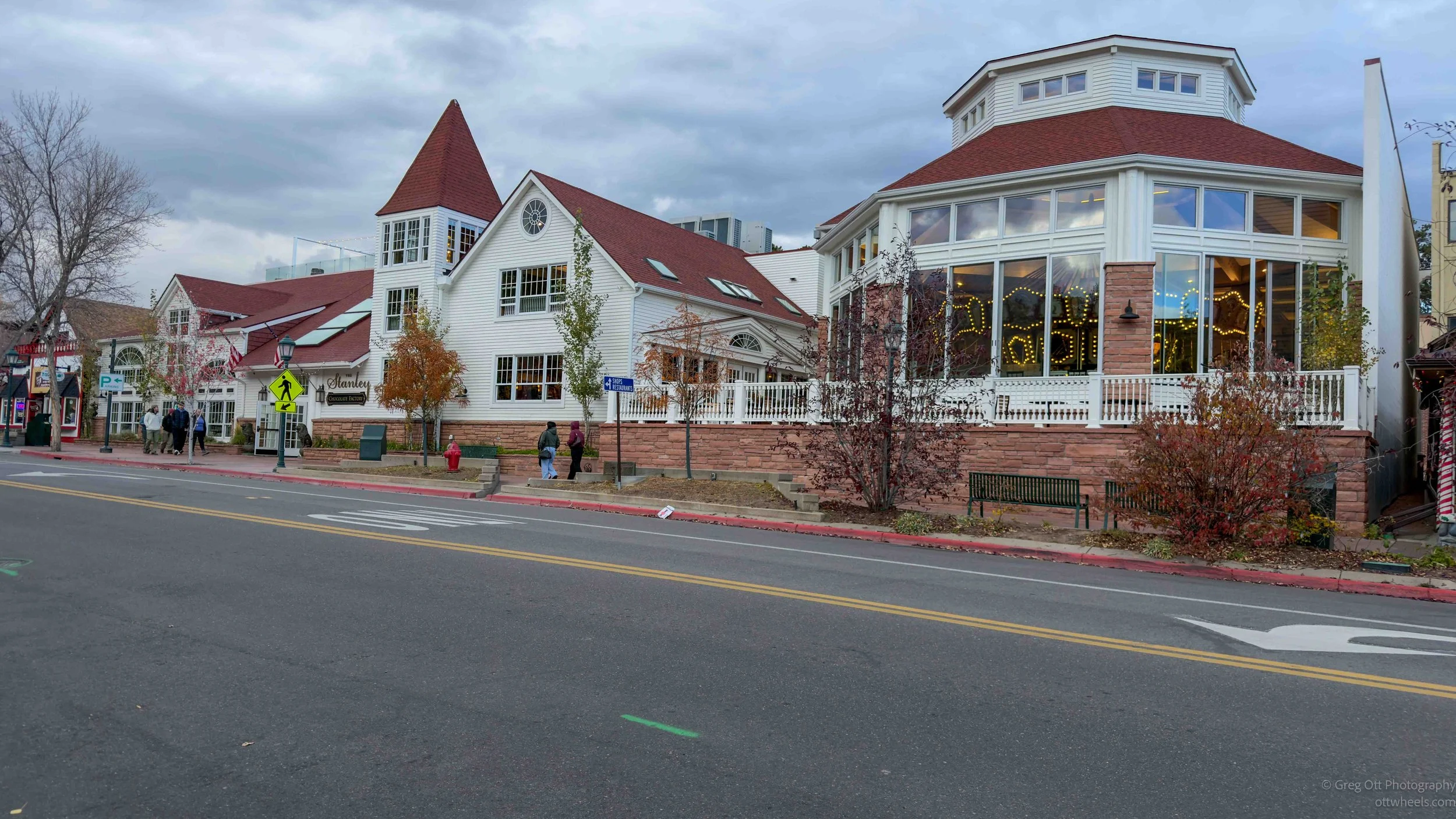
Rather than return directly to the campground, I drove into Estes Park for an ice cream. I stopped at the Stanley Chocolate Factory, which had an impressive selection of chocolates (a batch just came out of the factory) and other sweets. I ordered an espresso and a large scoop of Rocky Road ice cream. It seemed like an appropriate choice after spending the afternoon hiking in Rocky Mountain National Park.



Afterward, I spent about ninety minutes walking around downtown, trying to reconcile the Estes Park I remembered from more than forty years ago with the town standing in front of me. I had visited several times when I lived in Boulder, including riding my bicycle up from Boulder with a group of about ten people. I was the slowest rider in the group, but I made it.
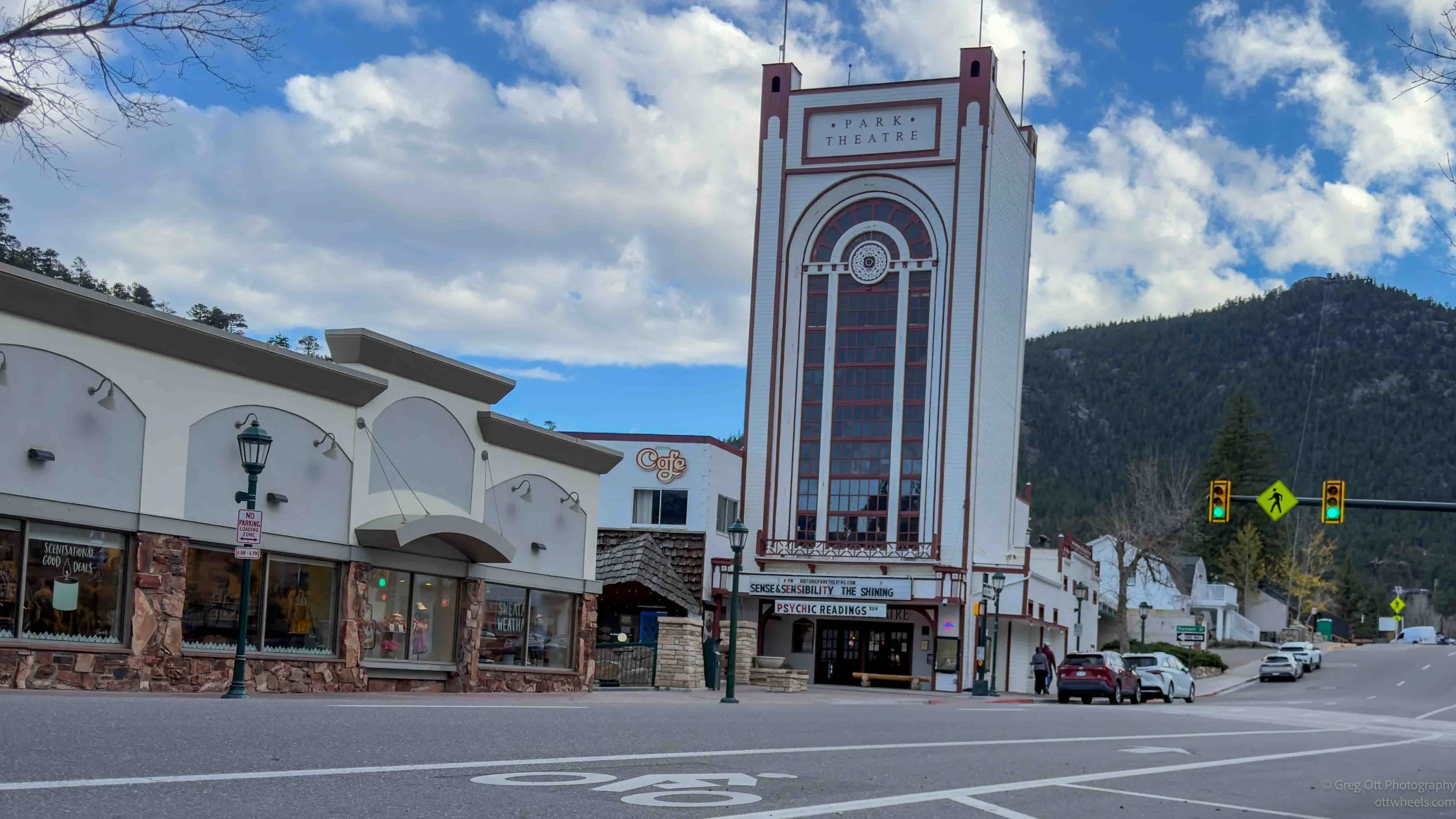
The downtown area was still recognizable in places, but much had changed. The streets were wider, traffic patterns had been altered, and new roundabouts had been added. The town had also expanded considerably, with more buildings, businesses, and traffic than I remembered. I kept looking for familiar landmarks, but even when I found them, their surroundings had often changed enough that they felt different. The Park theater is still there and playing The shining for tourists.
I also wanted to revisit the Stanley Hotel, which I remembered as a large white building standing prominently above town. On one of my earlier visits, our cycling group had stopped there and walked around the property. On another occasion, I remember sitting on the hotel's big front porch, enjoying the view.
The hotel is perhaps best known for inspiring Stephen King's novel The Shining. The 1980 Stanley Kubrick film wasn't actually filmed there, although the 1997 television adaptation was. The Stanley Theatre downtown was showing The Shining during my visit, another reminder of the town's connection to the story.
Finding the hotel proved more difficult than I expected. The property had expanded to include several additional buildings, and construction was continuing. The streets around it had changed, and I had trouble getting my bearings. When I finally located the entrance, access was controlled through a guard gate on the east side of the property. This was certainly different from the days when we could simply walk up and wander around.
I decided not to bother. I had wanted to see the old hotel I remembered, but it seemed that experience was no longer possible in quite the same way.
By then, it was getting late, so I returned to the van, stopped at a gas station to top off the tank, and drove back to Moraine Park Campground. I made spaghetti for dinner, processed the day's photographs, caught up on some blog writing, and called it a night.
It had been a simple day, but a good one. A pleasant hike, some interesting geology, a conversation with two fellow hikers, and a chance to revisit a town that had been part of my life more than forty years earlier. The mountains were much as I remembered them. Estes Park, not so much.