Kenai Fjords National Park Extended Glacier Cruise:
As I finished writing this post, I realized I'd had RAYE – Live at the Royal Albert Hall (spotify) playing in the background the entire time. Somehow it became the soundtrack for reliving this day. If you're settling in to read this post, grab a cup of coffee—or maybe a glass of wine—put the concert on, and enjoy both. I think they pair surprisingly well. Enjoy!!!
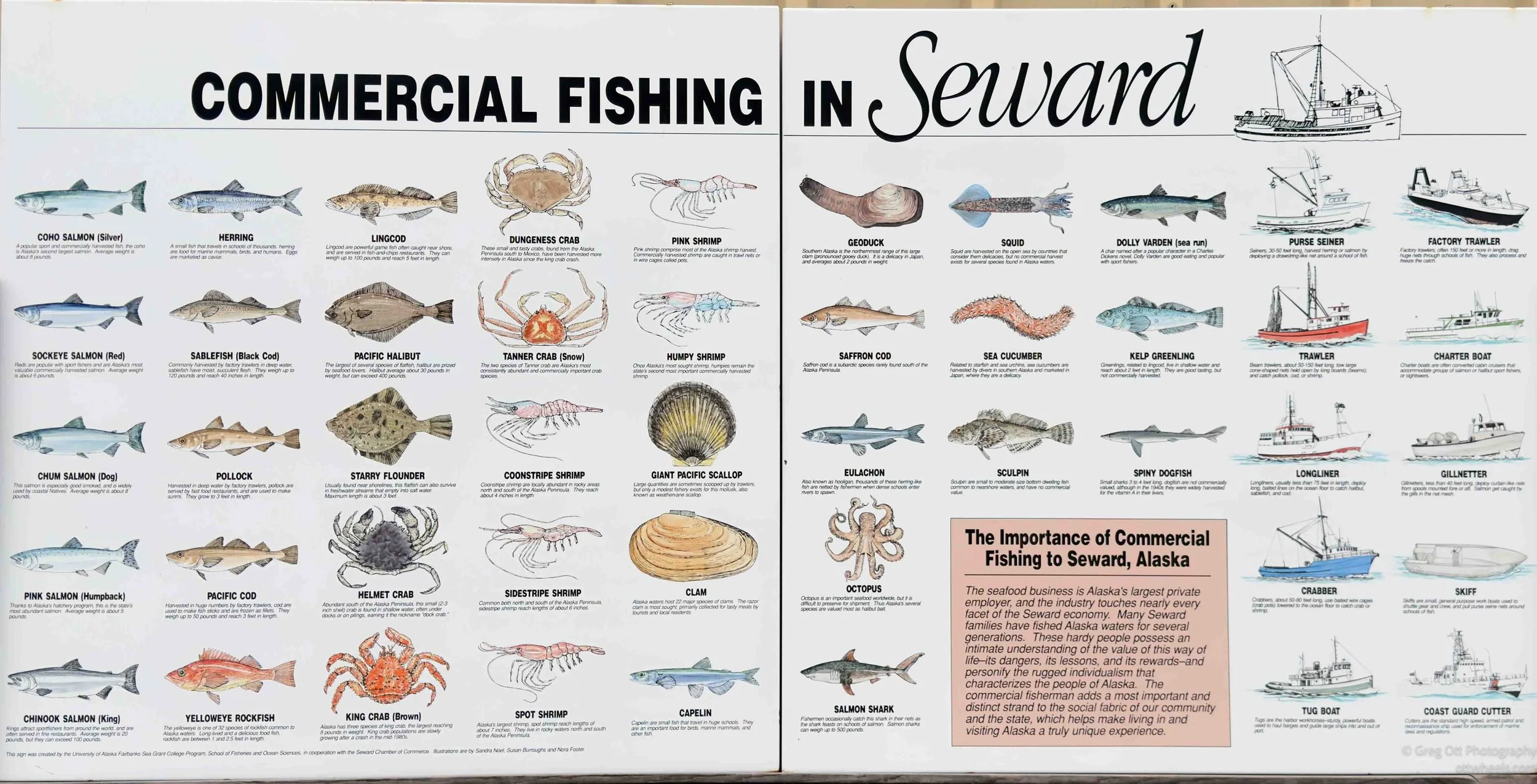
I woke in the parking lot near the National Park Service Visitor Center in Seward. My stomach was feeling slightly better, but I'd developed a stronger cough overnight and was out of cough drops. Probably the last thing I needed was a coffee, but instinctively my body said, you're not going to make it through today without caffeine. As I walked towards the tour boat, I stopped to read posters and look at signs about Seward. Tourism and Fishing are the main employers in Seward, AK.
I spotted a tour company sign — Kenai Fjords Tours — and wandered in, thinking it might be my outfit for the day. I had the address of my actual tour company, which was a block away, and figured maybe check-in was happening here instead. It wasn't. But they did have a small coffee bar, so I got in line anyway.
A woman ahead of me had just ordered a cinnamon latte with two extra shots and caramel flavoring. She sounded Italian, and I thought, there is no way you'd find that drink in Italy. After building this monstrosity, the barista started cleaning the frothing pitchers, spoons, and frother — all of which took about five minutes, punctuated by "I'll be right with you," which eventually turned out to be true. I ordered a 12 oz latte. While I waited, I noticed a gift shop and thought, maybe they'll have throat lozenges. Much to my surprise, they had Ricola original cough drops. By the time I paid, my coffee was ready.
I followed a stream of people down the street to Major Marine Tours for the 7.5-hour "Kenai Fjords National Park Extended Glacier Cruise." The confirmation email said to check in at the tour desk inside the Harbor 360 Hotel at least an hour before departure. Departure was 9:30; I checked in at 8. The hotel has several lounge areas, and the Otter Lounge — one person in it when I arrived, leather chairs, a view of the harbor — was clearly the best seat in the house while I waited.
Major Marine had also sent a list of what to bring and what's not allowed, along with a warning that temperatures offshore can drop 20 to 30 degrees colder than on land, with stronger wind. All of it turned out to be true. I wore a wicking underlayer, a thermal long-sleeve layer, and brought a thin down jacket plus a rain shell. High waterproof boots, a Smartwool cap, and gloves rounded it out — though, surprisingly, I never needed the gloves. The email's other line stuck with me: whale sightings cannot be guaranteed, but there is a chance to see orcas, humpbacks, Dall's porpoises, Steller sea lions, harbor seals, sea otters, seabirds, and more. Peak whale watching season is mid-May to early August. Food was fine to bring aboard; alcohol was not.
A long line had already formed well before boarding began at 9:00. I sat out most of it in the Otter Lounge with a few other stragglers, letting the line thin before wandering down. Crew members greeted us as we approached the ship, chatting with guests, getting to know names. The captain introduced himself too — Gary Kirsheman, from Glastonbury, Connecticut. I had to laugh. That's about 25 miles from Simsbury, where I lived for many years. Small world, finding two former Connecticut residents at the edge of Alaska, about as far from New England as you can get while still standing on U.S. soil.
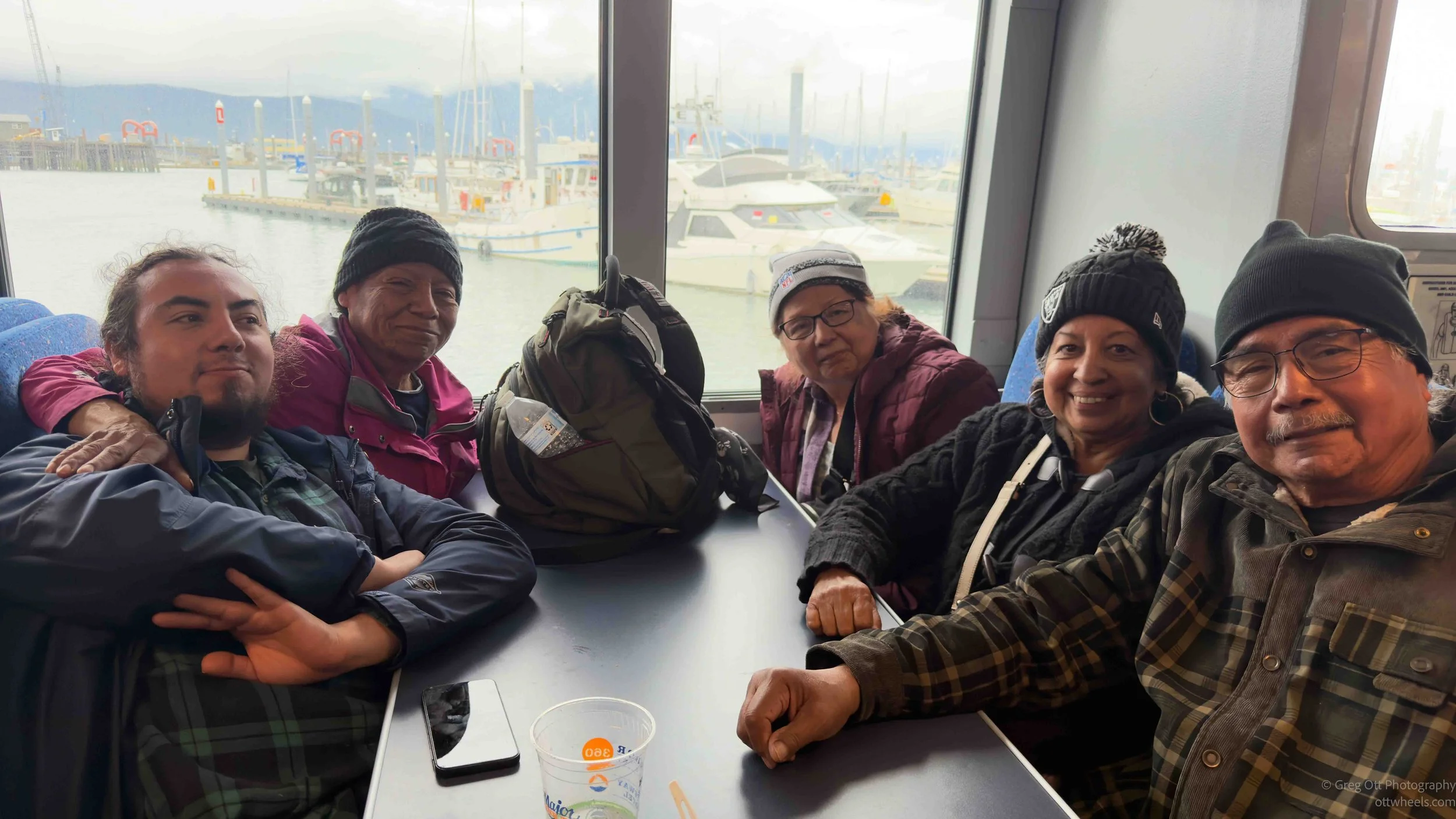
At the gangway we showed a boarding ticket with a scannable QR code that never actually got scanned — instead, crew just asked for a name and party size. I was assigned to Table 32. When I got there, one seat remained open out of six.
Once underway, a staff member ran through the safety briefing and reminded anyone taking seasickness medication to do it now, since it takes about an hour to kick in. Two people at our table had just taken theirs. All five of the people were related in someway (siblings, son, daughter-in-law).
Throughout the cruise, I would return to Table 32 for conversations mostly with Gloria. She and her son lived in Anchorage and were showing the rest of the family parts of Alaska. Gloria was one of those people with a huge heart, that had compassion for everyone. She said she didn’t judge other people and understood that sometimes circumstances get in the way. She had worked in Fairbanks in a support role in the oil industry. Currently, she is a baker in a large hospitality organization in Anchorage. I don’t believe Gloria ever left her seat at Table 32. At times I found her son sitting with her. It was nice to talk to someone with such a calm reflective attitude.
Out of the Harbor
As we pulled away from the dock, a humpback surfaced near a small fishing boat close by. I caught its back for a moment — we lingered, hoping for more, but it only ever showed us that dark curve of a back before slipping under again. Whales would later become the highlight of the trip.
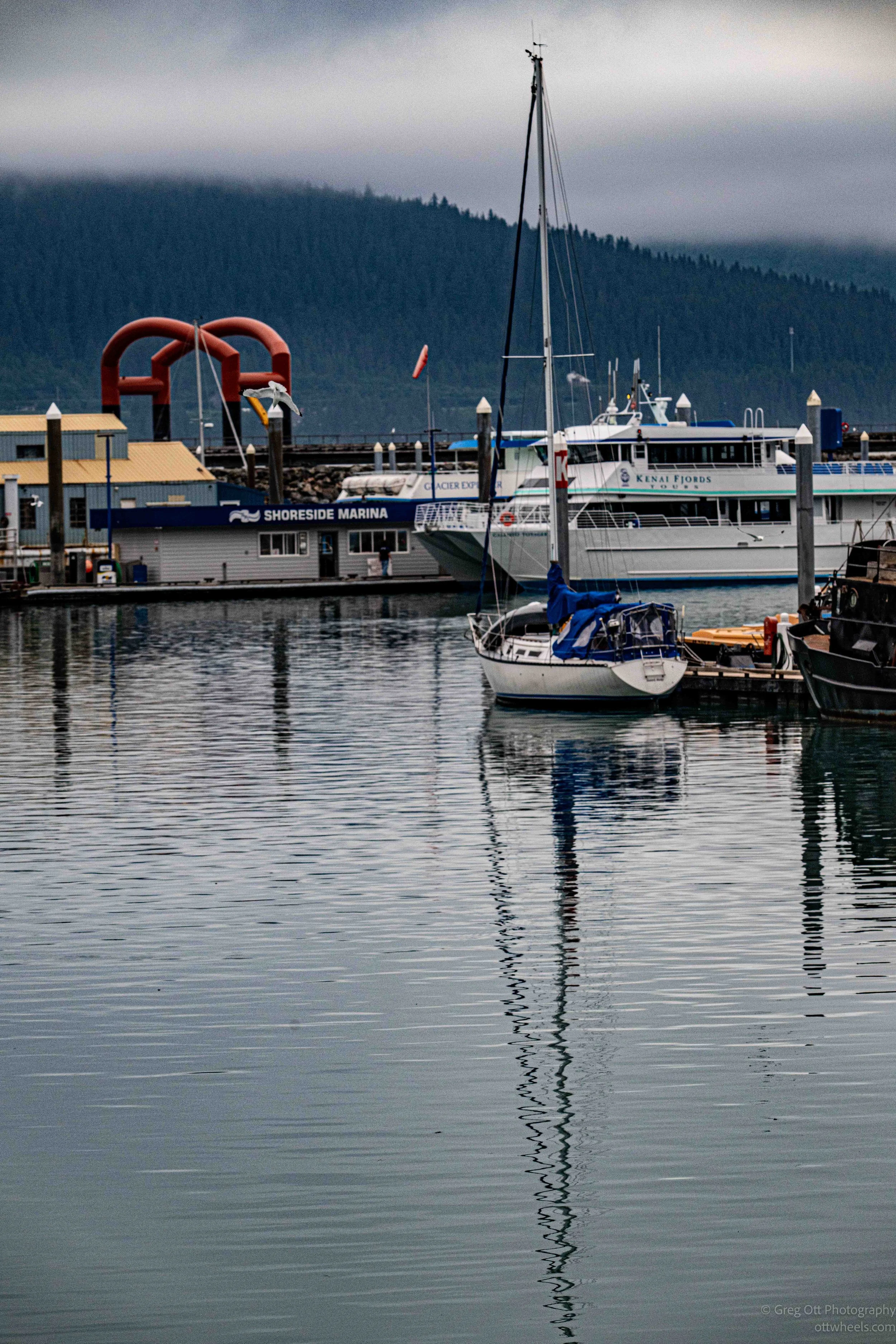
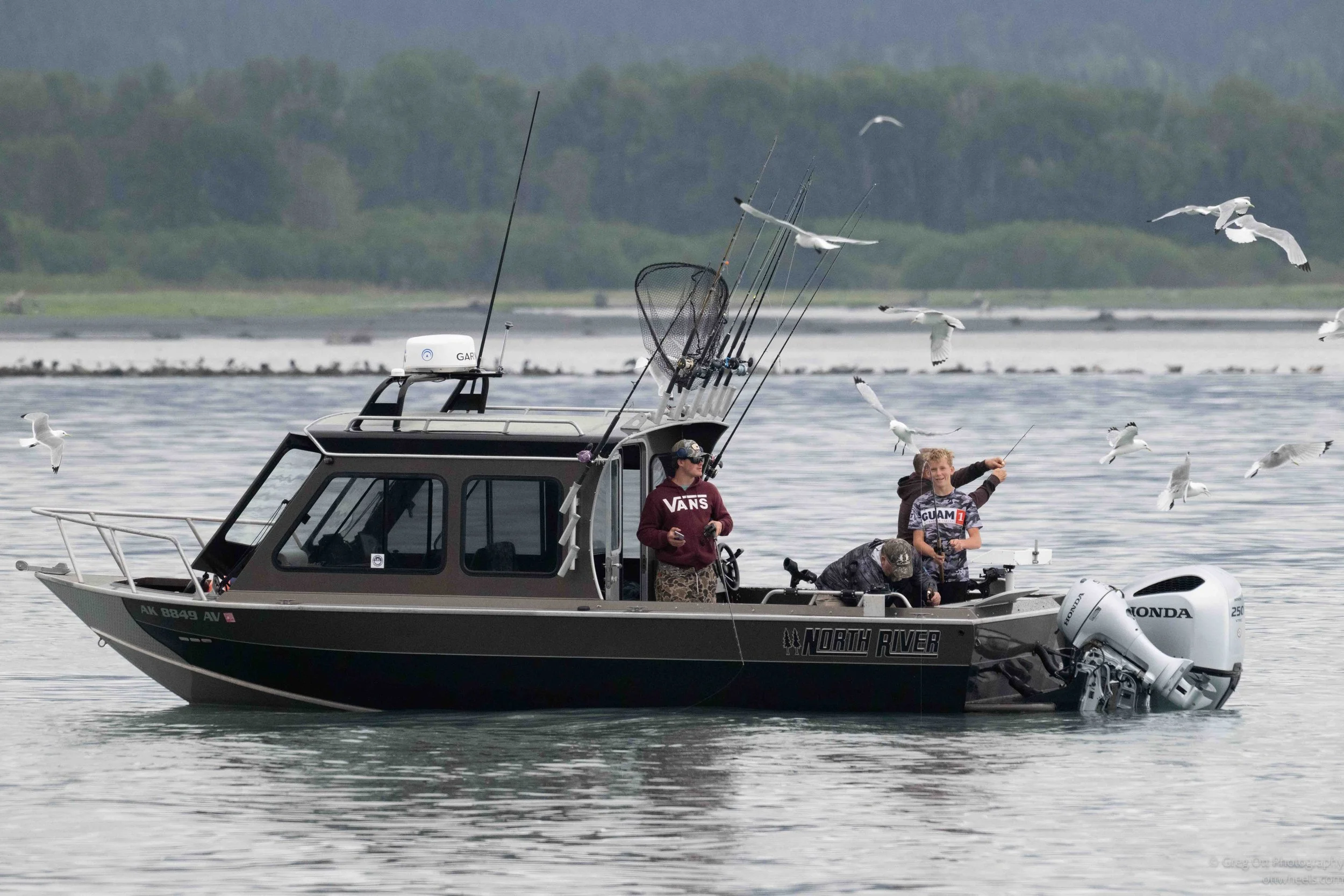
We eased out into Resurrection Bay, the fjord Seward sits at the head of. The name goes back to 1792, when the Russian fur trader Alexander Baranof was caught in a storm while sailing from Kodiak to Yakutat and ducked into the bay for shelter. The storm broke on Easter Sunday — the Russian Sunday of the Resurrection — and Baranof named the bay accordingly. It stuck for more than two centuries. Seward itself came later, in 1903, founded by railroad man John Ballaine as the ocean terminus for what became the Alaska Railroad. His engineer had penciled in "Vituska" on the blueprints, a mashup of Vitus Bering's first name and the tail end of "Alaska," but the town was ultimately named for William H. Seward, the secretary of state who negotiated the 1867 purchase of Alaska from Russia — reportedly only after Teddy Roosevelt personally leaned on the matter.
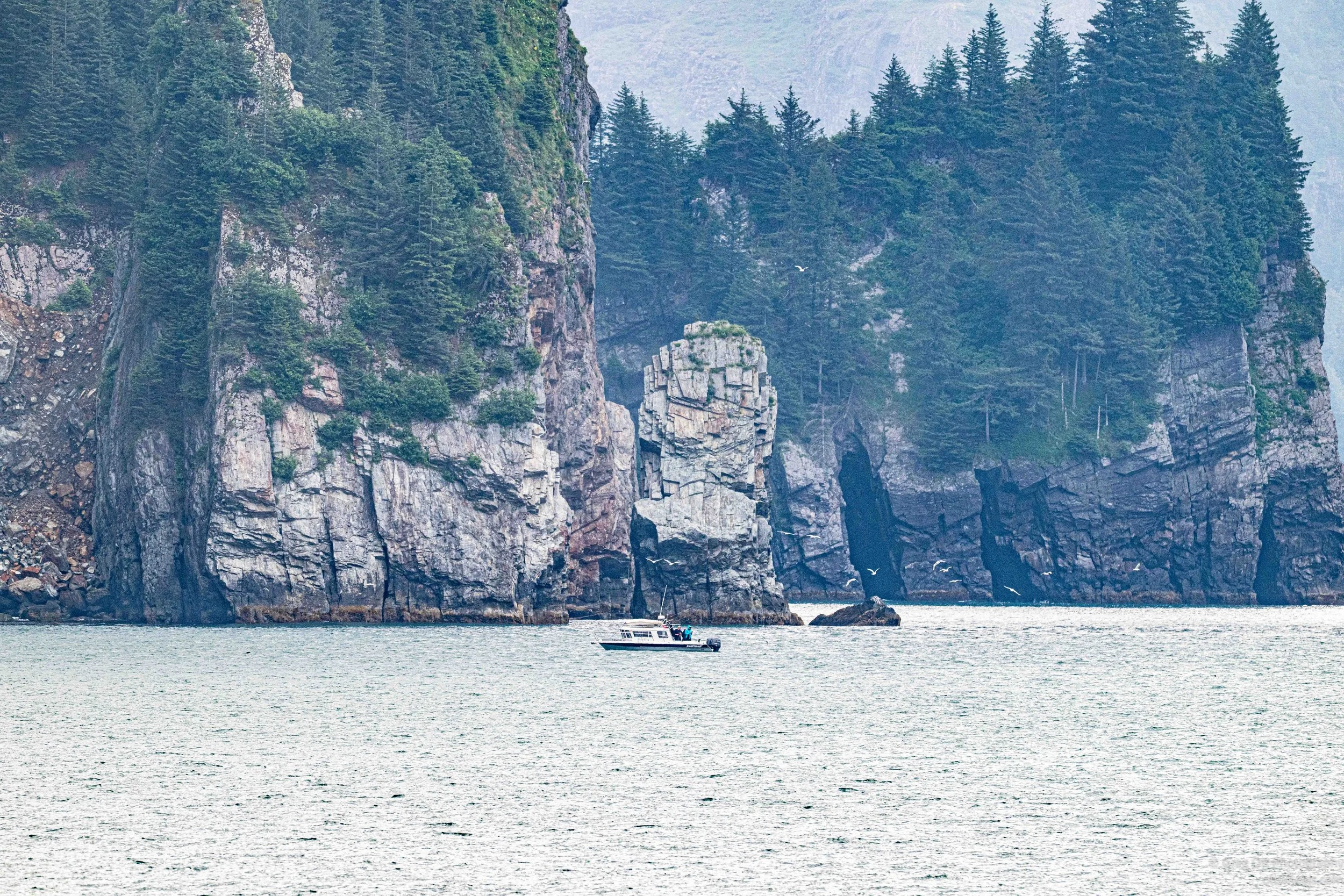
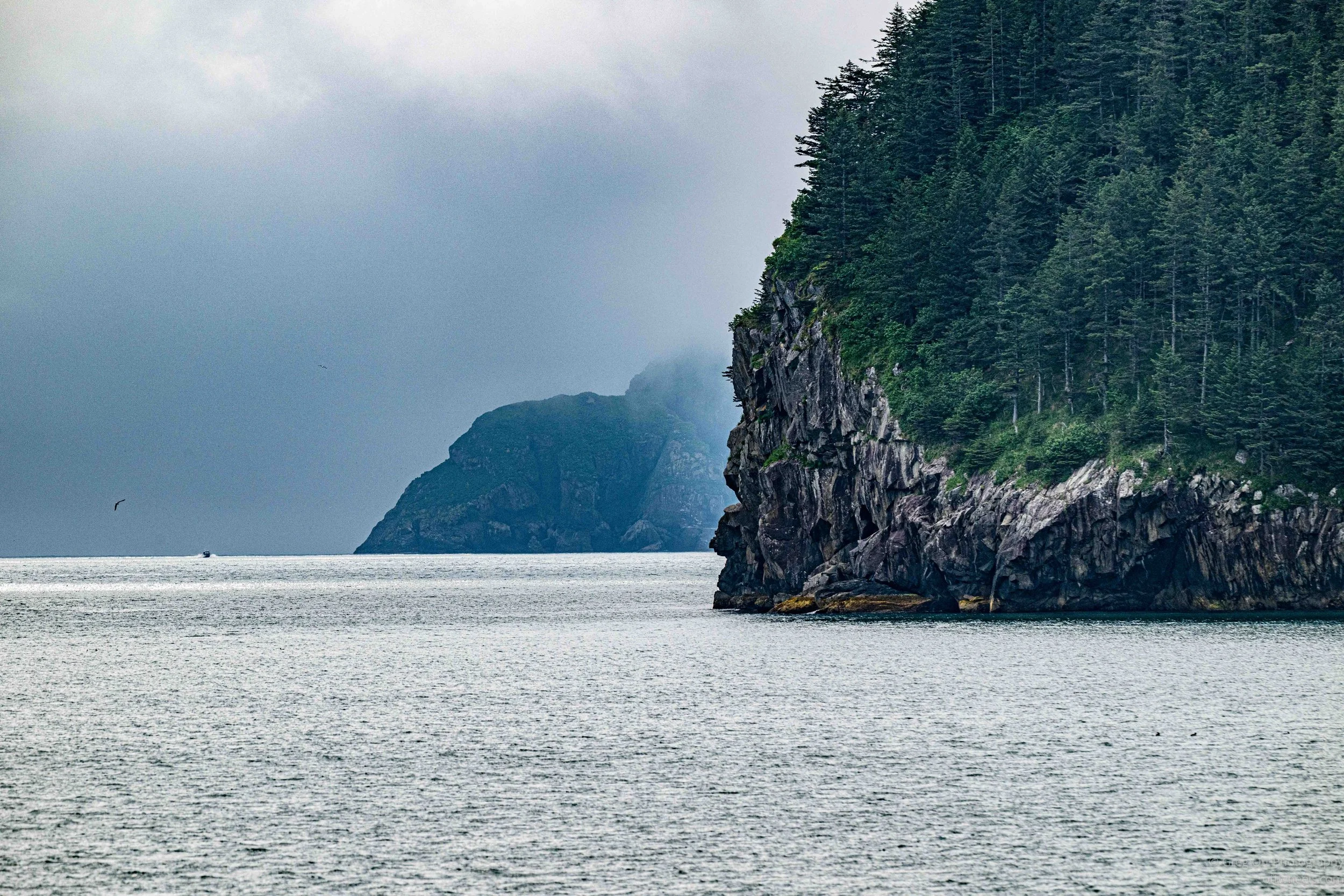
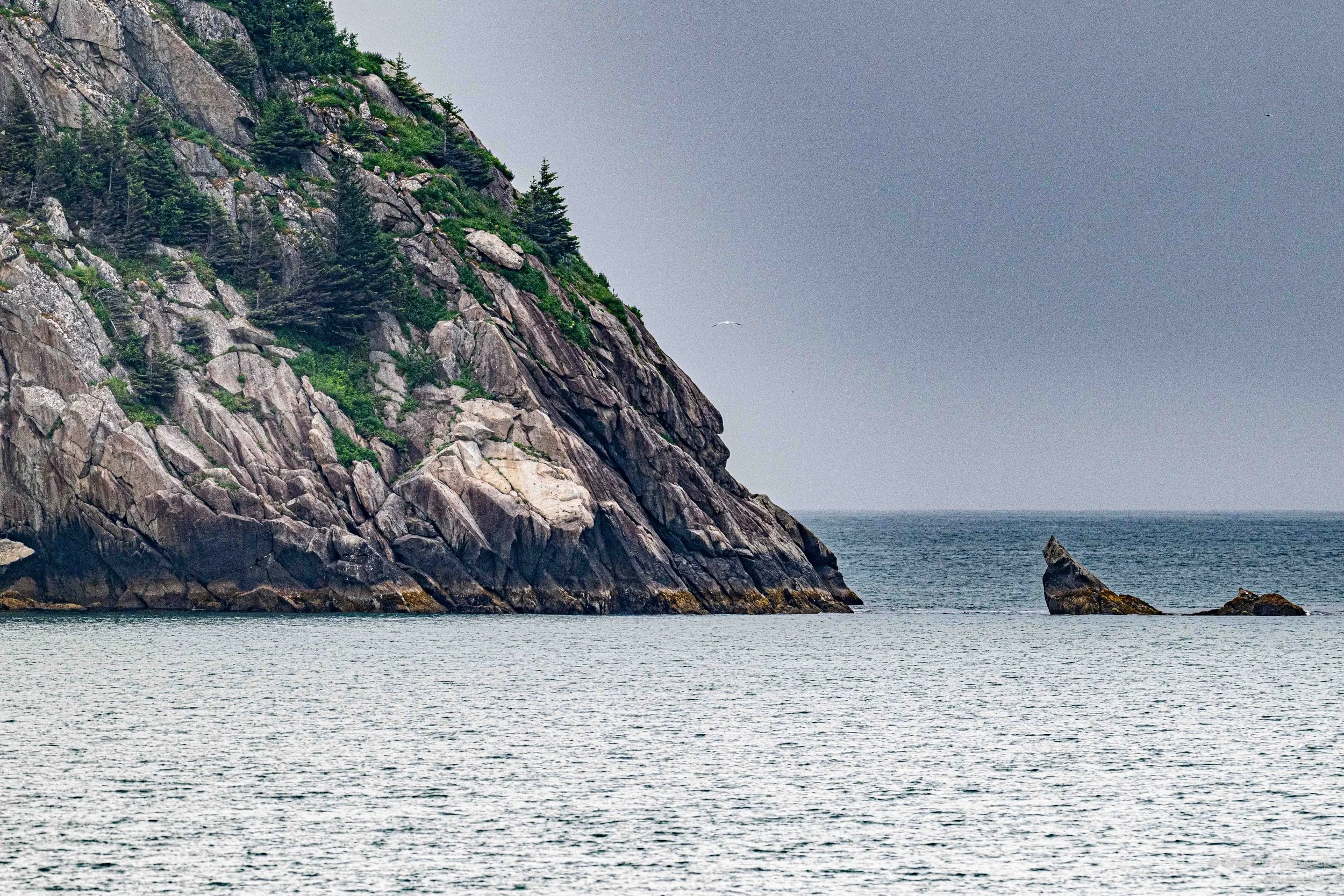
Off to our right rose Caines Head, a cliff about 650 feet above the bay that doesn't look like much from the water until you know what's buried in it. In 1941, as fears grew that Japan might strike the Alaskan coast, the Army stationed 277 men and four 155mm guns here. After Pearl Harbor and the Japanese invasion of the Aleutians in mid-1942, the Army poured roughly $8 million into Fort McGilvray — an underground fortress with two six-inch guns capable of firing 16 miles, connected by miles of tunnels, bunkers, and a submarine spotting station. Soldiers spent their first winter shivering in tents and log shelters while construction crawled along in the weather. By the time the fort was nearly finished in 1944, the war had moved on and the position was obsolete; it was abandoned that April. It sat forgotten until 1971, when the state opened Caines Head as a recreation area, and rangers clearing trail in the 1980s stumbled onto the intact tunnels and gun rooms of Fort McGilvray, still there to walk through today.
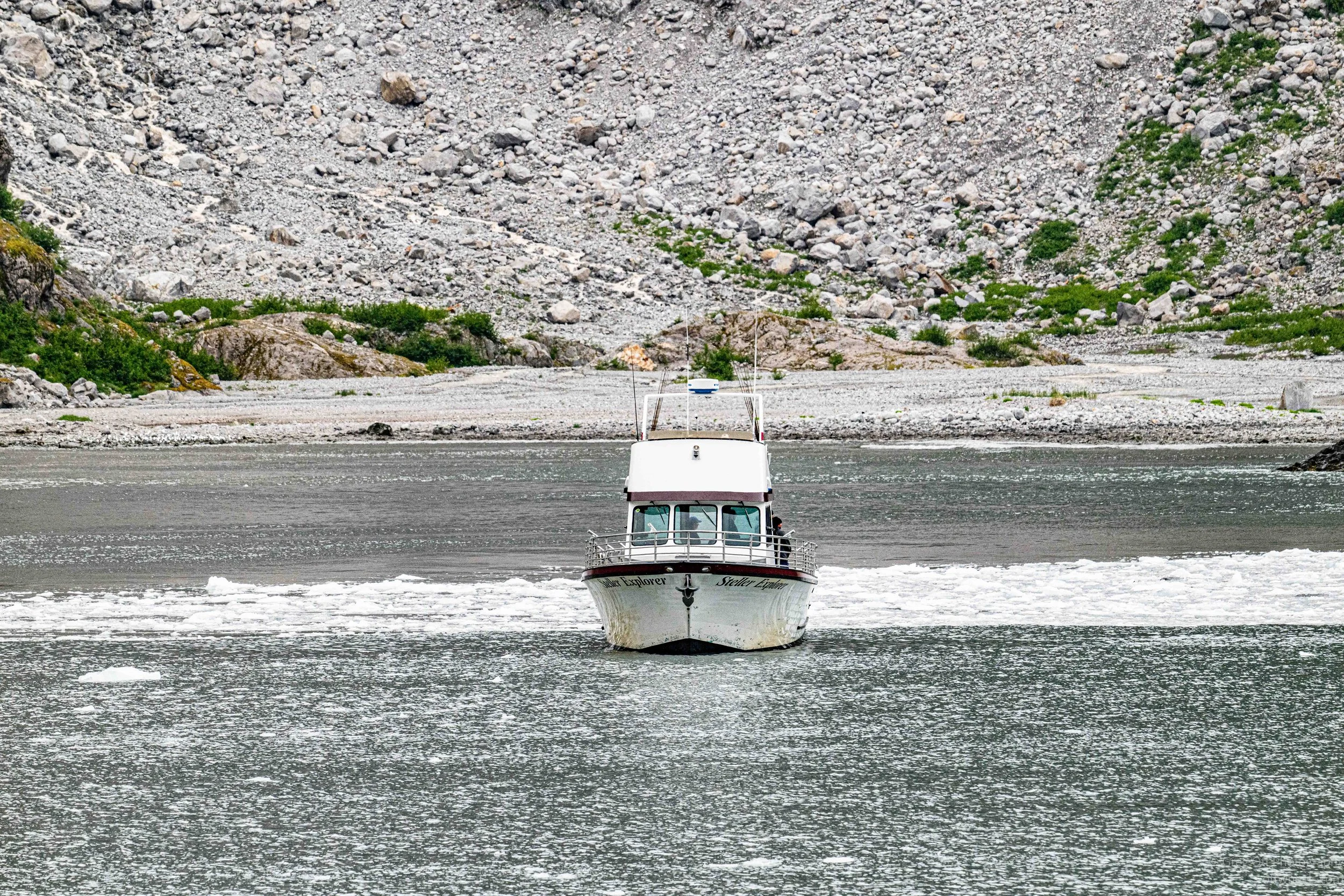
Down the Outer Coast
We passed Callisto Head off to our right and pushed on toward Spire Cove without turning into it — just a glimpse of its jagged little pinnacles from open water. This whole stretch of coastline is the product of the same process that carved every fjord we'd see that day: glaciers grinding down through granite and slate during past ice ages, scouring the valleys into steep, U-shaped troughs, which the sea then flooded as the ice retreated and melted. The fjord floors here plunge 600 to 1,000 feet below the surface, walled in by bedrock cliffs polished smooth by ice and dropping straight into the water without so much as a beach to interrupt them.
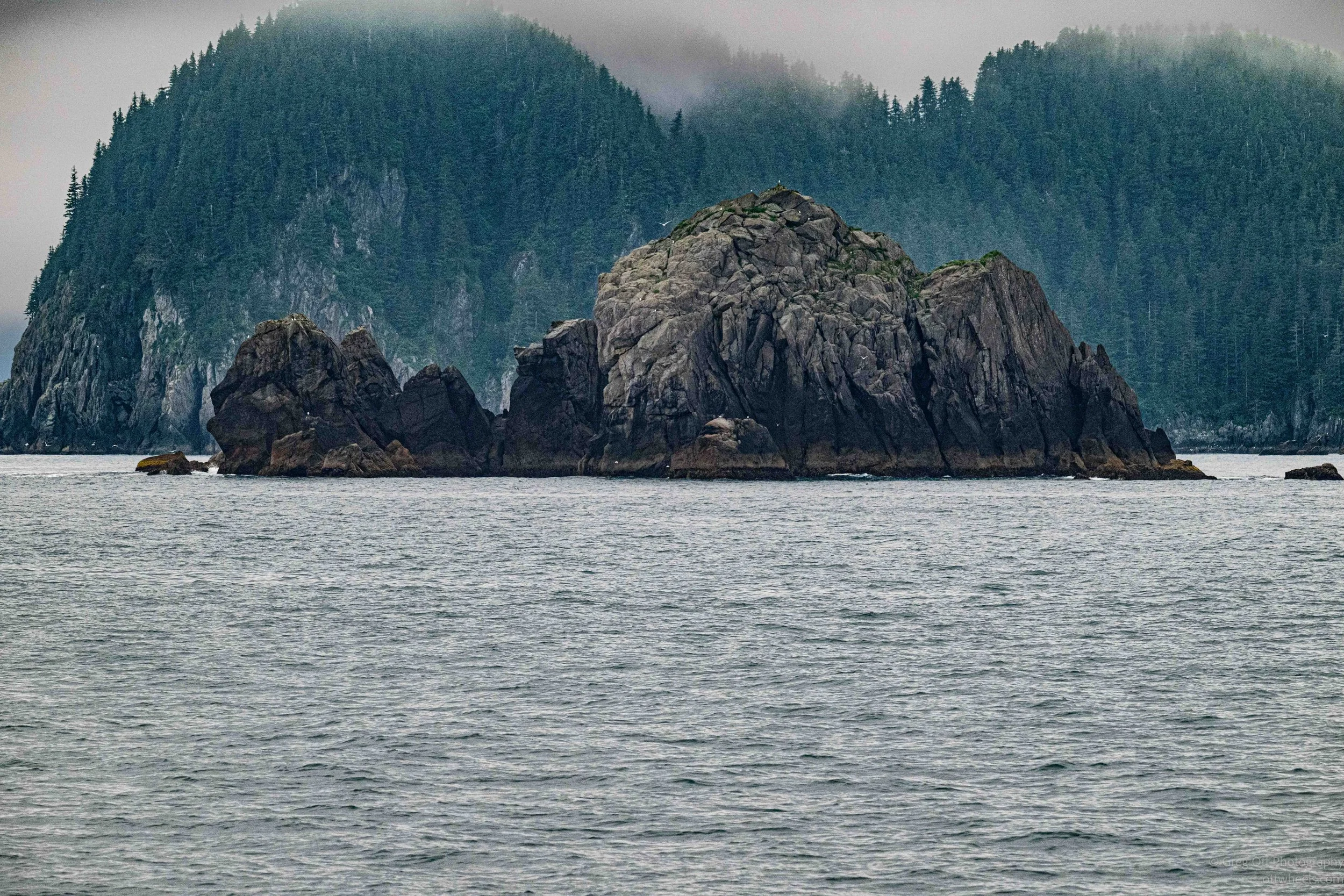
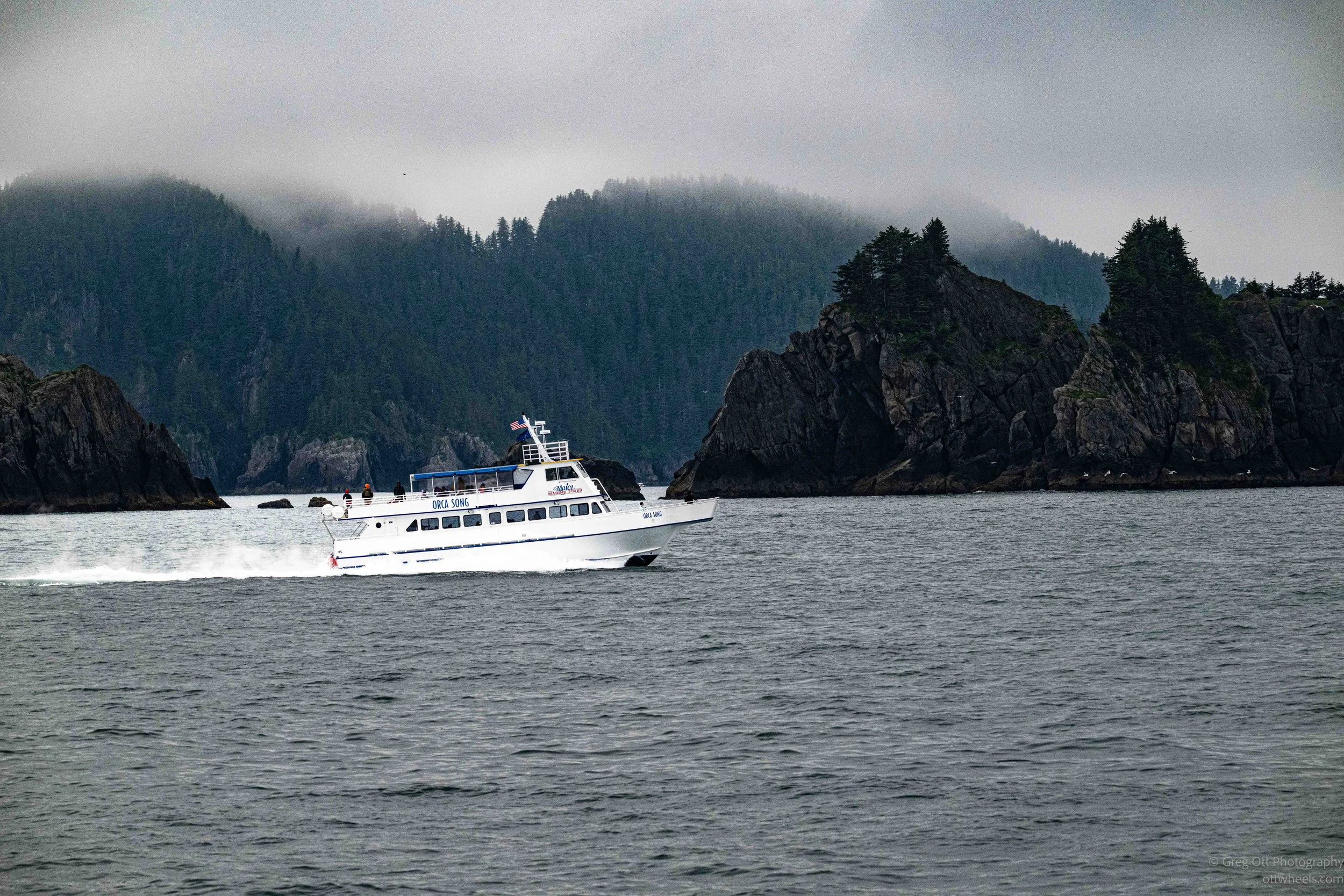
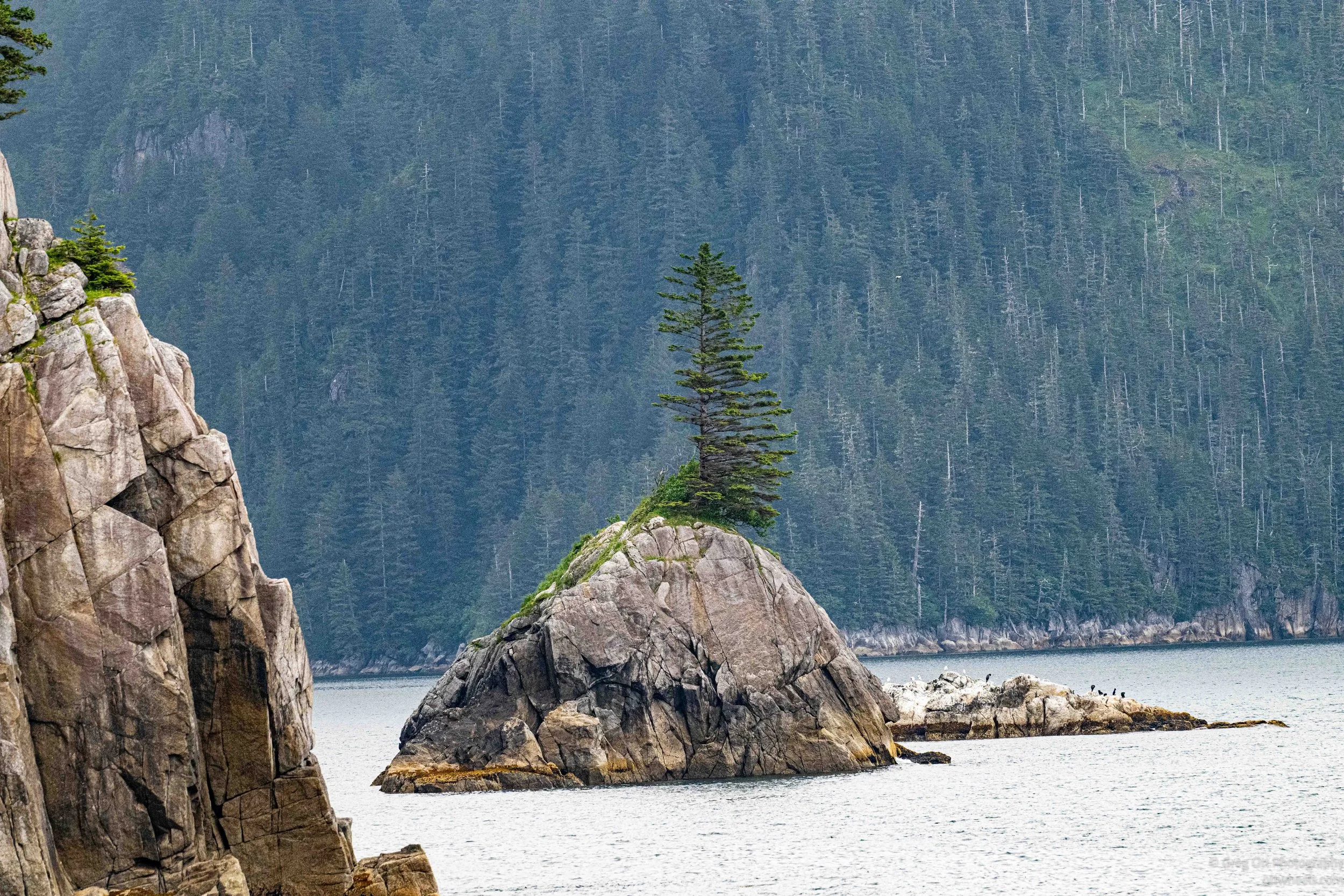
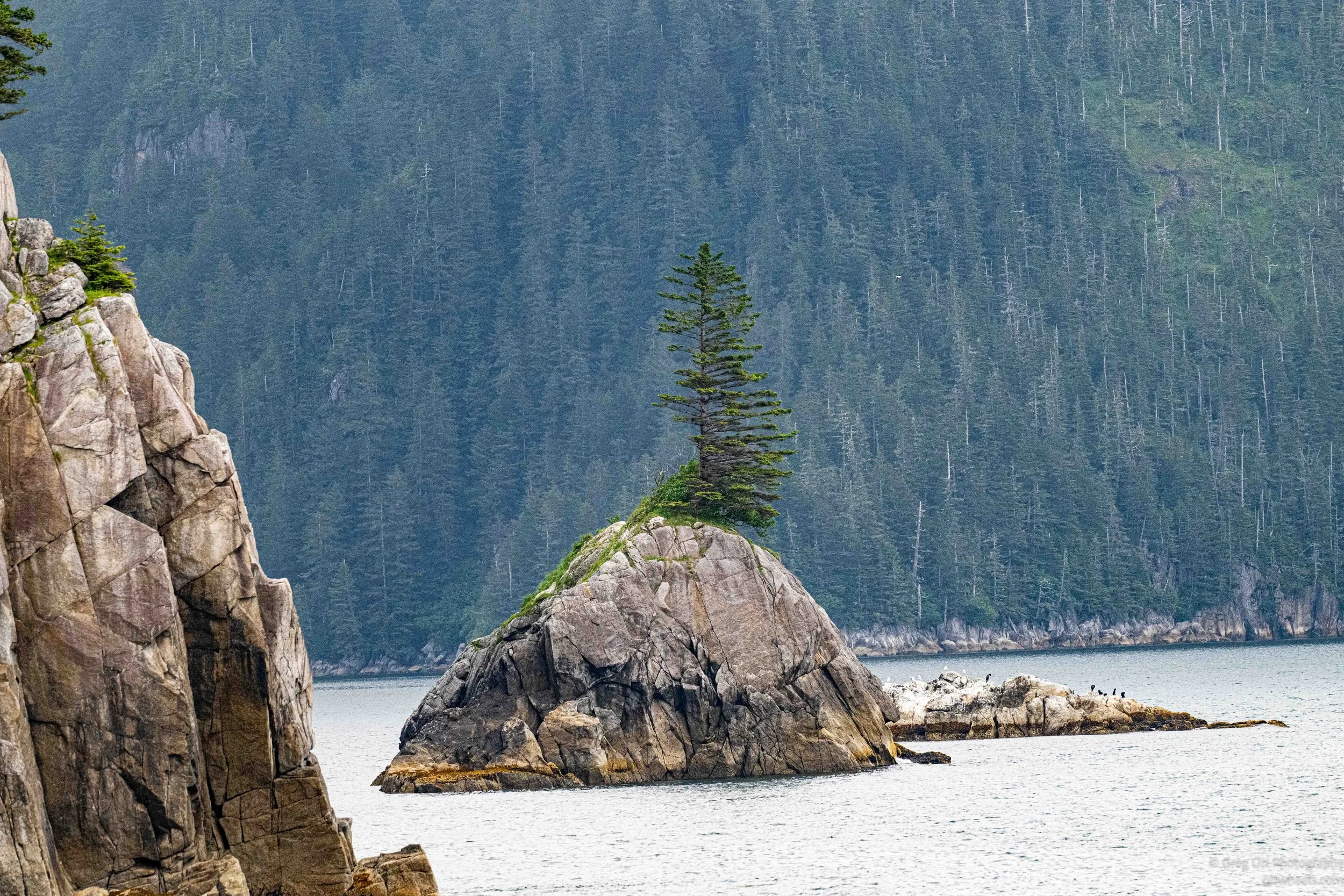
We threaded between Agnes Cove and Cheval Island, then swung toward Pilot Rock, a lone outcrop marking the edge of open water. Along these cliff faces, keep an eye up high — this is prime territory for hanging waterfalls, where meltwater from smaller glaciers and snowfields, perched in valleys well above sea level, drops straight down the rock face into the bay. They're a byproduct of the same glacial carving: the ice cut the main fjord walls down so much faster and deeper than the smaller side valleys that those side valleys were left stranded, "hanging" above the new fjord floor, spilling their runoff over the edge in thin ribbons and sheets.
From Pilot Rock we wove through Cape Aialik and rounded into Aialik Bay, the water noticeably calmer once we were inside the point. Everything in this park — the bay, the glacier, the peninsula — drains from a single enormous source above us: the Harding Icefield, a 700-square-mile ice cap, one of only four in the United States, capping the mountains at up to 4,000 feet thick. It's a holdover from the last ice age, fed today by over 400 inches of snow a year rolling in off the Gulf of Alaska, and it's the mother glacier for at least 38 separate outflow glaciers threading down through the park, including the two we were headed toward.
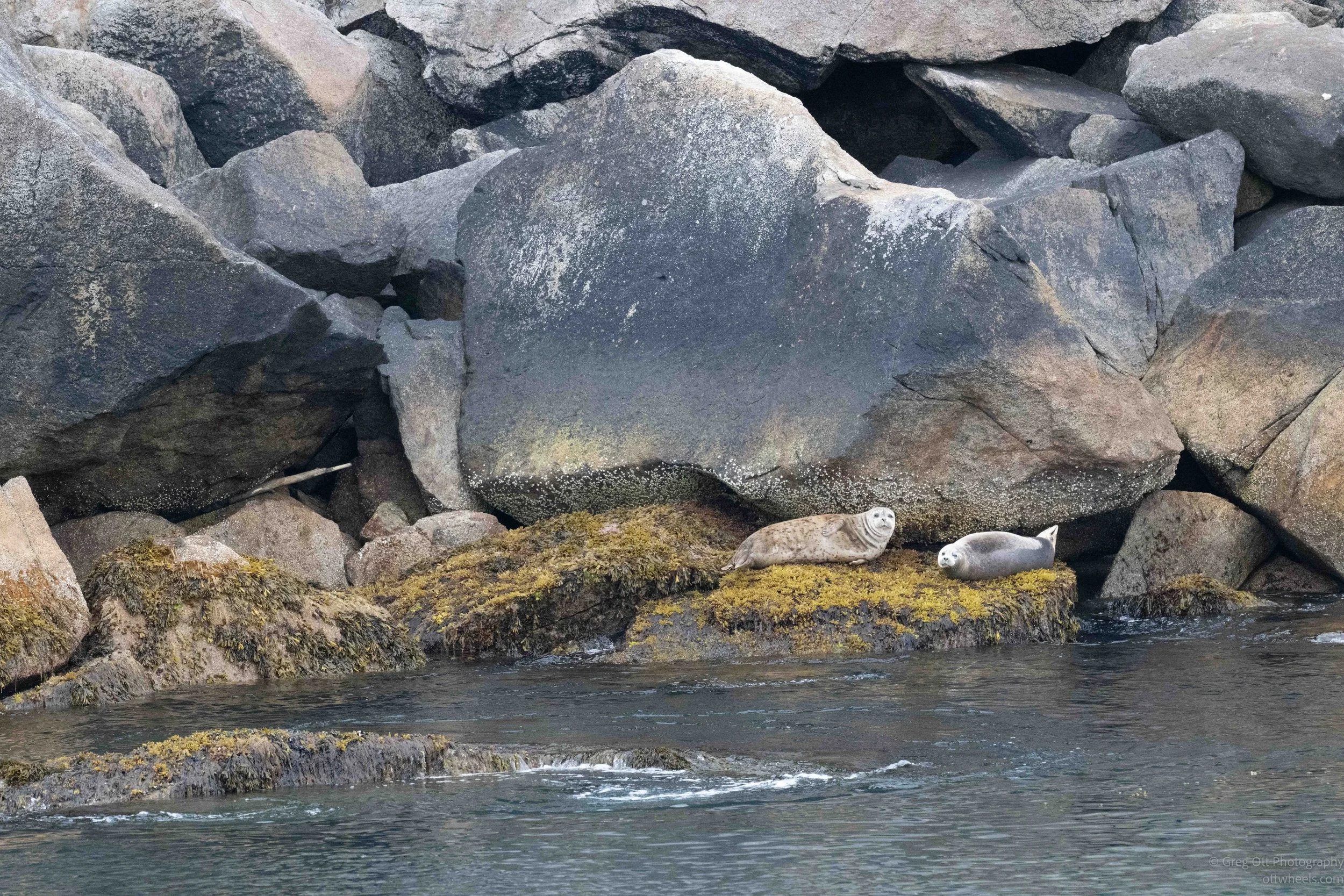
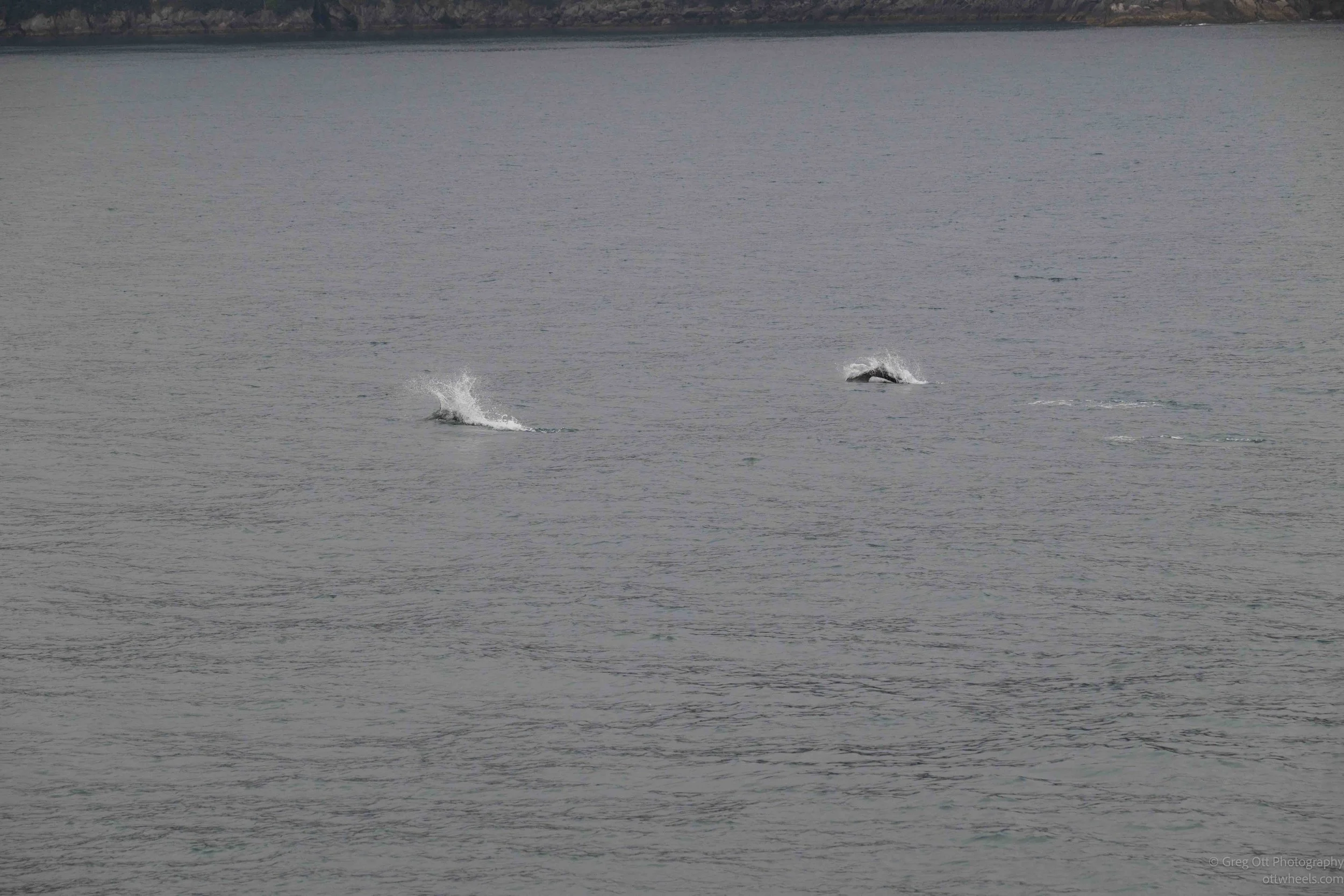
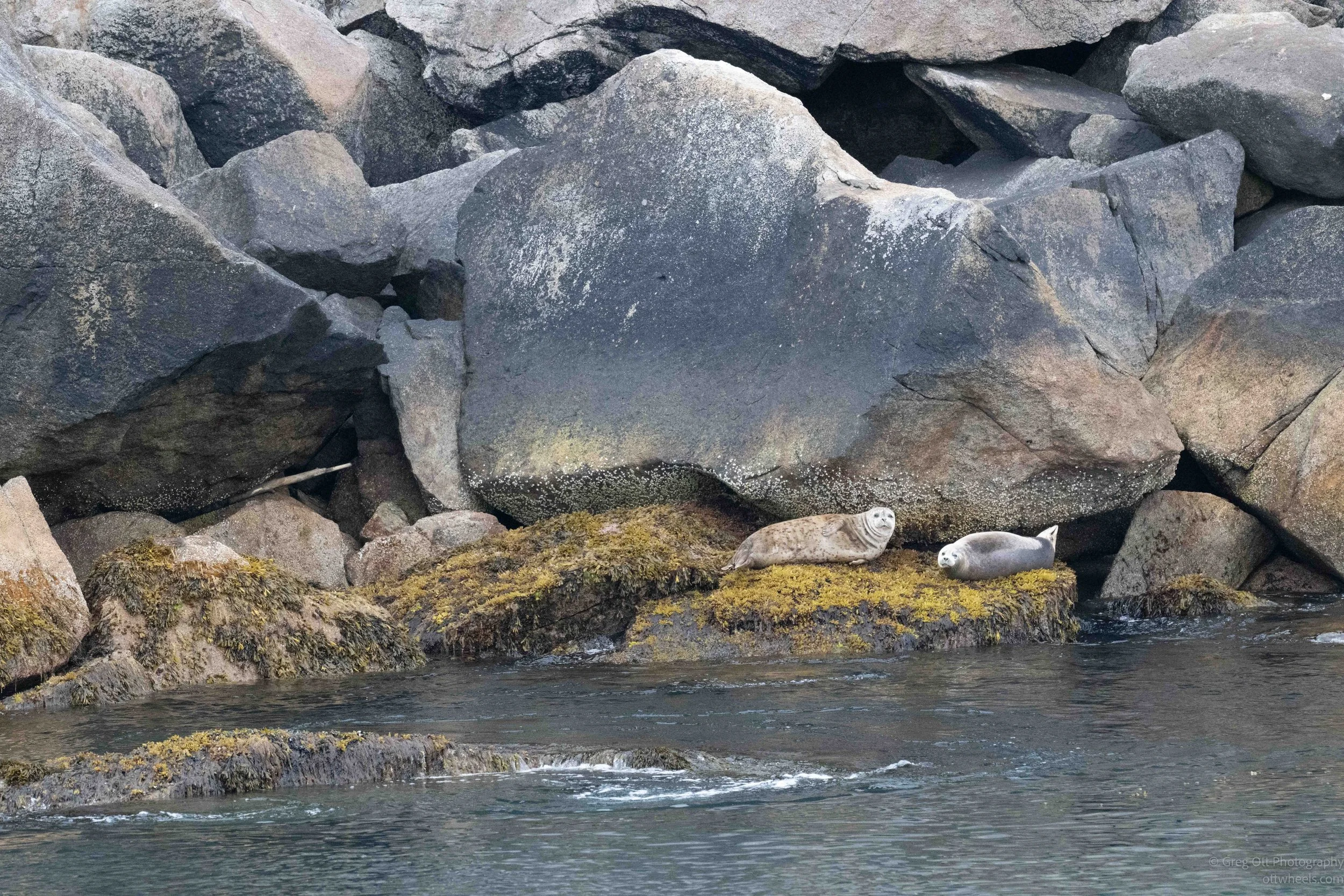
Periodically the captain would throttle back as someone spotted movement ahead. Sometimes it was a small pod of Dall's porpoises racing alongside the boat, their distinctive rooster-tail sprays making them surprisingly easy to follow even when they disappeared beneath the surface. Other times we drifted close enough to watch harbor seals stretched out on seaweed-covered rocks, lazily watching us with curious expressions before slipping quietly into the water.
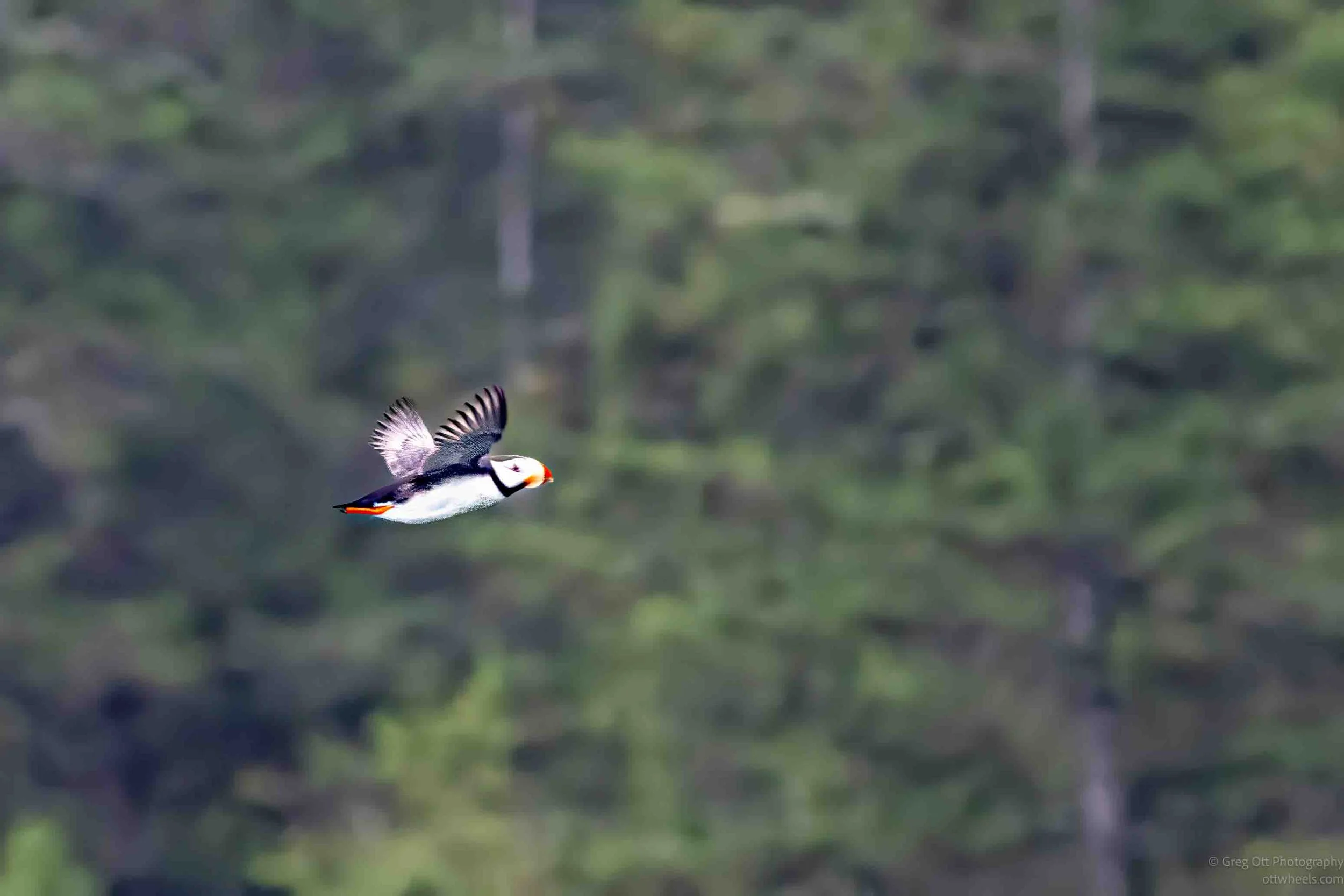
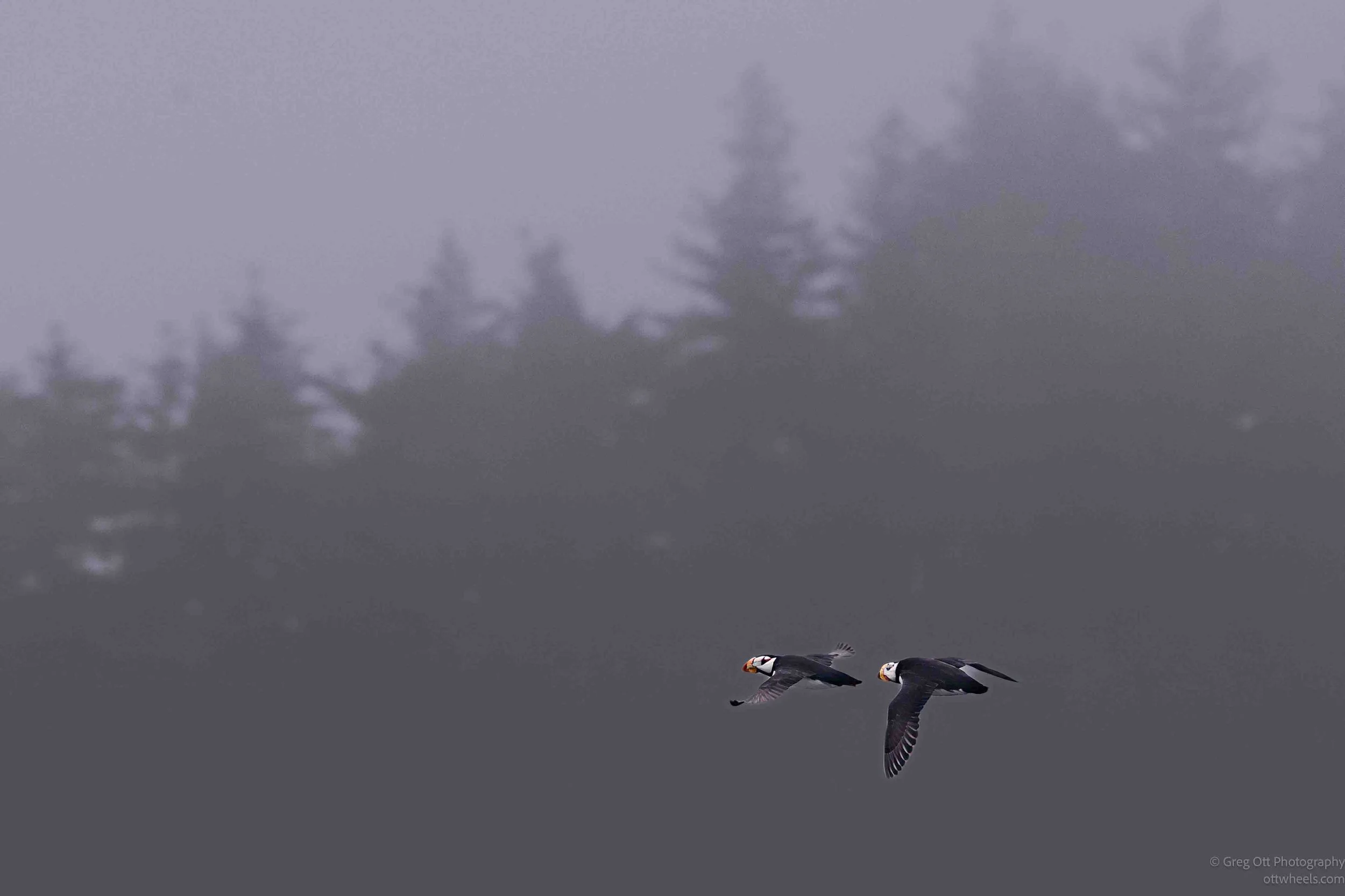
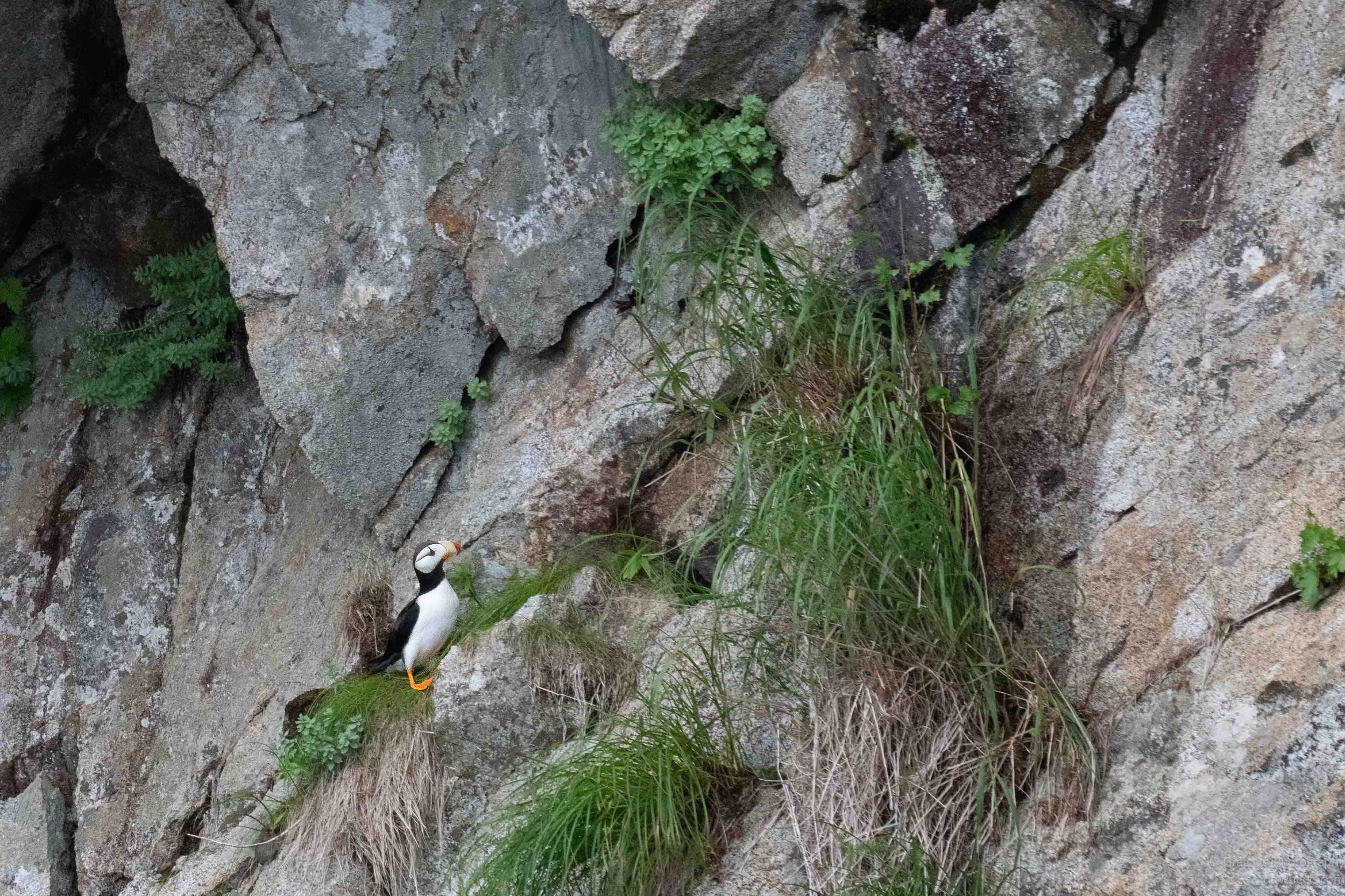
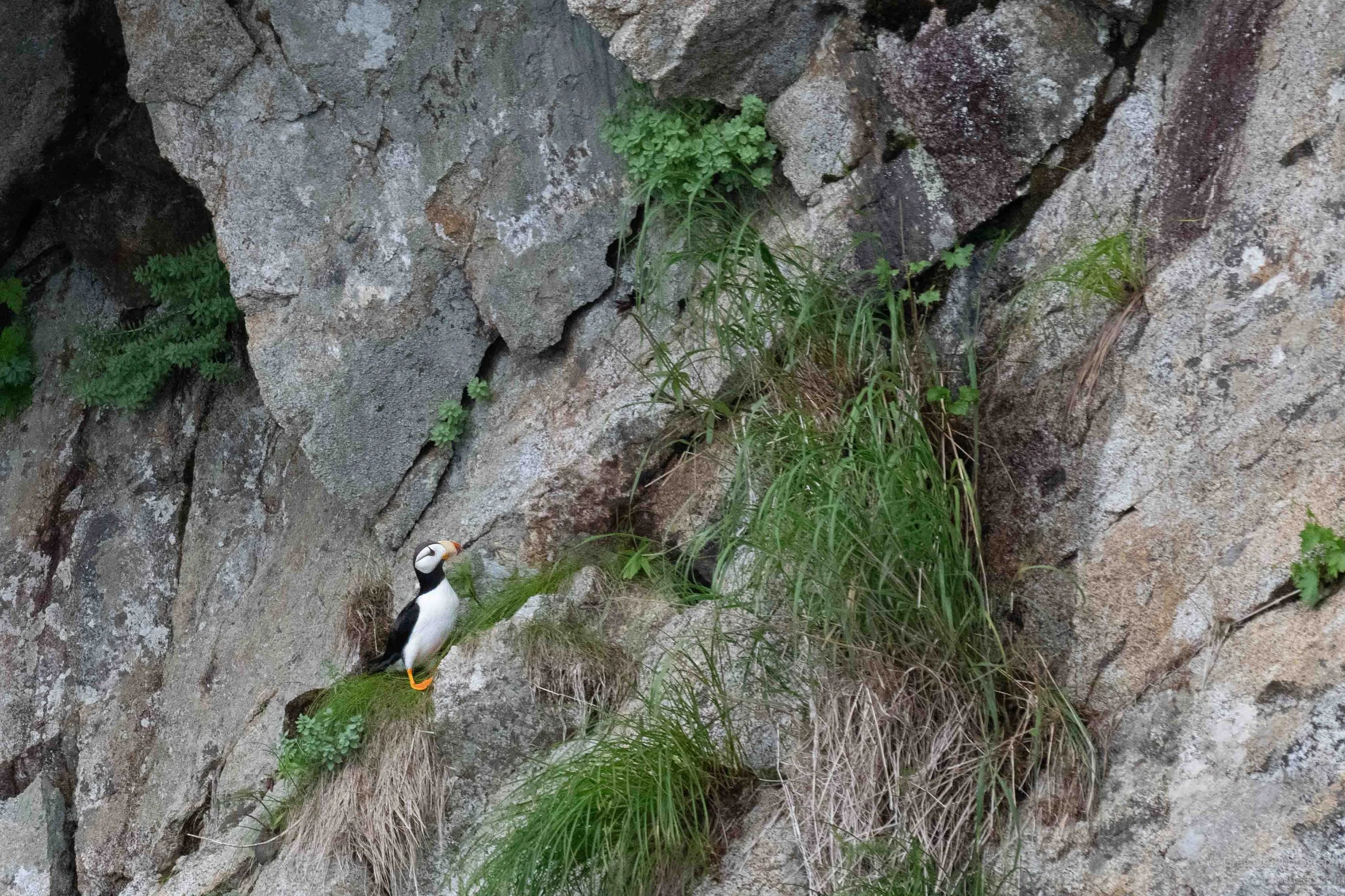
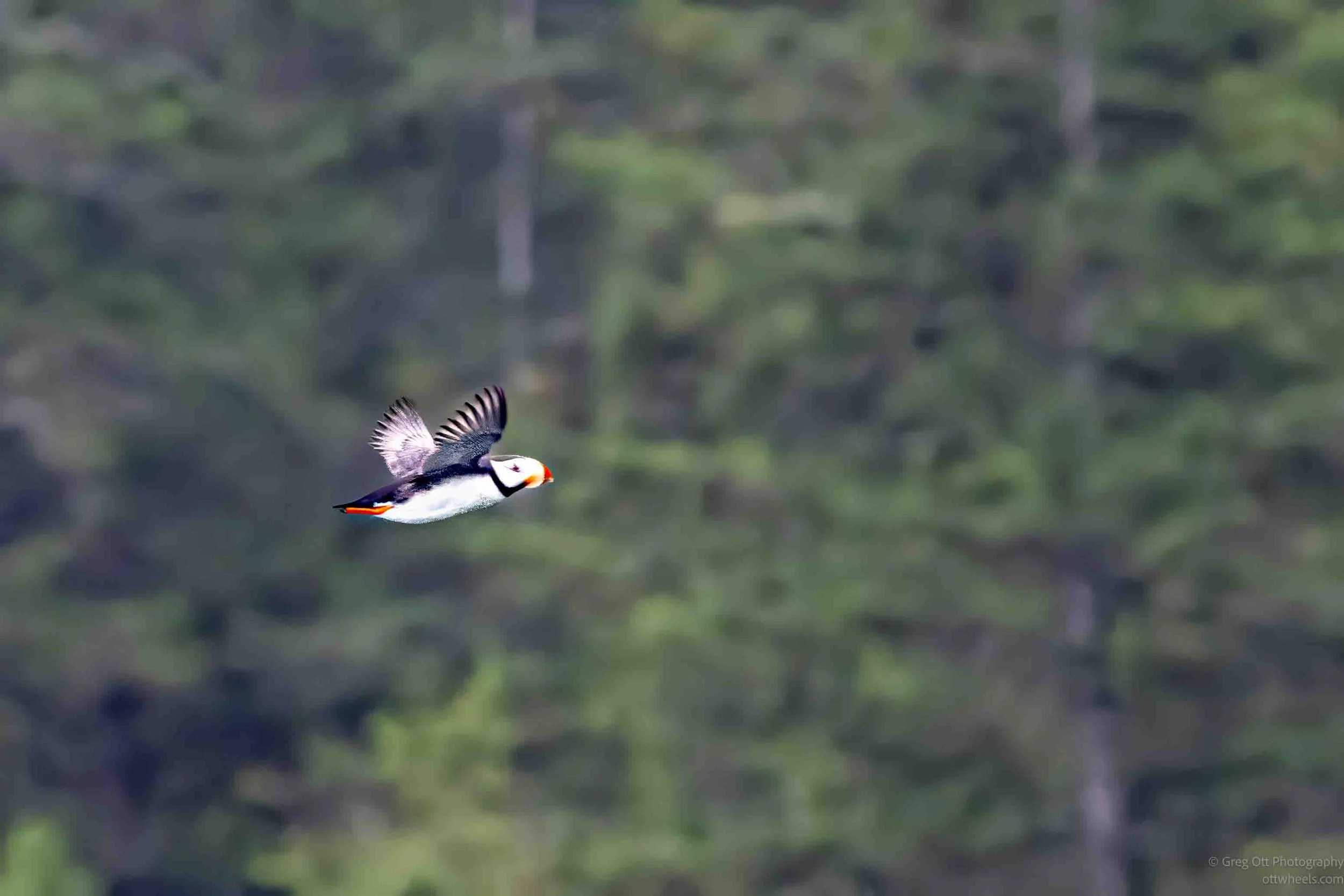
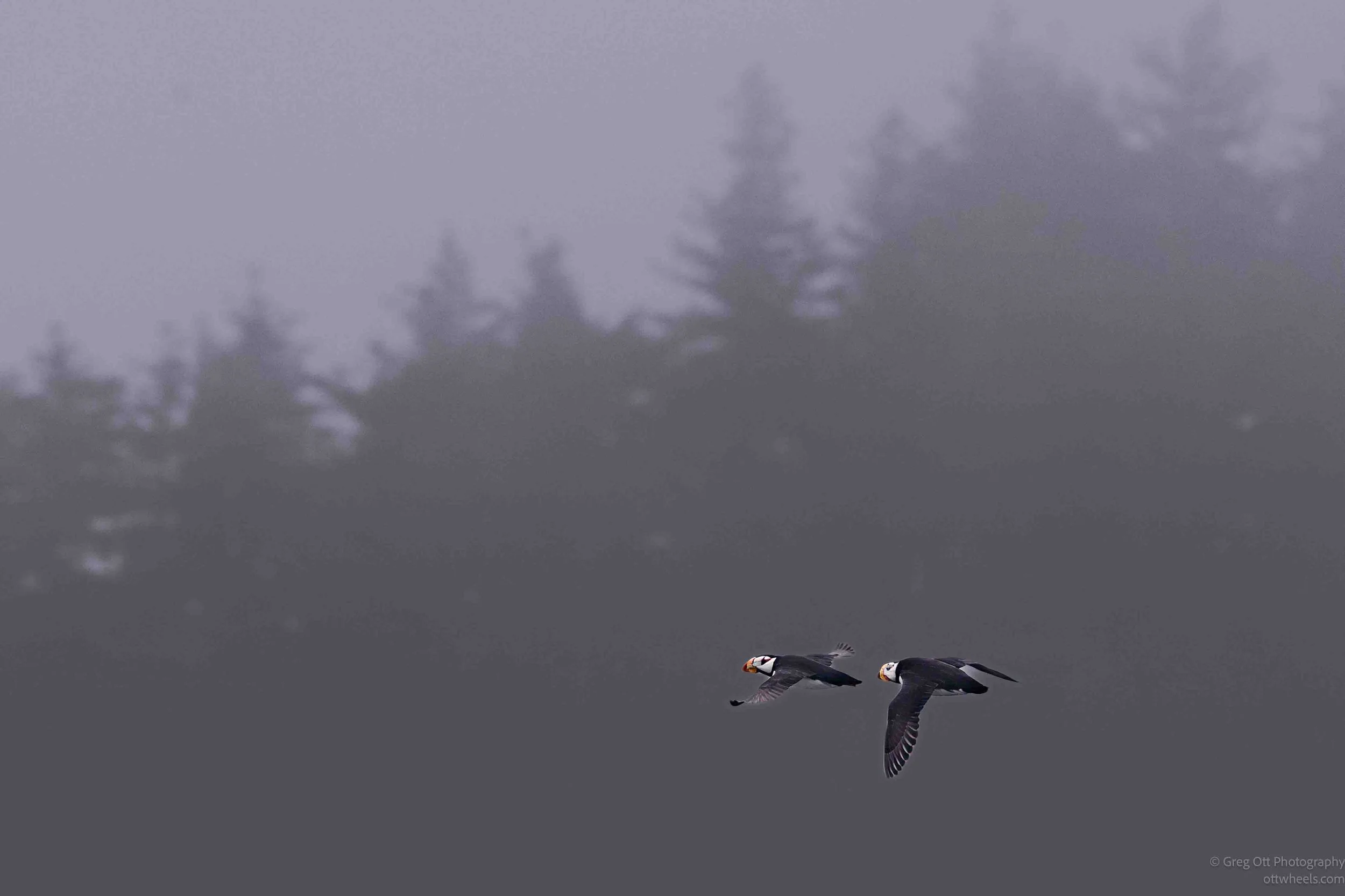
Birds seemed to be everywhere. Tufted puffins flew low over the water with their bright orange bills standing out against the gray sky, while others perched on narrow ledges high above the waves. They looked surprisingly clumsy in flight, beating their wings furiously just to stay airborne, yet they landed with remarkable precision on tiny patches of grass growing from cracks in the cliffs. Every rocky outcrop seemed to have something living on it, and the captain did an excellent job slowing the boat whenever there was something worth seeing without ever making the trip feel rushed.
Those weren't long stops. Usually we'd spend only a few minutes watching before continuing toward the next destination. Over the course of the day, however, they added up to a much richer experience than simply steaming from one glacier to the next. The wildlife became just as memorable as the glaciers themselves, and I often found myself torn between watching through the viewfinder and simply putting the camera down for a few moments to enjoy the scene.
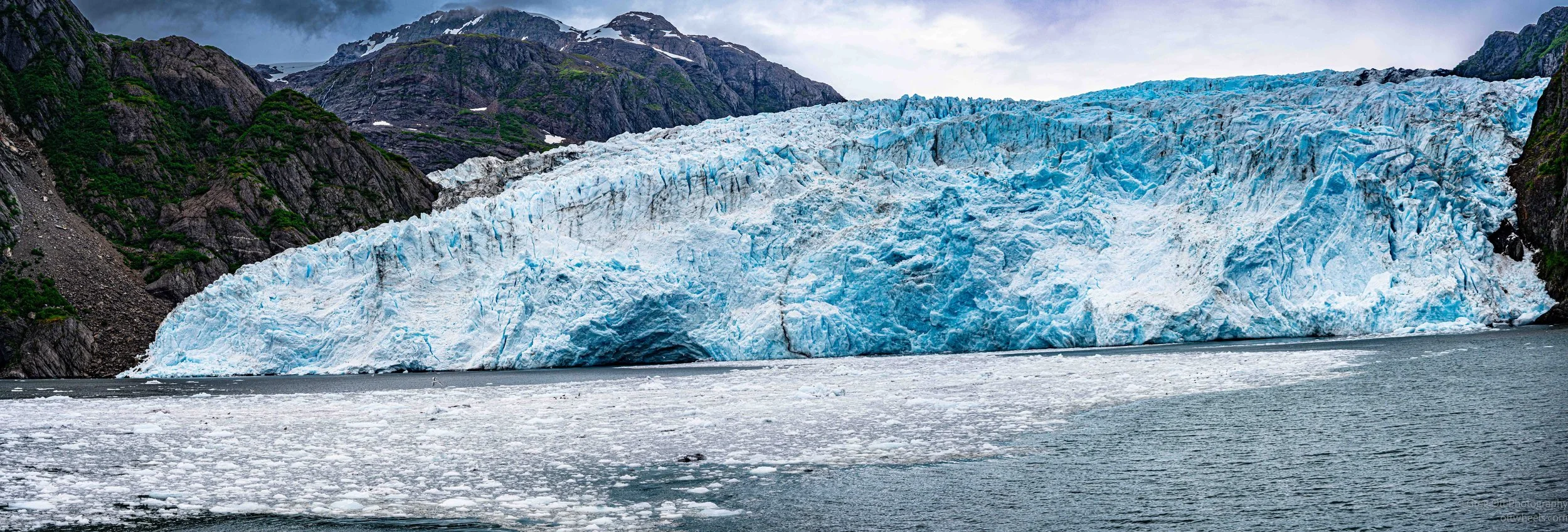
Aialik Glacier
The bay opened up and there it was: Aialik Glacier, a wall of blue-white ice about a mile wide at the face and somewhere between 300 and 400 feet tall, calving straight into the sea. It's the largest glacier draining into the bay that shares its name — a name that traces back to the Alutiiq word "Ayalikskaya," recorded by Russian fur traders long before American surveyors Ulysses S. Grant and Daniel Higgins formally mapped and named it in 1909. Those two also documented just how fast it was retreating even then — over 1,300 feet lost in the prior decade alone. It kept shrinking through the 20th century, though more slowly than most of its neighbors, since its accumulation zone up in the icefield still outpaces what it loses at the face. Late spring and early summer, we were told, is when it calves hardest, chunks of ice breaking free and crashing into the bay with a boom that arrives a beat after you see it fall — sound lagging behind sight across all that water.
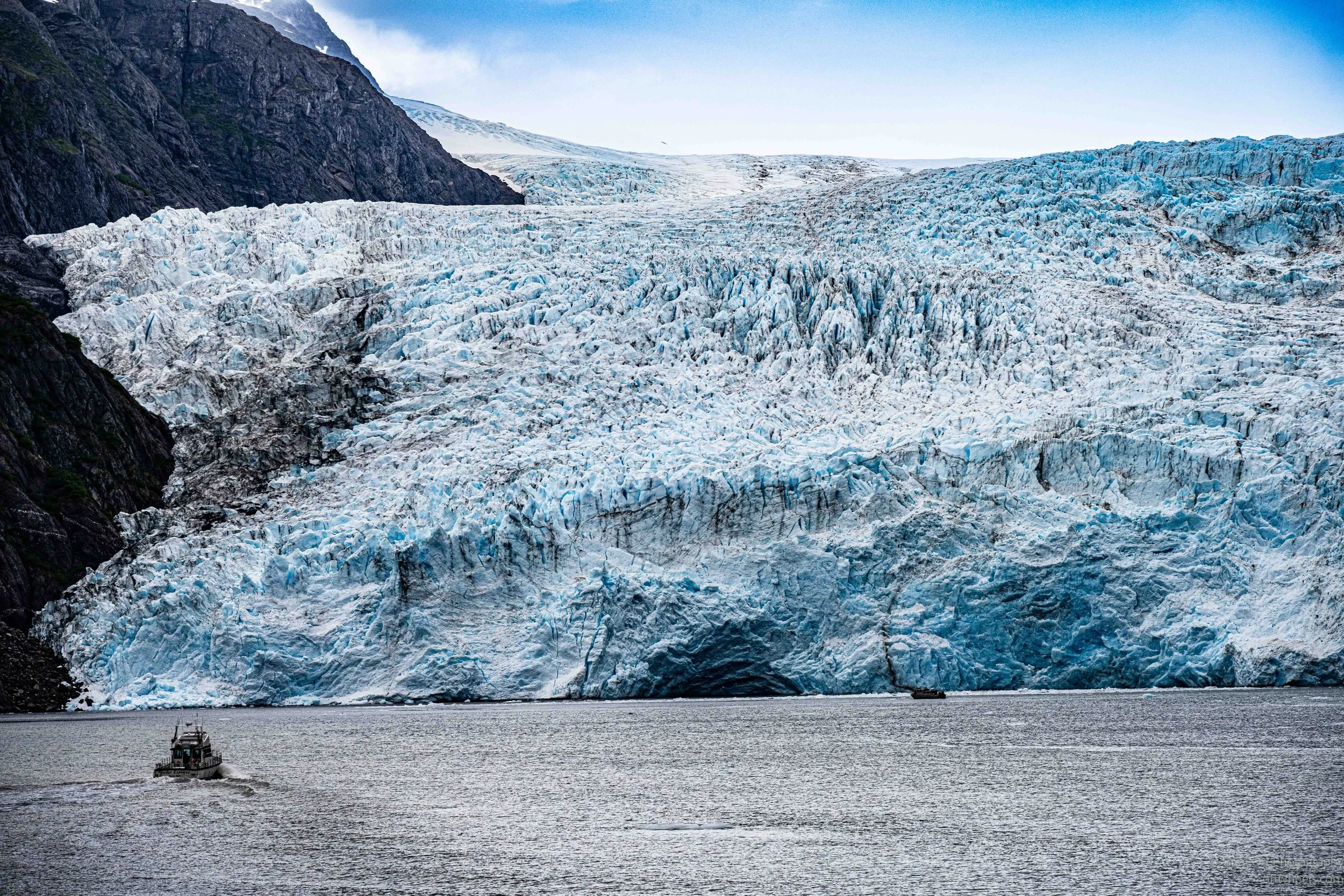
Holgate Glacier
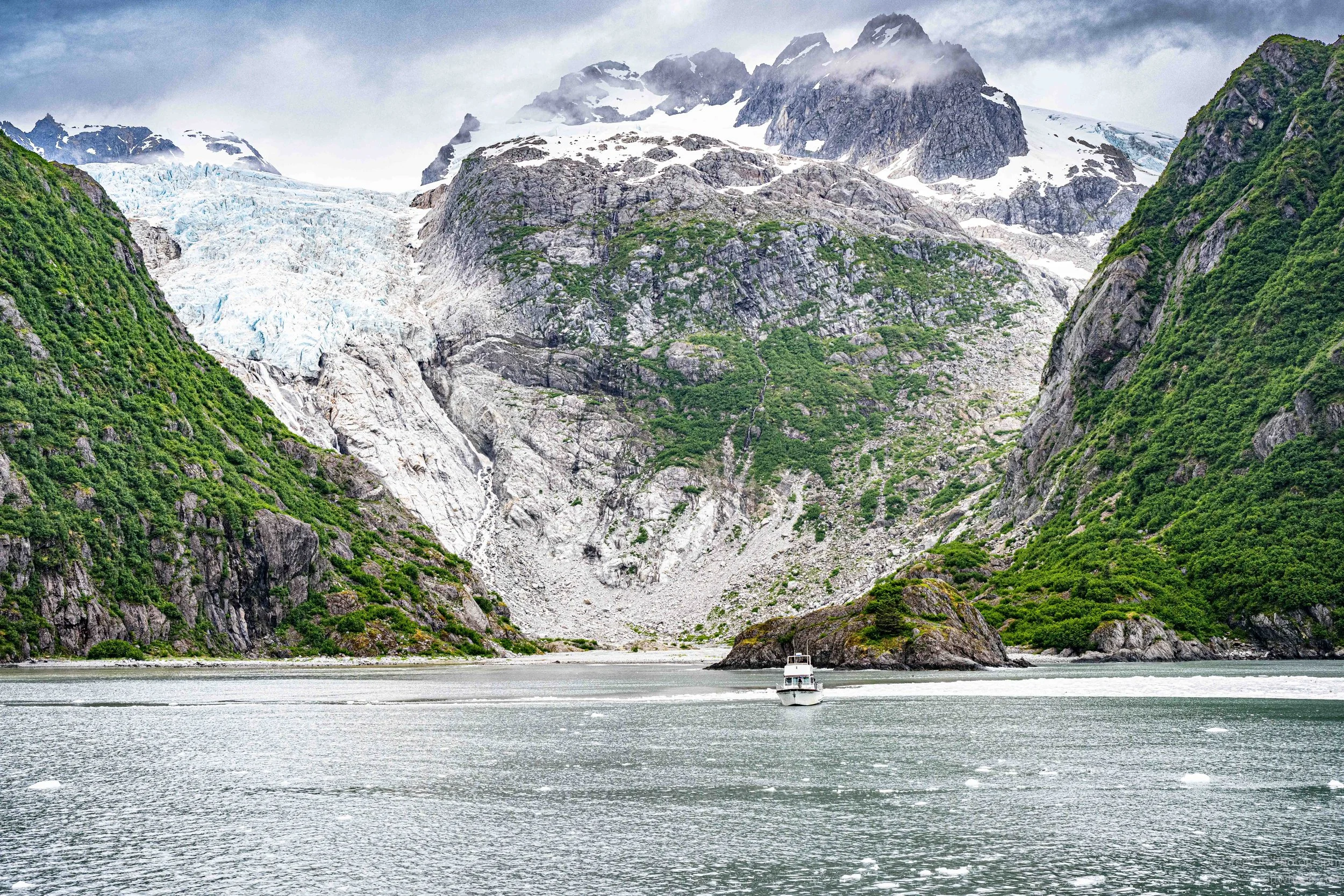
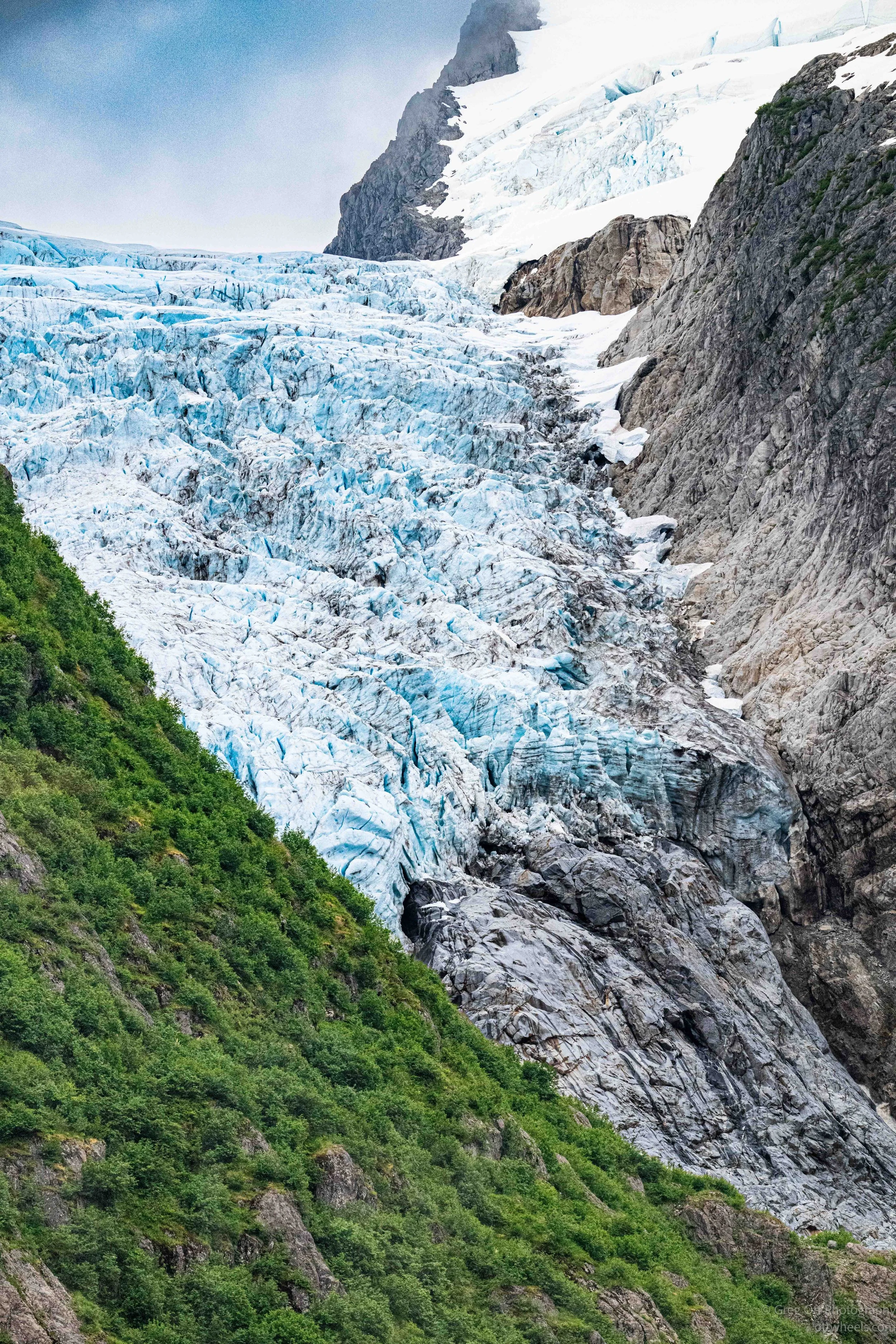
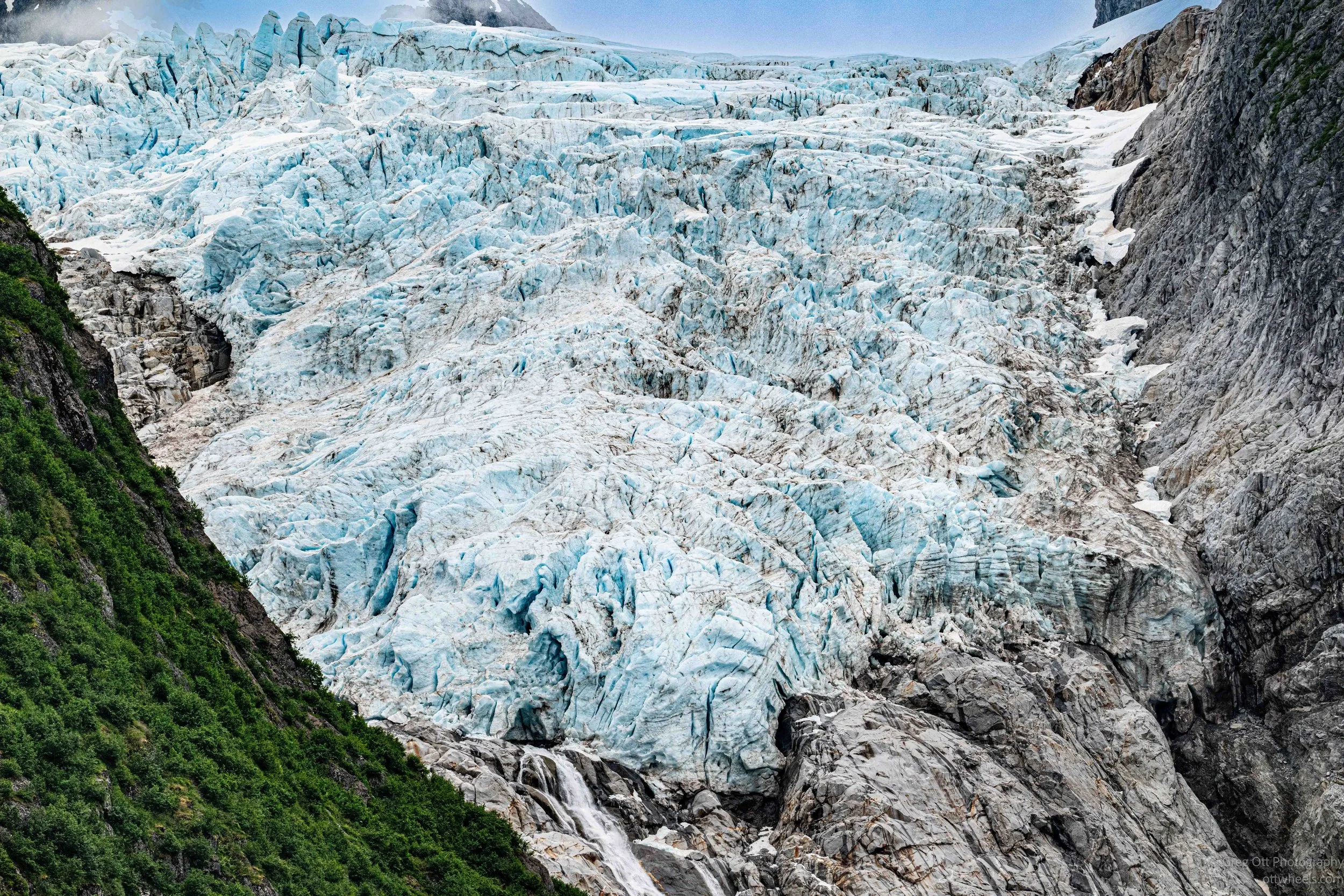
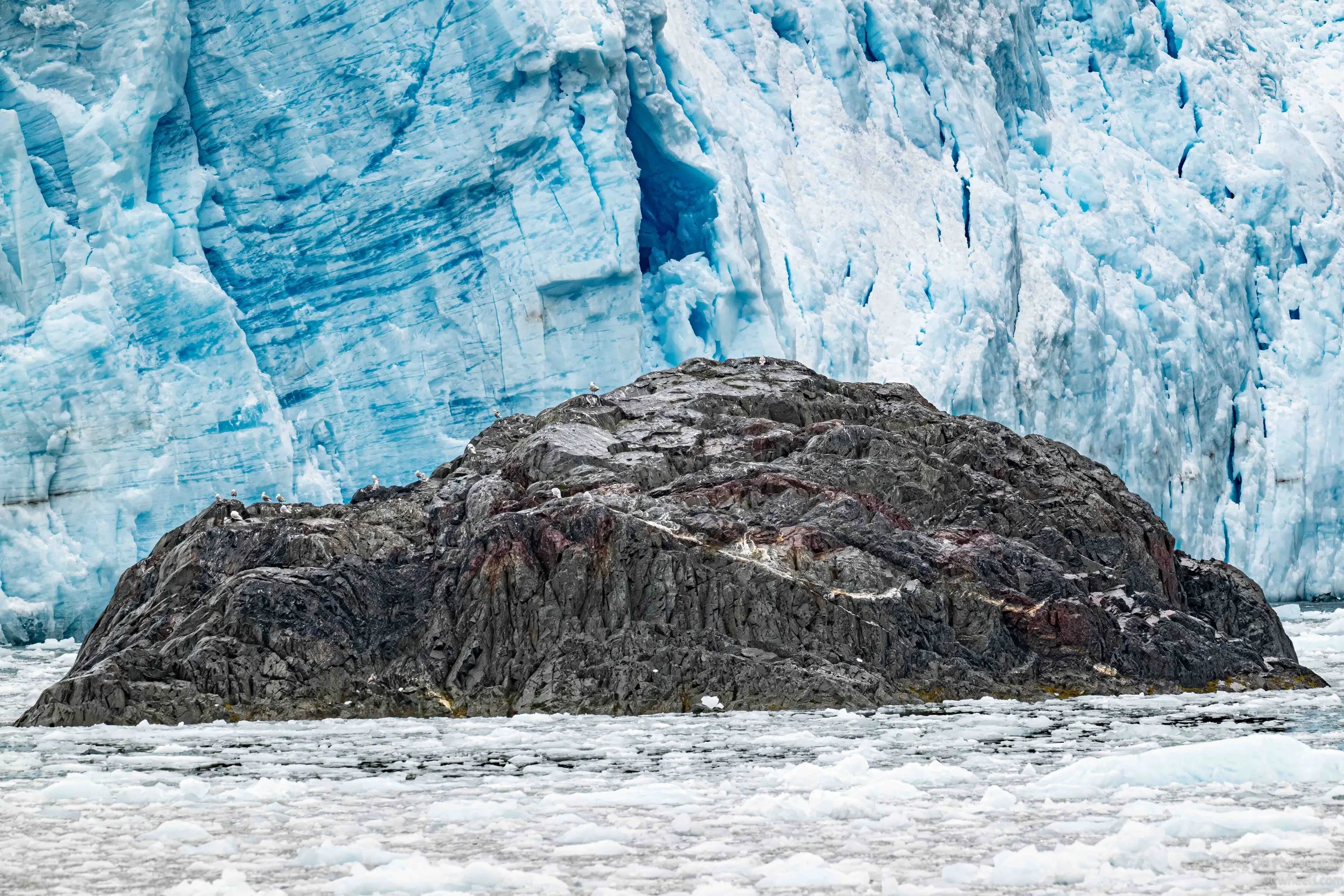
We pulled back out of the bay and worked our way over to Holgate Glacier, tucked into the narrower Holgate Arm. Where Aialik is wide, Holgate is tall — its face rises as much as 500 feet above the water, though it's only about half as wide as its neighbor. What makes Holgate unusual is that it isn't simply retreating like most of the park's glaciers; it goes through cycles, and for roughly the last several years it's actually been advancing. As a tidewater glacier pushes forward, it builds up a shoal of sediment and rubble at its base that acts like a buffer, blunting how much warm seawater can get at the ice and slowing the calving that would otherwise eat it away. It's one of the more visible reminders that "glacier retreat" isn't a single uniform story — even glaciers pulling from the same icefield, a few miles apart, can be behaving in opposite directions at the same time.
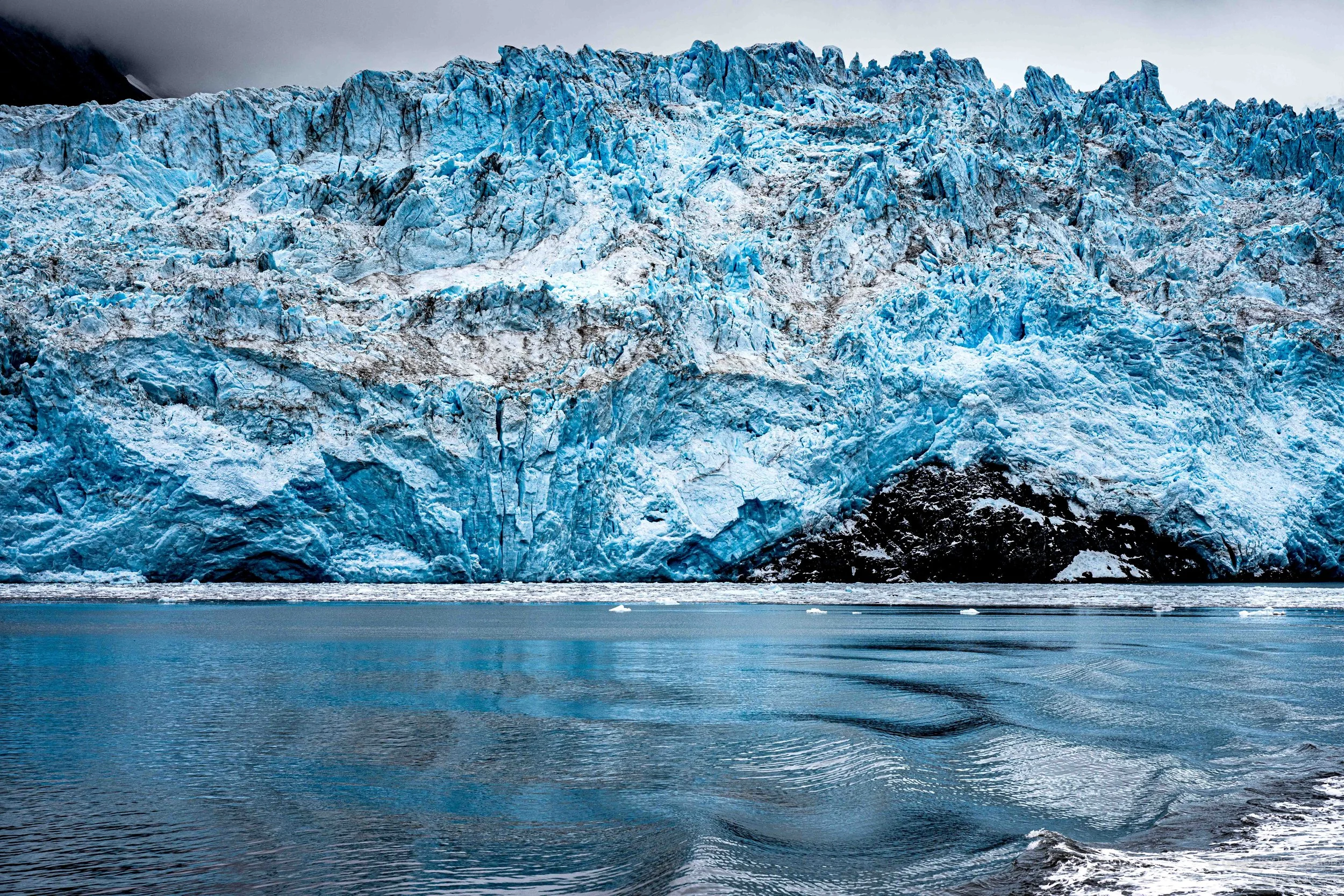
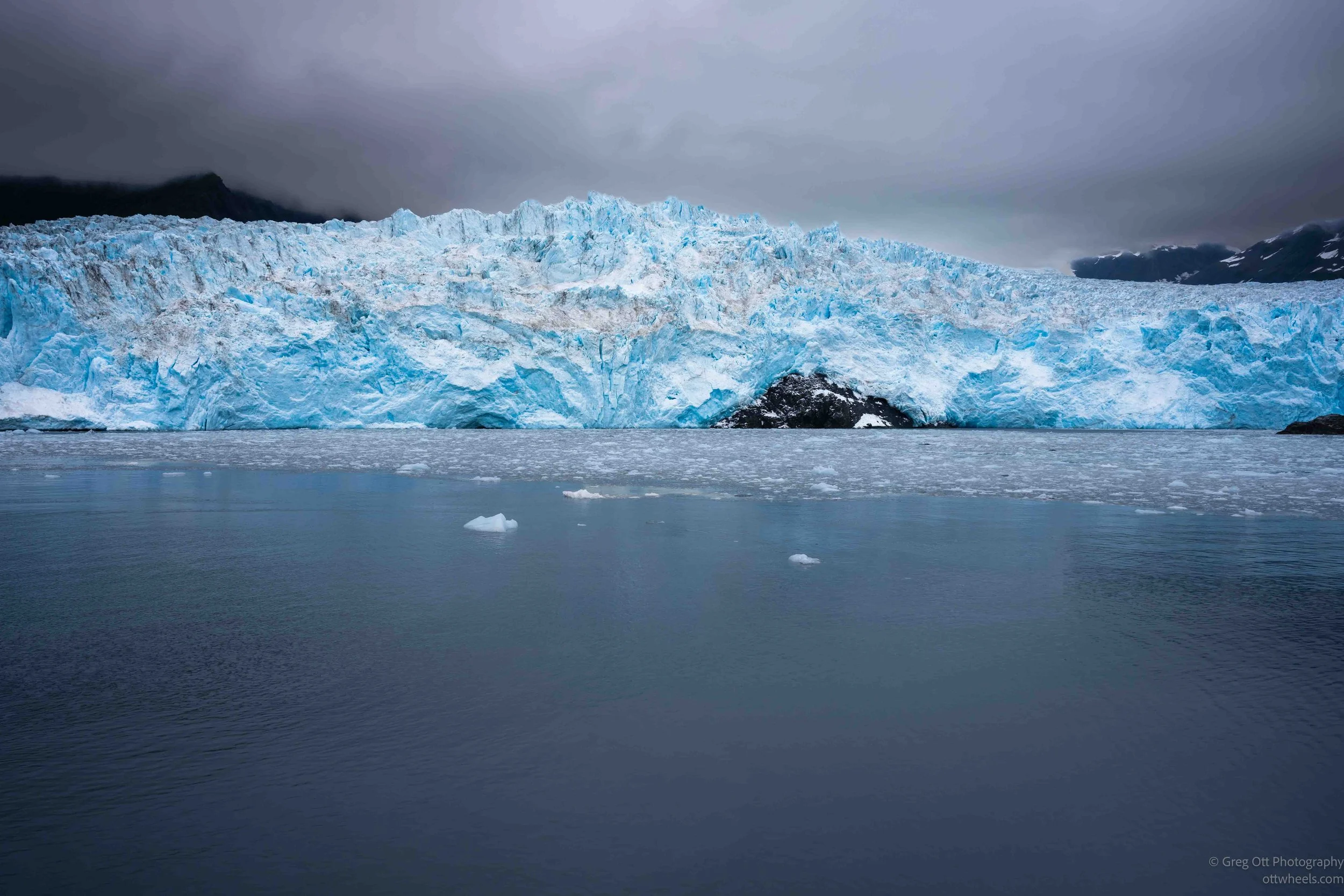
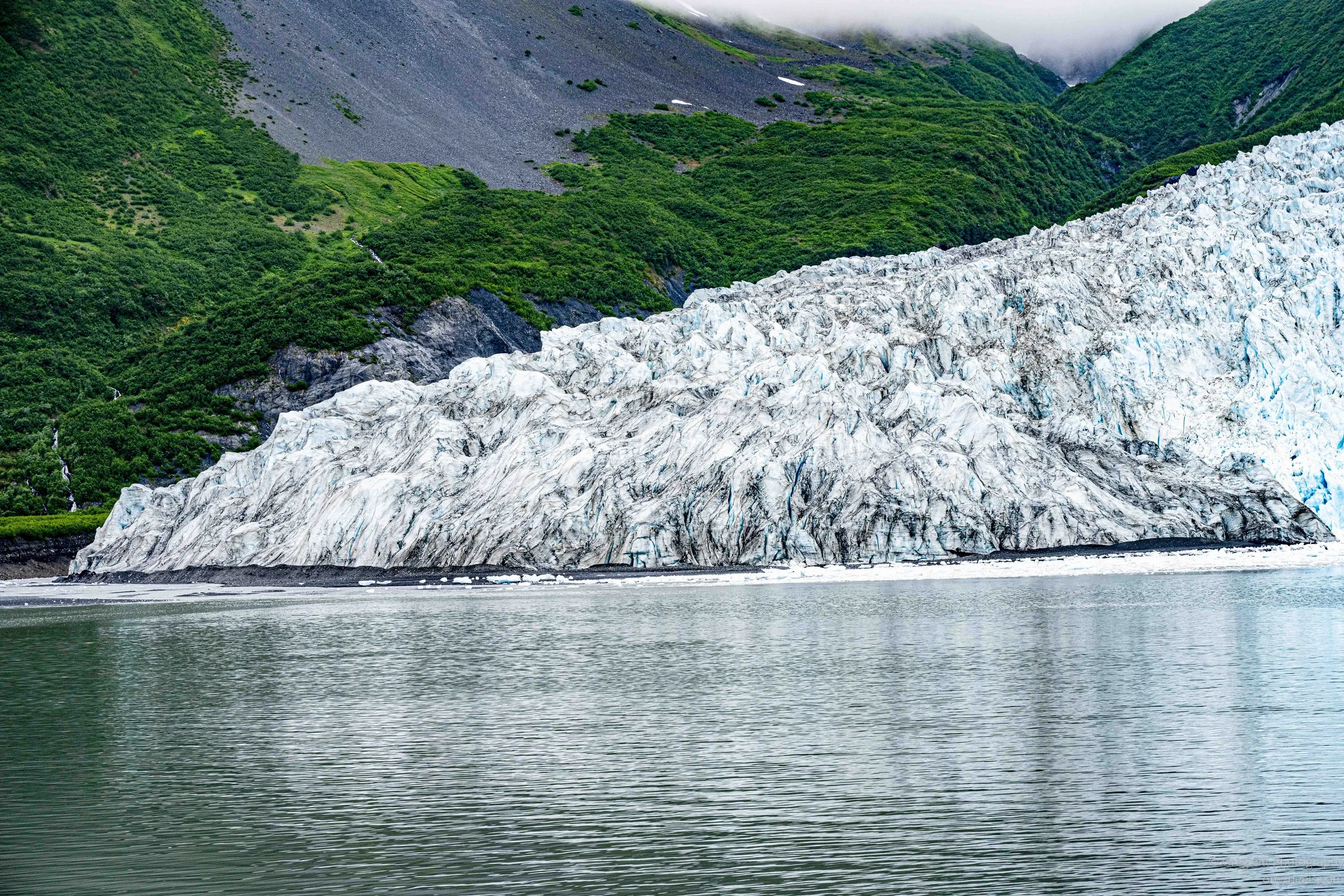
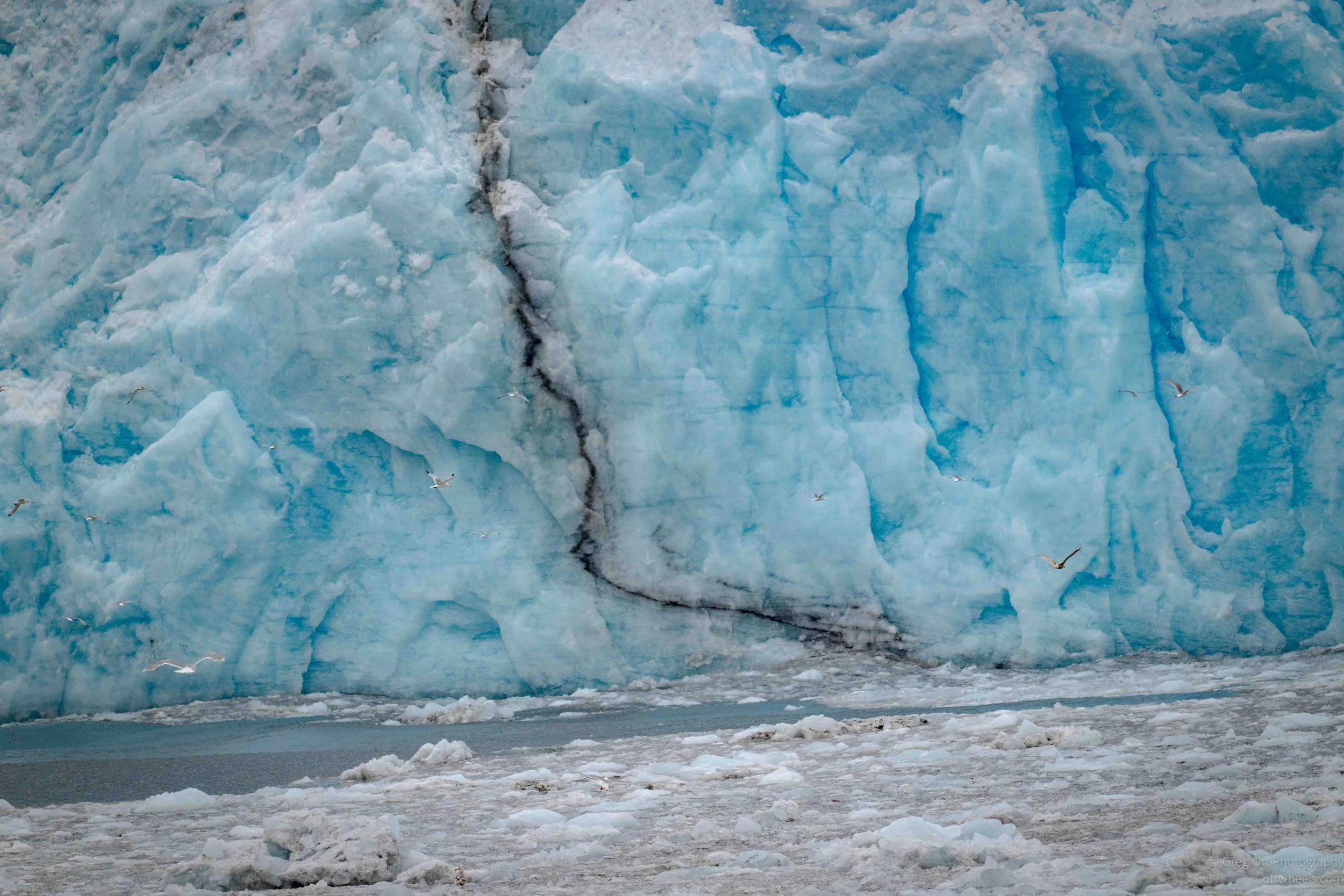
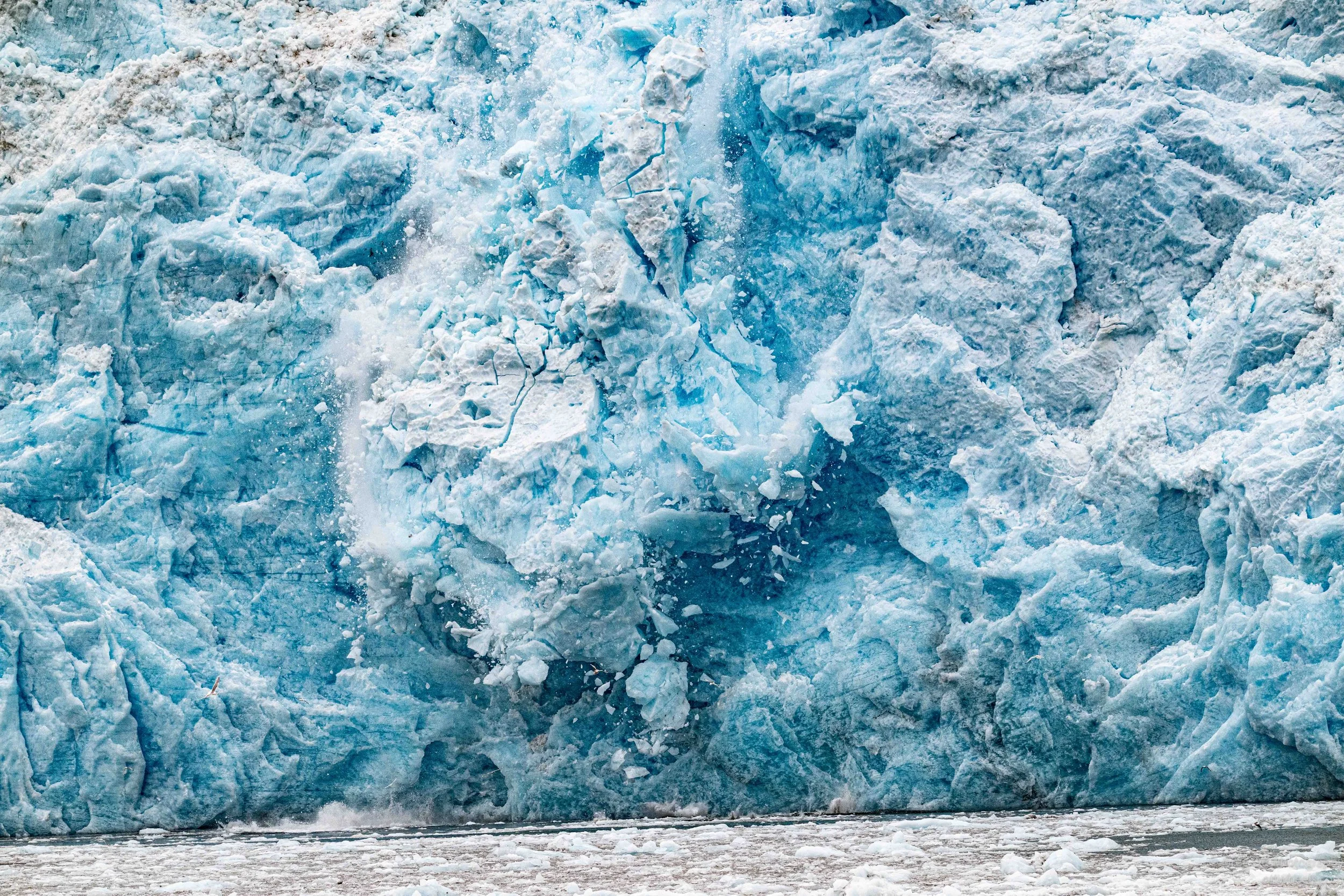
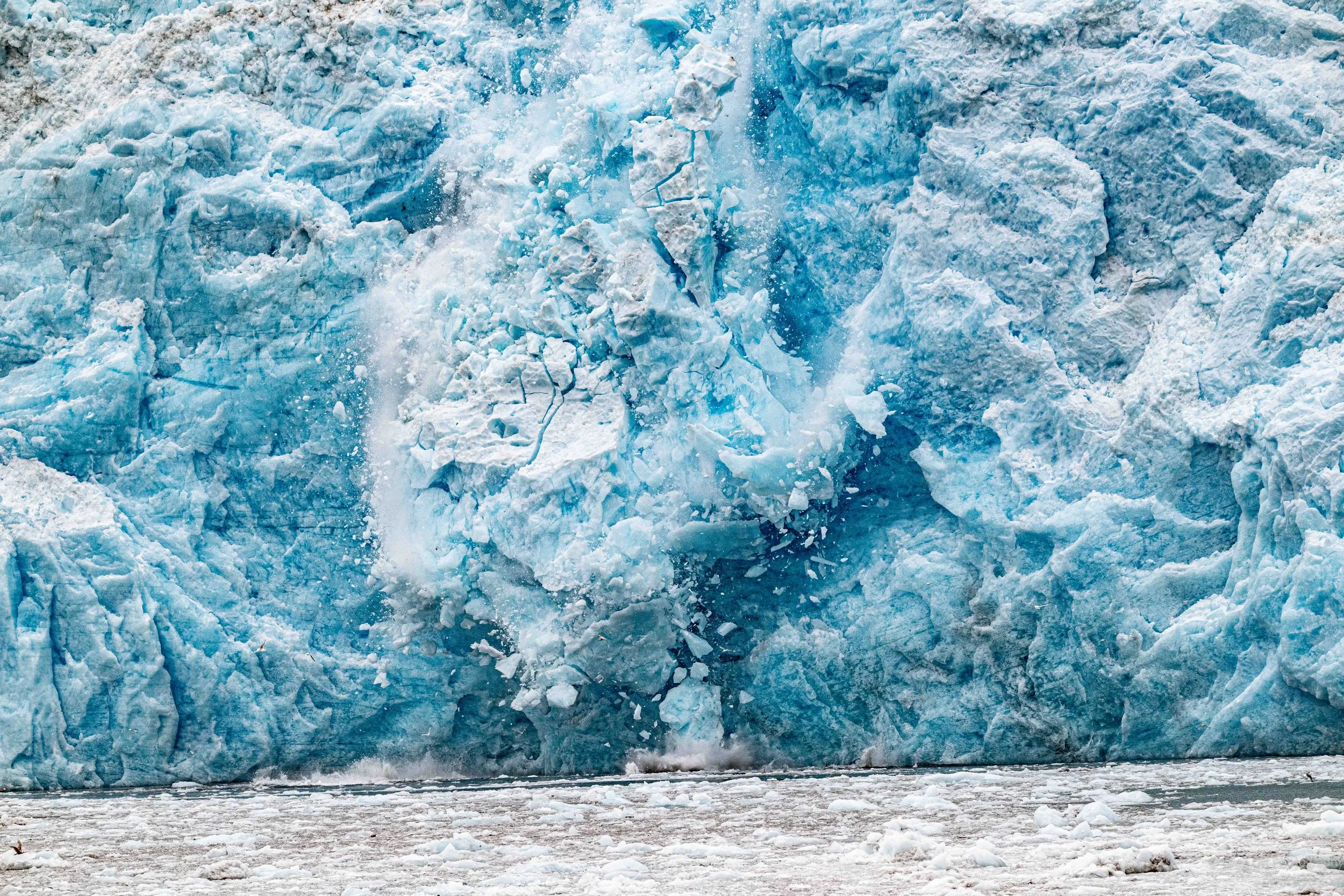
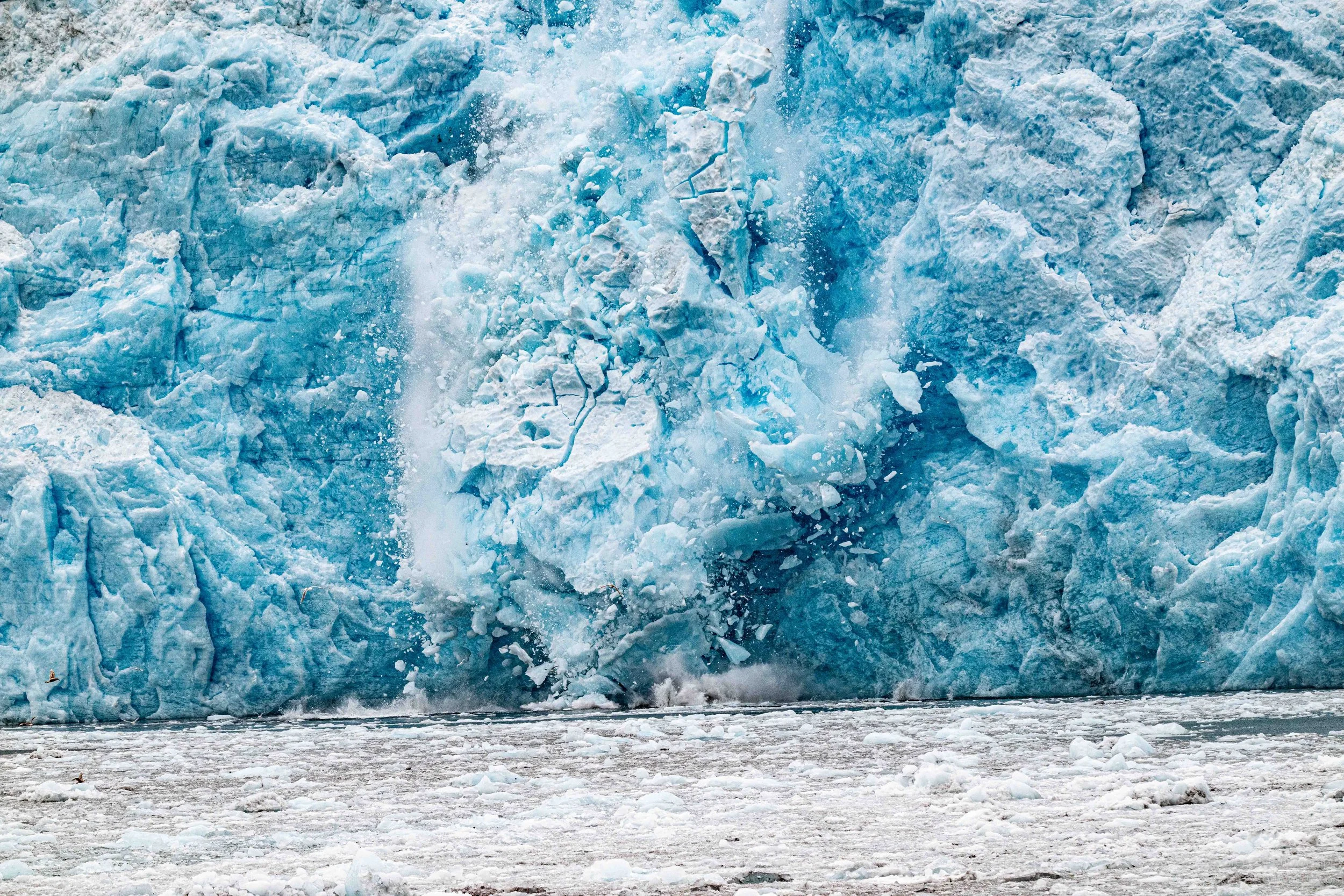
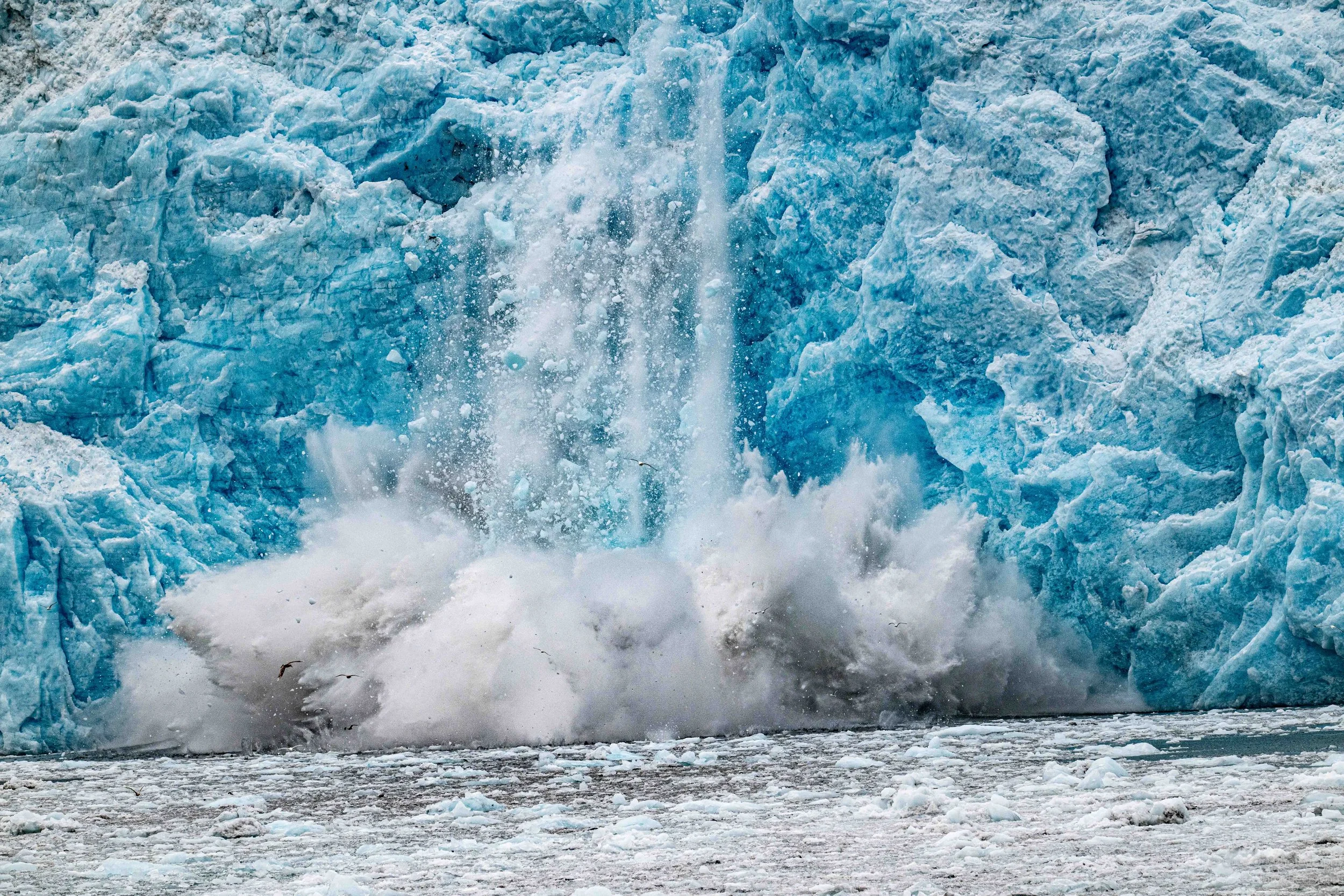
Glaciers don't calve continuously, but Holgate Glacier was particularly active while we were there. The following sequence of images captures a large section of ice breaking free from the face of the glacier before crashing into the water below. The impact sent a surprisingly large wave rolling across the bay.
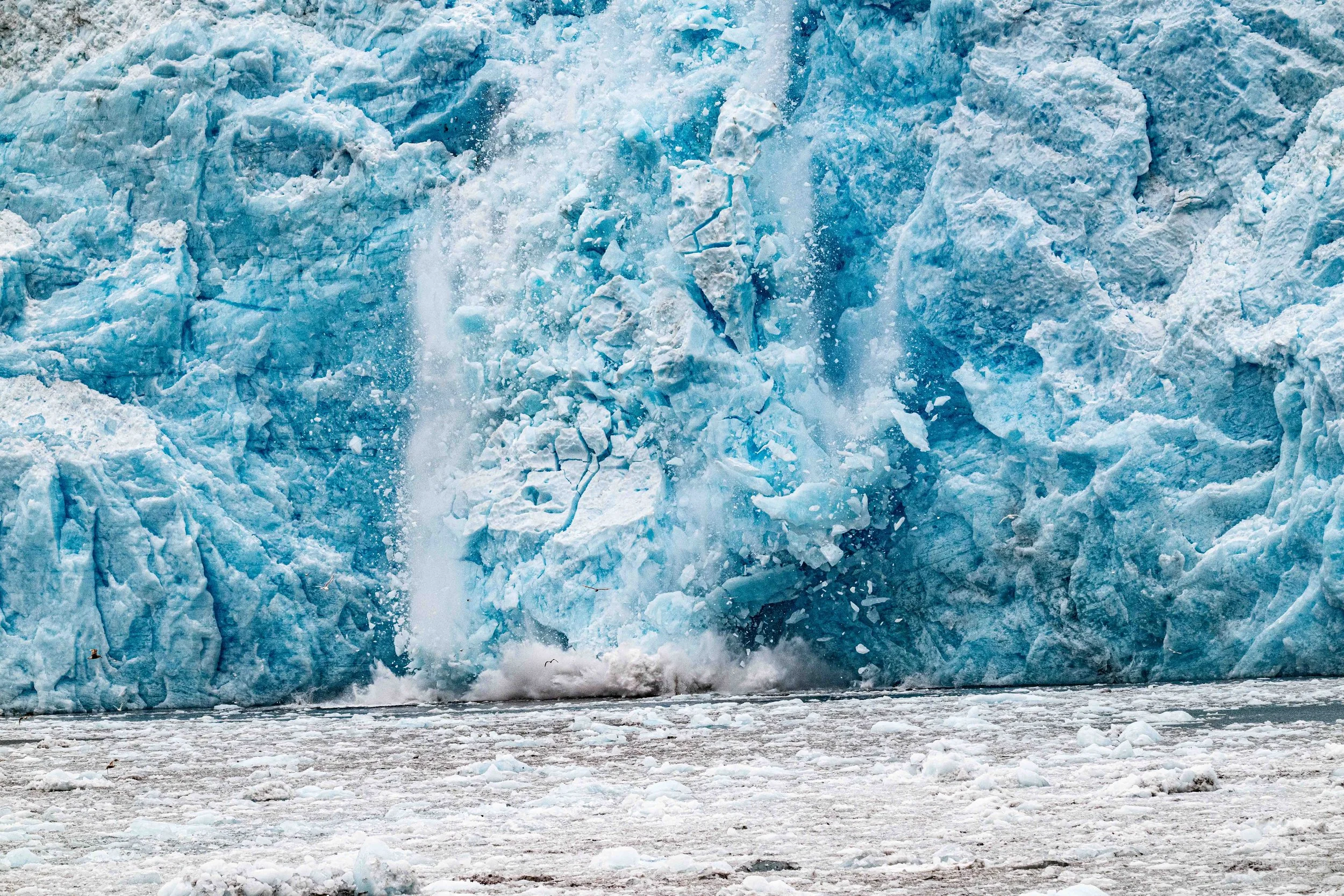
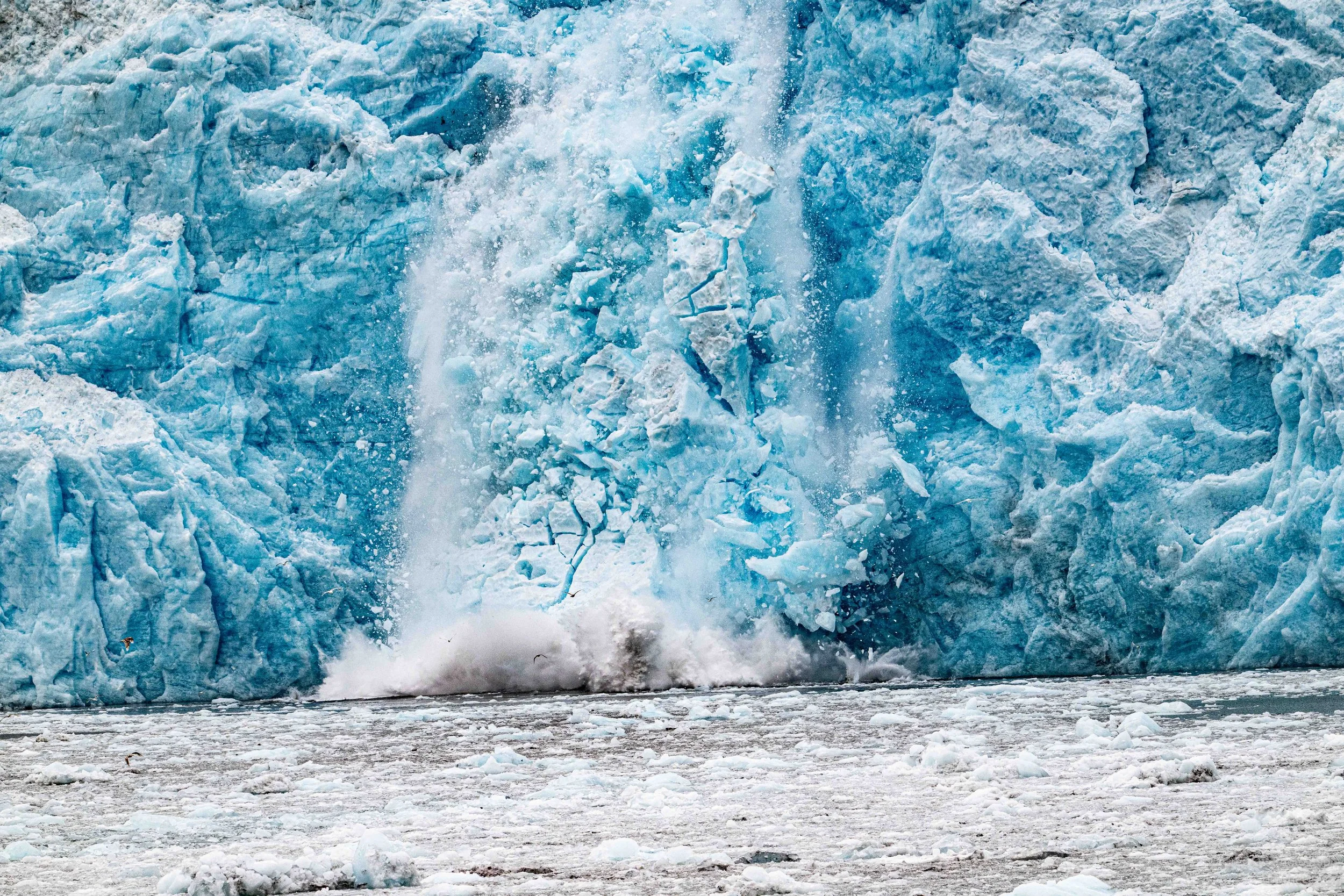
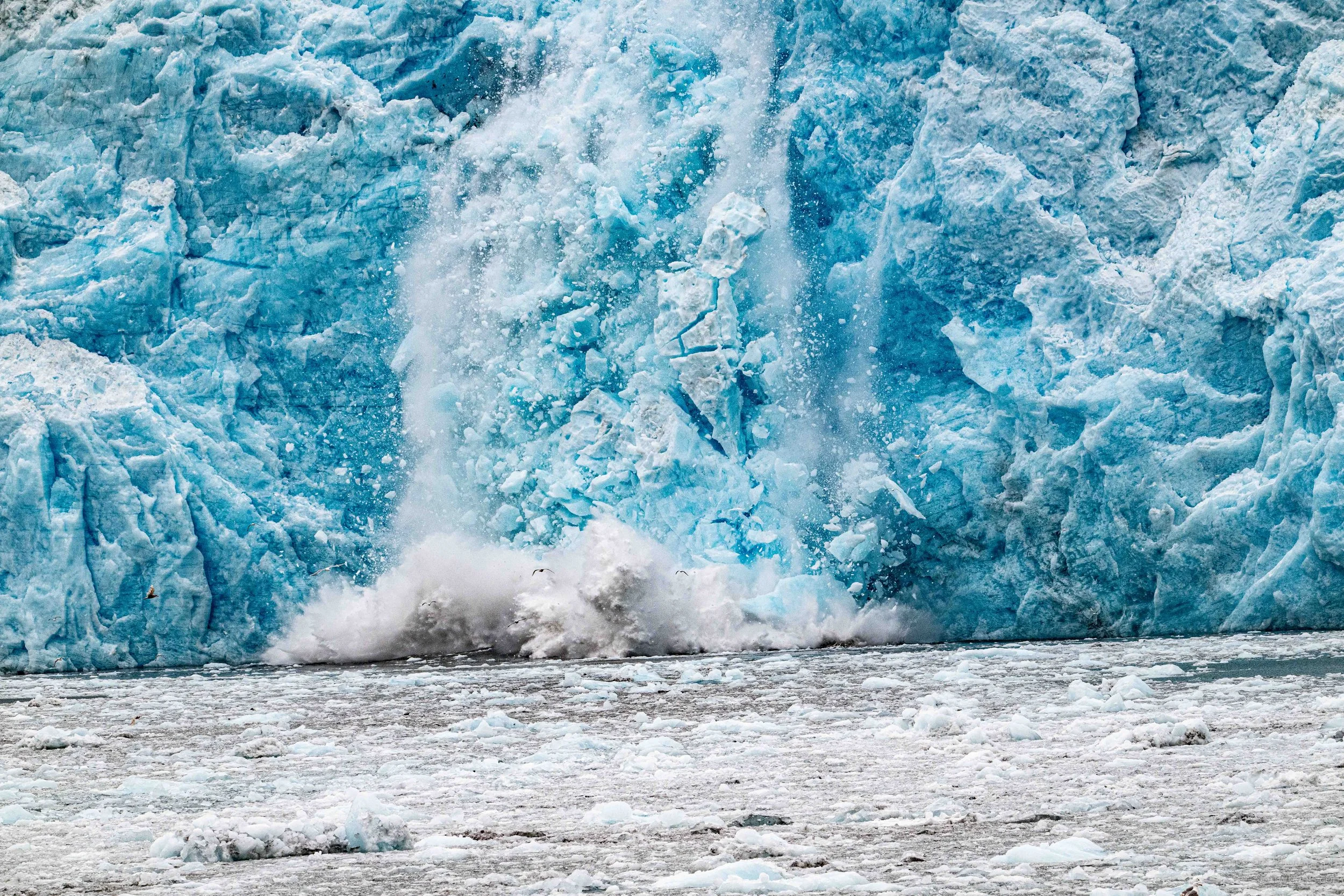
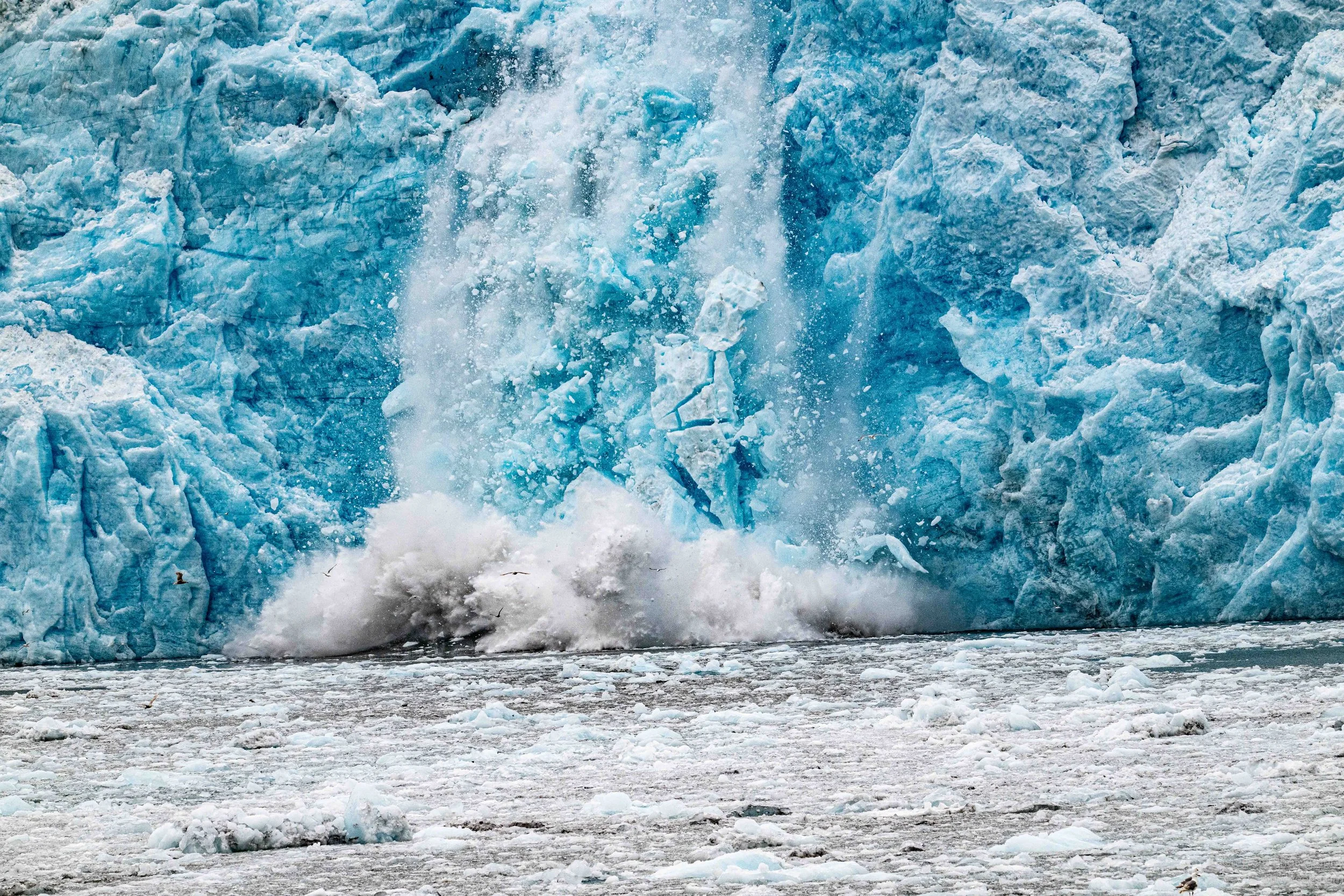
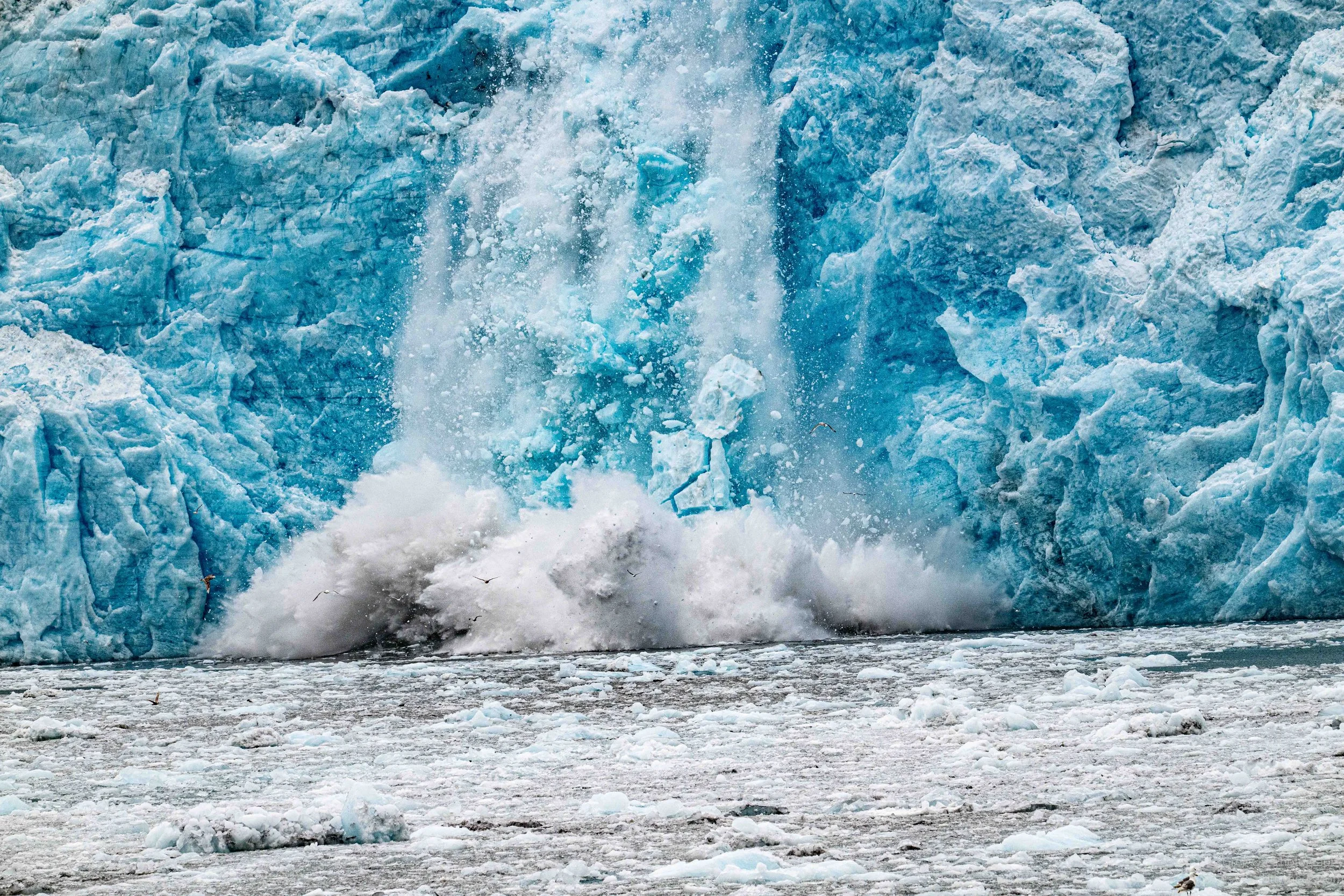
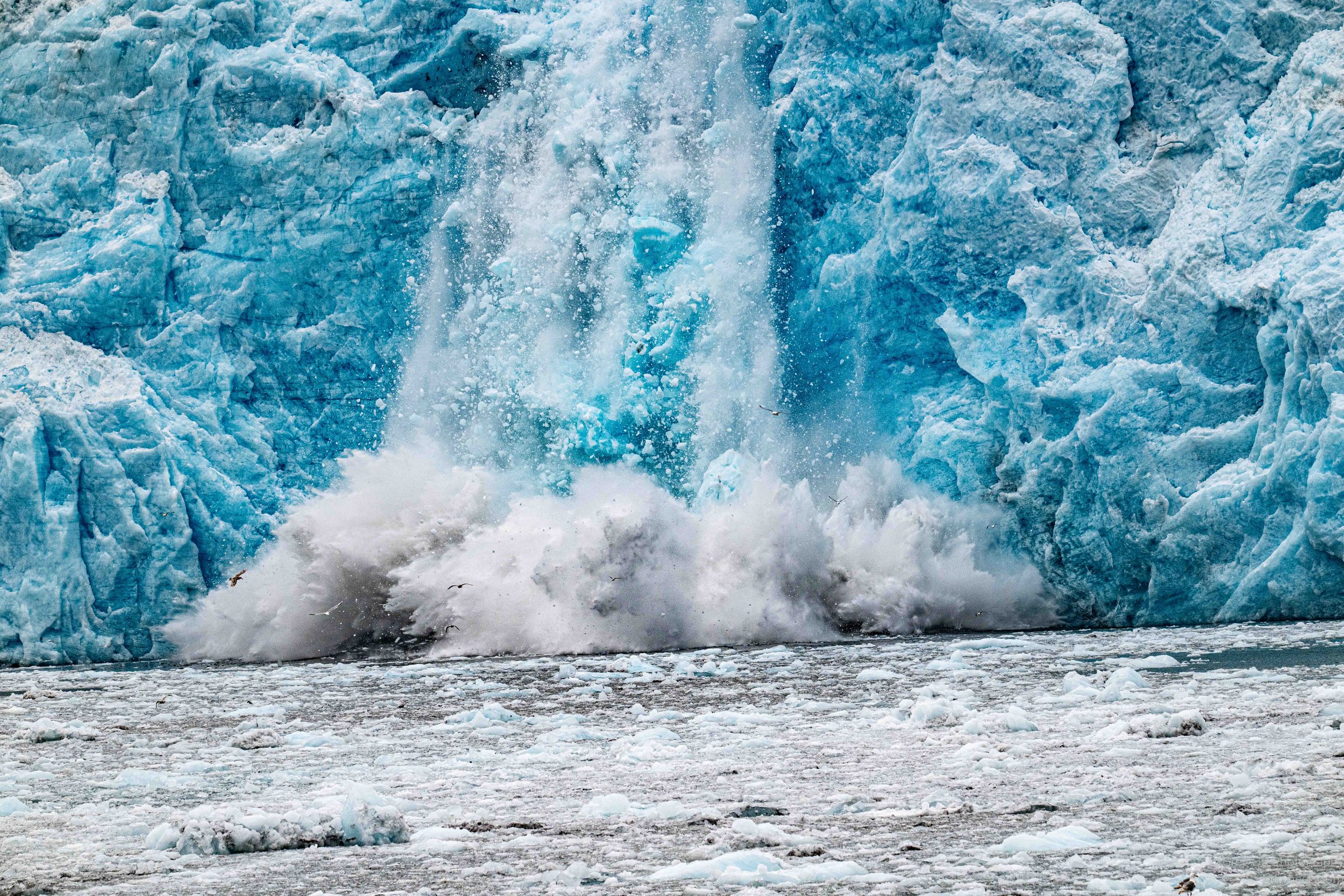
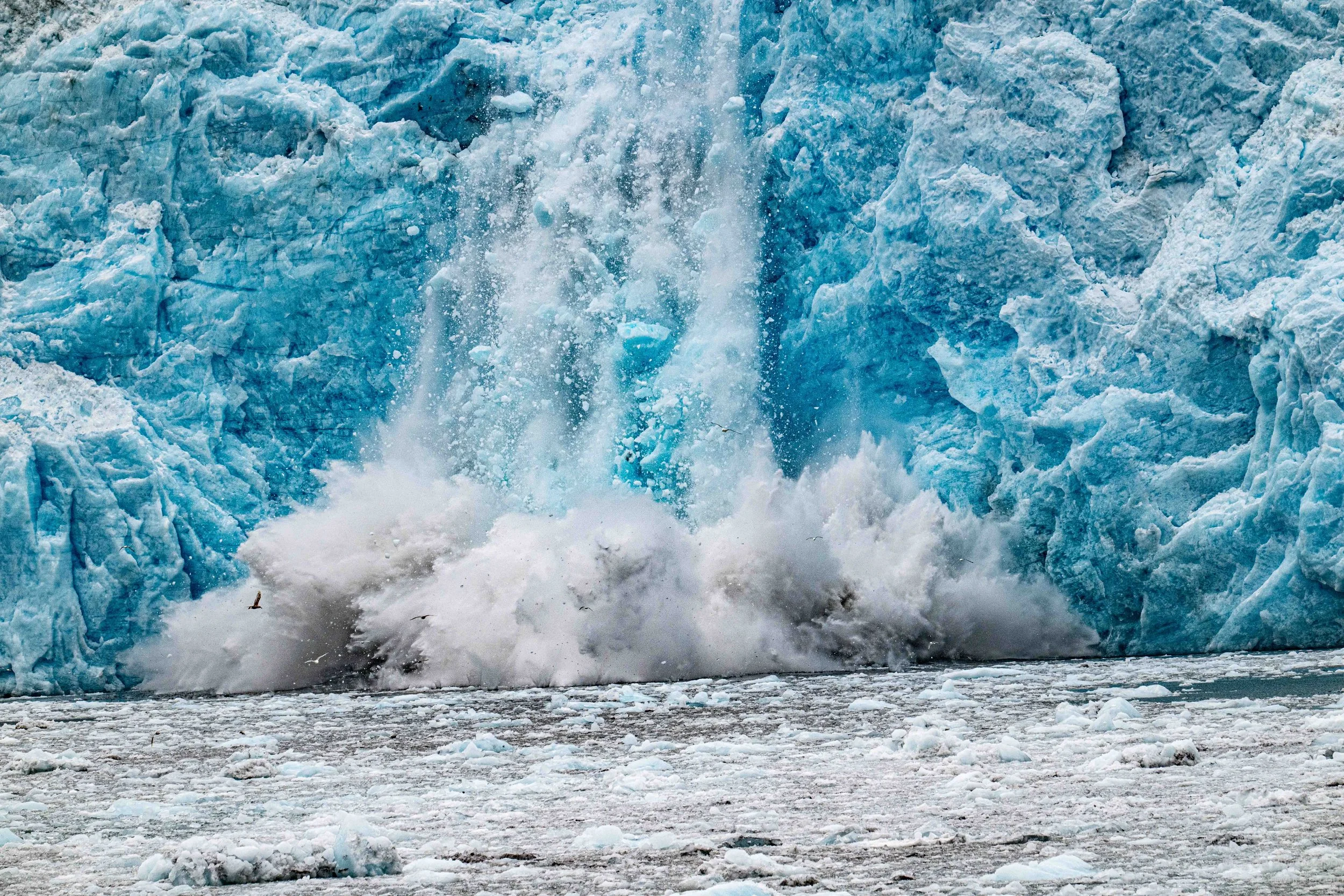
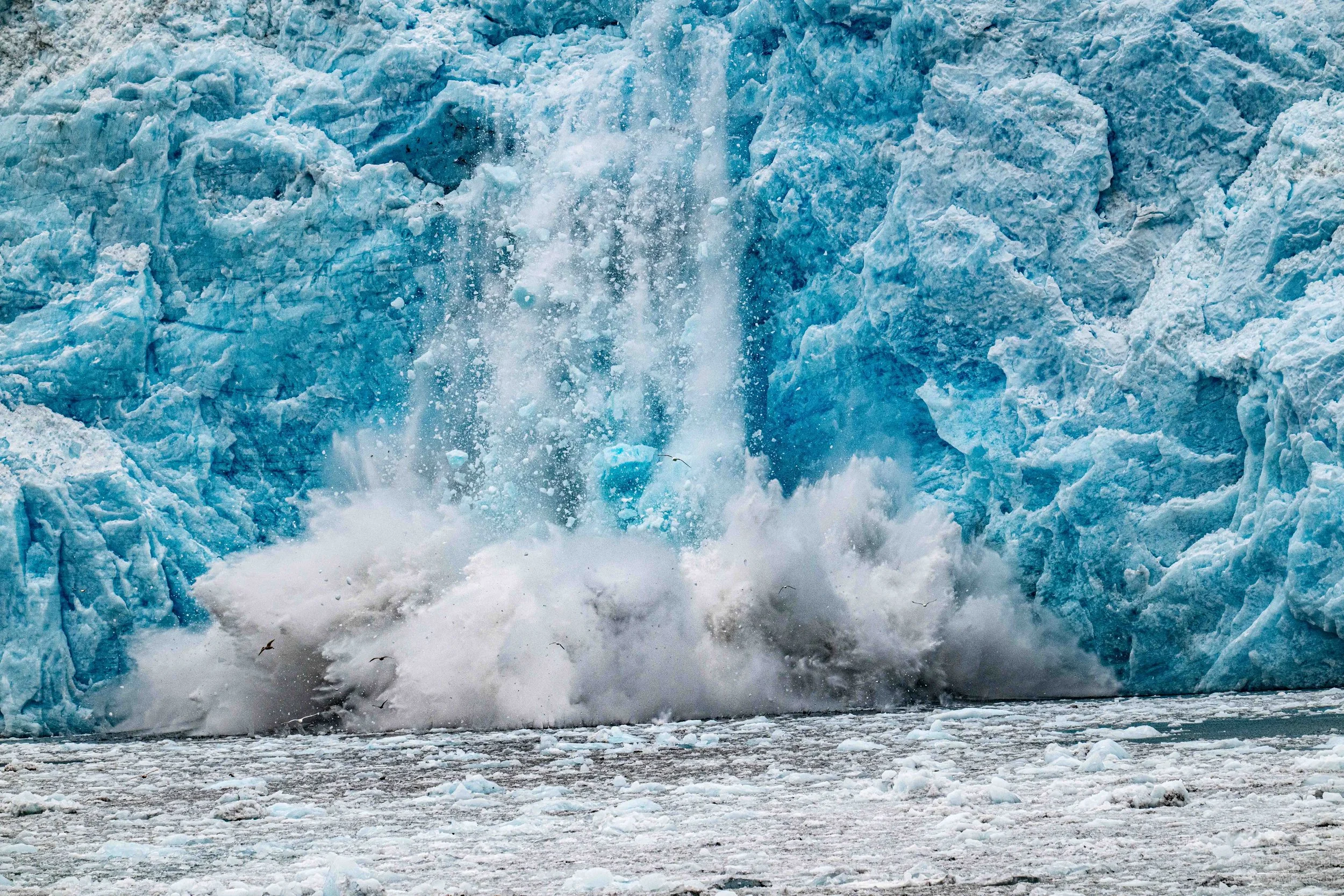
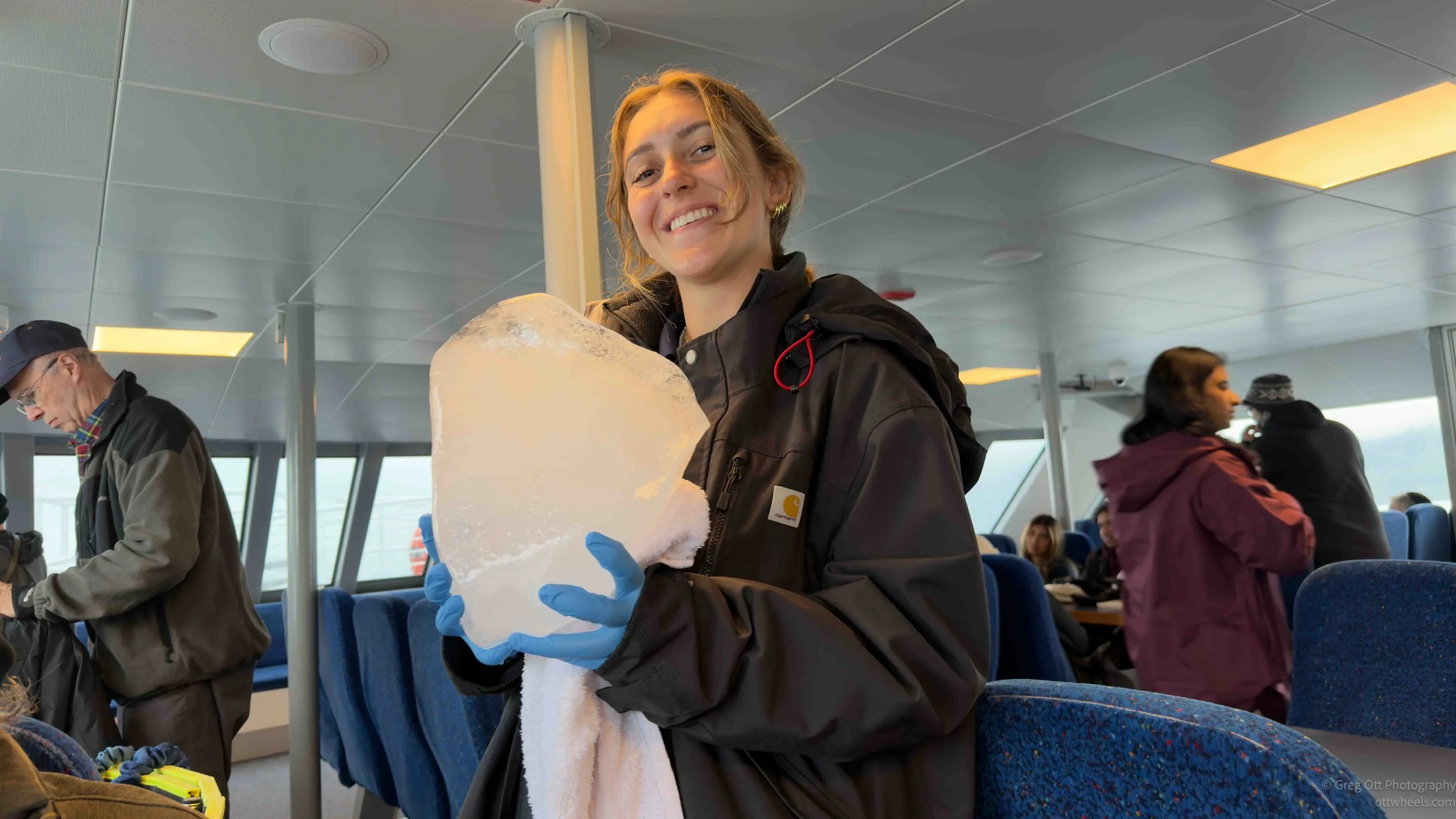
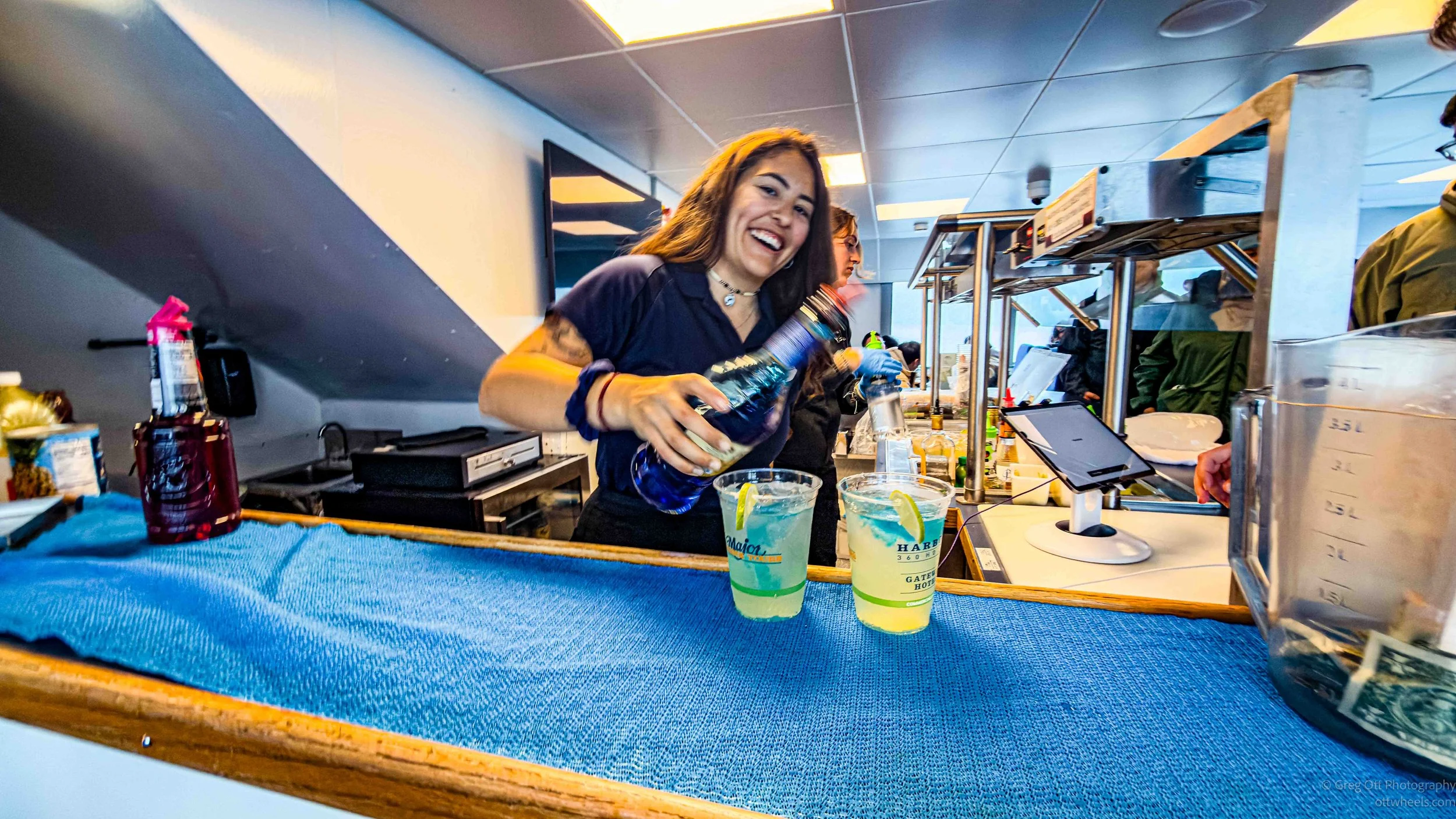
As we slowly turned away from the glacier, I noticed one of the crew members putting on a full-body harness. They lowered her over the side of the boat, and a few minutes later she climbed back aboard carrying a large chunk of glacial ice. The captain announced that it would be passed around for everyone to see, and then added that the galley would be serving iceberg margaritas made with thousand-year-old glacier ice for $8.
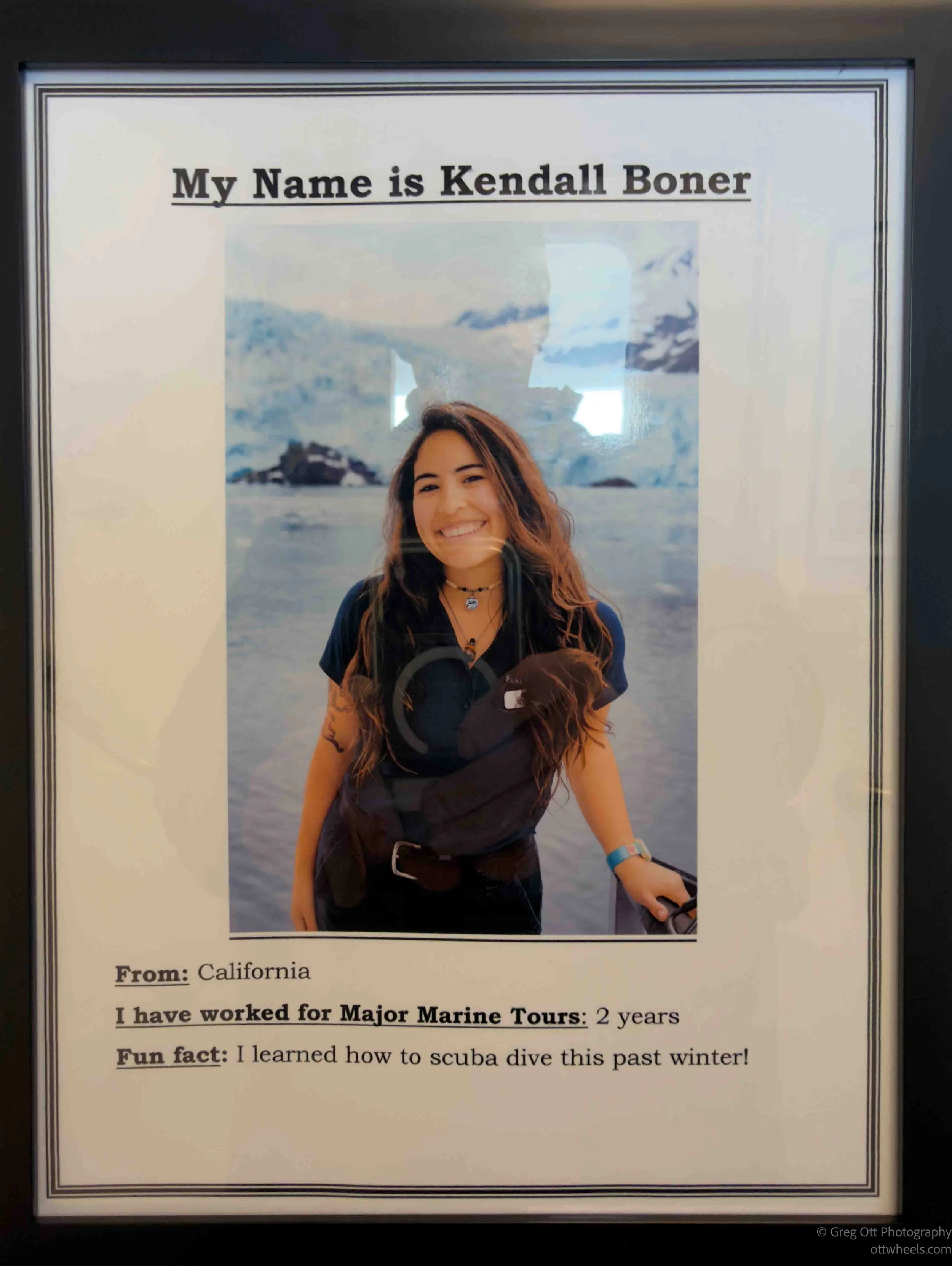
Earlier, the crew had served lunch—a sandwich, chips, and a cookie—with coffee and water available throughout the trip. I had only eaten part of my sandwich when someone at my table told Kendall, one of the crew members, that I was finished. By the time I asked if she still had it, it was already in the trash. She felt terrible, even though I kept assuring her it wasn't a big deal, and she immediately offered to bring me another sandwich.
Later, when I ordered an iceberg margarita, Kendall smiled and said, "This one's on me. I took your sandwich." I carried the drink back to Table 32 and offered everyone a taste. A few people declined, convinced there might be ice worms living in the glacier ice. They weren't entirely wrong—ice worms really do live on some glaciers—but they're harmless, and none of us were likely to find one in our margaritas. It made for a good laugh as we toasted the glacier.
Back Through the Islands
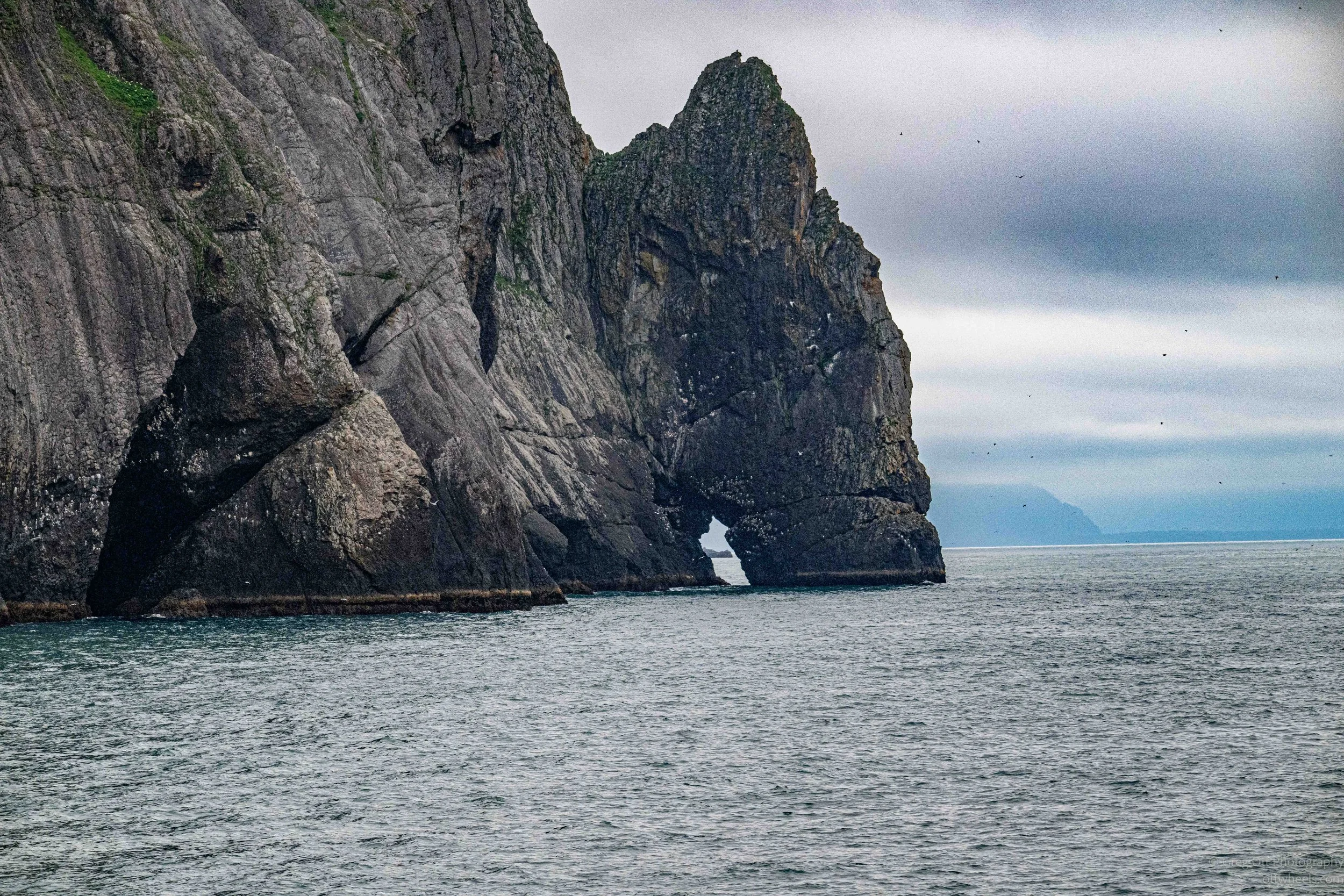
From Holgate we retraced our path out into Aialik Bay and pointed the bow toward the Chiswell Islands, a scatter of steep, uninhabited rock outcrops — Granite, Twin, Harbor, Beehive, Chiswell itself, and others — sitting right at the mouth of Aialik Bay. They're part of the Alaska Maritime National Wildlife Refuge and among the most-visited seabird colonies on this whole stretch of coast: horned and tufted puffins, black-legged kittiwakes nesting on bare cliff ledges, auklets tucked into the rocks. Chiswell Island itself is the only known Steller sea lion rookery in the area, where the animals haul out to mate and raise pups on the bare rock.
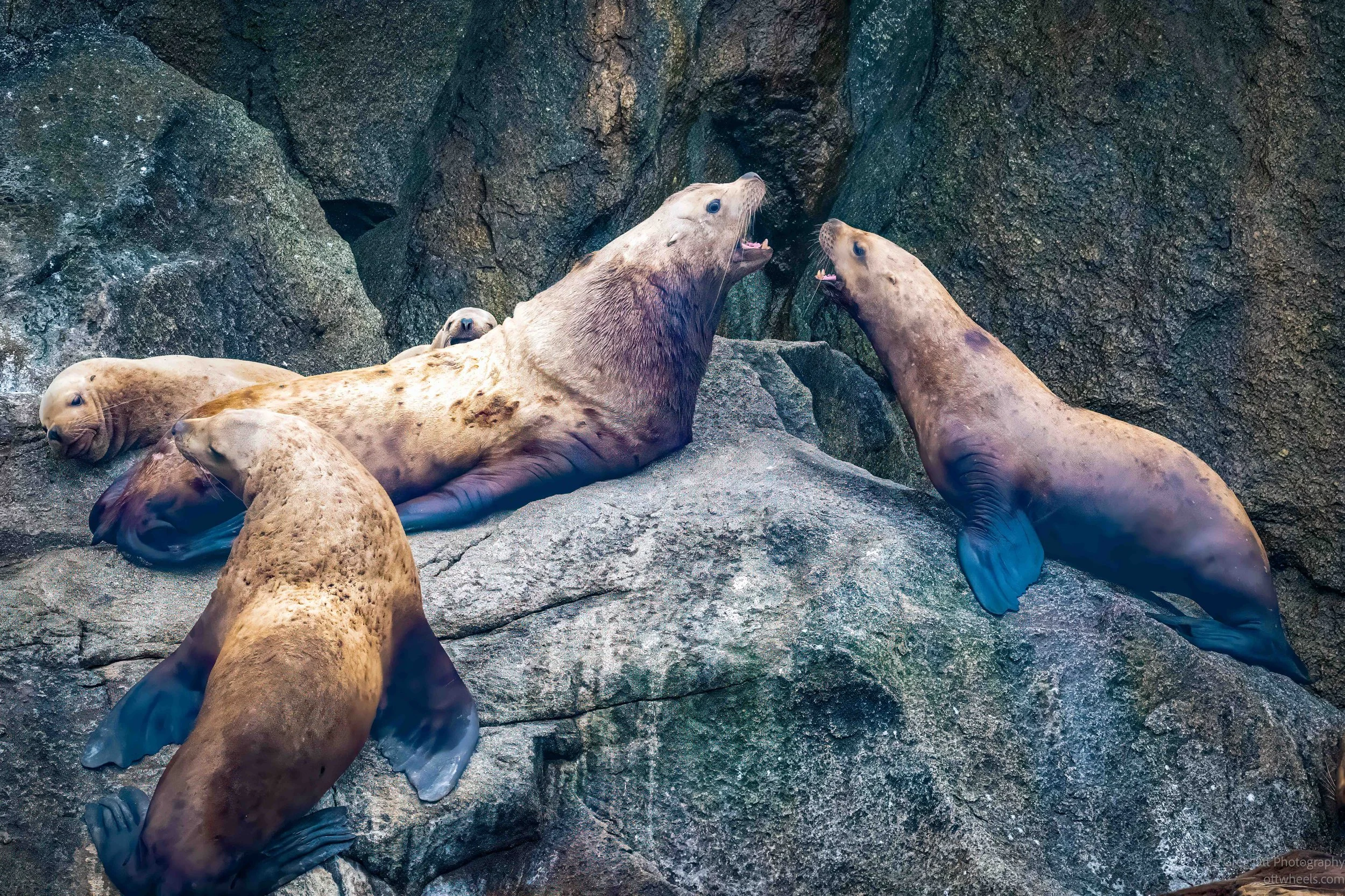
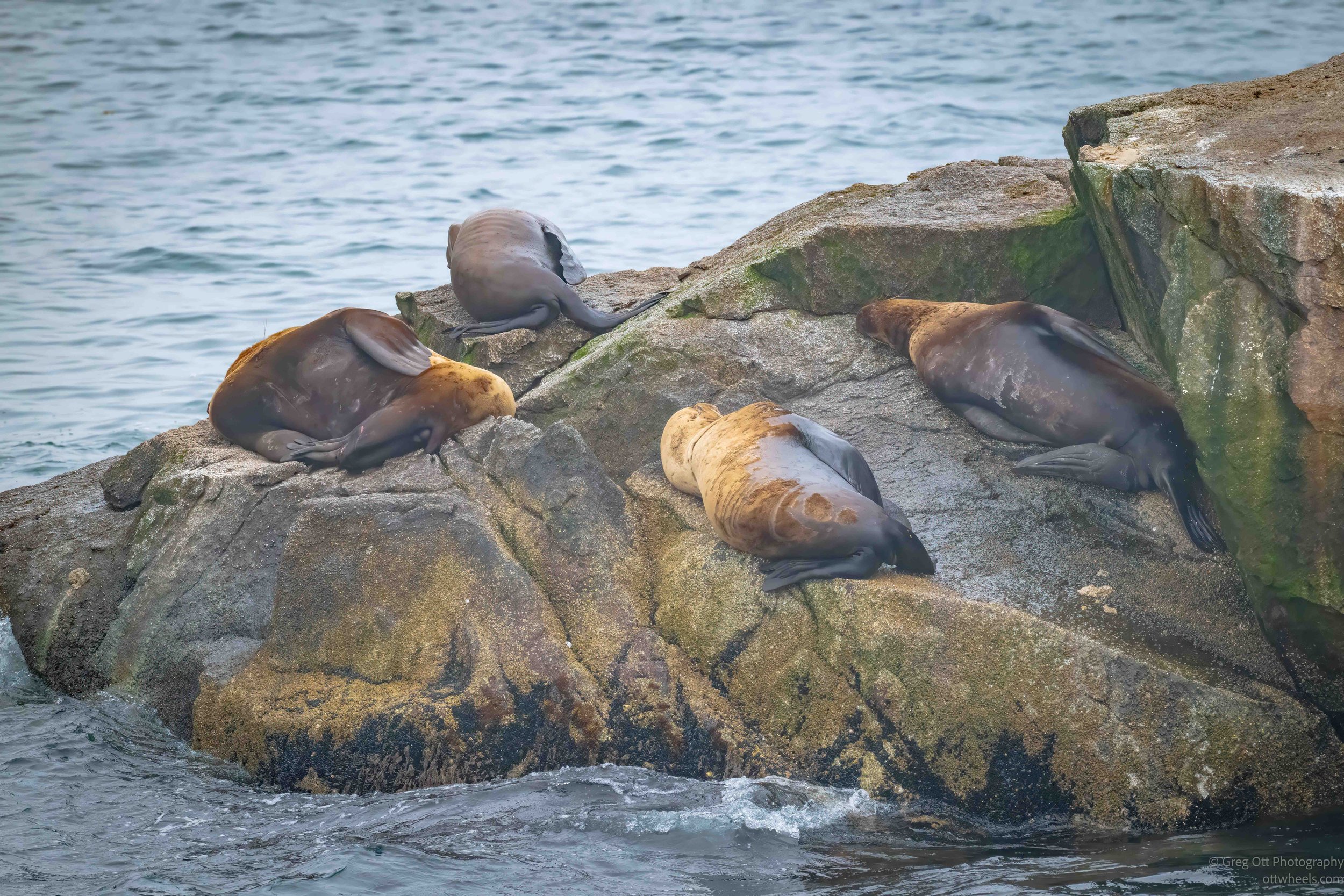
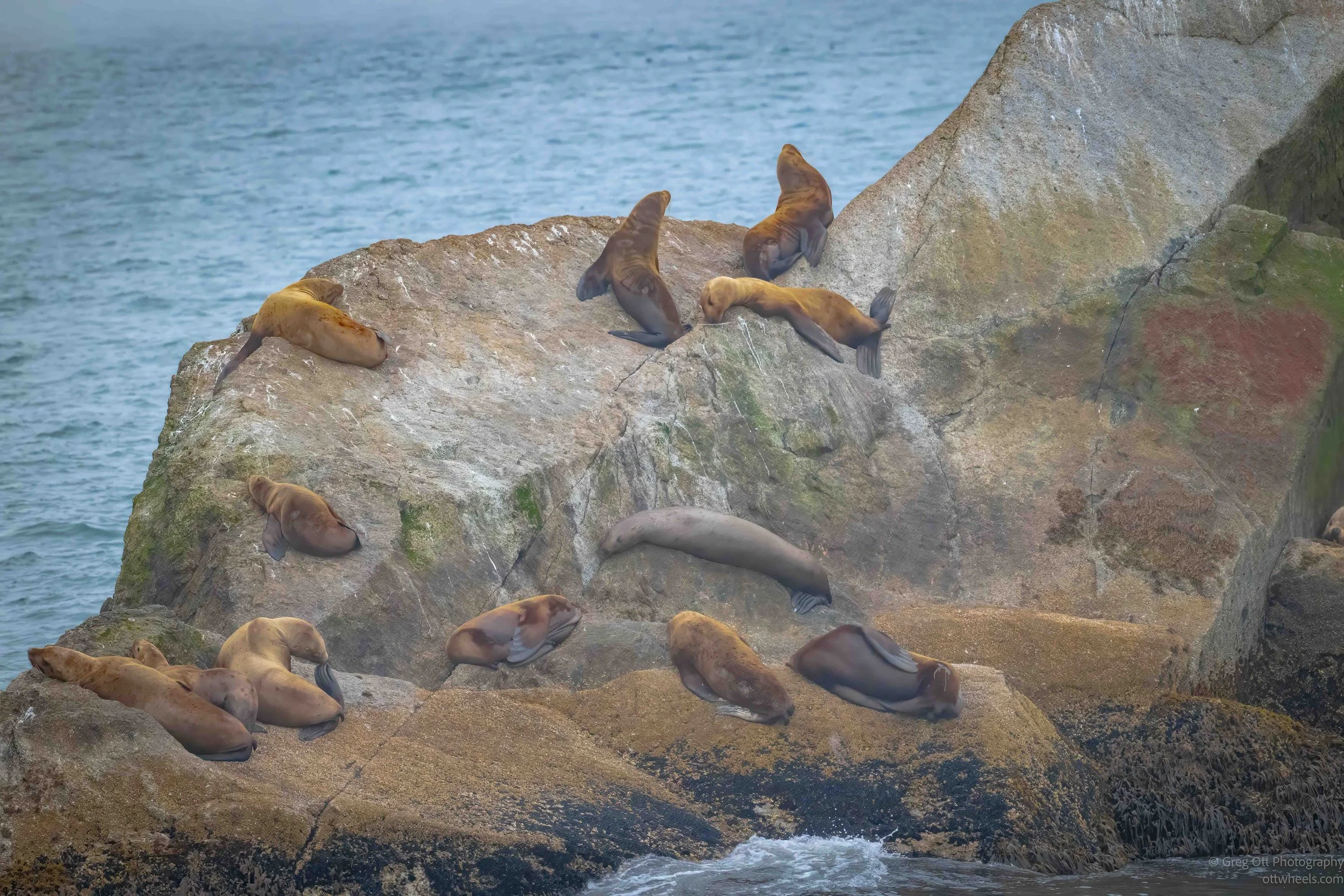
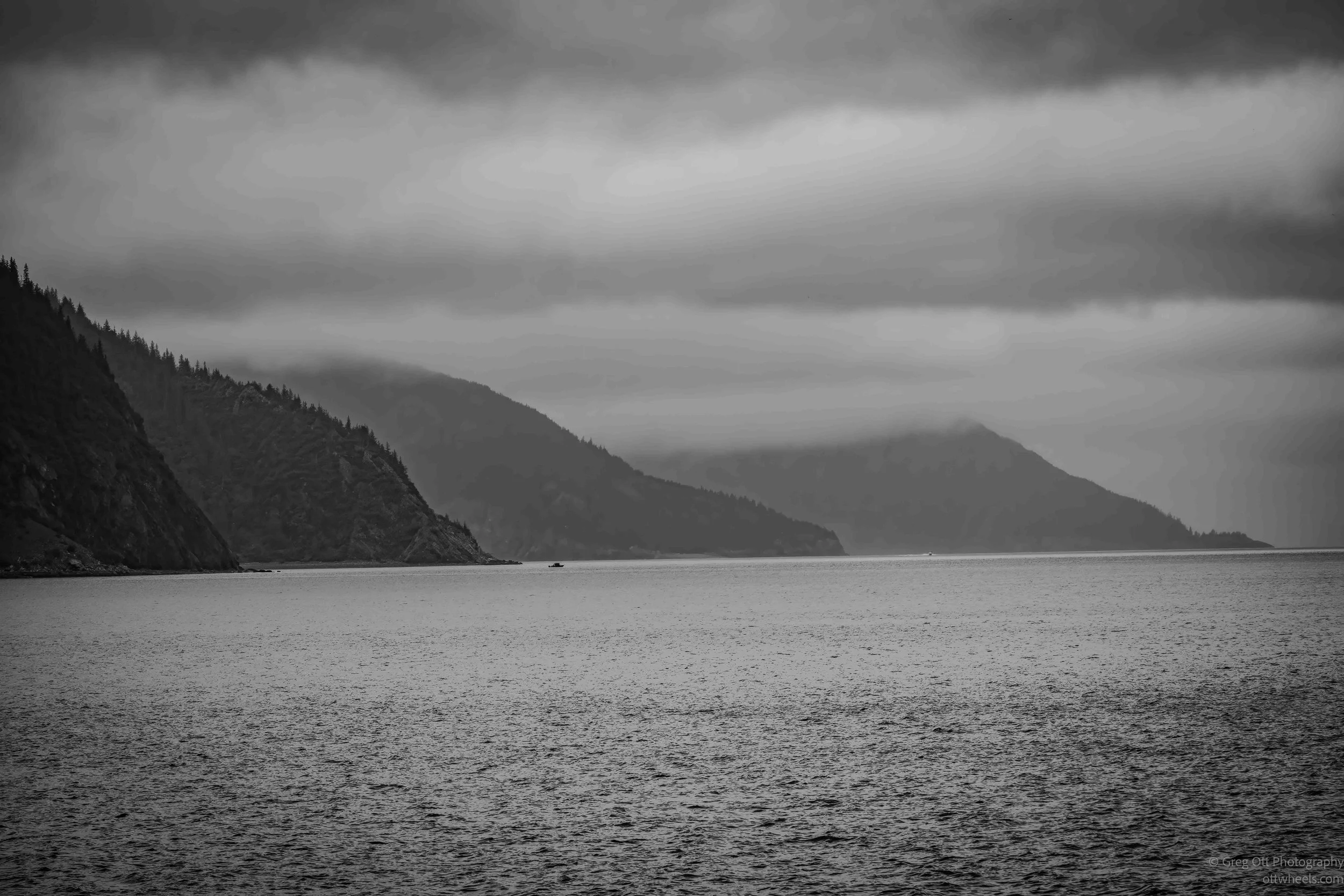
We found our way through the islands and out into the open water of the Gulf of Alaska for the run back toward Seward, hugging the coastline the rest of the way. Rugged Island passed on our right, followed by Hive Island and then Fox Island, closer to home. Fox Island has its own small footnote in Alaska history — in 1918, the painter Rockwell Kent arrived in Seward looking for solitude and spent seven months through the fall and winter holed up with his young son in an old goat shed on the island. He came home to the East Coast and wrote and illustrated Wilderness: A Journal of Quiet Adventure in Alaska, which revived his career and, almost as a side effect, put Resurrection Bay and Seward on the map for a lot of people who'd never have heard of either otherwise.
Bubble-net Feeding
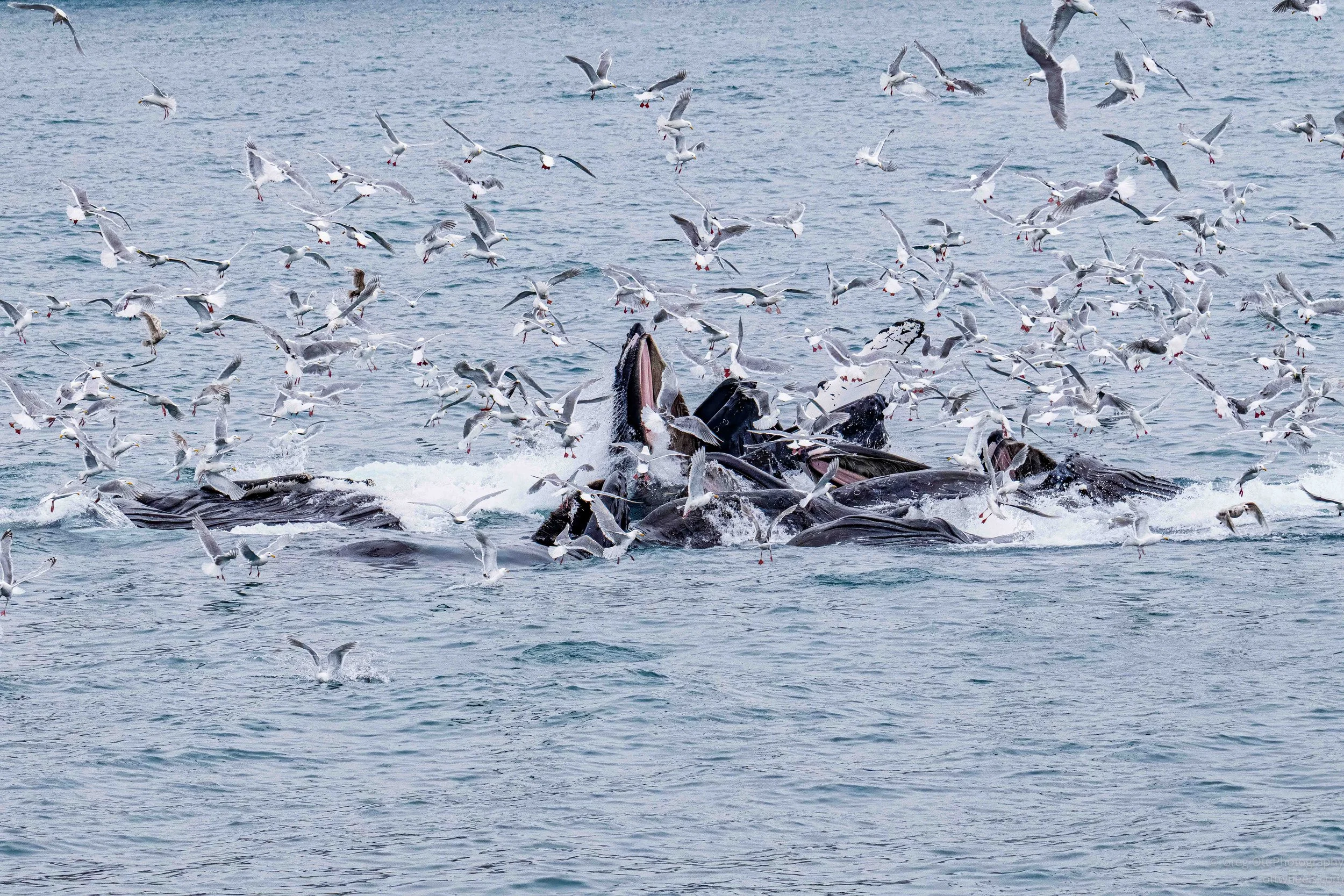
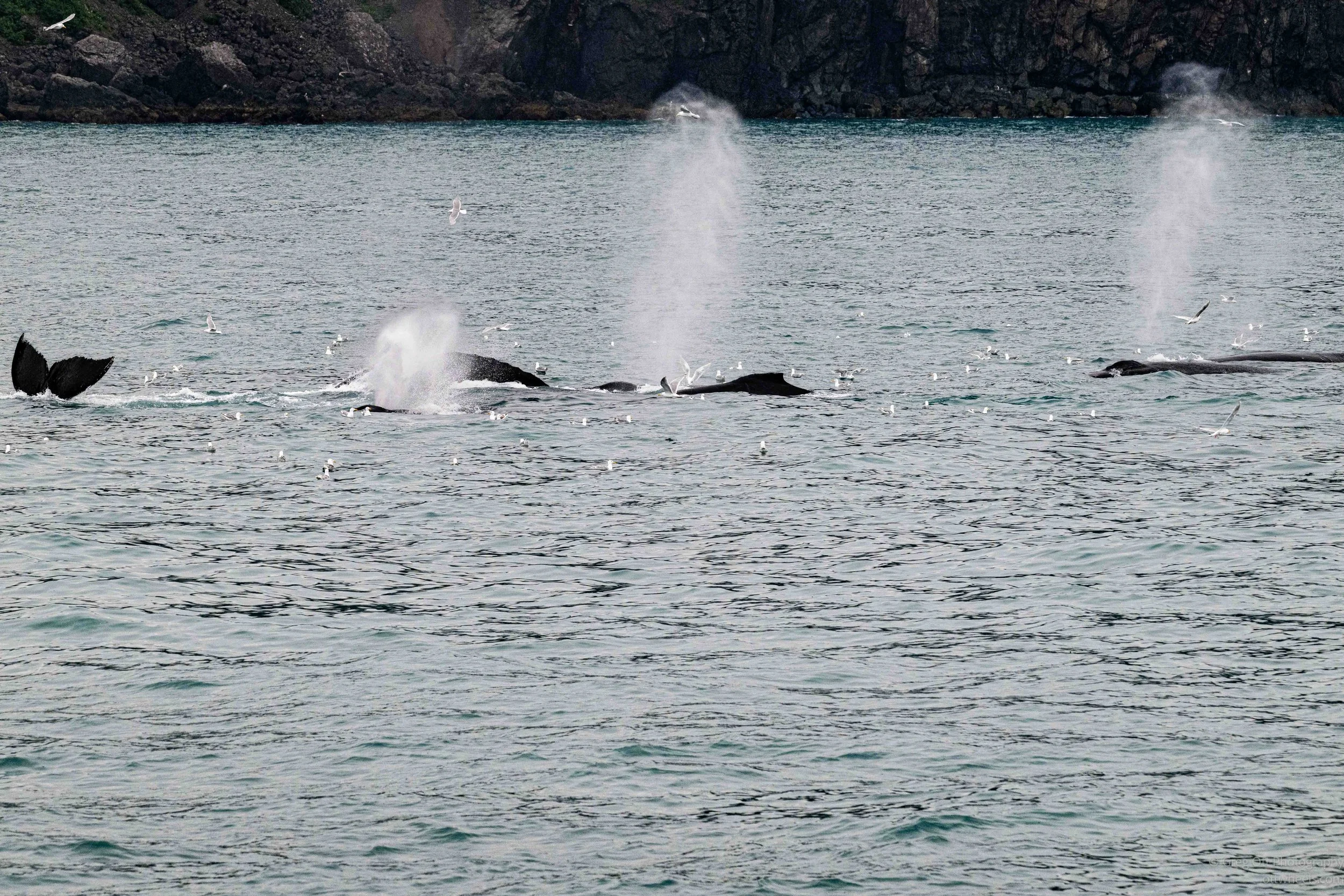
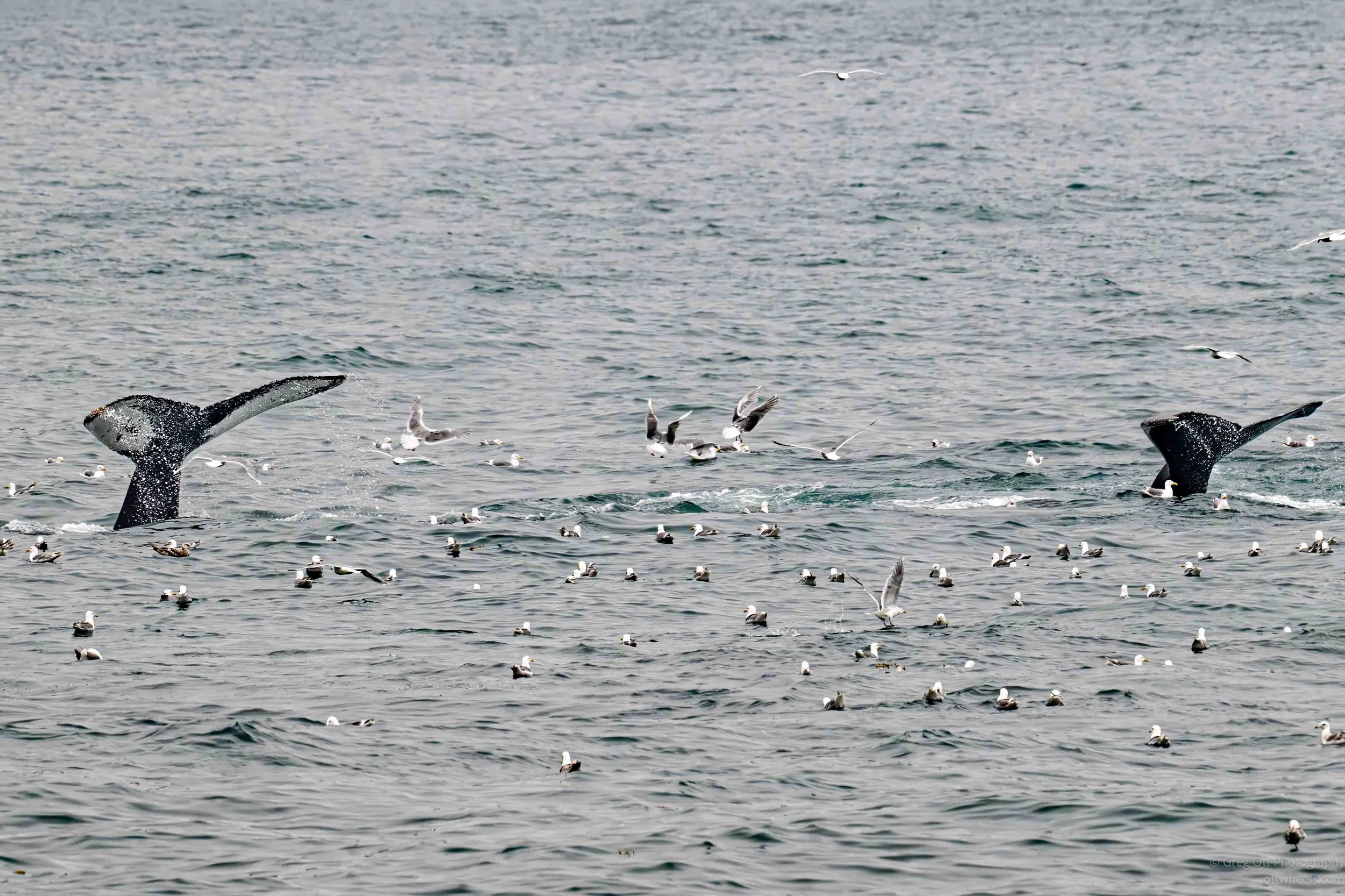
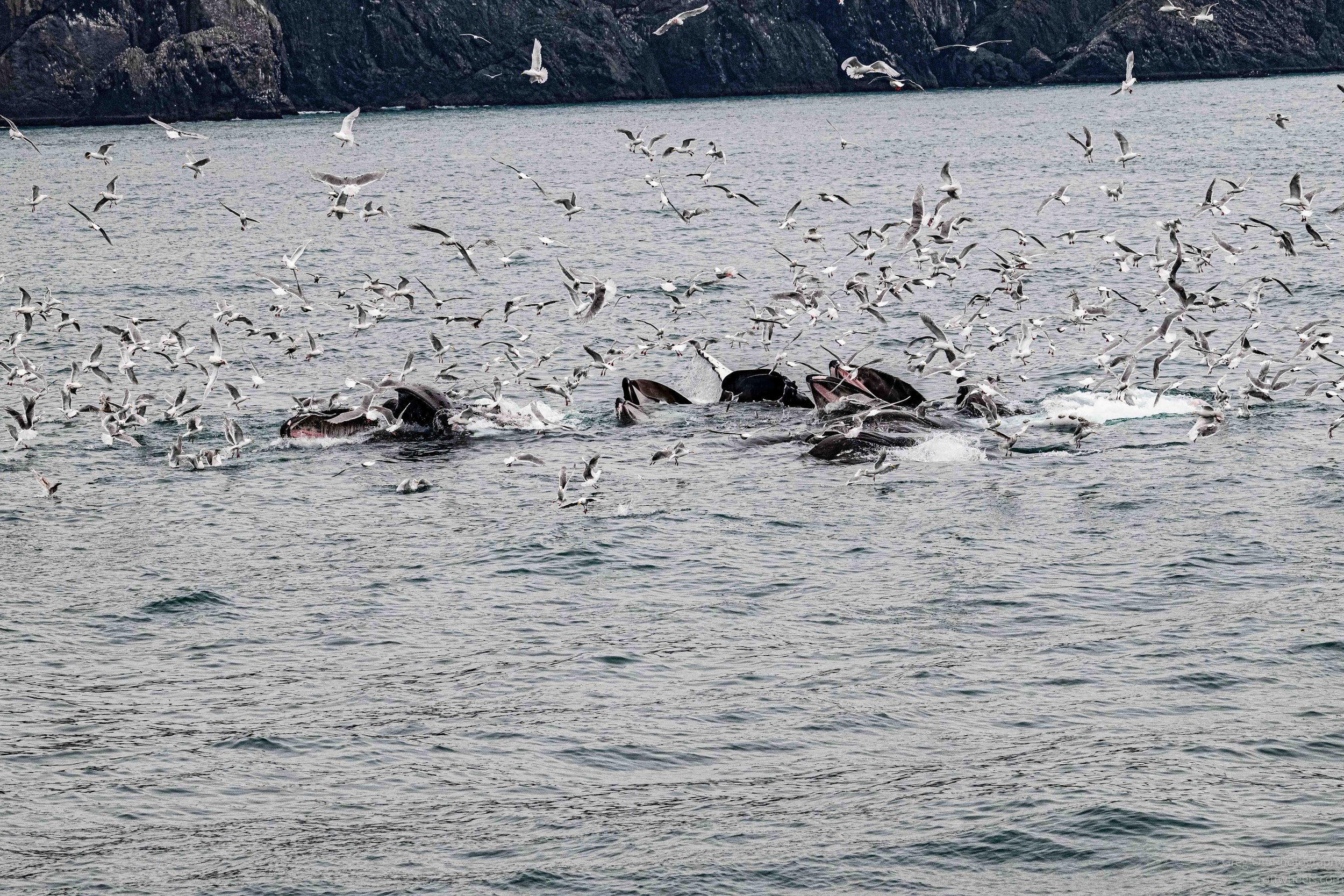
The most spectacular part of the entire trip for me was watching humpback whales use their bubble-net feeding technique. I'd seen whales before, but I'd never witnessed this behavior. It's one of the most sophisticated hunting strategies in the animal kingdom and, remarkably, it's learned rather than instinctive, passed from one generation of humpbacks to the next.
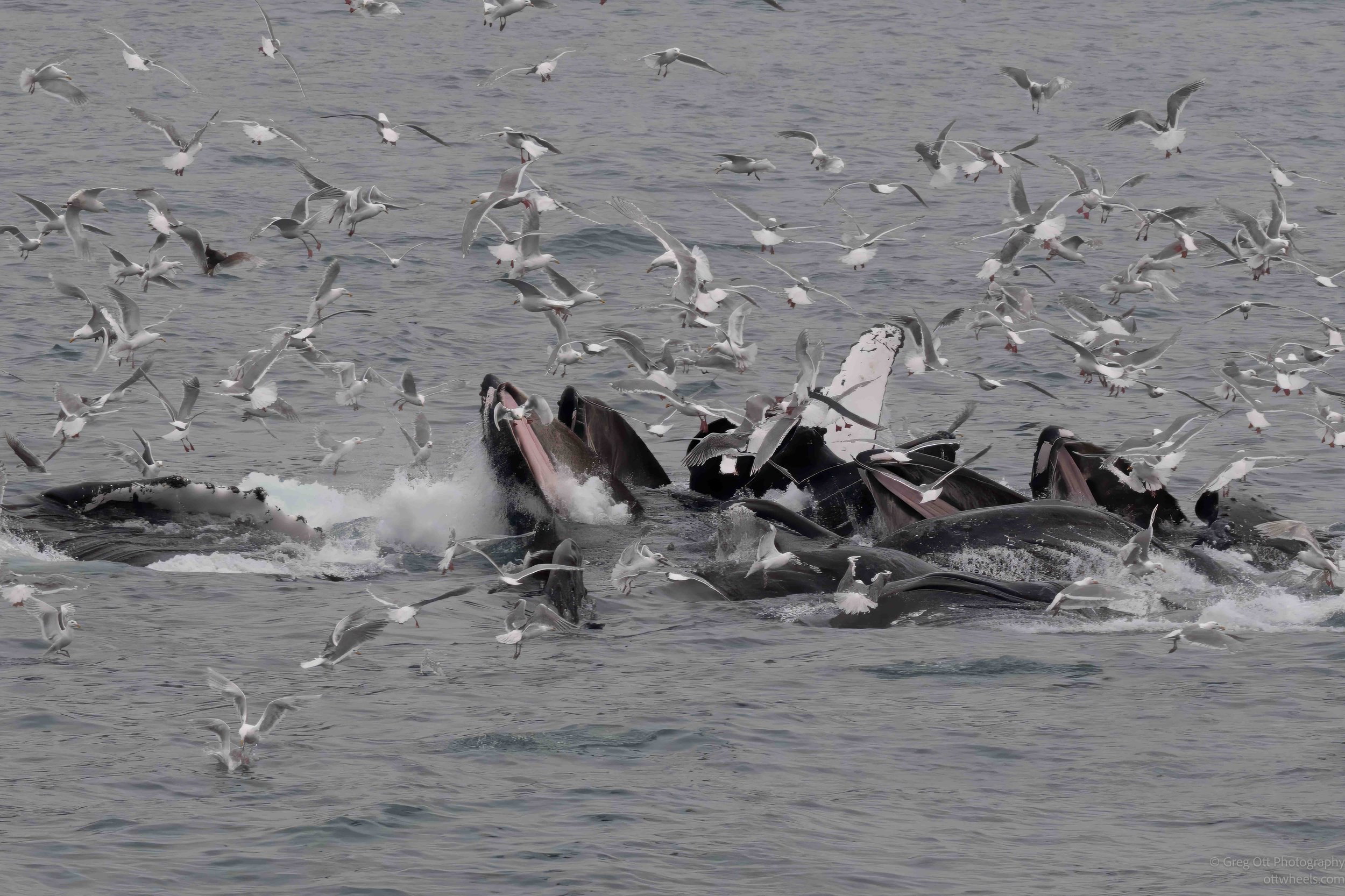
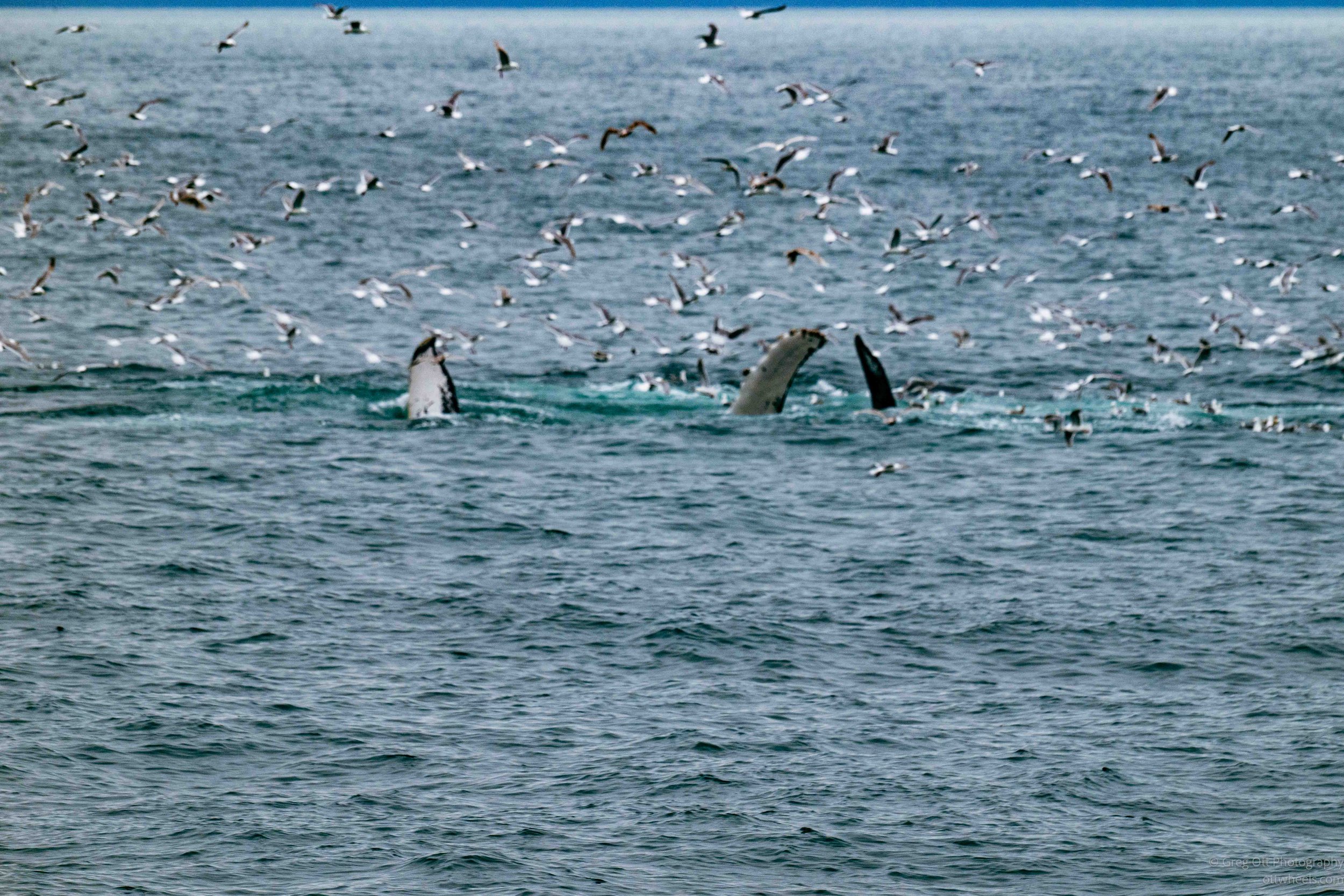
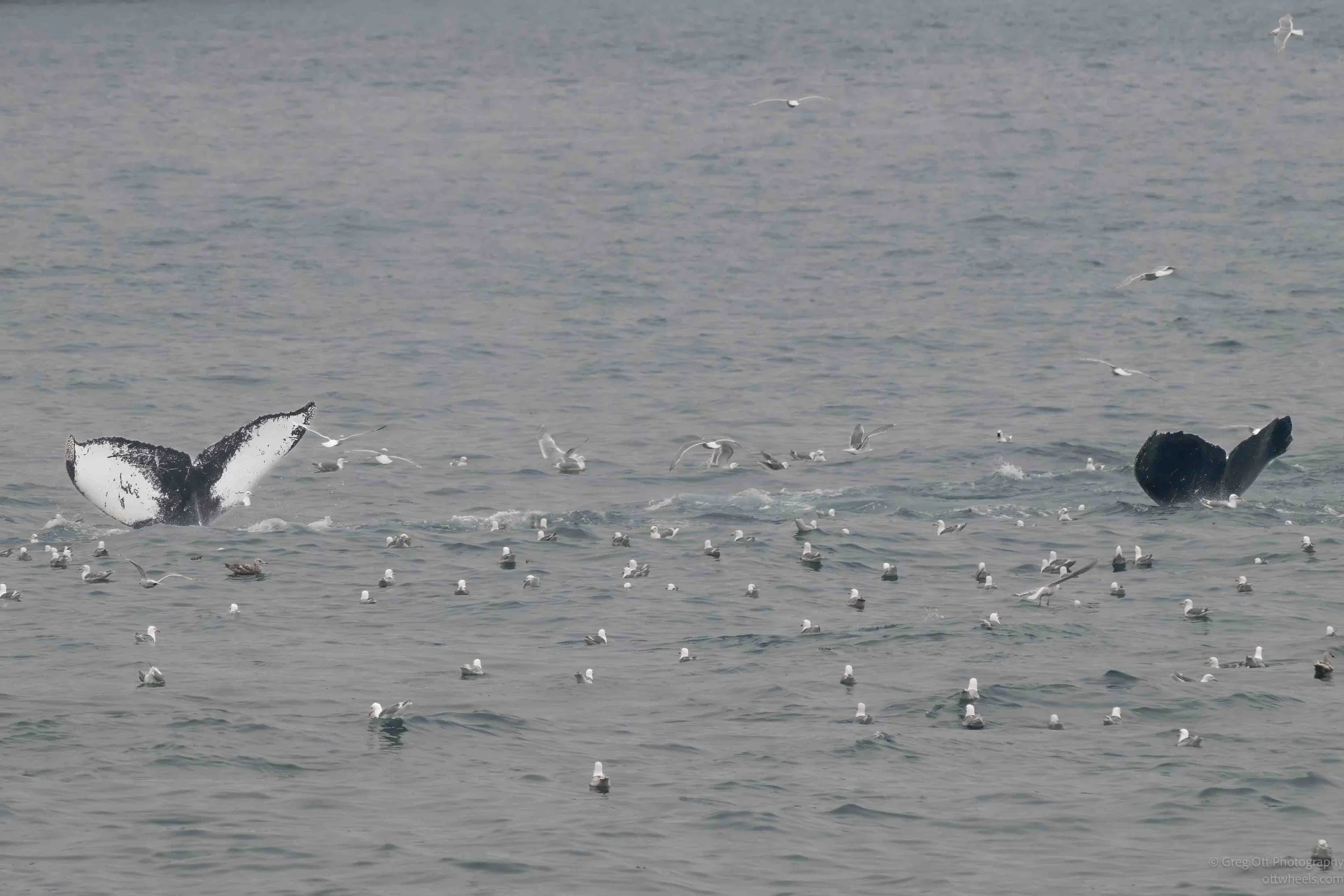
The crew explained that one whale usually locates a school of herring before the group dives beneath it. Swimming upward in a widening spiral, they blow streams of bubbles that form a living net, trapping the fish in an ever-tightening circle. When the moment is right, the lead whale gives a feeding call, and the entire group surges upward with their mouths wide open, engulfing fish and seawater before filtering the water back out through their baleen plates.
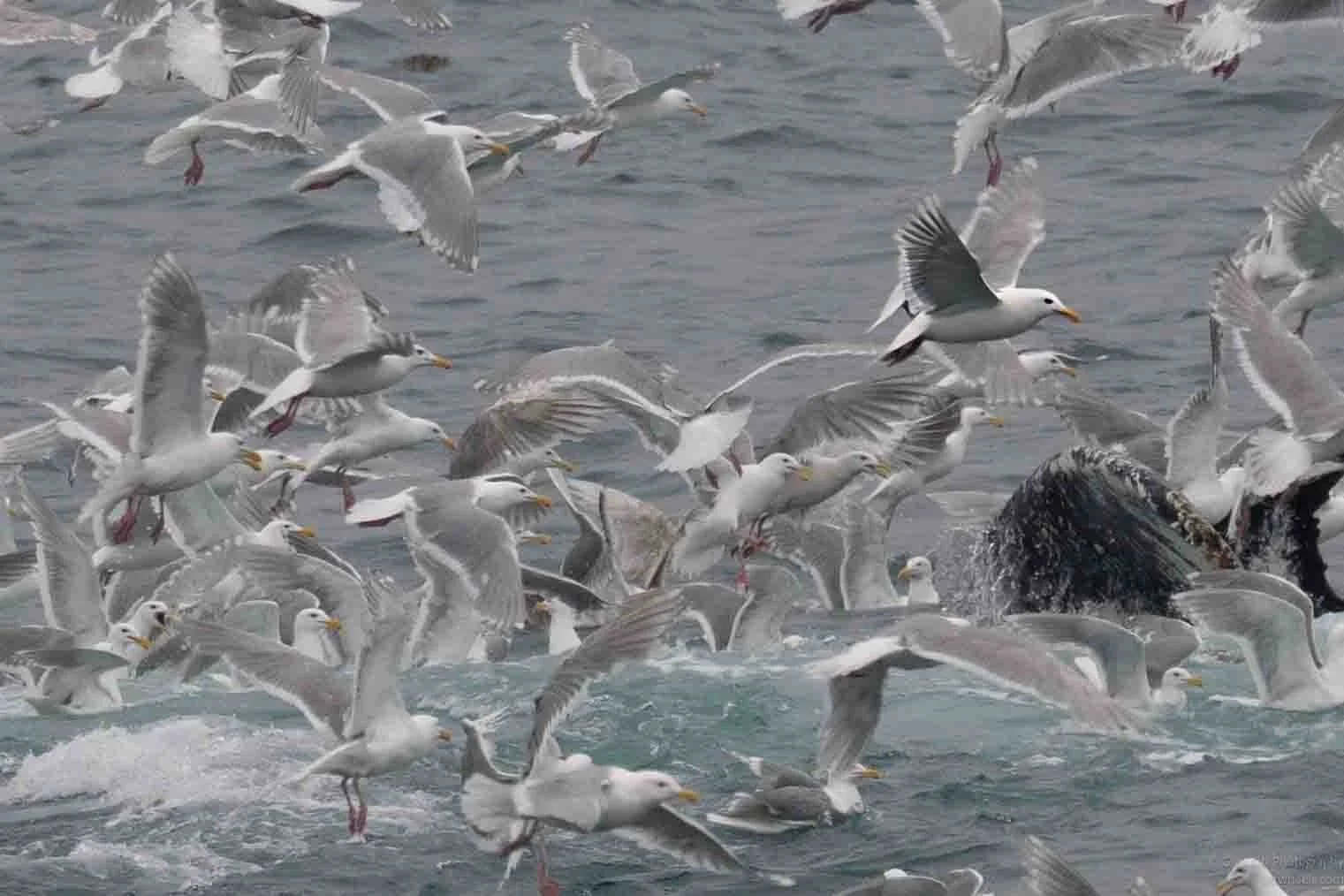
Captain Gary added another dimension to the experience by lowering a hydrophone—a waterproof microphone—into the water. Through the boat's speakers, we could hear the haunting vocalizations of the whales communicating beneath the surface as they coordinated the hunt. While we listened, the gulls became just as important. One or two birds would suddenly appear over a patch of water, then dozens more would join them, circling and calling excitedly. This was the signal to get your camera ready. The crew explained that the gulls had learned to recognize bubble-net feeding because it meant an easy meal was only seconds away.
Then the ocean erupted. The pod of nine humpbacks burst through the surface almost simultaneously with their enormous mouths fully extended while gulls dove frantically into the chaos to snatch escaping herring. The entire event lasted only a few seconds before the whales disappeared beneath the surface again, but it was one of the most incredible wildlife spectacles I've ever witnessed. Of everything I saw on the cruise, this was the moment I'll remember most.
Back to Seward
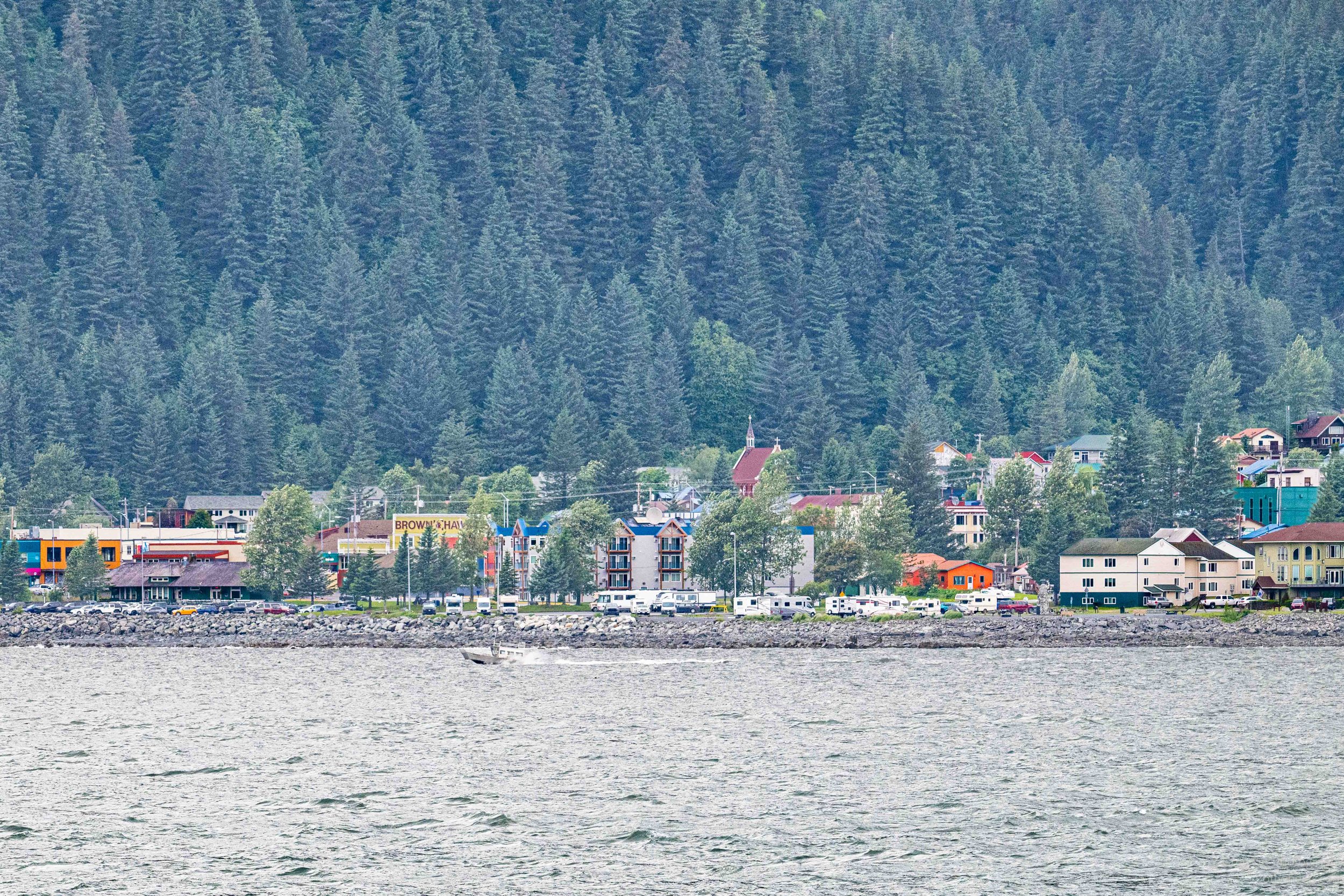
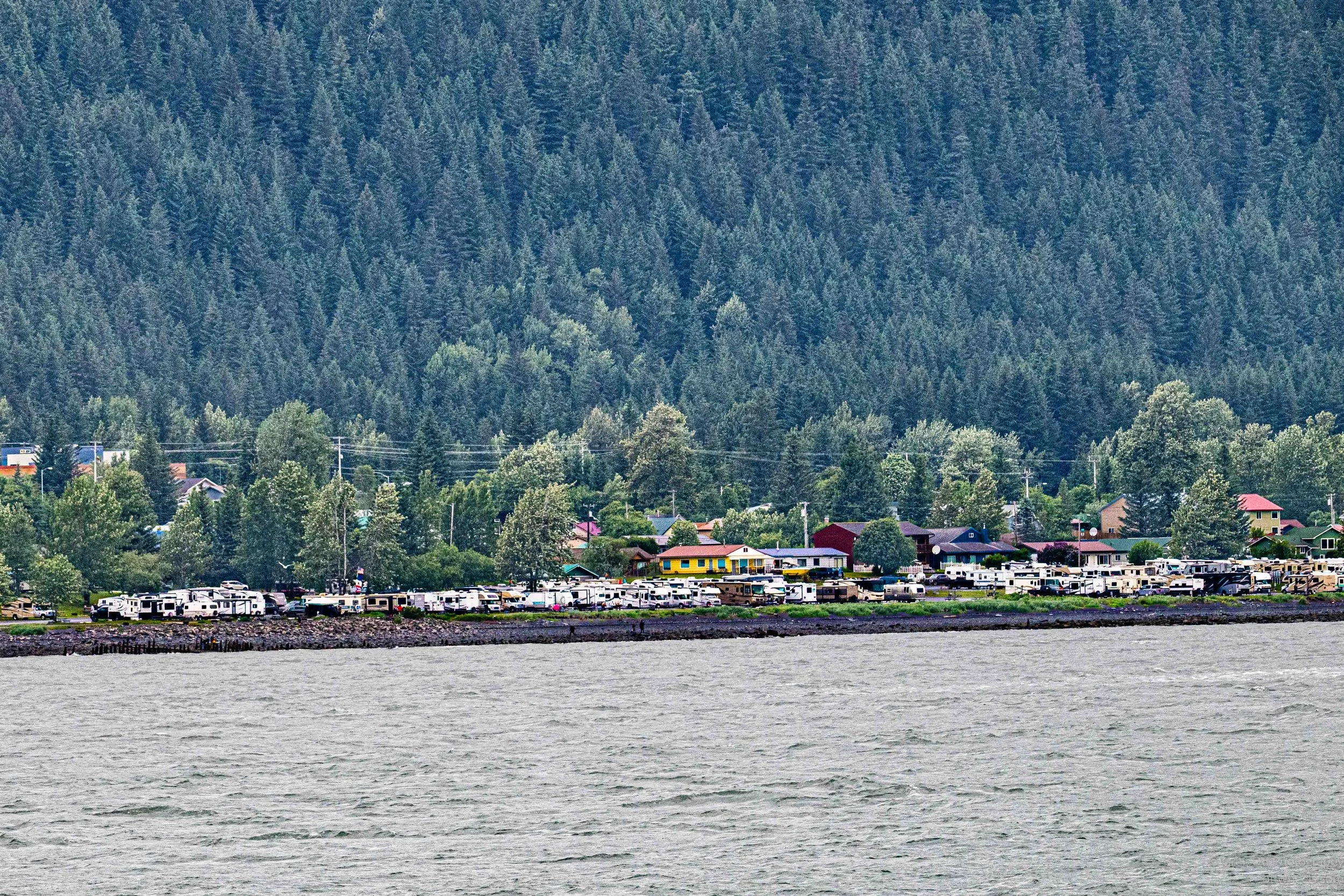
We arrived back a little after 5 p.m. I'd hoped to find a restaurant for dinner, but it was Saturday night and every place in town had a 90-minute wait. I decided to head back to the van and make something simple instead — which turned out to be the right call, because I started coughing heavily not long after. Congested, and with the distinct feeling that a fever was building. Sure enough, my temperature was slightly elevated — my body letting me know it was fighting something. After dinner, I didn't push my luck. I put on warm clothing, walked a block to an ice cream shop and had a small cup of ice cream. It felt good on my throat. I then went back to the van, relaxed and fell asleep.
Besides the incredible scenery and wildlife, I also enjoyed meeting people from all over the world. Throughout the day I struck up conversations with passengers on the boat. I spent time talking with young software engineers about how AI has become part of their daily work, and later had a fascinating conversation with a psychologist from the United Kingdom who had a thoughtful and refreshing outlook on life. Add in the retired couples, families traveling together, and people from countries I'd never visited, and the cruise became about more than glaciers and wildlife. It was another reminder that some of the most memorable parts of traveling are the unexpected conversations with people you might never meet otherwise.