Leavenworth, WA
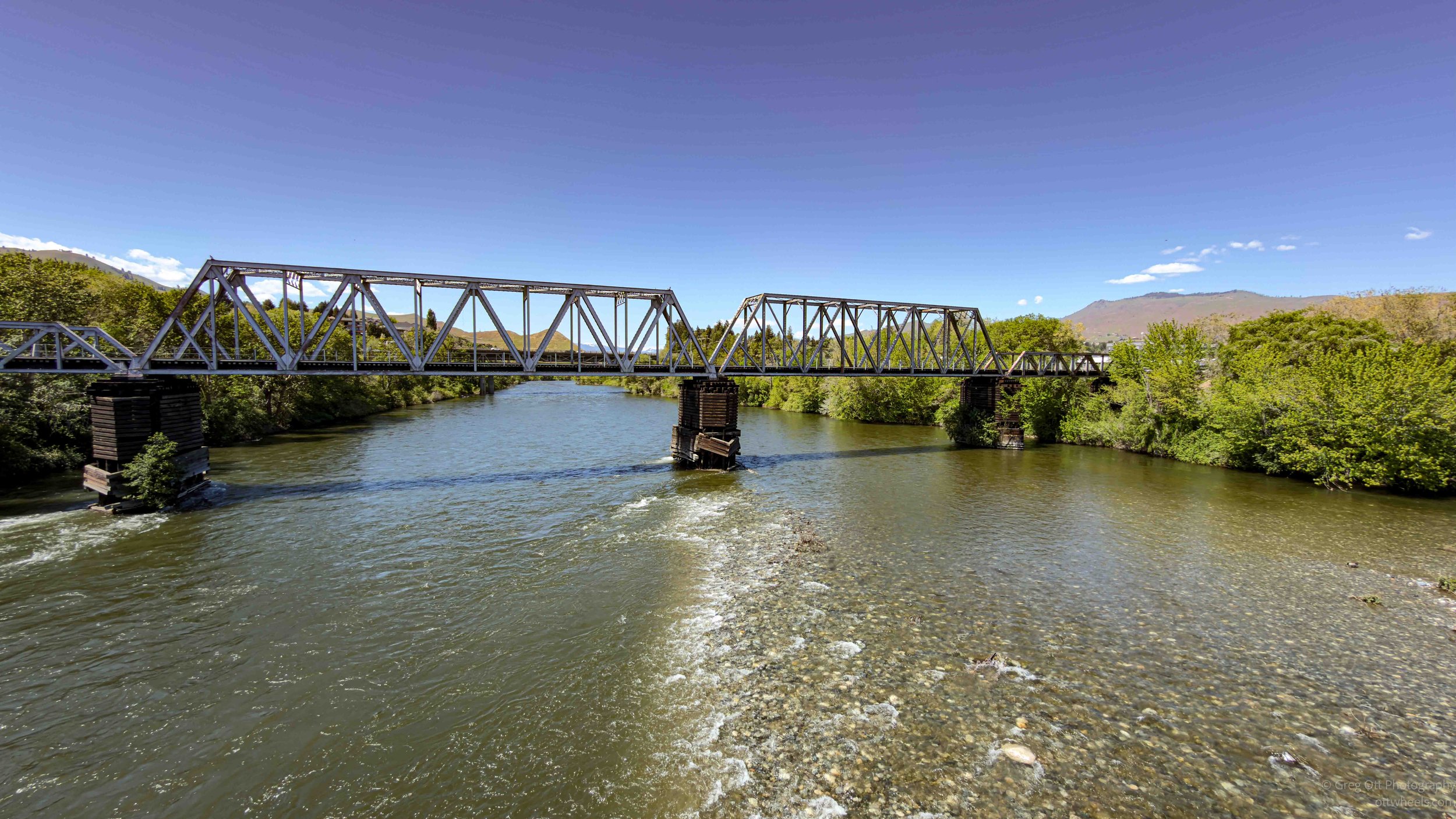
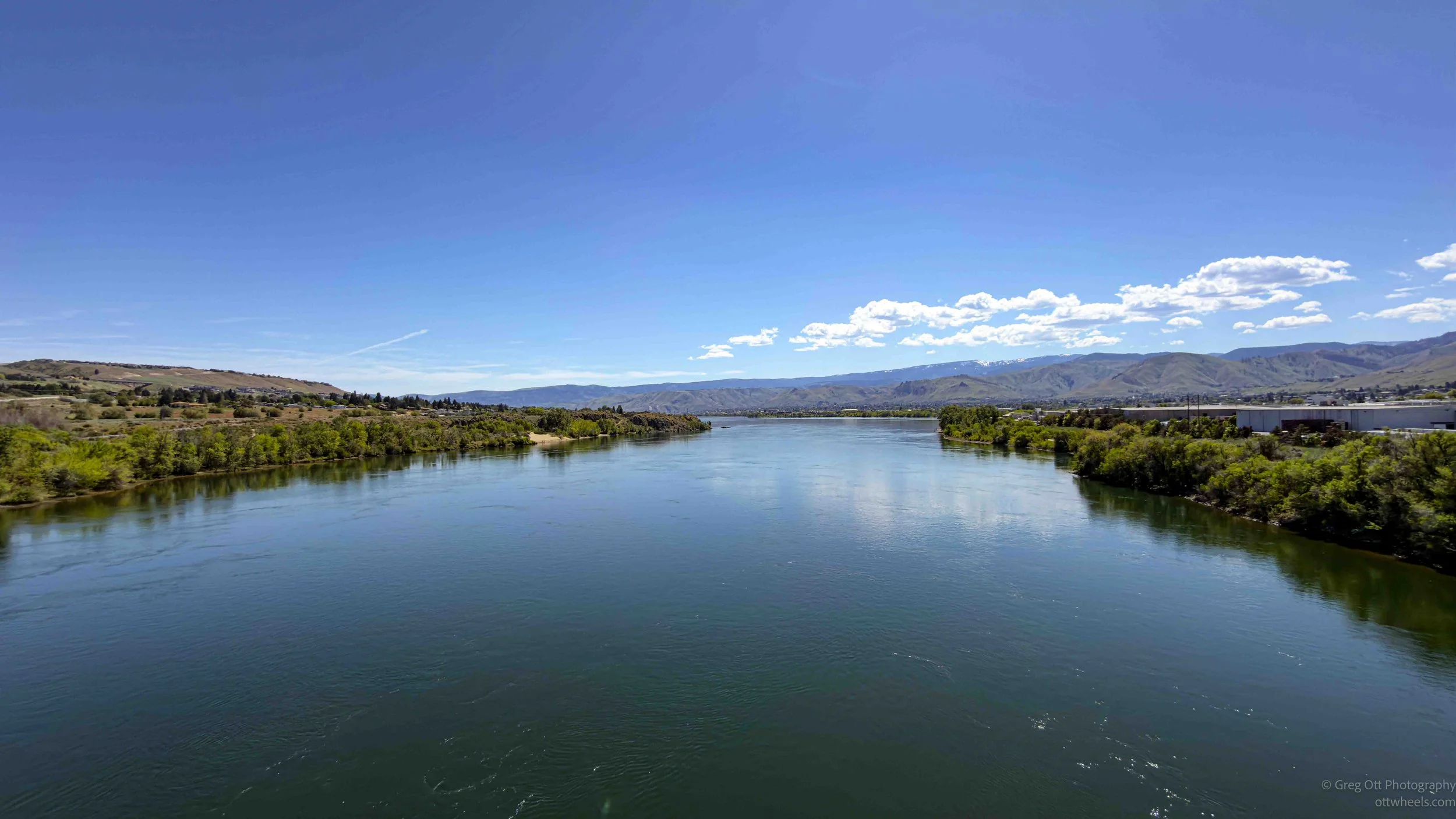
I stayed overnight in Wenatchee, Washington. Before leaving town, I went for a 12-mile bike ride along the Apple Capital Recreation Loop Trail that circles both sides of the Columbia River. The ride was harder than it should have been. I could still feel the lingering effects of COVID every time the trail tilted upward. My breathing never really settled into a rhythm, and even moderate climbs felt heavier than they normally would have.
Partway through the ride, a detour added a couple of unexpected miles. The trail follows the river closely in sections, winding through parks, open shoreline, and quiet stretches where the water almost disappears behind cottonwoods and reeds. One section cut through a Washington state park along the river where families were fishing near the shoreline and a few cyclists drifted past at an easy pace. The detour signs, though, were terrible. I kept reaching intersections with arrows pointing in different directions and no real indication of where the actual trail continued. At one point I caught up to a young guy on a bike and asked if he knew the route. He laughed and told me to just follow him because “everybody gets lost through here.” We eventually worked our way back onto the main trail, and before he peeled off he stopped long enough to explain how to reconnect with the loop if I got turned around again.
About five miles into the ride, I noticed a young woman standing beside the trail staring down at the rear wheel of her bike. I stopped to see if she needed help. Her derailleur cable had snapped, leaving the bike stuck in its hardest gear. On flat ground it was manageable, but the hills were brutal. I looked it over for a few minutes hoping there might be some temporary fix, but there really wasn’t much I could do trailside without tools or replacement parts. Eventually she decided to turn around and coast back toward her car since most of the route behind her was downhill or flat. It was one of those situations where you want to help more than you actually can.
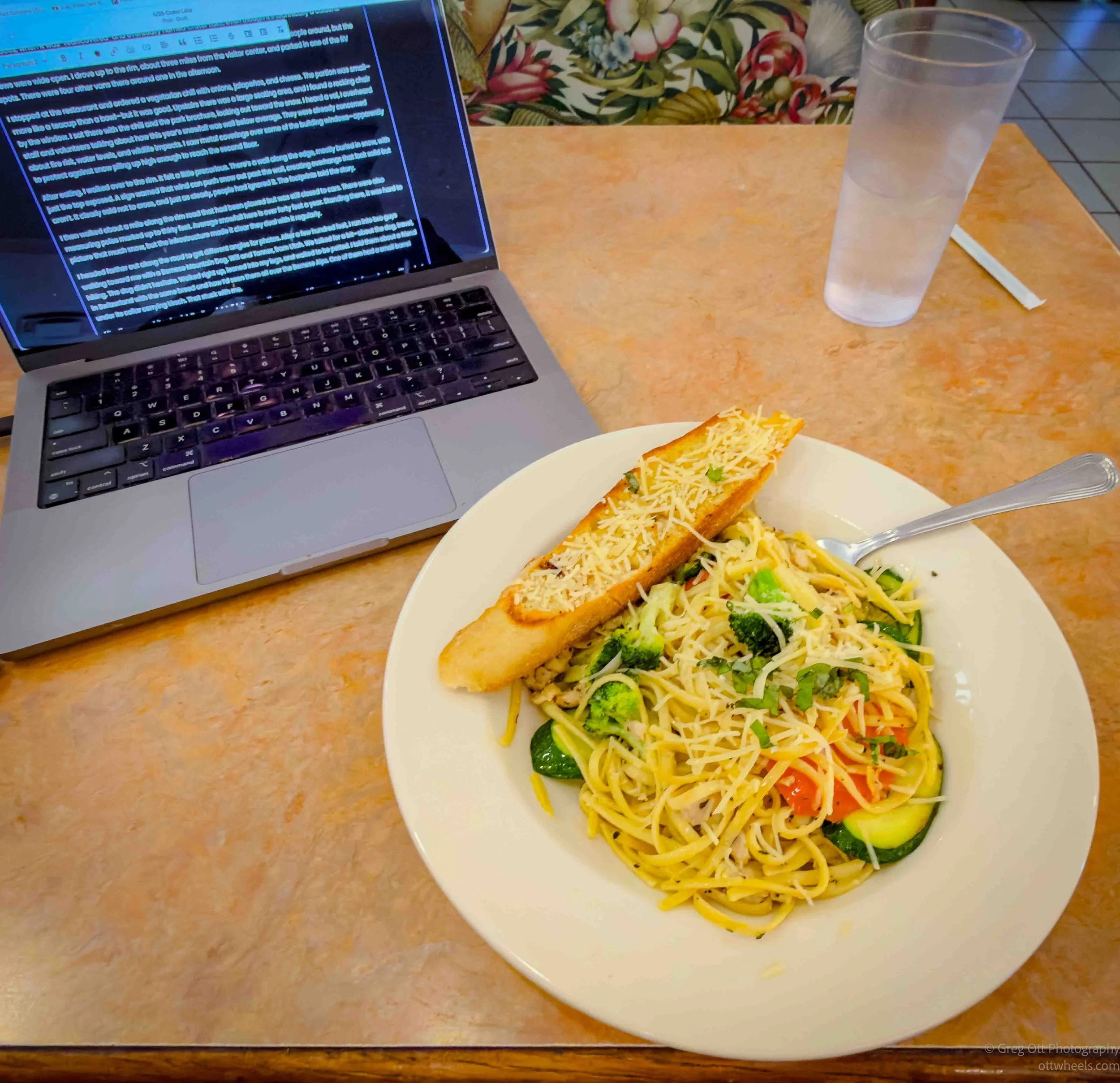
After the ride and back at the van, I slowed down for a while and just relaxed. Between the lingering breathing issues from COVID and the extra miles from the detour, the ride had taken more out of me than I expected. Later in the afternoon, I went over to Petey’s Kitchen after seeing that it had strong reviews, especially for the pasta. I ordered the pasta primavera. It definitely wasn’t homemade pasta, but it was still very good. After days of quick meals, snacks, and campground food, sitting down to a solid plate of pasta felt like exactly what I needed before moving on.
I then drove west about 40 minutes from Wenatchee into Leavenworth, Washington. Originally, Leavenworth wasn’t even on my list. I figured I would drive through, maybe stop for a quick look, and move on. Instead, I rolled into town right around dusk and immediately understood why people stop here.
At first glance, it barely looked real. The entire downtown is built to resemble a Bavarian alpine village, complete with steep rooflines, decorative balconies, carved wood trim, murals, hanging flower baskets, and storefronts that look like they belong somewhere in southern Germany instead of the eastern Cascades. Back in the 1960s, after the logging industry declined and the town struggled economically, Leavenworth reinvented itself around the Bavarian theme. Somehow, against all odds, it worked. What could have easily turned into something tacky instead felt surprisingly cohesive once the evening lights came on. I visited a similar place and blogged about Alpine Helen, NC.
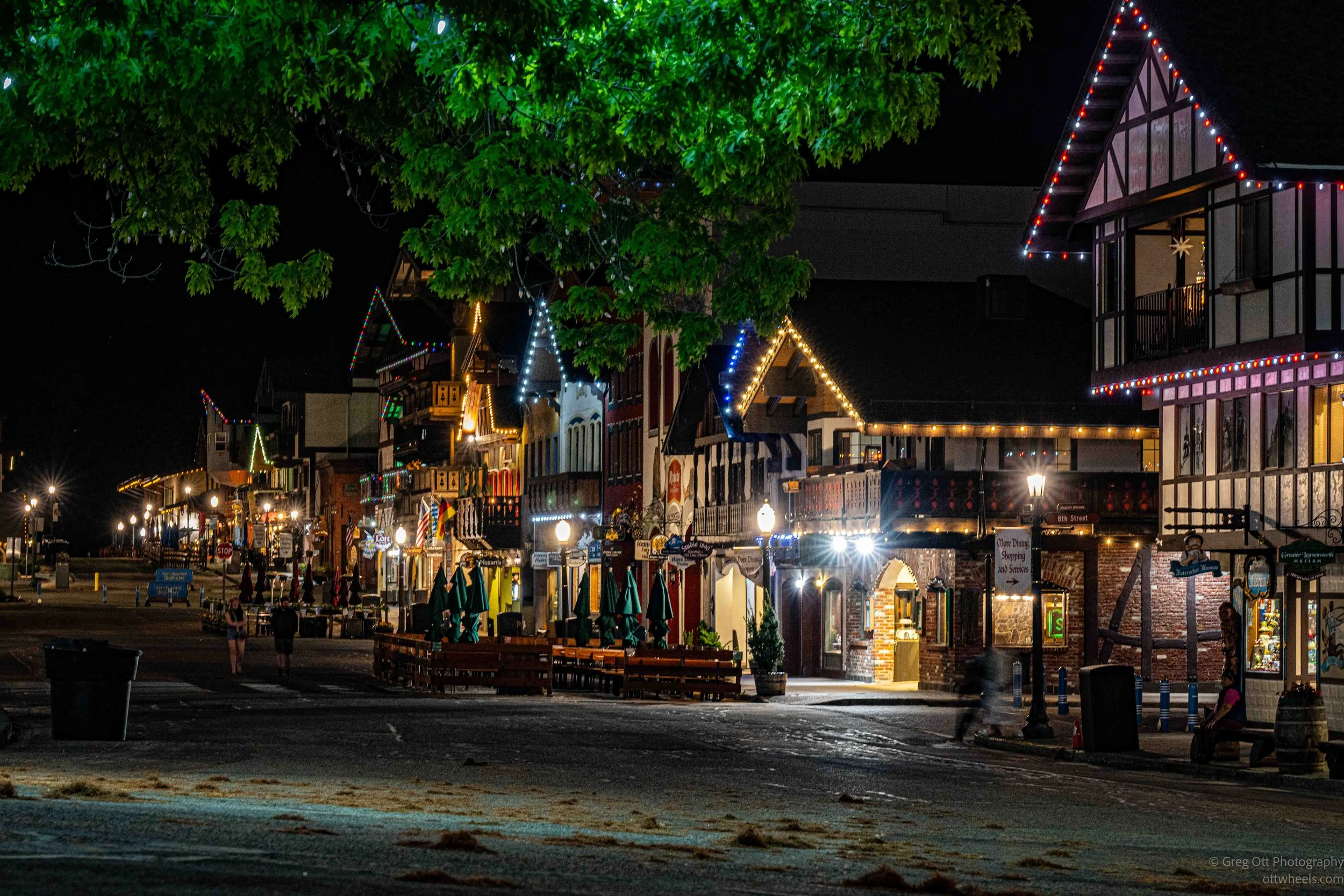
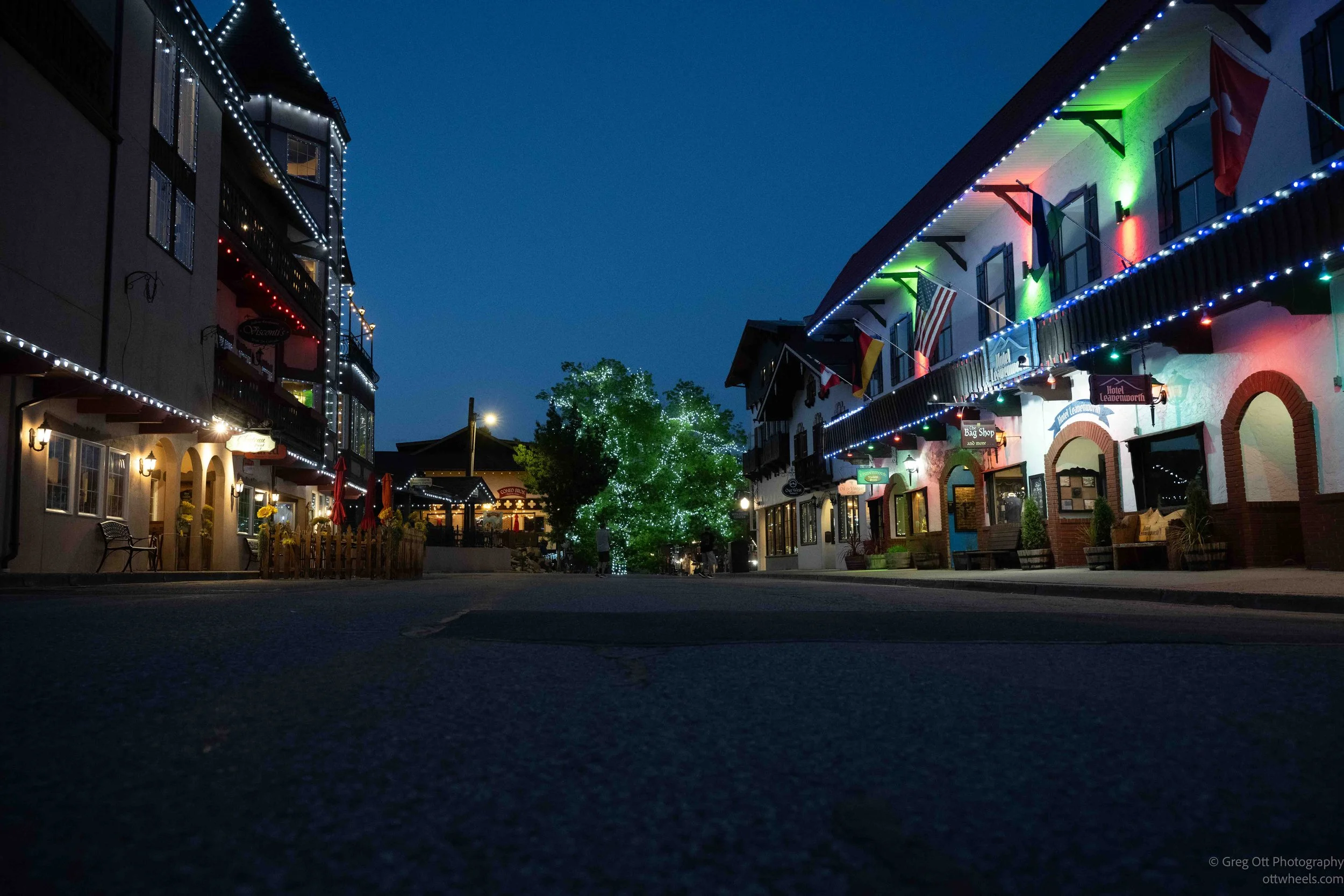
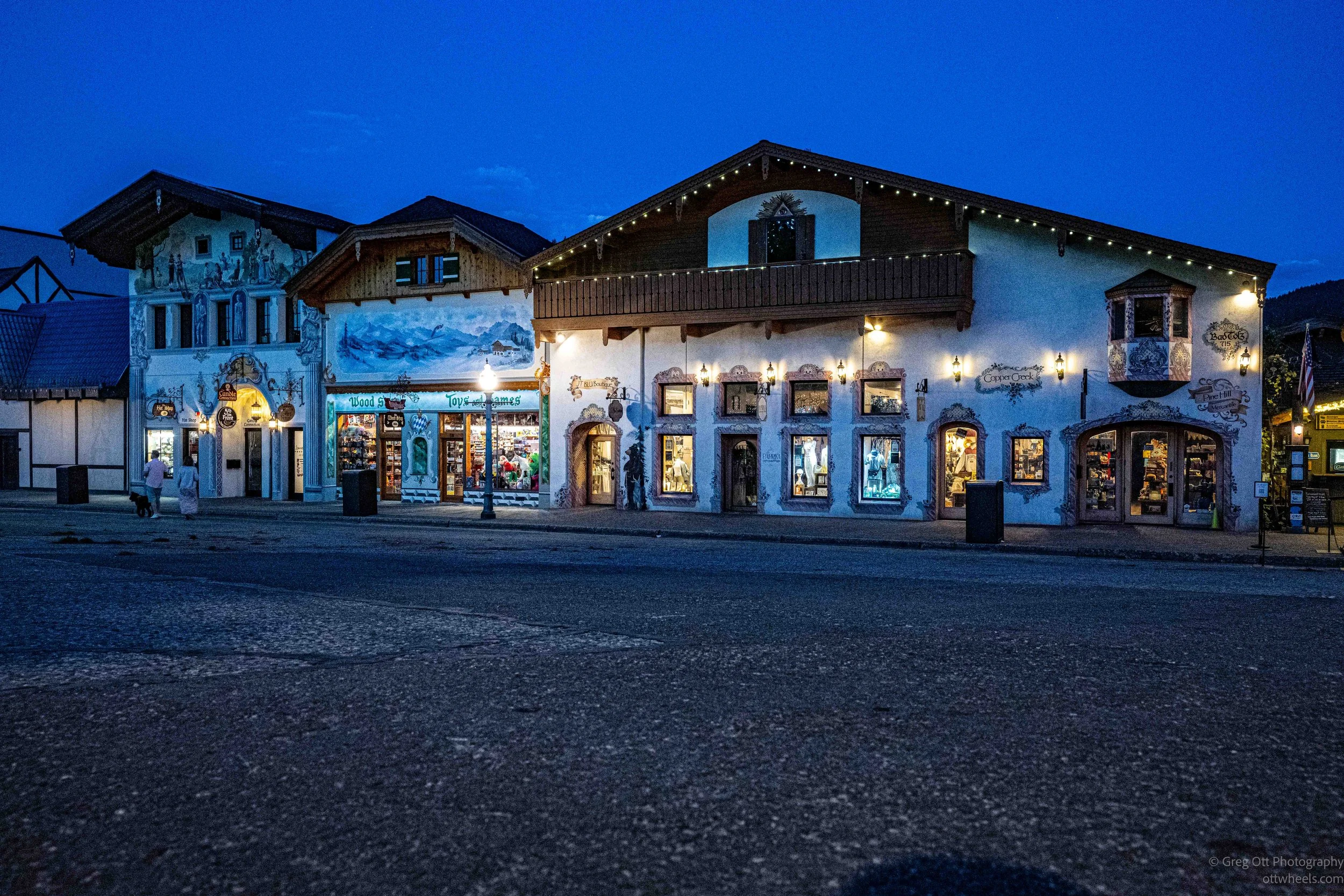
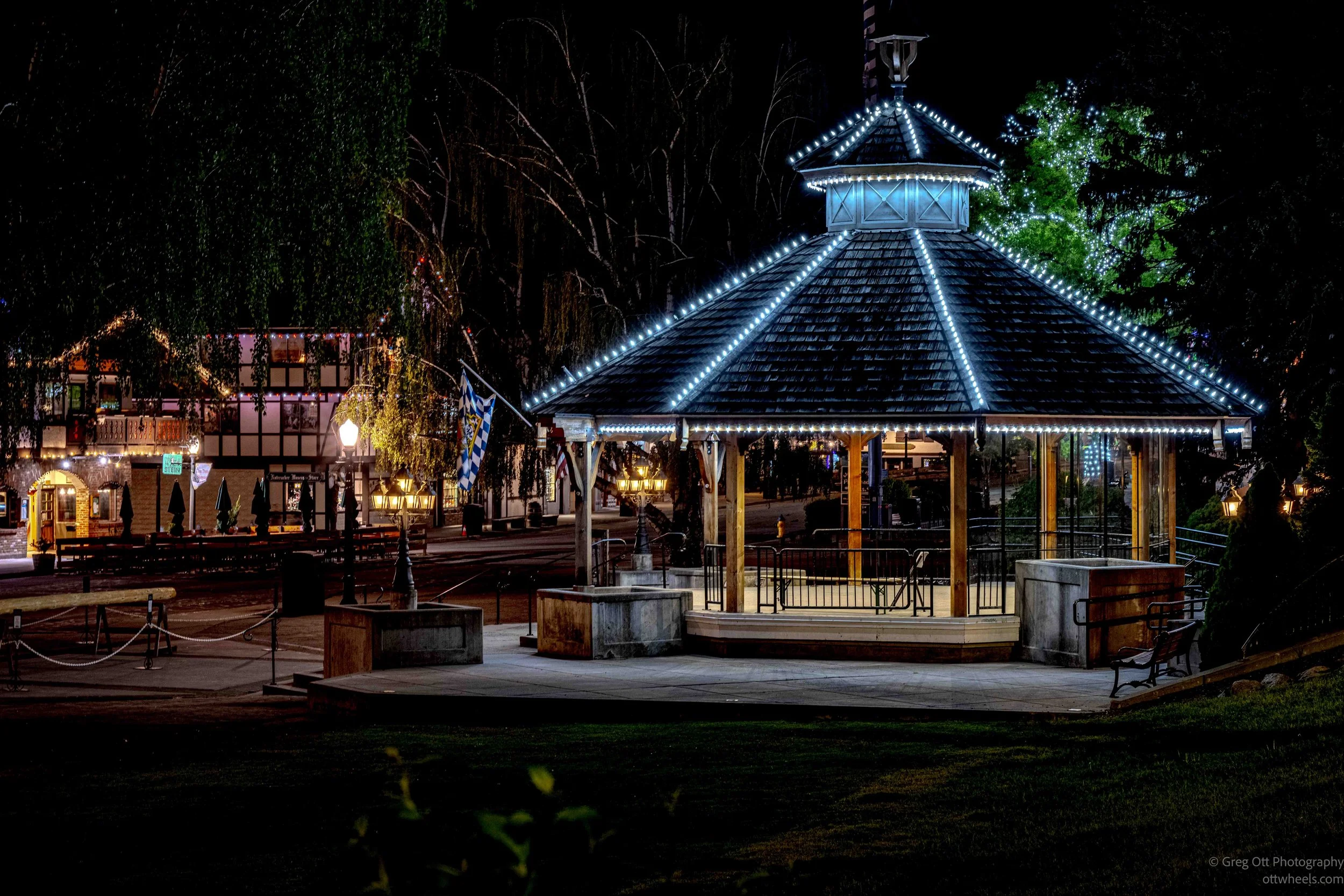
As darkness settled in, the whole town started glowing. Warm string lights stretched across the streets. Hotel balconies and storefronts lit up with soft yellow light. Restaurant windows reflected off wet pavement in places where sprinklers had crossed the sidewalks. The mountains around town faded into silhouette while the village itself became brighter and more theatrical by the minute. It felt less like walking through a normal small town and more like wandering through a movie set that people actually lived in.
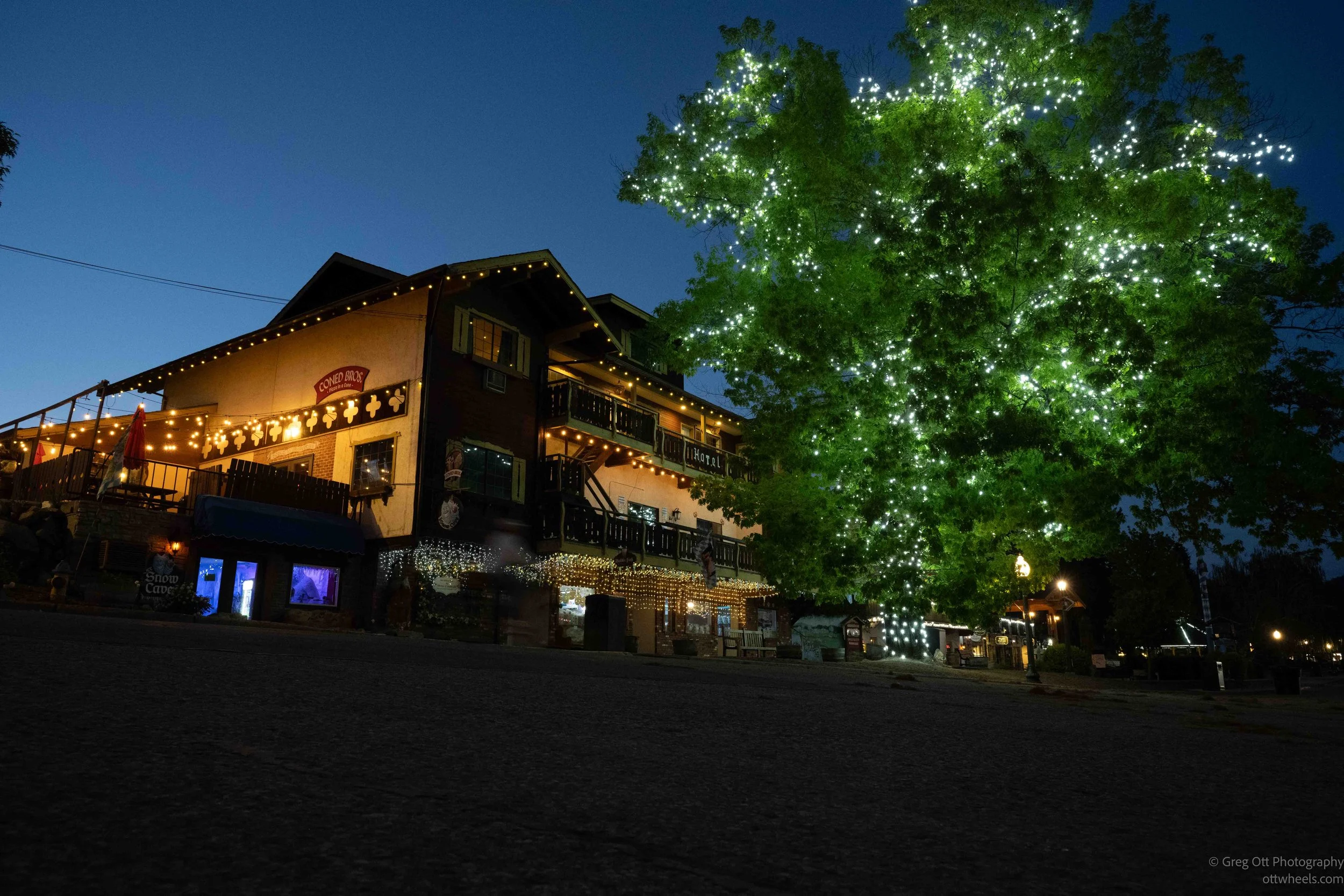
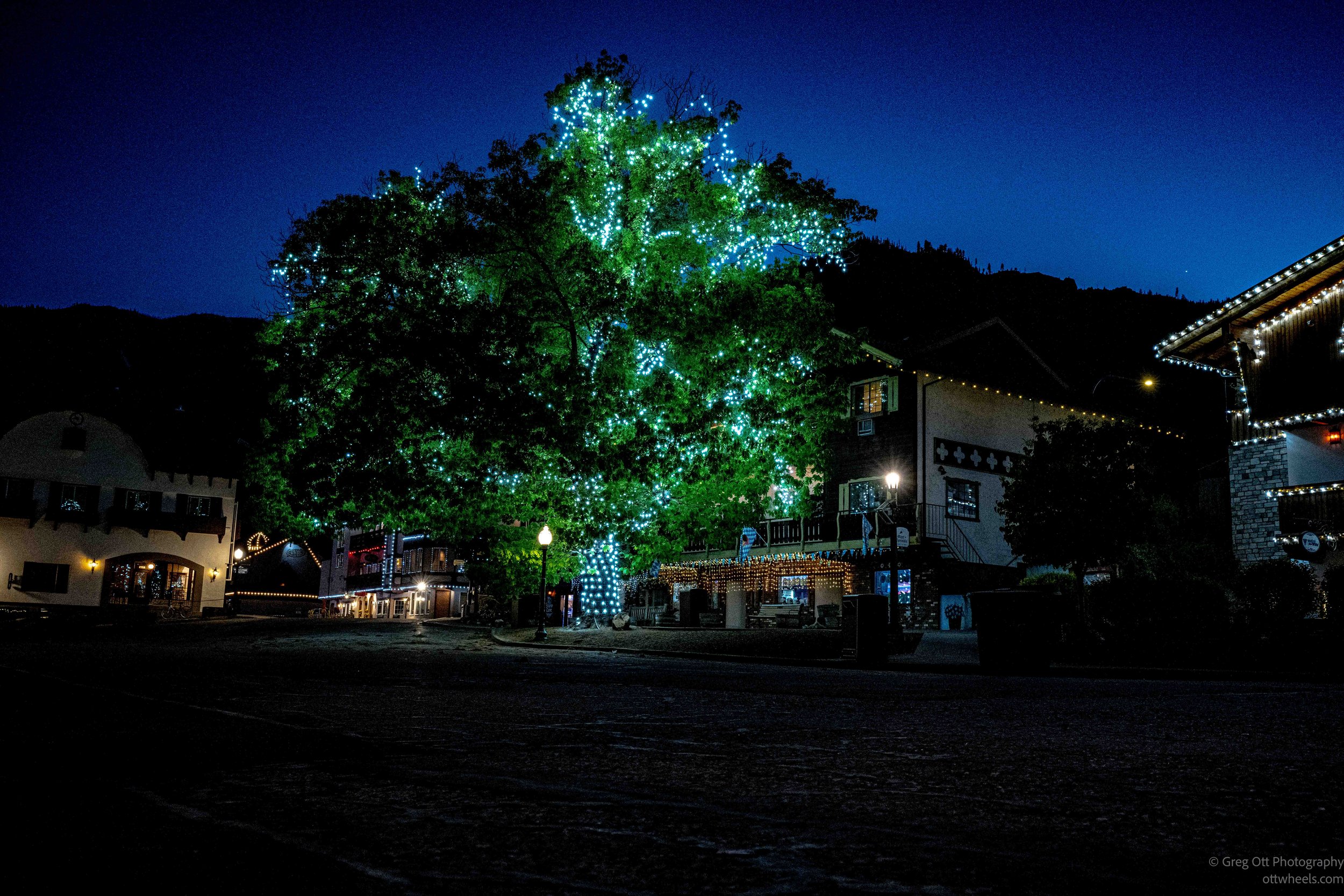
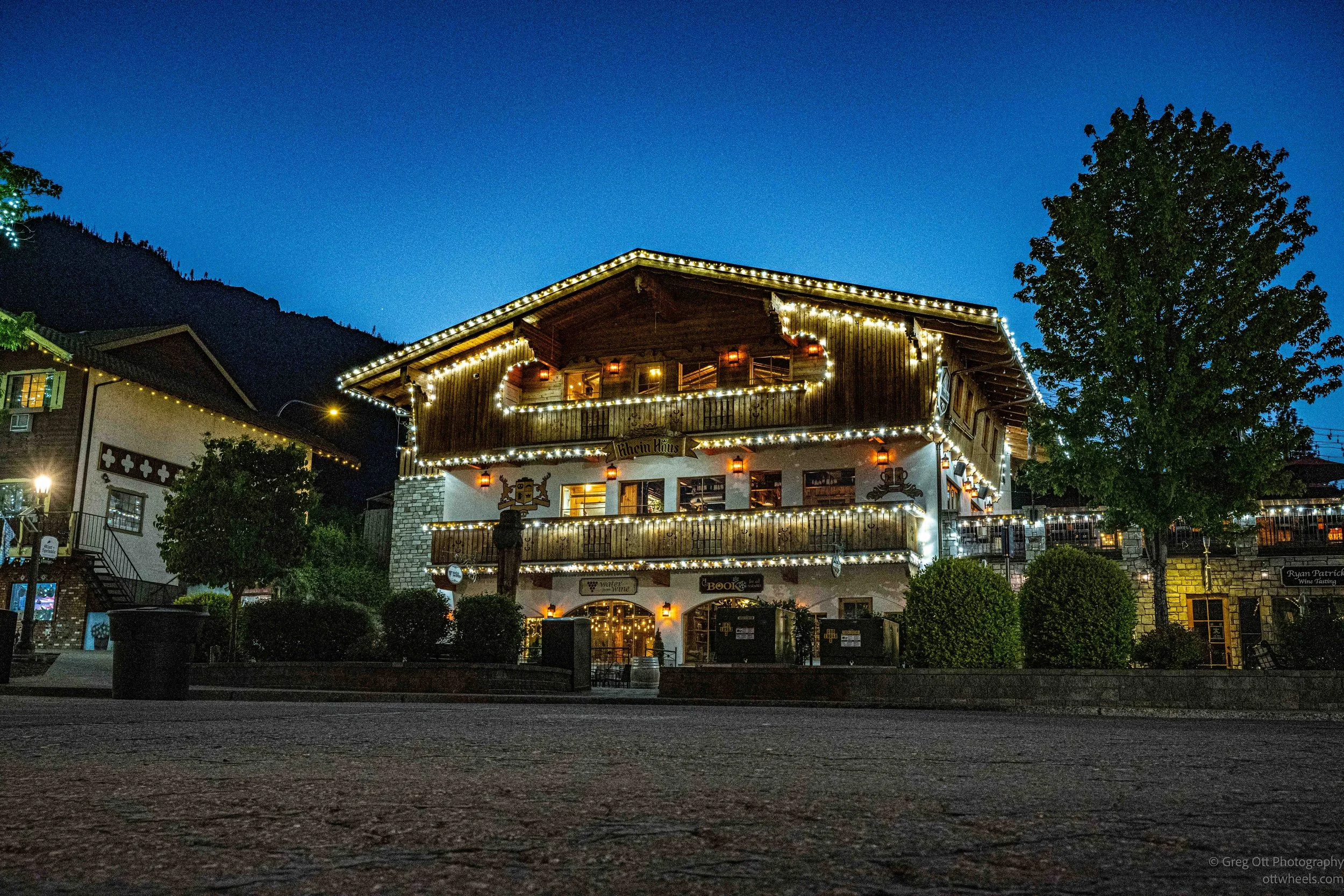
I spent close to three hours walking around with the camera. I photographed storefronts, alleyways, signs, balconies, and empty sidewalks as the crowds thinned out. Some of my favorite moments came from simply slowing down and watching how the light interacted with everything. Window displays glowed against the dark streets. Neon beer signs reflected in glass. Wooden facades picked up just enough side lighting to bring out texture without losing the shadows. Every few minutes I would stop, look back down a street I had already walked, and notice an entirely different composition because the light had shifted or somebody had stepped into frame.
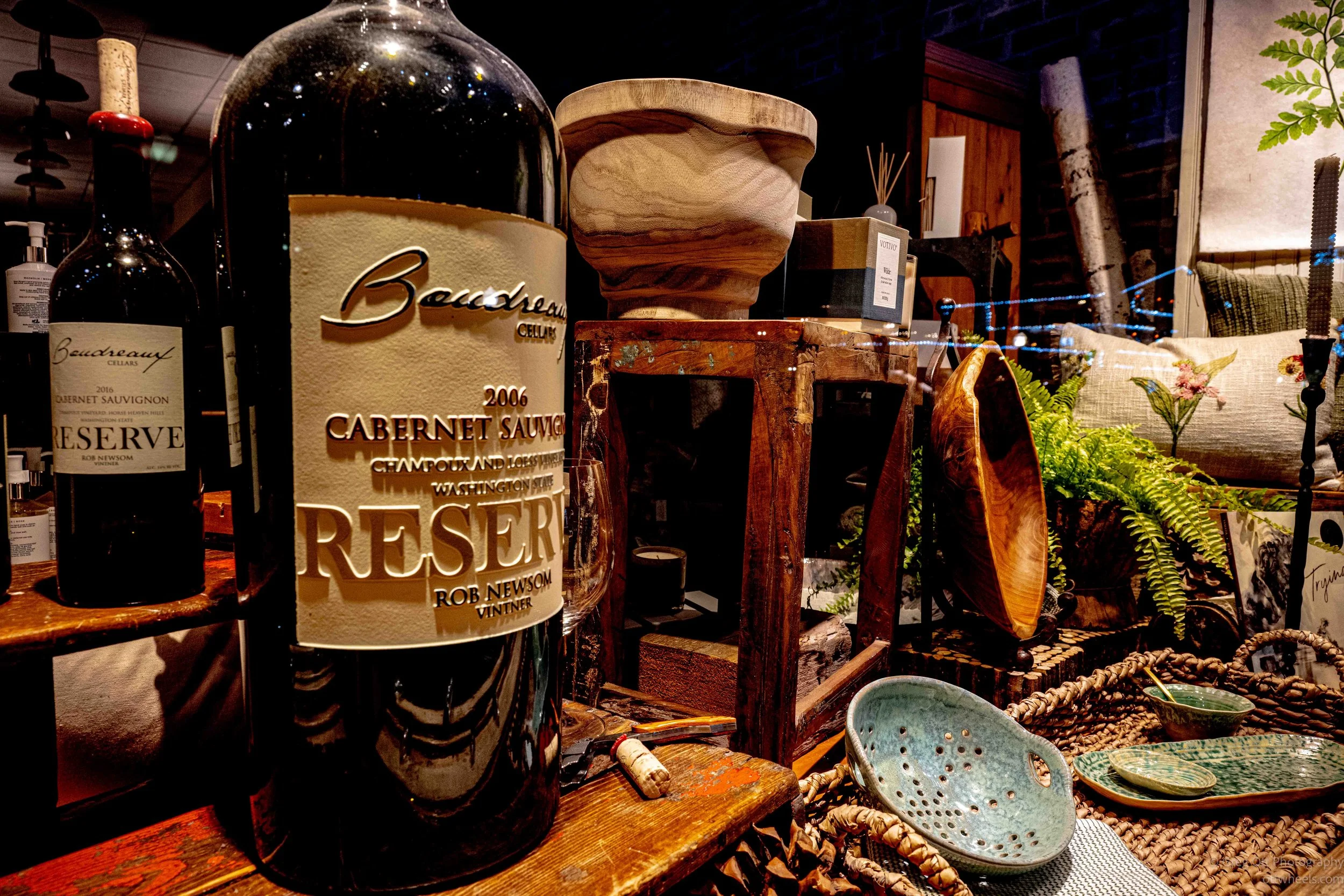
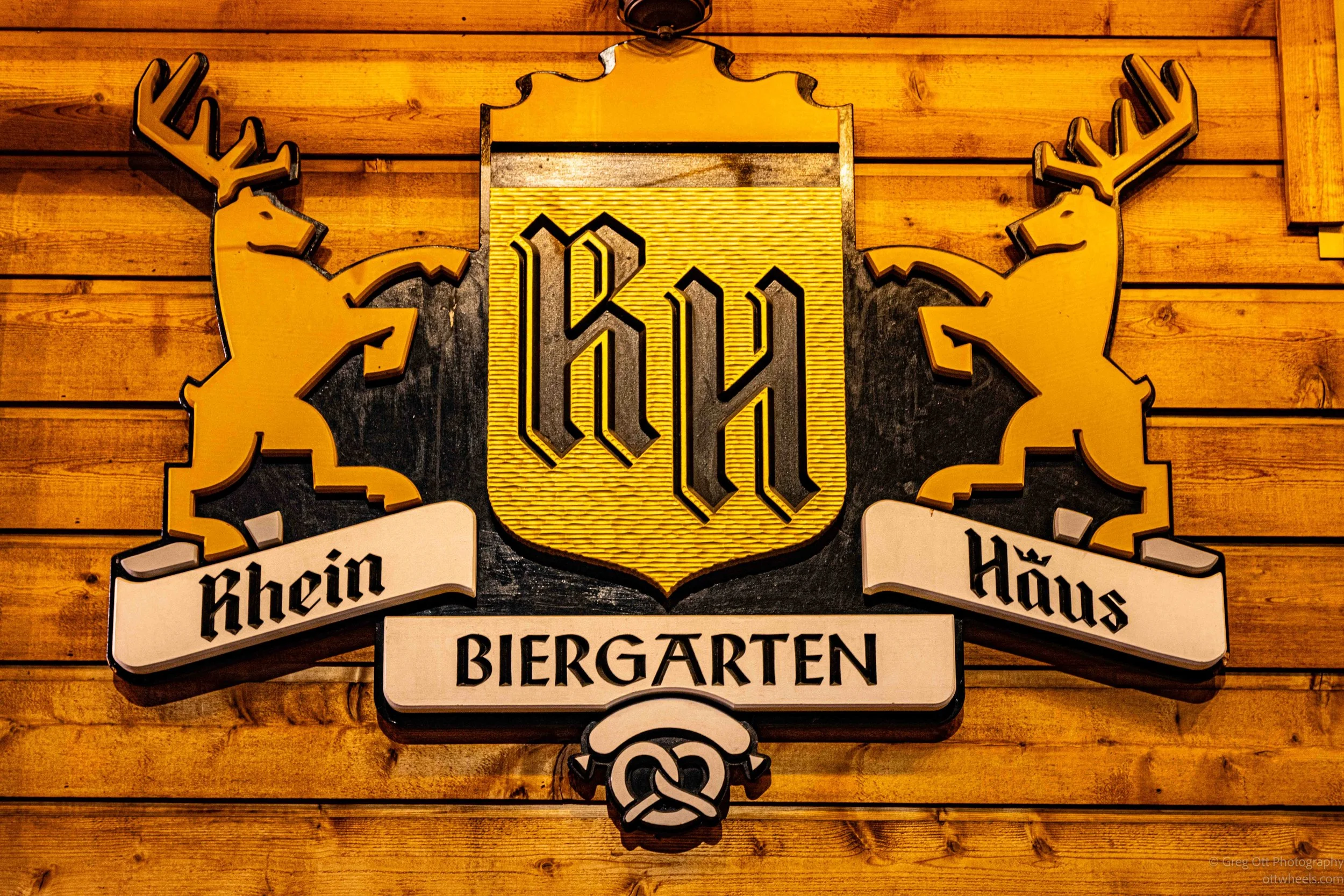
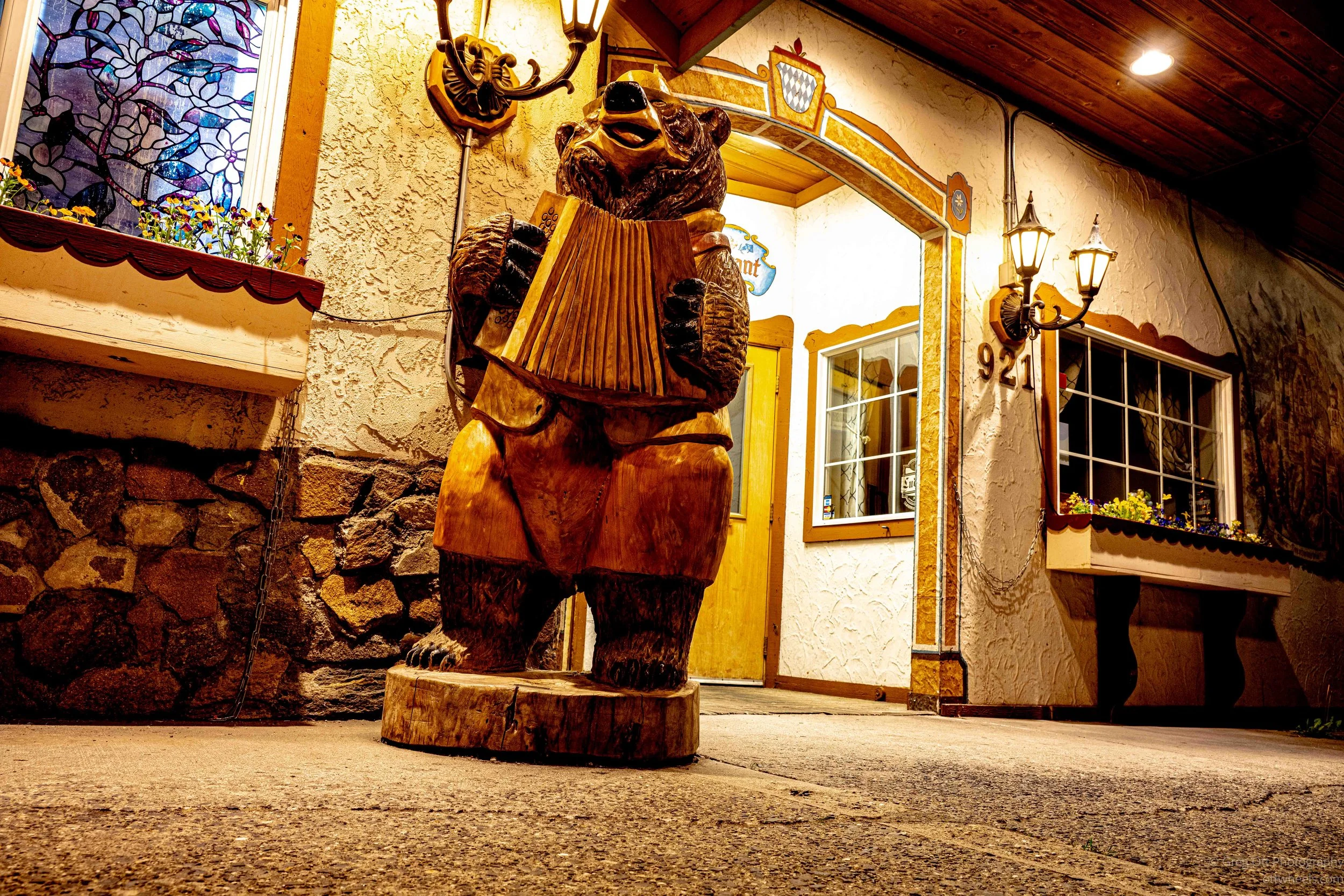
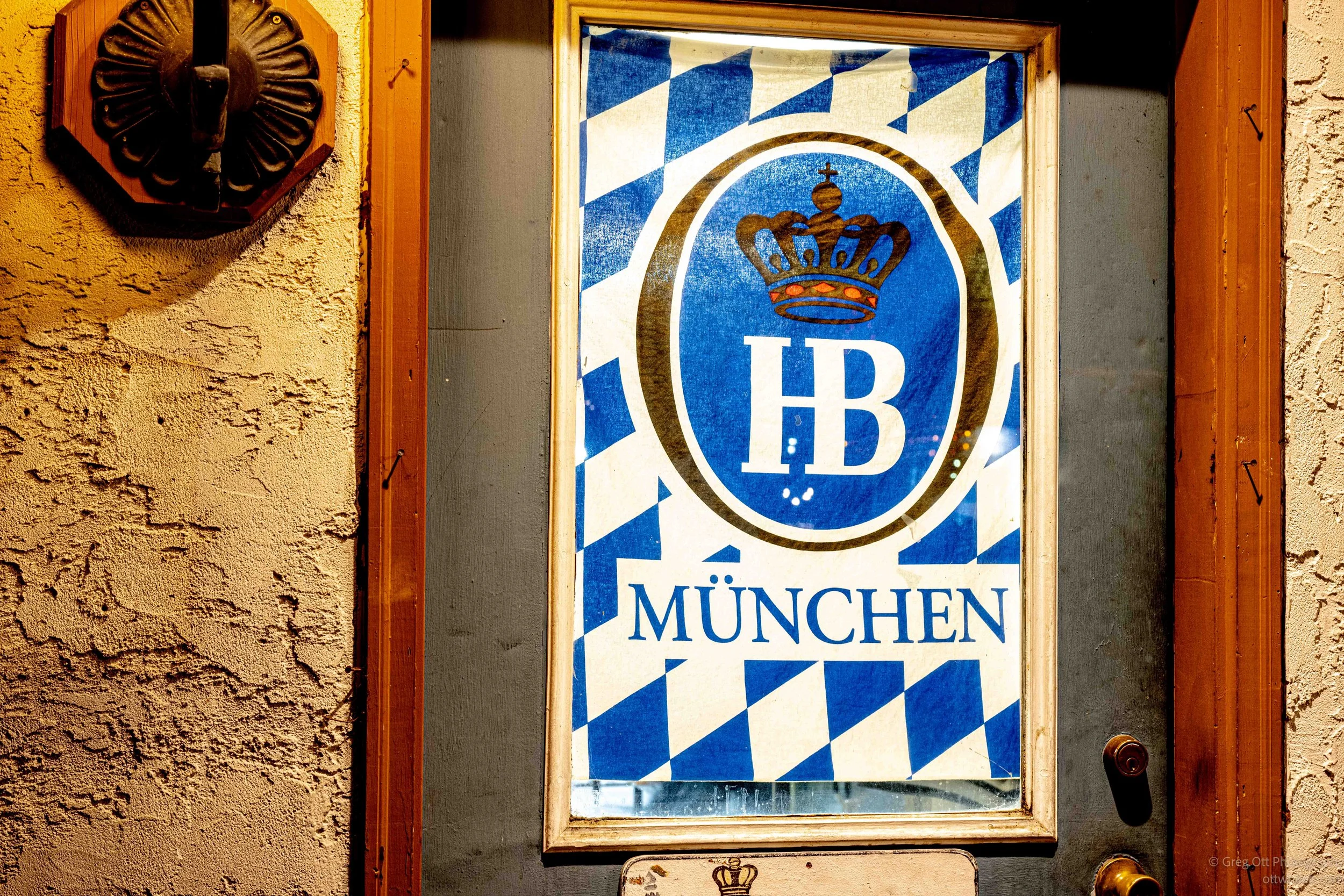

It was clearly not peak tourist season yet. Parking was free after six in the evening and didn’t require payment again until nine the next morning, which made wandering the town easy. Overnight parking, however, was prohibited on the main streets. Eventually I found a place to stay about a mile from the center of town but still inside the village limits. It was at the end of a dead-end street beside a field with a fence and a single parking area that looked like plenty of other people had quietly used before me.
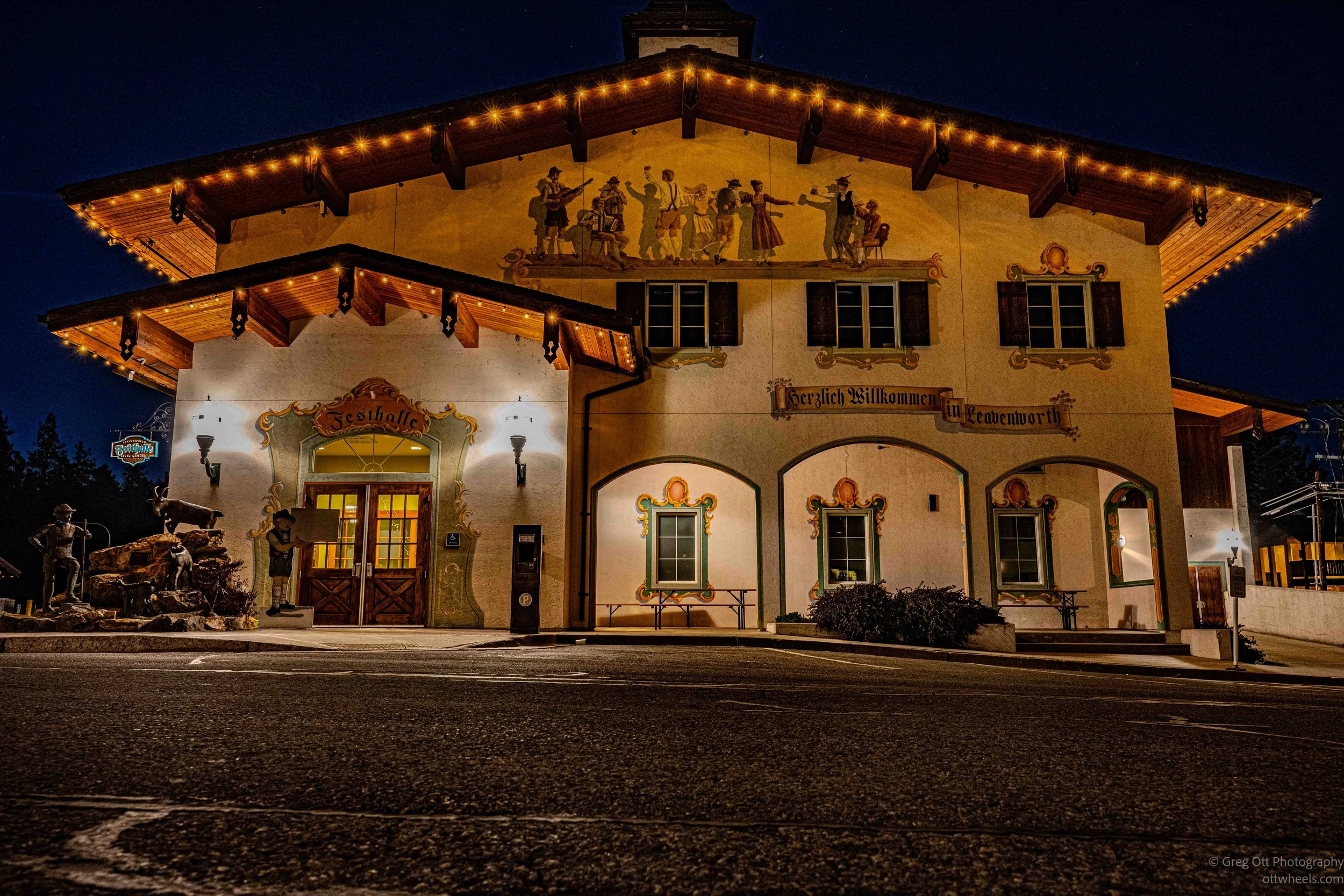
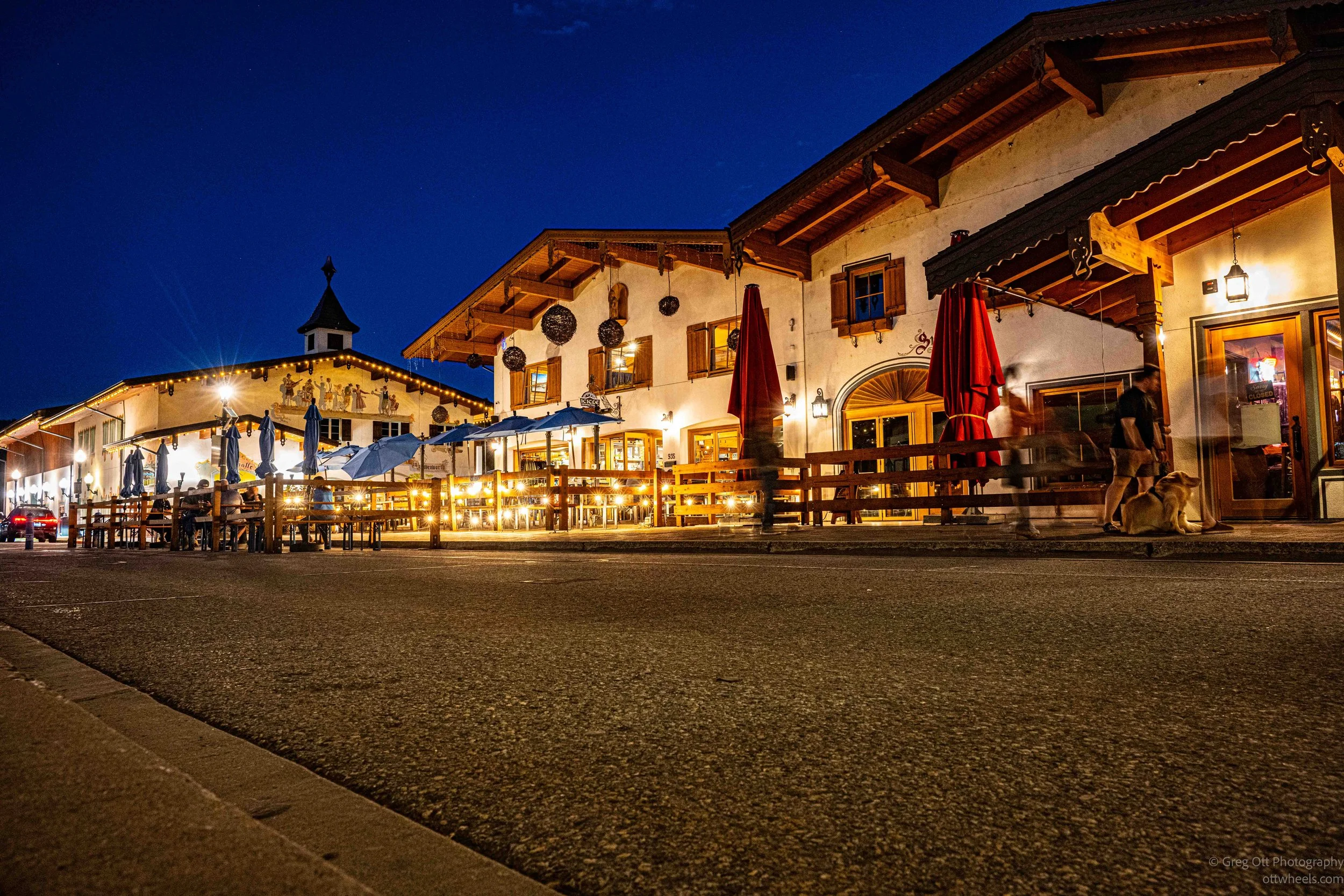
When I first turned onto the street, smoke hung low across the neighborhood. Several homes were still burning wood, and the smell was thick enough that I started coughing almost immediately. The smoke lingered heavily between the houses, trapped close to the ground in the cool night air. Fortunately, by the time I reached the end of the road near the field, the air had mostly cleared. I left the roof vents running to keep fresh air moving through the van and was grateful I didn’t have to spend the night breathing smoke inside a sealed vehicle.